Lists Worth Waiting For
Once again, one of my all-time favorite subjects – lists. This time, however, these are the lists with a twist – these are the lists you probably want to know about.
Let’s talk about wine collecting.
I have to say that I don’t consider myself a wine collector. I will gladly identify under multiple “wino” categories. I can identify as wine snob – I have my [strong] preferences and if I’m not careful, they will either slip off my tongue or will be readable off my face as in the open book. I’m definitely a wine geek – wine from the barrel, 2-days fermented juice, obscure grape varieties, wine in the can, wine in the plastic bottle – bring it on, I will happily try it all. I’m a wine lover, oenophile – all of these identities are just fine. Wine collector – I would never present myself as such. I love aged wine – this is the main reason for me to have a “collection” – I buy the wines which I believe (hope?) will improve with time, and I store them to give them time to evolve. In my mind, to be qualified as a wine collector, you need to have more or less an unlimited budget – you taste a good wine, you like it, you say “I’ll take a case” – all of it without paying attention to the price. You are definitely free to disagree with my approach, but this is not what this post is all about.
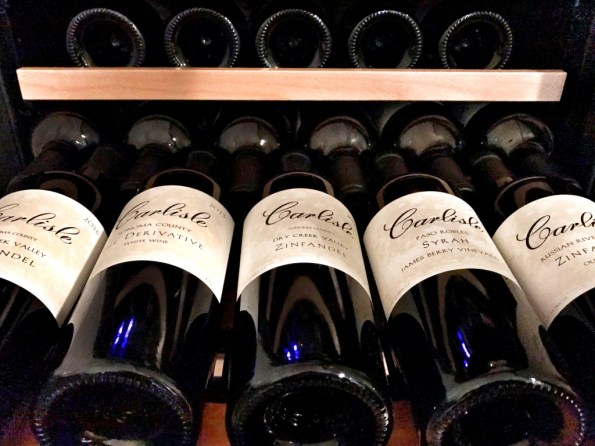
Collector or not, but I’m passionate about wine. I’m paying attention to what I taste. I’m paying attention to what critics have to say. I’m paying attention to what fellow bloggers and writers are saying. Yes, I’m paying attention to the recommendations, reviews, and suggestions – but the trick is to convert the recommendations into the actual wine. You need to be able to find the wine which is so highly recommended – otherwise, the wine will remain only a “fiction”.
If you think that getting the wine everyone wants to drink is easy, you are probably just starting your oenophile journey. Getting the “desired” wine is not even a question of money. Yes, some of these wines are impossible to find and very expensive. But this is not always the case. For example, 2014 Carlisle Syrah Papa’s Block, 96 rating by Wine Spectator, was priced on release at $44. According to Wine-Searcher, it is available only at one single store in the USA. I’m sure you can afford it – but you can’t really find it. And this is just one example. Theoretically, any wine can be acquired from the wine store. In practice, lots and lots of the wines which built their reputation, are not available in the store, neither “brick and mortar” nor online.
This is exactly what I want to share with you today – where and how to find the wines everyone wants to drink. Before we get to it, one important note – everything I will be talking about here is relevant only for the wines in the USA. It is entirely possible that some winery around the world has the same mechanisms in place, but I’m not aware of those wineries – with the exception of Bordeaux En Primeur – however, this is not something I want to talk about today.
Now, how can you reliably get the wines everyone wants to drink? You will need to learn few key terms – “allocated wine“, “allocation” and “mailing list“. The gist of the process can be summed up in one sentence – in order to get highly allocated wine, you need to be on the winery’s mailing list in order to receive your allocation. Sounds simple, isn’t it? Let’s take this summary in pieces.
“Highly allocated wine” simply means that the desirable wine is produced in the limited quantity – 100 cases, 200 cases, whatever the number is – but it is given that demand greatly exceeds supply, and so the wine becomes allocated.
A mailing list is a form of the winery membership which is very different from the typical winery wine club. In the wine club, you say how much you are willing to spend, and the winery will decide what they will send you (yes, you have an option of ordering more, but this is beside the point). Mailing list membership gives you access to desired wines the winery produces, but you still have no guarantee that you can get any wine you want.
Every member of the mailing list receives their allocation – how many bottles of what wine they can buy. Allocation is uniquely tailored to your buying history, position on the mailing list and other factors. Even when you get your allocation, life is still not necessarily perfect – some allocations are guaranteed, and some are offered on “first come, first serve” basis – yes, you have an allocation for the wine, but unless you are buying as soon as you receive the email, the wine you wanted might be already gone – experienced this scenario with Peter Michael and Turley many times.
Lastly, you need to keep in mind that your allocation will not necessarily include all the wines which winery included in so-called Release – some of the wines in the release might not be a part of your allocation. Ahh, and one more thing – in order to be on the mailing list, you need to continue buying the wines. I don’t know if there are minimal quantities, and I know that some of the wineries will allow you to skip one or a few of the mailing list offers and will still keep you on the list. Some wineries, however, warn you in a very direct fashion – if you will not order wine from this offer, you will be taken off the mailing list.
So that’s it, now that you understand how the system works, the rest is easy, right? Let’s find the wines we want, go sign up for the mailing list and start receiving the wines – easy! Not so fast. There is one more term I need to make you familiar with. This is the scary term – it is called “waiting list“. Remember I gave you the gist of the buying process for the highly desirable wines in one sentence? We need now to use a few sentences to fully explain the process:
In order to get highly allocated wine, you need to be on the winery’s mailing list in order to receive your allocation. Before you will get on the mailing list, you will first join the waiting list for that mailing list, as the mailing list has limited capacity.
What’s so scary about the waiting list? You have no idea how long will it take for you to transition from waiting list to the mailing list. I was on the waiting list for about seven years in order to get on Cayuse mailing list. I’m waiting for more than seven years now to get on Saxum and Sine Qua Non mailing lists with no end in sight. So yes, if you want access to the wine, you will have to learn to wait.
That’s about all there is to the allocated wines and mailing lists. I would like to make it clear – mailing list is one of the sources of allocated wines – but it is the only option if you want to be fully in charge of what you will be buying. Wine distributors in the USA also hold positions on various mailing lists and they get access to the allocated wines exactly as individuals do. However, their allocations are also limited, and different stores have different access to those wines. Yes, you can definitely rely on the stores as your source of the allocated wines – for example, Wades Wines in California offers an amazing selection of the allocated wines – but you still have to hunt down the wines you want to drink.
At the beginning of this post, I said that we will be talking about wine collections. So far I explained how you can get wines for your collection – but as someone who had been hunting down collectible wines for a while, I would like to give you a number of suggestions for the wines I consider of being worthy of anyone’s collection – and worth hunting them down and waiting on the lists. Or at least, worthy of most anyone’s collection – for instance, if you don’t like Zinfandel wines as a category, Turley and Carlisle might not be wines you will be interested in. I’m not going to recommend any individual wines – below are the wineries I suggest you will get on the waiting lists for mailing lists, including a short explanation as to why I’m recommending them. I’m also including links for your convenience. The list sorted alphabetically without implying any preferences.
Rhône-style specialist located in Edna Valley in California. Produces both whites and reds. Alban Syrah is a riot, and Alban Viognier might be the best in the country – among other wines. One release per year.
Zinfandel and Syrah specialist. Produces also a number of white wines (Gruner is amazing) and few of the red blends. The wines are released twice a year. Allocations are typically guaranteed until the expiration date of the offer. Majority of the wines are under $50. Wines can be ordered as individual bottles.
One of the very best wineries in the country, located in Walla Walla, Washington. Produces predominantly red wines – Syrah and Grenache rule, but Cabernet and Bordeaux blends supposed to be outstanding. Didn’t have a pleasure of tasting the Cayuse wines yet, but have high expectations. The wines are sold in the 3-packs, so 3 bottles is the smallest quantity you can buy. One release per year.
The winery takes its name from the fact that all the heavy work in the vineyards is done using horses. Another winery from Washington and closely affiliated with Cayuse through Christophe Baron, the winemaker at Cayuse. Produces only Syrah and Grenache. If you like Syrah, Horsepower Syrah is amazing. One release per year, 3-pack offering only.
yet another project of Christophe Baron. Syrah, Grenache, and Tempranillo from Washington. Delicious, terroir-driven wines. One release per year, all wines are available as 3-packs only.
Chardonnay, Pinot Noir, and Cabernet Sauvignon specialist out of Napa. The wines are simply outstanding. Two releases per year. Wines are available in single bottle quantities. Allocations are not guaranteed – first come, first serve.
the winery, located in Paso Robles in California is focused only on 3 varieties – Syrah, Grenache and Mataro (they prefer to use the popular Australian name for Mourvèdre grape). Their wines supposed to be amazing – I’m still waiting (for 7 years now) to find out how amazing.
the legend. I should really stop right here and not even try to describe this winery. Might be the most cult winery in the United States – it’s either Sine Qua Non or Screaming Eagle. These wines are impossible to get (unless you have a spare $1000 – then run to Benchmark Wine website, they have one bottle available at that price). Sine Qua Non makes supposedly amazing wines in California (the winery calls Santa Barbara home), each wine in each vintage having a unique name and unique label. I’m waiting for about 7 years already and will continue to do so.
best known as Zinfandel and Petite Sirah specialists from Paso Robles. Turley produces 47 wines from 50 vineyards. When it comes to Zinfandel, Turley is often considered a hallmark of Zinfandel expression. In addition to Zinfandel and Petite Sirah, Turley produces a small number of whites, plus a number of red blends. A few years ago Turley even started making their own Cabernet Sauvignon wines, called The Label. Most of the wines are priced under $50, with a few exceptions. Two releases per year, plus separate end of the year release for The Label. All wines can be acquired in the single quantities. Your allocation is not guaranteed – first come, first serve.
There you go, my collector and future collector friends – my explanations about inner workings of the desirable (allocated) wines, and the list of the wines I find worth waiting for. I’m sure many of you have your own take on wine collecting and wines worth hunting down – use the comments section to share your opinion with everyone.
Hope you will find this useful. Cheers!
An update: After this post was published, I received a number of suggestions for the lists worth waiting for. I have very little knowledge of most of these wines, but as they came recommended, I will list them here so you can do your own research and make your own decisions: Abreu Vineyards, Aubert Wines, Brand, Hourglass, Quilceda Creek Winery, Scarecrow Wine, Schrader Cellars, Vérité.
Restaurant Files: Eat Well On The Go and Not – Station House in Port Chester, New York
 If we think of the US history, this country was largely developed around and with the railroad infrastructure. The fortunes were built and the country flourished with the advancement of railroads, the ability to transport both people and cargo. The trains powered the first industrial revolution in the US, changing the idea for what is possible and making the country a lot smaller.
Today, the situation is quite different. The plane and the car are definitely the preferred means of conquering the distance in the USA. Of course, the tracks and trains didn’t disappear from the land, but unlike Europe and Asia, passenger trains in the USA are mostly the short haul, helping to offload transportation grid of the large metropolitan cities, without providing much of a meaningful alternative to the plane and the car for any long distance travel.
Okay, after this long intro, let’s go back to the core of this blog – food and wine. Only today, we are talking about food on the go. No matter how and how far you are traveling, you have to be able to eat. Train station, airport, rest area along the highway – ability to find a bite on the go, and preferably a tasty bite, is a key to the happy travel. Of course, safely and timely arriving from point A to point B is a whole substance of the journey, and it is the most essential part – but think about your own travel experience – are you happier when hungry or when well fed? Yeah, I thought so.
When it comes to the food on the go, airports in the USA definitely trumpet the train stations (the only exception might be Grand Central Terminal in New York, which offers a great range of fine dining options, even though United Terminal C at Newark airport might give Grand Central a fight for the supremacy). However, there is one important difference between the train stations and the airports – no matter how amazing the airport food is, it is strictly available “on the go” – you need to be flying somewhere to have a boarding pass in your hand to reach that coveted restaurant, like United Classified. However, you don’t need to be going anywhere (or you might be) to have a great meal at the train station’s restaurant. Case in point – Station House restaurant in Port Chester, New York.
As the name says it, the restaurant is situated in the old Station house at the Port Chester train station (if you are not a commuter, your only challenge might be parking – but this shouldn’t stop you from having a good meal). Once inside, you will find a modern restaurant well placed in somewhat of a nostalgic setting:


We had a dinner at the Station House a while ago, and had an opportunity to taste through a variety of dishes, which will suit you well whether you are truly on the go and want to grab a pizza to shorten your ride, or you are arriving after a long day at work and need to feed the family, or even if you are not going anywhere and simply looking for a quiet dinner in an unpretentious atmosphere.


Assuming you got some time, how about starting your evening with a cocktail? We had New Haven Bound (Tito’s Vodka, Blackberries, Strawberries, Lemon, Soda) which was tangy and refreshing; Hop on Board (Vodka, Honey, IPA, Lemon) was light and crisp. You can start with the cocktails and continue with beer and wine – the restaurant offers a good selection in both categories to perfectly supplement the casual fare.


We had a few appetizers to start. Blue Point Oysters were, well, delicious – what else can you expect from the fresh oysters. Summer Asparagus (Farro, Feta, Tomato, Dijon Vinaigrette) was excellent, with asparagus been snappy and crunchy (overcooked asparagus is a big no-no in my book). Charred Baby Bell Peppers (Basil Sea Salt) were good, Homemade Whipped Ricotta (Honey Herbs, EVOO, Toast Points) was tasty, a good flavor combination.


We continued with Coal-Fired Wings Thyme & Lemon (Sea Salt, Caramelized Onions) – love caramelized onions on anything, and it was a very nice addition to the well-cooked wings. Mama’s Meatballs (Marinara, Provolone, Parsley) were fork-tender and well seasoned; Baked Mac & Cheese (Four Cheese, Béchamel, Bread Crumbs) was homey and comforting.


Every restaurant should have their “specialty”. For Station House, it is the Coal-Fired pizza.

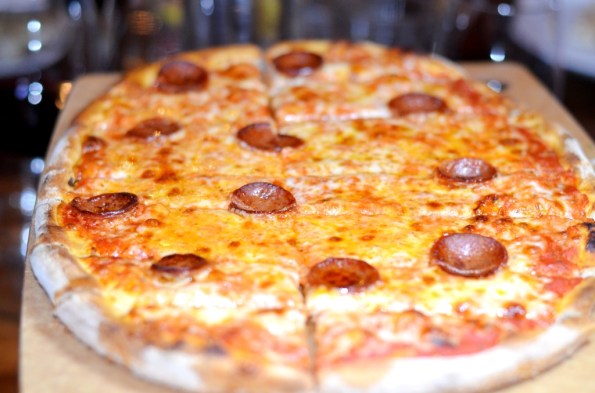
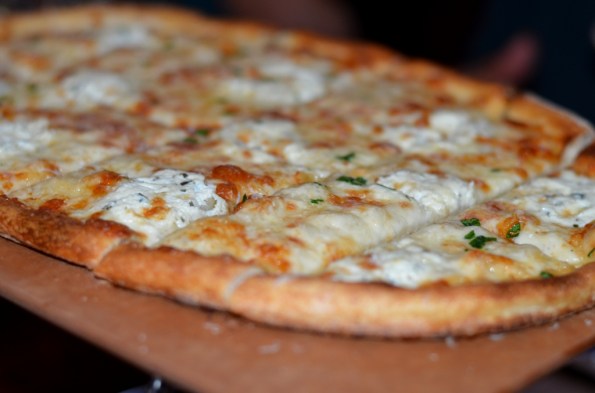
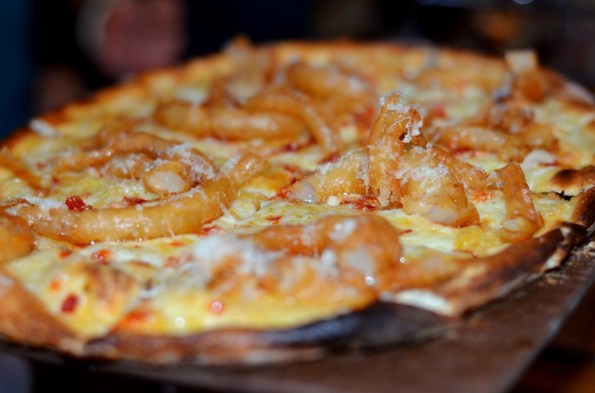
For the regular (tomato-sauce based) pizza, we tried Classic Pepperoni (Tomato, Mozz, Pepperoni), which was excellent, and Clam & Bacon (Littleneck Clams, Parmesan, Garlic Oil, Chili Flakes, Parsley) which was perfectly garlicky (love garlic!). Two of the white pizza were also very tasty, Four Cheese (Fresh Mozz, Herb Ricotta, Fontina, Parmesan, Garlic, Herbs) and Sweet & Spicy (Fried Onion, Cherry Peppers, Fontina, Honey, Provolone), which was, as suggested, deliciously spicy (I find it personally very important that the “advertisement” would match the “content”).
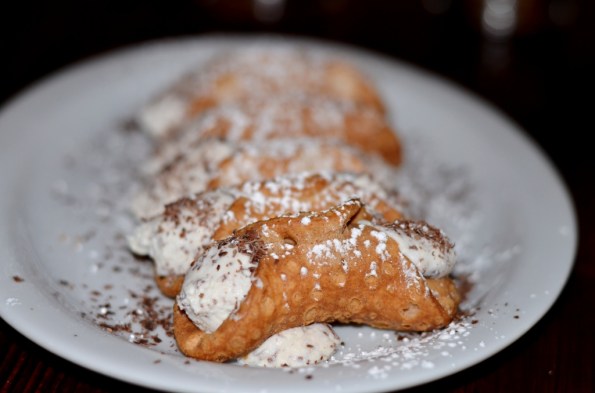
Do you think we left without the dessert? Of course not! Cannoli offered a perfect finish to the casual and comforting meal.
There you are my friends – on the go and not, you can always find a delicious bite by the tracks. Do you have your own train station food standouts? Cheers!
Wine and Bacon? Why Not?!
There is a good chance that you love good food and wine pairing as much as the next connoisseur. We all know that successful pairings are very far from trivial, and we also know that not all the foods are good with the wine.
So have you ever thought of pairing bacon with wine? I’m sure that there is a very good chance that such a pairing never crossed your mind, despite the fact that you might love each one on its own – bacon and wine – almost religiously (there are lots of people in this world who will start drooling just at a sound of the word “bacon”).
Before we continue – or before you stop reading this as you don’t eat bacon for whatever reason (religious, veganism, anything) – I need to ask you (beg you?) – please do not fret. Bacon doesn’t have to be made out of pork! In today’s world, besides turkey bacon, which I agree is generally very pedestrian and not satisfying, there are also Beef Bacon, Duck Bacon, and even variety of Vegan Bacon – your life doesn’t have to be bacon-less, even if pork is off the menu for good.
What wine to serve with bacon is typically not the question you are facing, though. The main reason is that in the direct form – a slice of bacon and a glass of wine – they belong to the different, non-overlapping “time zones”. Bacon is a morning food, and wine, umm, really not. Yes, bacon easily takes on the role of a condiment at lunch and dinner, but then it is a whole another story in terms of the wine pairing.
But then there is brunch, where bacon is still a star, and who doesn’t like a glass of wine with their brunch? Or have you ever enjoyed bacon-wrapped dates stuffed with the blue cheese, so popular in many Spanish restaurants? So maybe bacon can be and should be paired with wine? Folks at Drinkable Gifts surely think so, and they even came up with infographics to illustrate their bacon and wine suggestions. As I’m an infographics junkie, I’m happy to share it with you. You can find all the detailed bacon recipes and pairing suggestions here.
I’m also curious in your opinion if you think suggested pairing combinations will work. Enjoy!

Source: DrinkableGifts.com
Tale of Two Reds – Are All Wine Lovers Eternal Optimists?
Let’s talk about red wines. And optimism. The connection between the two? You will see – give me a few minutes.
Let’s start from a simple question – how many chances do you give to a bottle of wine? Fine, let’s rephrase it. You open a bottle of wine. It is not corked, or if you think it is, you are not 100% sure. You taste the wine. The wine is not spoiled, but you don’t like it – doesn’t matter why, we are not interested in the reason – the bottom line is that it doesn’t give you pleasure. What do you do next?
Of course, breathing is the thing. You let the wine breathe – you pour it into a decanter, and let is stand – few hours, at least. You taste it again – and it still doesn’t make you happy. Your next action?
Let’s take a few notes here. First, we are not talking about the wine you feel obliged to drink – it is not a $200 bottle, it is not a first-growth Bordeaux – it is an average bottle of wine, let’s say, of $20-$40 value. Second, it is a quiet evening – let’s say, it is you and your spouse, and you have a luxury of opening another bottle of wine to enjoy.
As we said, two hours in decanter didn’t do anything. And another 4 hours didn’t help either. Or maybe you didn’t use the decanter, as you only wanted a glass, and dealing with moving the wine in and out of decanter was not your priority, so the wine was standing in the open bottle. In any case, it is the end of the day, and it is time to go to sleep – and the wine is still not what you want to drink. What is next?
At this point, you got a few options – leave the bottle on the counter, dump it into the sink, put it aside into the “to cook with” section, or pump the air out and see what the next day will bring. Let’s assume you’ve chosen the latter option, but the next day didn’t improve the situation – for how long will you keep trying?


While I’m sending you on the trip down the memory lane (or maybe not), let me share with you my most recent experience. On December 31st, I opened the bottle of 2012 Codice Citra Laus Vitae Riserva Montepulciano d’Abruzzo DOP (14% ABV, $32). I had very high expectations of this bottle for a few reasons. First, the bottle itself is a BAB (for the uninitiated, it stands for Big Ass Bottle – a heavy, thick glass, pleasant to hold, bottle), which always creates high expectations for me. Second, I have high respect to the Montepulciano d’Abruzzo – was surprised with the quality more often than not. Third, I just tasted through the samples of a new line of wines from the same producer, Codice Citra (the line is called Ferzo), four delicious wines, more about it in a later post – obviously, all of this added up to the expectations. Only the first sip delivered nothing but disappointment.
I took a sip of the wine, all ready to say “wow”, and instead the first thought was – “heat damage”? Most prominent note on the palate was stewed fruit, which is definitely a problem for the 6/7 years old wine, clearly meant to have a long cellar life. What happened? Was the wine stored improperly? No way I can pour this to my guests, so put the cork in, pump the air out and let’s see what will happen.
Every day from there on, I would pull the cork out, pour a glass, taste, and sigh. Still, the stewed fruit in various amounts – day three seem to show some improvement only to go back on day 4. Can you see me winding up the drama? What do you expect happened on day 5?
January 4th, I’m pouring another glass, not expecting anything good, but willing to finish the “experiment”, and subconsciously still surprised that BAB didn’t deliver. The first sip extorts “wow” and the thought of “what just happened”? The core of pure, ripe, tart cherries with a touch of a cherry pit, the hallmark of good Montepulciano, is laughing at me. Firm structure, fresh tannins, balancing acidity – the transformation couldn’t have been more dramatic. I thoroughly enjoyed every last drop of that wine, still utterly amazed at how little I understand in the mystery of the wine.


The second wine, which I happened to open a day later, but played with in parallel to the Montepulciano, worked in a very similar fashion. I got the bottle of 2014 Ernesto Catena “Tikal Amorio” Malbec Mendoza Argentina (13.5% ABV, $30) as the present from Chuck Prevatte of Food, Wine, Beer, Travel blog as part of the “Secret Wine Santa” fun originated and run by Jeff Kralik, a.k.a. The Drunken Cyclist. Chuck sent me a bottle with the message that Malbec is his favorite wine, and he was hoping that I will also enjoy his selection.
Okay, so here is another gaping hole in my “I don’t discriminate against any wine” adage – Argentinian Malbec is not my thing. I will gladly jump at Cahors, but given an option, unless I perfectly know the producer and the wine, I will avoid Argentinian Malbec as a generic category (as an example Broquel, Kaiken, Achaval-Ferrer, Trapiche are all on the “good list”). Yes, I will still try the Malbec I don’t know (someone has to eat the broccoli, right?), but only if asked. If you are interested in the reason, it has something to do with the flavor profile – I had a lot of Argentinian Malbecs which lack acidity and have too much of the overripe fruit and baking spices – interestingly enough, that exact flavor profile often wins the “easy to drink” praise among wine consumers.
Anyway, the Tikal Amorio Malbec had a very attractive label and sounded good from the description – the wine was created for the love of the grape and represented a blend of Malbec grapes from 3 different vineyard sites in Mendoza. Besides, it was recommended, so as I was opening the bottle, the thought was a happy “what if…” The first sip, however, brought (I’m sure you guessed it) the “this is why I don’t like the Argentinian Malbec” sigh – flabby fruit, very little acidity, and lots of baking spices. Ooh. I will spare you the day by day description – not much changed over the three days. But on the 4th day… The first sip brought in perfectly ripe blueberries with the core of acidity – nothing flabby, perfect structure, firm, fresh “pop in your mouth” blueberries with undertones of tobacco. The wine beautifully transformed (another mystery), and similarly to the Montepulciano, was gone in no time.
Here it is, my friends, a tale of two reds – and an ode to the optimism, don’t you think? Have you been in a similar situation? What do you do when you discover the wine you don’t like at first sight? How many chances would you give it? Cheers!
Bubbles for the New Year 2019
I pride myself with not discriminating against any type of wine – white, red, sparkling, Rosé, dessert, fortified, $2, $10, $100 – doesn’t matter.
In theory.
In reality, most of the days, I drink red. And wish that I would drink more white and bubbles. Especially bubbles.
But luckily, we have at least a few holidays in the year, where the only appropriate choice of wine [for me] is bubbles. New Year’s Eve is absolutely The One – bubbles all the way.
As with all the holidays, a little prep is involved – the word “little” is a clear exaggeration, as deciding about the wine is mission impossible around here. However, this year it was easier than usual. Shortly before the New Year day, I received a special etched bottle of Ferrari Trento, the oldest Italian traditional method sparkling wine and one of my absolute favorites (I wrote about Ferrari many times in the past), so it was an easy decision regarding the bubbles to ring the New Year in with. I also wanted to start the evening with some vintage Champagne but considering that nobody was thoughtful enough to send me the gift of Krug Vintage, I had to settle for whatever I already had in the cellar. And then there was a bottle of generic French sparkler (non-Champagne) “just in case”.
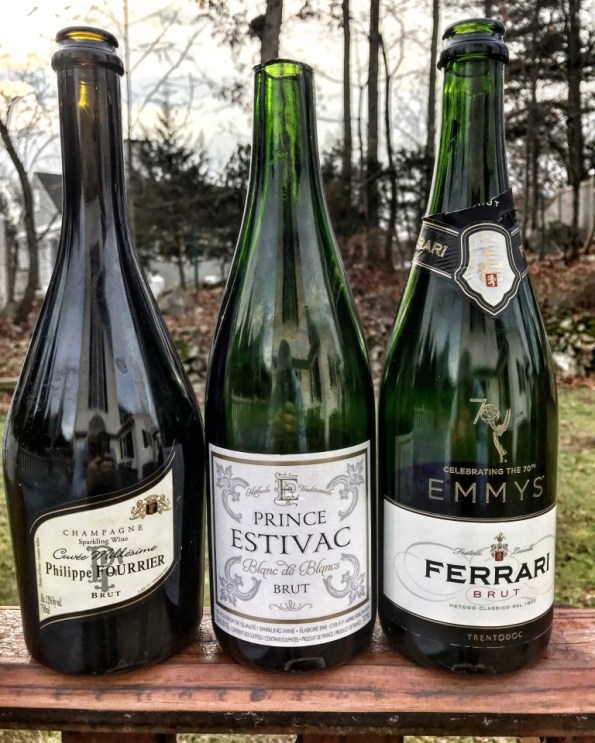
2008 Philippe Fourrier Cuvée Millésime Brut Champagne (12% ABV, $29.99 WTSO) was outstanding, just a perfect sip to start the holiday evening right. It had just the right amount of yeast and toasted bread notes on the nose, just enough to enjoy without going overboard. Apple and lemon notes on the palate, round, fresh, elegant, perfect balance – just a beautiful wine (Drinkability: 8+). It was also a steal at the price (seems that the wine is no longer available at WTSO).
The vintage Champagne disappeared in no time, it was still long before the apple would start its slide down in the Times Square, so the generic French sparkling wine was next. The weather outside was far from ideal for the New Year’s Eve (non-stop heavy rain) but it didn’t stop me from the pleasure of sabering the bottle into the darkness – worked like a charm even with the wine glass, unlike the #$%^ (insert your favorite expletive) with the saber at the French Laundry.
The NV Prince d’Estivac Blanc de Blancs Brut Vin Mousseux de Qualite (12% ABV, $13.99 WTSO, Melon de Bourgogne 50%, Ugni Blanc 25%, Chardonnay 25%) was excellent in its own right – fresh and vibrant, with rich mouthfeel, touch of a fresh apple, a bit bigger body than a typical Champagne – delicious in every drop (Drinkability: 8). It was also interesting learning for me as I’m not really familiar with “Vin Mousseux de Qualite” designation. It can be used for any French sparkling wine made with the traditional method. I’m assuming with the Vin Mousseux de Qualite designation the grapes can come from anywhere in France, where all of the Cremant wines (Cremant de Alsace, Cremant de Loire, …) require the grapes to be from the defined geographic area – if I’m wrong, please let me know in the comment.
Last but not least the time has come for the NV Ferrari Brut Trentodoc Emmys’ Special Edition (12.5% ABV, $24, 100% Chardonnay, 24+ month on the lees). Ferrari wines generally don’t disappoint, and this one was not an exception – crips, bright, bubbly (pun intended), good minerality, cut through acidity – sparkling wine worth any celebration (Drinkability: 8).
Of course, there was more than just the wine – New Year’s Eve is calling for a full table – here is a fragment of ours.
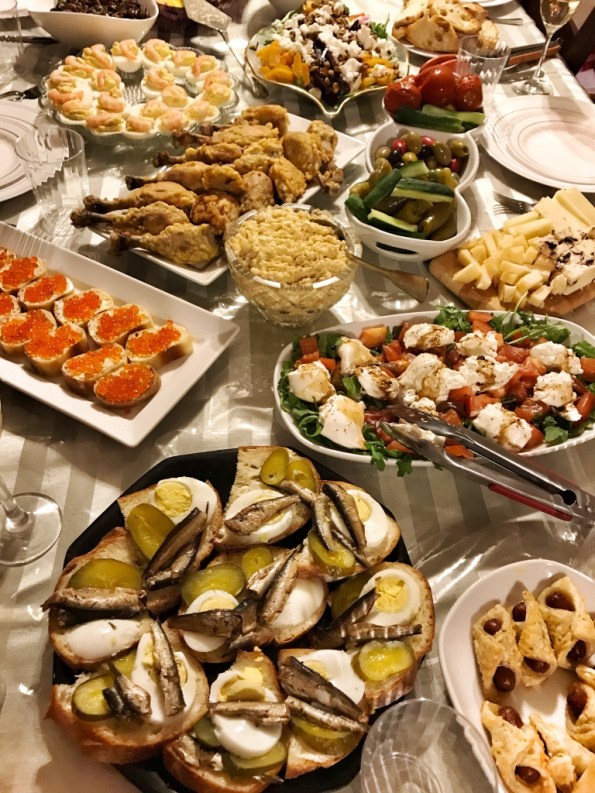
How did you celebrate the arrival of 2019? What were your bubbles of choice? Cheers!
Top Wines of 2018
And the time has come to summarize the most memorable wine experiences of 2018 – here is the list of about dozen of wines which made a lasting impression. The top wines list at Talk-a-Vino typically consists of two parts, as I can never limit myself to one dozen of wines – you can find the second part of the Top Wines of 2018 list here. That “second dozen” post also provides a bit more explanation behind the logic of this list. Without further ado, let me present to you my top wines of 2018:


13. 1997 Chalone Vineyard Pinot Blanc Monterey County California ($NA) – there are always those wines which you look at and say “yeah, whatever, let’s just try it before we will pour it out”. And then your thought (after the sip) is “what, wait, really?” This was one of such wines – 21 years old white wine, Pinot Blanc from California – no doubts it already turned into vinegar, right? Wrong! Whitestone fruit, good acidity, nicely plump – it was a great surprise and an excellent evening opener.
12. 1995 Caves São João Quinta do Poço do Lobo Reserva Bairrada DOC Portugal ($22 @ Last Bottle) – despite the serious age, this wine was just released, and I scored a few bottles thanks to the Last Bottle. I know that Portugal makes great wines which can age, but this wine still went beyond expectations – perfectly fresh, perfectly concentrated, perfectly delicious. I brought a bottle to share during the after-party at the Wine Bloggers Conference this year, and poured it blind for two wine pros, asking them only to estimate the vintage – they both were 10 years off, suggesting that the wine was from 2005 instead of 1995. Another interesting fact about this wine that one of the 3 grapes it is made out of, Moreto, is not even growing in Portugal anymore…
11. 2015 Smith-Madrone Riesling Spring Mountain District Napa Valley ($32) – a pure revelation. I had no idea Napa Valley is capable of producing a beautiful Riesling. Chardonnay, Sauvignon Blanc – of course, but varietally correct Riesling? Yes, Smith-Madrone can! It even had a touch of my beloved petrol, which always makes me very happy. Look for this wine, you will not regret it.
10. 2014 Tiefenbrunner Turmhof Sauvignon Südtirol Alto Adige ($30) – A pure stunner. Of course, Italy is best known for its reds, and when it comes to whites, it is autochthonous varieties which usually shine, such as Pecorino, Falanghina, or Verdicchio. However, I had a pleasure of experiencing mind-boggling renditions of Chardonnay and Sauvignon Blanc, and this was exactly one of such a mind-boggling Sauvignon Blanc encounters. Recognizable Sauvignon Blanc in its core, but plump, complex and silky smooth. The fact that the wine comes from Alta Adige, unique mountainous region, also contributes here. A memorable wine.


9. 2002 d’Arenberg The Dead Arm Shiraz McLaren Vale Australia ($70) – while typically not a word to use to describe Shiraz, my key descriptor for this wine will be “finesse”. This wine was mature and elegant, offering complex earthy undertones with a touch of barnyard, and lean and clean in its overall expression. It still got time to evolve, but already offers lots of pleasure.
8. 2008 Grosset Polish Hill Riesling Clare Valley Australia (~$50 for current vintage) – For me, this wine was a pure encounter with the legend – in many ways. Clare Valley in Australia is famous for its Riesling, same as Hunter Valley is famous for its Semillon. Polish Hill is one of the best vineyards in Clare Valley, and Grosset is a pioneer and one of the very best producers in Clare Valley and Australia overall. To top it all off, I had this wine during the dinner with my [not virtual anymore] friend Oz in Singapore. Memorable wine? You bet.
7. 1986 Chateau Cordeillan-Bages Pauillac AOC ($54.97) – I have no idea where and how this bottle ended up in my cellar, but I’m glad it did. 32 years old Bordeaux, elegant, balanced, showing no sign of age, delicious from the first sip to the last. Also coming from the Chateau with minuscule production. Need I say more?
6. 2015 Domaine Jean-Noel Gagnard Chassagne-Montrachet Blanc 1er Cru Les Caillerets ($100) – The only thought I have when drinking such a beautiful white Burgundy is that I need, really need to drink more of the white Burgundy wines. Good Burgundian Chardonnay is amazing when young, and surreal once it picks up some age. This is practically the only time when I wish for an expense account to be able to drink the wines like that.
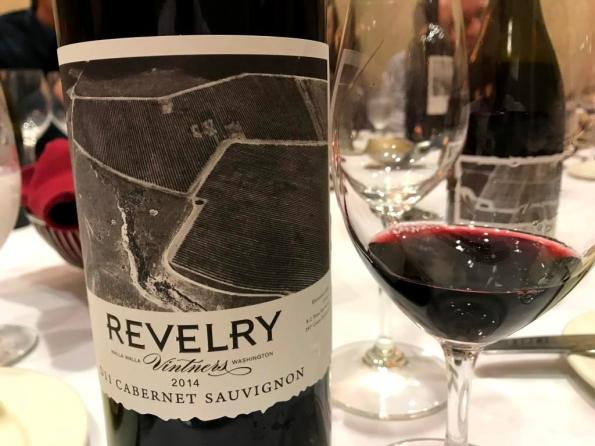
5. 2014 Revelry Vintners D11 Cabernet Sauvignon Walla Walla Washington ($80) – yet another great highlight of the Wine Bloggers Conference this year. Imagine beautiful blackcurrants weaved around a perfect, firm structure of the crunchy tannins – that was this wine. I’m really surprised at myself – on a normal day, I would definitely take Syrah over Cab – and Revelry Block 19 Syrah, which we had at the same time as this Cab, was equally beautiful – but it is the Cabernet Sauvignon which got stuck in my head.

4. Bodegas Beronia Rioja ($NA) – so this will be a bit strange, as I’m including here more of the experience than a single wine. I was lucky to be invited to the lunch with Bodegas Beronia winemaker, Matias Calleja, in New York. I love Rioja unquestionably, but at that lunch, my takeaway was a lot bigger than just a taste of another excellent Rioja – we were able to experience the effect of the type of oak on the same young Tempranillo wine, and see how American oak affects the wine versus French oak versus Bodegas Beronia own oak combination. An incredible experience in my book. And then I was able to save a business dinner with the 2011 Bodegas Beronia Rioja Reserva, so if you need a particular wine designation for the list, it can be the one.
3. “This line was intentionally left void” – keep reading, you will see why.


2. 2010 Antica Terra Rosé Willamette Valley ($75) – OMG. Is that enough of the description? I pulled this bottle without much expectation – Antica Terra makes incredible terroir-driven wines, but 8 years for Rosé is rather too much, right? Wrong! A stunning color, and the cranberry-loaded palate of liquid granite – the only thing I could extort was that “OMG”. Back in 2012, Antica Terra Phantasi was my wine of the year – this Rosé was hair-splitting close to becoming the wine of the year again.
1. 2008 Zenato “Sergio Zenato” Amarone della Valpolicella Classico DOCG ($100) – I love Amarone. I expressed my love to this great Italian wine many times on this blog – together with my utmost frustration while looking for a good Amarone (before you start cursing – “good wine” is highly subjective, personal definition). This wine was amazing, one of the very best I ever experienced – dry fruit on the nose (figs, raisins) and crisp, dry, clean, full-bodied palate of impeccable balance. A pure, pure delight.


1. 2013 Three Wine Company Suscol Creek Cabernet Sauvignon Block 5 Napa Valley ($60) – yes, I did it again – I have two #1 wines this year. I can’t do that? Of course I can – my blog, my rules. I had this wine at the dinner with friends during our annual adults getaway. This was literally a mind-blowing rendition of a California Cabernet Sauvignon – beautiful extraction, cassis with eucalyptus, anise and mint, silky, velvety tannins – this wine was screaming in my face “I am the California Cab” – and with a perfect balance of all elements, it was simply a “wow experience” – I would gladly drink it at any time.
Here it is – the presentation of the Talk-a-Vino Top Wines of 2018 is now complete.
As today is the December 31st, and New Year 2019 is about to arrive, I want to wish you all happy, healthy, and peaceful New Year. Yes, it should be prosperous too, and I hope all your wishes will come true. Much love to all. Cheers!
Top Wines of 2018 – Second Dozen
Another year is about to become a history – which means special time on the Talk-a-Vino pages. It is the time to reflect on the wines of the past year and to relive some of the tasty moments once again.
This feature is run every year since I started the blog in 2010 so this will be the 9th annual list. The wines are included in this list on one simple premise – they have to be memorable. The easier for me to recall the wine, the better are the chances for the wine to be included here.
It is always not easy to designate a few dozens of wines to include into this list – I think I roughly taste about a thousand wines (that include all the trade tastings, of course) during the year, so deciding on the 20 something of the “best” is a challenging task – but it only makes it more fun.
With the exception of the wine #1, most of the wines in this list are not sorted in any kind of order – but the wine #1 would be the most memorable wine of the year. If I wrote about the wine before, I will always include the link to the existing post. For most of the cases, I don’t include the tasting notes in the Top Wines posts – just an explanation as to why the wine was included into the list. Ahh, and it is never just two dozens of wines – making the decision is hard, and 12 or 14 doesn’t make a whole lot of difference, right?
We are done with the introduction – now, let’s talk about the wines.


27. 2016 Château Peybonhomme-les-Tours Blaye Côtes de Bordeaux ($20) – this wine comes from the double-underappreciated category – Côtes de Bordeaux is regarded much less than the Bordeaux itself, and white Bordeaux is something people rarely ask for by name. However, once you will taste this wine, you wouldn’t care about its pedigree, you would only care about another glass. Beautiful combination of crispy, refreshing, and round. Look for this wine – but don’t settle for one bottle, or you are taking a great risk of upsetting yourself.
26. 2015 Lucas & Lewellen Toccata Classico Santa Barbara County ($29) – this is the wine you have to taste to believe. In a blind tasting, I would instantly designate it as an Italian – all the characteristic traits of a good, modern style Chianti, with generous sweet cherries and a touch of leather and tobacco on the back end are present in this wine – only it is made in California. Great effort, delicious wine.
25. 2016 Brooks Ara Riesling Willamette Valley ($38) – It is not every day you get to drink Riesling from Oregon. It is also not every day that you drink delicious Riesling not made in Germany, Alsace, or, at least, the Finger Lakes. Truly delicious, varietally correct Riesling. A beautiful wine worth seeking.
24. 2016 WineGirl Wines Butte PinUp Blend Lake Chelan ($40) – was blown away by how polished and well integrated this wine was during the Wine Bloggers Conference this year. This is one yummy, delicious and perfectly balanced wine, which you want to continue drinking and the bottle is …you know… empty?


23. 2007 Tishbi Cabernet-Petite Sirah Shomron Israel ($NA) – Tishbi is one of the oldest and best Israeli producers, yes. However, I really didn’t expect much from this 11 years old wine which was simply stored on the wine rack in the middle of the room in the apartment. And the wine was a total [good!] surprise – it was fragrant, it was mature, it was ultra-complex and delicious. It was probably at its peak, but who knows… By the time I wanted a second glass, it was gone.
22. 1997 Burgess Cellars Cabernet Sauvignon Napa Valley ($NA) – 1997 is a special year in my life (our marriage year), so I’m always looking for the wines from 1997. A while ago, I was lucky enough to score a few batches of Burgess Cellars 1997 Cabernet Sauvignon off the WTSO, and we had been enjoying it one bottle at a time. Every time I open a bottle I’m happy to see that it is still fresh, still can use a bit more time, and it is still perfectly delicious.
21. 2004 Viña Mayor Reserva Ribera Del Duero (~$20) – every time when I drink Ribera del Duero wines, especially at this level of quality, I wonder why I don’t drink them more often. Let’s also not forget that 2004 was an excellent vintage in Ribera del Duero. This 14 years old wine didn’t show any hint of age – powerful and structured, but generous and voluptuous at the same time. It was my last bottle, unfortunately – but I hope that even newer vintages will fare equally well.
20. 2014 Dunham Cellars XX Cabernet Sauvignon Walla Walla Valley ($45) – similarly to the Brooks Riesling and WineGirl red, this wine was also one of the highlights of the WBC18. A textbook example of the good Cabernet Sauvignon – cassis, eucalyptus, full body with gentle, layered tannins, perfect balance – just an excellent wine.
19. 2011 Jean-Luc Baldès Triguedina Clos Triguedina Cahors AOP ($40) – wines of the south of France are rare and definitely underappreciated, for sure in the USA. This wine was one of the highlights of the tasting of the wines of the south of France I attended earlier this year. The wine is primarily Malbec, but unlike Argentinian renditions, this is an old world wine, restrained, elegant, and thought-provoking.
18. 2016 Il Poggione Rosso di Montalcino ($27) – this wine was an indelible part of one of the most unique culinary experiences of the year – tasting Bistecca alla Fiorentina, made out of the Pat LaFrieda meat, perfectly accompanied by this Rosso. I always think “steak and Cab”, but this baby Brunello was simply singing with the meat, precisely matching the herbal components of the seasoning and adding layers of the tart cherries with every sip. I always appreciate good wine and food pairing, but I’m sure you know that good pairings are never easy to find – and this was pure perfection.


17. 2013 Willis Hall Razz-ma-Tazz v4.0 Washington ($NA) – Sweet wines are always a troubled category – everybody is ashamed to admit that they like sugar, so the sweet wines mostly stay in the “thinking about” realm – when we plan a dinner, we often think of finishing it with a bottle of dessert wine – by the time the dessert bottle should be opened, your gusts tell you that they don’t want anything else, especially not the dessert wine. So I was contemplating opening this bottle for the very long time, few times even getting it out of the cellar, only to put back when the guests are gone. I’m glad I finally pulled the cork as the wine was a pure delight. It is actually made out of raspberries, and it was ultra-elegant, with the pure, ripe, delicious raspberry taste matched with beautiful acidity.
16. 2009 Montalbera Laccento Ruche di Castagnole Monferrato Piedmont ($35) – This is not a very old wine, but this was definitely the case of the patience rewarded. I had current vintage Ruche from the same producer earlier this year, and while the wine was good, it clearly needed time. This 2009 Ruche was perfectly on point – dry, firm and structured, it had a beautiful bouquet already developed, offering perfumed leather, cherries and tobacco intermingling on the palate. Couple that with a good pizza – and this might be a glimpse of heaven on Earth moment.
15. 2014 Tendril Cellars Extrovert Pinot Noir Willamette Valley ($48) – tasting the wines of Tony Rynders of Tendril Cellars was a special experience – 5 different Pinot Noir, each one with its own personality. Somehow, the Extrovert left the most lasting impression out of the five – the finesse of Pinot Noir all enwrapped in the layers of silky power, as only Oregon Pinot Noir can deliver. If you are a fun of a fully extracted Oregon Pinot Noir, you will understand me well. If you are not, you need to find this wine and taste it for yourself.
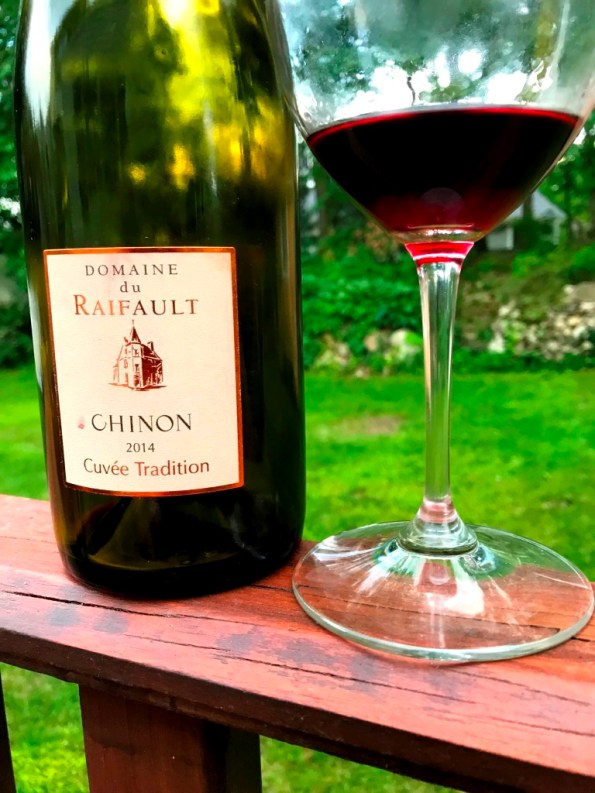
14. 2014 Domaine du Raifault Cuvée Tradition Chinon AOC ($17) – I’m a huge fan of Cabernet Franc wines, especially in the old world rendition, where the cassis is beautifully apparent and the wine stays on the lean side. This was a superb example of the old world Cabernet Franc, cassis forward and firmly structured. A delight.
This now concludes the presentation of the second dozen (and some) of the Talk-a-Vino Top Wines of 2018. The first dozen post will follow shortly. Cheers!
From $5 to $95
Taste of the wine is subjective. This is a very simple statement, but it is important to keep it in mind. It really helps to avoid disappointment, when, for example, you tell your friend that the wine is amazing, and your friend politely explains that “ahh, sorry, this is really not my thing”. This is also why all the ratings and medals simply mean that someone liked the wine – but they don’t offer any guarantee that you will like the wine too.
Not only the taste of the wine is “objectively subjective” (hope this makes sense to you), but it is also easily influenced (blind tasting is the only way to remove all the external influences and leave you one on one with the wine). There are many factors which influence the taste – bottle appearance, label, ratings, medals, friends and store clerks recommendations, and maybe most importantly, price.
Think about how you buy a bottle of wine as a present for someone. You would typically set yourself a price limit, and you will do your best not to exceed it. Let’s say you decided to spend $30 on a bottle. But what happens if the store’s employee would recommend you a bottle of wine at $15, saying also that the $15 bottle is equally good or even better than the one for $32 you hold in your hand. What will be your first thought? I bet your brain will say “ohh, this is too cheap! You can’t do this, take the one for $32!”.
It is obvious that price affects your buying decision. But the price is even more influential when you start drinking the wine, as the price sets the expectations. Feel free to tell me how wrong I am, but I’m willing to bet that you expect $10 bottle of wine to be mediocre, and you will be ultra-excited faced with the glass of $100 wine. The fun part about $10 bottle is that there is a great chance for a pleasant surprise. The sad part about the $100 bottle that there is a chance of a great disappointment. The best thing to do is to keep your expectations at bay and simply taste the wine and decide whether you like it or not – but this is usually easier said than done. Oh well, just keep working on it.
The message I’m trying to convey with all this pricing/influencing talk can be summarized like this: tasty wines exist at all price ranges. You can enjoy the wine for $5, and you can enjoy the wine for $95. Will you enjoy them equally? This is a tough question only you can answer. But let me share with you my experience with the wines from $5 to $95 which I tasted throughout this year – and then we can compare notes later on. Here we go:


Under $10:
2016 San Pedro Gato Negro Pinot Noir Valle Central DO Chile (13.5% ABV, $4.99)
Garnet
Characteristic Pinot Noir cherries and lavender on the nose, medium intensity
Simple, light, touch of tart cherries, baking spice, good acidity, overall not weary powerful, but offers lots of pleasure.
7+, simple but very nice glass of wine, and an amazing value.
2016 San Pedro 9 Lives Cabernet Sauvignon Reserve Chile (13.5% ABV, $9.99)
Garnet
Tobacco and cat pee
Pretty tannic, with some fruit notes hiding behind.
Not very good from the get-go.
After 3 days open – dramatic change, raspberries and blackberries on the palate, ripe fruit, good acidity, eucalyptus notes, medium body – very nice. Truly needed time ( even 2 days was not enough).
8- after 3 days.


Under $20:
2014 Domaine du Raifault Cuvée Tradition Chinon AOC (13% ABV, $17)
Bright Ruby color
Tobacco and cassis on the nose, bright and explicit
The same continues on the palate – cassis, tobacco, perfect acidity, bright, soft, round, delicious.
9, I can drink this wine any day, every day. Superb. This is the Cab Franc I want to drink.
2014 San Marzano Talò Salice Salentino DOP (13% ABV, $16.99, 85% Negroamaro, 15% Malvasia Nera, 6 months in French oak)
Dark garnet
Cherries, leather, earthy notes, granite, fresh, open, inviting
Ripe cherries, vanilla, toasted brioche, sweet tobacco, succulent, open, fresh acidity, medium+ body, excellent balance
8-/8, perfect from the get go
8+ on the second and next 3 days – lots of chewy dark fruit, generous, voluptuous, outstanding.


Under $40:
2013 Xavier Flouret Kavalier Riesling Kabinett Trocken Mosel (11% ABV, $25)
Bright Golden color
A touch of honey, lots of tropical fruit – guava, mango, white flowers, intense, pleasant
Cut trough acidity, lemon, green pineapple, intense minerality, excellent
8, great Riesling as it should be – I want to try it in 10 years.
2015 Markham Vineyards Merlot Napa Valley (14.5% ABV, $27, 86% Merlot, 12% Cabernet Sauvignon, 2% Petite Sirah, 15 months in barrel)
Dark garnet
Muted nose, a touch of blackberries, right, mint, minerality
The palate is also restrained, tart dark fruit, good structure, good acidity
8-, needs time.
2013 Attems Cicinis Sauvignon Blanc Collio DOC (13.5% ABV, $30, 8 months in French oak Barriques and 2 months in the bottle)
Light golden
Minerality driven nose, with a touch of truffle and sweet sage
Medium body, crisp, firm, excellent acidity but overall nice plumpness, savory lemon, crisp finish
Drinkability: 8, I would gladly drink it again any time


Above $40:
2013 Frescobaldi Castello Nipozzano Montesodi Toscana IGT (13.5% ABV, $44, 18 months in oak, 6 months in the bottle)
Garnet color
Leather, forest floor, minerality, cedar, medium+ intensity
A touch of smoke, tart cherries, tobacco, clean acidity, well integrated.
8, delicious from the get-go. Excellent aging potential.
2014 Domaine Ostertag Muenchberg Riesling Alsace Grand Cru Contrôlée (14% ABV, $50)
Light golden
Rich, intense, tropical fruit, guava, pineapple, distant hint of petrol
Delicious palate, a touch of honey and hazelnut, good acidity and tons of minerality. This is minerality driven wine right now, which will evolve into a total beauty over the next 10 years.
8, excellent.
2014 Luce Della Vite Toscana IGP (14.5% ABV, $95, Sangiovese/Merlot, 24 months in French oak)
Dark garnet
Pungent, dark chocolate, truffles, licorice
From the get-go, super gripping tannins. A little bit of dark fruit is immediately displaced by the tannins. Based on the initial sensation, lots of French oak.
Not drinkable from the get-go. Needs time.
3 days later – superb. Succulent cherries, firm structure, a touch of leather and tobacco, unmistakably Italian, and unmistakable super-Tuscan. Great acidity.
8+
As you can tell, I was equally struggling with the wines at $10 and $95, and my most favorite wine from the group was a mere $17 wine – but overall, there were no bad wines in this group. How do you see the prices of wine? How influential are prices when you buy the wine and when you drink it? Cheers!
Quick Trip Around The World
Travel might be the biggest joy of human existence. Okay, if not the biggest, it is still one of the most essential ones. Travel leads to new experiences – and experiences are the moments which comprise our lives. I’m sure the joy of travel is not universal, but I’m equally sure that it actually is for the majority of the readers of this blog (hoping that there is at least someone reading it?).
Travel typically requires two things – resources and preparation. Heck, with unlimited resources you need no preparation – you can finish your work day, say “I feel like dining at Le Cinq tomorrow”, have your limo take you directly to the airport and off you go. For many of us, this would be just a scene from the movies – which doesn’t make it impossible, right?
For most of us, successful and happy travel would require a bit more effort – find the deal on the airfare, find the deal on the hotel, find out that your passport expired just a week before you need to get on the flight, then listen to the boss complaining that you are leaving without finishing all your important tasks, finally, throwing everything you need but mostly what you don’t into the suitcase 30 minutes before leaving for the airport and starting your so long anticipated travel totally exhausted. More or less, this is the picture, right?
Then every once in a while, there is something even the unlimited funds can’t buy. Time, I’m talking about. When you finish work at 6 in New York, there is no way to be in Madrid in time for dinner. This is where you need a magic trick – and I can offer you one. Actually, you don’t need any magic to travel instantly to many different places – all you need is … well, I’m sure you know it is coming … yes, all you need is wine. The wine has this capacity. Once you look at the label and see it says France, Spain or California, your imagination can easily do the rest. A well-made wine has a sense of place, so once you take a sip, you are instantly transported to the place where wine was made. And if you ever visited the winery or the region where the wine came from, I’m sure you can be instantly overwhelmed with the emotions and memories. No, it is not the same as simply been there, but I’m sure it will still do the trick.
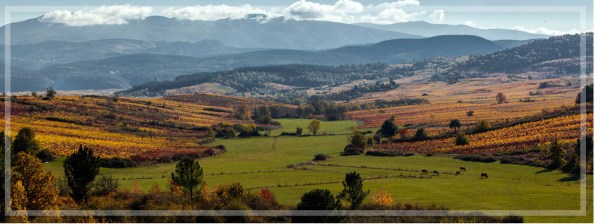
Bierzo, Spain. Source: Bodegas Godelia website
Let’s take wine and let’s travel – how about a quick trip around the world? Let’s start in Spain, in the region called Bierzo, located in the North East part of Spain, close to the Portuguese border. As with many places in the old world, the viticulture originated in the region in the times of the Roman empire. Today, Bierzo is best known for the red wines made out of the grape called Mencía, and Godello and Doña Blanca are the two primary white grapes in the region. Bierzo is known for its special microclimate, conducive for the grape growing, which can be characterized as the continental climate with ocean influence. Bierzo has today about 2,000 grape growers, 75 wineries, and produced about 9 million bottles of wine in 2017.
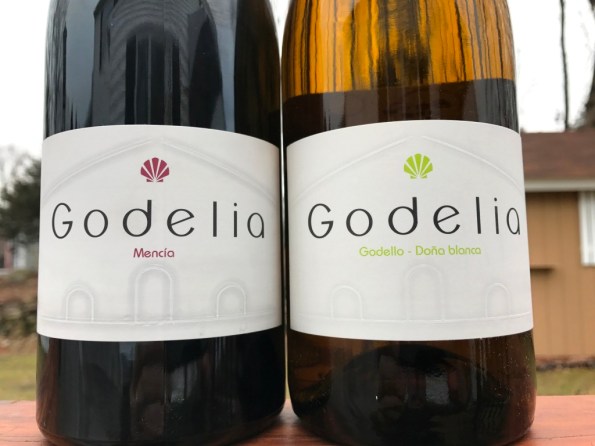
Two wines I want to offer to your attention come from the Bodegas Godelia, about 86 acres estate in Bierzo. The winery was created in 2009, however, their vineyards are much older, from 20 to 90 years old, depending on the grapes, and located at the altitudes of 1,600 to 2,000 feet.
2015 Bodegas Godelia Blanco Bierza DO (13.5% ABV, $17, 80% Godello, 20% Doña Blanca)
C: light golden
N: intense, pear, guava,
P: lemon, honeysuckle, crisp acidity, medium + body, delicious
V: 8-
2012 Bodegas Godelia Mencia Bierzo DO (14.5% ABV, $19, 12 months in oak)
C: dark garnet, almost black
N: warm, inviting, medium+ intensity, a touch of barnyard, spices
P: cherries, baking spices, medium body, violets
V: 7+ on the 2nd day, needs time. Mencia is known to produce massive, chewy wines, so this wine is no exception. 6 years of age is nothing for this wine – it might start opening up after at least another 6.
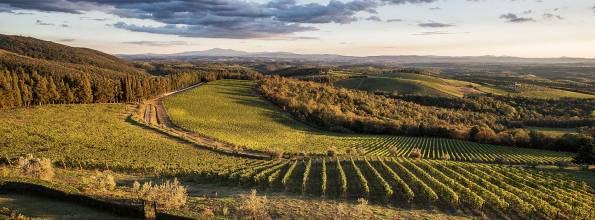
Hills of Tuscany. Source: Barone Ricasoli website
Where should we go after Spain? How about Italy? Let’s visit Tuscany, where 2015 vintage was simply outstanding. Of course, Tuscany is best known for its Chianti wine. At the heart of the Chianti region lays a much smaller region called Chianti Classico – this is where the Chianti wines historically originated from. Inside Chianti Classico, let’s look for the winery called Barone Ricasoli – one of the very first producers in the region, taking its history since 1141. Barone Ricasoli property has a grand looking castle, where some of the stones are still original since 1141, 600 acres of vineyards and 65 acres of olive trees. While Barone Ricasoli is mostly known for the reds, they also produce a few of the white wines, a Rosato, grappa, and of course, the olive oil.


I want to offer you two of the classic Chianti wines from the Chianti Classico area (pun intended):
2015 Barone Ricasoli Brolio Chianti Classico DOCG (13.5% ABV, $18, 80% Sangiovese, 15% Merlot, 5% Cabernet Sauvignon)
C: Garnet
N: Tar, leather, sandalwood, tart cherries
P: Tart cherries, plums, clean acidity, sage, a touch of tobacco, medium plus body, good structure.
V: 8, was excellent from the get-go, got more complexity on the second day.
2015 Barone Ricasoli Brolio Chianti Classico Riserva DOCG (14% ABV, $23, 80% Sangiovese, 15% Merlot, 5% Cabernet Sauvignon)
C: Dark garnet
N: Cherry, Sage, Rosemary, leather, medium plus intensity.
P: Supple berries, tart cherries, firm structure, young tannins, a touch of tobacco, good acidity, tannins on the finish
V: 8, great potential. Right now needs food. While perfectly drinkable now, with time will become a truly delicious sip.
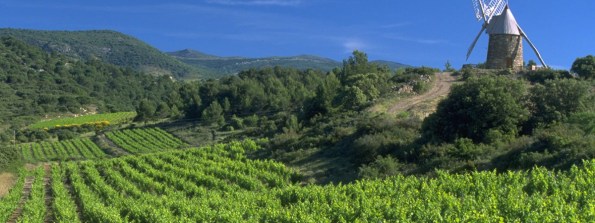
Languedoc. Source: Languedoc-wines.com
We need to complete our old world portion of the tour, so I think the stop in France is a must. How about a quick visit with Paul Mas in Languedoc? Languedoc is the largest wine producing region in France, located in the south, producing a tremendous range of white, sparkling, Rosé and, for the most part, red wines. Domaines Paul Mas is one of my favorite producers I have written about many times. What I love about the wines of Domaines Paul Mas is that you literally can’t go wrong with any of the wines produced at the domain – Sparkling, Rosé, white or reds. Not only the wines taste great, but they are also priced very reasonably – Paul Mas wines saved my wallet at the restaurants on multiple occasions, so they definitely deserve some respect. Here are the wines I want to bring to your attention:


2016 Paul Mas Estate Single Vineyard Collection Chardonnay Saint Hilaire Vineyard Pays d’Oc (13.5% ABV, $12.99)
C: Light golden color
N: Meyer lemon aromatics, hint of white peach, Bosc pear
P: Crisp, tart lemon on the palate, ripe Granny Smith apples, clean, refreshing. Good mid-palate presence, medium finish.
V: 8-, very good.
2016 Paul Mas Estate Single Vineyard Collection Pinot Noir Saint Hilaire Vineyard Pays d’Oc (13.5% ABV, $12.99)
C: Dark ruby
N: Fresh raspberries and cherries on the nose
P: Soft, supple, fresh berries, crisp, fresh, perfect acidity, excellent
V: 7+/8-
2016 Paul Mas Estate Single Vineyard Collection Malbec Saint Hilaire Vineyard Pays d’Oc (13.5% ABV, $12.99, 90% Malbec, 10% Cabernet Franc))
C: Dark garnet
N: Fresh raspberries and blackberries in the nose, nicely inviting
P: Soft, supple, fresh berries, crisp, fresh, perfect acidity, excellent
V: 8-
How is your day going so far? Feel like traveling somewhere? How about we will take a trip to sunny California? California is a big place, so to narrow it down we are actually heading to the Santa Barbara County. Here is a perfect example of the wine being a connector and an instant transporter – as soon as I hear “Santa Barbara County”, the brain instantly serves up the memories of the first Wine Bloggers Conference I attended, WBC14, which took place in Santa Barbara County. Moreover, one of the best experiences of that trip was a visit to the small town of Solvang, which is an incredible place for any wine lover. While visiting Solvang, we tasted the wines produced by Lucas and Lewellen – thus seeing that name on the label was an instant memory trigger.


The wine I want to offer to your attention today is perfectly representative of the capabilities of the Santa Barbara County wine growing region, and at the same time is very non-typical for California. Lucas and Lewellen produce the line of wines under the name of Toccata, which are all Italian varieties and blends, all grown in California. This Toccata Classico was a perfect enigma – varietally correct Tuscan beauty, only made from start to finish in California. In a blind tasting, my guess 100% would be “Chianti!”.
2015 Lucas & Lewellen Toccata Classico Santa Barbara County (14.1% ABV, $29, 50% Sangiovese, 30% Cabernet Sauvignon, 5% Merlot, 5% Cabernet Franc, 5% Freisa, 5% Petit Verdot, 18 months in French Oak, 346 cases produced)
C: Garnet
N: Fresh cherries, touch a leather, medium+ intensity
P: Ripe cherries on the palate, bright, firm structure, fresh, crunchy, touch of leather, excellent complexity, nicely integrated tannins
V: 8+, an excellent rendition of the old world wine in the new world.
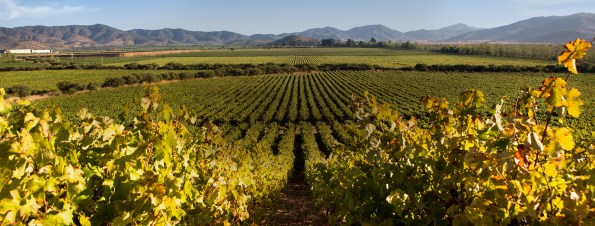
Trinidad Vineyard, Chile. source: Viña Ventisquero website
Hurry up or we will be late for our last destination – Chile. About 25 years ago, Chile was mostly known as a “one-trick pony”, offering bargain-priced Cabernet Sauvignon, Merlot, and Chardonnay. Today, Chile is one of the leading wine producing countries in the world, offering a substantial range of perfectly executed wines, from Chile’s own trademark, Carménere, to Pinot Noir, Syrah, Grenache, and many others.
Today we are visiting Viña Ventisquero, the winery which started only 20 years ago, in 1998, and now offering a diversified set of wines, coming from the different regions and made with the finest attention to detail.
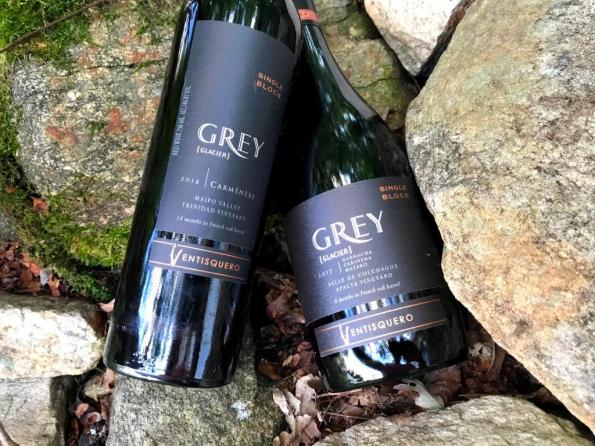
2017 Viña Ventisquero Grey Glacier Single Block Apalta Vineyard Valle de Colchagua (14% ABV, $18, 62% Garnacha, 19% Carinena, 19% Mataro, 6 months in French oak)
C: Ruby
N: Fresh raspberries, medium plus intensity, beautiful
P: Restrained, dark fruit, medium body, minerality, clean acidity, tart raspberries
V: 8-
2014 Viña Ventisquero Grey Glacier Carménere Trinidad VIneyard Maipo Valley (14% ABV, $19, 18 months in French oak)
Dark garnet
A perfect nose of Carménere – mix black currant berries with blackcurrant leaves
Medium to full body, soft, silky, fresh blackcurrant present, anis, good acidity, good balance, very pleasant overall
8/8+, excellent wine
That concludes our trip, my friends. Wasn’t it easy to travel with wine, in the comfort of your living room? Cheers!
Double the Holiday Fun With Vilarnau
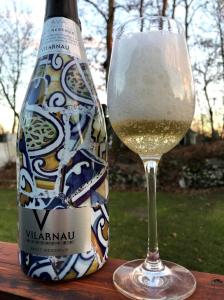 Who doesn’t like the holidays? Of course, it is easy to complain about how overwhelming the holidays can be when we feel obliged to please lots of people in seemingly irreconcilable ways with food or with gifts. But let’s not go there – holidays genuinely are about the happy state of mind, so let’s focus on it.
Here I come, with an offer to double your holiday fun and enjoyment – are you at least a little bit curious how am I going to be able to deliver on that?
Here is how. First, I want to recommend you a good wine. Wine is an indelible part of any celebration – any holiday, any birthday, any achievement. There are lots and lots of wines to chose from, and really not enough time to learn about all of them. Thus the wine recommendation means that you can save time for some other important tasks, and have one less thing to worry about. Check.
Now, how can I double the fun? Easy. How about the wine in a beautiful package? When you bring the bottle to someone’s house, or you put it out in front of your guests, isn’t it nice to hear “wow, what a beautiful bottle!”. We are visual creatures; not only we eat with our eyes first, but we drink with our eyes first too. Instead of explaining the bottle with the gray words-covered label “it comes from the great producer, really” or “the guy at the store said I would love it”, isn’t it better to just put the bottle on the table which makes a statement with its own appearance “here, look how beautiful I am”?
So here it is, my recommendation for the double fun for the holidays – Cava, Spanish Sparkling wine from Vilarnau, all wrapped in the beautiful, Gaudí-inspired packaging.
Vilarnau estate had been growing vines since the 12th century. The first Cava at Vilarnau was produced in 1949, and from there on, Vilarnau moved on to become one of the prominent Cava producers in Spain.
Vilarnau has a diverse portfolio of the sparkling wines, out of which the Trencadis series wines stand out beautifully. To explain the Trencadis concept, let me simply bring an explanation from the Vilarnau website:
“What is Trencadis?
“Trencadís” is a kind of mosaic that was used in the modernist artistic movement in Catalonia, created from tiny fragments of broken ceramic tiles, roof tiles or crockery. The technique is also known as “pique assiette”, in French. The Catalan architects Antoni GaudÍ and Josep MarÍa Pujol used “trencadÍs” in many of their designs, the most famous probably being “Parc Güell in Barcelona. Vilarnau’s proximity to Barcelona (not just geographic but also spiritual) means it was natural for this artistic resource used by the winery. As a result some of our cavas are dressed as follows.”
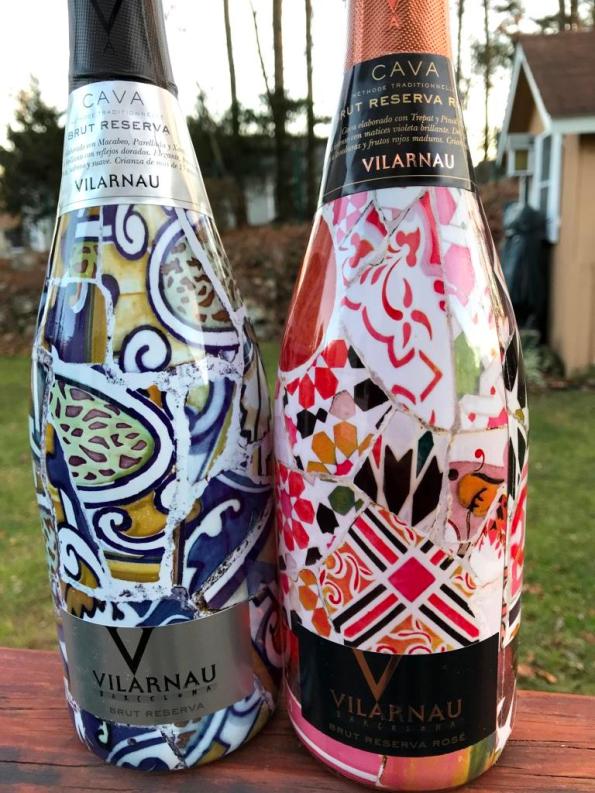
Just take a close look at those bottles, how closely they resemble the actual mosaic pieces with all the grout in between? Don’t you think these bottles are beautiful? If anything, they will make for a perfect conversation starter at any gathering – and now you can also explain to people what exactly are they looking at.
So what is behind the beautiful packages? Equally beautiful Cavas, which are also stylistically very different. Cava is a Spanish sparkling wine produced in so-called Classic Method, where the second fermentation takes place in the bottle, exactly as it is done in the production of the French Champagne.


NV Vilarnau Brut Reserva DO Cava (11.5% ABV, $14.99, 50% Macabeo, 35% Parellada, 15% Xarel-lo, 15+ months in the bottle)
Beautiful mousse
Classic Champagne nose – toasted bread, a touch of yeast, white apples, a touch of lemon
Same classic profile continues on the palate – freshly baked bread, a touch of yeast, golden delicious apple, fresh, exuberant, perfect acidity
8, delicious
NV Vilarnau Brut Reserva Rosé Delicat DO Cava (12% ABV, $15.99, 85% Grenache, 15% Pinot Noir, 15+ months in the bottle)
Beautiful mousse
A touch of toasted bread with the addition of strawberries and cranberries
Toasted bread, strawberries, a touch of cranberries, bitter orange, crisp, tart, cut-through acidity
8, excellent example of a sparkling Rosé
I hope you find these bottles as beautiful as I do, and I hope you will like the wines too. At this price level, Vilarnau Cavas will stand easily against a lot of Champagne, so go ahead, make your friends and guests happy. Cheers!
Last Bottle Sign Up ($10 credit)




 Talk-A-Vino