Chemistry of Wine
I don’t want to mislead you – if you are expecting to see any scientific chemical analysis and/or formulae of the wines – you came fo the wrong place. The chemistry I’m talking about here is the one which usually sparkles between the people, creating instant attraction and inability to let go. You know how it is – you meet a person for the first time, and after two sentences, you feel that you knew the person forever and you can now talk endlessly, for hours and hours, and still wanting to talk more. “It’s chemistry” we often say in such cases – and it is the chemistry we want to talk about here, only not between the two persons, but rather a person and the wine.
This chemistry is something hard to explain. It is unexpected. It is a mystery. You don’t know when the chemistry will engage. You meet a person for the first time. You never met the person before. You have no idea as to what to expect. You are careful and reserved. But some words are exchanged, body movements are observed, and the next thing the conversation flowing and 3 hours later you think it was only 15 minutes which have passed, and you want to spend just another 15 minutes with your new friends.
It works exactly the same with the wine. You open a bottle. You pour, swirl, sniff, and sip. You take another sip, murmur something to yourself, and sip again. Next thing you are looking at the two fingers worth of wine left in the bottle and you ask yourself “what just have happened? Was someone else here drinking the wine with me?”. We can call it chemistry. I also like to call this a “dangerous wine” – this is the wine you casually enjoy so much that you lose the sense of time – and measure, of course.
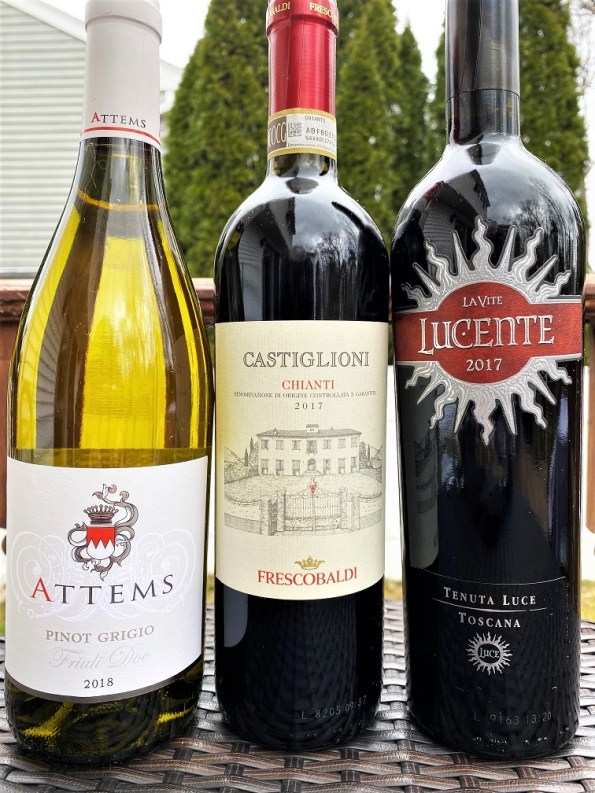
I recently encountered such chemistry with not one, but 3 wines. All three were Italian. All three were dangerously delicious. It was hard to stop replenishing the glass, one sip after another. Do I have a special chemistry with Italian wines? I don’t think so. This has happened in the past, with wines from many regions. But the point of the matter stands – this was an encounter with three delicious wines, which happened to be made in Italy. So let’s talk about them.
Before we talk about individual wines, let’s touch on the common theme which ties them all together – Frescobaldi family. There are more than 700 years of Tuscan wines connected to the Frescobaldi family, Today, Frescobaldi family holdings are spread through the 7 estates in Tuscany (Ammiraglia, Castelgiocondo, Castiglioni, Nipozzano, Perano, Pomino, Remole), plus some of the best of the best in Italian wines – Ornellaia, Masseto, and a few others.


Attems‘ name is associated with winemaking in the Friuli Venezia Giulia for almost a thousand years. Since 2000, Attems is the part of Frescobaldi family holdings. I had Attems wines in the past, such as Attems Ramato, an “orange” wine made out of Pinot Grigio, and I really enjoyed that wine. This time around, I was able to try Attems Pinot Grigio, and I was really happy with what I discovered:
2018 Attems Pinot Grigio Friuli DOC (12.5% ABV, $20)
Straw pale
Lemon, herbs, earthy profile, welcoming
Soft white fruit profile, plums, some tropical fruit, good acidity, nicely present.
8-/8, dangerous, so easy to drink.
Tenuta Castiglioni had been at the center of the Frescobaldi wine story from the very beginning. Owned by the family since the 11th century, the estate takes its history from the Romans who built it along the strategic path connecting northern Tuscany with the city of Rome. I don’t believe I had Tenuta Castiglioni wines before, so this was my first and delicious encounter:
2017 Frescobaldi Castiglioni Chianti DOCG (13% ABV, $16)
Dark garnet
Plums, cherries, vanilla
Soft, round, tobacco, succulent cherries, layered, inviting.
8+, delicious, outstanding, dangerous. Really, really easy to drink.
Tenuta Luce (“luce” means “light” in Italian) is a unique product of the imagination of two of the wine world’s greatest – Vittorio Frescobaldi and Robert Mondavi. After meeting in the nineties, the two men decided to build a new estate in one of the most coveted areas in Tuscany – Montalcino, home to Brunello di Montalcino wines. What makes Tenuta Luce unique is not just the partnership between Frescobaldi and Mondavi, but surely a bold move of planting the Merlot grapes in the land of Sangiovese Grosso. While Tenuta Luce produces Brunello, the flagship wine is called Luce and it is a Merlot/Sangiovese blend. I tasted Luce before and really enjoyed it. This time around, I had an opportunity to try Tenuta Luce second wine, again a Merlot/Sangiovese blend called Lucente – yet another delicious wine:
2017 Tenuta Luce Lucente Toscana IGT (14% ABV, $30, Sangiovese/Merlot blend, 12 months in old and new barriques)
Dark garnet, practically black
Dark cherries, fennel, violets
Cherries, coffee, leather, perfectly structured, crisp acidity, perfectly integrated and balanced tannins.
8, delicious, and hard to stop.
As you can tell from the notes above, I really liked all three wines. Not just liked – after the first glass, there was an unconscious craving for another. And another. And another. It would be quite safe to call this a chemistry – I don’t know if I have a special bonding towards the Italian wines, but these three wines were drinking more like an obsession rather just some other tasty wines. And as it works in human relationships, chemistry is a good thing between the man and the wine. Have you found yours? Cheers!
Latest Wine News and Updates
Of course, it would be too much to say that wine is in the center of everyone’s attention – but it is a beloved beverage for hundreds of millions, and some tens of millions are involved in wine industry one way or the other, so the wine news definitely gathers some attention.
From time to time, I share in this blog some of the interesting tidbits of what’s going on in the wine world, so here is the latest round of newsworthy happenings around the globe.
When you hear Chateau d’Yquem, what do you think of first? Of course, the quintessential Sauternes, the magical elixir not even produced in all the years. But – do you know that Chateau d’Yquem also produces dry white wine? It is called “Y”, and it is a tasty blend of Sauvignon Blanc and Semillon. Last month, Chateau d’Yquem announced that they will be expanding their portfolio and adding … wait for it … a red wine which will be called Y Not. It appears that 5 years ago, Chateau d’Yquem replaced some of their Sauvignon Blanc plantings with the Cabernet Franc, Merlot, and Petit Verdot, and now it is ready to produce the first vintage. The 2019 Y Not will be released in 2022. The price had not been disclosed at the moment, but considering the total production of 300 cases, you can imagine that it will not be inexpensive.
We are not done with Chateau d’Yquem yet. It leaked to the press that venerable Harlan Estate from Napa Valley, one of the topmost cult wine producers in the USA, enlisted the help of Chateau d’Yquem to start production of the dessert wine! The wine will be produced from the late harvest Cabernet Sauvignon. It is expected that the wine will be aged for at least 2 years in the mix of old and new French oak barriques, and probably 1 year in the bottle. The wine will be called Sweet Baby Harlan, and the 2020 vintage will be offered to the mailing list members at one 375 ml bottle per customer with the starting price of $1,100. Considering the tiny production, this wine will be impossible to get for a while.
Our next news is really bazaar. It’s been reported in The Eagle-Tribune in North Andover, Massachusetts that a number of Market Basket supermarkets experienced a little mayhem in the bottled juice section of the stores – the juice bottles (narrowed down to the grape juice bottles only after the few incidents) started to blow up at random, covering customers in sweet and sticky liquid. The culprit was traced to the popular brand of grape juice – Welch’s. Welch’s recalled all of the grape juice bottles sold in Massachusetts supermarket and opened the investigation into the incident. Based on the initial analysis, it appears that the yeast was added to the bottles at the final steps of the production, and as you know, the combination of yeast and sugar is how the wine is made, so blown up bottles come at no surprise. Apparently, some of the customers who managed to get the unexploded bottle to the homes were pleasantly surprised with the bubbly version of the popular grape juice, and some are even planning to start a petition to Welch’s to make this new type of grape juice a new product, possibly using some reinforced bottles.
It is not a secret that Australian winemakers are always eager and willing to step away from traditions and try the pioneering technologies, no matter how unorthodox they are. A simple example is a so-called screw cap, also known as Stelvin, which was developed in the late 1960s, and Yalumba winery in Australia become one of the early adopters introducing new bottle closure in 1973. Now another Australian wine producer, Penfolds, maker of the legendary Grange, decided to step in with a brand new solution for reducing the carbon footprint of the wine, which the wine industry is constantly grilled for. With the help of scientists at The University of Adelaide, Penfolds developed a brand new plastic bottle that is completely safe for storing the wine. Not only it is lightweight, but it is also made from the recycled materials and – get this – biodegradable. The bottle is guaranteed to fully disintegrate in 5 years’ time. The only culprit? The bottle will disintegrate in 5 years no matter what, so it will not be any time soon that we will see Penfolds Grange offered in this form of packaging. But for all the regular wines, which should be consumed as they are acquired, this will be a perfect vessel. Just don’t “leave and forget” such a bottle in your cellar – or you will remember it for a long time…
While the wine industry is squarely rooted in traditions, it is never shy to enlist the latest technology to help to advance its cause – helping people to enjoy their life a little bit more. Knowing when to open the bottle of wine to ensure the best possible experience is one of the most difficult problems of any oenophile, whether he or she is a Master Sommelier or an occasional drinker consuming two bottles of wine a year. Some of the most technologically advanced companies in the wine industry, world-famous specialty glass producer, Riedel, and Coravin Wine Systems, maker of the popular wine dispensing solution, teamed up to create a product which they called Smart Bottle. Seemingly indistinguishable from the regular glass bottle, the Smart Bottle is equipped with the array of sensors which constantly monitor the state of the wine inside the bottle, and will inform the owner when the bottle reached the ideal consumption phase via embedded Wi-Fi transmitter directly to the owner’s phone. While working on the design of the Smart Bottle, both companies filed about 25 patents. Apparently all leading wine producers in the world – DRC, Petrus, Chateau Latour, Screaming Eagle, Sine Qua Non and many, many others already lined up to get the Smart Bottle as soon as it will be released. An important and attractive feature of the Smart Bottle is the ability for producers to set up the proper aging profile specific to their particular wine, as it is clear that ideal indications, let’s say for DRC and Sine Qua Non will be quite different. Riedel and Coravin reported that they are finishing field trials and the production is slated to start in 2021.
That’s all the latest news I have for you, my friends. Until the next time – cheers!
Open That Local Wine Night
There is a good chance you heard of Open That Bottle Night, or OTBN for short – more than 2 decades old special celebration to encourage people to open their sacred bottle of wine and preferably share it with friends. OTBN is celebrated on the last Saturday in February, and I have to tell you that my last one was magnificent (see for yourself here). Today, while we are still celebrating wine and all the passionate people who put their heart and the soul into those bottles, we want to shift the focus to the bottles with possibly a different pedigree than the OTBN ones – today we focus on the local wines and wineries.
With the wines produced in all 50 states in the USA, the concept of a local winery is not an oxymoron. Local wineries offer a perfect weekend getaway, with wine, food, great discoveries, stories of passion and obsession, live music and simply an opportunity to relax, in the group and small or large. And oenophiles are willing to travel to their local wineries (it takes me about 3 hours of travel by car to the Long Island wineries – and this is perfectly local in my book) – but not today. With the pandemic madness we are living nowadays, we can’t really visit wineries, whether they are 15 minutes from our house or 5 hours – and this is the time when local wineries need our support the most. And actually, you and all of us can support them.
Whatever your “local” winery is, there is a good chance you have a bottle of your favorite local wine in the cellar. Frank Morgan, a veteran wine writer from Virginia, originally suggested making Saturday, March 28th (last Saturday in March) a night to open a bottle of Virginia wine. Lenn Thompson of The Cork Report fame suggested to extend this idea to all of the local wineries, no matter where those wineries are located, and designate that same Saturday as Open That Local Wine night. The event works in a very simple way – decide what bottle to open, open and enjoy it, with food or without, and share your support in social media using hashtag #openlocalwine.
It is obvious that the wineries need our support beyond opening that bottle today, and the best form of support, of course, is simply buying the wines. Literally all the wineries have special incentives for their customers. Many wineries offer free or heavily discounted shipping for their customers, such as a $5 flat rate, for example. If you have your favorite winery, you should check their web site and see what they offer. There are also a few of the winery lists with discounts which I can offer to your attention – here is one focused on the East Coast wineries, and here is another one covering pretty much the whole country.
You also should keep in mind that while you will be engaging in the great deed of supporting the local wineries, you will be in for a lot of pleasure. Amazing wines are produced today literally everywhere, not just in California, Washington, or Oregon. I’m a self-appointed wine snob, and nevertheless, I’m literally blown away every time I’m trying local wines. I had amazing wines last year in New Jersey and Maryland. Then I also discovered an array of amazing “orange” wines at Channing Daughters winery on Long Island (if you want to expand your wine horizon, take a look at this selection), of course in addition to all the whites, Rosé and reds they produce. Really, you have a lot to discover.

Let’s talk about my most recent discovery – Macari Vineyards from North Fork of Long Island. Macari Vineyards were founded in 1995 when the first vines were planted on previously a potato farm. Macari Vineyards uses biodynamic methods and produces some of the best fruit on the East Coast. They produce a range of wines, from more of Long Island traditional Chardonnay, Cabernet Franc, and Merlot to the oddballs such as 100% Pinot Meunier. I had an opportunity to try the samples of two wines Macari Vineyards wines, and I really enjoyed both – here are the notes:
2019 Macari Rosé North Fork of Long Island (12% ABV, $24, Merlot and Malbec blend)
Salmon pink
Herbs, strawberries
Underripe strawberries, crisp, fresh, good acidity.
8-, light and delicious.
2015 Macari Cabernet Franc Reserve North Fork of Long Island (14% ABV, $38, 20 months in 100% neutral French oak)
Dark Garnet
Bell peppers, eucalyptus, sage, cassis leaves
Soft, round, cassis, bell peppers, anise, crispy undertones, mouthwatering acidity, medium body, classic lean New York style.
8+, outstanding, the Cab Franc I love.
So what do you think, can you do it? Open that bottle of the local wine, maybe even get together with the friends – virtually, of course – Facetime, WhatsApp, Facebook, Skype, … and enjoy that bottle. And then go and explore what the local wineries have to offer – the world is your oyster, so any winery can be your local winery. You are up for a lot of tasty discoveries, I guarantee you that. #openlocalwine, my friends!
Weekend in Wines
Are we losing the sense of time? The weekend was always a special time, and I don’t mean in a TGIF way – most of the time, I’m happy with Friday evening, and I’m happy with Monday morning. But the weekend usually meant different types of activities – going somewhere, meeting with friends, maybe going to the city for a leisure stroll and a dinner – you name it. Now, as we have to be pretty much confined to your house due to the virus, the days are becoming mostly all the same, and the weekend simply means “huh, it is Saturday” (note the absence of exclamation mark).
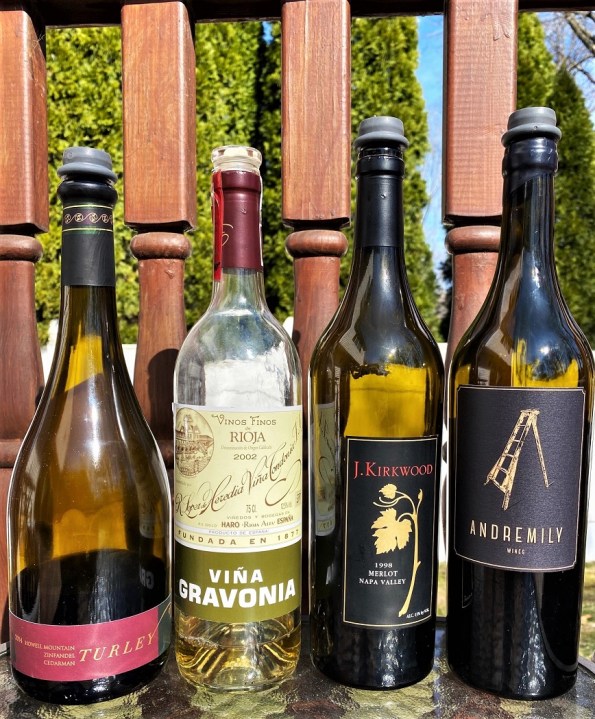
My last weekend, however, was still a bit different, and it translated into some interesting bottles being opened.
On Friday, we had a family dinner. I always ask if anyone wants to drink wine, which defines which bottle will be opened. I got absolutely unexpected “yes, I would like some wine” which sent my heart racing for a second and caused near panic stall. You know how it is – when someone asks oenophile for a glass of wine on short notice, there is an instant desire to please, which translates into an attempt to identify the right bottle in a split second, thus you need to mentally flip through the content of all your wine cabinets (shelves) in the shortest amount of time, as nobody will be patiently waiting for you to perform the shelf dance for 20 minutes while the meat is getting cold.
I can honestly tell you that in a situation like that, the end result almost always ends up the same – I pull a bottle of Turley. Turley literally never disappoints, pretty much without any regard to the age, unlike many other amazing wines which simply can’t be appreciated until at least 10–15 years in the bottle. So the bottle I opened was 2014 Turley Zinfandel Cedarman Howell Mountain (15.6% ABV). There is a no bigger reward for the oenophile’s heart than to hear from someone you are trying to please “ohh, this is such good wine!” – and it really was. Rich, opulent, bursting with smokey blackberries and blueberries, you know that succulent and generous fruit you can’t just put down – the wine was stunning in its open generosity – and perfect balance.
The next day was my daughter’s 18th birthday, so needless to say that the appropriate bottle(s) had to be open. First, I always try to open a bottle of vintage matching the birth year. I don’t have a lot of 2002s laying around, unfortunately, so my decision fell on 2002 Lopez de Heredia Viña Gravonia Rioja DOC (12.5% ABV). Lopez de Heredia is one of the very best (and one of my most favorite) Rioja producers, so I’m always happy to open their wines. Lopez de Heredia white Rioja is legendary – white Riojas are still rare, and not all of them can age. This wine was an excellent example – it had a tremendous interplay of flavors in the glass, moving from succulent white plums, then showing tropical fruit undertones, then bristle with acidity to the point of young Chablis and ending with a beautiful oxidative profile of classic Jura Savagnin. If you like mature white wines, this is a delight for sure.
For the aged red, I decided to open the bottle of 1998 J. Kirkwood Merlot Napa Valley (13% ABV). I got a few bottles from the Benchmark Wine company last year at a great (incredible?) price of about $20 – I never heard of J. Kirkwood, so I really was going by the combination of age and price when ordering this wine. Boy, what a treat. Forget everything you know of and everything you think Merlot is. This wine was loaded with smoke, tar, and spices. Yes, there was a core of fruit, but not your typical aromatic cassis, more of the crunchy blackberries, smothered in exotic spices. Dense, brooding and delicious would be the right way to describe it – as long as I will not try comparing it with our last wine.


I’m sure you’ve been in the same situation. You have a special bottle of wine. You know it is not ready. You are 200% sure it is not ready. But then you simply get fixated on the idea that you want to open the bottle, especially when there is anything (anything!) to celebrate. And so my daughter’s birthday was a perfect reason to open the bottle of 2016 Andremily Wines Syrah No 5 California (15.5% ABV).
First I heard about Andremily wines after I signed up for the waiting list for the mailing list of Sine Qua Non, one of the most coveted wineries in the USA. While waiting to get on the mailing list (still waiting), one of the emails from the winery mentioned new projected, Andremily, related to the Sine Qua Non by way of the Jim Binn, who was working as a cellar master at Sine Qua Non. Jim started Andremily in 2011 with his wife Rachel, and the winery was named after their two kids, Andrew and Emily.
My first attempt to sign up for the Andremily list was also unsuccessful, but I finally got invited a few years after.
I have to tell you that opening that bottle was a mistake, but it was one mistake which I don’t regret. The note from the winery mentioned that it is recommended to decant the wine for 2–3 hours prior to drinking. I did that, and I have to say that 3 hours in decanter had no effect on the wine. Black color (not kidding), the wine was impossible to describe. It had an incredible aromatics of dark berries, ink, cola, iodine, a touch of barnyard. The palate was not tannic, but the power of this wine was beyond imagination – dense, chewy, ultra-concentrated, with dark fruit, tar, iodine, herbs, and sunny meadows, all attacking your senses at once. This was definitely not an enjoyable wine despite the 3 hours in the decanter.
I poured the wine back into the bottle, pumped the air out and tried it the next day. And the next day. And the next day. On day 3, it finally gave up and showed its true and beautiful character. Dark, succulent, tart cherries, sweet oak, pepper, sage, all mellowed down and started to sing together in a round, harmonious way. This wine needs patience, and the patient will be rewarded handsomely. For sure a memorable wine and experience.
These are not the happiest times we are living through, but still, there is plenty to enjoy (well, I always said that we, oenophiles, having it easier than all). What were your recent memorable wine encounters?
Limited-edition bottle released by Zorzettig to sustain local hospital amid Covid-19 emergency in Italy
I rarely (never) post someone else’s press releases on my blog. However, considering the dire situation in Italy, I hope this will be a tiniest, but still help to this beautiful struggling country.
The well-know winery from Friuli has taken practical steps to support the Hospital of Udine in fighting back Covid-19.
A limited-edition bottle has been released with special Everything will be alright label in eight different languages
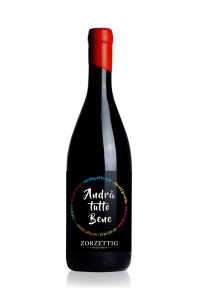 Zorzettig is not new to challenges, having survived World War II before becoming an ambassador of regional viticulture, in Italy and abroad. Now, the winery has taken another important step in sustaining the local community and its well-being. The Zorzettig family has organized a fund-raising project aimed at economically supporting the intensive care unit of Ospedale Universitario Santa Maria della Misericordia in Udine which is fighting at the forefront of Covid-19 emergency.
Starting Monday, March 16th, the winery will be selling on Tannico.it a limited edition of Refosco dal Peduncolo Rosso made from the eponymous native red variety. Grown only locally, Refosco dal Peduncolo Rosso is well-known for being a resilient grape which has endured many a challenge in the past. Proceeds will be used to buy the necessary and much needed equipment. The limited edition will display on the label the sentence Andrà tutto bene, everything will be alright, in eight different languages. Eight is a lucky number in China, where emergency has started and which is now experiencing the first positive signals. The disposition of the sentences aims at representing a hug, a familiar gesture we cannot share right now. The bottles will be on sale from today by writing at info@zorzettigvini.it and on Tannico in the next days.
“Andrà tutto bene is a good wish for the future that needs to be translated in a practical action right now” explains Annalisa Zorzettig, who runs the family business. “We love our land and our community and we asked ourselves how we could help. This is how we came up with the idea of a limited edition with a good wish aimed at going beyond space and time. We love the idea that families will buy this bottle to share it with beloved ones seated around the same table. In the future, this will be a reminder of a challenging time we were able to overcome and of a moment which has taught us, once more, how precious are little joys and beloved ones”.
Source: Studio Cru Press Office
What a night! Notes from OTBN 2020
 Open That Bottle Night is the best wine holiday out there. It is nice to celebrate all the individual grapes – Chardonnay Day, Albarigño Day and the likes – but that can’t compare with an opportunity to open a special or the most special bottle you have in your possession, and most importantly, share it with fellow oenophiles, the people who appreciate and respect that special bottle.
I’ve been lucky for two years in the row to be invited to someone’s house to celebrate OTBN – last year Jim VanBergen of JvBUncorked fame was our host, and this year John Fodera of the Tuscan Vines hosted of amazing wine night.
John did a great job organizing this memorable night for the group of people most of whom he never met face to face (yours truly included – we had been following each other for close to 10 years, but managed to avoid any face-to-face contact until now) – he developed a loyal group of followers as Italian wines expert, and I’m sure everyone was happy to finally meet him in person.
John managed to come up with a great program. After the round of Lambrusco bubbles (which is the rave nowadays) we started the evening with two blind tastings. We had 2 groups of 3 wines each, trying to identify at least a place and type of wine, and ideally even the producer. We also voted for the group’s favorites. I generally suck at blind tastings, so I did poorly (as expected). I also decided not to use the external factors in the tasting (I.e., John is Italian wine guy, so we should simply expect all the wines to be Italian; another guess would be that as John’s blog is called Tuscan Vines, all the wines will be from Tuscany).
Here are my notes for the first flight:
Wine 1: Touch of mint, full-body, good structure, a touch of black currant – super Tuscan?
Wine 2: great concentration, dark fruit, layered, silky smooth – Montepulciano di Abruzzo?
Wine 3: nice fruit, bright, good structure. Super Tuscan? New World?
Needless to say that I was absolutely wrong with all three. Again, I could’ve used a bit of psychology and figure out that John would be pouring only Tuscan wines, but I deliberately refused to do so. The wines were perfectly polished and complex, all three, without screaming “I’m Chianti” with the appearance of leather, tobacco, or tart cherries. To make a long story short, all three wines happened to be Chianti Classico Gran Selezione from 2016 vintage, provided to John by Chianti Classico Consortium. In the order of appearance, these were the wines:
2016 Fèlsina Chianti Classico Colonia Gran Selezione DOCG ($NA, 100% Sangiovese)
2016 Rocca delle Macìe Riserva di Fizzano Chianti Classico Gran Selezione DOCG ($NA, 95% Sangiovese, 5% Merlot)
2016 Fontodi Vigna Del Sorbo Chianti Classico Gran Selezione DOCG ($NA, 100% Sangiovese)
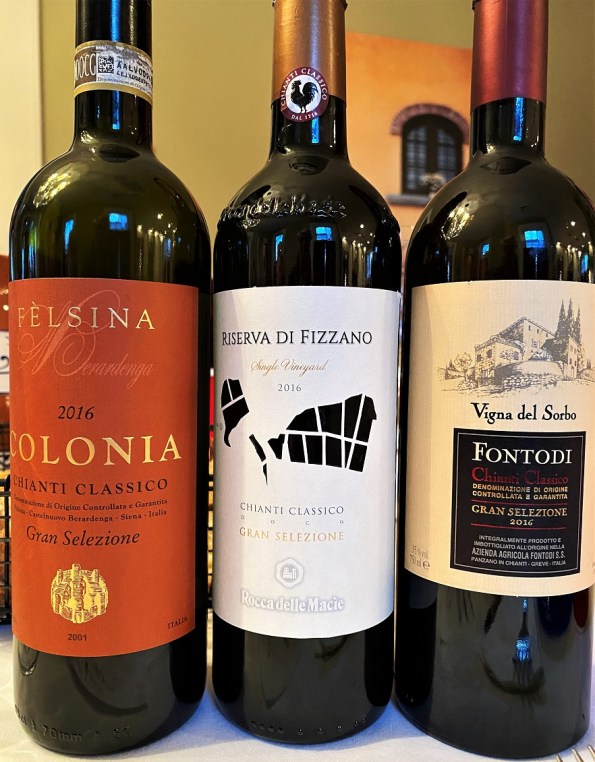


I want to add that the second wine, Rocca delle Macìe Riserva di Fizzano, won a popular vote with 5 votes out of 10 – this was also my favorite wine.
The next flight consisted again of three wines. Here are my notes:
Wine 1: dark fruit, eucalyptus, crushed berries, green tannins – Bordeaux blend, can be from anywhere
Wine 2: Roasted meat, plums, salami, plums on the palate – Grenache/GSM? Can be from anywhere
Wine 3: too aggressive, green tannins, black currant. Bordeaux blend, can be from anywhere.
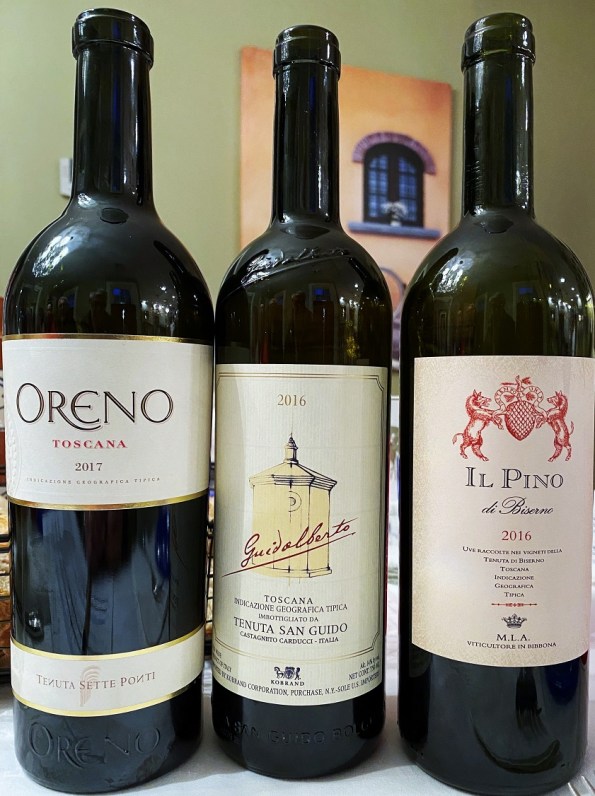
Again, I should’ve expected another line of Italian wines, but I thought John could play some tricks, so I didn’t go with an obvious idea of Super Tuscans. And I was wrong. All three wines were well-known Super Tuscans (these three wines were courtesy of Kobrand Wines):
2017 Tenuta Sette Ponti Oreno Toscana IGP ($75, 50% Merlot, 40% Cabernet Sauvignon, 10% Petit Verdot)
2016 Tenuta San Guido Guidalberto Toscana IGP ($54, 60% Cabernet Sauvignon, 40% Merlot)
2016 Lodovico Antinori Tenuta di Biserno Il Pino di Biserno Toscana IGP ($70, Cabernet Franc with Merlot, Cabernet Sauvignon, and Petit Verdot)
I really didn’t appreciate the tannic nature of wines number one and number three, and those tannins were not only aggressive but literally biting. Oh well. Wine #1, Oreno, was the crowd’s favorite (7 votes out of 10). This time around my vote didn’t match the majority, as I went with the wine #2, Guidalberto, as this was the only drinkable wine for my palate.


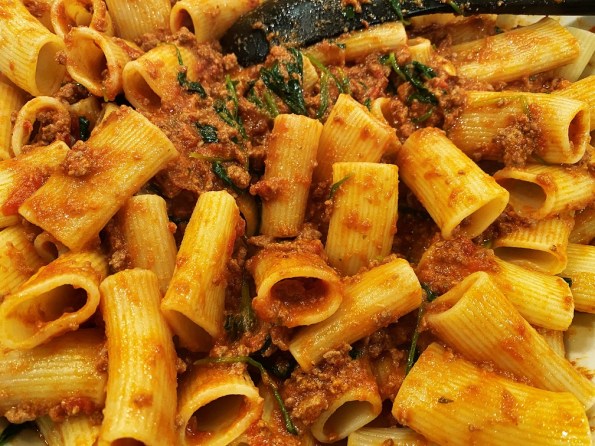
After finishing the tasting and discussing the results, it was time to eat. First, there was pasta bolognese, which John masterfully prepared:
And then there was meat. John decided to spoil the group with 2.5” porterhouse steaks, to make Bistecca Fiorentine:


We went to work the grill which was an interesting adventure, mining the grill to prevent flare-ups on a cold night. We actually had to make two attempts to get the steaks right, as they were still mooing after the first pass. But we managed to produce something delicious in the end and not ruin the amazing steaks.
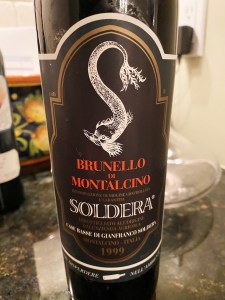
Now, time to meditate. Nope, this was not an organized food prayer session. What happened was that the bottle of Soldera Brunello di Montalcino was poured out of the decanter. Mike Giordano brought a bottle 1999 Soldera Brunello de Montalcino in a completely unassuming, low-key, way. Gianfranco Soldera was a legend, who bought a property called Case Basse in Montalcino in 1972, with an aim to produce the best Brunello wines. By 1990s Soldera wines reached cult status, coupling impeccable quality with small production. Talking about Gianfranco Soldera and his wines would be best suited for a separate dedicated post, as controversy completely surrounded him; I have to say that I never expected to taste his wines – until this memorable OTBN.
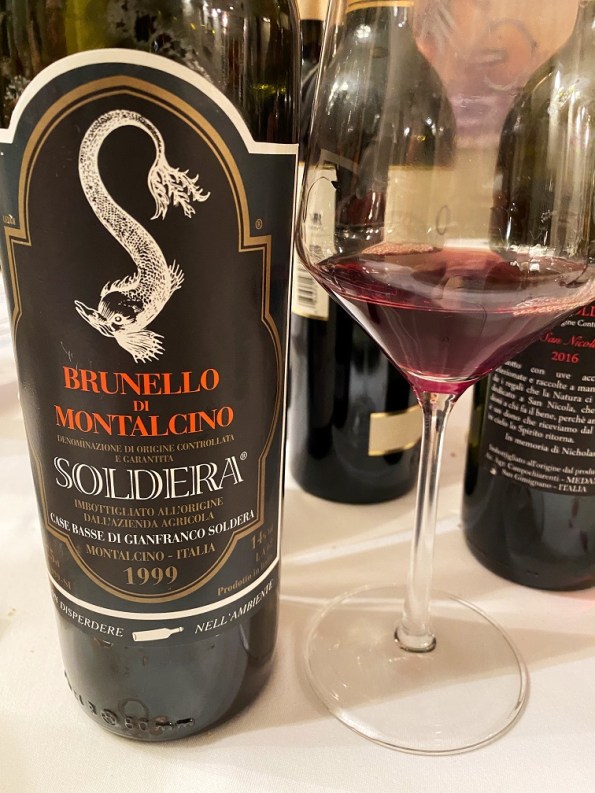
Just look at this color…
1999 Soldera Case Basse Brunello di Montalcino DOCG was truly a meditation wine. “Meditation wine” might not be a simple term to explain in words, but if you like wines, there is a chance that you experienced it at one time or the other. The nose, the aroma, and the bouquet of this wine were simply magical. Taking the whiff from the glass, the time was stopping – no need to try to analyze the amazing palette of flavors to come up with individual descriptors – this wine should be described purely on the sensory level, as every smell was bringing a pure, hedonistic pleasure. I didn’t care for food, I didn’t care for talking – I just wanted to take another smell, and another, and another. When I finally took a sip, the wine was magnificent on the palate too – a perfect balance of plums, cherries, textural layers, structure, sage, and rosemary – a perfect harmony of flavors. It is quite possible that this was my wine of the year 2020 – I know it is only March, but this was an experience that is seriously hard to beat. I don’t feel that I should even try rating this wine, but if I would dare, this would be my second ever 10- (don’t ask me why not 10, I have no idea what my perfect 10 wine should smell and taste like).
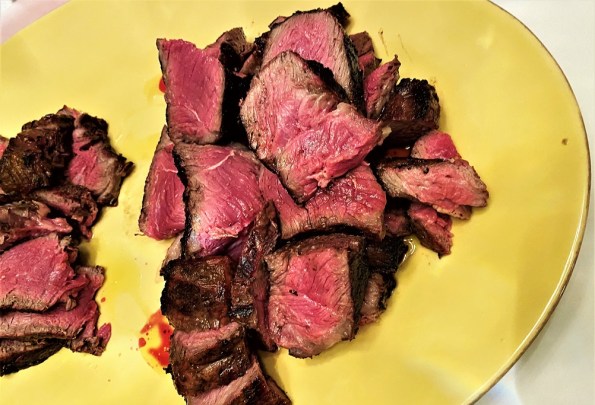
After the meditation session, just a few words on the dinner. In addition to the delicious meat, John made a couple of side dishes – the sautéed white beans were an absolute hit, adored by all literally as much as the beef. John actually promised to share a recipe – you can find the recipe in this post.
This was not the end of our wine program. We also had 2016 Campochiarenti San Nicola Chianti Colli Senesi – Campochiarenti is a producer John is always raving about in his posts, so it was definitely interesting to finally taste this wine (Campochiarenti wines at the moment are not imported into the US, but available directly from the winery). The wine was classic and simple, and for about $12 (if it will be imported into the US, this is the expected retail price) it will be definitely a great value. I brought a bottle of 2010 No Girls Grenache from Walla Walla in Washington, which was very tasty but radically non-Italian, so I don’t think it was well-received. I also brought one of my recent finds – 2016 Pedra Cancela Selecção do Enólogo from Dão, which was an old world and a lot closer to the overall theme, and an amazing QPR at $9 per bottle at the local Bottle King store. 2010 Capanna Brunello Di Montalcino was delicious, but it was a tough call to get everyone excited after experiencing the Soldera. Lastly, we had 1999 Natale Fantino Nepas Nebbiolo Passito Piedmont which was interestingly dry and light, but not necessarily my favorite.


That gives you more or less a full picture. We also had a wonderful spread of Italian desserts, and truth be told, for the first time ever I tasted cannoli which I liked. It appears that the good cannoli should be filled with cream at the moment of purchase and not before – now I will know.
And now we are done. How was your OTBN 2020? Cheers!
Daily Glass: Another Day, Another Enigma
 It was just another Sunday. It could’ve been any day in the oenophile’s house. You know, when you open a bottle which you think will be enough for the evening, but then people come over, and you open another, and another, and another. Yes, it doesn’t matter if it was Sunday or not. Just another day.
The important point here – wine is an enigma.
e·nig·ma
/iˈniɡmə/
noun
a person or thing that is mysterious, puzzling, or difficult to understand
This is not the first time I have to evoke the enigmatic virtue of wine – I had quite a few puzzling experiences, with the wines going amazing – undrinkable – amazing (here is one example), or with the wines needing 4-5 days to become drinkable after they had been open. The element of mystery of not knowing what you are going to find once the cork is pulled out of the most familiar bottle is definitely a big part of the excitement, but some times it becomes too much excitement, in my opinion. Anyway, let’s talk about that Sunday, shall we?
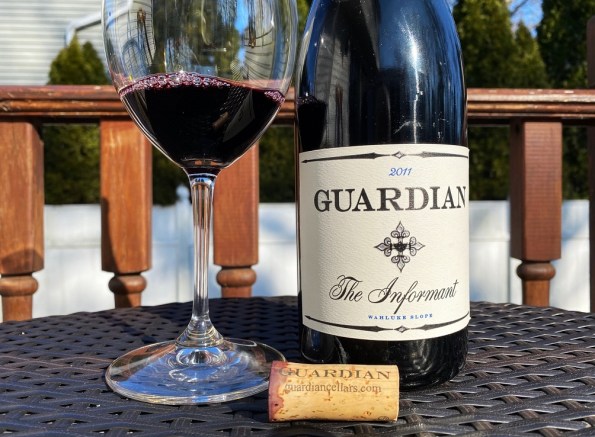
Guardian Cellars is a small produced in Woodinville, Washington. I visited the winery in 2014, and tasted through a bunch of wines which were one better than another (here is my excited post about that visit). I brought back with me a bottle of 2011 Guardian Cellars The Informant Wahluke Slope – 97% Syrah, 3% Viognier – and every time I would pull it off the shelf, I would put it back – you know how it is with single bottles, it is very hard to find the right moment to pull that cork. By the way, this bottle was simply stored in the wine cage standing in the room with temperature fluctuating around 70F and no direct sunlight – but not in the wine fridge or a cellar. Don’t really know what prompted me to finally get this bottle out, but I did. And it was delicious. Not a hint of age, dark garnet color, intense nose of blackberries, perfectly balanced dark berries, pepper, and crushed rocks on the palate. This was simply an excellent bottle – not the one which prompted my “enigma” outburst. And that note about storage conditions? People, don’t be afraid to keep your wine, even if you don’t have a cellar, wine fridge or a basement. If you do it right, you might be rewarded handsomely – well worth the risk.


I thought we might be able to get by with just one bottle, but then my daughter arrived with her friend who is “in the biz”, so the next bottle had to be special too. Another single bottle found its proper fate – 2006 Sequoia Groove Cabernet Sauvignon from Napa Valley (this one was stored in the wine fridge in case you are wondering). There was nothing enigmatic about this wine – well, except maybe how quickly it disappeared. The wine was an absolutely delicious, succulent example of Napa Valley greatness – still dark garnet, black currant, mint, and eucalyptus on the nose, ripe berries, currant leaves, touch of anise, good acidity, firm structure – a delight all in all.
So the Sequoia Groove was gone, what next? After short deliberations, 2013 Neyers Cabernet Sauvignon Napa Valley was pulled out. I really like Neyers wines, enjoyed many of them in the past, including the bottles from the same vintage. The bottle was opened with no issues, poured in the glass, and this is where the strange things started. The wine was too sweet. The nose was fine, but on the palate, it was just sugar, sugar, sugar. Okay, let’s decant. 30 minutes later, 1 hour later, 2 hours later, the wine stayed the same – a sugary concoction.
No wine can be wasted in this house, so the content of the decanter went back into the bottle. The next day it was the same. Two days later, the sugar significantly subsided, and the wine started to resemble a lot more a classic Napa Cabernet Sauvignon as one would expect.
So what was that? I know the wine is a living thing and transformation still continues in the bottle. Still, how one can know when the wine is drinkable, and when it is not? Was this a fluke, an issue with a particular bottle? Maybe. Over the years I noticed a significant bottle variation in Neyers wines overall, so this would support a theory of “just a fluke”. Or was it just a state of this 7 years old wine? Maybe. There is no good way to tell. However, I have two more bottles of the same wine, and they are not getting opened for a while.
Going back to our evening, just for the fun of sharing some pictures, our dinner menu included some BBQ chicken skewers – while I don’t have pictures of food, I have a couple pictures of burning charcoal which I’m happy to share 🙂


While Neyers was declared undrinkable, I had to entertain my guests with something else, so I pulled a bottle of 2015 Wind Gap Mi-Pente Pinot Noir Sonoma County, one of my latest Last Bottles finds. Wind Gap is best known as Syrah specialist, so I was surprised to even find Wind Gap Pinot Noir (I’m not even sure Wind Gap brand exists anymore – it used to be run by talented Pax Mahle, who now went back to his own brand Pax – this story definitely deserves its own post). The wine was delicious – crunchy cherries and smoke, firm structure, lots of energy – this was an excellent finish to the good Sunday evening.
Here you are, my friends. Wine is an enigma. Who else thinks that wine is an enigma? Raise your hands glasses.
Tre Bicchieri 2020: A Mixed Bag
 Tre Bicchieri is the highest distinction awarded to the Italian wine by the popular Italian wine guide, Gambero Rosso. About 45,000 wines are reviewed annually by the team of wine professionals, and about 1% of those wines (465 in 2020) receive the right to put coveted sticker depicting three wine glasses (Tre Bicchieri) on their wine bottles – if they so desire, of course.
Every year these best wines are presented around the world in the series of wine tasting events. I attended Tre Bicchieri tasting in New York which was one of the stops in this annual extravaganza.
I always make an effort to attend the Tre Bicchieri tastings – it is a great opportunity to taste the wines which at least someone considers to be the best Italy can produce. This tasting is typically quite overwhelming with more than 200 wineries, some of them presenting not 1, but 2 or even 3 wines, 4 hours, and a very constrained space with lots of people roaming around. 2020 event included 204 wineries – even with 1 wine per winery, you would have to taste one wine per minute to be able to taste them all – and this is only assuming that all wineries show only one wine, which is mostly not the case.
I always complain about the organization of this event – instead of grouping the wineries by the region, they are all grouped by the distributor. I’m sure this simplifies the logistics for exhibitors, but this doesn’t help attendees even for a bit. Another gripe is that you are given one single glass to use during the tasting, and you have no options of changing is once it becomes sticky and such. Of well… maybe one day organizers will read this blog? … yeah…
This year I decided to use a different navigation tactics – instead of trying to go sequentially from table 1 to table 204, or trying to frantically scavenge the show guide which is only available upon entering the event, and trying to find who you want to see by running through a 200-strong list, I decided first just to walk around, look for familiar names and taste what I want to taste first. Using this method, my first sip at Tre Bicchieri 2020 was 2016 Sassicaia, which provided a perfectly elegant opening to the event. Once I was done with a first walk, I took a pause to now look through the show guide and identify who did I miss and then go again and revisit.

Tre Bicchieri 2020 – busy as always
Thinking about the experience of Tre Bicchieri 2020, I’m not sure I can easily give you a simple and coherent summary of the event. One interesting observation was a noticeable number of Rosato wines represented at the event. I missed Tre Bicchieri tasting last year, but from the previous years, I don’t remember seeing much, if any, Rosé. I also tried to do the Amarone run (meaning: taste as many Amarone as I could), and it was not successful. With the exception of the Pasqua Amarone, which was not amazing but at least drinkable, the most of the rest simply were way too tannic and lacking any pleasure – I really don’t understand what was a rationale of awarding the coveted Tre Bicchieri to the insipid wines, outside of just recognizing the pedigree of the producers.
There were some excellent whites (Italian white wines still grossly underrated on the global scale), excellent sparkling wines (Giulio Ferrari, anyone?), and amazing values (like stunning $9 Sangiovese again from Ferrari), so, all in all, it was a good tasting, but overall I felt a bit underwhelmed. Anyway, here are my “best of tasting”, “worst of tasting” (if it’s okay to be so obnoxious), and notes on other wines I found worth mentioning. I’m using my “plus” ratings here, with “+++” meaning “excellent”, and “++++” being better than excellent :). With the exception of one wine, no wines with less than +++ are included in the list.


Tre Bicchieri 2020 Show favorites:
NV Barone Pizzini Animante Extra Brut Franciacorta – ++++, superb
NV Ruggieri & C. Cartizze Brut Veneto – ++++, outstanding, dry, clean
2008 Ferrari Giulio Ferrari Riserva del Fondatore Trento – +++, excellent
2018 Elena Walch Alto Adige Pinot Grigio Vigna Castel Ringberg – ++++, outstanding
2017 Leonildo Pieropan Soave Classico Calvarino – ++++, excellent
2018 Donnafugata Sicilia Grillo SurSur – ++++, excellent
2016 Tenuta San Guido Sassicaia Bolgheri Superiore – ++++, beautiful, perfect balance
2016 Le Macchiole Paleo Rosso Bolgheri Tuscany – ++++, 100% Cabernet Franc, excellent, perfectly drinkable
Sparkling:
2014 Bellavista Franciacorta Brut Teatro alla Scala Lombardy – +++, superb
2011 Barone Pizzini Franciacorta Dossagio Zero Bagnadore Riserva – +++, excellent
2018 Ruggieri & C. Valdobbiadene Extra Dry Giustino B. – +++, excellent
2018 Andreola Valdobbiadene Rive di Refrontolo Brut Col Del Forno – +++, excellent


White:
2016 Il Colombaio di Santachiara Vernaccia di San Gimignano L’Albereta Riserva – +++, excellent, clean
2018 Rosset Terroir Spraquota 900 Valle D’Aosta – +++, Petite Arvine grape
2017 Ottella Lugana Molceo Riserva – +++
2018 Ottella Lugana Le Creete – +++, excellent
2018 Elena Walch Alto Adige Gewürztraminer Vigna Kastelaz – +++, amazing aromatics, excellent
Rosé:
2018 Varvaglione 1921 Idea Rosa di Primitivo Puglia – ++-|. I was told that it was an attempt to create a Rosé for the red wine drinkers. I’m not sure it was ultra-successful, but it was drinkable.
Red:
2018 Corte Sant’Alda Valpolicella Ca’ Fiui – +++, high acidity
2013 Corte Sant’Alda Amarone della Valpolicella Valmezzane – +++, not bad but too tannic
2013 Masi Amarone della Valpolicella Classico Costasera Riserva – +++
2016 Donnafugata Etna Rosso Fragore Sicily – +++, tart, clean
2017 Pasqua Passimento Rosso Veneto – +++, excellent, approachable, excellent value (sold at Trader Joe’s)
2015 Pasqua Amarone della Valpolicella Famiglia Pasqua – +++, excellent
2011 Paolo Conterno Barolo Ginestra Riserva – +++, excellent
2018 Montalbera Ruché di Castagnole M.to Laccento – +++
2018 Montalbera Ruché di Castagnole M.to la Tradizione – +++, nice, needs time
2016 Ferrari Tenuta Podernovo Auritea (Cabernet Franc) Toscana IGT – +++, excellent
2017 Ferrari Tenute Lunelli Montefalco Rosso Ziggurat – +++, excellent
2011 Bertani Amarone della Valpolicella Classico – +++, very good
2015 Bertani Tenuta Trerose Vino Nobile di Montepulciano Simposio Riserva – +++
2016 Planeta Noto Nero d’Avola Santa Cecilia – +++, excellent
2018 Elena Walch Alto Adige Schiava – +++, easy to drink, light
2015 G.D. Vajra Barolo Bricco delle Viole – +++, excellent
2016 Varvaglione 1921 Primitivo di Manduria Papale Linea Oro – +++, good
Dessert:
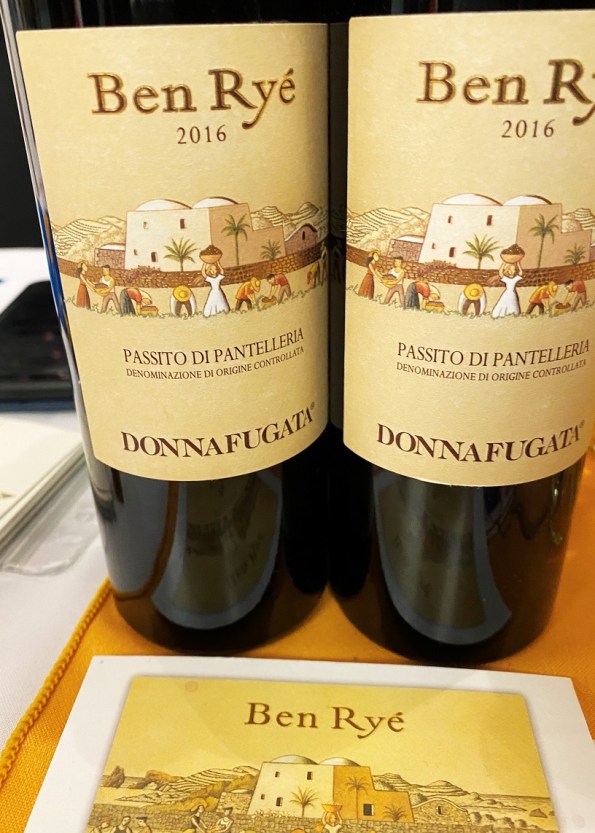
2016 Donnafugata Passito di Pantelleria Ben Ryé Sicily – +++, good
Amarone run:
Tenuta Sant’Antonio (burnt finish, the real impression of a burnt wood), Allegrini (too much oak), Speri (too much oak), Masi single vineyard (too much oak), Corte Sant’Alda (too much oak), Pasqua single vineyard (too big, too tannic), Monte Zovo (too much oak)
This is my story of visiting the Tre Bicchieri 2020 in New York. Have you attended any of the Tre Bicchieri events? What is your take on those? Salute!
Wednesday Meritage – OTBN, Tre Bicchieri, Cru Bourgeois 2020 Classification, and More
Meritage Time!
Let’s start with my perennial favorite – Open That Bottle Night, or OTBN for short. OTBN movement was started by the Wall Street Journal wine writers, Dorothy J. Gaiter and John Brecher, back in 1999, to encourage wine lovers around the world to open up that long stashed special bottle which might be long gone while waiting for a special enough day. OTBN is always celebrated on the last Saturday in February, which will be falling on the February 29th this year. I had been a passionate supporter of this special wine holiday for many years. Last year, we had a great celebration hosted by Jim van Bergen of JvBUncorked fame. This year, John Fodera of Tuscan Vines will be hosting a wine dinner I’m very much looking forward to attending. The only question left is what bottle is special enough to be open this coming Saturday, but this will be hotly debated until the very moment of leaving the house. Oh well, these are the first world problems of the wine lover. I hope you have some special plans too.
Next, let’s talk about the Gambero Rosso Tre Bicchiery event. Gambero Rosso is a wine publication in Italy which every year rates about 45,000 Italian wines. Out of all these wines, about 1% receives prestigious Tre Bicchieri (three glasses) designation – 465 wines attained these honors in 2019. To celebrate the best of the best in Italian wines, Gambero Rosso conducts an annual Tre Bicchiery tastings around the world. Such tasting is coming to New York this coming Friday, February 28th – it is open to the trade and media only, so if you belong to one of these categories, don’t miss this fun tasting. You can register for the New York tasting using this link. After New York, the show will make a number of stops in California – here you can find the full list. If you are interested in learning more about Tre Bicchieri 2019 awards, here is a very informative link for you.
Our next tidbit is about French wines. On a perfectly unique date – 02/20/2020 – Alliance des Crus Bourgeois du Médoc announced its new classification of the Crus Bourgeois wineries. Crus Bourgeois is a classification which is one level below of the famous 1855 Crus Classés (Classified Growths), but still represents a high level of quality and is difficult to attain, as an application process is quite rigorous. The new 2020 classification is awarded for a period of 5 years. It includes 249 Châteaux with a total production of 28 million bottles. Out of 249, 14 Châteaux are classified as Cru Bourgeois Exceptionnel, 56 as Cru Bourgeois Supérieur, 179 as Cru Bourgeois. You can find all the interesting stats here.
Now, a bit of the advice – how to store wine. I’m sure many of you have a few bottles which you want to keep for some time – the reason is not important, it is your wine – but not everybody has a wine cellar in their house or an apartment. Even if you don’t have a wine cellar, it is not a problem – you can still preserve your wines in the perfect condition for the years to come. The folks at Redfin, real estate news and analysis firm, asked winemakers, wine experts, sommeliers and wine writers for advice on storing the wines at home, and assembled all the recommendations in the form of the blog post, which you can find here. I’m sure not all of those recommendations are universally applicable to everyone, but I’m also sure you might some useful details there.
Not to be outdone, one last note for today – about Georgian wines. If you are living in or will be visiting New York on Monday, March 2nd, you are in luck – Georgian wine tasting will be hosted at a restaurant called Chama Mama in lower Manhattan. There are actually two tastings – one for trade and press from 4 pm until 6 pm (you can find information here), and one for consumers from 6 pm until 9 pm (here is the link to buy tickets). I always consider Georgian wines to be some of the best in the world, so if you can make the tasting, you can thank me later.
That’s all I have for you today. The glass is empty, but the refill is on the way. Cheers!
Sun and Waves
Everybody needs a vacation.
Everyone’s idea of a vacation is different.
While I love active vacations, my favorite winter-time vacation is the one where I need to do nothing – just turn from one side to another to prevent the sunburn. Yep, somewhere warm, sunny, with an unlimited supply of good drinks. All-inclusive resort somewhere in the Caribbean in February usually does it for me.
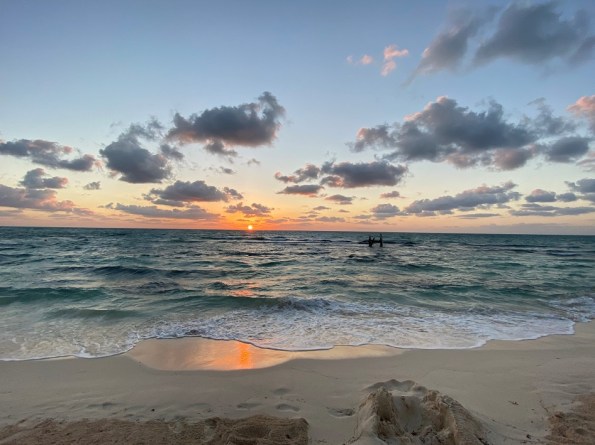
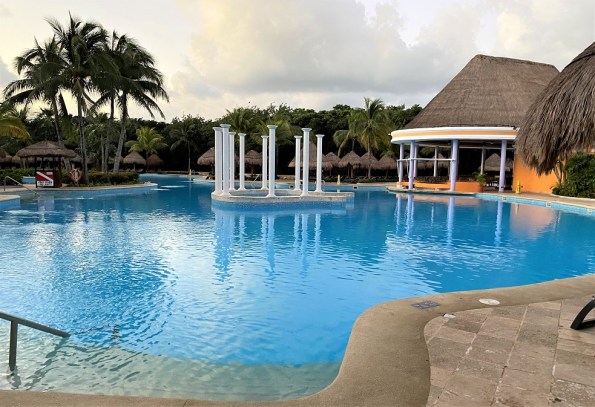
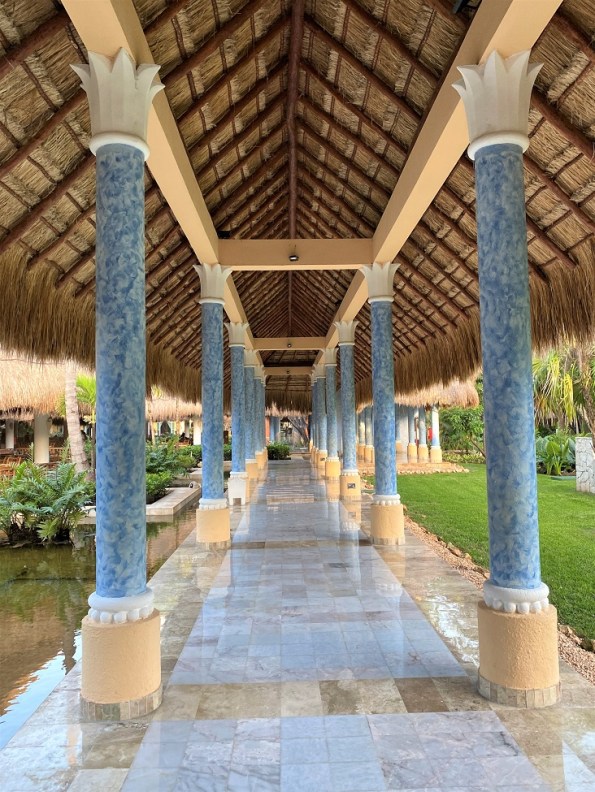
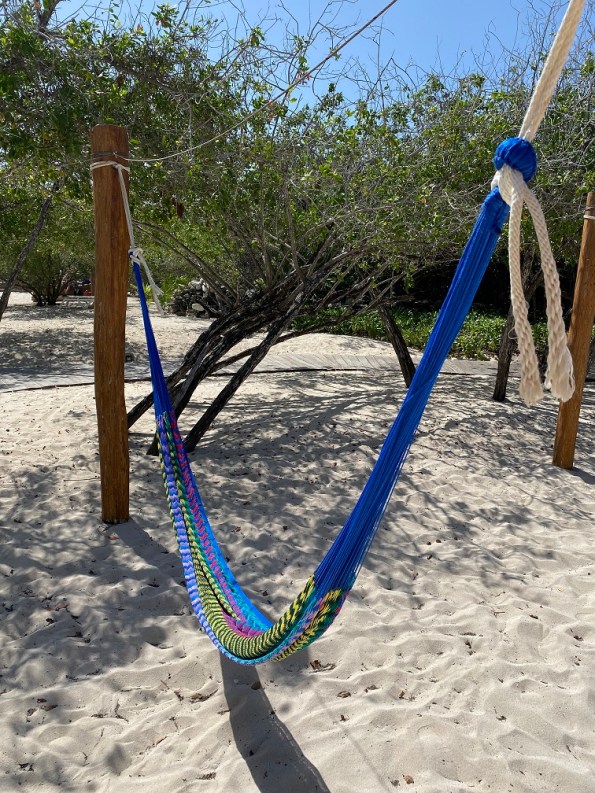
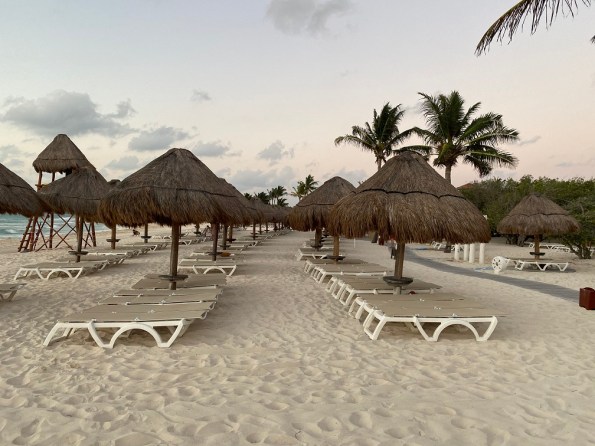
We just came back from Iberostar Paraiso Del Mar, the resort located 25 minutes away from Cancun airport in Mexico, where we had all of these components – sun, water, drinks – everything. Plus an opportunity to take an unlimited number of pictures, especially those of sunrises.
Sunsets and sunrises offer equal magic of observing the day just starting or ending. Sunrises are a bit easier for me to catch, as the evenings are hard to time, to be in the right place at the right time – it is much easier in Cancun in February, especially as the sun comes up after 7 am.
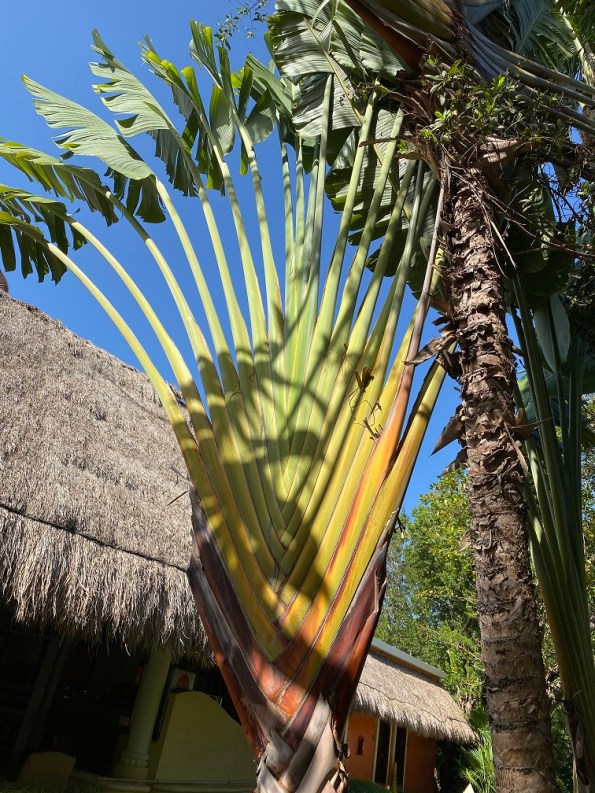
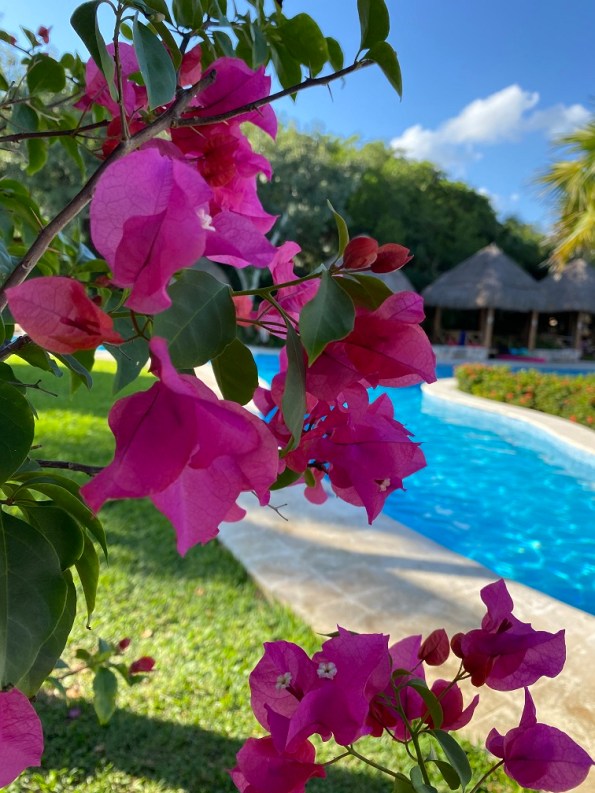
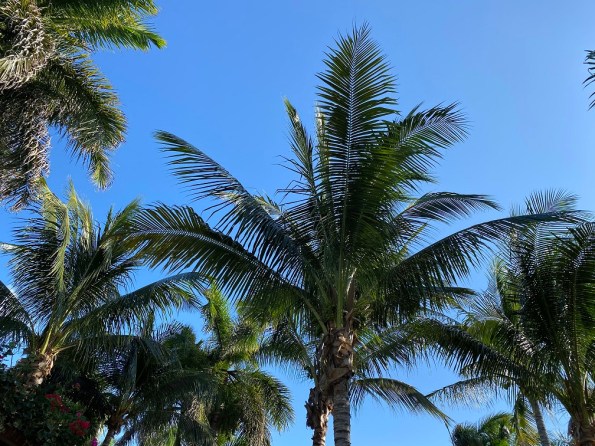
Once a photographer accumulates lots of pictures, the next logical step is to … share them, yes! Below is an account of our recent trip to Cancun, with some additional comments. Hope you will enjoy!

This is some random plane leaving Newark airport
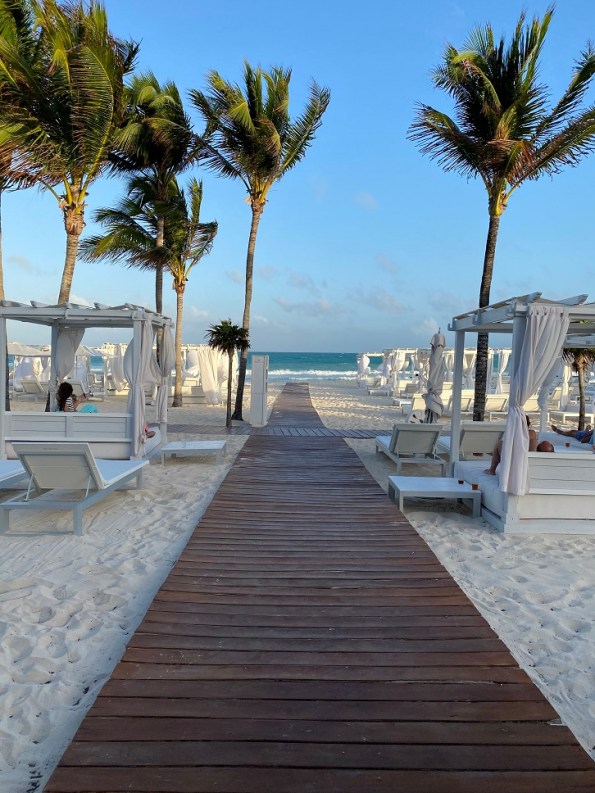
Our first vacation view
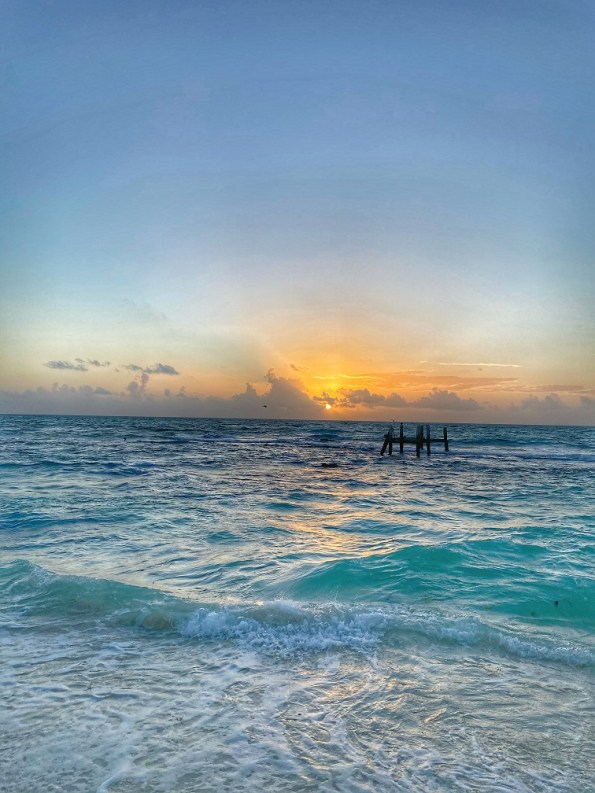
First sunrise (I think)
We met some friends:


Valentine’s Day was well acknowledged:

And more friends:


More sunrises:


Of course there was wine:


And there were cocktails:


Of course we enjoyed these simple views:


 More friends visited:
 We greatly enjoyed our surroundings:
And more sunsets:
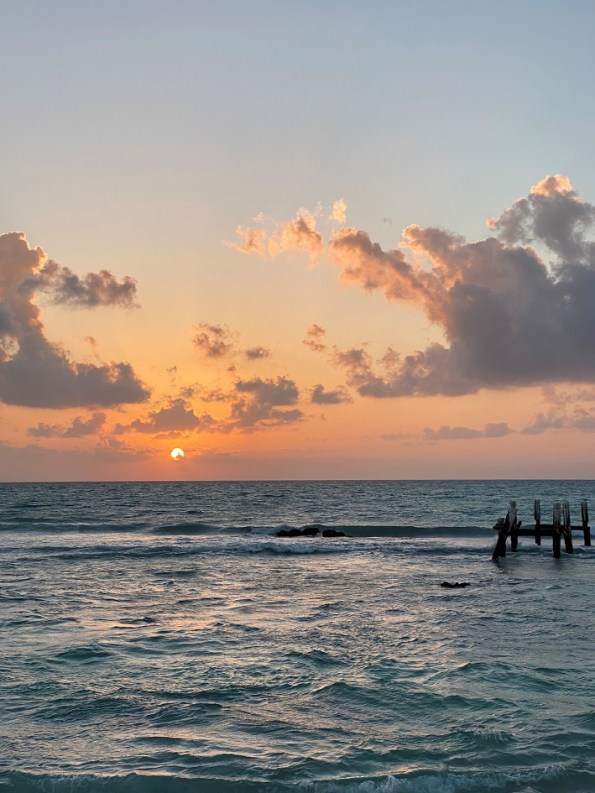


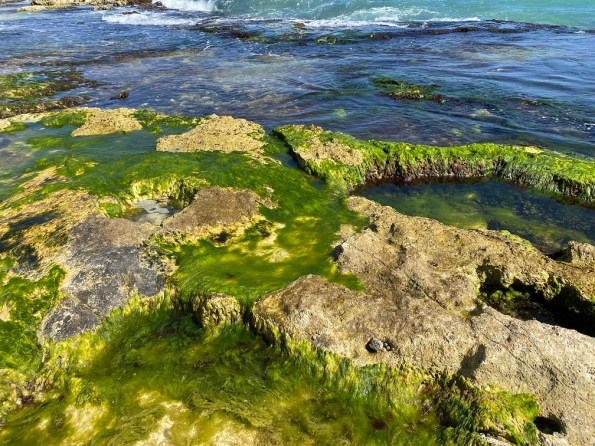
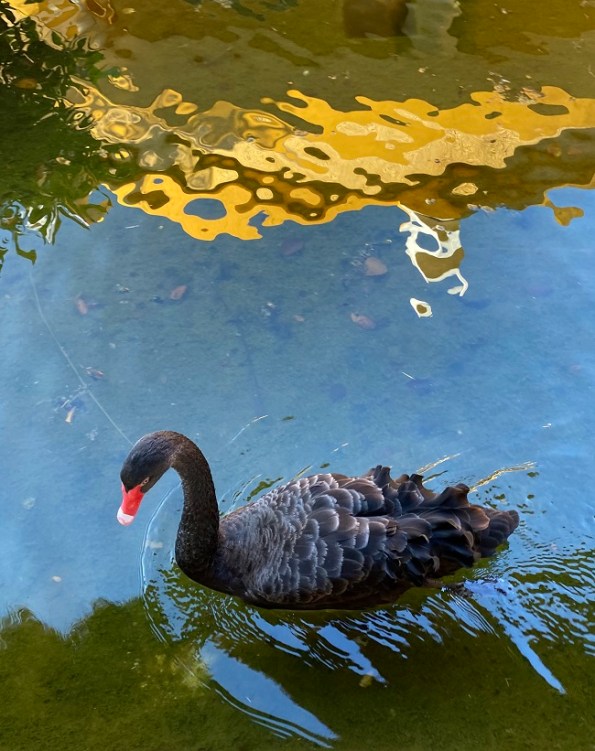
 And a few more:

Last Bottle Sign Up ($10 credit)




 Talk-A-Vino