Daily Glass: While I Was Out
This September probably was my worst blogging month ever. Whatever the frustrating reasons are, this is not the self-reflection blog (it is, of course, but only for wine, food, and life-related matters), so one thing we are not going to do is an analysis of that “dry period”. However, it was dry only for the words, but not for the wines, so let me share a few of the recent delicious encounters with you.
Let’s start with the 2009 Alban Vineyards Reva Estate Syrah Edna Valley (15.5% ABV), which I opened to celebrate our anniversary. Alban makes some of the very best Rhône-style wines in the USA, and this Reva Syrah didn’t disappoint – beautiful fruit on the nose with a touch of barnyard, layers of red and blue fruit on the palate with spicy, peppery underpinning. Delicious.
Next, we continue with a number of Field Recordings wines. It is no secret that I’m biased toward Field Recordings wines, ever since I discovered them more than 10 years ago (this is the only wine club I belong to). Field Recordings wines don’t cease to amaze with Andrew Jones’ talent to find one-of-a-kind vineyards to make one-of-a-kind wines.


2020 Field Recordings Domo Arigato (Mr. Ramato) Skin Contact Pinot Grigio Central Coast (12% ABV, $25, 52 barrels made) is skin contact Pinot Grigio, made in Ramato (copper) Italian style. A beautiful complexity on the nose without going overboard, fresh fruit and herbs, clean and unctuous on the palate – when the friend stopped over, we finished the bottle without even noticing. This wine is a blend of Pinot Gris from two sites on the Central Coast, each of which spent a month on the skins and then was aged in the neutral oak barrels.
2019 Field Recordings Festa Beato Farms Vineyard El Pomar District (11.5% ABV, $25, 100% Touriga Nacional, 12 months in Neutral American oak barrels, 6 barrels produced) really surprised me. Touriga Nacional is not the grape California is known for. Also, from my experience with Portuguese wines, Touriga Nacional from the Douro definitely benefits from a long time in oak (I much prefer Douro Reserva over the regular wines), so I opened the Californian rendition without much of the expectations.
Wow. Festa actually means Party in Portuguese, and what a party it was! Wild berries on the nose – wild blueberries and wild strawberries. The same fresh, crunchy, crispy, fresh wild berries on the palate, but well supported by the medium to the full body of the wine and perfectly balanced in and out, creating one delicious mouthfeel. Another wine you can’t stop drinking once you start.
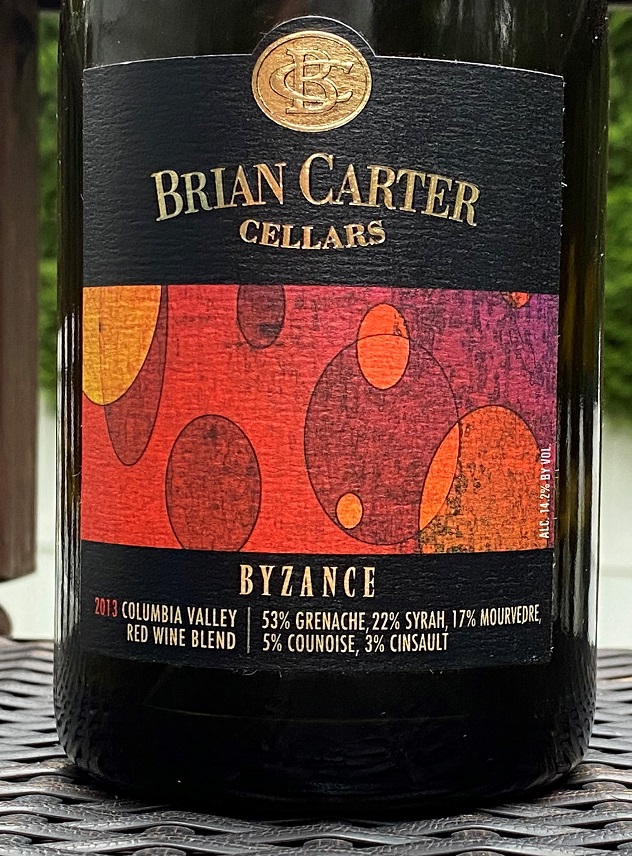 Let’s take a short break from the Field Recordings wines and let’s go visit Washington with the help of 2013 Brian Carter Cellars Byzance Red Wine Blend Columbia Valley (14% ABV, 53% Grenache, 22% Syrah, 17% Mourvedre, 5% Counoise, 3% Cinsault). I got this wine at one of the Last Bottle marathons, going strictly by the region, age, and price – never heard of the producer before. Turns out that Brian Carter had been making wines in Wahington since 1980, and he has a passion for blending – which this wine perfectly demonstrated. In my experience, 8 years is not an age for many Washington wines, so I opened the bottle not without trepidation. To my delight, the wine was simply superb – fresh cherries and blackberries on the nose, ripe cherries, mocha, and dark chocolate on the palate, soft, round, perfectly balanced, exciting, and delicious. And I didn’t need to wait for it even for a second. Pop, pour, enjoy. This is the wine that brings an instant regret with the first sip – why, why I didn’t buy a full case??
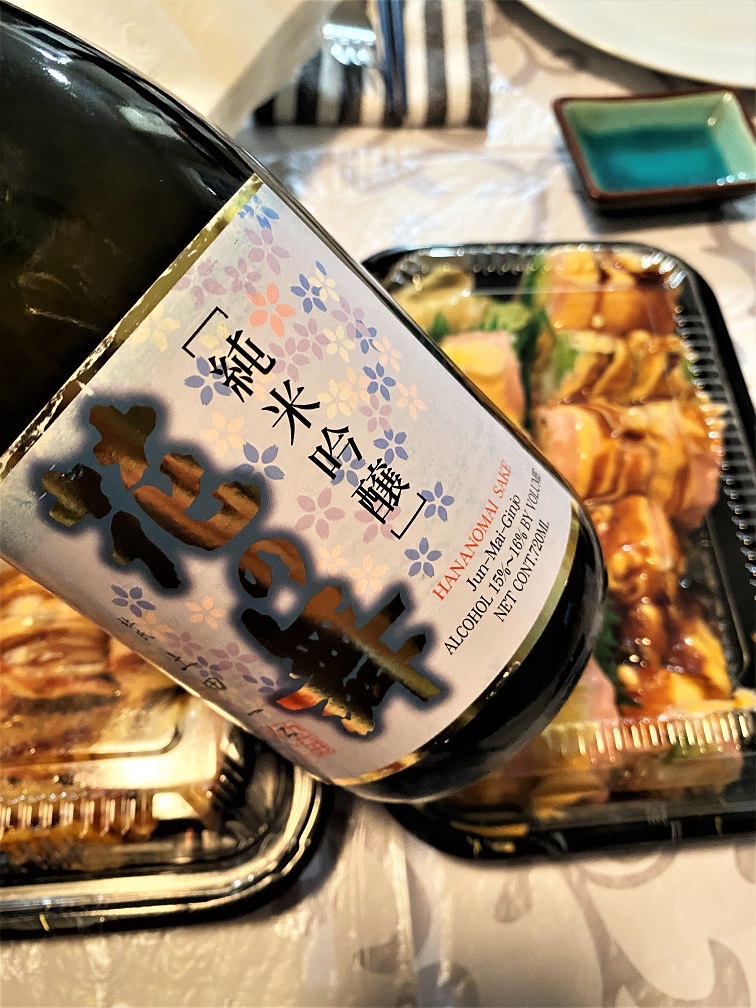
This next wine I want to talk about might surprise you, and this is something I very rarely discuss in this blog – it is Sake I want to share with you. As we planned to have sushi for dinner, the family requested sake to drink with it. I stopped at the wine store on my way to pick up sushi, and this Hananomai Sake Jun-Mai-Ginjo (15%-16% ABV) was recommended. What a great recommendation it was! I almost got the point of regretting buying only one bottle, as everyone couldn’t stop drinking it – nicely perfumed, light fruit notes on the palate, delicate and balanced – it perfectly complemented our eclectic selection of the sushi rolls.
And now, back to Field Recordings.

2018 Field Recordings Happy Accident Alicante Bouschet Vignoble Guillaume Jean Paso Robles (11.1% ABV, 10 months in stainless steel, 5 barrels produced) is another atypical California wine – made from the Alicante Bouchet grape. This is one of the few so-called teinturier grapes – red grapes which have not only red skin but also red flesh, thus producing red juice when pressed, without the need for skin contact (famous Georgian Saperavi is another example of the teinturier grape). Alicante Bouschet is a cross between Petit Bouschet and Grenache, and it was widely planted in California during Prohibition and lately increasingly planted in France, as well as in Spain and Portugal. The name of the wine has its own story, which I simply quote from the description I got with the wine club offering email: “Many things can go sideways in the cellar as we are ushering the fermentation along. In most wineries, a surprise visit from brettanomyces to your cellar could be a curse, but in this situation we are celebrating it. The funky wild yeast that is popular in the beer world brings out a signature funk. This signature funk, though, took 5 barrels of Alicante to another level. As a famous painter once said, there are no mistakes, just happy accidents.”
The wine offered an inviting nose of the fresh berries, continuing with tart, the dry mouthfeel of red and black fruit, and medium to full body. I think this wine would well benefit from another 3–4 years in the cellar, but it was quite enjoyable as is right now.
And that concludes our daily glass ride – hope you had some tasty wine discoveries lately!
A Weekend With Friends
Here I am, going over the options in my head. I can just start this post like everything is cool. Or I can start it with a little whining about the past. Like the life as we knew it before 2020. The year which didn’t exist. Which continues “not existing” well into this very 2021. Anyone has a time machine to go and fix it all? We don’t need to go far…
Yes, I strive normal. The life as it was. And this past weekend, this is exactly what I had.
For the past 10 years, we have had a tradition with friends – adults’ getaway. It was born out of the need to get away from the kids, to feel ourselves the adults without the need to constantly taking care of someone. Visit a winery, have a great dinner, play some games until everyone is really tired, have more fun the next day, come home recharged. Simple.
Last year was the first time in 10 years when we felt that adults’ getaway was not in the cards. But this year, the spontaneous decision was made not to lose another year to the stupid crap, and the getaway was planned.
We always go to the small towns around the east coast, trying to stay within 3 hours of driving distance from Stamford, CT. As I started writing this post, I decided to check what places we visited over this years. It turns out that this was our 10th trip, skipping 2011 (if 2011 was not skipped, I have zero records of that), and 2020. In 2010, this all started in Milford, Pennsylvania. In 2012, we continued to Grafton, Vermont. In 2013, we stayed in Palenville, New York, with the visit to Hudson Distillery being an absolute highlight. In 2014, it was Norfolk, Connecticut, and then we continued on to Cooperstown, New York in 2015, Greenville, New York in 2016, Lenox, Massachusetts in 2017, then Kenneth Square, Pennsylvania in 2018, and West Yarmouth on Cape Cod in Massachusetts in 2019 (as you can tell by the absence of the links, I failed to properly document some of our adventures).
That brings us to the year 2021, where our spontaneously decided destination was once again the Berkshire mountains region of Massachusetts, and our home base for the weekend been at Harbour House Inn and B&B in Cheshire, Massachusetts. But our first stop on the way was at the Balderdash Cellars winery in Richmond, Massachusetts. It was a random pick – the winery was conveniently located along the way, about 30 minutes away from our final destination, but then it was definitely a lucky strike.
The note on Balderdash Cellars website said that reservations are unnecessary and not taken – this sounded really good especially with the latest trend where you can’t just walk into the winery for a tasting (I get the business side of it, but I’m not a fan). Another interesting thing about the winery is that Balderdash Cellars brings the grapes from California (grapes, not juice), and then they make their wines right on premises, including all of the aging (some of the reds age for 2 years).
We arrived pretty much by the time the winery just opened its tasting room (at noon), and we were the first there. You can get a tasting flight of 5 wines, a glass of wine, or a bottle, all from the current selection. The tasting flight is prepared for you in the neat tiny vessels, and then you can seat anywhere you like and taste at your own speed.
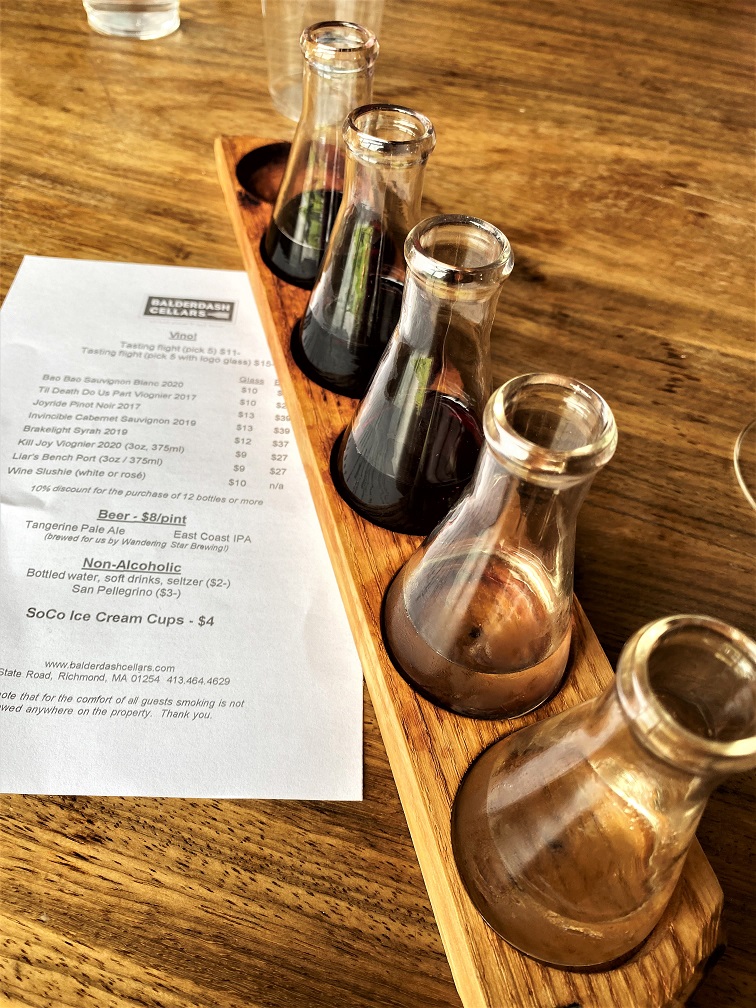


All the wines we tasted greatly exceeded my expectations. 2020 Balderdash Cellars Bao Bao Sauvignon Blanc (13.6% ABV, $29, 100% Stainless steel for 5 months, Napa Valley fruit) was perfectly on point – a touch of freshly cut grass, bright acidity, lemon notes, perfectly refreshing and delicious. 2017 Balderdash Cellars Til Death Do Us Part Viognier (14.3% ABV, $29, 75% French Oak, 25% stainless steel for 8 months, Paso Robles fruit) was possibly even more surprising. Viognier is a very tricky grape, you really need to do it right, especially when it comes from the warm climates. This wine was outstanding – beautiful perfume on the nose, tropical fruit, nicely plump and balanced palate.


2017 Balderdash Cellars Joyride Pinot Noir (14.4% ABV, $39, 100% French Oak aging for 18 months, Edna Valley fruit) was good, maybe a bit too sweet for my palate. However, 2019 Balderdash Cellars Invincible Cabernet Sauvignon (13.7% ABV, $37, 100% French Oak aging for 2 years, Napa Valley fruit) was simply outstanding – cassis and bell peppers on the nose, classic, unmistakable Cab with a lot of restraint, continuing with the same finesse on the palate – more cassis and bell peppers, all well balanced and harmonious. I would be happy to drink this wine at any time. Last but not least in the flight was 2019 Balderdash Cellars Brakelight Syrah (13.7% ABV, $37, 100% French Oak aging for 18 months, Sonoma fruit), which was also perfectly classic – beautiful black pepper all around, on the nose and on the palate, the nice core of the black and red fruit, delicious.
We also had a bonus taste of the 2020 Balderdash Cellars Kill Joy Late Harvest Viognier (12% ABV, $27, 100% neutral French oak, Edna Valley fruit) which was just outstanding – fresh ripe tropical fruit supported by clean lemon acidity, the element which makes or breaks any dessert wine, and this one was definitely made right.
I really wanted to try Truth Serum Petite Sirah as just the name sounds soooo intriguing, but the wine was sold out, unfortunately.


After tasting we moved from inside of the tasting room to find a nice sitting outside. The winery has stacks and stacks of red Adirondack chairs, my favorite type of chair, and we had no problems assembling a very comfortable sitting. We got a bottle of Sauvignon Blanc and Cabernet Sauvignon to continue, while we were waiting for the food truck to arrive at 1 pm (the winery offers different food options on the weekends). I also want to mention how professional the staff was at the winery – water was added to the ice in the bucket to chill our Sauvignon Blanc better. The foil was cut completely from the bottle before pulling out the cork – these are the little things that make your wine experience simply more enjoyable.
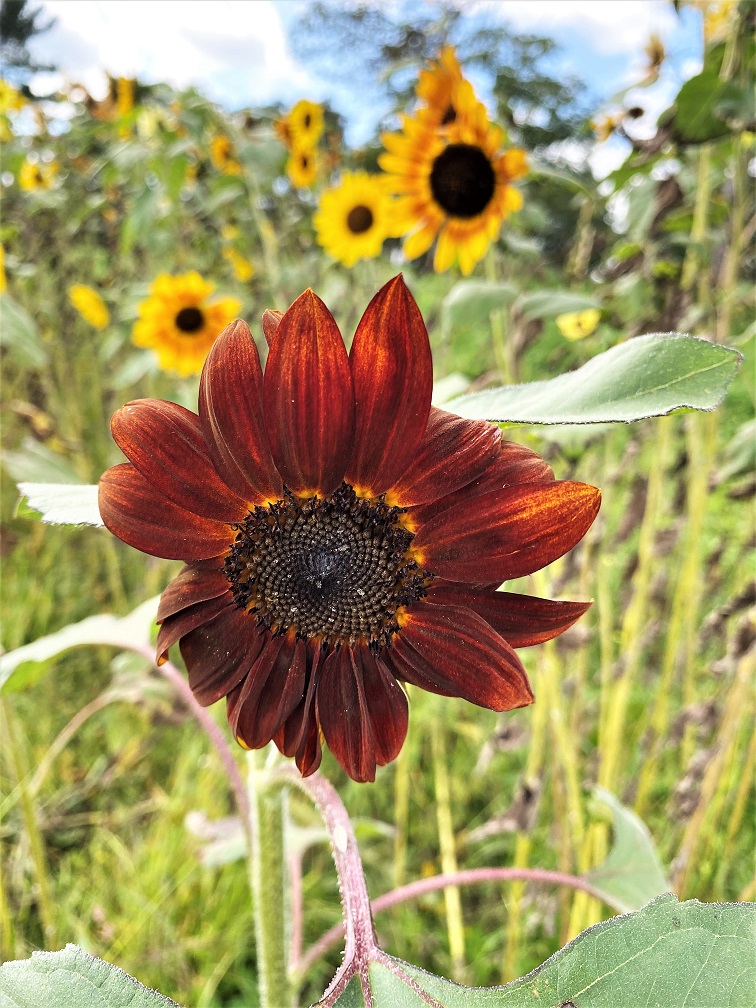
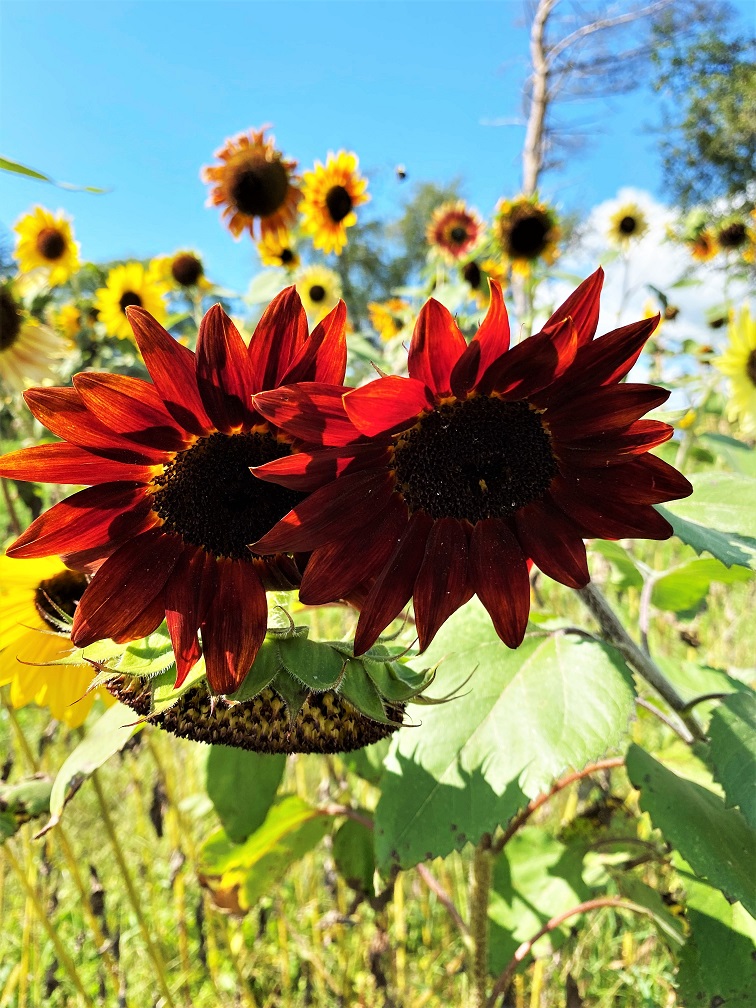
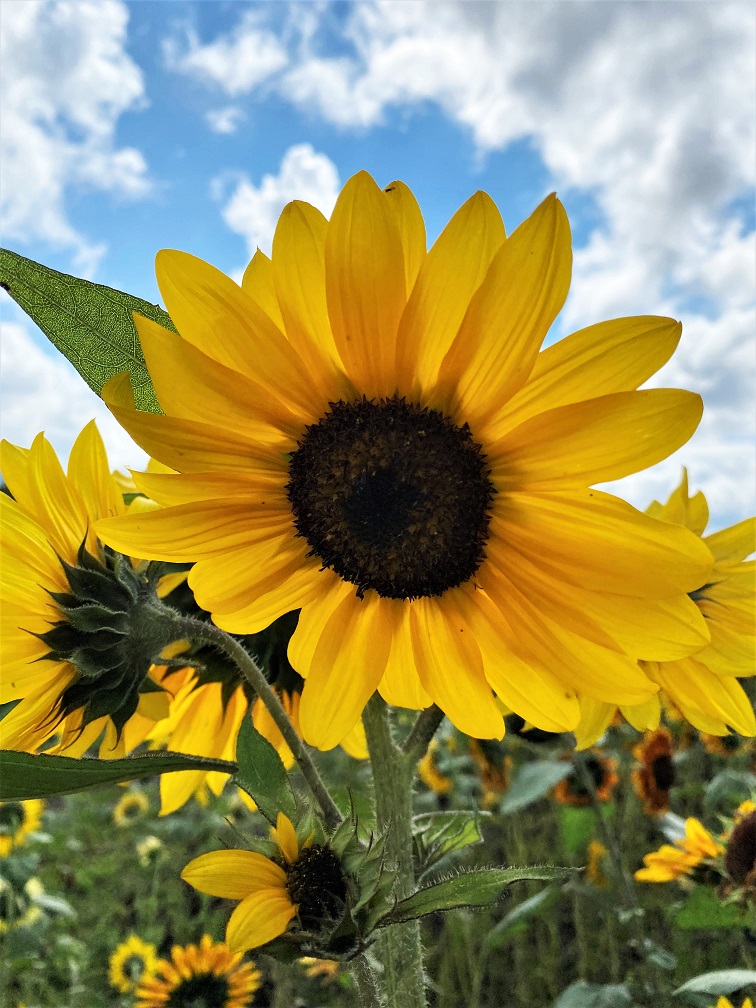
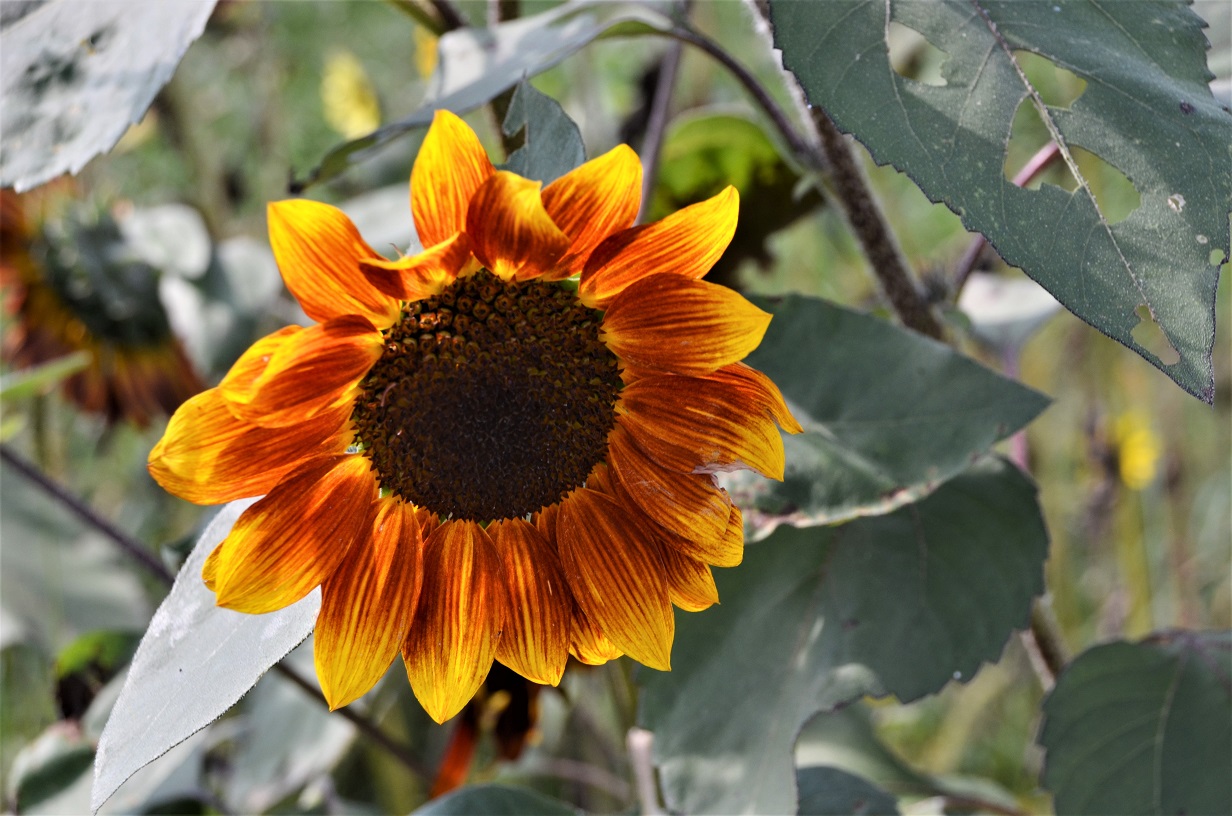
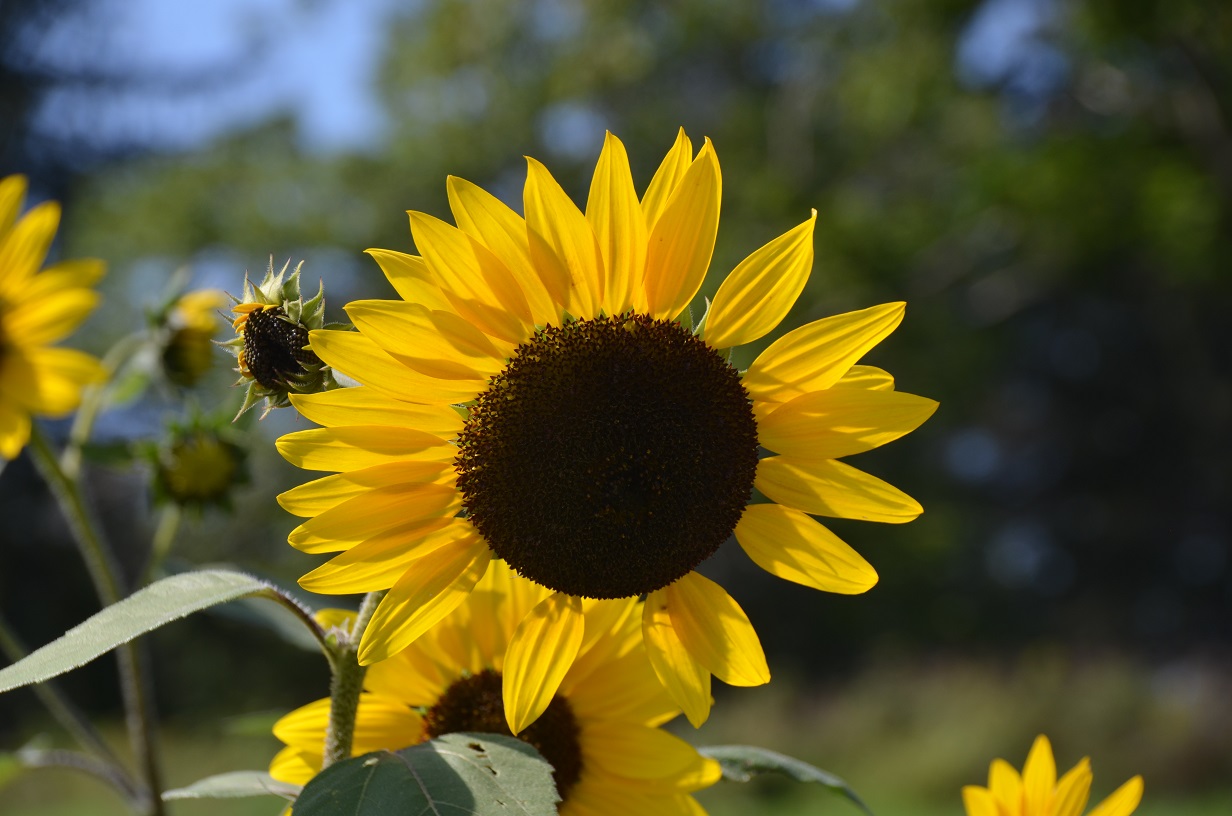
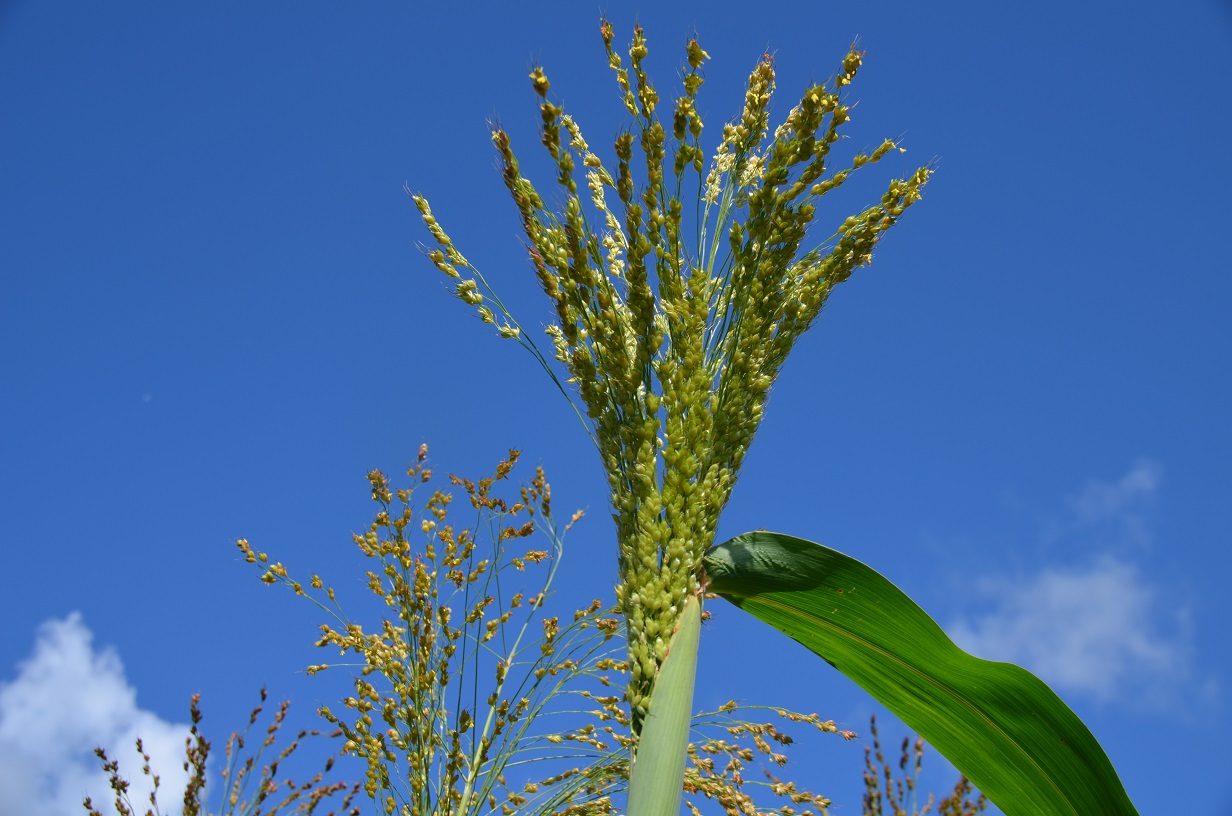
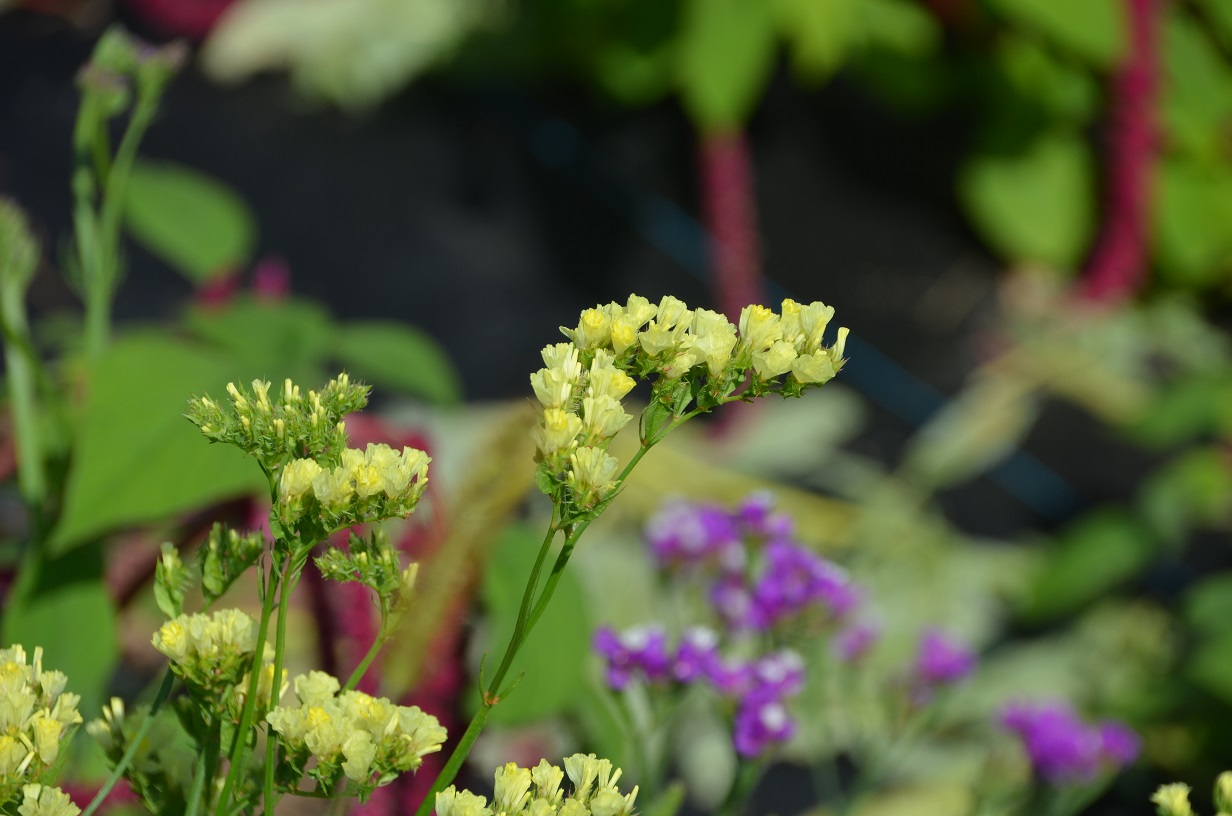
While the winery doesn’t offer vineyard views, they have rows of flowers instead. I love seeing all of the pictures of sunflowers from all the people around, but never really had an opportunity to take sunflower pictures before – until now. This flower field was boasting the sunflowers of more colors ever thought are possible in the sunflowers. Hence let me inundate you a bit here with these beauties:



Three hours later, we left now a very crowded winery to get to our destination – Harbour House Inn B&B. If I would have to describe Harbour House Inn in a few words, that would be “clean, large, spacious, and hospitable”. Hospitable is truly a keyword here – let me explain.
Saturday night dinner is the major attraction for our adults’ getaways, pièce de résistance if you will. We always put a lot of care into finding a restaurant that would be willing to accommodate our group and create a special tasting menu which we would pair with our own wines. On most of the trips we were able to create the arrangements like this, and a few times we were unable to bring our own wines and had the tasting dinner fully arranged by the restaurant. This time around, we couldn’t find a restaurant that would be willing to work with us in creating a tasting menu, and not everybody was even willing to accommodate our whole group for dinner. This is where our hosts, Brandi, Darrell, and Billie came to the rescue, allowing us to get the take-out from the restaurant, set up the dinner table with all the plates and glasses, and thus still have an experience of our traditional wine dinner.
When we arrived, the table was already set with the wines glasses and plates, and there was a fridge where we could stuff all of our white wines.

And here is the same table all set to start the dinner:
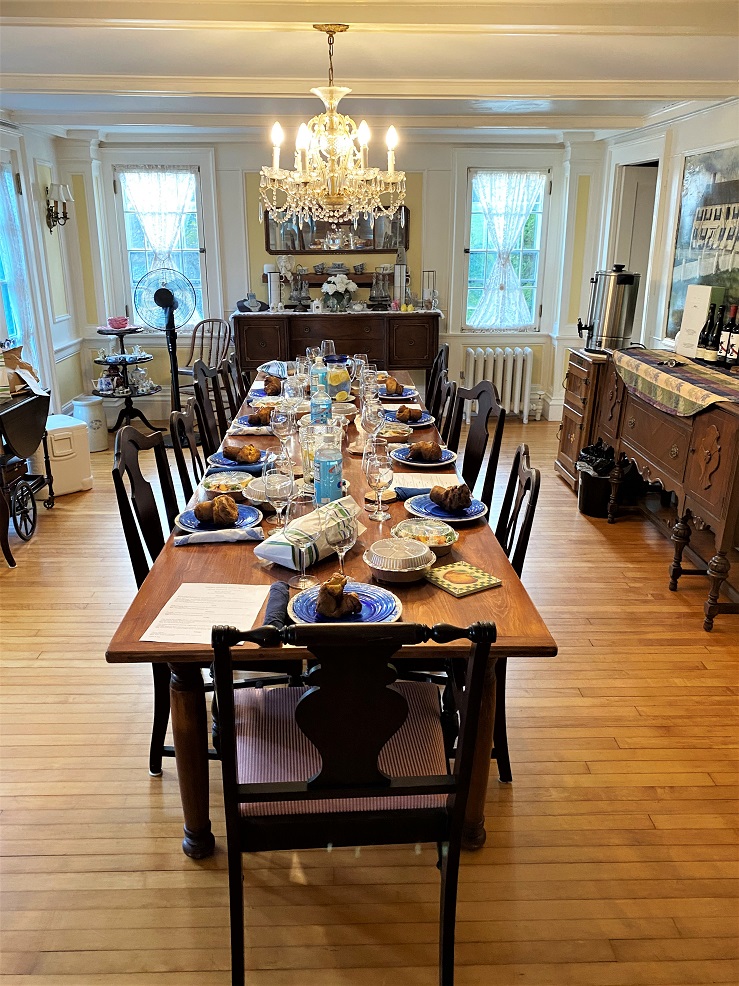
Those popocers… Yummmm!
We brought our dinner from the Mario’s Restaurant in New Lebanon, New York (about 30 minutes drive) which also exceeded our expectations. We arrived at 5 PM to pick up all the food. Everything was ready to go, no waiting at all, and all the food was piping hot, just made. The restaurant even included lots of delicious bread and top it all off, popovers, which were simply spectacular – I’m not a big fan of the popovers in general, but this was just something else – I would eat 5 of those by myself and have no regrets.


Now, let’s talk about wine and food. Our first dish was Prince Edward Isle Mussels (Pancetta, leek, roasted garlic, white wine, EVOO, crostini) which we paired with 2020 Bisol Jeio Millesimato Prosecco Rosé DOC. Prosecco Rosé is a hot category right now. As I’m mostly ambivalent to the Prosecco, this new category is also lost on me. However, when I was looking for the wines to pair with the dinner, and I wanted to start our dinner with bubbles, that bottle of Jeio Rosé looked very good – an opportunity to try a new (hot!) type of wine made by the reputable producer (I’m not ambivalent to Bisol wines – these are Prosecco wines in its own category). The Rosé didn’t disappoint – crisp, clean, tart, fresh – anything else you want from the sparkling wine? Yep, I thought so. It paired very well with the mussels which were a riot – lots and lots of flavor, delicious broth – I lost count to the amount of bread I consumed with the mussels.
Next, we had Rustic Beef and Veal Grande Meatballs (San Marzano sauce, pesto, crostini) and Mushroom Beignet (Caps stuffed with garlic butter, dipped in a beignet batter, baked and topped with hollandaise sauce) which we paired with 2020 Notorious Pink Grenache Rosé Vin de France (100% Grenache). The meatballs were absolutely delicious, as well as the mushroom beignet. As far as the wine is concerned, we already had this Rosé at one of the previous dinners, and looking into my past notes I was equally unimpressed.
Next, we had Baby Arugula Salad (Farm fresh peaches, garden tomatoes, burrata, toasted pistachios, white balsamic vinaigrette) paired with 2019 Ninety Plus Cellars Aligoté Bourgogne AOC. Aligoté is yet another rave of the moment, gaining in popularity as an affordable white Burgundy. The wine was round and creamy and worked quite well with the salad.


For our “intermezzo” we decided to try something new and different – a “pasta” of zucchini – Zucchini “Noodles” (Roasted wild mushrooms and tomatoes, sweet corn, burrata, cheese, white wine, and garlic) paired with 2019 Thevenet & fils Les Clos Bourgogne AOC. The zucchini “noodles” were an absolute standout – amazing flavor and texture, delicious. The red Burgundy was very tart and light – while it was kind of okay with the dish, the pairing was not anything to write home about.
Then there were the entrées. First, we paired Pan Seared Sea Scallops (Risotto alla Milanese, sweet corn, chive beurre blanc) and Grilled Faroe Island Salmon (Maple and mustard glaze, hash of roasted potatoes, English peas, carrots, and scallions, fresh horseradish) with 2013 Montecillo Rioja Reserva DOC. Scallops and salmon were delicious in their own right, each dish being succulent and flavorful. The Rioja was simply superb – dark fruit, cedar box, herbs, perfectly balanced, round and velvety in the mouth – this was another most favorite wine of the dinner (the first one was Prosecco Rosé).
Last we had Pan Seared Duck Breast and Leg Confit (Chive mashed, cherry & port wine reduction, grilled asparagus) – melt in your mouth delicious, and succulent, generous, flavorful Red Wine Braised Short Rib (Roasted summer vegetables, chive mashed, red wine jus). These two dishes were paired with 2015 d’Arenberg The Laughing Magpie Shiraz Viognier McLaren Vale, which didn’t meet my expectations. Maybe the wine needed some time, but it really didn’t do anything for me.
The dessert was good, but after all of the food, nobody really cared about the dessert…
My next day started from the quiet early walk in the fog. Fog has a special ability to underscore the silence. And there is no better time of the day than a cool and quiet morning with a cup of hot coffee in your hand and the knowledge that the whole day is fully ahead of you.
Our breakfast (it is a B&B, remember?) consisted of freshly baked blueberry muffin, fresh fruit, and eggs Benedict casserole – an unusually creative dish, resembling the eggs Benedict without the need to properly poach the eggs for the large group of hungry guests.
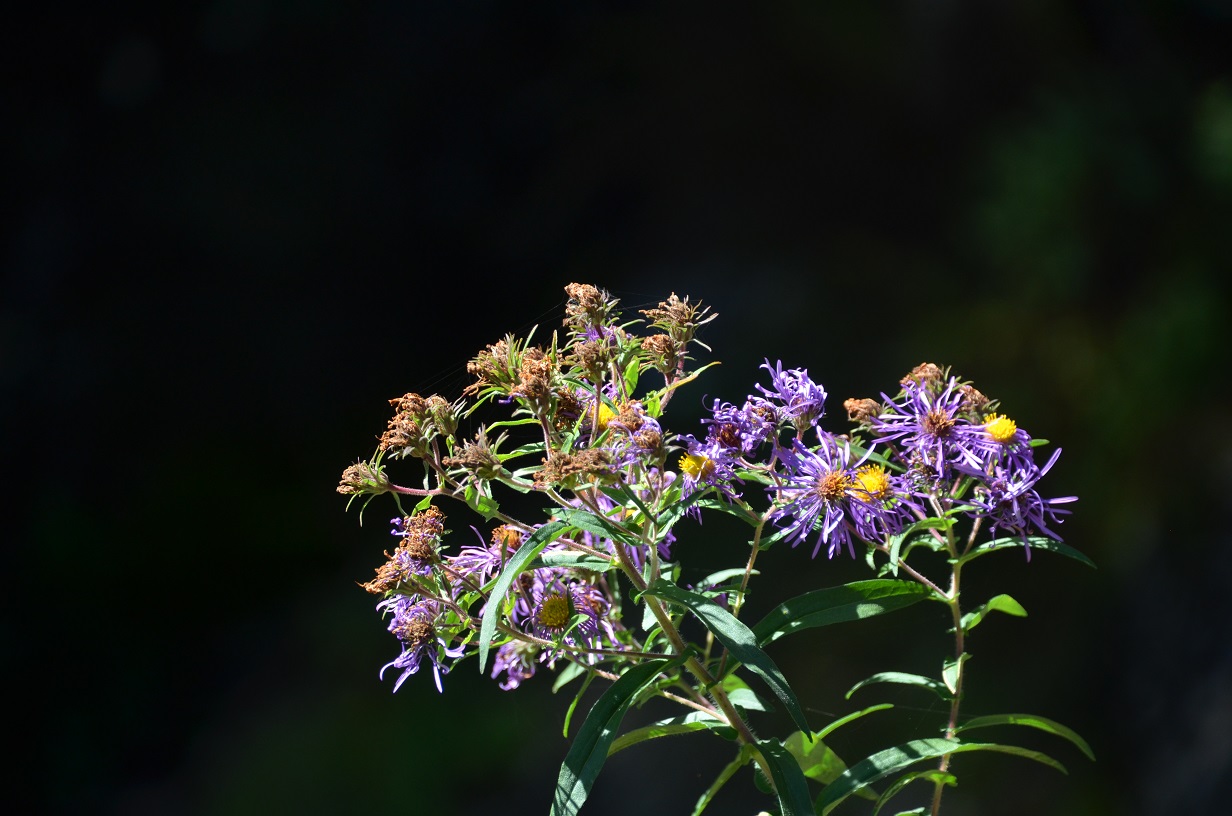
We always like to include at least a bit of the hiking into our trips, so our first stop after we left the Inn was at the old marble quarry repurposed into the nature park. Lots of steps and some beautiful views:




We then went to the cheese shop along Berkshire cheese trail where we were hoping to taste some cheese – unfortunately, this was a cheese shop at the functional dairy farm, but no cheese to taste, only to buy.
We ended our day with a late lunch at Pera Mediterranean Bistro in Williamstown before starting the drive home.
Here we are – another adults’ getaway became history, but I’m already craving the next one.
While In Texas …
August was an eventful month – two trips back to back, something I didn’t experience in the past 18 months.
After a trip to Oregon to attend the Wine Media Conference and visit some of the wineries in Willamette Valley, I spent two days at home and got on the plane again, this time to attend a work event in San Antonio in Texas. This was a short but quite intense 4 days trip, so I really didn’t plan to look specifically for any local wines as I like doing during any of my trips. Until I walked into the Riverwalk Wine and Spirits.
You see, I was only looking for sparkling water, as this is what I prefer to drink, so buying wine was not a part of the plan (who am I kidding). But being in Texas, I had to look at the shelf with the local wines – located, as one would expect, in the far corner of the store. What do you think happened next? Of course… I love Marsanne and Roussanne wines, and the bottles were simply looking at me saying “yeah, we know you want us…”. I grabbed the bottle of Becker Claret to keep the whites company, and we happily left together.
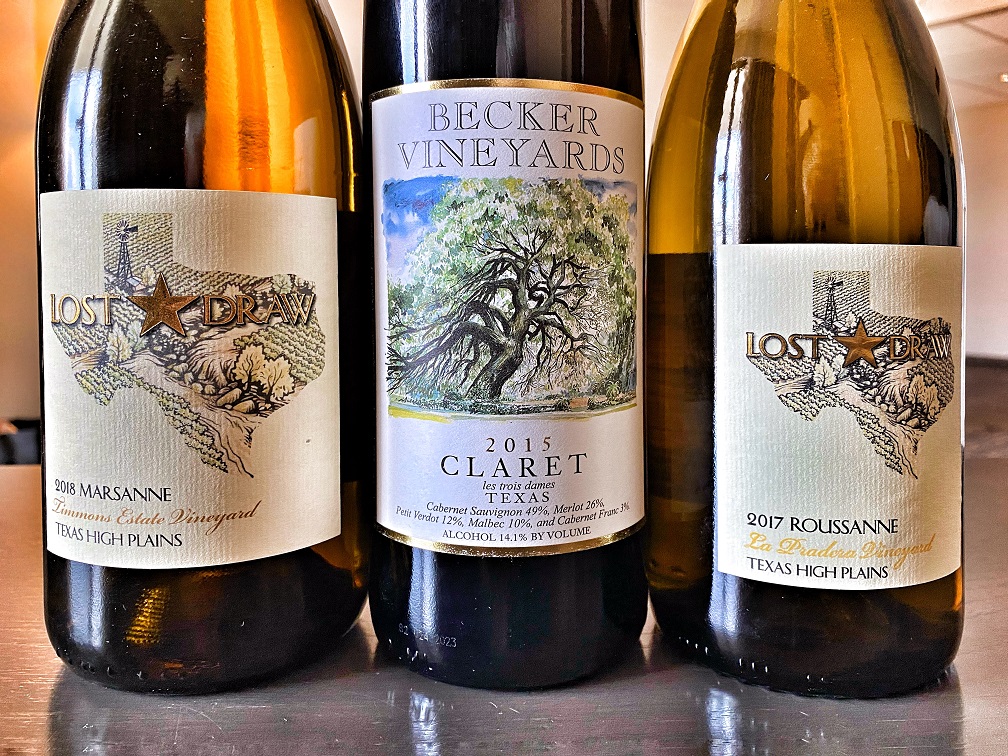
I’m familiar with Becker wines, had them a few times before – they also have quite memorable labels. But I don’t believe I ever tasted any wines from Lost Draw Cellars, so let’s talk about them first.
Lost Draw Cellars traces its origin to 1936 as a family business. The grapes were planted on the Lost Draw Vineyard site in 2005, and in 2012, Lost Draw Cellars bottled its first vintage. Today, Lost Draw Cellars produces a wide range of wines, focusing primarily on the Mediterranean varieties growing on the number of vineyards in Texas High Planes AVA – Viognier, Marsanne, Roussanne, Sangiovese, Tempranillo, and many others.
The two white wines I tried were, in a word, excellent.
2017 Lost Draw Cellars Roussanne La Pradera Vineyard Texas High Plains (13.2% ABV, $14.99)
Golden color
A touch of tropical fruit and gunflint, herbal notes
Fresh, round, lemon notes, complex, great acidity, good balance, good minerality
8, I would drink this wine any day
2018 Lost Draw Cellars Marsanne Timmons Estate Vineyard Texas High Plains (13.2% ABV, $14.99)
Light Golden
Butter, vanilla, nose reminiscent of Chardonnay
Vanilla, pronounced honey note, round, plump, creamy, good acidity, good balance
8+, superb.
The story of Becker Vineyards started when the Becker family decided to look for the log cabin to make it into a country getaway. They found their perfect cabin in 1990, along with 46 acres of land. Owning the vineyard was a long-time dream, so the first vines were planted in 1992, following by the first harvest in 1995. That humble beginning today became a 100,000 cases operation with numerous honors and accolades – for example, Becker wines were served at the White House on 7 different occasions.
I have to honestly say that I was very happy with my choice of red wine at the store – after the first sip, it was hard to wipe the smile off my face:
2015 Becker Vineyards Claret Les Trois Dames Texas (14.1% ABV, $14.99, 49% Cabernet Sauvignon, 26% Merlot, 12% Petite Verdot, 10% Malbec, 3% Cabernet Franc)
Garnet
Coffee, mocha, cassis, bell pepper
Cassis, bell pepper, eucalyptus, good acidity, soft tannins, perfect balance
9-, spectacular. Just pure pleasure in every sip. The wine is at its peak and it is an absolutely delicious rendition of classic French claret.
This was my second time tasting Becker Claret – the first time I had it in 2011 at Vino Volo at the airport. It was a 2009 vintage, thus I was tasting 2 years old wine. This time, it was a 6-year-old wine, and it definitely shined to its fullest.
That is my short story of finding delicious wines in Texas (at a great price too). Texas Hill County was one of the suggested locations for the next Wine Media Conference 2022 – for once, I would be absolutely ecstatic if that would be an actual choice – I would just need to bring a few of the wine suitcases with me…
We are done talking about wine, but there is something else I want to share with you. While in San Antonio, I stayed at Marriott Riverwalk hotel, in a room with a beautiful city view. Yes, it means pictures – I want to share with you that city view, taken at different times – together with a few flowers.




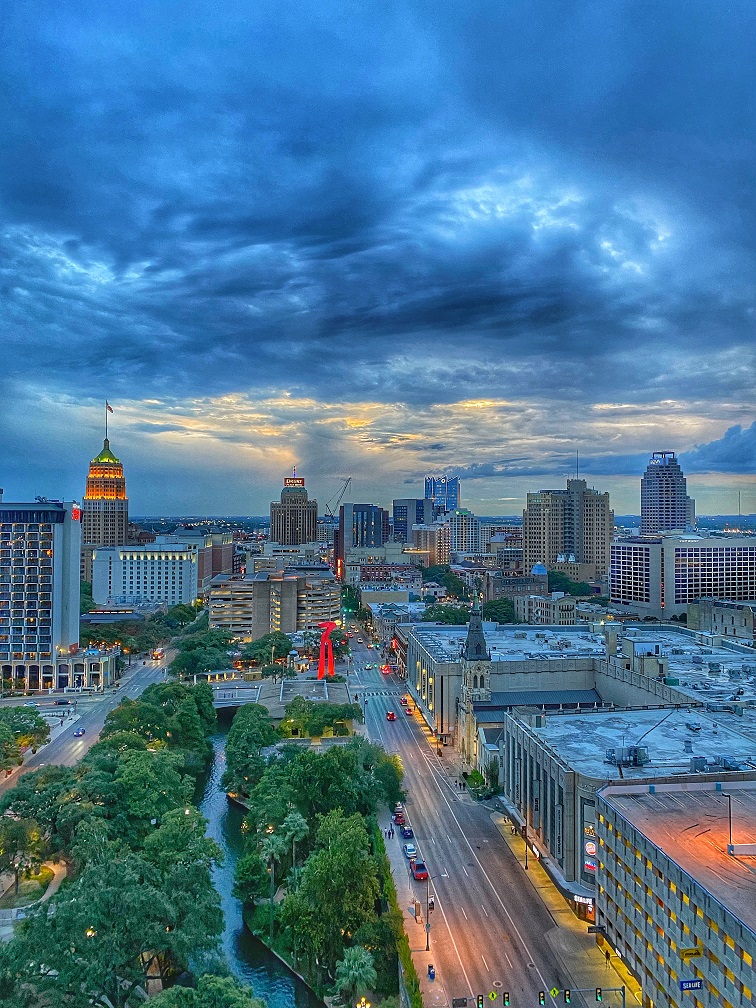
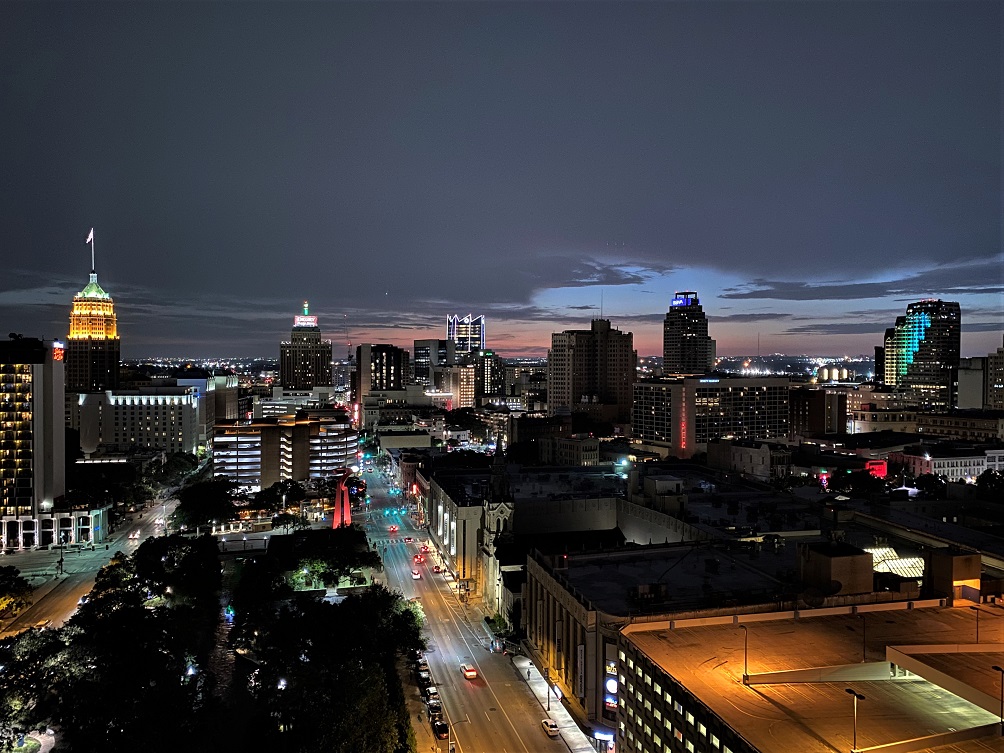 And now we are done. If you will be visiting Texas, make sure to drink Texan wines – you don’t even need to thank me.
WMC21: Day 2 Highlights
We started the 2nd day of WMC21 with the breakout sessions, no keynotes. There were two sessions run in parallel, so you had to choose the topic which would be more of interest to you.
My first session, The Art of Storytelling for the Wine Industry, was presented by Jill Barth, a seasonal wine writer who writes for Forbes, Wine Enthusiast, Decanter, and other wine publications. Jill also won multiple awards (best wine blog 2016, Millessima wine and food pairing award, etc). Jill had a lot of good advice on how to build your story, what would make it a good story, how to pitch your story to the editors, and more.
Next, I listened to Scott Fish from 32 Digital, who was talking about taking your Instagram account to the next level. There were a lot of good information presented in the session – what are the best and worst times to post (it appears that Sunday is one of the worst days for the posts), how many tags to use, the optimal number of pictures in the gallery and so on. There were also some interesting tools recommendations, such as Answer To Public – a service that allows finding the most popular searches at the moment for a given keyword(s), all presented in an interesting format. You can see an example below of the search results for the keywords “red wine”.


You can definitely play with the tool, however, note that with the free search, you get a limited number of searches per IP address per day (I think 3 or 4), so play wisely.
Another interesting tool I learned about was Geolmgr which allows you to geotag your photos to a specific geographic location.
The next session, Digital Marketing for Wine Media, was presented by Mike Wangbickler, wine blogger, long-time WMC attendee, and owner of Balzac Communications agency. Mike started with some hard questions to the audience, such as “why do you have a wine blog” – it appears that literally no one had a wine blog to make money. Then Mike went on to talk about a plethora of tools available today to the bloggers in terms of SEO, content management, optimizing your delivery to your customer audience, and lots more.
After lunch, we had an excellent panel on Oregon sparkling wine. Before the session started we had an opportunity to taste three of the Oregon sparkling wines from the wineries participating in the panel. One of the wines was delicious sparkling Tannat from Troon Vineyards which we tasted on the first day. My other favorite was the 2017 Willamette Valley Vineyards Brut Sparkling Wine, which had all the classic Champagne traits – a touch of toasted bread on the nose, crisp, tight, and elegant on the palate.


The panel discussion was joined by Craig Camp, Troon Vineyard, Christine Clair, Willamette Valley Vineyards, Jessica Thomas, Sweet Cheeks Winery, and moderated by L.M. Archer.
It was a good discussion, starting with the history of sparkling wine in Oregon, and going through all the aspects of sparkling wine production. What was particularly interesting for me is a different approach to selecting the grapes for the sparkling wine. Willamette Valley Vineyards found out that one of the Chardonnay clones in the specific vineyard doesn’t perform well enough to be vinified into the still Chardonnay, but it happened to be well suited for the sparkling wine which requires much lesser ripeness. At the same time, the Sweet Cheek Winery harvests grapes for their sparkling wines from the same vineyard used for the still wine, but in the earlier pass, leaving the grapes for the still wines to ripen further.
Our next session was a wine discovery session where we had a choice of learning about Italian wines of Marche or Abruzzo – my choice was Marche, and we will talk about it in a separate post.
And then there were Lightning Talks. Lightning talks is an interesting concept. These are the sessions presented by fellow bloggers and wine writers. Each presenter submits a presentation with any number of slides, however, the slides change automatically and should be presented in exactly 5 minutes. This is the amount of time given to everyone – either you are done or not, but your time slot will stop exactly at 300 seconds. All the presenters did an excellent job – Gwendolyn Alley talked about being a cellar rat, Jeff Burrows spoke about starting your own blogging group, Brianne Cohen spoke about the virtual tasting business she started in 2020. My favorite talk though was the one presented by Steve Noel, who spoke about creative wine descriptors – I couldn’t stop laughing the whole 5 minutes while Steve was talking. While it will not be the same as Steve’s live presentation, he graciously allowed me to include his presentation in my post – you can find it here.
Our last session of the day, and essentially, the conference, was Wine Live Social for the red wines, which I already covered in this post.
Customary, the conference ends with the announcement of the next year’s location. Unfortunately, Zephyr folks, organizers of the conference, didn’t have a chance to work on securing the next location, as they had to operate with minimal staff, so the location will be announced later.
This was the end of the official conference, but you can probably imagine that we couldn’t let it go so easily, so after dinner, many of the attendees reconvened in the lobby to … yes, you guessed it – drink more wine and talk. There were lots of wines, but one particularly interesting for me was the 2009 Ranchita Canyon Vineyard Old Vine Cabernet Pfeffer – Cabernet Pfeffer is the grape I never tried before, and I recently saw it mentioned by someone, so it was definitely interesting to try. Not sure when this bottle was opened, so the wine was not super-enjoyable, but hey, I get to increase my grape count.
When I went to my room at around 2 am, there was still plenty of wine left, as you can see below. When I came out for breakfast the next morning, the foyer had no traces of wine bloggers partying all night.


There you are, my friends – if you missed the conference, I hope this gives you some idea as to what was going on there, and I hope next year it will be at the place and time good enough for all of us to get together.
I’m done with my report from the conference, but not with Oregon wines. I spent the next 4 days visiting wineries with Carl Giavanti, so as they say, watch this space…
WMC21: Live Wine Social
One of my favorite sessions at the Wine Media Conference is what was known in prior years as speed tasting – 10 wines, 5 minutes per wine for the winemakers to present and for attendees to comprehend and share their opinion on social media.
For WMC2021, a unique event in itself, the format was changed – winemakers were not going around the room with their wines – instead, the wines were placed on every table in advance, and winemakers had 5 minutes each to present their wines. And we only tasted 5 wines per session instead of 10. Not a very different format, but having winemakers not moving around the room all the time kind of reduced the level of energy this event always possessed – which might explain the new name – Live Wine Social.
We had two sessions – White and Rosé on Day 1, and Red on Day 2. With 5 wines in each session, it doesn’t make sense to report on the event in two separate posts, hence one post covering all 10 wines.
Day 1, White and Rosé:
Wine #1: 2019 Longevity Pinot Grigio Livermore Valley – this was an interesting wine, but it didn’t appeal to me – however, I heard other bloggers liking it very much.
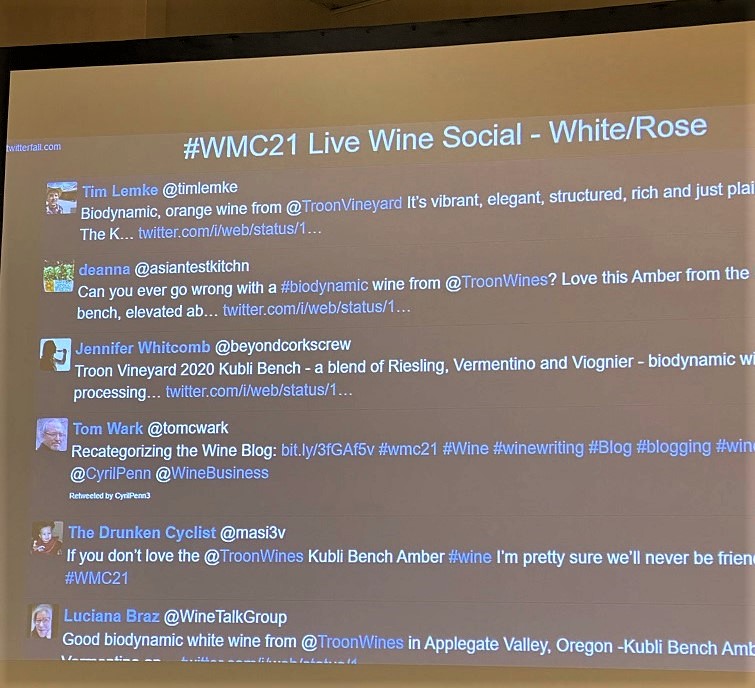
Wine #2: 2020 Troon Vineyards Kubli Bench Amber – a wine with restrained aromatics and tangy orange notes on the palate. One of my favorites in the tasting.
Wine #3: 2019 Benton-Lane First Class Chardonnay Willamette Valley – this was a nicely restrained rendition of the famous grape, very well done.
Wine #4: 2019 Brooks Ara Riesling Willamette Valley – my perennial favorite – this wine never ceases to amaze and delight.
Wine #5: 2020 Rodney Strong Rosé of Pinot Noir – well-balanced California Rosé rendition, simple and tasty.
During the event, a live display was showing all the tweets relevant to the WMC2021 – here is one example for you:
And now Day 2, for the reds:
Red wine #1: 2019 Troon Vineyard Siskiyou Syrah Applegate Valley – we couldn’t start with better wine than Troon Syrah. Purity of expression is nothing short of the mind bogging, beautiful cold weather Syrah rendition. One of my absolute favorite wines of the conference and the trip overall.
Red wine #2: 2018 Benton-Lane Pinot Noir Willamette Valley – interesting wine in need of time to open.
Red wine #3: 2017 Pfeiffer Pinot Noir Willamette Valley – another Pinot Noir which didn’t resonate with me.
Red wine #4: 2017 Brooks Rastaban Pinot Noir Eola-Amity Hills – great aromatics, delicious wine on the palate.
Red wine #5: 2018 Knotty Vines Cabernet Sauvignon California – a part of the new line of wines from Rodney Strong – Knotty Vines. It doesn’t have the extensive concentration one comes to expect from California Cabernet Sauvignon, but it also doesn’t have a price tag associated with that type of wine. Without any regard to the price, this is simple, tasty, delicious, varietally correct, and perfectly drinkable from the moment you open the bottle, which is never an easy fit, especially when it comes to Cabernet Sauvignon.
That concludes the Live Wine Social report from the Wine Media Conference 2021. Cheers!
WMC21: Day 1 Highlights
Wine Media Conference 2021 was distinctly different from all of the previous years. The conference started in 2008 in Sonoma, so this was the 13th annual conference bringing together a bunch of people who love talking about wine – for passion and for business. 2021 was a special year, having everyone battle through the 2020 pandemic, so quite expectedly, the attendance and conference program took a toll – but I sincerely believe that those of us who attended for their love of wine definitely got at least their money worth, and lots more, as you can’t put a price tag on the camaraderie of the wine people.

View from Valley River Inn
This is the second time the conference took place in Oregon. In 2012, it was hosted in Portland with most of the attention focused on the Northern Willamette Valley. 2021 conference took place in Eugene, a town about 120 miles down south from Portland and home to the University of Oregon, hosted at the Valley River Inn. While the previous Oregon conference focused on the wines of Northern Oregon, going down south allowed everyone to explore the lesser-known wineries of the South Willamette Valley and even much further beyond.


Before we get to talk about Day 1, we have to talk about Day 0. First, there was an opening reception and walk-around tasting. There were a few interesting wines – particularly, I want to mention two of the California wines. 2018 Cuda Ridge Petit Verdot Livermore Valley was a perfect example of 100% Petit Verdot, with the concentrated power of the dark fruit, supported by well-integrated tannins. Then there were Knotty Vines – a new line of wines from Rodney Strong, made to be playful and accessible. I tasted 2018 Knotty Vines Chardonnay California which was simple and elegant, having all the Chardonnay traits (vanilla, green apple, a touch of butter), neatly packaged together. At $15, it is your perfect everyday wine. 2018 Knotty Vines Cabernet Sauvignon California was a great example of a well-made California Cabernet Sauvignon suitable for any budget – perfectly noticeable cassis on the nose and the palate, easy to drink, and delightful wine.
Now, for the most important part of the Day 0 – parties. There were at least two of such parties taking place. The first one was at the house of Neal Benson and Alyse Stone who live in Eugene and run the service called Winery Wanderings. Alyse and Neal graciously invited what seems to be a whole conference to their backyard and everyone was able to find a spot. There were lots of wines, lots of hugs, and conversations. While there were lots and lots of bottles opened and consumed, my unlikely favorite was 1971 Fontanafredda Barolo, brought by Jeff Burrows – the wine still had enough fruit left, and the palate gently evolved toward dried fruit – lightweight, but very pleasant.


The second afterparty was kindly hosted by Rodney Strong. Not only we had an opportunity to taste many of the Rodney Strong single vineyard Cabernet Sauvignon wines (Rockaway, Alexander Crown, Brothers – all delicious), as well as Davis Bynum Pinot Noir, pure and classic, we also had a large selection of Voodoo Doughnuts, a local (Portland) crave and a cult. While Cabs and Pinot were excellent, my favorite wine of that evening was the 2018 Rodney Strong Chardonnay Reserve Russian River Valley, which was perfectly bright with vanilla and apple tones on the nose, and a hint of vanilla and butter on the palate. While doughnuts looked great, I really didn’t get the excitement and the cult status of these Voodoo doughnuts – they didn’t offer any special taste or flavor – but of course, they are fun to look at.
Day 1 started with the keynote from Cyrill Penn, the editor of Wine Business Monthly magazine, who primarily talked about the history of his publication and how it morphed over the years.
My favorite session of the Day 1 was delivered by Austin Beeman who works for the wine distribution company and runs a few of the wine blogs. Particularly, Austin was talking about the great difficulties wine shipping and logistics are facing right now and will continue having the issues for a while. I plan to interview Austin to discuss all of these in greater depth.
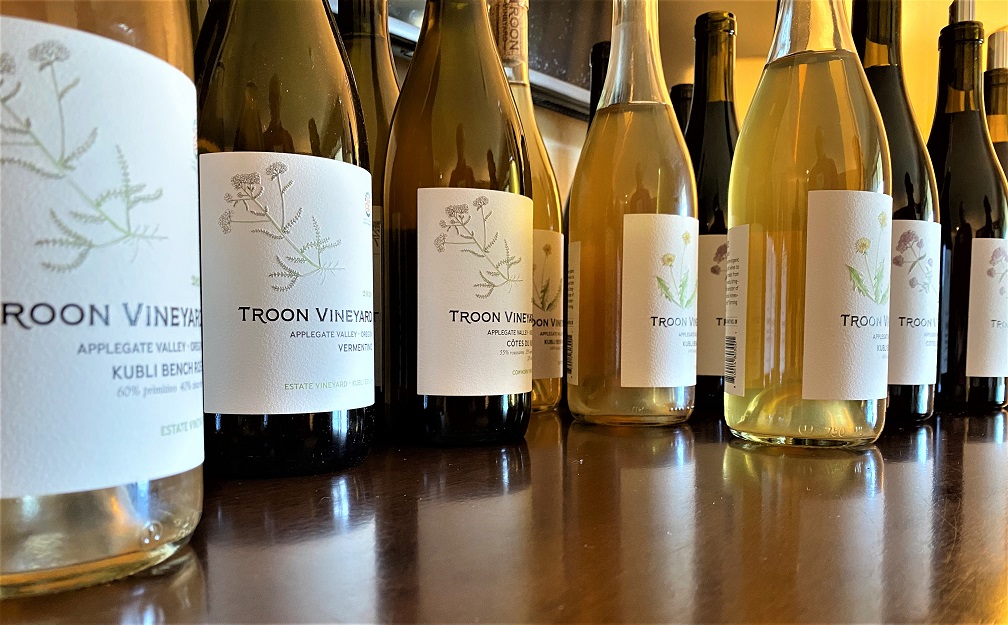


The next highlight was the tasting of the wines of the Troon Vineyard. Troon Vineyard is located in Southern Oregon, in Applegate Valley, and if there is one wine Troon doesn’t make it would be a Pinot Noir. But is not a major differentiator. Troon Vineyard is not only a certified biodynamic winery, but it is the second winery in the world to hold Regenerative Organic certification, which is a serious achievement in itself. I always loved Troon wines, and tasting them was always a major highlight of the WMC events, as Craig Camp, GM of Troon Vineyard, was always a big supporter of the conference, and he always brought a large assortment of Troon wines. And despite the fact that Troon wines were always pure and delicious, this year they manage to deliver even more.
Troon brought 3 sparkling wines, all made as Pet Nat (single fermentation in the bottle). While all 3 were delicious, my personal favorite was 2020 Troon Vineyard Kubli Bench Pet tanNat Applegate Valley, made out of 100% Tannat. Beautiful and clean cut-through acidity made this wine an ultimate refresher – and made me crave oysters right on the spot. My other two favorites were 2019 Troon Vineyard Estate Syrah Applegate Valley and 2019 Troon Vineyard Siskiyou Estate Syrah Applegate Valley, two beautiful expressions of the cold climate Syrah, clean, elegant, smell-forever Syrah wines with a perfect black pepper finish – best Syrah I’ve tasted in a long time.
In the afternoon, we had a good session on the wines of newly minted delle Venezie DOC from Italy, followed by the Wine Social Live tasting of white and Rosé, which was an adjusted version of the traditional speed tasting. Both sessions were very good and I plan to cover them in the later posts.
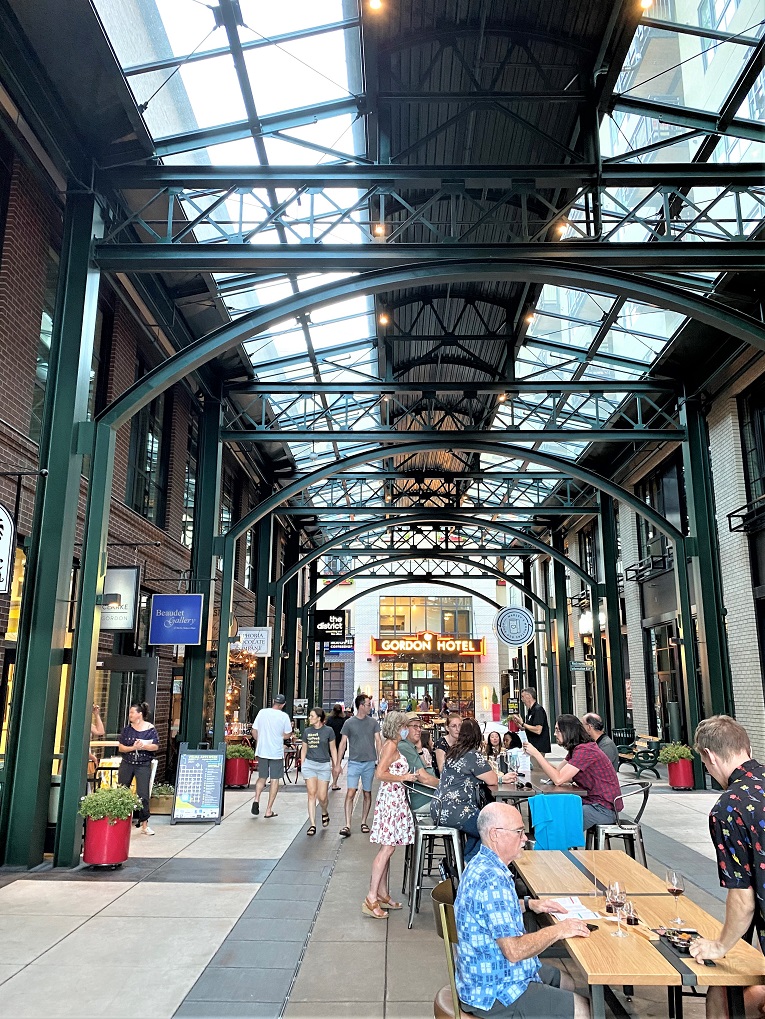
It is traditional to have winery excursions on the evening of Day 1. Out of the two options, I went with the tour of urban wineries in downtown Eugene. Before we went around the town, we gathered at the newly opened Gordon Hotel – it opened in late 2020, so I have to definitely tip my hat to the courage of the people behind this modern, ultra-contemporary hotel and the whole affiliated Market street complex.


A few of the highlights of the walk-around tasting were 2016 King Estate Brut Cuvée Willamette Valley, delicious sparkling wine with a toasty nose, and refreshing and crisp palate, and 2019 Iris Vineyards House Call Red Blend Rogue Valley, a round and delightful concoction made out of Cab Franc (50%), Merlot and Malbec.
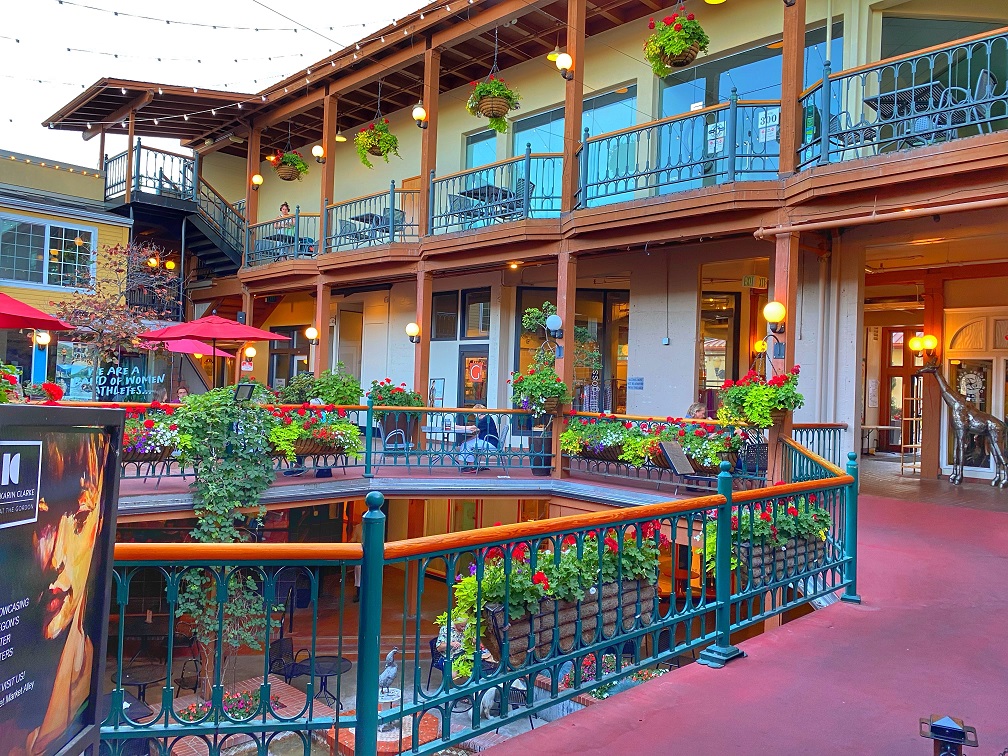
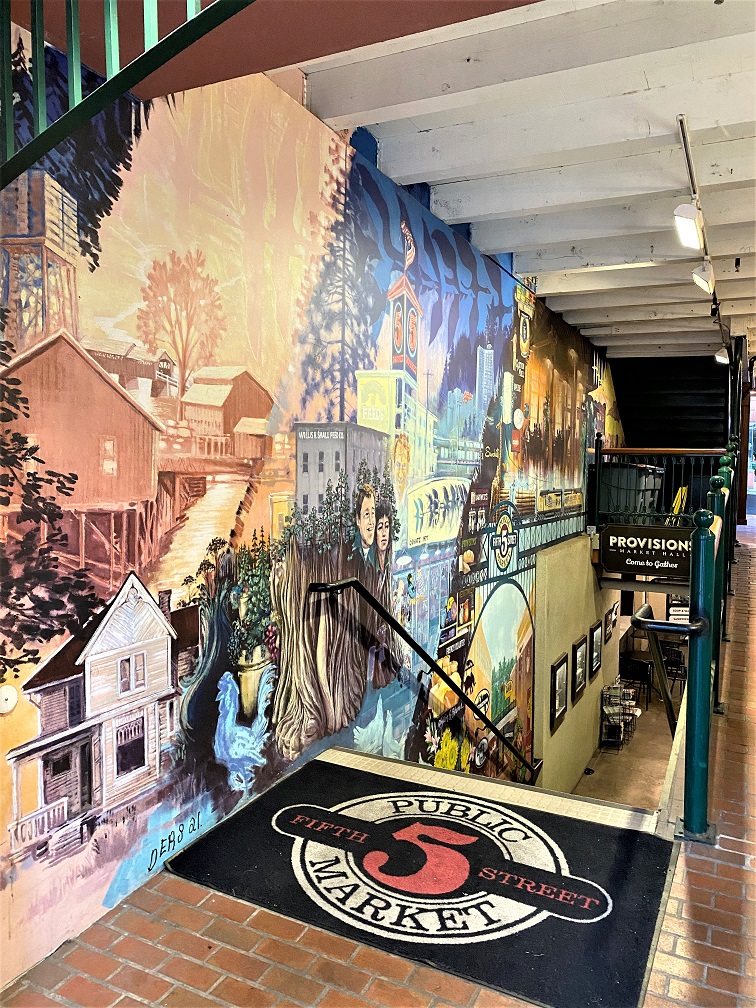
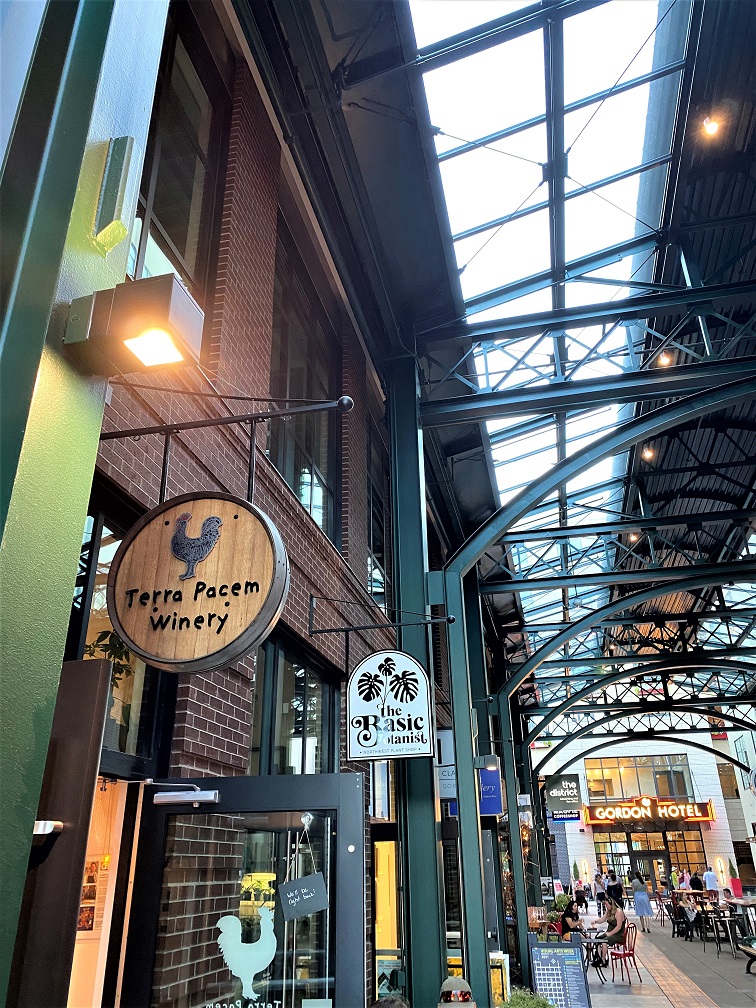
Walking out of the Gordon Hotel we quickly stumbled upon the winery called Terra Pacem, which in translation from Latin means “Peaceful Earth”. Terra Pacem is not just an average urban winery – it is a winery with a great social mission. The winery employs adults with intellectual and developmental disabilities and provides community, training, and employment for them. And I’m happy to say that Terra Pacem can boast not only about the great mission but also about delicious, very well made wines. We had “3 out of 3” success with our selection.


NV Terra Pacem Brut had a beautiful toasted nose, with similar toasted notes on the palate, crisp and refreshing, how you would want your sparkling wine to be. 2018 Terra Pacem Cabernet Franc Columbia Valley was concocted to be a perfect Old World example of Cabernet Franc wine – just enough of the bell pepper on the nose to know that it is there, with bell pepper and cassis on the palate, lean and delightful.
I was tasting the wines with Jeff Burrows, and we were both concerned if we would like the 2018 Terra Pacem Tempranillo Rogue Valley, as for both of us, Tempranillo means Rioja, and I’m very particular about the Rioja’s I like. The wine didn’t disappoint – fresh berries on the nose, same round berries with a hint of the cedar box notes – in a blind tasting, I would happily take it for a Vina Real Crianza, so this was one delightful wine.
And that concludes my report. If you are still with me – thank you, as I feel quite exhausted just by writing it. Until the next time – cheers!
Oregon Wine Reflections – On The Way To The Wine Media Conference 2021
 I like flying. And it is not only the excitement of travel, arriving at the new place, meeting new people, having new experiences. The plane itself, the cabin, offers one of the rare sanctuaries, an opportunity to do some undisturbed work and reflect. Yes, the economy plane seat is not the most relaxing accommodation in the world, but if I chose to do something useful (oh so many times I ended up binge-watching movies instead of doing anything productive), comfort is not the most important thing.
Right now I’m on the small plane, connecting from Denver, Colorado to Eugene, Oregon – the location of the Wine Media Conference (previously know as Wine Bloggers Conference) 2021, WMC21 for short. It could’ve been equally called WMC20, as you can imagine that WMC 2020 never took place, but hey, at least we are getting together in 2021.
This will be my 5th WMC (I started in 2014, skipped 2015, and attended 2016, 2017, and 2018), and I’m really excited to visit Oregon for that.
As I was thinking about the location, I also tried to recall how did I discover Oregonian wines – you know, wine solicit the emotion, makes you dig into your memory.
I have no way of tracing it back to the exact year, but I believe the very first Oregonian wine which made me say “wow” was Archery Summit Pinot Noir, and I would think it happened 15–16 years ago. I probably had some wines from Oregon before and after which were just “meh”, but Archery Summit was definitely a pivotal wine. I think the next super-impressive Oregon wine was the Evening Land Pinot Noir, followed by Ken Wright (I was blown away by the massive power that wine was packing), followed by some of the high-end Adelsheim Pinot Noir wines when I wished for an expense account. And let me not forget Antica Terra, with absolutely spectacular Pinot Noir and Pinot Noir Rosé wines (among many others).
This was ancient history. The modern history (ha!) of my Oregonian wine embrace is closely associated with Carl Giavanti, the winery publicist out of Portland, Oregon. We met with Carl at WBC14 and maintained contact from thereon. At some point, I started doing winemaker interviews in the blog, and Carl asked if I would be interested to create a series of interviews of the Oregonian winemakers – this is how the Stories of Passion and Pinot series was born 5 years ago. Working on those interviews afforded me to discover amazing wines – and amazing passion behind them. Vidon, Lenné, Youngberg Hill, Ghost Hill Cellars, Le Cadeau, Alloro, Iris, Utopia, Bell’s Up – each one had a unique story and unique wines. As part of the series I also interviewed Ken Wright, and I always remember that when I asked him how Oregon Pinot Noir compares to Burgundy, he said that for the long time, Oregon sees Burgundy in the rearview mirror, having found its own unique style.
While Pinot Noir is a king of Oregon, it is not the only wine produced here. Riesling, Chardonnay, Pinot Gris, Tempranillo, Tannat, Vermentino, and many others also call Oregon home, and if you ever had wines from, for example, Troon Vineyards, you would know how good those wines can be.
Yes, color me excited – I finally get to meet the people and visit the wineries I’m already so [virtually] familiar with – and now it will be real.
Wine Media Conference 2021 – here we go!
Made With Organic Grapes: Domaine Bousquet
Today we will be talking about two subjects we already discussed in the past. The first subject is the wines made from organic grapes. Organic grapes are becoming more and more available, and winemakers around the world are more eager to use organic grapes in winemaking, especially as wine consumers happily embrace the trend.
The second subject is the wines of Domaine Bousquet in Argentina. Last time we talked about unpretentious and delicious Domaine Bousquet bubbles, sparkling wines well suitable for every day. Today we want to continue that conversation and talk about few more wines.
The organic viticulture is fair and square a centerpiece of Domaine Bousquet winemaking. The picture below perfectly summarizes it – these are all the certifications that the domain already has:
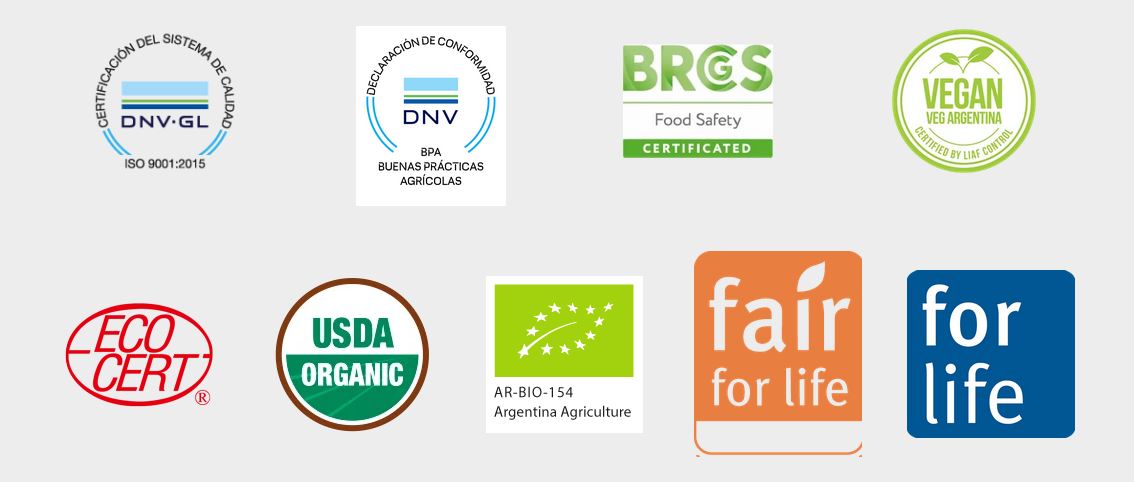
Source: Domaine Bousquet website
Organic viticulture is only a stepping stone for Domaine Bousquet – the goal is to convert to biodynamic farming in 2021/2022, which is not an easy task, considering the sheer size of Domaine Bousquet’s vineyards (more than 500 acres) and the fact that biodynamic viticulture is 30% more labor-intense compared with traditional methods, and 15% more intense than sustainable. But once you get on this road, there is no turning back.
Organic/sustainable/biodynamic is an important part, but still only a part of the story. The terroir is essential, and it is a classic combination of the soil and climate which contributes to the quality of the Domaine Bousquet wines. Many of the Domain Bousquet vineyards are located in the Gualtallary region of Uco Valley, at an altitude of about 4,200 feet. The high altitude by itself doesn’t guarantee the quality of the wines, but it helps. Domaine’s vineyards are located on the patches of sandy soils, which are great for the vines as they limit the spread of the disease, provide good drainage and force the vines to work hard to get to the water.
Gaultallary offers a desert-like climate, with constant winds blowing for the Andes, and less than 8 inches of rain being total precipitation for the year. In such conditions, it is important that Domaine Bousquet vineyards are located in areas with access to the ground water – not everybody in the Gaultallary is that lucky. And then there are Zonda winds (Zonda in local dialect means “The Witch’s Wind”, which are showing up in the spring, and they are dry (relative humidity of 0), strong, and unpredictable – but they help to reduce the crop size and concentrate the flavor.
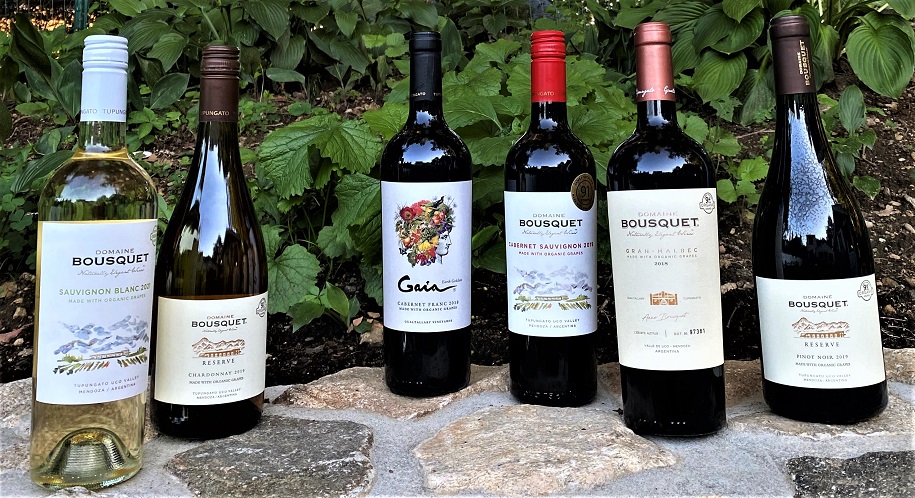
Domaine Bousquet produces about 10 different lines of wines. I was able to taste wine belonging to the 4 different lines (samples). Below are my notes.
First, 2 wines from the Premium selection:


2021 Domaine Bousquet Sauvignon Blanc Tupungato Uco Valley (12.5% ABV, $13)
Straw pale
Ultimately inviting nose, a touch of fresh grass, lemon, uplifting intensity.
Crisp, clean, lemony, grassy, tart, fresh, pure delight.
8+, perfect, delicious.
2019 Domaine Bousquet Cabernet Sauvignon Tupungato Uco Valley Mendoza (14% ABV, $13, no oak – unusual)
Dark Ruby
A touch of bell pepper, dark berries, medium-plus intensity
Bell pepper, eucalyptus, mint, blackberries, good acidity, fresh, good energy, good balance
8-/8, easy to drink. And I have to say that unoaked Cabernet Sauvignon is mind-boggling.
Next were two wines form the Reserve line:


2019 Domaine Bousquet Chardonnay Reserve Tupungato Uco Valley (14.5% ABV, $18)
Straw pale
Vanilla, a hint of butter, inviting, generous
Crisp, vibrant, a touch of butter and vanilla, tightly weaves around the citrus core. Excellent balance, delicious.
8+, superb. If this wine can age, it might be amazing, if this bright acidity will evolve into the honey note as it works with the best Chardonnays.
2019 Domaine Bousquet Pinot Noir Reserve Tupungato Uco Valley (14.5% ABV, $18, 6-8 months in French oak)
Dark ruby
Not very expressive, a hint of tart cherries
Tart cherries, bright acidity, crisp, tart
7/7+, not my wine, but should be okay as food wine or for those who like austere, bone-dry wines.
Next was the wine from the Gaia line – the wines dedicated to the goddess of Earth, Gaia, sporting a very attractive label. This is the second time I was able to taste the wine from the Gaia line – the first was Gaia Rosé, which was excellent. 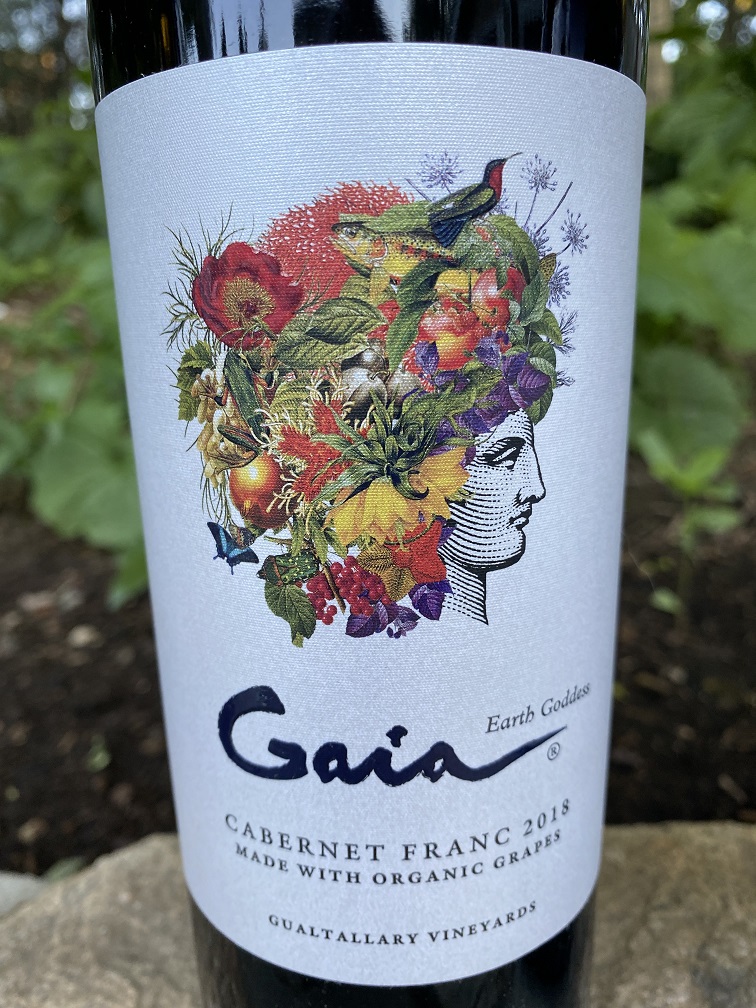
2019 Domaine Bousquet Gaia Cabernet Franc Gualtallary Vineyards (15% ABV, $20, 8-10 months in French oak)
Dark garnet
A touch of barnyard, earthy notes, dark berries
Dark fruit, explicit minerality, a distant hint of bell pepper, mint, dense, good structure
8-, not the most striking Cab Franc, but interesting on its own
And the last one for today – the wine from the Gran series:
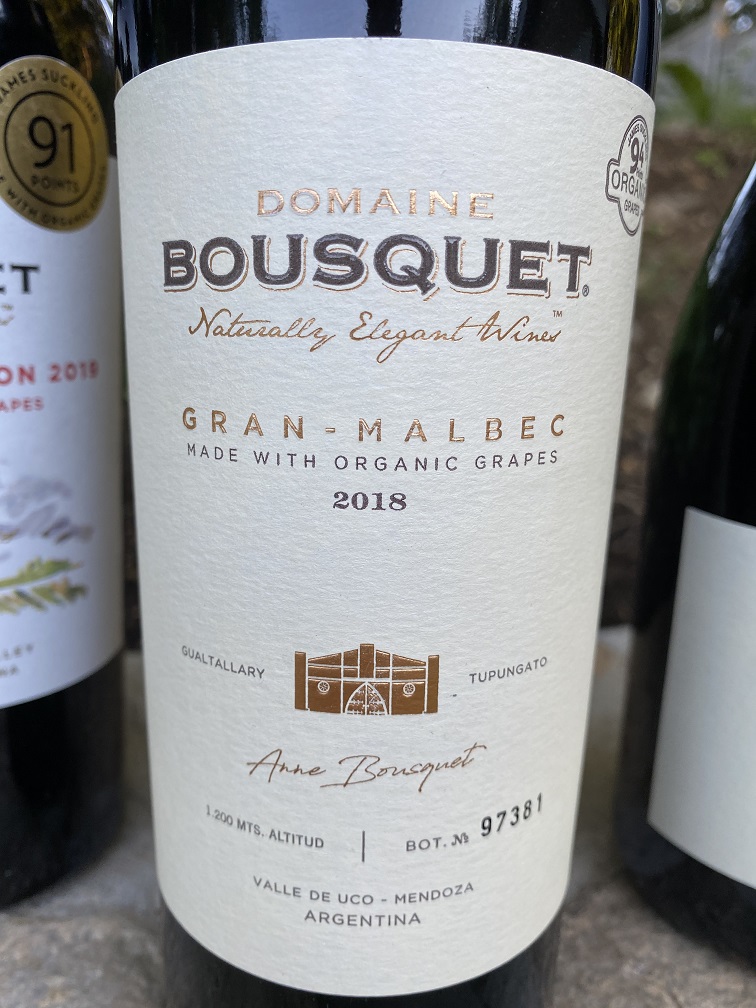
2018 Domaine Bousquet Gran-Malbec Valley de Uco (14.5% ABV, $25, 85% Malbec, 5% Cabernet Sauvignon, 5% Merlot, 5% Syrah, 10 months in French oak)
Dark garnet, almost black with purple hues
Dark fruit, eucalyptus, cassis, intense, powerful
Beautiful fruit on the palate, firm structure, big, brooding, perfectly balanced
8+, outstanding
Here you are, my friends – more organic wines you can choose from. As an added bonus, with Domaine Bousquet, you don’t have to break the bank to enjoy delicious organic wines any time you want. Cheers!
United In Ink
How about some ink, friends?
Does it sound strange?
In my wine vocabulary, wine is wine. I’ve heard people sometimes referring to wine as “juice” – if this term is used by the winemaker, they definitely have a pass – for the average wine consumers, it sounds a bit disrespectful. But that’s not the point here.
So it appears that the wine can be also referred to as “ink”. I only know of “Ink of Toro”, a different name for the Tempranillo growing in the Toro region in Spain, but otherwise, I never heard this term in conjunction with wine – until now.
When I’m offered the wine for the review, there is always the decision process involved – where the wine is from, do I expect to like it, would I be able to write about it, do I like the label. Labels, yes, let’s talk about labels.
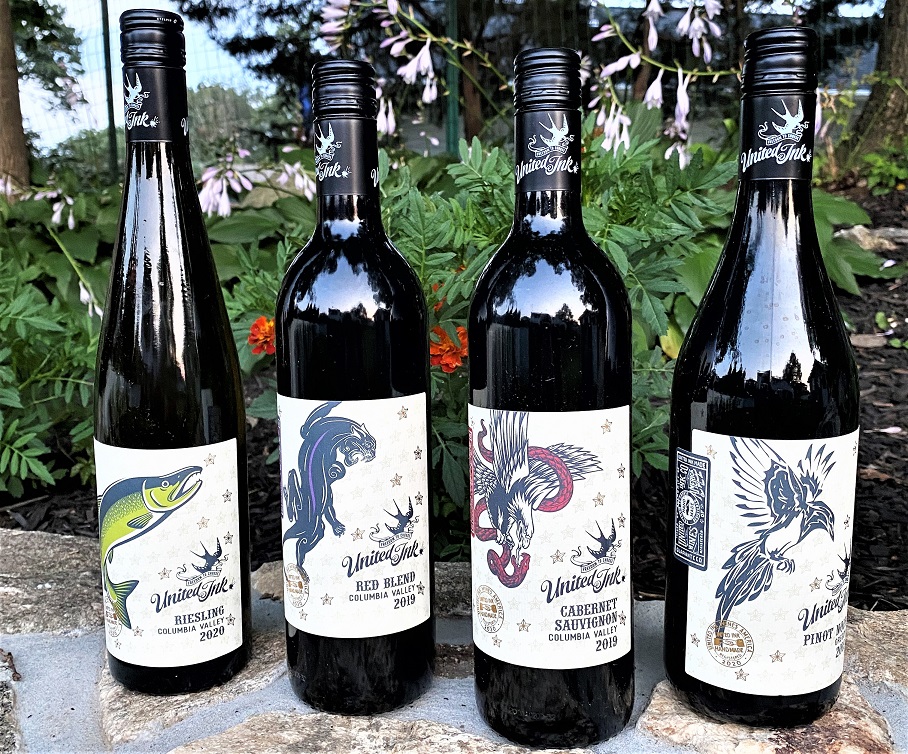
When I got an offer to review new series of wines from Mack and Schuhle called United Ink, the first thing which caught my eye was the labels, cool-looking labels. After reading that wines are from the Pacific Northwest, the region I well respect, and having a previous positive experience with Mack and Schuhle wines, I quickly agreed to taste the wines.
If you look at the labels carefully, it is not only the majestic creatures you can observe – each label also features a variety of stamps:
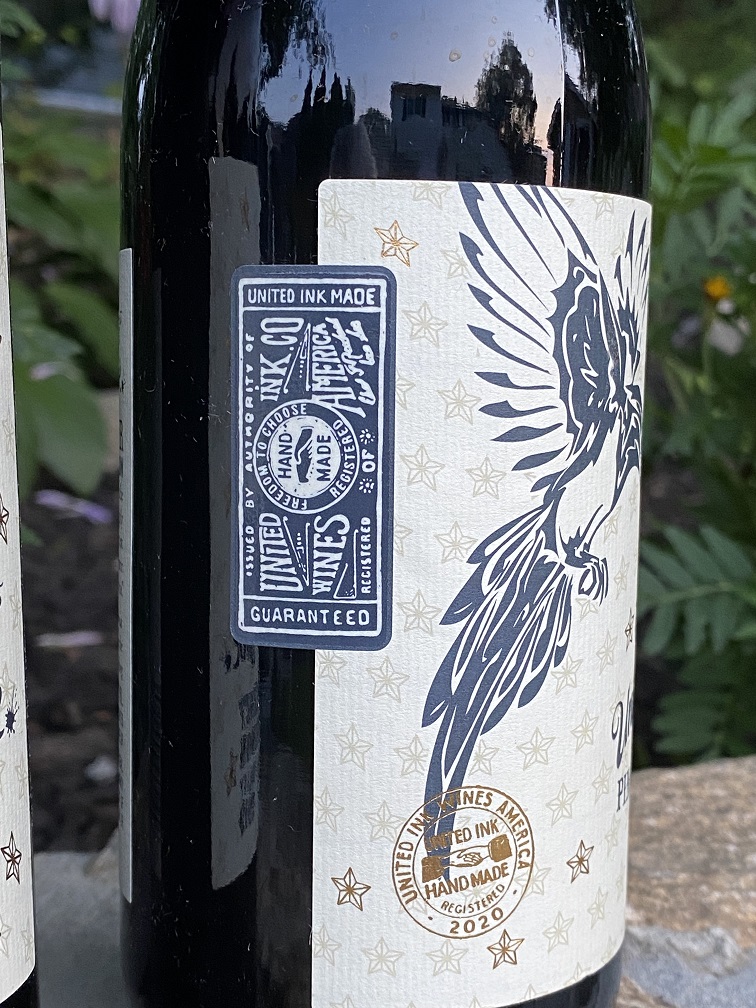


I tried to find explanations for the label design on the Mack and Schuhle website, but there was nothing offered, so I reached out to the PR agency and got the following answers to my questions:
- Why United Ink? What is the story/significance/idea behind this name?
The brand concept has to do with championing American viticulture and incorporating symbols including stars, traditional American tattoo art, and the idea of ink as a metaphor for wine
- Freedom to Choose is written on all labels – what is the idea of this statement?
Freedom to choose great wines instead of the everyday, homogenized, manufactured wines at the everyday price points, not having to pay big $$ for wines of similar quality
- “Hand made” stamp – any story behind it?
Hand crafted and blended by our winemakers Joe Dobbes and David Forsyth who are well respected in their regions
- “Guaranteed” mark/stamp attached to all the labels – any reasons for that? The idea behind it?
Guaranteed quality and authenticity is our cornerstone. We used a union stamp to express this contract with our customers/consumers.
The wines themselves were rather an enigma, akin to their mythical counterparts on the labels. With the exception of Riesling which was tasty from the get-go, the three reds didn’t show well initially – to the point of me having doubts if I would be able to write a post about the wines (remember – I don’t write negative reviews). I shared my concerns with the PR agency and got an answer that the wholesaler mentioned that it seems that screw caps somehow play a negative role, causing the wines to dumb down for a few days. This is exactly what happened as you can see from my tasting notes:
2020 United Ink Riesling Columbia Valley (12% ABV, $12)
Straw pale
Intense nose of white peach, white plums, and honey
Tropical fruit, guava, ripe white plums, honey undertone, fresh, good acidity, well balanced.
7+/8-, it appears sweeter than one might want from Riesling, but good balance definitely helps. Should be great with tangy cheese. Excellent with Comte (complements). Excellent with Manchego.
8 over the next 3 days – good balance and lots of pleasure.
2019 United Ink Red Blend Columbia Valley (14.1% ABV, $18, 60% Merlot, 20% Syrah, 20% Cabernet Sauvignon)
Dark garnet, practically black
Cherries, a touch of sapidity, black plums
Tart, tart cherries, nutmeg, salinity, good acidity on the finish, forest underbrush – an unusual expression. Spicy long finish with mouthwatering acidity.
7+, needs time. Was better on the second day.
8-/8 on the 3rd day – astringency disappeared from the finish, the wine became a lot more balanced.
2019 United Ink Cabernet Sauvignon Columbia Valley (14.1% ABV, $18, 90% Cabernet Sauvignon, 5% Merlot, 5% Cabernet Franc)
Dark garnet, almost black
Cinnamon, vanilla, sweet tobacco
Sweet tobacco, espresso, and dark chocolate on the palate, blackberries with undertones of the roasted meat. Unusual.
7+ initially
8- on the third day, a hint of cassis, improved balance.
2019 United Ink Pinot Noir Oregon (13% ABV, $22)
Dark Ruby
Plums, anise, a hint of smoke
Plums, smoke, light, appears under-extracted on the first day. A clear cigar profile on the finish.
7+ on the first day – need to see how the wine will evolve.
8 on the day 3 – violets joined plums with a touch of smoke and vanilla, round, well balanced, delicious
Here you are, my friends – the Ink of Pacific Northwest, for your imbibing pleasure. I’m happy the wines came around. If you will come across these wines, remember to decant them for at least 3-4 hours before drinking. Cheers!
Of Hydrangeas, Ocean, Sunsets, and Wine
I’m sure this cryptic title leaves you wondering what are we going to talk about in this post, right?
Yeah, a lame attempt at self-humor.
And as you can see I want to talk about some of my most favorite things – flowers, waves and sand, sunsets, and, of course, wine. Mostly in pictures – except the wine part.
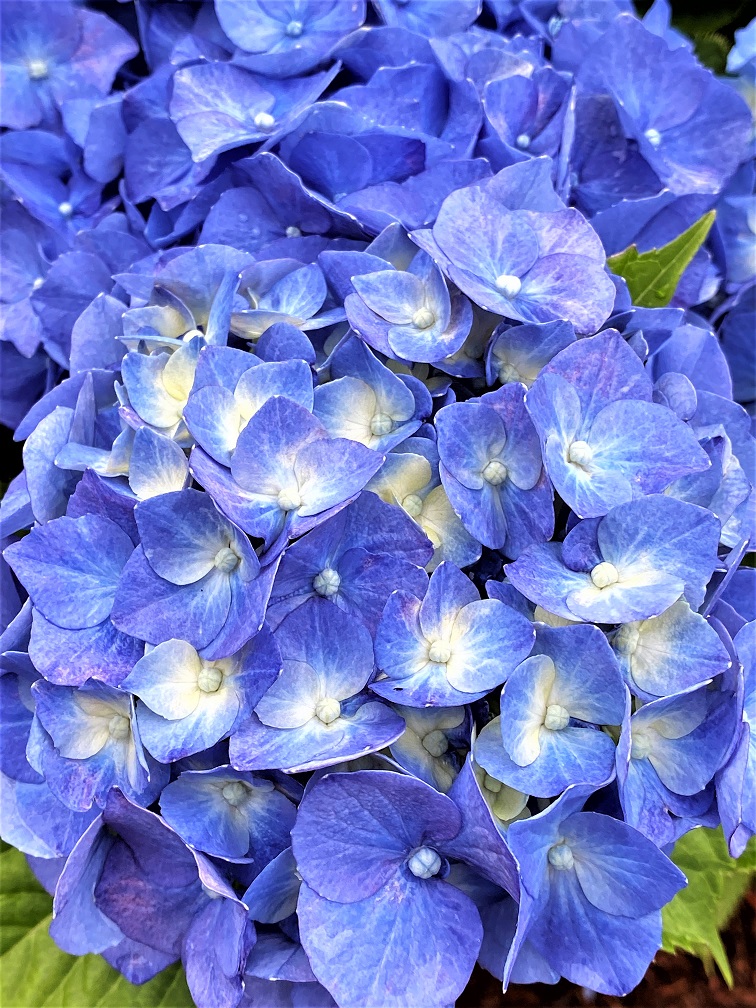
We just came home after a weekend in Cape Cod, and if you ever visited The Cape as it is typically called, I’m sure you noticed the abundance of hydrangeas. There is rarely a house that doesn’t sport a beautiful hydrangeas display.
Hydrangeas come in many colors, which can be also influenced by what you feed the flowers. They typically bloom the whole summer and deliver non-stop pleasure – at least in my world. Let me share some of my favorites with you:


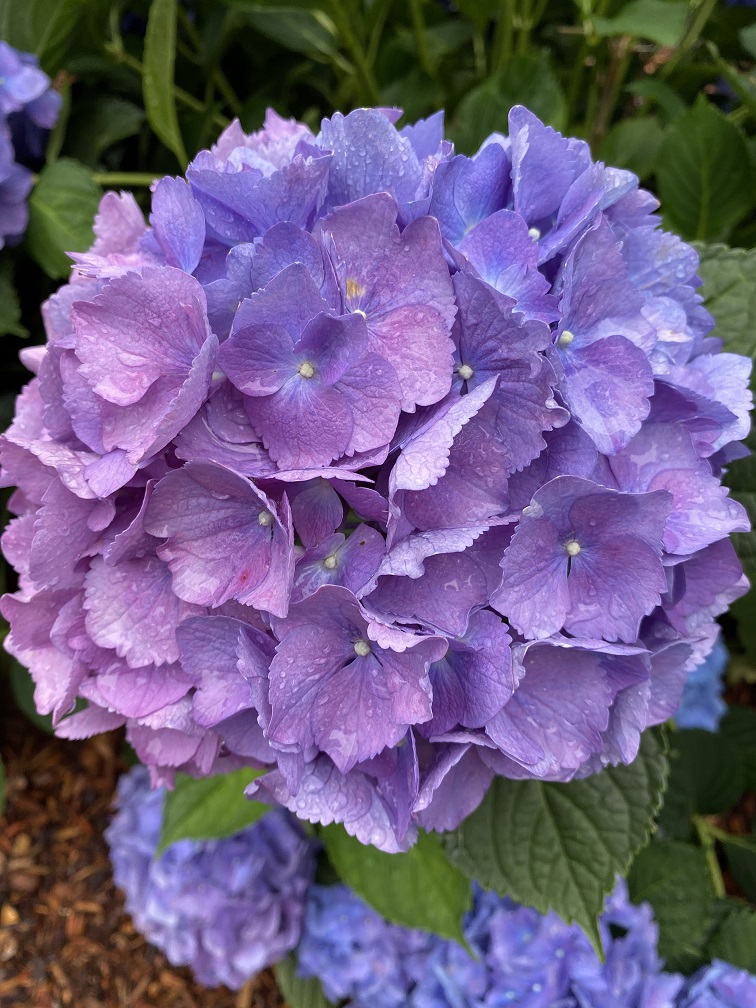
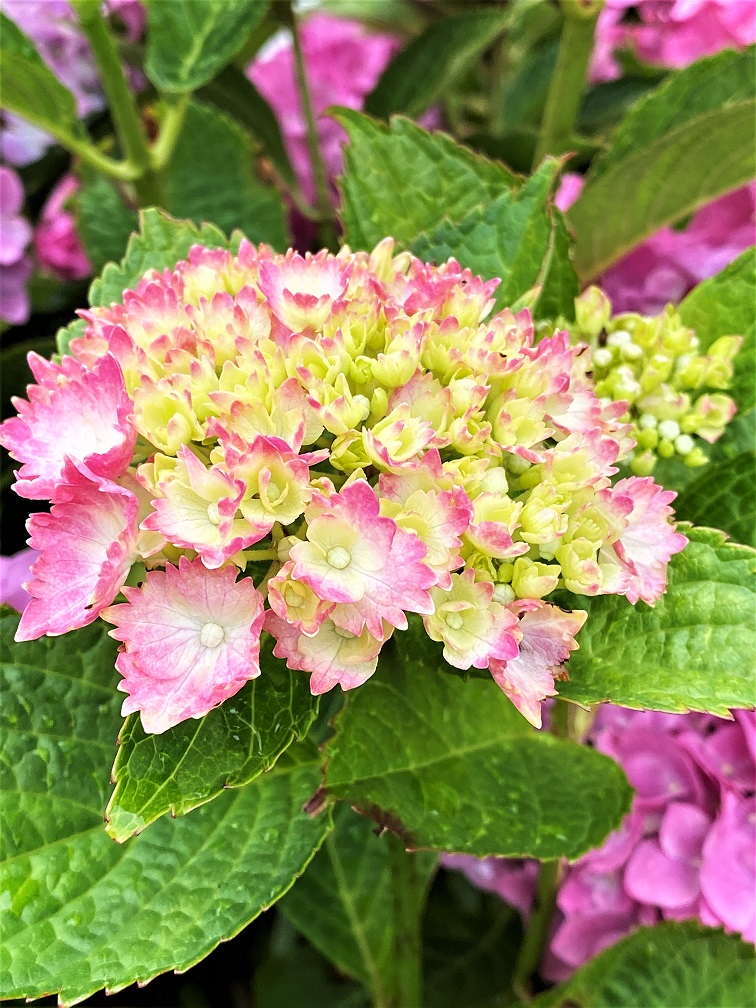

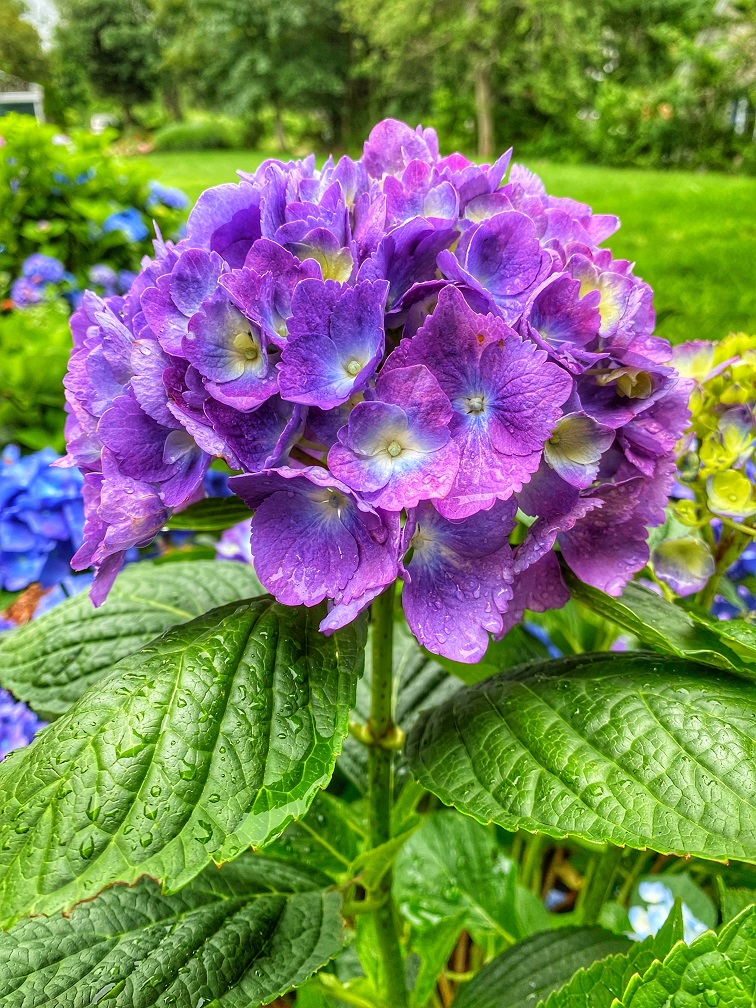
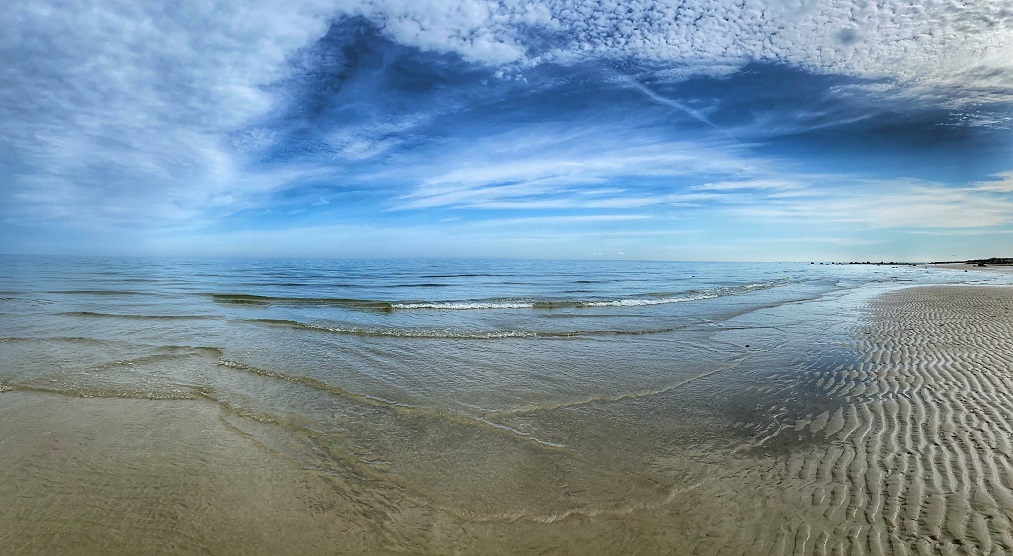
Our next subject is the ocean. Cape Cod is a special place, where you can find huge swathes of water only a few inches deep, or simply a wet send that goes for miles and miles during low tide. The water and the sky magically connect, creating an ultimate rhapsody in blue – see for yourself:
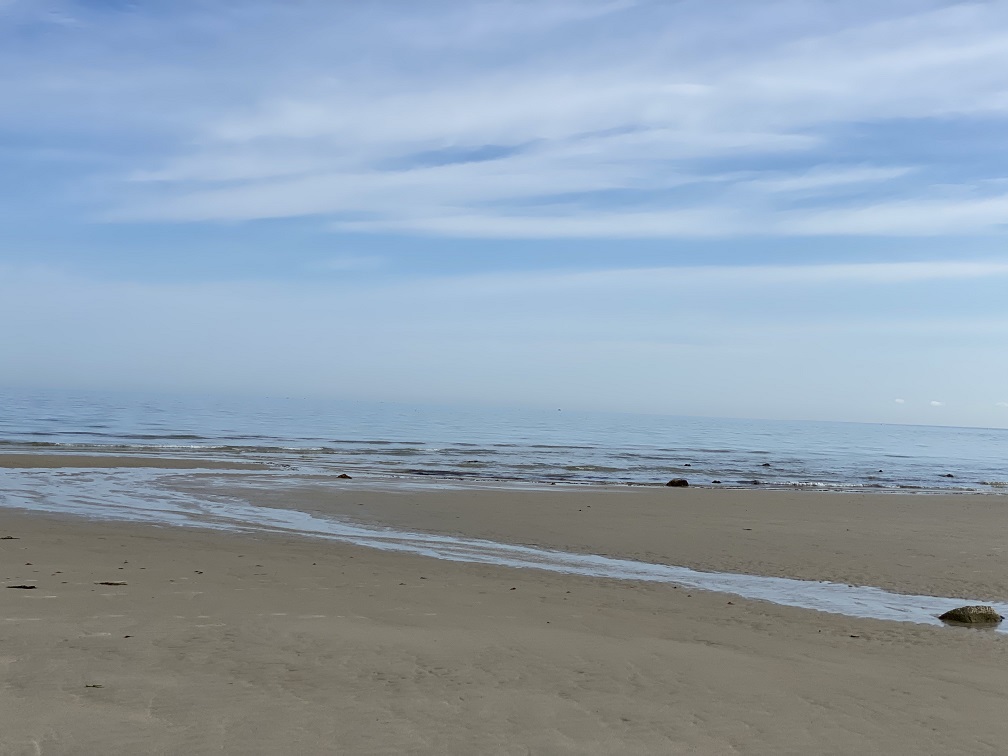
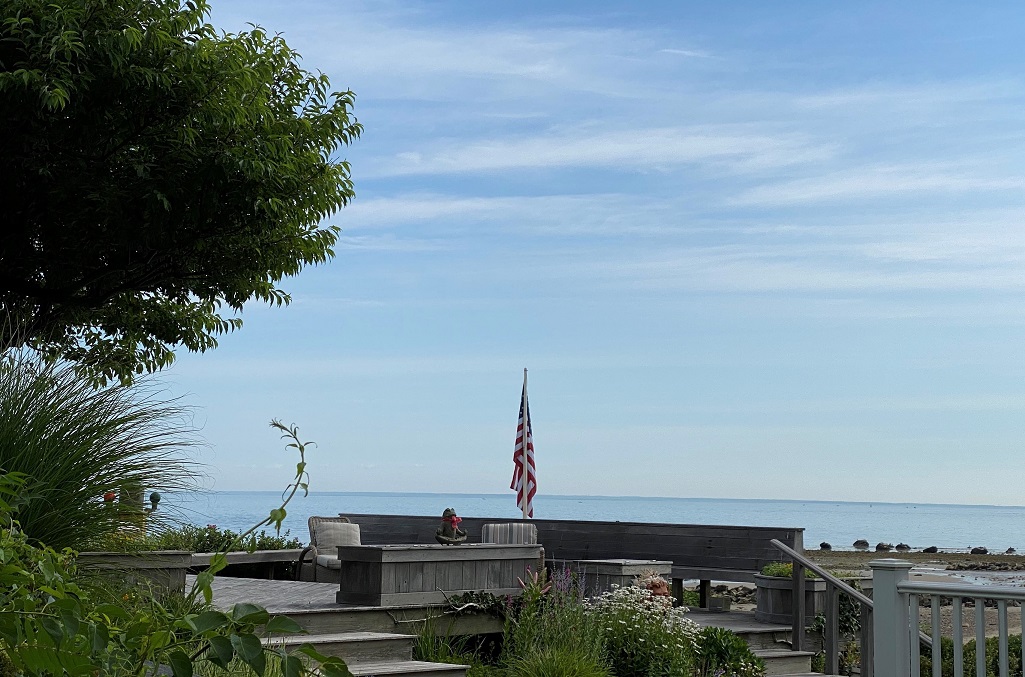


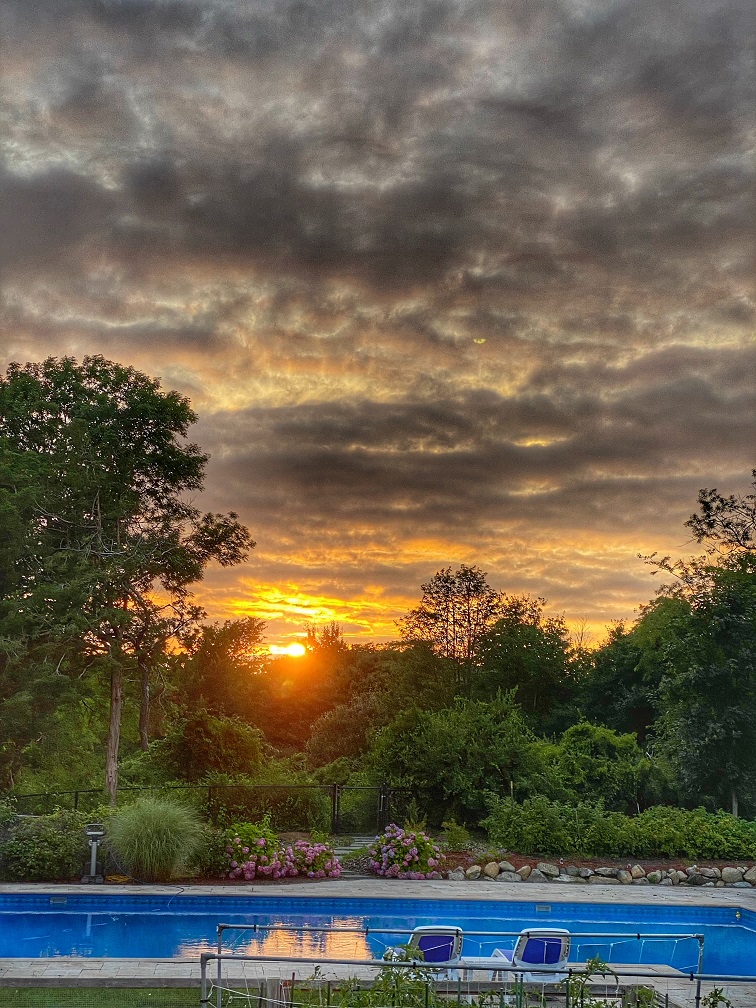
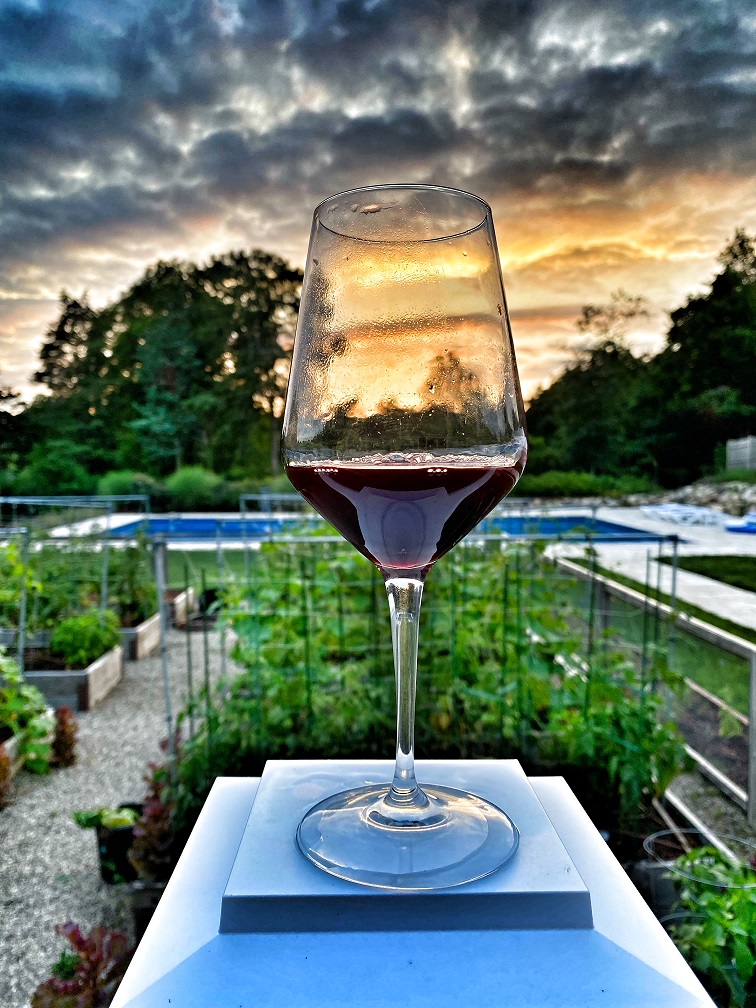
 The sunsets were challenging this time around. Two days out of three that we spent on The Cape, the weather was not good at all – rain, wind, and more of the rain and wind. Nevertheless, the weather was taking a break in the evening to present a beautiful sun setting imagery, which we enjoyed from the comfort of the deck – with a glass of wine in hand:
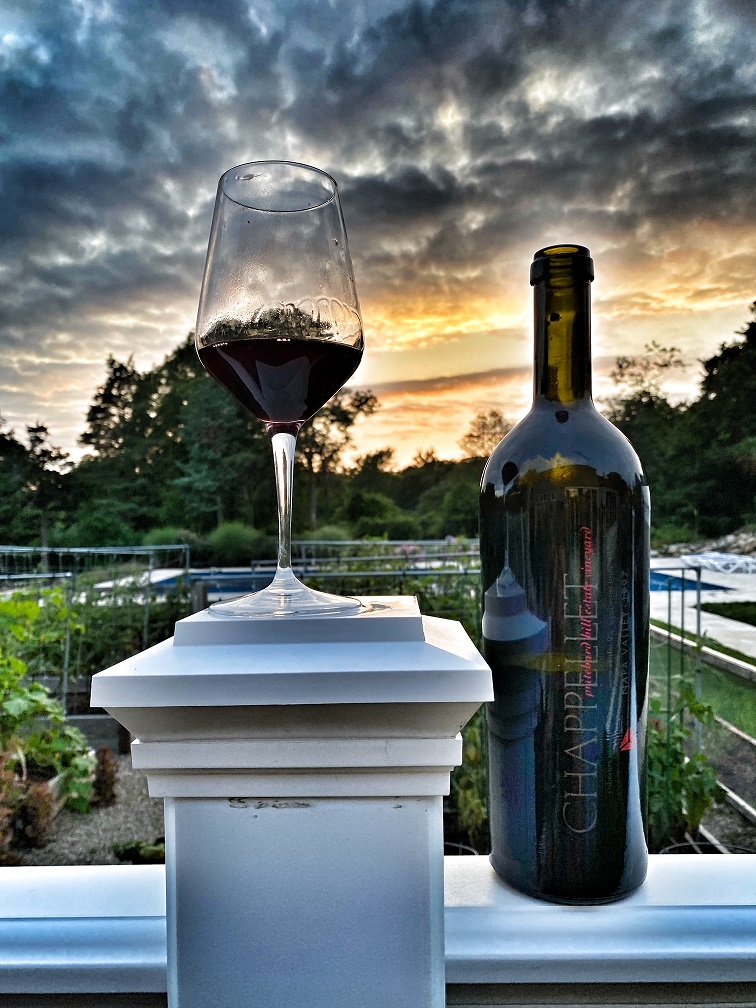 And this brings us to the last subject of today’s post – the wine. This was a vacation, and I was absolutely not interested in taking any sort of formal notes. But somehow, the majority of the wines we had were so good (with the exception of some sort of homemade wine from Moldova, which we had to pour out) that I can’t help it not to share the pleasure. Here are my brief notes.
We started with 2020 Hugues de Beauvignac Picpoul de Pinet AOP (14.1% ABV) – fresh, clean, well balanced. The wine offered a touch of the whitestone fruit and was a perfect welcome drink after 4 hours of driving. It is also very well priced at about $12 at Total Wines in Boston, which is almost a steal at that level of quality.
2019 Golan Heights Winery Yarden Sauvignon Blanc Galilee (13.5% ABV) offered a beautiful Sauvignon Blanc rendition with a hint of freshly cut grass and beautiful creaminess. This wine was more reminiscent of Sancerre than anything else – an excellent effort out of Israel.
2016 Sonoma Mountain Steiner Vineyard Grüner Veltliner (14.1% ABV) – one of the perennial favorites (I’m very disappointed when my Carlisle allocation doesn’t include Gruner Veltliner). Beautiful fresh Meyer lemon, grass, clean acidity – in a word, delicious.


The last white wine we had was 2016 Château de Tracy Pouilly-Fumé AOP (13% ABV). Another Sauvignon Blanc – plump, creamy, delicious. Nicely restrained and round. It is definitely a fun wine as long as the price is not taken into the consideration – otherwise, at about $40, both Yarden (under $20) and Picpoul wines would give it a great run for the money.
Our Rosé was fun 2020 Samuel Robert Winery Pinot Noir Rosé Vineyard Reserve Willamette Valley (13% ABV) – the Oregon Rosé is just not very common. This wine had nice strawberries all around – on the nose and on the palate. I would probably want it to be a tiny bit less sweet, but the wine was still quite enjoyable.
2017 Campochiarenti San Nicola Chianti Colli Senesi (14.5% ABV) is one of my favorite wines to surprise friends and even myself with. It starts as a solid Chianti would – cherries, tobacco, leather, iodine. But in a few minutes of breathing, it magically evolves to add sandalwood, nutmeg, and exotic spices. An incredibly heart-welcoming sip.
And to top of everything else, the 1997 Chappellet Pritchard Hill Estate Cabernet Sauvignon Napa Valey (87% Cabernet Sauvignon, 9% Petite Sirah, 4% Cabernet Franc) was thrown into the mix by my brother-in-law. This wine was a testament to California Cabernet Sauvignon; a simple proof that well made California Cab might be the best wine on Earth. This wine had no – none – signs of aging. Fresh, young, concentrated, cassis and cherries with a touch of mint and coffee, beautifully layered and well structured. This wine was not yet at its peak – I wonder how many more years it would require to reach the top…
And now, an absolute surprise – 2000 EOS Tears of Dew Late Harvest Moscato Paso Robles (10.5% ABV) – a late harvest wine from Paso. Beautiful orange color, and nose and palate loaded with ripe apricots – a hedonistic pleasure on multiple levels.
Now that is the whole story I wanted to share. What is your favorite flower? Have you tasted any amazing wines lately? Cheers!
Last Bottle Sign Up ($10 credit)




 Talk-A-Vino