American Pleasures #8: Flora Springs, Napa Valley
Wine should give you pleasure – there is no point in drinking the wine if it does not. Lately, I have had a number of samples of American wines that were delicious standouts – one after another, making me even wonder if someone cursed my palate. I enjoyed all those wines so much that I decided to designate a new series to them – the American Pleasures.
This very blog was born out of a desire to share with the world the excitement that a glass of wine can bring. To share an appreciation of a well-crafted glass of fermented grape juice that can inspire great paintings, great poetry, and great conversations.
Sometimes, it is not very easy to find the right words to share that excitement. Yes, there is a great arsenal of wine technical terms to describe body, aroma, bouquet, finish – but those words do a very poor job of conveying emotions. Yes, they describe wine, possibly correctly but subjectively (you say it is a blackberry, and I say it is black cherry) and possibly sufficiently to give another wine geek or professional an idea of how the wine might taste. But when one whiff from the glass literally stops you in your tracks, whether the aroma contains raspberries, black currant, or the hair of the wet dog is really irrelevant. What is important is that wine blew your mind and delivered an ultimate pleasure, which you can’t resist but share with the world.
Everyone derives wine pleasure on their own. For me, smell (aroma) and taste (bouquet) are two distinctly different categories. I had wines that had a magnificent aroma, and an underwhelming bouquet. I had wines where the aroma was either absent or borderline terrible, and the bouquet was magnificent. Of course, many have both. Taking about deriving the wine pleasure, mine definitely starts with the nose, the aroma. I’ve had wines that I didn’t start drinking for a good few minutes, just inhaling the aroma exuding from the glass. I can’t tell you why and how this works with the aromatics of some of the wines being so captivating – simply sharing my perspective here.
This was a long introduction to the gist of this post – two wines of Flora Spring from Napa Valley in California that I had an opportunity to taste lately.
From the moment I heard the name Flora Springs for the first time, there was something subconsciously attractive in that name – I have no idea why and how. But ever since the first encounter, I always expect magic while tasting Flora Springs wines.
Flora Springs Winery was founded in 1978 by Flora and Jerry Komes in Napa Valley, rooted deeply in the rich history of the US wine industry’s ups and downs, going from 763 wineries in California to only 40 surviving Prohibition. Name Flora in combination with the natural springs running through the property helped to define the winery’s name – Flora Springs. From the moment the winery was founded, it was truly a family affair, all built and developed by Jerry and Flora, their kids, grandkids and their families – you can learn all of it on Flora Springs’ website – and it is well worth a few minutes of your time.
The line of wines Flora Springs produces is something you would expect from the winery in Napa Valley – Chardonnay, Sauvignon Blanc, Cabernet Sauvignon, Merlot, and a few others. Yet the two wines which prompted this post belong to the Flagship category – the white blend called Soliloquy and the red Bordeaux blend called Trilogy.
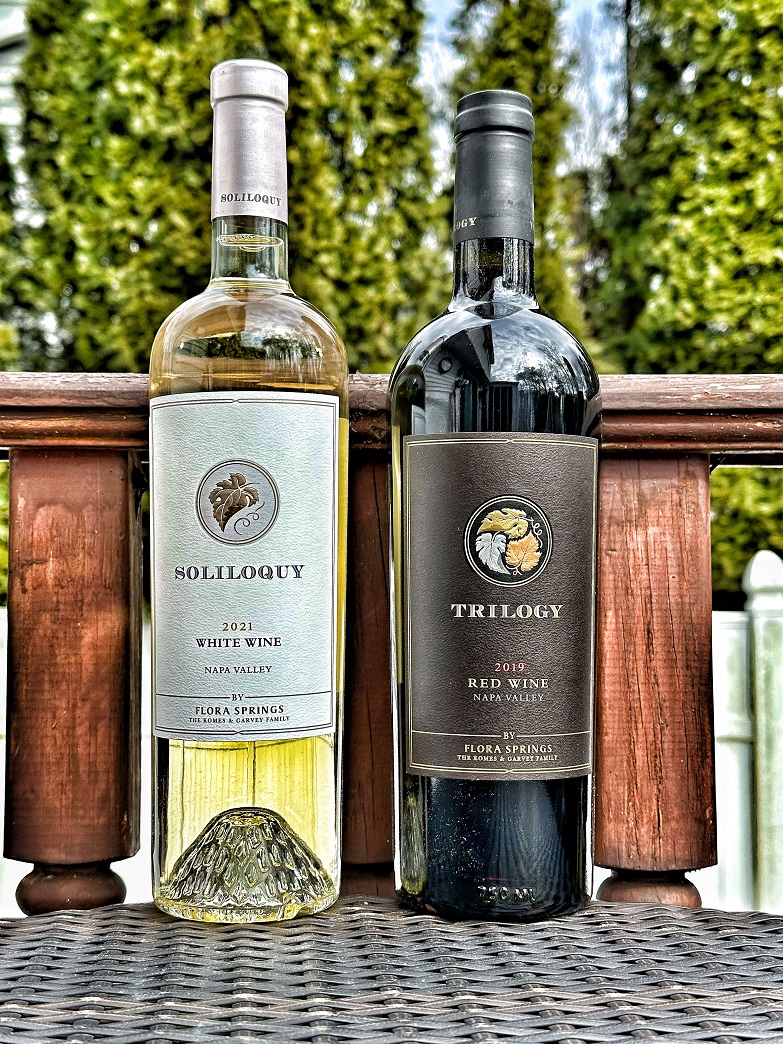
I tried Soliloquy for the first time 13 years ago – no, I don’t have such an amazing memory, I simply have my notes – in this very blog. The wine I tried back then was Sauvignon Blanc from Soliloquy Vineyard. Actually, Soliloquy Sauvignon Blanc is identified as a Sauvignon Blanc clone, certified by the UC Davis to be unique to Flora Springs, so I found that wine to add a unique grape to my collection (I actually added two, as that wine was a blend of Sauvignon Blanc Soliloquy and Sauvignon Musqué). My next encounter was about a year later when I was blown away by the 11 years old Soliloquy bottling.
It is worth noting that in the 1990s, the Soliloquy vines became nearly extinct due to the disease. The winery spent the next 8 years re-growing the Soliloquy vines first in the lab and then in the nursery before the plantings were restored in the vineyard.
2021 Flora Springs Soliloquy Napa Valley (14.2% ABV, SRP $60, 73% Sauvignon Blanc, 12% Chardonnay, 15% Malvasia, 7 months in French oak barrels), the wine which I had, is still made primarily from Soliloquy Sauvignon Blanc with the addition of Chardonnay and Malvasia. The wine offered beautiful bright aromatics, with the whitestone fruit and a distant hint of honey. The palate was full of energy, uplifting, showing more of the white stone fruit, Meyer lemon, crisp acidity, and overall perfect balance. A perfect example of the capabilities of the Napa Valley white.
Not to be overdone, my second wine was 2019 Flora Springs Trilogy Napa Valley (14.2% ABV, SRP $85, 75% Cabernet Sauvignon, 10% Petit Verdot, 8% Cabernet Franc, 7% Malbec, 18 months in French (80%) and American (20%) oak barrels). Trilogy wine was originally produced for the first time in 1984 (thus 2019 is the 35th vintage of the wine), with the name being a nod to the three main Bordeaux varieties comprising the blend.
This wine was truly a show-stopper. On the first whiff, the world slowed down. There was just me and the glass. Pure, delicious black currant, eucalyptus, currant leaves. Round, and around, and around. I few minutes later, I developed the courage to take a sip. To my delight, the palate delivered as much excitement as the nose. Polished, layered, seductive, Bordeaux-style textbook profile, black currants, well-integrated tannins, perfect structure, powerful but perfectly balanced. You really don’t expect the wine like that to be a pop’n’pour wine, and yet it was, in my glass. Absolutely delightful.
There you are, my friends. Another case of delicious American wines, delivering lots and lots of pleasure. These wines are not really everyday sippers but are well worth looking for to brighten up any special occasion.
I have more American pleasures to share, so stay tuned…
Rare Grapes, Obscure Tasting
 What is your take on wines made from rare, unknown grapes? I can tell you about mine – I love them.
I have two reasons for that. Well, it might be even just one, but with two sides, I guess. First, I’m a wine geek. As a wine geek, I love tasting each and every type and style of wine, made from whatever grapes they are. I’m willing to taste absolutely any wine at least once. After the opinion is formed, this might be the first and the last time, but nevertheless, I’m willing to try anything.
The second reason is that I’m not only a geek, I’m also a collector. I like collecting experiences. As such, for example, I keep track of the US states and world countries I had a chance to taste the wine from. And I keep track of grapes I ever tasted, after being bitten by The Wine Century Club‘s bug. If you are reading this blog on a PC, look to the right side of the screen, and you will see “grape count” – this is the number of grapes I have tasted to date (if you are reading on the phone, just scroll down). With my goal of reaching 600 grapes, I can only increase the current count further by finding rare, obscure, unknown grapes to taste.
When I got an invitation to attend the Wines of Crete trade tasting, the key words which made me say “yes” was exactly that – “rare grapes” – there were lots of grapes mentioned in the invitation, and I didn’t recognize at least a half of them, so the opportunity to taste new grapes (and increase the count) was definitely enticing.
I have to tell you upfront – this was the most peculiar trade tasting I have ever attended. Being only an advanced amateur, if this makes any sense, I attend maybe about 10 trade tastings in a good year, so I wouldn’t pretend that “I’ve seen them all”. Nevertheless, I have a frame of reference for successful and unsuccessful wine tastings, for sure in my personal book – so when I tell you that this was the most peculiar one, I mean it. Let’s talk about it.
First, notwithstanding of any peculiarity, we need to acknowledge the wines of Crete. Any time a passionate wine lover has an encounter with a region that has a deep wine history, it creates an emotional response, almost awe. The wine history doesn’t go much deeper than it is on Crete – Crete, the largest island in Greece and 5th largest in Europe is the cradle of European winemaking, having its winemaking history spanning more than 4,000 years, going well beyond 1,500 BC.
Crete represents the first real wine culture in Europe. There is evidence of wine presses (first in Europe from about 1,600 BC), pressed grapes and stems, clay pots and amphorae. The wine was produced commercially, and it was praised by many poets. Shortly after the beginning of the first millennium, Crete became famous for producing sweet wine from sundried grapes, Vinum Passum. Crete wines reached Switzerland, France and Italy, and so did the cuttings of the Cretan vines.
From the 14th to 17th centuries, Crete became famous for producing sweet wines from Malvasia grapes (interesting tidbit: American Journal of Enology & Viticulture registered 49 different varieties of the Malvasia grape). Malvasia vines made it to Italy during the same timeframe.
Cretan winemaking history is not all warm and fuzzy. For almost 200 years Crete was under Turkish occupation, and wine production was truly minimized, mostly for family consumption only. Then at the beginning of the 20th century, immigrants brought Sultanina grapes to Crete – a.k.a. Thompson Seedless – not the grape you want to use in wine production. In 1972, Crete experienced the invasion of Phylloxera.
The rebirth of Cretan winemaking started in the 1990s, and today young winemakers continue looking for their own path, often using indigenous grapes to their advantage.
There are 4 mountain systems on Crete, the island of 160 miles long and about 40 miles wide. The majority of the vineyards on Crete are located on the mountain slopes, at altitudes from 800 to 3,000 ft. Mountains play an important role in protecting vineyards from the hot winds coming from Africa. The climate is warm Mediterranean with annual rainfall between 250 and 900 mm.
There are about 10,000 acres of vineyards on Crete, which are spread between 6 Protected Geographical Indication (PGI) and 7 Protected Denomination of Origin (PDO) winemaking regions. There are 36 wineries on Crete, producing about 4 million bottles of wine annually. There are 11 indigenous grape varieties growing on Crete (White: Vilana, Vidiano, Dafne, Thrapsathiri, Malvasia di Candia, Muscat of Spina, Plyto and Red: Kotsifali, Liatico, Mandilari/Mandilaria, Romeiko), as well as international varieties. And as I already told you before, these indigenous grapes were the main attraction for me.
Okay, so now I shared with you almost everything I learned about the rich history of the wines of Crete – let’s talk about the peculiar part.
Upon arrival at the tasting, I got a booklet listing all the wines which we would be tasting. The booklet was organized by grapes – but interestingly enough, the description of the wines didn’t include any producer names – just vintage, variety(ies), ABV, style of wine, and maturation notes. I never saw anything like that at any of the tastings – unless you maybe run a blind tasting, but never mind.
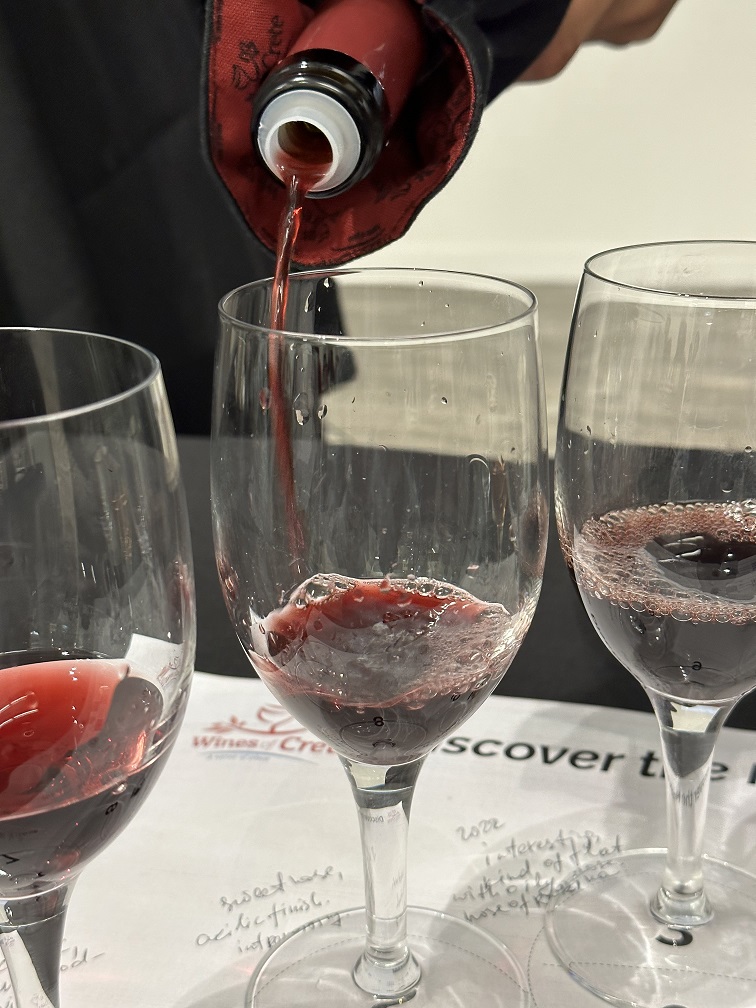
Next, we proceeded with the masterclass, where we learned about all the history and present day, and had an opportunity to taste 11 wines. While poured, all of the wine bottles were hidden inside the black pouches. In the presentation, there were no producer names mentioned – only grapes and regions were presented.
As we learned, this was not an oversight. As the event was sponsored by the European Union, it was the requirement not to mention the wine producers in the masterclass and in the tasting, so the producers not present at the tasting wouldn’t get upset.
I’ll let this sink in for a moment.
Think about it.
Now, let me ask you – how stupid, unbelievably stupid is it? [I guess this is what happens when lawyers run the business – I didn’t have to say it, but this is my blog, so I can].
I’m a blogger, and I’m only interested in education and tasting some obscure grapes. But let’s say you work at a restaurant. You taste the wine, you like it, and you would like to start offering it at your restaurant – but officially, you are not allowed to know the name of the wine you just tasted. Say what??? What is the point of this tasting? With this “blind tasting” move, you brilliantly hurt everyone – those who sent their wines for the tasting, and those who have not.
Okay, let’s get back to masterclass tasting.
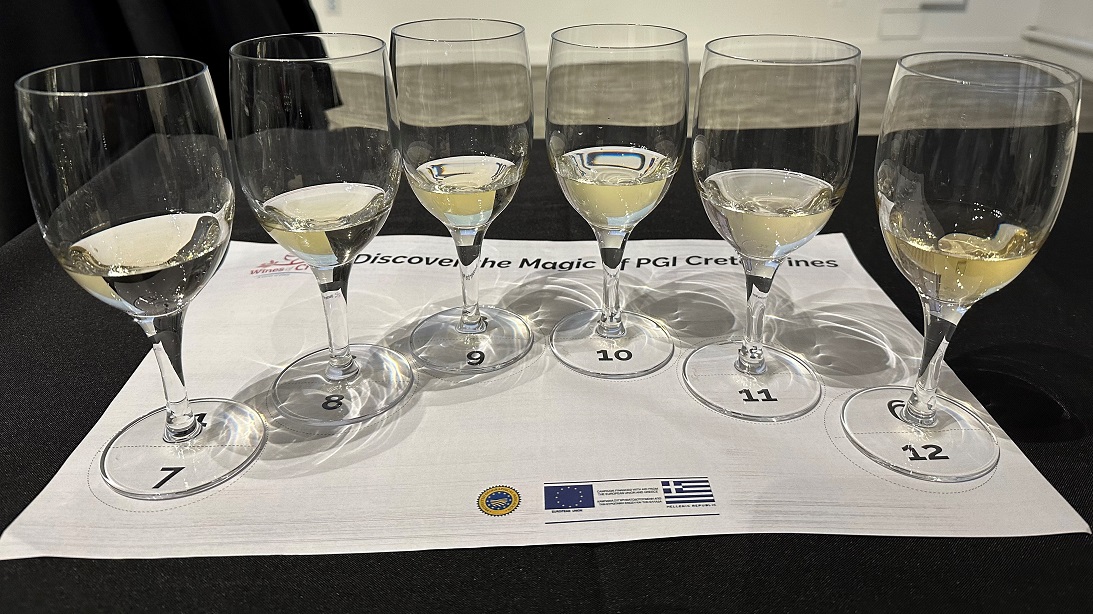
First, we tasted 6 white wines, made from Vilana, Vidiano, Thrapsathiri, and Assyrtiko. Thrapsathiri was a new grape for me, the rest I had tasted before. I don’t believe I liked any of the white wines, unfortunately…
Wine #1 – Vilana grape
Acidic, lean, food-craving
Good
Wine #2 – Vidiano
sweet nose, acidic finish, interesting
Wine #3 – Vidiano
interesting, kind of flat, oily nose, reminiscent of Retsina
Wine #4 – Thrapsathiri
interesting, herbaceous, cut through acidity. Very acidic finish
Wine #5 – Assyrtiko
Smoke, almost moldy on the nose
Corked?
Wine #6 – Vidiano (oak aged)
Plump, oily, full-bodied, crispy finish


Next were 5 reds, made from Liatico, Kotsifali, Mandelaria, and Romeiko. Again, one new grape here – Romeiko. Wine #10 was strange but drinkable. I really loved the Romeiko wine, but this was somewhat of a curveball red wine – it was actually made in the “orange wine” style. Still, this was my favorite wine from the masterclass tasting.
Wine #7 – Liatico 2022
interesting nose, sweet oak
super-tart, tannic, lacks fruit, tart finish
Wine #8 – Liatico/Kotsifali 2016
smoke on the nose, smoke on the palate, insane acidity
Volatile acidity?
Wine #9 – 60% Kotsifali, 40% Mandelaria, 2015
Raisins on the nose, oak, tertiary aromas
flat, tannic, ohhh
Wine #10 – 60% Kotsifali, 40% Syrah, French/American oak aging, 2017
Brett? Spoiled egg level
This is actually drinkable, a little flat on fruit, but good overall
Wine #11 – Romeiko, red grape made as an orange wine
Excellent, delicious, good balance, harmonious, good fruit and acidity, fresh


We managed to convince the staff to show us the wines we tasted, at least some of them, so you can see some of the wines we tasted in the picture above.
Main room tasting had its own issues – it appears that due to some issues with the customs, instead of 64 wines only about 15 were present in the tasting. All black bagged, unfortunately. I tasted another grape I never had before – Plyto, and the wine was quite pleasant, but this is all I can tell you.
There you have it, my friends. For me personally, this was not a waste of time, as I managed to pick up three new grapes I never tasted before. But in the large schema of things, this was a wasteful tasting – and it is sad. The effort was put into organizing it, but would it really help to advance the Wines of Crete in the US – I doubt so very much.
I really hope my next wine tasting will fare better…
Celebrate Tannat!
Yesterday, April 14th, Tannat Day was celebrated around the world.
Obviously, I’m late to the “Celebrate Tannat” party, so why even bother, right?
Tell me honestly – have you ever forgotten to wish a happy birthday to a friend on the actual birthday day, only to call the next day, apologize, and still wish a happy birthday? If you have never done that, you can probably skip this post altogether as “too late”. For those who had been in this movie once or twice, let’s still celebrate the Tannat grape.
Tannat is an interesting grape due to a number of reasons. First, this is one of the most tannic grapes out there, with one of the highest levels of phenolic compounds in seeds and skin (you can check this article if you would like to get some actual scientific data), competing for the leadership here with Sagrantino grapes from Umbria in Italy. Second, Tannat’s story is very similar to the story of its very close cousin, Malbec.
I’m not implying that Tannat and Malbec are genetically related. But they share similar lifecycle stories. Both grapes originate from the cradle of the French wine world, Southwest France, also known as Sud Ouest. Once upon a time, Malbec used to be the king of Cahors, and Tannat was ruling in Madiran. Both grapes managed to lose their crowns and were reincarnated in full glory in South America – Malbec found kingship in Argentina, and Tannat became an uncontested star of Uruguayan winemaking.
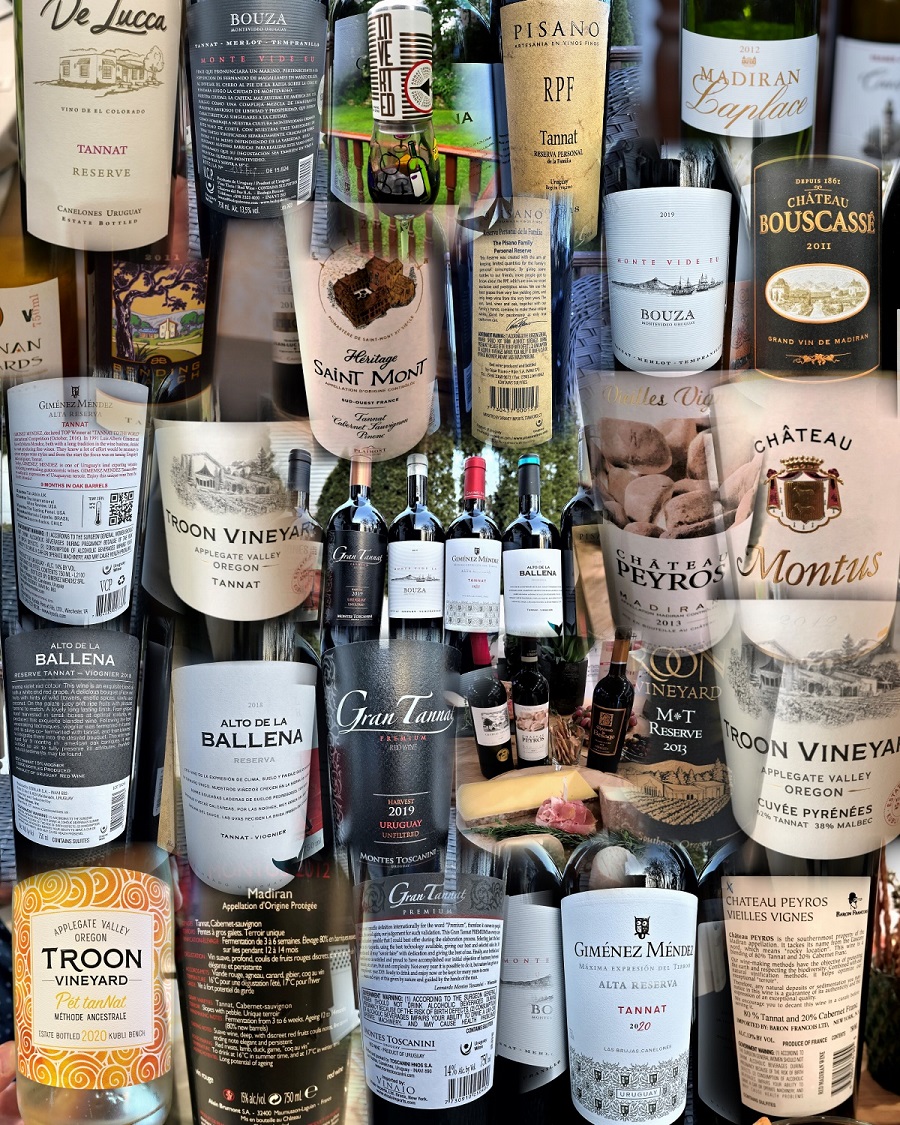
While Tannat found its new home in Uruguay, the grape is actually growing all around the world. But Uruguay is not just the new home. The interesting part about Tannat’s story in Uruguay is that the local winemakers found a way to tame its powerful tannins and acidity, and are able to produce delicious single-grape Tannat wines. However, Tannat can be found in Australia, Chile, Argentina, France, California, Oregon, Texas, and many other winemaking regions, where it is often used as a part of the blend.
While working on this post, I decided to check how often I mentioned Tannat one way or the other in my blog. From almost 1,500 posts, 34 posts contain the word “Tannat”. For comparison, 453 posts contain the words “Cabernet Sauvignon”, 13 times difference. However, just looking at the website word count, the word “Tannat” was mentioned in the blog about 700 times, and Cabernet Sauvignon about 2,500, less than 4 times difference.
Never mind the word count. As we said before, Tannat is the star of Uruguayan winemaking. Also, if you care to look for them, Madiran wines made somewhat of a comeback as of late, and Tannat is a major grape there. You can also find single-grape Tannat wines in Oregon, Texas, and Virginia. Speaking of Oregon, I have to mention the wines of Troon Vineyard. Craig Camp, the head winemaker at Troon, makes wonders with Tannat, from beautiful full-bodied organic reds to sparkling Tannat wines – Pet tanNat is definitely the wine to experience.
And then there is blending. If you would care to look at the list of grapes in the blend, lots of red wines from around the world have some amount of Tannat. Sometimes it is only 1% or 2%, but this might be enough to add acidity and tannins to the blend, to make the wine shine a little bit more.
Playing solo or in a minor supporting role, Tannat is well worth celebrating. Whether you celebrated Tannat yesterday or not, give this grape a chance – you might well like it in your glass.
Latest Wine News and Updates
While wine production is one of the oldest industries in the world, the amount of new, innovative products and scientific breakthroughs in the wine world is nothing short of breathtaking. Let’s take a look at some of the latest news from the field.
Everyone agrees that fake wine is a big problem for the wine industry. There are many tools employed by winemakers to protect the identity of their wines, but the quest for the perfect solution is still ongoing. After 15 years of intensive research, the French INAO (The National Institute of origin and quality), together with the College of Veterinary Medicine at Auburn University in the US announced the successful results of the initial trials of dogs being able to sniff fake wines. As part of the Canine Performance Sciences program, dogs had been trained to identify wines that don’t match the original wine. The training is a very involved process requiring the dog to spend about 2 years at the winery memorizing the original flavor profile of the wines. Once trained, the dogs can easily distinguish the original bottles from the fakes, the same as working dogs who identify illegal substances at customs in airports. The training process is intense and costs about $50K per dog, so this solution is not for every winery. Nevertheless, according to INAO, it will take about 7 years to satisfy all the requests for the dogs received to date.
There are plenty of wine lovers who crave massive, tannin-loaded wines. Such wines are often quite expensive as they require a long aging time in the oak barrels which are costly. What if the oak flavor can be concentrated in the grape itself while it is growing? Impossible, you say? Scientists from UC Davis in California think otherwise. Instead of using the traditional rootstock, UC Davis scientists managed to graft Cabernet Sauvignon vines onto the french Limousin oak rootstock, and after about 7 years of experimentation it seems that resulting wines demonstrate much higher tannin concentration than the wines obtained from the same clone of Cabernet Sauvignon but not grafted on the oak rootstock. Obtaining the same level of tannins would require about 6 months of age for the wines in the control group. Once the research is complete, it will result in significant savings for the wine producers which [hopefully] will be passed on to wine lovers. We should expect to find the first wines based on the results of this research by approximately 2028.
Many wine lovers live with a simple motto – coffee in the morning, wine in the evening. The next news I would like to share with you will, in a way, be related to both beverages. How so? Everyone knows Nespresso, a French company that mastered the simplicity of the perfect cup of espresso at any time with the help of a tiny coffee capsule. Working on a special (very sizeable) grant from French LVMH conglomerate, Nespresso just announced a brand-new machine called – maybe you guessed it – Winepresso. Nespresso scientists found a way to convert the content of the wine bottle to the dry form which is encapsulated in the tiny wine capsule, literally identical to the coffee one. Now, with a push of a button, a perfect glass of your favorite beverage is in your hand at any moment. Based on the opinion of the expert panel, the Winepresso-produced wine is practically identical to the original wine, which is a pretty amazing achievement in itself. The initial set of capsules available upon commercial availability of Winepresso will include two Bordeaux reds, one red from Burgundy, and 3 whites from Loire. It is also known that Nespresso is actively involved in conversations with a few of the famous wineries in Napa Valley. The capsules will be sold in the 5-packs (to be identical to the standard 5 glasses in the bottle of wine). Winepresso machines are expected to appear at select retailers such as Williams-Sonoma and Bloomingdales in time for Christmas shopping. The prices for the capsules and the machines had not been disclosed yet. If successful, you can only imagine how successful this product will be from point of view of sustainability and reduction of the carbon footprint.
Open any news source today, and you are guaranteed to read about ChatGPT, artificial intelligence (AI) software. ChatGPT writes poems, articles, and marketing materials, conducts market research and lots more. It appears that the wine world is starting also to embrace ChatGPT in a variety of ways, many of them quite unexpected. Champagne Piper Heidsieck just announced that they will start a new line of non-vintage Champagne, called Piper Heidsiek AI, where ChatGPT will play the role of the Chef de Cave, responsible for blending the final wines. After the initial offering, both Blanc de Blancs and Blanc de Noirs will be produced. While it is an interesting announcement in itself, I’m concerned with the impact of the ChatGPT on all areas of human lives, now including even wine production. Well, we will see how this story will unfold.
That’s all the latest news I have for you, my friends. Until the next time – cheers!
Celebrate Riesling!
I have to admit, I’m missing most of the grape holidays lately. While checking the Twitter feed today, I was surprised to find out that today we celebrate International Riesling Day. Considering the fact that I never wrote a post about Riesling Day, I couldn’t resist an opportunity to reminisce about my Riesling experiences.
Riesling is one of the 3 main white grape varieties – Chardonnay, Sauvignon Blanc, and Riesling. Of course, there are lots more white grape varieties in the world, but in terms of plantings and production volumes, these three grapes are way ahead of all other white grapes. However, despite the “main variety” consideration, Riesling’s position in the wine world is rather peculiar.
Riesling is capable of a full range of expressions, from bone dry and acidic Rieslings of the Clare Valley in Australia to the dense and viscous late harvest Rieslings made in different parts of the world. Germany, which has about 38% of all Riesling plantings in the world, is typically associated with Riesling – however, there is hardly a wine-producing region in the world where Riesling wines are not made – Germany, Austria, Alsace, Australia, New Zealand, Canada, California, Washington, Oregon, New York – Riesling is literally produced everywhere. And yet walk into any wine store of your choosing – Riesling is typically relegated to the far corner of the store which almost nobody would visit. You can barely find any Riesling on the restaurant’s wine lists. And many consumers are often shy about their love for Riesling as it is almost shameful to be seen with a glass of Riesling in public.
I don’t fully understand the cause of this phenomenon. Germany’s overcomplicated labeling laws might play a role. The fact that it is very difficult to assess the level of sweetness of a bottle of Riesling also plays a role – put a few of the Kabinett Rieslings in the row and see how different the sweetness levels will be where you expect them all to be about the same.
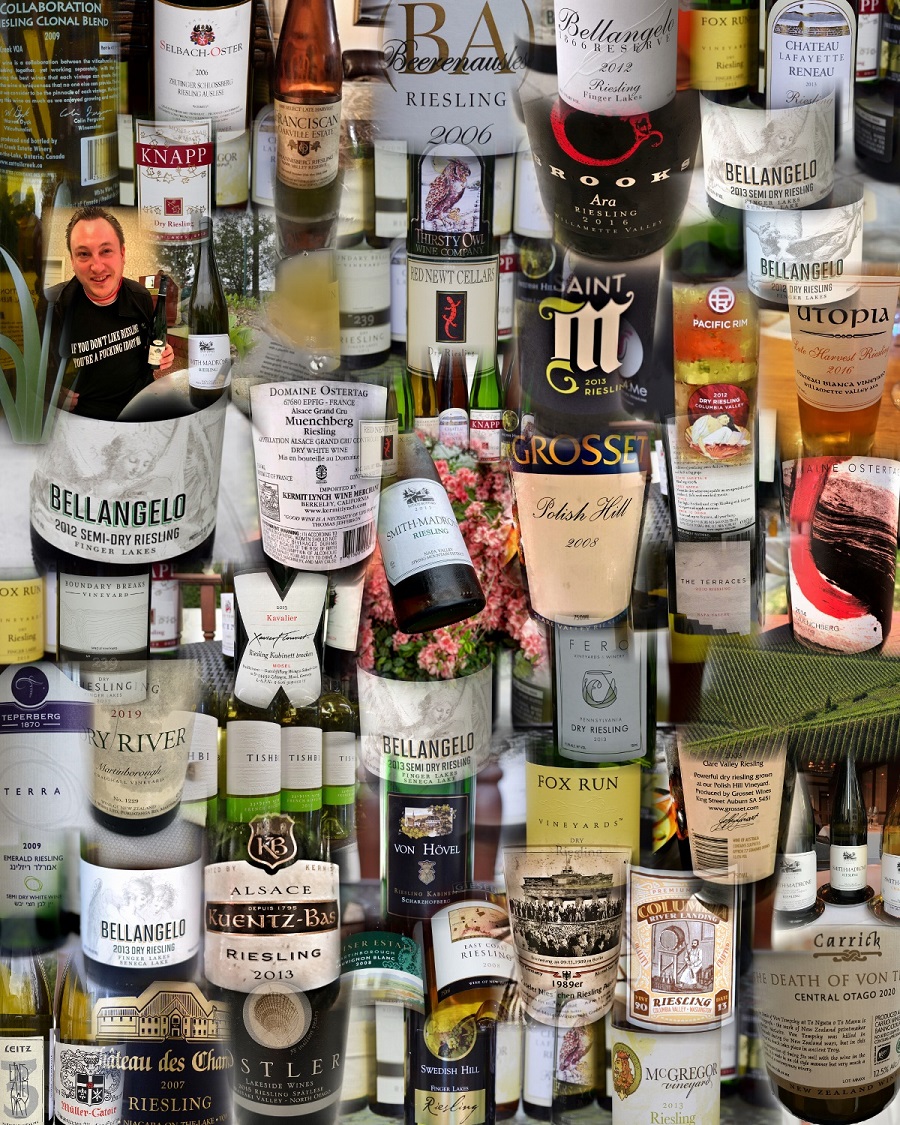 But those of us who trust our own palate and are not afraid of being seen with a glass of Riesling in our hand are typically in for a treat. The everpresent hint of honey, maybe pears, white flowers, and honeysuckle, supported by the cleansing acidity, and hopefully my favorite, a hint of petrol make these wines an absolute delight in my book. Most of the Rieslings also age very well – to understand the pleasure of the 20-30 years old Riesling you simply need to taste one for yourself – the words are very limited in describing the pleasure.
Over the years, I had plenty of delicious Rieslings. And yet if you would ask about the most memorable ones, I would easily give you 3. First, Brooks Ara Riesling from Oregon, which I tasted during a few of the Wine Bloggers Conferences – a pure standout. My next choice would be Smith-Madrone Riesling, which is rather surprising coming from Spring Mountain District in Napa Valley in California – nobody would ever associate California with Riesling, and yet you have a live, delicious proof.
And then, of course, there are Clare Valley Rieslings from Australia. Grosset Polish Hill Riesling from Clare Valley might be a quintessential pleasure, with its high energy, brilliant acidity, intertwined with the fruit – another wine that needs to be tasted to believe it.
I have come across many other excellent renditions of Riesling, but the three I just mentioned are definitely my personal standouts.
What do you think of Rieslings? Do you have your favorite Rieslings which you care to share with everyone?
Happy Reisling Day!
American Pleasures #7: Barra of Mendocino, Part 2
 Wine should give you pleasure – there is no point in drinking the wine if it does not. Lately, I have had a number of samples of American wines, that were delicious standouts – one after another, making me even wonder if someone cursed my palate. I enjoyed all those wines so much that I decided to designate a new series to them – the American Pleasures.
When I tasted Barra of Mendocino wines for the first time, I lamented that I was surprised. Delightfully surprised would be an even better way to put it. My surprise was related to the fact that both Pinot Blanc and Petite Sirah were absolutely delicious pop-and-pour Californian wines. Of course, there are lots and lots of delicious wines made in California, but many of them need time to open up and develop – especially the traditional heavyweights such as Petitte Sirah. And the wines I tasted were delicious and ready to drink from the moment they got into the glass.
Charlie Barra, the founder of the Redwood Valley winery in Mendocino, was farming organically for a very long time. And now Barra of Mendocino bottles carry the official organic certification by CCOF. To celebrate this achievement, Barra released three of their Reserve wines with a brand new label, showing intertwined oak and grape leaves. It took the winery more than a year to come up with this new design, the end product of multiple discussions in the focus groups of the club members, employees, and distributors. The oak tree represents an old oak tree found on the original Redwood Valley Vineyards plot. The grape leaf can be considered a tribute to Charlie Barra’s 70 years of grape growing carrier (he is often regarded as a “godfather of grape growing” in Mendocino county). The result – a beautifully looking bottle of wine. As part of this new design, the winery also eliminated foil caps from these Reserve bottles.
Let me now get back to the surprise associated with Barra wines. I got their three newly released bottles to try – Chardonnay, Pinot Noir, and Cabernet Sauvignon. Now, here lies the danger. This trio can be called THE California wines. Each category by itself – Califonia Chardonnay, California Pinot Noir, California Cabernet Sauvignon sets the bar really, really high. We have all tasted amazing wines in these three categories – that means that the frame of reference has very little room for error. You know my take here – if the bottle says “California Cabernet Sauvignon” on the label, it is better to be THE California Cabernet Sauvignon, the classic as is expected.
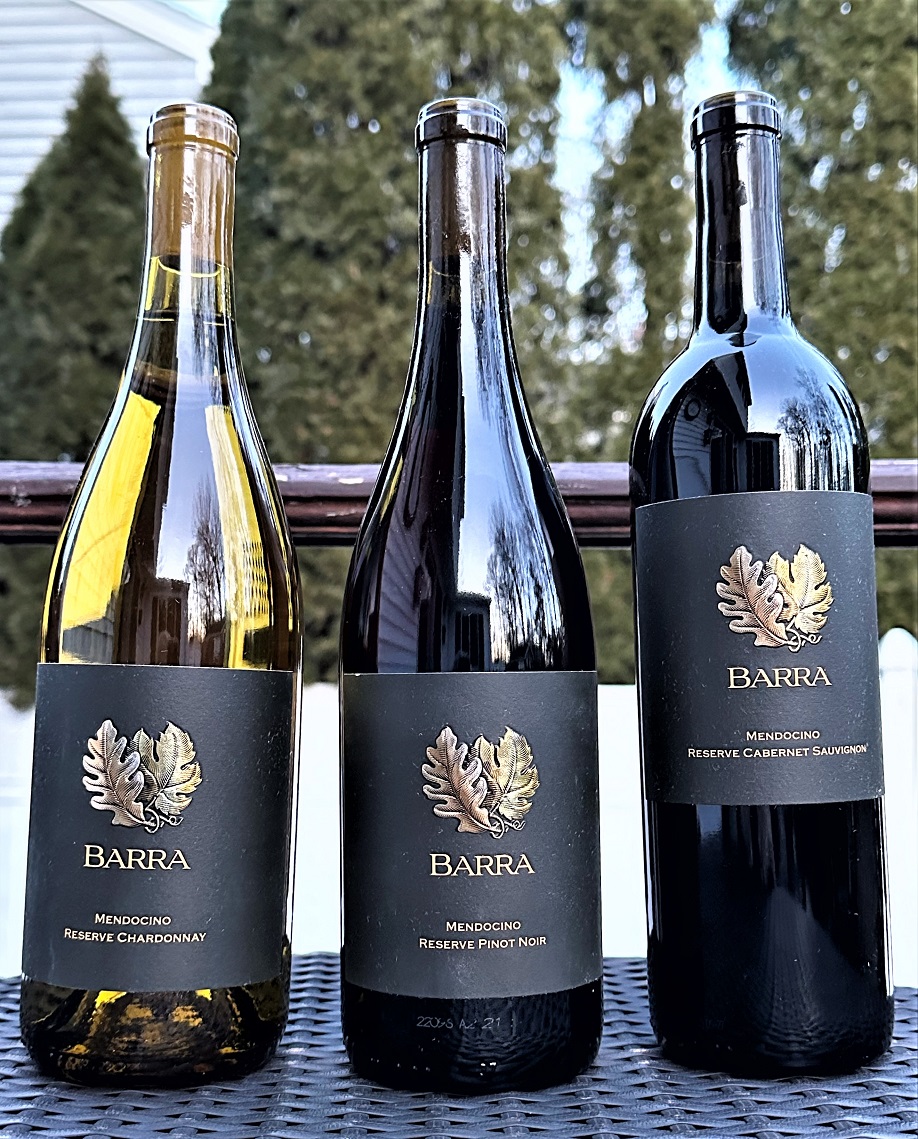
The new surprise? All three wines perfectly delivered. Each one was varietally correct and perfectly matched my expectations. Barra Chardonnay was Californian Chardonnay through and through. And so were Pinot Noir and Cabernet Sauvignon. And they continued to be pop-and-pour wines. And – these are very reasonably priced wines, considering the pleasure they deliver.
Here are my notes:
2021 Barra Chardonnay Reserve Redwood Valley Mendocino (14% ABV, $24, 7 months on the lees, 30% new French Oak, balance in neutral oak, made with organic grapes)
Light golden
A touch of the gunflint, earthy undertones
Buttery profile with green apples, good acidity, round, delicious.
8, beautiful. Would be happy to drink on any occasion.
2021 Barra Pinot Noir Reserve Redwood Valley Mendocino (14.5% ABV, $26, 8 months 25% new French oak, balance in neutral barrels)
Dark ruby
Tart cherries, herbs, restrained
Sweet cherries and plums on the palate, a touch of vanilla, medium body, round, clean, easy to drink
8-, perfectly quaffable.
8 on the second day, it needs a bit of time to show its true beauty.
2020 Barra Cabernet Sauvignon Reserve Redwood Valley Mendocino (14.5% ABV, $28, 18 months 30% new French oak, balance in neutral barrels)
Garnet
Cassis, earth, sweet basil
Dark berries, eucalyptus, minerality, clean acidity, beautifully layered texture. Shows almost sweet upon opening, but quickly loses baby fat to show tight, muscular texture.
8+, outstanding. I can make it my go-to Cabernet Sauvignon easily.
Here you are, my friends. Three delicious wines for you to add to the “find end drink” category – beautifully packaged and now certified organic.
What were your great wine discoveries as of late?
Spanish Wines: Old and New
 If I start calling wines “friends”, does it make me an alcoholic or a sad psychopath?
Whatever. We are who we are.
If you love wines, what are the emotions you experience when looking at a familiar bottle? “Ahh, I know you. Of course, I remember you. Oh, we had a great time together. Remember what happened the last time we met?” Wouldn’t that be very similar to a meeting with an old friend? I’m not equating humans and bottles in any way, but emotions connect us, and good wine always solicits emotion.
What happens when you see a new wine? If something strikes your interest – label, region, producer, grape, anything – your think “yeah, I want to get to know you better”. Making new friends in the human world would work pretty much the same – but I think we better get back to talking about wines before I will dig myself too deep.
I love Spanish wines – and you are well aware of this. I’m always happy to meet old wine friends. I’m equally excited to make new acquaintances. Especially when both old and new friends are Spanish wines.


The first wine I would like to talk about… Well, speaking of friends, it is an old and wonderful friend who makes you feel uneasy at a first sight. You know the feeling when you see an old friend and you are super-happy to embrace him (or her), and then your joy is instantly blemished with the next thought of “ohhh, I promised to send him the book, and I never did”. So this Godello from Arano wines is this exact friend. I had this wine a few years ago, was blown away, promised to myself to write about it – and yet never did. Yep, that feeling.
Speaking about Spanish white wines, most people would probably think of Albarino first, followed by Rueda/Verdejo, and then probably get to white Rioja (usually made from the Viura grape). Meanwhile, Godello might be the most interesting Spanish white grape, in many instances producing white wines easily rivaling the best renditions of Chardonnay. This Godello is definitely in the group:
2020 Virgen Del Galir Pagos del Galir Godello Valdeorras DO (13.5% ABV, $21)
Light golden
Whitestone fruit and lemon
Whitestone fruit, plump, mouthfeel between Chardonnay and Roussanne, round, perfect acidity, delicious.
8+, would perfectly compete with any Chardonnay
Here comes another old friend – Bela, one of the new projects of the Rioja powerhouse CVNE in the Ribera del Duero region. I tasted the 2017 vintage of Bela 3 years ago, which gives me the “old friend” rights. There are some notable differences between 2020 and 2017 vintages – 2017 was well-drinkable almost from the get-go, and 2020 needed 3 days to become the beauty it had become. I don’t know if the oak regimen can actively contribute to such a dire difference (the 2017 vintage spent 6 months in the mix of 1-year-old French and American oak, and 2020 seems to spend 9 months in the new French oak) – but nevertheless, this is definitely the wine for the long haul.
2020 CVNE Bela Ribera del Duero DO (14.5% ABV, $18, 95% Tempranillo, 5% Cabernet Sauvignon and Merlot, 9 months in French Oak barrels, 3 months in the bottle)
Dark Garnet
Earthy spicy herbal nose with dark fruit undertones and a touch of tasted meat
Cherries and cherry pit, tart, focus, firm, concentrated – beautiful on the 3rd day. Day one needed time and day 2 was completely closed.
Drinkability: (day 3): 8+


Now, my most beloved wine category – Rioja.
As you know, everything in life has two sides. Rioja is my favorite wine – but on the flip side, I’m very particular about my Rioja. Despite the absolute world-class of CVNE, I never saw this Bakeder Rioja before, which to me means “proceed with caution”. It appears that this wine is a tribute to the car-free village of La Guardia. As this is a new wine for me, let me quote from the CVNE website: “Bakeder, pronounced back-aid-er, is a wine from Laguardia, a village from Rioja Alavesa. The name, “beautiful as peace” is a loose translation from the Basque language. Let the Whole World know the beauty of the fortified medieval village of Laguardia, protected by its great sierra; its solemn churches and monuments; its historic vineyards, and of course, its magnificent wines.” All my fears dissipated with the first sip:
2019 CVNE Bakeder Rioja Alavesa DOC (13.5% ABV, 100% Tempranillo, 10 months in French oak barrels)
Dark ruby
Cherries, cigar box, eucalyptus
Cherries, plums, well-integrated but present tannins, earthy, firm structure, good acidity, perfect balance. Lots and lots of pleasure.
8+, pop’n’pour the wine you don’t want to stop to drink
The last wine for today comes from the legendary Spanish producer – René Barbier from Clos Mogador in Priorat. Clos Mogador needs no introduction to wine lovers as a producer of some of the most coveted wines in the world. Com Tu, which I never had before, is a relatively new wine, commercially produced only since 2005 from 35-50 years old Garnacha vines. The wine’s name can be summarized as ” I am like you (Com tú), you are like me”, has a lot of meaning and history as a special project, so I would like to simply direct you to the Clos Mogador website to read about it.
2019 Clos Mogador Com Tu Garnatxa Negra de la Figueroa Montsant DO (14.5% ABV, 100% Garnatxa (Grenache), 18 months in a foudre)
Dark ruby
Dark ripe fruit and dark chocolate
Cherries, plums, chocolate, good acidity, sage, good balance.
8, light and pleasant on day 1
Here you are, my friends – some old and some old new “wine faces” – each delivering lots and lots of pleasure.
I wish you many pleasant encounters with friends old and new. Cheers!
Stories of Passion and Pinot: Looking Back and Looking Forward 2023
 What started from the little idea “yea, I don’t know, I don’t believe in it, but maybe I will try anyway” now became one of my favorite ongoing series in this blog – Stories of Passion and Pinot. Stories of Passion and Pinot are exactly what the title says – these are the stories of the winemakers passionate about one of the most finicky grapes there is – Pinot Noir.
It is a fun exercise to take a retrospective in the ongoing series and see how far I have gone from time to time. So here is the latest update – for me, and for you if you care to read it.
First, last year I created a new landing page for the whole series. This page is kept current, all new interviews are now added to this page and you always know when the page was updated last.
Four new stories were added since the last update: David Adelsheim of Adelsheim Vineyard, Shane Moore of Gran Moraine, Erik Kramer of Willakenzie Estate, and Bill Sanchez of Potter’s Vineyard. All of these are excellent, in-depth interviews – if you have not had a chance to read them yet, you really should do it now.
Interviews in the series have questions tailored to the individual wineries and winemakers with a little overlap between them. However, sometimes it is fun to ask people the same question and enjoy the diversity of the replies. I asked the same two questions to some of the winemakers who had been already profiled in this series – and now I want to share our short Q&A with you.
Sara Specter of Bells Up Winery, Bill Sanchez of Potter’s Vineyard, and Wayne Bailey of Youngberg Hill have graciously agreed to answer my questions, so below you can see my questions – and their answers:
[TaV]: How was the year 2022 for you? New grapes, new plantings, new wines, vineyard discoveries (a new plot/block, for example), new winemaking styles, new wine club, new tasting room, new markets, growing season and the vintage – please share anything and everything you are willing to with our readers.
[Bells Up Winery]: Harvest 2022 was our 10th under the Bells Up label, having moved to Newberg, Oregon in 2012 and making our first vintage in 2013. Harvest 2022 was also what we’ve been calling “the end of the beginning.” It was the first year we were “100% Pinot Independent,” meaning we didn’t source Pinot Noir from any other grower for the first time. It was a wonderful experience working with other micro-site growers who were very much like us. But our goal has always been to be as close to 100% estate as possible, and now we are… at least for the Pinot Noir. We were also delighted to see that the Pinot Blanc we planted in Fall 2021 and the Schioppettino we planted in Fall 2020 continued to do well, despite some initial concern from the late frost we had in April.
[Potter’s Vineyard]: 2022 was good but tough. It was tough due to the spring frost that wiped out 80% of the primary buds in our vineyard. The cool, wet spring led to a late start to bloom and fruit set. We literally did not know if we would have only a tiny harvest or something close to normal until late in the season, which led to a lot of turmoil. We decided to stay the course and farm it normally assuming that we would have something and of course take care of the vines for the following year. Amazingly, the vines rebounded and we ended up with about 70% of our normal yield. And because we farmed and sprayed diligently we did not suffer from the very high amount of powdery mildew that descended upon the Northern Willamette Valley that year. It was also a year where we added some new effective organic compounds to our organic farming spray program that probably helped fend off powdery mildew. The Pinot noir fruit was beautiful but we had much less of it. 2022 was also a pivotal year for us in our business. We bottled our 10th vintage and pondered all year what we would do for the next 10 years. We’ve made good wine but we decided to try to make better wine as our goal. We hired a Burgundy trained winery consultant with 35+ years experience. Combined with our 15+ years we now had over 50 years of combined experience to gain from. We fine tuned every protocol we had in place and added a lot of additional analyses to our tool box. We also added a new barrel-side wine analysis device to help us get more analyses done more efficiently and timely. This helped us get through a tough set of late fermentations of our other varietals that ripened later than normal due to cool spring throughout the NW. So for us it was a long, tough, and educational year but successful due to our added help and resources.
[Youngberg Hill]: Great growing season. Great balance and complexity in the fruit. A more typical season for the Willamette Valley, later wet spring, cool September and October harvest.
[TaV]: What are your plans for 2023? What do you think the future holds?
[Bells Up Winery]: In 2023 we hope to get enough fruit from the Schioppettino to make a proof-of-concept batch. We will also be releasing our very first bottling of bubbles. The 2022 crop of Seyval Blanc from our estate (first planting in the Willamette Valley of this French hybrid and only the second in the state of Oregon) will be released in a brut style under a new label, “Joy.” In keeping with our practice of naming wines after pieces of music that have terrific French Horn parts, this one is named for Ludwig van Beethoven’s Symphony No. 9 in D Minor, “Ode to Joy.”
[Potter’s Vineyard]: We plan to continue with this new approach to taste the ‘fruits of our labor’ and continue improving as much as we can. We know the future will be tough with another global recession looming, however, we will continue to work hard to provide wine lovers a small vineyard & clay art gallery experience and premium wine.
[Youngberg Hill]: We will get our first fruit from the new Wayne’s World block this year, clones 667 and 115. Regarding what the future holds – who knows?
It is so interesting to see different takes on the vintage, the conditions, etc – and of course the future plans. It will also make it fun to ask the exact same questions next year.
There is a number of new interview ideas in the works, so as they like to say it – watch this space…
Uruguay Wines – Coming Of Age
Do you know the problem many wine lovers share? We are creatures of habit.
Once we develop our inner “favorite wine” profile, we don’t let any changes happen to it. We like what we like. Never heard of this region? Thank you, I’ll pass. God forbid we fall in love with the particular producer – this is even worse than the region – nothing is ever good enough outside of the circle of our favorites.
And this is generally okay. Except we are putting ourselves in danger of losing on new, enlightening, delicious experiences.
When I was invited to the Uruguay wine webinar, my first reaction was “nah”. I mean, Uruguay, really? Between Chile and Argentina, my South American world-class wine circle is already full – do I need to bother with the wines from a totally unknown region?
On second thought – this is a webinar. Wine is coming to me, not like I need to travel somewhere to taste the wines I can potentially be disappointed by. Why not?
I’m glad I accepted the invitation. Both the information and the wines were lots of fun. We learned that while Uruguay has a population of 3.5M people, 2nd smallest size-wise country in Latin America, the country has a 98.7% level of literacy, the highest in Latin America. People in Uruguay are mainly descendants of Italians and Spaniards so they literally have wine embedded in their DNA.
Winemaking in Uruguay started in the 13th century. Today, there are 164 active wineries, producing 70M bottles of wine annually. Uruguay is currently in the process of implementing its own sustainability program. And by the way, the oldest winery in Uruguay dates back to 1854 and is called Los Cerros de San Juan (still open today!).
Uruguay has primarily a maritime climate with strong Atlantic influence, with the majority of low-lying coastal vineyards. Uruguay’s climate is closer to Bordeaux than the rest of South America, and it is significantly wetter if compared with Chile, where it rains only during the winter. Soils are clay based with lots of river deposits. Uruguay has six main winemaking areas, boasting 5 different terroirs. Warm and cold ocean currents collide right around Uruguay, creating significant influence. Interestingly enough, Uruguay is the only winemaking country in South America whose terroir is affected by the Atlantic Ocean.
When it comes to grapes, there are 14,804 acres under vine (a little smaller than Alexander Valley in California). Tannat is unquestionably a star, accounting for 27% of vineyard plantings., but it is not the only grape, obviously – Merlot, Cabernet Sauvignon, Cabernet Franc, Sauvignon Blanc are all quite popular as well.
And before we talk about wines, few more interesting tidbits: cows outnumber humans in Uruguay 4 to 1 and Uruguayans consume more meat per capita than any other country in the world!
Okay, now you know all that I learned in the webinar, and we can talk about the wines.
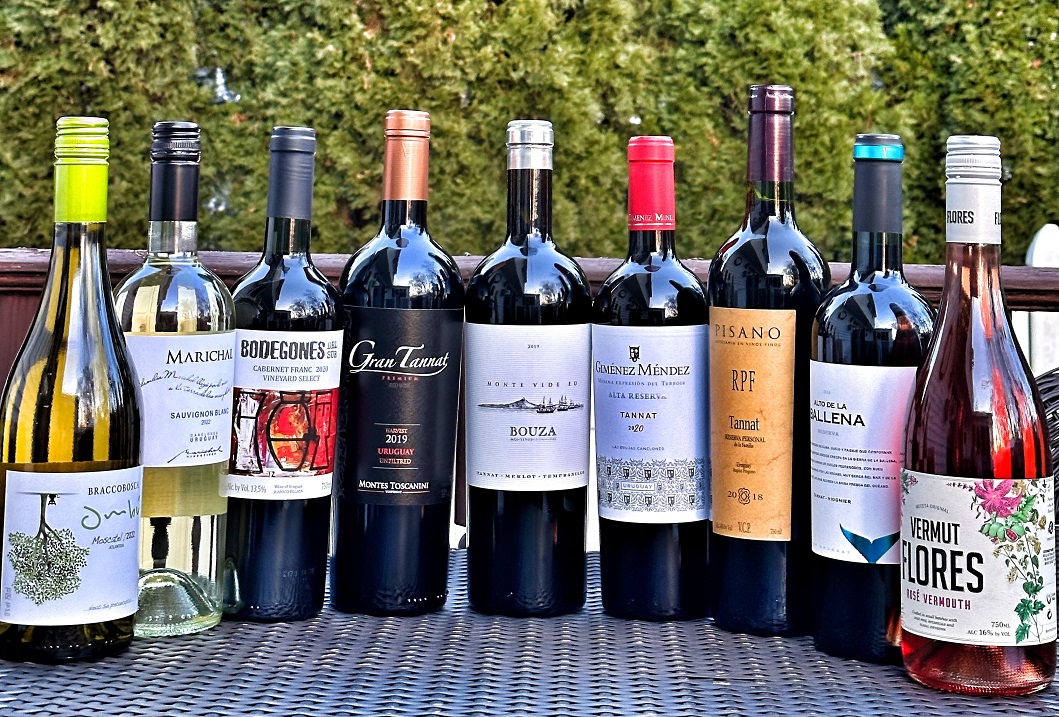
We had 2 whites, 6 reds, and one Vermouth wine in the tasting. Spoiler alert: I literally liked them all. In the blind tasting, these wines would be surely regarded as world-class, placing them in California, France, maybe Chile – Uruguayan origin of these wines would be a total surprise for many – for sure for me. And yet, here they are – world-class wines from Uruguay.
2022 Marichal Sauvignon Blanc Canelones Uruguay (12.5% ABV, $14)
C: light golden
N: plump, round, Whitestone fruit, a hint of gunflint
P: crisp acidity, fresh, bright. More resembling Muscadelle than anything else. Good balance.
V: 8, very refreshing.
2022 Bracco Bosca Ombú Moscatel Atlantida East Costal Region of Uruguay (13% ABV, $16)
C: light golden
N: very interesting. Muscat’s spicy, nutmeg profile comes as a distant hint. A touch of perfume
P: restrained tropical fruit with an acidic finish.
V: 7, not balanced enough for me; On the second and third days the wine showed much better, more coherent and more elegant – Drinkability: 8-.
2020 Familia Deicas Bodegones del Sur Vineyards Select Cabernet Franc Juanico Region Uruguay (13.5% ABV, $20, 30% aged in American and French oak)
C: Beautiful bright ruby
N: round vanilla, new world style
P: interestingly restrained on the palate, with noticeable tannins. The palate shows the absolutely old world (Saumur, Chinon). Interesting cranberry notes after an hour and a half in the open bottle.
V: 7+/8-, a bit unexpected, but not bad
Improved on the second day, became more round. Final: 8-
2020 Giménez Méndez Alta Reserva Tannat Las Brujas Canelonés Uruguay (14% ABV, $18, aged for 9 months)
C: Dark Garnet
N: Open, inviting, dark fruit, blackberries
P: Dark fruit, firm structure, smokey undertones, herbs, very good balance.
V: 8, well drinkable now
2019 Montes Toscanini Gran Tannat Premium Uruguay (14% ABV, $59, 18 months aged in oak, BAB with a huge punt)
C: dark garnet, practically black
N: wow. Cassis, sweet oak, eucalyptus, open, inviting, invigorating. In a blind tasting, I would bet my life on Napa Cabernet Sauvignon.
P: the palate is leaner than the nose suggests. Red and black fruit weave around a firm structure, tannins showed up a while after opening.
V: 8-/8, very impressive
2018 Pisano RPF Reserva de la Familia Tannat Region Progreso Uruguay (% ABV, $24, 10–12 months in French oak)
C: dark garnet
N: dark fruit, coffee, smoke
P: a hint of smoke, sapidity, dark, concentrated but not overpowering. Good balance, medium-long finish
V: 8-/8, very nice. Will be great with the steak.
2018 Alto de la Ballena Tannat – Viognier Uruguay (14% ABV, $24, 85% Tannat, 15% Viognier)
C: Dark garnet, almost black
N: herbs-forward nose, sage, a hint of cherries
P: fresh fruit, salivating acidity, sage, firm structure, and perfectly lingering cherries and cherries pit finish.
V: 8, great by itself, and will be great with beef roast
2019 Bouza Monte Vide Eu Montevideo Uruguay (13.5% ABV, $67, 20% Tempranillo, 30% Merlot, 50% Tannat, vinified separately, 16 months in French and American oak barrels)
C: dark garnet with a beautiful ruby hue
N: very complex, cherries, rosemary
P: roasted notes, dark fruit, elegant package, firm structure with a perfectly balanced mouthfeel.
V: 8, excellent, a world-class wine.
Basta Spirit Vermut Flores Rosé Uruguay (16% ABV, $16, Tannat, 27 botanicals)
C: beautiful salmon pink
N: Herbaceous, but a bit strange, stewed strawberries
P: a bit too sweet for my palate.
V: I’m very particular about the vermouth, so this is probably not the one for me.
Here you are, my friends. Next time you see an Uruguayan wine on the shelf, obey your thirst and grab it – and you don’t even have to thank me later.
Stories of Passion and Pinot: Bill Sanchez of Potter’s Vineyard

Bill and Sandy Sanchez. Source: Potter’s Vineyard
Wine is art.
More often than not, the connection goes beyond that simple statement. Have you visited wineries that are housed in beautifully designed buildings, or offer various pieces of art – paintings, sculptures – for everyone’s viewing enjoyment? Wine is a form of art, made by artists, and it thrives surrounded by art in a multitude of shapes and forms.
Bill Sanchez extended his 30+ years of PhD experience in nutritional science and 15 years as a professional Potter to the art of winemaking when he and his wife Sandy bought 3.5 acres estate winery in Laurelwood District AVA in Oregon from Laura Volkman in September of 2012. He had to learn 1,000 steps of making great Oregon Pinot Noir from Laura, who planted the vineyard in 2001. Guided by this knowledge, love of art, and utmost respect for one of the most famous artists of all time, Michelangelo, Bill and Sandy operate their winery with a full commitment to “staying small”.
Organic, LIVE and Salmon Safe certified winery, Potter’s Vineyard produces about 1,000 cases annually, supplementing estate Pinot Noir with Chardonnay, Cabernet, Merlot, Sangiovese, and Syrah coming from single vineyard estates in Washington. Connecting visitors to art, the winery also offers a full exhibit of handcrafted Clay Art.
I had an opportunity to sit down (yes, virtually) with Bill Sanchez and ask him a few questions about his passion for Pinot and art. Here is what transpired in our conversation:
[TaV]: What is Vino Vasai Wines and how it is different from Potter’s Vineyard wines?
[BillS]: There’s a back story on Vino Vasai, which means Wine of The Potter. We used it when a large company said ‘they would oppose’ our trademark for Potter’s Vineyard. Vino Vasai is the wine brand, and Potter’s Vineyard is the name of our company and Estate Vineyard.
Source: Potter’s Vineyard
[TaV]: You worked for 35 years in nutritional science field. How does this experience affect your work in the vineyard and the winery?
[BillS]: That experience has focused my work on the vineyard where I am taking a ‘nutritional health’ approach to our farming. We practice organic farming and use natural ‘nutritional compounds’ to improve the health of the vineyard. We are gathering clinical data that shows this helps to prevent major pests like powdery mildew.
[TaV]: I read in your story that you learned 1,000 steps of making great Oregon Pinot. Can you please tell me what step 367 is all about? 🙂 just kidding 🙂 but seriously, what are these 1,000 steps all about?
[BillS]: When you break everything down there is probably many, many starting with 30 passes in the vineyard (that starts in January by the way), and many more steps involved in growing quality fruit (pruning, tying down, flailing, rubbing buds, trellising, mowing, spraying, hedging, etc. Then, when you add all the steps after harvest you get many, many more – I know I exaggerated it at 1,000 but someday I will add them all up and I know I will be closer to 1,000 than 100!
[TaV]: Especially because of your extensive scientific background, I have to ask you the same question I like to ask many winemakers – Biodynamics. What do you think of biodynamics? Would you ever implement it at your winery?
[BillS]: I’m very intrigued, but I don’t understand it yet, especially the ‘cosmos’ connection. I understand Organic much better and am excited to see the increasing amount of quality science that demonstrates not only that Organic farming works, but that it is healthier for the entire farm.
[TaV]: Pottery seems to be your other passion besides wine. Today, amphorae are popular vessels among winemakers to work with their wines (fermentation, aging, etc.). Do you use amphorae at your winery? As a potter, would you attempt to simply make one for this purpose?
[BillS]: Again, I’m very intrigued by amphorae but I haven’t yet found them to deliver higher quality wines compared to oak barrels. This is especially true for reds and chardonnay, which are my primary focus. I have tried some delicious crisp whites from amphorae, but I am not working with those varietals (yet)! I would rather buy Amphorae from my neighbor, fellow potter and winemaker, Andrew Beckham than attempt to make one myself (especially at the size needed to make enough wine for a club pickup).
[TaV]: I understand that you and your wife are big fans of Michelangelo and his work. How does Michelangelo’s work inspire you in your daily dealings at the vineyard and the winery?
[BillS]: I like the fact that Michelangelo was so diverse in his work (sculpture, painter, and architect) and I think we all aspire to be like him, not only one of greatest in his time but one of the greatest of all time!
Source: Potter’s Vineyard
[TaV]: You stated that Potter’s Vineyards is dedicated to staying small. How difficult it is keep that resolution and to stay small?
[BllS]: It’s most difficult financially, but because my wife and I did not plan on needing the income into our retirement years, we are happy to break even and live and work with less stress.
[TaV]: How does this decision affect your daily work?
[BillS]: It is very rewarding to have something we enjoy very much that keeps us busy every day and provides a product that enriches people’s lives, especially in creating a pleasurable memory they can share with family and friends.
[TaV]: Potter’s Vineyards is a certified sustainable winery. Can you talk about your approach to sustainability and why sustainability is important to you?
[BillS]: Our approach is to focus on the health of the entire farm. I like to think about the health of the soil (insects, microbes, organic matter), the vegetation diversity between the rows, the flowering plants surrounding the vineyard, the birds, the bees, the insects and of course the people who visit. I believe this approach will allow the farm to thrive for many years (if not forever).
[TaV]: You have two wine clubs, B club and M club. I understand that M stands for Michelangelo. What B stands for?
[BillS]: Botticelli (another great Italian artist)
[TaV]: In terms of distribution, what percentage of your wine is sold through the club and local visits?
[BillS]:Over 90%.
[TaV]: Are your wines available in retail or maybe the restaurants?
[BillS]: We don’t actively pursue distribution, but if local retailers request our wines, we make them available and support these local establishments. Our wines are currently available at Our Table Farm Store in Sherwood, OR., 503 Uncorked Wine Bar in Sherwood, OR., Old Town Bar & Grill in Newberg, OR., and Crushed & Crafted Wine Bar in Newport.
[TaV]: I see that you produce a Sangiovese wine. Sangiovese is largely atypical for an Oregon winery. Is that a nod to your Italian connection?
[BillS]: Yes, my wife Sandy actually.
[TaV]: How popular is this wine with your customers?
[BillS]: They love it and love the story where we discovered Sangiovese during our trip to Italy in 2011 and then bought our vineyard in 2012. Releasing a Sangiovese in our 10th year of business was truly a dream come true!
[TaV]: You already make a full line of Pinot Noir wines (sparkling, Rosé, white Pinot and of course the large range of Pinot wines themselves). You also make Cabernet Sauvignon, Merlot, Sangiovese. Do you plan to plant any new grape varieties or make new wines?
[BillS]: Someday we may offer a Sauvignon Blanc, but Sandy says that’s it after that!
[Tav]: Where do you see Potter Vineyard in 10 years? What would you like to accomplish during the next 10 years?
[BillS]: If my children take a serious interest, I would love for the business to grow enough to support their families into the next generation and beyond but if not, we will find someone to nurture it along just as Laura Volkman found us!
There you are, my friends – another story of Passion and Pinot, another story of wine and art.
I didn’t get a chance to try Bill’s wines yet, so please stay tuned for the update…
P.S. For more stories of Passion and Pinot please visit the series’ main page.
Last Bottle Sign Up ($10 credit)





