Archive
Weekend in Turley, With a Dash Of Carlisle and Hardy
Many moons ago, my friend Henry and I discovered Turley wines. We were at a restaurant in Manhattan with our wives, either before or after the Broadway show, and on the wine list, Turley Zinfandel (either Juvenile or Old Vines) was one of the reasonably priced wines, so that was the wine we ordered. I don’t remember if I heard about Turley before (maybe), but tasting that wine was a pivotal moment – we fell in love with Turley wines.
Turley Wine Cellars was founded in Napa Valley by emergency room physician, Larry Turley in 1993, and went on to become one of the most prominent Zinfandel producers in the US. Turley produces about 50 different wines from about 50 different vineyards, most of them organically farmed, from all around California. Many of those vineyards date back to the late 1800s. While Turley might be best known for its Zinfandel and Petitte Sirah, they also produce a number of white wines, a number of other reds, and even Cabernet Sauvignon, first produced in 2010, and eloquently called The Label (Larry Turley’s famous saying was that Cabernet drinkers drink “the label”, hence the name – I had my own share of troubles with this wine).
Turley wines are hard to get in the store, and if you really would like to enjoy them at will, you need to be on the Turley mailing list. Turley was one of the very first mailing lists I managed to get on more than 10 years ago, and I had been a happy customer ever since. My friend Henry finally got his first allocation about two years back.
A place on the mailing list still doesn’t guarantee you access to each and every wine Turley makes, and their list operates on a “first come, first serve” basis – I missed quite a few wines that were included in my offering, but disappeared much sooner than I could make up my mind.
Last Saturday, Henry was coming over for dinner, so I had to make it a Turley evening.
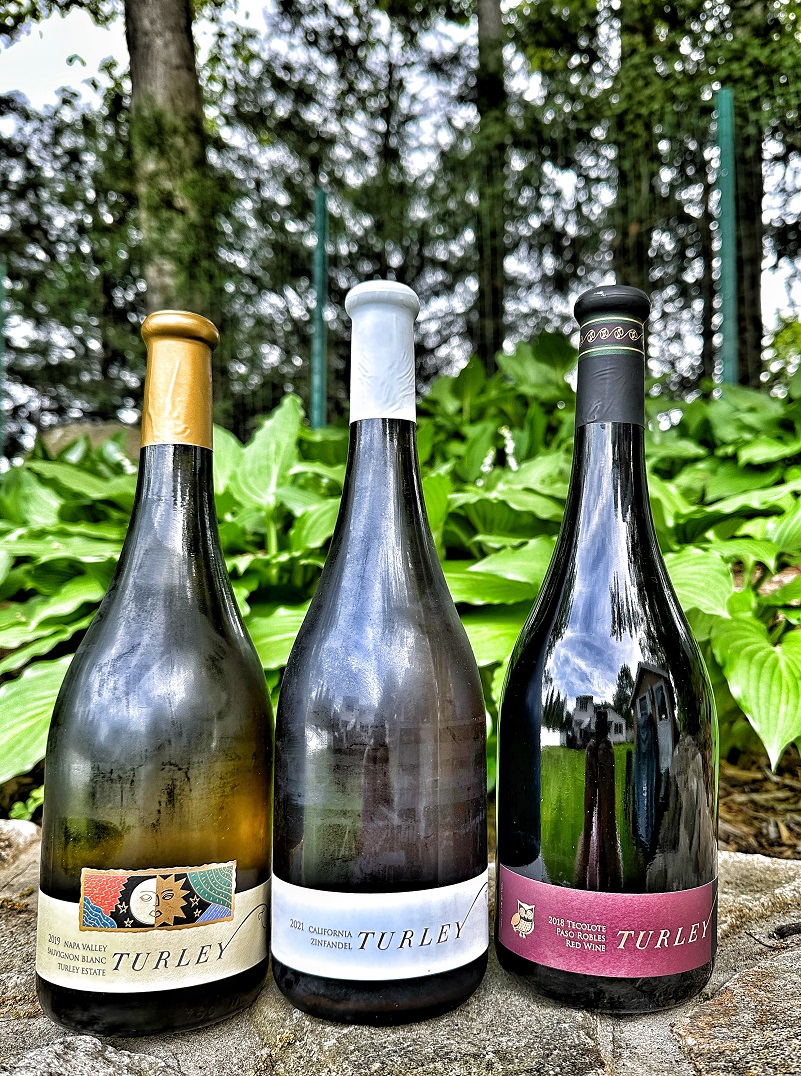
Turley makes only two white wines – Sauvignon Blanc and a blend called White Coat. The wine we opened was the 2019 Turley Estate Sauvignon Blanc Turley Estate Napa Valley (13.4% ABV). It is interesting that Sauvignon Blanc was one of the original wines produced back in 1993. Sauvignon Blanc plantings at Turles Estate were replaced with Zinfandel, but then Sauvignon Blanc was planted again on a small section of the dry-farmed, certified organic vineyard. The wine was fermented using natural yeast and it was bottled after 6 months in 100% French, used oak barrels. The wine was an absolute delight, showing beautiful whitestone fruit, perfectly present, perfectly elegant, with fruit and acidity singing in complete balance.
I had a little bit left in the bottle after that evening, and on Sunday I was able to please the most discerning palate in our household – my mother-in-law. She came over for Mother’s Day on Sunday and wanted to drink the white wine. When it comes to wine, she is completely unpredictable, and I always try to pour her wine without showing the bottle – she has lots of preconceived notions about wines and the regions, so I’m always trying to make sure she will just try the wine first, and then I can tell her where it is from. To my delight, she liked the wine, and even when I told her the wine was from California, she still liked it – a serious achievement in this household.
Our next wine was 2021 Turley Zinfandel Rosé California (12% ABV). This wine sometimes is called White Zinfandel, but only to poke fun at the uninitiated (and the bottle is adorned with the white label). This wine is impossible to score – you literally have to press “buy” as soon as your summer offering arrives. The wine is fermented in stainless steel and aged in used French barriques. It is lip-smacking, it speaks cranberries and strawberries, it is very Provençal in its presentation, but Californian in its soul.
And then there was Tecolote – 2018 Turley Tecolote Paso Robles Red Wine (15.7% ABV). This wine is rarer than rare, as you need to know it exists, to begin with. I got it once through some special holiday offer, but it is never included into the standard seasonal offerings. This wine is typically only available in the tasting room, but being a mailing list member has some advantages – I asked if I can get a few bottles, and they arrived just in time for us to enjoy. This wine is a Spanish-inspired blend of 60% of Grenache and 40% Carignane, coming from the specific block in Pesenti Vineyard, planted in the 1920s. Tecolote means “owl” in Spanish, and this is how the vineyard block is also called. The wine offered layers of lip-smacking black cherries, kitchen spices and sweet tobacco. A perfect balance of textual presence, fruit and acidity made this wine disappear in no time…
Next, let me step away from the wine for a bit – but not from the grapes. I rarely talk about cognac on these pages, but then I have an experience to share.


On an average day, I’m a scotch drinker. But of course, I would never refuse a sip of a good cognac. The keyword is “good” – nowadays, it is difficult to find a good-tasting cognac at a reasonable price in the US. However, my recent cognac tasting with my school friend led me to the discovery of Cognac Expert. Subsequently, I got a recommendation from Cognac Expert for the cognac I now enjoy immensely – without any need to break the bank – Hardy Legend 1863 Cognac. This cognac was produced by the Cognac House of Hardy, to commemorate the founding of the Hardy house back in – yes, you guessed it – 1863. This cognac is a blend of spirits made from the grapes coming from Borderies and Petite Champagne growing areas, aged from 2 to 12 years and finished in classic Limousine oak. From the first enticing smell to the long-lasting, coffee-loaded finish, this cognac offers the ultimate pleasure of balance of fruit, spices, and acidity. And at $40, this might be the best QPR cognac out there today.
Last but not least – 2015 Carlisle Mourvedre Bedrock Vineyard Sonoma Valley (14.9% ABV), which I opened on Sunday. Carlisle is another one of my favorite producers, specializing in Zinfandel, Syrah, and Petite Sirah – and some other grapes. The fruit for this wine came from the 130+ years old vineyard, planted in 1888. The wine was aged in French oak, 20% new. It is interesting that stylistically, this wine was similar to Turley Tecolote – succulent tart cherries on the nose and the palate, a touch of eucalyptus, refreshing acidity, perfect balance. This was an excellent wine to finish the weekend right.
Here you are, my friends – my weekend wine story. If you can find any of the wines mentioned in this post you should definitely look for them. And if you like cognac, this Hardy 1863 Legend is hard to beat. And you know where to find it.
Nevermind. I should have never told you that.
Until the next time – cheers!
Celebrating Oregon Wine Month with Potter’s Vineyard Wines
I guess there is something special in the month of May as everybody wants to appropriate it..for their wine purposes. The story differs from year to year, but this particular May 2023 has at least 4 wine designations (if I missed something – I profusely apologize) – May is Finger Lakes Wine Month, Michigan Wine Month, Oregon Wine Month, and Washington Wine Month.
The good thing is – there are 31 days in the month of May – which is enough to celebrate the wines of many more states – or maybe even all 50 – with proper planning. But for today, I only would like to focus on one of the wine months – Oregon.
Oregon wine is near and dear to my heart. First of all, Oregon itself is a beautiful place – I love the pure, open, clean, spacious, and airy pine forest oh so different from New England’s sprawling intersection of ivies, and stunning vineyard views which you can enjoy everywhere. Some of the very best American wines are produced in Oregon. And the longest-running series of articles on this blog – Stories of Passion and Pinot, conversations with winemakers – is dedicated to Oregon winemakers who made Pinot Noir the passion of their lives.
20 years ago, Oregon wines could’ve been known as a one-trick pony with its sole focus on Pinot Noir. Today, that world-class Pinot Noir is joined by Chardonnay, Pinot Gris, Riesling, Syrah, Tempranillo, Sangiovese, and even Tannat. Sparkling wines and Rosé can be found almost at any winery. And Pinot Noir is not just for reds anymore – Pinot Noir Blanc, a.k.a. White Pinot Noir is the wine to look for. Oregon winemakers continue studying their vineyards, identifying unique blocks and plots in a quest to produce the most terroir-driven wines.
One of my most recent conversations in the Passion and Pinot series was with Bill Sanchez, the proprietor and winemaker at Potter’s Vineyard. Potter’s Vineyard is a small, 3.5 acres estate in Laurelwood District AVA in Willamette Valley, producing about 1,000 cases annually. Potter’s Vineyard is organic, LIVE and Salmon Safe certified, and committed to staying small – you can learn about this commitment and the overall philosophy of Potter’s Vineyard from our conversation which can be found here.
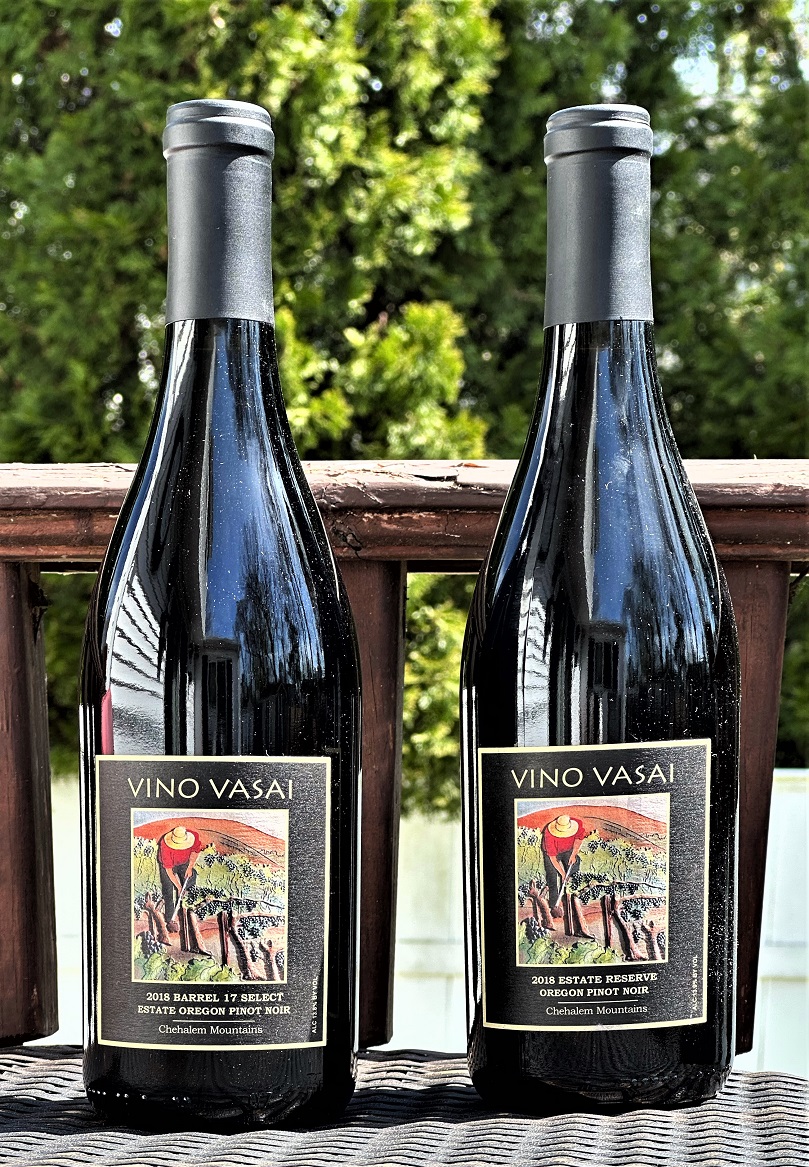
I don’t know about you, but I really admire these labels
Now I had an opportunity to taste a couple of the Potter’s Vineyard estate Pinot Noir wines, Barrel 17 Select and Reserve. Here are my notes:
2018 Vino Vasai Barrel 17 Select Estate Oregon Pinot Noir Chehalem Mountains (13.8% ABV, $48, Dijon clones)
Dark Ruby
Dark cherries, violets, minerality
Dark cherries, plums, medium to full body, firm structure, well-integrated tannins, luscious layers followed by the tart, long finish
8, excellent. Upon opening, the wine was lean and tight, Burgundian style. The next day opened up to show more of the Oregon Pinot power, still governed by restraint.
2018 Vino Vasai Pinot Noir Estate Reserve Chehalem Mountains (13.9% ABV, $58, Pommard clone, 75% new French oak )
Garnet
Beautiful legs (I rarely pay attention to those, but couldn’t help to notice)
Very enticing nose with sweet cherries, plums, eucalyptus
Cherries on the palate, tart, perfectly structured, harmonious and perfectly balanced. Craving food, but I can polish a bottle by myself.
8/8+, excellent.
Here you are, my friends – more of the delicious Oregon wines worth seeking. Oregon wine month is upon us, so if you need any suggestions, just click here.
And don’t be shy – if you got any of the Oregon wine favorites, please comment and leave notes for others.
Until the next time – cheers!
P.S. For more stories of Passion and Pinot please visit the series’ main page.
American Pleasures #8: Flora Springs, Napa Valley
Wine should give you pleasure – there is no point in drinking the wine if it does not. Lately, I have had a number of samples of American wines that were delicious standouts – one after another, making me even wonder if someone cursed my palate. I enjoyed all those wines so much that I decided to designate a new series to them – the American Pleasures.
This very blog was born out of a desire to share with the world the excitement that a glass of wine can bring. To share an appreciation of a well-crafted glass of fermented grape juice that can inspire great paintings, great poetry, and great conversations.
Sometimes, it is not very easy to find the right words to share that excitement. Yes, there is a great arsenal of wine technical terms to describe body, aroma, bouquet, finish – but those words do a very poor job of conveying emotions. Yes, they describe wine, possibly correctly but subjectively (you say it is a blackberry, and I say it is black cherry) and possibly sufficiently to give another wine geek or professional an idea of how the wine might taste. But when one whiff from the glass literally stops you in your tracks, whether the aroma contains raspberries, black currant, or the hair of the wet dog is really irrelevant. What is important is that wine blew your mind and delivered an ultimate pleasure, which you can’t resist but share with the world.
Everyone derives wine pleasure on their own. For me, smell (aroma) and taste (bouquet) are two distinctly different categories. I had wines that had a magnificent aroma, and an underwhelming bouquet. I had wines where the aroma was either absent or borderline terrible, and the bouquet was magnificent. Of course, many have both. Taking about deriving the wine pleasure, mine definitely starts with the nose, the aroma. I’ve had wines that I didn’t start drinking for a good few minutes, just inhaling the aroma exuding from the glass. I can’t tell you why and how this works with the aromatics of some of the wines being so captivating – simply sharing my perspective here.
This was a long introduction to the gist of this post – two wines of Flora Spring from Napa Valley in California that I had an opportunity to taste lately.
From the moment I heard the name Flora Springs for the first time, there was something subconsciously attractive in that name – I have no idea why and how. But ever since the first encounter, I always expect magic while tasting Flora Springs wines.
Flora Springs Winery was founded in 1978 by Flora and Jerry Komes in Napa Valley, rooted deeply in the rich history of the US wine industry’s ups and downs, going from 763 wineries in California to only 40 surviving Prohibition. Name Flora in combination with the natural springs running through the property helped to define the winery’s name – Flora Springs. From the moment the winery was founded, it was truly a family affair, all built and developed by Jerry and Flora, their kids, grandkids and their families – you can learn all of it on Flora Springs’ website – and it is well worth a few minutes of your time.
The line of wines Flora Springs produces is something you would expect from the winery in Napa Valley – Chardonnay, Sauvignon Blanc, Cabernet Sauvignon, Merlot, and a few others. Yet the two wines which prompted this post belong to the Flagship category – the white blend called Soliloquy and the red Bordeaux blend called Trilogy.
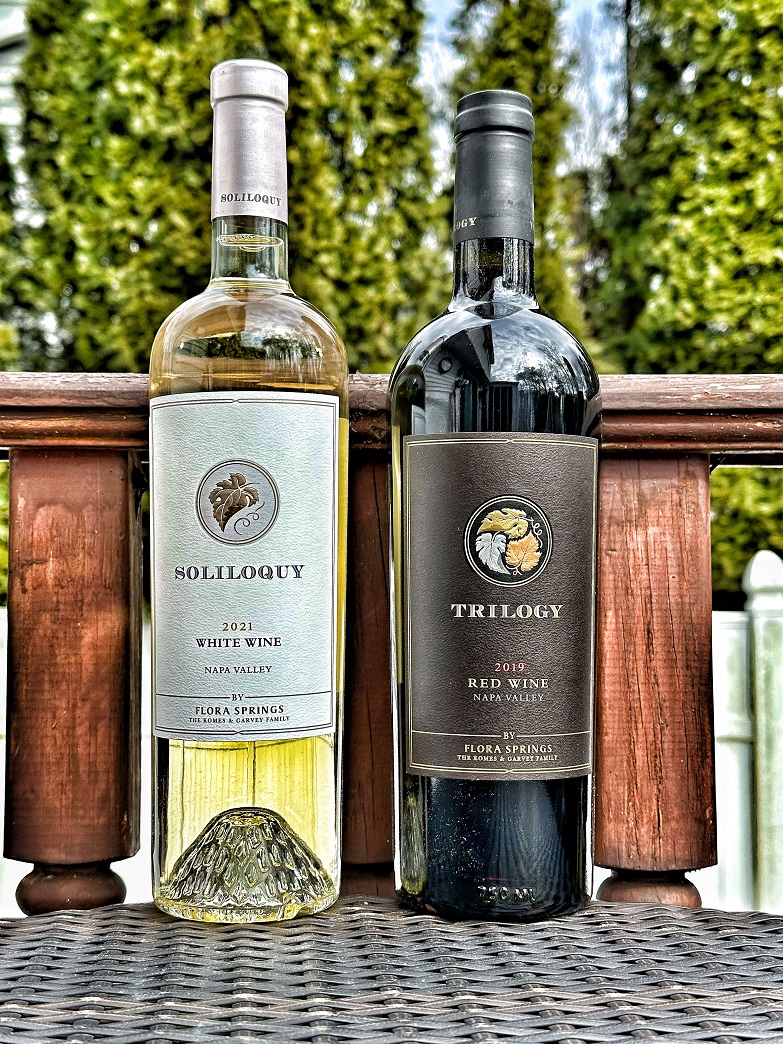
I tried Soliloquy for the first time 13 years ago – no, I don’t have such an amazing memory, I simply have my notes – in this very blog. The wine I tried back then was Sauvignon Blanc from Soliloquy Vineyard. Actually, Soliloquy Sauvignon Blanc is identified as a Sauvignon Blanc clone, certified by the UC Davis to be unique to Flora Springs, so I found that wine to add a unique grape to my collection (I actually added two, as that wine was a blend of Sauvignon Blanc Soliloquy and Sauvignon Musqué). My next encounter was about a year later when I was blown away by the 11 years old Soliloquy bottling.
It is worth noting that in the 1990s, the Soliloquy vines became nearly extinct due to the disease. The winery spent the next 8 years re-growing the Soliloquy vines first in the lab and then in the nursery before the plantings were restored in the vineyard.
2021 Flora Springs Soliloquy Napa Valley (14.2% ABV, SRP $60, 73% Sauvignon Blanc, 12% Chardonnay, 15% Malvasia, 7 months in French oak barrels), the wine which I had, is still made primarily from Soliloquy Sauvignon Blanc with the addition of Chardonnay and Malvasia. The wine offered beautiful bright aromatics, with the whitestone fruit and a distant hint of honey. The palate was full of energy, uplifting, showing more of the white stone fruit, Meyer lemon, crisp acidity, and overall perfect balance. A perfect example of the capabilities of the Napa Valley white.
Not to be overdone, my second wine was 2019 Flora Springs Trilogy Napa Valley (14.2% ABV, SRP $85, 75% Cabernet Sauvignon, 10% Petit Verdot, 8% Cabernet Franc, 7% Malbec, 18 months in French (80%) and American (20%) oak barrels). Trilogy wine was originally produced for the first time in 1984 (thus 2019 is the 35th vintage of the wine), with the name being a nod to the three main Bordeaux varieties comprising the blend.
This wine was truly a show-stopper. On the first whiff, the world slowed down. There was just me and the glass. Pure, delicious black currant, eucalyptus, currant leaves. Round, and around, and around. I few minutes later, I developed the courage to take a sip. To my delight, the palate delivered as much excitement as the nose. Polished, layered, seductive, Bordeaux-style textbook profile, black currants, well-integrated tannins, perfect structure, powerful but perfectly balanced. You really don’t expect the wine like that to be a pop’n’pour wine, and yet it was, in my glass. Absolutely delightful.
There you are, my friends. Another case of delicious American wines, delivering lots and lots of pleasure. These wines are not really everyday sippers but are well worth looking for to brighten up any special occasion.
I have more American pleasures to share, so stay tuned…
Spanish Wines: Old and New
 If I start calling wines “friends”, does it make me an alcoholic or a sad psychopath?
Whatever. We are who we are.
If you love wines, what are the emotions you experience when looking at a familiar bottle? “Ahh, I know you. Of course, I remember you. Oh, we had a great time together. Remember what happened the last time we met?” Wouldn’t that be very similar to a meeting with an old friend? I’m not equating humans and bottles in any way, but emotions connect us, and good wine always solicits emotion.
What happens when you see a new wine? If something strikes your interest – label, region, producer, grape, anything – your think “yeah, I want to get to know you better”. Making new friends in the human world would work pretty much the same – but I think we better get back to talking about wines before I will dig myself too deep.
I love Spanish wines – and you are well aware of this. I’m always happy to meet old wine friends. I’m equally excited to make new acquaintances. Especially when both old and new friends are Spanish wines.


The first wine I would like to talk about… Well, speaking of friends, it is an old and wonderful friend who makes you feel uneasy at a first sight. You know the feeling when you see an old friend and you are super-happy to embrace him (or her), and then your joy is instantly blemished with the next thought of “ohhh, I promised to send him the book, and I never did”. So this Godello from Arano wines is this exact friend. I had this wine a few years ago, was blown away, promised to myself to write about it – and yet never did. Yep, that feeling.
Speaking about Spanish white wines, most people would probably think of Albarino first, followed by Rueda/Verdejo, and then probably get to white Rioja (usually made from the Viura grape). Meanwhile, Godello might be the most interesting Spanish white grape, in many instances producing white wines easily rivaling the best renditions of Chardonnay. This Godello is definitely in the group:
2020 Virgen Del Galir Pagos del Galir Godello Valdeorras DO (13.5% ABV, $21)
Light golden
Whitestone fruit and lemon
Whitestone fruit, plump, mouthfeel between Chardonnay and Roussanne, round, perfect acidity, delicious.
8+, would perfectly compete with any Chardonnay
Here comes another old friend – Bela, one of the new projects of the Rioja powerhouse CVNE in the Ribera del Duero region. I tasted the 2017 vintage of Bela 3 years ago, which gives me the “old friend” rights. There are some notable differences between 2020 and 2017 vintages – 2017 was well-drinkable almost from the get-go, and 2020 needed 3 days to become the beauty it had become. I don’t know if the oak regimen can actively contribute to such a dire difference (the 2017 vintage spent 6 months in the mix of 1-year-old French and American oak, and 2020 seems to spend 9 months in the new French oak) – but nevertheless, this is definitely the wine for the long haul.
2020 CVNE Bela Ribera del Duero DO (14.5% ABV, $18, 95% Tempranillo, 5% Cabernet Sauvignon and Merlot, 9 months in French Oak barrels, 3 months in the bottle)
Dark Garnet
Earthy spicy herbal nose with dark fruit undertones and a touch of tasted meat
Cherries and cherry pit, tart, focus, firm, concentrated – beautiful on the 3rd day. Day one needed time and day 2 was completely closed.
Drinkability: (day 3): 8+


Now, my most beloved wine category – Rioja.
As you know, everything in life has two sides. Rioja is my favorite wine – but on the flip side, I’m very particular about my Rioja. Despite the absolute world-class of CVNE, I never saw this Bakeder Rioja before, which to me means “proceed with caution”. It appears that this wine is a tribute to the car-free village of La Guardia. As this is a new wine for me, let me quote from the CVNE website: “Bakeder, pronounced back-aid-er, is a wine from Laguardia, a village from Rioja Alavesa. The name, “beautiful as peace” is a loose translation from the Basque language. Let the Whole World know the beauty of the fortified medieval village of Laguardia, protected by its great sierra; its solemn churches and monuments; its historic vineyards, and of course, its magnificent wines.” All my fears dissipated with the first sip:
2019 CVNE Bakeder Rioja Alavesa DOC (13.5% ABV, 100% Tempranillo, 10 months in French oak barrels)
Dark ruby
Cherries, cigar box, eucalyptus
Cherries, plums, well-integrated but present tannins, earthy, firm structure, good acidity, perfect balance. Lots and lots of pleasure.
8+, pop’n’pour the wine you don’t want to stop to drink
The last wine for today comes from the legendary Spanish producer – René Barbier from Clos Mogador in Priorat. Clos Mogador needs no introduction to wine lovers as a producer of some of the most coveted wines in the world. Com Tu, which I never had before, is a relatively new wine, commercially produced only since 2005 from 35-50 years old Garnacha vines. The wine’s name can be summarized as ” I am like you (Com tú), you are like me”, has a lot of meaning and history as a special project, so I would like to simply direct you to the Clos Mogador website to read about it.
2019 Clos Mogador Com Tu Garnatxa Negra de la Figueroa Montsant DO (14.5% ABV, 100% Garnatxa (Grenache), 18 months in a foudre)
Dark ruby
Dark ripe fruit and dark chocolate
Cherries, plums, chocolate, good acidity, sage, good balance.
8, light and pleasant on day 1
Here you are, my friends – some old and some old new “wine faces” – each delivering lots and lots of pleasure.
I wish you many pleasant encounters with friends old and new. Cheers!
Uruguay Wines – Coming Of Age
Do you know the problem many wine lovers share? We are creatures of habit.
Once we develop our inner “favorite wine” profile, we don’t let any changes happen to it. We like what we like. Never heard of this region? Thank you, I’ll pass. God forbid we fall in love with the particular producer – this is even worse than the region – nothing is ever good enough outside of the circle of our favorites.
And this is generally okay. Except we are putting ourselves in danger of losing on new, enlightening, delicious experiences.
When I was invited to the Uruguay wine webinar, my first reaction was “nah”. I mean, Uruguay, really? Between Chile and Argentina, my South American world-class wine circle is already full – do I need to bother with the wines from a totally unknown region?
On second thought – this is a webinar. Wine is coming to me, not like I need to travel somewhere to taste the wines I can potentially be disappointed by. Why not?
I’m glad I accepted the invitation. Both the information and the wines were lots of fun. We learned that while Uruguay has a population of 3.5M people, 2nd smallest size-wise country in Latin America, the country has a 98.7% level of literacy, the highest in Latin America. People in Uruguay are mainly descendants of Italians and Spaniards so they literally have wine embedded in their DNA.
Winemaking in Uruguay started in the 13th century. Today, there are 164 active wineries, producing 70M bottles of wine annually. Uruguay is currently in the process of implementing its own sustainability program. And by the way, the oldest winery in Uruguay dates back to 1854 and is called Los Cerros de San Juan (still open today!).
Uruguay has primarily a maritime climate with strong Atlantic influence, with the majority of low-lying coastal vineyards. Uruguay’s climate is closer to Bordeaux than the rest of South America, and it is significantly wetter if compared with Chile, where it rains only during the winter. Soils are clay based with lots of river deposits. Uruguay has six main winemaking areas, boasting 5 different terroirs. Warm and cold ocean currents collide right around Uruguay, creating significant influence. Interestingly enough, Uruguay is the only winemaking country in South America whose terroir is affected by the Atlantic Ocean.
When it comes to grapes, there are 14,804 acres under vine (a little smaller than Alexander Valley in California). Tannat is unquestionably a star, accounting for 27% of vineyard plantings., but it is not the only grape, obviously – Merlot, Cabernet Sauvignon, Cabernet Franc, Sauvignon Blanc are all quite popular as well.
And before we talk about wines, few more interesting tidbits: cows outnumber humans in Uruguay 4 to 1 and Uruguayans consume more meat per capita than any other country in the world!
Okay, now you know all that I learned in the webinar, and we can talk about the wines.
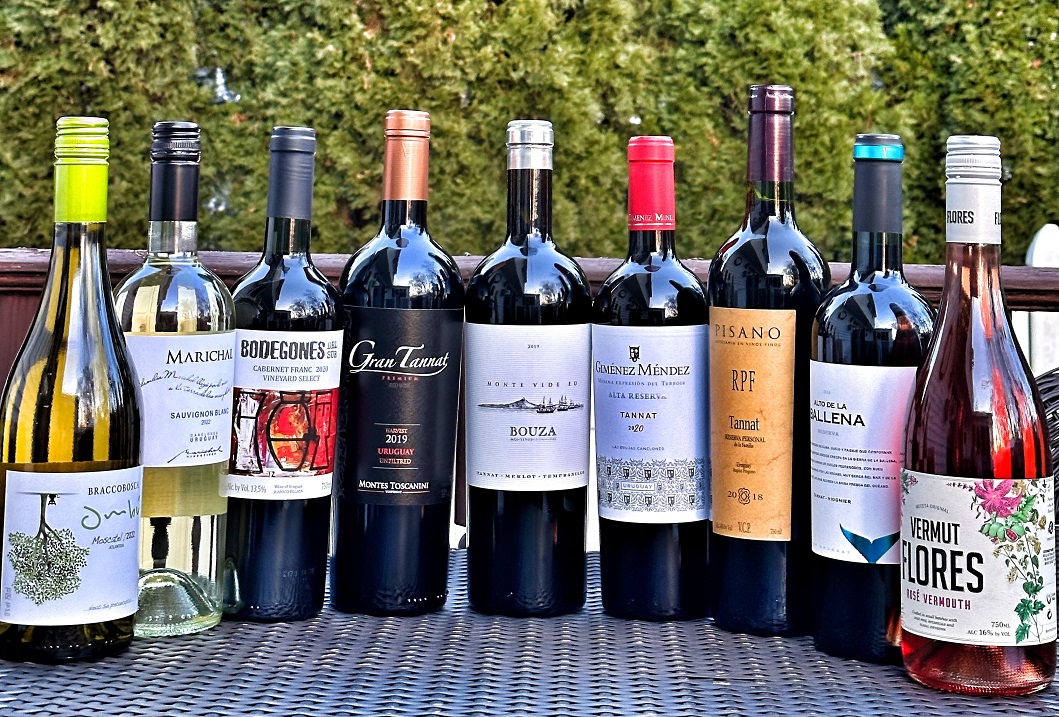
We had 2 whites, 6 reds, and one Vermouth wine in the tasting. Spoiler alert: I literally liked them all. In the blind tasting, these wines would be surely regarded as world-class, placing them in California, France, maybe Chile – Uruguayan origin of these wines would be a total surprise for many – for sure for me. And yet, here they are – world-class wines from Uruguay.
2022 Marichal Sauvignon Blanc Canelones Uruguay (12.5% ABV, $14)
C: light golden
N: plump, round, Whitestone fruit, a hint of gunflint
P: crisp acidity, fresh, bright. More resembling Muscadelle than anything else. Good balance.
V: 8, very refreshing.
2022 Bracco Bosca Ombú Moscatel Atlantida East Costal Region of Uruguay (13% ABV, $16)
C: light golden
N: very interesting. Muscat’s spicy, nutmeg profile comes as a distant hint. A touch of perfume
P: restrained tropical fruit with an acidic finish.
V: 7, not balanced enough for me; On the second and third days the wine showed much better, more coherent and more elegant – Drinkability: 8-.
2020 Familia Deicas Bodegones del Sur Vineyards Select Cabernet Franc Juanico Region Uruguay (13.5% ABV, $20, 30% aged in American and French oak)
C: Beautiful bright ruby
N: round vanilla, new world style
P: interestingly restrained on the palate, with noticeable tannins. The palate shows the absolutely old world (Saumur, Chinon). Interesting cranberry notes after an hour and a half in the open bottle.
V: 7+/8-, a bit unexpected, but not bad
Improved on the second day, became more round. Final: 8-
2020 Giménez Méndez Alta Reserva Tannat Las Brujas Canelonés Uruguay (14% ABV, $18, aged for 9 months)
C: Dark Garnet
N: Open, inviting, dark fruit, blackberries
P: Dark fruit, firm structure, smokey undertones, herbs, very good balance.
V: 8, well drinkable now
2019 Montes Toscanini Gran Tannat Premium Uruguay (14% ABV, $59, 18 months aged in oak, BAB with a huge punt)
C: dark garnet, practically black
N: wow. Cassis, sweet oak, eucalyptus, open, inviting, invigorating. In a blind tasting, I would bet my life on Napa Cabernet Sauvignon.
P: the palate is leaner than the nose suggests. Red and black fruit weave around a firm structure, tannins showed up a while after opening.
V: 8-/8, very impressive
2018 Pisano RPF Reserva de la Familia Tannat Region Progreso Uruguay (% ABV, $24, 10–12 months in French oak)
C: dark garnet
N: dark fruit, coffee, smoke
P: a hint of smoke, sapidity, dark, concentrated but not overpowering. Good balance, medium-long finish
V: 8-/8, very nice. Will be great with the steak.
2018 Alto de la Ballena Tannat – Viognier Uruguay (14% ABV, $24, 85% Tannat, 15% Viognier)
C: Dark garnet, almost black
N: herbs-forward nose, sage, a hint of cherries
P: fresh fruit, salivating acidity, sage, firm structure, and perfectly lingering cherries and cherries pit finish.
V: 8, great by itself, and will be great with beef roast
2019 Bouza Monte Vide Eu Montevideo Uruguay (13.5% ABV, $67, 20% Tempranillo, 30% Merlot, 50% Tannat, vinified separately, 16 months in French and American oak barrels)
C: dark garnet with a beautiful ruby hue
N: very complex, cherries, rosemary
P: roasted notes, dark fruit, elegant package, firm structure with a perfectly balanced mouthfeel.
V: 8, excellent, a world-class wine.
Basta Spirit Vermut Flores Rosé Uruguay (16% ABV, $16, Tannat, 27 botanicals)
C: beautiful salmon pink
N: Herbaceous, but a bit strange, stewed strawberries
P: a bit too sweet for my palate.
V: I’m very particular about the vermouth, so this is probably not the one for me.
Here you are, my friends. Next time you see an Uruguayan wine on the shelf, obey your thirst and grab it – and you don’t even have to thank me later.
Daily Glass: Trial and Error, and Variety of Opinions
Drinking wine is complicated.
I guess I lost you right here and now.
Let’s try again.
Drinking wine is not complicated. Things preceding the wine getting into your glass are complicated. Deciding on the wine to buy, deciding on the wine to drink, deciding how long to keep the bottle before opening is complicated. Dealing with influences, both positive and negative is complicated. If you don’t see it that way – you are lucky. And if you do share my opinion, let me have your ear.
Today, let’s talk about influences. First, let’s take a look at the positive influences. A trusted friend said that the wine was amazing and you must try it. You visited your favorite, trusted wine store, and the salesperson recommended the wine. You saw a raving review for the wine on the website you already bought 10 excellent wines before. You obviously trust the recommendation and happily buy the wine. All is good, right?
Of course, all is good. Maybe not all, but almost all. What might not be good in such a beautiful picture? The expectations. Getting a recommendation from a trusted source sets your expectations. It sets them way, way too high. If your high expectations are not met upon the first sip that obviously creates disappointment. What was supposed to bring you instant joy is now making you upset. Your expectations now failed, and because it was a trusted source, it makes things even worse.
Before you get too upset, let’s think. Maybe the problem is not with the recommendation, but with the way you took it? This is wine, remember? Aeration, temperature, mood, food, environment – all affect the perceived taste of wine. Serve heavy red too cold, and the wine will become bitter. Serve it too hot, and you will be running away from the alcohol hit. Serve a 3 years old bottle of Howell Mountain Cabernet Sauvignon without decanting, and I literally guarantee you pain and disappointment. In wine, these little things matter.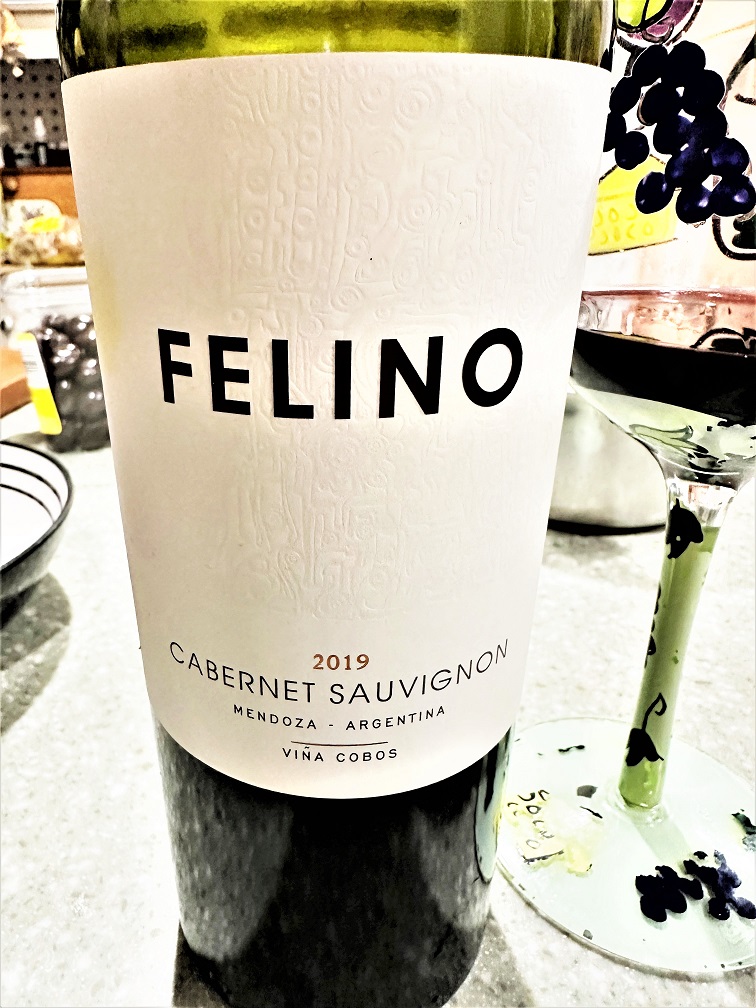
Case in point – 2019 Viña Cobos Felino Cabernet Sauvignon Mendoza (14% ABV, $6.98 ($22 original price), 100% Cabernet Sauvignon, aged for 8 months in oak barrels 10% new). A few months back, I got an email from Wine Exchange, with an offer no wine lover can resist – outstanding Cabernet Sauvignon which was originally priced at $22 and is now $6.98 as a black Friday promotion. I bought 6 bottles. A week or so later opened one and had a feeling of being duped – the wine didn’t show much of anything. I made a mental knot to remember that this was not the wine I can enjoy. Can you imagine my level of disappointment? Of course, at this price, nobody can really complain, but the disconnect between the trusted expert’s recommendation and the actual experience was too dramatic and definitely contributed to the feeling of disappointment.
Two weeks ago, I was looking for a bottle to open for a house guest and just came across this wine again – yeah, sometimes I suck as a host, I know. After my guest had a few glasses (I was not drinking that evening), I pumped the air out and put the bottle aside. The next evening, I was not looking forward to it, but I said I would just have a sip and then put the bottle aside to cook with. Wow. What a transformation. The wine was beautiful, it opened up, it had cassis, it had cherries, it was clean and succulent, exactly as the description promised. Do you see now what I’m talking about? The positive expectations were not met – I’m glad I didn’t stop at that moment of disappointment, but the overall experience could’ve turned out for the worst.
Now, let’s talk about the negative influence. When a trusted expert tells you that the bottle of wine is not good or that you will not like it – you listen. If this is the conversation in the wine shop before you buy the bottle, the outcome is clear – you would just not buy the bottle. And if you already own the bottle? Well, it is what it is then…
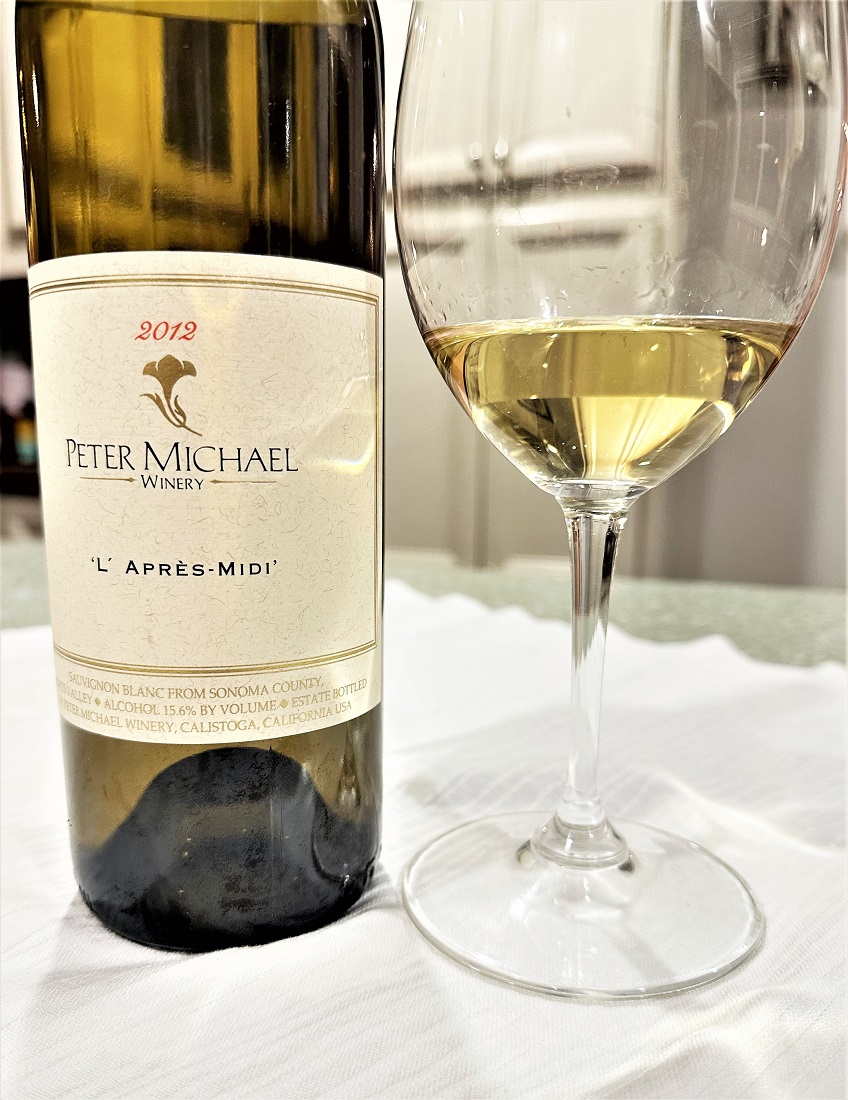
A few weeks ago, I spoke with my friend Zak (the wine store owner) who mentioned his recent experience with Peter Michael wine – he open a bottle of an older Peter Michael Sauvignon Blanc, and it was practically on the way out, actively developing tertiary aromas. A few days after this conversation, after a long day, I suddenly had an urge for a glass of white wine late in the evening. This doesn’t happen that often, but hey, obey your craving… After mindlessly pulling a few shelves in the wine cabinet, I came across the one with Peter Michael bottles. “Aha, this 2012 Peter Michael L’Après-Midi Estate Napa Valley (15.6% ABV, 95% Sauvignon Blanc, 5% Semillon, 8 months in French oak) is probably gone already anyway, why don’t I open that”.
“Whoa” was my instant reaction upon the first sip. 10 years old white wine from California, with 15.6% ABV… You would definitely expect the wine to turn, and yet it was fresh, complex, exuberant, brimming with juicy whitestone fruit, plump vanilla, and fresh acidity. Could my low expectations contribute to the elevated enjoyment? This is always a possibility, but I’m not sure. The wine was not comparatively good, it was simply good on its own. What made my experience different from Zak’s? I have no idea – it is a mystery. And this mystery is what makes wine so much fun.
There you are – an account of indecisive winelover dealing with influences and preconceived notions.
But for some reason, I don’t think my situation is unique. I’m sure you got your own stories – do tell…
A Few Days In Florida
Time flies.
Just a month ago It’s already been a month since we visited our close friends in Naples, Florida. We spent a week at our friends’ house, sometimes enjoying the sun and sometimes not (on the morning we were flying back to New York, the temperature was balmy 40°F). However, this is not a post about the weather – this is primarily a post about the wine, and some flowers – in pictures, that is. Possibly, quite a few pictures.
My friends enjoy an occasional glass of wine, but it doesn’t have to be absolutely anything in particular – the price should be right (low), that’s the main criteria. Therefore I enjoyed exploring the random collection – but of course, I couldn’t also resist an opportunity to visit some of the local wine stores.
First, there was an early morning flight – always an opportunity to enjoy the sunrise.



Talking about the wines, we started our first day in Florida with a few tasty whites. 2018 Grgich Hills Estate Sauvignon Blanc Fumé Blanc Napa Valley was outstanding – bright, succulent, bristling with acidity, and supporting core of the whitestone fruit. I love Sauvignon Blanc in all of its renditions, and this was the quintessential Napa Valley version. I also had the 2019 Whipstitch Barrel-Fermented Chenin Blanc Clarksburg which was restrained and interestingly elegant, with good acidity and a plump, fuller body mouth feel.
Our dinner plan for the evening was very simple – steak, a nice porterhouse from Pat LaFrieda. Ever since I made Bistecca alla Fiorentina a few years back, I got hooked on this specific way of cooking the steak every time I come across a good porterhouse. And then, of course, my preferred wine for such a dish is Montalcino, either Rosso or Brunello. There was no Montalcino on hand, so I went to the nearby Total Wine to pick up the bottle. After a long deliberation with myself in front of the Montalcino section (not very large), I settled for the familiar – 2020 Il Poggione Rosso di Montalcino. This was kind of a safe choice remembering a great experience I had with the 2016 Il Poggione Rosso and the steak.


The steak portion of our dinner was excellent – after all, Pat LaFreida provides top-quality meat, so my job was only not to overcook it. The wine, however, didn’t deliver. The 2016 Rosso was superb in its perfect balance of cherries and earthy flavors. The 2020 Rosso, which I also had a few months back, was simply too tight and rather void of any pleasure. The same two years of age (I had 2016 in 2018, and 2020 at the beginning of 2023), but the difference was profound. Oh well, at least we enjoyed the steak.
The next day we visited the supermarket store called Seed to Table, one of the local hallmarks in Naples. If you are familiar with Stew Leonard’s stores in Connecticut and New York, that will give you an idea of what Seed to Table is – only 10 times better. Seed to Table would deserve a special post of its own, which I might do after our next visit to Naples. But for now, I have to mention the wine section at the store – it was mind-boggling. The American wines were extremely well represented – California, Oregon, Washington, Virginia, and other states – very solid choices, not inexpensive, but still all the reasonable stuff, in the $30 – $80 range for the majority of the wines. I regret not taking the pictures to share with you – I will correct it the next time.


I picked up two bottles of wine there. The first one was the 2020 Textbook Cabernet Sauvignon Napa Valley, the wine which is rumored to be made from the same fruit as Harlan. I had Textbook Cab many times before and enjoyed it. This wine was not bad, but it was definitely opened too early. It was bold, tight, and “in-your-face” concentrated, nicely hiding a beautiful cassis core that was trying to present itself but was unable to. Give this wine 8-10 years, and you will be able to start enjoying it.
My second pick was 2020 We The People Cabernet Sauvignon California. This wine was a lot more approachable than the Textbook and was showing the telltale signature of Cabernet from Lodi – a hint of warm cinnamon notes, just enough to be noticed but not enough to get in the way of enjoying the wine. This wine was perfectly drinkable and enjoyable from the get-go.
A few days later my sister-in-law and her husband were planning to visit, so I decided to go to the Seed to Table again. This time, I came across the Spanish wine section and decided to pick up a few of the perennial favorites.


2016 Coto de Imaz Reserva Rioja DOC was spot on. Coto de Imaz is lesser known than Lopez de Heredia, La Rioja Alta, or CVNE. Nevertheless, Coto de Imaz Rioja is well worth seeking, as I had never been disappointed by their wines. This wine offered beautiful round dark fruit, a cigar box, and a touch of eucalyptus, all velvety and polished.
2019 Emilio Moro Ribera del Duero DO didn’t fare as well as the previous wine. It was too tight, and the fruit was not showing even a few hours after the bottle was opened. It is possible that this wine needs good 10-15 years in the cellar to mellow out, but at this point, this is probably not something you want to open.
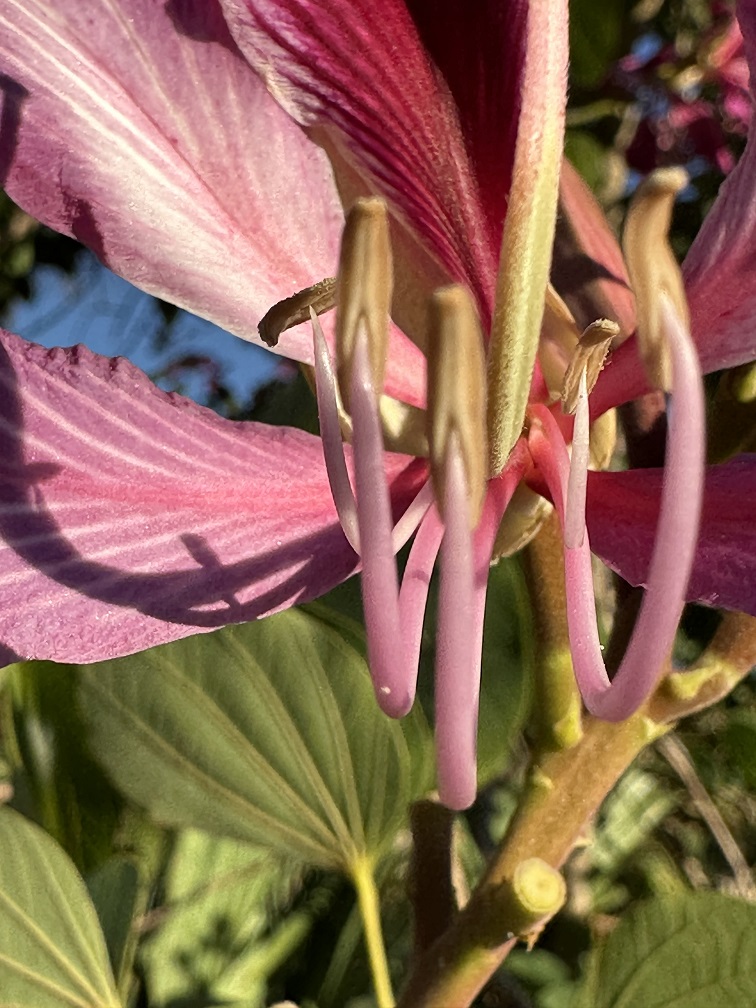
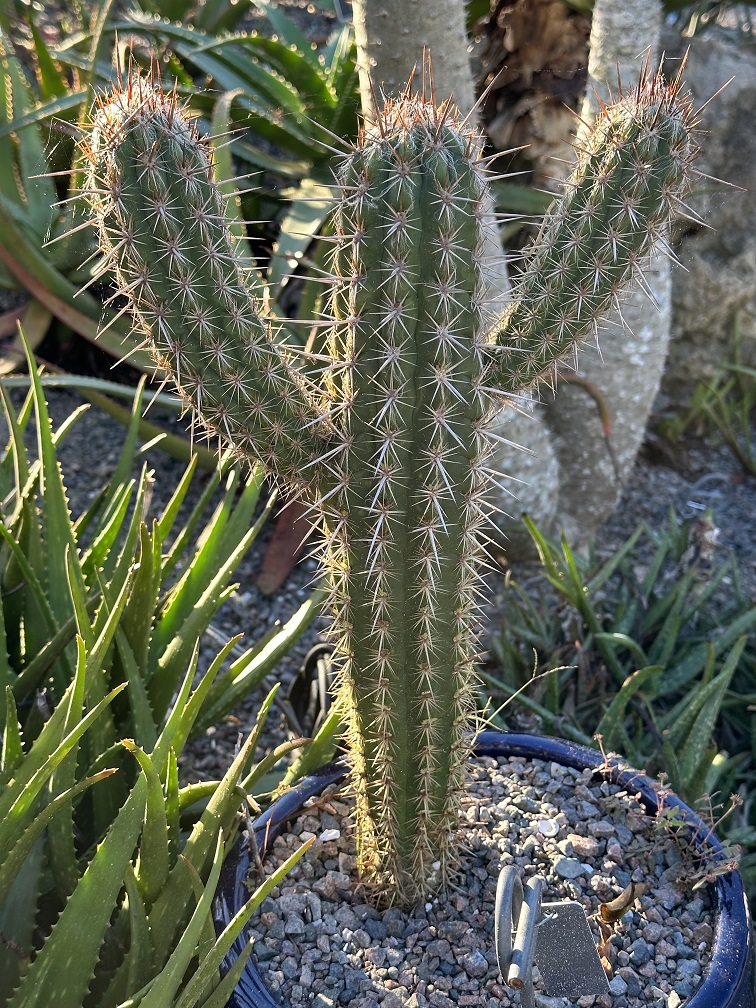
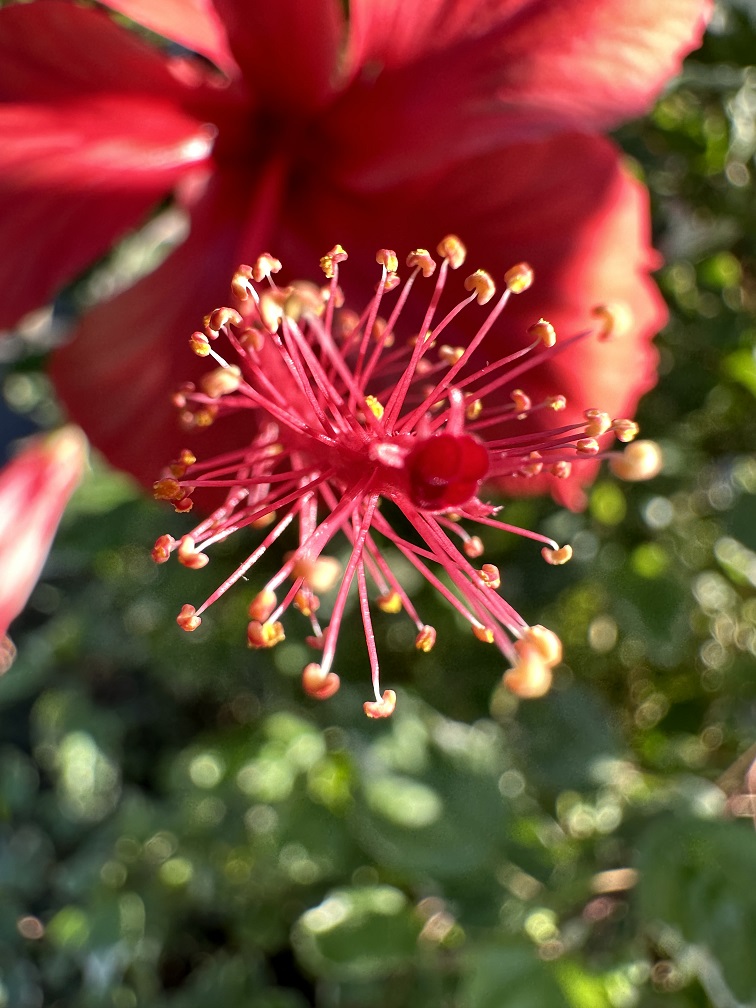
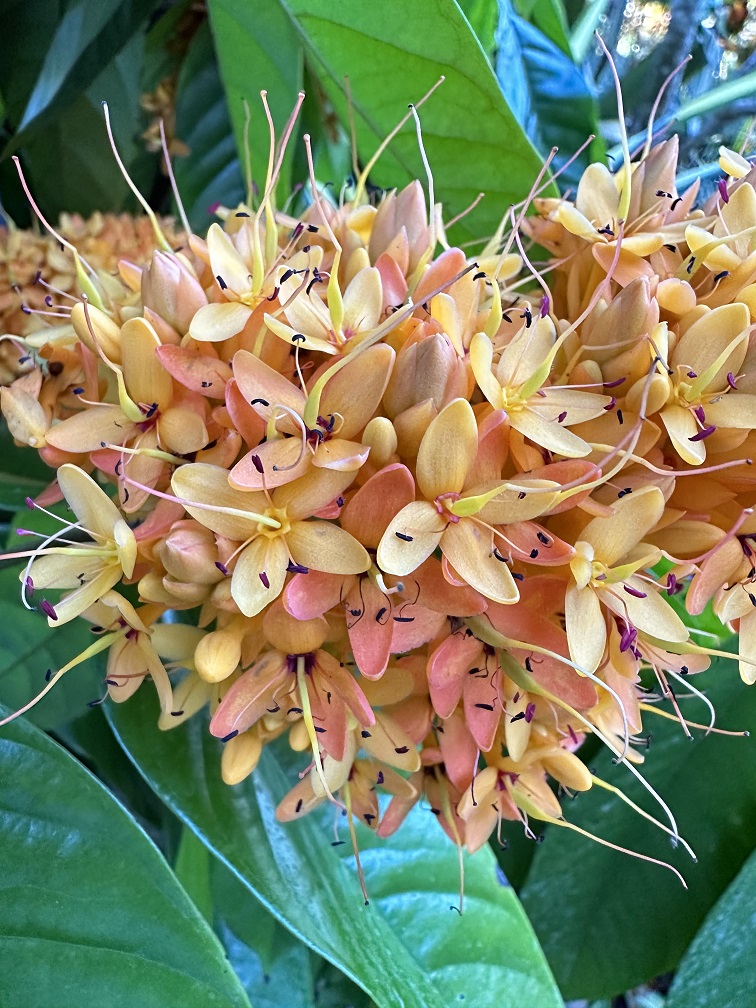
Time for flowers! We visited Naples Botanical Garden, and so here are some flowers I picked there, especially for you:





I would like to mention a few more wines in passing here. 2020 Chateau Roudier Montagne-Saint-Emilion AOC is a budget Bordeaux from Trader Joe’s. While not mind-boggling, it comes from an outstanding 2020 vintage and is easy to drink, mellow, and round. 2016 Ferrari Carano Cabernet Sauvignon Alexander Valley was a solid California Cabernet Sauvignon rendition, with a good amount of power, good structure, and underpinning of cassis. I picked up the 2017 Torbeck Cuvée Juveniles Barossa Valley Australia for a friend who swears by Chateauneuf-du-Pape – I wanted him to compare the CdP with a similarly made GSM (61% Grenache, 28% Mataro, 11% Syrah). The wine had cherries and plums with a hint of some spicy notes – quite delicious all in all.
When visiting Florida, taking pictures of the palm trees is unavoidable:



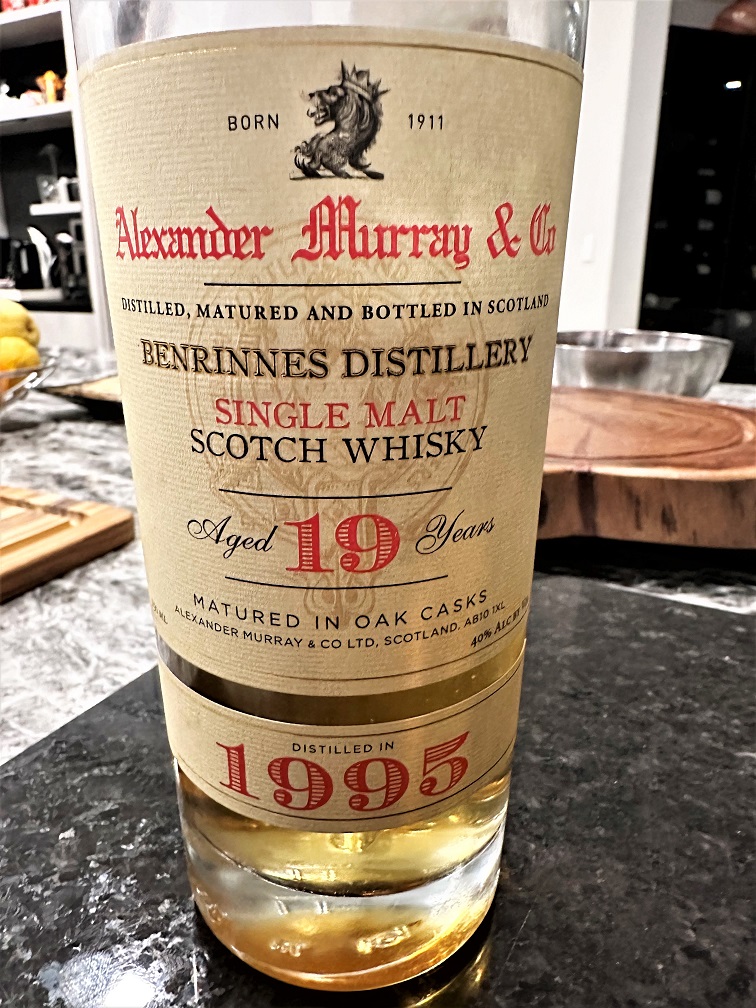
Before we part, last but not least – delicious scotch. Alexander Murray Benrinnes Distillery 19 years old (distilled in 1995). It had beautiful complexity, not heavy, without any noticeable peat, very elegant, and perfect with a cigar. Alexander Murray is an independent bottler I was not aware of before – but definitely will be now.
That’s all, my friends – that concludes my Florida story in wines and flowers. Cheers!
Top Two Dozens of 2022
Year started. The year ended. What happened in between? Lots of things, many of them… well, you know. You live here too.
As it has been a tradition since this blog started, it is time to sum up the year in wines (well, the time was at least a week ago… I know…). The quintessential exercise in pain and pleasure. It gives me great pleasure to relive the great moments enabled and enhanced by all the wonderful wines. It gives me great pain having to decide on what wines should be on this list, and what should be the wine of the year. Lots of great moments, lots of uneasy decisions.
The original thought behind my very first Top Wines list was to come up with the 10 best wines. Even on the first try, I realized that I can’t stay within this limit of 10, and the limit was changed to 12 (hence a Dozen). Next came the realization that even 12 is not enough, and thus for most of the years my lists consist of 2 dozen wines, but even that often is not enough, so the final count can be 25, 26, and even more.
The criteria for inclusion into the Talk-a-Vino top list is simple – the wine has to be memorable. It should be easy to recall when, where, why, and even with whom I shared that wine, and what emotions did the wine solicit.
Oh yes, as I love analyzing the other Top Wine lists, let me give you the stats for the Top Talk-a-Vino wines of 2022. Total of 26 wines, 19 reds, 3 whites, 2 fortified, 1 sparkling, and 1 pink (it is not a Rosé, it is skin contact white). 6 wines are from California, 5 from Spain, 5 from France (interestingly enough, all from Bordeaux), 4 from Italy, 2 from Portugal, 2 from Washington, 1 from Australia, and 1 from New York.
That’s all there is to it. Without much further ado, let’s get to our list:


25. 2020 Field Recordings Domo Arigato Skin Contact Pinot Grigio Central Coast – a stunning concoction, almost magical. 2 of us finished the bottle and said “what just happened? where did this wine go? “. It is elegant, balanced, complex, and magical. Oh yes, I already said that.
24. 2012 Bodegas Excelencia Los Frontones Crianza Sierras de Málaga DO – one of the memorable surprises of the trip to Malaga. I had no idea that Bordeaux varieties can be the main grapes in the winemaking region in Spain – and then there was this beautiful 10-year-old fresh and delicious Bordeaux blend. If you are in Malaga, please ignore the dismissive comments “ahh, it is just local” – this is what you want to drink.
23. 2020 Rosina’s Barbera Hudson River Region New York – I have the good fortune of being invited as a wine judge for the annual Hudson Valley Wine and Spirits competition. This Barbera from New York was dark, smokey, and powerful – and a totally unexpected surprise.
22. 2017 Quinta do Vale Dao DOP Portugal – No matter what Portugal continues to be the spelling for the wine values. This $6.99 red was simply stunning – round, generous, impeccably balanced. In a blind tasting, this wine would easily put to shame many of the $100 bottles. Don’t take my word for it – I dare you to check it for yourself…
21. Bodega Callejuela Oloroso Origen Callejuela Jerez-Xérès-Sherry DO – this wine was simply singing from the glass. Sherry might be the most complex wine in the world, and when it is done right, like this fine specimen… Oh boy, that’s lots of pleasure. But then put it next to the charcuterie… And you might think you accidentally made it to heaven…
20. 2018 Turley Tecolote Red Wine Paso Robles – of course everyone knows Turley Zinfandels, but Turley’s prowess extends way beyond that variety. Turley wines are notoriously hard to get, and Tecolote, a Spain-inspired blend of Grenache and Cariñena might be one of the most difficult ones to procure. If you will be lucky enough to come across it, get as many as you can – the lip-smacking voluptuous goodness of this wine is something to be experienced.
19. 2018 Double Lucky #8 Walla Walla Valley – one of the latest Cayuse projects, created under the No Girls line and crafted by Elizabeth Bourcier, was introduced to wine lovers in 2021, in a midst of covid. I found the introductory 2017 to be too powerful and too concentrated, the absolute “liquid rock” rendition. 2018 was surprisingly approachable, definitely powerful but balanced enough to be enjoyable even at this young age.


18. 2017 San Felice Bell’Aja Bolgheri Superiore – A beautiful example of super-Tuscan, with my notes (overdue to be published) saying “beautifully elegant, perfectly layered and scrumptious”. A pure pleasure.
17. 1997 Chateau Montelena Saint Vincent Red Wine Napa Valley – Sangiovese from Napa Valley is always a surprise. The Sangiovese-based blend from Chateau Montelena should count as a double surprise, as this is not the grape the winery is known for. The wine was well-structured and delicious, didn’t disappoint at all.
16. 2016 Hacienda Calavia Reserva Rioja DOC – When you drink good Spanish Rioja while in Spain this shouldn’t be surprising, right? And nevertheless, I was surprised at how unquestionably perfect, unquestionably Riojan this wine was, offering a beauty of the dark berries and cigar box. Clean, assertive, classic, delicious.
15. 2013 Campochiarenti Passione Divina Vini Storiche Toscana IGT – Sunningly beautiful pure Sangiovese from Campochiarenti. If you like Italian wines, especially the Brunello level, I’m sure you experienced that moment when you take a sip of the wine and it literally sends jitters all over your body. The wine that almost affects you on a physical level (no, I’m not talking about being drunk). I don’t know how to properly express it, but again, if you are an Italian wine aficionado, I’m sure you know what I’m talking about. And if you are not, then consider becoming one.
14. 2019 Chateau L’Annonciation Saint-Emilion Grand Cru – if you find a classic Bordeaux in a bottle of Bordeaux – should that be surprising? A delicious pop’n’pour classic Bordeaux – should I say more?
13. 2018 Alto Moncayo Veraton Campo de Borja – your palate knows delicious, isn’t it? This wine is as stunning as it is delicious from the moment you pull the cork. Layers of goodness, succulent fruit, perfect amount of tannins to support the structure. If you looking for instant pleasure, this is the wine to open.
12. 2006 Trabucchi d’Illasi Amarone della Valpolicella – Everyone here knows that I love Amarone. But – it doesn’t mean that I love any bottle which says “Amarone” on it. I’m very particular about the balance in Amarone, and this wine delivers everything – dried fruit, fresh fruit, perfect power and perfect acidity. If I could only procure a case (or 5) of this wine…
11. 2019 BARRA of Mendocino Petite Sirah Mendocino – surprise is always a good way to create lasting memories. Petite Sirah is one of my all-time favorites grapes, but more often than not it requires time to be enjoyable, lots and lots of time. This wine was just perfectly ready the moment the cork was pulled out. dark concentrated, layered, well structured, perfectly balanced, and ready to deliver the pleasure on the moment’s notice.
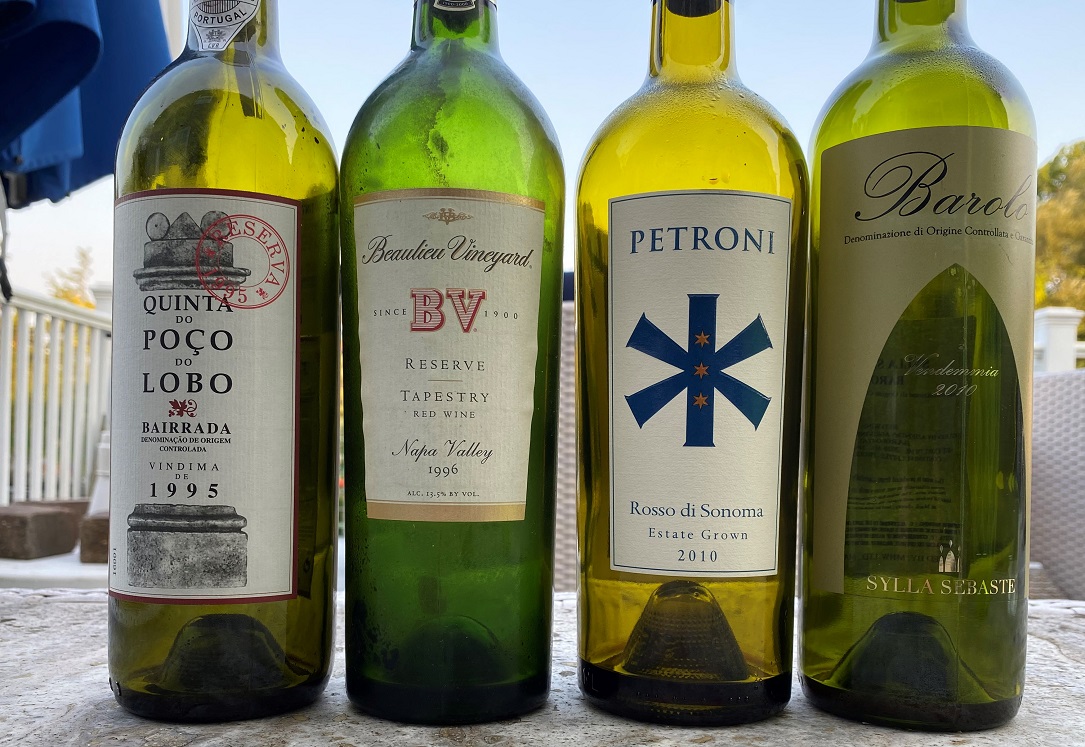
all great wines, but only Petroni made the cut
10. 2010 Petroni Rosso di Sonoma Sonoma Valley – what happens when the Italian makes wine in California out of Sangiovese and Cabernet Sauvignon? A super-Californian! This was my last bottle, luckily snatched from WTSO. Beautiful, layered, delicious wine.
9. 2008 Altesino Brunello di Montalcino Montosoli – well-aged Brunello should be on every wine lover’s “try before you die” list. This was simply an experience, the experience you want to go on and on and on, sip after sip. Pure, unadulterated pleasure.
8. 2007 François Cazin Le Petit Chambord Cour-Cheverny AOC – another case of the “last bottle”. I was slowly depleting my stash of this Loire white, made from the rare grape called Romorantin. Every bottle showed differently over the years, but this one was the ultimate reward. Honey, flowers, and perfectly fresh acidity. Ahhh…
7. 1998 d’Arenberg Cabernet Sauvignon High Trellis McLaren Vale – spectacular. Still young, fresh, and loaded with gobs of cassis and cherries. An absolute beauty with much more time left.
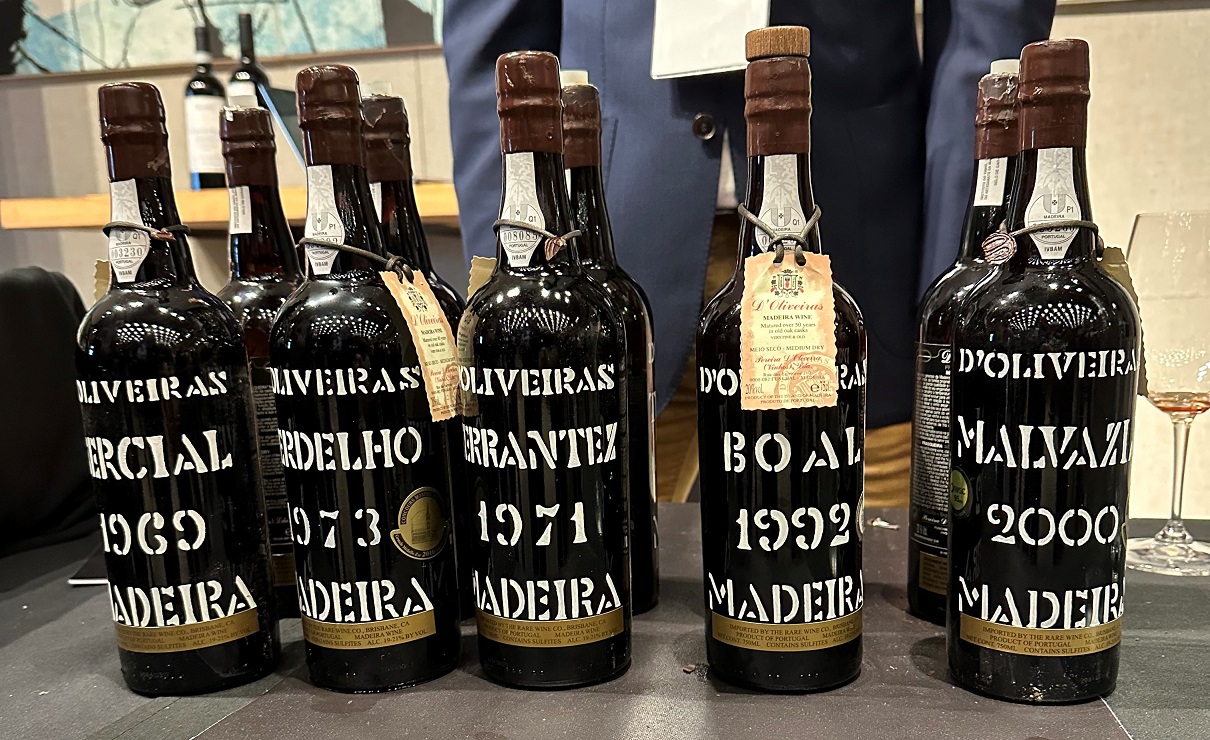
6. 1969 Oliveras Cercial Madeira – I now think that Madeira might be the most interesting wine in the world. Think about it – the wine had everything done to it – heat, oxidation, everything. And then when you open it, it is ageless, it is vibrant, it is alive, and it can last forever. If I need one New Year resolution here, it might be “drink more Madeira!”
5. 1998 Château Tournefeuille Lalande-de-Pomerol – what a beauty! This might be a year of the classic Bordeaux for me. Cassis, cassis, more cassis. Layered, round, seductive, and luscious. I’m ready to meet with it again at any time.
4. NV Lanson Le Green Label Organic Champagne – this was my first encounter with Champagne Lanson, and I was duly impressed with precision and finesse. This Green label organic was my favorite, offering a perfect balance of yeast, toasted bread and cleansing acidity – every sip encouraging you to take another. An absolute beauty.
3. 2013 Alban Roussanne Edna Valley – Roussanne might be my favorite white grape (pssst… don’t tell that to Chardonnay and Riesling). Well-made Roussanne offers this round, beautiful, present, silky mouthfeel that no other white grape can. And when this Roussanne is made by the California Rhone Rangers pioneer such as Alban, it becomes an absolute pleasure trip. If you can find this wine – don’t miss it.
2. 1997 Château Haut-Piquat Lussac Saint-Émilion – more stunning Bordeaux. This is the fifth bottle of Bordeaux on this top list, but it is only reminiscent of the year, this was not by intent, but rather a surprising realization. Still perfectly fresh, balanced, firmly structured, and precise. I wish humans would age like this.


Cue in “yes, I did it again”. Because I’m guilty as charged. I didn’t want to take upon myself the burden of decision regarding the top wine, and tossing the coin would be simply not fair to either of the wines. But this is my blog, my rules. hence two #1 wines of 2022. Here we go:
1. 2018 Revelry Vintners Reveler Columbia Valley – I was blown away with my first sip. I think if I will count repetitive words in this post, “precision” would come out on top. And so this was yet another precise, delicious, spot-on, love-at-first-sight Bordeaux blend, powered by Washington’s rocky, lava-laden soil. The word “superb” doesn’t describe this wine.
1. 2020 Abadia Retuerta L’Domaine Ribera Del Duero – I know Abadia Retuerta Ribera del Duero reds, but I never heard of their white wines. My trip to Spain brought this revelation on the last day – this Sauvignon Blanc-based blend was absolutely spectacular – it would well compete with Chablis with its clean acidity, gunflint, firm structure, and pure, refreshing mouthfeel. This wine is absolutely world-class, ready to compete with the best of the best white wines can offer.
Now we are done, my friends. The presentation of Talk-a-Vino Top Wines of 2022 is complete. What were your most memorable wines of 2022? Cheers!
Neyen, The Spirit Of Apalta
What do you think of Chilean wines? Have you had Chilean wines which took your breath away?
While you ponder that, let’s talk about Chilean wines.
Nobody can question today’s grandstanding of the Chilean wines in the world. According to Wikipedia, Chile is 7th largest wine producer in the world and 5th largest exporter – the ranking positions change every year, but there is a clear growth trend for Chilean wines, both in terms of volume and value. And Chile is one of the worldwide leaders in sustainable and organic viticulture, setting a clear example for the rest of the wine-producing world.
Not changing the subject, but what do you think of organic wines? I remember that 10-12 years ago, organic wines were few far and between, and those proudly displaying “organic” on the labels were largely undrinkable. The situation changed, mostly unnoticeably, and I can say that today at least 25% of the wines I get to drink during a year are made with organic grapes, and this number is definitely higher if we are talking about the samples I receive for the reviews.
If we are touching memory lane, who remembers Chilean flagships, Fronterra and Concha y Toro Cabernet Sauvignon and Chardonnay available for around $10 in 1.5L size? Those were the stars of any party, taste being much less important than the price. And again, slowly but surely this all changed, and Chilean wines now commend the full respect of wine lovers around the world, on the level of prized Bordeaux, Napa Cabs, and Brunellos.
Now, the reason behind this little Chilean wine excerpt is my recent encounter with pure pleasure – you know how much I value that element of wine drinking – the wine should give pleasure, otherwise, what is the point of drinking it. The wine I want to share with you today is the 2017 Neyen Apalta Estate Chile (13.5% ABV, $64.99, 50% Cabernet Sauvignon, 50% Carmenere, 14 months in 225L French oak barrels, 6 months in 3,000L foudres).
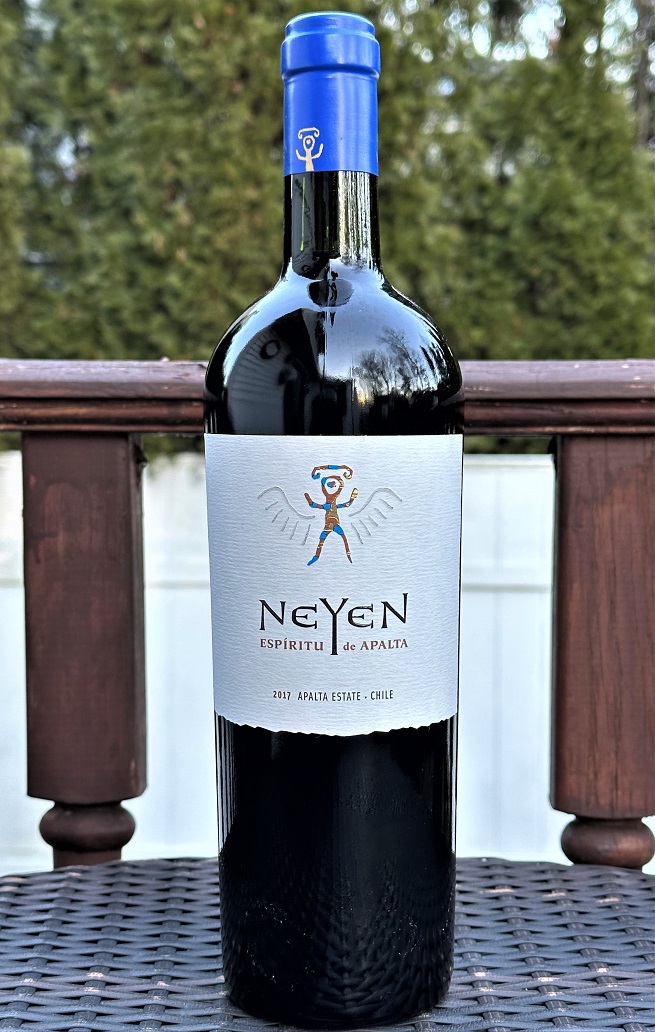
Neyen is a unique estate, a parcel of land situated between the Andes Mountains and the Coastal Range. Cabernet Sauvignon vines were planted there in 1889, joined by Carmenere in 1936. Soils at this organically farmed, low-intervention vineyard provide good drainage, and the semi-arid climate allows for the slow ripening of the grapes, maybe with the assistance of the Neyen, the Spirit of Apalta. Grapes are harvested by hand at the first light, sorted, destemmed, and subjected to the magic of winemaking. In most of the years, the blend stays at a consistent 50% Cabernet Sauvignon and 50% Carmenere, even though in some of the years different proportions are used.
When I opened the bottle and poured the first glass, I was really unconvinced. The wine was drinkable but didn’t incite any “oh my god” reactions which I expected at least based on the price. I pumped the air out and put the bottle aside for the evening.
The next day, I pulled the stopper out, poured a glass and the very first whiff brought the sacred “oh wow”. The cassis and eucalyptus were enveloping the senses, making it impossible to put the glass down and promising a lot more to come with the sip. Wine requires time to be enjoyed, you can’t hurry it. Finally, after a minute or so of just enjoying the aroma, I went for a sip. To my delight, the aromatic experience continued in full force on the palate. More cassis, more eucalyptus, layers of dark fruit, and silky, soft tannins were making the taste buds dance. The experience was taking me precisely between the worlds – the precision and structure of the old world Bordeaux was perfectly coupled with the youthful exuberance of the new world Napa Cab. Don’t get me wrong – this wine doesn’t need Bordeaux or Napa references, this wine perfectly exists in a class of its own, a perfect combination of ungrafted French Cabernet Sauvignon from 130 years old vines and Chile’s own Carmenere. (Drinkability 9-)
Here you are, my friends. A superb Chilean wine that is sure to bring a smile to your face. With holidays or without, winter or summer – this wine has a lot to give. Magic of the Neyen, the Spirit of Apalta? I will let you find the bottle and decide on your own.
By the way, how about the question I asked you at the beginning? Can you name some Chilean wines that took your breath away?
The Case for $3.49 Wine
My latest (hopefully the last for the year) travel took me to Washington, DC. After arriving in the evening, I wanted a glass of wine and a bite to eat. The restaurant at the hotel was closed. I’m sure it would have been easy to find a place to eat nearby, but Whole Foods right across the street offered a different option.
I walked into the store only thinking about the food. But the entrance took me directly to the wine section, so obviously, I had to stop and look around. There were definitely some interesting options available, including some Virginia wines. And then I saw Cabernet Sauvignon for $3.49. When I travel, I love to explore the wine options, especially the cheap inexpensive wines, so the wine looked absolutely irresistible.
When in Europe, I’m very confident about such inexpensive wines – chances for disappointment are quite low. The US is a different story. Trader Joe’s is the only place where you can find wines for $4-$5, and sometimes you win, and sometimes you learn. Of course, Trader Joe’s has its own $3.49 wine, Charles Shaw, formerly known as Two Buck Chuck. I had Two Buck Chuck before, and my curiosity was satisfied. Now I needed to find out how this $3.49 wine would fare.
Before we talk about this particular wine let’s talk about the concept of inexpensive (cheap?) wine. “Cheap wine” sounds almost offensive so let’s use the gentler “inexpensive” term.
I’m sure a lot of serious wine lovers in the US would frown upon the wine at such a low price. They might get a bottle for cooking, but even then there is a well-known adage that you should cook with the wine you will enjoy drinking. But beyond cooking, to buy a bottle for $3.49 to drink or entertain friends would be a big “no-no”.
My case for such an inexpensive wine would be for both uses, of course assuming the wine is palatable – this is clearly the most important requirement. Cooking is no brainer – when I make a beef roast in a slow cooker for 7 hours, I honestly believe that whether I will use a $3.49 bottle, or $349 bottle of La Joie Vérité, it wouldn’t make a detectable difference, so even if one can afford it, the question is why.

Now the friends’ entertainment aspect is also essential. You see, I have a group of friends who all love wine. I would never offer $3.49 wine to these friends at dinner, with the exception of maybe a curiosity sip. I’m always ready to open whatever bottle I have in the cellar when we get together, with no exceptions. And then I have other friends, who I love equally as much, but who don’t care about wine at all. $349 wine would not make them excited even the tiniest bit and would be clearly a waste of wine (not even talking about the money).
Don’t get me wrong – this is not for the lack of trying. Believe me, I tried. We don’t need to single out those really expensive bottles, as nobody tries to show off or prove any points. There are plenty of absolutely amazing wines under $20 which would bring me literally into the nirvana state – and would never extort even the hint of “wow” from my friends, just at the best a polite “hmmm, this is nice”. Serving a $3.49 bottle under such circumstances makes absolutely perfect sense – especially if you, the wine snob in disguise approve that $3.49 bottle.
Those of you who know me well already figured that I wouldn’t go into such a diatribe if I wouldn’t have the $3.49 wine I want to bring to your attention. But of course…
Non-vintage Three Wishes American Cabernet Sauvignon (13% ABV, $3.49), produced by Three Wishes Vineyards in California – in a few words, well-balanced and inoffensive – or maybe smooth is a better word. This is not a concentrated Napa Cab, which instantly takes ownership of your palate – this wine is mellow, it has black and red berries to offer, it is not sweet, and it has a good amount of acidity. Yes, it is simple. Yes, it is not thought-provoking. But for the price, there are plenty of people who enjoy an occasional unpretentious glass of wine who would be absolutely delighted with this wine. What’s important is that majority of the wine drinkers should be either unaware of the price, or simply grow up above the wine snob level. This is unfortunate, but wine is really one of those products where people are afraid to spend too little (and this can be the subject of another post). Bottom line – if you are simply looking for a glass of wine with your meal and not for the wine experience – you can get it with this wine.
And now I rest my case.
Last Bottle Sign Up ($10 credit)




 Talk-A-Vino