Archive
Beyond ABC – Wines of Southern Italy

Source: Sud Top Wine
I know, ABC is a loaded acronym. Outside of all the proper uses, it is “Anything But C…”, like it would be in Anything But Chardonnay sentiment. Today, however, let’s give Chardonnay a break, this is not the angle I would like to pursue. ABC here is just a homemade abbreviation, and it simply identifies some of the best-known Italian wines – those which everyone wants to drink.
I’m sure you can decipher this acronym with ease. A in Italian wines would stand for … Amarone, of course! Amarone is one of the most coveted Italian wines, and the best Amarone wines have simply a legendary following.
B is even easier than A. B should be really upgraded, as it is not just B, but rather BBB – Barbaresco, Barolo, Brunello. Some of the most thought-after wines from Piedmont and Tuscany.
And C, of course, is as straightforward as it gets – I know you got it already. Yes, C stands for Chianti, possibly the most famous Italian wine out there.
But today we are leaving our ABCs alone, and traveling down to the Southern part of Italy, hoping to discover some of the local wine treasures. To assist in our quest, we will enlist the help of the Sud Top Wine competition, organized by the Italian food and wine publication Cronachedigusto.it.
Sud Top Wine competition is in its second year, and it covers the wines produced in the Southern regions of Sicily, Sardinia, Basilicata, Calabria, Campania, and Apulia. It is not only the climate that makes Southern regions unique, it is also the grapes that are typically not grown anywhere else in Italy (every rule has an exception, but this is not important at the moment). When it comes to the white grapes, you should expect to find Grillo, Greco di Tufo, Catarratto, Vermentino. For the reds, we are talking about Aglianico, Nero d’Avola, Nerello Moscalese, Primitivo, Cannonau (a.k.a. Grenache).
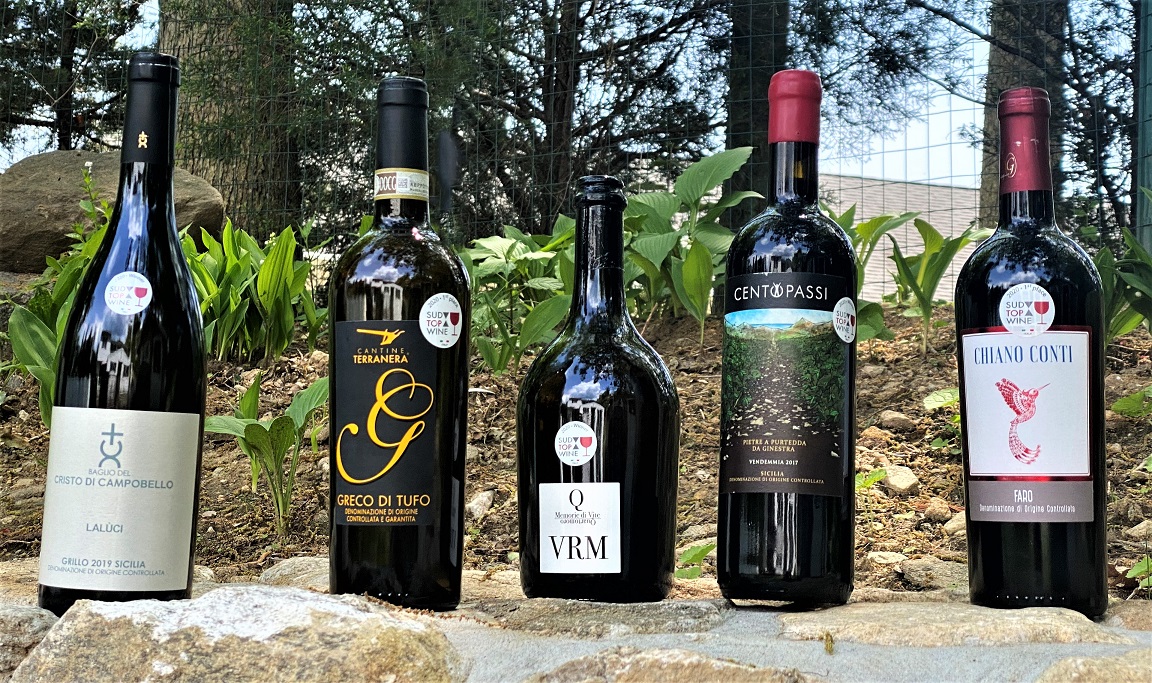 I had an opportunity to taste some of the top awarded wines (samples) from the 2020 competition, so below are my notes:
2018 Cantine Terranera Greco di Tufo DOCG (13% ABV, Sud Top Wine 2020 1st Place)
Light Golden
Whitestone fruit, a touch of honeysuckle
A touch of sweetness, good acidity, nice depth and structure, lemon notes with a hint of candied lemon, excellent balance
8, excellent white wine
2017 Pietre a Purtedda da Ginestra Centopassi Rosso Sicilia DOC (14% ABV, Nerello Moscalese, bio certified, Sud Top Wine 2020 Winner)
Bright ruby
Fresh cherries
Tart cherries, fresh, crisp, succulent, medium body, medium finish, nicely present tannins
8-
2014 Chiano Conti Rosso Faro DOC (13.5% ABV, Nerello Mascalese, Nerello Capuccio, Nero d’Avola, Nocera, Sud Top Wine 2020 1st Place)
Red currant, herbs, earthiness, tobacco
Tart cherries, underbrush, light and earthy
7+, it’s okay, not exactly my style
2016 Quartomoro VRM Memorie di Vite Vermentino di Sardegna DOC (13.5% ABV, Sud Top Wine 2020 Winner)
Light Golden
Intense nose with gunflint, white stone fruit, a touch of vanilla
Beautiful, full-bodied, plump, round, white plums, Meyer lemon, good acidity, good balance
8, delicious.
2019 Baguio del Cristo di Campobello Lalùci Grillo Sicilia DOC (13.5% ABV, Sud Top Wine 2020 Winner)
Straw pale
Complex nose of granite, gunflint, whitestone fruit
Crisp, fresh, a touch of gunflint, fresh lemony acidity, delicious
8+, superb
As you can tell, I really preferred the whites over the reds – but your experience might be different. If you will come across any of these wines, give them a try – you might be pleasantly surprised. Cheers!
Made With Organic Grapes: Find Your Ritual
The world of wine is full of eternal questions. Here is one of the most prolific ones: where is the wine made – in the vineyard or at the winery?
Many would argue that, of course, the wine is made in the vineyard. To make good wine you have to start with good grapes. You need good, healthy, properly ripened grapes to make good wine. “Good grapes” might seem obvious as a concept, but it actually entails a lot of hard work, love, and care, from the moment the first bud will appear on the vine (and even before that) until the moment when harvested grapes are reaching the winery. “Good grapes” are not defined by the taste alone – it is important how the grapes were growing, were any pesticides used, were all the methods organic, or better yet, sustainable? “Good grapes” for sure means a lot of work.
Then some might argue that no matter how good the grapes are if the winemaker will not take good care of the grapes from the moment grapes arrived at the winery, the good grapes will not result in good wine. How the grapes were manipulated from the very beginning – sorting, cleaning, de-stemming, pressing, fermenting, aging, storing – each of these steps has to be performed properly, as even the very best grapes will not convert themselves into the good wine.
Source: Ritual Winery

Source: Ritual Winery
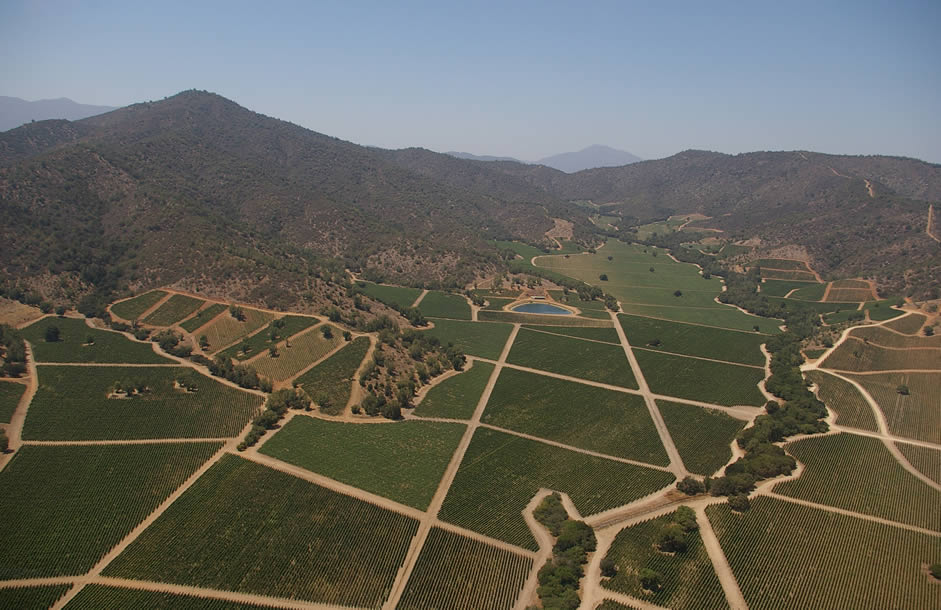
The folks at Ritual winery in Chile clearly don’t want to answer this eternal question. Or rather their answer is “both”. Estate vineyards in the eastern part of the Casablanca Valley in close proximity to the Pacific Ocean are surrounded by 6,000 acres of the native forest, creating a unique biome. All the vineyards are certified organic. Estate uses its own compost, made out of the pomace and manure of the local animals. Sheep help mow the grass and fertilize the vines.
The grapes are hand-harvested early in the cool morning at the first sunlight. After sorting, the grapes are fermented in the open-top tanks, using basket press and native yeast. To achieve desired characteristics, 4 different vessels are used for the aging of the wines: Oak Barrels to enhance the structure, Concrete eggs for the texture, Stainless steel Drums elevate freshness, and Stainless steel Tanks help with aromatics.


Below are my tasting notes, where you can also see all the different vessels used to produce particular wines:
2018 Ritual Sauvignon Blanc Casablanca Valley (14% ABV, $19.99, organic grapes, 8 months in stainless steel, concrete eggs and neutral barrels)
Light golden
Very complex, white stone fruit, good minerality, fresh herbs
Round and velvety, creamy texture, a hint of vanilla, even butter, nice lemon core, clean and crisp finish
8+/9-, outstanding. A different and delicious Sauvignon Blanc. Borderline a Chardonnay experience.
2019 Ritual Sauvignon Blanc Casablanca Valley (13.5% ABV, $19.99, organic grapes, fermented and aged for 8 months in concrete eggs, neutral oak, and stainless steel)
Light golden color
The nose is not very expressive, minerality, a hint of whitestone fruit
On the palate, a full spectrum, changing as the wine warms up – starting from steely Muscadet-like acidity, adding a bit of the creaminess after a few minutes in the glass, and then showing Chardonnay-like fuller-bodied notes and expressive minerality.
8/8+, Delicious
2018 Ritual Chardonnay Casablanca Valley (13.5% ABV, $20.99, aged in concrete eggs and French oak barrels)
Light Golden
Characteristic touch of vanilla and apple on the palate, a whiff of honey
Vanilla, apple, a hint of butter in the palate, perfect balance, crisp acidity, wow, a superb rendition of Chardonnay. Give it 5–10 years, and it will rival the white burgundy.
8, Outstanding
2017 Ritual Pinot Noir Casablanca Valley (13.5% ABV, $21.99, aged 11 months in French oak barrels)
Dark Ruby
The dusty nose of fresh plums with a touch of vanilla
Plums, violets, a touch of mocha, good acidity, fresh, excellent balance
8+, delicious from the get-go
Tasting Ritual wines will not help us to find an answer to our eternal question – these wines are clearly made both in the vineyard and at the winery. Have you tried any of these wines? If you did, I guess you already found your Ritual, if not – well, here is your chance.
Made With Organic Grapes: Viñedos Veramonte
“Made with organic grapes”. If you see these words on the wine label, are you more inclined to buy it, less inclined, or indifferent? Are you willing to pay more for the organic bottle of wine, as we accustomed now for the meat and produce?
Organic production implies that no synthetic pesticides, fungicides, insecticides were used in farming. It doesn’t mean that no pesticides etc. were used at all – it only bans the use of synthetics, and natural pesticides, etc. can still be used. Truth be told, organic doesn’t automatically mean better for consumers or the environment – even natural pesticides can have bad consequences – you can learn more in this excellent in-depth article.
When talking about organic wines, we need to keep in mind that “organic” is only a part of the story of the “better wines”. Sustainable viticulture, which doesn’t always overlap with organic, and then biodynamics, which again may or may not intersect with the other two, are important to take into account when talking about wines that are better for humans and the environment. Though considering the title – made with organic grapes – let’s stick to that part of the story.
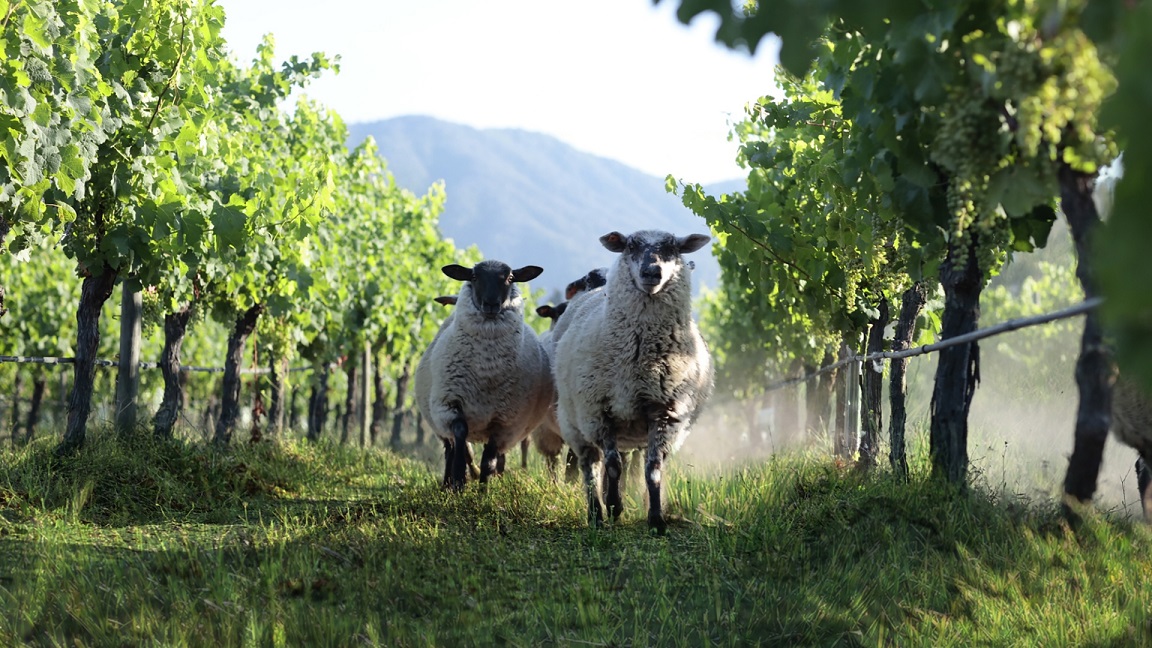
How to convey the organic farming concept in one picture. Source: Viñedos Veramonte
I remember the early days of seeing “organic” on the wine labels. Most of the organic wines I tasted 10-15 years ago were undrinkable. The “Organic” label is a big selling factor in itself, and I can only assume that some of the winemakers decided that good tasting wine is not a necessity if the wine is labeled as organic (I will refrain from putting names on the table, even though it is difficult to resist the urge). Even today, when “organic” designation is not just a marketing gimmick (in most of the cases), wine consumers seek first familiar producers, grapes, and region – the “organic” designation comes to a play only after all other requirements had been satisfied, as a “nice to have”. Of course, in the world of wine, most of the concepts are multidimensional, so I don’t want to oversimplify the “organic wine” – it goes well beyond of choice of pesticides and fertilizers, it also includes “no added sulfites” and other factors – but then again this is not the organic wine 101 post, so let’s leave this discussion for some other time too.
Lately, I tasted quite a few of the organic wines and was pleasantly surprised not only with the taste but also with the QPR (Quality Price Ratio) – while labeled “organic”, most of the wines didn’t command the premiums on the scale of organic apples or meat, and thus offer a great QPR. Here I want to share with you my encounter with delicious organic wines suitable for any budget. Let’s talk about it.
Source: Viñedos Veramonte
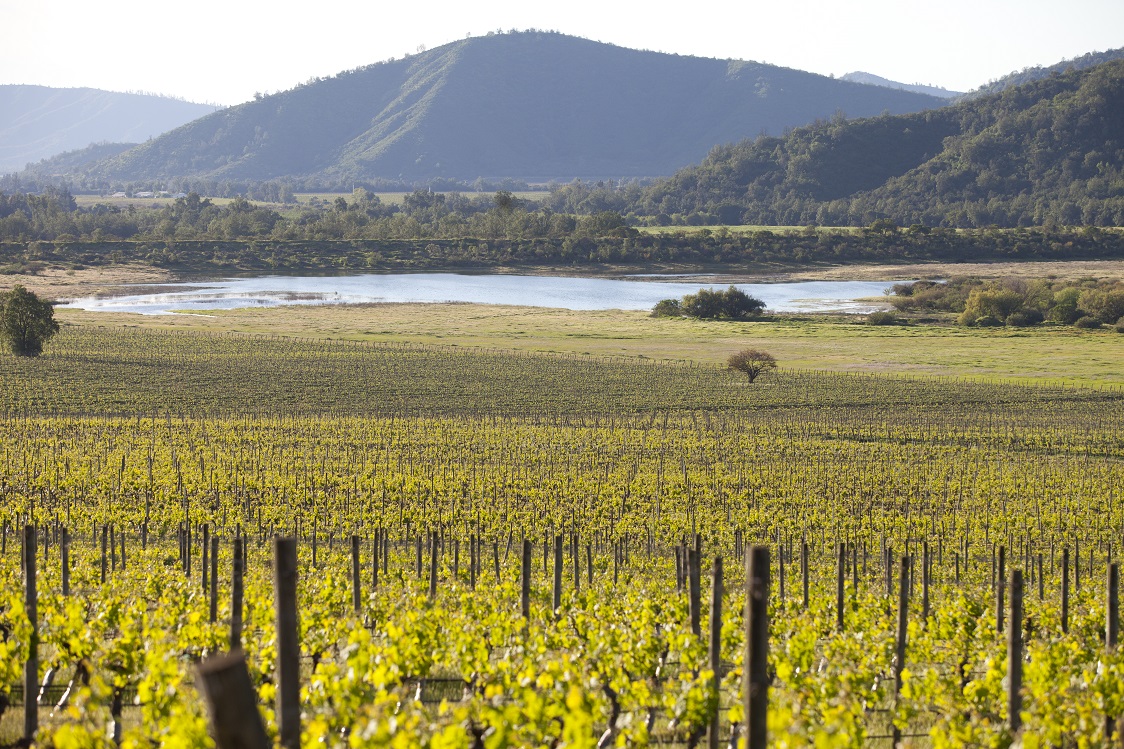
Agustin Huneeus, a Chilean wine pioneer, planted 100 acres of Sauvignon Blanc in the northern part of Casablanca valley in the late 1980s. In 1990, he founded Viñedos Veramonte, which became one of the first wineries in the region. From the moment the winery was found, the focus was on growing grapes in harmony with nature. After 6 years of hard work, in 2019, the winery obtained ECOCERT®organic certification, one of the most respected in the world. The project involved the conversion of more than 1,200 acres of vineyards in Casablanca and Colchagua valleys to organic and biodynamic farming, with the aim to also become fully Demeter’s biodynamic certified. The organic practices don’t stop at the vineyard – natural yeast and low intervention methods are used to produce the wine.


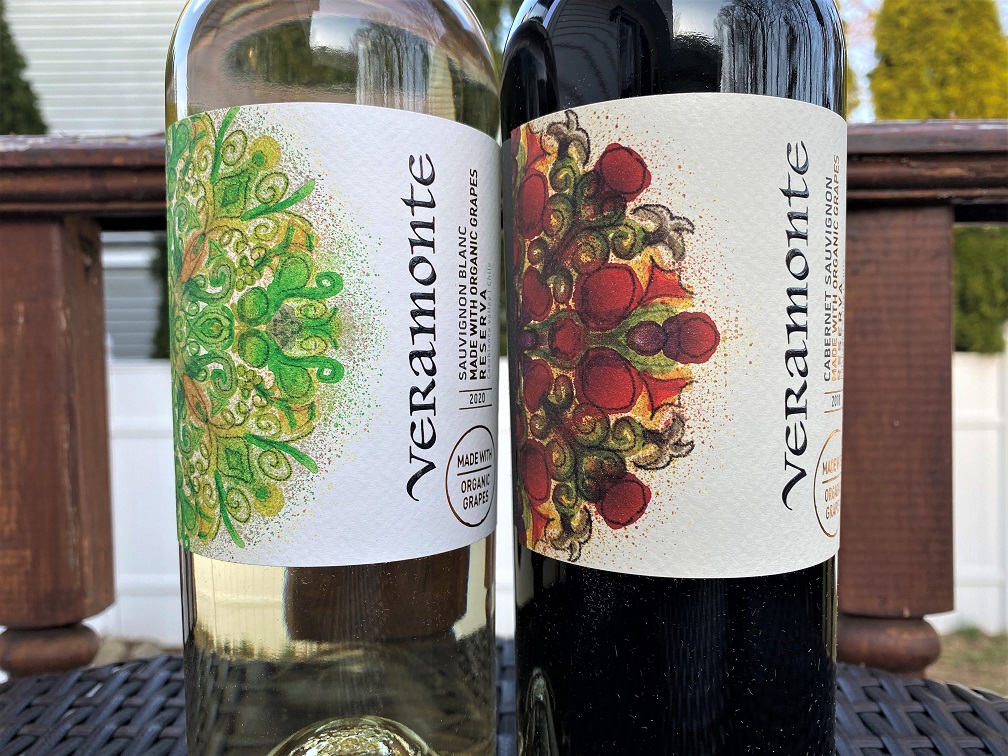
Can you taste all this care and attention in the glass? I think you can. I had the pleasure of trying a number of Veramonte wines (samples), and I think they were consistently delicious while offering an unbeatable QPR – see for yourself:
2019 Veramonte Sauvignon Blanc Reserva Casablanca Valley (13.5% ABV, $11.99, Vegan, organic grapes)
Straw pale
Distant hint of Whitestone fruit, a touch of cassis
Crisp, fresh, creamy, lemon notes, a touch of herbs – excellent
8/8-, perfect for summer, perfect for winter.
2020 Veramonte Sauvignon Blanc Reserva Casablanca Valley (13.5% ABV, $11.99, organic grapes)
Straw pale color
Touch of freshly cut grass, cat pee, medium+ intensity
Creamy and balanced on the palate, lemony acidity, freshly cut grass, elegant, restrained.
8/8+, outstanding.
2018 Veramonte Pinot Noir Reserva Casablanca Valley (14.5% ABV, $12.99, 8 months in oak, organic grapes)
Pale Ruby color
Touch of smoke, earthy undertones, classic Pinot
After about an hour – plums, earthy, medium body, well present sapidity, good acidity, good balance
8-, nicely drinkable
2018 Veramonte Carménere Reserva Casablanca Valley (14% ABV, $11.99, organic grapes)
Dark garnet, practically black.
Mint, black currant leaves
Black currant, coffee, very focused, good acidity, the wine shows tight, like a spring ready to snap.
8-, herbal notes are prevalent. Will see how it will be on the second day.
Second day- very concentrated, espresso, cherry pit. Good balance, but asking for the food to pair.
2019 Veramonte Cabernet Sauvignon Reserva Colchagua Valley (14% ABV, $11.99, 8 months in French oak, organic grapes)
Dark garnet
Cassis, a touch of bell pepper
Cassis and bell pepper on the palate, good balance, good acidity, medium body.
8, very enjoyable.
When it comes to organic wines, Viñedos Veramonte delivers wines you can drink every day and feel good about yourself, nature, and your wallet. Isn’t that a great combo?
What do you think of organic wines? Do you actually seek them out? Do you have any favorites?
Hey, Rioja, What’s New?
I love Rioja.
But you already know that.
Well-made Rioja, opened in its due time, is one of the ultimate indulgences wine lovers can experience. I can bet this is also nothing new for you.
So what’s new with Rioja?
Every new vintage of any wine is unique and different, true, but talking about new vintages unquestionably banal. How about then Rioja made from organic grapes? What do you think about classic Rioja made from organic grapes – and timely conversation during April, the Earth Month?
CVNE, Compañía Vinícola del Norte del España, one of the oldest producers in Rioja (CVNE celebrated 140th anniversary last year), requires no introduction to any Spanish wine lover. CVNE produces a number of different Rioja lines – Cune, Viña Real, Imperial, Contino are some of the best known. Now, the Cune line has brand new Rioja to brag about – the first Rioja red wine made with organic grapes. The wine is made out of 100% Tempranillo (not very common) from the vineyards which were organically farmed, from the vintage with an Excellent rating (2019 was rated Excellent by Rioja DOC). The wine is also Vegan certified, and even sports the label produced from recycled materials. Most importantly, this is a simple, and tasty wine:
2019 CVNE Cune Rioja DOC (13.5% ABV, $15, 100% Tempranillo, organic grapes, Vegan certified, wild yeast fermentation, 4 months aging in oak)
Dark ruby with purple hues
Dark berries and cedar box
Soft, round, good acidity, soft ripe fruit, medium-long finish mostly acidic.
7+, food-friendly, simple, and easy to drink.
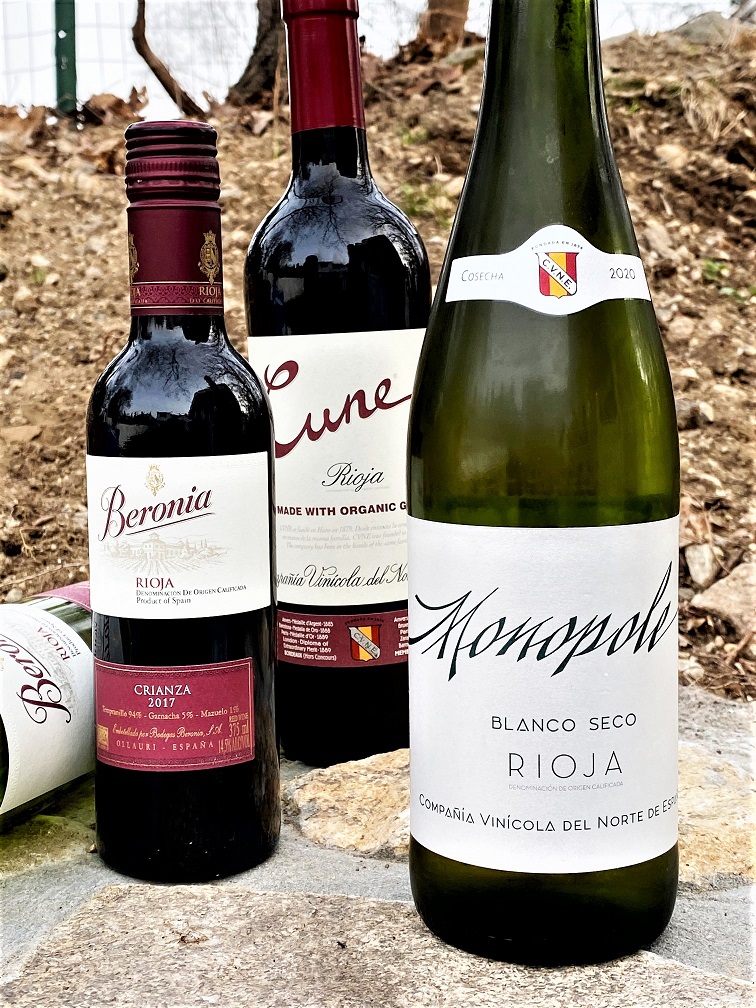
Back in 1915, CVNE produced Rioja’s first white wine – Monopole. It was not only the first white Rioja – this was the first white wine produced in Spain.
I had the pleasure of tasting many vintages of CVNE Monopole, and I have to honestly say that this 2020 was by far my favorite Monopole I tasted – I know I said talking about new vintages is banal, and here I am, yeah. Oh well. The wine needed a bit of time to open, but after 20 minutes in the glass, it was absolutely beautiful.
2020 CVNE Monopole Blanco Seco Rioja DOC (12.5% ABV, $16, 100% Viura, Vegan certified)
Straw pale, literally clear
Explicit minerality, a touch of gunflint
Crisp, tight, lean, hint of whitestone fruit, explicit minerality.
8+, outstanding.
Bodegas Beronia is much younger than CVNE, founded in 1973 by a group of friends from the Basque country. In 1982, Bodegas Beronia became a part of González Byass’s portfolio, and at that point, Bodegas Beronia wines appeared on the international market.
Bodegas Beronia is known for its innovative approach to winemaking. Rioja wines are traditionally aged in American oak, which gave them a rustic, “traditional” taste profile. Recently, many winemakers switched to using the French oak, which gives the Rioja more of the international, “modern” taste profile, making wines also more approachable at a younger age. Bodegas Beronia pioneered the use of specially made barrels, which use both American and French oak in its construction, to create a unique taste profile, an intersection of tradition and modernity.
In this release of 2017 Crianza, Bodegas Beronia recognized the new realities of 2021, where people have to spend more time by themselves, and added the 375 ml, a half bottle to the portfolio, making it easier for the wine lovers to open a bottle for a solo night.
2017 Bodegas Beronia Crianza Rioja DOC (14.5% ABV, $14.99/750ml bottle, $7.99/375ml bottle, 94% Tempranillo, 5% garnacha, 1% Mazuelo)
Ruby red
Freshly crushed red berries, a touch of barnyard, smoke, earthy
Red fruit, eucalyptus, clean acidity, excellent balance.
7+ at the moment, needs time
There you have it, my friends. A brand new organic wine from Rioja, a superb white Rioja, and a thoughtful Rioja, coming in different formats, all reasonably priced, perfectly suited for life at the moment. Cheers!
Beautiful Simplicity
Is there a such thing as simple wine?
I really despise controversy. In a world where every word is twisted, turned, analyzed, over-analyzed, then twisted and turned, again and again, I don’t want to be the one to start a new controversy around wine (clean or natural, anyone?).
But really, is “simple” an applicable descriptor for the wine? If I say “simple wine”, can you relate to this as easily as to “tannic”, “acidic”, or “sweet”?
Everything in the wine world is personable. No two palates are the same, no two glasses of wine are the same. And so will be the concept of simple wine – it is highly personal.
There are thought-provoking wines – you take a sip, which triggers an instant process in your brain – analyzing flavors, looking for patterns, digging into memory looking for comparisons. Not every thought-provoking wine equates with pleasure – if we call the wine thought-provoking, it doesn’t always mean that we are craving a second glass. Need an example? How about Frank Cornelissen wines? Nevertheless, we all can relate to the wine we designate as thought-provoking.
Then there are complex wines. The wine presents itself in layers. You don’t need to over-analyze anything, and yet every sip keeps changing, offers you new depth and new impressions every passing moment. Complex is beautiful, wine aficionados love drinking complex wines.
So what is then a simple wine? A lot of people would equate the definition of “simple” with the price. We are trained not to refer to the $10 bottle as “amazing” – even if we enjoy it immensely, we would rather say “it’s just a simple wine”. Leaving the price aside, a simple wine has a very simple effect – take a sip, and your only reaction is “ahh, that’s good”. Simplicity doesn’t affect the enjoyment of the wine – the wine should still give you pleasure, and you should still want a second glass.
Every time you think you know a lot a good bit about your favorite subject, wine, life quickly humbles you, just so you know your place. Ever heard of Mack and Schuhle? I also never have. Meanwhile, they had been in the winemaking and wine distribution business since 1939, and currently have a portfolio of 25 wine brands from around the world – from New Zealand to Italy, Spain, and France to the USA.


When I was offered to review 2 of their wines, Montepulciano and Malbec, I agreed to do that because I was intrigued by the names – Art of Earth and El Tractor. Would you instantly agree to drink something called Art of Earth? For a wine geek like myself, such a name makes the wine simply irresistible. And tasting these wines, which are also very inexpensive, resulted in the diatribe about simple wines. For what it worth, here are my tasting notes:
2019 Art of Earth Montepulciano D’Abruzzo DOC (13.5% ABV, $12, made with organic grapes)
Dark garnet with beautiful ruby hues
Touch of cherries, a hint of funk,
Bright, pure, beautiful, succulent, tart cherries – fresh of the tree.
8+, delicious. This wine doesn’t have the complexity of Masciarelli, and I don’t believe it will age very well – but it is absolutely enjoyable right now.
2017 El Tractor Malbec Reserve Mendoza Argentina (13% ABV, $14, 12 months in French oak)
Dark garnet
Blackberries, cherries, sweet tobacco
Dark fruit, tobacco, cherries, a hint of smoke, nicely restrained, good acidity, good balance.
8, excellent. This wine is not going to rival Catena, but it is perfectly an old-world style, quaffable, and enjoyable Malbec.
Here you are – two simple wines, good for every and any day – or at least I would be happy to drink them any day. What is your definition of simple wine?
In Rhythm With The Earth – Hawk and Horse Wines
 Wine is Art.
Wine is Magic.
Wine is a Mystery.
When you drink wine for pleasure (don’t take it for granted – there are many reasons why people drink wine – to fit into the crowd, to be socially accepted, to show your status – drinking for pleasure is only one of the reasons), mystery, art, magic – call it whatever way you want, but it all comes to a play when you take a sip. Wine is a complete mystery as you have no idea what will be your conscious and subconscious reaction to the experience of that sip – what memories will come to mind? What emotions will take you over? The magic is there, waiting for you in every glass of wine.
The magic and mystery in wine go well beyond that sip. “Well before” might be a better descriptor though. The creation of the delicious bottle of wine is not an exact science. It is an art. It is magic. It is a mystery. Mother Nature, who gifts us grapes, never repeats itself. Every year, every vintage is different. Every day of the growing season never repeats itself. It is up to the craft, the skill of the grape grower and the winemaker to create the wine which can magically transport you. And this magic starts in the vineyard.
I’m about to step into the controversial, really controversial space – the biodynamics. As I’m not an expert on the subject by any means, let me just share the definition of biodynamics from the Oxford Languages. Actually, here are two definitions:
Biodynamics is
1. The study of physical motion or dynamics in living systems.
2. A method of organic farming involving such factors as the observation of lunar phases and planetary cycles and the use of incantations and ritual substances.
It is the second definition that is interesting for us. And it is the last part of that definition, “the use of incantations and ritual substances”, which makes biodynamics so controversial for many people – I’m sure you heard of cow horns filled with manure and buried in the vineyard as part of biodynamic farming. Is that magic or pseudoscience? This is the question I don’t care to answer or get an answer for. Taken out of the context, that might sound strange. But the whole point of biodynamics is in creating a healthy ecosystem of the living things – bacteria in the soil, plants, vines, grapes, animals – everything should co-exist in harmony with each other and the Earth, create a habitat where the problems take care of themselves (magic!). When the vineyard is farmed biodynamically, it simply means that the grapes will be produced in the most natural way with the utmost attention on the health of all the elements of the ecosystem.
Delving into the depth of biodynamics rules is completely outside of the scope of this post – if you want to further your knowledge of biodynamics, there is no shortage of great books, articles, and blogs. My reason to share the excitement about biodynamics is simple – tasty wine.
Source: Hawk and Horse Vineyard
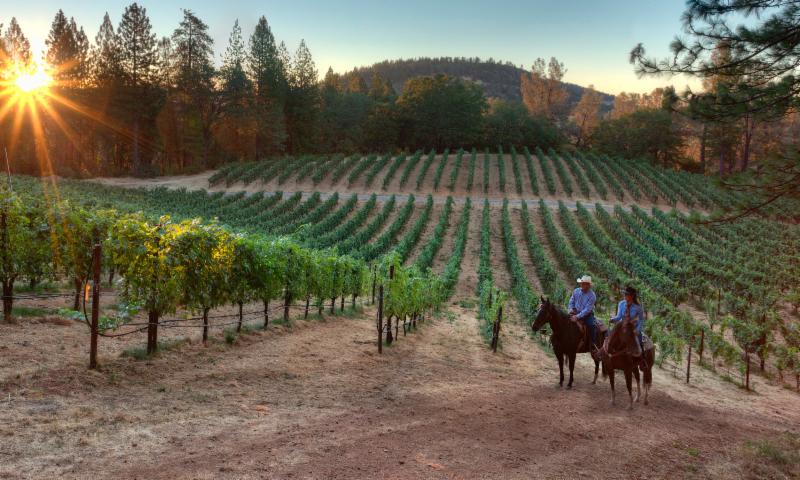
Hawk and Horse Vineyards started as the dream of David Boies, who purchased an abandoned horse breeding farm in Lake County in California. His partners Mitch and Tracey Hawkins planted the first vineyard in 2001 in the red rocky volcanic soil, at an elevation of 1,800 to 2,200 feet. The first wine, released in 2004, was a great success. The 18 acres farm became California Certified Organic (CCOF) in 2004, and biodynamic Demeter-certified in 2008. If you want to have an example of what biodynamic farming is, you can read about the Hawk and Horse Vineyard biodynamic practices here – it will be well worth a few minutes of your time.
Hawk and Horse Vineyard grows primarily Bordeaux varieties. I had an opportunity to taste (sample) 5 wines from Hawk and Horse Vineyard, and I was literally blown away from the very first sip I took (magic!). Here are the notes:
2017 Hawk and Horse Vineyards Cabernet Franc Red Hills Lake County (14.3% ABV, $65, 100% French oak (40% new), 150 cases produced)
Garnet color
Wild strawberries, mint, mineral notes
Cassis, fresh black berries, sweet tobacco, well-integrated tannins, firm, tight, perfect structure, excellent balance. Worked perfectly with the steak.
Drinkability: 8+, wow
2017 Hawk and Horse Vineyards Petite Sirah Red Hills Lake County (14.1% ABV, $65, 100% French oak (40% new), 150 cases produced)
Garnet
Tobacco, earth, sandalwood
Silky smooth, round, tart cherries, perfect acidity, dark and powerful, perfect balance.
Drinkability: 8+
2017 Hawk and Horse Vineyards Petit Verdot Red Hills Lake County (14.1% ABV, $65, 100% French oak (40% new), 90 cases produced)
Dark garnet
Cherries, eucalyptus
Tart sweet cherries, dark fruit, dry tannins, firm structure. Super enjoyable over 3 days, the addition of tobacco and sweet dark fruit with balancing acidity. Succulent. Superb.
Drinkability: 8+
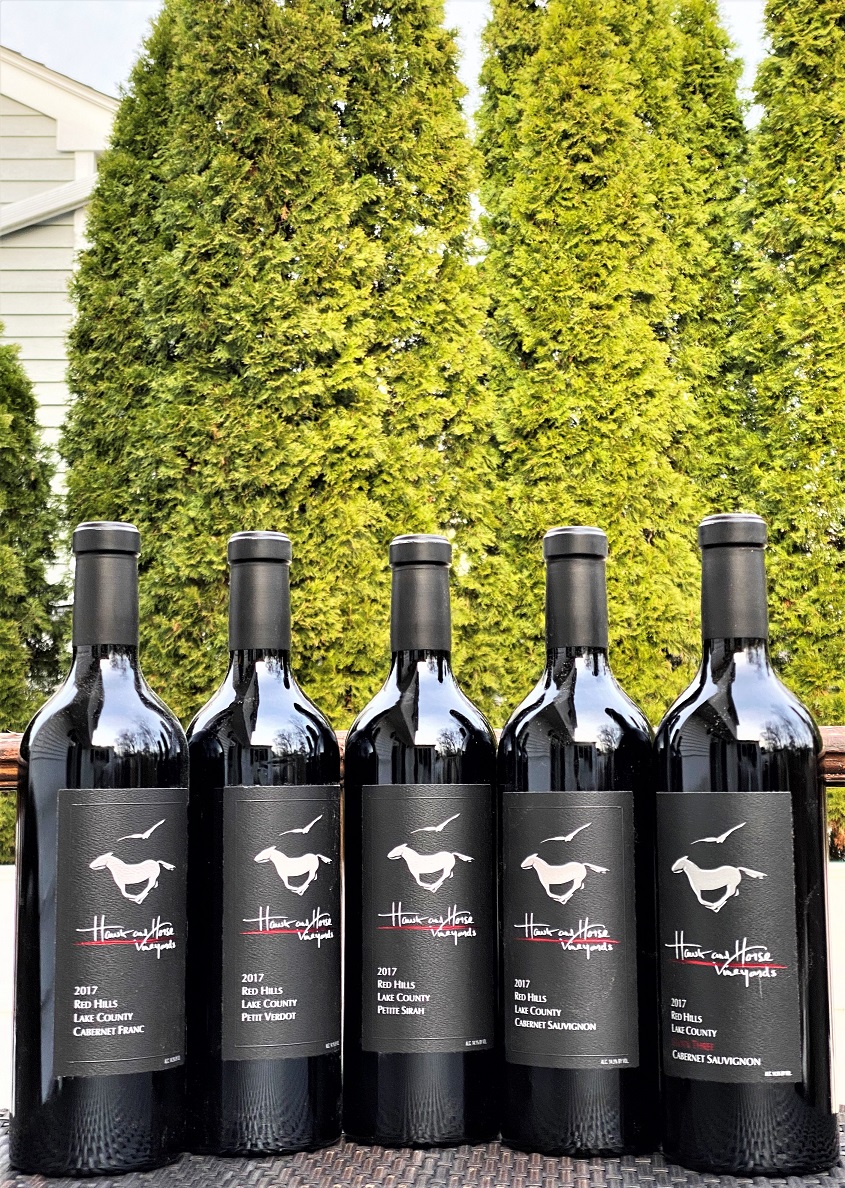
2017 Hawk and Horse Vineyards Cabernet Sauvignon Red Hills Lake County (14.3% ABV, $75, 98% Cabernet Sauvignon, 2% Petit Verdot, 100% French oak (80% new), 1800 cases produced)
Dark garnet
Earthy flavors, eucalyptus, a hint of cassis
Good acidity, well-integrated tannins, the lightest wine so far.
3 days later ( no air pumping, just reclosed)
The nose has a similar profile (cherries, eucalyptus, mint), maybe a touch higher intensity
Delicious on the palate, dark well-integrated fruit, firm tannins, tight core, lots of energy, a hint of espresso, perfect balance, medium-long finish.
This wine can be enjoyed now, especially with food. Or left alone for the next 15 years. Your choice.
Drinkability:8+
2017 Hawk and Horse Vineyards Cabernet Sauvignon Block Three Red Hills Lake County (14.3% ABV, $60, 85% Cabernet Sauvignon, 10% Petit Verdot, 5% Cabernet Franc, 100% French oak, 150 cases produced)
Dark garnet
Warm, inviting, succulent cherries, a hint of bell pepper, very delicate. Overall, ripe Bordeaux nose
It took this wine 4 days to fully open up. Bordeaux style, ripe berries with herbal undertones, well-integrated tannins, soft and dreamy.
Drinkability: 8/8+
Cabernet Franc, Petit Verdot, and Petite Sirah were absolutely delicious from the get-go. Both of the Cabernet Sauvignon wines, coming from the same vineyard and the same vintage really needed time – I don’t know if the type of oak used can make such a difference, but from my observations, it was clear that using more of the new oak made the wine a lot more concentrated and requiring the time in the cellar.
Here it is, my encounter with [magically], [mysteriously] delicious biodynamic wines. What do you think of biodynamics and biodynamic wines? What do you think of the magic of wines (no, you don’t have to answer that 🙂 ). Cheers!
Chasing DRC
Only yesterday I told you about some of the unicorns I’m chasing (the special breed, those made out of wine). And now I want to talk about the ultimate unicorn, the unicorn of unicorns if you will – Domaine de la Romanée-Conti, usually called by its abbreviated name – DRC.
Life is a series of random events. Sometimes we think we are in control, and sometimes we really are – but more often than not, things are just happening, and they are happening whether we are there to observe, learn, and experience, or not. While the events might be random, it is up to us to look for the patterns or the objects we desire. Once we know what we want, our subconscious is programmed to look for it any time all the time.
I had been following The Wellesley Wine Press blog for a very long time. Robert Dwyer, who is writing it, not only shares his opinion about wines but also has a great talent for finding amazing wine deals, all sorts of special discounts and promotions by credit cards, wineries, and wine merchants. When I got an email about Robert’s new post, “Domaine Romanée Conti meets Sonoma Coast: 2018 Vivier Pinot Noir [$37]”, my fingers were clicking the link even before I finished reading the title of the post, literally a reflexive reaction to detecting the words “Domaine Romanée Conti”.
You see, DRC might be the most coveted wine in the world. If it is not the one, maybe it is one of three or five of the most sought-after wines in the world. It is produced in minuscule amounts, and it is prohibitively, really prohibitively expensive for most of the mere mortals. DRC produces a number of wines, so to give you an example, there were a bit more than 2,000 cases produced of DRC La Tâche 2017, each bottle priced at $4,000+. And I honestly don’t care about owning a bottle, I just want to experience such wine at least once in a lifetime – so yes, the unicorn of unicorns.
You can imagine that opportunity to taste something even remotely related to DRC would trigger an immediate reaction. Skimming through Robert’s article, I learned that Vivier Pinot Noir is produced by Stephane Vivier, who was the winemaker for Hyde de Villaine, DRC’s joint venture in California, who started producing his own wines under the Vivier label. And at $37, this is the closest I can get to DRC without second-mortgaging the house. The same post also explained that the wine is available at Wine Access, the site I already had a good experience with – the rest was a no-brainer.

The wine quickly arrived, and I had to literally hold myself from opening the bottle while the UPS truck barely left the driveway. While I was admiring the simple design of the label, I really liked the description I found there: “Stéphane Vivier is a lazy winemaker. He watches. He waits. He plans. All the while letting the vineyards, the fruit, and “le climat” do the heavy lifting. So when you taste his wine, you taste what created it, not who“. That prompted me to take a look at the Vivier Wines website, where I learned that Stéphane Vivier was born and raised in Burgundy, where he also obtained a degree in viticulture and enology. He started working as a winemaker for Hyde de Villaine in 2002, and in 2009 he started making wines under the Vivier label with his wife Dana.
So how was the 2018 Vivier Pinot Noir Sonoma Coast (12.8% ABV)? Upon pouring into the glass, the first thing to notice was the beautiful, perfumy nose – fresh berries, violets, a touch of strawberries. On the palate, the wine was a typical, well-made Californian Pinot Noir, round, elegant, and polished – but unmistakably Californian, with a good amount of sweetness coming through. I can’t tell you what I was looking for, but I wanted to find something unique, something I didn’t experience in Californian Pinot Noir yet – but that didn’t happen.
On the second day, the wine changed its appearance. Both the nose and the palate pointed directly to Oregon. the nose became more earthy and less perfumy, and on the palate the wine was significantly more restrained, with iodine and earthy notes coming through a lot more noticeably. While the wine on the first day was good, I much more preferred how it was showing on the second day (Drinkability: 8-/8).
There you have it, my friends. Did I find DRC in California? Even if I did, I wouldn’t be able to tell, as I have no frame of reference. Did I discover a tasty Californian Pinot Noir? Absolutely. In 5, or maybe 10 years, it might become even amazing. Chase your dreams, my friends. Cheers!
Daily Glass: Vinous Vino
This post could’ve been filed under lots of different titles – “confusion of the oenophile”, “beautiful labels”, “how mistakes are made”, “one has to pay attention”, and I’m sure many others.
The story here is rather simple. I saw the wine on the Last Bottle offered at $26. If you ever saw the Last Bottle offer descriptions, it is full of exclamation marks, explanations that they never had the wine like that before and their collective socks were blown away the second they smelled the wine, and the wine will be gone before anyone can even say the name of the wine which is offered. I really can’t pay attention to the text like that, so with a quick glance, I established that this was a Tempranillo wine from Spain, and it was produced by Elias Mora. When reading every other word or less, mistakes are bound to happen. Somehow, my brain transformed Elias Mora into Emilio Moro, one of the very best producers in the Ribera Del Duero region, and at $26 with 4 bottles to buy to get free shipping and $30 of available credit, that sounded like a great deal, so I quickly completed the purchase.
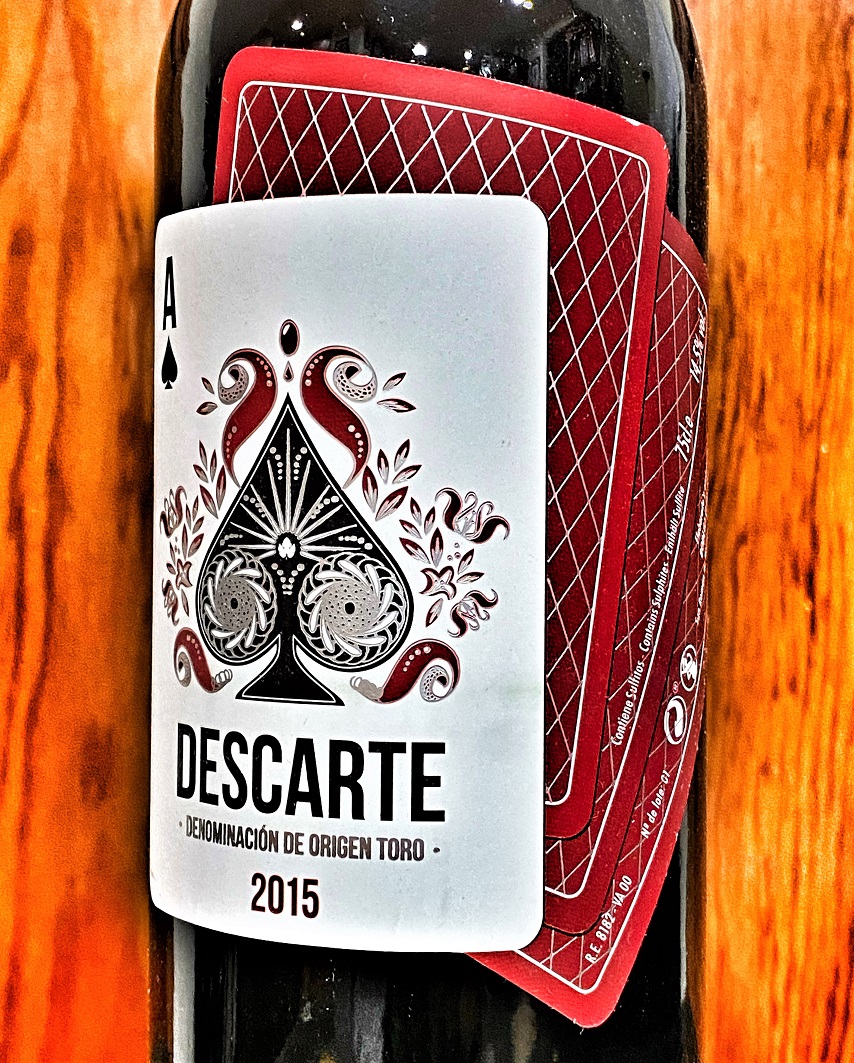
When the wine arrived, first I admired a beautiful label. I don’t know what you think, but to me, this is one of the most beautiful and creative labels I ever saw. Then I noticed the word Toro on the label, which made me instantly question what I have done, as Emilio Moro doesn’t produce wines in Toro. I quickly realized that while the label is beautiful, I have no way to relate to the content of the bottle, except knowing that it is a Tempranillo from the Toro region.
Tempranillo is one of the most popular red grapes in Spain, and while Tempranillo wines are produced absolutely everywhere, it is Rioja and Ribera Del Duero which make Spanish Tempranillo famous. In addition to Rioja and Ribera Del Duero, Toro is the third Tempranillo-focused region. Tempranillo is often called Ink of Toro in the Toro region, and it might be slightly a different clonal variation of Tempranillo, similar to Sangiovese in Chianti and Sangiovese Grosso in Brunello. Compared to a typical Rioja or Ribera del Duero renditions, Toro always packs a lot more power into that same Tempranillo-based wine and typically needs time to mellow out.
I tried to find out if Elias Mora and Emilio Moro might be related in any way, but the Elias Mora website offers little to no information about the history of the estate, primarily focusing on just selling the wine. I also tried to no avail learn the idea behind the unique and creative label – the wine description provides technical details but no explanation whatsoever why the bottle is decorated with an elaborate image of playing cards – of course, it matches the name “Descarte”, but I’m sure there should be something deeper there (if you know the story, I would greatly appreciate a comment).
Now, most importantly – how was the 2015 Elias Mora Descarte Toro DO (14.5% ABV, 12 months in French oak, comes from the plot of 50 years old vines)? It was a typical Toro wine. On the first day after opening, I had nothing but regrets about buying this wine. Freshly opened Toro is just too much for my palate. It is literally an espresso, made from the darkest roast and in the tiniest amount – if you enjoy that powerful punch, you should try a young Toro wine. If you don’t, and you are opening a bottle of Toro, decanter might be of help. On the third day, however, my first sip instantly generated the “vinous vino” words in my mind, so I needed not to worry about the title of this post. The wine transformed into the medley of the dark fruit, perfect aromatics of the wine cellar, cedar, eucalyptus, now just a touch of espresso instead of the whole ristretto shot, clean acidity, and delicious, perfectly balanced, finish. (Drinkability: 8)
There you are, my friends. If you will see this wine, you can definitely buy a few bottles, preferably to forget them in your cellar for the next 5-10 years. And take your time to read wine descriptions – or not, as life might be more fun if you don’t. Cheers!
Local, and World Class
Today I want to talk about world-class, local wines. Let’s first agree on definitions – feel free to disagree, but at least I will explain my logic.
Local is an easy one. Yes, we are talking about wineries. Living in southern Connecticut, I look at the wineries in Connecticut, New York, and New Jersey as local. Any winery I can drive to in one sitting I would consider being a local winery. This might be pushing it a bit – both New York and New Jersey are big states, but then while I live in Connecticut, it would take me only 15 minutes without a highway to reach New York state, so yeah, New York is local.
World-class might be a bit harder to define in an agreeable fashion. What constitutes a world-class wine? Tasty, delicious, high-quality – all very important, but I would dare to offer slightly a different characteristic to be the most important for the world-class wine – the wine should be identifiable. What I mean is that if the label says “Riesling”, I want the content of the bottle to show at least some resemblance of Riesling – honeysuckle, honeycomb, honey, petrol – something should help you say “yes, this is Riesling”. If the label says “Chardonnay”, I really need to find that vanilla, apple, butter, gunflint to say that this is the world-class wine. I don’t need all of the “characteristic traits” to be present – not all Chardonnays exhibit those buttery undertones – but still, some of the expected aromatics and flavors should be there. Of course, if I don’t have a frame of reference for a particular grape – let’s say, Trepat, Bobal, Schiava – my declaration of “would-class” would be based solely on the taste profile – but this is a whole other subject we can ponder at some other time.
So why are we talking about local and world-class? I have a winery I want to offer to you as a perfect example of both – it is local, and it makes world-class wines.
Ravines Wine Cellars was established in 2001 in the Finger Lakes area of New York state, close to Keuka lake. The name of the winery comes from the fact that the first 16 acres vineyard was located between two ravines, which are widespread around all the lakes in the Finger Lakes area. Today, Ravines Wine Cellars sustainably farms 130 acres of the vineyards in prime proximity to Seneca and Keuka lakes (prime proximity is important – close proximity to the lake protects the vineyard from the harsh weather) and has close relationships with a number of growers in the region. Morten Hallgren, who owns the winery together with his wife (and Chef) Lisa is a French classically trained winemaker, and this is something you can clearly see reflected in his wines. I had an opportunity to try 3 samples of the Ravines Wine Cellars wines, and all three greatly exceeded my expectations.

Here are the notes:
2017 Ravines Dry Riesling Finger Lakes, NY (12.5% ABV, $17.95) – I had my share of bad East Coast Rieslings, so I always have a bit of trepidation trying our “local” Riesling. In the case of Ravines Riesling, my worries dissipated with the very first sniff and sip – a classic, German-style, lean, crisp, perfectly acidic with a touch of a fresh honey note. It was perfectly German-like in its presentation, and textbook delicious. (8/8+)
2017 Ravines Chardonnay Finger Lakes, NY (12.5% ABV, $19.95) – yet another surprise. I had some decent New York Chardonnays (Tousey comes to mind), but New York is not known for its Chardonnay, so everything is possible. Again, I needed not to worry about this wine. Beautiful nose of apples and vanilla, minerally driven and restrained – more of apple and vanilla on the palate, a distant hint of butter, crisp and delicious overall. (8)
2017 Ravines Maximilien Finger Lakes, NY (13% ABV, $24.95, 46% Cabernet Sauvignon, 54% Merlot) – yes, you got it – a surprise number 3. In the blind tasting, I would place the wine in Bordeaux and would be very proud of how well I did. A touch of cassis, a warm dark fruit profile, the same on the palate – round, smooth, cassis, eucalyptus, warm spices, good acidity, perfect balance, medium-long finish – another textbook wine. (8)
Here you are – three excellent, textbook quality, world-class wines from the local (5 hours drive) winery, with excellent QPR – you do get a lot of wine for your money, even at retail prices. How are your local wines? Do you agree with my definition of world-class?
Twelve out of Twelve
I don’t know about you, but I love trying new wines, the wines I never had before. When I’m in the wine store, I like to take a slow walk and look for the wines which look interesting enough to try – the region I trust, cool label, and maybe most importantly, reasonably priced.
Value is an interesting concept, for sure when it comes to wine. Wine values can be absolute and relative. Wine under $10 represents an absolute value, especially if it is a tasty wine. This applies to both known and unknown wines – Bogle Petite Sirah, which would be well known in my book, is an example of such an absolute value, always priced close to the $10, and always tasty. But even if I don’t know the wine, $10 for a bottle which hopefully will be tasty is still a good value.
When it comes to the wines you know, and most importantly, desire, the concept of value becomes relative – a $100 bottle of wine is still not cheap at $50 on sale or closeout, but it is a tremendous value.
So, let’s get back to that store where we are looking for the new wines to try, preferably in the absolute value category. Let’s say we will get a case of 12 different wines to try. What are the chances of you liking and enjoying all twelve wines? It is a possibility, but from my personal experience, the chances are not very high. Based on my experience I usually would really enjoy 3-4 bottles and I will be okay with another 3 or 4, and I would wish that I never bought the rest.
Now, let’s take this exercise to the next level. What if you will give a stranger $150, and ask him or her to surprise you with a case of 12 different bottles – how would you estimate your chances then? How many bottles would you possibly like out of the box of 12?
I recently conducted such an experiment. Okay, we can say that it was a stranger, but this stranger was a wine pro – but still, the wine pro who knows nothing about your preferences. How do I mean it? My stranger was the Last Bottle Wines, a so-called wine flash sale site. Last Bottle folks always run special events, usually called Marathons, especially around the holidays. Last Halloween, Last Bottle Wines offered a number of mystery cases – you have no idea what will be inside, you can only know that you will pay X for something which otherwise would be 2.5X or 3X. I was lucky enough to see the $144 mystery case offer and to pull the plug without much thought. How lucky? See the title of this post – that’s how.

Twelve out of twelve. Believe it or not, but I enjoyed every one of those bottles. Each one was delicious, and I would happily buy each one again, especially if offered at $12 – this was the actual price per bottle in my mystery case.
This mystery case was just perfect for someone who always wants to try something new. 12 different bottles, 7 from the USA (California, Washington, Oregon), 5 from around the world (3 from France, 1 from Spain, and 1 from Chile). I enjoyed two bottles with Thanksgiving dinner, and I just opened the last bottle a few days ago, so now I can share the experience. I still had a bit of trepidation opening the new bottle – what if the luck will break – but it didn’t. Twelve out of twelve. Each one delicious, and worth drinking again. Take a look at my notes:
2016 Brassfield Estate Eruption Volcano Ridge Vineyard High Valley Appellation (14.8% ABV, blend of Malbec, Syrah, Zinfandel, Petite Sirah, and Mourvèdre)
Outstanding – inviting nose, red and black fruit, eucalyptus, full body, drinkable from the get-go, excellent overall (8+)
2017 Domaine l’Abbé Dîne Côtes du Rhône (14.5% ABV, 80% Grenache (vines planted in the 1960s), 18% Syrah, 2% Mourvèdre) delicious from the get-go. Bigger body than a typical Cotes du Rhone, red fruit, soft, voluptuous and sexy, roll-of-the-tongue smooth, perfect balance. Another delicious and easy to drink wine (8+).
2016 Bodegas Patrocinio Zinio 200 Rioja Alta DOC (14% ABV, 90% Tempranillo, 10% Graciano) – restrained and earthy. A bit too restrained for my Rioja preferences, but still very characteristic of Rioja with cedar box, red fruit, and eucalyptus. Needs time (8-)
2018 Azur Rosé California (12.5% ABV, blend of Grenache, Syrah, a blend of Napa and other appellations) – beautiful pale pink color with copper undertones, strawberries on the nose, hint of strawberries with lemon undertone on the palate, the second day showing mostly crisp and vibrant acidity. Elegant, Provence-like as advertised. (8)
2017 Casino Mine Ranch Vermentino Shenandoah Valley, California (14.1% ABV) – never had wines from Shenandoah Valley. Delicious. Nose resembling classic Gewurztraminer, with honeysuckle and white stone fruit. The palate is fresh, vibrant, a good amount of fruitiness, well supported by acidity, perfectly balanced. Perfectly passes my white wine excellence test – delicious from the fridge, but also delicious at room temperature. (8+)
2017 Chateau Perbal Cabernet Sauvignon Family Selection Central Valley, Chile (14% ABV) – a big surprise. I typically consider that I can easily identify Chilean Cabernet Sauvignon by a substantial green component (pyrazines, bell pepper) – this wine had none. Round, smooth, touch of cassis, eucalyptus, mint – easy to drink and delicious. (8)

2016 Belle Fiore Winery Cabernet Sauvignon Rogue valley Oregon (14.5% ABV) – never had before Cabernet Sauvignon from Oregon. Elegant, classic, cassis, eucalyptus, anise, round, soft tannins, good acidity, perfect balance – excellent overall. (8/8+)
2019 Domaine La Milliere Ceielles Vignes Côtes du Rhône AOC (15% ABV) – clearly a young wine at first, bursts with the freshly crushed berries, but settles down into round, open, easy to drink wine – raspberries and blueberries, a touch of herbs, easy to drink. (8-)
2017 Theorize Zinfandel California (14.6% ABV) – a strange wine to a degree, almost a single note, but that single note delivers perfection – delicious sweet tobacco. Fresh, clean, good acidity, good balance, but that sweet tobacco is the theme, from the first drop to the last. This might not be the wine for everyone, but it is definitely the wine for me. (8)
2017 J. Wilkes Cabernet Sauvignon Paso Robles (14% ABV) – tart nose of dusty berries and herbs, clean, uplifting, fresh palate, the right amount of raspberries and blackberries, a touch of anise, easy to drink, inviting, delicious. (8)
2013 Beresan Winery The Buzz Yello Jacket Vineyard Walla Walla Valley (14.4% ABV, 30% Syrah, 30% Merlot, 25% Cabernet Franc, 10% Cabernet Sauvignon, 5% Malbec) – upon opening, the wine was a bit aggressive and disjointed. At the same time, it was a typical unapologetic Washington wine, but I was able to enjoy it only on the third day when it mellowed out and became more balanced and round. This can probably be solved with decanting (7+/8-)
2018 Chateau Beauregard Ducasse Graves AOC (13% ABV, 40% Sauvignon Blanc, 60% Semillon) – this wine was opened before its time. Closed on the first day just with some acidic notes, it beautifully blossomed on the second day, showing ripe apple, honeysuckle, nice creaminess, round and perfectly balanced. (8/8+)
Here you go, my friends – twelve out of twelve. How well do you score having someone picking the wines for you?
Last Bottle Sign Up ($10 credit)




 Talk-A-Vino