Archive
How To Cool Yourself Off On A Hot Summer Day
The heat is rising.

Photo by Quốc Bảo from Pexels
 This is not a metaphor – the summer is here, the temperatures are pushing up to the “beyond comfort” level, and the question is real – how do you cool yourself off?
Of course, there are lots and lots of solutions – from very low-tech fans, powered by one’s own hand, to the battery operated misters, neck braces and more – but this is the wine blog, remember? Thus we will not be talking about any gadgets, neither low-tech nor high-tech. We are going to proceed with our simple, you can even call it simplistic, approach – “wine is the answer, what is the question?”
To tame down that heat, we are going to ask for the help of mountains, called the Dolomites, or Dolomiti in Italian. The Dolomites are the mountain range located in northern Italy; they are a part of the Italian Alps, and overall they are located in the Alto Adige region. The Dolomites are known for its striking beauty and intense contrasts. The whole area is considered the world’s treasure and was designated as a UNESCO World Heritage site in 2009.
Alto Adige is one of my favorite Italian wine regions, especially when it comes to white wines. The mountain climate, soil, vineyard elevations – everything which we know as terroir, all take part in producing the wines of character. Thus when I was offered a couple of wines from the region for the review, I gladly said “yes, please” – with or without a summer, Alto Adige, Trento, and all of the sub-regions, such as Vigneti delle Dolomiti, always promise to surprise you, and generally, in a good way.
The history of Alois Lageder started in 1823, first as a wine merchant business in Bolzano. Next generations of Lageder family started acquiring vineyards and experimenting with making the wine, and in 1934, Alois Lageder III purchased wine estate in Alto Adige, which became the starting point of the modern period for Alois Lageder Estate. With attention to the quality becoming paramount since the 1970s, today Alois Lageder’s 125 acres of the family estate are farmed biodynamically. You can visit the winery’s website for more information – it is not only the information, you will also find some stunning photographs there.
In addition to producing more than three dozens of different wines, Alois Lageder is also involved in the number of special projects. One such project is called Terra Alpina and it is dedicated to the striking beauty of Dolomites, it is an attempt to convey that beauty in the liquid form – take a look at this picture:
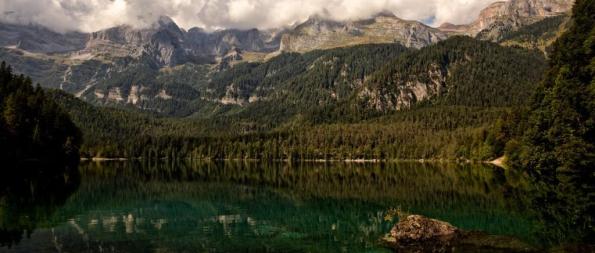
Source: Terra Alpina by Alois Lageder website
The wines in the Terra Alpina project produced via the partnership with local grape growers and winemakers in the Vigneti delle Dolomiti area. Currently, there are two wines produced under the Terra Alpina label, Pinot Bianco and Pinot Grigio – these were the wines I received for the tasting.
When the wines arrived, at first I even thought I got two bottles of the same wine – they looked very similar. After a few seconds, I figured out that this was not the case, and those were actually different wines. While the bottles looked similar on the outside, once I opened the wines, there was no question of similarity – the wines were beautifully and distinctly different, with Pinot Bianco strongly minerally-driven, and Pinot Grigio showing a perfectly noticeable, but the well-balanced amount of fruit – you can see my notes below.
Were these wines capable of delivering on the “cooling off” promise? Perfectly so. While different, both were fresh and bright, dropping a few degrees off a summer heat with every sip. The wines would be perfect on its own, but they would also play very well with food. And please make no mistake – while the wines offer a welcome relief to the summer heat, these are excellent, year-around, versatile wines, which offer a great value, and perfect for any day, and every day.
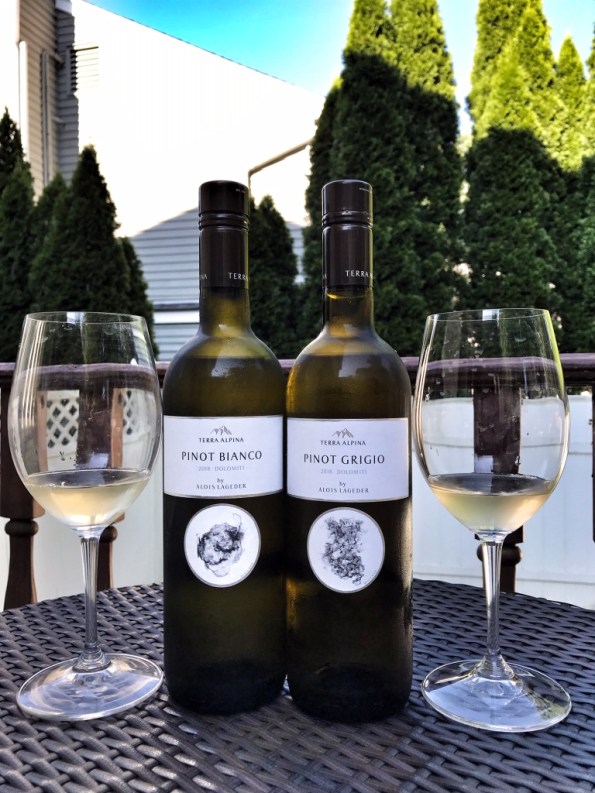
2018 Alois Lageder Terra Alpina Pinot Bianco Vigneti delle Dolomiti IGT (12.5% ABV, $15)
Straw pale
Touch of sweet apples, lemon, minerality
Crisp but buttery, noticeable salinity, minerally driven, dry, refreshing, lemon, lemon finish.
7+/8-, very nice
2018 Alois Lageder Terra Alpina Pinot Grigio Vigneti delle Dolomiti IGT (12.5% ABV, $16)
Light golden, a shade darker than Pinot Bianco
Intense, tropical fruit, guava, candied lemon, honeysuckle
Crisp, also a bit buttery and round, fresh lemon, vibrant, refreshing, delicious.
8-/8, excellent, passes room temperature test with flying colors
Here is my summer cooling off story. What’s yours? Cheers!
Between The Worlds
What lies on the intersection of the Old World and the New World?
Yep. Starting with the question. As many of you have come to expect. Let me repeat – what lies on the intersection of the old world and the new world? Of course it is the wine we are talking about.
I can spin this question differently if you want. What is the name of the major winemaking region (a country, rather) which is most often overlooked at dinner tables, wine stores, and restaurant wine lists? Yes, give it a thought. I’m sure you know the answer. But it is too obvious, which makes it difficult.
Let’s continue?
If you said “South Africa”, pat yourself on the back. You got it. Yes, it is South Africa. The wines of South Africa are often described as “old world wines masquerading as the new world”, and when you taste the wines from the region, you can easily see why such description makes a lot of sense.
I wrote about wines of South Africa many times in the past, also including them into the “best hidden secrets” series. Winemaking history of South Africa goes back more than 400 years, to the mid-1600s. From there on, South African wine had good times, bad times, phylloxera, political issues, boycott, and lots, lots more. Many times in history the wine production was focused on quantity and not quality, which obviously had consequences and not a good ones.
I had been tasting South African wines for quite a while, and I have to say that I perceive a definite upswing in quality. As I mentioned at the beginning, South African wines are still rare and underrepresented in the modern wine scene, for sure in the USA – nevertheless, every time I get a chance to taste South African wines, they make me say “wow” more often than not.
Case in point – recent tasting of the South African wines in New York. It was not a large tasting, by all means, maybe 60–70 wines, but out of those 60–70, I probably was wowed by at least a half of them, which is very unusual for the trade tasting, maybe with the exception of Gambero Rosso Tre Bicchieri. Below are my brief notes – as I had a bit more time than at the typical trade tasting, but absolutely not enough to do a full assessment, I’m using words instead of plus signs. Plus, I share here some of my general impressions.
Let’s go:
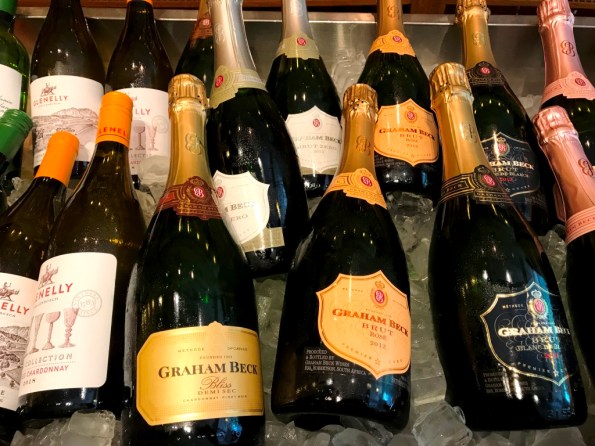


I love Graham Beck wines – their sparkling wines represent great value. These wines are similar to Champagne, as they undergo secondary fermentation in the bottle, so any time you are looking for the bubbles but want to spend the half of what you will spend on the Champagne, see if your wine store carries Graham Beck wines.
NV Graham Beck Brut Methode Cap Classique WO Western Cape – love it! Fresh, generous
NV Graham Beck Brut Rosé Methode Cap Classique WO Western Cape – beautiful, elegant
2012 Graham Beck Rosé Methode Cap Classique WO Western Cape – a touch of strawberries, toasted notes, excellent
2013 Graham Beck Blanc de Blancs Methode Cap Classique WO Western Cape – wow! Elegant, clean, polished
2012 Graham Beck Brut Zero Methode Cap Classique WO Western Cape – good
NV Graham Beck Bliss Demi-Sec Methode Cap Classique WO Western Cape – beautiful! Touch of sweetness, good acidity, elegant
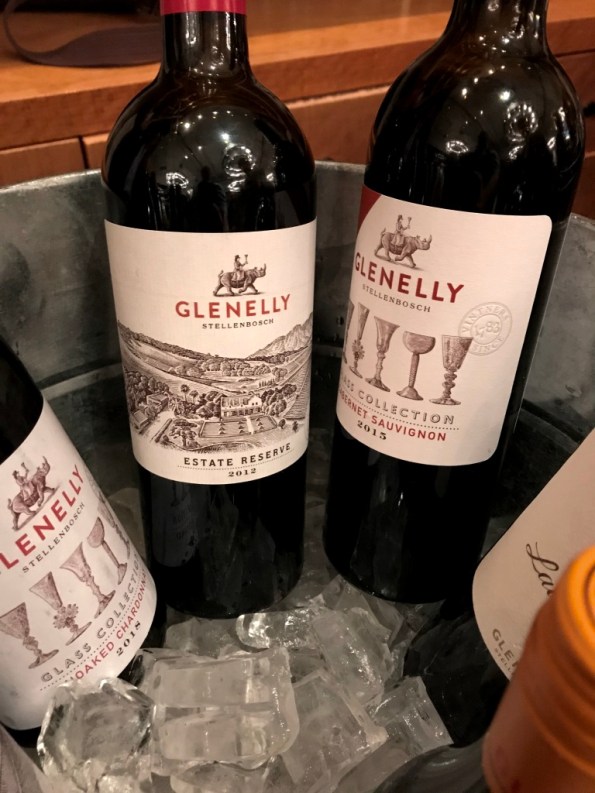
I had some past (and delicious!) experience with Glenelly Chardonnay, so I was definitely looking forward to tasting their line of wines:
2018 Glenelly Unoaked Chardonnay Stellenbosch – excellent
2016 Glenelly Estate Chardonnay Reserve Stellenbosch – excellent, a touch of vanilla, burgundy style
2015 Glenelly Glass Collection Cabernet Sauvignon Stellenbosch – excellent, cassis forward
2012 Glenelly Estate Reserve Stellenbosch (45% Cabernet Sauvignon, 38% Shiraz, 11% Petit Verdot, 6% Merlot) – restrained, clean, herbaceous, salinity. The wine is built for the long haul.
2012 Glenelly Lady May Stellenbosch (89% Cabernet Sauvignon, 10% Petit Verdot, 1% Cabernet Franc) – Bordeaux style, needs time


This was an unknown producer for me:
2018 Beau Joubert Oak Lane Chenin Blanc – Sauvignon Blanc Stellenbosch – unusual, might be a touch sweet
2017 Beau Joubert Oak Lane Merlot – Cabernet Sauvignon Stellenbosch – simple
2017 Beau Joubert Oak Lane Shiraz – Cabernet Sauvignon Stellenbosch – earthy, nice pepper note
2013 Beau Joubert The Ambassador Stellenbosch – needs time
2014 Beau Joubert Fat Pig Stellenbosch – port style, very good balance, tasty
Yes, there was food too:


Let’s get back to wines.


The next set of wines surprised me in a lot of ways – packaging (labels), creative wine names, unusual grape varieties for South Africa (Barbera? Touriga Nacional?!) and most importantly, tasty wines. When I commented to the lady who was presenting the wines how unique and tasty the wines were, she said very unpretentiously “ah, it is my brother, he is always running around with new ideas, experimenting with the wines”. Little did I know that Bruce Jack is a star winemaker who was making wines for more than 25 years and who has almost a cult following. I can tell you, as the proof is in the pudding, this line of Drift Estate wines offered plenty of proof.
2018 Bruce Jack Year of the Rooster Rosé Western Cape – nice and restrained, excellent Rosé rendition. You would never guess the grape this wine is made out of – Touriga National. Yep. As I did a bit of research, I found out that 2017 was made out of Pinotage, and 2016 out of … Touriga Franca. Yep, talk about South African wines.
2014 Bruce Jack Moveable Feast Red Blend Western Cape – excellent. Dark fruit, spices, just excellent.
2017 Bruce Jack Gift Horse Single Vineyard Barbara Western Cape – another hit. Dark fruit, tar, pencil shavings, tobacco, just wow. Yep, a South African Barbera.
2016 Bruce Jack There Are Still Mysteries Single Vineyard Pinot Noir Western Cape – beautiful, elegant, restrained, truly a mix of the new world and an old world. If you didn’t discover yet South African Pinot Noir, go on, try to find this wine.


And a few more wines:
2018 Boschendal Rose Garden Rosé South Africa – excellent, restrained, Provençal style. Merlot + Pinot Noir blend
NV Boschendal Brut Rosé Methode Cap Classique South Africa – excellent
2016 Boschendal Elgin Chardonnay South Africa – Burgundy! Wow, spectacular wine – might be the best 9fnthe tasting.
2016 Bellingham The Bernard Series Old Vine Chenin Blanc Coastal Region – (3 Chenin Blanc vineyards, vines are 35 to 47 years old) – petrol on the nose, beautiful, clean, delicious.
2014 Bellingham The Bernard Series SMV Coastal Paarl Region (Shiraz, Mourvèdre, Viognier) – Elegant! Excellent
2014 Brampton Roxton Stellenbosch (41% Syrah, 33% Petit Verdot, 26% Malbec) – outstanding. Lots of power. This wine is named after a bull.
That competes my report. What do you think of wines of south Africa? Any favorites? Cheers!
Samples Galore: From Ohio to Washington with a Stop in Argentina
Have wine, will travel – who is coming with me?
How about staring our wine journey in Ohio? There is a very, very good chance you never had a wine from Ohio – am I right? So was I – until the beginning of this year.
All 50 states in the USA produce wine – not sure as of what date, but this was already true at least 15 years ago. While this is true, it doesn’t mean that you can go into the store and pick up a bottle of wine from South Dakota as this is something you want to drink tonight. There is a slew of issues (economic, legal, etc.) which make it impossible. Never mind South Dakota – while Texas is one of the largest wine producers in the USA, I stand no chance of finding Texas wines in the local liquor store in Connecticut. And as I love collecting the experiences, when I was offered to participate in the Twitter Chat about Ohio wines, I quickly agreed.
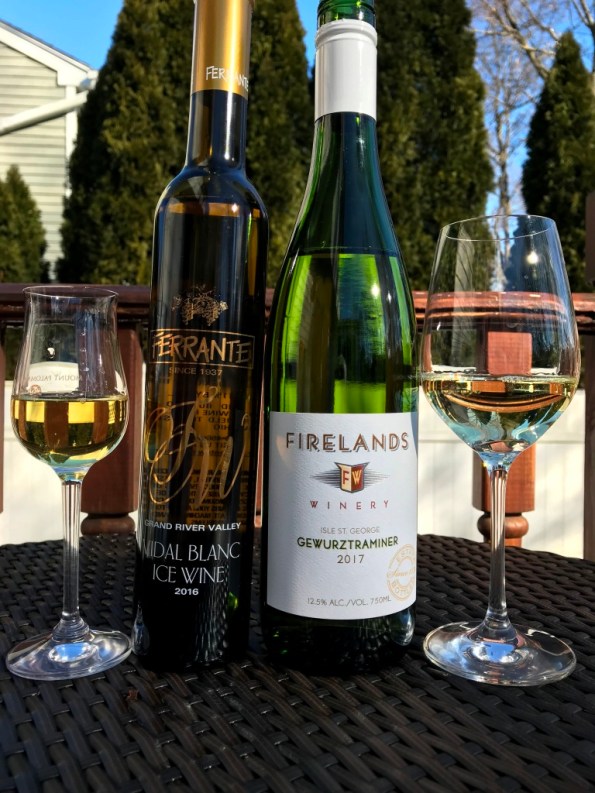
The wines had been made in Ohio for a while – on par with most of the traditional wine regions in the USA. The wine cellar which is now a part of Firelands Winery in Sandusky, Ohio, was built in 1880. Obviously the wines are still unknown outside of the local towns and maybe some visitors, but still, Ohio has the winemaking history.
When I opened the box with the wines for the tasting, my first reaction was “ohh, this might not end well”. First one was Firelands Gewurztraminer – and I consider Gewurztraminer a very difficult grape – it is really difficult to create a balanced Gewurztraminer wine – I had lots (did I say lots?) of undrinkable editions, so yes, that bottle made me concerned. The second wine was equally concerning – Vidal Blanc Ice Wine from Ferrante winery. Again – an experience with many plonk-level Ice wines was definitely getting in the way.
So how the wines fared, you ask? Much (much!) better than I expected (sorry, the inner snob was talking) – really, here are the notes:
2017 Firelands Winery Gewurztraminer Isle St. George, Ohio (12.5% ABV)
Light golden
Beautiful fresh tropical fruit – leeches, guava, white peach, intense
Dry palate, clean acidity, spicy bite, Whitestone fruit, good minerality, good balance
8, very enjoyable wine, will work well with food, excellent with cheese (manchego)
2016 Ferrante Vidal Blanc Ice Wine Grand River Valley (11% ABV)
Golden color
Honey, candied peaches, fig jam, medium plus intensity.
Perfectly clean palate, a touch of honey, apples, ripe pear. Honey notes linger on the finish, but it is not overwhelming and supported by good acidity.
8+, very impressive, this is the wine I want to have a second glass of. Outstanding.
As you can see, very impressive wines. I would gladly drink both at any time – and I would love to visit the wineries if I ever make it into the area. Ahh, and one more check mark for my collection of attempts to try the wines made in all 50 states – a personal challenge which I’m tracking right here.
After having a great experience in Ohio, let’s continue our trip. Next stop? California.
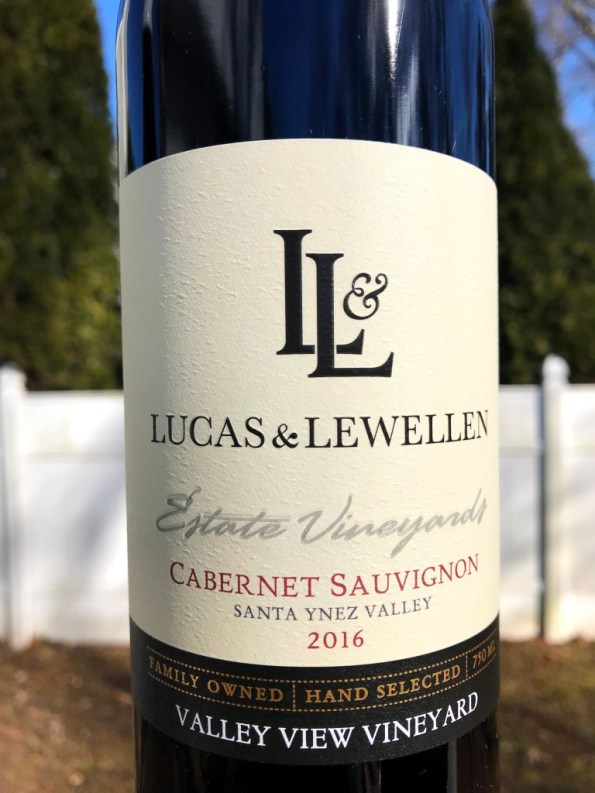
First, let’s go to Santa Barbara County. Lucas and Lewellen Estate Vineyards were born in 1996 out of the friendship between Louis Lucas, a third-generation grape grower, and Superior Court Judge Royce Lewellen who first met back in 1975. They started making wine under their own label in 1998, and from there, the business expanded to include vineyards in 3 principal winegrowing areas in the Santa Barbara County – the Santa Maria Valley, the Los Alamos Valley, and the Santa Ynez Valley. They also opened a tasting room in Solvang, one of the best “wine towns” in the country. The wine we are talking about today is a classic Bordeaux blend coming from the Valley View Vineyard in Santa Ynez Valley:
2016 Lucas and Lewellen Cabernet Sauvignon Valley View Vineyard Santa Ynez Valley (14.5% ABV, $25, 75% Cabernet Sauvignon, 7.5% Petit Verdot, 7.5% Malbec, 5% Merlot, 5% Cabernet Franc, 21 months in French oak, 40% new)
Dark garnet
Mint, underbrush, blackberries, cherries, medium intensity
Cherry-forward, tart, a touch of mint, tight, well-integrated tannins, full body, good acidity, good balance, spicy finish in the back of the mouth
8-, probably will further improve with time


Let’s move up north in California, to the famed Napa Valley.
The first vineyard on the Mt. Veeder site which is now home to the Hess Family Wine Estates, was planted in 1876. Donald Hess acquired his first vineyard on the Mt. Veeder in 1978, and through the chain of events which are described in details here, all the history connected together. In 1986, the Hess Collection winery was established, and from the early days Hess Collection became a pioneer of sustainable viticulture, hosting the first Natural Farming Symposium in 1992, and then helping to develop the California Wine Institute’s “Code of Sustainable Winegrowing Practices” in 2002.
You can see a symbol of the lion on most of the Hess Collection wines – “live each day with the heart and courage of the lion” had been a guiding principle of the Hess family for 9 generations. Two years ago, Hess Family Wine Estates introduced a new portfolio of wine with the release of Lion Tamer red blend. Last year, the Lion Tamer was joined by Panthera Chardonnay in its inaugural release. I had an opportunity to taste the new release of these wines, and here are my notes:
2016 Hess Collection Lion Tamer Red Blend Napa Valley (14.8% ABV, $45, 40% Malbec, 27% Zinfandel, 21% Petite Sirah, 8% Cabernet Sauvignon, 2% Mourvedre, 1% Petit Verdot, 1% Merlot, 22 months in French oak, 40% new)
Dark garnet
Coffee, dark fruit, sandalwood, cherries, a touch of sapidity
Palate on the first day was massive, with espresso, tar, pencil shavings, and cherries.
On the second day, the wine appeared a lot more balanced, with clean acidity underscoring fresh blueberries and blackberries with a touch of coffee on the finish.
V: 8, definitely needs time. Decant for 2-3 hours if you want to drink now, or put it aside for the 4-5 years. Make sure to serve it at room temperature at around 68F.
2016 Hess Collection Panthera Chardonnay Russian River Valley Sonoma County (14.3% ABV, $45, 15 months in French oak barrels, 35% new)
Golden color with a greenish hue
Distant touch of a gunflint, minerality, underripe white plums
Vanilla, butter, a classic California Chardonnay profile, big, present, Granny Smith apples, good acidity.
8-, I prefer Chardonnay with a bit more subtle expression, but this is definitely drinkable on its own and should be good with food ( nicely complimented manchego cheese)
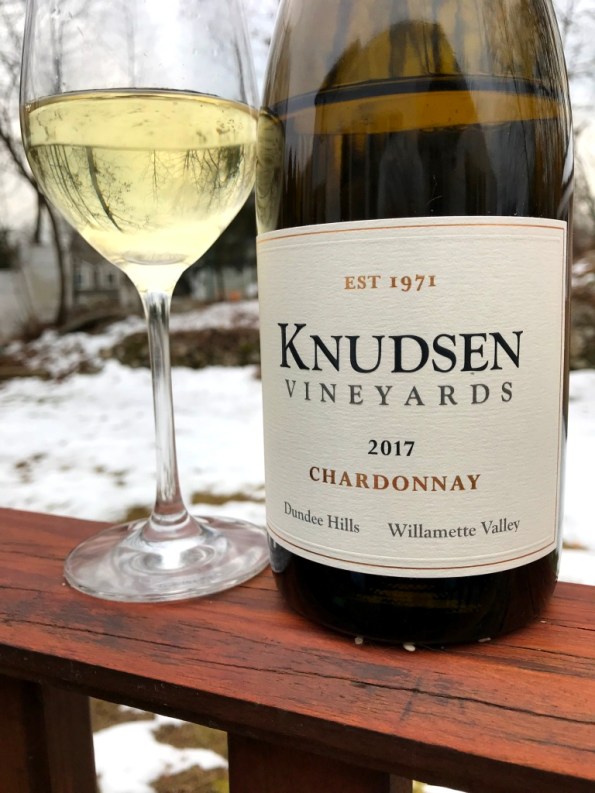
Our next stop is in Pacific Northwest – in Oregon, to be more precise. Knudsen Family had been growing grapes in Dundee Hills AVA in Willamette Valley since 1971, one of the pioneers of the viticulture in Oregon. For a long time, the grapes from the Knudsen Vineyards were only bought by the other wineries. Relatively recently Knudsen Vineyards started producing Pinot Noir and Chardonnay under its own name. Previously, I tasted Knudsen Vineyards Chardonnay from 2015 and 2016 vintages, which were both excellent. This year I had an opportunity to try 2017 Knudsen Vineyards Chardonnay (13.5% ABV, $45), and was able to see a clear progression, from 2015 to 2016 to 2017. My analogy for 2017 is Burgundian, but I don’t even know if this is a fair comparison. Knudsen Chardonnay is not a white Burgundy – it is an Oregon Chardonnay first and foremost, and it is a simply beautiful wine.
Citing myself sounds strange, but here is what I wrote about 2017 Knudsen Chardonnay in the Instagram post: “I would describe this wine as an Elegance of Precision – from the get-go, it had just a perfect amount of everything Chardonnay is famous for – a touch of vanilla, a touch of butter, a touch of golden delicious apples, vibrant acidity – and it was getting even better over the few days it was stored in the fridge, more precise, more integrated, more Burgundian. If you like Chardonnay, this is a “case buy” wine – not because it is inexpensive, but because you want to keep a few bottles in the cellar for the next 5-10 years, to see it magically evolve”. Drinkability: 9-


While we are in the Pacific Northwest, let’s try a few more wines. Kin and Cascadia wines are the result of the partnership between multi-generational families, Sagers and Masters, with these multiple generations involved in the wine business (hence the “Kin” part). This new line of wines comes from the Cascade Mountains region – which brings in Cascadia part. I had an opportunity to try Kin and Cascadia Cabernet Sauvignon and Pinot Noir – here are the notes.
2017 Kin and Cascadia Cabernet Sauvignon Columbia Valley Washington (13.5% ABV, $16)
Dark garnet color
Intense berry flavor, blackberries, eucalyptus, sweet cherries
Fruit forward but has enough supporting acidity to make it pleasant. Medium body, light, simple, fresh, fresh berries (cherries and blackberries), good acidity.
7+/8-, not my idea of Cabernet Sauvignon, but it is definitely easy to drink wine. Plus, it is young, so it might evolve.
2017 Kin and Cascadia Pinot Noir Willamette Valley (13.5% ABV, $14)
Ruby color
Muted nose, a touch of earthy notes, underbrush
Not very expressive palate either – Light, medium body, good acidity lingering on the finish
7/7+, I personally would like more fruit and more energy. This is drinkable, but not thought-provoking.
And we finally arrived at our last stop in Argentina.
In 1950, Alberto Zuccardi started working on the new irrigation systems for the vineyards in Mendoza. In 1963, he founded the vineyard of his own, which over the years became one of the most renowned in Argentina. In 1982, Bodega Santa Julia was born, named in honor of Julia (yes, she is a real person), the granddaughter of Albero Zuccardi – and Julia Zuccardi is managing her namesake winery today.
Bodega Santa Julia focuses on organic and sustainable viticulture, which sprawls from the vineyards to the people. Santa Julia was the first winery in Mendoza to achieve Fair for Life certification.
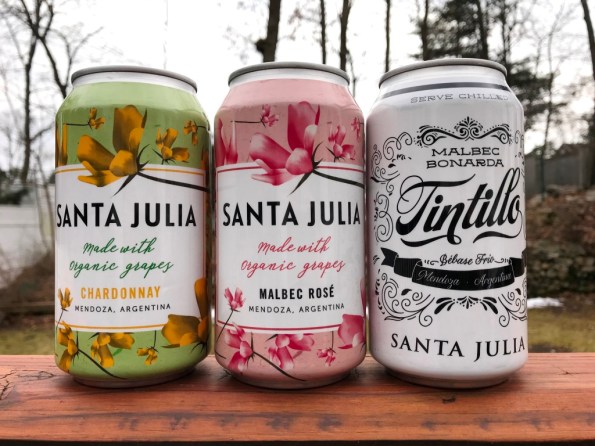
The winery joined the popular canned wines movement in the USA and introduced the line of beautifully packaged wines, which I had an opportunity to try. The wines are not amazing, but sufficient for the day on the beach or a pool party. Here are my brief notes:
NV Santa Julia Organic Malbec Rosé (375 ml can, SRP $6) – simple, quaffable, but too sweet for my taste.
NV Santa Julia Organic Chardonnay (375 ml can, SRP $6) – a bit tart, restrained fruit expression.
NV Santa Julia Tintillo Red Blend (375 ml can, SRP $6, 50% Malbec, 50% Bonarda) – good fruit expression, good acidity, medium body, good balance. My favorite of the three. And despite the recommendation, I liked it more at the room temperature than cold.
Here you are, my friends. As I said before, have wine – will travel. Until the next trip – cheers!
Wednesday Meritage – Festivals Galore
Meritage Time!
It seems that June is everyone’s favorite month for wine and food events. I guess it makes sense – the schools and colleges just finishing the year, the weather is generally great, and the vacation season didn’t fully start yet – so all the event organizers are trying to pack as much as they can into that one month. No matter what the reason – the end result is an abundance of choice when it comes to the different events focused on food and wine lovers.
I wanted to share with you three of the events which look interesting. Two of the events fall on the same weekend, so you will have to make some decisions, but having a choice is better than having none, right?
Let’s start with the event which will be taking place around the country – a Black Truffle Festival 2019. Who doesn’t like truffles? Well, actually, I know some people who don’t, but outside of those few, the majority is easily excited at the prospect of having a dish – pasta, risotto, steak – all covered with generous shavings of black truffles and exuding the aroma which alone makes you hungry. From June 14th until June 23rd, top chefs in New York, Miami, and San Francisco will help you celebrate the prized mushroom. By the way, until I started working on this post, I had no idea that truffles can also come from Australia – it appears that truffles are not limited to Piedmont only. See, I already learned something – check the information at the link above to see how you might enjoy some pungent beauty.
June 22nd, which falls on Saturday this year, is known as Summer Solstice – the day with the longest duration of the daytime and shortest night. The summer solstice is an important day in the biodynamic viticulture, where the sun’s cycle plays a key role in the whole program. Thus it is only appropriate that Summer Solstice 2019 will be celebrated with the Natural Wines Festival. Hosted at the Burnt Hill Farm in Maryland, the Natural Wine festival will have 25 wineries from Maryland, Virginia and DC pouring more than 100 wines – of course, the food, art, and music will be a part of the festivities as well. For more information and tickets, please click here.
Now, you can follow that Summer Solstice celebration with more wine the very next day. On Sunday, June 23rd, wines from the Côtes du Rhône region in France, which includes Côtes du Rhône Villages, Vacqueyras, Beaumes-de-Venise, Rasteau, Saint-Joseph, Condrieu, and Cornas will take over Manhattan. Okay, this might be an exaggeration, but still, Côtes du Rhône Wine Festival will take place right in the middle of Manhattan. The festival consists of both press/trade portion, and consumer portion. In addition to all the wines, the festival (expectedly!) will offer food, music and lots more. For more information and tickets, please click here.
That’s all I have for you for today. The glass is empty, but the refill is on its way. Until the next time – cheers!
Rosé All Day
On Saturday we celebrated yet another one of the “National” days – the National Rosé Day (it is always celebrated on second Saturday in June). I don’t know if you actively participated in the celebration or not, but I wanted to use it as an opportunity to ponder at the state of Rosé in the USA (don’t know if this can be extended to the wine consumers worldwide).
I had been writing this blog for almost 10 years. When I started, Rosé was not a “thing”. It was a highly seasonal beverage – appearing in the wine stores at the beginning of summer, and disappearing with the end of the warm weather. If you crave a glass of Rosé in the winter – tough luck, unless you could find some Tavel – Rosé is the only wine produced in that Rhône appellation. Even as recent as 4 -5 years ago, wine aficionados and bloggers would typically lament that people still don’t get the concept of Rosé as simply another type of wine, same as sparkling, white, red or desert, which is not just an occasional summer beverage, but which has its own place and can be consumed any day of the year, whether thermometer says 10°F or a 100°F.
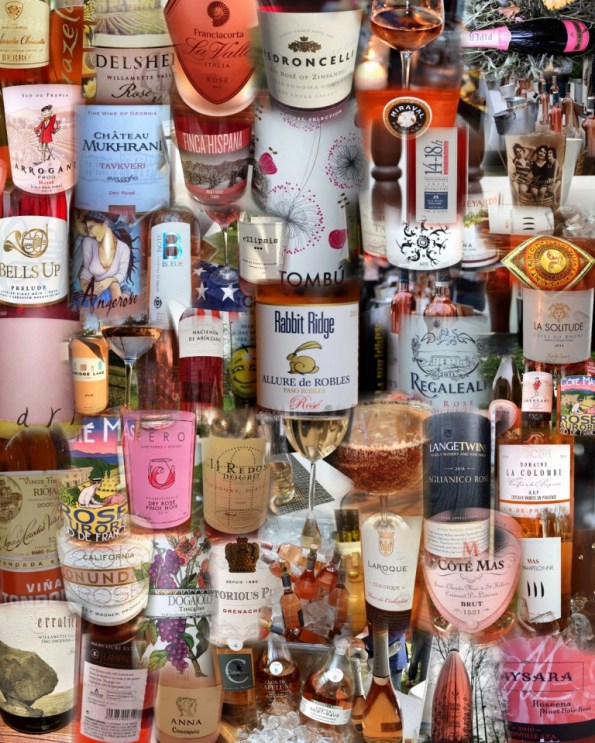
It seems that all this writing, nudging, lamenting, complaining, and most importantly, convincing and educating, resulted in something which can be simply called a “Rosé revolution”. Today, there is hardly a winery left which didn’t add Rosé to its repertoire, both around the world and particularly, in the USA. The Rosé might be produced in the quantity of 10 cases and available only in the winery’s tasting room or to the club members, 1 bottle per year, but nevertheless, Rosé became a staple of attention and it became important. Maybe even too important – some of the wines, such as Lopez de Heredia Viña Tondonia Rosé Gran Reserva used to be available at under $30 and was mostly demanded by the wine geeks. Today, you can’t even find this wine anywhere, and if you will find it, it will set you back for close to $300. Today, while the selection of Rosé in the stores would go down in the winter, there still will be a reasonable selection available all year around. And maybe most importantly, the quality of Rosé has dramatically improved, no matter where in the world it is made or what grapes it is made out of.
It only seems that Rosé is a simple wine and it is easy to make – I guess the bottles with a spectrum of a very happy pink give this impression. In reality, making good Rosé very much on par with proverbial Chef’s test, when the Chef is asked to prepare an omelet and a chicken dish – anyone who had a pleasure of consuming burnt, crunchy eggs and rubber-shoe-dry chicken breast, can easily relate to what I’m talking about here. Rosé is all about balance, and it doesn’t offer too many chances to correct the shortcomings, which can be done for the red and even white wines, using different types of oak barrels and more. With Rosé, it is better to be done right from the very beginning, or else.
I have to honestly tell you that when I’m in the restaurant, especially by myself, Rosé is my typical drink of choice by the glass. It is usually reasonably priced and works well with a wide range of foods, due to the high acidity and gentle fruit expressions. There is typically only one or two different Rosé available on the restaurant’s wine list, which makes the selection process very easy.
Rosé is really not any different than any other wine. Beautiful color notwithstanding, it is all about the balance and it is all about the pleasure. So, what do you think – is Rosé here to stay or is it just a fad which will pass soon? Cheers!
Navarra, Surprising and Not
It is commonly known that Spanish wines are some of the best-kept secrets of the wine world. An oxymoron, you say? Not necessarily. I’m not implying that you need to know the secret knock on the unsightly door in order to acquire Spanish wine. The “secret” simply means that consumers still often overlook Spanish wines as a category, despite the fact that those wines possess some of the best value, the best QPR you can ever find – try a $30 Rioja (for example, La Rioja Alta, Lopez de Heredia) and you will see what I mean.
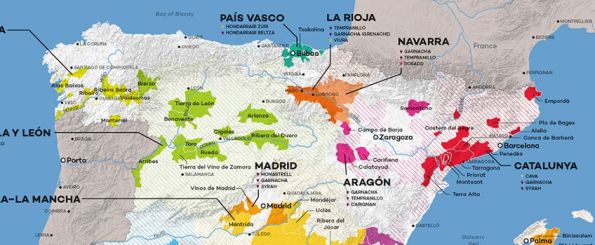
Spanish wine regions. Source: Navarra Wine US
Turns out that even secret wines have deeper secrets, such as Spanish (of course!) wines from Navarra, a northern province known for its unique climate (influenced by Mediterranean, Continental, and Atlantic climates). A long history of a close relationship with France (going back to medieval times) also led to Navarra sporting rather an interesting mix of grapes, with plantings of Garnacha and Tempranillo intermixed with Cabernet Sauvignon, Merlot, and Chardonnay. For a long time, Navarra was known as the “land of Rosé” – today you can find a full selection of white, Rosé and red coming from this small region.
By the way, here is the fun fact for you – in case you are a Game of Thrones fan, you might be interested to know that season six of the popular show was filmed in Navarra, in Bardenas Reales desert – here, you can impress your friends already.
If you are interested in a quick set of numbers (I know I always am) – Navarra has about 27,000 acres of vineyards, located on an average altitude of 1,300 feet (400 meters) above sea level. Annual production is about 70M liters of wine. Most planted grapes are Tempranillo and Garnacha, followed by Cabernet Sauvignon and Merlot. 90% of the wine production are red and Rosé (Rosé is 1/3 of this production), and 10% are white wines. Okay, done with numbers, let’s continue.
With this “secret of secrets” designation, you can probably figure that Navarra wines do not occupy central shelves of the liquor stores – but maybe it is for the better? Of course I mean it in our own, selfish interest – more for us, for the people “in the know”.
I had a pleasure of drinking Navarra wines before – for example, Tempranillo from Bodegas Ochoa is an excellent rendition of one of my most favorite grapes. However, this is where my exposure to the wines of Navarra mostly ends. Thus when I was offered to try a sample of Navarra wines, I quickly agreed.
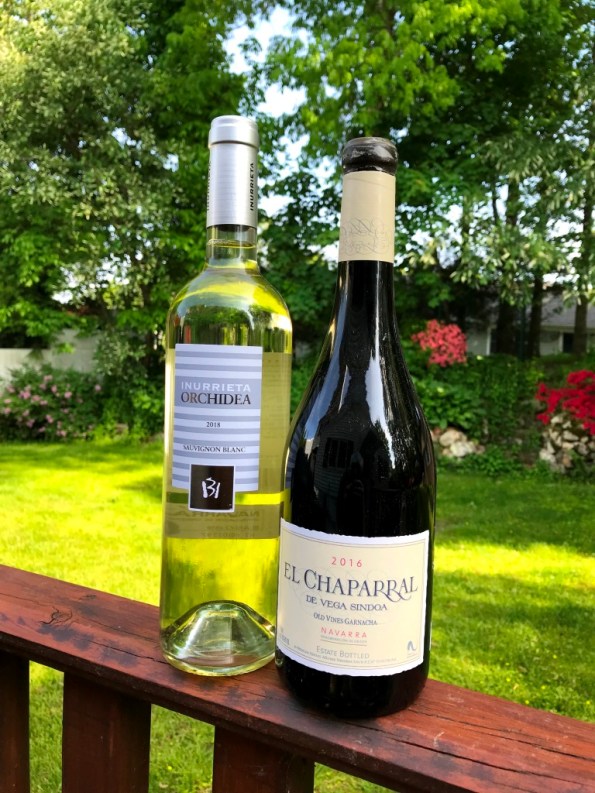
The surprises started upon arrival of the wines. Once I opened the box, finding a bottle of Garnacha made perfect sense. However, not finding a bottle of Rosé was rather surprising – I was sure Rosé would be included in the sample of Navarra wines. And the biggest surprise for me was finding the bottle of … Sauvignon Blanc! No argument here – Spain is often associated with red wines, but it makes excellent white wines – Albariño, Verdejo, Godello, Viura – but 100% Sauvignon Blanc from Spain is not something I see often (Rueda might be an exception, as Sauvignon Blanc is used there too, but mostly for blending).


The surprises continued as I opened the bottle of 2018 Bodegas Inurrieta Orchidea Sauvignon Blanc Navarra (13% ABV, $12). I have to admit, before the first sniff, I was skeptical. The first whiff of the aroma immediately cured all of my worries as the wine was simply stupendous. In a blind tasting, I would instantly place this wine into California – the wine was round and powerful, on the level of Honig or Duckhorn Sauvignon Blanc. A touch of freshly cut grass and currant leaves were unmistakable, supported by golden delicious apple, lemon, and complete absence of grapefruit. Perfectly refreshing, delicious wine – and at the $12 price point, the word “steal” comes to mind. (Drinkability: 8+)
Then there was Garnacha. Garnacha, a.k.a. Grenache is a very interesting grape. Garnacha has a tremendous range of expression, from ultra-powerful likes of Alto Moncayo Aquilon and No Girls Grenache to light and ephemeral Cote du Rhone and Bodegas Tres Picos. The 2016 El Chaparral De Vega Sindoa Old Vines Garnacha Navarra (15% ABV, $15) showed rather in the “ephemeral” category, despite the 15% ABV (I only noticed this high ABV when I was writing this post but not when I tasted the wine). Two main descriptors for this wine are raspberries and pepper. The wine was light, it was playful, full of fresh, ripe, but perfectly crunchy raspberries. Each one of those raspberries had a dash of black pepper on it. Ephemeral, surreal, or simply tasty – I will happily go with either descriptor. Again – excellent, excellent value at $15. (Drinkability: 8+).
Here you go, my friends. You can’t go wrong with either of these wines – not in price, not in the taste, not in the pleasure. Look for the wines of Navarra – you might be on a cusp of your next great wine discovery. Cheers!
Wine Love: Lodi, California
 It is with the bittersweet feeling I confess my unconditional love to the wines of Lodi.
It is bittersweet, as on one side when the person is in love, they want to tell the whole world about it. On another side, I don’t want to tell the whole world about it – I want to keep it all to myself. I want Lodi to stay as a secret refuge for those who know. I want the Lodi wines to stay affordable, and the wineries to stay un-Napa – simple, humble, friendly, and worth visiting. But – this is not necessarily right for the winemakers of Lodi, who wants their wines to be known and drunk by the people, and therefore, it is my mission as a wine writer and wine aficionado to help with that, even risking that Lodi might not stay the same.
Bittersweet, yeah.
In general, Lodi is unknown and misunderstood. Wine lovers think that Lodi is only producing Zinfandel and high-power, high-alcohol fruit bombs. This can’t be any further away from the truth about what Lodi really is. So if this is what you thought of Lodi before, take it out of your head, and let me tell you what Lodi really is.
Historically, if California is an agricultural capital of the USA, Lodi is an agricultural capital of California. By the way, do you know where Robert Mondavi (yes, THAT Robert Mondavi) went to the high school? Yep, in Lodi. These are just fun facts, but now let’s get closer to the subject. Lodi is not about Zinfandel. First and foremost, Lodi is home to the Mediterranean grape varieties – Tempranillo, Sangiovese, Viognier, Albariño, Grenache, Cinsault, Syrah, Barbera, and many others. Lodi has a great climate for grape growing – it gets very hot during the day – temperatures in July/August can reach into the lover 100s – however, it cools off very nicely to “ohh, I need a jacket” on August night. That temperature range helps grapes to concentrate the flavor.
Lodi has sandy soils, which are not conducive for phylloxera, thus most vineyards in Lodi are planted on their original rootstocks. Lodi is home to some of the oldest continuously producing vineyards in the USA and in the world – for example, Carignane and Cinsault vineyards are 120+ years old, still bearing wine-worthy fruit. Lodi Rules, developed starting in 1992, became the standard of sustainable winegrowing in California (the same rules are even implemented at Yarden winery in Israel). And one of the most important elements – Lodi winemakers are some of the friendliest wine people you can find.
Until late 2016 I was square with the general public, equating Lodi with Zinfandel only. Then Wine Bloggers Conference happened, hosted in Lodi, and I was blown away by what I discovered upon arriving in Lodi. During that week I was also mesmerized by the attitude and hospitality of the winemakers, who took their time off the most important winemaking activity of the year – harvest – and spent time with the wine bloggers, sharing their love of the land. It is not only about the attitude – the absolute majority of the wines were tasted were delicious – I’m very particular in my expectations as to what good Syrah, Tempranillo, Barbera, or Albariño should taste like.
Two months after the wine bloggers conference I was in the Bay area on the business trip and had an open weekend. I tried to make some appointments in Napa, and when that didn’t work out, I went again to Lodi – had an amazing time tasting through the whole portfolios of Bokisch, Borra Vineyards, and Lucas Winery (the absolute beauty of 15 years old Lucas Chardonnay we tasted at the WBC16 speed tasting session still haunts me). I never wrote about that experience, but this is a whole another matter.

When I got an invitation from Snooth to join the virtual tasting session of Lodi wines, I almost jumped of joy – yes, I will be delighted to experience the Lodi wines, which are still hardly available outside of Lodi or California at the best (or is that a good thing :)?) Six wines, six producers, a unique and unusual set of grapes – what more wine aficionado can be excited about?
Below are my notes and thoughts about the wines. In case you want to follow along with the video of the virtual tasting, which provides way more information than I’m including here, here is the link for you.


2018 Acquiesce Winery & Vineyards Ingénue Mokelumne River AVA Lodi (13% ABV, $32, 35% Clairette Blanche, 35% Grenache Blanc, 20% Bourboulenc, 10% Picpoul Blanc, 350 cases produced) – Sue Tipton, winemaker and owner at Acquiesce Winery is known as a white wine specialist. She produces a range of wines made primarily out of the southern Rhone varieties.
Straw pale color
White stone fruit, candied fruit, concentrated
Day 1:
White stone fruit on the palate, good acidity, minerality, salinity
7+; it is really a 7+ out of respect to the wine which so many bloggers raving about. I clearly don’t get this wine, and no, it doesn’t give me pleasure.
Day 2-4:
Elegant, lemon and white peach notes, clean, good mid-palate weight, definitely resembling white Chateauneuf-du-Pape, uplifting, vibrant, perfectly balanced
8+; OMG. The wines can’t be any more different after being open for a few days. It changed dramatically, it opened up, it showed balance and elegance. This is an excellent wine, just give it 5-10 years to evolve (or longer).
2018 m2 Wines Vermentino Mokelumne River AVA Lodi (12.3% ABV, $20, 250 cases produced) – this Vermentino was unique and different in its show of minerality – it is quite rare for me to taste the wines like that.
Light straw pale, really non-existent color
Minerality-forward nose, granite, lemon undertones
Salinity on the palate, lemon, crisp acidity.
8-, tremendous minerality on this wine, it has more minerality than fruit. This wine also shows a bit more fruit after being opened for a few days, but it still retained all of its minerally character.


LangeTwins Winery & Vineyards 2018 Aglianico Rosé Lodi (13% ABV, $20, winery exclusive) – owned by the twin brothers, as the name says, LangeTwins is quite an unusual winery. Fun fact: their own production under LangeTwins label is quite small – however, as a contract winery their capacity to produce and store wines exceeds 2.2 million gallons. It is not the first time LangeTwins makes delicious Rosé from the Italian grapes – their Sangiovese Rosé has a cult following and impossible to get. This Aglianico Rosé is worthy of joining the cult ranks.
Beautiful pink color
Strawberries on the nose, nicely restrained, some minerality undertones
Delicate, balanced, perfect crunchy strawberries, crisp, refreshing
8, love this wine, would drink it any day
2016 Mettler Family Vineyards Pinotage Lodi (14.9% ABV, $25, winery exclusive, 350 cases produced) – not familiar with the winery, but seeing Pinotage on the label made me really wonder. Pinotage is a South African grape, which now produces much better wines than 20-30 years ago, but still with a very polarizing following (love/hate). This was my first taste of Pinotage produced outside of South Africa – and this was one unique and delicious wine.
Dark Garnet, almost black
Ripe blueberries, a touch of smoke, herbaceous undertones
Silky smooth, dark fruit, a touch of molasses, smoke, good textural presence, minerality, good acidity, good balance
8, lots of pleasure


2016 PRIE Winery Ancient Vine (1900), Block 4 Spenker Ranch Carignane Mokelumne River AVA Lodi (14.4% ABV, $29, 70 cases produced) – Just a thought if drinking the wines made from the grapes harvested from the vine which exists for 120 years, gives me quivers. An absolutely unique experience.
Bright garnet
Roasted meat, granite, chipotle
Great complexity, tart raspberries, rosemary, bright acidity, medium body, distant hint of cinnamon, excellent balance
8+/9-, it might sound like an oxymoron, but this wine is easy to drink and thought-provoking. Lots of pleasure in every sip
2016 Michael David Winery Ink Blot Cabernet Franc Lodi (15% ABV, $35, 85% Cabernet Franc, 8% Cabernet Sauvignon, 7% Petite Sirah, 65% 16 months neutral oak, 35% 16 months new French oak) – Michael David winery is known for its show of power in the wines. But when power is supported by elegance, that’s when you have an ultimate experience.
Dark garnet
Unmistakably Lodi, blueberries and blueberries compote, medium plus intensity, fresh
Lots of fresh berries – blueberries, blackberries, chewy, fleshy, well present. Touch of cinnamon, good acidity, overall good balance.
8, massive wine offering lots of pleasure. It just happened that soon after tasting, I had to leave the town for a business trip, so I just pumped the air out and left it standing on the floor. My wife didn’t have the opportunity to finish it, so when I came back 10 days later, I decided to taste it before I will pour it down the drain. To my horror surprise, the wine was still perfectly drinkable. That technically means that it has great aging potential, so maybe I need to lose a few bottles in my cellar.
Here you are, my friends. I hope I made you curious about the wines of Lodi. Definitely look for them in the store, but also keep Lodi in mind as your next winery excursion trip – just get ready to haul home a few cases of wine. Cheers!
Patches of Goodness – Introducing Ferzo
In Italian, Ferzo is a patch of fabric that is stitched together with others to create a sail. Let’s sail together into the world of wine.
Wine lovers are some of the happiest people in the world.
Don’t jump to any conclusions – the happiness starts before the bottle is open, not after the wine is consumed.
How I mean it? Let me explain.
I personally believe that travel is one of the best things people can do as a pastime. You get to experience a different culture, people, food, and lots more. Travel typically requires planning – money, time off work, finding someone to sit with your three dogs, water plants, feed goldfish … you get the picture. A successful trip requires one’s full, undivided involvement, from start to finish – and then it usually ends with happy memories.
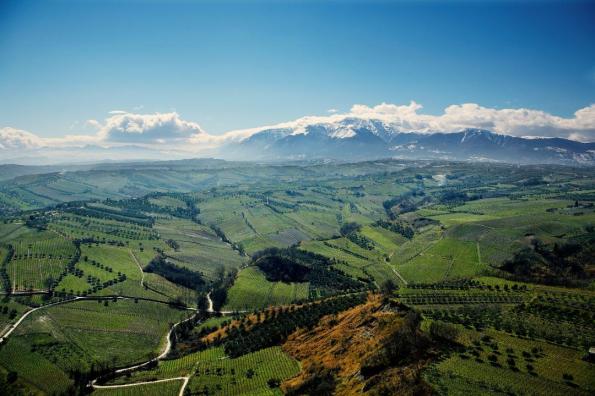
Wine lovers, on another hand, have it easy. It is enough to take a bottle of wine in your hands, and you are instantly transported. Your trip starts with the first look at the label, and then it is only limited by your imagination. The more you learn about the world of wine, the easier such travel becomes. You can instantly immerse into the culture, imagine visiting the vineyard, talking to the people, sitting in the tiny cafe with a glass of wine, just observing life as it happens. Sounds good? Can I take you on a trip right now, right at this moment? Of course, I know you are ready. I’m inviting you to visit Italy, the region called Abruzzo.
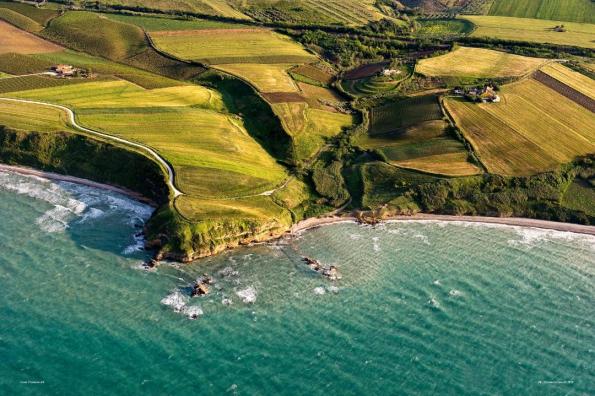
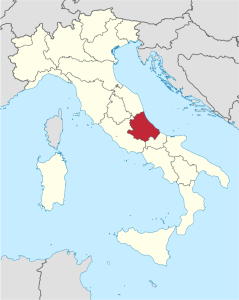 Abruzzo is a region in Central Italy, located along the Adriatic Sea coast. The territory of Abruzzo is about half of the size of the US state of New Jersey. However, the region boasts the biggest number of forests and parks compared to any other region in Italy, and thus sometimes it is referred to as “the lungs of Italy”.
There is nothing unique about winemaking in Abruzzo – it is only about a few thousand years old, on par with the rest of Italy. Well, jokes aside, the Abruzzo region is enclosed in the Apennines mountains, which historically provided natural defenses to the people living in the region – as well as ideal conditions for the winemaking.
Abruzzo wines became known internationally in the 17th century, largely thanks to the Spanish writer, Miguel de Cervantes, who praised the high quality of the region’s white wine, Trebbiano d’Abruzzo – however, today Abruzzo is first and foremost known for its red wine, Montepulciano di Abruzzo, produced from the grape called Montepulciano (try not to confuse it with the wine made in the Montepulciano village in Tuscany, which is made out of Sangiovese).
The wine is made is all four provinces of Abruzzo, however, the province of Chieti has the highest production of the four. While Montepulciano is a “king” of Abruzzo, the white grapes always played an essential role in the region. Today, the focus is shifting past the traditional Trebbiano towards until recently forgotten varieties, such as Pecorino, Passerina, and others.
Codice Citra is the largest winegrowing community in Abruzzo, uniting 3,000 winegrowing families from 9 different communes (wineries), collectively farming 15,000 acres of vineyards. Formed in 1973, Codice Citra had been making wines from the autochthonous varieties – Montepulciano, Trebbiano, Pecorino, Passerina and Cococciola.
With bottling capacity of 20,000 bottles per hour, you can imagine that Codice Citra produces quite a bit of wine. But this is not what we are talking about here. When you make wine year after year, you learn what works and what doesn’t. Little by little, you can identify the parcels of the vineyards, the patches, which produce different, maybe better grapes, year after year. And at some point, you decide – this patch is something special, maybe it deserves to be bottled on its own?


And that’s how Ferzo was born. Single grape wines, made from the plots with the vines of at least 20 years of age, representing the best Abruzzo has to offer – Montepulciano, Pecorino, Passerina and Cococciola. I had an opportunity to taste the line of Ferzo wines, graciously provided as samples by Donna White, and I was utterly impressed with the quality and the amount of pleasure each wine had to offer. Here are the notes:
Celebrate Malbec!
While performing the traditional morning ritual – checking in with all the social media sources, something caught my attention – ohh, I almost missed the Malbec Day, or to be even more precise, the World Malbec Day. So not to miss a celebration of one of the 10 major red grapes, let’s talk Malbec.
Today, when you hear “Malbec”, people instantly think “Argentina”. Yes, Argentina is the best-known source of the Malbec wines at the moment. However, Malbec story originated in France, where it was known initially under the name of Cot – this is the name which is still used in the wines of Cahors, the region in South of France, where Malbec was really a star for a long time. In Cahors, the wines were and still are required to contain at least 70% of Malbec – while popular in most of the other regions in France, there Malbec typically played a supporting role in the blends, such as Bordeaux, for example.
It was Argentina where Malbec really flourished starting at the end of the 19th century and became the star it is today. However, the popularity of Malbec goes way beyond Argentina, with excellent Malbec and Malbec-based blends coming from Australia, Chile, Israel, many regions in the USA, and other places. In Argentina, where Malbec is by far the most planted red grape (with more than 106,000 acres planted), the viticulture dramatically evolved over the years, with high altitude, ultra-premium bottlings being the latest craze.
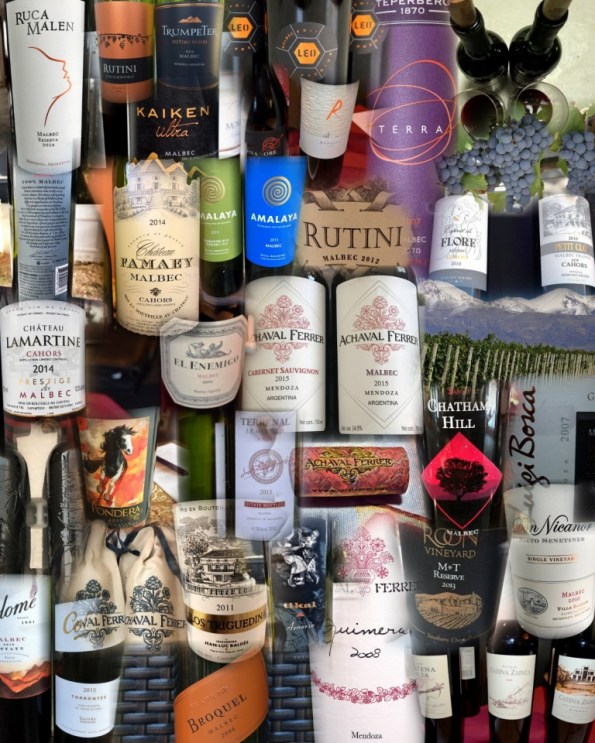
Over the years, Malbec was always present on the pages of this blog. Want to test your knowledge of Malbec? Here is the Malbec wine quiz for you. Looking to add some sensuality to your evening? How about Kaiken Malbec? Do you think you know Malbec? How about a blind taste challenge from one of the best in the business, Achaval-Ferrer? Everyone love Argentinian Malbec but don’t ignore the classics – Southwest of France can deliver amazing Malbec renditions, and I had a pleasure of tasting them more than once. Do you have a favorite Malbec bottle? The one which you are always happy to see in the store or a restaurant wine list? I can tell you that mine is Trapiche Broquel, which never disappoint.
Well, it is time to round it up and proceed with celebration. Do you have a favorite Malbec wine or wines? Feel free to share it with the world. Cheers!
Stories of Passion and Pinot, Year 2019
Back in 2014, during the Wine Bloggers Conference in Santa Barbara (my first WBC), I was listening to the panel discussion of the professional wine writers, who basically had only one message for all the bloggers – interviews, interviews, interviews. Of course, they were talking about integrity, writing skills and other important subjects, but the concept of “interview” was brought up multiple times, with all the explanations how to do it properly, what, why, where and so on.
At that point, I had been writing my blog for about 5 years, and the idea of the interview didn’t resonate. “I want to write about the wine, not about some conversations and other people opinions” was my prevailing thought. “Interviews? I don’t want to do no interviews” (use of broken English intended).
You don’t need to fast forward too far to see how everything changed. Next year, I was offered a meeting with a winemaker which I couldn’t attend, so I said “all right – can we have a virtual conversation?” – and the concept of “One of One With Winemaker” posts was born. Since then, I’ve done quite a few interviews, most of them virtual and a few are in person – if you are curious, here is the link for you to see them all. Yes, the “virtual” concept might be limiting, as you can’t explore an interesting angle which would come up in the conversation. However, as most of my questions are unique and specifically tailored for a particular conversation, virtual interviews remove intimidation, allowing people time to provide the best answers.

In 2016, I had a conversation with Carl Giavanti, who asked if I would be interested to create a series of interviews with Oregonian winemakers – and that became the beginning of the Stories of Passion and Pinot series, all connected under the “One on One” umbrella. In 2016, I had an opportunity to “talk” to Ken Wright of Ken Wright Cellars, David Nemarnik of Alloro Vineyard, Mike Bayliss of Ghost Hill Cellars, Wayne Bailey of Youngberg Hill Vineyards, Steve Lutz of Lenné Estate, and Don Hagge of Vidon Vineyard. In the same series, Knudsen Vineyards was profiled in 2017, and last year I had a conversion with Tony Rynders of Tendril Cellars. All of these wineries are from Oregon, and all of them share a common passion for the Pinot Noir, one of the most finicky grapes out there.
You probably guessed that I’m not writing this post just to give you a retrospective into the Talk-a-Vino interviews. Yes, I’m writing it to tell you that the Stories of Passion and Pinot will continue in 2019, again with the help of Carl Giavanti. The wineries we will look at in the near future are:
By the way, do you know what “Bells Up” means? Well, if you do – great, if you don’t – you will learn all about it soon.
To be continued…
Last Bottle Sign Up ($10 credit)




 Talk-A-Vino