Archive
Samples Galore – Holiday Edition
 Over the last few months, I had an opportunity to try a number of wines. What I didn’t do in timely fashion, however, is to share the tasting notes with you – and this needs to be corrected, which I’m doing with this post.
While I call this post a “holiday edition”, this is strictly due to the fact that this post is coming out during the most festive time of the year. It might be too late to use any of these wines for the gift giving, but you know what – these wines will be perfect for any day, whether it is cold or warm outside, and whether you need a gift or just want to reward yourself (yep, you always deserve an award for just being you).
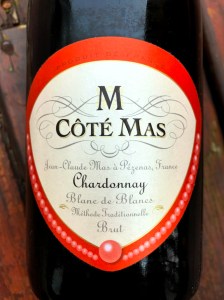
Let’s start with the sparkling wine – I have one to bring to your attention today. This wine comes from the master of “affordable luxury” Paul Mas (I wrote about his wines a few times in the past – you can find those posts here). This Blanc de Blancs from Languedoc is made out of Chardonnay using the traditional method, and it perfectly on par with Paul Mas sparklers I tasted before:
NV Côté Mas Chardonnay Blanc de Blancs Méthode Traditionelle Vin de France (12% ABV, $15.99, 100% Chardonnay)
N: Pleasant nose with touch of yeast and fresh apples
P: Restrained palate, good acidity, clean, touch Of yeast, hint of Granny Smith apples.
V: 7+


Let’s continue with a few of the white wines. First, one of my perennial favorites – Hanna Sauvignon Blanc. I tasted prior vintages of Hanna Sauvignon Blanc, and this is one of my most favorite styles of California Sauvignon Blanc – grassy, fresh and clean:
2015 Hanna Sauvignon Blanc Russian River Valley Sonoma County (13.2% ABV, $20)
C: straw pale
N: intense, fresh-cut grass, touch of lemon, fresh meadows, you can smell this wine forever.
P: nicely restrained, same grassy notes, touch of black currant (distant hint), perfect balance, refreshing
V: 8+
The next white wine comes from the very creative producer in Oregon – Left Coast Cellars, which also not a stranger to this blog – I had a pleasure of speaking (virtually) with Luke McCollom, winemaker for Left Coast Cellars and taste some of the previous vintages of their wines (here are the links to the two-part interview – Part 1 and Part 2). You can’t go wrong with Oregon Pinot Gris – today this is literally a “classic”:
2015 Left Coast Cellars The Orchards Pinot Gris Willamette Valley (13.7% ABV, $18)
C: Straw pale color
Touch of honeysuckle on the nose once warmed up, White stone fruit initially
Closed up while cold, white ripe fruit once warmed up, good balance, medium body, medium-long finish.
V: 7+
Last but not least is Les Dauphins Côté du Rhône. Rhone whites are fun wines, often very dry in the early years, and “ripening up” as they age. This was unquestionably a young wine which most likely would improve with age:
2013 Les Dauphins Côtes du Rhône Réserve Blanc (12.5% ABV, $11, 65% Grenache, 15% Marsanne, 10% Clairette, 10% Viognier)
C: Light golden
N: touch of honey, white stone fruit
P: white stone fruit, herbs, good acidity, quite astringent
V: 7+, will hold well with and without food
Now, time for the reds. The reds today represent a diverse group, from Australia to Italy to the USA. At the beginning of November, I participated in the #winechat with Michael Twelftree, winemaker for Tow Hands Wines out of Australia. We had an opportunity to taste and discuss three wines from Two Hands – two classic Shiraz wines from Barossa and McLaren Vale regions, and a Cabernet Sauvignon:
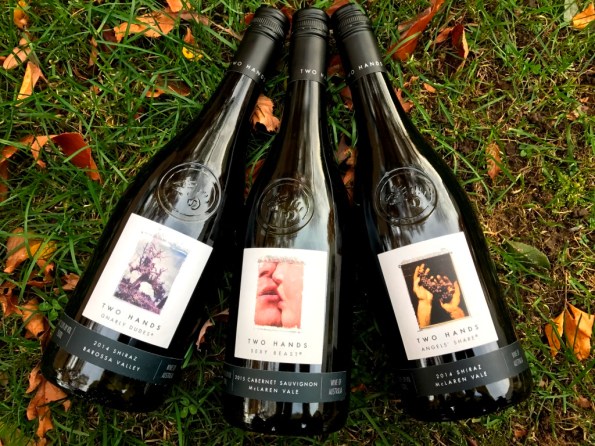 2014 Two Hands Gnarly Dudes Shiraz Barossa Valley (13.5% ABV, $36)
C: Dark garnet, almost black
N: espresso, roasted meat, licorice, blackberries
P: spice, plums, big concentration, touch of salinity, smooth texture, velvety and dusty
V: 8-, good rendition of Shiraz. The wine completely reversed on the Day 2, closed up.
2014 Two Hands Angel’s Share Shiraz McLaren Vale ($14.5% ABV, $36)
C: Dark garnet, almost black
N: intense, powdery, eucalyptus, mocca, licorice, tobacco
P: peppery finish, round, restrained, excellent acidity, bright and crispy red fruit
V: 7+, probably needs time
2015 Two Hands Sexy Beast Cabernet Sauvignon Mclaren Vale (13.8% ABV, $36)
C: Dark garnet, almost black
N: touch of cassis, closed
P: smooth, round, nice cassis backbone, mint, restrained
V: 7/7+, too young, needs time to rest and evolve
Two Italian wines were probably my favorite in this group – Cecchi Chianti and Alta Mora from Sicily:


2014 Cecchi Chianti Classico DOCG (13% ABV, $22, 90% Sangiovese, 10% other grapes)
C: Garnet
N: dark red fruit, dark chocolate, touch of smoke, roasted notes
P: fresh, vibrant, good acidity, touch of pepper, hint of tobacco, crashed raspberries, firm structure
V 8-/8, very enjoyable from get go, will evolve
2014 Cusumano Alta Mora Etna Rosso DOC (14% ABV, $24, 100% Nerello Mascalese)
C: dark garnet
N: playful, open, cherries, mocca,
P: bright, mouthwatering acidity, tart cherries without too much astringency, pronounced minerality, medium body, dry finish
V: 8-
And to finish off, here are two classic grapes – Merlot and Pinot Noir:


2014 Markham Merlot Napa Valley (14.2% ABV, $26, 86% Merlot, 12% Cabernet Sauvignon, 2% Petite Sirah)
C: garnet
N: touch of cassis, mint, alcohol presence is noticeable, dark chocolate
P: round, soft, clean acidity, touch of cassis, underripe raspberries, alcohol and tannins show a bit on their own, peppery finish
V: 7/7+, needs more time? second day definitely showed to wine as more coherent (7+), but it would benefit from more time
2014 Left Coast Cellars Cali’s Cuvée Pinot Noir Willamette Valley (13.5% ABV, $24)
C: Dark garnet
N: Mocca, sage, roasted notes, touch of mushrooms, savory undertones
P: Fresh raspberries, mint, herbs, touch of roasted meat, fresh acidity, mouthwatering finish, medium body, easy to drink
V: 8-, easy to drink, pleasant
We are done here. Have you had any of these wines? What do you think of them? Cheers!
Do You Prefer Montepulciano or Montepulciano?
Nope, no typo in that title. And no, I’m not losing it. Not yet anyway.
Yes, the title is purposefully misleading. But within a reason – and I’m not looking to gain any unjust benefit from the confusion.
As most of you know, Montepulciano happened to be the name of the indigenous Italian grape, popular in central regions of Abruzzo and Marche. Montepulciano is also the name of the small medieval town, right in the heart of Tuscany, where the grape called Sangiovese is a king. The wine produced around the town of Montepulciano, which dates back to the 14th century, is called Vino Nobile di Montepulciano, and to be called Vino Nobile the wine should contain at least 70% of Sangiovese grapes. What is also worth mentioning that Vino Nobile di Montepulciano was the very first DOCG (Denominazione di Origine Controllata e Garantita) in Italy, awarded in 1984 – the emphasis here is on Garantita, denoting highest quality Italian wines.
A picture worth thousand words, so here is an infographic which nicely lines up all the confusing Montepulciano:
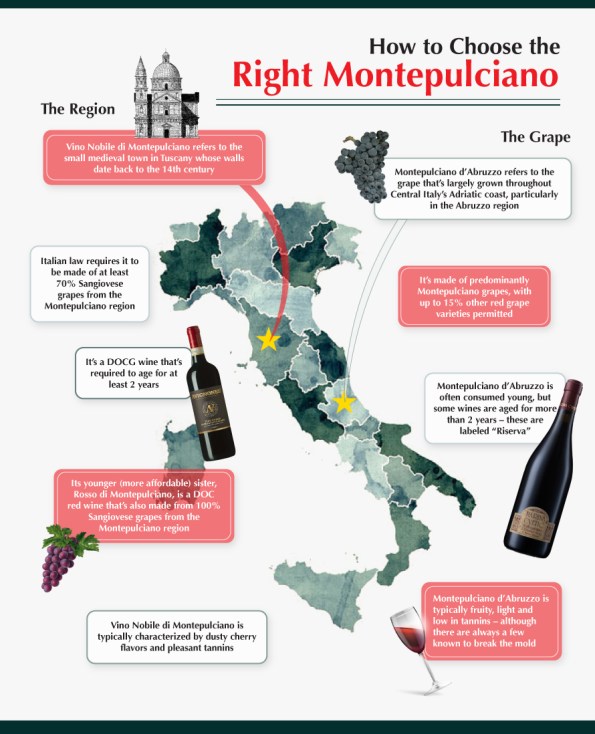
Infographic courtesy of Mosiah Culver
Now, let’s go back to the main question, only let’s ask it in a less controversial way – do you prefer Montepulciano or Vino Nobile di Montepulciano wine? The answer to such a question requires some wine drinking, so let’s fight it off with maybe some of the very best examples of both – Masciarelli Marina Cvetić Montepulciano d’Abruzzo and Avignonesi Vino Nobile di Montepulciano.
Masciarelli Tenute Agricole was established in 1978 by Gianni Masciarelli in San Martino, Chieti Abruzzo. In 1989, Giovanni married Marina Cvetic, who took over winemaking duties. Today Marina overseeing about 750 acres of estate vineyards, producing about 2.5 million bottles a year – of course, not only Montepulciano d’Abruzzo, but many different wines – you can find more information here.
The wine we are tasting today, Masciarelli Marina Cvetić Montepulciano d’Abruzzo Riserva, is a flagship wine, which won numerous accolades from the critics around the world, and it is definitely a beautiful example of how good Montepulciano wine can be.
Avignonesi estate was founded in 1974, and the Avignonesi family was instrumental in helping the regions to obtain DOCG status and promote Vino Nobile wines worldwide. From 2009, the estate, which comprise today 495 acres of vineyards in Montepulciano and Cortona appellations and produces about 750,000 bottles per year, is owned by Virginie Saverys. She works tirelessly to convert the estate to organic and biodynamic winemaking, and Avignonesi is expecting to get its organic certification in 2016. You can learn more about the estate and its wines here.
The wine we are drinking today is Avignonesi Vino Nobile di Montepulciano, which goes way beyond the requirements of the DOCG and made from 100% Sangiovese sourced from 8 best vineyards of the Avignonesi estate. If you will look at the suggested price ($29), in conjunction with the quality, this wine would easily beat many of its famous Brunello neighbors. Many critics also concur, as the wine repeatedly gets high scores and makes to the various “Top” lists.


Here are my notes for these two wines:
2011 Masciarelli Marina Cvetić Montepulciano d’Abruzzo Riserva (14% ABV, $28, 100% Montepulciano, 12/18months in oak barriques, 100% new)
C: dark garnet
N: cherries, tar, roasted meat, undertones of sage
P: sweet cherries, perfume, open, layered, clean, good balance, very approachable and ready to drink from the get go
V: 8/8+, sexy, luscious and delicious
2013 Avignonesi Vino Nobile di Montepulciano DOCG (14% ABV, $29, 100% Sangiovese, 12 months French barriques, 6 months large Slavonian oak casks, 6+ months in the bottle)
C: brilliant ruby
N: herbs, sage, hint of black fruit, restrained
P: sweet and tart cherries, earthy, leather, touch of cherry pits, touch of tannins, good balance. Very long finish with fruit dominating.
V: 8. surprisingly ready to drink (unlike some Vino Nobile which I had before). Classic Italian wine all around, with finesse.
As you can tell, I really liked both wines, probably hedging a bit more towards Montepulciano d’Abruzzo – these are very well made wines, different and excellent in its own right – and by the way, both would perfectly brighten up your holidays :).
What do you think? Which Montepulciano would you prefer, not only from these two wines but in general? Cheers!
Restaurant Files: TerraSole Restaurant in Ridgefield, CT – Beyond Traditional Italian
When it comes to the so-called “tableclothed” restaurants in the USA, Italian restaurants are the most popular category (Italian cuisine is the third most popular overall, as you can’t beat Chinese restaurants, present at least on every other block in our cities and towns). With such a popularity comes a question – how can you differentiate yourself? Every Italian restaurant can serve fried calamari, mozzarella sticks and penne alla vodka – and this is what people want, the traditional comfort food. But you want people to come back to your restaurant, so you want to keep the tradition, but make the dining experience memorable – how can this be done?
Talking about “how”, I have an example for you – TerraSole Cheese Wine Bar Ristorante in Ridgefield, Connecticut. The restaurant serves food which is unmistakably Italian, with heart and soul, but the word which comes to mind to describe it is elevated – from ingredients and preparation (for instance: 85% of the pasta is made at the restaurant, 15% is imported directly from Italy) to the presentation of all the dishes – I tried my best with the pictures below to give you an idea – the pictures might not do the justice to the food, so you might need to visit restaurant on your own.
I visited TerraSole few month back with the group of bloggers, with the torrential rain pouring outside (was well soaked by reaching inside from the parking), so I forgot to take any interior pictures which I like to start the post with – and thus let me just jump straight to the food. Well, no, the drinks first.
The restaurant offers a nice selection of the cocktails. We started with the cocktail called Chanel #6 (Kettel One vodka, Prosecco, Chambord, Pineapple juice) which was refreshing and not very sweet, something I always appreciate in the cocktail.


The restaurant owner, Pietro Polini, pre-selected the wines for our dinner, which I definitely appreciate. For the white, we had 2015 Cantina Terre del Barolo Roero Arneis, which was excellent, with a nice fuller body and touch of sweetness. I don’t drink Arneis all that often, but this wine was definitely a notch above any other Arneis wines I tried before. For the red, we had a few different wines, and 2015 Vecchie Terre Zensa Primitivo Puglia was my favorite – perfect balance, nice dark roasted berries, espresso, mint – an excellent wine overall (looks like the wine was imported directly from Italy as wine-searcher can’t find it anywhere in the USA).
Now, let’s talk about food. There were lots and lots of food. Imagine that proverbial Italian mother, making sure you will eat well – Pietro Polini played her role, making sure we will fully experience what TerraSole got to offer. Here is my usual warning for this type of posts – if you are hungry, please stop right here, or proceed at your own risk.
I tried to format all the food notes alongside the menu as it was presented to us. But even with such a huge menu, it still didn’t include all the dishes served. We actually started with Charcuterie, which is excellent at the TerraSole restaurant, and features lots of tasty options – I’m including two of the menu excerpts so you will see it for yourself:


I love the idea using cut up corks as a pointers to what we are eating. And everything which was on that Charcuterie board was delicious – creamy La Tur cheese, spectacular Humbold Fog, Duck Prosciutto and every other piece of cheese and meat.
After Charcuterie, the dinner proceeded with the selection of Antipasti:


antipasti
BURRATA CAPRESE
Imported black truffle Burrata, imported Prosciutto San Daniele aged 16 months, organic tomatoes, roasted peppers, shaved Parmigiano Reggiano, shaved black truffle topped with truffle balsamic drizzle
INSALATA DI GRANCHIO
Salad of Alaskan King Crabmeat, red quinoa, fresh Fava beans, avocado, organic multicolored tomatoes
POLPETTE
Sicilian Eggplant & Porcini veggie balls served with San Marzano tomato sauce and shaved Ricotta Salata
From this selection, Burrata was excellent, and I really liked the Polpette, which was unusual and tasty.
Next up – couple of salads:


insalate
INSALATA DI CAVOLETTI
Shaved miniature Brussels sprouts salad tossed with toasted hazelnuts, crispy imported Pancetta in a truffle Parmigiano vinaigrette with Westfield goat cheese croquettes
CESARE
Grilled organic baby artisan romaine heart with creamy Parmigiano dressing, Parmigiano crisp & Grissini
Shaved Brussels sprouts salad had truffle vinaigrette, which translated into an incredible flavor – I didn’t know truffles would work so well with the brussels sprouts. And Caesar salad with grilled Romaine hearts was a pure standout, simply fantastic. I have to honestly admit – I tried to grill so Romaine hearts on my own, and failed – but this is definitely something worth mastering.
This is an Italian dinner, so it is time for pasta!


farinacei
PAGLIA E FIENO CON CARNE MISTE E FUNGHI
Homemade yellow and green fettuccine with mixed braised meats and organic Japanese mini mushrooms
CAVATELLI CON SALSICCIA
Homemade Cavatelli infused with broccoli rabe, baked hot with and sweet sausage and San Marzano tomato sauce topped with whipped Ricotta
PASTA DI GRANO ARSO CAPRESE
Imported Grano Arso pasta made with “burnt” semolina grain, tossed with roasted organic eggplant, San Marzano cherry tomatoes, basil & imported truffle Burrata
Homemade fettuccine dish was nice and light, Cavatelli had an amazing flavor, excellent texture and a bit of the spicy kick – all three dishes were delicious.
And finally the main course – various types of grilled meats, seafood and chicken:


secondi
GRIGLIATA DI CARNE
Platter of grilled meats: lollipop rack of veal, lollipop rack of lamb, sliced skirt steak, duck breast and Luganica sausage, served with Shishito peppers and marble potatoes
GRIGLIATA DI PESCE
Grilled seafood platter: Branzino, head-on Maya prawns, calamari, King salmon, fresh Maine lobster finished with lemon, cold pressed EVOO, local farm vegetables
POLLETTO DELLO CHEF
Panko crusted organic chicken breast wrapped around Prosciutto, wild baby arugula & Truffle Burrata cheese, finished with natural chicken broth over truffle mashed Peruvian potatoes & sautéed baby spinach
Presentation, flavor and overall execution were perfect on all three main dishes – all three were simply a “wow”.
You don’t expect us to leave without the desert, don’t you?


Espresso was perfect (it is generally expected, but often not the case), and profiterole together with the chocolate liquor was a perfect finish for the delicious meal.
I really would like to thank Pietro Polini for the delicious meal. And for all of you, my friends, if you will happen to be any anywhere in a proximity of Ridgefield in Connecticut, and craving a delicious, creative Italian food, TerraSole is definitely the place to visit. Cheers!
TerraSole Ristorante
3 Big Shop Ln
Ridgefield, CT 06877
Ph: (203) 438-5352
http://terrasoleridgefield.com/
Trader Joe’s Merlot Run
As some of you might know, I can never pass on visiting the local Trader Joe’s when traveling – as long as it offers wine (which seems to be the case so far in the most places I visit). Last week I was in Santa Clara in California, so the trip to the nearby Trader Joe’s was unavoidable.
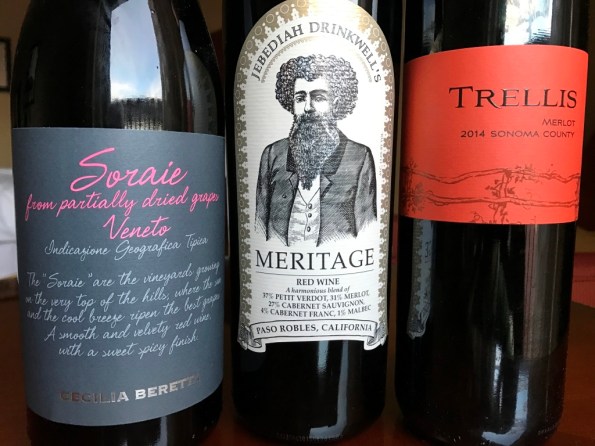 Deciding on what wine to buy at Trader Joe’s is difficult. I always take price into account, but then there are lots of wines in the same, super-reasonable prices range of $5 -$8. The next option is the label – yes, I’m a sucker for creative labels, and then, of course, the region comes to play.
As I slowly walked along the wine shelves, the label of Jebediah Drinkwell’s caught my eye – it was strangely attractive – plus I like Meritage wines, so it was an easy decision. I picked up Trellis Merlot because it was a Merlot (and October is a Merlot month) – and I was really curious to see what $4.99 can buy you from Sonoma. Cecilia Beretta was the third bottle I got – wanted to go outside of California, and “Partially dried grapes” always sounds like a music to me.
Looking at the wines later on, the idea of #MerlotMe dedication came along – would all these wines be Merlot based? To my delight, in addition to the 100% Merlot from Sonoma, two other wines also had substantial Merlot content, so here you go my friends, a Merlot run at Trader Joe’s.


Here are my notes:
NV Jebediah Drinkwell’s Meritage Red Wine Paso Robles ($5.99, 37% Petite Verdot, 31% Merlot, 27% Cabernet Sauvignon, 4% Cabernet Franc, 1% Malbec)
C: dark Ruby
N: touch of smoke, roasted meat,
P: soft fruit, blackberries, tobacco, good acidity, medium-long finish
V: 7+/8-, quite enjoyable
2014 Trellis Merlot Sonoma County (14.5% ABV, $4.99)
C: garnet
N: restrained, distant hint of cassis, herbs
P: soft, round, cassis, good acidity
V: 7+, excellent QPR
2014 Cecilia Beretta Soraie Veneto IGT (14% ABV, $7.99, 40% Merlot, 30% Corvina, 20% Cabernet, 10% Croatina, grapes dried for a few weeks before pressing)
C: dark garnet
N: touch of blueberry pie, quite restrained
P: touch of blueberries, tobacco, hint of dried fruit, good power but round, soft tannins, medium finish
V: 7+, will work well with food – pasta with some hearty tomato sauce would be perfect
As you can tell, it is pretty amazing what $18 can buy you at Trader Joe’s. Also, it is my second experience with non-vintage wine at Trader Joe’s, and I’m definitely impressed with the quality of that wine.
Do you buy wines at Trader Joe’s? Any interesting finds you care to share? Cheers!
Fall in Montefalco: Revisiting Beauty of Montefalco Rosso and Power of Sagrantino
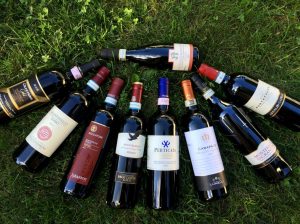 History of the grapes is full of mistaken identity cases, survival fights, global dominance going nearly extinct – yes, these are the grapes I’m talking about, not people. There are also “lost and found” stories, as in the case of Sagrantino, the Italian grape from Umbria. Sagrantino was a very popular grape for more than 500 years – until it practically disappeared in the 1960s, and made almost miraculous comeback due to the effort of the few passionate winegrowers.
My first meaningful encounter with Sagrantino wines took place 3 years ago, when I participated in the virtual tasting of the wines from Montefalco – Sagrantino’s growing region in Umbria. I don’t want to repeat everything I learned about Sagrantino the last time, so please take a look here for some interesting fun facts about Sagrantino (for instance – did you know that Sagrantino has the highest polyphenol concentration among all commonly used red grapes?).
Two groups of red wines produced in Montefalco. One is Montefalco Rosso DOC, where it is required that the wine would have at least 70% of Sangiovese, up to 15% of Sagrantino and up to 15% of the other red grapes (however, these percentages are changing). The second one is Montefalco Sagrantino DOCG, with the wines made out of 100% Sagrantino grapes. Montefalco Sagrantino DOCG also includes production of the sweet Passito wines – as you would expect, after harvest, the grape bunches are left to dry on the mats for at least 2 month, before pressing and fermenting together with the skins. High tannin content helps to alleviate the sweetness of the wines.
Our tasting, very appropriately called “Fall in Montefalco”, was conducted in the virtual format, with the group of 9 winemakers presenting their wines remotely from Italy. Live Q&A discussion was accompanying the tasting via the Ustream channel (take a look at the live feed to the right).
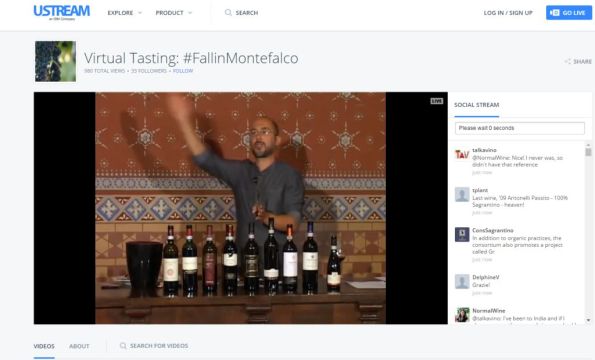
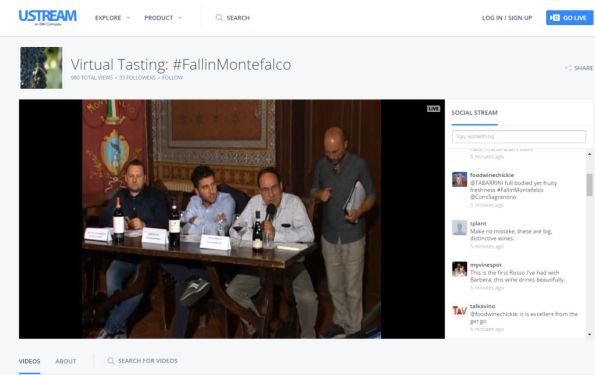
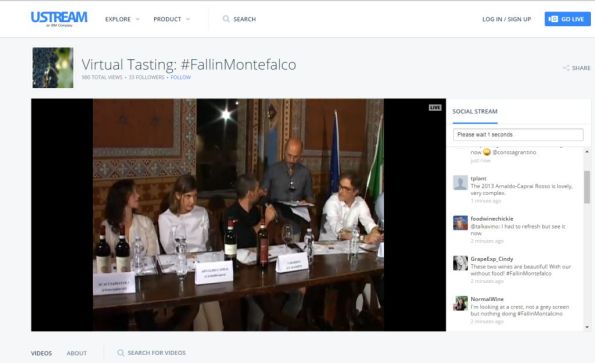
Few interesting facts from this presentation: There are currently 700 hectares (1750 acres) of Sagrantino planted in Montefalco, and there are 70 wine producers in the region. Current production of Montefalco Sagrantino is about 1.3M bottles, and Montefalco Rosso is about 2.2M. Someone asked one of my favorite questions of all the producers in the studio – what is the oldest vintage of Sagrantino you have in your cellars? Going around the room, this is what I was able to capture (as usual, it is hard to follow presentation and chat with people at the same time) – the oldest vintage Custodia has in the cellar is 2003, Arnaldo Caprai still has 1979 Sagrantino; Tabarrini’s oldest is 1996 and then 1999.
Before I leave you with my tasting notes I can say that overall, the wines in the tasting showed nice improvement, comparing with the wines we were drinking 3 years ago – you will also see it in my ratings, which are also higher across the board. Also as you will see from the notes, I have a sweet tooth – and not afraid to show it – Passito was my favorite wine in the tasting. Don’t get me wrong – again, all the wines were excellent, and if I have to use one word common description, the word would be “elegant”.
Here are my tasting notes:
2013 Broccatelli Galli Montefalco Rosso DOC (13.5% ABV, $19, Sagrantino/Sangiovese blend)
C: dark Ruby
N: cherries, herbs, touch of minerality
P: bright tart cherry, leather, tobacco, cherry pit, medium body, easy to drink
V: 7+/8-, simple and nice, would work well with food
2013 Arnaldo Caprai Montefalco Rosso (14% ABV, $21, 70% Sangiovese, 15% sagrantino, 15% Merlot)
C: dark garnet
N: beautiful, open, inviting, red fruit
P: warm, spicy, velvety, medium body, front tannins on the finish, leaves surprisingly light perception. Touch of characteristic leather.
V: 8/8+ (definitely 8+ on a second day, very round and elevated)
2012 Scacciadiavoli Montefalco Rosso DOC (14.5% ABV, $20)
C: Dark garnet
N: herbs, sage, touch of cherries, restrained
P: medium body, good acidity, leather, cherries and cherries pit, soft, polished, easy to drink, soft tannins, very round overall, medium finish
V: 8, was perfect PnP wine, delicious and makes you crave for more
2013 Tabarrini Boccatone Montefalco Rosso DOC (14.5% ABV, SRP $28)
C: dark garnet
N: intense, sweet plums and cherries, sandalwood, complex
P: complex flavors, lots going on, cherries, earth, nice tart, soft, supple, layered, spicy notes
V: 8/8+, will evolve with time
2011 Perticaia Montefalco Sagrantino DOCG (14.5% ABV, $55)
C: dark garnet, practically black
N: ripe red fruit (restrained), baking spices
P: tart cherries, velvety, firm structure, full weight in the mouth, full bodied, very present, “Rutherford dust”, cherry pit mid palate
V: 8+, delicious powerful wine – if you like powerful wines
2006 Tenute Del Cerro Còlpertone Gold Montefalco Sagrantino DOCG (15% ABV, $50)
C: garnet with brick hue
N: cherries, eucalyptus, oregano, intense, balsamic
P: round, layered, earthy, cherries, medium to long finish, powerful, excellent balance, another 10 years to evolve
V: 8/8+, delicious
2010 Tenute Lunelli Carapace Montefalco Sagrantino DOCG (15% ABV, $35)
C: garnet
N: earthy, herbaceous, touch of cherries, medium intensity
P: round, fresh, open, cherries, tartness gets a bit in the way, but wine is very enjoyable from the first pour and sip. Long finish.
V: 8+, excellent
2010 Terre De la Custodia Montefalco Sagrantino DOCG (14.5% ABV, $45)
C: bright garnet
N: barnyard, medium intensity, ripe plums, roasted meat
P: crushed berries, acidity, tannins jump in quickly, very enjoyable but needs time
V: 8/8+, delicious Italian wine, will open up in about 10 years…
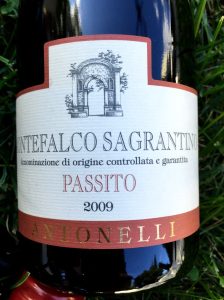
2009 Antonelli Passito Montefalco Sagrantino DOCG (14% ABV, $49)
C: dark garnet, almost black
N: dried fruit, figs, raisins, delicate – not overpowering
P: wow. And another wow. Dried fruit, but perfectly restrained. Cherry pit, tannins, acidity, tartness. Perfect balance, and very try finish.
V: 9, needs time, superbly delicious and enjoyable as it is, but will evolve amazingly…
That was an excellent tasting, I’m glad to be a part of the Fall in Montefalco.
What is your experience and opinion of Sagrantino wines? Cheers!
Color of the Bubbles – Mine Were White, Grey and Black
 More than 3 years ago, an interesting tradition was born in the world of wine blogging (a brainchild of The Drunken Cyclist, with the help of the supporting cast of characters) – the Monthly Wine Writing Challenge. Every month or so, wine bloggers en mass subject themselves to the masochistic practice of taking a random word and creating a soulful connection from that word to the beloved world of wine – all of it on a tight deadline.
Writing a post for the Monthly Wine Writing Challenge (MWWC for short), I always want to put out a regular post, and then at the end, simply state “and by the way, this was written for the MWWC, ha”- just to show how easy it was. Of course, this practically never happens – like today, with the theme of our epistolary exercise been “Bubbles“, and my writing taking place during the very last hour (sigh).
When oenophile hears the word “bubbles”, the first reaction it triggers is “Champagne!”. It gives us such a pleasure to write about the world of “Sparklers” – the ingenuity of Dom Perignon, the resourcefulness of Widow Cliquot, the battles of I-was-the-first-to-make-my-wine-sparkle.
There are many other connections of the bubbles to the world of wines – think about bubbles you see on the surface of the juice during fermentation – those are some bubbles! Or think about simple, tiny bubbles of oxygen, making it through the cork and allowing the wines to age gently and gracefully – these bubbles are critical. And then there are maybe bubble issues for the wine collectors? Will that price of DRC or Petrus ever come down?
Yes, I will take my own, different course, and will not write about Champagne or Sparkling wines. For sure.
Do you believe me? Who said “no”? How did you guess?
Banal or not, but I have a good reason to write about sparkling wines – Prosecco, to be more precise. A few weeks ago, I was offered to review some Prosecco wines. At first, my reaction was “I’ll pass”. But reading the email more carefully, my interest piqued. I always thought of Prosecco wines made from 100% of grape called Glera (yes, there are few exceptions, like Bisol, but just a few). These three Prosecco wines were all blended – Processo DOC rules allow up to 15% of other grapes in the blend – and the blends were all unusual, so the intrigued brain said “why not”?
As we are talking about Prosecco, I need to share some fun facts with you – who doesn’t like statistics, right?
French Sparkling wine and then Champagne had been around for a bit less than 500 years. Prosecco’s history is only a bit longer than 100 years, and only in 1989 (27 years ago!) Prosecco made it for real outside of the Italy (here is the link to my post about it, in case you are interested in history). However, according to Nielsen report, Prosecco sales in US in 2015 grew by 36% (Champagne – 8%). In 2015, Italy produced its largest Prosecco crop ever with 467 million bottles – that is triple of only 7 years ago; out of this amount, 48 million bottles were exported to the US – and still US is only #3 importer of Prosecco behind UK and Germany.
Moving right along, let me decipher a cryptic title of this post for you (not that you cared much, right?).
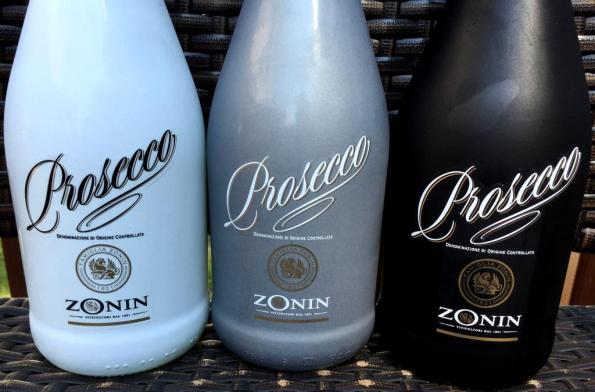
Zonin family got into the wine business in 1821, almost 200 years ago. Now in the 7th generation, the family manages about 5,000 acres of vineyards, mostly in Italy. Zonin had been making Prosecco for the very long time, but considering the ever growing interest, they decided to offer a new line of Prosecco wines, called “Dress Code”, suitable for different mood and a company. The “Dress Code” colors include white, grey and black, so you can wear a different color every day. Of course, these are only colors of the bottles, nobody added squid ink to the wines… yet? Hmmm, note to self…
Here are the notes for the wines I tasted:
Zonin Prosecco White Edition Prosecco DOC (11% ABV, SRP $16.90, 91% Glera and 9% Pinot Bianco cuvée): simple overall. On the nose, touch of white fruit. Good creaminess on the palate, touch of white fruit, very restrained, good acidity, but again, overall is a very muted expression. 7/7+, Decent everyday glass of bubbly.
Zonin Prosecco Grey Edition Prosecco DOC (11% ABV, SRP $16.90, 87% Glera and 13% Pinot Grigio cuvée): white stone fruit on the nose, white flowers. Palate: light, creamy, effervescent, refreshing, distant hint of sweetness, round, good acidity. 8-, nice upgrade from the “white”.
Zonin Prosecco Black Edition Prosecco DOC (11% ABV, SRP $16.90, 90% Glera and 10% Pinot Noir cuvée): promising touch of fruit with lemon and rocky minerality on the nose. Perfect acidity, elegance, finesse on the palate, touch of white stone fruit, lime and noticeable nutmeg. Most elegant out of three, a “little black dress” if you will. 8/8+, one of the most elegant Prosecco I ever had.
So, what color are your bubbles? My favorite was black. Cheers!
This post is an entry for the 27th Monthly Wine Writing Challenge (#MWWC27), with the theme of “Bubbles”. Previous themes in the order of appearance were: Transportation, Trouble, Possession, Oops, Feast, Mystery, Devotion, Luck, Fear, Value, Friend, Local, Serendipity, Tradition, Success, Finish, Epiphany, Crisis, Choice, Variety, Pairing, Second Chance, New, Pleasure, Travel, Solitude
Daily Glass: Not Your Mother’s Pinot Grigio
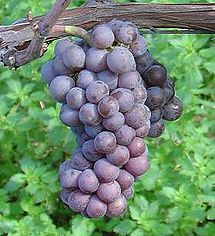
Pinot Gris grapes. Source: Wikipedia
Of course I don’t know your mother, and of course I don’t know her wine preferences. But assuming a general motherly image, cue in a hot summer day, I would make a pretty safe bet that refreshing beverage in the glass in her hand is a white wine. Continuing playing it safe, I would expect that white wine to be very easy to drink, unoffensive and simple, so traditional Pinot Grigio (think Santa Margherita) would perfectly fit the bill.
Now, what do you think would happen if after crushing the grapes, the juice will be left in the contact with skins for, let’s say, 24 hours? Yes, of course Pinot Grigio is a white wine, at least typically it is. But to give you a little hint, take a look at the picture of the grapes – this are not random grapes, these are exactly the Pinot Grigio grapes – or as they are known throughout the most of the world, Pinot Gris. Gris here stays for “gray”, this is how we can perceive the color of these grapes.
With this little hint – what do you think now about that juice left in contact with the skins for 24 hours? If you said that you expect it to gain some color, you are absolutely right. Here is an example of an end result for you:
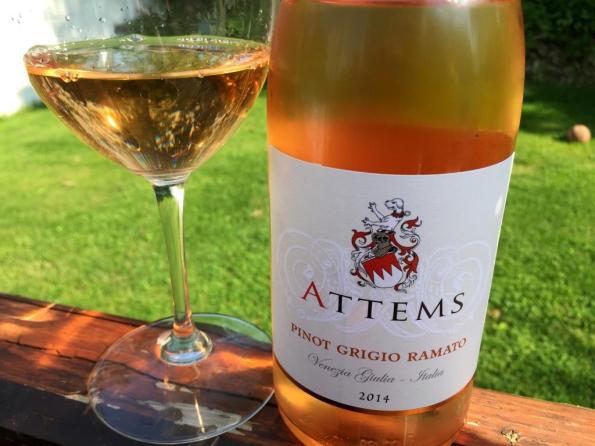 Isn’t it beautiful? The 24 hours of skin contact gave this wine this orange hue, which technically makes this wine a part of the “orange wines” craze. I don’t have an intention of getting into the “orange wine” debate, but I can tell you that it is not only the color which is different here. Before we talk about the taste of this 2014 Attems Pinot Grigio Ramato Venezia Giulia IGT (12.5% ABV, $18, 100% Pinot Grigio, stainless steel and barriques), let me give you a short explanation about the name of the wine and its color, from the winery’s web site: “Attems Pinot Grigio Ramato continues a tradition of the Republic of Venice, since “ramato,” or coppery, was the term that referred to Pinot Grigio in contracts. A special vinification practice led to the use of this term: the must remains in contact with the skins for 24 hours and this practice gives the wine a very distinctive coppery hue“.
It was not only the color which was different. The wine had a nose of intense honey, but the palate was dry and crisp – if anything, reminding a lot more of a great Provence Rosé with a hint of strawberries and an onion peel. An excellent and thought provoking wine, whether for the hot summer day or for any day when you crave a nice glass of wine. Drinkability: 8.
That’s all I have for you for today, my friends. White, Rosé, Orange, Red – enjoy whatever is in your glass and happy Independence Day for those in the USA. Cheers!
Passion and Prosecco
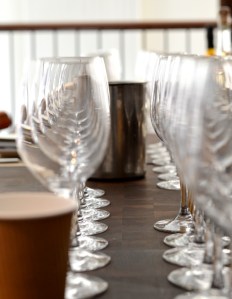 One of my favorite ways to start a conversation is to ask a trivia question, so here it is. We all take Prosecco for granted – if one wants to casually have a glass of wine with bubbles, Prosecco would handily beat any other sparkling wine as a top choice, no matter where in the world you are. Now, for the trivia part: do you know when Prosecco first appeared in London? I will give you few moments to ponder that question. Meanwhile, few basic facts: Prosecco hails from the hills of Veneto, where wines (still wines, it is) were produced for more than 500 years; Charmat-Martinotti method, used in the production of Prosecco, with the secondary fermentation taking place in a steel tank instead of the bottle (“secondary fermentation” is what produces those adorable bubbles), was first created in 1895. So when do you think Prosecco showed up in London?
The answer: 1989. And all due to the tenacity and passion. Bisol family had been producing the wine in Veneto for more than 20 generations (yes, I do call this a passion). When Gianluca Bisol approached his father and said that he wants to bring Prosecco to London, the father’s response was very quick (cue in Italian pronunciation and emotional hand gestures): “you are crazy!”. That didn’t stop Gianluca, and to London off he went. It appears that his father was almost right – selling unknown sparkling wine, door to door, in the downturn economic times, was not going swimmingly well, by any measure. Until a lucky coincidence (well, people would call it “luck”, but we all know that luck usually works best after applying lots and lots of hard, dedicated effort), when at one of the best restaurants in London, Gianluca met wine director who was not only Italian, but also born and raised in the same Veneto region, and was extremely happy to see his beloved Prosecco. As they like to say it in the books, the rest was history. Today, Prosecco outsells Champagne in UK 3 to 1. And annual production of Prosecco hit 540 million bottles in 2015. Just to finish with historical references, Prosecco made it to the US in 1992/1993 (in case you are wondering).
I had a pleasure of meeting Gianluca Bisol at lunch at Marta restaurant in the New York City, and we spend two hours talking, tasting wines and of course, eating tasty food (detailed account follows). This is where I heard the story of Prosecco concurring the UK, as well as many other interesting facts which all together can be summarized in one single word – passion. Passion for the land, vines and wines. Passion for the whole Veneto region. Passion for the traditions which are more than 20 generations strong. But also a passion for the not stopping, for continuing to innovate and to create – new wines and also new wineries.
Our tasting included 7 different wines, out of which 4 were Bisol wines, but 3 were from the winery called Maeli Colli Euganei, the winery which Gianluca helped to start in 2010. Actually the plan was that at the lunch, Gianluca will be joined by Elisa Dilavanzo, the owner of Maeli winery – unfortunately, Elisa got sick and had to stay behind, so Gianluca had a duty of representing both wineries – which he completed with flying honors, as you can imagine.


We started our tasting with 2014 Maeli Fior d’Arancio DOCG Sweet (6% ABV, SRP $27, Residual sugar 115 g/l, 100% Fior d’Arancia, a.k.a. Yellow Muscat) – nice sweetness, clean, minerality, beautiful sweet nose, bright white fruit, nice honey notes. The grapes for this wine come from volcanic soils, which gives it an interesting complexity, saving it from been “one singular note sweet bore”. It is not surprising that last year this wine was selected as “Best in Class” by Tom Stevenson in the UK in the sweet sparkling wines category. Another interesting fact is that in 2015, Maeli winery started Maeli Chef Cup competition, which will be now an annual event, where world-renown chefs compete to create the best dish pairing for Maeli Fior d’Arancia – if you are interested, here is the link detailing the 2015 competition.
Our next wine was NV Bisol Cartizze Valdobbiadene Superiore di Cartizze D.O.C.G. Spumante Dry (11.5% ABV, SRP $42, Residual sugar 23 g/l, 100% Glera) – some sweetness on the nose, but body very restrained, creamy mouthfeel, delicious aftertaste, beautiful supple palate. The wine can age – Gianluca had an opportunity to taste 20 years old Bisol Cartizze wine – it retained bubbles, but obviously acquired aromas of more mature fruit. As you can see, this wine is designated as Superiore di Cartizze D.O.C.G – Cartizze is a single vineyard, 106 hectares (about 255 acres) in size , one of the best vineyards in Italy (most expensive for sure). 139 families own parcels of the Cartizze vineyard – Bisol family owns their parcel for 21 generations. The cost of land on Cartizze is $2.5M per hectare, or $1M per acre – not sure if anyone is selling though.
Time to eat something, right? The first two wines were paired with the selection of appetizers:
Suppli Cacio e Pepe (Risotto Croquettes, Pecorino, Black Pepper) – nice crust, tasty, works the best with the wine.
Bietole Ai Ferri (Plancha-seared Forono Beets, Ricotta, Hazelnuts) – good, nice flavor, good acidity, hazelnuts work well to complement the wines.
Nebrodini Arrostiti (Wood-fired Mushroom Salad, Kale, Mustard Greens, Thyme, Lemon) – nice, good flavor.


We continued our tasting with NV Bisol Crede Valdobbiadene Prosecco Superiore D.O.C.G. Spumante Brut (11.5% ABV, SRP $25, Residual sugar 7.5 g/l, blend of Glera, Pinot Bianco and Verdiso). “Crede” is a “type of clay-laden soil with particular characteristics that greatly benefit the grapes”, according to the wine’s tech sheet. The wine had delicious nose, touch of fruit, fine mousse, perfect acidity, crisp, clean finish.
Now we go back to Maeli with our next wine, which was also the only still wine we had in the tasting. 2014 Maeli Colli Euganei Bianco Infinito ∞ Veneto IGT (12.4% ABV, SRP $24, Yellow Muscat 60%, Chardonnay 40%, aged 5 month in steel tanks, 3 month in the bottle) had nice aromatics, touch of lemon on the nose, vanilla, nice complexity on the palate. The name of this wine (infinito) comes from the accident – one of the workers called Elisa to inform her that one of the barrels needs attention, and when she asked which one, he said “infinito”. As she couldn’t understand what the worker was talking about, it appeared that the number “8” was written on the barrel at an angle, and so from there on the wine took the name “infinito”.
Now, the dishes which were paired with these two wines deserve their own commendation. You see, I rarely eat pizza. When I do, my absolute preference is that the pizza would have crisp, crunchy, literally paper-thin crust. This is exactly what I got at Marta – three pizzas, one better than the other (Funghi was my absolute favorite):
Stracciatella (House-made Stracciatella, Basil, Olio Verde) – perfect pairing. Delicious pizza – very thin crust.
Funghi (Fontina, Mozzarella, Hen of the Woods, Hedgehogs, Red Onion, Thyme) incredible, amazing flavor mushrooms and thyme. Great pairing with Bianco Infinito
Porri e Pancetta (Leeks, Bacon, Fontina, Scallion) – great flavor, very good pairing.


Last three wines were truly special and unique – but none of them are available in the US at the moment, unfortunately. 2015 Private Cartizze Zero Dosage Brut Valdobbiadene Superiore di Cartizze D.O.C.G. (second fermentation in the bottle, 12 month on the lees) – first Classic Method sparkling wine from Cartizze, 2015 vintage was bottled 45 days ago, 2011 was the first year of production, 3000 bottles produced in 2015 – classic champagne, yeast, outstanding.
Then we had 2011 Maeli Colli Euganei Rosévento IGT Spumante (12% ABV, Residual sugar 6.9 g/l, 100% Pinot Nero, 36 months on the lees) – another Classic method sparkling wine, yeasty, classic Rosè champagne nose with strawberries, delicious!
The last wine was truly unique – NV Jeio noSO2 Valdobbiadene Prosecco Superiore DOCG Spumante Extra Brut (100% Glera) – this innovative wine was produced without any added sulphur dioxide (hence the name), made specially for the sensitive consumers. The wine is packaged in the clear bottle wrapped into the foil, to protect it from the sunlight (the wine we were tasting was brought by Gianluca directly from the winery, so it didn’t have any foil or labeling, except the small pieces of paper around the bottle’s neck. The wine had an amazing nose, floral with a touch of white fruit, very dry and again, floral on the palate – very unique compared to any sparkling wine I had before. Delicious – you need to try it for yourself (well, you might have to visit the winery for that).


Our last two dishes were Pollo Ubriaco (Chicken Breast, Charred Cabbage, Brussels Sprouts, Fresno Chili, Mint), perfectly executed, and Salmerino (Arctic Char, Crispy Potato Cake, Horseradish Crema) – delicious, potato cakes were outstanding ( I would eat the whole plate alone), and the fish was cooked perfectly.


That’s all I have for you, my friends – a wonderful encounter with passion, great people, unique wines and delicious food. Next time you are in a mood for some bubbles in your glass, Bisol and Maeli offer a great range, suitable for any palate and taste. And even if you are not craving pizza right now, go visit Marta in New York – I’m sure you will be happy. And by the way, feel free to ask your friends if they know when Prosecco was first sold in London – you might become a party star, at least for one night. Cheers!
Marta
at Martha Washington hotel
29 E 29th St
New York, NY 10016
Ph: 212-651-3800
http://www.martamanhattan.com/
One on One with Winemaker: Marcello Lunelli of Ferrari Trento
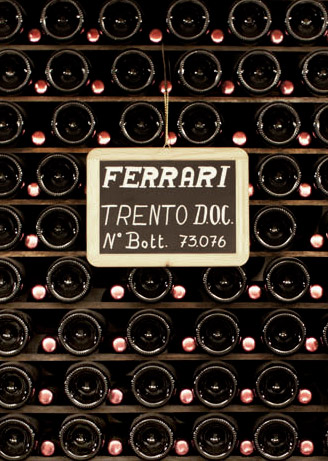
Source: Ferrari Winery web site
I’m sure Ferrari wines don’t need long introduction to any oenophile. Giulio Ferrari started eponymous winery in 1902 in the mountainous region in Northern Italy called Trento. He was the first person in Italy to plant substantial quantities Chardonnay, which he personally brought from France, and then started production of the “Classic Method” sparkling wines, inspired by the French Champagne. In 1952, Giulio Ferrari had chosen Bruno Lunelli to become his successor at the winery, and this was the beginning of the second chapter of Ferrari’s history. The rest is, yes, history, and you can read it for yourself here.
Over the years, Ferrari received numerous accolades, including most recent ones, “Sparkling Wine Producer of the Year 2015” from Tom Stevenson in the UK and “European Winery of the Year” from Wine Enthusiast magazine in the US. I had an opportunity to [virtually] sit down with Marcello Lunelli, Ferrari’s winemaker, and ask him a few questions – you can read our conversation below:
Q1: Ferrari is considered a symbol of the Italian Art of Living. What this “Italian Art of living” concept includes, how would you define it?
A: My family is incredibly proud that Ferrari as a brand is considered a symbol of the Italian Art of Living internationally. Whether it is being served at the Quirinale, home of the President of the Italian Republic, or used to toast celebrated events in the world of fashion, sport, cinema, culture, or design, Ferrari represents that hugely evocative emotional blend of tradition, sense of place, inherent quality, and the poetic virtues of our most cherished way of life.
The Italian Art of Living embodies the passion for beauty, taste and elegance; the ability to embrace innovation while respecting traditions; and a zest for life that is the very soul of the Italian spirit.
I firmly believe that the success of Italian wine is due to a unique love affair that exists in many countries for our way of life, our food, our rich and unique history, and the traditions of our culture. Beauty and pleasure are mutual to one another and Ferrari wines has joined together with fashion and design brands as ambassadors of the Italian lifestyle.
Q2: How is riddling done at Ferrari – still by hand or with use of the machines?
A: In the Ferrari winery we still do 1/3 of the riddling by hand, in particular, all the vintage wines and reserves. The rest is done with use of the machines.
Q3: Typical “house cuvée” at the Champagne house is a blend which might include about a 100 so called Vin Clairs, still wines coming from different vineyards and vintages. Does Ferrari have similar approach in the production of the non-vintage sparkling wines?
A: We do have a similar approach in the production of non-vintage sparkling wines. The biggest work in the vineyards and in the cellar is to keep separate each single homogeneous zone production in order to create the best cuvée.
Non-vintage sparkling wine cuvée includes grapes coming from vineyards within the Trentodoc denomination, which means only in Trentino region and it is created with 70/80 different base wines. Moreover vintage sparkling wine is made with grapes coming only from our own vineyards and it is a result of 40/60 diverse base wines of the same year.
Q4: Ferrari is promoting sustainable viticulture. Do you have any plans to become all organic, or at least to produce an organic wine?
A: One of the core philosophies of the Lunelli Group and Ferrari Winery is the advancement of sustainable practices throughout all our vineyards. We believe that by practicing sustainable farming techniques we not only improve the quality of our wines but protect and preserve our majestic environment and improve significantly the health and safety of our farmers. Indeed we strive to make sustainability a cultural heritage for all of our grape growers.
All of the vineyards owned by my family including those of the Ferrari winery and Tenute Lunelli are cultivated according to organic agricultural principles and in the near future they will all be organic. At the moment we are already producing an organic certified red still wine, Aliotto from our estate in Tuscany.
Q5: Considering that you share common name with the world famous car manufacturer, did you ever try to create a business relationship with Ferrari the car maker?
A: We are glad to share common name with an iconic brand such as Ferrari Maranello and to have a very good relationship with them. We are also proud to have in our photo gallery of famous moments, striking pictures of Grand prix ceremonies celebrated with Ferrari wines.
We both work throughout the world in promoting the very best of Made In Italy.
Q6: What was your most difficult vintage at Ferrari and why?
A: One of the most difficult vintages was 2014 due to a very long and intense rainfall during the growth cycle of the vine which presented a great challenge in vineyard management to ensure healthy grapes for the harvest. It is in a very complex year like 2014 that man, his work and his vision make the difference.
Q7: What is the oldest Ferrari wine you have in the cellar? What was the oldest Ferrari wine you tasted?
A: The oldest Ferrari wines already disgorged are from the sixties, when Giulio Ferrari and Bruno Lunelli were still working in the winery. The oldest Ferrari, still on the lees, is 1972 vintage, which is also the first vintage of Giulio Ferrari Riserva del Fondatore.
I was lucky enough to taste the first vintage of Giulio Ferrari Riserva del Fondatore. It was amazing, well balanced mature notes with an unexpected youth, fruit of our Trentino territory, Trentodoc mountain agriculture which allows for both longevity and youthfulness.
Q8: Do you have a favorite vintage of Ferrari wines?
A: My favorite vintage is Giulio Ferrari Riserva del Fondatore 1995 for two reasons: first of all because it is considered the vintage of the century where power, elegance, longevity and freshness are combined in one single wine and all these factors are in a perfect and unshakeable balance. Secondly this vintage has a personal affection because I had the good fortune to start to work at Ferrari in 1995.
Q9: Do you only use two varieties in the winemaking – Chardonnay and Pinot Noir – or do you use any others, such as Pinot Meunier, for instance?
A: We use Chardonnay and Pinot Noir grapes separately for white wine making in order to create all our 100% Chardonnay Ferrari wines and the Ferrari Perlé Nero, our 100% Pinot Noir, blanc de noirs. For our Rosé we use both the grape varieties: Pinot Noir, using the Rose making-process, which gives body and structure to wines and Chardonnay which provides elegance and freshness.
Q10: Do you produce or do you have any plans to produce still wines?
A: Ferrari Winery creates a remarkable collection of Trentodoc sparkling wines, yet the Lunelli Group also includes a series of elegant and long-lived still wines, under the brand, Tenute Lunelli. This brand embraces wines from three regions, each superbly suited to the production of winemaking grapes: Trentino with its mountain viticulture; Tuscany with the rolling Pisan hills and Umbria which reveals herself in the small, fascinating DOCG of Montefalco. All our still wines are representative of our standards of high quality with the ability to demonstrate the variety of our diverse lands; this is the incredible richness of the Italian wine industry. Respect for the land and sustainability are today common core values in all our brands. Besides the Estates and Ferrari, the Lunelli Group is made up of a distillery, Segnana, a mineral water, Surgiva.
Q11: Do you have any favorite Champagne wines, or any sparkling wines for that matter?
A: Champagne Bollinger and Cuvée Sir Winston Churchill Pol Roger which embody the characteristics I love in sparkling wines; elegance, refinement and longevity.
Q12: When you are not drinking Ferrari wines, what are your favorite wines, from Italy or anywhere in the world?
A: When I do not drink Ferrari I drink my favorite red still wines from Sangiovese grapes and Nebbiolo grapes: Brunello di Montalcino and Barolo. When I choose Barolo I always have discussion with my father because he prefers Barbaresco, with less power but more elegance.
And we are done here, my friends. I think this was quite fascinating and interesting conversation, adding an interesting detail to what you might already know about Ferrari wines – for sure this was very informative for me. I have to admit that I would looooove to try that 1972 Giulio Ferrari Riserva del Fondatore – well, the man can dream, right?
I didn’t have any new wines to taste to leave you with some tasting notes, but if this conversation made you thirsty, here are the links to my older posts about Ferrari Brut Classico and Ferrari Perlé. Cheers!
Vintage Vespa: Podere Brizio Brunello Dinner
Brunello needs no introduction for the oenophiles. Quintessential, coveted Italian wines, coming from the heart of Tuscany, made from the signature Italian grape Sangiovese (Sangiovese Grosso clone, to be precise). Brunello di Montalcino was the first area in Italy which received in 1980 the status of DOCG (Denominazione di Origine Controllata e Garantita), top quality level designation for the Italian wines; Brunello are some of the most expensive wines coming from Italy today, with some of the bottle prices exceeding $500 on the release (Biondi Santi, Soldera). Wines had been produced in Montalcino for a very long time, going back to the middle ages – it is said that King Charlemagne frequented hills and taverns of the beautiful region – however, back then Montalcino was known for its white wine, called Moscadello. In the 1600s, the red Brunello started to take over the Moscadello, and today, most of the people don’t even know that the white wines are produced in the Montalcino region, as it is the powerful reds we all associate Montalcino with.
 Podere Brizio is a relatively young estate in Montalcino, founded in 1996. The estate has about 30 acres of vineyards, practices sustainable viticulture and in the process of becoming certified organic. The grapes are harvested by hand, natural yeasts are used in the winemaking process. Folks at Podere Brizio love the Montalcino history so much that they put “10 Parpagliola coin, coined in 1556 as a symbol of the Republic of Siena in a year in which about 600 noble Sienese families took refuge in the fortress of our town in order to keep the Sienese Republic alive” on the labels of their wines. Podere Brizio produces about 50,000 bottles annually, with the whole production consisting of 3 red wines – Rosso di Montalcino, Brunello di Montalcino and Brunello di Montalcino Riserva.
Now, let’s talk about the dinner, which took place at the restaurant called Vespa in Westport, Connecticut. Not only Vespa offers delicious Italian and Mediterranean food, but the restaurant boasts a wine list which has a lot of unique and interesting wines – when was the last time you saw Erbaluce from Piedmont, Cinque Terre Bianco from Liguria, Frappato from Sicily or a “wine geek special”, Rosso del Contadina from Frank Cornelissen, Sicilian maestro of natural wines? Owner Bobby Werhane has special affinity for the uncommon wines and not afraid to put them on the wine list, which of course makes Vespa a perfect food and wine destination for any foodie and wine aficionado alike – and Vintage Vespa is the series of the wine dinners which serves as a testament to that.
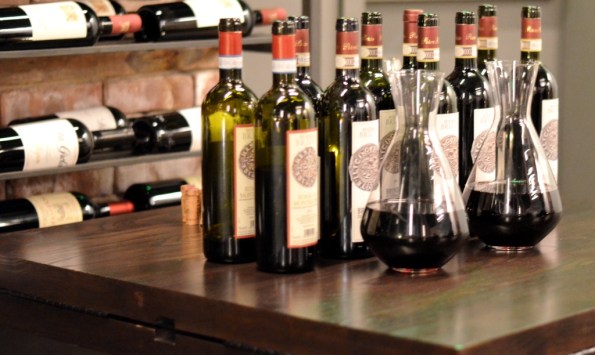
The wines made it into the decanters at some point
We tasted through 4 different wines from Podere Brizio – 2013 Rosso, and Brunello from 2010, 2007 and 2001 vintages, so in essence, this was a vertical tasting. There was one small challenge – the wines were not sufficiently decanted prior to the tasting. Brunello typically are big wines, and they need an ample time in the decanter, or they will not show all its beauty – as you will see from my tasting notes below, this is what happened.
Our dinner consisted of 4 courses. We started with Chicken Liver Pate (Red Onion Mostarda, Toasted Brioche) which had great texture and was absolutely delicious. To my surprise, 2013 Podere Brizio Rosso di Montalcino worked very well with the dish, contrasting the sweet nuances with its tart acidity.
Our second course was Ricotta Cavatelli (Braised Pork Shoulder, Tuscan Kale, Golden Raisins, Toasted Pine Nuts) – again, outstanding, touch of heat and great flavor, hearty and heartwarming (sorry, 2010 was too tight for that, so no pairing notes).


Our main course was Prosciutto Wrapped Veal Tenderloin (Pickeld Sautéed Carrots, Almond Purée) – my notes mostly consist of the exclamation points – wow! flavor! presentation!, so yes, the dish was a treat for the eyes and taste buds alike. After decanting, 2007 Brunello was an excellent complement to this dish, and 2001 Brunello worked very well too.


The desert was outstanding – Coffee Crunch Profiteroles (Mascarpone Cream, Cappuccino Gelato) – imagine a marriage of a classic Profiterole with classic Tiramisu – yep, that was good. And no, we didn’t try to pair the dessert with the wine, we just enjoyed it by itself.
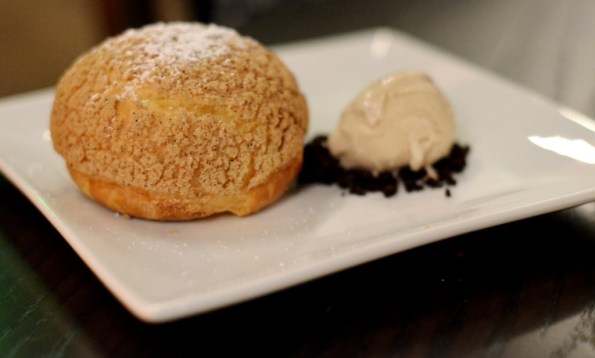 All in all, this was one delicious dinner we have to thank the Executive Chef David White for.
I did my best taking the tasting notes, juggling both delicious food and conversations with other guests, so for what it worth, my tasting notes are below:


2013 Podere Brizio Rosso di Montalcino (13.5% ABV)
C: Garnet
N: Tobacco, earthy undertones, violet
P: Clean acidity, medium body, tart cherries, blackberries, tobacco
V: 7+
2010 Podere Brizio Brunello di Montalcino (14.5% ABV)
C: Garnet
N: Violet, raspberries, blackberries
P: closed. Hint of tart cherries, but not much else
V: the wine was not decanted initially – and this is way too young, needed lots of time in the decanter. No rating.
2007 Podere Brizio Brunello di Montalcino (14.5% ABV)
C: Dark Garnet
N: Touch of plums, but mostly closed
P: Plums, nice tannins, good acidity.
V: 7+, needs time – should be decanted for at least 2 hours
2001 Podere Brizio Brunello di Montalcino (14% ABV)
C: dark Garnet, not a sign of age
N: Intense crushed berries, tar, leather, blackberries
P: Fresh tannins, great acidity, open, vibrant, great concentration and structure
V: 8/8+, just started to open, will shine in 5-10 years.
There you have it, my friends. Delicious food + Great wines = Vintage Vespa. Make sure to keep an eye on Vespa (probably their Facebook page is the easiest) so you will not miss the next wine dinner. Or better yet – head over to the restaurant and just make your own wine dinner – I’m sure you will not be disappointed. Cheers!
Vespa Westport
2A Post Rd West
Westport, CT 06880
Ph:(203) 557-9057
http://vespawestport.com/
Last Bottle Sign Up ($10 credit)




 Talk-A-Vino