Archive
Expanding My Wine Map
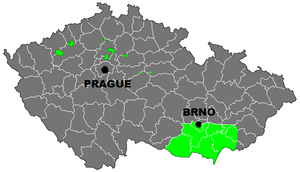
Czech Republic wine regions. Source: Wikipedia
We all have our own versions of the wine maps. This is how we learn about wine, and this is what makes it easier to understand it. “Oh yes,of course – France makes famous wines. California? Absolutely, yes, very famous. Italy? Bellissimo! Spain? Yes, I had a few of those. Australia? I heard about Yellow Tail, right?”. I’m simplifying, no doubts, but I’m sure the picture I’m presenting here is quite fitting lots of wine consumers (no, I’m not talking about you, wine geeks and bloggers).
My wine map would be a bit wider than that – I’m not bragging, but I seek new and different grapes all the time, and with this you are destined to try the wines from Turkey, Greece, Georgia, Croatia and many, many other not-so-well-known places. Nevertheless, my wine map has also plenty of white spaces, and I’m glad to use any opportunity to fill those up.
Last week the opportunity presented itself in the form of the tasting at my favorite local wine store, Cost Less Wines. I was told to stop by to taste the wines made in the Czech Republic. You see, to me, “wine” and “Czech Republic” in one sentence sounded almost like a misnomer. A while back, I visited the Czech Republic (which was known as Czechoslovakia back then), and I can tell you that beer is the very first thing which comes to mind when I think about the Czech Republic – Pilsner, anyone? Well, but it is a free tasting, so after all – why not?


The first wine which was poured was 2014 Templar Cellars Komtur Ekko Pinot Gris. I have to honestly admit that I became a convert after the very first sip – creamy, medium bodied, clean, well structured, with perfect balance of white fruit and acidity – it was on par with the best Oregon Pinot Gris wines, which is my personal hallmark of quality for the Pinot Gris. With such a great start, I was really eager to listen to the explanations.
It turns out that the wine had been produced in Moravia – this is how the area is called – from the beginning of the last millennium! Moravia is centrally located in Europe, for the Romans to use it as their base – and of course wine was part of the culture for them. Templar Cellars proudly shows 1248 on their label – this is when the actual cellars had been built, and this is where winemaking traditions are taking their roots. The wine, of course, is perfectly modern, but I love the medieval look of the labels and even the bottle design – you can read more about Templar Cellars here.
As you can see on the map above, the wine production in the Czech Republic is concentrated in the area down south – that is the Moravia we were just talking bout. Bohemia, up north, also has a bit of the winemaking activity, but it is of course known as a beer capital. Despite the seemingly unimpressive size of winemaking area in the Czech Republic, do you care to guess how many wineries it has? I will give you a little time to think, but whatever you think, take it higher. Yep, and higher.
What if I would tell you that the Czech Republic has about twice as many wineries as we have in the US, would you believe me? Well, it appears that the Czech Republic has about 18,000 wineries. Yes, many of those are simply “Mom’s and Pop’s” operations, but still, they are the independent wineries. Don’t know about you, but I was duly impressed with what I heard.


I was even more impressed after trying two of the red wines. 2013 Templar Cellars Komtur Ekko Pinot Noir was clearly a cold climate Pinot Noir with juicy cranberries at the core and perfect acidity. It is very different from a Pinot Noir from California or Oregon, much lighter, really crispy and crunchy, but with enough body weight to stand up to a powerful cheese or some spicy fish.
2009 Vino z Czech Ludwig Cabernet Moravia was even more interesting. Cabernet Moravia is its own grape, first created in Moravia (hence the name) in 1975, and it is a cross between Cabernet Franc and Zweigelt. It tasted like a classic Cabernet wine, with cassis, mint and eucalyptus, but also with an oversized herbal component. I actually like this line from the official description: “it incorporates all of Cab Franc’s leafy herbaceousness and Zweigelt’s tart, cranberry flavors in a refreshing wine”. Of course as an extra bonus, I’m adding a new grape to my collection.
There you go, my friends – a new region and new delicious wines. I truly love the endless learning opportunities the world of wine is offering to us. Have you ever had wines from the Czech Republic? What were your recent wine discoveries? Cheers!
New and Noteworthy: Two Classic Regions, Three Classic Pairs
I tend to abuse certain words in the conversation, especially when talking on the subject of wine. As you might easily guess, one of such words is “Classic”. I use this word in hope that it is the quickest way to convey my impressions about the wine. For instance, the words “Classic Red Bordeaux” or “Classic White Burgundy” would most likely paint a quick and vivd picture for the most of oenophiles to imagine how the wine actually tastes. While the wine is produced all around the world, such a broad stroke reference can be only applied to the well known and well referred to regions – saying “Classic Red Bio-Bio” (wienmaking region in Chile) or “Classic White Valais” (winemakiing region in Switzerland) would be an empty sound for majority of the wine lovers.
Looking past the regions, we can also apply the word “classic” to the grapes themselves. There are probably 15-20 grapes which can be easily referred to in this way – “classic Cabernet Sauvignon” or “Classic Sauvignon Blanc”, for example, would give you quick pointers to how the wine might taste like. Yes, “Classic Bobal” or “Classic Resi” will leave most of us with no information at all.
As this is not an epistolary exercise on the applications of the word “Classic” in the wine world, let’s get closer to the subject at hand, and talk about few wines in the practical terms. Today I want to talk about 2 classic regions and 3 classic grapes – for sure for those regions. So the classic regions are: California and Oregon. Would you agree that it is easy to refer to these two world renowned winemaking regions as “Classic”? I hope you are nodding. And for the grapes, I also hope you would share my “classic” sentiment – Pinot Noir and Chardonnay from California Napa Valley – aha, I see you smacking your lips. And Pinot Noir and Pinot Gris from Oregon – need I say more?
Talking about the wines from Oregon, the Pinot Noir is of course an uncontested king of the Pacific Northwest of the USA. Commercial Pinot Noir production in Oregon started in the 1960s, and then from the beginning of the 1990s, Pinot Noir from Oregon needed no introduction anymore. With Oregon Pinot Gris, you might argue with my “classic” designation, however, today, you will practically not find a single Oregon winery which will not produce Pinot Gris. Oregon Pinot Gris has its own, easily recognizable style and character, so in my mind, Pinot Gris wines are the “classic” element of the Oregon winemaking.
Thus let me present to you the first two of the “classic” pairs – Pinot Gris and Pinot Noir from two wineries in Oregon: Willamette Valley Vineyards and Pike Road Wines.


Willamette Valley Vineyards was established in 1983, planting Pinot Noir, Pinot Gris and Chardonnay vines where blackberries and plums were growing before. The original Estate vineyard spans 53 acres at the 500 to 750 feet in elevation. Today, Willamette Valley vineyards farms more than 250 acres of vines, including one of the oldest in Oregon, Tualatin Estate, which are all LIVE (Low Input Viticulture and Enology) certified. I had a pleasure of trying Willamette Valley Pinot Gris and Pinot Noir wines earlier in the year, so here are my notes:


2014 Willamette Valley Vineyards Pinot Gris, Willamette Valley, Oregon (12.4% ABV, SRP: $16)
C: straw pale
N: white stone fruit, touch of grass
P: hint of candied lemon, white stone fruit, nicely round, refreshing, good acidity, medium to full body
V: 7+/8-, very pleasant
2013 Willamette Valley Vineyards Pinot Noir Estate Willamette Valley, Oregon (13.7% ABV, SRP: $30, retail: ~$20)
C: beautiful Ruby
N: fragrant, fresh, cranberries with touch of cherries, sweet raspberries
P: wow, lots of fresh fruit – cranberries, raspberries, fresh, super-clean, touch herbal, great restrained finish
8+, one of the most delicious Pinot ever, perfect.
Our second Oregon winery takes its name from the Pike Road, which winds through the hills of Yamhill-Carlton AVA. This is the second winery for the Campbell family, who founded Elk Cove Vineyards in 1974. Pike Road takes advantage of 5 generations of the farming experience, including 40 years of tending the wines.
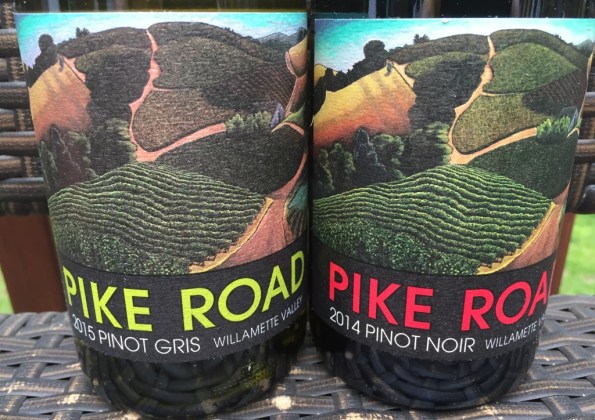


Here are my notes:
2015 Pike Road Pinot Gris Willamette Valley, Oregon (13.5% ABV, SRP: $15)
C: pale greenish color
N: tropical fruit, candied lemon, fresh, intense, inviting
P: crisp, clean, perfect fresh acidity and white stone fruit, creamy. Outstanding.
V: 8-/8, delicious white wine, perfect year around and superb during summer
2014 Pike Road Pinot Noir Willamette Valley, Oregon (13.5% ABV, SRP: $19, 10 month in French oak barrels)
C: dark Ruby
N: delicious. Touch of sweet fruit, open, inviting, raspberries, herbs, super-promising, wow
P: soft, layered, silky, spices on top of traditional smokey profile, triple-wow
V: 8+/9-, wow, totally unexpected and amazing. I know Oregon Pinot delivers, but this far exceeded my expectations. Might be the best QPR for Oregon Pinot Noir in existence. Love rustic labels too.
Our last classic pair comes from the classic of the classics, none less than Napa Valley, and it is Chardonnay and Pinot Noir from Artesa winery. Artesa winery is located in Carneros region of Napa Valley. While Artesa recently celebrated is 25th vintage, their winemaking traditions go way, way, way back – say by another [almost] 500 years. How come? Artesa winery was founded by Codorniu Raventós family from Spain, which takes its winemaking heritage 17 generations back to the 1551. Artesa sustainably farms 150 acres of vines, all Napa Green Land certified, and produces a range of wines, starting with a few sparklers and finishing with another Napa classic – Cabernet Sauvignon. Two wines which I had an opportunity to taste are the new Estate Reserve release from the winery:
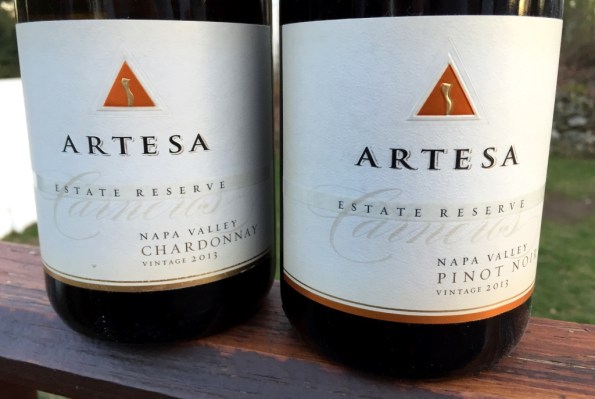
2013 Artesa Estate Reserve Chardonnay Napa Valley (13.9% ABV, SRP: $40)
C: light golden
N: touch of vanilla, hint of butter, white fruit, intense
P: touch of butter, green apples, good acidity, medium to full body, vibrant and balanced
V: 8-, a classic Chardonnay
2013 Artesa Estate Reserve Pinot Noir Napa Valley (14.4% ABV, SRP: $40)
C: dark garnet
N: warm, inviting, sweet plums
P: round, polished, present silky texture, touch of smoke, more plums, minerality, restrained
V: 8-, nice, smooth and restrained
There you have it, my friends – some new and interesting wines worth seeking. And whether they will hit the “classic” note for you – it is entirely your decision. Cheers!
Few World Class Wines, Kosher Too
 What is world class wine, you ask? Well, this question has multiple answers – there is a good chance that every responder will give you a different answer. Heck, I will give you different answer every time you will ask this question. So for today, how about this one: in a blind tasting, world-class wine can be easily mistaken for a wine coming from the well established and world famous wine region. For instance, a sparkling wine which tastes like Champagne. Or Chardonnay which resembles classic white Burgundy. Or a Rosé which tastes like… you know, how about just “delicious”?
How often do you drink Israeli wines? Hmmm, that would actually make it for an interesting “unknown wine regions” survey – note to self. Okay, back to the question, what do you say? I would bet that 9 out of 10 people never had an Israeli wine, and 9.5 out of 10 didn’t even know that Israel produces wine. Which is a shame, as even modern winemaking history (never mind the biblical times) in Israel goes back to 1880s. But of course with ups and downs, Israeli “wines of notice” started to appear in the late 1980s.
Today Israel has more than 250 wineries (depends on who counts, I guess), which includes both large commercial wineries and garage-level productions; israel even sports some “cult wines” – the wines which lots of people want, but can’t get (do the search for the wines produced by Lewinsohn, for instance). About 25% of the Israeli wines are exported, out of which amount about 60% go to the United States, and the rest to Europe and Asia. Most (but not all) wines produced in Israel are kosher – which, by the way, doesn’t take away from the quality of the wines even the tiniest bit – scratch that Manischewitz image and taste from your head, once and for all. While in general Israel might have a very long wine history, the vineyards were never continuously preserved – as the result, absolute majority of the grapes grown in Israel are of international varieties (Cabernet Sauvignon, Chardonnay, Merlot, Syrah, Grenache, etc.), with Emerald Riesling being one of the rare exceptions. Otherwise, Israel produces full range of wines, from Sparkling, Rosé and whites to the Bordeaux and GSM blends and single varietal masterpieces.
Golan Heights Winery was founded in 1983, and the first wine was released in 1984 (well, they vineyards were planted in 1976, so it all makes sense); it might be considered a foundation of renaissance of Israeli wine industry. Today the Golan Heights Winery farms 600 hectares (1500 acres) of vines, which subsequently consist of 28 vineyards and 400 unique parcels within those vineyards. Vineyards are spanning for about 65 km (40 miles), and elevations are ranging from 400 meters (about 1300 feet) to 1200 meters (about 3900 feet). The fruit from each parcel is tended to individually, as you can imagine that growing conditions would be different in such a stretch of the land and with such a difference in altitude. Of course you can imagine that winery makes quite a range of wines.


I had an opportunity to taste a three wines from the Golan Heights Winery and its sister winery called Galil Mountain, which impressed me enough to come up with this “world-class” title for the post. Don’t get me wrong – I had absolutely mind-blowing Israeli wines before, but somehow this Blanc de Blancs put the experience for me to the next level. Here are the notes:
2008 Yarden Blanc de Blancs Brut Sparkling White Wine Golan Heights Israel (12% ABV, SRP $32, 100% Chardonnay, 5 years on the lees, kosher, non-mevushal)
C: pale straw
N: Classic sparkling wine – touch of yeast, hint of Apple, touch of fresh baked bread
P: creamy mouthfeel, fresh acidity, hint of yeast, fresh lemon, fine mousse, perfect balance
V: 8/8+, outstanding, world class sparkler
2014 Yarden Galilee Chardonnay Odem Vineyard Golan Heights Israel (13.9% ABV, SRP $22, 100% Chardonnay, 7 month barrel aging, kosher, non-mevushal)
C: light golden
N: white stone fruit, hay, touch of lemon, candied fruit as wine was warming up
P: plump, full body, vanilla, creamy round mouthfeel, touch of butter, good acidity, fresh.
V: 8-/8, full bodied without heavy butter or oak, more reminiscent of Marsanne/Roussane. What I loved about the wine that it stayed perfectly delicious at the room temperature, which is not an easy fit for many white wines.
2014 Galil Mountain Rosé Upper Galilee, Israel (12.5% ABV, SRP $12, 74% Sangiovese, 23% Pinot Noir, 3% Grnache, kosher, non-mevushal)
C: beautiful, concentrated pink
N: strawberries, minerality, very promising, touch of lemon
P: fresh strawberries, herbs, clean balancing acidity, soft, medium body, very round.
V: 8-, an excellent summer day (or all year around) treat, very easy to drink
Have you had Israeli wines? What do you think of them? Cheers!
Celebrate Malbec!
This very blog exists for more than 6 years, so in my mind, I’m sure I’ve written about pretty much everything, especially when it comes to such a heart-warming subject as grape holidays.
Only it turns out I have not.
Sunday, April 17th is 6th (!) annual celebration of World Malbec Day. So how many times over those 6 special occasions I’ve written a post for the Malbec Day? Aha, you got that. Zero.
Well, this is incorrect. None for the previous five, but we are talking about Malbec today, so the problem is finally fixed.
Thinking about grapes with long and turbulent history, Malbec might be the most prolific example of such. Taking its roots in Middle Ages, being a choice wine of the kings, shining in Bordeaux and all over the France and then literally disappearing from the face of the earth, but luckily, finding its second, and very prosperous life in Argentina – not too many grapes can brag about such an adventurous life. By the way, if you are curious about the events I mentioned here, you can test your knowledge of Malbec with this quiz, or you can just jump straight to the answers.
Starting from the second half of 19th century, Malbec found its new home in Argentina. Consistently dry climate of Mendoza happened to be just what Malbec needed to strive. As there are two sides to everything, the ideal growing conditions lead to overproduction and subsequently dull wines. It was not until the 1980s that Malbec commanded proper attention for the quality instead of quantity, and slowly became one of the darlings of the wine world – depending on who you would talk to, Malbec is considered the hottest wine at the moment. Starting from the bottom of Andes in Mendoza, plantings of Malbec are now extending to the higher and higher elevations, offering new range of expression of already delicious wines.
Argentinian Malbec wines are easy to like for many palates – while appearing big and powerful in the glass with its inky, almost black color, Malbec wines are usually round, soft and mellow, avoiding spikes of tannins and acidity which often upset wine drinkers looking for relaxing glass of wine. Interestingly enough, Malbec from other regions, such as Cahors in south of France, shows totally differently and often offers very forceful personality, so if you are looking for that soft and mellow Malbec, you might want to ask for the Argentinian Malbec by name.
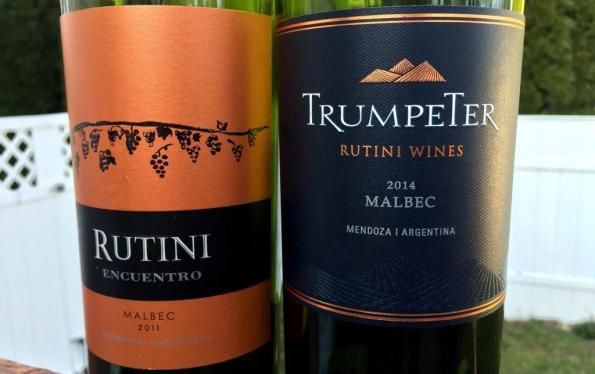
Today I want to bring to your attention two Malbec wines I had pleasure of tasting recently. It is not the first time I’m talking about Rutini wines from Argentina in this blog – here you can find my interview with Mariano Di Paola, winemaker at Rutini wines, as well as tasting notes for few other Rutini wines. Here are the notes for the two Malbec wines:
2014 Rutini Trumpeter Malbec Mendoza Argentina (14% ABV, SRP $11.99)
C: dark garnet
N: freshly crushed fruit, sage, savory notes
P: clean, earthy, tart cherries with hint of licorice, touch of sweet tobacco
V: 7+/8-, nice, refreshing, round, great QPR
2011 Rutini Encuentro Malbec Mendoza Argentina (13.5% ABV, SRP $18.99)
C: dark garnet, inky
N: roasted notes, tar, cherries, warm, inviting, touch of barnyard
P: soft, round, sweet berries, concentrated, good acidity, perfect balance. Became dark and concentrated on the day 2/3.
V: 8, very enjoyable, easy to drink; will evolve with time – you should forget few bottles in the cellar…
Here you are, my friends. Celebrate Malbec, this grape definitely worth your attention. Cheers!
Terrenal: Delicious Kosher Wines, and Great Values Too
What I like about wine world is that many things are changing, and most of them changing for the better. Winemakers around the world are more in tune with the nature, their means and ways are greatly improved, and it shows in the wines. The best testament to that is when you are poured a random glass of wine, you take a sip, you say “ahh, this is good”, and only then you care to look at the label to find out what you are drinking.
Over the past 5-8 years, Kosher wines improved so dramatically that there is no need anymore to defend them and advocate that “they can be good too” – if you are still wondering what Kosher wines are, I can offer you a short crash course in this post. Kosher wines today are definitely in that category I described above – you take a sip, then look at the back label and say “wow, this is actually a kosher wine!” – been there, done that.
When it comes to Terrenal, I knew that these are the kosher wines, but only from the experience – here is the link to the blog post about selection of Terrenal wines which I found at Trader Joe last year, and they were excellent as the wines and simply outstanding as a value.


Few weeks ago I got a sample of two of the new wines from Terrenal. First wine is made out of one of my most favorite red grapes – Tempranillo. The second wine closely mimics composition of one of the Spanish flagship wines – El Nido from Gil family estates, with the same blend of Monastrell and Cabernet Sauvignon in similar proportions. For what it worth, below are the tasting notes:
2014 Terrenal Tempranillo Yecla DO Spain (13.5% ABV, $4.99, 100% Tempranillo, kosher non-mevushal, certified Vegan )
C: dark garnet
N: blackberries, eucalyptus, sage, plums
P: nicely restrained, mouthwatering acidity, fresh fruit, tart blackberries, short finish, easy to drink
V: 7+, nice and simple, will work well with wide range of dishes
2014 Terrenal Seleccionado Yecla DO Spain (15% ABV, $7.99, 70% Cabernet Sauvignon, 30% Monastrell, kosher non-mevushal, certified Vegan)
C: dark garnet, almost black
N: sweet plums, hint of cinnamon, nutmeg, mocha
P: polished, round, restrained fruit, silky mouthfeel, hint of chocolate, good structure.
V: 8-, excellent wine, easy to drink and “dangerous”. Will evolve in 4-5 years.
Here you go, my friends. Two very tasty wines with an unbeatable QPR and a number of bonus points – Kosher and Vegan. Terrenal Seleccionado will not match El Nido in the extraction level and concentration, but $7.99 versus $150+ puts it in a very interesting perspective. Yes, of course, conduct your own experiment – get a bottle of each and taste them blind side by side – I wounder what you would think.
The only challenge might be that the Terrenal wines are only available at Trader Joe’s stores, at least in the United States, so if you have one close by, you are in luck. If you will see them anywhere else, please comment so the others would know where to look for them. Happy [Kosher, Vegan] value wine hunting. Cheers!
Daily Glass: 17 Years Old Beauty
 Absolute majority of the 17 years old are beautiful. Well, at least when it comes to the people. With the wines, this can be a different story. 17 years old in the wine terms is quite an age – some of those 17 years old are slender and muscular, and some are flabby, tired, and barely stand on their feet. And the beauty of the wine is that you can’t know how the wine will be – until you get the bottle opened.
I have to admit that I had no expectations before opening this bottle of 1998 Shiraz from Australia. Aged Australian wines are hard to come by in US, thus I have very little experience with that class of wines. And having no expectations around the wines is generally good, as it often saves you from disappointment. However, I’m sure that you deduced from the title of this post that there was nothing disappointing about my experience.
Dutschke family owned the parcel of land with a few vineyards on it in Barossa valley in Australia since the end of the 19th century. In the late 1900 the grape plantings increased, with most of the grapes been sold to the other wineries. The first wines under the Dutschke name were produced only starting in 1990. Which makes the wine which I opened today one of the early wines produced at the winery.
As I opened the bottle of the 1998 Dutschke St. Jakobi Shiraz Barossa Valley (15% ABV, $25?), the first nice observation was perfect condition of the cork – not a sign of age. The color was very dark garnet – again, not a sign of age. And the smell – wow – concentrated fresh berries, lavender, sandalwood – bright and uplifting. Then the best part – the wine needed no breathing time. Pour, sip and enjoy the exuberance of the fresh berries, savory herbs, dark power, perfect structure, clean acidity and perfect balance. If I wouldn’t check the label, I would’ve never known the wine was 15% ABV – overall, it was perfectly integrated and perfectly enjoyable (Drinkability: 8+/9-). And then the wine just was.
Wish you lots of small pleasures this holiday season. Cheers!
How Do You Spell “Delicious” in Italian? Marchesi de’ Frescobaldi Might be a Good Answer
Virtual tastings are always fun. For sure for the conversation and learning part. And of course the best part is while your conversation is virtual, tasting of the real wines. As always with wines, you like some, and some you don’t (OMG, I let the cat out of the bag!!!). And sometimes you are simply blown away.
The tasting of wines of Marchesi de’ Frescobaldi was the latter. As a young oenophile, I heard about the wines of Machesi de’ Frescobaldi, a 700 years old winemaking family, for the first time in the early 2000, when I read an article in Wine Spectator, profiling Italy’s “big three” – Antinori, Banfi and Frescobaldi. However, until a few days ago, I wouldn’t claim that I had any real encounter with Frescobaldi wines.
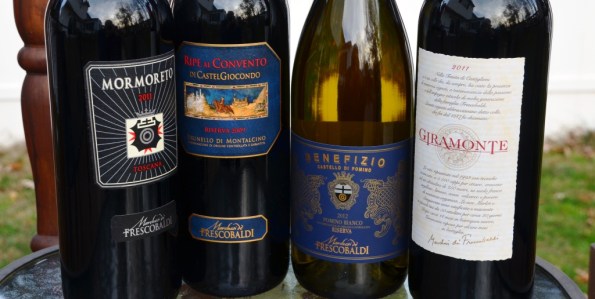
I guess there was a certain element of luck that my acquaintance with Frescobaldi wines started from their single vineyard, or so called “CRU” wines. Nevertheless, to be literally blown away by 4 wines out of 4 in the tasting is not something which happens often. I had plenty of single vineyard and high-end wines which left me simply indifferent. These 4 wines of Marchesi de’ Frescobaldi had me say “wow” every single time I had a sip.
I will not inundate you with the history of the winery or any other facts – you can read that at your leisure at the winery’s web site. However, each wine we tasted is unique in its own ways – and this is something I want to share with you here. Below are my tasting notes, including the interesting facts I pondered across. Here we go:


2012 Marchesi de’ Frescobaldi Pomino Bianco Benefizio Riserva DOC (13% ABV, $45, 100% Chardonnay)
C: light golden
N: classic – light touch of butter, vanilla, apples, delicious and inviting
P: delicious. Golden Delicious apple, touch of vanilla, touch of lemon, crisp acidity on the finish, perfectly lingering.
V: 8+/9-, a treat. Would compete with any white Burgundies in elegance, and has great aging potential
Interesting wine notes: Chardonnay was planted by Frescobaldi in 1855. In 1878, Pomino was awarded Gold medal at Paris Exposition. Benefizio was produced in 1973 from the vineyard with elevation 700 meters (2,200 feet), and it was the first barrel-fermented wine in Italy.
2011 Marchesi de’ Frescobaldi Mormoreto Toscana IGT (14.5% ABV, $79, 64% Cabernet Sauvignon, 26 % Cabernet Franc, 5% Petit Verdot, 5% Merlot)
C: dark garnet
N: dark fruit, plums, eucalyptus, hint of dark chocolate, intense, warm and inviting
P: spectacular. Firm, structured, black currant, chewy tannins, soft and powerful at the same time. Medium-long finish.
V: 8+, a “wow” wine. Would easily go up against any Bordeaux
Interesting wine notes: The vineyard of Mormoreto started in 1976 (while Cabernet Sauvignon, Cabernet Franc, Petite Verdot and Merlot had been growing there for 150 years), with the first harvest in 1983. The name “Mormoreto” means “murmur” in Italian – the constant breeze from the valley makes vine leaves to move all the time, creating soft and gentle “murmur” sound. The wine is only produced in most favorable years.


2011 Marchesi de’ Frescobaldi Giramonte Toscana IGT (14.5% ABV, $150, Merlot and Sangiovese)
C: dark garnet, almost black
N: beautiful, refined, restrained black berries, distant hint of dark chocolate
P: wow! Powerful, restrained, beautifully refined, dark fruit, fresh tannins, perfect balance, elegant, elegant, elegant. Long finish
V: 8+/9-. A wine in its own class. A clear nod to Italian heritage, weaved into a very modern, I-am-the-best, work of art.
2009 Marchesi de’ Frescobaldi Ripe al Convento di CastelGiocondo Brunello di Montalcino Riserva DOCG (15% ABV, $138, 100% Sangiovese)
C: dark ruby
N: plums, lavender, sweet oak, open, intense
P: complex, sweet plums, violets, nice herbal profile, delicious overall – perfectly ready to drink
V: 8+, delicious. One of the very best Brunello wines I ever had, period.
Four wines, one delicious tasting. Yes, these are not inexpensive wines, and for many people these can’t be everyday wines. However, any of these 4 wines are truly worth experiencing, so if you pride yourself with being an oenophile, put these wines on your “must try” list. Okay, you can thank me later. Cheers!
Many thanks to the kind folks at Colangelo PR for including me in the tasting and providing samples.
From Marche to Mendoza, With Vine
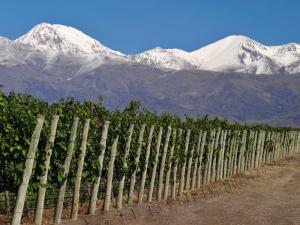
Rutini Vineyards. Source: Rutini Wines web site
In 1884, Felipe Rutini arrived to Mendoza area in Argentina. Continuing family traditions from the early 1800s when his father, Francisco Rutini, started making wine in the area known as Le Marche in Italy, he planted grapes and started making wine now in Argentina. Don Felipe, as he became later known at, was 19 years old when he founded La Rural winery in the district of Coquimbito. In 1925, Rutini family continued pioneering traditions of Don Felipe by planting first vines in the Tupungato area of the Uco Valley, a high altitude home to some of the very best vineyards in Argentina.
Today Rutini family is one of the biggest wine producers in Argentina, making about 9.5 million bottles of wine per year and exporting it to the 40 countries. You might be well familiar with the line of wines under a common name of Trumpeter, which include Chardonnay, Torrontes, Malbec, Cabernet Sauvignon, Pinot Noir and a number of others – Trumpeter is one of the 6 different ranges produced by Rutini Wines. Recently, Rutini Wines started introducing a new “Classic Series” line of wines in the United States, and I wanted to share my impressions from few of the wines in this line which I had an opportunity to taste.
But before we talk about the wines, let’s talk a bit more about Rutini family wine business today. Once again, I got together – well, yes, virtually, same as few times in the past – with Mariano Di Paola, head winemaker for Rutini Wines and one of the top winemakers in Argentina, and I had an opportunity to ask him a few questions. Here is what we talked about:
Q: Rutini family started making wines in Italy. Is there still a connection today at the Rutini Winery back to the traditions and customs of Region Marche?
A: No there are no direct links, but we still try to use the original Rutini winemaking influence today. Felipe Rutini was a visionary man who believed in Argentina’s winemaking capabilities, planting the first vines in Mendoza, and generations after we still work hard to maintain his legacy.
Q: If I understand correctly, Rutini is introducing its Classic Collection wines in the US. For how long had you been producing the Classic Collection wines? What were the main markets for it until now?
The Rutini collection was first released in Argentina with the 1996 Malbec, followed by Merlot and Gewürztraminer. It has been available in the U.S.: NY, TX, FL, MD, DC, MA, RI, and CA since the end of 2013.
Q: What are the oldest vines growing at Rutini vineyards?
A: Select Malbec vines in La Consulta date back over 100 years.
Q: What was the source of inspiration for the Rutini Sauvignon Blanc?
A: We wanted to create a well- balanced Sauvignon Blanc that spoke to the true characteristics of this varietal and represented the best quality of this wine.
Q: Sauvignon Blanc is really not the grape Argentina is known for. Do you think Argentinian Sauvignon Blanc has its own style and will become a wide movement?
A: Yes, Argentine Sauvignon Blanc has its own style which is heavily dictated by the particular growing region. Our continental climate, highly influenced by the Andes, and high altitude provide us with optimal grape growing conditions. Sunny day and dry summer conditions allow us to harvest fully ripened grapes. The cool evening temperatures and controlled irrigation serve to prolong hang time and to create a good balance between sugar and acidity. As there is more interest to try other Argentine varietals, there will be more Sauvignon Blanc production. Our Sauvignon Blanc style, of course, offers really good acidity, lemongrass aromas, floral aromas, but we also focus on producing a mineral style.
Q: Malbec is unquestionably a star red grape of Argentina. Is there a next great Argentinian Grape on the horizon, or is it going to be Malbec for a while?
A: We are always experimenting with different varietals, and while the native varietal Torrontes produces an exceptional and distinct white wine, Malbec will always shine when grown in this region, and it really speaks for the tradition and future of winemaking in Argentina.
Q: Do you use any of sustained, organic or biodynamic methods in production of your wines?
A: In our vineyards we do not practice organic or biodynamic methods, due to the health and hygiene of the plants themselves and the nobility of our soils, all of which , the use of pesticides that may eventually affect the vineyard is not necessary.
Q: It seems that most of the Rutini wines made from the grapes coming from the multiple vineyards. Do you have any plans to produce single vineyard or even single plot wines?
A: Yes, we do have plans to produce single-vineyard wines. At the moment wines are in the aging process and will launch in the market soon. ( Malbec and Cabernet Sauvignon ).
Q: Probably a very unexpected question 🙂 – I understand that Rutini wines are sold in China. How big and/or important that market for Rutini family wines? What wines sell best in China?
China is a very important market for Rutini. As of 2013, the U.S. and China represented 50% of our sales, with the Rutini collection being the most popular brand sold. Chinese consume mostly red wines /red blends and for Argentina, they prefer of course Malbec and Cabernet Sauvignon. Sparkling also sells well in this market.
So, what do you think? I think it was a very interesting conversation, albeit virtual. But now, I’m sure you are thirsty, so let’s have some wines. Here are my notes on the 3 Rutini wines form the Classic collection which I tasted:


2012 Rutini Wines Rutini Sauvignon Blanc Mendoza Argentina (12.5% ABV, $25, 3 months in oak, 50% new, 50% 2nd and 3rd use)
C: light golden
N: minerality, Chablis-like nose, very restrained
P: plump, creamy, delicious. I would never identify this as Sauvignon Blanc – Marsanne, Roussanne or Chardonnay come to mind. The wine was also not over-chilled, just chilled slightly. This wine is an enigma – coming straight from the fridge, it shows more of restrained sweetness, somewhat between New Zealand and California style
V: 8-, unique and interesting. The price looks somewhat high, but then this wine clearly aims at a nice Sancerre, so this provides a rationale behind it
2012 Rutini Wines Rutini Malbec Mendoza Argentina (14% ABV, $35, 12 months in oak, 80% new French oak, 20% new American oak)
C: dark garnet
N: licorice, a touch of tobacco, dark chocolate, blackberries, very inviting
P: fresh berries, touch dark chocolate, raspberries and blueberries, very smooth, medium body
V: 8-. I have to be very honest – this is not exactly my type of wine – however, there is a large category of wine drinkers who will be ecstatic about this wine because of its smoothness.
2012 Rutini Wines Rutini Cabernet Sauvignon Mendoza Argentina (14% ABV, $35, 14 months in oak, 50% new oak, 50% second use oak)
C: dark garnet
N: a touch of mint, fresh berries, black currant, a touch of barnyard, very interesting
P: surprisingly light and smooth, medium body (very unusual for the Cab), blackberries, vibrant acidity, good balance. Shows firmer structure after 10–15 minutes in the glass.
V: 8-, lighter style with lots of pleasure, this wine would definitely appeal to the people who prefer their reds to be not too heavy
Have you had any of the Rutini Wines, Classic Series, Trumpeter or any other? What are your thoughts?
I would like to thank kind folks at Gregory White PR for helping with the virtual interview and for providing the samples. Cheers!
#WineChat, #WineChat, #WineChat, #WineChat!
I guess you are thinking that I accidentally fell asleep at the keyboard, and the same word was repeated multiple times in the title. Or may be I’m working on the new wine riddle. Well, no, I’m not asleep and I’m not good at creating riddles. But over the next few days, there will be 4 different #WineChats or #WineChat style events which I would like to bring to your attention.
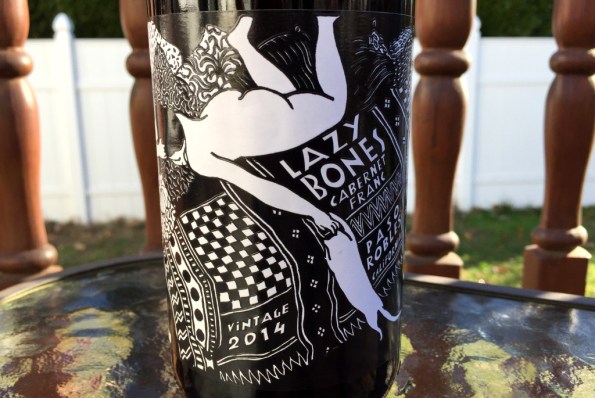
First, on Friday, December 4th (which is today!), we will be celebrating Cabernet Franc, one of the noble grape varietals and one of the “parents” of the Cabernet Sauvignon. This #CabFrancDay celebration is started by Lori and Michael of Dracaena Wines, and the culmination point of the celebration will be a live #WineChat on Twitter, starting at 8 PM Eastern time. The celebration is easy to join – pour yourself a glass of Cabernet Franc (you got lots of choices – Bordeaux, Loire, Languedoc, California, Australia, New York state, Oregon, Argentina and many other regions), open Twitter and chat away.
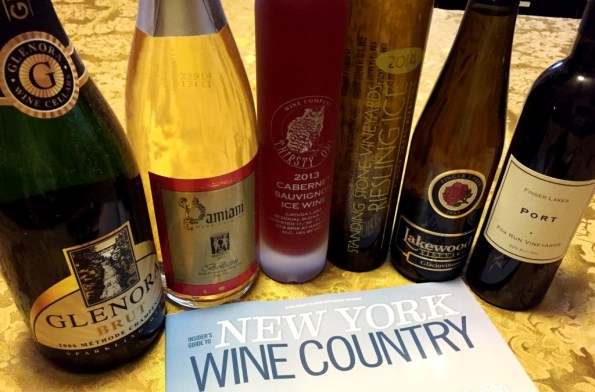
Next virtual event will take place on Wednesday, December 9th, 7 – 8 PM Eastern – Finger Lakes Wine Alliance will conduct its traditional Sparkling and Dessert Wines tasting. The event will take place on Twitter using hash tag #FLXwineVT, together with the live broadcast on UStream. 6 wineries will participate in the tasting – Damiani Wine Cellars, Fox Run Vineyards, Glenora Wine Cellars, Lakewood Vineyards, Standing Stone Vineyards and Thirsty Owl Wine Company.
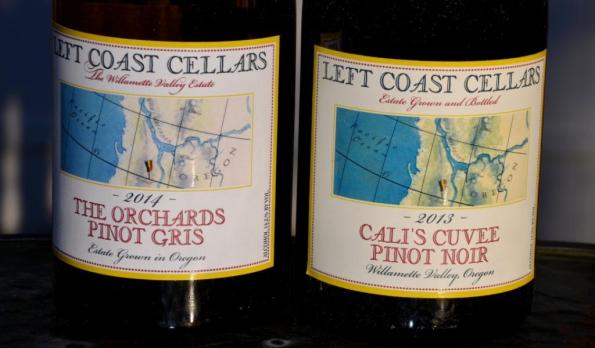
After you and your fingers will take one hour break, it will be a time to join a #WineChat! At 9 PM Eastern, Luke McCollom, General Manager, Viticulturist and Founding Wine Maker of Left Coast Cellars from Oregon will be discussing “the advantages of a single vineyard estate”. All you need to do to join the conversation, which I’m sure will be very interesting (I published a two-part interview with Luke McCollom a short while ago – part 1 and part 2), is to open Twitter and join the conversation with the hash tag #WineChat.
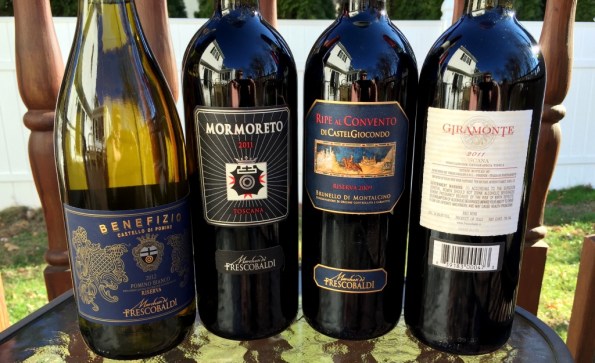
Last but not least, on Thursday, December 10th, there will be a virtual tasting of 700 year old Marchesi de’ Frescobaldi’s “CRU wines from its signature estates (Castello di Nipozzano, Castello di Pomino, Tenuta di Castelgiocondo, Tenuta di Castiglioni)”. The tasting will start at 1 PM Eastern (was originally scheduled for 2 PM), and it will be done as a live broadcast over UStream. Tasting will be conducted by Lamberto Frescobaldi, President and 30th generation of Marchesi de’ Frescobaldi. Join in!
I hope you will find time to join at least one tasting – the conversations at those events are always live and entertaining. Until the next time – cheers!
Unexpected Wines of Macedonia
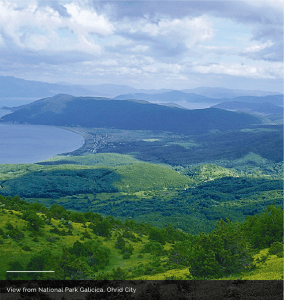
Macedonia landscape – View from National Park Galicica. Source: Wines of Macedonia Web Site
Macedonia (The Republic of Macedonia, to be precise) is a small country right in a middle of Balkan Peninsula in Europe. While it exists under its current name only since 1991, it is one of the oldest countries in Europe, tracing its history for more than 7,000 years. Similar to its neighbors – Turkey, Greece and others – Macedonia also has very long wine history, but still remains “one of the Europe’s last undiscovered wine country”, as stated on Wines of Macedonia web site.
Macedonia has about 62,000 acres of vines planted, split between 3 regions and 16 wine districts. There are 28 grape varietals growing there, equally split between white and red. The climate in Macedonia is a cross between Mediterranean and Continental with warm, dry summer and fall, which definitely helps with wine production.
Okay, enough of the facts – you can read that all on your own. Now let me explain the “unexpected” part of the title. In my mind, Macedonian mostly associated with indigenous grapes, such as Vranec (there are 7 indigenous grapes in Macedonia at the moment). When I was offered a sample of Macedonian wines, I was hoping to find something new and unusual, and may be even advance my grape count.
When the box arrived and was opened, to my surprise I found inside a bottle of Rkatsiteli and a bottle of Merlot. Rkatsiteli to me is a Georgian variety (yes, I heard that it is growing in some of the Balkan countries). And Merlot – don’t think we need to discuss the origins of that. I don’t know what I was expecting, but Merlot and Rkatsiteli definitely surprised me. Both wines came from the region called Tikveš, which is the biggest wine region out of three in Macedonia. Well, of course I tasted the wines, and below you can find my thoughts:


2014 Stobi Rkatsiteli Tikveš, Macedonia (12.3% ABV, $12, 100% Rkatsiteli)
C: Pale straw
N: touch of minerality, white peaches, candied lemon zest, overall very inviting
P: lemony acidity, underripe green apple, nice creaminess, touch of minerality, medium+ body, clean
V: 7+, food wine – fresh seafood, oysters
2009 Bovin Merlot Barrique Tikveš, Macedonia (14% ABV, $N/A, 12 month in Macedonian oak)
C: dark garnet, almost black
N: delicious dark chocolate, ripe fruit, hint of black currant, blueberries
P: medium to full body, baking spices, slightly overripe cherries, short finish.
V: I had this wine over the period of a few days. Here is the conclusion from the initial tasting: 7-, beautiful nose; interesting taste components on the palate, but not coherent together. Two days later, the wine became surprisingly coherent, rounded up and showed an silky dark power and excellent balance, so the final verdict is 7+/8-.
There you have it, my friends – two wines, may be unexpected, but well drinkable. Next time if you see a wine from Macedonia on the shelf – give it a try, you might be pleasantly surprised. Cheers!
Last Bottle Sign Up ($10 credit)




 Talk-A-Vino