Archive
Life’s Happy Moments – Virtual Lodi Wine Tasting on Snooth
When I got an offer to participate in the Lodi wine virtual tasting on Snooth, my first reaction was “that’s okay. I just was in Lodi just recently for the Wine Bloggers Conference (WBC16), and still perfectly remember it”. Then the second thought came in – “but it is Lodi, remember? Great wines, great people, why not”?
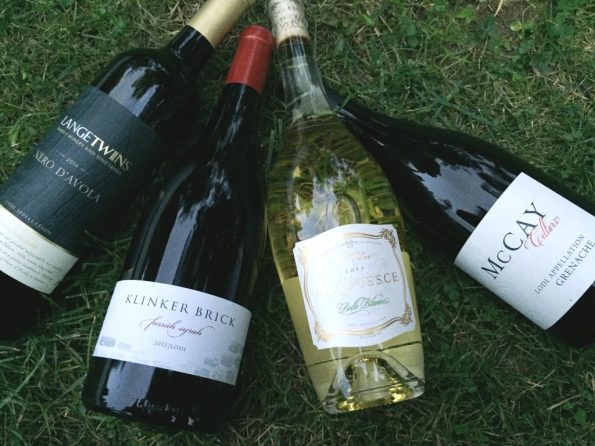
When I opened the box with samples, huge smile embellished my face (this post would be perfect for the Monthly Wine Writing Challenge #28 (#MWWC28), as the theme was “Smile” – if only it would be written on time, sigh). Do you smile when you run into a good old friend who you are genuinely happy to see? Yep, that was me at that moment.
Looking at the bottles one by one, you can imagine me talking and thinking.
Acquiesce. I heard people raving about their wines, but never tried it – great, now I will! LangeTwins – the flow of happy memories – we visited the winery with the group of bloggers and had an incredible time there; so glad to be drinking their wine again. McCay – an immediate image of Mike McCay, pouring his Zinfandel out of the double-magnum during the dinner at the WBC16 – another huge happy smile. So looking forward trying this Grenache. Klinker Brick – had their Zinfandel during speed tasting, but heard a lot about the Syrah – now I can taste it, great!
Then the day of the tasting arrived, and for an hour, I was among friends, feeling more like a WBC16 reunion – the fact that we didn’t see each other was not a problem – it was easy to imagine happy and smiley faces, tasting delicious wines, and excitedly talking across each other. Exactly as we did in August back in Lodi.
I have to be entirely honest – we had great hosts for this session – Tim Gaiser, Master Sommelier, Stuart Spencer, who represented both Lodi Winegrape Commission and his own winery, St. Amant, and Mike McCay of McCay Cellars – but I was entirely focused on the chat window, so I don’t have much of their conversation to share with you. But – I’m happy share the tasting notes for these delicious Lodi wines.


2015 Acquiesce Belle Blanc Mokelumne River Lodi (13.5% ABV, $26, 45% Grenache Blanc, 45% Roussanne, 10% Viognier, 288 cases)
C: light golden
N: intense lemon, lemon peel, candied lemon (hint of), white stone fruit
P: creamy, plump, touch of candied lemon, long acidity-dominated finish
V: 8, easy to drink from the start. The wine kept evolving for the next 5 days – definitely an age worthy wine which will bring you lots of pleasure.
2014 LangeTwins Vineyards Nero d’Avola Red Tail Vineyard Lodi (13% ABV, $20)
C: bright garnet
N: ripe sweet plums and earthiness, medium intensity
P: clean herbal profile first, sweet basil, then layer of fresh, ripe blueberries – clean, well-structured, perfectly balanced.
V: 8-, excellent pop and pour wine, should be easily a crowd pleaser
2013 McCay Cellars Grenache Abba Vineyard Lodi (14.2% ABV, $32, 309 cases)
C: smokey Ruby
N: intense gunflint, granit, underripe plums
P: smoke, mix of tart and sweet cherries, clean acidity, firm structure and medium body, crisp
V: 8+, outstanding. Once you start drinking, you can’t stop
2013 Klinker Brick Farrah Syrah Mokelumne River Lodi (14.9% ABV, $20)
C: dark garnet, almost black
N: intense aromatics, espresso, mocca, mint, raspberries, red fruit, very inviting and promising
P: wow, intense, mint, eucalyptus, blueberries, tar, spicy core, good acidity, velvety present texture, long finish
V: 8/8+, very good from get go, should improve with time
I would like to thank the kind folks at Snooth for arranging this delicious tasting. And for you, my friends – yes, those wines are made in a very small quantities, but if you will make an effort to find them (many might be available directly from the wineries), you will be well rewarded. These are the wines worth seeking. Cheers!
Fun #GrenacheDay Celebration on Snooth
Does Grenache, a.k.a. Garnacha, deserves its own celebration? It used to be the third most planted red grape in the world (in the year 2000), and the most planted red grape in Spain; now it is 5th most planted red grape in the world, and second most planted in Spain. In this particular case, size might not matter (how many of you drunk the wines made from Airen, the most planted white grape in the world?) – what important is that Grenache is an essential part of lots of amazing wines, coming from everywhere in the world – France, Spain, California, Washington, Australia, Italy, there is really no limit here. Grenache is capable of amazing solo performances (think Clos Erasmus, Sine Qua None, No Girls), but more often than not, it is a great team player (Chateauneuf-du-Pape, Southern Rhone, Australian GSM and thousands of others).
Yes, Grenache is worthy of a celebration. Grenache wines are quite mendable at the hands of the winemaker, giving you a wide range of expressions. What is even more important, unlike Cabernet Sauvignon, even budget level Grenache wines (read: less than $10 a bottle) are very enjoyable, especially when they come from Spain. And don’t forget that under the word “Grenache” there can be three different grapes – Grenache Blanc, Grenache Gris (rare), and Grenache (or Garnacha Tinta).
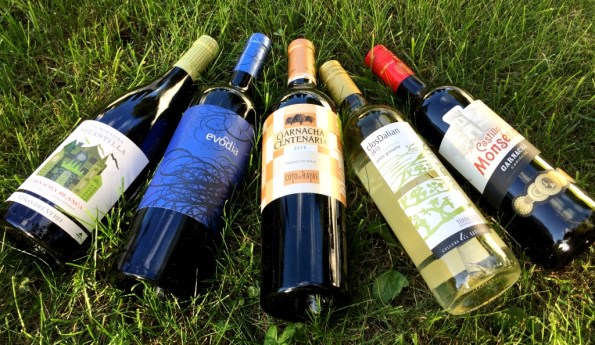
A large group of “winos” assembled last night on Snooth, one of the leading online wine communities, to discuss virtues of Grenache grapes and, of course, to taste some Grenache wines. All the Grenache wines in the tasting came from Spain, two white Grenache Blanc and three of the 100% Grenache reds. Not only the wines were tasty, all of them also represented great value and great QPR, all priced under $14. The discussion was hosted by Master Sommelier Laura Maniec and Master of Wine Christy Canterbury – but to be very honest, the online discussion felt to me more like a wine bloggers conference attendees’ reunion, with lots and lots of familiar “voices” in the chat room, so I had a hard time paying attention to the presentation and was more focused on multiple dialogs taking place at the same time. Either way, it was a great fun, and wines perfectly supported the conversation.
Here are my notes for what we had an opportunity to taste:


2015 Cellers Unio closDalian Garnacha Blanca Terra Alta DO (12.5% ABV, $9, 100% Garnacha Blanca)
C: pale straw
N: intense, aromatic, white stone fruit, citrus
P: white fruit, lemon, herbal undertones, good acidity, fresh
V: 7+, very nice, food friendly (many people in the chat craved oysters)
2013 La Miranda Secastilla Garnacha Blanca Somontano DO (13.5% ABV, $14, 4 month in French Oak)
C: light golden
N: intense, vanilla, freshly crushed berries, golden yellow raisins, borderline Riesling profile with touch of petrol
P: plump, good body weight (medium to full), crisp acidity on the finish, round, firm structure – outstanding
V: 8, excellent overall


2015 Castillo de Monséran Garnacha Cariñena (13% ABV, $9)
C: dark Ruby
N: intense, freshly crushed berries, young
P: sweet fruit (restrained, not overly) with surprising structure and good acidity on the finish. Distant touch of earthiness and smoke.
V: 7+, simple and pleasant
2015 Evódia Varietal de Aragon Red Wine (15% ABV, $9, 100 years old vines, high elevation 2400–3000 ft)
C: Dark Garnet
N: very intense pure nose of fresh blueberries and blueberry pie, you don’t even need to be next to the glass
P: layered, soft, velvety, roll-off-your-tongue mouthfeel, fresh black fruit in background
V: 7+, needs time
2014 Coto de Hayas Garnacha Centenaria Campo de Borja DO (14% ABV, $14, 100% Grenache, more than 100 years old vines, 4 months in French oak)
C: garnet
N: lavender, anise, cherries, fresh, intense
P: smoke, earthiness, sage, roasted meat, sweet fruit and tobacco finish, wow; added peppery notes on the second day
V: 8+, outstanding complexity, amazing value
I would like to thank kind folks at Snooth for arranging this fun tasting and providing such an excellent selection of the value Grenache wines.
How did you celebrate #GrenacheDay? What was your most memorable Grenache wine ever – if you have one of course? Cheers!
Garnacha from Cariñena
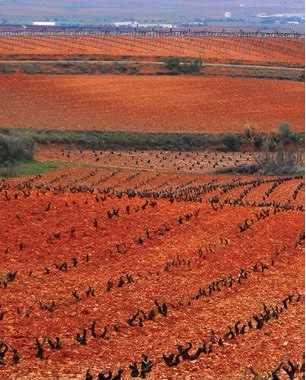
Beautiful Cariñena Vineyards.
Source: Cariñena DOP
Today we will be talking about Garnacha, better known around the world under its French name of Grenache. But the region we will focus on is located in Spain, so let’s use regionally-appropriate name.
Garnacha is one of the most important grapes of Spain, rivaled only by Tempranillo. It is planted practically in all the regions, and used both solo and as a blending grape, delivering tremendous range of expression.
Let’s narrow down our focus a bit and talk about Garnacha from Cariñena. Cariñena is a region in the central part of Spain, second oldest official DO (protected origin) in Spain and one of the first in Europe, created in 1932. Most of the vineyards in Cariñena are situated on the mountains, from 400 meters to 800+ meters (1300 ft – 2600 ft) above sea level. One of the best known grapes from the region is … Cariñena, which I find quite confusing considering that this is also the name of the region itself. However, the most planted grape is…yes, Garnacha, which takes 55% of all the grape plantings. Another interesting fact is that Garnacha plantings in Cariñena are some of the oldest in Spain, with age of some vines more than 100 years old.
I will not inundate you here with information which you can find on your own, for instance, on the official D.O.P. Cariñena web site. I recently heard that Andrea Immer Robinson, one of the 18 women Master Sommeliers, and an official Sommelier for Delta Airlines, selected Cariñena Garnacha wines to serve to the Business Class passengers on Delta flights due to its affinity to the high altitude. Obviously I got intrigued with this statement, and I was lucky enough to reach out to Andrea and ask a few questions about it. Here is what I was able to learn:
Q: It sounds like different wines might have different affinity to showing best at the high altitude? Is that really true? Can you elaborate on this a bit?
A: Yes it is true. At altitude your sense of smell is muted and your palate is less hydrated. Consequently, more restrained wine scent/flavor profiles or more intensely tannic wines may not present as well in-flight.
Q: Do you have an example of the wine which is delicious on the ground, and doesn’t taste that well up in the sky?
A: It is less that a wine doesn’t taste well in the sky, and more that it may seem less expressive or flavorful. The subtlety of Italian Pinot Grigio is an example of a style that classically seems muted and less flavorful at altitude. But I did find a great one that belies the broad-brush experience I have had which is exciting.
[TaV comment]: Obviously this is where the limitations of the virtual conversation kick in, as I would love to ask Andrea what was that great Pinot Grigio which she was able to find to serve at the high altitude.
Q: What do you think makes Garnacha from Cariñena good wines to drink at the high altitude? Do you think all Garnacha from Cariñena wines are equally good to drink at the high altitude, or is it only few particular wines?
A: The Garnacha from Carinena is expressive and concentrated and the tannins though present, are soft and ripe – so, the wine shows a lot of character and is not drying to the palate in flight. The particular example that is getting rave reviews presently is a 9 year old Reserva – that extra bottle age gives complexity that customers are going ape over. I don’t thin every wine would garner this type of response–I think the bottle age and complexity of the Reserva level are a big part of it.
[TaV comment]: Yep, here we go again – would love to know what Reserva wine was that…
Q: What are your favorite Garnacha from Cariñena wines, whether on the ground or on the board of the plane?
A: I love the Monasterio de las Vinas Reserva that we are serving on Delta now. I also really love the Castillo de Monserran and the Paniza Vinas Viejas on the ground (haven’t tried them in flight). Perfect as we get into stew season!


I also was able to taste a few of Garnacha from Cariñena wines, and below are my impressions:
2012 Viñas Viejas de Paniza Garnacha Cariñena DO (14% ABV, $18, 100% Garnacha, 6 month in oak)
C: dark ruby
N: lavender, espresso, touch of dark fruit
P: hint of chocolate, cherries, medium body, good acidity
V: 7+
2012 Bodegas San Valero Particular Garnacha Old Vine Cariñena DO (14% ABV, $14.99, 100% Garnacha, 14 month in oak)
C: dark garnet, almost black
N: intense, whiff of alcohol, dark fruit, raspberries
P: fresh raspberries, open, bright, medium body, herbal undertones, pronounced acidity, short to medium finish, but then tannins come in after a while.
V: 7+ at the moment, needs time. Judging by the acidity and late tannins, this wine needs at least 5 years to develop
2013 Corona de Aragon Special Selection Garnacha Cariñena DO (13.5% ABV, $14, 50% Garnacha, 50% Cariñena, 5 month in oak)
C: Dark garnet
N: restrained with herbal undertones, pencil shavings (rarely use this descriptor, but it was very deserving here), hint of blackberries
P: fresh, delicious, dark chocolate, cherries, classic Grenache rendition with good acidity and excellent balance
V: 8-, my favorite of the tasting, would happily drink this wine every day – definitely an excellent QPR
Have you had any of the Garnacha Cariñena wines? What are your thought on the wines at the high altitude? Don’t be shy, comment away! Cheers!
P.S. I would like to thank kind folks at Gregory White PR for providing samples and reaching out to Andrea Immer Robinson
[Wednesday’s] Meritage – Grenache Day, SHARE Campaign, Discover Georgia in New York
 Yes, I’m aware that this is very much not Wednesday, nevertheless – Meritage Time!
First of all – tomorrow, Friday September 18th, we will be [once again] celebrating the grape – this time, it is Grenache, a.k.a. Garnacha. Grenache definitely is one of the wine world’s darlings, enjoying huge popularity everywhere – France, Spain, California, Washington, Australia, South Africa. Whether part of a blend or playing solo, Grenache offers tremendous range of expressions and can easily be one of the most versatile red grapes. So tomorrow, grab a bottle of your favorite Grenache wine, join the festivities, and of course, share it with the world – use tag #GrenacheDay on Twitter or Instagram. You can also check out Grenache Day website and Facebook page.
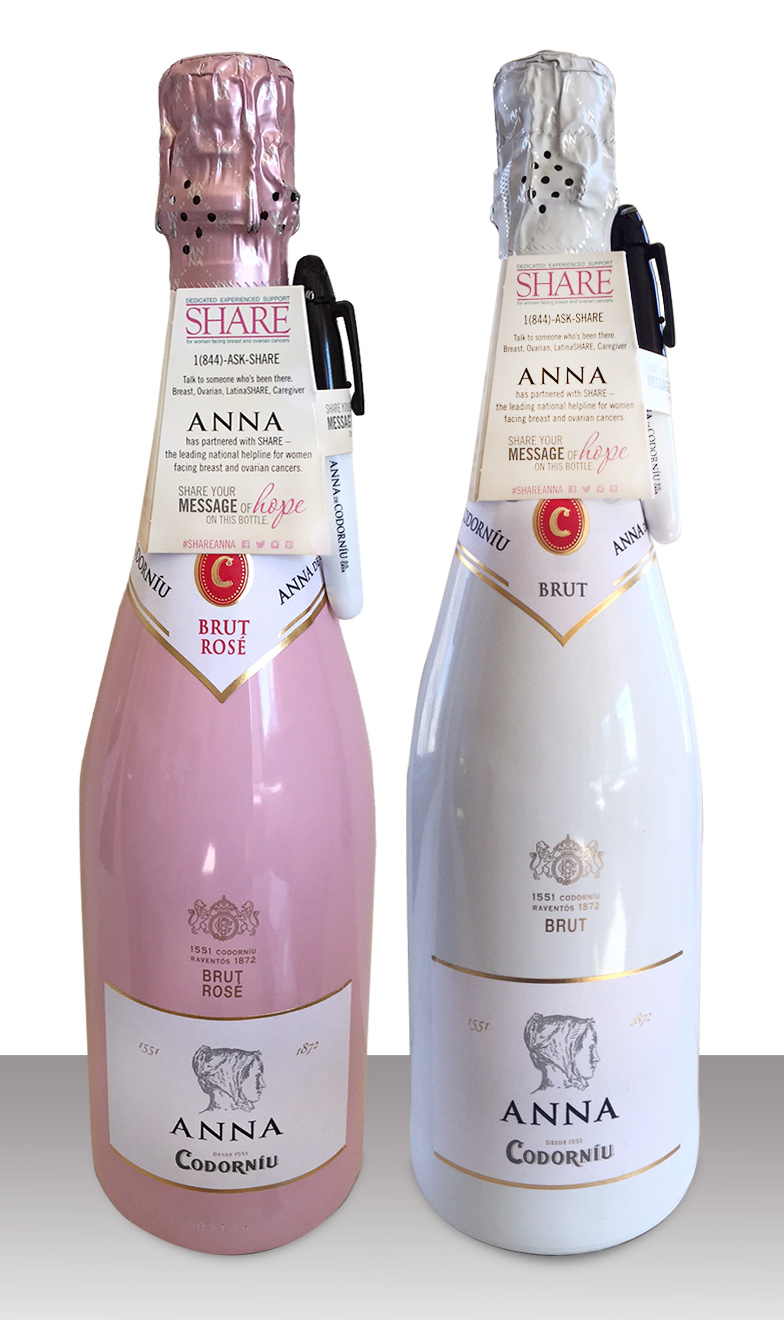
While this might be “an obsession of oenophile”, I can’t help but to notice how often wine is a subject of many “do good” initiatives – charity auctions, fund raisers. “drink for a cause” events. Here I want to bring to your attention one of such “do good” initiatives – partnership between Anna Codorniu, one of the best Cava producers from Spain, and SHARE, “a national organization that provides informed peer support, empowerment and educational resources to women affected by breast and ovarian cancers”. To support this cause, Anna Codorniu created special campaign called “Message on a Bottle” – I very rarely cite text from press releases, but let me just include this passage as a reference: “Anna de Codorníu will encourage consumers to engage with SHARE through the Message on a Bottle campaign encouraging consumers to write their messages of hope on the Anna bottle and connect with #SHAREANNA on social media. In-store displays and bottles will prominently feature information about SHARE, to access their services and become more involved. On September 21, Anna de Codorníu Brut and Brut Rosé will be served at the 12th Annual A Second Helping of Life benefit in New York City, featuring top chefs such as April Bloomfield, Anita Lo and Christina Tosi. (www.sharebenefit.org)”.
Last week I mentioned that Georgian Food and Wine event will take place in New York city on September 25-27, at Chelsea Markets – and here is the link for more information. Georgian hospitality is second to none, so if you have a slightest possibility of attending the event, I would highly recommend that you will make an effort to visit Chelsea Markets and experience #GeorgianBazaar firsthand.
And that is all I had for you for today. The glass is empty, but refill is on the way. Cheers!
Grenache! Grenache? Grenache!, Few Rare Grapes and a Recipe
 What’s up with Grenache? One of the most planted grapes in the world, a star of Spain, and often a foundation of greatness in the wines of Australia, France, California and Washington. A grape with the range of expression from light, fruity and frivolous to the dark, firm, brooding and confident. Yep, Grenache is well worth an oenophile’s attention. And a special wine dinner.
The theme was set, and then the dinner’s day arrived. This time around, we were a small group (6 adults), so we decided to skip the usual formal blind tasting with the multiple glasses, and instead simply integrate the tasting (still blind) into the format of the dinner. Each couple brought a bottle of Grenache wine, wrapped in paper bag. The wines were numbered at random and then poured one by one. All in all, quite simple.
But before we got to the Grenache, I wanted to share two special bottles. Don’t get all jumpy at the word “special” – it means different things for different people. Your idea of special bottle might be Chateau Latour, Penfolds Grange or Amarone from Quintarelly – well, if you want to share any of those with me, I’m available any day of the week. However, my idea of special is often limited to something simply unique and different, such as “rare grapes”, for instance – an opportunity to add to my grape count and reach the coveted Wine Century Pentavini (500 grapes).
Along these lines, the first “special” was the white wine from Spain, which was made mostly from Roussanne, but also contained the grape called Albillo. 2011 Navaherreros Blanco de Bernabeleva Vinos de Madrid DO (14.5% ABV, $14.99, 50% Roussanne, Albillo, Macabeo and other varieties) had beautiful golden color, inviting nose of white fruit, touch of vanilla. Full bodied, creamy, luscious on the palate, touch of earthiness and baking spices, touch of vanilla, good acidity. (Drinkability: 8). This was definitely a delicious way to start the evening.


The next wine was Rosé. It was not just some generic Rosé – it was actually made form the grape which is practically impossible to find, at least in US – and it was on my “target” list for the very, very long time. Just to explain – if you will look at the original Wine Century Club application, you will find 186 grapes listed there, so we can consider those 186 to be a mainstream. In that list, there are still 6 grapes which I never tasted. Well, let me take that back – now there are 5.
There is a good chance that you heard of or even tasted the wine called Picpoul de Pinet, a light, crisp white wine from Rhone made from the grape called Picpoul Blanc. Picpoul Blanc has a cousin, a red grape called Picpoul Noir, which is literally impossible to find. During one of my countless searches online, I found that Picpoul Noir Rosé was available in one (!) single store in US in San Francisco – and luckily, I had a friend there who was kind enough to get it for me. Here is what I thought of the Rosé made out of this super-rare grape: 2013 Julie Benau Pink Poul Rosé Vin de France (12.5% ABV, $17, 100% Picpoul Noir) – restrained nose with a hint of strawberries. The same restrained profile continues on the palate – limited fruit expression, medium to full body, good acidity, food friendly. (Drinkability: 7+)
Okay, now we can finally talk Grenache, which I mentioned 3 times in the title of this post, right? I think when it comes to the range of expression among 7-10 most widely known red grapes, Grenache offer the most versatility, competing may be only with Syrah. From over the top dark chocolate, tar and sweet cherries to the soft, earthy and even acidic, Grenache can showcase quite a range of winemaking styles and terroirs. Thinking more about our tasting, it served exactly as a confirmation to this statement.
The first Grenache we had was that exact over the top style – dark, concentrated, firm, loaded with sweet pleasure in every sip. The second Grenache couldn’t be more different than what we experienced – smoke, mushrooms, forest floor, earthiness, herbs – a restrained beauty which I would never even think of as Grenache – but it was. And the last bottle was all too shy and closed at the beginning, showing again differently from the first two – but as it opened up, it became a younger brother of the first wine – same traits, only dialed down. The 3 bottles we chose completely at random managed to demonstrate that tremendous Grenache range. When we removed brown bags, we learned that we traveled from Spain to Washington and then to France – a very interesting journey.


Here are a bit more formal notes for the the wines, in the tasting order:
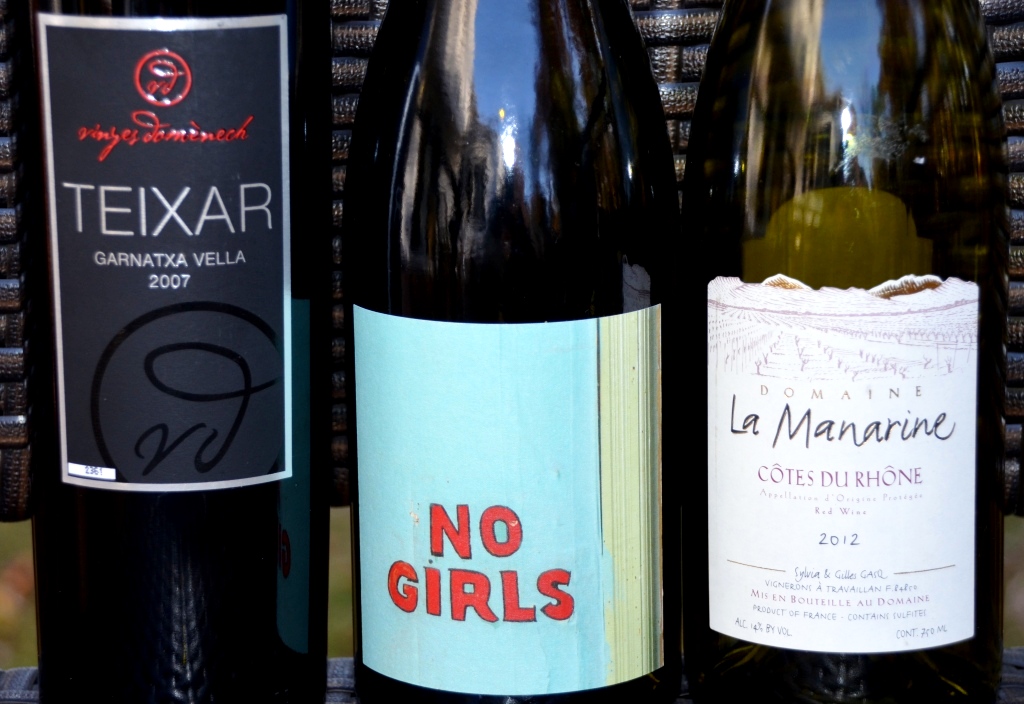
2007 Vinyes Doménech Teixar Garnatxa Vella Montsant DO, Spain (14.5% ABV, $75) – Delicious! Dark chocolate on the nose, very intense, ripe red fruit. The same continues on the palate – firm texture, dark chocolate, touch of plums, earthiness, perfect balance and long finish. 8+/9-
2008 No Girls Grenache La Paciencia Vineyard Walla Walla Valley (14.2% ABV, $65) – very interesting. Both nose and the palate show a profile of concentrated Oregon Pinot Noir. Smokey fruit, earthiness, very concentrated, touch of coffee, licorice, raspberries, sage and lavender. Very unique. 8
2012 Domaine La Manarine Côtes du Rhône (14% ABV, $16) – closed nose, similarly closed palate. Opened up after a while, just enough to show some dark fruit (plums, cherries) and a touch of chocolate on the palate. 7+
Okay, enough about wines. Now, this was a dinner, and I promised you the recipe, remember? The dish I made, and the recipe I would like to share will perfectly pair with the cold weather, and it is one of the ultimate comfort dishes ever – braised short ribs. Starting from the ease of cooking and the simplicity of the recipe, and then admiring the goodness of the smell during the long, slow cooking – this is definitely one of the ways to properly spell the word comfort.
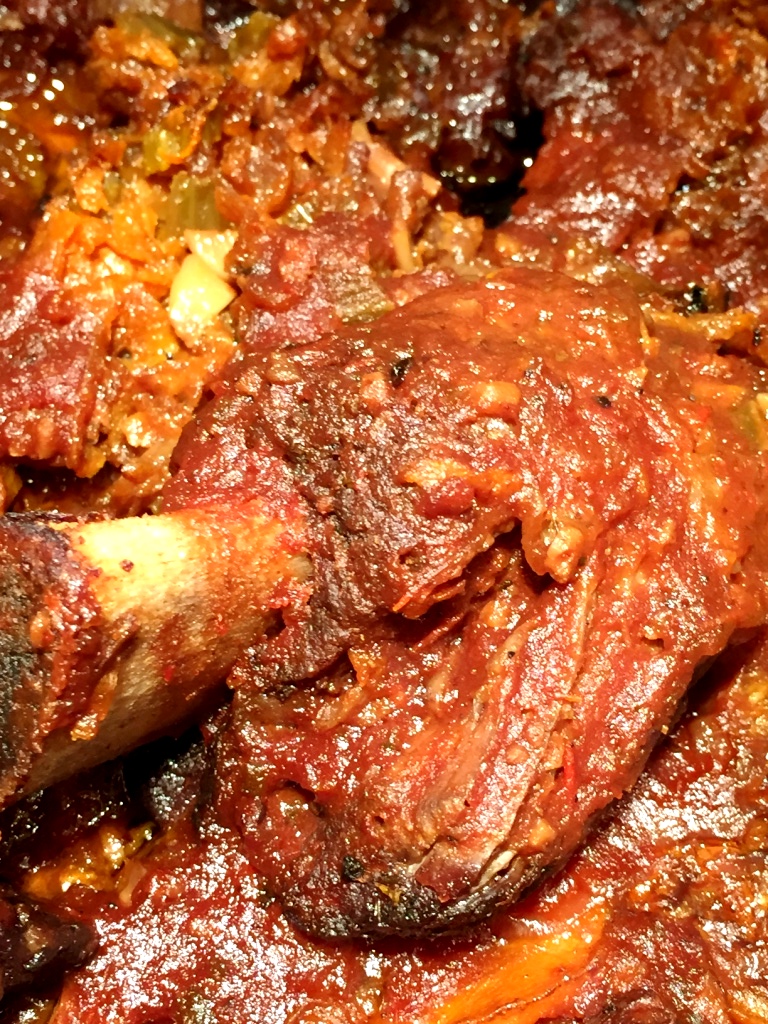
Doesn’t it say “comfort”?
Here is the recipe:
Braised Short Ribs
Prep time: about 1 hour. Cooking time: 4-5 hours
Yield: 10 servings of two ribs each
8-10 lb beef short ribs – I don’t go specifically by the weight – I generally like to cook considering 2 ribs per person
1 bottle of red wine – Pinot Noir or Beaujolais
5 medium yellow onions
8 sticks of celery
4 large carrots
BBQ/Grilling spices – I use Penzeys spices
4 tbsp Olive oil
Salt and pepper
Serve with: mashed potatoes, rice, pasta, etc.
First of all, decide on what spices you want to use. I generally combine different Penzeys spices, but really – feel free to use anything you have:
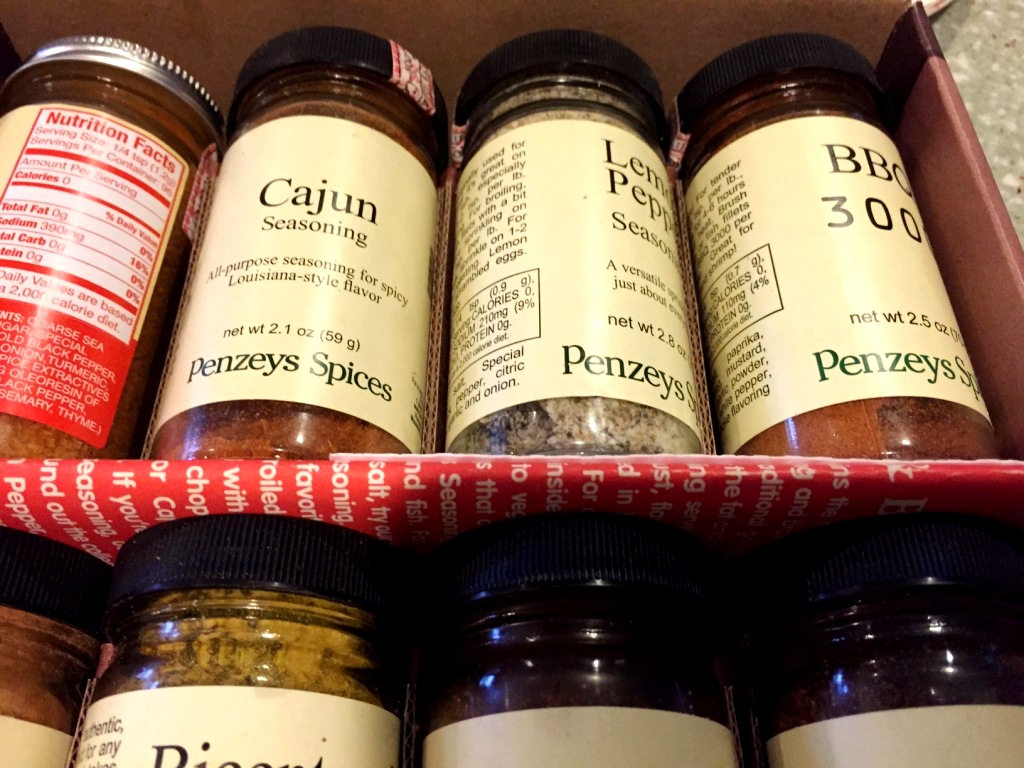
Next, take the meat out of the fridge and line it up on the prepping board, then sprinkle with the spices on both sides, add salt and pepper as needed:


Let meat warm up to the room temperature. Preheat over to 325ºF. While the meat is warming up, you can start working on your “trifecta”. Dice the onions and start sauteing them in the skillet or dutch oven with 2 tbsp of olive oil on the medium heat. Dice carrots and celery. Once onions become soft and translucent and then start gaining color (usually takes about 20 minutes), add carrots and celery and sauté all together for another 10 minutes, then set aside.
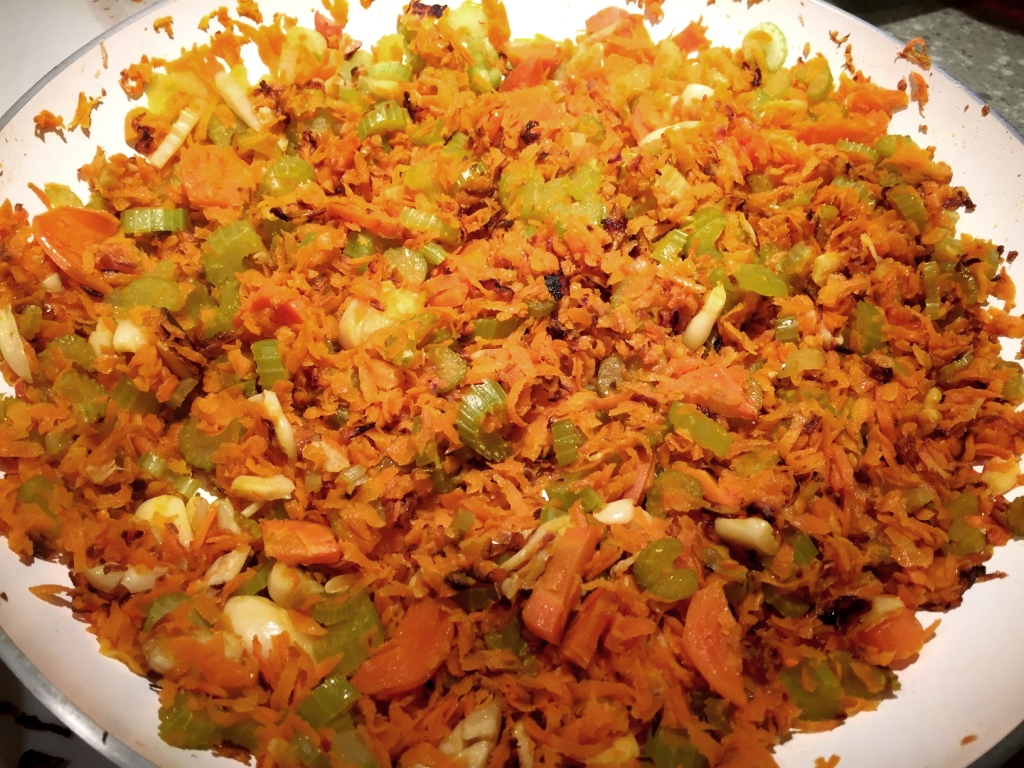 Now, put remaining olive oil into the dutch oven, and heat it up to the high heat. Start searing the short ribs, meaty side down first. You might have to work in the batches, as you want all of the ribs to be nicely seared on both sides:
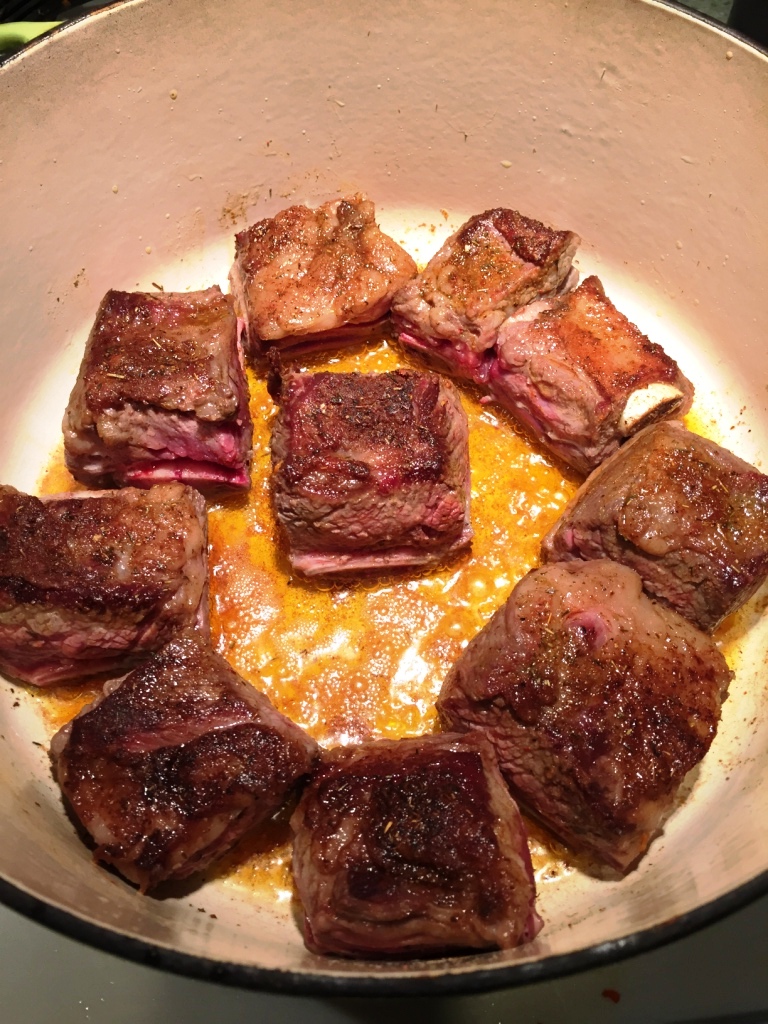 Once all the ribs are seared, combine them all in the dutch oven, then add the onions, carrots and celery:
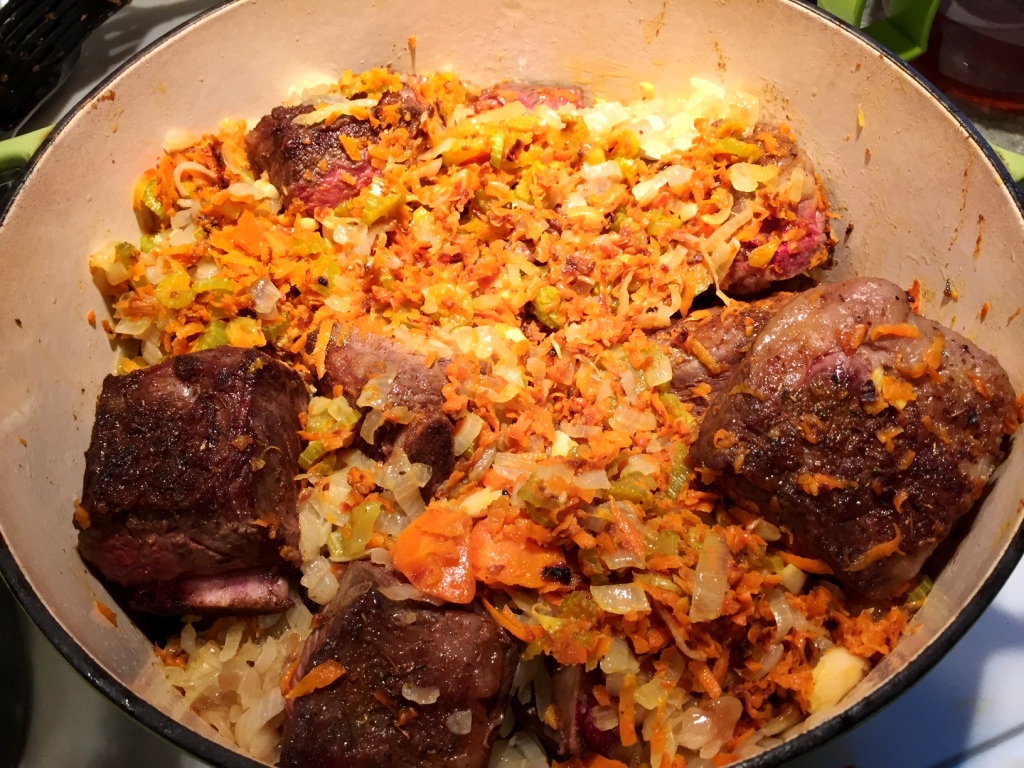 Add a bottle of wine, cover, put it in the oven and forget it for the next 4-5 hours (you really don’t want to rush this process). When done, you probably will find something like this:
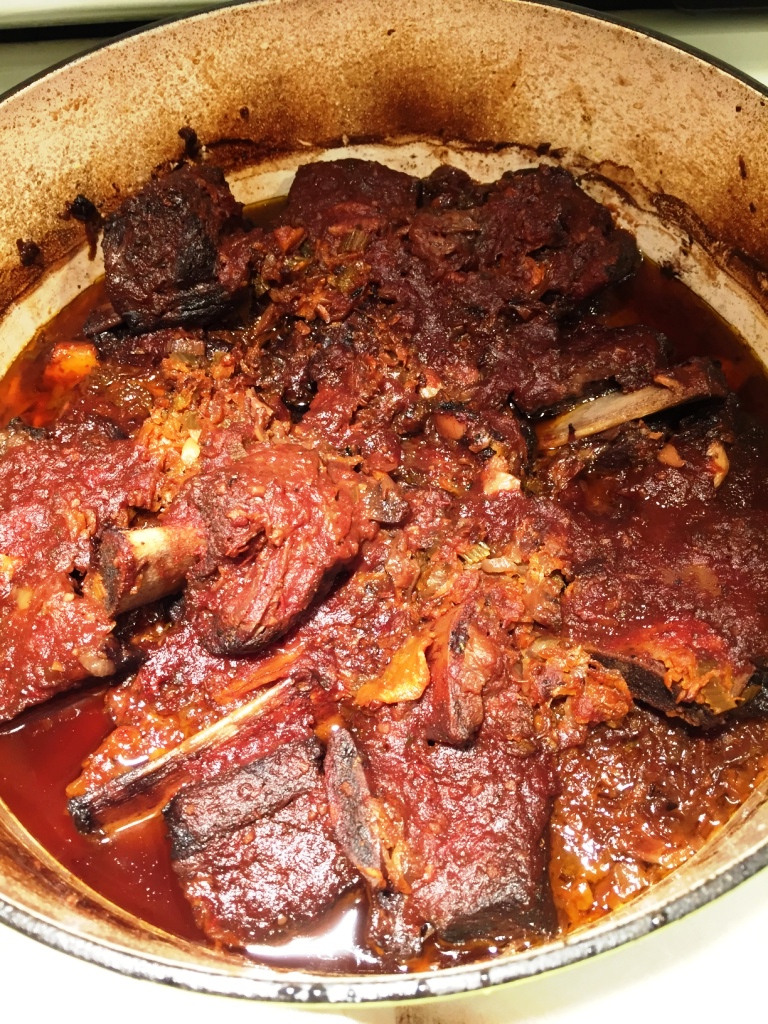 As you can imagine, hearty Grenache is a perfect pairing for such a hearty, homey dish – but of course this shouldn’t be your only choice.
Here we are, my friends. A few rare grapes, an amazing range of Grenache wines, and winter-storm-alleviating-ultimately-comforting dish. Stay warm and drink well. Cheers!
Thank you, #GrenacheDay
September 19th was yet another “wine holiday” – the Grenache Day. Grenache, which is known in Spain as Garnacha, needs no introduction for the oenophiles. One of the most planted red grapes in the world. A star of Châteauneuf-du-Pape, Priorat, California, Australia and many other countries and regions. A grape with the middle name “rich and opulent” (when was the last time you had a lean Grenache wine? No rush, think about it…). If big wines are your territory, Grenache is definitely your grape.
So what this “thank you” all about? Easy, let me explain. When I know about the certain “grape day”, I usually try to honor it by opening the wine made with that specific grape. Considering the connotation of the “holiday”, I also look for the somewhat of a special bottle. I’m not saying that I would casually open DRC for the Pinot Day (I wish I would have that choice), but still, it should be an interesting bottle. Talking about the holiday at hand, #GrenacheDay, I realized that Grenache is grossly underrepresented in my cellar. Cabernet, Pinot Noir, Syrah, Tempranillo, Zinfandel – plenty of choice, Grenache – not so much. Searching through the shelves, I noticed the bottle of 2006 Pax Cuvée Moriah. Checked the back label – 88% Grenache, definitely qualifies as Grenache for me. 2006 is considered young in my book, but – either that or some random non-grenache bottle. Done.
 Okay, so here is our wine – 2006 Pax Cuvée Moriah Sonoma County (15.9% ABV, 88% Grenache, 6% Mourvedre, 3% Syrah, 2% Counoise, 1% Roussanne). Cork is out, pour in the glass, swirl, smell. Beautiful. Bright fruit, spices, herbs – a delicious promise. On the palate, great concentration, big, texturally present, roasted meat and bright cherries, clean acidity, an excellent wine overall. Drinkability: 8+
I stepped away from my glass with a small amount of wine left in it. Come back 15-20 minutes later, ready to finish. Swirl, sip – the wine is past prime. Touch of stewed fruit and over-ripe plums. The wine completely transformed. So here is the “thank you” part. If it wouldn’t be for the “grape day”, I would still be waiting for the right moment. Only to find out at some point that all the pleasure was gone, without been experienced. Thanks to the #GrenacheDay, we were able to experience this wine still at its peak (it was only a tiny amount in the glass which turned around).
Let’s raise the glass to the grape holidays, the experience savers. Cheers!
From Languedoc, With Love and Pride – Wines of Paul Mas
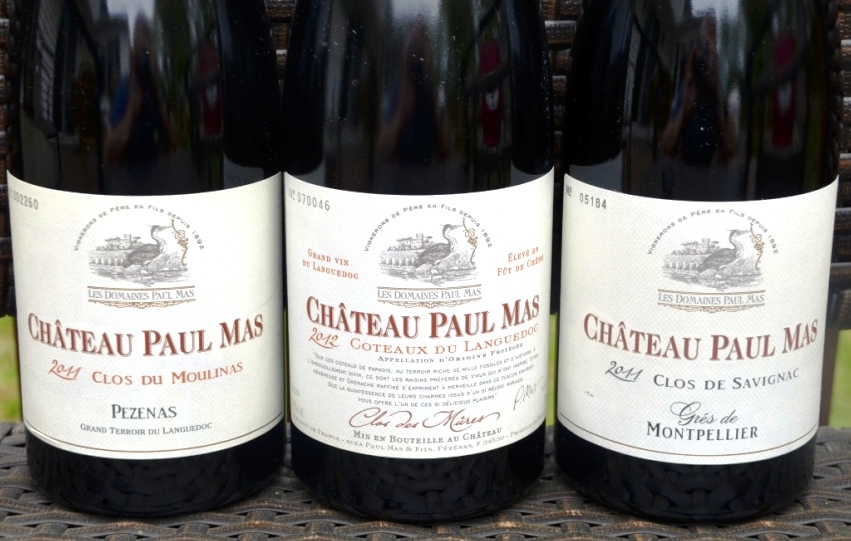 Talking about wines of Languedoc, with the risk of being boring, let me mention a few of the basic facts about the region. Languedoc is the biggest single wine-producing region not only in France, but also in the world. According to Wikipedia, only 13 years ago (in 2001), Languedoc was producing more wine than entire United States. Another important distinction of Languedoc is the fact that it practically has no restrictions on the type of grapes which can be grown there. While Mourvedre, Syrah, Cinsault and Grenache might be main red varietals, pretty much any of the international varietals are also permitted and grown in Languedoc. While such a liberal approach encourages winemaking, its flip side is that a lot of wines are produced under the designation of Vin de Pays d’Oc, which technically stands for “country wines”, a step below in classification compare appellation-specific wines (AOC wines such as Bordeaux, Pomerol, Medoc, etc.).
What this all means to the wine consumer? Value. For the long time, Languedoc had being known as a hidden gem, a secret source of excellent wines which you can enjoy every day, without the need for the special occasion (I actually wrote a post about Languedoc as one of the wine world hidden secrets – you can find it here).
Let me explain why we are talking now about Languedoc wines. A short while ago, I was invited to participate in the virtual tasting of the wines of Chateau Paul Mas. Paul Mas family had been making wines in Languedoc since 1892. Jean-Claude Mas, the 4th generation winemaker, set out to expand farther the family vineyards and winemaking business overall. Starting in 2000, Domaines Paul Mas plantings increased from about 86 acres to 440 acres of vineyards, and it has another 2000 acres under the contract. Just to give you few more facts, in 2006 Jean-Claude was awarded the title of International Mediterranean Entrepreneur of the Year by Ernst and Young; in 2008, he was named one of the Top 30 Winemakers of Tomorrow by L’Express magazine in France.
Domaines Paul Mas vineyards are planted with more than 25 varieties including Syrah, Grenache, Cabernet Sauvignon, Merlot, Viognier and Chardonnay. Obviously, there is a wide range of wines produced under the Domaines Paul Mas label, including some of the widely successful everyday wines such as Arrogant Frog.
The focus of our tasting was on the single vineyard wines of Chateau Paul Mas. Guillaume Borrot, the winemaker of the Chateau Paul Mas, who was presenting the wines during the virtual tasting, touted them as “affordable luxury”. And the wines were actually made to support this claim. Even the bottle itself, Burgundian in shape and very heavy, was supporting the “luxury” claim. And the fact that all three wines we tasted are available in retail for less than $25 each, definitely makes them affordable.
Well, it is not the look and weight of the wine bottle which will determine the “luxurious” designation. It is the wine itself which should support that claim – and all three wines perfectly delivered. Dense, concentrated and balanced, all well made and ready to be consumed now, or 5-10 years down the road – if you have enough patience though. Here are the more detailed notes on the 3 wines we tasted:
2012 Château Paul Mas Clos des Mures Coteaux du Languedoc AOP (14.5% ABV, 85% Syrah, 10% Grenache, 5% Mourvedre, 10 month aged in oak)
Color: Dark Garnet
Nose: Dark fruit, touch of spices, earthiness
Palate: Spicy cherries, touch of pepper, earthy profile, espresso, soft tannins, medium-long finish.
Verdict: Needs time, should develop nicely. Drinkability: 8-
2011 Château Paul Mas Grés de Montpellier Clos des Savignac Coteaux du Languedoc AOP (14.5% ABV, 50% Mourvedre, 30% Syrah, 20% Grenache, 2 month aged in oak barrels)
Color: Practically black
Nose: Rich, dark chocolate, ripe blueberries, spices
Palate: Loads of pepper, dark ripe fruit, blueberries, perfect balance.
Verdict: Delicious! Drinkability: 8
2011 Château Paul Mas Pezenas Clos du Moulinas Coteaux du Languedoc AOP (14.5% ABV, 55% Syrah, 45% Grenache, 12 month aged in oak barrels, 3,500 cases produced)
Color: Very dark garnet, almost black
Nose: Loads of fruit, nice, open, touch of earthiness
Palate: Earth, hint of sweet fruit, loads of complexity, leather, tobacco, pepper, perfect balance, wow!
Verdict: My favorite wine of the tasting, Has great potential. Drinkability: 9-
There you have it – an encounter with everyday luxury wines, made with love and pride in Languedoc. Some of these wines should be available in US, so make sure to look for them.
Have you had Domaines Paul Mas wines before? Do you have any favorites? What do you think about Languedoc wines in general? Cheers!
Daily Glass: Take Your Journey, Any Time: Odisea Wines
One of the most fascinating aspects of wine is its ability to change your emotional state. Best steak in the world will only pick you up during those 15 minutes you will spend enjoying it. Yes, if the meal was “an experience”, it might stay with you forever, but still, it is very hard, for instance, to enjoy your steak during 2 – 3 hours of quiet time in the evening (never mind five evenings in a row).
Wine is different. You can start from admiring it in the glass – color, nose, legs – and then slowly move on to the first sip, and go on from there, simply observing and enjoying the transformation for a while. But this is not all. Wine, unlike many other foods, very often comes with the stories. Stories of the people who made it, or who started making it 500 years ago. You can learn about their dreams, their aspirations, their hard work. Yes, there was a lot of hard work involved in making of that steak – but it is very hard to make a unique and emotional story out of it.
What is the point of this rambling? Let me explain. Over the last three days we undertook a journey, right in the comfort of our living room (okay, actually, we were mostly sitting outside on the deck, but this is besides the point). Not just any journey, an odyssey. Lead by the Odisea Wine Company out of California, we traveled through unusual grape varieties and unique sensual expressions. Odisea Wine Company was created in 2004 by two friends, Adam Webb and Mike Kuenz, and it is focused on making the wines from “Rhone and Iberian grape varietals grown in California”.


Here is my account of this odyssey:
2009 Odisea Veritable Quandary, California (13.5% ABV; 25% Syrah, 17%Grenache, 17% Tempranillo, 14% Petite Sirah, 12% Field Blend, 12% Alvarinhao, 3% Carignane; 850 cases made) – dark garnet color, nose of dark fruit and touch of dark chocolate. Velvety palate of plums, touch of warm spices, profile of a classic Spanish Grenache, only slightly more restrained. Round, soft, perfectly balanced. Drinkability: 8
2009 Odisea Devil’s Share, California (13.9% ABV; 48% Syrah, 30% Grenache, 14% Mourvedre, 6% Petite Sirah, 2% Viognier; 335 cases made) – dark garnet color. Needs time to come to its senses (slightly disjointed on the first sip with acidity going sky high). Cherries and herbs on the nose. Spices, hint of barnyard, sage, dark fruit, raspberries, may be a touch of tobacco notes – very round, balanced and pleasant, with the long finish. A dangerous wine once it is opened… Drinkability: 8
2010 Odisea Unusual Suspects, California (13.9% ABV; 50% Carignane, 25% Tempranillo, 15% Grenache, 10% Cinsault; 600 cases made) – dark ruby color in the glass. Fresh raspberries on the nose, with the hint of tobacco. Some raspberries on the palate, but then green, almost vegetative notes (not the tree brunches, more of a hay, dry grass style), supported by tobacco and a savory profile. Warm feeling on the palate, good acidity in the back, very soft tannins over a medium finish. This wine begs for food, but nothing as sharp or as powerful as steak – it would be good with a veal roast, a slow cooked beef stew or roasted eggplant. Drinkability: 7+
I bought these wines online a while ago at the Wade’s Wines, I guess mostly based on the unusual names – and most of them are still available, at $16.99 or so, in case if you are interested in taking the journey for yourself. In any case, I’m glad I had mine. Cheers!
Madonia Restaurant: Good Food, Great Wine
 I like to write about restaurant experiences. In general, I do it only when I’m really wowed. And for just plain restaurant reviews I typically use Yelp. However, recently I discovered Urbanspoon – well, I knew about Urbanspoon for a while already, but I didn’t know that, unlike Yelp and TripAdvisor, Urbanspoon actually allows you to link your blog post to the particular restaurant’s page, which to me is somewhat of a game-changer. Taking this into account, you should expect to see more restaurant “reviews” in this blog. Well, let’s make it straight – I’m not going to convert into a restaurant critic. My reviews will [continue to] comprise of a bunch of pictures and a few words about food and wine. But I will make an effort to write more posts about our restaurant experiences.
And here we go…
The restaurant I want to talk about today is called Madonia and it is located in Stamford, CT. The restaurant defines its food as Modern Mediterranean – however, looking at the menu, I would simply classify it as Italian, considering the prevalence of the traditional Italian dishes. The restaurant is also offering a “tasting menu” featuring seasonal ingredients.
Talking about food, nothing was really stunning or even simply standing out – with the exception of the white bean spread served with the bread, which was outstanding and gone in two seconds. We ordered a number of dishes (some pictures are below), and all of them shared the same trait [unfortunately] – they were good but plain. All the food was perfectly cooked – but real seasoning, the “umph”, was missing, while it was greatly desired.
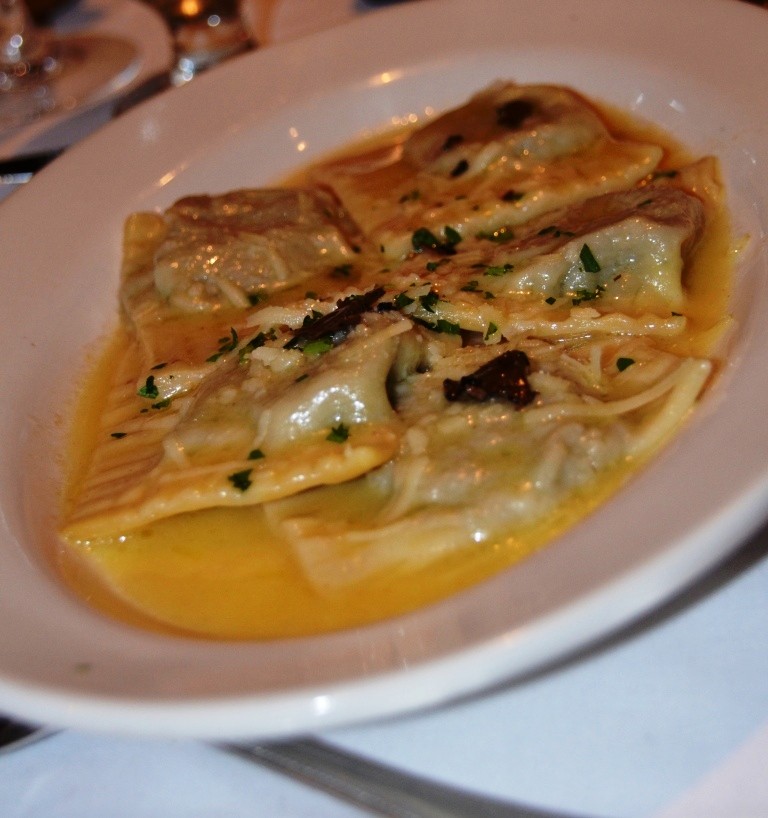
Mushroom Ravioli
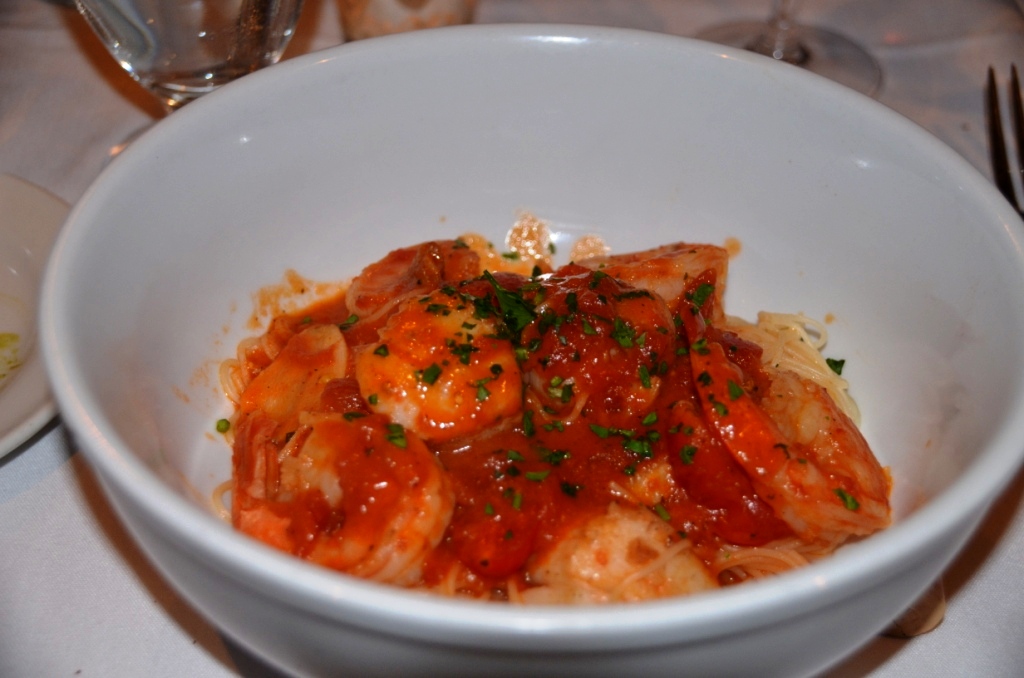
Capellini with Shrimp and Scallops
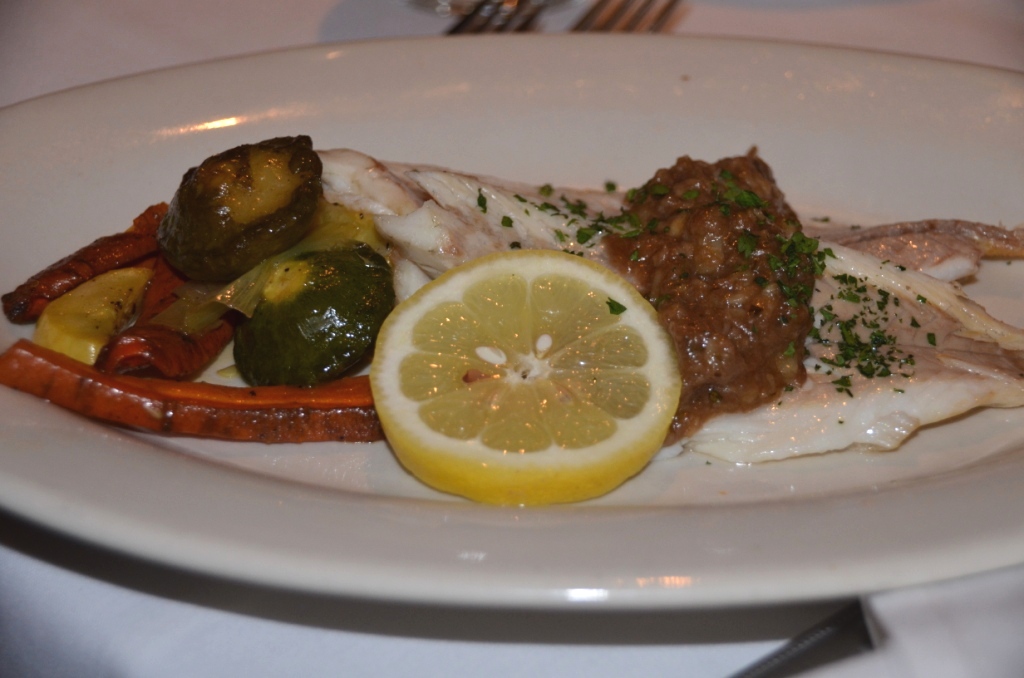
Branzino

Chicken Milanese
The wines, luckily, represented a different story. First of all, the wine list was well priced (there is enough selection of decent wines in the proximity of $30, which is not often in restaurants). Chef (and owner) Enzo is quite passionate about the wines, and he likes to please his guests. We started talking about wine, and Enzo mentioned that he has a number of wines that are not on the list, and which he will be glad to offer to us. One of those wines was called Shatter, a Grenache wine out of France.
I heard of Shatter before, I believe I read a rave review in one of the blogs (sorry, it’s been a while). Shatter is a joint project of Dave Phinney, the winemaker at Orin Swift Cellars, and Joel Gott, the winemaker at the eponymous winery. My initial thought was “no, thank you, I don’t want this wine”. First, I don’t like the style of Orin Swift wines – one of their most famous wines is called Prisoner, a Zinfandel blend, which I find over-extracted. Second, I lost my love of French Grenache – I definitely prefer the Spanish Grenache style, in general, more velvety and round than the French and less biting. But then, considering our other options, the fact that I heard about the wine before and the great price ($45) – oh well, we decided to give this wine a try – and we happened to hit the home run.
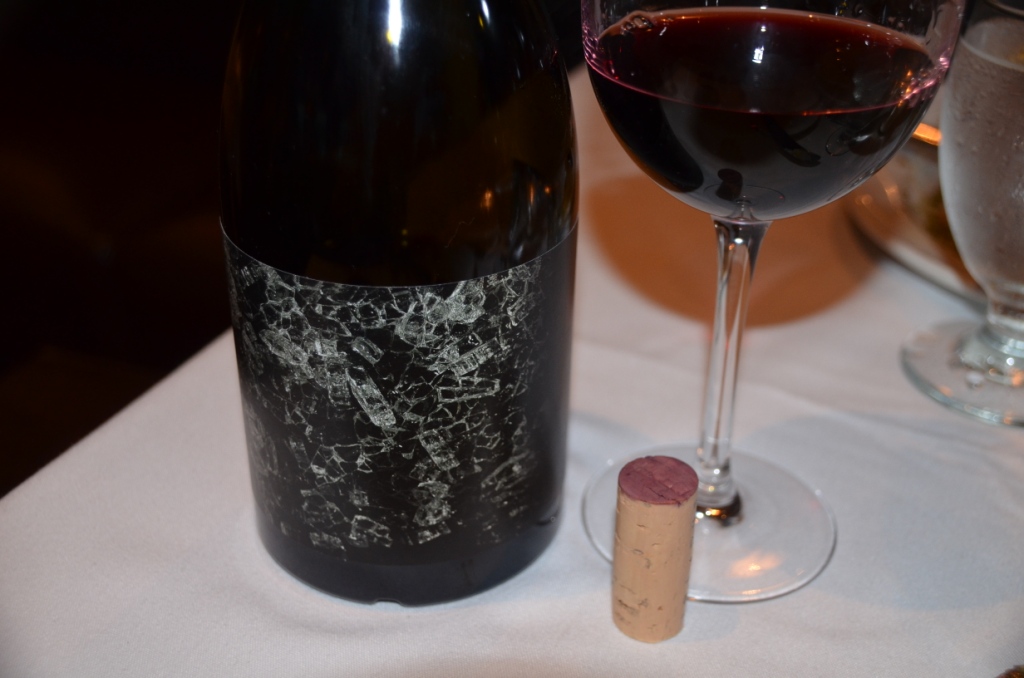
Shatter
2011 Shatter Grenache Vin de Pays des Côtes Catalanes, France (15.9% ABV, 100% Grenache, 10 months in French oak, 30% new) – dark garnet color in the glass, nose of dark fruit with a hint of espresso beans. On the palate, velvety texture with blueberries and cherries prevalent, a touch of spice, few peppery notes, dark chocolate, firm structure, supple tannins, perfect acidity, and overall very balanced. I have to say, surprisingly balanced (again) for 15.9% ABV. Drinkability: 8
Then there was dessert, and so here are more food pictures for you:


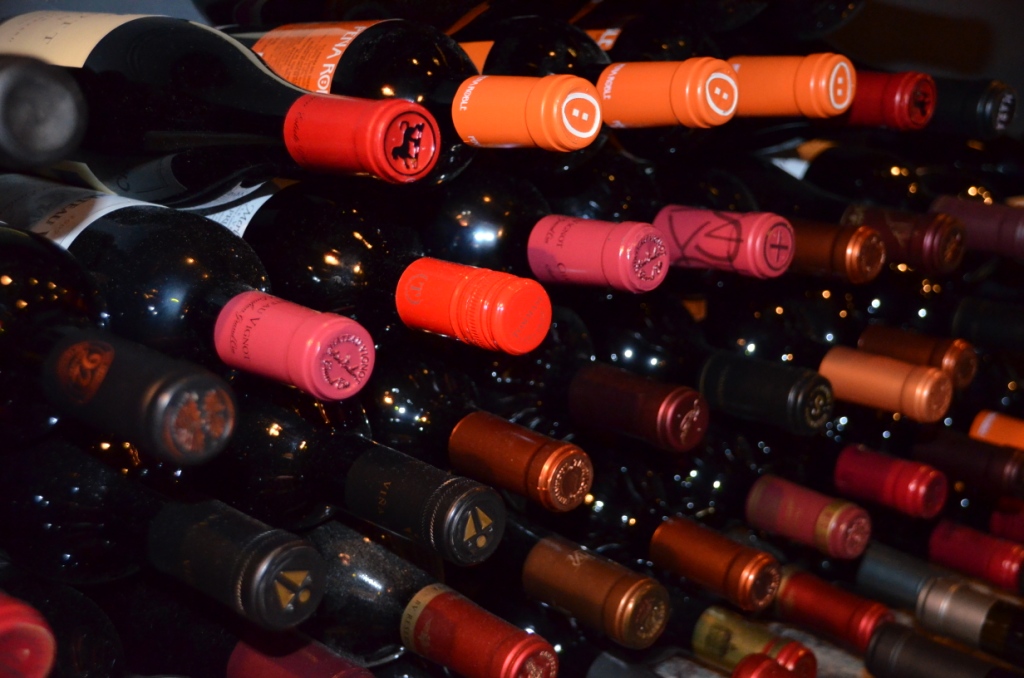
Overall, it was a good meal, definitely anchored on the great wine experience. And we plan to come back, as Enzo showed us his secret wine room – the room is used both as a cellar and the place for the special wine dinners. You can eat surrounded by wine – don’t think I know of any other restaurant in Stamford where you can do the same. Yes, we will be back…

Ready for wine dinner
That’s all I have for you for today, my friends. Cheers!
Madonia
1297 Long Ridge Rd
Stamford, CT 06903
(203) 322-8870
https://www.madoniarestaurant.com/

Screw Top Versus Cork – The Jury Is Still Out
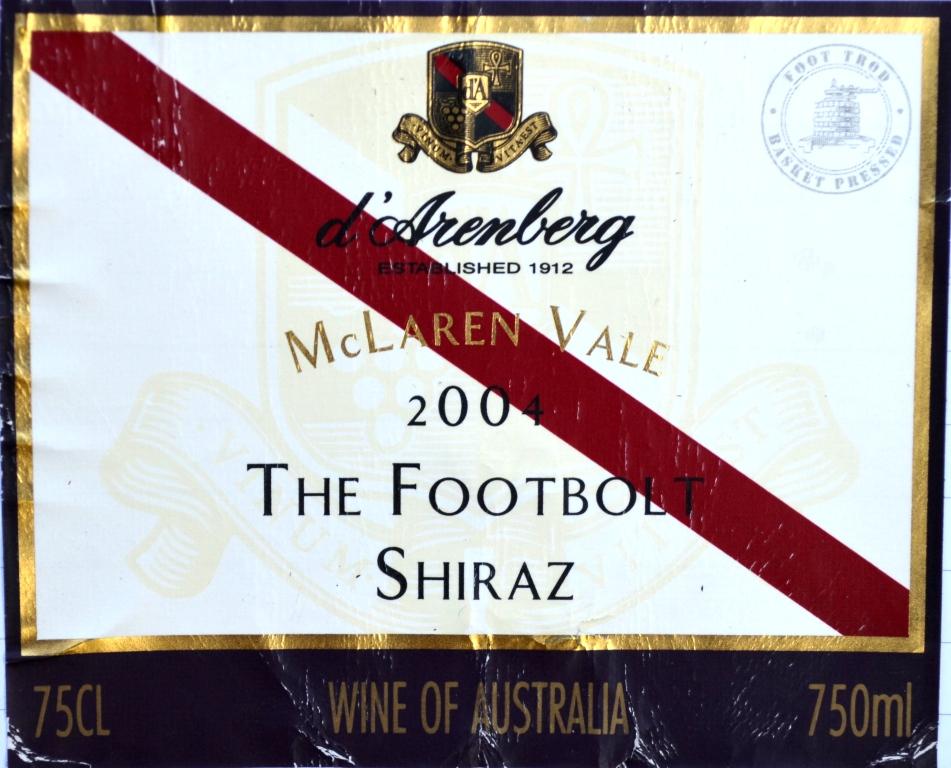 Inadvertently, I run an experiment of cork versus screw top, and the results were interesting enough to discuss them here.
About a week ago, I pulled out of the cellar (which is actually a wine fridge) the bottle of 2004 d’Arenberg The Footbolt Shiraz MacLaren Vale from Australia (14.5% ABV). As I confessed in my blogging addiction in the recent post, before the bottle is open, in addition to just regular anticipation of wine experience itself, now I have added anticipation of the possible blog post which can be written based on the wine experience.
Or not. There are many possible was for the experience not becoming a blog post. Too many things to write about, too little time. Or you just hit the “writer’s block”. Or the experience is not worthy of being captured. Which was the case with this Shiraz.
d’Arenberg is a well known Australian winery, which just celebrated 100 years last year, producing substantial range of typical Australian wines, such as Shiraz, Grenache, Chardonnay, Cabernet Sauvignon and more. I had pleasure of meeting Chester Osborn, d’Arenberg’s winemaker in third generation, and even have couple of bottles with his signature in my cellar (by the way, what do you do with those signed bottles? I should make a separate post to discuss this interesting question).
Now, I didn’t know what to expect from this bottle of Shiraz. The Footbolt is one of the introductory level Shiraz wines from d’Arenberg, but that doesn’t mean anything. Cork is out (regular cork, just keep reading to see why it is important), and judging by the color alone, this wine didn’t reach its prime yet – dark ruby in color. But the nose and then the palate were inconclusive. Acidity would jump up and down with every sip, and while the wine had enough fruit, it was simply not getting together, definitely lacking the balance which is all so important for me in the wine. So, based on this wine alone, the blog post was not born.
And then yesterday I pulled out another bottle of d’Arenberg wine from the same vintage:
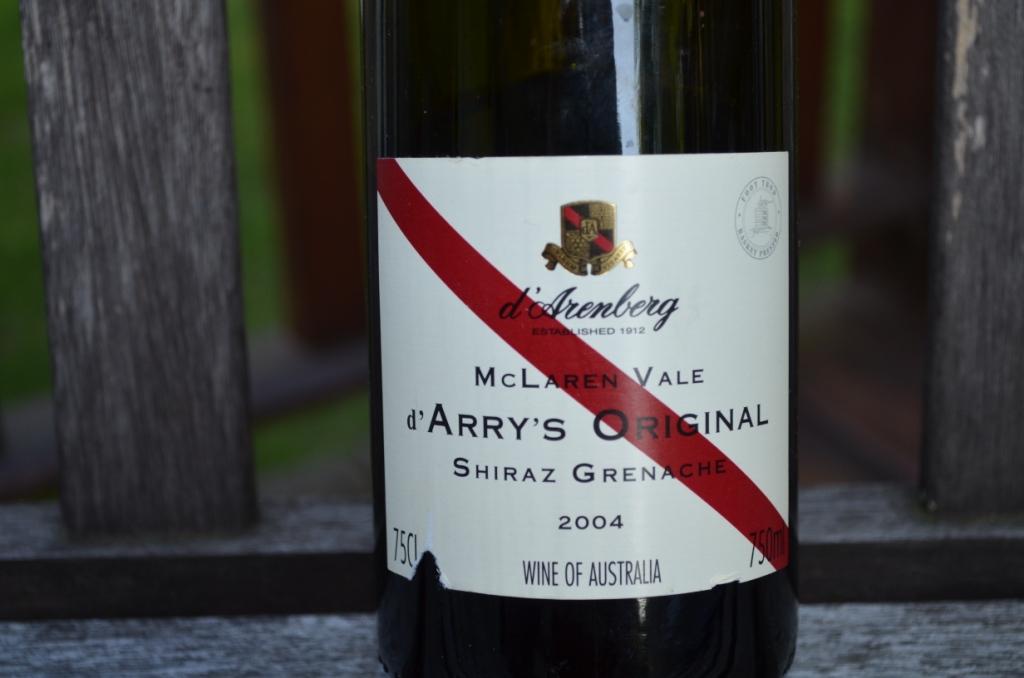
d’Arenberg Shiraz Grenache
2004 d’Arry’s Original Shiraz Grenache McLaren Vale (14.5% ABV) – a blend of 50% Shiraz and 50% Grenache . With the screw top. That was an “aha” moment. Same vintage as the previous wine – but wit the screw top – how different the experience will it be?
No “pop” of the pulled cork. Just a quiet “tsk-tsk-tsk” of unscrewing the top. In the glass, this wine looked like it was made yesterday – dark ruby, very concentrated color. From the get go, the wine showed beautiful fruit on the nose, ripe plums, equally supported on the palate with fresh fruit and energetic acidity.
About 45 minutes or so later, when I poured another glass, the wine tasted almost sweet – the thought was “what happened”? This was a totally a different wine compare to the way the wine started. Another half an hour or so – and we were presented with the new wine again – dark concentrated fruit, firm structure, tannins and acidity all summing up into a gorgeous balanced wine.
Wine ageing in the bottle is typically associated with the tiny inflow of oxygen through the cork. In case of screwtop, the oxygen doesn’t get to the wine at all. Thus my theory is that once you open a bottle under the screwtop, the very quick ageing process starts off, which takes the wine through the different “taste stages” in the rapid succession. Then at the same time, the wine is changing its taste in the glass no matter what, so may be that rapid taste changing has nothing to do with the way the bottle was closed.
Ideally, of course, I would love to compare two identical bottles (same wine, same vintage), only one closed with the screwtop and another one with the regular cork (I believe I actually read about some producers who are doing that). In this experiment, the Shiraz Grenache under the screwtop was a clear winner, but it is hard to tell what it has to do with the screwtop versus regular cork versus the two wines being just differently made.
I guess I can end this report with the words “to be continued…” – and I would love to hear your thoughts. Cheers!
Last Bottle Sign Up ($10 credit)




 Talk-A-Vino