Archive
Daily Glass: An [Opportunistic] Bordeaux Discovery and a Case Buy Recommendation
If you read this blog regularly, you might have noticed my claim of “rediscovering Bordeaux” after the Cru Bourgeois virtual tasting. Now, my happy feeling about Bordeaux was reinforced further, after a spontaneous Bordeaux tasting.
After somewhat of an extended break, we got together with the friends for dinner. Before we would eat, we were presented with a difficult task – we needed to taste 5 different Bordeaux wines – I hope you see my attempt at humor here.
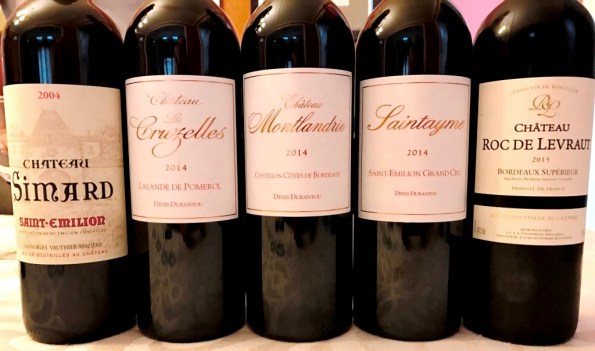
The reason for this “obligatory tasting” was simple. My friend (and our dinner host) frequents a large and well known wine store on Long Island, called Pop’s Wine and Spirit, which routinely offers some legendary deals – I can’t call them any other way as the savings for the wine buyers are quite substantial. So my friend got a recommendation from his trusted sales rep to try few of the Bordeaux wines offering great value, and come back for more if he would like them.
There were 4 Bordeaux wines we needed to try as such – plus one which is my perennial favorite. Three of those Bordeaux wines were coming from the same producer, whose name I never heard before – Denis Durantou, who supposedly is a well known, and the wines we had in front of us were more of the side project for him.
After tasting the wines, which were magnificent and a great value (notes below), I had to do some research and found out that Denis Durnatou is indeed more of a pioneer and the legend, making wines at Chateau l’Eglise-Clinet in Pomerol. Chateau l’Eglise-Clinet is a part of so called “Pomerol Triangle”, which is an area with the best soils in Pomerol, where most of the “Pomerol greats” are located – I hope the names like Le Pin, Vieux Chateau Certan, l’Evangile, Pétrus spell magic for you (yes, all amazing producers). Denis Durantou was the first to start green harvesting in Pomerol (green grapes are removed at the early stages, to allow remaining grapes to concentrate flavor). He was also a big proponent of thermo regulation in the cellar, which is critical when you ferment the grapes. Actually, I can’t do justice to the Denis Durantou’s work in a few sentences – instead, let me refer you to an excellent article which you can find here.
2014 Chateau l’Eglise-Clinet will set you back at around $180, the futures for the 2015 seems to be closer to the $225. At the same time, all 3 of the “other” Denis Durantou wines we had a pleasure of tasting, were in the range of $17 to $24 (all prices come from Pop’s Wine and Spirit).
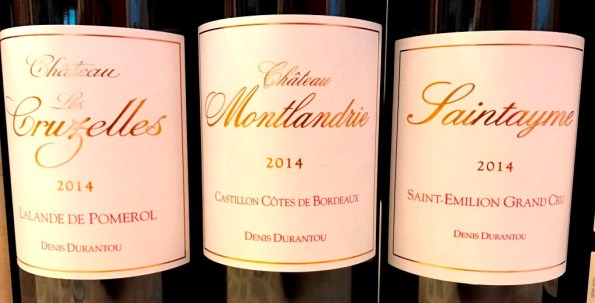
Here are my notes:
2014 Château Montlandrie Castillon Côtes de Bordeaux Denis Durantou (14.5% ABV, $22, 75% Merlot, 20% Cabernet Franc, 5% Cabernet Sauvignon) black currant on the nose, classic, clean, mint, wow; perfect Classic Bordeaux on the palate, beautiful fruit, cassis, firm structure, perfect balance, ready now, will evolve. Drinkability: 8+
2014 Château Les Cruzelles Lalande de Pomerol Denis Durantou (14% ABV, $24, 90% Merlot, 10% Cabernet Franc) green bell peppers on the nose, touch of Cassie , eucalyptus; dusty palate, firm tannins, meaty texture, very round, cherries. Will evolve. Drinkability: 8-
2014 Saintayme Saint-Emilion Grand Cru Denis Durantou (14.5% ABV, $17, 100% Merlot) dusty nose, plums, touch of roasted meat; fresh fruit on the palate, delicious, silky smooth, fresh tannins, well balanced. Drinkability: 8
Let’s talk about two more wines.
What I love about Chateau Simard is that they take great care of us, oenophiles. Chateau Simard wines are aged at the Chateau for 10 years, and only then they are released to the public – all at incredibly reasonable prices, at least so far. As you can tell, this wine was perfectly fitting my comment price-wise, and it was delicious:
2004 Château Simard Saint-Émilion (12.5% ABV, $22, 70% Merlot, 30% Cabernet Franc) – very funky nose, and lotsr of barnyard, mint, truffles ; sweet fruits on, fresh tannins, nice depth, touch of licorice, cured meat, great balance, delicious wine. Drinkability: 8+
Now, for our last wine, you don’t even have to read this post anymore – just run to the store and get a case of this wine – at least one. You can thank me later. And by the way, I’m not the only one who thinks this wine is great – 2014 vintage got 89 points from Wine Enthusiast magazine.

2015 Château Roc de Levraut Bordeaux Superieur ($8, Cabernet Sauvignon, Merlot, Cabernet Franc) – beautiful smoke on the nose, roasted meat, dark fruit; plums and smoke on the palate, good acidity, nice minerality, savory notes, excellent overall. Drinkability: 8, incredible QPR.
Here we are, my friends – few of my “Bordeaux finds” for you. By the way, I need also to mention that my friend, who kept tasting the leftover wines over a few days, said that they all kept on opening up, especially our QPR star, so I’m serious about that case buy recommendation. I also just realized that 4 of these wines are predominantly Merlot wines, so this post is also perfectly fitting for the October being the month of #MerlotMe!
Have you made any exciting Bordeaux discoveries as of late? How is your Merlot? Cheers!
WBC16: Overwhelmed Even Before The Day One
 Yet another ambitious plan goes nowhere. While attending the Wine Bloggers Conference 2016 in Lodi, I had a great idea of posting a recap of the prior day in the morning. No need to start checking for the missing posts from me – none of it happened. Every day was so packed from dawn to dusk that what seemed to be a great idea didn’t survive the test of the reality. Yes, I probably could muscle a few lines in, but it would come at the expense of the great time talking to the fellow bloggers, which was the trade off I didn’t want to make.
So here we are, the conference is over, so now I will do my best to share my perspective of the events as they took place. Here we go.
I took a flight early morning on Thursday to arrive to San Francisco. After getting the rental car, my first stop was in Napa, at Oxbow Public Market, where I met for lunch Danielle Irwin and her husband Derek. Oxbow Public Market is a very interesting place, conceptually somewhat close to the Chelsea Markets in New York, only built in modern, contemporary style, with lots of small artisan shops and restaurants, offering food and wine, fresh produce, coffee and whatever else your heart desires. Great place to stop by if you are looking for a break during your winery visits.
It was a great pleasure to meet Danielle and Derek face to face. I had been virtually talking to Danielle for a while – she is writing her blog Danielle Dishes The Vineyard Dirt at Naggiar Vineyards in Sierra Foothills, where her husband Derek is the winemaker. Derek is a vigneron who is involved in a lot of vineyard and winery projects, and he also produces his own wines under Irwin Family Wines label. I had a pleasure of tasting his Tempranillo, which was the first California Tempranillo I ever tasted. Conversation with Derek was an excellent introduction into the Lodi wines, as he gave me some ideas for what to expect there.
A hour an a half later, after a ride along route 12 which I wouldn’t call pleasant (lots of stop and go traffic, not a fun ride) I arrived to the Hampton Inn in Lodi, which became home outside of home for the next 3 days.
The first event of the night was the conference opening reception at the Mohr Fry Ranch, sponsored by Lodi Wine. With that reception came my first real encounter with Lodi wines.
Until coming to Lodi, I only knew it as a source of many Zinfandel wines. And then there was a perception of hot, high alcohol wines, based on the tasting of occasional Cabernet Sauvignon with Lodi regional designation. Yep, that’s all I had on Lodi in my head.
The very first taste of the Lodi wine broke that perception. By the end of the tasting, it was shattered completely and didn’t exist anymore.


I stopped at the table of the Fields Family Wines, and the very first white wine I tasted was 2015 Fields Family Wines Clay Station Vineyard Grenache Blanc Lodi. I never tasted Grenache Blanc from California, let alone the fact that it is coming from one of the hottest regions (yep, sense my fear?) – yet the wine had clean acidity, touch of minerality, restrained fruit – a great start.
You know what – now I’m afraid to bore you away with all this “acidity and restrained fruit”, but this was the trait of literally every Lodi wine I had an opportunity to taste – there were no fruit bombs, there were no hot wines, there were delicious, well made world-class wines, made with love and care. I just have to tell you this, as it was really an overarching impression over the three days of tasting, so now I will [try to] avoid repeating myself all the time.
Have to be honest – the next red wine I approached with trepidation (huh, like the previous one I did not, right). Tempranillo from Lodi? I already told you that I had good experience with Irwin Family Tempranillo from Napa, but it was one particular wine, which doesn’t guarantee anything in a long run. And if you are reading this blog for a while, you know my passion for the Spanish Tempranillo wines – and now in my mind I was facing a clear opportunity to be disappointed. First sip of this 2010 Fields Family Wines Tempranillo Lodi put all my doubts to rest – the wine had a nose of black fruit and spices, and it was dark and brooding on the palate, with those espresso notes so characteristic in the wines of Toro in Spain. An outstanding rendition by all means, and I would love to see it in a blind tasting against the actual Toro wines.
2010 Fields Family Wines Estate Grown Syrah Lodi was an excellent example of the cold climate Syrah – touch of roasted meat, dark fruit, spicy with clean acidity – great rendition of another one of my favorite grapes. 2011 Fields Family Wines Estate Grown Syrah Lodi added more complexity and more roasted meat, all with perfect balance. 2010 Fields Family Wines Petitte Sirah Lodi was simply outstanding, offering silky smooth, velvety texture, supple ripe black and blue fruit with enough acidity in the core to make the wine perfectly balanced. As you can tell, Fields Family Wines provided a splendid introduction into the wines of Lodi.


My [now exciting] Lodi wine deep dive continued at the next table. Successful first experience should’ve really put me at ease – and still, an Albariño on the label triggered a subconscious alarm – Lodi doesn’t leave the impression of the Rias Baixas (not that I visited Spain, unfortunately, but just a mental image of coastal region), so “just in case, prepare for the worst”, the concerned brain said. This happened to be really a needless worry. 2015 Harney Lane Albariño Lodi had a a nose of white fruit and excellent acidity on the palate, which is the typical characteristic of the Spanish Albariño. 2013 Harney Lane Tempranillo Lodi was a bit lighter than the Fields Tempranillo version (it was also 3 years younger), but still preserving the core of dark fruit and good acidity. 2013 Harney Lane Lizzy James Vineyard Old Vines Sinfandel Lodi was as classic as Lodi Zinfandel can be – blueberries, blackberries, spices – very tasty.
I could continue tasting Lodi wines as there were many more winemakers present. However, there is something you need to know about Wine Bloggers Conference. In addition to all of the program events, there are always lots and lots of activities taking place somewhere around the WBC space. Call them private tastings or what, but this is something to pay attention to. Thus we left the reception, and after a short drive arrived at a house where Troon Vineyards tasting was taking place.


Troon Vineyards started in Southern Oregon in 1976 (vines were planted in 1972). I’m sure that when you hear “Oregon wine”, your first thought is Pinot Noir – nevertheless, Troon Vineyard doesn’t produce any Pinot Noir wines, and instead focuses on Mediterranean grape varietals (and Zinfandel). Another interesting fact is that many of the Troon wines (especially the whites) are co-fermented, meaning that different varietals are fermented together at the same time, as opposed to fermenting separately and blending afterwards.
I tried a number of Troon wines, with the two favorites been 2015 Troon Blue Label Longue Carabine, Applegate Valley, Southern Oregon (blend of Vermentino, Viognier, Marsanne and Roussanne) – touch of perfume on the nose, medium to full body with expressive minerality and good acidity. 2013 Troon Black Label M*T Reserve, Applegate Valley, Souther Oregon (blend of Malbec and Tannat) had nose of black fruit with dark core and good structure, medium to full body and good balance.
The last stop of the long day (remember, I left the house at 5 am in the Eastern time zone) was at the Rodney Strong Vineyards party, which was luckily taking place right at the hotel.


Rodney Strong winery had been producing wines in Sonoma for more than 50 years and would well deserve its own post to talk about their long history (the oldest vineyard at Rodney Strong was planted in 1904) and their achievements. But for the sake of this post, let me just talk about few of their wines I had an opportunity to enjoy.
2015 Estate Sauvignon Blanc, Charlotte’s Home, Northern Sonoma was excellent – grassy nose, fresh, crisp and restrained palate, with just a touch of grass and lemon – delicious and very refreshing. 2009 Ramey Platt Vineyard Chardonnay Sonoma Coast was a stand out (no wonder Ramey Chardonnay was one of Decanter magazine’s 10 best Chardonnay wines in the world outside of Burgundy) – classic intense vanilla nose, vanilla apple and pear on the palate, excellent balance and excellent overall. As an extra bonus, the wine was poured from double-magnum (3L) bottle. In case you are wondering about connection here, David Ramey is a consulting winemaker at Rodney Strong.


The reds of Rodney Strong provided an amazing finish to the very long but very exciting day. 2013 Davis Bynum 2013 Jane’s Vineyard Pinot Noir Dijon Clone 115 Russian River Valley was a classic California Pinot Noir – with plums and smoke, soft and round. 2010 Rodney Strong Symmetry Meritage Alexander Valley is one of the very best Bordeaux blends from California – again, classic, classic, classic – cassis, green bell pepper, mint, perfect structure, absolutely delicious wine. The last three reds were flagship single vineyard Cabernet Sauvignon wines – 2009 Rodney Strong Alexander’s Crown Single Vineyard Cabernet Sauvignon Alexander Valley, 2013 Rodney Strong Rockaway Single Vineyard Cabernet Sauvignon Alexander Valley and 2013 Rodney Strong Brothers Single Vineyard Cabernet Sauvignon Alexander Valley. Considering the end of a very long day, I’m not going to give you any details on the notes other than that all three were classic Cabernet wines, pure, varietally correct and delicious – I would love to drink those at any day.
If you are still with me, aren’t you tired reading this post? I’m tired even writing it – but we are done here. My first WBC16 report is over – and more to follow. Cheers!
To be continued…
How Do You Spell “Delicious” in Italian? Marchesi de’ Frescobaldi Might be a Good Answer
Virtual tastings are always fun. For sure for the conversation and learning part. And of course the best part is while your conversation is virtual, tasting of the real wines. As always with wines, you like some, and some you don’t (OMG, I let the cat out of the bag!!!). And sometimes you are simply blown away.
The tasting of wines of Marchesi de’ Frescobaldi was the latter. As a young oenophile, I heard about the wines of Machesi de’ Frescobaldi, a 700 years old winemaking family, for the first time in the early 2000, when I read an article in Wine Spectator, profiling Italy’s “big three” – Antinori, Banfi and Frescobaldi. However, until a few days ago, I wouldn’t claim that I had any real encounter with Frescobaldi wines.
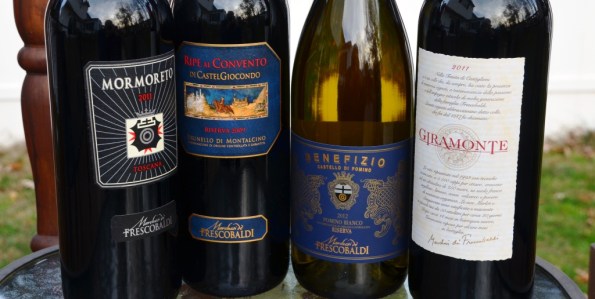
I guess there was a certain element of luck that my acquaintance with Frescobaldi wines started from their single vineyard, or so called “CRU” wines. Nevertheless, to be literally blown away by 4 wines out of 4 in the tasting is not something which happens often. I had plenty of single vineyard and high-end wines which left me simply indifferent. These 4 wines of Marchesi de’ Frescobaldi had me say “wow” every single time I had a sip.
I will not inundate you with the history of the winery or any other facts – you can read that at your leisure at the winery’s web site. However, each wine we tasted is unique in its own ways – and this is something I want to share with you here. Below are my tasting notes, including the interesting facts I pondered across. Here we go:


2012 Marchesi de’ Frescobaldi Pomino Bianco Benefizio Riserva DOC (13% ABV, $45, 100% Chardonnay)
C: light golden
N: classic – light touch of butter, vanilla, apples, delicious and inviting
P: delicious. Golden Delicious apple, touch of vanilla, touch of lemon, crisp acidity on the finish, perfectly lingering.
V: 8+/9-, a treat. Would compete with any white Burgundies in elegance, and has great aging potential
Interesting wine notes: Chardonnay was planted by Frescobaldi in 1855. In 1878, Pomino was awarded Gold medal at Paris Exposition. Benefizio was produced in 1973 from the vineyard with elevation 700 meters (2,200 feet), and it was the first barrel-fermented wine in Italy.
2011 Marchesi de’ Frescobaldi Mormoreto Toscana IGT (14.5% ABV, $79, 64% Cabernet Sauvignon, 26 % Cabernet Franc, 5% Petit Verdot, 5% Merlot)
C: dark garnet
N: dark fruit, plums, eucalyptus, hint of dark chocolate, intense, warm and inviting
P: spectacular. Firm, structured, black currant, chewy tannins, soft and powerful at the same time. Medium-long finish.
V: 8+, a “wow” wine. Would easily go up against any Bordeaux
Interesting wine notes: The vineyard of Mormoreto started in 1976 (while Cabernet Sauvignon, Cabernet Franc, Petite Verdot and Merlot had been growing there for 150 years), with the first harvest in 1983. The name “Mormoreto” means “murmur” in Italian – the constant breeze from the valley makes vine leaves to move all the time, creating soft and gentle “murmur” sound. The wine is only produced in most favorable years.


2011 Marchesi de’ Frescobaldi Giramonte Toscana IGT (14.5% ABV, $150, Merlot and Sangiovese)
C: dark garnet, almost black
N: beautiful, refined, restrained black berries, distant hint of dark chocolate
P: wow! Powerful, restrained, beautifully refined, dark fruit, fresh tannins, perfect balance, elegant, elegant, elegant. Long finish
V: 8+/9-. A wine in its own class. A clear nod to Italian heritage, weaved into a very modern, I-am-the-best, work of art.
2009 Marchesi de’ Frescobaldi Ripe al Convento di CastelGiocondo Brunello di Montalcino Riserva DOCG (15% ABV, $138, 100% Sangiovese)
C: dark ruby
N: plums, lavender, sweet oak, open, intense
P: complex, sweet plums, violets, nice herbal profile, delicious overall – perfectly ready to drink
V: 8+, delicious. One of the very best Brunello wines I ever had, period.
Four wines, one delicious tasting. Yes, these are not inexpensive wines, and for many people these can’t be everyday wines. However, any of these 4 wines are truly worth experiencing, so if you pride yourself with being an oenophile, put these wines on your “must try” list. Okay, you can thank me later. Cheers!
Many thanks to the kind folks at Colangelo PR for including me in the tasting and providing samples.
From Marche to Mendoza, With Vine
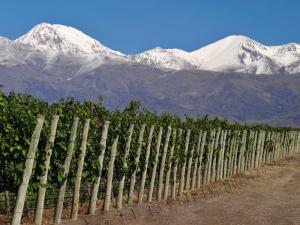
Rutini Vineyards. Source: Rutini Wines web site
In 1884, Felipe Rutini arrived to Mendoza area in Argentina. Continuing family traditions from the early 1800s when his father, Francisco Rutini, started making wine in the area known as Le Marche in Italy, he planted grapes and started making wine now in Argentina. Don Felipe, as he became later known at, was 19 years old when he founded La Rural winery in the district of Coquimbito. In 1925, Rutini family continued pioneering traditions of Don Felipe by planting first vines in the Tupungato area of the Uco Valley, a high altitude home to some of the very best vineyards in Argentina.
Today Rutini family is one of the biggest wine producers in Argentina, making about 9.5 million bottles of wine per year and exporting it to the 40 countries. You might be well familiar with the line of wines under a common name of Trumpeter, which include Chardonnay, Torrontes, Malbec, Cabernet Sauvignon, Pinot Noir and a number of others – Trumpeter is one of the 6 different ranges produced by Rutini Wines. Recently, Rutini Wines started introducing a new “Classic Series” line of wines in the United States, and I wanted to share my impressions from few of the wines in this line which I had an opportunity to taste.
But before we talk about the wines, let’s talk a bit more about Rutini family wine business today. Once again, I got together – well, yes, virtually, same as few times in the past – with Mariano Di Paola, head winemaker for Rutini Wines and one of the top winemakers in Argentina, and I had an opportunity to ask him a few questions. Here is what we talked about:
Q: Rutini family started making wines in Italy. Is there still a connection today at the Rutini Winery back to the traditions and customs of Region Marche?
A: No there are no direct links, but we still try to use the original Rutini winemaking influence today. Felipe Rutini was a visionary man who believed in Argentina’s winemaking capabilities, planting the first vines in Mendoza, and generations after we still work hard to maintain his legacy.
Q: If I understand correctly, Rutini is introducing its Classic Collection wines in the US. For how long had you been producing the Classic Collection wines? What were the main markets for it until now?
The Rutini collection was first released in Argentina with the 1996 Malbec, followed by Merlot and Gewürztraminer. It has been available in the U.S.: NY, TX, FL, MD, DC, MA, RI, and CA since the end of 2013.
Q: What are the oldest vines growing at Rutini vineyards?
A: Select Malbec vines in La Consulta date back over 100 years.
Q: What was the source of inspiration for the Rutini Sauvignon Blanc?
A: We wanted to create a well- balanced Sauvignon Blanc that spoke to the true characteristics of this varietal and represented the best quality of this wine.
Q: Sauvignon Blanc is really not the grape Argentina is known for. Do you think Argentinian Sauvignon Blanc has its own style and will become a wide movement?
A: Yes, Argentine Sauvignon Blanc has its own style which is heavily dictated by the particular growing region. Our continental climate, highly influenced by the Andes, and high altitude provide us with optimal grape growing conditions. Sunny day and dry summer conditions allow us to harvest fully ripened grapes. The cool evening temperatures and controlled irrigation serve to prolong hang time and to create a good balance between sugar and acidity. As there is more interest to try other Argentine varietals, there will be more Sauvignon Blanc production. Our Sauvignon Blanc style, of course, offers really good acidity, lemongrass aromas, floral aromas, but we also focus on producing a mineral style.
Q: Malbec is unquestionably a star red grape of Argentina. Is there a next great Argentinian Grape on the horizon, or is it going to be Malbec for a while?
A: We are always experimenting with different varietals, and while the native varietal Torrontes produces an exceptional and distinct white wine, Malbec will always shine when grown in this region, and it really speaks for the tradition and future of winemaking in Argentina.
Q: Do you use any of sustained, organic or biodynamic methods in production of your wines?
A: In our vineyards we do not practice organic or biodynamic methods, due to the health and hygiene of the plants themselves and the nobility of our soils, all of which , the use of pesticides that may eventually affect the vineyard is not necessary.
Q: It seems that most of the Rutini wines made from the grapes coming from the multiple vineyards. Do you have any plans to produce single vineyard or even single plot wines?
A: Yes, we do have plans to produce single-vineyard wines. At the moment wines are in the aging process and will launch in the market soon. ( Malbec and Cabernet Sauvignon ).
Q: Probably a very unexpected question 🙂 – I understand that Rutini wines are sold in China. How big and/or important that market for Rutini family wines? What wines sell best in China?
China is a very important market for Rutini. As of 2013, the U.S. and China represented 50% of our sales, with the Rutini collection being the most popular brand sold. Chinese consume mostly red wines /red blends and for Argentina, they prefer of course Malbec and Cabernet Sauvignon. Sparkling also sells well in this market.
So, what do you think? I think it was a very interesting conversation, albeit virtual. But now, I’m sure you are thirsty, so let’s have some wines. Here are my notes on the 3 Rutini wines form the Classic collection which I tasted:


2012 Rutini Wines Rutini Sauvignon Blanc Mendoza Argentina (12.5% ABV, $25, 3 months in oak, 50% new, 50% 2nd and 3rd use)
C: light golden
N: minerality, Chablis-like nose, very restrained
P: plump, creamy, delicious. I would never identify this as Sauvignon Blanc – Marsanne, Roussanne or Chardonnay come to mind. The wine was also not over-chilled, just chilled slightly. This wine is an enigma – coming straight from the fridge, it shows more of restrained sweetness, somewhat between New Zealand and California style
V: 8-, unique and interesting. The price looks somewhat high, but then this wine clearly aims at a nice Sancerre, so this provides a rationale behind it
2012 Rutini Wines Rutini Malbec Mendoza Argentina (14% ABV, $35, 12 months in oak, 80% new French oak, 20% new American oak)
C: dark garnet
N: licorice, a touch of tobacco, dark chocolate, blackberries, very inviting
P: fresh berries, touch dark chocolate, raspberries and blueberries, very smooth, medium body
V: 8-. I have to be very honest – this is not exactly my type of wine – however, there is a large category of wine drinkers who will be ecstatic about this wine because of its smoothness.
2012 Rutini Wines Rutini Cabernet Sauvignon Mendoza Argentina (14% ABV, $35, 14 months in oak, 50% new oak, 50% second use oak)
C: dark garnet
N: a touch of mint, fresh berries, black currant, a touch of barnyard, very interesting
P: surprisingly light and smooth, medium body (very unusual for the Cab), blackberries, vibrant acidity, good balance. Shows firmer structure after 10–15 minutes in the glass.
V: 8-, lighter style with lots of pleasure, this wine would definitely appeal to the people who prefer their reds to be not too heavy
Have you had any of the Rutini Wines, Classic Series, Trumpeter or any other? What are your thoughts?
I would like to thank kind folks at Gregory White PR for helping with the virtual interview and for providing the samples. Cheers!
Wagyu and Wine
 Wagyu burger, anyone? How about glass of Cab with it? Or may be a Pinot? Luckily, it is easy to solve that dilemma – as long as you have Capital Grille restaurant close by. Until November 22, Capital Grille has a special offering on the menu – 2 styles of Wagyu burgers, which you can pair with either 2012 Justin Isosceles Cabernet Sauvignon, Paso Robles or 2013 Landmark Overlook Pinot Noir, California, all for a fixed price of $25, which I think is a great deal for a lunch with a glass of nice wine.
It is so happened that my wife had a day off in a middle of the week – despite the fact that we both work in the same small town, our schedules never align for two of us to have lunch together during the week. As soon as I found out that she will be off on Wednesday, the plan was ready – lunch at Capital Grille it is!
Before we talk about pairings, let me talk about the wines. 2013 Landmark Overlook Pinot Noir, California was a perfect example of California Pinot Noir – touch of smoke, ripe fruit with good acidity, ripe plums, perfect balance – definitely an excellent wine. 2012 Justin Isosceles Cabernet Sauvignon, Paso Robles (15.5% ABV, 77% Cabernet Sauvignon, 12% Merlot, 11% Cabernet Franc) was over the top delicious, ripe, exuberant, showing a touch to sweet to my liking, but still delicious and very palatable wine.


And the burgers arrived. The Cheeseburger was served with Fried egg and crisp onions, and the other burger was served with Gorgonzola and black truffle ( this was my choice, and while I ordered it medium-rare-plus, somehow it had a very limited flavor – don’t know why…). So which wine do you think worked better with which burger?


The result of the pairing was very interesting. Landmark Pinot Noir ended up perfectly complementing either one of the burger, and unfortunately, Justin Cab was somewhat fighting with both. No, there was no competition – but Landmark Pinot Noir still won as a pairing choice.
Or at least it did so for me, so you should use your chance to find out. Head over to the Capital Grille, and let me know which pairing will work for you. Not in the mood for a burger? Go find those wines, as they were delicious. Cheers!
How About Some Cabernet Franc for the #CabernetDay?
The time has come again to celebrate #CabernetDay. I’m really curious – when you hear the words Cabernet Day, what is the first wine (or grape) which comes to mind – is it Cabernet Sauvignon or Cabernet Franc? I would bet that at least two third of the people (if not more) would associate Cabernet Day with Cabernet Sauvignon – and can you blame anyone? While the most celebrated grape in the world comes from Bordeaux, most of Bordeaux wines are blends, so it is really California wine industry which brought Cabernet Sauvignon to such a star status in the wine world, making it an object of crave and desire.
I looked through my past #CabernetDay posts – most of them talk about Cabernet Sauvignon. Meanwhile, Cabernet Franc, a parent of Cabernet Sauvignon, deserves its own praise. You see, the success of Cabernet Sauvignon, especially the California Cabernet Sauvignon, created certain image, certain collective expectations of any wines which happened to have the name Cabernet Sauvignon on the label – we expect power, we expect concentration, we expect big body and silky layers. When it comes to Cabernet Franc, we still accept the wide range of expression – from spicy and light Loire or US East Coast renditions to the powerful and concentrated Bordeaux (rare) and California wines.
Cabernet Franc is still allowed to be different, without demand to adhere to the “international standard” based on the name. You can find a lot of green bell peppers, earthiness and even tree brunches in the Loire (Bourgueil, Chinon, Saumur-Champigny) or US East Coast Cabernet Franc, of course often emanating that wonderful black currant, (a.k.a. “cassis”). On another end of the spectrum are California renditions of Cabernet Franc, which try to eliminate the green bell pepper and make the wine more similar to traditional Cabernet Sauvignon. Either way, Cabernet Franc provides a bigger variety compare to Cabernet Sauvignon – I never said it is better, though.
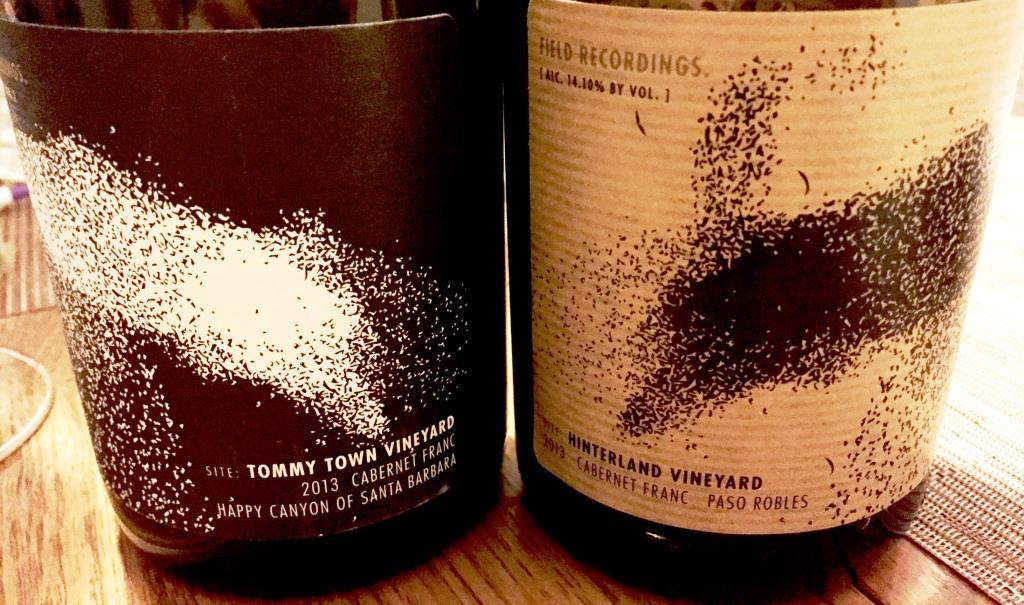 For today’s #CabernetDay celebration I’ve chosen a Cabernet Franc from California. Well, by accident, it happened to be Cabernet Franc for the second day in the row, and for both days it is a Cabernet Franc from one of my favorite producers – Field Recordings. 2013 Hinterland Vineyard Cabernet Franc Paso Robles (14.1% ABV, $18, 88% Cabernet Franc, 8% Cabernet Sauvignon, 4% Merlot), and 2013 Tommy Town Vineyard Cabernet Franc, Happy Canyon of Santa Barbara (14.3% ABV, $18, 100% Cabernet Franc) – two beautiful wines, celebrating a noble grape. The Hinterland Vineyard version was a bit more polished and round, and the Tommy Town Vineyard needed for the alcohol to blow off before it would show itself properly, but both wines had nice, long black currant-loaded finish, and I would gladly drink either one again (those were my only bottles…).
How did you celebrate the #CabernetDay? What was in your glass? Cheers!
Valentine’s Day Wine Experiences
 Last week I gave you some recommendations for the wines to serve on Valentine’s Day. Now, let’s see if I followed my own recommendations.
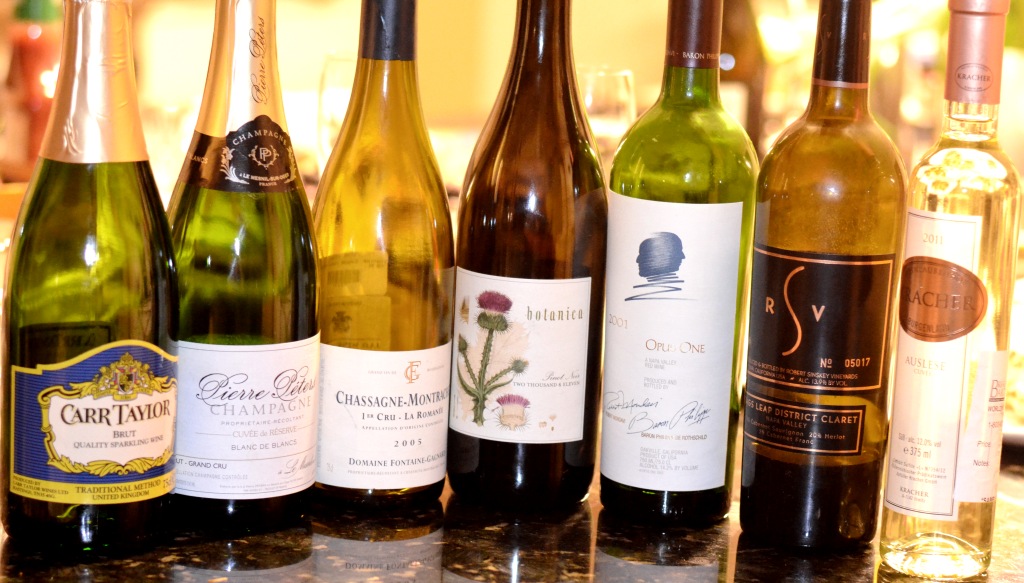
Of course the plan was to start the evening with the Champagne – and then there was a … but. I recently got my hands (told you many times before – I love my friends) on the very interesting sparkling wine from UK. What was the most interesting for me even before I tried the wine is that it contains one of the extremely difficult to find, rare grapes called Schönburger. As I mentioned last time regarding my quest to complete all the grapes in the original Wine Century Club application, Schönburger was one of those “last standing”, extremely difficult to find grapes – and the Carr Taylor Brut was the only wine containing Schönburger, which Wine-Searcher was able to find pretty much anywhere. In case you are curious, Schönburger is a rose grape created in 1979 in Germany as a cross of Pinot Noir, Chasselas and Muscat Hamburg, As an added bonus, the Carr Taylor Brut contained another grape I never heard of, another cross from Germany called Reichensteiner.
Okay, now that I provided a full disclosure, let’s talk about the wines. NV Carr Taylor Brut Sparkling Wine, England (12% ABV, $35) was an excellent start for the evening. Fine bubbles, very intense, very reminiscent of Champagne. Hint of toasted bread on the nose and may be a touch of almonds. The palate had all the toasted and yeasty notes, packaged together in compact but bright way – the wine had no sweetness, but nevertheless was perceived as a fuller body than a typical Champagne. I would gladly drink this wine again any time – if it would be available in US. Drinkability: 8-
Now it was the time for Champagne – Pierre Peters “Cuvée de Réserve” Brut Blanc de Blancs Champagne (12% ABV, $55) – very classic, a hint of brioche on the nose, and nice toasted notes on the palate. Quite honestly, after the first sparkling wine, I wanted a bit more life in the glass – this was clean and fine, but more of the usual. Drinkability: 7+
Our next wine was a white Burgundy. Considering my limited experience with Burgundy, I was concerned if 10 years old wine would hold well (all of you, Burgundy buffs, please stop laughing out there – I’m still learning), so the Valentine’s Day seemed to be quite a good occasion to find out. This 2005 Domaine Fontaine-Gagnard La Romanee, Chassagne-Montrachet Premier Cru, France (13.5% ABV, $65) was outright delicious – beautiful nose of fresh apples, and then apples and honey on the palate – full bodied, supple, with perfect lingering weight in the mouth – this was really a treat. Too bad it didn’t last – but this was definitely an excellent wine. Drinkability: 8
Time for the reds, don’t you think? Remembering the pleasure of the Antica Terra Ceras Pinot Noir (here is the post in case you missed it), I wanted to try another Pinot Noir from Antica Terra – this time it was 2011 Antica Terra Botanica Pinot Noir Willamete Valley (13.2% ABV, $75). The nose was very similar to the Ceras – cranberries, touch of forest floor, lavender, bright and intense. On the palate, this wine had much bigger shoulders than Ceras. Ceras Pinot Noir need no breathing time – it was ready to drink from the moment the bottle was opened. Botanica needed a bit of time. After about 20 minutes in the glass, it showed its structure, dark concentrated fruit, touch of coffee, earthiness, all with a perfect balance, and again, finesse. Drinkability: 8
And then there was Opus One. 2001 Opus One Napa Valley (14.2% ABV, $250). Quite honestly, when I learned that we will be opening Opus One, I was a bit concerned. Yes, this is one of the legendary California Cabernet Sauvignon wines, and yet when I tasted it before, I was not blown away. And when you are not visually excited about $250 bottle of wine, you feel that something is wrong with you, don’t you think? Bottle is opened, and wine is poured in the glass. Based on the color, the wine looks like it was bottled only yesterday – dark, very dark garnet. On the nose, the wine was somewhat muted but pleasant – touch of black fruit and eucalyptus. On the palate, the wine was simply closed – and aggressively tannic, with a touch of green brunches on the finish. Well, to the decanter, of course. After about an hour in decanter, the wine definitely changed for the better, showing touch of cassis and coffee notes on the palate – the tannins still stayed, but reduced, and the finish became spicy, peppery if you will – still not leading to the “wow” which you want to find in the bottle like that. Oh well. Drinkability: 7+
As we were waiting for Opus One to come around, another bottle was pulled out – 1996 Robert Sinskey Vineyards RSV Stag’s Leap District Claret Napa Valley (13.9% ABV, $55). This wine amply compensated for the Opus One shortcomings – in a word, it was delicious. Perfectly young appearance in the glass was supported by the fresh fruit on the nose. And the palate had cassis, touch of mint, mocha, sweet oak, silky smooth tannins, perfectly layered and perfectly balanced. This was Napa Valley Cabernet at its peak, and it was not afraid to show it. Drinkability: 8
Logically (Valentine’s Day!) we had to finish on a sweet note. This was my first experience with Austrian dessert wine, and it was also a first experience with Kracher – I only heard the name before, but never tasted the wines. 2011 Kracher Auslese Cuvée Burgenland, Austria (12% ABV, $22) had everything you want in the dessert wine and nothing you don’t – delicious light honey notes, lychees, vibrant acidity, lemon peel – it was an outstanding way to finish the evening. Drinkability: 8
That is the story of our Valentine’s Day wine experiences. Well, I can’t leave with the wines alone – the food was delicious too, so let me at least share some pictures – I spent time working on them, you know. Here we go:


And we are done here. So, what were your Valentine’s day wine highlights? Cheers!
Wine On The Go, Spectacular Pairing, and Some Life Ramblings
 Life is an interesting thing (wow, what a deep opening thought, huh?). I was supposed to depart at 6 am on a direct flight from New York to Miami to attend the conference. Thanks to much-hyphed-but-never-really-happened blizzard, my flight was cancelled and I was automatically re-booked, now on the flight with the stop, connecting through Charlotte, North Carolina.
Charlotte. You know, there are some strong emotional words which I’m striving to avoid, whether conversing or writing. One of such words is “hate” – and I will explain the connection in a second.
I travel a lot, and I have interesting memories of the different airports and trips, some better and some worse. But – if there is an airport which I “hate”, that would be the Charlotte. The reason is simple – lots of memories of severely delayed flights, cancelled flights, indifferent customer service and even sleeping on the floor as no other options were available. Yes, I know – it is actually stupid to “hate” airport – but I wanted to explain my feelings when I saw that I’m connecting through the Charlotte.
Okay, so I have no choice (called my travel agent multiple times – no way no how, either I take the flight as it is, or just cancel the trip). Short uneventful ride to the La Guardia airport and I’m at the terminal C. It is probably been a few years since I used that terminal, so once I get through security and walking to the gate, and I’m literally saying “wow”. The terminal looks very modern, screens and everything. I stumble upon a cafe which has lots of seats, with an iPad standing in front of every seat. iPad can be used for ordering or just some limited internet browsing. The cafe features a very attractive looking menu with lots of food options, mostly written in French, the language of “love of sophisticated food”. And the wine list looks quite reasonable, both in terms of international selection and price. Yes, definitely not something I was expecting to find.
Anyway, it was kind of early for wine and I was not hungry, so this was mostly a “note to self” for next time I might be using the same airport. To my surprise, the flight departed on time (almost a miracle for the La Guardia airport), and arrived in Charlotte ahead of scheduled time.
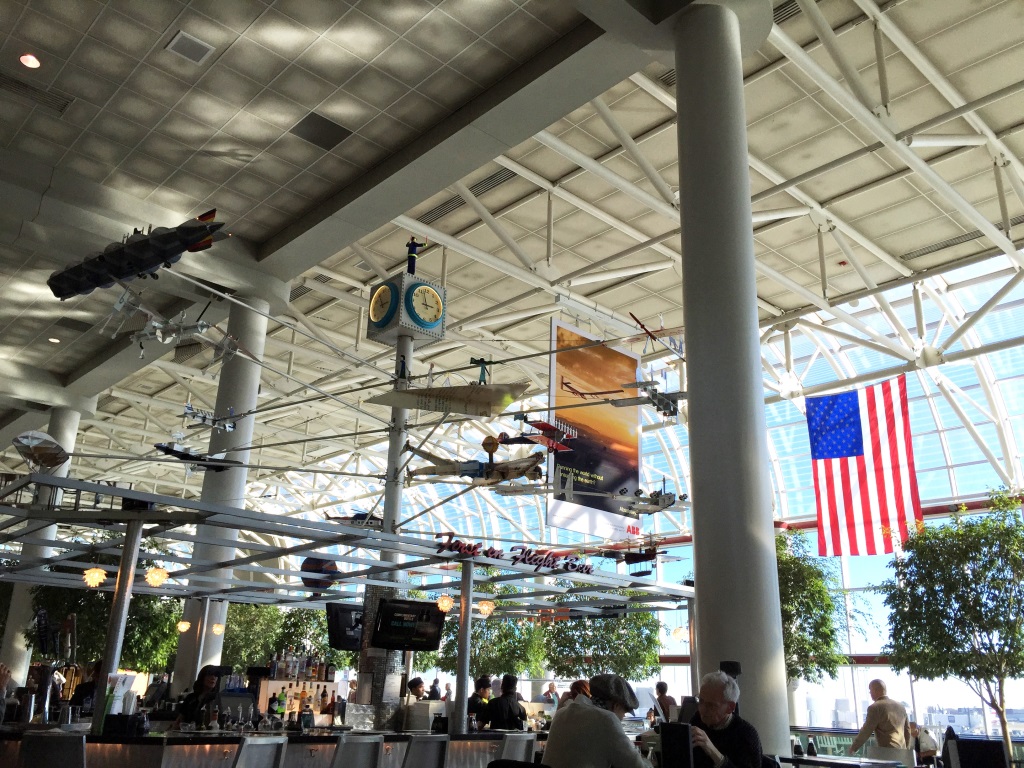
Many times in the past while flying through the Charlotte I stumbled upon a little wine shop, more of a tasting room for the Yadkin Valley wines. My schedule never allowed me to actually visit it. Then I remember being at the Charlotte airport at the reasonable time, only to find that the store was gone. This time as I knew that I will be connecting through the Charlotte, I decided just in case to check if there are any of my favorite Vino Volo restaurants at the airport. Nope, there were none, but I found a wine bar called Beaudevin, with a number of raving reviews, including the mention in the very reputable Fodor’s travel guide as one of the 8 top wine destinations in the airports in the US. So the early arrival gave me enough time to stop by Beaudevin, which is conveniently located right in the middle of the terminal, in the section called Atrium.


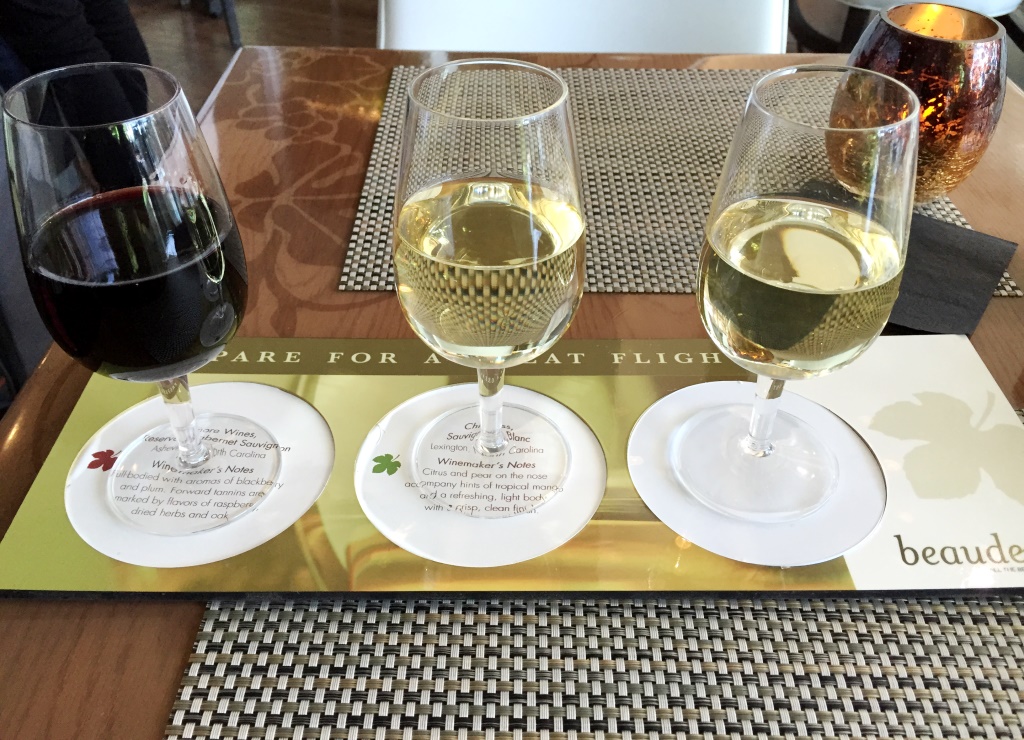
It appears that Beaudevin uses a similar model to the Vino Volo, offering wines both by the glass and as part of the tasting flights. To my delight, one of the featured flights consisted of North Carolina wines, and of course, this is what I went for.
Somehow it was stuck in my head that I recently read some rather negative reviews of North Carolina wines, so I approached these wines with a bit of trepidation. But – call it luck, fruit day or anything else, but I was rather blessed with a wonderful treat.
 https://talkavino.wordpress.com/wp-admin/post.php?post=13570&action=edit&message=10
The flight contained 3 wines, 2 whites and 1 red – Sauvignon Blanc, Viognier and Cabernet Sauvignon. I started with Sauvignon Blanc, and it was delicious, Viognier – delicious again, and then Cabernet Sauvignon – spot on! Here are the notes:
2011 Childress Sauvignon Blanc North Carolina (12.9% ABV) – Nose of white fruit, intense, with a touch of herbs, hint of fresh cut grass. On the palate, nice acidity, dry, tart, lemon notes, good minerality, medium to full body. This is an excellent summer wine – every sip makes you think of summer. Drinkability: 8-
2011 Childress Viognier North Carolina (13.9% ABV) – sweet candy on the nose, very intense, with the characteristic Viognier “perfume” showing in a distance. Compare to the nose, the wine is surprisingly restrained on the palate – hint of candied sweetness, white stone fruit, lychees. Excellent balance. Drinkability: 7+/8-
2012 Biltmore Reserve Cabernet Sauvignon North Carolina (13.6% ABV) – a welcoming nose of warm climate Cabernet Sauvignon, with sweet oak, vanilla, ripe blackberries. Very elegant on the palate, cassis, warm notes of red fruit, medium to full body, a touch of green bell peppers, luscious with soft tannins. Excellent balance. Drinkability: 8-
And now, let’s talk about the spectacular pairing. Beaudevin offers essentially a full restaurant menu – if you have a long connection, you can spend quite an enjoyable time there. As my time was limited, I decided on a Charcuterie salad (lettuce, prosciutto, dried cranberries, green beans, dried cheese), with the addition of smoked salmon.
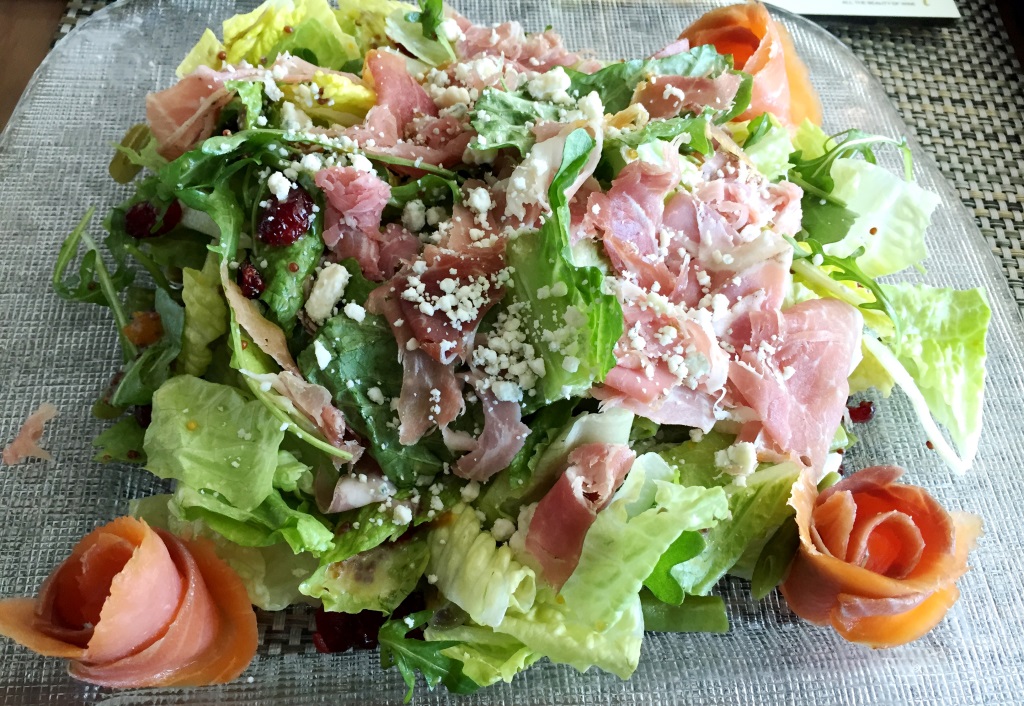
When it comes to the salad in general, I never even attempt to pair it with the wine – I believe generally it is not an easy undertaking. In my case here, I finished my “tasting” and “note taking” session, and I had the wine left, so I really had nothing to lose. I started from Viognier, and “wow” – the wine greatly complemented the sweet profile of the dried cranberries and dressing, so together it was almost a revelation. Next bite and sip, this time of Sauvignon Blanc – and yet another revelation – this time with the clean acidity cutting through the sweetness, contrasting and enhancing flavor. Last but not least, Cabernet Sauvignon perfectly complemented saltiness of the prosciutto and even smoked salmon – totally unexpected, but considering the soft and delicate profile of the wine, it was again a home run. Three wines out of three, working perfectly with one dish (salad!) – this was definitely not something I was expecting, but I’m glad I was able to experience it.
Life is an interesting thing. Cancelled flight led to the very pleasant and educational experience – life can take one thing away from us, and give us something else instead – for sure my case with this trip. Also, it is very interesting to see how the wine culture is changing in the US. From unfathomable plonk only 3–4 years ago (I would never think of ordering wine at the airport 4 years ago – beer would be my only choice), to the upscale wines and wine flights – we are definitely looking at the cultural shift, and I don’t know about you, but I’m very happy to see this happening. Heck, I might even start looking forward to my next trip through the Charlotte airport. Cheers!

Daily Glass: The Wine That Begs The Eternal Question
 Eternal question, you say? Which one of them? Wine is a well known suitor of the Eternal, so yeah, a few questions are lurking for a while…
The one I’m talking about is akin “chicken and egg” case, with a spin. Is the wine made in the vineyard or at the winery? Is it winemaker or the grape? Well, rest assured – I’m not trying to jump on this subject just for the sake of conversation. It just happened that the wine I opened yesterday made me ponder at that exact question.
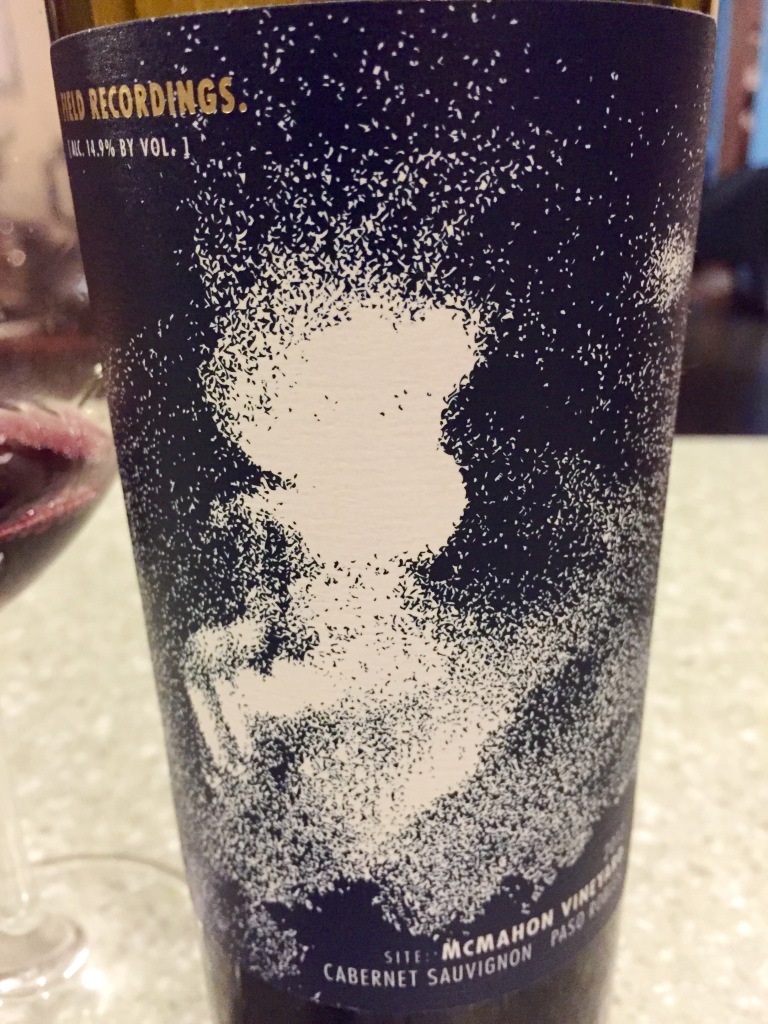
What wine? 2012 Field Recordings Cabernet Sauvignon McMahon Vineyard Paso Robles (14.9% ABV, $29, 83% Cabernet Sauvignon, 17% Tempranillo, 16 month in 89% new French oak, 11% new American oak). What made me to think of the terroir versus winemaker? The aromatics. The wine had not a glimpse of Cabernet Sauvignon characteristic aromas – no cassis, no bell peppers, no eucalyptus. But on the nose there were plenty of spices. There was a hint of a forest floor, mushrooms, a touch of barnyard. There was also a smoke, and plenty of it. There was pepper. And there was tar and pencil shavings. So, what do you say – was that a winemaker talking, or the vineyard?
The palate, unfortunately, didn’t fully support the excitement. There was lots happening (still no cassis or anything else reminiscent of Cabernet Sauvignon), but there was lots of fruit, and vibrant acidity. At times, the wine was borderline jammy, only to be cleansed with the subsequent punch of acidity. I was looking for more balance, and it didn’t happen. Drinkability: 7
So in the end, I got no answers and more questions. Was that a bad wine? I don’t think so, as aromatics brought in lots of pleasure, and it was thought provoking on the palate. Did I open this wine too early? Yep, I’m quite convinced I did. Was that wine made in the vineyard or in the winery? I have no idea, so yes, the floor is yours… Cheers!
Woodinville Wineries: Mark Ryan Winery
 This post is a continuation of the series about my winery experiences in Woodinville, Washington. Here are the links for the first four posts – introduction, Elevation Cellars, Pondera Winery, Des Voigne Cellars, Sparkman Cellars, Guardian Cellars and Fidélitas.
…walked towards the tasting counter, only to find out that the tasting room was closed for the day. I was told that there will be a special event in the tasting room, and they have to close earlier to prepare for that event, and unfortunately, I would have to come back to taste their wines. The tasting room itself looked very appealing, with the large format wines and wooden crates (the visual aspect of the “wineappeal” is so fascinating), I was really disappointed with the prospect of just walking away and finishing the great day on such a low note, especially after a so-so tasting at Fidélitas. So I used my last resort – I explained that I’m a blogger, and that I traveled from another coast, and it would not be possible for me to returned for the tasting any time soon. It worked! I was told that if I don’t mind sitting outside at the table, they will be glad to bring me all the wines to taste – but of course, thank you very much!

Tasting Room at Mark Ryan winery – aren’t does bottles look great?
The weather was beautiful ( it was not even raining! :)), and tasting outside was just an excellent proposition. The first wine which was brought to the table was 2013 Mark Ryan Viognier Columbia Valley (100% Viognier). I’m generally a bit worrying about Viognier wines – when they are good, they are absolutely spectacular in all aspects, from nose and the taste to the mouthfeel and the body. But when they are bad, they can be really daunting. Starting form the nose, Mark Ryan Viognier was spectacular – perfumy nose, perfect acidity, creamy mouthfeel, excellent balance and overall delicious. An interesting fact – this wine was partially aged in the concrete egg, which, according to the winery description, enhances the texture. I concur. Drinkability: 8.
The next wine was 2012 Mark Ryan NumbSkull GSM Walla Walla (58% Syrah, 26% Grenache, 16% Mourvedre) – beautiful ruby color, open nose of fresh berries (mourvedre dominated), blackberries, raspberries, thyme, earthiness – another delicious wine. Drinkability: 8
2012 Mark Ryan The Dissident Columbia Valley (54% Cabernet Sauvignon, 18% Merlot, 12% Malbec, 11% Cabernet Franc, 5% Petit Verdot) – cassis all the way! Texturally very present (my original note says “phenomenal texture”, but I don’t think “phenomenal” would be a universally recognized descriptor), round, clean and delicious. Drinkability: 9-


2012 Mark Ryan Long Haul Red Mountain (49% Merlot, 44% Cabernet Sauvignon, 6% Cabernet Franc, 1% Petit Verdot) – cassis again! Hint of green bell pepper, noticeable tannins, nice herbal component, round and delicious. Drinkability: 8+
2012 Mark Ryan Dead Horse Red Mountain (82% Cabernet Sauvignon, 9% Merlot, 7% Cabernet Franc, 2% Petite Verdot) – wow! Dusty tannins, cassis, big body, eucalyptus, delicious by all means. Drinkability: 9-
I guess you can tell that this was one exciting tasting – from my experience, this is quite a rare occasion when all the wines in the tasting are literally one better than the other. This was the second winery where I just had to buy the wine (got a bottle of NumbSkull and The Dissident). I’m really thankful to the kind folks at the Mark Ryan for being able to accommodate me despite their prepping for a special event – and I’m glad to be able to finish the day on such a high note.
This post essentially concludes the series about my short 3-hours run around the Woodinville wineries, but before I left the state of Washington, I had an opportunity to taste a few more interesting wines – we will talk about them in the next post.
To be concluded…
Last Bottle Sign Up ($10 credit)




 Talk-A-Vino