Archive
Daily Glass: Pure Pleasure
Of course, it is Wine Wednesday – but this was just a happenstance. Not anything I planned.
A traditional dilemma – what to open?
Checked one wine fridge – no, nothing spoke to me. Next thought – maybe Field Recordings?
Again, without much thought – how about that bottle? I passed it a few times before. What vintage is that? Oh, 2019, that might be good. Ha! It is also a Syrah! Nice, my wife loves Syrah, might be her favorite red grape. Prefect, we have a bottle to open.
Talk about wines made in the vineyard. I discovered Field Recordings wines almost 15 years ago. At that time, the wines were more of a side project for Andrew Jones, a consulting grape grower. By nature of his profession, Andrew had relationships with many grape growers. More importantly, he knew the best plots in their vineyards, and thus he knew where to find the best grapes when he needed them. And little by little, Field Recordings became a powerhouse and a darling of Paso Robles, with the wines of unbound creativity.
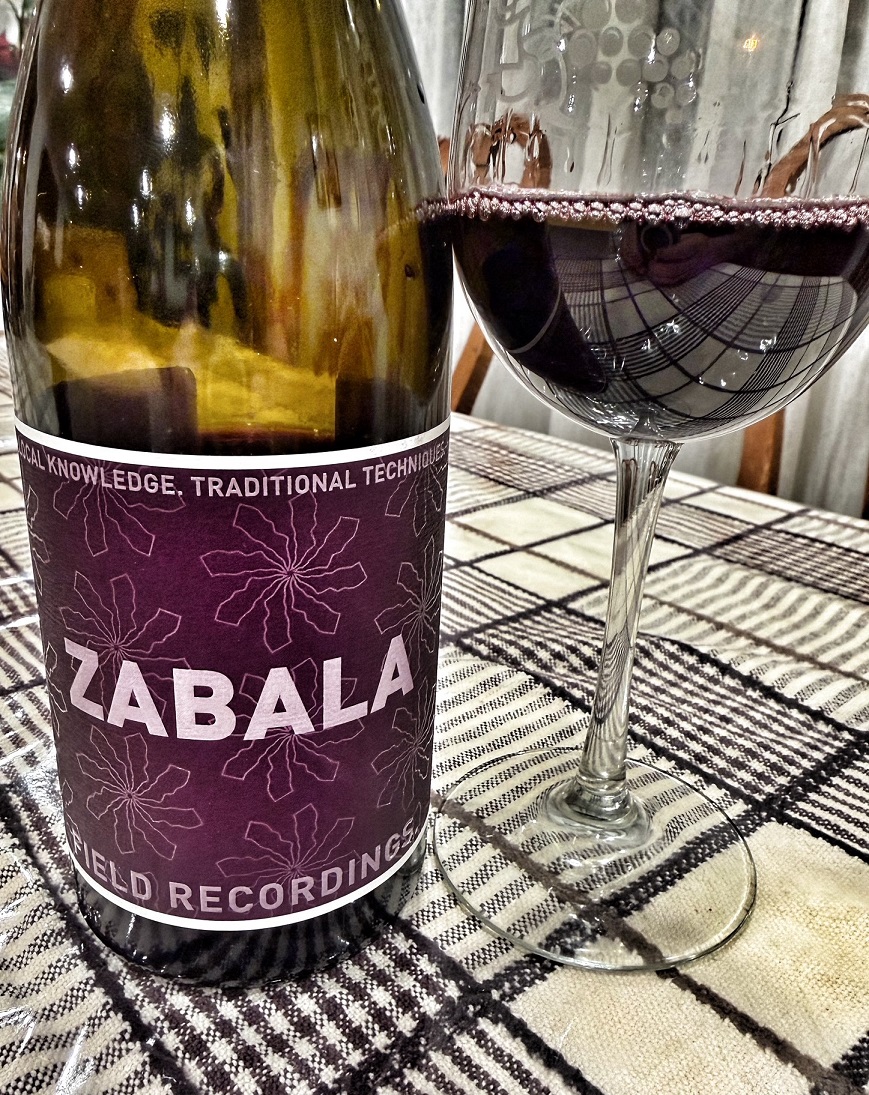
My first Field Recordings wine was the wine called Fiction – here is my post about that experience: Music, Recorded in the Vineyard. This was love at first sight. Fiction by Field Recordings was my wine of the year in 2011. And Field Recordings is the only wine club I ever joined, and I’m still a member there. Over the years, there were literally a handful of Field Recordings wines I didn’t enjoy, because for the most part, my favorite descriptor for the Field Recordings wines is probably “mind-blowing” or maybe “mind-boggling”. As was the case today.
I opened the 2019 Field Recordings Zabala Zabala Vineyard Arroyo Seco (12.9 ABV, 100% Syrah) and poured it in the glass right away. The first whiff had a bit of the funk (love funk!) and a bramble. But on the palate… Oh my, the palate was a pure symphony. Well, a caveat – you have to love black pepper to call that experience a symphony. The palate was full of freshly ground, gorgeous, salivating black pepper. I experienced such purity only once before, while tasting the 2011 Michel Chapoutier Tournon Mathilda Shiraz from Australia. I was blown away by the purity of the pepper expression in that wine – and interestingly enough, after that first experience, I had a random success with the same vintage over a few years – but this is not the subject of this post.
This Zabala Syrah was literally mind-boggling (see, told ya, I just can’t avoid it). Dark bramble fruit, a little bit of funk, and lots and lots of freshly ground black pepper. Delicious, perfectly balanced, perfectly harmonious. A pure pleasure in the glass.
Maybe I just got lucky. I don’t have another bottle from the same vintage, so I will not be able to taste it in a year or a few years and report back. But we should enjoy the moment, and this moment in wine was immensely enjoyable. Wine should give you pleasure, and this was a pure pleasure.
So, what was your last mind-blowing wine experience?
Domaine Bousquet – Reaching New Heights
 I might be ostracized for saying this, but I will risk saying this anyway – the wine world is simple. It might even be called predictable.
Here is how it works. Plant the vineyard. Make sure it produces good grapes. Make good wines. Learn about your vineyard. Divide it into plots. Learn how those plots are different. Identify better plots. Grow better grapes. Make better wines. Repeat. Next, make great wines.
See? I told you it is simple, right? So above is a simple recipe for success. Agreed?
Okay, let’s get back down to earth. The simplicity described above is only an appearance, a view from the outside. The simplicity is achieved through the countless amounts of hard work, passion, dedication, vision. Other than that, it is very simple.
Domaine Bousquet is less than 30 years old, and yet it is one of the most impressive wine businesses in the world. How? Anecdotal evidence is in the fact that I tasted lots and lots of wines from Domaine Bousquet, and I’m yet to find the wine I didn’t like. To take it into the real perspective, please allow me to quote myself:
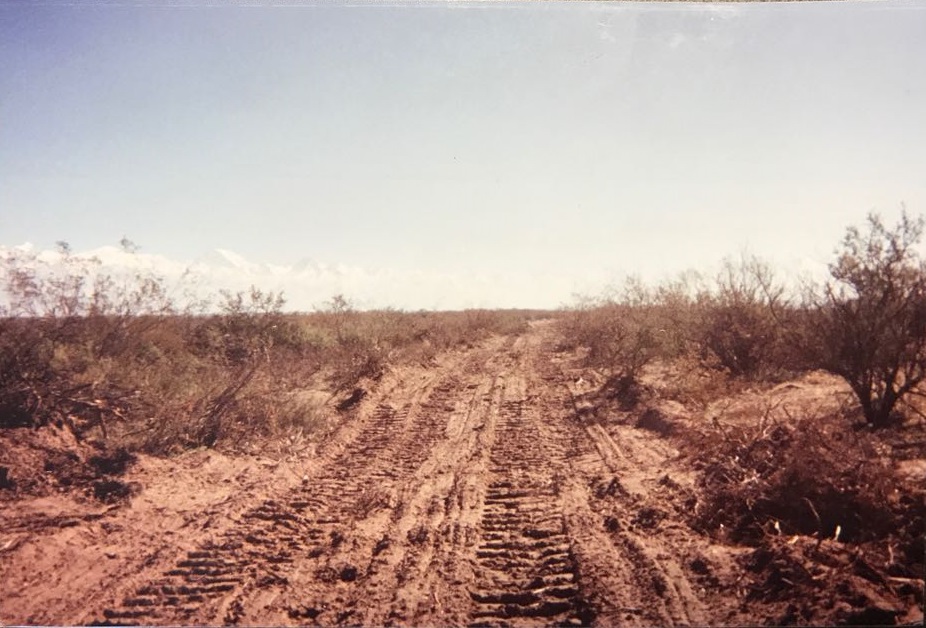
I wrote about the history of Domaine Bousquet very extensively on these pages, so I’m not going to regurgitate everything that I already said – instead, I would like to suggest that you read this post, and also this one. However, I will illustrate my statement about the most impressive wine business with a few pictures. Here is what high altitude (1,200 m/4,000 ft) desert looked like in 1990 when Frenchman Jean Bousquet first fell in love with the area while on vacation in Argentina:
Source: Domaine Bousquet
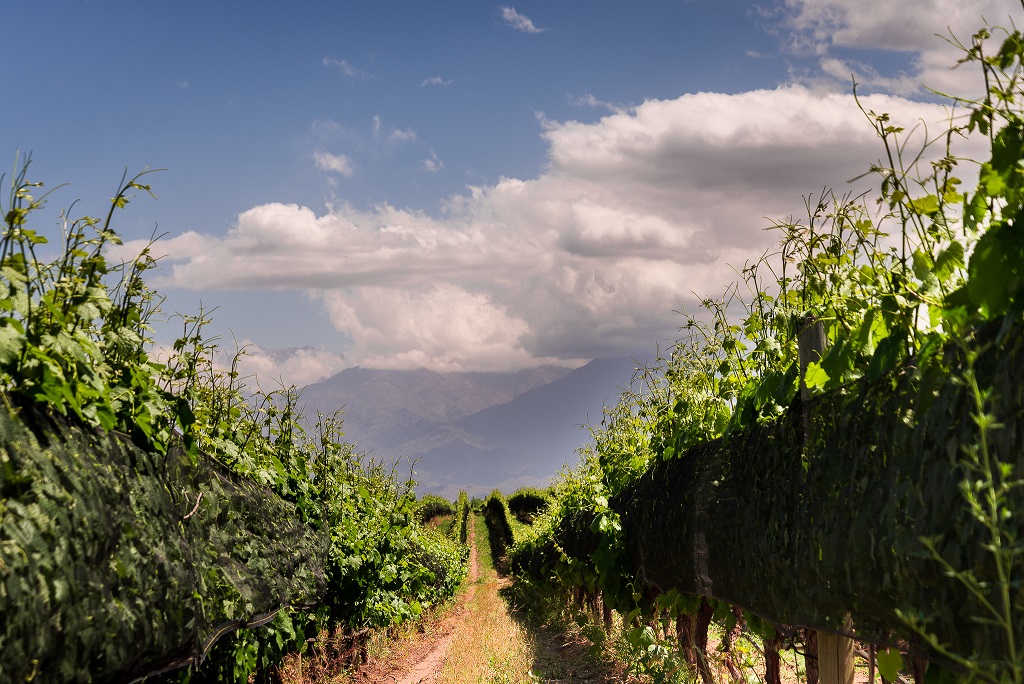
Here is what it looks like today:
Source: Domaine Bousquet
Here is what domain Bousquet has accomplished in less than 30 years, after being formed in 1997:
Certified B corporation, certified regenerative organic, biodynamic, USDA organic… you can continue decoding the icons on your own. 5 million bottles are produced annually, and I never had a wine from Domaine Bousquet that I didn’t like. I rest my case.

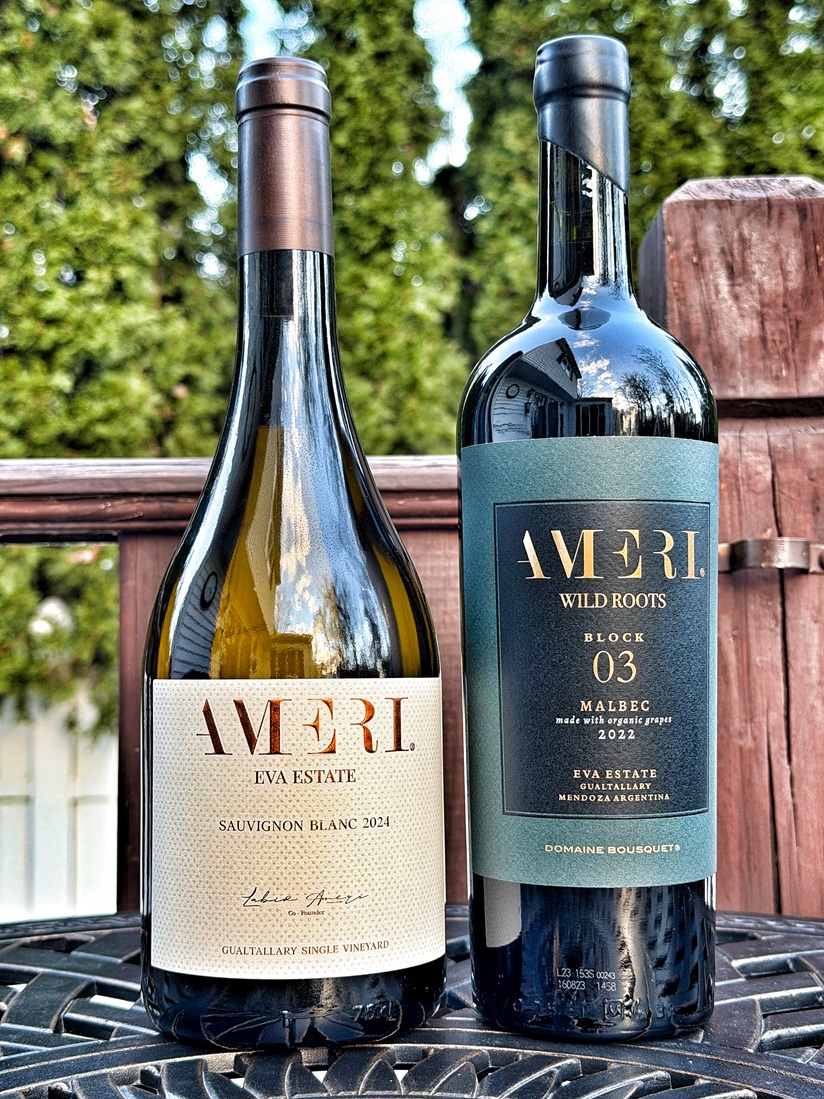
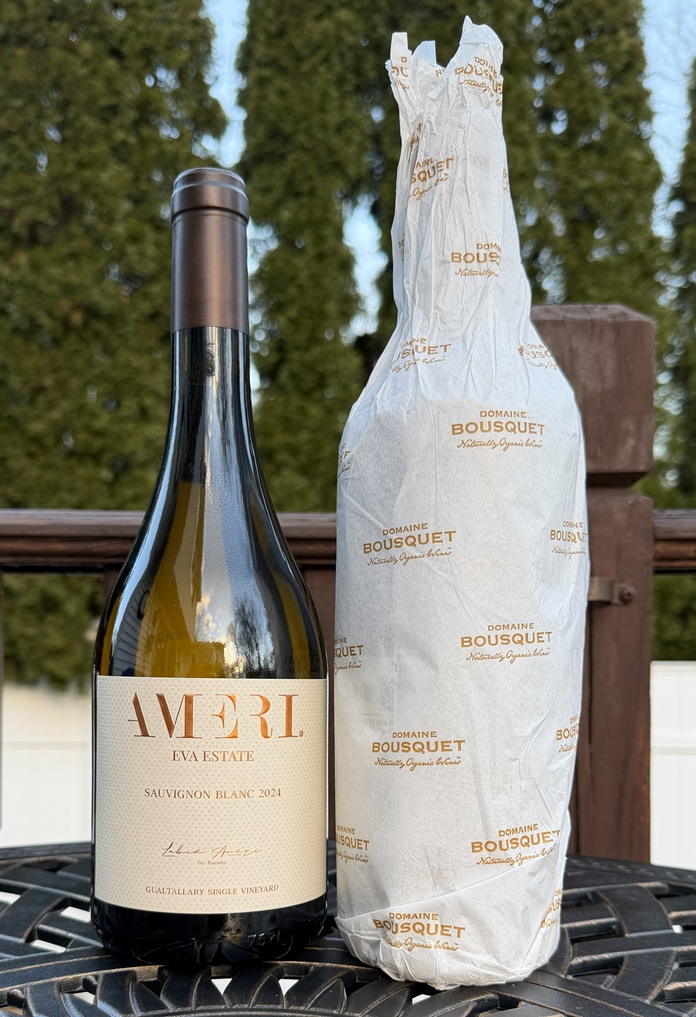
Recently, I was offered to taste two of the latest wines from the Domaine Bousquet, and this is why I had to talk about a simple recipe for making good great wines.
These wines are vineyard-specific, and even block-specific – as we mentioned, this often happens when the great wines are made. Quoting information on the Domaine Bousquet website, these wines are “Crafted from organic grapes grown in our Eva Estate vineyard in Gualtallary, Tupungato at 1,257 meters above sea level, in the heart of the Uco Valley. This wine originates from a detailed study of 123 soil pits conducted with geologist Guillermo Corona, which identified distinct soil profiles and geomorphic units across the vineyard.”
Both wines were nothing short of stunning.
2024 Domaine Bousquet Ameri Eva Estate Organic Sauvignon Blanc (12.5% ABV, $35, grapes sourced from Plot No 9, fermented in French oak barrels (50% new, 50% second use), aged for 8 months in barrel and 6 months in bottle) had a very unique profile for the Sauvignon Blanc. It didn’t have the grapefruit, nor it have a cat pee. Instead, it was reminiscent of a nice, balanced Chardonnay, with a hint of buttery notes and a touch of honey. Delicious, balanced whitestone fruit, lemon, smooth but vibrant. If we need a style comparison, Pouilly-Fumé is the only Sauvignon Blanc that comes to mind, and otherwise, Ornellaia’s Poggio Alle Gazze would be my next best comparison. A delicious wine (8+), probably the best Sauvignon Blanc I tasted in a while. Oh yes, and this wine will age. It went from restrained fruity on the first day to tart and acidic on the second to the beautiful fruit medley on the third. Definitely worth the price in my opinion.
2022 Domaine Bousquet Ameri Wild Roots Block 3 Organic Malbec (14.5% ABV, $85, fermented with native yeasts in 400-liter oak barrels, followed by a 30-day maceration, aged for 12 months in French oak, one year in bottle) was even more impressive than the previous wine. Layers of luscious fruit, cedar, a hint of vanilla (a hallmark of Malbec in my book), minerality, a touch of black currant, perfectly integrated tannins, impeccable balance. This wine would easily compete with the best California Cabernet Sauvignons, for sure in a blind tasting. (9-), will also age nicely, considering the evolution over the 3-4 days the wine was opened.
Here you are, my friends. Two new wines from Domaine Bousquet, two next-level wines. still competitively priced considering the amount of pleasure they are offering. I’m not sure what’s next for Domaine Bousquet, but one thing is for sure – I expect more great wines to come our way.
Until the next time – cheers!
Beaujolais Nouveau Est Arrivé! 2025 Edition
 Beaujolais Nouveau Est Arrivé!
Yes, it is the third Thursday in November, and you know what it means! It is time to celebrate the new harvest. The 200-year-old tradition, taking its roots in the 1800s, became the “official” celebration of the new harvest 40 years ago, claiming the third Thursday in November as an official celebratory date. This is the day when the first wine of the new harvest appears in the wine stores around the world, to the great enjoyment of the wine aficionados and geeks.
For the 15 years this blog has existed, I have made an effort not to miss a single Beaujolais Nouveau celebration, and I have been successful so far. Considering that for the past 3 years I was traveling over this special week, the effort was real – you can read about my Beaujolais Nouveau struggles in France in 2022 and Florida in 2024. This year 2025 has not been an exception since I’m currently in Dallas, Texas.
Since the beginning of the week I checked a few times that there are wine stores within walking distance of the hotel where I’m staying, so my plan was to walk to the store on Thursday and get a bottle of Beaujolais Nouveau. Remembering past year’s experience, I decided to call ahead, which proven to be a challenge. One store had some google voice setup telling me to leave a message. Again no answer in the second store. Someone answered my call in the third store, but the person clearly never heard of Beaujolais Nouveau, so after a few minutes of back and forth I understood that this would not work to my favor.
The next best hope was Total Wine – but the store was 1.8 miles away, I had no car and I was in the meetings. Then it dawned on me that Total Wine has the same day delivery service, and life all of a sudden improved. I found out that Total Wine had two Beaujolais Nouveau available, so the order with delivery was quickly placed (delivery was only $4.99 for two bottles).
I was hoping that the wine could be just left with the hotel staff, but the delivery lady called me to tell me that I have to come and pick up the wine in person, as I need to sign for it, and the lady needs to make sure that I’m not drunk already. Well, I guess it is Texas after all (say it in the voice of “This is Sparta!!”).
Luckily, I set up the delivery window during my lunchtime, so it was not a problem to meet the driver and get the wine.
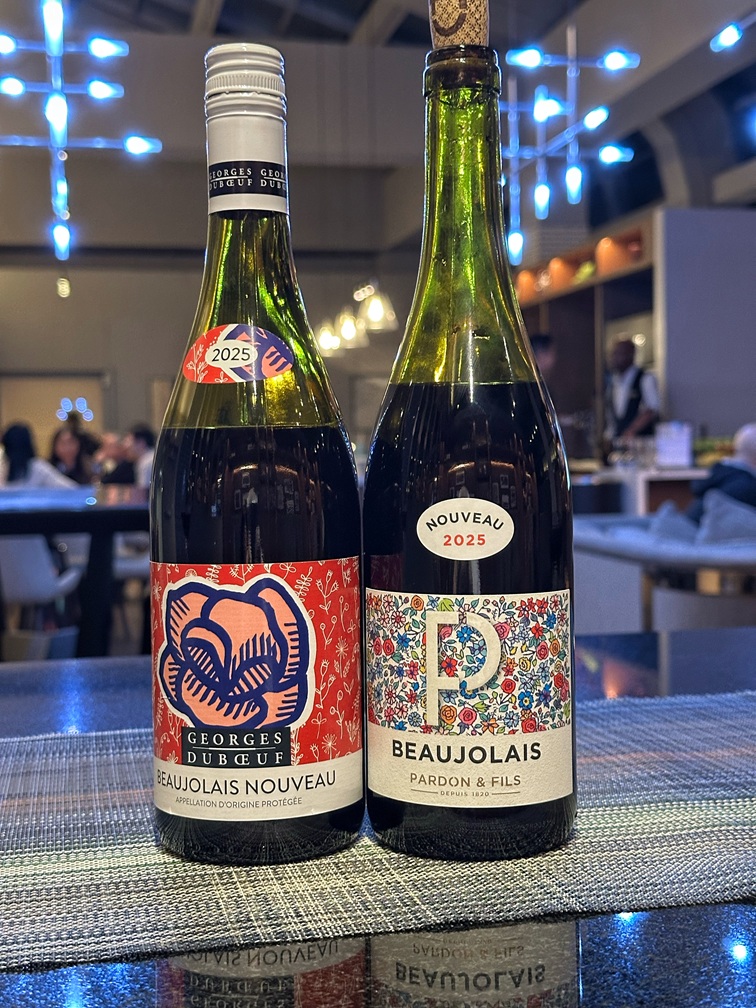
After my meetings ended, there was the time to taste the wine. Attention: spoiler alert! Every year, I say that the quality of Beaujolais Nouveau gets better. 2025 was no exception. 2025 Beaujolais Nouveau was not just better, but it was much better!
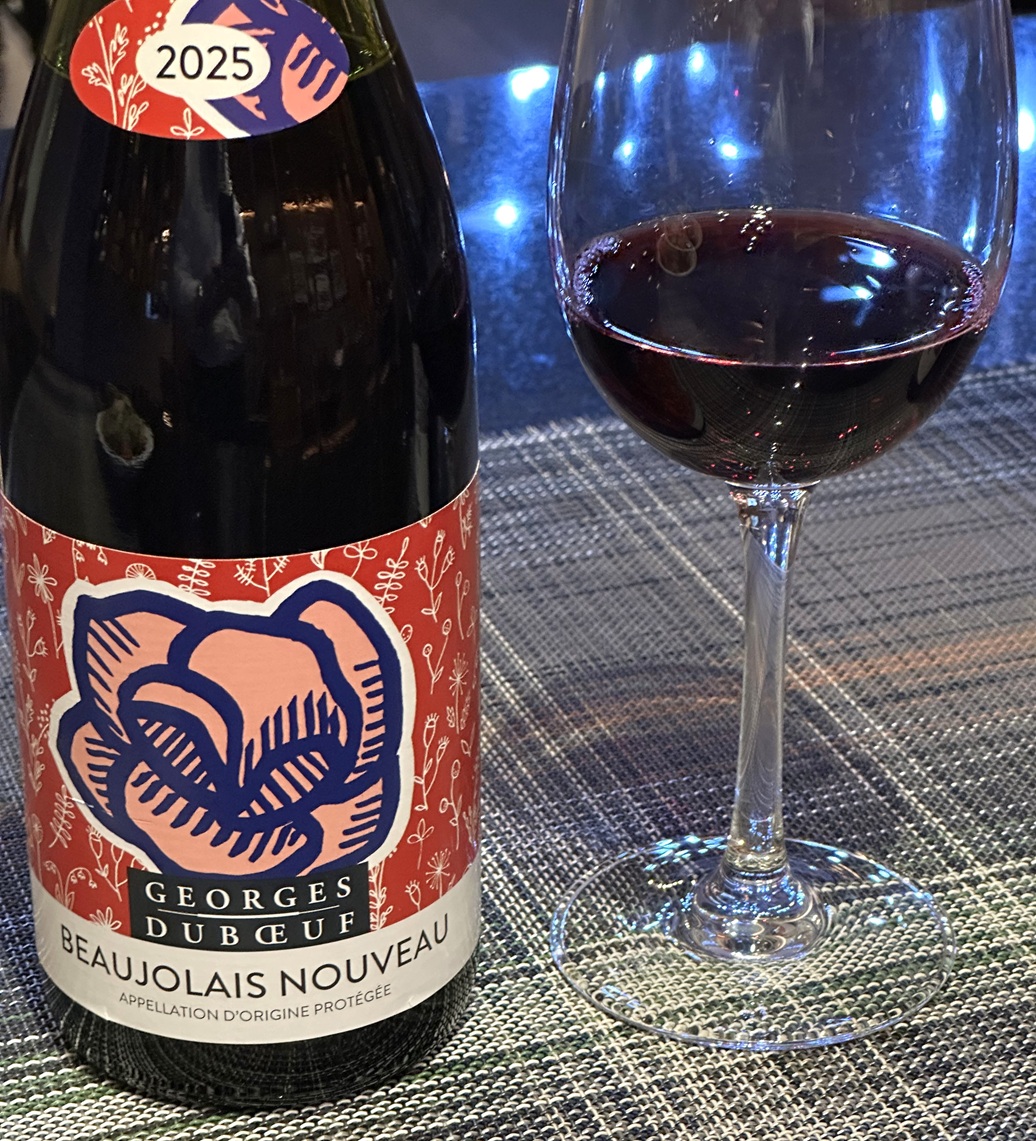
Every year, the bottles of Beaujolais Nouveau are adorned with specially designed labels, sometimes even multiple labels from the same producer for the same wine – I have no idea how that works. As I have been writing about Beaujolais Nouveau every year since this blog started, I can offer you a collection of labels starting with the 2010 vintage. As Georges Dubouef is the only producer I was able to taste every year, below is my little “show and tell” display limited to the labels of Georges Dubouef wines I tasted throughout the years. In case you feel like it, you can even choose your favorite label and share it in the comments (sorry, this is not a competition, so no prizes will be awarded).
Here we go:


Beaujolais Nouveau 2025 has arrived, and if you haven’t tasted one yet – what are you waiting for? Taste it now and let me know what you think! Cheers!
Ah, Tempranillo!
And just like that, I almost miss another grape holiday. This time, it is Tempranillo Day!
Of course, you know this well by now – I like all the grapes. And I always say that there is one that I like the most – and every time I say it, it is a different grape.
Guilty as charged.
And yet, Tempranillo is really special.
You don’t have to read them, but just look at the names of some of my posts:
Magnificent Tempranillo
Tempranillo, Transposed
The Art of Tempranillo
Magnificent Rioja: CVNE Deep Dive
I think this qualifies as a pure expression of love, don’t you think?
I discovered the beauty of Tempranillo a long time ago, when I tasted a vertical of Rioja wines going all the way to 50+ years old. Rioja is one of my favorite expressions of Tempranillo, covered in this blog a countless number of times. Of course, Tempranillo is one of the major Spanish grapes, and it does very well in the US (Washington, California, Oregon, even the Hudson Valley), but if I can, I would always gravitate towards Rioja.
What I like about Rioja is that, in most cases, Rioja is predictable. Of course, it is great if you know the producer. La Rioja Alta, CVNE, Lopez de Heredia, Bodegas Lan, Bodegas Beronia, El Coto, Oscar Tobia – I will be happy to open a bottle with any of these names at any moment. But even when you don’t know the name, I would prefer to take my chances with an unknown Rioja rather than an unknown Chianti, an unknown Bordeaux, or an unknown Pinot Noir (oh, that might be the scariest of all).
Case in point. I’m currently in Stockholm, and at the restaurant, the wine list was short and without any names I could recognize. After an internal debate, I decided to take my chances with an unknown Rioja – and I didn’t regret my choice for a second, and neither did my dining companions.
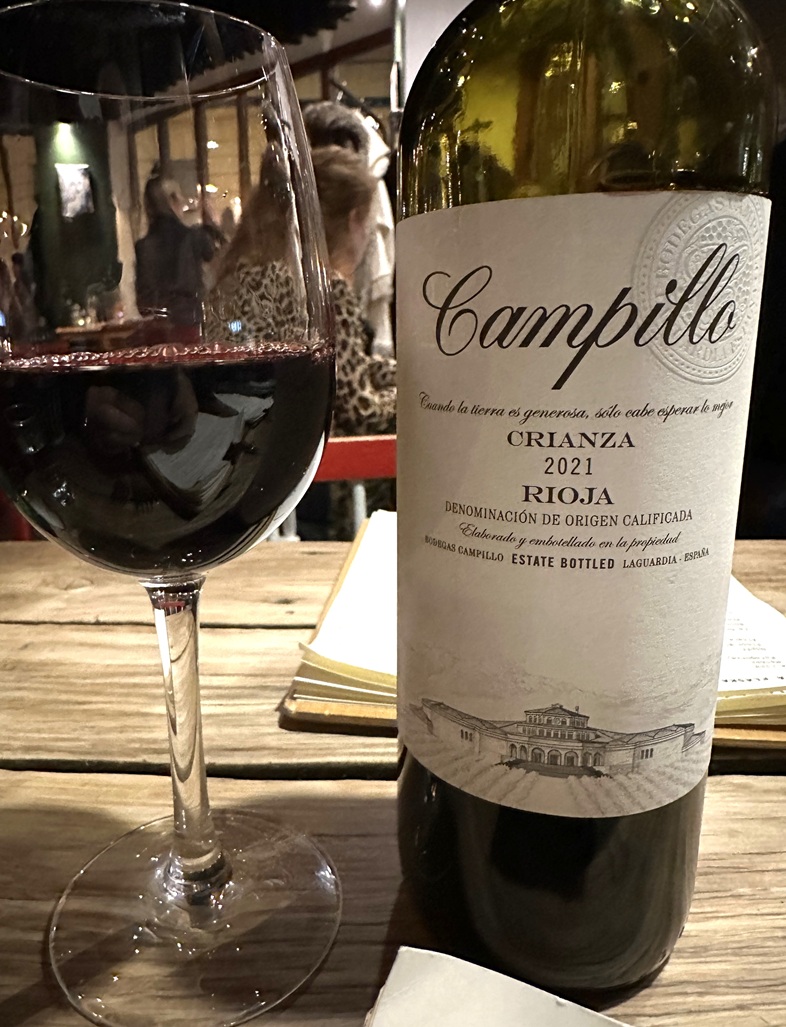
2021 Bodegas Campillo Rioja Crianza DOC (14.5% ABV, 12 months in oak) was simply delicious. Fresh dark fruit on the nose, loads of dark fruit on the palate, cedar box, cherries, silky-smooth, roll-of-your-tongue goodness, medium to full body – a pure joy. Every sip was literally accompanied by the collective “ah”. You can call it pure luck, but I trusted my tempranillo, and the tempranillo didn’t disappoint.
Here you go, my friends. A grape holiday tribute to one of my favorite grapes – and the discovery of a new Rioja name.
How are you celebrating Tempranillo?
Moscato d’Asti – The Joy of Sharing
 Wine should give you pleasure.
This pleasure can come in many forms.
The simplest one is a pure hedonistic pleasure of that sip itself, the burst of flavor overwhelming your taste buds, and the opportunity to mindfully reflect on that very burst.
Or, with one sip of familiar wine, you can be instantly transposed in time and space – the wine can bring back memories. You can instantly imagine yourself being in Italy 5 years ago, experiencing this wine for the first time, vividly seeing the faces of the people you were there with, and reliving that beautiful moment again.
And then there is possibly the biggest pleasure of all – an opportunity to share wine with people. It is great to enjoy good wine by yourself – but that pleasure amplifies disproportionally when you pour the wine for your guests and you hear the collective “oh, it is so good!”.
I’m happy to share all of my wines with my guests, but then there are some wines that I even prefer to share. Let me explain.
I’m happy to open a bottle of Cabernet Sauvignon, Chardonnay, Syrah, any still red, white, or Rosé. Even if nobody would share it with me, I can drink it by myself over the next 2-3 days, no problem. But I would be very reluctant to open a bottle of sparkling wine for myself – I definitely prefer to share it with friends. Especially if this is a dessert sparkling wine, such as Moscato d’Asti.
I love doing that at the end of the dinner, when nobody expects that more wine might be coming. Seeing another bottle being brought up to the table, guests’ usual and immediate reaction is “what, more wine???”. This question requires no answer; I just wait for the people to taste the wine first.
Moscato d’Asti might be one of the hidden gems of the wine world, lightly fizzed, low alcohol, and deliciously, “just enough” sweet. This wine, made from the Moscato Bianco (white Muscat) grape, comes from the area in Piedmont where Moscato wines have been made for hundreds of years. Moscato d’Asti wine in its present, lightly fizzed form was born in the 1870s, when a number of winemakers started producing it in commercial quantities. Yet despite its 150+ years of history, I would still call it a hidden gem, as many winelovers are not aware of this wine or have the wrong ideas because of its sweetness.
The beauty of Moscato d’Asti is in its lightness and effervescence, and sweetness well balanced with acidity. If you want a glass of wine with your dessert, you will have to search far and wide to find the wine that would pair better with literally any type of dessert. And at a typical 5.5% alcohol level, it is guaranteed not to overwhelm your dining experience with a heavy punch of alcohol.
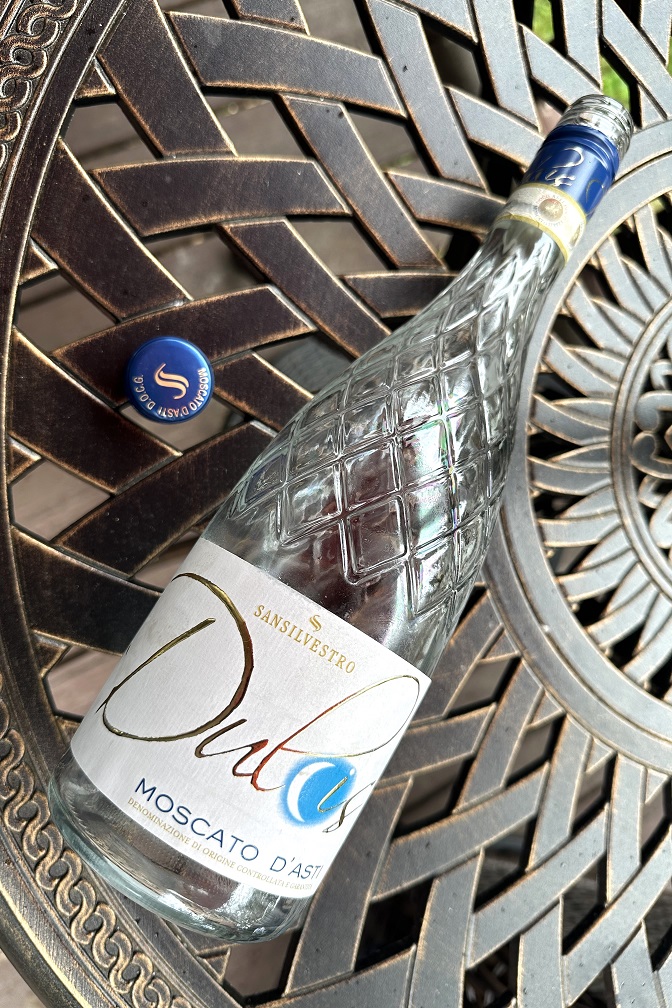
I recently had an opportunity to experience this “pleasure moment” when I opened the bottle of 2024 Sansilvestro Dulcis Moscato d’Asti DOCG (5.5% ABV) to serve with dessert. Overcoming the “what, more wine” resistance, I poured the wine for my guests and encouraged them just to take a sip. The next thing I heard was “oh my god, this is so good! Can I have more, please?” – there it is, that exact oenophile’s pleasure moment, equally as pleasant as taking a sip of the wine.
Moscato d’Asti is generally well priced, with a great selection of the wines at around $15 or less, so it definitely offers a great QPR and lots of pleasure without the need for an expense account. You should always have a bottle on hand, just in case you are craving a simple pleasure – double though considering the upcoming holiday season and all the get-togethers with friends.
By the way, on the subject of Moscato – back on May 9th, we celebrated Moscato Day (it is always celebrated on May 9th). I attended wonderful festivities in New York and never wrote about them, so if you care to see some of the images from that celebration, feel free to click “more” below.
For the Love of Riesling
 I love Riesling.
What do winelovers do when they love the wine?
That’s easy.
We want to share that love.
The biggest reward for a winelover is to offer someone a glass of wine and hear them say “oh, it is good!”.
Sharing the wine is the most enjoyable part of drinking the wine. We want the other people to experience the same joy as we do, we want them to experience the pleasure only the wine can deliver.
As I said before, I love Riesling.
Riesling might be the most underappreciated white grape. It is one of the main 3 white grapes (Chardonnay, Sauvignon Blanc, and Riesling). Riesling wines are made everywhere in the world – Germany, Alsace, Australia, New Zealand, New York (Finger Lakes, Hudson Valley), Canada, Oregon, California, and so on – and yet many of the wine drinkers wouldn’t even openly admit that they like Riesling and that they are happy to drink it.
It is hard to tell why that is. Many people associate the word Riesling with the word “Sweet”. It is a big mistake, as it means, for example, that they never experienced bone-dry, tongue-twisting Rieslings from the Claire Valley in Australia. I would even dare to say that the majority of the well-made Rieslings are not sweet, unless they are purposefully made to be sweet, such as BA or TBA German Rieslings. The main trait of Riesling, similarly to all other wines, is balance. As long as the Riesling is balanced, it is one of the most enjoyable white wines you can imagine. And it pairs well with the wide range of food. I’m telling you – Riesling is one of the best white wines in the world.
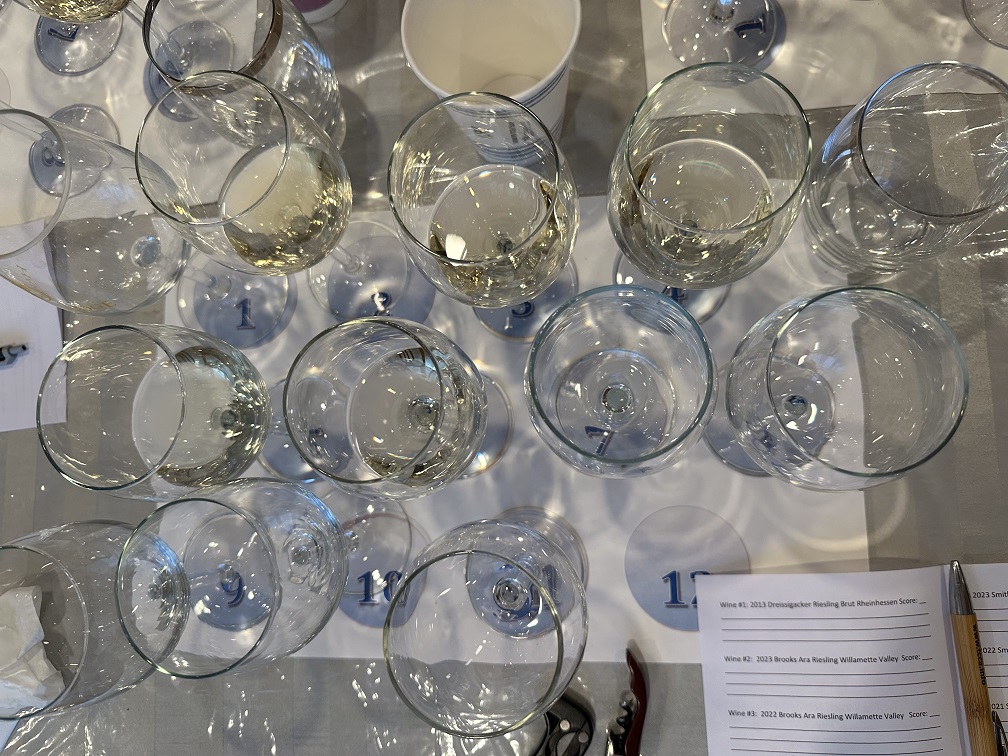
The love for wine needs to be shared. And so earlier in the year, I decided to do a Riesling wine tasting. My audience (family, future in-laws) wanted to learn more about the wines, and I have decided that tasting a bunch of Rieslings will offer an excellent educational opportunity (was I right? I have no idea, but I know we had fun).
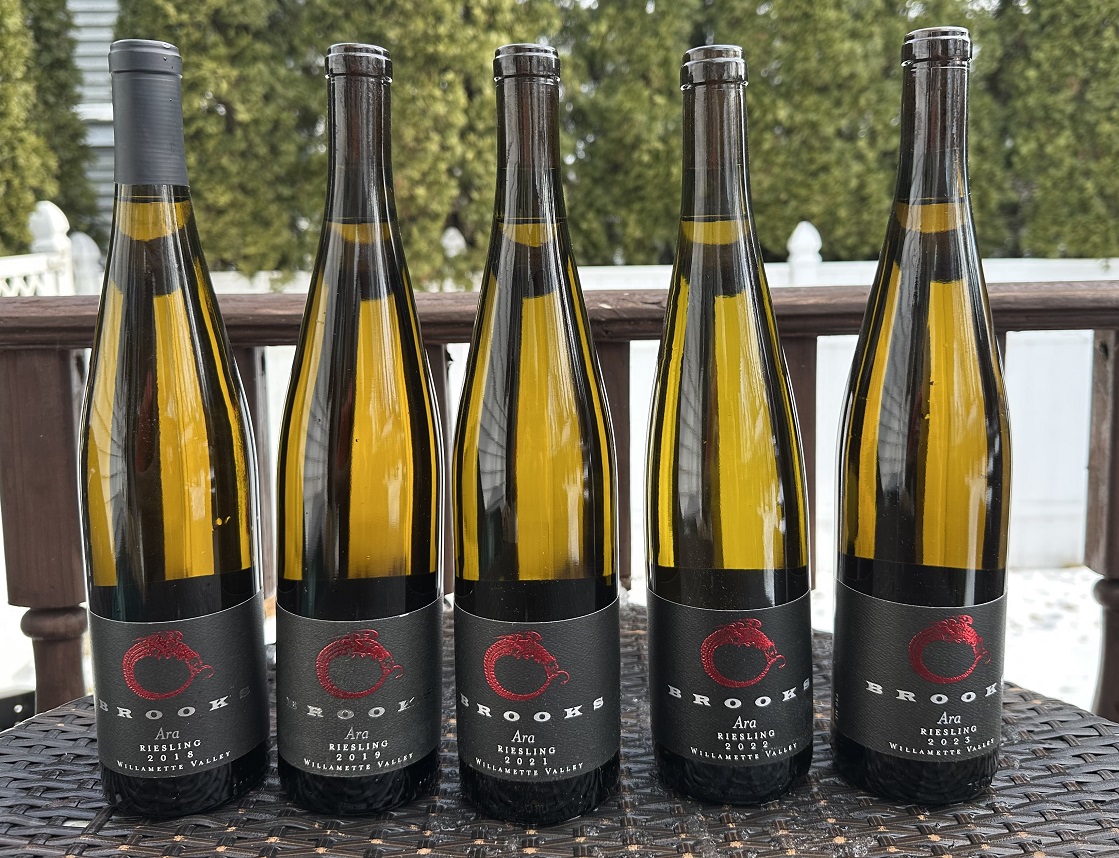
Ask me to name three of my favorite Cabernet Sauvignon producers, and I will quickly become frustrated – can I give you at least 10? 20 or 30 would be even better. The same would be for a Chardonnay, Syrah, and Tempranillo. When it comes to Riesling, however, that would be an easy task. Grosset from Australia. Smith-Madrone from California. Brooks from Oregon. This is my “top 3 Riesling producers” list. I would absolutely love to do a comparative testing of these 3 Rieslings, but I managed to get only 2. I got Smith-Madrone Rieslings first, and then when I got the idea for the tasting, I wrote to Brooks, and they were kind enough to send me a nice vertical of Brooks Rieslings. I also asked Ravines Wine Cellars from Finger Lakes for a similar set, but got no reply, so my tasting consisted of a vertical of Smith-Madrone Rieslings from 2018, 2019, 2021, and 2023, and Brooks Ara Riesling from 2018, 2019, 2021, 2022, and 2023 (both wineries didn’t produce wines in 2020).
It is important to note that Riesling can age very well, and aged Riesling is just a special experience. I did an online search and found out that it is rather hard to find aged Riesling anywhere, at least for the price I was willing to pay (age your Riesling, people, take my advice). I managed to find a bottle from 1997, which was seemingly in reasonable condition. At the same online store, I also managed to find a sparkling wine made out of Riesling, known in Germany as Sekt. I scored a bottle of Sekt at the same online store, and it became our first wine in the tasting.
The tasting was non-blind as it had more of an educational purpose than anything else. Here is what transpired during the tasting (outside of the fact that I numbered Brooks Rieslings in the wrong order, so we tasted them from the older vintages to the newer, where I really wanted to go in the opposite direction):
Wine #1: 2013 Dreissigacker Riesling Brut Rheinhessen (12.5% ABV)
bubbles were still present, lemon, a touch of sugar, well balanced, very nice overall. Believe it or not, but this was the first Sekt that I liked.
8-
Wine #2: 2018 Brooks Ara Riesling Willamette Valley (14% ABV, 325 cases produced)
Beautiful color. Honey, petrol, explivit nose of tropical fruit
Great complexity, perfect balance, showing off an interplay of pear, apples, peach, even vanilla and quince. Delicious. 8
Wine #3: 2019 Brooks Ara Riesling Willamette Valley (13% ABV, 225 cases produced) – a very interesting wine, as my tasting notes for day 1 and upon re-tasting the next day differ dramatically.
Day 1: Very unusual, some honeydew, hint of pear. 8-
Day 2: Superb. Lean. Acidity is through the roof, fresh, crisp. Needs 20 years to become amazing. 8++
Wine #4: 2021 Brooks Ara Riesling Willamette Valley (12.5% ABV, 225 cases produced)
Day 1: Beautiful petrol and flowers on the nose
Fresh, petrol, complex, white fruit, excellent balance. 8+
Day 2: Petrol + earth. Beautiful, honey notes on the palate, much richer than ‘19. Still lean and mean. 8
Wine #5: 2022 Brooks Ara Riesling Willamette Valley (12.5% ABV, 150 cases produced)
Day 1: Flowers, touch of brown sugar
Most complex so far – wow, beautiful. 8+
Day 2: Petrol, hint of tropical fruit. Lemon with a touch of honey, lean, crisp, built for aging, let’s say another 20-something years. 8++
Wine #6: 2023 Brooks Ara Riesling Willamette Valley (12.5% ABV, 100 cases produced)
Day 1: Very muted nose. Palate is young, nice, concentrated. 8-
Day 2: Nose almost non-existent. Very lean palate with a hint of honey mixed with lemon. Need to develop for a long, very long time.
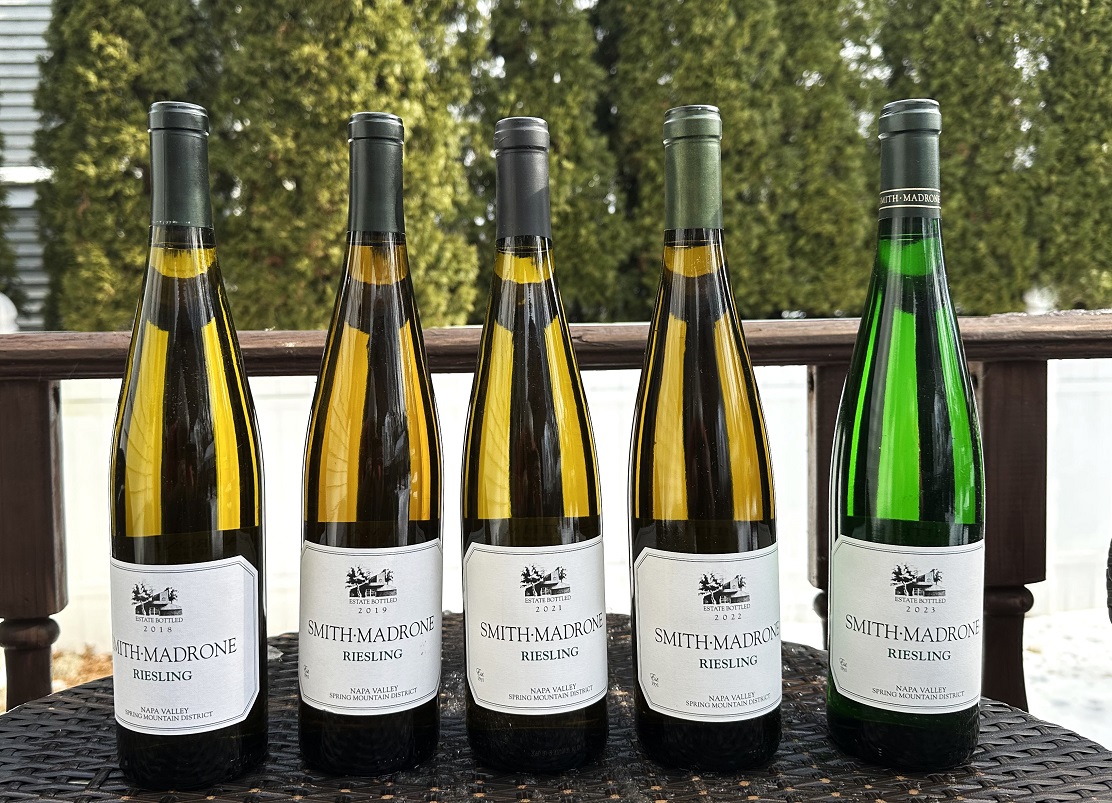
Wine #7: 2023 Smith-Madrone Riesling Spring Mountain (13.2% ABV)
Light color
Candy on the nose
White flowers, fruit medley, bitter orange, crisp, spectacular. 8+
Wine #8: 2022 Smith-Madrone Riesling Spring Mountain (13.2% ABV)
A touch of petrol
White fruit, white apples, delicious. 8+
Wine #9: 2021 Smith-Madrone Riesling Spring Mountain (13.2% ABV)
Petrol, beautiful
Lots of complexity, apples, excellent. 8
Wine #10: 2019 Smith-Madrone Riesling Spring Mountain (13.3% ABV)
Complex aromatics, flowers
Flowers on the palate, a touch of honey, beautiful, complex. 8+
Wine #11: 2018 Smith-Madrone Riesling Spring Mountain (13.3% ABV)
Beautiful, hint of petrol, white fruit.
Wow, playful, amazing. 8++
Wine #12: 1997 Dr. Fischer Ockfener Bockstein Riesling Kabinett Mosel (8% ABV)
Apple juice all the way, past prime. Still an interesting experience.


As always in such tastings, it is fun to figure out the group’s favorite wine. There were 8 of us tasting the wines, and everybody were asked to decide on 3 of their most favorite wines (mine were #11, #8, and #5), and then we took a vote. To my surprise, we had a clear winner after the first round – wine #8, 2022 Smith-Madrone Riesling, was everyone’s favorite, with wine #11, 2018 Smith-Madrone Riesling getting 5 votes. It was interesting that even wine #12, 1997 Riesling, got 3 votes (for me, it was an interesting experience, but not the wine I want to drink again).
As you can see from the notes above, I had a chance to re-taste the wines, this time at a bit of a slower pace. It is very clear that Brooks Rieslings needed more time to open, as you see that on the second day they showed a lot more of what they got, but even then, I believe they would benefit from another 20 years in the cellar, or maybe more.
As I’m writing this, I’m already dreaming of setting up the tasting of 20+ years old Rieslings. Give me Grosset, Brooks, Smith-Madrone, Zind-Humbrecht, and maybe Markus Molitor, from the early 2000s – and this would make it an absolutely amazing tasting. By the way, talking about dreams – what would your dream Riesling tasting include?
I can’t speak for my guests, but I really enjoyed the opportunity to taste such beautiful wines side by side. While both Brooks and Smith-Madrone perfectly exhibited my beloved petrol, Brooks Rieslings on average were a bit leaner than Smith-Madrone, while Smith-Madrone exhibited a richer bouquet on the palate. I’m saying this not in the comparative sense – each one of these wines would make me super-happy any time.
There you are, my friends – my Riesling experience. Do you like Riesling? What are your favorite “go-to” Rieslings?
Reminiscing About Cabernet Sauvignon
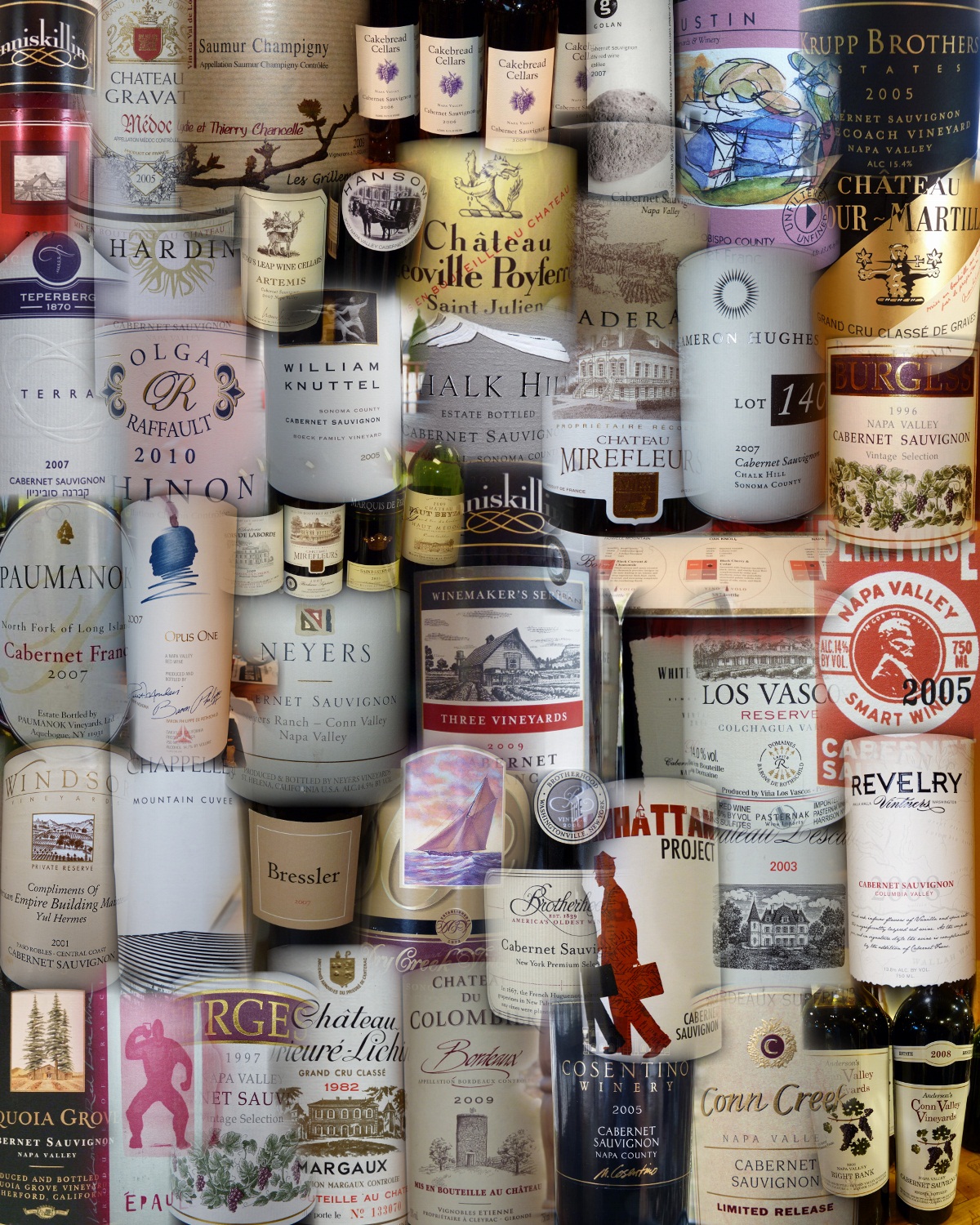 Yesterday we celebrated Cabernet Sauvignon Day. Well, I guess some people did, as I was drinking Tempranillo. But – grape holidays are an excellent opportunity to think about the grape we are honoring, and I’m happy to seize this opportunity.
As you probably know, it is hard for me to pick the favorites. If I were asked directly to name my favorite wine, I would never name any particular wine or grape as a favorite; my answer to this question always is “I love them all”. But deep inside, when nobody is asking, I know I would gravitate toward a good Cabernet Sauvignon when I can.
I’m very particular when it comes to Cabernet Sauvignon. This is one of the very few wines where I perfectly know what flavors I’m looking for. I need cassis, I need eucalyptus, I need a little bit of a bell pepper, and a touch of the cedar box would be nice too. If these flavors are not part of the core profile, I might still enjoy the wine, but I would never remember it as a Cabernet Sauvignon.
I decided to mentally challenge myself – recall my favorite Cabernet Sauvignon wines and associated experiences. Cabernet Sauvignon is one of the most popular wines in the world, produced by everybody and everywhere, so it is easy to name lots of producers. But this is not what I tried to do – I only thought about my most memorable encounters with the Cabernet Sauvignon, no point in regurgitating a bunch of Cabernet Sauvignon producer names.
Let’s see what came to my mind.
As only yesterday I wrote about the wines of Smith-Madrone, let’s start with that. Smith-Madrone has two Cabernet Sauvignon wines in its portfolio – Estate Cabernet Sauvignon and Cook’s Flat Reserve, each one delicious in its own right. Both are textbook Cabernet Sauvignon wines – my textbook that is, as both perfectly demonstrate the exact flavors – cassis, eucalyptus, bell pepper, cedar box. Just thinking about those wines makes me smile.
Next, how about Jordan? Jordan Vineyard and Winery in Alexander Valley in Sonoma produces only three things – “Chardonnay, Cabernet, and Hospitality”, according to John Jordan, winery owner. I had Jordan Cabernet Sauvignon on multiple occasions, and it never disappointed. It also has this classic profile, only with a bit more fat comared to Smith-Madrone, but thoroughly enjoyable on all occasions.
Then there is Kamen Estate. Unlike Smith-Madrone, I had Kamen Estate Cabernet Sauvignon only once during a group dinner we had in Danville in California. The wine was recommended by the wine director at Vine at Bridges, a wine bar/store at the Bridges restaurant. I don’t remember the exact taste profile, but I remember that I was blown away by the purity and beauty of that wine. I still have a bottle of 2006 Kamen Cabernet Sauvignon in the cellar, but finding the right moment to open that bottle will be mission impossible.
An interesting tidbit – thanks to the same wine guy at the Vine at Bridges who recommended Kamen to me, I discovered Field Recordings wines early on, way before they became a crowd favorite. The first Field Recordings wine I ever tried was Fiction, a wild blend of red grapes and not Cabernet Sauvignon at all – but, last year I opened Field Recordings The Armory, a 100% Cabernet Sauvignon wine for my guests. At first, I was not even planning to try it, but seeing how everyone likes it, I decided to give it a try. Whoa! Classic Cabernet profile was tremendously elevated, adding succulent wild blueberries to cassis, together with high intensity, high acidity mouthfeel. This was one of the most “energetic” Cabernet Sauvignon renditions I ever tasted.
The next wine is somewhat of a sad story. I discovered Louis M Martini Cabernet Sauvignon during Windows on the World wine school classes back in 2004, when Kevin Zraly said that Louis Martini delivers a lot in the glass for a very reasonable price. For many years, this was my go-to “around $20” Cabernet Sauvignon, until it was not – now winery makes over-priced, over-done Cabernet Sauvignon wines, but it is still the name I will remember fondly.
Okay, two more.
Beaulieu Vineyards, commonly abbreviated as BV, is another Cabernet Sauvignon staple I must mention. BV wines have this beautiful classic Cabernet Sauvignon profile enhanced with Rutherford dust. Well, basic BV wines might not give you the amount of pleasure you are looking for, but if you can get your hands on a bottle of Georges de Latour Private Reserve Cabernet Sauvignon, believe me, you will think that you have already made it to the winelovers’ heaven.
And lastly, bow to the dark side. Randy Dunn is well known for the wines of dark, brooding power. Dunn wines are not made to be consumed young. But if you are able to find a mature Dunn Howell Mountain Cabernet Sauvignon wine, that will be an amazing treat, weaving dark and brooding power on top of the classic Cab profile. I had an opportunity to drink Dunn Cabernet Sauvignon only a few times in my life, but boy, those were memorable moments!
Here you are, my friends – a little trip down the Cabernet Sauvignon memory lane.
What were your most memorable Cabernet Sauvignon wines?
Daily Glass: Oregon Pinot Delight
 If you like Pinot Noir, you already know that Oregon Pinot Noir is one of the best Pinot Noir wines in the world. Wonderful Pinot Noirs are produced everywhere, yes, but Oregon definitely holds its own. Heck, according to Ken Wright, it is better than Burgundy, the hallmark of Pinot Noir wines. “We can see the Burgundy Pinot Noir in the rear view mirror,” Ken said in my interview with him for the Stories of Passion and Pinot series on this blog.
Hey, I’m not trying to start here some sort of scuffle “which Pinot Noir is better” – I only want to share a wonderful experience I had with an amazing Oregon Pinot Noir, luckily even with some age on it.
I got literally double pleasure writing about this wine, as not only does this wine come from one of my favorite producers (sigh, who has now retired), but I also had a great interview with this producer for the same Passion and Pinot series – Vidon Vineyard.
I was in Bellevue, Washington, for work, and had a chance to meet my good wine friend Wendy, who happened to live just 5 minutes away from the hotel where I was staying. When we figured out that we would be able to meet, Wendy said, “I will get some older Pinot for you from the storage”. She knows that I love Pinot Noir, but I also know that she is a fan of bigger wines (think young Cayuse), so I didn’t know what Pinot that might be.
Seeing her with a bottle of 2014 Vidon Vineyard Brigita Clone 777 Estate Pinot Noir Chehalem Mountains made me very happy.
11 years old Oregon Pinot Noir under a glass enclosure (Don Hagge, proprietor at Vidon Vineyard and ex-NASA scientist, was religious about using glass corks) – a great opportunity to learn how well Oregon Pinot Noir under a glass enclosure ages. Plus, it is Vidon Pinot Noir, and you don’t need to ask me twice to drink Vidon wines.
The reason Wendy picked that wine is because she finds Pinot Noir wines made from the 777 clone to be a bit bigger than your average Pinot Noir, so she gets to enjoy the wine too. I have to tell you that after a glass of the Pinot, she switched to the 2 years old Cabernet Sauvignon from Darby – a great Washington producer, but I need a good dollop of time with his wines to be able to enjoy them.


The Vidon Vineyard Pinot Noir was just a pure pleasure in the glass. Brilliant garnet color, the classic Pinot nose of plums, cherries, violets and a whiff of smoke – the aromas you can enjoy for a while without taking a sip. The palate followed with succulent, fresh berries, plums and cherries, a touch of smoke, sapidity and umami, roll-of-your-tongue beautiful and seductive “ha, I know you want another sip” elixir, perfectly balanced with the finish you can reflect upon.
We decided to get a Thai food takeout for dinner – I had mildly spicy beef drunken noodles, and to my great surprise, this Vidon Pinot Noir perfectly complemented the food.
That’s my story. There is a bit of a sad part here, as Don Hagge sold his winery a few years back, and it doesn’t look like the new owners will uphold the level of perfection Don was so attuned to. If you have Vidon wines in your cellar, don’t be afraid to keep them a little longer. And if by some miracle you will come across Vidon wines in wine stores – buy whatever you will be able to, as you will not be buying wine – you will be buying pleasure.
Celebrate Chardonnay! 2025 Edition
 Okay, I missed it again.
On Thursday, May 22, we celebrated Chardonnay Day. And I didn’t post about it.
Well, I didn’t entirely miss it. There was Charodnnay in my glass, so I only missed writing about it on time, but the celebration itself – yes, I participated.
Chardonnay is one of my favorite grapes. Well, those who know me understand that this is a difficult thing for me to say. I love wine in general, and therefore, I really don’t have grapes I don’t like. I might not be a fan of some producers, but grapes or varietal wines per se—I love them all. And yet, when it comes to favorite grapes, I have to shortlist Chardonnay among 20-30 ones I feel comfortable calling “favorites”.
Chardonnay is one of the most versatile grapes, perfectly capable of creating delicious wines from the bone-dry, unoaked versions to the full-on, hedonistic bombs. Chardonnay wines can be wonderful in still, sparkling, and even late harvest renditions, and they are produced literally everywhere – Asia, Middle East, Europe, North America, South America – see, I’m not even trying to be any more region specific, as it is pointless, or I would almost have to name every appellation in existence.
I also have another proof of the “favorite” status. In last year’s Chardonnay’s celebratory post, I counted the number of times Chardonnay wines were included in the Talk-a-Vino Top Wines of the year lists. During 14 years, there were only two years when Chardonnay wines were not present in the top two dozens, and a total of 19 Chardonnay wines were included in those top lists. Then, last year, 2024, the top wines list had 3 Chardonnay wines in it, including the 2024 wine of the year – an Italian Chardonnay from Banfi.
The pleasure of the well-made Chardonnay starts from the very first whiff from the glass. Vanilla, fresh apples, a touch of butter, and, if you are lucky, the honey. This is what makes me say “ahh” in the first place. And then, when vanilla, apples, butter, honey, smothered with a touch of lemon, continue in the first sip, this is where you say “oh my god…”. The key to this Chardonnay pleasure is in full harmony and balance of the flavors – if any of the components sticks out or is absent, this is where the pleasure instantly stops. Of course, the balance is a key element of any wine, but some of the wines can get away with too much acidity or too much oak and still give you pleasure, including a generic Chardonnay. But the harmony and balance are what differentiate a great Chardonnay from an average one.
I also love to use great Chardonnay as a reference point. For example, I compared my 2022 wine of the year, 2020 Abadia Retuerta L’Domaine from Ribera Del Duero, a Sauvignon Blanc-based blend, with Chablis. Chardonnay was also my analogy for the 2024 wine of the year, 2020 Mariasy Tokaji Furmint from Hungary, made from Furmint. And a few weeks ago, I had Grande Rocim White from Alentejo in Portugal (I have yet to write about it), made from 100% Portuguese native Arinto grape, which would successfully compete with Puligny-Montrachet I never had.


The wine I opened to celebrate Chardonnay Day was 2022 Maison Matisco Les Buis Saint-Véran AOC (13% ABV), one of my recent WTSO finds. The wine had a beautiful light golden color, and had a perfect Chardonnay profile as I described above – apples, vanilla, a distant hint of honey and butter (the last two might be just my imagination). The same profile continued on the palate, with the addition of the lemon. The wine initially had a slightly bitter aftertaste, which dissipated after a few hours. This wine will not make a list of great Chardonnays here at Talk-a-Vino, but I will be happy to open it any time I crave a Chard.
There, I told you my story. How did you celebrate Chardonnay Day?
Passion and Pinot Updates: Bells Up Winery 2025
When I was planning blind Pinot Noir tasting with friends, I reached out to some of the old friends in Oregon to see if I could include some of the Oregon Pinot Noir in that blind tasting. Sara and Dave Specter of “micro-boutique, un-domaine” Bells Up Winery graciously agreed to participate and sent me three samples of their latest Pinot Noir releases.
Bells Up was one of the 19 wineries profiled in the Stories of Passion and Pinot series, probably the youngest one, founded in 2013. Youngest or not, but Bells Up might be one of the most adventurous, going well past traditional Pinot Noir and Chardonnay with their plantings of Schioppettino and Seyval Blanc. You can learn more about the winery and its vision from the original interview I did with Dave in 2019, and an update after I visited the winery in 2021.
When we spoke about the wines (it was the end of last year, 2024), I also wanted to have a short mini-interview with Dave – it is a bit less timely right now, but hey, 2025 is still young. Here is our short (virtual) conversation:
[TaV]: How was the 2024 vintage? What should we expect from the 2024 wines when they will be released?
[DS]: Well, we’re still in the very early stages of evaluating the 2024 vintage so it’s hard to tell at this stage but we have every reason to be optimistic. We had one of our better growing seasons in some time – warmer than usual early in the season but then settling into a more temperate pattern the rest of the way. We harvested in late September and early October which is right on schedule and the sugars and acids were pretty much on the money. The 2024 vintage whites will be released in the spring of 2025 and the reds will be released (most likely) in 2026 and 2027.
[TaV]: What was Bells Up’s best moment of 2024?
[DS]: Our best moment was getting to see the results from the “proof of concept” 2023 harvest of our young Schioppettino planting. For only third leaf vines, we’re seeing wonderful flavor development with the distinctive Italian grape licorice elements present. We are now confident that our first commercial vintage in 2024 will be a great addition to our portfolio.
[TaV]: By the same token, what was the worst?
[DS]: The entire industry was hit hard by a decrease in visitorship to the area in 2024, and wine sales suffered accordingly. This was the result of many factors and ultimately resulted in a difficult year for our business.
[TaV]: What are you looking forward to in 2025?
[DS]: We will have our first estate Pinot Blanc release in 2025! We will also see the return of our sparkling Seyval Blanc (Joy) which was so popular in its first release back in 2023. And we are also hoping that we see visitorship recover as travel patterns return to normal after the pandemic.
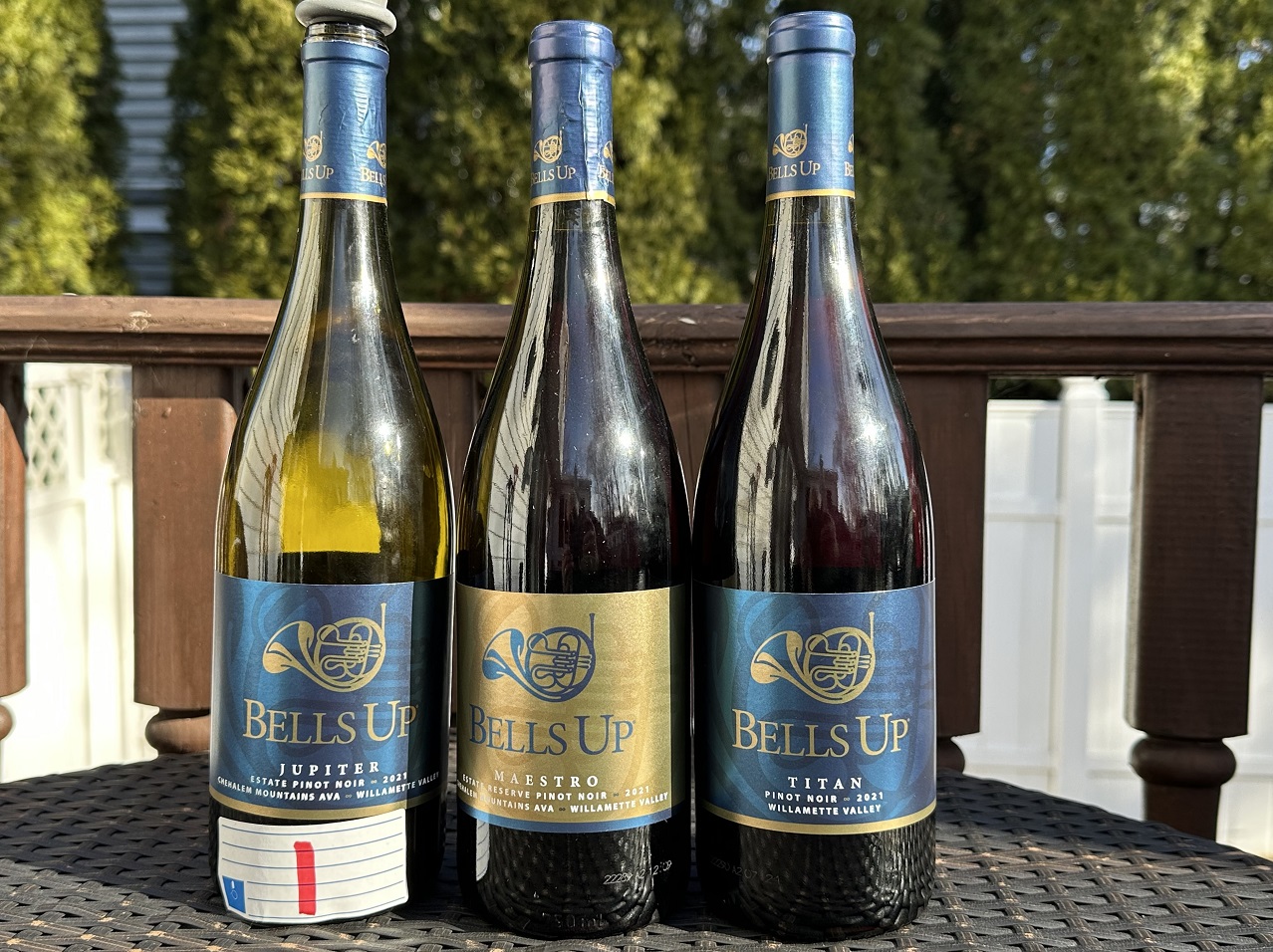
And then there were wines.
I got three sample bottles, out of which one, Jupiter Pinot Noir, was included in the blind tasting (based on Sara’s recommendation). Here are the notes for all three wines, with the first one written a bit differently as it is based on the notes taken during the blind tasting.
2021 Bells Up Jupiter Pinot Noir Estate Chehalem Mountains AVA (13.5% ABV, $50, 58.8% heritage clone Pommard, 25.8% Dijon clone 667 (8-year old vines), 15.4% Dijon clone 113 (6-year old vines), 154 cases produced)
New World (have no idea what I was thinking, I guess something outside of Europe), Vintage: 2021. Cherries, lots of cherries, raspberries, tart cherries on the palate, good balance, nice.
Drinkability: 8
2021 Bells Up Maestro Reserve Pinot Noir Estate Chehalem Mountains AVA (13.3% ABV, $56, 50% Dijon clone 943, 27.8% 667, 22.2% 113; 77 cases produced, club members exclusive)
Dark garnet
Smoke, earthy notes, dark fruit, hint of cherries
Sweet and tart cherries both, iodine, crisp acidity, medium body, a bit of medicinal finish
Drinkability: 8-
2021 Bells Up Titan Pinot Noir Willamette Valley AVA (13.8% ABV, $46, 22.3% 8-year-old Pommard Bells Up’s estate, 38.8% Dijon Clones 115 and 38.8% 777, MonksGate Vineyard’s in Yamhill-Carlton AVA, 19- and 20-year-old vines respectively; 12 months in French oak, 27% new; 111 cases produced)
Garnet
A hint of bell pepper, eucalyptus, raspberries
Black plums, cherries, medium palate weight, medium body, good acidity on the finish. Needs food.
Drinkability: 7+/8-
Here we are – a quick Bells Up winery update and the notes for three of their latest Pinot Noir releases.
Until next time…
This post is a part of the Stories of Passion and Pinot series – click the link for more stories…
Last Bottle Sign Up ($10 credit)




 Talk-A-Vino