Archive
For The Love Of Chowder – 2019 Edition
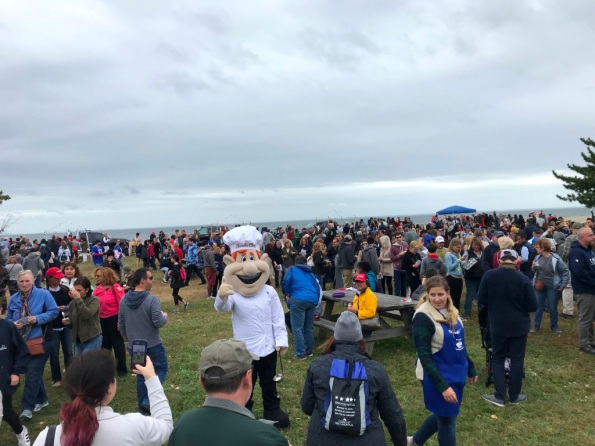
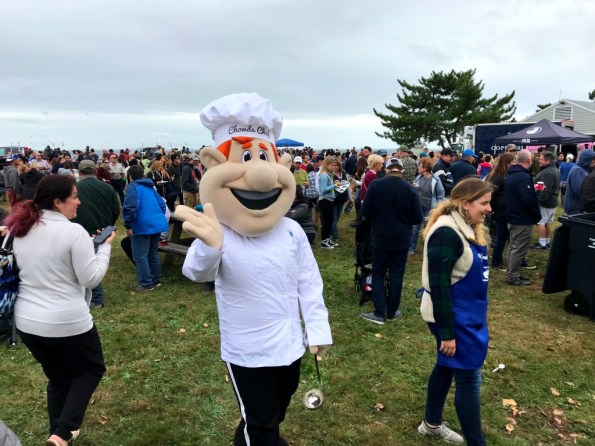
Last Sunday, purveyors of the humble soup, also known as Chowder, assembled at the Sherwood Island State Park in Westport, Connecticut, for the 12th annual festival, the Chowdafest. 29 restaurants, mostly from New England, with a notable exception of Pike’s Place restaurant out of Seattle, Washington, competed in 4 categories (New England Clam Chowder, Creative Chowder, Soup/Bisque, and Vegetarian) – and a few thousand (“a few” here might be 2, 3, 5 – the last number I heard was 12) of people came to have a good time, and to help to identify the best chowders.

My empty ballot held in place by muffin pans – an essential tool of chowder lover at Chowdafest
Before I will inundate you with pictures, as usual, let me give you my brief personal take on the event.
For the good part, there were plenty of tasty soups to go around, and an absolute majority of the soups I tasted were quite good. There were also lots of tasty giveaways, with Natalie’s All Natural Juices as my personal favorite.
For the not so good part, the event felt really, really crowded. This was my 5th Chowdafest, and all previous years I was able to visit the absolute majority of the stands within about 2 hours. This time around, I simply gave up at some point, as the lines were just unsurmountable. I believe there were two reasons for that – first, the weather was so-so, and people didn’t have much else to do on that Sunday. Second, and more important – there was lesser number of participants in the competition, thus even the same amount of people as usual had to line up to the fewer number of stands – this year, there were 29 restaurants competing versus 37 last year, and 40 in the two years prior. My last gripe would be with scarcely decorated stands – in the prior years, there were a lot more seasonal decorations seen everywhere – this year, the decorations were quite limited.



There was a good number of vegetarian soups presented, such as Gazpacho from Rory’s in Darien. Cast Iron Soup from the Cast Iron House in New Haven rightfully won this category as it was one of the very best soups in the competition.


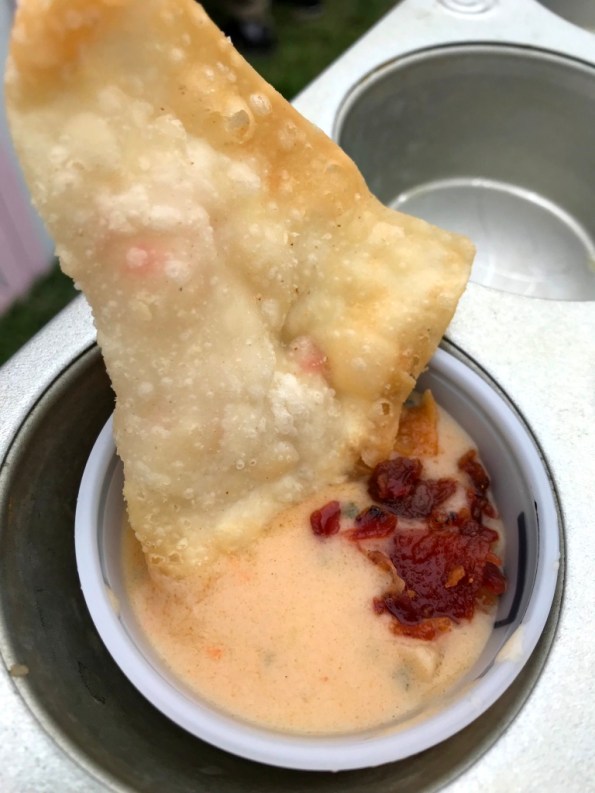
Shrimp and Corn Chowder from the Ribbon Cafe was one of the most creative at the Chowdafest 2019, served with a cheese wonton:


As always, the Chowdafest went way beyond just the soup – Michelle’s Pies were an excellent addition, and as I mentioned, Natalie’s Natural Juices (Beet Orange was my personal favorite) were an excellent thirst quencher.


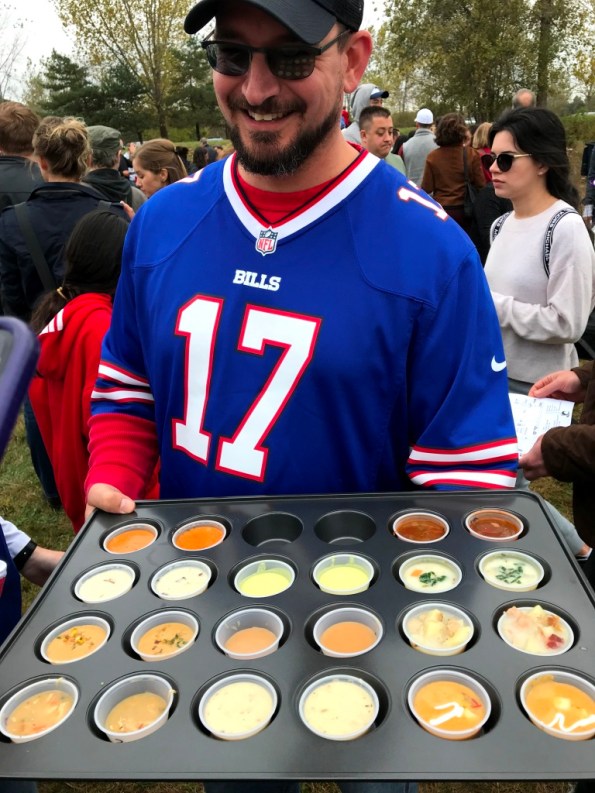
There were also some very creative tasting approaches at the Chowdafest, such as this one:
 Here you can see a glimpse of the prizes, all made by the local artist, Wendy Marciano:
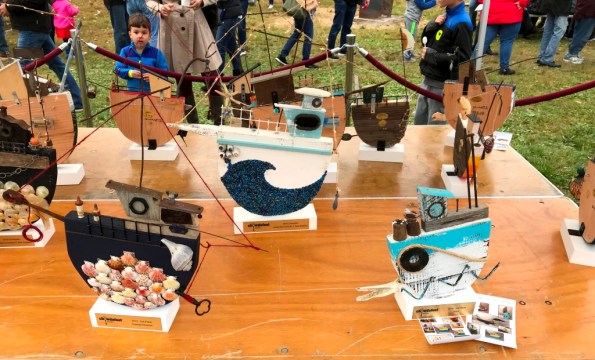
 Let’s talk about the winners. For the 5th year in the row, Pike’s Place out of Seattle took the 1st place in the New England Clam Chowder category. Also for the 5th year in the row, Our House Bistro from Winooski, VT took the Creative Chowder category with its Drunkin Pumpkin Seafood Chowder. Gates from New Cannan, CT won Soup/Bisque category with its Crab & Roasted Corn Bisque, and Old Post Tavern/Cast Iron Chop House from New Haven, CT won Vegetarian category with its Cast Iron Soup. You can find all the results here.
I have to say that I’m convinced that Pike’s Place wins the competition not just because they make the best soup (in my opinion, they are not), but because they also provide the best service. While this was one of the most coveted participants, Pike’s Place stand was practically the only one without a line – they were very efficient in pouring out and simply carrying around their chowder on the large trays, so it was easy for everyone to try it without the need to stand in the long line.

I guess that’s all I wanted to share with you. Before we part, I will show you my ballot which is shamefully incomplete, but this is the best I could do:
 I’m already looking forward to the Chowdafest 2020 – I hope it will be the best and the tastiest and maybe not as crowded as the one this year.
Why You Don’t Want To Miss Chowdafest 2019
Really, why would you want to miss the Chowdafest 2019? If you like chowder or any form of nice, hearty soup – and note, it can be vegetarian soup as well – you can’t have an excuse good enough to miss the 12th annual Chowdafest festivities on October 6, 2019, taking place at the usual place – Sherwood Island State Park in Westport, Connecticut, from 11 AM until 3 PM.
I attended Chowdafest for the past 5 years, and when I’m suggesting that attending the event is well worth the effort of rearranging your Sunday around it, I’m simply speaking from experience (take a look my reports from past Chowdafests here). Chowdafest is a lot of fun – it is not only soups and chowders but lots of samples of cheese, bread, sauces, juices, tea, coffee, ice cream, and more. It is literally fun for all ages (yes, you want to teach your kids what tasty food is from an early age).

One of my very favorite creative chowders – and a winning one!
At the Chowdafest 2019, 30 restaurants will be competing for the titles in the 4 categories – New England Clam Chowder, Creative Chowder, Soup/Bisque, and Vegetarian. Half of the 30 competing restaurants will be participating for the first time, and I’m definitely looking forward to trying new soups such as Mexican style Shrimp Posole Soup, or Buffalo Chicken Noodle Soup. But probably the main question is – will Pike’s Place out of Seattle, Washington, win the classic New England Clam Chowder category for the 5th year in the row? Well, you will need to be there to see it and be a part of it.
I hope I solved for you the problem “What to do on Sunday, October 6th”. See you at the Chowdafest!
Judging Wine
 Let’s do some math. There are about 8,700 wineries in the USA. Some wineries make only 2–3 wines, but this is quite rare. Some wineries make 10, 15 or more, especially if you will take into account all the “winery-only” specials. Let’s average, say, at 10 (I’m sure I’m reasonably conservative here). In this case, we are talking about roughly 87,000 different wines. Produced every year. In the USA alone.
How do we choose the wines? Presented with an average selection of at least a few hundred bottles even at a small wine store, we need all the help we can get to select that one bottle we want to drink tonight. One of such “helpers” is so-called ratings. Ratings are professional wine critics’ opinions, generally expressed in the form of the numbers (points), from 50 to a 100 – 89 points, 95 points, 100 points. Those ratings are produced by several wine publications (magazines and newsletters), such as Wine Spectator, Wine Advocate, Wine Enthusiast, and a few others. Let’s say there are about 4 main publications in the USA (there are lots more, of course, if you will attempt a full count, but let’s just stay with the major ones). Now, to produce the ratings for all 87,000 wines among 4 publications, working 365 days a year (no breaks!), it will be necessary to evaluate about 60 wines per day, every day – and these are just wines from the USA, based on our rough assumption of 10 wines per winery. Mission impossible – and mission unnecessary.
What else is there besides ratings, to help our poor, indecisive selves? Well, how about some awards? If you ever visited some lesser-known wineries – maybe on Long Island, or in Finger Lakes, upstate New York, Pennsylvania, etc – have you noticed a display of the bottles wearing straps with various medals around the neck? Those are the exact awards we are talking about. How the wineries get those? By participation (and winning) at the various wine competitions, in the USA or even in the world.
There are about 70 of major (or better known) wine competitions in the USA, plus probably hundreds of lesser-known, more regional wine competitions. Wineries submit their wines for the competitions. The wines are grouped into the categories (white, blend, Chardonnay, Merlot, Dessert, etc), and get rated in a blind tasting within those categories by the wine judges. The best wines in the categories can subsequently compete for the “best in show”, “best red”, “best dessert” and so on. And then wineries get to brag about their awards and to display the medals, sometimes at the winery, and sometimes even on the labels – I’m sure you’ve seen those.
Wondering how the wine judging is done? Let me give you a first-hand account, as I just attended my second wine competition as a judge – at the Hudson Valley Wine Festival – obviously focused on the wines of Hudson Valley.
As we mentioned, the wines are judged blind, with only a variety (or blend composition) and vintage known for every wine. The wines are split into the categories such as white and Rosé, red, dessert, fruit, and can be split into varieties within the categories, each category presented as a separate flight – for example, Merlot and Cabernet Franc for reds, or Chardonnay and Riesling for the whites. The wines are assessed at the Hudson Valley Wine Festival according to the American Wine Society wine evaluation chart, which you can find in its entirety here. According to that chart, the wine can get the maximum of 20 points comprising of the following categories
- Wine color – up to 3 points. This is an easy one – as long as your 1-year-old dry Riesling is not a deep golden, or not hazy/cloudy, it is 3 points.
- Aroma and bouquet – up to 6 points. The 6 points are awarded if the wine is absolutely on point for the varietal expression.
- Taste and texture – again, up to 6 points. To get 6 points the wine should be varietally perfect.
- Finish – up to 3 points. Here the long and enjoyable is what is required to qualify for 3.
- Overall impression – up to 2 points. Here is an opportunity for a judge to express his or her personal opinion about the wine – nah, okay, or wow.
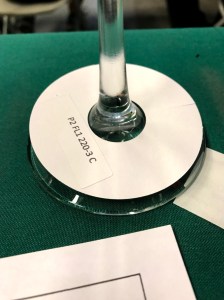
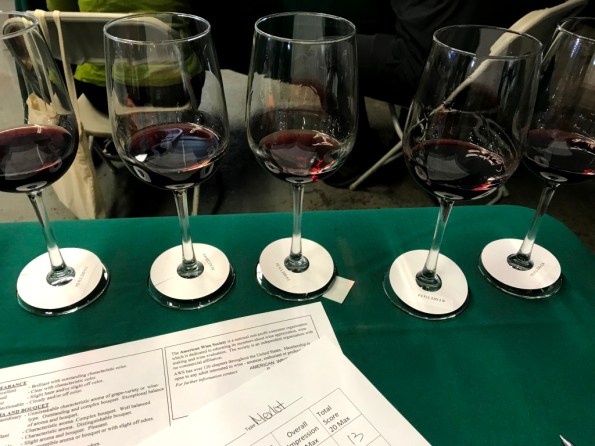
The assessment of the wines done in the flights, where each wine is individually labeled with a code. The judges are working in the groups of 3, with each group having a captain who manages the group’s work and fills up all of the final decision forms. While the wines in the flight had been assessed, all judges keep it quiet and filling up the form. Once the flight’s assessment is finished, the wines are been discussed one by one, to arrive at a final score for the wine. Based on the score and opinion, the recommendations can be made for double gold, gold, silver, and bronze, as well as for the inclusion into the best of show tasting.


Once all the flights are done by all the judges at all tables, the results are processed, which takes about 30 minutes. During this 30 minutes break, it is a perfect opportunity for judges to walk around and see a bit of the show floor before it gets ultra-crowded. Here are some of the pictures of what you can find on the show floor of the Hudson Valley Wine and Food Festival. These are the things which attracted my attention, and I can tell you that the bacon salsa you see below was superb. Both single malt and rye whiskey which you can see below were good, but not $100 good as it was the show’s asking price. And how about those cans and wine labels!


After the break, the final part of the judging is set up – now the wines are judged for the best in category (best red, best white, etc), and then all of the best in categories are included into the “best in show” tasting. Best in category and best in the show are judged by all the judges at all the tables by the show of hands, and each judge can vote only once.

Best in Show tasting flight
An interesting by-product of all the voting is the title of the “winery of the year” for the region – I don’t know the exact formulae, but it is determined by the number of wines awarded the medals, taking into account how many wines were submitted versus how many wines got awards, and the type of those awards – for example, it is better to submit 2 wines, one of which will take double gold, versus 4 wines, out of which 2 will take silver.
That’s all there is to it – now you know all about the wine judging.


Here you can see our list of flights, and some of my notes. I have to honestly tell you that somehow I liked the wines from last year a bit more than the wines from this year – but then last year our red wines flight was Cabernet Franc, and this year it was Merlot – and Hudson Valley produces better Cabernet Franc than Merlot (personal opinion, of course). Also, last year we tasted no DPMs at our table – in case you never heard the term which I learned last year, DPM stands for Don’t Put in your Mouth – and DPM can happen anywhere, it has nothing to do with any particular region. So last year we got lucky, and this year, we were blessed with two – one wine was completely spoiled (can’t describe it, just terrible, like a spoiled fruit), and the second one tasted like it had cheese blended in the wine – as one of the judges said, “I like cheese with my wine, but not in my wine”. Anyway, bad wines happen anywhere in the world – nothing else there is to it.
Overall, however, I have nothing to complain about, it was fun and successful tasting, and we completed our work with no issues.
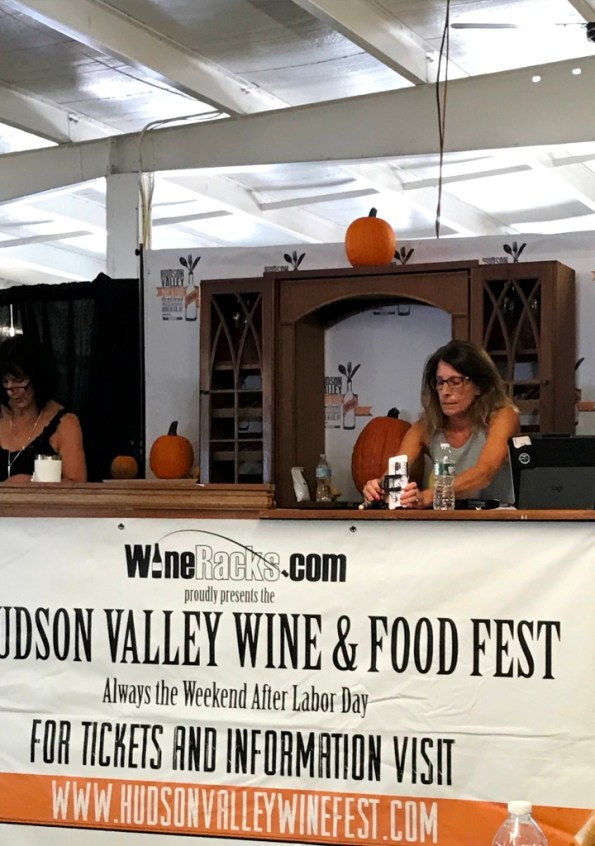
Debbie Gioquindo, Chair of the competition, deep at work
I will not be repeating here all the results – you find them all here, on the website of Debbie Gioquindo, Hudson Valley Wine and Spirits Competition Chairwoman for the past 12 years. For my personal favorites, 2017 Millbrook Castle Hill Vinyard Chardonnay Hudson Valley was absolutely spectacular – it is hard to believe the Chardonnay of such a world quality can be produced in Hudson Valley (I mean no disrespect, but you have to taste this wine to believe it) – perfectly Burgundian with a distant hint of vanilla and butter. 2015 Glorie Farm Winery Cabernet Franc was simply perfect – an excellent rendition of the Cabernet Franc, the grape which Hudson Valley mastered to perfection for a while – and it was the Best in Show wine. And the Baldwin Vineyards Spiced Apple, entered in the fruit wine category, simply blew my mind with its perfect expression of a drool-inducing apple pie – the one you eat with the spoon directly from the tray, and you know you are not supposed to do it, but you can’t stop yourself…


In case you want to see it, here is the aftermath of the competition:

That’s all, my friends. This was definitely a fun experience, and I’m already looking forward to the next year’s event. Cheers!
Alie Ammiraglia – The Rosé Experience
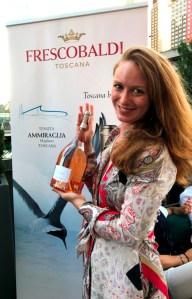
Livia le Divelec introducing Alie Rosé
Rosé Every Day – is that your wine motto?
Okay, that might be a bit much – occasionally, we would like to drink white and red too, don’t we? How about this:
Rosé is For Every Day – would you be able to subscribe to that?
It amazes me that today it still requires courage for an average wine consumer to happily say “I love Rosé” and stop right there without adding any “buts” – “only in the summer”, “only when it is hot outside”.
It is a given for us, wine aficionados and geeks, but an average wine drinker is still afraid that they are simply not supposed to like Rosé, and openly admitting your “Rosé love” in public is akin to loudly proclaiming “ohh, I have no taste in wine, no class”. This is mindboggling as we truly are living through the Rosé wine revolution.
Ten years ago, Rosé was strictly for summer, and the only Rosé you would find available during the winter months was the one from Tavel from the southern Rhône in France – only found in better wine stores or adventurous restaurant wine lists (Rosé is the major, if not the only type of wine produced in Tavel), or whatever ended up in the discount bins as not been sold during the prime season. Today, Rosé can be found at most of the wine stores throughout the whole year, no matter what season it is. It is also not surprising that literally every winery in the world, big and small, added Rosé to their repertoire. Actually, it might be still difficult to find Rosé at the wineries – it is usually produced in the small quantities and thus sold out in no time at all.
As we mentioned before, Rosé often considered an afterthought – while the winery is starting to make the red wine, whatever juice will bleed from the harvested grapes would be good enough to make Rosé – or whatever grapes are not good enough for the main wine still can be used for Rosé.
This, however, was never the case in Provence in France, where Rosé is The Main Product and never an afterthought. In Provence, the grapes were and are purposefully grown for the Rosé, and harvested at its proper ripeness to be made into Rosé – the best possible Rosé. But – “the best Rosé” crown is heavily contested today – literally, the whole wine world is after it.
Let me share with you an encounter with a perfect contender – Alìe Ammiraglia, an Italian Rosé produced by Frescobaldi family in Tuscany.
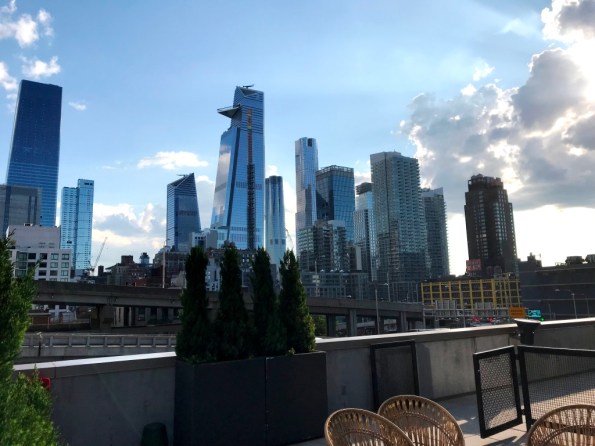
At the end of July, I attended an event in New York City, where the new vintage of Alìe Rosé (in case you are wondering about the name, Alìe is “a figure from Greek mythology, a sea nymph and a symbol of sensuality and beauty”) was presented in style.
Let’s compact the whole experience into one very long sentence, just for fun: Alìe Rosé, made out of Syrah and Vermentino specifically grown for this Rosé wine, was presented at the event in New York City in the hottest setting of a roof-top bar, poured strictly from magnum and double-magnum bottles into the glasses specifically designed to enhance the qualities of the Alìe Rosé, accompanied by delicious bites of Polynesian cuisine on a hot summer day.
How about this long sentence?
Now, let’s repeat it, but a bit slower.


2018 Tenuta Ammiraglia Alìe Rosé Toscana IGT was introduced by Livia le Divelec, Frescobaldi Brand Ambassador and winemaker. 2018 is the fifth vintage of Alìe Rosé. The wine is made out of Syrah and Vermentino grapes grown at Tenuta Ammiraglia vineyards in Maremma, the region best known for the super-Tuscan wines. Maremma is a coastal region in Tuscany, thus the climate, soil, and terroir overall have a lot of maritime influence, hence the name and various sea-life elements of the design – the label, the glass. The bottles for Alìe Rosé are specifically designed in Mediterranean style, again to stress the origins of the wine.


The event took place at The Polynesian, bar and restaurant located at the Pod Times Square hotel and offering a roof-top seating. What can be better than sipping on a glass of beautiful Rosé, overlooking New York’s busy life from above on a warm summer afternoon? Well, let’s cue in delicious appetizers of Polynesian origin, harmoniously supporting the delight of Rosé – and now you got the whole picture.


Oh, wait, let’s not forget about the wine glasses! The wine glasses were specifically designed by German company Rastal for Alìe Rosé to accentuate qualities of the wine, both organoleptic (aroma, taste, …) and visual, with the glasses serving as another reminder of maritime-influenced origins of Alìe.
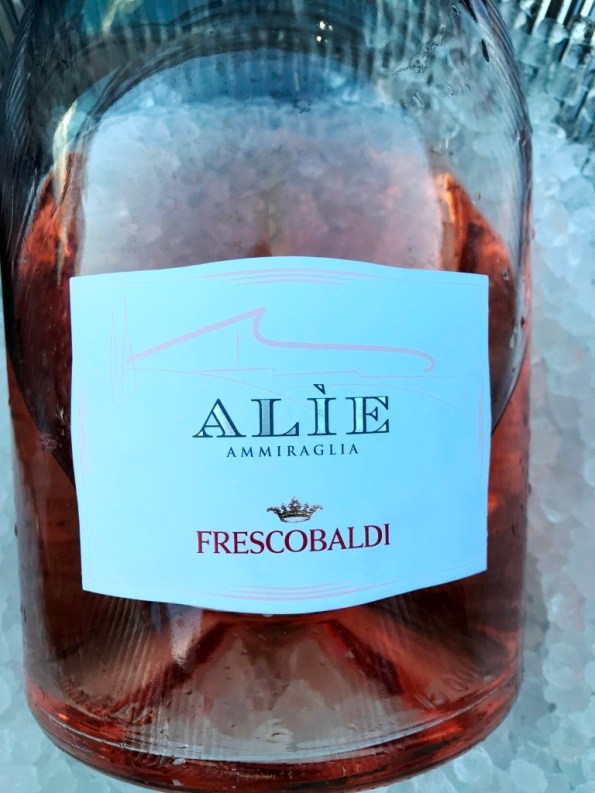
Well, I guess I still didn’t tell you how was the wine – got carried away with a beautiful setting of the roof-top bar, seductive bottles, and designer wine glass. Never mind all these accents – the wine was a real star, otherwise, I wouldn’t be talking about all this. Beautiful fresh strawberries on the nose, strawberries with a hint of Meyer lemon on the palate, crisp and fresh. Delicious cold, and still delicious even at room temperature – my litmus test for a quality white and Rosé. I would drink that wine any day, and any season. Remember, Rosé all day!
That concludes my brief. What is your Rosé of the Year? Cheers!
Mother Nature, Unbound
I love photography. If you flip through the pages of this blog, you will see lots of pictures – I enjoy taking the pictures, and I enjoy sharing them.
Yes, this is a wine blog, and so most of the pictures here are related to either wine and food. Most, but not all – as, for example, will be this post.
I rarely take pictures of people – or even if I do, I rarely share them publicly. Nature, on the other hand, might be my most favorite subject, both for taking the pictures and for sharing them.
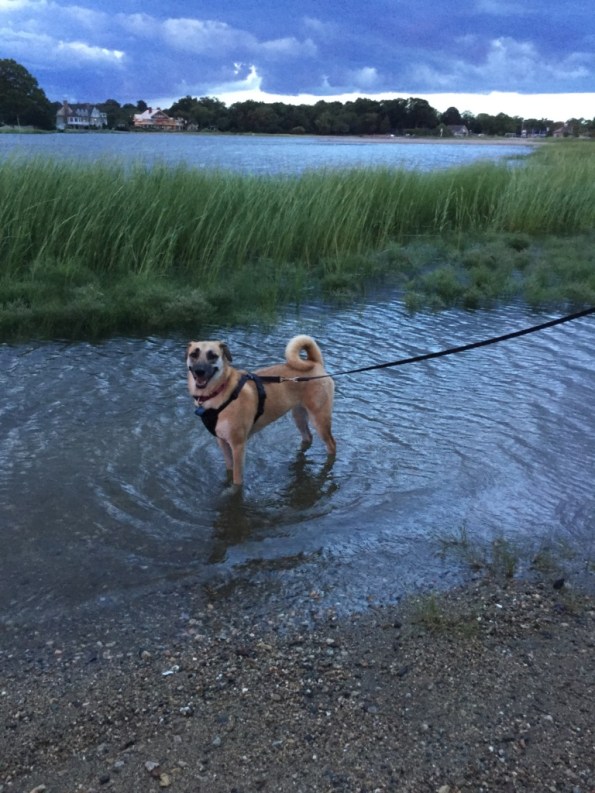
Yesterday we needed to take a trip downtown Stamford in the evening, and then the thought was – why don’t we take the dog down to the beach for a walk?
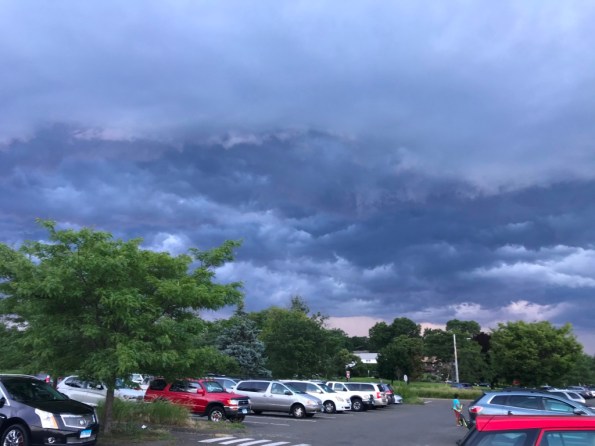
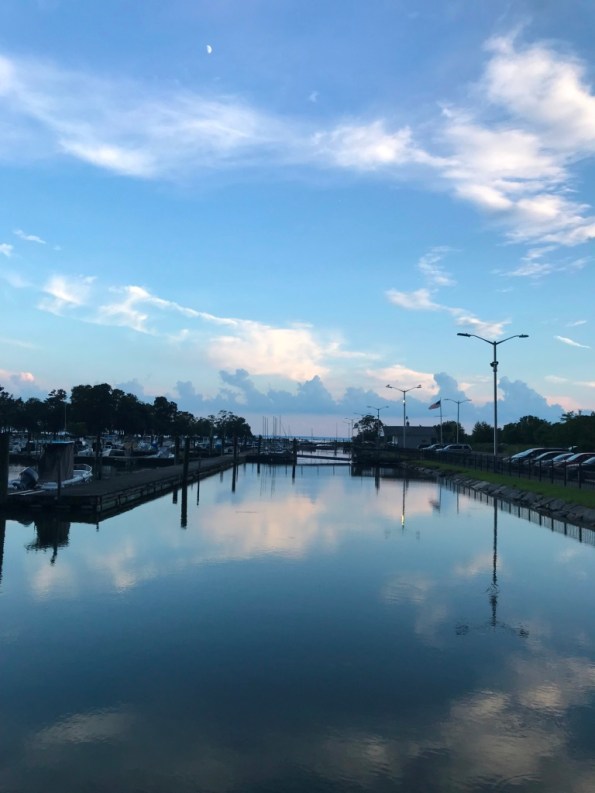
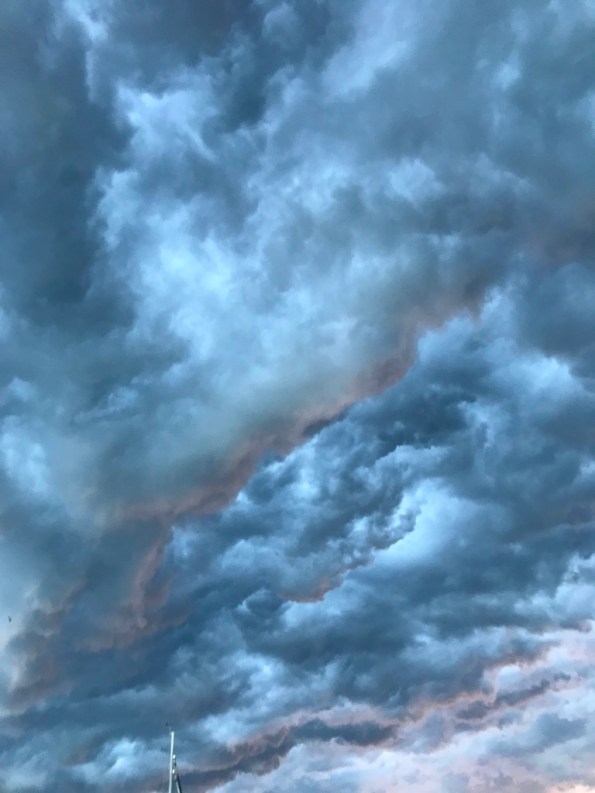
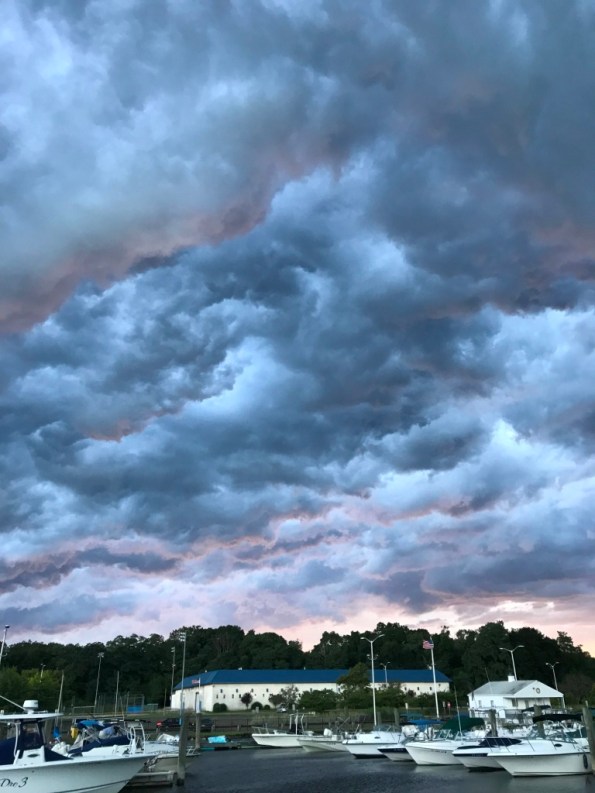
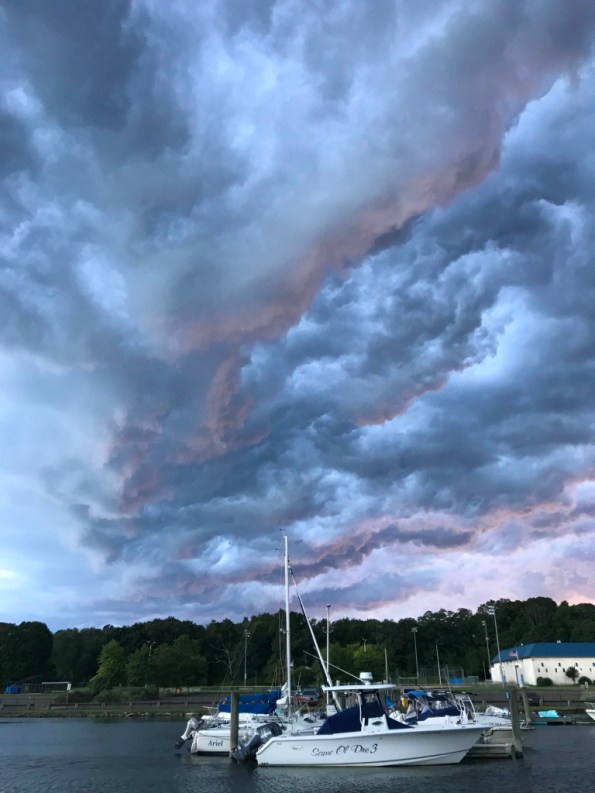
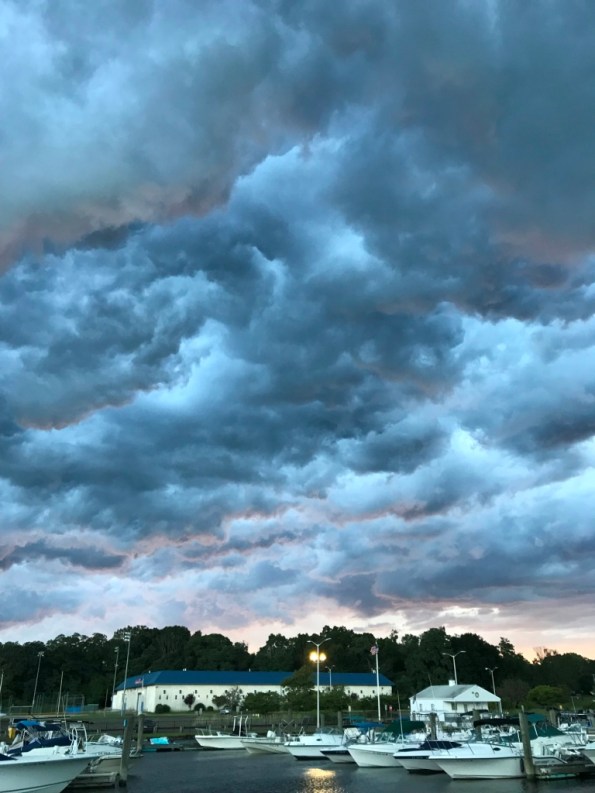
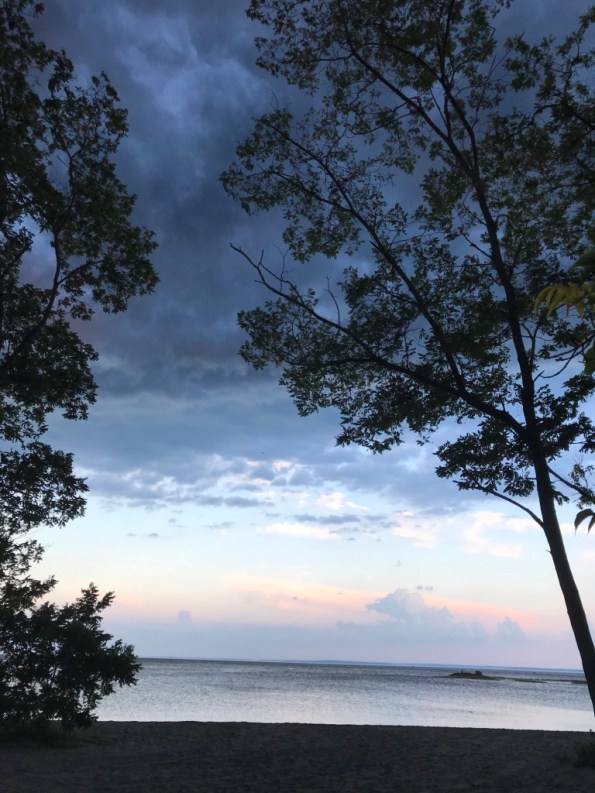
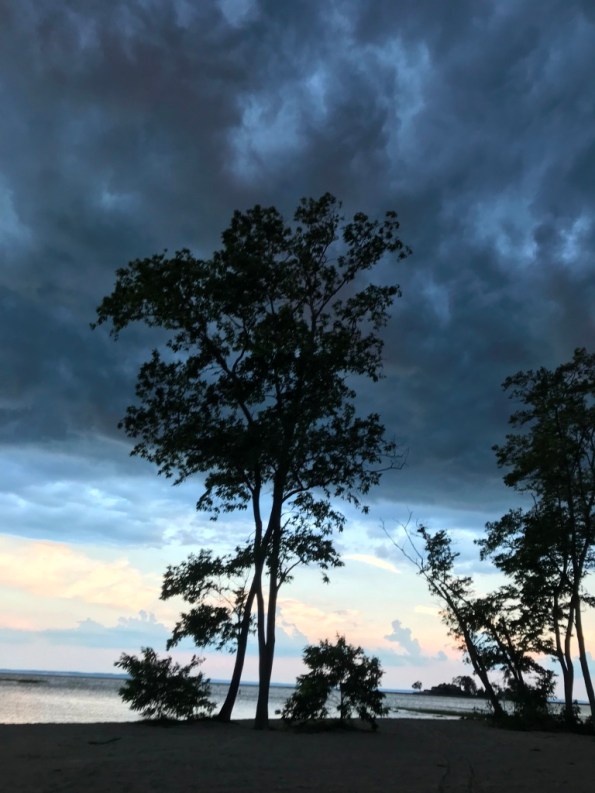
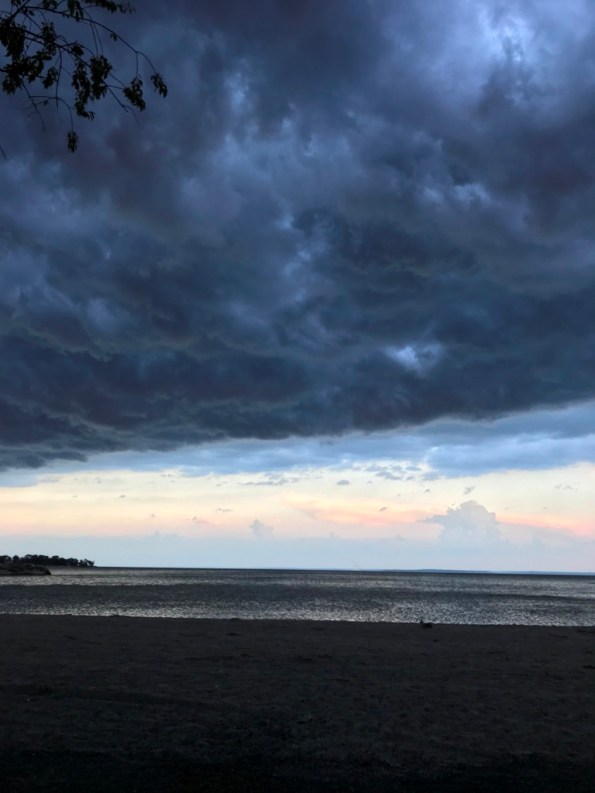
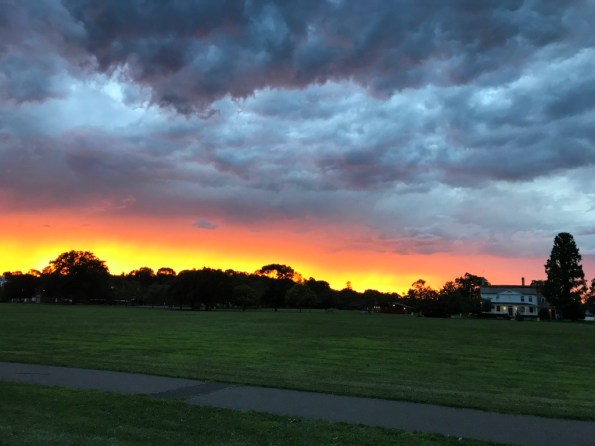
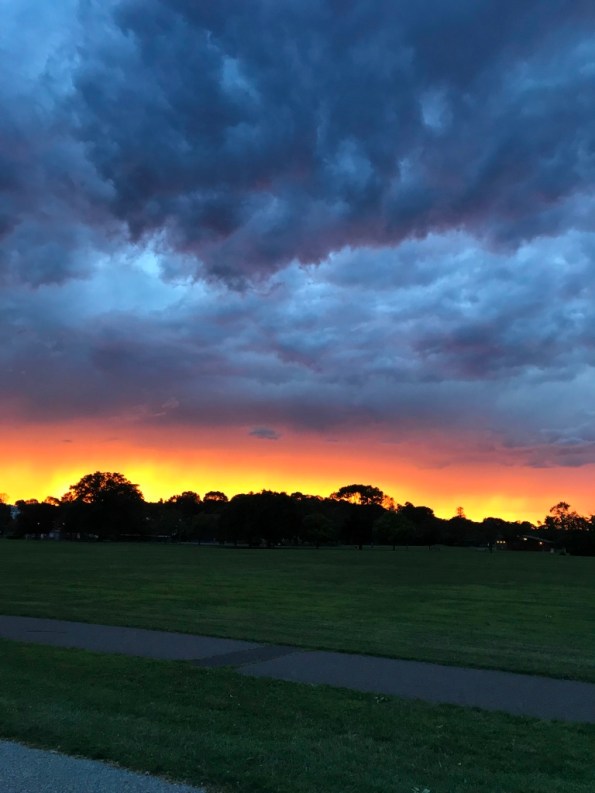
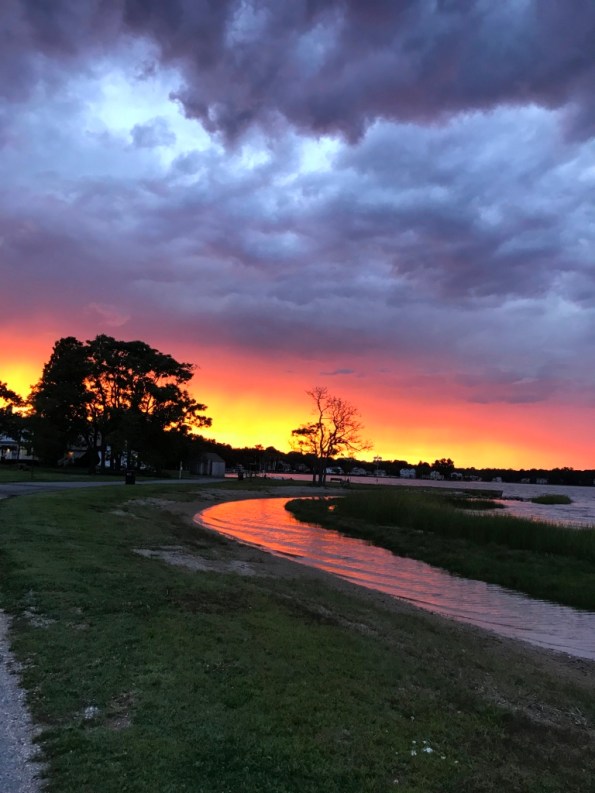
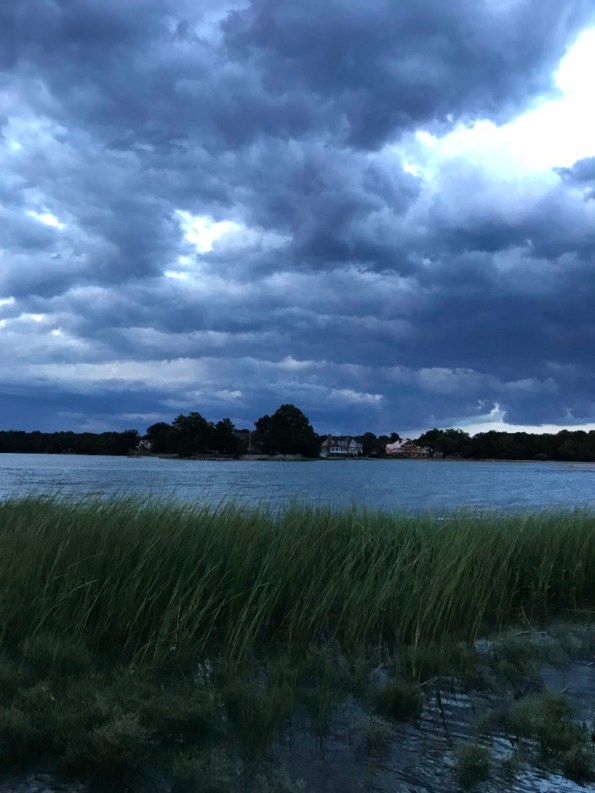
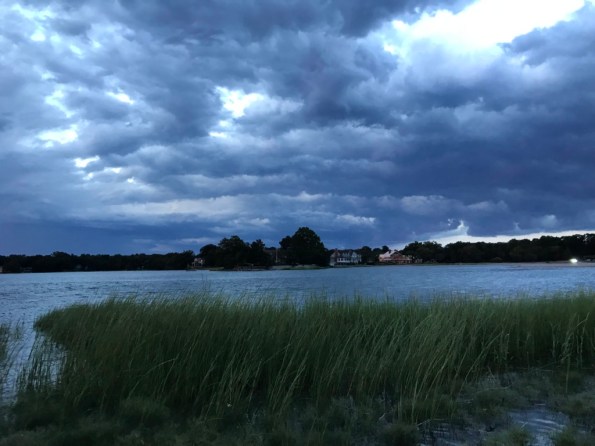
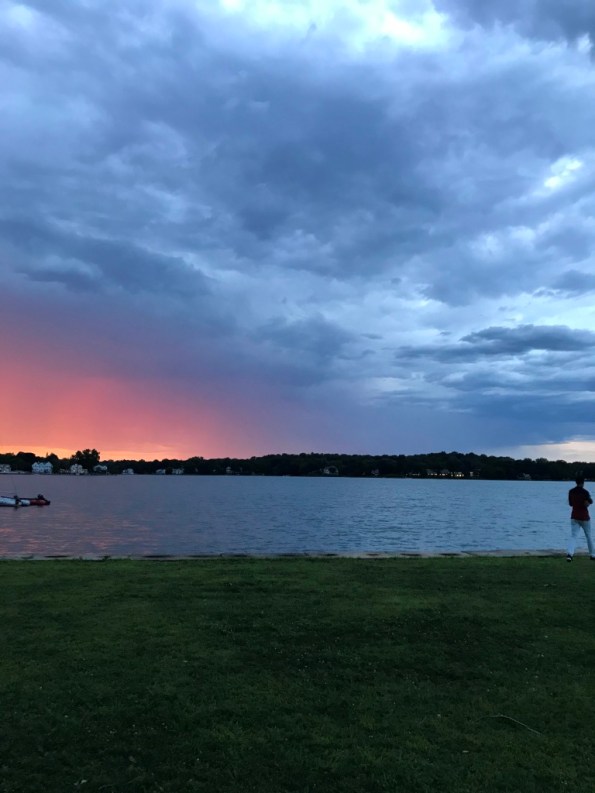
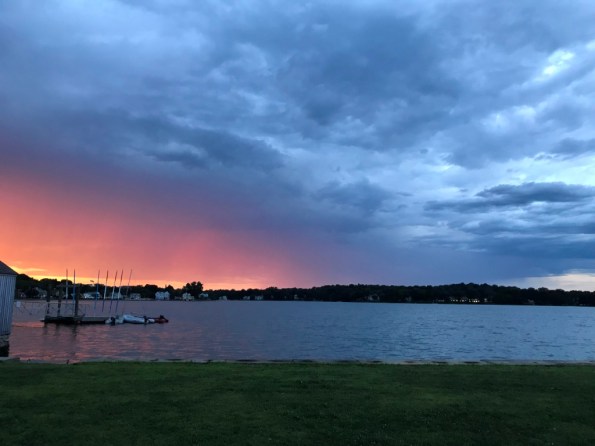
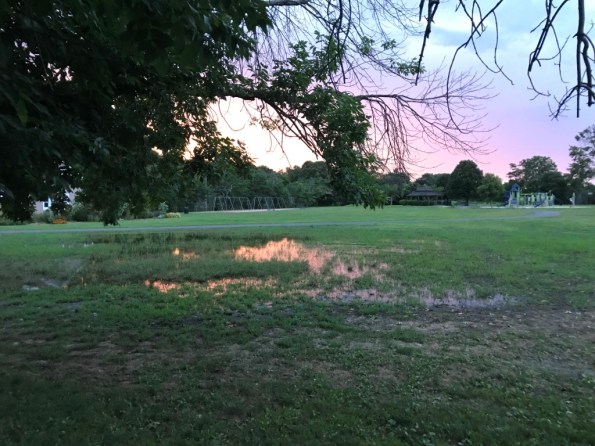
Oh my… Once we arrived at the beach, for the next 30 minutes or so, we couldn’t stop looking and looking around, trying to fully appreciate and take in one of the most magnificent spectacles ever put out by Mother Nature (okay, yes, I’m going too far – she does it every day, non-stop around the world, but still). I often tell people that Mother Nature is a true and original artist, I just try my best to capture her creations and share them with the world.
I usually prefer to convey my own vision of the same Mother Nature’s act in my pictures (read – edit them), but yesterday’s performance was so perfect that I’m just sharing it as is, not edited at all – #nofilter as we like to say.
Enjoy!

June – What a Month, in Wines and Pictures – Part 2
Warning – lots of pictures will be following. And you can find Part 1 post here.
My birthday celebration usually means “party”. This year we decided with my wife instead of cooking and cleaning for 2 days to spend time by ourselves and go to stay somewhere fun. We managed to pack a lot in mere 3 days.
As a collector of experiences, I’m trying to fill my Wines of 50 States map, so as we were driving to Portsmouth, New Hampshire, I decided to visit local New Hampshire winery. Fulchino Vineyard was almost on the way, so this was our first stop (the details are coming in the separate post). Then we arrived at our intended destination for the evening – Wentworth by the Sea, a magnificent property hosting the Marriott hotel.
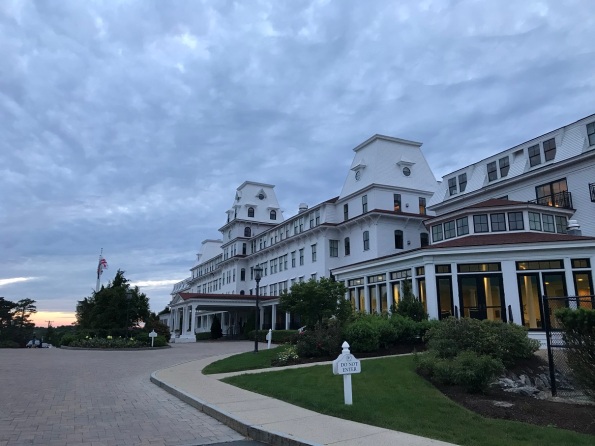
When I drove by that hotel 5–6 years ago, I still remember my admiration of a beautiful structure. It got stuck in my mind and I was waiting for an opportunity to visit – I’m glad it worked out. Beautiful building, beautiful views, beautiful property – we really enjoyed our short stay. And I will let you decide whether this place is beautiful or not take a look at a few pictures below.


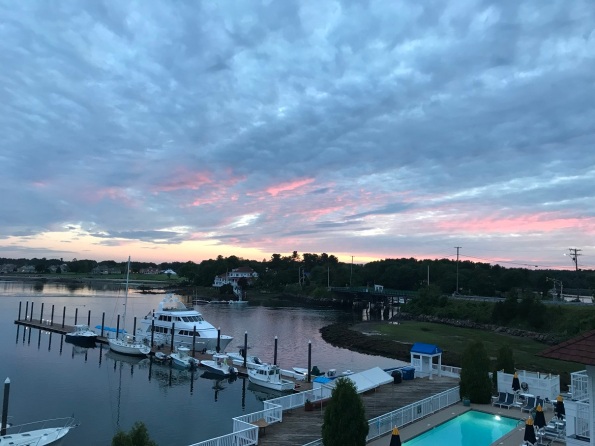
While Marriott was a great property in a magnificent setting, our next stop greatly exceeded my expectations. A few months ago I resubscribed to the Yankee magazine – it is a print magazine which is squarely focused on the happenings in New England part of the US, from Connecticut to Maine. As my “bonus”, I got a tiny leaflet called “Best of New England”, where one of the places that caught my attention was Inn at Woodstock Hill in Woodstock, Connecticut, mentioned as “Best Inn for privacy”. The Inn also conveniently hosted a restaurant with raving reviews, which sounded perfect for the birthday dinner.
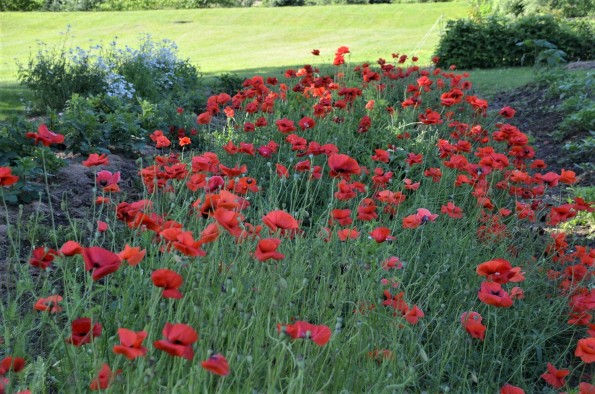
When we arrived at the Inn, we found out that our room was located not at the main building, but at the adjacent cottage, which has a total of three rooms, but we would be the only people to stay there. So we literally had a whole house to ourselves, with the deck and the view of the fields. In addition to the fields which looked perfectly untouched, we had a pleasure of walking around a small garden, where blueberries, black (I’m assuming) currant and gooseberries were all growing, and a small field of poppies was yet another source of great pleasure, as we don’t spend much time around those gentle flowers.


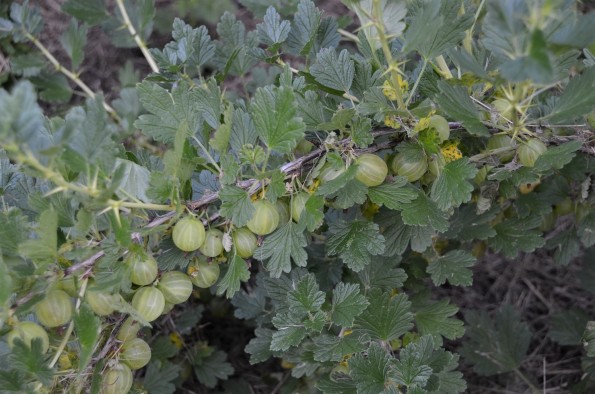

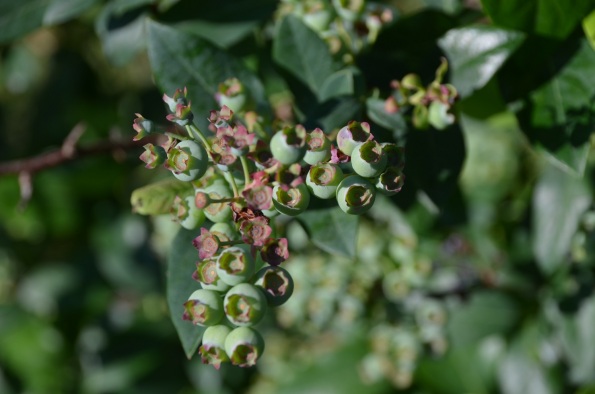
I brought with me a couple of bottles to celebrate the occasion. One of those bottles was 2015 Field Recordings Foeder Old Portero Vineyard Arroyo Grande Valley (14.9% ABV, 50% Syrah, 35% Zinfandel, 15% Mourvèvedre, aged for 12 months in 50 barrel American Oak Foeder). While I generally treat Field Recordings wines as every day delicious wines, good for any day which name ends with a “y”, some of those wines are a bit more special, as they are not produced regularly, and when produced, the quantities are minuscule. This was one of such wines, which I had for a couple of years, but then decided that birthday is a good enough occasion to have it open. This happened to be a mistake, as wine could definitely enjoy another 10 years to fully evolve, but even then, it was a delicious, fresh, acidity-forward concoction of sour cherries and blackberries, with well-defined structure and dense finish.


Our dinner didn’t disappoint either. First, the folks at the restaurant were very kind and let us bring our own wine despite having the full wine list (the corking charge was $15, which was totally fine, of course). The wine which I brought, 1998 Kirkland Ranch Merlot Napa Valley (14% ABV) was on my “to open” list for a while. I got a few of these bottles from Benchmark Wine and was really curious to see how the wine would fare, but the bottle went unopened on a few prior occasions. This time the cork was finally pulled out, and the wine delivered lots of pleasure. It started its journey to the peak but was still far from it – fresh, good acidity, a complex bouquet of roasted meat, coffee, dark fruit (cherries and plums), good balance – very enjoyable. The wine continued to evolve throughout the evening, giving me good hope for a few more bottles I have left.
The food at the Inn at Woodstock Hill (the restaurant doesn’t have its own name, and because of it you can’t find it on Yelp, but it has all information on the web) was delicious. We started with an Escargot, which was enjoyed to the last morsel, and Artichoke Bottoms, which were unique and delicious. Then I had The Wedge salad, which is one of my perennial favorites – you can get any salad off the menu complementary to your main dish, a very nice feature – and The Wedge again was delicious. My main dish was Pork Shank, which was… well, I don’t know if I should declare myself a pork shank connoisseur, but I’ve been through the Czech Republic, where pork is king – this dish was absolutely on par with the best versions I tasted in Prague. Yep, it was a delicious standout or it was standoutously delicious (yeah, I know it is not a word – but this is my blog :)), but I’m sure you got my point.
The morning with that fields view was just perfect. I couldn’t stop myself from taking more and more pictures…


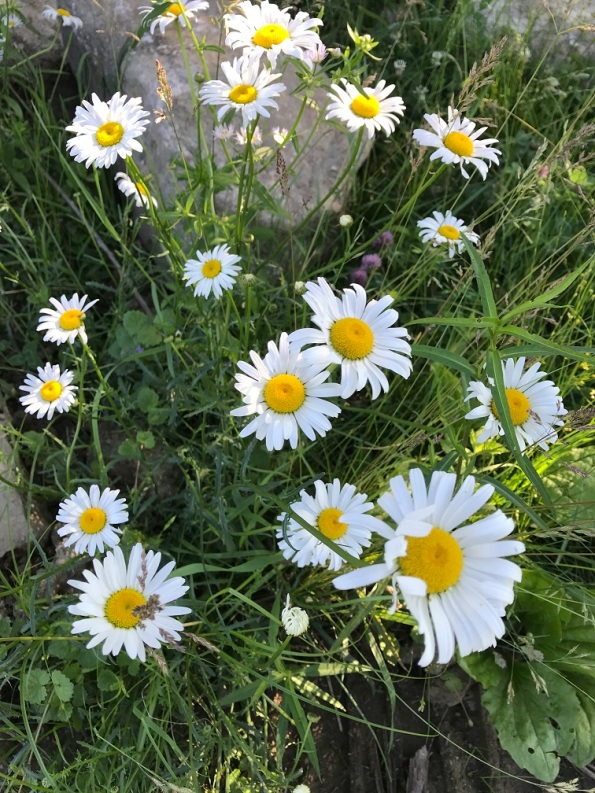


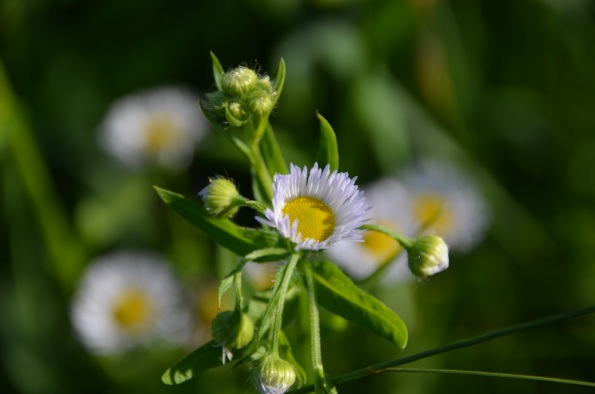


We made two more stops before finally getting home. First, we discovered the Rosewood Cottage, a pink-colored summer residence of Henry and Lucy Bowen, built in 1846, also sporting beautiful garden delimited by 150+ years old shrubs. The Cottage, which now belongs to the Historic New England organization, hosted 4 of the US Presidents visiting Bowen family on various occasions. Over these years, the house was painted 13 times in various shades of pink, has many of the original wall coverings (wallpaper) called lincrusta, and stained glass windows, some of those original since the house was built. It also houses the oldest in the United States indoor bowling alley! Does it worth a special trip? Yep, it does.

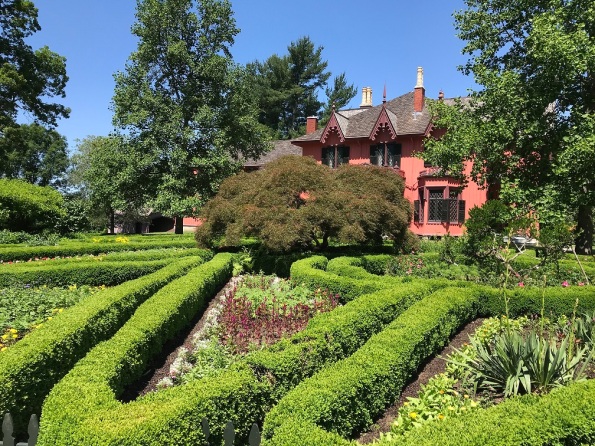


Our last stop was at the Taylor Brooke Winery, also located in Woodstock. Compared to my previous Connecticut wineries experience, this was definitely a better one – but more about it later.
Here you go, my friends – one memorable June of 2019. How was yours? Cheers!
June – What a Month, in Wines and Pictures
 June might be my favorite month of the year. There are many reasons for me to say that. For one, it is the very beginning of summer. It is like a Friday night when the whole weekend is still ahead – the same thing with June, the summer is just starting. Then it is the month of my birthday and Father’s Day, which means I get to celebrate a few holidays which are related to me. Throw in the end of school celebration and occasional graduation, and you can clearly tell June brings a lot of reasons to be happy.
This June of 2019 went particularly overboard with all the goodness. At the beginning of the month, I got invited to so many wine tastings and dinners that I had to simply decline the number of invitations. Those which I managed to attend were an absolute standout. Tasting of South African wines was small, but superb, with lots of simply delicious wines. Right after the South African wine tasting, I met with Stefano Ruini, the winemaker for Bodegas Luce, tasted through yet another excellent set of wines and finally realized that Luce, the wine I tasted and admired before, is a Merlot Sangiovese blend produced in the heart of the land of Brunello.
The last event of the same day was a dinner with Michael Benedict and John Terlato of Sanford and Benedict Winery, a pioneer of California Pinot Noir, which took place at the spanking new Hudson Yards, at the Wild Ink restaurant, overlooking freshly minted The Vessel.
My next day was even more memorable, with two hours of the pure joy of talking to Stu Smith of Smith-Madrone Winery in Napa Valley, and tasting (a better way to put it: been blown away by) Stu’s wines, which were simply a standout.
That eventful week ended with the L’Ecole 41, iconic Walla Walla producer’s lunch and vertical tasting, where I finally discovered for myself what is all the fuss about Ferguson.
Then there was Father’s Day, with all the cooking fun and an opportunity to open a special bottle of wine – it is always easier to pull a better bottle when you have a good reason to do so.


My cooking fun was more of the usual – BBQ. However, I experimented with the way the meat was prepared. The chicken breast was marinated overnight in the onion juice if this is a thing – simply a big Vidalia onion pulverized in the blender and then used as a marinade – with the addition of the bbq spices. The lamb was marinated overnight in the buttermilk also with the addition of rosemary, sage, and the spices. The result was outstanding – both chicken and lamb came out juicy, tender, and delicious.
The wine story started with the 2018 Field Recordings Morro View Edna Valley (13.9% ABV, 100% Grüner Veltliner) – fresh undertones of grass, Meyer lemon, bright, crisp acidity – a perfect sip for the summer day.
Two of the Martinelli wines joined the party. Martinelli is most famous as the grape growers, however, they also produced a number of wines under their own name, albeit those are rare. First, we had 2009 Martinelli Syrah Zio Tony Ranch “Gianna Marie” Russian River Valley (15.4% ABV), which took a bit of time to open up into the a delicious, blackberries and pepper concoction, firm and supple.


I only had two bottles of Martinelli so I had no plans to open both on the same occasion. However, when my oldest daughter came and said “Dad, I can have a glass of wine over the next two hours and I want California Pinot Noir” (she has medical condition which generally prevents her from enjoying any type of alcohol), the only wine my brain could think of was 2010 Martinelli Pinot Noir Sonoma Coast (15.5% ABV), as I saw this bottle in the fridge the day before. This was a classic California Pinot Noir, which I generally describe as “plums and smoke” – soft, layered, good amount of fruit without going overboard, delicious long finish – an excellent example of the California Pinot Noir – and by the way, perfectly balanced – 15.5% ABV was absolutely unnoticeable.

The last wine I had high hopes for … well, didn’t work out. Back in 2012, I had 2004 Retro Petite Sirah, which was one of my top dozen wines of 2012. This time I opened 2007 Retro Petite Sirah Howell Mountain (14% ABV), hoping that 12 years is enough for this wine to at least start opening up. Nope, no such luck. The fruit was nowhere to be found, the wine mostly had sapidity, coffee and roasted meat notes on the first day, despite being decanted. It slowly improved day by day and showed some glimpses of the fruit on the third day, but still, it didn’t deliver the pleasure I was hoping for.
Well, let’s stop here. I will tell you about the rest of June in the next post – with lots (lots!) more pictures.
To be continued…
Travel Diaries: Two Days in New York, or Pleasures of Being a Tourist
I live in close proximity of New York – 45 minutes by train – and I almost call it my “home town”. Each year, I get to visit the City, as it is typically called by locals (and to the best of my knowledge, “The City” primarily refers to Manhattan – New Yorkers, feel free to correct me) numerous number of times – business meetings, dinners, Broadway shows, wines tastings – you name it. But every one of those visits is purpose-driven – get in, do your thing, get out. Yes, I get to walk the streets, which I enjoy immensely and snap a few pictures, but still – the mind is set on “in and out”. “Can I sit on this bench for another ten minutes? No, because then you will miss the train. Get up and get going”.
To tell you the truth, the idea of staying in New York for a night was on my mind for a long time. Last week was a school break, for which we had no opportunity to make any plans. I looked around for a short notice vacation – flying would cost a fortune and would be mentally exhaustive (don’t get me going on my travel luck lately). Driving long distance with a rainy forecast for most of the East Coast didn’t look attractive even for a bit. And then the thought came – what about New York? My wife and our youngest daughter quickly agreed (older kids had no vacation that week anyway); we got lucky finding the room at Marriott Marquis, right in the middle of the Times Square – and with my Marriott status we even scored an upgrade, so we were definitely all set for a short New York getaway.
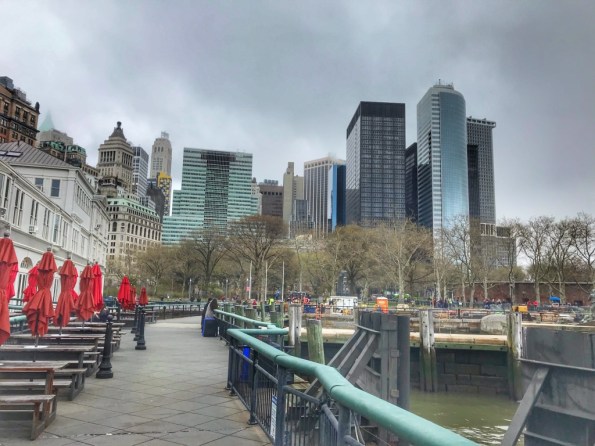
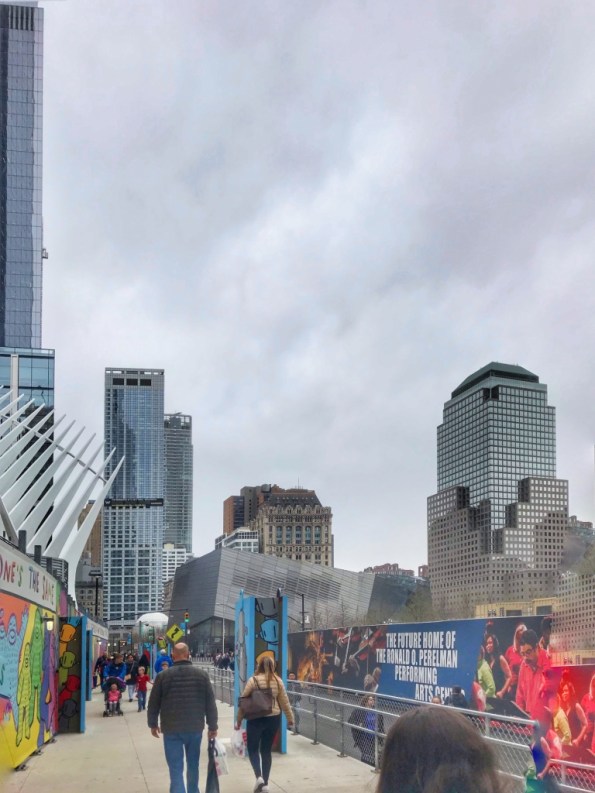
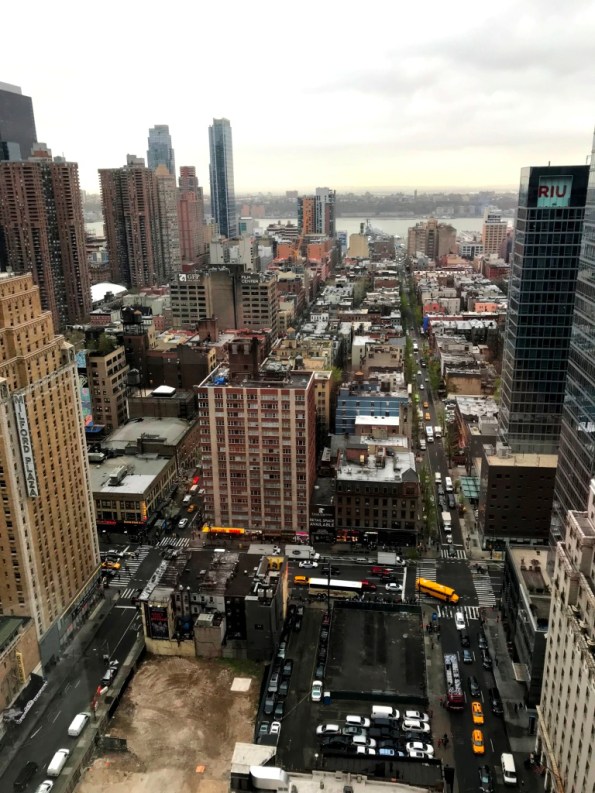
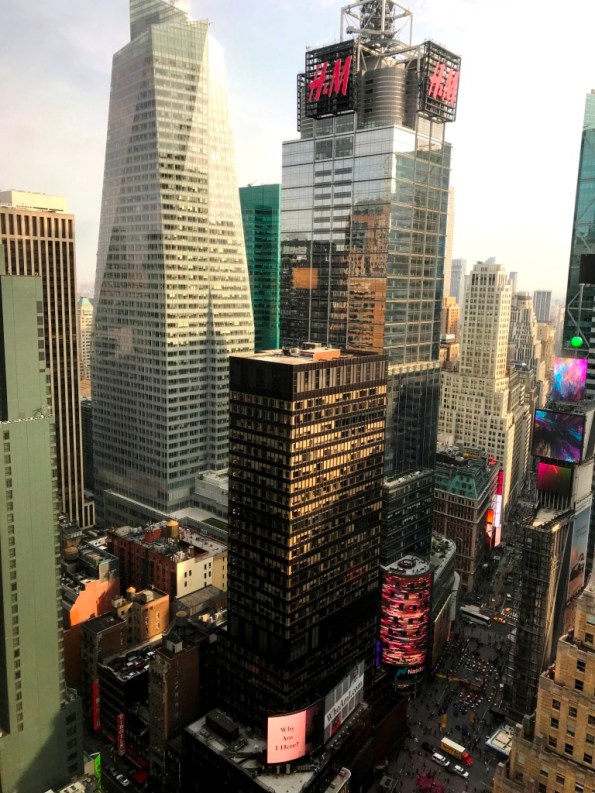
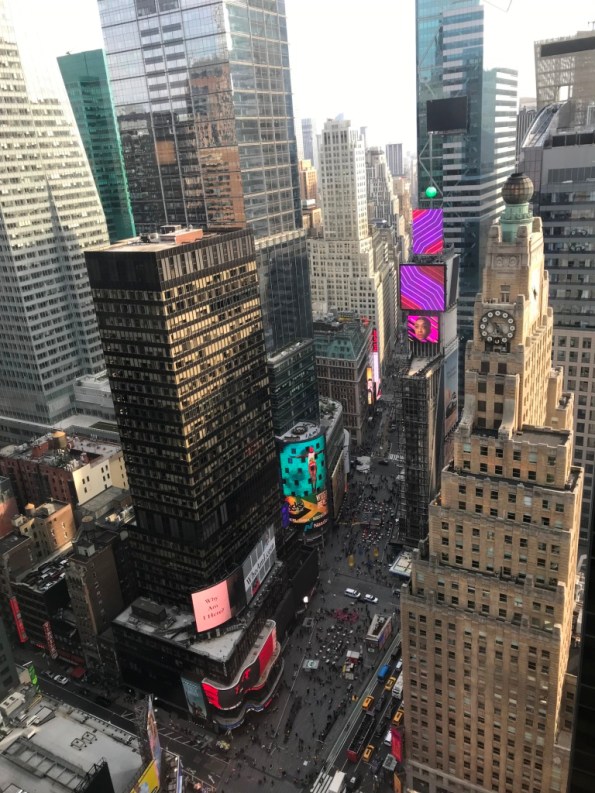
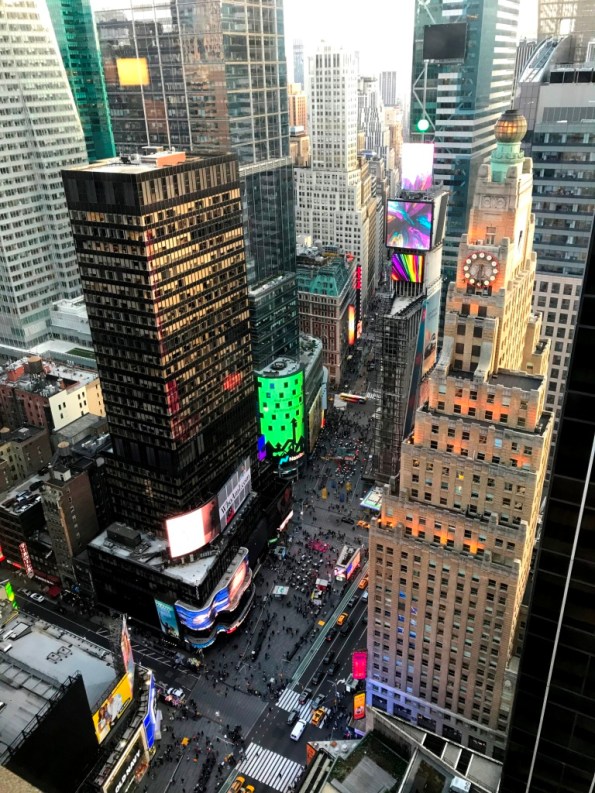
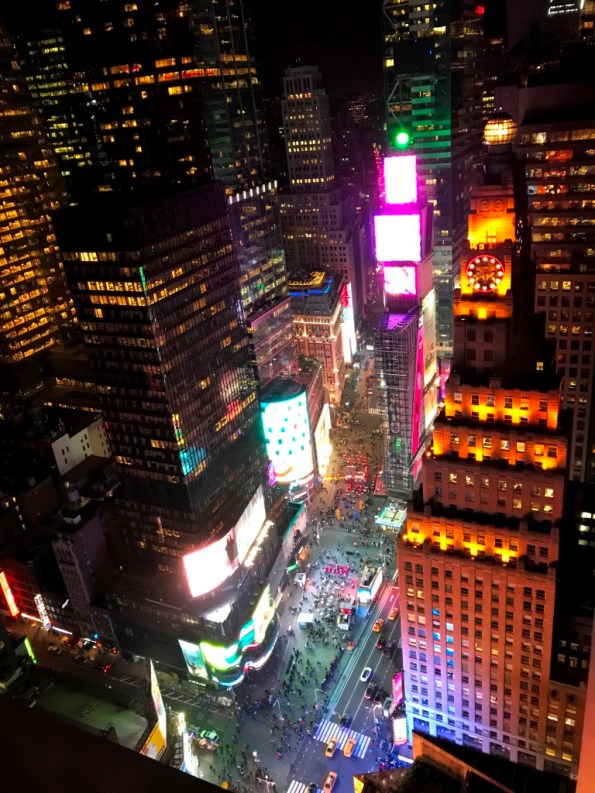
We decided to come over by train so we will not have to deal with the parking. After some deliberations, we decided to skip the most touristy things – city tour and the Broadway show, and just enjoy the City for what it is. Our mandatory program was short – Times Square, 9/11 Memorial, Jewish Heritage Musem and Central Park. Natural History Museum was also on the list, but with a bit of a lesser priority. With the hotel located right on the Times Square, the first requirement was easy – plus our upgraded room exceeded our expectations – we had the full view of the Times Square from the 45th floor, any second we wanted to see it – that alone made our vacation perfect.
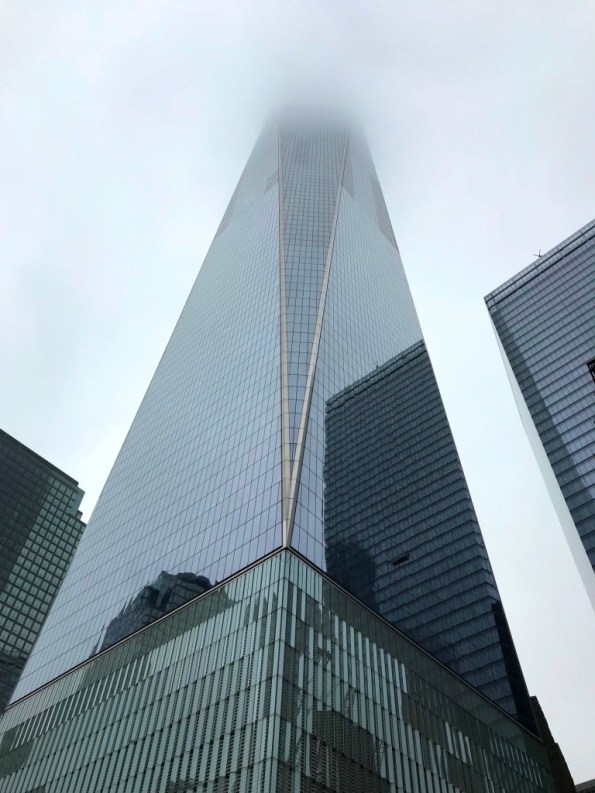
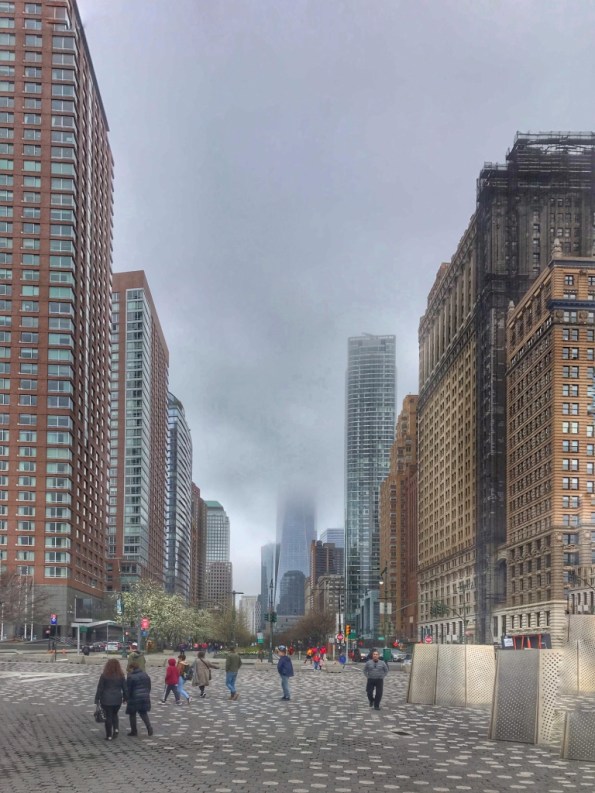
Despite the gloomy forecast, I have to say that the weather cooperated with us very well. The view of the World Trade Center building covered in the fog was rather unique, and overall gray weather was perfectly appropriate for the solemn mood of the 9/11 memorial and even Jewish Heritage Museum. And for the next day’s walk through Central Park we even had the sun coming out instead of the expected rain, so we really can’t complain about the weather at all. By the way – we made it to the Natural History Museum, but it seems that there were a lot (way too many) dinosaur fans in New York that day – the line to get into the museum to see T.Rex exhibition was stretching over the few of the neighboring streets, so we really decided to call it a day.
The fact that we stayed overnight in New York really changed the impression and perception of this vacation. Instead of fighting the traffic and crowds to get back home after dinner, the leisurely walk back to the hotel created a feeling of a real vacation, when you immerse into the life around you and lose the feeling of time. There was no feeling of the day trip, no feeling of being close to home – it was a real vacation, just somewhere in the world, in a place where time doesn’t exist and you don’t need to care about anything. We all really loved the experience of being a tourist almost in your hometown and will be looking forward to doing this again – in New York and not.
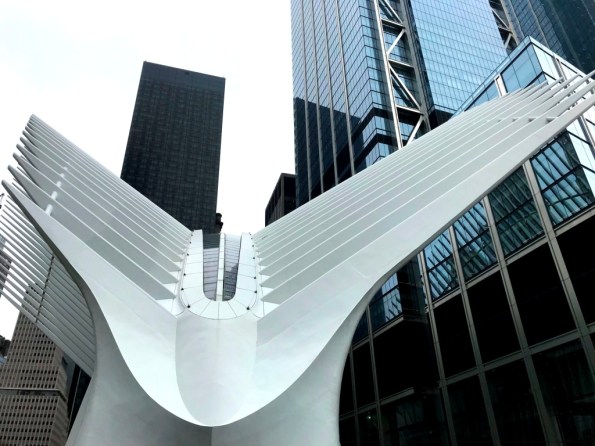
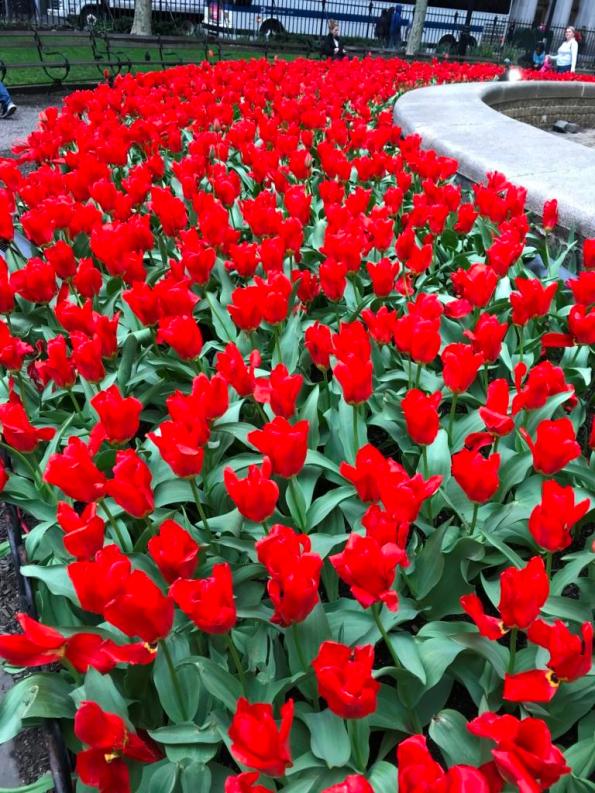
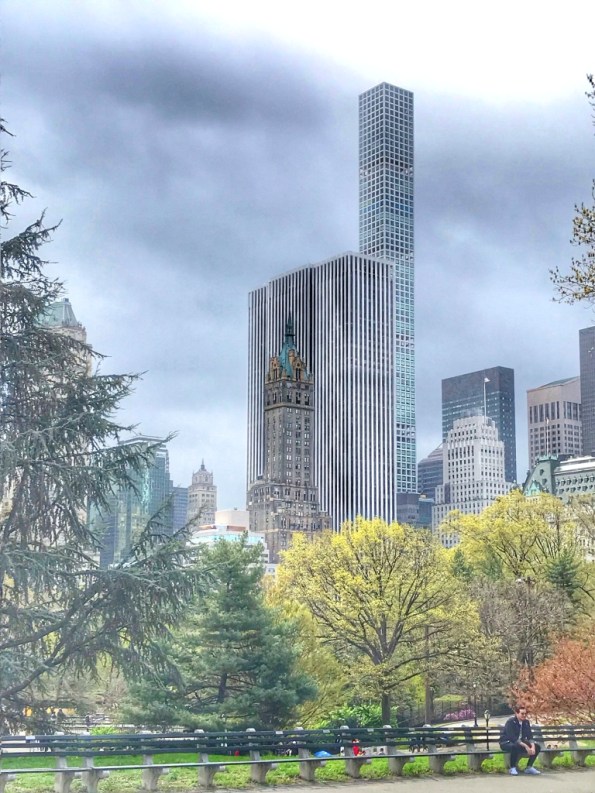
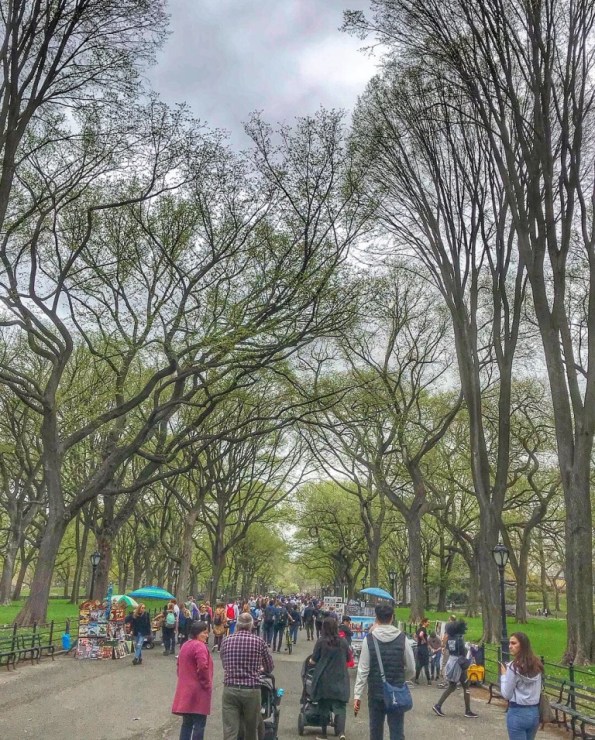
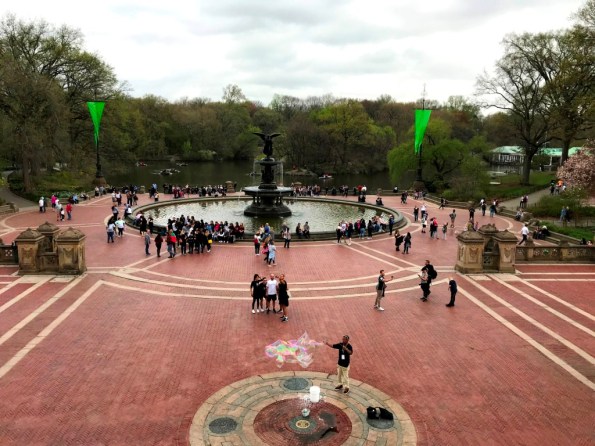
The only way I can share this experience with you is through the pictures. As I never know when to stop, here are some many pictures for you – definitely more than a few, but I’m only trying to share some of the moments of our [short] vacation. Hope you will enjoy them as much as I did while taking them. Cheers!
Lower Manhattan – The World Trade Center and around:
Somewhere in New York:
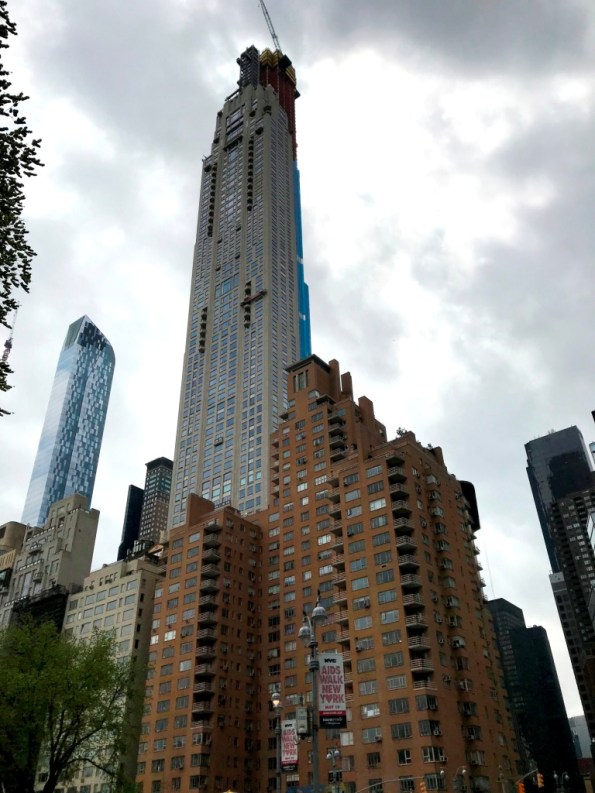

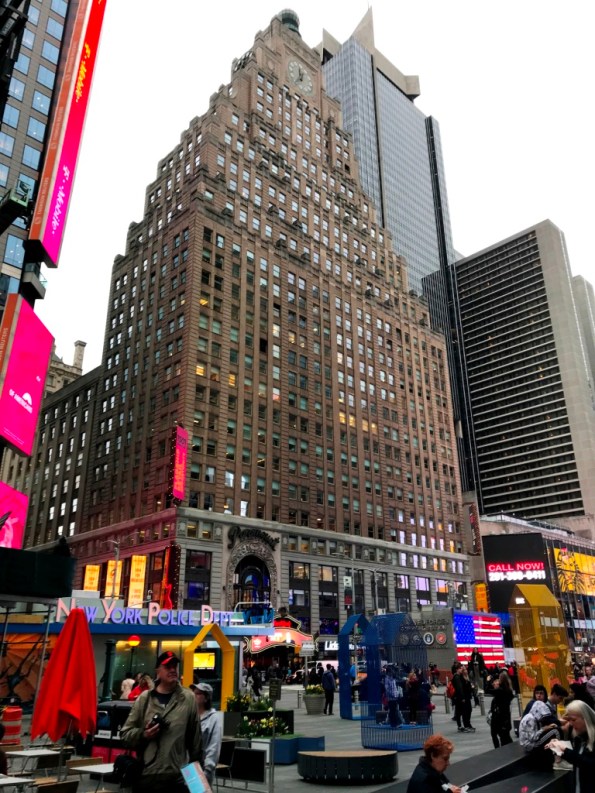
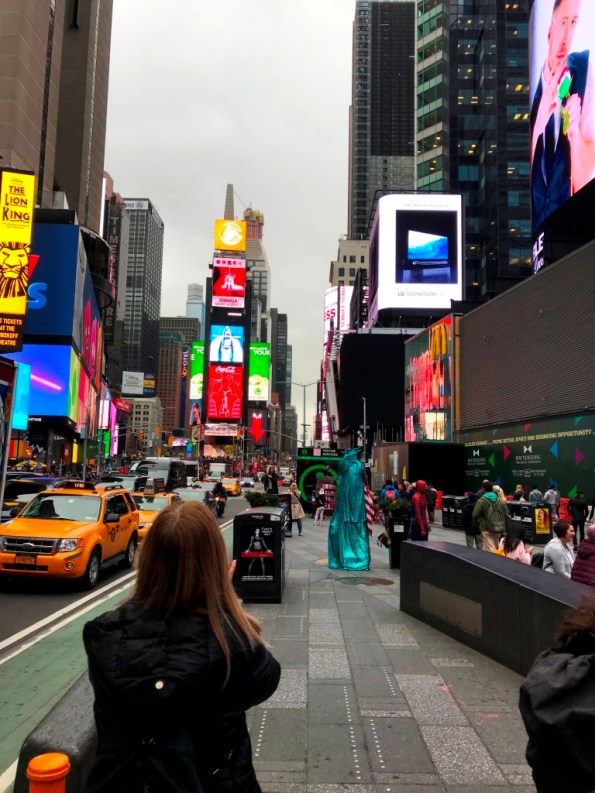
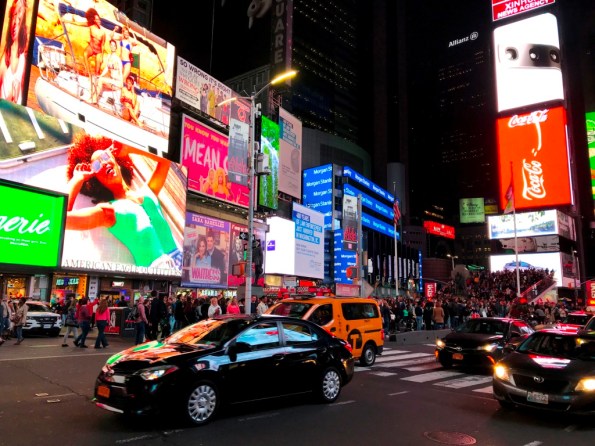
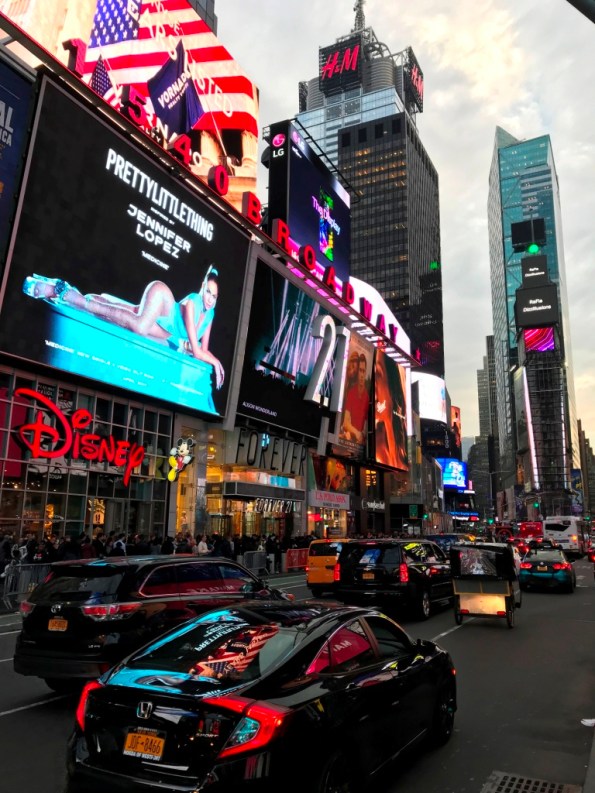
 Times Square – day, night, and around:

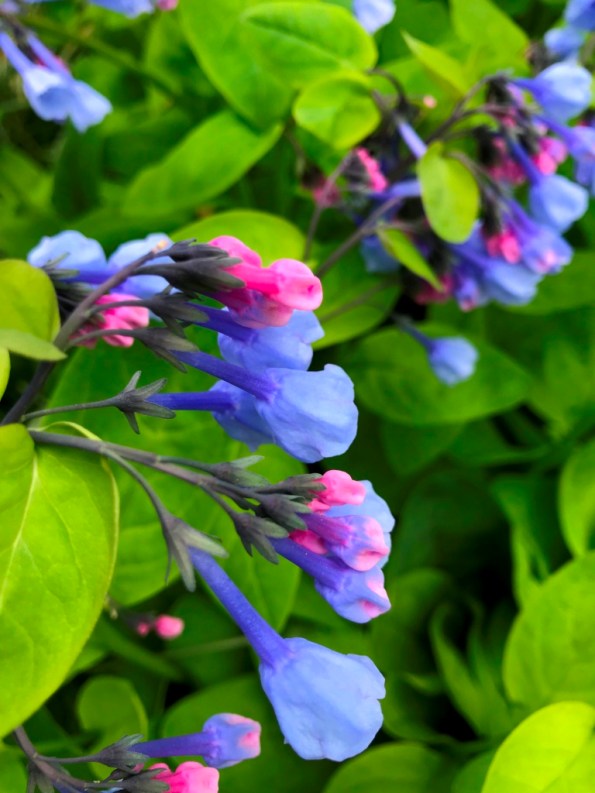
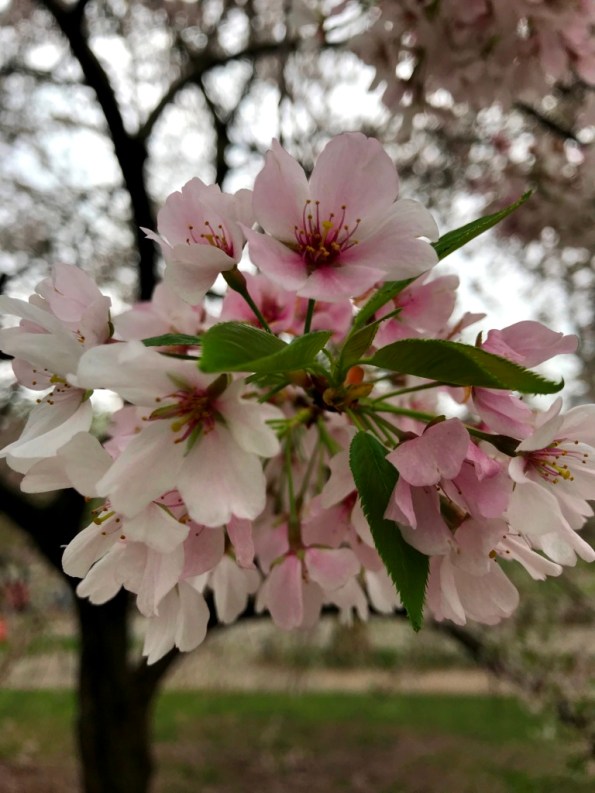
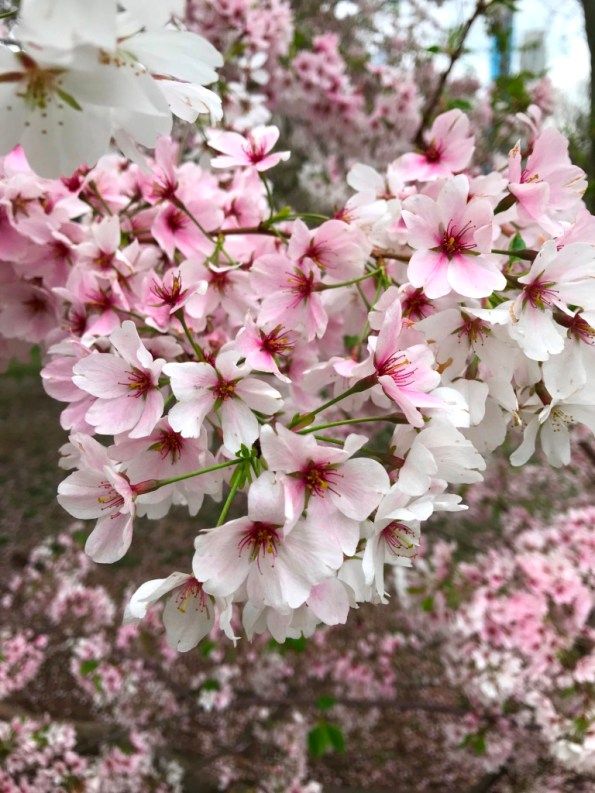
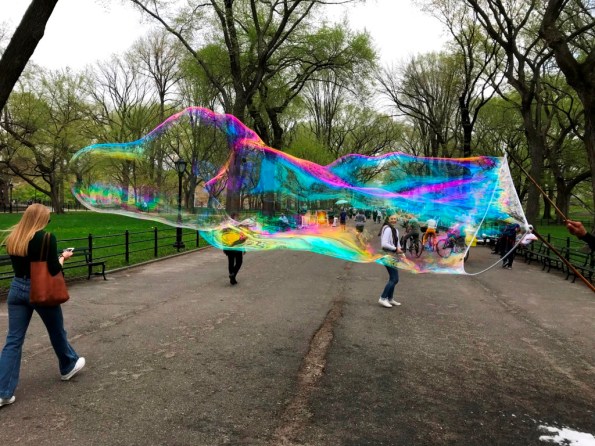
 Central Park:
Valentine’s Day Experiences
 Cooking is the ultimate expression of love. This is always true, but even more though on Valentine’s Day, as the whole holiday is all about love – the holiday which exists since about the 5th century – it is really fun to celebrate something so deeply rooted in history.
Our personal love story was simple – yet, probably, equally uncommon – the love at first sight. It took three days since the moment we saw each other for the first time until everything was decided. So you can imagine that Valentine’s Day was always an important holiday for us. At first, we tried to follow to common path, working hard to score coveted restaurant reservation – until the dinner at one of the most expensive, and supposedly, best Italian restaurants in Connecticut, which we left asking each other “what was that???”. That was the end of our “eating out” Valentine’s Day celebrations, and the beginning of the “eat in” tradition.
One of the advantages of “eat in” celebrations is a much better wine program. You don’t need to desperately comb through the pages of the wine list, finding that you can’t afford any of the wines by the bottle you want to drink, and common sense preventing you from getting any of the wines by the glass which can be classified as a “seemingly affordable rip off”. Instead, you can spend hours combing through your own wine shelves, looking for the bottles which you will deem worthy of a special celebration – and which will also work with the menu you have in mind.

Martinelli Syrah which you see in the picture was a backup wine in case anything will be wrong with the Pinot. Now it is back in the cellar, waiting for its turn.
Last year’s celebration was about steak and Cab – obviously, I couldn’t repeat myself, so the search was on to find an appropriate protein replacement. Somehow that resulted in the duck breast – and what wine does the duck breast call for? Of course, the Pinot Noir!
Before we talk Pinot we need to talk bubbles. Bubbles don’t have to exclusively narrow down to Champagne. Champagne is a wonderful sparkling wine, perfectly appropriate for any celebration – but the world of wine moved up tremendously over the past 15-20 years. I don’t have any stats to prove this objectively, but I have a feeling in the USA at least a third of all wineries if not half of them produce sparkling wine – if not for the wide distribution, then at least for the wine clubs and tasting room visitors.
I also have to say that ever since I visited the Franciacorta region in Lombardy, Italy, Franciacorta sparkling wines became my go-to choice of bubbles for any special celebrations. In my mind, Franciacorta wines are very consistent, and today, as they honed their production methods to perfection, this translates into the “you can’t go wrong with” Franciacorta wines in general. La Valle was one of my top highlights of that Franciacorta trip and the La Valle Rosé really hit the cord then – and it continues to do now. This 2011 La Valle Brut Rosé Franciacorta was superb – fine mousse, delicious strawberries on the nose with the hint of the toasted bread, and more strawberries on the palate – a perfect opener for our evening.
Now, the Pinot time. Similar to the bubbles, Pinot Noir also enjoys quite a universal appeal around the world nowadays. There some regions, however, which do a better job than the others – and California Russain River Valley is definitely one of them. I tried 2007 Charles Mara Pinot Noir for the first time back in 2010. It was silky smooth and powerful at the same time. I was so impressed with this wine that it became the top wine of the inaugural Talk-a-Vino Top Dozen Wines list. I still had a bottle of 2007, and I decided that it would be a perfect choice for our Valentine’s Day dinner – and the wine didn’t disappoint. Now, 9 years later, this 2007 Mara Laughlin Road Ranch Pinot Noir Russian River Valley became even more round and less “in your face”. Characteristic California Pinot plums and smoke on the nose, succulent dark fruit on the palate with a hint of violets, perfect acidity, perfect balance, lots and lots of pleasure. And it also worked perfectly with the duck.


Let’s talk about the duck. I had it a number of times before, either made by friends or at the restaurant – but duck is rarely my go-to dish. The form of duck I cooked before was either duck legs as part of the Cassoulet or the whole duck as part of the Turducken. I never attempted cooking the duck breast before, so obviously was concerned with the outcome. After studying a number of recipes, I was concerned even more, as a number of commentators complained about rendering duck inedible even after repeated attempts, so I was really not sure about my own success.
I don’t know if it was a quality of the ingredient, Moulard Duck Magret, which I got at our local Fairway Market, or the cast iron pan, a combination of the above, or the beginner’s luck, but the duck breast came out perfectly. I also made a Port (you saw it in the picture above) and berries reduction, which elevated the nicely gamey taste of the duck breast and was a bridge to connect it all to Mara Pinot Noir – all in all, a delicious dinner. Nevermind the paper plate in the picture – everything in life has a story, but this is not the story for this blog post.
There you go, my friends – not a timely share, but still an experience worth sharing. If you still remember, I’m curious to know how was your Valentine’s Day dinner. Cheers!
For The Love of Chowder – 2018 Edition
Blogging is all (mostly?) about traditions, isn’t it? I’m talking about topics, things or experiences we like to write about. If you blog for a while, you have a number of posts which can be called traditional, as they cover the same subject – yearly, monthly, weekly, daily? (ouch!). For sure it works this way for me – there is a number of experiences I like to talk about on the regular basis – as those experiences take place.
One of such experiences is the Chowdafest, a fall event dedicated to the humble (or not) soup, generally known as Chowder – if you want a bit of an education on what the chowder is, I can offer you the post I wrote after attending my first Chowdafest back in 2015, which provides a few details on the different types of chowders.
The 2018 event took place at around the usual time (Sunday, September 30th), at the usual place – Sherwood Island State Park in Westport, Connecticut. Even the weather was the usual – sunny, bright and not too cold. However, the summer and early fall in New England saw an incredible amount of rain, so the grounds were unusually wet and people had to be careful walking around.
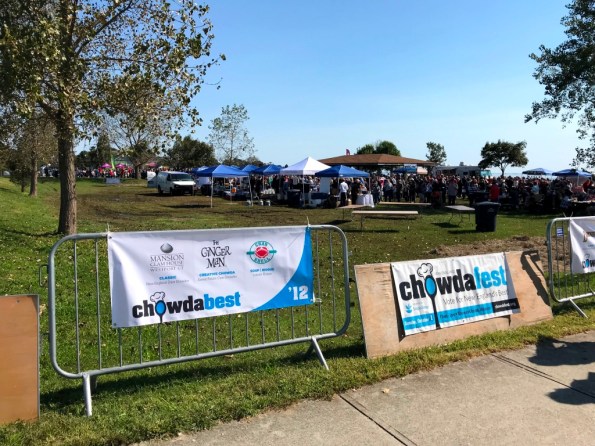

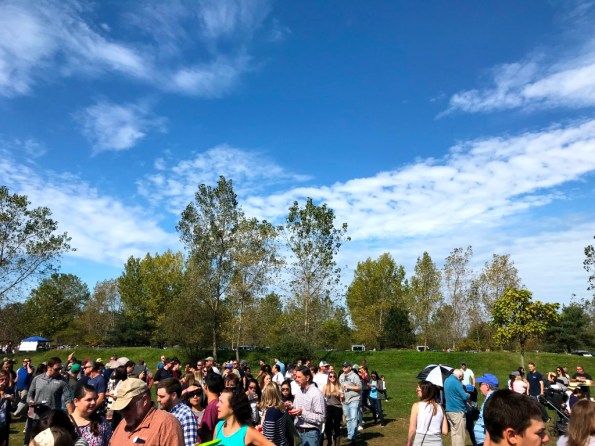
As we entered, all visitors were given a ballot and a pencil, to mark down their favorites. The back side of the ballot had a map of the event, as in addition to all the competitors, there were lots of vendors (sponsors) offering other tasty treats, so one didn’t have to survive on the chowder alone. Cabot Creamery, Harney & Sons Tea, Ocean Spray, Stop & Shop, Polar Beverages, and many others were serving Mexican and Italian food, ice cream, juice, tea, coffee, sparkling water – you had a lot of fun food options beyond chowder.


Same as last year, there were 5 categories were participants were competing for the title of “the best” – Classic New England Clam Chowder, Traditional Chowders (Manhattan/Rhode Island’s), Creative Chowder, Soup/Bisque, and Vegetarian. The participating restaurants this year represented states of Connecticut, Massachusetts, New Hampshire, New York, Rhode Island, Vermont, and Washington.


Obviously, I’m not going to give you much of a detailed report here about all the chowders I tasted, so here are my overall impressions:
- For the 4 years that I’m attending the event, I’m happy with the overall quality and variety. It is not boring and once I get out of the food coma at the end of the event, I’m instantly happy to think about next year’s Chowdafest.
- The overall level of booth decorations in 2018 was less than in the previous years. Many places would just have a serving station and maybe a recipe. It takes away a bit from the “Fest[ival]” experience. Hopefully, in 2019, we can go back to more festive booth settings.
- A few vendors run out of chowder/soup in the middle of the day. I saw one just pack up and leave, and another one saying “more soup is coming in 30 minutes” – not good for visitors, and really a bad plan for competitors – you can’t win by serving only half of the visitors.


- I’m still puzzled how Pike’s Place from Seattle always wins the New England Clam Chowder category – I think it is a combination of service – they carry their chowder around so people don’t have to wait in line, and intimidation – they display all their trophies from the past years, and people automatically think “ahh, they must be the best with so many awards” (works the same way as multiple medal pictures on the wine bottles). To me, their chowder is not bad, but for instance, I preferred the one from 250 Market far more than Pike’s Place. Oh well, the people have spoken…
- I’m happy that at least in one category – Vegetarian – my top choice matched the people’s choice. Truffle Mushroom Bisque from Old Post Tavern in Fairfield, CT was delicious, and it won the category.
- I’m also happy that Drunkin Pumpkin Seafood Chowder from Our House Bistro in Winooski VT took the top spot in Creative Chowder category – their soups are always good, the presentation is excellent with lots of “self-serve” condiments, and the booth is always a pleasure to look at.


- For the first time, I saw the competition trophies. At first, I didn’t understand the collection of the old ship memorabilia in a middle of the field – until the later when I saw the plaques and realized that those were actually the trophies.
- Believe it or not, but in the Chowdafest 2018, my favorite soup was not really a chowder at all – it was a Curried Chicken Chowder from Hale & Hearty from Boston, MA – the only soup I gave the top 10.5 rating.


Here is the list of winners in the 5 categories we mentioned before (Classic New England Clam Chowder, Traditional Chowders (Manhattan/Rhode Island’s), Creative Chowder, Soup/Bisque, Vegetarian). For the more detailed list, which includes 2nd and 3rd place winners, please use this link.
Pike Place Chowder
Our House Bistro
Geronimo Tequila Bar & Southwest Grill
Dunville’s
Old Post Tavern
As usual, let me leave you with a copy of my ballot – just to prove that I take the Chowdafest competition very seriously 🙂
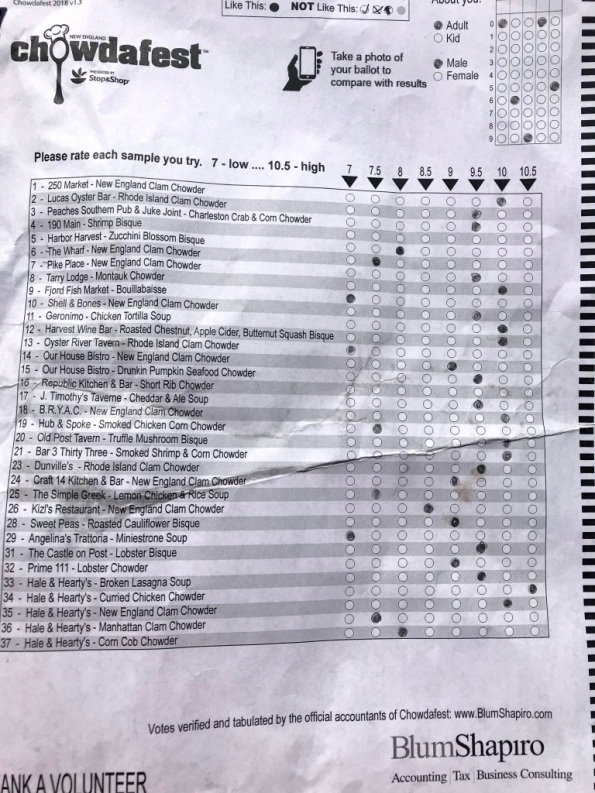 You can already mark your calendars for Sunday, October 6th, 2019 – the 12th annual Chowdafest competition.
Before we part, you might want to check out Chowdafest’s sister event – the Great Mac & Chili Challenge, taking place this Sunday, November 4th at 11 AM at the same Sherwood Island State Park in Westport, CT. The weather should be great! Cheers!
Last Bottle Sign Up ($10 credit)




 Talk-A-Vino