Archive
Trapiche: Beautiful Perfection
Over my lifespan as a wine lover and especially, as a blogger, I tasted tens of thousands of wines. This is not a bragging statement, but purely statistical. Also, out of all those wines, every year a few hundred wines are covered in this blog.
Out of all these wines, there are probably 50 or so that are near and dear to my heart, These are my reference wines. These are the wines I would reach out to illustrate the comparison or simply deliver the message. For example, Bogle Petite Sirah is my favorite example of a budget-priced (typically around $9.99), delicious, consistently drinkable wine. Of course, I occasionally come across wines which equally or even tastier and cost even less, but Bogle is still the wine that is ingrained in my memory, and hence it is my ready-to-use reference.
I always think that all of my reference wines are already covered on the blog – 50-60 wines is not a high number spread out over the 12 years of blogging, and yet from time to time I engage in a futile search for the articles about some of these reference wines, only to say to myself “really?”.
When it comes to Argentinian Malbec, my reference wine is Trapiche Broquel Malbec. Malbec definitely came of age lately, especially with a dramatic increase in popularity over the last few years. While I tasted lots and lots of absolutely delicious renditions of Argentinian Malbec, it is still generally not my go-to wine. But if presented with the Trapiche Broquel Malbec, nobody would need to ask me twice to have a glass or a three.
There are 145 posts in this blog that include the word “Malbec” (not including the one you are reading now). None of these posts talk about my reference wine, Trapiche Broquel Malbec. Well, this is not entirely true – in a few posts, Trapiche Broquel Malbec is used precisely as I presented it here – as a reference. Nevertheless, there are no posts discussing any particular vintages of this wine or presenting any tasting notes.
And so will not be the post you are reading at the moment. But – at least this post is about two of the Trapiche wines I had an opportunity to taste (but none of them are Broquel Malbec).
It is so interesting when you think that you know something, and then it appears that no, you really don’t. I knew the Trapiche name and had a number of their wines over the years, but I had no idea that Trapiche is the biggest winery in Argentina. Founded in 1883, the winery stayed in the family for a long time, transitioning from father to son, until it was acquired by the Grupo Peñaflor, one of the 10 largest wine producers in the world, exporting its wines to more than 90 countries.

Trapiche vineyards span throughout Mendoza, the most famous winemaking region in Argentina from the Andes mountains to the Atlantic ocean around the town of Chapadmalal. Trapiche is using biodynamic farming methods and is very much focused on farmland diversity and sustainability. Trapiche’s hard work and dedication didn’t go unnoticed, acknowledged by multiple international awards, such as the “50 Most Admired Wine Brands” selection by Dinks International (the only winery in Argentian to get on that list 5 times over 5 different vintages), or Wine Enthusiast’s “The New World Winery of the Year” in 2019.
I had two bottles of Trapiche wines to try – 2020 Trapiche Broquel Cabernet Sauvignon Mendoza (14% ABV, $14.99, 100% Cabernet Sauvignon, 14 months in oak barrels) and 2019 Trapiche Gran Medalla Malbec Mendoza (14.5% ABV, $24.99, 100% Malbec, 18 months in new French oak, 1 year in the bottle). I have to tell you that I opened the bottles not without trepidation. I never had either one of these wines, I really like Broquel Malbec, and I really wanted to avoid disappointment…
First I opened Cabernet Sauvignon. The initial nose was not the one typical of the Cabernet Sauvignon – it did smell like a typical Argentinian Malbec would. I wanted to compare the nose side by side, so I quickly opened and poured in the glass the Malbec. The smell was practically identical – the vanilla, warm herbs, plums, with the Malbec bottle offering a bit more intensity. While I appreciate this nose on Malbec, I like the Cabernet Sauvignon to be a bit more traditional.
But the palate of the Cabernet Sauvignon didn’t disappoint, showing cassis with a wallop of dark cherries, a touch of bell peppers, and eucalyptus. As the wine was opening up, it transitioned through a few stages, making cassis more explicit and then adding up the level of acidity on the finish. A very good rendition with an excellent QPR (Drinkability: 8-).
The Gran Medalla Malbec was produced to commemorate the 125th anniversary of the winery, and it is sourced from the best Trapiche vineyard parcels in Uco Valley. And boy, did this wine delivered… This was Malbec like no other. The was the wine that stops you in your tracks; you want the time to stop so you can enjoy that perfect flavor in your mouth endlessly. The wine had the perfect amount of ripe, succulent dark cherries, sweet oak, and sage, weaved around a perfect core of smooth tannins, delivering layers upon layers of pure pleasure. This was the wine that you always dream of drinking, but it is so hard to find. Thinking about the $25 suggested retail price, this wine has great QPR and it is literally a steal if you will be able to find it. (Drinkability: 9-).
There you are, my friends – a case of wine’s beautiful perfection. Which also doesn’t need you to break the bank. Cheers!
2 Regions, 3 Glasses, 1 Wine Geek
The assignment was simple. Compare 6 Cabernet Sauvignon wines from 2 famous winemaking regions in Chile. Find differences. decide on a favorite.
As with any assignment, let’s start with the theory.
Cabernet Sauvignon is unquestionably a king of Chilean wines – it is the best-known Chilean wine worldwide and it is the most widely planted red grape variety in Chile. It accounts for about 20%+ of all vineyard plantings in Chile, covering an area of about 99,000 acres, stretching through the entire country from north to south. At the same time, 97% of the Cabernet Sauvignon plantings are located in the Central Valley, spread between O’Higgins, Maule, and Metropolitan Region.
Narrowing it down to the wine-producing DOs, we are looking at the Maipo Valley and Colchagua Valley, two of the best-known Cabernet Sauvignon areas in Chile. These are also the two regions that are the subject of our assignment.
Maipo Valley is one of the oldest winemaking regions in Chile, with its terroir shaped by the Maipo River, which begins at the Maipo volcano, creating a patchwork of valleys at the elevation of 2,500 feet above sea level. Some of the areas in Maipo Valley see a minimal number of sunny days required for the red grapes to fully ripen, with a climate somewhat similar to Bordeaux.
Colchagua Valley lies about 80 miles south of the city of Santiago. Parts of the valley are crisscrossed by the Tinguinirica River, taking its roots from the volcano crater in the Andes, and descending from about 2,000 feet to the 360 feet of elevation above sea level. Colchagua Valley generally offers much warmer daily temperatures compared to the Maipo Valley.
Here are some of the views of the beautiful regions:
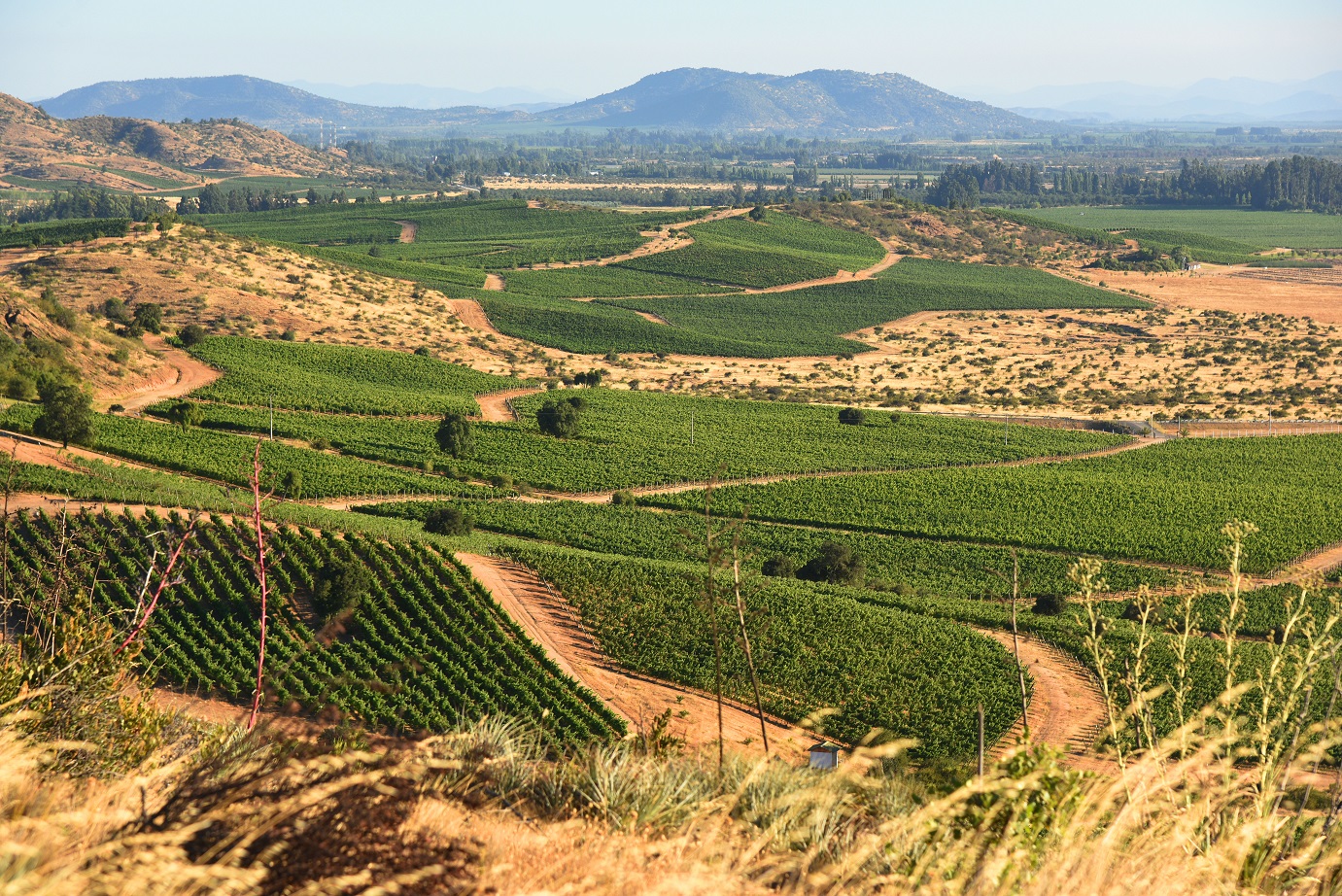
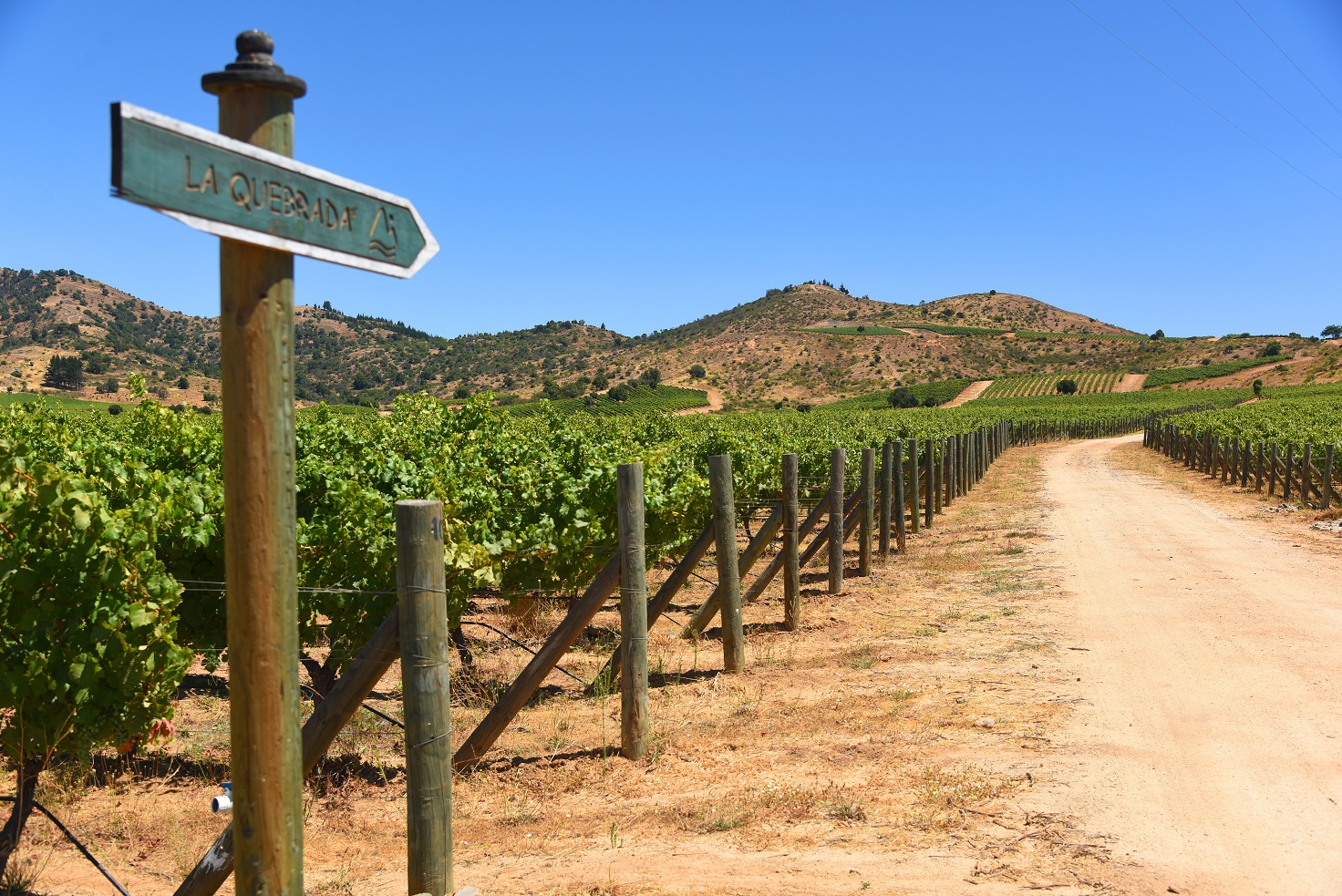
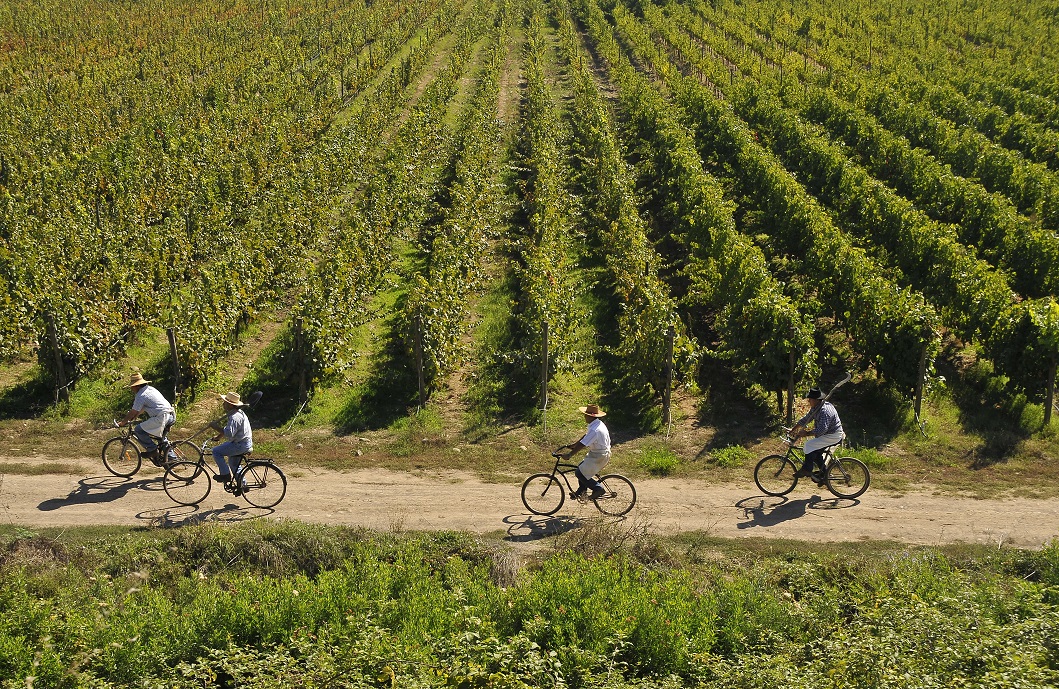
I’m purposefully avoiding descending into the discussion about the different soil types throughout both regions but of course, alluvial soils, colluvial soils, gravel, clay are all intermixed around both regions. I don’t believe I can intelligently speak to the effect of a given soil type as it comes to the resulting taste profile of the wine, but our main difference between the wines from the two regions should be driven by the warmer versus cooler climate and some differences in the elevation.
I hope this is enough of the theory and it is time to get to practice – the lab portion of our assignment.
This is where the inner geek came out guns blazing – and this is where everything all of a sudden became muddy and complicated.
I decided that the challenge of comparing the 6 wines is insufficient, and to make things more fun, I decided to was possessed to try each wine from three different glasses: Glass 1- Riedel Universal tasting glass (this is the one typically offered at all of the wine tastings), Glass 2 – Chef & Sommelier Open’Up glass, one of most aesthetically pleasing glasses for the daily drinking, and Glass 3 – Riedel Radical Cabernet glass (my favorite glass for the Bordeaux varieties).
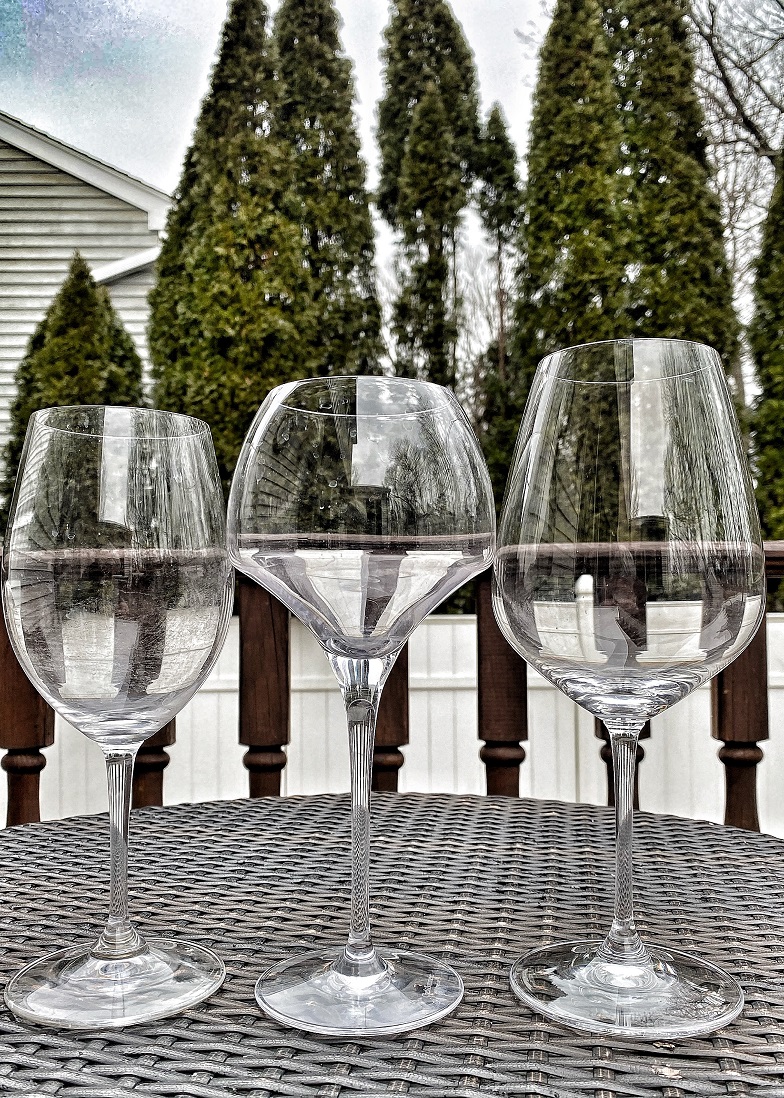
The wines I tasted all come from well-known producers. I was familiar with some prior to this tasting (Los Vascos, TerraNoble, Maquis) and I had a lot of Los Vascos and TerraNoble Cabernet wines in the past. Regardless, this was quite a respectful selection of the wines, expectedly illustrative to represent the two regions. Three of the wines were 100% Cabernet Sauvignon, and 3 had Cabernet Sauvignon as a dominant component.
To explain in more detail what I did: on the first day, I poured each one of the 6 wines into the 3 glasses – non-blind, one by one. I then tasted each wine from those 3 glasses – you will see the notes below, describing my perception of the same wine in each of the 3 glasses. The glasses had their effect, even though Radical Cab and Open’Up glasses offered mostly similar experiences. Open’Up glass required the bottom section to be sufficiently filled or the nose of the wine was becoming lost. All of the second and third day tastings were done only using the Universal tasting glass. Below you can see all of the tasting notes, from which it is very easy to conclude that I was unable to come to any meaningful conclusions and find any meaningful, region-conforming differences between the wines.
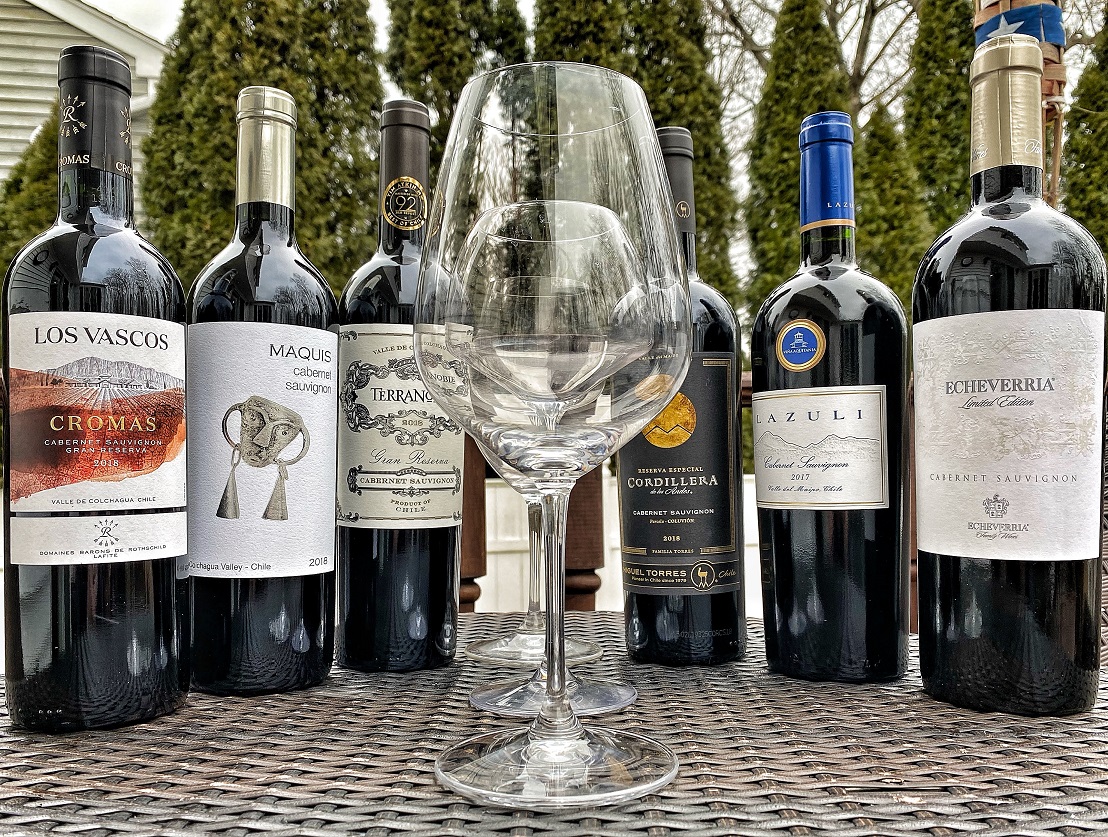
Here we go:
Team Maipo Valley:
2017 Lázuli Cabernet Sauvignon Valle del Maipo (14.5 ABV, $45, 100% Cabernet Sauvignon)
Garnet
Glass 1: dark fruit, concentrated, iodine, forest underbrush, pyrazine
Interesting. Quite restrained. Not a lot going on.
Glass 2: much less expressive, just a hint of pyrazine
It is showing better. No idea how. Crunchy berry, soft tannins, still not very expressive
Glass 3: dark fruit, more focused than glass 1, a hint of bell pepper
Similar to glass 2. Dark fruit, baking spices, lots of minerality. Not very much Caberneish if you ask me.
Day 2: not good
Day 3: Fruit showed up. Fresh berries and eucalyptus. Is this a Cab? Not sure. Is it drinkable? Sure, on the third day.
2018 Miguel Torres Cordillera Cabernet Sauvignon Reserva Especial de Les Andes Valle de Maipo (14% ABV, $20, 100% Cabernet Sauvignon)
Concentrated ruby with bright hues
Glass 1: very similar presentation to the first wine. Dark fruit, a hint of bell pepper, very distant hint, a touch of eucalyptus.
Definitely a Cabernet profile, more explicit than the previous wine. Eucalyptus, cassis, bell pepper practically non-existent.
Glass 2: this glass requires much higher pour to get to the aromatics.
The wine appears more refined and elegant on the nose than glass 1, more focused on eucalyptus and cassis.
Delicious, earthy cab. Good acidity, cassis, earthy and restrained.
Glass 3: interesting. Almost gets to the barnyard space. Definitely more earthy than glass 2.
The best experience. Dark fruit, cassis, pencil shavings, crisp tart finish.
Day 2: good
Day 3: excellent. Dark fruit, eucalyptus. Round tannins, good structure, dark and supple.
2016 Echeverría Cabernet Sauvignon Limited Edition Maipo Valley (14% ABV, $25, 85% Cabernet Sauvignon, 10% Syrah, 5% Carménère)
Dark Garnet
Glass 1: very concentrated. Dark fruit, sapidity, earthiness, a hint of eucalyptus. Interestingly enough, all 3 wines so far are really similar.
The nice initial appearance of the fruit is instantly replaced by tannins. Serious French Oak tannins, front of the mouth is locked.
Glass 2: a much more elegant appearance than Glass 1. A hint of eucalyptus and bell pepper.
Fruitier than the previous 2 wines, nice load of dark berries, and then it is all tannins. Again, the wine appears to be more elegant.
Glass 3: similarly elegant to glass 2. Eucalyptus, bell pepper, and a touch of black pepper.
Berries, eucalyptus, and tannins. Should be outstanding with the steak.
Day 2: Excellent
Day 3: very good, open fruit – but not very much of the cab? I liked it more on the day 2
Overall notes: all 3 wines are very similar on the nose, showing differently on the palate. Earthy, concentrated wines. All need time to open.


Now, team Colchagua Valley:
2018 Maquis Cabernet Sauvignon Gran Reserva Colchagua Valley (14% ABV, $20, 90% Cabernet Sauvignon, 6% Cabernet Franc, 3% Carmenere, 1% Petit Verdot)
Garnet
Glass 1: bright and clean aromatics, cassis, eucalyptus, a hint of bell pepper
Plums, a touch of cherries, not a textbook Cabernet Sauvignon
Glass 2: interesting. Volcanic undertones, gunflint, almost a hint of sulfur, fresh crisp berries
Better showing, brighter fruit, some bitter undertones appeared (whole cluster?)
Glass 3: somewhat similar to the glass 2, but a bit more restrained
Amazing how much glass matters. This is almost at the expected level of Cabernet Sauvignon – a hint of cassis, mint. Still very restrained.
I’m so confused that I had to wash the glass.
Re-taste: it is not bad, but didn’t make a difference. Still, dry restrained, with some bitter notes on the finish.
Day 2: tight and closed
Day 3: definitely better. Bitter notes are gone. But the whole presentation is plum/cherry, not so much of the Cab Sauvignon
2018 Los Vascos Cromas Cabernet Sauvignon Gran Reserva Colchagua Valley (14.5% ABV, $22, 85% Cabernet Sauvignon, 10% Syrah, 5% Carmenere)
Concentrated ruby
Glass 1: dark berries, a hint of cassis, vanilla, bell pepper might be a product of my imagination
Delicious. Fresh, open, clean, dark berries, cassis, bell pepper, eucalyptus. A pretty classic cab if you ask me. Best of tasting so far.
Glass 2: Cassis and mint, medium intensity
Delicious. Very similar to glass 1, somehow with a bit more intensity of the flavors.
Glass 3: very restrained, cassis, bell pepper, a touch of tobacco
Delicious. Exactly as two previous glasses. Happy to drink every day.
Day 2: not good. Tight, closed.
Day 3: lots of tobacco and smoke on the nose. Dark fruit, borderline bitter. I don’t get this wine
2018 TerraNoble Cabernet Sauvignon Gran Reserva Valle de Colchagua (14% ABV, $20, 100% Cabernet Sauvignon)
Garnet color
Glass 1: dark berries, eucalyptus
Delicious. Open, bright, good acidity, ripe fruit, not necessarily a textbook cab, but fresh and delicious.
Glass 2: dark berries, sapidity, earthy, a hint of bell pepper
Fresh, delicious, crisp berries, a touch of cherries, a bit of dark chocolate.
Glass 3: a hint of bell pepper, dark fruit, earthy
Bright, open, good structure of tannins. A cab? Maybe…
Day 2: good
Day 3: beautiful, supple, good tannins, good structure, open fruit, good finish.
On the day 2, my preferences were with these three wines:
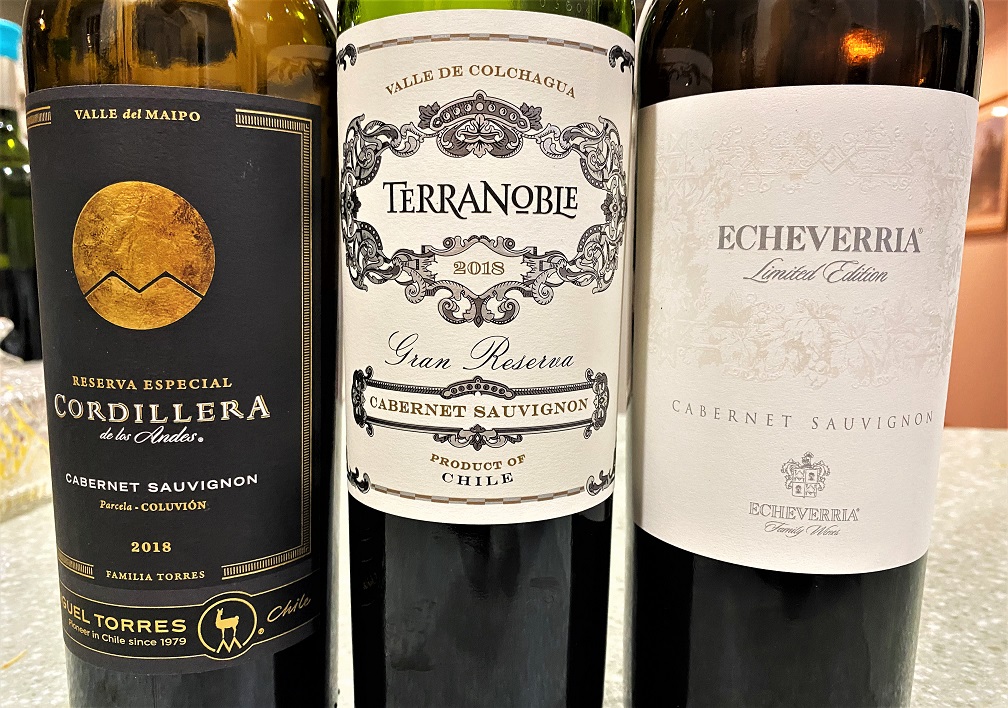
And then there were two. On the third day, I had two wines as my favorites – and they represented two regions.
For the final decision – Torres versus TerraNoble.
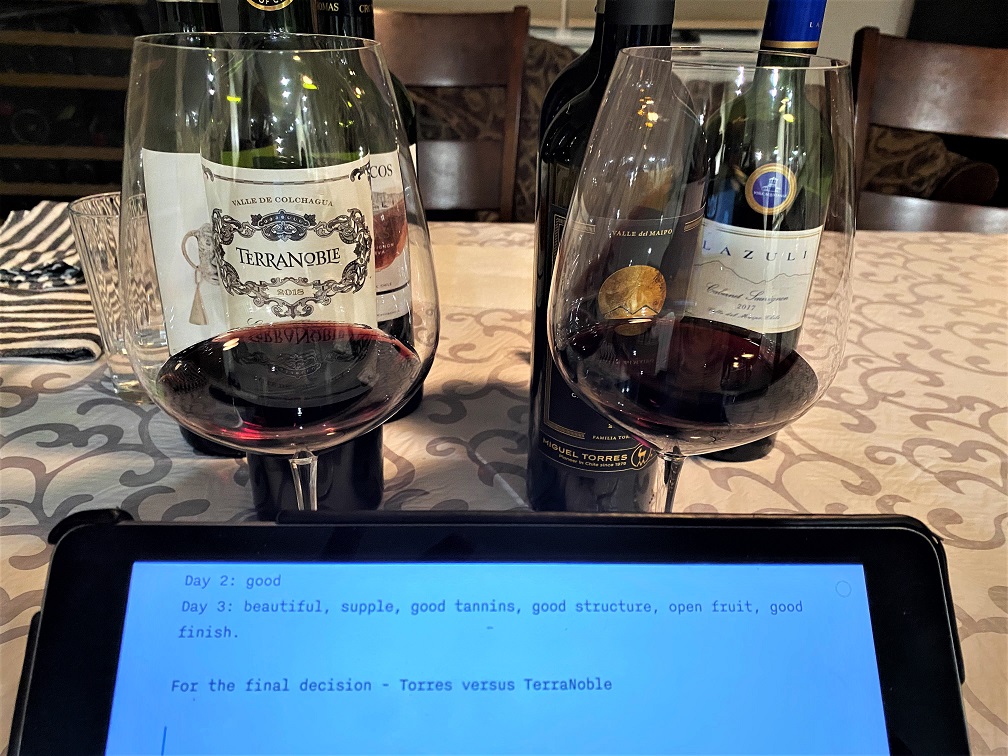
Wine geek at work
Nose: advantage Torres – dark chocolate, a hint of bell pepper. TerraNoble mostly closed
Palate: slight advantage Torres – better structure and better precision. Dark and concentrated. Will continue improving.
The winner: 2018 Miguel Torres Cordillera Cabernet Sauvignon Reserva Especial de Les Andes Valle de Maipo
So we can conclude that Maipo Valley won this strange competition, at least with a margin of error.
The assignment is complete. So what did we learn?
- Don’t play with your glasses, unless this is actually a goal of your exercise. Wine glasses matter and wine glasses
canwill confuse you. - Hey, wine glass matters.
- I probably should’ve done the blind tasting instead
- Chilean Cabs need time. Practically all showed better on the second day.
- I was unable to find the real differences between Colchagua and Maipo wines
Oh well. Play with your wine. Have fun. One way or the other, experience is still an experience, and as long as you desire, there is always something to learn.
Do you have a favorite Chilean Cabernet Sauvignon? Care to share? Cheers!
A Few Days In Seattle
 You know how you can look at something but not see it? Or think that you know something but really not knowing it at all?
I’m sure I don’t make much sense, but let me try explaining it better. I had been visiting Seattle for many years now, considering that Seattle had been a high-tech hub for ages. Seattle, Bellevue, Redmond, space needle, Pike’s Place. So in my mind, I was sure that I was well familiar with Seattle and all it has to offer to the visitors. I knew that in Pike’s Place there is a famous Russian-style eatery, Piroshky Piroshky, and that Pike’s Place Chowder, the winner of all of the New England Chowdafest competitions is also coming from Seattle. But turns out that lots of it was the knowledge, but not the experience. I knew that these places exist, but I actually never experienced them firsthand.
Until now.
I visited Seattle to attend a conference. That conference was actually supposed to take place 2 years ago, but as you are all acutely aware that happened to be the time that never was… The event was hosted by Amazon at their downtown offices, thus I guess for the first time I actually stayed in downtown Seattle and had a little bit of time to explore the city – and gain firsthand experience.
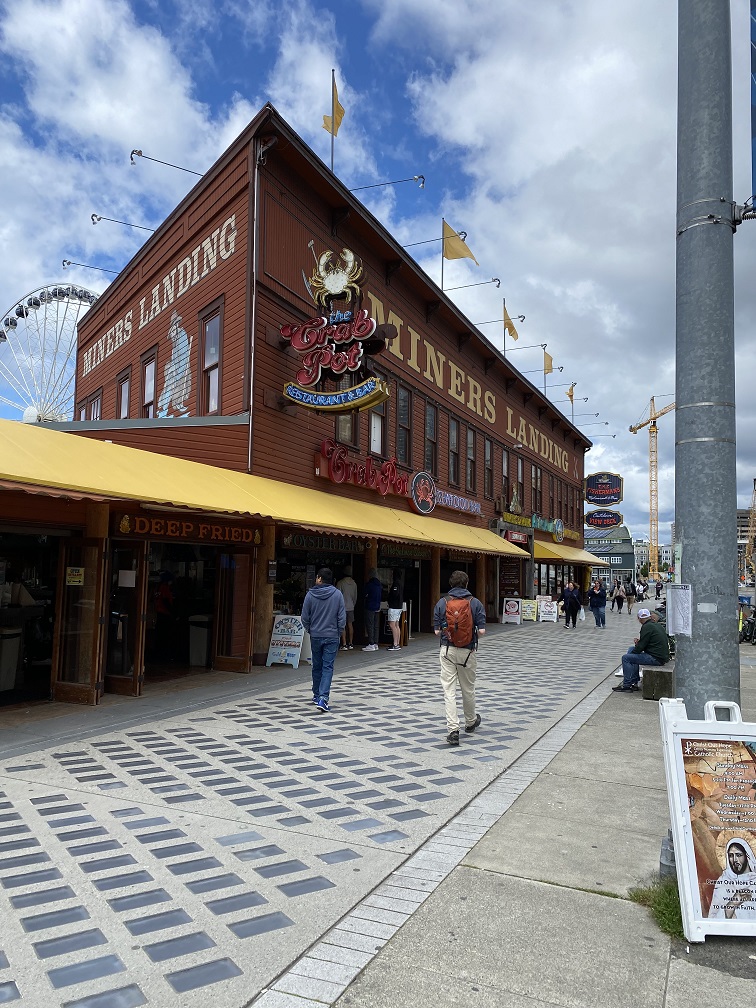
A picture worth a thousand words. So below you will see many, many thousands of words – in the form of the pictures of downtown, Pike’s Place, and the seaside.













The original Starbucks at Pike’s Place
Now, a few more words about the food experiences.


Piroshky Piroshky had been around for 30 years, and it is definitely one of the staples of the Pike’s Place market, always adorned with a line of hungry guests. I was lucky as I walked up to the door because for some reason there was literally no line – or I simply was a jerk and cut people off without knowing. Either way, I tried two Piroshky, one with salmon, and one with beef and onion (the selection there is quite substantial, including sweets and vegan concoctions, but all the Piroshky are rather large, so there is a limit to how many you can have). Both were tasty, but I wouldn’t say that I was blown away. I would be happy to try them again but it is not something I would crave.
After trying to walk off all some of the calories of Piroshky I came across the Pike’s Place Chowder. I had an image of a nice-looking restaurant in my head, as Pike’s Place Chowder always competed in Chowdafest against actual restaurants – but the place was rather a “hole in the wall” style. Well, “hole in the wall” is synonymous with tasty food more often than not.
I never thought of it, but walking around Pike’s Place and looking at what is offered in all of the numerous eateries I was surprised by the similarities of the food offerings with what I would find on a typical visit to Newport or on Cape Cod, the quintessential New England – fried seafood of all sorts, fried oysters, clams, shrimp, scallops, fish, and yada yada yada. So the coast is a coast, whether the east or the west. Taking this revelation into account, it is not surprising that New England clam chowder was offered pretty much everywhere – and of course, it shouldn’t be surprising that Pike’s Place Chowder can successfully compete at the Chowdafest in New England.


Let’s go back to the Pike’s Place Chowder. The eatery also offers a full variety of seafood, fried and not. But as their menu boasts 8 or so different types of chowders, that is what I was interested in trying. Luckily, the restaurant offers sample packs, so I went for the 4 samples pack, as I was by myself and there is a limit to the amount of New England clam chowder one can consume (especially when two Pirozhki are still occupying the majority of the available stomach space). Another option was 8 samples pack, but that would be a waste of money and food. I decided to get New England clam chowder, Smoked Salmon chowder, Seared Clams chowder, and Market chowder (whatever the chef feels like on a given day). I got the sample pack to go for two reasons – there was absolutely no space to sit, and I still needed to lose at least 5–10 calories, so a walk to the hotel, albeit short, seemed like a good idea.
Remembering my Chowdafest experiences, Pike’s Place Chowder was never my top favorite, and nevertheless, for many years that I attended the Chowdafest, they have always won the New England Clam Chowder category. I only have two explanations for that phenomenon. Factor 1 – intimidation. They always bring a full display of medals to the competition, and when people see it, they are instantly inclined not to argue with success. I’m absolutely positive that same as with the wine if the tasting would be done blind, the results would be totally different. Factor 2 – customer service. At the Chowdafest, there is always a long line to each vendor’s stand. Pike’s Place always brings enough people to be able to carry their chowders around so the people wouldn’t have to wait in line.
See, I got really on a tangent here. As I got to my hotel room and took a first sip of the classic New England clam chowder, my first thought was “it’s okay, but this is not great” – hence the reminiscence on the subject of the Chowdafest. I can name a bunch of clam chowders (including the one which I make – yep, I have the nerve, I know) which I would unquestionably prefer – Grand Central Oyster’s Bar, Rory’s (a local restaurant in Darien, CT, always serving chowder with a tiny bottle of Sherry), and I’m sure many others. All four chowders were fun to try, with Seared Scallop chowder being my favorite. However same as with Piroshky Piroshky, I can eat it again, but that wouldn’t be something I would crave.
Now, to complete my culinary escapades in Seattle, here is one more, now truly unique experience.
I love the concept of “food in season”. Don’t get me wrong – I need my blueberries 365 days a year, whether they are grown locally in Maine or in Chile or Peru. But if you ever being to the “foodie heavens” in Europe – France, Switzerland, and the likes – there are always products which are only available for a short time – as, for example, white asparagus in Geneva which you can find on the restaurants’ menu only for about 3 weeks in the spring.

I never heard of Copper River Salmon before. Copper River is located in Alaska, and the salmon which is caught there is usually available in its fresh form only for a very short time in the spring, from mid-May through June. Copper River salmon is usually equated to the best Japanese marbled beef in its exquisite, luxurious flavor profile. Pier 66 Anthony’s seafood restaurant had just received their shipment of the Copper River Salmon two days prior to our visit, and it was on the dinner menu. We happened to dine at that restaurant on the last night in Seattle, so it was impossible to avoid such a rare treat.
Was that the best piece of salmon I ever had? Probably. It was soft, fluffy, airy, and full of flavor. This is probably something I would crave, and this is definitely the experience to remember. If anything, you should remember the name – Copper River Salmon – just in case the opportunity would present itself.
That’s my account of the few days in Seattle – well worth a visit even without taking the wine into account. But if you like wine like me, the visit to Seattle might be something you should simply crave. Why? I will tell you all about it in the next post…
Snow, Wine, and Valentine
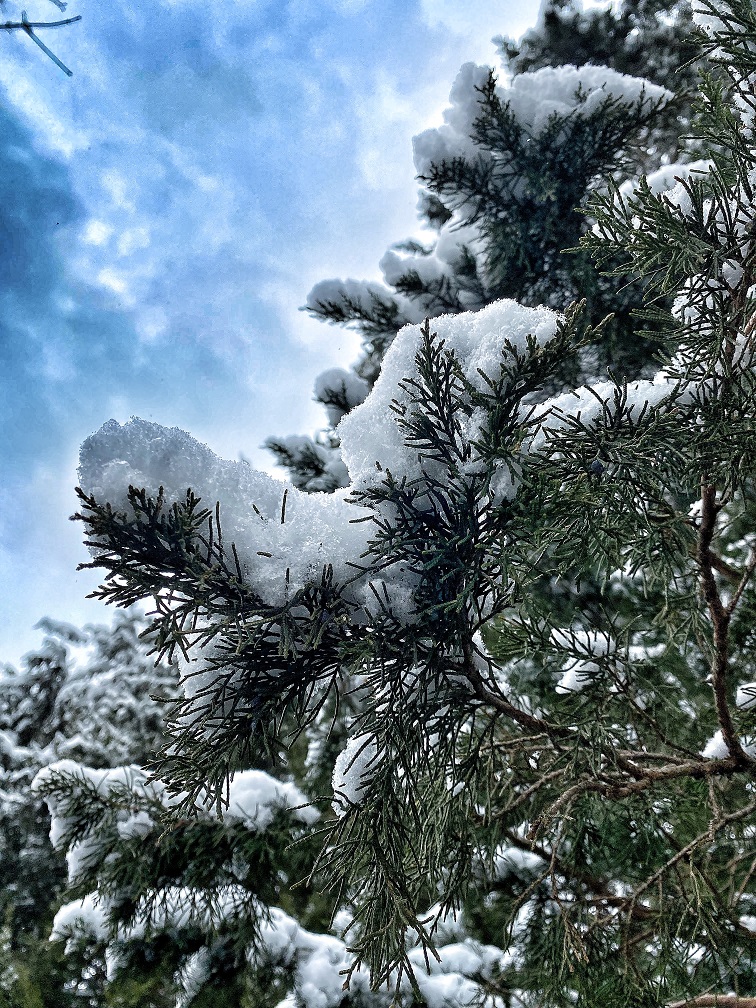
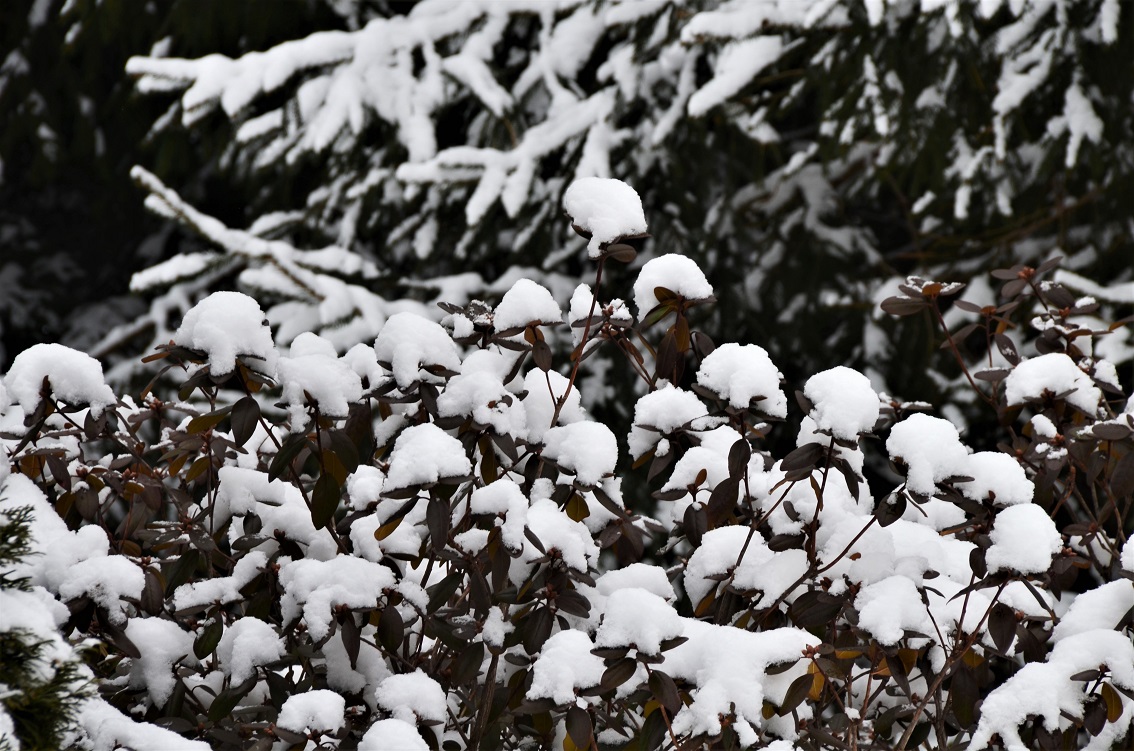
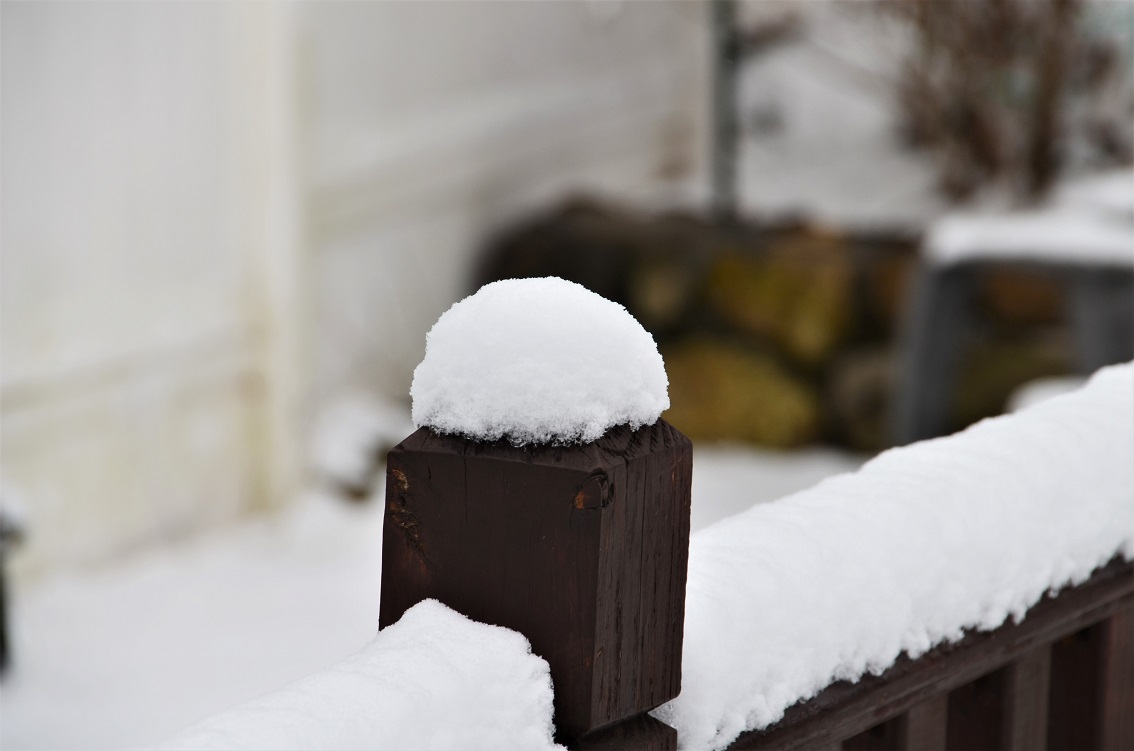
First, there was snow.
Well, not true.
Last Saturday we had a break in winter weather. The thermometer hit 60ºF here in Stamford, and it was perfect grill weather. I’m not at the point of grilling in any weather (some of my friends are), but 60ºF in February definitely calls for some meat on the grill. While the meat was cooking, I enjoyed a beautiful sunset and a glass of 2018 TerraNoble Gran Reserva Carmenere Valle del Maule – the wine had cassis and a signature pyrazine (bell peppers) which was perfectly integrated, and practically disappeared after a few hours, leaving, luscious, layered, roll-of-your-tongue, seductive liquid in the glass (the bottle was practically gone by the end of the evening).


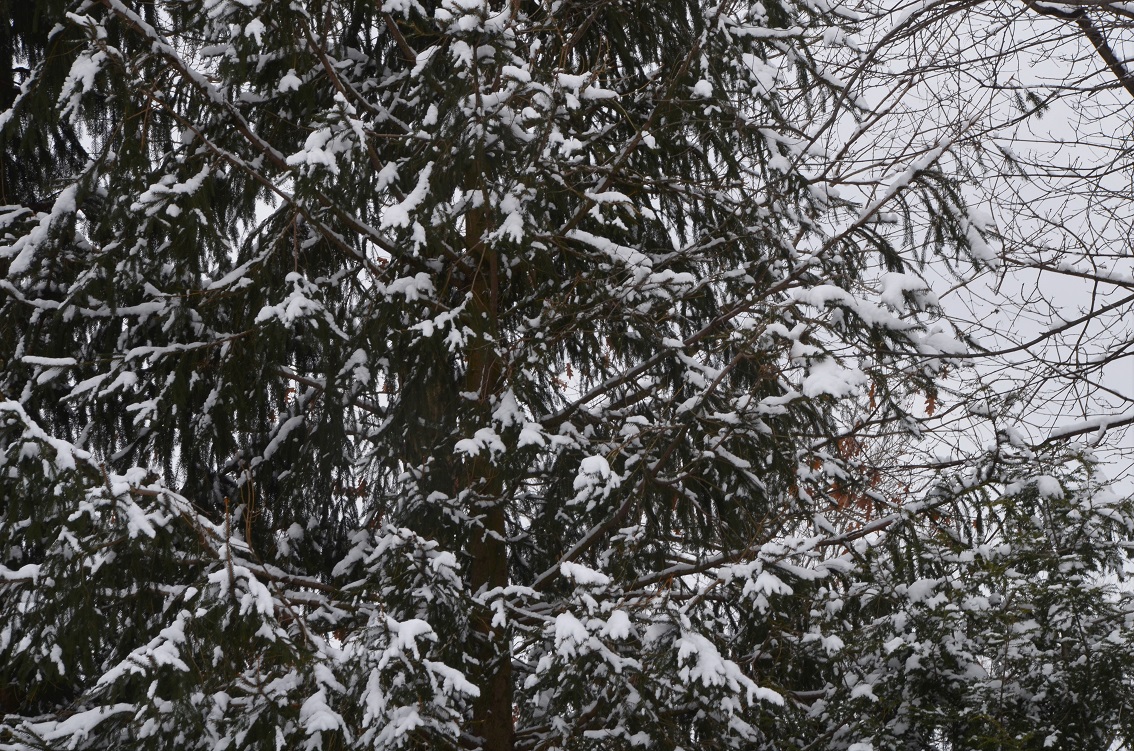
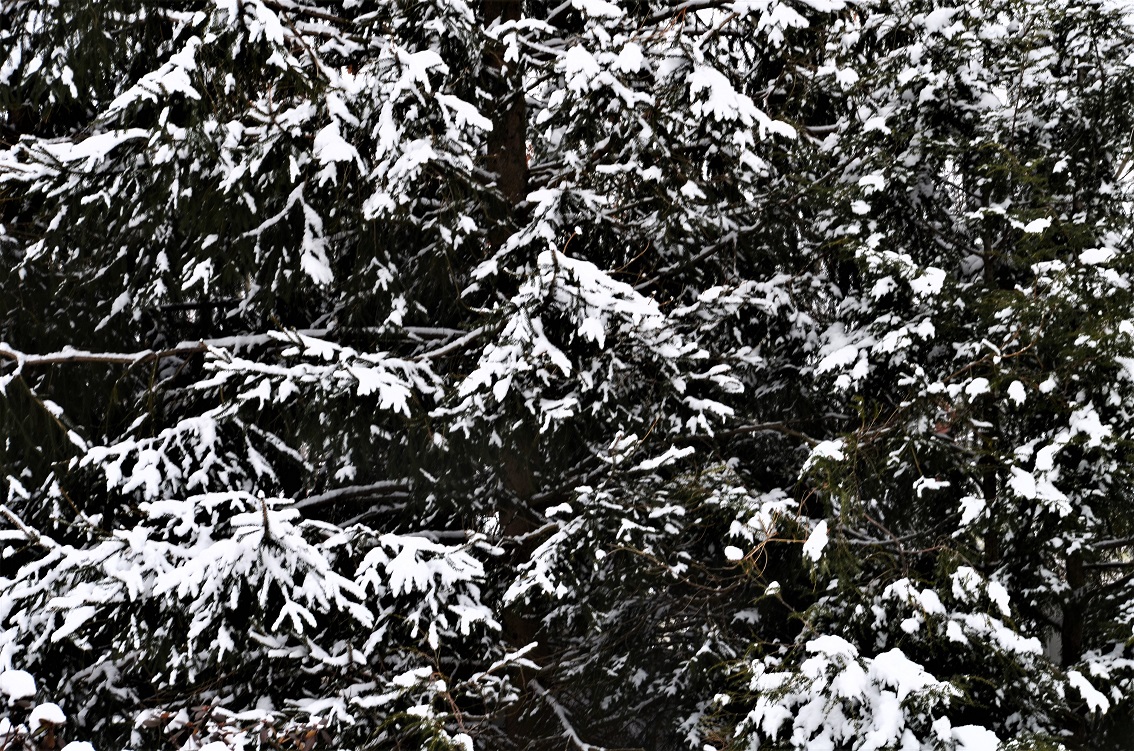
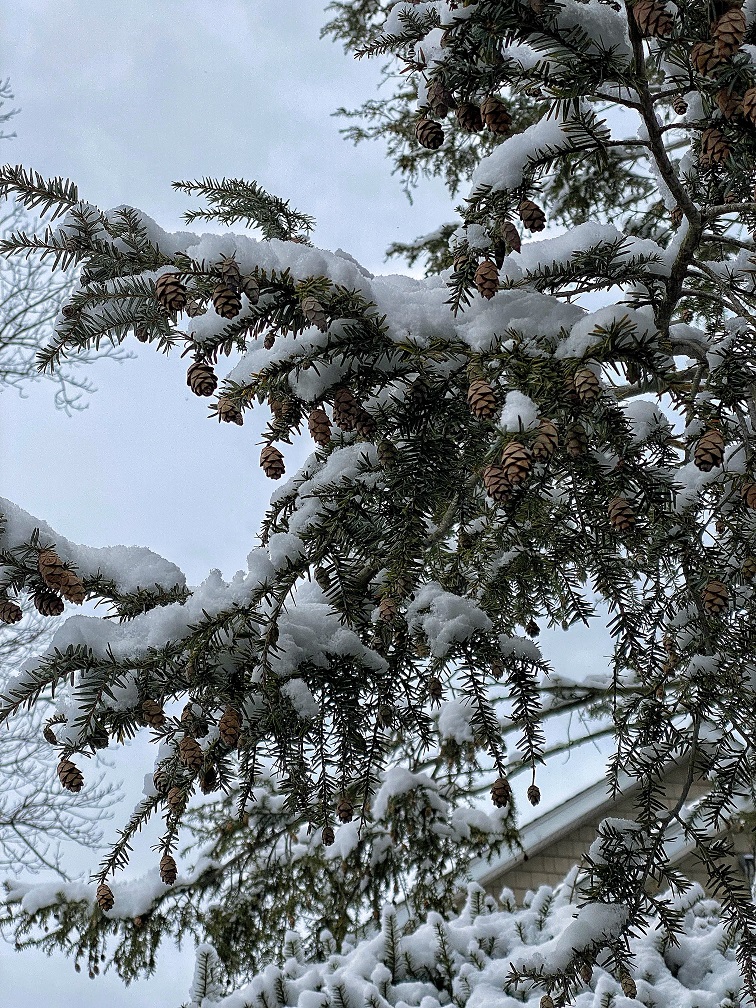
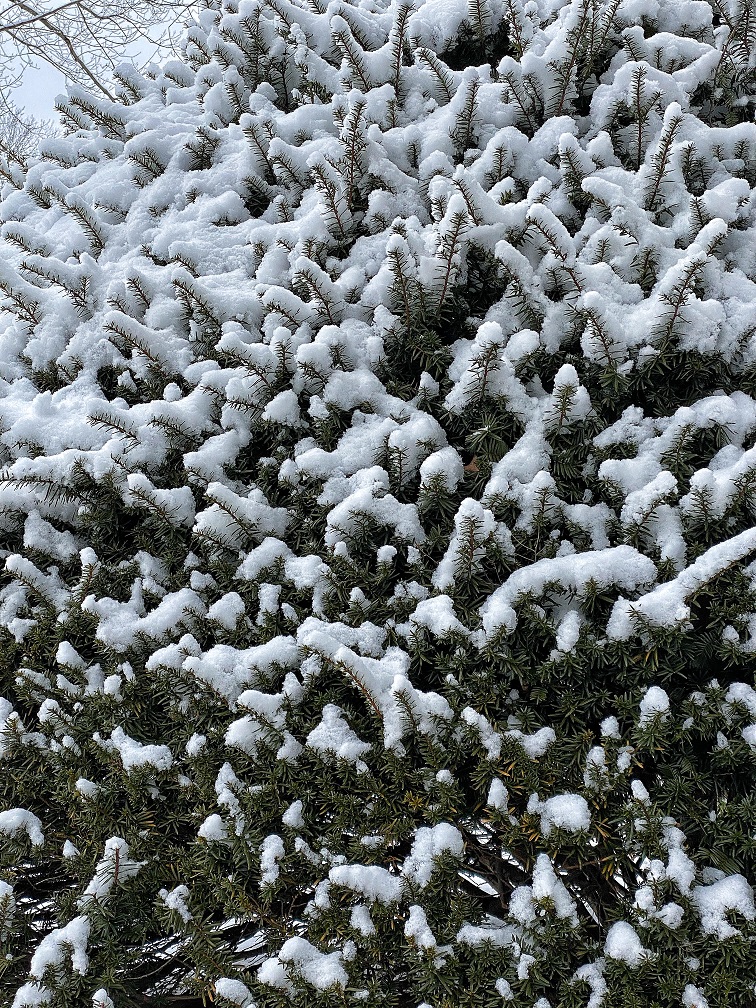
Then, there was snow. This snow was absolutely wonderful for a variety of reasons. For one, it was extremely photogenic, as you will see below (yep, pictures time!). But the main reason was that this snow was a total surprise. There was no weather channel hysteria, forcing people to run into the supermarkets, no warnings. We woke up to the beautiful white blanket, covering the ground, trees, and cars. It was beautiful, it was peaceful, it was happy. I took a few pictures from the deck, and then we took a slow walk with Penny – she kept on happily digging her nose into the snow, and I kept on trying to get a picture of that before the snow was melt, but I was not very successful, so you will not see a dog’s nose below.







For the Super Bowl, the game of power, I decided to open a powerful wine. If you would ask me to name wine that I associate with power, California Petite Sirah would be on the top of my list. This was my last bottle of 2010 Jeff Runquist Salman Vineyard Petite Sirah from Clarksburg – I’m glad I decided to open it, as I think the wine was at its peak. Cherries and cherry pits, on the nose and on the palate, round, succulent, juicy and delicious, with beautiful acidity and impeccable balance. This was definitely one delicious wine.

I also made almond cookies – these are made from almond flour, so they are completely gluten-free, soft, gooey, and delicious.


And Monday was Valentine’s day. For many years we prefer a simple family celebration with kids instead of going to the restaurant to participate in the ritual of poor service and mediocre food. I was really craving bubbles, so 2008 Berlucchi Palazzo Lana Satèn Reserva Franciacorta (disgorged in 2017) was exactly what we wanted – golden delicious apples on the palate and the nose, fine, delicate mousse, round and clean. Very elegant sparkler, good for any occasion.


That concludes the store of the few days in wines and pictures, mostly in pictures. Cheers!
2021 Top Dozen
 Here we go – a culmination point of the year in wine. Whatever 2021 was, it had no shortage of amazing, memorable wines.
Yes, my wine experiences were a little skewed, as you will see from the list, but hey, it just happened to be so.
You can click on any and all the wine names below if you want more information about the wines – I’m only offering brief impressions in this post.
Let’s dive into it, shall we?
12. 2018 Lenné Estate Cinq Élus Pinot Noir Yamhill-Carlton AVA ($85) – Superb Pinot Noir from Oregon. Lots of power, but amazingly balanced now, and has great aging potential. A world-class wine.
11. Osborne Palo Cortado Capuchin VORS ($90?) – This was my favorite sherry from the recent Sherry seminar in New York. Dry fruit, salinity, sapidity, ultra-complex with every little element perfectly in check.
10. 2020 Field Recordings Domo Arigato (Mr. Ramato) Skin Contact Pinot Grigio Central Coast (12% ABV, $25) – I’m a big fan of skin-contact wines (call them orange if you want), and this wine was somehow magical – two of us finished a bottle while talking, and when the bottle was empty, we both shared most sincere amazement – how is that empty? Was someone invisible quietly helping us? Just wow.


9. 2013 Lynmar Estate Chardonnay Russian River Valley (14.5% ABV, $30?) – a perfectly Californian, with a good amount of vanilla and butter, in your face and unapologetic. Beautifully capable to match the mood and deliver what you crave.
8. 2004 Zýmē Kairos Veneto IGT ($NA) – sigh. My last bottle. The closest I got so far to Quintarelli. I opened this bottle to celebrate OTBN (Open That Bottle Night) 2021 – a stunningly beautiful concoction. I’m sure it had at least another 10 years of life left, but hey, no regrets.
7. 2018 Terra Pacem Tempranillo Rogue Valley (14.2% ABV, $34) – This wine spurred a discussion with a fellow wine writer, Jeff Burrows – how should unadulterated Tempranillo taste? Typical Spanish Tempranillo is rarely made without oak. This wine seemed to be pristine and clean, and we agreed that this might perfectly be a textbook Tempranillo example.
6. 2019 Troon Vineyard Estate Syrah Applegate Valley ($35) – Speaking of unadulterated grape expressions – this Syrah was exactly as I always imagine it to be – complex, earthy, and perfectly peppery. Organic, biodynamic, and precise. A pleasure.
5. 2015 Youngberg Hill Vineyards Nicolette’s Select Pinot Noir McMinnville AVA (14.1% ABV, $85) – Pinot Noir overload in the Top Dozen? Impossible. There is never enough of the wines of such pristine beauty. This wine has everything you expect from Pinot Noir – plums, cherries, violets, a firm frame, and finesse, lots of finesse.
4. 2018 Le Cadeau Vineyard Chardonnay Willamette Valley (14.1% ABV, $45) – Le Cadeau was probably the best Oregon Chardonnay I tasted this year, even though deciding on this wine for the Top Dozen list was not simple. It really represents a world-class level of Oregon Chardonnays which now offer outstanding consistency – you can count on vanilla, apples, a hint of honey, and an impeccable balance. A pure joy.


3. 2007 Chappellet Pritchard Hill Napa Valley Cabernet Sauvignon ($NA, $289 for the 2017 vintage) – in a word, amazing. This was California Cabernet Sauvignon which everyone wants to drink. Classic cassis intertwined with hedonistic pleasure.
2. 2011 Gran Enemigo Cabernet Franc Single Vineyard Gualtallary Argentina ($93) – if I would call this wine “bloody brilliant”, would that make me a vampire? Upon opening, this wine was really unmoving. On the second day, this wine was a God’s nectar, bold, concentrated, layered. Incredible.
1. 2019 Battle Creek Cellars Amphora Series Carbonic Red Blend Oregon ($75) – pure, clean, unadulterated pleasure. Oh yes, I already used these words before. You can call me a bad writer, I will be okay with that. But I experienced the joy this wine delivers – and there is a good chance that you did not. Find it, try it – then we will see it an eye to eye.
Here you have it – Talk-a-Vino Top Dozen Wines of 2021.
What were your top wines of 2021?
And Happy New Year 2022!!!
Re-Discovering Oregon
It’s been more than 20 years since my first visit to Oregon. It’s been more than 20 years since I tried Oregon Pinot Noir for the first time. More than 150 posts in this very blog mention Oregon one way or the other, including 14 interviews with Oregon winemakers. And nevertheless, this year 2021 was the one when I really discovered Oregon as a winemaking region.
A picture worth a thousand words. When it comes to creating memories, a picture is definitely stronger than just words. What would be even better at creating memories than a picture? An experience. Seeing something with your own eyes, touching, smelling – a full sensory experience would certainly create the most lasting impressions.
In August of 2021, I attended the Wine Media Conference in Eugene, Oregon. Three days of the conference were so filled with wines, conversations, and more wines that these 3 days really became more like just one. One long, very eventful day. It was only after the conference was over, and I stayed behind for another 3 days to meet with winemakers and yes, drink more wine, that I finally had a moment to reflect and create an actual new impression.
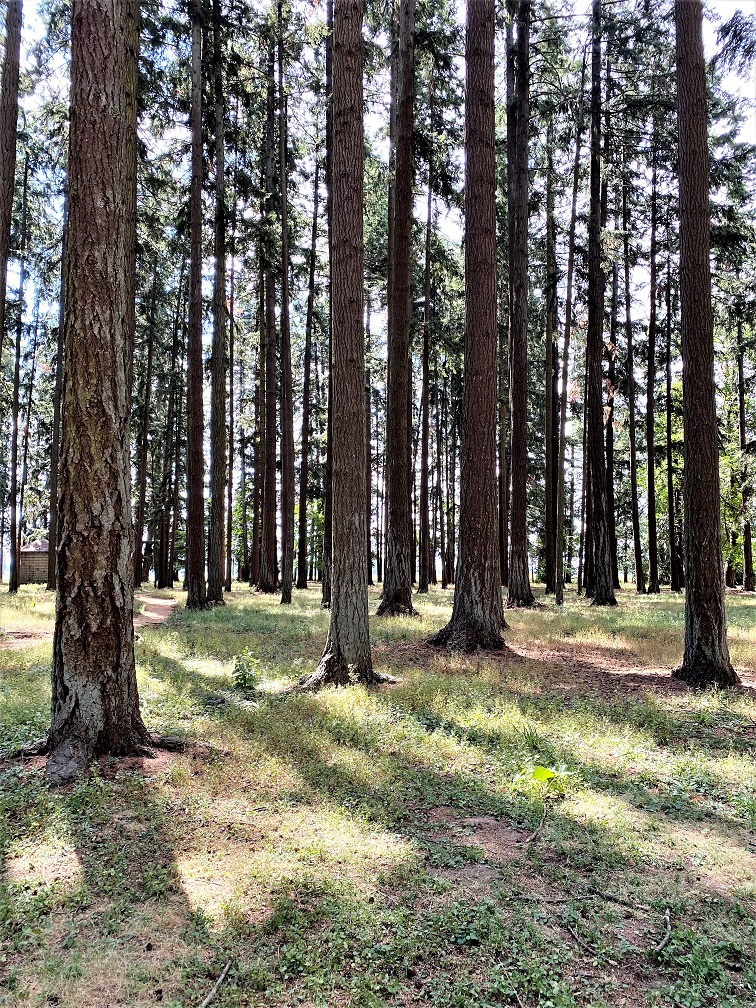
 We stopped at the rest area off the highway while driving to the first appointment at Le Cadeau with Carl Giavanti, and I found myself surrounded by the beautiful, tall, straight pine trees, standing magnificently over the clean forest floor. This view instantly transported me to my childhood – growing up in Belarus, this was the forest I was used to, full of tall, magnificent trees, perfectly suitable to become ship masts. And the air, the air – you breathe differently in a forest like that. This was a great beginning for my deep dive into Oregon.
And then, of course, seeing the vineyards, seeing the Kill Hill at Lenné and absorbing magnificent views from the vineyard, seeing and touching the rocks at Le Cadeau, and tasting the wines surrounded by the grapes – all of it guaranteed the creation of the long-lasting impressions. Even more, for the first time ever seeing the vines while they are going through veraison, the magnificent promise of the vintage was also a great way to create a strong proverbial “memory knot”.
During these 3 days, I met with winemakers I already virtually talked to before (Bells Up, Le Cadeau, Lenné, Utopia, Youngberg Hill, as well as winemakers I met for the first time, and I plan to talk about those experiences later on. But based on my leanings during the conference, and conversations with the winemakers, let me summarize my realizations about Oregon wines.
One important idea to keep in mind – when it comes to wine, Oregon is not just a Willamette Valley, and Oregon is not just Pinot Noir. Yes, winemaking in Willamette Valley got its initial boost in the early 1970s when winemakers from California started moving up north in search of locations to grow cool-climate Pinot Noir, hoping that cooler weather will push vines to produce less fruit of a higher quality. Considering the quality of the Oregon Pinot Noir, this plan definitely worked – however, as we were visiting the McMinnville area of Oregon, the temperatures during the day were pushing 95F, which is not the idea of a cool climate of course. Leaving that aside, yes, the Pinot Noir is a king of Willamette Valley, but we shouldn’t discount Riesling, Merlot, Cabernet Franc, Cabernet Sauvignon, Tannat, and many, many other grape varieties successfully growing around the state. But as I spent all of my time in the McMinnville area, let me share with you my observations for this Pinot Kingdom.
Pinot Noir is a King, but Chardonnay is a Queen.
Not letting Burgundian parallels stop at the Pinot Noir only, Oregon producers now fully embrace Chardonnay. And this Chardonnay is stunning. I tasted lots of Chardonnays during the three days, and I don’t think I had a single one I didn’t like. And the best Chardonnays were showing purely Burgundian, with vanilla, apples, and honey, my absolute favorite Chardonnay profile.


It’s all about the rocks.
Rocks. Seemingly nutrient-devoid soils. You just need to see this land to simply ask yourself – how is that even possible? The vine needs so much strength to reach the nutrients through the rocks and basalt – no wonder Steve Lutz at Lenné was ready to give up on his work as the vines couldn’t establish year over year. You need lots of patience. And you need to believe that one day, the vine will fully establish, and the fruit will be worth it. And it does.
Clones Rule!
It is the clonal game here in the Pinot Kingdom. Le Cadeau grows 18 different clones of Pinot Noir, all of which are used in the production of the wines. At Utopia, there are 12 clones of Pinot Noir growing there, and one of the Utopia Pinot Noir wines uses all 12 clones. The same Utopia is growing 3 clones of Chardonnay, all 3 are used in the estate wines.
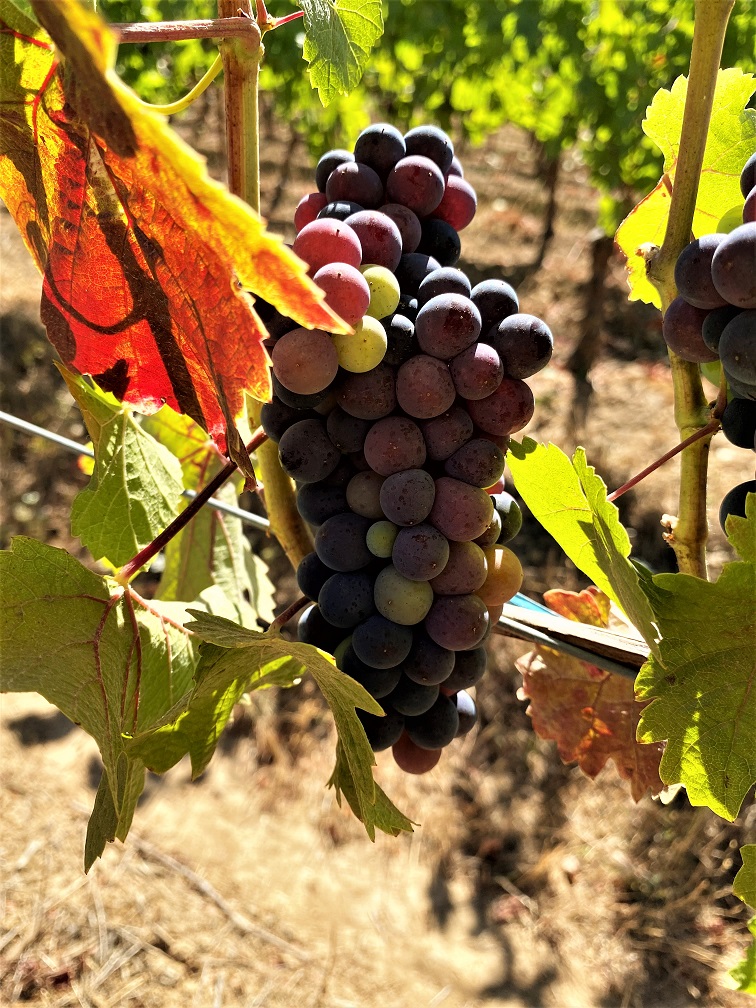
The grape juice is clear
I don’t know how much of the trend is this, but as you know, the juice of most of the red grapes is clear – and thus you can produce white wines from the red fruit, which many of the producers already do quite successfully. Will this become a big deal? Maybe. Either way, creativity is always great.
The bubbles are everywhere
Almost everyone we talked to produces already sparkling wines. Whatever way it is done – either by harvesting some of the grapes earlier to preserve acidity, or growing the grapes specifically for the sparkling wines, but the sparkling wines make perfect sense as been based on the same Pinot Noir and Chardonnay. The bottling is easily done with the mobile bottling line, so adding bubbles to the repertoire is easy and makes sense, especially as an important addition to the wine club inventories.
Oh yes, the wine clubs!
The wine clubs are the key model. While it is great to have nationwide distribution and demand, selling directly to consumers is a lot less involved, and offers much better margins. You don’t have to deal with the three-tier system, you don’t need to deal with extensive marketing – just create a loyal following, make sure members are happy, interested, and get the royal treatment, and you can achieve your financial goals right there and then.
Don’t hope for Rosé
While it seems that producing Rosé is a no-brainer, and it theoretically makes as much sense as sparkling wines in terms of extending the offerings, it doesn’t make much economic sense. When you harvest grapes for the sparkling wines, you are either using the fruit which will never ripen enough to go into the estate wines, or you will do a first pass collecting fruit for the sparkling wines and thus directing all the strength of the vines to the remaining grapes, making your estate wines even better. To make good Rosé, you need to use exactly the same fruit as you would use for the estate wines – only you can’t charge for Rosé as much as you can charge for the estate wines. So yes, while it sounds fashionable and proper to us, consumers, it doesn’t make much business sense.
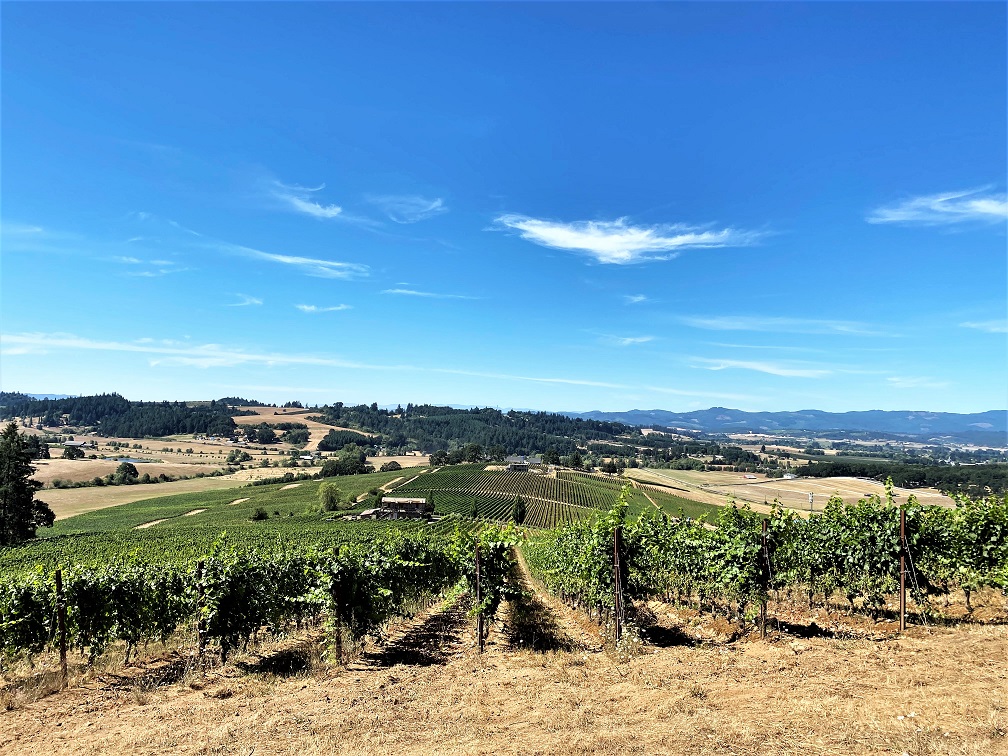
The view from Lenné vineyards
This is where I can stop this little summary. The rest of this story is really in the wines, delicious wines I had an opportunity to taste. There will be updates to the stories of Passion and Pinot, and there will be new conversations to share. Until then – cheers!
Thanksgiving 2021
My love for Thanksgiving is a bit bittersweet – while this is one of the most favorite holidays of the year, its arrival also means that the year entered the finishing stretch and the four weeks between Thanksgiving and New Year will disappear literally with a blink of an eye. Is the ending of 2021 something to regret? Not really, not compared with any other year except its predecessor, 2020 – but so far we have not much hope for 2022 to be any better, so let’s count our blessings.
This year, Thanksgiving had a glimpse of normal. We managed to celebrate with the family in person at our house (yay!), and then we went to Boston to celebrate with our close friends, again in person (double yay!). So with the exception of the need to wear a mask here and there, and not materialized fears of celebrating with chicken instead of a turkey, this was a pretty standard Thanksgiving holiday.


As far as food goes, we managed to experience turkey 2 ways. First, at our house, we did a simple roasted turkey in the bag. I got the pre-brined turkey from Trader Joe’s, and it perfectly cooked in less than 4 hours, using the bag and convection bake in the oven. Then in Boston, we had a Turducken (turkey stuffed with a duck stuffed with chicken), but instead of making it ourselves, it was prepared at the butchery with the exception of roasting the final product. With perfect seasoning, this was definitely a standout. Of course, we had a bunch of appetizers, sides, and desserts, most of which simply was a repeat from the past years – roasted butternut squash and sweet potatoes, green beans sauteed with onions, acorn squash roasted with hazelnut butter, homemade cranberry sauce (using the recipe from Bobby Flay), Nantucket cranberry pie.


And then, of course, there were wines. A few weeks before Thanksgiving I got a note from Field Recordings offering two of the Nouveau wines, Rosé and Pinot Noir – as it is Nouveau wines, both were from the 2021 vintage. That gave me an idea to pair the whole Thanksgiving dinner with Field Recordings wines. I really wanted to have a Chardonnay at the dinner, but I had none from the Field Recordings, so I had to settle for their Chenin Blanc wine, from Jurassic Park vineyard. For the red, I decided to open one of my most favorite Field Recordings wines – actually, the wine which made me fall in love with Field Recordings – Fiction, with some nice age on it.
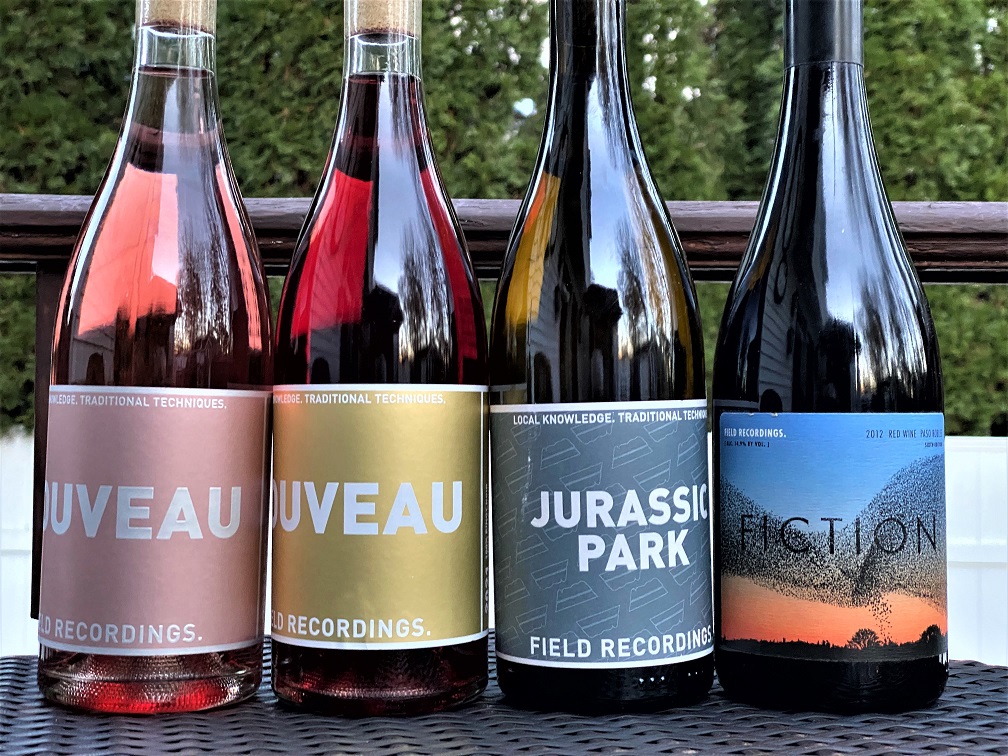
Let’s talk about these wine choices.
2021 Field Recordings Rosé Nouveau Edna Valley (10.9% ABV, blend of Grenache and Cinsaut from Morro View Vineyard in Edna Valley in California). The wine was a bit temperature-sensitive but overall outstanding. I served it slightly chilled, and the wine was tart with the strawberries profile, maybe ever slightly unbalanced. Chilling it another 4-5 degrees down magically transformed the experience into the fresh crunchy cranberries territory, with lots of cranberries in every sip – a pure delight.
2021 Field Recordings Pinot Noir Nouveau Edna Valley (12.9% ABV, Greengate Vineyard in Edna Valley in California) was quite similar to the classic French Beaujolais Nouveau, offering nicely restrained notes of fresh, young, just-crushed berries. This wine was also showing better with a higher degree of chill, being more composed with a more present body.
2018 Field Recordings Jurassic Park Chenin Blanc Santa Ynez Valley (11.3% ABV, 6 months in the hosch fuder 1000L) offered a glimpse of fresh apples and a hint of honey on the palate, all with crispy acidity. While this was not Chardonnay, the wine offered quite a bit of similarity and fit very nicely into my craving for Chardonnay, while being well reminiscent of a nice classic dry Vouvray.
The last bottle was unquestionably a bold move on my part.


2012 Field Recordings Fiction Paso Robles (14.9% ABV, 40% Zinfandel, 13% Tempranillo, 12% Petite Sirah, 11% Touriga Nacional, 10% Mourvedre, 8% Grenache, 6% Cinsault). This wine was the one that connected me with Field Recordings more than 10 years ago – I wrote a post about 2010 Fiction, and it was my 2011 Top wine of the year as well. I love those original labels a lot more than clean and rather boring labels currently in use at Field Recordings – and not only the label itself but also the text on the back label, talking about the early days of Andrew Jones, who was first and foremost grape grower before he started Field Recordings – you can read it for yourself.
9 years old wine under the screwtop and stored at room temperature – what would you expect? The wine was definitely showing the age, with an abundance of tertiary and dried fruit aromas (figs, cherries), but it still had some fresh fruit left together with the zipping acidity. I think if anything, this would be the wine that would actually turn into vinegar, give it another 4-5 years. But – it was still perfectly enjoyable now, and it was my second favorite of the evening together with the Nouveau Rosé.
There you go, my friends – my Thanksgiving 2021 escapades.
Oh, and before I forget – the last day of Thanksgiving weekend was also the first day of Hanukkah, so I simply had to make potato pancakes – thus this is the image I want to leave you with.

Happy Hanukkah to all who celebrate!
Spain’s Great Match, 2021 Edition
Spanish wines are some of my most favorite wines in the world.
Spain’s Great Match event in New York is one of my most favorites wine events of the year, always offering an opportunity to discover something new.
And I had not been to New York City in the past 18 months – lots of good reasons to be excited, would you agree?
For the second time in a row, Spain’s Great Match event was held at Mercado Little Spain, a Mecca of Spanish cuisine in one of New York’s hottest new neighborhoods, Hudson Yards. I was able to attend the walk-around tasting and two of the seminars, so here I want to share my impressions.
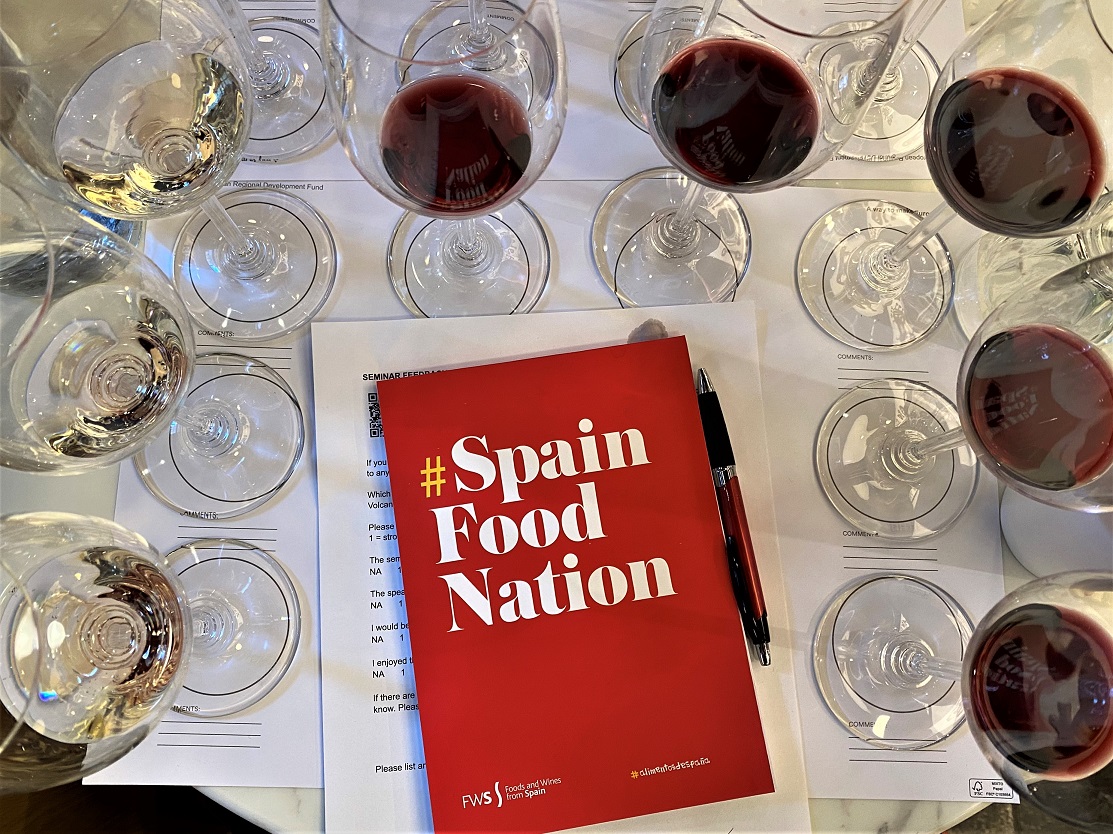
Before we get to the event, just a few facts about Spain’s wine industry. Spain has the biggest grape planting area in the world – more than 2.9 million acres. Spain today (2021) is the second-largest wine producer in the world after Italy. There are more than 600 grape varieties grown in Spain (only about 20 are used to produce the majority of the wines though). Spain has more than 130 defined wine-growing areas.
Now, let me share my observations.
First, Spanish wines are popular. Duh? I can’t argue – I’m starting with the most banal conclusion, but let me explain. Spanish wines were always regarded as the best-kept secret among wine professionals – whatever the general public likes to drink is fine, but the wine professionals would most often resort to the Spanish wines to share amongst themselves and with friends. I don’t know how many people attended the consumer portion of the event in the evening, but the trade event was incredibly busy, also with a significant number of MS and MW in the audience – I never saw these many Masters of Wine and Master Sommeliers attending this event. It might be just me not seeing it before, or it might be a testament to the growing popularity of Spanish wines. I think this popularity is also reflected in the increased prices of the Spanish wines – don’t know if supply issues are muddying things up, but otherwise, it seems that the prices are inching higher.
The trend of “internationalization”. Spanish Rioja and Ribera del Duero wines, the keystones of Tempranillo expression, always had its unique taste profile, driven by well-integrated tannins, minerality, and spicy undertones. This character was largely defined by the use of American oak which was traditional in Rioja. I didn’t taste each and every Rioja wine presented at the event, but based on what I managed to taste, it seems that there is a shift towards using the French oak, which completely changes the presentation of the wine, leading with grippy, mouth-drying tannins which completely lock the front of your mouth for a few minutes after the sip. Barolo used to be like that, and it became much better with tannins lately. Now Rioja is offering this internationally indistinguishable style which becomes borderline boring. If I want to drink a grippy powerful wine, I got plenty of choices outside of Rioja – I understand that this might be a trend with young wine drinkers, but it will be very difficult to maintain individuality and build a following if you are simply “one of many similar ones”.
Where did the Godello go? I saw a very little presence of Godello wines, which was surprising. I always thought that this white grape has an excellent future – this might still be the case, but this was not obvious with 3 whites ruling the show – Rioja Blanco, Albariño, and Verdejo Rueda.
Jerez is absolutely delightful. My love of Jerez is back, and the wines we tasted during the seminar (more details forthcoming) were simply superb.
Don’t forget Spanish bubbles. I tasted a bunch of Cavas, and none of them were mediocre. Fresh, clean, approachable, and reasonably priced – great QPR wines for every day.
Now, here are the wines I tasted during the event (with the exception of the seminar wines). Everything which is mentioned below was well drinkable, and the specific favorites are marked (bold) as such.


2020 Santiago Ruiz Santiago Ruiz D.O. Rias Baixas ($25)
2017 Bodegas LAN Rioja Crianza D.O.Ca. Rioja ($18) – probably my favorite from the Bodegas LAN selection. The most approachable and balanced from this group.
2015 Bodegas LAN Rioja Reserva D.O.Ca. Rioja ($24)
2017 Bodegas LAN D-12 D.O.Ca. Rioja ($25) – single vineyard
2017 Bodegas LAN Xtreme 2017 D.O.Ca. Rioja ($25)
2015 Bodegas LAN Viña Lanaciano D.O.Ca. Rioja ($30)
2018 Bodegas LAN Edicion Limitada D.O.Ca. Rioja ($55)
2015 Bodegas LAN Culmen D.O.Ca. Rioja ($70)
2016 Vins el Cep Gelida Brut Gran Reserva D.O. Cava ($20)
NV Bodegas Llopart Brut Reserva Rosé Corpinnat ($28)
2020 Bodegas Vatán Nisia Las Suertes D.O. Rueda ($32)
2018 Bodegas La Caña Navia D.O. Rias Baixas ($32)
2019 Bodegas Avancia Mencía Old Vines D.O. Valdeorras ($35)
2018 Bodegas Breca Garnacha D.O. Calatayud ($16) – clean, simple
2018 Bodegas Vatán Tritón Tinta de Toro D.O. Toro ($20)
2018 Bodegas Vatán Tinta de Toro D.O. Toro ($45)


2018 Bodegas Muga Flor de Muga Blanco D.O.Ca. Rioja ($50) – my favorite wine white of the event – clean, round, fresh, elegant
2014 Bodegas Muga Prado Enea Gran Reserva D.O.Ca. Rioja ($100) – surprisingly ready to drink
2011 Bodegas Sierra Cantabria Gran Reserva D.O.Ca. Rioja ($40)
2014 Bodegas Alvear Alvear Fino en Rama D.O. Montilla Moriles ($22) – outstanding. It is very rare to find dry sherry made from 100% Pedro Ximenes grapes.
2016 Sierra Salinas Mira Salinas D.O. Alicante ($18, Monastrell) – Elegant, fresh, perfect acidity
2016 Ramirez de la Piscina Ramirez de la Piscina Reserva D.O.Ca. Rioja ($22)
2018 Rafael Cañizares Bodegas Volver Tempranillo Single Vineyards D.O. La Mancha ($20)
2020 Rafael Cañizares Bodegas Volver Paso A Paso Tempranillo Tierra De Castilla ($35) – excellent, elegant, open


All three were excellent:
2013 Agustí Torelló Mata Cava Agustí Torelló Mata Brut Nature Gran Reserva D.O. Cava ($26)
2017 Agustí Torelló Mata Cava Agustí Torelló Mata Brut Reserva D.O. Cava ($21)
2011 Agustí Torelló Mata | Cava Kripta Brut Nature Gran Reserva D.O. Cava ($85) – unique and different, would make a perfect geeky present
2019 Bodegas San Valero S.Coop Cabeza Casa D.O. Cariñena ($11, Garnacha) – elegant, round, excellent QPR
2018 Bodegas San Valero Celebrities Syrah D.O. Cariñena ($11)
MV Bodegas San Valero 801 D.O. Cariñena ($20, blend of 2014 Cabernety Sauvignon, 2015 Merlot, 2016 Syrah) – very good, unusual, multi-vintage
2019 Bodegas San Valero Particular Garnacha D.O. Cariñena ($12)
Now, the seminars. The Jerez seminar was superb, offering lots and lots of knowledge about the fascinating world of sherries. Three white grapes – Palomino Fino, Pedro Ximenez, and Moscatel – are behind the tremendous range of wines, all with unique characters and tastes ranging from absolutely bone dry (sugar content less than 5 g/l) to the syrup level with more than 300 grams of sugar per liter. Another fascinating element of Sherry is the Solera production method, where the resulting wine might technically have trace amounts of 200+ years old wines. Lots and lots of care and attention go into the Sherry production. During the “Spotlight on Sherry” seminar, led by incomparable César Saldaña, General Director of the Jerez Control Board, we learned a lot about sherries and tasted through the outstanding flight of 8 wines (with the exception of the last 2 which I didn’t enjoy that much).
Here are my notes regarding the 8 wines we tasted:
Bodegas Hidalgo Manzanilla La Gitana
4 years Solera
Almonds, hazelnut, sage, brioche
Crisp, dry, fresh, hazelnut, pecorino cheese, sapidity, dusty palate
Excellent, perfect aperitif, and perfect for food
2021 Tio Pepe Fino Tio Pepe en Rama-Saca
Unique and different, blend of selection of 82 butts of Tio Pepe Solera
Bottled unfiltered
Beautiful floral nose,
Crisp, clean, elegant, mostly lemon and 0 sugar, chalky note – typical for this type of wine.
Great complexity, elegant
Valdespino Jerez Fino Ynocente
Single Vineyard in Pago Macharnudo
50 years old Palomino Fino vines
Fermented in cask
10 years Solera, Criaderras Solera
Very elegant, apples, lemon
Chalk, lemon, sapidity, 0 sugar
Williams Humber Amontillado Don Zoilo
Solera 12 years
Biologically aged until the full absence of flor
Butterscotch!
Crisp, fresh, herbaceous
Lustau Almagenista Oloroso Pata de Gallina
Almagenista: Juan Garcia Jarana
38 casks, aged on average 15 years
Butterscotch, caramel
Crisp acidity, sapidity, great complexity, hazelnut
Osborne Palo Cortado Capuchin VORS
Solera was founded in 1790! Potentially, there were traces of 230 years old wine!
5 criaderas
Average age 30 years
Tobacco, mint, basil
Pepper, tobacco, caramel, complex, long finish.
Superb
Bodegas Tradicion Cream Tradicion VOS
Blend of 30 years Oloroso (70%), 6 years old Pedro Ximénez (30%)
Average age 25 years
Dry fruit
Concentrated sugar, not great.
Barbadillo Pedro Ximénez la Chila
Solera system average 5 years
Amazing nose – raisins, figs,
Pure liquid raisins on the palate. I would like more acidity.
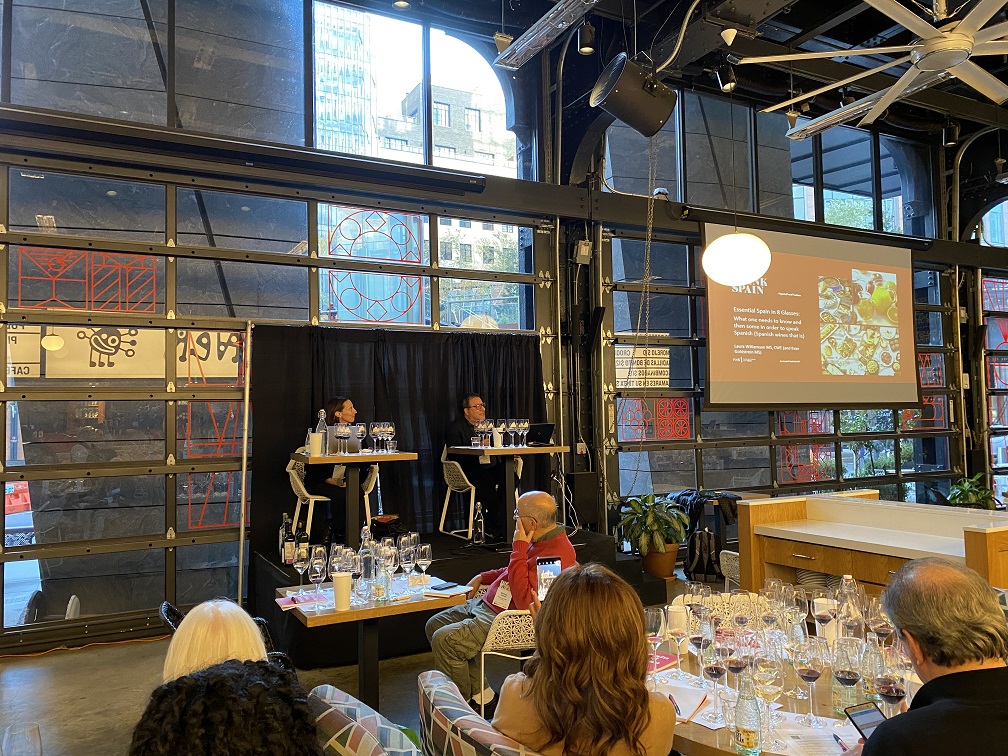
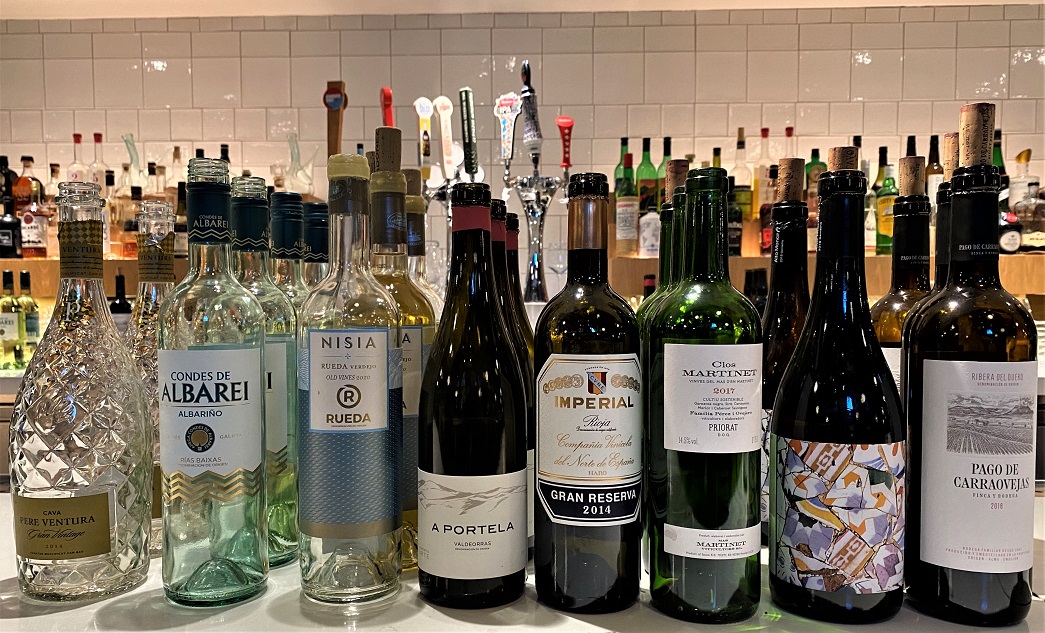
Finally, I attended the seminar called “Essential Spain in 8 Glasses”, presented by Laura Williamson, MS, and Evan Goldstein, MS.
If the country is the second-largest wine producer in the world, cultivating about 600 different grape varieties, is it even fathomable to present such a complex wine world in the format of 8 wines? While it is not easy, you can get reasonably close. I think the presenters made a good effort by including Cava, Albariño, Verdejo, Mencia, Rioja, Priorat, Garnacha, and Ribera del Duero.
2012 Pere Ventura Gran Vintage Brut Paraje Clasificada Cava DO ($55)
Yeasty nose, fresh dough
Crisp, yeasty, yeasty, yeasty, yeasty – not my wine
2020 Condes de Albarei Albariño ($16)
Tropical fruit nose
Acidic, Whitestone fruit, crisp, simple
2020 Bodegas Ordoñez Nisa Verdejo Old World Rueda ($32)
Intense nose with a hint of freshly cut grass, flowers
Rich, caramel component, overdone
2015 Ole Imports a-Portela Mencia ($29)
Very nice nose, fresh, open, fresh berries
Beautiful herbal/gamey component, but then very bitter on the palate – whole cluster not done right?
2014 Imperial Gran Reserva Rioja ($85)
Outstanding. Delicious all around.
2017 Clos Martinet Priorat (65% Grenache, 20% Syrah, 10% Carignan, 4% Merlot, 1% Cabernet Sauvignon)
Smoke, roasted notes
Red and black fruit, perfect balance, great acidity, a touch of chocolate
2018 Also Moncayo VERATON ($35, Garnacha)
Plums, cherries,
Good acidity, fresh, cherries, crisp, great finesse
2018 Pago de Carraovejas Ribera Duero ($39)
Chalk, a hint of cherries,
Cherries, dark concentrated fruit, restrained. Very nice.
Last but not least – there was food! The food was carried around in all the different forms – I didn’t have much time to enjoy it, so I was mostly grabbing pieces of Jamon and Manchego between the tastings – these are the pictures I will leave you with.


This concludes my report. Have you had any Spanish wine discoveries as of late? What are your thoughts about the new wines and new styles?
Expect the Unexpected?
Wine is meant to go with food.
Food is meant to go with wine.
Together, food and wine are supposed to give you a much better experience than two individually.
You already know all of this.
And yet this is theory. When met at the table, sometimes food and wine actually work together and deliver a heavenly, memorable experience. Sometimes, food and wine just coexist without interfering. And sometimes they clash, ruining the experience completely.
The food and wine pairings typically work in one of two cases:
- Food and wine are professionally paired. The chef and sommelier work together, adjusting the flavors of the dish to work with the wine which was selected as a pairing.
- Food and wine come from the same place and had been playing together nicely for centuries. Think about Beef Bourgogne paired with Bourgogne wine – I think we can trust this combination, don’t we? Or would you ever question Chianti with the pasta with nice red sauce?
Now, for most of the time, we are not traveling and we are not eating at the high-end restaurant, yet we still should be able to enjoy the elevated food and wine experience at home – the rules are simple, right?
Maybe the rules are simple indeed, but we need to tread carefully. Beef Bourgogne is made with Bourgogne wine, and all Bourgogne reds are made from Pinot Noir. So what would happen if we will make the dish with actual Bourgogne, and then try pairing it with a nice big Pinot from California? There is a good chance that you will not enjoy that combination, not at all.
Chianti is made out of the Sangiovese grape (predominantly) – but don’t try to pair your pasta with the Sangiovese from California – again, there lies a great opportunity for disappointment.
I’m not saying that Beef Bourgogne will never work with the California Pinot – find a more restrained version, such as Sanford Pinot Noir, for example, and you might be fine – or better yet, simply cook the dish using the same wine you want to drink. Similarly, there are some California Sangiovese that might perfectly complement and elevate your favorite spaghetti dish, such as Castello di Amorosa Sangiovese – but you should expect some trial and error on the road to perfection.
I love Georgian wines. I would gladly drink Georgian Saperavi on any day. I love Georgian cuisine – properly made, the flavors are incredible and so is the pleasure you will derive out of each and every dish. And considering that wine is an indelible part of the Georgian lifestyle literally for thousands of years, it is rather logical to assume that Georgian wines should work perfectly with Georgian dishes.
While I love Georgian cuisine, this is not the food I would generally try to make on my own, I prefer to defer the cooking to a few of the Georgian restaurants which we have in reasonable proximity, even though the experience is typically a mix of hit and miss. However, when my sister in law sent me the video with the recipe of the Georgian dish called Odjakhuri, the video looked so good that I decided that I must make the dish as soon as possible, considering that the main ingredients are near and dear to me from the childhood – meat and potatoes.
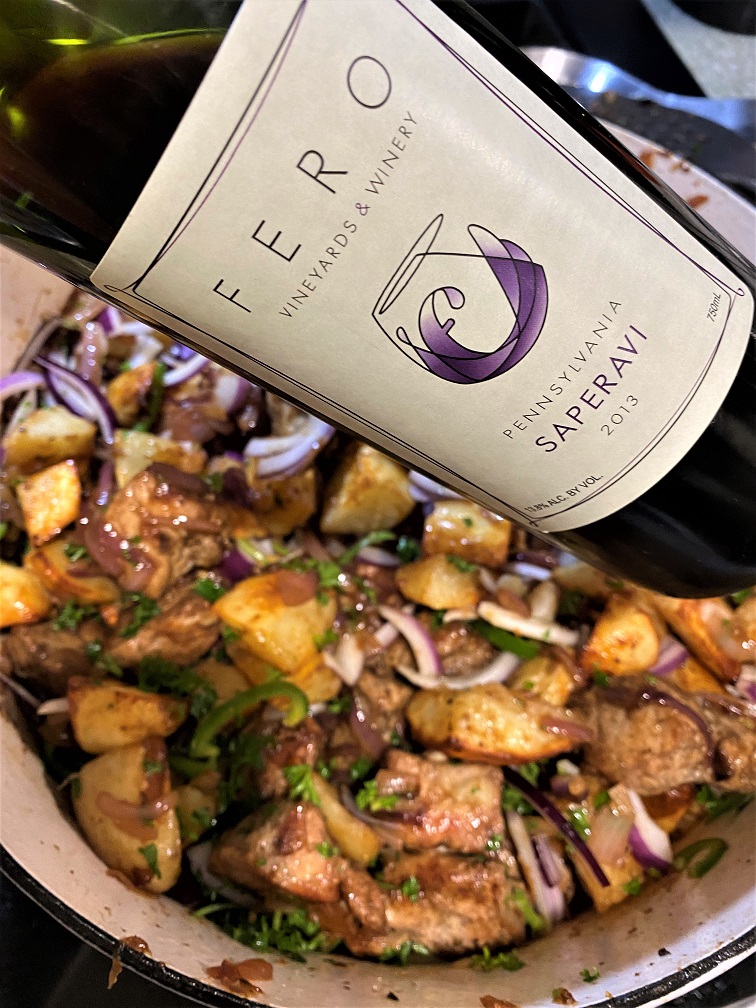
Back in 2015, we visited a winery in Pennsylvania called Fero Vineyards. In addition to all of the traditional east coast wines, the winery also was making the wine out of my beloved Georgian grape, Saperavi. I tried the wine during our visit, liked it very much (Fero Saperavi made it to the 2015 edition of my annual Top Dozen wines of the year list as #12), and brought home a bottle. After I decided that I will make an Odjakhuri for the Friday night dinner, I realized that I have no Georgian wines on hand – but then I remembered that I had a bottle of Fero Saperavi which I had been looking for a good reason to open for quite some time – and what can I be a better reason than trying it at a family dinner with Georgian dish?
To tell you the truth, I had no idea how it is going to work. First, the bottle I had was the 2013 Fero Saperavi. Who knows if the wine from Pennsylvania can age for 8 years? The wine might be gone already, way gone. But even if the wine is not gone, would Saperavi from Pennsylvania work with the flavors of the dish? Local wines work with local dishes because they went through a slow process of alignment over hundreds of years – well, maybe that is one of the reasons. And here we have a dish with the supposedly proper flavor profile, and proper grape from totally different terroir – everything is possible…
When I was opening the bottle of Fero, I had no expectations. Let me take that back. When I was opening the bottle of Fero, I was expecting that the wine will be past prime. And even if it will be still drinkable, that it will not work with the dish, not for a second. And I’m glad I didn’t make any bets with anyone because I lost on both counts.
The wine was perfectly fresh. It had a ruby color, not hinting at any age. On the nose, there were cherries and herbs, nicely restrained. On the palate, the wine showed a hint of cherries, sage, gamey undertones, tobacco. Perfectly live, perfectly fresh, excellent acidity, medium-plus finish.
The wine also perfectly complemented the dish, enhancing and elevating the flavors and creating a better experience.
Was this pure luck on both counts? The wine was perfectly drinkable and it complimented the dish very well? I don’t have an answer, I’m just reporting on the experience, and raising the question – where are the wine and food pairings created?
This pretty much ends my story about expecting the unexpected, but before we part, I want to leave you with the recipe for this simple and delicious dish.
Disclaimer: Odjakhuri in translation from Georgian means “family”. So as a family meal, I’m sure there are tons of “correct” recipes for this dish. The recipe which I’m sharing is exactly the one we made, thus this is the one I recommend.
Apology: I would love to share a video with you, but an actual video that I have is in the Russian language. Still, I believe it will be useful even without understanding the language, so here it is:
Odjakhuri – Georgian meat and potatoes family dish
Ingredients:
- Meat (pork, beef, chicken) – 2 lb
- Potatoes (Russet would work the best) – 4 lb
- Red onion, medium size, sliced – 4
- Garlic, chopped – 4 cloves
- Cilantro (can be replaced with parsley), chopped – 2 tbsp
- Hot pepper, sliced – 1
- Coriander, ground – 1 tsp
- Sweet paprika – 1 tsp
- Cayenne pepper – 1/2 tsp
- Dill (dried) – 1/2 tsp, optional
- Black pepper, ground – 1/2 tsp
- Salt, by taste
- Olive oil
Steps:
- Potatoes: Preheat oven to 375F. Peel potatoes and slice them into the pieces about 1 inch in size. Put into a large bowl. Add olive oil (you can use any oil you like for roasting), coriander, black pepper, cayenne, paprika, dill (if using), and 2 tbsp of salt (I prefer kosher salt). Mix everything together. Line roasting pan with parchment paper and arrange potatoes preferably in a single layer. Roast for 45-50 minutes – check readiness, potatoes should be crispy but shouldn’t be overlooked. Once ready, get it out of the oven and put it aside.
- Meat. Meat should be prepared as it would be for a kebab. Ideally, it should be sliced into 1-inch cubes and marinated overnight. You can, of course, just roast the meat without marinating it, but marination will add to the flavor of the dish. In our dish, we used bone-in pork loin, I just cut the meat off the bone. If you will be using pork, look for darker meat, it is less prone to drying up while frying.
- Once you put potatoes in the oven, you can start on the meat. Heat a small amount of oil on medium-high heat in the cast iron dutch oven, and fry the meat until ready. If meat is not marinated, use salt, pepper, and any other spices you would like. When ready, get the meat out of the pan. make an effort not to overcook the meat.
- Reduce heat to medium-low, add 3 sliced onions and sauté them slowly, pay attention not to burn them. When almost ready, in about 12 minutes, add garlic and let it cook for another 3 minutes. Now it is time to assemble the dish.
- Reduce heat to low. Return meat to the dutch oven, add roasted potatoes. Add fresh cilantro (or parsley), sliced hot pepper, and last sliced onion, mix everything lightly (try not to crush the potatoes). Let the dish heat up, uncovered, for about 10 minutes, to let the flavors meld. In 10 minutes, turn off the heat, serve and enjoy!
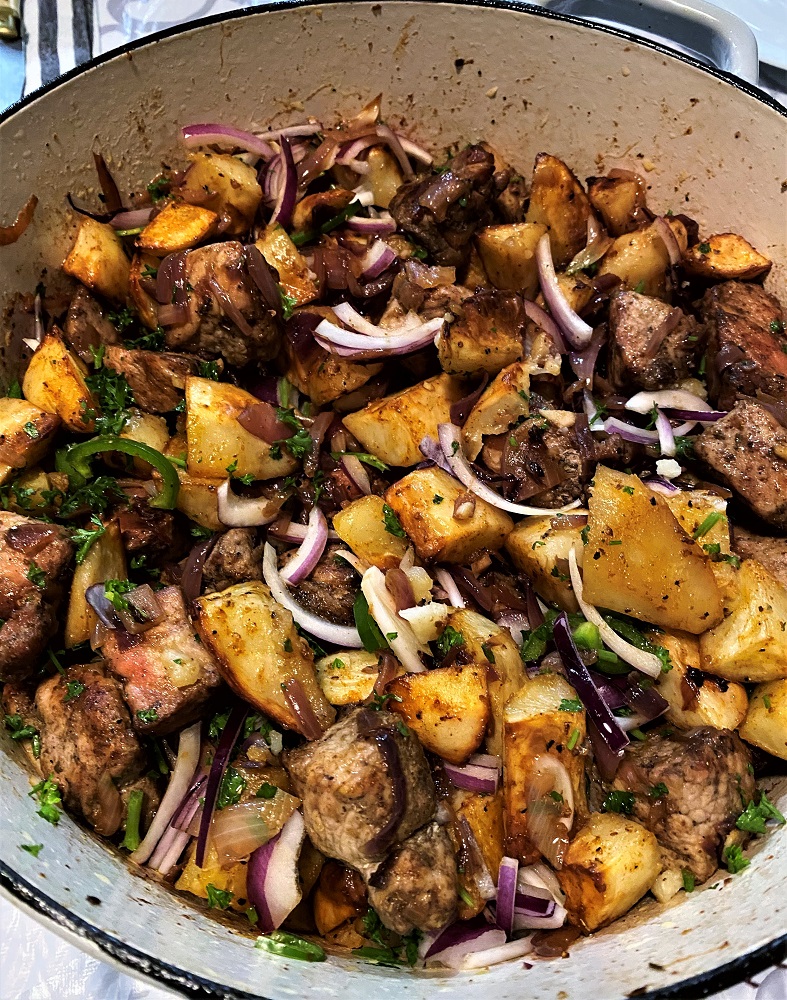
There you have it, my friends. If you don’t have Saperavi on hand, try it with any wine you’d like, and expect the unexpected. Cheers!
Magnificent Rioja: CVNE Deep Dive
It is no secret that I have a special relationship with Rioja – I happily admitted it many times. When asked about my favorite wine, I always say that I don’t have one. And every time I give this answer, deep inside there is a bit of the uneasy feeling, the one you get when you know you are not lying, but somewhat flirting with the truth, as Rioja is probably “the one”.
What would make the Rioja so special for me? For one, it was a pivotal experience at the PJ Wine Rioja seminar, where I tasted through an incredible lineup, including a 45 years old Rioja, and it was still absolutely beautiful (later on I tasted 65 years old Rioja which was, again, superb). Also, when it comes to Rioja, I can easily give you a bunch of producer names, whose wines I would wholeheartedly recommend to a friend and also would be excited to drink at any time myself – come to California, I might have to pause for a moment while looking for the favorites to recommend – I hope it tells you something.
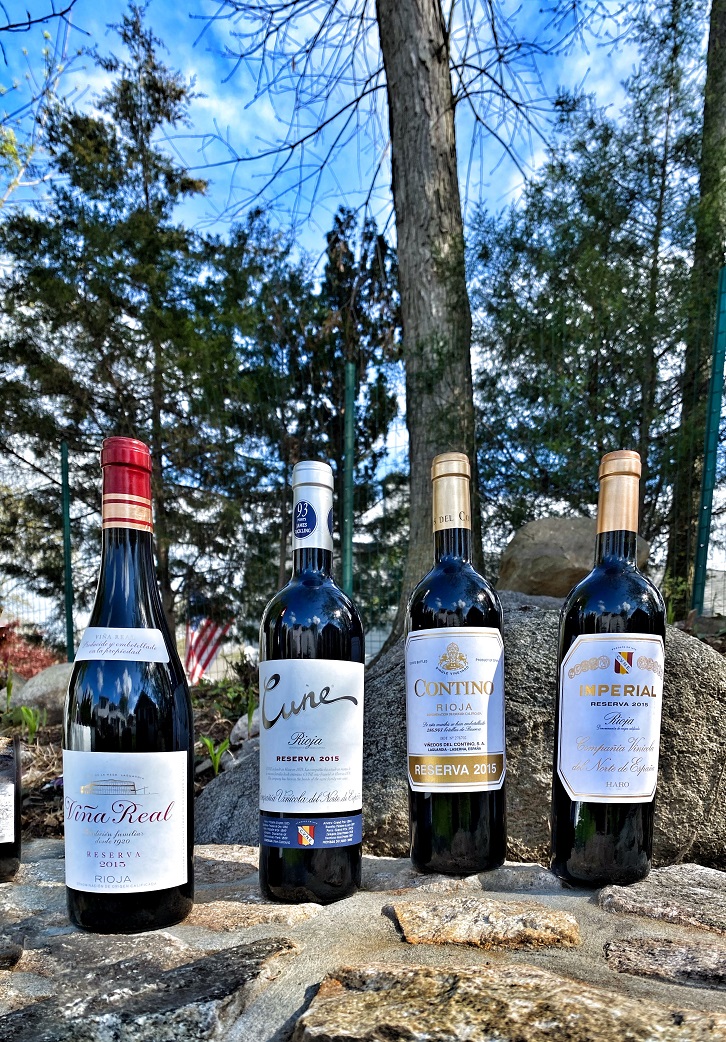
Speaking about favorite Riojas, I want to talk to you today about CVNE, also known as Cune due to a typesetting mistake. In 1879, the Real de Asúa brothers arrived in Haro for the reason not related to wine. Nevertheless, that’s how the story of Compañía Vinícola del Norte de España (C.V.N.E.), one of the most prominent Rioja producers, has begun. During its 140 years, CVNE remained a hallmark of quality and creativity. In 1915, CVNE introduced the very first White Rioja wine, Monopole. In 1973, CVNE founded Vinedos del Contino, the very first single-vineyard Rioja. Now in its 5th generation, CVNE continues to be a family winery and continues its advancement, now venturing even outside of Rioja, into Ribera del Duero and Valdeorras.
CVNE Rioja wines are produced at 5 wineries. First, there is the original Cune, which is simply a misspelled word for the CVNE, founded in 1879. In 1920, CVNE started production of Viña Real and Imperial Riojas. Viña Real was envisioned to be a more modern rendition of Rioja (in the 1920s), and Imperial was specifically produced for English markets. Imperial went on to become one of the most coveted Rioja wines, even becoming the wine #1 on the Wine Spectator’s Top 100 Wines list in 2013.
In 1973, Viñedos del Contino was created to become the first single-vineyard Rioja wine. In 1994, CVNE started its latest Rioja project, Real de Asúa, to honor the founders of the winery and create the most modern rendition of Rioja, using grapes from high altitude Villalba vineyards in Rioja Alta area.
Each one of these Riojas has its own, unique style. But can we taste the differences? I had a perfect opportunity to try answering this question. I got samples of 3 of the CVNE Rioja Reserva wines – Cune, Viña Real, and Imperial, all from 2015,. I also happened to have a few bottles of 2015 Contino Reserva and altogether this set out a perfect stage to try 4 different Rioja wines from the same vintage and technically, the same producer.
Before we get to wines, let’s say a few words about the vintage. Production of Rioja wines is strictly regulated by its governing body, Rioja Consejo Regulador, to ensure quality, and subsequently, the reputation of the Rioja wines around the world. All the vintages in Rioja have their official vintage ratings – Excellent, Very Good, Good, Medium, Normal. 2015 was officially designated as Very Good (not Excellent, such as 2001, 2004, or 2010, but still Very Good), which should still set a good level of expectations. 2015 vintage had a couple of unique characteristics, though. 2015 had the earliest harvest in the history of Rioja, starting early in September. It was also a very short harvest – typically, the harvest in Rioja takes about 2 months, with the feast of Virgen del Pilar usually taking place on October 12th, to celebrate the peak of the picking season. In 2015, the harvest was completed in 4 weeks so by October 12th all the picking was pretty much complete. How does any of this manifest in wines? I’m honestly not sure, that would require actually a vertical tasting – which I would be happy to conduct if I would have an opportunity.


So how were the wines? In a word – amazing. All four wines were absolutely gorgeous, delicious right now, and will continue to be delicious for the many years ahead. Here are my notes:
2015 Viña Real Reserva Rioja DOCa (14% ABV, $37, 90% Tempranillo, 10% Garnacha, Graciano, and Mazuelo)
Dark Garnet
Dark fruit, tobacco, espresso, expressive
Red and black fruit, cedar box, herbs, forest underbrush, firm, good structure
8/8+, lip smacking goodness. Delicious. If you are looking for a massive, earth-shattering wine, such as Walla Walla or California Cab, this is not the wine for you. But if you are looking for the wine which seduces and sings to you, give this wine a try.
2015 CVNE Cune Reserva Rioja DOCa (14% ABV, $29, 85% Tempranillo, 15% Garnacha, Graciano, and Mazuelo)
Dark garnet, almost black
Dark, brooding, minerality, cedar box, funk
Dark fruit, plums, explicit tannins, firm structure, fresh, good acidity.
8/8+, excellent, comforting, powerful, impossible to stop drinking.
2015 Contino Reserva Rioja DOCa (14% ABV, $46, 85% Tempranillo, 10% Graciano, 5% Mazuelo and Garnacha)
Dark garnet, almost black
Plums, cigar box, sweet tobacco
Complex, multilayered, earthy, dark fruit, clean acidity, lots of energy
8/8+, This is very early for this wine, but it is very enjoyable now, and it will be amazing with age


2015 Imperial Reserva Rioja DOCa (14% ABV, $50, 85% Tempranillo, 15% Graciano, Mazuelo, and Garnacha)
Dark Garnet
Earthy, spicy, red and black fruit, medium-plus intensity
Dark fruit, cigar box, firm, perfectly structured, delicious.
8+/9-, outstanding, lots of pleasure.
Believe it or not, but Imperial Rioja was my accidental pairing with BBQ chicken pizza, and the wine worked perfectly with it.
So now the secret is out. I’m lying when I’m claiming that I don’t have a favorite wine, and Rioja is the one. Well, I’m quite happy with my choice of affection – but do you have enough courage to name your favorite wine? Oh yes, with the coming holidays, any one of these Riojas would make a perfect present – to a friend, or to yourself. Go ahead, find it – everyone deserves a tasty Rioja. Cheers!
Last Bottle Sign Up ($10 credit)





