Archive
Guest Post: Why You Need to Drink Wines From Victoria, Australia, and Where to Try Them
Today I want to offer you a guest post by Lucia Guadagnuolo who is a tour host and blogger for Wine Compass. When she’s not traveling or indulging in the fried delights of Southern Italian cooking, Lucia enjoys discovering the ever-changing food and wine scene in her hometown of Melbourne, Australia. She’s also recently completed the WSET Level 3 Award in Wines.
Becoming well regarded in the wine world for its cool climate expressions, you’d be forgiven for thinking otherwise of an Australian wine region. Warm sunny beaches and rugged Australian outback is what we’re used to seeing, and big bold Shiraz is probably what you’re used to drinking. While this might be true for the majority of Australia’s wine producing regions, Victoria, which is located in the South-East of the continent, experiences quite a cool to moderate climate. This, of course, is due to its latitudinal position, but also the cooling breeze from the Southern Ocean. So what does all this mean for those of us interested in exploring more of the wines from Australia? It means subtle, but varied expressions of Pinot Noir and Chardonnay. The two most planted varieties in the region, in both Yarra Valley and Mornington Peninsula, where most plantings of these varieties are found.
Australia has somewhat of a more relaxed approach to winemaking than some of the more traditional, old world countries. This means winemakers have the freedom to experiment and create wines from many different varieties that rival those of France, Italy and Spain combined. This same creative nature and desire for something different extends to the cellar door experience. Smaller boutique wineries, producing premium wines, are offering an intimate experience for visitors. You’ll often find the winemakers themselves pouring you a tasting, and giving you first-hand knowledge about the wine in your glass. It really doesn’t get much better than that!
So now you know why you should be drinking wines from Victoria, let’s find out the best places to try them…

Yileena Park – Yarra Valley
Carved into a hillside at the base of the Christmas Hills in the Yarra Valley, Yileena Park offers a unique and homely cellar door experience. They make premium wines that really highlight the great quality fruit being grown in the region today. Most of the wines at Yileena Park are aged for a minimum of four years before release, the reserve range is aged for 6 years, and the reserve Cabernet Sauvignon aged for 8 years before it’s available at the cellar door for purchase and tasting.
While you enjoy your wine, you get to experience endless views of the Steels Creek mountain range and devour a platter of smoked olives, cheeses, nuts and olive oil – all produced using the very barrels that their wines are matured in. Owners Bob and Diane are also always on hand to chat about the current vintage, and those gone by.

Pimpernel Vineyards – Yarra Valley
This quiet little cellar door in the heart of the Yarra Valley, is making a lot of noise in the wine industry, undoubtedly producing some of the best premium wines in Victoria. If you love your Pinot Noir, then you’ll be spoiled for choice with a significant range available and open for tasting. You can even compare different Pinot clones and the different winemaking techniques used to produce wines from each one. They also produce some outstanding Chardonnay, Chenin Blanc, Viognier, Syrah, and Shiraz, as well as some amazing blends.

Quealy Winemakers – Mornington Peninsula
A true testament to the Australian spirit of doing things a little bit differently, Quealy Winemakers on the Mornington Peninsula have set the standards in the region for growing unique varieties. The first to plant Pinot Grigio in the region and sell Friulano commercially, they have a range not often seen on the Peninsula. Pioneer winemaker Kathleen Quealy is often on hand at the cellar door to give you an insight into their winemaking techniques, and is always willing to give guests a private tour of the winery. Also, one of the few producers using terracotta amphora to mature their wines, which you’ll be lucky enough to sneak a peak at when you stop by for a tasting.

Ocean Eight – Mornington Peninsula
Set on a beautifully manicured garden landscape, this winery and cellar door really is picture perfect. In fact, the only thing better than the surrounds, are the wines. Not for sale anywhere else in the world outside of this very cellar door, you absolutely must visit Ocean Eight when on the Mornington Peninsula. Their premium range includes Pinot Noir, Chardonnay and Pinot Gris. Not a huge offering, but what they do, they do extremely well. Enjoy a tasting in their underground cellar, you won’t regret it.
Wine Compass are the Victorian wine country specialists and offer private guided tours of both the Yarra Valley and Mornington Peninsula, with bespoke itineraries specifically tailored to you.
Thinking About Albariño, or Notes from Albariño Deep Immersion with Snooth – 2018 edition
Luckily, Albariño doesn’t need an introduction to the wine lovers anymore (if you think I live in lalaland, please speak up). Albariño is the best known white grape of Spain, making crisp, dry, minerally-infused, refreshing white wines, perfectly suitable to support any seafood dish, as they always had in their native Galicia region. As with most of the white wines, Albariño is typically associated with summer, but it is a versatile wine all year around – and typically very reasonably priced.
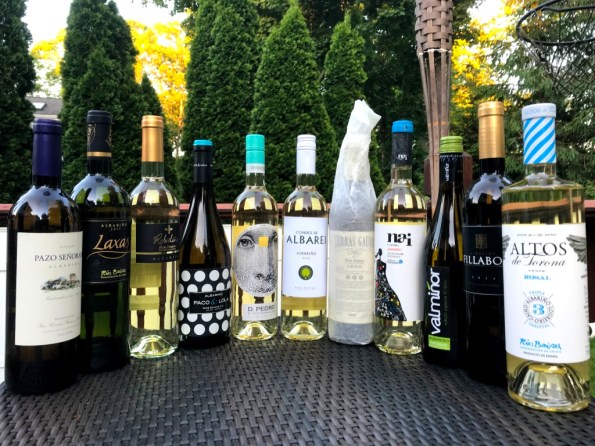
For the second year in the row, I had a pleasure of participating in the virtual tasting of Albariño wines, organized by Snooth, one of the largest online wine communities. I will not delve into the technical details of the region, as I had an extensive coverage in last year’s post, and instead, I will simply share my notes for the wines we tasted.
Here are the notes, sorted by the sub-region of Rias Baixas:


Sub-region: Val do Salnés:
2016 Condes de Albarei Albariño Rias Baixas DO (13.5% ABV, $15)
Light straw
Lemon, lemongrass, hint of peach
Lemon, good minerality, medium body, good mouthfeel, mostly acidity on the finish
8-, good balance, round
2017 Pazo Señorans Albariño Val do Salinés Rías Baixas DO (13.5% ABV, $25)
Straw color
Rich citrus – lemon, grapefruit, orange
Clean acidity, lemon, thyme, good minerality, vibrant, fresh
8-, excellent
2017 Nai e Señora Albariño Val do Salnés Rías Baixas DO (13% ABV, $15.57)
Straw pale
Tropical fruit, white flowers
Round, clean, good balance of fruit and acidity
8, definitely one of the favorites.
2017 Paco & Lola Albariño Rías Baixas DO (13% ABV, $21.99)
Lightest color of all, straw pale
Lemon, mint, nice minerality
Fresh, crisp, cut-trough acidity, lemon grass
8-, round and extremely refreshing


Sub-region: Contado do Tea:
2016 Fillaboa Albariño Rias Baixas DO (13% ABV, $20)
Light golden
Candied lemon, vanilla, touch of butter, medium+ intensity, inviting
Crisp acidity, fresh, touch of salinity, fresh lemon, steely notes, vibrant
8-/8, excellent
2017 Señorío de Rubiós Robaliño Albariño Rias Baixas DO (12.5% ABV, $18)
Straw pale
Sage, lemon, hint of overripe white peach
Good acidity, lemon finish, Meyer lemon notes
7/7+, Needs more vibrancy.
2017 Bodegas As Laxas Albariño Rias Baixas DO (12.5% ABV, $18)
Light straw color
Lemon, touch of minerality,
Minerality, forthcoming acidity, hint of grapefruit, Mayer lemon, good balance
8-, very good, balanced wine


Sub-region: O Rosal:
2017 Valmiñor Albariño Rías Baixas DO (13% ABV, $18.99)
Light gold
Fresh white plums, intense, pineapple, very inviting
Crisp acidity, lemon notes, fresh
7/7+, nice, simple, varietally correct
2016 Don Pedro Albariño De Soutomaior Rias Baixas DO (13% ABV, $18.99)
Light gold
Touch of honeysuckle, white flowers, hint of peach
Crisp acidity, pure lemon, vibrant, clean, lots of minerality, good midpalate weight
8-, steely goodness of the young Chablis, excellent, lots of pleasure. This wine will dramatically evolve over the next 5-7 years.
2017 Altos de Sorona Rosal Rías Baixas DO (12.5% ABV, $20, blend of Albariño, Caiño, Loureiro)
Straw color
Lemon, sea air, minerality
Lemon, crisp acidity, good weight, fresh, vibrant.
8-, excellent balance, can be had by itself as a summer day thirst quencher, or with some oysters (would work beautifully)
2017 Terras Garuda O Rosal Rias Baixas DO (12.5% ABV, $23.99, 70% Albariño, 10% Loureira, 20% Caiño Blanco)
Light golden color
Tropical fruit, guava, candied lemon, vanilla
Rich, generous, hint of watermelon and pineapple, crisp acidity, fresh, vibrant
8-, excellent
If you want to see the recording of the tasting, you can find it here. If you want to try the wines we tasted, most of them are still available on the Snooth website, also at a great price – take a look here.
I have to say that the quality was excellent across all the wines we tasted, with some of the standouts, such as Nai e Señora Albariño. Is Albariño a part of your standard wine routine? Do you have any favorites? Cheers!
P.S. Procrastination sometimes offers benefits – this tasting took place in May, but today (August 1st, 2018) is International Albariño Day, so I guess the post about Albariño is quite appropriate.
Can You Enjoy The Wine In The Can? Yes You Can!
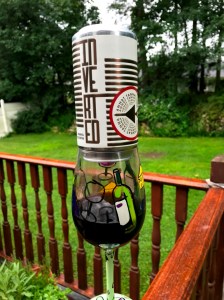 I couldn’t resist a little fun with the title, but really – what do you think of the wines in the can?
Let me ponder at the subject a bit while you give it a thought.
I’m sure that I qualify as one of the pioneers of the wine in the can. Here is an article in LA Times, talking about wines in the can showing up around the USA, and explaining why those make sense. This article appeared in September of 2015. Here is the link to my own post, titled “My First Can of Wine“, written back in November of 2014. So yes, I can claim some familiarity with the subject.
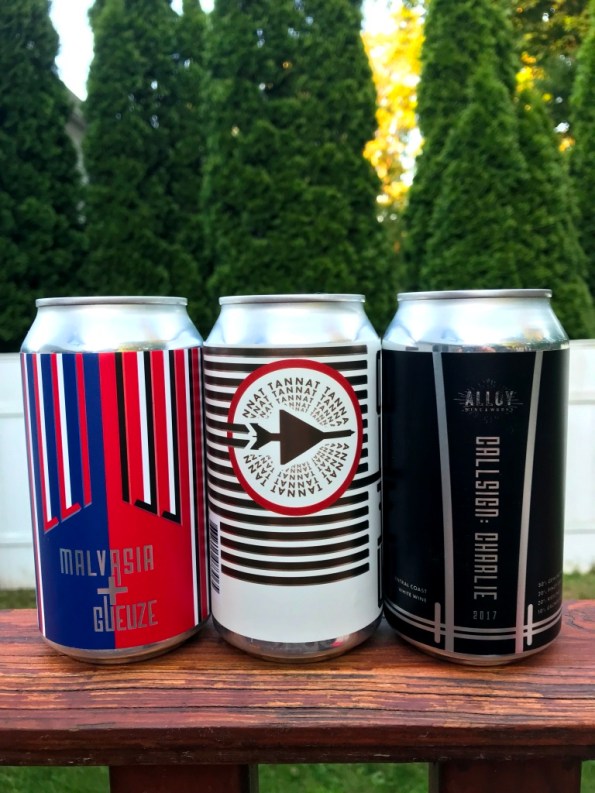
My first can of wine was produced by Field Recordings, a very unorthodox winemaking company to begin with, offering strange wines, with strange labels, unusual blends, aged in unusual barrels (Acacia wood, anyone?) – but ultimately, unquestionably delicious. I wrote numerous posts about Field Recordings wines, starting from 2011 – you can scroll through a few pages here. Field Recordings went on to create a club dedicated to the wines in the can (suggestively called Can Can Club), and then they even created a whole new company, called Alloy Wine Works. One of the fun parts of that Can Can club membership was to observe the progression of packaging and delivery of club shipments of canned wines – from packing bubble-wrapped cans in the same wine shipping box as the regular bottles (didn’t work too well), to the Fedex Tube:


to the practically a masterpiece of packing:


Okay, I probably got a bit off on the tangent here – this post is not about Field Recordings, but rather about wine in the can as a category, so let’s continue our discussion.
First, I think we need to establish a very simple truth – wines in the can are NOT a reduced, lower quality, cheap leftover junk wines – they are full-blown, legit, properly made wine of the same quality as all other wines made at a given winery, simply presented in the different format – a high quality lined aluminum can. These are the same wines, people, and if you want any takeaway from this post, this is my main point. One more time – these are the same wines, which are simply packaged in cans instead of being packaged in the glass bottles.
Now, why do we need wines in the can? I don’t want to get into the whole “cool factor” and “millennials” discussions – yes, those are important, I know, as they further democratize wine and bring new people to try the wine for the first time. But all of these can be categorized as a marketing gimmick, and I want to look for the actual benefits of the canned wines. Let’s see:
- On the go: Canned wines are perfect on the go. It is much easier to stuff a can of wine exactly as you would a can of soda into your backpack, and off you go. When you decide you want to drink the wine, it is very easy to open, and you don’t need to look for the glass. And even two cans of wine will be lighter than one bottle of wine, for the most of the cases. As we said – just get it, and go.
- Safety: Wines in the cans are a lot safer around small children, and generally anywhere where glass is simply a bad idea – like a beach or a pool.
- Convenience: Standard size for a can of wine is 375 ml, which is half of the bottle. If you want to drink white, and your friend is in a mood for a hearty red, having two different cans is easier than opening two bottles of wine.
- Experimenting and variety: with the smaller format and different packaging, there is an opportunity to create new types of wines or even go beyond wine. With Alloy Wine Works, I had wines going way beyond white, red and Rosé – wines finished with beer hops, wines mixed with coffee, plums, stout and lots lots more.
I’m sure there are other benefits of wines in the can, but – do cans of wine have only a good side without a bad one? As you know, this is never the case in life, so let’s talk about challenges:
- This is wine, not a beer!: It is important to remember that a can of wine holds half a bottle of wine – not beer. What’s my point, you ask? A typical can of beer contains less than 4% of alcohol. Typical wine – 13% as the least, so that one can of wine is equivalent to at least three cans of beer in terms of alcohol volume – you better remember that. Half a bottle of wine is not something you can easily dismiss.
- Once it’s open, it’s open: if you just want to have a glass of wine, it is easy with the bottle – open, pour a glass, close the bottle back. It is not going to work like that with the can – once it’s open, it’s open, and there is no going back. This problem has an easy solution – provide a plastic cap which can be used to reclose the can – but so far I didn’t see too many of those sold with the cans.
- Aging: I don’t think this is a real problem, as I don’t expect much of the aging-worthy wines to show up in the can, but in any case, keep in mind that the wine cans are better not be lost in the cellar.
Here you go – my take on the wines in the can. I didn’t plan to include much of tasting notes in this post, but I can tell you that this year I had wines in the can from California, Oregon, Australia and Long Island, and all of them were well made tasty wines.
At this point you had plenty of time to come up with your opinion about the wines in the can – would you please share it with everyone? Here is an easy poll for you – let us know what you think about canned wines! Cheers!
Sabering with a Steak Knife
When I’m opening a bottle of sparkling wine, my first desire is always to saber it. Sabering is a lot more fun than just twisting out the cork. Opening sparkling wine in the standard way, by twisting a bottle out of the cork, should produce no sound, maybe just a little “sigh”. When the bottle is sabered, the loud pop is expected, and the sparkling wine siphons out of the bottle – I hope you agree, this is lots more fun.
In the act of sabrage, the bottle is open with a small sword appropriately called the saber. This is how the typical saber would look:
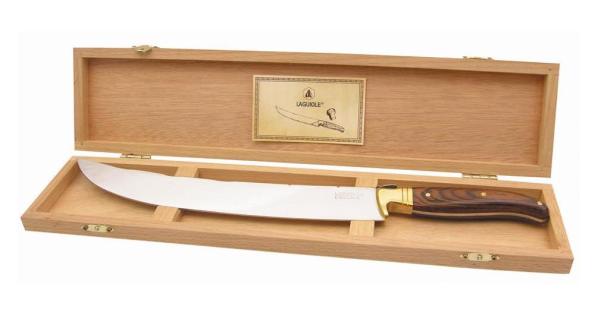 I don’t believe I ever used the proper saber before, but considering the weight of it, it should be a pretty easy exercise – I used the chef’s knife successfully a number of times, works perfectly on the properly chilled bottle of Champagne or similar classic-method sparkling wine (it is all about high pressure of the liquid in the bottle).
Instead of a saber, it is a lot more fun to try random objects for the sabrage. My sabering attempts are not anywhere as prolific as Jeff The Drunken Cyclist’s (here is his latest success with the “espresso thingy”), but I had my own documented successes with the wine glass, and failures with the stapler and even with the knife.
This time around, I was opening the bottle of Cava, and encouraged by the Jeff’s latest success, I wanted to use some random object for sabering – so the steak knife was something I grabbed.
 This is my beloved Laguiole steak knife, which is perfect for slicing the meat, beautiful and nicely balanced – however, it is very light. I was positive this will not work, but this is part of the fun! My first two strikes led to the glass starting to chip off around the neck, which lowered my confidence even further, but you can see this all for yourself here (apologies for the format of this video – a rookie mistake with the iPhone after not making videos in a while…):
As you can tell, it worked! Next time you will be opening a bottle of Champagne – have some fun with it. Cheers!
Wednesday’s Meritage: Capital Grille, Thomas Keller, and more
Meritage time!
Wednesday’s Meritage was a permanent weekly feature in this blog in the days where the time for blogging was magically found with ease. The wine can be called a Meritage only if it is produced as a blend of two or more varieties – the idea for these Wednesday’s Meritage posts was based on the same principal – sharing the tidbits of news and information which I thought might be of interest to my fellow readers.
Looking through some of the recent emails I came across a few newsworthy items, so off went the sparkle – “that warrants a Meritage post”, so here we go.
The Capital Grille is a group of steakhouse restaurants, which don’t require much introduction for steak aficionados in the USA. Their menu is generally very solid, and, what is very important for me, their wine list is extensive and reasonably priced, for sure for the restaurant in that same steakhouse category. The Capital Grille is known for some innovative wine programs – for instance, their Generous Pour event had been in effect for many years, and it allows people to enjoy a variety of the specially selected wines at a very reasonable price (was $25, now $28) with dinner – a number of my personal favorites were discovered with help of this program. While new Generous Pour will start on July 9th of this year, this is not the program I wanted to bring to your attention. The Capital Grille just announced a brand new program, called “Sip today, sip tomorrow”, with a very simple idea. You can order any bottle of wine from their extensive wine list. Next, the wait staff will use Coravin to pour as many glasses as you would want – and the rest of the bottle is yours to take home. You can get more details on The Capital Grille website – click on the “sip today, sip tomorrow” icon to learn more. I don’t know about you, but I like the idea – now, just need to find a good occasion to visit The Capital Grille and try it for myself.
Say “Thomas Keller” name to any foodie, and you will get an “ahh” reaction from the absolute majority of them. The iconic chef is best known as an owner of French Laundry, a culinary mecca in Napa Valley, and Per Se in New York City. Now, the people of Miami can dance a happy dance, as Thoms Keller is set to open The Surf Club restaurant in Miami, in the town called Surfside (less than 10 miles from Miami). This will be a first Florida restaurant for the Thomas Keller, connecting to his childhood memories of Palm Beach. The restaurant is expected to have a bit more casual menu, compared to the French Laundry and Per Se, but I’m sure Thomas Keller’s style will be well recognized there. The restaurant should be opening next month, so if you live in Miami or plan to visit, you might want to start looking up that phone number…
Last, I have a movie for you. It is less than 20 minutes long. Yes, it is in Russian – but it has English subtitles, which were done pretty well. The movie, called “The Taste”, of course, revolves around wine… and people… and wine. The ending is totally unexpected (it was for me), so if you will go to the extent of watching it, please allocate that 20 minutes of your time – there is a good chance you will enjoy it, even if you don’t speak Russian. And if you will end up watching it, I would be happy to hear from you, whether you will like it or not.
That’s all I have for you, my friends. As these Meritage posts used to finish – the glass is empty, but the refill is on the way. Until the next time – cheers!
Looking for Great Wine Values? Trader Joe’s Got Them
Another trip. Another stop at Trader Joe’s. Another “how do they do it?!” sentiment.
My typical strategy in Trader Joe’s is to see how many wines $20 can buy. This time around, I decided to change that. Somehow, being in San Diego in California, there was sudden desire to focus on California wines. That, and maybe a bit of France – 2018 had been my personal France tasting renaissance so far.
Of course, while I wanted to drink California wine, I was still on the lookout for reasonably priced bottles, not to exceed $20 – by the way, I know that good California wine under $20 is considered “mission impossible” by many, so this was another interesting challenge.
After touching and turning tens and tens of bottles, I settled for maybe not famous, but very well known producers – Benziger Family Winery and St. Clement Vineyards from California. I almost added French GSM to the basket, but instead, went with the Rhone-style white blend – a classic combination of grapes (Viognier/Roussanne/Marsanne), and a great value at $6.99. 
How did the wines fare? Let me tell you all about it.
2016 Pontificis Viognier-Roussanne-Marsanne Pay’s d’Oc IGP (13% ABV, $6.99, $50% Viognier, 35% Roussanne, 15% Marsanne). While Viognier/Roussanne/Marsanne combination is a classic blend of Northern Rhone, this wine came from Languedoc, the winemaking region where everything is possible. Was it different than the actual Northern Rhone would be? You bet. Was it still delicious in its own right? By all means.
Light golden color in the glass. After some time, the nose showed classic Viognier perfume of tropical fruit – nothing overboard, but well noticeable. As it is often the case with Marsanne/Roussanne combination, I almost preferred this white wine at the room temperature versus fridge-cold. A touch of lemon and lemon zest on the palate, characteristic plumpness, full body, with some hint of guava. Roll of your tongue goodness, with a perfect amount of acidity on the finish – just bring me some food. Drinkability: 8-/8. And good luck matching this value.
2014 St. Clement Vineyards Pinot Noir Napa Valley (14.5% ABV, $9.99). St. Clement Vineyards had been making wines in Napa Valley since the 1970s. One of their wines, a red blend called Oroppas, is one of my favorites, so this was an easy choice.
Bright ruby color in the glass. Dark chocolate, tobacco, and plums on the nose. The palate is perfectly balanced with supple raspberries and blackberries, good firm structure, excellent mouthfeel and presence, and an acidity cleanse on the finish. It might be pure luck – but luck or not, this was one tasty California wine. For $9.99. Drinkability: 8
2015 Benziger Family Winery Cabernet Sauvignon Sonoma County (13.5% ABV, $13.99, 16 months in oak). Benziger winery was founded in 1980, and in the year 2000 became a Demeter certified biodynamic farm. Benziger wines generally offer good value for the money, and who can refuse a California Cabernet from a good producer? Yep, not me.
Dark garnet, almost black in the glass. Beautiful nose of black currant and bell pepper. Unmistakable, textbook Cabernet Sauvignon on the palate – clean fruit, soft, open, black currant, eucalyptus, soft tannins, medium+ body. Lots of pleasure in every sip. Another great California value – well under $20. Drinkability: 8-/8.


Here you go, my friends. Trader Joe’s is unstoppable in its mission of bringing tasty power to the people. What was your favorite Trader Joe’s discovery as of late? I’m off to have another glass of Cab while you are thinking about it.
The Art of Tempranillo
Source: Vintae.com
I love Tempranillo wines. I wouldn’t call myself an expert, but I had a wide range of Tempranillo – with the exception of Australia, I believe I tried most of the major renditions – Rioja, Ribera Del Duero, Toro, most everywhere else in Spain, Texas, California, Oregon, Washington (am I missing something? do tell!). With all the love and respect to all the regions, if I have to put an order of priorities in that “list”, I would put Rioja first, Ribera del Duero very close second, but the competition for the 3rd place would be severe – in my world, of course.
I like wines of Toro, the closest sibling to the Rioja and Ribera del Duero, but it would be hard for me to place them higher than some of the beautiful Tempranillo renditions from Irwin Family Vineyards, Duchman, or Fields – considering the Toro wines I had in the past. Compared to Rioja and Ribera del Duero, Toro is … well, maybe I need to explain why I keep mentioning Rioja, Ribera del Duero, and Toro together all the time. These are the only three regions in the world where the absolute majority of the red wines is made out of the Tempranillo grapes. Yes, there are Garnacha and Graciano in Rioja, Cabernet Sauvignon and Merlot in Ribera del Duero, but still – most of the red wines in these three regions are made out of the Tempranillo, hence the constant comparison.
Out of the three regions, Toro is south-most one, with an expressly continental climate, low annual rainfall amounts, and significant range of day-night temperatures – which typically translates well into the flavor. Tempranillo is the grape of Toro, but similarly to Tuscany/Brunello, where you have Sangiovese and Sangiovese Grosso, Tempranillo in Toro is known as Tinta de Toro, a.k.a Tempranillo de Castilla, a.k.a. Ink of Toro. The grape is a bit smaller, with thicker skin, which coupled with growing conditions typically results, in massive, concentrated wines requiring extensive aging to become drinkable – I still have a memory of trying Alabaster made by Sierra Cantabria, one of the well-known producers in Toro, which was one of the most massive wines I ever experienced. Nevertheless, as I said at the beginning, Tempranillo is one of the favorites, so when the opportunity called to try 3 wines from Toro, I was definitely curious – and a bit cautious at the same time.
To ease things up, together with the 3 Toro wines from Bodega Matsu came a bottle of Rioja Reserva from Bodega Classica. While coming from unrelated producers, there is a common link between them – this link is called Vintae – a young company with a serious passion for the Spanish wine for the modern world. Vintae, started in 1999 by the Arambarri family, set on changing world’s perception of the Spanish wine as “boring”. To the date, Vintae unifies a collection of 11 different “projects”, all focused on showcasing the regions and the grapes.
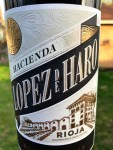
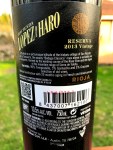
Going back to the wines at hand, let’s talk about Rioja first. The wine comes from Bodega Classica, located in the heart of Rioja Alta. Rioja Alta offers a unique high-altitude setting to produce arguably the best Tempranillo of the whole of Rioja region. Couple that with more than 100 years old vineyards, and you are looking at some tasty opportunities in the bottle, as this Bodega Classica Hacienda López de Haro Rioja Reserva was. Here are my notes:
2013 Bodega Classica Hacienda López de Haro Rioja Reserva DOCa (13.5% ABV, $16.99, 90% Tempranillo, 5% Garnacha, 5% Graciano, 20 months in French and American oak)
Dark garnet color
Pepper, vanilla, raspberries, mushrooms, nice minerality
Medium body, good acidity, noticeable alcohol burn initially, went away in about 15 minutes, good fruit showed up, characteristic cedar notes, good acidity, round, soft.
8-, nice, just give it a bit of time to soften up at the beginning. The second day continued without changes. Good life expectancy, as expected of Rioja Reserva. And an excellent QPR.
Now, let’s go back to Toro. As I already said, in my prior experience, Toro wines were massive and concentrated, requiring long aging to soften and really show a beautiful expression of Tempranillo. And then there were wines called Matsu.
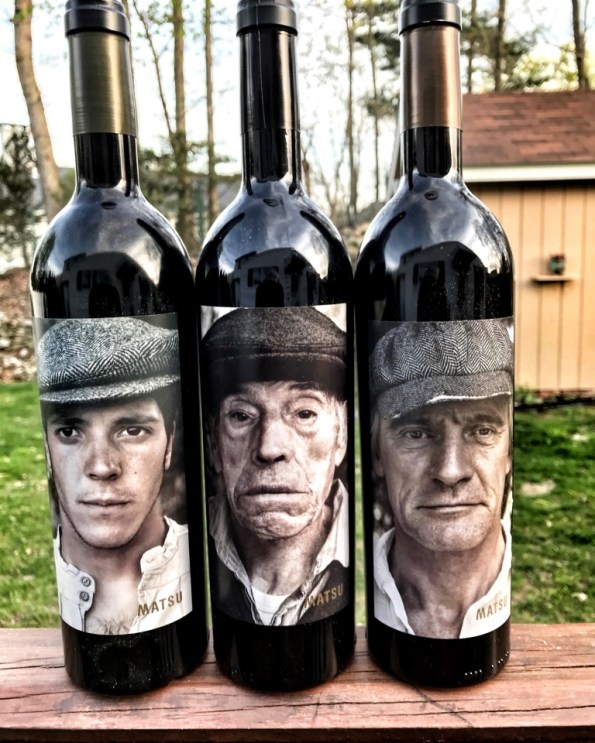
Matsu in means “wait” in Japanese. As we all know, waiting is one of the favorite games of oenophiles. When it comes to the three Matsu wines I had an opportunity to taste, there are many different levels of “waiting”. The wines had been progressively aged for the longer times before the release – 3 months for El Picaro, 14 months for El Recio, 16 months for El Viejo. The grapes were harvested from the vines of different age (again, progressively) – 50-70 years old for El Picaro, 90-100 years old for El Recio, more than 100 years old for El Viejo. See, waiting here is clearly a part of the equation.
And then there are those ultra-creative labels. Not only labels commemorate people who actually worked to create the wines, they clearly identify what you should expect from the wines – in age, in style, and even in price. I conducted a little experiment, first with my kids, and then with the people on Instagram, asking them to identify the most expensive wine – nobody made a mistake, the labels speak very clearly to us.


How were the wines? Surprising. Probably the best Toro wines I ever had – without any regard to the pricing category. Here are my notes, so you can see for yourself:
2016 Bodega Matsu El Picaro Toro DO (14.5% ABV, $13.99, 100% Tinta de Toro, 50 – 70 years old vines, 3 months minimum aging on the lees, concrete tanks)
Bright ruby color, noticeable legs, minimal rim variation
Young fresh berries, medium+ intensity, a touch of vanilla
Surprisingly light on the palate, pleasant tannins, fresh berries, very quaffable.
8-, might be the lightest rendition of Toro I ever had. The smell is a bit more complex on the second day. Palate nicely evolved, good balance, raspberries, no more impression of the young wine, lots of minerality.
2015 Bodega Matsu El Recio Toro DO (14.5% ABV, $21.99, 100% Tinta de Toro, 90 – 100 years old vines, 14 months aging in second use oak barrels)
Garnet color, noticeable legs, minimal rim variation too
Sage, fresh raspberries, quite fruity, roasted notes, minerality, distant hint of cinnamon
Underripe plums, blueberries, thyme, nice herbal component, surprisingly light, still noticeable alcohol, needs more time
8-, needs time. Second day: 8/8+, velvety texture, well integrated, excellent balance, a touch of tobacco and espresso on the palate and ripe plums. Outstanding.
2015 Bodega Matsu El Viejo Toro DO (15% ABV, $46.99, 100% Tinta de Toro, 100+ years old vines, 16 months in new French oak barrels)
Garnet Color, noticeable legs, rim variation is not extensive, but present
Sweet blueberries and raspberries on the nose, sage, sweet oak
8- first day, waiting for more.
Second day: 8, much evolved, more integrated, velvety texture, dark fruit, round, smooth. Will evolve further.
Here you are, my friends – the Art of Wine, from the label to the glass. Very impressive and thought-provoking wines, definitely worth seeking. Have you had any of these wines? Have you had Toro wines before? Do you have any Tempranillo favorites? Cheers!
Sequel in Reverse – More About Wines of Southwest France
What’s up with the “sequel in reverse”, you ask? Easy. All we need to do is flip the timeline. This post is a continuation of the previous post about wines of Southwest France – however, the tasting I want to share with you took place almost 6 months ago, at the end of the last year 2017, hence the “reverse” notion.
Outside of the sequence of the events, the two tastings are perfectly aligned – they are both squarely dedicated to the wines of one of the oldest wine-producing regions in the world – Southwest France.
I can’t explain why, but I feel that I need to make a confession. If you look through the pages of this blog – and there are a few here – I’m sure you will come to a conclusion that I primarily drink wines from California, Spain, and Italy, with an occasional sprinkle of everything else. And you will not be wrong. However, truth be told, my true love to wine started from French wines. I read the most about French wine and French wine regions. I was obsessed with trying to find an amazing Bordeaux for less than $10. Côtes du Rhône wines were a staple at the house. I spent countless hours in the France aisles of the wine stores (luckily, I was working in a close proximity of the Bottle King in New Jersey), looking for the next great experience with the wines from the Loire, Rhône, Bordeaux, Chablis, and others. French wines were “it” – unquestionably, a sacred territory. As the time was going by, and Bordeaux and Burgundy prices were going up faster than the weeds growing after the rain, the French wines moved mostly into a category of a rare encounter.
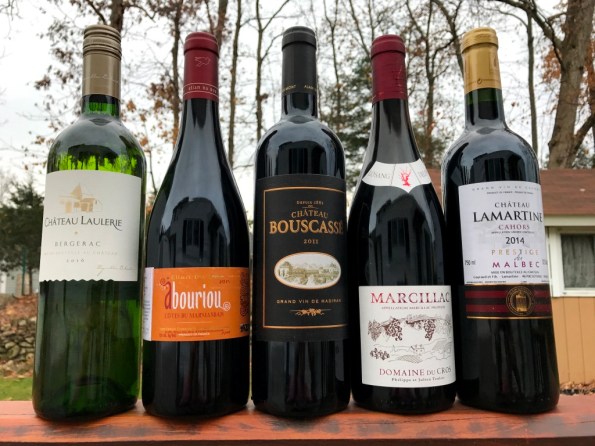
Last December was not the first time I participated in the virtual tasting about the French wines – but somehow, when I opened the box with these wines, something warm and fuzzy came over, and my first reaction was “ahh, I really, really want to drink these wines!”. There is nothing special about this particular set – no big names (I don’t believe Southwest France has much of “big names” anyway), no flashy, ultra-modern labels – and nevertheless, there was a promise of a great time in their simplicity and authenticity. These wines also perfectly played to my other “wine obsession” – the love to obscure and lesser-known wines, so altogether, I took a great pleasure in anticipation of the tasting.
As this was a virtual tasting, I had both the wines and time at my disposal, so unlike the previous post, here are my detailed notes in the usual format:


2016 Chateau Laulerie Bergerac AOC (12% ABV, $12, 85% Sayvignon Blanc, 15% Semillon)
C: Light gold
N: beautiful, fresh, medium+ intesnsity, honeysuckle, white flowers, peach
P: fresh, crisp, excelllent lemony acidity, white stone fruit, restrained
V: 8-, delicious, will be great with food and without, great QPR
2015 Domaine Elian Da Ros Abouriou Côtes du Marmandais AOC (12% ABV, $23.99, 90% Abouriou, 10% Merlot)
C: dark ruby
N: freshly chrushed berries, leafy notes, cherries, anis
P: ripe plums, sweet tobacco, eucalyptus, medium long sweet tobacco finish
V: 8-, would love to try it with an actual cigar. Needs a bit of time. And a new grape – Abouriou


2015 Domaine du Cros Marcillac AOP (12.5% ABV, $15.99, 100% Fer Servadou)
C: Ruby
N: earthy notes, mint, some medicinal notes (iodine?)
P: beautiful fresh pepper on the palate, tobacco, cherries – that pepper is delicious, love the wines like that
V: 8/8+, delicious, excellent QPR
2014 Château Lamartine Prestige du Malbec Cahors AOC (12.5% ABV, $17.99, 100% Cot (Malbec))
C: dark garnet
N: vegetative, tobacco, a touch of cherries
P: bright acidity, dark fruit, tart cherries and cherry pit, noticeable tannins.
V: 8-, pleasant, will work great with the steak, but needs time
2011 Château Bouscassé Grand Vin de Madiran (14.5% ABV, $17.95, 60% Tannat, 25% Cabernet Franc, 15% Cabernet Sauvignon)
C: dark garnet
N: eucalyptus, forest floor, a touch of eucalyptus,
P: initial tannins attach, pepper, dark round fruit, excellent extraction, layers of flavor, firm structure
V: 8+, outstanding, powerful, balanced, needs time!
The Southwest France wines are a treasure trove for the wine lovers – they capitalize on tremendous history, experience, unique terroir and unique grapes, offering oenophiles lots of pleasure in every sip. Look for the wines of Southwest France – and you can thank me later.
The Region Which Started It All
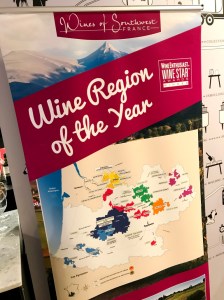 The wine had been made in the Southwest of France ( Sud-Ouest in French) almost forever – in terms of human life, 2,000+ years well classified as “forever”. The region is considered one of the “cradles of winemaking” in Europe, and it maintains its uniqueness and diversity today – for example, out of 300 grape varieties used in the winemaking in the region, 120 are not found anywhere else.
Of course, we know that winemaking started about 8,000 years ago, and not in the Southwest of France. So what’s up with “started it all” claim? Glad you asked! Let me explain.
We live in the times when the wine is a part of daily life of many. Drinking wine is a norm and normal, simply a part of the daily routine for many, not a luxury or a weird exception anymore. Yes, that’s how it was in Europe forever – but now I’m talking about the rest of the world, countries such the USA, and even China now heading that way. The demand for wine had been constantly increasing since the late 1990s, and even Great Recession of 2008 didn’t kill it (just shifted the “acceptable” price ranges). Is it all just a normal course of events? We can, of course, settle for this. However, I believe that on a deeper level, there are exact reasons, “tip the scale” moments for many things which seem to happen just on its own – however, sometimes it is not easy to identify those “reasons”.
Remember the impact of the movie Sideways on consumption and production of the Merlot in the USA? That movie was the reason for a huge slump after 2004, and production and interest to Merlot are still in the recovery mode even now, 14 years later.
Late in the 1980s, the world started talking about The French Paradox – French eat cheese and foie gras, cook with butter and duck fat daily, and nevertheless, the coronary disease rates are much less than in the countries with comparable living standards and much lesser fat consumption. Possible explanation? Red wine. French consume lots of red wine, and resveratrol, one of the prominent substances found in seeds and skins of the red grapes, acts as a defense against clogging of the arteries. That was the outcome of the extensive medical research study conducted in France, which became known in the world as French Paradox.
In 1991, CBS in the USA dedicated one of their popular programs, 60 Minutes, to the French Paradox, and you know how Americans are, right? We are always looking for an easy way out, so wine sounded like an easy enough cure, and I believe this became a pivotal moment which triggered a renewed interest in the wine. Almost 40 years later, it seems that the wine successfully keeps the momentum. And before you will attack me with all the facts from the latest research – yes, I’m aware of many articles pointing to the issues with the study. Whether French Paradox study conclusions were medically solid I have to leave to professionals to debate and decide on. But it was still that pivotal “tip the scale” moment which changed the perception of the wine for many in the world.
At this point, I’m sure you want to see the connection between the title, the Southwest of France, and the story of the French Paradox, right? Here it is. While attending the tasting of the wines of Southwest France, I was listening to the presentation by sommelier André Compeyre, who mentioned that Southwest France has the biggest number of centenarians in France and it was one of the main regions where the French Paradox study was conducted – here we go, now everything is connected and explained. Is it time for a glass of wine?


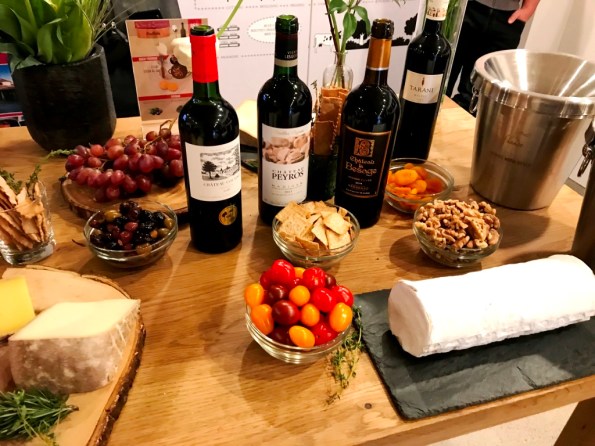
The tasting took place at the little store in New York called the French Cheese Board – what can be better than wine with a little cheese, right? Especially if both come from the same region, where they trained to live together for a few thousand years…
We started tasting with the sparkling wine, moved to the white and then red. As usual in such events, there was not enough time (and desire) for the formal notes, so below is the best I can offer. However, overall, the word is “outstanding” – the wines of Southwest France are well worth seeking – and you will not be disappointed.


NV Domaine du Moulin Mauzac Méthode Ancestrale Gaillac AOP (12% ABV, $15, 100% Mauzac) – very nice and simple. 7+
2017 Domaine du Tariquet Premières Grives Côtes de Gascogne IGP (11.5% ABV, $14, 100% Gros Manseng) – semi-sweet wine. It appears to be a traditional wine in the Southwest of France, which people are accustomed to drinking. It is possible that the wine was not cold enough when I tasted it, but I really didn’t appreciate it. If you like sweeter wines – this might be the one for you.
2016 Héritage Blanc Saint-Mont AOP (13% ABV, blend of Gros Manseng, Petit Courbu, Arrufiac) – excellent, bright, crisp, but very complex and thought-provoking. A touch of grass, vanilla, ta ouch of honey on the palate, green apples, wow. Excellent acidity. Great complexity. 8. And let’s not forget 2 new grapes – Petit Courbu and Arrufiac
2017 Domaine de Joy l’Eclat Côtes de Gascogne AOP (12% ABV, $7, blend of Colombard, Ugni Blanc, Gros Manseng and Sauvignon Blanc) – crisp, clean, superb. 8


2012 Château de Haute Serre Cahors AOP (13.5% ABV, $22) – superb, ripe berries, blueberries, round, delicious, acidity, vanilla, the backbone of minerality. 8+
2012 Château Montus Madiran AOP (15% ABV, $32.99, blend of Tannat and Cabernet Sauvignon) – smoke, campfire, tobacco, great concentration, powerful, excellent, great acidity, outstanding. 8
2011 Jean-Luc Baldès Triguedina Clos Triguedina Cahors AOP (14.5% ABV, $40, 85% Malbec, 10% Merlot, 5% Tannat, 12 months in oak) – touch of barnyard on the nose, delicious fruit, ta ouch of funkiness on the palate, great acidity. 8
2015 Domaine de Terrisses Terre Originelle Gaillac AOP (13% ABV, $16, blend of Braucol (Fer) and Prunelart) – beautiful Cabernet nose, crisp, cassis, Bordeaux style -outstanding. 8. and a new grape – Prunelart
2015 Réserve Bélingard Côtes de Bergerac AOP ($15, 50% Cabernet Sauvignon, 50% Merlot) – beautiful, warm nose, vanilla, cassis, beautiful, soft. 8
2013 Chateau Peyros Vieilles Vignes Madiran AOP (13% ABV, $18, 80% Tannat, 20% Cabernet Franc) – excellent, soft. 8-
2017 Domaine de Joy l’Eclat Côtes de Gascogne AOP (12% ABV, $7, blend of Colombard, Ugni Blanc, Gros Manseng and Sauvignon Blanc) – crisp, clean, superb. 8
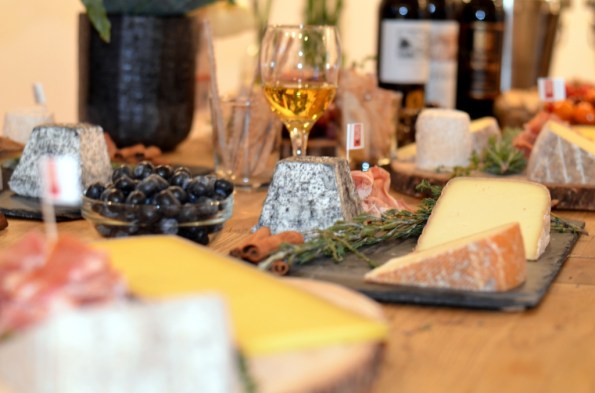


In addition tot he wines, we had an opportunity to indulge on the local cheeses of Southwest France – Ossau Iraty, Buche de Lucay, Bethmale Chèvre, Chabichou, Valencay, and Comté. Sorry, I’m not going to give you any individual notes, but all the cheese were superb. If you are like me and accustomed to the Comté cheese from Costco – that Comté in the tasting was the whole different game (go visit the store and taste, you don’t have to believe me).
There you go, my friends. Have you had wines of Southwest France lately? Any favorites you want to mention? Let’s raise the glass to many happy wine discoveries – and some red wine as a solution to all our problems. Cheers!
From Lodi And Provence, With Love
 We drink wine because it gives us pleasure. Yes, it is that simple (and I didn’t come up with this – I learned it from Kevin Zraly, maybe the best wine educator in the world). We are looking for pure and simple sensual pleasure in every sip of that white, pink or red colored liquid in the glass, and, of course, it makes us happy when we find it.
When it comes to giving pleasure, I have to state that Rosé has an unfair advantage. We start drinking with our eyes, and while white and red have to compete for our attention with creative labels or sometimes even bottle shapes, Rosé takes a lot more simplistic approach – it just stands in front of us – naked. Clear bottle, nothing to hide – here I am, and I know I’m beautiful, so yes, do look at me and feel free to admire.
I don’t know if colors have universal meaning around the world – for instance, red is typically associated with danger or daring in the Western world – and red is the color of luck in China. So the pink color is usually associated with love and happiness in the Western world, and this is why the bottle of Rosé is so good at driving our emotions, no matter what shade of pink it actually boasts.
Acceptance, appreciation, and demand for Rosé stand at all times high today – and it continues climbing to the new “high” every year. Rosé still has a stigma of “summer wine”, but this is slowly changing as people start recognizing how much pleasure every sip of good Rosé packs, and how versatile it is with food – I would dare to say that in its food pairing versatility, it can well compete with Champagne, which is very hard to beat in its pairing range of cuisines from traditional Chinese to fiery Indian, sublime French, or big and bold Texas BBQ.
Today, Rosé is made everywhere – literally everywhere in the world. It is hard to find a winery which didn’t add Rosé to its repertoire. But before Rosé became so fashionable, there was Provence. More than 90% of the wines made in Provence are Rosé, and then they’ve been practicing for about thousand years, so Rosé is really a way of life in Provence, which is easy to see once you take a sip from the glass. I might surprise you with a choice of a close contender to the dominance of Provence – and they are not at all if you will think about the production volume – but when it comes to the taste, Rosé from Lodi in California will easily give Provence a run for the money.
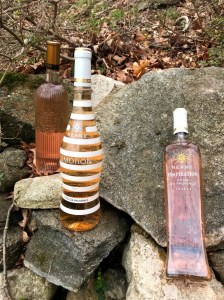
Just look at these colors! Don’t they scream “pleasure”? The Provence Rosé in this picture is only for the color reference purpose, was not part of the tasting
Ever since visiting Lodi in 2016 for the Wine Bloggers Conference, I use every opportunity to confess my love to the region. Lodi might be one of the best-kept secrets in California wine. While a lot of wineries and regions are contemplating their approach to sustainability, Lodi grape growers already developed so-called Lodi Rules (now being analyzed and copied in many regions) for sustainable viticulture, and they have the certification program in place to ascertain that rules don’t just stay theoretical. What starts in the vineyards, continues in the wineries, and the result is simply better wines.
Most of the times Lodi is associated with Zinfandel. Of course, Zinfandel is one of the best known and important grapes in Lodi, but on a big scale, Lodi is a home of the Mediterranean grape varieties – Albarino, Grenache Blanc, Carignan, Grenache, Syrah, Tempranillo and many others, made into delicious, perfectly restrained wines. Lodi goes beyond just the grapes – we need to talk ancient grapes here. lodi is home to some of the oldest in the world plantings of Carignan and Cinsaut (Cinsault), original Mediterranean varieties, also planted on its own rootstock (phylloxera doesn’t survive in Lodi’s sandy soils). Definitely another level – and should be a subject of a separate post.


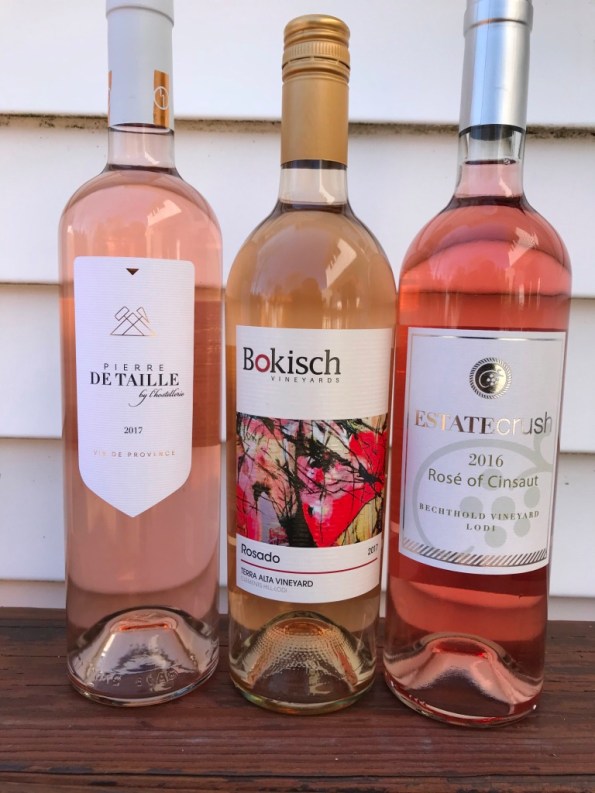
I had a pleasure of tasting 5 different Rosé for this post – two from Lodi and 3 from Provence. One of the Lodi Rosé is coming from Markus Bokisch, truly a master of Spanish (yes, Mediterranean) grape varieties. Second Lodi wine is produced by Estate Crush from ancient vines Cinsaut, from 130 years old vineyard. Provence wines are coming from two estates owned by Provence Rosé Group – two wines from the Château de Berne, the estate tracing its origins back to the 12th century. The last Provence Rosé is from the Ultimate Provence, the experimental estate which combines traditional Provence with urban design. Before we talk about the wines, just look at those Provence bottles – each one is practically the work of art, uniquely appealing beyond just the color.
Here are my notes:
2017 Bokisch Bokisch Vineyards Terra Alta Vineyard Rosado Clements Hill – Lodi (13.6% ABV, $18, 80& Garnacha, 20% Tempranillo)
Beautiful salmon pink color, very delicate
Fresh tart strawberries on the nose, medium intensity, touch of Meyer lemon
Strawberries all the way on the palate, the wine is definitely more present on the palate than any from Provence, a touch of sweetness, medium body, good acidity, very good balance. Refreshing and quaffable. Sweetness significantly subsided on the second day. Outstanding.
Drinkability: 8-, will be perfect with any spicy food.
2016 Estate Crush Rosé of Cinsaut Bechthold Vineyard Lodi (12.5% ABV, $21, 100% Cinsaut, 130 years old vineyard)
Bright strawberry pink
Strawberries and caramel on the nose, even the toffee flavor, sweet condensed milk. Caramel and toffee are mostly gone after first swirl and sip 😦
Nicely restrained palate, a touch of strawberry with very high lemon acidity and Long, acidity-driven finish – I keep salivating for about 30 seconds already. This will compete neck in neck with any Provence wine
Drinkability: 8, excellent. This wine also perfectly passes room temperature test.


2017 Château de Berne Emotion Côtes de Provence AOP (13% ABV, $16, 50% Grenache Noir, 25% Cinsault, 25% Syrah)
Light salmon pink/onion peel
Strawberries on the nose, ripe strawberries on the palate, excellent balance, clean, fresh, easy to drink.
Drinkability: 8, excellent, delicious from the get go (as one would expect from Rosé). Was also excellent with food!
2017 Château de Berne Inspiration Côtes de Provence AOP (13% ABV, $19.99, 70% Grenache Noir, 20% Cinsault, 10% Syrah)
Salmon pink
Delicate nose, lemon notes, minerality, a touch of funk
Pretty rough edges on the palate initially, interesting vegetative undertones.
Drinkability: 7+, might be a food wine.
3 days later, the palate is better integrated, clean and balanced. Totally unexpected. Drinkability: 8-/8
2017 Ultimate Provence Urban Provence Côtes de Provence AOP (12.5% ABV, $22.99, 45% Grenache Noir, 35% Cinsault, 15% Syrah, 5% Rolle)
Delicate light baby pink
Complex nose, strawberries, raspberries, rhubarb, a touch of flowers, a cheese note (light, disappeared after some breathing time)
Clean, bright, fresh palate, strawberries and strawberry compote, crisp acidity, very refreshing – but all the fruit quicky fading, and the wine doesn’t appear balanced.
Drinkability: 7+, unique and unusual nose. Palate might be too dry after all.
3 days later – 8-/8, round, strawberries and raspberries with white stone fruit undertones, clean, totally different level of pleasure. Another surprise.
Here you are, my friends – 5 very interesting Rosé to brighten up any day, summer, winter, holiday, and not.
Tomorrow is Mother’s Day, so you still have time to surprise Mom with your good taste in wine. And if you are a mom reading this – Happy Mother’s Day to you and thank you for everything you do!
Last Bottle Sign Up ($10 credit)




 Talk-A-Vino