Archive
Embracing Inner Dude At Halloween
I like action movies. Well made action movies it is – those which have a plot and intrigue, and especially those which might keep you on the edge of your seat. Oh yes, and they better be American made movies. Nope, this is not a patriotic statement – Japanese action movies are beautiful (I love Martial Arts), but in 99 out of a 100, the main character dies at the end. In our, American made action movies, the good always wins – yep, the proverbial “happy end” is literally warranted.
And then there are those American movies where the plot is based on pure absurd, and the only supposedly entertaining element is unstoppable, relentless use of the F-word by everyone, including kids and animals – I guess the endless F-word variations are supposed to create serious drama around, well, pretty much nothing.
Okay, okay, you are still reading (if you are actually reading – and I want to thank you for that) the Talk-a-Vino blog so we will be actually talking wine – I’m not turning into a movie critic all of a sudden.


Sometimes I know that the wine sample had been shipped to me only through a UPS or FedEx notification, without any prior conversations with “the source”. So when the box arrived a few weeks ago from Donna White, I got really curious about what is inside, as the box looked quite big – however, its weight really didn’t support the size, so yes, color me very curious. Inside the box, I found the Halloween costume, the bottle of wine, and the note. From the note, I found out that I’m a Lebowski (and everyone I know is also a Lebowski). Which instantly triggered “The Big Dude Lebowski” to come to my mind – without much of the basis, as I knew the phrase but had no idea it came from the movie.
Now you have the movie connection. I found some movie clips on YouTube, and whatever I watched, didn’t give me an encouragement to sit down and spend time watching the whole movie (hence my opening thoughts in this post). The strong association of the word Dude and “The Big Lebowski”, which is an actual title of the movie, even prompted me to do a bit of the research on the meaning of “Dude” – I was happy to see that the word itself has a much longer history and somewhat easy to relate to (from Wikipedia): “Dude is American English slang for an individual, typically male. From the 1870s to the 1960s, dude primarily meant a person who dressed in an extremely fashionable manner (a dandy) or a conspicuous citified person who was visiting a rural location, a “city slicker”. In the 1960s, dude evolved to mean any male person, a meaning that slipped into mainstream American slang in the 1970s. Current slang retains at least some use of all three of these common meanings.” So “The Dude” can exist on its own, without the “The Big Lebowski” parallels.
Okay, so I explained the movie opening of this post, but we still didn’t get to wine – and it is the time to do it. The Dude actually plays an important world in the wine world – as the name of the Australian Shiraz. Two Hands winery from Barossa Valley in Australia produces the wine called Gnarly Dudes, which has the picture of the old Shiraz vines on the label – which looks like, well, gnarly dudes – hence the name and this whole connection between the Dudes and the wine.
I mentioned the Halloween costume in the box, didn’t I? Can you guess what the costume was? Yep, of course, it was the outfit of The Dude himself, exactly as they show it in the movie. My first reaction was: no. Just no. I will not wear this. A few days later, after the initial desire to reject slowly dissipated, the next thought was “well, this is Halloween after all. Why not?
The end result was simple. I wore The Dude’s costume and I opened the bottle of The Dude wine, just as it was envisioned by whoever put this package together. Below, you can see a proof – lame, but my best version of The Dude. By the way, when I was giving out candies in this outfit, nobody complained – and one person even managed to correctly identify the character I was impersonating.


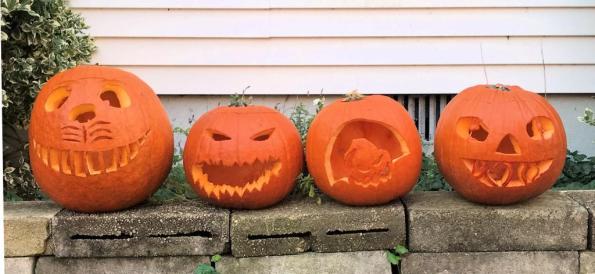
For the longest time, our family tradition is to carve pumpkins for the Halloween. None of us has any carving skills, but once we finally acquired a good pumpkin carving set from the Williams-Sonoma, we managed to achieve the level of the personal content with the results of our carving efforts.

And now, let’s finally talk wine – 2017 Two Hands Gnarly Dudes Shiraz Barossa Valley (13.8% ABV, $30, 100% Shiraz, 12 months in French Oak). The wine perfectly demonstrated its “dudiness”. Upon opening and for the most of the evening, it was simply an okay wine. Here are the notes:
Roasted meats on the nose, quite dominant
Dark, earthy fruit, blackberries, a touch of pepper, noticeable sapidity, overall earthy notes, good balance. This is a food friendly wine.
So in terms of drinkability, it was a 7/7+ wine at the best on the first day. The second day (without pumping the air out, just putting the screwtop back on) brought far more enjoyable wine – blackberries appeared on the nose, and on the palate, the wine clearly added multiple dimensions – velvety texture, round dark fruit, both blackberries and blueberries, sage and violets joined the chorus – absolutely next level wine compare to the first day, definitely an 8 wine (my own 1-10 Drinkability scale, yes). I want to mention that the wine remained equally beautiful even on the 3rd day, and showed a touch “over the hill” signs on day 4. An excellent wine, but you have it either give it some time or look for the one which has some age on it. And yes, forget a few bottles in the cellar for the next 10 years – somehow, I expect you to be handsomely rewarded.
Here is my Dude story for you. How was your Halloween? Cheers!
For The Love of Chowder – 2018 Edition
Blogging is all (mostly?) about traditions, isn’t it? I’m talking about topics, things or experiences we like to write about. If you blog for a while, you have a number of posts which can be called traditional, as they cover the same subject – yearly, monthly, weekly, daily? (ouch!). For sure it works this way for me – there is a number of experiences I like to talk about on the regular basis – as those experiences take place.
One of such experiences is the Chowdafest, a fall event dedicated to the humble (or not) soup, generally known as Chowder – if you want a bit of an education on what the chowder is, I can offer you the post I wrote after attending my first Chowdafest back in 2015, which provides a few details on the different types of chowders.
The 2018 event took place at around the usual time (Sunday, September 30th), at the usual place – Sherwood Island State Park in Westport, Connecticut. Even the weather was the usual – sunny, bright and not too cold. However, the summer and early fall in New England saw an incredible amount of rain, so the grounds were unusually wet and people had to be careful walking around.
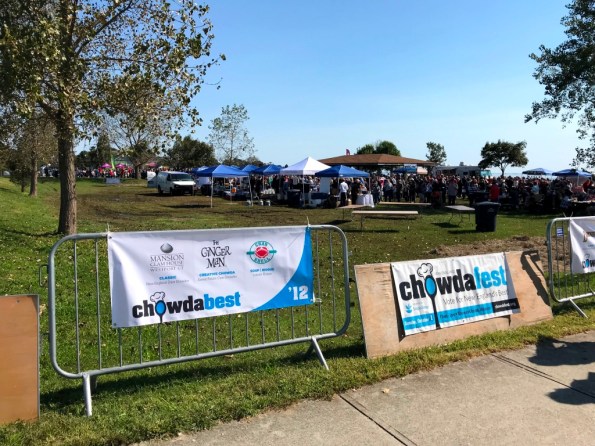

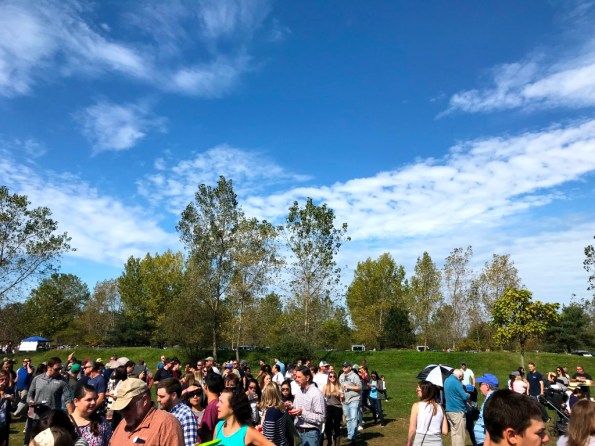
As we entered, all visitors were given a ballot and a pencil, to mark down their favorites. The back side of the ballot had a map of the event, as in addition to all the competitors, there were lots of vendors (sponsors) offering other tasty treats, so one didn’t have to survive on the chowder alone. Cabot Creamery, Harney & Sons Tea, Ocean Spray, Stop & Shop, Polar Beverages, and many others were serving Mexican and Italian food, ice cream, juice, tea, coffee, sparkling water – you had a lot of fun food options beyond chowder.


Same as last year, there were 5 categories were participants were competing for the title of “the best” – Classic New England Clam Chowder, Traditional Chowders (Manhattan/Rhode Island’s), Creative Chowder, Soup/Bisque, and Vegetarian. The participating restaurants this year represented states of Connecticut, Massachusetts, New Hampshire, New York, Rhode Island, Vermont, and Washington.


Obviously, I’m not going to give you much of a detailed report here about all the chowders I tasted, so here are my overall impressions:
- For the 4 years that I’m attending the event, I’m happy with the overall quality and variety. It is not boring and once I get out of the food coma at the end of the event, I’m instantly happy to think about next year’s Chowdafest.
- The overall level of booth decorations in 2018 was less than in the previous years. Many places would just have a serving station and maybe a recipe. It takes away a bit from the “Fest[ival]” experience. Hopefully, in 2019, we can go back to more festive booth settings.
- A few vendors run out of chowder/soup in the middle of the day. I saw one just pack up and leave, and another one saying “more soup is coming in 30 minutes” – not good for visitors, and really a bad plan for competitors – you can’t win by serving only half of the visitors.


- I’m still puzzled how Pike’s Place from Seattle always wins the New England Clam Chowder category – I think it is a combination of service – they carry their chowder around so people don’t have to wait in line, and intimidation – they display all their trophies from the past years, and people automatically think “ahh, they must be the best with so many awards” (works the same way as multiple medal pictures on the wine bottles). To me, their chowder is not bad, but for instance, I preferred the one from 250 Market far more than Pike’s Place. Oh well, the people have spoken…
- I’m happy that at least in one category – Vegetarian – my top choice matched the people’s choice. Truffle Mushroom Bisque from Old Post Tavern in Fairfield, CT was delicious, and it won the category.
- I’m also happy that Drunkin Pumpkin Seafood Chowder from Our House Bistro in Winooski VT took the top spot in Creative Chowder category – their soups are always good, the presentation is excellent with lots of “self-serve” condiments, and the booth is always a pleasure to look at.


- For the first time, I saw the competition trophies. At first, I didn’t understand the collection of the old ship memorabilia in a middle of the field – until the later when I saw the plaques and realized that those were actually the trophies.
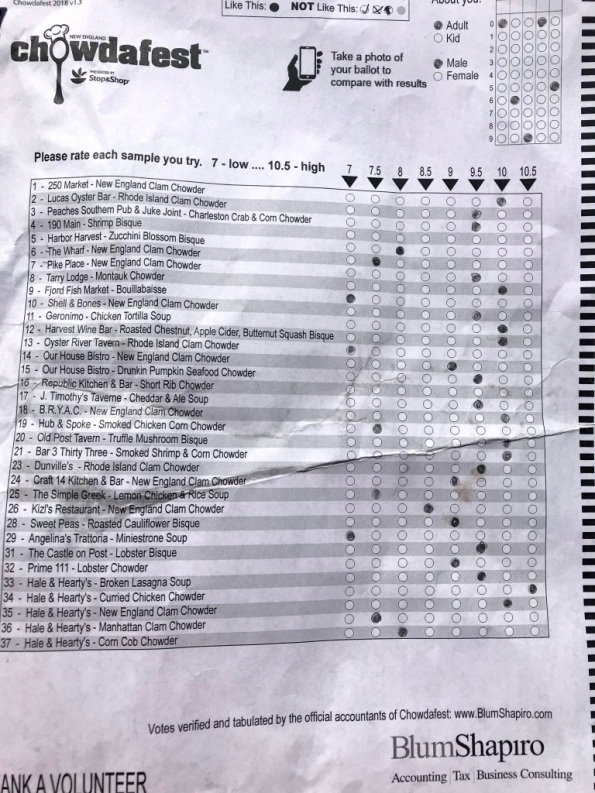
- Believe it or not, but in the Chowdafest 2018, my favorite soup was not really a chowder at all – it was a Curried Chicken Chowder from Hale & Hearty from Boston, MA – the only soup I gave the top 10.5 rating.


Here is the list of winners in the 5 categories we mentioned before (Classic New England Clam Chowder, Traditional Chowders (Manhattan/Rhode Island’s), Creative Chowder, Soup/Bisque, Vegetarian). For the more detailed list, which includes 2nd and 3rd place winners, please use this link.
Pike Place Chowder
Our House Bistro
Geronimo Tequila Bar & Southwest Grill
Dunville’s
Old Post Tavern
As usual, let me leave you with a copy of my ballot – just to prove that I take the Chowdafest competition very seriously 🙂
 You can already mark your calendars for Sunday, October 6th, 2019 – the 12th annual Chowdafest competition.
Before we part, you might want to check out Chowdafest’s sister event – the Great Mac & Chili Challenge, taking place this Sunday, November 4th at 11 AM at the same Sherwood Island State Park in Westport, CT. The weather should be great! Cheers!
WBC18: Speed (Live) Tasting – White and Rosé
In the previous post, I told you about our speed tasting session of red wines at the Wine Bloggers Conference 2018. During the second full conference day, we had a session for white and Rosé – only we didn’t get any Rosé at our table, so it was all for us (it is still 20+ different wines been presented around, but you only can taste just 10 during the allotted time.
If you read any of the previous posts or maybe attended the event, you know the drill. Snap, swirl, smell, sip, spit, share. Hmmm, next time I will call it a 6S exercise. You (1) snap a photo of a bottle. You (2) swirl the wine in your glass. You (3) smell it. Then you (4) sip it. Then you (5) spit it (well, there might be an exception to this rule, but you have to tread carefully here – if you can’t spit the wine, the wine bloggers conference is not for you). Lastly, you (6) share your notes with the world. All in 5 minutes. All repeated 10 times. There you have it.
Before I share the WBC18 wines with you now in this summary post, I will give you links to the WBC14, WBC16, and WBC17 I attended in the past, just in case you want to see what was happening there.
WBC18 speed tasting whites, here we go:
Wine 1: 2017 Desert Wind Chardonnay Heritage Series Wahluke Scope Washington (12.7% ABV, $28)
Wine 2: 2017 Bodega Bouza Albariño Montevideo Uruguay (13.5% ABV, $20)
Wine 3: 2016 Baroness Cellars Riesling Red Mountains (12.4% ABV, $25)
Wine 4: 2016 Rodney Strong Chardonnay Chalk Hill AVA (14.5% ABV, $22) – classic California Chardonnay, good wine at a good QPR.
Wine 5: 2016 Cadaretta SBS Columbia Valley (13.5% ABV, $23, 67% Sauvignon Blanc, 33% Semillon) – SBS stands exactly for Sauvignon Blanc Semillon. An excellent wine for a summer day? Well, I think I can drink it on a winter day too…
Wine 6: 2016 Frank Family Vineyards Chardonnay Carneros (14.4% ABV, $30)
Wine 7: 2016 J. Bookwalter Double Plot Chardonnay Conner-Lee Vineyard Columbia Valley (13.8% ABV, $40)
The next wine was presented with the statement to all of the Riesling haters – as shown here by Clifford Robben:
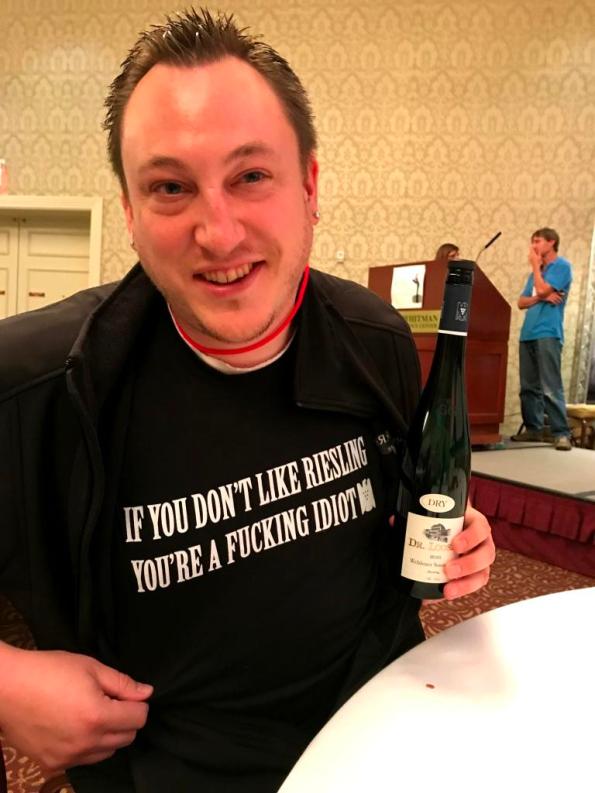
Wine 8: 2016 Dr. Loosen Wehlener Sonnenuhr Riesling GG Alte Reben Mosel (12.5% ABV, $56) – you can’t argue with greatness – this was one delicious Riesling
Wine 9: 2015 Brokenwood Semillon Hunter Valley (10.5% ABV, $22) – Hunter Valley Semillon might be one of the biggest secrets lucky attendees of WBC19 will discover. The wine might show as overly acidic when young, but with some age on it, it becomes an impeccable thing of beauty…
Wine 10: 2016 Brooks Ara Riesling Willamette Valley (12.8% ABV, $38) – another beautiful wine from the Brooks winery. From the tasting of the reds, Borrks Rastaban was my favorite wine. Now this Ara Riesling was equally impressive – and I didn’t know that Riesling was even made in Oregon. A delicious surprise.
There you go, my friends – the summary of one of my favorite exercises at the wine bloggers conference. Sorry, Chardonnay – the Riesling totally stole the crown this time. Cheers!
Daily Glass: Farmhouse Wines – The Wines You Knew California Can Produce
Memories are often unpredictable and illogical when you try to understand by what rhyme of reason a certain event, situation or circumstances get remembered. Sometimes, I can remember tiny and totally irrelevant details, I guess in lieu of something really important. Moving along.
California had been the major wine superpower for more than 40 years (if we would count starting from the 1976 Judgement of Paris events), so I’m sure many of you are puzzled about the title. California wines are unquestionably amazing, no matter which of more than 4600 wineries would produce them. California wines come in a tremendous range of styles and grape varieties, producing delicious wines from the grapes you wouldn’t even think are growing in California (Palomino, Corvina, Nebbiolo, Tinta Cão anyone?), and have a cult following, with wine lovers casually waiting for 8-10 years on the waiting list for the mailing list. Yes, California is well known for its incredible wines.
What California is not known for today is inexpensive wines. If you are willing to spend at least $20 per bottle, or better yet, you are willing to spend at least 5 times that or just add a zero to that number, that is an easy game. Almost an easy game, I should say, as you would also need to wait for at least 5 or 10 years to fully enjoy that $200 bottle. However, naming a California wine under $12 (somehow I think $12 is a good number for anyone looking for a good value wine for any night, not just for a Tuesday night), which consistently delivers, is not an easy task. My mind can’t go much past Bogle Petite Sirah, which is consistently good and usually priced in $9.99 – $11.99 range – but I’m failing to readily name another California wine in the same value category.
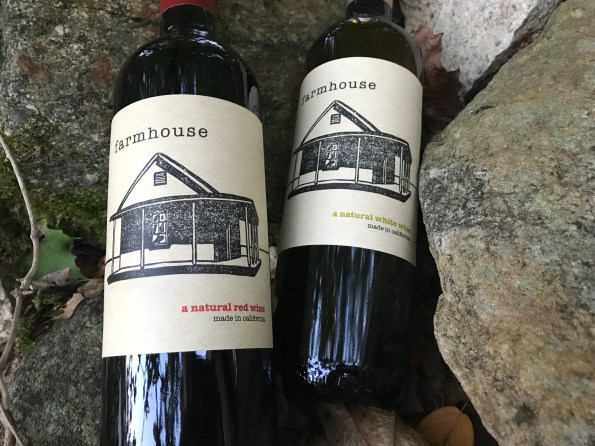
When I was offered to try two of the Farmhouse wines, I hesitated for a brief moment. As a matter of policy, I never write reviews for the samples I don’t like, and $10.99 bottle of wine from California sounded suspicious. The fact that it was produced by the Cline Cellars, who I respect very much, and that the wines were made using sustainable viticulture, tipped the scale towards accepting the offer.
The very first smell and sip of the Farmhouse Red extorted a “wow” and instantly triggered an obscure memory – absolutely not related to the wine. I don’t exactly know you, my reader at the moment, but it is quite possible you were only learning to walk when one of the big 3 struggling at a time Detroit automakers, Chevrolet, released newly redesigned Chevy Malibu sedan. At that time, back in 1997, Japanese cars really swept clean the mainstream family car category. Chevrolet was so proud to release a competitive car that they came up with the slogan for that new release of Malibu: “The Car You Knew America Could Build“. I have no memories of that car, of course, but the slogan got stuck in my head – and it instantly popped up after the first sip of the Farmhouse wine, remembering that the wine is only priced at the suggested retail of $10.99. This is a lot, a lot of wine for the money – especially the California wine.
There is even better spin to the Farmhouse wines – the wines are produced using sustainable farming methods, a farming discipline called Green String Farming, which is defined as “”natural process agriculture”. It’s about keeping the soil and plants healthy and free from pesticides and artificial chemicals. Overall, it’s about producing the highest quality grapes with the healthiest vines.” Delicious, sustainably farmed, extremely reasonably priced California wine – I’ll just rest my case.


Here are my more detailed tasting notes:
2017 Farmhouse Natural White Wine California (12.5% ABV, $10.99, 41% Palomino, 25% Muscat Canelli, 22% Roussanne, 6% Viognier, 1% Riesling)
Light Rosé gold color
Whitestone fruit, guava, a touch of honey.
Peach, white plum, lemon, touch of minerality, fresh, vibrant, excellent acidity, lots (lots!) of wine for the money. 8-/8
2017 Farmhouse Natural Red Wine California (14% ABV, $10.99, blend of Zinfandel, Syrah, Carignane, Mourvèdre, Petit Sirah)
Dark garnet
Dark chocolate, fresh raspberries, sage
Cloves, a tiny bit of cinnamon, pepper, ripe plums, excellent acidity, excellent balance. 8-/8
Two California wines, perfect for every day, easy to drink and afford – what else can you ask for? Cheers!
WBC18: Speed (Live) Tasting – Reds
Rapid fire. Lightning talks. Speed dating. We like to create extra-pressure situations for ourselves, I guess we think that we are functioning better when we have no option to prolong whatever it is we need to do or decide upon. Wine tasting is typically not a speed exercise – unless you are attending a live tasting session at the Wine Bloggers Conference.
50 minutes. 10 winemakers. 5 minutes to present the winery and the wine and answer questions – for winemakers. 5 minutes for bloggers to take pictures, smell and taste, ask questions, take notes, and ideally, post on social media about the wine – for 50 minutes in the row. Some people simply refuse to do it. And for me, this is one of the favorite sessions of the conference – and the one I get to consistently post about afterward, collecting all my individual tweets from the live session into one post – as it was done at WBC14, WBC16, and WBC17 – the three I attended in the past.
Unlike previous years, the first live wine blogging session at WBC18 was for the red wines (we always started with White and Rosé before). I guess it makes sense, as reds is what Washington is first and foremost known for. This time, I also tried to include some picture processing into the same 5 minutes – that makes the whole process even more challenging. Oh well. For what it worth, here are the wines and my notes, mostly in the form of the tweets:
Wine 1: 2013 g. Cuneo Cellars Ripasso Walla Walla Valley ($45) – Everything is possible in Washington – even the classic Italian wines.
Wine 2: 2017 De Lucca Tannat Reserve Canelones Uruguay ($15)
Wine 3: 2016 Fullerton Pinot Noir Bella Vide Vineyards Dundee Hills Oregon (13.5% ABV, $65) – great Oregon Pinot
Wine 4: 2016 Rodney Strong Vineyards Upshot Red Sonoma County (14.5% ABV, $28, 37% Zinfandel, 30% Malbec, 27% Merlot, 3% Petit Verdot, 3% Riesling) – I love this unorthodox blend, an excellent wine for any special occasion, like Tuesday, for example. I also love the label. Forgot to include the picture in the tweet, so it is attached on its own here.
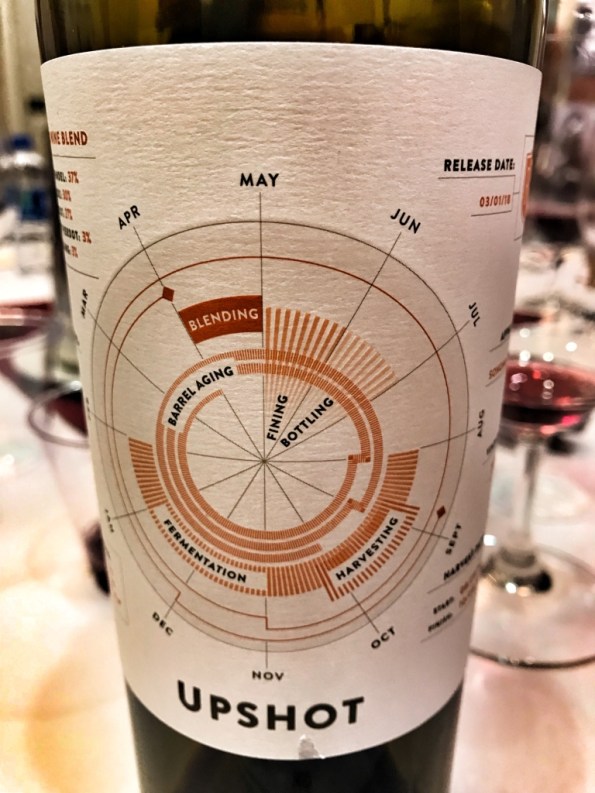
Wine 5: 2015 Browne Family Vineyards Cabernet Franc Columbia Valley (13.7% ABV, $35, 22 months in French oak) – beautiful Cab Franc specimen.
Wine 6: 2014 Dama Wines Collage Walla Walla Valley (14.7% ABV, $55, 69% Merlot, 26% Cabernet Sauvignon, 5% Cabernet Franc) – beautiful wine, beautiful label.
Wine 7: 2014 Dunham Cellars XX Cabernet Sauvignon Walla Walla Valley (13.8% ABV, $45, 100% Cabernet Sauvignon) – 9th winery in Walla Walla, 20th vintage (hence XX), and one of my most favorite from the tasting. Would be happy to drink every day.
Wine 8: 2015 Mansion Creek Cellars Red Dog Red Mountain AVA ($46, 70% Tinta Cão, 28% Cabernet Sauvignon, 2% Grenache-Syrah) – it is not every day you can taste a beautifully done Portuguese wine – made in the USA.
Wine 9: 2015 Brooks Rastaban Pinot Noir Eola-Amity Hills Oregon (14% ABV, $60) – stunningly different expression of the Pinot Noir. It evokes the same magic as tasting Cloudy Bay Sauvignon Blanc and thinking “this can’t be New Zealand Sauv Blanc”. Same is here. It is simply unique and different and in a class of its own. Probably my favorite wine of the session.
Wine 10: 2016 Troon Vineyard Cuvée Pyrénées, Estate Tannat/Malbec, Kubli Bench, Applegate Valley Oregon ($60, 62% Tannat, 38% Malbec) – organic, biodynamic, minimal intervention wine. Craig Camp lets the grapes speak, offering us a beautifully balanced wine.
There you go, my friends – the summary of one of my favorite exercises at the wine bloggers conference. This was definitely fun, and I will be delighted to do it again and again. Do you think 5 minutes is enough to learn about the wine and fall in love with it? Cheers!
WBC18: Merlot Deep Dive with Masters of Merlot
I remember my first “deep dive” into the Washington wines at the Chateau Ste. Michelle winery a few years ago, where I was told about the power of Washington Merlot. The explanation was given on the example of a group visiting Chateau Ste. Michelle from California, who were complaining that Washington Cabernet Sauvignon was too soft and mild as opposed to the Cabernet Sauvignon from California. The group was offered to taste the Washington Merlot wines next, and this is where they found the right amount of “power” they were looking for (or maybe even a bit more).
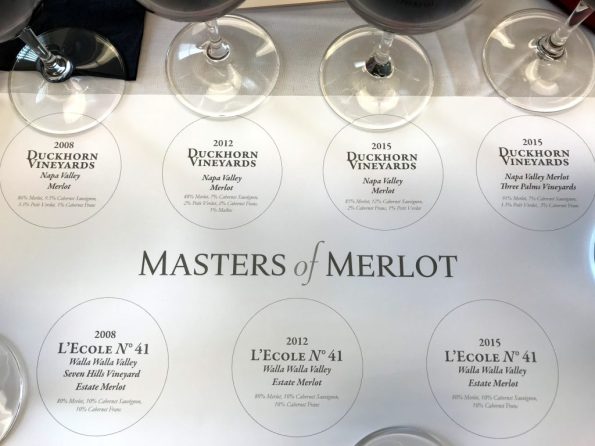
While attending Wine Bloggers Conference 2017, I was able to start the conference experience on a very high note with the deep dive pre-conference session on the California Cabernet Sauvignon, where we learned about one of the most classic California Cabs you can find – Beringer Cabernet Sauvignon. This year, at WBC18, we started on the equal, or maybe even higher note with the pre-conference session on Merlot. Very appropriately for being in Washington, and for the October being the #MerlotMe month, we were able not only taste a line of Merlot wines but to compare side by side the wines made by two of the Merlot pioneers and, unquestionably, the Masters – Duckhorn Vineyards from Napa Valley and L’Ecole No 41 from Walla Walla Valley.
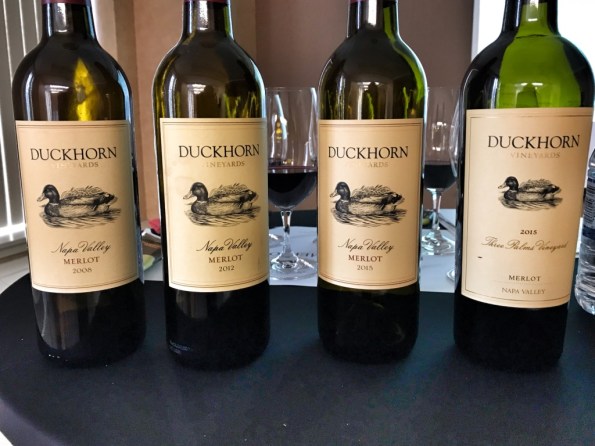
Dan and Margaret Duckhorn started Duckhorn Vineyards back in 1976, becoming one of the first 40 Napa Valley wineries. Even in those early days, it was clear that Cabernet Sauvignon was The Grape everybody wanted to work with. At that time, Dan and Margaret decided to proceed in their own way, and instead of joining the Cabernet Sauvignon movement, be unique and different and embrace the Merlot. Ever since their inaugural vintage in 1978, they never looked back and became known as Napa Valley Merlot pioneers and one of the best Merlot producers in the world, starting with their first release of Napa Valley Merlot in 1979. Today, Duckhorn Vineyards expanded dramatically and now comprise multiple wineries and brands around the USA – however, Merlot is the heart and soul of Duckhorn wines, and it is not surprising that 2014 Duckhorn Vineyards Three Palms Vineyard Merlot was the Wine Spectator’s 2017 Top 100 Wine of the Year.
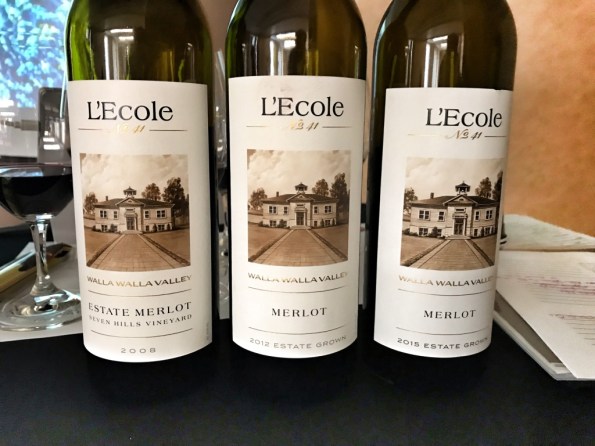
L’Ecole No 41 was founded by Baker and Jean Ferguson in 1983 when it became 3rd winery in Walla Walla, and 20th winery in the Washington state. Today the winery is run by the 3rd generation of the family, and sustainably farms estate Seven Hills and Ferguson vineyards. Merlot is the king in Washington, so it is not surprising that the L’Ecole crafts some of the best Merlot wines in Washington – however, their Cabernet Sauvignon, Syrah, and Bordeaux-style blends are equally world-famous.
Now that you know the bit of the history, let’s talk about our tasting. In our Masters of Merlot session, we had an opportunity to taste side by side Duckhorn Vineyards and L’Ecole No 41 Merlot from 2008, 2012 and 2015 vintages, plus a cherry on top (thank you, Duckhorn Vineyards) – 2015 Three Palms Merlot. Before I will leave you with the tasting notes for these beautiful Merlot wines, I just want to share some general observations. The three vintages of Duckhorn Merlot we were comparing had a different grape composition between the vintages while maintaining the same oak treatment for all the wines. As I mentioned in my summary post about WBC18 experiences, Washington weather is very consistent, so L’Ecole No 41 maintained the same grape percentages between the vintages and the same oak regimen – the changing parameters were only harvest dates and the vineyard source composition, which gradually shifted from solely a Seven Hills vineyard in 2008 to the 50/50 share between Seven Hills and Ferguson vineyards in 2015 (L’Ecole folks are ecstatic about the potential of the Ferguson Vineyard, now introducing more and more single vineyard wines from it).
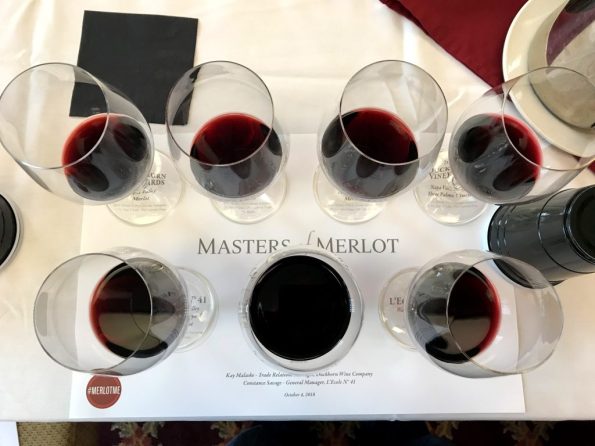
Now, it is (finally!) time to talk about the wines. Here we go, in the tasting order:
2008 L’Ecole No 41 Estate Merlot Seven Hills Vineyard Walla Walla Valley (14.5% ABV, $?, 80% Merlot, 10% Cabernet Sauvignon, 10% Cabernet Franc, 18 months in French oak)
Rutherford dust on the nose, chewy, dense, tart cherries, needs time! I want more fruit! Would love to try it in 5-8 years.
2008 Duckhorn Vineyards Merlot Napa Valley (14.5% ABV, $70, 86% Merlot, 9.5% Cabernet Sauvignon, 3.5% Petit Verdot, 1% Cabernet Franc, 16 months in French oak)
Raisins on the nose, very explicit, beautifully dry on the palate, sage, anise, tart, showed a bit of Rutherford dust after swirling, great acidity. Amarone! I want to drink it NOW!
2012 L’Ecole No 41 Estate Merlot Walla Walla Valley (14.5% ABV, $30, 80% Merlot, 10% Cabernet Sauvignon, 10% Cabernet Franc, 76% Seven Hills Vineyard, 24% Ferguson Vineyard, 18 months in French oak)
Espresso, Rutherford dust (a bit less explicit than 2008). More fruit on the palate, bright, beautiful.
2012 Duckhorn Vineyards Merlot Napa Valley (14.5% ABV, $65, 88% Merlot, 7% Cabernet Sauvignon, 2% Petit Verdot, 2% Cabernet Franc, 1% Malbec, 16 months in French oak)
Delicate, fresh plums, a touch of truffle notes, plums and lavender on the palate, delicate, fresh, round.
2015 L’Ecole No 41 Estate Merlot Walla Walla Valley (14.5% ABV, $36, 80% Merlot, 10% Cabernet Sauvignon, 10% Cabernet Franc, 50% Seven Hills Vineyard, 50% Ferguson Vineyard, 18 months in French oak)
Dark fruit, Rutherford dust, dark berries, a bit of bell pepper on the palate, plums, sapidity, interesting minerality. Needs time.
2015 Duckhorn Vineyards Merlot Napa Valley (14.5% ABV, $56, 85% Merlot, 12% Cabernet Sauvignon, 2% Cabernet Franc, 1% Petit Verdot, 16 months in French Oak)
Closed nose, a touch of mint, however – palate is beautifully ripe, open, clean, fresh fruit.
2015 Duckhorn Vineyards Merlot Three Palms Vineyard Napa Valley (14.7% ABV, $98, 91% Merlot, 7% Cabernet Sauvignon, 1.5% Petit Verdot, 0.5% Cabernet Franc, 18 months in French Oak)
Rich, opulent, caramel, anise, sage, on the palate coffee, ripe fruit, mocha, dark chocolate. Big and delicious.
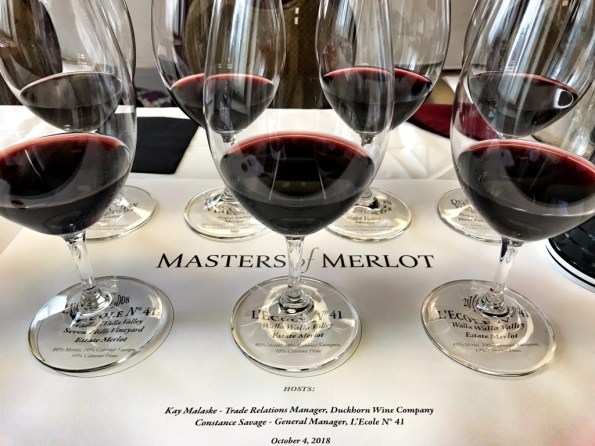
Were these wines similar, even between the different wineries? Of course. I love the presence of the Rutherford dust on many of the wines we tasted – after tasting best of the best in Rutherford in Napa Valley – the BV wines, I picked up that term and I always use it describe the perceived dusty impression of the wine’s aroma. L’Ecole Merlot was a lot more structured and minerally-driven. I would safely say that 2-3 hours in the decanter would help those wines a lot. The Duckhorn Merlot were a lot more fruit driven but offered an impeccable balance with that fruit. If I have to pick the favorite, it would be between 2008 Duckhorn (ahh, that Amarone-like beauty) and 2015 Duckhorn Three Palms, but there were really no bad wines in this tasting.
There you have it, my friends. Beautiful Merlot wines, easy to love and appreciate, and most importantly, offering lots of pleasure. How is your Merlot Me month going? What are your discoveries or the old favorites?
I have to say special thank you to Constance Savage of L’Ecole No 41 and Kay Malaske of Duckhorn Vineyards for offering this special tasting to the wine bloggers! Cheers!
CLASSIFIED Brunch
 How many emails do you get per day? I would safely bet that we all get at least 50 emails per day (don’t laugh too hard out there, please – of course, it is on a slow, really slow day).
The real question is – how many of those emails do you open? Speaking for myself, I delete at least 90% of all the emails after just glancing at the subject line and the source. For the rest, I would open them to read at least the first couple of lines and then decide what to do with it. Okay, bear with me, please – it all will make sense in a second.
I’m a frequent flyer with United, so of course, I get emails from them. Most of those emails are deleted right after reading the subject line (sorry, United). When I received the email from United with the subject line “Your invitation to CLASSIFIED”, the mouse pointer quickly advanced toward the “delete” symbol. However, something prompted me to open the email and read through at least a few lines.
The email was inviting me to experience the new secret (!) restaurant in the Newark airport, called CLASSIFIED. Secret restaurant? In Newark? I fly from that airport all the time, and I know of all the restaurants there, I never saw anything called “CLASSIFIED”. “It must be a scam” my thought continued as my hand was directing the pointer towards the big X. Again, something prompted me to stop and do a bit of a research on the internet – and it appeared that yes, there is a secret (semi-secret) restaurant in the Newark airport, which a number of people already visited and wrote about.
I was still puzzled as to what was the criteria for United to send me this invitation – I don’t have such a high status with them – I struggle to make to the “gold” every year, I’m not a million miles flyer, it was really a puzzle. But hey, I’m a foodie, so if you tell me “new restaurant”, “unusual experience” – you definitely got my ear.
So once you are invited, you need to make a reservation. I had to wait a bit to find a good occasion to make a reservation, as I wouldn’t want to come much earlier to the airport if I don’t have to, and if we are talking about the “experience”, I need to allow the sufficient time for a restaurant visit. The opportunity presented itself as I was connecting in Newark and had 5 hours to kill between my flights this past Saturday. I logged into United with my invitation, got to the restaurant website, and after browsing the menus, made the reservation for Saturday brunch. I got the confirmation email which stated the following:
When you arrive at the airport, please make your way to Saison, a restaurant located in Terminal C near Gate C120. After you let the host know that you’re dining at CLASSIFIED, you’ll be escorted to a private entrance and seated at your table.
After arriving at the Newark airport on a beautiful day

I did exactly as I was told, and was quickly escorted to an indiscreet section of the wall in the far back corner of the Saison restaurant, which simply happened to be a door. After a short walk in the dimly lit corridor, I entered the small dining room – the CLASSIFIED restaurant.


As I got situated at my table, my excitement started dissipating as soon as I saw the familiar iPad screens, used for food ordering everywhere throughout Terminal C. The waiter confirmed my suspicion when he asked if I know how to use those iPads, which I confirmed with the sigh. Considering that food at CLASSIFIED is priced at the level of New York’s fine dining establishments, I was expecting the real menu. Oh well, the iPad ordering it is.


Just to set your expectations right, this was the last “low-down” I experienced during the brunch.
First, the Rosé arrived – the Juliette Rosé from Provence, which was delicious, perfect acidity, slightly bigger body than a typical Provence Rosé with a touch of residual sugar – very enjoyable, and a great value at $11. It even arrived with a little extra, courtesy of the restaurant.


The next surprise was the appearance of the Amuse Bouche – a White Bean and Tomato Bisque, which was superb – good texture, nice and warming, good seasoning – really a great start.
Then my main brunch dish arrived – Salmon Eggs Benedict with Home Fried Potatoes and the side of Chanterelle Mushrooms:


The eggs Benedict were cooked perfectly – runny yolk, delicious hollandaise with just the right amount of acidity, generous amount of smoked salmon – one of the very best I ever had. Home fried potatoes with some fried onions were outstanding. And chanterelles… I really have no comments – simply outstanding, just the right amount of seasoning, just the right crunch, a mushroom orgasm on the plate (hope you can relate). 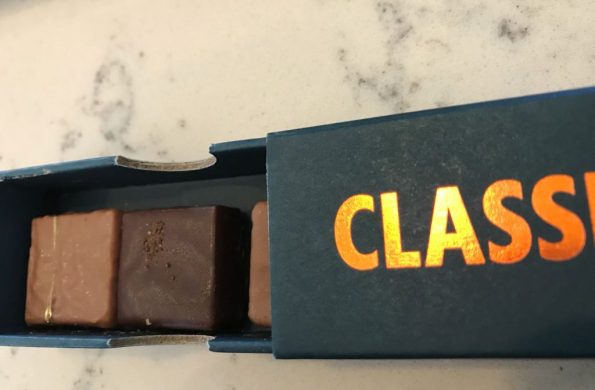
I was too full to have any dessert, but still, the little box appeared on the table, containing a set of chocolates. Yet another nice touch, which all together, one little detail after another, adds up to what we call “the experience”. A fine dining experience at the Newark airport. Thank you, United, for making flying something you can look forward to.
Note to self – sometimes, it makes sense to read the emails. Cheers!
WBC18: Like A Kid In The Candy Store – Again, or 4 Days in Walla Walla
 Back in 2014, I was visiting the state of Washington on business, and my obsession with local wines led me to the small town of Woodinville, about an hour northeast of Seattle. As I parked next to the industrial building and started going door to door, visiting one artisanal winery after another, I really felt like a kid in the candy store – the wines were delicious, and conversations with winemakers and not were even better than the wines – what else the wine lover needs? I was so impressed with that visit that my enthusiasm showed in the blog post, which won one of the Monthly Wine Writing Challenges (we called them MWWC) with the theme “local”.
The timing for the Wine Bloggers Conference 2018 (WBC18) was a little strange – for the most of the time, the conferences took place in August, and October is definitely not the ideal month to take time off (I know that many of the regulars couldn’t attend due to the timing). However, my high opinion of the Washington wines and the memories of visiting the Woodinville became the deciding factor, so I was able to find the time for this trip to Walla Walla in Washington.
Boy, was I not disappointed. After a beautiful ride from the Portland airport along the Columbia River (I wish I would record a little video – the amazing scenery must be shared), I arrived at the Walla Walla. Walla Walla is a home to about 30,000 residents, but it is hard to tell from the tiny downtown. However, when it comes to wine, don’t let the small size to full you – Walla Walla downtown hosts 30 something tasting rooms, plus a number of full working wineries located within the city limits (there are 120 wineries in the Walla Walla Valley overall) – it is definitely a destination for any wine lover out there.


As it always happened so far (this was my fourth WBC), the 4 days of the Wine Bloggers Conference became a non-stop adventure of sipping, spitting and learning, and most importantly, spending time with the fellow bloggers. I can’t tell you how many wines were tasted during these four days – whatever happens at WBC, stays at WBC. But – I will be happy to share with you main takeaways from these 4 days. Here we go:
- Washington State produces some magnificent wines (duh) – at least on par with Napa, and often far exceeding the Napa offerings in terms of QPR – and they are predominantly red. All six Bordeaux varieties are doing quite well in Washington, both in the form of the Bordeaux blend and on its own. Merlot might be a king of Washington, but Cabernet Sauvignon can often fight for that royal crown, and quite successfully. The Syrah is definitely a queen, well deserving your attention, following by the other Mediterranean breeds, such as Grenache and even Tempranillo.
- Washington whites are much rarer find – but they can be equally delightful as the reds. Rhone varieties do particularly well (Marsanne, Roussanne), but Chardonnay, Sauvignon Blanc, Riesling, and even Albarino can deliver a happy surprise. An important reminder – please, please drink Rhone whites at the cool room temperature – they really taste better like that. Make them too cold, and they become indistinguishable and boring.
- Unlike California, where you can find 100+ years old [continuously farmed] vineyards, such as Bechtold in Lodi (farmed since 1886), and 150 years old continuously producing wineries, Washington wine industry didn’t survive the prohibition. What was striving in the 1860s, was completely destroyed in 1920s, and had to be rebuilt in 1960s. This information actually doesn’t have any deep meaning outside of being an interesting (and unfortunate) fact.
- I don’t believe you need to pay attention to the vintages for Washington wines, unless something ultra-bad happens, like out of blue frost in May. The temperatures are consistent, and so are the general climate conditions – too hot of a summer can be compensated by harvesting earlier. Well, the summers are typically hot, so the “canopy management” is a hot subject in winemaking circles. If the vineyard is managed properly, and winemaker does the job right, there is a good chance for consistency. In other words, don’t ask “how was that vintage”, just get the wine you want to drink. But – the way a lot of wines in Washington are made, especially coming from the small wineries – with utmost respect to the product at all stages – guarantees that the wines will age well. Give them some time, and prepare to be amazed.
I can probably think of more conclusions, but instead, I really want to tell you how my four days unfolded – just in case you wonder what one does at the Wine Bloggers Conference. Look at it more like the set of highlights as opposed to the detailed report. And then my plan is to convert many of this mentions below into the separate posts, to make my report more detailed – oh well, will see how that will work.


Day 1: After the beautiful ride along the Columbia River from Portland, I checked into the hotel, and then my next immediate stop was a tasting at the Seven Hills Winery, located right next to the conference hotel. After tasting at Seven Hills, next stop was the tasting at the Gård Vintners – with lots of delicious surprises. That tasting was followed with a very short walk back to the hotel to attend the Masters of Merlot session (now part of the official WBC program), presented by two of the Merlot Greats – Duckhorn and L’Ecole No 41 (very appropriate for the October, the #MerlotMe month).
Next was the mingling with the fellow bloggers around so-called Expo, where WBC sponsors poured their wines and offered their products. My last activity for the day was a superb, mind-blowing tasting at the Eternal Wines (more later) in lieu of group dinner. I also skipped all after-hours activities – that was enough for the first day.
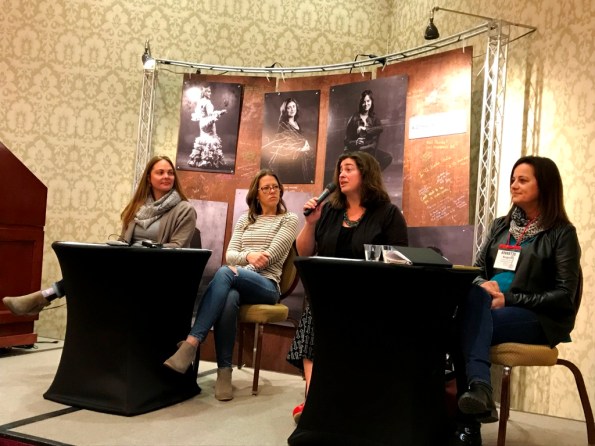
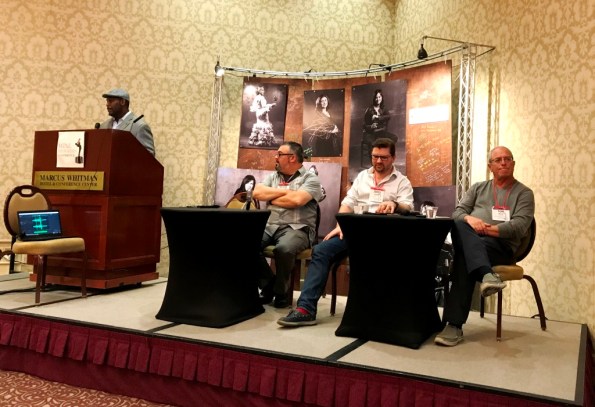
Day 2: The actual conference program started. One of the main morning highlights was the panel discussion by the 4 of the Walla Walla winemakers, talking about terroir, canopy management, and stories, their personal, real life stories. I also liked the panel of wine influencers, talking about the wine industry, wine writing, and Dos and Don’ts of wine blogging. During lunch, we had an opportunity to taste wines from the Cascade Valley Wine Country, where one particular wine, WineGirl Wines Red blend left a mark with me – a standout, flawless, round, and beautiful.
After lunch, I went with a group of friends to taste delicious Oregon non-Pinot wines from Troon Vineyards Applegate Valley, as presented by WBC veteran, Craig Camp (I believe Craig didn’t miss a single WBC event). We got back to listen to the keynote by Lewis Perdue, the founder of Wine Industry Insight publication, who was focusing on a seemingly simple concept – Trust – and the tenets of good writing.
Next session was one of my traditional favorites – Live Wine Blogging for red wines, and once that was over, we all left for the dinners at mystery wineries (nobody knew where they are going), with our mystery winery being Canoe Ridge. Do you think this was enough for a day? Wrong. It is never enough – the last part of the program was so-called “after party”, where we tasted lots more wines (attendees are invited to bring wines to share with the others for this late night session). My highlights from this late-night tasting were Chardonnay and Cabernet Sauvignon from Smith-Madrone and iOTA Cellars Oregon Pinot Noir vertical (2013, 2014, 2015). Whew, time to sleep.
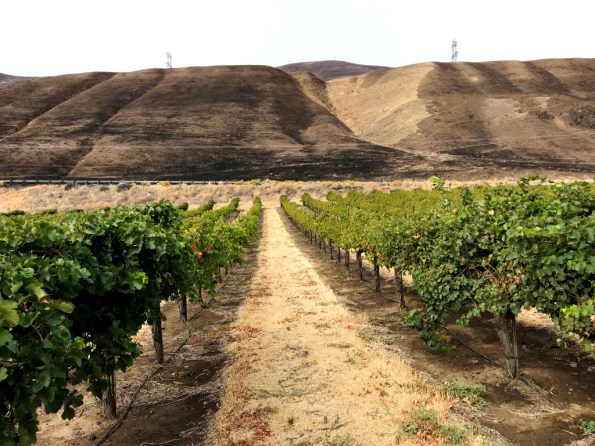
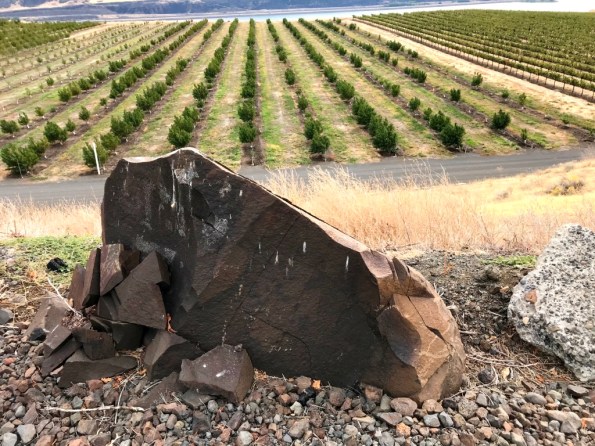
Day 3: The day started from learning about the location of the Wine Bloggers Conference 2019 – Hunter Valley in Australia, October 10-12, 2019. This sounds ultra-attractive – and equally impossible (in my own world). After a few of the breakout session, we went out for lunch at the Walla Walla tasting rooms which we had an opportunity to select the day before – my choice was Otis Kenyon Winery. Next was the session called Bubbles and Bites, a sparkling wine and food pairing lesson presented by Gloria Ferrer. Right after that, we had an in-depth lesson about European Cheeses. Up next was the “Lightning talks” session – 5 minutes presentations by the fellow bloggers with the slides rotating every 15 seconds. Wine Live Blogging session for whites and Rosé closed the main conference activities – which left us with the wine dinner with the vintners from Walla Walla. At the dinner, I fell in love with the wines from Revelry Vintners, which were simply stunning, and also enjoyed a few wines from Bergevin Lane. And then … yes, of course, another late night session (someone had to drink all that wine, right?)
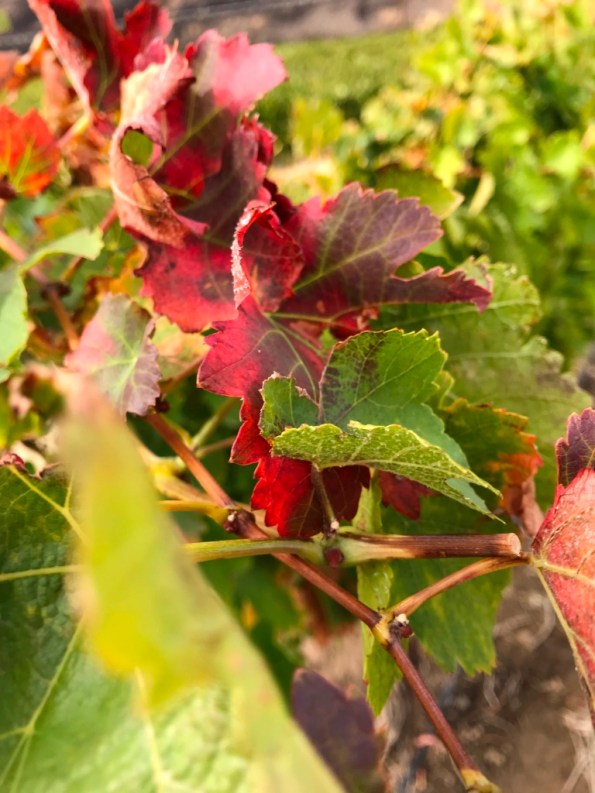
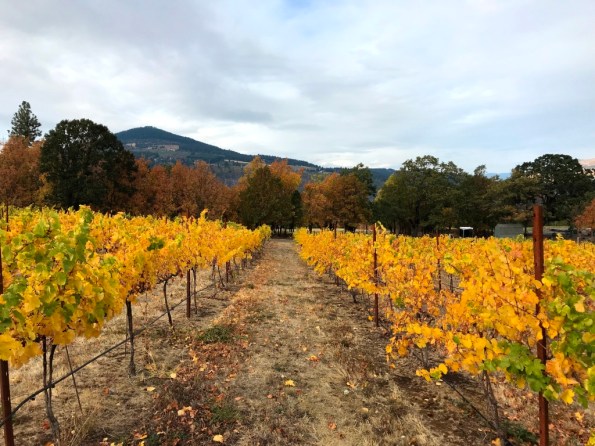
Day 4: The conference was officially closed, but – there were post-conference excursions. I visited Maryhill Winery in Walla Walla, and Cathedral Ridge Winery in Oregon, both offering spectacular views and delicious wines.
The End.
Here it is – my abbreviated report of the WBC18 activities. Speaking strictly for myself, I greatly enjoyed the conference – the place, the wines, people and conversations – everything work together very well to create a memorable experience. If you never attended the conference – do you want to attend one now, after reading my report? If you are a “regular”, what are your thoughts about WBC18 and will we see each other in Australia? Cheers!
A Pinot Noir Lesson for Self with Tendril Cellars
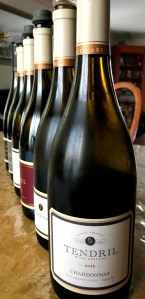 Back in May, we virtually met with Tony Rynders of Tendril Cellars and talked about … many things wine, of course – you can find this conversation here.
Tony is one of the few winemakers I know who teaches people about his wines by conducting organized tastings. As I didn’t have an opportunity to attend any of those events, I decided to run a lesson for myself on the same subject. How you ask? Easy – by tasting the wines blind.
I can literally see the surprised looks and raised eyebrows. How is it a blind tasting if I know already everything about those wines? You see, the lineup I had included 6 wines. Out of those six, four were different Pinot Noirs – different vineyards, different winemaking process, different price points. Obviously I was not planning to try to identify the exact wine, but still – will I be able to taste the difference, and maybe identify the most expensive wine? Comparing Chardonnay and white Pinot Noir should also be a fun exercise, as those are two siblings ruling the world of Champagne. Yep – lots of opportunities for having fun.
Okay, blind tasting it is. The bottles are wrapped, the numbers are randomly assigned. May the taste buds serve me right!
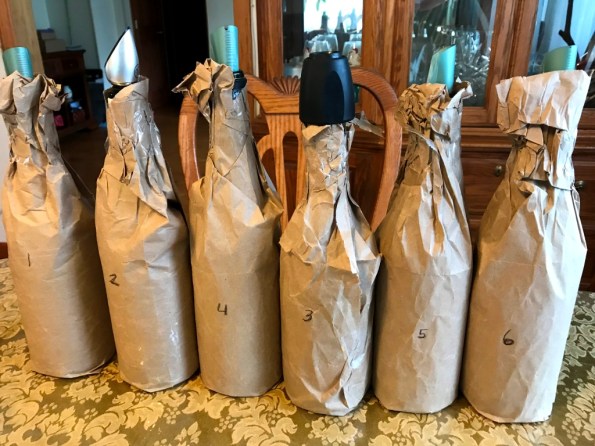
Here are my notes for the wines while tasting them blind:
1 Light golden color
Vanilla, golden delicious,
Bright acidity, vanilla, apples, a touch of honey
2 toasted notes, yeast
Perfect acidity, Granny Smith apples, a touch of honey, toasted notes on the palate, outstanding
white pinot?
3 Dark ruby
Earthy, Rutherford dust on the nose, a touch of roasted meat,
Beautiful palate, soft plums, round, espresso, excellent acidity, wow. ThightRope?
4 Ruby
Concentrated nose, mint, eucalyptus
Concentrated palate, acidity, eucalyptus, sage, violets on the palate. Very unusual. Single Vineyard?
5 Dark ruby
Wow. Blueberries, raspberries, restrained
Very smooth, silky, bright fresh fruit, acidity, firm structure, excellent balance, never-ending finish. Wow. C-Note?
6 Dark ruby
Nose old world style, forest floor, mushrooms, great restraint
Round palate, blackberries, baking spices, soft, delicious. Outstanding. Extrovert?
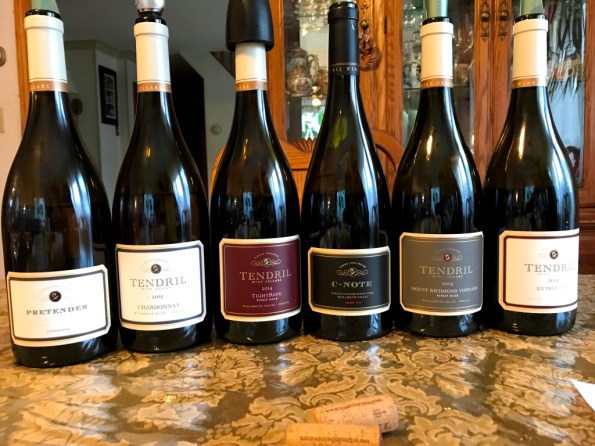
Everyone knows that the best part of the blind tasting is … unwrap! The moment of truth, pure and simple. Here are my notes for the tasting of the wines non-blind, 3 hours after the blind tasting (in the same order):
1 – 2015 Tendril Cellars Pretender Willamette Valley (14.1% ABV, $60, white Pinot Noir)
A bit darker color (golden)
Vanilla, butter
Plump, round, crisp acidity, acidity on the finish (very extensive), plump body.
8, excellent. Reminiscent of a nice Marsanne.
2 – 2015 Tendril Cellars Chardonnay Willamette Valley (13.5% ABV, $40)
Honey, gunflint, vanilla
Brioche, Granny Smith Apple, a touch of butter, clean acidity, excellent
8, outstanding.
3 – 2014 Tendril Cellars Extrovert Pinot Noir Willamette Valley (14.1% ABV, $48)
Beautiful, classic, open Pinot, with cherries, sage, and plums.
Soft cherries and plums on the palate, clean acidity, sage, violets, delicious, wow
8, delicious.
8+/9-, a pure standout. Polished, velvety, seductive, like a light touch on the hand which makes your whole body to vibrate. More reminiscent of CA Pinot than dark and loaded
4 – 2014 Tendril Cellars TightRope Pinot Noir Willamette Valley (14.2% ABV, $64)
Very tight, espresso, licorice, blackberries
Beautiful, sweet fruit, noticeable tannins, very round, medium body, cherries and cherry pit.
8, excellent.
Complex nose of herbs and spices, exotic and unusual.
Wow, great power and complexity, not a typical Pinot, might be more of a Zinfandel or even Syrah profile. Needs time, lots more time.
5 – 2014 Tendril Cellars Pinot Noir Mount Richmond Single Vineyard Willamette Valley (14.1% ABV, $60)
Very unusual. Beets and caramel on the nose, with a touch of dark chocolate.
Blueberries and caramel on the palate, nice salinity, raspberries. Medium+ body. Excellent
8
Very ripe after 2 days been open (air pumped out). Beautiful palate, minerality-driven, cigar box, eucalyptus, tense, powerful. Can be mistaken for a Rioja of a nice caliber.
6 – 2014 Tendril Cellars C-Note Pinot Noir Willamette Valley (14.1% ABV, $100, 100% Whole Cluster, 100% new oak)
Sublime. Can be described only via allegories, such a finesse. Dark chocolate and cherries. Excellent
Equally delicate on the palate, crisp acidity, bright, sweet plums, and tobacco. Outstanding.
8, excellent
Nose is incredible. First, you want to smell.this.wine.for.a.long.time.
Superb, elevated wine, complex, great finesse, and needs time. 8+
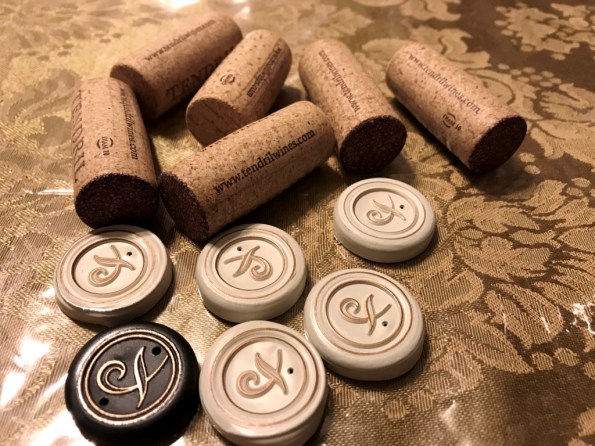
As you can tell, I failed miserably. I didn’t identify any of the wines – however, this was perfectly in line with my expectations. What was definitely interesting is that despite the four Pinot Noir wines been all from Oregon and at about the same age, they were absolutely, unquestionably, distinctly different – and strikingly delicious.
Of course, I extended the pleasure of tasting some of those wines over the few days, which is reflected in the tasting notes above.
Here you are, my friends. Blind tasting or not, the Tendril Cellars wines are worth seeking – the virtual tasting will simply not do it – these are the wines to experience. And if you need to choose only one, I can let you in on a secret (don’t tell anyone!) – the Extrovert was my favorite. Cheers!
Perfection, or When Everything Works Together…
 If you are into wine and food (or food and wine, whatever your preferences are), I can safely bet you were looking for that climactic moment of combining the food and wine to reach a new, higher level of pleasure. Yes, I’m talking about that “oh my God” moment when your taste buds experienced that already exceptional bite of food becoming something beyond exceptional in combination with the sip of the wine. By the same token, if you were looking for that moment, I’m sure that more often than not (actually, a lot more often than not) you couldn’t find it – those beautiful pairings are often equally evasive.
Here I want to share with you my account of my recent encounter with perfection, that climatic experience if you will.
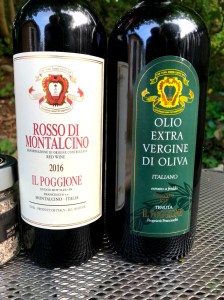
A few months ago I got a box in the mail (one of the little perks of the wine blogger). Inside, there was a bottle of wine, a bottle of olive oil, a jar of sea salt and a recipe – for Bistecca alla Fiorentina.
Bistecca alla Fiorentina is a dish coming from Tuscany (Florence) and depending on the historical account, it traces its origins either to the 16th or the 19th century – well, the history of Bistecca all Fiorentina is definitely not something we will be talking about here, so let’s move on. I’m sure you understand that “Bistecca” simply stands for “beef steak”. However, the recipe calls not for any steak, but specifically for the porterhouse or T-bone steak, which should be simply prepared rare or medium-rare over the charcoal. As the recipe is very simple, here it is in its entirety:
Ingredients (serves 4):
2 (1.5″ thick) bone-in porterhouse steaks (3.5 lb)
1/4 cup Il Poggione EVOO
Tuscan sea salt and freshly ground black pepper, to taste
2 sprigs rosemary


Get the charcoal ready. The distance between the hot charcoal and the steak should be about 4 inches (10 cm). The steak should be at room temperature before you start grilling (it should be out of the fridge for about 10 hours to get to room temperature). Grill steak on one side for 5-8 minutes, flip it with tongs (no forks of any kind!), salt the top surface with Tuscan sea salt and pour some olive oil. Cook for another 5-8 minutes, then stand the steaks on the bone and cook for another 5 minutes. Take it off the heat, put it down to rest, salt the other side and put some olive oil on it. After 5 minutes of rest, you can slice and serve your steak. See, can it get any simpler?


Now, it is time to talk about perfection.
First, the perfection started with the exceptional meat. In addition to what I already described, the box contained a gift card for Pat LaFrieda. The story of Pat LaFrieda Meat Purveyors started at the beginning of the 20th century when Anthony LaFrieda arrived in the USA and opened his first butchery – you can read the rest of the story on Pat LaFrieda website. Whatever the story is, the proof is always in the pudding – or on the fork in this case. I have to honestly tell you that I never had a better steak than this – the meat was sublime and was simply melting in the mouth – a good start for the perfect experience.


The second element of the perfection was, of course, the wine – 2016 Il Poggione Rosso di Montalcino (14% ABV, $27, 12 months in large oak barrels). Tenuta Il Poggione is one of the oldest producers in the Montalcino area, started to make Sangiovese wines – now known as Brunello – at the beginning of the 1900s. Today, it is one of the largest wineries in Montalcino, with 1500 acres, out of which more than 300 acres are under vines and 170 acres planted with olive trees (that Il Poggione EVOO in the package was superb).
The wine actually happened to be one of the best Rosso di Montalcino wines I tasted in a long time. The key word to describe this wine is finesse – it had a welcoming nose of tart cherries, medium intensity, and a hint of herbs. That profile perfectly continued on the palate, where delicate fresh cherries were joined by sage and rosemary, with clean acidity and excellent balance. Definitely one lip-smacking, delicious wine (8+).


Let’s not miss any details – we are talking about the perfect pairing here. As the devil is in the detail, there was one more element – little, but essential – to this amazing pairing, besides superb meat and outstanding wine. The last element? Tuscan sea salt. This was not some random sea salt – this one was Tuscan Sea Salt from AG Ferrari, listing the following ingredients: “Italian sea salt, fresh rosemary, fresh garlic, sugar, fresh sage, ground black pepper” – this Tuscan Sea Salt became the bridge which connected the flavor of the seasoned meat with the perfectly aligned flavor profile of the Il Poggione Rosso di Montalcino, delivering the genius pairing and an amazing experience.
I have to honestly tell you – I tried to replicate this experience two days ago – and failed. I used the same Tuscan Sea Salt, but I had a steak from the local supermarket butcher shop (1/3 of the price compared to Pat LaFrieda), and the wine was 2015 Collosorbo Rosso di Montalcino. The steak was simply not good (happy to be blamed for it as a cook – but I cooked the one from Pat LaFrieda too). The wine was okay, but a lot fruitier than Il Poggione, thus the pairing simply didn’t work. This once again proves my point about the evasive nature of a great wine pairing.
Did you have any climactic food and wine pairing experiences you care to share with the world? Or maybe you want to recount the worst moments? Will be happy to hear about it either way. Cheers!
Last Bottle Sign Up ($10 credit)




 Talk-A-Vino