Archive
Weekly Wine Quiz #85: What Is It?
The Wine Quiz series is not meant to intimidate. The whole idea here is to have fun and learn something new. When answering the questions, it is fully encouraged to use all available sources of information, including Google or any other search engine. There are no embarrassing answers – the most embarrassing thing is not giving it a try…
Welcome to the weekend and your new wine quiz!
As I’m taking the break from the Grape Trivia series, today’s quiz is one of my favorite types – it is a picture quiz. What you see in the picture below is definitely wine-related – you need to identify what it is and provide as many specific details as possible.
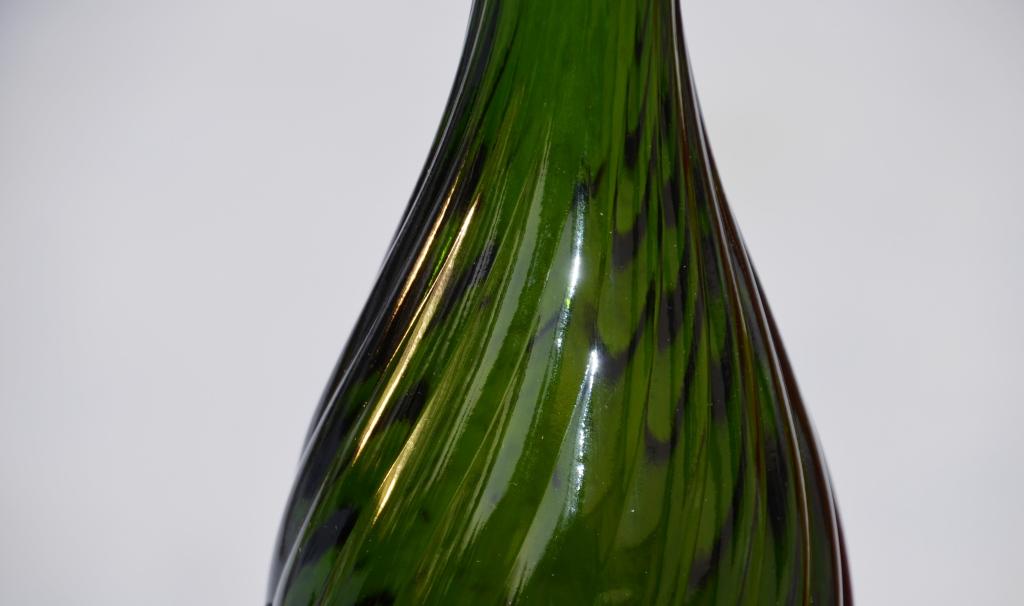 This is a difficult quiz, no questions – but you got nothing to lose and there are no bad answers!
Good luck, have fun, enjoy your weekend and cheers!
Wednesday’s Meritage – Wine Quiz Answer, WTSO Magnum Marathon, Globalization!, #MWWC6 and more
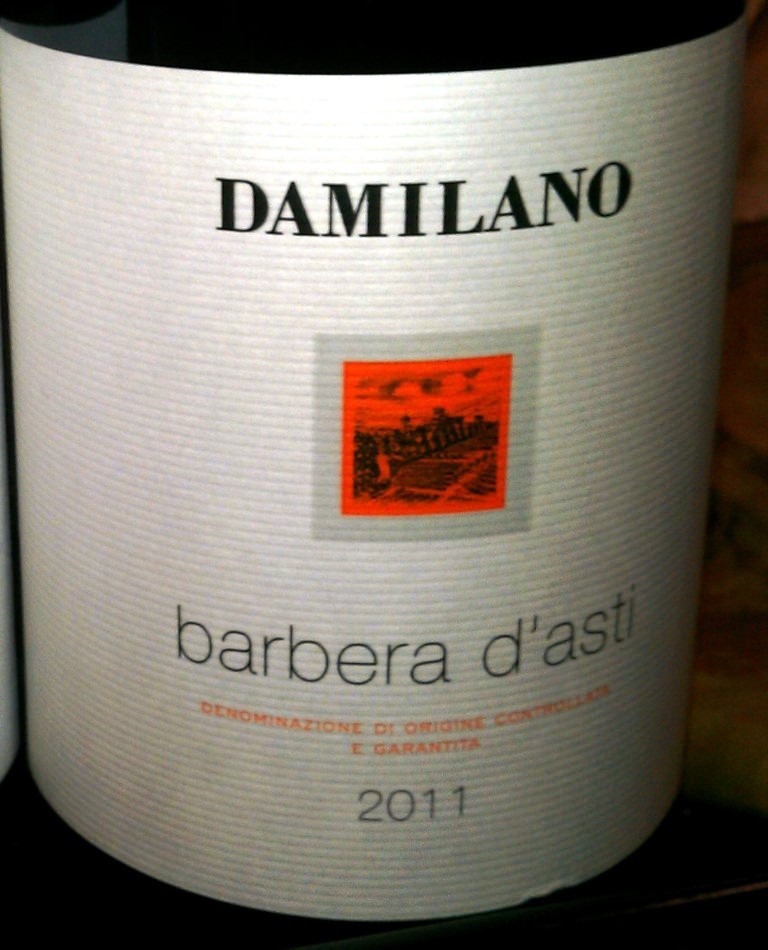 Meritage time!
First, let’s start with the answer for the wine quiz #84, grape trivia – Barbera.
In the quiz, you were supposed to answer 5 questions about red grape called Barbera. Here are the questions, now with the answers:
Q1: Based on the latest DNA analysis, which well known Spanish grape appears to be a close relative of Barbera?
A1: Spanish grape Monastrell (known in France as Mourvèdre) appears to be a close relative of Barbera (but ohh so different).
Q2: What well-known grape became popular blending partner of Barbera as of late?
A2: As of late, Nebbiolo, a close neighbor of Barbera, is often used in the blends with Barbera to round up the resulting wine.
Q3: The new technique was introduced in making the wines out of Barbera in the second half of the 20th century, which helped to improved the quality of the wines. Which one do you think it was:
a. Malolactic fermentation, b. Fermentation and aging in the small oak casks, c. Carbonic maceration, d. Reverse osmosis
A3: b, Fermentation and aging in the small oak casks, seems to be the preferred method to tame the acidity and add some tannins to the resulting wine, making it also age-worthy.
Q4: Wine Spectator calls wines rated in 95-100 range Classic (the highest and the most prestigious category). True or False: there are no Barbera-based wines rated in the Classic category
A4: False. But I have to admit that Barbera is only marginally there, with just 2 wines having 95 rating.
Q5: Fill in the blanks: Barbera typically ripens two weeks later than _____, but at the same time it is two weeks earlier than ____.
A5: Barbera typically ripens two weeks later than Dolcetto, but at the same time it is two weeks earlier than Nebbiolo.
Talking about the results, Jeff, a.k.a. the drunken cyclist, answered all 5 questions correctly so he gets (again) the prize of unlimited bragging rights. Well done! I also would like to mention Alissa, who put the quiz upside down and instead of answering the questions in the quiz, asked me a very interesting question. As a “bonus question”, I would like to pass it on to you: “Outside of Asti is a place which pays homage to a man who helped with the unification of Italy, commercialization of Italy’s wine industry, and houses the first regional enoteca in the Piedmont region. Name it.” If you know the answer, don’t be shy and comment away!
Now, to the interesting stuff around the vine and the web!
First, don’t miss the WTSO Magnum Marathon tomorrow, December 12. Starting at 8 AM Eastern time, WTSO will be offering large format wines, at least 1.5L or more in size. The wines will be priced from $24.99 to $499.99/bottle, and the new wines will be offered every 30 minutes or sooner, if the previous wine will sold out. The new wines will be announced only on Twitter, follow @WTSO so you will not miss out.
Next, I came across a very interesting article by Mike Veseth of The Wine Economist fame, talking about Globalization of wine and food. Actually, his article in itself is already an aggregation of a number of other articles. It is definitely worth a few minutes of your time, so please head to Mike’s blog to read it.
Now, it appears that The Drunken Cyclist is definitely a star of today’s Meritage. In addition to correctly solving the quiz, he is behind two noteworthy events. First, as a winner of the Monthly Wine Writing Challenge #5 (#MWWC5) – Congratulations, Jeff! – he announced the theme for #MWWC6, which is going to be … Mystery. Sharpen your pencils, or may be flex your fingers, get your thinking cap/hat/fedora on and start writing. #MWWC6 Rules and regulations can be found here.
Second event is also a brainchild of TDC, and it is a secret Wine Santa project. The idea is to get all the bloggers (and readers) who is interested in playing a secret wine Santa by sending the wine to the completely unsuspecting recipient (and of course also getting the one him- or herself) to provide their address information back to Jeff, who will then randomly assign the aspiring alcoholics in pairs. All the rules can be found here, and if you are interested in participation, make sure to get back to Jeff not later than this coming Friday 12/13.
That’s all I have for you for today, folks. The glass is empty – but refill is on its way. Until the next time – cheers!
Weekly Wine Quiz #84: Grape Trivia – Barbera
 The Wine Quiz series is not meant to intimidate. The whole idea here is to have fun and learn something new. When answering the questions, it is fully encouraged to use all available sources of information, including Google or any other search engine. There are no embarrassing answers – the most embarrassing thing is not giving it a try…
Welcome to the weekend and your new wine quiz!
We are continuing our grape trivia series, with the focus again on the red grapes, and today’s subject is Barbera.
It is interesting to see the level of difference in the available information for different grapes, especially when it comes to the historical data (not that it is unexpected). When it comes to the grape such as Cabernet Sauvignon, absolute majority of the different sources converge on the 17th century as the time when Cabernet Sauvignon become known as the particular grape. When it comes to Barbera, the range of opinion is rather stunning – some sources say that Barbera was mentioned for the first time only in 18th century, some say it was 13th, and some of them put it even back to the 7th. Therefore, I can’t tell you when Barbera first became known as a grape, but as a fun fact, do you know that Barbera is 3rd most planted grape in Italy, after Sangiovese and Montepulciano? Today, there are about 70,000 acres of Barbera planted throughout the Italy
Barbera is one of the main grapes in Piedmont, where it is often planted right next to its noble neighbour, Nebbiolo. Typically Nebbiolo takes over the best spots on the hills, and Barbera is planted right under. Some of the best Barbera wines are produced in Asti, Alba and Monferrato areas in Piedmont, with Barbera d’Asti and Barbera del Monferrato having the DOCG status (highest quality standing in Italian wine classification). Of course Barbera is planted in many other regions in Italy, such as Lombardy, Emilia-Romagna and others. Barbera spread out all over the world with Italian immigrants, nowadays planted in Australia, United States (California, Texas and others), Argentina, Brazil, Israel and other countries.
Barbera grapes have dark thin skin. Barbera has a well known tendency for overproduction, so the plantings have to be controlled to achieve higher quality of the wines. Barbera typically has high level of acidity and low tannins, which makes winemaking somewhat challenging to produce wines which will be able to age well – of course ageing in the oak barrels helps with that. One of the well known characteristics of Barbera wines is intense berries aroma, and the wines typically have a medium body, at least in the classical Italian versions ( some of the New World Barberas can be quite bombastic). Barbera wines are generally food friendly with their inherent acidity, and they complement quite well a wide range of traditional Italian dishes.
And now, to the quiz!
Q1: Based on the latest DNA analysis, which well known Spanish grape appears to be a close relative of Barbera?
Q2: What well-known grape became popular blending partner of Barbera as of late?
Q3: The new technique was introduced in making the wines out of Barbera in the second half of the 20th century, which helped to improved the quality of the wines. Which one do you think it was:
a. Malolactic fermentation
b. Fermentation and aging in the small oak casks
c. Carbonic maceration
d. Reverse osmosis
Q4: Wine Spectator calls wines rated in 95-100 range Classic (the highest and the most prestigious category). True or False: there are no Barbera-based wines rated in the Classic category
Q5: Fill in the blanks: Barbera typically ripens two weeks later than _____, but at the same time it is two weeks earlier than ____.
Good luck, enjoy the quiz and your weekend! Cheers!
Weekly Wine Quiz: Grape Trivia Anthology!
Welcome to the weekend!
Yep, it is just “welcome to the weekend”, and not your new wine quiz. We are in the middle of the long weekend, and I didn’t have time to work on the new grape trivia quiz – therefore, as I have done in the past, I just want to offer you a little retrospective into the grape trivia series of the wine quizzes.
What do you think is harder – to solve the quiz or to create the quiz? I can attest that it is the latter. When you are creating a quiz, you really want to have a balance of difficulty among all the questions – and the quiz should be entertaining enough for the people to attempt to solve it. Similarly to the cooking, where you might spend 2-3 hours preparing the dish, afterwards consumed in 20 minutes (glad it doesn’t take years as with making of the wine) – sometimes, it might take more than 2 hours to create the quiz, and there is a good chance that you will only spend 10 minutes solving it. But again, same as with cooking, which we do because we like the magic of putting pieces together and creating something new, something of the interest to the others, creation of the quiz is definitely a fun process and great learning opportunity.
Below you will find the list of the grape trivia quizzes included into the series so far. There are links for both quiz and the answer, feel free to play with them any way you want. And as always, any thoughts, comments and suggestions will be most appreciated!
The quizzes will resume next Saturday. Enjoy your weekend and cheers!
Red grapes:
WWQ #53 – Cabernet Sauvignon – Answer
WWQ #55 – Pinot Noir – Answer
WWQ #60 – Sangiovese – Answer
WWQ #61 – Tempranillo – Answer
WWQ #78 – Petit Verdot – Answer
WWQ #79 – Cabernet Franc – Answer
WWQ #81 – Petite Sirah – Answer
White grapes:
WWQ #65 – Sauvignon Blanc – Answer
WWQ #66 – Chardonnay – Answer
WWQ #67 – Pinot Gris – Answer
WWQ #68 – Chenin Blanc – Answer
WWQ #70 – Gewurztraminer – Answer
WWQ #74 – Trebbiano (Ugni Blanc) – Answer
Weekly Wine Quiz #83: Grape Trivia – Carménère
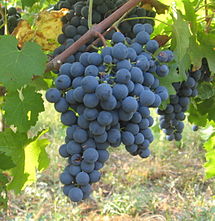
Carménère grapes. Source: Wikipedia
The Wine Quiz series is not meant to intimidate. The whole idea here is to have fun and learn something new. When answering the questions, it is fully encouraged to use all available sources of information, including Google or any other search engine. There are no embarrassing answers – the most embarrassing thing is not giving it a try…
Welcome to your new wine quiz!
We are continuing our grape trivia series, with the focus again on the red grapes, and today’s subject is Carménère.
Let’s start with pre-quiz before the quiz. Class, how many of you heard of the Carménère grape, raise your hands. Ok, now, how many of you tasted the Carménère wines, raise your hands. Okay, those of you who raised their hand twice, can probably skip directly to the main quiz, and for the rest of us, lets talk about Carménère.
When it comes to the Bordeaux, everybody knows five main grapes – Cabernet Sauvignon, Merlot, Cabernet Franc, Malbec and Petit Verdot. Truth of the matter is that it is actually six – and Carménère is that grape number six. Until the Phylloxera epidemic of the 1870s in France, Carménère was probably one of the leading grapes in Bordeaux. Carménère is related to the Cabernet family, it most likely predates both Cabernet Franc and Cabernet Sauvignon, and it was probably the driving force behind power and finesse of Claret of the 1800s and even before. However, Carménère is a difficult grape to work with – it ripens two to three weeks later than Merlot, and it is susceptible to the viticultural hazard called coulure – the condition when in the cold spring the buds will fail to turn into the flowers. It also doesn’t graft on the new rootstock very easily. So the combination these issues lead to the situation that after the Phylloxera epidemic, the grape was practically not replanted back in Bordeaux, and it was literally considered extinct (it exists today in France, but in the extremely low quantities).
During the 1850s, a lot of Cabernet Sauvignon and Merlot cuttings made it to Chile – both in legal and probably illegal ways. For the long time, Chilean winemakers were wondering, why some of their Merlot plantings ripen so late compare to the others, and have a different flavor profile – those grapes where considered to be a specific Chilean Merlot clone. Until in 1994 it was discovered that Chilean Merlot is actually a … Carménère! Carménère made it to Chile in 1850s as part of those Cabernet Sauvignon and Merlot cuttings, and it happened to strive in the warm and dry climate. Today, Chile has almost 9,000 hectares planted with Carménère, and it is widely considered one of the best wines Chile can produce.
When ripen properly, Carménère produces excellent powerful wines with the fruit profile somewhat similar to Cabernet Sauvignon and Merlot, but with very present herbal and spicy component of sage, pepper, eucalyptus and even menthol.
And now, to the quiz!
Q1: Explain the name of the grape Carménère
Q2:Similar to Merlot/Carménère confusion in Chile, the discovery was recently made in one of the well known old world wine producing countries – the grape they thought was ___, actually happened to be a Carménère. Name the grape, the country, and the region within this country where confusion took place.
Q3: As the sequel to the previous question – the confusion also spread into the New Wolrd winemaking country. Name the grape been mistaken and the country.
Q4: Wine Spectator calls wines rated in 95-100 range Classic (the highest and the most prestigious category). True or False: there are no Carménère-based wines rated in the Classic category
Q5: Name three grapes, often blended together with Carménère.
Good luck, enjoy the quiz and your weekend! Cheers!
Wednesday’s Meritage – Wine Quiz Answer, Wine Spectotor Top 100, Perfect Holiday Gift Solution, and more
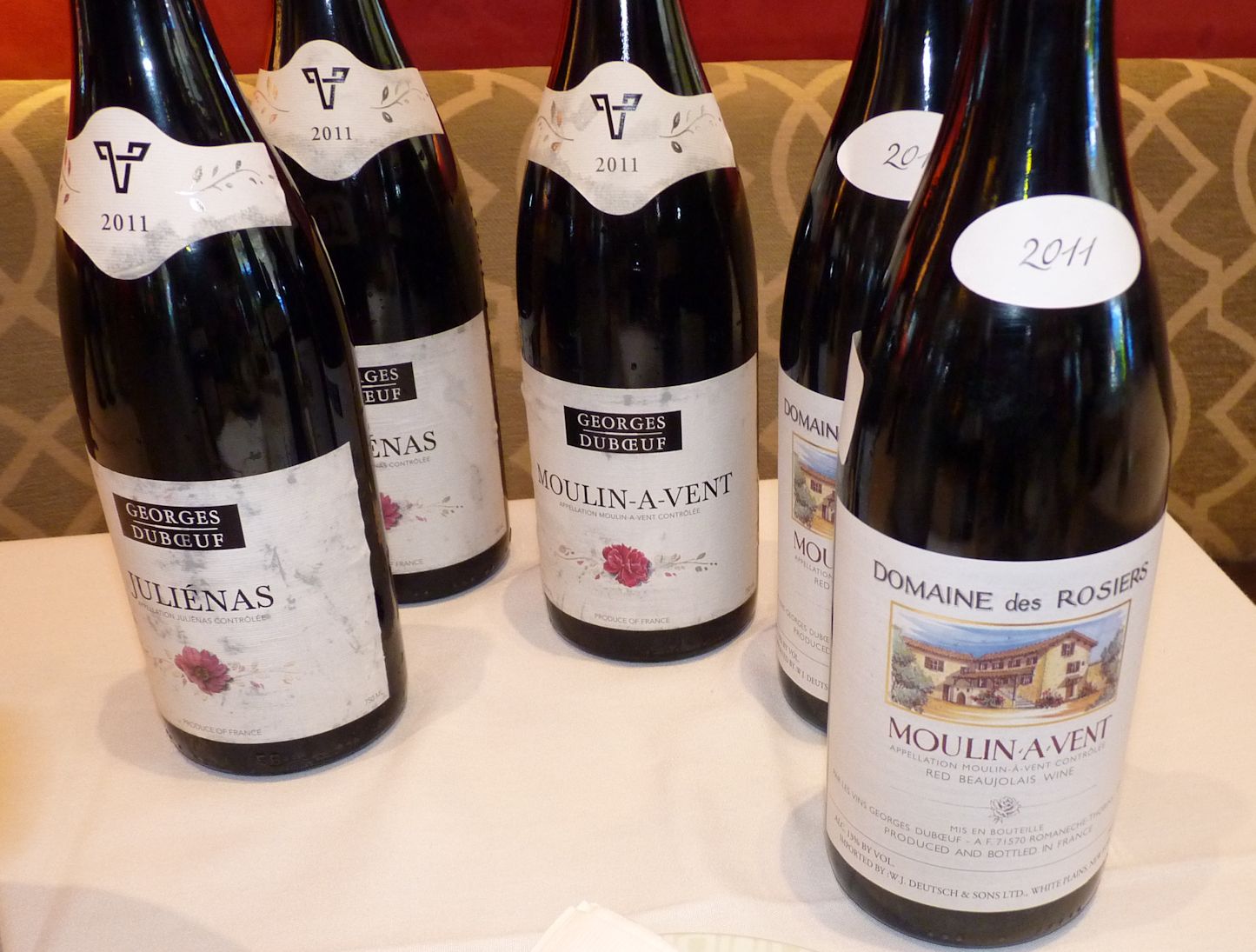 Meritage time!
First, let’s start with the answer for the wine quiz #82, grape trivia – Gamay.
In the quiz, you were supposed to answer 5 questions about red grape called Gamay. Here are the questions, now with the answers:
Q1: Gamay is closely associated with every third Thursday in November. Can you explain why?
A1: Beaujolais Nouveau is coming into town! While Beaujolais Nouveau was always the first wine of the harvest to be delivered to the restaurants and shops in Europe, in 1985 the phenomenon became more organized, settling on the third Thursday of November to make the new release available.
Q2: Carbonic maceration is an important method in production of wines made out of Gamay. Can you briefly explain what is carbonic maceration and how does it helps here?
A2: Carbonic maceration is a process where the grapes in a sealed tank are subjected to the flow of CO2, which start fermenting the juice inside of the whole grapes before they will be crushed. The resulting wine becomes fruity with very low presence of tannins. This process is particularly used inproduction of Beaujolais Nouveau and other Beaujolais wines. For more information, please refer to Wikipedia article.
Q3: Fill in the blanks: In Beaujolais, Fleuri is considered to produce the most ___ wine, and Moulin-à-Vent produces the most ___ wines.
A3: In Beaujolais, Fleuri is considered to produce the most feminine wine, and Moulin-à-Vent produces the most masculine wines. Feminine and Masculine are the descriptors typically used by wine professionals to describe the wines of Fleuri and Moulin-à-Vent wines.
Q4: Which one doesn’t belong and why:
a. Brouilly, b. Côte de Brouilly, c. Côte Chalonnaise, d. Juliénas, e. Régnié
A4: c. Côte Chalonnaise. The other four names are part of Cru de Beaujolais ten villages, but Côte Chalonnaise doesn’t belong there (it is an AOC in Burgundy).
Q5: True or False: Beaujolais Nouveau wines can be aged for a few years before consumption.
A5: False. The whole point of aging the wine is to wait for it to develop further in the bottle and become more enjoyable. Beaujolais Nouveau is meant to be enjoyed right away and should be consumed by May of next year – it doesn’t improve in the bottle.
So for the winners, Jeff the drunken cyclist continues his winning streak – he got correctly 5 out of 5, including the difficult question #3. Great job, Jeff – unlimited bragging rights are yours! I would like to also acknowledge Wayward Wine,Whine And Cheers For Wine and Eat with Namie who all correctly answered 4 questions out of 5. Well done!
Now, to the interesting stuff around the vine and the web!
On Monday, November 18th, Wine Spectator published their Top 100 list of Wines. Yes, I know, many dismiss the whole notion of Wine Spectator ratings and Top lists as closely associated with the advertizement dollars spent with publication. True or not, but I still have a lot of respect to Wine Spectator and definitely curios to see their “top wines” list. As Wine Spectator celebrates 25th anniversary, they whole web site is open to the public (typically it requiressubscription). I would highly recommend that you will take advantage of this opportunity and explore the site which has a great wealth of wine information. Also, here is the link to the WS Top 100 wines of 2013. I have to admit that I’m happy with Wine Spectator’s choice for the wine of the year – 2004 Cune Rioja Imperial Gran Reserva. In general, Cune Imperial makes great wines, and I think it is an excellent choice for the wine of the year.
Thinking about holiday gifts? Does your list include any wine lovers? If yes, you are in luck, but you will need to act quick. On December 2nd, WTSO will conduct a Gift Marathon (full info can be found here). As a traditional WTSO Marathon, there will be no announcements of new wines. But each wine will come gift packaged, with one bottle and two varietally correct Riedel glasses in the box. Most importantly – free shipping on each package (no minimums), and each packaged can be shipped directly to your gift recipient – this is the best part! Prices start from $44.95 per box (free shipping). I think this is a deal not to be missed, so point your browser to WTSO on December 2nd and happy hunting!
You know Wine-Searcher is a great resource for finding the wines online and comparing the prices. Are you curious what the other people looking for on the wine-searcher? Here is an interesting article, which tells you what the consumers in America are looking for. Based on the article, looks like most of the times people are looking for red Bordeaux blends – which makes sense, as there are a lot more Bordeaux blends produced nowadays. Anyway, for your own analysis and lots more data, take a look at the article.
When you make dinner, how often do you think about what wine should be opened for the food you are serving? Sometimes the pairing can be quite difficult, so I have no problems taking my food and wine separately. But when you hit the mark and the wine and food “work” together, it becomes the whole new level of experience. To help you in this process of pairing food and wine, here is the link to the web site I recently came across – I think it has a lot of good suggestions. Take a look – you might be able to pleasantly surprise yourself and your guests during your next dinner.
That’s all I have for you for today, folks. The glass is empty – but refill is on its way. Until the next time – cheers!
Weekly Wine Quiz #82: Grape Trivia – Gamay

Gamay grapes
Source: Wikipedia
The Wine Quiz series is not meant to intimidate. The whole idea here is to have fun and learn something new. When answering the questions, it is fully encouraged to use all available sources of information, including Google or any other search engines. There are no embarrassing answers – the most embarrassing thing is not giving it a try…
Welcome to the weekend and your new wine quiz!
We are continuing our grape trivia series, with the focus again on the red grapes, and today’s subject is Gamay, also called Gamay Noir, and fully officially a Gamay Noir à Jus Blanc.
Gamay is a purple-skinned grape, taking its name from the village of Gamay, located south of Beaune in France. Gamay is considered to be a cross between Pinot Noir and ancient white grape called Gouais Blanc. First mentions of Gamay go all the way back to the 14th century, so it had being around for a while.
Gamay grapes have thin skin, and have a tendency to overproduce, creating the grapes with very high level of acidity and low sugar, which often results in the production of lightly colored and quite acidic wines. The overproduction and high acidity were the reasons for the Gamay being literally outlawed and pushed out of Burgundy by the royal rulers at the end of 14th century, to give way for much rounder Pinot Noir. As the result, Gamay mostly settled in Beaujolais area, where it became the major red grape variety. Gamay is used in Beaujolais to produce a wide range of wines, starting from the famous Beaujolais Nouveau, the wine produced within 6 weeks of the harvest – young, grape-y and quaffable, but usually not very exciting; and then going to the Cru Beaujolais ( there are 10 villages in Beaujolais, which have this status), which can be dense, concentrated and age-worthy.
In addition to Beaujolais, Gamay is also growing in Loire region, where it is often blended with other local grapes such as Cabernet Franc and Cot ( Malbec) and it is used to produce both red and Rosé wines. The Rosé from Loire are typically a lot fruitier than the ones from Provence. Gamay is also successfully grown in Switzerland, especially in the area around lake Geneva – it is often blended with Pinot Noir there. Outside of France, Gamay is planted in the number of regions, such as United States and Italy, but it doesn’t produce much of the well known wines. Interestingly enough, a world renowned wine writer and critic, Jancis Robinson, was raving about Gamay wines produced by Sorrenberg of Beechworth in north east Victoria, Australia – she mentioned that it might be “one of the most exciting Gamays I have ever tasted”.
And now, to the quiz!
Q1: Gamay is closely associated with every third Thursday in November. Can you explain why?
Q2: Carbonic maceration is an important method in production of wines made out of Gamay. Can you briefly explain what is carbonic maceration and how does it helps here?
Q3: Fill in the blanks: In Beaujolais, Fleuri is considered to produce the most ___ wine, and Moulin-à-Vent produces the most ___ wines.
Q4: Which one doesn’t belong and why:
a. Brouilly
b. Côte de Brouilly
c. Côte Chalonnaise
d. Juliénas
e. Régnié
Q5: True or False: Beaujolais Nouveau wines can be aged for a few years before consumption.
Good luck, enjoy the quiz and your weekend! Cheers!
Wednesday’s Meritage – Wine Quiz Answer, Tempranillo Day, Beaujolais Nouveau Coming Up, The Widow Who Reinvented Champagne, and more
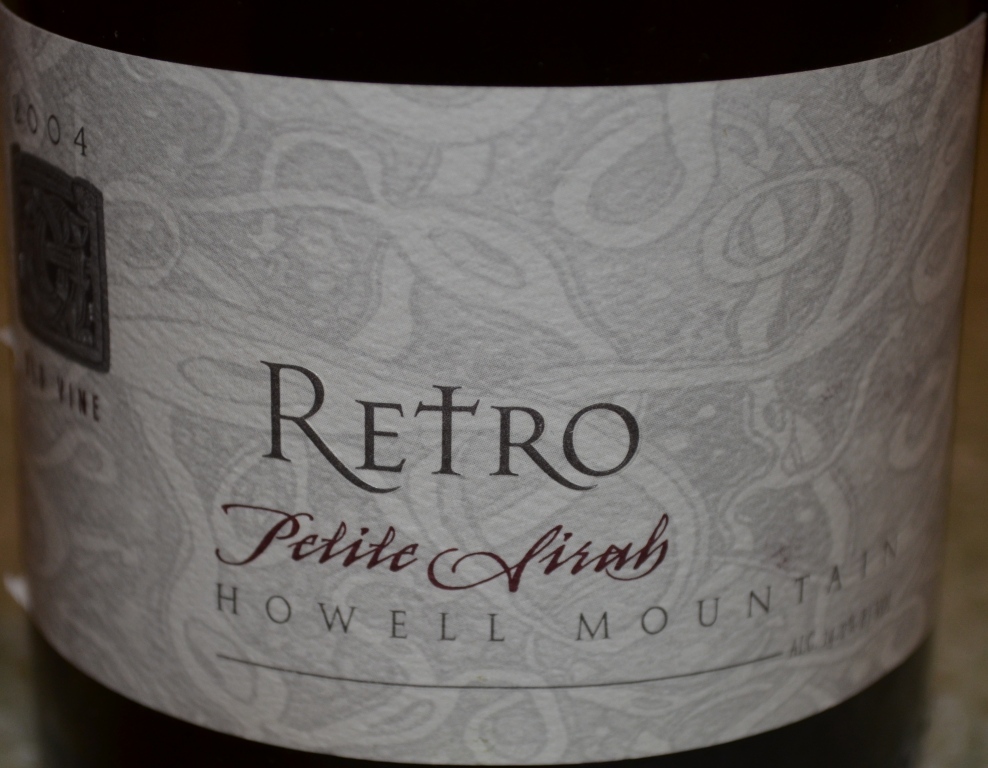 Meritage time!
First, let’s start with the answer for the wine quiz #81, grape trivia – Petite Sirah.
In the quiz, you were supposed to answer 5 questions about a red grape called Petite Sirah. Here are the questions, now with the answers:
Q1: Name the grape: In California, Petite Sirah is a popular blending addition to ___?
A1: Zinfandel. You can find a small percentage of Petite Sirah (5% – 10%) in many Zinfandel bottlings
Q2: When it comes to the wines in the United States, there is an interesting similarity between the Petite Sirah and Primitivo. Can you explain?
A2: The similarity comes from the fact that both Petite Sirah and Primitivo were the part of the same request to the TTB (government organization in charge of labeling), to allow the use of Durif interchangeably with Petite Sirah, and Zinfandel with Primitivo. It is interesting to note that contrary to the information in Wikipedia, which says that both requests were never resolved, it appears that Durif is officially recognized as a synonym to Petite Sirah, while Primitivo and Zinfandel are not – you can find the complete list of the approved names through the link to the list of approved grape names in this US government document.
Q3: Which one doesn’t belong and why:
a. Arizona, b. Illinois, c. New Mexico, d. New York, e. Texas
A3: d. New York – there is no Petite Sirah wines produced in New York (at least in the meaningful quantities).
Q4: In the bad, rainy growing season conditions in California, Petite Sirah can be a savior – can you explain why and how does it help?
A4: As the Petite Sirah is mildew resistant and provides supple tannins, color, and structure, in the bad years it can be added to Cabernet Sauvignon, Merlot, and other wines to improve the quality.
Q5: What love has to do with the Petite Sirah?
A5: “P.S. I Love You” is a consortium dedicated to the promotion of Petite Sirah wines.
Talking about the results, the drunken cyclist continues his winning streak, so he gets ( again) the prize of unlimited bragging rights. Well done!
Now, to the interesting stuff around the vine and the web!
First of all, tomorrow, November 14th, is an International Tempranillo Day! Tempranillo, the noble grape of Spain and Portugal, and the rising star of Texas is a source of many wonderful long-living wines, and it is definitely the grape worth celebrating. TAPAS, the society of producers and advocates of Tempranillo, lists a number of events celebrating the grape. But you don’t even need to go anywhere to celebrate the Tempranillo – just grab a bottle, maybe of Magnificent Rioja (but really, any Tempranillo wine will do), pour, smell, sip and enjoy!
Now, the next Thursday, November 21st, is the third Thursday in November. Do you know what it means? Yes, you are right – Beaujolais Nouveau! Every third Thursday in November, the young Beaujolais wine of the same year’s vintage, called Beaujolais Nouveau, is becoming available in all the wine stores around the world. It is not just the wine – Beaujolais Nouveau also means celebration and fun. Don’t forget to get the bottle and join the festivities!
I’m sure you know that classic Champagne with the yellow label on it – Veuve Cliquot, which would literally translate into a “widow Cliquot”. But do you know the role the Barbe-Nicole Cliquot Ponsardin, the actual person behind that label, played in pretty much enabling the whole Champagne industry to exist, and for the mere mortals to be able to afford a bottle of Champagne? Barbe-Nicole’s perseverance and her invention of the riddling were some of the key elements in making Champagne into what we readily enjoy today. Here is an article for you which is definitely worth reading – it is somewhat long but very fascinating and will be well worth your time. And you might even complement the reading with the glass of Champagne in your hand – it will be very appropriate.
The last piece I want to bring to your attention is Wine Spectator’s Top 100 wines of 2013 list, gradually exposed at the rate of a few wines per day at the Wine Spectator web site. There are various contests taking place right now to predict the Wine Spectator Wine of the Year 2013, including the one which Wine Spectator runs by itself. So far the Wines #10 – #7 had been revealed, and more wines will be announced every day finishing with the Wine of the Year on Friday, November 15th. The full top 100 list will be published on Monday, November 18th. Looking at the 4 of the top 10 announced so far, I can only say that I’m a bit surprised. One of the selection criteria for the Top 10 is affordability – with the wines #10 and #9 priced at $135, and wines #8 and #7 priced at $120, I feel like I missed the memo about a substantial increase in my salary, as those prices are definitely outside of the “affordable” realm, at least in my book. Also, as “availability” is another factor, highly allocated Quilceida Creek (wine #10) makes it also an interesting choice. I plan to come back to this subject next week when the full Top 100 list will be announced – but any of your comments meanwhile will be most welcome.
That’s all I have for you for today, folks. The glass is empty – but the refill is on its way. Until the next time – cheers!
Weekly Wine Quiz #81: Grape Trivia – Petite Sirah

Petite Sirah in Bloom. Source: Wikipedia
The Wine Quiz series is not meant to intimidate. The whole idea here is to have fun and learn something new. When answering the questions, it is fully encouraged to use all available sources of information, including Google or any other search engine. There are no embarrassing answers – the most embarrassing thing is not giving it a try…
Welcome to the weekend and your new wine quiz!
We are continuing our grape trivia series, with the focus again on the red grapes, and today’s subject is Petite Sirah.
Petite Sirah was created by the French botanist François Durif as a result of accidental cross-pollination between Syrah and little known Rhône varietal called Peloursin. To honor its creator, the grape was originally known under the name of Durif, but Petite Sirah happened to stick as a name, so it is a rarity to the see the name Durif on the bottle. While discovered in France, the grape is literally non-existent there, and it is growing primarily in United States, Australia and Israel, with the number of other countries starting to experiment with it.
Petite Sirah came to the United States at the end of the 19th century, but it is only recent that its popularity started to increase rapidly. Just to give you some numbers, in 2002 in California there were about 2,000 acres of Petite Sirah planted, and 62 producers made wine from it. In 2013, the plantings increased more than 4 times, to more than 9,000 acres, and about 1,000 producers joined the suite, bringing the total number of Petite Sirah producers in California to more than 1,060. At the same time, most of the Petite Sirah production is small, typically a few hundred cases, which explains why you see only a very limited number of Petite Sirah wines in the stores.
Petite Sirah (and the name Petite here relates to the size of the grapes) produces small dark-skinned berries, with very high skin to juice ratio, thus bringing a lot of tannins to the resulting wines. But it is not only tannins – Petite Sirah often shows quite an exuberant fruit, with blueberries and raspberries being in the forefront. One important feature of the Petite Sirah grapes is resistance to the mildew, which definitely helps, especially when it rains during the harvest. Petite Sirah is used both for blending and, increasingly, on its own, where it makes very concentrated, powerful and long-living wines, capable of ageing for a few decades or more.
And now, to the quiz!
Q1: Name the grape: In California, Petite Sirah is a popular blending addition to ___?
Q2: When it comes to the wines in the United States, there is an interesting similarity between the Petite Sirah and Primitivo. Can you explain?
Q3: Which one doesn’t belong and why:
a. Arizona
b. Illinois
c. New Mexico
d. New York
e. Texas
Q4: In the bad, rainy growing season conditions in California, Petite Sirah can be a savior – can you explain why and how does it help?
Q5: What love has to do with the Petite Sirah?
Good luck, enjoy the quiz and your weekend! Cheers!
Weekly Wine Quiz #80: Grape Trivia – Mourvèdre, a.k.a Monastrell
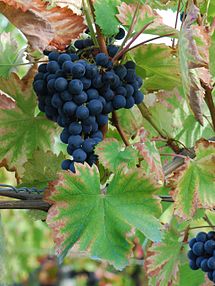
Mourvèdre grapes, as shown in Wikipedia
The Wine Quiz series does not mean to intimidate. The whole idea here is to have fun and learn something new. When answering the questions, it is fully encouraged to use all available sources of information, including Google or any other search engines. There are no embarrassing answers – the most embarrassing thing is not giving it a try…
Welcome to the weekend and your new wine quiz!
We are continuing our grape trivia series, with the focus again on the red grapes, and today’s subject is red grape called Mourvèdre, also known in Spain under the name of Monastrell, and also known as Mataro in Australia.
Mourvèdre is one of the very old grapes. According to the general consensus, Mourvèdre originated in Southern Spain at around 500 BC. From Spain, the grape spread into France, where it became popular in Roussillon region, and then made it into Provence and Rhone. Mourvèdre was brought into US and Australia in the 19th century, but it was used mostly for blending or even bulk juice production for home-made wines. It was not until the late 20th century when the grape started gaining popularity in US and Australia, producing both high end blends as well as single-grape wines.
Mourvèdre requires a warm climate and a substantial amount of sunshine in order to produce ripe, concentrated grapes. In the cooler conditions, the grape will exhibit mostly herbaceous and vegetative flavors, not very suitable for the winemaking. Under the proper growing conditions, Mourvèdre produces grapes with expressive fruit (blackberries, blueberries) and gamy flavors, with medium acidity. Mourvèdre also known for its thick skin, which allows for a good color and tannin extraction. Mourvèdre is used in a production of a single grape red wines (in Bandol, France, and many regions in Spain), as well as in various blends (for instance, it is one of the allowed 18 grapes in Châteauneuf-du-Pape). It is also used in a production of Rosé and sweet wines, and it is allowed to be blended into the Cava, Spanish Sparking wines (to make Cava Rosé).
And now, to the quiz!
Q1: Name two grapes, most famous blending partners of Mourvèdre.
Q2: Wine Spectator calls wines rated in 95-100 range Classic (the highest and the most prestigious category). True or False: there are no Mourvèdre-based wines rated in the Classic category
Q3: Fill in the gaps: The oldest, continuously producing Mourvèdre vine is located at ___ Vineyard in ___, and it is about ___ years old.
Q4: Explain potential origins for all three names of the grape – Mourvèdre, Mataró and Monastrell
Q5: True or False: France plantings of Mourvèdre far exceed the plantings in Spain (no tricks here – Mourvèdre and Monastrell are used interchangeably, you have to assume it is the same grape).
Good luck, enjoy the quiz and your weekend! Cheers!
Last Bottle Sign Up ($10 credit)




 Talk-A-Vino