Archive
For the Love of Riesling
 I love Riesling.
What do winelovers do when they love the wine?
That’s easy.
We want to share that love.
The biggest reward for a winelover is to offer someone a glass of wine and hear them say “oh, it is good!”.
Sharing the wine is the most enjoyable part of drinking the wine. We want the other people to experience the same joy as we do, we want them to experience the pleasure only the wine can deliver.
As I said before, I love Riesling.
Riesling might be the most underappreciated white grape. It is one of the main 3 white grapes (Chardonnay, Sauvignon Blanc, and Riesling). Riesling wines are made everywhere in the world – Germany, Alsace, Australia, New Zealand, New York (Finger Lakes, Hudson Valley), Canada, Oregon, California, and so on – and yet many of the wine drinkers wouldn’t even openly admit that they like Riesling and that they are happy to drink it.
It is hard to tell why that is. Many people associate the word Riesling with the word “Sweet”. It is a big mistake, as it means, for example, that they never experienced bone-dry, tongue-twisting Rieslings from the Claire Valley in Australia. I would even dare to say that the majority of the well-made Rieslings are not sweet, unless they are purposefully made to be sweet, such as BA or TBA German Rieslings. The main trait of Riesling, similarly to all other wines, is balance. As long as the Riesling is balanced, it is one of the most enjoyable white wines you can imagine. And it pairs well with the wide range of food. I’m telling you – Riesling is one of the best white wines in the world.
The love for wine needs to be shared. And so earlier in the year, I decided to do a Riesling wine tasting. My audience (family, future in-laws) wanted to learn more about the wines, and I have decided that tasting a bunch of Rieslings will offer an excellent educational opportunity (was I right? I have no idea, but I know we had fun).
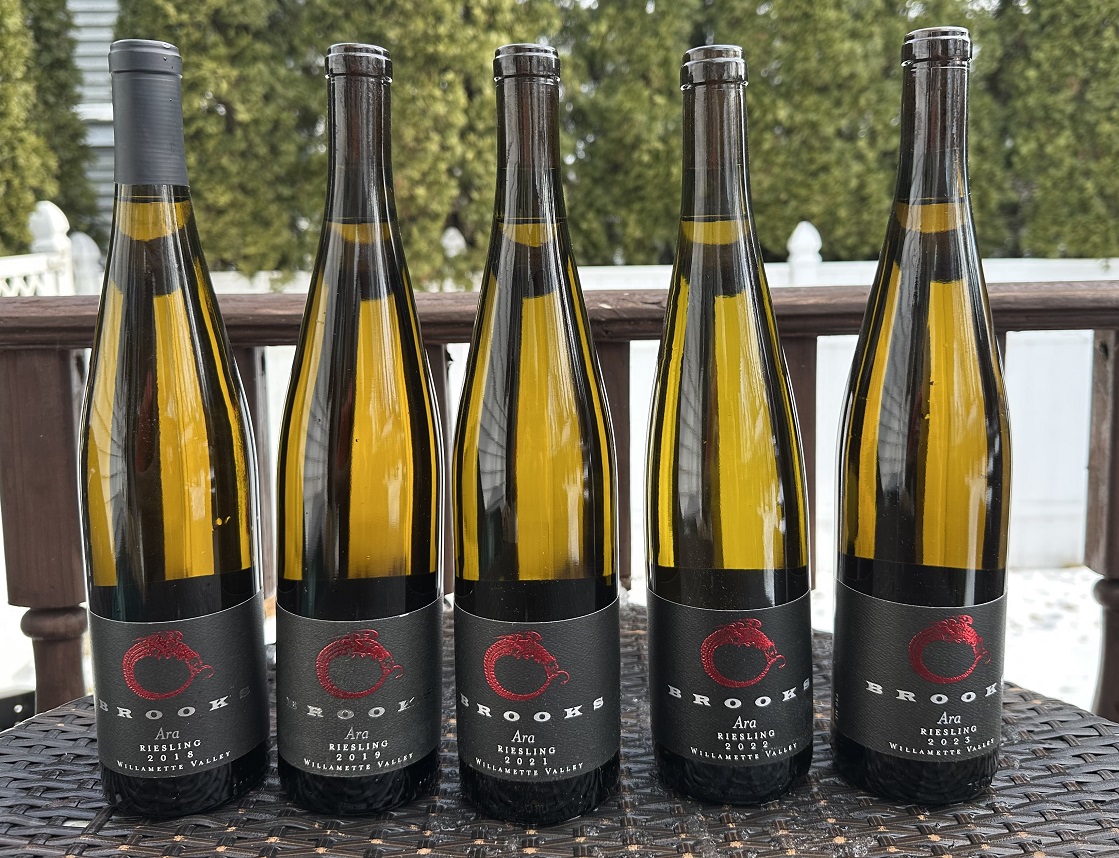
Ask me to name three of my favorite Cabernet Sauvignon producers, and I will quickly become frustrated – can I give you at least 10? 20 or 30 would be even better. The same would be for a Chardonnay, Syrah, and Tempranillo. When it comes to Riesling, however, that would be an easy task. Grosset from Australia. Smith-Madrone from California. Brooks from Oregon. This is my “top 3 Riesling producers” list. I would absolutely love to do a comparative testing of these 3 Rieslings, but I managed to get only 2. I got Smith-Madrone Rieslings first, and then when I got the idea for the tasting, I wrote to Brooks, and they were kind enough to send me a nice vertical of Brooks Rieslings. I also asked Ravines Wine Cellars from Finger Lakes for a similar set, but got no reply, so my tasting consisted of a vertical of Smith-Madrone Rieslings from 2018, 2019, 2021, and 2023, and Brooks Ara Riesling from 2018, 2019, 2021, 2022, and 2023 (both wineries didn’t produce wines in 2020).
It is important to note that Riesling can age very well, and aged Riesling is just a special experience. I did an online search and found out that it is rather hard to find aged Riesling anywhere, at least for the price I was willing to pay (age your Riesling, people, take my advice). I managed to find a bottle from 1997, which was seemingly in reasonable condition. At the same online store, I also managed to find a sparkling wine made out of Riesling, known in Germany as Sekt. I scored a bottle of Sekt at the same online store, and it became our first wine in the tasting.
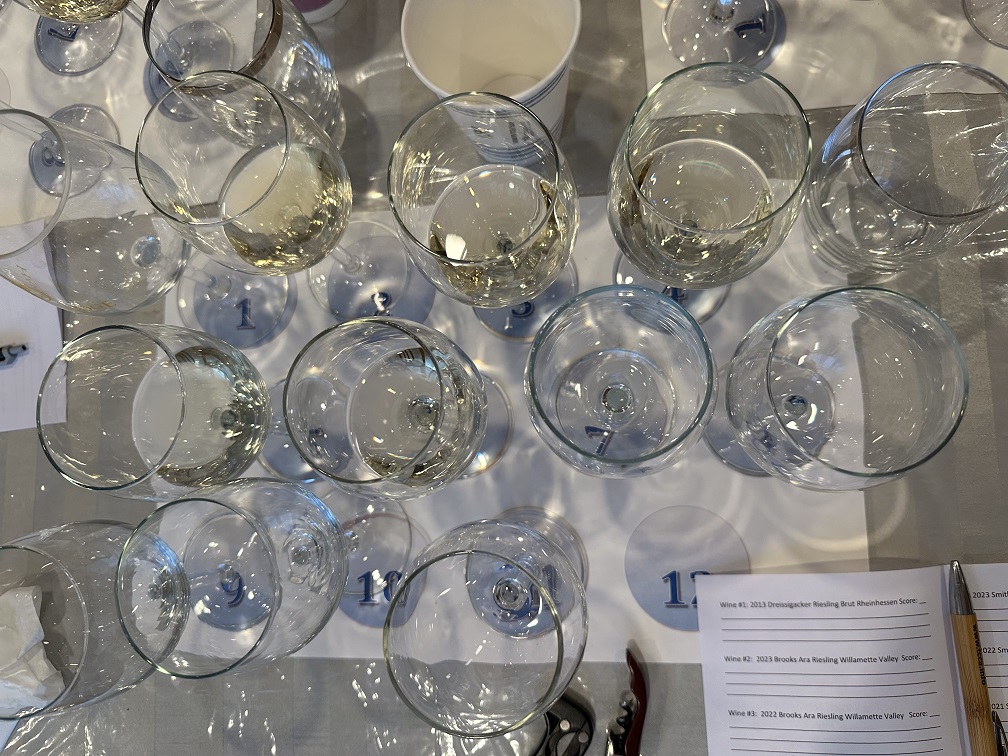
The tasting was non-blind as it had more of an educational purpose than anything else. Here is what transpired during the tasting (outside of the fact that I numbered Brooks Rieslings in the wrong order, so we tasted them from the older vintages to the newer, where I really wanted to go in the opposite direction):
Wine #1: 2013 Dreissigacker Riesling Brut Rheinhessen (12.5% ABV)
bubbles were still present, lemon, a touch of sugar, well balanced, very nice overall. Believe it or not, but this was the first Sekt that I liked.
8-
Wine #2: 2018 Brooks Ara Riesling Willamette Valley (14% ABV, 325 cases produced)
Beautiful color. Honey, petrol, explivit nose of tropical fruit
Great complexity, perfect balance, showing off an interplay of pear, apples, peach, even vanilla and quince. Delicious. 8
Wine #3: 2019 Brooks Ara Riesling Willamette Valley (13% ABV, 225 cases produced) – a very interesting wine, as my tasting notes for day 1 and upon re-tasting the next day differ dramatically.
Day 1: Very unusual, some honeydew, hint of pear. 8-
Day 2: Superb. Lean. Acidity is through the roof, fresh, crisp. Needs 20 years to become amazing. 8++
Wine #4: 2021 Brooks Ara Riesling Willamette Valley (12.5% ABV, 225 cases produced)
Day 1: Beautiful petrol and flowers on the nose
Fresh, petrol, complex, white fruit, excellent balance. 8+
Day 2: Petrol + earth. Beautiful, honey notes on the palate, much richer than ‘19. Still lean and mean. 8
Wine #5: 2022 Brooks Ara Riesling Willamette Valley (12.5% ABV, 150 cases produced)
Day 1: Flowers, touch of brown sugar
Most complex so far – wow, beautiful. 8+
Day 2: Petrol, hint of tropical fruit. Lemon with a touch of honey, lean, crisp, built for aging, let’s say another 20-something years. 8++
Wine #6: 2023 Brooks Ara Riesling Willamette Valley (12.5% ABV, 100 cases produced)
Day 1: Very muted nose. Palate is young, nice, concentrated. 8-
Day 2: Nose almost non-existent. Very lean palate with a hint of honey mixed with lemon. Need to develop for a long, very long time.
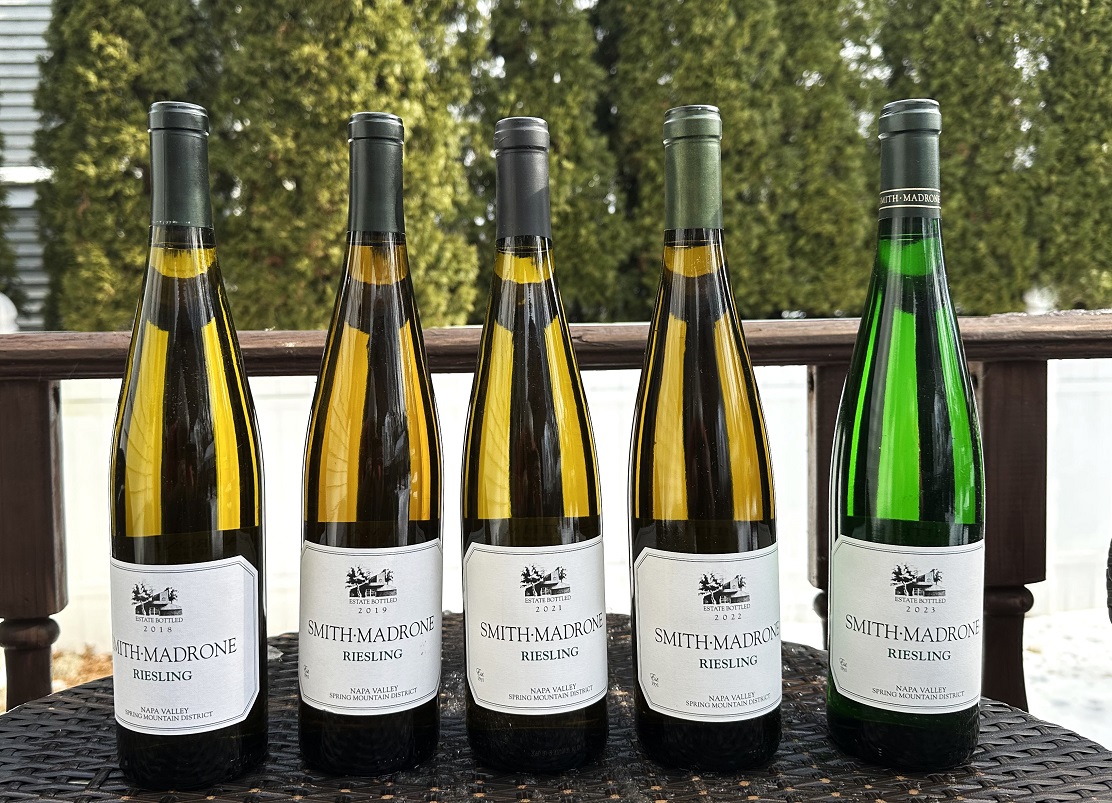
Wine #7: 2023 Smith-Madrone Riesling Spring Mountain (13.2% ABV)
Light color
Candy on the nose
White flowers, fruit medley, bitter orange, crisp, spectacular. 8+
Wine #8: 2022 Smith-Madrone Riesling Spring Mountain (13.2% ABV)
A touch of petrol
White fruit, white apples, delicious. 8+
Wine #9: 2021 Smith-Madrone Riesling Spring Mountain (13.2% ABV)
Petrol, beautiful
Lots of complexity, apples, excellent. 8
Wine #10: 2019 Smith-Madrone Riesling Spring Mountain (13.3% ABV)
Complex aromatics, flowers
Flowers on the palate, a touch of honey, beautiful, complex. 8+
Wine #11: 2018 Smith-Madrone Riesling Spring Mountain (13.3% ABV)
Beautiful, hint of petrol, white fruit.
Wow, playful, amazing. 8++
Wine #12: 1997 Dr. Fischer Ockfener Bockstein Riesling Kabinett Mosel (8% ABV)
Apple juice all the way, past prime. Still an interesting experience.


As always in such tastings, it is fun to figure out the group’s favorite wine. There were 8 of us tasting the wines, and everybody were asked to decide on 3 of their most favorite wines (mine were #11, #8, and #5), and then we took a vote. To my surprise, we had a clear winner after the first round – wine #8, 2022 Smith-Madrone Riesling, was everyone’s favorite, with wine #11, 2018 Smith-Madrone Riesling getting 5 votes. It was interesting that even wine #12, 1997 Riesling, got 3 votes (for me, it was an interesting experience, but not the wine I want to drink again).
As you can see from the notes above, I had a chance to re-taste the wines, this time at a bit of a slower pace. It is very clear that Brooks Rieslings needed more time to open, as you see that on the second day they showed a lot more of what they got, but even then, I believe they would benefit from another 20 years in the cellar, or maybe more.
As I’m writing this, I’m already dreaming of setting up the tasting of 20+ years old Rieslings. Give me Grosset, Brooks, Smith-Madrone, Zind-Humbrecht, and maybe Markus Molitor, from the early 2000s – and this would make it an absolutely amazing tasting. By the way, talking about dreams – what would your dream Riesling tasting include?
I can’t speak for my guests, but I really enjoyed the opportunity to taste such beautiful wines side by side. While both Brooks and Smith-Madrone perfectly exhibited my beloved petrol, Brooks Rieslings on average were a bit leaner than Smith-Madrone, while Smith-Madrone exhibited a richer bouquet on the palate. I’m saying this not in the comparative sense – each one of these wines would make me super-happy any time.
There you are, my friends – my Riesling experience. Do you like Riesling? What are your favorite “go-to” Rieslings?
Celebrate Riesling!
I have to admit, I’m missing most of the grape holidays lately. While checking the Twitter feed today, I was surprised to find out that today we celebrate International Riesling Day. Considering the fact that I never wrote a post about Riesling Day, I couldn’t resist an opportunity to reminisce about my Riesling experiences.
Riesling is one of the 3 main white grape varieties – Chardonnay, Sauvignon Blanc, and Riesling. Of course, there are lots more white grape varieties in the world, but in terms of plantings and production volumes, these three grapes are way ahead of all other white grapes. However, despite the “main variety” consideration, Riesling’s position in the wine world is rather peculiar.
Riesling is capable of a full range of expressions, from bone dry and acidic Rieslings of the Clare Valley in Australia to the dense and viscous late harvest Rieslings made in different parts of the world. Germany, which has about 38% of all Riesling plantings in the world, is typically associated with Riesling – however, there is hardly a wine-producing region in the world where Riesling wines are not made – Germany, Austria, Alsace, Australia, New Zealand, Canada, California, Washington, Oregon, New York – Riesling is literally produced everywhere. And yet walk into any wine store of your choosing – Riesling is typically relegated to the far corner of the store which almost nobody would visit. You can barely find any Riesling on the restaurant’s wine lists. And many consumers are often shy about their love for Riesling as it is almost shameful to be seen with a glass of Riesling in public.
I don’t fully understand the cause of this phenomenon. Germany’s overcomplicated labeling laws might play a role. The fact that it is very difficult to assess the level of sweetness of a bottle of Riesling also plays a role – put a few of the Kabinett Rieslings in the row and see how different the sweetness levels will be where you expect them all to be about the same.
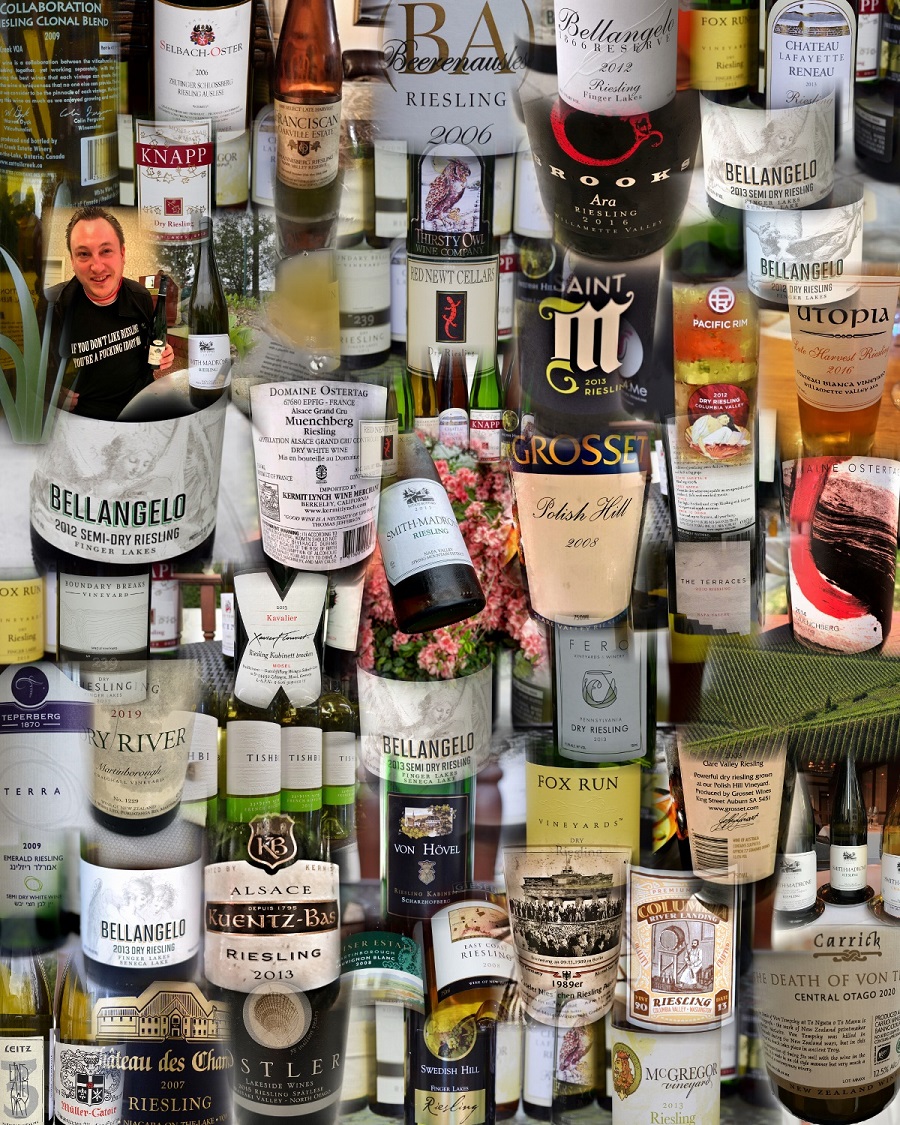 But those of us who trust our own palate and are not afraid of being seen with a glass of Riesling in our hand are typically in for a treat. The everpresent hint of honey, maybe pears, white flowers, and honeysuckle, supported by the cleansing acidity, and hopefully my favorite, a hint of petrol make these wines an absolute delight in my book. Most of the Rieslings also age very well – to understand the pleasure of the 20-30 years old Riesling you simply need to taste one for yourself – the words are very limited in describing the pleasure.
Over the years, I had plenty of delicious Rieslings. And yet if you would ask about the most memorable ones, I would easily give you 3. First, Brooks Ara Riesling from Oregon, which I tasted during a few of the Wine Bloggers Conferences – a pure standout. My next choice would be Smith-Madrone Riesling, which is rather surprising coming from Spring Mountain District in Napa Valley in California – nobody would ever associate California with Riesling, and yet you have a live, delicious proof.
And then, of course, there are Clare Valley Rieslings from Australia. Grosset Polish Hill Riesling from Clare Valley might be a quintessential pleasure, with its high energy, brilliant acidity, intertwined with the fruit – another wine that needs to be tasted to believe it.
I have come across many other excellent renditions of Riesling, but the three I just mentioned are definitely my personal standouts.
What do you think of Rieslings? Do you have your favorite Rieslings which you care to share with everyone?
Happy Reisling Day!
Good When Young, Good With Age
It’s what you crave, people.
And right now, I’m craving Riesling.
Wine cravings are an interesting phenomenon. Or not. I guess food cravings work in exactly the same way. It appears to be all of a sudden, the desire for a certain food – french fries (oh wait, I always crave french fries), fried chicken, steak, scallops, lasagna, broccoli (really, you say? Yep, I can bet someone is craving broccoli right now). Is it really so unprovoked, so out of blue, or is it our subconscious at play here, collecting little cues here and there?
It is getting warm now, but that alone is not the reason to crave Riesling. But what if I read about other people enjoying the Riesling, with food and without – would that count as an invisible cue? I don’t know, but I can clearly imagine myself with a glass of cold Riesling in hand, don’t even need to close my eyes.
In the world of white wine, Riesling is unquestionably a part of “big three” – Chardonnay, Sauvignon Blanc, and Riesling. At the same time, if you think about typical wine store, Chardonnay and Sauvignon Blanc would take the prime real estate, the most central position on the shelves – and Riesling would be typically relegated to the far-most corner, with a little “Germany” sign next to it, or maybe in the “other whites” section. And it is a pity because scandalously delicious Riesling is produced practically everywhere – Alsace, Australia (Grosset would be an amazing example), New Zealand, Israel, California (how about some Smith-Madrone), Oregon (Brooks Rieslings are sublime), Washington (Chateau Ste. Michelle does an excellent job), and I’m not even talking about New York state or Niagara-on-the-Lake in Canada.
It is not only the hedonistic pleasure that the glass of well-made Riesling readily delivers on its own. Riesling is one of the most versatile food wines – it pairs well with a wide range of dishes and cuisines. And then Riesling has an ability to age not just well, but extremely well. Let’s bring back again the big three. Yes, you can age many of the Chardonnay wines, but rarely for 30, 40, 50 years – I’m sure there are some exceptions, probably in Burgundy, but still, this is not common. Sauvignon Blanc would fare even worse than Chardonnay. But well-made Riesling? 30 years will not be even the age – it will be still youthful and vibrant, with ease.
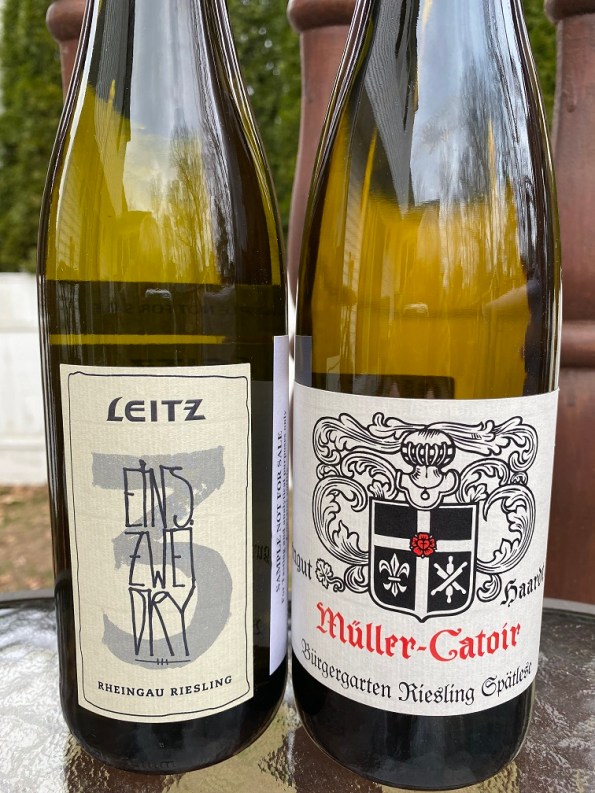
I didn’t have any 30 years old Rieslings recently, but I got two samples with 4 and 8 years of age, and both fared equally well – while even 8 years might be a stretch for many white wines. 2016 Leitz Eins-Zwei-Dry Riesling Trocken Rheingau (12% ABV) was produced by Weingut Leitz, where the family winemaking traditions go back to 1744; 2012 Müller-Catoir Bürgergarten Riesling Spätlese Pfalz (9% ABV) was produced at the Weingut Müller-Catoir which, interestingly enough, was also founded in 1744.
It is interesting that both wines were produced at the wineries with the 9th generation of winemakers (duh – the wineries were founded in the same year, I know). Both wines are pure Riesling wines, both come from the hillside vineyards with some unimaginable slopes. 2016 Riesling is designated as dry, and 2012 is a Spätlese-level, which means that the grapes had a higher sugar content when harvested.
I’m sure you wonder how were the wines? Well, yes, both were delicious. Both were a characteristic Riesling, with honey, honeysuckle, and a touch of lemon on the nose. Of course, Spätlese was sweeter, but not by much. And it is always the acidity which makes or breaks Riesling – both wines showed perfectly balancing, fresh, vibrant acidity. Bottom line – both were equally delicious and ready to be enjoyed on their own or support any food. As for the age… what age? I will be happy to try both in 10 (or 20) years – and I’m sure I would enjoy them very much.
What is your take on Riesling? Do you have any favorites wines or regions? Do tell! Cheers!
From $5 to $95
Taste of the wine is subjective. This is a very simple statement, but it is important to keep it in mind. It really helps to avoid disappointment, when, for example, you tell your friend that the wine is amazing, and your friend politely explains that “ahh, sorry, this is really not my thing”. This is also why all the ratings and medals simply mean that someone liked the wine – but they don’t offer any guarantee that you will like the wine too.
Not only the taste of the wine is “objectively subjective” (hope this makes sense to you), but it is also easily influenced (blind tasting is the only way to remove all the external influences and leave you one on one with the wine). There are many factors which influence the taste – bottle appearance, label, ratings, medals, friends and store clerks recommendations, and maybe most importantly, price.
Think about how you buy a bottle of wine as a present for someone. You would typically set yourself a price limit, and you will do your best not to exceed it. Let’s say you decided to spend $30 on a bottle. But what happens if the store’s employee would recommend you a bottle of wine at $15, saying also that the $15 bottle is equally good or even better than the one for $32 you hold in your hand. What will be your first thought? I bet your brain will say “ohh, this is too cheap! You can’t do this, take the one for $32!”.
It is obvious that price affects your buying decision. But the price is even more influential when you start drinking the wine, as the price sets the expectations. Feel free to tell me how wrong I am, but I’m willing to bet that you expect $10 bottle of wine to be mediocre, and you will be ultra-excited faced with the glass of $100 wine. The fun part about $10 bottle is that there is a great chance for a pleasant surprise. The sad part about the $100 bottle that there is a chance of a great disappointment. The best thing to do is to keep your expectations at bay and simply taste the wine and decide whether you like it or not – but this is usually easier said than done. Oh well, just keep working on it.
The message I’m trying to convey with all this pricing/influencing talk can be summarized like this: tasty wines exist at all price ranges. You can enjoy the wine for $5, and you can enjoy the wine for $95. Will you enjoy them equally? This is a tough question only you can answer. But let me share with you my experience with the wines from $5 to $95 which I tasted throughout this year – and then we can compare notes later on. Here we go:


Under $10:
2016 San Pedro Gato Negro Pinot Noir Valle Central DO Chile (13.5% ABV, $4.99)
Garnet
Characteristic Pinot Noir cherries and lavender on the nose, medium intensity
Simple, light, touch of tart cherries, baking spice, good acidity, overall not weary powerful, but offers lots of pleasure.
7+, simple but very nice glass of wine, and an amazing value.
2016 San Pedro 9 Lives Cabernet Sauvignon Reserve Chile (13.5% ABV, $9.99)
Garnet
Tobacco and cat pee
Pretty tannic, with some fruit notes hiding behind.
Not very good from the get-go.
After 3 days open – dramatic change, raspberries and blackberries on the palate, ripe fruit, good acidity, eucalyptus notes, medium body – very nice. Truly needed time ( even 2 days was not enough).
8- after 3 days.


Under $20:
2014 Domaine du Raifault Cuvée Tradition Chinon AOC (13% ABV, $17)
Bright Ruby color
Tobacco and cassis on the nose, bright and explicit
The same continues on the palate – cassis, tobacco, perfect acidity, bright, soft, round, delicious.
9, I can drink this wine any day, every day. Superb. This is the Cab Franc I want to drink.
2014 San Marzano Talò Salice Salentino DOP (13% ABV, $16.99, 85% Negroamaro, 15% Malvasia Nera, 6 months in French oak)
Dark garnet
Cherries, leather, earthy notes, granite, fresh, open, inviting
Ripe cherries, vanilla, toasted brioche, sweet tobacco, succulent, open, fresh acidity, medium+ body, excellent balance
8-/8, perfect from the get go
8+ on the second and next 3 days – lots of chewy dark fruit, generous, voluptuous, outstanding.


Under $40:
2013 Xavier Flouret Kavalier Riesling Kabinett Trocken Mosel (11% ABV, $25)
Bright Golden color
A touch of honey, lots of tropical fruit – guava, mango, white flowers, intense, pleasant
Cut trough acidity, lemon, green pineapple, intense minerality, excellent
8, great Riesling as it should be – I want to try it in 10 years.
2015 Markham Vineyards Merlot Napa Valley (14.5% ABV, $27, 86% Merlot, 12% Cabernet Sauvignon, 2% Petite Sirah, 15 months in barrel)
Dark garnet
Muted nose, a touch of blackberries, right, mint, minerality
The palate is also restrained, tart dark fruit, good structure, good acidity
8-, needs time.
2013 Attems Cicinis Sauvignon Blanc Collio DOC (13.5% ABV, $30, 8 months in French oak Barriques and 2 months in the bottle)
Light golden
Minerality driven nose, with a touch of truffle and sweet sage
Medium body, crisp, firm, excellent acidity but overall nice plumpness, savory lemon, crisp finish
Drinkability: 8, I would gladly drink it again any time


Above $40:
2013 Frescobaldi Castello Nipozzano Montesodi Toscana IGT (13.5% ABV, $44, 18 months in oak, 6 months in the bottle)
Garnet color
Leather, forest floor, minerality, cedar, medium+ intensity
A touch of smoke, tart cherries, tobacco, clean acidity, well integrated.
8, delicious from the get-go. Excellent aging potential.
2014 Domaine Ostertag Muenchberg Riesling Alsace Grand Cru Contrôlée (14% ABV, $50)
Light golden
Rich, intense, tropical fruit, guava, pineapple, distant hint of petrol
Delicious palate, a touch of honey and hazelnut, good acidity and tons of minerality. This is minerality driven wine right now, which will evolve into a total beauty over the next 10 years.
8, excellent.
2014 Luce Della Vite Toscana IGP (14.5% ABV, $95, Sangiovese/Merlot, 24 months in French oak)
Dark garnet
Pungent, dark chocolate, truffles, licorice
From the get-go, super gripping tannins. A little bit of dark fruit is immediately displaced by the tannins. Based on the initial sensation, lots of French oak.
Not drinkable from the get-go. Needs time.
3 days later – superb. Succulent cherries, firm structure, a touch of leather and tobacco, unmistakably Italian, and unmistakable super-Tuscan. Great acidity.
8+
As you can tell, I was equally struggling with the wines at $10 and $95, and my most favorite wine from the group was a mere $17 wine – but overall, there were no bad wines in this group. How do you see the prices of wine? How influential are prices when you buy the wine and when you drink it? Cheers!
Trader Joe’s Wines – Values and More Values
The wine aisles of Trader Joe’s is one of my favorite places to visit when I travel. Where I live, in Connecticut, Trader Joe’s stores are only allowed to sell beer. Trader Joe’s stores are known for their great selection and great prices, and that is true for everything Trader Joe’s sells – including the wine. Thus any Trader Joe’s store which sells wine is an opportunity to visit a toy store for adults, which I definitely can’t miss.
This time around I ventured into the Trader Joe’s in Costa Mesa in California. Usually, the “wine” selection in Trader Joe’s in California goes way beyond just wine – scotch, bourbon, tequila, cognac, and more. At the store in Costa Mesa I was particularly impressed with Mezcal selection – would love to bring some home, but you know how business travel is nowadays – does the bottle worth a trouble of checking in the luggage?
So yes, wine it is. When buying wine at Trader Joe’s during my business trips, I always approach it in a simple way – I’m looking for value. Here is $20, let’s get as many bottles as possible with the $20, and let’s see how they will fare. Truth be told, I rarely manage to stay under $20, but still, I make an effort to be as close as possible to that $20 budget (before taxes, of course).


How does $23.45 sound next to the $20 budget? In absolute terms – I’m over the budget by 17%. In relative terms, 5 bottles of wine for $23.45? If the wine even half drinkable, it is not a bad deal, would you agree? I think so. Oh yes, and I also cheated a bit. Don’t worry, I didn’t cheat anyone in particular, it is this story which has a few flaws, so please allow me to explain.
First, I saw an attractive bottle, unusual shape, attractive label, $9.99, the wine called “Susumaniello” from Puglia – something I never saw before. I was planning to visit my close friends later that day, so I thought that this bottle looked good enough to bring with me (wanna call me a cheap bustard? please, be my guest). But -Trader Joe’s was having a little tasting (they always do for food – I guess they also do it for wine where the wine is sold – for sure in California) – and this exact bottle of wine was offered for tasting. So I did have a sip of 2016 Ruggero di Bardo Susumaniello Puglia IGP ($9.99) – it had a medium body, restrained profile with mostly cherry notes on the palate. To my delight, it appeared that behind the cool label was also a new rare, indigenous grape I never had before – Susumaniello, a nice addition to the collection (I really need to iupdate my “grape counter” on the page).


The wine was good, but I already tasted it, so I needed a different idea for the wine to bring to dinner, so I settled for 2012 Château Roudier Montague-Saint-Emilion (13% ABV, $12.99), which happened to be a classic Bordeaux – well, maybe not so classic but more of modern variation – warm fruit and spices on the nose, black currant on the palate, soft tannins, round, velvety – an excellent Bordeaux for the price. It also paired very well with Korean short ribs (Bulgogi) we had for dinner. Drinkability: 7+/8-, very good overall.
From here on, here are my tasting notes for the five wines I was able to play with over the next few days – these are the wines I paid $23.45 for.


2016 Joseph Händler Riesling Pfalz (9.5% ABV, $4.99) – straw pale color. Nose at first muted, literally nonexistent, then opening up into white flowers, touch of honey and candied peach. Clean acidity, lemon, candied lemon, crisp, good minerality, not over the top. Drinkability: 8-, and incredible value at $4.99. Just wow. I know Rieslings can be inexpensive, but this is a whole lot of German Riesling for the price.
Simpler Wines Too Uncanny Red Wine Blend Australia (13.8% ABV, $2.99/375 ml can) – this wine had no vintage indication, so I guess we should consider it to be a non-vintage. Dark ruby color. Fresh fruity nose, young berries, then herbaceous undertones show up. Very good acidity on the palate, blackberries, cherries, mint, surprisingly balanced and very easy to drink. A bit of an alcohol burn, but still wow. 7+/8-, yet another excellent value. Nicely drinkable on the second day from the open can.
2016 Union Wine Co Underwood Pinot Noir Oregon (13% ABV, $4.99) – as you can see in the picture, the only place where I found a year specified was on the bottom of the can. Is that really vintage indication? I have no idea, but I will consider it to be so.
Ruby color. Mushrooms and smoke on the nose, touch of cherries. Sweet cherries on the palate, nice minerality, good acidity, medium body, good balance, touch of tart raspberries, hint of black pepper. Very nice overall. Drinkability: 8-, impressive.


2016 Nero Marone Edizione Privata Italy (14% ABV, $6.99) dark ruby color. Restrained nose, herbal, not much fruit. A hint of raspberries, tart cherries on the palate, minerality, medium body, good acidity. Interesting, not bad but a bit underwhelming in the amount of fruit. Drinkability: 7+, might be more of a food wine.
2017 Viñas Chileans Rosario Estate Cabernet Sauvignon Reserva Valle Central Chile (13% ABV, $3.49) – a classic Chilean cab, a touch of green bell pepper, soft blueberries and blackberries, medium body, easy to drink from the get-go. Nicely paired with grilled snapper. Drinkability: 7+, truly lots of wine for the money.
Here you are, my friends – another successful encounter with the Trader Joe’s wines. The Riesling was my favorite, but really, all the wines were good and an amazing value. What are your latest value wines discoveries? Can you beat the Pfalz Riesling at $4.99? Cheers!
Open That Bottle Night 2017 – What A Night!
Let’s say you have a bottle of an excellent wine. Do you know how to make it better than it is? I guarantee you this works every time, so listen carefully. You share it with a friend. Yes, that makes any excellent wine into an amazing one. Works like a charm.
Saturday, February 25th was Open That Bottle Night (OTBN for short) – the night when there is no bottle in your cellar which is off limits. If you are not familiar with OTBN, you can read more here. What made my OTBN twice as special was the visit by Oliver and his wife Nina.
For me, the decisions around wine are never easy. I typically buy wine in the single bottle quantities (okay, maybe four at the most, when I need to get a free shipping from WTSO) – thus any bottle can qualify as a special one. As an exception to my long and almost painful decision process, for this OTBN I had a very clear idea – 1982 Olga Raffault Chinon, of which I had a single bottle. The bottle out of the wine fridge and ready for the prime time.
This is what I was looking at after cutting the top foil:
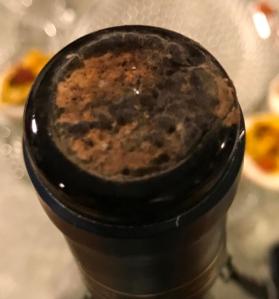 As you can tell, this is not very encouraging. However, if you like older wines and get an opportunity to open them, you know that the state of the top of the cork is nothing to fret about. More often than not, behind most terrible looking mildew there is a delicious wine.
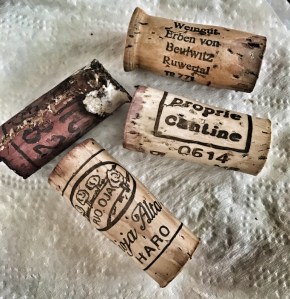
As this was 35 years old wine, I didn’t want to take any chances and used the two-prong opener to pull the cork out. This turned out to be an unnecessary precaution – while cork looked red throughout, it was perfectly firm and came out as a single piece without any crumbling – here is our OTBN corks collection, the red one is the one I’m talking about:
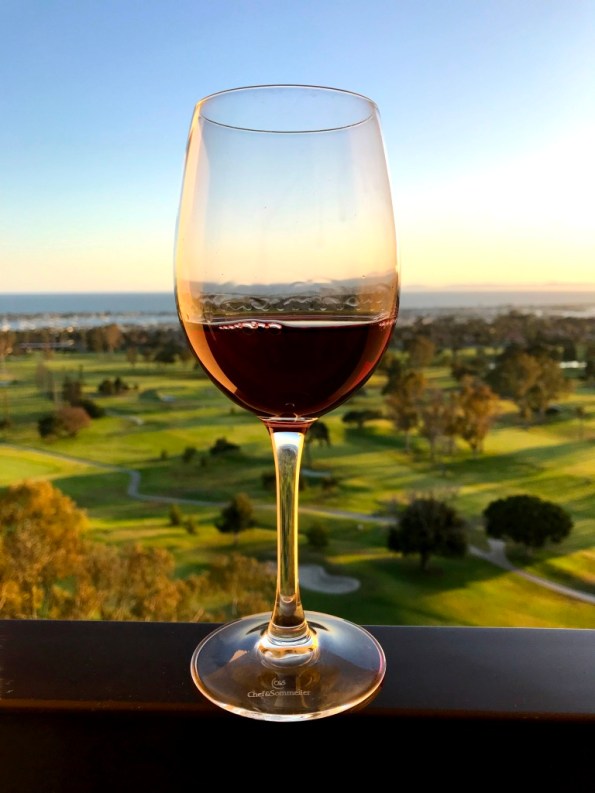
 And for the wine… what can I tell you… This 1982 Olga Raffault “Les Picasses” Chinon, Loire looked perfectly fresh in the glass – not a sign of losing color. Here are the two glasses, one is with 1982 Cabernet Franc, the second one is with 2014 – care to guess which glass contains 1982?
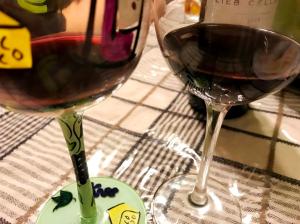 Yes, the one on the left is with 1982 wine, but I believe you would agree that the color shows perfectly young. The nose and the palate were an incredible study in Cabernet Franc flavor profile 101. The wine opened full of bell pepper – both on the nose and the palate. In about 10 minutes, the bell pepper was gone – and what was left was pure, unadulterated black currant – stunning, full flavorful black currant, also known as cassis if we want to use traditional French terminology. The wine had perfect structure, firm, with fresh acidity, almost crisp – and loads and loads of black currant. This was truly a treat.


We followed with a beautiful rendition of Ruchè – 2012 Poggio Ridente Ruchè di Castagnole Monferrato DOCG San Marziano (organic grapes). Ruchè is a little known red grape, cultivated in the Monferrato region in Piedmont, capable of making very concentrated wines. This particular bottle, brought by Oliver and Nina directly from Italy, was fresh and open, with nicely restrained palate with mostly herbal flavors, and a twist – dried mango undertones. Nina was the one to identify the dried mango, while I was desperately trying to figure out what that strange flavor was – but that was a spot-on descriptor. An outstanding wine by all means.
Our next wine was 1989 Kaseler Nies’chen Riesling Auslese Mosel-Saar-Ruwer. No issues with the cork (makes me happy). Still fresh, clean light golden color (28-years old wine!). The nose and the palate were singing in unison here, and the music was simple – peaches and apricots. Slightly underripe peaches and fresh, plump apricots. The balance of sweetness and acidity was impeccable – the wine was fresh and alive, without any sign of age. Wow.
As an added bonus, the grapes for this wine were harvested in November of 1989 – the year and a month when Berlin Wall was demolished – and this is what the label of this wine commemorates.


Our OTBN night didn’t finish there. You would expect us to go to something nice and sweets after such a beautiful Riesling, right? In the conversation, it came out that Oliver doesn’t like Tempranillo wines. Being a Spanish wine buff, I had to fix that immediately, so I had to pull out the big guns. 2001 La Rioja Alta Viña Ardanza Rioja Reserva Especial was absolutely beautiful from the get-go – cedar box and eucalyptus on the nose, soft and gentle cherries on the palate, fresh, round. I hope I made Oliver a convert – but will see about that the next time we will meet.
There you are, my friends. A stunning OTBN with great wines and great company. Hope you enjoyed your OTBN as much as we did – feel free to share your OTBN stories below. Cheers!
Remembering Last Summer – Fero Vineyards in Pennsylvania
 Does it make sense to write about a winery visit a year after? Well, I will leave you to ponder at that question, and will just go ahead with my post.
We have a tradition which we keep going for many years now – adults getaway. One weekend in August, we all get together for the two days of food, wines, laughter and simply enjoying each other’s company. These trips usually take place within reasonable driving distance (3 hours or less) for all people in the group (we all live in a close proximity to the New York city), and winery is always a good choice for the first stop.
Lucky for us, oenophiles, the wine bug caught up everywhere in the US, so there is no shortage of interesting wineries to visit along the East Coast of the United States. Our choice last year was the winery in Central Pennsylvania, called Fero Vineyards and Winery. The choice was not random – one of the grapes they use in the wine production is Saperavi. This is definitely not a common choice – however, a rapidly (I think) growing trend among Eastern USA winemakers, in Finger lakes and other regions. Having been exposed to many amazing Georgian wines, where Saperavi is a king, I was very intrigued at a perspective of tasting the local rendition of such wines.
Had all the arrangements made to meet with Chuck Zaleski, a winery owner and winemaker at Fero. Chuck was taking time for this off his busy schedule, as he was participating in the town fair where he was pouring his wines.
Just curious – do you think everything is going boringly well, or do you expect a twist in this story?
So yes, the twist happened – in the form of a flat tire. About 70 miles down the road, the familiar sound appeared – anyone who had a flat tire knows what I’m talking about; if you never had one – keep it this way. Not a problem, I thought – while the spare tire is very awkwardly located in Toyota Sienna, under the cabin floor, right in a middle – at least I knew where it was. Next ten minutes of jumping around the car ended up in a grim realization – the spare tire was not there. Angry call to the dealer (luckily, it was Saturday) lead to a discovery – all wheel drive Toyota Sienna cars don’t have a spare tire as there is no space for it – instead, they are equipped with run-flats. To make long story short, after arriving with the smoldering tire to the closest dealership and waiting for about 3 hours, we were able to get on our way (of course I fully realize this was still a very lucky outcome).
As we were at least 3 hours behind the schedule, the decision had to be made – should we visit Fero (Chuck, of course, was not there) or forget it all together, just drive to our B&B and relax after such an ordeal. I’m glad the love of wine prevailed and we decided to stop by the Fero Vineyards first.
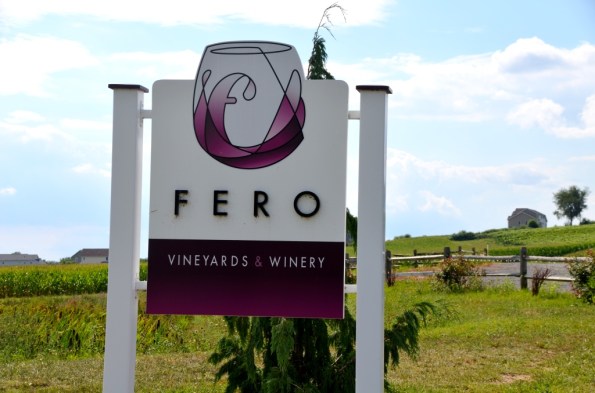
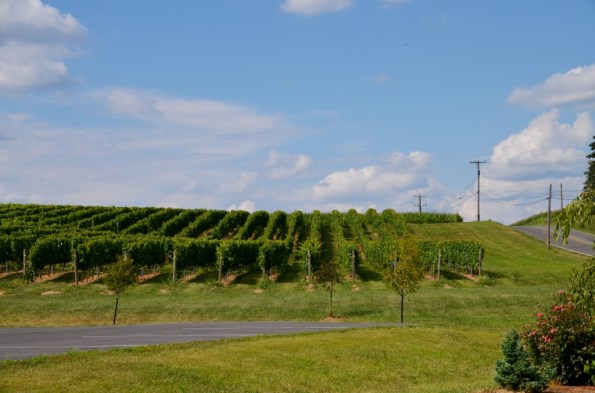 If you will look at the line up of the Fero Vineyards wines, you would find the closest match in Germany or Austria – of course with the addition of Saperavi. Despite the fact that we didn’t manage to meet with Chuck, he still took care of us, by leaving a bottle of Saperavi for us to taste, as the winery was sold out of their last vintage. We tasted through almost a complete portfolio of Fero wines, so here are the highlights for what I liked the most (as usual, there were too many wines, too little time):
2013 Fero Vineyards Grüner Veltliner Pennsylvania – dry, crisp
2013 Fero Vineyards Dry Riesling Pennsylvania – German style, nice minerality, good fruit
2013 Fero Vineyards Pint Noir Pennsylvania – dry, classic nose, crisp, very nice
2013 Fero Vineyards 1812 Lemberger Pennsylvania – crisp, crushed red fruit, pepper
2012 Fero Vineyards Pinot Gris Pennsylvania – nice, simple
2014 Fero Vineyards Pinot Noir Rosé Pennsylvania – residual sweetness, light, balanced, excellent overall
2014 Fero Vineyards Semi-dry Riesling Pennsylvania – excellent, nice touch of sweetness
Fero Vineyards Concord Pennsylvania Table Wine – yes, this is rather sweet, but if you like Concord, this was a classic, restrained and delicious
2013 Fero Vineyards Pinot Gris Pennsylvania – crisp, minerality, excellent
2013 Fero Vineyards Estate Lemberger Pennsylvania – roasted fruit, good concentration, excellent
Fero Vineyards Late Harvest Riesling Pennsylvania – nice touch of petrol, good touch of sweetness, excellent overall
2013 Fero Vineyards Saperavi Pennsylvania – excellent, nice concentration, tannins, crushed blackberries, pepper notes


I’m definitely intrigued by this Saperavi wine. Fero Saperavi has a character of its own, as you can see from my tasting notes above. I would love to taste it side by side with its Georgian counterparts, of course blind. And let’s keep in mind that Saperavi grows in the Balkans (never tasted it), Finger Lakes (also never tasted it), and probably some other places I can’t even think of. Can someone please put together an exciting blind tasting? Or this might be a great subject for the #winestudio session…
Well, I still have a few bottles of Fero wines left, including 2013 Saperavi (courtesy of Chuck, yes) – but I want to give it at least a few more years. See, this is how oenophiles build their excitement…
And we are done here. If you are looking for the great East Coast wines, Fero Vineyards must be on your short list. And who knows, may be you will be lucky enough to taste their Saperavi. Cheers!
Riesling, Oh Riesling – Finger Lakes Riesling Deep Immersion with #WineChat
 There is nothing obscure about Riesling. Unquestionably one of the “big three” white grapes (Chardonnay, Sauvignon Blanc and Riesling). Celebrated through various social media events – “The Summer of Riesling”, “Riesling Month”. An established, de-facto pairing for the Asian or any spicy cuisine for that matter. “Fastest growing white wine in America”. And nevertheless, one of the most unknown, under-appreciated and misunderstood wines, if you ask me.
Walk into any general wine store, and try to find Riesling wines. Are they right in the first aisle, next to the California Chardonnay and Sauvignon Blanc? Nope. Oh yes, a lot of Rieslings come from Europe, so they definitely will be right next to the Burgundy and Loire. Oops – not here again? Here they are – in the back of the back, a side aisle, a small section, ask the sales guy, he will show you. And this is not limited to the wine stores only – most of the restaurant wine lists have one or two Riesling wines, usually in the cheapest group. Similar story in most of our cellars – how many bottles of Riesling do you have on your shelves? A few? And this is despite the fact that Riesling is one of the most age-worthy wines in the world…
So how do these two realities of “one of the fastest growing” and “last row seat” co-exist? I think perception has a lot to do with this. Since Riesling can be sweet, and often it is praised for its sweetness, consumers are stuck in the notion Riesling = Sweet. Take a look at the Wine Spectator ratings – highest rated Kabinett Riesling (typically showing only a hint of sweetness) got 93 points; and then 8 (eight!) Rieslings got 100 points (the absolute top) rating – by the way, it is 8 of only 75 wines which got 100 points from Wine Spectator – and all 8 are Trockenbeerenauslese, the highest sweetness designation. Thus for lots and lots of wine drinkers, Riesling is a dessert wine, and while we love dessert wines a lot more than we are willing to admit, the dessert wine designation means “only for the special moments”.
Can this perception be changed? Of course. How? By educating people. This was one of the reasons for the International Riesling Foundation (IRF) to be created in 2007. The idea behind foundation was exactly this – to make people aware of what Riesling has to offer, and to help people better understand Riesling wines. One of the outcomes of the IRF efforts became the Riesling Taste Profile. According the the specification of that profile, four taste categories are defined – Dry, Medium Dry, Medium Sweet and Sweet. Based on the given set of parameters (sugar, acid and pH), the IRF developed a technical chart which allows winery to estimate how the consumers will likely perceive the wine across the 4 defined taste categories. After that, the winery can print that taste profile on the label (you can see an example at the very beginning of this post) – and then the consumer can quickly set the expectations just by glancing at the label.
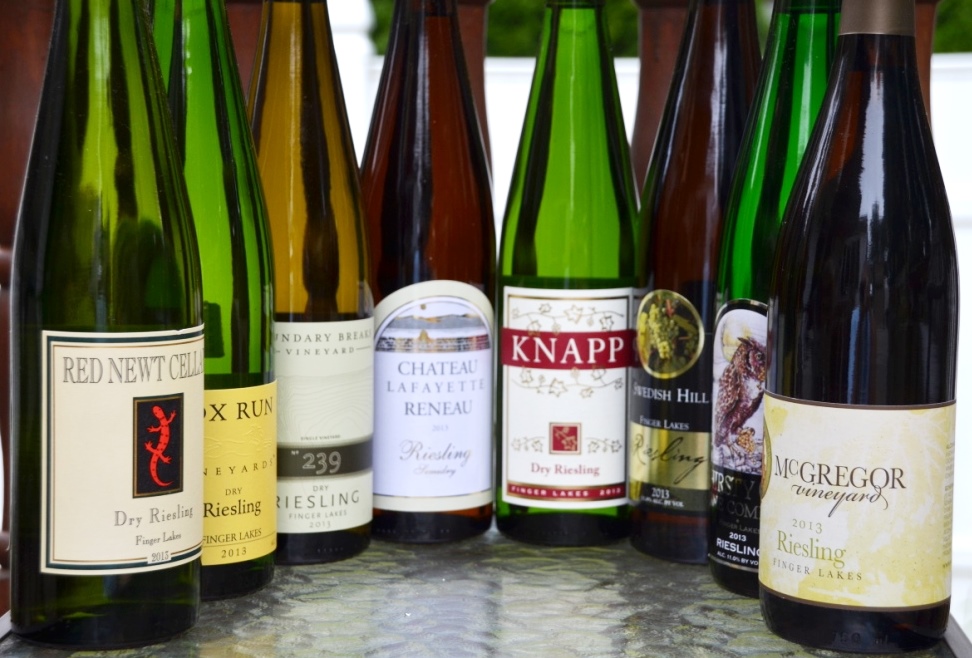
Well, it is good to have an informative label, but when it comes to the wine world, seeing doesn’t really equates to believing. But tasting does. This is where the #winechat comes to the rescue. Last week, a group of enthusiastic oenophiles had a chance to dive deeply into the world of 2013 Finger Lakes Riesling, by tasting through the 8 different wines and sharing the excitement with each other. And the wines were definitely very exciting, full of pleasure in every sip. Finger Lakes region in New York deserves all of your attention – but I already shared my thought about the region at length in the two earlier posts this year, so I will have to refer you to those (first Finger Lakes #winechat and the post about Bellangelo wines).
Below are my notes regarding the individual wines. These notes are based on the longer evaluation of the wines than we would otherwise have during the 60 short minutes of the #winechat, so if you are talking part in another #winechat session on that subject, I suggest you will start tasting your wines now. One last note regarding the wines. As this is my third encounter with the Finger Lakes wines this year, I would like to offer two “bits of wisdom” based on that experience:
- Don’t over-chill.
- Let ’em breathe.
Terroir, minerality are important components of Finger Lakes wines – by serving the wines a bit warmer than you normally would, say at around 50F, and letting them breathe for may be an hour, you will do yourself a big favor and will find a lot more pleasure in every sip. At least I did. Without further ado, here are the 8 beautiful wines:
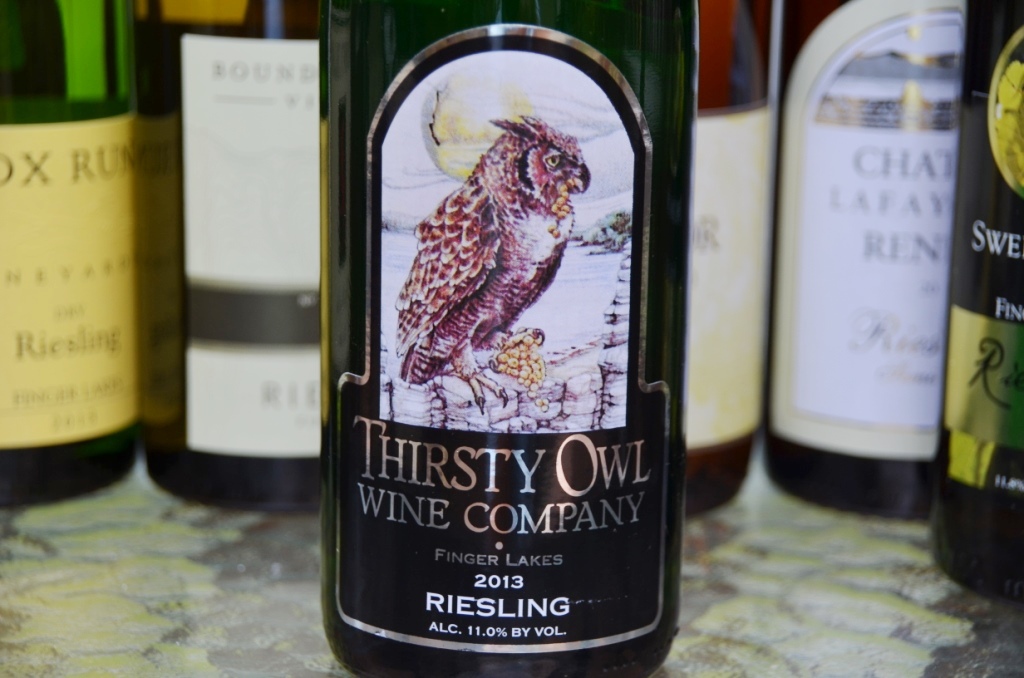 2013 Thirsty Owl Wine Company Riesling Finger Lakes (11.0% ABV, $14.95). IRF scale not shown. On the nose, touch of minerality (gunflint), apricot. Overall nice and restrained. Palate: Clean , crisp acidity, touch of honeysuckle, golden delicious apple. Medium finish, overall very refreshing. Drinkability: 8-
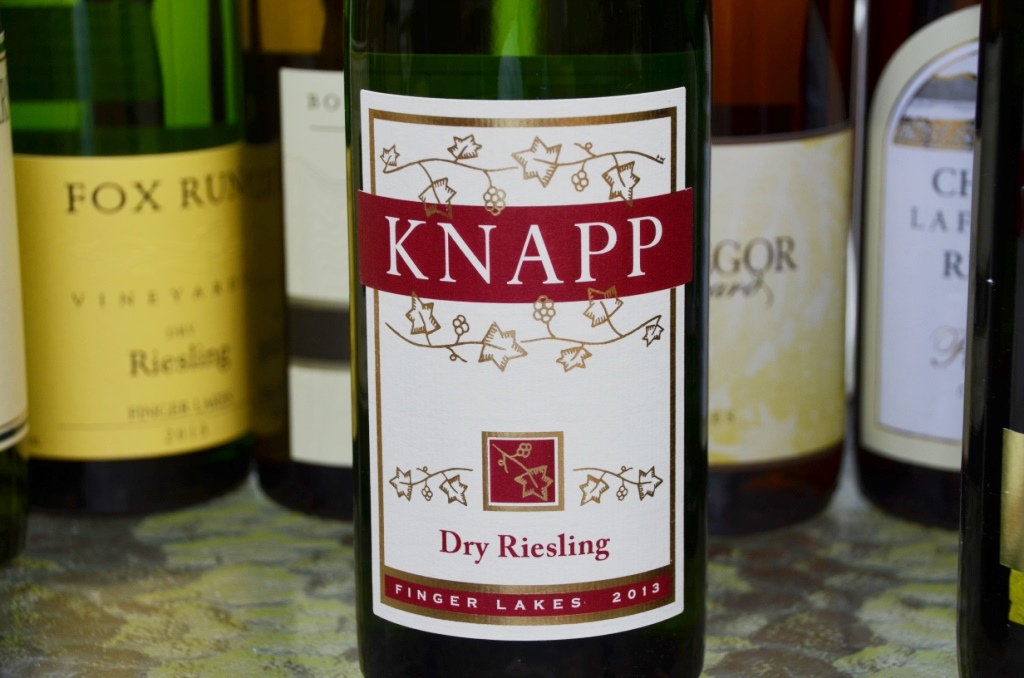 2013 Knapp Dry Riesling Finger Lakes (12%ABV, $15.95) – On the IRF scale, this wine is at the lower part of the Medium Dry style. White apples, honey and lemon on the nose. On the palate, candied lemon peel with fresh lemon juice, complemented by the cut-through acidity. Medium finish, overall a nicely balanced wine. Drinkability: 7+
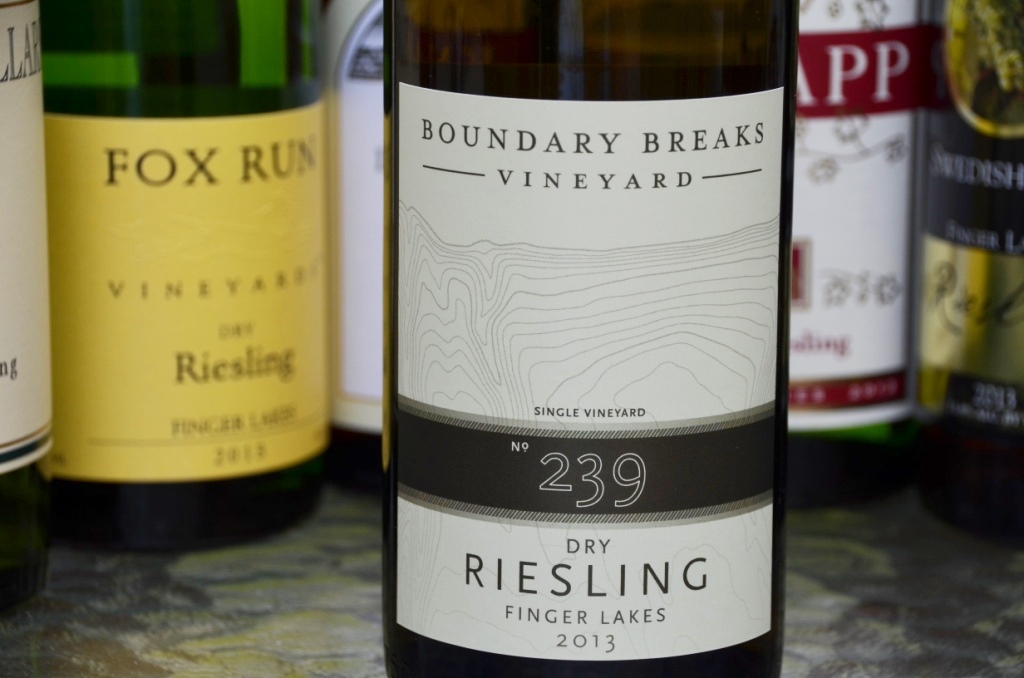 2013 Boundary Breaks Vineyard #239 Dry Finger Lakes (11.6% ABV, $19.95) – right in the middle of “dry” on the IRF scale. This is my second encounter with Boundary Breaks Riesling, and I find that this wine needs breathing time to show itself. Initially, closed on the nose, then opening to show distant hint of lemon, touch of minerality. On the palate – wave of sweetness first, with cut through acidity, lingering for a bit and then finishing dry. Tasting at a later time adds some fresh apple and more minerally undertones. Drinkability: 7+
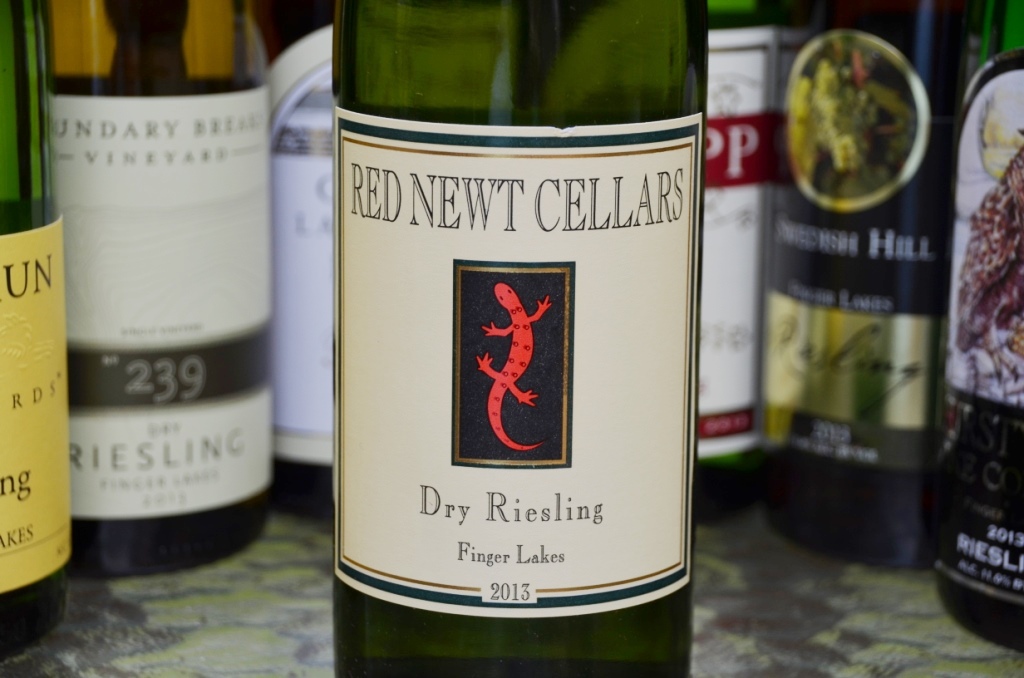 2013 Red Newt Cellars Dry Riesling Finger Lakes (11.8% ABV, $17.00) – right in the middle of “dry” on the IRF scale. On the nose, shows minerality, touch of fresh grass. hint of fresh lime, overall very intense. On the palate – nutmeg, hint of mango, fresh herbs and lemon, crisp, dry. Excellent balance and overall very pleasant. One of my very favorites from the tasting. Drinkability: 8
 2013 Swedish Hill Riesling Finger Lakes (11.8% ABV, $15.99) – IRF scale not shown. Fresh white fruit on the nose, touch of candied lemon. Nose quite intense. On the palate – rich, velvety, ripe peach with touch of fresh lemon, clean acidity, excellent finish (medium plus). Texturally quite unique. Drinkability: 8-
 2013 Fox Run Vineyards Dry Riesling Finger Lakes (11% ABV, $17.99) – According to IRF scale, the wine is right on the border between Dry and Medium Dry. On the nose, subdued notes of peach and honey, touch of lemon, intense. Palate is elegant, mineral-driven, with green apple, touch of Meyer lemon, overall dry and very balanced. Drinkability: 8
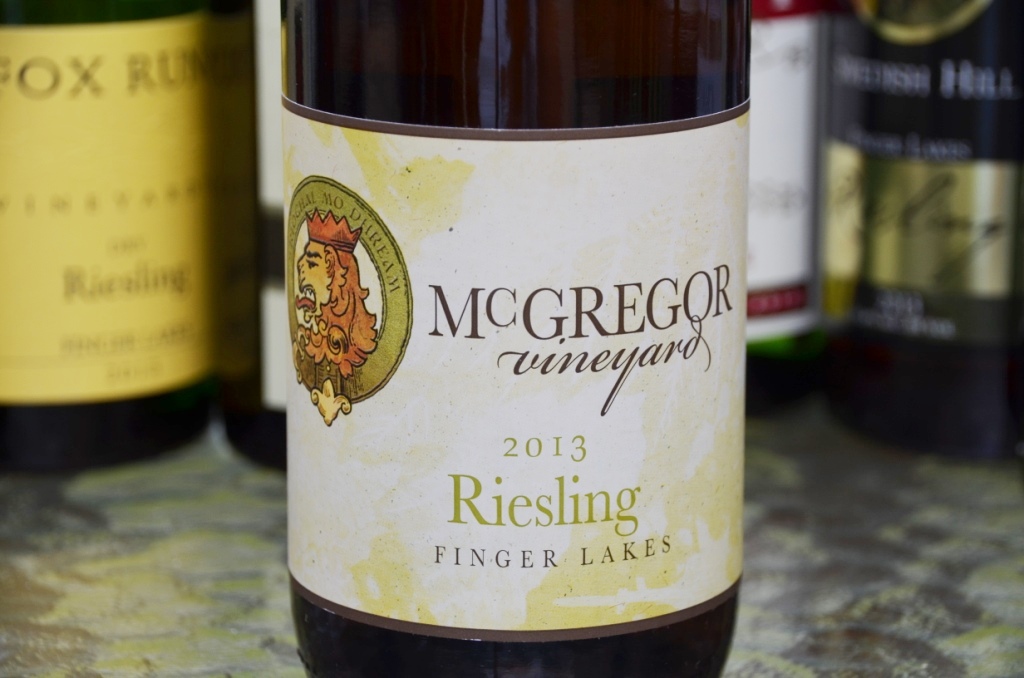 2013 McGregor Vineyard Riesling Finger Lakes (10.5% ABV, $19.99) – IRF scale is not used. A lot is happening on the nose – cantaloupe, honeysuckle, candied orange, openly sweet and intense. On the palate – ripe apricot, honey, ripe white apple, elegant acidity, perfectly refreshing, very good balance. Drinkability: 8-
 2013 Chateau Lafayette Reneau Riesling Semidry Finger Lakes (11.5% ABV, $14.99) – IRF scale is not used. On the nose – rhubarb, floral, touch of grass, white apple. On the palate – honeysuckle, ripe peach, touch of minerality and grass, lemon zest, clean acidity, excellent balance, soft and round mouthfeel. Another top favorite from the tasting. Drinkability: 8
Here we go – 8 great wines, and the region for you waiting to be discovered. September is still on, and it is an official Finger Lakes Riesling month – make an effort to find your new love – a versatile ( and affordable!) wine which you can drink now or put away to enjoy in a few years (or 10 or 20, this is entirely up to you). Cheers!
Finally, I’m a Convert
Yes, this will be a post about the wine – what did you think I will be writing about? I completely changed my perception of one wine region, so convert or not, but this is what this post is all about.
Don’t know about you, but when I visit the wine region and wineries in it, I generally come with certain set of expectations, a perceived notion if you will. These perceived notions usually are very opposite and have no middle ground. Perceived notion number one – visiting many wineries, I generally expect to find a lot of wines which I will like, and a few which I will not care for. This would be true for many wine regions in California – Napa, Sonoma, Santa Barbara – but not all of them (for instance, Temecula is not included in that list). Perceived notion number two – I will not care for the most wines I will be tasting, but if I’m lucky, there might be a few wines which I will like. Connecticut wine region would be a good example of this second group – but we will talk about it later in a separate post.
Of course both of this perceived notions are founded based on the prior experience with the wines of the region, both at the winery and outside. It is easy to build – just visit a few wineries, where you don’t like the wines, or buy a few bottles in the store which you will not care for, and that’s enough to label the whole region as “not my thing”. Once the perceived notion is born, it is very hard to overcome and change. I agree that this sounds very shortsighted, but this is how we are [very commonly] wired – try something once, don’t like it (think about first time your mom forced you to eat broccoli), and you might be set in your “unlove” for life. This “tried this, didn’t like it, never again” type of attitude is never practically helpful around food and wine, as it prevents us from having great experiences. This perceived notion is hard to get rid of – but not impossible if you are willing to take an “open mind” approach – try and try again, until a specific experience will trigger the change.
Okay, done with the philosophical intro, let’s get to the conversion details. The region I finally changed my view on is Finger Lakes. During multiple visits over the few years, I kept trying and trying new wineries, only to come up to the same resolution every time – “nope, not my wine” – and that included even Riesling, which is considered the signature wine of the Finger Lakes region. Then I discovered wines of Fox Run and Dr. Konstantin Frank, which created a crack in my preconceived notion. The Finger Lakes #winechat I took part of in May, made the crack wider. But what made me to change the whole perception were the wines of Villa Bellangelo.
Villa Bellangelo is a small producer, located in a close proximity to the Seneca Lake. The family owned winery produces a number of different Rieslings, as well as Chardonnay, Gewurztraminer, Merlot and other wines. About two month ago, I received a sample set of wines form the Villa Bellangelo, 5 bottles of Riesling and a bottle of Chardonnay. As I mentioned in some other posts, while samples sound great (“yay, free wine!”), to me they are more challenging to deal with than the regular wines I buy. I would not crack a sample bottle just casually in the evening – I need to make sure I can give it my undivided attention and spend time with the wine – thus it often takes me quite some time to find the right opportunity. Finally, the moment presented itself and I opened the first bottle of Riesling. Pour, sniff – delicious, take a sip – wow. Clean and beautiful Riesling, perfectly fitting my definition of “classic Riesling”. Next bottle, then next – all 5 Rieslings and the Chardonnay delivered lots of pleasure, sip after sip, bottle after bottle. 6 out of 6? I think this is very convincing performance, hence the title of this post and yes, the change in the perceived notion.


For what it worth, here are the notes on all 6 wines:
2012 Villa Bellangelo Dry Riesling Finger Lakes (12.3% ABV, $19) – Color is lighter than straw pale. On the nose, great Riesling aromatics, classic, honeysuckle, pear, fresh apple. palate is dry, clean, great acidity, very light, green apple, super-refreshing, present minerality, short finish. A wine of a great quality. Drinkability: 8-/8
2013 Villa Bellangelo Dry Riesling Seneca Lake Finger Lakes (11.3% ABV, $19) – Beautiful nose of the white stone fruit, hint of honeydew sweetness. Perfectly balanced on the palate, crisp acidity, minerality, touch of green apple. Excellent overall. Drinkability: 8
2012 Villa Bellangelo Semi-Dry Riesling Finger Lakes (11% ABV, $19) – Nice straw color. Pleasant nose of white apples and touch of apricot. Palate exhibits good acidity, good balance, hint of sweetness and white stone fruit. This wine is showing better once it warms up a bit (not straight from the fridge), which I find interesting. Drinkability: 8-
2013 Villa Bellangelo Semi-Dry Riesling Finger Lakes (10.8% ABV, $N/A) – Open nose of apricot and white peaches. Palate has nice level of sweetness, supported by good acidity. Very refreshing and a pleasure to drink. Drinkability: 8-/8
2012 Villa Bellangelo 1866 Reserve Riesling Finger Lakes (11% ABV, $32) – This wine is a dedication to the Dr. Byron Spence, who in 1866 planted 20 acres of the sloping western hills of Seneca Lake with the wine grapes. This vineyard is where the Villa Bellangelo makes their best wines from, hence the 1866 in the name of the wine.
The wine had a beautiful light golden color. Classic Riesling nose, with honeysuckle, white peach, apricot, all very subdued and delicate; touch of minerality. On the palate, apricot notes together with a touch of the apricot pit bite, touch of white apple, clean and vibrant acidity, present minerality, perfect balanced and nice complexity on the finish. Drinkability: 8/8+
2012 Villa Bellangelo Chardonnay Finger Lakes (13.8% ABV, $20) – Outstanding. Perfect Chablis-like, complex nose – minerality, distant hint of gunflint, touch of fresh apple. Palate is clean, balanced, with white apple and vanilla notes, vibrant acidity. Drinkability: 8
There you have it, my friends. One winery, which finally did it for me. Now Finger Lakes is squarely on my “yes, I love those wines” list. I don’t know what is your opinion about Finger Lakes wines, but if you were like me, find some Bellangelo wines and see if they will make you a convert. Cheers to the great wine discoveries!
Wines, Wines, Wines
A couple of weeks ago, an interesting (concerning, rather?) thought came in – this is the wine blog. I’m doing my best to keep you entertained and informed, with all the weekly quizzes and potpourri wine news (a.k.a. Wednesday’s Meritage), but I don’t do enough of the core wine blogging stuff – namely, the wine reviews. No, I don’t have a plan to address this radically – say, but introducing a new weekly topic or so. But during the past month, I had quite a few wines worth talking about, so this is exactly what I’m going to do – write a post to review those wines. Well, yeah, I guess you are already reading this very post… The usual warning – there will be pictures,… many pictures…
It is still summer, so let’s start with super-quaffable Prosecco. It is not even Prosecco, it is pretty much a complete cocktail in the bottle. The wine is made by Mionetto, a well known Prosecco producer in Valdobbiadene region in Italy.
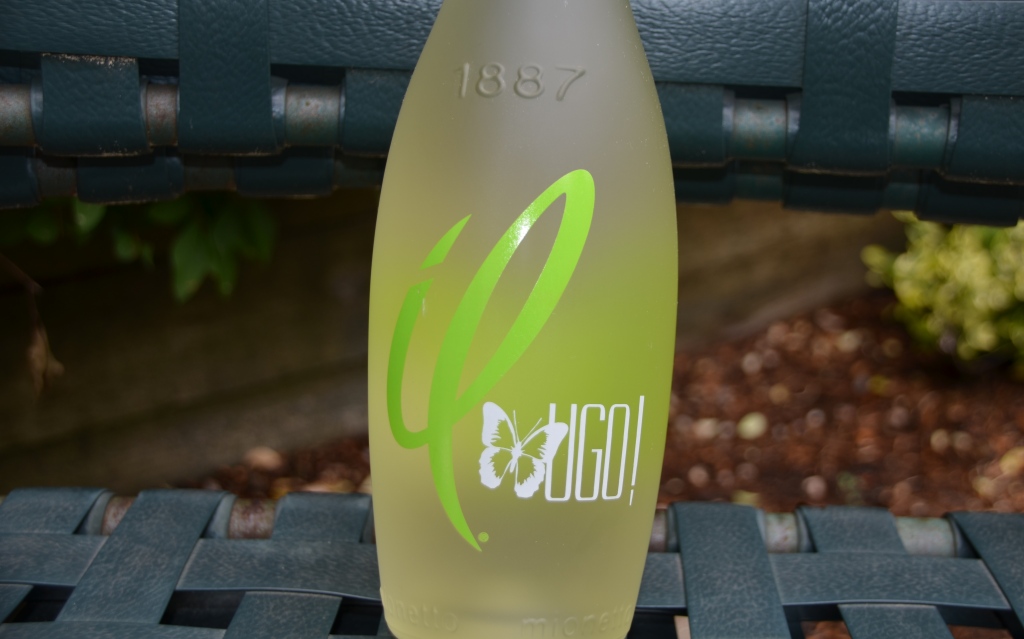
Mionetto Il Ugo
Mionetto Il Ugo, a blend of Prosecco with elderflower blossoms and wildflowers – bright and uplifting on the nose, touch of sweetness with a charismatic bitterness and enough acidity – it is so refreshing, you don’t want to put the glass down. Yes, I know, the purists will disagree – but this is an outstanding wine in my book. Drinkability: 8
Now, a couple of value wines for your consideration. These wines come from Chile under the brand name of the Beach Kite. While you can’t find this information on the wine label, Beach Kite is presumable affiliated with 90+ Cellars. 90+ Cellars has a similar model of operation to Hughes Wines and Oriel (at least the two that I’m familiar with), which is: find good wines which well-known wineries have a hard time selling, bottle under your own private label, and sell for the reasonable price at around $20. Beach Kite seems to be more of a “second label” to the 90+ Cellars wines, considering the price of $7.99 per bottle. But – don’t judge the wine by its price.


2012 Beach Kite Sauvignon Blanc Central Valley Chile (13% ABV) had herbaceous nose, and zesty grapefruit on the palate, a bit more restrained compare to the typical New Zealand Sauvignon Blanc, but still fruit forward next to Sancerre. Refreshing, with good acidity. Drinkability: 7
2012 Beach Kite Pinot Noir Central Valley Chile (13% ABV) – simple, round, good red fruit on the nose and the palate, touch of plums, good acidity – perfect sipping wine for a hot summer day. Drinkability: 7
Next I want to talk about few wines, sorted by the grape.
Riesling
While this is not how I rate the wines, but I would say that I had two Rieslings which were outstanding, and one which was … just spectacular.
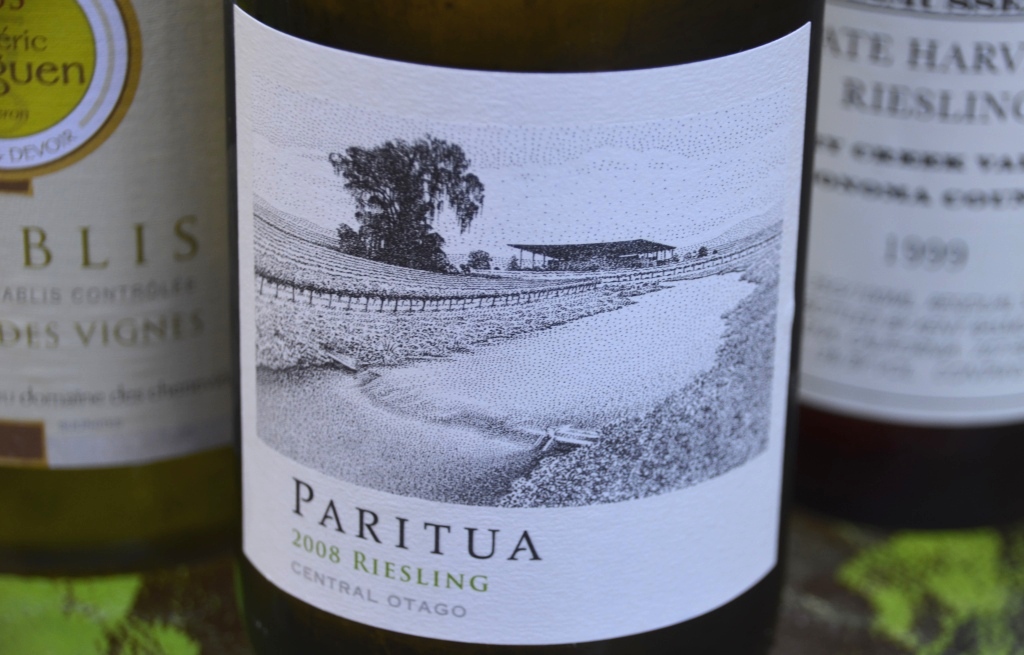
Paritua Riesling Central Otago
2008 Paritua Riesling Central Otago New Zealand (11.5% ABV). I got this wine for $6/bottle at Last Bottle Wines. I was questioning myself a bit when placing an order for this wine, as I never heard of Riesling from Central Otago – a region in New Zealand known for their world-class Pinot Noir, but not Riesling. I’m glad I took my chances and got this wine, as it was outstanding. Perfect ripe peach flavors on the nose with the hint of petrol (yes, I know some people are not very happy about this flavor, but I personally love it). Very delicate on the palate, with some honey and apricot notes, perfect acidity and very restrained sweetness. This New Zealand Riesling would rival many of the German Rieslings at Kabinett level. One night we had it with Thai food, and [as expected] it paired perfectly. Drinkability: 8


2005 Eitelsbacher Karthauserhofberg Riesling Spatlese Mosel-Saar–Ruwer (9% ABV) – what I value the most in Riesling (any Riesling) is balance. My sweet tooth is not any smaller than the one any sweets lover would have out there. But I can’t take bottomless sweetness in the wine – I need acidity to come and play it supportive and refreshing role right next to the sweetness. This Riesling is perfectly balanced, with excellent acidity – and showing no signs of age. Just had an interesting revelation – may be I should replace my “drinkability” ratings with “quaffability”, as this wine was not just drinkable, it was perfectly quaffable. Anyway, I digress. This is not the first Riesling I had from Eitelsbacher Karthauserhofberg – and it seems to be a very interesting winery – but I need to refer you to the Riesling expert Oliver TheWinegetter if you want to learn more. Here is a link to the comment Oliver left on one of my previous posts where he is talking about this winery. Drinkability: 8+

Kurt Rasmussen Late Harvest Riesling
1999 Kurt Rasmussen Late Harvest Riesling Dry Creek Valley (13%ABV) – I’m not sure I can do justice to this wine trying to describe it. In a word – spectacular. Liquid viscous dark gold in the glass, honey, honeydew, caramelized pecan, apricot notes all over, both on the nose and the palate – and perfectly balanced (I’m know I’m abusing this one), with still bright supporting acidity. Drinkability: 9
Next up – Gewurztraminer
To be honest, I don’t drink Gewurztraminer all that often. I find a lot of Gewurztraminer wines to be all over the place in terms of taste – many of them have wonderful nose, but then on the palate the wine often doesn’t appear to be “together”, it shows up quite disjointed. But – not this wine.
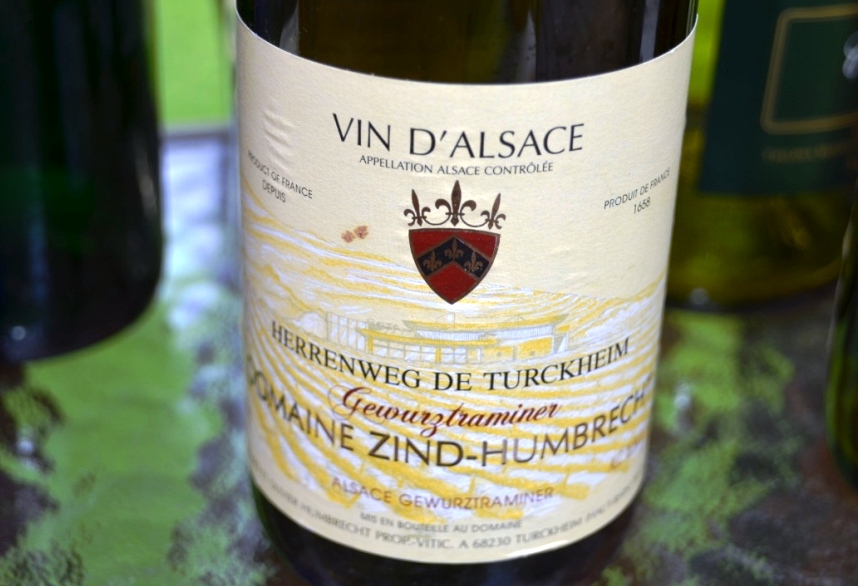
Zind-Humbrecht Gewurztraminer
Domain Zind-Humbrecht is one of the best producers in Alsace, probably best known for its Pinot Gris wines. Just to put things in perspective, 36 wines of Domain Zind-Humbrecht have classic ratings from Wine Spectator (95-100), including perfect score 100 point 2001 Pinot Gris. Well, this is not the wine I’m talking about here.
2002 Domaine Zind-Humbrecht Herrenweg de Turckheim Gewurztraminer Alsace (15.5% ABV) – I got two bottles of this wine at Bottle King in New Jersey on a big sale for about $20 each – this wine typically retails for $60 or so. I had a bottle few years back, and was not impressed. So when I pulled this bottle out, I was not expecting much ( it was more like “yeah, let’s free some space in the wine fridge”). My, was I wrong! In one word, I have to use again my abused wine definition of the day – spectacular. Dark golden color, beautiful nose of candied apricot, perfect honey tones on the palate, fresh acidity, more candied apricot, perfectly balanced. Drinkability: 9
Food break
Tired of wine? Let’s make a short break for some food pictures. First, I promised to Food and Wine Hedonist that when I will make Elotes according to his recipe, I will share my impressions. Elotes is Mexican street food which is essentially a grilled corn with spicy mayo and Cotija cheese – this is precisely what I did and it was tasty! For the recipe, use the link above, and here are the pictures:


Yes, I continue admiring my “mangal”, a special charcoal grill – here are few pictures for your drooling pleasure:


You know what – I think this is enough for one post. Let’s stop here. In the next post – Chardonnay, Cabernet Franc, Pinot Noir and may be something else.
To be continued…
Last Bottle Sign Up ($10 credit)




 Talk-A-Vino