Three Beautiful Rosé To Fit Any Budget
Can I give you a small piece of wine advice? I promise it will be short and simple. Here it goes: if you are looking for an excellent value wine, look for the wines of Domaines Paul Mas from France. That’s it. End of the advice. And I can pretty much finish the post right here as this was my main point for today.
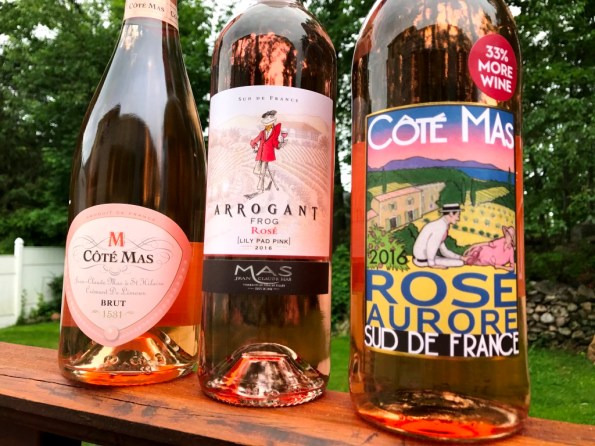
I discovered the wines of Paul Mas 4-5 years ago, and ever since, they were my perennial favorites. Red, White, Rosé, Sparkling – I tried many of the wines (here are a few links – reds, sparkling) and they always delivered – at a great QPR, whether you are buying them at a store or at a restaurant. “Affordable luxury” is a perfect definition for Paul Mas wines, as these wines deliver a great value – without the need to rob the bank or borrow from 401k.
The story of Domaines Paul Mas started in 1892 in the small town of Pézenas in Languedoc (Pézenas’s fame is usually associated with the famous French playwright Molière). The modern part of the history of Domaines Paul Mas, however, is associated with Jean-Claude Mas, who fell in love with winemaking at the age of 3 (yep, and if you want the whole story, you can read it here). Jean-Claude Mas is often credited as a pioneer who is working hard to change the winemaking in Languedoc from the focus on the quantity to the focus on the quality, to bring Languedoc to the old glory of 2000 years of winemaking.
The wines I want to talk about today are happened to be all … Rosé. I don’t know if this is an effect of summer, but it seems that the pages of this blog are lately nicely colored in pink. Nevertheless, the wines below are well worthy of your attention and deliver a great value which is really hard to beat. Here we go:


2016 Paul Mas Rosé Aurore Pays d’Oc (13% ABV, $8, 1L, 30% Cinsault, 20% Syrah, 50% Grenache Noir)
C: beautiful pale pink, light salmon
N: touch of fresh strawberries, gentle, medium intensity.
P: strawberries all the way, perfect balance, nice, refreshing, clean.
V: 8, outstanding, just perfect.
2016 Arrogant Frog Rosé Lily Pad Pink Pays d’Oc (13% ABV, $8, 100% Syrah)
C: bright pink, intense but without getting into reddish hues
N: strawberries, medium intensity.
P: strawberries with touch of lime, good acidity, good balance.
V: 7+, perfect everyday Rosé
NV Coté Mas Rosé Brut Crémant de Limoux (12% ABV, $15, 70% Chardonnay, 20% Chenin Blanc, 10% Pinot Noir)
C: beautiful bright pink
N: toasted bread notes, crisp, fresh
P: fresh, clean, lemon, tart strawberries
V: 8, outstanding Rosé sparkling, will compete with any Champagne
Have you had any of these wines? Are they a great value or what? Let me know! Cheers!
Exploring Wines Of New Zealand – With Villa Maria on Snooth
Wines of New Zealand need no introduction – for sure to the oenophiles. Winemaking started in New Zealand in the 1850s, but it really flourished in the second half of the 20th century, when jet travel allowed much easier access to the future winemakers to get educated and experienced in Europe. Since the 1990s, New Zealand greatly embraced sustainability and … screw tops. I’m definitely very happy about the first – sustainable farming always leads to the better wines and happier environment. The screw tops – they are fine, I’m not convinced though that they are the best for aging the wines properly. However, I don’t want to convert this post neither into a rant, nor into a debate, so let’s just move on.
 The story of Villa Maria winery is easily an exemplary story of realizing the “American Dream” – only in this case, it is, of course, have to be called a “New Zealand dream” (I hope such a concept exists).
George Fistonich started in 1961, at the age of 21, with one acre of vines in Auckland. In 1962, he harvested the grapes and produced the wines under the name of Villa Maria. That was the beginning of the journey of one man, who had the passion, vision, perseverance and enough obsession to make it. Villa Maria was a one man operation through the 60s, hiring its first staff in the early 70s, and now employing 250 people and exporting their wines to the 50 countries. As a perfect proof of making it, George Fistonich became Sir George Fistonich, receiving the first knighthood in the country for the services to New Zealand’s wine industry.
Villa Maria today has vineyards located in Auckland, Gisborne, Hawkes Bay and Marlborough regions. The grapes range from the New Zealand’s staples such as Sauvignon Blanc and Pinot Noir to such an obscure varietals as Arneis and Verdelho. Villa Maria became a cork-free zone in 2001. And I can tell you, they really treat sustainability seriously – the Villa Maria bottles were some of the lightest wine bottles I ever came across, which I’m sure greatly affects the carbon footprint.
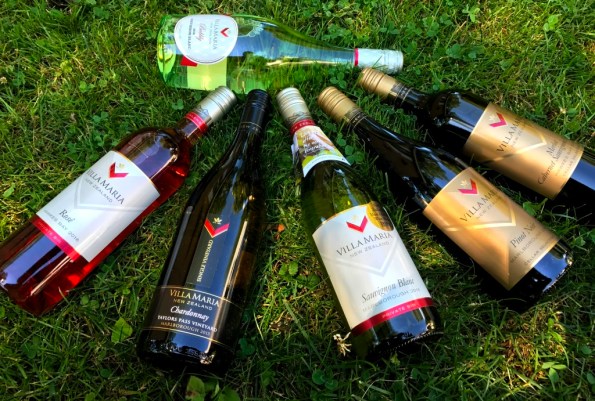
A week or so ago, I was a part of the big group of winelovers tasting Villa Maria wines together in the virtual tasting organized by Snooth (no worries, the wines were real). Here are my notes from tasting and also, re-tasting of the wines.


First, two of the Sauvignon Blanc wines. First one was called “bubbly” as it was lightly carbonated – and it was definitely a fun wine, perfect for a summer picnic, fresh and delightful. And the Marlborough Sauvignon Blanc was simply a classic New Zealand Sauvignon Blanc, done with a perfect restraint:
2016 Villa Maria Bubbly Sauvignon Blanc Marlborough (12.5% ABV, $15)
C: literally non-existent
N: touch of grass and currant, a classic SB, restrained.
P: nice, touch of bubbles, touch of sweetness, black currant, nice and round, refreshing.
V: 8-/8, definitely nice
2016 Villa Maria Private Bin Sauvignon Blanc Marlborough (12.5% ABV, $13)
C: straw pale
N: pure cassis, beautiful, freshly cut grass, classic
P: excellent balance, acidity, currant and a touch of grass. Nice and pleasant.
V: 8, I can drink this at any time, excellent wine


Now, the Rosé and then Chardonnay. The Villa Maria Rosé is predominantly Merlot. It is light and simple, but it has enough finesse to pass one of my personal tests – I particularly like the white and Rosé wines which are well drinkable when they are a bit warm – it is annoying to maintain the wines at the ice cold level (at home, for sure). The Rosé was delicious and drinkable even at the room temperature, so it definitely passed that test. And as for the Chardonnay – I know that I will be in the tiny minority from our tasting group, but I found it to be just okay. It had all the classic Chardonnay traits, but, somehow, didn’t hit the home run for me…
2016 Villa Maria Private Bin Rosé Hawkes Bay (12.5% ABV, $14)
C: Pink
N: strawberries and strawberry leaves, round and pleasant
P: strawberries, touch of sweetness, could use a touch more acidity, but still, nice and delicate
V: 8-, definitely improved the next day, more delicate, better balance
2015 Villa Maria Single Vineyard Taylors Pass Chardonnay Marlborough (13.5% ABV, $45)
C: straw pale
N: creamy, vanilla, freshly baked brioche buns with a touch of butter on them
P: Granny Smith apples smothered in butter, good acidity, excellent midpalate weight, nicely plump, but clean. Nice cleansing acidity on the finish.
V: 7+, needs food.


Now, the reds. Pinot Noir was unusual compared to what I typically expect from the Marlboro Pinot Noir. It was heavier than I expected, and on the day 3, it became a lot closer to the powerful Oregonian Pinot (which is a good deal at $26, right? ). The Merlot blend was an enigma. It opened up beautifully as I just opened the bottle, but then it went back into its shell and never came out of it, even on the day 3 …
2014 Villa Maria Cellar Selection Pinot Noir Marlborough (13.5% ABV, $26)
C: bright ruby
N: touch of sweet cherries, violet
P: tart cherries, tart acidity, touch of tobacco
V: 7, 7+ on the day 3 – showed a lot more fruit on the palate, Oregonian notes of dark power, espresso, mocha, with sweet core of cherries and plums.
2013 Villa Maria Cellar Selection Merlot/Cabernet Sauvignon Hawkes Bay (13.5% ABV, $20, 70% Merlot, 23% Cabernet Sauvignon, 7% Malbec)
C: dark garnet, almost black
N: medium intensity, baking powder, vanilla, sweet mocha
P: black currant, ripe and sweet, touch of espresso, tar, dark fruit, dry, tannic finish
V: 7, unusual experience …
Have you had any of these wines? What are your thoughts? Cheers!
Enjoy Your Summer A Little Bit More – With Rosé from WTSO
Is summer the best time of the year? Well, I love all seasons, but with the right weather, summer might be the most enjoyable. Can we enjoy it “better”? Of course – with a glass of Rosé in your hand.
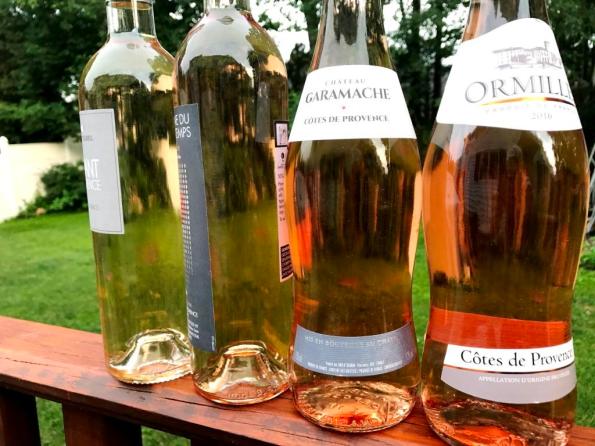
There is something special about the Rosé. We eat with our eyes first, and we drink that way too. If you think about color of the white wine, you get the range from literally a clear water to a dark gold – white wine is fun to look at, but the color of it doesn’t provoke much thought, unless you are in a blind tasting setting. Similar story with the reds – the color goes from the bright ruby to literally black, but again, the color doesn’t bring that much of the visual pleasure.
Rosé is a totally different game. The shades of pink go from the onion peel to salmon to copper to electric pink, and just a visual effect of the bottle of Rosé is appealing and uplifting, it says “the world looks a little bit better now, isn’t it”? We don’t always carry around those pink-colored glasses which improve our life’s outlook, but the bottles of Rosé can have the same effect. Who is with me? Yep, go pour yourself another glass.
So we agreed that Rosé itself can make our summer better. Can we further improve that? Of course! With the help of Wines ‘Til Sold Out, commonly known as WTSO. WTSO provides tremendous service to all of the wine lovers – it finds great wines at amazing prices – and passes savings to all of us. To make our summer even better than it is, WTSO is offering a special Côtes de Provence Rosé 4-pack collection, which you can find here.
I had an opportunity to taste these wines and here are my impressions:
2016 Famille Négrel Diamant de Provence Côtes de Provence (12.5% ABV)
C: pale, very pale pink
N: minerality, gunflint, ocean breeze
P: beautiful fresh profile, touch of underripe strawberries, crisp acidity, nice salinity, excellent balance. Appears very light, but very present in the glass.
V: 8, very nice, perfectly enjoyable, and guaranteed to remove at least 5 degrees off the thermometer.
2016 Château Garamache Côtes de Provence (12% ABV)
C: light salmon pink
N: muted, touch of green leaves
P: savory, good lemony acidity, but missing on the overall package. Acidic finish, needs more fruit.
V: 7-, should be good with food – salad comes to mind.
2016 Château Gassier Ormilles Côtes de Provence (13% ABV)
C: beautiful pink color, rose gold
N: onion peel, strawberries, medium intensity, inviting
P: ripe strawberries with touch of honey, a bit of perceived sweetness, perfect balance, delicious.
V: 8/8+, quintessential Provence. When I think “Provence”, this is a taste profile I expect
2016 Domaine du Garde Temps Tourbillon Vielles Vignes Côtes-de-Provence (12.5% ABV, 50% Cinsault, 30% Grenache, 20% Syrah)
C: bright salmon pink
N: onion peel and savory strawberries
P: fresh, crisp, tart strawberries, beautiful palate cleanser, excellent balance.
V: 8, nicely present wine, good weight in the mouth, excellent for summer and not only. Needs about 20 minutes to breath.
Enjoy your summer and drink Rosé! Cheers!
Daily Glass – Pinot Grigio To Ask For By Name
 Blind tasting is probably the most difficult part of any of the Guild of Sommeliers examinations. It is one thing to memorize the names of the hundreds of the German villages producing Riesling. It is an entirely different thing to be able to distinguish, let’s say, Cabernet Sauvignon and Merlot, and identify a possible region, vintage and even a producer.
As with anything humans do, blind tasting also has its own set of “tricks” associated with it. Some of them perfectly legitimate – for instance, Nebbiolo wines (Barolo, Barbaresco, etc) typically have red brick hue in the glass, even when young, so this is a great “giveaway” for the blind tasting. Or the fact that the tannins from the American oak are perceived more in the back of the mouth, versus the French oak, which comes in front.
But then some of the “tricks” have nothing to do with the characteristics of the wine. Here is one, a statement by the Master Somms running the exam: “we will never pour Pinot Grigio for your blind tasting”. Pretty good hint, right?
To a degree, Pinot Grigio became a victim of its own success. Santa Margherita Pinot Grigio became an overnight sensation in 1979, driving demand for the Pinot Grigio wines in the USA. That, in turn, led to the appearance of the great number of “imitations”, Italian Pinot Grigio which had no bouquet or a flavor but was very easy to drink and affordable. Fast forward on, and Italian Pinot Grigio became the “wine to ignore” for any self-respecting oenophile, next in line to White Zinfandel.
But let’s not forget that Pinot Grigio is simply an Italian name for the grape known throughout the world as Pinot Gris. As soon as one hears Pinot Gris, I’m sure Alsace comes to mind first, and then, of course, the Oregon. Alsatian Pinot Gris is extremely well respected among wine lovers, beautiful when young and amazing with some age on it. Oregon Pinot Gris is beautifully crisp, clear and flavorful, and as such, a popular choice for the wine consumers as well. So why can’t Italian Pinot Gris, err, Pinot Grigio be a well respected and delicious wine?
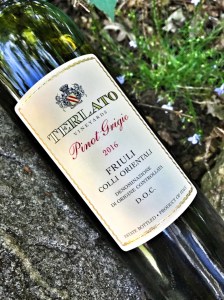
Well, it can. There are many producers who make Italian Pinot Grigio a wine worth seeking and drinking – for instance, how about Elena Walch or Livio Felluga – if you never had their Pinot Grigio, this is a mistake which you need to correct ASAP. And here is one more Pinot Grigio which you need to ask for by name – the one made by Terlato.
Terlato is a very well respected wine importer – and by the way, Tony Terlato was responsible for the overnight success of Santa Margherita, creating that Pinot Grigio phenomenon in the USA. Terlato Family also goes beyond just importing, producing the wines under their own label around the world. The wine I suggest you will look for is Terlato Vineyards Pinot Grigio from Friuli. It is very different from the mainstream – in Terlato’s own words, “First we pioneered Pinot Grigio. Now we’ve revolutionized it”.
Friuli region is nestled in the foothills of the Alps, in a close proximity to the Adriatic sea, which creates great winegrowing conditions. Add to that poor soils and hillside vineyards with 20-30 years old vines, harvested by hand in the small plots, and you’ve got an excellent foundation for making a delicious wine.
Here are my notes from the tasting of this wine:
2016 Terlato Vineyards Pinot Grigio Friuli Colli Orientali DOC (13% ABV, $22.99)
C: light golden
N: intense, minerally, touch of honeysuckle, white stone fruit and fresh brioche, very promising.
P: crisp acidity, touch of gunflint, pronounced lemon, touch of freshly cut grass, medium body softly coating the mouth. Great complexity.
V: 8/8+, wow, very impressive.
Here you are, my friends. Next time you are looking for a bottle of wine, you might want to include Pinot Grigio into your shopping list. Trust the producer, and you might uncover something new to enjoy. Cheers!
Discovering Portuguese Wines, One Winery at a Time – Esporão
Portuguese wines used to be an oenophile’s best secret. Portugal is rather a small country with very good climate for grape growing, lots of slopes and poor soils to force the roots to go deep in search for nutrition. People in Portugal heavily relying on their own agriculture – very little of the food products are imported, and the wines were for the long time produced mostly for the consumption inside the country. Add here a long and successful winemaking history (thousand years give or take a few) and lots of indigenous grapes (actually, the most of them are), and you have a recipe for excellent wines which are hardly known anywhere.
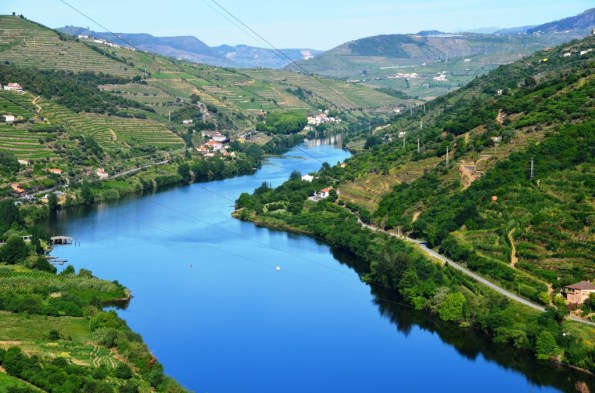
In today’s global economy, where love to the liquid grapes has no boundaries, it is hard to keep something like this as a secret. All of us, lucky travelers, who manage to visit Portugal and haul the wines back by suitcases and boxes, are obviously only helping for this secret to be … well, much less of a secret. And thus today let me contribute to the secrets-free wine world and talk about Portuguese wines produced by the company called Esporão. (take a look at their website to see beautiful viewcams of the vineyards and olive tree orchards).
Herdade do Esporão boundaries were established in 1267, which definitely gets it in the group of some of the oldest estates in Europe, in the region of Alentejo, about 100 miles southeast of Lisbon. The estate remained virtually unchanged until it was purchased by José Roquette in 1973. It is now run by his son João Roquette, who upholds his father’s winemaking traditions. In 2008, Esporão expanded into the Douro Valley with the purchase of the Quinta dos Murças estate which traces its history back to 1714. Quinta dos Murças vineyards are located on the slopes with the elevations of 262 – 1312 feet above sea level, in the Cima Corgo sub-region which is one of the most coveted in the Douro.
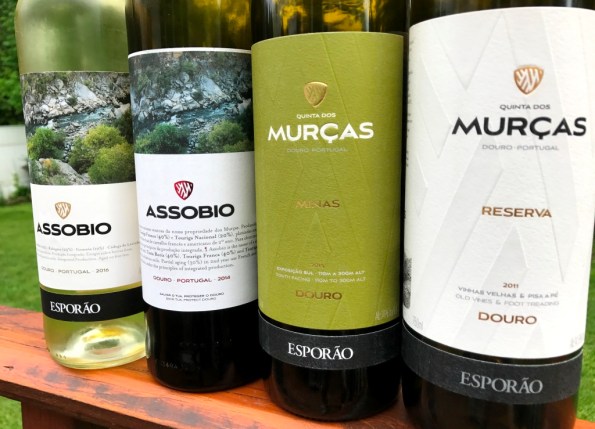
While I would love to talk about many different wines produced by Esporão, today our focus is on the Esporão wines from Quinta dos Murças. Here is what I had an opportunity to taste:
2016 Quinta dos Murças Assobio White Douro Valley, Portugal (12.5% ABV, $13, 30% Viosinho, 25% Verdelho, 25% Rabigato, 10% Gouveio, 10% Códega do Larinho)
Straw pale. Touch of lemon and white stone fruit on the nose, touch of grapefruit zest, medium+ intensity. Good crispy acidity on the palate with round, almost plump body, touch of green apple. Drinkability: 8-
2015 Quinta dos Murças Assobio Red Douro Valley, Portugal (13.5% ABV, $13, 40% Touriga Nacional, 30% Tinta Roriz, 30% Touriga Franca)
Dark garnet, restrained nose, crunchy raspberries, sweet oak undertones, very serious tannins on the palate, French oak, excellent balance, round, very tasty. Drinkability: 8+, best QPR in the tasting
2015 Quinta dos Murças Minas Douro Valley, Portugal (14% ABV, $25, Touriga Nacional, Touriga Franca, Tinta Francisca, Tinta Roriz, Tinta Cão)
Dark garnet color, fresh jammy cherries, baking spices, medium intensity, touch of barnyard, restrained palate, tart cherries, good acidity, excellent balance, Drinkability: 8. Added Bonus – new grape, Tinta Francisca
2011 Quinta dos Murças Reserva Douro Valley, Portugal (14% ABV, $45, Touriga Nacional, Touriga Franca, Tinta Roriz, Tinta Amarela, Tinta Barroca, Sousão)
Almost black. Medium intensity, black fruit medley on the nose, eucalyptus, sage, wow – delicious.
Round layered palate, spices, dark fresh fruit, good acidity, outstanding. Drinkability: 9-
Have you tasted Esporão wines? What is your opinion of Portuguese wines? Do you have any favorites? Cheers!
Come For The Name, Stay For The Wines: Murrieta’s Well in Livermore Valley
 “Your Day Just Got Better” – how fun is it to read something like this? Even if it is written on the cardboard box [ahem, full of wine]? Ahh, sorry. Especially(!) if it is written on the box full of wine!
When I was invited to participate in the Snooth virtual tasting of the wines of Murrieta’s Well, something bothered me in that name. Something very familiar, but I really I couldn’t get a grip as to what it was – until I started working on this post and figured out that Murrieta was referring to Joaquin Murrieta, a Mexican miner turned hero/bandit to avenge his wife in the first half of 19th century. Growing up I remember been moved by a beautiful music and singing in one of the very first rock-opera produced in the former USSR, called “The Star and Death of Joaquin Murrieta” (Звезда и смерть Хоакина Мурьеты). That is what my brain was trying to associate with – but again, this only became obvious after I started working on the post.
Similarly to the Joaquin Murrieta himself, the Murrieta’s Well vineyards go back to the early 1800s. In 1884, Louis Mel purchased the estate, built the winery and planted new vineyards using cuttings brought directly from France, from none less than Chateau d’Yquem and Chateau Margaux. In 1933, he sold the estate to his friend Ernest Wente, and ever since the estate was a part of the Wente properties. Actually, the winery received name “Murrieta’s Well” only in 1990 when it was revived, and from there on the modern history of Murrieta’s Well started. Rest assured that you can still find very old and still producing vines as part of the Murrieta’s Well vineyards.
Before we talk about the wines, let me ask you a sidebar question. Let’s say you are visiting Northern California on business and staying somewhere between San Francisco and San Jose. Let’s assume you have a bit of a free time and want to visit a winery. Outside of the city wineries, which can be found today in many places, what do you think would be the closest “wine country” for you to visit? If you said Napa, it is a wrong answer! Yes, you can go to the Santa Cruz mountains and visit Ridge (good choice), but – your best bet will be Livermore Valley! You will find a good number of excellent producers in Livermore Valley, all within 45 minutes ride (not talking about California traffic here, sorry). If you will go, make sure to include Murrieta’s Well and Wente on your short list.
Now, let’s talk about making the day better – I think kind folks at Murrieta’s Well know how this can be done. When you open the box and first thing you see is a written note “Your Day Just Got Better“, whatever the day you had before, it immediately gets better :). Then you see the bottles, packed with meticulous care, and feel even better. Meticulous care obviously goes not only into the packing, but first and foremost, into the wines themselves. Winemaker Robbie Meyer believes in the art of blending, and I can tell you, one of the flagship blends, The Spur, was my favorite wine of the tasting. Robbie Meyer’s philosophy is to harvest and vinify all the grapes separately, and then combine them into the final blend.


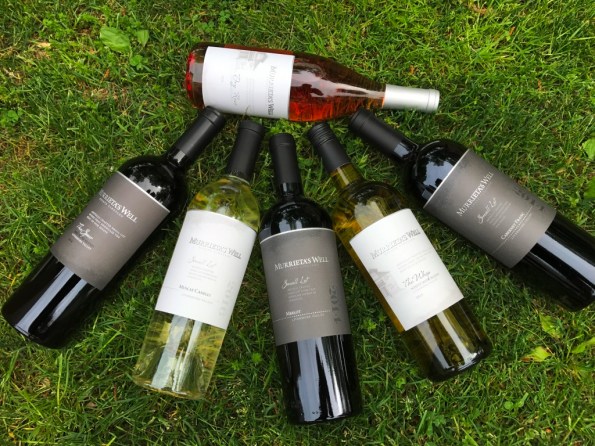 For what it worth, here are my tasting notes for the wines:


2016 Murrieta’s Well Dry Rosé Livermore Valley (14.1% ABV, $30, 55% Grenache, 45% Counoise)
C: pale pink
N: intense, fresh, strawberries and strawberries leaves,
P: perceived sweetness but perfectly dry, underripe strawberries, nice and round
V: 7+/8-
2015 Murrieta’s Well The Whip Livermore Valley (13.5% ABV, $24, 30% Sauvignon Blanc, 30% Semillon, 30% Chardonnay, 7% Viognier, 3% Muscat Canelli)
C: straw pale
N: touch of perfume, tropical white fruit, guava, medium intensity,
P: touch of sweetness, nicely restrained, good acidity in the back, more tropical fruit, good balance
V: 7+
2016 Murrieta’s Well Muscat Canelli Livermore Valley (14.2% ABV, $35, 100% Muscat Canelli, 100 cases produced)
C: light straw
N: perfumy, intense, sweet, intense white fruit
P: grapefruit, grapefruit zest, good acidity, round
V: 7+, excellent summer wine


2014 Murrieta’s Well Small Lot Merlot Livermore Valley (14.1% ABV, $48, 90% Merlot, 7% Cabernet Sauvignon, 3% Petit Verdot)
C: Garnet
N: medium plus intensity, touch of sweet cherries and earthiness, mint, touch of cassis, overall very inviting.
P: good earthy fruit, cassis, medium to full body, touch of sweet oak, outstanding overall
V: 8+, excellent, delicious wine
2014 Murrietta’s Well Small Lot Cabernet Franc Livermore Valley (14.1% ABV, $58, 88% Cabernet Franc, 6% Cabernet Sauvignon, 6% Petit Verdot)
C: dark garnet)
N: touch of vanilla and mint, black and red fruit, medium intensity
P: touch of black currant, vanilla, chewy structure, baking spices, medium to full body.
V: 7+, I like my Cabernet Franc to be a bit leaner, but a very good wine overall.
2014 Murrieta’s Well The Spur Livermore Valley (13.5% ABV, $30, 45% Cabernet Sauvignon, 22% Petite Sirah, 14% Petit Verdot, 10% Merlot, 9% Cabernet Franc)
C: dark garnet
N: crunchy raspberries, intense, tobacco, sage
P: round, layered, black currant, silky smooth, touch of sweet tobacco, eucalyptus, fresh acidity, impeccable balance
V: 8+, this wine would make me happy any day
Whether Joaquin Murrieta was an avenger, hero or bandit – it is hard to tell. We don’t even know if he was just a legend. But – the wines named in his honor are real, and you should definitely look for them. Cheers!
One on One With Winemaker: Brett Jackson of Viña Valdivieso, Chile
Source: Viña Valdivieso
Today, sparkling wines are produced everywhere, and we are getting quite used to it. Sometimes, it comes almost to a surprise when we hear that particular producer doesn’t offer any sparkling, at least as part of the “winery special”. But this was not the case even 10 years ago, when the sources of the sparkling wine were much more limited.
When you are thinking about Chilean wines, well respected worldwide, what kind of wines come to mind first? I would bet you are thinking about Cabernet Sauvignon, Merlot, Carmenere, Sauvignon Blanc and may be some Chardonnay. I would also safely bet that you don’t think of Chile as a producer of the sparkling wines, right? So without asking google or reading ahead, can you pause for a second and think when could Sparkling wines be commercially made in Chile?
While spending time in France, Don Alberto Valdivieso fell in love with Champagne. As a matter of fact, he loved it so much that upon his return to Chile in 1879, he founded Champagne Valdivieso and became the first producer of the sparkling wines in Chile and the whole of South America.
Fast forward to today and Viña Valdivieso produces the full range of sparkling wines, including both Viña Valdivieso produces the full range of sparkling wines, including both méthode champenoise and Charmat, and the extensive line of still wines which includes a unique solera-method dry red called Caballo Loco. I had an opportunity to sit down (albeit, virtually) with the Viña Valdivieso Winemaker, Brett Jackson, and ask him a few bunch of questions – here is what transpired from our conversation:
[TaV]: I would guess that Viña Valdivieso first sparkling wines were made with the Traditional Method. When did the Viña Valdivieso start producing sparkling wines using Charmat method?
[VV]: Valdivieso started making sparkling wines from 1879, all the bottles in traditional method. Only from the eighties began the elaboration by Method Charmat
[TaV]: What is the oldest sparkling wine which can be found in your cellars? What was the oldest Viña Valdivieso sparkling wine you ever tried?
[VV]: For the earthquakes of 1985 and 2010, that affected our underground cava, we lost bottles from the early fifties to the present. We only recovered some bottles from 1996 onwards that are still preserved in our cellar.
[TaV]: Do you make any single vineyard sparkling wines? What about vintage sparklers?
[VV]: For Traditional method, we have single vineyard Valdivieso Blanc du Blanc made of 100 % Chardonnay and Valdivieso Blanc du Noir with 100% Pinot Noir
Since 2013, we started using the label vintage in Valdivieso Blanc du Blanc. Actually, the new portfolio sparkling for Champenoise Caballo Loco Grand Cru 2014 uses an exceptional vintage.
[TaV]: When you produce Traditional Method sparkling wines, do you follow the path of the French Champagne and try to achieve consistent “Chateau” taste profile? How many Vin Clairs your typical blend include? Do you use also reserve wines, and what would be the oldest you would use?
[VV]: We use different vintages to give consistency to our portfolio. Charmat Limited include 2 years at least in different percentage of varieties, blending, Traditional method we use Both of 1 vintage as well as several in blending. Currently, the use of expedition liquor for some 2014 bottles of traditional method is from 2011 vintage.
[TaV]: Do you use sustainable farming methods? What about organic – you do it now or have any plans?
[VV]: Our farming methods are sustainable, being certified with the Wines of Chile Sustainable code. We are working with a 15Ha organic vineyard in the south of Chile with some very exciting red varieties. Grenache, Tempranillo, Mourvedre, Carmenere, Tannat, Carignan, Syrah, and Petit Syrah. The first wines from this vineyard should be appearing late 2018.
[TaV]: What was your most challenging vintage for the sparkling wines and why?
[VV]: 2012 and 2013 the most difficult, extremely challenging because of the huge amount quantity per hectare. We don´t have Traditional method these years, except Blanc du Blanc 2013, 100% chardonnay. The Chardonnay variety was the only one that excelled to maintain consistency in quality and longevity for its storage in bottles.
[TaV]: What was your most difficult vintage for the still wines and why?
[VV}: 2016, the most difficult, lots of rain during April. Chile lost around 30% of the harvest due to these rains. Extremely challenging conditions.
[TaV]: What were you favorite vintages for the still and sparkling wines?
[VV]: For still wines 2000 through to 2010 were exceptional with a string of outstanding vintages, 2001, 2005, 2007, 2009, 2010. I would give the edge to the 2005 vintage, great balance in the wines, maturity, acidity, and exceptional flavor.
For sparkling wines 2010, 2014, 2015, 2016. because of the balance of fresh maturity, big natural acidity, fresh fruity character . 2014 was the best, with the fruit from consolidated new areas for traditional method such as Biobio, Limarí, Itata, and new improves for charmat with vines so close to Andes mountains and Coastal range. 2014 is the first vintage for a new sparkling label called Caballo Loco Grand Cru Biobio Valley , Brut Nature and Blanc du Noir, currently available.
[TaV]: Today you produce still white wines from Chardonnay and Sauvignon Blanc. Have you ever experimented with any other white varietals? Any plans to introduce any new Viña Valdivieso white wines?
[VV]: We do a small amount of Viognier. In the near future we will be launching Rousanne and Marsanne. Both look very promising with great potential.
[TaV]: What is the “Next Big White Grape” for Chile? Is there one?
[VV]: The “next big” is white wine. It is not easy to see as on an international scale, Sauvignon Blanc and Chardonnay dominate to such an incredible extent.
[TaV]: Same question for the reds – is there “Next Big Red Grape” for the Chilean wines?
[VV]: For individuality and exceptional quality, the old vine Carignan from the Maule Valley is making a substantial mark. Also, Syrah has the potential to produce exceptional wines from many different areas of Chile.
[TaV]: For how long do you produce your Syrah wines? What is your inspiration for the Syrah? Is there an international style you would compare Viña Valdivieso Syrah to?
[VV]: We have been producing Syrah for around 10 years. When looking at what we try and achieve, I really look to the northern Rhone, trying to capture spice, black and white pepper. Our style has evolved over the years, initially being more of a new world dark rich style, whereas now I would compare more to soft spicy Rhone style. However Syrah is so unique in that as a red wine every area it is grown in, it produces a wine which is unique to that area.
[TaV]: What is the story behind Caballo Loco? Why all of a sudden to produce Solera-style red wine? Do you produce this wine every year? How do you say it is changing year over year?
[VV]: Caballo Loco, has a long history in Chile, the first edition being released in the early nineties. It was created through a series of events between the winemaking team, sales team, and owners. It is a reflection of the innovative nature of Valdivieso, and not being afraid to try new While it is based on our solera Sistema, each bottling is unique and such receives an individual edition number. The current edition on the market is the N°16, which contains 20 different vintages. The new edition N°17 will contain 50% of the previous edition (in this case N°16), and 50% of the new vintage wine. This method allows us to evolve the nuances of the wine over time. Over the years new vineyards, areas, varieties, and techniques have been incorporated into the wine. Each new edition is released when it is ready, which is not necessarily on an annual basis. Roughly every 18 months a new edition is released. The subtle changes over the years for me is principally increasing complexity and depth as we have come to better understand the vineyards of Chile and the opening of new areas.
[TaV]: It seems that Valdivieso ÉCLAT was produced only once in 2011, with an unusual for Chile blend of grapes. As there a story behind this wine? Any plans to produce a new vintage?
[VV]: Eclat VIGNO, is a blend of Old vine Carignan and Mourvedre. We are part of the VIGNO, a group of 13 wineries which has created this label VIGNO. It is an aggrupation which has been lead by winemakers with the objective to highlight the exceptional quality of these old vine vineyards in the Maule Valley. To place VIGNO on the label the wine must contain 100% of old vine from the Maule Valley. Of this, a minimum of 65% must be old vine Carignan. This is also intended to improve the situation of the small growers in the area, an area with many small growers which had in the past been obliged to sell there Carignan grapes for generic red blends, in which they were diluted away. Now with this initiative, the fruit is sought by many wineries for its quality potential resulting in substantially better prices for the growers. There will definitely be another vintage when the wine is ready.
[TaV]: What’s ahead for the Viña Valdivieso – new markets, new wines – what makes you excited?
[VV]: New wines to come, we have some really fun projects coming on. From the Maule Valley, we will shortly have some wines from an organic vineyard, being from an exciting range of varieties. Grenache, Syrah, Petit Syrah, Tempranillo, Tannat, Carignan, Carmenere, and Mouvedre. We still do not have a name for the range, but the quality of wine from these low yielding vineyards is exceptional.
Late this year we will be launching in the Eclat range 3 new wines under the Curiosity label. Cinsault from the Itata Valley, on the coast, old vines being cultivated in the traditional methods they have been using since vines were first introduced into Chile. There are records of wine being produced in this area since the 17th century. Also, a Rousanne, and a Marsane. These two whites look great, and for me show the potential for these Mediterranean varieties in Chiles conditions.
In the markets around the world it is a very exciting time for Chile, after years as been considered the supplier of good easy drinking wines, Chile has now become a very respected wine producer where people are respecting and expecting wines of the highest world class level. As a foreigner who has accepted into the industry I feel very privileged and lucky to have been able to play a small part in what has been this transformation of the wines from Chile.


I hope you are still here and reading this – I really love these conversations – while virtual, they still share the passion and even the obsession those little grapes bestow on us.
I’m sure you are thirsty by now, so pour yourself a glass, and let me share my impressions from tasting of the few of the Viña Valdivieso wines:
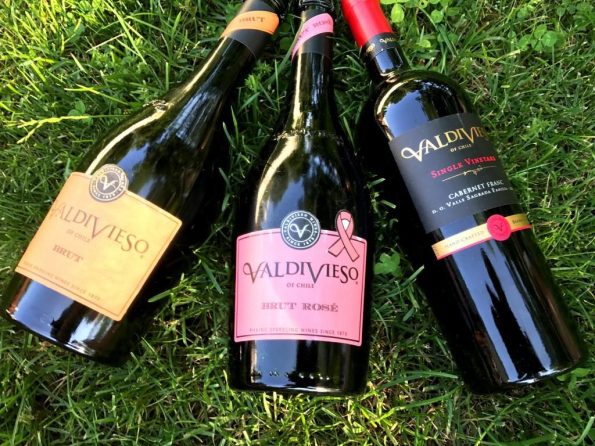
NV Viña Valdivieso Brut Chile (12% ABV, Chardonnay 60%, Semillon 40%, Charmat method)
white stone fruit, distant note, light mousse, good acidity on the palate, touch of grapefruit notes. Drinkability: 7+
NV Viña Valdivieso Rosé Chile (12% ABV, Pinot Noir 70%, Chardonnay 30%, Charmat method)
beautiful color, inviting nose of fresh berries with touch of herbs, light, round, touch of fresh fruit, excellent balance, refreshing. Drinkability: 7+/8-


2015 Viña Valdivieso Sauvignon Blanc Gran Reserva DO Valley de Leyda Chile (12% ABV)
straw color, very intense nose of blackcurrant and black currant leaves, same on the palate but with restraint, nice acidity, black currant, excellent. Drinkability: 8
2013 Viña Valdivieso Cabernet Franc Single Vineyard DO Valle Sagrada Familia Chile (14% ABV, Punta de Rosa Vineyard)
dark ruby color, touch of bell pepper, berries and leaves of the cassis, mint, touch of roasted meat. Palate follows the nose – medium body, good acidity, fresh red berries, touch of cassis, nice savory notes. Enjoyable by itself, but will work well with food. Drinkability: 8
Here we are, my friends. Sparkling from Chile? Yes, please! Cheers!
Villa Torrigiani: Traditional Roots, Modern Wines
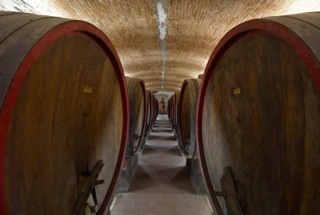
Source: Villa Torrigiani
When it comes to traditions, Italians definitely know how to preserve them. Tour the country, and you will see that finding a 500 years old villa or palace in Italy is very easy; there are plenty of places where the connection can be made through even a 1000 years of history. Italians definitely know how to preserve their traditions.
Talking about traditions, Villa Torrigiani, located in the heart of Tuscany, is exactly one of those well-preserved places, tracking its history back for 1000 years if not longer. Here is the information you can find on Wikipedia:
“In the hills of San Martino alla Palma, vineyards and olive groves have been cultivated for more than a 1,000 years. The estate is located not far from the Via Francigena, the route used by crusaders returning from the Holy Land, and as such a point of passage, the location took its name from Saint Martin, patron saint of vintners and grape harvesters, and Palma (Olive tree), the symbol brought home by crusaders as proof of their travels.
In the mid-1400s, in the very midst of the Renaissance, the marquises Torrigiani, bankers and wine sellers, bought the land that extends from Castellina all the way to the top of the hill of San Martino alla Palma, thus founding Fattoria Torrigiani (The Torrigiani farm). The marquises Torrigiani called on the renowned Florentine architect Michelozzo who designed the stately Villa Torrigiani, which was constructed from 1470 to 1495. The villa, with its numerous halls frescoed by master Florentine painters, is situated at the center of the farm and looks out over the valley of Florence and the cupola of the Duomo.


At the beginning of the 16th century, the farm was divided into 22 “poderi”, or farmsteads, each run by a family group, many of whom have descendants who live in San Martino to this day. The farm was so well organized that it was self-sufficient and no longer dependent on Florence, and consequently, its inhabitants were able to avoid the bubonic plague outbreak of the 1600s.
Fattoria Torrigiani remained the property of the same family for around 500 years until 1967 when it was purchased by the Zingone family who carried out an extensive restoration of the villa and an expansion of agricultural production, of wine and olive oil in particular.”
Fattoria San Martino alla Palma covers almost 900 acres, out of which the vineyards take about 115 acres, and about 300 acres dedicated to the olive trees – in addition to wines and grappa, Villa Torrigiani also produces olive oil.
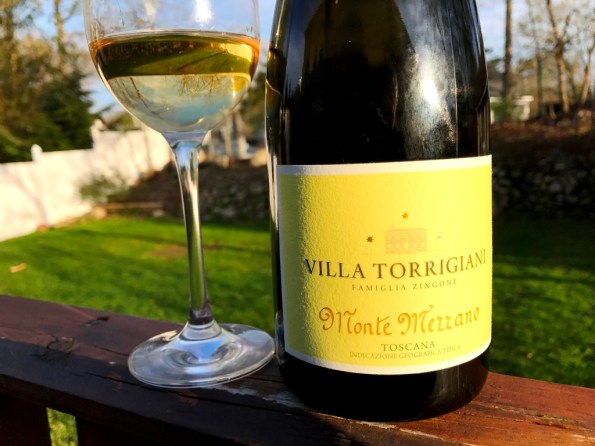
Now, the wines produced by Villa Torrigiani are unquestionably modern. Unoaked Chianti, Chardonnay from Tuscany, super-toscan – while the wines are rooted in tradition, it is hard to argue that they also represent modern Italian winemaking.
I had a pleasure to taste a number of Villa Torrigiani wines, and my tasting notes are below:
2015 Villa Torrigiani Monte Mezzano Bianco Toscana IGT (13% ABV, 100% Chardonnay, 6 mo in French oak barriques)
C: light golden
N: medium intensity, green apples, touch of vanilla
P: needed about 15 minutes in the glass, opened up nice and plump, vanilla, golden delicious apples, crisp acidity, disputants hint of butter
V: 8-, very nicely made, pleasant
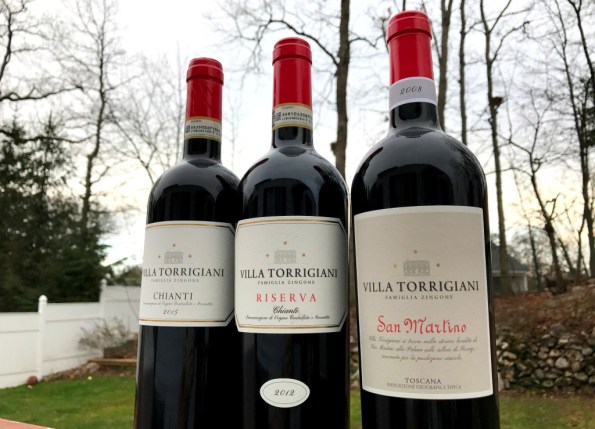
2015 Villa Torrigiani Chianti DOCG (12.5% ABV, 90% Sangiovese, 10% Canaiolo, Stainless steel)
C: garnet
N: fresh, open, medium intensity, caraway seed, touch of sweet cherries
P: fresh, clean, medium body, ripe cherries, touch of cherry peats
V: 7+, needed about 20 minutes to open up and come together, after that delicious all the way through
2012 Villa Torrigiani Chianti Reserva DOCG (13.5% ABV, 90% Sangiovese, 10% Canaiolo, 12-14 month in barrique, additional 6-8 month large oak botti)
C: dark garnet
N: espresso, sweet oak, ripe plums, tobacco, sweet plums
P: dry, perfect balance, dark fruit, supple cherries, good acidity, medium body, medium finish, fresh and open
V: 8-
2008 Villa Torrigiani San Martino Rosso Toscana IGT (13.5% ABV, 85% Cabernet Sauvignon, 15% Sangiovese, 12 month barrique, additional 12-14 month in large oak botti)
C: garnet
N: open, inviting, cassis, eucalyptus
P: fresh, playful, polished, layers of dark fruit, cassis, clean acidity, excellent balance. A true delight.
V: 9-, outstanding. I would love to drink this wine every day.
Here you are, my friends. A beautiful estate with a very long history, producing excellent wines. The only challenge we have at the moment is finding these wines in the USA – but hopefully this will change soon. Cheers!
Franciacorta: Unique, Different and Authentic
“Sir, I will be very happy to work with you to improve the quality of your wines, but I have one request”, said young oenologist. “What is it?“ said Guido Berlucchi, the man famously known throughout the whole Franciacorta for his aristocratic, elegant lifestyle. “I would like to make Champagne here, in Franciacorta”.
The year was 1955, and young oenologist’s name was Franco Ziliani. Guido Berlucchi, while may be surprised, was not shy of taking the risk, and Franco Zeliani got to work. First vintages were a total disaster – awfully tasting wines, blown up bottles. But in 1961, the patience and perseverance paid off, and first 3000 bottles of the Franciacorta sparkling wine came into being.
Mr. Berlucchi invited his influential friends from Milan to try the wines, and they all happened to like it. The new chapter in the Franciacorta history was opened.

Map of Franciacorta region
The wine was produced in Franciacorta literally forever. The land surrounding Lake Iseo from the south was strategically located along the trade path between Turin and Rome. In the 11th century, the monks created a special zone called Curtefranca to encourage land development and commerce – “Curte” in this case represents “land”, and Franca, while sounds related to France, has nothing to do with it – it simply means “free of taxes” in Italian. The primary focus in Curtefranca was agriculture, and can you imagine agriculture in Italy without making the wine?
As the time went on, the Curtefranca became known as Franciacorta – however, the Curtefranca name didn’t disappear and since 2008 it is a designation for Franciacorta still wines.
That first 1961 vintage at Berlucchi became a turning point for the whole region which was before mostly known for its red still wines. Producers started changing their ways and make sparking wines, and Franciacorta DOC was established in 1967 with 11 sparkling wine producers. Franciacorta became first DOC in Italy to require all sparkling wines to be produced by the metodo classico. In 1990, the Consorzio per la tutela del Franciacorta was formed and became a major regulatory body for sparkling wine production; in 1995 Franciacorta was awarded a DOCG status, top level of quality for the Italian wines. Starting from August of 2003, Franciacorta became the only region in Italy where the wines can be labeled only as Franciacorta and not Franciacorta DOCG – similar to the Champagne where the word AOC doesn’t appear on the label.
If you are like me, I’m sure you are dying to hear a few more facts. Today, Franciacorta comprise about 7,500 acres of vineyards and produces about 15,000,000 bottles per year; there are about 200 grape growers in Franciacorta, 116 of them produce their own wines. 65% of all the vineyards are organic, and conversion to organic methods continues.

Chardonnay, Pinot Noir and Pinot Blanc are the only permitted varieties in production of Franciacorta, with Pinot Blanc being somewhat of a bastard child, as the grape is even more finicky to properly produce than Pinot Noir – while some of the producers phasing it out (e.g. Berlucchi), the others love the perfumy bright character which the grape can impart on the resulting wines.
Franciacorta’s climate is very conducive to getting grapes ripen perfectly. The climate is generally mild, with consistently warm summer days. The Lake Iseo creates a cooling effect during the summer nights, helping grapes to reach the levels of phenolic ripeness which is very difficult to achieve (if not impossible) in the Champagne. During winter, the lake provides a softening effect, protecting vines from the very low temperatures.


Unquestionably Champagne was an inspiration for the ways and means of the Franciacorta sparkling wines – as expected if you use metodo classico production. However, Franciacorta is largely moving past the “Champagne copycat” status and actively seeks and creates its own unique style, not only by stricter aging requirements (both non-vintage and vintage Franciacorta must be aged on the lees for longer than the Champagne in the same category), but by the whole method of production – for instance, by using only stainless steel tanks for the fermentation or relying much less on blending and more on the quality of the grapes from the given vintage.


Franciacorta is obsessed with quality. It starts in the vineyard, where even if not certified, most of the grapes are growing as organic. New vines are often planted at a very high density, to force the roots to go deep down as they have no room to grow to the sides. The yield is well limited to about 4 tons per acre. All the grapes are harvested by hand (this is a requirement of Franciacorta DOCG). The grapes are cooled down before the pressing – and in the case of Ca’del Bosco, one of the premier producers in the region, the grapes are even washed and then dried, using specially created complex of the machines.
Getting the grapes into the winery is only the beginning of the quest for quality. We talked to many winemakers, and they were all repeating the same words – “gentle pressing”. There is a tremendous focus on gentle handling of the grapes, using various types of presses. Arturo Ziliani, the son of Franco Ziliani, who is in charge of winemaking at Berlucchi, gave us the best explanation. “Think about a lemon. Cut it, and right under the skin, you will see the white layer – pith. When you quickly juice the lemon, lots of that pith ends up in the juice, rendering it cloudy – and adding bitterness and extra acidity. If we would juice the lemon slowly without destroying the pith, the resulting juice would be clear – and lemonade would need a lot less sugar to make. While much thinner, grapes also have the layer of pith right under the skin – and when we press the grapes, we want to avoid crushing it as much as possible”.
Even gentle pressing alone is not enough. Franciacorta regulations allow up to 65% of grape mass to be pressed. Most of the winemakers press less, at around 50%, in some cases even limiting only by 30%. At all stages of the process, there is a great effort to protect grapes and wine from oxidation; such focused handling also allows to greatly reduce the levels of added SO2 – while the law allows up to 210 mg/liter, many winemakers limit it at only 50 mg/liter.
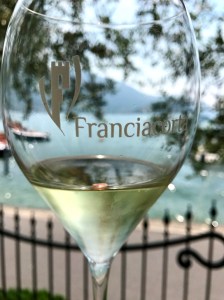
Obsession with the quality. Attention to detail. How do you drink your bubbles? The flute, you say? Where you ever able to perceive the full bouquet of your sparkling wine through that small opening on top of the flute? Well, leave the flute for Champagne, but if you want to enjoy Franciacorta, you will have to dump it (whatever way you see fit) and upgrade to something better – an official Franciacorta glass. It is specifically designed to enhance the visual and sensual qualities of your bubbles in the glass. The shape allows concentrating the aromas. And the glass is specifically made with the slight imperfections at the bottom to help form beautiful bubble traces better (perfectly polished glass doesn’t allow bubbles to form).

Obsession with quality. Attention to detail. Passion. So what makes Franciacorta unique, different and authentic? It is all of the above. Franciacorta is a unique place, with its own terroir, its own ways of making the wines, and really its own, authentic sparkling wines. Franciacorta shouldn’t be compared to Champagne, for sure not anymore, not based on the tasting of 50 or so wines during our 5 days there. Well, maybe except one thing – similar to Champagne, it should be simply called by the name. You will make all hard working Franciacorta producers very happy next time at a restaurant, when you will have a reason to celebrate (and every new day is enough reason in itself), by simply saying “Waiter, please bring Franciacorta, the best one you got!”
Travel Diaries: Few Restaurant Recommendations for Prague
 I recently shared my excitement after spending two weeks in Prague, one of the most beautiful cities on this planet – mostly in pictures. Today I want to share with you some of the dining experiences, just in case if you plan traveling to Prague in the near future.
First, let me give you a “thousand feet view” of Prague’s dining scene and Czech cuisine. Prague is a modern city, so as in any modern city, you will find a mix of different cuisines, and the range of dining style options, from the street food to the beer gardens to the bistro and then the world-class fine dining. Prague is a popular tourist destination so you have to expect to find lots of tourist traps, especially around any historical sites.
Talking about Czech cuisine, the best thing to have in Prague is pork. Pork dishes are done in a number of the ways – smoked pork cold cuts, roasted pork shank and anything in between – I spent quite a bit of time dining together with an international group, and pork dishes always were the most popular and generated the most of the “wow” references. Don’t get me wrong – of course, there is lots more to eat than just pork. The game is big in Prague – venison, ostrich, wild boar – you can easily find all of those on the menu, and all at the reasonable prices. Of course, there is chicken, and the fish dishes would also be worth your attention. If you like pickled vegetables, you might find yourself in heaven – everything I tasted was delicious, not overly vinegary and with an excellent crunch. In a number of restaurants I also saw special vegetarian sections on the menu, however, I don’t think vegetarian cooking is as widespread as it is in the USA.
One more quick note before we talk about the restaurants themselves. English menus are generally available, but not everywhere. In a few cases, we had to wait for someone to come and translate the menu for us. One way to avoid it is by using Google Translate app on your phone, where you can just point it to the text on the menu and get your immediate translation. Download extended dictionary as the basic one might not be enough.
Ahh, sorry, another quick general note. In Prague, you should drink local. The beer is excellent, not matter where and no matter which. Local wines, often made from Austrian and German varieties (Gruner Veltliner, Muller Thurgau, St. Lauren, Portugieser and more), are generally excellent and you should do yourself a favor and try them while in Prague, as many of those wines are simply not available outside of Czech Republic.
Now, let’s eat! Well, I meant let’s talk about the restaurants. Below are the restaurants which I’m happy to recommend – there were definitely a few I was not thrilled about, but I don’t see a point of bringing them up in this post.
Kampa Park
Na Kampe 8b, 118 00 Praha
Ph: +420 296826102
http://www.kampagroup.com/en/
Let me start with one of the best dining experiences of the trip. Kampa Park was the first fine dining establishment in Prague, opened in 1992. The location is superb, right under the Charles Bridge, so you get the great view of the bridge and the river – definitely hard to beat. Make no mistake – the restaurant can be expensive, pretty much on par with fine dining prices, let’s say in New York ($50+ pp lunch) – but of course, it will depend on what you will order.
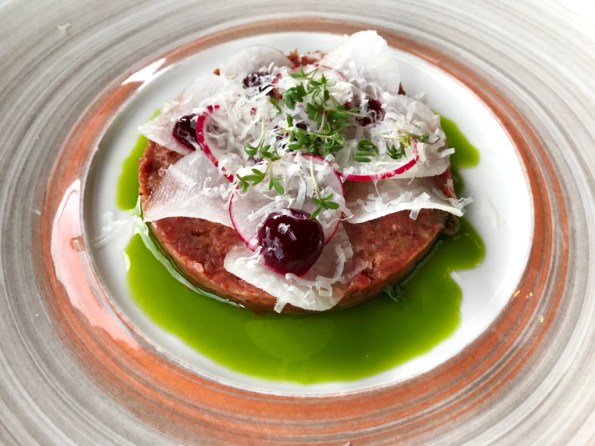
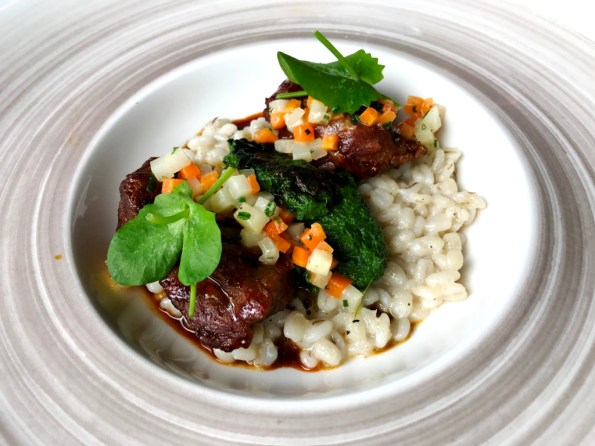
Good wine list with a good number of local wines. Food is creative European, lots of good options. We had cream of asparagus soup which was sublime, and then the pork cheek which was super tender and flavorful. The service is top class – attentive and helpful. Overall, for a great restaurant experience and the views, I can’t recommend the restaurant high enough – I think it worth the price.




Terasa U Prince
Staromestské námestí 29, 110 00 Praha-1
Ph: +420 602 462 260
https://www.terasauprince.com/terrace
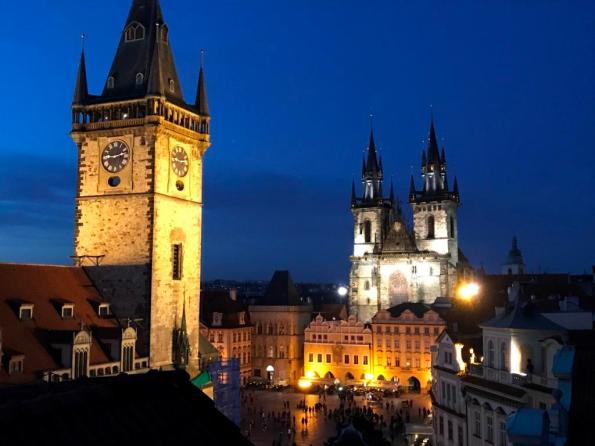
The restaurant is located on the roof of U Prince hotel. It is notoriously difficult to get in and suggested reservations are two weeks in advance. However, many people manage to talk their way in without any reservations, so you definitely should try your luck.
Most important part of the experience is the view. There is only 1 (one) beer available at the restaurant, and two different wines by the glass (and none of them were Czech), otherwise the drinks menu is extremely expensive. Food is decent, but not amazing. Creme Brulee is supposed to be very good. But again, the views are amazing, so it is worth suffering for one night.


Pivovarský Klub
Križíkova 17, Karlín, Praha 8
Ph: +420 222315777
http://www.pivovarskyklub.com
If you like beer, this place is a heaven. As you walk in, you can see the walls all covered in various types of beer. Everything on draft is excellent – I had most of what they offer and all the beers were one better than another. If you don’t want to drink Czech beer, no problems – there is a great offering of Belgium, German, UK, and others. I had 5 AM Saint by the Brewdog, something which is hard to find in the USA, and it was outstanding.
The food is mostly traditional Czech. Good soups, good pickles, cured meats, port, duck. Very reasonable prices. Good location close to the subway station. Definitely recommended.


Arrosto Ristorante
Mikuláše z Husi 1709/9, 140 00 Prague
Ph: +420 241 405 964
arrostoristorante.cz
Located in the close proximity to Vyšehrad which I highly recommend visiting as a tourist attraction – great place, located close to the subway station with the same name (Vyšehrad).
The restaurant is charming, especially the room in the back where the tables stand around the big tree. From the name of the restaurant, you would expect that the food will be an Italian, and it is to some degree, but definitely with the local flair. Good wine list with a number of local wines to select from. We had buffalo mozzarella with cherry tomatoes and then file of sole with pasta – all delicious.


The Bašta Brewery
Sousedský Pivovar Bašta
Táborská 389/49, 140 00 Prague
Ph: +420 602 295 403
ubansethu.cz/en
This is a true neighborhood restaurant for the locals, despite having the menu in English available (also in a close proximity to Vyšehrad). You sit down at the communal table, and beer starts flowing – fresh, tasty, simple, without any cherry or mango flavors. Then the bread arrives, and then whatever you will decide on. The menu is not large but offers many local specialties. Cold frankfurter sausage with pickled onions was excellent. Duck fat with crackles was just spectacular, home pate outstanding, luscious and tasty. Fresh crispy fries are a must when you drink beer, right? And then the smoked pork (pork belly and pork loin) was just an incredible dish in flavor, you could smell smoke before the dish was even landed on the table.
The whole price of feast was $25 for two – I’d say you owe it to yourself to check it out.


Of course it is impossible to fit Prague’s food scene into the one simple blog post – but I still hope my personal recommendations might be useful.
One more note before we part – I also ate at a number of “fast food” places – Chinese, Oriental, Pizza, Creperie – and pretty much everywhere the food was reasonably priced and tasty. However, yes – be aware of the tourist traps.
I hope your travels will take you to Prague and you will get to enjoy this beautiful city! Cheers!
Last Bottle Sign Up ($10 credit)




 Talk-A-Vino