Archive
An Evening With Friends – In Singapore
For years I had been following the Oz’s Travels blog, commenting from time to time on the great wine (and food) experiences described there. Over these years, we built a virtual friendship with Oz (Anthony), the author of that blog, with one recurrent theme “one day you will make it to Singapore, and then…”. As amazing as the life is, that “one day” actually happened about two months ago when my business travel finally brought me to Singapore.
Maybe you saw my very excited post about Gardens of Singapore – but the evening before I experienced all the gardens, I was able to meet, shake hands, and share a few (okay, more than a few) bottles with Oz and his friends.
Oz picked me up from the hotel with his friend Rob and we proceeded to the restaurant, where another Oz’s friend (also Rob), was already waiting for us. Then, there was food, wine, and scotch – but let’s take it all in steps.
First, the restaurant – newly open Garang Grill (a sequel to the already successful Garang Grill at another location). The restaurant allows guests to bring their own alcohol, which we took an advantage of – while restaurant provided glasses and decanters. During the course of our dinner, I had an opportunity to experience a variety of creative dishes. Skewers of sauteed foie gras were melt-in-your-mouth delicious. Luncheon meat fries (yes! talk about creative!) were superb with delicious dipping sauce. I since made the same dish at home and everyone loved it. Crab rillette, steak – everything was delicious and tasty. Here is an account of our dinner – in pictures.


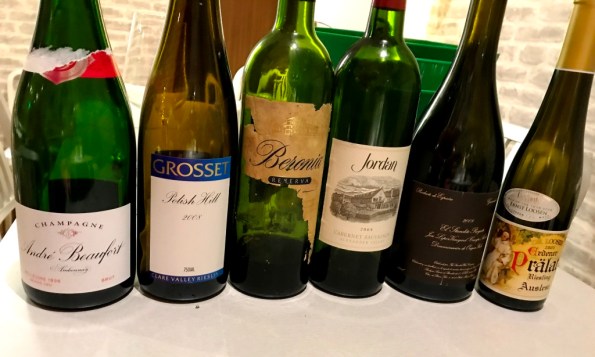
And then there was wine. What I love about Oz’s parties is the abundance of wine, and not just any wine, but nicely aged wine – and you know how much I admire the wine with a little (or not so little) age on it. Here is what went down:


1996 André Beaufort Champagne Grand Cru Ambonnay. Never had it and never heard of André Beaufort Champagne before. Meanwhile, this happens to be one of the oldest all-organic grape growers in Champagne. This 1996 was disgorged in 2014. The wine had great acidity, green apples, still perfect fizz, candied apples with a hint of cinnamon showing on the nose. Yeast showed up later. Excellent. That was a real treat.
2008 Grosset Polish Hill Riesling Clare Valley. Australian Riesling is not a simple wine. I remember trying young Australian Rieslings many years ago, and putting them into the category of “I never want to drink this again”. It takes a bit of time to understand the beauty of the wine devoid of any sweetness and instead offering in-your-face acidity and minerality. But once you turn the corner, this becomes the style you crave. This particular wine at hand was, in many ways, an encounter with the legend. You see, Clare Valley is one of the best regions for Australian Riesling. Polish Hill is one of the very best vineyards. And Jeffrey Grosset is a legendary producer, one of the best winemakers in the world. Now you add a bit of age, say, 10 years – and you almost get heaven on Earth – petrol on the nose, restrained palate, minerality through the roof, great acidity, just a pure delight in every sip.


1994 Bodegas Beronia Rioja Reserva. Behind damaged label was an excellent wine – still fresh, good fruit, good acidity, excellent. Still has time to evolve. Based on the color also still young – just starts showing age.
2005 Jordan Cabernet Sauvignon Alexander Valley. This was my contribution to our lineup. Jordan needs no introduction to the Cabernet Sauvignon wine lovers. This wine was very good, typical California Cab. The wine had an interesting amount of sweetness, more than I expected – as it showed no age, I would assume it still needs more time to evolve. I have one more bottle from the same vintage – will have to wait with that one for a bit.
2008 Standish Wine Company El Standito Proyecto Garnacha Tintorera Yecla DO. This is a Spanish wine, of course – produced by Standish Wines from Australia. Yecla is the best known for their Monastrell wines – this wine, however, was made from the grape called Garnacha Tintorera, which is also known as Alicante Bouschet, which can produce massive, dense wines. This wine was no exception – excellent, restrained, good balance, good fruit, good acidity – and still in need 0f at least another 20 years to evolve.


2005 Dr. Loosen Erdner Prälat Riesling Auslese Mosel-Saar-Ruwer. You can’t finish such an evening without a dessert wine, can’t you? 13 years old Auslese by Dr. Losen – need I say more? The wine was amazing, great balance, a touch of candied plum, great acidity, fresh, simply superb.
This was the end of our dinner, but not the end of our evening. A short taxi ride took us to the unassuming building (well, it was dark, so maybe it is not as unassuming during the day) which happened to be a Rendezvous Hotel, one of the oldest in Singapore. After taking a flight of stairs up, we entered the room where my jaw literally hit the floor. The “room” was called The Auld Alliance – the scotch and whiskey bar (primarily) with more than 1,600 (!) different whiskeys available to taste and purchase. I never saw anything like that in my life, and the selection there was simply beyond words:
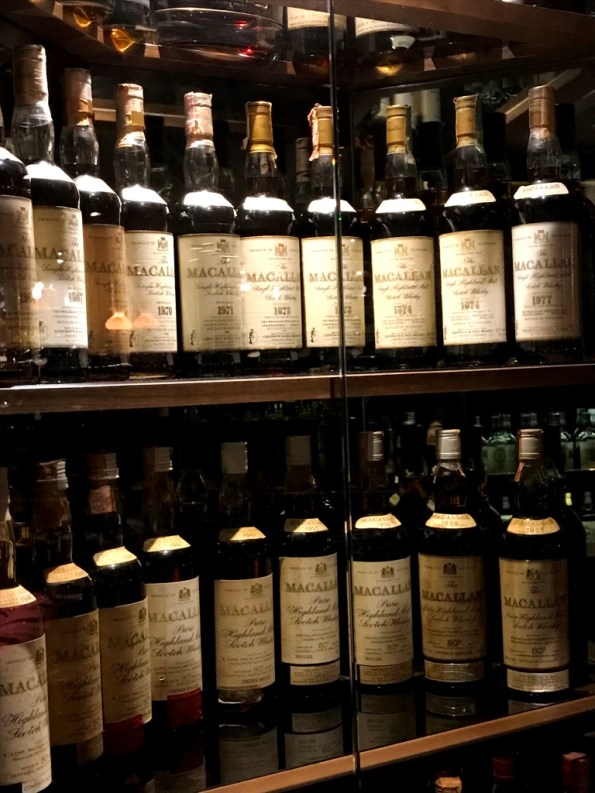


In addition to many whiskeys available by the glass, The Auld Association also offers a number of tasting flights – I had the one called “Smoke around the world” and it was definitely fun (I hope you don’t expect my tasting notes after 18 hours of non-stop travel and prior dinner with all the wines).


So this is my account of an amazing evening in Singapore. It was definitely a pleasure meeting Oz and his friends, and the whole evening was simply beyond expectations. Cheers!
Weekly Tasting with Wines Til Sold Out – The Wines
A few weeks ago I wrote about the new feature from the unimitable Wines Til Sold Out – a Weekly Tasting. Every week, there is a new set of 4 wines available for you with all the extra fun information – history, stories, pairing recommendations and more – like your personal sommelier visits the house for a fun and entertaining evening. I didn’t have a chance to taste the wines as I was living for a business trip, so I only introduced the concept – now it is time to talk about the wines.
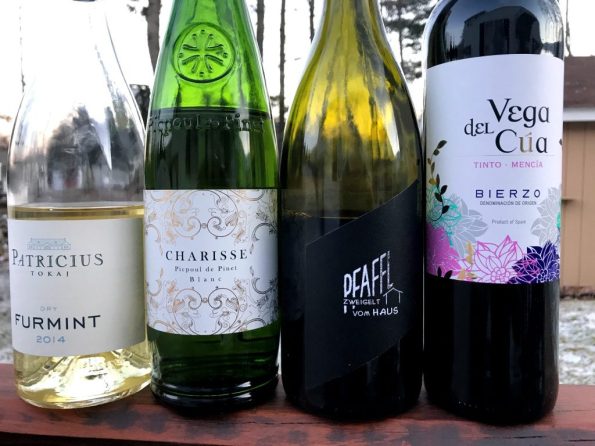 The set which I got was really right up my alley – I love all of the lesser known grapes and appellations.
White grape Furmint is a star – but only in Hungary, and mostly in the world-famous dessert wines called Tokaji. Dry Furmint is difficult to produce, as most of the plantings are very susceptible to the noble rot due to the climatic conditions.
Another white grape, Picpoul de Pinet, is only growing in France, and it is quite rare even in that same France. Zweigelt is not necessarily rare, but definitely a lesser known grape from Austria, capable of delivering superbly playful wines. And Mencía is currently in the search of an identity, which usually makes it fun to taste – you never know what you will find.
For what it worth, here are my notes:


2014 Patricius Tokaj Furmint (12% ABV)
C: light golden
N: touch of petrol and honeysuckle, guava, medium intensity
P: more petrol, lemon zest, nice green undertones, almonds, pear, excellent minerality, good acidity
V: 8, very playful with nice complexity.
2016 Charisse Picpoul de Pinet Blanc AOP (12.5% ABV)
C: straw pale, green undertones.
N: Apple, perfume, white peach, jasmine flowers.
P: restrained, touch of herbal notes, good minerality, pomelo, crisp acidity
V: 8-/8, very nice, food-friendly, will complement a wide range of dishes.


2015 Pfaffl Zweigelt vom Haus Niederösterreich Qualitätswein aus Österreich (12.5% ABV)
C: dark garnet, almost black
N: eucalyptus, blackberries, forest underbrush
P: clear black pepper backbone, more blackberries, touch of sapidity. Unusual
V: 8-, needs time to open ( was much better on the 2nd and 3rd days).
2015 Vega del Cúa Tinto Mencía Bierzo DO (13.5% ABV)
C: dark garnet
N: tobacco and barnyard, both are very pronounced.
P: sweet cherries, hint of tobacco. Very unusual profile as the fruit is initially perceived as sweet, and then it quickly subsides without acidity kicking in. Very short finish.
V: 7, not my favorite – but it might need more time…. 7+ second day, more of an 8- after 5 days (using air pump to preserve the wine). A lot more integrated after 5 days, showing nice pepper notes and much longer finish.
Here you are, my friends. Furmint was definitely a favorite, but I truly can’t complain about this set of wines – this was definitely a fun tasting. Kudos to Wines Til Sold Out for bringing up yet another great service for the wine lovers. Get your weekly tasting set today, invite your friends over, and go have some fun! Cheers!
How To Expand Your Wine Horizon – With Wine Til Sold Out Weekly Tasting
 If you followed this blog for a while, you know that Wines Til Sold Out is one of my most favorite sources of the great wines at the value prices. Wines Til Sold Out (often referred to as WTSO), was the originator of so-called wine flash sale sites, where you can find an excellent range of wines at equally great prices. Not only the prices are great, but the wines are typically shipped free if you hit the minimum required number of bottles for the free shipping (usually any number from 4 to 1, depending on the price per bottle). There are also other ways to buy wines from Wines Til Sold Out, such as so-called marathon events, which I covered a numerous number of times in the past.
About a year ago, Wines Til Sold Out started a new service, called Bonus Offers, where every month there is a new theme, and the wines are offered according to that theme – and there are no minimum quantity requirements to get free shipping, which takes fun to the whole new level.

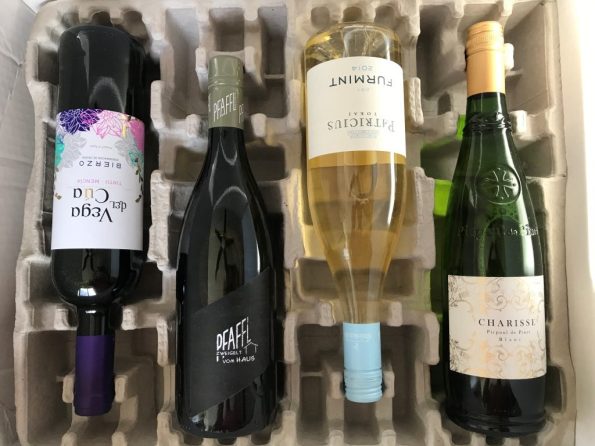
And now, continuing the tradition of innovation for the benefit of the wine lovers, the Wines Til Sold Out came up with the new concept – weekly tasting, which even has its own dedicated website. Each week, WTSO’s sommeliers create a new 4-pack of wines, priced at $69.99 including shipping. The wines are offered with introductory tasting video describing the wines, and information cards which describe each wine in detail, offer fun facts about wine and the grapes and even recipes and/or suggestions for the dishes to pair with the specific wine. If this is not a fun wine education, I don’t know what is!
I got my tasting pack right before I was leaving for a two-week-long trip, so I only had an opportunity to open the box, say “wow”, take the pictures and leave. But finding such gems as dry Furmint (Hungarian grape used in the production of famous Tokaji dessert wine) and Austrian Zweigelt, definitely makes an oenophile happy. So next time, I will tell what I think about the wines, but for now, I will enjoy them in the exact same way as you do – vicariously.


If you are like me and always looking to expand your wine horizon – check out this new feature from Wines Til Sold Out – and you can thank me later. Cheers!
Usual Grapes, Unusual Places – The Oenophile Games
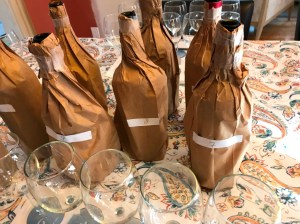 I love blind tastings. I’m talking about totally non-intimidating blind tasting, done in the relaxed atmosphere, where the goal is only to have fun – in other words, not when it is part of the test. The blind tasting as part of the test is really not fun – as Kirsten the Armchair Sommelier eloquently put it in a tweet “Nothing intimidates quite like a brown paper bag!!” – as a WSET diploma candidate, I’m sure she knows what she is talking about first hand.
So I’m talking about fun blind tasting here. Blind tasting removes all sources of bias, as only minimal information is available about the wine you are about to taste, depending on the theme of the tasting, and you can’t be influenced by the pretty label, by the big name or by the well-known place (ahh, this is the wine from Napa, it is definitely better than this one from New Jersey, right?). You are one on one with the liquid in the wine glass, and your only goal is to decide whether you like the wine or not and whether you like it more than the one you had before, or if you still like it more than the one which you had after. Of course, you can make things a lot more interesting by trying to guess the grape, the origin, the vintage and whatever else you would desire, but the beauty of the informal blind tasting is that you free to do as much or as little as you want.
The best accompaniments for the wine are good food and a good company. We started wine dinners with the blind tastings with friends more than 7 years ago. Our first blind tasting was about Pinot Noir, then we had one about Sparkling wines (the thought of this one still gives me shivers as it was utterly confusing), also Chardonnay, Mourvedre, Barolo and many, many others. We decide on the theme, set the rules (how many bottles, price limits or not, what wines can be considered, what wines will not fit and so on). The bottles are put in the brown bags, the numbers are randomly assigned to the bags, the wines are poured and off we go. We usually try to figure out group’s favorite, which sometimes easy, and sometimes it is not. The results are always most unexpected, and everybody gets a chance to say “I can’t believe it”.


The theme for this tasting was “usual grapes, unusual places“. Today, the mainstream grapes are totally international. Cabernet Sauvignon wines are produced in Bordeaux, in Napa Valley, in New York, in Argentina, Virginia, South Africa, Chile, Italy, Czech Republic and other hundreds of places. Same is true about Chardonnay, Merlot, Pinot Noir and Grenache – and even Tempranillo and Sangiovese are not an exception. Now the question is – can we still recognize Cabernet Sauvignon from Uruguay as Cabernet Sauvignon or Pinot Noir from the Czech Republic as Pinot Noir?
To play the game, the group of 10 wines was assembled. I couldn’t make up my mind on what to bring literally until the day before the tasting – kept changing my preferences. Nevertheless, we got together, the table was set and the wines were poured. As everybody was set on bringing the red wines, I decided to make things more interesting and brought two of the white wines to start the tasting with. Here are my notes and guesses on the 10 wines we tasted (obviously I knew what I’m tasting in the first two whites):
Wine 1 – beautiful nose, honeysuckle, tropical fruit, restrained palate, green, touch of pepper, contrast with the nose, interesting
Wine 2 – beautiful nose, plump, velvety, beautifully soft, silky smooth, outstanding, vanilla, delicious.
Wine 3 – typical Bordeaux blend on the nose. Tremendous salinity on the palate. Then acidity. Bordeaux blend from NJ. After 30 minutes – Barbera?
Wine 4 – Grenache nose, smoke and tobacco on the palate. My guess is Rhone varietal, but most likely Grenache
Wine 5 – Rutherford dust on the nose, touch of black currant, chipotle on the palate, herbal, unusual, very nice. Bordeaux varietal. Going for Carmenere.
Wine 6 – beautiful nose, Bordeaux-style, lots of smoke on the nose. Somewhat sweet on the palate. Core Bordeaux? or Syrah blend? Cab Franc dominant blend.
Wine 7 – smoke, dark fruit, beautiful tannins, cherries, beautiful. Bordeaux blend? Somewhat of extreme tannins.
Wine 8 – muted nose, mint, anise, Rutherford dust. Good acidity, soft, round. Bordeaux varietal?
Wine 9 – fresh, open, clean vanilla, dark fruit, excellent. Bordeaux varietal?
Wine 10 – beautiful nose, but a bit astringent. Interesting. Bordeaux varietal?
Before the wines can be revealed, we had to figure out group’s favorite. Everybody was allowed to vote for one of the two white wines, and then two votes for the favorites among 8 reds. Here are our votes (out of 8 people):
Wine 1 – 4
Wine 2 – 4
Wine 3 – 2
Wine 4 – 0
Wine 5 – 0
Wine 6 – 6
Wine 7 – 5
Wine 8 – 2
Wine 9 – 0
Wine 10 – 1
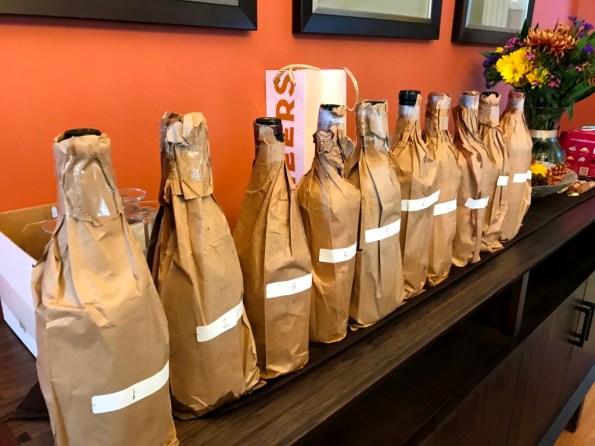

As you can tell, both whites fared equally well with the group clearly splitting the decision. Also for the reds, there was a clear winner and a clear runner-up, with the rest of the wines not faring that well – wine number 6 was preferred by the most, and wine number 7 was the second favorite. Now, the most anticipated part of the blind tasting – the reveal:
Wine 1: 2016 Onward Petillant Naturel Malvasia Blanca Suisun Valley, CA (12.6% ABV)
Wine 2: 2007 Krupp Brothers Black Bart Marsanne Stagecoach Vineyard Napa Valley (14% ABV)
Wine 3: 2004 Bodegas Carrau Vilasar Nebbiolo Uruguay (13.5% ABV, 100% Nebbiolo)
Wine 4: 2014 Chateau Famaey Malbec Cahors AOC (12.5% ABV, 100% Malbec)
Wine 5: Changyu Cabernet Sauvignon China (Cabernet Sauvignon?)
Wine 6: 2012 Caduceus La Corgtigiane Oneste New Mexico (13.5% ABV, 50% Barbera, 50% Merlot)
Wine 7: 2014 McManis Barbera Jamie Lynn Vineyard California (13.5% ABV, 100% Barbera)
Wine 8: 2015 Cantele Primitivo Salento IGT (13.5% ABV, 100% Primitivo)
Wine 9: 2014 Macedon Pinot Noir Macedonia (13.5% ABV, 100% Pinot Noir)
Wine 10: 2014 Agnus Merlot Serra Gaúcha Brazil (14% ABV, 100% Merlot)
Let’s look at these results. First, let me talk about the wines I contributed for the tasting. For the whites, they were both excellent – I got this Onward Petillant Naturel Malvasia Blanca from Jeff The Drunken Cyclist as part of our Secret Santa fun, and the wine was delicious. The second white, Krupp Brothers Marsanne was a rare closeout score a few years back. Sadly, it was my last bottle, but the wine needs to be drunk, so I’m glad I had it in a good company – I consider that to be one of the best California white wines, for sure for my palate. Now, the red which I brought was another story – it was the Changyu from China, for which I terrorized my Chinese-speaking friend trying to ensure that it was Cabernet Sauvignon and trying to figure out the vintage or ABV (fail). Well, the worst part was that many people not just disliked it, they literally hated it – and I had other reds from Changyu while in China with much higher success. Oh well.
The winning wine Caduceus La Corgtigiane Oneste was made out of the New Mexico grapes by the winery located in Arizona, with one of the grapes being Barbera – talk about rare and unusual. McManis Barbera, second favorite, was also quite unexpected – but looking at my notes and having tasted few of the California Barbera wines, I made a wrong guess with somewhat right descriptors. As you can tell, almost everything tasted to me like a Bordeaux blend – clearly, I don’t do well in the blind tastings, but one way or the other, this was lots of fun! And just think of the range of wines we tasted – Malvasia Blanca, Marsanne and Barbera from California, Nebbiolo from Uruguay, Merlot from Brazil, Pinot Noir from Macedonia, Cabernet Sauvignon from China, Merlot and Barbera from New Mexico – wow. The Malbec and Primitivo didn’t really belong on one side – but then on another side they kind of fit the bill too as Malbec from France is literally unknown to the wine consumers, and Primitivo is pretty much in the same boat, for sure in the USA. All in all, we clearly accomplished our goal of tasting usual grapes from unusual places.
Then, of course, there was food – lots and lots of delicious food, which everybody contributed to – I will just give you a quick overview in pictures, and that really only a fraction of what we had (at some point you get tired of constantly taking pictures of food…


We also drunk more wine, and this one was a standout. An unassuming California blend from Marietta in Sonoma – NV Marietta California Old Vine Red Lot Number Twenty. This is non-vintage, field blend of Zinfandel, Petite Sirah, Carignane, and Gamay, now, wait for it … which should be about 40 years old??? Current wine is called Lot Number 66, so if this was the Lot number 20, then we are simply making an assumption here… The wine was delicious – yes, it was mature, so showed the layer of delicious dried fruit and ripe plums – but it still had a perfect amount of acidity for everyone to say “wow”. I plan to write to the winery, so hopefully will be able to figure out the age of this wine, but this was clearly another amazing example of California wines which can age – and patience well rewarded.


Great fun and great learning experience, hands down. For anyone who is into the wine, the blind tasting is an endless source of enjoyment. If you love wine and never participated in the blind tasting, you really should fix it – get your friends together and have fun! If you need any “logistical support”, please reach out – will be very happy to help.
Ahh, and by the way, there is something even more intimidating than a paper bag – a black glass. But then your friends may start hating you, so tread gently. Have fun, my friends. Cheers!
Discover Wines of South Africa
 Let me start with a question: when was the last time you had South African wine? You can take a few minutes to ponder at it – but I would bet that if you are a wine consumer in the USA, there is a very good chance that the answer will be “hmmm, never”. But if “never” or “many years ago” is your answer, we need to change that.
The winemaking history in South Africa goes back to the 17th century, when immigrants from Europe brought the vine cuttings with them, as they’ve done in all other places. South African wine story somewhat resembles most of the Europe, as it also includes the phylloxera epidemic and replanting of the vineyards. Unfortunately for South African winemakers and the rest of us, the wine story of South Africa also had heavy political influence, with apartheid, KWV monopoly, and resulting boycott from most of the countries for the majority of the 20th century (here is an article on Wikipedia if you want to learn more). The new chapter for South African wines opened up in the 1990s, with the end of apartheid and subsequent changes in all areas of life, winemaking included.
In the past, South Africa was best known for its Chenin Blanc wines, which was also called Steen. Another grape South Africa was famous for was Pinotage – dinking of the Pinotage wines was likened by some wine critics to the drinking of the “liquified rusty nails”. On much brighter note, while talking about the past, I want to mention Klein Constantia Vin de Constance – the nectar of gods (don’t take my word for it – find it and try it), made from Muscat de Frontignan grapes and favorite wine of the French emperor Napoleon Bonaparte, who was buying it by the barrel (legend has it that it was Napoleon’s deathbed wish wine).
Today South Africa offers lots more than a typical wine consumer would expect. The South African wines are often described as “old world wines masquerading as new world wines”, and this is perfectly showing in the wide range of the wines. You really need to try for yourself South African Chardonnay, Sauvignon Blanc, Pinot Noir, Cabernet Sauvignon, Merlot, Shiraz, and don’t skip the Chenin Blanc, especially if it is an FMC by Ken Forrester. You shouldn’t skip even Pinotage, as it dramatically evolved compared to the old days. The old world winemaking foundation really shows through many of the South African wines today, and they are always ready to surprise a curious wine drinker.
Case in point – our recent virtual tasting on Snooth. We had an opportunity to taste 6 white wines, well representing South African grapes, styles and regions. The tasting included 3 out of the 4 most popular white grapes in South Africa (Chenin Blanc, Chardonnay, and Sauvignon Blanc) – the second most planted grape, Colombard, is used primarily in the brandy production. Another interesting fact for you – until 1981, there was no Chardonnay planted in South Africa, which makes it all more impressive (read my notes below). Two of the Chardonnays and Sauvignon Blanc from the tasting were simply stunning, and the rest of the wines were perfectly suitable for the everyday drinking. What is even better is that you don’t need to rely on my notes if you want to discover what South Africa is capable of – Snooth offers that exact set of 6 wines for purchase, at a very reasonable price of $79.99 for the whole set.
Here are my notes from the tasting:


2016 Glenelly Glass Collection Unoaked Chardonnay WO Stellenbosch (13.5% ABV, $20, 100% Chardonnay)
C: straw pale
N: Beautiful, vanilla, touch of guava, fresh, medium+
P: good acidity, granny smith apple, crisp, maybe a bit too restrained now, lemony acidity on the finish
V: 8, excellent now, but I definitely want to see it evolve.
2016 De Wetshof Estate Limestone Hill Chardonnay WO Robertson (14% ABV, $16, 100% Chardonnay)
C: light golden
N: complex, vanilla, popcorn, medium intensity. Nose clears up as the wine breathes. Golden delicious and honeysuckle appeared. Delicious nose.
P: quite restrained, touch of Granny Smith apples as opposed to the golden delicious. Perfect acidity, vanilla, fresh.
V: 8, will evolve. Definitely an interesting wine.
2016 Badenhorst Family Wines Secateurs Chenin Blanc Swartland WO Steen (12.5% ABV, $15, Chenin Blanc with a sprinkling of Palomino and another secret grape)
C: straw pale
N: interesting, yeast, touch of white stone fruit
P: crisp, restrained, mostly lemony, acidic notes
V: 7, too simple and single-dimensional


2016 Raats Original Chenin Blanc Unwooded WO Stellenbosch (12.5% ABV, $16, 100% Chenin Blanc)
C: straw pale+
N: inviting, medium plus, minerality, hint of peach
P: clean acidity, interesting touch of pear and white plum with acidic finish
V: 7+, interesting wine, by itself and with food.
2014 Thelema Sutherland Sauvignon Blanc WO Elgin (13% ABV, $20)
C: light golden
N: lots of minerality, touch of gunflint, touch of grass (distant hint), white stone fruit as the wine is opening up – doesn’t resemble SB at all
P: crisp, clean, lemon acidity, very restrained, mineral-driven, limestone. Almost astringent. Needs food.
V: rated it first 7+/8-, noting “will be interesting to see how the wine will open up”. More playful after 30 min in the open bottle. Interesting. After two days, this clearly became 8/8+ wine
2016 The Wolftrap White WO Western Cape (13.5% ABV, $12, Viognier 42%; Chenin Blanc 37%; Grenache Blanc 21%)
C: light golden
N: lemony notes, grass
P: a little too simplistic, mostly lemony notes. Drinkable, not great
V: 7, too simple, might work better with food
South African wines are definitely here, at the world-class level. If you pride yourself as a wine lover, they are all ready for your undivided attention.
Sauternes – Sweet, Versatile, Delicious, And Perfect for Every Day
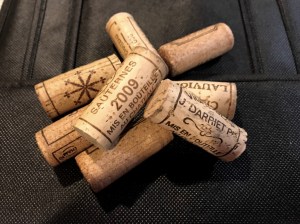 Today we are going to talk about sweet and delicious wines, but I feel compelled to start with a little rant.
What is wrong with you, people?
No, I’m not trying to better humankind with this pathetic opening, but nevertheless, I would like to repeat my question – what is wrong with you, people, when you proudly state “hmm, you said sweet? I don’t drink sweet wines!!” (add proud grin and posture to this statement). Sweet or dry, when it comes to wine, there is only one quality worth inquiring about – balance. “Is this wine balanced?” is a perfect question to ask, but sweet, dry, semi-sweet, semi-dry – those are all relative characteristics which often mean different things to different people.
Deep inside, we like sweet. We don’t always admit it as our well established societal shaming machine works perfectly, it creates an absolute truth like “sweet = bad”. Sweet is one of the easiest flavors to recognize, and we usually start our acquaintance with taste with sweet, later discovering sour, salty and bitter. Growing up, we learn that “sugar is bad for you” – which is true for anything taken out of moderation – and then we subconsciously extend “sugar = bad” rule to the most of the things we do, or rather, eat.
Now, I’m asking you to put these extreme views of sweet aside, at least for the next few minutes you will spend reading this post. I know, you can do it for me. Let’s go, let’s talk about it – yes, sweet wines.

Historically, sweet wines had been around for as long as humans known to make wine. Sweet wines are typically easier for our palate to fall in love with, but keep that love going strong might be a challenge, as people change their taste quite often. Today, sweet wines are made everywhere – but in most of the cases, sweet wines are an addition to the winery’s repertoire, to all those white, Rosé and red which winery is generally producing – and not The Wine. Except in few places, it really is The Wine. One such place is located in the world’s capital of red wines – Bordeaux, and yes, it is called Sauternes.
Sauternes region is located about 40 miles south of the city of Bordeaux, and predominantly produces sweet wines (there are some notable exceptions like d’Yquem Y, which is a dry wine, but those are truly the exceptions). History of Sauternes goes back to the beginning of 17th century, but it is hard to tell what led to the appearance of the Sauternes wines as we know them.
You see, Sauternes wines are made with some special assistance from mother nature. This appearance comes in somewhat of a strange form – a fungus. The climate conditions in Sauternes are favorable for the specific form of mildew to set on the grapes, so the grapes essentially rot on the vine. It is manifested with the grapes starting to shrivel while they are still hanging in the cluster – however, outside of visually unappealing sight (for the rest of us, not for the vintners in Sauternes), that also leads to the shriveled grapes greatly increasing concentration of the sugar, which perfectly lends itself to creating some of the very best sweet wines in the world – yes, the Sauternes.
The fungus, which has a scientific name of Botrytis cinerea, is also called a Noble Rot, just to stress that unlike any other rot, which is generally bad, the Noble Rot is good and useful, and thus has such a distinguished name. The legend has it that monks who were the first to produce sweet Sauternes, were keeping information about the rot outside of the public knowledge, as whether you will call it Noble or not, it is not easy to explain to people that wine is delicious because the grapes had time to rot before been made into the wine.
Production of Sauternes is labor intense, even today. Not only all the grapes are harvested by hand – they also harvested multiple times. The workers can only pick individual grapes from the vine, those which are ready (read: rotted shriveled enough). Then they have to come back again to pick the new “ready” grapes – and this can repeat 6-7 times. So yes, talk about labor intense process.
All this pain with the harvest is well worth it, as it translates into the delicious wines. What is very interesting about Sauternes, which is typically well underappreciated, is that Sauternes are amazingly versatile when it comes to food. You can pair the whole dinner with Sauternes, but while this might be a bit challenging, they definitely beat most of the wines, maybe with the exception of Champagne/Sparkling, as a perfect accompaniment to any appetizers and cheese course. The Foie Gras and Sauternes is a classic combination, but it pairs spot on with any salumi, prosciutto, Jamon or any other cured meat. Salty, spicy, sour, bitter – bring it on, all the flavor profiles will find their match with Sauternes.


A few weeks ago we had an opportunity to deep dive into the world of Sauternes with the virtual tasting run on Snooth – if you are interested in following the conversation, you can check out this post on Snooth. To prepare for the discussion, I had a pre-gaming session, pairing our selection of Sauternes with cheeses and Foie Gras, as you can see in the pictures above. I have to honestly say that I liked some wines better than the others, which you will see in the notes – but when it comes to complementing the food, they all performed really well.
There are plenty of sources for you to learn the particular details about the Sauternes wines and the region so I will spare you from my regurgitating of the known facts. Just as a quick reference, I can tell you that Sauternes wines predominantly made from Sémillon grapes, with Sauvignon Blanc and Muscadelle playing the supporting roles. Our tasting included wines from 2009, 2014 and 2015 vintages, which are all considered excellent.
Without further ado, here are my notes:


2015 Château Manos Cadillac AOC (14% ABV, $12.99, 98% Semillon, 2% Muscadelle, 50% of wine aged in barrels for 6 months)
C: golden
N: apricots, herbs
P: nice sweetness, apricots, touch of peach
V: 7+
2015 Château Haut Charmes Sauternes AOC (14% ABV, $20, 80% Semillon, 20% Sauvignon Blanc, aged in barrels)
C: light golden
N: touch of petrol, apricot, honeysuckle,
P: white fruit, honey, good acidity, appears light
V: 7+
2014 Château Lauvignac Sauternes AOC (% ABV, $18.99/375 ml, 85% Sémillon, 10% Muscadelle, 5% Sauvignon)
C: straw pale
N: Classic bortrized fruit, touch of honeysuckle
P: clean acidity, orange, bitter orange on the finish
V: 7
2014 Château La Rame Sainte Croix du Mont AOC (13.2% ABV, $20, 100% Sémillon, 50 yo vines, 30% aged in oak batrrels)
C: golden
N: rich, opulent, honey, bortrized notes, very inviting, touch of petrol
P: beautiful, round, honey, apricot, peach, intense, perfect acidity
V: 8, best of tasting


2014 Château du Cros Loupiac AOC (14% ABV, $15, 90% Sémillon, 5% Sauvignon, 5% Muscadelle, 12 months in barrique)
C: golden
N: intense honey
P: mostly honey, needs more acidity
V: 7
2014 Château Lapinesse Sauternes AOC (% ABV, $39.99, 100% Sémillon, 12 months in stainless steel)
C: light golden
N: dry, white stone fruit
P: sweet, mostly single note
V: 7
2009 Château FILHOT Sauternes AOC (13.5% ABV, $40, aged for 22 months including 12 months in oak barrels)
C: very light golden
N: honeysuckle, delicious, very promising
P: honey, candied orange, nice, touch more of acidity would be nice
V: 7+
2009 Château Dauphiné Rondillon Loupiac AOC (% ABV, $28, 70% Semillon, 30% Sauvignon Blanc)
C: light golden
N: muted, touch of honeysuckle
P: touch of candied orange, good acidity, but overall is just ok
V: 7
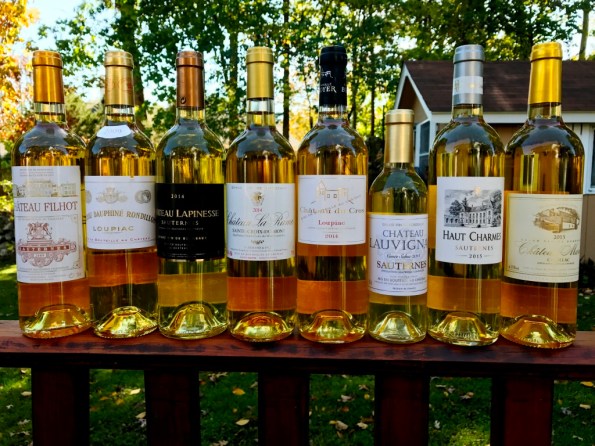
The holiday season is upon us. While I’m not asking you to pair your Thanksgiving turkey with the Sauternes (albeit it might work very well – and I will actually try it), I definitely suggest you will give Sauternes a chance to brighten up your friends and family get together – that “wine and cheese” fun is generally overrated and underestimated at the same time, as majority of the wines don’t pair that easily with the cheese – but try it with Sauternes, and you might discover a new love in your life. Cheers!
WBC17: Speed Tasting, Reds
As with any typical wine dinner, you start with the white and continue with the red, right? Well, right or wrong, but this is what we did at the Wine Bloggers Conference 2017. White and Rosé speed tasting was followed by the Reds speed tasting the next day.
Instead of standard 10 wines, we managed to squeeze in 11 – of course, because Table #5 was the most awesome table in the entire room!
Here is what we tasted:
Wine #1: 2013 Acumen Cabernet Sauvignon Napa Valley (14.1% ABV, $60) – have to say that nose was better than the palate. Too young.
Wine #2: 2010 Rodney Strong Vineyards Upshot Sonoma County (14.5% ABV, $28) – not only this wine has a super-creative label, it also has 5% of the Riesling in the final blend – how about that for creativity? Very tasty wine.


Wine #3: 2015 Pedroncelli Mother Clone Zinfandel Dry Creek Valley Sonoma County (14.9% ABV, $19)
Wine #4: 2015 Pedroncelli Bushnell Vineyard Zinfandel Dry Creek Valley Sonoma County (15.2% ABV, $30) – this was our bonus wine. I liked it way more than the previous Zinfandel…
Wine #5: 2014 Papapietro Perry Peters Vineyard Pinot Noir Russian River Valley (13.8% ABV, $58) – excellent.
Wine #6: 2015 Naked Winery Oh! Orgasmic Sangiovese Columbia Valley (14.4% ABV, $70)
Wine #7: 2014 NakedWines.com Domaine O’Vineyards Trah Lah Lah Cite de Carcassonne IGP (13% ABV, $11) – nicely restrained. Least expensive in the tasting.
Wine #8: 2015 1000 Stories Zinfandel Bourbon Barrel Aged (15% ABV, $19)
Wine #9: 2015 Paradise Ridge Walter’s Vineyard Pinot Noir Russain River Valley (13.8% ABV, $54) – needs time
Wine #10: 2015 Gracianna Pinot Noir Reserve Russian River Valley (14.8% ABV, $72) – love the label, but the wine needs time.
Wine #11: 2015 Stone Hill Winery Norton Missouri (13.8% ABV, $25) – easily might be my favorite wine from the reds speed tasting. Was also very happy to try a wine from the state I never had the wines from before.


This completes the second WBC17 speed tasting report. More updates to follow. Cheers!
WBC17: Speed Tasting, White and Rosé
Here we go again – living through the madness of the Wine Bloggers Conference – this is where wine geeks get together, taste incredible amounts of wine (thank you, liver, I hope you can forgive me again), talk about the wine all day (and good portion of the night) long, but above all, share their common passion – the wine.
This is my third conference, and speed tasting is definitely one of my favorite exercises. During an hour-long session, wineries from all over the world line up to present their wines to the bloggers. Each winery gets 5 minutes to present their wine – which includes pouring, talking and answering questions. Bloggers sit in groups of 10 at the tables and each group gets the same 5 minutes to taste the wine, ask questions, take pictures, and share the wines on the social media. Yes, it is very intense.
This is definitely a fun session (fun is not universal here – I know a number of very well respected bloggers who refuse to participate in the speed tasting) – however, it should be well understood that this is really “shoot from the hip” type of tasting – 5 minutes is absolutely not enough to truly understand the wine, and you get the wine in whatever state it is (you can’t let it open in the glass, nope). However, this is how the wines are evaluated at any large trade tasting, sans the social media sharing, so this is all about your first reaction – that’s what is going into your quick notes.
Our session at WBC17 included wines mostly from California, with the addition of some international wines. While the session was called “white and Rosé”, we didn’t get to taste any Rosé – but keep in mind that we only were able to taste 10 out of more than 25 wines. I shared all of my impressions and pictures on twitter – however while working on this post I realized that I forgot to include 2 pictures, and all of my tweets went out as replies. Yeah, live and learn.
Nevertheless, here is the blog report of the same, with the addition of missing pictures:
Wine #1: 2016 Ledson Winery Viognier Sonoma Coast (13.5% ABV, $32) – I always approach Viognier with trepidation – this is one of the grapes which are easy to screw up. To my delight, this was very well done wine – nose, palate – very enjoyable. Reasonable value at $32.
Wine #2: Naked Wines Naked Cowboy Sauvignon Blanc (13% ABV, $32) – the wine states appellation America on the front label, however, all the grapes come from the vineyards in Washington. This is a good wine – I’m not sold on QPR, though…
Wine #3: 2015 Matthiasson Winery White Blend Napa Valley (12.9% ABV, $40) – a blend of 4 grapes, mostly Italian varietals.
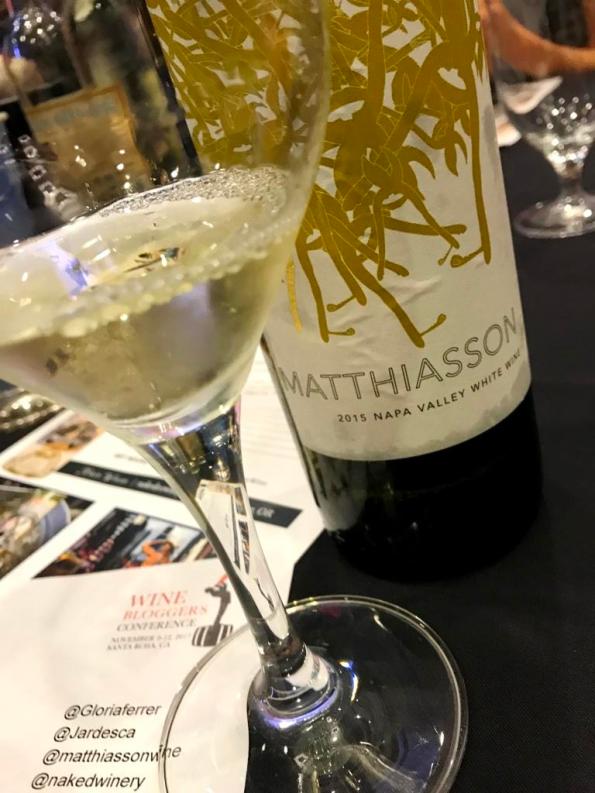
Wine #4: Jardesca White Aperitiva California (17% ABV, $30) – this is fortified wine with the addition of fruit – just add ice, and you can start entertaining. Love the label.
Wine #5: 2010 Gloria Ferrer Anniversary Cuvée Carneros (12.5% ABV, $40) – love Gloria Ferrer wines. This was big and voluptuous sparkler, slightly bigger than a typical Brut.
Wine #6: 2016 Selva Capuzzo Turbiana Lugana ($18) – not bad, and the least expensive wine in the tasting.
Wine #7: 2015 Mt. Beautiful Chardonnay New Zealand (14.5% ABV, $22) – this was a very good rendition of Chardonnay and an excellent price for the New Zealand Chardonnay overall.
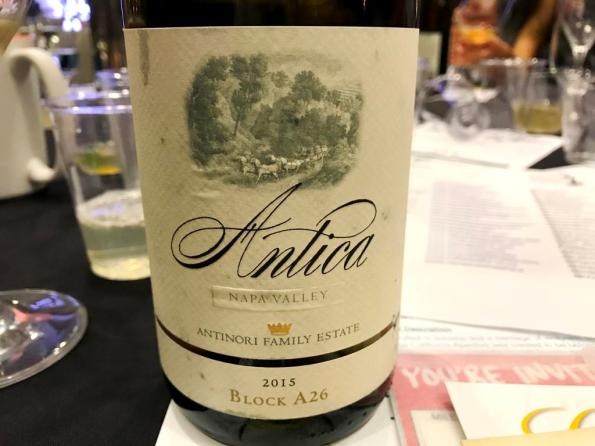
Wine #8: 2015 Antinori Estates Antica Chardonnay Napa Valley (14.5% ABV, $55) – interesting wine. QPR didn’t work for me…
Wine #9: 2016 Hanna Winery Sauvignon Blanc Russian River Valley (13.2% ABV, $19) – Hanna is one of my favorite producers, and this Sauvignon Blanc was delicious. Was super-excited to find a classic cat pee on the nose…
Wine #10: 2014 Leto Cellars Chardonnay Napa Valley (14% ABV, $30) – this wine was an enigma. We tasted multiple bottles and still couldn’t figure it out. Oh well, this was the last one anyway.
This completes my first WBC17 speed tasting report. Red wines will be next! Cheers!
Spain’s Great Match – Rare Grapes, Delicious Wines, Great Values
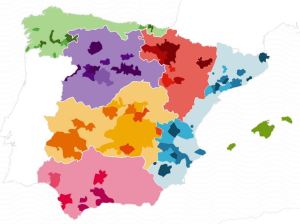
Source: Wines from Spain USA
I discovered the real greatness of the Spanish wines about 10 years ago, thanks to the wonderful seminar at maybe the best source of the Spanish wines in New York – the PJ Wine store. I had an occasional Rioja here and there before, but tasting through the full line of best of the best in Rioja, starting from the legendary 1964 vintage, was a true eye opener, and ever since, Spanish wines hold a special place in my winelover’s heart. If I need an ultimate solace in the wine glass, yes, 9 out of 10, it will be a Rioja.
Spain has the biggest vineyard area plantings in the world, so no matter how great Rioja is, Spain is so much more than just the Rioja. As I became a big fan of the Spanish wines (search this blog under the “Spanish wine” category), it became truly fascinating to follow all the changes and see the appearance of the totally new regions and reincarnation of the ancient, authentic grapes – Spain is home to about 400 grape varieties, out of which only about 20 can be considered “mainstream”.
What is the better way to learn about new wines if not the [big] wine tasting? Thanks to the Wines from Spain USA, the 24th annual “Spain’s Great Match – Wine, Food, Design” event offered exactly that – a big wine tasting (more than 300 wines), educational wine seminars and authentic Spanish food.
I had a pleasure of attending these events for the last few years, including the special 30th Anniversary of Spanish wines in the USA, where the incredible tasting in the main seminar included once-in-a-lifetime wines such as 2005 Clos Erasmus from Priorat, a Robert Parker 100-points rated wine. Every year’s event offered unique and different educational opportunities as well as the tasting of the latest and greatest wine releases from all major Spanish regions.
The first seminar offered during this year’s event was focused on the Spain’s rare grapes. Ask a winelover to come up with the list of the commonly used Spanish grapes – I’m sure that going beyond Tempranillo, Garnacha (Grenache) and Albariño will be challenging. Some of the adventurous wine geeks might add Graciano, Viura, and Verdejo. Meanwhile, remember – 400 varieties – versus 6 which we just mentioned. Spanish winemakers definitely got some options.
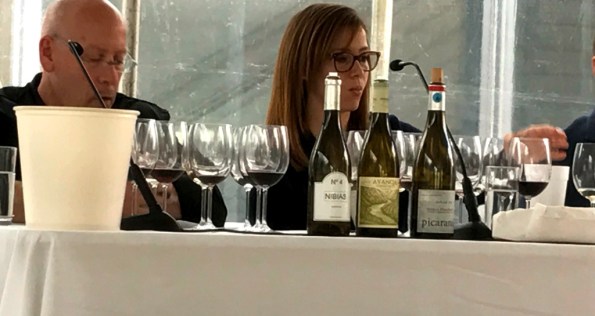
So the first seminar, led by Doug Frost, one of the only 4 people in the world who are both Master Sommelier and Master of Wine, Gretchen Thomson, Wine Director for Barteca Restaurant Group, overseeing the largest in the country portfolio of Spanish wines, and Michael Schachner, Spanish and South American Editor for Wine Enthusiast Magazine, addressed exactly this issue. We had an opportunity to taste and discuss 10 wines made from the little known Spanish grapes.
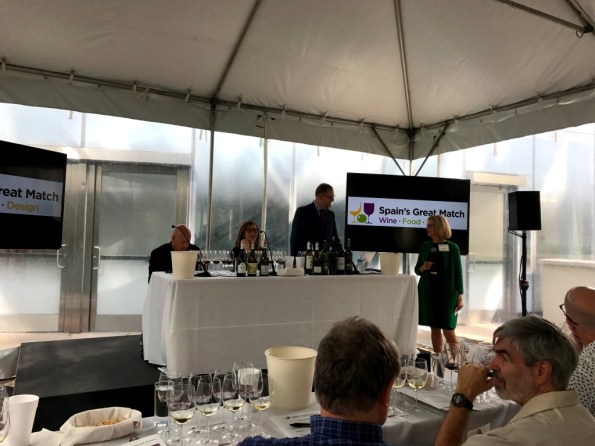
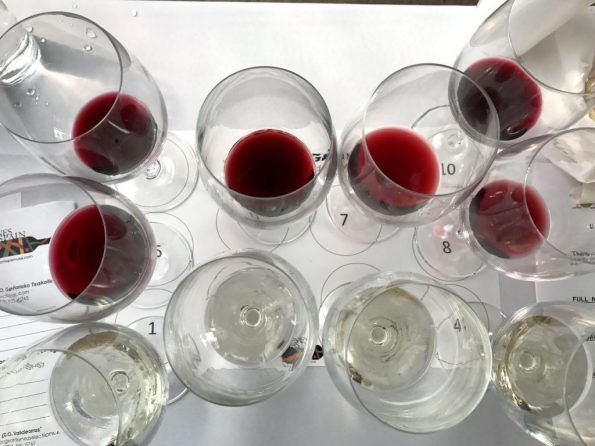
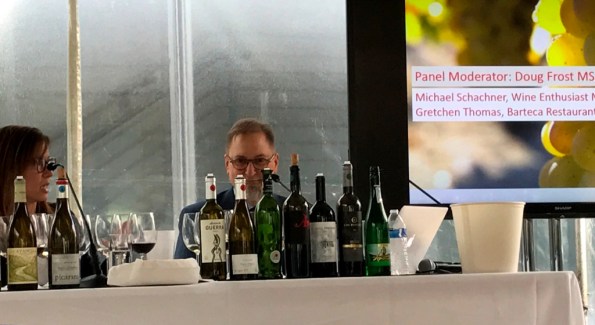
 As some of you might know, I’m a grape geek myself. The little box in the upper section of the Talk-a-Vino web page shows a counter for the number of grapes I had an opportunity to taste, so from the 10 grapes we tasted, I found only one I didn’t have before. The wines were interesting, however, I would not necessarily agree with the choice of wines to showcase particular grapes – but I wouldn’t stand a chance against such a distinguished panel of experts, so you can dismiss this statement. 🙂
Anyway, for what it worth, below are my tasting notes. Don’t have any good pictures for you, as I had no opportunity to take pictures of these wines in between the different events. Here we go:
2016 Ameztoi Txakolina D.O. Getariako Txakolina (Grape – Hondarrabi Zuri)
Beautiful nose, fresh, lemon notes, herbs, inviting. Crisp, cut through acidity, touch of fizz, would perfectly match oysters, seafood, most reminiscent of Mucadet.
2014 Bodega Chacón Buelta D.O. Cangas (grape: Albarín Blanco, new grape for me)
Off-putting nose – strong gasoline, aggressive herbal notes. The palate is interesting – lychees, pear, appears almost oxidative/”orange”.
2016 Avancia Cuvée de O D.O. Valdeorras (grape: Godello)
Intense nose, white stone fruit, nicely restrained, peaches undertones with clean acidity on the palate with clean acidity – excellent
2014 Bodegas Maranones Picarana D.O. Viños de Madrid (grape: Albillo Blanco, high altitude vineyards, 2000–2500 feet, barrel fermented)
Open, intense, touch of gunflint, reminiscent of Chardonnay, apples, vanilla – excellent. Plump, Marsanne-like on the palate, touch of tannins, very nice overall
2016 Armas de Guerra Tinta D.O. Bierso (grape: Mencía)
Intense, freshly crushed berries on the nose. Outstanding on the palate, tannins, burst of pepper, crisp, dry, very little fruit, medium body. Very interesting and different expression of Mencía.
2011 Raúl Pérez Prieto Picudo V.T. Castilla y Léon (grape: Prieto Picudo)
Delicious nose, open berries, sweet oak, overall on the nose – classic California. Lots going on on the palate – touch of sweetness, blackberries, nice swing of tannins, medium+ body.
2015 Bermejo Listán Negro D.O. Lanzarote (grape: Listán Negro, 13% ABV)
Smelling a cement truck – just fresh cement, plus intense herbal notes. Chipotle, poblano peppers dominate noticeably dusty palate – unique and different. (Too unique?)
2015 Ànima Negra ÀN V.T. Mallorca (grape: Callet)
Fresh open nose, fresh blueberries, and strawberries. Funky undertones on the palate, aggressive tannins (French oak), limited fruit. Interesting food wine
2014 Mustiguillo Finca Terrerazo Pago El Terrerazo (grape: Bobal)
Closed nose. A tiny hint of fruit, more perceived than real. Tight palate, noticeable oak, touch of cherries, good balance of fruit and acidity. Needs time. Want to try again in 10–15 years.
2013 Torres Cos Perpetual D.O.Ca. Priorat (grape: Cariñena)
Nice nose, cherries, dark chocolate, fresh leaves undertones. Aggressive tannins, green notes (tree branches), initial sweet notes immediately followed by astringent profile.
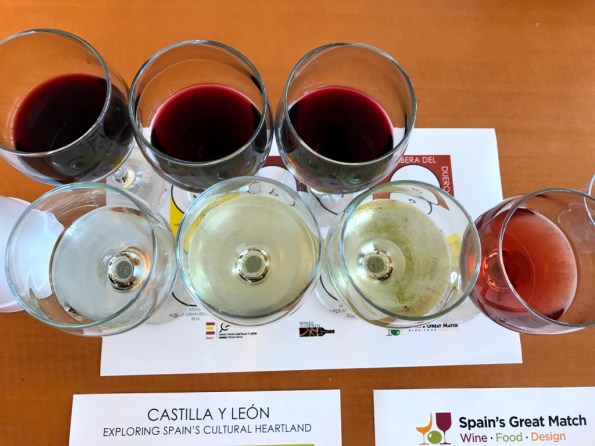
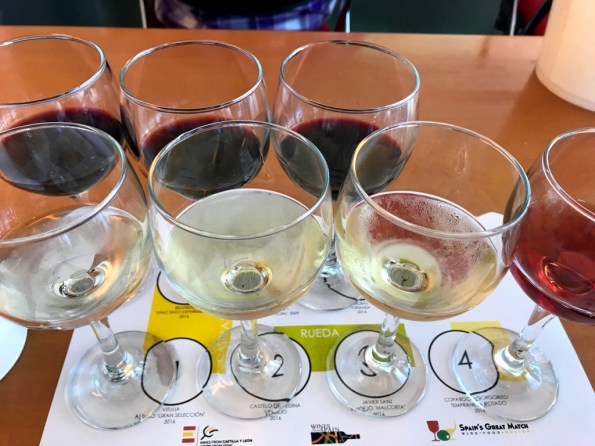
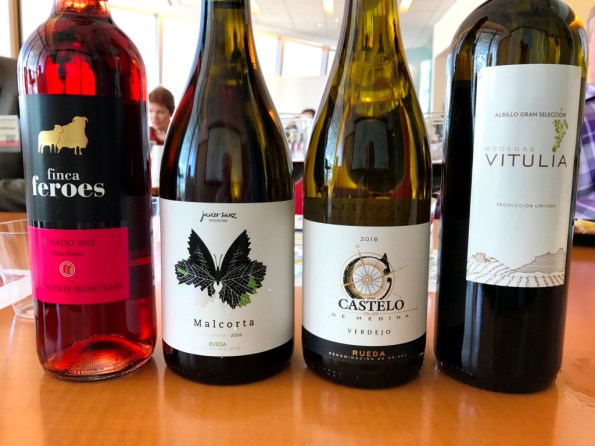
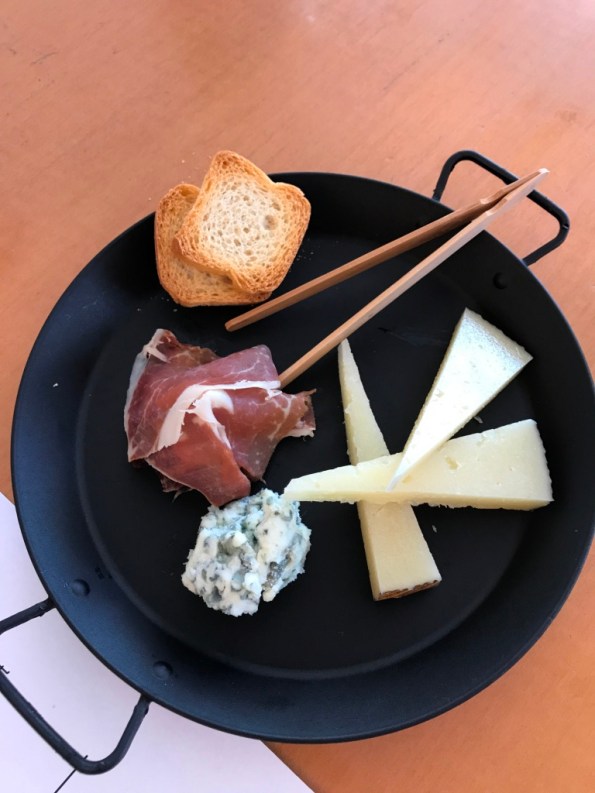
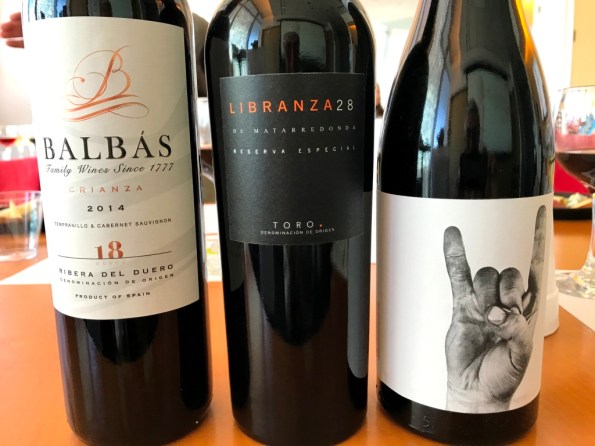
Our next seminar was dedicated to the wines and culture of the Castilla y León, an administrative region in the Northern part of Spain. Castilla y León includes a number of winemaking regions – some of the best, essentially – Ribera del Duero, Toro, Rueda among others. The seminar was led by charismatic Marnie Old – I have to honestly say that this was one of the very best wine seminars I ever attended – great delivery, lots of energy, excellent presentation.
We had an opportunity to taste 7 different wines and also try some of the Castilla y León authentic foods – a few kinds of cheese (Valdeon, a blue cheese, was my favorite), Jamon (Jamón Guijuelo, to be precise) and more. I really didn’t care for the Rosé, so below you will find the notes for the wines we tasted:
2016 Bodegas Vitulia Albillo Gran Selección Vino de la Tierra de Castilla y León ($18, 12.5% ABV, 100% Albillo Mayor)
Simple, crisp, acidic, refreshing. Plus another new grape.
2016 Bodega Castelo de Medina Verdejo Rueda D.O. ($19.95, 13.5% ABV, 100% Verdejo)
White stone fruit, intense, fresh, floral fruit on the nose. Palate is dominated by the herbs, similar to Sancerre, lemon, medium body, very nice
2016 Bodega Javier Sanz V Malcorta Rueda D.O. (13% ABV, $26, 100% Verdejo Malcorta)
Javier Sanz’s effort is dedicated to restoring pre-phylloxera vineyards – this is where the fruit for this wine came from. The nose is a pure wow – intense, camphor oil, sandalwood, rosemary. Palate is delicious, perfectly balanced, candied lemon, nutmeg, medium+ body, clean acidity, an excellent wine. Yes, and another new grape.
2016 Vino Bigardo Tinto Experimental (100% Tinta de Toro) – an interesting wine. Made by a rebel winemaker, who doesn’t want to make the wine according to the appellation laws, so the wine is unclassified. 20–100 years old wine, 45 passes during the harvest, micro-fermentation. Nose has lots of young, bright fruit, freshly crushed berries, reminiscent of Monastrell, unusual. Young fruit on the palate, but with undertones of stewed fruit, hint of the roasted meat. This is experimental wine all right, but this is not a successful wine in my book.
2009 Bodegas Matarredonda Libranza 28 Reserva Especial DO Toro ($45, 100% Tinta de Toro, ungrafted vines, on average 70 years old)
Spicy nose with a whiff of cinnamon, sweet oak, classic Cabernet nose overall. On the palate very tight, the real Toro, powerful, dark fruit, nice – but needs time. Pairs surprisingly outstanding with the local Valdeon Blue Cheese.
2014 Bodegas Balbás Crianza Ribera Del Duero D.O. ($27.99, 90% Tempranillo, 10% Cabernet Sauvignon, 18 months in French oak barrels)
This wine comes from one of the founding estates in the region, established in 1777.
Dusty nose, muted fruit, distant hint of dried cherries. On the palate – cherries, cherry pit, roasted meat, coffee, great concentration, fresh, clean – very good wine overall.
I was registered for two more seminars, but then there were lots of wines to taste, so I decided to proceed with the tasting. Below are mentions of the wines I liked. I have separated the wines into my top choices (both white and red), and then separately sparkling (Cava), white and red wines I feel comfortably happy to recommend. For what it worth, here we go:


Top wines:
2016 Bodega Javier Sanz V Malcorta Rueda DO ($26) – see my notes above, definitely was the star
2014 CVNE Monopole Blanco Seco Rioja ($22) – Monopole is one of my favorite white Rioja in general, but this wine is taken to the next level by spending some time in oak – lots of increased complexity. Delicious.
2013 Bodegas Prineos Garnacha DO Somontano ($12.99) – round and delicious. Great value
2011 Bodegas Beronia III a.C. Beronia DOCa Rioja ($79.99) – 70 years old vines. Unique and beautiful, produced only in exceptional vintages. standout.
2015 Bodegas Garcia Carrión Mayoral Reservado DOP Jumilla ($12.99, Syrah/Cabernet Sauvignon/Petit Verdot) – a standout. Perfectly balanced, great flavor profile and QPR which can’t be beat.
2014 El Coto Crianza DOCa Rioja ($13) – an incredible value, perfectly soft and round
2008 El Coto de Imaz Gran Reserva DOCa Rioja ($44) – perfectly drinkable, but can still age. Delicious and a great value.
2010 Gratavinum GV5 DOCa Priorat ($80) – excellent wine
Also very good:


Cava:
NV Anna de Codorniu Blanc de Blancs Brut Reserva DO Cava ($14.99) – never disappoints. Great value.
NV Anna de Codorniu Brut Rosé DO Cava ($14.99) – one of my perennial favorites.
2010 Parés Baltà Cava Blanca Cusiné DO Cava ($40) – very good quality, comparable to vintage Champagne.
NV Segura Viudos Reserva Heredad DO Cava ($25) – another one of my favorites. Delicious.
2010 Torelló 225 Brut Nature Gran Reserva DO Cava ($35) – very good


White:
2016 Bodegas Sommos Las Bas Gewürztraminer DO Somontano ($25.99) – Gewurtztraminer is a tough grape for making a round, balanced wine – and this one was exactly that.
2015 Baigorri Barrel Fermented White DOCa Rioja ($30) – very nice
2016 Bodegas Beronia Viura DOCa Rioja ($14.99) – clean, refreshing
2016 El Coto Blanco DOCa Rioja ($11) – outstanding and an excellent value
2013 Bodegas Enate “Chardonnay 234” Enate DO Somontano ($12.99) – classic, very good.


Rioja:
2013 Bodegas Muga Reserva DOCa Rioja ($28) – one of the iconic producers, very good wine.
2011 Marqués de Riscal Reserva DOCa Rioja ($18) – excellent value
2005 Marqués de Riscal Gran Reserva DOCa Rioja ($48) – very good
2010 Marqués de Riscal Baron de Chirel Reserva DOCa Rioja ($79) – very good
2011 Bodegas Faustino V Rioja Reserva DOCa Rioja ($15) – very good value
2005 Bodegas Faustino I Rioja Gran Reserva DOCa Rioja ($35) – another very good QPR example
2012 Bodegas Beronia Reserva DOCa Rioja ($19.99) – excellent
2008 Bodegas Beronia Gran Reserva DOCa Rioja ($31.99) – excellent, and great value
2012 El Coto de Imaz Reserva DOCa Rioja ($24)
2008 Viñedos y Bodegas Sierra Cantabria Finca El Bosque DOCa Rioha ($95) – probably the most expensive wine in the tasting, and it is not ready to drink. Needs time, lots of time.
2007 Señorio de San Vicente San Vicente DOCa Rioja ($52, new grape – Tempranillo peluda)


Other red:
2016 Bodegas Sommos Merlot DO Somontano ($25.99)
2012 Bodegas Viñas Del Vero Secastilla DO Somontano ($44.95)
2009 Bodegas Paniza Artigazo Edición Limitada DOP Cariñena ($24..99)
2010 Bodegas Corral Don Jacobo Rioja Reserva DOCa Rioja ($22) – delicious and a great value
2014 Bodegas Volver DO LaMancha ($16) – one of my perennial favorites, big and powerful
2012 Finca Villacreces Ribera del Duero DO ($35) – this wine never disappoints – perfect example of what Ribera del Duero is capable of
2013 Bodegas Hacienda Monasterio, Ribera del Duero DO ($40) – delicious
2015 Bodegas Garcia Carrión Mayoral Chester DOP Jumilla ($12.99, Monastrell/Petite Verdot)
2014 Bodegas Garcia Carrión Pata Negra Apasionado ($12.99, Monastrell/Petit Verdot/Cabernet Sauvignon/Syrah)
2014 Torres Salmos DOCa Priorat ($35) – very good
2015 Teso La Monja Almirez DO Toro ($52) – still needs time
2007 Teso La Monja DO Toro ($25) – nice, but definitely needs time
And then, of course, there was food. Cheese and olives were a staple, and many other dishes were carried out all the time. I also discovered my new favorite sparkling mineral water – Vichy Catalan. It is sold at some of the stores, such as Fairway Market, so if you like sparkling water, you might want to give it a try.


That’s all I have for you, my friends. Spain’s Great Match is an annual event, so even if you missed this year, you should definitely plan to attend the next – you can see a full schedule here. Also, if you live in or will visit Chicago, you can still attend it on November 2nd. Either way – drink more Spanish wines, my friends! Cheers!
Exploring Wines Of New Zealand – With Villa Maria on Snooth
Wines of New Zealand need no introduction – for sure to the oenophiles. Winemaking started in New Zealand in the 1850s, but it really flourished in the second half of the 20th century, when jet travel allowed much easier access to the future winemakers to get educated and experienced in Europe. Since the 1990s, New Zealand greatly embraced sustainability and … screw tops. I’m definitely very happy about the first – sustainable farming always leads to the better wines and happier environment. The screw tops – they are fine, I’m not convinced though that they are the best for aging the wines properly. However, I don’t want to convert this post neither into a rant, nor into a debate, so let’s just move on.
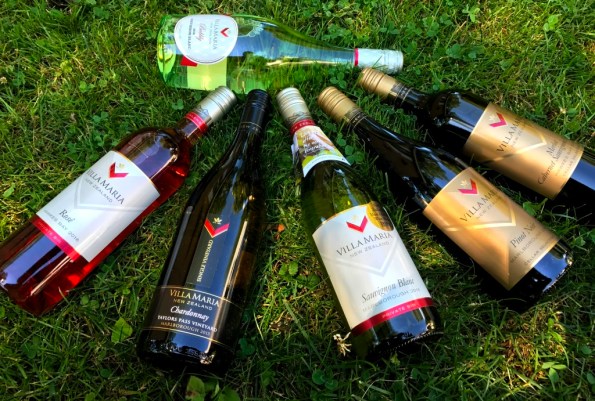 The story of Villa Maria winery is easily an exemplary story of realizing the “American Dream” – only in this case, it is, of course, have to be called a “New Zealand dream” (I hope such a concept exists).
George Fistonich started in 1961, at the age of 21, with one acre of vines in Auckland. In 1962, he harvested the grapes and produced the wines under the name of Villa Maria. That was the beginning of the journey of one man, who had the passion, vision, perseverance and enough obsession to make it. Villa Maria was a one man operation through the 60s, hiring its first staff in the early 70s, and now employing 250 people and exporting their wines to the 50 countries. As a perfect proof of making it, George Fistonich became Sir George Fistonich, receiving the first knighthood in the country for the services to New Zealand’s wine industry.
Villa Maria today has vineyards located in Auckland, Gisborne, Hawkes Bay and Marlborough regions. The grapes range from the New Zealand’s staples such as Sauvignon Blanc and Pinot Noir to such an obscure varietals as Arneis and Verdelho. Villa Maria became a cork-free zone in 2001. And I can tell you, they really treat sustainability seriously – the Villa Maria bottles were some of the lightest wine bottles I ever came across, which I’m sure greatly affects the carbon footprint.
A week or so ago, I was a part of the big group of winelovers tasting Villa Maria wines together in the virtual tasting organized by Snooth (no worries, the wines were real). Here are my notes from tasting and also, re-tasting of the wines.


First, two of the Sauvignon Blanc wines. First one was called “bubbly” as it was lightly carbonated – and it was definitely a fun wine, perfect for a summer picnic, fresh and delightful. And the Marlborough Sauvignon Blanc was simply a classic New Zealand Sauvignon Blanc, done with a perfect restraint:
2016 Villa Maria Bubbly Sauvignon Blanc Marlborough (12.5% ABV, $15)
C: literally non-existent
N: touch of grass and currant, a classic SB, restrained.
P: nice, touch of bubbles, touch of sweetness, black currant, nice and round, refreshing.
V: 8-/8, definitely nice
2016 Villa Maria Private Bin Sauvignon Blanc Marlborough (12.5% ABV, $13)
C: straw pale
N: pure cassis, beautiful, freshly cut grass, classic
P: excellent balance, acidity, currant and a touch of grass. Nice and pleasant.
V: 8, I can drink this at any time, excellent wine


Now, the Rosé and then Chardonnay. The Villa Maria Rosé is predominantly Merlot. It is light and simple, but it has enough finesse to pass one of my personal tests – I particularly like the white and Rosé wines which are well drinkable when they are a bit warm – it is annoying to maintain the wines at the ice cold level (at home, for sure). The Rosé was delicious and drinkable even at the room temperature, so it definitely passed that test. And as for the Chardonnay – I know that I will be in the tiny minority from our tasting group, but I found it to be just okay. It had all the classic Chardonnay traits, but, somehow, didn’t hit the home run for me…
2016 Villa Maria Private Bin Rosé Hawkes Bay (12.5% ABV, $14)
C: Pink
N: strawberries and strawberry leaves, round and pleasant
P: strawberries, touch of sweetness, could use a touch more acidity, but still, nice and delicate
V: 8-, definitely improved the next day, more delicate, better balance
2015 Villa Maria Single Vineyard Taylors Pass Chardonnay Marlborough (13.5% ABV, $45)
C: straw pale
N: creamy, vanilla, freshly baked brioche buns with a touch of butter on them
P: Granny Smith apples smothered in butter, good acidity, excellent midpalate weight, nicely plump, but clean. Nice cleansing acidity on the finish.
V: 7+, needs food.


Now, the reds. Pinot Noir was unusual compared to what I typically expect from the Marlboro Pinot Noir. It was heavier than I expected, and on the day 3, it became a lot closer to the powerful Oregonian Pinot (which is a good deal at $26, right? ). The Merlot blend was an enigma. It opened up beautifully as I just opened the bottle, but then it went back into its shell and never came out of it, even on the day 3 …
2014 Villa Maria Cellar Selection Pinot Noir Marlborough (13.5% ABV, $26)
C: bright ruby
N: touch of sweet cherries, violet
P: tart cherries, tart acidity, touch of tobacco
V: 7, 7+ on the day 3 – showed a lot more fruit on the palate, Oregonian notes of dark power, espresso, mocha, with sweet core of cherries and plums.
2013 Villa Maria Cellar Selection Merlot/Cabernet Sauvignon Hawkes Bay (13.5% ABV, $20, 70% Merlot, 23% Cabernet Sauvignon, 7% Malbec)
C: dark garnet, almost black
N: medium intensity, baking powder, vanilla, sweet mocha
P: black currant, ripe and sweet, touch of espresso, tar, dark fruit, dry, tannic finish
V: 7, unusual experience …
Have you had any of these wines? What are your thoughts? Cheers!
Last Bottle Sign Up ($10 credit)




 Talk-A-Vino