Archive
We Are Creatures of Comfort
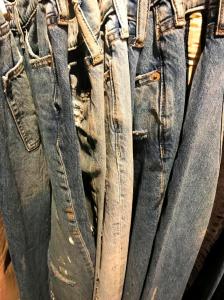 We are creatures of comfort. If you are feeling particularly wound up today and comfort is the last thing on your mind (especially considering that we are living through the typical hectic holiday season), maybe you need to look for a post about coffee – but for the rest of us, let’s talk about comfort (there will be wine at the end, I promise).
Everyone has their own elements of the comfort. Favorite coffee mug. A big old chair which hugs you as soon as you touch it. Favorite room in the house. Favorite corner in the backyard, the one where you feel the most relaxed. Maybe a favorite bench in the park. The shoes which slip on your feet like they are part of the whole. And clothes, let’s not forget may be the easiest, most simplistic, everyday purveyor of the comfort – clothes.
Let’s talk about clothes a bit more. Outside of the office, when you need to run errands, go to the movies or drive to see your friends, what are your most comfortable pants? For me, it is jeans. Jeans are my most versatile type of clothes, anywhere I go, whether driving for 10 minutes to the supermarket or flying around the globe to Japan. Definitely an essential element of comfort in my book – and I suspect that many of you share the same feeling.
Now, let me take you out of the comfort zone, as I have a question for you. Without scrolling forward (please), can you tell me what is the connection between the jeans and the wine? The brand of jeans plays absolutely no role – jeans as the clothing category can be directly connected to the world of wine. I will give you a few minutes to ponder at it.
I’m still here, take your time.
Still here – got any ideas?
Okay, let me give you a hint. The material the jeans are made of is called denim. Does it help?
It is entirely possible that you easily figured it all out already. Whether you did or not, here is my answer and the explanation. We can go from “denim” to “de Nim”, and then it can be further changed to “de Nîmes”. Heard of Nîmes, the town in the Rhone valley in France? Denim became an abbreviation for the “serge de Nîmes”, where “serge” means a specific type of fabric, as Nîmes was the town where this fabric was created. It turns out that Nîmes was the center of the textile industry in France in 17th – 19th centuries – however today no fabric is manufactured in this medieval town. But – in the true spirit of life actually moving in circles, here you can read the story of a company which dreams of reviving the textile industry back in Nîmes – note that this story has actually no connection to wine, so let’s move on.
And the connection to the wine, you ask? Costières de Nîmes, the region surrounding the same town of Nîmes, where the history of winemaking goes all the way back to the third century.
Costières de Nîmes is the region in the Southern Rhone, which carries forward all of the Rhone Valley traits (all Costières de Nîmes wines even have a designation on the bottles for the Vins de la Vallée du Rhône). Instead of me retelling you all the facts about the appellation, I have a better idea – how about some creative infographics where you see all the fun facts about the region? Here you go:
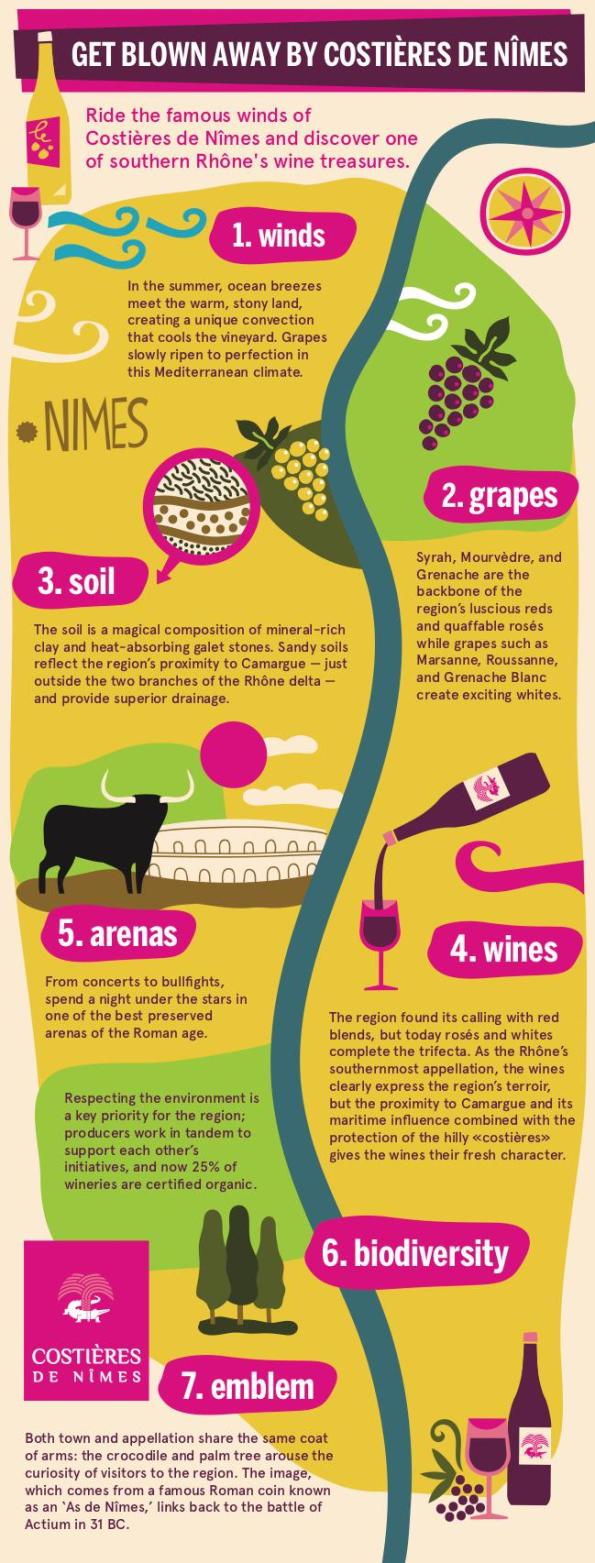 At this point I’m sure you are wearing your comfortable clothes (jeans, perhaps) and sitting in your comfortable chair, so I’m sure you are ready for some wine. I had a chance to taste 3 wines from the Costières de Nîmes, so here are my notes:


2016 Domaine de Poulvarel Costières de Nîmes (14.5% ABV, $22, 65% Syrah, 35% Grenache)
Dark ruby
Raspberries, lavender
Raspberries, pepper, well integrated but noticeable tannins, baking powder, firm, medium plus body, excellent acidity.
8-/8, very good overall
2015 Château Vessière Costières de Nîmes AOP (13% ABV, $9, 50% Shiraz, 50% Black Grenache)
Dark ruby
Raspberries and tar
Raspberries and lavender on the palate, light to medium body, good acidity. Perfect charcuterie wine – paired well with salami and cheese.
7+/8-, excellent food wine
2016 Château Beaubois Cuvée Expression Costières de Nîmes AOP (13.5% ABV, $9, 70% Syrah, 20% Grenache, 10% Marselan)
Dark Ruby
Tart, minerally notes, blackberries, granite, anis, roasted meat. While nose is not exuberant, it is very expressive.
Raspberries, tar, medium body, good acidity, some green notes, a touch of pepper.
7+/8-, nice, simple, works great with meat and cheese.
Here you are, my friends. A bit unusual (I hope) connection between our daily life and the world of wine. The Costières de Nîmes wines I tasted might not be mind-boggling, but they are definitely comfortable, and fit our story well. I don’t know what one expects from the $9 bottle of wine, but I know that I would be perfectly comfortable having this wine daily – and my wallet would be very comfortable too. Have you had Costières de Nîmes wines before? What do you think of them? Put on your denim jeans, and let’s go have another glass. Cheers!
Thanksgiving with Smith-Madrone, And a Few More Delights
Holidays are all about pleasure. The pleasure of the company. The pleasure of food. The pleasure of wine. As the very least, they should be.
Let me tell you about the pleasures of my recent Thanksgiving – in one picture:

If this would be an Instagram, I could end my post here, but in this blog, I can add a few words, right?
Let’s talk about the wine first. Everyone has their ideas as what is the best Thanksgiving wine. Some talk about how difficult it is to pair any wine with the Thanksgiving table, due to the large variety of dishes and often prevalent sweet flavors (this is not universal, of course). I have a very simplistic view of the wine and food pairing – give me tasty food and good wine, and if they don’t work together – no problems, I’m happy to consume them one by one. Difficult or not, pairing is not the focal point of my Thanksgiving wine selection. I really have only one strong preference for the Thanksgiving wines – they should be all American. Thanksgiving we celebrate here in the USA is all about this country, and so the wine should match that. And thinking about American wines, you understand how easy it is nowadays to have all-American wine experience.
How many of you heard of Napa Valley? Okay, I see that look, this was a stupid question, I know. But let me go on. How many of you heard of Spring Mountain District? Okay, I see your facial expression changing to say “hmmm, I’m not so sure”. And the last question – how many of you heard of Smith-Madrone? Okay, don’t feel too bad, at the end of the day it is one of the about 400 wineries located in the Napa Valley, so of course, one can’t know all of them. But – this is why I’m talking about it – this is the winery you might want to get better acquainted with.
Smith-Madrone is one of the oldest wineries in Napa Valley, started by brothers Stuart and Charles Smith in 1971. Smith-Madrone property is about 200 acres, with some parts of the vineyards planted more than 100 years ago, all located near the top of the Spring Mountain in Napa Valley. The name Smith-Madrone combines the family name with the name of the evergreen Madrone trees, prominently growing at the property. Well, instead of me trying to regurgitate the past and present of the Smith-Madrone winery, let me direct you to this article – it is a good story, well worth a few minutes of your time.

When was the last time you had Napa Valley Riesling? If you answered “never”, it could’ve been my answer too – until I discovered this Smith-Madrone Riesling. Riesling is simply not a common grape for the Napa Valley, but Smith-Madrone produces the absolutely beautiful rendition of the famous grape. It might be due to the mountain fruit – all the Smith-Madrone vineyards located at the altitude of 1300 to 2000 feet, with slopes reaching 34%. Sustainable dry farming and winemaking practices also play a role, but one way or the other, the 2015 Smith-Madrone Riesling Spring Mountain District Napa Valley (12.9% ABV, $32) was just delicious. varietally correct both on the nose (honeysuckle, a touch of tropical fruit, lemon, apples) and the palate, which was beautifully balanced with golden delicious apples, a touch of honey and acidity. To make me ultra-happy, the Riesling is sported a distant hint of petrol, which is my pet peeve.
2015 Smith-Madrone Chardonnay Spring Mountain District Napa Valley (14.4% ABV, $40, 10 months in French oak) was equally beautiful. Again, the wines of that styling I call in my book “classic”. A touch of vanilla and apples on the nose, a distant hint of butter, continuing with the same vanilla and white apples on the palate. Clean acidity, noticeable minerally undertones, restrained, balanced – a very classic example of “how to do chardonnay right”.
With the risk of sounding very boring and repetitive, I have one more classic wine for you – 2014 Smith-Madrone Cabernet Sauvignon Spring Mountain District Napa Valley (13.9% ABV, $52, 85% Cabernet Sauvignon, 8% Cabernet Franc, 7% Merlot, 70% new French oak, 30% one-year-old French oak for 18 months). How classic was this wine? Bordeaux-classic. The mountain fruit was shining, showing great restraint. This was not an exuberant typical Napa Cab – lean, tight, well-structured, with cassis both on the nose and the palate, the wine was very enjoyable now, and it will be equally or more enjoyable in 30 years.
So that was my main wine story on the Thanksgiving day. The rest was about the food – starting the smoker as 9 am in the 21°F weather (about -6°C), and then watching the turkey slowly getting to the right temperature. The silver lining of that cold weather was the fact that instead of 4-4.5 hours in the smoker, it took about 6 hours to get that big bird to the right doneness – and slower cooking results in more tender and more flavorful meat. A glass of Smith-Madrone Riesling was adding to the cooking enjoyment.


After celebrating Thanksgiving at our house, we went to see our close friends in Boston. What I love about that house is that there are always a few of the older wine bottles laying somewhere on the shelf. You never know what you will find in the older bottle, but that is what makes it fun, isn’t it?


The first bottle I opened was 2007 Tishbi Cabernet-Petite Sirah Shomron Israel (12% ABV, 70% Cabernet Sauvignon, 30% Petite Sirah). Judging by the pronounced brickish, almost orange, color, my first thought was “this probably fully turned”. And it was not! Complex nose of dried fruit and herbs was supported by plums and prunes forward, but balanced palate. Good amount of acidity, tertiary aromas – this was a very enjoyable glass of wine. Only one glass, I have to say – by the time I wanted the second, the wine was gone.
Without much thinking, I pulled another wine, realizing later that I opened another wine from the same vintage – 2007 Marani Kondoli Vineyards Saperavi-Merlot Kakheti Georgia (13.5% ABV). This wine couldn’t be more different from the previous 2007 – dark garnet color, not a sign of any aging, tight, fresh, blackberries and blueberries on the nose and the palate, firm, fresh and young. I’m really curious about how much longer this wine could’ve last.
One last wine to mention – 2010 Massandra White Muscat Crimea Ukraine (16% ABV). Massandra winery roots go back to the old Tsar’s Russia in late 1800, but their cellars hold wines from the 18th century (if you are not familiar with Massandra wines, here is an article by Jancis Robinson). Massandra is best known for sweet fortified Muscat wines, like the one we tasted. To me, this 2010 was most reminiscent of a Sherry, and not necessarily an ultra-balanced one. But then the same Jancis Robinson’s article says that Massandra wines require 45-60 for the full maturity, so I guess the wine tasted within the expectations…
Spring Mountain District in Napa Valley, Israel, Georgia, and Ukraine – not a bad wine play for the holiday, what do you say?
Here you go, my friends. I will leave you with some beautiful wines to look for. And how was your Thanksgiving, if you still remember it? Cheers!
Impromptu Evening With Friends? A Bottle of Golden Bordeaux is All You Need
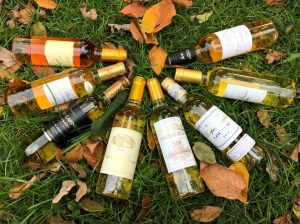 You just came home from work. It was a hard day. The boss [again] didn’t get your idea, and you didn’t get much support from your coworkers either. All you want to do is to crawl into the old trusted chair with your feet, open the book, and get lost in its pages. Tomorrow will be another day, and all the problems will magically solve themselves. Or you will force them to solve themselves. No matter what, but “me evening” is about to begin.
The doorbell rings. Really? The doorbell? What the heck? You sure didn’t invite anyone over. Get the sleepers on, let’s see, maybe it is just a late package. Ahh, it is not a package. It is your friend. And she just had a rough day at work, and she needs at least an ear, and hopefully not a shoulder.
Walk her in, get her situated on the couch. Then you get this burning feeling – something is amiss. Oh yeah, of course – there is nothing on the coffee table, and your friend sheepishly confirms that she is really “not that hungry”, and your perfectly know what it means – while nobody is looking for a 5-course meal, a little something would be great.
You didn’t shop for a while, and all you got is some crackers, some chips, salami and a bit of cheese. And of course, you need to bring a bottle of wine, which is a must for the free-flowing conversation, but what wine would pair well with such an eclectic spread of crackers and salami?
So let’s stop here, as I’m not writing a fiction novel, and let’s analyze the situation. We got chips, crackers, cheese, and salami – what would pair well with it? I’m sure you have your own take on this, but let me give you mine – how about some Golden Bordeaux to pair with this eclectic mix?
If you are curious what Golden Bordeaux is, I’m sure you can easily guess it – heard of Sauternes? Have you ever seen a bottle of Sauternes? Yes, it typically looks like a liquid gold, hence the reference to the Golden Bordeaux.
The term “Sauternes” here is used rather generically, and Golden Bordeaux might be more suitable than just Sauternes – however, while the Golden Bordeaux makes sense, I’m not sure how common the term is.
Of course, first and foremost, Bordeaux is known for its reds (anyone who experienced Bordeaux whites from Pessac-Léognan would easily disagree, but still). However, Bordeaux is a lot more than just the reds. On the left bank of the Gironde river, which splits Bordeaux in half, lies the region called Graves. Inside of Graves resides the small region of Sauternes with its neighbors Monbazillac, Cérons, Loupiac and Cadillac, as well as Barsac which is a sub-region of Sauternes. Together, all these regions are the source of the Golden Bordeaux, the unique white wine made from the partially raisined grapes due to their contact with so-called Noble Rot. It is common to describe Sauternes as sweet, dessert wines – but the flavor profile of these wines goes way beyond just sweet, offering layers of complexity, and therefore suitable for a lot more than just a dessert course.


A few weeks ago, a group of wine aficionados got together for the virtual tasting of the Golden Bordeaux, hosted and guided by the kind folks from Snooth. This tasting went beyond just a standard format of tasting and discussing the wines – we also had an opportunity to experiment with the variety of savory and spicy snacks, which included Sweet Potato and Beet Crackers from Trader Joe’s, Sriracha Cashews, Jalapeno Chicken Chips, Gusto by Olli Calabrese Spicy Salami, and Jack Link Sweet & Hot Jerky. Spicy and sweet, as well as sweet and salty are well-known combinations for anyone who likes pairing wine and food. However, these Golden Bordeaux wines go beyond just sweet, often adding a layer of forest mushrooms and herbs to their taste profile, which helps to complement the ranges of savory dishes.
I had a few surprises and personal learnings in this tasting. I never paid attention to the mushroom undertones in the Golden Bordeaux, so this was definitely an exciting discovery. I also never thought that those wines need some breathing time – and I was wrong, as you can see in the notes below – another little memory knot is in order. I also found out that not all food can be good for the tasting – the Chicken Jalapeño crackers were so spicy for me, that I had my lips burning for an hour in the tasting. It would be fine if this was a pairing and conversation with a friend, but for the next time around, I plan to taste the wines first, and only then try it again with spicy food.
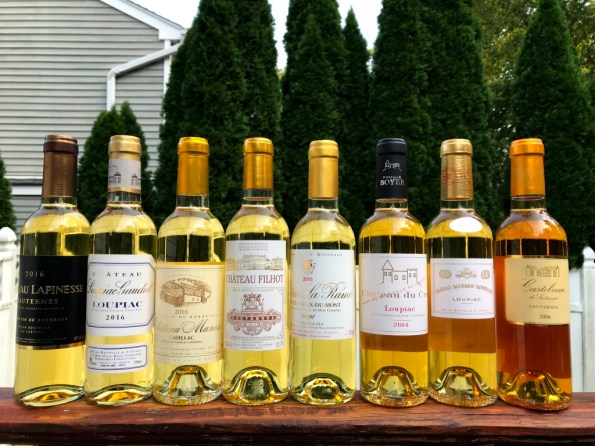
Now, here are my notes from the tasting:
2016 Château Manos Cadillac (13.5% ABV, $12.99, 95% Semillon, 2.5% Sauvignon Blanc, 2.5% Muscadelle)
Light golden color
Peach, honey, beautiful nose, very inviting
Delicious palate, peach, candied peach, caramel, good acidity 8/8-
Very nice with beets crackers from Trader Joe’s
2014 Château du Cros Loupiac (13% ABV, $12, 90% Semillon, Sauvignon Blanc, Muscadelle
Golden color
Complex nose of caramel and herbs, a touch of spicy notes, great complexity
Beautiful concentration on the palate, candied fruit, golden raisins, perfect balance. 8+
Amazingly elevates sweet and hot beef jerky, wow
2016 Château Loupiac-Gaudiet Loupiac (13% ABV, $17, 90% Sémillon, 10% Sauvignon Blanc)
Light golden color
Sweet apples, herbs. Later on: truffles!
First reaction: Sweet apples on the palate – need more acidity
After 20 minutes: good acidity, mushroom, forest floor. 8-
Excellent with hot beef jerky
2011 Château Dauphiné Rondillon Loupiac (13.5% ABV, $28, 80% Semillon, 20% Sauvignon Blanc)
Golden color
Honey, plums, candied plums
First reaction: Burned sugar, then medicinal. Ouch
After 20 minutes been open: sugar plums, white plums, good acidity showed up. 7+/8-
Later on – mushrooms on the nose (really a discovery for me), caramel. Savory caramel on the palate. Interesting – definitely a food wine.
Very good with salami and sweet potatoes crackers
2015 Château La Rame Sainte-Croix-du-Mont (13% ABV, $22, 100% Sémillon)
Golden color
Very restrained, a touch of tropical fruit, distant hint of honey, gasoline added after 20 minutes
First reaction: Candied fruit, really sweet, can use more acidity. 7
After 20 minutes: vanilla, cookies’n’cream, light, good acidity. 8-/8
Tried with hot beef Jerky – not bad
2016 Château Lapinesse Sauternes Grand Vin de Bordeaux (14% ABV, $20, 100% Sémillon)
Golden color
Lemon, lemongrass, touch of honey, white plums
Candied fruit, apples, good acidity. 8
Didn’t make much difference with spicy salami
2006 Castelnau de Suduiraut Sauternes (14% ABV, $90, 99% Semillon, 1% Sauvignon Blanc)
Dark gold color
Honey, candied lemon, touch of caramel
Beautiful palate, fresh caramel, butterscotch cookie, good acidity. Very rich. 8-
Very good with beef jerky, also with jalapeño chicken strips
Here you are, my friends – Golden Bordeaux and eclectic snacks. Get a few bottles on hand – the wines are versatile, and can be enjoyed in many ways – especially when the late night friend pops in.
The Golden Bordeaux wines are definitely underrated – here is the great opportunity to surprise yourself and your friends. And you can thank me later. Cheers!
Sent with Writer
Beaujolais Nouveau Est Arrivé! 2018 Edition
 I find myself lately talking a lot about traditions. These are not cultural or societal traditions, of course not. Much simpler. These are only the traditions of this very blog. One needs time to claim something a “tradition”. This blog had been around continuously for more than 9 years, so I hope I get the right to call some of the permanent, repeated year after year, themes a “tradition”. A tradition such as the yearly Beaujolais Nouveau post.
I’m sure hope the majority of the wine drinkers are familiar with the Beaujolais Nouveau phenomenon. Every year we celebrate the new vintage by drinking the young, simple wine just made a few months after the harvest. As the tradition of celebrating the new – Nouveau in French – vintage originated in the Beaujolais region in France, we call this celebration the Beaujolais Nouveau. And to set the expectations right, the Beaujolais Nouveau is always celebrated on the third Thursday in November – this is when the Beaujolais Nouveau wines officially hit the shelves of the wine stores around the world.
Every “new” Beaujolais Nouveau celebration brings something new and unique with it. I remember huge celebrations held a few years in the row. Then there was a period when the “Nouveau” movement was joined by the number of US producers. Last few years, however, were rather uneventful – it is, of course, possible that I missed something.
This year 2018 brought in quite a few things which might not be designated as “new”, necessarily, but for sure they were different. First, I almost missed the whole Beaujolais Nouveau celebration, as it came up quite unexpectedly – the earliest possible celebration overall. Beaujolais Nouveau can only be released on the 3rd Thursday of November, which fell this year on November 15th – can’t happen any earlier than that. Okay, I know this is insignificant. Next interesting fact was … the snow. Yep, we got 5 inches in Connecticut right in the middle of November – this is something which generally doesn’t happen. But I was able to take the pictures of the bottles in the snow.
The last “new” was truly a Nouveau event – Georges Duboeuf released Beaujolais Nouveau Rosé. Rosé was never a part of the Beaujolais Nouveau celebration – until now, that is. Not only it was a beautiful looking wine, but it was also a tasty one too!
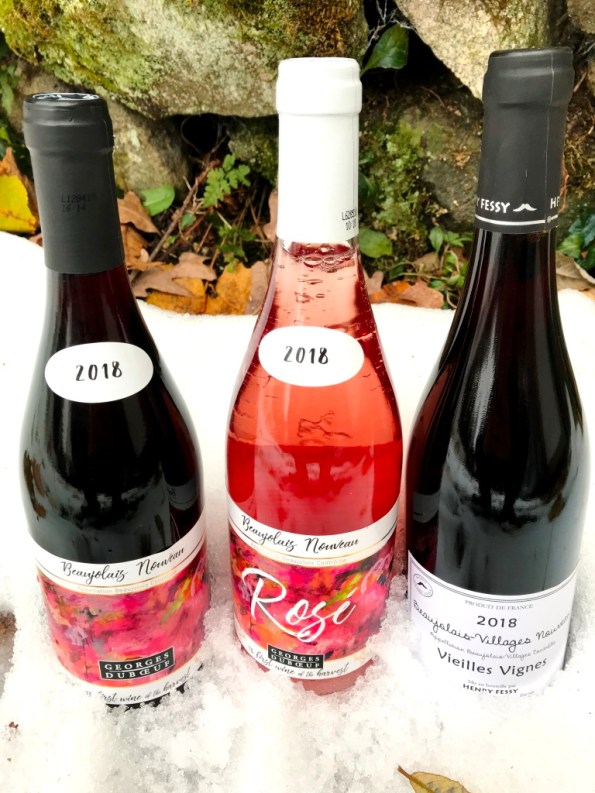
I know that bashing of the Beaujolais Nouveau as only a marketing stunt is quite popular among wine professionals and consumers alike – and I honestly don’t support it. Even this year, I saw someone asking in one of the wine forums on Facebook “does anyone drinks Beaujolais Nouveau wines”. I didn’t want to get into that conversation, but I can, of course, answer here – I do! The Rosé I would actually gladly drink at any time at all. And I would never refuse the second glass of either one of the reds, so there, you have my answer.
Here are a bit more detailed notes:
2018 Henry Fessy Beaujolais-Villages Nouveau Vieilles Vignes (13% ABV, $12.99)
Dark ruby color
Fresh raspberries with the characteristic Beaujolais Nouveau acidity, mineral notes
Fresh tart raspberries, good structure, good balance, overall quite pleasant. 7+/8-
2018 Georges Buboeuf Beaujolais Nouveau Rosé (12.5% ABV, $9.99)
Beautiful light pink color, very inviting.
Beautiful fresh strawberries on the nose. Strawberries and cranberries on the palate, clean acidity, excellent balance. There is nothing “Nouveau” about this wine – it is just an excellent Rosé. 8
2018 Georges Buboeuf Beaujolais Nouveau (12.5% ABV, $9.99)
Garnet color
Raspberries and violets on the nose
Raspberries and strawberries on the palate, interesting minerality, some baking spices, good concentration, medium plus body, well integrated mouth-plucking acidity. A very solid wine. 8-/8, one of the very best Beaujolais Nouveau.
What do you think of Beaujolais Nouveau phenomenon? Did you taste the 2018 wines? If you did, what do you think of them? Cheers!
Wine, Wine, Wine – Notes from Martin Scott 2018 Grand Portfolio Tasting
 Martin-Scott is one of the largest wine wholesalers (distributors) in New York, New Jersey, and Connecticut, with a very extensive portfolio well representing all major winemaking countries of the world. I had a pleasure to attend Martin-Scott portfolio tastings in the past, and they were always great with a lot of delicious discoveries. When I had an opportunity to attend the portfolio tasting about a month ago, I was very happy to be able to include it into my schedule.
I wrote about trade portfolio tastings many times in the past. They might seem a bit overwhelming, as you are presented with about 1000 wines and only 4-5 hours of time to taste them. At the same time, the range is incredible and you get an opportunity to expand your wine horizon and always find new favorites.
Here are my general impressions from the tasting:
- I know this is my pet peeve, and I keep talking about it at every occasion, but I have to say it again – new vintages of California reds are using way too much oak. There were lots of California reds from the 2015-2017 vintages which were literally not drinkable due to very high tannins content, to the point of your whole mouth getting numb. Unfortunately, some of the bigger Washington producers follow suit and also make over-oaked red wines. I really don’t understand this trend. Yes, using lots of new oak makes wine more expensive. But it doesn’t make it more enjoyable, for sure when it is young.
- White Burgundies are amazing. I rarely get to drink those wines for the variety of reasons, so I was literally blown away by the beauty and finesse of most everything I tasted. You will see this love expressed in the ratings below.
- South Africa produces some spectacular wines. Check the full list below to see what I really enjoyed.
- There are some excellent spirits made in … Sweden. You really need to taste them to believe them.
- I was able to add one more new (rare) grape to the collection – the grape called Souvignier-Muscaris from France.
Before I will inundate you with my brief notes, just a reminder for the trade tasting ratings I use. Considering the amount of time versus amount of wines, there is no way I can do much of the thoughtful analysis for a hundred plus wines I manage to taste. Thus I use the “+” signs, with “+++” meaning excellent. When I came up with this system, I really didn’t plan to go beyond “+++”, but you will see now “++++” and even “+++++” (very rarely – maybe one in the whole tasting) – you understand what it means. I also use “-|” as a half-point. The list below only includes wines with at least “+++” rating. As these are all new releases just coming into the stores, essentially all the wines on the list represent a “buy” recommendation – whatever you can find and afford. All prices below are an approximation of the suggested retail prices. I’m sure that the actual store price might be lower for many of those wines.
Now, I will leave you to it. Cheers!
Daily Glass: Farmhouse Wines – The Wines You Knew California Can Produce
Memories are often unpredictable and illogical when you try to understand by what rhyme of reason a certain event, situation or circumstances get remembered. Sometimes, I can remember tiny and totally irrelevant details, I guess in lieu of something really important. Moving along.
California had been the major wine superpower for more than 40 years (if we would count starting from the 1976 Judgement of Paris events), so I’m sure many of you are puzzled about the title. California wines are unquestionably amazing, no matter which of more than 4600 wineries would produce them. California wines come in a tremendous range of styles and grape varieties, producing delicious wines from the grapes you wouldn’t even think are growing in California (Palomino, Corvina, Nebbiolo, Tinta Cão anyone?), and have a cult following, with wine lovers casually waiting for 8-10 years on the waiting list for the mailing list. Yes, California is well known for its incredible wines.
What California is not known for today is inexpensive wines. If you are willing to spend at least $20 per bottle, or better yet, you are willing to spend at least 5 times that or just add a zero to that number, that is an easy game. Almost an easy game, I should say, as you would also need to wait for at least 5 or 10 years to fully enjoy that $200 bottle. However, naming a California wine under $12 (somehow I think $12 is a good number for anyone looking for a good value wine for any night, not just for a Tuesday night), which consistently delivers, is not an easy task. My mind can’t go much past Bogle Petite Sirah, which is consistently good and usually priced in $9.99 – $11.99 range – but I’m failing to readily name another California wine in the same value category.
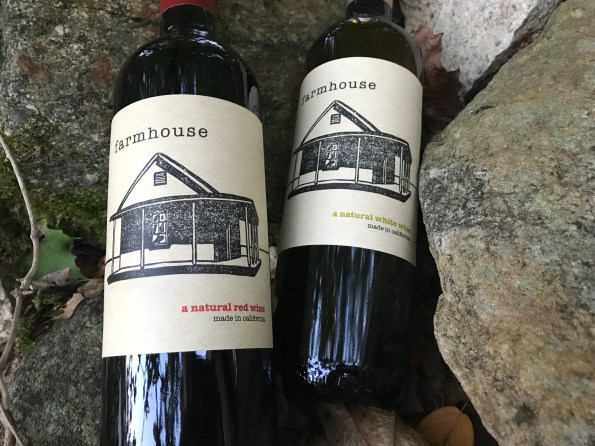
When I was offered to try two of the Farmhouse wines, I hesitated for a brief moment. As a matter of policy, I never write reviews for the samples I don’t like, and $10.99 bottle of wine from California sounded suspicious. The fact that it was produced by the Cline Cellars, who I respect very much, and that the wines were made using sustainable viticulture, tipped the scale towards accepting the offer.
The very first smell and sip of the Farmhouse Red extorted a “wow” and instantly triggered an obscure memory – absolutely not related to the wine. I don’t exactly know you, my reader at the moment, but it is quite possible you were only learning to walk when one of the big 3 struggling at a time Detroit automakers, Chevrolet, released newly redesigned Chevy Malibu sedan. At that time, back in 1997, Japanese cars really swept clean the mainstream family car category. Chevrolet was so proud to release a competitive car that they came up with the slogan for that new release of Malibu: “The Car You Knew America Could Build“. I have no memories of that car, of course, but the slogan got stuck in my head – and it instantly popped up after the first sip of the Farmhouse wine, remembering that the wine is only priced at the suggested retail of $10.99. This is a lot, a lot of wine for the money – especially the California wine.
There is even better spin to the Farmhouse wines – the wines are produced using sustainable farming methods, a farming discipline called Green String Farming, which is defined as “”natural process agriculture”. It’s about keeping the soil and plants healthy and free from pesticides and artificial chemicals. Overall, it’s about producing the highest quality grapes with the healthiest vines.” Delicious, sustainably farmed, extremely reasonably priced California wine – I’ll just rest my case.


Here are my more detailed tasting notes:
2017 Farmhouse Natural White Wine California (12.5% ABV, $10.99, 41% Palomino, 25% Muscat Canelli, 22% Roussanne, 6% Viognier, 1% Riesling)
Light Rosé gold color
Whitestone fruit, guava, a touch of honey.
Peach, white plum, lemon, touch of minerality, fresh, vibrant, excellent acidity, lots (lots!) of wine for the money. 8-/8
2017 Farmhouse Natural Red Wine California (14% ABV, $10.99, blend of Zinfandel, Syrah, Carignane, Mourvèdre, Petit Sirah)
Dark garnet
Dark chocolate, fresh raspberries, sage
Cloves, a tiny bit of cinnamon, pepper, ripe plums, excellent acidity, excellent balance. 8-/8
Two California wines, perfect for every day, easy to drink and afford – what else can you ask for? Cheers!
WBC18: Like A Kid In The Candy Store – Again, or 4 Days in Walla Walla
 Back in 2014, I was visiting the state of Washington on business, and my obsession with local wines led me to the small town of Woodinville, about an hour northeast of Seattle. As I parked next to the industrial building and started going door to door, visiting one artisanal winery after another, I really felt like a kid in the candy store – the wines were delicious, and conversations with winemakers and not were even better than the wines – what else the wine lover needs? I was so impressed with that visit that my enthusiasm showed in the blog post, which won one of the Monthly Wine Writing Challenges (we called them MWWC) with the theme “local”.
The timing for the Wine Bloggers Conference 2018 (WBC18) was a little strange – for the most of the time, the conferences took place in August, and October is definitely not the ideal month to take time off (I know that many of the regulars couldn’t attend due to the timing). However, my high opinion of the Washington wines and the memories of visiting the Woodinville became the deciding factor, so I was able to find the time for this trip to Walla Walla in Washington.
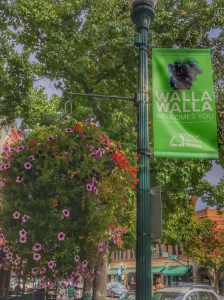
Boy, was I not disappointed. After a beautiful ride from the Portland airport along the Columbia River (I wish I would record a little video – the amazing scenery must be shared), I arrived at the Walla Walla. Walla Walla is a home to about 30,000 residents, but it is hard to tell from the tiny downtown. However, when it comes to wine, don’t let the small size to full you – Walla Walla downtown hosts 30 something tasting rooms, plus a number of full working wineries located within the city limits (there are 120 wineries in the Walla Walla Valley overall) – it is definitely a destination for any wine lover out there.


As it always happened so far (this was my fourth WBC), the 4 days of the Wine Bloggers Conference became a non-stop adventure of sipping, spitting and learning, and most importantly, spending time with the fellow bloggers. I can’t tell you how many wines were tasted during these four days – whatever happens at WBC, stays at WBC. But – I will be happy to share with you main takeaways from these 4 days. Here we go:
- Washington State produces some magnificent wines (duh) – at least on par with Napa, and often far exceeding the Napa offerings in terms of QPR – and they are predominantly red. All six Bordeaux varieties are doing quite well in Washington, both in the form of the Bordeaux blend and on its own. Merlot might be a king of Washington, but Cabernet Sauvignon can often fight for that royal crown, and quite successfully. The Syrah is definitely a queen, well deserving your attention, following by the other Mediterranean breeds, such as Grenache and even Tempranillo.
- Washington whites are much rarer find – but they can be equally delightful as the reds. Rhone varieties do particularly well (Marsanne, Roussanne), but Chardonnay, Sauvignon Blanc, Riesling, and even Albarino can deliver a happy surprise. An important reminder – please, please drink Rhone whites at the cool room temperature – they really taste better like that. Make them too cold, and they become indistinguishable and boring.
- Unlike California, where you can find 100+ years old [continuously farmed] vineyards, such as Bechtold in Lodi (farmed since 1886), and 150 years old continuously producing wineries, Washington wine industry didn’t survive the prohibition. What was striving in the 1860s, was completely destroyed in 1920s, and had to be rebuilt in 1960s. This information actually doesn’t have any deep meaning outside of being an interesting (and unfortunate) fact.
- I don’t believe you need to pay attention to the vintages for Washington wines, unless something ultra-bad happens, like out of blue frost in May. The temperatures are consistent, and so are the general climate conditions – too hot of a summer can be compensated by harvesting earlier. Well, the summers are typically hot, so the “canopy management” is a hot subject in winemaking circles. If the vineyard is managed properly, and winemaker does the job right, there is a good chance for consistency. In other words, don’t ask “how was that vintage”, just get the wine you want to drink. But – the way a lot of wines in Washington are made, especially coming from the small wineries – with utmost respect to the product at all stages – guarantees that the wines will age well. Give them some time, and prepare to be amazed.
I can probably think of more conclusions, but instead, I really want to tell you how my four days unfolded – just in case you wonder what one does at the Wine Bloggers Conference. Look at it more like the set of highlights as opposed to the detailed report. And then my plan is to convert many of this mentions below into the separate posts, to make my report more detailed – oh well, will see how that will work.


Day 1: After the beautiful ride along the Columbia River from Portland, I checked into the hotel, and then my next immediate stop was a tasting at the Seven Hills Winery, located right next to the conference hotel. After tasting at Seven Hills, next stop was the tasting at the Gård Vintners – with lots of delicious surprises. That tasting was followed with a very short walk back to the hotel to attend the Masters of Merlot session (now part of the official WBC program), presented by two of the Merlot Greats – Duckhorn and L’Ecole No 41 (very appropriate for the October, the #MerlotMe month).
Next was the mingling with the fellow bloggers around so-called Expo, where WBC sponsors poured their wines and offered their products. My last activity for the day was a superb, mind-blowing tasting at the Eternal Wines (more later) in lieu of group dinner. I also skipped all after-hours activities – that was enough for the first day.
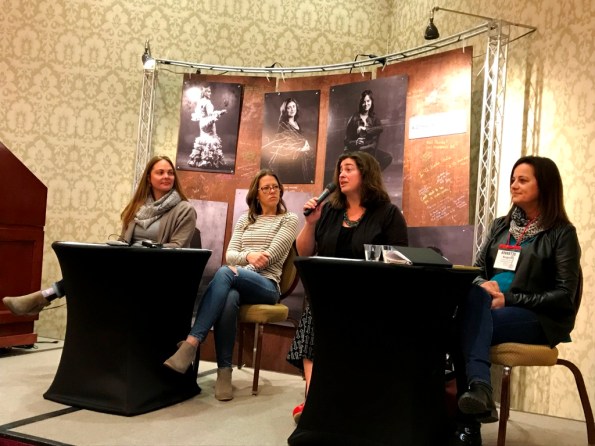
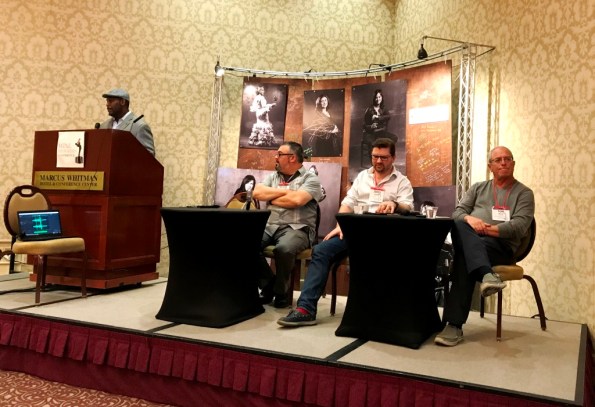
Day 2: The actual conference program started. One of the main morning highlights was the panel discussion by the 4 of the Walla Walla winemakers, talking about terroir, canopy management, and stories, their personal, real life stories. I also liked the panel of wine influencers, talking about the wine industry, wine writing, and Dos and Don’ts of wine blogging. During lunch, we had an opportunity to taste wines from the Cascade Valley Wine Country, where one particular wine, WineGirl Wines Red blend left a mark with me – a standout, flawless, round, and beautiful.
After lunch, I went with a group of friends to taste delicious Oregon non-Pinot wines from Troon Vineyards Applegate Valley, as presented by WBC veteran, Craig Camp (I believe Craig didn’t miss a single WBC event). We got back to listen to the keynote by Lewis Perdue, the founder of Wine Industry Insight publication, who was focusing on a seemingly simple concept – Trust – and the tenets of good writing.
Next session was one of my traditional favorites – Live Wine Blogging for red wines, and once that was over, we all left for the dinners at mystery wineries (nobody knew where they are going), with our mystery winery being Canoe Ridge. Do you think this was enough for a day? Wrong. It is never enough – the last part of the program was so-called “after party”, where we tasted lots more wines (attendees are invited to bring wines to share with the others for this late night session). My highlights from this late-night tasting were Chardonnay and Cabernet Sauvignon from Smith-Madrone and iOTA Cellars Oregon Pinot Noir vertical (2013, 2014, 2015). Whew, time to sleep.
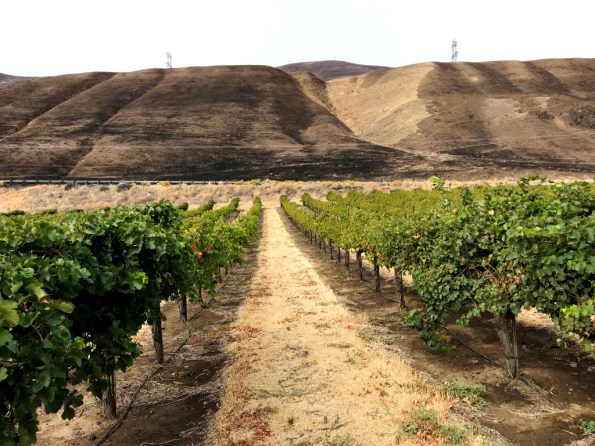
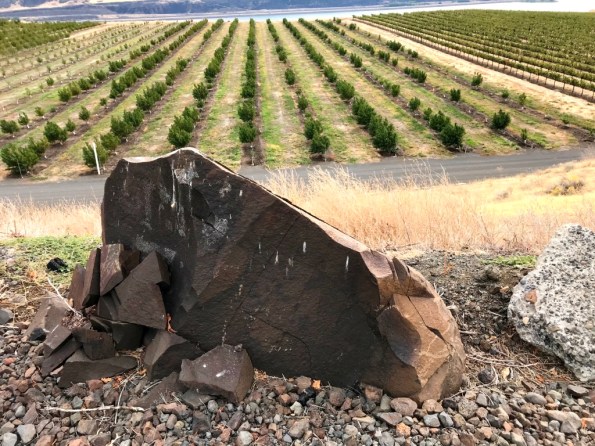
Day 3: The day started from learning about the location of the Wine Bloggers Conference 2019 – Hunter Valley in Australia, October 10-12, 2019. This sounds ultra-attractive – and equally impossible (in my own world). After a few of the breakout session, we went out for lunch at the Walla Walla tasting rooms which we had an opportunity to select the day before – my choice was Otis Kenyon Winery. Next was the session called Bubbles and Bites, a sparkling wine and food pairing lesson presented by Gloria Ferrer. Right after that, we had an in-depth lesson about European Cheeses. Up next was the “Lightning talks” session – 5 minutes presentations by the fellow bloggers with the slides rotating every 15 seconds. Wine Live Blogging session for whites and Rosé closed the main conference activities – which left us with the wine dinner with the vintners from Walla Walla. At the dinner, I fell in love with the wines from Revelry Vintners, which were simply stunning, and also enjoyed a few wines from Bergevin Lane. And then … yes, of course, another late night session (someone had to drink all that wine, right?)
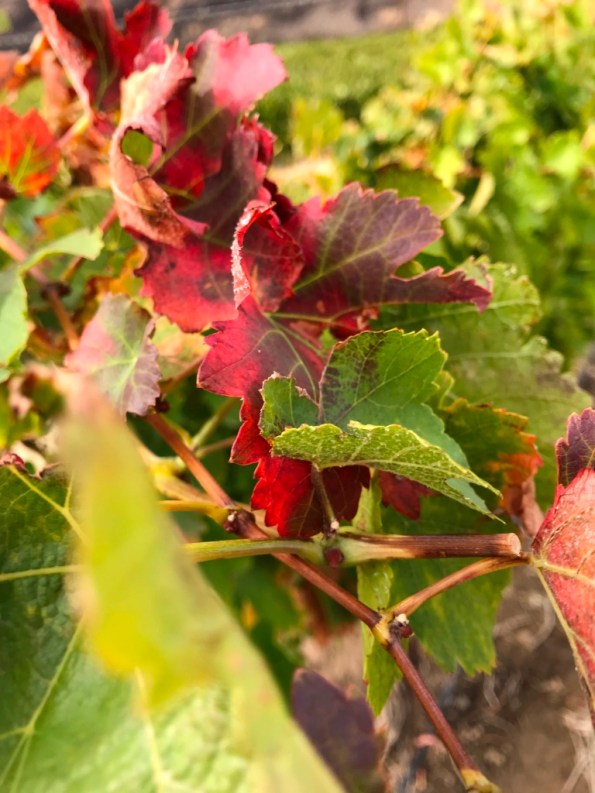
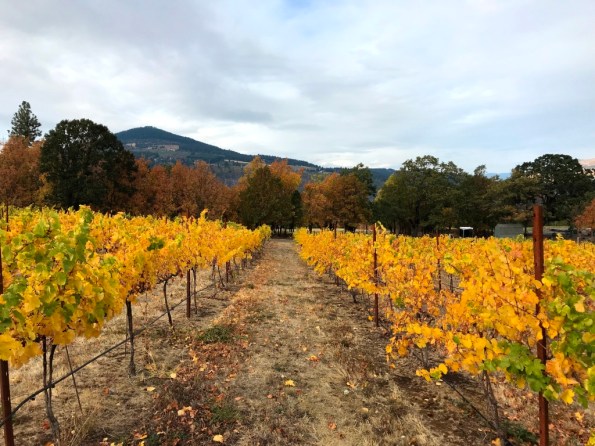
Day 4: The conference was officially closed, but – there were post-conference excursions. I visited Maryhill Winery in Walla Walla, and Cathedral Ridge Winery in Oregon, both offering spectacular views and delicious wines.
The End.
Here it is – my abbreviated report of the WBC18 activities. Speaking strictly for myself, I greatly enjoyed the conference – the place, the wines, people and conversations – everything work together very well to create a memorable experience. If you never attended the conference – do you want to attend one now, after reading my report? If you are a “regular”, what are your thoughts about WBC18 and will we see each other in Australia? Cheers!
Blending Art and Wine – Galer Estate in Eastern Pennsylvania
 Do you like surprises? It depends, you say? Okay, let me rephrase: do you like pleasant surprises? Of course, you do – and so do I.
What’s up with this “surprises” prelude? Simple – was prompted by the recent experience in Eastern Pennsylvania – at Galer Estate Vineyards and Winery.
With the fear to sound obnoxious (feel free to stamp “snob” and stop reading), I have to say that East Coast wineries are a hit and miss experience. I’m sure this is not just an East Coast phenomenon, but here I experienced it enough to state it. When visiting the winery, I’m looking for the “full experience”. I want the winery to have an ambiance, to have a soul. To me, the wine is a thing of comfort, and this is what I want to experience when I come to taste the wine. I don’t care for glitz and glamor, I don’t care for all the little “look how many cool and utterly useless things you can buy here”. The winery to me is all about a comfort and pleasure, and, most importantly, the real, good, tasty wine.
Oh, and one more thing to add – a conversation, conversation with the person who pours the wine into your glass. I don’t want to be pontificated upon (recent experience at Akash winery in Temecula was beyond terrible), I don’t want to be ignored (“I don’t know anything, I’m just here for a weekend job, here is your wine”). I want a person who pours the wine to share their passion and pride – it makes wine tasting a lot more enjoyable.
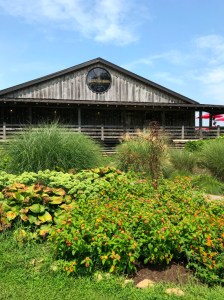
I’m happy to say that we had this exact “full experience” on the recent visit to Galer Estate. While the winery, located just a stone throw away from the Longwood Gardens (actually, while driving to the winery, I thought I made a mistake and will simply get inside the gardens instead of the winery), started only about 10 years ago, it looks like it had been there for centuries. It is rustic, it perfectly blends into the surroundings, and it is beautifully decorated – I’m sure the fact that Lele Galer, the co-owner of the winery, is an artist, comes to play here.


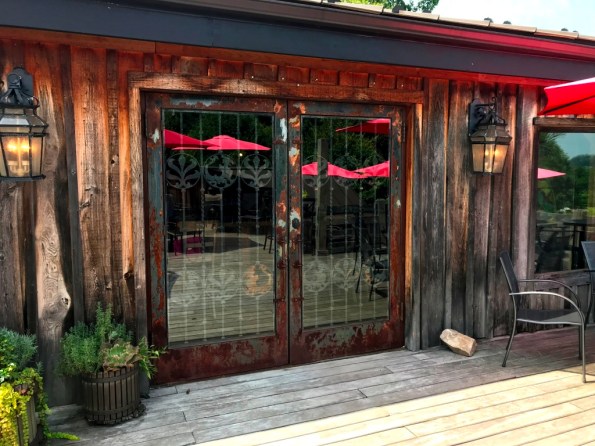
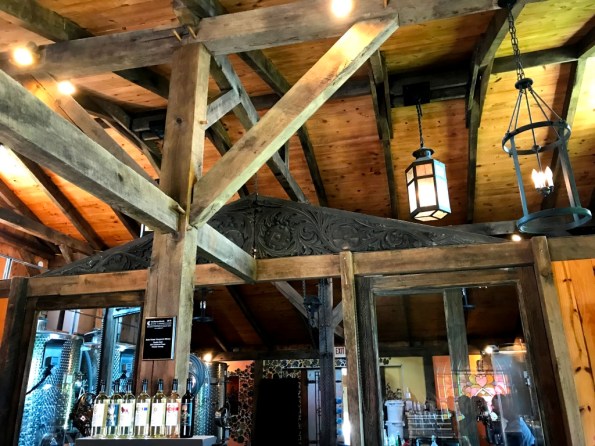


The doors of the tasting room had been brought from France, some of the panels are from Italy, stained glass windows are from the midwest USA. The view of the Chardonnay vineyard from the tasting room is beautiful, and all those little details together create the right ambiance for the tasting.
The Galer Estate owns two vineyards, and when necessary, they bring grapes from other vineyards, but all the grapes are still local, coming from the vineyards within 30 miles radius, all located in the Chester County. The selection of grapes is quite eclectic – it was my first time trying Grüner Veltliner and Albariño from the East Coast. Here is what we tasted:


2017 Galer Estate Grüner Veltliner Chester County Pennsylvania ($25) – fresh nose, beautiful grassy palate, great acidity. 8-, excellent effort.
2017 Galer Estate The Huntress Vidal Blanc Chester County Pennsylvania ($25) – Excellent, restrained, nice balance of white fruit, good acidity, elegant. 8, one of the best renditions of Vidal Blanc I ever had.
2016 Galer Estate Red Lion Chardonnay Chester County Pennsylvania ($18) – gunflint on the nose, crisp, green apples, lemon, clean. 8, excellent wine. I’ll take a gunflint on my Chardonnay at any time, and was literally ecstatic to find it here.
2017 Galer Estate Albariño Chester County Pennsylvania ($35) – excellent, varietally correct, touch of perfume on the nose, mineral lemon notes on the palate. 7+, Unique and different – East Coast Albariño, not the wine you can expect to find here.
2015 Galer Estate Chardonnay Reserve Chester County Pennsylvania ($32) – not my favorite – I’ll leave it at that. May be a “sleeper” bottle?
2017 Galer Estate Pinot Noir Rosé Chester County Pennsylvania ($30) – practically no color in the glass. I would prefer a Rosé with more extraction. Not my favorite
2016 Galer Estate The Huntress Red Blend Chester County Pennsylvania ($30, blend of Cabernet Franc, Carmine, Petit Verdot) – excellent, clean, cassis on the nose, cassis and raspberries on the palate. Soft, good balance. 8-, an added bonus – a new grape, Carmine – the grape (a blend of Cabernet Sauvignon and Carignan) was specifically designed to withstand the cold of the East Coast.
We had a great time while tasting, as our host was knowledgeable and engaging. It was also great to have lunch right in the cellar room – it was too hot to sit outside, so after the view of the vineyards, the view, and mostly the smell, of the tanks might be the most exciting for the wine lovers.
And of course we had an opportunity to snap some pictures of the vines and grapes:


Here you are, my friends. If you are visiting Longwood Gardens in Kennett Square, which is one of my most favorite places, put aside some time to visit the Galer Estate. Considering the full experience, this was one of the very best East Coast wineries I ever visited. And even if you have take a special trip over, you will not regret it. Cheers!
Versatility of Paso
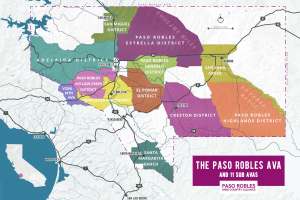
Source: Pasowine.com
When a typical wine consumer hears the words “California wine” what is the first thing which comes to his or her mind? I would bet that in 9 out of 10 cases, the first thought is: “Is this wine from Napa?”.
Yes, Napa Valley is the king, but the California wine landscape is a lot bigger. Today, I want to talk about a different California wine region – one of the oldest, and probably, the most versatile – the region originally known as El Paso de Robles, “The Pass of the Oaks”, which today is typically called Paso Robles, and sometimes passionately abbreviated just as “Paso!”.
At the beginning of the 1880s, Zinfandel plantings appeared in Paso Robles. For a while, Zinfandel was really “it”, adding some of the most famous vineyards, such as Dusi and Pesenti at the beginning of the 1920s. At the beginning of the 1960s, Cabernet Sauvignon, Chardonnay and Pinot Noir arrived to the region, followed by first plantings of Syrah in the whole state of California in 1970s. From there on, the region (Paso Robles AVA was established in 1983) moved forward to collect numerous accolades of Wine Region of the Year, Best Vineyard in the world and others. Today, Paso Robles has 11 sub-appellations, more than 40,000 acres of vineyards and more than 200 wineries, growing more than 40 grape varieties, from Bordeaux greats to Rhone and to Spanish varieties – and did we mention Zinfandel yet?
“Versatility” is really the key word when it comes to Paso. First, there is a great diversity of the terroirs, with 11 well-defined sub-appellations (you can see them on the map), stretching from just 6 miles away from the Pacific Ocean on the west to the mountains on the east – and let’s not forget that while only 40,000 acres are under vineyards, the whole Paso Robles appellation is more than 600,000 acres, which is about three times of size of Napa Valley AVA. Such a great diversity of microclimates is very conducive to the wide variety of grapes made into the world-class wines all around the AVA. Let’s see how many times you will nod when I will mention some of the Paso Robles greats: Saxum Vineyards, making some of the best in the world Syrah; how about Zinfandel from Turley and Carlisle, some of the best of the best in the world of Zin; Tablas Creek – one of the Rhône pioneers in the area; Justin Winery, with their delicious Bordeaux blends – Isosceles, anyone?; Dracaena Wines – Cabernet Franc fanatics; Field Recordings – truly a personal favorite, making everything from Chardonnay to Pinot Noir to Chenin Blanc to Cabernet Sauvignon and Cabernet Franc to Petite Sirah, Sangiovese and Valdiguié – and all deliciously well. So, how is this list to you?
 Let me take this conversation one step further and share with you some of my latest discoveries from Paso Robles:
2015 Halter Ranch Grenache Blanc Paso Robles Adelaida District (13.3% ABV, $28, 80% Grenache Blanc, 14% Picpoul Blanc, 4% Roussanne, 2% Viognier)
Light golden color
Medium intensity lemon nose, hint of jasmine flowers and lots of granite with a touch of gunflint lots of minerality – on the nose, it is minerality driven wine.
The palate is acidity-driven, fresh, crisp, bright, lemon, a touch of grass, and a distant hint of plumpness – the wine will show differently as it will warm up.
Drinkability: 8, delicious from the get-go, lots of energy
2014 J. Lohr Hillside Cabernet Sauvignon Paso Robles (14.8% ABV, $35, 90% Cabernet Sauvignon, 6% Petit Verdot, 4% Cabernet Franc, 18 months in 60% new French oak)
Dark garnet, almost black
Licorice, sage, dark chocolate, coffee, roasted meat, minerality on the nose
The palate is savory, bright acidity, blackberries, more licorice, coffee, medium plus body, lots of energy in every sip, dark and concentrated.
Drinkability: 8-/8, softer and rounder next day, showing up some cassis.
2014 Treana Red Paso Robles (15% ABV, $45, 75% Cabernet Sauvignon, 25% Syrah, 17 months in French oak, 70% new)
Dark garnet with a purple hue
Concentrated cherry pit and some funk initially, noticeable green bell pepper – or was it corked?
The bright palate, good amount of savory fruit with licorice, blueberries and cassis, noticeable sapidity, medium to full body, good acidity, nice balance
Drinkability: N/R. This was not a bad wine, but there was an annoying component in the taste profile, which gave a borderline corked impression and was adding sharpness to the wine – also it didn’t subside. I need to try this wine again to have an opinion.


2014 Aaron Petite Sirah Paso Robles (15.6% ABV, $48, 88% Petite Sirah, 12% Sirah, 22 months on lees in 50-60% new oak)
Black color. Just black with a touch of dark garnet hue on the rim.
Nose most reminiscent of a nice espresso, with a touch of vanilla. Swirling opens up some blackberries and massive, colored legs (I always thought the color in the legs is the trait of Syrah, but apparently, Petite Sirah has the same).
The palate is dense, concentrated, roasted meat with some coffee and blueberries, nice pronounced acidity, velvety texture. Massive wine, but surprisingly approachable.
Drinkability: 8, would be amazing with the steak.
2015 Peachy Canyon Westside Zinfandel Paso Robles (14.5% ABV, $22, 78% Zinfandel, 11% Petite Sirah, 7% Alicante, 2% Tannat, 2% Syrah, 16 months in 30% new oak barrels)
Dark garnet
Pleasant aromatics, medium plus intensity, Chinese five spice
A touch of tobacco, good acidity, expressive tannins. Needs time
3 days later – wow, dramatic difference. I simply put this wine aside with a cork, without pumping the air. Significantly improved aromatics, tobacco, blackberries, hint of caraway seed. The bright and round palate, cherries, great interplay of acidity. I never thought I would say this, but it seems a lot more of an Italian Primitivo style also with the back end minerality. Happy wine for sure – I can finish the bottle by myself. Drinkability: 8 (day 3)
2015 Eberle Steinbeck Vineyard Syrah Paso Robles (14.8% ABV, $28, 100% Syrah, 18 months in 50/50 American/French oak)
Dark garnet
Closed nose from the get-go, the palate shows some dark fruit, a touch of vanilla, but not much more. Second day (just re-closed without pumping the air out) – what a difference! Dark fruit on the nose, supple berries on the palate, a touch of pepper, round, medium to full body, good acidity, overall delicious.
Drinkability: 8 (second day)
What do you think – did I prove my point about the versatility of Paso Robles? What are your favorite Paso producers and wines? Cheers!
Drink Local: Texas, Georgia, Walmart
Whenever I travel, whether for work or leisure, I always love to try local wines – adding an occasional winery visit is a cherry on top, for sure.
Drinking local had been a habit for a long time (here are some posts if you are interested in my past discoveries), and I have to say that more often than not, the curiosity is rewarded handsomely, with tasty, unique and different wine discoveries.
At the end of June, I was in Texas, and of course, I wanted to taste the local wines. I didn’t have time to visit a supermarket, so to my delight, I found a full line of Texas wines at the happy hour at the Residence Inn hotel where I was staying. All the wines where from the winery called Messina Hof, which, according to the website, is a very prolific producer, offering 70 different wines – well, everything is bigger in Texas, right? Here is what I had an opportunity to try:


2017 Messina Hof GSM Texas (14%ABV, 52% Syrah, 35% Mourvedre, 13% Grenache) – earthy aromas, cherries, good acidity, tart blackberries, good structure, excellent overall. 8-
2016 Messina Hof Reflections of Love Private Reserve Texas (13.5% ABV, Merlot based blend?)
Touch of eucalyptus and dark fruit on the nose
Perfectly clean, varietals correct Bordeaux with cassis, well integrated tannins, crisp structure, excellent overall. 8
2016 Messina Hof Pinot Noir Private Reserve Texas (13.5% ABV) cherries on the nose, good cherries and and plums on the palate, well integrated, well balanced, medium plus weight, round, smooth. Not necessarily a traditional Pinot Noir rendition, but well enjoyable. 7+.


The only supermarket I managed to find the time to visit while in Texas was the one at Walmart. There was no Texas wine there (sad, but rather expected), but I couldn’t leave empty-handed, couldn’t I? I settled on two wines, both of which I picked solely on the basis of a cool label (yes, sorry, you can make as much fun of me as you want – I did like that critter label with the duck) and the price. I have to tell you that I actually got lucky, and ended up with two very decent wines:
NV Lucky Duck Shiraz South Eastern Australia (13% ABV, $3.99) – yes, simple, but very clean and nicely balanced. Good but not overbearing amount of red and black fruit, good acidity, warm spices. Medium body. Pleasant and easy to drink, outstanding QPR. 7+
2016 Prophecy Sauvignon Blanc Marlboro (12.5% ABV, $8.99) – unquestionably a New Zealand Sauvignon Blanc, while surprisingly restrained. Fresh, Crisp, cassis undertones, touch of tropical fruit and fresh cut grass, Meyer lemon notes, clean acidity. Excellent QPR. 8-
At the end of July, I had an opportunity to spend a weekend in Atlanta. I didn’t have much time, but still managed to squeeze in a quick visit to the local Total Wines, which, to my delight, carried the selection of the local wines:
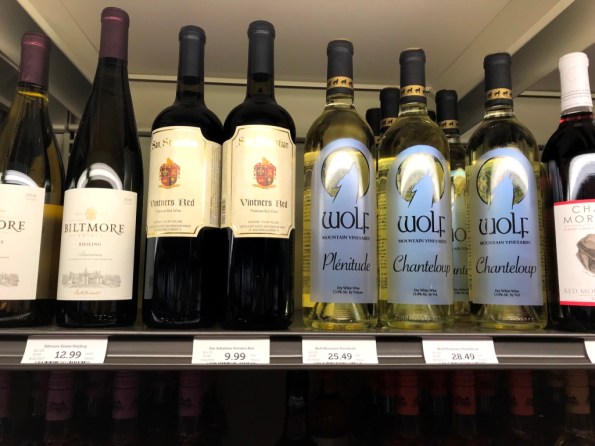

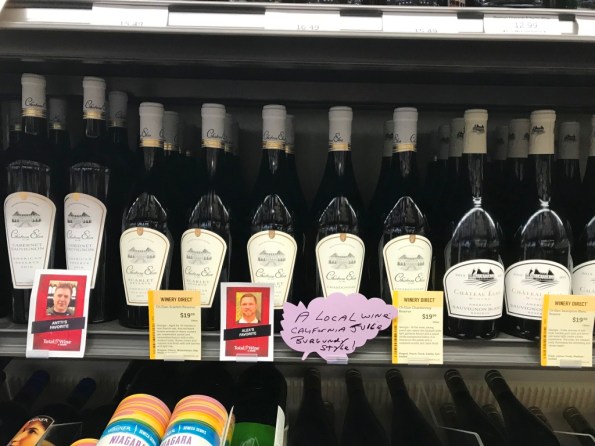
Many of the wines were either fruit wines or pointedly sweet wines, however, I managed to find the Château Élan wines, which promised to be dry, and were priced in the category I consider “reasonable” (at $19.99). Here are the notes for the wines I got:


2015 Château Élan American Sauvignon Blanc Reserve Georgia (13% ABV, $19.99)
Light golden
Touch of gunflint on the nose, herbal profile
Very unique and different on the palate compare to most of the Sauvignon Blanc wines. Green apple, tart lemon acidity, clean, fresh.
8-, more reminiscent of Chardonnay than Sauvignon Blanc – well drinkable and delicious overall.
2016 Château Élan American Cabernet Sauvignon Reserve Georgia (14.5% ABV, $19.99)
Dark garnet, almost black
Classic Cabernet all around – nose is open and inviting, with a touch of casis and mint
same on the palate – dark fruit, cassis, fresh cherries, medium+ body, soft tannins, good acidity and overall good balance.
8-, very quaffable
I wish I had an extra few hours to visit the winery, which I understand is located about an hour away from Atlanta, but this will have to wait until the next visit. In any case, I get to update my “wines of 50 United States” page with one more check-mark :).
That’s all I have for you, my friends. Any local discoveries you want to share? Cheers!
Last Bottle Sign Up ($10 credit)




 Talk-A-Vino