Archive
Wednesday’s Meritage – Photo Quiz Answer, What to Drink In Casual Restaurant, Cost of Everyday Wine, Restaurant Wine List 101
Meritage time!
Last Saturday, instead of a traditional wine quiz, we had rather a photo quiz – I came back from San Diego, and asked if you can figure out what was pictured here:
 Of course the question seems easy when you actually know what it is, but in reality – probably not so much. Two people came very very close to the right answer – mimi suggested that this is a picture of the ship, and vinoinlove offered a “San Diego Harbor” as his guess. What you see in this picture is a reflection of the boats in the San Diego harbor. The picture is “undoctored”, no photoshop or anything, it is just the reflection of the boats standing in the dock. Here is the picture where you will see both the boats and the reflection – it attracted my attention first, and then I realized that the reflection would make it into a perfect picture on its own:

Boats on the Marina, San Diego
As this was still a quiz, I would like to declare both mimi and vinoinlove as winners! Great job!
Here are few more pictures from the San Diego trip which I hope you will enjoy:
Now, to the interesting stuff around the vine and the web!
Let’s start with an interesting analysis of the wine selection at the casual restaurants. When you go to the places like Olive Garden, Ruby Tuesday or Red Lobster, wine is probably not on top of your mind. However, all of those restaurants offer the wine lists, and W. Blake Gray took upon himself to analyze them by using the information available on the restaurant web sites, to see what is good, what is bad, what makes sense and what doesn’t. I don’t want to spoil it for you, but it is interesting to see that Chateau Ste. Michelle Riesling is one of the best common white wines among 4 different wine lists analyzed. I think this is an interesting read, so for all the details I suggest that you will take a look at the post here.
If you remember, last week I brought to your attention an interesting analysis of the prices of the wine which people would consider to be acceptable for the everyday wines. The post had a survey in it, which by now concluded, and based on the results of that survey the most popular price range for the everyday wines is … $5 to $12! This is how I voted, and this is exactly what I expected – but for more details and the analysis of the voting results, please visit the original blog post here.
Last for today, continuing the subject of restaurant wine lists, here is an excellent in-depth discussion of the restaurant wine lists done by one of my all time most favorite wine writers, Matt Kramer. Matt provides rationale for the wine lists to be composed the way they are, and also makes a suggestion on how you can navigate any wine list to find what you want to drink at the price you will be willing to pay. Definitely worth your attention, if you ask me.
And we are done here. The glass is empty – but the refill is on its way! Cheers!
Wednesday’s Meritage – Wine Quiz Answer, Cost of Everyday Wine, National Chardonnay Day, What the MS Do?
 Meritage time!
Let’s start with the answer to the wine quiz #103, Grape Trivia – Blends, Part 3.
For the long time, the grape trivia series was focused on the single grapes. But now we are stirring things up, so all the questions in the quiz are about blends (well, even if it is a blend of one ), as most of the wines in the world are actually blends. This quiz’s focus was on the red grape blends, and as usual, it consisted of 5 questions.
Here are the questions, now with the answers:
Q1: As you know, Merlot is one of the Bordeaux stars. Below are some of the best Merlot wines Bordeaux can produce, but only some of them are made from 100% Merlot. Do you know what wines are those?
a. Château Le Pin, b. Château Petrus, c. Château Hossana, d. Château Certan Marzelle
A1: It really wasn’t a tricky question – I believe if you carefully read the question itself, it should be clear that more than one answer is possible. Another reason that this was not a tricky question is that two Châteaux from that list of four are growing only Merlot grapes thus they never produce a blended wine. So the correct answer is a and d – both Château Le Pin and Château Certan Marzelle grow only Merlot grapes thus their wines are always made out of 100% Merlot.
Q2: What is common between the following 3 Bordeaux producers: Château Trotte Vieille, Château Belle Assise, Château Le Bel
A2: While very unique and different for Bordeaux, all three of these Châteaux produce wines made from 100% Cabernet Franc grapes.
Q3: Wine lovers around the world are well familiar with so called GSM wines and their great range of expression, coming from Rhone valley in France, Australia, US and may other places. If we are to replace the Syrah in GSM blend with the Cinsault, which will produce powerful, dense, concentrated, long living red wines, where do you think such a wine most likely will come from? You need to name not just the country, but the exact region in order to get a full point here.
A3: Bandol! Mourvèdre grape is the star in Bandol, with Grenache and Cinsault often added to the blend, thus we can say that the abbreviation for the Bandol blend should’ve been MGC.
Q4: Sangiovese is a star grape of Italy, used in many regions and producing great range of wines. Montepulciano is another well known red Italian grape, most often associated with juicy, delicious and versatile wines made in the region of Abruzzo. If the wine is made as a blend of Montelpuciano and Sangiovese, often in 50/50 proportions (doesn’t have to be always 50/50), can you name the region where these wines would most likely come from?
A4: Rosso Piceno is the red wine from the Region Marche which is often made out of the 50/50 blend of Montepulciano and Sangiovese.
Q5: Below is the [partial] list of grapes which I personally call “Power Grapes” (I’m contemplating the blog post under the same name for a while). When used on their own (at a 100%, no blending), these typically black-skinned grapes produce powerful, dense, extremely concentrated wines, often with gripping tannins. For each grape below, can you identify the region(s) and the country(ies) making best known wines from those grapes? You don’t have to name all countries and the regions, one per grape is enough:
A5:
a. Alicante Bouschet – Alentejo in Portugal, Valencia in Spain
b. Sagrantino – Sagrantino is the unique grape in Montefalco DOCG in Umbria, Italy.
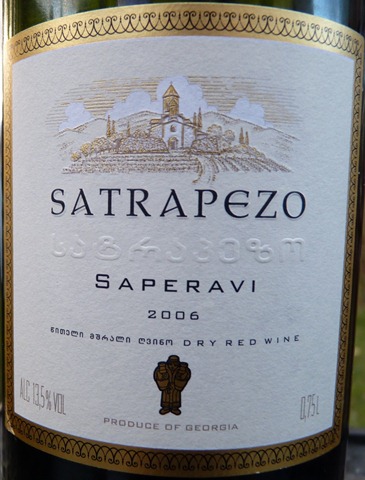
c. Saperavi – Georgia. Actually Saperavi has a wide range of expression, but it is very much capable of producing extremely dense and concentrated wines.
d. Tannat – Madiran in France and Uruguay
e. Vranec (or Vranac) – Macedonia and number of other Balkan countries.
When it comes to the results, all the respondents voiced their concern with the level of difficulty of the quiz. It was definitely unintentional, but I still can’t promise that “I wouldn’t do it again”. Anyway, the Wayward Wine came the closest to the winning with 4 correct answers out of 5, and I would like to acknowledge both asueba and vinoinlove for their great effort. Well done everyone!
Now, to the interesting stuff around the vine and the web!
First, I want to bring to your attention an interesting post and the poll at the Wine Curmudgeon blog, pondering at [almost] an eternal question – how much the everyday wine should cost? Yes, of course it all depends, but assuming that you drink wine as it gives you pleasure, what do you find to be a reasonable price of the bottle of wine? In this post, you will find both an analysis and the poll to share your opinion. The poll will be closed on May 22 and the results will be published on May 24th, so make sure to have your say before.
What kind of wine to you plan to open on Friday, May 23rd? Well, you can open any wine, with one condition – it have to be the Chardonnay! On Friday, May 23rd, we will be celebrating the National Chardonnay Day, so it is obvious that Chardonnay for Friday is in order. California, Virginia, Washington, New York, Chile, New Zealand or Burgundy – you got plenty of choice and no excuses not the celebrate the noble white grape.
[Updated after the original post date] It appears that it is Thursday, May 22nd that is an actual date for 5th Annual #ChardonnayDay celebration. As explained by Rick Backas, who started the celebration, the #ChardonnayDay is always celebrated on the last Thursday before the Memorial Day holiday in US, which this year is on the May 26th, thus #ChardonnayDay falls on the 22nd. My take? You get to drink Chardonnay for two days now. Yay!
Last for today, an interesting article by W. Blake Gray, conversing on the subject of the MS and what they do. As you can guess, considering that this is the wine blog, MS stands for Master Sommelier, one of the most educated group of people in the world of wine (at the moment, there are only 214 MS in the world). The blog post analyzes how many of the Master Sommeliers actually work the floor and help people to have best possible wine experiences in the restaurant. Take a look the post, it is an interesting read – and, as usual, don’t forget to read the comments section.
And we are done here. The glass is empty – but the refill is on its way! Cheers!
Wednesday’s Meritage – Wine Quiz Answer, Fake Wine Again? Noooo, US is #1!, Douro Greatness

Krug Grand Cuvee Brut
Meritage time!
Let’s start with the answer to the wine quiz #102, Grape Trivia – Blends, Part 6.
For the long time, the grape trivia series was focused on the single grapes. But now we are stirring things up, so all the questions in the quiz are about blends (well, even if it is a blend of one ), as most of the wines in the world are actually blends. This time, the focus of the quiz was on bubbles. As usual, there were 5 questions in the quiz.
Here are the questions, now with the answers:
Q1: French sparkling wines produced outside of the Champagne region are generally called Crémant. Today, the Crémant wines are produced in most of the well known regions in France, each region imposing its own requirements on the winemaking techniques. For one of sparkling wines below, if it is identified as Crémant Blanc, it is required for at least 50% of the grapes to be Chardonnay. Do you know which wine has this requirement?
a. Crémant d’Alsace, b. Crémant de Bordeaux, c. Crémant de Bourgogne, d. Crémant du Jura
A1: d, Crémant du Jura – According to Crémant du Jura AOC requirements, Crémant du Jura Blanc should be made with the minimum of 50% Chardonnay grapes.
Q2: Among other reasons, complexity of sparkling wines comes from the extended time the fermented juice have to stay in contact with the yeast (it is also called aging on the lees). Sort the list of the sparkling wines below based on the minimum time required for the non-vintage wine to be aged on the lees, from the longest to the shortest:
a. Cava, b. Champagne, c. Franciacorta, d. Trento
A2: The right sequence is Franciacorta (18 month), Champagne and Trento (both 15 month), Cava (9 month)
Q3: Dom Pérignon, a benedictine monk, largely considered to be the father of Champagne, had a very significant impact on creation the Champagne as we know it. From the list below, what do you think was Dom Pérignon’s major claim to fame?
a. He created the Champagne bottle, b. He discovered the Méthode Champenoise, c. He created the riddling table, d. He mastered the art of blending to improve the taste of the resulting wine
A3: Most of the stuff surrounding Dom Pérignon is made for legends, but there is some level of consensus that he was the first person to perfect the art of blending, so the correct answer is d.
Q4: Below is the blend composition of the sparkling wine – can you name it?
Chardonnay, Chenin Blanc, Mauzac
A4: Blanquette de Limoux in Languedoc is using all three grapes. Technically, it can be also a Crémant de Limoux – again, I should’ve phrased the question better to avoid a possible double-answer. Still learning.
Q5: As tomorrow is the Mother’s Day in US, here is probably an open ended and debatable question, but: Who would you call the Mother of Champagne and why?
A5: As I said, this can be debatable, but my choice would be Barbe-Nicole Clicquot Ponsardin, also known as Madame Clicquot, who pioneered drier Champagne style and invented the riddling table, thus enabling commercial production of Champagne.
When it comes to the results, we had excellent participation and we have the winners! Gene Castellino (no web site), Jennifer Lewis (no web site) and Jeff the drunken cyclist all answered 5 questions correctly and thus they are the winners of this wine quiz round and get the prize of unlimited bragging rights! All of them also provided excellent, very detailed answers – very well done!
Now, to the interesting stuff around the vine and the web!
It is truly mind boggling to see the level of wine fraud increasing together with the popularity of the wine in the world. Dr. Vino has a number of latest and greatest updates to support this “mind-boggliness”. First of all, you can learn that Kurniawan’s lawyers are trying to appeal his “guilty” verdict based on the facts that he loved wine and his victims were rich! I can’t even comment any further here, the level of absurdity is more than I can tolerate. Then Dr. Vino brings up the article in Decanter magazine, where you can find out about fake Bordeaux being made on the offshore boats in China. Lastly, another very recent development involves The White Club, an exclusive $25K membership outfit centered around luxurious and … fake wine! Again, for all the mind-boggling details, here is your link.
United States in #1 wine consuming country in the world! There is a good chance that you already read this, as this urgent news update is coming through all the wine-related news outlets, but in any case, according to just published data for 2013, United States is now the #1 wine consuming country in the world, by total volume (not per capita). It is also interesting that consumption in US increased, while the wine consumption in the world was down 1.7% in 2013. I will let you read all the detailed numbers on your own – here is an article from Jancis Robinson web site, and here is the one from Wine Spectator.
While everybody know Portugal as The Port Producer in the world, I think Portugal is actually the rising star in the world of the regular, non-fortified wine. I’m glad to see that I’m not alone, as Matt Kramer, probably my favorite wine writer, shared his excitement about Douro wines in his feature column in Wine Spectator. I wouldn’t help anyone by trying to recite what Matt Ktramer wrote about the Douro wines, so I would highly recommend you will read his article on your own – it is definitely worth your time. But I would gladly accept any comments you might be willing to share on the subject – please don’t be shy.
And we are done here. The glass is empty – but the refill is on its way! Cheers!
Wednesday’s Meritage – Wine Quiz Answer, WTSO Cheapskate Marathon, #MWWC9 Vote, Algeria Wine and French AOC
 Meritage time!
Let’s start with the answer to the wine quiz #101, Grape Trivia – Blends, Part 5.
For the long time, the grape trivia series was focused on the single grapes. But now we are stirring things up, so all the questions in the quiz are about blends (well, even if it is a blend of one ), as most of the wines in the world are actually blends. As usual, there were 5 questions in the quiz.
Here are the questions, now with the answers:
Q1: White wines of this region are considered to be some of the best white wines in the world, and they are made out of the blend of Marsanne and Roussanne grapes. Do you know what region is that?
A1: Hermitage. A region in Northern Rhone, which produces magnificent, long living white wines from Marsanne and Roussanne grapes.
Q2: These wines, made out of primarily Grenache and Cinsault, sometimes with the addition of Syrah and Mourvedre, can be only made as Rosé. Can you name these wines?
A2: Tavel. Of course when thinking about classic Rosé, Provence probably comes to mind first. But Provence allows production of not only Rosé, but also of both white and red wines. Tavel, on the other hand, while much lesser known to the majority of the wine-consuming public, is one of the oldest AOCs and solely dedicated to the production of only Rosé wines (no other wines are allowed).
Q3: Can you continue this sequence? Explain your answer:
Amarone, Vin de Paille, Vin Santo, ?
A3: This was somewhat of a difficult question. The point of the matter is that all the wines mentioned are made out of grapes which are dried out after the harvest, for at least 3-4 month. So the next wine which can be added here is Valtellina Sfursat, which is a dry wine from Norther Italy, made out of Nebbiolo grape which is dried out before pressing for at least 3-4 month.
Q4: This famous Spanish wine is always made out of the Monastrell and Cabernet Sauvignon grapes. The primary wine typically has 70% Cabernet Sauvignon and 30% Monastrell, and the second label has the blend proportions reversed. Can you name both wines?
A4: El Nido and Clio. El Nido ifs the flagship wine of Bodegas El Nido in Jumilla, which is traditionally made with 70% Cabernet Sauvignon and 30% Monastrell. The second wine from Bodegas El Nido, Clio, is made out of 70% Monastrell and 30% Cabernet Sauvignon.
Q5: What is common between Château d’Yquem and Vega-Sicilia, outside of the fact that both make some of the world’s most famous wines?
A5: Both wineries only produce their flagship wines (Chateau d’Yquem and Vega-Sicilia Unico) in the best years – both have a number of years when the top wines were simply not produced.
When it comes to the results, the participation was a bit less than a few last times. Nobody was able all five questions correctly, so we don’t have a winner. Oh well, there is always the next time…
Now, to the interesting stuff around the vine and the web!
Only a few weeks ago, WTSO glued thousands of people to their computer screens for the day with the Magnum Marathon activities. And now they are doing it again. Tuesday, May 13th, starting at 6 AM Eastern, new wines will be offered at the $7.99 to $18.99 range, every 15 minutes or sooner if the previous wine will sold out. All the new wines will be announced only on Twitter. Free some space in your cellar and make sure your credit card has some spending room too. Happy [value wine] Hunting!
The Monthly Wine Writing Challenge #9 has concluded, and now it is the time to vote. The theme of the challenge was “Fear”, so you can find 25 fearless entries at this link. Once you done reading them, you can vote here. The voting is open from now until Monday, May 12th. The winner will be announced on May 13th.
Ever had or even heard of Algerian wine? Me too. But it turns out that only 50 years ago, Algeria was the … number one exporter of the wine in the world! Just to give you an idea for how well they were doing, Algeria was exporting twice (!) as much as France, Italy and Spain combined! While this was quite unexpected to me, it was still not the most interesting fact related to the Algerian wine industry. What is even more fascinating in my mind, that the French AOC system was largely created to protect the wine consumers in France and around the world from the flood of French-associated wine, which was actually not made in France. I don’t want to recite the whole article, so here are the sources for you where you can learn more. The original article appeared in the Journal of Wine Economics, and then W. Blake Gray provided an excellent “Cliff notes” narration for the same where you can learn all the basic facts – both definitely worth your time.
And we are done here. The glass is empty – but the refill is on its way! Cheers!
J Wrigley #WineChat – Continuing Oregon Pinot Noir Deep Immersion
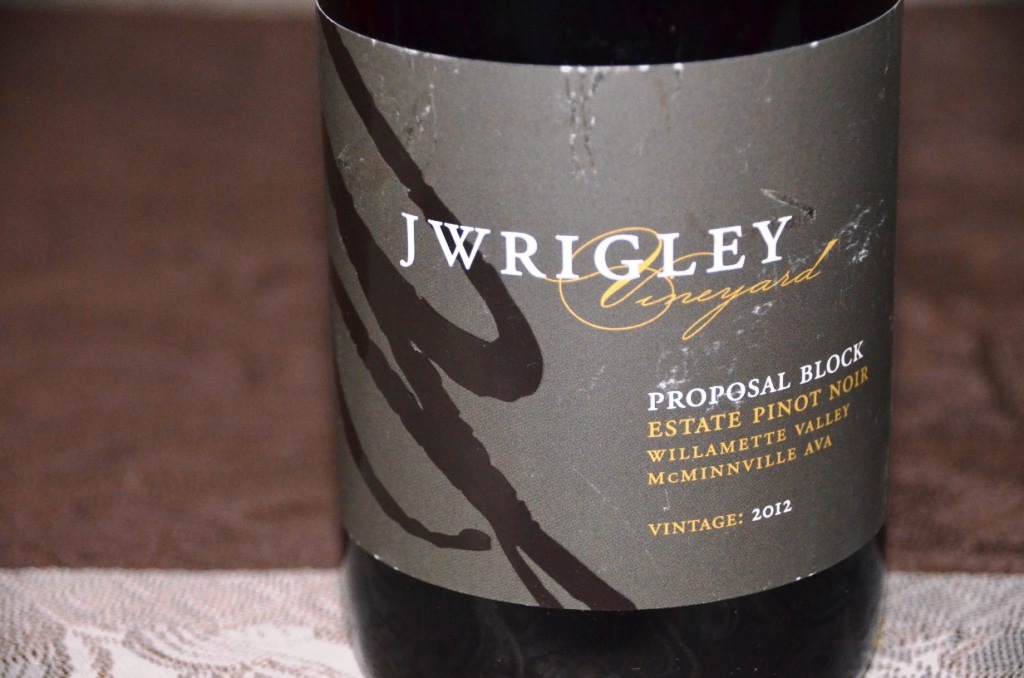 Last Wednesday, April 23, the virtual tasting room opened its #winechat doors to discuss for the third time in the row the endless subject of Oregon Pinot Noir. Presiding over in the hot seat was John Wrigley, the grape grower and winemaker at the J Wrigley Estate in McMinnville AVA in Oregon.
Let me start from the conclusion and tell you what I learned. The terroir, the soil, the elevation, and the winemaker are all matter. Duh, you wanna say? Well, yes, this sounds very pedestrian for the oenophile, like teaching an alphabet to the fifth-grader. However, when you drink the wine made with the soul, when you drink a thought-provoking wine, and when you also get a chance to discuss that thought-provoking wine with the someone who actually made it, and the group of like-minded people, the concept of soil and terroir stops being abstract, and rather becomes something you can…put in your mouth and taste!
We learned a lot during this #winechat. Once again we heard about the peavine soils, which make vines work really hard. We also heard about volcanic rocks and marine sediment soils. You can learn about the soils too – here is the link to the very interesting article about J Wrigley wines, which also includes the video of John Wrigley talking … dirt (not as a matter of speech, but as a substance).
We learned about something called Van Duzer effect. Ever heard of it? A narrow stretch of open land, called Van Duzer corridor, connects Willamette valley to the ocean. Every evening, the cold ocean air runs through that open space to cool off everything in the valley, especially all the grapes growing on elevations. The temperature drop can be in the range of 20°-30°, making grapes to ripen slowly, to retain acidity and concentrate sugars, which in turn means … better wines for us! Here is an article where you can read about Van Duzer effect in far more details.
We also learned about very interesting experiment, called the Cube Project. 3 wineries, 3 winemakers, 9 wines. 3 wineries – Anne Amie from Oregon, Bouchaine from Carneros and Lincourt from Sta. Rita Hills, each took their best Pinot Noir plots, capable of producing at least 6 tons of grapes each, and divided it into 3 equal parcels. Each winemaker had an opportunity to make wines from all three parcels, thus producing 9 different wines. When the wines were tasted by the group of professionals, it was concluded that winemaker style prevails over the terroir – the wines from different plots made by the same winemakers tasted closer than the wines made within the same parcels. I would really love to try all those wines by myself, or at least learn more about how the tasting was conducted – were the wines tasted blind, how many people tasted the wines and the number of other factors would all matter to me. But – as I can’t report first hand, here is a link to the article which explains the experiment in lots of details.
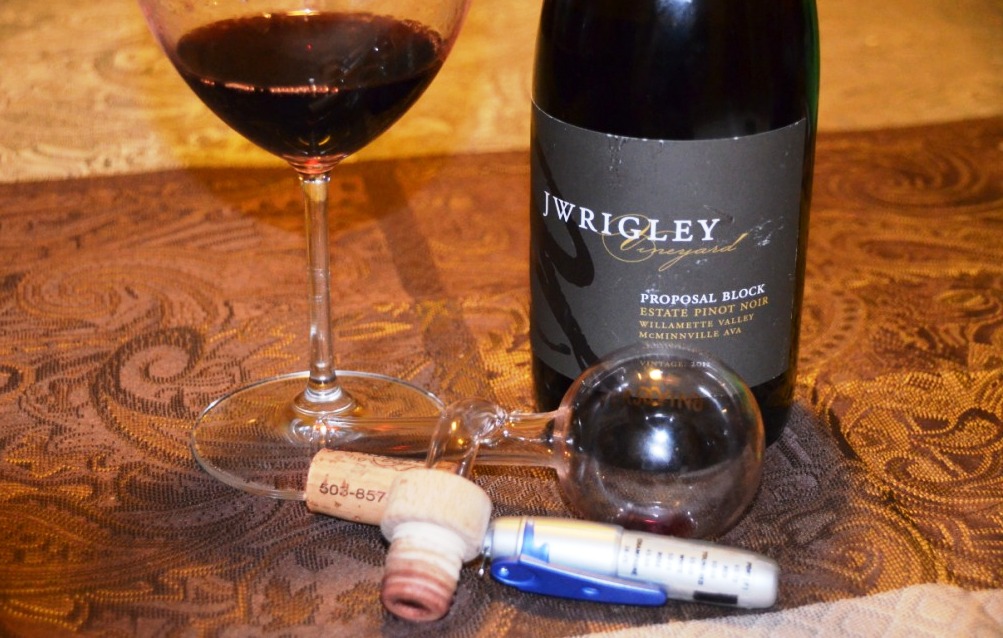
J Wrigley Pinot Noir and tools of the trade
Yes, we learned a lot, but how was the wine, you are probably wondering? This time around, I didn’t play with the temperature, I only measured it once – it was at 22.3°C/72°F. I played a bit with rapid decanting using VersoVino. This 2012 J Wrigley Estate Pinot Noir Proposal Block McMinnville AVA (14% ABV, aged 10 Month in French oak, 250 cases produced. $45 SRP) was very supportive of our conversation. Oh, by the way, can you guess where the name “Proposal Block” comes from? There is a good chance that you guessed it – this was the very first Pinot Noir planted vineyard at the estate, where John Wrigley proposed to his wife (wine and romantics – unbeatable!).
Now, here are some notes regarding the wine:
Color: Garnet
Nose: Fresh, ripe raspberries, floral notes, chocolate, mocha. Smokiness showed up later on.
Palate: Soft, round, good acidity. nice earhiness, dark fruit, very balanced. After a while, smokiness showed up in the back, and the the roasted notes.
Verdict: powerful and balanced Pinot Noir. Will drink well by itself, and can be well paired with food. For the full enjoyment, about one hour decanting is recommended. Will also age well for the next 10-12 years (or may be more, my crystal ball is broken, so I can’t be more precise). Drinkability: 8-
That conclude my report about J Wrigley #winechat and it also concludes the overall Oregon Pinot Noir series – definitely was learning, fun and entertaining experience for me. Don’t be shy – you should really try the #winechat for yourself (every Wednesday, at 9 PM Eastern/6PM Pacific) . Until then – cheers!
Wednesday’s Meritage – Wine Quiz Answer, Wine Blog Awards!, 2013 Bordeaux and Rioja, #winechat tonight
Meritage time!
Let’s start with the answer to the wine quiz #100, Grape Trivia – Blends, Part 4.
For the long time, the grape trivia series was focused on the single grapes. But now we are stirring things up, so all the questions in the quiz are about blends (well, even if it is a blend of one ), as most of the wines in the world are actually blends. As usual, there were 5 questions in the quiz.
Here are the questions, now with the answers:
Q1: True or False: Even if the bottle of wine states the vintage and is made out of 100% of the same grape, there is a very good chance that the wine is still a blend. Explain your answer.
A1: True. Now, this proved to be a very difficult question. Not the “true or false” part of it, of course – but practically nobody (with one exception) managed to provide a satisfactory explanation as to why even if the wine is made out of 100% of the same grape, it is very likely to be still a blend. If wine technical data says that it is made from 100% of Chardonnay, for example, there is no way that any other grapes where blended in. However, have you seen the words “30% malolactic fermentation” or “aged in 15% new French oak barrels”? For the most part, the wine you get in the bottle is the blend – the blend of wines from the different barrels, the blend of wines fermented with different yeasts, or somehow else differently processed. Also (as it was correctly noted in one of the answers), the wine can be made from exact same grape, but be a blend of different vintages (up to 15% allowed in US wines).
Q2: This white grape is known to produce beautiful, delicately perfumed wines. In some appellations in France, it is also the only white grape allowed to be blended into the red wines. Do you know what grape it is?
A2: Viognier. While it makes great wines on its own, it can be blended with Syrah in Northern Rhone or Shiraz in Australia to change the bouquet of the resulting wine.
Q3: What is common between Cabernet Franc, Riesling and Vidal?
A3: All three varietals are used to produce Icewine in Canada.
Q4: Which one is missing?
Rondinella, Corvina, Molinara, ?, Croatina, Negrara, Oseletta
A4: My intended answer was Corvinone, as the grapes listed above are all used in production of Amarone wines. However, I learned quite a bit myself from the answers, and I understand that in Amarone, similar to all other regions in the world, there is an effort to bring back to life many indigenous varieties, thus Forsellina, Pelara and Rossignola would be also all correct answers.
Q5: I’m drinking a delicious French white dry wine, made out of Clairette and Roussane. What AOC designation this wine most likely has?
A5: Châteauneuf-du-Pape. Some of the best white wines in Châteauneuf-du-Pape are made exactly out of the combination of these two grapes. It is possible that such wine would be produced in just a Côtes du Rhône appellation, however, it would be rather expected to see Marsanne as part of the blend, which is a lot easier to produce than Roussanne. However, Marsanne is not allowed in the Châteauneuf-du-Pape wines.
When it comes to the results, I’m very happy with participation in the quiz. However, there was only one full answer for the question #1, which is proven to be most difficult. Thus we don’t have the grand winner(s) this time around, but I would like to definitely acknowledge Gene Castellino (no web site), Julian of vinoinlove and Jennifer (no web site) who all correctly answered 4 questions out of 5. I also would like to acknowledge Steve of Caspernick blog, who provided a good explanation for the question #1. Thank you all for playing, well done!
Now, to the interesting stuff around the vine and the web!
Once again it is the time for Wine Blog Award nominations! This is an 8th annual Blog Awards round, where the best wine blogs are getting their peer recognition. There are 9 different categories for the Wine Blog Awards, so there are plenty of opportunities to get your favorite blogs acknowledged. Here is your link for the Blog Award nominations. And if you like what you read in this blog, I would greatly appreciate your nominations! Note – there are less than 3 days left – nominations are closed on May 2nd, so hurry!
Looks like 2013 vintage didn’t fair too well in some parts of the Europe. Here is an article for you, explaining why 2013 Bordeaux are better be avoided (in a few simple words, it is all about price/performance). Also, 2013 Rioja doesn’t seem to be the vintage to really look forward to – it was rated as “Good” by the Rioja DOC counsel, which is behind “very good” and “excellent” ratings which were given to most of the recent vintages. Of course the things can be worse – there are possible “satisfactory” and “average” ratings, which are even lower than “good”, but those are assigned very rarely. Well, as usual in the average vintages, you need to look for the better producers – as an example, La Rioja Alta Vina Alberdi from 2003 vintage (also rated “good”), was an outstanding wine. Here is the link for the Decanter article where you can read more on the subject of 2013 Rioja.
Last, but not least – new #winechat tonight! This time the subject is the Rhone and Zins of Cline Cellars. I think everybody know Cline Cellars from California as a Zinfandel producer, but looks like we are in for some interesting surprises tonight (Mourvedre, anyone? Marsanne/Roussanne?). To join the #winechat, just click this link at 9 PM Eastern time/ 6 PM Pacific, and you are in! For more information about past and future #winechat events, please use this link for the #winechat FaceBook page. Talk to you tonight!
And we are done here. The glass is empty – but the refill is on its way! Cheers!
Wednesday’s Meritage – Wine Quiz Answer, Wine and Biodynamics, Rioja Week in New York, Water Witching and #winechat tonight
 Meritage time!
Let’s start with the answer to the wine quiz #99, Grape Trivia – Blends, Part 3.
For the long time, the grape trivia series was focused on the single grapes. But now we are stirring things up, so all the questions in the quiz are about blends (well, even if it is a blend of one), as most of the wines in the world are actually blends. As usual, there were 5 questions in the quiz.
Here are the questions, now with the answers:
Q1: Sangiovese is the main grape used in production of Chianti. By itself, sometimes it might lack the intensity of the color. For a while, another grape was added to Sangiovese wines specifically to enhance their color. Can you name that grape?
A1: Colorino. It was popular addition for a short while, but now only very few producers still add it.
Q2: I’m blending together Xarel-lo, Macabeo and Parellada. Which wine I’m most likely making?
A2: Cava – the Spanish sparkling wine. These three grapes are generally a classic blend for a Spanish Cava.
Q3: In the past, this white grape used to be blended into the Chianti wines, and now its use is simply prohibited in some of those Chianti wines. Can you name that grape?
A3: Trebbiano, a.k.a. Ugni Blanc, a.k.a. Malvasia Fina (be careful – just using the name Malvasia is incorrect). It used to be a required grape in the Chianti blend, which was leading to diluted, dull wines. Since 2006, Trebbiano use is banned in Chianti Classico wines.
Q4: You can say whatever you want, but Bordeaux and Burgundy are the hallmarks of wine world, and everybody try to measure up to them. Name two regions in Italy, one sometimes compared to Bordeaux, and another one to Burgundy.
A4: Tuscany is often compared to Bordeaux, and Piedmont, or to be more specific, Barolo wines, are often compared to the Burgundy. While Tuscany/Bordeaux parallel is more of the terroir/climate based, the reason for Barolo/Burgundy comparison lies in complicated Vineyard/Sub-zone/Cru/Parcel system of wine identification in Barolo.
Q5: Name the missing grape: Crljenak Kaštelanski, Primitivo, ?, Zinfandel
A5: Tribidrag. All the listed grapes are close relatives of Zinfandel, with Tribidrag being recently discovered as direct predecessor of Zinfandel.
When it comes to the results, we had a great participation in the quiz, and we have a winner – Julian of VinoinLove, who correctly answered all 5 questions! Julian get the coveted prize of unlimited bragging rights. Also (no web site), Jeff a.k.a.the drunken cyclist and Mario Plazio (no web site) are all answered correctly 4 questions out of 5, and they get the honorable mention. Well done, everyone – and we are going to continue blending things up for a while.
Now, to the interesting stuff around the vine and the web!
Last week’s #winechat was all about Biodynamics – we were talking about the wines of Youngberg Hill, the winery in Oregon, were the wines are made using biodynamics. I understand that there is a lot of controversy surrounding the concept of Biodynamics, with all the cow horns, bladders and water manipulations – but a lot of it makes sense if you think about the whole approach holistically. I want to share with you a great article from The Oregonian, which explains in detail how biodynamics works in the vineyard.
Rioja is coming to New York City! Starting Saturday, April 26, there will be a whole slew of events taking place all over the city – seminars, tastings, grand tasting, wine and tapas event and more. Don’t miss the opportunity to experience the vibrancy of the magical Rioja – here is your link for all the information regarding the Rioja festivities. I will be attending the trade tasting and seminar on Thursday – drop me a note if you plan to be there as well.
Heard of water witching? It appears that Marc Mondavi, a son of the legendary winemaker Peter Mondavi, not only makes wine in California – he also possesses special abilities to find water under ground, using set of two special rods. Whether you believe in the water witchery or not, this video and the blog post are quite interesting.
Last but least for today – don’t miss the #winechat tonight! Last from the Oregon Pinot Noir series, tonight we will be talking about the wines of J Wrigley Vineyard – #winechat is easy to join on twitter, just follow the #winechat hashtag, and they are always fun! 9 PM Easter/ 6 PM Pacific – don’t miss it!
And we are done here. The glass is empty – but the refill is on its way! Cheers!
Passion for Jura – The Land
 Let’s say you are talking to an oenophile. Ask her to name the major wine regions in France. I’m sure that Bordeaux, Burgundy and Champagne will be first. With the small pause, Loire and Rhone will follow, and then may be (may be!) Languedoc. I wonder how many of the oenophiles will mention Jura? Next question might be even more “tricky” – how many oenophiles tasted Jura wines? And the trickiest question of all – how many of you, my readers, tasted Jura wines? No, you don’t need to answer – Jura wines are almost impossible to find in US, and very difficult to find outside of France in general, so it is not surprising that they are not winning popularity contests, and thus it is really not your fault that you are not familiar with Jura wines.
We live in the times of the dramatic globalization of wine. Not only wine is exceedingly produced in the new and unusual places, but wine availability is becoming more and more global. No, Jura is not a newcomer to the world of wine, if anything, it is quite the opposite – Jura wines had been produced for more than two thousand years. The global availability is what changed – as consumers demand more and different wines, Jura wines, which are definitely unique and different, are becoming better known and more demanded.
Few days ago I was lucky to attend the wine tasting in New York City, called Passion for Jura, which was a great learning experience. The event consisted of seminar and walk around tasting, with more than 20 producers represented. Before we talk about wines themselves, lets take a look at the Jura region and many of its unique qualities first.
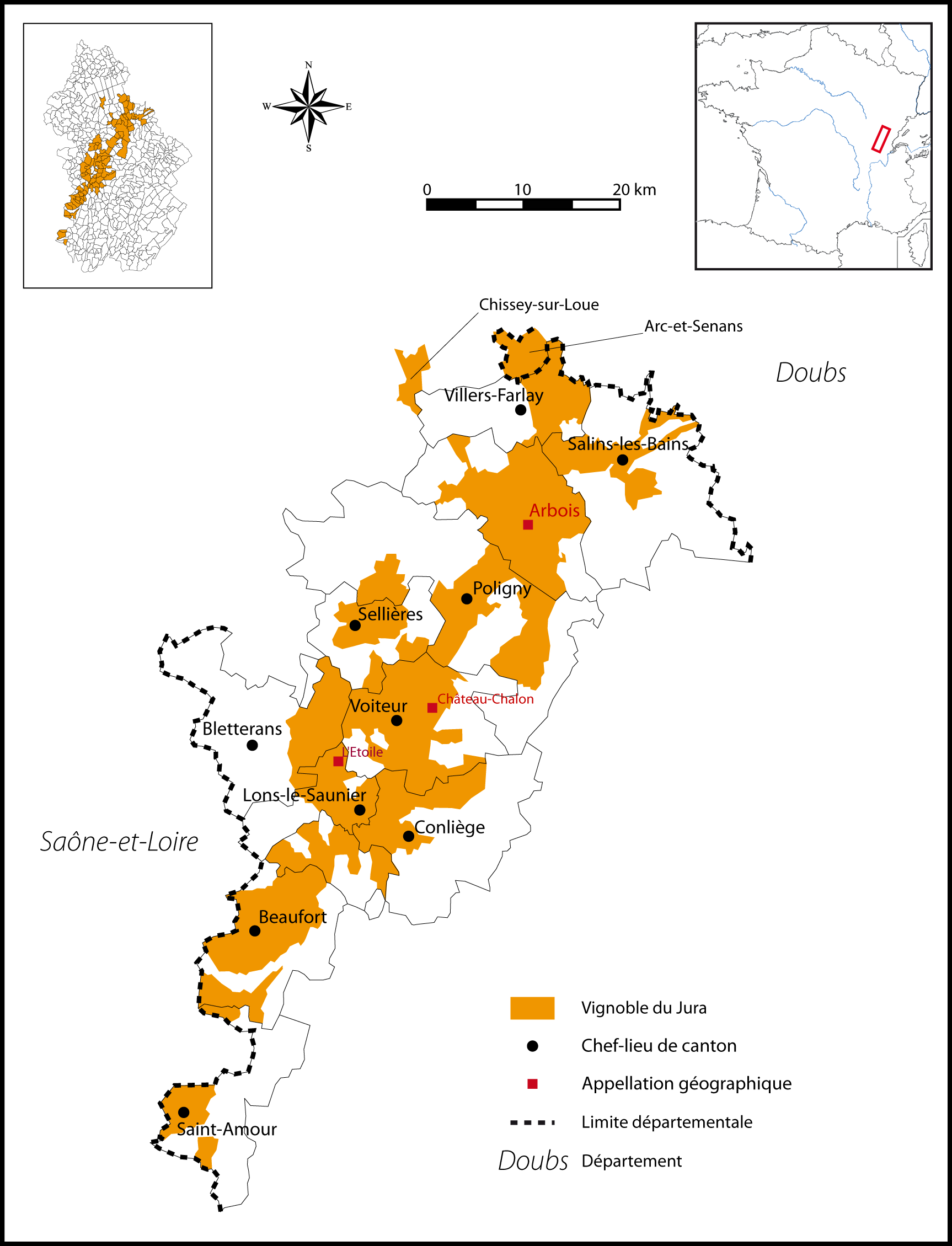
Jura region is a narrow stretch of land, about 50 miles long and less than 2 miles wide, in the north-west part of France, sandwiched between Burgundy and Switzerland. First mentions of the Jura region go all the way back to 80 A.D. When it comes to the different aspects of terroir, climate in Jura is somewhat similar to Burgundy, with the potential for more severe cold temperatures, especially during winter time. Soils are probably the most unique aspect of Jura terroir, with some of the shale formations aging between 200 and 230 million years – so yes, you can probably find dinosaur imprints in that soil, if you look deep enough. Overall, the difference in the age of soil can be quite dramatic, tens of millions of years between the neighboring vineyards.
Jura wines were well regarded in France, with Arbois (one of the main towns in the region) wines being known for what they are since the 10th century, and Château-Chalon wines (this is where the famous Vin Jaune is made) being well known since the 16th century. Similarly to all other winemaking regions in France, Phylloxera wrecked havoc in Jura’s wine industry. Before the Phylloxera, Jura region had about 50,000 acres under the vine, with 42 grape varieties, out of which 14 were identified in 1774 as “good grapes”. Today, Jura region has only about 5,000 acres planted, and only 5 varietals are used in the winemaking. Of course everything has two sides – only the best areas were replanted after the Phylloxera epidemic, and only with the grapes which produced the best results, so yes, there is silver lining in most everything in this life.
It is impossible to talk about Jura and not to mention a few of the famous people who dramatically impacted the wine world, while living in Jura at the same time. First, of course is Louis Pasteur, whose seminal work “Studies its diseases, their causes and new preservation and aging process“, published in 1886, was really a key element of the modern oenology. While Pasteur’s name is probably familiar to many, I wonder how many people will recognize the name of Alexis Millardet, also of Jura – meanwhile, he came up with the technique of grafting French vines on the American rootstock, which allowed to restart the French wine industry after the Phylloxera devastation. And the last person I would like to mention here is Joseph Girard, a resident of Arbois, who founded INAO (National Institute of Denominations of Origin) and was instrumental in establishing the AOC system of quality, which was subsequently copied all over the world. It is probably not very surprising that the very first AOC in France, established in 1936, was … the Arbois AOC!
Let’s talk about the grapes. Now, this is somewhat of the simple task, as there are only 5 grapes growing in Jura – 3 reds and 2 whites. Here they are:
Poulsard – indigenous red grape of Jura, sometimes also called Ploussard. Most planted red grape in Jura (about 40% of all red grape plantings), and about 14% of total grape plantings. Produces bright looking wines, almost Rosé in color, which are very refreshing and age quite well.
Trousseau – another red grape of Jura, part of the Savagnin family, most likely originated in Jura. The same grape is known as Bastardo in Portugal. Has about 8% of the total planted area, and about 22% of the red grape plantings. Often blended with Pinot Noir.
Pinot Noir – was introduced in Jura in 14th century. Has about 13% of the total plantings, and a bit less that 40% of the red grape plantings. Early ripening variety, thus has high degree of risk of frost damage in spring.
Chardonnay – same as Pinot Noir, was introduced in Jura in 14th century. Also known as Melon d’Arbois in the north, and Gamay Blanc in the south. Few vignerons are still growing Melon á Queue Rouge, a rare red clone of Chardonnay. Chardonnay is the most popular grape in Jura, at about 43% of total area plantings and 2/3 of the white grapes plantings.
Savagnin – most famous grape of Jura, and the only one allowed to be used in Vin Jaune. Late ripening variety with low yield. makes up about 22% of the total grape plantings and about 1/3 of the white grape plantings.
Before we get to the styles of wines and regions, let me give you a few interesting numbers. With 5,000 acres planted, there are about 300 grape growers in Jura, each taking care of about 17 acres of vineyards. There are also about 200 producers and about 100 villages in the Jura region.
With only 5 grapes, Jura produces a great variety of stylistically very different wines. Historically, Jura wine were very unique, as oxidation always played a very important role in the white wines of Jura. While oxidation is great, as the oxidized wine can be preserved almost forever, it doesn’t necessarily appeal to the tastes of the mass of the wine drinkers in the world. Starting in 1990, the style of Jura wines started to change, to move from oxidized to fresh, generally more acceptable style. As the result, there is a number of styles which you need to be aware of in order to make sure the wine will actually taste as you would expect instead of “OMG, what is it???”. Additional problem is that these styles are not necessarily clearly indicated on the from label, so sometimes you really need to look through all the information on the labels and outside in order to understand what type of wine it is. The oxidation is only relevant to the white wines, so the styles of the white wines are:
- Ouillé – non-oxidized
- non-Ouillé – oxidized
- Naturé – Savagnin wine in the oxidized style
- Tradition – a blend of oxidized Savagnin and Chardonnay
For what I understand, all it means is that if you don’t see the word Ouillé somewhere on the label or description of the wine, there is a good chance that the wine will be oxidized – if anyone who reads this post has better knowledge of the subject, I would greatly appreciate the comment!
Tired yet? We are almost done! Last part – let’s talk about wine styles and appellations. Before we get to the Jura details, one general note. Have you noticed the words AOP showing up more and more on the wine labels, especially on the latest releases of wine? This is because the French government, following overall EU requirements, is changing the AOC (Appellation d’Origine Contrôlée) nomenclature to the AOP (Appellation d’Origine Protégée), so you should expect to see the words AOP more and more on the bottles of French wines.
Jura uses total of 6 appellation designations – 2 of them are product designations, and 4 are geographical designations. Additionally, there are two wines which can be made in different appellations but they still have very specific product requirements. Here we are:
 Crémant du Jura AOP – this is the product AOP for Sparkling wines in Jura. Made by the traditional (méthode champenoise) method, with 9 month minimum aging on lees. The wine can be produced anywhere in Jura, using all 5 varietals. Grapes should be harvested by hand and whole-cluster pressed.
Macvin du Jura AOP – this is the product AOP for fortified dessert wines. Can be made anywhere in Jura AOPs using any of the 5 grapes. The wine is made by blending of 2/3 of unfermented grape juice with 1/3 of the local brandy, called Marc du Jura, which should be made at the same property from the grape skin pomace. The wine should be aged for at least 12 month in the oak barrels before release.
Arbois AOP – geographic AOP, the biggest in terms of production. All 5 grapes are grown and permitted in production of the wines, with all types of wine allowed for production.
Château-Chalon AOP – a dedicated geographic AOP for production of Vin Jaune. Savagnin is the only allowed grape, harvested late. If any other wines are made, they are designated as Côtes du Jura. For more details, please see below.
Côtes du Jura AOP – a geographic AOP. All 5 grapes are allowed to be used, and all styles of wines can be produced.
L’Étoile AOP – a geographic AOP, the smallest in Jura, consisting of only 4 villages. Only Chardonnay, Savagnin and Poulsard are allowed. All styles of the wines can be produced.
Vin Jaune – Most famous wine of Jura, so called “yellow” or “golden” wine. Can be made only out of the 100% Savagnin, in any of the 4 geographic AOPs. The grape is harvested late, and vinified as any other white wine would. After that, the wine is aged in the oak barrels which are not completely filled up. The barrels are never topped off and never racked. Similar to the Jerez, the thin film is formed on the wine’s surface, which is called The Veil – it allows the wine to age gently. The minimum age of the wine before it can be bottled is 6 years and 3 month. The wine requires pre-tasting prior to the bottling, and it is produced only in the good years. Vin Jaune is bottled in the special bottles called Clavelin, which contain 620 ml – Jura winemakers had to endure a long fight with the authorities in order to keep the historical, but not EU standard size (750ml) of the bottle.
Vin de Paille – the dessert! Generally produced from Chardonnay, Savagnin, Poulsard and sometimes Trousseau in Arbois, L’Étoile or Côtes du Jura AOPs. The grapes are harvested early and then dried up either in the boxes or hanged up in the air for 3 -5 month. After pressing, the wine have to age for at least 3 years with minimum of 18 month in the oak.
Whew, and we are pretty much done. Believe it or not, but I think this is probably the longest ever post with the least number of pictures – if not The longest, then definitely one of the longest. Jura is unique and special region, as you will see when we will be talking about the wines in the next post, and I really wanted to give you all the information together, without breaking it into the pieces. If you are still reading it – I definitely want to thank you for your patience. I hope you learned something new here. Also, if you have an experience with Jura wines, your comments and opinion will be greatly appreciated. Hell, your comments will be greatly appreciated even if you never heard of Jura wines till today. With that, until the next time – cheers!
Latest Wine News Update
So many things are happening in and around of the world of wine that I had to share some of the latest updates with you.
Coravin, the maker of the Coravin™ Wine Access Technology, announced that the company recently finished development of the patented wine fingerprinting algorithm, which allows to uniquely identify all different wines made in the world. Using this algorithm, Coravin is planning to complete within the next 5-6 months the creation of the database of all the wines ever made. The next version of the popular Coravin™ Wine Access appliance will not only allow you to enjoy your prized wines without pulling the cork, but will also automatically identify year, grape(s) and producer of the wine, and provide a prediction as to for how long the wine will continue to evolve in the cellar. The new Coravin gadget will also serve as a deterrent against fake wine, as it will be able to tell you if the wine you are drinking doesn’t match information on the label. Coravin is accepting pre-orders now and expect to start shipping the new device in the first half of 2015 – make sure to order yours now as it is expected to be sold out of pre-orders within the first week.
Kanye West and Kim Kardashian’s wedding seems to be occupying the thoughts of everyone nowadays, and it seems that everybody want to be a part of it. I’m sure you heard that Burger King offered to provide all the food for Kanye and Kim’s wedding. Now Korbel, the famed producer of California Champagne, is offering not only to supply all the champagne for the wedding, but they also want to provide an unlimited access to any amount of champagne to Kim Kardashian for any occasions when she will feel a la Marylin Monroe and would want to take a bubbly bath.
You probably read recently that sales of Prosecco worldwide surpassed sales of French Champagne in terms of volume shipments. This news is not taken well by the bubbly greats, and based on the unconfirmed rumors, Krug Champagne, one of the most venerable producers, entered the talks with Zonin Prosecco about purchasing the company. It seems that Zonin’s witty TV commercials had a great effect on Krug’s top management, and they believe such an acquisition will be a great asset in the Krug’s portfolio. The exact amount of possible transaction is unknown.
Wine Advocate leaked that Robert Parker will be leaving the publication very soon. To replace him, based on the information from inside industry sources, it appears that Wine Advocate reached out to Ron Washam, the HoseMaster of Wine. The folks at Wine Advocate believe that addition of Ron Washam to the team will help to take the publication to the next level – Ron’s fiery wine reviews and skewering comments are expected to be especially well received by the aspiring audience of Chinese wine lovers. Stay tuned as this story is developing, more updates will be coming.
And the last update for today: in the usual spat between Manfred Krankl and TTB, the application for the newest label of Sine Qua Non Syrah, called Five Naked Women and A Cowboy, was rejected. TTB reviewers said that cowboy’s facial expression is too scarily detailed, and young wine drinkers might feel threatened be simply looking at the bottle. It is unknown if Manfred Krankl is planning to appeal or will decide to change the name of the wine to something else.
That’s all I have for you for today. Enjoy your day and cheers!
Wednesday’s Meritage – #MWWC8 Last Reminder, Water into Wine – A Hoax, Corks and Twist Caps, and More Wine in Numbers
Meritage time!
Last weekend happened to be way too busy, so I had to skip the traditional wine quiz (no worries, it is coming up next Saturday). However, I have tons of interesting stuff around the vine and the web, so let’s get to it.
First and foremost – do you feel lucky? More precisely – do you feel wine-lucky? Then share your luck with the world – and you have only few days left to do it. Monthly Wine Writing Challenge #8 is almost over – the submission deadline is Sunday, March 23rd, thus you have only about 4 days left – start typing. So far 7 blog posts had been submitted – here is the post by the #MWWC8 host, Kara The Sweet Sommelier, summarizing current status.
Remember I wrote recently about The Miracle Machine, the device which promised to almost magically create wine out of water and a few ingredients? Turns out, The Miracle Machine was simply a hoax – but it had its purpose. The goal of that “project” was to bring attention to the organization which actually has a very important mission – providing drinkable water to more than billion (!) people in the world, who have no access to the clean and drinkable water. The name of the organization is “Wine into Water”, so playing on the “water into wine” was almost warranted here. I think the “increased awareness” mission was successfully accomplished – here you can find more information about both the hoax and the Wine into Water project in itself.
To cork or to screw top? That is the question! The debate is still ongoing, and the jury is still out – aesthetics, spoiled wine, proper wine aging, consumer education – all is at play in the back and force dialog about corks versus screw tops. Here are few interesting links for you. Here you can find a short video of the winemaker explaining why they switched back from the screw top to the cork. On the same subject, here is the link to the blog post at The Wine-o-scope, which critically analyzes findings of the research on the corks versus screw tops. To rephrase, I would say that this blog post is attacking the research findings – and I actually have a lot of problems with the number of statements in the blog post, which I expressed in the designated comments section. Anyway, it is well worth your time, so go read it.
Two more interesting pieces are more or less related to the subject of wine in numbers. The first one is about wine in Big Numbers – here you can find the link to the post about who is who in the US wine market. If you like the numbers, this post is for you. You will find out that three leading companies in US produced more than half of all the wines in 2013, and you will also find out that company number 1, Gallo, makes more wine than bottom 26 producers. Is this very important information for the oenophiles? Probably not. Is it fascinating? I would say yes. Again, take a look for yourself.
The last one for today is the article in the Silicon Valley Bank (SVB) wine blog about Tasting Room Survey conducted by the SVB jointly with Wine Business Monthly, on the subject of profitability of the tasting room operations of the wineries – full report will be published in May. According to the survey, it appears that on average, 35% of the tasting room visitors don’t buy anything. Those people are called “melon squeezers” (read the article for full explanation of the term – in the nutshell, these are the people who touch the fruit but don’t buy it), and the article provides suggestions as to how to get rid of these annoying “melon-squeezers”. Even more fascinating than the article itself are the comments (there are lots of them), some of them suggesting that people must buy something if they visit the winery and that visitors have to buy the wine even if they don’t like it. To make it clear and simple, I’m peeved by this article and especially taken in conjunction with the comments, but I don’t want to end up with the huge rant in this blog post, so I will leave it up to you to read and come up with your own opinion (the rant might still be forthcoming).
And we are done for today. The glass is empty – but the refill is on its way. Cheers!
Last Bottle Sign Up ($10 credit)





