Archive
More Than 20 under $20
A few days ago I was challenged to create a list of 20 wines under $20 which I can recommend. I generally shy away from this type of exercise, due to many reasons – I buy a lot of exotic wines (rare grapes, natural wines, old wines, etc.), and I also have my specific way of buying the wines (mailing lists, WTSO, Last Bottle, BinEnds, closeouts at my local store), so there is a good chance that my recommendations will be useless for majority of the people. But then I thought – no, I can actually do it. In my oenophile years, I accumulated a number of safe choices – I might not be buying those wines myself all that often, but nevertheless, there is a number of wines I tasted throughout the years, and they are consistently good, vintage into a vintage, and they are under $20. One problem though – there is no way this list can be limited by 20 wines. If you have seen any of my Top Dozen Wines of the Year lists, you know that they include not the dozen, but rather a two dozens and then some. So 20 under $20 simply sounds good, but then More Than 20 under $20 probably sounds even better, right?
Okay, without further ado, here is my list of More Than 20 under $20. Just to make it clear, this is how the list is built:
1. The wines are generic and widely available, can be found at many wine stores. As much as I love Fiction by Filed Recordings, which is generally under $20, the wine is almost impossible to find and thus will not make it into this list.
2. To the best of my knowledge, the wines are priced under $20, at most of the regular wine stores and/or supermarkets – yes, if you will buy the same wine at the convenience store in Vegas or a pharmacy in Miami, you might pay a lot more than $20, and sorry, I can’t help you with that.
3. Private label wines are not included, even if they are great and under $20 – sorry Trader Joe’s, Costco and Stew Leonard’s.
4. The list is not sorted, not rated and not prioritized in any way. These are all solid wines, vintage into a vintage – thus vintage is not specified either. I will provide brief descriptions as to why I like the wine – or may be no description at all. Also, some recommendations are general group recommendations, not for a specific wine.
5. The list is organized into Sparkling, White, Red and Dessert. I honestly wanted to include some Rosé, but quickly realized that I will not be able to do that.
Here we go.
Sparkling wines:
Saint-Hilaire Blanquette de Limoux, France – one of my all time favorite French sparkling wine. Dry, pleasant, refreshing. Typically around $11.99, unbeatable QPR at that price.
Domaine Chandon Blanc de Noirs, California – just love the depth of expression on this wine.
Domaine Ste Michelle Blanc de Blancs Columbia Valley, Washington – perfectly refreshing and outstanding value at around $10
Mionetto Prosecco, Italy – not the most mind-boggling sparkler, but very consistent and very reasonably priced.
Segura Viudas Brut Cava, Spain – both white and Rosé versions are very good, with great QPR. Sometimes, you might even get lucky, and find their flagship Segura Viudas Brut Reserva Heredad Cava, but this wine generally is a touch out of our range at around $22 (but still worth it).


White wines:
Honig Sauvignon Blanc Napa Valley – a perfect example of Sauvignon Blanc from California, very delicious, and one of the most reasonably priced California Sauvignon Blanc on the market.
Sauvignon Blanc, New Zealand – yes, I know it is a broad recommendation – but NZ Sauvignon Blanc is generally priced well under $20, and it is generally hard to go wrong with any of them – as long as you like grapefruit notes in your bright and invigorating wine.
Sauvignon Blanc, Chile – another general recommendation, yes – but again, it is hard to go wrong with Chilean Sauvignon Blanc, as long as you prefer a bit more lemon/gooseberry profile as opposed to grapefruit profile.
Muscadet de Sèvre et Maine, France – one more broad category recommendation – these wines are extremely food friendly, generally very well priced and will keep you refreshed with their cutting-through acidity. Look for the words “Sur Lie” on the label for the added complexity.
Botani Moscatel Seco, Malaga DO, Spain – every time I taste this wine, it puts a smile on my face. Delicious, with perfect QPR.
Bodegas Shaya Shaya Verdejo Old Vines Rueda, Spain – perfect Chardonnay-rivaling complexity, delicious wine. Excellent QPR. If you are in a mood to splurge (at around $26), try its older brother – Shaya Habis.
St. Urbans-hof Riesling, Mosel, Germany – I like this producer, with many wines reasonably priced under $15, widely available and generally well balanced in terms of sweetness and acidity.


Red wines:
Bogle Vineyards Petite Sirah, California – generally at around $11.99, this wine is literally impossible to beat in the QPR – dense and powerful, well balanced and round. Pretty much full Bogle product line is good and well priced, but Petite Sirah is a standout. Also, for a bit more money, but still under $20 ($17.99 or so) , try Bogle Phantom – big and decadent, with lots of ripe fruit, but still well balanced.
The Magnificent Wine Co. “House Wine” Red, Columbia Valley, Washington – nice, simple and consistent, very quaffable, vintage to a vintage.
Louis M. Martini Cabernet Sauvignon Sonoma County – finding good Cabernet Sauvignon under $20 is a serious challenge, I’m glad Louis M. Martini consistently delivers.
Georges Duboeuf Beaujolais Nouveau, France – yes, you read it right, I actually recommend Beaujolais Nouveau – Georges Duboeuf Beaujolais Nouveau gets better and better every year – and sports great QPR.
E. Guigal Côtes-du-Rhône Red, France – E. Guigal makes lots of great wines, this Côtes-du-Rhône not been an exception
Delas Côtes-du-Rhône Red, France – same as the previous wine, Delas is a great producer and these wines are very consistent
Catena Zapata “Catena” Malbec, Mendoza, Argentina – soft, simple, easy to drink – also a versatile choice at the restaurant
Bodegas Volver Tempranillo La Mancha, Spain – power and delight. ‘Nuf said, go try for yourself.
Bodegas Carchelo Carchelo “C” Jumilla, Spain – exuberant and exciting.
Bodegas Borsao Garnacha Tres Picos, Spain – one of the best expressions of Grenache at the great QPR.
Bodegas Lan Rioja Crianza, Spain – consistently good Rioja, bright and cheerful. Once you try it, you can’t believe how little you paid for what you got.
Castello Di Monsanto Chianti Colli Senesi Monrosso, Italy – it is actually pretty difficult to find mainstream Italian wines to recommend in the under $20 range – Monsanto Chianti is a good exception – excellent, supple and round wine at a great price.
Cono Sur Pinot Noir, Chile – simple, but surprisingly classic Pinot Noir, Chilean or not.


Dessert wines:
Sandeman Founders Reserve Porto – a classic.
Late Harvest Wines, Australia – yes, a wide category, but generally very inexpensive and delicious
Late Harvest Wines, South Africa – same as above
That’s all I have for today for you in this group of more than 20 under $20. Of course there are hundreds and hundreds of wines under $20, which are consistently good – but you have to draw the line somewhere. What are your favorite wines under $20? What do you think of the wine sin my list? Cheers!
Wednesday’s Meritage – Texas Wine Country Trip Contest, #MWWC7 Results, Robert Parker Addresses Wine Writers, Amphorae to the Rescue?
Meritage time!
Same as a last week, today’s Meritage doesn’t have the wine quiz answer portion – as there was no quiz last week. Thus let’s jump right away to the interesting stuff around the vine and the web.
Have you heard the expression “Everything is bigger in Texas”? Do you want to check it out for yourself? You have about 5 days to enter Wine Enthusiast’s contest to win a trip for 2 to the Texas Hill County. The winner of the prize will receive:
- Round-trip flights and transportation for two to Texas
- Up to 8-night accommodations at local B&Bs and winery accommodations in the Texas Hill Country
- Guaranteed visits at up to 12 wineries
- Select exquisite multi-course wine-and-food dinners
There are less than 21000 entries so far, so I think you have good chances! For all details and to enter the contest, please use this link.
#MWWC7 has concluded and we have the new champion – Kara of The Sweet Sommelier blog. This round was quite difficult, with the theme “devotion” putting many people on the offensive, but it still had a very good showing with 22 entries. You can read very interesting analysis by the SAHMelier, the host of #MWWC7, in her concluding post. And you can read the winning entry here. Now we will be eagerly awaiting the new theme for #MWWC8.
Last week, the Symposium for Professional Wine Writers took place in Napa. As you can judge from the name of the event, a lot of professional wine writers were in attendance. There were a number of interesting keynotes at the symposium, including one by none other but the Robert Parker (I don’t care what do you think of his ratings, but his influence over the wine world is indisputable). Alder Yarrow, who runs blog called Vinography and is a professional wine writer himself, recorded the full keynote and shared it in the blog post which you can find here. It is a bit long (slightly longer than an hour), but may be well worth your time.
Last note for today is all about experimental winemaking. As you know from the ancient history, an amphorae was one and only tool available to the winemakers thousands of years ago. Now, Andrew Beckham, a ceramics artist and high school teacher, started making amphorae and use them to make wines – and the results seems to be very encouraging, with the wines taking on the explicit earthiness and minerality trait. It is very early to tell when and if the amphorae will become a mainstream winemaking vessel – but nevertheless, it makes a very interesting read – here is the link to the article.
And we are done for today. The glass is empty – but the refill is on its way. Cheers!
Wednesday’s Meritage – OTBN, #MWWC7 Time To Vote, The Art Of The Wine Label, State Liquor Law Changes and more
Meritage Time!
I had to skip the wine quiz last Saturday, as we are taking a family vacation this week, so you can enjoy your quiz break too. Therefore, let’s go directly to the interesting stuff around the vine and the web.
First and foremost – the upcoming Saturday, February 22nd, is Open That Bottle Night (OTBN). The concept of opening that special bottle of wine instead of hoarding it was invented by Dorothy J. Gaiter and John Brecher, wine columnists for the Wall Street Journal – here is the link to one of the articles on the subject. The event is always taking place on the last Saturday in February – this is when you open and enjoy that special bottle of wine you were holding on to, not being able to find the right reason to pull the cork (or twist the top). As I think this is a great holiday for all oenophiles, I would like offer to you the following – if you open that special bottle of wine, will write a blog post about it and send me the link (through e-mail, comment, or Twitter), I will gladly re-blog it in my blog, and I will also add the link to the permanent page dedicated to the OTBN. So, what are you going to open?
Next up – #MWWC7 just concluded. The theme of Devotion was definitely challenging, but I think it led to a number of great entries. Here is the link to the SAHMMelier’s blog post, where you can see the list of all entries, and most importantly now, take a vote! Don’t miss it!
Have you heard of Sine Qua Non, the cult winery in California, making unique wines that are impossible to get? Did you know that every vintage of every wine produced by Sine Qua Non is released under a different label? And also each and every label is essentially a work of art, created by Manfred Krankl, the winemaker and owner at Sine Qua Non. To read more about these labels and Sine Qua Non wines, here is a link to the very interesting article at Wine Spectator – I highly recommend that you will read it.
I would assume that you know (or at least you know now) that States of the United States are in charge of individual laws regarding alcohol sales and distribution in those states. This leads to the situation where people’s access to alcohol in the neighboring states can be dramatically different (for instance, until recently, sales of alcohol were prohibited on Sundays in Connecticut – as the result, the people had to take their dollars to the neighboring New York state). The good thing is that in many states, the state laws are slowly changing to the benefit of the wine consumers (don’t take it for granted – some states are still trying to change it around and backward). Here is a very interesting article from the Wine Business publication, where you can learn about some of those changes in the works.
Before we part, I want to bring to your attention two more articles on the subject of Italian wines, both are quite controversial. Ten years ago, the movie called Mondovino made Michele Rolland and Robert Parker quite upset. Now, the new movie called “Natural Resistance”, made by the same director Jonathan Nossiter is talking about natural wines in Italy, also taking an aim at the Italian DOC system and overall approach to quality – here is the link to the article on the wine-searcher where you can get more details.
It turns out that people at Gambero Rosso, one of the leading Italian wine rating publications, are not the big fans of the natural wines. A blanket statement about “natural wines been bad wines which will give you a headache” doesn’t sound right coming from the organization which should simply embrace and promote best Italian wines. So it is not surprising that Italian natural wine producers have an issue with Gambero Rosso – for more details, here is the link to the wine-searcher article.
That’s all I have for you for today, folks. The glass is empty – but the refill is on its way. Cheers!
Admit It – You Always Wanted To Learn More About Spanish Wines – Here Is Your Chance
 When it comes to wine, I never admit that I have favorites – I always say that I like them all. But deep, deep inside, I know that this is a little bit of a lie (just a tiny one, seriously) – it is Spanish wines I’m very particular to in many cases. Spain has the biggest area of the vineyards planted, and it is third wine producing country in the world, so you can imagine that there is quite a bit to learn about Spanish wines.
So, what I’m trying to tell you is this. If you are interested in learning about Spanish wines, and you live in a close proximity of Greenwich, CT, you are in luck! Barcelona Wine Bar and Restaurant in Greenwich, CT is offering to take you on the tour of four different regions in Spain, during the course of four evenings in March. Here is the description of the Passport Through Spain program from the Barcelona’s press release:
“Jet set through Spain in the best way imaginable with a glass (or several) of wine, expertly prepped tapas and the rustic, and warm environment of Barcelona Wine Bar & Restaurant in Greenwich, CT. Each one hour class in the series (there are four in total) will focus on a particular Spanish region, history behind the wines and the food that best accompanies them prepared by Chef Michael Lucente. These wine classes are designed to enlighten and inspire both the novice and enthusiast. Wine Steward, Jose Valverde will guide you along the way, with tips and tricks for successfully pairing your wines with local food.
The series will take place each Wednesday during the month of March beginning on March 5th at 7:00pm. The first wine-pairing class covers the Rioja region best known for its Old World style and their well-aged red wines. The second covers Galicia (March 12th), a seaside region. The third class on March 19th covers Montsant/Priorat, known for its powerful, elegant and complex wines and the last class on March 26th will focus on the Valencia region.
Attend one class or attend them all. With the first class you attend, you’ll receive a Barcelona Wine Bar & Restaurant passport. Each time you attend a class, your passport will be “stamped” and you receive a complimentary tapa token to redeem on your next visit. Attend all four classes in the series and receive a [$100] gift certificate for two people. Each class is $35 per person (plus tax and gratuity) with a maximum of 20 people attending. Reservations can be made by contacting rsvp@barteca.com.”


If you think about it, you will pay $140 for the four classes, and you will get four tapas tokens plus a gift certificate for $100 – which means that you will have great fun education basically… for free. Remember – there are only 20 seats available for each class, so don’t delay! Also, as Valentine’s Day is rapidly approaching, in case you are still thinking about the present, the gift of wine education might be just it! ¡Salud!
Wednesday’s Meritage – Economics of Wine Collecting, Wine in Numbers, WTSO Marathon, and more
 Meritage Time!
Today we don’t have the quiz to talk about, so let’s get right to the interesting stuff around the vine and web.
An interesting article by Mike Veseth, who writes an excellent Wine Economist blog, is on the subject of wine collecting. Mike just started writing a new column for Wine Searcher online wine magazine, analyzing the world of wine collecting. While the article is pretty technical, it still makes a thought-provoking read, whether you are the wine collector or not.
W. Blake Gray published interesting numbers regarding volume of wine imported into the United States from different countries. Which country do you think is a number one importer? And then which country will take lead if you will disregard “big brands”? Check it out here.
Believe it or not, but the Wine Til Sold Out (WTSO) is doing it again! Free up some space in your cellars, and get ready for next Tuesday, September 10th – WTSO Cheapskate Marathon is coming! The rules have not changed – starting 6 AM Eastern time, WTSO will be offering new wines every 15 minutes or sooner if sold out. The only notification mechanism is Twitter (no e-mails), all the wines are priced in $7.99 – $18.99 range, free ground shipping on the orders of 4 or more. Marathon will continue until 11 PM Eastern time. Featured wines will include (among many others) Maroon Cabernet 2010, 2009 Red Blend from Shadowood, 2010 Valley Gate Chardonnay, Diamond Ridge Pinot Noir, Redheads Moonlight Cabernet, Sacoya Sauvignon Blanc. Make sure your account has all the right information ready, as the wines will be gone in a blink…
Steve Heimoff ponders at an interesting question – what will happen with the wine writing going forward? While he doesn’t offer any radical predictions, I’m sure many of you have the same question in mind from time to time. Check it out for yourself.
Last but no least – an article by Alder Yarrow talks about name protection gone too far. As you might know, the new Apple iPhone line will include new colors, one of them being champagne. Now the Interprofessional Committee for Champagne Wine (ICCW) is now getting concerned with Apple’s use of the word Champagne as a color descriptor and wants to have them stopped. Talk about complete waste of money and lawyers not having anything better to do…
And I think we are done here. Happy Rosh Hashanah to those who celebrates, and happy Wine Wednesday to all of you! Until the next time – cheers!
A Bit Of Wine Data To Brighten Up Your Tuesday
I’m an infographics junkie. I can spend hours studying wittingly constructed graphs and pictures, representing data – sometimes totally unexpected.
Today I want to bring to your attention a very interesting set of charts compiled by the company called SpareFoot (interestingly enough, the company is in self-storage business), presenting the data around growth of wine consumption in US (remember, we are #1 right now, yay!). Enjoy and don’t forget to share your thoughts. Cheers!

Wednesday’s Meritage – Wine Quiz Answer, Chardonnay Day, Wine Appellation Earth?, Best Blogging Tips and more
Meritage Time!
 First and foremost, let’s start with the answer to the wine quiz #57, Grape Trivia – Grenache. Below are the questions, now with the answers:
Q1: Name two grapes which are traditional blending partners of Grenache
A1: Yes, we are talking the famous GSM blends, and the blending partners of Grenache are Syrah (Shiraz in Australia) and Mourvèdre (known as Monastrell in Spain and often called Mataro in Australia).
Q2: Below is the list of countries which use Grenache in the winemaking. Sort the list by the area of Grenache plantings, from the highest acreage to the lowest:
A. Australia, B. France, C. Italy, D. Spain, E. United States
A2: The correct answer is France, Spain, Italy, US, Australia (so it will be BDCEA). The culprit here was Italy, in my opinion, there Grenache is known as Cannonau – I didn’t expect that Italy grows so much of it… Here is my source of data – an article at Wine Folly’s web site.
Q3: One winery in US is often credited with spearheading the success of Grenache in US. Can you name that winery?
A3: Tablas Creek winery in California – they imported Grenache cuttings from France to the US in 1990, and it was the beginning of great Grenache wines in US. Here is an excellent article about Grenache on Tablas Creek’s web site.
Q4: A few centuries ago, Grenache was a popular blending addition in one of the regions in France, until it became illegal by the AOC rules. Do you know what region was that?
A4: Actually, it was Burgundy, where addition of Grenache was popular way to add body to otherwise finicky Pinot Noir wines. Of course it is illegal practice for the long time.
Q5: Same as for the number of other grapes, Grenache exists in three different grape variations – Grenache Noir, Grenache Blanc and Grenache Gris. There is one wine where it is absolutely legal to use all three grapes as the part of the blend. Can you name that wine?
A5: Châteauneuf-du-Pape! Well, I should’ve post the question as “type of wine” – but in any case, Châteauneuf-du-Pape (CdP for short) AOC rules allow inclusion of all three different Grenache grapes into the same wine. I always thought that CdP allows 13 grapes to be blended together in production of CdP wines, but it appears that the rules has recently changed, and now there are 18 grapes which are all allowed for use as winemaker desires.
And the winner is…(drum roll)… The Drunken Cyclist with five correct answers! He is definitely on the winning streak for a while and once again he gets unlimited bragging rights. I want also to acknowledge The Winegetter, Red Wine Diva and Eat With Namie who all got 3 out of 5 questions right – definitely a commendable effort.
Now, to the interesting stuff around the web vine – boy, there is plenty to share!
First, sorry for the late notice, but tomorrow is 4th annual Chardonnay Day! Well, Chardonnay is not such a hard wine to get, right? You still got time to make sure you will celebrate in style, whatever your style is – Burgundy, Chablis, Big California, California-pretending-to-be-Chablis, I-am-unoaked-and-almost-like-Pinot-Grigio-chose-me – anyway, any kind of Chardonnay goes. And if you want to officially assert your participation, here is a link to the event page where you can officially join the ranks of Chardonnay aficionados.
Next, I want to bring to your attention an interesting post by Mike Veseth of The Wine Economist fame. The post is titled Is This the Beginning of Juice Box Wine? and it is talking about true globalization of wine in terms of production – one of the new wines from Barefoot called Impression and it is produced from the juice sourced from all over the world, so the wine doesn’t state any appellation on the label. What do you think of such approach to winemaking? Will this be a fluke, or will we see more of the wines from appellation Earth?
As you know, I’m a big fun of Stéphane Gabart’s blog, My French Heaven. I find his food pictures as some of the most incredible I ever come across, in the blogs or on Pinterest. Now Stéphane was very kind to write a blog post called “20 tips for stunning food photography“, which definitely worth your attention if you want to master your food picture taking skills. Also, as this is not the first time I refer to some of the “best tips and practices”, I decided to create a dedicated page for the Best Blogging Tips, where I will be collecting all the references like this one. If you have any suggestions as to what should be included in that “Best Blogging Tips” collection, please let me know – I hope to make it into a very useful resource for all.
Next subject is … beer! Yes, even in the wine blog there is a place for a beer. When you hear about the beer called Nuclear Tactical Penguin – is that the beer you would want to try? Well, okay, I don’t know about you, but I’m definitely interested. But turns out that this beer is practically impossible to get in US, so the best thing one can do is to enjoy it vicariously. This is what I did when I read this post at Wayward Wine blog. Outside of just great description of the beer, you can also learn about Frozen Beer category and how those beers are made – I think this reading will be well worth the time. Also, while looking for another beer from BrewDog company, this one called Sink the Bismark, I came across the list of 10 most expensive beers in the world! Now I want to try BrewDog’s The End Of History (55% ABV and still a beer!), but considering that it costs $765 for 330 ml, I will need a sponsor… anyone?
And last, but not the least subject for today – Wine Blog Awards finalists are finally announced. No, I didn’t make it to the list of finalists (sigh). But I would like to congratulate Jeff a.k.a. The Drunken Cyclist as he got into the finals in the Best Writing category. Anyway, this week is the public voting week, so you can cast your vote for the best blog here.
That’s all I have for you for today, folks. The glass is empty – but more wine is coming. Cheers!
Study of Port: Finally, Let’s Talk About Port!
Finally, we’re arriving at the culmination point of our Study of Port cycle (here are the links to the previous four posts – post 1, post 2, post 3, and post 4). You probably noticed that while the cycle is called “study of port”, we talked very little about Port wines themselves.
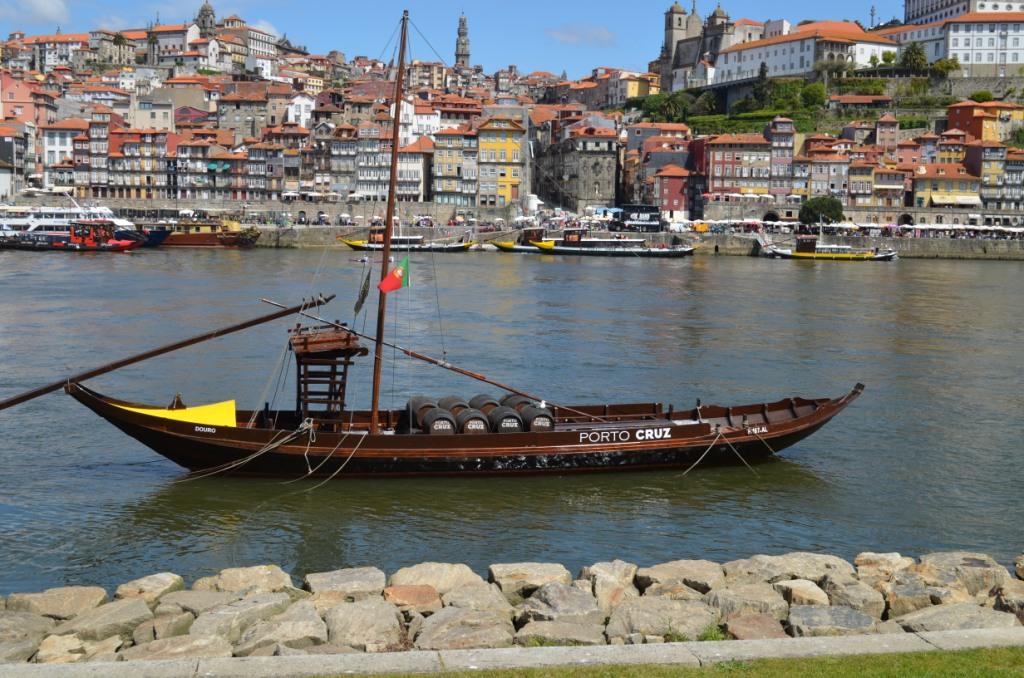
Port Transporter, called Rabelos, now only used to carry around the tourists
For me, Port is one of the most difficult subjects in wine (of course Burgundy classification and German wines are the crown jewels of “difficult wine subjects”). There are many different styles of wine, overall still collectively called Port. There are Ruby, Tawny, non-vintage, Vintage, Late Bottled Vintage, 10-, 20-, 30-, 40- years old ports, all available in the wide pricing range. On top of everything, Port is considered to be a dessert wine, and at a certain point in life, the brain just starts either outright protesting or at least behaving extremely cautiously around anything related to the word “sugar”.
Thus I was determined to use my Porto trip as a learning opportunity and do my best to acquire an understanding of the subject of Port directly from the source (I hope that clarifies the overall name of the theme chosen for this series of posts). Before I arrived in Porto, I sent out a few e-mails and twitter messages to the various Port houses, explaining that I’m a blogger and I would like to learn about Port and taste some of the older vintages. The only person who actually responded to me was Oscar Quevedo from the Quevedo Port house. After a bit of back and forth, we settled on the date and time.
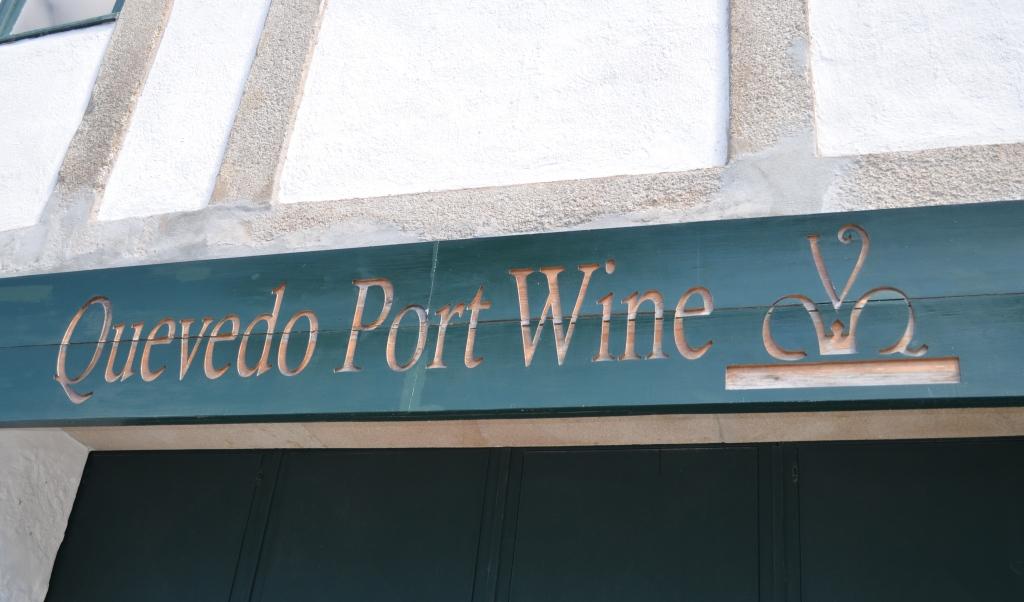
Once I arrived at the Quevedo Port house… Well, I will not inundate you with the long story, and the short story was that Oscar was not there (but he was very kind to stop by the hotel in the afternoon of the same day and undergo my very intense questioning for 30 minutes). Rachel and Manuel were “running the shop”, and while I was there at the Port house, I read a lot of useful information along the walls (I guess it can be called a self-guided tour), but that still didn’t answer all my questions (like why Vintage port should be consumed within 1 to 3 days from the opening of a bottle, and Late Bottled Vintage (LBV for short) does not. I started asking Rachel and Manuel all of my questions, and I think I drove them both a bit insane – I have to thank them both for their patience with me, especially Rachel, as she really did her best trying to figure out all the differences and details together with me.
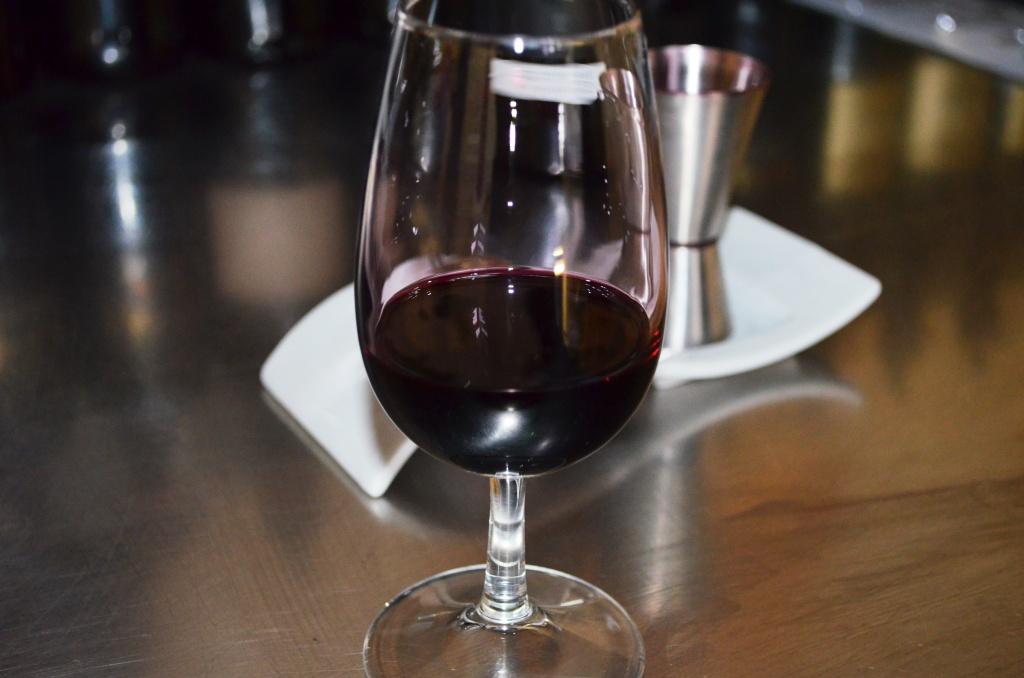
I also tried young vintage port, 2010 Quevedo Vintage Port – and it made me happy.
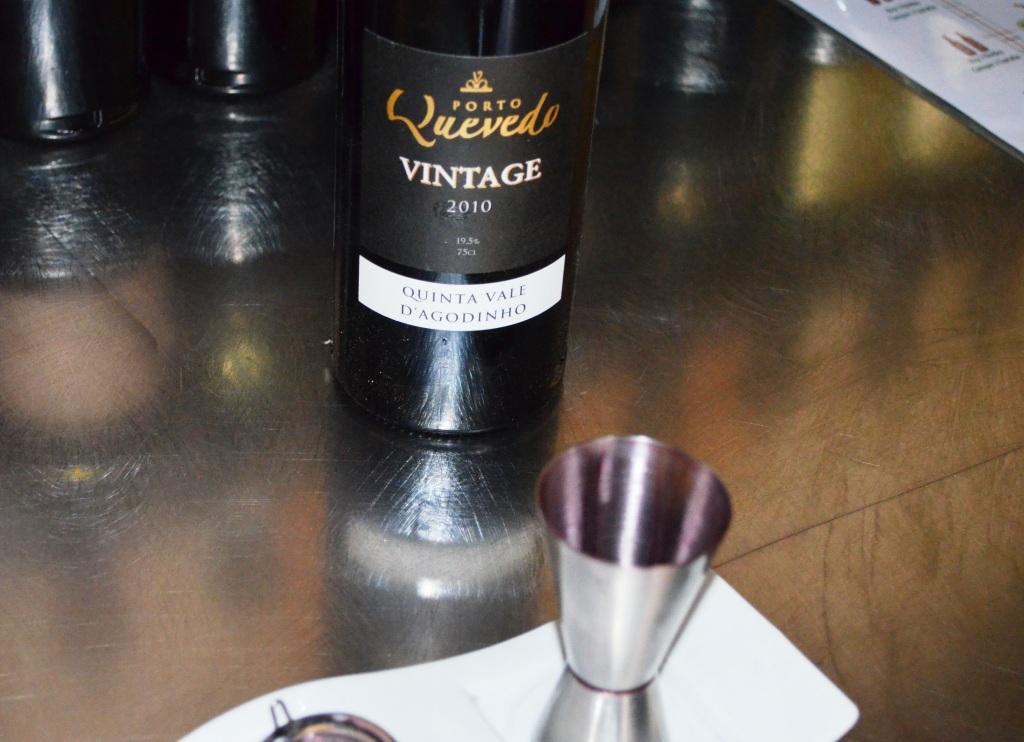
The vintage port is supposed to be filtered when it is poured into the glass, which was performed using the jigger and special metal mesh filter.
Every aspect of this wine was simply exciting. The color – I don’t know if the picture truly conveys the color, but it was deeply concentrated dark ruby red. The nose – ahh, all the fresh berries you can imagine, … And the palate – texturally present, dense, heavy, lots of fresh fruit. Yes, the was sweetness there, but oh so balanced with acidity, tannins, and overall power. So far I was refraining from rating the wines in this series of posts, but this wine was definitely a 9 and I’m sure it will be a part of my “2013 top dozen”.
When I met with Oscar in the afternoon, I used the opportunity to bombard him with questions in my effort to understand the wine called Port. And now I want to share my newly found understanding with you, so for what it is worth, below is my attempt to dissect and summarize the world of Port.
First, here are some interesting facts about Port.
- As with any other wine, the truth is in the eye of the beholder – and in our case, the “beholder” will be a winemaker. Effectively, the winemaker knows his vineyards, and the winemaker knows what vines are capable of producing specific kinds of ports – Tawny, Ruby, Vintage, non-vintage, and so on. But when it comes to Port, that winemaker’s knowledge is also verified before it can be put in the bottle and on the label – by the governing organization called IVDP.
- Instituto dos Vinhos do Douro e Porto, or IVDP for short, is a top authority regulating the production of all Port wines. When the winemaker wants to declare a vintage, the sample is sent to IVDP, where it is assessed ( in the blind format) for all the quality of the vintage port, starting from the color, and then vintage designation is either granted or declined. According to Oscar, IVDP knows everything about each and every port producer – how much of what kind of port is in the barrels, how many bottles were sold, how many bottles are still remaining with the Port house, and so on – IVDP owns and processes all the information related to the production of Port.
- Less than 1% percent of the total port production is designated as Vintage port.
- Most of the red port wines are made out of Touriga Nacional, Touriga Franca, Tinta Roriz, Tinta Barroca, Tinta Francisca and Tinta Cão grapes.
- Port is typically fermented for 3-5 days, after which fermentation is stopped with the addition of neutral spirit (grape brandy). The addition of the spirit is also a reason behind the port’s classification as “fortified wine”. The resulting port wine usually has ABV in the 18% – 21% range.
- Treading, the process of pressing grapes with the feet, is still in use today, but by a very small number of producers and only for the very special wines. The pressing by the feet creates just the right amount of pressure which doesn’t break the seeds – which helps to reduce the bitterness of the wine.
- The Vintage Port is the only port that continues aging in the bottle. Vintage port should be treated as regular wine in terms of handling and storage, and consumed 24-72 hours after the opening of the bottle.
- New oak barrels are never used in the production of the port. The barrels have to be used a few times for producing the regular wines, only then do they become suitable for the production of the Port.
Now, let’s look at the classification of the Port wines. As you know, I like using mind maps, so here is Port’s classification in the form of the mind map:
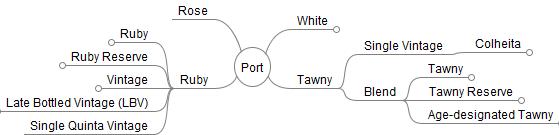
Port classification
Now let’s add some details:
- Rose Port
- the latest addition to the world of Port had been produced only for a few years. Very short contact with the skin after pressing. Personal note – I tried a few and had not been impressed so far.
- White Port
- 3 years aging in stainless steel or neutral oak, then blended, filtered, and bottled. It will not age in the bottle and is ready to be consumed when you bought it. After a bottle is opened, it should be stored in the fridge and consumed relatively quickly. Personal note – the white port from Sandeman was an eye-opening experience – you should really try it.
- Tawny – ages in the small oak barrels with controlled oxidation. All ports in this group don’t age in the bottle and are ready to drink when you buy them. Also, all ports will last for many weeks after the bottle is opened.
- Single Vintage
- Colheita
- Grapes from the single vintage. At least 7 years of aging in the oak barrel (can be longer), then blended, filtered, and bottled.
- Colheita
- Blend of vintages
- Tawny
- 4 years in oak barrel, blended, filtered, bottled
- Tawny Reserve
- 8 years in oak barrel, blended, filtered, bottled
- Age-designated Tawny
- 10 years old, 20 years old, 30 years old, 40 years old – all of these ports are blends of ports of various ages. The blend is composed by winemaker’s discretion – for instance, a 40 years old can be a blend of 30 years old and 100 years old.
- Tawny More Than 40 years old (not an allowed designation in the US)
- Tawny
- Single Vintage
- Ruby
- Ruby
- 3 years of aging in the stainless steel/neutral oak, then blended, filtered, and bottled. After opening, the bottle should be consumed within a few days, and best to be refrigerated.
- Ruby Reserve
- 6 years of aging in the stainless steel/neutral oak, then blended, filtered, and bottled. After opening, the bottle should be consumed within a few days, and best to be refrigerated.
- Vintage
- about 2 years in stainless steel, can be some time in oak barrels, bottled unfiltered, continue aging in the bottle. After opening, consume within 24-48 hours.
- Late Bottled Vintage (LBV)
- 4 – 6 years in the oak barrel (I’m sure about the age, not sure about oak barrel versus stainless steel)
- Single Quinta Vintage
- Somewhat complicated. It designates that grapes are coming from a single vineyard, but age/blending/bottling, etc. is not very clear. But for all intents and purposes, should be treated as a Vintage port.
- Ruby
I think I told you everything I know at the moment about Port – but I will keep adding and refining to this post just to make sure I got it all correctly. Before we part, here are a couple of pictures for you:
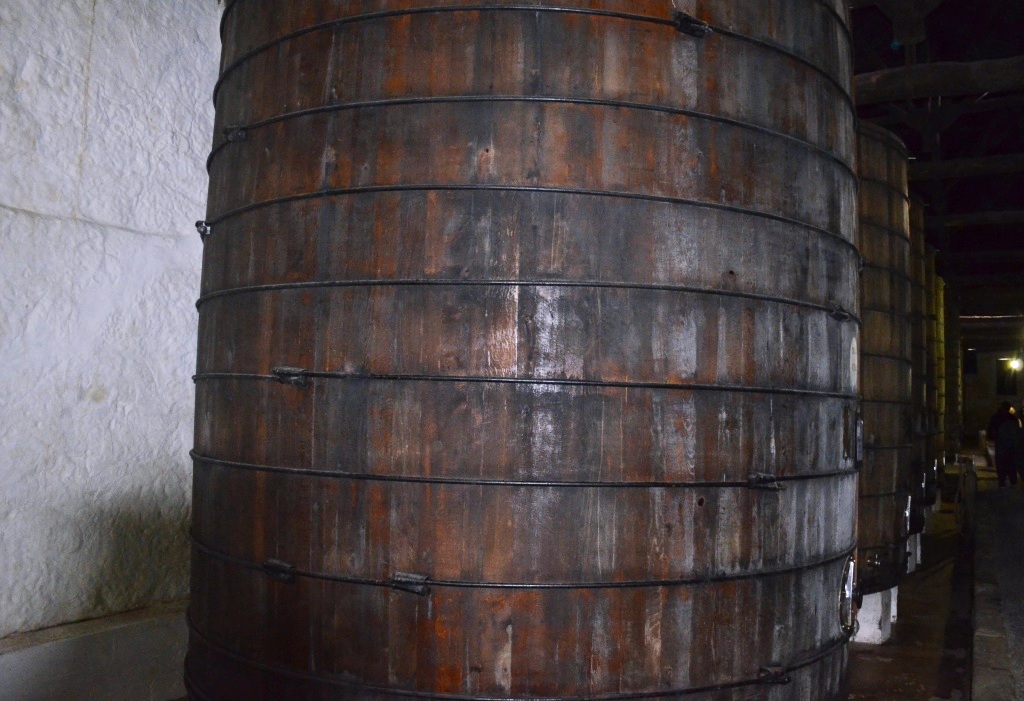
Ruby and White Port age in this huge barrels. One barrel holds 80,000 liters (about 20,000 gallons)
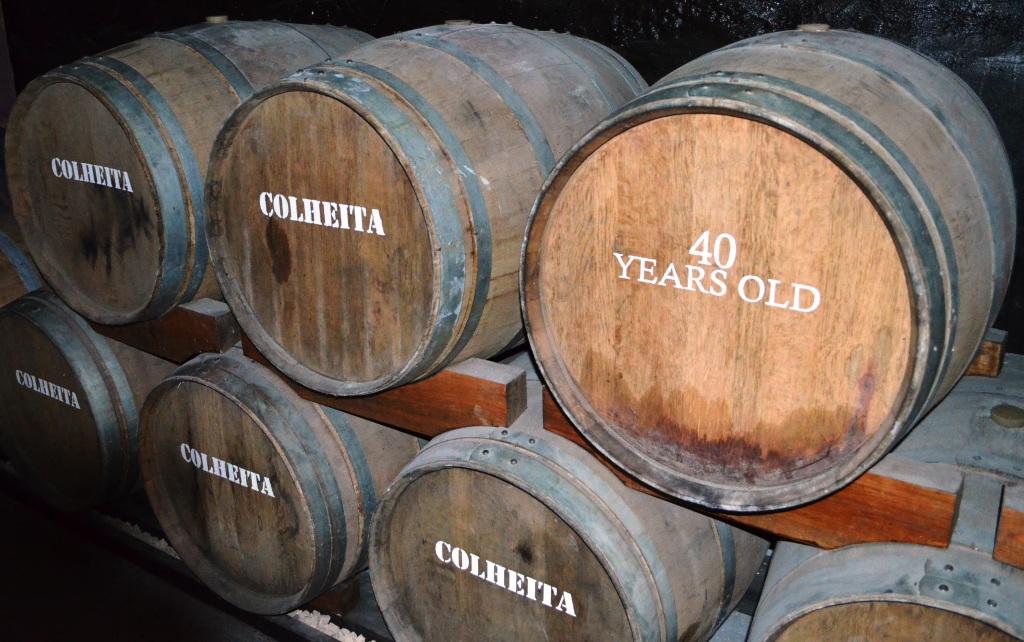
Tawny port ages in the small oak barrels

Do you remember where the cork tree grows? Yes, in Portugal!
That’s all I have for you, folks. Comments and corrections are most welcome. Cheers!
National ‘Drink Wine’ Day
As you might know, I’m following blog called Foodimentary for quite some time – it is fascinating to see all those food holidays celebrated literally every day.
It appears that today’s celebration is very close to near and dear subject of this very blog, hence the re-post.
Happy Drink Wine Day, everyone. Cheers!
Wednesday’s Meritage – Wine Quiz Answer, Blind Tasting Escapades, Wine Books Review and more
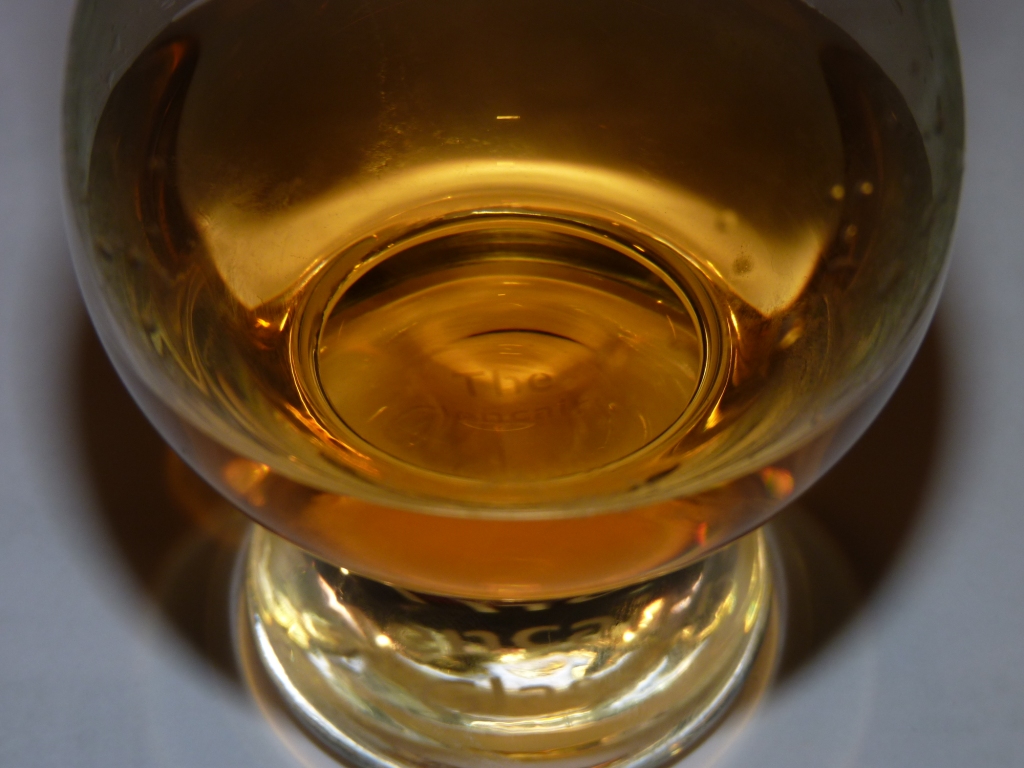 Yes, it is still Wednesday somewhere! I’m actually on the west coast, so I have an excuse (okay, lame) for this post not coming out Wednesday morning, as usual. But let’s get to it.
First, the answer for the Wine Quiz #27 – This Whiskey Can’t Age Any Longer. Looks like this was an easy quiz, as most of you got it right – it is a high altitude and climate which don’t let whiskeys such as Stranahan’s to age for the long time. As Stranahan’s distillery located high in the mountains, if the cask will be left to age for 8 years, there will be nothing left in that cask (ohh, those angels…). Stranahan’s distillery is not the only one with such problem – Amrut, a very good quality whiskey from India, can’t age for longer than 3 years due to the same issue of altitude and climate. Located at 3000 ft in Himalayan Mountains in the tropical climate, Amrut whiskey rapidly disappears from the cask if kept for longer than 3 years. As a side note, even with [only] 3 years of age, it is a whiskey you don’t want to miss – if you are into the whiskey, of course.
Going into the interesting wine happenings section, W. Blake Gray had done it again – stirred the debate, I meant. Here is the post and here is related poll (poll is closed, but you can see the results), all about blind tasting by the wine publications, or may be not so blind? Read and decide for yourself – and be sure not to miss the comment section, as it has a lot of emotions brewing.
Joe Roberts of the 1WineDude fame reviewed some of the wine books which I think worth your attention – you can read his reviews here.
It is the harvest time in the Northern hemisphere, so of course there are lots of harvest news from all over. Decanter magazine gives you a good harvest run down for Europe and US (they expect the prices of California wine to go up – this is great, I think I missed the memo about economy being in the excellent state), and here is a take on California harvest from W. Blake Gray.
Last, but [may be] not least – did you have Pizza today? You should’ve, as September 5th was a National Cheese Pizza Day. Well, yes, I missed it too.
The glass is empty – Meritage is all gone for today, however full shipment is expected to arrive in a week. Until then – cheers!
Last Bottle Sign Up ($10 credit)





