Archive
Open That Bottle Night 2021 – What A Night!
Traditions, traditions, traditions.
Traditions need wine. Wine needs traditions. Makes sense? If not, express your disdain with a flaming comment. But if you are an oenophile (wine aficionado, wine snob, wine geek, …), you understand and can easily relate.
Open That Bottle Night, or OTBN for short, is one of the shortest living traditions of the wine world, where thousand years might be a good measure for some – OTBN was first celebrated in 1999 when it was created by the wine couple – Dorothy Gaiter and John Brecher, wine writers behind the “Tastings” column in Wall Street Journal. The OTBN was created to help wine lovers part with the special wine bottles which might otherwise become a waste.
There are two parts to any wine tradition – the first is a special wine itself, always carefully selected to match the tradition, and the second is sharing – sharing of that bottle with the world. Not with the whole world at once, but with the friends.
Let’s talk about finding and sharing.
Finding a proper bottle is never easy – and it might be even worse for the holiday such as OTBN, which was created specifically to help us part with the special bottle, the bottle which has a special meaning for us – no matter why and how, but special in whatever way. Sharing is typically not a problem – unless it is 2021 and the world is still mostly in lockdown – and that includes all of one’s wine friends.
I was lucky for the past many years to have wonderful celebrations of the OTBN with the friends, sharing the most amazing wine experiences (here is the first-hand account for 2017, 2019, and 2020). The only possible way to share OTBN 2021 was the one using for the majority of the gatherings during 2020 and 2021 – the virtual one. I’m not complaining – I’m grateful that at least we have the technology with allows us to spend time with each other face to face, no matter how physically distant we are. So sharing portion was rather easy, and now let’s talk about finding.
Finding is not even the right word. Finding is easy – but selecting is not. OTBN asks for that special bottle. Deciding on what makes one bottle more special than the other, when your cellar is full of unique bottles all present in the quantity of 1 (one), is the hard part. After some amount of deliberations, which included pulling numerous wine fridge shelves back and forth, back and forth, I settled on these four bottles:
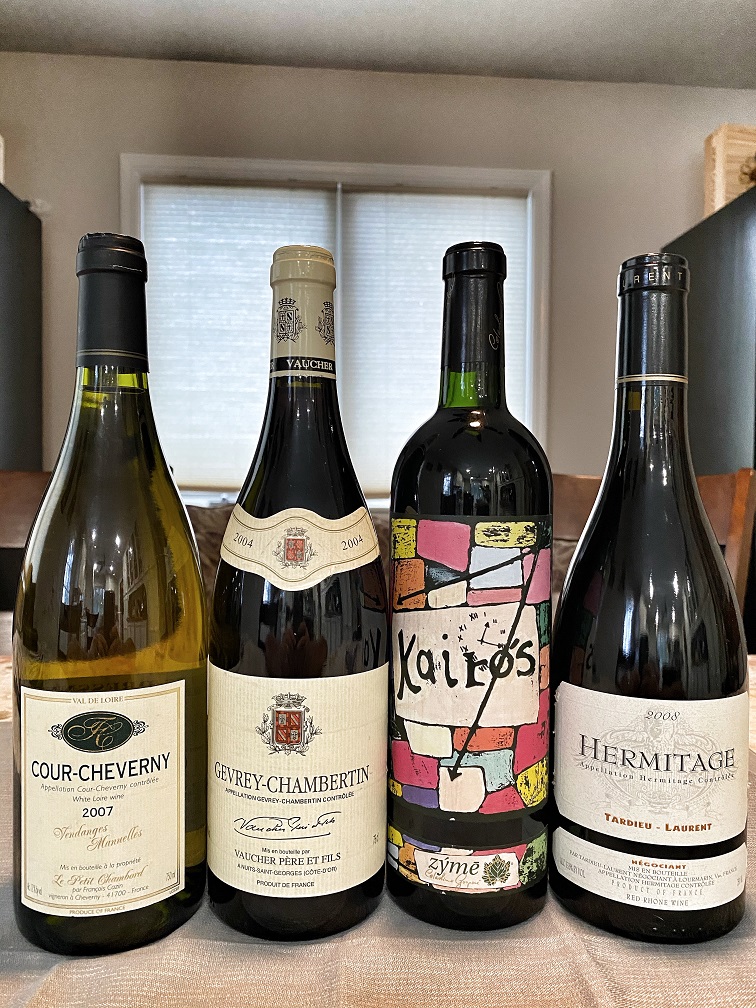
Let me explain my selection logic so you will see why it is such a daunting process for me.
First, the white wine, as I’m a big proponent of the balanced diet. 2007 François Cazin Le Petit Chambord Cour-Cheverny AOC might be called my unicorn wine, at least when it comes to whites. The first time I tried a different vintage of this exact wine when it was 10 years old and this wine became one of the brightest memories for me – the beauty and interplay of bright fruit, honey, and acidity were simply unforgettable. When young, this wine from the Loire, made out of the rare grape called Romorantin, is a single note acidic. With age, it develops into an absolute beauty. When I opened the bottle of this wine back in 2015, the wine was superb. When I brought it to Jim’s house for the OTBN 2019, 4 years later, it was “interesting” but absolutely not exciting. I was hoping for redemption, so this was an easy choice.
My next selection was 2008 Tardieu-Laurent Hermitage AOC. When I see Hermitage written on the label, you can literally hear me sigh. Hermitage to me is synonymous with the Syrah, and I love classic Syrah. And so does my wife – Syrah is her favorite grape. I have very few Hermitage wines in my cellar – and this one was calling my name for a long time (meaning: it was pulled off the shelf and placed back many times). Considering that 2008 had a rainy growing season and the vintage has low ratings (WS86, for example) and “Drink now” recommendation, this was an easy decision – no point in waiting any longer.
How many unicorns can one have? Well, having a unicorn would be nice, but I guess I’m talking about chasing them. So how many unicorns can one chase? Clearly, it seems that I’m chasing many. Good Amarone is the wine I’m always chasing. Giuseppe Quintarelly Amarone is more of an ephemeral dream for me, considering the price and availability – and it is definitely one of those unicorns I’m talking about. With 2004 Zýmē Kairos Veneto IGT, I’m getting as close to that unicorn as I can. This wine is produced by Celestino Gaspari, the winemaker for Giuseppe Quintarelli. As the label says “Produced from 15 varietals of grapes of Verona, it is a reflection and interpretation of our soil and the culture of its terroir”. In case you are curious, the 15 grapes are Garganega, Trebbiano Toscano, SauvignonBlanc, Chardonnay, Corvina, Corvinone, Rondinella, CabernetSauvignon, CabernetFranc, Merlot, Syraz, Teroldego, Croatina, Oseleta, Sangiovese, and Marzemino. This was my last bottle, and I scanned the pages of this very blog for a good 20 minutes last night as I couldn’t believe that I could’ve never written about this wine before – apparently, I have not. Anyway, I was afraid that it might be the time for this wine, thus it was added to the OTBN group. By the way, another interesting tidbit about this wine is that the name “Kairos” means “timely”, “appropriate”, and “the perfect moment”.


Every good plan A needs plan B, right? The backup. Have you ever went to a friend’s house with a bottle of wine, while another bottle stayed in your car just in case the first one would be corked? Yep, that’s the plan B we are talking about. 2004 Vaucher Pere et Fils Gevrey-Chambertin was my plan B. I don’t have a lot of Burgundies, so opening one is always a special moment. 2004 vintage was so so, with WS88 rating and “drink” recommendation, so this bottle was rightfully on the OTBN list, should the need and opportunity come.
Now you know all about selecting, and I want to say a few more words about sharing. Sharing wine is one of the best pleasures of drinking wine. The approving, understanding nod from the fellow wine lover after he or she is taking the sip from the bottle you brought really fills you up with joy. It might be even more satisfying than your own enjoyment of the same wine. Yet in today’s world, sharing the wine face to face is literally impossible, OTBN or not. To at least share the moment, I reached out to the technology which seemed to save the world from going mad – a virtual get-together over video. Zoom is my tool of choice, so after sending the invites to the group of bloggers, we got together at 7 pm on the OTBN Saturday.
We were not a big group – even in the virtual world, people are busy and have their own plans. But I’m really grateful to everyone who was able to spend that special Saturday time together – some for the whole 2 hours, some for 20-30 minutes, talking about wines, sharing life stories and experiences, and most importantly, having fun. You can scroll through the pictures below, I’m sure you will see some familiar faces.
So how was my OTBN? In other words, let me tell you more about the wines.


The miracle didn’t happen, and the white wine didn’t become suddenly magical. If I need to describe this 2007 François Cazin Le Petit Chambord Cour-Cheverny AOC in one word, the word would be “strange”. At some moments, it was oxidative and plump. In other moments, it was acidic. It never showed that amazing lemon and honey notes I was expecting. I still have one more bottle, but now I really need to forget it for as long as possible and see if the miracle will happen.
The Hermitage was … superb. First of all, opening it was a breeze – cork was perfectly intact, regular waiter’s corkscrew worked just fine. Drinking this 2008 Tardieu-Laurent Hermitage AOC was a great pleasure – a touch of pepper, a distant hint of a barnyard, round and delicious fruit. The wine was just right – perfectly balanced, round, and smooth. I don’t have a lot of experience with Hermitage, but this wine was clearly one of the best renditions of Syrah I had in a long time. “Elegant” would be the single word descriptor I would use.
The Kairos was the bottle I was concerned about the most. It could’ve been gone by now, especially considering such an eclectic blend of grapes. When I started opening this 2004 Zýmē Kairos Veneto IGT, first I decided to use the regular corkscrew, which worked perfectly fine for the Hermitage. Looking at the way the screw was going in, the cork seemed to be too soft, so I decided that it was the job for Ah-So – I’m glad this decision was not an afterthought I usually have after the cork is already broken in half – Ah-So worked perfectly well and the cork came out with no issues.
And the wine… The wine was magical. Dark fruit with a hint of dried fruit on the palate, perfectly firm and structured, powerful and elegant, with clean acidity and an impeccable balance. The wine was delicious on Saturday, and I also enjoyed that over the next two days. So now I regret not having any more bottles left – but I’m glad I had this special experience. Magical would be the word.
As two bottles of red had no issues whatsoever, the Burgundy was left aside and now will be waiting for its special moment to be opened and enjoyed.
And that, my friends, concludes my OTBN 2021 report. While the sharing was virtual, the experience and pleasure of the wine and the company were real, and it will stay in my memory as yet another great OTBN night. Hope you had fun too. Cheers!
A Perfect Perfection
 Yes, I know. “Perfect Perfection”. The English language offers more than 170,000 words, and this “writer” can’t even come up with a decent title for the post. Shame on me.
And nevertheless, I insist on my choice of words. Let me tell my tale to see if this will make sense to you too.
Valentine’s Day is a very personable holiday, loved by some, and hated by others. Many years ago, we decided that it will be simply a family holiday for us (no restaurant Prix Fix menus and back to back sitting), which translates into an opportunity to cook and – it is a special holiday, after all – open a special bottle of wine.
A special bottle of wine means a special selection process. “Special selection process” usually means trouble – going from a wine fridge to a wine fridge, opening the door, pulling the shelf, looking at the bottles, pulling another shelf out, still not finding anything appropriate, and repeating until full exhaustion. For this dinner, however, a choice of the main dish greatly simplified the process.
In this house, special dinners are often associated with the steak. Such was this Valentine’s Day – New York strip was acquired and ready to be cooked. Many wines can play well with the steak, but in simple terms, steak needs Cabernet Sauvignon or a Cabernet Sauvignon blend. With that in mind, choosing the wine was almost easy and straightforward – California Bordeaux-style blend with a nice age almost popped into my hand on its own.
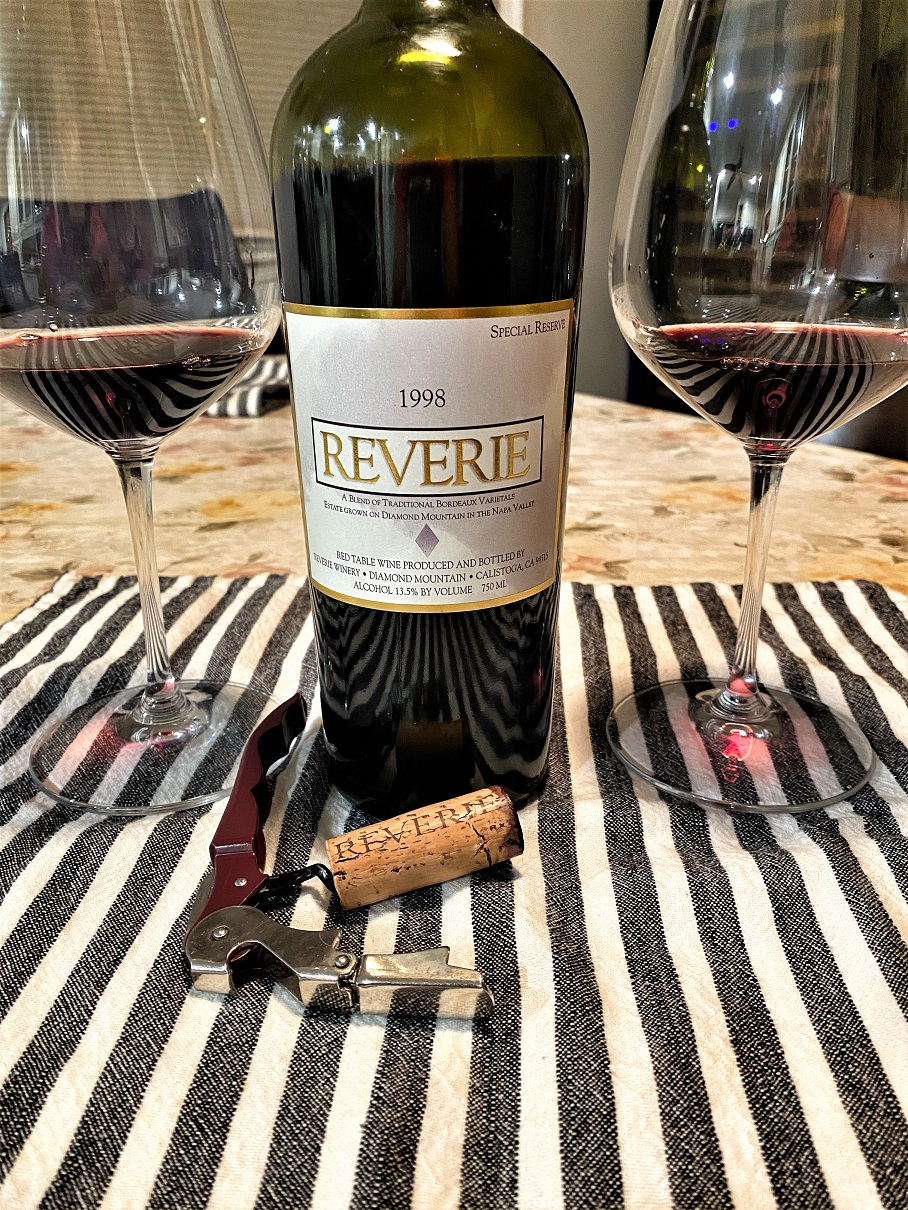 I never had this wine before. While looking for the 1998 wines to buy (birth year of my son) at the Benchmark Wine, I came across this 1998 Reverie Special Reserve Meritage as it was described. At $30, 22 years old unknown wine from California sounds like a risk I was willing to take (so far, I didn’t miss – “knock on wood” – even a single time buying aged wines from Benchmark Wine, everything was tasty and perfectly drinkable). In the wine fridge, this wine was laying on one of the first shelves I pulled out, and the inner voice quickly said “this is it” – I decided not to argue.
I had the wine warm up a bit before opening it. About an hour and a half before our decided dinner time, I carefully pulled out the cork – I had quite a few corks crumbled almost to the dust on me lately, so was extra careful pulling this one out. To my delight, the cork came out in a perfect shape, practically intact.
The first whiff of this 1998 Reverie Special Reserve Diamond Mountain (13.5% ABV, blend of Cabernet Sauvignon, Cabernet Franc, and Petite Verdot, aged in 100% new small French oak barrels) simply suggested taking a sip immediately. The wine had aromas of cassis and mint, a pure, classic, beautiful Cabernet Sauvignon profile. The palate followed almost in the impossibly perfect way. Cassis, mint, and eucalyptus, all in pristine, perfect, form. There was nothing extra in that sip – it was perfectly round, perfectly smooth, with just enough acidity, with just enough of the tannins, with just enough of the fruit. A perfect, perfect, perfect balance, an absolute harmony which is not easy to find – the one which puts a stupid smile on your face. Yep, that’s how good the wine was.
Our impressions seemed to match perfectly with what the back label said: “we only designate the blend made from the best lots of the traditional Bordeaux varietals as Special Reserve when we believe the wine is extraordinary. We believe this wine is worthy of that designation. We are incredibly proud of this very limited release wine and know you will also enjoy it immensely. A wine this fine should be saved for a special occasion and enjoyed with the finest cuisine and good friends”. It is rare to find a back label to be spot on describing the wine – but in the case of this special Reserve, this was a complete success.


I don’t think my pan-seared steak belonged to the finest cuisine category – but at least it was not burnt and raw at the same time – and it paired very well with the wine. We also made special potatoes in the air fryer and oven-roasted asparagus came out super-tasty (from now on, this might be the only way I will cook asparagus).
This is my story of the perfect wine experience – truly at the level which will be hard to replicate. What are your “perfect wine” stories?
Of Beautiful Things
Beauty is an interesting concept. It seems to be simple and universal. And nevertheless, the declaration of beauty might dramatically differ, even for the people going through the same experience. Take flowers, for example – if someone doesn’t like daisies, looking at the field of daisies will solicit no emotional response, but the same person might spend an hour admiring an orchid.
Whatever we see as “beautiful” solicit emotion, it gives us a tiny burst of positive energy, it makes us happy. But the proverbial “truth in the eye of the beholder” is fully in control – everyone decides on their own concept of beauty.
Photography is one of the best and simplest tools to capture the beauty of the moment and convert it into a tangible memory, something you can get back to. For sure I’m the one who heavily relies on photography for doing so. If you look at the pictures on my phone, you will have no problems figuring out that I consider wine, flowers, and sunsets as the most beautiful things in this life – well, this is not an absolute truth, but we can go with it for this post. Of course, sunsets and flowers are exactly what they are, but the wine bottles in the pictures simply represent the memory knots, the real beauty is inside the bottle, no matter how pretty the labels are.
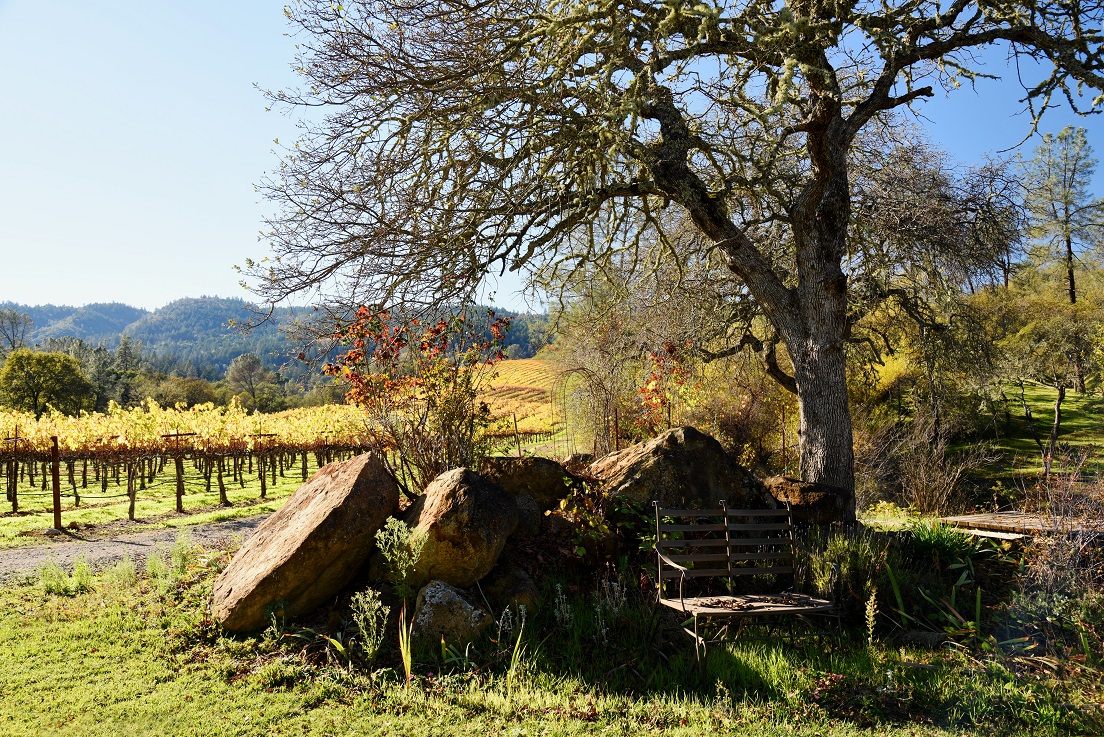
Garden at Calla Lily. Source: Calla Lily Winery
Calla Lily Estate & Winery is a project of renowned California winemaker, Cary Gott, and a group of business partners out of Hong Kong, who together started Calla Lily in 2013. Calla Lily is 95 acres of the estate in the Pope Valley section of Napa Valley, with the first vines planted in 1995. The estate’s vineyards comprise 12 acres of Cabernet Sauvignon, 5 acres of Petite Sirah, and 1 acre each of Merlot, Cabernet Franc, Malbec, and Petit Verdot.
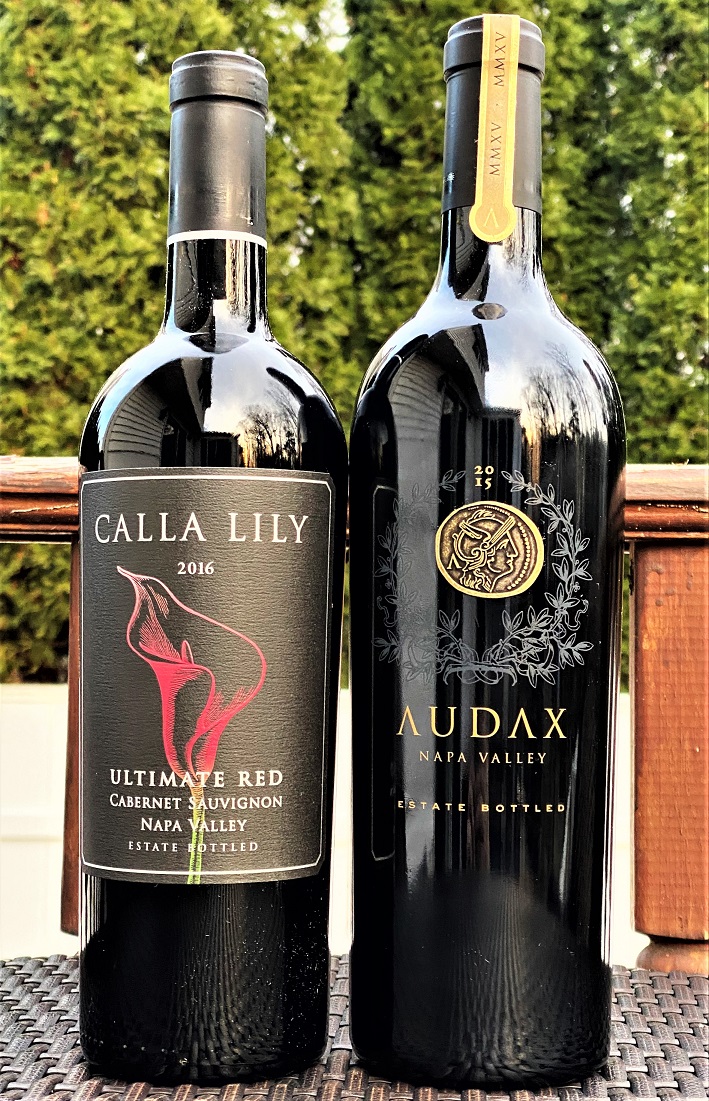
Calla Lily is not a random name. You can see the beautiful flower appear on the label of Cabernet Sauvignon, and it is both the name and the symbol. Calla is a type of lily flower, which takes its name from the ancient Greek word “Kallos” which means “beauty”. Calla Lily had been around a few thousand years and has a lot of symbolism associated with the flower in Greek, Roman, and Egyptian cultures, as well as in Christianity overall. You can read about Calla Lily symbolism further here, but I also can’t resist quoting the same source in regards to the meaning of the color of the Calla Lily flowers: ”
- White Calla Lilies: Purity and innocence.
- Yellow Calla Lilies: Joy and growth.
- Pink Calla Lilies: Appreciation and admiration.
- Red Calla Lilies: Intense passion.
- Blue Calla Lilies: Femininity and refined beauty.”
As you can see, red Calla Lily is depicted on the label of the Calla Lily wine, and after tasting the wine, I have to agree to the “intense passion” suggestion.
After talking about beautiful flowers, let’s talk about beautiful wines, as I had an opportunity to sample two of the Calla Lily wines.
2016 Calla Lily Ultimate Red Cabernet Sauvignon Napa Valley (14.5% ABV, $65, 84% Cabernet Sauvignon, 6% Cabernet Franc, 6% Merlot, 4% Petit Verdot, 26 months in 40% new French oak) was an interesting experience. While the nose was intense with red and black fruit, the wine on the palate was way too powerful for me to really enjoy it as “pop and pour”. The wine kept gradually improving over the next 4 days, finally offering soft rounds of cassis and mint, over the velvety texture. You need to wait for some beautiful things in life – for example, for a flower to fully open up from a tiny bud – this wine is beautiful, but you might need to wait for it – or decant it well in advance (Drinkability: 8- )
2015 Calla Lily Audax Cabernet Sauvignon Napa Valley (14.1% ABV, $120, 92% Cabernet Sauvignon, 4% Merlot, 3% Cabernet Franc, 1% Malbec, 27 months in 50% new French oak) is yet another interesting wine. “Audax” in Latin means “bold”, and this barrel-reserve wine is a tribute to the audacity of the pioneer winemakers, many of whom settled in the Pope Valley. Somewhat unexpectedly, the wine was more approachable from the get-go than the previous one – beautiful nose of cassis, and more cassis on the palate, accompanied by mint, pencil shavings, espresso, and cherry pit. Lots of beautifully balanced power with a firm, dense structure. (Drinkability: 8)
Here is the story of the two beautiful things in life – flowers and wine. Beautiful things are well worth seeking. What brings beauty into your world?
Retrospective: 11 Years of Top Wines
 While I was working on the Top Wines list of 2020, it almost hit me – 2020 was the 11th year the list of the top wine experiences of the year was produced.
In every Top Wines post, I make an effort to explain my approach to the creation of the top wines list – it is all based on emotions solicited by the wine. The easier it is to recall the wine and relive the moment, the better it is.
I often state that the order of the wines is not so important (this is how I want it to be, but it is usually not the case – the order has meaning) – with the exception of wine #1. Wine #1, the Top Wine of the Year, is always the most memorable. For a few years, I even had difficulties deciding on just one top wine, so I had multiples of wine #1. Strange, I know – but I always have a simple excuse – this is my blog…
All of the Top Wines lists can be found via the Top Wine Ratings menu on the top of this page. However, what do you think of taking a look at the top wines from these past 11 years, just for fun? I would like to enjoy those memories again – and see if I still have them as vivid as I like to think. Let’s see:
2010:
2007 Mara Laughlin Road Ranch Pinot Noir Russian River Valley ($45) – I can attest that this was one of the best California Pinot Noirs I ever tasted. I still have a bottle each of Mara Pinot Noir 2007 and 2008 (2008 was a complete opposite to 2007, very lean and green) – should make it for an interesting evening one day.
2011:
2010 Fiction Red Wine Paso Robles by Field Recordings ($20) – this was my first discovery of the Field Recordings wines, and that Fiction was unbeatable, it offered an incredible experience. I also loved the label and the story on the back label of that wine, which, unfortunately, disappeared in the later vintages.
2012:
2010 Antica Terra Phantasi Oregon White Wine ($100, Magnum price in the restaurant) – Definitely a memorable wine, a blend of Rhone varieties – I can close my eyes and imagine the taste of this wine in my mouth. While this is one of the most memorable Top wines, the wine in the second place was not any less memorable – 1947 Rioja Imperial. Also, it appears that I didn’t even include another wine from the same dinner when we experienced the Phantasi, 1998 Dunn Howell Mountain Cabernet Sauvignon in the Top Dozen list, which is a huge oversight…
2013:
1970 Quevedo White Port – tasting 43 years old elixir together with the winemaker, in the old cellar, directly from the barrel? It rarely gets any more memorable than that.
2014:
1966 Louis M. Martini California Mountain Pinot Noir ($NA) – I found this bottle at the store in Chicago. As this is my birth year, I couldn’t resist getting this bottle for a whopping $25. To my absolute surprise, the wine was perfectly drinkable and delicious. And the label is just purely nostalgic…
2015:
2011 Emiliana Coyam Colchagua Valley Chile ($35) – ordered this wine at the restaurant without any knowledge, mostly going by the price – OMG. This is one delicious wine.
2016:
2002 Pol Roger Sir Winston Churchill Champagne ($230) – one of the most memorable top wines. While I loved the taste, I could smell this wine indefinitely. Really, I have no need in drinking it, but I can’t let go of the aroma…
2017:
1982 Olga Raffault “Les Picasses” Chinon Loire ($85?) – this was unquestionably great – one of my most favorite grape varieties (Cab Franc), legendary vintage (at least in Bordeaux), great producer. The sad part? This is one of the few “Wine of the Year” wines I can’t recall the sensation of taste, smell, or the setting …
2018:
2008 Zenato “Sergio Zenato” Amarone della Valpolicella Classico DOCG ($100) – Amarone is one of my most favorite wines in general – but I have exactly the same issue here as with the Olga Raffault – no detailed memories. I’m sure it was a good wine as it made it to the alternative #1 winner.
2013 Three Wine Company Suscol Creek Cabernet Sauvignon Block 5 Napa Valley ($60) – One of the very best Cabernet Sauvignon I ever tasted. We had this wine during tasting dinner at the restaurant during one of our traditional “adult getaways”. This was round and supremely delicious.
2019:
2013 Smith-Madrone Cook’s Flat Reserve Spring Mountain ($225) – Smith-Madrone makes beautiful wines. This wine can be described in one word – Pure. Pure indulgence, and pure, unadulterated pleasure.
2016 Tara Red Wine 2 Syrah Atacama Chile ($40) – I have a sad habit of not being able to write a post after a great winemaker dinner, as was the case with Tara wines. Magnificent Syrah, coming from the vineyards which in reality shouldn’t have existed because of the incredible salinity of the soil. As I say in such cases, this is the wine to be experienced.
2017 Peju Province Winery The Experiment Napa Valley ($100) – a prolific Napa Valley jewel. Power and balance, or balance and power – whatever description suits you more.
2020:
1999 Soldera Case Basse Brunello di Montalcino DOCG ($NA) – Meditazione vino. The whole group meditated over this wine, as it was simply a gift from gods. Incredible. If wine is not “just another beverage” to you, you would understand. And I wish for you to experience meditazione vino at least once in your life…
Here we are – 11 years of top wines. This was definitely an interesting exercise – while I enjoyed recalling each and every one of these wines, this was also a great opportunity to think about my Top Wines process. I’m reasonably pleased with top wine selections during these years, but ideally, I would like to do better – every wine on such a list should solicit a memory and an emotion. Oh well, we should call this “the room for improvement”, right? Cheers, my friends!
Daily Glass: Unlimited Pleasures
I opened the bottle.
The wine was delicious. I will be happy to drink it again.
The end.
Simple story, right? Boring too, I guess, but – it doesn’t always work like that. Quite an opposite – I opened the wine. It was okay. I don’t want to drink it again. The end. But this is not the story anyone wants to talk about.
Let’s go back to the delicious wine.
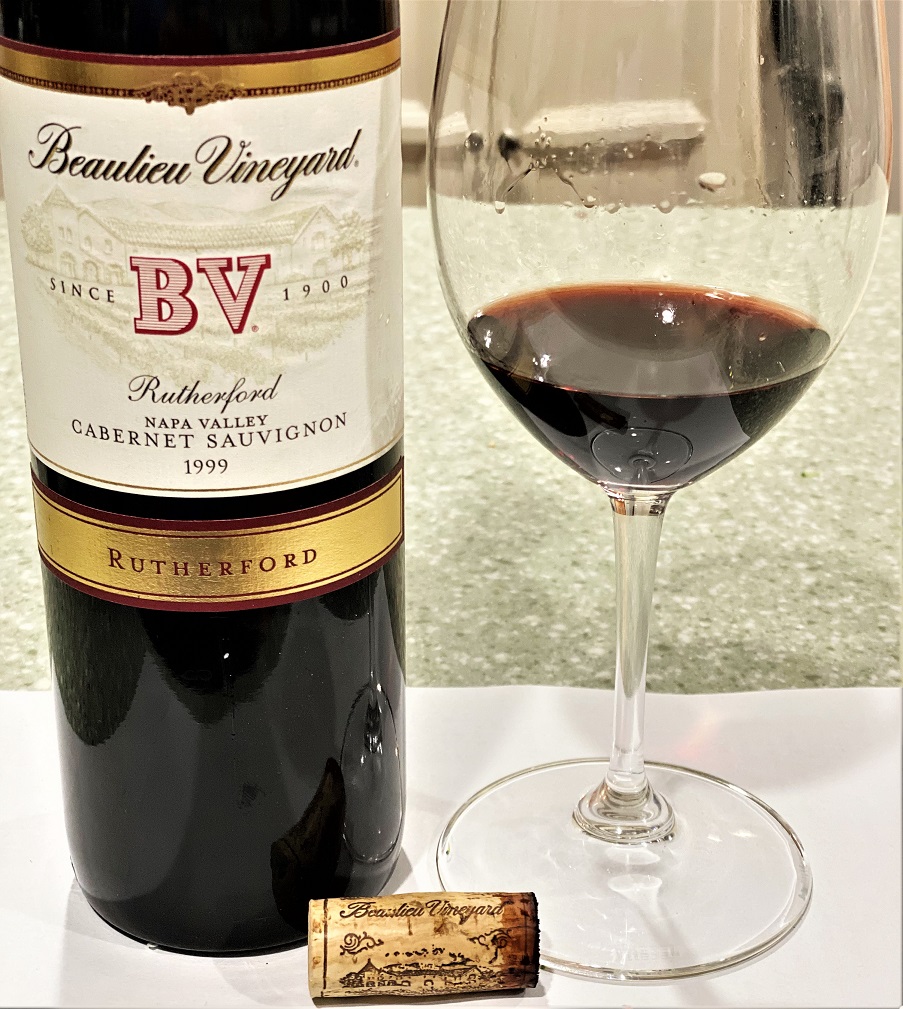
If you read this blog for any extended period of time, I’m sure you already know: I love aged wines. Contrary to what typical wine articles advocate – stating that the absolute majority of the wines should be consumed young and should never be aged – I absolutely believe that a significant number of wines, especially reds, not only can age but also improve with age. The evolution of the wine in the bottle is what we are after. Young wine can be perfect and deliver lots of pleasure to the drinker. Well-aged wine delivers lots and lots more – it is not just pleasure, it is often the whole experience. My latest proof and case in point (wish you were there) – 1999 BV Rutherford Cabernet Sauvignon.
If you like drinking aged wines, and share my view that many wines can age, the good news is that you don’t always have to personally buy the wine and wait for 20 years before drinking it. I found this wine while browsing the Benchmark Wine website. Benchmark Wine Group buys collections and then sells the wines at the market price without an auction. “Collection” doesn’t necessarily mean only DRC and Petrus – collections also include wines suitable for everyday drinking. Those “everyday wines” represent great value, as aging is included, and often it doesn’t cost you anything – I paid $30 for this exact 1999 BV Rutherford – and I can get the current (2016) vintage of the same wine in New York area for $29.99. Yep, I rest my case.
BV, which is short for Beaulieu Vineyard, is one of the iconic California wineries, founded in 1900. This is where André Tchelistcheff, often referred to as Maestro, honed his winemaking craft, completely changed winemaking at BV, and tremendously influenced winemaking in California ever since his arrival to Napa in 1938. It is impossible to talk about André Tchelistcheff within a short blog post, and I’m sure you can find hundreds of articles and books talking about his legacy. André Tchelistcheff retired from the active winemaking duties in 1973 – and I read somewhere that the last great vintage from BV was 1972. I wish I could compare 1999 which I had with 1972, but for my palate, even 1999 completely over-delivered.
The wine opened up with an intense nose of eucalyptus and mint – you could tell from a distant corner of the room that this was classic California Cabernet Sauvignon in the glass. The palate followed with layers upon layers of black currant, eucalyptus, mint, bell pepper, all interwoven in complete harmony. A perfect balance of fruit, acidity, tannins – every sip was repeating that full performance over and over again.
At the end of the evening, the wine showed a bit of the plum and dried fruit and made me think that I was lucky to catch the wine at its peak. On the second day, the wine showed a bit more restrained, somewhat losing great energy it had the previous evening. On the third day, the wine changed again, bringing back the same black currant and eucalyptus, however this time in much leaner, classic Bordeaux fashion, and really showing up young, full of energy and promise.
Not only this was a delicious, well-aged wine, but it was also [expectedly] a memory catalyst. I had an instant flashback of memories of a wonderful visit we had at BV about 8 years ago, tasting not only multiple vintages of Georges de Latour Private Reserve Cabernet Sauvignon, but also unique clonal Cabernet Sauvignon wines. It is amazing in how many ways you can enjoy a simple sip of delicious wine.
That is my story, friends. Well-aged wines are amazing – can you tell yours?
Wine Opinions, Forming and Changing
Well, this might be a dirty laundry type of post which I might regret later – but sometimes, it is good to look into the mirror, so let’s talk.
How do you form an opinion about the wine? Is it on the first sip? Is it after a glass? Is it based on tasting the wine, let’s say, for an hour or two and slowly deciding if you like the wine or not, sip by sip? Equally important – what other factors contribute to that said opinion? Critic’s 95 rating – would that affect your opinion? Respected friend’s recommendation – how important is that? I’m not even talking about ambiance, mood, food, or any other factors.
Okay, now I have another question.
Your opinion about the wine is formed. What would it take to change it? Is it enough to taste the wine once to change your opinion completely? Or would you need multiple encounters to have your opinion changed completely, doesn’t matter in which direction? Well, actually I think here we need to differentiate here between positive and negative opinions. If your opinion was positive, it will probably take a few unsuccessful encounters with the same wine to decide that you made a mistake the first time. But in case of a negative opinion… it gets more complicated. Would you even be willing to give the wine a second chance in such a case? What would make you pick again the bottle of wine you didn’t appreciate before?
Let’s make it more practical.
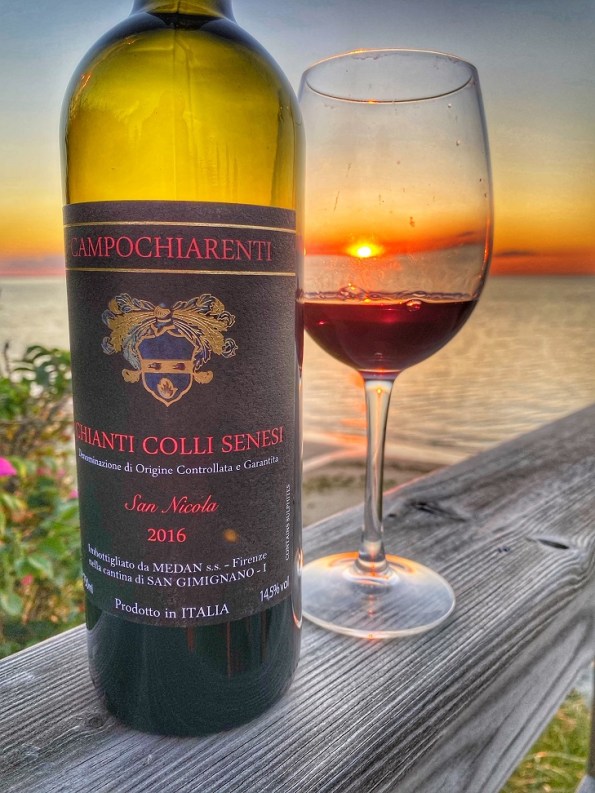
For a long time, I saw John Fodera, who is an expert in Italian wines, give the highest praise to the wines of Campochiarenti from Tuscany. I had an opportunity to finally taste one of the Campochiarenti wines – 2016 San Nicola Chianti Colli Senesi, one of the most basic wines in the Campochiarenti portfolio. Granted, I tasted this wine during the grand festivities of the open house John hosted during the OTBN Saturday – after tasting a variety of Gran Selezione, Super Tuscans, and a magical 1999 Soldera. And in the middle of all that extravaganza, the Campochiarenti Chianti’s appeal was lost on me. I mentioned in the post that the wine was “classic and simple”, but the major point was the price – it was an okay wine for the expected $12 when the wine will finally make it into the USA. Not that I didn’t like the wine, but I didn’t care much for it either – my palate perceived it as too dry and unidimensional.
Erich Russell, who I wrote recently about, has a business relationship with Daniele Rosti, the winemaker at Campochiarenti (Rabbit Ridge soon will be releasing the wine which will be a blend of Italian and California wines), and Erich happened to import a good number of Campochirenti wines to be able to showcase his future joint releases, which he now has available via his website. A few weeks ago, while I was ordering the birthday present for my sister-in-law in the form of the Rabbit Ridge wines, I recalled that she and her husband love Italian wines, so I decide to include a few bottles of the Campochiarenti wines in my order.
This past weekend we visited my sister-in-law who lives on Cape Cod. While deciding on the wine to take with us to see the sunset, I realized that this was a great opportunity to see what am I missing about this 2016 Campochiarenti San Nicola Chianti Colli Senesi – considering the universal love the wine has, I needed to try it again. It only took me one sniff and sip to have my opinion changed completely. The wine was absolutely mindblowing, in both bouquet and the taste, bursting with succulent cherries and offering velvety mouthfeel and impeccable balance. The picture above perfectly summarizes the way I felt about the wine – a double score, an amazing sunset paired with a superb wine.
After coming back and ordering my own case, I can now offer you another case buy recommendation. Visit Rabbit Ridge wine shopping page here, and look for the wine called Danielle – at $15, this wine is an absolute steal. You can also try Campochiarenti Vernaccia di San Gimignano, which supposed to be on par with the Chianti (when ordering, you can specify how many bottles of white and red you want) – I’m waiting for mine to arrive soon.
That is my story of a changed wine opinion. It was very easy for me, one sip and done. How about you? Have you changed your wine opinions and how? Do tell! Cheers!
Latest Wine News and Updates
Of course, it would be too much to say that wine is in the center of everyone’s attention – but it is a beloved beverage for hundreds of millions, and some tens of millions are involved in wine industry one way or the other, so the wine news definitely gathers some attention.
From time to time, I share in this blog some of the interesting tidbits of what’s going on in the wine world, so here is the latest round of newsworthy happenings around the globe.
When you hear Chateau d’Yquem, what do you think of first? Of course, the quintessential Sauternes, the magical elixir not even produced in all the years. But – do you know that Chateau d’Yquem also produces dry white wine? It is called “Y”, and it is a tasty blend of Sauvignon Blanc and Semillon. Last month, Chateau d’Yquem announced that they will be expanding their portfolio and adding … wait for it … a red wine which will be called Y Not. It appears that 5 years ago, Chateau d’Yquem replaced some of their Sauvignon Blanc plantings with the Cabernet Franc, Merlot, and Petit Verdot, and now it is ready to produce the first vintage. The 2019 Y Not will be released in 2022. The price had not been disclosed at the moment, but considering the total production of 300 cases, you can imagine that it will not be inexpensive.
We are not done with Chateau d’Yquem yet. It leaked to the press that venerable Harlan Estate from Napa Valley, one of the topmost cult wine producers in the USA, enlisted the help of Chateau d’Yquem to start production of the dessert wine! The wine will be produced from the late harvest Cabernet Sauvignon. It is expected that the wine will be aged for at least 2 years in the mix of old and new French oak barriques, and probably 1 year in the bottle. The wine will be called Sweet Baby Harlan, and the 2020 vintage will be offered to the mailing list members at one 375 ml bottle per customer with the starting price of $1,100. Considering the tiny production, this wine will be impossible to get for a while.
Our next news is really bazaar. It’s been reported in The Eagle-Tribune in North Andover, Massachusetts that a number of Market Basket supermarkets experienced a little mayhem in the bottled juice section of the stores – the juice bottles (narrowed down to the grape juice bottles only after the few incidents) started to blow up at random, covering customers in sweet and sticky liquid. The culprit was traced to the popular brand of grape juice – Welch’s. Welch’s recalled all of the grape juice bottles sold in Massachusetts supermarket and opened the investigation into the incident. Based on the initial analysis, it appears that the yeast was added to the bottles at the final steps of the production, and as you know, the combination of yeast and sugar is how the wine is made, so blown up bottles come at no surprise. Apparently, some of the customers who managed to get the unexploded bottle to the homes were pleasantly surprised with the bubbly version of the popular grape juice, and some are even planning to start a petition to Welch’s to make this new type of grape juice a new product, possibly using some reinforced bottles.
It is not a secret that Australian winemakers are always eager and willing to step away from traditions and try the pioneering technologies, no matter how unorthodox they are. A simple example is a so-called screw cap, also known as Stelvin, which was developed in the late 1960s, and Yalumba winery in Australia become one of the early adopters introducing new bottle closure in 1973. Now another Australian wine producer, Penfolds, maker of the legendary Grange, decided to step in with a brand new solution for reducing the carbon footprint of the wine, which the wine industry is constantly grilled for. With the help of scientists at The University of Adelaide, Penfolds developed a brand new plastic bottle that is completely safe for storing the wine. Not only it is lightweight, but it is also made from the recycled materials and – get this – biodegradable. The bottle is guaranteed to fully disintegrate in 5 years’ time. The only culprit? The bottle will disintegrate in 5 years no matter what, so it will not be any time soon that we will see Penfolds Grange offered in this form of packaging. But for all the regular wines, which should be consumed as they are acquired, this will be a perfect vessel. Just don’t “leave and forget” such a bottle in your cellar – or you will remember it for a long time…
While the wine industry is squarely rooted in traditions, it is never shy to enlist the latest technology to help to advance its cause – helping people to enjoy their life a little bit more. Knowing when to open the bottle of wine to ensure the best possible experience is one of the most difficult problems of any oenophile, whether he or she is a Master Sommelier or an occasional drinker consuming two bottles of wine a year. Some of the most technologically advanced companies in the wine industry, world-famous specialty glass producer, Riedel, and Coravin Wine Systems, maker of the popular wine dispensing solution, teamed up to create a product which they called Smart Bottle. Seemingly indistinguishable from the regular glass bottle, the Smart Bottle is equipped with the array of sensors which constantly monitor the state of the wine inside the bottle, and will inform the owner when the bottle reached the ideal consumption phase via embedded Wi-Fi transmitter directly to the owner’s phone. While working on the design of the Smart Bottle, both companies filed about 25 patents. Apparently all leading wine producers in the world – DRC, Petrus, Chateau Latour, Screaming Eagle, Sine Qua Non and many, many others already lined up to get the Smart Bottle as soon as it will be released. An important and attractive feature of the Smart Bottle is the ability for producers to set up the proper aging profile specific to their particular wine, as it is clear that ideal indications, let’s say for DRC and Sine Qua Non will be quite different. Riedel and Coravin reported that they are finishing field trials and the production is slated to start in 2021.
That’s all the latest news I have for you, my friends. Until the next time – cheers!
An Evening With Friends
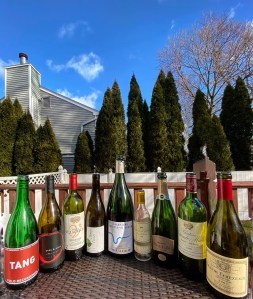 What is your favorite part about wine? Is it the taste? The buzz? The sheer appearance of the bottle sometimes resembling the work of art? The joy of owning an exclusive object? The coveted status symbol?
My answer will be simple. My favorite part about wine is the ability to share it. Take a sip, reflect, have a conversation, preferably a slow-paced one. Friends are the best pairing for wine. Opportunity to share the experience, pleasure, and joy. Sharing makes it all worth it.
New Year celebration (the main holiday for anyone with the Russian upbringing) is a multi-step process for us. We like to celebrate the arrival of the New Year as many times as possible – the evening before the New Year, a midnight Champagne toast, the New Year’s day dinner, and more dinners shortly after (this is when the bathroom scales are the worst nemesis). Some or all of these dinners have to include friends – and it is the best when friends share your wine passion.
Such was our dinner on Saturday, bringing together a group of friends who truly enjoy what the wine world has to offer. We all contributed to the evening, both with food and wines, to make it fun and interesting. Below is the transcript of our wine extravaganza, with highs, lows, and surprises.
While we were getting ready to start our dinner, our first wine was something unique and different – how many of you know what Piquette means? It appears that Piquette is yet another type of sparkling wines. The story of Piquette goes back to 18th century France when the whole wine industry was in full disarray. Piquette is literally made by converting water into the wine – using water to rehydrate grape skins left after the wine production. We had 2019 Field Recordings Tang Piquette Central Coast (7.1% ABV, Rehydrated skins of Pinot Gris and Chenin Blanc) which was made using this exact process – grape skins were hydrated in well water for a week, then pressed, after which a little bit of the table wine was added, and the wine was bottled with leftover yeast and sugar to continue fermenting right in the bottle. To me, the wine was reminiscent of cider – light fizz, fresh apple notes, cloudy appearance of a nice unfiltered cider. Would I drink this wine again? On a hot summer day – yes, why not, but this is not the wine I would actively seek.


It is difficult to assess the “uniqueness” of the wines. There can be many reasons for the “unique” wine designation – small production, wine not produced every vintage, the wine which is no longer produced. There are, of course, many other reasons. How about spending 10 years to finally make about 200 (!) bottles of a drinkable wine? Don’t know about you, but this is unquestionably unique in my book. And so there was 2017 Olivier Pittet Les Temps Passés Vin de Pays Romand Switzerland (14.2% ABV, Arvine Grosso). Petite Arvine is a popular white grape in Switzerland, producing nice, approachable white wines. On another hand, Petite Arvine’s sibling, nearly extinct thick-skinned Arvine Grosso (or Gross Arvine), is a nightmare to grow and to work with. This was the Arvine Grosso which took about 10 years to restore the plantings and achieve a drinkable result. The wine needed a few minutes to open up – then it was delicious, fresh, with a touch of underripe white plums, bright acidity and full-body, similar to Marsanne/Roussanne. I wish this wine would be a bit easier to procure and not just through a friend who lives in Switzerland…
I was happy that Stefano brought a bottle of 2008 Berlucchi Palazzo Lana Satèn Riserva Franciacorta (12% ABV) – I love Franciacorta sparkling wines, they always offer a playful variation of the classic Champagne. Berlucchi is the founder of the Franciacorta sparkling wine movement. This wine was also a Satèn, a unique Franciacorta creation, which is specifically made to be a bit gentler than a typical Champagne with the lesser pressure in the bottle. The wine was soft, fresh, delicate, and admired by the whole table enough to disappear literally in the instance.
The next wine was as unique as only inaugural vintage can be. Christophe Baron is best known as Washington Syrah master, with his Cayuse, No Girls, and Horsepower lines. But Christophe’s roots are actually in Champagne, so it shouldn’t be terribly surprising that he decided to embrace his heritage. The first bottling, with a promise of many more, was as unique as all Christophe Baron’s wines are – pure Pinot Meunier, vintage, and bottled only in magnums – 2014 Champagne Christophe Baron Brut Nature Les Hautes Blanches Vignes Charly-Sur-Marne (12.5% ABV, 100% Pinot Meunier, 1613 1.5L bottles produced). I made a mistake of slightly overchilling the wine, but it came to its senses shortly after it was opened. The wine was nicely sublime, with all the Champagne traits present – the acidity, brioche, apples – everything balanced and elegant. This was definitely an excellent rendition of Champagne, but to be entirely honest, at around $300 it costs considering tax and shipping, I’m not sure it was unique enough to justify the price. Oh well… definitely was an experience.


Before we move to the reds, a few words about the food. The New Year celebration is a special occasion, which is asking for a special menu. Our typical New Year dinner menu is heavy with appetizers and salads. Our staple salads are “traditional” – Olivie and “Herring under the fur coat”. For the appetizers, we had red caviar, bacon-wrapped dates, stuffed Belgium endives, different kinds of cold cuts and cheeses, tiny prosciutto/pecorino sandwiches, and I’m sure some other stuff. Tea-smoked duck and delicious lasagna comprised the main course, then finishing with loads of baked goods and candies. Yeah, don’t even think about dragging me onto a bathroom scale.
Let’s get back to wine.


The next wine belongs to the “interesting” category. NV Channing Daughters Over and Over Variation Twelve Long Island (12.5% ABV, Merlot, Dornfelder, Syrah, 208 cases produced), a multi-vintage wine which is produced using Ripasso and Solera methods. The name “Over and Over” is emblematic of the production method of this wine – there are many manipulations which I will not even try to describe – you better read it here. I’m all for the fun and complexity, but my problem is that I tasted the standard vintage Channing Daughters red wines which were literally identical to this Over and Over wine. It is great to play with your wine, no questions – but only if the end result is different, and better than the individual parts. The wine showed very youthful, with fresh crunchy fruit and cut through acidity – but it was lacking complexity. It is not a bad wine, but I was not moved by it.
Next up – 1996 Château Sociando-Mallet Haut-Médoc AOC (12.5% ABV) – this was a happy wine. The cork came out easily in one piece, and the wine was perfect from the get-go. The perfect minty nose of Bordeaux with a touch of cassis, some hints of mature fruit on the palate, but only the hints – still good acidity, solid core, excellent balance – the wine to enjoy. Yep, was gone in no time.


Of course, the duck on the menu is calling for the Pinot Noir, and what can be better than the Burgundy? 2007 Louis Jadot Grands Echézeaux Grand Cru AOC (13.5% ABV) was our designated match for the duck. The wine opened up beautifully, with succulent plums and a touch of smoke, a delicious, classic Burgundy. However, the joy lasted in the glass for about 10 minutes or so – next, all the fruit was gone, and while you know you are drinking wine, this wine had no sense of place of origin. I don’t know what happened – the wine closed up, needed more time, or was already at the last stretch of its life? Don’t know, and don’t think I will ever find out. Well, there is always another bottle, right?
Now, let’s talk about surprises. No, not the Chateau d’Yquem, which you would assume should qualify as a surprise – the 1999 Finca Villacreces Crianza Ribera Del Duero (13% ABV) was a real surprise. I heard the name of Finca Villacreces as one of the venerable Ribera del Duero producers, but I never had it before. When I was able to score this wine at the Benchmark Wine, I was very excited. The New Year’s celebration seemed to be a perfect opportunity to open it, especially as nobody had it before and we were all looking forward to getting acquainted.
The cork came out easily, in one piece with no sign of any issues. Once I poured the wine into the glass, on the first whiff, the scary thought instantly showed up – the wine might be corked. I tasted the wine, and it seemed just a touch off – it didn’t feel unquestionably corked, but the fruit was not coherent and the wine had sharp, raspy undertones which in my experience are associated with the corked wine. We moved the wine into the decanter and continued tasting it throughout the evening – it stayed practically unchanged.
This was not some random bottle I can get replaced at any store, so I really couldn’t just pour it out. And I’m an eternal optimist. So I used plastic wrap to cover the top of the decanter and left the wine standing there overnight. The next day, about 22-23 hours since the wine was opened, I decided to check on it. Oh my god. The wine completely changed. The hint of the musty cellar was gone. The mighty fruit appeared on the palate, layered, present, velvety and powerful, covering your whole mouth and making you extort “ohh, this is good”. I thoroughly enjoyed the wine after 24 hours in the decanter, and even the next day the tiny leftover was still drinkable. How is this possible? What has happened? I don’t have any answers, but if you have any ideas, please share.
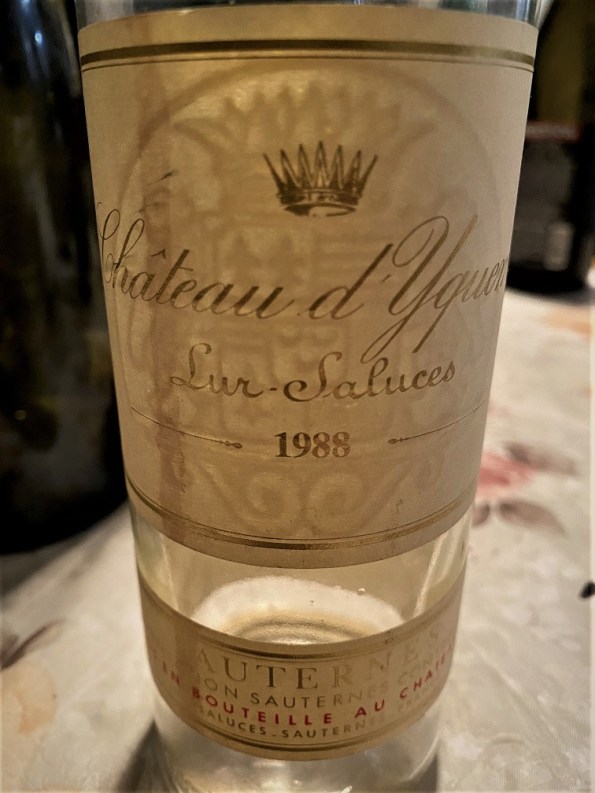
We finished the dinner on the high note – 1988 Château d’Yquem Lur-Saluces Sauternes AOC (13.5% ABV). I’m you sure you don’t need any introductions here – Château d’Yquem is the Bordeaux legend, an absolute hallmark of the Sauternes region, with every other Sauternes wine simply measured against the Château d’Yquem. A perfect pop of the cork from this bottle was music to my ears. The nose and the palate of this wine were in full harmony – it was all about apricots. Fresh apricots, dried apricots, candied apricots – the taste kept moving round and round. The apricots were supported by clean acidity, which became more noticeable as the wine had an opportunity to breathe. Well, this was a short time window in any case, as this half bottle was simply gone in the instance. This 32 years old wine was truly an experience and a perfect finish to our great evening with friends.
That’s all I have for you, my friends. How 2020 started for you? What did you have a chance to discover over the last few days? Cheers!
American Pleasures – Part 2, Peju Napa Valley
 A few weeks ago I shared with you my view on [strictly wine] American pleasures – some of the wine samples which I had a pleasure to taste recently. Yes, it is the pure hedonistic pleasure we are talking about here – the wines which have a magical power of making you want another glass even before the first one is empty. Today I want to continue that conversation and talk about Peju Province Winery in Napa Valley.
The story of Peju Province Winery is simple and similar to many others – it started from a dream. Tony Peju had a drawing of the winery with the tower two years prior to the first Peju grape been harvested. Tony found early success in Los Angeles as a horticulturist, using his landscaping skills in the real estate, improving and reselling the houses. But his dream was to own the farm.
After his search for the farm land led him up north to the Napa Valley, he was able to find the location of his dreams – a 30 acres Stephanie vineyard in Rutherford, located next to Robert Mondavi, Inglenook and Beaulieu vineyards, growing Cabernet Sauvignon and Colombard vines, some 60 years old or maybe even older. Tony and his wife, Herta, purchased Stephanie vineyard in 1983. At first, Tony and Herta were only selling the grapes, however taking advantage of Tony’s green thumb, improving the vineyard and learning what it is capable of. They identified the section of the vineyard, about 5 acres in size, which produced the best Cabernet Sauvignon fruit. The vineyard, which was renamed into HB in honor of Tony’s wife, Herta Behensky, was replanted using cuttings from that best section grafted on the phylloxera-resistant rootstock. The time has come to start making Peju’s own wine.
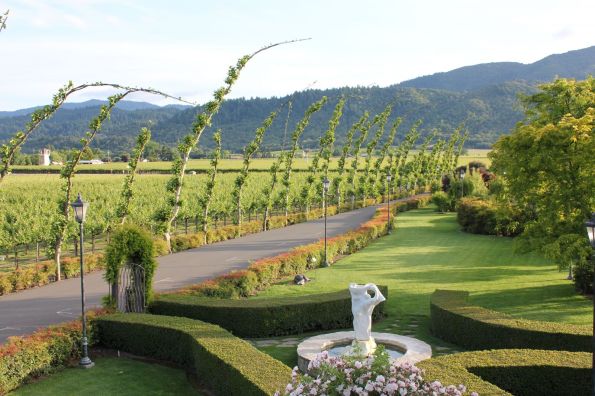
Peju Province Winery Grounds. Source: Peju Province Winery
Tony went on to get a degree in enology from UC Davis, and the rest was history. Well, there is one interesting hurdle worth mentioning. If you remember, Tony had a full drawing of the winery done in 1981, two years before HB vineyard was even found and purchased. Once they had the land and were ready to convert dreams into reality, in order to fund the project, Tony and Herta started selling wine out of their garage converted into the wine tasting room. This, however, was against Napa County’s rules, which required all the wine sales to be made from the legitimate winery building. However, California law allowed winegrowers to sell the wines in the place where the grapes were grown, so the issue ended up in the court. The judge sided with Peju, agreeing that if Tony is growing the grapes, he should be allowed to sell the wine. This became a pivotal case that significantly changed the landscape of the Napa Valley.
Peju went on to build the impressive 50-foot tall tower in the French Provencal style, using Brazilian cherry wood, beams from old Midwestern farm buildings and 1906 antique stained glass window. Way before that new winery building was complete, Peju acquired 350 acres of land at the 2000 feet elevation in the nearby Pope Valley section of Napa, which they named Persephone Vineyard, after the goddess of Greek mythology. In 1997, 120 acres of that land was planted to Cabernet Sauvignon (using HB Vineyard clone), as well as Cabernet Franc, Merlot, Syrah, Petit Verdot, Sauvignon Blanc, Chardonnay, and Zinfandel. In 2007, Rutherford HB vineyard became certified organic, and today all three of Peju vineyards are using sustainable viticultural methods. In 2009, Peju Province Winery was certified as a Napa County Green Winery and Bay Area Green Business. Also in 2006, Peju started installing solar panels on 10,000 square feet of winery roof and generating 35% of all electricity consumed at a winery.
Okay, so now you learned a lot about the winery, so let’s talk about the wines, as a proof is always in the glass. I had an opportunity to try 6 wines from Peju, and I was literally blown away by what I tasted. To be entirely honest, these wines were one of the most inspirational coming up with the title for this series – American Pleasures. 6 out of 6 delicious wines, one better than another – I taste enough wines during the year to tell you that this is not given. Below are my notes:


2018 Peju Province Winery Sauvignon Blanc Napa Valley (13.8% ABV, $25)
Straw pale, practically clear
A touch of freshly cut grass, white flowers, maybe a distant hint of cat pee – only because I want to find it there?
Layers of flavors. Crisp lemony acidity first, then a hint of plums and slightly underripe melon, unusual plumpness for the Sauvignon Blanc, the wine rolls off your tongue like a nice Marsanne.
8, excellent, a unique and different Sauvignon Blanc.
2015 Peju Province WineryCabernet Sauvignon Napa Valley (14.8% ABV, $60, 85% Cabernet Sauvignon, 8% Petit Verdot, 7% Merlot, 18 months in French and American oak, 45% new)
Dark garnet
Black currant, cherries, eucalyptus, sweet oak
A beautiful mix of black currant and cherries on the palate, a touch of herbal notes, good minerality, firm texture, vibrant acidity, medium+ finish
8/8+, the first sip says “I’m a Napa Cab”. Delicious.
The next wine is one of the few in “Nostalgia Series”, where every label depicts a moment in Peju’s history.
2015 Peju Province Winery Nostalgia Series The Farm Napa Valley (15.2% ABV, $80, 80% Cabernet Sauvignon, 20% Sangiovese, 18 months in oak)
Dark garnet, practically black
Dark fruit, eucalyptus, restrained, mineral undertones
Perfectly balanced fresh fruit, soft, luscious, black currant, tar pencil shavings, perfect balance, delicious.
8, delicious wine


2016 Peju Province Winery Merlot Napa Valley (14.8% ABV, $48, 95% Merlot, 4% Cabernet Sauvignon, 1% Petit Verdot, 18 months in oak)
Garnet
Sweet licorice, eucalyptus, underbrush
Coffee, tart cherries, cherry pit, minerality
8-, probably need more time. The finish is a bit astringent, however, it plays well with savory food (cheese and crackers)
Cabernet Franc is one of my favorite grapes – this wine was truly a Cabernet Franc experience.
2013 Peju Province Winery Petit Trois Cabernet Franc Napa Valley (14.8% ABV, $75, 100% Cabernet Franc, 18 months in oak, 333 cases produced)
Deep Garnet
Cassis, licorice, mocha, a hint of sweet tobacco
Cassis, mint, gently present tannins (after a few hours), firm structure, sweet oak, unmistakably California
9-, wow, tons of pleasure in every sip. Needs decanting. Outstanding on the second day.
This wine has its own story. It is the result of the barrel experiments run by Peju winemaker, Sara Fowler. For the 2017 vintage, she worked with 37 different barrel tasting styles and 22 coopers, then discussed the effects of the oak regimen with the group of the fellow Napa Valley winemakers. To have all new-oak, effectively a young wine, to be ready to drink from the get-go is something really incredible in my opinion.
2017 Peju Province Winery The Experiment Napa Valley (14.5% ABV, $100, 100% Cabernet Sauvignon, 18 months in French, American, and Hungarian oak, 100% new, 1075 cases produced)
Dark garnet
An “Oh my god!” nose – Black currant, eucalyptus, pure, intense
Wow, supple black currant, mint, eucalyptus, silky smooth tannins, good minerality, all delivered in layers. Clean acidity, impeccable balance, and immense pleasure.
9/9+, wow. An exemplary Napa Cab
There you have it, my friends – some incredible wines. Of course, these are not inexpensive wines, but in my opinion, the $100 bottle which gives you lots of pleasure is worth splurging for the right moment. Cheers!
The Curse and Mystery Of The Top 100 Wine Lists
 Lists and numbers – who doesn’t like that? We, humans, are all about lists, we like to sort things out – to-do lists, shopping lists, “best” lists, “best of the best ” lists, Top 10 lists, Top 100 lists. No area of people’s interest is immune to the lists – and of course, the world of wine is no exception – come to the end of the year, and you are guaranteed to see lists and lists of the lists, ranking wines, wineries, regions, winemakers, what have you.
I don’t know how much attention you are paying to the top wine lists. Talking about myself, I like to ponder at the Top 100 lists, especially the one produced by Wine Spectator – not because it is any better or different than the others, but simply because I had been a subscriber for a long time, and it formed more into a habit. My main interest is to see what wines can I recognize, and then to play with the data a bit – countries, prices, grapes. I’m a number junkie. It is always fun to organize numbers in a few different ways, no matter if it means anything or not, and so the Top 100 lists present a good opportunity to conduct such a “research”.
Before we delve into the numbers, let’s talk about the Mystery. What is mysterious about the top 100 wine lists? I would say most everything? How the wines are chosen? How wine #1 is decided? According to the information on the James Suckling web site, they select the top 100 wines out of the 25,000 wines tasted throughout the year. How do decide on 100 out of 25,000? Do you run a separate list of potential candidates throughout the year, or do you sit down at the end of the year and try honestly recall the most memorable wines of the year? What role the ratings play?
Here is what Wine Spectator says on the subject: “Each year, Wine Spectator editors survey the wines reviewed over the previous 12 months and select our Top 100, based on quality, value, availability and excitement”. I like the “excitement” part, this is how I decide on my top dozen wine of the year. The other two publications I studied with Top 100 lists don’t talk about their methodology, they just talk about the content of their lists.
So here are some stats we can gain from looking into the details of the Top 100 lists.
Wine Spectator:
Wine Spectator offers two lists – the regular Top 100 Wine and Top 100 Value Wines, which includes wines priced under $25 (you can find all the lists here). I didn’t spend time with the top value list, so all the numbers below are related to the Top 100 list:
- Distribution by country: France – 23, California – 22, Italy – 21, Spain – 7, Australia and Oregon – 5 each, Chile and Portugal – 3 each, Austria, Germany, New Zealand, and Washington – 2each, Argentina, Israel, and South Africa – 1 each
- Distribution by the wine type – 74 reds, 21 whites, 1 Rosé, and 4 Sparkling.
- Prices – most expensive – $197, least expensive – $13. 14 wines are priced above $100, 13 wines are in the $75 – $99 range, 11 wines are in the $50 to $74 range, 27 wines are priced in the $25 – $49 range, and 35 wines are in the $13 – $25 range.
- Ratings: the top score is 98, the lowest is 90. There is only one wine on the list with a rating of 98, 6 wines have a rating of 97. The ratings of 96, 95 and 94 are assigned to 14 wines each. 11 wines have a rating of 93, 10 wines each have ratings of 92 and 91, and 20 wines have a rating of 90.
- Wine Spectator’s top wine of the year 2019 was 2016 Château Léoville Barton St.-Julien with a rating of 97 and priced at $98.
Wine Enthusiast:
Wine Enthusiast produces not one, but 3 Top Wine lists – Top 100 Wines, Top 100 Best Buys, and Top 100 Cellar Selections – these links will allow you to retrieve PDFs for each list. General notes on Wine Enthusiast site say that more than 24,000 wines are tasted during the year and afterwards condensed into the 3 Top Wine lists. Note that Wine Enthusiast Best Buys list covers only wines under $15. Focusing on the Top 100, I did a limited analysis, using the data already provided in the PDF file:
- Distribution by country: California – 18, Italy – 17, France – 16, Australia, Oregon and Spain – 5 each, Argentina, Chile, Portugal and Washington – 4 each, Austria and Germany – 3 each, NY State and South Africa – 2 each, Georgia, Greece, Israel, Uruguay and Virginia – 1 each
- Prices – most expensive – $114, least expensive – $16. Only one wine is priced above $100, the majority of the wines are less than $50 with an average price of $33.
- Ratings: the top score is 99, the lowest is 90. There is only one wine on the list with a rating of 99, 3 wines are rated at 98, 5 wines have a rating of 97, 8 wines are rated at 96. Most of the rated wines fall in the 91-93 range (55 wines)
- Wine Enthusiast top wine of the year 2019 was NV Nino Franco Rustico Brut Valdobbiadene Prosecco Superiore with a rating of 94 and priced at $20.
James Suckling:
This one is the most exclusive Top 100 club in a number of ways. First, you need to be a subscriber to see any wine details. Second, all the wines on the Top 100 list are rated 98-100 points. This is the only stats available from the James Suckling Top 100 Wines website: “We have 41 100-point wines in the list and another 35 with 99 points. The rest of the wines scored 98 points. All the wines were produced in quantities of 300 cases or more.”
Let’s leave James Suckling Top 100 list aside and talk about Wine Spectator and Wine Enthusiast lists. The makeup of both lists is quite similar when it comes to the countries – California, France, and Italy represent at least half of the Top 100 wines (2/3 in case of Wine Spectator list). Where the list differ quite a bit is in the pricing – 14 $100+ wines on the Wine Spectator list versus only 1 on the Wine Enthusiast. But the biggest difference to me is the Wine #1 – Grand Cru Classé versus Prosecco. Okay, call me a snob or whatever you want, but I’m really missing the point of the Wine Enthusiast choice. To my defense, I can only say one thing – I tasted this wine. Nino Franco Rustico is a nice Prosecco, and but it is really, really far away from the memorable, exciting wine. Here you go – another case of the wine list mystery.
I also wanted to talk about the “curse” of the Top 100 wine list, for sure when it comes to the one from the Wine Spectator. As soon as the wine makes it on that list, it instantly becomes unavailable. Adding to the mystery side, it is a mystery to me why an average wine consumer puts such a value on the Top 100 list nomination. But talking about availability, are we looking at the scalping phenomenon in the works? Buy bulk and resell for a quick buck? This is annoying, and it is a real problem for the wine retailers who can’t find enough of those top wines to offer them to consumers. It also gets worse every year – a friend of mine, who has a wine store in Stamford, was able to assemble about 40 Top 100 wines to offer to his customers last year – this year he will barely make it to 20.
There you have it my friends – a deeper look into the mystery (and curse) of the Top 100 wine lists. Do you pay attention to those? What do you think of this year’s top wines? Do you see any trends? Cheers!
Last Bottle Sign Up ($10 credit)




 Talk-A-Vino