Archive
Daily Glass: Oregon Pinot Delight
 If you like Pinot Noir, you already know that Oregon Pinot Noir is one of the best Pinot Noir wines in the world. Wonderful Pinot Noirs are produced everywhere, yes, but Oregon definitely holds its own. Heck, according to Ken Wright, it is better than Burgundy, the hallmark of Pinot Noir wines. “We can see the Burgundy Pinot Noir in the rear view mirror,” Ken said in my interview with him for the Stories of Passion and Pinot series on this blog.
Hey, I’m not trying to start here some sort of scuffle “which Pinot Noir is better” – I only want to share a wonderful experience I had with an amazing Oregon Pinot Noir, luckily even with some age on it.
I got literally double pleasure writing about this wine, as not only does this wine come from one of my favorite producers (sigh, who has now retired), but I also had a great interview with this producer for the same Passion and Pinot series – Vidon Vineyard.
I was in Bellevue, Washington, for work, and had a chance to meet my good wine friend Wendy, who happened to live just 5 minutes away from the hotel where I was staying. When we figured out that we would be able to meet, Wendy said, “I will get some older Pinot for you from the storage”. She knows that I love Pinot Noir, but I also know that she is a fan of bigger wines (think young Cayuse), so I didn’t know what Pinot that might be.
Seeing her with a bottle of 2014 Vidon Vineyard Brigita Clone 777 Estate Pinot Noir Chehalem Mountains made me very happy.
11 years old Oregon Pinot Noir under a glass enclosure (Don Hagge, proprietor at Vidon Vineyard and ex-NASA scientist, was religious about using glass corks) – a great opportunity to learn how well Oregon Pinot Noir under a glass enclosure ages. Plus, it is Vidon Pinot Noir, and you don’t need to ask me twice to drink Vidon wines.
The reason Wendy picked that wine is because she finds Pinot Noir wines made from the 777 clone to be a bit bigger than your average Pinot Noir, so she gets to enjoy the wine too. I have to tell you that after a glass of the Pinot, she switched to the 2 years old Cabernet Sauvignon from Darby – a great Washington producer, but I need a good dollop of time with his wines to be able to enjoy them.


The Vidon Vineyard Pinot Noir was just a pure pleasure in the glass. Brilliant garnet color, the classic Pinot nose of plums, cherries, violets and a whiff of smoke – the aromas you can enjoy for a while without taking a sip. The palate followed with succulent, fresh berries, plums and cherries, a touch of smoke, sapidity and umami, roll-of-your-tongue beautiful and seductive “ha, I know you want another sip” elixir, perfectly balanced with the finish you can reflect upon.
We decided to get a Thai food takeout for dinner – I had mildly spicy beef drunken noodles, and to my great surprise, this Vidon Pinot Noir perfectly complemented the food.
That’s my story. There is a bit of a sad part here, as Don Hagge sold his winery a few years back, and it doesn’t look like the new owners will uphold the level of perfection Don was so attuned to. If you have Vidon wines in your cellar, don’t be afraid to keep them a little longer. And if by some miracle you will come across Vidon wines in wine stores – buy whatever you will be able to, as you will not be buying wine – you will be buying pleasure.
Passion and Pinot Updates: Bells Up Winery 2025
When I was planning blind Pinot Noir tasting with friends, I reached out to some of the old friends in Oregon to see if I could include some of the Oregon Pinot Noir in that blind tasting. Sara and Dave Specter of “micro-boutique, un-domaine” Bells Up Winery graciously agreed to participate and sent me three samples of their latest Pinot Noir releases.
Bells Up was one of the 19 wineries profiled in the Stories of Passion and Pinot series, probably the youngest one, founded in 2013. Youngest or not, but Bells Up might be one of the most adventurous, going well past traditional Pinot Noir and Chardonnay with their plantings of Schioppettino and Seyval Blanc. You can learn more about the winery and its vision from the original interview I did with Dave in 2019, and an update after I visited the winery in 2021.
When we spoke about the wines (it was the end of last year, 2024), I also wanted to have a short mini-interview with Dave – it is a bit less timely right now, but hey, 2025 is still young. Here is our short (virtual) conversation:
[TaV]: How was the 2024 vintage? What should we expect from the 2024 wines when they will be released?
[DS]: Well, we’re still in the very early stages of evaluating the 2024 vintage so it’s hard to tell at this stage but we have every reason to be optimistic. We had one of our better growing seasons in some time – warmer than usual early in the season but then settling into a more temperate pattern the rest of the way. We harvested in late September and early October which is right on schedule and the sugars and acids were pretty much on the money. The 2024 vintage whites will be released in the spring of 2025 and the reds will be released (most likely) in 2026 and 2027.
[TaV]: What was Bells Up’s best moment of 2024?
[DS]: Our best moment was getting to see the results from the “proof of concept” 2023 harvest of our young Schioppettino planting. For only third leaf vines, we’re seeing wonderful flavor development with the distinctive Italian grape licorice elements present. We are now confident that our first commercial vintage in 2024 will be a great addition to our portfolio.
[TaV]: By the same token, what was the worst?
[DS]: The entire industry was hit hard by a decrease in visitorship to the area in 2024, and wine sales suffered accordingly. This was the result of many factors and ultimately resulted in a difficult year for our business.
[TaV]: What are you looking forward to in 2025?
[DS]: We will have our first estate Pinot Blanc release in 2025! We will also see the return of our sparkling Seyval Blanc (Joy) which was so popular in its first release back in 2023. And we are also hoping that we see visitorship recover as travel patterns return to normal after the pandemic.
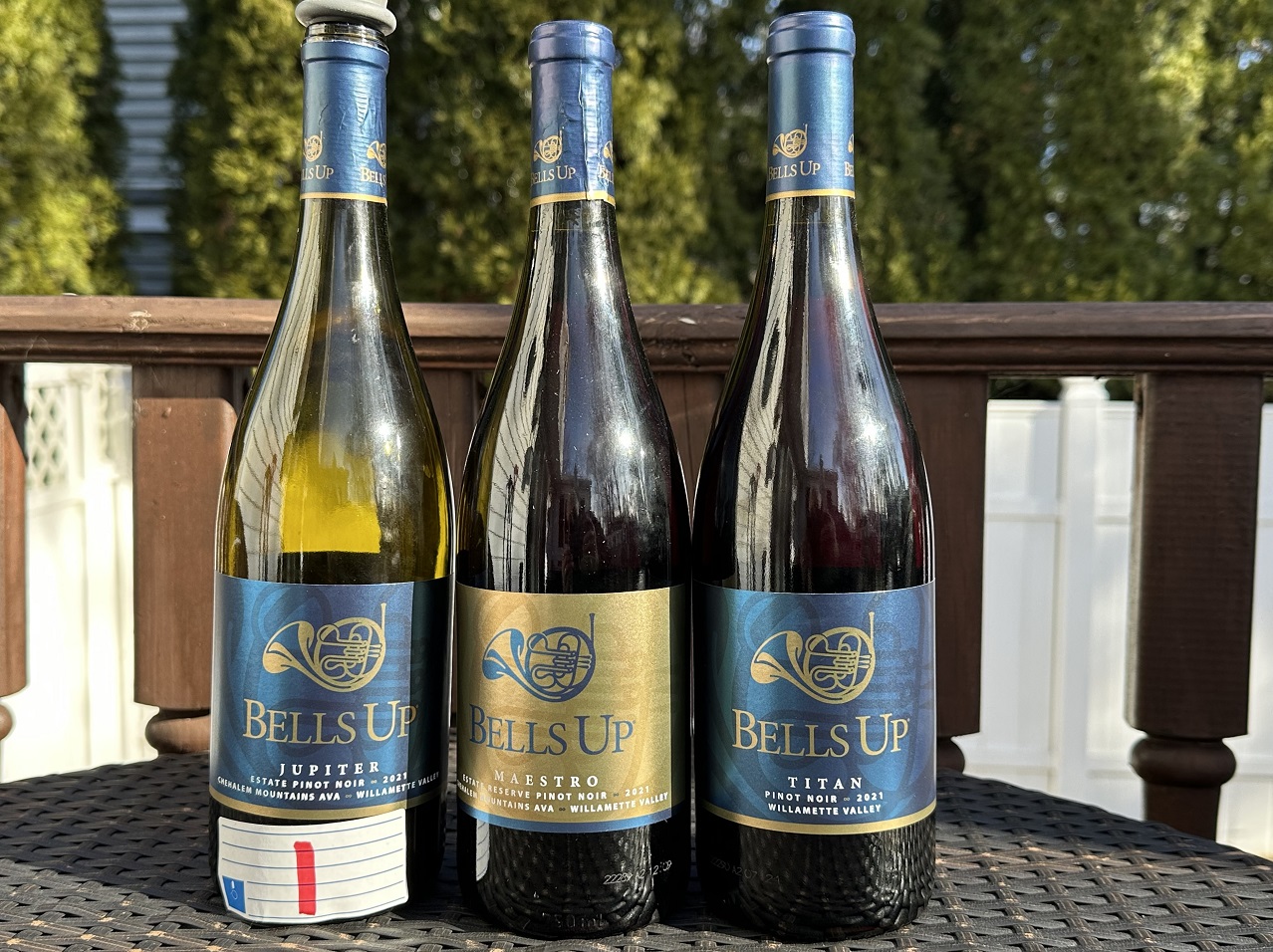
And then there were wines.
I got three sample bottles, out of which one, Jupiter Pinot Noir, was included in the blind tasting (based on Sara’s recommendation). Here are the notes for all three wines, with the first one written a bit differently as it is based on the notes taken during the blind tasting.
2021 Bells Up Jupiter Pinot Noir Estate Chehalem Mountains AVA (13.5% ABV, $50, 58.8% heritage clone Pommard, 25.8% Dijon clone 667 (8-year old vines), 15.4% Dijon clone 113 (6-year old vines), 154 cases produced)
New World (have no idea what I was thinking, I guess something outside of Europe), Vintage: 2021. Cherries, lots of cherries, raspberries, tart cherries on the palate, good balance, nice.
Drinkability: 8
2021 Bells Up Maestro Reserve Pinot Noir Estate Chehalem Mountains AVA (13.3% ABV, $56, 50% Dijon clone 943, 27.8% 667, 22.2% 113; 77 cases produced, club members exclusive)
Dark garnet
Smoke, earthy notes, dark fruit, hint of cherries
Sweet and tart cherries both, iodine, crisp acidity, medium body, a bit of medicinal finish
Drinkability: 8-
2021 Bells Up Titan Pinot Noir Willamette Valley AVA (13.8% ABV, $46, 22.3% 8-year-old Pommard Bells Up’s estate, 38.8% Dijon Clones 115 and 38.8% 777, MonksGate Vineyard’s in Yamhill-Carlton AVA, 19- and 20-year-old vines respectively; 12 months in French oak, 27% new; 111 cases produced)
Garnet
A hint of bell pepper, eucalyptus, raspberries
Black plums, cherries, medium palate weight, medium body, good acidity on the finish. Needs food.
Drinkability: 7+/8-
Here we are – a quick Bells Up winery update and the notes for three of their latest Pinot Noir releases.
Until next time…
This post is a part of the Stories of Passion and Pinot series – click the link for more stories…
Pinot Noir Battle – Let the Best (but Most Unexpected) Win…Again
It all started with a few tweets. I noticed a very high praise for the German Pinot Noirs shared by some of the European wine lovers I’m connected to on Twitter (still can’t make myself call it X, so you will have to forgive me for that). Particularly, Pinot Noir from Ahr was regarded as the best in the world, handily beating Burgundies on any occasion. I was intrigued and started searching for the Pinot Noir from Ahr, which proved to be challenging.
Ahr is a tiny region, one of the smallest in Germany – according to Wines of Germany, Ahr has only about 529 hectares of vineyards (around 1,323 acres), which comprises 40 single vineyards. 65% of the vineyard area is planted with Pinot Noir, about 860 acres – for comparison, the Jackson Family mostly Pinot Noir plantings in Oregon alone amount to roughly 600 acres. You can imagine that finding Pinot Noir from Ahr in the US was rather challenging.
The more I saw Ahr Pinot-praising tweets, the more I wanted to try it. Then one day I checked Wine.com, and there it was – Pinot Noir from Ahr, made by Meyer-Näkel. I quickly went to the Twitter folks to check if this wine would sufficiently represent the Ahr region, got an approving nod, and bought a bottle.
Once the wine arrived, I thought of the best way to try it. When it comes to learning about wine, tasting wines side by side is the best way to learn. Oh yeah, and if you want to be honest with yourself, blind tasting is the only way. We tend to be led by what we know, by our beliefs. Once we know that the wine costs $100, we want to believe that it is better than the bottle which costs $50. Once we see a bottle of Cabernet Sauvignon from Napa Valley in California, we automatically assume that it will be much better than the Cabernet Sauvignon from Lake County or Lodi. Nothing is wrong with us, this is how the brain works – so once you remove all the factors of influence, once you get one on one with the liquid in your glass without knowing the producer, the region, the price – it is very easy to be honest with yourself. So blind tasting it is.
Sometimes we don’t realize how fast the time passes. I love talking about blind tastings when I’m talking about wine, and I have a few of my favorite blind tasting examples, one of them particularly being the Pinot Noir blind tasting we have done in the past. What I didn’t realize is that the particular wine tasting I remember so well took place almost 15 years ago (time flies, isn’t it). The outcome of the tasting was very surprising, with South African Pinot Noir from Hamilton Russell beating California, Burgundy, and others – 15 years ago I didn’t even know that South Africa produced Pinot Noir!
Many things have happened in the wine world over these 15 years – of course, Pinot Noir is one of the oldest red wines produced in the world, but now it is literally produced everywhere – I don’t know if today there is a country which doesn’t produce Pinot Noir wines (maybe Spain?). Also, the quality of Pinot Noir throughout the world got a lot higher. The tasting you are about to read about is the perfect illustration of both points – the widespread geography and quality.
Okay, a blind tasting of Pinot Noir. The Ahr Pinot Noir got high praise, so we need to compare it with the best of the best – which means that we have to have California, Oregon, and Burgundy in the tasting, plus whatever else we might be able to find. I asked for a few samples of Oregon Pinot Noir. Very conveniently, Last Bottle had an offer for Chacra Pinot Noir from Patagonia – a different Pinot Noir from Chacra was James Suckling’s wine of the year recently, so this was a good addition to the tasting. Bottle by bottle, we assembled 12 Pinot Noirs from around the world, and the battlefield was ready to be set up.
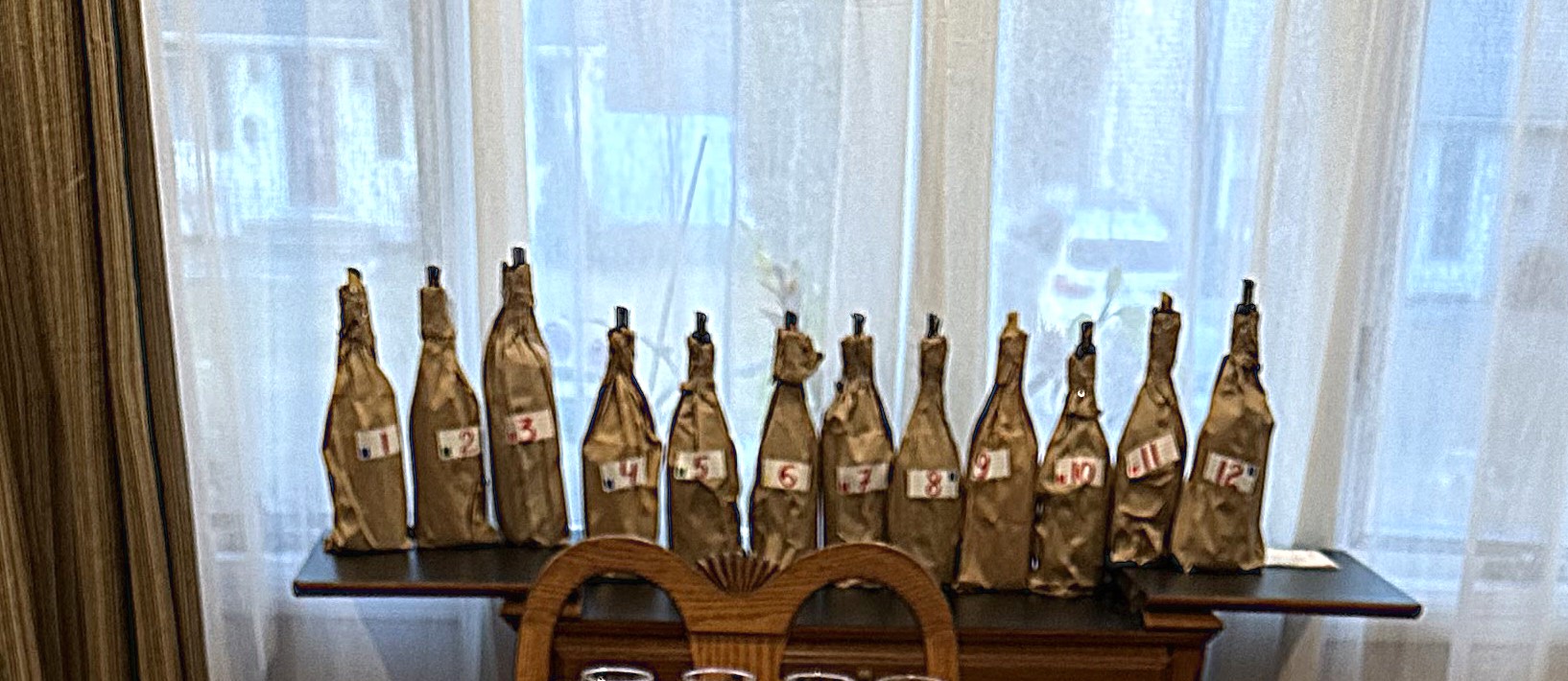
This is a blind tasting, so we placed all bottles in the paper bags, and then my daughter who was now a participant in the tasting put the labels randomly on the bags (15 years ago her role was limited only to attaching the labels :)). I also prepared a few of the “reference points” for everybody to use in the form of the crushed fruit in the glass – I didn’t find plums in the store, but we had many other relevant “references” – cherries, pomegranate, blueberries, raspberries, blackberries, and even liquid smoke.


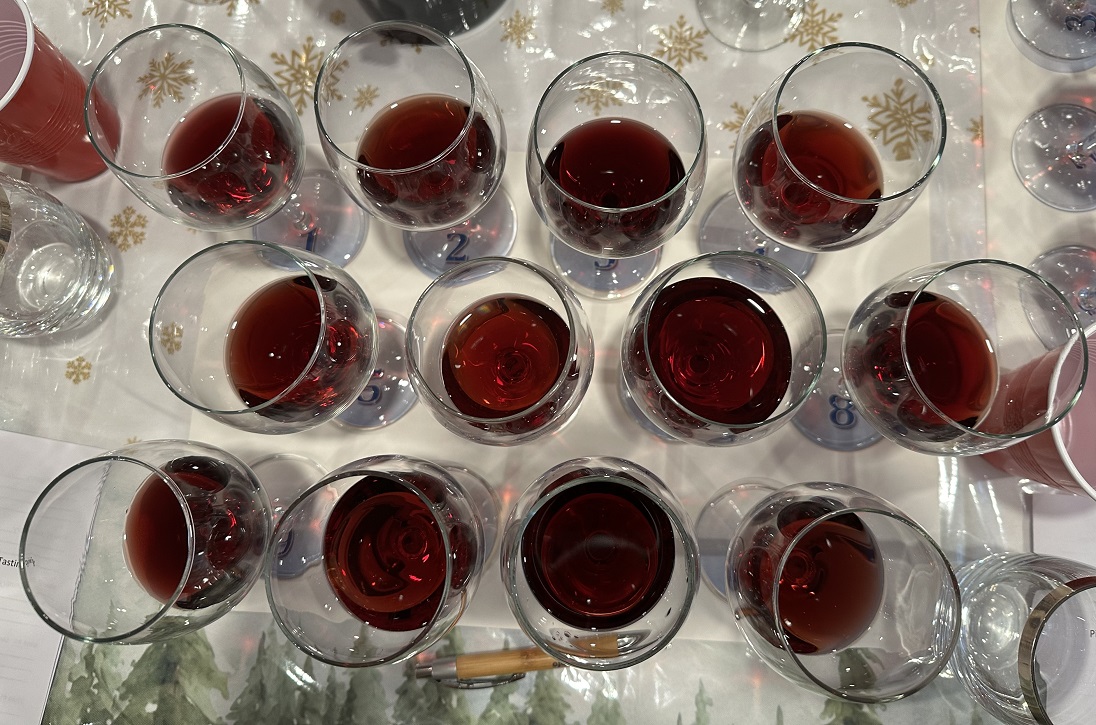
We also had paper for taking notes, and as a reference, I included all the countries that were present in the tasting so we could try guessing the countries for each wine. All countries except the two, as both Zak and I brought in one “surprise” each – Pinot Noir from the countries that are not really known as Pinot Noir producers – we didn’t know what wine the other person was bringing. Here is the list of countries that were offered for everyone’s reference: Argentina (Patagonia), California (Santa Rita Hills), France (Burgundy), Germany (Ahr), New York (Finger Lakes), New Zealand (Central Otago), Oregon (Willamette Valley, 2 wines), Poland, Washington, Surprise 1 (European country not listed above), Surprise 2.
Off we went, tasting and discussing the wines, trying to figure out what was what. Consciously tasting 12 wines in a row is not an easy fit, especially when you try to at least identify the countries. Also, each person (there were 8 of us) was supposed to decide on 3 of their favorite wines so we would be able to vote for the most popular wine of the night, so we had to score each wine. Here score is simply comparative within your notes – 1 through 5, E to A, doesn’t matter, as long as everyone can decide on their favorites.
Here are my notes for all 12 wines as the tasting was happening.
Wine #1: Country: New World (have no idea what I was thinking, I guess something outside of Europe), Vintage: 2021. Cherries, lots of cherries, raspberries, tart cherries on the palate, good balance, nice. Score: 8
Wine #2: Country: Oregon, Vintage: 2021. Iodine, cherries, tart, pepper, tannins, earthy, rocky. Score: 8+
Wine #3: Country: Poland?, Vintage: 2021. Cherries, initially fresh berries, fresh raspberries, sweet cherries, good balance. Score: 8
Wine #4: Country: Argentina?, Vintage: 2019. Gunflint, fresh, crisp, tart, rocky, cherries, excellent. Score:8/8+. Tasting again at the end of the tasting, the wine lost something, so finally score is 8
Wine #5: Country: California?, Vintage: ? Almost black color, dark, aged, medicinal nose, iodine, sweet cherries on the palate, tart. Score: 8-, after retesting later – 8, wine improved.
Wine #6: Country: Oregon? No, Vintage: ?, carrot juice on the nose, very grippy tannins on the palate, cherries. Score: 7+
Wine #7: Country: ? , Vintage: ? Beautiful color, Rutherford dust, hint of cherries, tannins and cherries on the palate, good balance. Score: 8 initially, 8+ after breathing
Wine #8: Country: Germany, Vintage: ? Love the garnet color, smoke, tar, concentrated nose. Wow! Superb – cherries, concentrated, good acidity, good balance. Score: 8++
Wine #9: Country: Oregon, Vintage: ? Pencil shavings, Rutherford dust, tannins, cherries, elegant but needs a touch more acidity. Score: 8
Wine #10: Country: ?, Vintage: ? Pomegranate seeds, cherries, very tight. Cool aid, cherry cola Score: 8-
Wine #11: Country: Finger Lakes, Vintage: ? Smoke and rubber, tar, on the nose. Rubber, tannins, cherries, became more balanced after breathing Score: 7+ initially, improved to 8 on the second tasting.
Wine #12: Country: Oregon, Vintage: ? Cherries, vegetation, cool aid on the nose. Cherries, good balance, good acidity, excellent. Score: 8+, went down to 8 after re-tasting as the finish showed sugar candy.
Ugh, this was not an easy tasting, but it was finally complete. Time to decide on favorites. First, everyone had to make their own decisions for the 3 favorite wines. After re-tasting and struggling, my list of favorites in descending order looked like this:
1st favorite: #8
2nd favorite: #2
3rd favorite: #7
Next, the vote. Remember, each person (there were 8 of us) was allowed to vote for 3 favorite wines, thus we just called the wine number and asked to see a show of hands. Here are the results.
Wine #1 – 1
Wine #2 – 5
Wine #3 – 1
Wine #4 – 0
Wine #5 – 0
Wine #6 – 3
Wine #7 – 3
Wine #8 – 3
Wine #9 – 3
Wine #10 – 1
Wine #11 – 1
Wine #12 – 3
Therefore we had a clear winner – wine number 2, and 5 wines in the second place with 3 votes each – #6, #7, #8, #9, and #12.
Next came the best and final part of the blind tasting – the reveal! Would you believe me If I told you that the revealed bottle elicited a loud “oh, wow, really” literally from everyone? Surprise after surprise after surprise.
The most popular wine? Pinot Noir from (drum roll, please)
Japan!
Seriously, Japan??? How? Yes, Japan makes wine, but to make Pinot Noir that shows better than Oregon, California, Burgundy, and all other countries? Just wow. Apparently, this is an impossible-to-get “cult” wine, produced in minuscule quantities, $100 wholesale but $300 retail if you can even find it? That was the first “surprise” wine.


Pinot Noir from Poland that was very good? How about that? My favorite wine of the tasting, Southern Lines from Central Otago, by some absolute miracle was $15 per bottle – how is that even possible (it is a case buy if you can find it at that price).
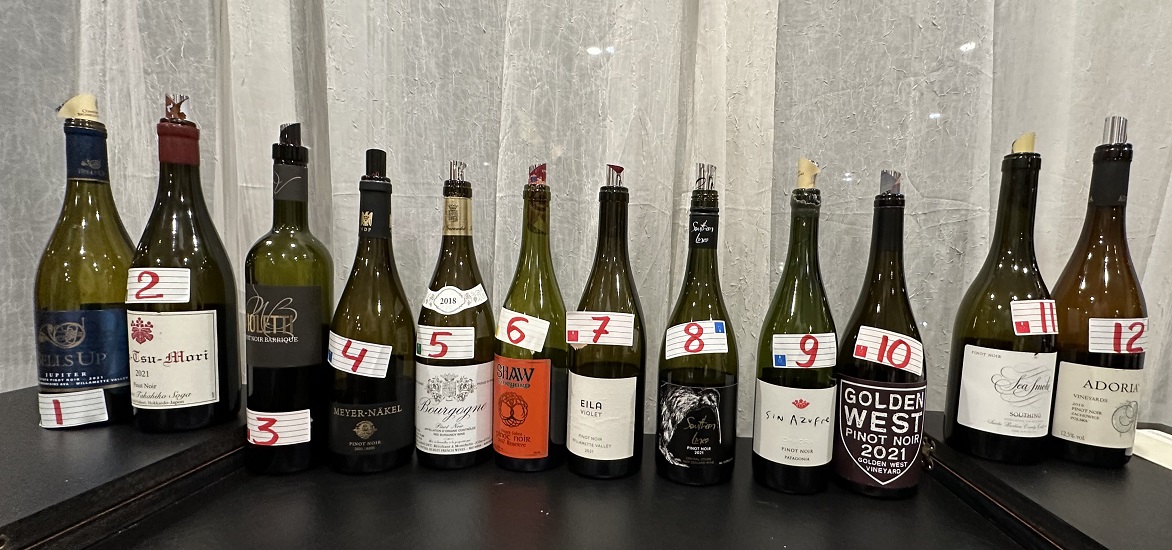
Here is the full list of wines in the numbered order:
- 2021 Bells Up Jupiter Pinot Noir Estate Chehalem Mountains AVA (13.5% ABV, $50)
- 2021 Domaine Takahiko Soga Nana-Tsu-Mori Pinot Noir Hokkaido Japan (13% ABV, $300?)
- 2022 Violetti-Rebbau Pinot Noir Barrique Vin de Pays Suisse (13% ABV, $N/A)
- 2021 Meyer-Näkel Pinot Noir Ahr Germany (12.5% ABV, $56 at Wine.com)
- 2018 Paul Garaudet Pinot Noir Bourgogne AOC (13% ABV, $39)
- 2017 Shaw Vineyard Pinot Noir Reserve Finger Lakes New York (13% ABV, $N/A)
- 2021 EILA Violet Pinot Noir Willamette Valley (12.7% ABV, $65)
- 2021 Southern Lines Pinot Noir Central Otago New Zealand (13.5% ABV, $15)
- 2022 Chakra Sin AzuFre Pinot Noir Patagonia Argentina (12% ABV, $30 Last Bottle)
- 2021 Golden West Pinot Noir Goden West Vineyard Royal Slope Washington (14% ABV, $21)
- 2011 Sea Smoke Southing Pinot Noir Santa Rita Hills Santa Barbara County (14.5% ABV, $100?)
- 2021 Adoria Vineyards Pinot Noir Zachowice Poland (12.5% ABV, $25)
You see, this is what blind tasting does. Under the guise of the brown bag, all wines are “the same”. You are not influenced by anything – “ahh, I brought this wine, it must be better”, “ahh, the guy in the store was raving about it so much”, “ahh, it got 99 points from Suckling” – none of this matters. You let your palate be the judge. Wine has to give you pleasure.


As the wines were left at my house after the tasting, I was the lucky bastard who had an opportunity to taste them over the few next days. This is not how the general population consumes wines, so this has very little bearing on the results and the whole tasting process, but I can tell you that for example, the Sea Smoke Southing became literally my favorite wine – it developed a depth of flavor and a beautiful complexity – if it would taste like that during the tasting it would be handily the wine number 1, for sure for me. The Pinot Noir from Ahr also developed additional layers, with gunflint and roasted meat notes now dominating the flavor profile in a very respectful manner, making it a lot more pleasant to drink – again, in that state it would again get a much higher rating in my book. And pretty much across the board, the Pinot Noirs continued their evolution and most of them were still drinkable even 5 days after being open – a testament to quality.
Here we are. 15 years later, the most unexpected Pinot Noir wins again. But this is the beauty of wine. The mystery, the enigma, the art. Wine is a liquid art form, and this tasting delivered an unmeasurable amount of pleasure and created new memories. This is what life is all about, isn’t it? Creating good great memories. And wine is exceptionally good at that. Onward and upward.
American Pleasures #10: Meyye Wines
Wine should give you pleasure – there is no point in drinking wine if it does not. Lately, I have had a number of samples of American wines that were delicious standouts – one after another, making me even wonder if someone cursed my palate. I enjoyed all those wines so much that I decided to designate a new series to them – the American Pleasures.
And we are back to talk about more delicious American wines.
Rob Campbell got into winemaking in 1992 when he started helping his future father-in-law Bruce Tichenor at Story Winery in Plymouth, California. 20 years and three other careers later, Rob decided that it was the time to go into the winemaking all the way, taking over the wine-making at the Story Winery. While producing award-winning wines at the Story Winery, Rob realized that he could also produce ultra-premium wines, capitalizing on the success of his 2014 Zinfandel. When the family decided to sell Story Winery in 2019, Rob finally got an opportunity to start making the wines he had always dreamt of, and he founded Meyye Wines.

With Meyye Wines, Rob wanted to honor his Native American heritage. Rob Campbell is a member of the Federated Indians of Graton Rancheria (Coastal Miwok/Southern Pomo), the tribe is based in Rohnert Park, California, which lies within Sonoma County. Meyye (pronounced may-yea) means ‘bird’ in the Coastal Miwok language, and the first 4 wines that Rob started producing are all called after the birds native to the different regions where Rob was sourcing the fruit from, using native Miwok names for the birds. You can also appreciate the beauty of these wine labels which started as photographs taken by acclaimed wildlife photographer Steve Zamek, expertly rendered to create a three-dimensional representation of an image of each bird.
As Rob explains:
“Native Americans have been making wine in California for over 250 years. I descend from multiple Mission Indians who worked vineyards or made wine in three different California missions in the 19th century (Mission San Jose, Sonoma, and San Rafael). I’m intentionally using the Coast Miwok language since the language was considered ‘officially dead’ in the past, but my people are making a concerted effort to restore it. In addition to being ultra-premium wines that taste great, it’s my small way of preserving our language by sharing it with native and non-native people alike. “
I had an opportunity to taste 4 of Rob’s wines, and they were literally one better than the other. I’m also sure you would be able to recognize the names of the vineyards and appreciate the pedigree of these wines.
Here are my notes:
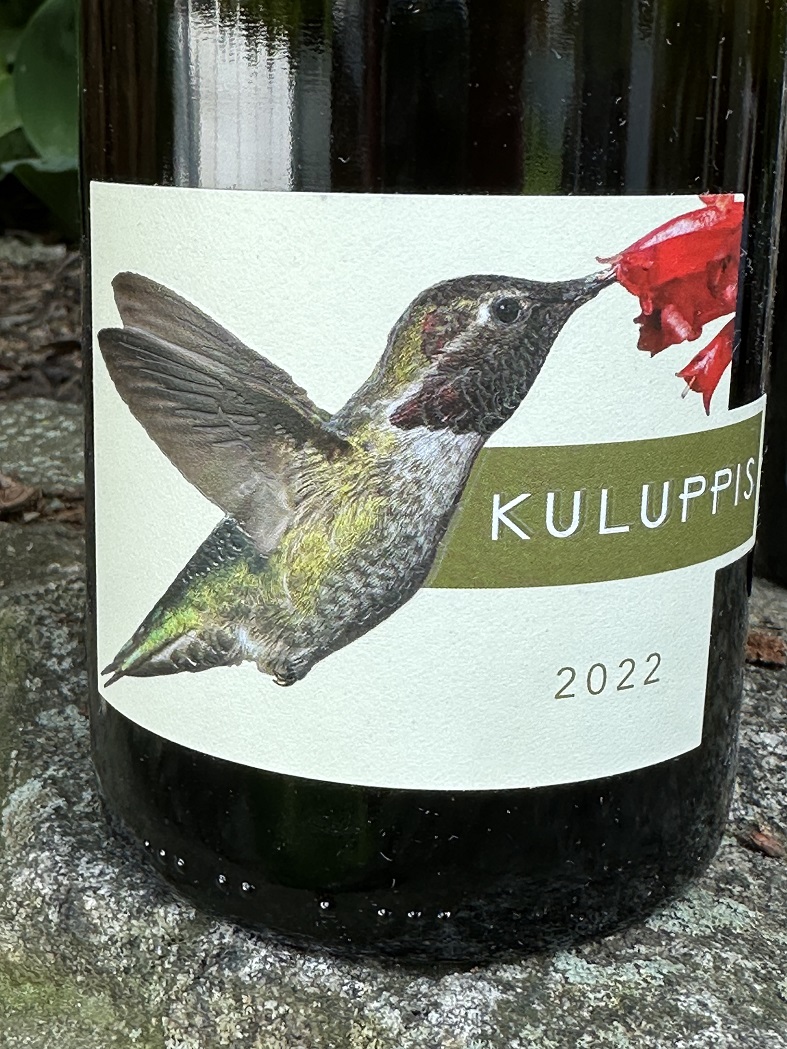
2022 Meyye Wines Kuluppis Chardonnay Sonoma County Los Carneros (13.7% ABV, $55, Sangiacomo vineyards, Kuluppis pronounced kuh-luu-pee; Anna’s hummingbird)
Light golden
Immediately upon opening – rich, opulent, butter, vanilla and tropical fruit on the nose, buttery toast on the palate, big, rich, hedonistic.
Literally 30 seconds later – a lot more restrained and leaner wine, all butter is gone, just some apples left. Well, no, there is still butter, just the toast is gone 🙂 nice and elegant, well balanced. Some perceived bitterness on the palate. Let’s see how it will develop.
Second day showed some honey notes and improved balance. Overall – excellent.
8+
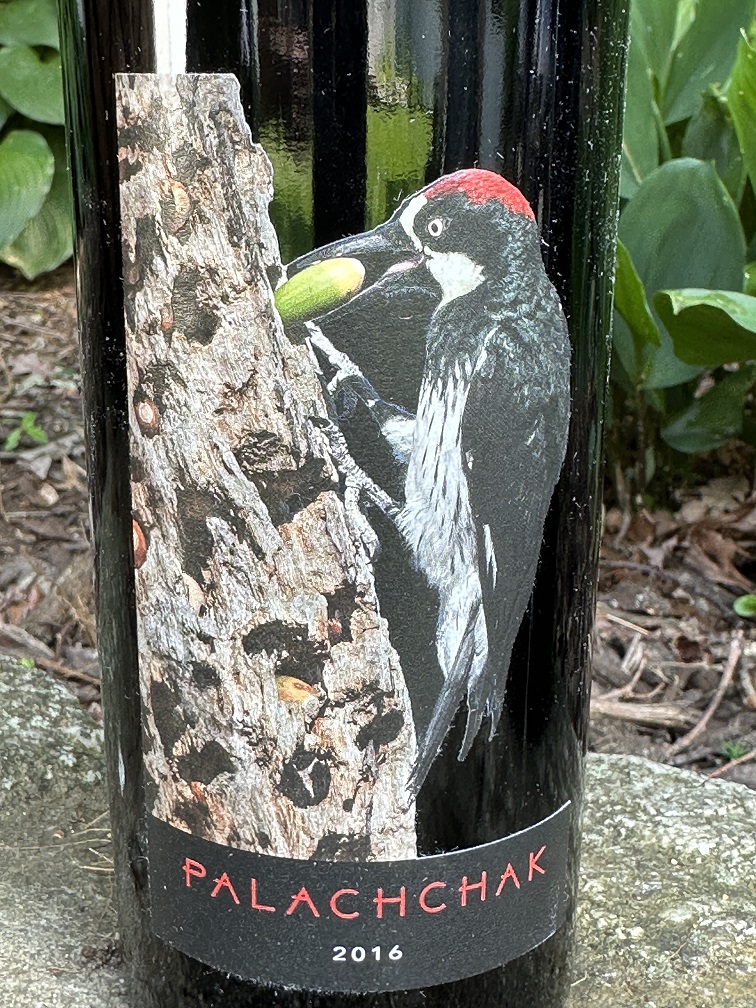
2016 Meyye Wines Palachchak Zinfandel Shenandoah Valley (15.5% ABV, $70, 90% Zinfandel, 10% Syrah, Palachchak pronounced pah-lah-chak; red-headed acorn woodpecker)
Dark chocolate and black currant, intense and beautiful
Blackberries and blueberries on the first day,
Dark chocolate with a touch of pepper, cherries, good structure, full body, clean acidity, good balance. Lasted for 4 days. Became a bit more round.
8
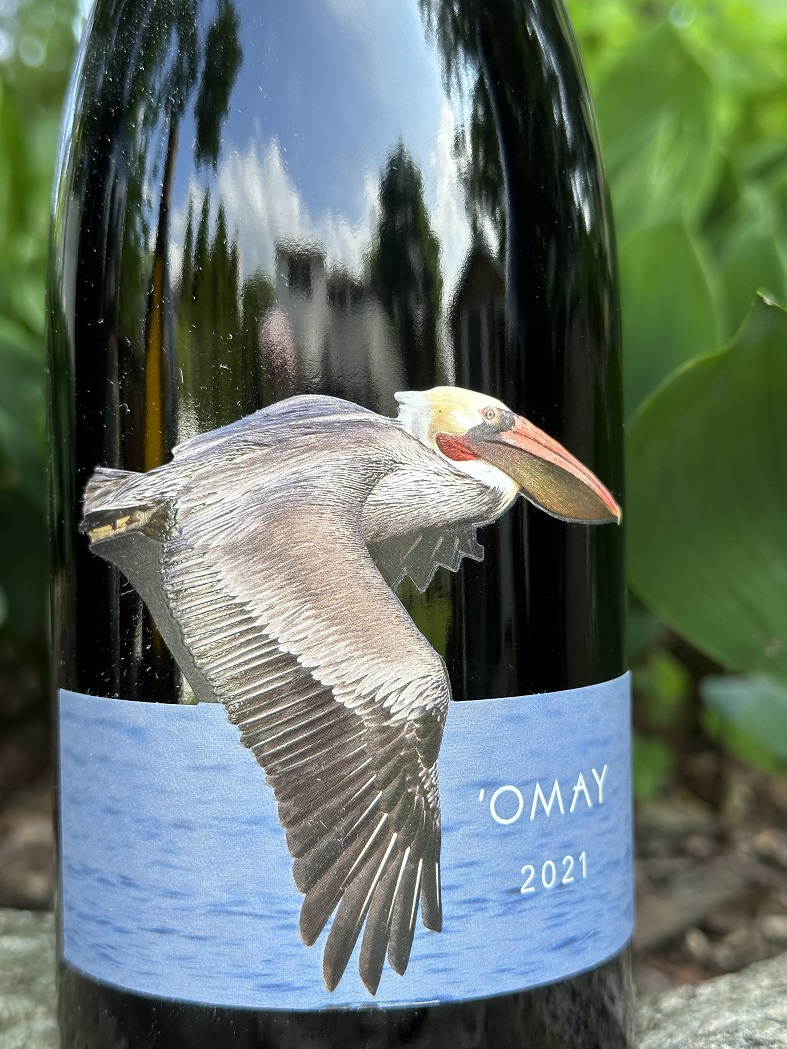
2021 Meyye Wines ‘Omay Pinot Noir Sonoma County Petaluma Gap AVA (13.9% ABV, $75, 100% Pommard Clone, Sangiacomo Vineyard, ‘Omay pronounced oh-may; brown pelican)
garnet
Smoke and plums, classic CA Pinot
Black Plums, violets, lavender, clean acidity, medium to full body – delicious.
8
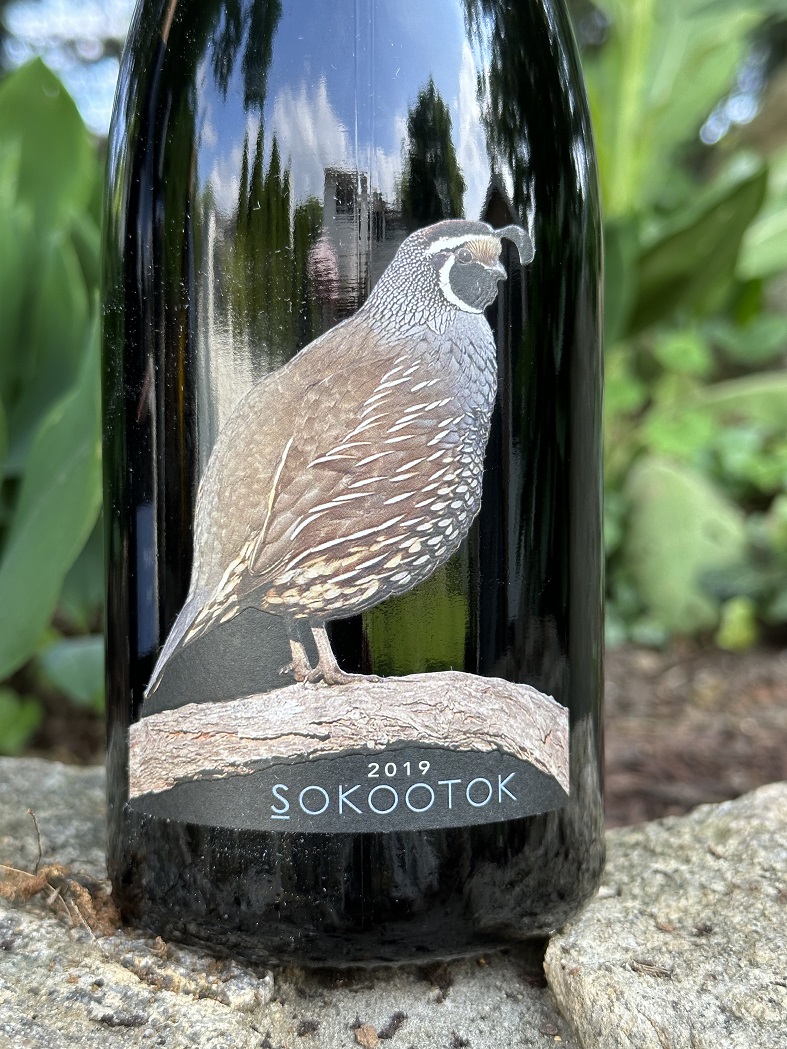
2019 Meyye Wines Sokootok Red Blend Sierra Foothills (14.5% ABV, $60, 50% Grenache, 28% Syrah, 10% Petite Sirah, 9% Counoise,
3% Zinfandel, Sokootok pronounced show-koh-tock; California quail)
Dark Ruby
Dark fruit, hint of minerality, sweet cherries, herbs
Black and red fruit, medium body, well-integrated tannins, good acidity, then tannins grip the finish – in a nice, but assertive way. This will develop nicely over the next 10-15 years.
8+, delicious.
Here you go, my friends. Another story of American Pleasures – delicious wines well worth seeking. And Meyye wines you will actually have to seek, due to their ultra-low production, so good luck to you.
Until the next time – cheers!
American Pleasures #9: Balverne Wines
Wine should give you pleasure – there is no point in drinking wine if it does not. Lately, I have had a number of samples of American wines that were delicious standouts – one after another, making me even wonder if someone cursed my palate. I enjoyed all those wines so much that I decided to designate a new series to them – the American Pleasures.
And we are back to talk about more delicious American wines (after a long and unintended break).
I love how wine not only entices your senses but lets you play a sleuth, a researcher, a scientist, a philosopher – a different role on a different day, or all of them at once – take your pick.
I can give it to you right now [spoilers alert]: I got a sample of three California wines, one better than another, one of them possibly even WOTY 2023 (told ya, spoilers) – and ended up doing the whole research (thanks, Google) trying to connect layers one by one. From the roles I mentioned above, I played mostly a sleuth trying to understand how far history was taking me and how all the little pieces fit together. Ah, never mind, let’s just get to it.
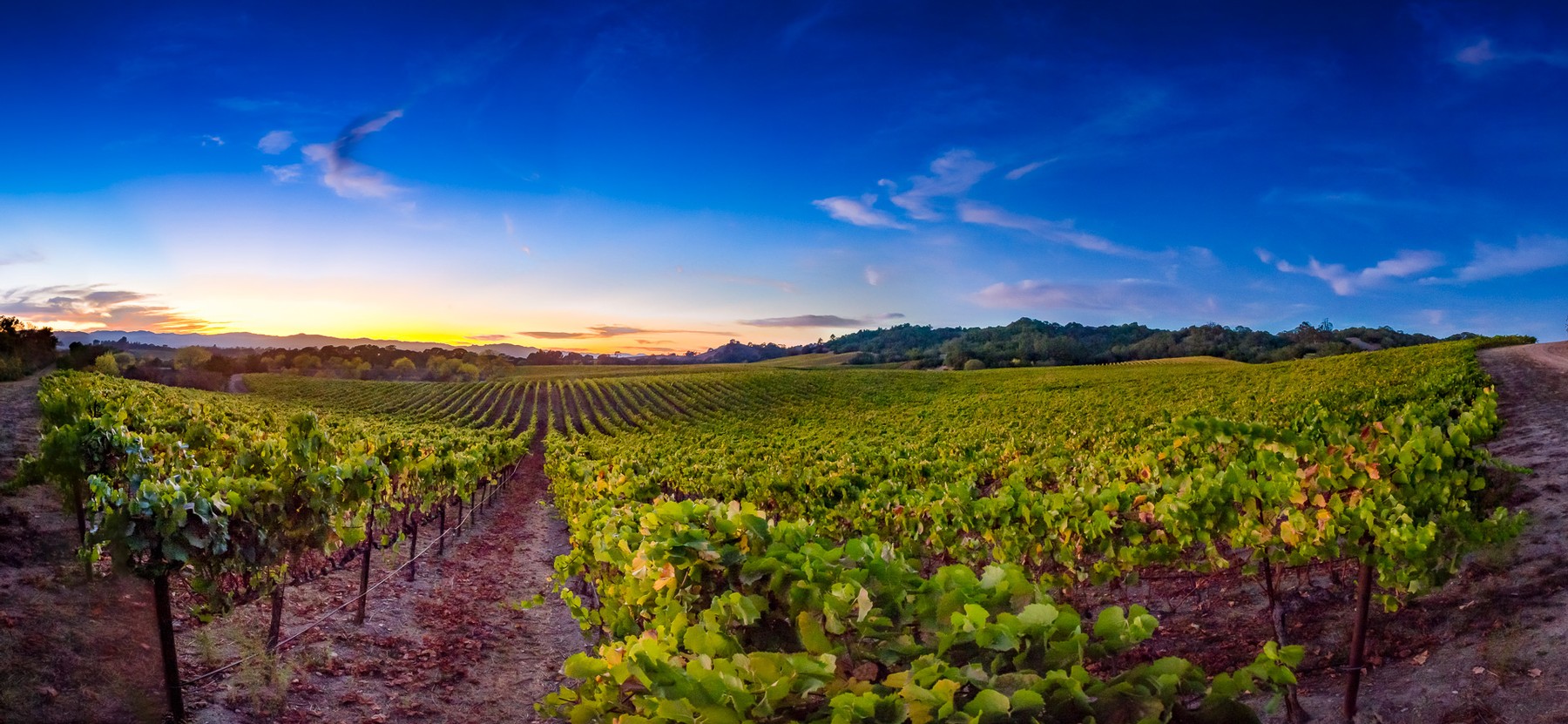
Source: Notre Vue Estates
In the center of this excitement are the wines produced by the Notre Vue Estate (Notre Vue stands for Our View in French) and called Balverne. Notre Vue is a 710 acres estate located in the heart of Sonoma County next to Healdsburg and acquired by Bob and Renee Stein in 1992. The history of the land where the estate is situated goes all the way back to 1841 when it was the part of Rancho Sotoyome land grant of 1841. The grapes had been growing on the estate starting from 1869, and commercially starting from 1907 – I’m assuming after the estate was acquired by Antonio Perelli-Minetti.
Let’s take a quick stop here – have you heard of Antonio Perelli-Minetti? I have to shamefully admit that I never have. We all know who Rober Mondavi and Andrew Tschelisteff are, but Antonio Perelli-Minetti? When Antonio Perelli-Minetti died in August of 1976 at the age of 95, his obituary in S.F. Chronicle was titled “Dean of winemakers is dead at 95″. Dean of winemakers – and with all my passion for wine, all the reading and learning, I never came across his name? Well, it may be just me… But then there is almost nothing written about him, for sure online… Okay, moving along…
The winemaking at the estate started in 1972 under the name of Balverne Cellars – supposedly, Balverne is a hybrid Anglo-French term meaning “a place of trees”, which is very appropriate for the estate. In the 1980s, two recent UC Davis graduates, Doug Nalle and John Kongsgaard (I’m sure both names need no introduction), made the estate famous with Balvernet Cellars wines being served at the White House dinners and at some of the finest restaurants in Los Angeles and New York. After Steins acquired the estate in 1992 they were mostly selling the estate grapes to some of the best wineries in California. The winemaking was reintroduced at the estate in 2005 under the name of Windsor Oaks Vineyards, and in 2013, the Balverne name was brought back.
Whew, done with the history. Let’s talk about the present.
At the heart of the Notre Vue estate lays 350 acres of “Forever Wild” Nature Preserve, covered by a variety of oak trees and inhabited by red-tailed hawks (Red-Tailed Hawk is a symbol of Balverne, depicted on every label), wild turkeys, owls, bluebirds, coyotes, bobcats, grey foxes, hares, rabbits and lots more. This Forever Wild nature oasis is a critical element of sustainable viticulture practiced throughout 250 acres of surrounding vineyards. These Sonoma’s Certified Sustainable vineyards are split into multiple blocks growing 18 grape varieties, and they span two of Sonoma County’s prominent AVAs – Russian River Valley and Chalk Hill.
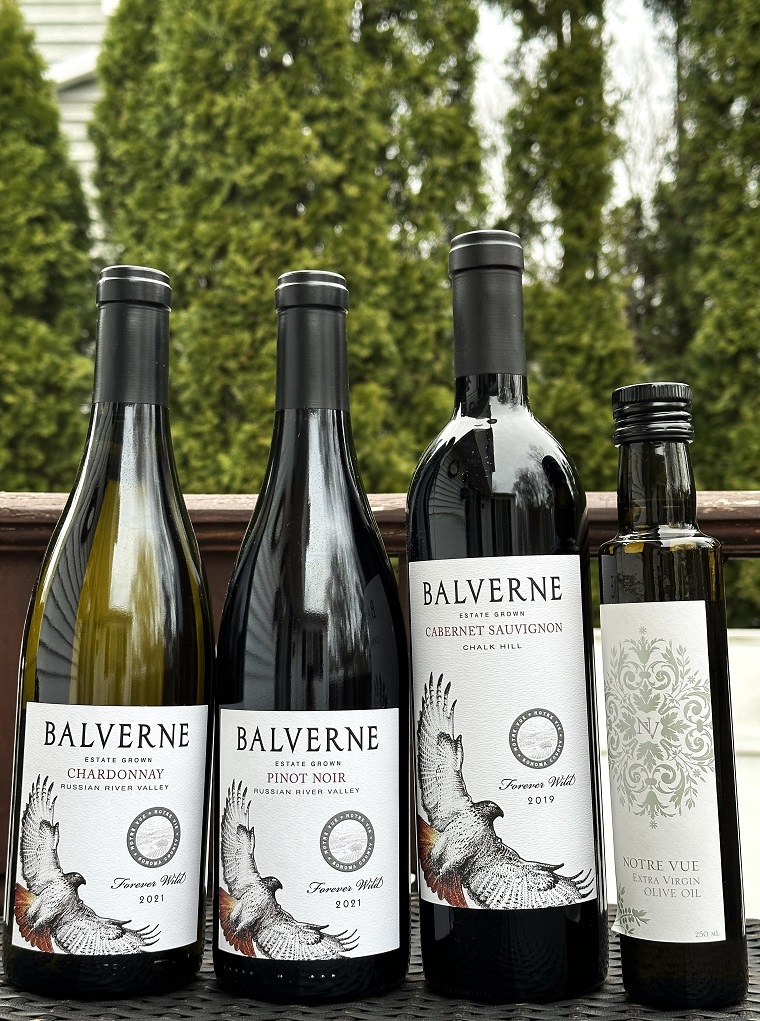 I had an opportunity to try 3 of Balverne’s recent releases – Pinot Noir, Cabernet Sauvignon, and Chardonnay. I would typically start tasting with the white wine – here, as I was tasting in the comfort of the house instead of the tasting room, I started with the red – Pinot Noir. The wine was excellent, tightly woven which is not always the case with California Pinot.
2021 Balverne Pinot Noir Russian River Valley AVA (14% ABV, $35, Pinot Noir clones 459 and 667 with a small percentage of 114 and 115, 9 months in 25% new French oak)
Dark garnet
Plums, violets, intense, inviting
Nicely restrained, dark cherries, tart, crisp, lean, well structured
8, excellent
Cabernet Sauvignon followed, being nothing short of excellent, and perfectly drinkable from the first pour.
2019 Balverne Cabernet Sauvignon Chalk Hill AVA (14.3% ABV, $48, 79% Cabernet Sauvignon, 9% Petit Verdot, 9% Malbec, 3% Cabernet Franc, 18 months in French oak)
Dark garnet
Eucalyptus, cassis
Everything weaves around the acidic core. Perfectly restrained, nice Bordeaux/old world style, harmonious, balanced, delicious.
8+, outstanding.
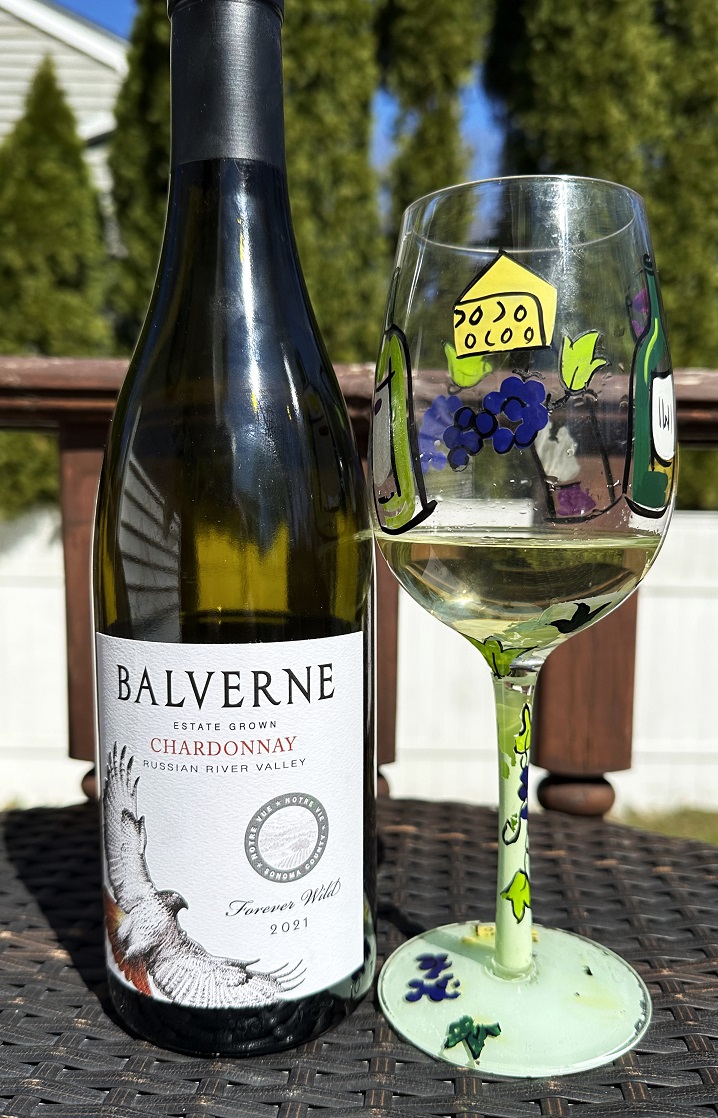 And then came Balverne Chardonnay.
I poured a glass without much thought. Sometimes, it is best to have no expectations – not low, not high, just none. This was the case, even after the first two very successful reds. White wine is difficult. With white wine, the winemaker has nowhere to hide. Even if it will be two out of three, this would be a successful encounter.
The very first whiff of the glass made me literally speechless. The following sip confirmed my excitement:
2021 Balverne Chardonnay Russian River Valley AVA (14.2% ABV, $35, clone 17, 5 months in 20% new French oak)
Light golden
Beautiful, varietally correct nose – vanilla, apple, lemon
The first sip blows your mind – vanilla, golden delicious apple, honey, lemon, minerality – impeccable balance and beauty only a Chardonnay is capable of expressing.
9, spectacular. This wine is just something. Something special.
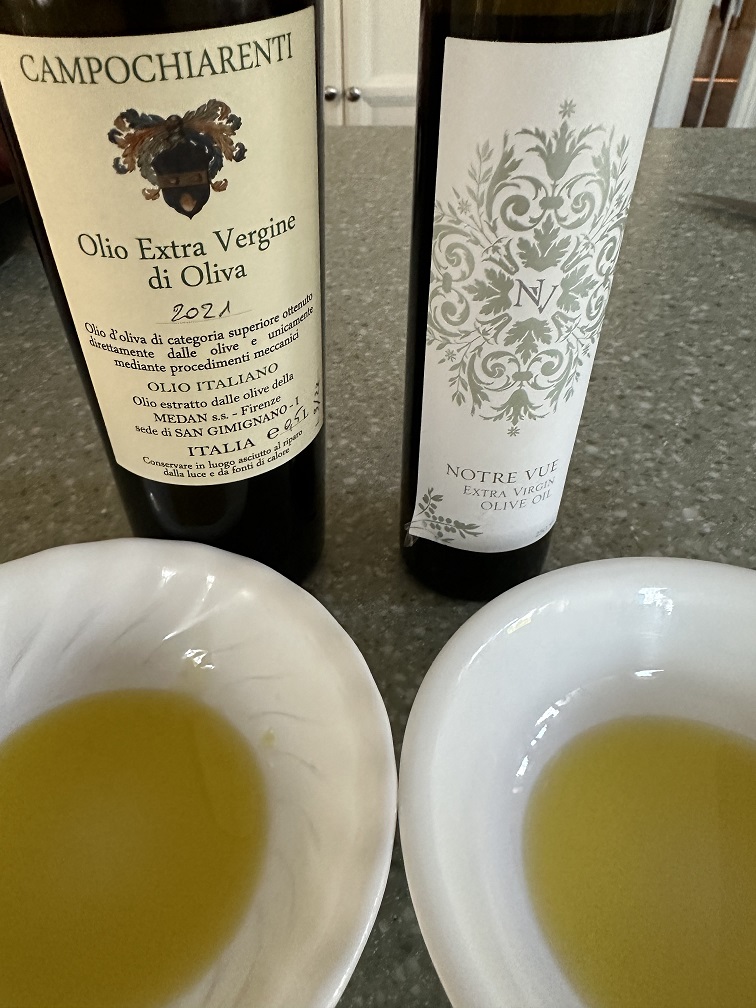
As you might see in one of the pictures above, my sample set went beyond wine – The Notre Vue’s own California Extra Virgin Olive Oil was a part of the package. I decided to do [an unfair] comparison between Californian and Italian EVOO. Both olive oils were expectedly different, with the Italian one showing green, tight, and peppery, and the Californian one being much more fruity. The beauty – it is not a competition, depending on what dish you are using the olive oil for, each one would have its own advantages.
Now you have a complete experience report, including my uninvited research (but everyone is entitled to their own version of fun). What’s important is that I presented to you three excellent wines, both on their own and as a value. Once you taste this Chardonnay, believe me, you’ll understand…
And we are done here. But – I always have more American pleasures to share, so stay tuned…
Celebrate Pinot Noir!
And just like that, I almost missed International Pinot Noir Day, the celebration of one of the most popular red grapes in the world.
Pinot Noir is definitely one of the most popular, even though great Pinot Noirs are mainly limited to only four countries and regions – Burgundy, Oregon, New Zealand, and California – unlike Cabernet Sauvignon and Merlot, which definitely win the popularity contest worldwide, growing successfully absolutely everywhere. Of course, you have Pinot Nero from Italy, Spätburgunder from Germany, Blauburgunder from Austria, Pinot Noir from Australia, Chile, and Argentina, but those rarely take your breath away.

Most popular or not can be contested, but Pinot Noir without a doubt makes the most expensive wines in the world. You can check it for yourself using this “Most expensive wines” page but at the moment of writing (August 18, 2023), Domaine Leroy Musigny Grand Cru is listed by wine-searcher for $43,869 per bottle, which I believe is more than the whole index of the most expensive Cabernet Sauvignon wines on the same day. I really can’t tell if wine can be worth this much to someone to drink it, but hey, it is a free world.
Pinot Noir is definitely a big subject in this blog. I decided to check on some numbers to see how Pinot Noir would stand up against other grapes. In terms of overall mentions, Pinot Noir is the second red grape with 378 posts mentioning it (Cabernet Sauvignon is ahead by almost 100 with 477 posts mentioning it). However, when it comes to tags, Pinot Noir has the highest number of posts, 79, tagged with “pinot noir”, well ahead of any other grape. This is important simply because the tag is matching the content of the post, so at least 79 posts are dedicated to Pinot Noir.
This shouldn’t come as a surprise as Pinot Noir is one of the central subjects of this blog, starring in the series of the Oregon winemakers’ interviews called Stories of Passion and Pinot. The series contains more than 25 articles, highlighting the “passion for the finicky grape” as I typically like to present it through the series of conversations with winemakers who got bitten by the Pinot Noir bug and never looked back. Whether you like Oregon Pinot Noir or not, I still recommend that you would get a glass (or two, or three) of your favorite Pinot Noir ready and go read some stories.
While I love Pinot Noir, I do have one gripe – the price. You can find an amazing Rioja for under $20. You can definitely find a nice Grenache, Sangiovese, or Syrah in that price range. Heck, you might even get lucky with Cabernet Sauvignon or Bordeaux blend. But with the exception of Chile, there is literally no such thing as a drinkable Pinot Noir in the under $20 range. I can’t refer much to Burgundies, but anything tasty from New Zealand’s Central Otago or Marlboro is pushing $40, and all delicious Oregon Pinot Noirs now really sit north of $50. California might offer some exceptions, but I’m not aware of a drinkable sub-$20 California Pinot Noir. Not that I’m complaining here, just stating the obvious.
As today’s celebration caught me off guard, I didn’t have many options to choose from. I have a few random burgundies which I need to look for and think about, nothing from Oregon or New Zealand, leaving California as a primary hope. I remembered that I should have a California Pinot somewhere as it was recently gifted to me, so I was quickly able to locate the 2017 Etude Fiddlestix Vineyard Pinot Noir Santa Rita Hills (14.1% ABV).
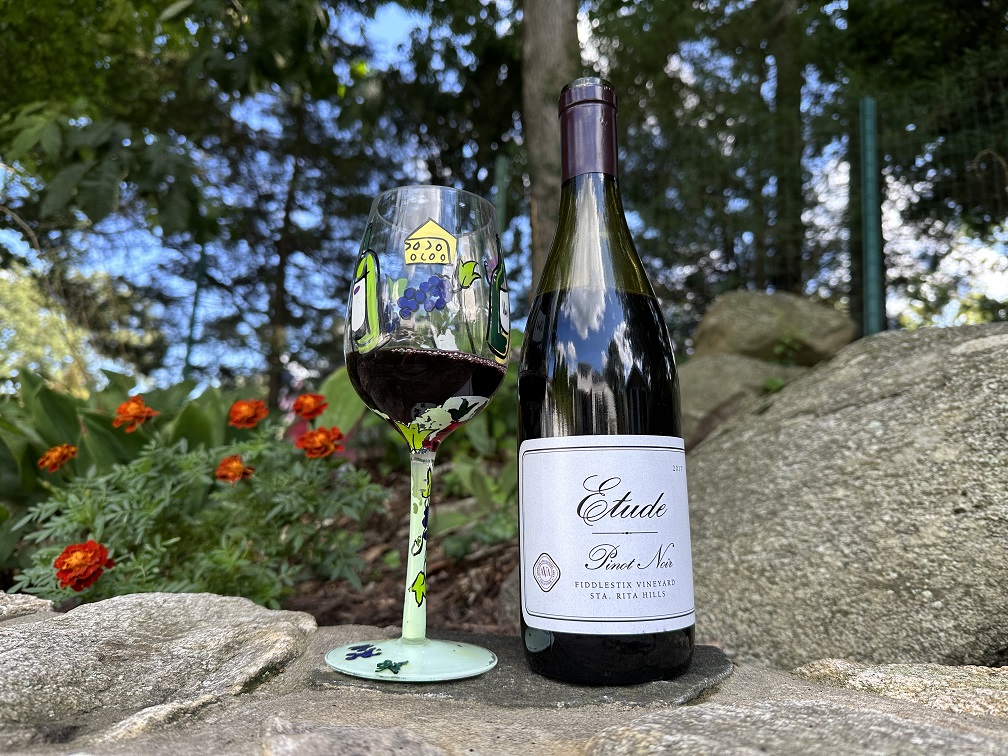
I know the name of the producer – Etude, but I don’t think I had tasted their wines before. Turns out this wine was a very appropriate choice for the Pinot Noir Day celebration, as Etude was founded in 1982 in Carneros in California in a quest to produce world-class Pinot Noir. I love this quote I found on Etude’s website from the founder and winemaker Tony Soter: “Pinot Noir is the most appropriate vehicle with which to study wine growing, precisely because of its demanding nature but also because of its delicacy and transparency. Make no mistake it is a humbling pursuit, but when it’s right, Pinot Noir is a glorious and moving thing. It is in the pursuit of that experience that we all work.” This is a perfect summary of the nature of Pinot Noir that also helps to explain what makes it so good when it is good. Etude produces more than 20 designation-specific Pinot Noir wines – they might be a perfect candidate for the Passion and Pinot series, even if the winery is located in California.
So how was the wine you might ask? In a word, delicious. Dark, unctuous fruit on the nose and the palate, a hint of vanilla, mocha and dark chocolate, nicely layered with perfect structural presence but not overpowering, perfect acidity and perfect balance. An excellent celebratory wine.
There you are, my friends. Another grape holiday just passed by. Hope you had an opportunity to celebrate, and if not – every day is a perfect day to have a glass of Pinot Noir. Until the next time – cheers!
Celebrating Oregon Wine Month with Potter’s Vineyard Wines
I guess there is something special in the month of May as everybody wants to appropriate it..for their wine purposes. The story differs from year to year, but this particular May 2023 has at least 4 wine designations (if I missed something – I profusely apologize) – May is Finger Lakes Wine Month, Michigan Wine Month, Oregon Wine Month, and Washington Wine Month.
The good thing is – there are 31 days in the month of May – which is enough to celebrate the wines of many more states – or maybe even all 50 – with proper planning. But for today, I only would like to focus on one of the wine months – Oregon.
Oregon wine is near and dear to my heart. First of all, Oregon itself is a beautiful place – I love the pure, open, clean, spacious, and airy pine forest oh so different from New England’s sprawling intersection of ivies, and stunning vineyard views which you can enjoy everywhere. Some of the very best American wines are produced in Oregon. And the longest-running series of articles on this blog – Stories of Passion and Pinot, conversations with winemakers – is dedicated to Oregon winemakers who made Pinot Noir the passion of their lives.
20 years ago, Oregon wines could’ve been known as a one-trick pony with its sole focus on Pinot Noir. Today, that world-class Pinot Noir is joined by Chardonnay, Pinot Gris, Riesling, Syrah, Tempranillo, Sangiovese, and even Tannat. Sparkling wines and Rosé can be found almost at any winery. And Pinot Noir is not just for reds anymore – Pinot Noir Blanc, a.k.a. White Pinot Noir is the wine to look for. Oregon winemakers continue studying their vineyards, identifying unique blocks and plots in a quest to produce the most terroir-driven wines.
One of my most recent conversations in the Passion and Pinot series was with Bill Sanchez, the proprietor and winemaker at Potter’s Vineyard. Potter’s Vineyard is a small, 3.5 acres estate in Laurelwood District AVA in Willamette Valley, producing about 1,000 cases annually. Potter’s Vineyard is organic, LIVE and Salmon Safe certified, and committed to staying small – you can learn about this commitment and the overall philosophy of Potter’s Vineyard from our conversation which can be found here.
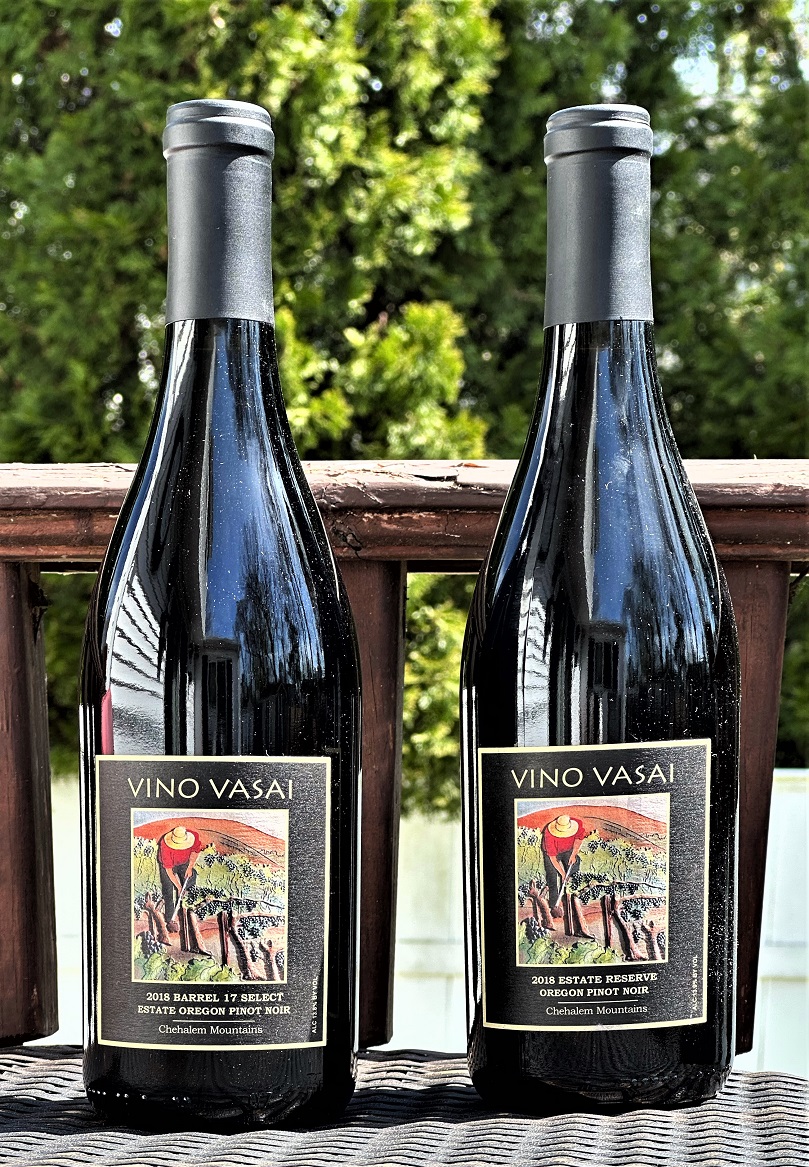
I don’t know about you, but I really admire these labels
Now I had an opportunity to taste a couple of the Potter’s Vineyard estate Pinot Noir wines, Barrel 17 Select and Reserve. Here are my notes:
2018 Vino Vasai Barrel 17 Select Estate Oregon Pinot Noir Chehalem Mountains (13.8% ABV, $48, Dijon clones)
Dark Ruby
Dark cherries, violets, minerality
Dark cherries, plums, medium to full body, firm structure, well-integrated tannins, luscious layers followed by the tart, long finish
8, excellent. Upon opening, the wine was lean and tight, Burgundian style. The next day opened up to show more of the Oregon Pinot power, still governed by restraint.
2018 Vino Vasai Pinot Noir Estate Reserve Chehalem Mountains (13.9% ABV, $58, Pommard clone, 75% new French oak )
Garnet
Beautiful legs (I rarely pay attention to those, but couldn’t help to notice)
Very enticing nose with sweet cherries, plums, eucalyptus
Cherries on the palate, tart, perfectly structured, harmonious and perfectly balanced. Craving food, but I can polish a bottle by myself.
8/8+, excellent.
Here you are, my friends – more of the delicious Oregon wines worth seeking. Oregon wine month is upon us, so if you need any suggestions, just click here.
And don’t be shy – if you got any of the Oregon wine favorites, please comment and leave notes for others.
Until the next time – cheers!
P.S. For more stories of Passion and Pinot please visit the series’ main page.
Daily Glass: Winning and Learning
Sometimes you win, and sometimes you learn.
You never lose – learning is the opposite of winning – I think this is a better approach to life, would you agree?
I love aging my wines. The popular wine press tells people that 95% of the wines in this world are meant to be consumed shortly after purchasing. “Absolute majority of the wine is not meant to be aged,” the message says. I don’t want to obnoxiously invalidate all the expert opinions, but the subject of wine aging is a lot more complicated than the simple statement portrays.
Lots of factors play a role. The wine itself is probably the most critical factor. White wines generally don’t age too well. To be more precise, percentage-wise, a lesser number of white wines can age well compared to red wines. But this doesn’t mean that all red wines age well. For example, red Cotes du Rhone typically don’t age for longer than 4-5 years.
I wish there was an easy method to tell us, wine lovers, that “this wine will age for 30 years”, but “this one got only 10 more left”. There is no such method, however, so we need to rely primarily on our experiences. I’m not trying to disqualify all of the wonderful advice we receive from the wine critic and publications – but it would be rare to receive an aging recommendation there unless the wine is deemed of a “collector” level – which pretty much means that it will not be really affordable.
At this point, you might wonder why is all this commotion with the aging of the wines. Simple. Wine is a living thing. The evolution of the wine continues in the bottle. It is a general hope that wine can improve with time, evolve, become more complex and multidimensional.But the wine can’t evolve forever – at some point it starts “turning”, losing its delicious, attractive qualities.
It is important that the wine drinker can appreciate the beauty of the aged wine – it is not for everyone. I don’t mean it in any disrespectful way – this is simply a matter of taste. One of my most favorite examples is the blind tasting of a few Champagnes which took place during Windows on the World wine classes. After blind tasting 4 Champagnes, the group was asked to vote for their favorite Champagne. Champagne #4 got almost no votes, it was clearly the least favorite of the group of 100+ people. While revealing the wines, Kevin Zraly, our wine teacher, said “and this is why, people, you should not drink vintage Champagne”. Bottle #4 was Dom Perignon – if people would see the label before voting, you know how that would work (”drink up, honey, it is French”). And Vintage Champagne is nothing more than just an aged wine. It is just a matter of taste. The same story goes for food. For example – I love fresh oysters, and I have friends who wouldn’t put an oyster into their mouth even if this will be required to save their own life. Just a matter of taste.
But for those of us who like aged wines, that elusive quest becomes an obsession. I love the Italian term “vino da meditazione”, which applies to the wines which make conversation stop upon the first sip, and puts the whole group of oenophiles into a quiet, self-reflective state. The silence at the table becomes not deafening, but instead a very comfortable one. The silence nobody wants to break.
Okay, such amazing encounters are possible but truly rare. But the pleasure of drinking the well-aged wine is real, and this is what we are seeking. And as we don’t have the scientific method of predicting the peak of enjoyment for a given wine, we have to rely on our own experience. Which takes us back to winning and learning. When we experienced well-aged wine, we clearly won. And when the wine with age doesn’t deliver the pleasure, this is where we learn.
It is not so binary, of course. The point is that no matter what happened, we learn something. When you taste a random but amazing $10 bottle of California red blend (Toasted Head) with 15 years of age on, you learn that inexpensive wines can age too. When you taste 2002 Barolo (Fontanafredda) 10 years after release, and you see that the vintage chart declares this vintage as literally horrible, but the wine tastes good, you learn that the producer matters more than the vintage. When you taste two bottles from the same producer and the same vintage, but you love one of them and can’t stand another, you learn that bottle variation is real and that you have to always manage your expectations.
This whole rambling about winning, learning and aging was prompted by a few wines I opened last week.
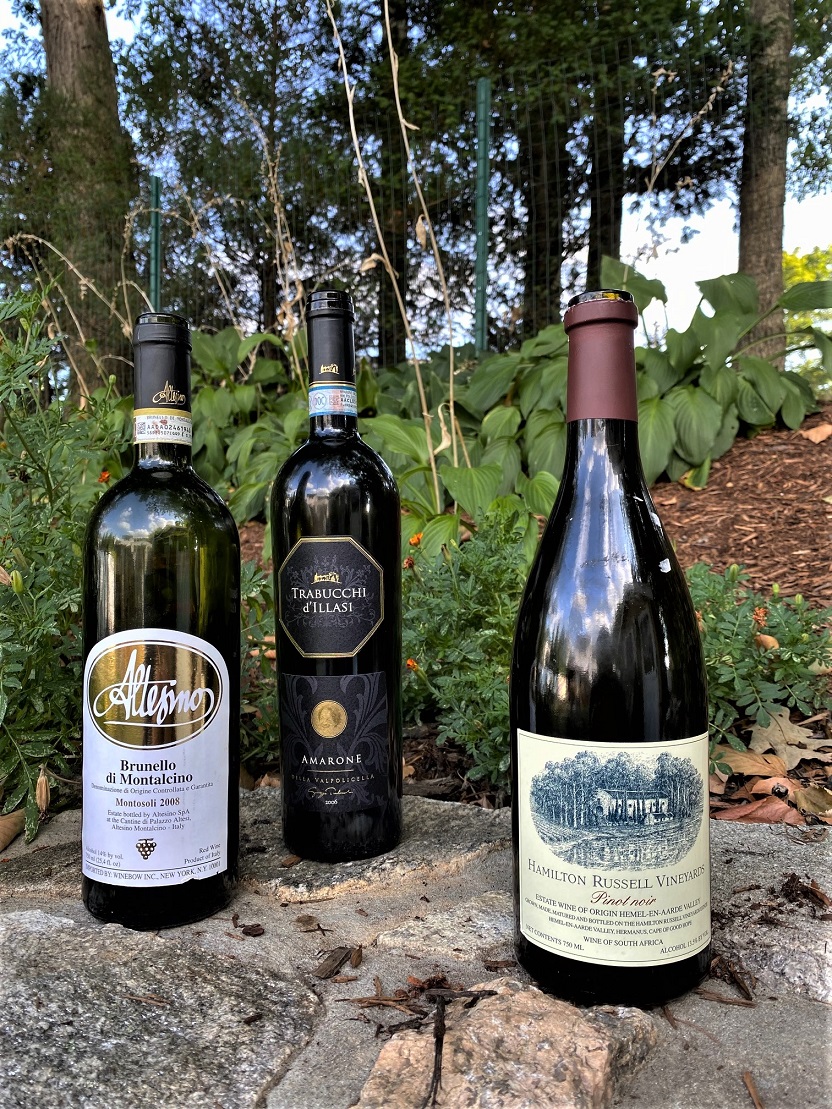
First, the learning part. 12 years ago we did the Pinot Noir blind tasting with friends, with a very unexpected outcome – 2008 Hamilton Russell Pinot Noir from South Africa was the best wine in that blind tasting. I loved the wine so much that I went and got a bottle to keep. Over the years, I made many attempts on the life of this bottle, until the last weekend I decided to share it with a friend. Upon opening the wine was reminiscent of the good Burgundy, with the nose offering some plums, iodine, and smoke. But the wine quickly succumbed to the tertiary aromas of dry herbs and maybe a hint of dried fruit, and while my friend really loved it, this was a complete loss learning in my book.
Then another friend was stopping shortly after his birthday. He always liked the wines, but recently started getting really “more into it”. He was stopping by for the dinner, and when we were talking about wines a few days prior, he mentioned that he started liking the Brunello and Amarone wines. There is no happier moment for the oenophile than to learn what the guest desires to drink – the cellar is instantly paraded in the search for the best and the most appropriate bottle.
I don’t know how I came into possession of the 2008 Altesino Brunello di Montalcino Montosoli, I can only guess I got it as a present. This single vineyard Brunello di Montalcino was absolutely spectacular – beautiful cherries on the palate – not the fresh and crunchy ones, but more subdued, more elegant, eloped in the sage and other herbal aromatics. The wine was spectacular when we opened it, and when I finished the last drop 2 days later (wine was kept in the bottle with the air pumped out), I had a clear feeling of regret as the wine was not gone, but instead was still fresh and even more complex, with a promise of becoming the Vini da meditations in 10 years, same the 1999 Soldera had become for us – alas, I don’t have another bottle…
And then my pet peeve – you know how much I love Amarone. I got a few bottles of the 2006 Trabucchi d’Illasi Amarone della Valpolicella from WTSO 7 years ago. This was my last bottle, and boy it didn’t disappoint. It was absolutely beautiful in its finesse and impeccable balance all the way through. Dried fruit on the nose, powerful, well-structured wine on the palate, with more of the dried fruit, cherries, plums and herbs, and with good acidity, perfect balance and delicious bitter finish. It is not for nothing Amarone means Great Bitter – and there was this pleasant bitterness on the finish, something hard to find in most of the Amarone wines.
Here you are, my friends, my story of winning and learning. Three aged wines, two of them delicious, two that could age for far longer (learning!). One learning experience – but who knows, maybe it was only that particular bottle. Moving on.
What did you win and learn lately?
Celebrate Pinot Noir!
Celebrate Pinot Noir!
Another grape holiday is upon us. This time we celebrate none less than Pinot Noir.
None less, huh? Is Pinot Noir so unique and special? Well, you be the judge.
Pinot Noir is the grape behind the world’s most expensive wines. While there are 10 or so major red grapes (Cabernet Sauvignon, Cabernet Franc, Merlot, Pinot Noir, Sangiovese, Tempranillo, Syrah, Grenache, Zinfandel, Nebbiolo), the ultimate supremacy crown can only be decided between Pinot Noir and Cabernet Sauvignon. Yes, it is bad to use money as a measure of influence, but it is one of the “objective” characteristics of wine in the free market. According to the Wine-Searcher lists of most expensive wines (by the way, there is a new feature on this blog – a new page Most Expensive Wines allows you to see always current list of most expensive wines for a select number of grapes and regions), red Burgundies (made out of 100% Pinot Noir) on average are 12 times (!) more expensive than Cabernet Sauvignon wines
Pinot Noir might be the most versatile red grape out there. Unlike most other red grapes, it produces a full range of wine styles. Let’s see.
White wine? Check. Pinot Noir Blanc is increasingly popular in Oregon and not only. Remember, the juice of Pinot Noir is clear, so it is not a problem to produce white Pinot Noir.
Sparkling wine? Triple check, I guess. Champagne Blanc de Noir is very often made from 100% Pinot Noir grapes and needs to introduction to wine lovers.
Rosé? Check. An increasingly popular addition to the repertoire of any Pinot Noir producer, in Oregon, California, and beyond.
Red wine? Well, duh. No check needed – first and foremost, Pinot Noir is a king of red wines.
Sweet/dessert? This is the only category that is still more an exception than the norm, but if you will look, you will have no problems finding late harvest Pinot Noir wines or Port-style Pinot Noir wines.
See – the whole range of wine styles. You can easily pair a whole dinner, from oysters to fish to steak and then dessert with Pinot Noir wines – try that with Cabernet.
One more unique fact about Pinot Noir is that it is practically never blended with any other grapes, with the exception of Champagne/sparkling wines. There can be lots of Pinot Noir clones mixed together – some of the producers grow 20 clones and more – but still, those are just clones. Of course, there are 100% Cabernet Sauvignon wines out there, but this is far from being the norm.
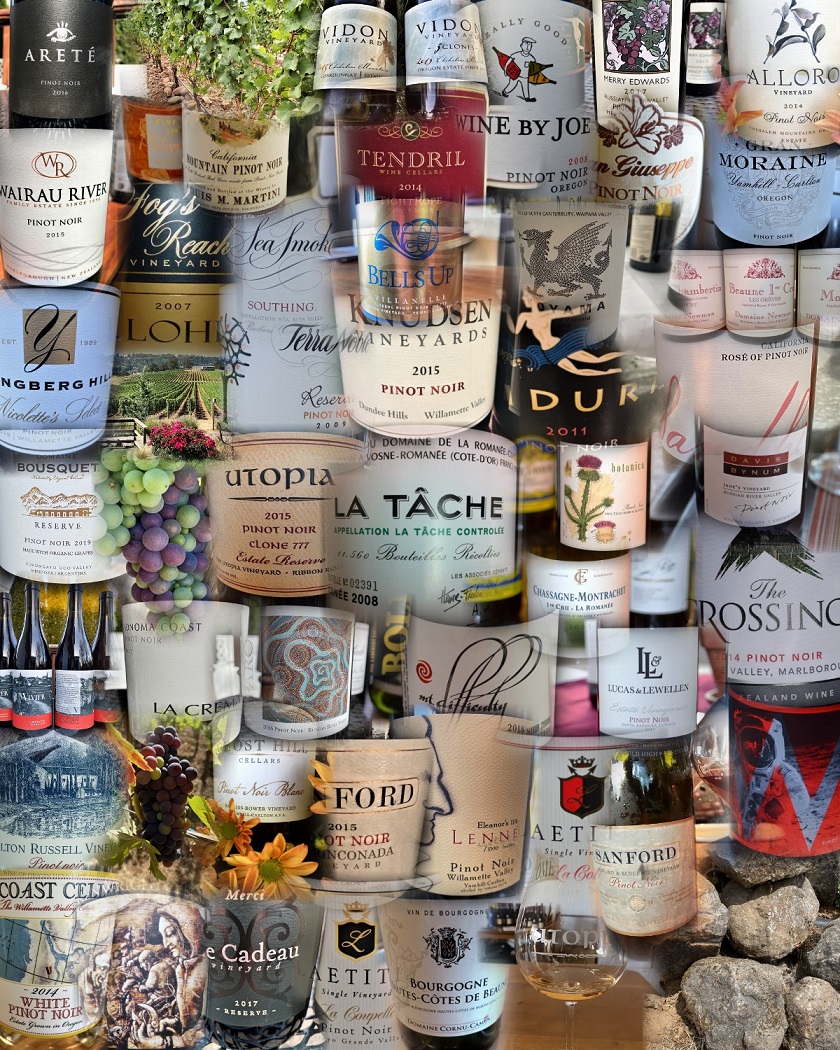
Pinot Noir is featured frequently on this very blog. As I was preparing this post, I decided to look at some statistics. It appears that Pinot Noir is the second most frequently mentioned red grape on the blog, with 356 posts related to the Pinot Noir (Cabernet Sauvignon is mentioned in 445 posts). It is interesting that Chardonnay is mentioned in the 357 posts, literally identical to Pinot Noir.
But it is not just the mentions – there are many memories associated with Pinot Noir.
I love saying that blind tasting is the best arbiter of the wines – in a blind tasting, it is just you and the liquid in the glass, nothing else influences your impression of the wine. It seems that our Pinot Noir blind tasting took place only yesterday – I was literally shocked to see that this post is 12 years old – the tasting took place in August of 2010. Who couldn’ve thought that 2008 Hamilton Russell Pinot Noir from South Africa would be our group’s favorite wine, beating grand cru Burgundy and cult Californian Pinot? I still have a bottle of that wine and I’m looking forward to experiencing the 12 years of evolution.
Another favorite Pinot Noir memory is the 1966 Louis M. Martini California Mountain Pinot Noir – an accidental $25 buy that ended up being a transcendental experience tasting the 48 years old wine from the Cabernet Sauvignon producer who is absolutely not known for the Pinot Noir wines.
And then there are lots and lots of memories of not only the wines but also of the people, passionate Pinot Noir winemakers, acquired through the work on the Stories of Passion and Pinot, an ongoing series of posts dedicated to Oregon Pinot Noir producers and Oregon Pinot Noir wines.
Did I prove my point? Is Pinot Noir the true King of Grapes? I don’t know. But for sure it is a grape worth celebrating. Cheers!
Stories and Passion and Pinot: Shane Moore of Gran Moraine
“Gran Moraine prides itself on producing experiential art in the form of Chardonnay, Pinot Noir and sparkling wines made to express the exquisite terroir of our Yamhill-Carlton Estate Vineyards.”
Experiential Art.
Not a bad way to introduce the winery, what do you think? Wine is art, all wine lovers can sign under such a statement, so “experiential art” sounds very near and dear to any wine lover’s heart.

Gran Moraine vineyard was planted in 2004 by Premier Pacific Vineyards in the Yamhill-Carlton district of Willamette Valley in Oregon, with 200 acres of hillside vines of Pinot Noir and Chardonnay. The vineyard took its name from moraines, glacial sediment left after the glacier movements in the last ice age. In 2013, the Gran Moraine Vineyard was acquired by Jackson Family and it is one of the 4 major properties owned by the Jackson Family in Oregon Willamette Valley.
I visited Gran Moraine last August and had an opportunity to taste a number of the wines and have a quick chat with the winemaker, Shane Moore. Then I followed up with the usual, virtual “conversation” and here is what transpired:
[TaV]: Was there a pivotal wine in your life?
{SM]: I’ve had plenty of wines that have possibly changed my life’s trajectory. However, I feel like the most pivotal wines in my existence have been those that seem to stop time. These wines provide my most fond wine moments and provide me with the most inspiration.
[TaV]: Is there a winemaker you would call your mentor? Someone you learned the most from as a winemaker?
[SM]: I think if I gave any specific shoutouts I’d be doing a disservice to so many of the amazingly talented and thoughtful winemakers I have had the pleasure to have worked with. Over my time I worked with and under at least 40 winemakers – I for sure learned a great deal from all of them. Another great group I both learned a lot and derived much inspiration from are the seasonal cellar workers we hire each year. With that I’m proud to say many have went on to become winemakers themselves.
[TaV]: Pinot Noir and Chardonnay wines are all about blocks and clones. How many clones of Pinot Noir and how many clones of Chardonnay do you grow? How many individual blocks do you identify for the Pinot Noir and Chardonnay?
[SM]: At the Gran Moraine Vineyard, there are 6 different clones of Pinot Noir and only 2 of Chardonnay. Every block is harvested and vinified separately. At any given time, there are around 100-120 different lots of wines. There are approximately 80 blocks – I don’t bring them all in – it’s too big of a vineyard for that – I bring in what I think of as around the top 30% of the acres.
[TaV]: Following up on the previous question – what is your approach to the blending of the final wines, both Pinot Noir and Chardonnay? Do you ever produce single block or single clone wines, and if you don’t do it now, do you have a plan to start producing such wines in the future?
[SM]: Blending final wines starts with having an abstract notion of the experience which you would like to have said “wine endue.” Then you purposely work within the parameters of the vineyard, the growing season and your production capabilities to craft something with that end goal in mind.
We will sometimes produce single clone or block wines when the wine is so profound that it would be a disservice to humanity to blend it away.
[TaV]: You already produce a few of the sparkling wines. What is your approach to harvesting the grapes for those wines – do you have specific plots which you designate for sparkling wines, or do you take an early pass through the vineyard prior to general harvest to get the grapes for the sparkling wine production?
[SM]: You know when you eat something so acidic that it makes your ears ring? I like to pick the fruit for sparkling wine when it’s just a little riper than that. We use specific blocks for the sparkling wine that are purposely farmed. Generally, these blocks are some of the most marginal sites on the vineyard; for example, north facing and heavier soils.
[TaV]: How much focus the sparkling wines program gets at Gran Moraine? Do you expect to produce more sparkling wines in the future, or you expect to stay at the level where you are at?
[SM]: Sparkling wine is currently about 15% of our production. I can see it growing some, it seems to be very popular.
[TaV]: Gran Moraine is a ~200 acres vineyard. If I understand it correctly, it is all planted with Pinot Noir and Chardonnay. Do you plan to plant any other grapes – Pinot Gris, for example, or will it stay strictly as it is right now?
[SM]: The suitable acres on the piece of land are pretty much planted out. I don’t think we’ll be grafting any of the Chardonnay or Pinot Noir over to anything else anytime soon.
[TaV]: When you make Gran Moraine Chardonnay, is there a specific style you are trying to achieve?
[SM]: I want the Chardonnay to have umami, electricity and tension. Of course, I also want it to be delicious.
[TaV]: Same question for the Gran Moraine Pinot Noir?
[SM]: With the Pinot I try to focus on it being beautiful and sleek creating power and complexity daftly by DJing with great music and surrounding it with happy people.
[TaV]: What are your favorite producers in Oregon? In the USA? In the world?
[SM]: Oregon: Adelsheim, Antica Terra, Antiquim Farm, Alexana, Belle Ponte, Brickhouse, Beaux Freres, Bethel Heights…..that’s just getting to the B’s! Too many really to mention – I’m always trading wine with people. I’m totally in love with Oregon wine.
USA: I’d have to go to CA and say some of my favorites there are Ridge, Drew, Papapietro Perry, Navarro, Hartford.
[TaV]: Is there a winemaker you would love to work with? A dream winemaker so to speak?
[SM]: Jean-Herve and Laurent Chiquet of Jacquesson. I hope they are listening. I’ve got ideas.
[TaV]: What’s ahead for Gran Moraine? Where do you see it in 10 years?
[SM]: We’ll probably be doing the same thing but hopefully with even more intention and weirder.
[TaV]: Is there a dream wine you always wanted to make? What would that be?
[SM]: A great New World Nebbiolo.


Here are the tasting notes for a few of the Gran Moraine wines I had an opportunity to taste during the visit:
Gran Moraine Brut Rosé Sparkling Wine Yamhill-Carlton (58% Pinot Noir, 41% Chardonnay, 6% Pinot Meunier)
Toasted notes on the nose
toasted bread, a touch of yeast, good acidity, crisp, clean
8, delicious
2018 Gran Moraine Chardonnay Yamhill-Carlton
A touch of honey notes, vanilla
Good acidity, good acidity, needs time
7+
2018 Gran Moraine Pinot Noir Estate
Brilliant fresh cherry notes, sage
Crisp, restrained, tart cherries and earthy notes, fresh tannins
7+
2017 Gran Moraine Upland Pinot Noir
Restrained nose, a touch of funk, cherries
Light palate, fresh, bright, cherries and cranberries
8-
Here you go, my friends. Another winery, another story of Passion and Pinot. Until the next time – cheers!
This post is a part of the Stories of Passion and Pinot series – click the link for more stories…
Last Bottle Sign Up ($10 credit)




 Talk-A-Vino