Archive
Beauty of Chardonnay and The Game of the Blind Tasting
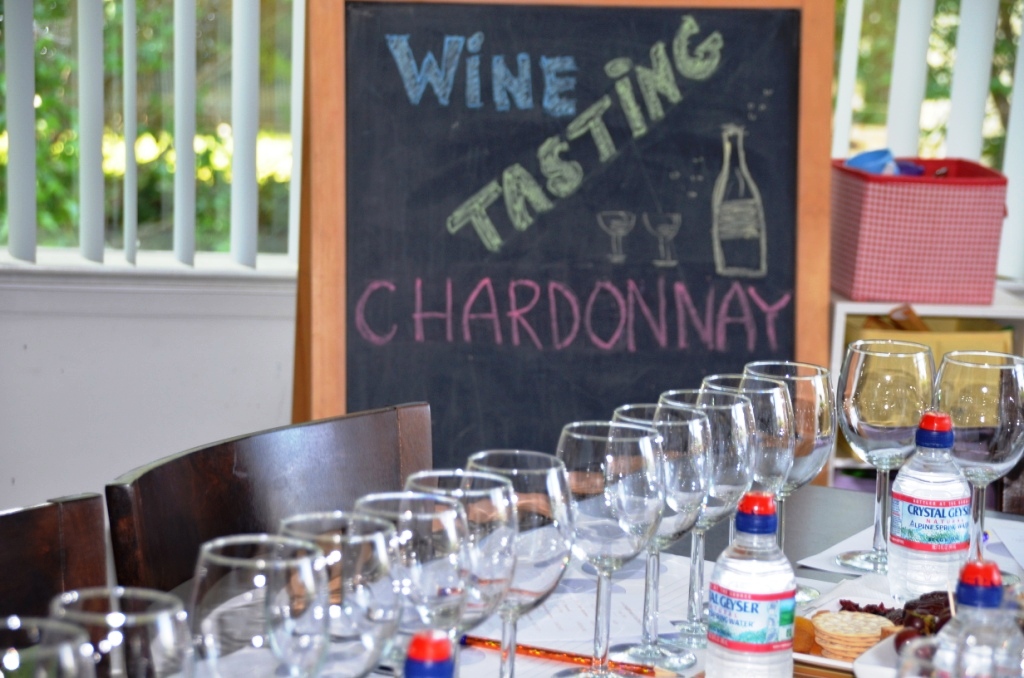 Blind tasting is probably one of the most favorite pastimes of any oenophile – especially when it is done in the non-competitive and non-intimidating manner, let’s say as a part of the fun evening with friends. While the words “blind tasting” sound simplistic, there are actually multiple options of it, all with the varying levels of difficulty. The most difficult type is a double blind tasting – you are just given a random glass of wine, and you have to identify the grape(s), the place, the vintage and possibly even the producer – this is the level at which the Court of Master Sommeliers plays, the ultimate challenge so to speak. The next level down would be a regular blind tasting – there would be at least one common factor between all the wines – let’s say, they all will be made out of Cabernet Sauvignon grape. Or they all might be the Bordeaux wines. While the level of a challenge is unquestionably lower that in the previous case, this type of tasting is great for assessment of the wine without an influence of the external factors, such as producer, label, region, etc. I also call it “an ultimate wine snobbery squasher”, as looking at the bottle of your supposedly favorite wine and realizing you just thought it was terrible (while you had no idea what was in your glass), is really a humbling experience.
My recent blind tasting experience was yet different. It was mostly the regular blind tasting, as it had a theme – Chardonnay, but it was also more limited, may be even “framed” is the right word – we knew all 10 Chardonnay wines which were present in the tasting, so it was not really wide open. And to make it more fun, we tried to identify each wine we tasted, and of course, look for the group’s favorite. To avoid crowding the table too much, we split the tasting into two sets of 5, and then we went over our notes to come up with our guesses – and then, of course, there was the moment of truth – when the bottles were revealed.


Chardonnay needs no introduction, of course. One of the most popular white grapes in the world, with literally every wine producing country having its stake in satisfying the thirst of Chardonnay lovers around the globe. I would dare to say that left alone, Chardonnay is great at expressing the terroir, the soil and climate of the area where it was growing, may be better than most of the other white grapes (may be Riesling can contest that). From the gravely soils of New Zealand to the expressive ‘gunflint” minerality of Chablis, biting acidity of Champagne, the round goodness of the mature Burgundy, to the warm and toasty expressions (sigh – hard to find it anymore) of California – Chardonnay rules them all. Our tasting was extremely representative of this world-wide phenomena – California, Long Island, Burgundy, Italy, Hungary, New Zealand and Australia were all present! Not a bad line up, huh?!
Okay so let me tell you about the wines. First, I will give you my notes, together with the guesses I made as we were going along. Once we completed the tasting of all 10 wines, we had a bit of time to think through and to complete our tasting cards to say what was what. And then of course, we unwrapped the bottles for the “moment of truth”.
Here are my notes as we went along with the tasting:
#1: Touch of butter, green apples, a bit harsh, tannins, young, lots of tannins. 7+/8-. Not sure what it can be.
#2: Minerality (gunflint) on the nose, green apple, great acidity, good balance. Classic. 8. Positive it is a Burgundy
#3: Fresh flowers on the nose, caramel, butterscotch, fig, pears, unusual, apples. 7/7+. I’m sure this is Long Island, no questions.
#4: Savory nose, oxidized, past prime, lost fruit. N/R. Considering the group, must be the Mersault (it is a well known and very unfortunate problem for the producers in Mersault – starting from some time in 2000, their wines lost ability to age and oxidize very quickly).
#5: Mint, rosemary, thyme on the nose, touch of oak, apples, very delicate profile, nice tannins, slightly off balance. 7+/8-. Australia?
#6: Butterscotch on the nose! Vanilla, amazing, very balanced, apples, vanilla, beautiful! 8. I’m quite convinced it is Hungary – I had this wine before and I believe this is the one.
#7: Beautiful nose! White fruit, lychee, spiciness on the palate, apples, delicate fruit. 8+. Not sure what it can be.
#8: Minerality, very unusual, herbs, – sorry for possibly putting some people off, but – a dog poop! (Yeah, I know, sounds crazy – but I’m speaking from experience as a dog owner), salty, herbal, acidic profile, more minerality on the palate. 8-. Again, not sure. Need to think about it.
#9: Candy on the nose, noticeable malolactic fermentation on the palate, and then acidity, acidity, acidity. 7. Not sure.
#10: Minerality, hint of butter, a bit too sweet, not enough acidity, not balanced. 6. No idea.
That was the end of the tasting. Now, we took a bit of time to compose our thoughts and come up with our “final answer”. As this was not a competition, it was also okay to consult each other. I was quite convinced about wines #3, #4 and #6, so it was making my task easier. Also my friend Zak was positive about #7 being Jermann, as he recently tasted that wine. The rest had to fall in place after some thinking. Now, the drum roll, please…
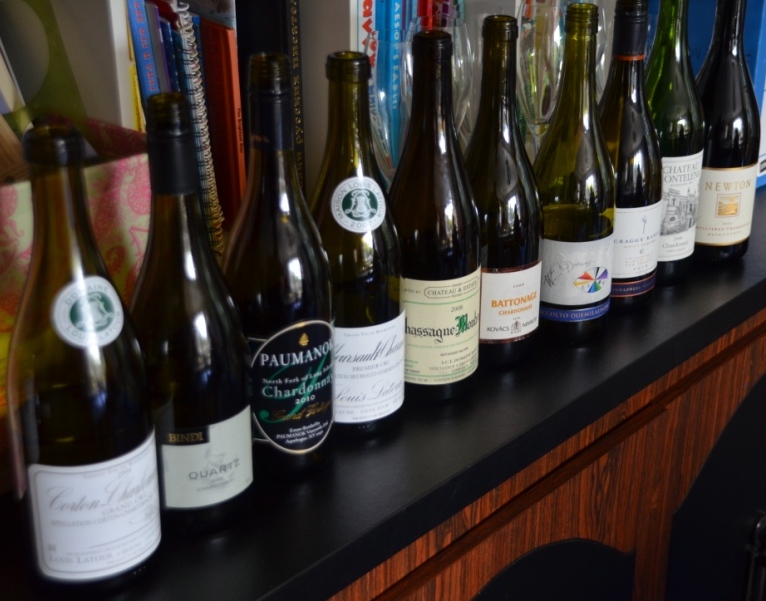 And the wines were:
1. 2006 Louis Latour Cortone-Charlemane, Burgundy
2. 2009 Bindi Quartz, Australia
3. 2010 Paumanok Grand Vintage Estate Chardonnay, Long Island, NY
4. 2007 Louis Latour Mersault-Charmes, Burgundy
5. 2008 S.C.E. Domaine Ramonet Chassagne-Montrachet, Burgundy
6. 2008 Kovács Nimród Winery Battonage Chardonnay, Hungary
7. 2011 Jermann W… Dreams … Chardonnay, Italy
8. 2008 Craggy Range Kidnappers Vineyard Hawkes Bay, New Zealand
9. 2008 Chateau Montelena Chardonnay, Napa Valley
10. 2008 Newton Unfiltered Chardonnay, Napa Valley
With a bit of knowledge and a bit of luck, I managed to get all the wines correctly with the exception of Bindi and Chassagne-Montrachet, which I got in reverse – it is interesting how I thought that #2 was a classic Burgundy, and it turned out to be an Australian wine. We also did a popularity vote, which was won by the Newton Chardonnay – quite awkward, as this was my least favorite wine. My favorite was probably the Jermann, but it is hard to pick a favorite from such a group of outstanding wines. It is also very interesting how different and unique the wines tasted, greatly demonstrating their terroir- and winemaking style-driven differences. Here are all the wines we tasted again, now in more detail for the labels:
And then, of course, there was food – lots of wonderful, home made dishes. It will take too much time to describe it all, so I will just leave you with the few pictures.


Now, I have a bit of the strangely sad part to share (nothing terrible, don’t worry). To complement all the wonderful Chardonnays, I brought a bottle of Sherry to add to our dessert list. 2011 Bodegas Alvear Pedro Ximemez de Añada Montilla-Moriles DO – the wine was excellent, more or less along the lines of what I would expect from Pedro Ximenez – considering the age, it was young and nicely balanced, both with sweetness and acidity. Where is the sad part? Take a look at the picture of that bottle:
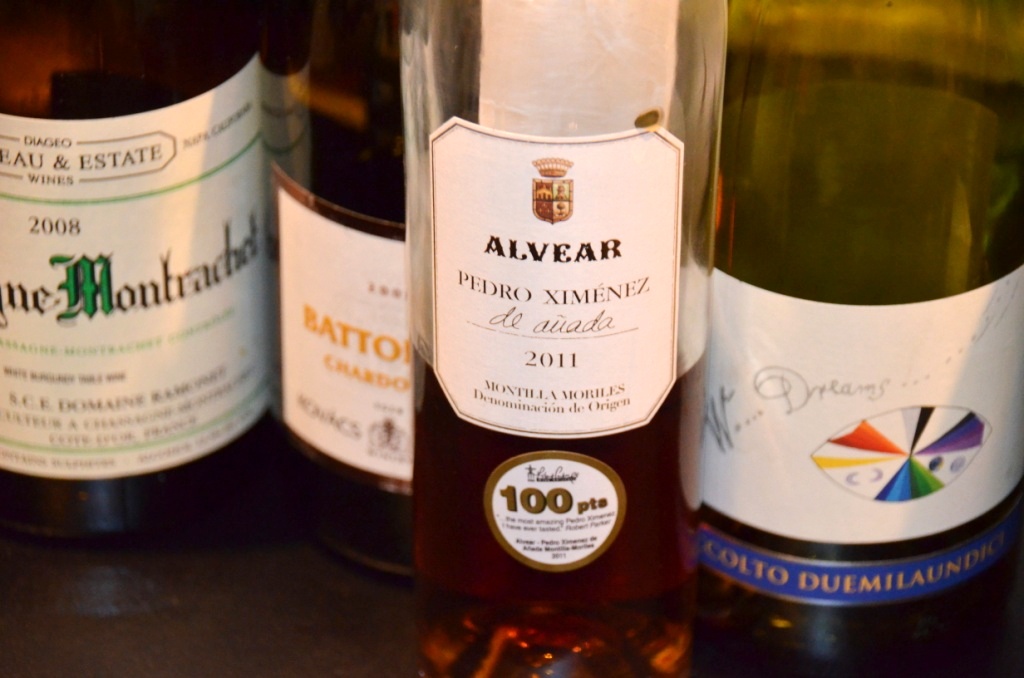
Bodegas Alvear PX de Añada
See that sticker “RobertParker 100 pts”? Yes, this was the 100 points rated wine from Robert Parker!!!!! First time I tried anything rated 100 points by one of the biggest wine critics in the world!!! And I have nothing to write home about it. The wine was good – but I don’t remember it as being earth-shattering. Not sure what to take out of it, but surely feels strange. My only consolation is that I have another bottle of the same wine – and I will keep it for as long as I can before drinking it again – may be then I will be able to see what Robert Parker found in this wine.
That concludes my report on the wonderful game of Chardonnay tasting. We had a great time, and I think restricting the level of “blindness” in this tasting was a very interesting twist, making that blind tasting exercise even more enjoyable. Until the next time – cheers!
Restaurant Files: Canoe Restaurant in Atlanta – Great Food, And Close Encounter With The Rare Bird
Think about your best restaurant experiences – what do they consist of? Of course the company is first and foremost – if you are in the wrong company, nothing will taste or appear right – this is given. So outside of the company, food, wine, service, views, decor, ambiance – all play a role, these are all essential factors of your great restaurant experience.
As I mentioned many times before, when traveling, I always look for the opportunity to experience new restaurants. My last trip to Atlanta, Georgia was not an exception by all means – of course I looked for a good restaurant to visit. I used Yelp as my reference source, and it worked quite well. Canoe restaurant, located in the Vinings neighborhood, was well worth the 4.5 stars yelp rating out of 626 reviews (this was the number of reviews at the time of our restaurant visit).
I read in some of the reviews that the Canoe Restaurant had a perfectly romantic appeal. It definitely had, especially considering how dark it was in the dining room (hooray to all the FlashLight apps on the smartphones, we would be left hungry without them). But on a more serious note, the restaurant is situated right by the river, with luscious greens and smart lighting making an outside look like it was a Thomas Kinkade’a painting. My photos will not do any justice to that outside setting, but I hope they will give you an idea of beauty and tranquility.


Going back to our dinner, while everybody were looking at the menus, I grabbed the wine list (what a surprise, right?). That wine list…. How can I describe it… It was probably the best wine list I ever held in my hands – there was an incredible amount of the excellent wines (that it not necessarily unique), priced in a very (did I say “very”?) appealing way. Moreover, one line in that list almost made me speechless – the rare bird was there, and it looked almost, almost – for the group of like-minded friends – affordable. Take a look below – can you spot the rare bird I’m talking about?

I’m assuming you found it – yes, it is the Screaming Eagle. Of course $850 is an exorbitant amount of money for the bottle of wine, but considering that this wine is simply impossible to find at any price, it might not sound that bad – I have a few friends who would simply jump at such an opportunity. But I was not with those friends, so as you can imagine, I was left salivating about such a close encounter with this rare bird.
Have you ever got excited of seeing something, took a picture, and only later on, looking at the picture, noticed that there was a more to see in the object of your “excitement-driven” photograph? This was precisely my case. Only looking at. The picture I realized that the Screaming Eagle bottle was actually a second label of this cult wine, called Second Flight (it doesn’t make a difference from point of view of the opportunity of trying this rare wine). Then also noticed lots of other cult wines being present in that list, such as Harlan and many others, many at a extremely reasonable price (for example, Peter Michael Le Pavots retails for $175 – $225 on the wine list is a steal). Anyway, I think I have a great incentive to go back to Atlanta, and drag a couple of friends along.
Enough about the wines we didn’t drink, let’s talk about the wines we had. For the white, we got the 2012 Sigalas Assyrtiko-Athiri, Santorini, Greece – touch of minerality on the nose, white stone fruit, refreshing palate with crisp acidity and more of the white stone fruit undertones. Our choice of red was 2011 Chehalem Three Vineyards Pinot Noir from Oregon – nice smokey nose, good fresh red fruit on the palate, some raspberries and sweet cherries, good acidity and good overall balance. It was nice and easygoing wine to drink, and it complemented well most of the group’s dinner selections.


Now, let’s talk about the food. Our waiter (we had a great service, by the way) explained that the restaurant’s specialties are the game and seafood. Somehow, I felt like embracing seafood (we only scored 9 pm reservation, so it was rather a late dinner), and I didn’t regret that at all. For the started, I had an Grilled Australian Octopus (Chorizo, Peppers, Horseradish Tomato Broth) – the octopus was perfectly cooked and it was chewy just enough to preserve the texture, and very tasty overall. For the entree, I went with Bacon Wrapped George’s Bank Monkfish (Asparagus, Brioche, Grape Tomato Vinaigrette), which was absolutely delicious – perfectly cooked, the flaky fish was melting in the mouth, and the vegetables were nicely fitting in.


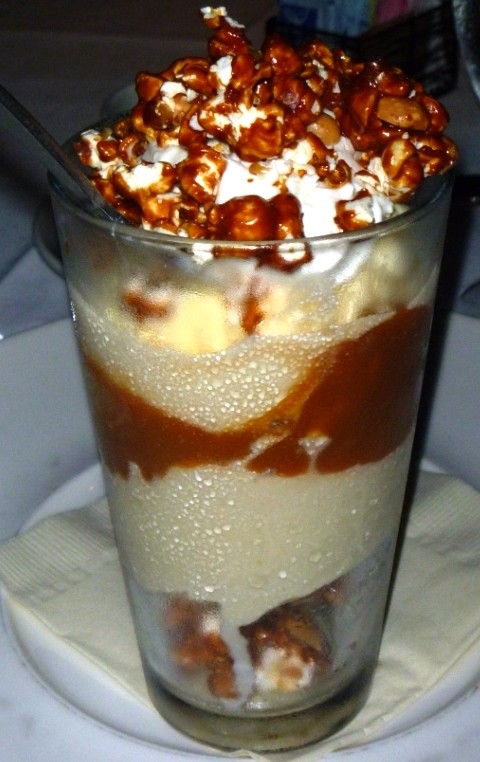
And then it was the time for a dessert. Our waiter, who brought the dessert menu, mentioned that restaurant’s pastry chef was a genius, so after such an endorsement I had to change my mind (I wanted to skip the dessert altogether). With the dishes such as Caramelized Goat’s Cheese Cake (Bourbon Cherries, Balsamic) or Rhubarb Crisp (Strawberry Ice Cream, Oatmeal Crunch), it was almost impossible to decide on something. I ended up taking Popcorn Ice Cream Sundae (Canoe’s Cracker Jack), which was absolutely delicious and very unusual. Freshly made vanilla ice cream with chocolate covered popcorn and caramel sauce – this might be one of the possible spellings for “nirvana”.
To conclude my report of the wonderful dining experience, I can only say that this was an excellent and very memorable meal, and if your travel plans will take you to Atlanta, I highly recommend you will find the time to visit the Canoe Restaurant – and you can thank me later. Cheers!
Canoe Restaurant
4199 Paces Ferry Road, SE
Atlanta, Georgia 30339
(770) 432-2663

Magnificent Views and Delicious Food – The Mountain House in Woodside, California
 When it comes to selecting the restaurant for a dinner, especially if you have a time to plan it, the overall location and “the view” are important in that process. Thinking about my own experiences, most of my “views” had been of the water – sea, bay, lake, river – some type of water was involved most often. Dining out looking at the sea is definitely magnificent and memorable, but that shouldn’t limit your choices.
I remember about 5 years ago stumbling upon a restaurant in the San Francisco area, up on the mountain drive. We were just passing by, enjoying the beautiful drive through the redwoods park, but then we thought – hmmm, might be a good place for a dinner. The experience was wonderful (I didn’t have a blog at that time though 🙂 ), so I always wanted to come back and experience the place again. Finally, the opportunity presented itself during my very recent trip to San Francisco, and making reservation at The Mountain House was one of my top priorities of the trip.
In essence, your restaurant experience starts from the moment you enter the Redwoods park – well, mine did for sure. I don’t know about you, but when I look at the redwoods, straight as an arrow, and almost having no start and no finish, just going up into the sky, I almost feel an awe, a reverence. A slow drive while surrounded by those magnificent trees (the road has enough of the very tight curves and turns to ensure your ride will be slow), creates a certain atmosphere, it puts you in the very special mood. Once you arrive, if you are a few minutes early, you can fully admire those amazing trees. And if you want to feel it for the fullest, arrive really early with some spare shoes, drive about a mile past the restaurant and spend time on one of the hiking trails – the silence which you can experience while standing among those trees, is something which is only possible to feel in a very few places on Earth, especially for those of us who lives in the cities and towns.


Finally, you are in the restaurant and ready for the dinner. The best place to seat ( assuming you are there during the warmer times) is outside on the terrace. The terrace is completely screened, but you can see an open sky and the magnificent trees right above you, which greatly enhances your dining experience. Before we talk about food and wine, I would like to mention that the restaurant has a long history. It had been around since 1920s, and through all these years had only three owners. The present owners had been at helm for about 27 years – all of this history commands great respect in my book.
Okay, food time. Err, no. Let’s select the wine first. The wine list at The Mountain House is expectedly California-based, which doesn’t come as a surprise. Two things make me very happy with that list. First, the selection is very good, with enough variety, but not overwhelming. Second, a lot of wines are offered at a very reasonable prices, often at around double retail or even better. I couldn’t make up my mind between 2010 BV Rutherford (retail about $25, restaurant – $63), 2008 Ridge Zinfandel Lytton Springs (retail – about $40, restaurant – $72) and 2010 St. Clement Oroppas (retail – about $45, restaurant: $70), until Irene, Matr’D, confidently said – try Oroppas, you will not regret it.
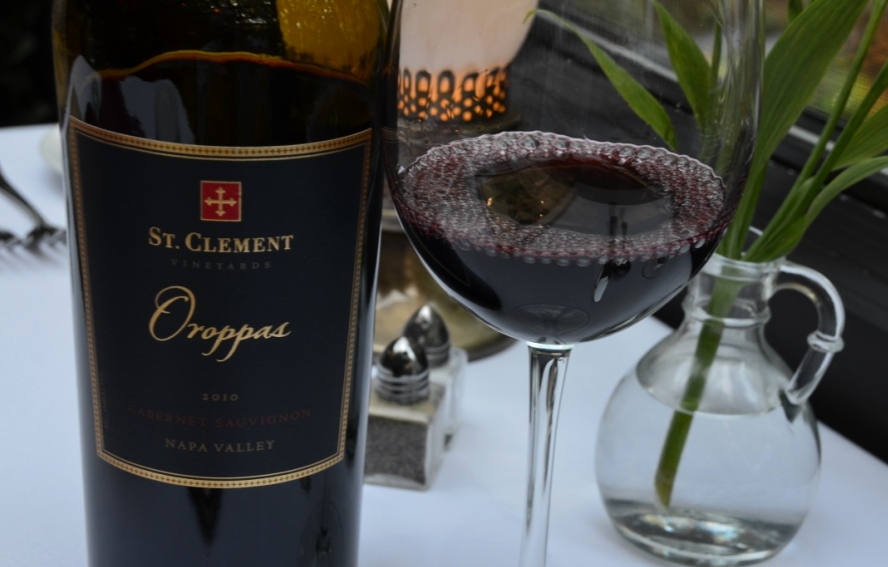
I had St. Clement wines before, and have a lot of respect for them. 2010 St. Clement Oroppas Cabernet Sauvignon Napa Valley (14.6% ABV) had beautiful dark garnet color in the glass. On the nose, the wine showed cassis, a hint of blueberries and a touch of espresso. And the palate… Boy, it is so hard to describe what was going on on the palate. On the palate, this wine was powerful and dense. Dark fruit, perfectly restrained, thick, practically chewy mouthfeel, perfectly structured and dry, and layered and silky smooth at the same time. The wine was at the level when you want to follow every sip with the words “mmm, this is good”. Drinkability: 9-
And finally, it is the time to talk about food! We started with Ahi Tartare Tacos (cucumber, avocado, tahini – miso vinaigrette with jicama slaw), which had very interesting Mediterranean flavor profile, I guess due to the tahini, and nice texture, based on large chunks of tuna and avocvado. We also had a simple Kale Salad (shredded brussells sprouts, marcona almonds, pecorino romano, lemon vinaigrette), which was very refreshing.


The Mountain House’s specialty is game, so it was easy for us to decide on the entreé. In a word, Tea Smoked Pheasant Breast (Apricot-Sherry wine Sauce and Mediterranean couscous) was outstanding – moist, delicious, with incredible flavor profile, very very tasty. And then the special of New Zealand Elk Medallions, prepared with cherry port reduction sauce and served with steamed vegetables, was simply spectacular – the meat was melting in the mouth, the sauce was perfectly complementing the meat, and the wine fully matching both the sauce and the meat – definitely one of the very best pairings I ever experienced. I also want to add that the wine was working very well with the first entreé, complementing the gaminess of the dish.


Despite the fact that we didn’t leave the morsel on the plate, we still decided to try the dessert, just to see if it would be on par with the delicious meal. Strawberry-Rhubarb crisp (vanilla ice cream) and Butterscotch Pot de Creme (creme fraiche, caramel and sea salt) were both very tasty, with me having a small preference towards Pot de Cream – salt and caramel are always good together. However I have to mention that this Por de Cream dessert was a bit too rich, so we couldn’t finish it.


Service was great, timely and attentive.
That concludes my report about The Mountain House. If you are in the area, you definitely don’t want to miss this restaurant – I’m sure you will enjoy it as much as I did. Cheers!
The Mountain House
13808 Skyline Boulevard
Woodside, CA 94062
(650) 851-8541
http://www.themountainhouse.com/

Restaurant Files: Davanti Enoteca, Rama Thai and Sushi Ota in San Diego
In my previous San Diego post, I gave you my version of a perfect day in San Diego, where of course the food was a very important part of the experience. Today, I want to add a few more of the restaurant suggestions, just to expand your cuisine selection.
Let’s start with Davanti Enoteca in the Little Italy neighborhood. The restaurant is appropriately Italian for the Little Italy area – but if the word “Italian” brings up an image of mozzarella sticks or a pasta with meatballs, shoo those images away, as they have nothing to do with modern, exquisite, creative Italian dishes served at Davanti Enoteca.
When you look at the Davanti Enoteca restaurant on outside, it is hard to tell what to expect. Inside, the restaurant is nice and welcoming, and offers a number of sitting options including [unexpectedly large] completely enclosed patio, which creates a great dining atmosphere.
So you are situated inside, and it is the time to eat. How about some Focaccia di Recco (Ligurian style baked focaccia, fresh soft cow cheese…must add honeycomb) for the starter? Very different from what you might expect, this one comes with the layer of soft cheese baked into a paper- thin crust. Addition of honeycomb on top increases “deliciousness” ten-fold. When you take a bite of that focaccia, the foodie’s climactic moan can be easily heard at the table. To keep the excitement level high, how about some Mascarpone Polenta with pork ragout – every morsel as delicious as the Focaccia. And then how about some Bruschetta? No, not the traditional tomato and onion, but may be a Creamy Avocado Mousse Bruschetta will do? Very unique and different again. Keep in mind that both Bruschetta and Mascarpone Polenta might have different toppings on different nights – but I’m sure they will be every bit as tasty as the ones we had.


When you look at the list of entrees, one thing becomes clear – it will not be easy to make a choice. You definitely got options. For instance, a Polpo con Rafano (seared octopus, warm fingerling potato salad, marcona almonds, finocchiona, fresh horseradish aioli) – perfectly cooked octopus (not an easy task in itself), absolutely delicious with all the little condiments there on the plate – every bite makes you happy. Spada Davanti (grilled swordfish, toasted bread crumbs, calabrian chili, brussel sprouts, calabrian chilies, mint) – another home run.


Craving meat? Davanti Burger (special blend beef burger, bacon jam, roasted tomato, cheese curd, arugula, roasted garlic mayo, shoestring fries) – it is just a wow on the plate. I had a pleasure to experience the famous Boulud Foie Gras Burger – this Davanti Burger will give it a good run for the money, it is so juicy and delicious (and those shoestring fries are addictive!). And if you are in a mood for a steak – Bistecca con Cippolini e Funghi (grilled hanger steak, cippolini onion, grilled oyster mushroom, saba, salsa verde) is just what doctor ordered – succulent meat and great combination of flavors.


You know I have to talk about wine, right? Wine list at Davanti Enoteca is not large, but it has a good amount of interesting selections at reasonable prices. Focus is mostly on the Italian wines as one would expect. We had two wines that evening. 2012 Attems Sauvignon Blanc Venezia Giulia had an excellent herbaceous profile, both on the nose and the palate, with some notes of fresh cut grass and hint of grapefruit skin, only a delicate hint, and perfect acidity. Definitely very nice wine. Our choice of red, 2012 La Fiera Montepulciano d’Abruzzo was fresh and lovely, with the very pronounced, but soft tart cherry profile and a hint, a whiff rather, of a cherry pit – light and simple, and very versatile food wise.


When it came to the dessert, I honestly stopped paying attention to what exactly did we order – I know that I tried a few different desserts and they all were very tasty.


Let’s continue. So far, considering both San Diego restaurant posts, I offered to your attention mostly restaurants with European cuisine. I think it is time to change the direction and go towards Asia.
Rama Thai Restaurant is located in the Gas Lamp Quarters, a primary dining destination for people living in San Diego and visiting from afar. From the moment you set your foot inside the restaurant, you are transported – you know I like to use this term a lot when I talk about wines, and it simply means that your experience affects your emotional state, the way you feel at the moment. This is definitely the case with Rama Restaurant. The ambiance, lighting, decor, the music, pictures on the walls, muted sound of creek-running water, statues of Buddha – all of it puts you in a different mood.
And then, to our delight, the food perfectly matched the overall atmosphere. We started with the few appetizers. Satay Skewers (chicken and beef with peanut sauce and cucumber salad) was perfectly done, with peanut sauce being simply delicious. Same goes for Fresh Spring Rolls, which were super fresh and crunchy, also served with similar peanut sauce, with just enough heat to make it very tasty. The Pot Stickers (pork, ginger soy sauce) were not necessarily unique, but cooked just right.
For the entrees we went with a very nice selection of the dishes. While Pad Thai is generally considered “The Dish” in the Thai restaurants, my personal favorite is Drunken Noodle (flat rice noodles, thai basil, tomato, chili garlic, kai lan) – for me, it has some homey delicious feeling, this is my ultimate Thai comfort food, which I’m ready to eat any day. The next wow dish was called Garlic and Pepper (crusted chicken, beef or shrimp, sweet and spicy reduction) – we had the chicken version, and every bite was perfectly crunchy and just right spicy – I can highly recommend this dish. Salmon Panang curry (ka‑r lime leaves, green beans, cherry tomatoes) was very well balanced dish, with Panang curry flavors being present, but mild enough. Last, but not least were Pan Seared Sea Scallops (with sautéed spinach, chili sauce) – you know, when the scallop is seared and done just right, it needs no explanation to any scallops aficionado, so this was our case. All in all, great meal, and I can’t recommend this restaurant high enough as a whole experience, with ambiance being a big part of it (and great service). Sorry, have no pictures for you – to get the pictures, I would have to use the flash, and I really didn’t want to disrupt the atmosphere…

Last but absolutely not least for today is the Japanese restaurant called Sushi Ota (yes, we are continuing to explore the Asian cuisine of San Diego). Sushi Ota is considered to be one of the very best sushi restaurants in San Diego (4.5 stars based on 1676 reviews on Yelp, very impressive), so one would probably expect to find such a restaurant again in the Gas Lamp district or may be somewhere in downtown, surrounded by many other restaurants. When you drive to Sushi Ota, you take the highway exit, and the very next thing you do is start thinking if you had the right address written down, as you clearly see that you are in the area of car dealerships and small business offices, far away from the perceived “hot dining setting” by all means. But then GPS tells you that you have arrived, and you barely notice the name “Sushi Ota” on the sign of the tiny strip mall. Yep, you actually arrived to the one of the very best sushi joints in San Diego. I also hope you actually made a reservation at least few days in advance, because otherwise, you will need tremendous amount of luck to score even single sit by the bar.
At 5;30 pm, when the restaurant opens for dinner, it instantly gets at least half full, and it is a full house at 6 pm. What matter is that you got your table, so it is time to eat.
As a starter, we took a Tuna Tartar dish. This is not your average Tuna tartar – it is presented on top of tempura eggplant, and each one of the 4 pieces has different topping. This dish was done more of a single bite style (a big bite, I have to say), and really delicious.


Next up – Clam Miso Soup. It is a “kicked up” Miso soup as it contains a few clams in the traditional aromatic broth – definitely a nice touch.
 Our next selection (highly recommended) was the Spanish Mackerel sashimi. What you get is essentially the whole fish, with all the meat cut up in the small sashimi pieces. I like Mackerel sashimi in general, but it never tastes like the one we got at Sushi Ota. Typical mackerel sashimi is rather on the dry side, and can be even chewy. The one we had at Sushi Ota was succulent, sweet, soft and was literally melting in the mouth. Take a look at how it is served:
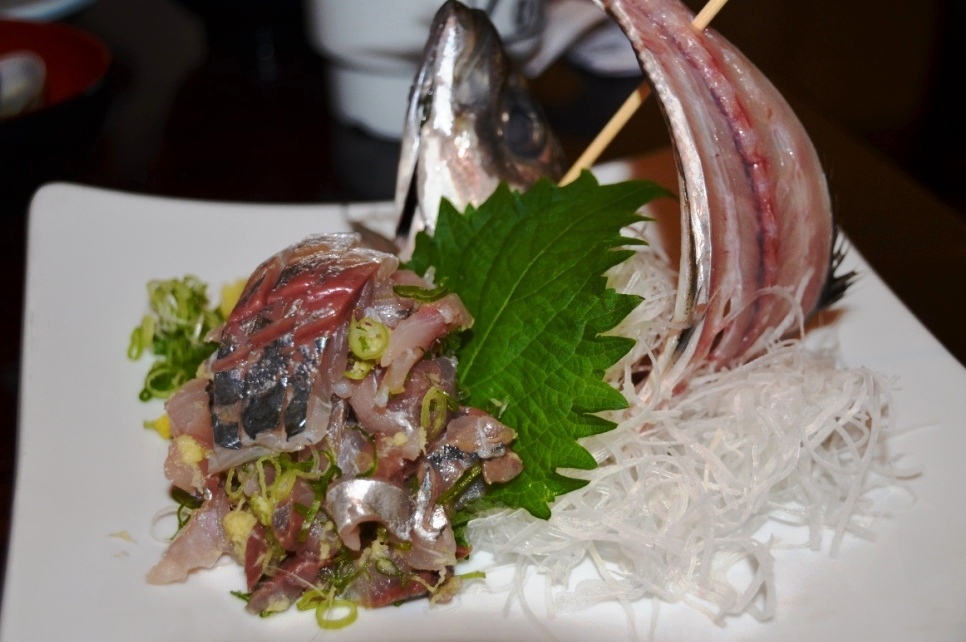 As you can see, you do get literally the whole fish. Wonder why you are get served the bones too? Well, once you done with the sashimi, the plate is taken away from you, only to be brought back in about 20 minutes after that fish skeleton was deep fried to the point that you can literally eat it like the potato chips! It is so tasty you literally can’t leave anything on the plate! Here you are:
 And then, of course, we had sushi. We got a few different rolls and Uni (uni, a.k.a., sea urchin, you can eat only when it is super-fresh, and that’s the way it is at Sushi Ota). For the rolls we got Double Double Tuna, which is a combination of spicy tuna and regular tuna on top, as well as Eel Roll – fresh and delicious. And to finish the meal, of course, the mochi ice cream – green tea and mango. All in all, an outstanding meal, which makes you to leave the restaurant with the promise to self to come back as soon as possible.


That’s all I got for you for today – more choices for your possible San Diego trip. If you have already or will visit any of these place, I would love to know what do you think. And until the next time – cheers!
A Perfect Day In San Diego
When I travel on the plane, I often skim through the airline magazine, such as Hemispheres on United, before I get to my beloved sudoku page. One of the articles I often pay attention to is “Three perfect days in a particular town”, which describes how you can potentially spend three days at some town, starting from the lodging, talking about attractions and dining options. Over the past 3 month, I was in San Diego in California twice, and came across a few places which I found worth talking about, thus I decided to come up with the similar post to those I mentioned before. Writing about 3 perfect days might get a bit too intense, so let me compose for you just one, potentially perfect, day. Here we go.
Let’s start with the place to stay. San Diego has no shortage of the hotels, of course. The reason for me to recommend the two hotels below is because I personally stayed in both and liked them very much. First option is the Residence Inn San Diego Downtown, located at 1747 Pacific Highway. Yes, it is the part of the chain of Marriott hotels, and while it is not unique, it nevertheless offers a great convenience of stay for the family, with all rooms being suites with kitchenettes. It is also located within walking distance from Little Italy area (lots of great restaurants!) and the number of attractions right by the water, like USS Midway Museum. This hotel is within 20-25 minutes walking distance to the Gas Lamp Quarters (lots of restaurants and great night life), and it is easy to get to and from the highway.
The second hotel I can recommend is called Kona Kai Resort and it is located on on 1551 Shelter Island Road. Even taking into account that hotel was undergoing renovation during my stay there, the location and the views were absolutely spectacular. Yes, I stayed at many beach-front hotels before, however, in case of Kona Kai, the combination of marina with numerous boats and the hill covered with the houses was one of the most tranquil settings I ever experienced in the hotel. Just sit in the chair and be transported away in the dreams… Small private beach, lots of different water sport activities, bonfires – the hotel definitely offers a lot for the very enjoyable stay.

Kona kai Marina View at Kona Kai Resort
Now, let’s talk about few things you can do. Of course San Diego Zoo, as well as Seaworld need no introduction, so I will not be talking about them. Also, if you are traveling with kids, don’t forget that Legoland is only about 40 minutes away from San Diego. However, I would like to bring to your attention a few of probably lesser known places. After breakfast (please see below for recommendation), head out to the Cabrillo National Monument. While you can think basedon the name that this is only a single structure, Cabrillo National Monument is actually a park, which offers stunning views of San Diego and San Diego harbor, the Lighthouse, a small military history museum and the number of hiking trails – you can easily spend a few hours there.


Depending on how much time you will spend at the Cabrillo National Monument, you might or might not be ready for lunch – in any case, you will find my suggestion below. After lunch, I have few more places for you to visit. First, the Balboa Park, which is a very interesting collection of botanical gardens, beautiful grounds and lots of different museums. Depending on how much time you will have available, there will be no problems to spend not only half day, but pretty much the whole day in the Balboa Park. One of the most stunning images for me was the Towering Moreton Bay Fig tree, with the root more resembling a dinosaur’s foot and towering crown disappearing high in the sky:
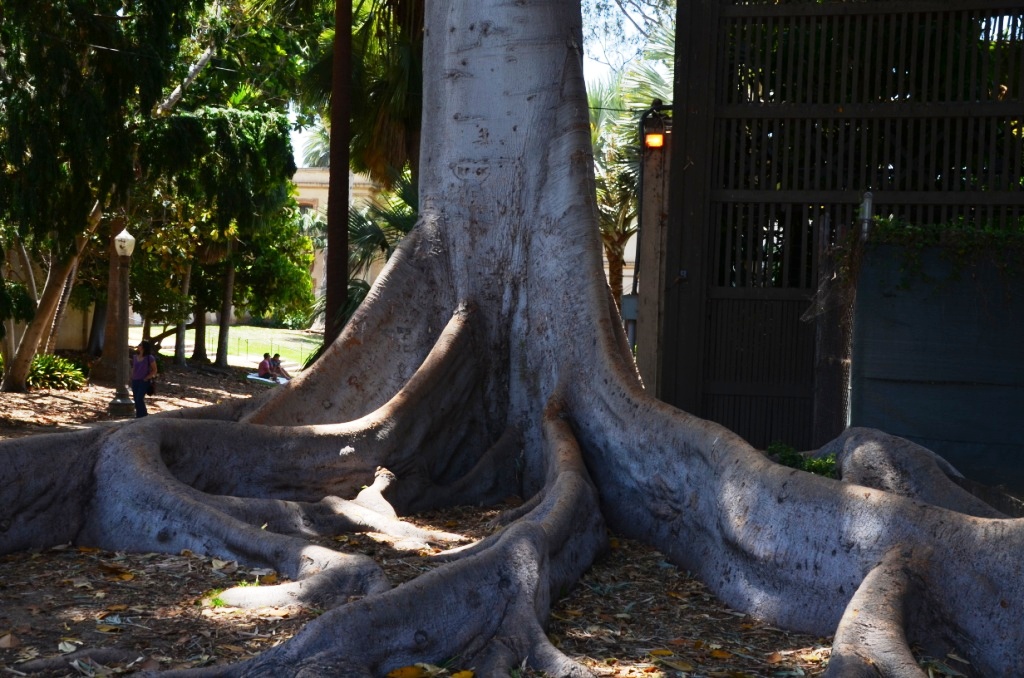
Towering Moreton Bay Fig Tree at Balboa Park
One feels really humbled walking around these magnificent trees.
Once you are done with the Balboa Park, I have the last attraction for you to see for the day – Sunset Cliffs. This is also a park, which offers stunning views of the ocean, as well as opportunity to surf and hike. To me, just sitting down and watching the waves, is enough of attraction on its own. And I would also guess from the name that the best time to visit the cliffs is during the sunset, but I didn’t have an opportunity to check this myself.


And now, let’s talk about food! As we are talking about the perfect day, I would like to share three recommendations with – yes, we are talking breakfast, lunch and dinner.


And now, it is time for lunch. I hope you are craving seafood, as the place I want to send you to is a fresh seafood heaven, very much resembling the New England, or rather even Cape Cod seafood joints, the hallmarks of the fresh seafood restaurants. With its unassuming and non-pretentious simplicity, Point Loma Seafoods reminds you of many of the Guy Fiery’s triple-D worthy establishments – inexpensive, always filled with people, offering great variety of seafood which is as fresh as it can be, with different styles of preparation. In the mood for sashimi? You got it. A plate of fried oysters or clams? No problems. A whole clam sandwich (this is what I had)? Here you go. Fresh fish, salads, soups, oysters, crab cakes – definitely there is a variety to chose from. Make sure you will allocate time, both to find parking and to wait in the line – but the wait is very manageable, the service is quite quick and efficient. I highly recommend you will include Point Loma Seafoods into your travel itinerary.

After all the walking, climbing, and may be swimming, kayaking and sun bathing, you probably feeling tired and reading for an exciting dinner. Your wish is my command. Let me suggest that you will take a short trip to Coronado Island, and find the place called Chez Loma (yep, we are going French again – how about that!).
Again, an interesting parallel with New England, as Chez Loma restaurant is located in the regular house-looking structure. Simple ambiance and chanson music definitely add to your mood. And the food… Well, before we talk about food, few words about the wine. The wine list has reasonable size and very reasonable prices, with most of the selections coming from California, France and New Zealand. For no particular reason, we started with NV Scharffenberger Mendocino County, California – simple wine, with nice touch of toasted apple on the nose, and good weight on the palate. This wine had a bigger body than typical NV Champagne would have, with the same toasted apple being a main theme. Overall, easy to drink and refreshing. Our second wine was delicious 2012 Matua Pinot Noir Marlboro New Zealand (13% ABV) – smokey nose, vibrant acidity, tart cherries on the palate, excellent balance – the wine was perfectly complementing the variety of dishes we had for dinner.


And then, there was food. For the appetizers, we went with the few different options. Ceviche “Verde” (rockfish, tomatillo sauce, avocado) was somewhat “off the beaten path”, very refreshing, with the avocado and tomatillo sauce adding an interesting touch. Escargot (mushroom, sweetbread, asparagus, garlic butter) was probably the best I ever had – somehow, all the elements worked together creating literally a sublime experience. Tartare of Beef (hand cut beef, shallots, horseradish, parsley, pomme frites) was another great appetizer. I fell in love with this dish in Paris, and ever since, when it is on the menu in the restaurant which I would trust to serve me a raw beef, I would go for it. This version was very nicely done, with the perfect flavor profile. And lastly, the Three Beets (yellow, striped and red, thyme vinaigrette, Bucheron goat cheese) was simply a music for the eyes – bright, colorful, and most importantly, very tasty! Perfect texture on the beets – not too hard and not mushy, just right, and an excellent pairing with very gentle goat cheese.


Couple of entrees I want to bring to your attention. Peppered Filet Mignon (tenderloin, black pepper crust, brandy sauce, potato puree, haricot vert) was perfectly cooked, with very fresh cracked black pepper, simply a perfection on the plate. And the Sea Scallops (vanilla infusion, cauliflower puree, bacon crisp, orange sauce) were perfectly done, with the right texture and delicious textural enhancement of cauliflower puree and bacon bits. Again, one of the best Sea Scallops dishes ever, and I have to tell you that 3 times out of 4, if the menu has Sea Scallops on it, this would be the dish I would take. For dessert, we shared Gingerbread (orange-caramel sauce), which was mostly a nicely done bread pudding. All in all, a great dining experience and I can’t recommend this restaurant high enough.


After leaving the restaurant, see if you will be able to get a quick tour of the historical Hotel del Coronado – it definitely worth a few moments of your time – seeing all the wooden paneling and lavishly appointed hallways. Note – you might have to look for the way to sneak in as a registered guest. Upon return to the hotel you are staying at, spend a few moments admiring San Diego and marina nightlights. It was a long day, but I hope it was a good one.


Here you have it, my friends – my version of the perfect day in San Diego. Whether you visited any pf the places I mentioned or not, I would love to know what you all think. Cheers!
Cozymeal – A Unique Dining Experience
What I want to share with you today is a guest blog post written by Nanette Wong and Samad Nasserian, presenting unique and interesting dining concept Cozymeal. I like the concept, and I think it nicely expands your Friday (or any other) night dining options. Cozymeal is available today only in San Francisco and Northern California, but they plan to expand to East Coast very soon. Please read below and feel free to comment. Cheers!
Picture this: It’s Friday night, and you’ve made reservations at the hottest new restaurant in town. When you arrive, you still have to wait a little bit, despite making reservations. No big deal (sort of). Finally, you’re seated and everyone’s ordered. The food comes out, and it’s pretty good, but it’s a tiny space and you keep bumping elbows with everyone. It’s a little noisy too, so it’s hard to carry on a normal conversation. On the way out, splitting the bill gets complicated and everyone is a little frustrated with how it’s done. Does this scene sound familiar at all?
We’ve all experienced situations like this before, and that’s where Cozymeal comes in. Cozymeal is offering a new way of eating and enjoying the benefits of a restaurant, without the not so pleasant parts. Also, you can have the cooking classes with the chefs, so you can even eat the delicious foods you cook. Pretty cool right? It’s a complete foodie experience.

Here is how it works. Cozymeal is a trusted community of food lovers and home chefs who share their passion for food. In order to enjoy a Cozymeal, all you need to do is to browse through the offered Cozymeals, find the dining style you like (or a cooking class) and the date which works for you (or you can request the new date), book it and then come to enjoy a great evening of great food and conversation in cozy and comfortable setting – it is as easy as that!
There’s a wide array of meals offered. From Peranakan Food on a Boat to Old Style Nordic Cuisine to a French Country dinner, there’s a meal to fit everyone and anyone’s taste buds. And that doesn’t even cover all the cooking classes offered as well!
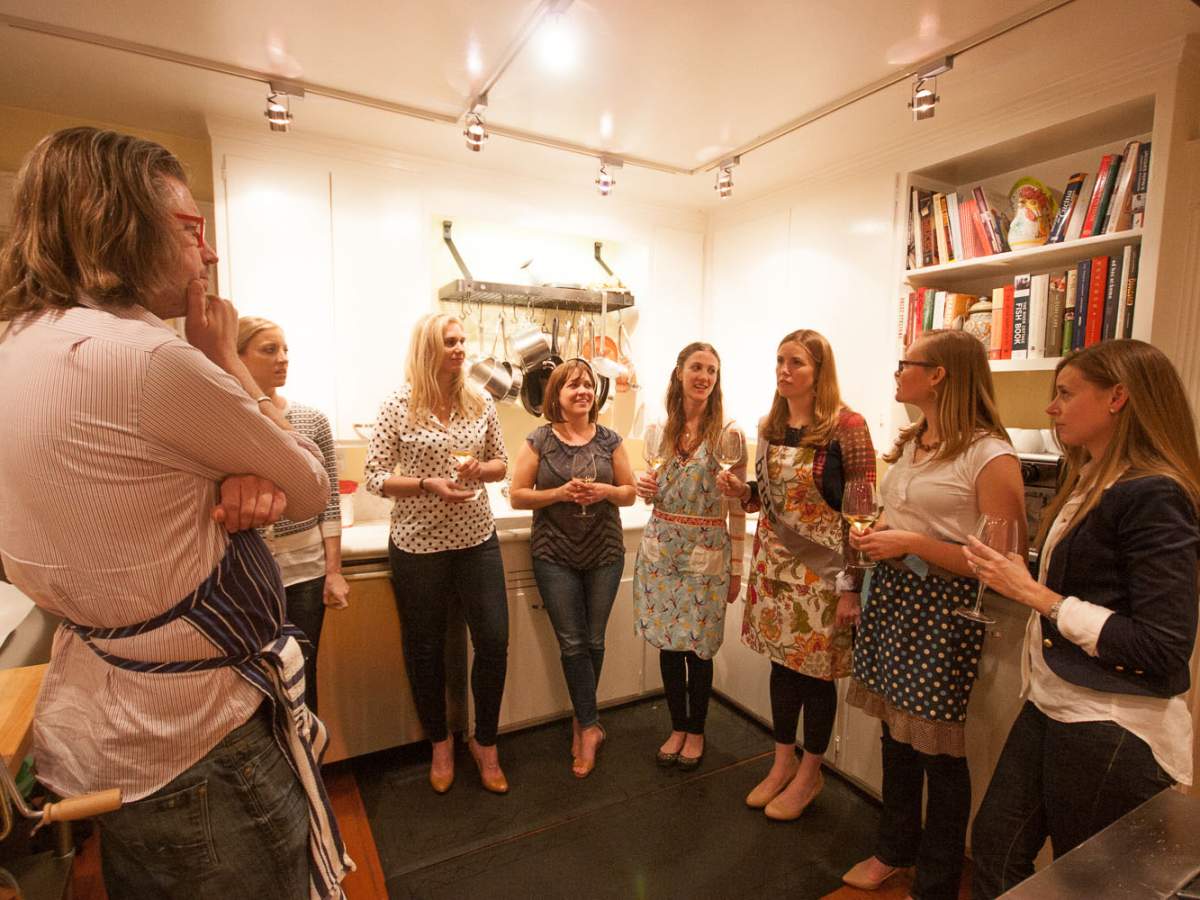
One of the most popular cooking classes currently offered is James’ Italian Comfort Meal cooking class, where you learn to make your own, fresh pasta! Located in the colorful Haight Ashbury neighborhood of San Francisco, professional chef James will teach class participants how to make a scrumptious egg tagliatelle, topped with slow cooked pork sugo.

And that’s not even the main course. The main course is a slow-cooked beef brisket, simmered in white wine and milk. The whole meal is rounded off with a creamy La Quesada (think if cheesecake met flan) and fresh, local berries.

Another unique dining experience is Desiree’s Peranakan Dinner on a Boat. With Desiree, you can enjoy a sunset dinner on her boat docked at the Berkeley harbor.
She is half Hainanese and half Peranakan, and offers an authentic fusion meal for Cozymeal diners. The meal starts off with crispy sardine puffs, followed by chicken nut stew and jasmine rice. A simple yet flavorful and traditional tofu dish also appears on the menu. And of course, can’t forget dessert, which are a sweet, fluffy Kaya puff.


What’s most interesting about the whole experience is that professional chefs, or really talented home cooks, not only put the effort into creating this meal, but they also welcome you into their home. You get to interact directly with them, chat about how they cooked the meal, and pretty much ask them whatever you want! (Can’t guarantee they’ll spill all their secrets though). This is also being a great benefit for travelers. How often had you traveled abroad, hoping to taste the authentic food of the nation, but are limited to restaurants. And let’s face it, the restaurants are probably catered to tourists. Now that we think about it, it’s kind of being in Diners, Drive-Ins, and Dives, where you’re Guy Fiery and the chef is sharing his food with you in his own home! Pretty awesome. Anthony Bourdain ain’t got nothin on you.
Cozymeal is growing rapidly and will be expanding to the East Coast very soon. If you are interested in becoming a Cozymeal host in the East Coast, West Coast or anywhere else, reach out to us by visiting our host page.
Check out Cozymeal here, or visit us on Facebook.
Taste Of Wine – Engineering Approach
This was one of my early blog posts – almost 4 years ago, I was blogging only for about 4 month, and had probably 1.5 readers (okay, fine, may be 1.7). This is one of my most favorite blog posts in this blog, which I think is still very relevant. Therefore, as I’m incredibly behind my publishing plans, I would like to share it with you on this rainy [in Connecticut] Thursday – and of course I would love to hear your comments. Cheers!
J Wrigley #WineChat – Continuing Oregon Pinot Noir Deep Immersion
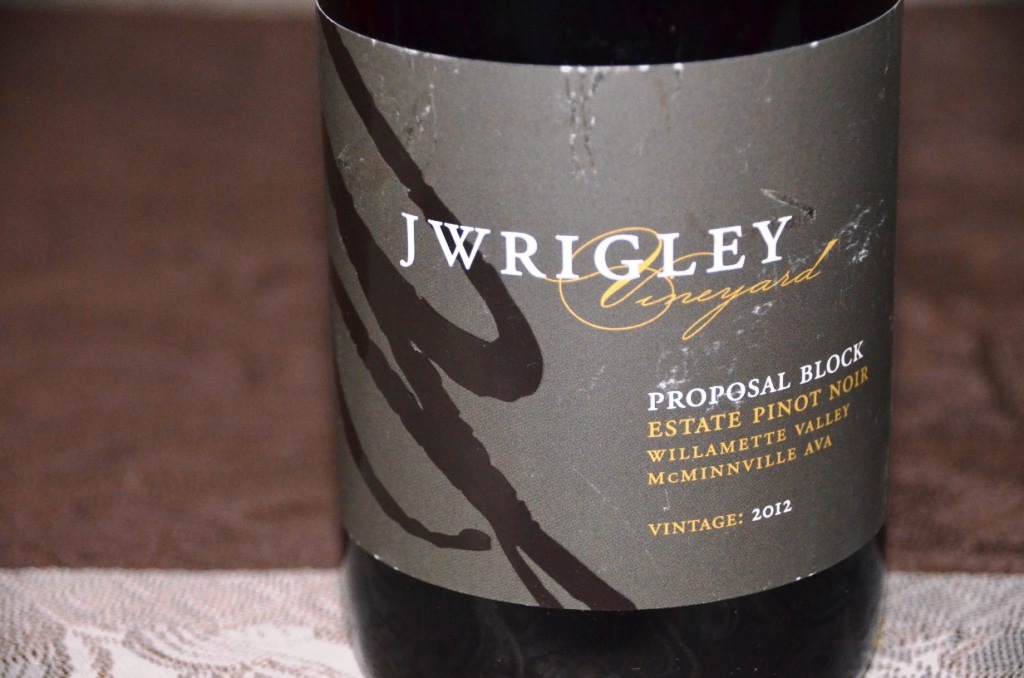 Last Wednesday, April 23, the virtual tasting room opened its #winechat doors to discuss for the third time in the row the endless subject of Oregon Pinot Noir. Presiding over in the hot seat was John Wrigley, the grape grower and winemaker at the J Wrigley Estate in McMinnville AVA in Oregon.
Let me start from the conclusion and tell you what I learned. The terroir, the soil, the elevation, and the winemaker are all matter. Duh, you wanna say? Well, yes, this sounds very pedestrian for the oenophile, like teaching an alphabet to the fifth-grader. However, when you drink the wine made with the soul, when you drink a thought-provoking wine, and when you also get a chance to discuss that thought-provoking wine with the someone who actually made it, and the group of like-minded people, the concept of soil and terroir stops being abstract, and rather becomes something you can…put in your mouth and taste!
We learned a lot during this #winechat. Once again we heard about the peavine soils, which make vines work really hard. We also heard about volcanic rocks and marine sediment soils. You can learn about the soils too – here is the link to the very interesting article about J Wrigley wines, which also includes the video of John Wrigley talking … dirt (not as a matter of speech, but as a substance).
We learned about something called Van Duzer effect. Ever heard of it? A narrow stretch of open land, called Van Duzer corridor, connects Willamette valley to the ocean. Every evening, the cold ocean air runs through that open space to cool off everything in the valley, especially all the grapes growing on elevations. The temperature drop can be in the range of 20°-30°, making grapes to ripen slowly, to retain acidity and concentrate sugars, which in turn means … better wines for us! Here is an article where you can read about Van Duzer effect in far more details.
We also learned about very interesting experiment, called the Cube Project. 3 wineries, 3 winemakers, 9 wines. 3 wineries – Anne Amie from Oregon, Bouchaine from Carneros and Lincourt from Sta. Rita Hills, each took their best Pinot Noir plots, capable of producing at least 6 tons of grapes each, and divided it into 3 equal parcels. Each winemaker had an opportunity to make wines from all three parcels, thus producing 9 different wines. When the wines were tasted by the group of professionals, it was concluded that winemaker style prevails over the terroir – the wines from different plots made by the same winemakers tasted closer than the wines made within the same parcels. I would really love to try all those wines by myself, or at least learn more about how the tasting was conducted – were the wines tasted blind, how many people tasted the wines and the number of other factors would all matter to me. But – as I can’t report first hand, here is a link to the article which explains the experiment in lots of details.
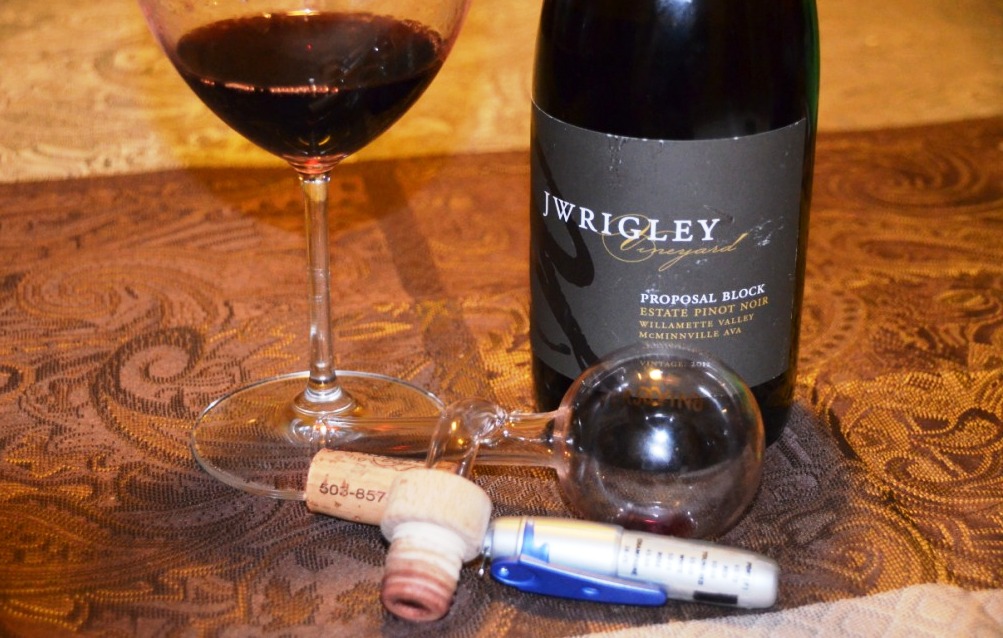
J Wrigley Pinot Noir and tools of the trade
Yes, we learned a lot, but how was the wine, you are probably wondering? This time around, I didn’t play with the temperature, I only measured it once – it was at 22.3°C/72°F. I played a bit with rapid decanting using VersoVino. This 2012 J Wrigley Estate Pinot Noir Proposal Block McMinnville AVA (14% ABV, aged 10 Month in French oak, 250 cases produced. $45 SRP) was very supportive of our conversation. Oh, by the way, can you guess where the name “Proposal Block” comes from? There is a good chance that you guessed it – this was the very first Pinot Noir planted vineyard at the estate, where John Wrigley proposed to his wife (wine and romantics – unbeatable!).
Now, here are some notes regarding the wine:
Color: Garnet
Nose: Fresh, ripe raspberries, floral notes, chocolate, mocha. Smokiness showed up later on.
Palate: Soft, round, good acidity. nice earhiness, dark fruit, very balanced. After a while, smokiness showed up in the back, and the the roasted notes.
Verdict: powerful and balanced Pinot Noir. Will drink well by itself, and can be well paired with food. For the full enjoyment, about one hour decanting is recommended. Will also age well for the next 10-12 years (or may be more, my crystal ball is broken, so I can’t be more precise). Drinkability: 8-
That conclude my report about J Wrigley #winechat and it also concludes the overall Oregon Pinot Noir series – definitely was learning, fun and entertaining experience for me. Don’t be shy – you should really try the #winechat for yourself (every Wednesday, at 9 PM Eastern/6PM Pacific) . Until then – cheers!
Passion For Jura – The Wines
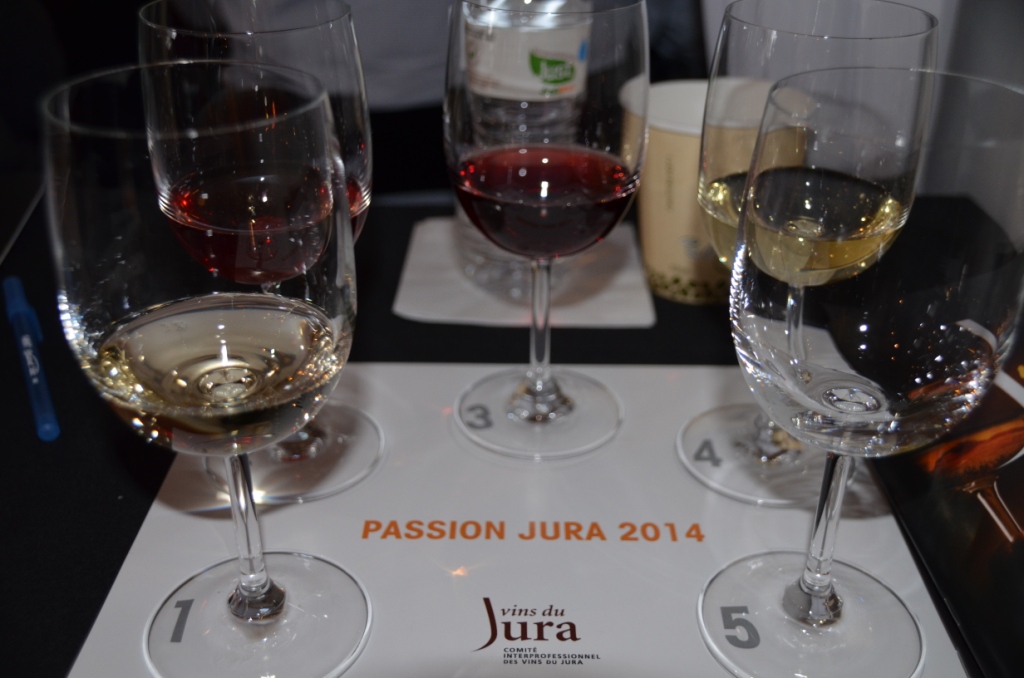 In the previous “Passion for Jura” post, we talked about the region – history, terroir, grapes and types of wines – but we didn’t talk about the wines themselves. “Passion for Jura” was the name of the seminar and tasting which I recently attended in New York city, where I had an opportunity for the first time to really immerse into the fascinating world of one of the oldest wine producing regions, which is really unknown in US.
During the seminar, 6 wines were presented by the winemakers themselves. The idea was to let us experience the full range of the Jura wines (for some strange reason, Vin Jaune was not presented during the seminar). Here are the wines we tasted:
NV Domaine Jacques Tissot Cremant du Jura Blanc Brut (12% ABV) – 100% Chardonnay, refreshing grassy nose, very acidic, bubbles are present but somewhat muted in the glass. Creamy mouthfeel with toasted bread and apple on the nose. Overall, not bad, but lacking a bit an overall energy of the sparkling wine.
2011 Domaine de la Pinte Jura Arbois Polsard de L’Ami Karl (11.5% ABV) – light, refreshing, cranberries with the touch of barnyard, herbs (sage), light but with the nice tannins. Very interesting and very enjoyable.
2011 Benoit Badoz Vermiel (13.5% ABV, 70% Trosseau, 30% Pinot Noir) – fresh grapey nose – not a pronounced as Beaujolais Nouveau, but still quite explicit. Cherries and blackberries show up next. Beautiful, smokey notes on the palate, a bit sharp, but fresh. Clean acidity, long pleasant finish. Somewhat similar to Oregon Pinot Noir, but more round. Also has a noticeable green component.
Compare the colors of the two red wines in the tasting:


2011 Domaine Champ Divin Cotes du Jura (13% ABV, Chardonnay/Savagnin blend) – vanilla, minerality on the nose. Delicious. Acidity and minerality on the palate, fresh apples, very refreshing
2009 Fruitiére D’Arbois Savagnin Arbois AOC (14% ABV, 100% Savagnin) – oxidation is very much pronounced, pretty much like with Sherry, both on the nose and the palate. This wine is typically made as Vin Jaune, but it requires lesser aging time. After the wine breathes, it becomes much less aggressive and comes through as clean, despite the oxidation.
2009 Domaine Pierre Richard Vin de Paille (15% ABV) – delicious nose. Palate is beautiful, with refreshing acidity, touch of bitterness, and full of fresh juicy apricots. Wow!
And here is the list of some of the wines I tasted during the walk around tasting. The place was small, and got very crowded after a while, so I didn’t taste the wines from all 20 producers. As usual for the trade tasting, I’m using the “+” sign system. The wines mentioned below were my favorites, for the most cases with “+++” ratings with some exceptions (of course), such as “++-|” and “++++”.
2010 Domaine Jacques Tissot Arbois Chardonnay (12.5% ABV) – +++, beautiful!
2012 Domaine Jacques Tissot Arbois Chardonnay La Mailloche (12.5% ABV) – +++-|, butter and balance! perfect.
2009 Domaine Jacques Tissot Arbois Savagnin (13% ABV) – +++, very elegant
2006 Domaine Jacques Tissot Arbois Vin Jaune (14.5% ABV) – +++, mushrooms and forest floor! should be amazing with savory dishes. Vin Jaune can last for 6 month after being opened.
2010 Domaine Jacques Tissot Arbois Trousseau (12.5% ABV) – ++-|, clean, elegant, light – red which more feels like white
NV Domaine Jacques Tissot Macvin du Jura (17% ABV) – very unusual palate, with raspberries, almost taste like Framboise, very nice. Can last for 6 month in the fridge.
2010 Domaine Jacques Tissot Cotes du Jura Pinot Noir (12% ABV) – ++-|, very interesting and unusual for a Pinot Noir
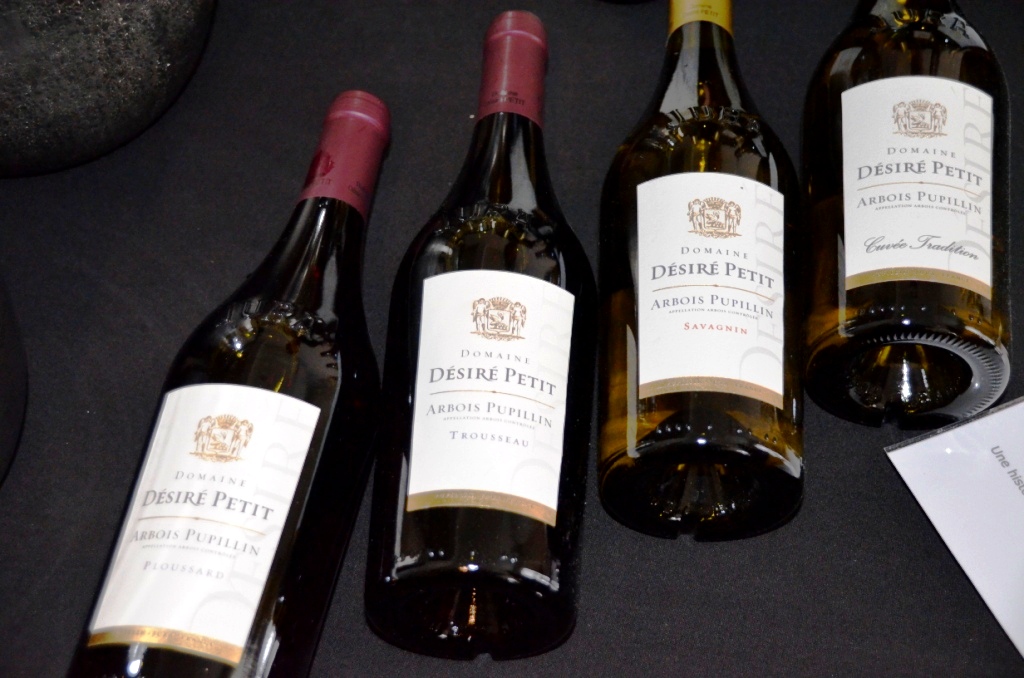
2012 Domaine Désire Petit Ploussard (12.5% ABV) – +++, smokey nose!
2012 Domaine Désire Petit Trousseau (12.5% ABV) – ++-|, dry, clean, nice
2012 Domaine Désire Petit Chardonnay (12.5% ABV) – ++-|, clean, classic, minerality!
2012 Domaine Désire Petit Savagnin Ouillé (13% ABV) – +++, 6 month in oak, very complex wine
2011 Domaine Désire Petit Tradition (12.5% ABV, 25% Savagnin) – +++, perfect acidity
2008 Domaine Désire Petit Savagnin(13% ABV) – ++-|, delicate, elegant
2007 Domaine Désire Petit Vin de Paille (14.5% ABV) – +++, prunes on the nose! perfect balance
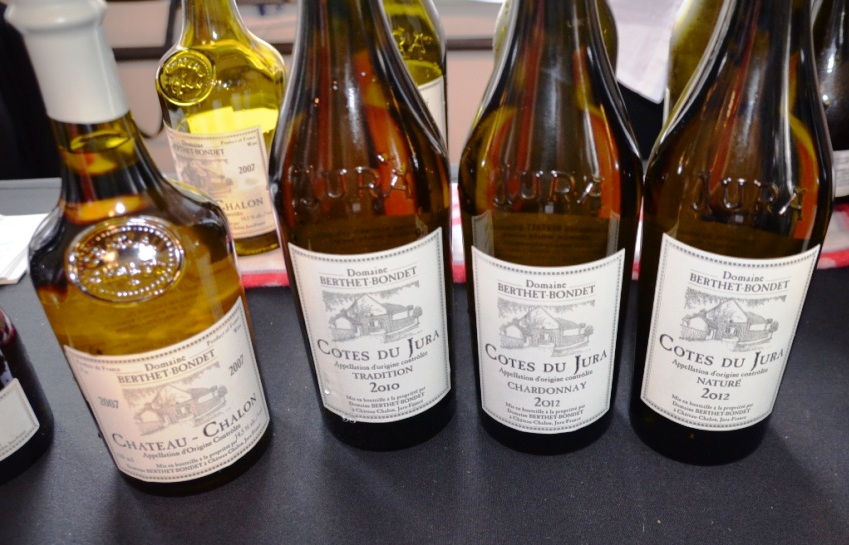
2012 Domaine Berthet-Bondet Cotes du Jura Chardonnay (12.5% ABV) – ++-|, light, round
2012 Domaine Berthet-Bondet Cotes du Jura Naturé (13% ABV) -+++, good fruit
2012 Domaine Berthet-Bondet Cotes du Jura Tradition (13% ABV) -+++, delicious
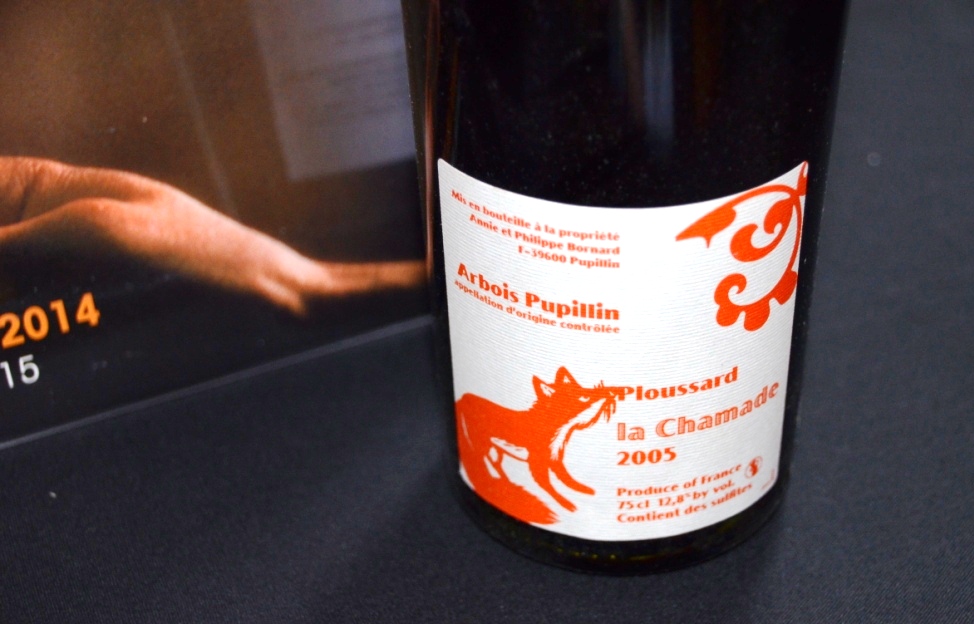
2005 Domaine Philippe Bornard Ploussard La Chamade – Best of tasting!
2005 Domaine Philippe Bornard Arbois Pupillin La Chamade Ploussard (12.8% ABV) – ++++, wow!
2011 Domaine Philippe Bornard Arbois Pupillin La Chamade Ploussard (13.5% ABV) – +++, wow! delicious, sweet undertones
2011 Domaine Philippe Bornard Arbois Pupillin Trousseau Le Ginglet (12% ABV) – +++, delicious complexity in the back
2011 Domaine Philippe Bornard Arbois Pupillin Savagnin Ouille Les Chassagnes (13.5% ABV) – ++-|, complex
2011 Domaine Philippe Bornard Chardonnay Les Gaudrettes (12.5% ABV) – +++, complex, delicate!
2011 Domaine Philippe Bornard Arbois Pupillin L’Ivresse de Noé (14% ABV) – +++, late harvest Savagnin, a touch of sweetness, delicious complexity
I also tasted 4 different Vin Jaune wines from Domaine André & Mireille Tissot, all from 2007 vintage, all single vineyard, and all delicious, with the one from Chateau-Chalon being the best – unfortunately, as all those wines were not listed in the tasting brochure, I can’t give you their exact names – but look for Domaine André & Mireille Tissot Vin Jaune – they are well worth your attention.
That concludes my report on the Passion for Jura tasting. Based on my experience, I can simply tell you – Jura makes delicious wines, and you need to experience them. Go to your wine merchant and ask for the Jura wines by name – and let me know how you will like them. Cheers!
A Night of Great Food and Great Wine – Arezzo in Westport, CT
 Have you ever been in the situation where you read about the restaurant and look at the menu, and your first thought is “ahh, it’s that same thing again…”? Continuing the situation, how many times did you actually still ended up going to the restaurant, and afterwards were glad you did? My personal account – more often than I care to admit! My latest experience – the restaurant called Arezzo Ristorante & Bar in Westport, Connecticut.
Arezzo is located at the intersection of route 1 and Riverside Ave, with its patio overlooking Saugatuck river. While restaurant had been in the same location for a while, you can consider it brand new – Juan Ceballos and chefs/brothers Llanos are the new owners of the Arezzo restaurant.
What I really like in the restaurants is the diversity of the setting – this is when the restaurant inside doesn’t look “uniformly the same”. Arezzo has a number of different areas – a spacious bar, almost as a separate room, a “foyer” with soft and comfy chairs, the main dining room, huge patio – you can come to the restaurant many times and every time discover something new.
Open kitchen and huge wood-fired oven, imported directly from Italy, are definitely creating the next level of excitement for the guests – I don’t know about you, but I can stare at the tamed flames for a very long time…


We started our evening in the bar. I personally made a rookie mistake of ordering Espresso Martini as my first drink – while very tasty, this was definitely a drink to have after the meal, not before. Well, I’m still working on my cocktail culture…


As usual, a few words about the wine list. May be only two words – Very Good. While the list is not big (which is a good thing in many cases – flipping through 50 pages looking for a bottle of wine is not the fun for all), it is modern, attractive and not boring, sporting a number of unusual wines by the glass together with some safe choices. Bottle selection is also very good, and reasonably priced, which for me is always important.
The wine list is focused on the Italian wines, with some California and France. After the fiasco with espresso martini, I needed to refresh my palate, so I started with 2011 Donnachiara Irpina Coda di Volpe DOC, Campania (13% ABV), the wine made out of indigenous Italian grape from Campania, Coda di Volpe. Bright golden color in the glass, inviting nose of white stone fruit and perfectly vibrant acidity on the palate, paired with dense and round, medium to full body mouthfeel – just what I needed (Drinkability: 7+).
The red wine, suggested by Juan, was an absolute favorite of the group. Renieri is an excellent producer, making the wines in the number of regions in Italy. While I was somewhat familiar with their Brunello wines, this wine was new to me – 2010 Renieri Invetro Ross Toscano IGT (14% ABV), a super-Tuscan blend of 50% Sangiovese, 25% Cabernet and 25% Merlot. Dark ruby in the glass, clean nose of dark red fruit, very inviting, and beautifully refreshing palate – ripe raspberries, cassis, plums, warm spices, touch of minerality, full bodied and perfectly balanced with tannins and acidity in check. Great wine overall. Drinkability: 8+.


And then, there was food.
A number of appetizers were served while we were at the bar.
Pizza Margherita ( fresh tomato, basil, homemade Mozzarella) – fresh, sweet tomato, basil – always a winning combination.
Focaccia Robiola di Arezzo (white truffle oil) – this was sublime, as anything with the right amount of truffle oil.
Lobster Arrancini (saffron aioli and Lemon) – absolutely delicious, very tasty bites!
Rosemary Marinated Shrimp Skewers – one of the group favorites – incredible balance of flavors.
Italian Sausages Skewers with Roasted Peppers – simple and very well executed. Also a pleasure to look at.


The rest of our dinner was served at the table. First, a trio of pasta:
Risotto (fresh porcini mushrooms, truffle oil) – incredible, simply incredible. If you like mushrooms, I’m sure you are not going to leave a single morsel on the plate, no matter how big the portion will be. The umami factor simply doesn’t let you put the fork down.
Short Rib Tortellini (braised us jus sauce) – why all the braised, slow cooked meat invokes such a homey feeling? This was delicious.
Cavatelli ai Piselli (home-made pea-ricotta, how and sweet sausage ragout) – this was perfectly on par with two other dishes – savory and satisfying.


Pan Seared Pink Snapper (caponata purée, fregola, vegetables) – one of the best pieces of fish ever – flaky, perfectly seasoned and cooked.


Roasted New Zealand Lamb Chop (spinach, tomato, Yukon gold potatoes) – to tell you the truth., I’m extremely picky about my lamb chop – I don’t want any fat on it, I want it to be perfectly seasoned, so it will not have that unpleasant lamb flavor – yes, I’m high maintenance when it comes to the lamb chop. So what can I tell you about the lamb chop which was served to us? In a word, wow. In another word – delicious. Seasoning, texture, taste – wow.


For dessert we had Pannacotta and Nutella Pizza – yes, it was very tasty, and I will spare you my lame attempts to describe it.


And we are done here. The only thing left to do, as usual, is to thank Juan Ceballos and Executive Chef Vinicio Llanos for the wonderful food and wine. Whether you are living in the area or visiting, Arezzo will be a perfect dining destination for you. Cheers!
Disclaimer: I attended the restaurant as a guest of management. All opinions are my own.
Arezzo Ristorante & Bar
5 Riverside Ave
Westport, CT 06880
 203-557-9375
http://www.arezzowestport.com/

Last Bottle Sign Up ($10 credit)




 Talk-A-Vino