Archive
Restaurant Files: Art of Food And Wine at Domaine Hudson in Wilmington, Delaware
 Almost for as long as this blog exists, and practically every year around this time, I confess my love of traditions. The reason it happens every year around August is rather simple – this is the time when we typically have our “Adults getaway” – a group of friends going away for a weekend of food, wine, and laughter, an insane amount of laughter.
We always spend time arranging for a special dinner – this year was not an exception. It took a bit of work, but after calling and emailing many places around our destination – Longwood Gardens in Kennett Square in Pennsylvania – we found the place which was willing to accommodate our group and seemed to offer good food and wine options. Typically we try to find the restaurant which will offer a tasting menu and allow us to bring our own wines. It does take a bit of effort to come up with wine pairings for the dishes we never tasted – but usually, we fare reasonably well at that exercise. This year, for a change, we found the restaurant which offered us a tasting menu – and paired all the dishes with wines, so all we needed to do is to come and enjoy (one would hope, at least).
It was not just the fully paired tasting menu which was different this time. Typically, when we select a restaurant, we go by Yelp ratings and close proximity to the place we are staying at. As we usually stay in small towns, the restaurants we find are more of a “local significance”. The story with Domaine Hudson is quite different as the restaurant has Wine Spectator’s Best of Award of Excellence. There are only about 1200 restaurants with this type of awards in the whole of the United States, so I hope you agree that it builds some level of expectations.
All the planning behind, and finally we arrived at the Domaine Hudson in Wilmington. Once we got situated, the dinner started with the “Chef’s Surprise” (the Amuse-bouche), which became a double-surprise. The first part of the surprise was in the fact that it was not expected, of course. But the second surprise was the dish itself – Deviled Eggs.
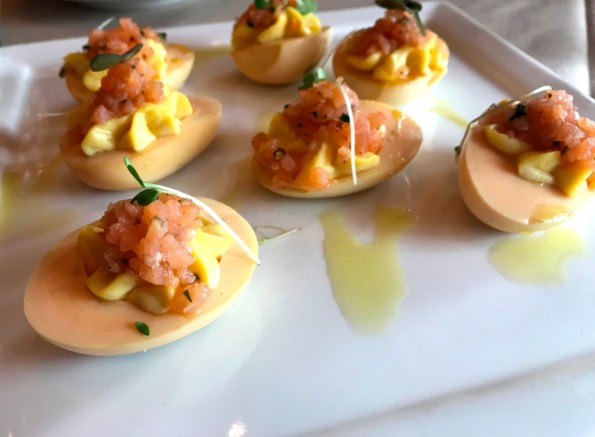
Okay, what can be surprising about the deviled eggs, you ask? You see, for people with Russain heritage, deviled eggs is a staple of the party, and I’m very, very particular to how this simple dish is executed. I had deviled eggs on multiple occasions in the restaurants, and don’t mean to offend anyone, but in the absolute majority of the cases the dish could be described simply as “blah”. Not here. At Domaine Hudson, this was one superb deviled eggs – the egg white was smoked, the filling was creamy and perfectly seasoned, and the smoked salmon on top gave the texture and completed the dish. The simply delicious beginning of the evening.
Before we continue, I have a confession to make. Every once in a while, you want to forget all your social media obligations (obsessions?) and just be a normal person on vacation – don’t take pictures, don’t take notes, don’t try to memorize the experience, just relax, have fun and enjoy the moment. This is what I honestly tried to do. I didn’t bring my SLR, I decided not to take any pictures, just enjoy the dinner and the company. After the first sip of wine and bite of food, which were both excellent, all good intentions went out of the window, and the need to “document the story” kicked in, more as an instinct, a muscle memory so to speak. But – I was left with only my cell phone (meaning – mediocre pictures), and any missed picture opportunities are just that – missed picture opportunities. Now, let’s get back to our dinner and the wine pairings.
Duck Liver Mousse (port wine aspic, pickled stone fruit, grilled bread)
Wine: 2015 Rubus Old Vine Zinfandel Lodi
Superb is a word. The mousse was delicious – texture, flavor combination with all the condiments – I finished the full ramekin by myself, couldn’t stop until the last morsel. The wine was excellent as well – nice raspberries profile, a touch of fresh fruit, not overbearing, but enough sweetness to perfectly complement the mousse. A successful pairing by all means.


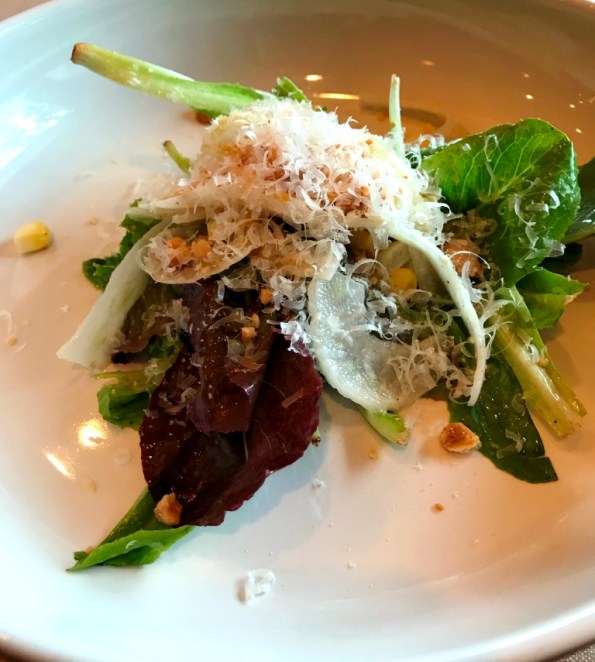
Culver Farms Baby Greens (grilled corn, fennel, Marcona almonds, lemon aioli, Pecorino)
Wine: 2017 Gateway Vinho Verde DOC, Portugal
Another delicious dish. Fresh, simple, light, very summer-y, fun to eat with all the different crunch elements. Vinho Verde was fresh, grassy and lemony, just as you would expect, and it obviously played perfectly with the salad. Another successful pairing.


Ricotta Gnocchi (forest mushrooms, hazelnuts, summer truffle cream)
Wine: 2016 Domaine Cornu-Camus Bourgogne Hautes-Côtes de Beaune, France
I love mushrooms, so this dish definitely delivered that – great variety of mushrooms, a perfect textural addition of hazelnuts, truffle cream was very flavorful. The gnocchi, which were supposed to be the star of the dish were too dense, I would definitely prefer for them to be lighter and fluffier. Still, not the dish you can really complain about. The wine was fresh and young, red crunchy berries, great minerality, very firm and structured, with excellent acidity – an excellent young Burgundy. However, the pairing didn’t work. I guess the idea was to pair on the contrast, but that didn’t work for me. But – I definitely enjoyed the wine on its own.


Nordic Halibut (Fava beans, Holland leeks, forest mushrooms, lemon butter sauce)
Wine: 2015 Talley Vineyards Estate Chardonnay Arroyo Grande Valley
Crispy fish? Check. Fava beans? One of my personal favorites; check. Mushrooms? Check. You got all my happy ingredients, and they worked very well together. Chardonnay was spot on – varietally correct, just a touch of butter, vanilla, apples, fresh, well balanced with good acidity. And a successful pairing for sure.


Prime Holstein New York Strip (fingerling potatoes, Fois Gras butter, braised greens, red wine demi)
Wine: 2013 Three Wine Company Suscol Creek Cabernet Sauvignon Block 5 Napa Valley
Steak and Cab – need I say more? The steak was perfectly cooked, great flavor, juicy, good sauce – nothing else I can say – if you like steak, you would like this dish. But then the wine… This was easily the best Cabernet Sauvignon I tasted in a long time (bold statement for me, I know). This was in-your-face, juicy, powerful, super-extracted, luscious wine only California can produce – imagine having a ripe bunch of cassis in your hand, and just taking a full bite right there – cassis, blackberries, mint, eucalyptus, everything is there – but perfectly balanced, with good acidity and unquestionably dry – wow. I would never guess this wine had 15.3% ABV – it was just perfectly integrated. Bottom line – superb wine and excellent pairing.
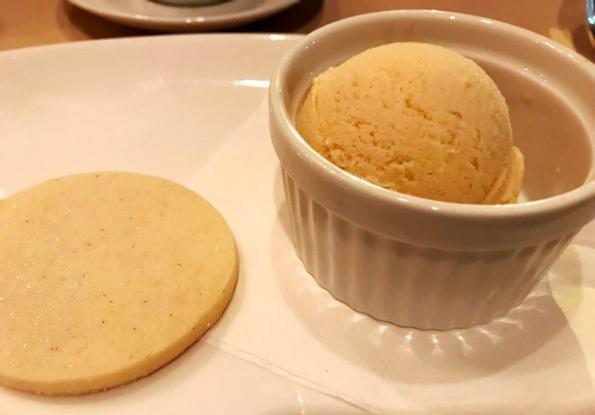
Plum Gelato with Sugar Cookie
The meal should have a sweet ending, right? Excellent gelato, light, fresh, good flavor. A perfect finishing touch.
Let’s summarize the experience – in a word, outstanding. The food was very good, and the wine program was excellent, most of the pairings worked, so I have to say that the Best of Award of Excellence has a good merit, and it definitely makes sense to me.
Have you dined at the restaurant with similar distinctions? How was your experience? Cheers!
Restaurant Files: Flinders Lane – Visiting Australia in Stamford
 For those of us who like to travel, why do we like it so much? More often than not, the travel itself is not fun – the stress of the airport, cramped planes with the seats getting narrower by the minute, airline food – it leaves lots to be desired. But once we arrive, it is the experience that makes all those travel troubles worth it – the culture, the people, food, wine – this is what we are looking for.
Visiting Australia is squarely on my “bucket list” – I’m sure one day I will be able to experience the culture. I had been drinking Australian wines for a long time – this doesn’t replace visiting the winery, but it is as close as it can get. When it comes to food, the only place in the USA which can be associated with Australia is a chain of Outback Steakhouse restaurants – they constantly run the ads on the TV, with supposedly an Australian-accented narration – this is as much of the Australian experience as you can get there (the voice in the ad might be the most authentic part of experience).
And then Flinders Lane Australian restaurant opened in Stamford. Of course, when I was invited to visit, I was excited – not as much as if it would be an actual country, but still. I would guess the name of the restaurant takes its roots from one of the oldest streets in Melbourne, Flinders Lane, which now hosts a variety of little shops and the restaurants.


What authentic Australian food should you expect to find at the Flinders Lane? I actually know very little about authentic Australian food, so let’s see: Kangaroo? Check. Vegemite (have you heard of it? I will explain later)? Check. That’s about all I know, so let’s just talk about our experience.


You have to start the evening with a cocktail, right? Well, even if you disagree, it is still right – and this is what we did. Fresh Grapefruit Mule (Absolut Elyx Vodka, Cucumber, Grapefruit, Lime, Bundaberg Ginger Beer) was very refreshing. Floral Cucumber Margarita (Blanco Tequila, Elderflower, Cucumber, Thai Chili Tincture, Lime, Agave) was different but equally refreshing. Limoncello Collins (Villa Massa Limoncello, Vodka, Lemon, Club Soda) – just look at that presentation, isn’t it too pretty to drink? Nicely lemony and very tasty overall.
If we are talking cocktails, we have to talk about the wines. The wine list is not very large, but diverse and versatile, with reasonable prices and a good selection of wines by the glass. I also was happy to see the Australian wines on the list (which is not common for the most of the restaurants, but hey – if not at Flinders Lane, the Australian restaurant, where else?). I had prior experience with Hewitson Baby Bush Mourvèdre, and this 2014 was outstanding – soft, round, supple, perfectly balanced – it was an excellent accompaniment to our dinner.
The dinner was divided into the courses, so here is what transpired:


Course 1
We started with Arancini (black garlic mayo, pecorino cheese), which were outstanding, very good texture and flavor. Pork Sausage Rolls (sambal mayo) was more of a traditional Australian style (at least this was my understanding), and a very tasty bite. And Heirloom Tomato, Burrata, Truffle Soy dressing was perfectly presented just for the single bite – and there are very, very few things which are more delicious than a combination of fresh burrata and heirloom tomato. Yum!


Course 2
Next, we had Tuna Tartare (soy mirin dressing, cucumber, plantain chip) – I’m extremely particular about my tuna tartare, and I have to honestly say that this was not bad, but not my favorite. Something was not matching in the flavor profile – for my palate, of course. Pork and Veal Meatballs (ricotta salata, grilled baguette) were delicious, crispy on the outside, but airy enough inside.
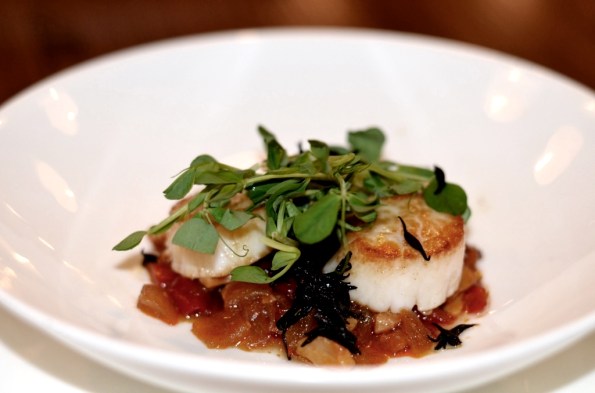

Course 3
Truth be told, scallops are probably my most favorite choice of protein. If there is a scallop dish on the menu, there is a very, very good chance that that would be the dish I would pick. Diver Scallops (cashew chili relish, hijiki) didn’t disappoint – perfectly cooked, perfectly spicy – very tasty. And then the Kangaroo salad (chili lime dressing, cilantro, crispy garlic) – my first taste of the kangaroo, lean and gamey taste profile, rather as expected, overall quite tasty.


Course 4
Branzino is another one of my favorites, and this Pan-seared Branzino (sesame ginger broth, bok choy) was excellent – delicious, great flavor combination, might be the tastiest dish of the whole dinner. Of course, you have to have the Australian lamb if you are visiting the Australian restaurant – Braised Lamb Gnocchi (tomato, pecorino) had a nice flavor, but very lamb-y in your face, which is generally not my thing, but overall this was not a bad dish.
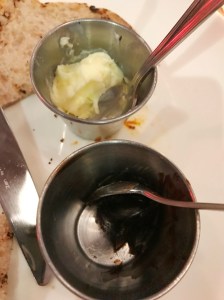
Okay, now let’s talk Vegemite. First, the disclaimer – Vegemite was not a part of our dinner – this was something I knew as quite famous in Australia (not always in a good sense) and was very much interested in experiencing, so I asked Chef Brad Stewart if we will be able to try it, and he gladly obliged. If you are wondering what the heck is Vegemite, you can read about it here. It is a paste made from yeast, and it has an extremely (my opinion) pungent flavor. It plays somewhat of a role of peanut butter in the Australian school lunches, typically used a spread on a piece of bread or a toast. I made a mistake of not trying it with butter as it was offered to us, and I can tell you – it is not my thing. But – I tried it, that what matters! 🙂


Course 5 – Chef’s selection desserts
Do you think Australians eat dessert? Of course they do – and here what had an opportunity to try
We had Lamington (traditional Australian dessert), Sticky Date Pudding (another traditional Australian dessert and Chef Brad’s grandma’s recipe), Carrot Cake (Chef Brad mom’s recipe) and Pavlova – don’t ask me for individual notes, please – they were all one better than the other, absolutely delightful, and a great finish to our dinner.
Here you are, my friends, I hope I didn’t make you too hungry – while you are contemplating your trip to Australia, you can come to Flinders Lane here in Stamford to get a little taste of it now. No boarding pass required. Cheers!
Can You Enjoy The Wine In The Can? Yes You Can!
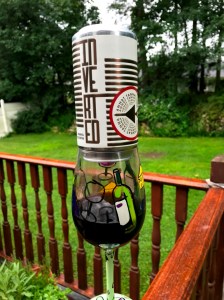 I couldn’t resist a little fun with the title, but really – what do you think of the wines in the can?
Let me ponder at the subject a bit while you give it a thought.
I’m sure that I qualify as one of the pioneers of the wine in the can. Here is an article in LA Times, talking about wines in the can showing up around the USA, and explaining why those make sense. This article appeared in September of 2015. Here is the link to my own post, titled “My First Can of Wine“, written back in November of 2014. So yes, I can claim some familiarity with the subject.
My first can of wine was produced by Field Recordings, a very unorthodox winemaking company to begin with, offering strange wines, with strange labels, unusual blends, aged in unusual barrels (Acacia wood, anyone?) – but ultimately, unquestionably delicious. I wrote numerous posts about Field Recordings wines, starting from 2011 – you can scroll through a few pages here. Field Recordings went on to create a club dedicated to the wines in the can (suggestively called Can Can Club), and then they even created a whole new company, called Alloy Wine Works. One of the fun parts of that Can Can club membership was to observe the progression of packaging and delivery of club shipments of canned wines – from packing bubble-wrapped cans in the same wine shipping box as the regular bottles (didn’t work too well), to the Fedex Tube:


to the practically a masterpiece of packing:


Okay, I probably got a bit off on the tangent here – this post is not about Field Recordings, but rather about wine in the can as a category, so let’s continue our discussion.
First, I think we need to establish a very simple truth – wines in the can are NOT a reduced, lower quality, cheap leftover junk wines – they are full-blown, legit, properly made wine of the same quality as all other wines made at a given winery, simply presented in the different format – a high quality lined aluminum can. These are the same wines, people, and if you want any takeaway from this post, this is my main point. One more time – these are the same wines, which are simply packaged in cans instead of being packaged in the glass bottles.
Now, why do we need wines in the can? I don’t want to get into the whole “cool factor” and “millennials” discussions – yes, those are important, I know, as they further democratize wine and bring new people to try the wine for the first time. But all of these can be categorized as a marketing gimmick, and I want to look for the actual benefits of the canned wines. Let’s see:
- On the go: Canned wines are perfect on the go. It is much easier to stuff a can of wine exactly as you would a can of soda into your backpack, and off you go. When you decide you want to drink the wine, it is very easy to open, and you don’t need to look for the glass. And even two cans of wine will be lighter than one bottle of wine, for the most of the cases. As we said – just get it, and go.
- Safety: Wines in the cans are a lot safer around small children, and generally anywhere where glass is simply a bad idea – like a beach or a pool.
- Convenience: Standard size for a can of wine is 375 ml, which is half of the bottle. If you want to drink white, and your friend is in a mood for a hearty red, having two different cans is easier than opening two bottles of wine.
- Experimenting and variety: with the smaller format and different packaging, there is an opportunity to create new types of wines or even go beyond wine. With Alloy Wine Works, I had wines going way beyond white, red and Rosé – wines finished with beer hops, wines mixed with coffee, plums, stout and lots lots more.
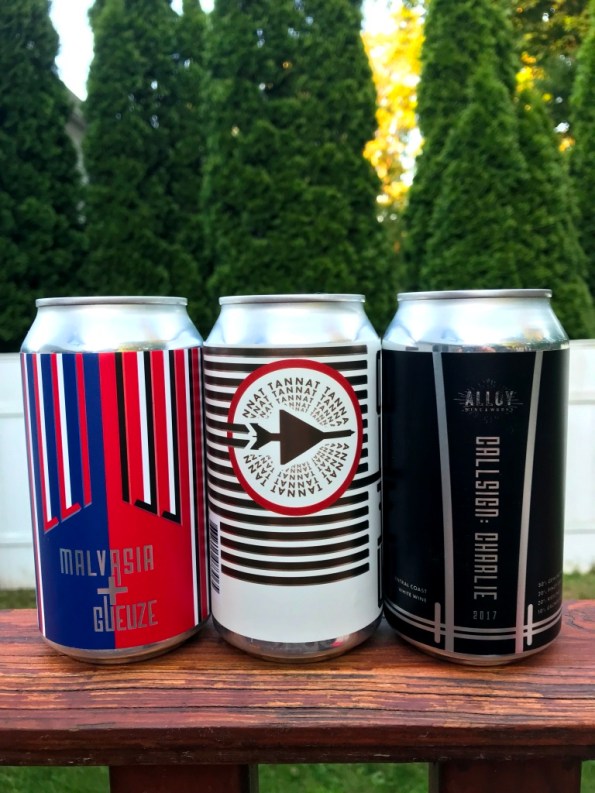
I’m sure there are other benefits of wines in the can, but – do cans of wine have only a good side without a bad one? As you know, this is never the case in life, so let’s talk about challenges:
- This is wine, not a beer!: It is important to remember that a can of wine holds half a bottle of wine – not beer. What’s my point, you ask? A typical can of beer contains less than 4% of alcohol. Typical wine – 13% as the least, so that one can of wine is equivalent to at least three cans of beer in terms of alcohol volume – you better remember that. Half a bottle of wine is not something you can easily dismiss.
- Once it’s open, it’s open: if you just want to have a glass of wine, it is easy with the bottle – open, pour a glass, close the bottle back. It is not going to work like that with the can – once it’s open, it’s open, and there is no going back. This problem has an easy solution – provide a plastic cap which can be used to reclose the can – but so far I didn’t see too many of those sold with the cans.
- Aging: I don’t think this is a real problem, as I don’t expect much of the aging-worthy wines to show up in the can, but in any case, keep in mind that the wine cans are better not be lost in the cellar.
Here you go – my take on the wines in the can. I didn’t plan to include much of tasting notes in this post, but I can tell you that this year I had wines in the can from California, Oregon, Australia and Long Island, and all of them were well made tasty wines.
At this point you had plenty of time to come up with your opinion about the wines in the can – would you please share it with everyone? Here is an easy poll for you – let us know what you think about canned wines! Cheers!
The Art of Tempranillo
Source: Vintae.com
I love Tempranillo wines. I wouldn’t call myself an expert, but I had a wide range of Tempranillo – with the exception of Australia, I believe I tried most of the major renditions – Rioja, Ribera Del Duero, Toro, most everywhere else in Spain, Texas, California, Oregon, Washington (am I missing something? do tell!). With all the love and respect to all the regions, if I have to put an order of priorities in that “list”, I would put Rioja first, Ribera del Duero very close second, but the competition for the 3rd place would be severe – in my world, of course.
I like wines of Toro, the closest sibling to the Rioja and Ribera del Duero, but it would be hard for me to place them higher than some of the beautiful Tempranillo renditions from Irwin Family Vineyards, Duchman, or Fields – considering the Toro wines I had in the past. Compared to Rioja and Ribera del Duero, Toro is … well, maybe I need to explain why I keep mentioning Rioja, Ribera del Duero, and Toro together all the time. These are the only three regions in the world where the absolute majority of the red wines is made out of the Tempranillo grapes. Yes, there are Garnacha and Graciano in Rioja, Cabernet Sauvignon and Merlot in Ribera del Duero, but still – most of the red wines in these three regions are made out of the Tempranillo, hence the constant comparison.
Out of the three regions, Toro is south-most one, with an expressly continental climate, low annual rainfall amounts, and significant range of day-night temperatures – which typically translates well into the flavor. Tempranillo is the grape of Toro, but similarly to Tuscany/Brunello, where you have Sangiovese and Sangiovese Grosso, Tempranillo in Toro is known as Tinta de Toro, a.k.a Tempranillo de Castilla, a.k.a. Ink of Toro. The grape is a bit smaller, with thicker skin, which coupled with growing conditions typically results, in massive, concentrated wines requiring extensive aging to become drinkable – I still have a memory of trying Alabaster made by Sierra Cantabria, one of the well-known producers in Toro, which was one of the most massive wines I ever experienced. Nevertheless, as I said at the beginning, Tempranillo is one of the favorites, so when the opportunity called to try 3 wines from Toro, I was definitely curious – and a bit cautious at the same time.
To ease things up, together with the 3 Toro wines from Bodega Matsu came a bottle of Rioja Reserva from Bodega Classica. While coming from unrelated producers, there is a common link between them – this link is called Vintae – a young company with a serious passion for the Spanish wine for the modern world. Vintae, started in 1999 by the Arambarri family, set on changing world’s perception of the Spanish wine as “boring”. To the date, Vintae unifies a collection of 11 different “projects”, all focused on showcasing the regions and the grapes.


Going back to the wines at hand, let’s talk about Rioja first. The wine comes from Bodega Classica, located in the heart of Rioja Alta. Rioja Alta offers a unique high-altitude setting to produce arguably the best Tempranillo of the whole of Rioja region. Couple that with more than 100 years old vineyards, and you are looking at some tasty opportunities in the bottle, as this Bodega Classica Hacienda López de Haro Rioja Reserva was. Here are my notes:
2013 Bodega Classica Hacienda López de Haro Rioja Reserva DOCa (13.5% ABV, $16.99, 90% Tempranillo, 5% Garnacha, 5% Graciano, 20 months in French and American oak)
Dark garnet color
Pepper, vanilla, raspberries, mushrooms, nice minerality
Medium body, good acidity, noticeable alcohol burn initially, went away in about 15 minutes, good fruit showed up, characteristic cedar notes, good acidity, round, soft.
8-, nice, just give it a bit of time to soften up at the beginning. The second day continued without changes. Good life expectancy, as expected of Rioja Reserva. And an excellent QPR.
Now, let’s go back to Toro. As I already said, in my prior experience, Toro wines were massive and concentrated, requiring long aging to soften and really show a beautiful expression of Tempranillo. And then there were wines called Matsu.
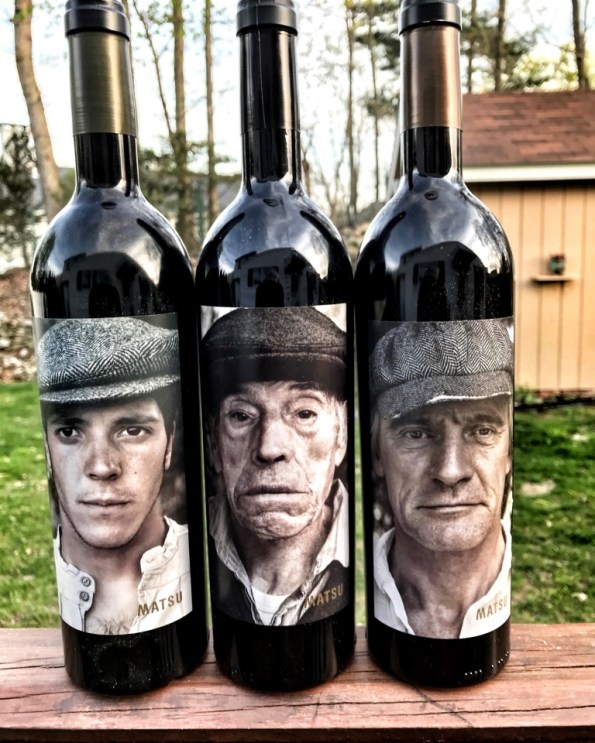
Matsu in means “wait” in Japanese. As we all know, waiting is one of the favorite games of oenophiles. When it comes to the three Matsu wines I had an opportunity to taste, there are many different levels of “waiting”. The wines had been progressively aged for the longer times before the release – 3 months for El Picaro, 14 months for El Recio, 16 months for El Viejo. The grapes were harvested from the vines of different age (again, progressively) – 50-70 years old for El Picaro, 90-100 years old for El Recio, more than 100 years old for El Viejo. See, waiting here is clearly a part of the equation.
And then there are those ultra-creative labels. Not only labels commemorate people who actually worked to create the wines, they clearly identify what you should expect from the wines – in age, in style, and even in price. I conducted a little experiment, first with my kids, and then with the people on Instagram, asking them to identify the most expensive wine – nobody made a mistake, the labels speak very clearly to us.


How were the wines? Surprising. Probably the best Toro wines I ever had – without any regard to the pricing category. Here are my notes, so you can see for yourself:
2016 Bodega Matsu El Picaro Toro DO (14.5% ABV, $13.99, 100% Tinta de Toro, 50 – 70 years old vines, 3 months minimum aging on the lees, concrete tanks)
Bright ruby color, noticeable legs, minimal rim variation
Young fresh berries, medium+ intensity, a touch of vanilla
Surprisingly light on the palate, pleasant tannins, fresh berries, very quaffable.
8-, might be the lightest rendition of Toro I ever had. The smell is a bit more complex on the second day. Palate nicely evolved, good balance, raspberries, no more impression of the young wine, lots of minerality.
2015 Bodega Matsu El Recio Toro DO (14.5% ABV, $21.99, 100% Tinta de Toro, 90 – 100 years old vines, 14 months aging in second use oak barrels)
Garnet color, noticeable legs, minimal rim variation too
Sage, fresh raspberries, quite fruity, roasted notes, minerality, distant hint of cinnamon
Underripe plums, blueberries, thyme, nice herbal component, surprisingly light, still noticeable alcohol, needs more time
8-, needs time. Second day: 8/8+, velvety texture, well integrated, excellent balance, a touch of tobacco and espresso on the palate and ripe plums. Outstanding.
2015 Bodega Matsu El Viejo Toro DO (15% ABV, $46.99, 100% Tinta de Toro, 100+ years old vines, 16 months in new French oak barrels)
Garnet Color, noticeable legs, rim variation is not extensive, but present
Sweet blueberries and raspberries on the nose, sage, sweet oak
8- first day, waiting for more.
Second day: 8, much evolved, more integrated, velvety texture, dark fruit, round, smooth. Will evolve further.
Here you are, my friends – the Art of Wine, from the label to the glass. Very impressive and thought-provoking wines, definitely worth seeking. Have you had any of these wines? Have you had Toro wines before? Do you have any Tempranillo favorites? Cheers!
Sequel in Reverse – More About Wines of Southwest France
What’s up with the “sequel in reverse”, you ask? Easy. All we need to do is flip the timeline. This post is a continuation of the previous post about wines of Southwest France – however, the tasting I want to share with you took place almost 6 months ago, at the end of the last year 2017, hence the “reverse” notion.
Outside of the sequence of the events, the two tastings are perfectly aligned – they are both squarely dedicated to the wines of one of the oldest wine-producing regions in the world – Southwest France.
I can’t explain why, but I feel that I need to make a confession. If you look through the pages of this blog – and there are a few here – I’m sure you will come to a conclusion that I primarily drink wines from California, Spain, and Italy, with an occasional sprinkle of everything else. And you will not be wrong. However, truth be told, my true love to wine started from French wines. I read the most about French wine and French wine regions. I was obsessed with trying to find an amazing Bordeaux for less than $10. Côtes du Rhône wines were a staple at the house. I spent countless hours in the France aisles of the wine stores (luckily, I was working in a close proximity of the Bottle King in New Jersey), looking for the next great experience with the wines from the Loire, Rhône, Bordeaux, Chablis, and others. French wines were “it” – unquestionably, a sacred territory. As the time was going by, and Bordeaux and Burgundy prices were going up faster than the weeds growing after the rain, the French wines moved mostly into a category of a rare encounter.
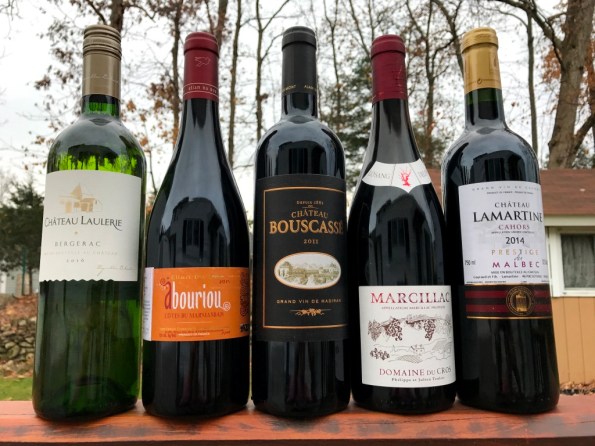
Last December was not the first time I participated in the virtual tasting about the French wines – but somehow, when I opened the box with these wines, something warm and fuzzy came over, and my first reaction was “ahh, I really, really want to drink these wines!”. There is nothing special about this particular set – no big names (I don’t believe Southwest France has much of “big names” anyway), no flashy, ultra-modern labels – and nevertheless, there was a promise of a great time in their simplicity and authenticity. These wines also perfectly played to my other “wine obsession” – the love to obscure and lesser-known wines, so altogether, I took a great pleasure in anticipation of the tasting.
As this was a virtual tasting, I had both the wines and time at my disposal, so unlike the previous post, here are my detailed notes in the usual format:


2016 Chateau Laulerie Bergerac AOC (12% ABV, $12, 85% Sayvignon Blanc, 15% Semillon)
C: Light gold
N: beautiful, fresh, medium+ intesnsity, honeysuckle, white flowers, peach
P: fresh, crisp, excelllent lemony acidity, white stone fruit, restrained
V: 8-, delicious, will be great with food and without, great QPR
2015 Domaine Elian Da Ros Abouriou Côtes du Marmandais AOC (12% ABV, $23.99, 90% Abouriou, 10% Merlot)
C: dark ruby
N: freshly chrushed berries, leafy notes, cherries, anis
P: ripe plums, sweet tobacco, eucalyptus, medium long sweet tobacco finish
V: 8-, would love to try it with an actual cigar. Needs a bit of time. And a new grape – Abouriou


2015 Domaine du Cros Marcillac AOP (12.5% ABV, $15.99, 100% Fer Servadou)
C: Ruby
N: earthy notes, mint, some medicinal notes (iodine?)
P: beautiful fresh pepper on the palate, tobacco, cherries – that pepper is delicious, love the wines like that
V: 8/8+, delicious, excellent QPR
2014 Château Lamartine Prestige du Malbec Cahors AOC (12.5% ABV, $17.99, 100% Cot (Malbec))
C: dark garnet
N: vegetative, tobacco, a touch of cherries
P: bright acidity, dark fruit, tart cherries and cherry pit, noticeable tannins.
V: 8-, pleasant, will work great with the steak, but needs time
2011 Château Bouscassé Grand Vin de Madiran (14.5% ABV, $17.95, 60% Tannat, 25% Cabernet Franc, 15% Cabernet Sauvignon)
C: dark garnet
N: eucalyptus, forest floor, a touch of eucalyptus,
P: initial tannins attach, pepper, dark round fruit, excellent extraction, layers of flavor, firm structure
V: 8+, outstanding, powerful, balanced, needs time!
The Southwest France wines are a treasure trove for the wine lovers – they capitalize on tremendous history, experience, unique terroir and unique grapes, offering oenophiles lots of pleasure in every sip. Look for the wines of Southwest France – and you can thank me later.
The Region Which Started It All
 The wine had been made in the Southwest of France ( Sud-Ouest in French) almost forever – in terms of human life, 2,000+ years well classified as “forever”. The region is considered one of the “cradles of winemaking” in Europe, and it maintains its uniqueness and diversity today – for example, out of 300 grape varieties used in the winemaking in the region, 120 are not found anywhere else.
Of course, we know that winemaking started about 8,000 years ago, and not in the Southwest of France. So what’s up with “started it all” claim? Glad you asked! Let me explain.
We live in the times when the wine is a part of daily life of many. Drinking wine is a norm and normal, simply a part of the daily routine for many, not a luxury or a weird exception anymore. Yes, that’s how it was in Europe forever – but now I’m talking about the rest of the world, countries such the USA, and even China now heading that way. The demand for wine had been constantly increasing since the late 1990s, and even Great Recession of 2008 didn’t kill it (just shifted the “acceptable” price ranges). Is it all just a normal course of events? We can, of course, settle for this. However, I believe that on a deeper level, there are exact reasons, “tip the scale” moments for many things which seem to happen just on its own – however, sometimes it is not easy to identify those “reasons”.
Remember the impact of the movie Sideways on consumption and production of the Merlot in the USA? That movie was the reason for a huge slump after 2004, and production and interest to Merlot are still in the recovery mode even now, 14 years later.
Late in the 1980s, the world started talking about The French Paradox – French eat cheese and foie gras, cook with butter and duck fat daily, and nevertheless, the coronary disease rates are much less than in the countries with comparable living standards and much lesser fat consumption. Possible explanation? Red wine. French consume lots of red wine, and resveratrol, one of the prominent substances found in seeds and skins of the red grapes, acts as a defense against clogging of the arteries. That was the outcome of the extensive medical research study conducted in France, which became known in the world as French Paradox.
In 1991, CBS in the USA dedicated one of their popular programs, 60 Minutes, to the French Paradox, and you know how Americans are, right? We are always looking for an easy way out, so wine sounded like an easy enough cure, and I believe this became a pivotal moment which triggered a renewed interest in the wine. Almost 40 years later, it seems that the wine successfully keeps the momentum. And before you will attack me with all the facts from the latest research – yes, I’m aware of many articles pointing to the issues with the study. Whether French Paradox study conclusions were medically solid I have to leave to professionals to debate and decide on. But it was still that pivotal “tip the scale” moment which changed the perception of the wine for many in the world.
At this point, I’m sure you want to see the connection between the title, the Southwest of France, and the story of the French Paradox, right? Here it is. While attending the tasting of the wines of Southwest France, I was listening to the presentation by sommelier André Compeyre, who mentioned that Southwest France has the biggest number of centenarians in France and it was one of the main regions where the French Paradox study was conducted – here we go, now everything is connected and explained. Is it time for a glass of wine?


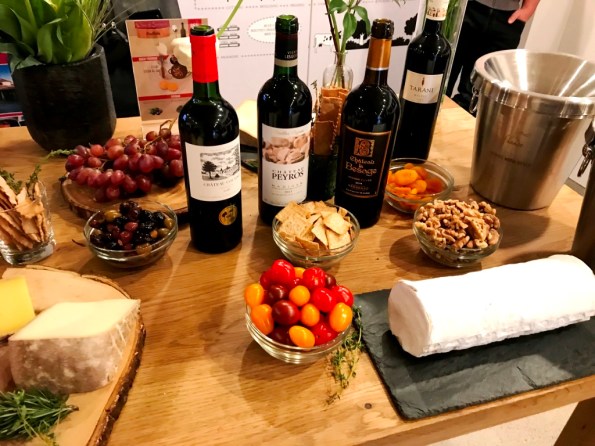
The tasting took place at the little store in New York called the French Cheese Board – what can be better than wine with a little cheese, right? Especially if both come from the same region, where they trained to live together for a few thousand years…
We started tasting with the sparkling wine, moved to the white and then red. As usual in such events, there was not enough time (and desire) for the formal notes, so below is the best I can offer. However, overall, the word is “outstanding” – the wines of Southwest France are well worth seeking – and you will not be disappointed.


NV Domaine du Moulin Mauzac Méthode Ancestrale Gaillac AOP (12% ABV, $15, 100% Mauzac) – very nice and simple. 7+
2017 Domaine du Tariquet Premières Grives Côtes de Gascogne IGP (11.5% ABV, $14, 100% Gros Manseng) – semi-sweet wine. It appears to be a traditional wine in the Southwest of France, which people are accustomed to drinking. It is possible that the wine was not cold enough when I tasted it, but I really didn’t appreciate it. If you like sweeter wines – this might be the one for you.
2016 Héritage Blanc Saint-Mont AOP (13% ABV, blend of Gros Manseng, Petit Courbu, Arrufiac) – excellent, bright, crisp, but very complex and thought-provoking. A touch of grass, vanilla, ta ouch of honey on the palate, green apples, wow. Excellent acidity. Great complexity. 8. And let’s not forget 2 new grapes – Petit Courbu and Arrufiac
2017 Domaine de Joy l’Eclat Côtes de Gascogne AOP (12% ABV, $7, blend of Colombard, Ugni Blanc, Gros Manseng and Sauvignon Blanc) – crisp, clean, superb. 8


2012 Château de Haute Serre Cahors AOP (13.5% ABV, $22) – superb, ripe berries, blueberries, round, delicious, acidity, vanilla, the backbone of minerality. 8+
2012 Château Montus Madiran AOP (15% ABV, $32.99, blend of Tannat and Cabernet Sauvignon) – smoke, campfire, tobacco, great concentration, powerful, excellent, great acidity, outstanding. 8
2011 Jean-Luc Baldès Triguedina Clos Triguedina Cahors AOP (14.5% ABV, $40, 85% Malbec, 10% Merlot, 5% Tannat, 12 months in oak) – touch of barnyard on the nose, delicious fruit, ta ouch of funkiness on the palate, great acidity. 8
2015 Domaine de Terrisses Terre Originelle Gaillac AOP (13% ABV, $16, blend of Braucol (Fer) and Prunelart) – beautiful Cabernet nose, crisp, cassis, Bordeaux style -outstanding. 8. and a new grape – Prunelart
2015 Réserve Bélingard Côtes de Bergerac AOP ($15, 50% Cabernet Sauvignon, 50% Merlot) – beautiful, warm nose, vanilla, cassis, beautiful, soft. 8
2013 Chateau Peyros Vieilles Vignes Madiran AOP (13% ABV, $18, 80% Tannat, 20% Cabernet Franc) – excellent, soft. 8-
2017 Domaine de Joy l’Eclat Côtes de Gascogne AOP (12% ABV, $7, blend of Colombard, Ugni Blanc, Gros Manseng and Sauvignon Blanc) – crisp, clean, superb. 8
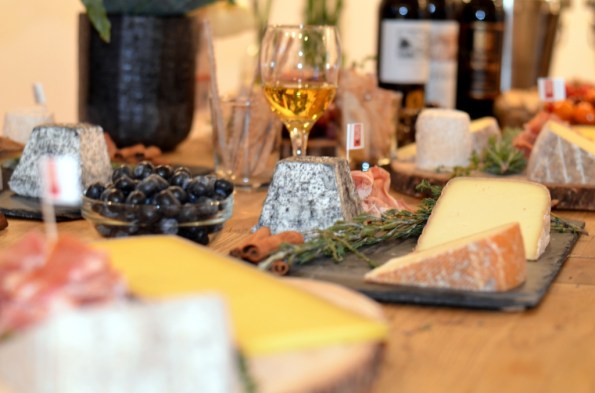


In addition tot he wines, we had an opportunity to indulge on the local cheeses of Southwest France – Ossau Iraty, Buche de Lucay, Bethmale Chèvre, Chabichou, Valencay, and Comté. Sorry, I’m not going to give you any individual notes, but all the cheese were superb. If you are like me and accustomed to the Comté cheese from Costco – that Comté in the tasting was the whole different game (go visit the store and taste, you don’t have to believe me).
There you go, my friends. Have you had wines of Southwest France lately? Any favorites you want to mention? Let’s raise the glass to many happy wine discoveries – and some red wine as a solution to all our problems. Cheers!
An Evening With Friends – In Singapore
For years I had been following the Oz’s Travels blog, commenting from time to time on the great wine (and food) experiences described there. Over these years, we built a virtual friendship with Oz (Anthony), the author of that blog, with one recurrent theme “one day you will make it to Singapore, and then…”. As amazing as the life is, that “one day” actually happened about two months ago when my business travel finally brought me to Singapore.
Maybe you saw my very excited post about Gardens of Singapore – but the evening before I experienced all the gardens, I was able to meet, shake hands, and share a few (okay, more than a few) bottles with Oz and his friends.
Oz picked me up from the hotel with his friend Rob and we proceeded to the restaurant, where another Oz’s friend (also Rob), was already waiting for us. Then, there was food, wine, and scotch – but let’s take it all in steps.
First, the restaurant – newly open Garang Grill (a sequel to the already successful Garang Grill at another location). The restaurant allows guests to bring their own alcohol, which we took an advantage of – while restaurant provided glasses and decanters. During the course of our dinner, I had an opportunity to experience a variety of creative dishes. Skewers of sauteed foie gras were melt-in-your-mouth delicious. Luncheon meat fries (yes! talk about creative!) were superb with delicious dipping sauce. I since made the same dish at home and everyone loved it. Crab rillette, steak – everything was delicious and tasty. Here is an account of our dinner – in pictures.


And then there was wine. What I love about Oz’s parties is the abundance of wine, and not just any wine, but nicely aged wine – and you know how much I admire the wine with a little (or not so little) age on it. Here is what went down:


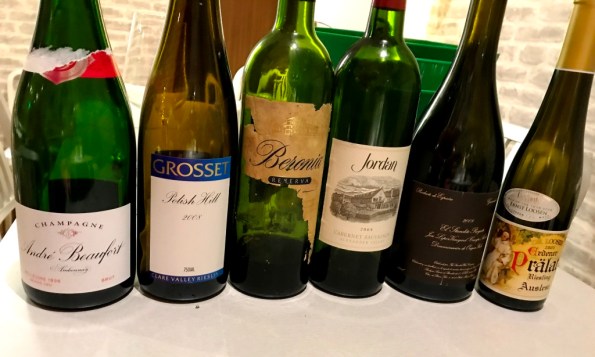
1996 André Beaufort Champagne Grand Cru Ambonnay. Never had it and never heard of André Beaufort Champagne before. Meanwhile, this happens to be one of the oldest all-organic grape growers in Champagne. This 1996 was disgorged in 2014. The wine had great acidity, green apples, still perfect fizz, candied apples with a hint of cinnamon showing on the nose. Yeast showed up later. Excellent. That was a real treat.
2008 Grosset Polish Hill Riesling Clare Valley. Australian Riesling is not a simple wine. I remember trying young Australian Rieslings many years ago, and putting them into the category of “I never want to drink this again”. It takes a bit of time to understand the beauty of the wine devoid of any sweetness and instead offering in-your-face acidity and minerality. But once you turn the corner, this becomes the style you crave. This particular wine at hand was, in many ways, an encounter with the legend. You see, Clare Valley is one of the best regions for Australian Riesling. Polish Hill is one of the very best vineyards. And Jeffrey Grosset is a legendary producer, one of the best winemakers in the world. Now you add a bit of age, say, 10 years – and you almost get heaven on Earth – petrol on the nose, restrained palate, minerality through the roof, great acidity, just a pure delight in every sip.


1994 Bodegas Beronia Rioja Reserva. Behind damaged label was an excellent wine – still fresh, good fruit, good acidity, excellent. Still has time to evolve. Based on the color also still young – just starts showing age.
2005 Jordan Cabernet Sauvignon Alexander Valley. This was my contribution to our lineup. Jordan needs no introduction to the Cabernet Sauvignon wine lovers. This wine was very good, typical California Cab. The wine had an interesting amount of sweetness, more than I expected – as it showed no age, I would assume it still needs more time to evolve. I have one more bottle from the same vintage – will have to wait with that one for a bit.
2008 Standish Wine Company El Standito Proyecto Garnacha Tintorera Yecla DO. This is a Spanish wine, of course – produced by Standish Wines from Australia. Yecla is the best known for their Monastrell wines – this wine, however, was made from the grape called Garnacha Tintorera, which is also known as Alicante Bouschet, which can produce massive, dense wines. This wine was no exception – excellent, restrained, good balance, good fruit, good acidity – and still in need 0f at least another 20 years to evolve.


2005 Dr. Loosen Erdner Prälat Riesling Auslese Mosel-Saar-Ruwer. You can’t finish such an evening without a dessert wine, can’t you? 13 years old Auslese by Dr. Losen – need I say more? The wine was amazing, great balance, a touch of candied plum, great acidity, fresh, simply superb.
This was the end of our dinner, but not the end of our evening. A short taxi ride took us to the unassuming building (well, it was dark, so maybe it is not as unassuming during the day) which happened to be a Rendezvous Hotel, one of the oldest in Singapore. After taking a flight of stairs up, we entered the room where my jaw literally hit the floor. The “room” was called The Auld Alliance – the scotch and whiskey bar (primarily) with more than 1,600 (!) different whiskeys available to taste and purchase. I never saw anything like that in my life, and the selection there was simply beyond words:
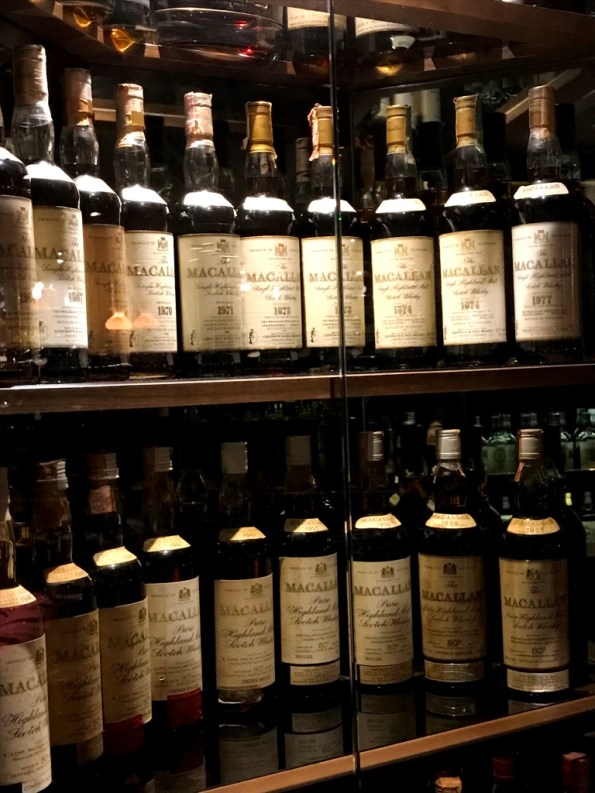


In addition to many whiskeys available by the glass, The Auld Association also offers a number of tasting flights – I had the one called “Smoke around the world” and it was definitely fun (I hope you don’t expect my tasting notes after 18 hours of non-stop travel and prior dinner with all the wines).


So this is my account of an amazing evening in Singapore. It was definitely a pleasure meeting Oz and his friends, and the whole evening was simply beyond expectations. Cheers!
Open That Bottle Night – 2018 edition
We all have THAT bottle. How I mean it, you ask? Simple. We all have bottles which have special meaning for us. This one was brought home from the vacation 5 years ago. That one was given by a generous friend with the recommendation to wait for a special moment to drink it. Those in the corner came from the parent’s cellar. Ahh, these I found on a garage sale – would you believe it? Oh yes, and those I got during a great sale – yes, one of each, as I couldn’t afford to buy any more of them.
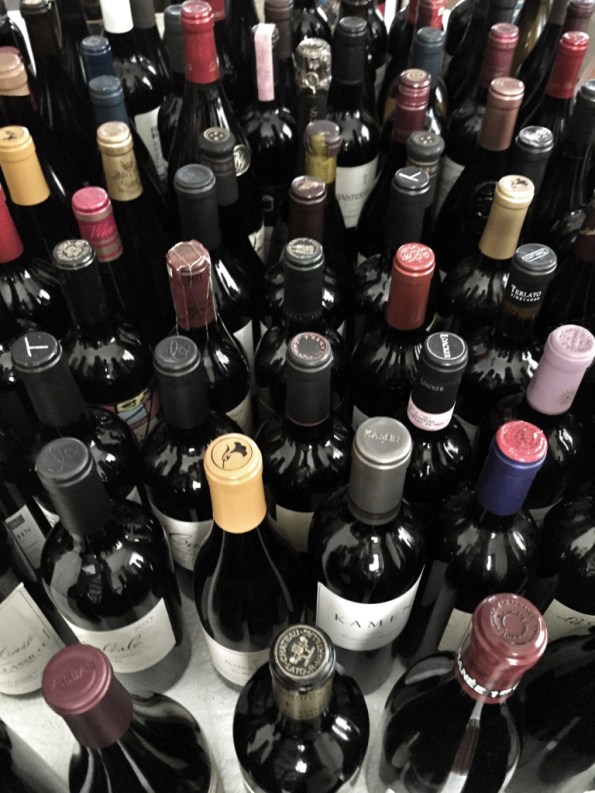
Wine is a perfect vehicle for creating special moments. Maybe the best there is. But this also is a problem in itself. We get attached to those special bottles, always doubting if this is the right moment to open them and keep waiting and waiting for a perfect one. Yes, the wine improves with age, but nothing is forever. There is always a chance that at the proper moment, the wine might not be there for us anymore, and we might not be there for the wine.
To help people with THAT bottle dilemma, Dorothy Gaiter and John Brecher, the journalists behind Wall Street Journal’s Tastings column at a time, created a special event which they called Open That Bottle Night (OTBN for short) back in 1999, celebrated always on the last Saturday in February. Now, almost for 20 years, OTBN helped wine aficionados around the world to ease the pain of parting with those special bottles and actually enjoy the wine in its prime time (or at least that is the intent and the hope).
The OTBN is truly all about the wine, so the oenophile gets its chance to agonize about the impossible choice, going from one bottle to another bottle and finding the reasons why this is not yet the time to claim for it to be THAT bottle. I went multiple times through all my wine fridges, joyfully finding and immediately grudgingly rejecting my choices. Three days later, I just grabbed two bottles which jumped to my attention and said “this is it! no more!”.
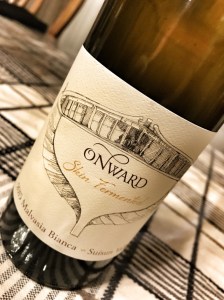 Let’s talk about our OTBN wines – there should be at least some reason for the wines to be “it”, right? So the white wine was interesting in many ways. First, it came to our house via the Secret Wine Santa exchange, courtesy of inimitable Drunken Cyclist. The wine is made out of the rare grape (Malvasia) which is absolutely uncommon for California; the wine is Skin Fermented, which seems now to be a popular term for what was known before as “orange wine” – the grapes are fermented in contact with skin, which is not typical for the white wine. Lastly, the wine comes from the Suisun Valley, which seems to be an up and coming region in California – for example, Caymus, a California wine powerhouse, recently released the new wine called Grand Durif (Durif is original French name for Petite Sirah), made from the grapes grown in the Suisun Valley.
2015 Onward Skin Fermented Malvasia Suisun Valley (12.8% ABV) – light golden in the glass (nothing says “orange wine”), beautiful tropical fruit on the nose – guava, passion fruit. On the palate, initially showed light fizz which went away in about 15 minutes. Cut through acidity, peppery spiciness, white underripe fruit, there is a touch of funk or maybe rather oxidative notes which hint at extended skin contact; overall – different and delicious (Drinkability: 8). Also much rounder on the second day. Probably requires food.
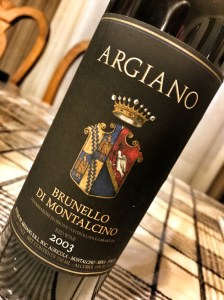 Now, the red doesn’t really have a story. I have no idea how did it make it into our house. Yes, it is a Brunello, which is generally good (one of the 3 big Bs of the Italian wines – Barolo, Barbaresco, and Brunello); Argiano seems to be a good producer even though I don’t know much about them. Lastly, the wine has good age on it, however, it is not much of an age for any of the big Bs. Oh yes, and it was my only bottle, which squarely puts it into THAT category.
2003 Argiano Brunello di Montalcino DOCG (14% ABV) – needed a bit of help from the decanter to open up (about an hour) – dark concentrated garnet color, no hint of age, deep tobacco and roasted meat on the nose, leather, cherry, cherry pit and a touch of plums on the palate. Right after opening, the wine seemed that it was either at prime or maybe already even past prime – after 3 hours in the decanter and a glass, the wine started closing, with fruit disappearing and fresh, young tannins taking its place. This wine would probably last for another 10 years – but I stand no chance to find out as this was my one and only bottle. Still, the verdict is simple – delicious (Drinkability: 8+/9-).
That sums it up, folks. I love OTBN, as the wine is meant to be drunk, and OTBN helps us to get THAT bottle out and experience it before its too late. How was your OTBN? Cheers!
Cooking as an Ultimate Expression of Love, or Early Valentine’s Day Experiences
I’m always happy to admit that Valentine’s Day is one of my favorite holidays. Of course this is a personal statement, and of course, I perfectly understand that I’m lucky to be able to say it wholeheartedly, as this is not a universal truth.
Outside of presents (which is fun), overpriced flowers and cheesy cards (nevermind all the heart-shaped chocolates, I don’t even want to mention those), Valentine’s Day is all about food and wine. Many years ago, we ditched the tradition of oversubscribed and underdelivering restaurants, offering strictly timed moments of celebration in favor of homemade dinners, which also include the whole family.
Valentine’s Day dinners at home offer a lot of pleasure in itself – you get to contemplate and select the menu, and you have an opportunity to touch lots and lots of bottles until you grab the one which somehow, magically, will become “it”. And then you get to cook that dinner, and most importantly, if everything works as you are hoping it will, you get an extra dose of happiness looking at the happy faces around the dinner table. By the way, if you need any wine recommendations for the Valentine’s Day, I wrote a few of them in the recent years – here and here are two of my favorite ones.
This year, Valentine’s Day dinner came in early – we will be leaving for vacation exactly on the February 14th, thus in order to maintain the tradition of family celebration, the dinner had to take place earlier – on Sunday before the Valentine’s Day. And so the next idea was – why don’t we start early on Sunday, let’s say with a nice breakfast?
What is your favorite celebratory breakfast meal? Eggs Benedict is definitely one of my favorites, so that was an easy decision. Smoked salmon is one of my favorite choices for the eggs benedict, so the prep for the breakfast started two days prior, first by making smoked salmon (you can find the recipe here).
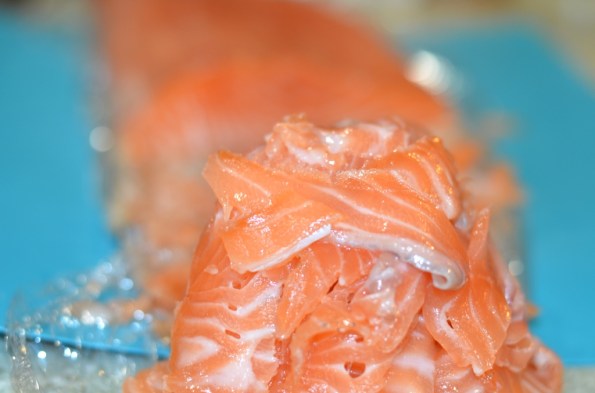
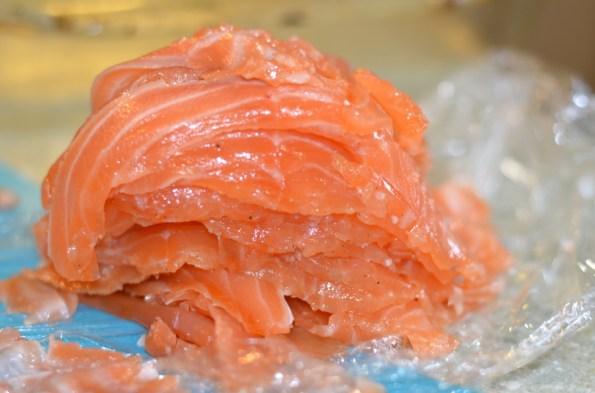
This is Valentine’s Day dinner, so we need to up the game, right? What can elevate breakfast better than some crispy bacon? Yep, bacon it is!
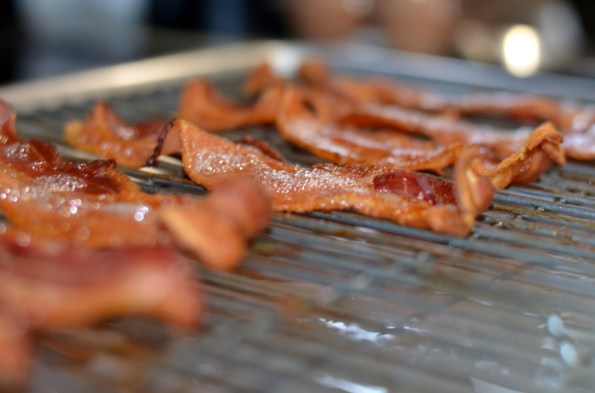
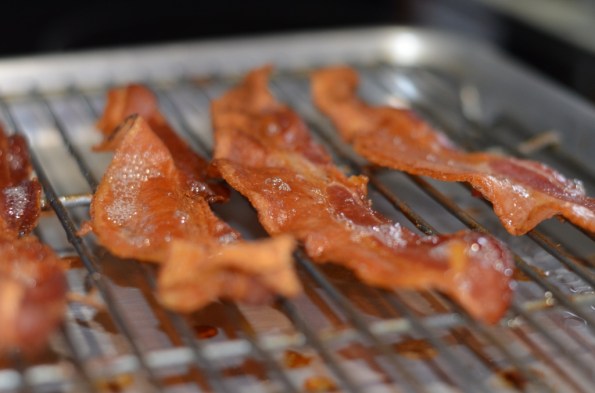 Traditional Eggs Benedict are served on top of the English muffin. Truth be told, I don’t like English muffin – not with eggs benedict, not by itself. So my choice of bread? A fresh biscuit. I have friends who can easily whip a batch of biscuits on a moment’s notice, but I have my limits – thus buttermilk biscuits by Pillsbury work just perfectly for me.

Next, we need to make the Hollandaise sauce. It is somewhat of a tedious process, involving a double-boiler and some serious skills – unless you have a recipe from Suzanne, which is very simple and guarantees a perfect result – as long as you follow it precisely. The Hollandaise came out perfect, both taste and texture, so last prep step was to poach some eggs. All you need to do is to get hot water with vinegar to borderline boil (it shouldn’t be actively boiling, so take your time to adjust the heat) in a deep skillet, then carefully crack the eggs, set the timer and voilà. To my shame, I have to admit this is where I failed – I set the timer for 10 minutes (this is what I read in one of the recipes online), and this was a mistake – I completely overcooked the eggs. I believe the right time would be 5 minutes at the most.
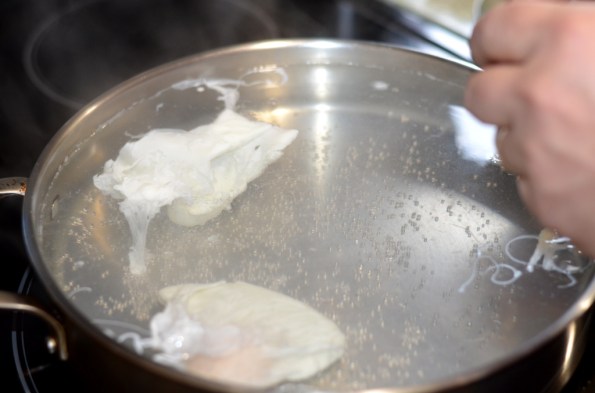
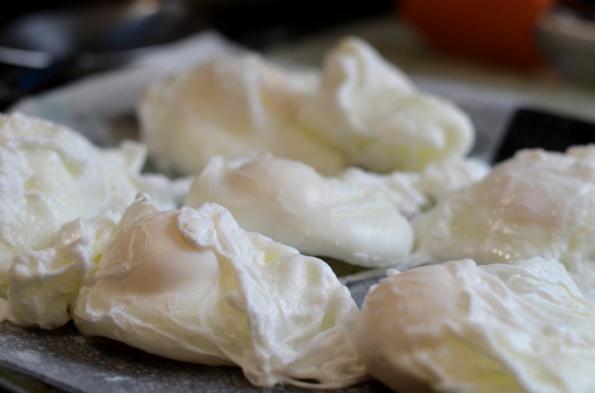
Another important step – let the eggs cool off after cooking (ice bath recommended) – I didn’t do it, and as the result, Hollandaise was not covering the eggs properly – oh well, it was still really tasty. So the last step was to assemble the Eggs Benedict – the biscuit on the bottom, then smoked salmon, bacon, egg, and Hollandaise.
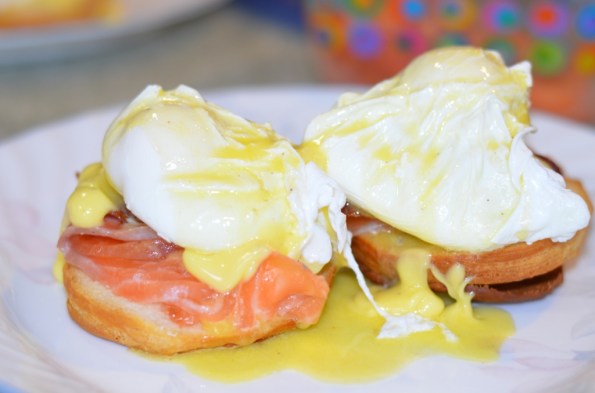
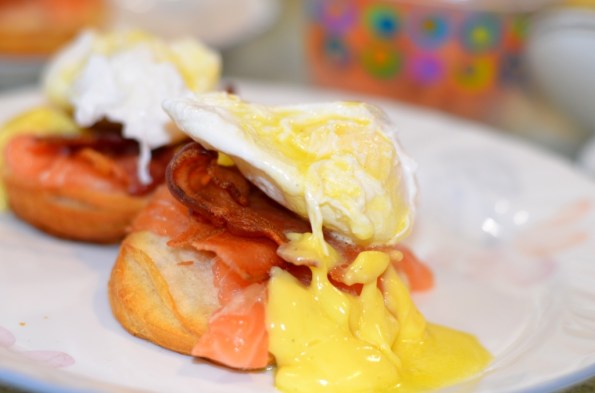
Now it is time to make dinner. More often than not, simplicity is your friend when it comes to food. Going the simple route, our Valentine’s Day dinner plan was simple – steak and potatoes.
For the potatoes, we have a recipe where potatoes are thinly sliced on the mandoline, then slices are stacked at the little angle and fried – it is a great recipe except that my fingers and mandoline are not great together, but love requires sacrifices, right?


And for the steak – you can’t beat the simplicity of the pan-fried filet mignon:
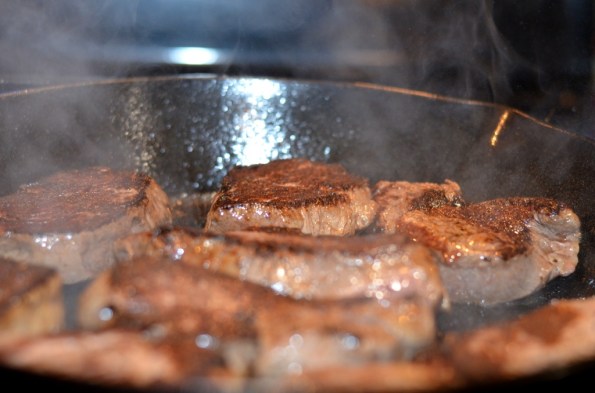
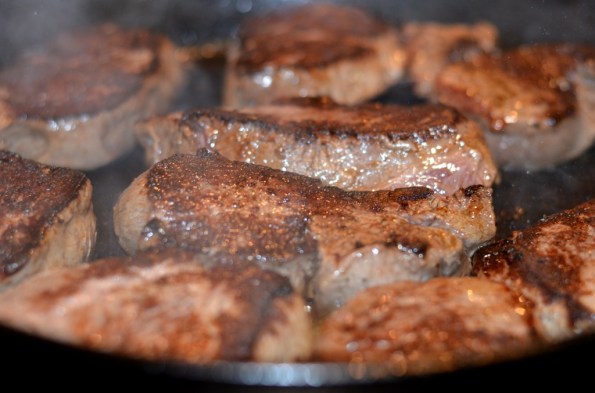
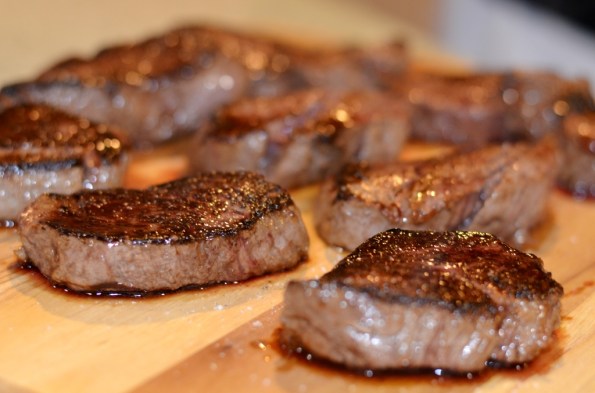
Where there is steak, there is also wine. As I mentioned, after spending good 20 minutes going through the different shelves of the wine coolers, I pulled out the bottle which happened to deliver an insane amount of pleasure – 2005 Neyers AME Cabernet Sauvignon Napa Valley.


I like to know critics scores for the wines, but only out of curiosity – my buying decisions are not based on those scores at all. Besides, my own take on the wine rarely correlates with the critic’s opinion. Except for this wine – when I read Robert Parker’s description, to my surprise and delight, it was well aligned with the way I perceived it – so here is Robert Parker’s take on this 2005 Neyers AME:
” 93 points Robert Parker’s Wine Advocate
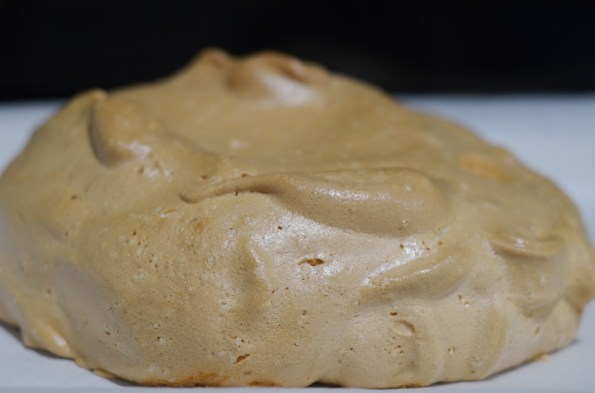
 Here you are, my friends – our early Valentine’s Day dinner experience. Happy Valentine’s Day! Cheers!
Art and Science of a Perfect Cup of Coffee
 Please close your eyes. Oops, no, not for real – please keep your eyes open to read, but do it at least in your mind. Imagine the aroma of the freshly brewed coffee – the unique smell in the air which nothing else can compare to. Sometimes that is the smell of a new day. Sometimes, it is a quiet moment in the afternoon. Sometimes, it is winding down the evening. Was this hard to imagine, even if you didn’t close your eyes? If you love coffee, I would bet that was a very easy exercise. And I hope you do love it, as coffee is what I want to talk about today.
I love comparing coffee with wine. Similar to the wine, coffee has a dependency on its area of origin. Kona, Jamaican Blue Mountain, Costa Rica, Ethiopia – each region imparts its own unique tasting profile. Similar to the wine, sustainability, and coffee growing process matter. Similar to the wine grapes, the best coffee is harvested by hand. Similar to the wine grapes, the coffee beans are sorted to achieve the best quality and consistency. Most importantly – similar to the perfect glass of wine, a perfect cup of coffee delivers lots and lots of pleasure.
Notice how I went from coffee bean growing to the coffee cup, skipping a few steps in between? Those few steps are what differentiates coffee from wine, making coffee ultimately a more complicated subject. Before you jump off a chair and click away, as the writer here clearly a lunatic, please allow me to explain.
Once the good quality grapes are obtained, they are pressed, fermented, aged, and finally, bottled. The bottle is the final form in which wine will reach you, the consumer. Now, to enjoy the glass of wine, all you need to do is to pop that cork (twist the screw top, if you insist), pour the liquid into the glass and voilà! Yes, there are few extra steps and hurdles which oenophiles happily enact for themselves to enjoy the wine “more better”, but really – unless someone does something really stupid, like leaving a wine bottle for a day in a hot car, the good wine in the bottle will easily translate to the good wine in the glass.
The things are different when it comes to the coffee. The final product of the coffee grower is dried green beans. Before coffee can be enjoyed, it has to be roasted and brewed. Roasting typically takes about 20 minutes, and those 20 minutes can either create a thing of beauty or an awful, terrible concoction which one can drink, but never able to enjoy. Brewing also offers multiple opportunities to convert those beautifully roasted, full of promise and anticipation beans into a dull or simply bad tasting brown liquid.
The process of coffee brewing is where the aromatics and flavors are transferred from the roasted beans to the water, which results in your final object of desire, a perfect cup. Before brewing, coffee beans have to be ground. The way coffee will be ground depends on what type of coffee would you like to drink – espresso requires the very fine grind, so higher flavor concentration can be achieved. For so-called “drip coffee”, the coffee particles are typically very coarse, as water is not pushed through the coffee with the high pressure, as it is done for the espresso. Now, let’s leave espresso aside and talk about the “drip coffee”, the one which we consume most often.
It turns out that there are many factors which are matter here, on the way to arriving at that perfect cup – temperature of the water (to the single degree of Fahrenheit!), the ratio of water to the coffee and the speed of extraction (how long the water will stay in contact with the coffee grinds). Just for you to understand: the ideal coffee brewing temperature is 201°F – and 203°F will result in the burnt taste! You need to maintain the ratio of water to coffee at 15.5 to 1 (15.5 grams of water per 1 gram of coffee). And you need to spend about 4 minutes making that perfect cup. How about it? Will you ever look at your morning coffee cup the same way again, after I shared with you all this information? Well, didn’t mean to scare you, honestly – all you need to do is just to taste the difference.
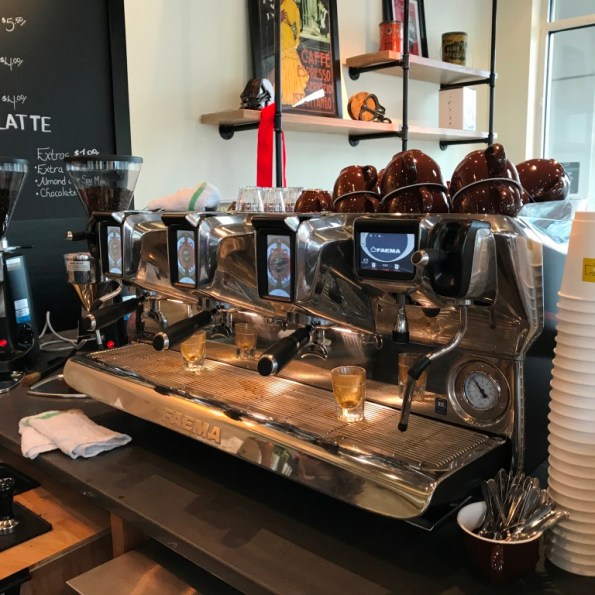
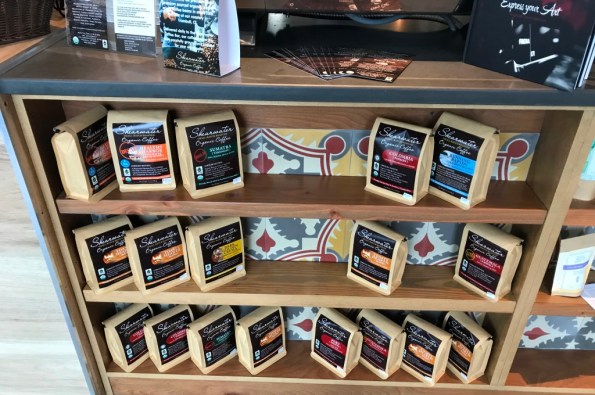
A couple of years ago I talked about a visit to the Shearwater Organic Coffee Roasters, the organic coffee artisans in Trumbull, Connecticut, where we learned about intricacies of the proper treatment of the fresh coffee beans from Ed Freedman, the owner of the company (here you can read about that experience). This year, Ed decided to deliver a full [proper] coffee experience to the people by opening Shearwater Coffee Bar in Fairfield in Connecticut. I had an opportunity to visit it few month ago and get exposed to the science and art of a perfect coffee cup.
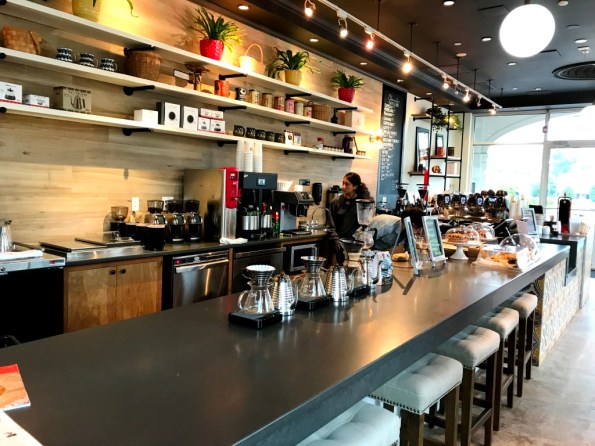
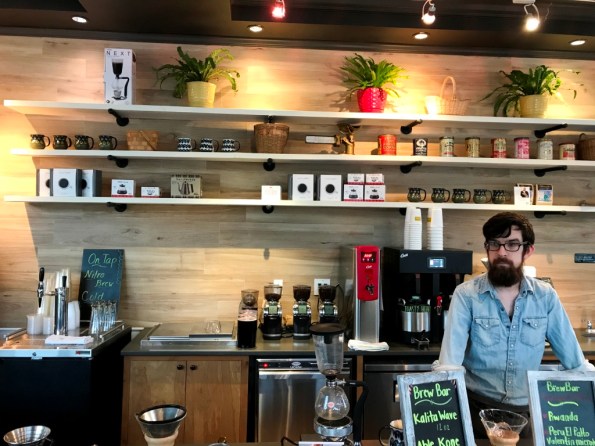
Jason The Barista is ready for action

The choice is yours
If the words “coffee bar” elicit an image of Starbucks in your head, shun that away please, as the Shearwater Coffee Bar is nothing like. Similar to the regular bar we are all used to, you can sit in front of the barista, have a conversation and watch as your beverage of choice is unhurriedly prepared in front of you. Unlike a typical bar, you sit comfortably on the normal height chairs, not on the “bar stools” which are not so much fun to get on and off. But if you ever observed a cocktail master who produced a drink which made you say “wow”, this coffee bar delivers exactly the same experience.

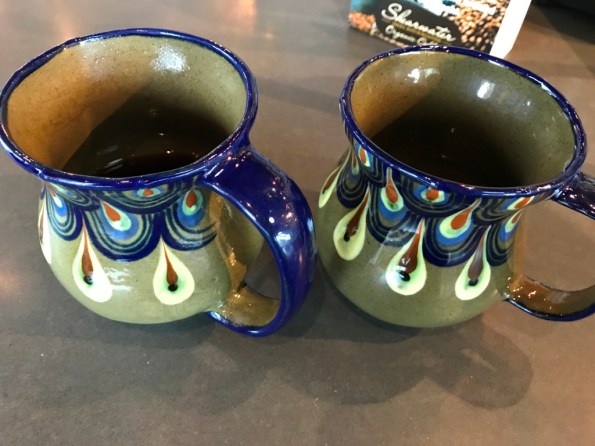
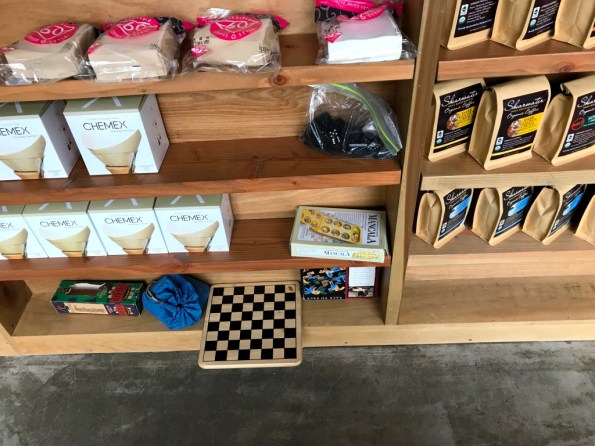

At Shearwater Coffee Bar, you have a choice of coffee to begin with – different origins, different roasts. Then you can choose your method – Pour Over, Chemex, Siphon – of course, espresso and cappuccino are available too if that is something you want.


Once you decide on what you want, the magic begins with the grinding of the coffee beans and then putting the glass vessel on the scale. The coffee goes in, the water is dispensed at the exact temperature (201°F, remember?), and then poured over (if you asked for Chemex or Pour Over), while the barista is carefully watching the scale. A few (4!) minutes later, the magic is complete and coffee goes into your cup – can you smell the aroma?


We tried Pour Over and Chemex coffees – the were some slight variations but I wouldn’t dare to try to give you any differentiating descriptors. Jason, our barista, also attempted to make a siphon coffee (this technology actually comes from Japan, where the fine art of coffee is well recognized). In the siphon method, the water is heated from the bottom, and once it reaches a proper boiling point (which is not truly “boiling” temperature), it should slowly percolate up and travel slowly through the coffee to gently extract the flavor. Something went wrong, the water went through too fast, and Jason refused to pour us that “bad” coffee. Well, this is why we are talking about art here – and if the artist is not happy with creation, it goes down the drain.


The creativity at Shearwater Coffee Bar doesn’t stop here. First, you have the cold brew. The cold brew is when coffee is made without heating up the water. It takes about 18 hours to make coffee using cold brew method – but the resulting coffee is much less acidic compared to the standard coffee cup, thus people who can’t drink regular coffee because it is too acidic for them can perfectly enjoy the cup of the cold brew.


Now, let’s add a little bit of nitrogen (yep, you heard me right) to the mix, and you got … the Nitro! Do you like Guinness beer? If you do, then Nitro is your drink, as it is a coffee which looks like beer with a perfect thick foam on top, tastes like beer (yes, it makes you say “ahh” after a sip) – but has no alcohol in it, so you are really not limited in how many Nitro you can consume before driving back home.


So what is your take on a perfect coffee cup? If you are looking beyond just a punch of caffeine and a bite of a pronouncedly bitter taste, then you should really seek the art and indulgence of a delicious drink, taking as much of the pleasure as it can offer. Don’t take my word for it – visit Shearwater Coffee Bar and see taste for yourself. Cheers!
Shearwater Coffee Bar
1215 Post Road
Fairfield, CT 06824
https://www.facebook.com/ShearwaterCoffeeBar
Ph: (203) 955-1098
Last Bottle Sign Up ($10 credit)





