Archive
How To Buy Wine At Auction
* * * This is a sponsored post * * *
Buying at auction is great for many reasons – it’s sustainable, it’s timely, there’s huge range, and there’s plenty of quality – but beyond the purchasing of artworks, jewelry, furniture and collectibles, auctions are particularly great for acquiring wine.
Though many wine connoisseurs and collectors may not know it, top quality wine is available at a fraction of the cost and in large quantities at auction. Whether it’s the wine of France, Italy or Spain that takes your fancy, or whether the New World (New Zealand, Australia, South Africa, US, South America) is your ultimate preference, you can find wine in all shapes, tastes and forms at auction. The best place to find wine is through the search service Barnebys, where you’ll find thousands of online auctions at any one time and you can actively bid on these auctions from your computer, wherever you may be.
Consider yourself a wine collector? Find out what your collection is worth with ValueMyStuff, where you will receive a valuation of your item(s) within either 24 or 48 hours. If you’re interested in selling your collection at auction, ValueMyStuff can put you in touch with the right house.
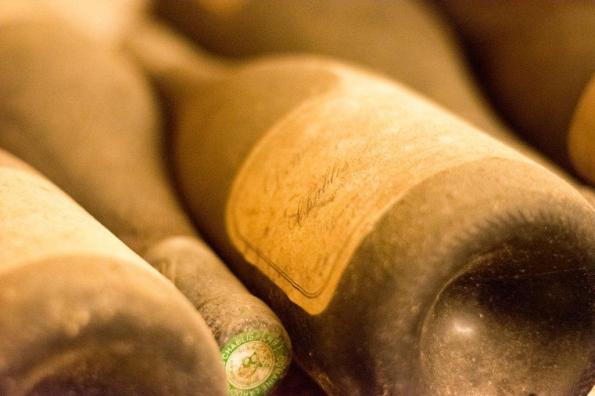
Photo: Marco Mornati
There are a few tips you should know before entering the auction room, however, whether it’s online or in person. Here’s our guide to purchasing wine at auction:
Try something new
If you go to a specific vineyard for a tasting, you’re limited to that vineyard’s own range and produce. However, buying at auction provides access to all kinds of variety and wine from across the world. Auctions are the perfect chance to let your tastebuds fly and to try something new, particularly as each bottle comes at a fraction of the cost of that from a wholesaler or retailer. Mix up your usual order with something daring – it may just end up being the perfect component to your next dinner party.
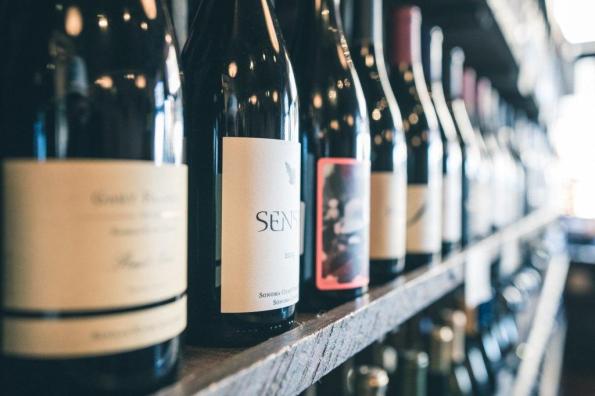
Photo: Scott Warman
Do your research
Particularly if it’s an old wine, make sure you ask about provenance and condition. It’s okay to be nosey, and don’t worry about being a nuisance – it’s your right to ask these kinds of questions. Auctions are the best place to source hard-to-find or niche vintages, and you shouldn’t shy away from older wines, but be sure to understand the condition of the bottles. Other things to consider are not only the age of the wine, but also the label, the cap, the capsule, the origin, how’s it’s been stored, and at what price it’s selling for elsewhere.

Photo: Barnebys/Bukowskis
Expect to pay a buyer’s premium
Remember, the price you bid on at auction – the amount that goes down with the hammer – isn’t the final price as it doesn’t include all costs. You need to factor in the auction house’s buyer’s premium (it’s typically around 20%, but this is at the house’s discretion so be sure to ask beforehand). There may also be charges such as duty or VAT, and, if the auction house isn’t near your home, you’ll need to factor in extra costs such as shipping and transportation.
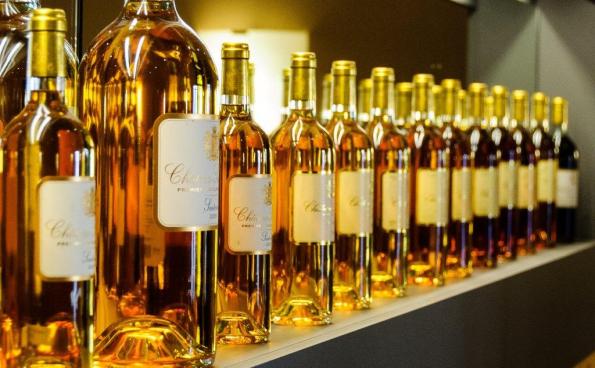
Photo: Jeff Burrows
Bid
Bidding for wine at auction is exactly like bidding on art, jewelry or antiques, but, as always, it’s best to ask questions as each auction house is unique. You’ll need to register for the auction, place your (maximum) bid, and, if you’re successful, pay any extra costs before collecting your item(s) or arranging transport. Buying at auction may seem intimidating, but it needn’t be: it’s just like online shopping, except you’re purchasing against a few other people and you’re vying for the best price. It’s all about timing: bid early and stake your claim, or wait it out and swoop in at the last minute.
And all this is made easy with Barnebys, where you can search all wines available at auction across the world. Filter by price, location or auction date – and start bidding and adding to your collection today!
June – What a Month, in Wines and Pictures – Part 2
Warning – lots of pictures will be following. And you can find Part 1 post here.
My birthday celebration usually means “party”. This year we decided with my wife instead of cooking and cleaning for 2 days to spend time by ourselves and go to stay somewhere fun. We managed to pack a lot in mere 3 days.
As a collector of experiences, I’m trying to fill my Wines of 50 States map, so as we were driving to Portsmouth, New Hampshire, I decided to visit local New Hampshire winery. Fulchino Vineyard was almost on the way, so this was our first stop (the details are coming in the separate post). Then we arrived at our intended destination for the evening – Wentworth by the Sea, a magnificent property hosting the Marriott hotel.
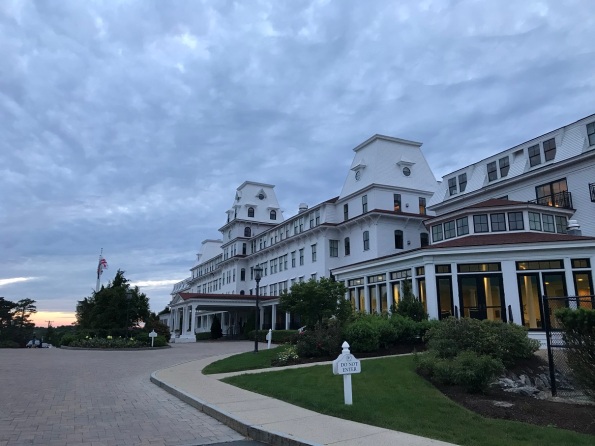
When I drove by that hotel 5–6 years ago, I still remember my admiration of a beautiful structure. It got stuck in my mind and I was waiting for an opportunity to visit – I’m glad it worked out. Beautiful building, beautiful views, beautiful property – we really enjoyed our short stay. And I will let you decide whether this place is beautiful or not take a look at a few pictures below.


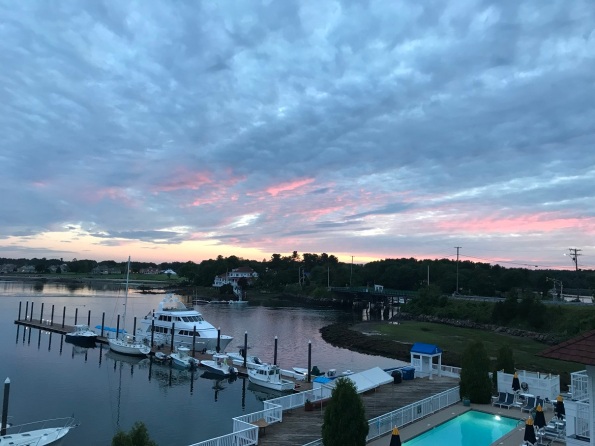
While Marriott was a great property in a magnificent setting, our next stop greatly exceeded my expectations. A few months ago I resubscribed to the Yankee magazine – it is a print magazine which is squarely focused on the happenings in New England part of the US, from Connecticut to Maine. As my “bonus”, I got a tiny leaflet called “Best of New England”, where one of the places that caught my attention was Inn at Woodstock Hill in Woodstock, Connecticut, mentioned as “Best Inn for privacy”. The Inn also conveniently hosted a restaurant with raving reviews, which sounded perfect for the birthday dinner.
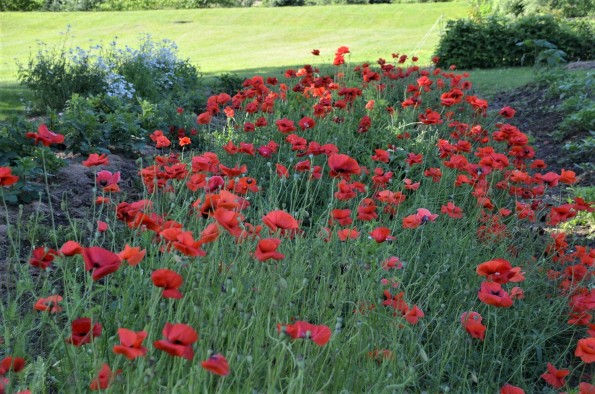
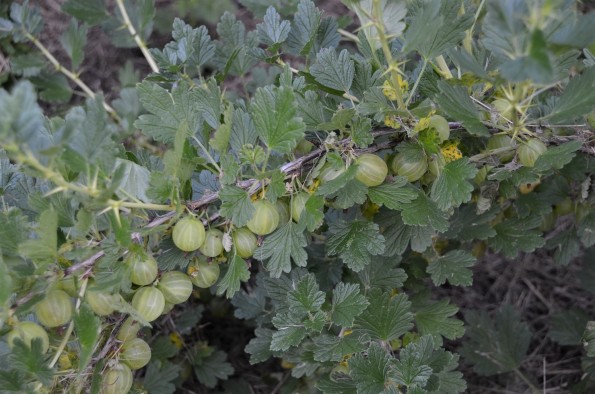
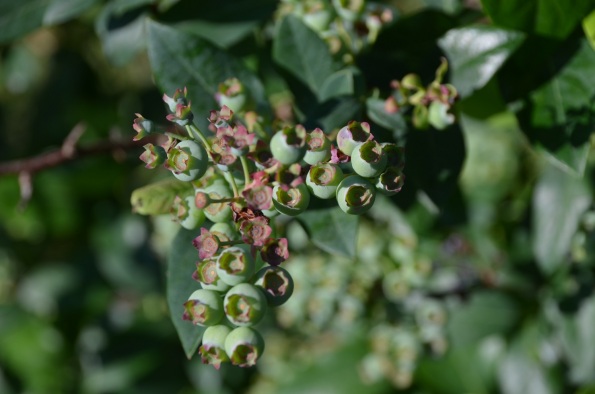
When we arrived at the Inn, we found out that our room was located not at the main building, but at the adjacent cottage, which has a total of three rooms, but we would be the only people to stay there. So we literally had a whole house to ourselves, with the deck and the view of the fields. In addition to the fields which looked perfectly untouched, we had a pleasure of walking around a small garden, where blueberries, black (I’m assuming) currant and gooseberries were all growing, and a small field of poppies was yet another source of great pleasure, as we don’t spend much time around those gentle flowers.



I brought with me a couple of bottles to celebrate the occasion. One of those bottles was 2015 Field Recordings Foeder Old Portero Vineyard Arroyo Grande Valley (14.9% ABV, 50% Syrah, 35% Zinfandel, 15% Mourvèvedre, aged for 12 months in 50 barrel American Oak Foeder). While I generally treat Field Recordings wines as every day delicious wines, good for any day which name ends with a “y”, some of those wines are a bit more special, as they are not produced regularly, and when produced, the quantities are minuscule. This was one of such wines, which I had for a couple of years, but then decided that birthday is a good enough occasion to have it open. This happened to be a mistake, as wine could definitely enjoy another 10 years to fully evolve, but even then, it was a delicious, fresh, acidity-forward concoction of sour cherries and blackberries, with well-defined structure and dense finish.


Our dinner didn’t disappoint either. First, the folks at the restaurant were very kind and let us bring our own wine despite having the full wine list (the corking charge was $15, which was totally fine, of course). The wine which I brought, 1998 Kirkland Ranch Merlot Napa Valley (14% ABV) was on my “to open” list for a while. I got a few of these bottles from Benchmark Wine and was really curious to see how the wine would fare, but the bottle went unopened on a few prior occasions. This time the cork was finally pulled out, and the wine delivered lots of pleasure. It started its journey to the peak but was still far from it – fresh, good acidity, a complex bouquet of roasted meat, coffee, dark fruit (cherries and plums), good balance – very enjoyable. The wine continued to evolve throughout the evening, giving me good hope for a few more bottles I have left.
The food at the Inn at Woodstock Hill (the restaurant doesn’t have its own name, and because of it you can’t find it on Yelp, but it has all information on the web) was delicious. We started with an Escargot, which was enjoyed to the last morsel, and Artichoke Bottoms, which were unique and delicious. Then I had The Wedge salad, which is one of my perennial favorites – you can get any salad off the menu complementary to your main dish, a very nice feature – and The Wedge again was delicious. My main dish was Pork Shank, which was… well, I don’t know if I should declare myself a pork shank connoisseur, but I’ve been through the Czech Republic, where pork is king – this dish was absolutely on par with the best versions I tasted in Prague. Yep, it was a delicious standout or it was standoutously delicious (yeah, I know it is not a word – but this is my blog :)), but I’m sure you got my point.
The morning with that fields view was just perfect. I couldn’t stop myself from taking more and more pictures…






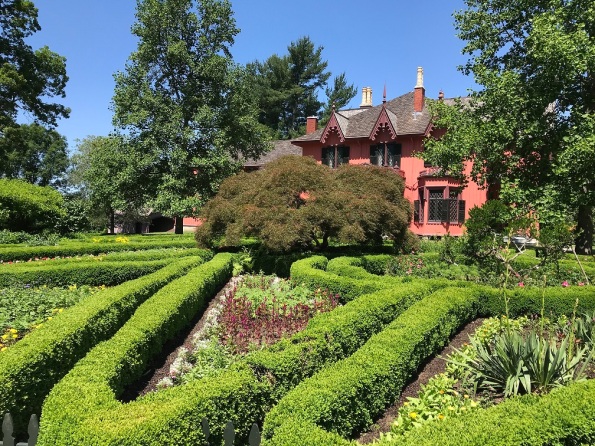
We made two more stops before finally getting home. First, we discovered the Rosewood Cottage, a pink-colored summer residence of Henry and Lucy Bowen, built in 1846, also sporting beautiful garden delimited by 150+ years old shrubs. The Cottage, which now belongs to the Historic New England organization, hosted 4 of the US Presidents visiting Bowen family on various occasions. Over these years, the house was painted 13 times in various shades of pink, has many of the original wall coverings (wallpaper) called lincrusta, and stained glass windows, some of those original since the house was built. It also houses the oldest in the United States indoor bowling alley! Does it worth a special trip? Yep, it does.



Our last stop was at the Taylor Brooke Winery, also located in Woodstock. Compared to my previous Connecticut wineries experience, this was definitely a better one – but more about it later.
Here you go, my friends – one memorable June of 2019. How was yours? Cheers!
Stories of Passion and Pinot: Iris Vineyards
 Let me ask you something. If you would look at the mountainous parcel of land, completely destroyed by the brutal commercial logging – would you be able to envision there a beautiful Pinot Noir vineyard? (if you answered “no”, same as I did, don’t worry about it – this is why you and I are not in the winemaking business). When Richard Boyles and his wife Pamela saw such a logging-destroyed site at the south end of the Willamette Valley, they were able to see past the nature in distress. They were able to see the future vineyards and even future forest restored where it was before. They purchased about 1,000 acres site in 1992, and it became the home to the Iris Vineyards, with the name inspired by the beautiful wild Douglas iris covering the surrounding hills in spring.
Richard’s fate was sealed at the age of 7, when he assumed assistant winemaker duty to his grandmother, helping her to make the sweet, dessert wine. As they say it in the stories, the rest was history. Richard met Pamela while studying at the University of Oregon. Countless visits to Europe and living there for a while as Richard had a carrier in international business management and hospitality, helped Richard and Pamela to discover their wine passion – Burgundy, and its signature grape – Pinot Noir. That passion for Pinot helped Richard and Pamela to see through the broken trees and realize their dream of making the world-class Pinot Noir.
Well, there is also an additional element to that passion – a principle of Areté. Richard and Pamela learned about Areté in the university, while studying ancient Greek philosophy. This principle simply means that it is one’s moral obligation to achieve the highest potential the person can achieve. Give it a thought – Areté is really a great principal to live by; we will get back to it later on in this post.
Today Iris Vineyards farms about 43 acres of vineyards, located at 800 to 1,100 feet elevation (quite high for the Willamette Valley). The vineyards are surrounded by more than 500 acres of restored forest, mostly Douglas fir and Ponderosa Pine, as well as Oregon white oak. The main vineyard of the estate, Chalice Vineyard, was planted in 1996 and produced its first vintage in 2001. Pinot Noir takes two third of the plantings, following by the Pinot Gris and a small acreage of Chardonnay. Iris Vineyards also produces a number of other, less traditional wines (Viognier, Syrah, and more) from other appellations in Oregon, such as Applegate Valley.
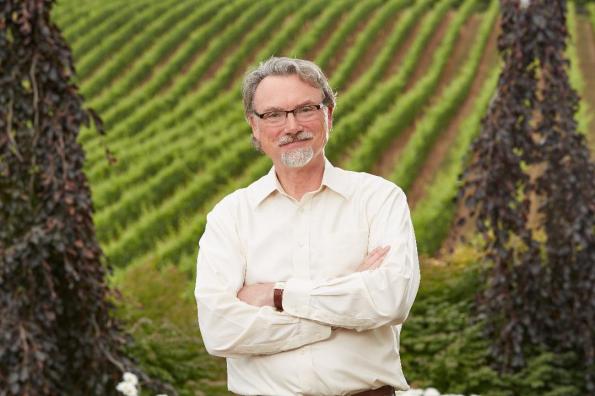
Richard Boyles
I was definitely intrigued by what I learned about the Iris Vineyards, so I took an opportunity to sit down with Richard Boyles (yes, once again it was a virtual conversation) and ask him a few questions. Here is what transpired:
[TaV]: You grew up tasting sweet wines. How did you end up with Pinot Noir becoming a passion?
[RB]: Although my first experience was sweet wines made and sampled with my grandmother, the wines I “grew-up” with were the wines served at family celebrations organized by my dad. These were usually red Bordeaux and reds and whites of Burgundy as well as German Rieslings. As you can see, with the exception of the Rieslings, these were dry wines that were intended to pair with food. I became more focused on Pinot Noir as it became clear that Oregon could grow world-class Pinot Noir with Oregon attitude. After graduation from the U of O, while living in Seattle, Pamela and I continued to explore the world of wine, visiting vineyards, tasting rooms and sampling primarily in Oregon and Washington and occasionally in Napa and Sonoma. Our interest in Pinot Noir solidified as a passion as Pamela and I explored different viticultural areas of Europe when we lived in Germany and Switzerland. We found ourselves gravitating to Burgundy for Pinot and Alsace for Pinot Gris.
[TaV]: What made you think that the parcel of land destroyed by logging would be an ideal place to grow Pinot Noir?
[RB]: In the Pacific Northwest logging is a part of the rural economy and landscape. In the case of our property, the fact that it had been logged and that we took on the legal obligation to replant the forest meant that we were able to acquire large acreage at a modest price. The property had a long history as a mixed forest operation, with cattle and timber harvests providing income to the owners. When we acquired the property, we replanted hundreds of acres of forest before we turned our attention to planting the vineyard on former pasture. The areas for vineyard plantation were selected for the Jory and Bellpine soils, south-facing slopes, elevation and for modestly steep slopes which allow the property to be farmed with standard farm equipment. While our purchase of the property was prompted by the vineyard potential, it has been equally satisfying to plant tens of thousands of Douglas fir trees that have now matured into a forest, an ecosystem really, supporting many species of flora and fauna.
[TaV]: I know that the concept of Areté and its relevance to everything you do is explained on the website, but can you explain one more time for our readers what Areté means for you and how does it apply to the Iris Vineyards and your wines?
[RB]: In addition to what is on the website and press kit, this is what I would say about Areté: Areté is a philosophy or way of being that says, “Hey buddy, you want to excel and standout? Then be deliberate about it. Figure out what skills and knowledge you need, practice them, perfect them if you can. Figure out what else will up your game. Go get that skill or knowledge. Repeat. Because that is what this life is all about. A constant aspiration to live up to the potential that is you. Why would you settle for less?” With respect to Areté at Iris, Areté is a cultural signpost. It tells team members and prospective team members what we value at Iris, how we want to be and be seen as an organization. It tells team members how they can contribute. We can only be an organization that exemplifies Areté if our team members embrace it, make decisions and plans by it. By making it clear what we are about, we attract like-minded team members. And, of course, Areté is a proclamation to the world about aspirations. So, we take it very seriously when we put the Areté name on the label of the wines that are the best examples of our craft.
[TaV]: I would guess that first was Pinot Noir, then Pinot Gris, then Chardonnay (curious – am I right?), but Iris Vineyards today offers way more than just 3 flagship Oregon grapes – how did you get to include Syrah, Tempranillo, Viognier into your repertoire?
[RB]: From the time we committed to establishing a vineyard, Pamela and I planned to grow Pinot Noir, Pinot Gris, and Chardonnay. The expansion into other varietals is the result of two factors: 1) the desire to create variety for our club members; and, 2) our winemaker, Aaron Lieberman’s curiosity, interest and skill at working with grape varieties beyond Pinot Noir, Pinot Gris and Chardonnay.
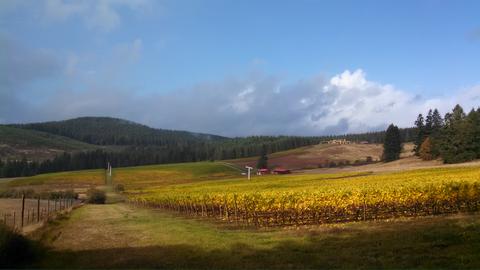
Source: Iris Vineyards
[TaV]: While it is not yet available on your website, I understand that you are about to introduce Iris Sparkling wines. Can you tell me more about this project, starting even with “why sparkling wines”?
[RB]: Much as the reintroduction of the Rosé program was in response to Pamela’s strong interest in Rosé and renewed consumer interest in the category, the sparkling wine program came about as a result of Aaron’s interest in, and interest in the challenge of making sparkling wine. Sparkling wine is the ultimate celebratory beverage. Our club members and tasting room visitors love our Methode Champenois Blanc de Noir and Blanc de Blanc. We reserve a small amount for weddings and other celebrations at the tasting room, though the sparklers routinely sell out prior to the subsequent release. Aaron can expand on what brought him to pursue sparkling.
[TaV]: Will sparkling wines be generally available or they will be offered as winery exclusive/club options?
[RB]: I anticipate that the sparkling wines will be available to club members, available at the tasting room, available to weddings and celebrations held on the property and perhaps to select accounts. I don’t anticipate that it will be available to broad distribution. These are intensely hand made wines requiring lots of time and attention. The sparklers will have an important but limited role in our line-up.
[TaV]: Considering the wide range of grapes you already use, do you have any plans to expand it any further?
[RB]: Our offerings will continue to evolve. Our core business is in Pinot Noir, Pinot Gris, Chardonnay, and Rosé. As we expand our vineyard, we will plant small amounts of Pinot Meunier and Pinot Blanc as well as a broader variety of clones of Pinot Noir and Pinot Gris. Pinot Meunier will have a place in our sparkling program. We will evaluate it as a potential stand-alone variety. Pinot Blanc will be a standalone bottling. I expect we will pare some wines from our current offerings as we respond to the tastes of our club members and tasting room visitors. 8. I’m assuming you started producing wines at the end of the 1990s. Do you still have any of your first releases available in the cellar? How do they hold up? What is the oldest of your own wines you ever tasted?
We first bottled wine under our own label in 2001. Prior to that, we sold the small volume of fruit coming from our vineyards to other producers. We recently sampled a bottle of 2008 Reserve Pinot Noir. We have a single bottle left. I wish we had more in our cellar. While this wine wasn’t deliberately built to last ten years, it is drinking very well. The 2012 Reserve Pinot is drinking nicely. Pamela and I have a few overlooked bottles of 2001 and 2002 Pinot Gris in our personal cellar. These were award winners 15 and sixteen years ago, including double platinum for 2002. As compelling as these wines were at two, three, four and even five-year-olds, they weren’t intended to age and are now past their prime. It’s a good reminder to drink while the drinking is good.
[TaV]: You are practicing sustainable farming. Can you explain what it means for you, how does it relate to the land, vineyards, grapes and so on? Have you ever looked at going Biodynamic?
[RB]: The goal of our farming practices is to produce fruit that meets our particular purposes. We use different farm practices and viticultural techniques for Pinot Noir that’s intended for Rose’ differently than the fruit that is intended for our estate bottling for instance. Our farm practices are conventional as we want to have all the tools available to produce the best fruit for the purpose while supporting the long-term productive capacity of the vineyard and operating a financially sustainable business. Farming isn’t static. We annually review best practices and new literature to improve what we do in the vineyard. While we have considered a Biodynamic approach, we believe we can produce better fruit for our purposes with a conventional approach to farming.
[TaV]: When you are not drinking your own wines, what are your favorite wines from Oregon, and from around the world?
[RB]: One of the notable things about the world of wine today is that so much great (and not so great) wine is accessible from all over the world. We see wine as an exploration, so we regularly try what we haven’t tried before. That is as likely to be a Pinot from a new Oregon producer, a Sauvignon Blanc from a new growing region or an obscure varietal we haven’t tasted in a while. Through exploration, we learn more than returning to the same things repeatedly. That said, we have a broad stable of wines of our own production. We do frequently return to those.
[TaV]: Where do you see Iris Vineyards in 15-20 years from now?
[RB]: I expect that Iris will garner increasing consumer attention as we offer compelling wines at a good value. I expect that we will continue to offer wines across a variety of complex profiles and price points. I don’t say across a variety of quality, because all of our wines are of high quality, they just differ in terms of complexity. Personally, in 15 or twenty years I hope to have more tractor time and hands-on time in the vineyard and in the winery, particularly at crush. Overseeing this and other businesses currently require that I focus on the big picture. It was a “need” to farm and a maker mentality that brought us into the business. I still craft beer, pickle and can. I look forward to re-creating my job description to allow more time in the vineyard and winery and less in the business of running a business.


Yes, I agree with you – it is time to drink. I had an opportunity to taste two of the Iris Vineyards Pinot Noir wines – here are my notes:
2017 Iris Vineyards D Block Pinot Noir Chalice Vineyard Willamette Valley (12.7% ABV, $39.99, 300 cases produced)
Bright Ruby
Light, elegant, plums, cherries, a touch of ripe strawberries
Sweet cherries, plums, great acidity, excellent balance
8-/8, nice and approachable
2016 Iris Vineyards Areté Willamette Valley (14.1% ABV, $59.99, 100 cases produced)
Dark Ruby
Touch of smoke, plums, a hint of cranberries
Iodine, Cherries, a touch of smoke, good balance
8/8+, very good wine, will be interesting to try it again in 10 years…
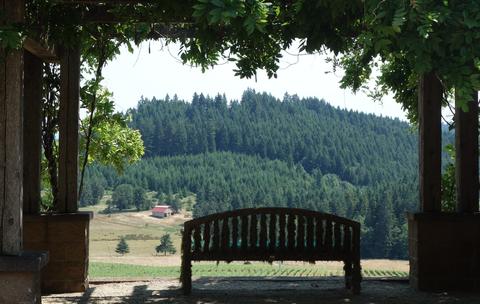
Source: Iris Vineyards
Here you are, my friends – another story of Passion and Pinot. Go pour yourself a glass of Pinot – more stories are ahead…
To be continued…
P.S. Here are the links to the posts profiling wineries in this Passion and Pinot series, in alphabetical order:
Alloro Vineyard, Bells Up Winery, Ghost Hill Cellars, Ken Wright Cellars, Knudsen Vineyards, Lenné Estate, Tendril Cellars, Youngberg Hill Vineyards, Vidon Vineyard
Daily Glass: Oh, Turley
I remember discovering Turley Zinfandel many years ago for the first time at the pre-theater dinner in New York with my friend Henry. I wouldn’t tell you now if I heard something about Turley before we picked the bottle of Turley the off the wine list, or if it was just a happy accident. I just remember our reaction of a pure “wow” at how beautiful the wine was. Ever since that discovery, Turley wine almost became our secret handshake – when I show up with a bottle of Turley at my friend’s house, I get an understanding smirk and a nod – “you did good, buddy”.
Once the Turley was discovered, the very next question was – how can I get it. This is where I learned about the concept of the wine mailing list, starting with the waitlist (I talked about all those terms before – if you need a refresher, the link is here). I believe Turley was one of the first if not the first of the wine lists I signed up for (meaning, got on the waiting list for the mailing list). Turley also happened to be the very first mailing lists I got accepted to – to my big surprise and delight, as the wait was not that long (a few years).
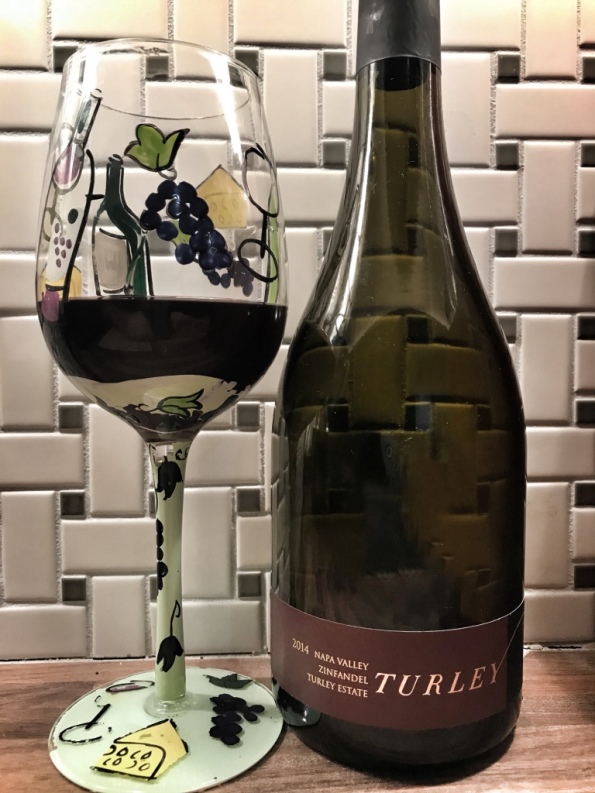
In case you are not familiar with Turley and don’t readily share into the excitement of the subject, here is a brief introduction. Turley Wine Cellars is a winery in Napa Valley in California, which specializes in Zinfandel and Petite Sirah. The winery was started in 1993 by Larry Turley, who was actively working in the wine before and developed a serious passion for Zinfandel and Petite Sirah, especially for the old vine Zinfandel (some of Turley vineyards are continuously producing since the late 1800s). Today, Turley produces 47 different wines from 50 different vineyards throughout Napa Valley, Paso Robles, Lodi, Amador Couty and other regions in California. You can find Turley wines in the stores and the restaurants, but they are scarcely available, as while they are making 47 different wines, most of the wines are produced in the hundreds of cases only, so the best way to get Turley wines is by signing up for the mailing list. One more thing I want to mention, as it is important to me – even with all the [rightly deserved] fame (they are definitely one of the top 5, or maybe even top 3 Zinfandel producers in the USA), Turley wines are still affordable on the mailing list, with some of the wines still priced at $20, and with absolution majority of the wines costing under $50 (Hanes Vineyard Zinfandel is probably the only exception at $75).
Since I got on the mailing list, Turley wines became my favorite present for the wine-loving friends. Every time we meet, my friend Patrick gets a bottle of Turley to take home to Switzerland – it is an equal exchange though, as I always get a bottle of unique and interesting Swiss wine – not something you can casually find here in the US. I also love the reaction such a present causes when people look at the bottle. I brought Turley for my friend Oz when we met in Singapore, and I handed it to him when we were finishing dinner. I perfectly remember huge, ear to ear smile on his face when he saw the bottle, and his exact words sharing the excitement with his friends “look, he got me a Turley!”. Lots of fond memories associated with Turley, in a variety of ways.
What caused this outpour of Turley love? Opening of the bottle of 2014 Turley Estate Zinfandel Napa Valley. How can I describe it? To me, a well made Zinfandel should have a perfect core of raspberries and blackberries with the addition of spices – it should have restrained sweetness and not be jammy. If you drink Zinfandel often, you know that what I just described is difficult to find. This wine had exactly that. A perfect core of ripe, succulent raspberries and blackberries, covered in pepper, sage, sweet tobacco and eucalyptus. Perfectly dry, with a firm structure and layers and layers of flavor. This is the wine you say “ahh” after every sip, and you say “ohh” when the bottle gets empty. And to complete my description, note that 15.6% ABV was not noticeable at all. A perfect balance and pure pleasure is what makes this wine so special.
Here it is, my wine love story of the day. What’s yours? Cheers!
Stories of Passion and Pinot: Bells Up Winery
Do you know by any chance what “bells up” means? If you do, you can already pat yourself on the back and pour yourself a glass of wine. If you don’t – you can pour yourself a glass of wine and ponder at the question for a bit – the answer will follow.
Meanwhile, let’s talk about the passion, an indelible component of winemaking, possibly even a key ingredient in a delicious wine.
Dave Specter started making wine in the basement of his home back in 2006. By 2009, he realized that passion for winemaking trumpets his (successful!) career of a corporate tax attorney, and Dave decided to let his passion lead the way. In 2012, Dave and his wife Sara found themselves in Newberg, Oregon, purchasing a dead Christmas tree farm in the Chehalem Mountains AVA, where they started planting their estate vineyard. The rest is history – of passion and Pinot, there is.
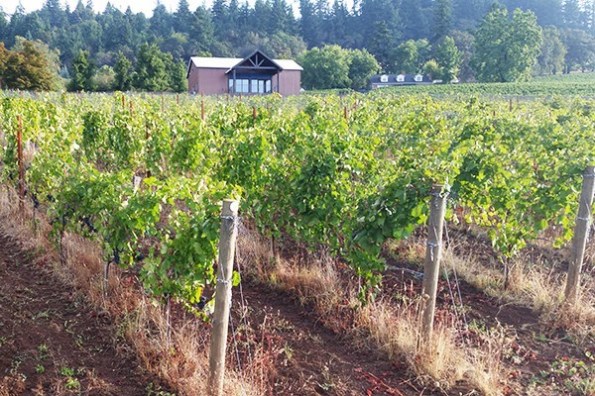
Bells Up vineyards. Source: Bells Up Winery
Before there was wine, there was music. For more than 20 years Dave had been playing the French horn. In classical music, there is always a moment which needs to be stressed – “Bells up” is the conductor’s instruction to the French horn players to lift the bells of their instruments and produce the sound of maximum intensity. “Bells up” became Dave’s motto in life, and it also gave the name to his winery – now you have your answer in case you are still wondering.
While Pinot Noir was the first grape planted at the newly minted Bells Up winery, the passion also led Dave to plant half an acre of Seyval Blanc, the grape he successfully used back in Ohio. That Seyval Blanc planting became the first in the Chehalem Mountains AVA, and second in Oregon. If you look at Bells Up winery website, you will see that the winery bills itself as micro-boutique and un-domaine – planting Seyval Blanc and not Pinot Gris in Oregon is clearly an un-domaine move. By the way, the “un-domaine” was one of the words which caught my eye while researching the Bells Up winery information. So I took the opportunity to sit down (virtually, albeit) with Dave and listen to him share his passion for wine. Here is what transpired in our conversation:
[TaV]: What kind of wine(s) did you make in your basement in Cincinnati?
[DS]: In the beginning, when my wife Sara and I started making wine in 2006 as a couple’s activity for our fifth wedding anniversary, we started with kit wines—juice in a bag, essentially. When I moved on to grapes, I sourced from both local and regional vineyards for Seyval Blanc, as well as through a Cincinnati vintners club that would truck in fruit from vineyards in California. From that I made Syrah, Petit Syrah, Cabernet Sauvignon, Cabernet Franc, Merlot—even a Pinot Noir, although that fruit was sourced from Lodi, and was completely unlike the Pinot I work within Oregon today. Essentially, it was a hobby that grew out of control.
[TaV]: Why Oregon? As a young winemaker, you had many options – what made you decide to go to Oregon?
[DS]: First, thank you for calling me young. We were a whole lot younger when we started this journey. After that first kit wine, I was hooked on the process and wanted to learn more. Sara graciously let me take over the basement, then the garage, then the dining room. And we started taking wine vacations to “hidden gem” wine regions—Texas Hill Country, Finger Lakes, and finally Oregon in 2008.
We had already visited Oregon briefly in 2004 and loved it. In 2008 we spent two weeks roaming the state, with the last few days in Newberg at a bed and breakfast just 400 feet up the mountain from the property that is now ours. We fell in love with Oregon, the scenery, the climate, the wines, and the intimate experiences tasting wines at the tiniest wineries with the winemaker. We decided then that this was the place for us.
[TaV]: Seyval Blanc is one of the most popular grapes in the Eastern US. But why Seyval Blanc in Oregon?
[DS]: When we moved to Oregon in 2012, we knew we wanted to plant a vine that connected to our story. I’d been working with Seyval Blanc for years in Ohio and when I won two amateur national winemaking competitions in 2011, one was with a 2010 Seyval Blanc. So, it was a great tie-in.
But also, we see an opportunity to differentiate ourselves with a white wine that nobody else has in the Willamette Valley—and only one other winery has in Oregon. Plus, we believed it would grow well here, and after two small harvests that resulted in some beautiful wine, we’re happy to be proven right. Note, however, we didn’t plant a lot of it: only about 250 vines (and not all of them made it—so Sara’s been propagating like crazy ever since for replants). We figured if it was a failure, we could always graft over it.
[TaV]: Any future plans for more mainstream Oregon white grapes – Chardonnay, Pinot Gris, Riesling?
[DS]: From a business perspective, we’ve taken a really close look at what other wineries in the area are making, and for a 500-ish case production winery like ours it’s best to have just one white wine available for sale at a given time. That’s because we don’t move enough volume and the whites generally don’t age as long as reds.
We currently make Pinot Blanc and we like it quite a bit. It’s a bit rarer in these parts than Pinot Gris or Chardonnay, which again helps to differentiate us. But as for expanding our white wine program, the ultimate plan is to phase out Pinot Blanc for Seyval Blanc and that will be the only white in our line-up. There are a lot of similarities between my Pinot Blanc and my Seyval
Blanc, so the transition from one to the other won’t be as jarring as a shift from another white varietal, such as Chardonnay.
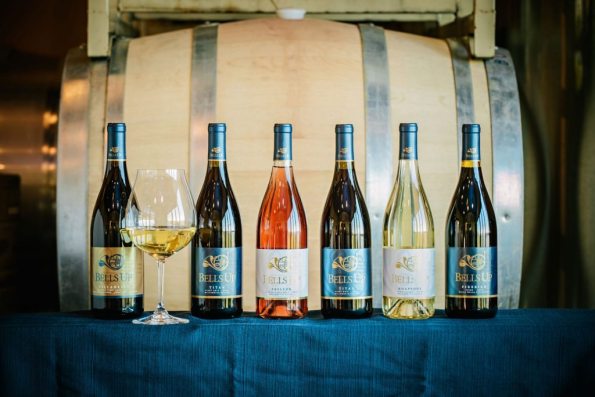
Bells Up wines. Source: Bells Up winery
[TaV]: Today you already make white, rosé, and red. Any plans to join seemingly the hottest Oregon trend and start producing sparkling wine?
[DS]: No. I know I keep coming back to the numbers, but I’m a finance guy with an MBA and a corporate tax law career. While we think there’s a place in the market for adding bubbles to still wines, if I made a sparkling wine I’d want to do it the right way (traditional method). That takes time, space and money. And at our volumes, what we’d have to charge per bottle to justify that type of investment is more than what the market would reasonably bear.
[TaV]: Continuing the same question – as you already produce Seyval Blanc, which makes very good dessert wines, any plans for some Late Harvest Seyval Blanc goodness?
[DS]: Don’t give Sara any ideas! Actually, we’ve been so focused on just getting these Seyval Blanc vines established and proving that our concept had legs that we really haven’t thought much farther than straight up Seyval Blanc. Our 2017 harvest yielded 100 pounds and made 23 bottles (yes, bottles)! Our 700-pound 2018 harvest produced 15 cases and we’ve made that available exclusively to our wine club members on a 2-bottle allocation. Give me a few years when I’ve got Seyval Blanc growing out of my ears and I’ll get back to you on a Late Harvest version.
[TaV]: Who are your winemaking mentors (if any)?
[DS]: First and foremost, Joe Henke of Henke Winery in Cincinnati. Joe took me under his wing as a basement winemaking hobbyist. He offered me a position as an unpaid cellar rat but promised he’d teach me everything he knew—open book—and he did. He even showed me his books because he wanted me to understand what he called “the good, the bad and the ugly of being a professional winemaker.” He’s an award-winning winemaker who makes 2,000 cases across roughly 15 different types of wines (including a phenomenal sparkling Chardonnay and an incredible Norton) in the basement of a 100-year-old house in an urban neighborhood with the bare essentials: barrels, a pump, a press, a pallet jack. I learned so much from him about the process of winemaking and the business of winemaking; that you don’t need a bunch of expensive equipment to make incredible wines. You just need to do a ton of cleaning. Amazing mentor.
Additionally, I did a harvest internship in the Fall of 2012 at Alexana in Dundee, Oregon under Bryan Weil. It was Bryan’s first harvest there as winemaker and Lynn Penner-Ash of Penner-Ash Wine Cellars was still working alongside Bryan, as she had been consulting winemaker for the label prior to Bryan coming on board. I soaked up as much as I could about working with Pinot Noir from both of them. Because, at age 39, I was not your typical harvest intern—plus I had three years of time at Henke Winery under my belt—Bryan was gracious enough to build my internship around what I needed to learn. He put me in the vineyard for sampling fruit, for example, something I’d never had the opportunity to do before. He had me set up the lab for him and run lots of testing because I knew how to do it. We’re still very close today and I appreciate everything he was gracious enough to share with me.
As far as winery business mentors, there have been so many people in the Willamette Valley who have generously offered advice and shared their successes and failures that it would be impossible to name them all. But they know who they are.
[TaV]: What is your view on sustainable viticulture, dry farming, organic methods?
[DS]: That’s what we do here in our own vineyard and at the vineyards we source from. We think it’s very important to be good stewards of the Earth—we’re farmers now! It also produces stronger vines that develop more flavorful grapes and ultimately better wines.
[TaV]: How did you choose the music pieces as the names of your wines? What was your thought process, what criteria? What message are you trying to convey with those names?
[DS]: Let me start by explaining the name of the winery. I played French Horn for more than 20 years (I’m horribly out of practice now—Sara says I only make noise) including after business and law schools, so it was a key part of my life. When it came time to name the winery, we wanted to name it something personal that wasn’t our last name (people are terrible at remembering names!) and I really wanted to tie it into the French Horn. Coincidentally, the property Sara found was on Bell Road in Newberg. So that tied in perfectly to the term “Bells Up,” which is a notation by the composer in the score of a piece of music. At a dramatic moment, it directs the French Horns to lift the bells of their instruments to project their sound with more intensity. It’s our time to shine—which is why I say the winery is my #bellsupmoment.
The pieces of music I chose to name each wine are all ones that prominently feature the French Horn, as well as epitomize the wine itself. George Gershwin’s “Rhapsody in Blue” inspired our Pinot Blanc to be named “Rhapsody” because it’s a jazzy, energetic white wine. Gustav Mahler—the French Horn player’s best friend because his pieces tend to be horn-heavy—wrote his Symphony No. 1 in D Major, called “Titan,” and it’s become regarded as his flagship work. Therefore, our Willamette Valley Pinot Noir, which we consider to be our flagship Pinot, is “Titan.” And so on. There’s a link at the top of our wines page to a playlist of all the pieces for those interested in hearing them.
[TaV]: Why “un-domaine”?
[DS]: It was a term that came up as we were discussing how to describe our casual tasting room vibe, our keep-it-simple winemaking approach, and our distinctive brand with a good friend who happens to be a wine writer. A couple of years ago after we opened our doors in 2015 there was a trend of new wineries opening in the Willamette Valley with the word “Domaine” in their name. We just aren’t. Our property is humble, our tasting room is a converted pole barn, you won’t find a marble fireplace. While Sara and I enjoy wine, nobody would ever confuse us with wine snobs.
Does “un-domaine” mean we’re not for everyone? Absolutely. There’s no cachet associated with owning or drinking a bottle of Bells Up wine. And that’s perfectly fine with us. We’d much rather be the bottle on your table every day of the week than the one gathering dust in the wine rack because you spent a ton of money on it and are waiting for a special occasion—and friends who will appreciate it—before it’s opened.
[TaV]: Did you have a pivotal wine in your life, the one which changed your wine worldview?
[DS]: Not so much a specific wine but a wine experience I had very early on. I had the pleasure of visiting some friends in Europe after graduating from law school and they took me to Beaune (in the heart of Burgundy) for a weekend. We did a lot of tasting in the touristy cellars, but also in garages and co-operatives where the atmosphere was much more down-to-earth. I knew absolutely nothing about wine prior to that but I was in awe of what I saw, smelled, and tasted. I couldn’t put my finger on it at the time, but I was in the heart of a culture that valued wine as an everyday experience—that part really resonated with my soul. Looking back, I’m sure that I would appreciate that experience more fully if I took the same trip now, but that time in Beaune has fueled my passion for wine ever since.
[TaV]: With the exception of your own wines, what are your favorite Oregon wines and /or producers?
[DS]: We truly have an embarrassment of riches here in the Willamette Valley—so many quality producers call this place home that a list of my favorite producers would fill about 3 dozen barrels. With every producer having their own unique style—plus the trailblazing nature of the Oregon wine industry—innovation is happening all the time: new grapes, new techniques, and so on. I think many people assume that a winemaker drinks only his or her own wine at home, but the truth is I almost never drink my own wines outside of the professional setting. I’d much rather be exploring the styles and fresh ideas that other winemakers here are creating and perhaps get inspired to try some of those ideas myself!
[TaV]: What are your favorite wines and/producers outside of Oregon?
[DS]: Again, way too many to answer! The wines I enjoy most are ones where I have a personal connection in some way and I’m fortunate to have so many talented friends in other parts of the winemaking world. Back in Ohio, my mentor Joe Henke at Henke Winery, of course, but also my friends Greg Pollman of Valley Vineyards and Bill Skvarla of Harmony Hill Vineyards make fantastic wines from grapes grown locally and regionally. Up in Woodinville, Washington my friend, Lisa Callan of Callan Cellars is making a name for herself with her Washington-focused program. And up over the border in Naramata, British Columbia my friend Jay Drysdale has founded Bella Sparkling Wines, BC’s only winery dedicated to sparkling wines. I know that some other friends have projects in the works and can’t wait to brag about them in a few years too.
[TaV]: Where do you see Bells Up Winery in 20 years?
[DS]: Not in the grocery store. Our customer base is national, but we have no aspirations for retail distribution. We’re perfectly content to sell direct-to-consumer and to a couple of local restaurants and a wine bar in Downtown Portland. When we hit 1,000-case production, that’s it. We won’t make any more than that annually because we both enjoy and believe wholeheartedly in the micro-boutique winery experience we’ve created. We want to have personal relationships with our customers. We specifically don’t have an online ordering portal because we want to have a conversation with our buyers either by phone or email. Making and maintaining those connections is really important to us, and we hope to grow those relationships over the next 20 years and beyond.


I’m sure you are ready to taste some wine by now. Before I will share with you my notes after tasting 3 of Dave’s wines, I want to bring something to your attention. By now you know that Bells Up wines are named after different musical compositions. In case you want to experience those musical compositions, either by themselves or together with the wine, Dave has a link to Spotify playlist of all the relevant music pieces available on the winery website. And now, here are my notes:
2018 Bells Up Helios Seyval Blanc Chehalem Mountains AVA (13.1% ABV, $38, 15 cases produced)
Light golden
Restrained, minerality-driven, touch of gunflint, a touch of fresh green apples
Excellent acidity, Granny Smith apples all the way, crisp, fresh, good texture. Has traits of Seyval Blanc (tropical fruit intent, I would say, like a hint of guava without any fruit notes), but put on a different core
8-, very interesting, thought-provoking and food friendly wine (acidity lingers on the finish for a good couple of minutes)
2018 Bells Up Prelude Rosé of Pinot Noir Chehalem Mountains (13% ABV, $22, 126 cases produced)
Light red
Medium plus intensity, distant hint of the barnyard, underripe cranberries, herbal notes
Bone dry, crunchy cranberries, excellent acidity, food-friendly wine, fruit showing up a bit later, excellent balance
8/8+, delicious and dangerous. I can keep drinking it until the bottle will be empty
2016 Bells Up Titan Pinot Noir Willamette Valley (13.1% ABV, $40, 12 months in French oak (39% new), 131 cases produced)
Dark ruby
Plums, a hint of smoke, violets
Slightly underripe plums, crisp cherries, sage undertones, good acidity, light to medium body,
8-, light, easy to drink, food friendly. Should improve with time.
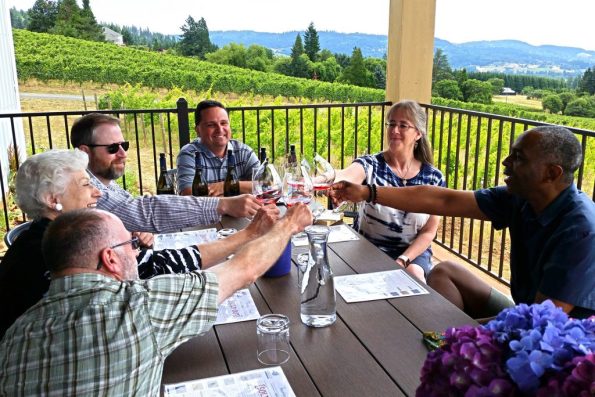
Dave Specter conducts the private tasting. Source: Bells Up Winery
Here you are, my friends. Another story of Passion and Pinot.
To be continued…
P.S. Here are the links to the posts profiling wineries in this Passion and Pinot series, in alphabetical order:
Alloro Vineyard, Ghost Hill Cellars, Ken Wright Cellars, Knudsen Vineyards, Lenné Estate, Tendril Cellars, Youngberg Hill Vineyards, Vidon Vineyard
Your Wish Is My Command
Oenophiles are very generous people.
I’m not speaking in general terms here – we are only talking about the wine. But when it comes to wine, we are ready to share. We want to share the experience. We want to share the joy of what we consider a great sip of wine with the whole world. It doesn’t always work – what tastes amazing to you, might be unimaginable plonk for someone else – everyone’s palate is different. But when it works, the experience is priceless. When the person takes a sip of the wine and says “OMG”, this is the best feeling in the world. Been able to help someone to share your joy and discover something new is incredible, and I can’t really describe it – I just truly hope you get to experience it at least once.
And then there are some key words which spur oenophile into the action. “I always wanted to try that wine”. “I never tasted the wine from that region”. “Trying this wine was always my dream”. “If I can ever find that wine”. All of these are the phrases which should be used very carefully around oenophiles, as these are the trigger phrases. They make an oenophile jump of joy and immediately devise the plan on mediating the issue in whatever way possible. If you consider yourself an oenophile, I’m sure you can relate. If you are not – I hope you know at least one.
Recently at the birthday party, an old friend said: “I always wanted to drink aged wines, but I don’t know how to find them, they are probably expensive, and I don’t know anything about them”. Can you imagine my ears perked up as soon as I heard it? Oenophile’s joyous moment, an opportunity to share the wine – yes! I gave her advice as to where she can find some aged wines (Benchmark Wines, for instance), but the brain already was put to the task. When we decided to get together for dinner, the first thing I said was “I’m bringing the wines”.

After some deliberation, I came to an agreement with oneself regarding the wine program – you can see the whole program in the picture above. I was happy that I had a reasonably aged sparkling wine – Guido Ferrari. I wrote about Ferrari wines many times, these are definitely some of my favorite sparkling wines. 2005 is still a baby, as this is a current vintage, but still – this is an excellent sparkling wine, and it was a sample so I had to open it in any case – sharing with friends makes me very happy.
I definitely wanted to have a Rosé as part of the repertoire, but the absolute majority of Rosé is not made for aging – and those which age well, are either impossible to find, or very expensive, or both. So yeah, no Rosé. For the white, I decided to go with another one of my favorites – barrel-aged Verdejo, 2009 Shaya Habis. 10 years is not that much in terms of wine age, but most of the white wines don’t age that well, and I didn’t have a nice Burgundy, Chablis or white Rhone to offer instead, so I think 10 years old Verdejo should be interesting enough.
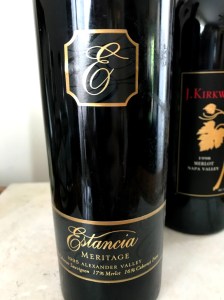
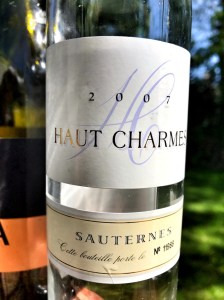
Red wines generally can age. I decided to go with “middle-aged” wines, even though the “middle” varies dramatically between the wines and the regions. My selection – 1995 Estancia Meritage, a Bordeaux style blend from California, 1995 Quinta do Poço do Lobo from Portugal (one of my top dozen wines of 2018), and 1998 Kirkland Ranch Merlot from California. I saw that the folks on Cellar Tracker considered Estancia to be past prime for a while so this will be an interesting experience, no matter what. And the 1998 Merlot I never had before, so this is an excellent opportunity to try it. 2007 Sauternes for dessert? 12 years is not much of age for the Sauternes, but this was one of the few older dessert bottles at my disposal so this would have to do.
The above part of the post was written before the tasting. Now, it is time to tell you how the wines actually fared.
Vintage-designated sparkling wines with some age are not a simple thing for uninitiated wine lovers – many say that Dom Perignon is amazing only because they know how much it costs, not because they enjoy it. This 14 years old, 2005 Giulio Ferrari Riserva del Fondatory was outstanding in my opinion – fresh, complex, elegant, it was truly a beautiful, minerality-driven Chardonnay, enframed with some fine bubbles. You know what was the best part? To hear my friends say “wow” and “I really like it”. Mission accomplished.
 We continued with 2009 Shaya Habis Rueda (100% old vines Verdejo, barrel aged). This wine is one of my favorite Verdejo renditions, typically offering lots of complexity – but I never had it with 10 years of age. The wine was still young and crisp, with minimal fruit expression and tons of minerality, tons. Again, I consider this wine a success as one of my friends literally hugged the bottle and kept drinking this wine, repeating every few minutes “wow, and I even don’t like the whites!”.
Now, it was not without trepidation that I opened 1995 Estancia Meritage Alexander Valley (67% Cabernet Sauvignon, 17% Merlot, 16% Cabernet Franc), taking into account the negative sentiment on the CT. But – my fears were unfounded. The wine was a perfect example of the nicely aged California wine – yes, it mellowed down and was tertiary aromas-driven, but it stayed that way during the whole evening, and it was a perfect example of what aging does to the wine – simply the next dimension. The aromatics which you can enjoy endlessly, an abundance of lip-smacking plums, touch of eucalyptus, good acidity – a great experience. And yet another “yes” vote in our wine program – everyone liked the wine. Were they simply polite? I don’t know. I hope they actually liked the wine, as I wholeheartedly did.
 The next wine I brought simply as a “safe bet”, just in case Estancia would not work out. While Estancia was fine, I was happy to open this wine, if anything, at least, to compare two of the wines from the same vintage – of course, from very different wine regions. 1995 Caves São João Quinta do Poço do Lobo Reserva from Bairrada in Portugal didn’t change its standing “you are drinking me too early” even for a bit (the wine was only released last year, and I was raving about it before) – elegant, restrained dark fruit and herbs – two of these 1995 wines couldn’t be any more different than they were. Again, I think people liked this wine too – but it was too far into the evening to keep track. In any case, I’m glad I still have a few more bottles left.
We didn’t open the 1998 Kirkland Merlot – will have to wait for another occasion – but 2007 Haut Charmes from Sauternes was delightful and all apricots, both the nose and the palate. Ripe apricots, candied apricots, apricot jam – all of it was in every sip – oh yeah, don’t worry, all apricots were supported by acidic core. I don’t know if this was a common expression for the aged Sauternes, but there was a lot of pleasure in every sip of that wine.
This is my story of helping friends to experience aged wines. If you ask me, this was a complete success as people got to enjoy something new and different. Have you had any of these wines? What would you open for your friends to try? Cheers!
Wine Love: Lodi, California
 It is with the bittersweet feeling I confess my unconditional love to the wines of Lodi.
It is bittersweet, as on one side when the person is in love, they want to tell the whole world about it. On another side, I don’t want to tell the whole world about it – I want to keep it all to myself. I want Lodi to stay as a secret refuge for those who know. I want the Lodi wines to stay affordable, and the wineries to stay un-Napa – simple, humble, friendly, and worth visiting. But – this is not necessarily right for the winemakers of Lodi, who wants their wines to be known and drunk by the people, and therefore, it is my mission as a wine writer and wine aficionado to help with that, even risking that Lodi might not stay the same.
Bittersweet, yeah.
In general, Lodi is unknown and misunderstood. Wine lovers think that Lodi is only producing Zinfandel and high-power, high-alcohol fruit bombs. This can’t be any further away from the truth about what Lodi really is. So if this is what you thought of Lodi before, take it out of your head, and let me tell you what Lodi really is.
Historically, if California is an agricultural capital of the USA, Lodi is an agricultural capital of California. By the way, do you know where Robert Mondavi (yes, THAT Robert Mondavi) went to the high school? Yep, in Lodi. These are just fun facts, but now let’s get closer to the subject. Lodi is not about Zinfandel. First and foremost, Lodi is home to the Mediterranean grape varieties – Tempranillo, Sangiovese, Viognier, Albariño, Grenache, Cinsault, Syrah, Barbera, and many others. Lodi has a great climate for grape growing – it gets very hot during the day – temperatures in July/August can reach into the lover 100s – however, it cools off very nicely to “ohh, I need a jacket” on August night. That temperature range helps grapes to concentrate the flavor.
Lodi has sandy soils, which are not conducive for phylloxera, thus most vineyards in Lodi are planted on their original rootstocks. Lodi is home to some of the oldest continuously producing vineyards in the USA and in the world – for example, Carignane and Cinsault vineyards are 120+ years old, still bearing wine-worthy fruit. Lodi Rules, developed starting in 1992, became the standard of sustainable winegrowing in California (the same rules are even implemented at Yarden winery in Israel). And one of the most important elements – Lodi winemakers are some of the friendliest wine people you can find.
Until late 2016 I was square with the general public, equating Lodi with Zinfandel only. Then Wine Bloggers Conference happened, hosted in Lodi, and I was blown away by what I discovered upon arriving in Lodi. During that week I was also mesmerized by the attitude and hospitality of the winemakers, who took their time off the most important winemaking activity of the year – harvest – and spent time with the wine bloggers, sharing their love of the land. It is not only about the attitude – the absolute majority of the wines were tasted were delicious – I’m very particular in my expectations as to what good Syrah, Tempranillo, Barbera, or Albariño should taste like.
Two months after the wine bloggers conference I was in the Bay area on the business trip and had an open weekend. I tried to make some appointments in Napa, and when that didn’t work out, I went again to Lodi – had an amazing time tasting through the whole portfolios of Bokisch, Borra Vineyards, and Lucas Winery (the absolute beauty of 15 years old Lucas Chardonnay we tasted at the WBC16 speed tasting session still haunts me). I never wrote about that experience, but this is a whole another matter.

When I got an invitation from Snooth to join the virtual tasting session of Lodi wines, I almost jumped of joy – yes, I will be delighted to experience the Lodi wines, which are still hardly available outside of Lodi or California at the best (or is that a good thing :)?) Six wines, six producers, a unique and unusual set of grapes – what more wine aficionado can be excited about?
Below are my notes and thoughts about the wines. In case you want to follow along with the video of the virtual tasting, which provides way more information than I’m including here, here is the link for you.


2018 Acquiesce Winery & Vineyards Ingénue Mokelumne River AVA Lodi (13% ABV, $32, 35% Clairette Blanche, 35% Grenache Blanc, 20% Bourboulenc, 10% Picpoul Blanc, 350 cases produced) – Sue Tipton, winemaker and owner at Acquiesce Winery is known as a white wine specialist. She produces a range of wines made primarily out of the southern Rhone varieties.
Straw pale color
White stone fruit, candied fruit, concentrated
Day 1:
White stone fruit on the palate, good acidity, minerality, salinity
7+; it is really a 7+ out of respect to the wine which so many bloggers raving about. I clearly don’t get this wine, and no, it doesn’t give me pleasure.
Day 2-4:
Elegant, lemon and white peach notes, clean, good mid-palate weight, definitely resembling white Chateauneuf-du-Pape, uplifting, vibrant, perfectly balanced
8+; OMG. The wines can’t be any more different after being open for a few days. It changed dramatically, it opened up, it showed balance and elegance. This is an excellent wine, just give it 5-10 years to evolve (or longer).
2018 m2 Wines Vermentino Mokelumne River AVA Lodi (12.3% ABV, $20, 250 cases produced) – this Vermentino was unique and different in its show of minerality – it is quite rare for me to taste the wines like that.
Light straw pale, really non-existent color
Minerality-forward nose, granite, lemon undertones
Salinity on the palate, lemon, crisp acidity.
8-, tremendous minerality on this wine, it has more minerality than fruit. This wine also shows a bit more fruit after being opened for a few days, but it still retained all of its minerally character.


LangeTwins Winery & Vineyards 2018 Aglianico Rosé Lodi (13% ABV, $20, winery exclusive) – owned by the twin brothers, as the name says, LangeTwins is quite an unusual winery. Fun fact: their own production under LangeTwins label is quite small – however, as a contract winery their capacity to produce and store wines exceeds 2.2 million gallons. It is not the first time LangeTwins makes delicious Rosé from the Italian grapes – their Sangiovese Rosé has a cult following and impossible to get. This Aglianico Rosé is worthy of joining the cult ranks.
Beautiful pink color
Strawberries on the nose, nicely restrained, some minerality undertones
Delicate, balanced, perfect crunchy strawberries, crisp, refreshing
8, love this wine, would drink it any day
2016 Mettler Family Vineyards Pinotage Lodi (14.9% ABV, $25, winery exclusive, 350 cases produced) – not familiar with the winery, but seeing Pinotage on the label made me really wonder. Pinotage is a South African grape, which now produces much better wines than 20-30 years ago, but still with a very polarizing following (love/hate). This was my first taste of Pinotage produced outside of South Africa – and this was one unique and delicious wine.
Dark Garnet, almost black
Ripe blueberries, a touch of smoke, herbaceous undertones
Silky smooth, dark fruit, a touch of molasses, smoke, good textural presence, minerality, good acidity, good balance
8, lots of pleasure


2016 PRIE Winery Ancient Vine (1900), Block 4 Spenker Ranch Carignane Mokelumne River AVA Lodi (14.4% ABV, $29, 70 cases produced) – Just a thought if drinking the wines made from the grapes harvested from the vine which exists for 120 years, gives me quivers. An absolutely unique experience.
Bright garnet
Roasted meat, granite, chipotle
Great complexity, tart raspberries, rosemary, bright acidity, medium body, distant hint of cinnamon, excellent balance
8+/9-, it might sound like an oxymoron, but this wine is easy to drink and thought-provoking. Lots of pleasure in every sip
2016 Michael David Winery Ink Blot Cabernet Franc Lodi (15% ABV, $35, 85% Cabernet Franc, 8% Cabernet Sauvignon, 7% Petite Sirah, 65% 16 months neutral oak, 35% 16 months new French oak) – Michael David winery is known for its show of power in the wines. But when power is supported by elegance, that’s when you have an ultimate experience.
Dark garnet
Unmistakably Lodi, blueberries and blueberries compote, medium plus intensity, fresh
Lots of fresh berries – blueberries, blackberries, chewy, fleshy, well present. Touch of cinnamon, good acidity, overall good balance.
8, massive wine offering lots of pleasure. It just happened that soon after tasting, I had to leave the town for a business trip, so I just pumped the air out and left it standing on the floor. My wife didn’t have the opportunity to finish it, so when I came back 10 days later, I decided to taste it before I will pour it down the drain. To my horror surprise, the wine was still perfectly drinkable. That technically means that it has great aging potential, so maybe I need to lose a few bottles in my cellar.
Here you are, my friends. I hope I made you curious about the wines of Lodi. Definitely look for them in the store, but also keep Lodi in mind as your next winery excursion trip – just get ready to haul home a few cases of wine. Cheers!
Stories of Passion and Pinot, Year 2019
Back in 2014, during the Wine Bloggers Conference in Santa Barbara (my first WBC), I was listening to the panel discussion of the professional wine writers, who basically had only one message for all the bloggers – interviews, interviews, interviews. Of course, they were talking about integrity, writing skills and other important subjects, but the concept of “interview” was brought up multiple times, with all the explanations how to do it properly, what, why, where and so on.
At that point, I had been writing my blog for about 5 years, and the idea of the interview didn’t resonate. “I want to write about the wine, not about some conversations and other people opinions” was my prevailing thought. “Interviews? I don’t want to do no interviews” (use of broken English intended).
You don’t need to fast forward too far to see how everything changed. Next year, I was offered a meeting with a winemaker which I couldn’t attend, so I said “all right – can we have a virtual conversation?” – and the concept of “One of One With Winemaker” posts was born. Since then, I’ve done quite a few interviews, most of them virtual and a few are in person – if you are curious, here is the link for you to see them all. Yes, the “virtual” concept might be limiting, as you can’t explore an interesting angle which would come up in the conversation. However, as most of my questions are unique and specifically tailored for a particular conversation, virtual interviews remove intimidation, allowing people time to provide the best answers.

In 2016, I had a conversation with Carl Giavanti, who asked if I would be interested to create a series of interviews with Oregonian winemakers – and that became the beginning of the Stories of Passion and Pinot series, all connected under the “One on One” umbrella. In 2016, I had an opportunity to “talk” to Ken Wright of Ken Wright Cellars, David Nemarnik of Alloro Vineyard, Mike Bayliss of Ghost Hill Cellars, Wayne Bailey of Youngberg Hill Vineyards, Steve Lutz of Lenné Estate, and Don Hagge of Vidon Vineyard. In the same series, Knudsen Vineyards was profiled in 2017, and last year I had a conversion with Tony Rynders of Tendril Cellars. All of these wineries are from Oregon, and all of them share a common passion for the Pinot Noir, one of the most finicky grapes out there.
You probably guessed that I’m not writing this post just to give you a retrospective into the Talk-a-Vino interviews. Yes, I’m writing it to tell you that the Stories of Passion and Pinot will continue in 2019, again with the help of Carl Giavanti. The wineries we will look at in the near future are:
By the way, do you know what “Bells Up” means? Well, if you do – great, if you don’t – you will learn all about it soon.
To be continued…
Valentine’s Day Experiences
 Cooking is the ultimate expression of love. This is always true, but even more though on Valentine’s Day, as the whole holiday is all about love – the holiday which exists since about the 5th century – it is really fun to celebrate something so deeply rooted in history.
Our personal love story was simple – yet, probably, equally uncommon – the love at first sight. It took three days since the moment we saw each other for the first time until everything was decided. So you can imagine that Valentine’s Day was always an important holiday for us. At first, we tried to follow to common path, working hard to score coveted restaurant reservation – until the dinner at one of the most expensive, and supposedly, best Italian restaurants in Connecticut, which we left asking each other “what was that???”. That was the end of our “eating out” Valentine’s Day celebrations, and the beginning of the “eat in” tradition.
One of the advantages of “eat in” celebrations is a much better wine program. You don’t need to desperately comb through the pages of the wine list, finding that you can’t afford any of the wines by the bottle you want to drink, and common sense preventing you from getting any of the wines by the glass which can be classified as a “seemingly affordable rip off”. Instead, you can spend hours combing through your own wine shelves, looking for the bottles which you will deem worthy of a special celebration – and which will also work with the menu you have in mind.

Martinelli Syrah which you see in the picture was a backup wine in case anything will be wrong with the Pinot. Now it is back in the cellar, waiting for its turn.
Last year’s celebration was about steak and Cab – obviously, I couldn’t repeat myself, so the search was on to find an appropriate protein replacement. Somehow that resulted in the duck breast – and what wine does the duck breast call for? Of course, the Pinot Noir!
Before we talk Pinot we need to talk bubbles. Bubbles don’t have to exclusively narrow down to Champagne. Champagne is a wonderful sparkling wine, perfectly appropriate for any celebration – but the world of wine moved up tremendously over the past 15-20 years. I don’t have any stats to prove this objectively, but I have a feeling in the USA at least a third of all wineries if not half of them produce sparkling wine – if not for the wide distribution, then at least for the wine clubs and tasting room visitors.
I also have to say that ever since I visited the Franciacorta region in Lombardy, Italy, Franciacorta sparkling wines became my go-to choice of bubbles for any special celebrations. In my mind, Franciacorta wines are very consistent, and today, as they honed their production methods to perfection, this translates into the “you can’t go wrong with” Franciacorta wines in general. La Valle was one of my top highlights of that Franciacorta trip and the La Valle Rosé really hit the cord then – and it continues to do now. This 2011 La Valle Brut Rosé Franciacorta was superb – fine mousse, delicious strawberries on the nose with the hint of the toasted bread, and more strawberries on the palate – a perfect opener for our evening.
Now, the Pinot time. Similar to the bubbles, Pinot Noir also enjoys quite a universal appeal around the world nowadays. There some regions, however, which do a better job than the others – and California Russain River Valley is definitely one of them. I tried 2007 Charles Mara Pinot Noir for the first time back in 2010. It was silky smooth and powerful at the same time. I was so impressed with this wine that it became the top wine of the inaugural Talk-a-Vino Top Dozen Wines list. I still had a bottle of 2007, and I decided that it would be a perfect choice for our Valentine’s Day dinner – and the wine didn’t disappoint. Now, 9 years later, this 2007 Mara Laughlin Road Ranch Pinot Noir Russian River Valley became even more round and less “in your face”. Characteristic California Pinot plums and smoke on the nose, succulent dark fruit on the palate with a hint of violets, perfect acidity, perfect balance, lots and lots of pleasure. And it also worked perfectly with the duck.


Let’s talk about the duck. I had it a number of times before, either made by friends or at the restaurant – but duck is rarely my go-to dish. The form of duck I cooked before was either duck legs as part of the Cassoulet or the whole duck as part of the Turducken. I never attempted cooking the duck breast before, so obviously was concerned with the outcome. After studying a number of recipes, I was concerned even more, as a number of commentators complained about rendering duck inedible even after repeated attempts, so I was really not sure about my own success.
I don’t know if it was a quality of the ingredient, Moulard Duck Magret, which I got at our local Fairway Market, or the cast iron pan, a combination of the above, or the beginner’s luck, but the duck breast came out perfectly. I also made a Port (you saw it in the picture above) and berries reduction, which elevated the nicely gamey taste of the duck breast and was a bridge to connect it all to Mara Pinot Noir – all in all, a delicious dinner. Nevermind the paper plate in the picture – everything in life has a story, but this is not the story for this blog post.
There you go, my friends – not a timely share, but still an experience worth sharing. If you still remember, I’m curious to know how was your Valentine’s Day dinner. Cheers!
OTBN 2019 – What a Night!
Open That Bottle Night (OTBN for short) is my favorite “wine holiday”. Of course, the absolute majority of celebrations in our lives – holidays (Mother’s Day, Father’s Day, Thanksgiving…), birthdays, weddings, anniversaries, promotions – include wine, but strictly in the supporting role. All the “grape days” are about wine, yes – but typically restricted to a specific grape. OTBN is a special day when the wine is a front and center of our celebration – OTBN is all about showing respect to those special bottles which all need the special, perfectly appropriate moment to be opened. OTBN allows us to say “the perfect moment has arrived” and just open That Bottle.
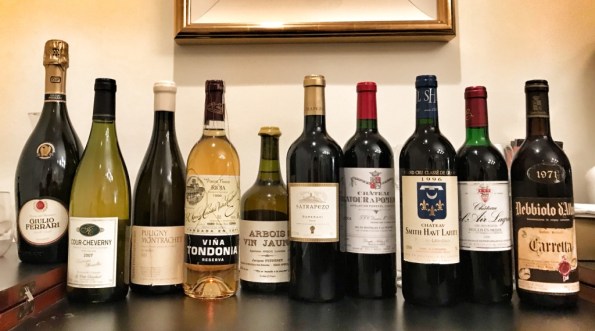
Almost full line up – few bottles are not shown
While I’m celebrating OTBN for a long time, this year’s event helped me to better appreciate the true purpose of this “holiday”. Okay, I have to say that I never had such a massive amount of wine opened for the OTBN – we went through 14 bottles – and each bottle was special in its own way. But until now, all of my OTBN experiences where strictly positive – the majority of the wines opened for OTBN were either at its peak or well drinkable at the moment but still promising to improve with time. But this year, in addition to absolutely stunning, mature, unparalleled wines we had wines which were either past prime or in the strange sleeping mode (yes, I’m an optimist), adding a good reason to follow the founding principals of the OTBN and pull the cork from That Bottle now.
Here are my notes for the wines we opened this year, together with a bit of explanation as to what made this wine special and my impressions.


2001 Giulio Ferrari Riserva del Fondatori Metodo Classico Trento DOC (100% Chardonnay)
Why: I was looking at this bottle for a long time. Ferrari makes some of the very best sparkling wines in Italy, and this is their flagship wine. At 18 years, it is a good age for the sparkling wine – and OTBN is a perfect reason to open a wine like that.
How was it: Amazing. Light bubbles, but the balance is amazing, light toasted notes, wow. The wine stayed fresh throughout the whole evening and was one of everyone’s favorites.
2013 Pierre-Yves Colin-Morey Puligny-Montrachet Le Trezin, Cote de Beaune
Why: Jim had multiple bottles of this wine and was worrying about Premox (Premature oxidation). Thus he put it out just to try.
How was it: Superb. delicious, classic burgundy, beautiful, elegant, round. Another one of the top choices for everyone.


2007 François Cazin Le Petit Chambord Cour-Cheverny AOC
Why: This is one of my favorite wines. When it was 10 years old, was literally blown away
How was it: Underwhelming. A touch of petrol, clean, good acidity, bud no bright fruit. Still delicious in its own way – I would gladly drink it any time. But – lucking the “umpf” which was expected… Still have 2 more bottles – will open later on and see.
2014 Damien Laureau Le Bel Ouvrage Savennières AOC
Why: Well, OTBN is an all-inclusive celebration. I rarely drink Savenniers, so it is always fun to experience something new.
How was it: Ok. For the 5 years old Chenin Blanc from the Loire, it was quite decent. Nice white wine – can’t say much more than that.


1996 Lopez de Heredia Viña Tondonia Blanco Reserva Rioja DOC
Why: why not? Lopez de Heredia is one of the very best Rioja Producers, and their Viña Tondonia Blanco might be one of the best white wines in Spain – at least from point of view of the wines which can age
How was it: A flop. Unless there was a flaw with this particular bottle, this wine was past prime and had no joy in it.
2015 Royal Tokaji The Oddity Hungary (100% Furmint)
Why: Furmit is the grape used in the production of the Hungarian Tokaji wines, some of the very best dessert wines in the world, easily rivaling the best Sauternes. Problem is – it is very difficult to prevent Furmit vineyards from the Noble Rot settling on the grapes – and thus it is rare – and difficult – to produce dry Furmint wine. Here comes The Oddity – dry Furmint wine.
How was it: Very good. Nice, clean, great minerality, balanced well-integrated palate, good acidity. Thank you, Lori, for this delicious find.
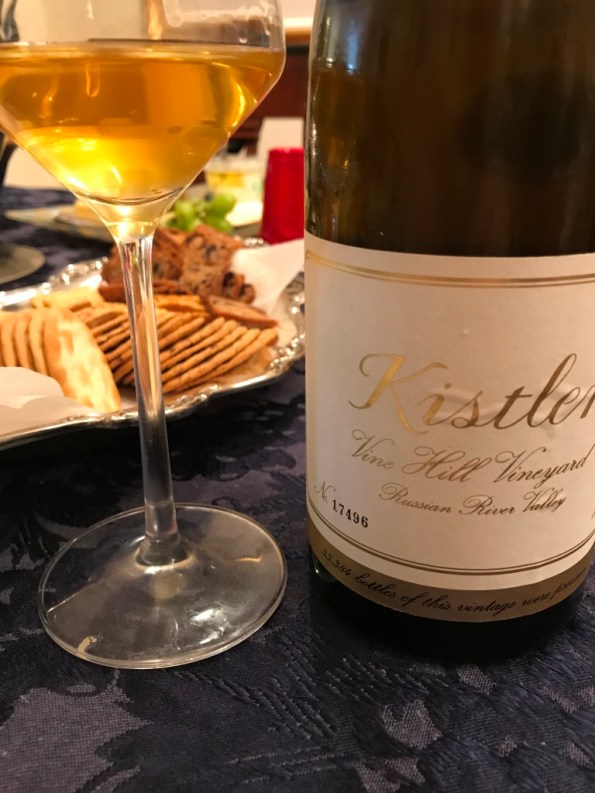
No filter – look at the color of this 24 years old Chardonnay
1995 Kistler Chardonnay Vine Hill Vineyard Russian River Valley
Why: Kistler is one of the best Chardonnay producers in California, so this alone is enough to include such wine into the OTBN line up. But then California Chardonnay rarely built to last for so long, so it was definitely the time to open this bottle.
How was it: Amazing. Almonds, apples, still present vanilla, a touch of smoke, good acidity – amazing for 24 years old white wine


2008 Jacques Puffeney Vin Jaune Arbois Jura
Why: Trying to explain the wine such as Vin Jaune to the uninitiated wine lovers presented an interesting challenge – I failed to explain what “oxidative” means. Anyway, putting this aside – Jura wines are rare. Vin Jaune wines are rare. Jacques Puffeney wines are beyond rare – 2014 was the last vintage which he commercially produced. This wine is absolutely OTBN worthy (thank you, Jim!)
How was it: Amazing. An oxidative nose which was also incredibly attractive, mature fruit, good acidity, elegant, present, delicious wine.
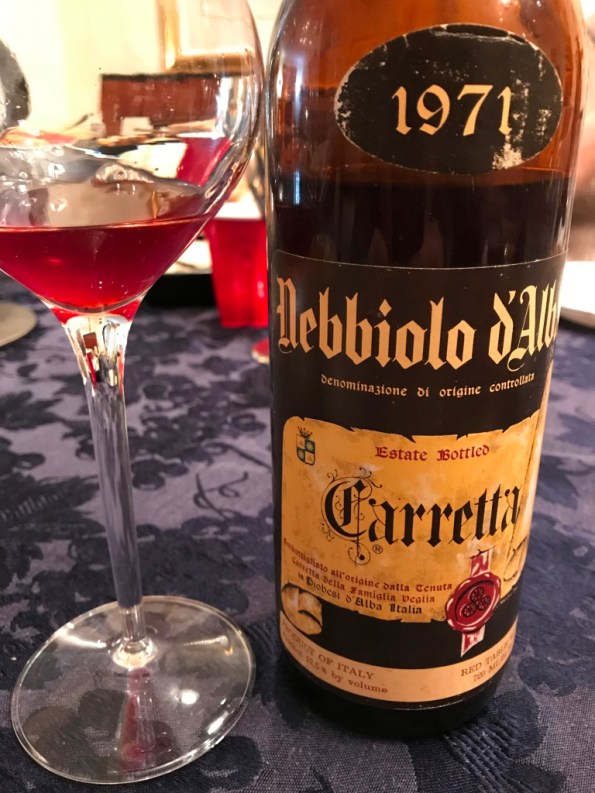
No filter – just look at the color of this wine! Amazing.
1971 Tenuta Carretta Nebbiolo d’Alba DOC
Why: 1971. Need we say more? Yes, the wine of such age is absolutely meant for OTBN.
How was it: Amazing, absolutely amazing. We poured it without decanting. The wine changed dramatically over the course of an hour. My first impressions were: pungent, with clean acidity, mature restrained fruit, still has lots of life left. Wow. About 15 minutes later, the wine totally changed and was the most reminiscent of a nice, concentrated Rosé – cranberries, a touch of strawberries, good acidity, very refreshing. Another 15 minutes made this wine most reminiscent of Jura red, a Poulsard if you will – light, great acidity, a touch of red fruit. Truly an amazing experience. And don’t forget to look at the color of this wine…


1986 Château Bel-Air Lagrave Moulis-en-Médoc AOC
Why: 33 years is a very respectable age for any wine – you really want to ask such wine “how ya doin”
How was it: Wow. Young, beautifully balanced, beautiful Bordeaux, just perfect. In a blind tasting, I would never identify this as a 33 years old wine. Yes, you can call me a failure.
1996 Château Smith Haut Lafitte Pessac-Léognan
Why: My exact question – why? Only because we could?
How was it: not ready. Needs time, mostly locked up. You would never think that 23 years old Bordeaux is not ready to drink, but it was not.


2004 Château Latour à Pomerol Pomerol AOC
Why: Same as previous wine – really, why?
How was it: Not ready. Closed nose, mostly cherries on the palate, need another 10-15 years.
2006 Telavi wine Cellar Satrapezo Saperavi Kakheti Georgia
Why: One of my most favorite Georgian wines. Limited production, a beautiful example of Georgian Saperavi. Most of the wine lovers are still unfamiliar with Georgian wines, so I really wanted to introduce this wine to the people.
How was it: Excellent. Still tight, beautiful fruit, big wine, could use more time. I was a bit concerned that this wine is reaching its peak – I was wrong. I’m sure another 5 years would do wonders here. Oh well…
2005 Weingut Petri Herxheimer Honigsack Scheurebe Trockenbeerenauslese Pfalz Germany (100% Scheurebe)
Why: For one, it is very appropriate to finish a great wine program with the dessert wine. And then how many of you even heard of Scheurebe? Scheurebe grape is a cross between Sylvaner and Riesling. It is quite rare, so yeah, a perfect choice for OTBN.
How was it: Spectacular. Not only it had great acidity which is essential in enjoyable TBA-level sweet wine, but it also showed a mix of honey and herbs – rosemary, sage, thyme – just an unbelievable concoction and ultimate pleasure in every sip. Thank you, Stef, for this treat.
Obviously, I can’t complain about such an amazing OTBN – however, as you saw, we had our share of disappointment. At the same time, the good greatly overweight the bad – 1971 Nebbiolo, 2001 Giulio Ferrari, 1995 Kistler, 2008 Vin Jaune, 1986 Bordeaux were all personal favorites and I would be glad to experience those wines again at any time.
Now that I told you about our OTBN, how was yours?
Last Bottle Sign Up ($10 credit)




 Talk-A-Vino