Archive
Daily Glass: Inappropriate Wine
 Inappropriate wine? What can make wine inappropriate?
Ha! I’m glad you asked.
I’m also glad that this is the wine blog, so by definition the content here is 21+. But then, in the adult world, what can make the wine inappropriate?
Of course, there might be a certain picture on the label. Let’s say naked people, or other images that we can deem “inappropriate”.
Or it can be simply a wine name. For example, Big Ass Merlot from Australia, Fat Ass Ranch Merlot, or a famous cleverly disguised If You See Kay. I guess that would also qualify.
But if you take a look at the label of an “inappropriate wine” that triggered this post, it has none of that.
 |
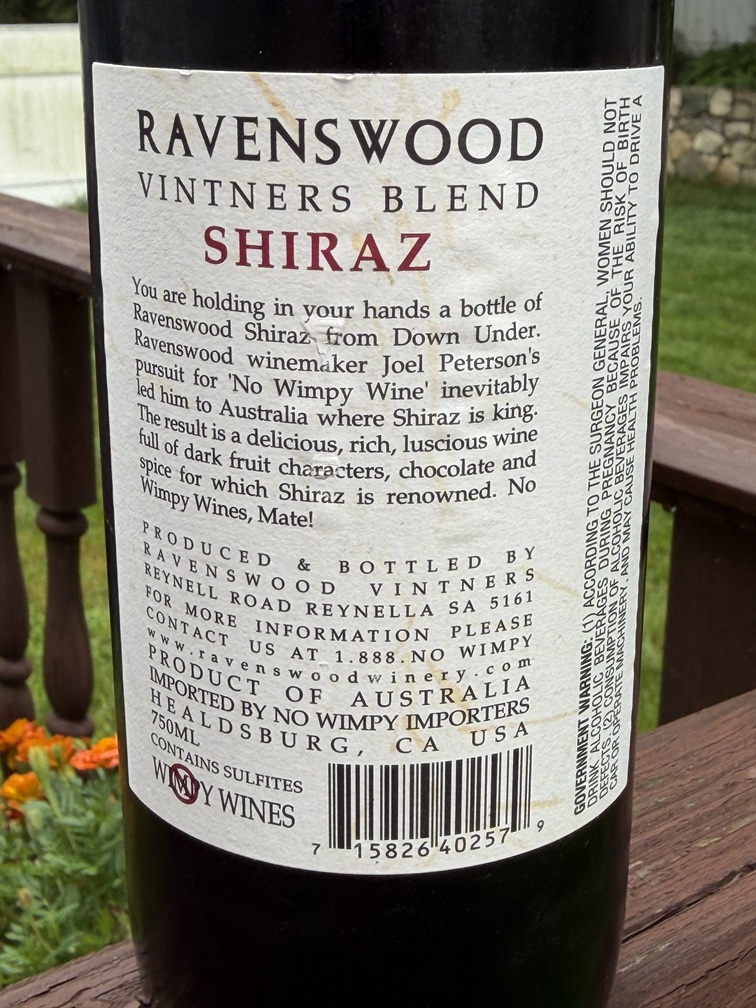 |
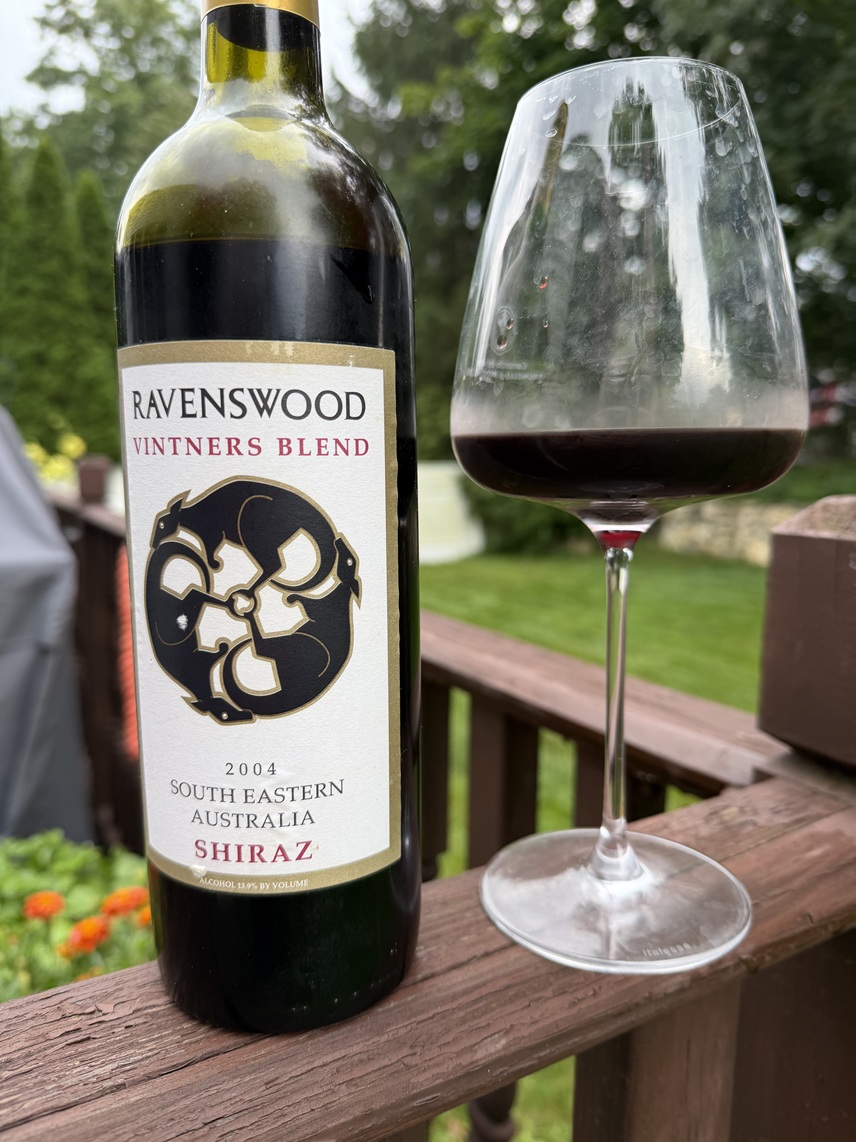
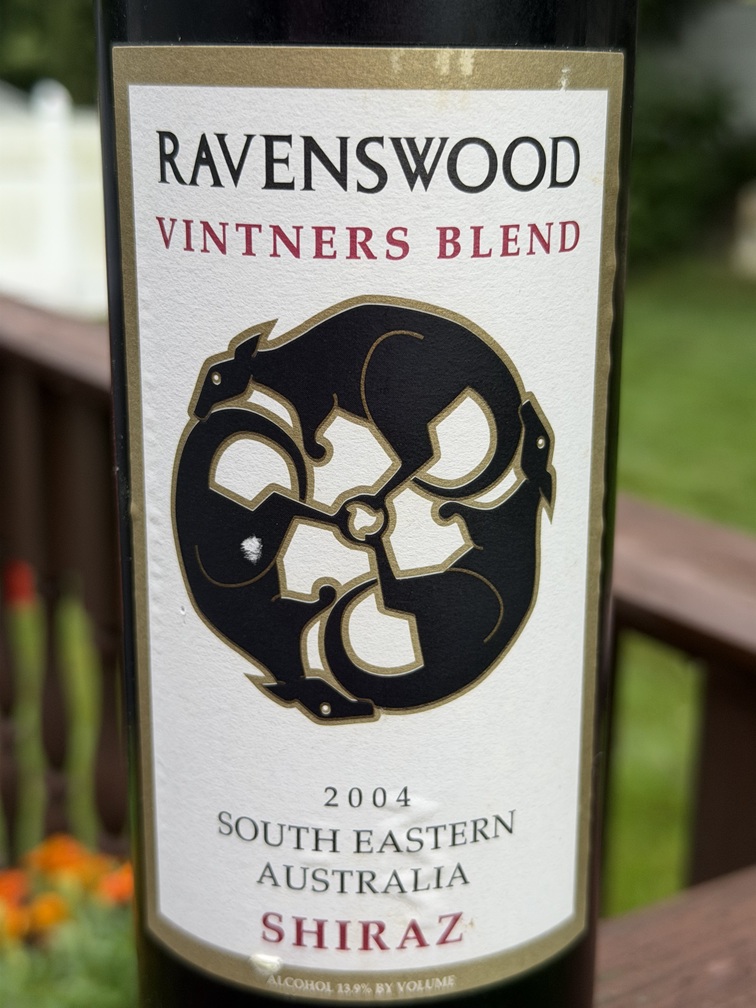
2004 Ravenswood Vintners Blend Shiraz South Eastern Australia – the name as decent as it can be. With an image of 3 interlocking ravens. Again, as decent as they come. So what’s with the click-baiting statement of “inappropriate wine”.
Here is what’s so inappropriate about this wine – it is all in the head.
Cryptic? Let’s unravel.
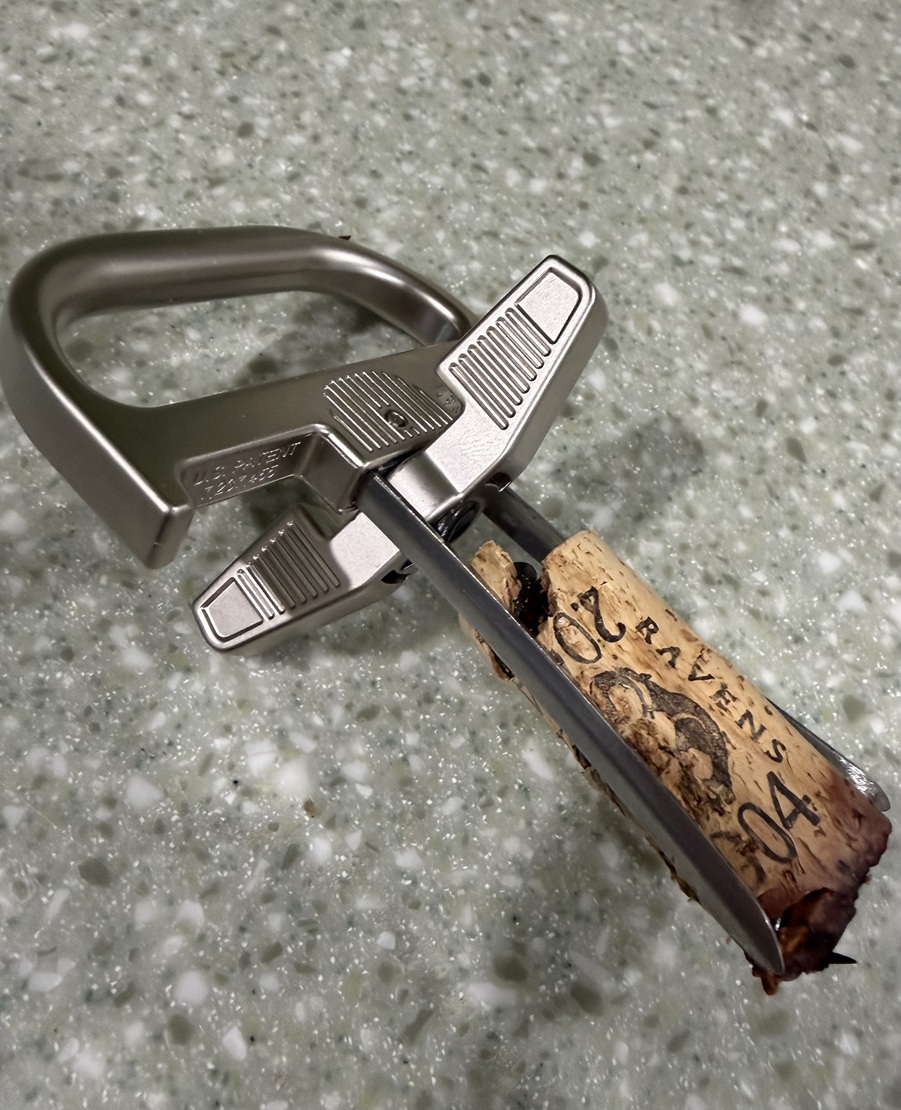
Tried to open the bottle using a regular trusted waiter’s corkscrew. Understood that the cork would break. So The Durand came in handy.
Pour. Swirl. Smell.
Time stopped. The brain exploded with pure hedonistic pleasure. Sensual? Yes. Sexual? Yes. Don’t limit your imagination. Whatever you imagine as a pure pleasure was there.
Balsamic. Ripe, succulent berries, bristling with juice. More balsamic. Eucalyptus. Pleasure. Yep, inappropriate. I’m so happy that the thought police is still some years away, or I could’ve been in trouble.
A minute or so later, I developed the courage to take a sip. Beautiful layers, a touch of tertiary notes with dried figs, but just a whiff, no sweetness whatsoever. Gobs of fruit but well in check, nothing cloying. Good acidity, impeccable balance. Pleasure. Gobs of pleasure.
You know what might be the most inappropriate about it? This was not DRC, not Screaming Eagle, not Petrus. This was a nine-dollar ($9!) or so bottle of wine, stored at our friends’ garage (they insisted that I would take the bottle home when we visited earlier this year – just as a random bottle). How is it possible to predict that such an inexpensive wine can age so gracefully? There might be an inappropriate magic hiding somewhere…
Truth be told, I didn’t even know Ravenswood was producing wines in Australia. I always knew Ravenswood as a California Zinfandel specialist, but apparently Joel Peterson, who founded Ravenswood in 1976, started producing wines in Australia under the Vintners Blend project back in 2004 (looks like 2018 was the last vintage). The way this wine tasted, the winemaker definitely did something right, and I’m really thankful for that.
Here you are, my friends – my inappropriate, unexpected, mind-blowing wine experience.
I wish you all lots and lots of inappropriate wines. And when you encounter them, don’t hold your thoughts back, let them run wild. After all, wine should give you pleasure.
Your Wish Is My Command
Oenophiles are very generous people.
I’m not speaking in general terms here – we are only talking about the wine. But when it comes to wine, we are ready to share. We want to share the experience. We want to share the joy of what we consider a great sip of wine with the whole world. It doesn’t always work – what tastes amazing to you, might be unimaginable plonk for someone else – everyone’s palate is different. But when it works, the experience is priceless. When the person takes a sip of the wine and says “OMG”, this is the best feeling in the world. Been able to help someone to share your joy and discover something new is incredible, and I can’t really describe it – I just truly hope you get to experience it at least once.
And then there are some key words which spur oenophile into the action. “I always wanted to try that wine”. “I never tasted the wine from that region”. “Trying this wine was always my dream”. “If I can ever find that wine”. All of these are the phrases which should be used very carefully around oenophiles, as these are the trigger phrases. They make an oenophile jump of joy and immediately devise the plan on mediating the issue in whatever way possible. If you consider yourself an oenophile, I’m sure you can relate. If you are not – I hope you know at least one.
Recently at the birthday party, an old friend said: “I always wanted to drink aged wines, but I don’t know how to find them, they are probably expensive, and I don’t know anything about them”. Can you imagine my ears perked up as soon as I heard it? Oenophile’s joyous moment, an opportunity to share the wine – yes! I gave her advice as to where she can find some aged wines (Benchmark Wines, for instance), but the brain already was put to the task. When we decided to get together for dinner, the first thing I said was “I’m bringing the wines”.

After some deliberation, I came to an agreement with oneself regarding the wine program – you can see the whole program in the picture above. I was happy that I had a reasonably aged sparkling wine – Guido Ferrari. I wrote about Ferrari wines many times, these are definitely some of my favorite sparkling wines. 2005 is still a baby, as this is a current vintage, but still – this is an excellent sparkling wine, and it was a sample so I had to open it in any case – sharing with friends makes me very happy.
I definitely wanted to have a Rosé as part of the repertoire, but the absolute majority of Rosé is not made for aging – and those which age well, are either impossible to find, or very expensive, or both. So yeah, no Rosé. For the white, I decided to go with another one of my favorites – barrel-aged Verdejo, 2009 Shaya Habis. 10 years is not that much in terms of wine age, but most of the white wines don’t age that well, and I didn’t have a nice Burgundy, Chablis or white Rhone to offer instead, so I think 10 years old Verdejo should be interesting enough.
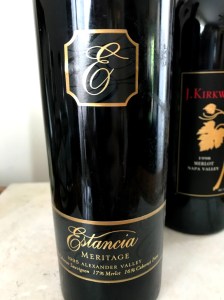
Red wines generally can age. I decided to go with “middle-aged” wines, even though the “middle” varies dramatically between the wines and the regions. My selection – 1995 Estancia Meritage, a Bordeaux style blend from California, 1995 Quinta do Poço do Lobo from Portugal (one of my top dozen wines of 2018), and 1998 Kirkland Ranch Merlot from California. I saw that the folks on Cellar Tracker considered Estancia to be past prime for a while so this will be an interesting experience, no matter what. And the 1998 Merlot I never had before, so this is an excellent opportunity to try it. 2007 Sauternes for dessert? 12 years is not much of age for the Sauternes, but this was one of the few older dessert bottles at my disposal so this would have to do.
The above part of the post was written before the tasting. Now, it is time to tell you how the wines actually fared.
Vintage-designated sparkling wines with some age are not a simple thing for uninitiated wine lovers – many say that Dom Perignon is amazing only because they know how much it costs, not because they enjoy it. This 14 years old, 2005 Giulio Ferrari Riserva del Fondatory was outstanding in my opinion – fresh, complex, elegant, it was truly a beautiful, minerality-driven Chardonnay, enframed with some fine bubbles. You know what was the best part? To hear my friends say “wow” and “I really like it”. Mission accomplished.
 We continued with 2009 Shaya Habis Rueda (100% old vines Verdejo, barrel aged). This wine is one of my favorite Verdejo renditions, typically offering lots of complexity – but I never had it with 10 years of age. The wine was still young and crisp, with minimal fruit expression and tons of minerality, tons. Again, I consider this wine a success as one of my friends literally hugged the bottle and kept drinking this wine, repeating every few minutes “wow, and I even don’t like the whites!”.
Now, it was not without trepidation that I opened 1995 Estancia Meritage Alexander Valley (67% Cabernet Sauvignon, 17% Merlot, 16% Cabernet Franc), taking into account the negative sentiment on the CT. But – my fears were unfounded. The wine was a perfect example of the nicely aged California wine – yes, it mellowed down and was tertiary aromas-driven, but it stayed that way during the whole evening, and it was a perfect example of what aging does to the wine – simply the next dimension. The aromatics which you can enjoy endlessly, an abundance of lip-smacking plums, touch of eucalyptus, good acidity – a great experience. And yet another “yes” vote in our wine program – everyone liked the wine. Were they simply polite? I don’t know. I hope they actually liked the wine, as I wholeheartedly did.
 The next wine I brought simply as a “safe bet”, just in case Estancia would not work out. While Estancia was fine, I was happy to open this wine, if anything, at least, to compare two of the wines from the same vintage – of course, from very different wine regions. 1995 Caves São João Quinta do Poço do Lobo Reserva from Bairrada in Portugal didn’t change its standing “you are drinking me too early” even for a bit (the wine was only released last year, and I was raving about it before) – elegant, restrained dark fruit and herbs – two of these 1995 wines couldn’t be any more different than they were. Again, I think people liked this wine too – but it was too far into the evening to keep track. In any case, I’m glad I still have a few more bottles left.
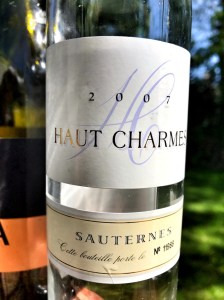
We didn’t open the 1998 Kirkland Merlot – will have to wait for another occasion – but 2007 Haut Charmes from Sauternes was delightful and all apricots, both the nose and the palate. Ripe apricots, candied apricots, apricot jam – all of it was in every sip – oh yeah, don’t worry, all apricots were supported by acidic core. I don’t know if this was a common expression for the aged Sauternes, but there was a lot of pleasure in every sip of that wine.
This is my story of helping friends to experience aged wines. If you ask me, this was a complete success as people got to enjoy something new and different. Have you had any of these wines? What would you open for your friends to try? Cheers!
Last Bottle Sign Up ($10 credit)