Archive
In Rhythm With The Earth – Hawk and Horse Wines
 Wine is Art.
Wine is Magic.
Wine is a Mystery.
When you drink wine for pleasure (don’t take it for granted – there are many reasons why people drink wine – to fit into the crowd, to be socially accepted, to show your status – drinking for pleasure is only one of the reasons), mystery, art, magic – call it whatever way you want, but it all comes to a play when you take a sip. Wine is a complete mystery as you have no idea what will be your conscious and subconscious reaction to the experience of that sip – what memories will come to mind? What emotions will take you over? The magic is there, waiting for you in every glass of wine.
The magic and mystery in wine go well beyond that sip. “Well before” might be a better descriptor though. The creation of the delicious bottle of wine is not an exact science. It is an art. It is magic. It is a mystery. Mother Nature, who gifts us grapes, never repeats itself. Every year, every vintage is different. Every day of the growing season never repeats itself. It is up to the craft, the skill of the grape grower and the winemaker to create the wine which can magically transport you. And this magic starts in the vineyard.
I’m about to step into the controversial, really controversial space – the biodynamics. As I’m not an expert on the subject by any means, let me just share the definition of biodynamics from the Oxford Languages. Actually, here are two definitions:
Biodynamics is
1. The study of physical motion or dynamics in living systems.
2. A method of organic farming involving such factors as the observation of lunar phases and planetary cycles and the use of incantations and ritual substances.
It is the second definition that is interesting for us. And it is the last part of that definition, “the use of incantations and ritual substances”, which makes biodynamics so controversial for many people – I’m sure you heard of cow horns filled with manure and buried in the vineyard as part of biodynamic farming. Is that magic or pseudoscience? This is the question I don’t care to answer or get an answer for. Taken out of the context, that might sound strange. But the whole point of biodynamics is in creating a healthy ecosystem of the living things – bacteria in the soil, plants, vines, grapes, animals – everything should co-exist in harmony with each other and the Earth, create a habitat where the problems take care of themselves (magic!). When the vineyard is farmed biodynamically, it simply means that the grapes will be produced in the most natural way with the utmost attention on the health of all the elements of the ecosystem.
Delving into the depth of biodynamics rules is completely outside of the scope of this post – if you want to further your knowledge of biodynamics, there is no shortage of great books, articles, and blogs. My reason to share the excitement about biodynamics is simple – tasty wine.
Source: Hawk and Horse Vineyard
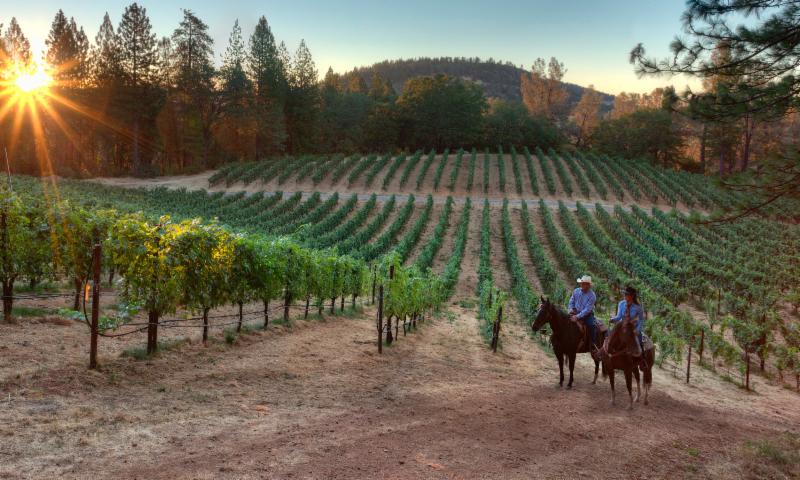
Hawk and Horse Vineyards started as the dream of David Boies, who purchased an abandoned horse breeding farm in Lake County in California. His partners Mitch and Tracey Hawkins planted the first vineyard in 2001 in the red rocky volcanic soil, at an elevation of 1,800 to 2,200 feet. The first wine, released in 2004, was a great success. The 18 acres farm became California Certified Organic (CCOF) in 2004, and biodynamic Demeter-certified in 2008. If you want to have an example of what biodynamic farming is, you can read about the Hawk and Horse Vineyard biodynamic practices here – it will be well worth a few minutes of your time.
Hawk and Horse Vineyard grows primarily Bordeaux varieties. I had an opportunity to taste (sample) 5 wines from Hawk and Horse Vineyard, and I was literally blown away from the very first sip I took (magic!). Here are the notes:
2017 Hawk and Horse Vineyards Cabernet Franc Red Hills Lake County (14.3% ABV, $65, 100% French oak (40% new), 150 cases produced)
Garnet color
Wild strawberries, mint, mineral notes
Cassis, fresh black berries, sweet tobacco, well-integrated tannins, firm, tight, perfect structure, excellent balance. Worked perfectly with the steak.
Drinkability: 8+, wow
2017 Hawk and Horse Vineyards Petite Sirah Red Hills Lake County (14.1% ABV, $65, 100% French oak (40% new), 150 cases produced)
Garnet
Tobacco, earth, sandalwood
Silky smooth, round, tart cherries, perfect acidity, dark and powerful, perfect balance.
Drinkability: 8+
2017 Hawk and Horse Vineyards Petit Verdot Red Hills Lake County (14.1% ABV, $65, 100% French oak (40% new), 90 cases produced)
Dark garnet
Cherries, eucalyptus
Tart sweet cherries, dark fruit, dry tannins, firm structure. Super enjoyable over 3 days, the addition of tobacco and sweet dark fruit with balancing acidity. Succulent. Superb.
Drinkability: 8+
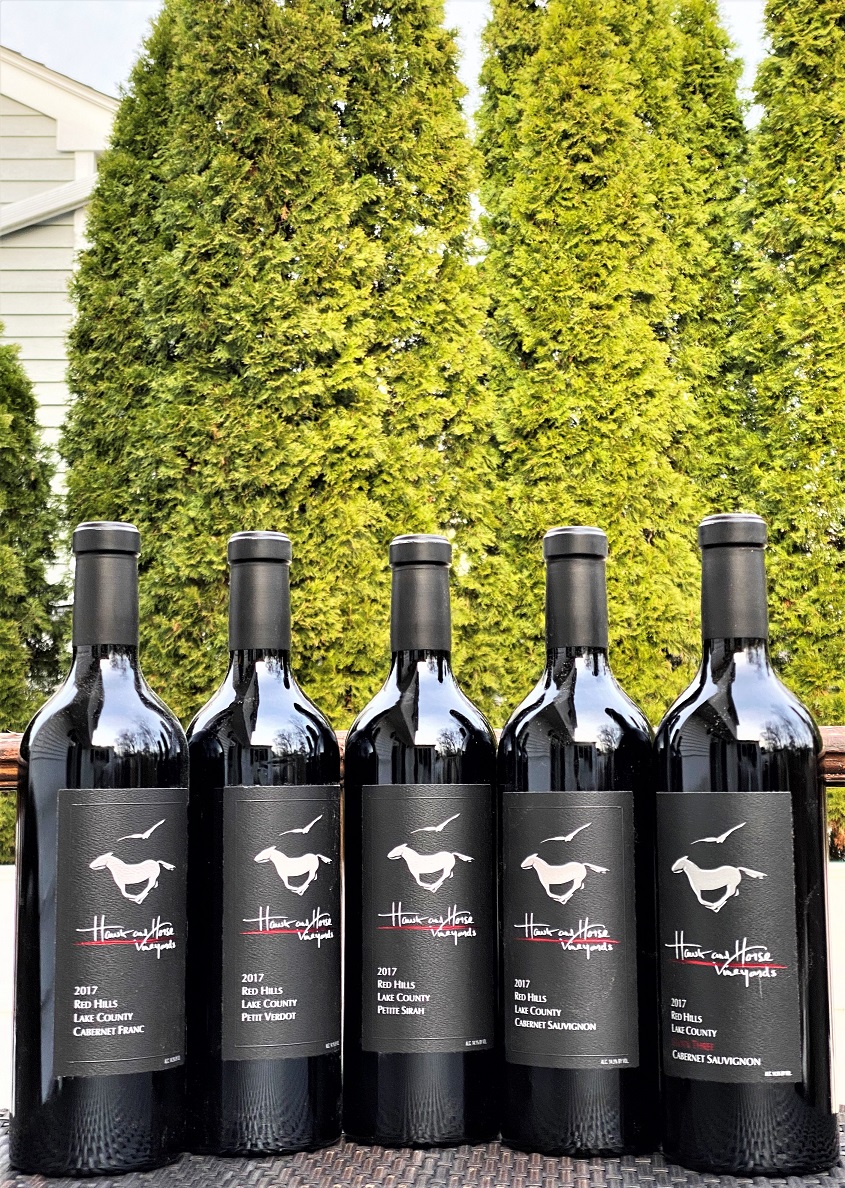
2017 Hawk and Horse Vineyards Cabernet Sauvignon Red Hills Lake County (14.3% ABV, $75, 98% Cabernet Sauvignon, 2% Petit Verdot, 100% French oak (80% new), 1800 cases produced)
Dark garnet
Earthy flavors, eucalyptus, a hint of cassis
Good acidity, well-integrated tannins, the lightest wine so far.
3 days later ( no air pumping, just reclosed)
The nose has a similar profile (cherries, eucalyptus, mint), maybe a touch higher intensity
Delicious on the palate, dark well-integrated fruit, firm tannins, tight core, lots of energy, a hint of espresso, perfect balance, medium-long finish.
This wine can be enjoyed now, especially with food. Or left alone for the next 15 years. Your choice.
Drinkability:8+
2017 Hawk and Horse Vineyards Cabernet Sauvignon Block Three Red Hills Lake County (14.3% ABV, $60, 85% Cabernet Sauvignon, 10% Petit Verdot, 5% Cabernet Franc, 100% French oak, 150 cases produced)
Dark garnet
Warm, inviting, succulent cherries, a hint of bell pepper, very delicate. Overall, ripe Bordeaux nose
It took this wine 4 days to fully open up. Bordeaux style, ripe berries with herbal undertones, well-integrated tannins, soft and dreamy.
Drinkability: 8/8+
Cabernet Franc, Petit Verdot, and Petite Sirah were absolutely delicious from the get-go. Both of the Cabernet Sauvignon wines, coming from the same vineyard and the same vintage really needed time – I don’t know if the type of oak used can make such a difference, but from my observations, it was clear that using more of the new oak made the wine a lot more concentrated and requiring the time in the cellar.
Here it is, my encounter with [magically], [mysteriously] delicious biodynamic wines. What do you think of biodynamics and biodynamic wines? What do you think of the magic of wines (no, you don’t have to answer that 🙂 ). Cheers!
Beyond Wine? Before Wine? Instead of Wine?
Today, class, we are going to talk about grape juice. The real grape juice.
Am I about to descend into the rat hole of “clear and unclear wine” with this “real juice” statement? Nope. Not at all. Today we are talking about pure, unadulterated, varietal grape juice which stayed in the form of juice without becoming the wine.
When I got an offer to receive a sample of the Castello di Amorosa varietal grape juices, my first reaction was “seriously???”. Juice is juice no matter what it is produced from, right? It is usually cloyingly sweet and not something I generally enjoy. I had a great experience tasting the juice of just-harvested Merlot grapes at Paumanok winery on Long Island, and I still remember how incredibly sweet it was, so I don’t really see it as a product on its own. But then curiosity prevailed, and I asked for the sample to be shipped.
I got three juices shipped to me – Muscat Canelli, Gewurztraminer, and a Sparkling Red blend, all beautifully packaged in the Riesling-style bottles and labeled exactly as the wine would. Muscat Canelli and Gewurztraminer are 100% pure varietal, and red blend consists of 90% Gamay, 5% Cabernet Sauvignon and 5% Grenache. All juices priced at $14 per bottle and available at the winery or online.
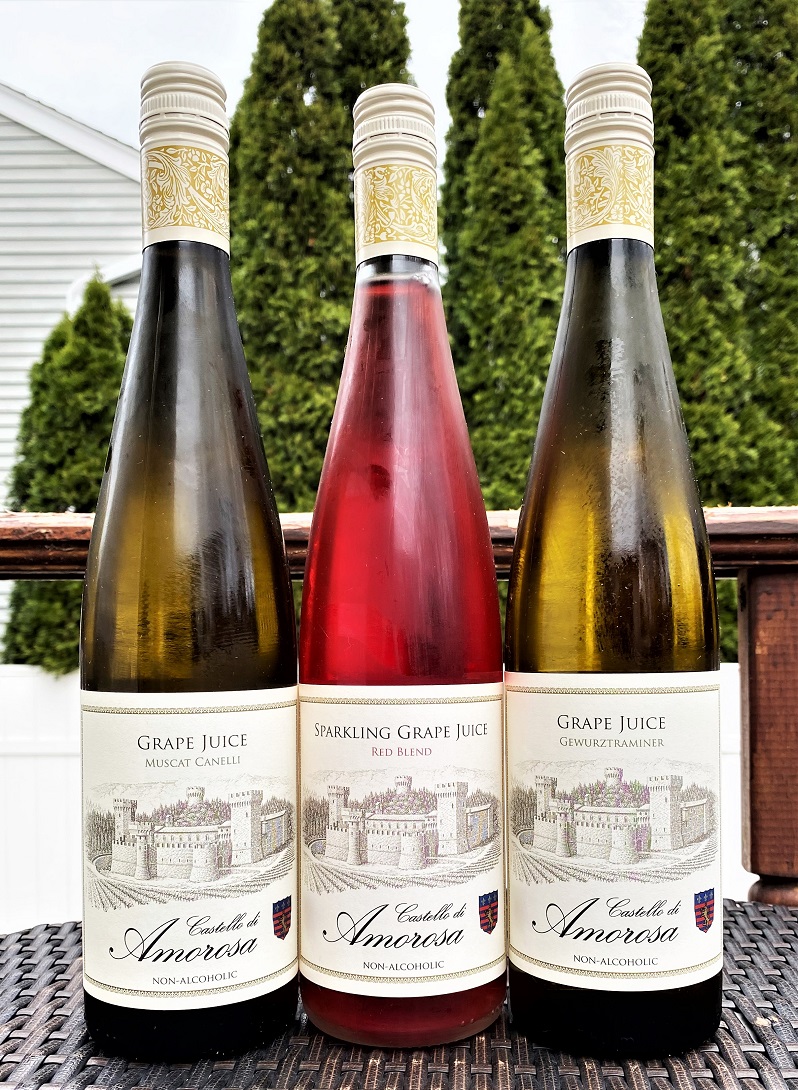
When I first tasted the juices, I really didn’t treat them as wines – I didn’t try to analyze the profile and understand individual flavors, the nose, the palate – I looked at them more as binary “like/don’t like” type of experience. I also made the mistake of judging the “wine” by the first taste – thus I declared Muscat, which was open the first, to be “too sweet”. Gewürztraminer was open second and showed nicely (read: surprisingly) balanced. The sparkling red blend was my favorite – it was barely fizzed (”sparkling” is a big word here) and had a nice tangy mid-palate feel, sort of a burst of the wild berries – really, really delicious.
It is interesting to note that these juices not only taste like wines, they also behave like wines. On the second day, the initial sweetness of Muscat subsided – just a little bit, but it was enough to make the juice appear more balanced and the Muscat instantly became my favorite for the evening.
I had been writing about wines for more than 10 years. While writing about the wine, all the little details – technical details, shall I say – summarized in the tasting notes, published by the wineries for all the wines and all the vintages – are quite helpful. This is where you find the details about the vintage, grape composition of the wine, fermentation, and oak regimen. At least, this is what I typically use in my writing. Talking about wine’s technical details, you can also often find there some of the analytical data – namely, pH and amount of residual sugar. And so in my 10+ years of writing, I literally never paid any attention to pH and residual sugar – it took nothing less than unfermented grape juices to make me look at those. Let me share those details with you:
Castello di Amorosa Gewurztraminer Grape Juice – residual sugar: 200.9 g/l, pH: 3.19
Castello di Amorosa Muscat Grape Juice – residual sugar: 18.5 Brix (199.12 g/l), pH: 3.35
Castello di Amorosa Sparkling Grape Juice Red Blend – residual sugar: 18.6 Brix (200.28 g/l), pH: 3.25
As you see, all juices have about 200 grams of sugar per liter – for comparison, there are 113 grams of sugar in one liter of Coke. We can also compare these juices with world-famous dessert wines – Sauternes, which typically sport between 80 and 120 grams of sugar per liter, occasionally reaching 160 or even higher. When it comes to pH values, wines are typically falling in the range between 3 and 4, and the lower the pH value is, the more acidic the wine will be perceived (note that pH is not a direct measure of acidity in wine), so as you can tell the pH values of these juices are quite comparable with the wines.
At the end of the day, it all comes down to balance. Everyone’s palate is different, and your perception of sweetness, acidity, and bitterness can perfectly differ from mine, however, balanced wines exist in each one of our personal worlds. So I have to tell you that each one of these juices was perfectly balanced for me, and therefore, I’m aptly impressed by the mastery of the winemakers here. To make my excitement clear – these are unadulterated beverages. There is nowhere to hide. No flavor-enhancing yeasts, no oak, no blending. Nothing. You need to know when to harvest and when to bottle. Nowhere to hide.
As you can tell, I can wholeheartedly recommend these juices. They are perfect on their own. Perfect any time you desire a little sweet fix after the meal. They will perfectly well support a wide variety of dishes. And I have a number of friends who only drink sweet wines with very little alcohol in them – considering the quality of these juices, I would much rather prefer to serve them these juices instead of Bartenura Moscato di Asti or a similar plonk (my apologies).
You know me well, so I’m sure you understand that it is improbable that I wouldn’t have any gripes – of course, I have them. While winery information on the back label is nice to have, I would like to know when these juices were bottled. How they should be stored. For how long they can be stored. How the opened bottles can be stored (I’m presuming in the refrigerator, but still), and how quickly the opened juices should be consumed.
Nevertheless, this was a great surprise and a delicious discovery. We might be looking at the trend here – hard to tell, but I expect that there will be wineries that will follow Castello di Amorosa’s lead. And I personally would be happy to have a few bottles always on hand to delight oneself or a special guest. Next time someone offers you a glass of varietal grape juice, say “thank you” and enjoy. Cheers!
Double Lucky Number 8
Luck.
An interesting term.
Luck is extremely subjective, personable, and relative. There are many definitions of luck, starting with the cliche one “when preparation meets opportunity” – not sure how that would apply for example, in the case when the brick is accidentally falling off the roof of the building and missing your head by the quarter of an inch. Or when you win the lottery. When you miss your train and meet the love of your life – what kind of luck is that? Okay, let’s not get hung up on the research of the true meaning of “luck” as this is not the goal of this post.
Last year, 2020, can hardly be called a “lucky” year. Quite on contrary, for 99.9% of people living today, this was probably the unluckiest year of their lives to date (who knows what the future hold). Or was it? Yes, we lost the ability to travel, eat out, enjoy the concerts, and socialize with friends. And yet many of us who kept our jobs managed to pay off debt (Americans paid off the record of $83B in credit card debt), invest into their homes (the price of lumber doubled in certain markets in the USA, due to very high demand), and even get well on the path to early retirement. And those of us obsessed with wine even got access to the wines we couldn’t dream of before (thanks to the restaurants not buying those wines anymore), and meet lots and lots of winemakers who happily visited our houses – via zoom. Everything has its silver lining.
A few months ago I got an email from Cayuse, saying that I will be getting a bottle of wine called Double Lucky #8 – a free sample, plus there will be a special zoom with the winemakers to introduce the new wine. Cayuse, and all of the “sister” wines – No Girls, Horsepower, Hors Categorie – are super-allocated (never mind expensive), so the free bottle sounded very lucky.
The wine arrived a few days ago. A beautiful bottle that solicited an array of thoughts. Cayuse wines are better with age – 2017 is clearly too young to be enjoyed now. Also, I love sharing the wine – so what should I do – to open or not to open? I decided that as this will be a unique opportunity to taste this wine together with the winemakers, I should just open the bottle and go with the flow. But also do it in a smart way – open a few hours in advance and decant it – which I did.
I remember reading an article by W. Blake Gray, the wine writer and a critic I respect very much, who mentioned that Cayuse wines might be the best wines made in the USA. Ever since then, tasting Cayuse wines became a dream, which required more than 10 years of waiting to get on the mailing list. Obviously, meeting Christophe Baron was a similar dream, which materialized thanks to pandemic and zoom.

Our zoom session was moderated by Owen Bargreen, the wine critic from Washington, with Christophe Baron and Elizabeth Bourcier, the winemaker, talking about all of the wines produced by Cayuse – well, that is not exactly correct. As introduced by Christophe Baron, it is all the wines produced by Bionic Wines, the new overarching brand, which includes Cayuse, No Girls, Horsepower, Hors Categorie, and Champagne Christophe Baron.
It is all about the rocks (Cayuse is derived from Cailloux which means stones or rocks in French). If I would give you a cliff note on what Christophe Baron does, it would sound something like “he finds the great location, establishes new vineyard, and makes new wine” – really, this is the story behind various Cayuse wines, No Girls, Horsepower…
Everything at Cayuse is done in full respect and harmony with nature – all the vineyards are farmed biodynamically since 2002 – the only biodynamic winery in Washington. As Christophe put it eloquently during the webinar, Mother Nature is the Master, and we are all her servants – it is Mother Nature who produces the grapes, and the winemaker needs to covert those into the wine, hence the utmost respect and attention to producing the wines in full harmony with nature.
We talked about all the wines under the Bionic wines umbrella, how they came to being (remember, new vineyard – new wine), and what is the philosophy behind them all. Almost at the end of the session (the time flew unnoticed, all thanks to the incredible energy and enthusiasm of Christophe), we finally talked about 2017 Double Lucky #8, a blend of Grenache, Syrah, and Tempranillo, the same three varieties which comprise No Girls offering. Double Lucky is Elizabeth Bourcier’s project, from start to the finish – her idea, her execution. She wanted to create the wine similar to Cotes du Rhône – simple and approachable from the get-go, a sort of Cotes du Walla Walla if you will. Was she successful? Let’s talk about it.

When I poured the wine at first, it literally jumped out of the glass. I call Cayuse wines “liquid rocks” – Double Lucky was no exception, with granite, iodine, and smoke being prevalent both on the nose and on the palate. The wine was definitely drinkable, though not for the faint at heart – if you like massive wines, you would be pleased. 2 hours in a decanter made the wine more mellow, shifting the balance towards some cherries and herbs. For my palate, the wine continued up and down until it was gone.
Elizabeth shared her winemaking philosophy, which includes whole cluster fermentation and use of the stems, as stems “give the wines freshness” in her own words. I’m rather cautious about both – I guess my palate is overly sensitive to the tannins extracted from the stems – I perceive them as “green” tannins, which are unpleasantly bitter, and thus I’m generally not a fan. So I don’t have a strong opinion on Double Lucky #8, and while the wine is influenced by Cote du Rhône, it will last for the next 10–20 years, unlike Cote du Rhône wines, which typically have only a few years to be enjoyed, so I would definitely mark it as “needs time” right now. One more parallel with Cote du Rhône – those wines are usually inexpensive – and Double Lucky will be the cheapest wine in Bionic Wines portfolio, at $44 when it will be officially released next winter as part of the No Girls wines release. While the wine is a blend of Grenache, Syrah, and Tempranillo, there are no exact proportions, as the blend will change every year. I can only guess Grenache makes the majority of the blend, given Elizabeth’s propensity for use of Grenache as she does in her own sought-after wine, La Rata.
I have to tell you that while the zoom is exceptional, it is hard to keep attention all the time. As the result, I don’t know if it was just me, but I didn’t really get the real story behind the intriguing name (Double Lucky) and the meaning of #8. Was that the blend #8 which became the winning one? Was the idea behind this wine associated with some lucky moment? I would love to know, but I have no idea. Hopefully, someone will be luckier than me and we will learn the story behind the name.
Was that a lucky break drinking Double Lucky and listening to Christophe Baron? Oh yes, it was. I wish all of us lots and lots of luck, whether we are prepared for it or not.
A Perfect Perfection
 Yes, I know. “Perfect Perfection”. The English language offers more than 170,000 words, and this “writer” can’t even come up with a decent title for the post. Shame on me.
And nevertheless, I insist on my choice of words. Let me tell my tale to see if this will make sense to you too.
Valentine’s Day is a very personable holiday, loved by some, and hated by others. Many years ago, we decided that it will be simply a family holiday for us (no restaurant Prix Fix menus and back to back sitting), which translates into an opportunity to cook and – it is a special holiday, after all – open a special bottle of wine.
A special bottle of wine means a special selection process. “Special selection process” usually means trouble – going from a wine fridge to a wine fridge, opening the door, pulling the shelf, looking at the bottles, pulling another shelf out, still not finding anything appropriate, and repeating until full exhaustion. For this dinner, however, a choice of the main dish greatly simplified the process.
In this house, special dinners are often associated with the steak. Such was this Valentine’s Day – New York strip was acquired and ready to be cooked. Many wines can play well with the steak, but in simple terms, steak needs Cabernet Sauvignon or a Cabernet Sauvignon blend. With that in mind, choosing the wine was almost easy and straightforward – California Bordeaux-style blend with a nice age almost popped into my hand on its own.
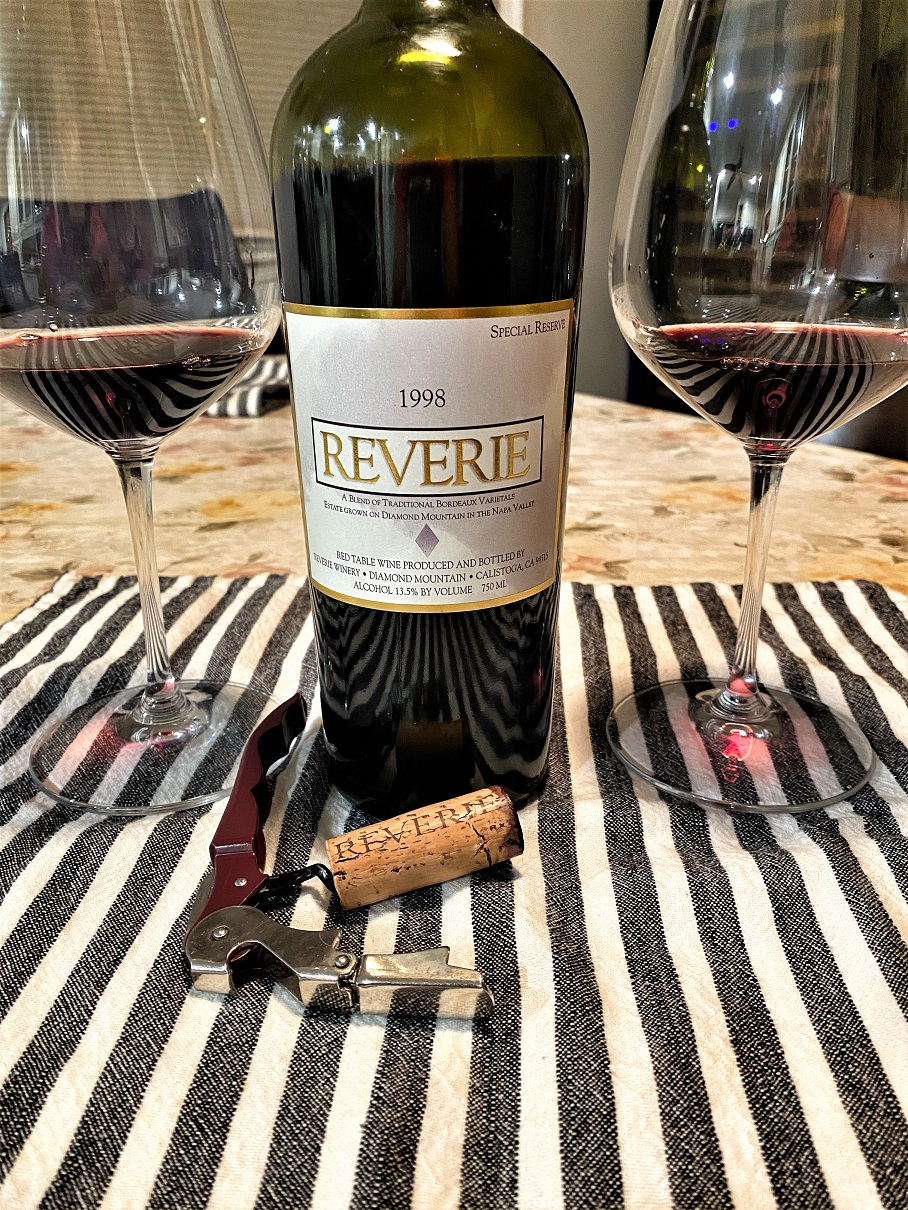 I never had this wine before. While looking for the 1998 wines to buy (birth year of my son) at the Benchmark Wine, I came across this 1998 Reverie Special Reserve Meritage as it was described. At $30, 22 years old unknown wine from California sounds like a risk I was willing to take (so far, I didn’t miss – “knock on wood” – even a single time buying aged wines from Benchmark Wine, everything was tasty and perfectly drinkable). In the wine fridge, this wine was laying on one of the first shelves I pulled out, and the inner voice quickly said “this is it” – I decided not to argue.
I had the wine warm up a bit before opening it. About an hour and a half before our decided dinner time, I carefully pulled out the cork – I had quite a few corks crumbled almost to the dust on me lately, so was extra careful pulling this one out. To my delight, the cork came out in a perfect shape, practically intact.
The first whiff of this 1998 Reverie Special Reserve Diamond Mountain (13.5% ABV, blend of Cabernet Sauvignon, Cabernet Franc, and Petite Verdot, aged in 100% new small French oak barrels) simply suggested taking a sip immediately. The wine had aromas of cassis and mint, a pure, classic, beautiful Cabernet Sauvignon profile. The palate followed almost in the impossibly perfect way. Cassis, mint, and eucalyptus, all in pristine, perfect, form. There was nothing extra in that sip – it was perfectly round, perfectly smooth, with just enough acidity, with just enough of the tannins, with just enough of the fruit. A perfect, perfect, perfect balance, an absolute harmony which is not easy to find – the one which puts a stupid smile on your face. Yep, that’s how good the wine was.
Our impressions seemed to match perfectly with what the back label said: “we only designate the blend made from the best lots of the traditional Bordeaux varietals as Special Reserve when we believe the wine is extraordinary. We believe this wine is worthy of that designation. We are incredibly proud of this very limited release wine and know you will also enjoy it immensely. A wine this fine should be saved for a special occasion and enjoyed with the finest cuisine and good friends”. It is rare to find a back label to be spot on describing the wine – but in the case of this special Reserve, this was a complete success.


I don’t think my pan-seared steak belonged to the finest cuisine category – but at least it was not burnt and raw at the same time – and it paired very well with the wine. We also made special potatoes in the air fryer and oven-roasted asparagus came out super-tasty (from now on, this might be the only way I will cook asparagus).
This is my story of the perfect wine experience – truly at the level which will be hard to replicate. What are your “perfect wine” stories?
Of Beautiful Things
Beauty is an interesting concept. It seems to be simple and universal. And nevertheless, the declaration of beauty might dramatically differ, even for the people going through the same experience. Take flowers, for example – if someone doesn’t like daisies, looking at the field of daisies will solicit no emotional response, but the same person might spend an hour admiring an orchid.
Whatever we see as “beautiful” solicit emotion, it gives us a tiny burst of positive energy, it makes us happy. But the proverbial “truth in the eye of the beholder” is fully in control – everyone decides on their own concept of beauty.
Photography is one of the best and simplest tools to capture the beauty of the moment and convert it into a tangible memory, something you can get back to. For sure I’m the one who heavily relies on photography for doing so. If you look at the pictures on my phone, you will have no problems figuring out that I consider wine, flowers, and sunsets as the most beautiful things in this life – well, this is not an absolute truth, but we can go with it for this post. Of course, sunsets and flowers are exactly what they are, but the wine bottles in the pictures simply represent the memory knots, the real beauty is inside the bottle, no matter how pretty the labels are.
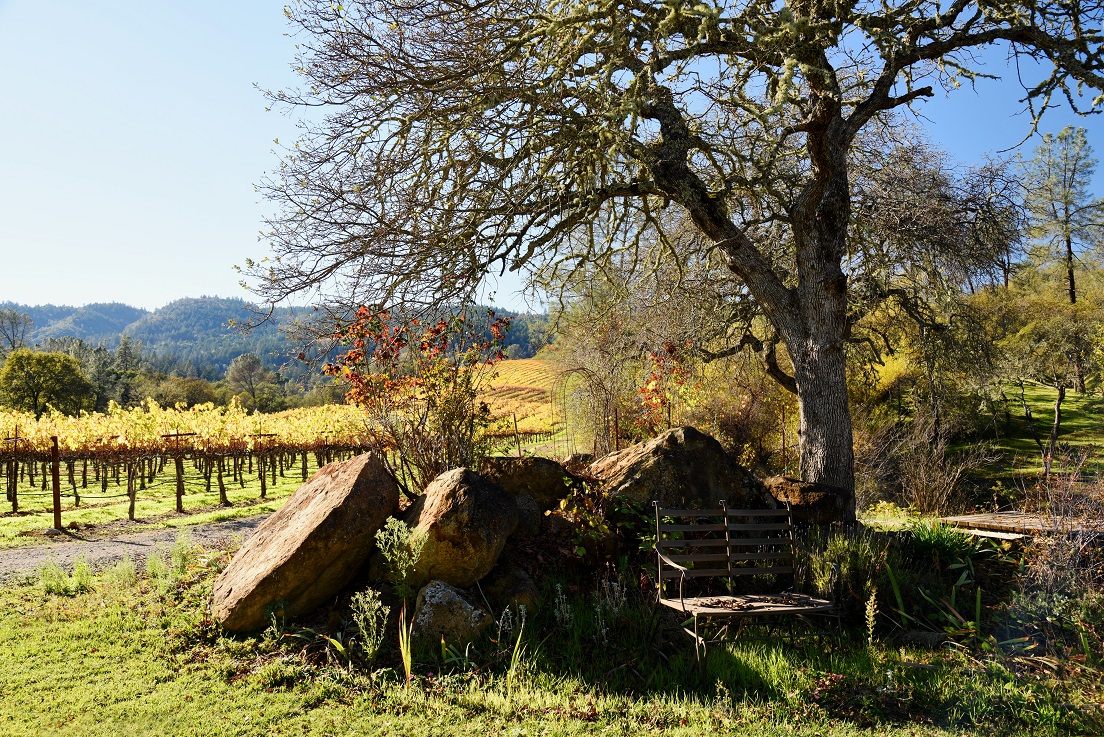
Garden at Calla Lily. Source: Calla Lily Winery
Calla Lily Estate & Winery is a project of renowned California winemaker, Cary Gott, and a group of business partners out of Hong Kong, who together started Calla Lily in 2013. Calla Lily is 95 acres of the estate in the Pope Valley section of Napa Valley, with the first vines planted in 1995. The estate’s vineyards comprise 12 acres of Cabernet Sauvignon, 5 acres of Petite Sirah, and 1 acre each of Merlot, Cabernet Franc, Malbec, and Petit Verdot.
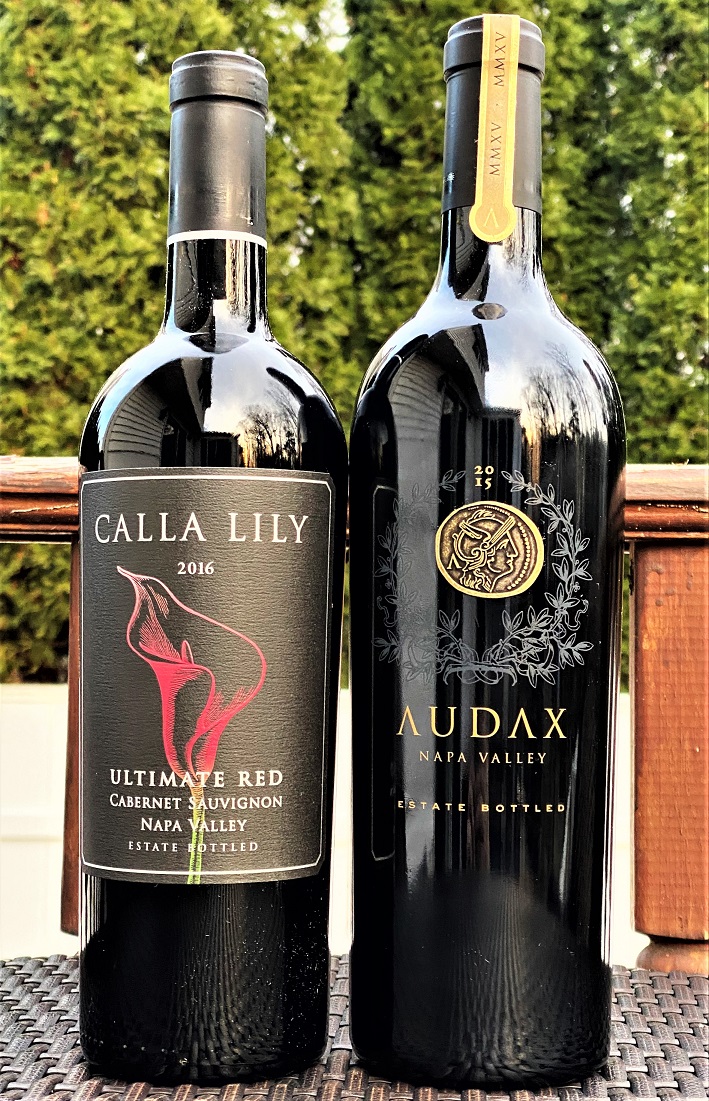
Calla Lily is not a random name. You can see the beautiful flower appear on the label of Cabernet Sauvignon, and it is both the name and the symbol. Calla is a type of lily flower, which takes its name from the ancient Greek word “Kallos” which means “beauty”. Calla Lily had been around a few thousand years and has a lot of symbolism associated with the flower in Greek, Roman, and Egyptian cultures, as well as in Christianity overall. You can read about Calla Lily symbolism further here, but I also can’t resist quoting the same source in regards to the meaning of the color of the Calla Lily flowers: ”
- White Calla Lilies: Purity and innocence.
- Yellow Calla Lilies: Joy and growth.
- Pink Calla Lilies: Appreciation and admiration.
- Red Calla Lilies: Intense passion.
- Blue Calla Lilies: Femininity and refined beauty.”
As you can see, red Calla Lily is depicted on the label of the Calla Lily wine, and after tasting the wine, I have to agree to the “intense passion” suggestion.
After talking about beautiful flowers, let’s talk about beautiful wines, as I had an opportunity to sample two of the Calla Lily wines.
2016 Calla Lily Ultimate Red Cabernet Sauvignon Napa Valley (14.5% ABV, $65, 84% Cabernet Sauvignon, 6% Cabernet Franc, 6% Merlot, 4% Petit Verdot, 26 months in 40% new French oak) was an interesting experience. While the nose was intense with red and black fruit, the wine on the palate was way too powerful for me to really enjoy it as “pop and pour”. The wine kept gradually improving over the next 4 days, finally offering soft rounds of cassis and mint, over the velvety texture. You need to wait for some beautiful things in life – for example, for a flower to fully open up from a tiny bud – this wine is beautiful, but you might need to wait for it – or decant it well in advance (Drinkability: 8- )
2015 Calla Lily Audax Cabernet Sauvignon Napa Valley (14.1% ABV, $120, 92% Cabernet Sauvignon, 4% Merlot, 3% Cabernet Franc, 1% Malbec, 27 months in 50% new French oak) is yet another interesting wine. “Audax” in Latin means “bold”, and this barrel-reserve wine is a tribute to the audacity of the pioneer winemakers, many of whom settled in the Pope Valley. Somewhat unexpectedly, the wine was more approachable from the get-go than the previous one – beautiful nose of cassis, and more cassis on the palate, accompanied by mint, pencil shavings, espresso, and cherry pit. Lots of beautifully balanced power with a firm, dense structure. (Drinkability: 8)
Here is the story of the two beautiful things in life – flowers and wine. Beautiful things are well worth seeking. What brings beauty into your world?
Retrospective: 11 Years of Top Wines
 While I was working on the Top Wines list of 2020, it almost hit me – 2020 was the 11th year the list of the top wine experiences of the year was produced.
In every Top Wines post, I make an effort to explain my approach to the creation of the top wines list – it is all based on emotions solicited by the wine. The easier it is to recall the wine and relive the moment, the better it is.
I often state that the order of the wines is not so important (this is how I want it to be, but it is usually not the case – the order has meaning) – with the exception of wine #1. Wine #1, the Top Wine of the Year, is always the most memorable. For a few years, I even had difficulties deciding on just one top wine, so I had multiples of wine #1. Strange, I know – but I always have a simple excuse – this is my blog…
All of the Top Wines lists can be found via the Top Wine Ratings menu on the top of this page. However, what do you think of taking a look at the top wines from these past 11 years, just for fun? I would like to enjoy those memories again – and see if I still have them as vivid as I like to think. Let’s see:
2010:
2007 Mara Laughlin Road Ranch Pinot Noir Russian River Valley ($45) – I can attest that this was one of the best California Pinot Noirs I ever tasted. I still have a bottle each of Mara Pinot Noir 2007 and 2008 (2008 was a complete opposite to 2007, very lean and green) – should make it for an interesting evening one day.
2011:
2010 Fiction Red Wine Paso Robles by Field Recordings ($20) – this was my first discovery of the Field Recordings wines, and that Fiction was unbeatable, it offered an incredible experience. I also loved the label and the story on the back label of that wine, which, unfortunately, disappeared in the later vintages.
2012:
2010 Antica Terra Phantasi Oregon White Wine ($100, Magnum price in the restaurant) – Definitely a memorable wine, a blend of Rhone varieties – I can close my eyes and imagine the taste of this wine in my mouth. While this is one of the most memorable Top wines, the wine in the second place was not any less memorable – 1947 Rioja Imperial. Also, it appears that I didn’t even include another wine from the same dinner when we experienced the Phantasi, 1998 Dunn Howell Mountain Cabernet Sauvignon in the Top Dozen list, which is a huge oversight…
2013:
1970 Quevedo White Port – tasting 43 years old elixir together with the winemaker, in the old cellar, directly from the barrel? It rarely gets any more memorable than that.
2014:
1966 Louis M. Martini California Mountain Pinot Noir ($NA) – I found this bottle at the store in Chicago. As this is my birth year, I couldn’t resist getting this bottle for a whopping $25. To my absolute surprise, the wine was perfectly drinkable and delicious. And the label is just purely nostalgic…
2015:
2011 Emiliana Coyam Colchagua Valley Chile ($35) – ordered this wine at the restaurant without any knowledge, mostly going by the price – OMG. This is one delicious wine.
2016:
2002 Pol Roger Sir Winston Churchill Champagne ($230) – one of the most memorable top wines. While I loved the taste, I could smell this wine indefinitely. Really, I have no need in drinking it, but I can’t let go of the aroma…
2017:
1982 Olga Raffault “Les Picasses” Chinon Loire ($85?) – this was unquestionably great – one of my most favorite grape varieties (Cab Franc), legendary vintage (at least in Bordeaux), great producer. The sad part? This is one of the few “Wine of the Year” wines I can’t recall the sensation of taste, smell, or the setting …
2018:
2008 Zenato “Sergio Zenato” Amarone della Valpolicella Classico DOCG ($100) – Amarone is one of my most favorite wines in general – but I have exactly the same issue here as with the Olga Raffault – no detailed memories. I’m sure it was a good wine as it made it to the alternative #1 winner.
2013 Three Wine Company Suscol Creek Cabernet Sauvignon Block 5 Napa Valley ($60) – One of the very best Cabernet Sauvignon I ever tasted. We had this wine during tasting dinner at the restaurant during one of our traditional “adult getaways”. This was round and supremely delicious.
2019:
2013 Smith-Madrone Cook’s Flat Reserve Spring Mountain ($225) – Smith-Madrone makes beautiful wines. This wine can be described in one word – Pure. Pure indulgence, and pure, unadulterated pleasure.
2016 Tara Red Wine 2 Syrah Atacama Chile ($40) – I have a sad habit of not being able to write a post after a great winemaker dinner, as was the case with Tara wines. Magnificent Syrah, coming from the vineyards which in reality shouldn’t have existed because of the incredible salinity of the soil. As I say in such cases, this is the wine to be experienced.
2017 Peju Province Winery The Experiment Napa Valley ($100) – a prolific Napa Valley jewel. Power and balance, or balance and power – whatever description suits you more.
2020:
1999 Soldera Case Basse Brunello di Montalcino DOCG ($NA) – Meditazione vino. The whole group meditated over this wine, as it was simply a gift from gods. Incredible. If wine is not “just another beverage” to you, you would understand. And I wish for you to experience meditazione vino at least once in your life…
Here we are – 11 years of top wines. This was definitely an interesting exercise – while I enjoyed recalling each and every one of these wines, this was also a great opportunity to think about my Top Wines process. I’m reasonably pleased with top wine selections during these years, but ideally, I would like to do better – every wine on such a list should solicit a memory and an emotion. Oh well, we should call this “the room for improvement”, right? Cheers, my friends!
The New Sotheby’s Wine Encyclopedia – A Must Have For A Winelover
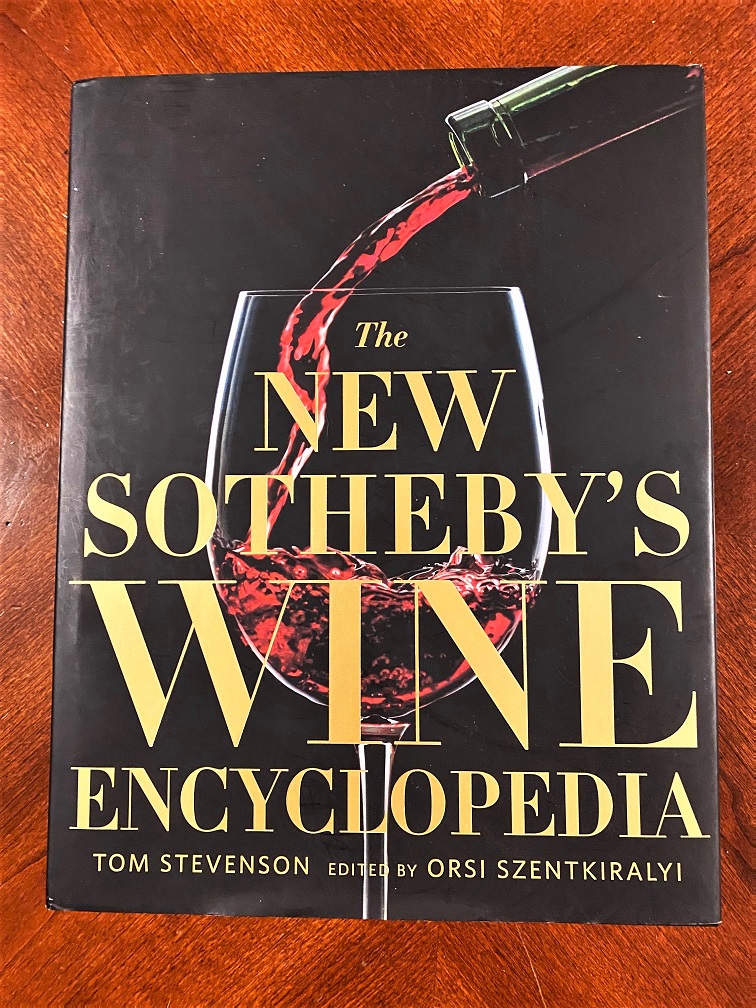 Do you like wine books?
Better question: do you read wine books?
Wine book is the next best “wine thing” after the wine itself – assuming you drink wine for pleasure, and not for the effects of alcohol. Reading the wine book gives you the pleasure of learning about your favorite subject, it is available to you any time you want it, and you don’t have to limit your consumption. There is also an ultimate pleasure of nesting in the favorite chair with a book in your hands, and turning off all the annoyances of the world at least for some time.
Only who reads the books today, right?
We live in the times when Google knows all the answers, or at least it pretends that it does, so we can search, find, read, and instantly forget whatever information we obtained. Depending on your luck, that information might be totally wrong or irrelevant, but that can be a subject for the whole other conversation. But when we reach out to Google, we think that we are saving time and doing ourselves a favor by simplifying our lives – all of it instead of opening the book and actually reading to learn and understand. But oh, who has time to read. Hey, google…
Today I want to bring your attention to the book which you don’t have to read. Yep, you heard me right. You don’t really have to read it. But you must have it. Makes no sense? Oh yes, it does.
You want to have “The New Sotheby’s Wine Encyclopedia” by Tom Stevenson edited by Orsi Szentkiralyi because this is not some general book, this is an encyclopedia. An encyclopedia is a tool. You use it when you need an answer to a question. You use it when you want to deepen your knowledge of a particular subject, be it history of winemaking, wines of Fitou AOC, differences between Cordon de Royat and Geneva Double Curtain vine training systems, or what to do if your wine smells like burnt rubber.
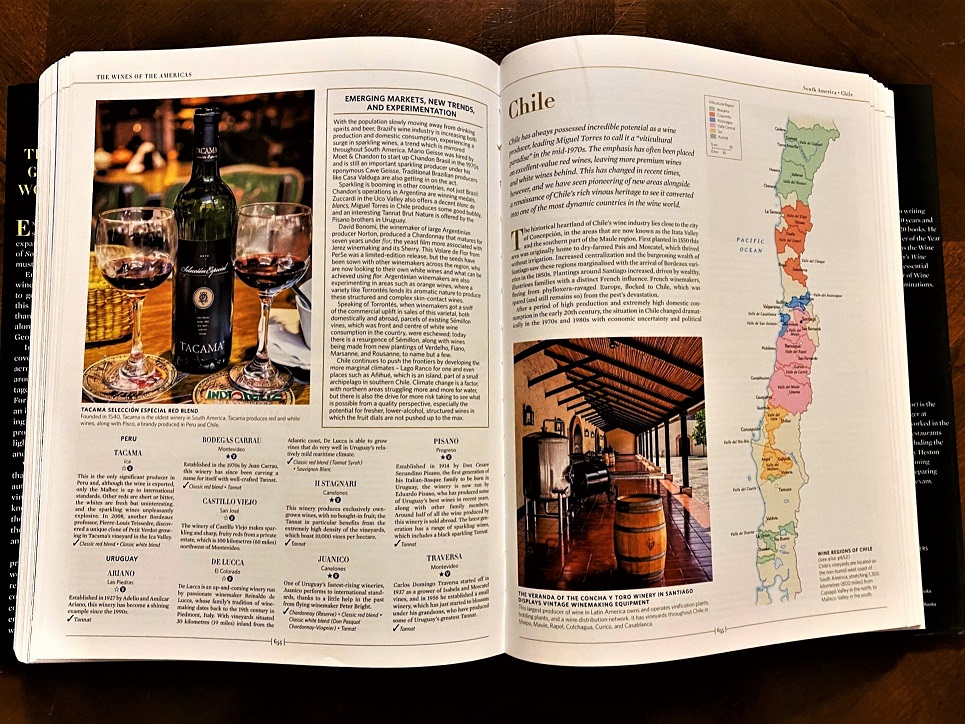
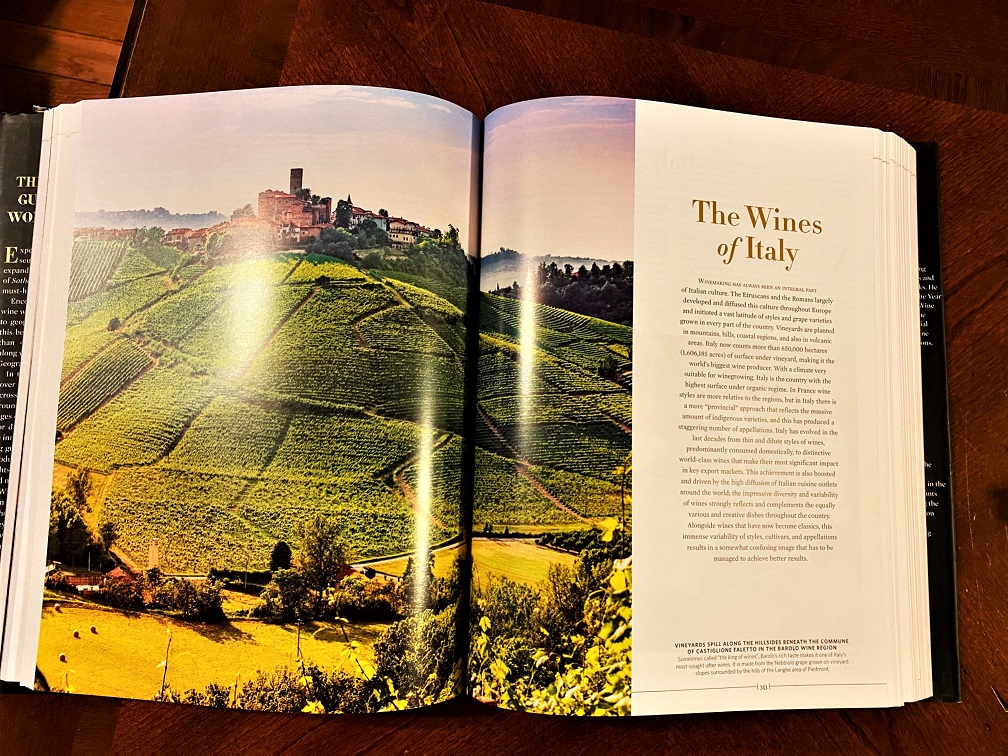
This is not a pocket-size book, but this is what makes it great. 800 beautifully illustrated pages (the book is published by the National Geographic, so great imagery is rather expected). This is a sixth edition of the book, containing more than 400 photographs, 120 National Geographic maps, and there is hardly a wine subject or a wine region that escapes the attention of the author.
It was interesting for me to see is a difference in the coverage of the different wine regions – to illustrate what I mean, see the picture below:

If you will look at clips from left to right, the first and the biggest set of pages is covering France, the next small section is dedicated to Italy, the next, even tinier, is Spain, and the last a bigger one is wines of the United States. But really, no wine region is left uncovered, even including such exotic winemaking destinations as China, India, and Japan.
My favorite part might be the last section of the book, called Micropedia. This section is a collection of wine terms and abbreviations. Yes, you can find many of these terms with the help of Google, but it might not be that easy. For example, the very first term explained in the Micropedia is ABC. If you search for “wine ABC” online, the first page which will come up will most likely be dedicated to the ABC wine store (it was for me, at least) – while the ABC used in the wine speak typically means Anything But Chardonnay or Anything But Cabernet. So if you want to know what ABC stands for, or agrafe, rondelle, or uvaggio for that matter, The New Sotheby’s Wine Encyclopedia will save you lots of time and effort (don’t take my word for it, go search for those terms).
Whether you want to learn about appellation you never heard of, the history of winemaking, or see the map of wine regions in Slovenia, this is the book which you will find the most helpful, no matter what your question is. You can find this book on Amazon and Barnes & Noble, and you can thank me later for the advice. I’m off to read about Madeira. Cheers!
The New Sotheby’s Wine Encyclopedia was provided to me as a sample, free of charge. Opinions are my own.
Daily Glass: Unlimited Pleasures
I opened the bottle.
The wine was delicious. I will be happy to drink it again.
The end.
Simple story, right? Boring too, I guess, but – it doesn’t always work like that. Quite an opposite – I opened the wine. It was okay. I don’t want to drink it again. The end. But this is not the story anyone wants to talk about.
Let’s go back to the delicious wine.
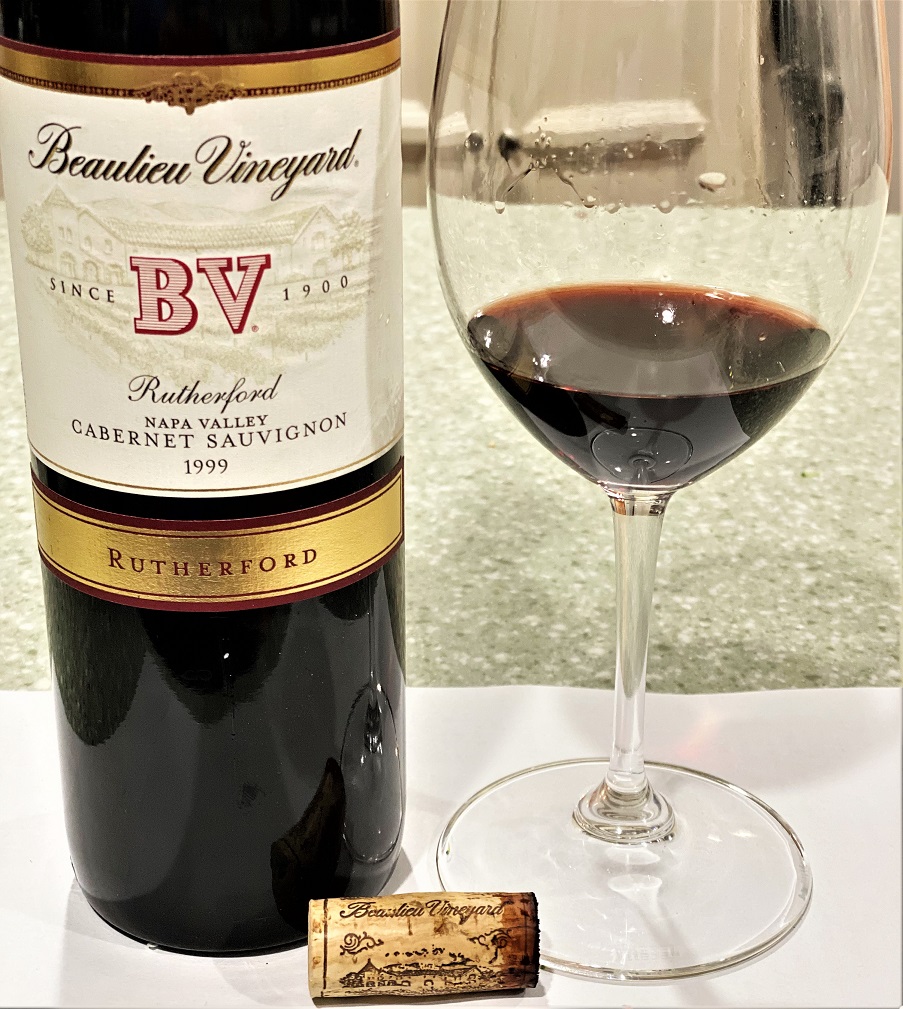
If you read this blog for any extended period of time, I’m sure you already know: I love aged wines. Contrary to what typical wine articles advocate – stating that the absolute majority of the wines should be consumed young and should never be aged – I absolutely believe that a significant number of wines, especially reds, not only can age but also improve with age. The evolution of the wine in the bottle is what we are after. Young wine can be perfect and deliver lots of pleasure to the drinker. Well-aged wine delivers lots and lots more – it is not just pleasure, it is often the whole experience. My latest proof and case in point (wish you were there) – 1999 BV Rutherford Cabernet Sauvignon.
If you like drinking aged wines, and share my view that many wines can age, the good news is that you don’t always have to personally buy the wine and wait for 20 years before drinking it. I found this wine while browsing the Benchmark Wine website. Benchmark Wine Group buys collections and then sells the wines at the market price without an auction. “Collection” doesn’t necessarily mean only DRC and Petrus – collections also include wines suitable for everyday drinking. Those “everyday wines” represent great value, as aging is included, and often it doesn’t cost you anything – I paid $30 for this exact 1999 BV Rutherford – and I can get the current (2016) vintage of the same wine in New York area for $29.99. Yep, I rest my case.
BV, which is short for Beaulieu Vineyard, is one of the iconic California wineries, founded in 1900. This is where André Tchelistcheff, often referred to as Maestro, honed his winemaking craft, completely changed winemaking at BV, and tremendously influenced winemaking in California ever since his arrival to Napa in 1938. It is impossible to talk about André Tchelistcheff within a short blog post, and I’m sure you can find hundreds of articles and books talking about his legacy. André Tchelistcheff retired from the active winemaking duties in 1973 – and I read somewhere that the last great vintage from BV was 1972. I wish I could compare 1999 which I had with 1972, but for my palate, even 1999 completely over-delivered.
The wine opened up with an intense nose of eucalyptus and mint – you could tell from a distant corner of the room that this was classic California Cabernet Sauvignon in the glass. The palate followed with layers upon layers of black currant, eucalyptus, mint, bell pepper, all interwoven in complete harmony. A perfect balance of fruit, acidity, tannins – every sip was repeating that full performance over and over again.
At the end of the evening, the wine showed a bit of the plum and dried fruit and made me think that I was lucky to catch the wine at its peak. On the second day, the wine showed a bit more restrained, somewhat losing great energy it had the previous evening. On the third day, the wine changed again, bringing back the same black currant and eucalyptus, however this time in much leaner, classic Bordeaux fashion, and really showing up young, full of energy and promise.
Not only this was a delicious, well-aged wine, but it was also [expectedly] a memory catalyst. I had an instant flashback of memories of a wonderful visit we had at BV about 8 years ago, tasting not only multiple vintages of Georges de Latour Private Reserve Cabernet Sauvignon, but also unique clonal Cabernet Sauvignon wines. It is amazing in how many ways you can enjoy a simple sip of delicious wine.
That is my story, friends. Well-aged wines are amazing – can you tell yours?
A Weekend Of Wine Experiences
What makes the wine experience for you?
If you drink wine pretty much every day, is that every glass an experience? Is that even possible?
The experience should be something memorable, something you can bring up in your thoughts on the moment’s notice. The experience is not always positive – I well remember some bottles I had to pour down the drain – luckily, it doesn’t happen all that often. The experience triggers the emotion – pain or pleasure – and this is what makes us remember.
During our recent Cape Cod visit with the family, in addition to the ocean, flowers, and sunsets, we also had lots of wine. While some wines were good and simple – and not necessarily memorable – some were just at the level of creating a lasting memory. Let me present my case.
I try not to associate the color of the wine with the weather, but fresh and crisp white wine always brightens up a hot summer day better than a big red. Both wines we had were somewhat of an experience. 2018 Hanna Sauvignon Blanc Russian River Valley (13.2% ABV) was a reminder for how much I love this wine, which I consider one of the best California Sauvignon Blancs in general – fresh, citrusy, with plenty of the freshly cut grass and vibrant acidity. A sip of such wine makes you say “ahhh”, and immediately go for another.
The second wine was rather an unexpected disappointment – it had nothing really to do with the wine itself, I guess it was a self-inflicted disappointment, but this is how it will be remembered. 2016 Duckhorn Sauvignon Blanc Napa Valley (13.5% ABV) didn’t offer much anything in the glass. It was a white wine without a sense of place or much in terms of the expected taste profile. It had no obvious faults, just the taste of “some white wine”. Maybe it was supposed to be consumed two years ago (my wife got it as a present from a coworker and then it was forgotten on the bottom shelf of the cellar). Maybe it was in a “sleeper mode” at the moment. No idea, but this was definitely not something I expected from the Duckhorn.


I continue to surprise myself with an inability to find a bad tasting Rosé nowadays. Either something is wrong with my palate, or I don’t drink enough, or everybody simply mastered the art of Rosé to its fullest, but I like every Rosé I have an opportunity to taste. 2018 Etude Rosé Santa Barbara County (13.2% ABV) was excellent, strawberries all the way, both on the nose and the palate, very elegant and round. Etude is a Pinot Noir specialist, so this was a Pinot Noir Rosé. Santa Barbara designation also brought back lots of happy memories of my first Wine Bloggers conference in 2014. The second Rosé, 2017 Baron de Fumes Rosé Garnacha Cariñena DO (13.5% ABV) was a bit lighter but sharing mostly the same strawberry profile with a bit more acidity – still every drop delicious. This was also a great value at $8.99 at my local wine store – I now have a few bottles in the fridge ready to be open on any hot day.
Time to move to reds – and to elevate the experience.
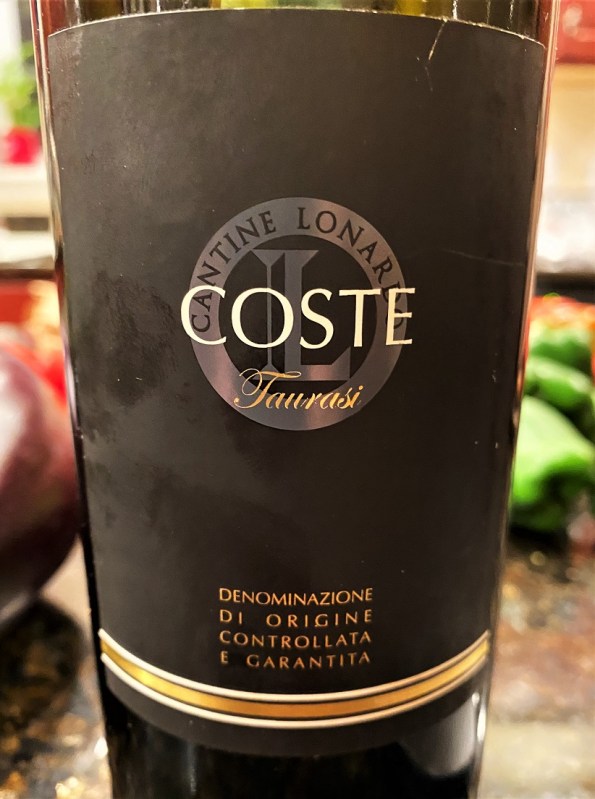
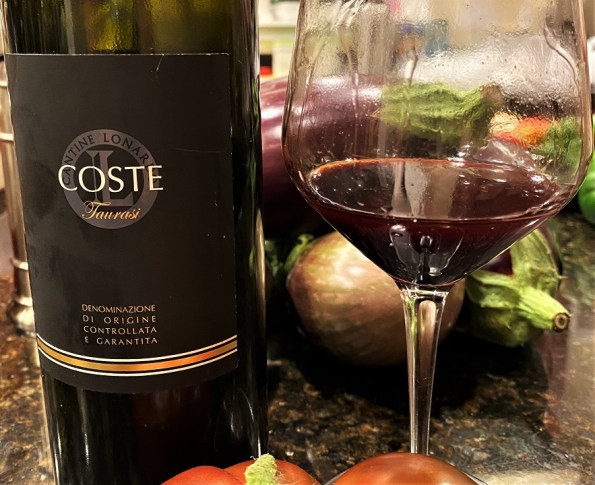
Everyone’s cellar has bottles that appeared out of nowhere. You know how this works – you host a party, someone walks through the door with a bottle. You say thank you, hastily put a bottle aside as you are rushing to meet another guest. The bottle is never opened as you had enough wine prepared, and after the party, it is just put away and you have no memory you ever saw it. This was my story with the bottle of 2008 Cantine Lonardo Coste Taurasi DOCG (14.5% ABV, 100% Aglianico). I have no memory of how the bottle made it into the wine fridge. I saw this bottle many times looking for the wine to open – as I’m not familiar with this wine and never bothered to research, I would always skip opening it just on the basis of the vintage – too young, next time, too young, next time. This time around, as our family on The Cape loves the Italian wines, I decided that the time has come to open it.
As we arrived Thursday evening, this was the first bottle we opened. Oh my… As soon as the wine made it to the glasses, the aromatics stopped everyone in their tracks. I can’t even describe it. Mature Italian wine at its peak literally gives me shivers. You can’t put down the glass, you don’t want a sip – you just want another smell, and then another one. Succulent cherries, eucalyptus, tobacco, iodine, ocean breeze – the bouquet delivered such an interplay of flavors that you simply forget the time. When you finally decide to take a sip, you are blown away anew – juicy cherries with herbs, sweet oak, silky smooth tannins, and impeccable balance – just a divine experience (am I going to far? Can’t tell you. Wish you were there…). Hands down, this wine is an excellent contender for the top wine of 2020, rivaling Soldera experience (Drinkability: 9/9+).
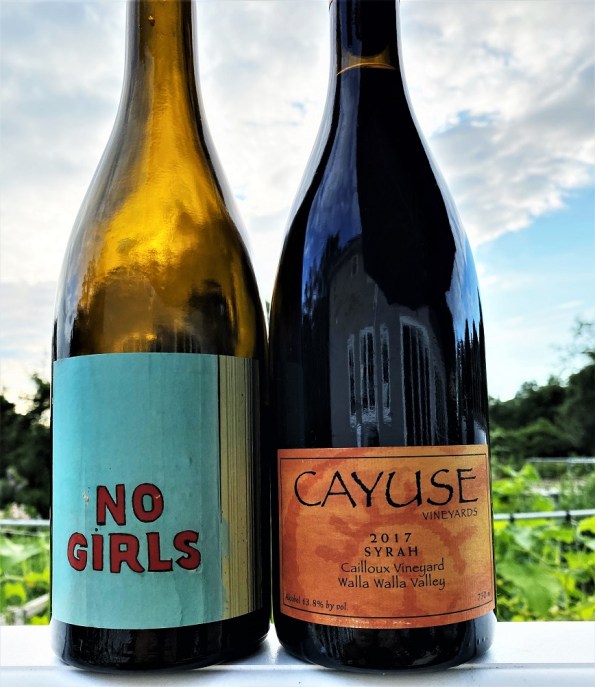


As I had no idea about Coste, I decided to bring a couple of big guns – two of the Christophe Baron wines – No Girls and Cayuse. I knew that I’m committing a crime by opening 3 years old Cayuse – but this was my very first taste of Cayuse wine, after finally making it on the mailing list, so I decided to take my chances. 2010 No Girls Syrah La Paciencia Vineyard Walla Walla Valley (14.8% ABV) was as good as I expected it to be – a little bit of funk, black fruit, black pepper, full body, good structure and concentration, excellent balance – definitely a very enjoyable wine. 2017 Cayuse Syrah Cailloux Vineyard Walla Walla Valley (13.8% ABV), however, was a disappointment. I knew I’m opening the wine prematurely (the one can only hope. I wonder how Sassicaia does it, making their wines perfectly drinkable upon release), but I still expected the wine to come to its senses at least on the second day, and especially with the help of decanter.
The decanter didn’t help, even on the second day. The wine had some amount of fresh crunchy cherries in it, but that was the maximum excitement. The wine never demonstrated the body I would expect from the Washington Syrah, nor the depth of flavor and the textural experience on the palate. Again, this was not a bad wine, just not enjoyable for me. As this was my very first experience with Cayuse, I don’t want to jump to any conclusions – maybe the wine will completely change in a few years, or maybe the wine is just meant to be like this – I anticipate that the wine will need at least another 7-10 years before it will become fully enjoyable, but we will see. And if it just supposed to taste like that, this will be a serious disappointment, especially considering the price of this wine (around $100).
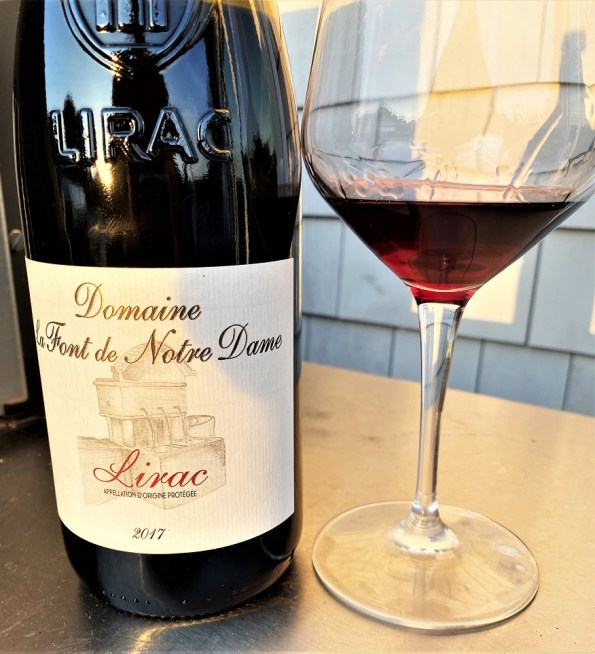
One more wine I want to mention here – 2017 Domaine La Font de Notre Dame Lirac AOC (14.5% ABV, 70% Grenache, 25% Syrah, 5% Mourvèdre). This wine was opened to compensate for the Cayuse not being very drinkable – and this GSM blend didn’t disappoint – perfectly drinkable and enjoyable from the moment the cork was pulled out. Bright fruit, medium to full body, good minerality, and perfect balance. The wine has limited availability, unfortunately, but if you can find it, it should set you back for less than $20 and this can be your perfect every day red for any time of the year.
There you go, my friends. This is how experiences form into the memories. The pleasure of drinking Coste will stay long in the memory – this was one of the most exciting wines this year. The absence of pleasure in my first sip of Cayuse will also become a long-lasting phenomenon. What are your strongest memories associated with wine?
An Open Letter To The Wine Lover Visiting Prague
 How often do you have regrets in your life? For how long do they last?
Not a simple question to answer, right? When you don’t listen to your wife and don’t wear a scarf on a cold and windy day, this will be a very short-living regret – I’m sure you will happily make the same mistake in a week. If you ignore a friend’s request to join him in the startup, and then 2 years later startup make a $1B exit – this is the regret you might have to live with for the rest of your life.
Once you become a passionate blogger, almost everything you see and experience becomes an opportunity for the new post, especially if the experience is a great one. You quickly start imagining that post in your head, you literally feel the happiness you would feel once the blog post is out. Then life gets the way, and 3 months later, you still remember that you wanted to write this post. 6 months, 10 months, a year – every time you start a new post, the regret of unfinished work gets to you first. Then the feeling becomes numb, and you finally forget.
I was looking for a bottle to open, and you know how it gets – not now, later, not ready, need a company – a ton of decisions to make regarding every single bottle. I finally decided on the bottle of 2013 Salabka Tes Yeux Neronet from the Czech Republic. After the very first sip, the happy smile came. Next came the crushing regret – I never wrote long thought though and thoroughly enjoyed, in the head, post about an amazing time we had at Salabka winery, top-notch dinner, and amazing wines. I was remembering about this for more than a year, and still never wrote it – and one sip of this Neronet wine brought all this back – the happy memory of our time in Prague and the regret of not fulfilling my own plans.
Most of the people would associate Prague and Czech Republic overall with beer. And those people would be right – kind of. Yes, the beer in Prague is an absolute standout. I’m not a beer guy, and yet I would happily drink beer in Prague at any occasion. But wine is a big deal there either. In the Moravia region alone there are more than 1,200 small, artisan, often moms and pops, producers. The wines there are made both from indigenous and international varieties, and the winemaking history goes back thousand years – I wrote about Czech wines in the past, you can find that post here.


In 2017, I was lucky to spend more than 2 weeks in Prague as I had two back to back events there. The city of Prague is absolutely amazing, boasting history on every corner – I shared some of my favorite highlights here. We also had a lot of amazing restaurant experiences, and some of them I shared here – but I let the brightest highlight, the visit to Salabka winery, to become a regret. And one sip of that Neronet wine forced me to say nope, not happening. Of course, it is not the same as writing about the experience while every sensation is fresh and vibrant. But I still have the pictures, so never mind the 3 years – I will still be able to share the experience with you.


Salabka is a city winery, located right in the middle of Prague, on the right bank of Vltava River. The vineyard is about 11 acres, and the winery produces about 10,000 bottles every year, with a full focus on the quality. There are only two red grapes grown at the winery – Pinot Noir and Neronet, local indigenous variety, and quite a few whites (Riesling, Müller Thurgau, Scheurebe, Pinot Blanc, Pinot Gris, Chardonnay). Every bottle of wine produced at Salabka has a picture of the vineyard on the back label, also with an indication of the exact parcel where the particular grapes were growing.
Salabka is more than just a winery – they also have apartments for rent on the property, and most importantly, a restaurant that specializes in modern cuisine – including the molecular gastronomy.
Considering that our visit took place three years ago, I can’t give you a detailed account of the dishes – but I have pictures which clearly show the creative cuisine we were able to experience.

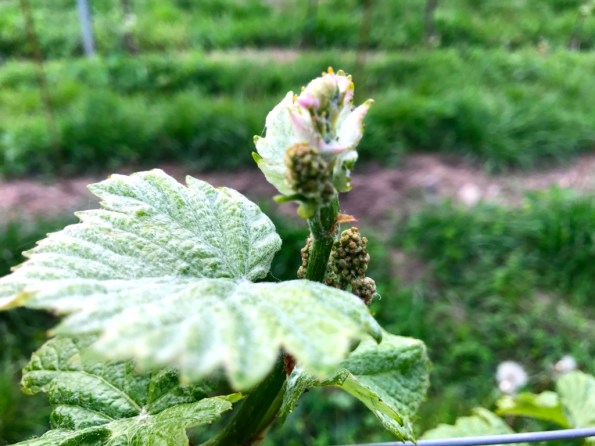


We started with the tour of the vineyards and the cellars, with a glass of delicious Chardonnay in hand, seeing bud breaks on the vines and beautiful views of the red roofs of Prague.


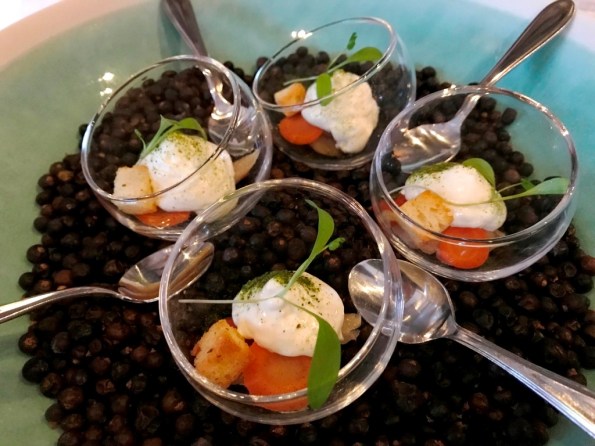


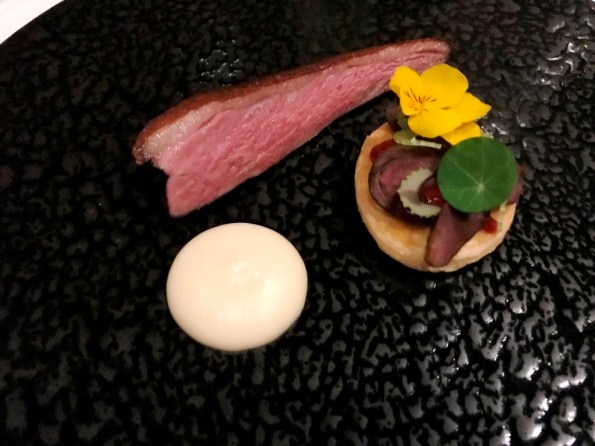


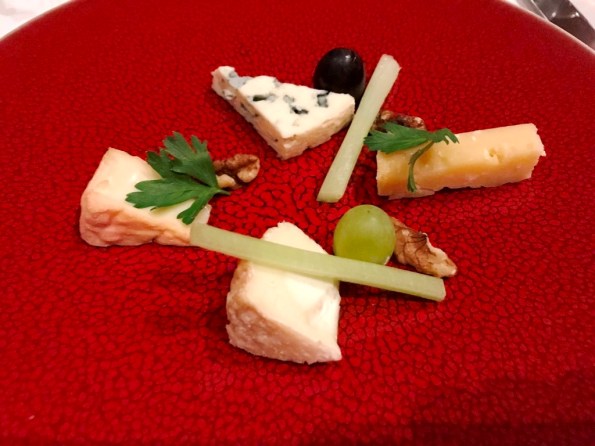
Then we had a tasting dinner, with all dishes paired with different wines, with foam and other molecular gastronomy elements being present almost in every dish. 2007 Salabka Le Diamant Blanc de Blancs was excellent, and I can still remember 2016 Salabka La Coquine Chardonnay with its Chablis-like gunflint and apple flavor (La Coqine Chardonnay was wine number 12 on my 2017 Top Wines list). I liked both wines so much that I even had to bring them back home, together with the red, made out of the Neronet grape.

It was that 2013 Salabka Tes Yeux Neronet wine which prompted this post. One sip of this peppery, acidic, herbs forward wine instantly brought back the memory of that trip. One sip of this wine instantly transports you to the old cellar, where wine was made, spilled, and stored for hundreds year – any oenophile can close their eyes and easily imagine themselves in such a cellar. The time and space travel machine is not invented yet, but properly made wine can easily replace it, and this Neronet certainly did.
So here it is, wine lovers. If you will be visiting Prague, remember that delicious wines are waiting for you. And if you are looking for a pleasure-filled evening, Salabka might be just the place. Cheers!
Last Bottle Sign Up ($10 credit)




 Talk-A-Vino