Archive
Rosé Showdown – California Versus Spain
A glass of wine as an “adult beverage of choice” continues its growth in popularity. If we will take a closer look at that world of wine, we will discover that there are two types of wine which are leading that growth pattern – those two types would be Sparkling and Rosé. I’m not talking about the growth in the dollar amounts or number of bottles produced, but rather a growth in attention and demand. Today, you will be pressed hard to find a winery around the world which doesn’t produce at least one type of Rosé and one type of sparkling wine – for sure this is the case with Rosé. The production might be tiny (few hundreds of cases or even less) and far less than the demand is – but it is the wine which commands lots of attention.
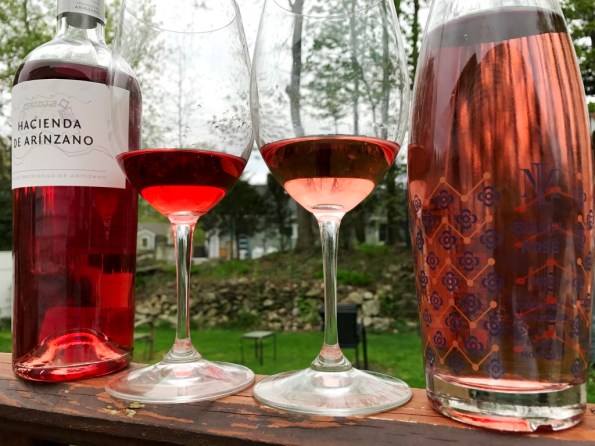
Another “phenomenon” makes me happy about the Rosé – it is slowly losing its “Rosé is only for a summer” connotation and becomes more and more acceptable and requested as a year-round drink. Rosé is a serious wine, with its own unique taste profile and capability to showcase terroir and grape variety, same as any other red or white, with two additional benefits. For one, I would dare to say that in general terms, Rosé’s versatility around food surpasses the white and the red wines – oh well, this might be only me. And the second one is pure aesthetics – the pink palette of Rosé, with possibly more shades than the proverbial 50, looks gorgeous, sexy and inviting – just take a look above and see if you are agreeing with me.
When I was offered to try two Rosé samples, of course, I couldn’t say no. The first wine was familiar to me, as I had a pleasure of trying 2015 vintage of Hacienda de Arinzano Rosé last year. The second one was the wine which I never saw before – Isabel Rosé from California. Thus it became an interesting experiment to see how the two wines would fare side by side.
If anything, putting Rosé from Spain and California on the “same page” makes sense as Rosé is clearly a “new phenomenon” for both regions, growing to prominence over the last 3-4 years at the most. Of course, Rosé was produced in Spain and California in much earlier days – but it was rather an exception and not the norm – unless we want to count white Zinfandel as a Rosé which I personally refuse to do. Until a few years ago, the only Spanish Rosé I knew about was the one from Lopez de Heredia ( which was outstanding). For the American Rosé, even if they were produced, they were really not that good (take a look at the blog post on Vinography called “Why Does American Rosé Suck” – no further comments needed?). Fast forward to today, and you can find lots of beautiful Rosé wines coming from Spain; American Rosé became a standout, as proven in the virtual tasting last year at the #winestudio.
Our first contender today comes from the first Pago estate in Northern Spain – Pago denomination signifies the highest quality of wines, this coveted level is not easy to achieve. Hacienda de Arinzano Rosé is made out of the 100% Tempranillo, in the “proper” way – by macerating the juice with the skins for 6-8 hours. Don’t you love the color of this wine?
The California’s Isabel Rosé is definitely a formidable opponent, as you can see starting from the bottle itself. Glass enclosure, beautiful shape and painted bottle – really curious how many people dare to discard the bottle once they finish the wine instead of keeping it (all I can tell you that I kept mine). A different but equally beautiful color on the mostly Cabernet Sauvignon wine, again produced in the classic style from one of the very best vintages in California (2016 had almost ideal growing conditions, watch out for those Cab prices) – and at one of the well-respected wineries, Michael Mondavi family estates.


As you can tell, it is definitely a game of equals, and for what it worth, my tasting notes are below:
2016 Hacienda de Arínzano Rosé Tempranillo (14% ABV, $20, 100% Tempranillo)
C: bright concentrated pink
N: onion peel, fresh crunchy berries
P: intense, red fruit, plums, crisp, good acidity, medium body, will stand to wide variety of dishes
V: 8-, excellent
2016 Isabel Rosé by Michael Mondavi Family Estate California (13.5% ABV, $15, 75% Cabernet Sauvignon, 23.5% Barbera, 1.5% Muscat)
C: light pink
N: intense fresh strawberries, herbal undertones
P: strawberries, good acidity, very dry – not bone dry, but quite dry, refreshing
V: 8-/8, light but affirmative, don’t overchill – needs to warm up a bit to become richer
Well, here we are, my friends. There was only one winner in this competition – me. Yes, I got to enjoy two outstanding wines, which will perfectly fit any table at any occasion, and at the price, an absolute majority of the budgets. Both will be great on a summer day, a winter day, with food or without it. Grab one or both, chill and enjoy! And if you had any one of these wines, I would be really interested in your opinion. Cheers!
New and Noteworthy: Few Spanish Wine Samples
If you read this blog for any period of time, you know that Spanish wines have my unquestionable love. From Rioja to Rias Biaxas to Priorat to La Mancha – Spain offers lots of tasty wines, often at an unbeatable value.
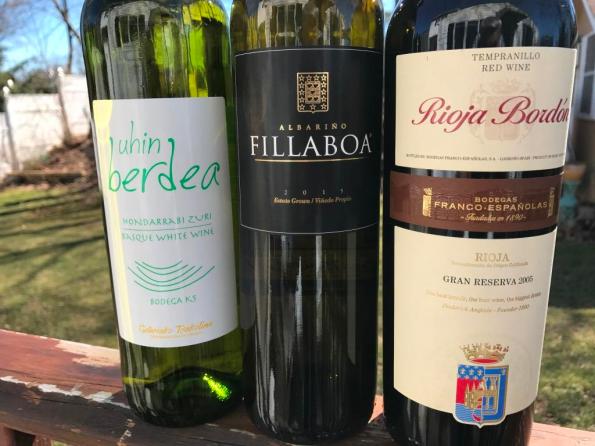
I would rarely refuse a sample of Spanish wines, as this is the best opportunity to try new vintages and share my thoughts. What you can see below are few of the samples I got during February and March – all new vintages and all should be available right now at your favorite wine store.
Bodegas Beronia well known for its Rioja wines, but this time it is a white wine from Rueda we are talking about, made from 100% Verdejo. I love Verdejo wines when they have enough of the crisp acidity but don’t go too far into the grassy notes to become Sancerre twin. This wine was excellent, and a great value:
2015 Bodegas Beronia Rueda DO (13% ABV, $12, 100% Verdejo)
C: Light Golden
N: bright, inviting, invigorating, white stone fruit, ripe peach, touch of tropical fruit with a distant herbal underpinning
P: fresh, perfect acidity, touch of fresh cut grass (tiny), sweet lemon notes, refreshing
V: 8-/8, excellent wine, lots of pleasure, and a great QPR
Bodegas Torres might not be a household name in the USA, however, Torres Family is the biggest wine producer in Spain – which, luckily, doesn’t affect the quality of the wines. I had many different Torres wines from many different Spanish regions, and those wines rarely disappoint:
2013 Torres Celeste Crianza Ribera Del Duero (14% ABV, $20, 100% Tempranillo)
C: dark garnet
N: muted nose of baking spices, lavender, touch of roasted meat
P: dark fruit, good acidity, refreshing, open, plums
V: 7+, fresh, simple, easy to drink
Rioja Gran Reserva for $25? Yes, please, but let me taste it first? Gran Reserva is expensive to make – think about all the cellaring time the wine requires (5 years total) to be officially marked as Gran Reserva. So $25 is a great price for the Gran Reserva if it tastes good – and this wine was outstanding:
2005 Rioja Bordon Gran Reserva Rioja DOC (14% ABV, $25, 80% Tempranillo, 10% Garnacha, 5% Mazuelo, 5% Graciano)
C: garnet
N: delicious, touch of barnyard, ripe black fruit, intense
P: black fruit, cedar box, sweet tobacco, succulent, fresh clean acidity, delicious.
V: 8/8+, outstanding, great example of Rioja potential, no sign of age, great QPR


Txakolina still can be considered a rare wine in the US – those wines are trickling in, but can’t compete for attention in any way compared to Albariño, Verdejo or even Godello (yes, I’m mixing grapes and places – Txakolina is a region in the Basque area, where the white wines are typically made form the grape called Hondarrabi Zuri – the rest of them are grapes). Txakolina wines are usually “unique and different”, as was this particular wine:
2014 K5 Arginano Uhin Berdea Hondarrabi Zuri Getariako Txakolina DO (11% ABV, $22, 100% Hondarrabi Zuri)
C: golden
N: touch of vanilla, ripe white fruit
P: very interesting, cut through acidity of Muscadet, but plump body and mouthfeel of Marsanne. Outstanding pairing with herb-crusted goat cheese – might be the best cheese pairing I ever experienced.
V: 7+, worth trying, especially with the food
Let’s finish today’s line with practically a classic – Albariño from Rias Baixas area in Galicia. Albariño typically is a seafood friendly wine – and the one below was a perfect example:
2015 Fillaboa Albariño Rias Baixas DO (12.5% ABV, $20, 100% Albariño)
C: light golden
N: fresh white fruit, tropical, guava, inviting
P: clean, medium body, good acidity, lemon, refreshing, very quaffable, medium lemon zest finish
V: 8-, very good rendition of Albariño
That’s all I have for you today, my friends. What were your new and noteworthy discoveries? Cheers!
Travel Diaries: Beautiful Prague
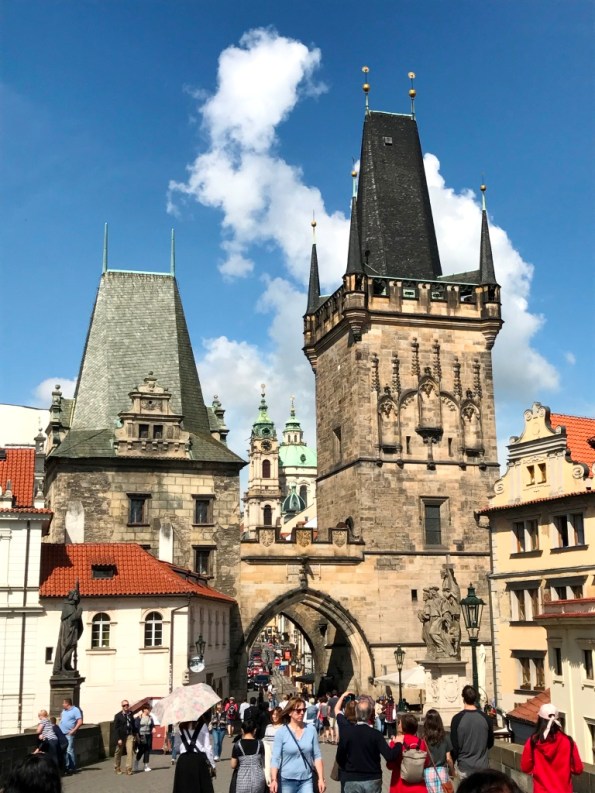
For the first time I visited Prague in 1990 (if memory serves me right, of course). I have some scarce memories of that trip – Charles Bridge, Clock Tower, Gothic architecture and a street the food in form of the waffle with whipped cream and chocolate sauce. I always wanted to come back and experience Prague once again – and finally opportunity presented as one of my business meetings took me there.
You know how it can be dangerous to rely on the past experiences while setting the expectations? Everything changes – we change, everything around us changes as well – “you can’t enter the same river twice”. And the best moment in any experience is when you say – ahh, it is even better than I expected.
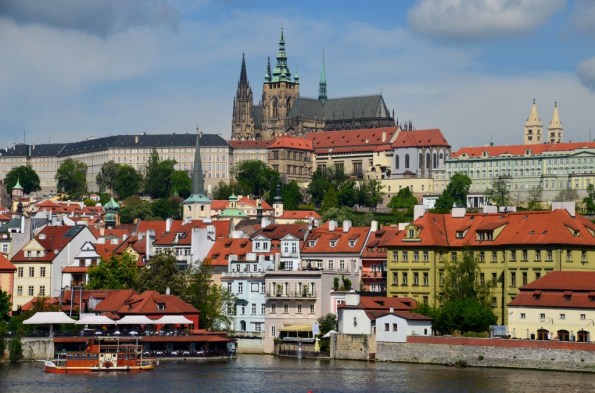
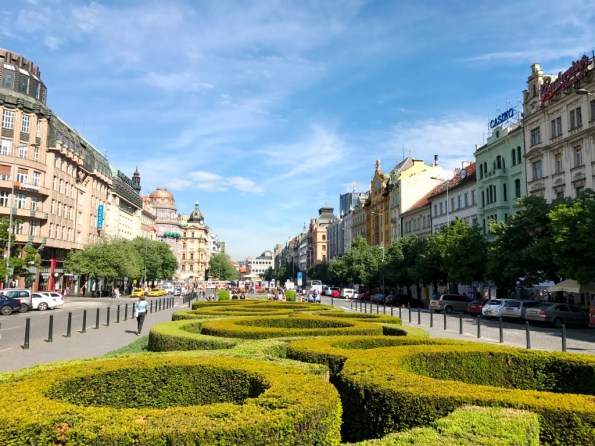
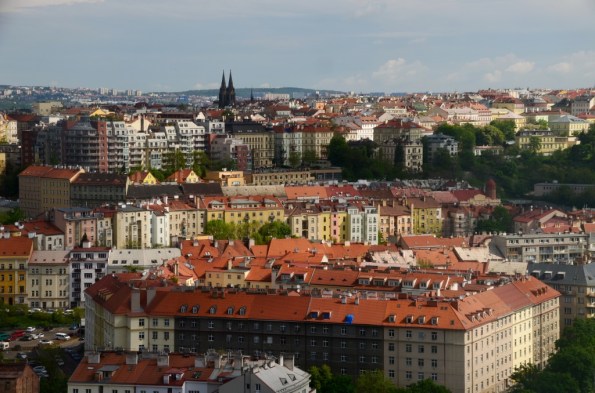
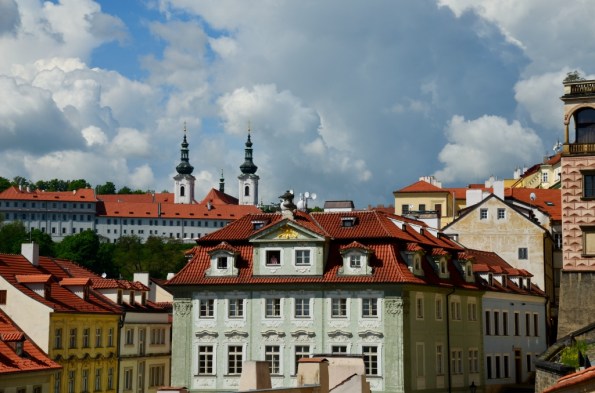
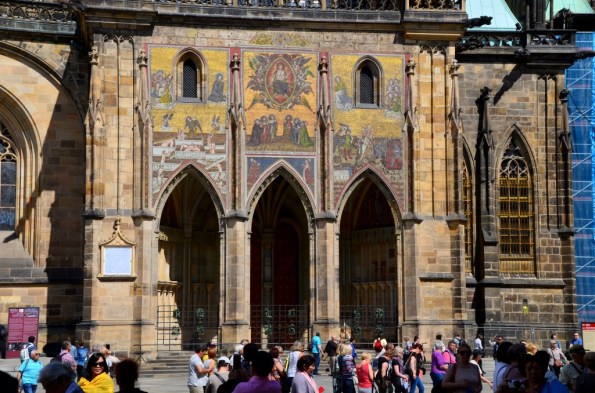
That is my feeling about the Prague. Beautiful city, all covered with the red roofs (somehow, red roofs have a magical effect on me), beautifully colorful buildings, castles and cathedrals everywhere – you derive the pleasure from anywhere you look (well, sadly, once you step a little away from the old town, you see lots of graffiti and simply start dreaming about all the pain which should be inflicted on the people who do that, but this is way outside of the subject of this post).
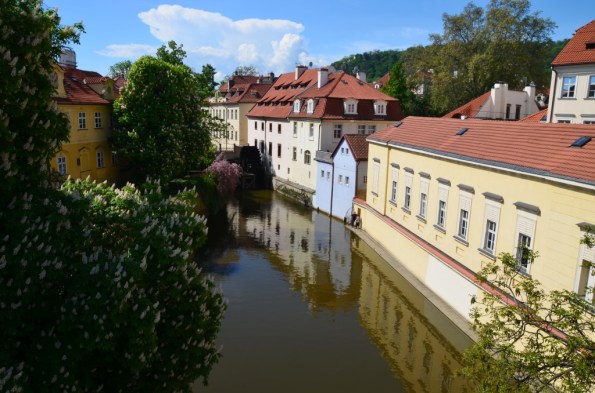
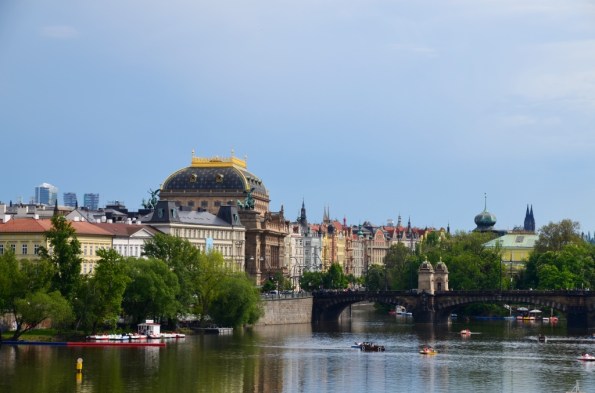
I’m not going to try to describe my impressions in words – instead, let me inundate you with pictures – lots and lots of pictures of the beautiful town of Prague. And when I say lots and lots, I actually mean it…



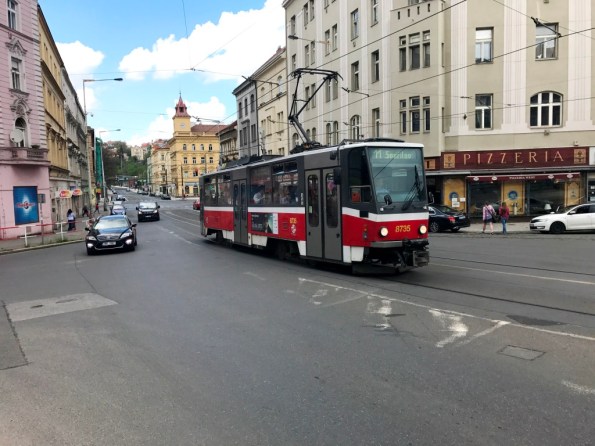
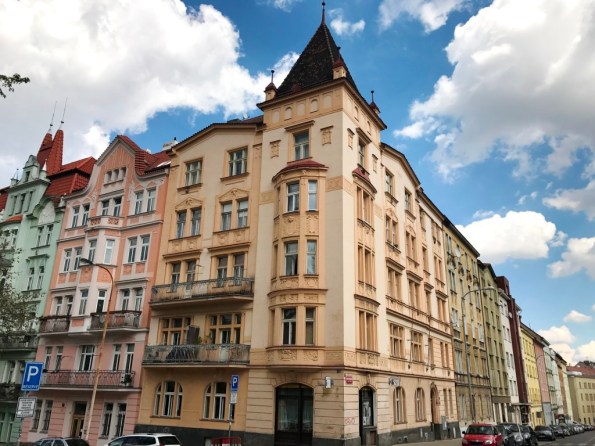

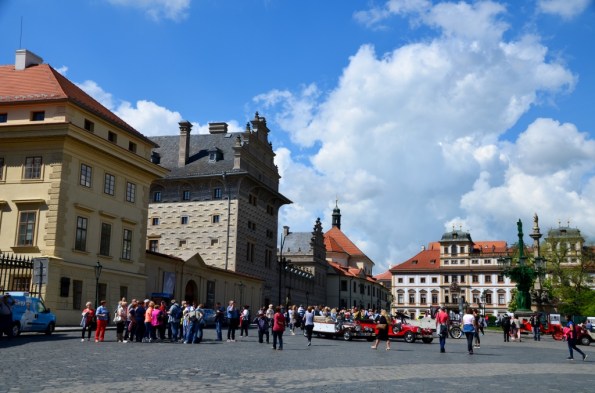


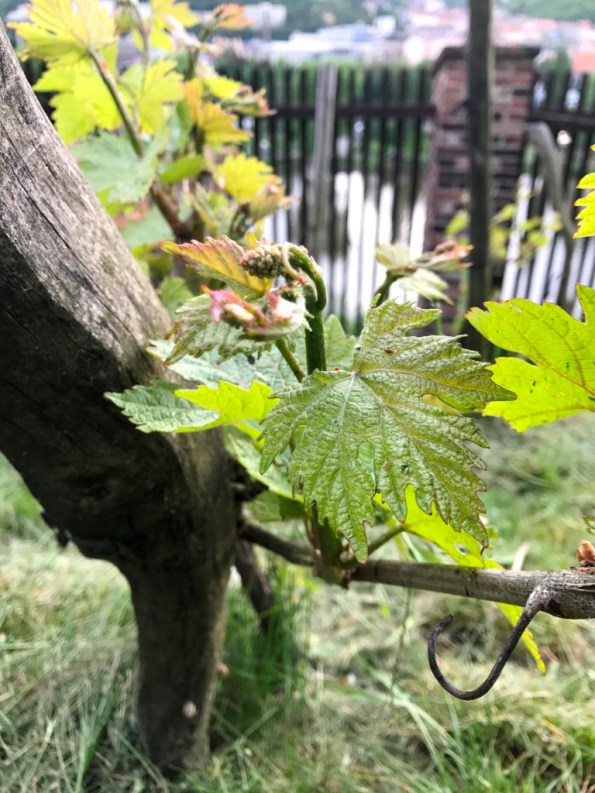
Don’t think you will find vine grapes growing in New York’s Central Park, but you do in Prague!

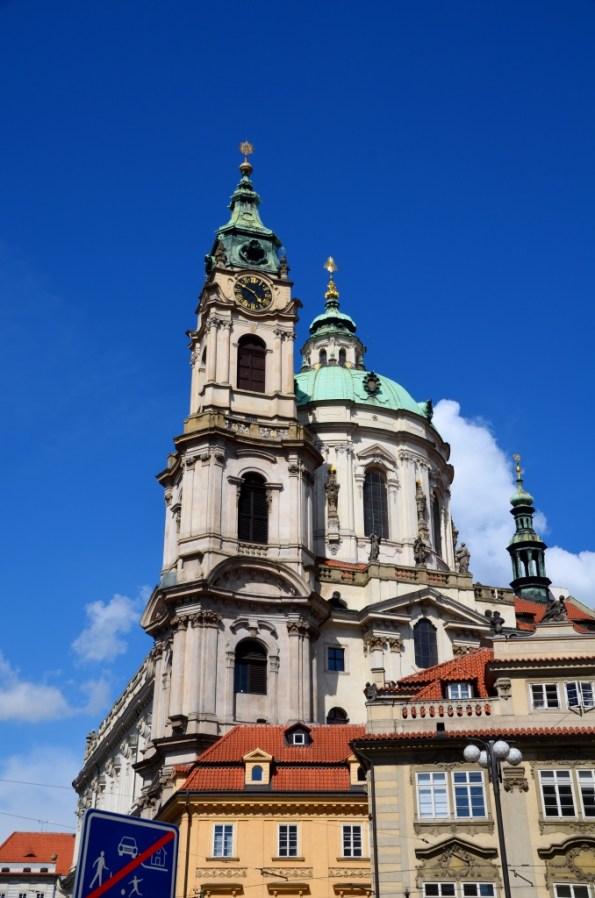
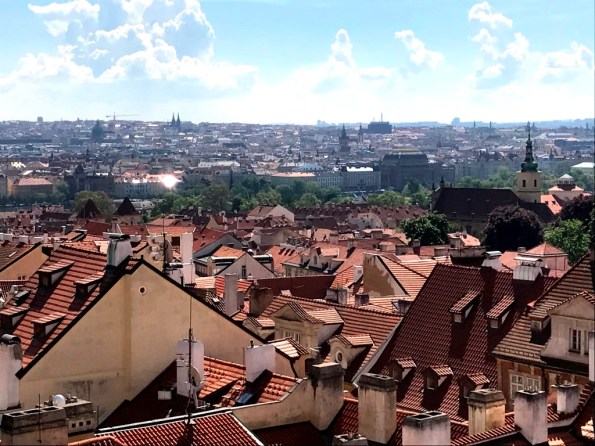

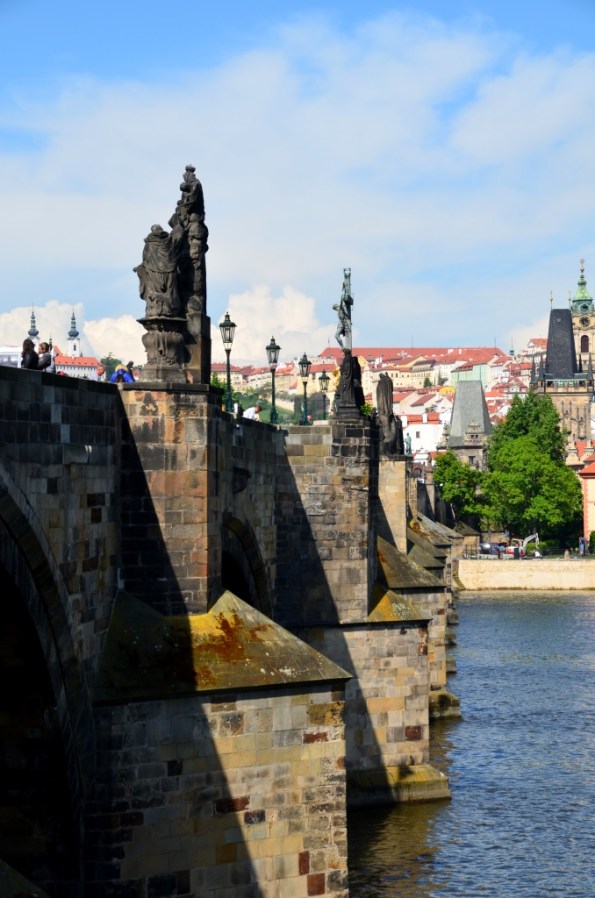
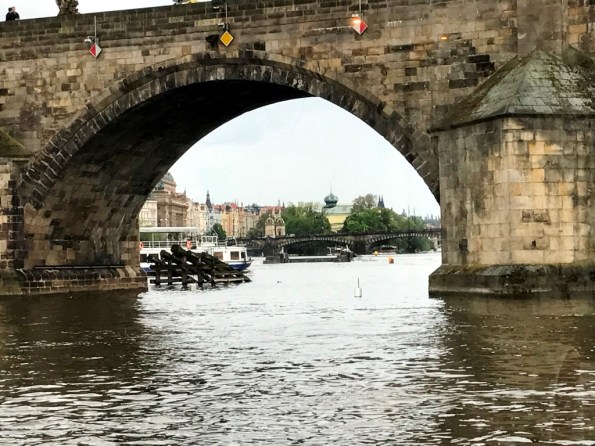





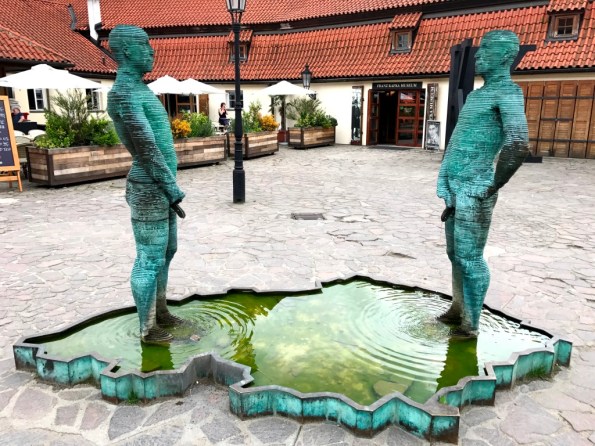
These two peeing man (the parts of their bodies which attract the most attention are not only releasing the water, but also moving – heard quite a range of comments from the spectators:

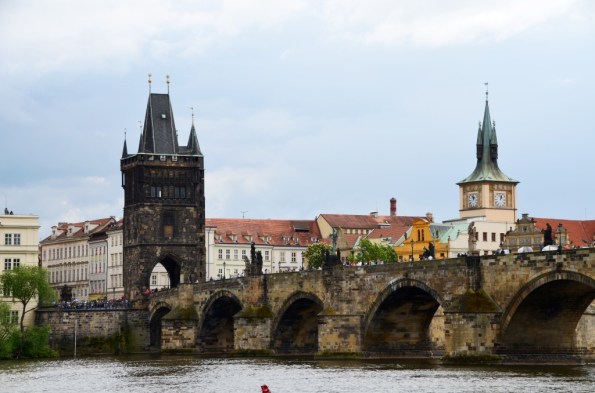

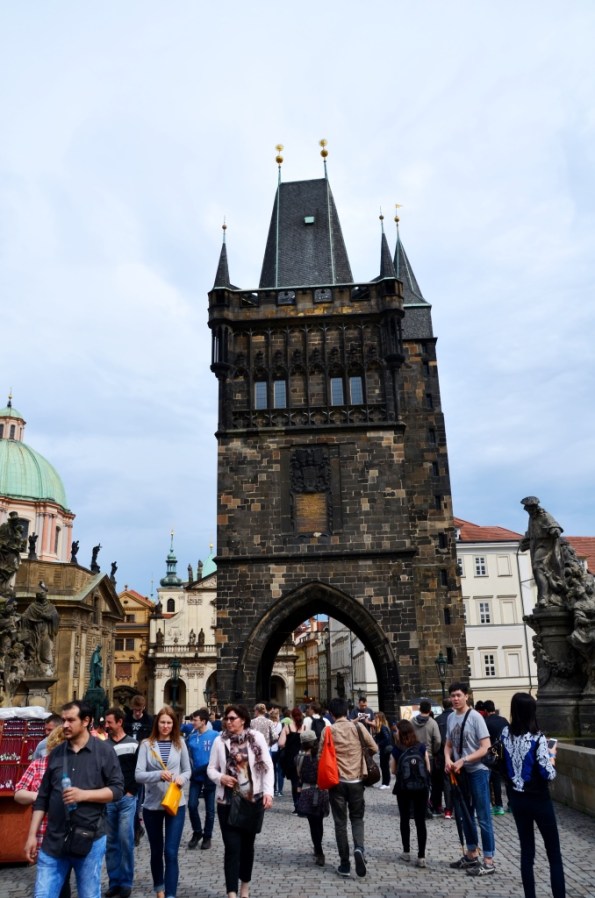
The legend has it that St. John of Nepomuk was executed for refusing to give the details of queen’s confession to the king. The St. John is honored with his own statue on the Charles Bridge. The legend also has it that if you will touch two of the fragments on the bottom of the statue, you wish will b granted. However, it seems that the legend might not get it exactly right – take a look at this blog post to learn what exactly do you need to touch:


Let me leave you with the love locks at the Charles Bridge – Prague is a beautiful city which is easy to fall in love with. Cheers!

Thinking About Albariño, or Notes from Albariño Deep Immersion with Snooth
For the first time I tried Albariño wine around 12 years ago, during my brief stint as a sommelier at a small restaurant. I remember the producer – Burgans. I remember liking the wine quite a bit, and since that time, Albariño surely became a part of my regular “wines to drink” list. My longest (and still current) Albariño love is Bodegas La Caña Albariño, which typically has a small amount of wine aged in oak, offering great level of complexity – but this is not what we will be talking about today.
The history of Albariño traces back to the 12th century in the Rias Baixas region in Spain (legend has it that Rias Baixas was a resting place for a brief moment for the God’s hand after the creation – you don’t have to believe it, of course). In 1980, Rias Baixes became a DO named after it’s main grape, Albariño, changing its name to Rias Baixas DO in 1986 (EU laws don’t allow for the Denomination of Origin to be named after a single grape). Over the years, Albariño started finding its way to the consumers around the world, often touted as an alternative to the Chardonnay. Considering the location (Atlantic coast) and cuisine (heavily dominated by shellfish/fish) of Rias Baixes, it is not surprising that Albariño, which typically shows crisp acidity, is perfectly marrying variety of seafood dishes.
If you think about winemaking around the world, there are some common trends no matter where the wines are made. One particular trend I want to mention is better understanding of the local terroir. Every new vintage adds the details to the knowledge of successes and failures – which vineyard produced better fruit, how the fruit was different, how even better fruit can be produced. With this knowledge, winemakers can identify the differences between seemingly close vineyards, understand that those differences are not accidental, and that those differences are worthy to be noted, used and even stressed – now the one, seemingly monolithic “terroir” region can be split into a smaller pieces.
This is what leads to the creation of the new regions and sub-regions, and you can see it around the world. For instance, only a few years ago, practically all Sauvignon Blanc wines from Marlboro in New Zealand were only identified on the labels as Marlboro. Today, Marlboro Sauvignon Blanc wines proudly identify themselves as Wairau Valley or Awatere Valley, and you can find detailed notes stressing their unique characteristics.
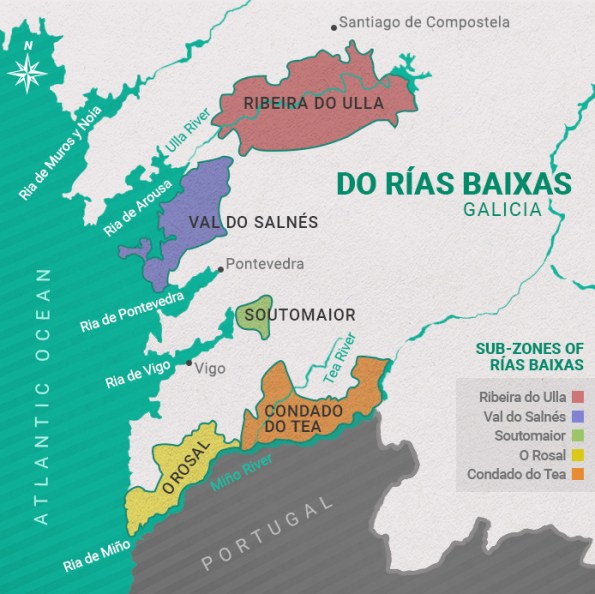
Rias Baixas Map wine regions map. Source: Rias Baixas Wine
Same processes of creating smaller, more focused viticultural areas is taking place all over the world – and Rias Baixas is not an exception. Today, Rias Baixas DO has 5 defined sub-regions – Val do Salnés, the oldest and best known source of Albariño wines; Soutomaior, Contado do Tea, O Rosal and Ribeira do Ulla. Each sub-region has its own soil and climate conditions, the terroir, which translates into the differences in the wines.


Last week I was lucky to participate in the special virtual tasting organized by Snooth, one of the best online sources of the wine knowledge. In the tasting, we had an opportunity to experience 10 different Albariño wines, representing 3 different sub-regions, and of course to discuss the wines in the rapid-fire chat.
I have to honestly admit – I didn’t wait until the official tasting to taste the wines – as the wines arrived a few weeks before the tasting, I took my time to try them slowly, as 10 wines within one our and engaging conversation using one’s fingers is quite difficult to do. I also didn’t know the order of tasting, so my tasting was done at random, where during our online chat the tasting was going from one sub-region to another – the tasting notes below appear in the tasting order at the event.
Here are my notes:


Sub-region: Val do Salnés:
2015 Martin Codax Albariño Rias Baixas DO (12.5% ABV, $16.99)
C: light yellow
N: medium intensity, fresh lemon notes
P: lemon and lemon zest, cut through acidity, medium palate, clean
V: 7+, surprisingly nice pairing with a spicy pepper spread
2015 Condes de Albarei Albariño Rias Baixas DO (12.5% ABV, $15)
C: light golden
N: medium intensity, lemon, green apple
P: touch of sweetness, Meyer lemon, good acidity, medium body, clean
V: 7/7+, nice, simple
2015 Vionta Albariño Limited Release Rias Baixas DO (12.5% ABV, $15)
C: light golden
N: medium intensity, grassy, more of a Sancerre style, touch of lemon and hay
P: crispy, fresh, clean acidity, lemon, medium body, good balance overall, round
V: 7+/8-, very well executed.
2016 Pazo Señorans Albariño Rias Baixas DO (13.5% ABV, $25)
C: straw
N: medium intensity, grass, fresh lemons
P: crisp acidity, touch of salinity, lemon, touch of volcanic minerality, interesting complexity
V: 8-, drinkable by itself, but craves food


Sub-region: Contado do Tea:
2015 Pazo de San Mauro Albariño Rias Baixas DO (12.5% ABV, $17)
C: light straw
N: honey, flowers, honeydew, delicious and inviting
P: great complexity, touch of honey without sweetness – you know you have honey in the glass, but no sugar, clean acidic finish, medium body, unusual and interesting
V: 8/8+, most interesting of the group, very unusual
2016 Señorío de Rubiós Robaliño Albariño Rias Baixas DO (12.5% ABV, $18)
C: straw pale, a welcome relief from all the 2015 so far
N: intense, lemon, candied lemon
P: off-dry, bright, crisp, white plums, hint of pineapple
V: 8-, nice and pleasant, easy to drink


Sub-region: O Rosal
2015 Altos de Torona Albariño Sobre Lías Rias Baixas DO (13% ABV, $14)
C: light golden
N: minerality, white stone fruit, medium intensity
P: fresh, crisp, nice lemon notes, craving oysters, cut through acidity
V: 8-/8, nice on its own on a hot summer day, and will be great with seafood, especially shellfish.
2015 Santiago Ruiz O Rosal White Wine Rias Baixas DO (13% ABV, $20, blend of Albariño and Loureiro with small addition of Treixadura)
C: straw
N: medium intensity, nice white fruit (peach) and floral notes, touch of tropical fruit like guava
P: medium body, soft, round, white stone fruit, good acidity, fresh, excellent balance
V: 8-/8, definitely one of my favorites
2015 Valmiñor Albariño Edición Especial 10 Años Rias Baixas DO (12.5% ABV, $18.99)
C: golden
N: intense, white stone fruit, fresh, white plums
P: lip smacking acidity, fresh, open, lemon, herbs, very dry, medium body, medium finish
V: 7+, very pleasant, will be perfect for any summer day, or any day with seafood. Makes you crave oysters.
2015 Bodegas Terras Gauda Abadía de San Compo Albariño Rias Baixas DO (12.5% ABV, $20)
C: golden
N: medium intensity, touch of lemon, white stone fruit
P: clean acidity, slightly off dry, under-ripe yellow plums, medium body
V: 7+, nice and quaffable.
Did I clearly tasted the differences in the wines from the different regions? No, I wouldn’t say so – however, as you can tell from the notes and ratings, I liked the most two Albariño wines from the Contado do Tea region. Will the Albariño get more distinguishable – you bet. Should you go and open a bottle of Albariño right this moment – absolutely, go and do it now.
That’s all I have for you, my friends. Don’t forget that upcoming Sunday is Mother’s Day in the USA – I’m sure Mom would greatly appreciate nice and refreshing glass of Albariño – and note that some of the very cool labels in the wines we tried (wink, wink). Cheers!
Pleasures of Drinking Local
I love travel -seeing the world, different cultures, different people, different traditions, and, of course, different food and drinks. Food is given, as we all have to eat, so one way or the other we get to experience local cuisine. But then what I drink is also very important to me, with the same spirit of exploration.
I love drinking local. And, of course, when I say “drinking”, I primarily mean wine. When travel, I always make an effort to find and try local wines. Unknown and obscure? Perfect – the less I know about the wine, the more pleasure it brings. Drinking local wines doesn’t mean I have to visit the wineries. More often than not, my trips don’t include any spare time and any facilities to reach the wineries. But – in many places, and I would even say, in increasingly more places, you can still find local wine at local shops, as long as you willing to look for it.
It is, of course, the best when you are visiting places where the wine is part of the culture, like most countries in Europe (sorry, never been to Latin America or Australia, but somehow I think I would do fine there as well). If the wine is a part of the culture and tradition, it almost guarantees you authentic wine experiences – and what is very important – without breaking the bank. In the USA, for instance, the wine is still a part of the fashion and not part of the tradition, thus in USA, finding reasonably priced wines is extremely difficult, and finding locally produced and reasonably priced wines is simply a mission impossible. Wait, I didn’t mean for this post to be a rant, so let me get back on track.
This time around, my travel took me to Prague, the capital of the Czech Republic. I’m sure for many (most?) of people, as soon as they will hear “Czech Republic”, the very next image of the local drink is – of course – a beer. This makes perfect sense, as Czechs are internationally known for their beer, same as Germany or Belgium, and rightfully so. But – what most of the people don’t know is that Czechs also had been making wines almost forever – okay, starting from approximately the 2nd century – long enough? Czech wine never made it to the levels of fame of French or Italian wines – but that doesn’t decrease the pleasure of drinking Czech wines in any way.
I discovered Czech wines for myself last year, when I had delicious Pinot Noir and Pinot Gris ( you can read about it here). Thus I had no doubts that Czech wine is something I’m going to look for upon arrival.
The hotel I’m staying at is adjacent to the shopping mall, which includes a supermarket, a wine store and some other food stores, all of them selling wines. And mind you – at the prices which make you smile from ear to ear. So far I got the wines from the supermarket, and you will see the prices I paid in the descriptions of the wines, as usual.
I had an easy criterion for selecting the wines. Price – of course, but there was another important requirement – new grapes. As you can see the grape count in the right column of my blog page, I continue my grape journey, so I’m always on the lookout for the additions to the list. Of course, it is usually not that easy – the name of the grape in the local language might sound new and unique – but once you do the research, you can easily find out that there is nothing new about that grape. For instance, take a look at Rulandské modré – sounds unique, right? Meanwhile, it is only a local name for Pinot Noir. Or Rulandské šedé – must be something indigenous, right? Nope, it is simply the Pinot Gris.
Obviously, that didn’t stop me. I found two new white grapes, and for the red, the name looked so cool (Svatovavřinecké) that I had to get it, despite the fact that this was the local name for the St. Laurent grape – well, how often do you drink St. Laurent wines anyway?
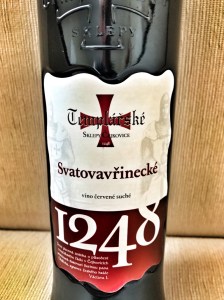
I started with the red wine, as whites needed some chilling – and 2015 Templářské Sklepy Svatovavřinecké Morava Czech Republic (11.5% ABV, 119 Kč ~ $5, 100% St. Laurent) didn’t disappoint – light garnet color. Pleasant nose with touch of spices, sage, lavender, tobacco, hint of blueberries. Fresh fruit on the palate, tobacco, pepper, medium body, mouth-watering acidity, light, pleasant. Drinkability: 8-/8, a proof that delicious wine doesn’t have to be a fruit or tannin bomb.
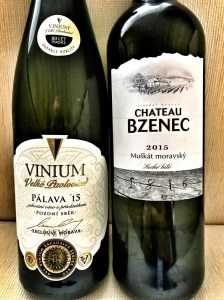
The whites where new, unique and different. One was made out of the grape called Muškat moravsky, which is a cross between Muscat Ottonel and Prachtraube. The other grape was called Pálava, and it was a cross between Müller Thurgau and Gewürztraminer, first selected in 1953. I’m always a bit concerned with the new white wines (many things can go wrong), but this two were simply a stand out. I guess I was simply lucky. Or may be my palate is cursed. Of well. Here are the notes for the white wines:
2015 Chateau Bzenec Muškat moravsky Morava Czech Republic (11.5% ABV, 119 Kč ~ $5)
Straw pale color. Perfumy nose, reminiscent of Gewurtztraminer but of a lesser intensity, white peaches, lemon undertones, touch of minerality. Delicious on the palate – succulent fresh whitestone fruit with practically no sweetness, ripe green apple and touch of lemon. Clean, balanced, fresh, excellent acidity. Medium-short finish, pleasure to drink. Very impressive. Drinkability: 8/8+
2015 Vinium Velké Pavlovice Pálava Pozdní Sber Morava Czech Republic (12% ABV, 239 Kč ~ $10)
Light golden color. Very pleasant nose, perfumy, touch of honey, tropical fruit (guava, pineapple), medium intensity. Delicious lip smacking palate – crisp acidity, medium to full body, wine is nicely present, mouth coating, acidity keeps lingering with tart apples underpinning, then some ripe apples showing with addition of white plums. Another excellent wine. Unique and different, perfectly enjoyable on its own, but will play very nicely with the food. Drinkability: 8/8+, outstanding.
That’s all I have for you, my friends. When travel, take risk, drink local – your reward will be new experience and lots and lots of pleasure. And if you will not like it – the experience will still be with you. Cheers!
Tango Tours – A Pioneer In Wine and Culinary Tourism
Wine and Travel – aren’t those the best together? Visit new places, try new wines, then more new places and more new wines. I’m sure this is simply a music to the ears of many. Today I want to offer to your attention a guest post by Mark Davis, Managing Partner at Tango Tours – A Luxury Travel Company (www.tango.tours) – the company which can help you realise that dream of having a great time and great wine while travelling the world. And as we are still in the Malbec Month of April, below you will find the Argentinian wine Infographics, courtesy of Tango Tours. Cheers!
Do wines fascinate you or are you yet to explore about this luxurious drink? Tango Tours will make that happen for you. Whether you are planning a private wine tasting tour or looking to indulge in a world-class and an unforgettable culinary experience, this is the right place for you.
Food And Wine Tour– Tango Tours curates food and wine tour to feature the finest restaurants serving local delicacies.
Exclusive Vineyard Tours– You get to explore some of the exclusive vineyard tours featuring wineries that are publicly inaccessible.
Luxury Wine Tours– Enjoy a guided luxury wine tour and taste some of the most exquisite wines of the world.
Deluxe Accommodation– You will be offered deluxe accommodation during your tour so you can sink into the silky soft beds of a luxury five-star hotel after a long and fulfilling day.
Tango Tours covers the most popular wine destinations around the world and the tours include:
Argentina Wine Tours– The itinerary features tasting the Argentinean Malbec, luxury food and wine adventure across Argentina and a visit to the reputable Argentina vineyards, along with discovering the local cuisine and culture.
Napa/Sonoma Tours– The luxury wine tour packages of the Napa and Sonoma valley offer you with a unique wine and culinary experience. From the sprawling vineyards of the region to delectable dishes from the finest restaurants, you get to explore everything.
Chile Tours– The highlights of Chile Tours include deluxe tour packages for wine connoisseurs who wish to explore the best of Chile.
Custom Wine Tours– If you have a specific destination in mind, Tango Tours helps you plan the vacation of your dream. Pick a place of your choice and we will make all the arrangements.
Why Choose Tango Tours?
At Tango Tours, we have an extensive knowledge of wines and food from the famous wine regions of the country. We work closely with some of the best winemakers and restaurateurs in the food and wine industry through which you can access private wineries and prestige vineyards across the region.
All ready to enjoy the fruity Merlots of Chile and Napa/Sonoma Valley or the dark, smoky flavors of the highest-quality Argentine Malbec? Just pack your bags and let us plan it for you and give us a chance to take you on a remarkable food and wine adventure.

Argentina Beyond Malbec with Achaval-Ferrer and #WineStudio
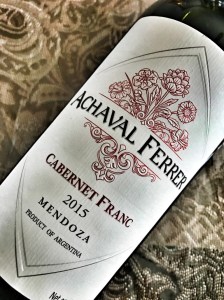 Of course, Argentina wine industry can’t be subsided only to Malbec – Torrontes and Chardonnay for the whites and Malbec and Cabernet Sauvignon (and Bordeaux-style blends, of course) for the reds comprise an absolute majority of Argentinian wines available at any given moment. You can find some Argentinian Bonarda, Pinot Noir and Sauvignon Blanc, but they don’t carry the full recognition of the 4 main grapes.
Winemaking has a long history in Argentina, starting in the 16th century and entering an international trade in the second half of 19th century. If we will take into account that most of the grape plantings in Argentina are at high altitude, with climatic conditions and terroir overall ideal for the grape growing and providing protection against many grape diseases, such as phylloxera, we will quickly realize that Argentina is home to some of the best and oldest vineyards in the world. However, it is only during the last 20-25 years Argentinian wines start receiving a full international recognition they deserve, with Malbec been the brightest shining star.
Achaval-Ferrer winery was founded in 1998, and over its relatively short history, became a leading winery in Argentina, garnering numerous awards and high critic scores for its wines. To the great pleasure of wine geeks, wines of Achaval-Ferrer were also a focus of April #WineStudio educational program, allowing us to experience some of the very best wines Argentina is capable of producing – Malbec, Cabernet Sauvignon and Bordeaux blend called Quimera. But for the last April session, Achaval-Ferrer and #WineStudio took us on the trip in entirely new direction with the inaugural vintage of the Cabernet Franc wine.
I guess it is time to reveal one of my (no, not darkest) deepest wine secrets – I have “a thing”, an obsessive passion for the Cabernet Franc wines. I can’t explain to you why or how. I don’t know how it happened that out of most grapes, the words “Cabernet Franc” make me literally jump. No matter how tired I am at the end of the large tasting, say to me “let’s go try Cab Franc” and I’m ready to run. Thus you can imagine how excited I was at this opportunity to try a new first release of Cabernet Franc.
There was a lot of excitement around this wine, seems everybody really enjoyed it. As for all the wines of Achaval-Ferrer, the grapes for this Cabernet Franc came from the high altitude vineyards (3,280 ft above sea level) in the Uco Valley, mostly sustainably farmed. Here are my tasting notes:
2015 Achaval-Ferrer Cabernet Franc Mendoza Argentina (14.5% ABV, $24.99, 100% Cabernet Sauvignon, 10 months in 3-year old French oak barrels)
C: Dark garnet
N: intense, baking spices, dark fruit, mint, dark chocolate
P: medium-full body, fresh cut-through acidity, mint, hint of cassis, touch of white pepper on the finish, smooth, long finish with tannins kicking in at the end and lingering. Needs time…
V: 8, nice, can be drunk on its own, will be great with the food, and will evolve with time – at least 10 years. The wine opened up more on the second day, and I’m sure will further improve on the 3rd.
Definitely an excellent wine which will be hard to find – 1,400 cases total production, and a lot of this wine went to Morton’s steakhouse (so if you plan to visit Morton’s keep that in mind) – but it is well worth seeking. If you will score some of these bottles, lay them down in the cellar and let them evolve. At least this is what I would do.
This wine concluded a delicious #WineStudio experience with the Achaval-Ferrer wines, and to sum it up, I want to leave you with the twitter quote from Tina Morey, the host of #WineStudio:
I can fully sign under every word here – beautiful, expressive wines, well representing what Argentina is capable of. Salud!
Translation – Implicit Virtue and Pain of Oenophile
 When you hear the word “translation”, what is the first thought which comes to the mind? Make no mistake – we will be talking about the wine here, but let’s leave that aside for now – we will connect the dots a bit later. So, how about that translation?
I would bet that your immediate thought was of a foreign language. This is where “translation” is typically invoked. Maybe you remember your French class in the high school; may be you have a vivid picture of your last trip to Italy – in either case, we see or hear the word (at least, we assume whatever we hear to be a word), and then we make an effort to understand what that word mean in our own language, and not just by itself, but also taking it in the context of conversation or a text we are reading.
When we speak and read in our mother tongue, the words typically create immediate associations. If you hear the word “door”, you have an instant mental image of the door – whatever the style is, but you know it is a door. If you will see or hear the word “porte”, unless you speak French and expect to see a French word, that word will cause no mental images to show up, despite the fact that “porte” simply means “door” in French.
You don’t have to travel or try to read Swiss newspaper in the morning to have a need to translate something. There are plenty of interesting words we encounter all the time, which need translation in order to achieve that comfortable mental image. Some of those words came from foreign languages, some are specific technical terms, some are just an urban jargon – either way we need to translate those word one way or the other in order to “get” them. Need examples? Let’s look at something as straightforward as steak. I’m sure the word “steak” generates an instant mental image (apologies to the vegetarian readers), of juicy, crusted goodness. But, without the help of Google, how many people do you think will be puzzled if asked if they would like to order steak Diane, chateaubriand or tournedos (okay, you can use Google now)? Steak is complicated, you say? No problems, let’s go even simpler here – how about some pasta? Easy, right? Okay, please describe to me croxetti, rachette or gigli. No? Yeah, sure, go ask Google.
You know what is important here? Rachette or gigli, but we know that it is pasta, and it is comfortable enough for us, so we can skip the translation. Our experience can replace the translation itself – not always, but often. Take a couple of trips to France, and you will not be reaching for the dictionary to understand “merci” or “bonjour”. We don’t even think about what those words mean, but we know where and how to use them, and that works. We do learn, and as we learn, we get comfortable. But we have to still remember that translation is all about little details.
You must be thirsty by now, so let’s talk wine. How often do we have to use translation skills around wine? If you said “all the time”, you are right. I’m not even talking about dealing with professional winemakers’ language (debourbage, remouage, Oechsle, anyone?). I’m not talking about translating from the crazy winespeak of some of the tasting notes (references to various exotic fruits are my “favorite” – how many people know how bilberry, jostaberry or a tayberry taste like? I’m sure we all can identify Satsuma plum and Castlebrite apricots, right?). Leaving all that aside, getting comfortable with wines requires a lot of learning – and translation.
Yes, we can skip translation and just learn by drinking the wines, it is easy – I like this wine, and I don’t like that wine. But this approach doesn’t scale – there are millions of wines in the world, it is not given that the exact wine we like will be available anywhere, any time we want it. So we need to start translating the “winespeak”, which is typically right in front of us on the wine label, into the “mental images” we can bring on at any time. When we start drinking wine, we probably start from the grape. We try one Cabernet Sauvignon, and we like it. Then the next, and the next, and then we know – we like Cabernet Sauvignon. But one day we try Cabernet Sauvignon and it might be nothing like the wine we like. What happened? Time to learn about the regions. We start stating “I like Cabernet Sauvignon from Napa Valley. Until it is time to learn again – the label says “Cabernet Sauvignon”, the label says “Napa Valley”, but the wine is not that great – and this is when we might start learning about producers.
 There is not much translation in what I just described above – depending on where you live and what language you speak. Let’s not forget that Europe is still the most influential “wine region”, and so most of the wine drinkers will have to translate what they see, and pay attention to the “fine print”.


Okay, it is a wine label, not a legal document, but we still need to learn to translate, as the language we assumed to be our native is not universal. Remember we started our love of wine from the Cabernet Sauvignon? Unlike California, French wines typically list only the region and not the grapes the wine is made out of. It is now our job as oenophiles to translate Pomerol and Saint-Émilion into “predominantly Merlot-based wines”, and Pauillac and Margaux into “predominantly Cabernet Sauvignon-based wines”. Many French winemakers understand this Achilles hill and they put the name of the main grape directly on the label. This becomes a great thing for some wine drinkers, while some of us are getting on the offensive – “ahh, this French wine list the grape – it must be a cheap plonk made specifically for the export”. Nothing is perfect, right?
And then that fine print… As we keep translating, we learn that every little word is important, very important – but depending on the context. If you see the word “Reserve” on the bottle of California wine, it doesn’t translate into anything of any significance, as the use of the word “reserve” is not regulated in California. The word “Reserva” on the bottle of Chianti or Rioja, however, can mean the world of difference in the taste of the wine, as the use of this word is tightly regulated and it also translates into the significant difference in taste.
Funny thing that when you think you have achieved your level of proficiency and can “translate” anything with the word “wine” in it, this is when there is a good chance you are going to make a mistake. Here is one of my favorite illustrations to this statement. A few years back, I was in Portugal with a group of colleagues. We stopped by a restaurant, and I ordered the bottle of wine which was absolutely delicious. I actually loved it so much that I bought two extra bottles at the restaurant to take home. A few days later, we visited the same restaurant again, and I ordered exact same wine. When the wine arrived at the table, I couldn’t believe that I liked that wine so much before. The wine was not spoiled, but it definitely lacked the depth and layers of flavor. For a while, I couldn’t understand what have happened – until I found the tiny difference – the second wine was lacking the word “Reserva” on the label…
I hope I didn’t lose you in translation, my friends. When translating, and we always do, we, oenophiles, should always pay attention – and enjoy the ride. Cheers!
This post is an entry for the 32nd Monthly Wine Writing Challenge (#MWWC32), with the theme of “Translation”. Previous themes in the order of appearance were: Transportation, Trouble, Possession, Oops, Feast, Mystery, Devotion, Luck, Fear, Value, Friend, Local, Serendipity, Tradition, Success, Finish, Epiphany, Crisis, Choice, Variety, Pairing, Second Chance, New, Pleasure, Travel, Solitude, Bubbles, Smile, Winestory, Obscure, Faith
Evening With Friends
I confessed it many times, and I’m glad to do it again – one of my most favorite parts of blogging, and essentially the most important one, is people. Interacting with people is the most prized element of any published blog post; meeting fellow bloggers and finding new friends is a huge cherry on top. I don’t know if the wine has any special qualities, but I have a great personal experience with meeting fellow bloggers face to face for the first time and feeling like I knew them for my whole life.
When I got an email from Jim, an author of JvbUncorked blog, offering to get together a few weeks ago, I knew I had to make it work. When I arrived 20 minutes late to Aldo Sohm Wine Bar in midtown in New York, Jim, Lori (a blogger and the winemaker behind Dracaena Wines) and Lori’s friend, Donna, were already there.
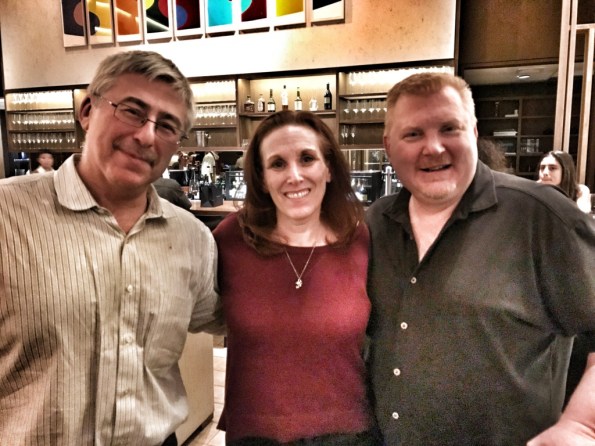 More often than not, when I know what restaurant I’m going to, I like to check the wine list in advance. Aldo Sohm Wine Bar was opened by Aldo Sohm, the Chef Sommelier at Le Bernardine, a world-famous dining destination in New York City. Aldo Sohm is also known for winning numerous Sommelier competitions and was crowned multiple times as “Best Sommelier in Austria”, as well as “Best Sommelier in America” and “Best Sommelier in the World 2008” – you can imagine that the wine list put together by such a wine Pro requires some homework. I don’t know about you but I love and always do my homework, especially if it is connected to wine at least in some way.
In addition a to the substantial wine list, we had another interesting challenge – Donna liked mostly white wines with the nice buttery component to them – but, she was willing to try new wines, which was very helpful, but – the challenge was on.


Being late by 20 minutes had one lucky consequence – the first wine was already chosen and about to be poured by the time I situated myself at the table. We started with 2013 Kuentz-Bas Riesling Cuvée Tradition Alsace ($40) – and it was outstanding. Perfectly bright and intense on the nose, with a whiff of honey and apricot; on the palate, it was live and vibrant, crisp and playful, continuing honey and apricot flavors, supported by clean acidity. An outstanding wine and a great value at a restaurant wine list at $40. Bonus – we got “thumbs up” from Donna – you know how we, wine geeks, feel when someone says about your recommendation “ahh, I like this wine” – the top of the world feeling. Well, kind of, anyway.
As we were pondering at the next wine, it was really hard to decide, especially trying to make everybody happy again. While we were looking at Italian options, feeling “yeah, might be, but really, yeah?”, I took the advantage of my list studying and suggested to try a California Chardonnay. Not just something random, but a very particular Chardonnay – 2012 Sandhi Chardonnay Santa Barbara ($80). Earlier in the year, I had my first experience of Sandhi wines with Sandhi Pinot Noir. Sandhi winery was founded by Rajat Parr, a world-renowned sommelier, a partner at Sandhi winery and one of the founders of IPOB (In Pursuit Of Balance) movement for dialed-down, balanced California wines. The Sandhi Pinot Noir was incredible, which made me really curious about the Chardonnay – and it didn’t disappoint. This 2012 Sandhi Chardonnay had generous, intense, open nose with apples and vanilla, and on the palate, this wine was simply a riot – I experienced similar Chardonnay wines only a few times, mostly from Burgundy, when they get incredible intensity and brightness of golden delicious apples, vanilla and honey, supported by just a hint of butter and clear, vibrant acidity. This was truly a treat. And – yay – we got “thumbs up” from Donna again. Two out of two!


It was the time to move to the reds. While previously looking at the list, I noticed a 2001 Santenay for $77 at the end of the Burgundy section, right after 2001 DRC Romanée St. Vivant for $2650 (need an expense account, anyone got one we can share?). At first I thought there might be a mistake either with the price or a vintage in the online copy (had such experience numerous times), but no – the same Santenay was there on the wine list at the restaurant, for the same $77, so it was not very difficult to convince my partners in crime to go for this wine.
2001 Paul Chapelle 1er Cru Gravière Santenay ($77) was earthy, dry and pretty closed on the nose despite quick decanting. It took the wine a while to start showing some dark fruit, with earthy, minerally notes prevailing at the beginning. I think it took the wine about 45 minutes to give us some dark fruit notes and become a bit brighter. This 16 years old wine still has a lot of life left in it, and it is definitely a food friendly wine. By the way, do you care to guess of Donna liked this wine? Yes, you got that right – no, she didn’t. 2–1.
As our evening was progressing, we got a pleasure of meeting Aldo Sohm in person – he came to our table and introduced himself, so we were able to chat with him for about 10 minutes about all the fun geeky stuff oenophiles enjoy so much – how uneasy it is to find good wines at the good prices, especially when it comes to the Burgundy, with the combination of terrible weather and Burgundy’s love on the upswing around the world. Talking to Aldo was definitely one of the highlights of the evening.
It was getting somewhat late, but the challenge was still in front of us – we managed to score with the white wines for Donna to enjoy, but we had to find the proper red. After going back and force we settled on 2007 La Rioja Alta Viña Ardanza Rioja Reserva ($75). La Rioja Alta doesn’t need much introduction to the wine lovers – one of the very best producers in Rioja, making delicious wine year after year. Of course, this wine was still a baby, but within the reasonable price range, we thought that it would have the best fruit representation, which, again, we were hoping would win Donna’s vote. The wine was every bit as expected – nose of cigar box and vanilla, dense cherries, vanilla and eucalyptus on the palate, touch of sweet oak, full body, noticeable, but well integrated tannins. This was an excellent wine, but … Nope, we didn’t win this one. 2–2. But one super-fun evening.
It was late, and it was the time to go home. But I really hope we are going to do it again. And again. And again. To all the friends – cheers!
Geekiest Way to Celebrate #MalbecWorldDay – #WineStudio Blind Tasting with Achaval-Ferrer
 Starting in 2011, April 17th is the day when we celebrate Malbec – one of the noble French grapes, which almost disappeared in France, but found its new life in Argentina, where it became a star. I don’t want to bore you with the Malbec history – you can read it on your own in many places, including few posts in this very blog (here is a bit about the history of the Malbec grape, and here you can take a Malbec quiz).
Typical “grape holiday” celebration usually includes an opening of an upscale (high end, memorable, etc) varietally correct bottle. Our today’s celebration was a bit different, as it was based on the concept of pure, unadulterated, geeky wine lovers’ fun – a blind tasting, and, of course, guessing.
This blind tasting was a part of the educational program run by the WineStudio during the month of April. In case you are not aware of the Wine Studio, it is a brainchild of Tina Morey, and it is wine education and marketing program which helps to expand people’s wine horizon and help them discover new regions, new grapes and new wines. April program, quite appropriately (April is designated as a Malbec wine month), was focused on the wines of Achaval-Ferrer, one of the very best wine producers from Argentina.
To facilitate the blind tasting, all the participants received a set of two bottles, some wrapped in colorful foil, and some in the black plastic – mine were the second type:


About an hour before the session I opened the bottles to let the wines breathe a little, as it was suggested by the organizers. And then the session started.
Of course, this was not the usual blind tasting. There are many ways to run the blind tasting, some of them quite extreme – for instance, tasting the wine without any known information from the black glass – an extreme sensual challenge. Going less extreme, in a typical blind tasting you will have at least some kind of limits installed – Pinot Noir grape, for instance, or wines of Pauillac. Our #winestudio blind tasting was on one side a lot less challenging, as we knew that the wines were made by Achaval-Ferrer, so we didn’t expect to find Petite Sirah in any of those bottles, and we even knew the vintage years, 2013 and 2012. At the same time, for sure for me, it was almost more challenging, as I was trying to guess the wines based on what I knew about Achaval-Ferrer and thinking about what they might want to showcase in the tasting, instead of focusing on the actual wines.
 We were asked to evaluate wines using WSET Level 3 tasting grid (you can find it here if you are curious). Here is a summary of my tasting notes – I’m distinguishing the wines by their vintage:
Wine 2013
APPEARANCE
Clarity: clear
Intensity: deep
Colour: garnet
NOSE
Condition: clean
Intensity: medium
Aroma characteristics: touch of funk, mint, underbrush, blackberries
Development: youthful
PALATE
Sweetness: off-dry
Acidity: medium+
Tannin: medium
Alcohol: medium
Body: medium+
Flavour intensity: medium+
Flavour Characteristics: cassis, eucalyptus, mint, blackberries
Finish: medium-
CONCLUSIONS
Quality level: outstanding
Level of readiness for drinking/potential for ageing: can drink now, but has potential for ageing
Wine 2012
APPEARANCE
Clarity: clear
Intensity: deep
Colour: garnet
NOSE
Condition: clean
Intensity: medium+
Aroma characteristics: tar, tobacco
Development: developing
PALATE
Sweetness: off-dry
Acidity: medium+
Tannin: medium
Alcohol: medium
Body: medium+
Flavour intensity: medium+
Flavour Characteristics: red and black fruit, salinity, raspberries, anis
Finish: medium
CONCLUSIONS
Quality level: outstanding
Level of readiness for drinking/potential for ageing: can drink now, but has potential for ageing
As it is usually the case with the blind tastings, I didn’t do well. I really wanted the wines to be pure Malbec and Cab Franc, and this is what I included into my final guess:
then, of course, I second guessed myself and changed the answer:
When the bottles were finally unwrapped, we found this beautiful Bordeaux blend called Quimera been our Quimera for the night – it is no wonder every back label of Quimera explains the name: “Quimera. The Perfection we dream of and strive for. The search for an ideal wine”.


The wines were 2013 and 2012 Quimera, both classic Bordeaux blends, but with a high amount of Argentinian star variety – Malbec. Both vintages had the same composition: 50% Malbec, 24% Cab Franc, 16% Merlot, 8% Cab Sauv and 2% Petit Verdot. Just as a point of reference, I still have a few bottles of 2008 Quimera, and that wine has 40% of Malbec. Both wines were beautiful, but very different in its own right – and they will for sure age quite nicely. This was definitely a treat and yet another testament to the great wines Argentina is capable of producing.
Here you go, my friends. Another great night at #winestudio, celebrating the grape well worth a celebration. Next Tuesday, April 25, we will be tasting Achaval-Ferrer Cabernet Franc, their new single-varietal bottling – been Cab Franc aficionado, I can’t tell you how excited I am. Join the fun – see you at 9 pm! Cheers!
Last Bottle Sign Up ($10 credit)




 Talk-A-Vino