Archive
Finding Peace with Chappellet and 2007 Napa Vintage
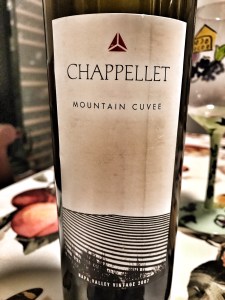 Vintage. An essential word in the wine lovers’ lexicon. “How was the vintage” often is a defining question, something we certainly have to find out and then store in the brain compartment for important wine facts. Depending on the stated greatness, some vintages might keep their recognition almost forever, like 1949 or 1982 Bordeaux, and 1964 or 2001 Rioja. The vintage by itself is no guarantee of quality of the particular wine from a particular producer, but it is generally considered that in the better vintages, there are more good wines available across the board.
2007 was lauded as a truly outstanding vintage in Napa Valley in California. According to the Wine Spectator vintage charts, 2007 [still] is the best vintage since 1999, with the vintage rating of 97. When the first 2007 Napa wines appeared, I was very eager to taste them – only to be disappointed for the most cases. In my experience, the wines were lacking finesse and balance, they were often devoid of fruit and had demonstrably attacking and astringent tannic structure. My main thought tasting 2007 Napa wines was “it needs time, and a lot of it”.
Chappellet is one of the famous producers in Napa, making wines for more than 40 years, now in the second generation of the family; their wines are highly regarded by consumers and critics alike. Some time back in 2010 I scored a few bottles of 2007 Chappellet Mountain Cuvee Napa Valley (14.9% ABV, Cabernet Sauvignon 51%, Merlot 46%, Malbec 1%, Cabernet Franc 1%, Petit Verdot 1%). My first taste was also one of the early posts in this very blog, and nothing short of disappointment (read it here). Continuing tasting throughout the years, I was still missing that “aha moment”, an opportunity to say “ahh, I like it”. It particularly applies to the 2007 vintage of Chappellet, as in 2014 I had an opportunity to taste the 2012 vintage of the same wine (Mountain Cuvee), and the wine was quite pleasant.
A couple of days ago I was looking for the wine to open for dinner and the last bottle of 2007 Chappellet caught my attention. Well, why not? 10 years is a good age for the California wine – let’s see how this wine is now ( even though I have not much of a hope based on the prior experience). Cork is out, wine is in the glass. The color, of course, shows no sign of age, still almost black. But the nose was beautiful – fresh, intense, inviting, with a touch of cassis and mint. The first sip confirmed that the wine completely transformed – open, rich, succulent fruit, cassis and blackberries, supported by the firm structure of the tannins without any overbearing, eucalyptus and touch of sweet oak, clean acidity. Perfectly powerful, but also perfectly balanced with all the components been in check. Now this was the “ahh, this is so good” wine which I would be glad to drink at any time. (Drinkability: 8+/9-).
This delicious experience prompted this post. I’m glad to find it with my own palate, that “needs time” is not a moniker for the “crappy wine”, but a true statement. I’m sure this is not universally true – some wines are simply beyond the help of time – but this definitely worked for this particular wine and for the 2007 Napa vintage. I don’t have any more of this 2007 Chappellet, but I have other 2007 Napa wines, and I just upped my expectations significantly.
Have you had similar experiences? How would you fare 2007 Napa vintage? Cheers!
Open That Bottle Night 2017 – What A Night!
Let’s say you have a bottle of an excellent wine. Do you know how to make it better than it is? I guarantee you this works every time, so listen carefully. You share it with a friend. Yes, that makes any excellent wine into an amazing one. Works like a charm.
Saturday, February 25th was Open That Bottle Night (OTBN for short) – the night when there is no bottle in your cellar which is off limits. If you are not familiar with OTBN, you can read more here. What made my OTBN twice as special was the visit by Oliver and his wife Nina.
For me, the decisions around wine are never easy. I typically buy wine in the single bottle quantities (okay, maybe four at the most, when I need to get a free shipping from WTSO) – thus any bottle can qualify as a special one. As an exception to my long and almost painful decision process, for this OTBN I had a very clear idea – 1982 Olga Raffault Chinon, of which I had a single bottle. The bottle out of the wine fridge and ready for the prime time.
This is what I was looking at after cutting the top foil:
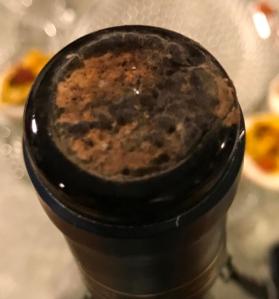 As you can tell, this is not very encouraging. However, if you like older wines and get an opportunity to open them, you know that the state of the top of the cork is nothing to fret about. More often than not, behind most terrible looking mildew there is a delicious wine.
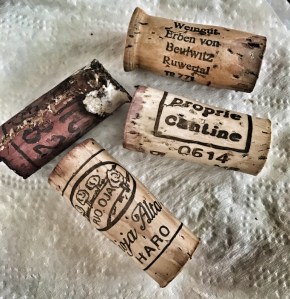
As this was 35 years old wine, I didn’t want to take any chances and used the two-prong opener to pull the cork out. This turned out to be an unnecessary precaution – while cork looked red throughout, it was perfectly firm and came out as a single piece without any crumbling – here is our OTBN corks collection, the red one is the one I’m talking about:
 And for the wine… what can I tell you… This 1982 Olga Raffault “Les Picasses” Chinon, Loire looked perfectly fresh in the glass – not a sign of losing color. Here are the two glasses, one is with 1982 Cabernet Franc, the second one is with 2014 – care to guess which glass contains 1982?
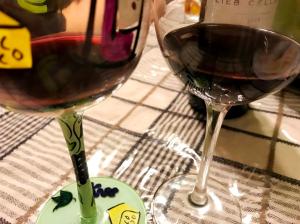 Yes, the one on the left is with 1982 wine, but I believe you would agree that the color shows perfectly young. The nose and the palate were an incredible study in Cabernet Franc flavor profile 101. The wine opened full of bell pepper – both on the nose and the palate. In about 10 minutes, the bell pepper was gone – and what was left was pure, unadulterated black currant – stunning, full flavorful black currant, also known as cassis if we want to use traditional French terminology. The wine had perfect structure, firm, with fresh acidity, almost crisp – and loads and loads of black currant. This was truly a treat.


We followed with a beautiful rendition of Ruchè – 2012 Poggio Ridente Ruchè di Castagnole Monferrato DOCG San Marziano (organic grapes). Ruchè is a little known red grape, cultivated in the Monferrato region in Piedmont, capable of making very concentrated wines. This particular bottle, brought by Oliver and Nina directly from Italy, was fresh and open, with nicely restrained palate with mostly herbal flavors, and a twist – dried mango undertones. Nina was the one to identify the dried mango, while I was desperately trying to figure out what that strange flavor was – but that was a spot-on descriptor. An outstanding wine by all means.
Our next wine was 1989 Kaseler Nies’chen Riesling Auslese Mosel-Saar-Ruwer. No issues with the cork (makes me happy). Still fresh, clean light golden color (28-years old wine!). The nose and the palate were singing in unison here, and the music was simple – peaches and apricots. Slightly underripe peaches and fresh, plump apricots. The balance of sweetness and acidity was impeccable – the wine was fresh and alive, without any sign of age. Wow.
As an added bonus, the grapes for this wine were harvested in November of 1989 – the year and a month when Berlin Wall was demolished – and this is what the label of this wine commemorates.


Our OTBN night didn’t finish there. You would expect us to go to something nice and sweets after such a beautiful Riesling, right? In the conversation, it came out that Oliver doesn’t like Tempranillo wines. Being a Spanish wine buff, I had to fix that immediately, so I had to pull out the big guns. 2001 La Rioja Alta Viña Ardanza Rioja Reserva Especial was absolutely beautiful from the get-go – cedar box and eucalyptus on the nose, soft and gentle cherries on the palate, fresh, round. I hope I made Oliver a convert – but will see about that the next time we will meet.
There you are, my friends. A stunning OTBN with great wines and great company. Hope you enjoyed your OTBN as much as we did – feel free to share your OTBN stories below. Cheers!
Restaurant Files: Mountain View Brasserie in Greenville, NY
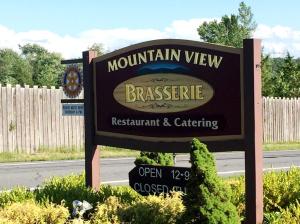 We already talked about our day in the Hudson Valley during traditional adults getaway trip (you can read about it here). Culmination point of the Saturday night was a special dinner. I call it “special” as this is something we always spend time preparing for as part of our getaway. Our ideal scenario is to find a restaurant which would do a special tasting menu for our group, and would allow us to bring our own wines which we would pair with the dishes. More often than not we are successful in this plan – this year was no exception.
The Mountain View Brasserie restaurant in Greenville, New York agreed to create for us a special tasting menu, and we came up with the wine pairings for all the dishes. Of course, the challenging part is doing the “blind” pairing if you will – all we have is the list of ingredients in the dish, and the pairing is solely based on our imagination. The good thing is that we usually do this “hard work” together with my friend Zak, who owns the wine store, so we have a good number of wine options. We always make an effort to keep the cost reasonable – talking about this dinner, only one of the wines was $25 retail, the rest were $20 or less.
For what it worth, here is our dinner menu, with the wine and pairing notes, and addition of the pictures. As the idea here was a relaxing dinner with friends and not a blogger’s dinner, all the pictures are taken with the iPhone and, well, it is what it is…


We started dinner with NV Rivarose Brut Rosé, Provence, France (Syrah/Grenache blend) which was nice, round and simple, well supporting the conversation.


Our first dish was Maryland Crab Cakes served with Lobster Sauce, which was delicious and very generous in size. We paired it with 2014 Templar Cellars Komtur Ekko Pinot Gris, Czech Republic (100% Pinot Gris) – I wrote about this wine before, and while the wine was excellent on its own, the pairing was simply outstanding, with the wine nicely complementing the dish.


Our next dish was House-smoked Salmon Napoleon with horseradish cream and gaufrettes garnished with capers and red onion – the dish was interesting, quite tasty, but rather unexpected under the category of “Napoleon”. Our wine pairing was 2015 Notorious Pink Grenache Rosé, Vin de France (100% Grenache), which was medium bodied Rosé, and the pairing was okay, but not mind-blowing (the flavors didn’t fight, but were not enhancing each other either).
Warm Hazelnut Crusted Goat Cheese with Market Greens was more successful as a dish, nice crunch on outside contrasting with the goat cheese acidic profile. We used the same wine for the pairing and it worked perfectly, complementing the dish very well.


You can’t have dinner without salad, right? We had Grilled Portobello Salad with Roasted Peppers, Fresh Mozzarella Cheese, Tomatoes, Spicy Walnuts, Market Greens with Balsamic Vinaigrette which was very tasty, but most importantly, it paired deliciously with 2014 Sangiovanni Kiara Pecorino Offida DOCG, Marche, Italy (100% Pecorino). Yet another wine I tasted before and loved, and it was perfectly complementing the salad flavors.
Vegetable Risotto with Parmigiano-Reggiano Cheese served with Roasted Sea Scallop was one of the absolute favorite dishes – perfectly seared scallop, working nicely with sweet flavors of corn risotto. Interestingly enough, we missed the sweetness as dominant taste element in this dish (just one word in our defense – corn was not listed among ingredients), and the same wine, Pecorino, didn’t work that well – it was just an okay pairing.


Our next dish was Baked Salmon Fillet with Orange and Olive Butter – again, perfect execution, moist and flavorful fish. The wine, 2011 Portal del Priorat Trossos Tros Blanc, Montsant, Spain (100% Grenache Blanc) was full-bodied, plump and delicious, working very well with the dish.


We were definitely looking forward to the Sautéed Wiener Schnitzel with Spaetzle, and the dish didn’t disappoint – very tasty, perfectly seasoned, delicious sauce. The pairing choice was 2013 Templar Cellars Komtur Ekko Pinot Noir, Czech Republic (100% Pinot Noir), yet again the wine I was familiar with – and I’m glad to admit that the pairing was spot on, with the perfect melding of flavors.


We finished our main course with Roasted Herb Crusted Rack of Lamb Provencal – I’m sure that even from the quick glance at the picture, you would expect that this was a tasty dish, as you can tell that meat was properly cooked – and you would be right, as it tasted appropriately delicious. Equally appropriate was our choice of wine pairing – succulent 2012 Seigneurs d’Aiguilhe, Côtes de Castillon, Bordeaux (Merlot/Cabernet Franc blend) Bordeaux, classic cassis and mint taste profile and classic complement to the lamb – outstanding pairing.
This concluded main portion of our dinner – and before we talk about dessert, I would like to commend restaurant on the smart way to present the tea. Take a look below:
 If you look in the middle of the picture on top, you will see a sand clock – what a great and simple way to help you steep that perfect cup of tea? Very thoughtful!


Our first dessert was Warm Apple Tart with Vanilla Bean Ice Cream and Caramel Bourbon Sauce – I’m sure you don’t need my lame description here, it was simply indulgent. And for the pairing – you can’t beat one of the best and most universal dessert wine pairings – Moscato d’Asti. We had 2015 Cascinetta Vietti Moscato D’Asti DOCG, Italy (100% Moscato d’Asti) – light, effervescent and clean.


Our last dish was Grand Marnier Chocolate Mousse with Fresh Orange Sections – excellent by itself, and pairing very well with 2014 Quady Essencia, California (100% Orange Muscat).
I think this was one of the most successful tasting dinners we put together, so for the next year, we have a very difficult task at hand – but we are up for the challenge. Cheers!
Mountain View Brasserie
10697 State Route 32
Greenville, NY 12083
Ph: (518) 966-5522
Restaurant Files: Off The Chart Experience at Portside Tavern in Hyannis
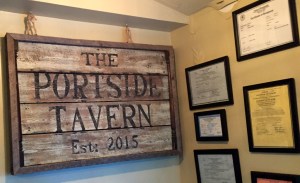 Yes, I love food. This never been a secret in this blog. And yes, I get overly excited when I come across really tasty experiences.
Concept of “food” is multidimensional. At home, tasty food and family (and friends) around the table is usually all you need. Mix in a bit of ambiance and a glass of a good wine, and you got a great experience, right there.
When it comes to visiting the restaurant, you need a bit more than just food for the great and memorable experience – good service is important; another element which is near and dear to me is cost. This is not even the “cost” in the absolute terms – it is more the perceived value which matters, the infamous “price/performance” – an amazing burger for $20 might be a great experience, and tasteless, rubbery steak for $15 will not be the one.
As you can see in the title of this post, I want to talk about “off the chart” experience. The source of this exuberant designation was our recent visit at the Portside Tavern in Hyannis on Cape Cod (love weekend getaways, even with 5 hours in traffic). To go along the lines of a great experience in the restaurant, I was with the family, food was amazingly tasty, service was great, and the value was unbeatable – that’s all.
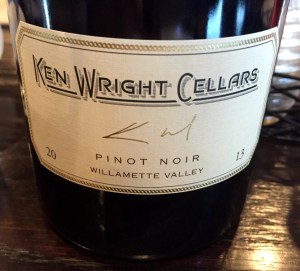 First, of course, was the wine. Don’t get me wrong – the restaurant also offers full bar with interesting cocktails, but my attention was on the wine list, which offers lots of great options, both by the glass (most of the wines priced in $7 – $12 range), and by the bottle (prices starting from $30 and some even for less). I couldn’t pass by the 2013 Ken Wright Pinot Noir Willamette Valley for $50 – talk about value – even if you can find this wine in retail, which is not easy, it will cost you at least $25, so I consider $50 at the restaurant to be a great value. After a bit of the breathing time, the wine was gorgeous, dense and powerful, with the signature Oregon aromatics of earth and cocoa.
Next, there was a pure indulgence from start to finish. Chowder (Local clams, new potatoes, applewood smoked bacon, cream) was not too heavy, not too thick, very well balanced in flavor.
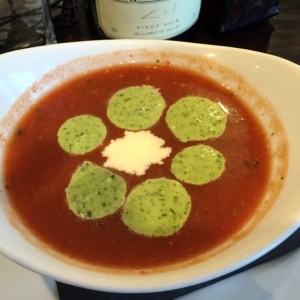
Watermelon Gazpacho (Sweet basil drizzle, whipped feta) was different and refreshing – outstanding on any hot day, light, and again, very tasty.
One of my favorite ways to cook chicken wings is to slow roast them at a low temperature (say 215ºF or so) – they develop great flavor and then easily fall off the bone this way. I was happy to find the same style chicken wings at the restaurant – Confit Chicken Wings (Choice of harissa, rhubarb BBQ, or sweet basil sauce – we chose BBQ sauce) were super-tasty and the chicken wings were literally melting in the mouth. Continuing to deliver a great dining pleasure was Poutine (House cut fries, cheddar curds, foie gravy) – love this interpretation of French fries. This rendition was on par with best of the best I had in Quebec – flavor, texture, cheese, gravy – everything was just spot on. Finishing our divine appetizer experience was perfectly executed Mac & Cheese (Gemelli, local cheeses, buttered crumbs) – again, very tasty.


Our main course dishes were equally delicious. Chicken Risotto (Asparagus, prosciutto, baby tomatoes, balsamic reduction) was very well executed, great smokey flavor, nice contrast of balsamic, very tasty. Half-Pound Burger (Caramelized onions, bacon, garlic aioli, tomato jam, brioche) had an excellent fresh beef flavor, was cooked as requested and overall was very enjoyable.


Cuban (Braised pork, ham, Gruyere, dijon aioli, house-made pickle, grilled french bread) was done exactly as I like it – good amount of meat, flat pressed bread, great combination of flavors – one of the best Cuban sandwich experiences. It was also served with a side of Wedge salad (one of the available choices), which is one of my favorite salads any time I see one. Grilled BBQ Chicken Pizza (Bacon, red onion, cheddar) was delicious, good crust and again, great flavor combination.


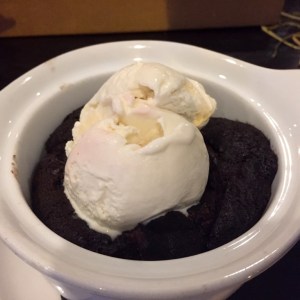
As you can imagine, we were absolutely full at this point. But considering how good all the food was, we had to try at least one dessert. After back and forth, we settled on Double Chocolate Cookie (Vanilla Ice Cream), which was more resembling a chocolate lava cake, and was instantly devoured with the help of four spoons.
 There you have it, my friends. If travel will take you to Cape Cod, make sure not to miss Portside Tavern – and then leave me a thank you note here. Cheers!
Portside Tavern
72 North Street
Hyannis, MA 02601
Ph: 508-534-9600
http://www.theportsidetavern.com
New and Noteworthy: Two Classic Regions, Three Classic Pairs
I tend to abuse certain words in the conversation, especially when talking on the subject of wine. As you might easily guess, one of such words is “Classic”. I use this word in hope that it is the quickest way to convey my impressions about the wine. For instance, the words “Classic Red Bordeaux” or “Classic White Burgundy” would most likely paint a quick and vivd picture for the most of oenophiles to imagine how the wine actually tastes. While the wine is produced all around the world, such a broad stroke reference can be only applied to the well known and well referred to regions – saying “Classic Red Bio-Bio” (wienmaking region in Chile) or “Classic White Valais” (winemakiing region in Switzerland) would be an empty sound for majority of the wine lovers.
Looking past the regions, we can also apply the word “classic” to the grapes themselves. There are probably 15-20 grapes which can be easily referred to in this way – “classic Cabernet Sauvignon” or “Classic Sauvignon Blanc”, for example, would give you quick pointers to how the wine might taste like. Yes, “Classic Bobal” or “Classic Resi” will leave most of us with no information at all.
As this is not an epistolary exercise on the applications of the word “Classic” in the wine world, let’s get closer to the subject at hand, and talk about few wines in the practical terms. Today I want to talk about 2 classic regions and 3 classic grapes – for sure for those regions. So the classic regions are: California and Oregon. Would you agree that it is easy to refer to these two world renowned winemaking regions as “Classic”? I hope you are nodding. And for the grapes, I also hope you would share my “classic” sentiment – Pinot Noir and Chardonnay from California Napa Valley – aha, I see you smacking your lips. And Pinot Noir and Pinot Gris from Oregon – need I say more?
Talking about the wines from Oregon, the Pinot Noir is of course an uncontested king of the Pacific Northwest of the USA. Commercial Pinot Noir production in Oregon started in the 1960s, and then from the beginning of the 1990s, Pinot Noir from Oregon needed no introduction anymore. With Oregon Pinot Gris, you might argue with my “classic” designation, however, today, you will practically not find a single Oregon winery which will not produce Pinot Gris. Oregon Pinot Gris has its own, easily recognizable style and character, so in my mind, Pinot Gris wines are the “classic” element of the Oregon winemaking.
Thus let me present to you the first two of the “classic” pairs – Pinot Gris and Pinot Noir from two wineries in Oregon: Willamette Valley Vineyards and Pike Road Wines.


Willamette Valley Vineyards was established in 1983, planting Pinot Noir, Pinot Gris and Chardonnay vines where blackberries and plums were growing before. The original Estate vineyard spans 53 acres at the 500 to 750 feet in elevation. Today, Willamette Valley vineyards farms more than 250 acres of vines, including one of the oldest in Oregon, Tualatin Estate, which are all LIVE (Low Input Viticulture and Enology) certified. I had a pleasure of trying Willamette Valley Pinot Gris and Pinot Noir wines earlier in the year, so here are my notes:


2014 Willamette Valley Vineyards Pinot Gris, Willamette Valley, Oregon (12.4% ABV, SRP: $16)
C: straw pale
N: white stone fruit, touch of grass
P: hint of candied lemon, white stone fruit, nicely round, refreshing, good acidity, medium to full body
V: 7+/8-, very pleasant
2013 Willamette Valley Vineyards Pinot Noir Estate Willamette Valley, Oregon (13.7% ABV, SRP: $30, retail: ~$20)
C: beautiful Ruby
N: fragrant, fresh, cranberries with touch of cherries, sweet raspberries
P: wow, lots of fresh fruit – cranberries, raspberries, fresh, super-clean, touch herbal, great restrained finish
8+, one of the most delicious Pinot ever, perfect.
Our second Oregon winery takes its name from the Pike Road, which winds through the hills of Yamhill-Carlton AVA. This is the second winery for the Campbell family, who founded Elk Cove Vineyards in 1974. Pike Road takes advantage of 5 generations of the farming experience, including 40 years of tending the wines.
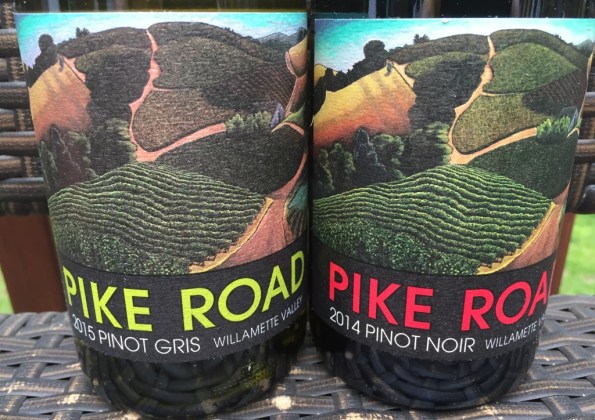


Here are my notes:
2015 Pike Road Pinot Gris Willamette Valley, Oregon (13.5% ABV, SRP: $15)
C: pale greenish color
N: tropical fruit, candied lemon, fresh, intense, inviting
P: crisp, clean, perfect fresh acidity and white stone fruit, creamy. Outstanding.
V: 8-/8, delicious white wine, perfect year around and superb during summer
2014 Pike Road Pinot Noir Willamette Valley, Oregon (13.5% ABV, SRP: $19, 10 month in French oak barrels)
C: dark Ruby
N: delicious. Touch of sweet fruit, open, inviting, raspberries, herbs, super-promising, wow
P: soft, layered, silky, spices on top of traditional smokey profile, triple-wow
V: 8+/9-, wow, totally unexpected and amazing. I know Oregon Pinot delivers, but this far exceeded my expectations. Might be the best QPR for Oregon Pinot Noir in existence. Love rustic labels too.
Our last classic pair comes from the classic of the classics, none less than Napa Valley, and it is Chardonnay and Pinot Noir from Artesa winery. Artesa winery is located in Carneros region of Napa Valley. While Artesa recently celebrated is 25th vintage, their winemaking traditions go way, way, way back – say by another [almost] 500 years. How come? Artesa winery was founded by Codorniu Raventós family from Spain, which takes its winemaking heritage 17 generations back to the 1551. Artesa sustainably farms 150 acres of vines, all Napa Green Land certified, and produces a range of wines, starting with a few sparklers and finishing with another Napa classic – Cabernet Sauvignon. Two wines which I had an opportunity to taste are the new Estate Reserve release from the winery:
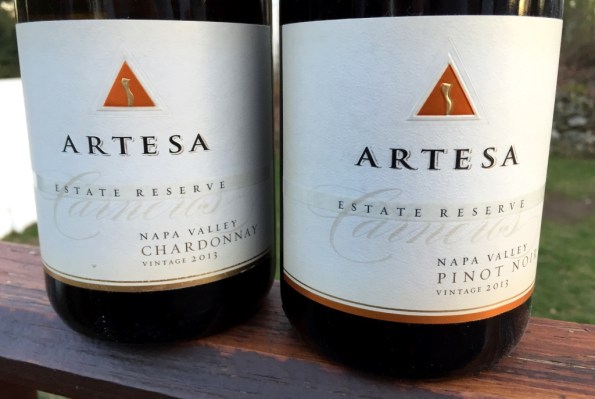
2013 Artesa Estate Reserve Chardonnay Napa Valley (13.9% ABV, SRP: $40)
C: light golden
N: touch of vanilla, hint of butter, white fruit, intense
P: touch of butter, green apples, good acidity, medium to full body, vibrant and balanced
V: 8-, a classic Chardonnay
2013 Artesa Estate Reserve Pinot Noir Napa Valley (14.4% ABV, SRP: $40)
C: dark garnet
N: warm, inviting, sweet plums
P: round, polished, present silky texture, touch of smoke, more plums, minerality, restrained
V: 8-, nice, smooth and restrained
There you have it, my friends – some new and interesting wines worth seeking. And whether they will hit the “classic” note for you – it is entirely your decision. Cheers!
The Post Which Could Have Many Names
Blog post title is something I consider to be important, may be even essential. Good title facilitates the flow of thoughts and actually, once I get a title in and I’m happy with it, the writing usually flows effortlessly.
The post you are reading could’ve have many different titles, such as “More Creative Wine Labels”, “City Winery with Worldly Wines”, “Secret Wine Santa Over-delivers”, “Art in and of the Wine Labels”, or “Better Late Than Never” and I’m sure I would be able to come up with a few more – hence the title you see at the top. As for all of these possible titles – read on and you will figure it out.
As some of you know, there is a game of Secret Wine Santa, originated by Jeff a.k.a The Drunken Cyclist – here is Jeff’s post about it from the last year. The game, of course, is played closer to the actual Santa-related period. All participants get assigned a random recipient, who then gets from the secret Wine Santa one or two bottles of wine, preferably arriving before Thanksgiving. If you think that I have a nerve talking about Wine Santa when the temperatures on the East Coast are trailing above 90°F – well, may be I do. But I have an excuse – I always wanted to play this game twice a year, but shipping wine during summer is not good for the wine, so much for that thought – but then at least I get to talk about it (no, I didn’t plan it like that – life did).
Of course the Santa stays secret only until the wine arrives. When I opened the box, I found a nice handwritten note from Nancy Koziol, introducing me to the two absolutely gorgeous looking bottles from the winery I never heard of, called Brooklyn Oenology:
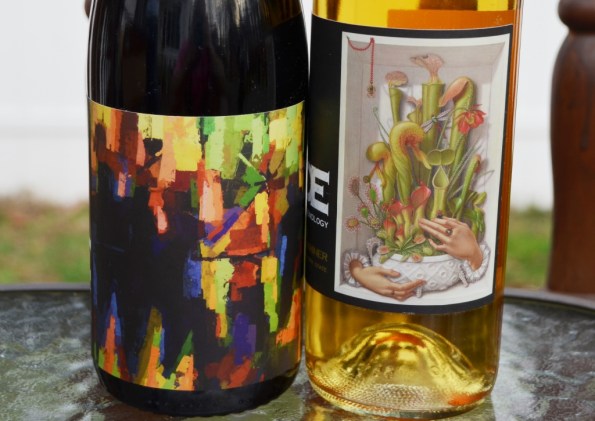
Going beyond the beautiful labels, it turned out that the wines are produced by Brooklyn Oenology, the first urban winery in the New York City – they have a tasting room open in the Williamsburg neighborhood of Brooklyn, so technically right in my backyard (still never visited them so far). Brooklyn Oenology, or BOE for short, sources their grapes from around the New York state (as you can see below in the wine descriptions) and in the future they even plan to bring actual winemaking facilities into Brooklyn.
Now, talking about the labels – not only they are beautiful, but to top that off, BOE really thought of the people like myself, who spend countless hours trying to neatly peal off the labels from the bottles for the notes journals. These labels are peel off labels – how smart is that! I can’t help it not to share this paragraph from the About page on the BOE web site:
“In addition to sourcing New York grapes, BOE draws upon the Brooklyn and greater New York areas to create its identity. Each wine’s label showcases contemporary art by a Brooklyn artist and features a new piece of work for each vintage. They’re not just for viewing; they are double-layer, easy-to-peel stickers, so the customer can preserve the artwork”.
What is most important, that these wines are not just labels – they are first and foremost, unique, different and delicious wines.
For what it worth, here are my notes:
2012 Brooklyn Oenology Gewürztraminer Finger lakes, New York (12.8% ABV, 100% Gewurztraminer, fermented with skin and seeds)
C: concentrated gold, the wine is made with the “orange wine” methodology
N: concentrated honeyed fruit initially, but then quite closed, not perfumy at all, which is usually a trait of Gewürztraminer
P: very unusual, more of a qvevri style, clean acidity, very restrained, but opens up to some nice finish with touch of fruit.
V: 8-, very thought provoking, interesting wine
2010 Brooklyn Oenology Motley Cru North Fork of Long Island, New York (13.5% ABV, 57% Merlot, 19% Syrah, 14% Petit Verdot, 5% Malbec, 5% Cabernet Sauvignon)
C: dark garnet
N: warm, inviting, ripe sweet fruit, blueberries
P: medium to full body, soft, round, fresh fruit, touch of pepper, violet, clean acidity, excellent balance, long lingering finish. On the third day the wine became even more polished. Delicious.
V: 8, an excellent bottle of wine, good for all occasions.
Here is the story of [yet again] boundless creativity and passion in the world of wine. Thank you wine Santa for this wonderful discovery – and I already can’t wait to see what next November might bring. Cheers!
Looking Back and Looking Forward
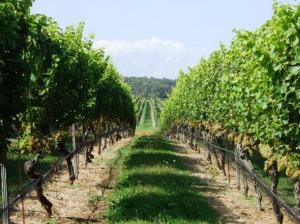 I’m sure you guessed from the title and the timing of this post that I want to talk about past year 2015 and freshly minted 2016. Yep, I’m predictable like that, you are correct.
So how was 2015 for 2015 for Talk-a-Vino in my own eyes? Great, but challenging. Very challenging. 2016 will be equally difficult, with great potential to be even more challenging, a lot more.
Sure, I will explain. Nothing happened with my love of wine or passion for blogging – both are as strong as ever. What I had (and will have) a problem with is time – my main line of work (the one which pays the bills, you know) is incomparably busier than two years back, and finding quiet time for the labor of love is now not easy at all. No, I’m not complaining, just explaining the change in cadence of the posts coming out.
Talking about 2015, there were few new things which I started doing. During the year, I was offered a few opportunities to meet with the winemakers, and was unable to find time – this is how the concept of virtual interviews came to life. I realized that even when I can’t sit down with the person in the same room, I can still ask questions – and get great answers. I also offered to profile wine apps for any of the app producers who would be interested, and so far had 3 posts in that series – by the way, the offer still stands if anyone is interested.
From the things which I didn’t like so much, but they still happened in 2015, was stopping the series of the Saturday wine quizzes. I had lots of fun creating those, but reached the point when it became very difficult to create challenging, but fun questions, so I had to stop the series, at least for the time being.
What should you expect in 2016? I definitely will continue the virtual interviews – as a matter of fact, one of them is coming out very shortly. I also have good number of posts which I really should’ve written last year, but did not. There were wine dinners, there were tastings, there were winery visits which never made it into the posts. However, the subjects are still worth taking about, so you should expect to see some of those “posts from the past”. I don’t know if I will make a series out of those posts (as an engineer, I like to organize things, may be even more than necessary), add short intro to those posts, or simply put them out without any regards to the “past” – no matter, they will still appear on Talk-a-Vino pages.
2016 is on, so let’s raise the glass to all the fun things which are ahead of us. Cheers!
Wine Dinner at Brasserie Louis
 I love traditions. I’m not talking about anything which is covered in dust and lasted for hundreds of years. I’m talking about simple life pleasures which you call traditions as long as it is something you do repeatedly, hopefully with joy and pleasure.
For about 5 years, we get together with group of friends for a weekend in August, which we call an “Adults Getaway”. The program for the “adults getaway” usually includes driving to an interesting small town within 200 miles radius, a wine tasting if there is a winery near by (doesn’t have to be a winery – one year we visited Hudson Distillery, for instance), a tasty dinner, a stay over at a nice B&B – but primarily lots great and fun time together.
When it comes to the tasty dinner, we usually try to control that experience as much as possible – that translates into finding local restaurant which will be willing to host us and work with us to create tasting menu, and ideally, allow us to bring our own wine which we will of course pair with the dishes on the menu.
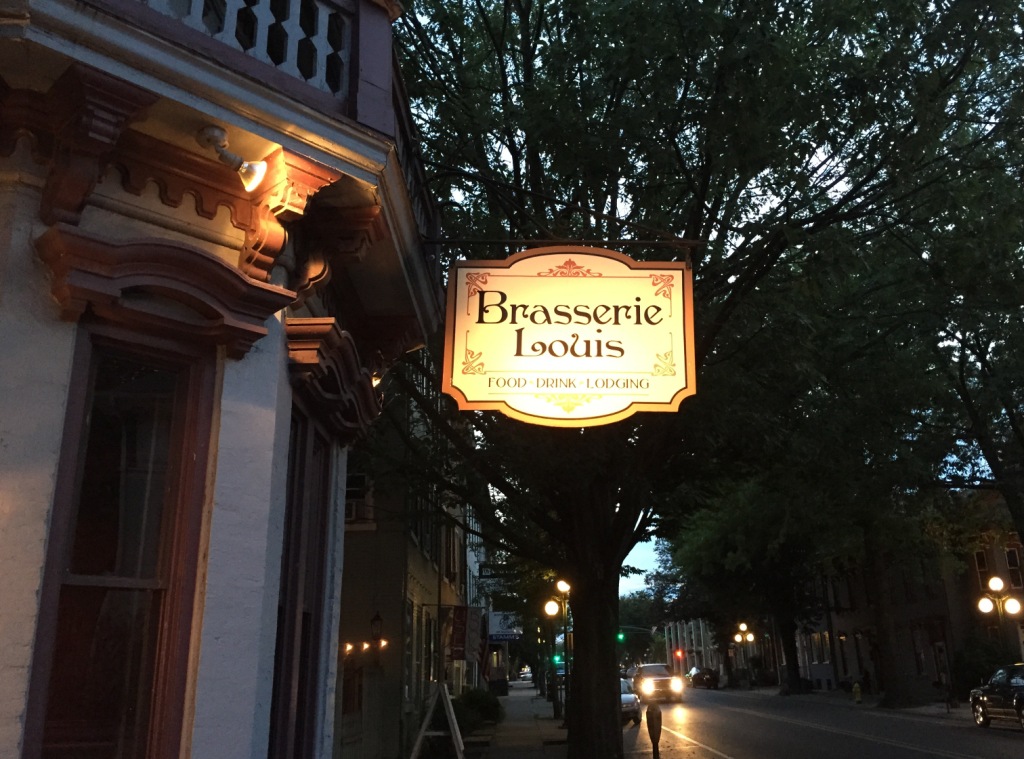 Few weeks ago we got together for our “adults getaway” at Lewisburg in Pennsylvania. Our “anchor” for the trip was visit to the local winery, Fero Vineyards, which will be a subject of a separate post. For the dinner we contacted a few local restaurants, and finally decided to have our dinner at Brasserie Louis.
We didn’t have any specific dining theme in mind, and the suggested menu we received from Scott, owner of Brasserie Louis, exceeded our expectations – 11 different dishes – the dinner looked very promising. Now we had to decide on the wine pairings and go have fun. 11 dishes doesn’t mean we have to have 11 wines – we settled on 7 wines, as two of the desserts really were calling for the two different wine pairings.
The day arrived and we all got together (overcoming some interesting difficulties, such as flat run-flat tire, which appears to be a serious ordeal, especially during long distance travel) and here is the account of the wine dinner with all the details.
Appetizers:
We started with Shrimp Ceviche (diced raw shrimp pieces in lime juice with cilantro, bell pepper, salt and pepper) – very nicely executed dish, great flavor, touch of heat. Our wine pairing was 2014 Fattoria Laila Verdicchio dei Castelli di Jesi DOC, Italy (13% ABV, $11) – wine had a good open profile with some flower and white fruit notes, but most importantly, it paired perfectly with the flavor of ceviche, complementing and enhancing the dish.


Our second dish was Wild Mushroom Tart (puff pastry with wild mushrooms, Gruyere cheese and shallots topped with greens and a balsamic glaze) – another excellent dish, with peppery arugula melding well together with the earthy mushrooms and adding lightness to the cheese. The wine pairing here was NV Anna Codorniu Brut Rosé, Spain (12% ABV, $13, 70% Pinot Noir, 30% Chardonnay) – one of my favorite Sparklers, Anna Codorniu always over-delivers, with good structure and good body. Here the pairing was also successful, with the wine complementing the dish very well.
Intermediate:
Our “in-between” dish was Harvest Salad (baby arugula with goat cheese, beets and candied walnuts tossed with a Champagne vinaigrette) – nice crunch, fresh, simple – and we used the same Anna Codorniu with this dish, and again, this was an excellent pairing.


And now, for the Main Course:
We started with Hand formed Crab Cake (lemon Beurre Blanc sauce, green pea risotto) – this was easily the best dish of the evening. You know how often crab cakes contain a lot of other “stuff”, various fillers (corn, peppers, etc)? This crab cake had just honest goodness of a pure, delicious crab meat – I only had anything similar in Maryland, which can be called a crab cake capital with its blue crab. This was just a “wow”dish. Our wine pairing was also excellent – 2013 Jean-Luc Colombo La Redonne Cotes du Rhone, France (13.5% ABV, $20, 70% Viognier, 30% Roussanne) – Jean-Luc Colombo is a very good producer out of Rhone, and this was one of his higher end wines – plump, full bodied, silky – complemented mild crab cake flavors spot on.


Next up – Black Sesame Crusted Yellowfin Tuna Steak (Yuzu teriyaki glaze) – the dish was nice and simple (tuna was a touch overcooked to my taste, I like it rare), and it paired very well with one of my all-time favorite red wines – 2013 Laetitia Estate Pinot Noir Arroyo Grande Valley, California (13.9% ABV, $20). Laetitia makes an excellent range of Pinot Noir wines, where Estate is an introductory level wine – which makes it perfectly ready to drink young. Delicious California Pinot Noir profile – smoke, plums, touch of earthiness – outstanding. The pairing worked quite well by complementing and enhancing the flavors of the dish.
We continued with Duck a l’Orange (pan seared duck breast, Grand Marnier reduction) – this was an okay dish (my piece of duck was slightly overcooked), but the sauce was excellent and fresh. We used the same Pinot Noir for the pairing, and wine and food worked together well.


Taking a break from the proteins, our next dish was Ratatouille (Provencal vegetable stew of zucchini, squash, wild mushrooms, onions, tomatoes, eggplant and sweet potatoes, touch of Parmesan cheese). This was the dish where the mastery of the Chef combined with amazing Pennsylvania vegetables (I’ve traveled all over East Coast – nothing beats PA vegetables, I’m dead serious) to bring out simply a perfection on the plate – vegetables still had a crunch, and the whole dish was just another “wow” experience.
Our choice of wine for the this and next 2 dishes was 2008 M. Chapoutier Domaine de Bila-Haut Occultum Lapidem Cotes de Roussillon Villages, France (14% ABV, $55/magnum). M. Chapoutier needs no introductions as one of the very best producers in Rhone, and this wine was outstanding – complex, with a touch of roasted flavors, great minerality, lavender. However, there was one problem – this wine didn’t pair well with Ratatouille, and it didn’t pair well with two other dishes. In some cases, it was indifferent (didn’t complement or contrast), and with Ratatouille it was even working against the dish. Well – it is what it is – we still enjoyed the wine and the food – just separately.
Our next dish was Lamb Chops (herb mustard crusted rack of lamb, minted demi-glace) – meat was nicely cooked, and of course lamb and mint jelly is a classic combination.
We finished our main course with Filet Mignon (grilled filet, scalloped potatoes and wilted spinach, truffled veal demi-glace) – the presentation was very interesting, with the steak knife put directly into each piece of the meat. The meat was cooked very well, and overall dish was tasty. And this was probably the only dish where Cotes de Roussillon wine paired marginally acceptable.
Finally, we are at Dessert!
We had two desserts to finish our evening. Strawberry Zabaione (egg yolks, sugar, Marsala wine, fresh strawberries) was very tasty and not too sweet. We paired it with NV Tütidì Brachetto Piemonte DOC, Italy (7% ABV, $12/1L). Brachetto is a lightly fizzed wine with a nice fruit notes, and it perfectly complements wide range of lighter desserts – and this was a case of a perfect pairing – they were delicious together.


We finished our dinner with Flourless Chocolate Cake, which was paired with Mount Palomar Limited Reserve Port, Temecula Valley, California (18% ABV, $38). Port and Chocolate – do I need to say more?


There you have it my friends – our wine dinner at Brasserie Louis in Lewisburg, Pennsylvania. What is left for me to do here is to say Thank You to the owner Scott, Chef Chris Rubino and all the staff at the restaurant who made sure we will have a great time. Cheers!
Brasserie Louis
101 Market Street
Lewisburg, PA 17837
Phone: (570) 524-5559
Facebook: Brasserie Louis
Of Wine And Balance
 When assessing the wine, there are many characteristics which are important. The color, the intensity and the type of the aromas on the nose, the bouquet, body and flavors on the palate, the finish. When I’m saying “important”, I don’t mean it in the form of the fancy review with “uberflowers”, “dimpleberries” and “aromas of the 5 days old steak”. All the characteristics are important for the wine drinker thyself, as they help to enhance the pleasure drinking of the wine.
One of the most important wine characteristics for me is balance. Well, I’m sure not only for me, otherwise the organizations such as IPOB (In Pursuit Of Balance) wouldn’t even exist. Of course as everything else around wine, the concept of the balance is highly personable – or is it? What makes the wines balanced? What does it even mean when we say that “the wine is balanced”? This is the big question, and I don’t mean to ponder at it at a great depth, as this is a purposefully a short post. But nevertheless, let’s just take a quick stub at it, shall we?
In my own definition, the wine is balanced when all the taste components are, well, in balance. Okay, don’t beat me up – we can replace the word “balance” with the word “harmony”. In a typical glass of a red wine, you will find acidity, fruit and tannins (which is mostly a perceived tactile sensation in the form of drying feeling in your mouth). You will also often find other flavors such as barnyard, toasted oak or burning matches, which are typically imparted by the vineyard’s soil and/or a winemaking process, choice of yeast, type of aging and so on. But – in the balanced wine, nothing should stand out – you don’t want to taste only fruit, only tannins or only acidity – you want all the components to be in harmony, you want them to be complementing each other, enhancing the pleasure you derive from drinking of the wine.
And then you got an alcohol. On one side, I should’ve listed the alcohol above, as one of the components of the taste – alcohol often can be associated with the perceived “weight” of the wine in your mouth, which we usually call a “body”. Alcohol can be also related to the so called “structure”. But the reason I want to single out an alcohol is because way too often, we tend to use it to set our expectations of the balance we will find in the glass of wine, as this is the only objective, measured descriptor listed on the bottle. You might not taste the “raspberries and chocolate” as the back label was promising, but if it says that the wine has 14.5% “Alcohol by Volume” (ABV), this would be usually very close to the truth. Of course there is a correlation in the perceived balance and the alcohol in the wine – if you taste alcohol in direct form when you drink wine, it will render the wine sharp, bitter and clearly, unbalanced. But – and this is a big but – can we actually use the ABV as an indicator of balance, or is it more complicated than that?
When IPOB started, this was their premise – search for the wines with lower alcohol content (don’t know if it still is). Typical ABV in the old days was 13.9% (there were also tax implications of crossing that border). So should we automatically assume that any wine which boasts 14.5% ABV will not be balanced? I do have a problem with such approach. I had the wines at the 13.5% ABV, which were devoid of balance – including one from the very reputable Napa producer who will remain unnamed. And then there is Loring Pinot Noir, where ABV is dancing right under 15% (at 14.7% to 14.9%). Pushing envelope even further, you got Turley and Carlisle Zinfandels, where ABV is squarely stationed between 15% and 16% (occasionally exceeding even that level). Have you tasted Loring, Turley or Carlisle wines? How did you find them? To me, these wines are absolutely spectacular, with balance been a cornerstone of pleasure.
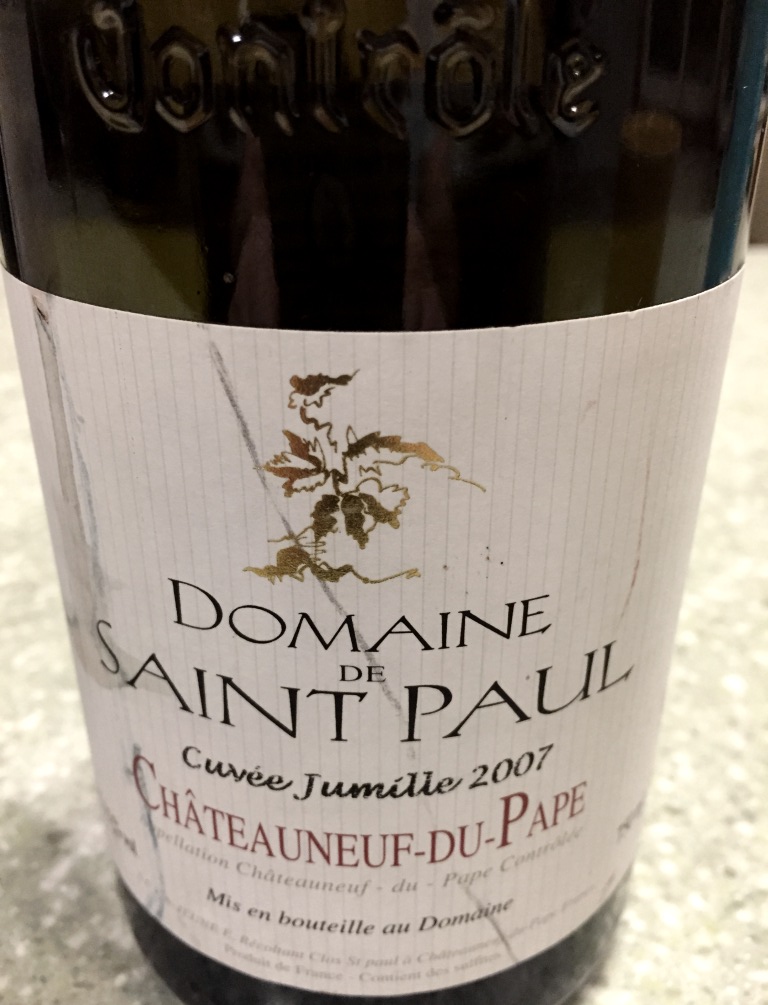
What prompted this post was the wine I had yesterday – 2007 Domaine de Saint Paul Cuvée Jumille Chateauneuf-du-Pape (95% Grenache, 5% Muscardin), which was absolutely delicious, and perfectly balanced, with round, smokey, chocolatey profile. The wine also had a touch of an interesting sweetness on the finish, which prompted me to look carefully at the label – and then my eyes stopped at 15% ABV, with the first thought was “this is amazing – I don’t find even a hint of the alcohol”. Judging by this ABV number alone, the “alcohol burn” would be well expected.
Yes, the notion of the balance is personal. Still – what makes the wine balanced? Can we say that some types of grapes, such as Grenache or Zinfandel, for instance, are better suited to harmoniously envelope higher alcohol levels? Is it all just in the craft, skill, mastery and magic of the winemaker? I don’t have the answers, I only have questions – but I promise to keep on digging. Cheers!
Last Bottle Sign Up ($10 credit)




 Talk-A-Vino