Archive
Behind The Label
We eat with our eyes first – everybody knows that. We drink in exactly same way. While looking for the wine to buy, we always start from the label. Of course, sometimes we might be looking just for the specific producer’s name – but way more often than not, wine consumer is lured by the appearance of the bottle before anything else. We let the bottle speak to us.
Wine producers always knew the effect of the bottle appearance, and always tried to design attractive and appealing labels – think about Château Mouton Rothschild, for example, which started their “Artist” wine label series back in 1945. 20-25 years ago, the design, and most importantly, production capabilities were limited both in style and the cost. But not today- there are literally no limits to how creative the wine bottle design can get in today’s world. It is hard to tell what exactly makes the wine label instantly attractive, but we all can recognize that special label when we see it. I shared my fascination with the creativity of the wine labels on the multiple occasions in this blog – here is one example for you.
You don’t have to agree with me, but I see creative wine labels as objects of art. Art at large is a form of the human expression. Art takes lots and lots of different forms – beautiful building, successful surgery, a sublime glass of wine, a flower, a painting. I’m sure there are countless studies written on the subject, and I will not even try for the slightest bit to delve into it, but I’m convinced that art as a final expression always has its source, the origin, it is inspired – and this leads to the fundamental question – what inspires the art? I will leave you to ponder at that, and meanwhile, let me turn our conversation towards the … wine, of course.
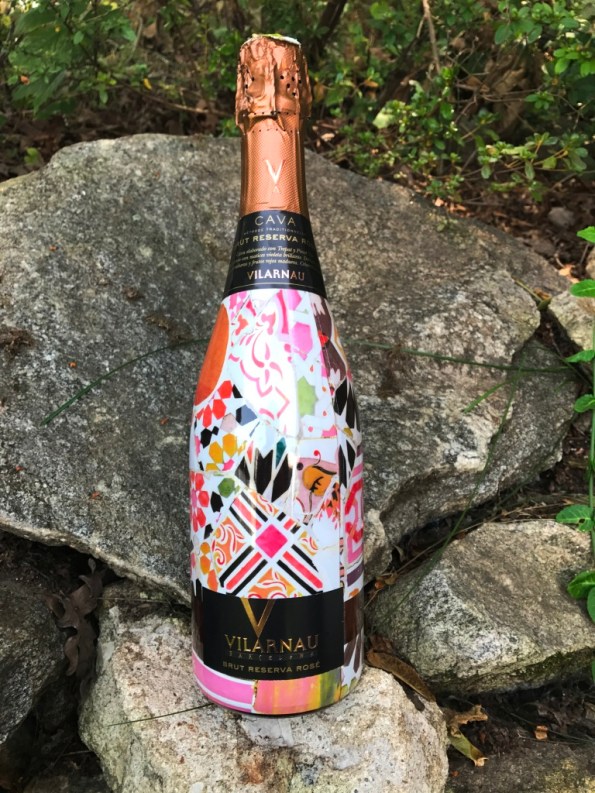 When I saw the label of Vilarnau Brut Reserva Rosé, my first reaction was “wow, this is a beautiful bottle”. The next question was – what does it mean? Yes, I read the description connecting Vilarnau Trencadís Edition cavas to the work of famous architect Antoni Gaudí, but I still wanted to understand the true inspiration behind this label. I reached out to the winery, and asked a few questions – here is our short conversation:
[TaV]: Vilarnau produces Cava since 1949. When Trencadís labels were used on Vilarnau Cava for the first time?
[V]: We launched the Trencadis labels at the end of 2014.
[TaV]: What was the inspiration behind the Trencadís labels?
[V]: This form of mosaic is very famous in Catalunya, Spain. Inspired by the Park Guëll in Barcelona and the famous artist Gaudí. Vilarnau is the “Barcelona Cava” and we felt it was fitting to use such an iconic design to decorate the bottles.
‘Trencadís’ is a type of mosaic used in Catalan modernism, created from broken tile shards. The technique is also called ‘pique assiette’. The mosaic is done using broken pieces of ceramic, like tiles and dinnerware. The Catalan architects Antoni Gaudí and Josep Maria Pujol used trencadís in many projects, among which Barcelona’s Parc Güell is probably the most famous. Vilarnau being so close to Barcelona (not only geographically, but also with heart and soul), it was natural to pick up this typical artistic theme for our winery.
[TaV]: Are the Trencadís Cava target the specific market, or do they sell equally well world-wide?
[V:]: We are currently exporting this label to almost 30 markets (principle markets being the USA, UK, Germany, and Belgium) and the number is growing as consumers love the design and the wine.


[TaV]: Do you have plans to add any new wines to the Trencadís series?
[V]: When we first launched we only had the Brut Reserva NV in the trencadis design but we have added the Rosado Reserva to the range two years and the Brut Nature Vintage and Demi-Sec last year
[TaV]; Do you have plans for any other “creative label” designs under Vilarnau name?
[V]: Barcelona is a constant inspiration to us and we are full of ideas, however, we have so much to do with the Trencadis design that we probably won’t launch anything new for the next 2 years or so.
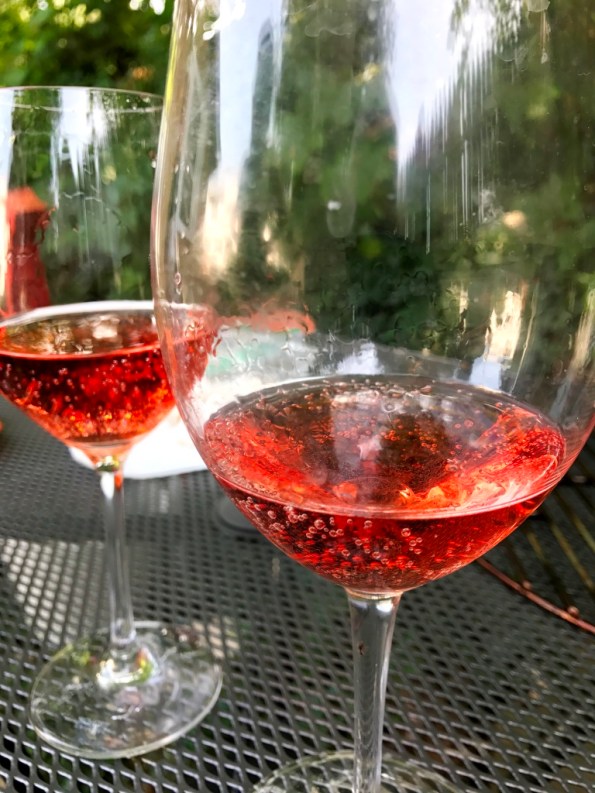
The beautiful label is very important, it sets the expectations and makes you anticipate more from the wine. But – the content of the bottle is better to support the beauty of the label, or the joy of wine drinking will quickly dissipate.
I’m happy to say that the NV Vilarnau Brut Reserva Trencadís Edition Rosé D.O. Cava (12% ABV, SRP: $15, 90% Trepat and 10% Pinot Noir, 15+ month in the bottle) didn’t disappoint. Beautiful intense pink color, classic Sparkling nose, with a touch of yeast and toasted bread on the nose, supported by fresh tart strawberries and lemon notes on the palate, crisp, succulent and invigorating. A perfect sparkling wine by itself, and at a price – almost an unbeatable value. (Drinkability: 8-/8).
What do you think of Art of the [wine] Labels? Do you have some favorites? Cheers!
And This Is Why I Love Spanish Wines
Yes. Confessed uncountable number of times, in this blog and everywhere (want proof? Click here, here, here, here or here).
I love Spanish wines. Never tried to hide it, so no, there is nothing to look for in the closet.
Spain is one of the so called “Old World” wine countries, with biggest grape area plantings in the world and one of the highest volumes of the wine production. But of course this is not the reason for my high sentiment towards Spanish wines. What is important, however, that if we will take 10 random wines produced in any country, in about the same price range, I will find the most of the wines to my liking out of those hypothetical 10 among Spanish wines – compare to any other region. Another equally important point for me is the value – Spanish wines offer one of the best values in the world; not only that – they are possibly the best QPR wines in the world. For example, if you will compare 1964 Rioja, which is still perfectly drinkable today and still can be found for less than $150, to majority of the wines of the similar age but from the other regions, most of them will not come anywhere close in the amount of pleasure they deliver, never mind the cost.
And then we have to talk about innovation and drive forward. Spanish wines are not standing still. Styles are changing, wine quality is improving, new and unexpected grapes are made into delicious wines. To make this conversation more practical, let me share with you some of my recent Spanish wine encounters.
Today, Albariño needs no introduction. The star white grape of the Rias Baixas region in Northern Spain is known to produce wines with explosive acidity and profile of salinity, which makes them an ideal companion to oysters and anything seafood for that matter. While Albariño wines are generally very good, there is one word I would rarely associate with them – finesse. Or at least I was not, until I had an opportunity to try these two Albariño.


2014 Bodegas LA VAL Albariño Rias Baixas D.O. (12% ABV, SRP $17, 2 month sur lie) had greenish/straw pale color; intense and open nose of minerals, wet stone and lemon. On the palate, the wine was plump with invigorating acidity, intense lemon finish, crisp, fresh – excellent overall (Drinkability: 8).
2014 Viña Moraima Albariño Rias Baixas D.O. (12.5% ABV, SRP $19, 7 month sur lie) had light golden color. Nose was very unusual, with candied lemon, intense, tropical, guava notes. On the palate, the wine showed remote hint of sweetness, full body, round and layered with hint of salinity, good acidity. This was definitely the next level of Albariño, thought provoking and different. (Drinkability: 8)
As you can see, Albariño is really starting to deliver on the next level, and I can’t wait to see how far it can go. What is interesting, however, is that all of the best Spanish white wines – to my knowledge, of course – are made from the indigenous varieties – Albariño, Godello, Verdejo and Viura would be the “major four”. The situation is slightly different for the reds, where the local stars, Tempranillo and Garnacha, are joined by the international best, such as Cabernet Sauvignon and Merlot. Going back to the whites, outside of some experimental plantings, Riesling, Sauvignon Blanc and Chardonnay are nowhere to be found in Spain, yes? Well, that would be my statement as of the month ago, but not anymore.


Enters Hacienda de Arínzano. Having tasted recently Hacienda de Arínzano Rosé, which was outstanding, I know that Pago de Arínzano, first Pago (highest denomination of quality in Spain) in Northern Spain, can produce excellent wines. Still, this 2014 Hacienda de Arínzano Chardonnay Pago de Arínzano DOP (13.5% ABV, SRP $19.99, 100% Chardonnay. 12 month French oak barrels – 30% new) far exceeded my expectations. From the first smell the wine in the glass was screaming “Chardonnay” – touch of vanilla, hint of golden delicious apples, just classic Chardonnay. The palate reaffirmed the “classic Chardonnay” impression – fresh, open, creamy, with perfectly balanced white fruit, vanilla, distant hint of butter, perfect amount of acidity – a delicious world-class Chardonnay which I would be glad to drink at any time – and almost a steal at this price. Drinkability: 8+.
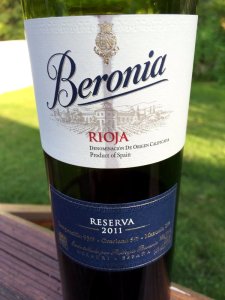 We talked about new wines and new styles. Let’s talk about quality now – well, not the quality per se, but let’s talk about changing mindset. If you would ask me “should I open 5 years old Rioja Reserva”, my immediate answer would be “absolutely not – give it at least another 5 years to enjoy it fully”. By law, Rioja Reserva has to spend at least 1 year aging in the barrel, and most of the producers age it for much longer, so the resulting wines typically should be given ample time in the bottle to evolve. But once again I was proven wrong. I opened the bottle of 2011 Bodegas Beronia Rioja Reserva (14% ABV, SRP $21, 94% Tempranillo, 4% Graciano, 2% Mazuelo, 18 month in barrel, 20 month in the bottle) and was absolutely blown away. Concentrated nose of dark fruit, cigar box and eucalyptus was supported by bright, dense, perfectly structured palate, with dark fruit and touch of sweet oak. This was definitely one of the best PnP (Pop ‘n Pour) wines I ever experienced, and a nice surprise. Drinkability: 8+
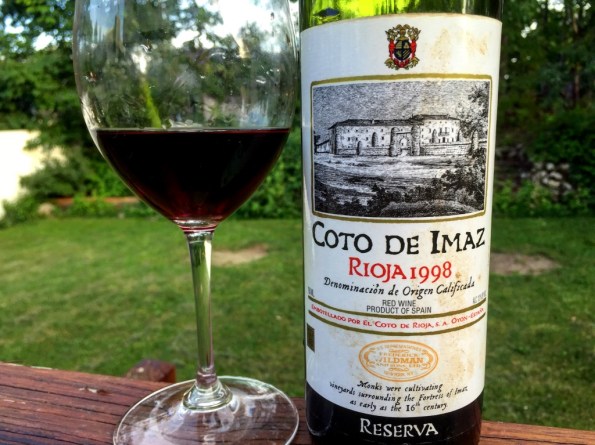
I want to mention one more beautiful Rioja wine – this one with a bit more age on it. I like it when I have a reason to open a nice bottle of wine, which otherwise would be still laying down and waiting for the “perfect moment”. The special reason was my son’s high school graduation, and as he was born in 1998, this was the first 1998 bottle I pulled out of the wine fridge (well, I’m not telling all the truth – this was the one I knew the exact location of).
To begin with, I was impressed with the state of the cork on this 18 years old wine – it was perfect, showing literally no age on it whatsoever. 1998 Coto de Imaz Rioja Reserva (13% ABV, 100% Tempranillo) still had enough freshness on the nose, with the notes of ripe plum, and the palate had ripe fruit with the distant hint of sweetness without any tertiary aromas, good acidity, medium to full body and excellent balance. I’m sure this wine would go on happily for many years. Drinkability: 8+
Okay, we are done here. Do you think I explained my passion for Spanish wines well enough? Great wines, great values, great QPRs, and lots and lots of pleasure – what is not to love? If you had any of the wines I mentioned here, I would love to know your opinion. Until the next time – cheers!
Garnacha from Cariñena
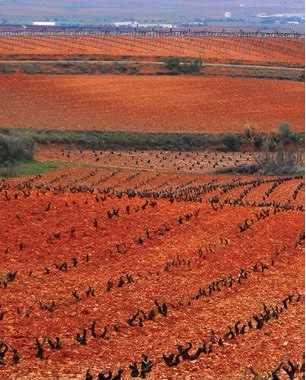
Beautiful Cariñena Vineyards.
Source: Cariñena DOP
Today we will be talking about Garnacha, better known around the world under its French name of Grenache. But the region we will focus on is located in Spain, so let’s use regionally-appropriate name.
Garnacha is one of the most important grapes of Spain, rivaled only by Tempranillo. It is planted practically in all the regions, and used both solo and as a blending grape, delivering tremendous range of expression.
Let’s narrow down our focus a bit and talk about Garnacha from Cariñena. Cariñena is a region in the central part of Spain, second oldest official DO (protected origin) in Spain and one of the first in Europe, created in 1932. Most of the vineyards in Cariñena are situated on the mountains, from 400 meters to 800+ meters (1300 ft – 2600 ft) above sea level. One of the best known grapes from the region is … Cariñena, which I find quite confusing considering that this is also the name of the region itself. However, the most planted grape is…yes, Garnacha, which takes 55% of all the grape plantings. Another interesting fact is that Garnacha plantings in Cariñena are some of the oldest in Spain, with age of some vines more than 100 years old.
I will not inundate you here with information which you can find on your own, for instance, on the official D.O.P. Cariñena web site. I recently heard that Andrea Immer Robinson, one of the 18 women Master Sommeliers, and an official Sommelier for Delta Airlines, selected Cariñena Garnacha wines to serve to the Business Class passengers on Delta flights due to its affinity to the high altitude. Obviously I got intrigued with this statement, and I was lucky enough to reach out to Andrea and ask a few questions about it. Here is what I was able to learn:
Q: It sounds like different wines might have different affinity to showing best at the high altitude? Is that really true? Can you elaborate on this a bit?
A: Yes it is true. At altitude your sense of smell is muted and your palate is less hydrated. Consequently, more restrained wine scent/flavor profiles or more intensely tannic wines may not present as well in-flight.
Q: Do you have an example of the wine which is delicious on the ground, and doesn’t taste that well up in the sky?
A: It is less that a wine doesn’t taste well in the sky, and more that it may seem less expressive or flavorful. The subtlety of Italian Pinot Grigio is an example of a style that classically seems muted and less flavorful at altitude. But I did find a great one that belies the broad-brush experience I have had which is exciting.
[TaV comment]: Obviously this is where the limitations of the virtual conversation kick in, as I would love to ask Andrea what was that great Pinot Grigio which she was able to find to serve at the high altitude.
Q: What do you think makes Garnacha from Cariñena good wines to drink at the high altitude? Do you think all Garnacha from Cariñena wines are equally good to drink at the high altitude, or is it only few particular wines?
A: The Garnacha from Carinena is expressive and concentrated and the tannins though present, are soft and ripe – so, the wine shows a lot of character and is not drying to the palate in flight. The particular example that is getting rave reviews presently is a 9 year old Reserva – that extra bottle age gives complexity that customers are going ape over. I don’t thin every wine would garner this type of response–I think the bottle age and complexity of the Reserva level are a big part of it.
[TaV comment]: Yep, here we go again – would love to know what Reserva wine was that…
Q: What are your favorite Garnacha from Cariñena wines, whether on the ground or on the board of the plane?
A: I love the Monasterio de las Vinas Reserva that we are serving on Delta now. I also really love the Castillo de Monserran and the Paniza Vinas Viejas on the ground (haven’t tried them in flight). Perfect as we get into stew season!


I also was able to taste a few of Garnacha from Cariñena wines, and below are my impressions:
2012 Viñas Viejas de Paniza Garnacha Cariñena DO (14% ABV, $18, 100% Garnacha, 6 month in oak)
C: dark ruby
N: lavender, espresso, touch of dark fruit
P: hint of chocolate, cherries, medium body, good acidity
V: 7+
2012 Bodegas San Valero Particular Garnacha Old Vine Cariñena DO (14% ABV, $14.99, 100% Garnacha, 14 month in oak)
C: dark garnet, almost black
N: intense, whiff of alcohol, dark fruit, raspberries
P: fresh raspberries, open, bright, medium body, herbal undertones, pronounced acidity, short to medium finish, but then tannins come in after a while.
V: 7+ at the moment, needs time. Judging by the acidity and late tannins, this wine needs at least 5 years to develop
2013 Corona de Aragon Special Selection Garnacha Cariñena DO (13.5% ABV, $14, 50% Garnacha, 50% Cariñena, 5 month in oak)
C: Dark garnet
N: restrained with herbal undertones, pencil shavings (rarely use this descriptor, but it was very deserving here), hint of blackberries
P: fresh, delicious, dark chocolate, cherries, classic Grenache rendition with good acidity and excellent balance
V: 8-, my favorite of the tasting, would happily drink this wine every day – definitely an excellent QPR
Have you had any of the Garnacha Cariñena wines? What are your thought on the wines at the high altitude? Don’t be shy, comment away! Cheers!
P.S. I would like to thank kind folks at Gregory White PR for providing samples and reaching out to Andrea Immer Robinson
Sangria, Any Time You Want One
 Sangria, anyone? Yes, I see happy smiles and people nodding. Sangria is a refreshing wine, a cocktail, if you will, which typically combines white or red wine with various fruit (oranges, apples, pineapples, lemon, strawberries and anything else your heart desires), often enhanced with a splash of brandy. Sangria originates in Spain and Portugal, and you can often find it served at many Spanish restaurants (but not only there).
While it sounds simple – wine and fruit, right? – making good tasting Sangria is an art. You don’t want Sangria to be too sweet, but you do want to have the fruit present. You need to start with the right wine (California Cabernet Sauvignon might be a bad choice), and you need to steep the fruit in the wine to achieve robust and satisfying flavor. I’m sure anyone who tried to make good tasting Sangria at home, or ordered one in a restaurant, would agree with me – it is easier said than done.
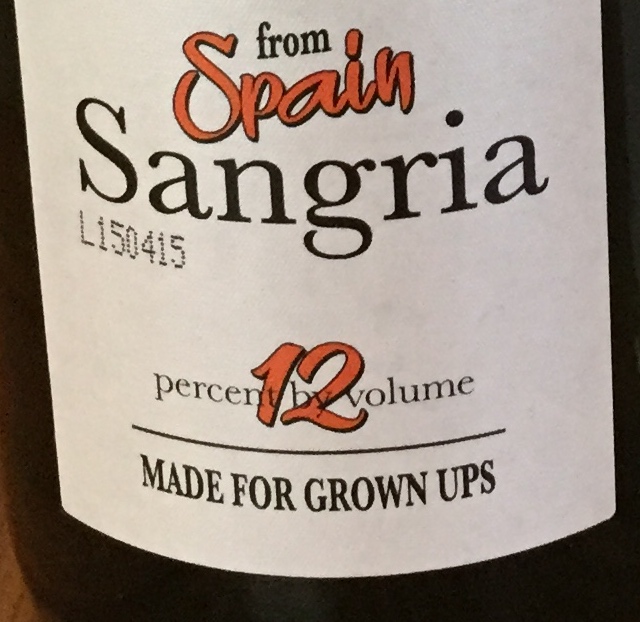
But what if I tell you that your quest for delicious Sangria just got a lot easier? Enters Joya™ – Joya™ Sangria from Spain, to be precise. I recently got a sample of White and Red Joya™ Sangria, and was delighted with what I tasted.

Joya™ White Sangria Spain (12% ABV, SRP $12.99/750, $29.99/3L box, Airén grape, all natural essences of fresh Mediterranean citrus fruit) – slightly muted nose of fresh white fruit, peaches and guava. Palate is perfectly balanced with white stone fruit, plums, refreshing grapefruit bitterness and touch of honeydew sweetness – you can add ice and fruit, or you can perfectly enjoy it as it is. Drinkability: 7+
Joya™ Red Sangria Spain (12% ABV, SRP $12.99/750, $29.99/3L box, Tempranillo, Garnacha, Bobal grapes, all natural essences of fresh Mediterranean citrus fruit) – freshly crushed red fruit on the nose, nice blackberries and dark plums on the palate with the orange peel and mint cutting through the mid-palate. Excellent balance. Playful and very enjoyable by itself, with or without any ice and fruit addition. Drinkability: 7+
While working on this short post, I also learned an interesting fact – the word Sangria on the bottle of wine is protected under EU law, and can appear only on the wines coming from Spain and Portugal.
There you have it my friends – delicious Sangria any time you crave one, also at a good price. Drop a bottle of Joya™ in the fridge and enjoy it. Be careful though – it is really easy to drink… Happy summer, folks! Cheers!
Celebrate #VerdejoDay on June 12th – And Discover Great White Wines!
 Here I come again with my rhetorical question – how many of you tasted Spanish white wine made from Verdejo grape – raise your hands? Yes, this was quite expected. Meanwhile, Verdejo wines are well worth your attention. Depending on the winemaking style, Verdejo wines can take on the full range of the expression, from light and refreshing to full bodied, complex and thought-provoking. I talked about my favorite Verdejo wines from Bodegas Shaya many times in this blog. 2009 Bodegas Shaya Habis Verdejo, (made from the grapes harvested from 100+ years old vines) was my wine #9 in the Top Dozen Wines of 2011, and 2008 Bodegas Shaya Old Vines Verdejo was one of the wine highlights in February of this year.
Another great example of Verdejo wine is Martinsancho Verdejo, which is produced in the quantity of less than 4,000 cases a year from the Martinsancho vineyard. Verdejo is a star indigenous white grape of Rueda region in Spain, tracing its history hundreds of years back, which became nearly extinct in the 1970s. These were the efforts of Angel Rodríguez of Martinsancho, who used the cuttings of Verdejo vines from the Martinsancho vineyard, to help bring the Verdejo wines back to the mainstream.
Now, what I want to bring to your attention is that instead of listening to me, you can actually go and experience the Verdejo wines on your own! Next Thursday, June 12th, is the #VerdejoDay, which will be celebrated both virtually and in the actual live events. If you live in a close proximity to New York, Chicago, Miami or Los Angeles, you can attend the Verdejo celebration in person. In all four cities, the parties will take place in the restaurants, where you will be able to taste various Verdejo wines (there will be 12 different wines served in NYC), experience Rueda regional cooking and have fun!
To read more about #VerdejoDay celebrations and Verdejo wines, please click here. To register to attend a #VerdejoDay celebration in one of the four cities, please use this link to EventBrite site.

Shaya
Even if you can’t attend one of the events, go find a bottle of Verdejo in your local wine store – and you can thank me later. Cheers!
Last Bottle Sign Up ($10 credit)




 Talk-A-Vino