Archive
Celebrate Tempranillo! 2016 Edition
Tempranillo is one of the most popular red grapes in the world, requiring no introduction to the wine lovers, now even less than before. The star grape of Spain, a foundation of the timeless beauty of Rioja, finess of Ribera del Duero and dark raw power of Toro. Today (if I manage to publish this post before midnight) is International Tempranillo Day, the day when we acknowledge this early ripening grape, capable of bringing lots and lots of pleasure to the wine lovers everywhere.
I discovered Tempranillo in 2010, at the wine seminar at the PJ Wine store in Manhattan – and fell in love with it. And how you can not, after tasting 1964 Rioja Gran Reserva, which was still young and exuberant. I was seeking Tempranillo ever since, trying it at every occasion – some encounters happier than the others.
What interesting in this journey is that when I discovered Tempranillo for myself, my world was squarely limited to Spain, and even inside Spain, it was all about Rioja, Ribera del Duero and a little bit of Toro. I was always happy to celebrate the Tempranillo Day, so here is the collage which I produced based on the wines I knew, back in 2011:
 To my total delight, it appears that my Tempranillo worldview was inexcusably narrow. Texas, Oregon, Napa Valley and my newfound oenophile’s heaven, Lodi, are all producing world-class, delicious, complex, exciting Tempranillo wines. I heard about Tempranillo in Australia; never tried them, but now I’m a believer – great Tempranillo wines don’t have to be only from Spain. Thus I created a new collage, to better represent my latest discoveries:
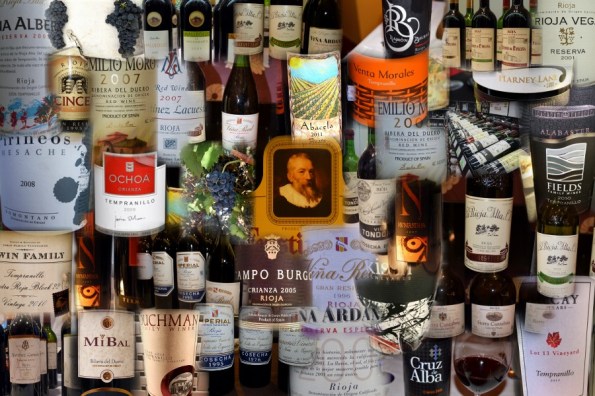 Abacela from Oregon, Duchman from Texas, Irwine Family from Napa, Bokisch, McCay, Fields, Harney Lane from Lodi – lots and lots of tasty discoveries over the past few years – I hope you had your share of Tempranillo fun too.
Do you have your favorite Tempranillo wines? Where are they from? Who is the producer? Tell the world about them. Cheers!
One on One With Winemaker: Ken Wright of Ken Wright Cellars
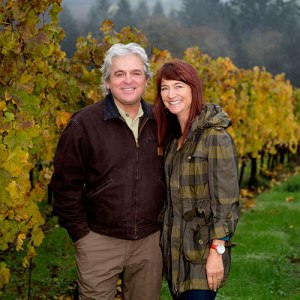
Source: Ken Wright Cellars
Grape grower. Pioneer. Visionary. Winemaker. Mentor. Teacher. Philanthropist.
It makes perfect sense to start our “Stories of Passion and Pinot” series by conversing with Ken Wright. After starting making wines in Willamette Valley in Oregon in 1986, Ken came to the realization of a tremendous diversity of soils and microclimate conditions in the region. Ken was instrumental in establishing 6 AVAs in the region; he also focused his winemaking on showcasing terroir through single-vineyard bottlings. The rest is the history which you can read on Ken Wright Cellars web site and various publications, such as Wine Spectator May 2015 issue.
I have limited exposure to Ken’s wines – the production is small, and there are lots of people who love to drink his wines. But even my limited encounters resulted in long-lasting impressions – and not only the wines but also the labels which you need to see only once to remember forever. Thus when I had an opportunity to ask Ken a few questions, albeit virtually, I was very happy to do so – and the outcome of our conversation you can see below. This might be a tad long, so arm yourself with a nice tall glass of Pinot – and enjoy!
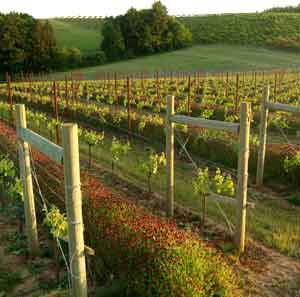
Source: Ken Wright Cellars
- When it comes to the winemaking, is there someone who you would name as your mentor or a teacher?
KW: My first position was in California and included working with Dick Graff of Chalone on their Gavilan brand. Dick started a research group, in 1979 I believe, that met once a month at Mount Eden Vineyards. The group included many of the best wineries in the state including Mt. Eden, Kistler, Calera, Sanford, Acacia, Forman, Chalone and the Paragon group among others. The opportunity, as a novice winemaker, to be part of that group of successful producers allowed me to be part of cutting edge winemaking discussions. Ears were perked, respectfully my mouth was generally closed. I was a sponge.
- As a pioneer and a long standing and successful winemaker, I’m sure many young winemakers look up to you and want to learn from you. Are there any winemakers who you would call your students?
KW: Once I moved to Oregon, in 1986, to pursue the production of Pinot noir I had a learning curve to understand the new area that I was in. During those early years I fell in love with the ability of Pinot noir to connect myself and our buyers with the qualities of individual sites. After blending sites for several years I began in 1990 to produce site specific wines that connected us to place.
In the mid 90’s I was part of a group we created, quite similar to the California research group, that focused on research both in the vineyard and winery. My partners were Bethel Heights, Cristom, Solena and Penner-Ash. Beaux Freres joined at a later date. Our experiments provided a volume of information that I believe changed the way in which we all grew grapes and made wine. That information was openly shared with anyone who cared to ask. Many viticulturists and winemakers are now approaching their craft with the lessons we learned whether or not they are aware of where this information came from. I would not want to take any personal credit for the success of those that have benefited from this work or from my many direct relationships. Information comes from so many sources. If I have benefited someone along the way that would be great but I would only be one of many.
- You personally helped to define 6 AVAs in Oregon. Do you think there are still areas in Oregon which would benefit from their own designated AVAs?
KW: It is a natural evolution for regions to define themselves. All areas must first identify which wine varieties have inherent superiority. It’s a process. What is clear at this time is that the Willamette Valley, particularly the area of the six new AVA’s, is world class. We are producing Pinot noir that is riveting. While there are regions that can say they are older there is no area on the planet that can say they are better, period. I suspect there will be new AVA’s within the six new identified AVA’s that will further define each region in more detail.
- In the description of the Freedom Hill vineyard, there is a mention of Phylloxera. How did it come around? How difficult was it to contain it and deal with it? Is that the only one of your vineyards which was affected?
KW: Phylloxera reared its ugly head in 1990 at Fuqua Vineyard in the Dundee Hills. With the first inexpensive own rooted plantings of Eyrie in 1966, the industry coasted until this time with the hope the blight would never come. But it did. It is impossible to know what the source of the “infection” may have been. This was an older vineyard so unless they were purchasing replacement vines on a regular basis from a nursery that had an issue it would be hard to assign blame on the source of vine material. Not impossible though.
Phylloxera became real in the mid 90’s. Freedom Hill began to fail. Guadalupe began to fail. Shea began to fail. There were a number of others. Vineyard owners, hoping to forestall the infection, did whatever they could to protect their sites. At the time the concern was that the insect was being transferred on soil. We had chlorine foot baths. Incredible cleaning of vineyard equipment. It did not help. It is only my opinion but I believe most of the “infection” was directly from the replacement vines from nurseries that had the bug in their soil material that came with new or replacement vines.
- Can you make parallels between any of your vineyards and Burgundy vineyards, in terms of wines which they are capable of producing?
KW: Burgundy could only hope to make wine that consistently produces the quality of wine that we produce. They are in our rear view mirror. It’s sad that people automatically assume age of region is related to quality. Do truly blind tastings and you will not be able to assign label prestige to the result.
- Same question regarding your wines – would you compare any of your wines with any of the wines from Burgundy, and if yes, which with which?
KW: If there is any comparison I would say that Oregon Pinot noir has a perfect fresh fruit profile. Burgundy tends to be more acidic, angular in youth and less forward.
- It seems that you only produce Pinot Noir from all of the vineyards you are working with, and the only white wine you are producing comes from Washington. Is there a reason why? Have you ever thought of planting white grapes in Oregon?
KW: As a business, anything we produce that is not Pinot noir is harder to sell and less profitable. The entire world recognizes the quality of Pinot noir from our region but no other variety resonates. We have a half acre of the Chardonnay Dijon 548 clone at Savoya. It is delicious but only sold to our mailing list. We will not plant more Chardonnay in my lifetime.


- I find your wine labels fascinating. How do you come up with the designs? Are you making those yourself or you are working with an artist? Do you change any of the labels from vintage to a vintage?
KW: The artist that created our labels is David Berkvam, a Portland native. He is a dessert chef at a local Italian restaurant named Geno’s. The original artworks are 100% beeswax carvings. Incredible depth that we attempt to relay on paper. Our relationship with David began with seeing his work at a gallery in 1999 in Portland.
Our original label for Ken Wright Cellars was a clean, straightforward text only label. It was not memorable or noticeable. My wife Karen and I decided to make a significant change to the look of our label. We asked David to produce a label that showed the efforts of the Mexican laborers in our vineyards during the difficult time of winter pruning. There was no other labor that would do this work. Yet the Mexican women and men who did this work did so with graciousness and humor. That was our first label with David. Now each vineyard has its own artwork from him and each is quite personal for us.
- What is your approach to the oak aging? For how long do you typically age your wines? What type of oak do you use most often?
KW: Unfortunately, we have to use French oak for our wines. Would prefer to buy from the US but our native oak species are very resinous which does not rhyme with Pinot noir. Pinot noir spends 11 months in oak before bottling.
- Based on the information on the web site, your general philosophy around winemaking is “minimal intervention”. Did you ever consider going into organic or even biodynamic wine production?
KW: Winemaking has nothing to do with your farming approach. Yes, the winemaking at the highest level is minimal intervention, assuming a very high level of professional babysitting. All inherent quality comes from the vineyard. Any winemaker at the highest level knows they are subservient to the quality of what they receive.
- You’ve been making wine in Oregon for the very long time. Did you have any scary (okay, most difficult) moments you can share with us?
KW: The beauty of our area is that we do in fact have “vintages”. No robotic wines. The year is reflected in the wine. A great example of a “scary” vintage was 1991. A cool year that produced wine that was at first reticent. With age this vintage proved to be perhaps the best of the decade for most producers.
- Among all the wines you made in Oregon since the beginning, can you share a few of your most favorite vintages and particular wines?
KW: 1990 was the best vintage I have seen in Oregon. An unusual year in that it was amazing for so many regions in the world, Germany, Italy, Champagne, Burgundy and more.
- Do you export your wines outside of the US? If yes, what are your top export destinations?
KW: We export to all provinces of Canada, Sweden, Switzerland, Denmark, France, Italy, Japan, China, Singapore, Hong Kong, Puerto Rico, the Bahamas, South Korea and of course Luxembourg.
- Today, Oregon wines are well known and well recognized by the wine lovers. What is ahead for the Oregon wines? What are the latest trends and new directions for the Oregon wines?
KW: We will always hang our hat on Pinot noir because we truly have a world treasure with this variety. As world markets emerge we will find a place at the table in each of these markets.
- You have a very extensive list of charities you support. How do you go about deciding which charities you are going to support?
KW: Karen and I normally choose to support local charities that keep our immediate area healthy. We have hosted Flavors of Carlton for 15 years which is by far the most impactful event that keeps the pre school, after school, summer work experiences, 12 sports programs and more financially sound. We are founding sponsors of Salud, started in 1992, which is a combined effort of Wineries, hospitals, clinics and Medical Teams International that has provided health care for vineyard workers. Karen and I were the initial 50K endowers of the local Community College program for their vineyard curriculum.
We partnered with the local FFA Alumnae, High School FFA teacher, YC Board, the curriculum writers from the local college and members of our AVA board to create a path for our local young people to get real world experience in growing grapes. We created a 1.5 acre vineyard on the high school property so they would have real world experience, not book knowledge.
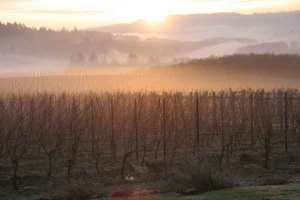
Source: Ken Wright Cellars
We are done – and I hope you are still here, as there was a lot to read (and I thank you for that). Hope you found this interesting, and now have an increased desire to drink Ken Wright Cellars Pinot Noir (good luck with that unless you already have one in your cellar). I also believe that this was an excellent opening into our Stories of Passion and Pinot – you can clearly feel passion and pride in every word of Ken’s answers…
We will continue our series next week, so for now – cheers!
To be continued…
P.S. This post is a part of the “Stories of Passion and Pinot” series <- click the link for more stories.
Stories of Passion and Pinot
An important note: Stories of Passion and Pinot is a series that was started in 2016 and it keeps updating year after year with new stories. This post will serve as the starting page for the series and will be constantly updated as new stories are added…
It is easy to declare this grape a king. It is a lot more difficult to have people agree to and support such a designation. And here I am, proclaiming Pinot Noir worthy of the kingship, despite the fact that this title is typically associated with Barolo (made from Nebbiolo grape) or Cabernet Sauvignon.
Barolo might be a king, why not – but its production is confined strictly to Italy, and can be considered minuscule in terms of volume. Cabernet Sauvignon is commanding attention everywhere – but I would argue that it is more because of the ease of appeal to the consumer and thus an opportunity to attach more dollar signs to the respective sticker. Don’t get me wrong – I love good Cabernet Sauvignon as much or more than anyone else, but having gone through so many lifeless editions, I developed a healthy dose of skepticism in relation to this noble grape.
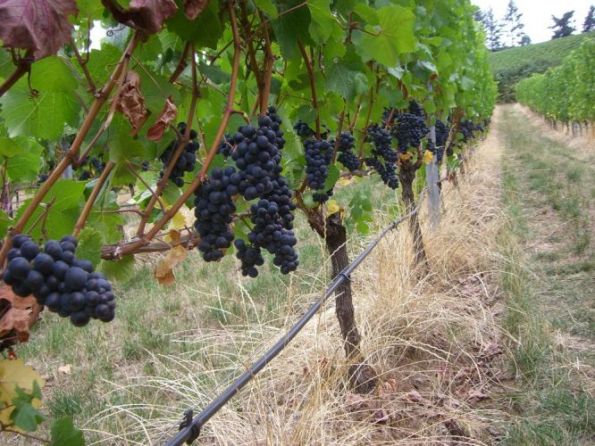
Pinot Noir grapes. Source: Vidon Vineyard
Talking about Pinot Noir, I’m not afraid to again proclaim it a king. If anything, it is the king of passion. Hard to grow – finicky grape, subject to Mother Nature tantrums, prone to cloning, susceptible to grape diseases – and nevertheless passionately embraced by winemakers around the world refusing to grow anything else but this one single grape – a year in, year out.
Historically, Pinot Noir was associated with Burgundy – where the love of the capricious grape originated, and where all the old glory started. Slowly but surely, Pinot Noir spread out in the world, reaching the USA, New Zealand, Australia, Chile, and Argentina – and even Germany, Italy, Spain, Canada, and South Africa are included in this list. Looking at the USA, while the grape started in California, it then made it into Oregon, and now started showing along the East Coast, particularly in Hudson Valley.
I don’t know what makes winemakers so passionate about Pinot Noir. For one, it might be the grape’s affinity to terroir. Soil almost always shines through in Pinot Noir – it is no wonder that Burgundians treasure their soil like gold, not letting a single rock escape its place. While soil is a foundation of the Pinot Noir wines, the weather would actually define the vintage – Pinot Noir is not a grape easily amended in the winery. But when everything works, the pleasures of a good glass of Pinot might be simply unmatched.
However important, terroir alone can’t be “it”. Maybe some people are simply born to be Pinot Noir winemakers? Or maybe this finicky grape has some special magical powers? Same as you, I can’t answer this. But – maybe we shouldn’t guess and simply ask the winemakers?
Willamette Valley in Oregon is truly a special place when it comes to the Pinot Noir. Similar to the Burgundy, Pinot Noir is “it” – the main grape Oregon is known for. It is all in the terroir; the soil is equally precious, and the weather would make the vintage or break it. And passion runs very strong – many people who make Pinot Noir in Oregon are absolutely certain that Oregon is the only place, and Pinot Noir is the only grape. I’m telling you, it is one wicked grape we are talking about.
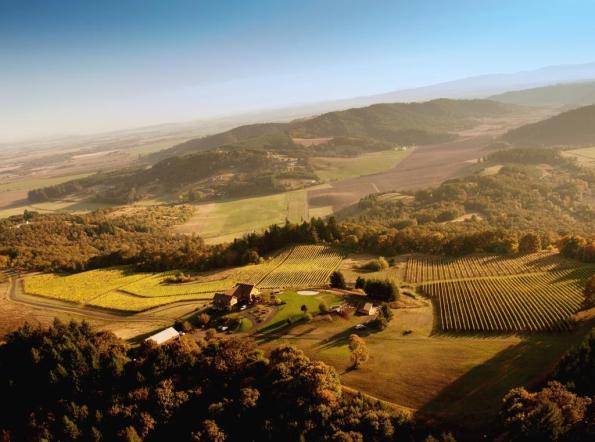
Aerial view of Oregon vineyards. Source: Youngberg Hill Vineyards
I see your raised eyebrow and mouse pointer heading towards that little “x”, as you are tired of all the Pinot Noir mysticism I’m trying to entangle you in. But let me ask for a few more minutes of your time – and not even today, but over the next few weeks.
You see, I was lucky enough to have a conversation (albeit virtual) with a few people who combined Pinot and Passion in Oregon, and can’t see it any other way. What you will hear might surprise you, or maybe it will excite you enough to crave a glass of Oregon Pinot Noir right this second, so before you hear from a pioneer, a farmer, a NASA scientist, and a few other passionate folks, do yourself a favor – make sure you have that Pinot bottle ready. Here are the people you will hear from:
- Ken Wright of Ken Wright Cellars
- David Nemarnik of Alloro Vineyard
- Mike Bayliss of Ghost Hill Cellars
- Wayne Bailey of Youngberg Hill Vineyards
- Steve Lutz of Lenné Estate
- Don Hagge of Vidon Vineyard
I would like to extend a special note of gratitude to Carl Giavanti of Carl Giavanti Consulting, a wine marketing and PR firm, who was very instrumental in making all these interviews possible.
As I publish the posts, I will link them forward (one of the pleasures and advantages of blogging), so at the end of the day, this will be a complete series of stories. And with this – raise a glass of Pinot Noir – and may the Passion be with you. Cheers!
2017 – 2020 Updates:
This Passion and Pinot Series continues to live on. Here is what had been added during these 4 years – and you should expect to see more stories as we continue talking with the winemakers who made Pinot Noir their passion:
- Page Knudsen of Knudsen Cellars
- Tony Rynders of Tendril Cellars
- Dave Specter of Bells Up Winery
- Richard Boyles of Iris Vineyards
- Tom Mortimer of Le Cadeau Vieyard
- Dan Warnshuis of Utopia Vineyard
2021 Updates:
2021 was a good year as I added one more “Passion and Pinot” interview and also met in person with a number of winemakers I only spoke with virtually before – and this resulted in Passion and Pinot Updates.
New interview:
Passion and Pinot Updates:
P.S. Here are the links to the websites for the wineries profiled in this series:
Alloro Vineyard
Battle Creek Cellars
Bells Up Winery
Ghost Hill Cellars
Iris Vineyards
Ken Wright Cellars
Knudsen Vineyards
Le Cadeau Vineyard
Lenné Estate
Tendril Cellars
Vidon Vineyard
Utopia Vineyard
Youngberg Hill Vineyards
New and Noteworthy: Two Classic Regions, Three Classic Pairs
I tend to abuse certain words in the conversation, especially when talking on the subject of wine. As you might easily guess, one of such words is “Classic”. I use this word in hope that it is the quickest way to convey my impressions about the wine. For instance, the words “Classic Red Bordeaux” or “Classic White Burgundy” would most likely paint a quick and vivd picture for the most of oenophiles to imagine how the wine actually tastes. While the wine is produced all around the world, such a broad stroke reference can be only applied to the well known and well referred to regions – saying “Classic Red Bio-Bio” (wienmaking region in Chile) or “Classic White Valais” (winemakiing region in Switzerland) would be an empty sound for majority of the wine lovers.
Looking past the regions, we can also apply the word “classic” to the grapes themselves. There are probably 15-20 grapes which can be easily referred to in this way – “classic Cabernet Sauvignon” or “Classic Sauvignon Blanc”, for example, would give you quick pointers to how the wine might taste like. Yes, “Classic Bobal” or “Classic Resi” will leave most of us with no information at all.
As this is not an epistolary exercise on the applications of the word “Classic” in the wine world, let’s get closer to the subject at hand, and talk about few wines in the practical terms. Today I want to talk about 2 classic regions and 3 classic grapes – for sure for those regions. So the classic regions are: California and Oregon. Would you agree that it is easy to refer to these two world renowned winemaking regions as “Classic”? I hope you are nodding. And for the grapes, I also hope you would share my “classic” sentiment – Pinot Noir and Chardonnay from California Napa Valley – aha, I see you smacking your lips. And Pinot Noir and Pinot Gris from Oregon – need I say more?
Talking about the wines from Oregon, the Pinot Noir is of course an uncontested king of the Pacific Northwest of the USA. Commercial Pinot Noir production in Oregon started in the 1960s, and then from the beginning of the 1990s, Pinot Noir from Oregon needed no introduction anymore. With Oregon Pinot Gris, you might argue with my “classic” designation, however, today, you will practically not find a single Oregon winery which will not produce Pinot Gris. Oregon Pinot Gris has its own, easily recognizable style and character, so in my mind, Pinot Gris wines are the “classic” element of the Oregon winemaking.
Thus let me present to you the first two of the “classic” pairs – Pinot Gris and Pinot Noir from two wineries in Oregon: Willamette Valley Vineyards and Pike Road Wines.


Willamette Valley Vineyards was established in 1983, planting Pinot Noir, Pinot Gris and Chardonnay vines where blackberries and plums were growing before. The original Estate vineyard spans 53 acres at the 500 to 750 feet in elevation. Today, Willamette Valley vineyards farms more than 250 acres of vines, including one of the oldest in Oregon, Tualatin Estate, which are all LIVE (Low Input Viticulture and Enology) certified. I had a pleasure of trying Willamette Valley Pinot Gris and Pinot Noir wines earlier in the year, so here are my notes:


2014 Willamette Valley Vineyards Pinot Gris, Willamette Valley, Oregon (12.4% ABV, SRP: $16)
C: straw pale
N: white stone fruit, touch of grass
P: hint of candied lemon, white stone fruit, nicely round, refreshing, good acidity, medium to full body
V: 7+/8-, very pleasant
2013 Willamette Valley Vineyards Pinot Noir Estate Willamette Valley, Oregon (13.7% ABV, SRP: $30, retail: ~$20)
C: beautiful Ruby
N: fragrant, fresh, cranberries with touch of cherries, sweet raspberries
P: wow, lots of fresh fruit – cranberries, raspberries, fresh, super-clean, touch herbal, great restrained finish
8+, one of the most delicious Pinot ever, perfect.
Our second Oregon winery takes its name from the Pike Road, which winds through the hills of Yamhill-Carlton AVA. This is the second winery for the Campbell family, who founded Elk Cove Vineyards in 1974. Pike Road takes advantage of 5 generations of the farming experience, including 40 years of tending the wines.
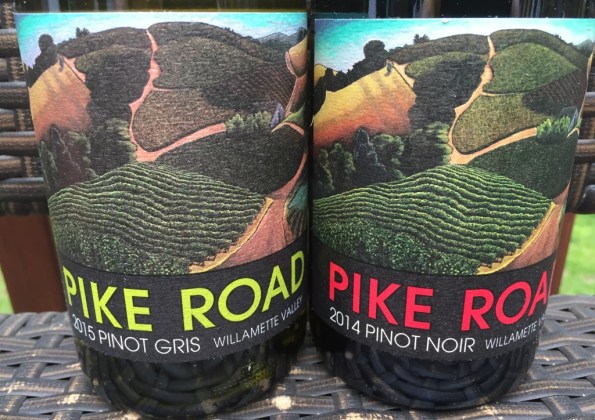


Here are my notes:
2015 Pike Road Pinot Gris Willamette Valley, Oregon (13.5% ABV, SRP: $15)
C: pale greenish color
N: tropical fruit, candied lemon, fresh, intense, inviting
P: crisp, clean, perfect fresh acidity and white stone fruit, creamy. Outstanding.
V: 8-/8, delicious white wine, perfect year around and superb during summer
2014 Pike Road Pinot Noir Willamette Valley, Oregon (13.5% ABV, SRP: $19, 10 month in French oak barrels)
C: dark Ruby
N: delicious. Touch of sweet fruit, open, inviting, raspberries, herbs, super-promising, wow
P: soft, layered, silky, spices on top of traditional smokey profile, triple-wow
V: 8+/9-, wow, totally unexpected and amazing. I know Oregon Pinot delivers, but this far exceeded my expectations. Might be the best QPR for Oregon Pinot Noir in existence. Love rustic labels too.
Our last classic pair comes from the classic of the classics, none less than Napa Valley, and it is Chardonnay and Pinot Noir from Artesa winery. Artesa winery is located in Carneros region of Napa Valley. While Artesa recently celebrated is 25th vintage, their winemaking traditions go way, way, way back – say by another [almost] 500 years. How come? Artesa winery was founded by Codorniu Raventós family from Spain, which takes its winemaking heritage 17 generations back to the 1551. Artesa sustainably farms 150 acres of vines, all Napa Green Land certified, and produces a range of wines, starting with a few sparklers and finishing with another Napa classic – Cabernet Sauvignon. Two wines which I had an opportunity to taste are the new Estate Reserve release from the winery:
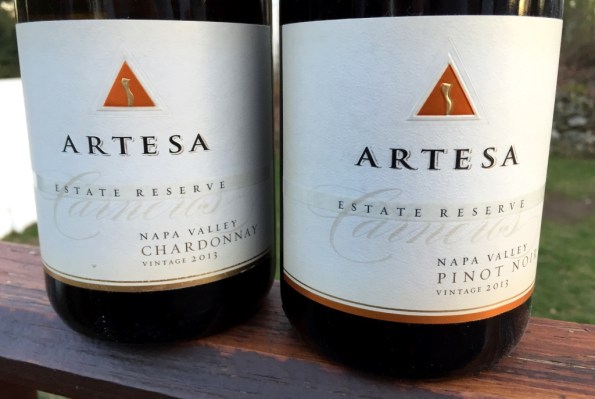
2013 Artesa Estate Reserve Chardonnay Napa Valley (13.9% ABV, SRP: $40)
C: light golden
N: touch of vanilla, hint of butter, white fruit, intense
P: touch of butter, green apples, good acidity, medium to full body, vibrant and balanced
V: 8-, a classic Chardonnay
2013 Artesa Estate Reserve Pinot Noir Napa Valley (14.4% ABV, SRP: $40)
C: dark garnet
N: warm, inviting, sweet plums
P: round, polished, present silky texture, touch of smoke, more plums, minerality, restrained
V: 8-, nice, smooth and restrained
There you have it, my friends – some new and interesting wines worth seeking. And whether they will hit the “classic” note for you – it is entirely your decision. Cheers!
Last Bottle Sign Up ($10 credit)




 Talk-A-Vino