Archive
Top Highlights From Gambero Rosso Tre Bicchieri 2015
 At this point, you most likely already read a number of reviews from Gambero Rosso 2015 (here are the links for the John and Stefano posts, the two that I know of), so it will be difficult for me to add much there. Considering that lots of hard work is already done by the others, I will take an easy path and this year will limit my post only to the 10 (or so) of the personal highlights. But before we will get to those, a couple of notes.
First of all, just in case you didn’t read the other posts and in case you are not familiar with Tre Bicchieri, let me explain what Tre Bicchieri is all about. In 1986, an Italian food  and wine magazine was created under the name of Gambero Rosso (in translation from Italian it simply means “red shrimp”, and it comes after the name of the tavern in Pinocchio). Starting in 2002, the magazine introduced the rating of the Italian wines using the symbol of glasses (Bicchieri), with 3 glasses (Tre Bicchieri) being the highest rating. This rating proved to be successful and demanded, and since then the Gambero Rosso created a special event, called Tre Bicchieri, to celebrate all those best wine Italy has to offer. Tre Bicchieri events take place around the globe, and the event I attended was in New York (it was the third Tre Bicchieri event I attended in the past 3 years, all in New York).
For the next note, here comes the rant. Yes, Tre Bicchieri is a great event which gives an opportunity to taste some of the best Italian wines. But in terms of the overall organization, this is one of the worst wine tastings I ever attended. I have two major problems with the event. Just so you understand the size of the event – there were 185 producers showing between 1 and 3 wines each, which would roughly equate to 350 wines. First problem is that all the producers were not organized by the region. And they were not organized alphabetically by the producer, oh no, that would be too logical, right? Instead, the tables were arranged in the alphabetical order of the … distributors! So the wine from Tuscany stands next to the wine from Sicily. What makes it even worse is that the numbering of the tables is not straightforward, so the table #142 can be next to the table #50; to make matters even more interesting, some of the distributors who pour the wine, don’t have enough people to cover all the separate tables, so some of the tables had been simply “pulled in” to have #122 to be nested between #42 and #43 – makes it easy to find, eh?
This story was the same for the past 3 years I attended the event – but I still can’t get used to it and still find it very annoying.
The second problem was probably even more annoying, and for all I remember, it is getting worse, year after year. The problem can be expressed with one word (okay, two) – wine glasses. Puzzled? Let me elaborate. When you arrive to the event and show your registration, you get a little piece of paper, which is your coupon for the wine glass (! only at Gambero Rosso!). You come to the counter and exchange your coupon for the glass. All is good so far. Now, you start tasting, which means that white, red and even dessert wines get to be poured into the same glass – after 50 – 60 pours, the glass has traces of wine all over it, inside and outside, and what you can do at the regular wine tasting is to put your glass aside and go get a fresh glass. Makes sense, right? But not at the Tre Bicchieri. They bring best wines of Italy for a special tasting – but they can’t procure enough glasses for the people who would want to get a fresh glass to be able to do so. Believe me – I tried, was almost screamed at. I don’t remember having this problem 2 years ago; I was able to get a clean glass with the organizers intervention last year, but this year – no, was told to go away by the multiple people. Of course I appreciate been invited to the event where you can taste the best Italian wines, yes, for free – but I just think that organizers must make an effort to match the level of the wines with the overall level of the event.
Okay, I vented, so it is the end of the rant. Now let’s talk about the wines.
As you tell from the title, I want to mention here only the highlights. Before we talk about those, a few general notes.
- No, I didn’t taste all 350+ wines. May be someone did, but no, that was not me.
- There were lots and lots of truly spectacular wines, as you would expect at an event like Tre Bicchieri, where only the best wines are presented. But don’t assume that I found all wines to be spectacular. Some were just good, some were just okay, and a few I regarded in my personal notes as “terrible”. Taste is personal, and that’s okay.
- I want to reiterate it again – while there were lots of wines and wineries worth mentioning, I’m purposefully limiting this post only by 10 – they might not be all around the best, but they were the most memorable. Oh yes, these are not the wines – these are rather 10 wineries – yep, guilty as charged.
- As usual in the overwhelming tastings like this, I’m using the “plus” ratings. “+++” should stand for Excellent, but trust me, I had more than a fair share of “++++” spectacular.
Okay, now we are ready – here we go.
I want to start with one of my favorite wines which I was very happy to find at the Tre Bicchieri event – Podere Il Carnasciale Caberlot from Tuscany. This wine is made out of unique, “self-created” but officially recognized grape called Caberlot, which came to being as a cross between Cabernet Sauvignon and Merlot. First time I tasted this wine was 2 years ago, and it was a love at first sight, errr, taste. The wine is produced in minuscule quantities and only made in magnums – and needless to say, very hard to find. We tasted the following wines:
2012 Poderel Il Carnasciale Carnasciale, Tuscany – +++. excellent, old world style
2010 Poderel Il Carnasciale Caberlot, Tuscany – ++++, wow! classic Bordeaux blend, spectacular taste profile
2011 Poderel Il Carnasciale Caberlot, Tuscany – ++++, similar to the 2010, only with more tannins
There were lots of other great wines coming from Tuscany ( just think about all the super-Tuscans), so I had to limit myself in what to include in this post. Here is one more winery where I was literally blown away by the quality – Azienda Agricola I Luoghi:
2010 Azienda Agricola I Luoghi Campo al Fico, Bolgheri Superiore – ++++, wow!
2011 Azienda Agricola I Luoghi Ritorti, Bolgheri Superiore – ++++, beautiful, clean
2011 Azienda Agricola I Luoghi Fuori Solco, Bolgheri Superiore – ++++, 100% Cabernet Sauvignon, wow!, precision!
Moving from Tuscany up north to Piedmont, Michele Chiarlo was perfectly representative of the area. Yes, there were other Barolo present in the tasting, but some were boring, and some where plain undrinkable due to the tannin attack (not just attack, a juggernaut rather). This wine was just perfect.
2010 Michele Chiarlo Barolo Cerequio, Piedmont – ++++, outstanding, clean, lavender, herbs
Continuing to explore the Northern Italy, we are now moving to Trentino, where we can find one of my favorite Italian Sparkling wines, Ferrari. While Ferrari wines are very hard to find in US, they are well worth seeking. Ferrari had 3 wines presented at the Tre Bicchieri, one better than another:
2004 Ferrari Trento Brut Giulio Ferrari Riserva del Fondatore – ++++, spectacular, notes of fresh dough, bread, yeast
2006 Ferrari Trento Brut Lunelli Riserva – ++++, very unique sparkling wine, undergoing maturation process in the oak casks, silky smooth palate
2007 Ferrari Trento Brut Perlé – ++++, beautiful!
Representing Campania, a few delicious wines. First, a beautiful white:
2013 Pietracupa Fiano di Avelino, Campania – ++++, fresh fruit on the nose, perfect palate with lemon and tart apples
And then the red and the white from the Fattoria Alois:
2011 Fattoria Alois Trebulanum Casavecchia, Campania – +++, rare grape, powerful tannins
2013 Fattoria Alois Pallagrello Bianco Caiati, Campania – +++, nice, acidic, clean, with some oily notes, unique and different. Plus, a new grape – Pallagrello Bianco.
A few wines from Puglia:
2012 Torrevento Castel del Monte Rosso Bolonero, Puglia – +++-|, fruity, open, beautiful ripe raspberries
2012 Torrevento Primitivo di Manduria Ghenos, Puglia – +++-|, playful, notes of tobacco and cedar
and
2012 Tenute Eméra Sud del Sud Salento IGT – +++, very good, soft approachable, reminiscent of Gamay, chocolate mocha notes
2013 Tenute Eméra Qu.ale Salento IGT – ++++, spectacular, great palate – not only this wine was outstanding, it was also a part of the very interesting project called Wine Democracy, which is all about making great affordable wines for the people and taking care of our little planet. Great cause, great wine.


Now, I need to mention another one of my favorite Italian producers – Jermann. Jermann wines represent Friuli Venezia Giulia, and I think these are some of the most thought-provoking Italian wines you can find. And as a side benefit, many of Jermann wines will age extremely well.
2012 Jermann W…. Dreams…. Friuli Venezia Giulia IGT – +++-|, spectacular, Chablis nose, light palate
2012 Jermann Vintage Tunina Friuli Venezia Giulia IGT – ++++, complex, delicious
2013 Jermann Pinot Grigio, Friuli Venezia Giulia IGT – +++
We are already at 9, and there are yet a few more wines I have to mention. I guess I’m really bad at math and self-control. Oh well, I hope you are still with me – here are few more wines, wineries and regions.
A very interesting wine from Lazio:
2012 Principe Pallavicini Casa Romana Rosso Lazio IGT – ++++, outstanding claret, perfectly classic
And then an excellent wine from Veneto. Of course Veneto is best known for its Amarone. And those who can’t afford Amarone, should settle for the Valpolicella, often made from the same set of grapes (Corvina/Molinara etc.). I generally not a big fun of Valpolicella, as I hadn’t been successful in finding the Valpolicella wines which would speak to me. Until now.
2012 Musella Valpolicella Superopre DOCG – ++++, simple, clean, with dried fruit on the palate, excellent! Wine is produced biodynamically, and probably the most amazing part is cost, at about €5! For the price, this is simply a stunning wine.
I would feel bad if I wouldn’t have at least one wine to mention from Sicily, where volcanic soils produce unique minerally-driven wines.
2013 Cantine Rallo Beleda Alcamo Catarratto, Sicily – ++++, spectacular, touch of sweetness, full body
And we are going to finish with some sparkling wines from Emilia-Romagna. There were lots of sparkling wines at the tasting, and many of them were outstanding. However, these wines really stood apart for me, as they were produced from the grape which generally commands very little respect – Lambrusco, and they were pretty much on par with any classic Champagne.


2013 Cantina Della Volta Lambrusco di Sorbara Rimosso, Emilia-Romagna – +++, excellent, fresh, crisp
2010 Cantina Della Volta Lambrusco di Modena Brut Rosé, Emilia-Romagna – ++++, classic Champagne nose
2010 Cantina Della Volta Lambrusco di Modena Brut, Emilia-Romagna – +++, excellent!
Yep, this is the end of my report. As I said before, this is only a small excerpt from a great selection of spectacular wines – but I have to draw the line somewhere. I’m curious in your opinion if you had any of these wines. Cheers!
Wine On The Go, Spectacular Pairing, and Some Life Ramblings
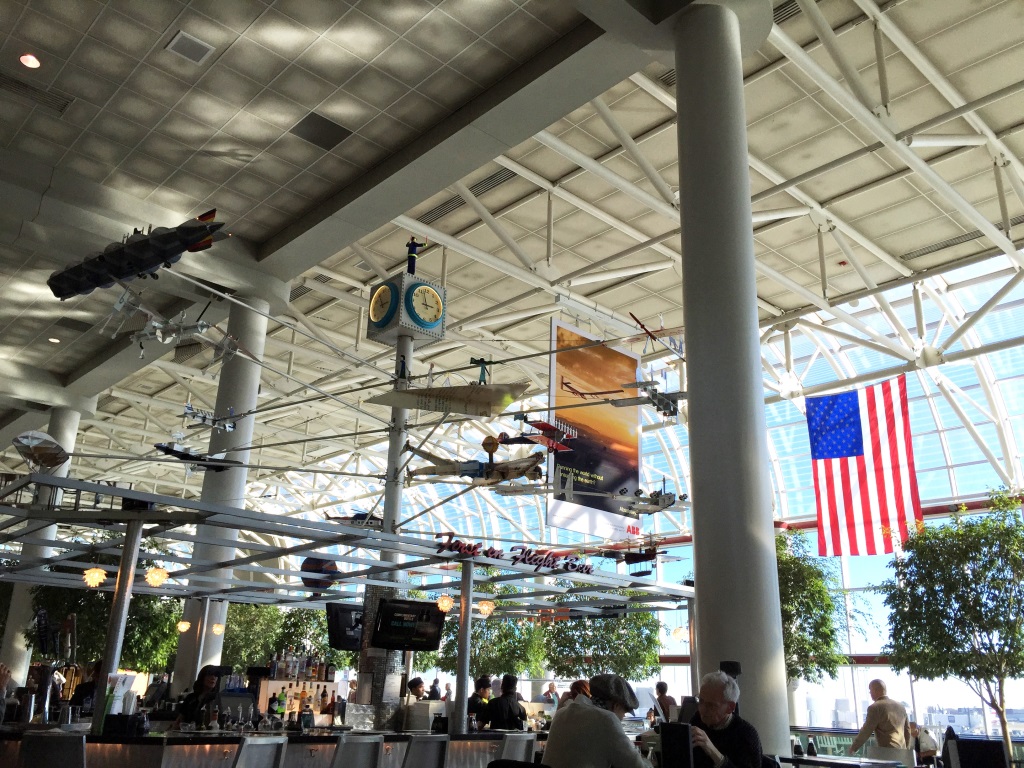 Life is an interesting thing (wow, what a deep opening thought, huh?). I was supposed to depart at 6 am on a direct flight from New York to Miami to attend the conference. Thanks to much-hyphed-but-never-really-happened blizzard, my flight was cancelled and I was automatically re-booked, now on the flight with the stop, connecting through Charlotte, North Carolina.
Charlotte. You know, there are some strong emotional words which I’m striving to avoid, whether conversing or writing. One of such words is “hate” – and I will explain the connection in a second.
I travel a lot, and I have interesting memories of the different airports and trips, some better and some worse. But – if there is an airport which I “hate”, that would be the Charlotte. The reason is simple – lots of memories of severely delayed flights, cancelled flights, indifferent customer service and even sleeping on the floor as no other options were available. Yes, I know – it is actually stupid to “hate” airport – but I wanted to explain my feelings when I saw that I’m connecting through the Charlotte.
Okay, so I have no choice (called my travel agent multiple times – no way no how, either I take the flight as it is, or just cancel the trip). Short uneventful ride to the La Guardia airport and I’m at the terminal C. It is probably been a few years since I used that terminal, so once I get through security and walking to the gate, and I’m literally saying “wow”. The terminal looks very modern, screens and everything. I stumble upon a cafe which has lots of seats, with an iPad standing in front of every seat. iPad can be used for ordering or just some limited internet browsing. The cafe features a very attractive looking menu with lots of food options, mostly written in French, the language of “love of sophisticated food”. And the wine list looks quite reasonable, both in terms of international selection and price. Yes, definitely not something I was expecting to find.
Anyway, it was kind of early for wine and I was not hungry, so this was mostly a “note to self” for next time I might be using the same airport. To my surprise, the flight departed on time (almost a miracle for the La Guardia airport), and arrived in Charlotte ahead of scheduled time.
Many times in the past while flying through the Charlotte I stumbled upon a little wine shop, more of a tasting room for the Yadkin Valley wines. My schedule never allowed me to actually visit it. Then I remember being at the Charlotte airport at the reasonable time, only to find that the store was gone. This time as I knew that I will be connecting through the Charlotte, I decided just in case to check if there are any of my favorite Vino Volo restaurants at the airport. Nope, there were none, but I found a wine bar called Beaudevin, with a number of raving reviews, including the mention in the very reputable Fodor’s travel guide as one of the 8 top wine destinations in the airports in the US. So the early arrival gave me enough time to stop by Beaudevin, which is conveniently located right in the middle of the terminal, in the section called Atrium.


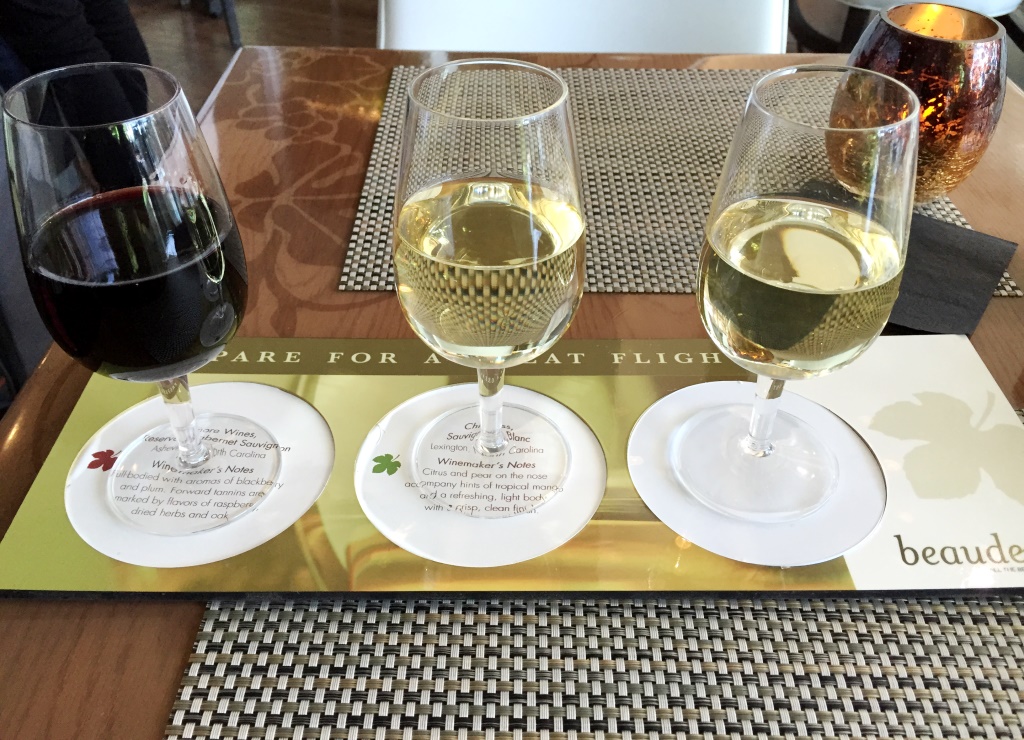
It appears that Beaudevin uses a similar model to the Vino Volo, offering wines both by the glass and as part of the tasting flights. To my delight, one of the featured flights consisted of North Carolina wines, and of course, this is what I went for.
Somehow it was stuck in my head that I recently read some rather negative reviews of North Carolina wines, so I approached these wines with a bit of trepidation. But – call it luck, fruit day or anything else, but I was rather blessed with a wonderful treat.
 https://talkavino.wordpress.com/wp-admin/post.php?post=13570&action=edit&message=10
The flight contained 3 wines, 2 whites and 1 red – Sauvignon Blanc, Viognier and Cabernet Sauvignon. I started with Sauvignon Blanc, and it was delicious, Viognier – delicious again, and then Cabernet Sauvignon – spot on! Here are the notes:
2011 Childress Sauvignon Blanc North Carolina (12.9% ABV) – Nose of white fruit, intense, with a touch of herbs, hint of fresh cut grass. On the palate, nice acidity, dry, tart, lemon notes, good minerality, medium to full body. This is an excellent summer wine – every sip makes you think of summer. Drinkability: 8-
2011 Childress Viognier North Carolina (13.9% ABV) – sweet candy on the nose, very intense, with the characteristic Viognier “perfume” showing in a distance. Compare to the nose, the wine is surprisingly restrained on the palate – hint of candied sweetness, white stone fruit, lychees. Excellent balance. Drinkability: 7+/8-
2012 Biltmore Reserve Cabernet Sauvignon North Carolina (13.6% ABV) – a welcoming nose of warm climate Cabernet Sauvignon, with sweet oak, vanilla, ripe blackberries. Very elegant on the palate, cassis, warm notes of red fruit, medium to full body, a touch of green bell peppers, luscious with soft tannins. Excellent balance. Drinkability: 8-
And now, let’s talk about the spectacular pairing. Beaudevin offers essentially a full restaurant menu – if you have a long connection, you can spend quite an enjoyable time there. As my time was limited, I decided on a Charcuterie salad (lettuce, prosciutto, dried cranberries, green beans, dried cheese), with the addition of smoked salmon.
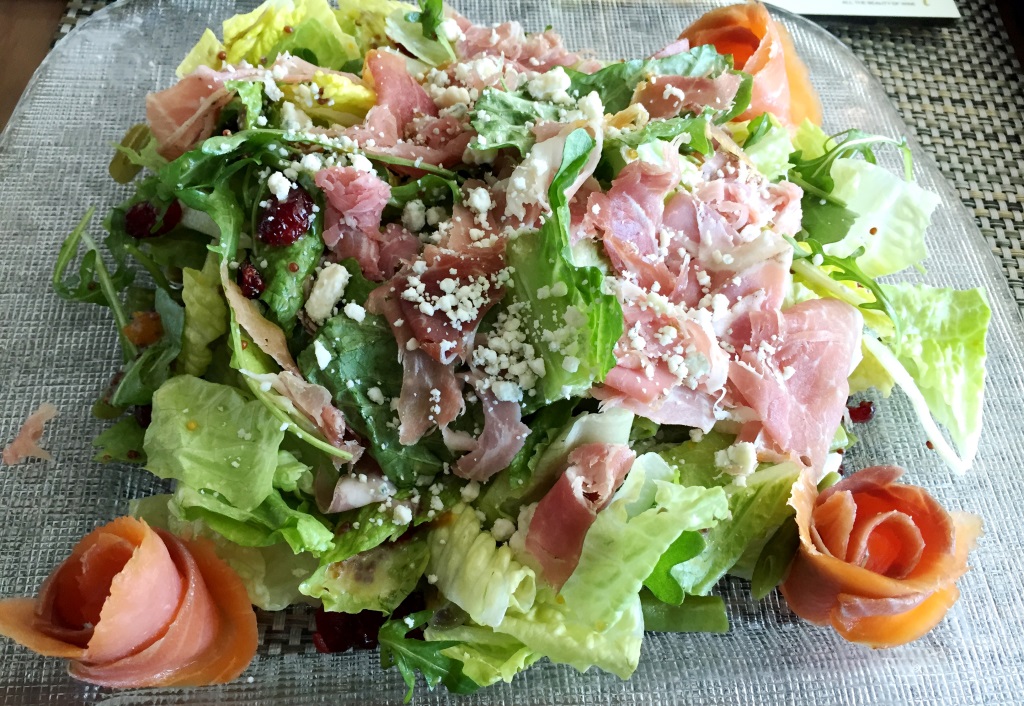
When it comes to the salad in general, I never even attempt to pair it with the wine – I believe generally it is not an easy undertaking. In my case here, I finished my “tasting” and “note taking” session, and I had the wine left, so I really had nothing to lose. I started from Viognier, and “wow” – the wine greatly complemented the sweet profile of the dried cranberries and dressing, so together it was almost a revelation. Next bite and sip, this time of Sauvignon Blanc – and yet another revelation – this time with the clean acidity cutting through the sweetness, contrasting and enhancing flavor. Last but not least, Cabernet Sauvignon perfectly complemented saltiness of the prosciutto and even smoked salmon – totally unexpected, but considering the soft and delicate profile of the wine, it was again a home run. Three wines out of three, working perfectly with one dish (salad!) – this was definitely not something I was expecting, but I’m glad I was able to experience it.
Life is an interesting thing. Cancelled flight led to the very pleasant and educational experience – life can take one thing away from us, and give us something else instead – for sure my case with this trip. Also, it is very interesting to see how the wine culture is changing in the US. From unfathomable plonk only 3–4 years ago (I would never think of ordering wine at the airport 4 years ago – beer would be my only choice), to the upscale wines and wine flights – we are definitely looking at the cultural shift, and I don’t know about you, but I’m very happy to see this happening. Heck, I might even start looking forward to my next trip through the Charlotte airport. Cheers!

Wineries of New England: Connecticut Winery Trail
 I was back and forth on this post for a while. One one side, an experience is an experience, and it is worth sharing in the blog, as this is what it is for. On another side, what if the experience was not on par? Not on par with your expectations, not on par with what you thought it should’ve been – is that something worth sharing? Or is it not? I’m talking about an experience which was not bad – in general, bad experiences are worth sharing as you might help others to avoid repeating them, or at least you can shout to the world and feel better. The tough case is when the experience was simply mediocre, just an okay type – what do you do then?
Well, I only have two options here – keep the internal debate going, or write the post and share the experience for what it was. Considering that you are reading this post, you already know what route I took, so let’s get to it.
I live in Connecticut for more than 20 years. I’ve caught the wine bug at least 12 years ago. All these years, while I knew that wines are made in Connecticut, I never visited a Connecticut winery – and was actually kind of ashamed of it. During the summer of 2014, the opportunity presented itself, and I was very happy to finally get acquainted with the Connecticut wines at the source.
It appears that modern winemaking started in Connecticut in 1975. Haight Vineyards, now known as Haight-Brown Vineyards, was the first winery to open, and the first vineyard in Connecticut to successfully grow Chardonnay and Riesling. From there, the industry had grown to about 37 wineries in the state in 2014. While Connecticut is not a large state by all means, the wineries are located all over it, so you can only visit a handful of wineries in one day.
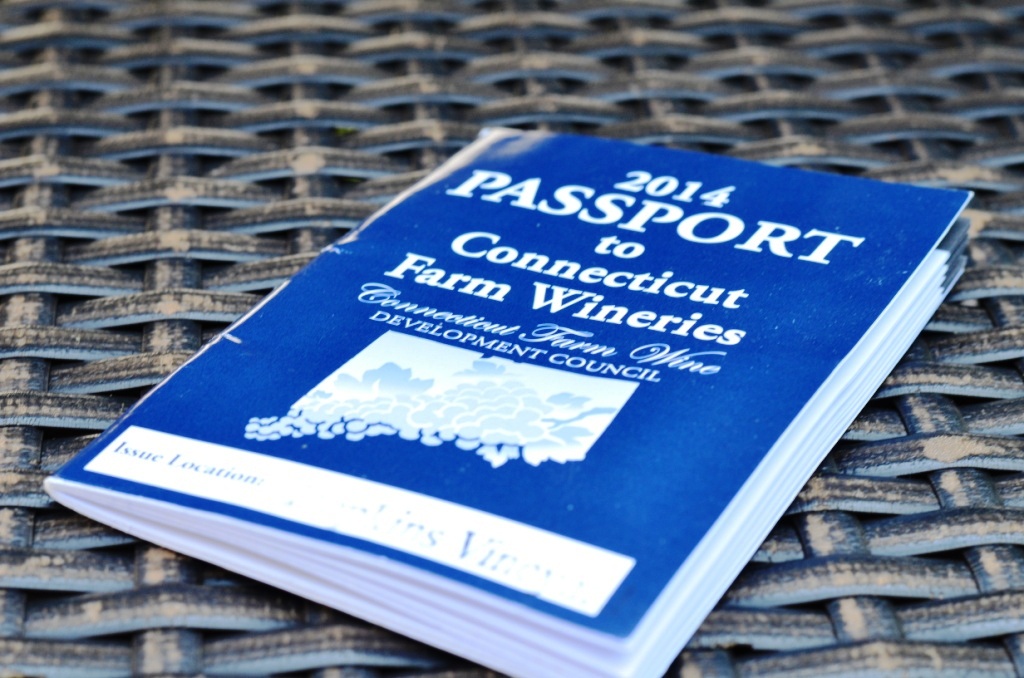
Before we talk about wines and wineries, I want to mention an interesting program, called “Passport to Connecticut Farm Wineries”, which is a very smart way to get people interested in visiting more wineries than they otherwise would. The Passport is a small booklet which lists participating Connecticut wineries and allows you to collect special stamps from all the wineries you visited. In case you are wondering, this Passport booklet can be picked up at any participating winery. New “Passport” is issued every year, and it is sponsored by the Connecticut Department of Agriculture. However, it is worth noting that to be listed in the Passport, each winery have to pay an X amount of money ($2,400 in 2014), and some of the wineries simply skip on participation as they don’t find that worthwhile.
As you collect the stamps at the wineries you visit, you have an option to turn the Passport in by the certain date (it was November 16th in 2014). If you happened to collect all the stamps in the Passport booklet (i.e., visited all the wineries listed, 33 of them in 2014), you will be entered into a drawing to win a two week long trip for two to Spain. With less than a hundred people accomplishing it every year, your chances of winning are quite high. Also, if you will visit 16-32 wineries, you can still participate in the drawing for many interesting prizes. Prizes are good, of course, but even the sheer idea of collecting the stamps makes people to visit more wineries (works on yours truly as a charm).
Okay, now – let’s talk wineries. We only explored 4 wineries during our trip in August, all located in the north-west corner of the state. As a generic note, most of the wineries in the Northeast grow mostly an American hybrid grapes (Vidal Blanc, Cayuga, Marechal Foch, Chambourcin and so on), with the addition of the traditional staples such as Chardonnay, Riesling, Cabernet Franc and Cabernet Sauvignon. Also, most of the wineries we visited charge $10 – $12 for the tasting ($12 tasting also includes the winery logo glass), which is not that bad.
Our first stop was Hopkins Vineyard, one of the oldest in the state – it was founded in 1979, as the result of conversion from the dairy farm to the vineyard. I was very excited to start my discovery of the Connecticut vineyards – but somehow, that enthusiasm was quickly extinguished with the cold and indifferent demeanor of our host. The guy who was running the tasting for us, couldn’t care less about the group. He was not interested in conversation. He barely answered questions, with his whole attitude been “I’m so tired of you people”. And the wines themselves were not helping. For what is worth, below are my brief notes:
2011 Hopkins Vineyard Duet Estate Bottled ($14.99, Chardonnay/Vidal Blanc) – nice acidity, good white fruit, medium-long finish. Drinkability: 7
2012 Hopkins Vineyard Vineyard Reserve Estate Bottled ($14.99, Seyval Blanc/Traminette) – nice nose, flat palate. Not recommended.
2013 Hopkins Vineyard Lady Rosé Estate Bottled ($15.99, Dornfelder/Lemberger/Pinot Noir) – nice, strawberries on the nose, crisp, but acidity is overbearing. Not recommended.
2010 Hopkins Vineyard Cabernet Franc Estate Bottled ($21.99) – excellent nose, green bell pepper, nice earthiness, good earthy palate. Drinkability: 7+


NV Hopkins Vineyard Red Bard Red ($14.50, Corette Noir and other hybrid grapes) – nice, young, simple, fresh fruit, touch of spices, raspberries and blackberries. In addition to the fact that this was one of the better wines in the tasting, Corette Noir was also a new grape! Drinkability: 7+
NV Hopkins Vineyard Sachem’s Picnic ($14.50, Boca Noir, Dechaunoc) – touch of sweetness, nice for Sangria. Drinkability: 6+
As you can see, this was not a very exciting beginning of the discovery of Connecticut wineries. The actual highlights of this first stop were found outside of the winery in the form of the beautiful sunflowers:


Our next stop was a Haight-Brown Vineyards – the winery I already mentioned as the very first in Connecticut, opening its doors in 1975. The winery was known as the Haight Vineyards until 2007, when it was acquired and renamed into the Haight-Brown Vineyards.
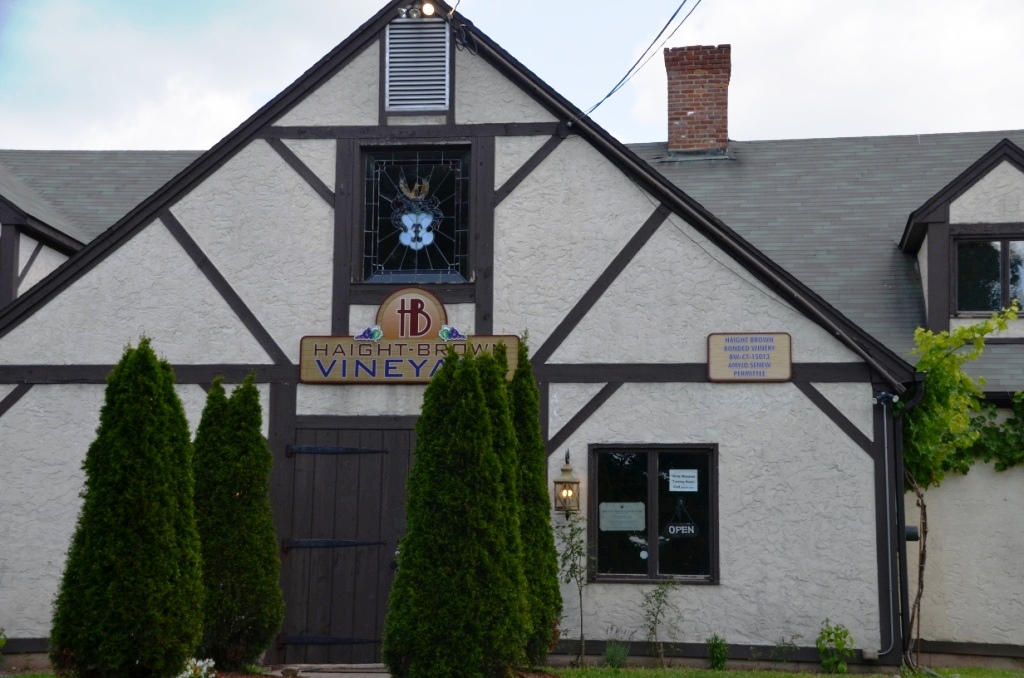 Here we received a better reception, and things started to look up a bit compare to the first visit. Still, no revelations and really no wines which would leave any memory marks. I’m also curious why none of the tasting notes list any vintages for any of the wines. You would think that the notes are reprinted for every new wine, so it shouldn’t be very difficult to add the vintage there – however, none of the wineries we visited had this information on. Another interesting note was a proud mention of the 15% ABV for the Big Red wine (none of the other notes have ABV listed) – it was almost shown as a point of achievement, which was really mind boggling to me. In addition to the wines, you can buy different olive oils at the Haight-Brown tasting room. And, most importantly, Haight-Brown offers meat and cheese boards, which came in very handy as the group was ready to eat. For what it worth, below are the wine notes:
Haight-Brown Vineyards Chardonnay ($16.98) – Chablis nose, restrained, green apple, good acidity. Drinkability: 7+
Haight-Brown Vineyards Railway White ($14.98, Seyval Blanc) – tropical fruit and lychees on the nose, nice creaminess on the palate, ripe golden delicious, good acidity. Drinkability: 7-
Haight-Brown Vineyards Riesling ($16.98) – Finger Lakes fruit. Nice nose, but needs more acidity. Drinkability: 7-
Haight-Brown Vineyards Picnic Red ($15.98, Foch/Dechaunoc) – simple, nice, open grapey nose, the same on the palate. Drinkability: 7
Haight-Brown Vineyards Morning Harvest ($19.98, Ruby Red Cabernet) – green bell pepper nose, classic, light and balanced Cabernet palate with a touch of sweet oak. Drinkability: 7+
Haight-Brown Vineyards Big Red ($19.98, 15% ABV, California Cabernet Sauvignon) – Classic, big flavors, nice green notes, okay balance. Drinkability: 7-


Our next stop was at the Sunset Meadow Vineyards, which probably was the highlight of the day – for sure in the terms of very friendly service. And then the wines were a bit better than at the previous two wineries. Interestingly enough, the Shades of Risqué Sparkling Wine, simple and unassuming, was my personal favorite. Here is what we tasted, with the notes:
Sunset Meadow Vineyards Riesling ($21.99) – interesting, acidic, light. Drinkability: 7
Sunset Meadow Vineyards Cayuga White ($16.99) – beautiful nose of pear and apple, good acidity, good balance. Drinkability: 7+
Sunset Meadow Vineyards Vidal Blanc ($18.99) – nice residual sweetness, good balance. Drinkability: 7+
Sunset Meadow Vineyards Blustery Blend ($16.99, Cayuga/Seyval Blanc/Chardonel) – nice nose, palate too sweet. And new grape – Chardonel! Drinkability: 7
Sunset Meadow Vineyards St. Croix ($24.99, 24 mo in oak) – nice earthy nose, a bit astringent on the palate with some salinity. Drinkability: 7-
Sunset Meadow Vineyards Merlot ($18.99, 24 mo in French oak) – tobacco and green pepper on the palate, overall missing the balance. Drinkability: 6+
2012 Sunset Meadow Vineyards New Dawn ($22.00, Landot Noir/Frontenac/Petit Verdot/Merlot) – astringent, sharp, spicy. Drinkability: 7-
Sunset Meadow Vineyards Shades of Risqué Sparkling Wine ($16.99) – round, simple, good balance. Drinkability: 7+
Sunset Meadow Vineyards Root 63 ($16.99) – nice and round, good balance. Drinkability: 7+
To be entirely honest, we also stopped at the Miranda Vineyards, but – I don’t have any notes to share. I remember tasting the wines (no standouts), and I remember taking the pictures – I even have a stamp in the Passport book – but no notes. So here are a few pictures for you:


There you have it, my friends – my first encounter with the Connecticut wineries. Not a great experience – but still an experience, which will leave a memory mark. I would think that 40 years should be a good time period to figure out what works, what doesn’t, what grows well, and then make interesting wines – but it was not really the case. Yes, there are more wineries in Connecticut, and so there is a hope for the memorable wines to be found close to home. And by the way, if you visited wineries I mentioned, and had a different experience – let me know – may be it was a root day after all. Cheers!
From Value to World-Class – Celebrating 30 Years of Spanish Wines in USA
 I’m sure that any proud oenophile and wine aficionado is acutely aware of the high class, delicious Spanish wines. Considering that Spain has the biggest planted area under vines in the world, and that wines had been made there for thousand of years, it is a no-brainer that Spanish wines are so well known and well recognized. Right? Well, the interesting fact is that for many casual wine drinkers, Spanish wines are still largely unknown. And, to top it of, you also need to understand that measly 30 years back, the only way to talk about Spanish wines, at least in the US, was by presenting them strictly as “value wines”.
30 years doesn’t sound like a lot – but the notion of time is relative, it fully depends on what is happening during that time. Wines from Spain mission was established in New York in 1984 to increase awareness of the Spanish wines in USA. Spanish quality control system, D.O., was established in 1986. Modern Priorat wines started in 1989. The pace of success and recognition only accelerated from there, with Parker awarding 100 points ratings to 5 Spanish wines in 2007 and Rioja named “Wine Region of the Year” by the Wine Enthusiast magazine in 2007. In 2012 Ribera del Duero became Wine Enthusiast magazine’s “Wine Region of the Year” and 2004 Cune Imperial Gram Reserva became Wine Spectator’s wine of the year in 2013.
To celebrate all the success of the Spanish wines in the USA, Wines from Spain recently conducted special tasting event in New York, called “Spain’s Great Match – wine food design”. The tasting consisted of a number of seminars and traditional walk-around tasting which included both wine and the food. The seminars were hard to get into, I only managed to attend one out of 4 (there rest was sold out almost before they were offered) – but boy, what a seminar it was!
The seminar was led by the wine educator Steve Olson, who was one of the early proponents of the Spanish wines and who was instrumental in helping Spanish wines to gain market recognition in the US.
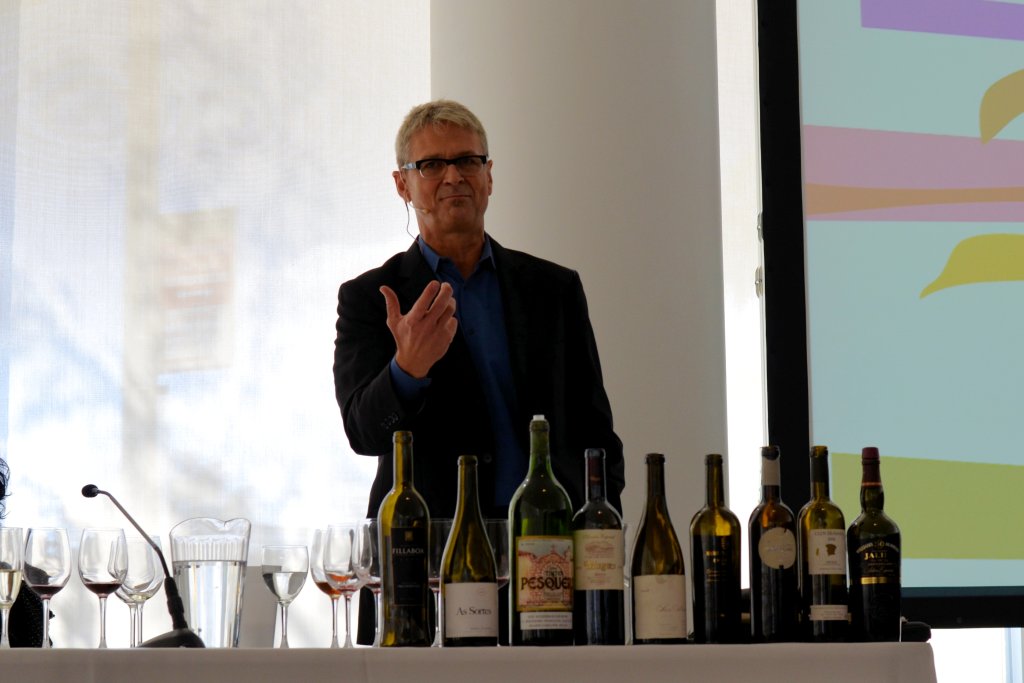 We started tasting from the toast of NV Freixenet Cordón Negro DO Cava, which was surprisingly (yes, please pardon my inner snob) nice, with some toasty notes and good mousse. It turns out that Freixenet was one of the very first importers of the Spanish wines in US, starting from 1974.
Next we had two beautiful whites:
2012 Bodegas Fillaboa Selección Finca Monte Alto Albariño DO Rias Baixas ($30) – Single vineyard, hand-harvested and sorted, made to age. Beautiful complex nose, white fruit, herbal nose. On the palate – pronounced minerality and acidity, literally devoid of fruit – will be interesting to see how this wine will evolve. Extremely long finish. Needs food.
2012 Rafael Palaciós As Sortes Valdeorras DO ($30, 100% Godello) – beautiful nose, white fruit, spices, a good Burgundy-rivaling complexity. On the palate -great acidity, white fruit, perfect balance – excellent texture, minerality and finish. The wine was double decanted before serving.
And then there were [spectacular] reds. All the red wines with the exception of 1984 were double-decanted to help them open up.
1984 Bodegas Alejandro Fernandez Tinto Pesquera DO Ribera del Duero ($30/current release, 100% Tempranillo) – 1984 was very unusual year – grapes were harvested in December(!). Nose – wow! Everything you want in the red wine – cedar box, red fruit, spice cabinet – warm, inviting. Palate – young, astringent, with very present tannins, blackberries – outstanding wine.
2010 Bodegas Muga Reserva Especial DOCa Rioja ($40) – Beautiful, warm nose, complex, touch of rhubarb, ripe fruit. Dry, perfect acidity, blackberries, restrained, great balance, dust on the palate, firm structure.
2005 Descendientes de José Palacio Corullón San Martin, Bierzo DO ($75, 100% Mencia) – this wine was produced for the first time in 1998 at the biodynamically farmed estate. Production is tiny, about 120 cases. Ripe fruit on the nose, eucalyptus, herbs. On the palate – firm structure, great minerality and acidity, spices, great depth, textural dust.
2007 Pago Marqués de Griñon Emeritus, DO Dominio de Valdepusa ($75, 66% Cabernet Sauvignon, 17% Syrah, 17% Petite Verdot) – wow! Amazing – would beat any California Cabernet. Green bell pepper, touch of cassis, great concentration, firm structure, great balance. Drinkability: 9
2004 Bodegas Mauduros San Román, Toro DO ($150, 100% Ink of Toro) – baking spices, concentrated dark fruit, tar, hazelnut. On the palate – delicious, complex, starts from sweetness and evolves almost to astringency. General Tempranillo traits with tremendous concentration.
2005 Clos Terrasses Clos Erasmus Priorat DOCa (~$1,000 for 2005 vintage, about $300 current vintage, 85% Garnacha, 15% Syrah, 100 points Parker) – elegant, open nose, sage, cherries, incredible palate, sweet fruit, spices, blackberries, blueberries, tight frame, impeccable balance, just beautiful. Drinkability: 9
Williams & Humbert Jalifa Amontillado VORS Jerez DO ($35) – this wine is about 50 years old. Very complex nose with anchovy, almonds, hazelnuts. Wow – incredible complexity on the palate – leather, spices, truffle oil – wow! Craves food – and will work with variety of foods.
To say that this was a great tasting would be an understatement – I also like the fact that the wines were selected to showcase major regions and capabilities of the Spanish winemaking.
Yes, this was one and only seminar I was able to attend – but the tasting continued with the extravaganza of other Spanish wines and food. One interesting observation from the tasting was the fact that most of the big name in Spanish wines were absent in the tasting itself – La Rioja Alta, Cvne, Lopez de Heredia, Vega Sicilia, none of the great Grenache wines, like Alto Moncayo, Bodegas Gil – the list can go on and on – none of them were represented. Yes, I understand that for the most part the tasting is run through the distributors and not directly by the wineries, but still. This was the only peculiar observation I made.
And here are two more interesting observations for you (here interesting = positive). First, Godello is coming! Godello is a white grape, indigenous to Spain, which is capable of producing Chardonnay-comparable wines. There were a lot of Godello wines presented at the tasting, most of them of a very good quality. I can definitely say that Godello is squarely joining the ranks of Albariño, Viura and Verdejo, the best known Spanish white grapes. You should definitely look for Godello wines in the store if you want to try something unique and different.
And the second point: in the “inexpensive wines” category, Spain clearly kicks butt! Some of the wines priced at $10 or less were simply outstanding, but even outside of that price range, it is almost impossible to beat Spanish wines in the QPR category.
Before we we will talk about the wines, a few words about the food. There was a lot of delicious Spanish food presented at the event. First of all, there was cheese. For anyone who likes Spanish cheese, that was simply a heaven – lots of different Manchego, Iberico and other cheeses – different age, different pasteurization – a lot more options than you can find at the average store. There were also anchovy, called boquerones in Spain – white boquerones were simply delicious (yes, of course it is a personal opinion). And there was lots of tapas, masterfully prepared right in front of the desiring crowd. The tapas were made periodically, and every time that process would create a crowd of people, all hoping not to miss the new and interesting dish. Food at this event definitely commanded as much attention as the wine had. Here are a few pictures, just to attest to what I just said.


And of course, for what it worth, here are the notes from the rest of the tasting. I have to say that the tasting was organized in a bit of a strange way. My major complaint was the fact that there was no reasonable handout of any sort, so taking any notes of essence was simply impossible. Also the whole tasting was not logically organized, with packets of regional wines mixed with individual wineries and also distributors – the was no system of any sort, which made the overall tasting experience frustrating rather than productive. Anyway, below are my notes, in the usual tasting style, using “+” signs. You will not see any “+” wines, “++” only if really deserve mentioning, so most of the wines should be above “++”. On a positive side, I picked up again a few grapes, which I will mention in the notes. Here we go:
2005 Agricultura y Bodega Renacimento de Olivares Rento, Ribera del Duero ($55) – ++-|, overextracted
2011 Alejandro Fernández Tinto Pesquera, Ribera del Duero ($40) – +++, excellent
2009 Bodega Matarromera Matarromera Crianza, Ribera del Duero ($30) – +++, restrained, nice, ready
2011 Bodegas Emilio Moro Ribera del Duero ($25) – +++, delicious, round
2010 Condado de Haza, Ribera del Duero ($28) – +++, beautiful
2011 Legaris Crianza, Ribera del Duero ($27) – ++-|, not ready
2010 Bodegas Reyes Teofilo Reyes Crianza, Ribera del Duero DO ($31.50) – +++
2013 Bodegas Marqués de Vizhoja Torre La Moreira Albariño, Rias Baixas DO ($19.99) – ++
2012 Condes de Albarei Albariño, Rias Baixas DO ($15) – ++-|, nice, clean
2013 Adegas Morgadio Albariño, Risa Baixas DO ($22) – +++-|, wow! fruit, great! delicious!
2009 Bodega Prado Rey PR3 Barricas Verdejo Rueda DO ($22) – ++-|
2013 Bodegas Angel Rodriguez Martinsancho Verdejo Rueda DO ($22) – +++
NV Finca Hispana Fino DO Montilla Moriles ($8.99)- +++, unbeatable QPR!
2013 Finca Hispana Xarel.lo DO Penedés ($8.99)- +++, unbeatable QPR!
NV Finca Hispana Cava Brut Imperial Reserva Cava DO ($14.99)- +++
2013 Vitivinícola do Ribeiro Viña Costeira Ribeiro DO – +++, clean!
2013 Moure Vinos Artesans Moure Tradicion Blanco, DO Ribeira Sacra ($40) – ++-|
2013 Nivarius Rioja DOCa ($24.99, Tempranillo Blanco and Viura) – ++-| new grape!
2011 Quinta de Muradella Alanda Blanco, DO Monterrei ($35, 30% Dona Blanca, 30% Treixadura, 30% Verdello, 10% Monstruosa de Monterrei) – ++-|, new grapes!
2013 Bodegas Nivarius Nivei Rioja DOCa ($11.99) – ++-|
2011 Losada Vinos de Finca Bierzo DO ($22) – +++, great!
2013 2013 Finca Hispana Garnacha Terra Alta DO ($8.99)- +++, unbeatable QPR
2009 Martinez Lacuesta Crianza, Rioja DOCa ($17.50) – +++
2005 Bodega de Sarria Reserva, Navarra DO ($16.95) – +++
2011 Terra de Falanis Muac! DO Montsant ($16.95) – +++, delicious, spicy!
2012 Pagos Los Balancines Crash, VT Extremadura ($10.50) – ++, mnice!
2012 Moure Vinos Artesans Moure Tradicion Barrica, DO Ribeira Sacra ($29, Merenzao) – ++-| new grape!
Here we are, my friends – a delicious Spanish wine experience with many personal discoveries (like Marqués de Griñon Emeritus – you have to taste it believe it) and the new grapes. Let me finish this post with the question – are the Spanish wines part of your regular “wine lifestyle”? Do you look at the Spanish wines only as a source of value, or do you consider them world-class and the best hidden secret of the wine world? Let me know and cheers!
Vino Volo Experience – Mostly a Rant
Rant? Vino Volo? Really? There must be something wrong with this picture, right?
Yes, on a number of occasions I confessed my love to the Vino Volo wine sanctuaries at the US airports. This time, I was yet again very happy that the ride to the Newark airport in New Jersey was quick and uneventful, and I had enough time to visit Vino Volo. In case you are not familiar with the Vino Volo concept, please take a look here.
Now, I don’t know how the Vino Volo stores are operating. I would assume that the local stores have some freedom to select the wines, based on their locality and, of course, their clientele. It is quite expected that the Vino Volo’s selection at the Seattle airport will be slated towards Washington wines, and San Francisco location will be California-heavy, and the store in Austin will have a flight or a few of the Texas wines. In the Newark store, there was nothing local – no New Jersey, no New York wines. There were a few of the “international delights” and few of the “value delight” flights – none of them generated any excitement. Then I saw a Sommelier Selection flight – two wines at $25, both wines supposedly high end.
To be entirely honest, first I made the mistake I make quite often when it comes to the wine lists – I don’t pay attention to the small details – as an example, one extra word in the name can take the wine from the first growth to the second label. So below is what I thought was in the flight (yep, I was hoping for the coveted Opus One):
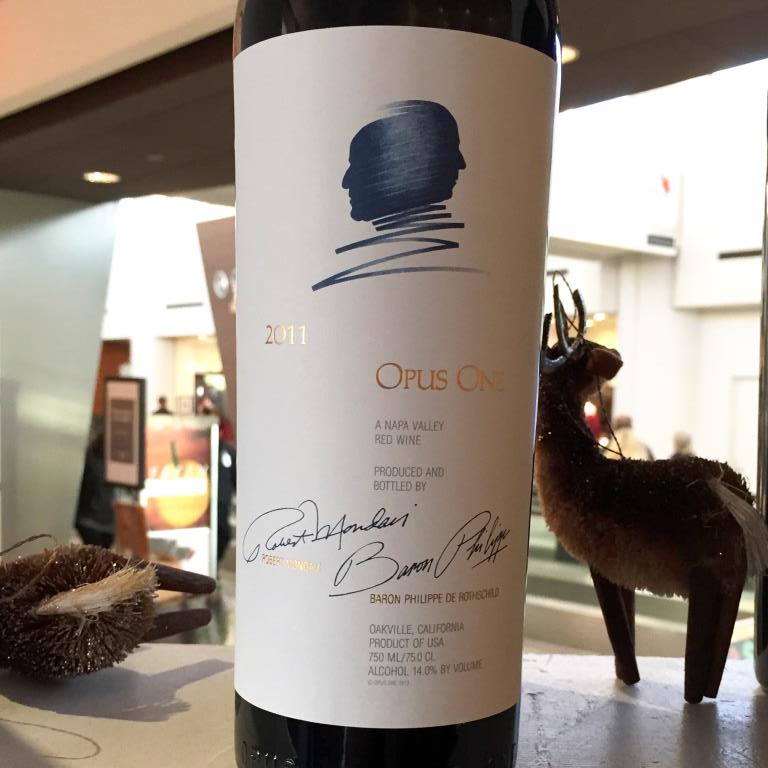 Well, there was no Opus One in the flight – instead, it was an Opus One Overture (see, one extra word!):
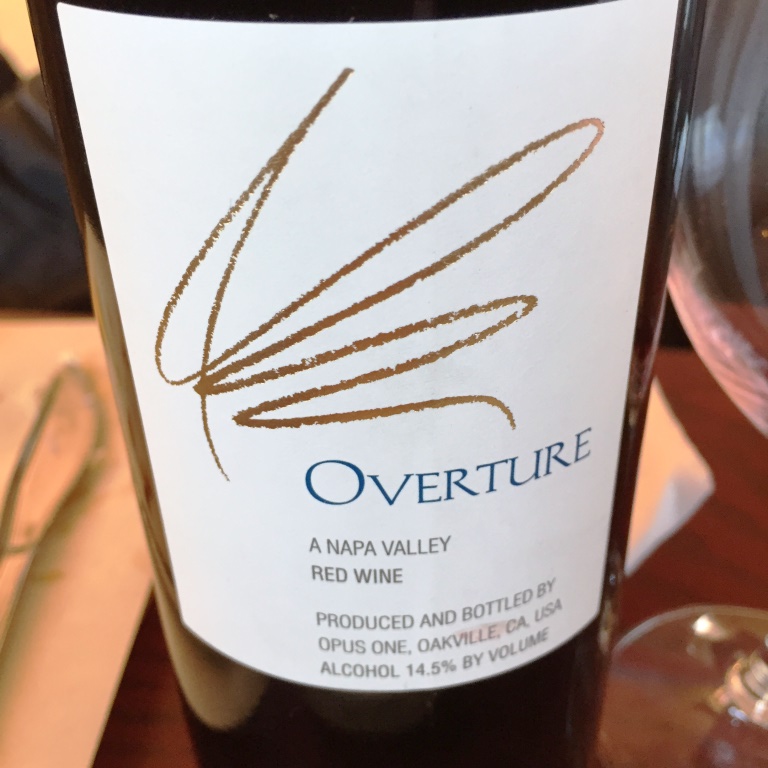 Okay, fine. You don’t expect me to rant about my own mistake, do you? Of course not. Let’s continue.
The flight arrived, and it looked like this:
 Just so you can actually read the “official” description, here is the same – without the glasses:
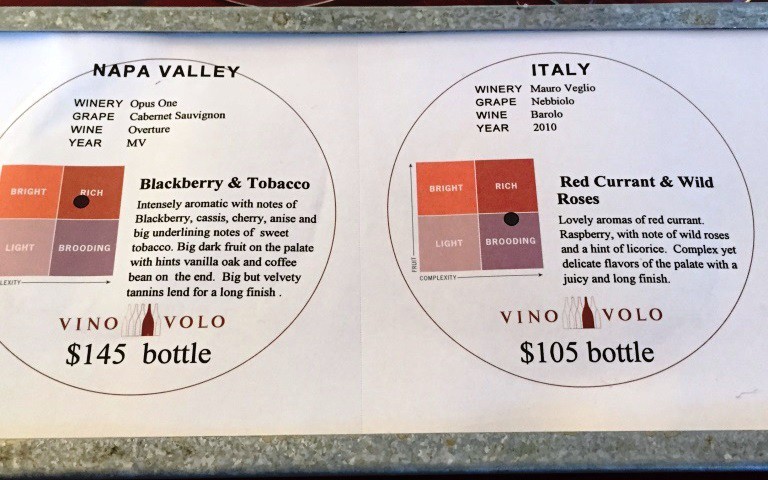 Okay, so I tasted the first wine, which was a non-vintage second label from Opus One, supposedly made with the surplus Cabernet Sauvignon grapes which were disqualified from the Opus One production. A bit thin, nice profile with touch of cassis, a bit green but palatable (but with the expectation of a lot more at the price of $145). While I understand that it is a non-vintage, I would assume that it is a young wine, and if it anything like the other top Mondavi Cabernet Sauvignon wines, it should be decanted to show best. Okay, let’s put it aside and let it breath, and let’s try the second wine, shall we?
Barolo from 2010. I don’t know about you, but I don’t consider 4 years old Barolo drinkable, unless it will spend good 3-4 hours in the decanter. I didn’t see a decanter at the bar, so I must assume that it was poured straight from the bottle. But even before that, if you want to really showcase the sommelier-selected wines, why would you put Barolo next to Cabernet Sauvignon? Wouldn’t you go to the Super Tuscan as the very least, showing California versus Italy? Okay, never mind all that, the proof is in the pudding, taste, right? Swirl, sip – there was nothing remotely reminiscent of Barolo in this wine – well, at least within my experience with Barolo and my expectation with “king of wines”. Very limited fruit expression, herbal nose, some tannins, very tart. Had it been decanted for the 3-4 hours, it would probably be a totally different experience – and should the folks, the professionals at Vino Volo known better?
Well, may be it was a root day after all. Or not. But there you have it, my friends – my first unsuccessful experience at Vino Volo. Let’s hope it was the last. Cheers!
P.S. I have my “formal” tasting notes – but I’m withholding them as I don’t think they will be of any use here.
P.P.S. If anyone had the 2010 Mauro Veglio Barolo and wants to say I have no idea what I’m talking about, please be my guest – your feedback will be greatly appreciated…
My First Can of Wine
 No, I didn’t lose it. The title of this post actually makes sense. To the date, I had the wine from the bottles of all forms and sizes. I had the wine directly from the stainless steel tanks and oak barrels. I had the wine dispersed by the machine. I had the wine from the keg. Yes, I had a boxed wine (and it was just fine). But – until yesterday, I never had wine from the can.
Yesterday I did. The Fall club shipment from one of my absolute favorite wineries, Field Recordings, included a can of wine. Not just any wine, but once again, one of my most favorite wines, Fiction (my personal wine of the year in 2011). When I saw a notice about the upcoming club shipment, which included a picture of the can, my first though was – hmmm, interesting. Really curious to try it.
Wine shipment arrived last week. After I opened the box, first thing I noticed was that the cans appeared a bit wrinkled. You know, when you hold the can of beer or any beverage, the surface is typically very smooth under your fingers – this was not the case, with the tiny, but noticeable ups and downs, the wrinkles (may be there is a better term to describe it, but I hope you got my point). Okay, it is the content what matters, right? It is obvious that the wine in the can is not intended to be stored or admired for the long time on the shelf – with its appearance it technically says “drink me now”.
Talking about cans, I had two other interesting observations. First, the can was 500 ml in size (somehow based on the picture I was expecting the full 750 size). And then instead of the short story which appears on the bottle of Fiction, the can’s “back label” contained the following tasting note: “Heady aromas of blueberry pie, luxurious suede couches, ham paninis and unlit menthol cigarettes. Firm tannins anchor flavors of grilled meats, cherry cola, sweet carob and black licorice chews, all cased up together conveniently in a cigar humidor. Drink tonight“. An interesting description, don’t you think? As I also got a bottle of Fiction, I was relieved to see the old a familiar story on its back label…
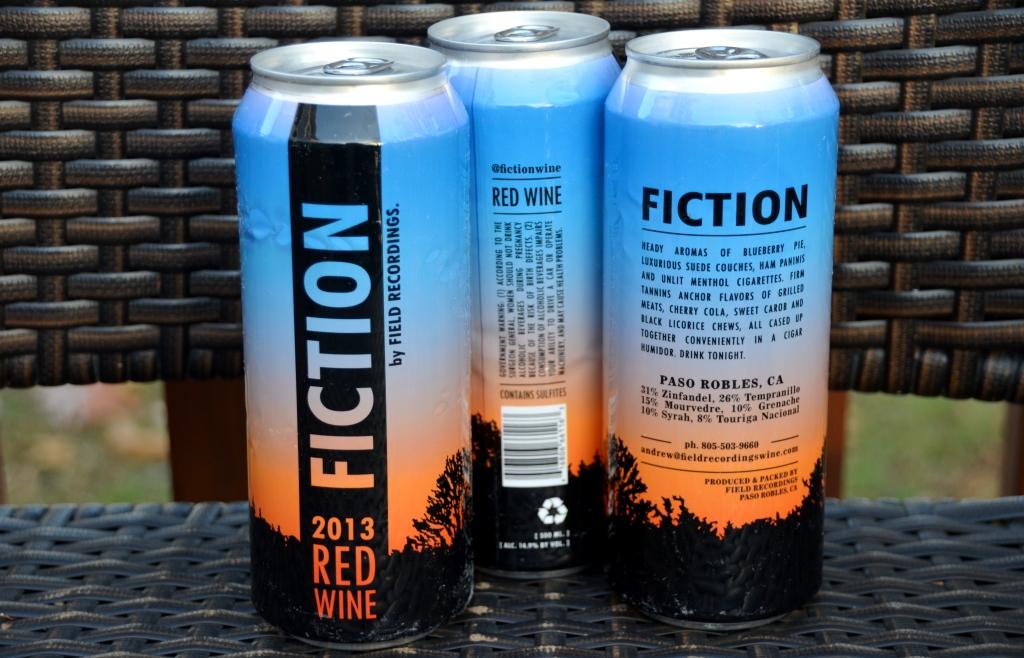
Okay, let’s get to “it” – let me tell you what I though about the wine. 2013 Field Recording Fiction Red Wine Paso Robles (14.9% ABV, $10 for 500 ml can, $18/bottle, 20% discount for catalog members; 31% Zinfandel, 26% Tempranillo, 15% Mourvedre, 10% Grenache, 10% Syrah, 8% Touriga Nacional) – in a word, the wine was delicious. It took about 10 minutes for the wine to open up and round itself up in a glass (I didn’t dare drinking it straight from the can, I think it would eliminate half of the pleasure – but feel free, of course). I didn’t find grilled meat or suede coaches in the wine. But it had beautiful, ripe blueberries and sweet cherries, some vanilla dusting and may be a touch of mocha and sweet oak, all impeccably woven into a tight bundle of pleasure, sip after sip. This wine was on par with all the previous releases of Fiction, sans the aromatics. I couldn’t find the mind-blowing aromatics the 2010 Fiction was showing, but nevertheless, this was a silky smooth and delicious wine which I would gladly drink again. But I would honestly prefer to pour from the bottle. Drinkability: 8-
Did you have the wine in the can? What do you think about the wine you had and the concept as a whole? Cheers!
Pleasures of the #GrapeDay – Delicious Tempranillo
 Once again I’m confessing my love for the “grape holidays” – knowing that the day has a special dedication to the specific grape variety makes selection of the wine to drink a much easier process. It also creates a feeling of the “special moment”, thus forcing you to open that-special-bottle-saved-for-the-special-occasion. Last grape holiday, the #GrenacheDay, prompted me to open a special bottle which was a lucky occasion, as the wine was about to turn over the hill.
Two days ago we were celebrating Tempranillo, a noble grape of Spain. Tempranillo is the most planted red grape in Spain, with the best and most famous wines coming from Rioja, Ribera del Duero and Toro regions. But over the last decade, Tempranillo lost its status of Spain’s exclusive treasure – it spread all over the world, with Australia, Texas, Oregon, California, Washington and other regions producing world-class wines.
Now, to select the bottle of wine for the proper celebration, one have to go to their own cellar or the local wine store – of course, with the exception of the lucky ones who live in a close proximity of the right winery. Unless you actually live in Texas, Oregon or Washington, your chances of finding those Tempranillo wines in the store are pretty much non existent. So for me, the choice was simple – Spain. I love Spanish wines, especially Rioja – and my cellar shows that. For the most of the day, my plan was to open the Rioja bottle in the evening – I was thinking about 2003 La Rioja Alta Vina Alberdi, which I had before and it was outstanding, despite a very difficult growing year. But then many of the twitter friends stated that they plan to open Ribera del Duero wines – and it got me thinking – do I have any options? Not a lot, but I do have a few bottles of Ribera del Duero, so actually, why not?
The bottle I pulled was 2004 Viña Mayor Reserva Ribera del Duero DO (13.5% ABV, ~$20). I was under impression that I wrote about this wine before in this blog – nope, I didn’t. The 2004 was an excellent year in Ribera del Duero, and Viña Mayor is an excellent producer. You put two and two together and what do you get? Five, of course! I love it when my wife takes a sip of the wine and says “wow” – one thing is to enjoy the wine by yourself, and it is totally different experience when someone else shares your enthusiasm – and it is not easy to impress my wife that much. Beautiful dark fruit on the nose, touch of herbs. The palate is just “wow” – multiple layers of fruit, touch of espresso, firm, dense, perfectly present, youthful, fresh, excellent acidity and overall very balanced. I’m glad I have another bottle – but it will have to wait for a while. Drinkability: 8+
There you have it, my friends – another successful grape holiday. How was your #TempranilloDay? Share your special moments, don’t be shy!
By the way, in case you are wondering – the next grape holiday is coming! #ZinfandelDay is on November 19th – luckily, you still have a bit of time to prepare. Cheers!
Few Last Words About Washington Wines
All the good things come to an end – so did my trip to Washington and the series of the blog posts about Woodinville wineries (if you missed the series, here is the link to the first, “MWWC-award-winning” 🙂 post – you can explore it from there).
What is my main outcome of that trip? First, at the “duh” level – great wines are made in the state of Washington. Yes, yes, I understand how pathetic this revelation is. However, outside of Chateau Ste. Michele, Columbia Crest and may be Cayuse and Quilceda Creek, how many Washington wineries can you name if put on the spot? Meanwhile, the wines I tasted in Woodinville, where literally one better than another. When it comes to the focused winery visits and large tastings, I do have a bit of experience – 7 wineries, about 40 wines, and not a single wine wine I really didn’t care for? That is a serious result in my book. Couple that with most of the wines reasonable priced in the $25 – $50 range, and the picture gets even better. Spectacular Bordeaux blends with such elegance and finesse – these Washington wines definitely worth seeking out. Well, today you would have to mostly travel to the area if you want to experience the wines – but this is the only problem you might have with the wines. Bottom line – I was very happy with my discovery of Woodinville and its wineries, and in the words of the Terminator, “I’ll be back”.
So you think we are done here? Nope. I still have a few more Washington wines to mention – thanks to Vino Volo. I wrote about Vino Volo a number of times in the past – the company manages wine bars in [mostly] various airports around US and Canada. While good wine at the airport is the most welcome development of the past 5 or so years of the flying experience, my favorite part about Vino Volo is that whenever possible, the bars offer tasting flights of local wines – you should expect to find Texas wines in Austin, California wines in San Francisco and of course, Washington wines in Seattle!
I had about 2 hours before my flight back to New York, and when I saw the Vino Volo sign, that was a happy “Yes!” moment. A number ofthe Washington wine flights were offered, but when I saw the one with Leonetti Cellars Cabernet, I had to go for it – I only heard the name before and they considered to be an excellent producer, so I was definitely curious.
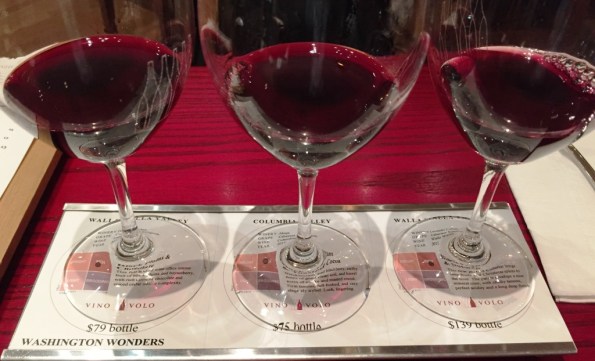
The flight consisted of 3 different Cabernet Sauvignon wines from Washington.
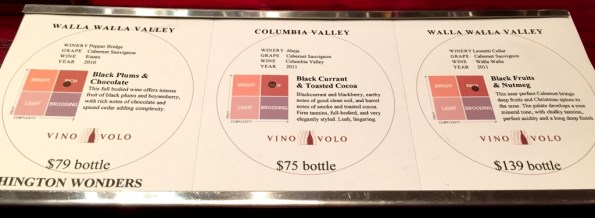
Here are my notes:
2010 Pepper Bridge Cabernet Sauvignon Estate, Walla Walla Valley – Raspberries and blackberries on the nose. On the palate, great depth, cassis, blackberries, pencil shavings, medium to full body, sweet tannins, elegant. Drinkability: 7+/8-
2011 Abeja Cabernet Sauvignon Columbia Valley – herbal nose with sage and lavender, touch of cassis. On the palate – dark chocolate, earthiness, nice mineral profile, good acidity, elegant. Drinkability: 8-
2011 Leonetti Cellars Cabernet Sauvignon Walla Walla Valley – Rich and concentrated nose, with the hint of forest floor, herbs, eucalyptus and great complexity. On the palate – round, spectacular, herbal profile with nutty aftertaste, more eucalyptus, long finish. Drinkability: 8+
Well, now it is the time to conclude the series for real. What can I tell you? If you are looking for the great wine experiences, put state of Washington, and Woodinville in particular, on the top of your list. For those of you who can experience the Woodinville wines and wineries at any time – lucky you. For the rest of us? Well, at least we know where to find them. Cheers!
Woodinville Wineries: Mark Ryan Winery
 This post is a continuation of the series about my winery experiences in Woodinville, Washington. Here are the links for the first four posts – introduction, Elevation Cellars, Pondera Winery, Des Voigne Cellars, Sparkman Cellars, Guardian Cellars and Fidélitas.
…walked towards the tasting counter, only to find out that the tasting room was closed for the day. I was told that there will be a special event in the tasting room, and they have to close earlier to prepare for that event, and unfortunately, I would have to come back to taste their wines. The tasting room itself looked very appealing, with the large format wines and wooden crates (the visual aspect of the “wineappeal” is so fascinating), I was really disappointed with the prospect of just walking away and finishing the great day on such a low note, especially after a so-so tasting at Fidélitas. So I used my last resort – I explained that I’m a blogger, and that I traveled from another coast, and it would not be possible for me to returned for the tasting any time soon. It worked! I was told that if I don’t mind sitting outside at the table, they will be glad to bring me all the wines to taste – but of course, thank you very much!

Tasting Room at Mark Ryan winery – aren’t does bottles look great?
The weather was beautiful ( it was not even raining! :)), and tasting outside was just an excellent proposition. The first wine which was brought to the table was 2013 Mark Ryan Viognier Columbia Valley (100% Viognier). I’m generally a bit worrying about Viognier wines – when they are good, they are absolutely spectacular in all aspects, from nose and the taste to the mouthfeel and the body. But when they are bad, they can be really daunting. Starting form the nose, Mark Ryan Viognier was spectacular – perfumy nose, perfect acidity, creamy mouthfeel, excellent balance and overall delicious. An interesting fact – this wine was partially aged in the concrete egg, which, according to the winery description, enhances the texture. I concur. Drinkability: 8.
The next wine was 2012 Mark Ryan NumbSkull GSM Walla Walla (58% Syrah, 26% Grenache, 16% Mourvedre) – beautiful ruby color, open nose of fresh berries (mourvedre dominated), blackberries, raspberries, thyme, earthiness – another delicious wine. Drinkability: 8
2012 Mark Ryan The Dissident Columbia Valley (54% Cabernet Sauvignon, 18% Merlot, 12% Malbec, 11% Cabernet Franc, 5% Petit Verdot) – cassis all the way! Texturally very present (my original note says “phenomenal texture”, but I don’t think “phenomenal” would be a universally recognized descriptor), round, clean and delicious. Drinkability: 9-


2012 Mark Ryan Long Haul Red Mountain (49% Merlot, 44% Cabernet Sauvignon, 6% Cabernet Franc, 1% Petit Verdot) – cassis again! Hint of green bell pepper, noticeable tannins, nice herbal component, round and delicious. Drinkability: 8+
2012 Mark Ryan Dead Horse Red Mountain (82% Cabernet Sauvignon, 9% Merlot, 7% Cabernet Franc, 2% Petite Verdot) – wow! Dusty tannins, cassis, big body, eucalyptus, delicious by all means. Drinkability: 9-
I guess you can tell that this was one exciting tasting – from my experience, this is quite a rare occasion when all the wines in the tasting are literally one better than the other. This was the second winery where I just had to buy the wine (got a bottle of NumbSkull and The Dissident). I’m really thankful to the kind folks at the Mark Ryan for being able to accommodate me despite their prepping for a special event – and I’m glad to be able to finish the day on such a high note.
This post essentially concludes the series about my short 3-hours run around the Woodinville wineries, but before I left the state of Washington, I had an opportunity to taste a few more interesting wines – we will talk about them in the next post.
To be concluded…
Woodinville Wineries: Fidélitas
 This post is a continuation of the series about my winery experiences in Woodinville, Washington. Here are the links for the first four posts – introduction, Elevation Cellars, Pondera Winery, Des Voigne Cellars, Sparkman Cellars and Guardian Cellars.
… and I arrived at a small shopping plaza (also known as strip mall in some part of US), only with wineries instead of shops. I decided to start with Fidélitas, which had a bright and shiny sign and was one of the two wineries recommended by Randy at Sparkman cellars. The tasting room was similarly busy (not!) as all the previous ones – a few people at the counter, and that is about it. I introduced myself to the girl at the counter, explained that I’m a blogger and asked if I can have a complementary tasting (the exact same thing which I did at 5 previous wineries). The reaction on girl’s face was rather resembling a consequences of an unexpected bite into a lemon. She was equally not moved with my business card (no, I was not expecting a bow or applause, but at least may be a mild interest I had at the other wineries?), and she sternly explained that free tasting is granted only to visiting winemakers; she will do it for me, but only as a big exception, and if I will come again, it will not be free anymore (please understand – we are talking about ten dollars).
I think this “warm welcome” affected the way I perceived the wines. Randy mentioned that Fidelitas makes big wines – and while the wines were good, they were not the big wines I was expecting. Here is what I tasted:
2013 Fidelitas Klipsum Vineyard Semillon Red Mountain – Nice, clean fruit, sweet nose, dry on the palate. Drinkability: 7
2011 Fidelitas Malbec Columbia Valley – cut through acidity, a food wine. Drinkability: 7
2011 Fidelitas Boushey Vineyard Red Wine Yakima Valley (48% Cabernet Sauvignon, 43% Merlot, 9% Cabernet Franc) – Excellent, clean, Bordeaux style. Drinkability: 8-
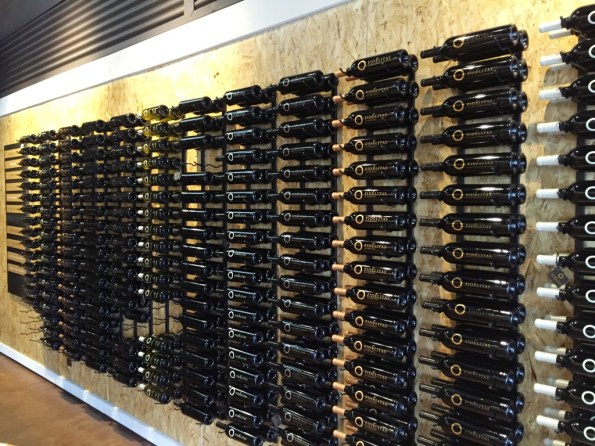
2010 Fidelitas Ciel du Cheval Vineyard Cabernet Sauvignon Red Mountain (92% Cabernet Sauvignon, 8% Petite Verdot) – powerful over the top tannins, clean and round, Bordeaux style. Drinkability: 7+
2010 Fidelitas Champoux Vineyards Cabernet Sauvignon Horse Heaven Hills – forthcoming tannins, nice, good acidity. Drinkability: 7+
I spent less than 15 minutes at Fidelitas. After a leisurely 15 seconds walk, I arrived at my last winery of the day, Mark Ryan. I opened the door and walked towards the tasting counter, only to find out that…
To be continued…
Last Bottle Sign Up ($10 credit)




 Talk-A-Vino