Archive
Following State Dinner, [Re]Discovering Hopkins Vineyard
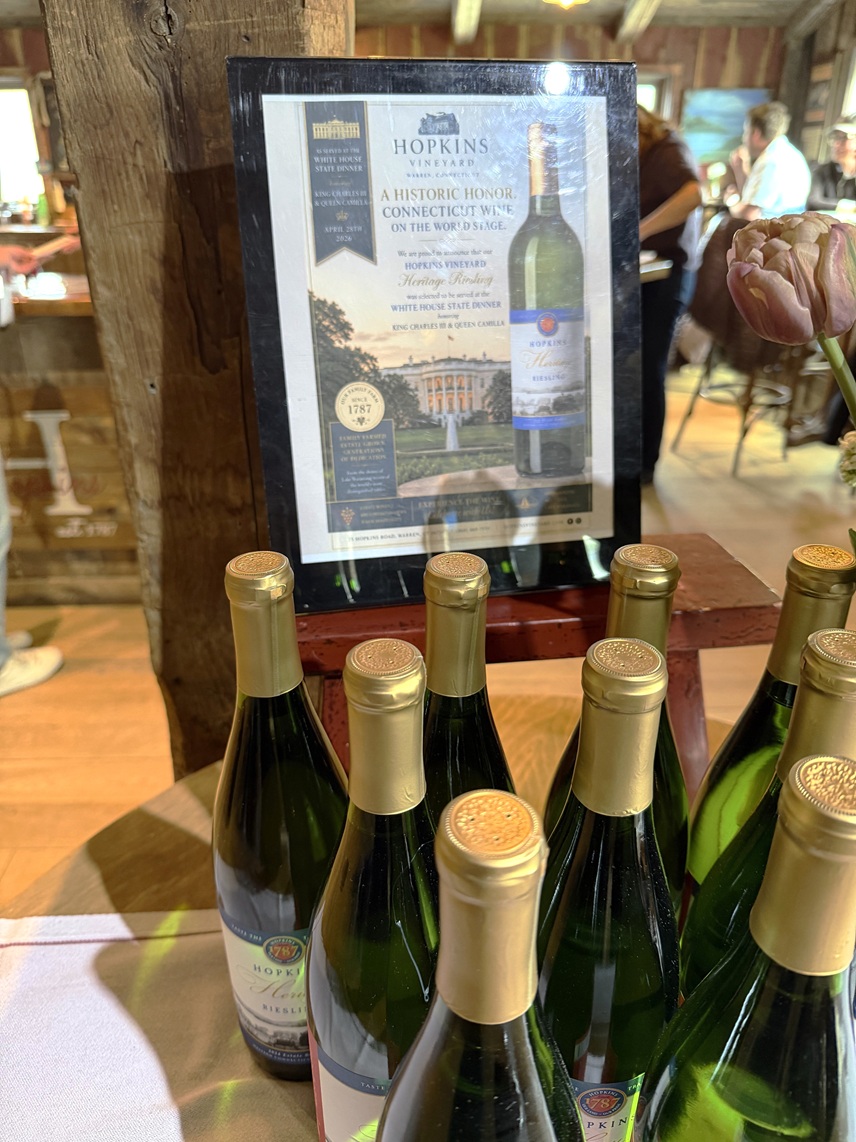 State Dinners are always fun.
Right?
Well, never been to one, so I can only assume. But no matter, we are here only for the wine, and maybe food.
I had been following the subject of State Dinners for as long as this blog has existed. For example, here is a post analyzing the selection of wines at Obama’s state dinner at the end of his presidency. You expect that the State Dinner represents your country, so only the best of the best should be served – yet when it comes to hundreds of thousands of wines (I’m talking about different labels and vintages, not production quantities) available, it is clear that deciding on “best” is not a simple task.
Once I heard of the dinner in honor of the King of England’s state visit, I knew I had to do some sleuthing. This time, it was very easy, as all information was clearly presented on White House’s website. Having an experience with web links disappearing with time, I will respectfully allow myself to copy the information from the White House website, so it will be available here for anyone who comes across this post some years later – here is the link to the original information.
MENU
First Course
Garden Vegetable Velouté (Hearts of Palm, Toasted Shallots, Micro Mint)Second Course
Spring Herbed Ravioli (Ricotta Cheese, Morels, Parmesan Emulsion)Third Course
Dover Sole Meunière (Potato Pavé, Spring Ramps, Snow Peas, Parsley Oil)Dessert
White House Honey & Vanilla Bean Crémeux (Flourless Chocolate Gâteau, Almond Joconde, Crème Fraîche Ice Cream)WINES
The following wines were selected to complement the menu while honoring the shared heritage and enduring friendship between the United States and the United Kingdom, and celebrating the strength of American winemaking today.
Hopkins Riesling “Heritage” 2024, Hopkins Vineyard, Connecticut
The Penner-Ash Pinot Noir “Willamette Valley” 2022, Penner-Ash Wine Cellars, Oregon
The Newton Chardonnay “Unfiltered” 2022, Newton Vineyard, California
Food sounds great, but we are here for the wines, so let’s talk about them.
First, highlighted in blue above is the explanation for the rationale behind choosing the wines. And knowing Melania’s level of attention to detail, we also have to assume that while representing the heritage is important, the wines have to pair well with the food.
I can perfectly see how Penner-Ash Pinot Noir, the wine from one of the most respected producers in Oregon, can perfectly match that pasta, anchoring on the Morel mushroom element, probably to perfectly complement the dish.
While I’m not really familiar with Newton Unfiltered Chardonnay, any California Chardonnay can be considered “iconic”, so again, I can see it perfectly complementing delicate Dover Sole in buttery sauce.
Which leaves us with Hopkins Heritage Riesling, and here we need to take a pause.
I have to be honest. When I saw a wine from Connecticut to be one of the 3 wines served at the State Dinner, my first reaction was “what?????? come again????”. I live in Connecticut. A few years back, we visited several Connecticut wineries with friends, and we were not very impressed.
Okay, so I wrote “a few years back” above, and then decided to check if I wrote anything about that visit. Well, yes, I did. And if 11 still qualifies as “a few”, we are good, but nevertheless, that visit took place in 2015. Yes, 11 years ago – a good chunk of time in the life of a winery.
In any case, I completely forgot the details of that trip – only a general (not a great one) impression. And you can imagine my surprise seeing a Connecticut wine presented at one of the highest honors in the country. But – I live in Connecticut, remember? Google Maps to the rescue – the Hopkins Vineyard winery is only 1.5 hours away, so it was rather a no-brainer – we have to visit the winery over the weekend and taste the Connecticut Riesling worthy of serving at the State Dinner.
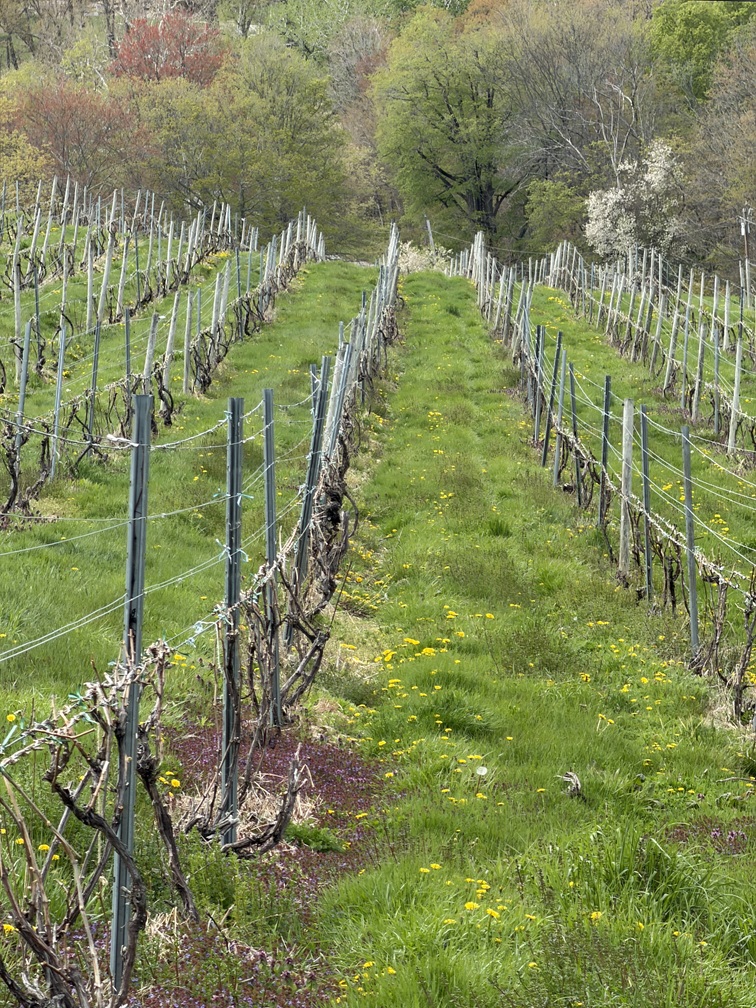
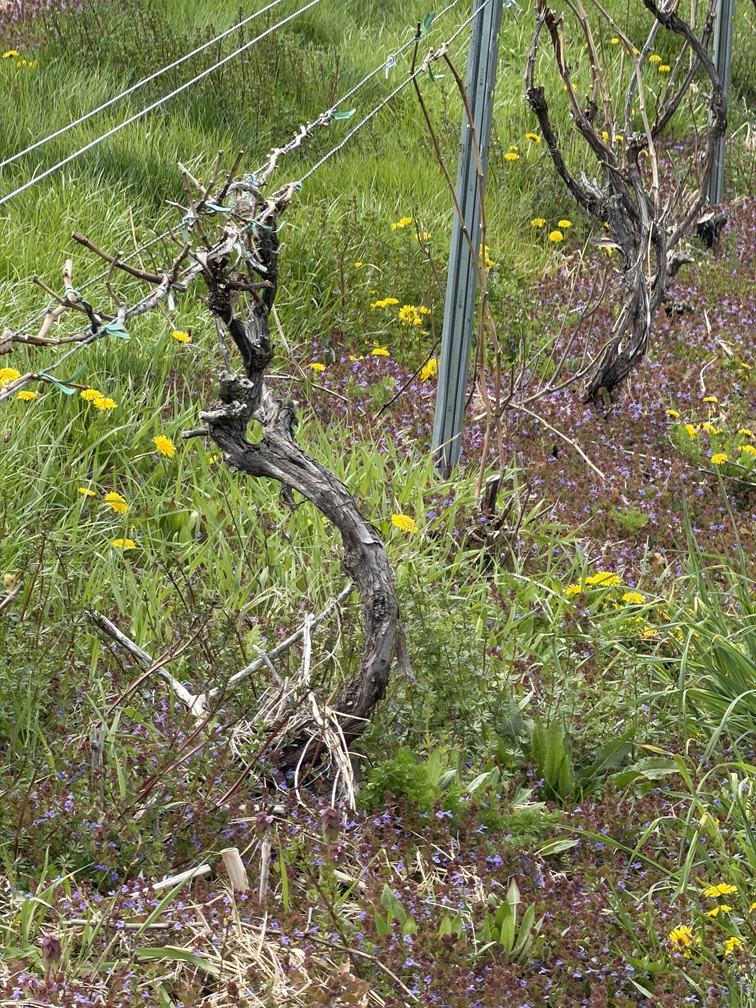
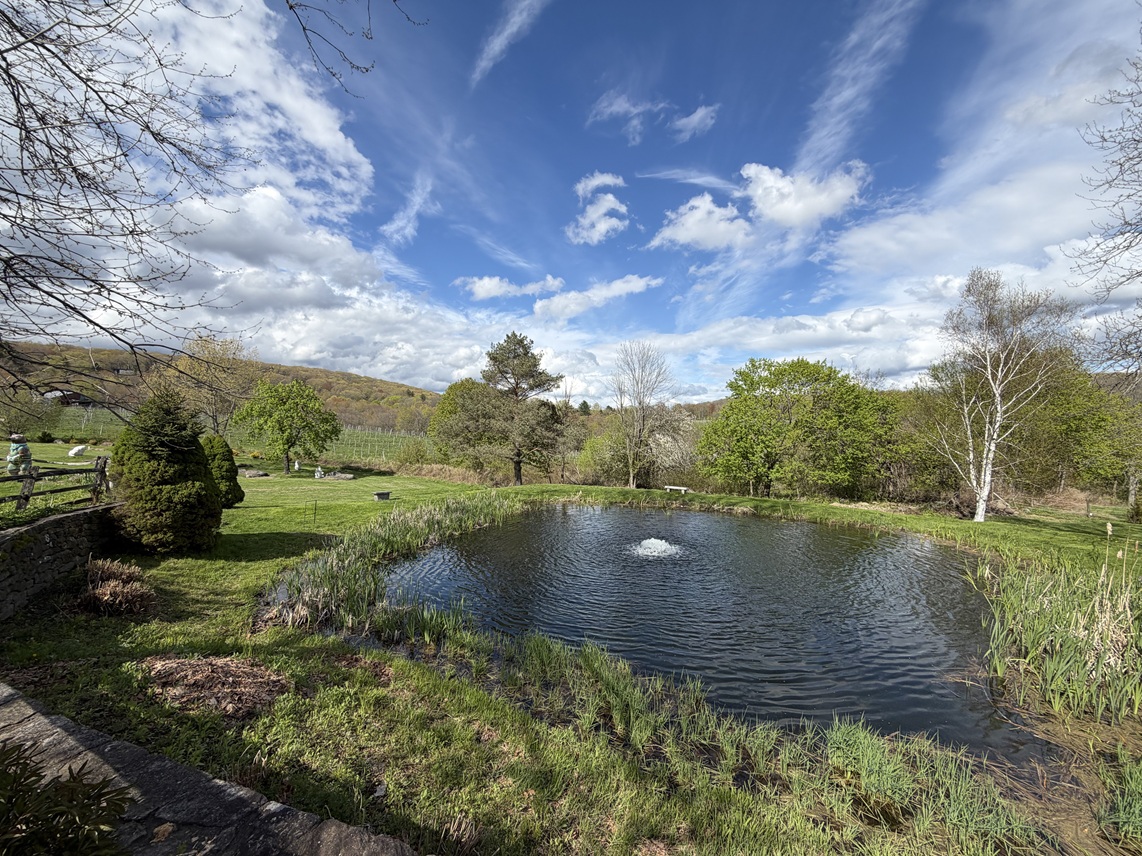
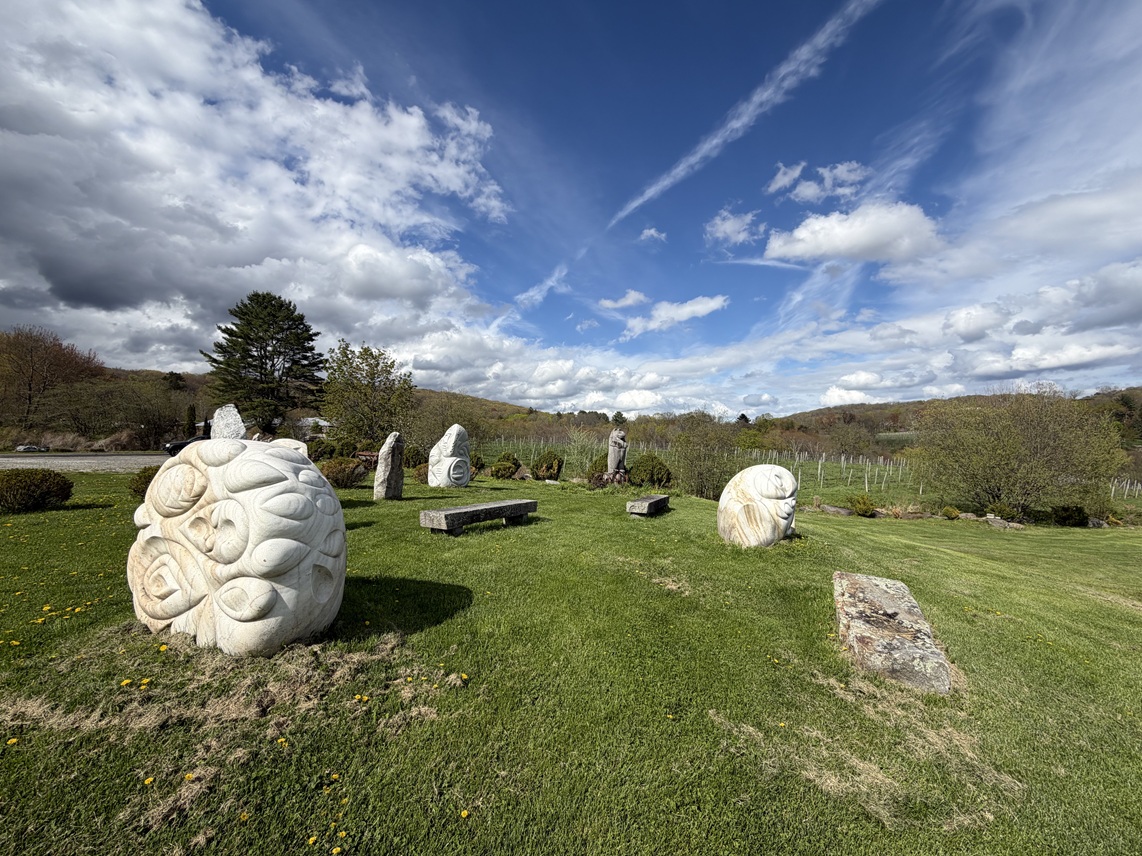
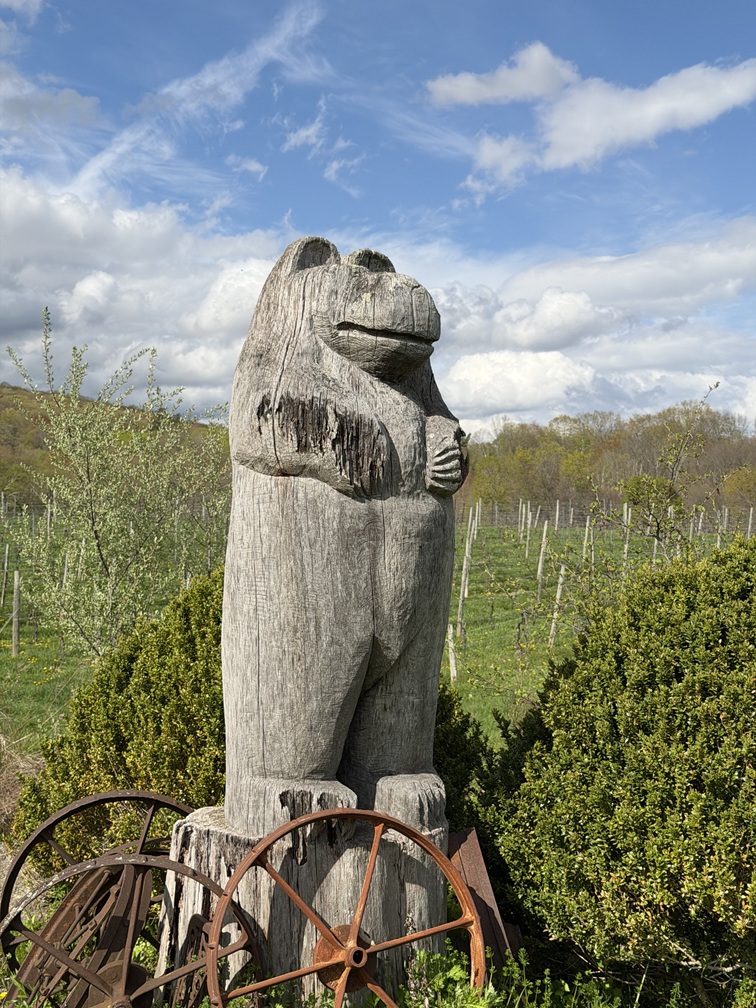
Finding the place was easy. Beautiful location, right by the lake. The winery was quite busy on an average Saturday in May, which is probably not surprising considering all the press they got. Obviously, Riesling had a special recognition. And it was not available for tasting, but we could buy a bottle, one per person. We decided to take a tasting flight, but before we talk about it, let’s answer possibly the most burning question: how did that Hopkins Vineyard Heritage Riesling end up served at the State Dinner?
First, I asked the gentleman who was pouring the wines. He said that he heard that someone had just called from the White House and asked for the wine to be sent there. I was not satisfied with this answer, as in my mind, it can’t be that simple. Then, when we were practically leaving, by pure chance, I ran into Hilary Hopkins Criollo, who happened to be the 10th-generation owner of the Hopkins Vineyard. I asked her the same question: how did it happen that your Riesling was served at the State Dinner, hoping to hear that it was some special connection she had. But actually, the story was exactly as I was already told. Some weeks prior to the State Dinner, Hilary got a call from the White House staff, asking her to send 4 bottles of her Riesling for tasting. A week or so later, she got another call, asking her to send 4 cases of that Riesling to the White House. End of story.
In retrospect, it all makes sense. The dinner was in honor of the King of England, so serving the wine from New England creates a perfect connection to the history. Hopkins Vineyard is the oldest family-owned winery in Connecticut, and the estate was founded in 1787, which makes it almost the same age as the USA itself – another great connection to the heritage, one of the important selection criteria mentioned on the White House website. And lastly, having tasted wines from many wineries in New England, and having tasted Hopkins Vineyards Heritage Riesling, this was potentially the best choice for serving a crisp white wine to complement the first dish on the menu above.
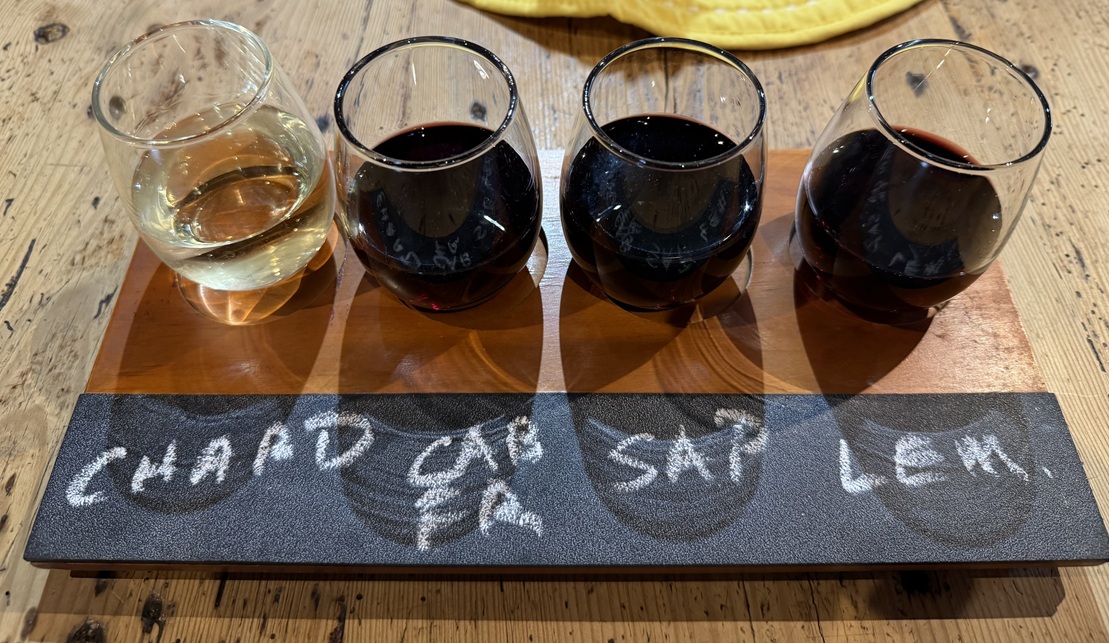
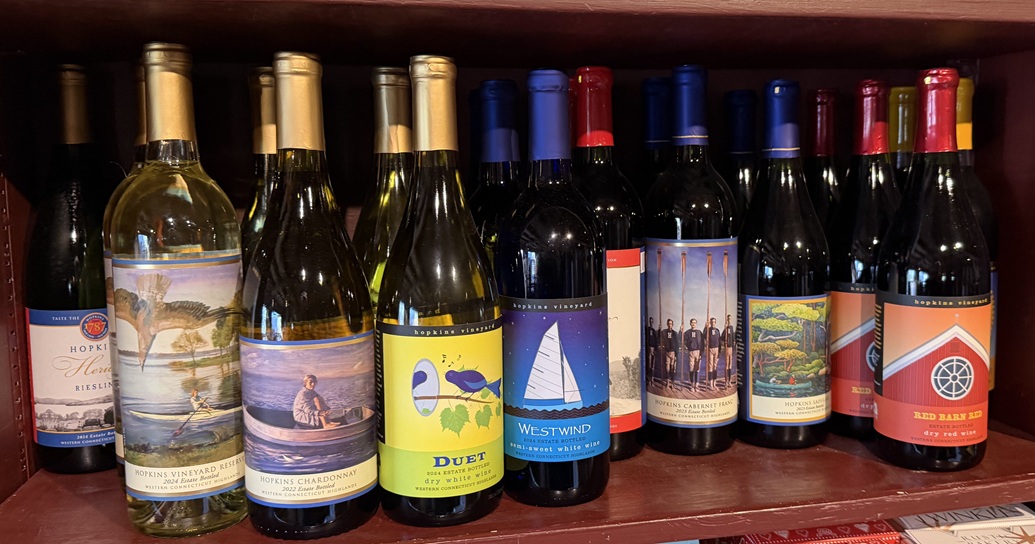


Now, let’s get back to the wines we tasted. You can build your own tasting set, so we took Chardonnay (easy choice :)), Cabernet Franc (a must on the East Coast), Saperavi (how can I resist), and Lemberger (another easy choice). Here are my notes:
2022 Hopkins Vineyard Chardonnay
At first, the nose is closed.
Nice, simple, good acidity, a hint of clove
After it warmed up a bit and opened a bit, a very nice Chardonnay with apples and vanilla. Definitely a solid effort.
2023 Hopkins Vineyard Cabernet Franc
Bell pepper (a hint of)
Bell pepper on the palate, black pepper, round and generous. A bit too warm.
2023 Hopkins Vineyard Saperavi
Mostly herbal nose
Varietally correct palate, needs to be served colder, but it is okay. Mostly acidic finish.
2024 Hopkins Vineyard Lemberger
Hint of dark fruit
Barnyard notes, nice and supple. Quaffable. Needs time to open up.
The Chardonnay was my favorite from this flight. For the reds, they were warmer than I would prefer for my palate, and overall, they were okay but not exciting.
We got our two bottles of Riesling and went back home. But of course, it was impossible to resist, so after a quick chill in the sleeve, the bottle was opened.
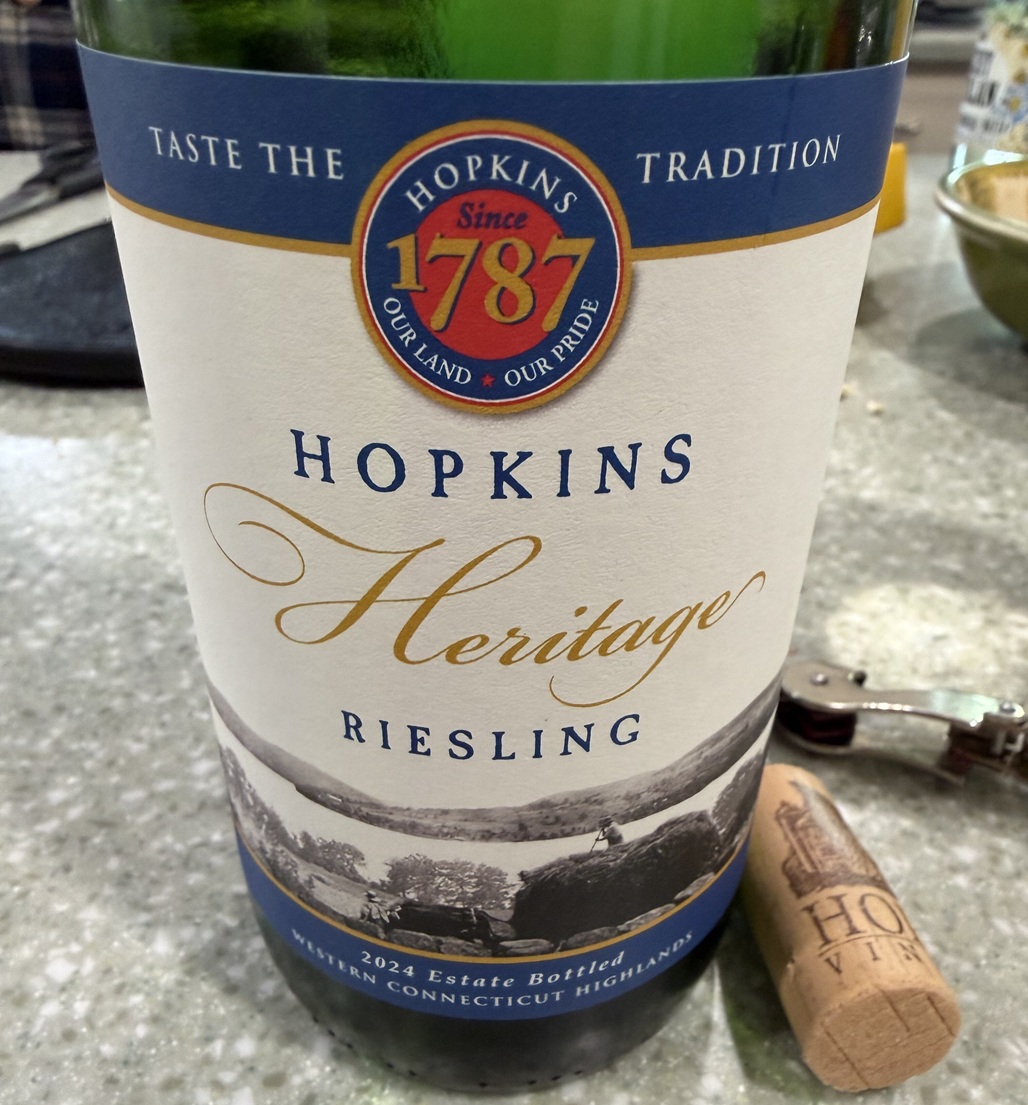
2024 Hopkins Vineyard Heritage Riesling Western Connecticut Highlands (12% ABVF, $33)
Light straw
Hint of tropical fruit on the nose, a hint of honey
Crisp, clear, vibrant, and elegant, a distant hint of tropical fruit, good balance, and great acidity on the finish.
8, very impressive
As you know, one way or another, I usually try to taste the wine over a period of a few days. It happened that I was finishing this bottle 6 days after it was first opened (I simply pumped the air out, as I always do), and the wine was still well drinkable. On the palate, the profile changed a bit, becoming more reminiscent of the East Coast Vidal, thus well adhering to the notion of East Coast terroir if we can define such a thing. But again, still very well drinkable.
Here you are, my friends. A winery rediscovered. And the wine worthy of a king, made (almost) in my backyard. The inner collector of experiences has a huge smile on its face. I still have another bottle to enjoy at some point, but the plan is to lose it for the next 5-10 years.
Until the next time – cheers!
Wineries of New England: Connecticut Winery Trail
 I was back and forth on this post for a while. One one side, an experience is an experience, and it is worth sharing in the blog, as this is what it is for. On another side, what if the experience was not on par? Not on par with your expectations, not on par with what you thought it should’ve been – is that something worth sharing? Or is it not? I’m talking about an experience which was not bad – in general, bad experiences are worth sharing as you might help others to avoid repeating them, or at least you can shout to the world and feel better. The tough case is when the experience was simply mediocre, just an okay type – what do you do then?
Well, I only have two options here – keep the internal debate going, or write the post and share the experience for what it was. Considering that you are reading this post, you already know what route I took, so let’s get to it.
I live in Connecticut for more than 20 years. I’ve caught the wine bug at least 12 years ago. All these years, while I knew that wines are made in Connecticut, I never visited a Connecticut winery – and was actually kind of ashamed of it. During the summer of 2014, the opportunity presented itself, and I was very happy to finally get acquainted with the Connecticut wines at the source.
It appears that modern winemaking started in Connecticut in 1975. Haight Vineyards, now known as Haight-Brown Vineyards, was the first winery to open, and the first vineyard in Connecticut to successfully grow Chardonnay and Riesling. From there, the industry had grown to about 37 wineries in the state in 2014. While Connecticut is not a large state by all means, the wineries are located all over it, so you can only visit a handful of wineries in one day.
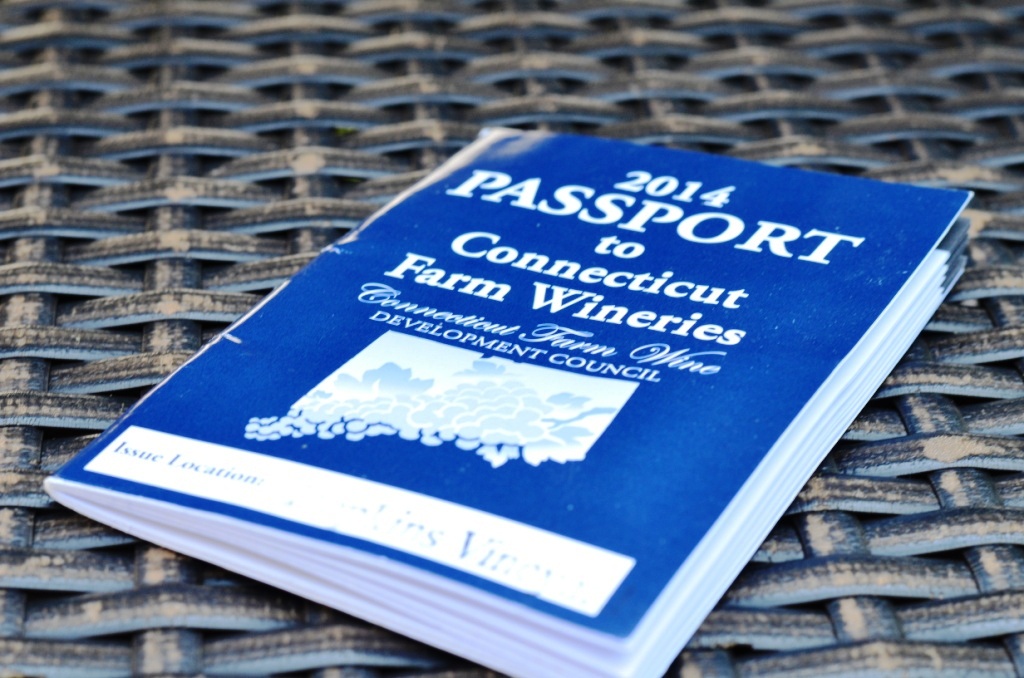
Before we talk about wines and wineries, I want to mention an interesting program, called “Passport to Connecticut Farm Wineries”, which is a very smart way to get people interested in visiting more wineries than they otherwise would. The Passport is a small booklet which lists participating Connecticut wineries and allows you to collect special stamps from all the wineries you visited. In case you are wondering, this Passport booklet can be picked up at any participating winery. New “Passport” is issued every year, and it is sponsored by the Connecticut Department of Agriculture. However, it is worth noting that to be listed in the Passport, each winery have to pay an X amount of money ($2,400 in 2014), and some of the wineries simply skip on participation as they don’t find that worthwhile.
As you collect the stamps at the wineries you visit, you have an option to turn the Passport in by the certain date (it was November 16th in 2014). If you happened to collect all the stamps in the Passport booklet (i.e., visited all the wineries listed, 33 of them in 2014), you will be entered into a drawing to win a two week long trip for two to Spain. With less than a hundred people accomplishing it every year, your chances of winning are quite high. Also, if you will visit 16-32 wineries, you can still participate in the drawing for many interesting prizes. Prizes are good, of course, but even the sheer idea of collecting the stamps makes people to visit more wineries (works on yours truly as a charm).
Okay, now – let’s talk wineries. We only explored 4 wineries during our trip in August, all located in the north-west corner of the state. As a generic note, most of the wineries in the Northeast grow mostly an American hybrid grapes (Vidal Blanc, Cayuga, Marechal Foch, Chambourcin and so on), with the addition of the traditional staples such as Chardonnay, Riesling, Cabernet Franc and Cabernet Sauvignon. Also, most of the wineries we visited charge $10 – $12 for the tasting ($12 tasting also includes the winery logo glass), which is not that bad.
Our first stop was Hopkins Vineyard, one of the oldest in the state – it was founded in 1979, as the result of conversion from the dairy farm to the vineyard. I was very excited to start my discovery of the Connecticut vineyards – but somehow, that enthusiasm was quickly extinguished with the cold and indifferent demeanor of our host. The guy who was running the tasting for us, couldn’t care less about the group. He was not interested in conversation. He barely answered questions, with his whole attitude been “I’m so tired of you people”. And the wines themselves were not helping. For what is worth, below are my brief notes:
2011 Hopkins Vineyard Duet Estate Bottled ($14.99, Chardonnay/Vidal Blanc) – nice acidity, good white fruit, medium-long finish. Drinkability: 7
2012 Hopkins Vineyard Vineyard Reserve Estate Bottled ($14.99, Seyval Blanc/Traminette) – nice nose, flat palate. Not recommended.
2013 Hopkins Vineyard Lady Rosé Estate Bottled ($15.99, Dornfelder/Lemberger/Pinot Noir) – nice, strawberries on the nose, crisp, but acidity is overbearing. Not recommended.
2010 Hopkins Vineyard Cabernet Franc Estate Bottled ($21.99) – excellent nose, green bell pepper, nice earthiness, good earthy palate. Drinkability: 7+


NV Hopkins Vineyard Red Bard Red ($14.50, Corette Noir and other hybrid grapes) – nice, young, simple, fresh fruit, touch of spices, raspberries and blackberries. In addition to the fact that this was one of the better wines in the tasting, Corette Noir was also a new grape! Drinkability: 7+
NV Hopkins Vineyard Sachem’s Picnic ($14.50, Boca Noir, Dechaunoc) – touch of sweetness, nice for Sangria. Drinkability: 6+
As you can see, this was not a very exciting beginning of the discovery of Connecticut wineries. The actual highlights of this first stop were found outside of the winery in the form of the beautiful sunflowers:


Our next stop was a Haight-Brown Vineyards – the winery I already mentioned as the very first in Connecticut, opening its doors in 1975. The winery was known as the Haight Vineyards until 2007, when it was acquired and renamed into the Haight-Brown Vineyards.
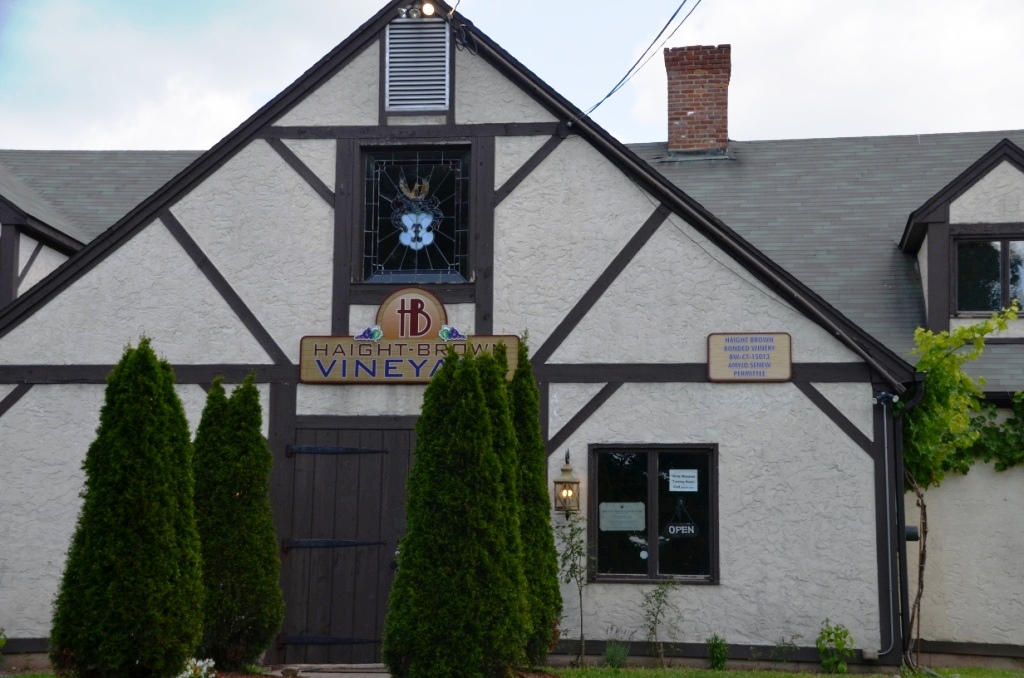 Here we received a better reception, and things started to look up a bit compare to the first visit. Still, no revelations and really no wines which would leave any memory marks. I’m also curious why none of the tasting notes list any vintages for any of the wines. You would think that the notes are reprinted for every new wine, so it shouldn’t be very difficult to add the vintage there – however, none of the wineries we visited had this information on. Another interesting note was a proud mention of the 15% ABV for the Big Red wine (none of the other notes have ABV listed) – it was almost shown as a point of achievement, which was really mind boggling to me. In addition to the wines, you can buy different olive oils at the Haight-Brown tasting room. And, most importantly, Haight-Brown offers meat and cheese boards, which came in very handy as the group was ready to eat. For what it worth, below are the wine notes:
Haight-Brown Vineyards Chardonnay ($16.98) – Chablis nose, restrained, green apple, good acidity. Drinkability: 7+
Haight-Brown Vineyards Railway White ($14.98, Seyval Blanc) – tropical fruit and lychees on the nose, nice creaminess on the palate, ripe golden delicious, good acidity. Drinkability: 7-
Haight-Brown Vineyards Riesling ($16.98) – Finger Lakes fruit. Nice nose, but needs more acidity. Drinkability: 7-
Haight-Brown Vineyards Picnic Red ($15.98, Foch/Dechaunoc) – simple, nice, open grapey nose, the same on the palate. Drinkability: 7
Haight-Brown Vineyards Morning Harvest ($19.98, Ruby Red Cabernet) – green bell pepper nose, classic, light and balanced Cabernet palate with a touch of sweet oak. Drinkability: 7+
Haight-Brown Vineyards Big Red ($19.98, 15% ABV, California Cabernet Sauvignon) – Classic, big flavors, nice green notes, okay balance. Drinkability: 7-


Our next stop was at the Sunset Meadow Vineyards, which probably was the highlight of the day – for sure in the terms of very friendly service. And then the wines were a bit better than at the previous two wineries. Interestingly enough, the Shades of Risqué Sparkling Wine, simple and unassuming, was my personal favorite. Here is what we tasted, with the notes:
Sunset Meadow Vineyards Riesling ($21.99) – interesting, acidic, light. Drinkability: 7
Sunset Meadow Vineyards Cayuga White ($16.99) – beautiful nose of pear and apple, good acidity, good balance. Drinkability: 7+
Sunset Meadow Vineyards Vidal Blanc ($18.99) – nice residual sweetness, good balance. Drinkability: 7+
Sunset Meadow Vineyards Blustery Blend ($16.99, Cayuga/Seyval Blanc/Chardonel) – nice nose, palate too sweet. And new grape – Chardonel! Drinkability: 7
Sunset Meadow Vineyards St. Croix ($24.99, 24 mo in oak) – nice earthy nose, a bit astringent on the palate with some salinity. Drinkability: 7-
Sunset Meadow Vineyards Merlot ($18.99, 24 mo in French oak) – tobacco and green pepper on the palate, overall missing the balance. Drinkability: 6+
2012 Sunset Meadow Vineyards New Dawn ($22.00, Landot Noir/Frontenac/Petit Verdot/Merlot) – astringent, sharp, spicy. Drinkability: 7-
Sunset Meadow Vineyards Shades of Risqué Sparkling Wine ($16.99) – round, simple, good balance. Drinkability: 7+
Sunset Meadow Vineyards Root 63 ($16.99) – nice and round, good balance. Drinkability: 7+
To be entirely honest, we also stopped at the Miranda Vineyards, but – I don’t have any notes to share. I remember tasting the wines (no standouts), and I remember taking the pictures – I even have a stamp in the Passport book – but no notes. So here are a few pictures for you:


There you have it, my friends – my first encounter with the Connecticut wineries. Not a great experience – but still an experience, which will leave a memory mark. I would think that 40 years should be a good time period to figure out what works, what doesn’t, what grows well, and then make interesting wines – but it was not really the case. Yes, there are more wineries in Connecticut, and so there is a hope for the memorable wines to be found close to home. And by the way, if you visited wineries I mentioned, and had a different experience – let me know – may be it was a root day after all. Cheers!
Last Bottle Sign Up ($10 credit)





