Archive
Study in Sustainability: Lugana DOC
If you like wine and read about it from time to time, I’m sure you can easily identify all the buzzwords – organic, biodynamic, sustainable, clean, natural, and there are probably a few more I’m missing. Some of these terms are well defined and well understood, such as organic (even though the meaning of “organic wine” differs in Europe and the USA). Some of those terms are unquestionably controversial, such as “natural”, and don’t even think about discussing “clean” wines. And while I like the “organic” concept, and “biodynamic” sounds whimsical, I believe sustainability is the most important word here.
If we will check the Oxford Languages definition, sustainability is defined as “the ability to be maintained at a certain rate or level”. The second definition is a bit closer to our subject of farming (growing grapes is just one of the farming applications, of course) – “avoidance of the depletion of natural resources in order to maintain an ecological balance” – I’m stressing the word “balance” here, Balance is the name of the game. We get what we want (grapes and wine) without destroying the source, so those who will come after us will have enough left for them, and once they are gone, there will be enough left for yet the others. Primitive drawing skills I have, no doubt, but I’m sure you got the picture I’m trying to paint.
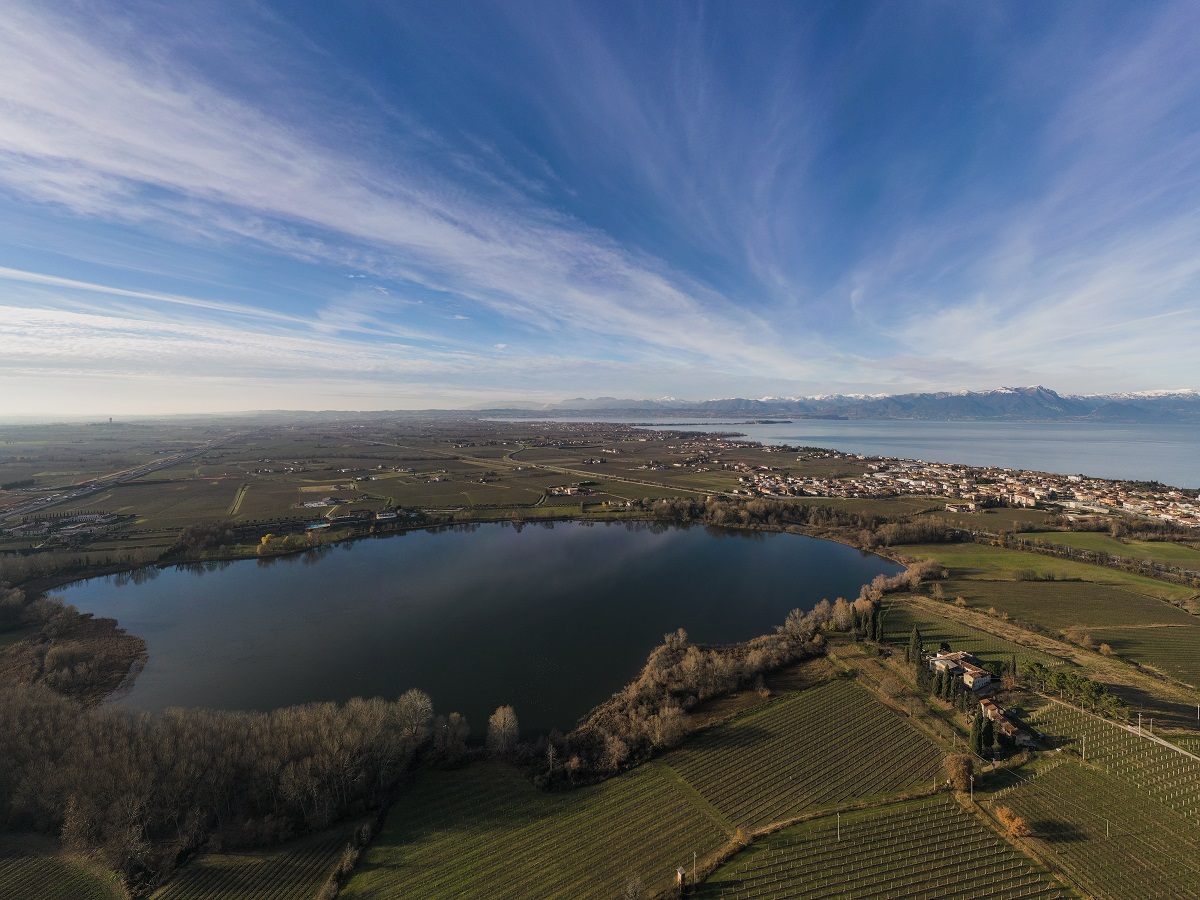
Source: Consorzio Tutela Lugana D.O.C

Source: Consorzio Tutela Lugana D.O.C
Lugana is one of the oldest designated wine-growing areas in Italy, after obtaining its DOC status in 1967, the first in Lombardy, with about 1,000 acres under the vines. Lugana is also one of the few unique DOCs in Italy, spanning two regions and two provinces – the province of Brescia in Lombardy and the province of Verona in Veneto. Most of Lugana’s 5,500 acres of vineyards are adjacent to Lake Garda, which creates a unique, mild microclimate, atypical for Northern Italy. Most of the wine produced in Lugana is white, made out of a local indigenous grape called Turbiana. For a long time, Turbiana was erroneously considered to be Trebbiano di Lugana, until DNA analyses had shown that Turbiana is its own, unique variety.
As in most of Italy, the history of winemaking in Lugana goes back to Roman times, with the wines from the area praised on multiple occasions throughout the times. Lugana managed to stay a best-kept secret for a long time in the 20th century, with its wines being best known to the tourists flocking to the picturesque villages surrounding the lake. Slowly, the quality of the wines prevailed and the wines became thought after around the world, in part due to their excellent aging ability. In 2018, there were 17.5 million bottles produced in Lugana, 70% of which were exported around the world, with the US being Lugana’s 4th largest market.

Source: Consorzio Tutela Lugana D.O.C
Sustainability is definitely a trend among the wineries in Lugana. The winemakers want to preserve their land, their farms, and their vineyards for many generations to come and do everything in their power to make this happen. I wanted to give you a first-hand account of sustainability and virtually sat down with the kind folks at 6 wineries, who answered the same group of questions. Grab a glass of wine (or two), and hear it for yourself.
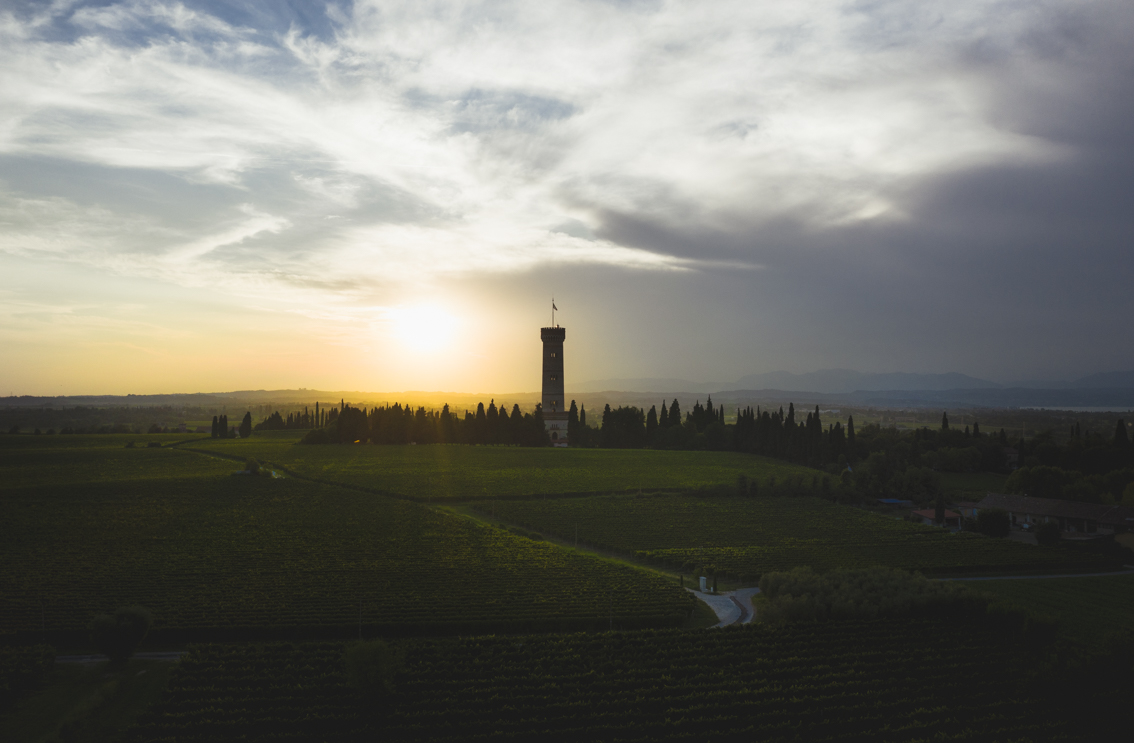
Source: CITARI
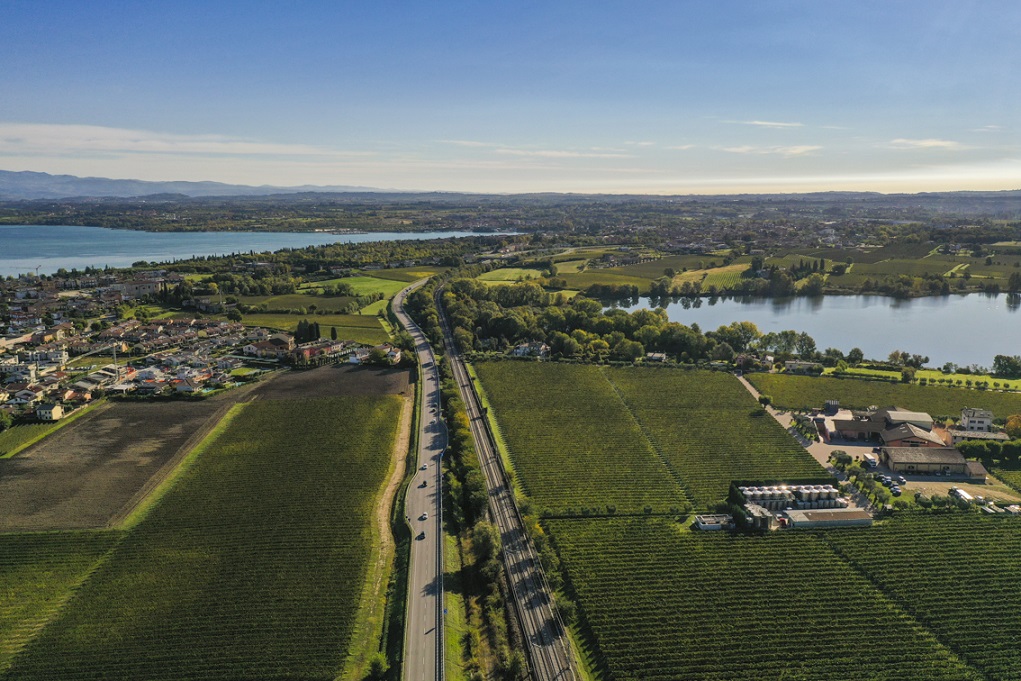
Source: CITARI
CITARI:
CITARI winery was founded in 1975, and today is farming about 90 acres of vineyards, producing about 300,000 bottles of wine annually. CITARI takes advantage of the close proximity of the winery to the vineyards, ensuring that the grapes are processed in the shortest time after the harvest, preserving aromatics and minimizing oxidative processes. CITARI had been recognized as a “Low Environmental Impact Farm” and won the “Verallia Ecofriendly Company” award over a number of years.
Here is our conversation:
– Why sustainability is important to you?
Wine producers, as farmers, are the guardians and keepers of a territory. Sustainability is necessary.
It also helps to obtain a superior quality product, and to maintain this high quality over time.
– How do you define sustainability for your winery, vineyards, and business?
Sustainability helps us to preserve the soil, the area, the quality.
– When did you start the conversion to sustainable viticulture and operations?
About 6 years ago
– How long did it take to achieve your goals?
We are still working on improving the best practices
– Was it worth it?
Of course!
– Would you do it again?
Yes, but better planning first all the costs, even in terms of time spent and bureaucracy.
– When did you achieve sustainability? Do you see a difference in the wines before you used sustainable viticulture and after?
The sustainable agricultural method we use (reductions of treatments and products used, regular controls on soil and plants) respects the soil, the plants and give us a healthier product. We do not have direct feedback from customers about it, but customers are increasing and they like our wines very much!
– What is next – organic, biodynamic, or are you happy with where you are right now?
We are thinking about adding green manure to preserve bees and other “good” insects.
– What advice would you offer to those who are starting a sustainability journey right now?
It is not easy, but it is necessary, be prepared!

Source: Consorzio Tutela Lugana D.O.C
Le Morette:
Azienda Agricola Valerio Zenato Le Morette was founded in 1955, and today farms about 75 acres of vineyards. Sustainability is at the core of operations at Le Morette, and here is how the winery describes this work: “In the vineyard, Le Morette Agricultural Company has chosen precise working methods aimed at a sustainable agriculture, favoring those natural processes that allow to preserve the “environmental resource”, with great attention to the use of water, favoring blooms and proliferation of numerous species of insects useful for the vineyard ecosystem, maintaining the biodiversity of flora and fauna.”
Here is what transpired in our conversation:
– Why sustainability is important to you?
To respect the environment is the key factor for us and means to deeply know every single aspect of it: sustainability, habitat and knowledge represents the focus to carry on a conscious development in the vineyard and in the winery. For us to produce “healthier wine” is a choice, not a constriction.
– How do you define sustainability for your winery, vineyards, and business?
To be Sustainable we follow the “Three E” rules:
1. ECONOMICS: Sustainable means to salvaguard the Companies’ income via the use of techniques with a low environmental impact and measures to avoid wasting water and other natural resources. Costs have to be affordable to be sustainable on a long term basis. Only when the winemaker is earning properly, he’s able to think and develop a proper Environmental and Social Sustainability.
2. ENVIRONMENT: Sustainable winegrowing conserves natural resources, improves air and water quality, and protects ecosystems and wildlife habitat. Sustainability is good for grapes and wine, as well: winegrowing requires in-depth attention to detail and continuous improvement resulting in high quality wine grapes and wine.
3. EQUITY (SOCIAL): Sustainable winegrowing promotes stewardship of natural and human resources, as per eg. supporting internships and education programs for young employees or carrying on healthcare classes and social charity events, contributing to our community culturally and socially.
– When did you start the conversion to sustainable viticulture and operations? How long did it take to achieve your goals?
We’ve always been following sustainable principles since 1960, when our business started with the first few hectares along the Frassino Lake bank in San Benedetto di Lugana, a natural protected site recognized by the European Community. We began as vinenursers and still we are after three generations. Our roots and knowledge of the indigenous variety Turbiana design our path.
– Was it worth it? Would you do it again?
Sure, when you have an inner green soul you have to stay stuck with it. It’s a heritage we’ve received from our grandfather Gino Zenato and is part of our identity. It’s inevitable to be in tune with Nature for us and we are proud to respect our environment every day with a set of concrete approaches and practices to preserve and improve this legacy.
– When did you achieve sustainability? Do you see a difference in the wines before you used sustainable viticulture and after? Do you think your regular customers can also tell the difference?
We received the official Biodiversity Certificate in 2020 from the WBA (World Biodiversity Association) but we’ve always applied sustainable principles since the beginning. We don’t have any difference, then: it belongs to our philosophy.
– What is next – organic, biodynamic, or are you happy with where you are right now?
Our next step is to improve and protect biodiversity in our ecosystem. We already do it but we want to do more, with the belief that a Biodiversity is the key choice for a healthier process whole based on sustainable principles.
– What advice would you offer to those who are starting a sustainability journey right now?
To set up some virtuous practices, essential to advocate biodiversity in the vineyard. Biodiversity is the first pillar for sustainability and whoever wants to start this journey, has to be conscious that being sustainable is not only an ideal choice, but a set of concrete actions that you have to put into practice on a daily basis.

Source: Consorzio Tutela Lugana D.O.C
Famiglia Olivini
Famiglia Olivini was founded in 1970, and today is farming 80 acres of vineyards. With the utmost focus on sustainability, Famiglia Olivini registered a brand called Agricoultura Regionata. In the words of the winery, “Agricoltura Ragionata identifies our working method during the entire vinification process: starting from the seed, soil, vine ending with bottled product. Our main goal is to act in a reasonable (ragionata) and thoughtful way, starting from the work we do in our fields, into the winery and then reflected with how our staff treats the product. We take all these actions in order to insure we avoid any invasive and harmful practices to agriculture (agricoltura).”
Here is what transpired in our conversation:
– Why sustainability is important to you?
Sustainability for us is not just a philosophy, a way of thinking and talk about our daily taking care of the land but is truly a way of working passed down for generations by our founder it is an approach that preserves the territory, the lands, and ultimately shows in all of our products
– How do you define sustainability for your winery, vineyards, and business?
Being sustainable is our working method starting from the seed, soil, vine ending with the bottled product and in every process of the business. The essence of sustainability for us on each of this aspect is ‘keep everything in balance’.
– When did you start the conversion to sustainable viticulture and operations? How long did it take to achieve your goals?
We have conceived our sustainable viticulture in our own registered brand which is Agricoltura Ragionata (Reasonable Agriculture). Before that, our vineyard were already sustainable certified. It did not take much because since ever our ‘best practices’ were naturally considered sustainable.
– Was it worth it? Would you do it again?
Even after the certification, we did not ‘spent’ any logo on the label. Talking about sustainability and Agricoltura Ragionata brand is part of our storytelling. But we have noticed that more and more people are interested to this and like to know that the wines they are drinking are coming from a sustainable viticulture
– When did you achieve sustainability? Do you see a difference in the wines before you used sustainable viticulture and after? Do you think your regular customers can also tell the difference?
Once again, for us the sustainable certification was not a ‘conversion’ but just a certification of our everyday practice in the field. So, we did not see any impact in the quality of the wine. We think people likes to know and be informed about sustainability but not really interested in looking for a difference in the products.
– What is next – organic, biodynamic, or are you happy with where you are right now?
For us it will be nice to make Agricoltura Ragionata a shared brand about sustainability, involving other producers in the use of this brand and practices
– What advice would you offer to those who are starting a sustainability journey right now?
Find your real way before finding a protocol. Sustainability can’t be just a set of rules, must be your way of thinking your land, winery, wines.

Source: Consorzio Tutela Lugana D.O.C
Marangona
Maragonia was founded in 1970, and today farming about 75 acres of land. Some of the vines are 50 years old. Today Marangona is an Organic Farm and uses cement tanks and amphorae in production.
Here is what transpired during our conversation:
– Why sustainability is important to you?
None of us have zero impact on the environment. We all have to do our best to minimize that impact. A careful farm has a big difference compared to a not careful one.
– How do you define sustainability for your winery, vineyards, and business?
Commit day by day to try to make the best decisions to make environment and profit coexist
– When did you start the conversion to sustainable viticulture and operations? How long did it take to achieve your goals?
My sister and I are the new management of the family business, since 2007. Initially in low environmental impact, since 2012 in organic conversion, since 2017 fully certified, both vineyards and cellar.
– Was it worth it? Would you do it again?
Of course,
– When did you achieve sustainability? Do you see a difference in the wines before you used sustainable viticulture and after? Do you think your regular customers can also tell the difference?
Unfortunately, I don’t believe that true sustainability can be achieved.
I believe more about limiting the impact to the minimum possible.
For me the difference is a lot.
For some customers too, for others nothing changes.
So there are no contraindications
– What is next – organic, biodynamic, or are you happy with where you are right now?
At the moment we are certified organic and from a bureaucratic point of view it suits us well, We don’t think we want to increase the amount of paper and documents.
I find the next step of the Biodynamics to be a very remote possibility in our production area. Not all areas and varieties are predisposed to such a strict philosophy.
So for now the goal is to continue learning new things about our vineyards to reduce the environmental impact to a minimum while keeping the qualitative objective we want to have very clear.
– What advice would you offer to those who are starting a sustainability journey right now?
Advice none.
Comparisons on how to deal with different problems certainly as often as possible.

Source: Consorzio Tutela Lugana D.O.C
Montonale
Motonale is the oldest winery we are discussing today, founded in 1911. The winery went through a turbulent history, starting from cleaning 3+ acres of land only with a shovel. In the 60s, the winery expanded to more than 150 acres, only to shrink to harvesting 10 rows in 1998. Two years later, a great-uncle got involved and that became a second birth for the winery. which is now solely focused on sustainability, using manual harvest and local indigenous yeast among many other things.
Here is our conversation:
– Why sustainability is important to you?
Sustainability is important to us because our wines are Mother Earth’s products. We owe her respect, because we do not have to think only about us, but also about the future generations.
– How do you define sustainability for your winery, vineyards, and business?
At Montonale, sustainability is understood as an all-round attitude, all aspects of the production chain are involved. I bring a very topical practical example, considering the critical issues we are experiencing in Europe in terms of energy: the roof of our cellar is entirely covered with photovoltaic panels and to make the most of them we concentrate consumption during the day. A winning choice, because once again this year we will close the winery’s energy consumption balance.
– When did you start the conversion to sustainable viticulture and operations? How long did it take to achieve your goals?
The conversion began 10 years ago with the fourth generation. Our main goal for the next 10 years is to reach a zero-carbon footprint.
– Was it worth it? Would you do it again?
It was obviously worth it and we would do it again. We must preserve our heritage which is connected to the Earth, to the weather and to the environment.
– When did you achieve sustainability? Do you see a difference in the wines before you used sustainable viticulture and after? Do you think your regular customers can also tell the difference?
We have seen and also perceived the difference in tasting our wines, since the process of their production was respectful to the environment where they were born.
– What is next – organic, biodynamic, or are you happy with where you are right now?
As previously mentioned, our main goal is to reach zero CO2 emissions.
– What advice would you offer to those who are starting a sustainability journey right now?
Do it before it is too late, there is no planet B.
Sguardi di Terra
Societa Agricola Sguardi di Terra is the youngest and smallest in our group, founded in 2015 and having around 17 acres under vine. From the moment the winery was formed, the focus was on sustainability and organic viticulture.
In lieu of Q&A, Sguardi di Terra offered the following sustainability information:
Our winery is organically certificated since we bought the vineyards in 2016. This also means that every year deducted audit bodies check that we respect the rules for organic viticulture and every year renew our certificate.
Our company does not have a cellar, we cooperate with Giovanni Pasini winery which is organic too and reflects our values. So we bring them our grapes and then we follow each step of vinification in their cellar.
The decision to buy organic vineyards wasn’t accidental. We truly believe in respect for the environment, by limiting the exploitation of natural resources and contributing to the preservation of biodiversity. Moreover, drinking organic wines is a way to prevent the accumulation of harmful residues in the body. Drinking organic wines = respecting nature + your body.
The advice that we would offer to those who are starting a sustainability journey right now is:
Believe in an ethical approach at every stage of the wine production chain. This is something you must feel inside, not because of the trend. Organic farming is not regarding only the present. It’s about the future too. We should choose organic farming to leave better soil for posterity than we have found.

Are you still here? This is definitely the longest post ever at Talk-a-Vino, and we didn’t even get yet to the wines.
I had an opportunity to try the wines from these 6 wineries (provided as samples), so here are my notes:
2021 Marangona Lugana DOC (12.5% ABV, organic grapes)
Brilliant straw pale
Beautiful, inviting, a touch of lemon, very fresh
Clean, crips, mellow and round. Mayer lemon, perfect acidity, delicious.
8, outstanding
2021 Famiglia Olivini Lugana DOC (13% ABV)
Straw pale, almost clear
A touch of honey, tropical fruit, lemon undertones
Clean, crisp, a hint of honey presence without the sweetness, round, delicious
8-
2021 Citari Conchiglia Lugana DOC (12.5% ABV)
Light straw pale, practically clear
Herbaceous nose, restrained
A hint of tropical fruit, good acidity, clean, refreshing, short to medium finish
8-
2021 Valerio Zenato Le Morette Mandolara Lugana DOC (12.5% ABV)
Straw pale
Hint of Whitestone fruit, very restrained
Peach, herbal undertones, round, plump. Short finish.
8-
2021 Sguardi di Terra Scapüscia Lugana DOC (13% ABV)
Very light golden
Complex nose, honey, spices, open and inviting
A touch of honey, herbs, freshly cut grass.
8-
2021 Montonale Montunal Lugana DOC (13.5% ABV)
Straw pale
Complex, Whitestone fruit, precise
white stone fruit, a touch of honey, good acidity, round, fresh, plump
8, excellent
Here you are, my friends – the story of sustainable viticulture in Lugana.
Hey, and there is more!
Starting on November 7th, Destination Lugana will be celebrated in New York City:
Destination Lugana is a full week of celebration of Lugana DOC wines, during which 28 producers will offer their latest vintages to 13 restaurants in Manhattan. Each location will create a special menu to enhance the qualities and main characteristics of these wines. The project is made possible by the Consorzio Tutela Lugana D.O.C, which has been monitoring, defending, and promoting Lugana D.O.C. wines since 1990.
You will find more information at the official website: https://www.destinationlugana.com/, Here you will also find the list of 13 restaurants in Manhattan that will create special menus.
And we are done. Now it is your chance to discover the beautiful wines of Lugana. Cheers!
Celebrate Champagne Day With Champagne Lanson
 Ooh, another wine holiday I almost missed – Champagne Day, celebrated on the 4th Friday in October. Not that I need a reason to open a bottle of wine, but a wine holiday offers an opportunity to reflect on a specific wine subject, which is always a fun exercise.
My personal Champagne journey was long and rocky (still going). Growing up on a sweet concoction called “sovertskoe shampanskoe” (still have no idea if it is made out of grapes), the profound acidity with no sweetness is not something that one can quickly and gleefully embrace. And the price… And then the French obnoxiously insisting that Champagne can only come from Champagne, phew… Lots of things to get over…
I had a few key learning experiences along the way. First, about 20 years ago, there was a blind tasting of the Champagnes during Windows on the World wine classes, where I learned that liking Dom Perignon, or any other vintage Champagne when you are not influenced by the label is not obvious. Then about 12 years ago, there was PJ Wine Grand tasting in New York, where the first taste of vintage (and even non-vintage) Krug became a proverbial nail on the head and a pivotal moment of discovering the true pleasure of Champagne. And I have to mention an encounter with 2002 Pol Roger Sir Winston Churchill Champagne about 6 years ago (the wine ended up being my 2016 wine of the year) – I spent about 10 minutes simply enjoying the aroma of the wine before even daring to take a sip. Yes, I can safely say that I love Champagne.
Okay, let me be careful here. I love Napa Valley Cabernet Sauvignon. I love Rioja. Yes, I love Champagne. However, this is not a blanket statement. I love the category but within the category, the “love” concept is very particular. There are 10-12 specific Rioja producers and brands that I love, and the rest of the Riojas don’t excite me even for a second. It is the same story with Champagne – there are a few producers that I love and respect, and then there are quite a few I don’t care for. But I’m always willing to learn, taste, and discover something new.
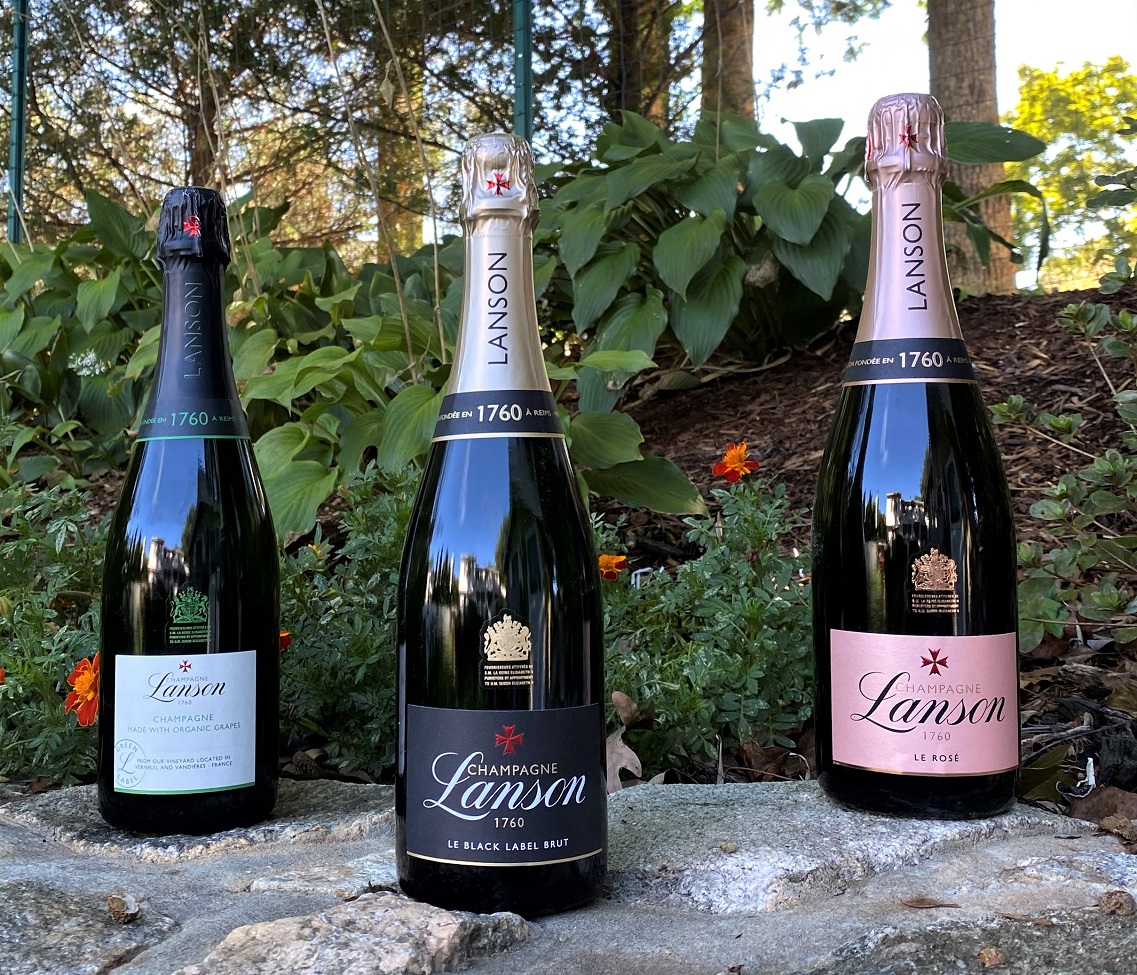
Talking about discovery, I need to share with you my latest Champagne discovery – Champagne Lanson.
Founded in 1760, Champagne Lanson is one of the oldest Champagne Houses. From the moment it was created, Lanson’s focus was always on foreign markets. By the late 19th century, Lanson was supplying champagne by royal appointment to the courts of the United Kingdom, Sweden, and Japan. It still remains the main Champagne supplier to the British royal family. It is also official champagne of Wimbledon tennis tournaments since 2001. Today, Lanson Champagne is exported to 80 countries.
Lanson has close relationships with the growers, having access to more than 100 vineyards throughout Champagne, 50% of which are Grand Crus and Premier Crus. Lanson also cultivates more than 140 acres of its own vineyards, out of which 40 acres are farmed organically and biodynamically.
What I’m looking for in Champagne is precision. My ideal champagne has perfectly persistent energetic bubbles, toasted bread aromas on the nose maybe with a touch of yeast and even gunflint, the same toasted bread notes on the palate, maybe a hint of an apple, and a perfect balance of fruit, acidity, and structure on the palate. Balance is a king for any wine, Champagne not excluded.


I had an opportunity to try 3 of the Lanson Champagnes, and they all didn’t disappoint.
NV Lanson Le Black Label Brut Champagne (12.5% ABV, $50, 50% Pinot Noir, 35% Chardonnay and 15% Pinot Meunier) had perfectly persistent fine mousse, toasted bread aromas on the nose, and crisp, precise and refreshing palate. Some of the best bubbles have this captivating effect – once you take a sip, you can’t wait to take another – this was this Champagne Lanson.
NV Lanson Le Rosé Champagne (12.5% ABV, $70, 50% Pinot Noir, 35% Chardonnay and 15% Pinot Meunier) showed very similarly on the nose, with toasted notes and a hint of floral undertones. On the palate, it was a bit more feminine than the previous wine, still crispy, but softer and more round, with the addition of a touch of strawberry. Absolutely delightful.
And yet NV Lanson Le Green Label Organic Champagne (12.5% ABV, $75, 50% Pinot Noir, 30% Pinot Meunier and 20% Chardonnay) was my favorite of the 3. Precision and energy. Vibrant and raw, this Champagne simply over-delivered – ultra-precise bubbles, energy, finesse and balance. Superb.
Talking about precision – Champagne Lanson eliminates the need for you to guess. Take a look at these back labels:
Harvest year, disgorgement date, all the technical details if you care to know them – everything is presented, simply and clearly. You don’t need to guess for how long that bottle of Champagne had been waiting for you on the shelf? With Lanson, just take a look at the back label, and you already know.
Here is my offering to you – beautiful Lanson champagne which now will join my “favorites” ranks. The Champagne that will make any celebration seem brighter.
Have you had Champagne Lanson before? What are your favorite Champagnes? Happy Champagne Day! Cheers!
Daily Glass: Winning and Learning
Sometimes you win, and sometimes you learn.
You never lose – learning is the opposite of winning – I think this is a better approach to life, would you agree?
I love aging my wines. The popular wine press tells people that 95% of the wines in this world are meant to be consumed shortly after purchasing. “Absolute majority of the wine is not meant to be aged,” the message says. I don’t want to obnoxiously invalidate all the expert opinions, but the subject of wine aging is a lot more complicated than the simple statement portrays.
Lots of factors play a role. The wine itself is probably the most critical factor. White wines generally don’t age too well. To be more precise, percentage-wise, a lesser number of white wines can age well compared to red wines. But this doesn’t mean that all red wines age well. For example, red Cotes du Rhone typically don’t age for longer than 4-5 years.
I wish there was an easy method to tell us, wine lovers, that “this wine will age for 30 years”, but “this one got only 10 more left”. There is no such method, however, so we need to rely primarily on our experiences. I’m not trying to disqualify all of the wonderful advice we receive from the wine critic and publications – but it would be rare to receive an aging recommendation there unless the wine is deemed of a “collector” level – which pretty much means that it will not be really affordable.
At this point, you might wonder why is all this commotion with the aging of the wines. Simple. Wine is a living thing. The evolution of the wine continues in the bottle. It is a general hope that wine can improve with time, evolve, become more complex and multidimensional.But the wine can’t evolve forever – at some point it starts “turning”, losing its delicious, attractive qualities.
It is important that the wine drinker can appreciate the beauty of the aged wine – it is not for everyone. I don’t mean it in any disrespectful way – this is simply a matter of taste. One of my most favorite examples is the blind tasting of a few Champagnes which took place during Windows on the World wine classes. After blind tasting 4 Champagnes, the group was asked to vote for their favorite Champagne. Champagne #4 got almost no votes, it was clearly the least favorite of the group of 100+ people. While revealing the wines, Kevin Zraly, our wine teacher, said “and this is why, people, you should not drink vintage Champagne”. Bottle #4 was Dom Perignon – if people would see the label before voting, you know how that would work (”drink up, honey, it is French”). And Vintage Champagne is nothing more than just an aged wine. It is just a matter of taste. The same story goes for food. For example – I love fresh oysters, and I have friends who wouldn’t put an oyster into their mouth even if this will be required to save their own life. Just a matter of taste.
But for those of us who like aged wines, that elusive quest becomes an obsession. I love the Italian term “vino da meditazione”, which applies to the wines which make conversation stop upon the first sip, and puts the whole group of oenophiles into a quiet, self-reflective state. The silence at the table becomes not deafening, but instead a very comfortable one. The silence nobody wants to break.
Okay, such amazing encounters are possible but truly rare. But the pleasure of drinking the well-aged wine is real, and this is what we are seeking. And as we don’t have the scientific method of predicting the peak of enjoyment for a given wine, we have to rely on our own experience. Which takes us back to winning and learning. When we experienced well-aged wine, we clearly won. And when the wine with age doesn’t deliver the pleasure, this is where we learn.
It is not so binary, of course. The point is that no matter what happened, we learn something. When you taste a random but amazing $10 bottle of California red blend (Toasted Head) with 15 years of age on, you learn that inexpensive wines can age too. When you taste 2002 Barolo (Fontanafredda) 10 years after release, and you see that the vintage chart declares this vintage as literally horrible, but the wine tastes good, you learn that the producer matters more than the vintage. When you taste two bottles from the same producer and the same vintage, but you love one of them and can’t stand another, you learn that bottle variation is real and that you have to always manage your expectations.
This whole rambling about winning, learning and aging was prompted by a few wines I opened last week.
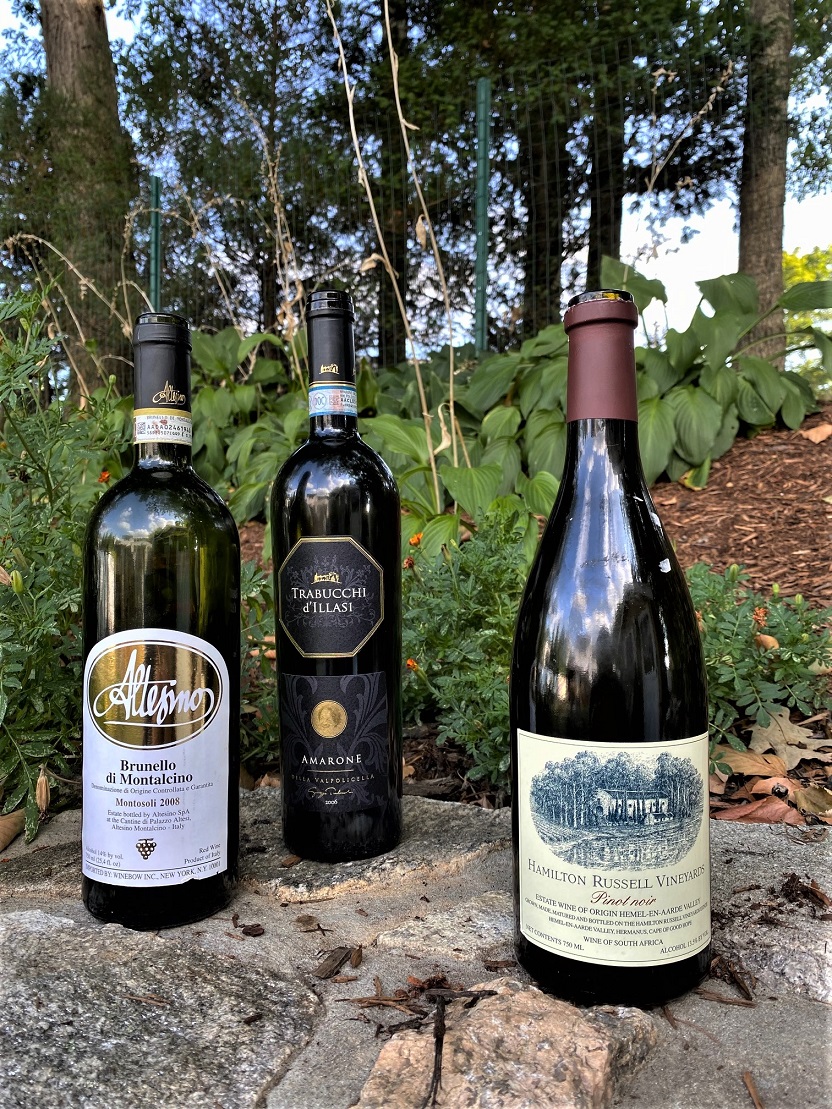
First, the learning part. 12 years ago we did the Pinot Noir blind tasting with friends, with a very unexpected outcome – 2008 Hamilton Russell Pinot Noir from South Africa was the best wine in that blind tasting. I loved the wine so much that I went and got a bottle to keep. Over the years, I made many attempts on the life of this bottle, until the last weekend I decided to share it with a friend. Upon opening the wine was reminiscent of the good Burgundy, with the nose offering some plums, iodine, and smoke. But the wine quickly succumbed to the tertiary aromas of dry herbs and maybe a hint of dried fruit, and while my friend really loved it, this was a complete loss learning in my book.
Then another friend was stopping shortly after his birthday. He always liked the wines, but recently started getting really “more into it”. He was stopping by for the dinner, and when we were talking about wines a few days prior, he mentioned that he started liking the Brunello and Amarone wines. There is no happier moment for the oenophile than to learn what the guest desires to drink – the cellar is instantly paraded in the search for the best and the most appropriate bottle.
I don’t know how I came into possession of the 2008 Altesino Brunello di Montalcino Montosoli, I can only guess I got it as a present. This single vineyard Brunello di Montalcino was absolutely spectacular – beautiful cherries on the palate – not the fresh and crunchy ones, but more subdued, more elegant, eloped in the sage and other herbal aromatics. The wine was spectacular when we opened it, and when I finished the last drop 2 days later (wine was kept in the bottle with the air pumped out), I had a clear feeling of regret as the wine was not gone, but instead was still fresh and even more complex, with a promise of becoming the Vini da meditations in 10 years, same the 1999 Soldera had become for us – alas, I don’t have another bottle…
And then my pet peeve – you know how much I love Amarone. I got a few bottles of the 2006 Trabucchi d’Illasi Amarone della Valpolicella from WTSO 7 years ago. This was my last bottle, and boy it didn’t disappoint. It was absolutely beautiful in its finesse and impeccable balance all the way through. Dried fruit on the nose, powerful, well-structured wine on the palate, with more of the dried fruit, cherries, plums and herbs, and with good acidity, perfect balance and delicious bitter finish. It is not for nothing Amarone means Great Bitter – and there was this pleasant bitterness on the finish, something hard to find in most of the Amarone wines.
Here you are, my friends, my story of winning and learning. Three aged wines, two of them delicious, two that could age for far longer (learning!). One learning experience – but who knows, maybe it was only that particular bottle. Moving on.
What did you win and learn lately?
A Refreshing Trip Around The World
Have wine, will travel.
I love saying that.
Have wine, will travel.
While we might be dreaming about all those ways to instantly travel from our living room to Mount Everest, Bora Bora, or Singapore, wine has this magical ability to transpose, to let us be where we want to be in a blink of an eye. It works best with the bottle of wine you are familiar with, especially if you have had a chance to visit the winery and acquired some great memories. But even if you have never visited the winery, a bottle of wine is quite a unique product – every bottle of wine proudly advertises where it was made, right on the front label – when you see “Italy”, it is not difficult to picture Rome or Bologna. France probably would solicit the image of the Eiffel tower. Does Australia bring up an image of a boxing kangaroo? Oops, this can be just me. Anyway, I’m sure you know what I’m talking about.
So today, let’s take advantage of the instantaneous travel only wine can offer, and let’s go on that trip around the world.
The weather is hot in the Northern hemisphere, so today we will hop onboard of the white wine express.

Our first stop will be in Spain. Thinking about Spanish white wines, what grapes come to mind? To ease up on this question – boy, it is hot outside – what is the first Spanish white wine you can think of? While you are pondering that question, I can give you my answer – Albariño. Of course, you have Viura, Verdejo, Godello, and others, but to me the first association for the Spanish white wine is Albariño.
As you might have suspected already, our first stop is in Rias Baixas, roughly a 3,000 square kilometers region located along the Atlantic ocean’s coast in Galicia, in northwest Spain, where Albariño is the king. Pazos de Lusco winery is farming 12.5 acres of Albariño grapes in the south of the region, 40 km away from the coast. The name of the winery comprises two typical Galician words – “pazo”, which stands for home, usually in the countryside, and “lusco” which defines the beautiful moment between dusk and nightfall.
2021 Pazo de Lusco Albariño Rias Baixas DO (13% ABV, $24.95, Vegan)
Straw pale
Intense aromatics, ripe white fruit, peach, tropical fruit
Nicely restrained palate, crisp, tart, lemon, the wine makes you salivate and want food even if you are not hungry.
8, excellent. Should be great with oysters.
For our next stop, we are staying in Spain but traveling east almost to the French border, to the region called Somontano, where the wine had been produced for more than 2,000 years. In Somontano, there lies the Secastillo Valley (the valley of 7 castles), boasting 100 years old Garnacha vines at 2,100+ feet of elevation and a special Mediterranean microclimate defined by close proximity to Pyrenees mountains. This is where our next wine is coming from, Garnacha Blanca produced at the Pagos de Secastilla:
2020 La Miranda Secastilla Garnacha Blanca Somontano DO (13.5% ABV, $18, 4 months in French oak)
Straw pale
Minerality, a touch of gunflint, underripe white fruit
Beautifully playful, fresh white fruit and berries medley, crisp and clean acidity, excellent balance, delicious.
8


As I was deciding when I will taste these wines, the overarching thought came in – oysters. I want fresh oysters. Luckily, we have a new fish monger opened nearby, so procuring a few dozens of oysters was really simple. I tried Albariño and Garnacha Blanca with the fresh oysters, and while the pairing with Garnacha Blanca was not bad, the Albariño and oysters were simply a match made in heaven. Albariño was a perfect chaser, amplifying the delicious salinity of the oyster juice and if you would close your eyes, it was very easy to imagine yourself standing right next to the ocean waves and smelling the salty, fishy water. If you will have an opportunity – spoil yourself, oysters and Albariño are really tasty together.
Now that we are not hungry, we can continue our journey. We are now traveling northeast to the heart of Europe – we are going to Austria. Let me ask you the same question as before – what grape would you associate with Austria first and foremost? I hope your answer will be the same as mine, as mine is rather obvious – Grüner Veltliner.
Grüner Veltliner is unquestionably the most famous Austrian grape, with more than 37,000 acres planted. It appears to originate in Austria and as it was recently established, it is a natural cross between Traminer and St. Georgen (an almost lost grape, only recently rediscovered). Gruner is capable of a wide variety of expressions, depending on the soil types and the yield. But what sets the grape apart in the world of white grapes is rotundone, which is present in the skin of Grüner Veltliner. I only recently mentioned rotundone in the post about Syrah – rotundone is a chemical compound found in the skin of the grape that is responsible for the peppery flavors in the wine. Such peppery flavors are usually attributed to red wines – but Grüner Veltliner can happily join the “peppery family”.
The first mentions of Domäne Wachau go back to the 12th century. Today, this is one of the leading wine cooperatives in the world – 250 vintners sustainably farm about 1,000 acres of vines, and the wines are exported to 40 countries. Talk about Grüner Veltliner – Domäne Wachau produces more than 3 dozens of different Grüner Veltliner wines. As a fun historical fact, I want also to mention that in the 1930s Domäne Wachau was already producing single-vineyard Grüner Veltliner wines. And if you are a wine nerd like me, Domäne Wachau has assembled a wonderful collection of the Nerd Notes on their website, offering in-depth coverage on the terroir, soils, sustainability, cork stoppers, and lots more.
I had an opportunity to taste two of the Domäne Wachau wines – both delicious:
2020 Domäne Wachau Loess Grüner Veltliner Austria (12.5% ABV, $14 1L bottle)
Straw pale
Whitestone fruit, apple, fresh lemon – inviting and bright
Crisp, grassy notes, cut through acidity, fresh, delicious.
8, delicious and outstanding QPR
2021 Domäne Wachau Grüner Veltliner Federspiel Terrassen Wachau Austria (12.5% ABV, $18.99)
Straw pale
Tropical fruit, candied lemon, herbal undertones, generous, inviting
Crisp, fresh, lemon, a hint of grass, cleansing and vibrant, perfectly balanced.
8, I should’ve tried it with oysters too – the acidity is pronounced, it could’ve worked well.
Now we will have to travel to the Southern hemisphere for our last stop – Chile.
Chilean wines need no introduction to wine lovers. All classic grape varieties are doing extremely well in Chile, producing world-class wines. But as we are taking the white wine express, that reduces the number of available options. The spotlight today is on the Sauvignon Blanc, produced by one of my favorite, all-organic Chilean wineries – Ritual. I extensively wrote about Ritual before, so instead of regurgitating the information here, I would like to ask you to read that post. Ritual Sauvignon Blanc was exactly as one could expect – delicious:
2019 Ritual Sauvignon Blanc Casablanca Valley (13.5% ABV, $20.99, organic grapes)
Straw pale
Open, inviting, clean, intense, a hint of freshly cut grass and currant leaf
Clean, round, full of energy, uplifting, lemon, freshly cut grass, delicious.
8, outstanding.
This concludes our wine journey around the world. Well, of course, you can continue it on your own. And if you will find something tasty, please share it with the rest of us.
Anatomy of Flavor
Anatomy of Flavor???
The author clearly goes on a tangent here. Everyone knows what anatomy means, and it has nothing to do with the wine. And nevertheless, let’s take a look at some definitions and see if we can actually analyze the anatomy of flavor.
Webster’s dictionary defines anatomy in a few different ways:


Definition number five describes anatomy as
structural makeup especially of an organism or any of its parts
Anatomy explains to us how living things are constructed. How do they move, jump, roll, smile, and cry.
Of course, the flavor is not a living being – but it is amorous, it changes, it morphs, it is perceived, and it is perceived differently every time, depending on many, many, many factors that we can spend days and days discussing.
I like definition number three more, as it is more appropriate for our purposes:
the art of separating the parts of an organism in order to ascertain their position, relations, structure, and function
Anatomy offers a firm structure – can we apply the same to flavor and understand how our perception of it works? Mostly, and luckily, no – we can’t. We have no idea how we will perceive the flavor of the particular wine once it is open – of course, we have expectations, but this is only one of the subjective factors in our perception of flavor, one of many. Instead, I can offer you to look at how the flavor is being built.
There is also definition number six:
a separating or dividing into parts for detailed examination
Anatomy explains to us how our muscles work and how they grow. Let’s see if we can take a similar look at the flavor of the wine.
We can’t do this with any random wine – if someone makes single-grape Syrah, Grenache, and Pinot Noir wines, all those wines are not connected to each other, they are unique and different – we can not taste Syrah and make expectations about Pinot Noir (assuming these are good quality wines) – as they have nothing in common. Most importantly, they better taste differently. But – there are wines which are perfectly suitable for our exercise. Do I have an example? Of course, glad you asked, but before we talk about particular wines, let’s take a look at the region they are coming from. Let’s go to Northern Italy, to the region called Valpolicella.
Valpolicella is a winemaking region east of Lake Garda, in the province of Verona, which is in turn located in Veneto. The region is influenced by the Alps to the north, Lake Garda to the west, and the Adriatic Sea to the east. Valpolicella received its DOC status in 1968, and Amarone and Recioto received the DOCG status in 2009. In terms of DOC wine production volume, Valpolicella is the second region in Italy after Chianti.
There are a few types of wines produced in the region – Valpolicella DOC, light wines considered to be similar in style to Beaujolais, Valpolicella Superiore, which should be aged at least one year, Valpolicella Ripasso, and, the most coveted wines, Amarone and Recioto.
It is not exactly known when winemaking started in Valpolicella. Still, it is typically associated with the ancient Greeks who were famous for making sweet wines made from partially dried grapes. That tradition of drying grapes before pressing is also a requirement for both Recioto and Amarone wines – this converts grapes to almost raisins and concentrates flavors. A lot of attention is also paid to preventing any sort of rot setting on the grapes as this imparts undesirable flavors.
Talking about red grapes, Corvina, Corvinone, Rondinella, and Molinara are considered the main winemaking grapes, even though many winemakers are trying to avoid Molinara as of late. Corvina should constitute between 45% and 95% of the blend – but up to 50% of Corvina can be substituted with Corvionone, which was identified as a distinct variety and not a clone of Corvina only in 1993. Out of all Val[policella wines, Ripasso stands aside as quite unique – it is made by macerating the Valpolicella wine with the pomace (grape skins) left after making Amarone and Recioto wines, which enriches the flavor of the wine – Valpolicella Ripasso is often referred to as “baby Amarone” (or “poor man Amarone” – you take your pick).
Of all wines made in Valpolicella (most of them are red), Amarone stands apart as the most sought-after. The grapes have to dry for anywhere between 3 and 4 months before they can be pressed to make Amarone. Those dried fruit flavors are retained by the final wine, assuming it is well made. The combination of the dried fruit aromas and powerful, dry, usually high-alcohol wine creates really a unique experience – if you have not had Amarone before, this is something that needs to be experienced by any wine lover.
Also going back to our “premise” with this post – to take a deeper look at the build-up, the anatomy of the flavor, Valpolicella wines offer an almost unique opportunity. Most of the Valpolicella wines are made from the same set of grapes, sometimes even used in the same proportions. The winemaking process is what creates the difference. Base Valpolicella wine can be aged for a year to get to Superiore designation. The same base wine can be macerated with Amarone pomace to become the Ripasso. The same grapes that are used for basic Valpolicella can also dry for 3-4 months, and then become an Amarone.
Let’s go one level deeper and look at some practical examples, shall we?
Tedeschi family ancestors purchased vineyards in Valpolicella four centuries ago, in 1630. The modern history of the Tedeschi winemaking family started 200 years ago, in 1824 when the family winery was established by Niccolò Tedeschi. Today the winery is operated by the fifth generation of the family, continuing the winemaking traditions.
Tedeschi estate is located in the village of Pedemonte di Valpolicella, with 75 acres of vineyards planted on the 200 acres estate. Tedeschi firmly believe that good wines are made in the vineyard, and they focus not only on showcasing the terroir but also conduct studies to understand the soil composition in the vineyard. Another important winemaking element is the use of not only the main 3 Valpolicella grapes (Corvine, Covinone, Rondinella) but the full range of grapes including Rossignola, Oseleta, Negrara, Dindarella, and Forselina. They also produce all types of Valpolicella wines – Valpolicella, Valpolicella Superiore, Ripasso, Amarone, and Recioto.
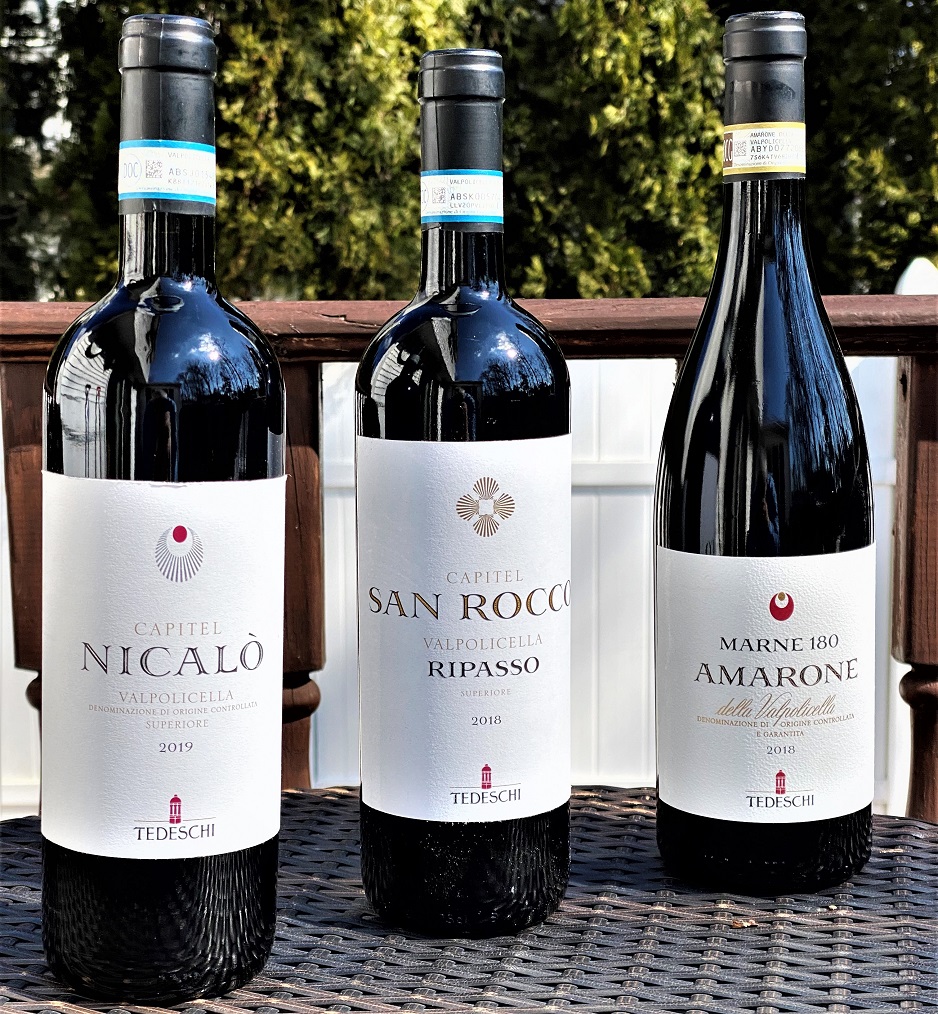
For our “anatomy” exercise, I had an opportunity to taste 3 of the Tedeschi wines – Valpolicella Superiore, Valpolicella Ripasso and Amarone della Valpolicela. All three wines are made from the identical set of grapes, used in the same proportions, so the difference is only in the winemaking techniques. Below are my notes with some additional information about the wines.
2019 Capitel Nicalò Valpolicella Superiore DOC (13.5% ABV, 35% Corvina, 35% Corvinone, 20% Rondinella, 10% Rossignola, Oseleta, Negrara, Dindarella, grapes drying for 1 month, 1-1.5 years in Slavonian oak barrels, 6 months in the bottle)
Dark ruby
Captivating nose of earthy dark fruit, tobacco, rocks
Beautiful fruit, blackberries, cherries, cherry pit, tart, focused, perfectly structured, perfectly balanced – lots of pleasure.
8/8+. Delicious.
2018 Capitel San Rocco Valpolicella Ripasso Superiore DOC (14.5% ABV, 14.5% ABV, 35% Corvina, 35% Corvinone, 20% Rondinella, 10% Rossignola, Oseleta, Negrara, Dindarella, alcoholic fermentation on the marc of Amarone and Recioto for 8-10 days, 1/2 years in Slavonian oak barrels, 6 months in the bottle)
Garnet
A hint of dried fruit, toasted nuts
Round fruit, cherries, soft, approachable, earthy undertones, well-integrated tannins, a hint of tobacco on the finish.
8/8+, delicious.
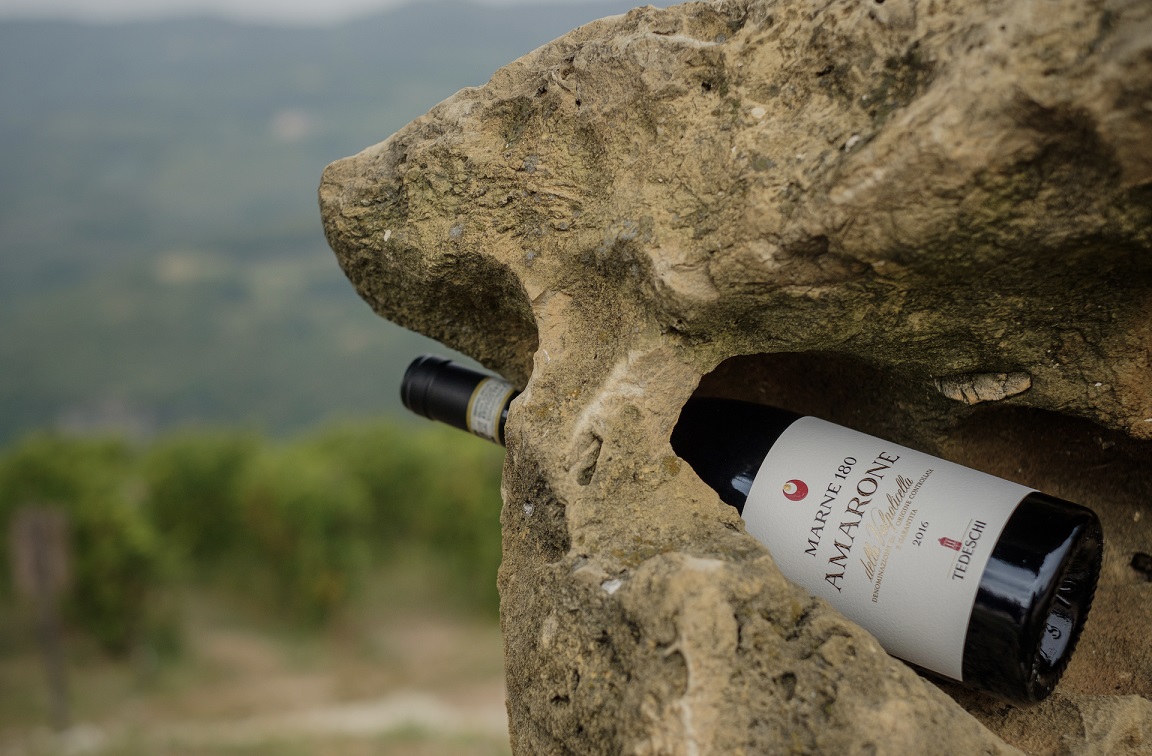
The name Marne 180 is a nod to the marl soils where the vineyard is located and 180 is degrees of exposure, from south-east to south-west. Source: Tedeschi
2018 Marne 180 Amarone della Valpolicella DOCG (16.5% ABV, 14.5% ABV, 35% Corvina, 35% Corvinone, 20% Rondinella, 10% Rossignola, Oseleta, Negrara, Dindarella, grapes drying for 4 months, 30 months in Slavonian oak barrels, 6 months in the bottle)
Dark garnet
Dark, concentrated, forest underbrush
Dried fruit, cherries, intermingled layers, powerful, well structured, delicious.
8+
Can we conclude anything from our flavor research? The wines share some similarities, but this is probably all I can say. I don’t see a clear progression from one wine to another, they are simply tasty wines, each one in its own right. Does it mean that we can’t talk about the anatomy of the flavor? I think we still can, but it is definitely more complicated than it seems.
The important outcome of this research project is three tasty wines from Tedeschi which I’m happy to recommend to you for your daily drinking pleasure. And this is the best conclusion we can make. Cheers!
Trapiche: Beautiful Perfection
Over my lifespan as a wine lover and especially, as a blogger, I tasted tens of thousands of wines. This is not a bragging statement, but purely statistical. Also, out of all those wines, every year a few hundred wines are covered in this blog.
Out of all these wines, there are probably 50 or so that are near and dear to my heart, These are my reference wines. These are the wines I would reach out to illustrate the comparison or simply deliver the message. For example, Bogle Petite Sirah is my favorite example of a budget-priced (typically around $9.99), delicious, consistently drinkable wine. Of course, I occasionally come across wines which equally or even tastier and cost even less, but Bogle is still the wine that is ingrained in my memory, and hence it is my ready-to-use reference.
I always think that all of my reference wines are already covered on the blog – 50-60 wines is not a high number spread out over the 12 years of blogging, and yet from time to time I engage in a futile search for the articles about some of these reference wines, only to say to myself “really?”.
When it comes to Argentinian Malbec, my reference wine is Trapiche Broquel Malbec. Malbec definitely came of age lately, especially with a dramatic increase in popularity over the last few years. While I tasted lots and lots of absolutely delicious renditions of Argentinian Malbec, it is still generally not my go-to wine. But if presented with the Trapiche Broquel Malbec, nobody would need to ask me twice to have a glass or a three.
There are 145 posts in this blog that include the word “Malbec” (not including the one you are reading now). None of these posts talk about my reference wine, Trapiche Broquel Malbec. Well, this is not entirely true – in a few posts, Trapiche Broquel Malbec is used precisely as I presented it here – as a reference. Nevertheless, there are no posts discussing any particular vintages of this wine or presenting any tasting notes.
And so will not be the post you are reading at the moment. But – at least this post is about two of the Trapiche wines I had an opportunity to taste (but none of them are Broquel Malbec).
It is so interesting when you think that you know something, and then it appears that no, you really don’t. I knew the Trapiche name and had a number of their wines over the years, but I had no idea that Trapiche is the biggest winery in Argentina. Founded in 1883, the winery stayed in the family for a long time, transitioning from father to son, until it was acquired by the Grupo Peñaflor, one of the 10 largest wine producers in the world, exporting its wines to more than 90 countries.

Trapiche vineyards span throughout Mendoza, the most famous winemaking region in Argentina from the Andes mountains to the Atlantic ocean around the town of Chapadmalal. Trapiche is using biodynamic farming methods and is very much focused on farmland diversity and sustainability. Trapiche’s hard work and dedication didn’t go unnoticed, acknowledged by multiple international awards, such as the “50 Most Admired Wine Brands” selection by Dinks International (the only winery in Argentian to get on that list 5 times over 5 different vintages), or Wine Enthusiast’s “The New World Winery of the Year” in 2019.
I had two bottles of Trapiche wines to try – 2020 Trapiche Broquel Cabernet Sauvignon Mendoza (14% ABV, $14.99, 100% Cabernet Sauvignon, 14 months in oak barrels) and 2019 Trapiche Gran Medalla Malbec Mendoza (14.5% ABV, $24.99, 100% Malbec, 18 months in new French oak, 1 year in the bottle). I have to tell you that I opened the bottles not without trepidation. I never had either one of these wines, I really like Broquel Malbec, and I really wanted to avoid disappointment…
First I opened Cabernet Sauvignon. The initial nose was not the one typical of the Cabernet Sauvignon – it did smell like a typical Argentinian Malbec would. I wanted to compare the nose side by side, so I quickly opened and poured in the glass the Malbec. The smell was practically identical – the vanilla, warm herbs, plums, with the Malbec bottle offering a bit more intensity. While I appreciate this nose on Malbec, I like the Cabernet Sauvignon to be a bit more traditional.
But the palate of the Cabernet Sauvignon didn’t disappoint, showing cassis with a wallop of dark cherries, a touch of bell peppers, and eucalyptus. As the wine was opening up, it transitioned through a few stages, making cassis more explicit and then adding up the level of acidity on the finish. A very good rendition with an excellent QPR (Drinkability: 8-).
The Gran Medalla Malbec was produced to commemorate the 125th anniversary of the winery, and it is sourced from the best Trapiche vineyard parcels in Uco Valley. And boy, did this wine delivered… This was Malbec like no other. The was the wine that stops you in your tracks; you want the time to stop so you can enjoy that perfect flavor in your mouth endlessly. The wine had the perfect amount of ripe, succulent dark cherries, sweet oak, and sage, weaved around a perfect core of smooth tannins, delivering layers upon layers of pure pleasure. This was the wine that you always dream of drinking, but it is so hard to find. Thinking about the $25 suggested retail price, this wine has great QPR and it is literally a steal if you will be able to find it. (Drinkability: 9-).
There you are, my friends – a case of wine’s beautiful perfection. Which also doesn’t need you to break the bank. Cheers!
One on One With Winemaker: Lucio Salamini of Luretta
If you call yourself a wine lover, you definitely have an affinity for Italian wine. I have yet to meet a wine lover who doesn’t like Italian wine – there is such a range of wines coming from Italy, everyone can find at least something which speaks to their heart and palate.
By the same token, I’m sure that the knowledge of Italian wines is quite widespread among the wine-loving public. So let’s play a simple game. There are 20 administrative regions in Italy. I will give you the name of the region, and you will tell me one, the most famous wine associated with that region. Let’s start with Tuscany – what wine do you associate with Tuscany? Of course, you are correct, it is more than one – Chianti, Brunello, super-Tuscan. How about Piedmont? You are right again – Barolo and Barbaresco come to mind first. Veneto? Yes, correct – Valpolicella, and if you said Amarone, you get an extra point (I’m a sucker for a good Amarone).
Now, how about Emilia-Romagna? Are you drawing a blank? I can help you – a large region in northern-central Italy, right above Tuscany? Still nothing? If someone said “Lambrusco”, congratulations, it is actually the most famous wine coming out of Emilia-Romagna, but it is absolutely not the only one.
The winemaking region of Colli Piacentini is located in the western part of Emilia-Romagna, with winemaking history in Colli Piacentini going back to 2000 B.C. Colli Piacentini DOC covers about 9,000 acres of vineyards with various microclimates defined by mountains, hills, and river valleys. There are 16 DOCs within Colli Piacentini, with grape varieties ranging from the typical Italian varieties such as Barbera, Croatina, Malvasia, and Trebbiano to the international stars – Cabernet Sauvignon, Sauvignon Blanc, and others. It is interesting that Colli Piacentini DOC rules allow putting the name of some of the grape varieties on the front label, quite unusual for the old world.
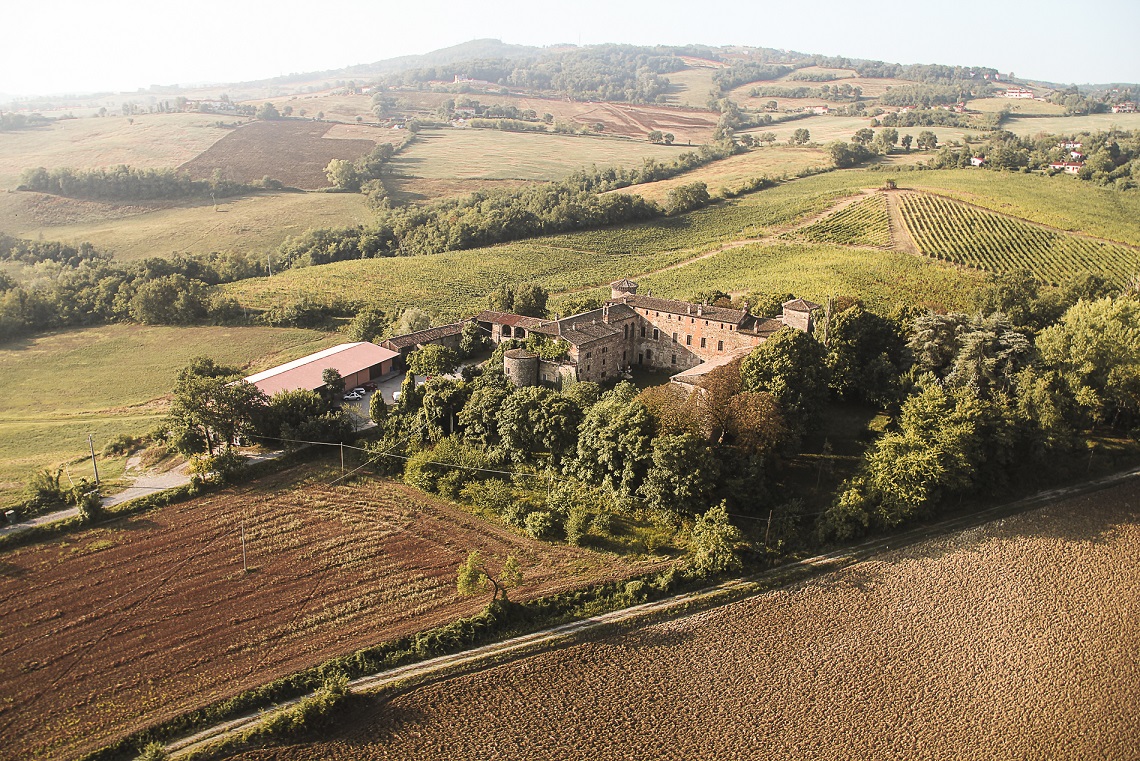
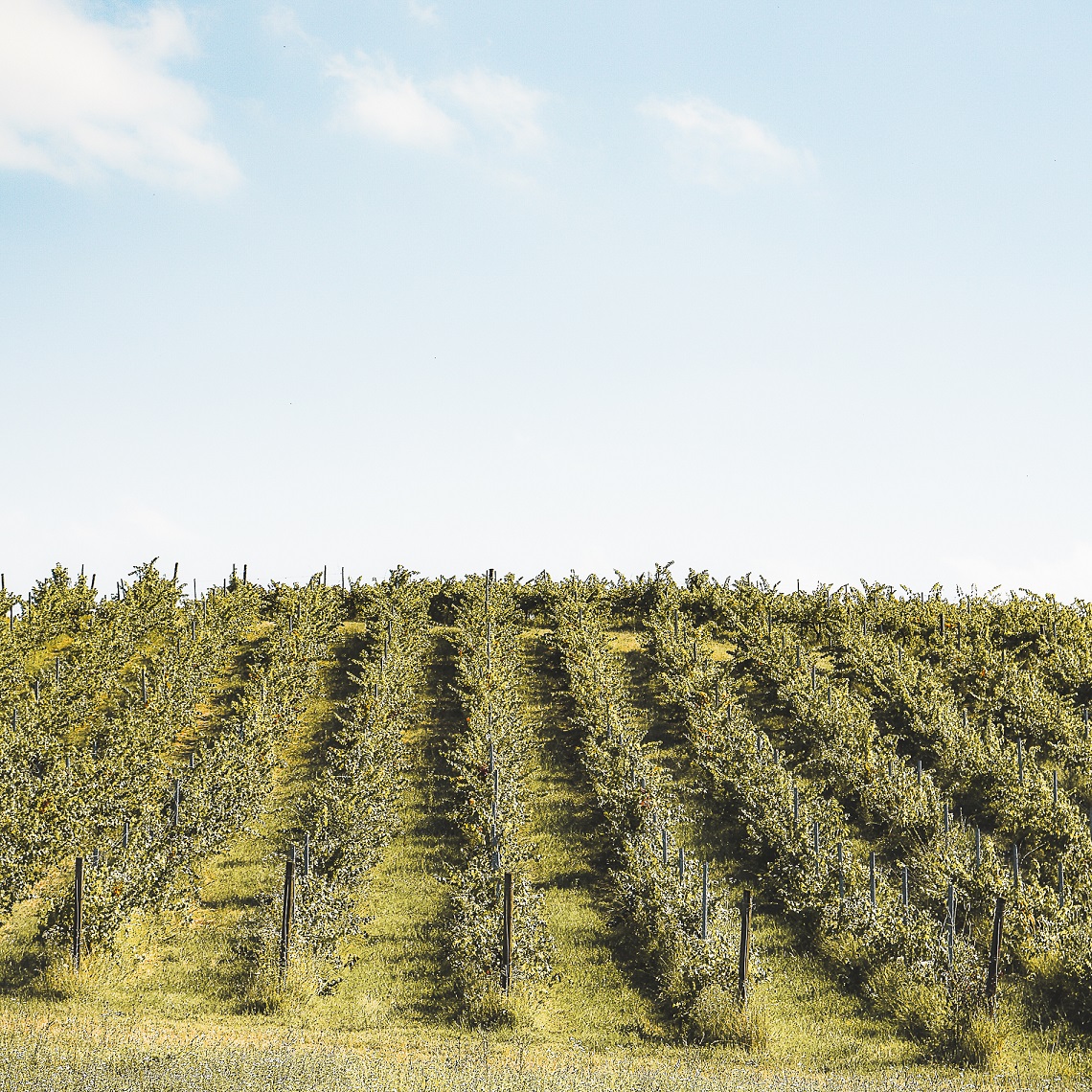
After spending some time in France and learning local agricultural traditions, Felice Salamini, a cattle breeder, came across the Castle of Momeliano, a fortress almost 1,000 years old, nestling in the hills of Emilian valley. This seemed to be an ideal place to grow grapes, make, and age wines, and in 1988 Luretta was born.
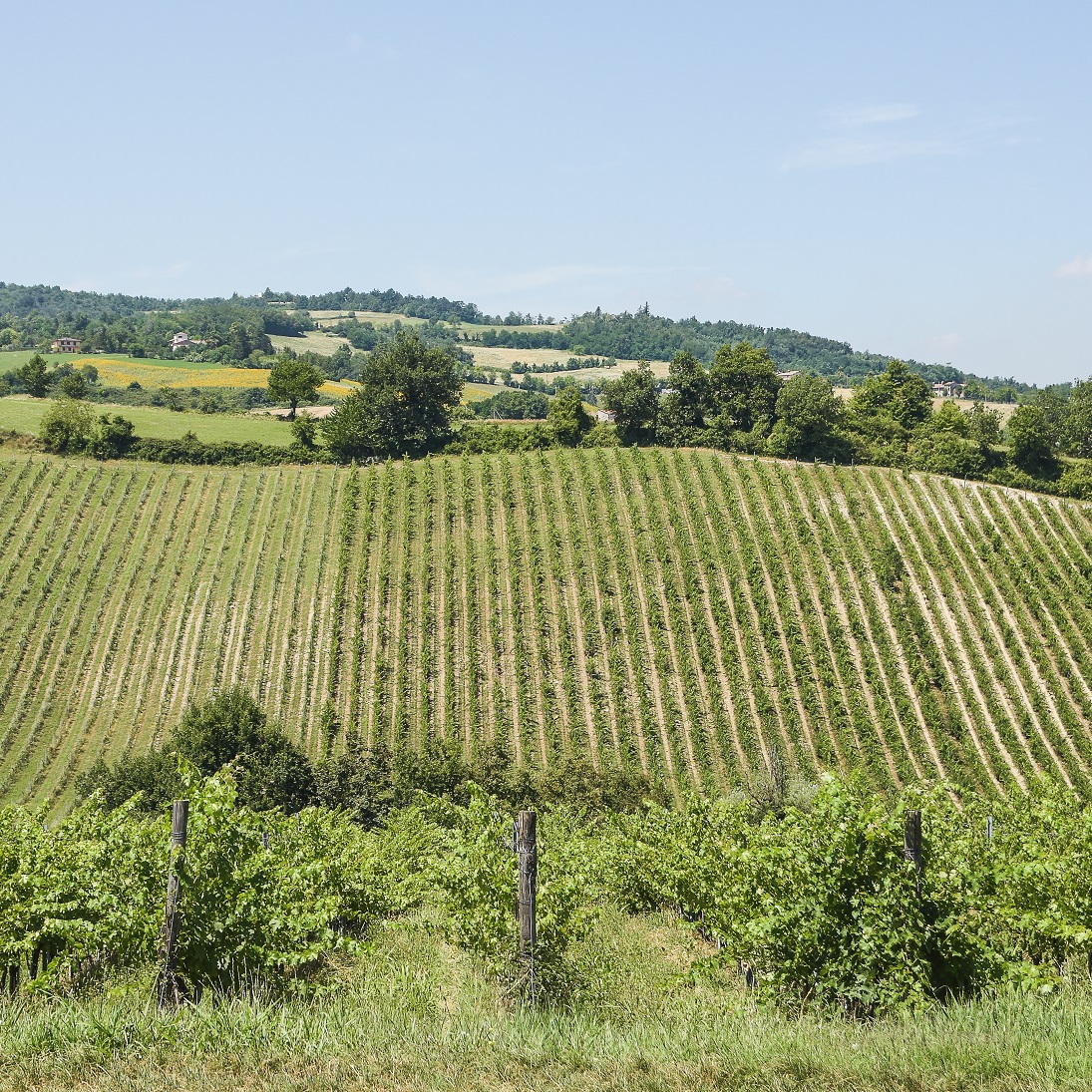
Luretta vineyards occupy 123 acres, surrounding Castle of Momeliano on the hill from 800 to 1,650 feet elevation. From the beginning, Luretta started using organic viticulture, with no herbicides, no synthetic fertilizers, and no irrigation. In 2000, Lureta obtained Italian certification for sustainable practices. Many of the French varieties – Cabernet Sauvignon, Merlot, Petitte Verdot, Pinot Noir – are growing there among the indigenous varieties – Barbera, Malvasia, Trebbiano, and many others.
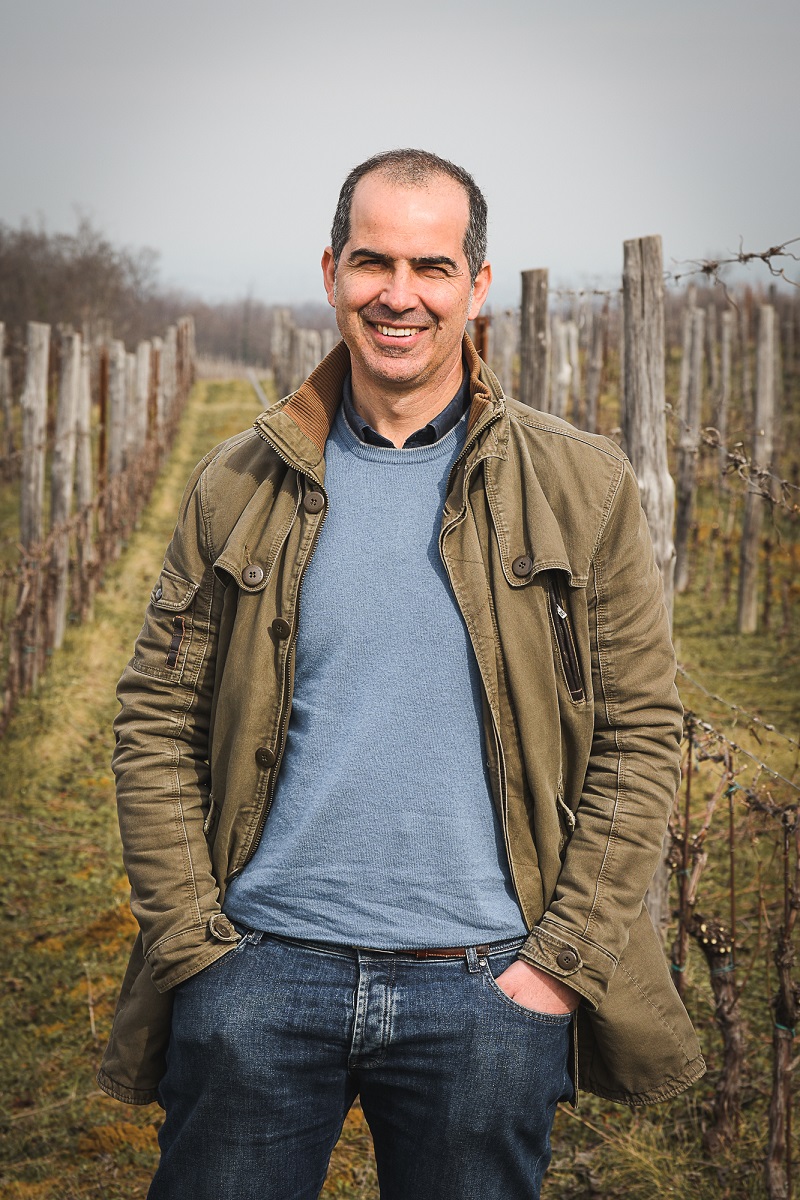
Lucio Salamini. Source: Luretta
Lucio Salamini, the second-generation owner of Luretta, is now leading the charge at the winery, working together with winemaker Alberto Faggiani, the longtime enologist at Jermann, overseeing the annual production of about 300,000 bottles. Each white, red, and sparkling wine produced by Luretta has its own unique story, showcasing the diversity of Colli Piacenti terroir. I had an opportunity to virtually sit down with Lucio and ask him a few questions – here what transpired in our conversation:
[TaV]: Let’s start with your website, which I find very interesting. Each wine has its own set of images associated with it on the website – how do you come up with those images?
[LS]: We really enjoy creating personalized and evocative image for the company. Usually we draft drawings that can create mental associations to get closer to the wine, that recalls its history, flavors, and characteristics, and then we embed them in our labels and throughout the website. We have always been believers of ‘mental’ pairings, so to create a match not just between a wine and a dish, but also a song, a climate, a mood, a season, a moment in the day or a moment in life. These drawings are vehicle for those impalpable connections.
[TaV]: One more question related to the same subject. Each wine also has a quote associated with that specific wine. How do you come up with those? What is the message you are trying to convey?
[LS]: It is a quote I like from a song, a book or a movie. These mental associations help me get deeply into the mood of that specific wine.
[TaV]: You have been farming organically since 2000. Have you ever considered biodynamic farming? What is your take overall on biodynamics?
[LS]: The company has been organic since almost the beginning of its practice, since the early 1990s. Then in 2011, Europe introduced the regulation of Organic Wine and we aligned to sustainable practices also for what concerns the processes in the cellar. However, we do not follow the Steiner philosophy of biodynamic agriculture. I do not often approve it but admire it as a whole concept and I think that this movement is too often carried followed in a superficial way that does not deserve. Biodynamic farming is a way of cultivating the land and making wine aimed to preserve nature and what people drink. It is an all-embracing philosophy and, as such, it should concern the whole lifestyle of the producer and his vision of the world. In this light, for me is not coherent to ship the wine on a boat or a plane to sell it on the other side of the world. But maybe let’s leave this controversy alone!
[TaV]: You have quite an international selection of the grapes – Pinot Noir, Sauvignon Blanc, Cabernet Sauvignon, etc. What made you plant international varieties in the first place? Do you find your terroir particularly conducive to the international varieties?
[LS]: We were pioneers in this area of Piacenza. We had to experiment first in order to understand better. Thus, planting International varieties was a part of a whole pioneristic phase that informed our practice since the beginning. Often, but not always, this has proved us right. Indeed, it is an area that is well suited to international vines as well as, of course, traditional vines.
Besides the drive to try and experiment, we also have a pure deep passion for international varieties.
[TaV]: In a blind tasting, if your Cabernet Sauvignon would be placed together with super-Tuscan, which wine do you think might win?
[LS]: In the autumn of 2021, there was this tasting by the famous critic Daniele Cernilli ( Dr. Wine ) where my cabernet came out very well, despite costing on average a third of the other bottles. And I was very proud of that, of course! In general, though, I believe that parallel tastings should not be done to see who wins but rather to understand and enjoy the differences between the various territories.
[TaV]: The same question as before, but let’s replace super-Tuscan with Napa Valley Cabernet Sauvignon – how do you think your wine would fare against those?
[LS]: I would say that whether the super Tuscans and Napa wines focus on food, power, softness and low acidity, my wine has more tertiary hints of evolution such as spices, aromatic woods, pepper, balsamic, and then, instead of looking for softness, it pushes towards a tannic acid balance in the mouth, underlining the sapid and mineral notes of Colli Piacentini, our soils.
[TaV]: Do you have any plans for additional international varieties – Syrah, for example?
[LS]: I have experimented over the years with plantings of Syrah, Grenache, Cabernet Franc and Petit Verdot. But they have not been successful. And the vineyards were either grubbed up or replanted, proving that not all varieties can adapt to these soils.
[TaV]: You are farming 123 acres of estate vineyards. Have you identified vineyard plots that perform better/different from the others? Do you have any plans for single-plot wines in the future?
[LS]: The map of the single vineyards with names, varieties, altitudes and soil differences will be ready in September. It is a project we have been working on since January. Broadly speaking, we have the autochthonous vines planted up to an altitude of 820 ft above sea level, characterized by the “Terre rosse antiche” (old red soils in English) soil, loaded with red clay.
The international vines, on the other hand, are planted in vineyards ranging from an altitude of 800 ft to 1400 ft above sea level, in the lands of lower Apennines, characterized by a greater concentration of limestone. Most of the vineyards are located within the small Val Luretta – which gives the name to the company- characterized by a temperate microclimate, protected from either spring frosts, summer heat waves and large concentrations of humidity thanks to a lucky flux of air that constantly blows in our lands.


Wine time!
I had an opportunity to taste 2 of Luretta’s wines.
2019 Luretta Boccadirossa Colli Piacentini DOC (13.5% ABV, $30, 100% Malvasia di Candia Aromatica) had beautiful golden color. A beautifully perfumed nose of wild flowers and tropical fruit was supported by the body which was plump and crisp at the same time, with white plums and lemon and a perfectly acidic finish. Overall, solid and delicious.
2018 Luretta Superiore Gutturnio DOC (14.5% ABV, $25, 50% Barbera, 40% Croatina, 9 months in wood) was as quintessential Italian as only the Italian wine can be. The nose of leather and cherries followed by the exquisite palate of sweet cherries, leather, and a hint of tobacco, layered, generous, earthy, and complex.
Here you are, my friends – unexpected, unconventional, and well worth seeking Italian wines, waiting to be discovered by wine lovers around the world. Cheers!
Stories and Passion and Pinot: Shane Moore of Gran Moraine
“Gran Moraine prides itself on producing experiential art in the form of Chardonnay, Pinot Noir and sparkling wines made to express the exquisite terroir of our Yamhill-Carlton Estate Vineyards.”
Experiential Art.
Not a bad way to introduce the winery, what do you think? Wine is art, all wine lovers can sign under such a statement, so “experiential art” sounds very near and dear to any wine lover’s heart.

Gran Moraine vineyard was planted in 2004 by Premier Pacific Vineyards in the Yamhill-Carlton district of Willamette Valley in Oregon, with 200 acres of hillside vines of Pinot Noir and Chardonnay. The vineyard took its name from moraines, glacial sediment left after the glacier movements in the last ice age. In 2013, the Gran Moraine Vineyard was acquired by Jackson Family and it is one of the 4 major properties owned by the Jackson Family in Oregon Willamette Valley.
I visited Gran Moraine last August and had an opportunity to taste a number of the wines and have a quick chat with the winemaker, Shane Moore. Then I followed up with the usual, virtual “conversation” and here is what transpired:
[TaV]: Was there a pivotal wine in your life?
{SM]: I’ve had plenty of wines that have possibly changed my life’s trajectory. However, I feel like the most pivotal wines in my existence have been those that seem to stop time. These wines provide my most fond wine moments and provide me with the most inspiration.
[TaV]: Is there a winemaker you would call your mentor? Someone you learned the most from as a winemaker?
[SM]: I think if I gave any specific shoutouts I’d be doing a disservice to so many of the amazingly talented and thoughtful winemakers I have had the pleasure to have worked with. Over my time I worked with and under at least 40 winemakers – I for sure learned a great deal from all of them. Another great group I both learned a lot and derived much inspiration from are the seasonal cellar workers we hire each year. With that I’m proud to say many have went on to become winemakers themselves.
[TaV]: Pinot Noir and Chardonnay wines are all about blocks and clones. How many clones of Pinot Noir and how many clones of Chardonnay do you grow? How many individual blocks do you identify for the Pinot Noir and Chardonnay?
[SM]: At the Gran Moraine Vineyard, there are 6 different clones of Pinot Noir and only 2 of Chardonnay. Every block is harvested and vinified separately. At any given time, there are around 100-120 different lots of wines. There are approximately 80 blocks – I don’t bring them all in – it’s too big of a vineyard for that – I bring in what I think of as around the top 30% of the acres.
[TaV]: Following up on the previous question – what is your approach to the blending of the final wines, both Pinot Noir and Chardonnay? Do you ever produce single block or single clone wines, and if you don’t do it now, do you have a plan to start producing such wines in the future?
[SM]: Blending final wines starts with having an abstract notion of the experience which you would like to have said “wine endue.” Then you purposely work within the parameters of the vineyard, the growing season and your production capabilities to craft something with that end goal in mind.
We will sometimes produce single clone or block wines when the wine is so profound that it would be a disservice to humanity to blend it away.
[TaV]: You already produce a few of the sparkling wines. What is your approach to harvesting the grapes for those wines – do you have specific plots which you designate for sparkling wines, or do you take an early pass through the vineyard prior to general harvest to get the grapes for the sparkling wine production?
[SM]: You know when you eat something so acidic that it makes your ears ring? I like to pick the fruit for sparkling wine when it’s just a little riper than that. We use specific blocks for the sparkling wine that are purposely farmed. Generally, these blocks are some of the most marginal sites on the vineyard; for example, north facing and heavier soils.
[TaV]: How much focus the sparkling wines program gets at Gran Moraine? Do you expect to produce more sparkling wines in the future, or you expect to stay at the level where you are at?
[SM]: Sparkling wine is currently about 15% of our production. I can see it growing some, it seems to be very popular.
[TaV]: Gran Moraine is a ~200 acres vineyard. If I understand it correctly, it is all planted with Pinot Noir and Chardonnay. Do you plan to plant any other grapes – Pinot Gris, for example, or will it stay strictly as it is right now?
[SM]: The suitable acres on the piece of land are pretty much planted out. I don’t think we’ll be grafting any of the Chardonnay or Pinot Noir over to anything else anytime soon.
[TaV]: When you make Gran Moraine Chardonnay, is there a specific style you are trying to achieve?
[SM]: I want the Chardonnay to have umami, electricity and tension. Of course, I also want it to be delicious.
[TaV]: Same question for the Gran Moraine Pinot Noir?
[SM]: With the Pinot I try to focus on it being beautiful and sleek creating power and complexity daftly by DJing with great music and surrounding it with happy people.
[TaV]: What are your favorite producers in Oregon? In the USA? In the world?
[SM]: Oregon: Adelsheim, Antica Terra, Antiquim Farm, Alexana, Belle Ponte, Brickhouse, Beaux Freres, Bethel Heights…..that’s just getting to the B’s! Too many really to mention – I’m always trading wine with people. I’m totally in love with Oregon wine.
USA: I’d have to go to CA and say some of my favorites there are Ridge, Drew, Papapietro Perry, Navarro, Hartford.
[TaV]: Is there a winemaker you would love to work with? A dream winemaker so to speak?
[SM]: Jean-Herve and Laurent Chiquet of Jacquesson. I hope they are listening. I’ve got ideas.
[TaV]: What’s ahead for Gran Moraine? Where do you see it in 10 years?
[SM]: We’ll probably be doing the same thing but hopefully with even more intention and weirder.
[TaV]: Is there a dream wine you always wanted to make? What would that be?
[SM]: A great New World Nebbiolo.


Here are the tasting notes for a few of the Gran Moraine wines I had an opportunity to taste during the visit:
Gran Moraine Brut Rosé Sparkling Wine Yamhill-Carlton (58% Pinot Noir, 41% Chardonnay, 6% Pinot Meunier)
Toasted notes on the nose
toasted bread, a touch of yeast, good acidity, crisp, clean
8, delicious
2018 Gran Moraine Chardonnay Yamhill-Carlton
A touch of honey notes, vanilla
Good acidity, good acidity, needs time
7+
2018 Gran Moraine Pinot Noir Estate
Brilliant fresh cherry notes, sage
Crisp, restrained, tart cherries and earthy notes, fresh tannins
7+
2017 Gran Moraine Upland Pinot Noir
Restrained nose, a touch of funk, cherries
Light palate, fresh, bright, cherries and cranberries
8-
Here you go, my friends. Another winery, another story of Passion and Pinot. Until the next time – cheers!
This post is a part of the Stories of Passion and Pinot series – click the link for more stories…
Mother’s Day Escapades – 2022 Edition
 Sometimes, the best plan is to have no plans.
When it comes to holidays, I usually start sweating it long in advance. What wine is worthy of a celebration? What should I open to match up the holiday? What will everyone enjoy? This chain of thought usually is followed by a long process of opening wine cabinet doors and pulling shelves back and forth. Yes, I might have a loose idea of what should be available, but I still don’t remember where which wine is, so I have to really search for it. It’s a process, and more often than not I even manage to annoy myself with the “wine selection paralysis” of my own making.
Mother’s Day last Sunday was nothing like the usual. There were only 5 of us. My wife drinks very little wine as of late (or any alcohol for that matter), my mother-in-law prefers tequila, and my kids don’t like wine, so I didn’t have much to worry about in terms of the wine program. Also as spring is settling in here in Connecticut, there were lots to do outside – cleaning, building new raised beds, preparing for the soil and mulch delivery which were taking place the next day.
Coming back into the house after a few hours of work outside I realized that I’m craving a glass of white wine. The first bottle which grabbed my attention was unpretentious 2020 Domaine René Malleron La Vauvelle Sancerre. Sancerre is a rare guest in the house, as it is usually a more expensive version of Sauvignon Blanc than the others, and for my personal preferences, I find that I like a generic Loire Sauvignon more than a typical Sancerre. I’m not even sure how I got this bottle, I’m assuming it was something I found through a WTSO offer.


Never mind this “not liking of Sancerre” – this bottle was superb. Fresh, floral, and a touch grassy on the nose, it delivered exactly the same profile on the palate – bright, elegant, round, crisp, clean, thirst-quenching, and delicious.
I was thinking about opening the bottle of Syrah for dinner. While looking for a particular bottle to open, I came across this 2004 Vaucher Père et Fils Gevrey-Chambertin. Of course, this is Burgundy and not a Syrah, but there is nothing wrong with celebrating with Burgundian Pinot Noir instead of Californian or Washington Syrah, especially considering that I was looking at this bottle for a while.


This happened to be another successful choice for a few reasons – it was at its peak, probably about to start the journey down. While it tasted good at the moment, it was also a timely decision as I’m not sure it would be still enjoyable a few years down the road. The wine had smoked plums and cherries on the nose, and more of the same darker fruit profile on the palate, introducing the notes of dried fruit, but still having enough freshness to be enjoyed. The wine also well complemented the burgers, which were our main dish. Those were good burgers – Peter Luger burgers from our local Darien Butcher Shop (DBS for short), and good burgers are well worthy of a good glass of wine.
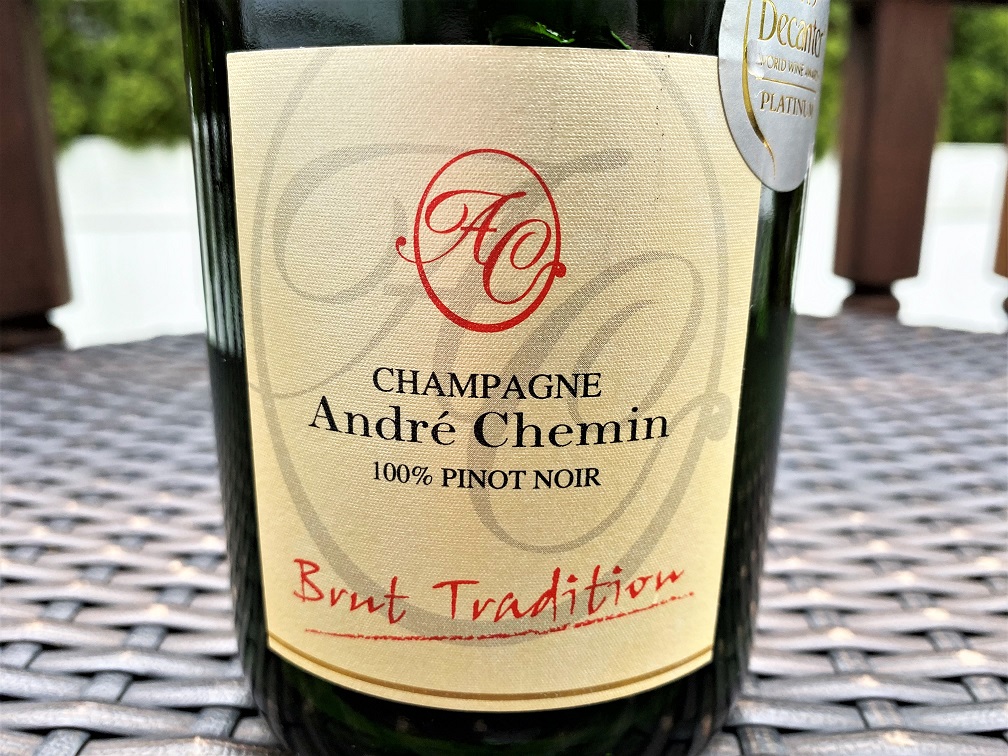
As a surprise, my daughter requested a Mimosa while dinner was in the making. I don’t have a lot of bubbles in the house, so at the moment I didn’t have any Prosecco or a Cava which would be my preferred choice for this purpose. I opened a bottle of one of my favorite everyday Champagne – NV André Chemin Brut Tradition Champagne, which is made with 100% Pinot Noir. While the girls enjoyed their Mimosas, I was happy to have a few glasses of this delicious wine – a perfect combination of freshly toasted bread and yeasty notes, crisp, refreshing, and satisfying.
Here it is, a full account of a celebration in the wine terms. It was definitely unusual for this household to drink only French wines, and also classic French wines – Burgundy, Champagne, and Sancerre – in one sitting. Interestingly enough I believe all three wines were procured through WTSO, which is simply a fun fact I would like to mention.
Father’s Day is coming in about a month – it might be the time to start worrying about my wine choices…
New Zealand Wines – Beyond Pinot Noir and Sauvignon Blanc
 Let’s say we will stop a random wine lover and will ask what is the very first wine which comes to mind if we would talk about California? I guarantee you that Cabernet Sauvignon and maybe Chardonnay would be the first associations. What about Australia? Shiraz, no doubts. Argentina will serve as a reference to Malbec, and most likely the Rioja would be the first association for Spain. Meanwhile, each one of these countries and regions successfully produces wines from literally hundreds of the grapes.
Now, what would be the first wine association for New Zealand? If you said Sauvignon Blanc or Pinot Noir, I would fully agree with you. Meanwhile, the New Zealand wine scene offers so much more than those two grapes which had been farmed successfully for more than 100 years. New Zealand leads the wine world in terms of sustainability and organic winemaking (here is the post from the last year, for example). And, of course, New Zealand Bordeaux blends and Syrah had been on wine lovers’ horizons for many years, but coming fresh from the New Zealand wine tasting in New York, I can’t help it to comment on the diversity of the wines represented in the tasting.
Well beyond the traditional Sauvignon Blanc and Pinot Noir, we had an opportunity to taste Chardonnay, Riesling, red Bordeaux blends, Syrah, sparkling wines, skin-fermented wines, natural wines, and more.
I had about 1.5 hours to taste about 60 wines, walking around and self-pouring – I think I managed to complete this task with some degree of success – whatever you can understand while spending 1.5 minutes per wine on average. While the tasting format and setting were comfortable, I still had a few gripes about it. First, an absolute majority of the white wines were too warm. This was the second tasting in the day, so I don’t know for how long the bottles were standing on the table, but they should’ve been put in the wine chillers at least, even without ice. I’m sure tasting white wines too warm was detrimental for many assessments. My second gripe was with the food – while the food was carried out all the time, most of those little bites had spice/flavor profiles not conducive to tasting subtle wines such as Pinot Noir. I took a few bites at first but quickly stopped paying attention to the food as I understood that it was skewing the palate in the wrong direction.
Before I will leave you with all of my tasting notes (for what it is worth), I want to mention a few favorites.


First, the natural, unfiltered Carrick Winery The Death of von Tempsky Riesling Central Otago was a riot. Yes, it was the wine for the wine geeks, but it invoked association with some of the best natural wine producers, such as Jean-Pierre Robinot and Frank Cornelissen, and every sip was absolutely thought-provoking.
Then there was the Bordeaux blend from Te Mata Estate Winery Coleraine Hawke’s Bay, which was superb – perfectly on point, varietally correct, and delicious. These were my only two 5-rated wines (I didn’t use my traditional rating system, so I stayed with the suggested “5-star” approach, but of course, had to expand it by using “+” and “-“).
Two of the Syrah wines were outstanding, with Bilancia la Collina Syrah Hawke’s Bay offering a purity of the black pepper profile, which was simply superb. And Neudorf Vineyards Neudorf Home Block Moutere Chardonnay Nelson completes the list of top favorites with its perfectly balanced profile of everything which a good Chardonnay should have – apples, vanilla, honey, a hint of butter – everything.
There were lots more absolutely delicious wines, so without further ado, here is the list of wines I tasted, sorted by the regions – with my brief notes.
Auckland
2018 Kumeu River Wines Kumeu River Estate Chardonnay Auckland – Crisp, acidic, tart apples on the finish. Interesting wine. Not the wine we taste. 3
2015 Tantalus Estate Écluse Reserve Auckland ((Cabernets/Merlot/Malbec) – Beautiful Bordeaux blend. Elegant, round, powerful. 4+
Central Otago
2014 Aurum Organic Amber Wine Central Otago – Tasty, but should be colder? Not as impressive as expected. 3
2019 Burn Cottage Burn Cottage Vineyard Pinot Noir Central Otago – Beautiful Pinot nose, plums, lavender, elegant. Tart, cherries, good acidity, good midpalate weight. Elegant. 3+
2020 Carrick Winery The Death of von Tempsky Riesling Central Otago – Wow. Acidity, depth, appearance. Wine for the geeks. Amazing. 5
2016 Domaine Thomson ‘Surveyor Thomson’ Pinot Noir Single Vineyard Central Otago – Super tart. Very lean. 2
2020 Felton Road Calvert Pinot Noir Central Otago – Beautiful Pinot nose. Plums, cherries, inviting and elegant. Round, delicious palate, good balance. 4
2018 Grasshopper Rock Earnscleugh Vineyard Pinot Noir Central Otago – Beautiful nose, touch is smoke. Elegant at first, but the finish is lean and tart. Food wine. 2
NV Quartz Reef Methode Traditionnelle Brut Central Otago – Delicious. Bread, yeast, toasted notes. Superb. 4
2020 Rippon Gewurztraminer Central Otago – Okay (not really). 2-
2020 Te Kano Blanc De Noir Central Otago – Bright floral nose, tropical fruit. Tart fruit on the palate, I would like a bit less sweetness. 3
2020 Te Kano Fume Blanc de Noir Central Otago – Restrained, a hint of fruit. Clean acidity at first, but then super acidic on the finish. Probably good with oysters. 2
2015 Ostler Lakeside Riesling Spatlese Waitaki Central Otago – Excellent. Gunflint, petrol. Good balance of sweetness and acidity. 4+
2019 Valli Waitaki Vineyard Pinot Noir Central Otago – Beautiful smokey nose. Elegant, clean, good presence. One of the best Pinot in the tasting. 4+
2020 Valli Waitaki Vineyard Riesling Central Otago – Not bad. Food friendly. Classic Riesling. 3+


Gisborne
2020 Millton Vineyards & Winery Te Arai Chenin Blanc Gisborne – Sour apples on the nose, lemon tart. Tart lemon on the palate, nice, elegant. 4-
Hawke’s Bay
2019 Alpha Domus The Barnstormer Syrah Bridge Pa Triangle Hawke’s Bay – Superb. A hint of barnyard on the palate and nose, a touch of pepper. Pronounced tannins on the finish. 4+
2019 Bilancia la Collina Syrah Hawke’s Bay – Beautiful nose, rose petals, a hint of pepper. Superb. Black pepper, crisp, light, elegant. 4+
2018 Decibel Wines Malbec Gimblett Gravels Hawke’s Bay – Elegant at first, but could benefit from a bit more body. Tannins are very explicit. Needs time. 3
2017 Smith & Sheth CRU Heretaunga Chardonnay Hawke’s Bay – Delicious. Perfect balance, a hint of gunflint, elegant, restrained. 4+
2018 Te Mata Estate Winery Coleraine Hawke’s Bay (Cabernet Sauvignon/Merlot/Cabernet franc) – Perfectly Bordeaux blend all the way, balanced, cassis, round, delicious. Will improve with time. 5-
Marlboro
2019 Astrolabe Wrekin Chardonnay Marlborough Southern Valleys – Delicious. Round, good fruit, good acidity. Excellent chard rendition. 4
2021 Brancott Estate Classic Sauvignon Blanc Marlborough – A classic NZ Sauvignon Blanc! Cassis, fresh grass, bigger palate than I expected, a little plump. Nose – 5+, palate – 4
2020 Churton Sauvignon Blanc Organic Marlborough – Ok. Superacidic. 2
2020 Clos Henri Vineyard Petit Clos Sauvignon Blanc Marlborough Wairau Valley – Very nice. Sancerre style. Freshly cut grass, flowers, perfect balance. 4
2021 Dashwood Sauvignon Blanc Marlborough – Classic nose with restraint, mostly grass. The palate is too sweet. 2
2021 Deep Down Wines Organic Sauvignon Blanc Marlborough – Sancerre-like elegance. Crisp but a bit too acidic. 3-
2019 Dog Point Vineyard Sauvignon Blanc ‘Section 94’ Marlborough Wairau Valley – Crisp, tart. Tangy. Interesting. 3
2017 Giesen Single Vineyard Clayvin Chardonnay Marlborough Southern Valleys – Excellent. Crisp, well balanced, delicious. 4-
2020 Glover Family Vineyards Zephyr Agent Field Blend Marlborough Wairau Valley (Sauvignon Blanc, Riesling, and Gewürztraminer) – Excellent. Wine for geeks, very tasty. Tart, crispy, tangy. Wine for geeks for sure. 4


2017 Greywacke Vineyards Greywacke Chardonnay Marlborough Wairau Valley – Gunflint, butter, vanilla. Not bad, but need to be a bit more balanced. 3+
2017 Hans Herzog Estate Mistral Marlborough (Viognier/Marsanne/Roussanne)- Interesting. Not my wine. 2
2021 Jules Taylor Sauvignon Blanc Marlborough – Elegant nose, a hint of fresh-cut grass. Nice, elegant, but a bit tart. 3
2020 Jules Taylor OTQ Single Vineyard Sauvignon Blanc Marlborough Southern Valleys – Interesting. Softer than a typical NZ SB, not bad. 3
2021 Tohu Awatere Valley Sauvignon Blanc Marlborough – Elegant, restrained nose, good palate, classic. 4
2021 Loveblock TEE Sauvignon Blanc Marlborough Awatere Valley – Horrible? A nose and palate of spoiled oranges. 1
2019 Mahi Pinot Noir Marlborough Wairau Valley – Lean. A bit underwhelming, but drinkable. 3
2021 Stoneleigh Sauvignon Blanc Marlborough Wairau Valley – Excellent. Classic. Clean, a touch of grass, cassis, a touch of grapefruit. Delicious. 4
2019 Te Whare Ra Single Vineyard Riesling ‘D’ Marlborough Wairau Valley – Beautiful! Crisp, tart apples on the finish. A very apple-forward version. 3+
2021 Vavasour Wines Sauvignon Blanc Marlborough Awatere Valley – Elegant, but the acidity is too much – the wine should be colder. 3
2021 Villa Maria Private Bin Sauvignon Blanc Marlborough – Superb. Delicious. Classic, fresh, crisp. 4
2019 Villa Maria Single Vineyard Taylors Pass Pinot Noir Marlborough Awatere Valley – Nice, elegant, good round fruit. 3
Martinborough
2018 Ata Rangi Pinot Noir Martinborough – Elegant nose with a hint of smoke. Elegant on the palate, but a bit too lean. 3
2019 Dry River Wines Dry River Riesling Martinborough – A riot. Petrol on the nose, nice, elegant, good acidity, good fruit. Delicious Riesling. 4
Nelson
2020 Neudorf Vineyards Neudorf Home Block Moutere Chardonnay Nelson – Outstanding. Perfectly balanced. Lemon, apples, a remote hint of butter. Excellent. 4+
2021 Seifried Estate Grüner Veltliner Nelson – Elegant, classic Gruner. Herbal nose, round grassy feel on the palate with some Meyer lemons in the mix. Great effort. 4
Northland
2020 The Landing Chardonnay Northland – Delicious. Apples, a hint of vanilla, round, very elegant. 4+
Waipapa
2021 Waipara Springs Pinot Gris Canterbury / Waipara – Nice. A bit too sweet. 3
2021 Waipara Springs Sauvignon Blanc Canterbury / Waipara – Ok. 3
2020 Black Estate Home Pinot Noir Canterbury / Waipara – Interesting. Unusual. Tannic. 3
2018 Mountford Koyamo Pinot Noir Canterbury / Waipara – Excellent. Clean, classic, perfectly balanced, elegant. 4
2018 Mt. Beautiful Winery Pinot Noir Canterbury / Waipara – Not bad. Too lean and tannic. 2
2018 Pegasus Bay Sauvignon Semillon Canterbury / Waipara – Interesting nose, gunflint. Crisp palate. 3+
2018 Pyramid Valley North Canterbury Chardonnay Canterbury / Waipara – Not bad. Middle of the road Chardonnay. 3
2018 The Boneline Iridium Canterbury / Waipara (Cabernet Sauvignon, Cabernet Franc & Merlot) – Iodine and rocks on the nose. The palate is a bit underwhelming. 3
Wairarapa
2019 Borthwick Vineyards Paddy Borthwick Right Hand Pinot Noir Wairarapa – Interesting nose – plums with a distant hint of barnyard. Round, powerful, expressive, peppery. More of Oregon style. 4+
There you are, my friends – New Zealand wines beyond Sauvignon Blanc and Pinot Noir. New Zealand wines are not easy to find in the USA but are well worth seeking. Cheers!
Last Bottle Sign Up ($10 credit)




 Talk-A-Vino