Archive
Of Beautiful Things
Beauty is an interesting concept. It seems to be simple and universal. And nevertheless, the declaration of beauty might dramatically differ, even for the people going through the same experience. Take flowers, for example – if someone doesn’t like daisies, looking at the field of daisies will solicit no emotional response, but the same person might spend an hour admiring an orchid.
Whatever we see as “beautiful” solicit emotion, it gives us a tiny burst of positive energy, it makes us happy. But the proverbial “truth in the eye of the beholder” is fully in control – everyone decides on their own concept of beauty.
Photography is one of the best and simplest tools to capture the beauty of the moment and convert it into a tangible memory, something you can get back to. For sure I’m the one who heavily relies on photography for doing so. If you look at the pictures on my phone, you will have no problems figuring out that I consider wine, flowers, and sunsets as the most beautiful things in this life – well, this is not an absolute truth, but we can go with it for this post. Of course, sunsets and flowers are exactly what they are, but the wine bottles in the pictures simply represent the memory knots, the real beauty is inside the bottle, no matter how pretty the labels are.
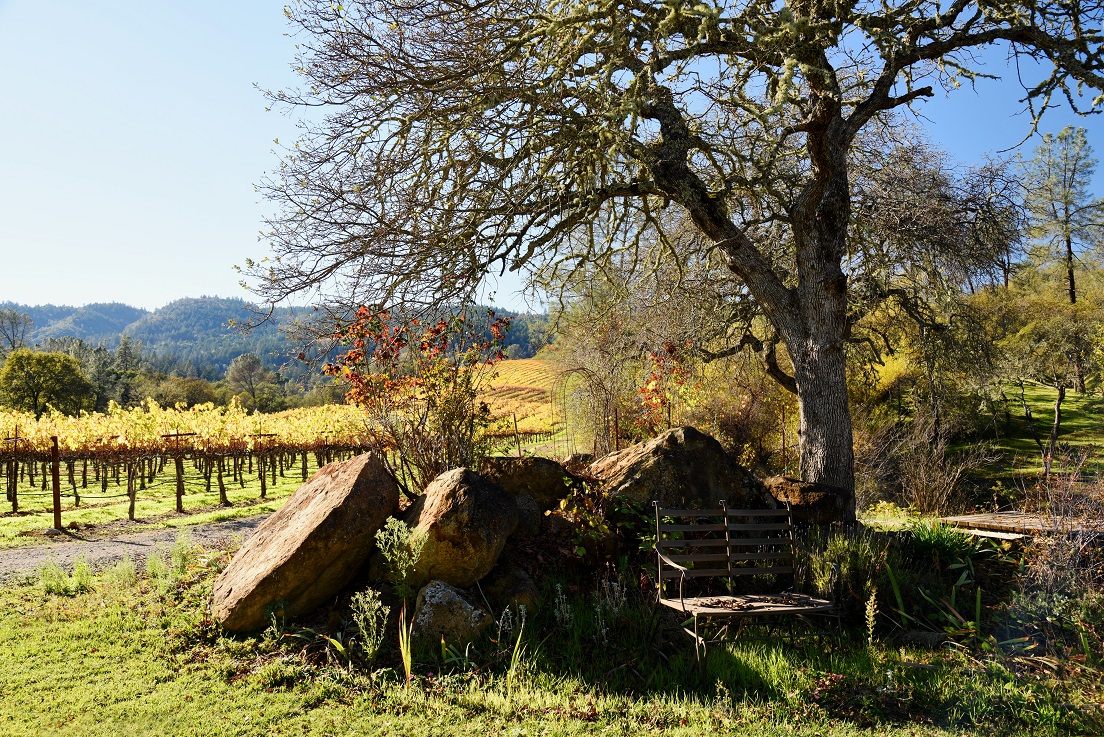
Garden at Calla Lily. Source: Calla Lily Winery
Calla Lily Estate & Winery is a project of renowned California winemaker, Cary Gott, and a group of business partners out of Hong Kong, who together started Calla Lily in 2013. Calla Lily is 95 acres of the estate in the Pope Valley section of Napa Valley, with the first vines planted in 1995. The estate’s vineyards comprise 12 acres of Cabernet Sauvignon, 5 acres of Petite Sirah, and 1 acre each of Merlot, Cabernet Franc, Malbec, and Petit Verdot.
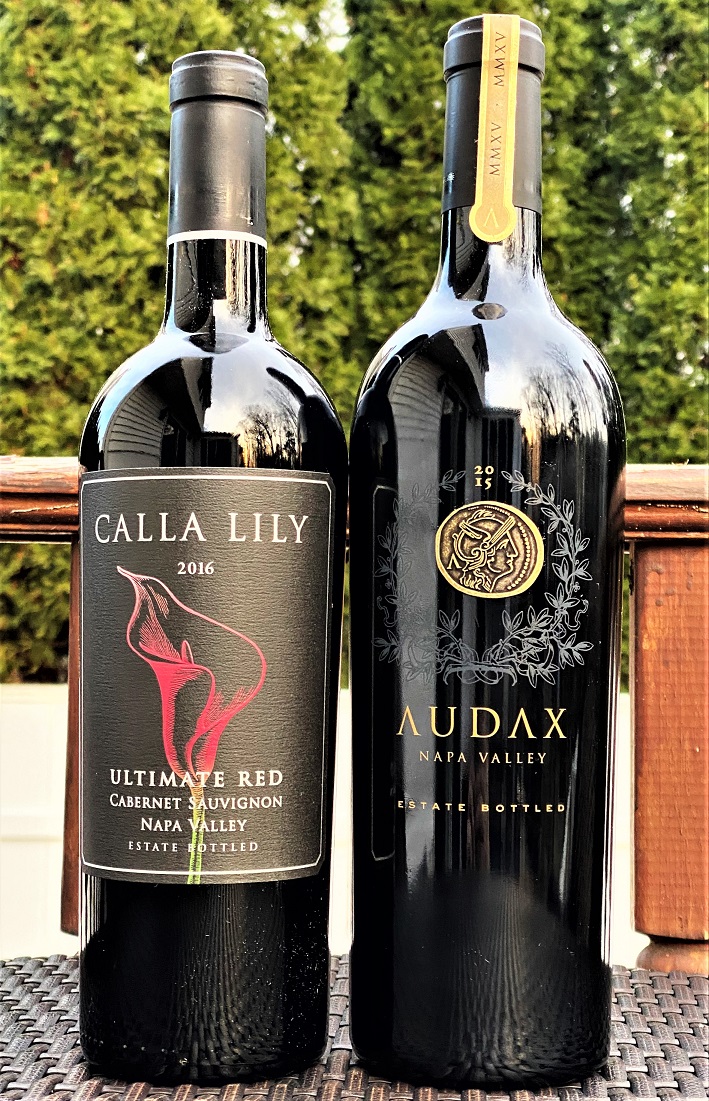
Calla Lily is not a random name. You can see the beautiful flower appear on the label of Cabernet Sauvignon, and it is both the name and the symbol. Calla is a type of lily flower, which takes its name from the ancient Greek word “Kallos” which means “beauty”. Calla Lily had been around a few thousand years and has a lot of symbolism associated with the flower in Greek, Roman, and Egyptian cultures, as well as in Christianity overall. You can read about Calla Lily symbolism further here, but I also can’t resist quoting the same source in regards to the meaning of the color of the Calla Lily flowers: ”
- White Calla Lilies: Purity and innocence.
- Yellow Calla Lilies: Joy and growth.
- Pink Calla Lilies: Appreciation and admiration.
- Red Calla Lilies: Intense passion.
- Blue Calla Lilies: Femininity and refined beauty.”
As you can see, red Calla Lily is depicted on the label of the Calla Lily wine, and after tasting the wine, I have to agree to the “intense passion” suggestion.
After talking about beautiful flowers, let’s talk about beautiful wines, as I had an opportunity to sample two of the Calla Lily wines.
2016 Calla Lily Ultimate Red Cabernet Sauvignon Napa Valley (14.5% ABV, $65, 84% Cabernet Sauvignon, 6% Cabernet Franc, 6% Merlot, 4% Petit Verdot, 26 months in 40% new French oak) was an interesting experience. While the nose was intense with red and black fruit, the wine on the palate was way too powerful for me to really enjoy it as “pop and pour”. The wine kept gradually improving over the next 4 days, finally offering soft rounds of cassis and mint, over the velvety texture. You need to wait for some beautiful things in life – for example, for a flower to fully open up from a tiny bud – this wine is beautiful, but you might need to wait for it – or decant it well in advance (Drinkability: 8- )
2015 Calla Lily Audax Cabernet Sauvignon Napa Valley (14.1% ABV, $120, 92% Cabernet Sauvignon, 4% Merlot, 3% Cabernet Franc, 1% Malbec, 27 months in 50% new French oak) is yet another interesting wine. “Audax” in Latin means “bold”, and this barrel-reserve wine is a tribute to the audacity of the pioneer winemakers, many of whom settled in the Pope Valley. Somewhat unexpectedly, the wine was more approachable from the get-go than the previous one – beautiful nose of cassis, and more cassis on the palate, accompanied by mint, pencil shavings, espresso, and cherry pit. Lots of beautifully balanced power with a firm, dense structure. (Drinkability: 8)
Here is the story of the two beautiful things in life – flowers and wine. Beautiful things are well worth seeking. What brings beauty into your world?
Everyday Bubbles – Domaine Bousquet
In my wine lover’s journey, bubbles were never essential. I grew up with only sweet sparkling wines available, and I still have no idea if those wines were even made out of grapes. Plus, the bubbles were strictly associated with only a celebration – New Year, maybe a big birthday, and a wedding. I have no idea what was the first Champagne I ever tasted, but the first Champagne I actually appreciated was vintage Krug, and ever since I have a full appreciation for a tasty glass of bubbles – and no, I didn’t become “Krug or nothing” zealot.
I can imagine drinking Champagne every day. No, let me take that back. I can imagine drinking Champagne on any day I crave bubbles – yes, this is a better way to put it, as drinking Champagne every day would quickly become really boring. However, while I have no issues with the imagination, drinking Champagne at will is hardly practical. I can find a tasty bottle of still wine for around $10 – no matter what “premiumization” trend dictates – but most of the drinkable Champagne today pushes the $40-$45 boundary (unless you find your success on WTSO) – and this is hardly an “at will” range for me. If you are craving bubbles but want them to be reasonably priced, you can find better luck with Prosecco or a Cava, but you better know producers by name.
And here I come, extending my helpful hand, to bring to your attention delicious bubbles which you really – and I mean it, really – can afford to drink on any day. And not only to afford but also to enjoy. Cue in Domaine Bousquet Charmat-method sparkling wines from Argentina, made from organic grapes and priced at a whopping $13 – and this is the suggested retail price, which means you can probably even find them in the stores for less.
Before I will share my impressions of the wines, let’s take a quick look at the Domaine Bousquet, the product of vision, obsession, and dedication. “Vision, obsession, and dedication” are not just words. In 1990, during his vacation, Jean Bousquet, a French third-generation winemaker, fell in love at a first sight with the high altitude remote area in Argentina – Gualtallary Valley in the Tupungato district of the Uco Valley in Mendoza. You really need to have vision and dedication to leave your country and buy 1,000 acres of essentially a desert (real estate broker told Jean Bousquet that he is making a mistake of his life) – you would probably think so too if you will look at the picture below:
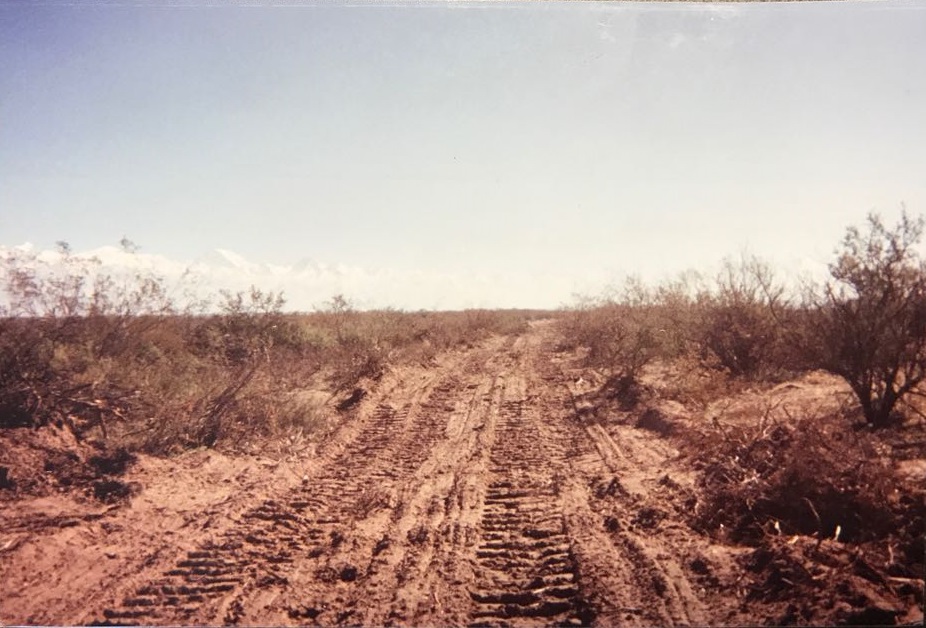
Source: Domaine Bousquet
Jean Bousquet had a vision and dedication, and most importantly, he knew what he is doing, he knew the importance of water and proper irrigation. You would never tell that the picture below represents the same land today (also note that today Gualtallary Valley represents one of the most expensive farmlands in all of the Mendoza):
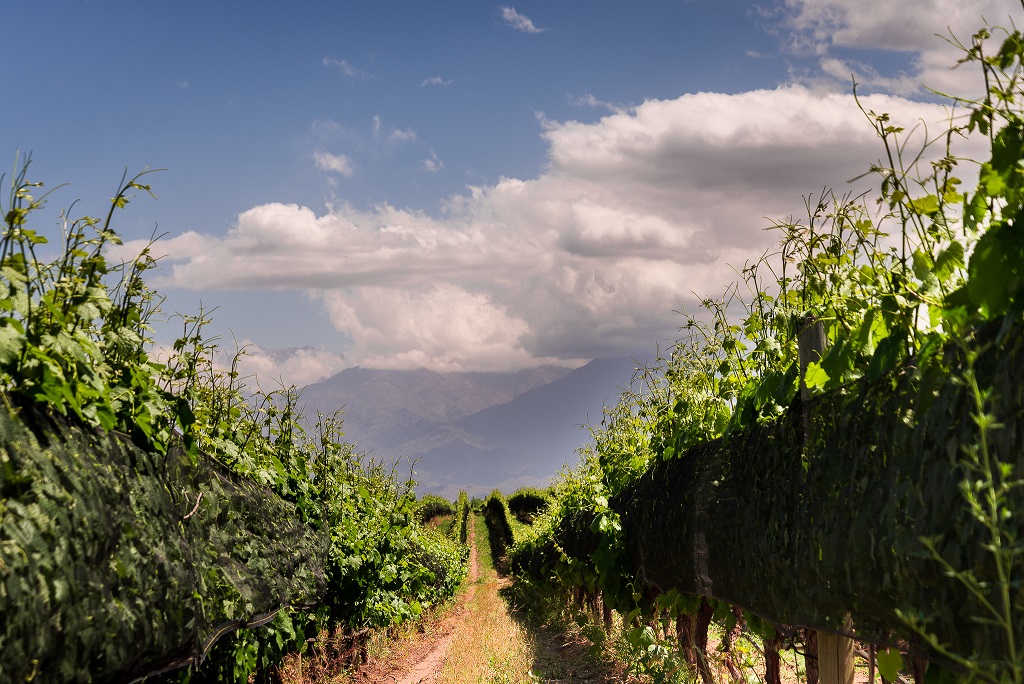
Source: Domaine Bousquet
Fast forward to today, Domaine Bousquet sustainably and organically farms 667 acres of land, produces 50 million liters of wine, 95% of which is exported to 50 countries around the world, and ranks among the top 20 Argentinian wineries in terms of export and a leader in the organic wine.
The winery produces a large range of still wines from traditional Argentinian varieties – Chardonnay, Malbec, Cabernet Sauvignon, etc, and it also offers a series of sparkling wines, both traditional method and Charmat. I got samples of Charmat-method wines, both white and Rosé, made from the Chardonnay and Pinot Noir in different proportions.


NV Domaine Bousquet Brut Tupungato Uco Valley Mendoza (12.5% ABV, SRP $13, 75% Chardonnay, 25% Pinot Noir, certified organic, vegan friendly) offers a nice fresh nose of golden delicious apple, crisp, fresh, energetic on the palate with cut-through lemony acidity. It is definitely enjoyable by itself and will play nicely with a wide range of dishes (Drinkability: 7+).
NV Domaine Bousquet Brut Rosé Tupungato Uco Valley Mendoza (12.5% ABV, SRP $13, 75% Pinot Noir, 25% Chardonnay, certified organic, vegan friendly) is a beautiful Rosé in its own right. It is not only the color, but it is also the wine which presents itself as a classic still Rosé would, with a nose of fresh strawberries and a full range of strawberry flavors on the palate, from tart to candied, perfectly balanced, fresh, vibrant, and full of life (Drinkability: 8-/8). Out of the two, Rosé was definitely my favorite.
At $13, these are the bubbles that you can consume any day without feeling guilty. You should, actually, feel guilty while drinking these wines, as the amount of pleasure you will derive is unproportionally more than what you are paying for them. But I will let you deal with your conscience, while I’m off to look for more values. Cheers!
New Year’s Escapades – 2021 Edition
New Year is my favorite holiday. It revolves around food, wine, friends, and a good time. New Year’s Eve is always special, and then on New Year’s Day we usually get together with friends, to talk and open some special bottles.
Yes, that how it always was. But not this time – no friends in the house, except via FaceTime or zoom. Better than nothing, but all the food and wine sharing is completely virtual, and therefore, not endorphins-producing.
Obviously, this New Year’s celebration was scaled down. In terms of wines, I mean. Our family can’t scale down food, this is not in our genes, so cooking was mostly as usual, with all the appropriate holiday favorites. But the wine I had to scale down – my mother-in-law prefers tequila, my wife would only have a glass of red for the evening, and kids, while grown up, don’t care much about alcohol. So I had to mostly count on yours truly for any wine adventures.
Here is what I decided to open for the New Year’s celebration:

Let’s talk about these wines.
At first, I thought that Mailly Grand Cru would be the only bubbles I would open for the night, to drink with dinner and celebrate the arrival of 2021, as I was the primary consumer of bubbles. Then I decided last minute that I will leave that Mailly Champagne just for the midnight toast, and instead would have NV André Chemin Champagne Brut Tradition Blanc de Noir Premier Cru (12% ABV, $26.99 WTSO, RC) with dinner. I’m always curious who makes the Champagne – you know, those little letters and numbers which you can find practically on any Champagne label. Is it NM (Négociant-Manipulant, majority of the big Champagne names are in this category), or the RM (Récoltant-Manipulant), which signifies grower’s Champagne? I found the letters RC on the bottle of the André Chemin Brut, which I never saw before. With the help of this website, I was able to figure out that RC stands for Récoltant-Coopérateur – grapes are provided by the grower to Coopérative-Manipulant who makes wine on the grower’s behalf and under grower’s label but without grower’s involvement.
The André Chemin Brut happened to be an excellent addition to the group – the wine was superb, offering warm notes of the toasted bread and fresh apple, perfect acidity, round, fresh, and delicious – pretty much the way I prefer my Champagne.
2012 Mailly L’Intemporelle Champagne Brut Grand Cru (12% ABV, $115, CM) was also a learning experience. I found letters CM on the label, which stands for Coopérative-Manipulant – this is when a group of small growers blend grapes collectively and make wine under one or more brands – with growers involved in grape growing and winemaking. I poured this wine to toast 2021, and unfortunately, it didn’t do anything for me ( my son said that he enjoyed it quite a bit). The wine had mostly Granny Smith apples without much of the roundness and creaminess – I definitely expect a lot more from the vintage Champagne and this wine didn’t deliver.
I also opened the 2014 Tiefenbrunner Turnhof Sauvignon Südtirol Alto Adige AOC (14% ABV) “just in case”. I had this wine before, and it was quite delicious and elevated. On the first night as the wine was opened, it didn’t offer much of anything, it was closed. It opened up, however, over the next few days, offering whitestone fruit, a touch of honeysuckle, and good acidity.
My choice of red wine was the 2007 Waterstone Cabernet Sauvignon Napa Valley (14.5% ABV) – it happened to be another perfect choice. There was a rumor (never confirmed) that this wine had some grapes coming from Harlan vineyards. Harlan or not, but this was a perfect California Cabernet – cassis all the way, mint, eucalyptus, round tannins, big but perfectly balanced body with well-integrated, smooth tannins – lots of pleasure.
 Then, of course, there was food. As I said, scaling down the food is not an option in this house. The majority of dishes were the ones you would expect to find at the Russian New Year’s table, such as “shuba” (herring under the fur coat), Olivie salad, deviled eggs, and cod liver salad. We even managed to find reasonably priced black caviar – which was really a black caviar imitation, but a very tasty one.


Our entree was just one dish, stuffed chicken rolls, but it was definitely a tasty dish:


Most of these dishes are quite simple to make but really tasty – a note to self to add recipes to my food collection here – food, same as wine, is the best when you can share it.
That’s all for my New Year 2021 celebration notes. Yes, this was all scaled-down – but we still had a delightful evening to end an interesting year on a high note.
How was your 2021 celebration?
Top 20 of 2020
 It is that special time of the year. Time to reflect. Time to conclude. Time to decide. It is Top Wines of The Year time.
I happily engaged in this Top Wine selection process for the past 10 years. What is a better way to reflect on your year in wines than thinking about all the wine experiences of the year, and deciding on the most memorable ones? Good wine should solicit an emotion – this is the main criteria for the wine to be included in this top list. The wine should be memorable, one way or the other, even if it was not the highest-rated wine of the year. If I can easily re-live the moment of tasting the wine, then the wine belongs to the top list.
Making decisions is not my forte in general. Making decisions about wines is even worse – a real pain. When I created my very first Top List in 2010, I wanted to create a Top 10 list. I quickly realized that Top 10 is not going to happen, then the Top Dozen was born. 2010 and 2011 both had a single Top Dozen list, actually consisting of 12 wines. In 2012, I realized that I can’t fit into one dozen anymore, the two dozen lists were born. In some years, even the 2 dozens were not enough and the lists were reaching 25, 26, and even 27 wines.
2020 presented truly a unique challenge. Every year until 2020, there were many opportunities to find the wines worth inclusion into the top wines lists – dinners with friends, samples, trade tastings, dinners with winemakers, and of course, all the wines casually consumed at home. 2020 completely changed that, and outside a few of the dinners with friends and trade tastings at the beginning of the year, the only sources of the wine experiences were a few samples and wines opened at home. As the end result, I was unable to come up with two dozens of wines for the top wines list. However, I still had more than a dozen wines that I really enjoyed and which would be easy to remember. Thus a compromise was needed, so the Top 20 seemed to be just the right number for the best wine experiences of 2020.
Without further ado, let me present to you the Top 20 of 2020.
20. 2016 Shelter Winery Spätburgunder Baden ($28) – While Germany has 3rd largest plantings of Pinot Noir in the world (which was a total surprise for me), I didn’t encounter an enjoyable German Pinot Noir yet – until this wine, which was classically old world, perfectly drinkable and enjoyable.
19. 1997 Burgess Cellars Cabernet Sauvignon Napa Valley ($NA) – Twenty three years is a good amount of time to render many wines non-drinkable. This, however, was a delicious California Cabernet in its prime. This wine could still evolve for a few more years, and it supported quite an enjoyable evening.
18. 2017 Shiloh Secret Reserve Cabernet Sauvignon ($40) – Israeli wines are underappreciated by wine lovers – maybe it is for the better for those of us who already discovered them? A classic Cabernet Sauvignon, with cassis and eucalyptus, just as you want your Cab to be, and perfectly balanced. Balance in the wine is a canvas for pleasure and this wine fully delivered.
17. 2006 Bodegas Emilio Moro Ribera Del Duero ($25) – One of the perennial favorites. This is one of the introductory level wines from the Emilio Moro universe, showing no signs of aging at the 14 years mark. Superb fresh fruit with a dark core of herbs. Drink Ribera del Duero wines, my friends.
16. 1998 d’Arenberg Cabernet Sauvignon High Trellis McLaren Vale ($19 @ BWG) – First, I have the utmost respect for d’Arenberg wines – great producer. Second, I’m always on the lookout for the wines from the 1998 vintage, as this year is special in my book (birth year of my son). Third – when you see d’Arenberg 1998 wine at $19 at the Benchmark Wine website, you just grab it instantly. Fourth – you open the bottle, say “ahh” and enjoy it. The wine was perfectly delicious, still young, fresh, and memorable.
15. 2018 Cecchi Sangiovese Toscana IGT ($12) – This wine was just a revelation. While Cecchi offers a great range of Sangiovese-based wines, with different levels of power and complexity, this simplest bottling brought literally an unexpected joy of the unadulterated beauty of Sangiovese, an open wine with the perfect balance of fruit and acidity. A memorable simplicity.
14. 2017 Alit Pinot Noir Willamette Valley ($33.64 | $18.50 Alit Collective) – Polygons. Basalts. Volcanic soils. Site-specific wines even if the whole site is only two and a half rows of vines. Alit, together with its sibling Rose and Arrow, are on the quest to discover the Oregon Grand Crus, and I’m happy I was able to join that quest. The wine is a quintessential Oregon Pinot Noir. Try it for yourself.
13. 2016 Château Vincens Prestige Cahors ($13.99) – I guess 2020 was my year of rediscovering Malbec, from both new and old worlds. This wine was simply spectacular, an unmistakable old-world jewel, magically transporting you to the old cellar, holding hundreds of years of tradition. Pure pleasure.
12. 2017 Rabbit Ridge Allure de Robles Paso Robles ($10) – Respect. Erich Russel bottled this wine in the spring of this year, under the first, crazy quarantine, while the world was crumbling and nobody knew what to do. He bottled the wine so people would have something to drink. This might be the best damn $10 wine the money can buy. And without any regard to price, this is simply delicious, approachable, perfectly balanced Californian wine, ready to drink from the moment you pull the cork. Thank you, Erich.
11. 2016 Campochiarenti San Nicola Chianti Colli Senesi (€11) – I tasted this wine for the first time during an amazing night of Gran Selezione Chiantis and Brunellos, so I was not impressed at all and couldn’t understand everyone’s rave. A few months later, I had a sip of this wine, and my instant reaction was “oh my god”, that is stunning. Beautiful, generous, succulent Italian wine – the price is great, but the qualities of this wine extend well past any price category.


10. 2016 Domaine Anderson Estate Chardonnay Anderson Valley California ($40) – A brilliant wine. The Chardonnay done perfectly right – just the right amount of apple and vanilla, on a beautiful core of acidity. Powerful, delicious, and utterly balanced – one of the very best California Chardonnays I ever tasted.
9. 2013 Cecchi Coevo Toscana IGT ($129.99) – I tasted this spectacular wine during lunch with Andrea and Giulia Cecchi in New York City at the beginning of the year. There was some wine left in the bottle, which I was generously offered to take home – I gladly obliged. In the evening, we went to see friends, and after a few bottles of random simple wines, mostly from California, we poured Coevo. Upon the first sip, my friend’s reaction was priceless – “huh, why you didn’t tell us that brought serious wine” was the question. The depth and complexity of this wine are simply superb.
8. 2018 Landmark Vineyards Overlook Chardonnay Sonoma County ($27) – Another perfect California Chardonnay score. It is similar to Domaine Anderson with maybe a bit more power, but still perfectly balanced and fresh. Pure pleasure.
7. 2016 Pedra Cancela Selecção do Enólogo Dão Portugal ($10) – I discovered this wine during the Dão wine dinner at the beginning of the year. Portuguese wines are famously inexpensive, but QPR on this wine is just mind-boggling. This wine is hard to find in the US, but if you will be able to find it, I guarantee you an incredible amount of pleasure per dollar.
6. 2019 Mythic Mountain Malbec Rosé Mendoza Argentina ($11.99) – another delicious discovery of this year. Fragrant, effervescent, end elegant, this Malbec Rosé definitely exceeded my expectations. Outstanding QPR, and yes, I’m repeating myself – pure pleasure.
5. 2018 Ritual Sauvignon Blanc Chile ($19.99) – Some years ago I discovered Italian Sauvignon Blanc wines from Gaja and Ornellaia, which were superb, rather unexpectedly. This Ritual Sauvignon Blanc carries a similar level of surprise. It doesn’t have any of the grapefruit or sweet lemon notes but offers instead a touch of butter, and crisp, mineral elegance. If Italian Sauvignon Blanc doesn’t work for you, think Cloudy Bay from New Zealand. Yep, that good and that different.
4. 2016 Louis M Martini Cabernet Sauvignon Napa Valley ($40) – a California in the bottle. Imagine a powerful, fruit-forward Californian Cabernet Sauvignon, loaded with cassis, eucalyptus, mint, layered, silky smooth, and incredibly seductive, not leaving you a chance to resist its charm. Got the image? Now imagine that this California Cab is just freshly released. What are your chances of enjoying it as soon as you will open the bottle? Quite low, right? It is rather expected that after the first sip you will put it aside with the words “it needs to breath”, or you might reach out for a decanter. Now, imagine the perfectly seductive California Cab without the need to wait even a moment, just sip and enjoy. Yep, that would be this bottling of Louis Martini Cabernet Sauvignon. Perfect from the get-go.
3. 2008 Cantine Lonardo Coste Taurasi DOCG ($NA) – If the previous wine was quintessentially California, this wine was quintessentially Italian. I have no idea how I came in possession of this bottle, so I had no expectations when I brought this bottle to Cape Cod during summer to enjoy with the family during the visit. Wow. “Mind-blowing” doesn’t even describe it. the combination of fresh cherries, tobacco, leather, cherry pit, supremely balanced – everything you might want in Italian wine was present in this bottle. An absolute wow.
2. 2011 Cayuse Syrah En Cerise Vineyard Walla Walla Valley ($130) – Power. Raw power. Granite. I imagine this is how liquified granite tastes. The wine of impeccable finesse and pleasure, but also an incredible power. This wine is a beast, but it is a well-tamed beast. Did you see the movie “Venom”? Yep, that type of beast.
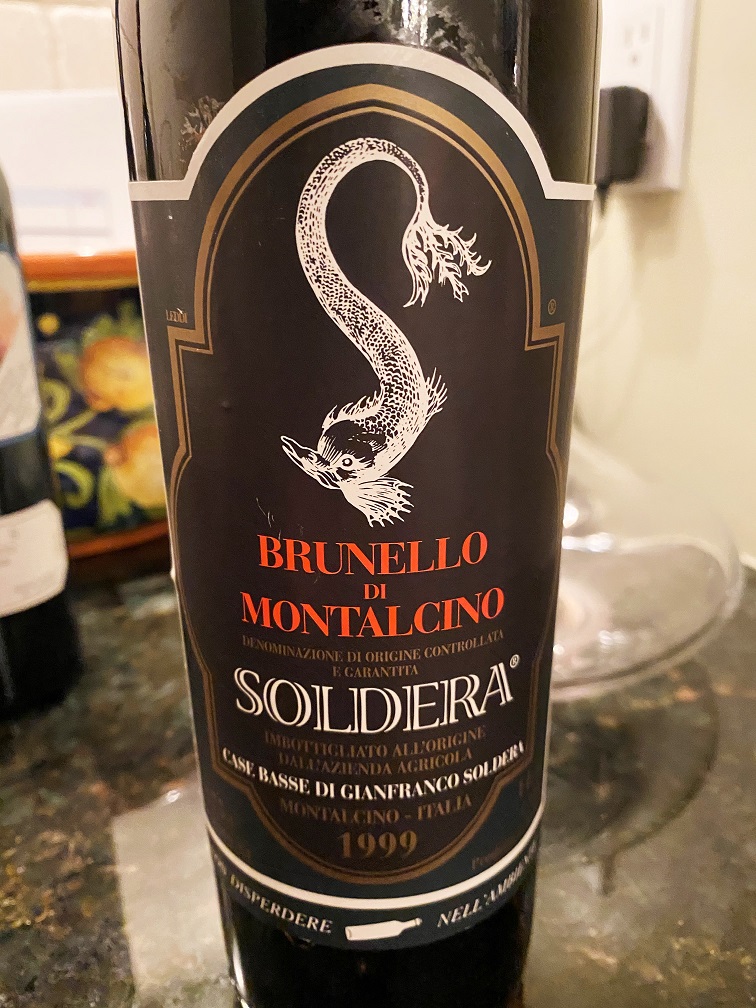
1. 1999 Soldera Case Basse Brunello di Montalcino DOCG ($NA) – And then there are wines which can make the whole room go quiet. Meditazione. Yes, it is an Italian word, same as the wine, but I’m sure you don’t need a translation. Once we were done sniffing this wine, which took good five minutes, everyone got quiet and lost in thoughts. A meditation wine. Wine of next level. The wine that instantly becomes an experience. Forever. There is no way I can describe it. As we are about to celebrate the New Year, I can only wish that you will be able able to experience it.
And we are done here – the presentation of the Top 20 of 2020 is now finished. What were your top highlights of the year?
Alit Wines – Follow The Flow. Lava Flow
 Here is a question which can never be answered: where the wine is made, in the vineyard or in the cellar?
There are many arguments towards the vineyard being The Place where the wine is made. Mother Nature offerings are everchanging – they change every year, never repeating themselves. But it is not only the climate that never repeats itself – the land which seems to present itself as chunks of sameness is very far from it. Only identifying different pieces is the work of art – the mastery of the winemaker.
Alit Wines is a very young winery, by all means – it was founded only about 5 years ago, in 2016. You would not think that once you taste their wines, which come through elegant and mature – but we need to keep in mind that Alit is only one piece to a bigger story.
Oregon is often compared with Burgundy – Pinot Noir and Chardonnay are stars in both regions, and both regions produce well ageable wines of finesse. Burgundy is built on the concepts of terroir and soils – I’m sure you’ve heard the stories of Burgundian vignerons going any distance to protect their soils from erosion and any sort of loss. The whole concept of Crus is based on terroir differentiation, and it took Burgundy centuries to find their best of the best parcels which earned the right to be called Grand Crus.
If you ever listened to the Oregon winemakers, they often talk about soils, first in monolithic terms, in terms of big blocks. But with every subsequent harvest, they start seeing differences between different plots in the vineyards, and those become specific plot-designated wines. This is Oregon’s path towards finding their Grand Crus.
We probably shouldn’t speak for the whole of Oregon, as Alit’s approach to this Grand Cru quest is different. Let’s get back to our “bigger story” around Alit. We usually think that wines are all about grapes, but they are actually all about people – people who stand behind those wines. In the case of Alit, the first person we need to mention is Mark Tarlov. After leaving his first successful wine project, Evening Land (a unique enterprise, if you ask me, making wines under the Evening Land label both in Burgundy and Oregon), Mark continued his wine endeavors with Chapter 24 Vineyards, which he started in 2012. Chapter 24 wines are extremely terroir focused – if you will look at the Chapter 24 Vineyards website, you will see that it produces only two wines – one called The Fire which comes from the volcanic soils, and The Flood, with the grapes coming from vineyards planted in riverbed soils.
In 2015, Chapter 24 Vineyards opened the “last chapter” as it is called – Rose and Arrow winery, as well as the subsequent (2016) “sister” operation – Alit. In case you are curious, the “About” page explains the Rose and Arrow name: “The “rose” and “arrow”, innately connected yet conflicting, each defined by the existence (or absence) of the other. Our favorite wines make us appreciate the harmony of opposites: acid/sweet, simple/complex, solid rock/sprouting vine. The latter is where our narrative begins, as every great wine is ignited by unique tensions in the rock of its origin.“. Also in 2015, Mark Tarlov was joined by Chilean winemaker Felipe Ramirez, who became the winemaker for Chapter 24, Rose and Arrow, and Alit wines, working together with consulting winemaker Louis Michel Liger-Belair.
Remember, we need to follow lava flow, as these wines are all about soils, basalt soils, rich in unique nutrients. Enters Dr. Pedro Parra, who wine writer LM Archer called Terroir Whisperer. Dr. Parra is one of the leading soil specialists in the world. Explaining Dr. Parra’s methodology would require a long, very long, and dedicated post, so instead, you should read Lyn’s article where she does a great job explaining what Dr. Parra does – but in essence, he is capable of identifying microsites, some can be 0.5 acres or less, capable of producing wine with very specific characteristics – all of it based on soil and climate analysis before (!) the vineyards are planted. To make it all practical, one of the first projects at Rose and Arrow was the vinification of about 100 wines harvested from such microsites – this is what makes Rose and Arrow wines unique.
When you think of “vineyard plots”, what image comes to mind? My imagination stops at squares or rectangles – but in our case, a correct answer is a polygon. Chapter 24/Rose and Arrow/Alit all operate with polygons, where the shape of microsites can be very complex. Here is the snapshot from our zoom call with folks from Alit where Felipe Ramirez shows the map of one of the sites (sorry that you can’t see Felipe):
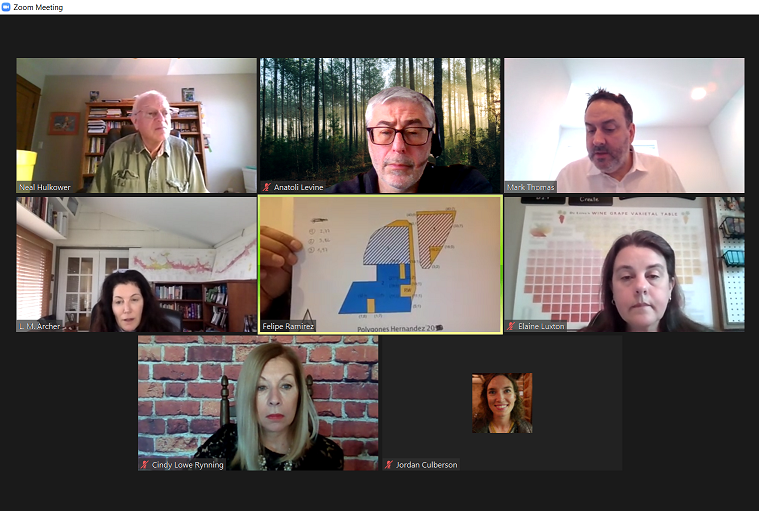
How these microsites are identified? Using a method called electrical conductivity. Measuring the electrical conductivity of soil allows to create maps – this is exactly what the folks from Alit and Rose and Arrow are doing. Once you have a map, the rest is easy 🙂 now it is all about mastery of the winemaker – harvest each microsite (polygon) separately, vinify separately – and create the magic.
Now that we understand how the road to the Oregon Grand Crus looks like, let’s discuss the role Alit is playing in this quest.
Talking about Alit wines, we need first mention the Collective. Alit Collective is similar to the wine club, but it is very different from the typical winery club. To become a member of the Collective, you need to pay a $100 annual membership. After that, you can buy Alit wines at a cost – however, it is you who decide what to buy and when. To give an idea of the cost, Alit Pinot Noir (2015) costs $15.10 for Collective members and $27.45 for non-members – this means that once you buy 8 bottles, you will recoup your $100 investment, and every bottle afterward gives you great savings. How does selling at cost makes sense, you probably wonder? It wouldn’t if Alit would be on its own, but in conjunction with Rose and Arrow, it does make sense, as it helps to finance the overall operation.
What else can I tell you? Ahh, the wines, let’s not forget about the wines!
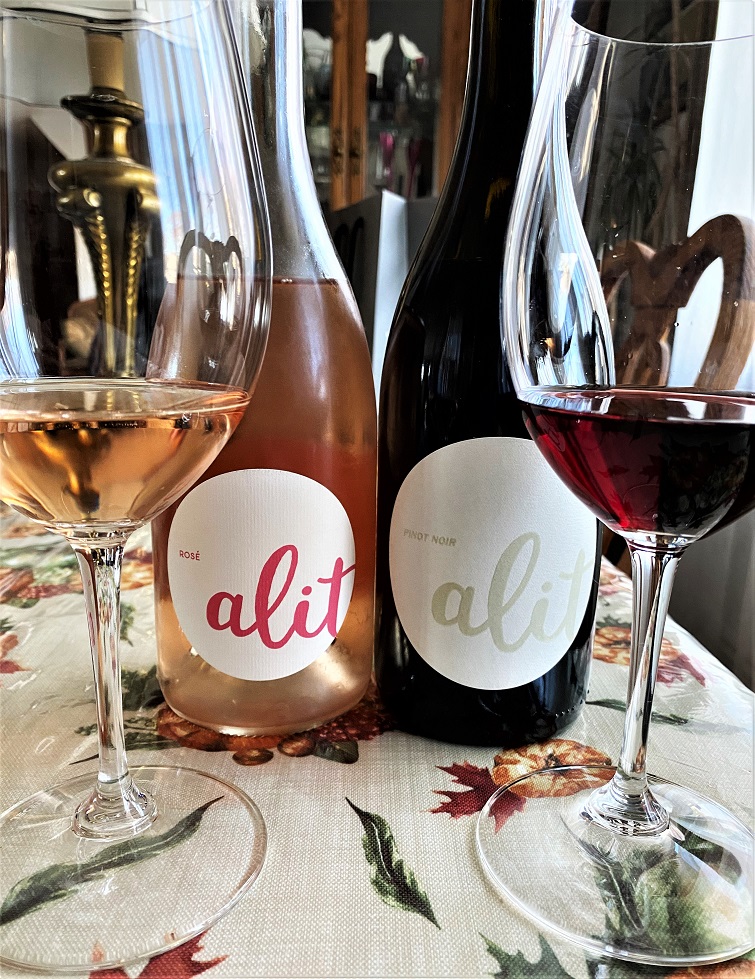
We tasted two of the Alit wines, Rosé (of Pinot Noir, of course), and Pinot Noir.
2019 Alit Rosé Willamette Valley (13% ABV) had a salmon pink color. Gunflint (volcanic soils!), strawberries, and onion peel on the nose. Nice touch of fresh strawberries and lemon, crisp, refreshing, nicely restrained, and well balanced with lemon notes on the finish (Drinkability: 8) – unquestionably delicious any time you want a glass of light, refreshing wine.
2017 Alit Pinot Noir Willamette Valley (13.6% ABV, native yeast fermentation, 10-12 months in oak) – beautiful bright ruby color – it is seldom for me to see a red wine of such a beautiful color. Beautiful nose, herbal, open, inviting, with mint, cherries, and a touch of the barnyard. Now, I have to say that the palate made me work for it. During the tasting, with the freshly opened bottle, the wine showed light, with red and blue fruit, good acidity, fresh, food-friendly, and restrained – we can even say “under-extracted” (Drinkability: 7+/8-). Over the next two days, the wine opened up, it obtained body, became round and supple, and became an object of pleasure (Drinkability: 8+). Definitely needs time, either in the cellar or in the decanter if you are in a hurry.
Alit Wines and Rose and Arrow enterprises are definitely something to watch. Mark Tarlov believes that sometime around 2030, it will be possible to understand if his quest for the Oregonian Grand Cru was successful. As for me, I practically always enjoy the journey more than the destination, so I will be happy to tag along, and yes, actually enjoy the journey with Alit wines – hop on, we can follow the lava flow together.
Beaujolais Nouveau 2020 Edition
Yes, I know – we are ending the first week in December, and it’s been more than 2 weeks since Beaujolais Nouveau was released, so if anything, this is not a timely post. And I acknowledge your critique, as you can see in the title – my typical Beaujolais Nouveau post announces “Beaujolais Nouveau Est Arrivé!”, but hey, life takes precedence…
I know that many wine lovers dismiss Beaujolais Nouveau as a gimmick. The beauty of wine is that everyone is perfectly entitled to their opinion, but for me tasting the very first wines of the vintage is always fun. Ever since this blog started more than 10 years ago, I didn’t miss a single Beaujolais Nouveau release – you can check all the previous years here – and I have two main observations. First, the labels are always beautiful and creative. Second, the wines are getting better and better. Well, for sure on the labels – and keep talking about improved wines almost every year, so I guess they had been good for a while.
For 2020, I something interesting for you in the store – errr, on the blog. It appears that it will be the first time I will include a non-Beaujolais “nouveau” wine in this post. I know I had other new vintage wines before, released at about the same time as traditional Beaujolais Nouveau – I can only guess I was never happy enough about those to include them into this special coverage. But this year, the non-Beaujolais nouveau wine was excellent, and hence I’m including it in the group.
I’m not trying to drum up the drama – here you can see the full set of Nouveau 2020 wines I was able to find at my local wine store:  All the wines were in the range of $10 – $13, thus I didn’t write down prices for each wine. Here are the tasting notes:
2020 Domaine Dupeuble Pere et Fils Beaujolais Nouveau AOC (12.5% ABV)
Dark ruby
Fresh berry, cherry cola
Fresh raspberries, a touch of lemon, crisp, crunchy, acidic.
7+
2020 Georges Duboeuf Beaujolais Nouveau AOP (13% ABV)
Garnet
Raspberries and blueberries on the nose, a touch of mint
Fresh raspberries, round, clean, less acidic than the previous wine, very pleasant.
8-/8, can be consumed without regards to the Nouveau designation. Long finish full of pure raspberry joy.
2020 Joseph Drouhin Beaujolais Nouveau AOC (13% ABV)
Ruby
Complex nose with herbs and cherries
Slightly tart raspberries, crisp acidity, acidic finish.
7+/8-, not bad, but the previous wine gives more pleasure.
2020 Union Wine Co Underwood Pinot Noir Nouveau Oregon (13% ABV)
Bright ruby color.
The nose of freshly crushed berries
succulent raspberries on the palate, nice minerality, lots of pleasure
8, excellent
As you can see, Duboeuf Beaujolais Nouveau and Underwood Pinot Noir Nouveau wines were my favorites, and both clearly win the best label contest (can’t decide which one do I like more):


It seems that Georges Doboeuf is pretty consistent with very good Nouveau wines for many years already. Drouhin is pretty consistent too – the wines are not bad, but not super-exciting at the same time. I had Domaine Dupeuble 5 years ago, and I liked it more back then. If I have one gripe it is with the Underwood – nowhere on the bottle the vintage can be found, which is bad – next year, nobody would know how Nouveau is that Nouveau, unless Union Wines will change the label.
As you can tell, this was a good group of wines. Was this tasting fun? For sure. Is the quality really improving? Probably not – but it still stays up, so we have nothing to complain about.
Did you taste any Beaujolais Nouveau this year? Any favorites?
Celebrate Cabernet Franc!
What do you think of Cabernet Franc? Is that a grape worthy of its own, special celebration?
If I can take the liberty of answering my own question, it is an enthusiastic “yes” from me.
I don’t know if wine lovers realize the grand standing of Cabernet Franc. The grape is essential as part of the blend, in French Bordeaux and Bordeaux-style blends from anywhere in the world. At the same time, Cabernet Franc is perfect on its own, making delicious single-varietal wines literally everywhere – Argentina, Australia, California, Canada, Chile, France, Israel, Italy, New Jersey, New York, Oregon, South Africa, Washington, and everywhere in between.
While classic Cabernet Franc taste profile evolves around Black Currant ( a.k.a. Cassis), the overall expression varies from lean and dry in the wines coming from Loire Valley in France (Chinon, Saumur) to opulent, bigger-than-life renditions from Argentina and California. Another essential taste element of Cabernet Franc is bell peppers, which are typically most noticeable in the Loire wines but can be completely absent in the Californian wines, where bell peppers flavors often considered highly undesirable.
I talked about the history of Cabernet Franc in some of the older posts, so I’m not going to repeat it here. Instead, we can just get to the subject of today’s celebration and taste some wines.
#CabFrancDay holiday was invented about 5 years ago by Lori Budd of Dracaena Wines, a passionate Cabernet Franc producer out of Paso Robles in California and a tireless champion of her beloved grape. To celebrate the Cabernet Franc, I tasted two samples of the Cabernet Franc wines which I never had before, so let’s talk about them. We can even make a competition out of this tasting, a California versus Washington match.
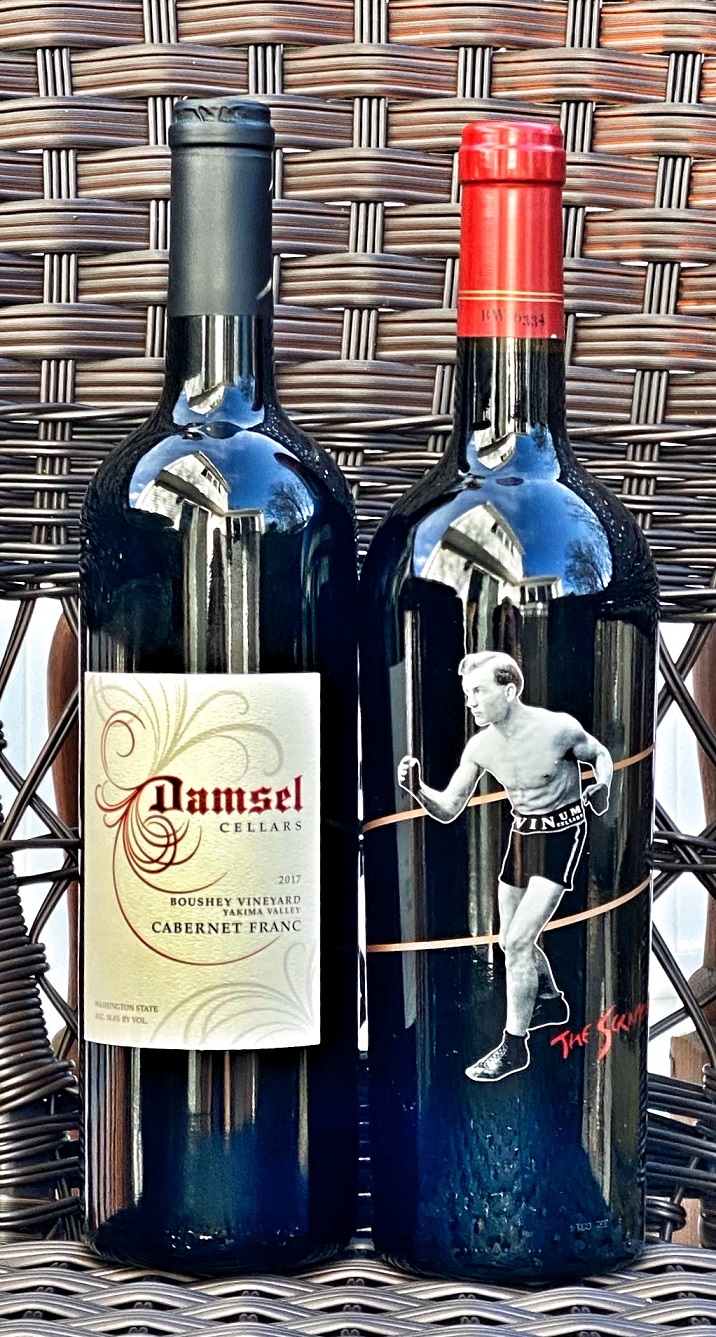
Let’s start in California, at Vinum Cellars in Napa Valley. As soon as I saw a bottle of 2016 Vinum Cellars The Scrapper Cabernet Franc El Dorado (15.18% ABV, $35, 26 months in 2-year-old French Oak) I realized that I have a lot of questions. Who and why is depicted on the bottle? What the mysterious number on the top of the bottle? Is there any reason to use grapes from El Dorado for the Napa-based winery? To answer these questions, I reached out to Maria Bruno, whose cousin, Richard Bruno, is the co-founder and co-winemaker at Vinum, where Maria helps with the winery’s social media and digital marketing efforts. Here are the answers to my questions which give you an excellent introduction to the winery and the wine:
1. Why the wine is called The Scrapper?
A scrapper is essentially a fighter and we call our wine that because Cabernet Franc is a varietal that has quickly been forgotten in the shadows of the more popular Cabernet Sauvignon. Our wine is made for the open-minded, the adventurous, and those who root for the underdog.
2. What is behind the image on the wine’s label?
The image on the front of the bottle is Gene Tunney. He was the 1926 Heavyweight Champion of the World, however, most modern day people have never even heard of him. But have you heard of Jack Dempsey? I’m sure you have. A little history lesson here: Gene Tunney defeated Jack Dempsey for the 1926 crown, and it was the second time he defeated the more popular fighter (no one else ever did that). So to complete the metaphor, if Gene Tunney is Cab Franc, and Jack Dempsey is Cab Sauv we then ask you, which is the better varietal? Because we know who the better boxer was…
3. On top of the foil capsule it says BW 6334. What is the meaning of that?
That’s our California Bonded Winery number. In 1997 we financed our own winery on credit cards and utilized the custom crush space at Napa Wine Company (they are Bonded Winery number 9! Literally, the 9th bonded winery in the state and currently the only single-digit bonded winery still in existence). We sold our first vintage, all 960 cases, out of the trunks of our cars, and here we are over 20 years later… still going strong!
4. Why El Dorado? What makes Cab Franc from El Dorado a special wine?
We source our Cab Franc from a hillside, red dirt soil single vineyard at an elevation of 1,600 feet within the Sierra Mountains in El Dorado County. The grower, Ron Mansfield, has a degree in renewable agriculture and has organically farmed this vineyard (though not certified) using sustainable practices for over 35 years. Ron also grows tree fruit such as peaches, nectarines, apples, and pears We have produced Cabernet Franc grown by Ron for over 20 years, and the 2016 vintage was our 19th. The entire vineyard only produces about 500 cases a year but it’s worth it (because it’s so good). The vineyard is 25 years old and is head-trained allowing more sunlight into the canopy and therefore a reduction in Pyrazines which are responsible for green and vegetal aromas and flavors.
How was the wine? Please allow me to introduce Damsel Cellars first, and then we will discuss the wines side by side.
Damsel Cellars is located in Woodinville, Washington. Just seeing Woodinville on the wine label puts a huge smile on my face, as it instantly brings back the happiest memories of discovering Woodinville some years back. Walking from one winery door to another, and tasting one delicious wine after another, I was hoping to replicate the experience a few months back as I was supposed to have a business meeting in Seattle, but you know how 2020 travel looks like…
Mari Womack, owner and winemaker of Damsel Cellars, got into the wine only 10 years ago, but tasting her wines you would never think so. After working at a number of Woodinville wineries, she started Damsel Cellars, with the sixth vintage on the way now.
The Grapes for 2017 Damsel Cellars Boushey Vineyard Cabernet Franc Yakima Valley (14.6% ABV, $36) come from the Boushey Vineyard in Yakima Valley, located on the southern slopes of the Rattlesnake Mountains. The first vines were planted there in 1980, and the last plantings took place in 2003. The vineyard is located on slopes from 700 to 1200 feet elevation, so the grapes can enjoy a cooler and drier climate.
Now, how did the wines compared? Both wines are 100% Cabernet Franc, which I find quite typical for any wines bearing the Cabernet Franc name. Both wines were similar in the pure black currant expression, and both wines didn’t offer any of the bell pepper undertones. Both wines required at least an hour to come to their senses. Vinum Cab Franc stayed perfectly powerful and polished over the course of 4 days, black currant all the way, a touch of dark chocolate, full-body, a roll of your tongue smooth, and perfectly balanced. Damsel Cab Franc’s power on the first day manifested in black currant notes weaved around expressive minerality, which I usually call “liquid rock” (this is one of the common traits I find among many Washington wines), perfectly balanced and delicious. On the second day, however, the ultra-distant touch of the bell pepper appeared, the fruit gently subsided, and the wine magically transposed into the old world – a perfectly balanced old world wine. In a blind tasting, I would put this wine squarely into the Loire Valley and would be very proud of my decision.
The verdict? I don’t have one. Yep, seriously, These are unquestionably Cab Franc wines, unquestionably delicious, and unquestionably different. Oh well. If I would be really hard pressed to chose one, I would go with Damsel Cab Franc – if anything, for the old world nostalgic emotions – I really drink very little of the old world wines, so I’m always excited to experience them again.
That’s all I have for you, my friends. How is your Cabernet Franc celebration going? Let me know what Cab Franc made you excited. Cheers!
Hey French – Drink Italian
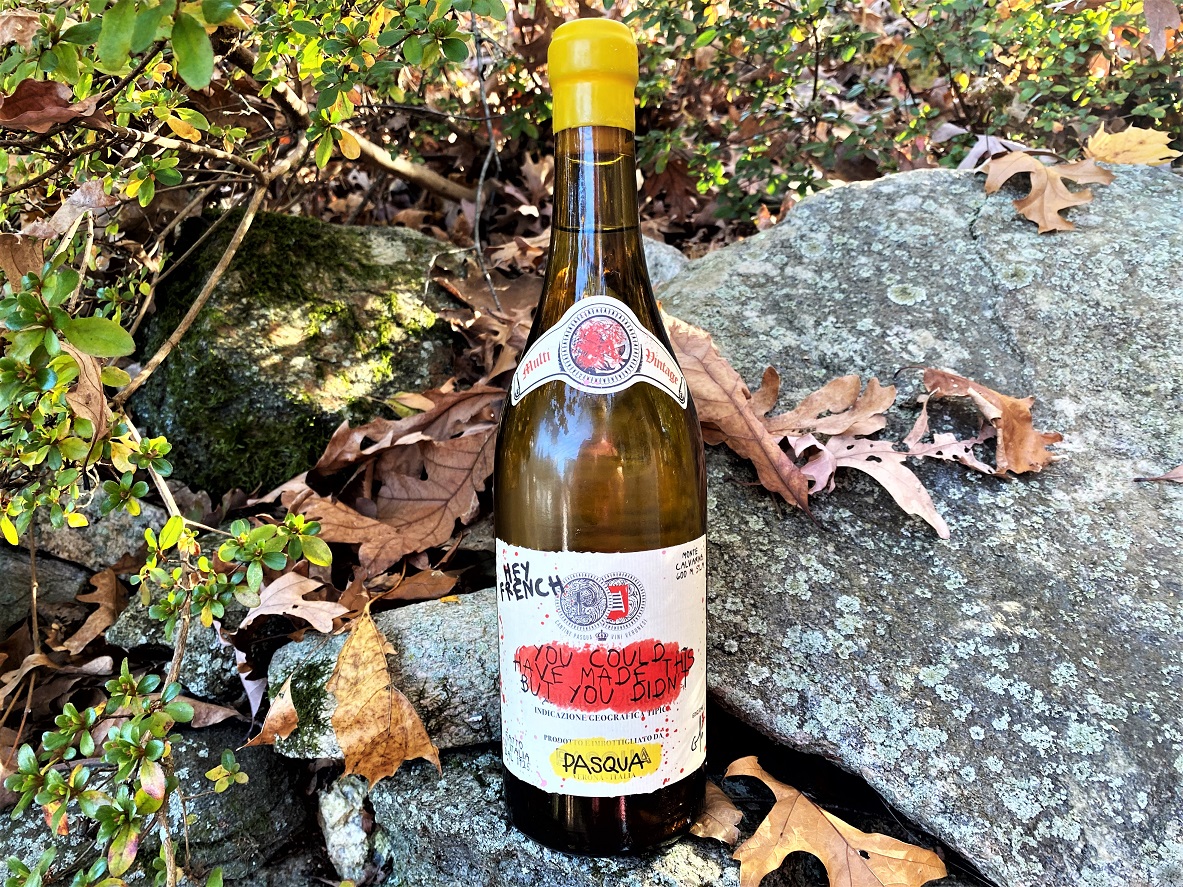 I mean no disrespect.
The title of this post is only suggesting that you should drink Italian wine. A particular Italian wine. And it doesn’t mean that French people should drink Italian wine – even though they will not regret if they will. Everybody can (should?) drink this Italian wine – Hey French.
The Pasqua brothers started Pasqua Vigneti e Cantine winery almost 100 years ago, in 1925 near the town of Verona in Northern Italy. Now with the family’s third generation at the helm, the winery continues and advances its traditions. I came across Pasqua wines for the first time almost 10 years ago – I found Pasqua Amarone at Trader Joe’s in Boston, and it was as good as Amarone under $20 can be. Then I discovered (also at Trader Joe’s) PassimentoSentimento, a tribute to the most famous Italians from Verona – Romeo & Juliet. At the beginning of this year, 2020, I had the pleasure of tasting Pasqua Famiglia Amarone at the Gambero Rosso event in New York. And then I was offered to try a sample of the latest addition to the Pasqua portfolio – maybe even a winner of the longest wine name contest – Hey French. You Could Have Made This Wine But You Didn’t.
This wine is definitely unique. To begin with, the wine is identified as “multi-vintage”, which is not a typical term in the wine world. The standard term is non-vintage, it is typically applied to Champagne and some other sparkling wines. And of course, a typical Champagne is a blend of multiple still wines from multiple vintages – however, it is rare to find a non-vintage still red or white wine. Hey French is deliberately identified as multi-vintage and it takes its inspiration from Champagne (hence Hey French in the wine’s name). The wine is made out of the grapes coming from the 4 best vintages of the decade – 2013, 2015, 2016, 2017, from one of the best vineyards in the area, Monte Calvarina, and 3 grapes – primarily Garganega (the grape used for the production of Soave Classico), with the addition of Pinot Bianco and Sauvignon Blanc. A total of 18 wines were used to produce Hey French Edizione 1.
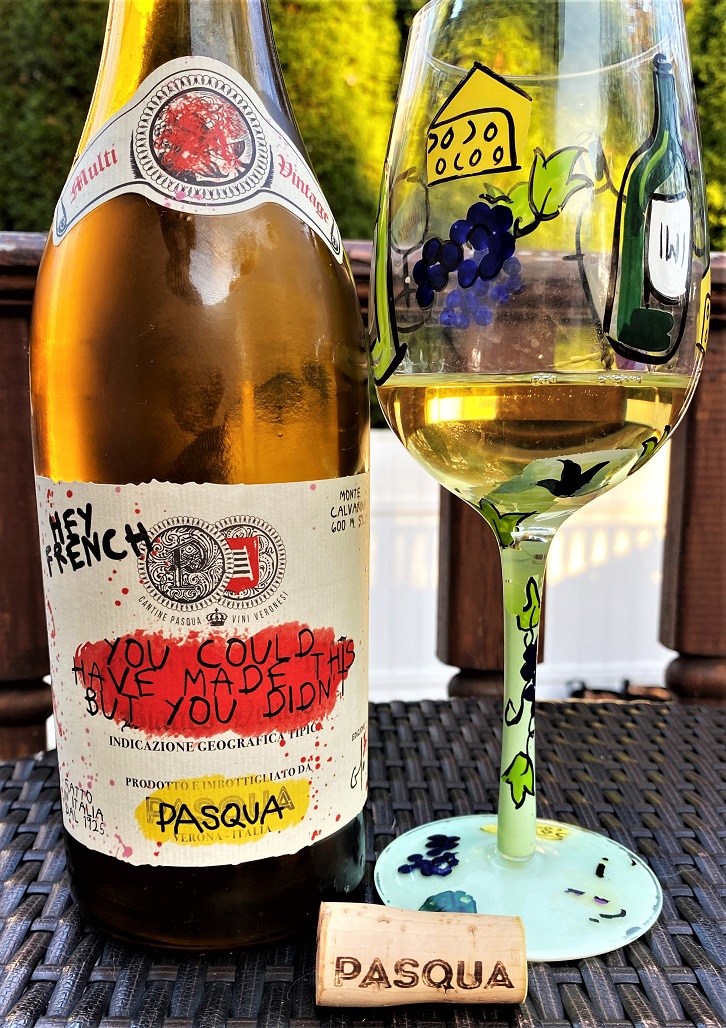
How was the wine? In a word, delicious.
Multi-vintage Pasqua Hey French You Could Have Made This Wine But You Didn’t Edizione 1 Veneto Bianco IGP (13.5% ABV, $40, blend of best 4 vintages of last decade)
Intense gold
Vanilla, apples, plums, Chardonnay-like
Fresh, lip-smacking, precise, clean acidity, whitestone fruit, granny smith apples, a hint of nutmeg, a hint of butter, round, plump, herbs, perfectly dry, delicious.
8/8+, superb.
Based on my experience with Pasqua wines so far, the company is accustomed to making bold moves (drinkable Amarone under $20 at Trader Joe’s clearly is a good indicator). This multi-vintage wine should also be categorized as such – $40 still wine without vintage designation with a playful label (designed by the celebrity Cuban-French artist CB Hoyo) might not be an easy sell. Once you try this wine, which is an absolutely solid, world-class wine, you would be happy to drink it again and again, but you know how preconceived notions work with wine…
The bottom line is simple – find this wine and try it. Additionally, offer it to your friends to taste blind, and then watch for the surprise on their faces once you reveal the wine – life’s little pleasures. Cheers!
Jerez – A Tasty Treat and Halloween Candy Solution
 Yes, I know. Halloween is history now, so why am I even mentioning it?
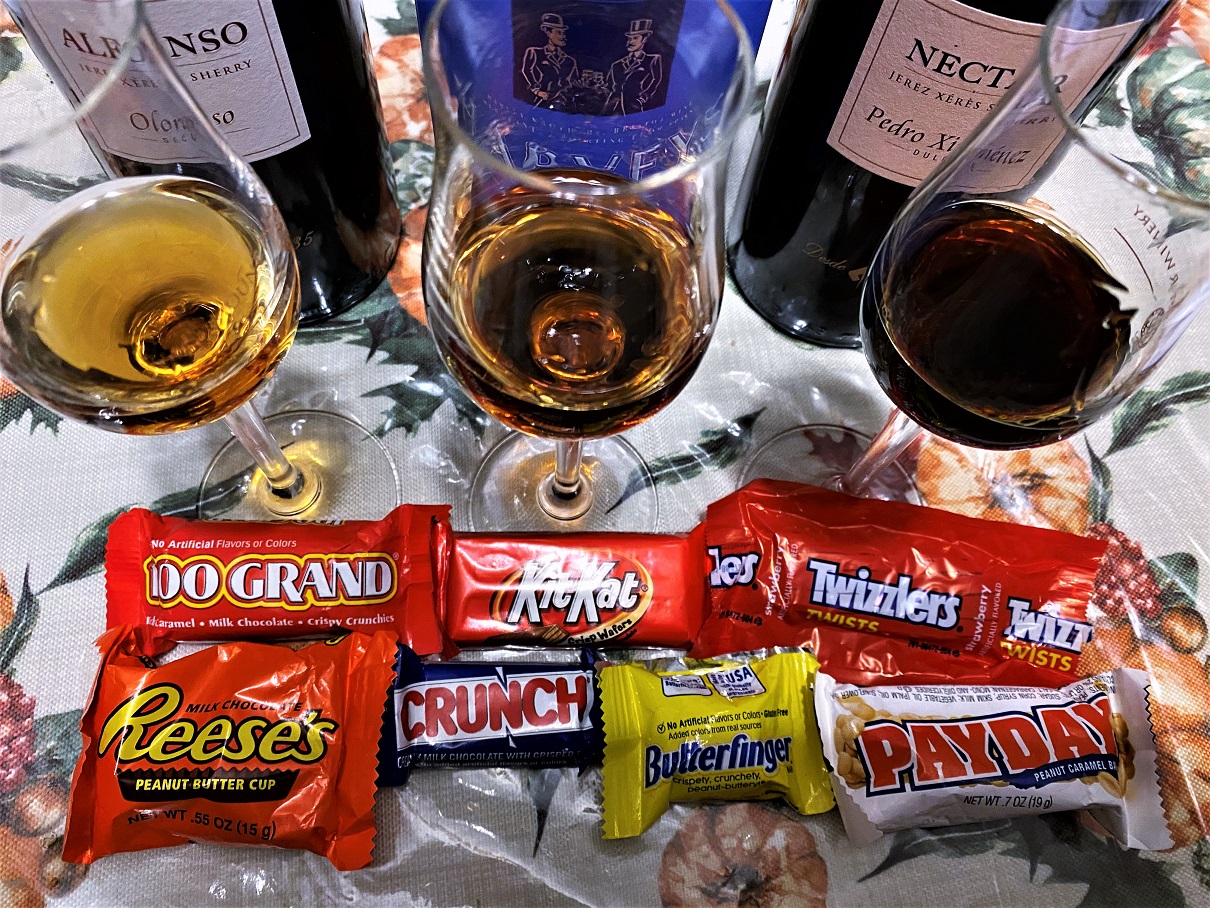
Because I know that those Halloween candies are still lurking around, and will be for a while. And Halloween candy is not something which would make you crave the wine. But it doesn’t have to be that way. There are wines out there which will help you get rid of the candies – with pleasure. What am I suggesting? Let’s talk about Sherry, also known as Jerez.
Jerez wines (officially known as Jerez-Xérès-Sherry) take its name from the town Jerez de la Frontera in Andalusia, Spain, with the grapes coming from the vineyards surrounding the town. Jerez is one of the oldest winemaking regions in Europe, tracing its roots to more than 3,000 years back. Sherry is a fortified wine, and it came to being around the 8th century when the distillation process was invented. As a fortified wine Sherry can be compared to Port, however, the major difference is that Port is typically fortified in the middle of the fermentation process, to preserve the sugars in the wine, where Sherry wines are typically fully fermented, and then fortified, so with the exception of the particular style of Pedro Ximénez, most of the Sherries are dry wines.
There are many styles of Sherry wines, offering various levels of dryness, complexity, and oxidative qualities. Sherry wines are often also produced using the solera method, where the wines of the different vintages or constantly combined and resulting wines might represent a blend of hundred of vintages. The world of Sherry is quite complex, so if you want to read about all the different styles, this Wikipedia article contains a lot of good information.
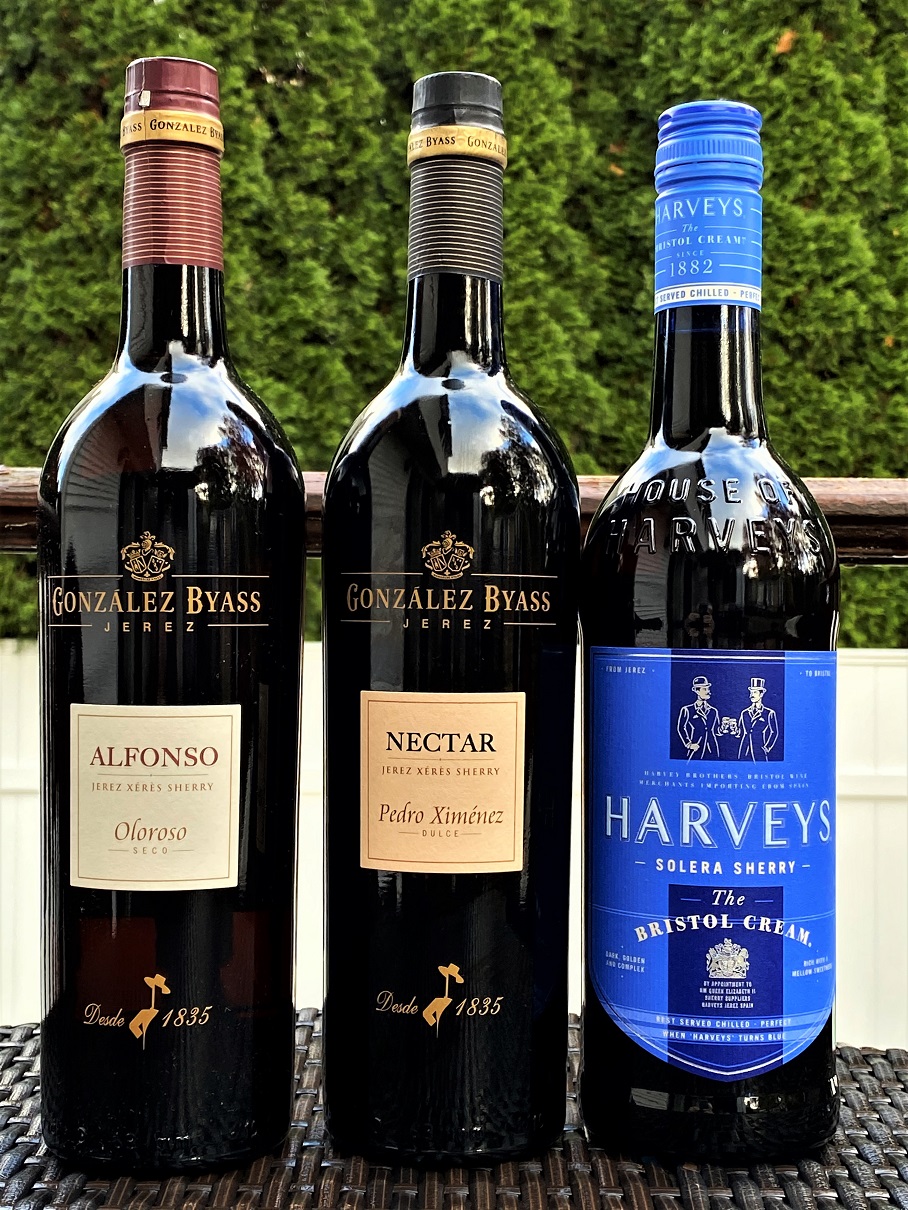
González Byass started in 1835 in Jerez de la Frontera, in the heart of the Sherry country. Now in the 5th and 6th generation, González Byass is one of the major sherry producers, combining a number of Sherry brands under one umbrella. I had three sherries from González Byass to play with the candies – let me tell you how did it go.

First, the dry wine – Gonzalez Byass Alfonso Jerez Oloroso Seco. As it is a dry wine, it expectedly didn’t work too well with most of the candies, but I found some options:
Gonzalez Byass Alfonso Jerez Oloroso Seco (18% ABV, $25, Palomino 100%, aged for 8 years in solera)
Light amber color
Hazelnuts, sapidity, herbs
Hazelnuts, clean acidity, Rosemary, beautifully complex
Worked best with Payday because of explicit saltiness – not really with Reese’s or KitKat

The bottle on the right is directly from the wine fridge and it is ready to drink – the Harveys letters are blue
I recently wrote about Harveys – after years of personal neglect, this became a gateway wine for me to warm up again to the world of Jerez. As Harveys is quite sweet but not super-sweet, it provided the best pairing option for the majority of candies.
Harveys The Bristol Cream (17.5% ABV, $20, 80% Palomino, 20% Pedro Ximénez, a blend of 7 yo Fino, Oloroso, PX and Amontillado Soleras)
Dark amber color
Light herbaceous nose, a touch of dried fruit
Dried fruit on the palate, good acidity, refreshing
Nice with Reese’s, works well with KitKat, excellent with Payday
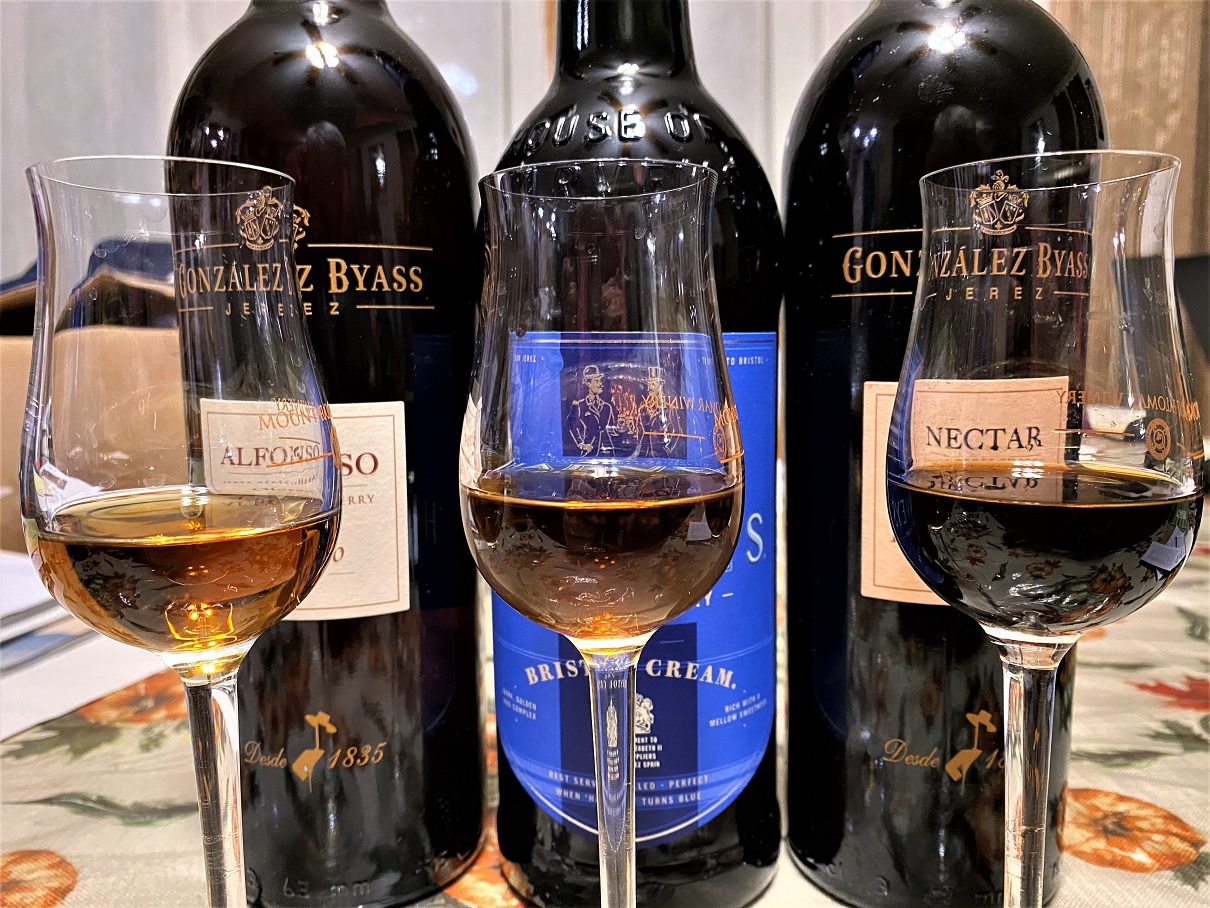
Nectar is seriously sweet wine (residual sugar of 370 grams per liter), but it is nevertheless very balance and delivers tremendous pleasure. The Pedro Ximénez (usually abbreviated as PX) is one of my most favorite dessert wines in general. The Pedro Ximénez grapes are dried on the mats for 2 weeks before pressing, losing 40% of liquid and becoming practically raisins – this explains the depth of color you can see in the picture above.
Gonzalez Byass Nectar Pedro Ximénez Dulce (15% ABV, 25%, 100% Pedro Ximénez, aged for about 8 years in solera)
Very dark amber color, almost black
Dried figs, dates, inviting.
Dried figs all the way, delicious, clean acidity on the finish, perfect balance
Great with KitKat, complements
Excellent with Reese’s, okay with Payday, Butterfinger – not so much
There you are, my friends. Don’t sweat the Halloween candies – pair them with a good Sherry. Or you know what – you can actually dump the candy – Sherry should be enough to keep you happy. Cheers!
Daily Glass: Unlimited Pleasures
I opened the bottle.
The wine was delicious. I will be happy to drink it again.
The end.
Simple story, right? Boring too, I guess, but – it doesn’t always work like that. Quite an opposite – I opened the wine. It was okay. I don’t want to drink it again. The end. But this is not the story anyone wants to talk about.
Let’s go back to the delicious wine.
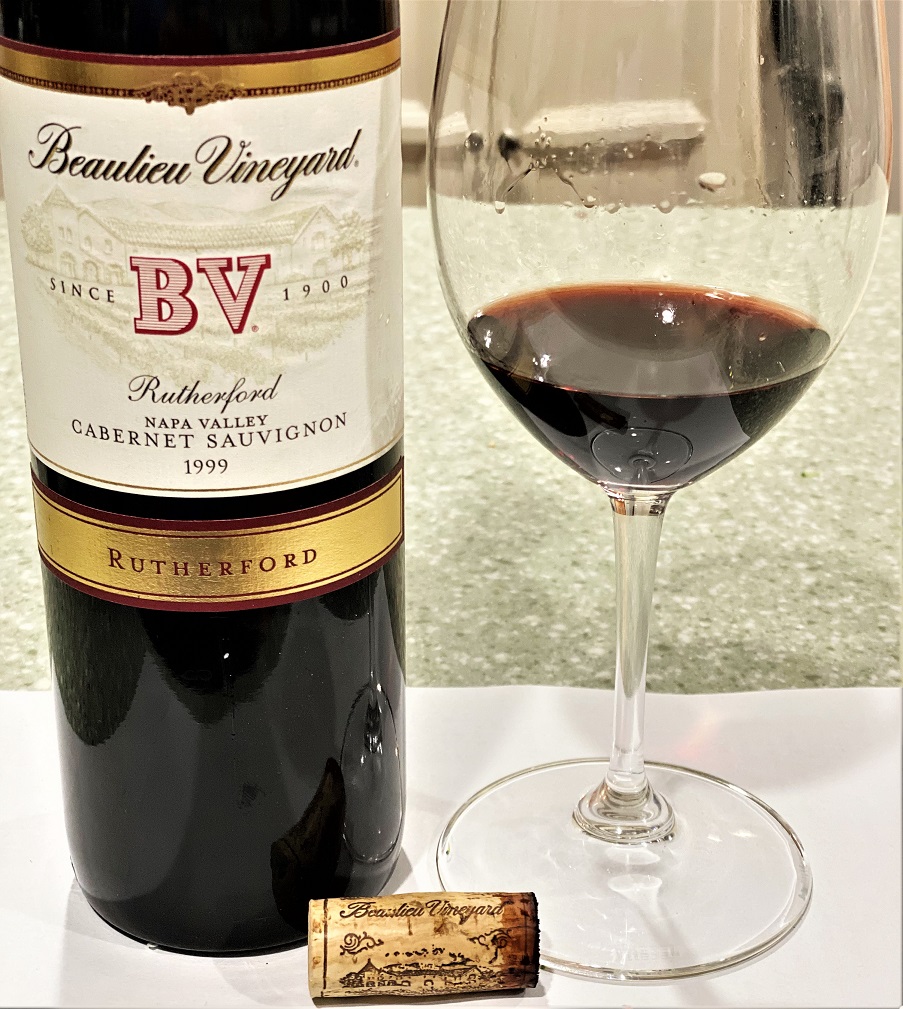
If you read this blog for any extended period of time, I’m sure you already know: I love aged wines. Contrary to what typical wine articles advocate – stating that the absolute majority of the wines should be consumed young and should never be aged – I absolutely believe that a significant number of wines, especially reds, not only can age but also improve with age. The evolution of the wine in the bottle is what we are after. Young wine can be perfect and deliver lots of pleasure to the drinker. Well-aged wine delivers lots and lots more – it is not just pleasure, it is often the whole experience. My latest proof and case in point (wish you were there) – 1999 BV Rutherford Cabernet Sauvignon.
If you like drinking aged wines, and share my view that many wines can age, the good news is that you don’t always have to personally buy the wine and wait for 20 years before drinking it. I found this wine while browsing the Benchmark Wine website. Benchmark Wine Group buys collections and then sells the wines at the market price without an auction. “Collection” doesn’t necessarily mean only DRC and Petrus – collections also include wines suitable for everyday drinking. Those “everyday wines” represent great value, as aging is included, and often it doesn’t cost you anything – I paid $30 for this exact 1999 BV Rutherford – and I can get the current (2016) vintage of the same wine in New York area for $29.99. Yep, I rest my case.
BV, which is short for Beaulieu Vineyard, is one of the iconic California wineries, founded in 1900. This is where André Tchelistcheff, often referred to as Maestro, honed his winemaking craft, completely changed winemaking at BV, and tremendously influenced winemaking in California ever since his arrival to Napa in 1938. It is impossible to talk about André Tchelistcheff within a short blog post, and I’m sure you can find hundreds of articles and books talking about his legacy. André Tchelistcheff retired from the active winemaking duties in 1973 – and I read somewhere that the last great vintage from BV was 1972. I wish I could compare 1999 which I had with 1972, but for my palate, even 1999 completely over-delivered.
The wine opened up with an intense nose of eucalyptus and mint – you could tell from a distant corner of the room that this was classic California Cabernet Sauvignon in the glass. The palate followed with layers upon layers of black currant, eucalyptus, mint, bell pepper, all interwoven in complete harmony. A perfect balance of fruit, acidity, tannins – every sip was repeating that full performance over and over again.
At the end of the evening, the wine showed a bit of the plum and dried fruit and made me think that I was lucky to catch the wine at its peak. On the second day, the wine showed a bit more restrained, somewhat losing great energy it had the previous evening. On the third day, the wine changed again, bringing back the same black currant and eucalyptus, however this time in much leaner, classic Bordeaux fashion, and really showing up young, full of energy and promise.
Not only this was a delicious, well-aged wine, but it was also [expectedly] a memory catalyst. I had an instant flashback of memories of a wonderful visit we had at BV about 8 years ago, tasting not only multiple vintages of Georges de Latour Private Reserve Cabernet Sauvignon, but also unique clonal Cabernet Sauvignon wines. It is amazing in how many ways you can enjoy a simple sip of delicious wine.
That is my story, friends. Well-aged wines are amazing – can you tell yours?
Last Bottle Sign Up ($10 credit)




 Talk-A-Vino