Archive
Few World Class Wines, Kosher Too
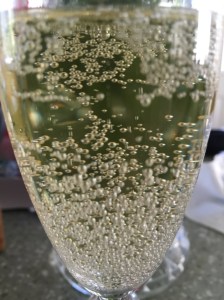 What is world class wine, you ask? Well, this question has multiple answers – there is a good chance that every responder will give you a different answer. Heck, I will give you different answer every time you will ask this question. So for today, how about this one: in a blind tasting, world-class wine can be easily mistaken for a wine coming from the well established and world famous wine region. For instance, a sparkling wine which tastes like Champagne. Or Chardonnay which resembles classic white Burgundy. Or a Rosé which tastes like… you know, how about just “delicious”?
How often do you drink Israeli wines? Hmmm, that would actually make it for an interesting “unknown wine regions” survey – note to self. Okay, back to the question, what do you say? I would bet that 9 out of 10 people never had an Israeli wine, and 9.5 out of 10 didn’t even know that Israel produces wine. Which is a shame, as even modern winemaking history (never mind the biblical times) in Israel goes back to 1880s. But of course with ups and downs, Israeli “wines of notice” started to appear in the late 1980s.
Today Israel has more than 250 wineries (depends on who counts, I guess), which includes both large commercial wineries and garage-level productions; israel even sports some “cult wines” – the wines which lots of people want, but can’t get (do the search for the wines produced by Lewinsohn, for instance). About 25% of the Israeli wines are exported, out of which amount about 60% go to the United States, and the rest to Europe and Asia. Most (but not all) wines produced in Israel are kosher – which, by the way, doesn’t take away from the quality of the wines even the tiniest bit – scratch that Manischewitz image and taste from your head, once and for all. While in general Israel might have a very long wine history, the vineyards were never continuously preserved – as the result, absolute majority of the grapes grown in Israel are of international varieties (Cabernet Sauvignon, Chardonnay, Merlot, Syrah, Grenache, etc.), with Emerald Riesling being one of the rare exceptions. Otherwise, Israel produces full range of wines, from Sparkling, Rosé and whites to the Bordeaux and GSM blends and single varietal masterpieces.
Golan Heights Winery was founded in 1983, and the first wine was released in 1984 (well, they vineyards were planted in 1976, so it all makes sense); it might be considered a foundation of renaissance of Israeli wine industry. Today the Golan Heights Winery farms 600 hectares (1500 acres) of vines, which subsequently consist of 28 vineyards and 400 unique parcels within those vineyards. Vineyards are spanning for about 65 km (40 miles), and elevations are ranging from 400 meters (about 1300 feet) to 1200 meters (about 3900 feet). The fruit from each parcel is tended to individually, as you can imagine that growing conditions would be different in such a stretch of the land and with such a difference in altitude. Of course you can imagine that winery makes quite a range of wines.


I had an opportunity to taste a three wines from the Golan Heights Winery and its sister winery called Galil Mountain, which impressed me enough to come up with this “world-class” title for the post. Don’t get me wrong – I had absolutely mind-blowing Israeli wines before, but somehow this Blanc de Blancs put the experience for me to the next level. Here are the notes:
2008 Yarden Blanc de Blancs Brut Sparkling White Wine Golan Heights Israel (12% ABV, SRP $32, 100% Chardonnay, 5 years on the lees, kosher, non-mevushal)
C: pale straw
N: Classic sparkling wine – touch of yeast, hint of Apple, touch of fresh baked bread
P: creamy mouthfeel, fresh acidity, hint of yeast, fresh lemon, fine mousse, perfect balance
V: 8/8+, outstanding, world class sparkler
2014 Yarden Galilee Chardonnay Odem Vineyard Golan Heights Israel (13.9% ABV, SRP $22, 100% Chardonnay, 7 month barrel aging, kosher, non-mevushal)
C: light golden
N: white stone fruit, hay, touch of lemon, candied fruit as wine was warming up
P: plump, full body, vanilla, creamy round mouthfeel, touch of butter, good acidity, fresh.
V: 8-/8, full bodied without heavy butter or oak, more reminiscent of Marsanne/Roussane. What I loved about the wine that it stayed perfectly delicious at the room temperature, which is not an easy fit for many white wines.
2014 Galil Mountain Rosé Upper Galilee, Israel (12.5% ABV, SRP $12, 74% Sangiovese, 23% Pinot Noir, 3% Grnache, kosher, non-mevushal)
C: beautiful, concentrated pink
N: strawberries, minerality, very promising, touch of lemon
P: fresh strawberries, herbs, clean balancing acidity, soft, medium body, very round.
V: 8-, an excellent summer day (or all year around) treat, very easy to drink
Have you had Israeli wines? What do you think of them? Cheers!
Gambero Rosso 2016: Tre Bicchieri Tasting
 Now, let’s talk about most intense part of the Gambero Rosso 2016 event – Tre Bicchieri grand tasting. Both Custoza DOC and Special Awards Master Class seminars were nice and relaxing – you are sitting down, you have at least an hour to evaluate 9 wines – this is “an oenophile at ease” experience. The grand tasting though is more of an “oenophile in hell”, or if this is too strong of an expression, think of it as marathon which you have to run on the tippy-toes – yep, that level of comfort.
Let me repeat the Gambero Rosso numbers – about 50,000 wines are evaluated by the Gambero Rosso staff in a year, comprise 20,000 different labels from more than 2,400 wineries. 421 wines received the coveted Tre Bicchieri (Three Glasses) award in 2016. 193 wineries were present at Tre Bicchieri 2016 tasting in New York, which would roughly translate into about 400 wines – not all of those wines are Tre Bicchieri winners, wineries are allowed to present the wines which got two glasses awards.
This was the fourth year in the row as I attended Gambero Rosso in New York, so at this point I knew the drill – which means that there will be no rant in this post. Nothing changed – there was still a limit of one glass per attendee for the whole tasting, the wineries were still organized by the distributors and not by the regions – but again, I was ready for that before I walked into the room. I had an opportunity to look at the show guide before tasting started, so I had my targets set and thus from the moment I walked into the tasting room, I went directly to the tables I wanted to visit first (where the wines would potentially run out). This was the right strategy and it worked quite well (as you will see in the list down below).
This was also the first time in 4 years my dear friend Stefano was unable to join me at the Gambero Rosso in New York – which also changed the dynamics for me. Usually when we are together, Stefano perseveres until the very last moment, still tasting wines and taking notes. Left to my own devices, I cut it short when I felt tired. By the way, the pictures below will give you an idea how the tasting room looks like in a middle of event – I always like to take a few shots which I call “Hail Mary” – just put the camera up and take a picture of whatever it will point to. I think it will give you an idea for the event:
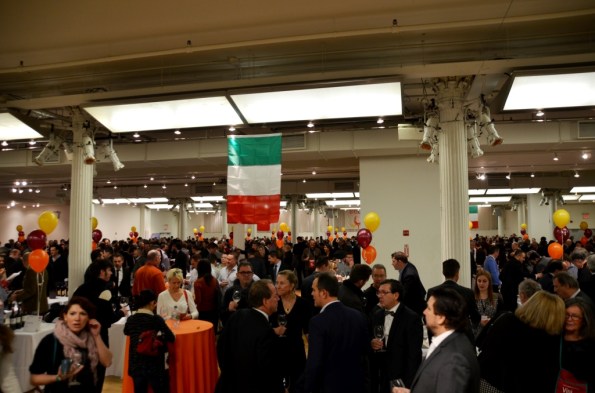
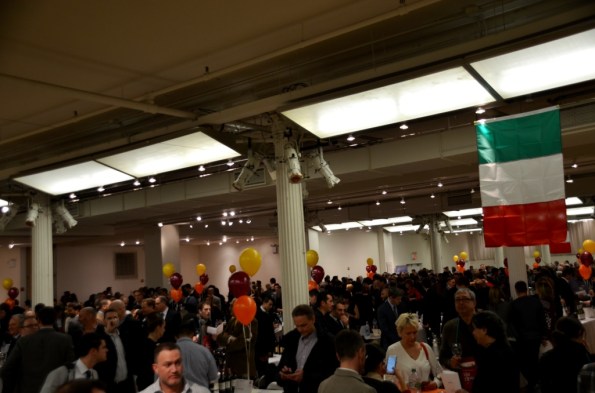 Before I will inundate you with the details on the wines I tasted, I want to offer you some of my main takeaways from the Tre Bicchieri 2016 tasting.
- Out of all the wines I tasted (90+), 4 wines were my absolute favorite:
- Tenuta dell’Ornellaia Bolgheri Superiore Ornellaia – stunning wine – young (2012), but perfectly drinkable, with the balance nothing short of amazing. Down below I will have pictures of the labels – note that starting with 2012 vintage, Ornellaia wines now will have artistic labels on portion of their bottles – 1 bottle in every 6 pack will have an artistic label.
- Eugenio Collavini Collio Bianco Broy – my favorite white wine of the tasting – beautiful clarity, impeccable balance and a bonus story
- Tenuta Viglione Gioia del Colle Primitivo Marpione Riserva – yes, I know that Primitivo is technically a Zinfandel, but I never yet tasted Primitivo which would be reminiscent of a good Zinfandel, like Turley, for instance. This wine was – fresh fruit, ripe raspberries and blackberries, playful – just an excellent wine all together.
- Rosset Terroir Valle d’Aosta Syrah – might be easily my favorite red wine in the tasting – if anything very comparable with Ornellaia in its ability to deliver pleasure. Amazing clarity of spicy fruit, just a pure vibrant note of black pepper – only a few times ever I experienced such pure expression of Syrah. Absolutely delightful.
- Very interesting how things changed in Italian wines. I tasted a number of Barolo, 4-6 years old – they were all very approachable, with good fruit and reasonable tannins – quite a departure even from the few years back. On another hand, most of the Super Tuscans were tannic bombs, with the happy exception of Ornellaia and Le Macchiole. I definitely welcome the Barolo change (will be interesting to see how those wines will age), but I think super Tuscan producers should dial down the use of the new oak – as they are, these wines need quite a bit of time to age.
- Italy is the #1 wine producer in the world (by volume) so it is not surprising that in addition to the ingenious grapes, such as Sangiovese, Nebbiolo, Montepulciano, Italians also mastered all the main international varietals – Cabernet Sauvignon, Cabernet Franc, Merlot, Grenache ( better known as Connonau), Zinfandel (yes, in the form of their native Primitivo) and now even Syrah. 3-4 years ago, I would never associate Italy with the world-class Syrah. But then was Syrah from Cartona, which is delicious, and this year’s discovery, Rosset Terroir Syrah from Valle d’Aosta, left me literally speechless in its purity of expression – and I loved it as much as I did the Ornellaia. So yes, Syrah is also squarely on the master list for Italy. Notable exception – Pinot Noir (should be called Pinot Nero in Italy), the finicky grape the world is in love with, which I yet to find to my liking coming from Italy. This will probably happen at some point, and if it does, I’m curious where and how.
Okay, now it is time to share the notes on my favorite wines. I visited about 45 tables, tasted about 90 wines. Below are the favorites – as typical for the trade tastings with lots of wines to evaluate, I use the “plus” system, where “+++” means “excellent wine”. The list below only includes “+++” or higher; I couldn’t contain my excitement and rated “++++1/2” both Ornellaia and Rosset Syrah, this is as high as I ever went. For what it worth, below are my brief tasting notes, all the wines are sorted by respective regions:


Abruzzo:
2012 Villa Medoro Montepulciano d’Abruzzo Colloie Teramene Adrano – +++1/2, delicious
Alto Adige:
2013 Abbazia di Novacela A.A. Valle Isarco Riesling Praepositus – ++++, clean, balanced
2014 Abbazia di Novacela A.A. Valle Isarco Kerner Praepositus – ++++, delicious!
2011 Elena Walch A.A. Lagrein Castel Ringberg Riserva – +++1/2, excellent, concentrated
2012 Cantina Terlano A.A. Terlano Nova Dominus Riserva – ++++, delicious! 60% Chardonnay, 30% Pinot Blanc, 10% Sauvignon
Basilicata:
2010 Re Manfredi Terre Degli Svevi Aglianico del Vulture Serpara – +++1/2, perfect, nice minerality


Friuli Venezia Giulia:
2013 Jermann Vintage Tunina – +++1/2, great complexity
2013 Jermann W…. Dreams…. – ++++, butter, vanilla, beautiful minerality
2014 Jermann Pinot Grigio – +++
2014 Eugenio Collavini Collio Bianco Broy – ++++, clean, beautiful, 50% Friulano, 30% Chardonnay, 20% Sauvignon, SRP $35, comes from the small small plot behind the house
2013 Livon Braide Alte – +++1/2, Chardonnay, Picolit, Moscato Gialo
Liguria:
2013 Poggio dei Gorgleri Rivera Ligure di Ponente Pigato Albium – +++1/2, Gunflint nose, clean palate


Lombardy:
2009 Ferghettina Franciacorta Extra Brut – +++, beautiful nose, a bit too sweet on the palate
2011 Nino Negri Valtellina Sfursat 5 Stelle – +++1/2, dried fruit, delicate, delicious. 2012 and 2014 were bad years, and no 5 Stelle wine will be produced
2008 Bellavista Franciacorta Extra Brut Vittorio Moretti Riserva – ++++, delicious, classic
Marche:
2013 Umani Ronchi Verdicchio dei Castelli di Jesi Superiore Vecchie Vigne – +++
2011 Umani Ronchi Canero Cùmaro Riesrva DOCG – +++1/2, delicious (Montepulciano 100%)
2011 Umani Ronchi Pelago Marche Rosso IGT – +++1/2, excellent (Cabernet Sauvignon 50%, Montepulciano 40%, Merlot 10%)


Piedmont:
2010 Abbona Barolo Cerviano – +++1/2, lavender, clean, wow!
2011 Marchesi di Barolo Barolo Cannubi – ++++, beautiful
2012 Michele Chiarlo Barbera d’Asti Superoiore Nizza La Court – ++++, outstanding
2011 Malvira Roero Mombeltramo Riserva – +++, nice, clean


Puglia:
2011 Tenuta Viglione Gioia del Colle Primitivo Marpione Riserva – +++1/2, wow, excellent, Zinfandel-comparable
2012 Tenuta Viglione Gioia del Colle Pri-mit-ivo – +++, excellent fruit and balance
Sardinia:
2013 Vigne Surrau Sincaru Cannonau di Sardegna – +++, excellent
2014 Vigne Surrau Sciala Vermentino di Gallura DOCG Superiore – +++
Tuscany:
2012 Poggio al Tesoro Dedicato a Walter Toscana IGT – +++, 100% Cabernet Franc
2012 Poggio al Tesoro Sondraia Bolgheri Superiore – ++++, excellent, Bordeaux blend (65% Cabernet Sauvignon, 25% Merlot, 10% Cabernet Franc
2012 Fabrizio Dionisio Cortona Syrah Il Castagno – +++1/2, beautiful nose, restrained, 100% Syrah


2012 Tenuta dell’Ornellaia Bolgheri Superiore Ornellaia – ++++1/2, wow! polished, ready
2013 Tenuta dell’Ornellaia Bolgheri Rosso Le Serre Nuove – ++++
2013 Tenuta dell’Ornellaia Poggio alle Gazze – ++++, outstanding
2010 Le Chiuse Brunello di Montalcino – +++1/2
2011 Le Chiuse Brunello di Montalcino – +++, beautiful
2013 Le Chiuse Rosso di Montalcino – +++, clean, simple
2012 Villa le Corti Chianti Classico Don Tommaso Gran Selezione – +++, excellent, soft
2012 Tenuta Sette Ponti Oreno – +++1/2, gripping tannins, wow
2013 Tenuta Sette Ponti Crognolo – +++


2012 PETRA Petra Rosso – +++1/2, good balance, Cabernet Sauvignon/ Merlot blend
2012 Le Macchiole Paleo Rosso – ++++, outstanding, 100% Cabernet Franc
Valle d’Aosta:
2013 Rosset Terroir Valle d’Aosta Syrah – ++++1/2, wow, perfect, spicy nose, clean, wow! 100% Syrah


Veneto:
2011 Tenuta Sant’ Antonio Amarone della Valpolicella Campo di Gigle – +++, closed on the nose, well present tannins, but balanced
2011 Viticoltori Speri Amarone della valpolicella Classico Vign Sant’Urbano – +++, good, round
2009 Masi Amarone della Valpolicella Classico Campolongo di Torbe – ++++, delicious!!! (yeah – single vineyard at about $150 retail)
2014 Valdobbiadene Brut Rive di Col San Martino Cuvée del Fondatore Graziano Merotto – +++1/2, nice complexity
2012 Vignalta Colli Euganei Fior d’Arancio Passito Alpianae – +++
Gambero Rosso 2016: Master Class – Special Awards
I recently wrote about discovering the new Italian wine region at the seminar at Gambero Rosso 2016 event (Custoza DOC). Following that was another new event for me – Vini d’Italia 2016 Special Awards Master Class.
More than 50,000 wines are tasted by the Gambero Rosso experts for each annual edition of the publication, which comprise more than 20,000 labels from 2,400+ wineries. In 2016, which was the 29th edition of the Gambero Rosso guide, there were 421 winners of the prestigious Tre Bicchieri status. In parallel, while the work is done to assess the wines for the Tre Bicchieri status, the wines are also considered for the Special Awards which are give in the 9 special categories – take a look at the picture below, this was our printout for taking the notes:

If you would look at my notes below, you would see that my opinion didn’t always match the designation of the wine – which is only important as an illustration to the point I always make when talking to the people who are afraid not to like the wine where someone else (an expert) said that the wine outstanding. Each palate is different, and your good wine is what you like, not someone else…
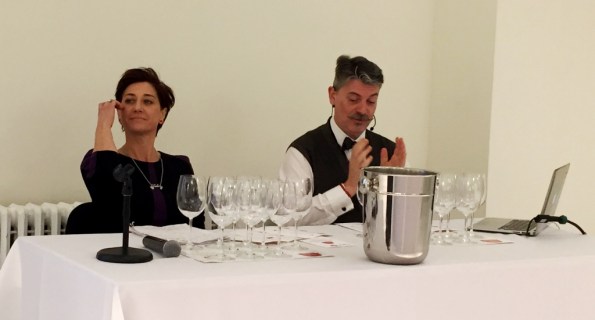
The presentation was led by charismatic Marco Sabellico, Senior Editor of Gambero Rosso, and Eleonora Guerini, Curator of the guide “The Wines of Italy” by Gambero Rosso:
Here are my notes:
Category: Sparkler of the year
2006 Ca Del Bosco Franciacorta Dosage Zéro Noir Vintage Collection Riserva
C: Gold
N: yeast, bread, concentrated
P: great complexity, yeasty, refreshing, crisp acidity
V: 8, excellent sparkling wine
Category: Best value for money
2014 Terre Stregate Falanghina del Sannio Svelato Campania ($10)
C: light golden
N: beautiful concentrated nose, sweet, concentrated, musk aroma
P: clean, good acidity, lots of musk undertones, spicy pear
V: 7, a bit too much on the palate
Category: White of the year
2014 Schiopetto Collio Friulano
C: light golden
N: light fruit notes, fresh, touch of minerality
P: nice, restrained, white stone fruit, good acidity, good balance
V: 8-, nice aging potential
Category: Award for sustainable viticulture
2013 Manincor A.A. Terlano Sauvignon Tannenberg Trentino-Alto Adige
C: straw pale
N: vanilla, butter, petrol
P: delicious play of fruit, restrained, tropical fruit, vanilla, playful, great acidity
V: 8, my favorite white wine of the tasting
Category: Red of the year
2012 Pietradolce Etna Rosso Vigna Barbagalli Sicily (15% ABV)
C: red brick
N: volcanic, smoke, red fruit
P: nice tannins, fresh red fruit, a bit astringent, long finish
V: 8, needs time
Category: Grower of the year
2012 Ca’ del Baio Barbaresco Asili
C: dark Ruby
N: fresh fruit! Strawberries, raspberries, violet, wow
P: excellent balance, fresh tannins, good red fruit, but really tannic finish
V: 8, will improve
Category: Up-and-coming winery
2012 Guado al Melo Bolghery Rosso Superiore Atis (Cabernet Sauvignon 60%, Cabernet Franc 20%, Merlot 20%)
C: dark Ruby, almost black
N: “Rutherford dust”, black currants, eucalyptus
P: powerful tannins, firm structure, fruit is layered under, very powerful wine overall
V: 8-, definitely needs time
Category: Winery of the year
2011 Allegrini Amarone della Valpolicella Classico
C: dark Ruby, almost black
N: dried fruit, roasted meat
P: nice concentration, powerful tannins, tar, tobacco, alcohol burn on back end
V: 7+, needs more balance…
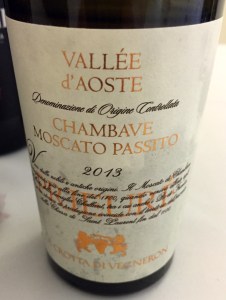
Category: Sweet of the year
2013 La Crotta di Vegneron Valle d’Aosta Chambave Moscato Passito Prieuré
C: golden
N: beautiful, clean, candied apricots, candied orange
P: perfect balance, clean fruit. Yes, it is sweet, but it has perfect acidic backbone, and it doesn’t overpower the palate.
V: 9, outstanding. Yes, I’m a sucker for the good sweet wines, you can call me that.
As you can tell, the dessert wine was my favorite wine of the tasting – well, you can read anything you want into that…
In the next post, I will be talking about Gambero Rosso Tre Bicchieri tasting itself, so until the next time – cheers!
To be continued…
Gambero Rosso 2016: Discovering Italian Wine Regions – Custoza DOC
Few weeks ago, I attended Gambero Rosso Tre Bicchieri event in New York. For those unfamiliar, Gambero Rosso is a leading Italian wine guide, where the wines are rated with the symbol of a glass (bicchiere in Italian). The wine can get a rating of one, two or three glasses, and those three glasses (Tre Bicchieri) rated wines considered to be some of the best wines the Italy has to offer. Every year, Gambero Rosso conducts a series of tastings worldwide, to celebrate these best Italian wines, and the tastings are called Gambero Rosso Tre Bicchieri events.
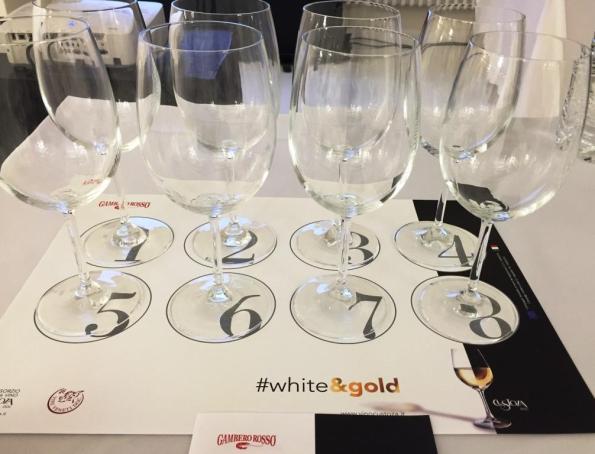
While I had been attending Tre Bicchieri events for the past 4 years, this year was the first time I also attended seminars conducted right before the general tasting. The first seminar was dedicated to the white wines of a small, and I would bet, largely unknown to the majority of the wine drinkers, region in Veneto, called Custoza.
Custoza is located at the south border of the Veneto region, on the shore of the Lake Garda. Excellent terroir to grow wine grapes, and white grapes in particular. Region has mild winters, which definitely helps not to worry about the frost. Another important characteristic of Custoza is mixed soil – clay, sandstone, limestone, which leads to a diversity in the wines. Overall, there are about 700 wine growers in Custoza, 70 wineries, and total wine production is roughly 12 million bottles per year (1 million cases). The region is fast growing on Italian market and represents great value for the money. A number of indigenous grape varieties are use in wine making in Custoza – Garganega, Fernanda/Bianca Fernanda (Cortese clone), Trebbiano di Soave, Trebbianello (known as Tokai Friulano in other regions), Riesling Italico (a.k.a. Welch Riesling), Incrocio Manzoni (cross created in 20th century).
Seminar presenters also made a statement about Custoza wines having a great aging potential – I would like to get back to that after presenting you with the tasting notes. We tasted total of 8 wines in this seminar:
2015 Tinazzi Custoza Cà dei Rocchi (Garganega 40%, Trebbiano di Soave 40%, Bianca Fernanda 20%)
C: pale straw
N: amazing, fresh sweet fruit, candies, through the roof aromatics. Green notes appear after a while.
P: crisp, clean, great acidity, fresh, will work great with seafood
V: 8-, food wine
2015 Gorgo Custoza San Michelin (Garganega, Cortese and Riesling Italico)
C: light gold
N: restrained, candied lemon, herbs, fresh caramel, opened into concentrated sweet baking spices. Smell is an enigma, keep changing. Yes, tropical fruit.
P: clean and crisp, but leaves sweet aftertaste. More concentrated than the previous wine, medium to full body, finish switched to more acidity
V: 7+/8-
2014 Cavalchina Custoza Superiore Amedeo (Garganega 40%, Fernanda 30% (Cortese clone), Trebbianello 15% (Tocai clone), Trebbiano Toscano
15%)
C: light golden
N: hint of smoke, gunflint
P: excellent, clean, green apple, fresh, perfect balance, acidity on the finish. Leaves me desire to take another sip
V: 8
2013 Albino Piona Custoza DOC (Garganega 30%, Trebbiano 35%, Friulano 20%, Trebbianello, Pinot Blanc and Riesling Italico)
C: light golden
N: medicinal, iodine, a nose almost suitable for a scotch
P: lots of fighting components, interesting. It is drinkable, but not together
V: 7-
2013 Menegotti Custoza Superiore Elianto (Cortese, Garganega, Trebbiano)
C: light golden
N: strange, vegetative
P: vegetative/sweet all over the place
V: 7
2013 Monte Del Frà Custoza Superiore Cà del Magro (40% Garganega, 20% Trebbiano Toscano, 5% Tocai Friulano, 10% Cortese, 10% Chardonnay-Riesling Italico-Malvasia and 15% Incrocio Manzoni)
C: golden, nice viscosity
N: minerality, hint of gunflint, white fruit sweetness, restrained
P: delicious. Ripe apples, white stone fruit, minerality, excellent balance
V: 8-
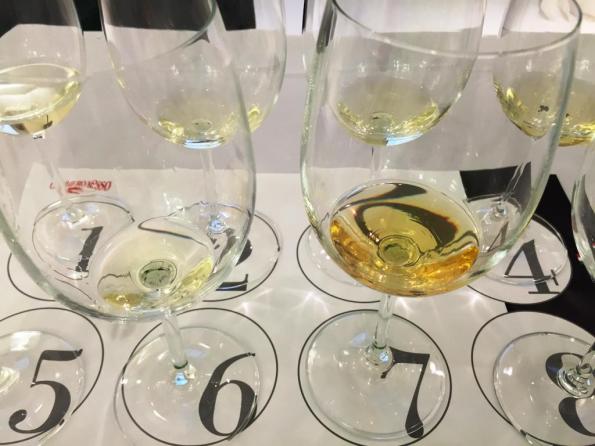
Take a look at the color difference with younger wines
2010 Monte Del Frà Custoza Superiore Cà del Magro (40% Garganega, 20% Trebbiano Toscano, 5% Tocai Friulano, 10% Cortese, 10% Chardonnay-Riesling Italico-Malvasia and 15% Incrocio Manzoni)
C: concentrated gold
N: minerality, volcanic soils, smoke, interesting
P: interesting complexity, still a touch of oxidation, vanilla, sea salt
V: 7+. This is a drinkable wine, and it will stay like that for a while.
2007 Cavalchina Custoza Superiore Amedeo (Garganega 40%, Fernanda 30% (Cortese clone), Trebbianello 15% (Tocai clone), Trebbiano Toscano
15%)
C: concentrated gold
N: slightly oxidative nose, similar to Jura whites
P: vanilla, steely notes
V: 7. May be good with cheese, but not enjoyable on its own
I very much enjoyed young Custoza wines – many were vibrant and delicious. When it comes to the two older wines, I wouldn’t say I was fun (I’m sure you can see it in my notes). Yes, I like tertiary aromas of older wines, but I still want the wine to have harmony and balance – and this was not the case here.
Very interesting learning experience in any case, plus a new grape (Incrocio Manzoni), or even two if I will count Fernanda as a separate clone/grape. So, have you ever had Custoza wines? What do you think of them?
In the next post, I will be talking about Gambero Rosso Special Awards master class, so until the next time – cheers!
To be continued…
One on One with Winemaker: Aurelio Montes of Montes Winery, Part 2
As promised, here is the continuation of our conversation with Aurelio Montes Sr – Founder and Chief Winemaker of Montes Winery. You can find first part of the interview here.
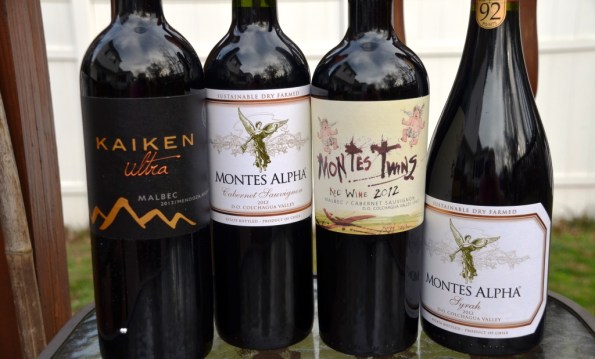 While the first part offered insight into unique (and unexpected) areas such as using of Feng Shui principles and Gregorian Chants at the Montes winery, this second half of the interview is also full of interesting details about present and future of Chilean winemaking. Here we go:
Q7: Do you use natural yeast in production of your wines?
A: Not for white varieties, although we have made Chardonnay trials in coastal areas, but in most cases result in that we obtain a very slow and long fermentation, which jeopardizes the final quality of the wine.
We prefer to use selected yeasts in white varieties, which ensure us a good rate of fermentation, working at low temperatures and retaining maximum aromatic potential of the wine.
In the case of reds it is different. We love to work with natural yeast when possible. They tend to express terroir better than the selected ones. However, much will depend on the conditions of the season, that is, if the season was very warm and the fruit arrives to the winery with a very high potential alcohol, we then prefer to use selected yeast that will ensure a good end fermentation. In the case of very rainy seasons, where the grapes arrive at the winery in bad conditions with some presence of fungi, we prefer to don´t take any risk and use selected yeast as well.
Under normal harvest of red grapes, without rain during maturity or heat peak’s that can cause an exaggerated increases in sugar content, we can then use natural yeast, maintaining important regimes of oxygen during fermentation and also moderated temperatures, in order to not stress these yeasts that behave in some cases very sensitive when the conditions are adverse during fermentation.
Q8: Montes Alpha had been a pioneer in many areas of winemaking in Chile. Particularly, it was the first winery to produce Syrah wines. How would you describe your Syrah compare to Northern Rhone, California or Australian wines?
A; Our Syrah, because of the natural conditions, and some winemaking policies, is different to Rhone or Australian Syrah. Ours is midway between the two mentioned valleys. It is ripe but not as jammy as the Australian one…is austere but still far more friendly and approachable than the Rhone style. This puts us in a perfect position, in terms of quality, and in fact my opinion is that the best New World Syrah comes from Chile
Q9: What was your most favorite vintage of Montes Alpha Syrah and why?
A: I think the 2006 vintage was a very good harvest, where this wine was well known. But I feel that the 2012 was even better. We had a very good season in terms of absence of spring frosts, an accumulation of rain water which enabled us to reach harvest with a low level of risk, and also a free of summer rains and reasonable temperatures. In particular, our Syrah from Apalta that comes from mountain grown fruit behaved very well, controlling a balanced amount of clusters per vine, allowing us to concentrate fruit color and body. Elegance and aromatic complexity found in the Apalta Syrah is really incredible. From this estate also comes the Syrah that goes to our Icon Folly made 100% out of Syrah.
Q10: In the wine world, there is always a conversation of the “next big grape”, which is usually country and region specific – like Sauvignon Blanc in Argentina, for instance, or Chardonnay in Oregon. Is there a “next big grape” for Chile?
A: I like to believe that the Carmenère can be our “next big grape”. But we struggled to position it, despite the efforts the sector makes. Chile has a high level of quality in this variety, considering various valleys and different heights, in the central and even coastal areas of Chile. After this many years of experience we must remain vigilant and continue working and learning in order to deliver the best quality Carmenère in the world.
I would like to add that recently Chile also has been making quite some noise on varieties such as Pais, Cinsault, Muscat, Grenache, Carignan, etc. In this last varieties with very good results.
In our case we crafted the Outer Limits line, which allows us to be more adventurous, dreamers, and let our imagination fly to experiment;
However I believe that the Cabernet Sauvignon is still the king of varieties that Chile has. Not only well renowned for the great quality but also because it represents the productive power and essence of the Chilean wine.
Q11: Does Montes Alpha have plans for the new grapes to be planted? Anything you are experimenting with right now?
A: We are not closed to the possibility. We are always looking for new things, but today to plant new surface is a sensitive issue. Chile is going through a time of overstock of wine, which forces us to be cautious about increasing our production. In the northern hemisphere the situation is similar, which puts us at a critical point.
Without adding the irrigation problem that the viticulture is facing around the world, which forces us to be very astute at this point. Today, more than planting new varieties on new surfaces, we are willing to replace those varieties and vineyards that do not meet our expectations, and replace this to try some new things.
For example, we have had very good reviews on our Tempranillo and Tannat 2015, after years of testing and harvesting dates, and exploring winemaking forms. Maybe we can do something about those varieties in the near future.
We are also touring various new areas as Cachapoal Valley, in search of a distinctive variety with unique quality and expression. Is under this inspiration that we have found and made quite interesting things, such as Pink Moscatel from Curtiduría, or a Pais from Lolol and other interesting projects that currently are still in the oenological kitchen … but this strategy of seeking other wine realities has given us many satisfactions to myself and the team.
Q12: when you are not drinking Chilean wines, can you give me a few examples of your favorite wines, regions and producers?
A: In terms of wines, if I were to pick an outstanding wine I would choose an Ornellaia Masseto. And if I could delight and reward myself with another, it could be an old vintage of Pétrus.
And we are done with the interview. It is time to take a look at another two Alpha Montes wines I tasted:


2012 Montes Alpha Syrah Colchagua Valley, Chile (14.5% ABV, $25)
C: very dark garnet, almost black
N: blueberries, violet, sage, fresh, touch of tobacco
P: silky smooth, round, roll-of-your-tongue, restrained, nice minerality, balanced fresh berries, touch of spice, touch of sweet licorice, excellent overall balance
V: 8, easy to drink, will greatly evolve
2012 Kaiken Ultra Malbec Uco Valley, Argentina (14.5% ABV, $25)
C: dark garnet, practically black
N: concentrated, dark fruit, plums, violet, tar, tobacco, very, very inviting – super sexy, first analogy
P: wow, concentrated fruit, luscious, polished, layered, round, balanced, great dark power, well integrated tannins
V: 8+, outstanding, wow and dangerous (and sexy! – I rarely designate wines like this, but … of well, I will wait for you to try it)
And we are finally done here. I hope you enjoyed our conversation as much as I did, and may be even learned something new. Until the next time – cheers!
One on One with Winemaker: Aurelio Montes of Montes Winery
 Things in life often connect in most unexpected ways. Few years ago I read an article about the ways music affects the winemaking. I was unable to find that article or much references ever since. Many times I came across the wine with an interesting label and somewhat peculiar name of Montes Alpha – but I never tasted one.
Few weeks ago I got a note about wine samples from the winery called Montes Alpha from Chile. That note also mentioned Gregorian Chants and Feng Shui been essential elements in wine production at that very winery. This was enough to send my curiosity through the roof and ask for more information – and talk about the way things connect in life, right?
Who can better answer questions wine and winery questions if not the winemaker? I gladly used an opportunity to [yet again] sit down (yes, virtually) with the winemaker and send the barrage of questions his way. I have to tell you that all my questions were answered well in depth – and I think you will find this conversation interesting too. Here is our dialog with Aurelio Montes Sr – Founder and Chief Winemaker of Montes Winery.
Q1: I understand that your winery was built using Feng Shui principles. Are there any specifics in using Feng Shui specifically for the wineries? Do you have any followers from other wineries who came to learn from Montes Alpha experience?
A: We seek to apply the principle of balance and harmony of space in our winery. If you live and / or work in nice balance places, the energy will continue their natural rhythms and will lead to welfare in all its aspects.
It is in this sense, it was incorporated as a fundamental principle in the early stages of design and construction of our winery, the inclusion of all basic elements such as water, metal, wood, stone, etc., in accordance with the principles of this Asian discipline, to ensure this harmony and above all a positive atmosphere.
For example at the entrance to the building is the wooden bridge over a small lagoon, whose water flows toward the building. A fundamental principle of Feng Shui is that prosperity will only come if the water, which represents energy, flows into the center of the building, rather than away from it.
I understand that no other winery has incorporated the Feng shui principle. In our case, one of our founders, Douglas Murray, was always fascinated with this concept and idea of building a harmonious winery and wine with our environment, therefore we hired the advise of an expert in this field to introduce the principles of feng shui in the foundations of our construction.
Q2: Did you apply or can you even apply Feng Shui principles in the design of the vineyards?
A: Feng shui is related to harmonize spaces. In our case it was considered to harmonize the spaces between the vineyards, winery and of course, our people. To get, as a result, the best wine we can possibly achieve. I believe that in a balanced environment, all pieces come together to perfectly to achieve a greater result.
I am not an expert on the subject though, and not sure how Feng shui can be applied to the vineyard. However our vineyards are planted according to quality policies, soil conditions, variety, etc. I believe that the harmony in the management of our vineyards is the result of the best possible quality grapes we can achieve, keeping always in mind the sustainable conditions.
Q3: I heard about Gregorian chants at the winery. How and where do you use them?
A: The Gregorian chants play constantly in the icon barrel room of our winery at our La Finca de Apalta Estate. The wine seems to enjoy it and I love it. In my opinion, besides the physical effect on wine, it does have an important effect on people’s moods and they work with more happiness and confidence. It keeps us calm in the cellar.

Q4: Did you try to test the effect of Gregorian chants on aging of the wines by creating a “control group” of same exact wine from same exact vintage and aging it under regular conditions (no music), and then comparing the two wines in the blind tasting?
A: For long now I have been interested in the effects of music in wine. I am happy to share with you a study we funded at Heriot Watt University about the effect of background music in wine tasting.
In terms of wine tasting the “control” with no music at all had a score 20% lower than the tasting held in presence of music.
Q5: Did you experiment with impact of music on the grapes in the vineyard? I remember reading about some of the experiments in that area, and I wonder if you have any information you can share here
A: Not yet and I don’t know of anyone that has done it. I presume there are so many uncontrollable variables such as temperature oscillation, different weather conditions, etc that would make it difficult to assess the particular influence of music in the vineyards.
Q6: Montes Alpha is certified Sustainable winery. Do you have any plans to become an organic or may be even biodynamic winery?
A: From our beginnings, our philosophy has been to produce wines of the highest quality, always concerned with the care of the environment, developing a sustainable viticulture in all stages of winemaking.
We believe sustainability covers a broader spectrum and a larger concept than being only an organic or biodynamic winery. It not only concerns the caring of our vineyards and the environment that surrounds it, but also the legacy that we leave for the next generations. We are very careful with our habitat, natural resources and above all improving conditions for the community.
Being sustainable also takes care of the social aspects of our workers – having a profitable operation permitting us to offer a stable place to work.
We also minimize our use of energy and treat our waste-water to reuse it in the irrigation of our vineyards.
Having said all the above we still have some plans to develop a line of biodynamic wines in a few years. We have also moved forward in improving our carbon footprint, becoming one of the few carbon neutral wineries in Chile. We have not only traveled to improve our carbon footprint but also to significantly reduce the use of pesticides and replace them with more friendly environmental agents.


No, we are not done yet with the interview, but I don’t want to overload you with an information. I can also bet you are thirsty now, so let me present to you two of the Montes Alpha wines I had an opportunity to taste:
2012 Montes Alpha Montes Twins DO Colchagua Valley (14% ABV, $15, 50% Cabernet Sauvignon, 50% Malbec)
C: very dark garnet, almost black
N: a bit of funk, herbs, blackberries, hint of black currant, inviting
P: good dark fruit, chalk, firm structure, pencil shavings, tart acidity on the finish, restrained. Next day the wine acquired some umami complexity with notes of tobacco.
V: 8-/8, an excellent wine hiding under simplistic packaging; outstanding QPR
2012 Montes Alpha Cabernet Sauvignon Colchagua Valley (14% ABV, $25, 90% Cabernet Sauvignon, 10% Merlot)
C: dark garnet, almost black
N: cedar, cassis, classic
P: cassis, dark fruit, clean, round, soft
V: 8, outstanding, round, easy to drink
Here you go, my friends. Do you use Feng Shui in your life? What do you think of wine and music? And of course, did you have any of the Montes Alpha wines? I have two more wines to talk to you about, and continuation of our conversation with Aurelio Montes Sr. to share, so stay tuned.
To be continued…
Sparkle Your Holidays!
The holidays are still upon us, and nobody would argue that bubbles in your glass make you feel excited and festive, and that is exactly what we want for these special days.
Bubbles – let’s properly call them “sparkling wines”, so nobody would think that we are talking about condiments for your bath time – come today absolutely from everywhere. Forget the times when Champagne was one and only, and Cava and Prosecco were known only to a few professionals. Now literally each and every winery offers at least one sparkling wine, even if it is produced in a few hundred cases for the tasting room only.
Such an abundance is great for the oenophiles, as you always have something new to try. Today I want to bring to your attention few of the sparklers I tried recently, which would go great with whatever holiday festivities you are planning. As an extra bonus, these sparkling wines can also serve as a perfect illustration to diversity of places and production methods.
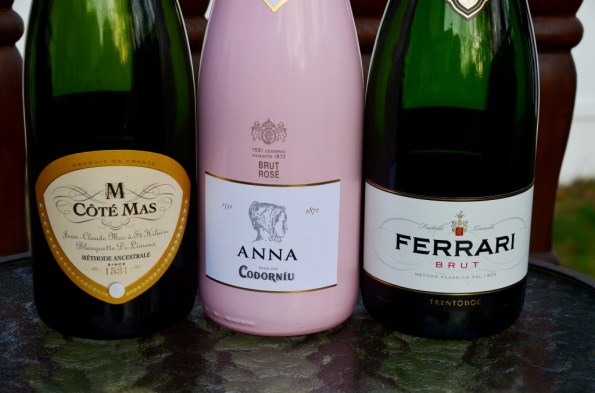
Let’s start from Champagne’s homeland, France – however, this wine is not produced using Méthode Champenoise. NV Coté Mas St. Hilaire Blanquette de Limoux Méthode Ancestrale (7.5% ABV, $15.99, 100% Mauzac) is produced using so called Méthode Ancestrale, which is very close to traditional method and most definitely precedes it. In case of Méthode Ancestrale, first fermentation is stopped before all sugar is converted into alcohol, and then secondary fermentation takes place in bottle with additional only of the yeast (no sugar is added). Unlike Champagne, Méthode Ancestrale sparkling wines undergo very short bottle ageing (3 month versus minimal 12 month and typical 2-3 years for Champagne). This Paul Mas’ sparkler had light golden color, showing yeast with touch of apple, good intensity, promise of a classic sparkling wine on the nose, and then touch of honey and honeysuckle, hint of ripe peach on the palate. As one would expect from only 7.5% ABV, it was quite sweet (similar to spatlese level of Riesling), but with the help of fine mousse, perceived very light and refreshing. I would serve it at the end of a good meal with a sharp cheese, they should go together very well. Drinkability: 7+
From south of France, it is short trip east to Italy, where outstanding sparkling wines are crafted in the northern region called Trento. Here the wines made using “metodo calsssico“, which an Italian name for Méthode Champenoise/Méthode Traditionelle. The requirements for metodo classico wines are even stricter than those for Champagne, with minimal bottle age starting from 15 month to the 10 years for the Riserva. And who can represent Trento DOC better than Ferrari – pioneer in both Chardonnay plantings and classic wine production in the region (Ferrari winery started in 1902). NV Ferrari Brut Metodo Classico Trentodoc (12.5% DOC, $25, 100% Chardonnay) had delicious nose of yeast and fresh apples, and clean acidity on the palate, with lemon and green apple. Classic, classic classic – clean, crisp and refreshing. Drinkability: 7+


Conversation about Sparkling wines would be incomplete without mentioning Cava – Spanish wine produced using classic Méthode Champenoise. Production of Cava is every bit as laborious as classic Champagne, with main differences been slightly shorter minimum bottle ageing requirements (9 month) and typical use of Spanish indigenous grape varietals. Anna Codorniu is one of the best representations of Cava and Spanish winemaking overall, producing wine since 1551 and pioneering Cava production in 1872. I wrote about NV Anna de Codorniu Brut Rosé Penedes DO (12% ABV, $14.99, 70% Pinot Noir, 30% Chardonnay) a few month ago – the wine is delicious, fresh, with fine mousse and pleasant body weight – it will complement any of your holiday festivities perfectly well. Drinkability: 8-
Now, I have two more interesting sparklers for you to consider, both coming from the USA. However, the place is rather unexpected – Finger Lakes region in New York. First one is made using the classic Méthode Champenoise – 2006 Glenora Brut Métode Champenoise Sparkling Wine Finger Lakes (12% ABV, $29.99, 52% Chardonnay, 48% Pinot Noir). Wine had light yellow color, fizz of light intensity. Classic nose – yeast, fresh bread, overall delicate. On the palate, it showed Granny Smith apples, touch of lemon, good acidity, fresh, clean. Overall, it was a good rendition of classic sparkling wine, however, to be consumed in one single day, as it lost all fizz by the second day. I can’t help to mention that at $29.99, QPR is not great. Drinkability: 7+.


To round off, while our last wine is also produced in Finger lakes, it is made using one more significant sparkling wine production technique – Transfer method, where after second fermentation in the bottle (6 month minimum), the wine is transferred to the pressurized tank, thus greatly reducing cost and labor which go into production of Méthode Champenoise wines. Italian Prosecco is made in somewhat similar way (sans the second fermentation in the bottle), and this Finger Lakes wine was modeled exactly after the Prosecco. 2013 Damiani Bollicini Bottle Fermented Sparkling Wine Finger Lakes (12.4% ABV, $15.99, 47% Cayuga, 35% Chardonnay + Pinot Noir, 16% Chardonnay, 2% Pinot Meunier) had straw pale color, touch of tropical fruit on the nose, complemented by a hint of gunflint. Nice creaminess on the palate, delicate fizz, clean, refreshing, crisp. Excellent overall, pleasure to drink, and would complements lots of different foods. Drinkability: 7+
That’s all I have for you for today. I wish you sparkling holidays, whatever bubbles tickle your fancy. Cheers!
Garnacha from Cariñena
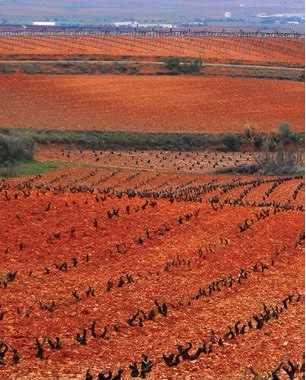
Beautiful Cariñena Vineyards.
Source: Cariñena DOP
Today we will be talking about Garnacha, better known around the world under its French name of Grenache. But the region we will focus on is located in Spain, so let’s use regionally-appropriate name.
Garnacha is one of the most important grapes of Spain, rivaled only by Tempranillo. It is planted practically in all the regions, and used both solo and as a blending grape, delivering tremendous range of expression.
Let’s narrow down our focus a bit and talk about Garnacha from Cariñena. Cariñena is a region in the central part of Spain, second oldest official DO (protected origin) in Spain and one of the first in Europe, created in 1932. Most of the vineyards in Cariñena are situated on the mountains, from 400 meters to 800+ meters (1300 ft – 2600 ft) above sea level. One of the best known grapes from the region is … Cariñena, which I find quite confusing considering that this is also the name of the region itself. However, the most planted grape is…yes, Garnacha, which takes 55% of all the grape plantings. Another interesting fact is that Garnacha plantings in Cariñena are some of the oldest in Spain, with age of some vines more than 100 years old.
I will not inundate you here with information which you can find on your own, for instance, on the official D.O.P. Cariñena web site. I recently heard that Andrea Immer Robinson, one of the 18 women Master Sommeliers, and an official Sommelier for Delta Airlines, selected Cariñena Garnacha wines to serve to the Business Class passengers on Delta flights due to its affinity to the high altitude. Obviously I got intrigued with this statement, and I was lucky enough to reach out to Andrea and ask a few questions about it. Here is what I was able to learn:
Q: It sounds like different wines might have different affinity to showing best at the high altitude? Is that really true? Can you elaborate on this a bit?
A: Yes it is true. At altitude your sense of smell is muted and your palate is less hydrated. Consequently, more restrained wine scent/flavor profiles or more intensely tannic wines may not present as well in-flight.
Q: Do you have an example of the wine which is delicious on the ground, and doesn’t taste that well up in the sky?
A: It is less that a wine doesn’t taste well in the sky, and more that it may seem less expressive or flavorful. The subtlety of Italian Pinot Grigio is an example of a style that classically seems muted and less flavorful at altitude. But I did find a great one that belies the broad-brush experience I have had which is exciting.
[TaV comment]: Obviously this is where the limitations of the virtual conversation kick in, as I would love to ask Andrea what was that great Pinot Grigio which she was able to find to serve at the high altitude.
Q: What do you think makes Garnacha from Cariñena good wines to drink at the high altitude? Do you think all Garnacha from Cariñena wines are equally good to drink at the high altitude, or is it only few particular wines?
A: The Garnacha from Carinena is expressive and concentrated and the tannins though present, are soft and ripe – so, the wine shows a lot of character and is not drying to the palate in flight. The particular example that is getting rave reviews presently is a 9 year old Reserva – that extra bottle age gives complexity that customers are going ape over. I don’t thin every wine would garner this type of response–I think the bottle age and complexity of the Reserva level are a big part of it.
[TaV comment]: Yep, here we go again – would love to know what Reserva wine was that…
Q: What are your favorite Garnacha from Cariñena wines, whether on the ground or on the board of the plane?
A: I love the Monasterio de las Vinas Reserva that we are serving on Delta now. I also really love the Castillo de Monserran and the Paniza Vinas Viejas on the ground (haven’t tried them in flight). Perfect as we get into stew season!


I also was able to taste a few of Garnacha from Cariñena wines, and below are my impressions:
2012 Viñas Viejas de Paniza Garnacha Cariñena DO (14% ABV, $18, 100% Garnacha, 6 month in oak)
C: dark ruby
N: lavender, espresso, touch of dark fruit
P: hint of chocolate, cherries, medium body, good acidity
V: 7+
2012 Bodegas San Valero Particular Garnacha Old Vine Cariñena DO (14% ABV, $14.99, 100% Garnacha, 14 month in oak)
C: dark garnet, almost black
N: intense, whiff of alcohol, dark fruit, raspberries
P: fresh raspberries, open, bright, medium body, herbal undertones, pronounced acidity, short to medium finish, but then tannins come in after a while.
V: 7+ at the moment, needs time. Judging by the acidity and late tannins, this wine needs at least 5 years to develop
2013 Corona de Aragon Special Selection Garnacha Cariñena DO (13.5% ABV, $14, 50% Garnacha, 50% Cariñena, 5 month in oak)
C: Dark garnet
N: restrained with herbal undertones, pencil shavings (rarely use this descriptor, but it was very deserving here), hint of blackberries
P: fresh, delicious, dark chocolate, cherries, classic Grenache rendition with good acidity and excellent balance
V: 8-, my favorite of the tasting, would happily drink this wine every day – definitely an excellent QPR
Have you had any of the Garnacha Cariñena wines? What are your thought on the wines at the high altitude? Don’t be shy, comment away! Cheers!
P.S. I would like to thank kind folks at Gregory White PR for providing samples and reaching out to Andrea Immer Robinson
Month in Wines – September and October 2015
If there is one neglected topic in this blog, it is the “month in wines” series, which I managed to produce quite regularly during 2014 and before. I will do my best to fix this, so if you see “June Wines” blog post in December, you would know why. This also means that these “caught up” posts will be even longer than usual – but again, now you know why.
There were lots of interesting wines during September and October, so here is a glimpse into what was pouring – well, it is a long “glimpse”, as I’m trying to cover 2 month at once, so please bear with me.
2014 Notte Italiana Prosecco DOC (11% ABV, kosher) – simple and easy, good acidity. 7
2013 Via Semi Sweet Sparkling Wine, Israel (10.7% ABV, kosher, 50% Gewurztraminer, 50% Viognier) – the inner snob said “it will not be good”, and was ashamed. The wine had nice balance of sweetness and acidity, very pleasant and simple. 7+
2013 Fero Vineyards Dry Riesling, Pennsylvania (11.5% ABV) – still need to write a post about visiting Fero Vineyards. In any case, this was nice and classic, good acidity, nice touch of honey and honeysuckle, but just a touch. 7+
2012 Carlisle The Derivative Sonoma County (14.2% ABV, 54% Semillon, 30% Muscadelle, 16% Palomino) – delicious. Bright white fruit on the nose, more of the same on the palate with clean acidity. 8-
2013 Carlisle Compagni Portis Sonoma Valley (13.9% ABV, blend of Gewurztraminer, Trosseau Gris and Riesling) – another delicious Carlisle white. Fresh and bright on the nose, medium to full body on the palate, with an impeccable balance of fruit and acidity. Ahh, and the new grape – Trosseau Gris. 8
2015 The Crossings Sauvignon Blanc Awatere Valley Marlboro (13% ABV) – literally summer in the bottle. Fresh, exuberant, a pure delight. And the first wine I had of 2015 vintage. 8
2014 Left Coast Cellars White Pinot Noir Willamette Valley (14.2% ABV) – one would never think to find white wine made out of the red grape outside of Champagne, right? This was a beautiful surprise – fresh, vibrant, crisp, good white fruit, medium body, excellent balance and complexity. 8-


It appears that this is all I had for the whites – note to self – need to drink more white wines… Anyway, the rest are the red wines.
2013 Valcantara Old Vine Garnacha, Cariñena DO, Spain (13.5% ABV) – closeout deal at my local wine store ($7.99) – however the wine is outstanding. Classic Garnacha with plums and dark chocolate. Good acidity and easy to drink. 8-
2013 Alighieri Rubino del Marchese Toscana IGP (12% ABV) – another closeout deal, same price as previous wine. There was an interesting bottle variation as the first bottle was just all about acidity and not much about fruit, but the second bottle was much more balanced. Quite enjoyable, especially at the price. 7
1997 Le Ragose Valpolicella Ripasso Classico Superiore (12.5% ABV) – it showed age, but was still well drinkable. Lots of tertiary aromas, touch of dried fruit, but still with a good core of acidity. 8-
2011 ARFI Gabriel Cabernet Sauvignon Judean Hills, Israel (13.1% ABV, kosher) – not a bad rendition of Cab, but was a bit too sweet for my palate – I would like it to be a bit more balanced. 7
2014 The Crossings Pinot Noir Awatare Valley Marlboro, New Zealand (14% ABV) – very good example of Pinot Noir from Marlboro. Good balance of fruit and acidity, all the Pinot traits. 7+
2005 Viña Real Rioja Crianza (13.5% ABV) – classic Rioja, no sign of age. ‘Nuf said. 8
2005 Block 213 Merlot Oakville Napa Valley (13.5% ABV) – was opened for the “Merlot Month”, and I’m glad I did – it was right at the pick, if not starting to decline a bit. Still quite enjoyable, good body, good amount of fruit, cassis. 8-
2012 Nissley Naughty Marietta Semi-dry Red Wine Lancaster Valley, Pennsylvania (12% ABV) – and again inner snob was ashamed. While the wine shows some level of sweetness, it is perfectly balanced with acidity and tannins, very pleasant wine after all. 7+
2013 Field Recordings Hinterland Vineyard Cabernet Franc Paso Robles (14.1% ABV, $18, 88% Cabernet Franc, 8% Cabernet Sauvignon, 4% Merlot) – nicely polished and very classic. 8-
2013 Field Recordings Tommy Town Vineyard Cabernet Franc, Happy Canyon of Santa Barbara (14.3% ABV, $18, 100% Cabernet Franc) – a bit rough initially, but came down to its senses after time in the glass. 7+
only a few more, I promise…
2005 Château Gravat Médoc AOC (13% ABV) – still have one last bottle from the case. Only now, 10 years later, this wine is losing the grip of green chewy branches and starts showing ripe fruit and overall power. Patience is a virtue of the wine lover. 7+/8-
2005 Bodegas Ignacio Marin Barón de Lajoyosa Gran Reserva Cariñena DO, Spain (13% ABV, 50% Garnacha, 30% Tempranillo, 10% Cariñena, 10% Cabernet Sauvignon) – perfectly structured, firm, fresh, dark fruit, delicious. 8-
2009 Wente Vineyards Small Lot Petite Sirah Livermore Valley, California (13.7% ABV, $35) – one of my absolute favorite wines – dark, polished, lots of power and structure, delicious till the last drop. You can get this beauty only at the winery, so if your plans will take you to the Livermore valley, do yourself a favor… 8
2011 Turley Duarte Zinfandel Contra Costa County (15.6% ABV) – delicious, classic, dark and brooding. 8
2007 Verve Syrah Columbia Valley (14.5% ABV) – spot on – touch of spices, pepper, violet, dark fruit, delicious. This one comes with regret – I should’ve get lots, lots more during Last Wine Bottles marathon… 8
2007 Waterstone Cabernet Sauvignon Napa Valley (14.5% ABV, $22) – I don’t care whether this wine contains any of the Harlan fruit or not – this is simply delicious, outstanding California Cab which you can’t beat in value. Classic, clean, loads of black currant, perfect balance. 8+
2009 Domaine Fond Croze Cuvée Shyrus Côtes du Rhône (14% ABV, $29.99/1.5L, 100% Syrah) – delicious rendition of the old world Syrah – pepper, lavender, dark fruit, all intermingled and balanced. 8-


2010 Turley Zinfandel Tofanelli Vineyard Napa Valley (15.8% ABV) – I couldn’t stop smelling this wine for good 10 minutes. I didn’t want to drink it – I wanted for smell to last for as long as possible. Can’t describe it – it had everything the wine lover would want from the glass of wine. There, I said it. Incredible. On the palate, the wine had lots of dark fruit and spices, structure and power. Then is closed up and opened only on the second day. This would definitely evolve – I wish I had another bottle… 8+/9-
2012 Turley Cabernet Sauvignon Napa Valley (14.1% ABV) – an opposite to the previous wine. At first, it was practically closed. After a while, it showed all the traits of the great California Cab – black currant, a bit of dust, firm and delicious. 8
2010 Zaca Mesa Syrah Santa Ynez Valley (13.5% ABV) – if I would have to name 10 best Syrah producers in US, Zaca Mesa would be definitely in the top half of that list. Perfectly layered, with dark fruit, pepper, spices, smooth, balanced and absolutely delicious. 8+
Believe it or not, but we are finally done. What were your wine highlights as of recent? Cheers!
One on One With Winemaker: Jeff Fyfe from The Crossings Winery, New Zealand
 Few days ago I was offered an opportunity to meet Jeff Fyfe, senior winemaker at The Crossings Winery from New Zealand – only I couldn’t. What about the title of this post, you ask? No, I’m not trying to purposefully mislead you with some dark intent. What I did was very simple and logical 🙂 – I came up with a bunch of questions, and asked Jeff to answer them on his own. We can call it a “virtual interview”. I also had an opportunity to taste two of the latest wines from The Crossings – including the 2015 Sauvignon Blanc. I was quite excited about it, as my first wine of the current vintage typically is Beaujolais Nouveau, so this was a welcome deviation.
Let’s start with the interview. Imagine yourself out in the vineyard, on a sunny day, with the glass of cold and refreshing white wine, talking to Jeff Fyfe:
What was your favorite vintage(s) for both Pinot Noir and Sauvignon Blanc and why?
We have been extremely lucky in Marlborough in recent years with a number of great vintages in a row. In 2014 we had harvested all of the Pinot Noir prior to commencing any Sauvignon Blanc which is fairly unusual. This gave us the opportunity to focus on the varieties individually a little more than usual which was nice. There are some great Sauvignon Blancs from 2015 and we are excited about releasing them.
What was your most difficult vintage for both Pinot Noir and Sauvignon Blanc and why?
Both 2008 and 2009 were reasonably difficult vintages in the fact that the crops were slightly heavier than normal and we had some unseasonal rain during harvest making things difficult.
Many winemakers in NZ experiment with oak and Sauvignon Blanc. What do you think of that? Is this an up and coming trend? Do you make any oaked Sauvignon Blanc wines?
I don’t know if I would call it a trend, I think it is now a style in its own right in Marlborough. Many producers are making them, and have been for some time. Dog Point Section 94 is a great example of barrel fermented Sauvignon Blanc. They wines obviously age well, in my opinion the better examples show great balance and integration of the oak and the fruit. Some producers are also creating wines with small amounts of barrel fermented Sauvignon Blanc to add texture and weight to their tank fermented Sauvignon Blancs.
Today, there are many new grapes been planted in NZ – Chardonnay, Pinot Gris, Riesling, Gruner Veltliner, Syrah. I see that you are already making Riesling and Pinot Gris wines – do you have plans for any other new grapes?
Yes, we already make very small quantities of Chardonnay, Pinot Gris, and Riesling and we planted some Gruner Veltliner at our Willowflat vineyard 2 years ago, which is looking promising. I think Marlborough already produces world class aromatics, particularly from the cooler sites which enables longer ripening and extended hang time for the fruit which creates wines with texture, weight and acidity.
Outside of your own wines, what are your other favorite wines from New Zealand?
There are some great aromatics coming out of the Nelson region, Waimea, and Seifreid are favourites. Also Hawkes Bay Syrah, in my opinion the best examples can rival the great Syrahs of the world. Bilancia, Crossroads, Trinity Hill are all great examples.
What are your favorite Sauvignon Blanc wine outside of New Zealand – regions and/or producers?
White Bordeaux! If only I could drink them more often. Generally I like to drink Austrian or German Rieslings, there are so many amazing producers, Brundlmayer, Ansgar Clusserath, Donnhoff, Wittman to name a few.
Same question for Pinot Noir – favorite regions/wines/producers outside of New Zealand?
I tend to drink the wines coming from cooler climate regions as I like the elegance and finesse they can have, cooler parts of Australia such as Tasmania, and the Mornington Peninsula are great. There are obviously some pretty special wines coming out of Burgundy, I just can’t afford to drink them that often! Although when I do I enjoy wines from the appellation of Volnay.
If you would have a “do-over” opportunity – go back in time and start the winery again – would you still start it at the exact same place, or would you chose a different location, region or even country?
I wouldn’t change the location of the vineyards that’s for sure. We have 3 amazing vineyard locations in the Awatere Valley, each very unique which provides us with quality fruit to make the wines that we do.
Today, a lot of wineries around the world add sparkling and Rosé wines to their portfolios, but this trend doesn’t seem to catch up in New Zealand. Do you think this will change? Do you have any plans to start producing sparkling or Rosé wines?
There are already a number of producers in Marlborough making some great rosés. The demand for Marlborough Pinot Noir is strong, so I guess that has an impact on the ability of some producers to make Rose, hence why you don’t see them often on a global scale. At The Crossings we are hoping to make a rose in vintage 2016. It’s the same with sparkling wines in Marlborough, some world class wines being produced but on a reasonably small scale.
What is the oldest vintage of your own wines you ever tried? Do you think the wines held up well?
We recently had a vertical tasting of The Crossings Sauvignon Blanc from 2005 to 2015. We were pleasantly surprised at how well the wines were holding up. The majority of the older vintages still looked fresh, showing varietal character and maintained the mineral acidity that is signature of the Awatere Valley. All of the wines were under screw cap
* * *
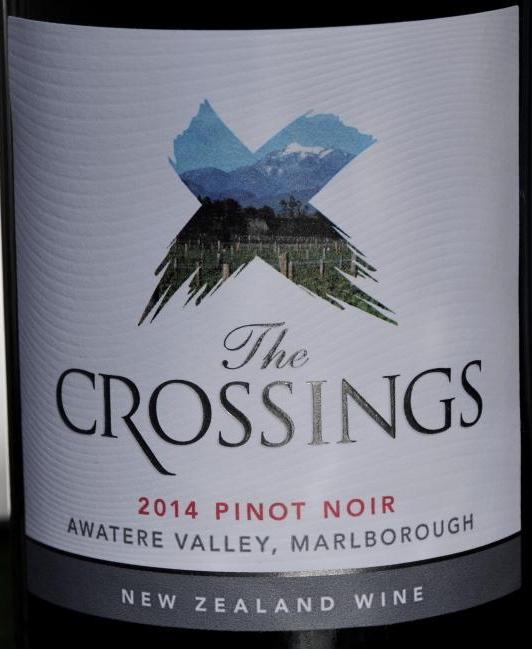 I think Jeff provided great answers. Hearing that 10 years old Sauvignon Blanc is still fresh makes me very happy – I love wines with an age on them, and I love it when the wines are aging gracefully, so I would love to try it by myself. Well, yes, I didn’t try the 2005 – instead, I tried the wine from the vintage Jeff was so happy about it – the 2015. I tasted latest releases of both Sauvignon Blanc and Pinot Noir, which I got as samples, courtesy of the importer, Deutsch Family Wine & Spirits. For you to understand how new the 2015 was, the bottle even didn’t have an official label on it yet.
Here are my tasting notes:
2015 The Crossings Sauvignon Blanc Awatare Valley Marlboro, New Zealand (13% ABV, SRP $14)
C: straw pale
N: beautiful fresh cut grass, just a hint of grapefruit, lemon zest
P: clean acidity, fresh, lemon undertones, herbal notes, perfectly balanced
V: 8, one of the very best NZ sauvignon Blanc wines I ever tasted. Summer day in the glass.
2014 The Crossings Pinot Noir Awatare Valley Marlboro, New Zealand (14% ABV, SRP $18)
C: dark ruby
N: smoke and raspberries, lavender, touch of mint, baking spices
P: sweet cherries, plums, hint of vanilla, touch of spices, good balance, medium body, medium-long finish.
V: 7+/8-, classic Marlboro Pinot Noir
There you have it, my friends – virtual interview and very real, delicious wines. Now, let me ask you a question – if you would have an opportunity to talk to the winemaker, what would be your questions? What do you think of our Q&A session? Happy Friday and Cheers!
Last Bottle Sign Up ($10 credit)




 Talk-A-Vino