Archive
Daily Glass: The Mood, The Vintage, Or Something Else?
Carlisle is one of my favorite California wine producers (who is, unfortunately, about to close the operation, but this is not the subject of this post). Carlisle is very well known for their Zinfandel wines, but their Rhone-style wines (Syrah, Petite Sirah, Grenache, Mourvedre, and others) are also excellent. I love their wines and have been on the mailing list for more than 10 years. I’m rarely disappointed by Carlisle wines, and yet I had a few “interesting” experiences.
Two years ago, in January of 2024, I opened a bottle of 2016 Carlisle Two Acres wine, and it turned out to be one of such “interesting” experiences. I didn’t like the wine, not when it was just opened, nor over the next few days it remained open. The wine was lacking balance, and since that time, I had a bit of trepidation whlie considering opening Two Acres again.
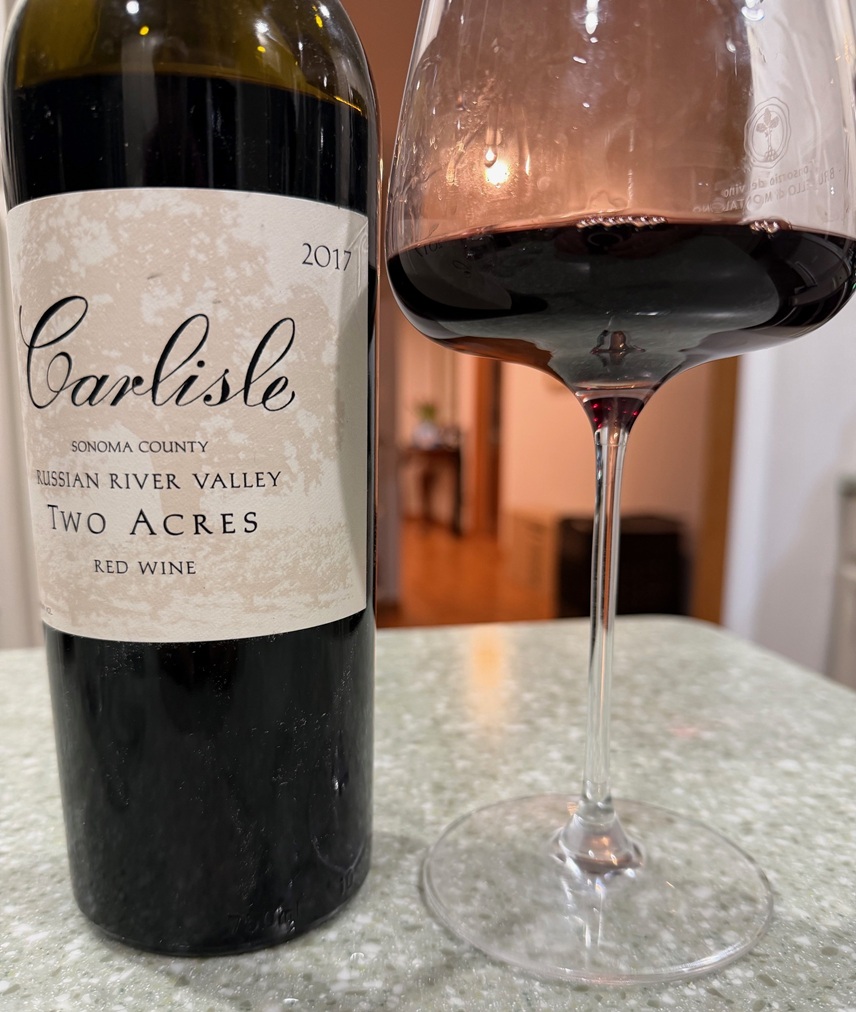
Today, I decided to give it another chance. This time, it was a 2017 Carlisle Two Acres Russian River Valley (14.9% ABV). Different vintage, a year difference in ageing (8 years versus 9 years). And the wine couldn’t be more different. Almost black color, dusty cherries on the nose, beautiful legs (couldn’t help but notice). Dusty cherries and herbs on the palate, perfect firm structure, full body, power and elegance, and perfect balance. This was one delicious wine. (Drinkability: 8+/9-)
There is a reason for the wine’s name Two Acres. The grapes for this wine come from the 2-acre vineyard parcel, which was originally planted in 1910. Carlisle took over the parcel in 1996, when the vineyard was practically dying, and restored the vineyard to full health in 2003. The original vineyard was planted with the Mourvèdre grapes, with the addition of Syrah, Petite Sirah, Carignan, Peloursin, and Alicante Bouschet. According to the Carlisle website, there are also a few Zinfandel vines in addition to nine whites of a variety called Helena (a white cross of Zinfandel and Mondeuse noir). Also, Two Acres wine is produced as Field Blend, which means that all the different grape varieties are harvested and processed together, without separating by varieties.
And now is the question – how come? How come I really didn’t like 2016 and loved 2017? Was there something with my mood? The difference between the vintages? On odd bottle? Of course, we will never know, but the analysis, even if futile, is still a part of the geeky wine fun.
I checked the Wine Spectator vintage chart for Rhone varieties in California, and according to the chart, 2016 was supposed to be far superior:
2016 – “A textbook vintage with nearly ideal growing conditions throughout the year”
2017 – “Dramatic weather conditions, from floods to heat waves to wildfires, led to a variable, challenging vintage”
And yet I liked 2017 a lot more. Of course, my 2016 could’ve been just an odd bottle. Or maybe I had a root day. Or just simply a bad day.
We will never know, because you can’t enter the same river twice. But if anything, I think my trepidation towards Carlisle Two Acres is now cured. And I’m ready to taste another bottle.
Until the next time – cheers!
P.S. Just for fun, a Day 2 update:
The wine evolved, now adding a touch of nutmeg, balsamic, and iodine, smothered on top of delicious black cherries with perfect acidity to support the new expression and keep the wine lean and firm, with an unnoticeable ABV. As I said before, a treat.
A Weekend In Wines #4
Here we go again – another attempt at a series (I kind of question my mental health at the moment, as the definition of insanity is trying the same thing over and over again, each time expecting a different result – I’m so glad I’m not a doctor, whew).
Some time ago, I wrote a post called Weekend in Wines. Then there was A Weekend In Unique Wines. And also A Weekend in [Great] Wines. That makes it 3 attempts at the Weekend in Wines theme, hence the #4 in the title. Oh yes, and countless posts under the same name, which never left my head, never materialized in the form of letters and pictures on the screen. But those don’t count, don’t they? Okay, number 4 it is.
It is not every weekend that I experience the wines I feel an urge to talk about. But from time to time, the “weekend wines” turn out truly special, especially if we are meeting with friends or traveling somewhere just for a weekend. The name “Weekend in Wines” feels appropriate, so let’s see how far I will be able to get with this.
There is another interesting question: when does the wine weekend start? Well, it is not all that important, but sometimes I open an interesting bottle on Thursday, knowing that I will finish it on Friday, just to see how the wine will “age”. But then again, let’s not bother ourselves with small details.


The weekend in wines #4 actually started on Thursday, with 2022 Pazac Le Pigeonnier Costières de Nîmes AOP (14.5% ABV). Truth be told, I’m not a big fan of the Southern Rhone wines, I find them flat for my palate. So I had no expectations opening this bottle – and then was pleasantly surprised with a generous fruit, medium+ body and nicely contrasting acidity. Well drinkable and offering a good amount of pleasure (Drinkability: 8-). I pumped the air out and left the bottle on the counter until the next day – and on the next day, the wine started losing its “umph”, simply confirming that Southern Rhone wines are not built for ageing.
I needed something else to drink on Friday, then, and I pulled 2021 Field Recordings Nolan Alisos Canyon AVA (13.9% ABV, 100% Alicante Bouschet, Nolsn Ranch vineyard) from the wine fridge. I was first introduced to the Alicante Bouschet grape more than 20 years ago, in the guided tasting of Spanish wines at the Barcelona restaurant in Connecticut. Ever since, I had many pleasant encounters with wines made from this unique Teinturier grape. A quick explanation, if I may – Teinturier grapes have red skin and red flesh/juice, which is very unique – only about 20 grapes are Teinturier out of many thousands used in the winemaking (Georgian Saperavi is another good example of Teinturier grape). The absolute majority of the red-skinned grapes have clear juice. While coming originally from Spain, Alicante Bouschet is a popular grape in California, more as a blending grape, but also used in the single varietal wines by the likes of Carlisle and Turley. This wine was powerful and brooding, almost black in color, with cherries, roasted meat, and a bit of funk, well within the “pleasure boundaries for my palate. (Drinkability: 8)
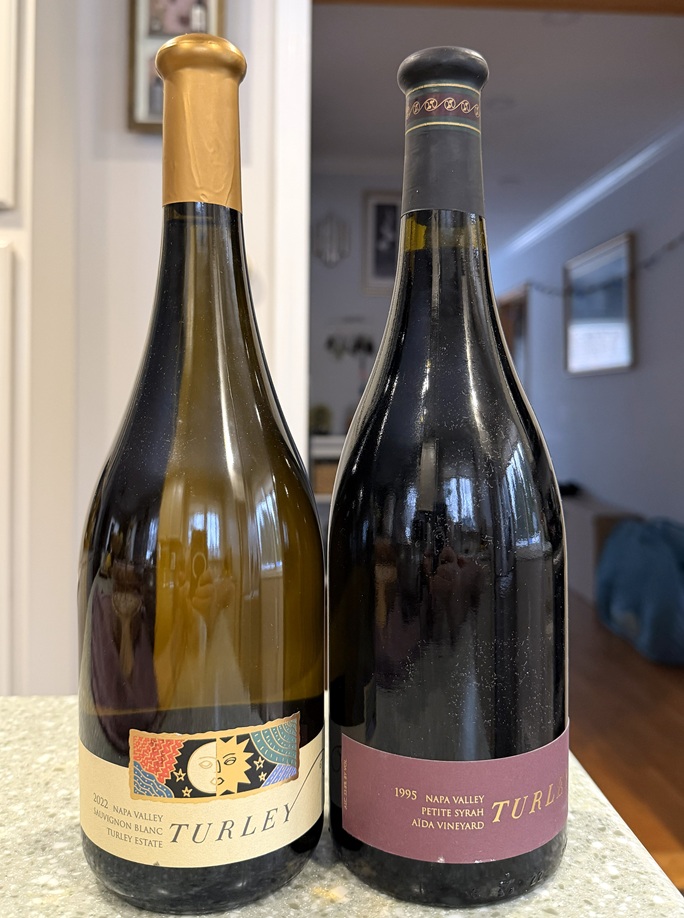
On Saturday, we were visiting our friends Francesca and Stefano, and of course, I had the pleasure nightmare of selecting a couple of special bottles to bring over. After a prolonged, painful back and forth, I finally settled on two bottles of Turley. First, 2022 Turley Sauvignon Blanc Estate Napa Valley (13.2% ABV). Turley Sauvignon Blanc is one of my perennial favorites. I had multiple vintages of this wine, and I have to say that Turley Sauvignon Blanc is always in a league of its own. You can’t provide a simple frame of reference, such as “oh, it is so much like Sancerre”, or “Similar to New Zealand”, and so on. The wine has great energy, it is round, it is silky, it is polished, it offers white stone fruit with good mid-palate weight, and a perfect balance. Always a treat. (Drinkability: 8+).
The next wine was an amazing treat. I recently got this 1995 Turley Petite Syrah Aida Vineyard Napa Valley (13.5% ABV) directly from Turley via the last mailing list offering. I’m on the Turley’s list probably for the past 15 years, I love Petite Sirah (Turley uses the spelling of Petite Syrah for some reason), but I never saw Petite Sirah from Aida Vineyard on any of the offers. We had to decant the wine as we were not careful pulling out a 31-year-old cork. I know that Larry Turley, the founder of Turley Winery, often said that Zinfandel is the wine Cab lovers actually want to drink. I know that this is Petite Sirah and not Zinfandel, but this 1995 Petite Sirah was truly mesmerizing – and Cabernet-like. In a blind tasting, I would not doubt that I’m drinking California Cabernet Sauvignon even for a second. The wine had a beautiful, succulent berry profile, with cedar box, eucalyptus, and mint, a fresh, zippy, and joyous palate. The tannins were perfectly integrated but still present, acidity was in check, ensuring the absolute freshness, and overall impeccable balance. A gem. (Drinkability: 9-/9).
Ahh, and one more interesting tidbit – the delicious pairing of this Turley Petite Sirah with Pasta Bolognese we had as a first dish. I would never think of pairing Petite Sirah with a pasta dish, as generally it would overpower it. However, this 30-year-old Petite Sirah mellowed and evolved enough to create a delicious pairing, complementing and enhancing the flavor. Love good surprises!


I asked Stefano if he had any Valtellina Sfursat in his cellar, as I was all of a sudden craving this expression of Nebbiolo after an earlier conversation on Twitter. He didn’t have the Sfursat, but he came back with 2001 ArPePe Sassella Rocce Rosse Reserva Valtellina DOCG (13% ABV). I love ArPePe wines, but they are generally not easy to find in the US. Interestingly enough, this wine literally showed no signs of age. It looked like it was just made, with cherries, sandalwood, violets and a touch of sapidity. To be entirely honest, I literally wanted this wine to show some age, maybe with some dried fruit notes, and it didn’t. I guess it would take another 20 years for it to reach its peak. Oh well, it was still tasty. (Drinkability: 8/8+).
And the last one for today – 2009 Carole Bouquet Sangue d’Oro Passito di Pantelleria, Sicily (14.5%). Once again, I was obnoxious enough to ask for Vin Santo to have with dessert. Stefano didn’t have any Vin Santo on hand, so he came back with this wine. I never heard of the producer, but the appellation is well-known for producing dessert wines from the Muscat of Alexandria grape, locally known as Zibibbo, with Donnafugata Ben Ryé being the most exemplatory specimen. It appears that this wine is produced by the famous French actress, Carole Bouquet, and it is not easy to find in the US. As the name of the appellation says, the wine is produced using the “passito” method, where the grapes are dried for a number of months before they are pressed into the wine, greatly increasing the concentration of flavors. The wine was delicious, loaded with succulent, ripe apricots with perfect acidity. Seductive, round, voluptuous – a perfect finish to a great evening with friends (Dinkability: 8/8+).
There you are, my friends. A weekend in wines. A weekend in great wines. A weekend in unique wines.
To more great wine weekends – cheers!
2023 UGCB Vintage Preview – Classic
 “Classic”.
“Normal”.
This is practically a tradition for me to start the year with the Bordeaux tasting – a UGCB new vintage preview. The Union des Grands Crus de Bordeaux (UGCB) is a market organization representing Grand Cru wineries (Chateaux) in Bordeaux. UGCB currently has 131 members and focuses on the promotion of Bordeaux Grand Cru wines around the world, organizing more than 100 events in 15+ countries.
I had been coming to these events for quite a few years by now, and I always make an effort to ask one question of the winemakers – “How was the vintage”? Among responses, I had an interesting range of opinions, with some of the answers even contradicting each other. For example, one of the winemakers said that they lost 35% of the crop due to the mildew. However, nobody else seems to have the same problem, even within the same appellation.
But no matter what, there seems to be a consensus to call this vintage “classic”, or “normal”, as some people referred to it. There was a good amount of rain in the spring, with even growing conditions throughout the summer and harvest in the fall. So the 2023 Bordeaux shall be known as Classic. My general impressions of the tasting also confirm this designation – I would call the majority of the wines I tasted “a classic Bordeaux”.
The wines below represent the list of favorites, the wines that were drinkable right now, or may be after a short decanting. Where 2022 was mostly ready to drink right away, 2023 being “classic” will definitely benefit from the time in the cellar as it has acidity and structure to build upon. But hey, you will be the judge of it.

Now, to the wines I enjoyed in the tasting:


Pessac-Léognan (the only Grand Cru region in Bordeaux producing both white and red wines). Most of the whites I tried were delicious. The reds were mostly on the leaner side, but overall nice and “classic”.
2023 Château Carbonnieux Blanc Pessac-Léognan
2023 Château Les Carmes Haut-Brion Rouge Pessac-Léognan (’22)
2023 Domaine de Chevalier Blanc Pessac-Léognan (’21, ’22) – probably the most favorite among the whites
2023 Domaine de Chevalier Rouge Pessac-Léognan (’21, ’22) – one of the top red favorites, ready to drink now
2023 Château de Fiuzal Blanc Pessac-Léognan (’21, ’22)
2023 Château de Fiuzal Rouge Pessac-Léognan (’22)
2023 Château Larrivet Haut-Brion Blanc Pessac-Léognan
2023 Château Larrivet Haut-Brion Rouge Pessac-Léognan
2023 Château Latour-Martillac Blanc Pessac-Léognan (’22)
2023 Château Malartic-Lagravière Blanc Pessac-Léognan (’21)
2023 Château Smith Haut Lafitte Blanc Pessac-Léognan – my second favorite white wine. Bright and beautiful.
2023 Château Smith Haut Lafitte Rouge Pessac-Léognan


Margaux
For the first time in many years, this was my favorite region in the tasting. The wines were mostly well-balanced without killing the palate with a tannin attack, as many others did.
2023 Château Brane-Cantenac Margaux (’21, ’22)
2023 Château Cantenac Brown Margaux
2023 Château Dauzac Margaux
2023 Château Giscours Margaux
2023 Château Kirwan Margaux
2023 Château Lascombes Margaux (’22)
2023 Château Rauzan-Ségla Margaux (’21)
2023 Château du Tertre Margaux
Pauillac
I guess I gravitate to Pauillac – almost every one had been on my favorite list for several years in a row. Second favorite group after Margaux.
2023 Château Batailley Pauillac (’21, ’22)
2023 Château Clerc Milon Pauillac (’21, ’22)
2023 Château d’Armailhac Pauillac (’21, ’22)
2023 Château Duhart-Milon Pauillac (’21, ’22)
2023 Château Grand-Puy Ducasse Pauillac (’21, ’22)
2023 Château Haut-Batailley Pauillac (’21, ’22)
2023 Château Lynch-Bages Pauillac (’21, ’22)
2023 Château Lynch-Moussas Pauillac (’22)
2023 Château Pichon BaronPauillac (’22)
Listrac-Médoc
2023 Château Fourcas Dupré Listrac-Médoc
2023 Château Fourcas Hosten Listrac-Médoc


Haut-Médoc
2023 Château Cantemerle Haut-Médoc
2023 Château Coufran Haut-Médoc – love the winemaker’s philosophy – Bordeaux needs to be released aged. 2009 and 2011 vintages are the current vintages sold in the US, 2007 is in the UK.
Pomerol
2023 Château Le Gay Pomerol (’21, ’22)
2023 Château Gazin Pomerol
2023 Château Rouget Pomerol – the only wine in Bordeaux made by a Burgundy guy – according to the winemaker, the Burgundy guy himself.
Saint-Émilion
2023 Chateau Valandraud Saint-Émilion (’21, ’22)
Saint-Estèphe
2023 Château Phélan Ségur Saint-Estèphe (’21, ’22)
2023 Château Ormes De Pez Saint-Estèphe
Saint-Julien
2023 Château Beychevelle Saint-Julien (’21)
2023 Château Léoville Barton Saint-Julien (’21, ’22)
2023 Château Léoville Poyferré Saint-Julien (’21, ’22)
2023 Château Saint-Pierre Saint-Julien (’21)


Sauternes and Barsac
This category was scarcely populated, with only 5 producers presented. When I asked about the vintage, everyone said with an ear-to-ear smile, “Perfect!”. And yet only 2 of 5 wines (below) were perfectly balanced, with cleansing acidity on the finish; the other 3 had a wonderful burst of bright sugar, without acidity on the finish to ever bring the wine to balance.
2023 Château Bastor-Lamontagne Sauternes (’21, ’22)
2023 Château Coutet Barsac
There you are, my friends. The 2023 Bordeaux Grand Cru vintage – The Classic. Cellar it. Or drink it. It is a classic, so unless you can wait for another 40-50 years, just drink it now. Well, maybe decant some of the bottles first.
Ohh, and don’t forget to save some room in your cellars for ’24 and ’25, both mentioned with lots of emotion and pride as something “special”… Let’s just wait one year…
Beaujolais Nouveau Est Arrivé! 2025 Edition
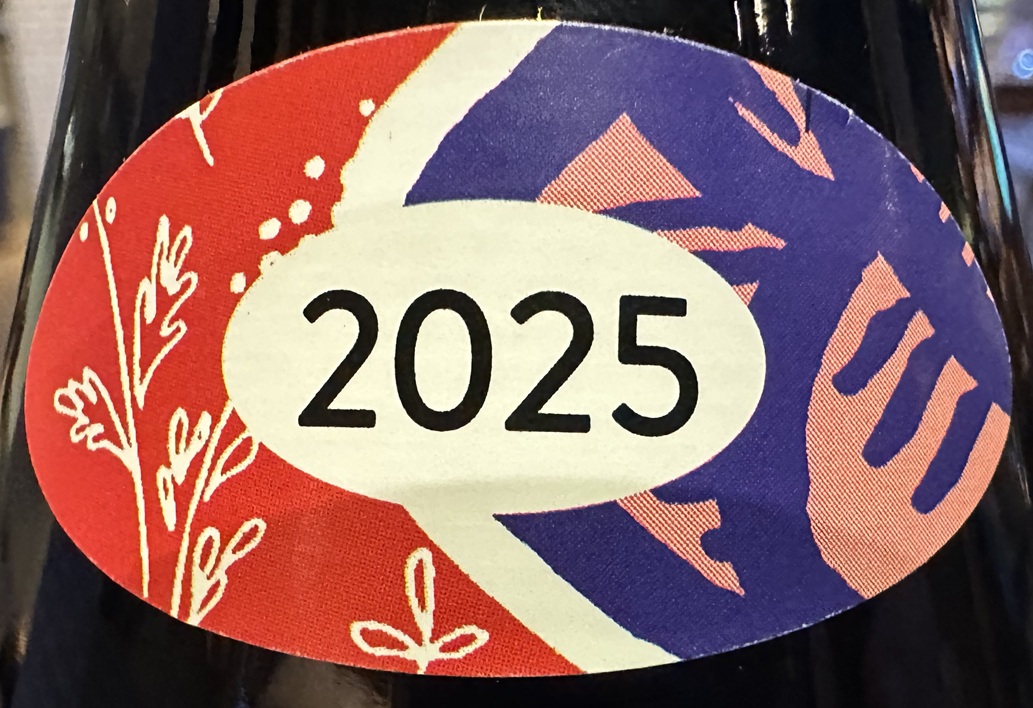 Beaujolais Nouveau Est Arrivé!
Yes, it is the third Thursday in November, and you know what it means! It is time to celebrate the new harvest. The 200-year-old tradition, taking its roots in the 1800s, became the “official” celebration of the new harvest 40 years ago, claiming the third Thursday in November as an official celebratory date. This is the day when the first wine of the new harvest appears in the wine stores around the world, to the great enjoyment of the wine aficionados and geeks.
For the 15 years this blog has existed, I have made an effort not to miss a single Beaujolais Nouveau celebration, and I have been successful so far. Considering that for the past 3 years I was traveling over this special week, the effort was real – you can read about my Beaujolais Nouveau struggles in France in 2022 and Florida in 2024. This year 2025 has not been an exception since I’m currently in Dallas, Texas.
Since the beginning of the week I checked a few times that there are wine stores within walking distance of the hotel where I’m staying, so my plan was to walk to the store on Thursday and get a bottle of Beaujolais Nouveau. Remembering past year’s experience, I decided to call ahead, which proven to be a challenge. One store had some google voice setup telling me to leave a message. Again no answer in the second store. Someone answered my call in the third store, but the person clearly never heard of Beaujolais Nouveau, so after a few minutes of back and forth I understood that this would not work to my favor.
The next best hope was Total Wine – but the store was 1.8 miles away, I had no car and I was in the meetings. Then it dawned on me that Total Wine has the same day delivery service, and life all of a sudden improved. I found out that Total Wine had two Beaujolais Nouveau available, so the order with delivery was quickly placed (delivery was only $4.99 for two bottles).
I was hoping that the wine could be just left with the hotel staff, but the delivery lady called me to tell me that I have to come and pick up the wine in person, as I need to sign for it, and the lady needs to make sure that I’m not drunk already. Well, I guess it is Texas after all (say it in the voice of “This is Sparta!!”).
Luckily, I set up the delivery window during my lunchtime, so it was not a problem to meet the driver and get the wine.
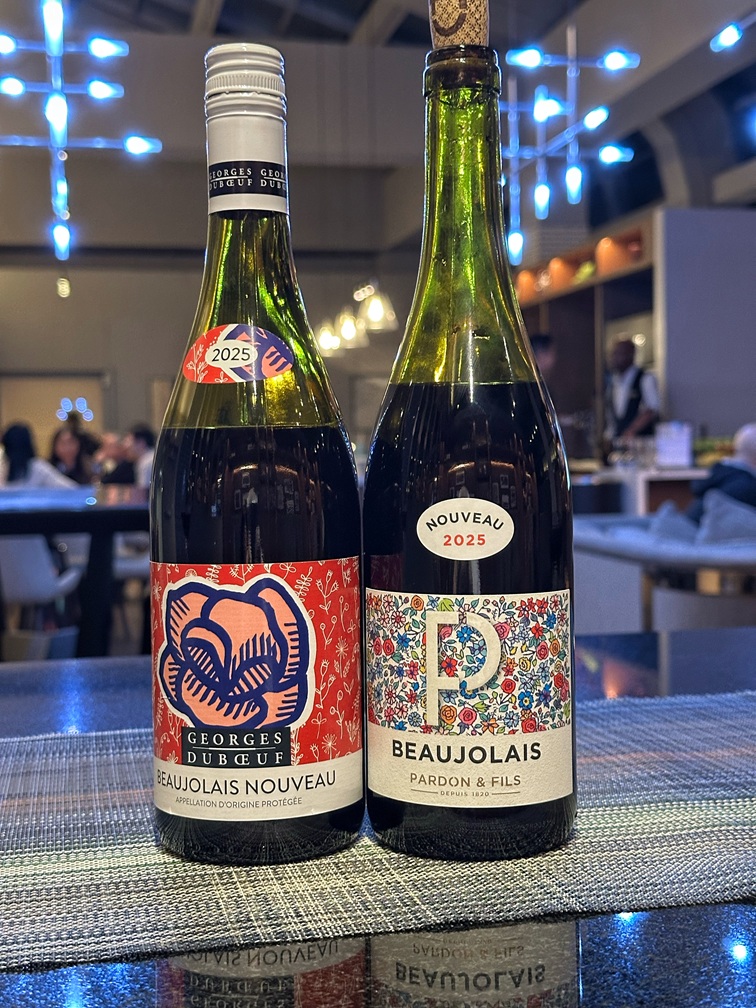
After my meetings ended, there was the time to taste the wine. Attention: spoiler alert! Every year, I say that the quality of Beaujolais Nouveau gets better. 2025 was no exception. 2025 Beaujolais Nouveau was not just better, but it was much better!
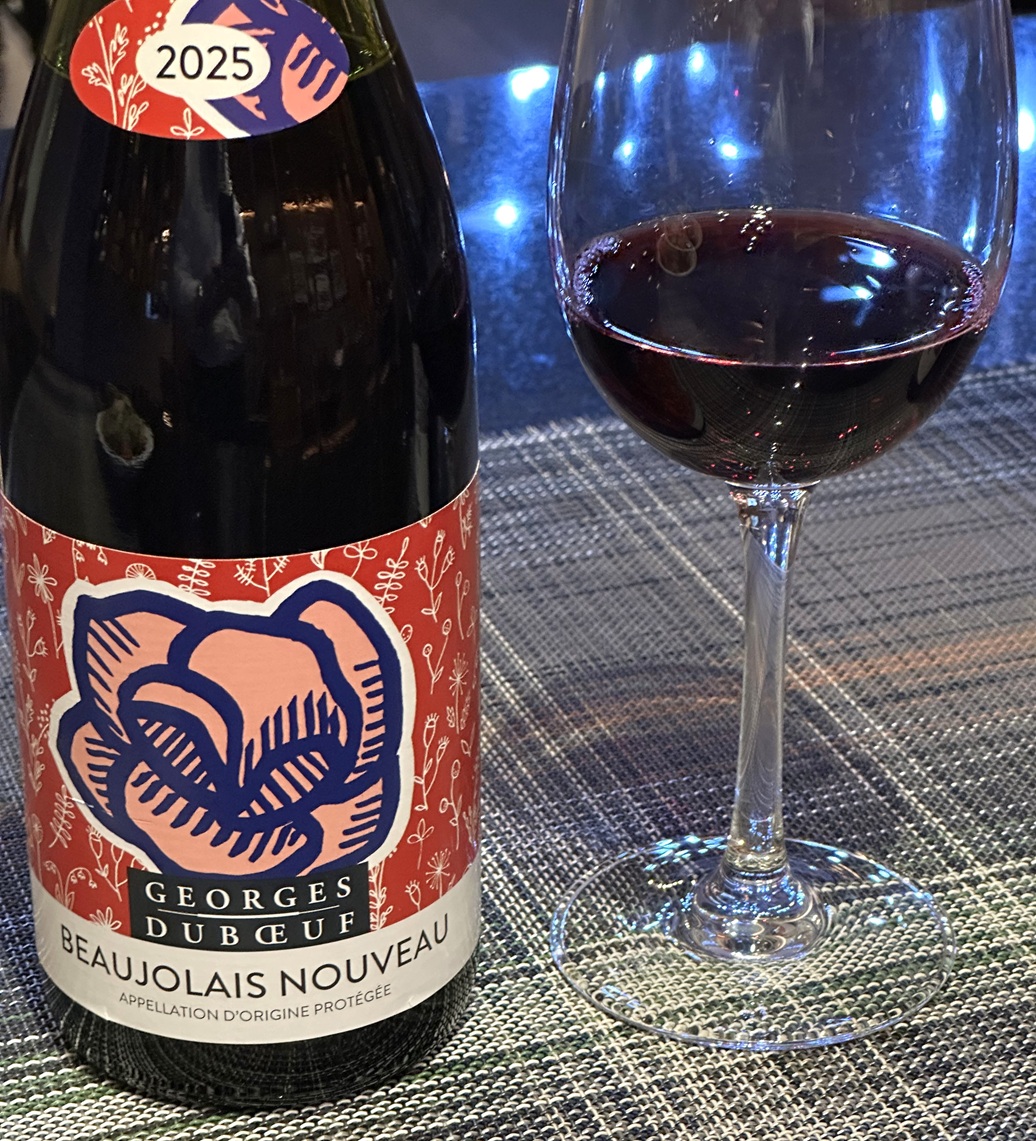
Every year, the bottles of Beaujolais Nouveau are adorned with specially designed labels, sometimes even multiple labels from the same producer for the same wine – I have no idea how that works. As I have been writing about Beaujolais Nouveau every year since this blog started, I can offer you a collection of labels starting with the 2010 vintage. As Georges Dubouef is the only producer I was able to taste every year, below is my little “show and tell” display limited to the labels of Georges Dubouef wines I tasted throughout the years. In case you feel like it, you can even choose your favorite label and share it in the comments (sorry, this is not a competition, so no prizes will be awarded).
Here we go:


Beaujolais Nouveau 2025 has arrived, and if you haven’t tasted one yet – what are you waiting for? Taste it now and let me know what you think! Cheers!
For the Love of Madeira
 If I were to offer you a glass of Madeira, what would you say?
Okay, let’s take it up a notch: I assure you it will be a good Madeira.
Would you gladly accept it, or would you energetically decline?
I’m betting about 80% on the latter. And if you like wine, that would be simply your loss. But if you are in that 20%, accepting that glass of good Madeira would be a very wise decision.
Madeira has a long history of ups and downs, similar to many other wines. I wrote about Madeira a few times in the past (not enough!), so let me be obnoxious and quote one of my older posts about the history of Madeira.
Madeira wine takes its name from Madeira Island in Portugal. The history of Madeira, which started around the 15th century, is full of accidental discoveries, glory, overcoming of the hardship, rise and fall, and even love – if you are interested in the full story, you should take a look at the Madeira Wine website. In the 15th / 16th centuries, Madeira wine was created when wine was transported in barrels through the ocean to far away places such as India and China. It was found ( by accident, of course) that a long ocean voyage improves the taste of wine compared to the original one that went into the barrel. After many trial-and-error experiments, it became apparent that prolonged exposure to the warm weather was the culprit, and then the method of heating the wine up to 60°C (140°F) was invented. The process of heating up the wine is called Estufagem, and it is done after the wine is fermented in the oak barrels, same as any other wine – again, you can find more details online – you can find less colorful but more technical details on Wikipedia (click here). Just to give you a few more details from Madeira’s history, trade embargoes led to further improving Madeira by adding brandy spirits in order to preserve the wine. Barrels of Madeira left for a prolonged time under the rain led to the development of the new style of Madeira wine, called Rainwater.
In the 18th century, Madeira was one of the most popular wines in the world, especially in England and the United States. Madeira was used to toast the United States Declaration of Independence, and was highly regarded as a drink of distinction. Unfortunately, first mildew and then phylloxera epidemic delivered a way too powerful one-two punch, which the Madeira wine industry was unable to overcome. Madeira subsided to nearly a cooking wine level, and stayed like that for a long time. Luckily, overall uptake on the wine industry throughout the world helps to revive the Madeira industry, and now it is becoming possible to find a great drinking Madeira even in the US – and you will see why. And I have to note that one of the great qualities of Madeira is in the fact that, unlike practically any other wine, once you open a bottle of Madeira, it will stay the same more or less indefinitely, due to both the Estufagem method and fortification with the spirit.
Now that you have a bit of historical perspective, let’s take a deeper dive into Madeira wine.
Madeira is a beautiful island with a subtropical climate and luscious greenery. Madeira’s name means wood, oak – this is what the first settlers saw. Madeira’s climate sports tropical winds, hot summers, mild winters, and high humidity. It also offers lots of microclimates, from south to north. Mountains and forests cover 47% of the island, mostly with altitudes of up to 200 meters, reaching 700 meters in some areas.
There are about 475 hectares of vineyards growing on the island (about 1,200 acres), cultivated by 2,000 growers. Vineyards utilize a pergola system to ensure proper aeration.
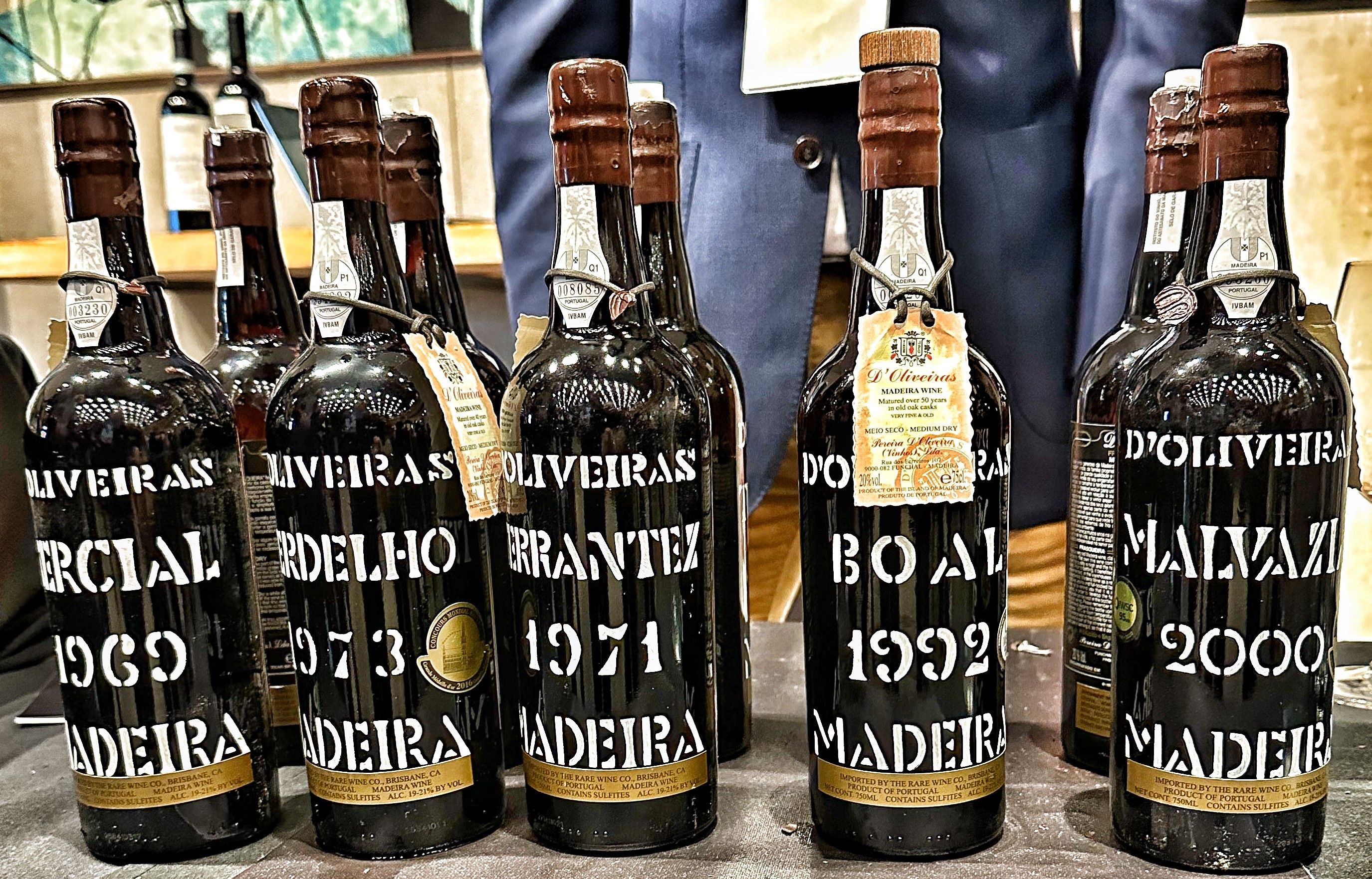
Six main grapes are used in wine production on Madeira: Sercial, Verdelho, Boal, Malvasia, Tinta Negra, and Terrantez. It is interesting to note that Verdelho and Verdejo are different grapes! Another interesting fact is that Tinta Negra can be vinified as white, rosé, or red.
After the harvest, the grapes are pressed and fermented as with any other wines. Fermentation is subsequently stopped, depending on the desired sweetness, by adding neutral spirit. Next, the heating process takes place. Less expensive wines are usually subjected to continuous heating in the steel tanks surrounded by coils for at least 90 days. Higher-end Madeiras, especially the single-harvest ones, are usually heated using the system called Canteiro, where the wine in the oak barrels is secured in place using wooden beams (canteiro) and heated by mother nature for a prolonged period of time, inside the winery.
The majority of Madeira wines are blends, with the labels indicating the age and type of grapes (it is also possible to make Madeira without indicating age and the grapes). The age designations can be 5, 10, 15, 20, 30, 40, and 50 years. There are also single-harvest Madeiras, called Colheita, which should be aged for at least 5 years in oak, and Frasqueira which requires at least 20 years in oak. Another beauty of Madeira is in the fact that the wine can stay in the barrel indefinitely, and bottled only when needed – some of the known Frasqueiras exceed 200 years of age.
Three years ago, in 2022, I was lucky to attend the Madeira tasting in New York City, where I had an opportunity to taste some absolutely spectacular wines. The event included a Madeira Master Class as well as a walk-around tasting.
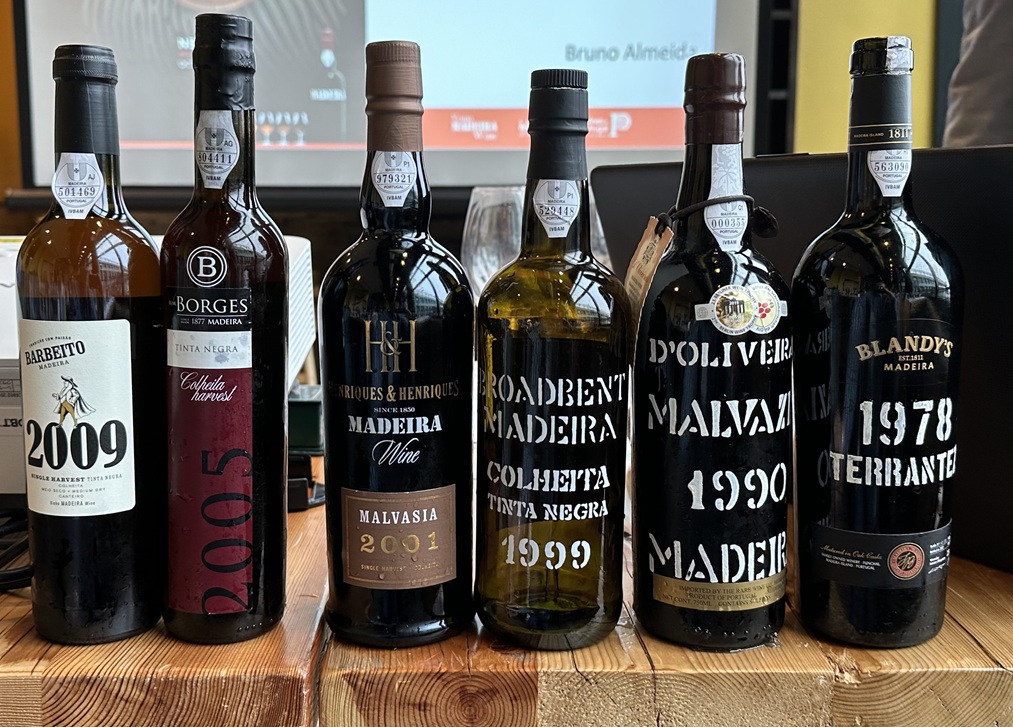
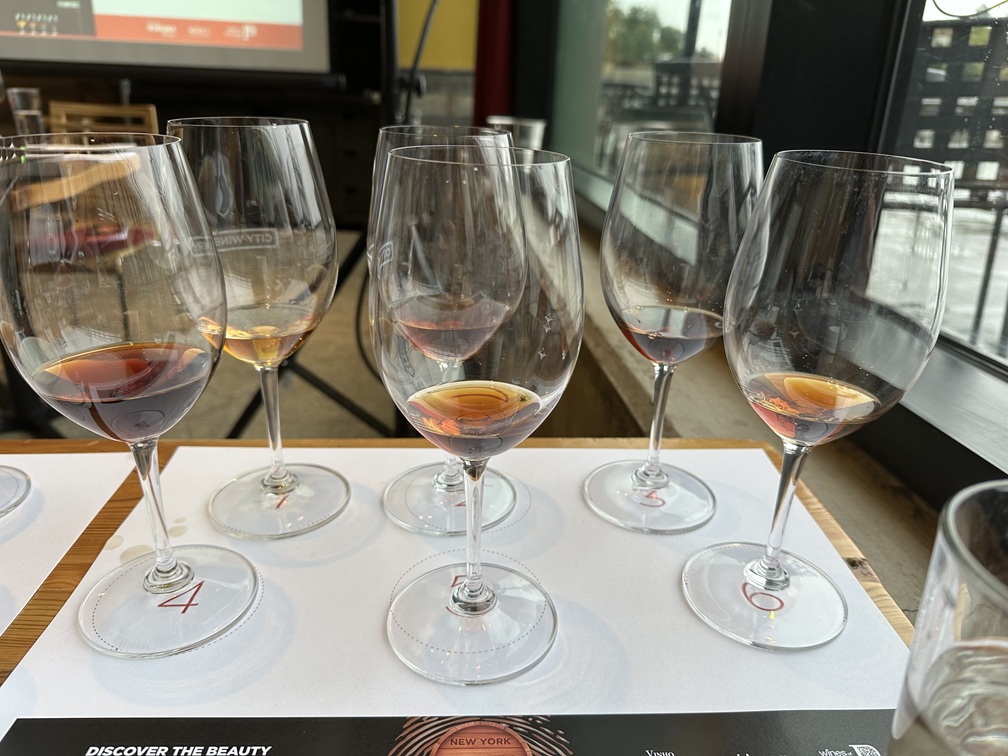


Here are the wines we tasted during the master class:
2009 Barbeito Single Harvest Tinta Negra
clean, open, light, easy to drink
2005 H.M. Borges Tinta Negra Colheita
Hazelnuts, dry fruit, figs, lemon, perfect acidity, beautiful dry fog finish. Lots of pleasure. Foie Gras would be perfect with it.
2001 Henriques and Henriques Malvasia Madeira
Complex herbaceous nose, nicely restrained
Salinity, acidity, supercomplex, dried fruit perfectly balanced
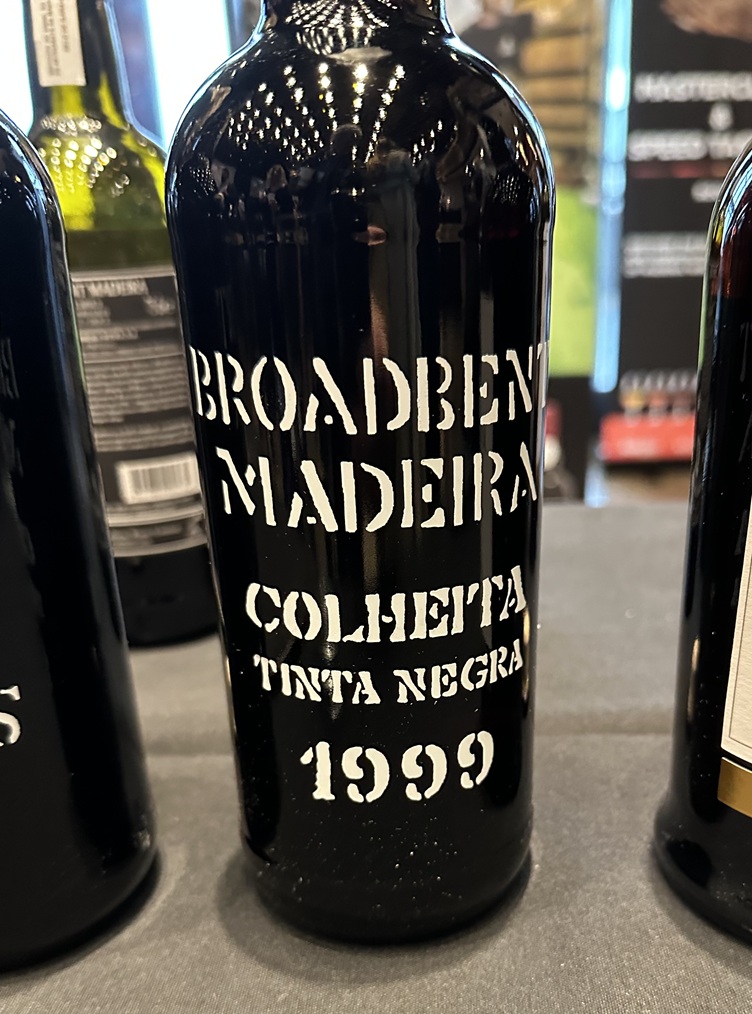
1999 Broadbent Tinta Negra Madeira Colheita
Chocolate, dried fruit compote, very restrained
Dried fruit, great acidity, toffee, tasty notes, outstanding.
1990 Pereira D’Oliveiras Malvasia Fresqueira Madeira
Bottled in 2018
Great herbaceous complexity, fall leaves, medicinal notes, eucalyptus
Amazing palate, dense, complex, loads of dried fruit and hazelnut. Superb.
1978 Blandy’s Fresqueira Terrantez Madeira
beautiful, herbal and vegetative notes, excellent balance, hazelnuts, salinity. Fresh and inviting.


There were lots of gems in the walk-around tasting, such as Justino’s 1996, 1997, and 50 years old Madeiras; D’Olivera Colheita and Fresqueira Madeiras from 2000, 1992, 1973, 1971, and 1969 (1969 was bottled only in 2022); Broadbent 10 years old Sercial, Verdelho, Boal, as well as 1999 Tinta Negra Colheita, and others.
As I said before, Madeira really needs to be experienced, and you have a perfect opportunity to do so.
Coming November 18th, you can experience the beauty of Madeira for yourself. Here are all the details:
Experience the Magic of Madeira – Sip, Taste & Vote!
Tuesday, November 18, 2025 | 5:30pm – 8:30pm
Ideal Glass Studio | 9 W 8th Street, New York, NY 10011
Six producers, six bartenders, one delicious adventure.
You can get 2 tickets for the price of one ($55) using this link.
✨ Your ticket includes:
- Walk-Around Tasting featuring six top Madeira producers — taste rare bottles, some worth over $100.
- Cocktail Competition – six NY bartenders crafting unique Madeira cocktails. Taste and vote for your favorite!
- Food Pairings by Chef Nuno of Leitão.
- Mini “Speed Tastings” with Wines of Portugal Ambassador Eugénio Jardim, exploring Madeira styles in fun, 15-minute bursts.
- Cocktail Seminar: Madeira Cocktails Made Easy with bartender Francesco Dionese — learn how to shake, stir, and sip Madeira at home. (seating is limited).
Don’t miss your opportunity – and you can thank me later. Cheers!
Moscato d’Asti – The Joy of Sharing
 Wine should give you pleasure.
This pleasure can come in many forms.
The simplest one is a pure hedonistic pleasure of that sip itself, the burst of flavor overwhelming your taste buds, and the opportunity to mindfully reflect on that very burst.
Or, with one sip of familiar wine, you can be instantly transposed in time and space – the wine can bring back memories. You can instantly imagine yourself being in Italy 5 years ago, experiencing this wine for the first time, vividly seeing the faces of the people you were there with, and reliving that beautiful moment again.
And then there is possibly the biggest pleasure of all – an opportunity to share wine with people. It is great to enjoy good wine by yourself – but that pleasure amplifies disproportionally when you pour the wine for your guests and you hear the collective “oh, it is so good!”.
I’m happy to share all of my wines with my guests, but then there are some wines that I even prefer to share. Let me explain.
I’m happy to open a bottle of Cabernet Sauvignon, Chardonnay, Syrah, any still red, white, or Rosé. Even if nobody would share it with me, I can drink it by myself over the next 2-3 days, no problem. But I would be very reluctant to open a bottle of sparkling wine for myself – I definitely prefer to share it with friends. Especially if this is a dessert sparkling wine, such as Moscato d’Asti.
I love doing that at the end of the dinner, when nobody expects that more wine might be coming. Seeing another bottle being brought up to the table, guests’ usual and immediate reaction is “what, more wine???”. This question requires no answer; I just wait for the people to taste the wine first.
Moscato d’Asti might be one of the hidden gems of the wine world, lightly fizzed, low alcohol, and deliciously, “just enough” sweet. This wine, made from the Moscato Bianco (white Muscat) grape, comes from the area in Piedmont where Moscato wines have been made for hundreds of years. Moscato d’Asti wine in its present, lightly fizzed form was born in the 1870s, when a number of winemakers started producing it in commercial quantities. Yet despite its 150+ years of history, I would still call it a hidden gem, as many winelovers are not aware of this wine or have the wrong ideas because of its sweetness.
The beauty of Moscato d’Asti is in its lightness and effervescence, and sweetness well balanced with acidity. If you want a glass of wine with your dessert, you will have to search far and wide to find the wine that would pair better with literally any type of dessert. And at a typical 5.5% alcohol level, it is guaranteed not to overwhelm your dining experience with a heavy punch of alcohol.
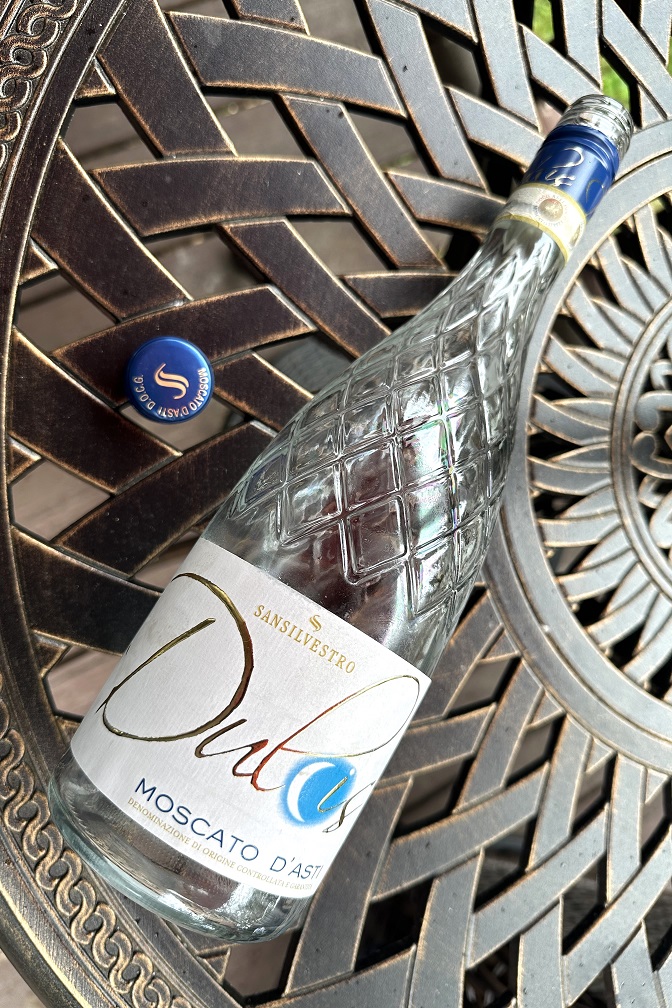
I recently had an opportunity to experience this “pleasure moment” when I opened the bottle of 2024 Sansilvestro Dulcis Moscato d’Asti DOCG (5.5% ABV) to serve with dessert. Overcoming the “what, more wine” resistance, I poured the wine for my guests and encouraged them just to take a sip. The next thing I heard was “oh my god, this is so good! Can I have more, please?” – there it is, that exact oenophile’s pleasure moment, equally as pleasant as taking a sip of the wine.
Moscato d’Asti is generally well priced, with a great selection of the wines at around $15 or less, so it definitely offers a great QPR and lots of pleasure without the need for an expense account. You should always have a bottle on hand, just in case you are craving a simple pleasure – double though considering the upcoming holiday season and all the get-togethers with friends.
By the way, on the subject of Moscato – back on May 9th, we celebrated Moscato Day (it is always celebrated on May 9th). I attended wonderful festivities in New York and never wrote about them, so if you care to see some of the images from that celebration, feel free to click “more” below.
Beautiful Wines of Smith-Madrone
I love the wines of Smith-Madrone.
I’m not even trying to make it a secret.
Yes, I’m biased. But I’m not ashamed of it.
Stu Smith and his brother, Charlie, founded the winery in 1971 in the Spring Mountain District of Napa Valley. When Stu was buying a property overflowing with trees, he was told that he was making the mistake of his life. But the best wines are born out of conviction – add perseverance, gamption, hard work, ingenuity, and imagination – just get all of these ingredients, and you might also be able to make some beautiful wines.
I told you that I love the wines of Smith-Madrone. Usually, love doesn’t require proof. But if you insist, I have one – not only I wrote about wines of Smith-Madrone on multiple occasions, but their wines had been included in my Top Wines of the Year lists 4 times – #11 in 2018 (Riesling), #1 (Cook’s Flat Reserve) and #14 (Riesling) in 2019, #3 in 2023 (Cabernet Sauvignon), and #4 in 2024 (Cook’s Flat Reserve). I don’t have any other wines that so consistently appear in the Top Wines lists.
For many years, Smith-Madrone produced only three wines – Riesling, Chardonnay, and Cabernet Sauvignon, with the addition of the Cook’s Flat Reserve Cabernet Sauvignon in exceptional years. A few years back, Rosé and Cabernet Franc joined the collection, and I was dying to try them ever since. This year, I finally got my hands on the wines (I rarely ask for samples, but this was one of such rare moments – I did ask…), so now I can share my tasting notes with you.
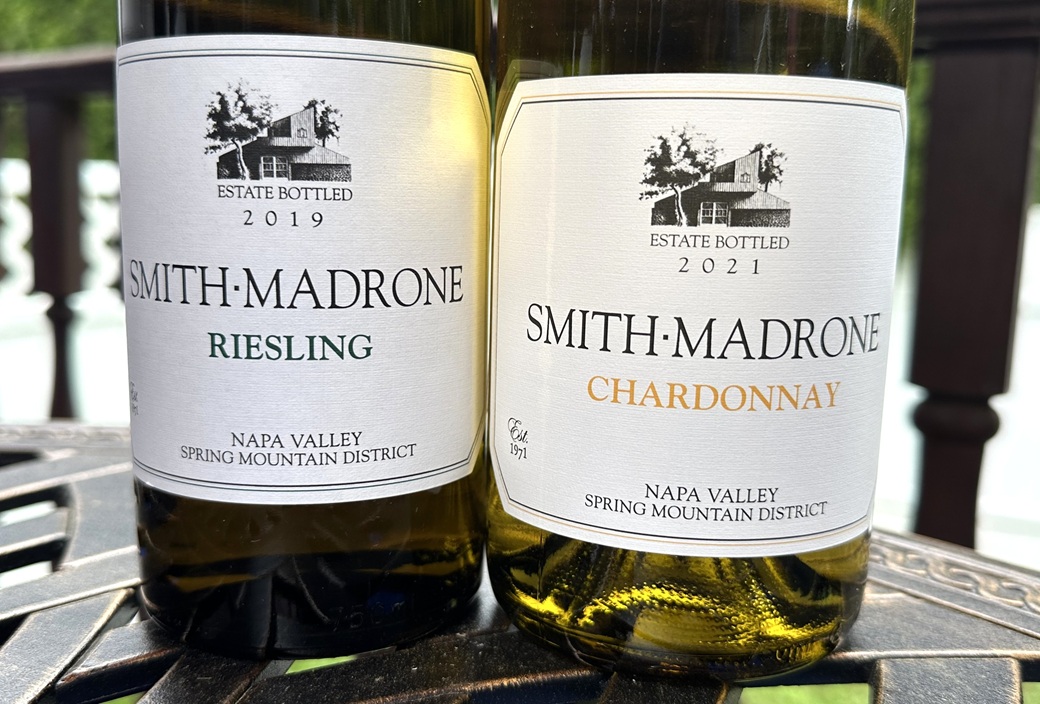
2019 Smith-Madrone Estate Riesling Spring Mountain District Napa Valley (13.3% ABV)
Light golden
Petrol mixed with honey and honeysuckle, a pure aromatherapy in the glass for a Riesling lover. Crisp, bright, honey with lemon in perfect harmony, clean and crisp finish with lots of energy.
9, a pure delight.
2021 Smith-Madrone Estate Chardonnay Spring Mountain District Napa Valley (14% ABV, 10 months in 50% new French oak)
Brilliant golden color
White plums and a touch of vanilla on the nose, a distant hint of gunflint (the wine is almost at room temperature). Apples, a touch of honey, vanilla, more apples, and a cleansing acidity. Delicious.
8+/9-, superb.


2023 Smith-Madrone Estate Rosé Spring Mountain District Napa Valley (14.2% ABV, 50% Merlot, 50% Cabernet Franc)
Beautiful, bright crimson red
Tart cherries, fresh, on the nose. Light, inviting, elegant.
Beautiful tart cherries on the palate, well present, round, delicious.
8+, delicious Rosé with character
2021 Smith-Madrone Estate Cabernet Franc Spring Mountain District Napa Valley (14.7% ABV, 89% Cabernet Franc, 11% Cabernet Sauvignon, 18 months in 60% new French oak)
Dark garnet
Ripe black currant, dark chocolate, fat, juicy, exciting. Delicious, black currant, dark chocolate, a rich California Cab Franc style, bell pepper came in later, together with a beautiful black pepper note, spicy and delicious.
8+/9-
Truth be told, I also got a sample of the 2021 Cabernet Sauvignon – but this is one of my most favorite Cabernet Sauvignons ever, so I couldn’t muster the courage to open the bottle yet, and will be waiting for the right occasion later this year – maybe a Thanksgiving celebration, as I did back in 2018.
I think both Rosé and Cabernet Franc are great additions to the portfolio. Both are produced in small quantities (131 cases of Rosé, 153 cases of Cabernet Franc), and Rosé is already gone (duh, summer is ending), but the Cab Franc is still available. And if we are talking about new additions, maybe we will see a sparkling wine one day? Or wait, I might have even a better idea – how about some late harvest Riesling? Knowing the quality of Smith-Madrone Riesling, if they were ever to produce a dessert-level Riesling, I’m sure it would be an absolute delight. Oh well, maybe one day…
Here you go, my friends. I hope you had a chance to discover the wines of Smith-Madrone for yourself. If you have not, head over to the Smith-Madrone website, admire the scenery of beautiful mountain vineyards, and get a few bottles for yourself to enjoy. I guarantee you will not regret it. Cheers!
Latest Wine News and Updates
There is something always happening in the world of wine. When we hear the word “wine”, of course, we get an instant image of the liquid in the glass. But before and after that liquid in the glass, the world of wine is a business world, and as with any other business, something is always happening in the wine business. Let’s take a look at some of the latest, “hot off the press” developments in the wine world.
Tariffs can’t stop the wine
It is nice to think of wine as something divine and poetic, but at the end of the day, wine has to be paid for, just like cars, TVs, and steaks. For things we pay for, the scary word of the day is “tariff” – we can’t just escape the reality of our lives. The US government floated the idea of setting the tariffs for all European wines at 200%, and that is a scary thought for winemakers and wine consumers alike. Some of the winemakers want to face this challenge head-on – and thus, venerable Champagne houses Dom Pérignon and Krug just announced that they will start production of their famed Champagnes in the US, which will allow them to avoid tariffs altogether. The information is scarce and protected by strong NDAs, but based on anonymous social media leaks, both houses entered into agreements with undisclosed wineries in Oregon to source the fruit and assist in the production of the sparkling wines. Would they be able to call them Champagne? This is the question of the year, of course. I’m sure we will learn more as the story unfolds. Currently, it is expected that both houses will be able to proudly offer “made in USA” Krug and Dom Perignon as early as the 2027 vintage.
Chateau Latour 1982 without alcohol? You got it
It seems that alcohol-free wine is a big trend (not for me, but hey, it is a free world, right?). Until now, the choices of alcohol-free wines had been limited to specifically produced non-vintage wines of unknown pedigree. This is about to change, all thanks to the company that already once revolutionized fine wine consumption. Coravin just announced a new wine preservation system, which not only lets you sip your prized First Growth over many years, but also allows you to remove the alcohol from the wine while it’s been poured! Think about your underage kids being able to enjoy the legendary wines together with the adults at the dinner table. Or even oneself, now being able to consume an unlimited amount of the elixir and then drive with no problems at all. This new Coravin wine preservation system, called Drink Freely, is priced at $899, and it is expected to hit the store shelves before Christmas of 2025. You can visit the Coravin website to sign up for the email updates for the early availability of Drink Freely.
Wine and health
I’m sure you noticed that wine has been assaulted as of late with all the baseless claims about the dangers of wine consumption to your health. Despite all the wealth of the previous research, talking about the benefits of moderate wine consumption, it seems that beating wine down became a favorite pastime of many medical “scholars.” The World Health Organization (WHO) has been one of the staunch critics of wine consumption and alcohol in general. In a stunning reversal of events, the WHO published the results of a 10-year-long lifestyle study, concluding that moderate wine consumption, up to 2 glasses of wine per day, had shown improved mental capacity, reduced stress, and boosted immune system defences among experiement’s subjects, compared with the control group. The findings were so profound that the WHO Director-General, Dr. Tedros Adhanom Ghebreyesus, called the wine “an elixir of life” in his quote. Again, this was quite an unexpected endorsement, but who can argue with success?!
Vines under water
Rising sea levels are definitely a concern for many wineries, especially those located in the coastal areas around the world. What will happen if the vineyards go underwater? What if it is possible to successfully grow grapes in the vineyards at least partially, or potentially, completely submerged in water? The University of the Basque Country in Spain teamed up with famed UC Davis in California and several wineries in the Rias Baixas area to research the ability of vines to thrive under water. The first vineyards had been planted in the sea basin near Vigo in Rías Baixas, taking care of protecting young vines from the sea currents and fish. Obviously, Albariño was the first choice of the grape variety to plant, but a number of other Mediterranean grape varieties are also in the play. It is too early to talk about the results, as the project has been going for only 3 years, with the first mentions just leaking into the press, but the chief project scientist, Dr. Maximilian Grape-Seedling, says the early results are encouraging. We are still 3-4 years away from any commercial availability, but we can definitely share the hope for the future of the wine industry.
The wine crypto
Last but not least – we just learned of the first ever wine foray into the world of cryptocurrency. Loïc Pasquet, the winemaker behind the most expensive Bordeaux wine, Liber Pater ($30,000 per bottle upon release), just announced his brand new crypto, $Liber. $Liber will be based on the Ethereum blockchain and will be released at $10,000 a piece, with only 10,000 coins total planned for circulation. The new crypto will be backed by the 2020 vintage of Liber Pater, with 5,000 bottles set aside as collateral for the new cryptocurrency. It will be first available for sale on May 1st, and the demand for the hotly anticipated coin already exceeds 3 times the expected total supply. Each new $Liber owner will receive a 50 ml bottle of 2015 Liber Pater and the certificate of ownership signed by Loïc Pasquet himself. $Liber will be available on all major crypto exchanges such as Coinbase, Robinhood, and others.
And we are done here – all the latest wine news and updates.
Until the next time – cheers!
Brunello di Montalcino 2020: Captivating, Bright, Succulent
Benvenutto Brunello is one of my favorite wine tasting to attend. If you like Italian wines, Brunello needs no introduction (and if you don’t, I’m not sure we can be friends) – one of the 3 big Bs of Italian winemaking – Barolo, Barbaresco, and Brunello.
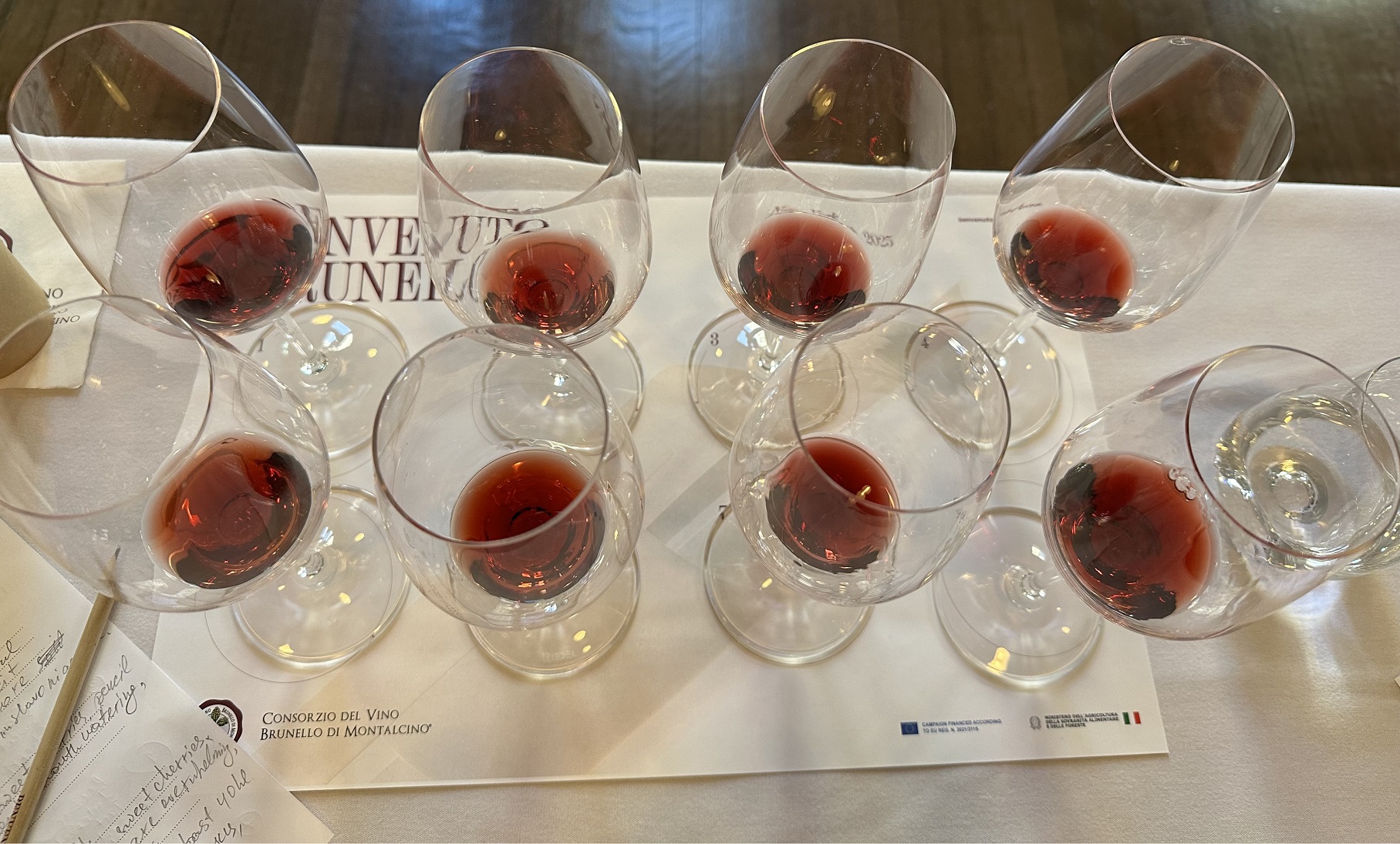
Brunello is an epitome of the expression of the best known Italian red grape – Sangiovese. The Sangiovese growing in the Brunello di Montalcino proper is considered a clone – Sangiovese Grosso, but it is a Sangiovese nevertheless.
Brunello de Montalcino appellation is almost square, all located around the hill crowned with the town of Montalcino, with vineyards densely occupying 5,189 acres and located at various altitudes over a range of different soils. Different microclimate conditions, terroirs, guarantee a great diversity of styles among 200 or so producers in Brunello di Montalcino DOCG. Another interesting appellation within Brunello proper is Rosso di Montalcino DOC, occupying 2,124 acres (after expansion in 2020) of dedicated vineyards (Rosso DOC vineyards are only used for production of Rosso di Montalcino DOC). Take a look at this wonderful video providing an excellent overview of the Brunello di Montalcino region:
Gabrielle Gorelli, MW, led our highly informative Brunello Masterclass, providing a detailed overview of the 2020 vintage and the changes in vintage assessment that just went into effect.
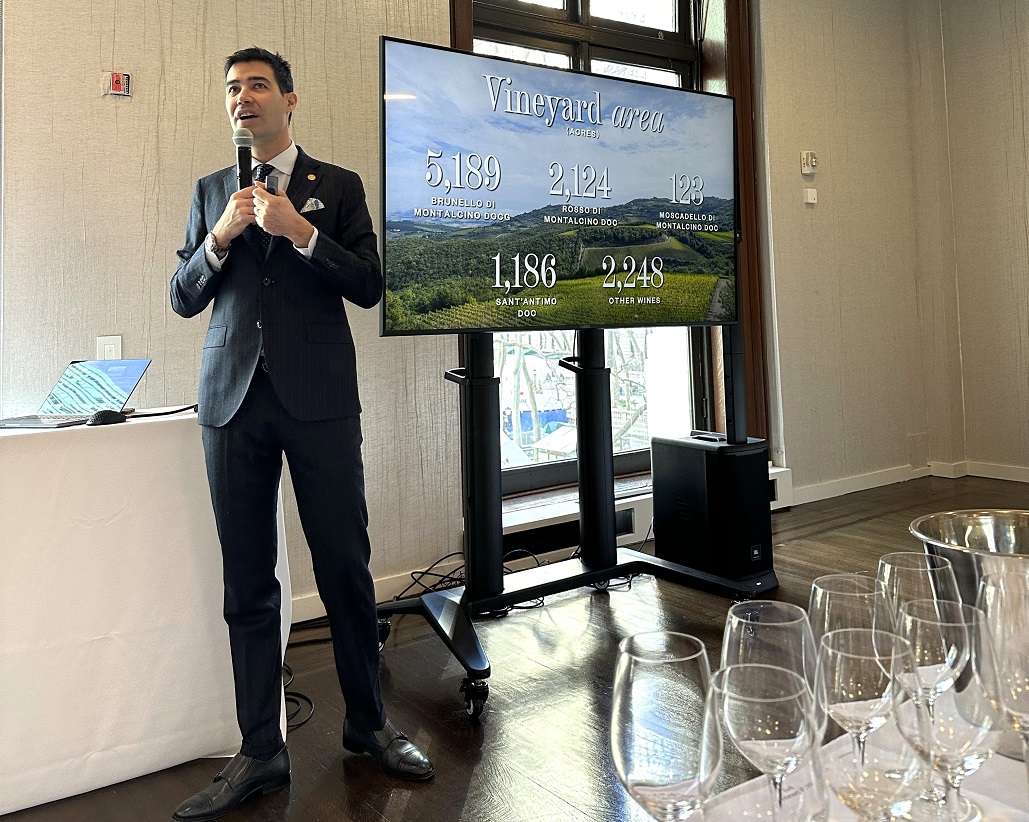
The 2020 was a pivotal vintage for Brunello di Montalcino. Not because of the Brunello 2020 wines per se, but because of the fundamental changes made in assessment of the 2020 vintage and all future vintages to come.
Until 2020, Brunello di Montalcino vintages had quality assessment specified with the stars (from 1 to 5 stars) and a short slogan characterizing the vintage. For example, the 2014 vintage had a rating of 3 stars and was called “Grace under pressure”. 2015 had a rating of 5 stars, and it was called “Power and Purity”; the 2016 vintage was also rated 5 stars and called “Finesse and depth”.
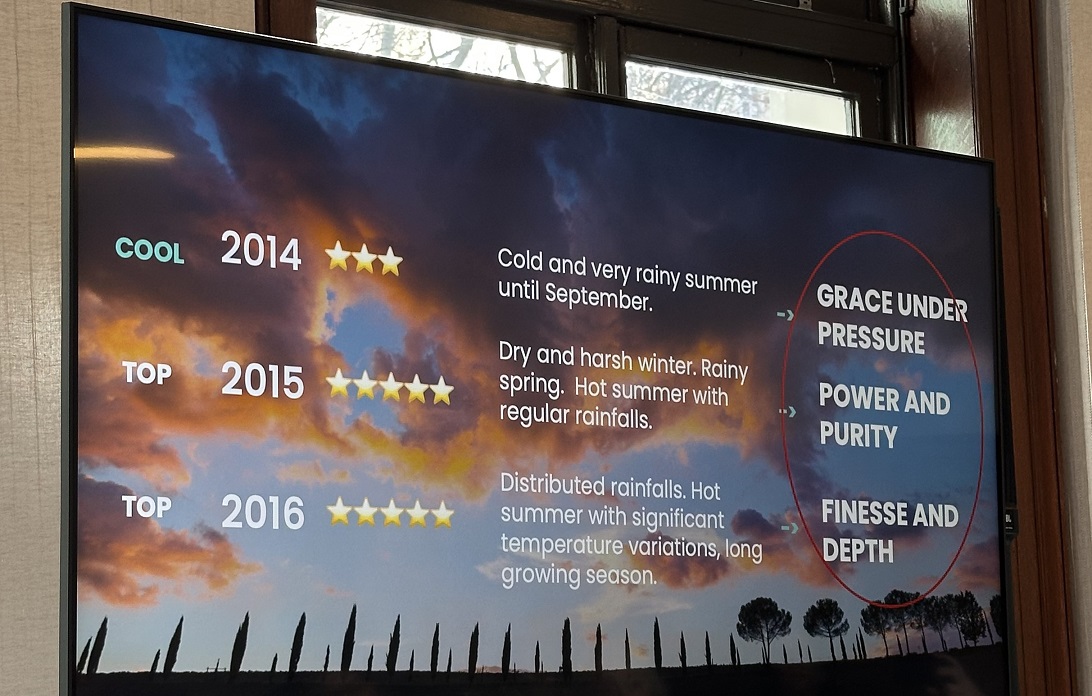
The 2020 Brunello vintage marks the end of the star ratings – this is the last vintage awarded a star rating (5 stars, in case you are wondering). Instead, Consorzio Brunello di Montalcino is introducing Brunello Forma, which will only provide a verbal description of the vintage moving forward.
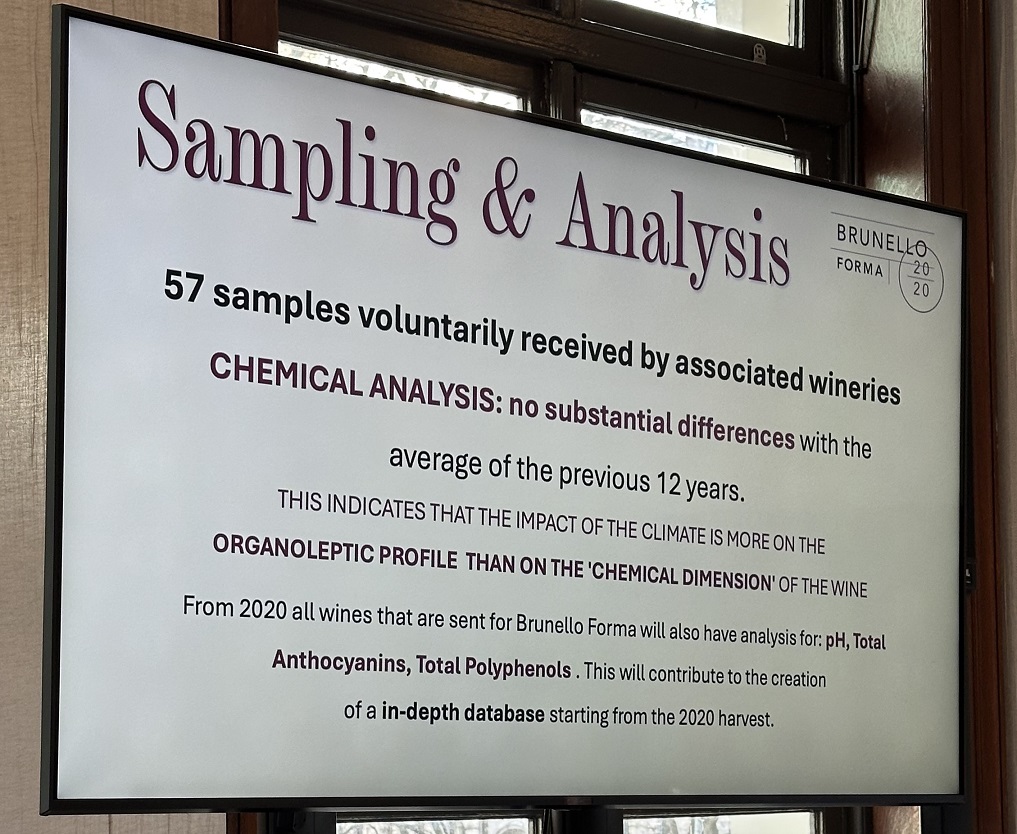
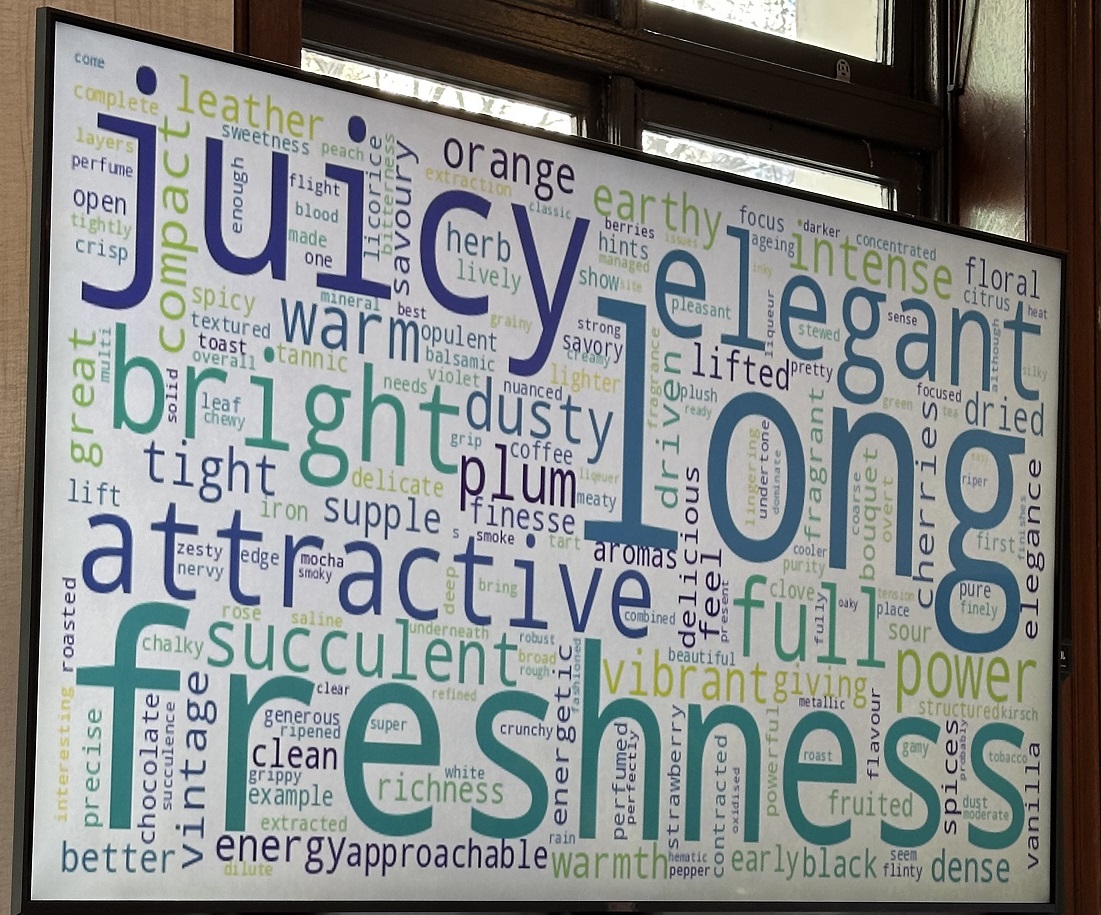
A significant amount of effort went into the creation of the new system. 39 weather stations were installed around the region to collect the microclimate data. Historical data of the past 12 years were collected and a significant number of samples from the past vintages were blind tasted to come up with the set of data which will allow to make vintage assessment more scientific, I guess.
To come up with the vintage verbal assessment, a panel of industry experts (masters of wine, wine distributors, wine writers) ran extensive tasting of the 2020 wines, then collected and processed a large number of descriptors used by the panel members to crystallize the 2020 Brunello vintage description into these three words:
Captivating, Bright, Succulent
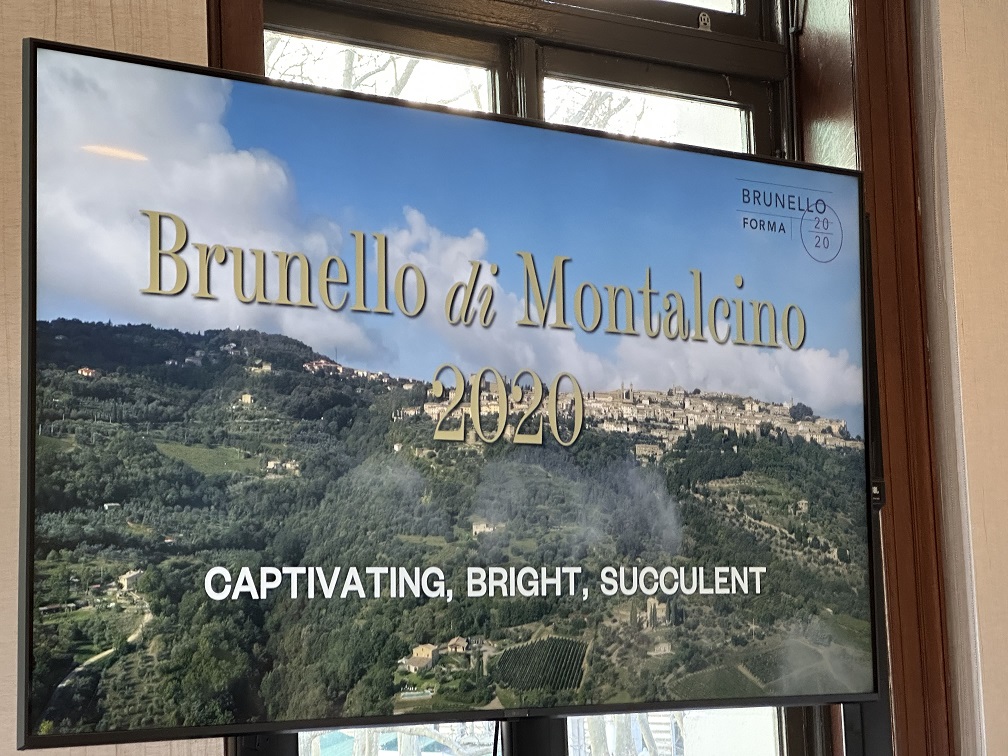
As an engineer at heart, I’m not a fan of words. Simple numerical (3 stars, 92) or verbal (fair, good, very good) rating quickly gives me everything I need to know about the vintage in general – captivating or succulent doesn’t set my expectations about a given wine – not now, and especially, not in the future.
However, as it was explained later on during the dinner with Giacomo Bartolommeo, Brunello winemaker at Caprili, the star ratings were hurting the wineries, as wine buyers preferred to ignore wines from 3-star vintages and focus on acquiring better-rated vintages, without much regard to the qualities of the particular wine. Moving to verbal descriptors eliminates the opportunity for a quick rating-based decision. Well, winemakers are in the business of selling their wines, so it is not my place to complain or judge.
Then, of course, there were wines. I have to say that in the traditional Italian style (please take no offence), the tasting order was changed by our presenter, Gabrielle Gorelli, MW, compared to the order written on the notes page. However, I have to say that our tasting order was definitely the right one, showing progression from very tight and lean wines to wines that were softer and more approachable now. I attended both seminars, so below are my notes:
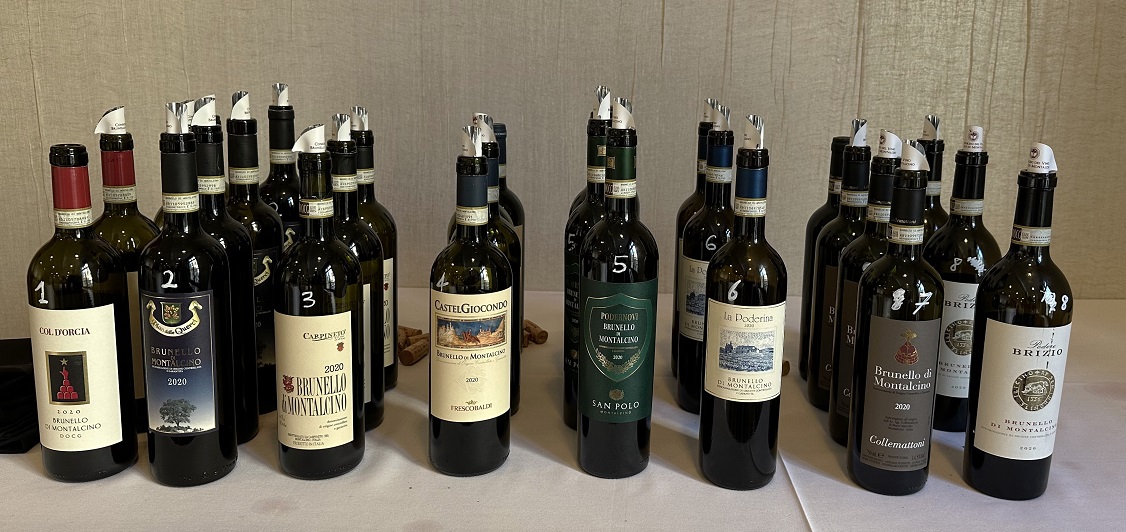
Morning Seminar
Col D’Orcia Brunello di Montalcino 2020
Ruby Color
Interesting nose, sapidity, earthy undertones, leather
Tart is the first sensation; tart cherries, expressive tannins, crisp acidity
Pian Delle Querci Brunello di Montalcino 2020 (36 months in Slavonian oak)
Dark ruby color
Sweet cherries, perfumy, very playful
Not as tart as the previous wine, but has very explicit tannins, good acidity, but lacking fruit, very lean
Carpineto Brunello di Montalcino 2020 (vineyards planted on the oldest soils, 3 years in big oak barrels)
Garnet color
Sweet tobacco, cherries, plums, attractive
Initially showed beautiful cherries, the tartness kicked in, followed by very dry finish with big but well integrated tannins
Marchesi Frescobaldi Castelgiocondo Brunello di Montalcino 2020 (single vineyard, aged in big casks)
Garnet color
Beautiful nose, elegant, perfumy, with a touch of sweet cherries.
Tart cherries on the palate, herbs, tart finish with well pronounced tannings.
San Polo Podernovi Brunello di Montalcino 2020 (30 months in light-toast 40hl casks)
Garnet color with bright reddish hues
Beautiful nose, elegant, perfumy, sweet cherries, eucalyptus.
Tart cherries, tannins are overwhelming, but the most elegant finish so far.
Probably can be enjoyed now after decanting
La Poderina Brunello di Montalcino 2020
Dark Garnet
Playful, bright red fruit, cherries, herbs, sweet oak.
Palate is a tad bitter, strange, had to swallow the wine instead of spitting to establish that it was not corked. Overall, not bad, but the nose is way better than the palate.
Collematoni Brunello di Montalcino 2020
Dark ruby color, beautiful
Beautiful nose, sweet fruit, cherries, sage, beautiful.
The best palate so far – round, with sweet and tart cherries, elegant, delicious.
8+
2020 Podere Brizio Brunello di Montalcino 2020 (38 months in oak)
Dark garnet
Beautiful, open, sweet fruit, sweet cherries, pencil shavings.
Tart cherries, explicit balsamic notes, succulent, mouthwatering, round, delicious, beautiful, superb.
8+
My favorite two wines of the morning seminar:


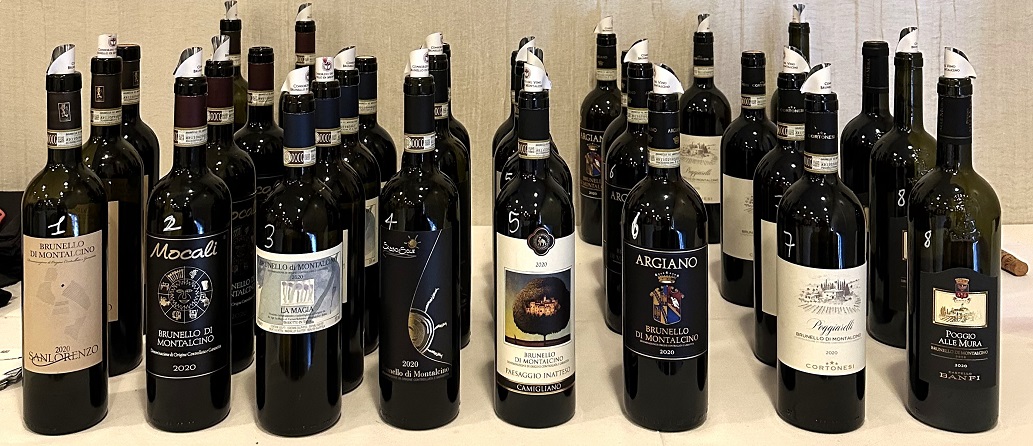
Afternoon seminar
Sanlorenzo Brunellodi Montalcino 2020 (aged in oak for about 3 years)
Garnet color
Beautiful, sweet fruit, cherries, dark undertones, earthiness.
Intense fruit quickly dissipates into very tart, very high expression tannins and acidity on the finish. Super-lean.
Mocali Brunello di Montalcino 2020
Dark garnet
Interesting nose, maybe racy is a good descriptor? Garrigue, some cherries show up a bit later.
Lots of sweet cherries which instantly disappear, but the finish is a bit less tart than the previous wine.
La Magia Brunello di Montalcino 2020
Very dark, practically black, darkest of the tasting so far
The nose is restrained, earthy and herbaceous
Sweet cherries, sweet oak, then tart, acidic, and ultra-tannic on the finish, very dry
Sassodisole Brunello di Montalcino 2020 (minimum 24 months in oak)
Dark Garnet
Cherries, sage, perfume, nice and open
Tart cherries, leather, well-integrated tannins
So far, the most approachable wine of the tasting
Camigliano Paesaggio Inatteso Brunello di Montalcino 2020 (30 months in oak barrels, 10 months in cement tanks after)
Bright ruby
Underbrush, a hint of smoke
Tart cherries, fresh cleansing acidity, acidic finish with some tannins, not bad.
Argiano Brunello di Montalcino 2020 (30 months in Slovenian oak casks of different capacities)
Dark garnet
Nice, inviting, round, dark fruit, a touch of crushed rocks.
Sweet cherries, crunchy and succulent, great energy, cherries on the finish, delicious.
8+, the best of the second seminar
Cortonesi Poggiarelli Brunello di Montalcino 2020 (24 months in oak)
Dark garnet, almost black, with bright hues
Amazing nose. Cherries that magically pull you in.
Fish and powerful opening on the palate, but bitter tannins set in.
Best nose of both tastings, 9-/9. Palate is not great right now – 7+
Banfi Poggio Alle Mura Brunello di Montalcino 2020 (24+ months in French oak)
Dark garnet with bright hues
Nice, open nose with lots of fresh herbs – sage, thyme.
Sweet dark fruit on the palate initially, then the palate is quickly shut down in front of the mouth. Again, if you swallow this wine instead of spitting, the wine is a lot more generous. Succulent is a perfect descriptor for such a wine. 8+
Best wines of the second seminar:


In addition to the seminars, there was tasting on the “main floor”. There were more of the excellent 2020 Brunellos, such as San Felice, Caprili, or Corte Pavone. There were also many of the 2019 Brunello di Montalcino Riserva wines, which were simply outstanding. Additionally, 2023 Rosso di Montalcino were presented by almost all participating wineries and were excellent across the board.
My Brunello deep immersion didn’t stop there. After the event was over, we went for dinner with John Fodera and Giacomo Bartolommei, the winemaker at Caprili, to the wonderful Italian New York restaurant Zero Otto Nove, famous not only for genuine Italian food but for the amazing wine list. There, Giacomo found 2001 Cerbaiona Brunello di Montalcino, which we ordered.
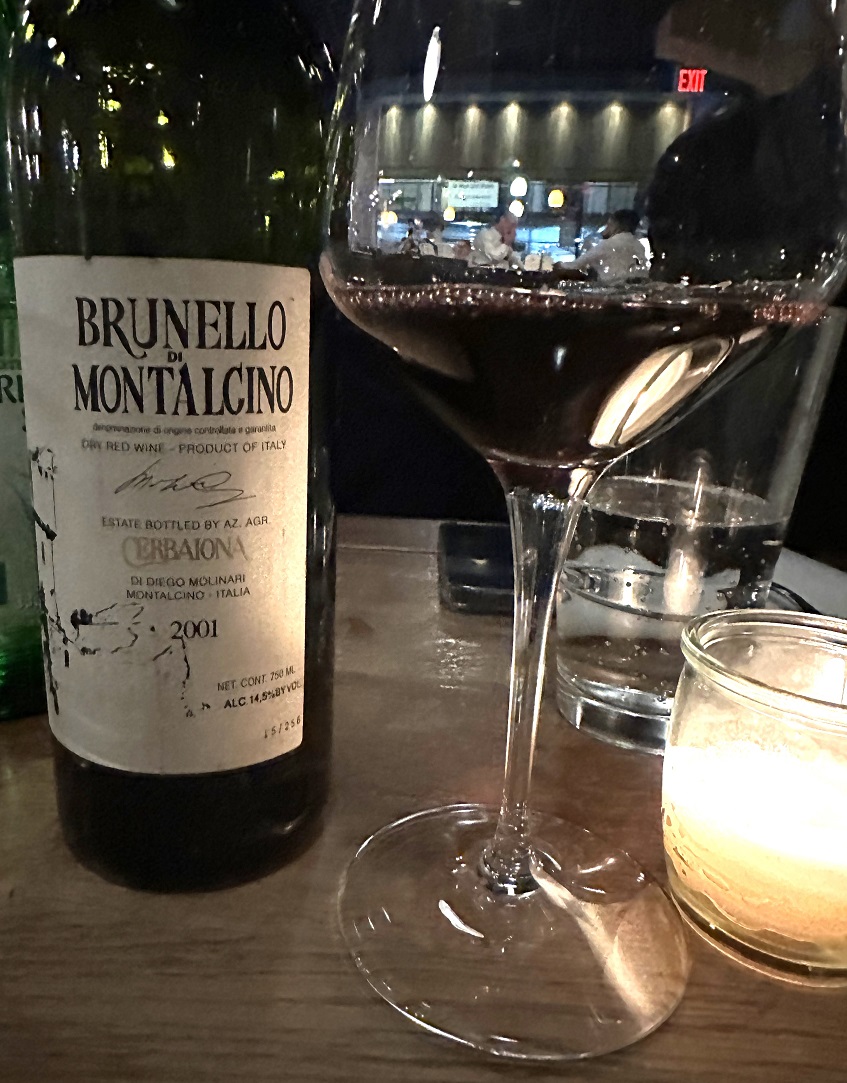


Wow, what a pleasure it was. Perfumy nose of succulent cherries, anis, eucalyptus. You can’t stop smelling the wine, you don’t even think of drinking it for a few minutes. Then you take a careful sip and experience an explosion of flavor with succulent cherries, balscami vinegar, iodine, and magic that only an Italian wine with age can offer. The experience was not identical to 1999 Soldera, but it was pretty darn close.
And now my Brunello report is complete. The 2020 vintage offers beautiful aromatics; it is approachable, it is succulent, it is captivating. Let’s raise the glass to the new era in Brunello and more tasty Brunello wines for us. Cheers!
2022 UGCB Vintage Preview – Power and Elegance
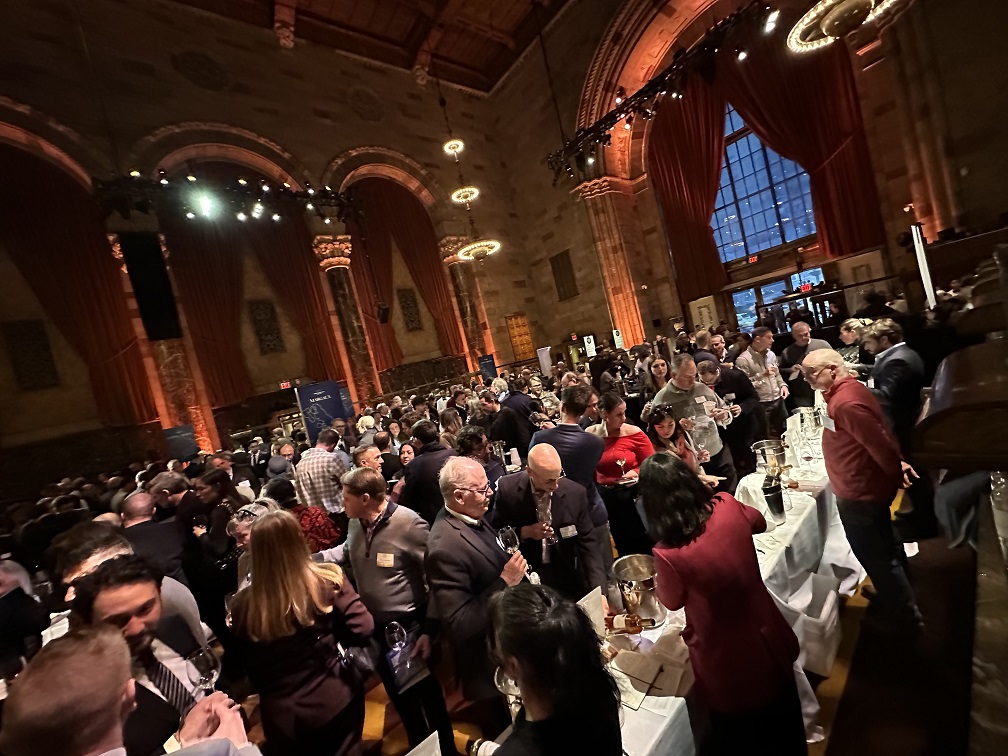
About a month ago, I attended the Union de Grand Crus de Bordeaux (UCBG) event introducing the Bordeaux 2022 vintage. UCBG is a marketing organization created in 1973 with the goal of promoting Bordeaux Grand Cru wines around the world. Today, UCBG comprises 132 Grand Cru Châteaux (wineries) in Bordeaux and runs about 80 marketing events per year, attracting more than 40,000 wine professionals.

UCBG vintage introduction event offers a great opportunity to have an early look into the latest vintage, taste lots of great wines and talk to the winemakers.
Speaking with the winemakers, my main question was: So, how was the vintage? Based on what I heard, it seems that 2022 was an excellent vintage with even growing conditions, with rains mostly in the early stages and then reasonably hot and dry conditions all the way through the harvest, delivering powerful, concentrated fruit with ample acidity. Hence, the descriptor I’m using for this vintage is Power and Elegance.
I have to tell you that I enjoyed most of the wines across the board. I didn’t have any OMG moment, but lots of wines showed very consistently, many of them ready to drink even now.
I didn’t take any detailed notes. Instead, I took pictures of the wines I liked, and now I would simply like to share the list of my favorite wines from this 2022 Bordeaux Grand Cru tasting.
Last year, I wrote about the 2021 Bordeaux Grand Cru vintage, so this year, I decided to mark the wines I liked last year with a star. This way, maybe I can identify my “perennial” preferences 🙂 – will see.
Here you are – my favorite 2022 Grand Cru Bordeaux wines, sorted by region:
Pessac-Léognan (the only Grand Cru region in Bordeaux producing both white and red wines).
2022 Château Carbonnieux Rouge Pessac-Léognan
2022 Château Les Carmes Haut-Brion Rouge Pessac-Léognan
2022 Domaine de Chevalier Blanc Pessac-Léognan*
2022 Domaine de Chevalier Rouge Pessac-Léognan*
2022 Château de Fiuzal Blanc Pessac-Léognan*
2022 Château de Fiuzal Rouge Pessac-Léognan
2022 Château Haut-Bailly Rouge Pessac-Léognan
2022 Château Latour-Martillac Blanc Pessac-Léognan
2022 Château La Louvière Blanc Pessac-Léognan
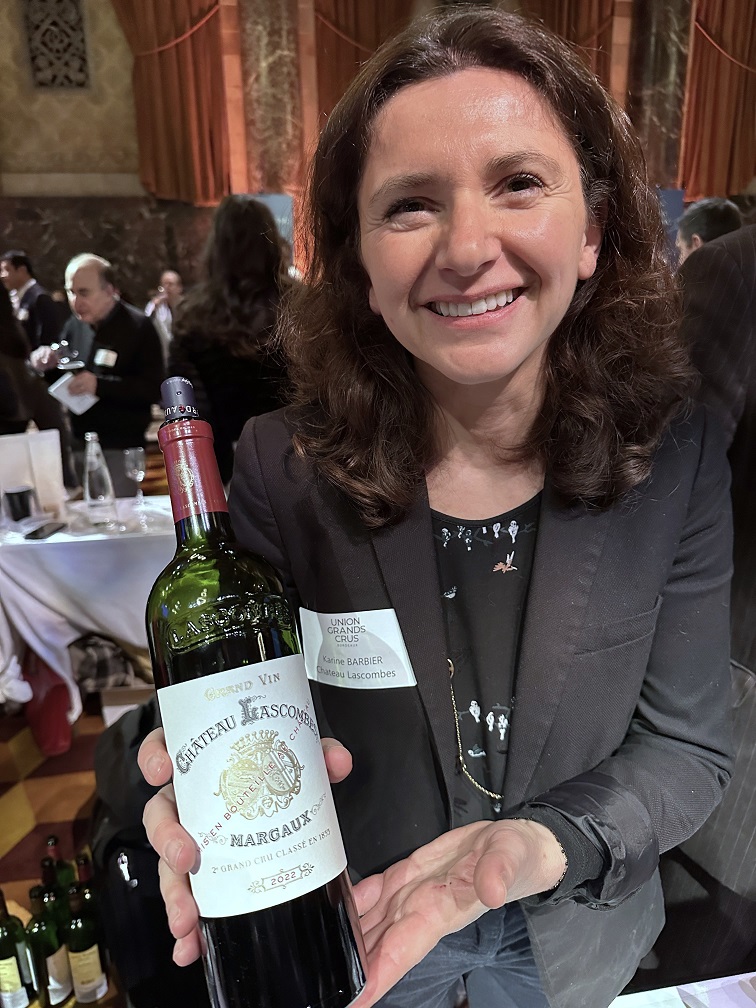
Apparently, Chateau Lascombes went back to the old label – as you can see in this picture
Margaux
2022 Château Lascombes Margaux
2022 Château Malescot St. Exupéry Margaux
2022 Château Desmirail Margaux
2022 Château Brane-Cantenac Margaux*
Pauillac
2022 Château Pichon Longueville Comtesse de Lalande Pauillac
2022 Château Pichon Baron Pauillac
2022 Château d’Armailhac Pauillac*
2022 Château Clerc Milon Pauillac*
2022 Château Duhart-Milon Pauillac*
2022 Château Grand-Puy Ducasse Pauillac*
2022 Château Lynch-Bages Pauillac*
2022 Château Haut-Batailley Pauillac*
2022 Château Batailley Pauillac*
2022 Château Lynch-Moussas Pauillac


Pomerol
2022 Château Beauregard Pomerol
2022 Château Petit-Village Pomerol*
2022 Château La Cabanne Pomerol
2022 Château Clinet Pomerol
2022 Château Le Gay Pomerol*
Saint-Émilion
2022 Chateau Valandraud Saint-Émilion*
2022 Château Villemaurine Saint-Émilion*
2022 Château Pavie Macquin Saint-Émilion
2022 Château Clos Fourtet Saint-Émilion
2022 Château Dassault Saint-Émilion
Saint-Estèphe
2022 Château Phélan Ségur Saint-Estèphe*
2022 Château Cos Labory Saint-Estèphe
2022 Château De Pez Saint-Estèphe

Saint-Julien
2022 Château Langoa Barton Saint-Julien*
2022 Château Léoville Barton Saint-Julien*
2022 Château Léoville Poyferré Saint-Julien*
2022 Château Gloria Saint-Julien*
2022 Château Gruaud Larose Saint-Julien
Médoc
2022 Château Chase-Spleen Moulis en Médoc
2022 Château Citran Haut-Médoc


Sauternes – most of the producers I spoke with mentioned that they didn’t produce any Sauterns in 2021 – now it makes sense that last year most of the Sauternes producers were presenting different vintages…
2022 Château Guiraud Sauternes* (presented 2016 vintage last year, 2024)
2022 Château Doisy-Vérdines Sauternes* (presented 2018 vintage last year, 2024)
2022 Château Doisy Daëne Barsac Grand Vin de Sauternes
2022 Château Bastor-Lamontagne Sauternes* (presented 2016 vintage last year, 2024)
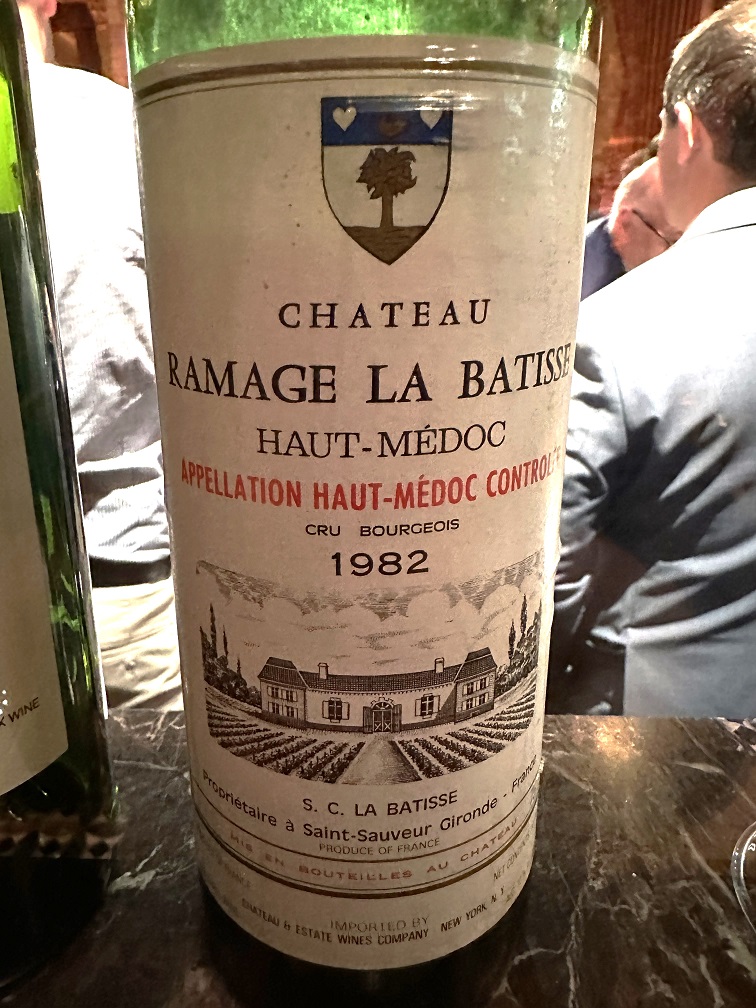
At the same tasting, I also had an unsanctioned (in many ways) treat. I noticed a winemaker in the corner talking to a few people and pouring wines that clearly didn’t belong to the tasting – 1982 and 1983 Boirceaux. I asked if I can have a taste too, and the wine – albeit grudgingly – made into my glass. The 1983 was quite drinkable – I didn’t catch the label, though. This 1982 Château Ramage La Batisse Haut-Médoc was mostly showing tertiary aromas, but hey, 1982 commands respect, so I can’t complain about having a taste of the Bordeaux from the legendary vintage.
There you are – the 2022 Bordeaux Grand Cru vintage. Well worth your attention. I’m sure it will age very well, but – you really don’t need for it to age. Crack the bottle open and enjoy!
Last Bottle Sign Up ($10 credit)




 Talk-A-Vino