Archive
Beaujolais Nouveau Est Arrivé! 2015 Edition
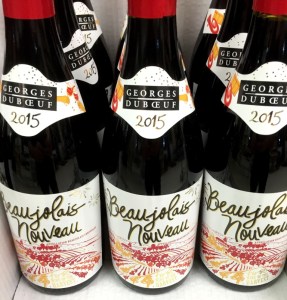 Have you looked at the calendar today? Yes, it is the third Thursday of November, which means that … Beaujolais Nouveau has arrived! All the wine stores around you should carry bottles with the festive labels, and there are multiple events and parties to celebrate the arrival of the new wine, the wine of 2015.
I know that many hardcore wine drinkers scoff at the Beaujolais Nouveau wine and the whole celebration, considering the wine to be a plonk and the celebration only a marketing gimmick. Speaking for myself, I love to partake in this celebration, as may be the first wine holiday ever created (now we have the ever-increasing number of “grape days” throughout the year, to make sure we have enough reasons to open a bottle of wine).
Besides just liking the idea of the celebration of the first wine of the harvest, I find that quality of the Beaujolais Nouveau is consistently improving, year after year. Thus I happily ran to the store today at the first available opportunity to get some Beaujolais Nouveau. 5–6 years ago Georges Dubœeuf Beaujolais Nouveau was the only option. A few years back, Joseph Drouhin joined the company. This year, I had a choice of 4 wines to pick from, so I decided to limit my tasting to 3.


I don’t want to give you any overall impressions until you will skim through the tasting notes, so here we go:
2015 Georges Dubœuf Beaujolais Nouveau (13% ABV, $10.99)
C: Dark Garnet, very unexpected
N: restrained, fresh berries with the touch of herbs. Very different from the previous years, a lot less fruity. More reminiscent of a traditional Beaujolais or a nice Chinon
P: outstanding. Fresh, open, perfectly balanced fruit, ripe cherries, medium body, medium-long finish.
V: 8-, very unexpected, would never guess in the blind tasting that this is a Nouveau wine. Not sure what kind of magic Dubœeuf used, but this is a pretty spectacular wine on its own.
2015 Joseph Drouhin Beaujolais Nouveau (13% ABV, $11.99)
C: dark garnet, another unexpected color
N: more traditional nose of freshly crushed berries, still not overboard, with underpinning of spices
P: delicious young wine, nice fresh fruit, finish mostly acidic
V: 7/7+, more in line with expectations of Beaujolais Nouveau – a very well made one, but still
2015 Domaine Dupeuble Beaujolais Nouveau (13% ABV, $13.99)
C: dark garnet, one more wow
N: restrained, with acidity and minerality been in the lead, touch floral, may a bit of tart cherries
P: excellent, round, more of classic Burgundy in style, not a hint of “nouveau” on the palate, very fresh with a distant hint of smoke and tobacco on the palate.
V: 8-, outstanding. Again a complete surprise.
What can I tell you? Very impressive. Excellent wines, well made and tasty, and offering great QPR for what they are. If you celebrate Thanksgiving, this might be a great addition to your table. And if you don’t, Beaujolais Nouveau 2015 is well worth your attention. And if this Beaujolais Nouveau is any indication, 2015 might be (yet again) the vintage of the century. Beaujolais Nouveau Est Arrivé! À votre santé!
P.S. After this post was written, I tried two more Beaujolais Nouveau wines, so here are the additional notes just to make the 2015 experience more complete:
2015 Mommessin Beaujolais Nouveau (11%–14% ABV, $10.99)
C: Bright Ruby
N: initially a typical Beaujolais Nouveau nose with freshly crushed berries, eventually becoming more restrained with additional herbal component
P: fresh tart cherries, crisp, fresh, with the vibrant acidity which makes the wine show quite complex
V: 7+, well-made wine, simple and pleasant
2015 Bouchard Beaujolais Nouveau (11%–14% ABV, $9.99)
C: dark Ruby
N: fresh berries with a touch of green leaves
P: freshly crushed berries, crisp, vibrant, good acidity
V: 7+, traditional Beaujolais Nouveau, simple and tasty
Garnacha from Cariñena
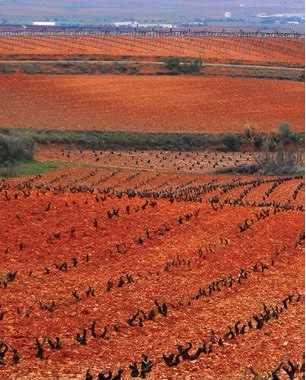
Beautiful Cariñena Vineyards.
Source: Cariñena DOP
Today we will be talking about Garnacha, better known around the world under its French name of Grenache. But the region we will focus on is located in Spain, so let’s use regionally-appropriate name.
Garnacha is one of the most important grapes of Spain, rivaled only by Tempranillo. It is planted practically in all the regions, and used both solo and as a blending grape, delivering tremendous range of expression.
Let’s narrow down our focus a bit and talk about Garnacha from Cariñena. Cariñena is a region in the central part of Spain, second oldest official DO (protected origin) in Spain and one of the first in Europe, created in 1932. Most of the vineyards in Cariñena are situated on the mountains, from 400 meters to 800+ meters (1300 ft – 2600 ft) above sea level. One of the best known grapes from the region is … Cariñena, which I find quite confusing considering that this is also the name of the region itself. However, the most planted grape is…yes, Garnacha, which takes 55% of all the grape plantings. Another interesting fact is that Garnacha plantings in Cariñena are some of the oldest in Spain, with age of some vines more than 100 years old.
I will not inundate you here with information which you can find on your own, for instance, on the official D.O.P. Cariñena web site. I recently heard that Andrea Immer Robinson, one of the 18 women Master Sommeliers, and an official Sommelier for Delta Airlines, selected Cariñena Garnacha wines to serve to the Business Class passengers on Delta flights due to its affinity to the high altitude. Obviously I got intrigued with this statement, and I was lucky enough to reach out to Andrea and ask a few questions about it. Here is what I was able to learn:
Q: It sounds like different wines might have different affinity to showing best at the high altitude? Is that really true? Can you elaborate on this a bit?
A: Yes it is true. At altitude your sense of smell is muted and your palate is less hydrated. Consequently, more restrained wine scent/flavor profiles or more intensely tannic wines may not present as well in-flight.
Q: Do you have an example of the wine which is delicious on the ground, and doesn’t taste that well up in the sky?
A: It is less that a wine doesn’t taste well in the sky, and more that it may seem less expressive or flavorful. The subtlety of Italian Pinot Grigio is an example of a style that classically seems muted and less flavorful at altitude. But I did find a great one that belies the broad-brush experience I have had which is exciting.
[TaV comment]: Obviously this is where the limitations of the virtual conversation kick in, as I would love to ask Andrea what was that great Pinot Grigio which she was able to find to serve at the high altitude.
Q: What do you think makes Garnacha from Cariñena good wines to drink at the high altitude? Do you think all Garnacha from Cariñena wines are equally good to drink at the high altitude, or is it only few particular wines?
A: The Garnacha from Carinena is expressive and concentrated and the tannins though present, are soft and ripe – so, the wine shows a lot of character and is not drying to the palate in flight. The particular example that is getting rave reviews presently is a 9 year old Reserva – that extra bottle age gives complexity that customers are going ape over. I don’t thin every wine would garner this type of response–I think the bottle age and complexity of the Reserva level are a big part of it.
[TaV comment]: Yep, here we go again – would love to know what Reserva wine was that…
Q: What are your favorite Garnacha from Cariñena wines, whether on the ground or on the board of the plane?
A: I love the Monasterio de las Vinas Reserva that we are serving on Delta now. I also really love the Castillo de Monserran and the Paniza Vinas Viejas on the ground (haven’t tried them in flight). Perfect as we get into stew season!


I also was able to taste a few of Garnacha from Cariñena wines, and below are my impressions:
2012 Viñas Viejas de Paniza Garnacha Cariñena DO (14% ABV, $18, 100% Garnacha, 6 month in oak)
C: dark ruby
N: lavender, espresso, touch of dark fruit
P: hint of chocolate, cherries, medium body, good acidity
V: 7+
2012 Bodegas San Valero Particular Garnacha Old Vine Cariñena DO (14% ABV, $14.99, 100% Garnacha, 14 month in oak)
C: dark garnet, almost black
N: intense, whiff of alcohol, dark fruit, raspberries
P: fresh raspberries, open, bright, medium body, herbal undertones, pronounced acidity, short to medium finish, but then tannins come in after a while.
V: 7+ at the moment, needs time. Judging by the acidity and late tannins, this wine needs at least 5 years to develop
2013 Corona de Aragon Special Selection Garnacha Cariñena DO (13.5% ABV, $14, 50% Garnacha, 50% Cariñena, 5 month in oak)
C: Dark garnet
N: restrained with herbal undertones, pencil shavings (rarely use this descriptor, but it was very deserving here), hint of blackberries
P: fresh, delicious, dark chocolate, cherries, classic Grenache rendition with good acidity and excellent balance
V: 8-, my favorite of the tasting, would happily drink this wine every day – definitely an excellent QPR
Have you had any of the Garnacha Cariñena wines? What are your thought on the wines at the high altitude? Don’t be shy, comment away! Cheers!
P.S. I would like to thank kind folks at Gregory White PR for providing samples and reaching out to Andrea Immer Robinson
Celebrate Tempranillo!
I hope you are done with that celebratory bottle of Merlot from the last week, as a brand new grape celebration is upon us. This time, it is about the grape which is not as widespread as Merlot, but still a foundation of some of the absolutely best wines in the world – dark skinned grape called Tempranillo. On Thursday, November 12, we will be celebrating International Tempranillo Day, with festivities around the world as you can see at the TAPAS web site.
First and foremost, Tempranillo means Spain – Rioja, Ribera deal Duero, Toro and many other regions in Spain craft world class wines which rival in their longevity wines of Northern Rhône and Bordeaux (but still quite affordable, opposite to the latter).
Of course Tempranillo’s success is not confined to Spain only – Texas makes excellent Tempranillo wines, with some interesting efforts in California (for instance, Irwin Family – delicious!), Washington, Oregon and Australia. Tempranillo also shines in Portugal under the names of Tinta Roriz and Aragonez.
I can spend hours going through my favorite Tempranillo wines and experiences – just search this blog for “Tempranillo”, you will see what I’m talking about. Instead, I want to mention just my most recent encounter with Tempranillo wines from two weeks ago – Ramón Bilbao Rioja.


2011 Ramón Bilbao Rioja Crianza (13.5% ABV, $14, 100% Tempranillo, 14 month in oak) – open inviting nose of the fresh dark fruit with touch of cedar box. Fresh, firm, well structured on the palate, nice core of ripe cherries, eucalyptus, pencil shavings and touch of espresso, good acidity, overall very balanced. A perfect example of wine which is drinkable now, and will gladly evolve for the next 10–15 years. Also at the price – very hard to beat QPR.
What are your Tempranillo experiences? Got any favorites or celebration plans you care to share? Please do so below. And until the next grape holiday – cheers!
One on One with the Winemaker: Luke McCollom of Left Coast Cellars, Oregon – Part 2
 Welcome back to Oregon – we are continuing the conversation with Luke McCollom, Founding winemaker, Viticulturist and General Manager of one of the largest estates in Oregon, Left Coast Cellars. First part of our conversation was focused on the history of the estate, its name, its logo, and selection of the grapes which comprise 150 acres of the vineyards. Now we are going to talk about growing the grapes, sustainable viticulture, mother nature and some of the personal favorites. Here we go:
Can you elaborate a bit on the sustainable viticulture you are practicing in your vineyards?
We are certified by a third party Audit as LIVE Sustainable. This is a whole farm approach which uses scientifically proven methods to reduce inputs into the vineyard and reduce impact on our land and environment. LIVE also monitors the treatment of people, carbon footprint, energy, and water usage.
Both the Vineyards and Winery are certified LIVE sustainable For example: we are also certified Salmon Safe…this means we do not spray or use any chemicals which are toxic to or can harm fish. We do not use chemicals that can run off or enter water ways. We use a permanent, no-till, cover cropping system in the vineyards which great reduces dust, sediment, and run-off that pollutes our water ways.
We of course are mostly Solar Powered…100% of our irrigation system is powered by Solar. The irrigation system is also gravity fed with a pond located on top of one of our highest hills. So, water is pumped up via solar and runs down into the vineyard drip irrigation systems via gravity. We also collect our winery rinse water into tanks where we can re-use the water for irrigating landscaping. All of the “grape waste” from the winery is composted on-site and returned to vineyards and gardens. Our property is shaped like a bowl, so there are no other source of outside contaminates or pollution entering the property. All of the water in our Lakes comes from our property only. We also have steelhead and trout in these lakes…so anything we do can and will directly affect our own water source.
Do your sustainable practices also include dry farming and natural yeasts?
All of our vineyards have the ability to be irrigated with their drip systems if needed!? Of course, we only irrigate vines if and when they need water. We believe with future changes in our climate that water is one of the most important factors in the quality of our wines. Our water is sustainably collected in the wintertime from rainfall runoff. Our 100 acre foot lake is the life blood of the Estate. With our sustainable methods of using this water our combined peak usage of water and electricity costs $11.70/mo a typical water and electric bill on an Estate our size would be anywhere from $10,000-$15,000/mo. This gives an idea of the power of Sustainability and the power of harnessing the sun. Yes, we use natural yeast and we also use commercially available yeasts to make wine.
Do you have any plans to go beyond sustainable into full organic or may be even biodynamic?
Yes, we would like to eventually have wines bottled as sustainable, organic, and biodynamic so people can taste the comparisons. We currently spray almost exclusively organic sprays and utilize many biodynamic practices although do not have certifications in either.
I’m sure that some of the hard core Oregon Pinot fans are familiar with Van Duzer effect, but can you give a short explanation of it to those who don’t?
The Van Duzer Corridor is the main path by which cool Pacific Ocean breezes enter the Willamette Valley. We are in the Heart of where the corridor opens into the Center of the Valley. We are currently involved with a group working on a “Van Duzer Corridor AVA”. The effects of these ocean breezes are critical in producing the highest quality Pinot Noir. On a warm summer day at the Estate, our day time temperatures will reach 90 degrees. In the evening, the Corridor ushers in the cool ocean breezes and our night time temperatures fall to 40 or 50 degrees! A huge temperature swing! The result is sort of like a refrigerator…at night, when the vines are not producing sugars, the Pinot grapes are preserved with the cool outside temperatures. What this means is…the grapes will retain freshness, acidity, and increased wine ageability because they respire less and are preserved with the cool night air.
Out of all Pinot Noir which you produced so far, do you have the most favorite wine from the favorite vintage?
My favorite Left Coast wine is the 2010 Suzanne’s Estate. This is the first vintage Luke and Joe Wright worked together making wine. We hand selected small lots of grapes from the vineyards and made them in small batches with minimal influence and impact from Winemaking. The result is a very cool vintage Pinot with minimal manipulation in the Winery and a 92pts. Wine Spectator rating. It was very rewarding for me to receive an outstanding rating when the wine was selected in the field and winemaking was at a minimum.
When you are not drinking your own wines, what are the other Oregon producers you would be happy to drink wines from?
We enjoy drinking many of our Neighbors wines including Bethel Heights, Cristom, and Witness Tree just to name a few…
And the same question, only going outside of the Oregon – any favorite wines and producers?
Reaching in and out of Oregon we have always kept an eye on Maison Joseph Drouhin. Locally, Drouhin of course makes Domaine Drouhin Oregon Pinot, but from Burgundy continues to offer an incredible range of wines from very affordable negociant blends to very expensive premier and grand crus from individual Domaines. We believe Drouhin continues to make and blend wines which celebrate classic Burgundy. Of course this is what intrigued us to try and grow World Class Pinot Noir in Oregon…it was Burgundy! We wanted to try and replicate the classic Terroirs of Burgundy and now we are trying to beat Burgundy with our classic Terroirs of Oregon and the Willamette Valley! Viva The Left Coast!
I don’t know about your take, but I think Luke McCollom did an excellent job answering my questions – I had a real feeling of being in the same room with him and looking out at the same vineyard. It is definitely very interesting to learn about sustainable viticulture and how it is done at the Left Coast Cellars – the example with $11.70 monthly electric bill versus potential $10,000+ was extremely impressive.
Of course the proof is in the glass, right? In the previous post, I shared my thoughts on estate’s The Orchards Pinot Gris and Cali’s Pinot Noir. To round up this portion of the interview, I had an opportunity to taste Chardonnay and another Pinot Noir. Before I will talk about the wines, I have to mention the bottles – as the saying goes for the food world “we eat with our eyes first”, same holds true for the wine. Talking about Left Coast Cellar wines, I really enjoyed holding the bottles in my hands – somehow they felt very promising in terms of their content. All four bottles had very nice punt, which would make elegant pouring of the wines an easy job. And the labels are perfectly design and spell “quality” with their look and feel.
Okay, okay – I’m sure you are ready to drink something – here are my notes on the two wines:
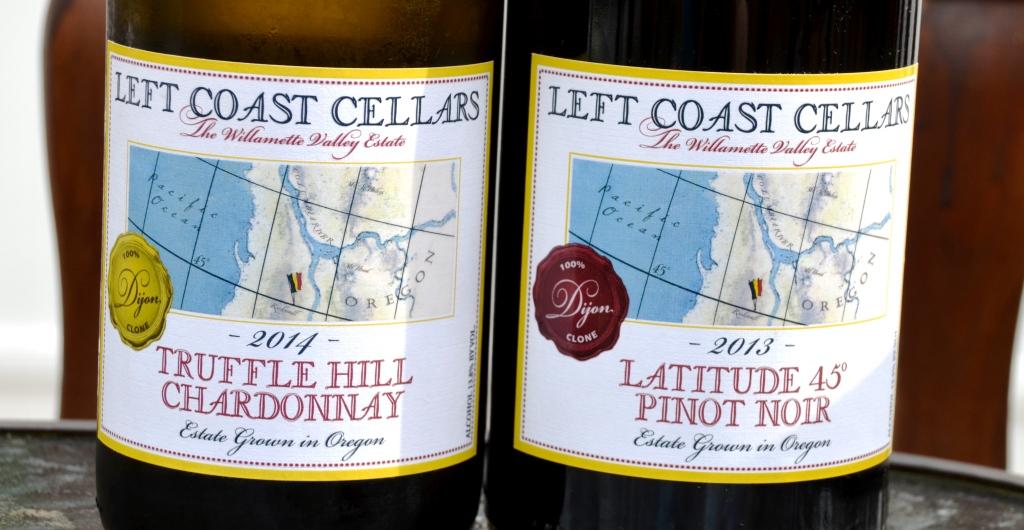 2014 Left Coast Cellars Truffle Hill Chardonnay Willamette Valley, Oregon (13.5% ABV, $24)
C: light golden
N: white ripe fruit, intense, touch of vanilla, caramel, touch of flowers
P: unusual, plump, medium to full body, hint of white peach, pear, supporting acidity, Burgundian elegance
V: 8, very unusual Chardonnay, with a style of its own, and overall delicious wine
2013 Left Coast Cellars Latitude 45 Pinot Noir Willamette Valley, Oregon (13.5% ABV, $50)
C: garnet
N: intense, crushed red berries, lavender, sweet plums, vanilla, hint of chocolate, Bing cherries
P: wow, very unusual. Herbal profile with some fruit, initial tannin attack, almost light and effervescent on the palate, but tannins are very assertive. As I don’t have enough experience with red burgundies, my best analogy is wines of ArPePe, which are some of the most elegant Nebbiolo wines in existence. Clean, pure and unadulterated Pinot Noir. Just wow.
V: 9-, truly unique and different
Sustainable viticulture. Passion. Unique and different wines. Simple recipe for success, isn’t it? I can let you in on a secret. Quite often, I don’t finish a bottle of wine on the same day. Especially if I have a few open at the same time. So I happened to drink Cali’s Pinot Noir I mentioned in the previous post over 4 days. Just closing with the same screw top every night. And the wine was delicious, every day. I think folks at the Left Coast Cellars know what they are doing, and their wines are well worth seeking. Follow the passion, my friends. Cheers!
Celebrate Merlot!
Let me ask you something – what is your relationship with Merlot? Are you still under the influence of Miles?
Believe it or not, but movie Sideways had an impact on consumer’s attention to Merlot – up until two years ago, I couldn’t see Merlot wines on the shelves of my neighborhood wine store – simply for the luck of demand.
But situation is changing, and people are happily asking for and drinking Merlot again. Over the past 2 month, I had at least 4 Merlot or predominantly Merlot wines, which were outstanding, from Bordeaux, Napa Valley, Long Island New York and Macedonia:


Merlot deserves an utmost respect as it makes wonderful wines on its own (Petrus or Masseto, anyone?), and it also plays perfectly well in the blends.
November 7th is an International Merlot day, and all you have to do is to find a bottle of your favorite Merlot, open it, [invite your friends over – however, this is entirely optional], and have fun. Better yet, find a bottle of Merlot you never had before, and be surprised. By the way, how are your Merlot skills? Do you think you know everything about black-skinned grape? You can test your knowledge with the Grape Trivia quiz which I used to run every Saturday – here is the one about Merlot.
Merlot is well worth your attention, so please don’t be Miles. And if you got a second, leave a note for me below about your favorite Merlot wine. Cheers!
One on One with the Winemaker: Luke McCollom of Left Coast Cellars, Oregon
 Let me tell you something – I really liked the concept of my first “one on one” post. Which means that I will try to make it into a feature and a series in this blog. And today I invite you to travel with me to the Oregon, third largest grape-producing state in the US. Our destination is Left Coast Cellars estate, home to one of the largest contiguous vineyards in Oregon, focused on sustainable viticulture and precisely focused wines. I had an opportunity to “sit down” (yes – virtually) with Luke McCollom, Founding Winemaker, Viticulturist and General Manager of the Left Coast Cellars, and ask him whole bunch of questions. I really asked lots of questions – and I got lots of great answers. I actually will have to split our conversation into two parts, just not to overwhelm you, my reader.
Without further ado, please pour yourself a glass of (Oregon, of course!) wine – here is our conversation with Luke McCollom:
Why “Left Coast Cellars”?
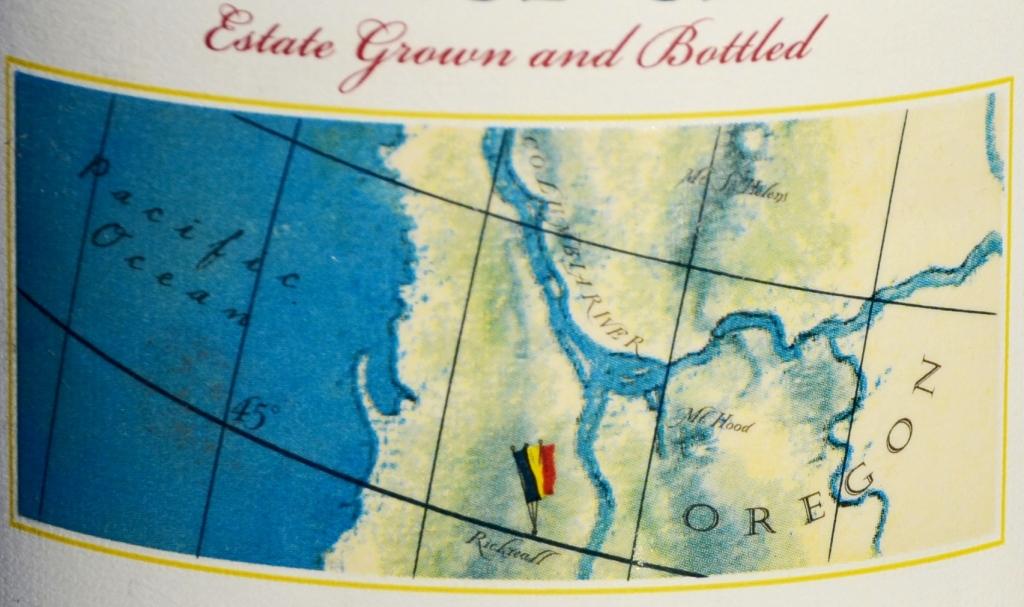
Well, we want to represent and paint a picture of our sense of place. The “Left Coast” can be seen on our Lewis and Clark Map rendered Labels. When you’re looking at a Map of the United States… we are on the Left Side! Also, of course… Left Coast is Family owned and 3 of the Family members running the Estate are Left Handed. When visiting Left Coast, coming from the closest Major city….The State Capitol Salem, you need to make Left Hand turns to get to the Winery. The Winery and Tasting room are both on the Left Side of the Drive. The term Left Coast not only describes our location, but our wholesome, casual style, and creative ability to artistically craft… unique, exquisite, Estate Grown handmade wines. Not to mention, the heavy “Coast” Influence brought in daily by the Van Duzer Corridor.
[TaV comment: I asked this question rather matter-of-factly, expecting the explanation about Left Coast, but it appears that there is so much more to this name]
Your logo looks very interesting. Is there a story behind it?
The “Sun” Logo is from a large Copper Sculpture which can be seen as you enter the property. The Sculpture was a gift given to Suzanne by husband Robert for an Anniversary. It is a beautiful, unique piece created by a Hawaiian artist named Abe Santoro. Santoro’s work can be seen at places like the Smithsonian. I believe Santoro is nearly 90 years old and is referred to as a Treasure of Hawaii.
For us it represents the Founders love for each other and the commitment of life partnership which led to a beautiful family, with passion for food, and wine. The logo is a symbol of the vision created together to Build an amazing Estate in The Willamette Valley. This “Circle of Life” logo also represents their commitment to Sustainability, the Earth, the Sun and the cycle of every vintage of wine.
When you started the winery in 2003 and purchased the land, were there any vines planted already or did you have to start from scratch?
When the Family purchased the property there were 25 acres of Pinot Noir. The first vintage crafted from these young Latitude 45 Vines received an 88pts. in Wine Spectator. This was very exciting because the vines where only 3 years old! Other than that, there was a large spring fed lake and most of the property was overgrown with poison oak and black berry bushes. All of the extensive gardens, landscaping, buildings, infrastructure, and design were created by the Family from scratch. Since then we have also planted another 115 acres of vineyards including 11 different types of Pinot Noir as well as some of the most extensive white wine grape plantings in Oregon.
According to the information on your web site, there are 8 distinct microclimates across your vineyards. Do your wines today already showcase the different microclimates or do you plan to expand on that in the future?
Yes, we constantly strive to showcase our different micro climates and to bottle distinct unique wines. Probably the best example of this is in the Vineyard Designate Pinot Noirs…(Right Bank Pommard, Truffle Hill Wadenswil, and Latitude 45 Dijon Bottlings). These Pinot Noirs are planted in locations best suited for their type of micro climate. Each Vineyard Designate Pinot is hand made in small, open top, French Oak Wine Vats. Each wine is made using different yeast and different dedicated barrel coopers selected to exemplify the Clone and Micro climate of each wine. For example, the Truffle Hill is a Swiss type of Pinot Noir, grown on one of our cooler sites (sort of like Switzerland) We use only Swiss Yeast in making the wine to showcase the tradition of the clonal selection and create distinct style and flavor. The Truffle Hill is aged using specific barrel cooperage which does not dominate the complex nuances of the Wadenswil Selection Pinot Noir. In the future, we would like to expand our showcasing of different soil types from the property comparing Sedimentary Soils to Our Volcanic Soils.
You grow Pinot Meunier, Syrah and Viognier – how do you use those grapes?
Pinot Meunier is used as a base in our Sparkling wines and is also made into a Field of Dreams Pinot Meunier still red wine. This year the Meunier was crafted into a sparkling Brut Rose and a couple hundred cases of still red wine. Meunier of course means “miller” in French like flour miller…because the vines are covered with white fuzz that makes them look like they were dusted with flour. Meunier is a mutation of Pinot Noir and loks like a “wild” Pinot Noir vine. The Meunier still wine sort of tastes like a wild pinot noir with it’s firm structure tannins and distinct brambly and pomegranate flavors.
Syrah and Viognier are also made into Field of Dreams Varietal wines for Wine Club and Tasting Room. The warm 2014 and 2015 vintages are good vintages for perfectly ripe Rhone Varietals in our climate. These vintages also make good quantity of these varietals for potential availability in the National Market. For 2015 Look for Left Coasts’ own Left Cote du Rotie…this is a Syrah co-fermented with up to 25% of Viognier. The Viognier has an enzyme in the skins which creates more extraction of color and flavor in the Syrah fermentation. Very Cool! Northern Rhone style wines which pair beautiful with food. We are a Pinot House, but the 45th parallel where we sit aligns exactly with Northern Rhone…this is why we grow small amounts of these varieties on the Estate. Another small celebration of Terroir, Microclimate, and Unique sense of place.
[TaV comment: this was a really a “duh” moment for me – and a clear showcase of deficiency of the virtual conversation – I forgot that many wines can be made in such a small quantities that they will be available at the winery only and never show on the web site, duh…]
to continue previous question – do you have any plans for single varietal Syrah wine?
Our first varietal vintage of Syrah was 2008…we recently opened a bottle to taste and the wine is incredible… still very youthful!
[TaV comment: “duh” moment didn’t stop with the previous question, right?]
It seems that Chardonnay is a rising star in Oregon – I see that you now offer Chardonnay wines for the past few vintages. What do you think of Oregon Chardonnays? What makes them unique? What is your chardonnay style?
Yes, we have committed some of our best land to growing Chardonnay. We have some of the largest modern plantings of Chardonnay in Oregon. The reason being, most people were ripping out Chardonnay when we were developing the vineyards, while we were planting it. We see Chardonnay as going hand in hand with Pinot Noir. Our 2005 Chardonnay was selected by the Oregon Wine Industry in 2010 as a “World Class Ageable White Wine” by our peers at the Oregon Wine Symposium.
We think this shows the potential of Chardonnay in Oregon and the potential of the Left Coast Estate. We strive to create a balanced Chardonnay with equal parts acidity, minerality, fruit, and oak. We believe we hand craft a Chardonnay which is very Oregonian in style meaning a wine which is clean, not oak dominated, will please non-chardonnay drinkers, and of course pairs well with Northwest Cuisine. For lack of description we try to craft Oregon Chardonnay as somewhere halfway between California and Burgundy. We love Oregon Chardonnay!!! and often ferment ours half in Stainless Steel Vats and Half in French Oak barrels. We believe the stainless portion of the fermentation preserves the fruit and acidty and the French Oak fermented portion provides subtle oak flavors with round mouth feel and volume. These wines are blended, married, and bottled together as one. We also have an extremely distinct Musque Clone Chardonnay that is concrete fermented and bottled for Wine Club.
I don’t know about you, but I definitely need a glass at this point, so here are two of the Left Coast Cellars wines I had an opportunity to try (as samples, courtesy of Donna White PR):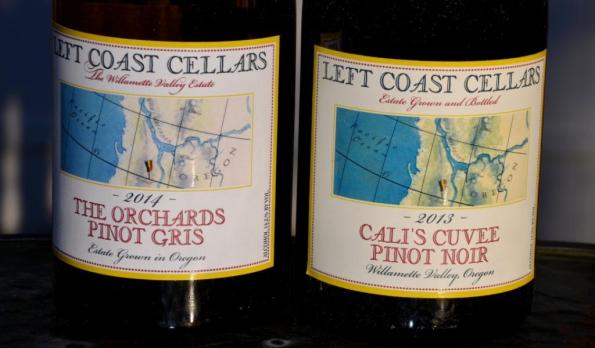
2014 Left Coast Cellars The Orchards Pinot Gris Willamette Valley, Oregon (14.2% ABV, $18)
C: straw golden
N: fresh flowers, fresh white fruit, candy, bright, exciting
P: nicely restrained of the palate, quite a contrast with the nose. Lemon zest, touch of grass, medium body with nice mid-palate weight, wine is nicely present, tart finish
V: 8-, should develop interestingly with time
2013 Left Coast Cellars Cali’s Cuvée Pinot Noir Willamette Valley, Oregon (13.5% ABV, $24)
C: garnet
N: typical Pinot Noir, sweet plum, violet, touch of licorice and vanilla
P: delicious. Sweet cherries, touch of eucalyptus, medium body, firm, touch of smoke, good acidity, good balance, very (very) long mouthwatering finish
V: 8, dangerous wine – once you start, it is very difficult to stop
That’s all I have for you for today. To be continued…
Wagyu and Wine
 Wagyu burger, anyone? How about glass of Cab with it? Or may be a Pinot? Luckily, it is easy to solve that dilemma – as long as you have Capital Grille restaurant close by. Until November 22, Capital Grille has a special offering on the menu – 2 styles of Wagyu burgers, which you can pair with either 2012 Justin Isosceles Cabernet Sauvignon, Paso Robles or 2013 Landmark Overlook Pinot Noir, California, all for a fixed price of $25, which I think is a great deal for a lunch with a glass of nice wine.
It is so happened that my wife had a day off in a middle of the week – despite the fact that we both work in the same small town, our schedules never align for two of us to have lunch together during the week. As soon as I found out that she will be off on Wednesday, the plan was ready – lunch at Capital Grille it is!
Before we talk about pairings, let me talk about the wines. 2013 Landmark Overlook Pinot Noir, California was a perfect example of California Pinot Noir – touch of smoke, ripe fruit with good acidity, ripe plums, perfect balance – definitely an excellent wine. 2012 Justin Isosceles Cabernet Sauvignon, Paso Robles (15.5% ABV, 77% Cabernet Sauvignon, 12% Merlot, 11% Cabernet Franc) was over the top delicious, ripe, exuberant, showing a touch to sweet to my liking, but still delicious and very palatable wine.


And the burgers arrived. The Cheeseburger was served with Fried egg and crisp onions, and the other burger was served with Gorgonzola and black truffle ( this was my choice, and while I ordered it medium-rare-plus, somehow it had a very limited flavor – don’t know why…). So which wine do you think worked better with which burger?


The result of the pairing was very interesting. Landmark Pinot Noir ended up perfectly complementing either one of the burger, and unfortunately, Justin Cab was somewhat fighting with both. No, there was no competition – but Landmark Pinot Noir still won as a pairing choice.
Or at least it did so for me, so you should use your chance to find out. Head over to the Capital Grille, and let me know which pairing will work for you. Not in the mood for a burger? Go find those wines, as they were delicious. Cheers!
Possibly The Best QPR Wines In The World Today?
 Today, I want to talk about wine and value. “Value” has an interesting meaning in the world of wine – may be as subjective as the concept of a “good wine” itself. To me, the value is not an absolute amount of money one paid for the bottle of wine – if you paid $3, but poured the bottle down the drain after half-finished first sip because it tasted terribly – was that still a “value”? Or was that a pure waste of money? By the same token, if the $20 bottle of wine gave you lots of pleasure in every tiniest drop (including the one you licked of the table), would that be a “good value”? Talking about the “value” of the wine, I prefer to use a proverbial term QPR, so happily adapted by the wine lovers – a Quality Price Ratio (this is what QPR stands for) conveys the “value” concept of wine a lot better than the sheer price itself.
One of the easiest and most straightforward ways to classify and analyze thousands and thousands of wines produced today in the world is by region, as wines from the same geographic area would typically have some similarities. Thinking about all the different wine producing regions in the world, which region do you think delivers the best QPR today? I’m really asking here to think about the region as a whole, rather then individual wines. Yes, you can find delicious Napa reds for $10, but this is rather an anomaly, as on average, you need to spend at least $25 – $30 for a good bottle, so we are definitely not talking about Napa here. Thus the question stands – what is your best QPR wine region in the world?
This question might be more difficult than it seems. Wine regions don’t stand still – they are constantly evolving. As the region becomes better known and more demanded, the price increase often accompanies this rise in popularity – which obviously affects the QPR. I used to consider Greek wines as a great QPR – but many Greek wines are now pushing the $30 boundary, while not consistent in quality – this immediately drives QPR down. I used to think of Israeli wines as a great value – but same thing is happening there, with lots of better wines moving north of $30, and wines under $20 been more of “hit and miss”. My next “go to” wines were Portuguese – but even here I now have a problem – wines under $20 are often only randomly tasty; wines at around $30 and up are consistently excellent, rivaling $100+ wines from the other regions, so in relative terms, they still offer a great value – but probably not the best QPR?
“Knowing what I know now”, the region which I think consistently delivers the best QPR at the moment (!) is Georgia – not the state down south in the US, of course, but an independent country. I always loved Georgian wines, but what prompted this broad statement about QPR was a recent Georgian Wine tasting I attended a week ago at Chelsea Market in New York. Wine after wine was delicious, and priced under $20 – that is a QPR I’m definitely happy about.
You don’t have to take my word for it – you should find a bottle of Georgian wine and try it for yourself. I really hope you did just that last Sunday, October 4th, as it was a #GeorgianWineDay in the social media – and if you actually had Georgian wine, I’m curious to know what it was. In any case, let me share the notes for the wines I tasted at the “Discover Georgia in New York” event at the colorful Chelsea Market. Below are the notes, using the “+” ratings. Pay attention to the prices and corresponding ratings – don’t know what you think, but I think the “QPR” is spelled very clearly across the full range of wines I tasted.


2013 Telavi Wine Cellar Marani Rkatsiteli Kakheti, Georgia ($10.99) – +++, very acidic, requires food
2013 Telavi Wine Cellar Marani Mtsvane-Kisi Kondoli Vineyards Kakheti, Georgia ($14.99) – +++, excellent, clean, lemon notes, touch of food


2013 Telavi Wine Cellar Marani Saperavi Kakheti, Georgia ($11.99) – +++, excellent, simple, an everyday wine, red fruit, crushed berries
2009 Telavi Wine Cellar Marani Red Kvareli Special Vicultural area, Kakheti, Georgia ($15.99) – ++++, beautiful, clean, great depth
2012 Telavi Wine Cellar Marani Saperavi Kondoli Vineyards Kakheti, Georgia ($18.99, 18 months in oak, starting from fermentation) – ++++, stunning! round and delicious


2007 Telavi Wine Cellar Marani Reserve SAPERAVI block Kondoli vineyards, Kakheti, Georgia ($70) – ++++1/2, off the charts, produced only in the best years, complex, round, delicious. Yes, it is $70, and it might be to expensive for an amazing QPR, but you should taste this wine first…


2006 Wineman Cabernet Sauvignon Kakheti, Georgia ($10.99) – ++++, wow!, pick of maturity, dark notes, concentrated – another wow!
2010 Wineman Ikhalto Red Kakheti, Georgia ($12.99, 50% Saperavi, 50% Cabernet Franc) – ++++, wow!, acidity, beautiful wine
2013 Wineman Kindzmarauli Special Viticultural Area Red Semi-Sweet Kakheti, Georgia (12% ABV, $15.99, 100% Saperavi) – ++++, beautiful, perfectly balanced sweetness


2011 Shalvino Kardenakhi Special Viticultural Area Kakheti, Georgia (18% ABV, $18.99, Blend of Rkatsiteli, Khikhvi, Goruli and Mtsvane) – ++++, made using Solera method, delicious, Pedro Ximenez like with a delicate balance
2013 Telavi Wine Cellar Satrapezo Rkatsiteli Ice Wine Kakheti, Georgia (10% ABV, $29.99 500ml) – +++1/2, beautiful, perfect balance, not overly sweet


2013 Teliani Valley Tsinandali White Kakheti, Georgia ($12.99) – +++, great acidity
2012 Teliani Valley Special Vicultural area Kakheti, Georgia ($17.99) – +++, great acidity, perfect, food friendly


2013 Schuchmann Rkatsiteli White Kakheti, Georgia ($15.99) – +++, touch of sweetness, nice balance
2013 Schuchmann Saperavi Red Kakheti, Georgia ($15.99) – +++, perfect, clean, great balance


2012 Vinoterra Kisi Kakheti, Georgia (13% ABV, $NA, Qvevri fermentation, Oak maturation) – +++, complex, very intense, unusual, thought provoking
What do you think? I understand that QPR is subjective and relative term – first, you have to like the wine, and then everyone’s idea of “value” is different – but I was (once again) blown away by the quality and consistency of what I tasted – I didn’t skip a single wine, those are all the wines which were presented in the tasting. This would make it 16 wines out of 16, which I would gladly drink again. I hope it gives you good frame of reference for my experience.
Thinking about the wines of the world, what would be your top region for the best QPR? And if you tasted any of the Georgian wines, what is your opinion about them? Cheers!
One on One With Winemaker: Jeff Fyfe from The Crossings Winery, New Zealand
 Few days ago I was offered an opportunity to meet Jeff Fyfe, senior winemaker at The Crossings Winery from New Zealand – only I couldn’t. What about the title of this post, you ask? No, I’m not trying to purposefully mislead you with some dark intent. What I did was very simple and logical 🙂 – I came up with a bunch of questions, and asked Jeff to answer them on his own. We can call it a “virtual interview”. I also had an opportunity to taste two of the latest wines from The Crossings – including the 2015 Sauvignon Blanc. I was quite excited about it, as my first wine of the current vintage typically is Beaujolais Nouveau, so this was a welcome deviation.
Let’s start with the interview. Imagine yourself out in the vineyard, on a sunny day, with the glass of cold and refreshing white wine, talking to Jeff Fyfe:
What was your favorite vintage(s) for both Pinot Noir and Sauvignon Blanc and why?
We have been extremely lucky in Marlborough in recent years with a number of great vintages in a row. In 2014 we had harvested all of the Pinot Noir prior to commencing any Sauvignon Blanc which is fairly unusual. This gave us the opportunity to focus on the varieties individually a little more than usual which was nice. There are some great Sauvignon Blancs from 2015 and we are excited about releasing them.
What was your most difficult vintage for both Pinot Noir and Sauvignon Blanc and why?
Both 2008 and 2009 were reasonably difficult vintages in the fact that the crops were slightly heavier than normal and we had some unseasonal rain during harvest making things difficult.
Many winemakers in NZ experiment with oak and Sauvignon Blanc. What do you think of that? Is this an up and coming trend? Do you make any oaked Sauvignon Blanc wines?
I don’t know if I would call it a trend, I think it is now a style in its own right in Marlborough. Many producers are making them, and have been for some time. Dog Point Section 94 is a great example of barrel fermented Sauvignon Blanc. They wines obviously age well, in my opinion the better examples show great balance and integration of the oak and the fruit. Some producers are also creating wines with small amounts of barrel fermented Sauvignon Blanc to add texture and weight to their tank fermented Sauvignon Blancs.
Today, there are many new grapes been planted in NZ – Chardonnay, Pinot Gris, Riesling, Gruner Veltliner, Syrah. I see that you are already making Riesling and Pinot Gris wines – do you have plans for any other new grapes?
Yes, we already make very small quantities of Chardonnay, Pinot Gris, and Riesling and we planted some Gruner Veltliner at our Willowflat vineyard 2 years ago, which is looking promising. I think Marlborough already produces world class aromatics, particularly from the cooler sites which enables longer ripening and extended hang time for the fruit which creates wines with texture, weight and acidity.
Outside of your own wines, what are your other favorite wines from New Zealand?
There are some great aromatics coming out of the Nelson region, Waimea, and Seifreid are favourites. Also Hawkes Bay Syrah, in my opinion the best examples can rival the great Syrahs of the world. Bilancia, Crossroads, Trinity Hill are all great examples.
What are your favorite Sauvignon Blanc wine outside of New Zealand – regions and/or producers?
White Bordeaux! If only I could drink them more often. Generally I like to drink Austrian or German Rieslings, there are so many amazing producers, Brundlmayer, Ansgar Clusserath, Donnhoff, Wittman to name a few.
Same question for Pinot Noir – favorite regions/wines/producers outside of New Zealand?
I tend to drink the wines coming from cooler climate regions as I like the elegance and finesse they can have, cooler parts of Australia such as Tasmania, and the Mornington Peninsula are great. There are obviously some pretty special wines coming out of Burgundy, I just can’t afford to drink them that often! Although when I do I enjoy wines from the appellation of Volnay.
If you would have a “do-over” opportunity – go back in time and start the winery again – would you still start it at the exact same place, or would you chose a different location, region or even country?
I wouldn’t change the location of the vineyards that’s for sure. We have 3 amazing vineyard locations in the Awatere Valley, each very unique which provides us with quality fruit to make the wines that we do.
Today, a lot of wineries around the world add sparkling and Rosé wines to their portfolios, but this trend doesn’t seem to catch up in New Zealand. Do you think this will change? Do you have any plans to start producing sparkling or Rosé wines?
There are already a number of producers in Marlborough making some great rosés. The demand for Marlborough Pinot Noir is strong, so I guess that has an impact on the ability of some producers to make Rose, hence why you don’t see them often on a global scale. At The Crossings we are hoping to make a rose in vintage 2016. It’s the same with sparkling wines in Marlborough, some world class wines being produced but on a reasonably small scale.
What is the oldest vintage of your own wines you ever tried? Do you think the wines held up well?
We recently had a vertical tasting of The Crossings Sauvignon Blanc from 2005 to 2015. We were pleasantly surprised at how well the wines were holding up. The majority of the older vintages still looked fresh, showing varietal character and maintained the mineral acidity that is signature of the Awatere Valley. All of the wines were under screw cap
* * *
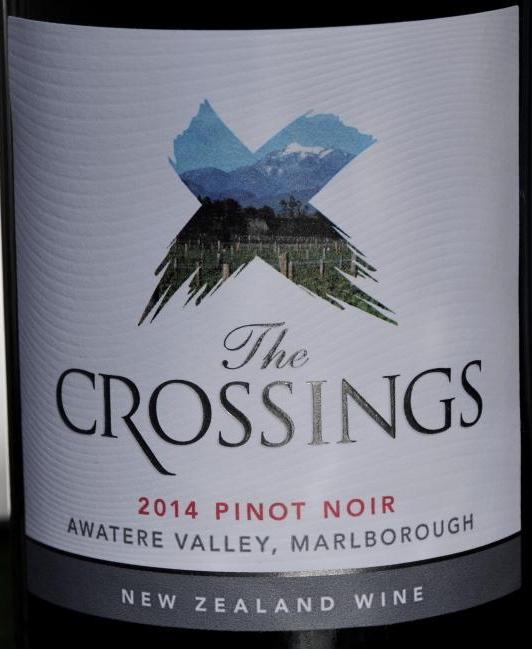 I think Jeff provided great answers. Hearing that 10 years old Sauvignon Blanc is still fresh makes me very happy – I love wines with an age on them, and I love it when the wines are aging gracefully, so I would love to try it by myself. Well, yes, I didn’t try the 2005 – instead, I tried the wine from the vintage Jeff was so happy about it – the 2015. I tasted latest releases of both Sauvignon Blanc and Pinot Noir, which I got as samples, courtesy of the importer, Deutsch Family Wine & Spirits. For you to understand how new the 2015 was, the bottle even didn’t have an official label on it yet.
Here are my tasting notes:
2015 The Crossings Sauvignon Blanc Awatare Valley Marlboro, New Zealand (13% ABV, SRP $14)
C: straw pale
N: beautiful fresh cut grass, just a hint of grapefruit, lemon zest
P: clean acidity, fresh, lemon undertones, herbal notes, perfectly balanced
V: 8, one of the very best NZ sauvignon Blanc wines I ever tasted. Summer day in the glass.
2014 The Crossings Pinot Noir Awatare Valley Marlboro, New Zealand (14% ABV, SRP $18)
C: dark ruby
N: smoke and raspberries, lavender, touch of mint, baking spices
P: sweet cherries, plums, hint of vanilla, touch of spices, good balance, medium body, medium-long finish.
V: 7+/8-, classic Marlboro Pinot Noir
There you have it, my friends – virtual interview and very real, delicious wines. Now, let me ask you a question – if you would have an opportunity to talk to the winemaker, what would be your questions? What do you think of our Q&A session? Happy Friday and Cheers!
Wines Worth Seeking, and The Food To Match
When it comes to the wine produced in the world, Italy is an unquestionable leader – Italy produces more than twice as much wine as country in the second place – France, and 10 times more than US, which is #4 on the list (numbers from 2014). That essentially means two things:
- There are plenty of Italian wines available at any wine store, definitely the case in US.
- There are lots and lots of producers in Italy which are just starting to conquer the worldwide markets – and they often make wonderful wines.
What is the first region which comes to mind when you think about Italian wines? I bet it is Tuscany for the most, followed probably by Piedmont and then may be the Veneto. Well, we are not going to talk about any of those. Producer which I would like to bring to your attention comes from much lesser known area in central Italy, up on the Adriatic coast – the region called Marche.

Hills of Marche (source: San Giovanni web site)
I can confidently state that 6–7 years ago, absolute majority of the wine drinkers in US never heard of the region Marche. Over the past few years, the situation changed, and Marche wines started showing up in the wine stores, often offering a nice surprise to the consumers who are not afraid to venture out of the all so familiar Chianti, Barolo and Pinot Grigio.
As you probably guessed by now, Marche wines is what we will be talking about today – let me introduce to you Azienda Agrobiologica San Giovanni winery, located on the Piceno hills, few miles from town of Offida. Offida gives name to the Offida DOCG, a wine production area focused on the grape called Pecorino.
San Giovanni winery was officially founded in 1990 (the family was making wine for much longer time). The vineyards extend across 75 acres around the green hills, at an average altitude of about 1000 feet (320 meters). From the very beginning, the winery was built on all organic principles, with utmost respect to the land and the environment. As you would probably expect, the winery practices dry farming and uses only natural yeast. In a quest to produce wines most attuned with nature, San Giovanni winery is even using a different type of natural cork, produced from the sugar cane. As I was reading online, sugar cane corks are touted specifically as the best enclosure for organic wines, and they even boast negative carbon footprint, as sugar cane captures carbon dioxide – not sure how that works, but here is a link in case you want to educate yourself.
Before we will talk about the wines, one more important note about San Giovanni wines. Not only all the wines are organic, they are also Vegan! There are no animal products used in production of the wines, and in 2014 the winery became certified vegan as “Qualità Vegetariana Vegan” by CSQA.
San Giovani uses typical local varieties to produce their wines – Passerina, Pecorino, Trebbiano, Montepulciano and Sangiovese. Overall, San Giovanni makes two different lines of wines – Gyo, meant for an early consumption, and a group of wines more of a “reserve” level (I’m using the word “reserve” here as a very loose term, for the lack of common group’s name). During the tasting, which was also accompanied by a delicious meal, we had a pleasure of trying 4 different San Giovanni wines.
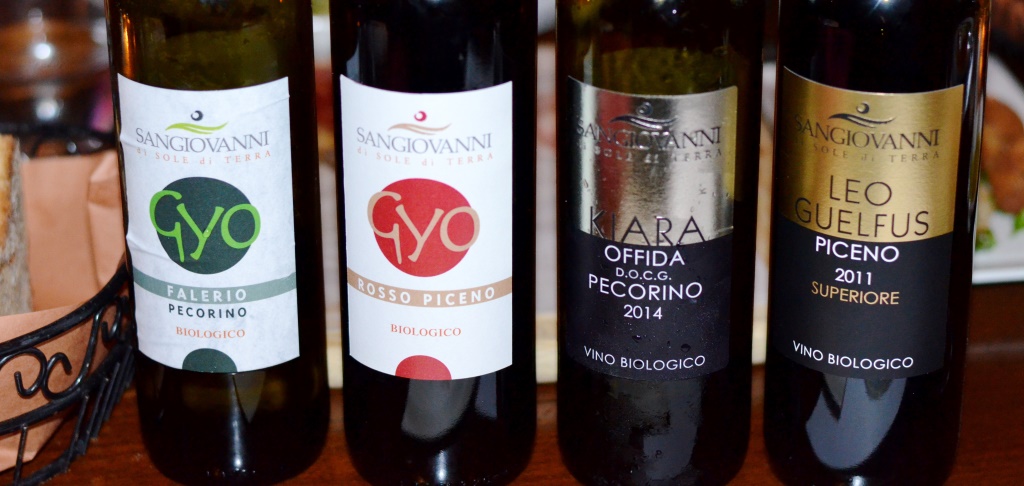 Here are my notes:
2014 Sangiovanni Gyo Pecorino Falerio DOP, Marche (13% ABV, SRP $13, 85% Pecorino, 15% Trebbiano)
N: White fruit, touch of grass
P: Hint of lemon peel, nice plumpness – almost Chardonnay-like, silky. Medium+ body, touch of bitterness.
V: 7+, nice
2014 Sangiovanni Kiara Pecorino Offida DOCG, Marche (13.5% ABV, SRP $20, 100% Pecorino) – this wine is named after owner’s daughter, Kiara. An interesting note – it is considered that Pecorino is at its best after 3 years in the bottle.
N: Bright stone fruit, leeches
P: sweet notes on the palate, apricots, medium to full body, nice acidity, good balance, long finish.
V: 8-, excellent


2014 Sangiovanni Gyo Ross Piceno DOP, Marche (13% ABV, SRP $13, 70% Montepulciano, 30% Sangiovese)
N: crushed fruit, fresh, blackberries
P: soft warm red fruit, nice layers, silky texture, polished and balanced
V: 8. Would be perceived as an expensive wine in the blind tasting. I would gladly drink this wine every day.
2014 Sangiovanni Leo Guelfus Piceno Superiore DOC, Marche (13.5% ABV, SRP $20, 70% Montepulciano, 30% Sangiovese, 18 month in oak, 18 month in the bottle)
N: Concentrated, plums, cherries, touch of herbs
P: Wow! Delicious, fruit, layers, spices, silky smooth, refined, long finish
V: 8+/9-, outstanding wine by itself, and one of the best values you can find at a price. This might be the wine with the best QPR I tasted throughout entire year.


As I mentioned already, the pleasures of the evening were not limited only to the wines. Our tasting took place at Cotto Wine Bar, a wonderful small outpost of authentic Italian cooking in Stamford, Connecticut.
Our hosts spent quite a bit of time going over the menu, looking for the dishes which would help to showcase the wines. As a first course, we had an excellent selection of various cured meats and cheeses – both Gyo and Kiara Pecorino wines perfectly accompanied these, providing nice backbone of acidity.


Next two pasta dishes arrived – Fettucine alla Bolognese (Fresh Homemade Pasta, Meat Ragu, Shaved Ricotta Salata) and Gnocchi alla Genovese (Basil Pesto, Oven Dried Tomato, Pine Nuts, Fresh Perline di Mozzarella), each one being very tasty. Sangiovanni Gyo Rosso Piceno was a perfect suitor here, weaving itself into the flavor profile of the dish.


Our last course consisted of two meat dishes – Agnello Scottadito (Grilled Lamb Chops, sauteed Brussel Sprouts, Pine Nuts and Raisins) and Straccetti Arugula e Parmigiano (Thinly sliced USDA Prime beef served with arugula, Parmesan Cheese and Balsamic Vinegar from Modena), meat cooked to perfection and delicious on its own. The Sangiovanni Leo Guelfus Piceno Superiore, with its firm structure, dark fruit and gentle tannins, perfectly complemented the meats, happily elevating every bite.


There you have it, my friends. Of course, there are lots of wines out there. But the great part of enjoyment of wine comes from the joy of discovery. And this is exactly what I’m taking about here. Sangiovanni wines bring together lots of unique qualities – not only these are tasty wines, but they are also organic, they are good for vegans, and they deliver an outstanding QPR. These are definitely the wines worth seeking.
And if you are ever in Stamford, and craving good Italian food, Cotto Wine Bar might be just “it”. Cheers!
Cotto Winebar and Trattoria
51 Bank St
Stamford, CT 06901
Phone: (203) 914-1400
http://cottowinebar.com/
Last Bottle Sign Up ($10 credit)




 Talk-A-Vino