Archive
Restaurant Files: Tablao in Norwalk, CT – Wine or Cocktail, You Decide
Translated from Spanish, the word “Tabla” has a few different meanings, but the one of interest for us here is a “board” or a “plank”. If you stop by the recently opened Tablao restaurant in SoNo district or Norwalk, Connecticut, the wooden planks on the walls will definitely attract your attention – and if you are a oenophile, you can’t help but to keep looking for all the familiar and coveted names (uncontrollable drooling will be excused, but please behave):


For sure I was very happy to observe all those wooden boards when I visited the restaurant for the bloggers dinner a few month ago. This time around, I arrived even a bit early, so I had an opportunity to snap a few pictures of decor and ambiance:
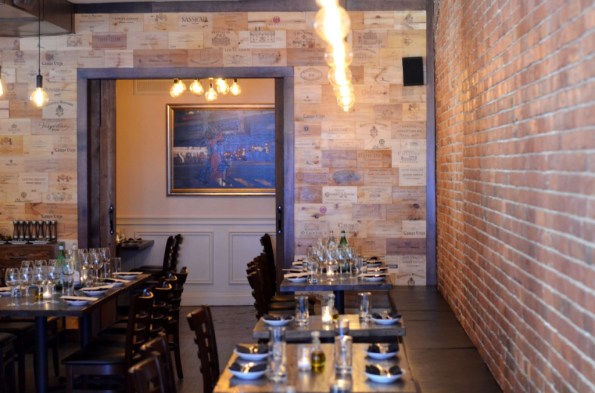
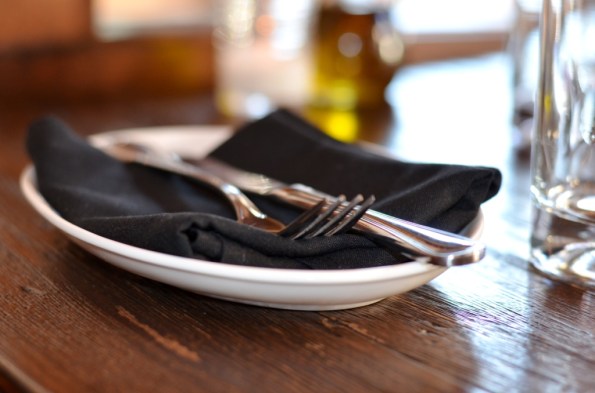
 While I love wine, I would never skip the bar – after all, nice cocktail is a nice cocktail, a great way to start the evening. The bar at Tablao didn’t disappoint. To be entirely honest, it even exceeded my expectations, as soon as I saw a bottle of Del Maguey Mezcal. Del Maguey makes absolutely spectacular Mezcal, which is rare and almost impossible to find. If the restaurant carries it, it gives me a good pointer for what to expect.


Tablao offers a nice selection of cocktails and wines by the glass:
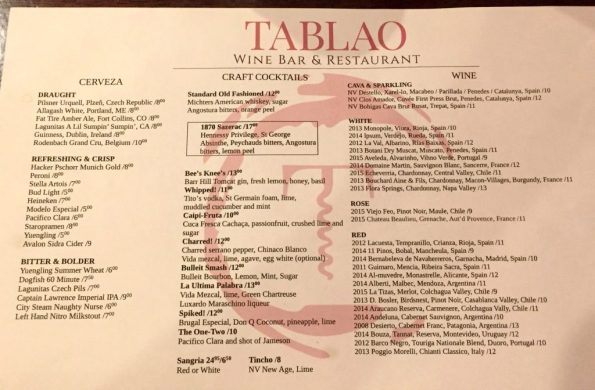 We had a few of the cocktails, and the wines were prepared for our dinner in advance. I really liked the cocktail called Charred! (charred Serrano pepper, Chinaco Blanco – another sign of high-class – rare and beautiful tequila, Vida Mezcal, lime, agave, optional egg white) – nice balance, good spicy bite. From the wines, my favorites were 2011 Guimaro Mencia Ribera Sacra which was earthy and showing nice ripe fruit, and 2014 Desierto25 Cabernet Franc Patagonia, Argentina, which was unexpected (Cab Franc from Argentina? wow) and stunning – smooth, balanced, with an excellent fruit profile:


While we were mingling, the food started to appear:


Cheese Croquettes were very tasty, with nice amount of spice. Potato Croquettes were my favorite, again, well cooked and very tasty, with good amount of seasoning, and then Grilled Chorizo – who can argue with Chorizo?
The first dish to arrive at the table Charcuteria, which is offered with a very nice selection of meats and cheeses at Tablao:


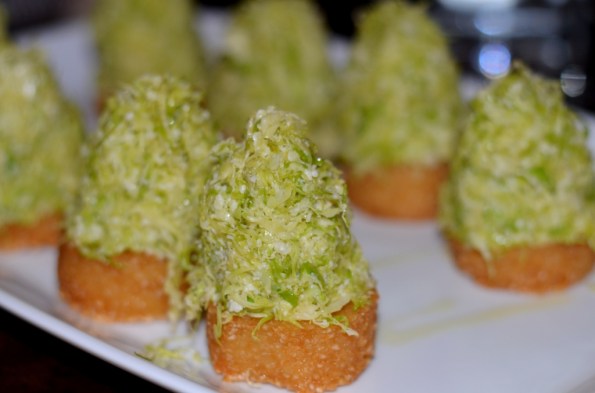
Our first course consisted of three different Tapas: Brussels Sprouts Salad (Fontina risotto cake, black truffle shavings, truffle olive oil, lemon, parmesan cheese) – memorable presentation, the salad itself was tasty, but the risotto cake was a touch too dense to my taste. Next up was Salmon Tartare (Jalapeños, red onion, ginger, lemon juice served with house-made potato crisps) – nicely made, good flavor and then Calamari a la Plancha (Vinaigrette of vegetables and salad) with a good char on the octopus.
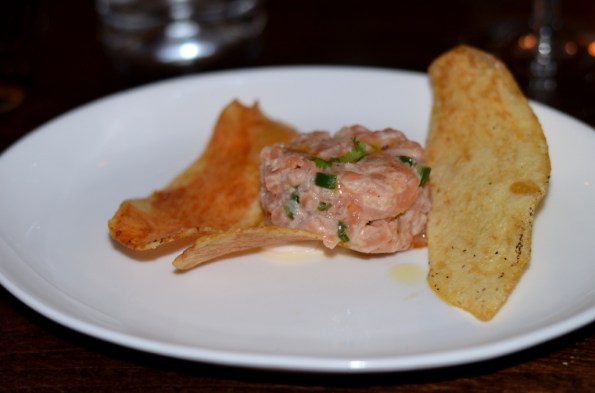
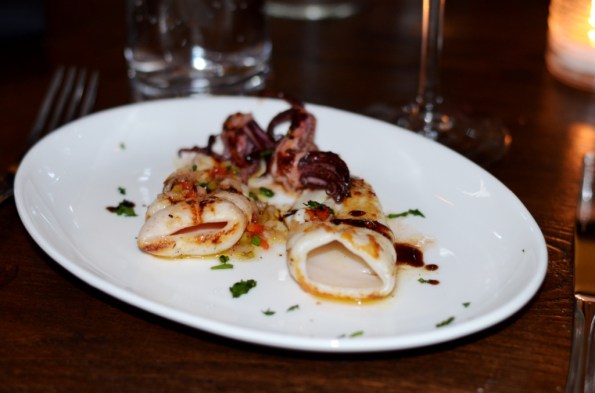
The second course brought in Hanger Steak (Green chimichurri), Asparagus (Parmesan, red pepper vinaigrette, balsamic reduction) and Chorizo Español (figs, beans), all nicely prepared:


And then, of course, showing all the Spanish cooking heritage, the Classic Paella (Chorizo, Chicken, Port, Clams, Mussels, Shrimp). Let me explain how good this paella is: you know how every once in a while you are setting next to the dish, you are full – I mean, completely full – and you still are going “let me just get another bite, just one more, please, I promise” – yes, that was the Paella experience at Tablao.


To finish our night in style, we got the trio of the deserts – Tres-Leches (Dense 3 milk cake), Strawberry Panna Cotta (Served with coconut ice cream) and Housemade Chocolate Tart (Chocolate & Goat Cheese) – all very tasty.
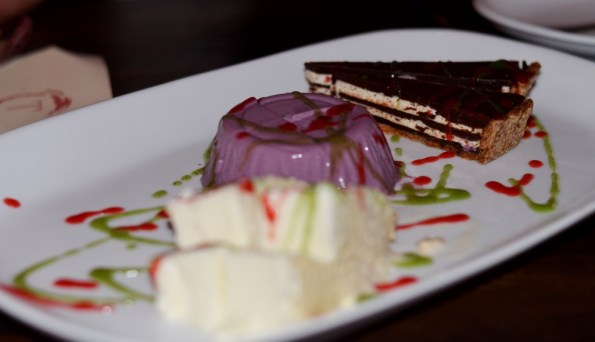 That’s all I have for you, my friends. If you are looking for a tasty (and different!) drink, a glass of good wine and a tasty bite of food, Tablao in SoNo can provide them all – with a bonus of a perfect ambiance. Cheers!
Tablao Wine Bar and Restaurant
86 Washington St
Norwalk, CT 06854
Ph: (203) 939-9602
tablaosono.com
Fall in Montefalco: Revisiting Beauty of Montefalco Rosso and Power of Sagrantino
 History of the grapes is full of mistaken identity cases, survival fights, global dominance going nearly extinct – yes, these are the grapes I’m talking about, not people. There are also “lost and found” stories, as in the case of Sagrantino, the Italian grape from Umbria. Sagrantino was a very popular grape for more than 500 years – until it practically disappeared in the 1960s, and made almost miraculous comeback due to the effort of the few passionate winegrowers.
My first meaningful encounter with Sagrantino wines took place 3 years ago, when I participated in the virtual tasting of the wines from Montefalco – Sagrantino’s growing region in Umbria. I don’t want to repeat everything I learned about Sagrantino the last time, so please take a look here for some interesting fun facts about Sagrantino (for instance – did you know that Sagrantino has the highest polyphenol concentration among all commonly used red grapes?).
Two groups of red wines produced in Montefalco. One is Montefalco Rosso DOC, where it is required that the wine would have at least 70% of Sangiovese, up to 15% of Sagrantino and up to 15% of the other red grapes (however, these percentages are changing). The second one is Montefalco Sagrantino DOCG, with the wines made out of 100% Sagrantino grapes. Montefalco Sagrantino DOCG also includes production of the sweet Passito wines – as you would expect, after harvest, the grape bunches are left to dry on the mats for at least 2 month, before pressing and fermenting together with the skins. High tannin content helps to alleviate the sweetness of the wines.
Our tasting, very appropriately called “Fall in Montefalco”, was conducted in the virtual format, with the group of 9 winemakers presenting their wines remotely from Italy. Live Q&A discussion was accompanying the tasting via the Ustream channel (take a look at the live feed to the right).
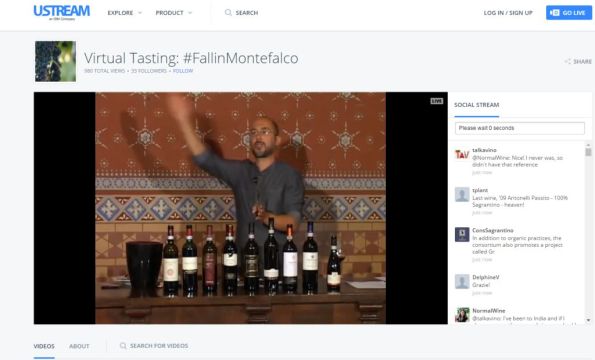
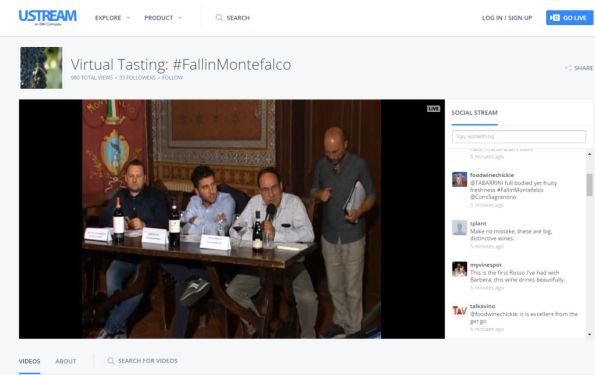
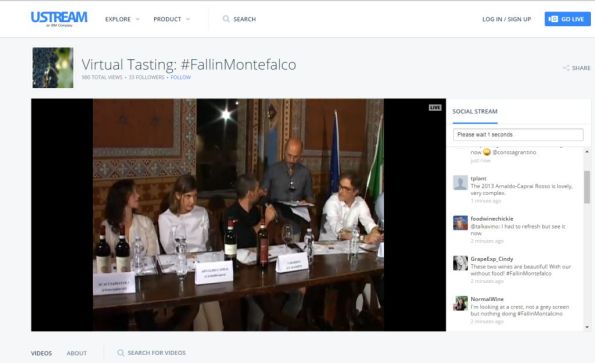
Few interesting facts from this presentation: There are currently 700 hectares (1750 acres) of Sagrantino planted in Montefalco, and there are 70 wine producers in the region. Current production of Montefalco Sagrantino is about 1.3M bottles, and Montefalco Rosso is about 2.2M. Someone asked one of my favorite questions of all the producers in the studio – what is the oldest vintage of Sagrantino you have in your cellars? Going around the room, this is what I was able to capture (as usual, it is hard to follow presentation and chat with people at the same time) – the oldest vintage Custodia has in the cellar is 2003, Arnaldo Caprai still has 1979 Sagrantino; Tabarrini’s oldest is 1996 and then 1999.
Before I leave you with my tasting notes I can say that overall, the wines in the tasting showed nice improvement, comparing with the wines we were drinking 3 years ago – you will also see it in my ratings, which are also higher across the board. Also as you will see from the notes, I have a sweet tooth – and not afraid to show it – Passito was my favorite wine in the tasting. Don’t get me wrong – again, all the wines were excellent, and if I have to use one word common description, the word would be “elegant”.
Here are my tasting notes:
2013 Broccatelli Galli Montefalco Rosso DOC (13.5% ABV, $19, Sagrantino/Sangiovese blend)
C: dark Ruby
N: cherries, herbs, touch of minerality
P: bright tart cherry, leather, tobacco, cherry pit, medium body, easy to drink
V: 7+/8-, simple and nice, would work well with food
2013 Arnaldo Caprai Montefalco Rosso (14% ABV, $21, 70% Sangiovese, 15% sagrantino, 15% Merlot)
C: dark garnet
N: beautiful, open, inviting, red fruit
P: warm, spicy, velvety, medium body, front tannins on the finish, leaves surprisingly light perception. Touch of characteristic leather.
V: 8/8+ (definitely 8+ on a second day, very round and elevated)
2012 Scacciadiavoli Montefalco Rosso DOC (14.5% ABV, $20)
C: Dark garnet
N: herbs, sage, touch of cherries, restrained
P: medium body, good acidity, leather, cherries and cherries pit, soft, polished, easy to drink, soft tannins, very round overall, medium finish
V: 8, was perfect PnP wine, delicious and makes you crave for more
2013 Tabarrini Boccatone Montefalco Rosso DOC (14.5% ABV, SRP $28)
C: dark garnet
N: intense, sweet plums and cherries, sandalwood, complex
P: complex flavors, lots going on, cherries, earth, nice tart, soft, supple, layered, spicy notes
V: 8/8+, will evolve with time
2011 Perticaia Montefalco Sagrantino DOCG (14.5% ABV, $55)
C: dark garnet, practically black
N: ripe red fruit (restrained), baking spices
P: tart cherries, velvety, firm structure, full weight in the mouth, full bodied, very present, “Rutherford dust”, cherry pit mid palate
V: 8+, delicious powerful wine – if you like powerful wines
2006 Tenute Del Cerro Còlpertone Gold Montefalco Sagrantino DOCG (15% ABV, $50)
C: garnet with brick hue
N: cherries, eucalyptus, oregano, intense, balsamic
P: round, layered, earthy, cherries, medium to long finish, powerful, excellent balance, another 10 years to evolve
V: 8/8+, delicious
2010 Tenute Lunelli Carapace Montefalco Sagrantino DOCG (15% ABV, $35)
C: garnet
N: earthy, herbaceous, touch of cherries, medium intensity
P: round, fresh, open, cherries, tartness gets a bit in the way, but wine is very enjoyable from the first pour and sip. Long finish.
V: 8+, excellent
2010 Terre De la Custodia Montefalco Sagrantino DOCG (14.5% ABV, $45)
C: bright garnet
N: barnyard, medium intensity, ripe plums, roasted meat
P: crushed berries, acidity, tannins jump in quickly, very enjoyable but needs time
V: 8/8+, delicious Italian wine, will open up in about 10 years…
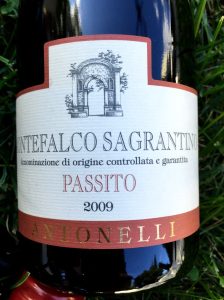
2009 Antonelli Passito Montefalco Sagrantino DOCG (14% ABV, $49)
C: dark garnet, almost black
N: dried fruit, figs, raisins, delicate – not overpowering
P: wow. And another wow. Dried fruit, but perfectly restrained. Cherry pit, tannins, acidity, tartness. Perfect balance, and very try finish.
V: 9, needs time, superbly delicious and enjoyable as it is, but will evolve amazingly…
That was an excellent tasting, I’m glad to be a part of the Fall in Montefalco.
What is your experience and opinion of Sagrantino wines? Cheers!
Color of the Bubbles – Mine Were White, Grey and Black
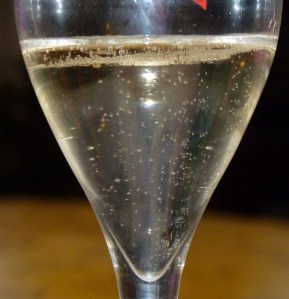 More than 3 years ago, an interesting tradition was born in the world of wine blogging (a brainchild of The Drunken Cyclist, with the help of the supporting cast of characters) – the Monthly Wine Writing Challenge. Every month or so, wine bloggers en mass subject themselves to the masochistic practice of taking a random word and creating a soulful connection from that word to the beloved world of wine – all of it on a tight deadline.
Writing a post for the Monthly Wine Writing Challenge (MWWC for short), I always want to put out a regular post, and then at the end, simply state “and by the way, this was written for the MWWC, ha”- just to show how easy it was. Of course, this practically never happens – like today, with the theme of our epistolary exercise been “Bubbles“, and my writing taking place during the very last hour (sigh).
When oenophile hears the word “bubbles”, the first reaction it triggers is “Champagne!”. It gives us such a pleasure to write about the world of “Sparklers” – the ingenuity of Dom Perignon, the resourcefulness of Widow Cliquot, the battles of I-was-the-first-to-make-my-wine-sparkle.
There are many other connections of the bubbles to the world of wines – think about bubbles you see on the surface of the juice during fermentation – those are some bubbles! Or think about simple, tiny bubbles of oxygen, making it through the cork and allowing the wines to age gently and gracefully – these bubbles are critical. And then there are maybe bubble issues for the wine collectors? Will that price of DRC or Petrus ever come down?
Yes, I will take my own, different course, and will not write about Champagne or Sparkling wines. For sure.
Do you believe me? Who said “no”? How did you guess?
Banal or not, but I have a good reason to write about sparkling wines – Prosecco, to be more precise. A few weeks ago, I was offered to review some Prosecco wines. At first, my reaction was “I’ll pass”. But reading the email more carefully, my interest piqued. I always thought of Prosecco wines made from 100% of grape called Glera (yes, there are few exceptions, like Bisol, but just a few). These three Prosecco wines were all blended – Processo DOC rules allow up to 15% of other grapes in the blend – and the blends were all unusual, so the intrigued brain said “why not”?
As we are talking about Prosecco, I need to share some fun facts with you – who doesn’t like statistics, right?
French Sparkling wine and then Champagne had been around for a bit less than 500 years. Prosecco’s history is only a bit longer than 100 years, and only in 1989 (27 years ago!) Prosecco made it for real outside of the Italy (here is the link to my post about it, in case you are interested in history). However, according to Nielsen report, Prosecco sales in US in 2015 grew by 36% (Champagne – 8%). In 2015, Italy produced its largest Prosecco crop ever with 467 million bottles – that is triple of only 7 years ago; out of this amount, 48 million bottles were exported to the US – and still US is only #3 importer of Prosecco behind UK and Germany.
Moving right along, let me decipher a cryptic title of this post for you (not that you cared much, right?).
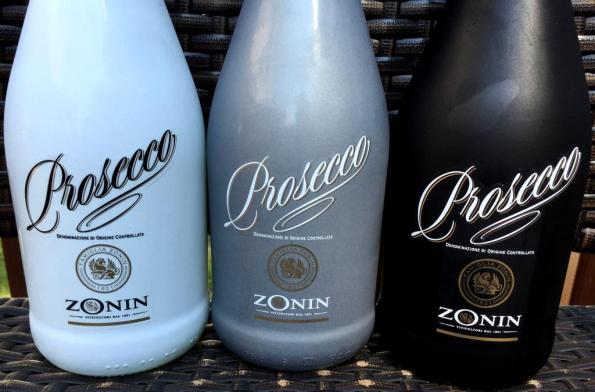
Zonin family got into the wine business in 1821, almost 200 years ago. Now in the 7th generation, the family manages about 5,000 acres of vineyards, mostly in Italy. Zonin had been making Prosecco for the very long time, but considering the ever growing interest, they decided to offer a new line of Prosecco wines, called “Dress Code”, suitable for different mood and a company. The “Dress Code” colors include white, grey and black, so you can wear a different color every day. Of course, these are only colors of the bottles, nobody added squid ink to the wines… yet? Hmmm, note to self…
Here are the notes for the wines I tasted:
Zonin Prosecco White Edition Prosecco DOC (11% ABV, SRP $16.90, 91% Glera and 9% Pinot Bianco cuvée): simple overall. On the nose, touch of white fruit. Good creaminess on the palate, touch of white fruit, very restrained, good acidity, but again, overall is a very muted expression. 7/7+, Decent everyday glass of bubbly.
Zonin Prosecco Grey Edition Prosecco DOC (11% ABV, SRP $16.90, 87% Glera and 13% Pinot Grigio cuvée): white stone fruit on the nose, white flowers. Palate: light, creamy, effervescent, refreshing, distant hint of sweetness, round, good acidity. 8-, nice upgrade from the “white”.
Zonin Prosecco Black Edition Prosecco DOC (11% ABV, SRP $16.90, 90% Glera and 10% Pinot Noir cuvée): promising touch of fruit with lemon and rocky minerality on the nose. Perfect acidity, elegance, finesse on the palate, touch of white stone fruit, lime and noticeable nutmeg. Most elegant out of three, a “little black dress” if you will. 8/8+, one of the most elegant Prosecco I ever had.
So, what color are your bubbles? My favorite was black. Cheers!
This post is an entry for the 27th Monthly Wine Writing Challenge (#MWWC27), with the theme of “Bubbles”. Previous themes in the order of appearance were: Transportation, Trouble, Possession, Oops, Feast, Mystery, Devotion, Luck, Fear, Value, Friend, Local, Serendipity, Tradition, Success, Finish, Epiphany, Crisis, Choice, Variety, Pairing, Second Chance, New, Pleasure, Travel, Solitude
Restaurant Files: Mountain View Brasserie in Greenville, NY
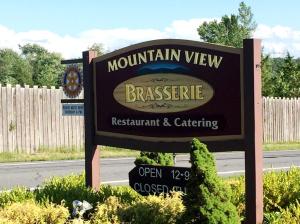 We already talked about our day in the Hudson Valley during traditional adults getaway trip (you can read about it here). Culmination point of the Saturday night was a special dinner. I call it “special” as this is something we always spend time preparing for as part of our getaway. Our ideal scenario is to find a restaurant which would do a special tasting menu for our group, and would allow us to bring our own wines which we would pair with the dishes. More often than not we are successful in this plan – this year was no exception.
The Mountain View Brasserie restaurant in Greenville, New York agreed to create for us a special tasting menu, and we came up with the wine pairings for all the dishes. Of course, the challenging part is doing the “blind” pairing if you will – all we have is the list of ingredients in the dish, and the pairing is solely based on our imagination. The good thing is that we usually do this “hard work” together with my friend Zak, who owns the wine store, so we have a good number of wine options. We always make an effort to keep the cost reasonable – talking about this dinner, only one of the wines was $25 retail, the rest were $20 or less.
For what it worth, here is our dinner menu, with the wine and pairing notes, and addition of the pictures. As the idea here was a relaxing dinner with friends and not a blogger’s dinner, all the pictures are taken with the iPhone and, well, it is what it is…


We started dinner with NV Rivarose Brut Rosé, Provence, France (Syrah/Grenache blend) which was nice, round and simple, well supporting the conversation.


Our first dish was Maryland Crab Cakes served with Lobster Sauce, which was delicious and very generous in size. We paired it with 2014 Templar Cellars Komtur Ekko Pinot Gris, Czech Republic (100% Pinot Gris) – I wrote about this wine before, and while the wine was excellent on its own, the pairing was simply outstanding, with the wine nicely complementing the dish.


Our next dish was House-smoked Salmon Napoleon with horseradish cream and gaufrettes garnished with capers and red onion – the dish was interesting, quite tasty, but rather unexpected under the category of “Napoleon”. Our wine pairing was 2015 Notorious Pink Grenache Rosé, Vin de France (100% Grenache), which was medium bodied Rosé, and the pairing was okay, but not mind-blowing (the flavors didn’t fight, but were not enhancing each other either).
Warm Hazelnut Crusted Goat Cheese with Market Greens was more successful as a dish, nice crunch on outside contrasting with the goat cheese acidic profile. We used the same wine for the pairing and it worked perfectly, complementing the dish very well.


You can’t have dinner without salad, right? We had Grilled Portobello Salad with Roasted Peppers, Fresh Mozzarella Cheese, Tomatoes, Spicy Walnuts, Market Greens with Balsamic Vinaigrette which was very tasty, but most importantly, it paired deliciously with 2014 Sangiovanni Kiara Pecorino Offida DOCG, Marche, Italy (100% Pecorino). Yet another wine I tasted before and loved, and it was perfectly complementing the salad flavors.
Vegetable Risotto with Parmigiano-Reggiano Cheese served with Roasted Sea Scallop was one of the absolute favorite dishes – perfectly seared scallop, working nicely with sweet flavors of corn risotto. Interestingly enough, we missed the sweetness as dominant taste element in this dish (just one word in our defense – corn was not listed among ingredients), and the same wine, Pecorino, didn’t work that well – it was just an okay pairing.


Our next dish was Baked Salmon Fillet with Orange and Olive Butter – again, perfect execution, moist and flavorful fish. The wine, 2011 Portal del Priorat Trossos Tros Blanc, Montsant, Spain (100% Grenache Blanc) was full-bodied, plump and delicious, working very well with the dish.


We were definitely looking forward to the Sautéed Wiener Schnitzel with Spaetzle, and the dish didn’t disappoint – very tasty, perfectly seasoned, delicious sauce. The pairing choice was 2013 Templar Cellars Komtur Ekko Pinot Noir, Czech Republic (100% Pinot Noir), yet again the wine I was familiar with – and I’m glad to admit that the pairing was spot on, with the perfect melding of flavors.


We finished our main course with Roasted Herb Crusted Rack of Lamb Provencal – I’m sure that even from the quick glance at the picture, you would expect that this was a tasty dish, as you can tell that meat was properly cooked – and you would be right, as it tasted appropriately delicious. Equally appropriate was our choice of wine pairing – succulent 2012 Seigneurs d’Aiguilhe, Côtes de Castillon, Bordeaux (Merlot/Cabernet Franc blend) Bordeaux, classic cassis and mint taste profile and classic complement to the lamb – outstanding pairing.
This concluded main portion of our dinner – and before we talk about dessert, I would like to commend restaurant on the smart way to present the tea. Take a look below:
 If you look in the middle of the picture on top, you will see a sand clock – what a great and simple way to help you steep that perfect cup of tea? Very thoughtful!


Our first dessert was Warm Apple Tart with Vanilla Bean Ice Cream and Caramel Bourbon Sauce – I’m sure you don’t need my lame description here, it was simply indulgent. And for the pairing – you can’t beat one of the best and most universal dessert wine pairings – Moscato d’Asti. We had 2015 Cascinetta Vietti Moscato D’Asti DOCG, Italy (100% Moscato d’Asti) – light, effervescent and clean.


Our last dish was Grand Marnier Chocolate Mousse with Fresh Orange Sections – excellent by itself, and pairing very well with 2014 Quady Essencia, California (100% Orange Muscat).
I think this was one of the most successful tasting dinners we put together, so for the next year, we have a very difficult task at hand – but we are up for the challenge. Cheers!
Mountain View Brasserie
10697 State Route 32
Greenville, NY 12083
Ph: (518) 966-5522
Remembering Last Summer – Fero Vineyards in Pennsylvania
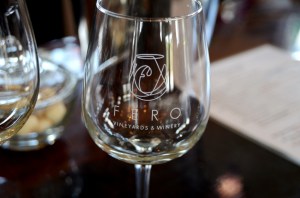 Does it make sense to write about a winery visit a year after? Well, I will leave you to ponder at that question, and will just go ahead with my post.
We have a tradition which we keep going for many years now – adults getaway. One weekend in August, we all get together for the two days of food, wines, laughter and simply enjoying each other’s company. These trips usually take place within reasonable driving distance (3 hours or less) for all people in the group (we all live in a close proximity to the New York city), and winery is always a good choice for the first stop.
Lucky for us, oenophiles, the wine bug caught up everywhere in the US, so there is no shortage of interesting wineries to visit along the East Coast of the United States. Our choice last year was the winery in Central Pennsylvania, called Fero Vineyards and Winery. The choice was not random – one of the grapes they use in the wine production is Saperavi. This is definitely not a common choice – however, a rapidly (I think) growing trend among Eastern USA winemakers, in Finger lakes and other regions. Having been exposed to many amazing Georgian wines, where Saperavi is a king, I was very intrigued at a perspective of tasting the local rendition of such wines.
Had all the arrangements made to meet with Chuck Zaleski, a winery owner and winemaker at Fero. Chuck was taking time for this off his busy schedule, as he was participating in the town fair where he was pouring his wines.
Just curious – do you think everything is going boringly well, or do you expect a twist in this story?
So yes, the twist happened – in the form of a flat tire. About 70 miles down the road, the familiar sound appeared – anyone who had a flat tire knows what I’m talking about; if you never had one – keep it this way. Not a problem, I thought – while the spare tire is very awkwardly located in Toyota Sienna, under the cabin floor, right in a middle – at least I knew where it was. Next ten minutes of jumping around the car ended up in a grim realization – the spare tire was not there. Angry call to the dealer (luckily, it was Saturday) lead to a discovery – all wheel drive Toyota Sienna cars don’t have a spare tire as there is no space for it – instead, they are equipped with run-flats. To make long story short, after arriving with the smoldering tire to the closest dealership and waiting for about 3 hours, we were able to get on our way (of course I fully realize this was still a very lucky outcome).
As we were at least 3 hours behind the schedule, the decision had to be made – should we visit Fero (Chuck, of course, was not there) or forget it all together, just drive to our B&B and relax after such an ordeal. I’m glad the love of wine prevailed and we decided to stop by the Fero Vineyards first.
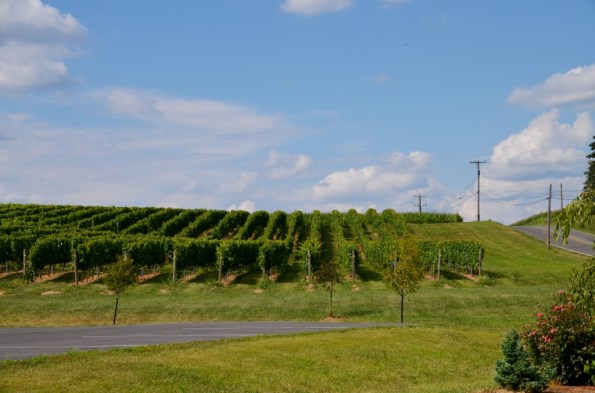 If you will look at the line up of the Fero Vineyards wines, you would find the closest match in Germany or Austria – of course with the addition of Saperavi. Despite the fact that we didn’t manage to meet with Chuck, he still took care of us, by leaving a bottle of Saperavi for us to taste, as the winery was sold out of their last vintage. We tasted through almost a complete portfolio of Fero wines, so here are the highlights for what I liked the most (as usual, there were too many wines, too little time):
2013 Fero Vineyards Grüner Veltliner Pennsylvania – dry, crisp
2013 Fero Vineyards Dry Riesling Pennsylvania – German style, nice minerality, good fruit
2013 Fero Vineyards Pint Noir Pennsylvania – dry, classic nose, crisp, very nice
2013 Fero Vineyards 1812 Lemberger Pennsylvania – crisp, crushed red fruit, pepper
2012 Fero Vineyards Pinot Gris Pennsylvania – nice, simple
2014 Fero Vineyards Pinot Noir Rosé Pennsylvania – residual sweetness, light, balanced, excellent overall
2014 Fero Vineyards Semi-dry Riesling Pennsylvania – excellent, nice touch of sweetness
Fero Vineyards Concord Pennsylvania Table Wine – yes, this is rather sweet, but if you like Concord, this was a classic, restrained and delicious
2013 Fero Vineyards Pinot Gris Pennsylvania – crisp, minerality, excellent
2013 Fero Vineyards Estate Lemberger Pennsylvania – roasted fruit, good concentration, excellent
Fero Vineyards Late Harvest Riesling Pennsylvania – nice touch of petrol, good touch of sweetness, excellent overall
2013 Fero Vineyards Saperavi Pennsylvania – excellent, nice concentration, tannins, crushed blackberries, pepper notes


I’m definitely intrigued by this Saperavi wine. Fero Saperavi has a character of its own, as you can see from my tasting notes above. I would love to taste it side by side with its Georgian counterparts, of course blind. And let’s keep in mind that Saperavi grows in the Balkans (never tasted it), Finger Lakes (also never tasted it), and probably some other places I can’t even think of. Can someone please put together an exciting blind tasting? Or this might be a great subject for the #winestudio session…
Well, I still have a few bottles of Fero wines left, including 2013 Saperavi (courtesy of Chuck, yes) – but I want to give it at least a few more years. See, this is how oenophiles build their excitement…
And we are done here. If you are looking for the great East Coast wines, Fero Vineyards must be on your short list. And who knows, may be you will be lucky enough to taste their Saperavi. Cheers!
Restaurant Files: Omakase Experience at Nobu Las Vegas
As a bona fide foodie, I heard the word “omakase” many times. I had a vague idea that this is the term for the Japanese multi course meal, but that was all I knew about it.
During recent trip to Las Vegas, I stayed at the Caesars Palace, and had to walk every day past Japanese restaurant called Nobu. Nobu is a restaurant empire of the world renowned Chef Nobuyuki Matsuhisa, so temptation was building – and I succumbed to it.
I had no reservation, of course (getting reservation for many Las Vegas restaurants is mission impossible), but as in most of the Japanese restaurants, you can often score seat in the sushi bar – exactly where I ended up.
In absolute majority of cases, I prefer to taste lots of different dishes at the restaurant instead of having a lot of one – thus going for the tasting menu was a natural choice. I decided on Nobu Signature Omakase, which consisted of the 8 different courses. And to make the experience complete, I also took the suggested sake pairing course, so every dish was accompanied by a different sake.
Now, there was a bit of a challenge for a foodie. As I was sitting at the sushi bar, all the dishes we handed over by the array of sushi chefs. Each dish had a long list of ingredients, and between the overall noise (high), the pronunciation and the fact that all those chefs were busy, I couldn’t possibly capture the names of the dishes, nor the ingredients. Practically same thing was happening with the sake – names and descriptions were given very quickly, and short of asking to spell out the names, there is a limit to how many times one can repeat “excuse me, what did you say is the name of it”?
As the result, I had to play an internet sleuth, looking for pictures and using my rough notes, trying to figure out what exactly I was eating and drinking. While doing this, I found an interesting reference for many Sake terms – here is the link. Below you will find an overview of my experience – mostly in pictures, with some slivers of the names of the dishes and some of my impressions. Here we go:
Very first dish, handed down to me very quickly, was Deep Fried Fish Salad, served with Onigoroshi sake, aged for 10 years with the sounds of classical music (supposedly helps sake to mellow out)- nice, crisp, very refreshing. Salad was tasty, however not amazing.

Fried Fish Salad
Next up was Sashimi Salad with Lettuce Handrolls, which was served with a bit of a sweeter sake (nope, no idea about the name) . Vegetable roll was a masterpiece of flavor, I would eat it at any time. Tiny fried shrimp – wow. Salmon – spectacular.
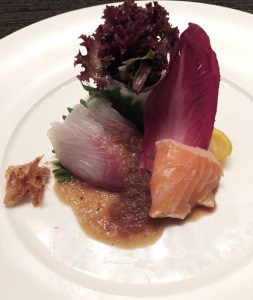
Next dish was Chef’s Sushi Assortment, which was served with with Hokusetsu Onigoroshi “Devil Killer” sake (with a bit of a spicy finish).
What I appreciated about the dish is that all the sushi pieces already had soy sauce and wasabi – exactly in the amount as Chef intended. Tuna was phenomenal. Picked ginger – wow. Great flavor on everything. Fried crunchy rice with caviar – delicious.

Next course was a Chef’s Sashimi Assortment, served with Hokusetsu Junmai sake. A pure wow dish, start to finish. Green ball you see in the picture is pickled Japanese peach – used to clean the palate, and it was delicious. Perfect sake. Toro Tartar with Wasabi Miso Sauce was divine – just give me a bowl and leave me alone. Yep, close the door, I said. All in all, one spectacular dish.


This was the end of the “appetizer” round, and the next two dishes were rather en entree style.
First, Black Cod Miso, which was served with Nobu ‘The Sake’ TK 40 sake from Nobu’s private stock. The sake was super complex and delicious. The cod was full of flavor and was melting in the mouth. Great dish.

Black Cod Miso
Next dish was Beef Toban Yaki, with beef sautéed in sake in ceramic cooking vessel (Toban). It was an okay dish – large sprout-like mushroom was a bit difficult to chew. However, the meat meat was tender and tasty.
 Last dish was Miso Soup, served in traditional Japanese style without a spoon. I was a bit surprised with the soup served in a standard black and purple plastic jar, commonly used at any simple Japanese restaurant. Soup was good, but again, nothing stood out about it. And yes, I didn’t think I should take a picture of it.
I was unable to capture the name of the dessert, nor the name of the dessert sake with fruit which was served together with it. Both were delicious, so the Omakase experience was finished on the high note.


There you go, my friends. A delicious, truly delicious experience, which I would be happy to repeat at any occasion. If you would have an opportunity to experience Omakase dining at Nobu, I can’t recommend it high enough. Cheers!
Nobu (at Caesars Palace)
3570 Las Vegas Boulevard South
Las Vegas, NV 89109
Ph: (702) 785-6628
http://www.noburestaurants.com/las-vegas-caesars-palace/experience/
Few Memorable Wines
As wine is a daily beverage at our house, the supply of it should be regularly renewed, to support that [tasty] habit. I really make an effort to stay in under $15 range for that daily enjoyment (yep, I’m a cheap bastard like that), so this is how most of the wines are acquired.
But then, of course, the are special occasions (like Monday, for instance – it happens only once a week, right? – okay, kidding), which require special wines, so I’m always on the hunt for the interesting wines, whether through the mailing lists (for those that you must have, like Turley or Carlisle), specials at the store or online (thank you, Universe, for the WTSO and Last Bottle). Those special wines disappear inside the wine fridge, and I have lots of fun trying to remember where is what, as I have no record keeping system of any sort, to ensure maximum frustration when looking for a specific bottle.
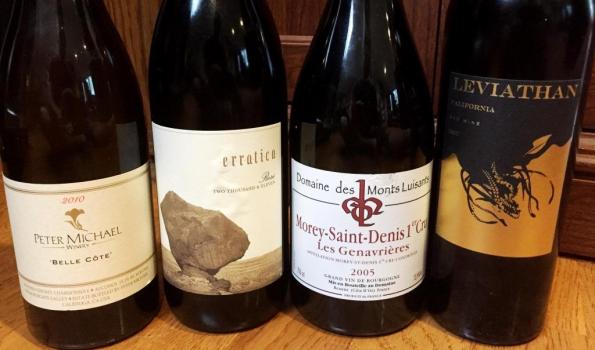
And then there are days when it is really appropriate to jolt that memory, and moreover, force oneself to make a decision about what bottles deserve to be opened, to celebrate the occasion.
We had a good occasion to celebrate very recently, with the group of close friends, so the bottles were pulled, opened and savored. And memories were created.
Here is what we drunk, more or less in this order:


2013 Carlisle Grüner Veltliner Steiner Vineyard Sonoma Mountain – Carlisle is one of my absolute favorite wine producers in California, who makes a range of single vineyard Zinfandel, Syrah and Petite Syrah wines, all representing an outstanding value (most of the wines are under $40). Best way to acquire Carlisle wines is to be on the mailing list (you can sometimes get lucky with the store, but this is quite difficult). While most of the Carlisle wines are red, they also produce few of the whites, which are delicious. I had the same 2013 Grüner last year, and it was great. With another year of age, it became amazing – yes, the star Austrian white grape can grow in California, and very successfully. The wine showed a backbone of herbaceous flavors, but elevated with the bright white fruit and perfect balance. Can’t find you a generic reference, as the wine was rather unique – but if you will ever see a bottle at the store, don’t miss your chance.
Next up was 2010 Peter Michael Belle Côte Chardonnay Sonoma County – what can I tell you? Peter Michael is one of the most coveted producers in California. Just to give you an idea, Peter Michael wines were served at the White House dinner when Queen of England was visiting – not a bad reference, what do you think? To say that the wine was delicious would be an understatement. Fragrant, tongue-coating, luscious and layered. Layers were intertwining, going through all classic Chardonnay elements of vanilla, golden delicious apples, very distant hint of butter, and back to vanilla. This is definitely a special occasion wine – it also manifests in the price ($90) – but then there is always that special moment worth it, you know?
You can’t have a party today without Rosé, can’t you? Of course not. And that Rosé must be special too. Which is easy with 2011 Antica Terra Erratica Rosé Oregon. I came across Antica Terra after tasting their Phantasy wine at a restaurant (it was my wine of the year in 2012). Antica Terra is a very interesting winery in Oregon, with the winemaker honing her skills under none other than Manfred Krankl of the Sine Qua Non. If only Antica Terra wines would be a bit cheaper… Well, let’s go back to that Rosé. It was a full power wine – there was nothing subtle there – but instead there was a perfect parade of the fresh, juicy cranberries and ripe strawberries, with spices and mineral notes – outstanding.


Remember I thanked Universe for Wine Til Sold Out (WTSO)? Had a reason to thank them again after opening the bottle of 2005 Domaine des Monts Luisants Les Genavriéres Morey-Saint-Denis Premier Cru. Technically, I have an insatiable thirst for the Burgundies – but the problem is that most of the inexpensive ones rather disappoint – and expensive ones – well, I don’t get to drink those. This is where WTSO comes to the rescue – I got this bottle for $50 – of course this is not cheap, but it is special occasions we are talking about here – and this is much better than its retail of close to a $100 or so. The wine was absolutely stunning – bright, sweet, ripe and savory cherries, whole bouquet of herbs, firm structure, clean acidity and perfect balance. A wow wine for sure.
And then there was Leviathan. If you are a wine geek, that name might have a meaning for you. In case it doesn’t, let me try another approach. Ever heard of Screaming Eagle? The most cult out of all cult California Cabernet Sauvignon wines? Until a few years ago, Screaming Eagle wines were made by Andy Ericsson. Leviathan was actually one of Andy Ericsson’s own projects, which was considered for a while to be a second label of Screaming Eagle – which is incorrect, as the second label of Screaming Eagle is the wine called Second Flight. This 2007 Leviathan California Red was outstanding – dark, brooding, with classic flavors of cassis and mint, layered and complex. I decanted it for an hour, which was the right move – but still, this wine is just a baby and needs to rest for a while. Luckily, I do have a second bottle, and even luckier, I have no idea where it is hiding from me, so it is safe for a while.


I hope you see a clear progression here – Grüner, Chardonnay, Pinot Noir Rosé, Pinot Noir, Cabernet Sauvignon – we are increasing the depth and concentration with every next wine. So what would you continue this line up with, just for the finishing touch? I’m sure there are few options here, but my decision was … California Zinfandel.
Not just any Zinfandel, but Carlisle – which means lots of dark power. This 2012 Carlisle Zinfandel Montafi Vineyard Russian River Valley was almost a natural continuation of Leviathan – dark berries, sage, round and smooth – it is amazing how Carlisle wines don’t give out the alcohol level of 15.9% – you don’t even think about it until you look for it on the label. Delicious.
And now, to round up the evening? Port! Last year I was lucky to visit Quinta do Tedo, a winery in Douro valley which was founded by the Bouchard family of Burgundy fame. I brought back a few wines, and this 2010 Quinta do Tedo Late Bottled Vintage Porto was one of them. The wine was perfectly delicious – sweet fruit but not a tad hair over the balance – you have a mouthfeel of garden fresh berries, with their natural sweetness, and nothing extra. This was a beautiful finish for our special evening.
I’m glad we have special days in our lives, so we can have such memorable celebrations. I had a bit of time to reflect on this stupendous group of wines, and I figured that I actually had a favorite – that Burgundian wine was simply flawless – I don’t know if the wine was at a peak, will it further evolve or will it start to decline – but what I had was spectacular.
I would like to leave you with this, my friends. What were your memorable wines as of late? Cheers!
Solitude: In Quest for Unattainable?
Solitude. An interesting word, isn’t it? Is it something good or is it something bad? Let’s see what the dictionaries think of solitude:
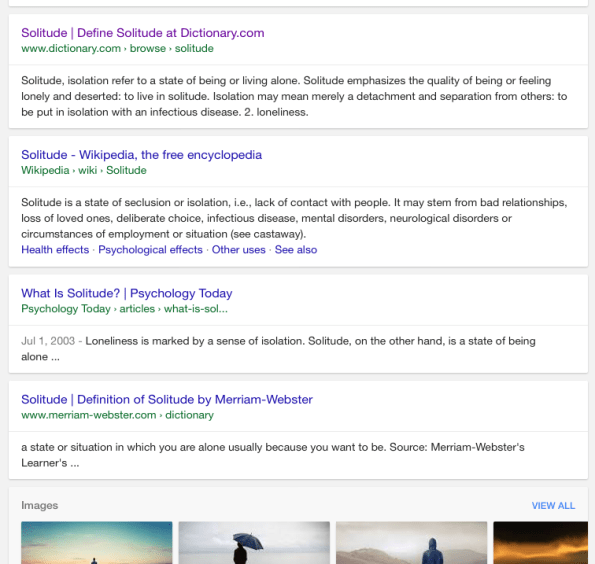
If we think of solitude as a feeling of isolation, this clearly doesn’t sound good. We, humans, are social creatures. We want to connect, communicate, love, laugh, interact. Feeling isolated is really opposite to feeling connected and engaged, so let’s leave it as that – feeling isolated is not what we want, so this is not the solitude we want to talk about.
 Let’s then talk about solitude as the “state in which you are alone usually because you want to be“. Every once in a while, our connected sensors become overloaded. Too many things to do, too many tasks to finish. The new things which must be done arrive without any regard to the things which we are still doing. We are going somewhere all the time, without even understanding the direction, or what is even worse, without understanding of why we are going there.
Solitude is our way out. Have you ever been up in the mountains, where there are no other sounds outside of gentle murmur of leaves and muted whisper of wind? How does it feel? Or may be instead of the mountains, you prefer to stand by the ocean, listening to the dreamy sounds of the slowly pulsating waves? With every wave gently crawling up the sand line, the tension becomes less, the mind becomes clearer, and our energy replenished.
The challenge is that unless we are a lucky few, most of us can’t just magically happen to be by the ocean or up in the mountains when we need it the most. And to take things further to the dark side, most of us now live in the constant state of over-socializing. Think about all the tweets we have to respond to, facebook statuses and instagrams to like, snapchats and periscopes to watch. If we thought we were overloaded before, how can we describe our state now? The state of solitude, which we need for our own well-being, is more ephemeral than ever before. Yes, it is literally unattainable.
While we are talking about life, this is a wine blog after all. Tell me the truth – you knew that I will turn it all to the wine, didn’t you?
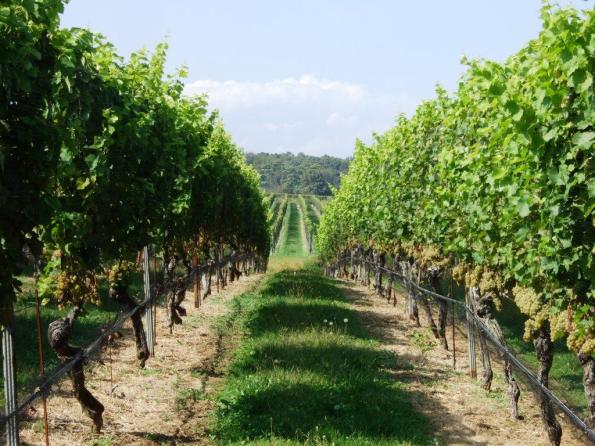
How does the wine relates to the solitude, you ask? To begin with, think about the wine while it is being made. We are seeking solitude by the ocean or up in the mountains – but have you ever stood between the rows vines on a quiet day, without talking or looking at your phone? Did you feel relaxed and restored just by standing there? 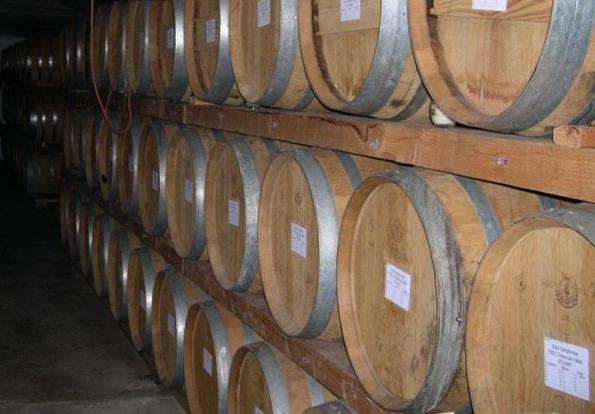
Or have you ever stood in the middle of the dimly lit cellar, breathing the wine smell and admiring the silence, thinking about the wines, quietly and patiently laying there? The wines spend month and month in that perfect solitude, left to themselves, to age and mature, before they will see you again.
And then there is may be the best and easiest moment of solitude any wine lover can experience at any time. Yes, wine is meant to be shared, and it is wonderful when you are in the company of the people who share you passion. But think about that moment when you take a sip of wine, and for that exact moment, the world stops, it doesn’t go anywhere, it becomes quiet. You are left one on one with that wine. You ponder at it. You reflect. You are one on one with yourself, in your moment of solitude, brought to you by that sip of wine.
I remember being in the Rioja seminar, and listening to our guide talk about his experience sharing the bottle of 80 years old Rioja (from 1922) with the group of friends (also wine professionals). He said that they poured the wine and had a sip, and the table was quiet for the next 5 minutes. Nobody wanted to say anything. Everybody were transposed. And they were in their moment of solitude.
Let me leave you with that. Have you ever found your moment of solitude in the glass of wine? I hope you did, and if not – don’t worry, it will come. Just give it time.
This post is an entry for the 26th Monthly Wine Writing Challenge (#MWWC26), with the theme of “Solitude”. Previous themes in the order of appearance were: Transportation, Trouble, Possession, Oops, Feast, Mystery, Devotion, Luck, Fear, Value, Friend, Local, Serendipity, Tradition, Success, Finish, Epiphany, Crisis, Choice, Variety, Pairing, Second Chance, New, Pleasure, Travel
Restaurant Files: Off The Chart Experience at Portside Tavern in Hyannis
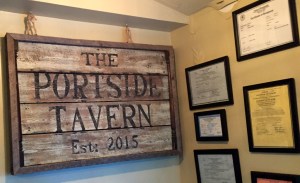 Yes, I love food. This never been a secret in this blog. And yes, I get overly excited when I come across really tasty experiences.
Concept of “food” is multidimensional. At home, tasty food and family (and friends) around the table is usually all you need. Mix in a bit of ambiance and a glass of a good wine, and you got a great experience, right there.
When it comes to visiting the restaurant, you need a bit more than just food for the great and memorable experience – good service is important; another element which is near and dear to me is cost. This is not even the “cost” in the absolute terms – it is more the perceived value which matters, the infamous “price/performance” – an amazing burger for $20 might be a great experience, and tasteless, rubbery steak for $15 will not be the one.
As you can see in the title of this post, I want to talk about “off the chart” experience. The source of this exuberant designation was our recent visit at the Portside Tavern in Hyannis on Cape Cod (love weekend getaways, even with 5 hours in traffic). To go along the lines of a great experience in the restaurant, I was with the family, food was amazingly tasty, service was great, and the value was unbeatable – that’s all.
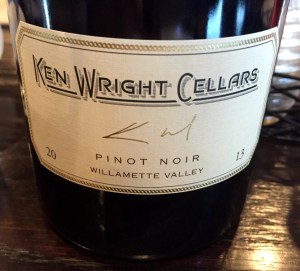 First, of course, was the wine. Don’t get me wrong – the restaurant also offers full bar with interesting cocktails, but my attention was on the wine list, which offers lots of great options, both by the glass (most of the wines priced in $7 – $12 range), and by the bottle (prices starting from $30 and some even for less). I couldn’t pass by the 2013 Ken Wright Pinot Noir Willamette Valley for $50 – talk about value – even if you can find this wine in retail, which is not easy, it will cost you at least $25, so I consider $50 at the restaurant to be a great value. After a bit of the breathing time, the wine was gorgeous, dense and powerful, with the signature Oregon aromatics of earth and cocoa.
Next, there was a pure indulgence from start to finish. Chowder (Local clams, new potatoes, applewood smoked bacon, cream) was not too heavy, not too thick, very well balanced in flavor.
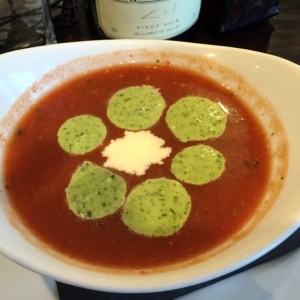
Watermelon Gazpacho (Sweet basil drizzle, whipped feta) was different and refreshing – outstanding on any hot day, light, and again, very tasty.
One of my favorite ways to cook chicken wings is to slow roast them at a low temperature (say 215ºF or so) – they develop great flavor and then easily fall off the bone this way. I was happy to find the same style chicken wings at the restaurant – Confit Chicken Wings (Choice of harissa, rhubarb BBQ, or sweet basil sauce – we chose BBQ sauce) were super-tasty and the chicken wings were literally melting in the mouth. Continuing to deliver a great dining pleasure was Poutine (House cut fries, cheddar curds, foie gravy) – love this interpretation of French fries. This rendition was on par with best of the best I had in Quebec – flavor, texture, cheese, gravy – everything was just spot on. Finishing our divine appetizer experience was perfectly executed Mac & Cheese (Gemelli, local cheeses, buttered crumbs) – again, very tasty.


Our main course dishes were equally delicious. Chicken Risotto (Asparagus, prosciutto, baby tomatoes, balsamic reduction) was very well executed, great smokey flavor, nice contrast of balsamic, very tasty. Half-Pound Burger (Caramelized onions, bacon, garlic aioli, tomato jam, brioche) had an excellent fresh beef flavor, was cooked as requested and overall was very enjoyable.


Cuban (Braised pork, ham, Gruyere, dijon aioli, house-made pickle, grilled french bread) was done exactly as I like it – good amount of meat, flat pressed bread, great combination of flavors – one of the best Cuban sandwich experiences. It was also served with a side of Wedge salad (one of the available choices), which is one of my favorite salads any time I see one. Grilled BBQ Chicken Pizza (Bacon, red onion, cheddar) was delicious, good crust and again, great flavor combination.


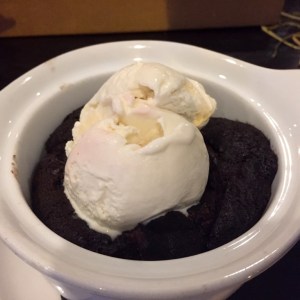
As you can imagine, we were absolutely full at this point. But considering how good all the food was, we had to try at least one dessert. After back and forth, we settled on Double Chocolate Cookie (Vanilla Ice Cream), which was more resembling a chocolate lava cake, and was instantly devoured with the help of four spoons.
 There you have it, my friends. If travel will take you to Cape Cod, make sure not to miss Portside Tavern – and then leave me a thank you note here. Cheers!
Portside Tavern
72 North Street
Hyannis, MA 02601
Ph: 508-534-9600
http://www.theportsidetavern.com
One On One With Winemaker: Michel Rolland
To anyone inside of the wine circles, the name “Michel Rolland” needs no introduction. If you enjoy an occasional glass of wine but don’t dig deep, very deep into what is behind the label, it will probably tell you nothing. Unlike Araujo, Bryant Family, Harlan, Staglin – right? All of these are the cult wines from California, revered, adored and drooled upon by many wine connoisseurs. Let’s not forget Tenuta dell’Ornellaia from Italy, Angélus and Ausone from St-Emilion and l’Evangile from Pomerol. In case you didn’t know, Michel Rolland, classically trained French winemaker, is behind these and hundreds (I’m not exaggerating – search for his name on Wikipedia) of other wines. He is a consulting winemaker, sometimes also referred to as “flying winemaker”, who made wine on all continents and all possible and impossible corners of the world.
When I got an invitation for lunch with Michel Rolland, who was visiting New York to introduce some of his newest wines, I was excited at first, and then bummed. The lunch was overlapping with the Jura wine tasting, which I was planning to attend for a very long time. So as a last resort, I asked if I can meet with Michel Rolland after the lunch so I can ask him a few questions. To my absolute delight, kind folks at Deutsch Family, a wine importer company hosting the event, managed to arrange the time for me right after the lunch to sit down and talk to Michel Rolland.
As you understand by now, unlike most of my virtual interviews in this “one on one” series, this was a real face to face conversation, with a real handshake and visible emotions. At first, I was thinking about recording our conversation. That probably would be okay, but I never did this before, and fighting with technology in front of the busy man who was doing me a favor didn’t feel right. So I did what I always do – I prepared my questions in advance. After a subway ride and a brisk walk, I arrived – on time – and shake hands with the legend. We sat at the table, three different glasses of red wine appeared on the table. And conversation started – here is what we were talking about, with the precision of my fingers hitting the screen of the trusted iPad:
Q1: You made wine all over the world. Is there one place or one wine which was your absolute favorite?
“No. I like the challenge, so every time I’m going to the new place, it is very exciting.”
Q2: What was your most difficult project and why?
“To make wine, we need soil, grapes, and weather. When the weather is not playing, it is very difficult. There were 2 places which were the most difficult. First one was India – everything is great except the climate. India has only 2 seasons – dry and wet. Another one was China – extreme climate, very difficult to make wines. In the project in China, years 1,2 and 3 had no frost, then in the year 4 we decided not to cover the vines, and half of the vineyard became dead.”
Q3: You are known to create big and bold style wines. At the same time, it seems that wines with restrained are more popular today. Did you make any changes to your winemaking style to yield to the popular demand?
“After 43 years in this job, it is good that I have style. So the style is what the market is asking – the wines are made to be sold, so we have to follow tendencies in the market. Even that not everything is changed at the same time, it is more of the evolution and adhering to the fashion. The wine to drink tonight is not the one to be stored for 10–15 years. So the wine have to be made more enjoyable younger, and this is what we do.”
Q4: Where there any projects which you rejected and if yes, why?
“Yes, of course, but it doesn’t happen very often. The biggest concern is the relationship with the team. Day to day in the cellar and field it is the team – if the relationship with the team is not good, I prefer to leave. For sure if nobody is happy, then it is better to leave. I never refused project because it is too challenging. In Chile, 25 years ago the variety called Sauvignonne had to be used, which was hard – and I didn’t refuse the project because it was challenging. So the relationship is the major part.”
Q5: Again, appealing to your worldwide expertise, what do you think is the hottest new wine region today, if there is one?
“We have to look back – we have new world and old world. France, Italy, Spain – being there before. Then came US, then South America. Chile, and Argentina is growing the fastest now. Then there is New Zealand and Australia. But I think the area around the Black Sea, which was historically there, is very promising. Now Turkey, Georgia, Armenia, Russia all started making really good wines and we will see great wines coming from there. I [actually] currently work in Turkey, Russia, Bulgaria.”
Q6: What are the most undervalued wine regions in the world today, if there are any left?
“One of the most difficult countries to make and produce wines is South Africa – great wines which sell well only in UK, but very difficult everywhere else.”
Q7: What do you think of natural wines, which are very often are very opposite in style to “big and bold”
“We can’t fight against natural wines, but all the wines are natural [laughing], minimal intervention. We have to slow down with all the chemicals, but the wines should be made to be good wines – a lot of “Bio” is done only for marketing, so if it is done smart, it is good. I have small estate Val de Flores in Argentina which is for 8 years is completely “bio”, so yes, I support that.”
Q8: What are the latest projects you are working on?
“The one in Tuscany (Maremma) running by the German family, they have a wonderful vineyard and wonderful winery, and now making very good wines.”
Q9: You are a role model and a teacher for many in the wine world. Who were your role models and teachers?
“When I began my job my mentor was Émile Peynaud. It was another era. When I began the oenology, we were not speaking about quality. The goal was to avoid problems. I discussed this a lot with Peynaud. Peynaud was convincing people to do better in the cellar, to have clean wines, to use better material. It was very difficult, but Peynaud was great dealing with the people, so I learned a lot from him, including the patience for dealing with people. I often said that my job is 80% psychology, and 20% oenology, this is what I learned from Peynaud.”
Q10: What are the new trends in the wine world? What wine consumers should expect to see and experience over the next few years?
“I think people like more and more approachable, and gentle wines – full bodied, but gentle. The big problem I see is that during the 90s, I did a lot of work where we dramatically improved quality. In the 2000s, we drunk best wines we could. What I don’t like now that everybody is going after cheaper and cheaper wines – we can still do good wines, but not better than in the previous years. In the end, the wine is a business, so I don’t want to see people reduce quality just to survive.”
 As you can imagine, Michel Rolland didn’t come to the New York to talk to me. He was promoting his latest project, the wines of André Lurton which he helped to create. André Lurton is the winemaker in Bordeaux whose family winemaking heritage goes back more than 200 years, and who is not only known as a winemaker but also was very instrumental in advancing Bordeaux wine industry, including creating of the new appellations.
Here is the story of how Michel Rolland started working with André Lurton (don’t you love wines with the story?):
“Lurton is one of the last projects. I had an interview on the radio, and the journalist asked me if I have any regrets. I said at 65 years old, I don’t have a lot of regrets. When making wines, you get to meet wonderful people from all over the world. So the regret is “why I never met this guy” – one of such people is André Tchelistcheff – I met his wife, but never met him. And then the journalist asked me “who else”. So I said in Bordeaux, there is André Lurton, who I never met and worked together.
3 hours after the interview I received a call from Andre Lurton who said: “come and meet me”. Now we are working together.
So what we are doing is looking after the future, what can we produce for the people. We have to make approachable wines – still with the ability to age, but more approachable. “
This was the end of my conversation with Michel Rolland. We spoke for about 45 minutes, and it was clear that Michel had to continue on with his day. But there were still three wines standing in front of me, so I had to go through the speed tasting and only capture general impressions, there was no time for detailed notes. Here are my brief notes:
2012 Château Bonnet Réserve Rouge Bordeaux ($14.99, Merlot/Cabernet Sauvignon blend) – beautiful tobacco nose, fresh fruit, soft, round – clearly Bordeaux on the palate, green notes, restrained. Green notes do get in the way, though.
2012 Château de Rochemorin Rouge Pessac-Léognan ($33.99, Cabernet Sauvignon/Merlot blend) – beautiful, classic Bordeaux, great finish, some presence of the green notes
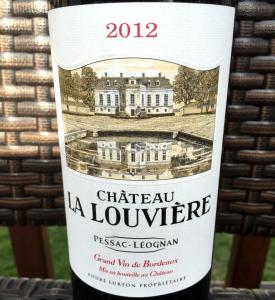
2012 Château La Louviére Rouge Pessac-Léognan ($74.99, Cabernet Sauvignon/Merlot/Petite Verdot), new oak, open fruit on the nose, lots of complexity, very beautiful, layers, delicious finish. Overall delicious wine, my favorite of the tasting. This wine was polished and concentrated, and I would love to drink it every day.
What is interesting for me here (besides the clear proof that I’m a wine snob who prefers expensive wines) is that there is a clear progression of taste and pleasure in this three wines – the price was increasing accordingly, and this is how things are quite often in the wine world.
After an encounter like this one, and the pleasure of talking with the legend, if blogging would be my job, I would gladly proclaim “I love my job”. But even without it, I still would proudly say that I love blogging as it makes possible conversations like this one, which is priceless for any oenophile. Cheers!
Last Bottle Sign Up ($10 credit)





