Archive
Open That Bottle Night 2017 – What A Night!
Let’s say you have a bottle of an excellent wine. Do you know how to make it better than it is? I guarantee you this works every time, so listen carefully. You share it with a friend. Yes, that makes any excellent wine into an amazing one. Works like a charm.
Saturday, February 25th was Open That Bottle Night (OTBN for short) – the night when there is no bottle in your cellar which is off limits. If you are not familiar with OTBN, you can read more here. What made my OTBN twice as special was the visit by Oliver and his wife Nina.
For me, the decisions around wine are never easy. I typically buy wine in the single bottle quantities (okay, maybe four at the most, when I need to get a free shipping from WTSO) – thus any bottle can qualify as a special one. As an exception to my long and almost painful decision process, for this OTBN I had a very clear idea – 1982 Olga Raffault Chinon, of which I had a single bottle. The bottle out of the wine fridge and ready for the prime time.
This is what I was looking at after cutting the top foil:
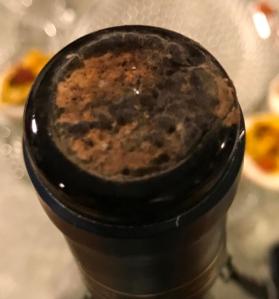 As you can tell, this is not very encouraging. However, if you like older wines and get an opportunity to open them, you know that the state of the top of the cork is nothing to fret about. More often than not, behind most terrible looking mildew there is a delicious wine.
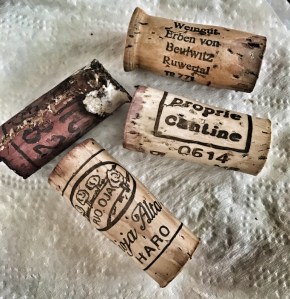
As this was 35 years old wine, I didn’t want to take any chances and used the two-prong opener to pull the cork out. This turned out to be an unnecessary precaution – while cork looked red throughout, it was perfectly firm and came out as a single piece without any crumbling – here is our OTBN corks collection, the red one is the one I’m talking about:
 And for the wine… what can I tell you… This 1982 Olga Raffault “Les Picasses” Chinon, Loire looked perfectly fresh in the glass – not a sign of losing color. Here are the two glasses, one is with 1982 Cabernet Franc, the second one is with 2014 – care to guess which glass contains 1982?
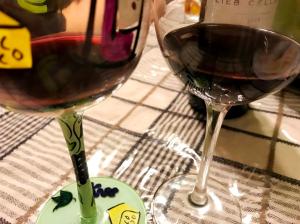 Yes, the one on the left is with 1982 wine, but I believe you would agree that the color shows perfectly young. The nose and the palate were an incredible study in Cabernet Franc flavor profile 101. The wine opened full of bell pepper – both on the nose and the palate. In about 10 minutes, the bell pepper was gone – and what was left was pure, unadulterated black currant – stunning, full flavorful black currant, also known as cassis if we want to use traditional French terminology. The wine had perfect structure, firm, with fresh acidity, almost crisp – and loads and loads of black currant. This was truly a treat.


We followed with a beautiful rendition of Ruchè – 2012 Poggio Ridente Ruchè di Castagnole Monferrato DOCG San Marziano (organic grapes). Ruchè is a little known red grape, cultivated in the Monferrato region in Piedmont, capable of making very concentrated wines. This particular bottle, brought by Oliver and Nina directly from Italy, was fresh and open, with nicely restrained palate with mostly herbal flavors, and a twist – dried mango undertones. Nina was the one to identify the dried mango, while I was desperately trying to figure out what that strange flavor was – but that was a spot-on descriptor. An outstanding wine by all means.
Our next wine was 1989 Kaseler Nies’chen Riesling Auslese Mosel-Saar-Ruwer. No issues with the cork (makes me happy). Still fresh, clean light golden color (28-years old wine!). The nose and the palate were singing in unison here, and the music was simple – peaches and apricots. Slightly underripe peaches and fresh, plump apricots. The balance of sweetness and acidity was impeccable – the wine was fresh and alive, without any sign of age. Wow.
As an added bonus, the grapes for this wine were harvested in November of 1989 – the year and a month when Berlin Wall was demolished – and this is what the label of this wine commemorates.


Our OTBN night didn’t finish there. You would expect us to go to something nice and sweets after such a beautiful Riesling, right? In the conversation, it came out that Oliver doesn’t like Tempranillo wines. Being a Spanish wine buff, I had to fix that immediately, so I had to pull out the big guns. 2001 La Rioja Alta Viña Ardanza Rioja Reserva Especial was absolutely beautiful from the get-go – cedar box and eucalyptus on the nose, soft and gentle cherries on the palate, fresh, round. I hope I made Oliver a convert – but will see about that the next time we will meet.
There you are, my friends. A stunning OTBN with great wines and great company. Hope you enjoyed your OTBN as much as we did – feel free to share your OTBN stories below. Cheers!
Stories of Passion and Pinot: Looking Back and Looking Forward
Back during the fall of the last year, I ran a series of posts talking about passion and Pinot Noir. Pinot Noir is a finicky grape which, I can only guess, has some enchanting properties – for the winemakers and wine lovers alike. Pinot Noir has an ability to grab you and never let you go – once discovered, it becomes an object of obsessive desire: winemakers go out of their way to make the best Pinot Noir wine, and oenophiles go out of their way to find it.
To give you the best examples of Pinot Noir’s passion and obsession, I decided to [virtually] sat down with a pioneer, a rocket scientist, a soil fanatic, biodynamic believer and some true farmers – all of them from Oregon. Through our conversations, I wanted to convey the unwavering belief in the magic of that little black grape, Pinot Noir.
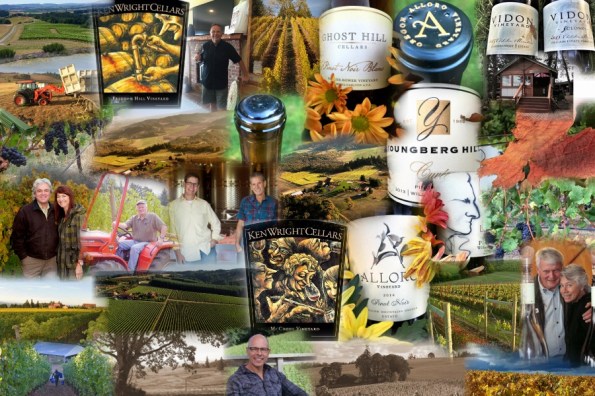
We talked with Ken Wright of Ken Wright Cellars, David Nemarnik of Alloro Vineyard, Mike Bayliss of Ghost Hill Cellars, Wayne Bailey of Youngberg Hill Vineyards, Steve Lutz of Lenné Estate and Don Hagge of Vidon Vineyard – the passion was easy to see, through their words and through their wines.
The essential Pinot Noir map includes four major players – Burgundy, California, New Zealand and Oregon. Out of these four, Oregon usually beats Burgundy in consistency, and often California and New Zealand in finesse. That consistency and finesse don’t go unnoticed – and not only by wine consumers but by the big domestic and international wine businesses and investors as well. Big businesses are great, but – they are, first and foremost, big businesses – and passion is often replaced just by pragmatic business needs and shareholders value.
The wine quality and creativity is on the upswing around the world, and while consumers are driving this trend with an ever increasing thirst for the wine, nothing can be taken for granted – the wines have to find the consumers, and convince them that they are worth paying for.
The big business interest and more and better wines – what does it mean for the Oregon wine industry, the passion and the Pinot Noir? To answer this question, I asked once again for the help of Carl Giavanti of Carl Giavanti Consulting, wine marketing and PR firm, who reached out to the Willamette Valley Wineries Association. As you can imagine, I had more than one question, so here I would like to share with you what I have learned.
First three questions were answered by Anthony King, 2017 President of WVWA Board of Directors and General Manager of the Carlton Winemaker’s Studio:
[TaV]: Willamette Valley squarely joined the ranks of world-class wine regions. Does it mean that everything is great, or you still have big issues to solve on your agenda?
[AK]: Willamette Valley is certainly on the rise and we are all thankful for the attention. Our biggest issue is to continue to share the spotlight with the other classic regions of the world without losing our roots, our authenticity, and collaborative spirit.
[TaV]: It seems that lately big corporations are paying lots of attention for the WV wineries – or rather money, as for example, Jackson Family which acquired 3 WV wineries over a short period of time. Are you concerned with this development? Do you think it might change the soul and spirit of WV wines?
[AK]: Most of us are flattered by the attention that our wines, vineyards, and wineries have been getting from producers all over the world. JFW, in specific, has invested heavily, but have done so with a soft touch and an eye towards the community and their neighbours. In the end, the region will have diversity that consumers will ultimately benefit by. Our hope, however, is that this interest doesn’t drive vineyard and fruit prices into a range that makes the hands-on artisan winemaking that has made Oregon so special too expensive for entry.
[TaV]: There are many white grapes which can be called “next frontier” for the WV wineries – Pinot Gris (yes, okay, this is an old news), Chardonnay, even Riesling. However, if we look at the red grapes, WV wineries are a “one trick pony”, only working with Pinot Noir. Do you see any problems with that? is there a next big red grape for the WV, or is it not necessary?
[AK]: Great question. I don’t think that any of us, as winemakers, regret that we are working with Pinot noir in such an ideal locale. It presents a lifetime of challenges and, hopefully, rewards. Although much more rare, Gamay can be thrilling and has been successful planted alongside Pinot noir. Syrah, too, has a lot of potential, making compelling, Northern Rhone style reds in warmer years. Cooler-climate Italian reds could have potential as well. We’ve already seen an increase in planting of these “other reds,” but the more dramatic shift is (as you mentioned) towards focusing on whites and sparkling wine, which are very well suited to this climate. Ultimately, I foresee increased experimentation with a range of red varieties in the warmer sites in the Willamette Valley in the short-term; time and the weather will tell what succeeds.
The rest of the questions were answered by Emily Nelson, Associate Director for Willamette Valley Wineries Association.
[TaV]: What percentage of WV wineries are LIVE certified? Do you see this number dropping, increasing, staying the same?
[EN]: In 2016, there are 13,170 Oregon vineyard acres certified sustainable, which is 48% of total planted acres in the state. 8,218 acres are LIVE Certified, which is 30% of total planted acres. We do see the number of certified sustainable vineyard acres increasing year after year. As the home of the nation’s most protective land use policies, the first bottle recycling law, and the highest minimum wages for farm workers, it’s fitting that the Oregon wine industry is committed to sustainable farming and winemaking practices.
For LIVE Certified acres in particular, the number has increased annually from 2,368 acres in 2007 to 8,218 acres today.
[TaV]: How important is Biodynamic viticulture for the WV wine industry? Do you see more wineries embracing it?
[EN]: Biodynamic viticulture in Oregon has also steadily increased over the years, from 289 certified acres in 2007 to 1,585 certified acres today. It is an important component of our sustainable character in the region, reinforcing our belief that agriculture in general and viticulture in particular can flourish in harmony with our natural environment. In general, Demeter Biodynamic certification is in accord with many practices that characterize the certification of organic farms. However, certain practices are unique to Biodynamic agriculture, including managing the whole farm as a living organism; maintenance of a healthy, diverse ecosystem that includes not only the earth, but as well the cosmic influences and rhythms of which the earth is a part; and use of the Biodynamic preparations to build soil health through enlivened compost.
[TaV]: Are there any new wineries showing up in the WV? If yes, is there a trend there (more than the last 5/10 years, less than the last 5/10 years, the same?
[EN]: Yes! Our number of wineries in the region has climbed over the last five to ten years. We had about 110 wineries in the Willamette Valley in the year 2000. By 2010 that had more than doubled to 300 wineries. And now in 2016 our most recent census shows 531 wineries in the region. People are drawn to grape growing and winemaking here for many of the same reasons that brought our pioneers in the 1960s—unique climate and soils ideally suited to Pinot noir and a wine industry culture that celebrates collaboration, inventiveness, and land stewardship.
[TaV]: Do you see a lot of foreign capital coming into the WV winemaking industry (buying, partnering, starting new wineries)? Again, is there a trend?
[EN]: There is a trend of outside investment in the Willamette Valley wine industry, and it speaks to the quality of the wines being produced here. We see Burgundian investors who’ve found the New World home of Pinot noir, as well as those from Washington and California who are expanding their premium Pinot noir brands with Willamette Valley wines.
[TaV]: Last question – are there any new and coming, or may be old but coming around wineries wine lovers should watch for? Anything which makes you particularly excited?
[EN]: We’re particularly excited about a few things here: first, many of our pioneering wineries are handing the reigns down to second generation winegrowers and owners. The children who grew up in the vineyards and cellars of the wineries who put our region on the map are now at the helm. They continue to innovate and improve, so watching their brands and their wines flourish and evolve is a thrill. Second, we’re excited about the Burgundian presence in the Valley. French winemakers who come here to experience the Oregonian version of their time-honored grape offer unique expressions of the wines and outside confirmation that there’s something really special happening here. Lastly, we’re excited about new winemakers just entering the industry, who contribute a vibrant sense of experimentation and energy to the Valley.
All the good things come to an end, so this was the last of the conversations in the Passion and Pinot series – for now, at least. As I said before, Pinot Noir has some very special properties, making people fall in love with it and not letting them go. And whether you agree or disagree – you know what to do. Until the next time – cheers!
P.S. Once again, here are the links to the web sites for the wineries profiled in this series:
Alloro Vineyard: www.allorovineyard.com
Ghost Hill Cellars: www.ghosthillcellars.com
Ken Wright Cellars: www.kenwrightcellars.com
Lenné Estate: www.lenneestate.com
Youngberg Hill Vineyards: www.youngberghill.com
Vidon Vineyard: www.vidonvineyard.com
Coffee and Wine – Ultimate Twins?
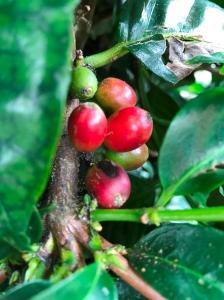 I know that many of the wine lovers live by the principal “coffee in the morning, wine in the evening”. The sad part is that for many, coffee is just a source of the jolt, the charge for the day, so it is expected to be strong and bitter, to deliver that “wake up punch”. But it is not what the coffee should be – while coffee bean has no genetic relationship with the grape, spiritually, it offers the same qualities: it can be as nuanced as wine, and should be consumed for pleasure – I’m also assuming here that this is why one drinks wine, looking for pleasure.
Before I will make an effort to prove to you my “twin” statement, I want to mention first that this post is also an answer to the last Weekly [Wine] Quiz #122. The object in the picture is coffee – these are so-called coffee cherries, and the coffee beans are inside of those cherries. Red coffee cherries are the ripe ones, and once they reach that color, they will be picked – but more about it later. For now, I’m happy to say that we had a number of winners – Kirsten (The Armchair Sommelier), Bill (Duff’s Wines), Anthony (Oz’s Travels) and Danielle (Naggiar Vineyards) all correctly identified coffee cherries in that picture – congratulations to the winners, you all get the prize of unlimited bragging rights!
The reason coffee came to the forefront on the wine blog, is simple. Well, it is more than one. First of all, I love coffee. Growing up, I was spoiled – not with the best coffee beans necessarily, but rather with one of the very best preparation methods for the coffee – so called Turkish coffee, where the coffee is made without letting the liquid to boil. Second, I just came back after spending the week on Hawaii’s Big Island, a home to one of the very best coffees in the world – Kona coffee. See, I simply had to talk about the coffee.
So what is going on in the coffee world today that it starts resembling the wine world so much? You be the judge:
Terroir and Origin Protection.
There is a growing understanding that similar to wine grapes, it matters where the coffee beans are growing. Hawaiian Kona region is a 26 miles stretch of land along the coast of Pacific Ocean, with the elevations from 800 to 3000 feet above sea level. All Kona coffee can be harvested only within that stretch of the land – any addition of the coffee beans from outside of the designated borders will render the whole batch of coffee not eligible for “100% Kona Coffee” label. Jamaican Blue Mountain designation has similar protection, as I’m sure many other places around the world. 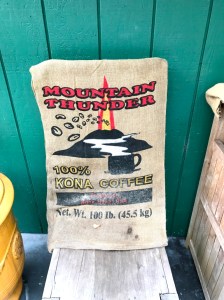
Ancient trees.
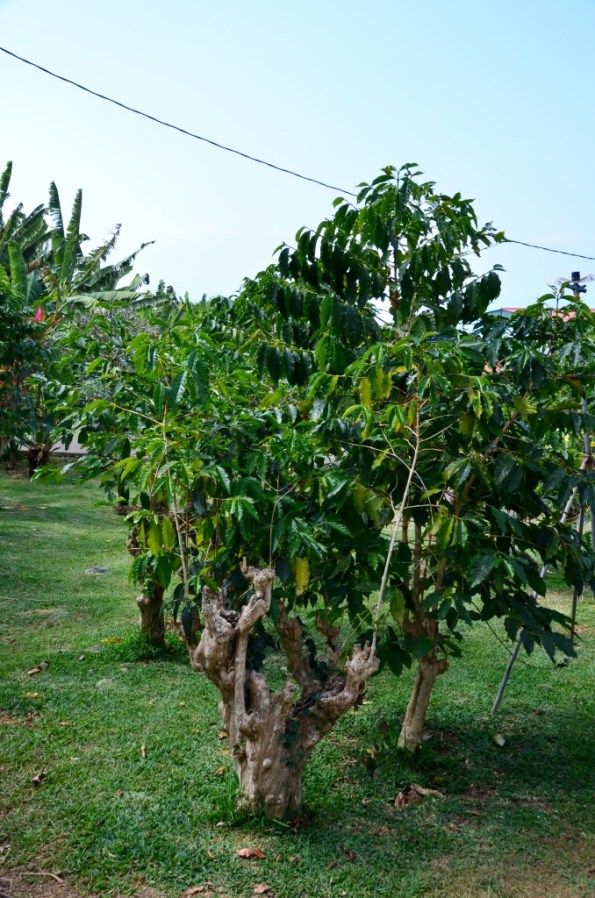
In winemaking, “old vines” refers to the vines which can reach the age of 100+ and still produce delicious grapes. With proper care, coffee trees can do the same – the ones you see below are more than 110 years old (planted in 1900), and they are expected to produce good fruit for at least another 20 years:
Vintage designations, aging and blending.
An absolute majority of the wines specify their vintage on the bottle, the year when the grapes were harvested, and we all know – vintages matter, not all vintages are created equal, by the powerful hand of Mother Nature. I never heard of vintages in conjunction with the coffee – until now. If any of you are Nespresso fans, there is a good chance you recently received an email, offering Nespresso’s 2014 vintage (!) – here you can find the description of that coffee. I will take a liberty to quote a few lines from the description:
“Nespresso experts selected promising fresh Arabica beans from the lush Colombian Highlands and stored them under certain controlled conditions to create a whole new sensory experience” – aged for 3 years.
“Nespresso experts selected a more sophisticated split roasting technique. One part of the beans was roasted lighter to protect the specific elegant aromas of these precious coffee, and the other part was roasted darker to reveal the maturity of the taste and enhance the richness of the texture” – blending!
Harvesting by hand.
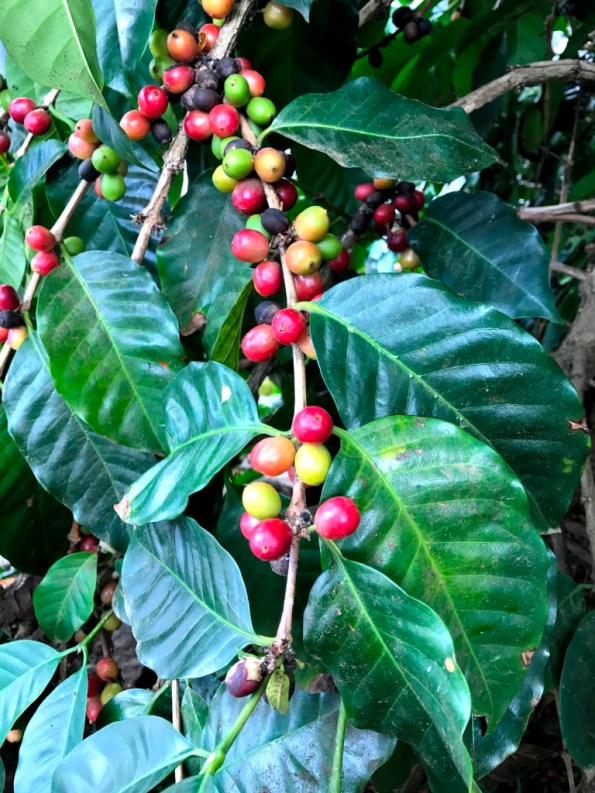
Kona coffee is always harvested by hand. The major difference here, of course, that during the coffee’s growing season, which is typically July through February, the coffee is harvested 4-5 times, were in most cases grapes are harvested only once. Nevertheless, the Kona coffee is harvested by hand, picking only red ripe coffee cherries and leaving greens to continue ripening in the cluster.
 I hope you see my point about similarities between coffee and wine, and I think coffee producers are only starting following the steps of the winemakers – for instance, I’m sure we will see more single cru designations for the coffee, more blending and more aging. While production process of coffee and wine are very different, the similarities conjugate again in a major way once the final products reach the consumers. Both coffee and wine deliver pleasure. And it is all in the taste – the nuanced, seductive goodness, which delivers excitement to the taste buds and challenges the brain.
What is uniquely different between coffee and wine is what happening with each product in the “last mile”. The “last mile” literally non-existent in the world of wine – once the wine lands in the hands of the consumer, it is necessary only to open the bottle and enjoy. Yes, the consumer still can affect the taste – try rich California Cabernet served ice-cold – you will see what I’m talking about – but still, the consumer actions are minimally impactful around the wine.
With the coffee, it is a totally different story – even if properly roasted, the coffee still has to be prepared by the consumer, and opportunities to totally destroy the taste are boundless. But – this probably deserves its own post (or two).
That’s all I wanted to share with you for now. Are you a coffee drinker? Do you drink it only for the jolt, or do you actually seek pleasure in that cup? Cheers!
Top Twelve of 2016
 And now, the moment you’ve been waiting for … cue in the drum roll… Talk-a-Vino Top 12 wines of 2016. Well, okay. I’m sure you were not really waiting for this moment, but nevertheless, I made up my mind about best of the best wines I experienced this year, and now I’m ready to present you with my list.
The list of top wines of 2016 consists of 2 dozens of wines – here you can find the first half of this list, containing the wines from 13 to 24 – note, the order is not essential, it doesn’t mean that I liked wine #13 more than wine #14. That first post also explains how the wines are selected for this Top Dozen list. In this post, I would like to share the top wines of 2016 (the order is not essential with the exception of the top 3 wines.
Here we go:


12. 2010 Fields Family Wines Tempranillo Lodi ($25) – I’m a Tempranillo buff, a snob, if you will, and this was one of the very first wines I tasted while attending the welcome reception at the Wine Bloggers Conference in Lodi. And I have to honestly say that table of the Fields wines was the closest to the food. Once I had a sip of this Tempranillo, everything changed – Ribera del Duero style, fresh and firm, just outstanding.
11. 2012 Viña Maipo Syrah Limited Edition DO Buin Valle del Maipo ($35) – Here is another great discovery of 2016 – Chile is not only the land of Cabernet, it makes perfect Syrah. This wine was spicy, dark, vibrant but restrained, a classic, classic Syrah. Yum!
10. 2013 McCay Cellars Grenache Abba Vineyard Lodi ($32) – Here is another standout from Lodi – the smoke and roasted meat over the violets. A “dangerous wine”.
9. 2013 Tenuta San Guido Sassicaia Bolgheri Sassicaia ($200) – ahh, the layers. The layers of goodness. Silky smooth, mouth-coating nectar. This is not called “Super” Tuscan for nothing. The most amazing part – this 3 years old wine was ready to drink. Wow.


8. 2013 Viña Maipo Protegido Cabernet Sauvignon Valle del Maipo ($50) – World-class Chilean Cabernet at its best. Fruit, herbs, balance. Smooth, powerful and delicious.
7. 2016 Field Recordings Pét Nat Arroyo Grande Valley ($20?) – I might be just lucky around Field Recordings wines, as I understand that Pét Nat wines can be all over the place – but this wine had a perfect finesse of bubbles in a very simplistic package – a bottle topped with a beer cap, and delicious, classic sparkling goodness of Chardonnay in a glass. A perfection.
6. 2012 Tenuta dell’Ornellaia Bolgheri Superiore Ornellaia ($210) – I now learned my ways at Gambero Rosso, so I know to start from the most “cult” wines first (after missing on Massetto 5 years ago). The Ornellaia was definitely a personal surprise – didn’t expect 4 years old Super Tuscan to be so ready to drink – but it was. Generous fruit, perfect structure, layers of pleasure – this is the wine you finish with “ahh”.


5. 2001 The Lucas Winery Chardonnay Lodi California ($37?) – there are 4 wines from Lodi among the 24, and I had to hold myself from including more. An absolute surprise of the tasting – I couldn’t expect 15 years old California Chardonnay to taste this fresh and vibrant. Yes, the wine was made by Heather Lucas, an owner/winemaker, in Burgundian style – nevertheless, I’ve seen way too many failed California Chardonnay to truly appreciate what was done here.
4. 2005 Domaine des Monts Luisants Les Genavriéres Morey-Saint-Denis Premier Cru ($50) – I.want.to.drink.this.wine.every.day. That’s it.
3. 2015 Vidon Vineyard Chardonnay Estate Chehalem Mountains, Oregon ($35) – Oregon’s supremacy is unquestionable when it comes to Pinot Noir. Pinot Gris from Oregon are also a safe bet anywhere you find them. But Chardonnay? Considering this wine from Vidon Vineyard, the Chardonnay is also a thing in Oregon. Bright, beautiful, vanilla laced golden delicious apples chased by the pure lemon. I wish your white Burgundy would be as good as this wine.
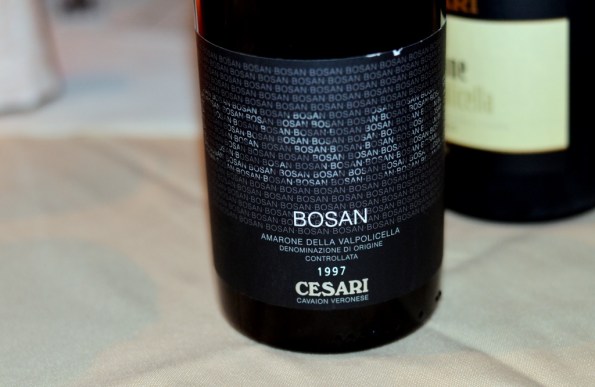
2. 1997 Cesari Bosan Amarone Della Valpolicella DOC, Italy ($85) – Amarone might be my “curse of oenophile”. Ever since trying this wine for the first time and been blow away with the contrast of beautiful nose of dry fruit and perfectly dry, powerful and balanced palate, I had been on the quest to repeat that experience. And I keep failing and failing over that, with Masi single vineyard wines providing an occasional salvation. This Cesari Bosan single vineyard Amarone brought that old memory back – dry fruit on the nose and polished, structured wine on the palate. A pure delight.
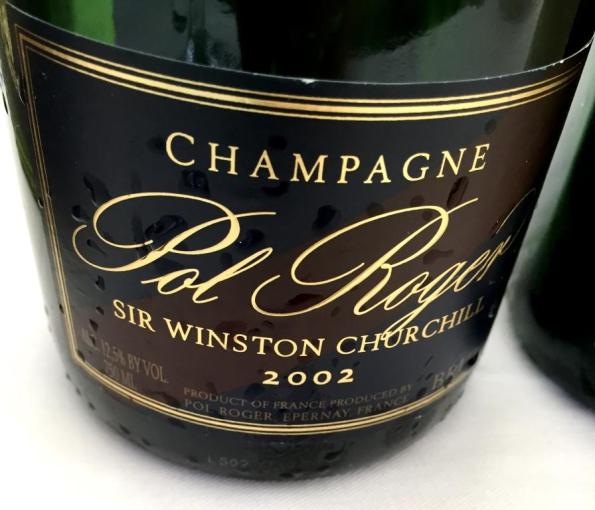
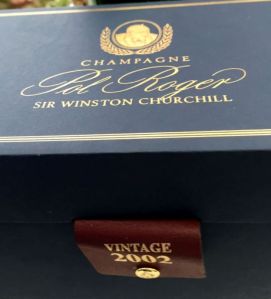
1. 2002 Pol Roger Sir Winston Churchill Champagne ($230) – definitely surprised myself with this choice of the wine #1 of 2016. I had vintage Champagne from the very solid producers before – Krug, Piper-Heidsieck, Dom Perignon, Roederer Cristal; in the same tasting there was ’02 Bollinger RD and ’06 Roederer L’Ermitage, both superb. But this Winston Churchill Champagne… The interplay on the nose, the complexity and richness were stunning. Before you take a sip, you have to smell this wine. And smell. And smell. Reflect. And smell again. Wow. Too emotional? Might be. Find the bottle of this wine, invite me over, let’s smell it together, then talk.
This is it, my friends. Two dozens of most memorable wines of 2016. Can’t wait to see what 2017 will bring. Cheers!
Top Wines of 2016 – Second Dozen
Here we are again – another year is about to become a history, which means it is time for one of my favorite wine aficionado exercises – reliving the best wine moments of the year to create the list of Top Dozen wines of 2016.
Ever since this blog started back in 2010, Top Dozen list was always a feature – here are the links for 2010, 2011, 2012, 2013, 2014, and 2015. Many years I couldn’t even limit myself to one dozen, thus some of the years had two dozens of top wines. It seems that 2016 is one of those years – so I’m really trying hard to stay within that two cases limit (how many of you were successful with limiting yourself at the wine store, raise your hands, please), will see where I will end up.
The way these Top Dozen lists are built is simple. These are the most memorable wines I had throughout the year. As I was preparing for this post, I looked at some of the wines in the past Top Dozen posts and had an immediate “ahh, I remember that…” emotions. Wine creates emotional connections, wine creates and enhances memories – this is what makes the wines “top list”-worthy.
I always try to present the wines randomly – and I’m reasonably successful, with the exception of the wine #1 – that wine is always the most memorable wine of the entire year, and sometimes that internal deliberation takes a while to complete.
I wrote about some of these wines during the year – some, but not all. If there is already a post about the wine in this Top list, the link to such post will be included. I also include the pricing information where available, but not any of the technical details of the wines or my ratings – the idea is to focus on what made those wines memorable.
Without further ado, here we go:


24. 2013 Domaine de la Vallée du Bras OMERTO Vin Apéritif de Tomate Moelleux Québec ($20) – the tomato wine? Yes, please, any time! This was a delicious treat which nobody could believe can be made out of tomatoes. As you can see , this wine has the vintage designation, so it would be fun to taste a flight and try to pickup the differences. In any case, the wine is reminiscent of a nice Riesling or a Muscat, slightly off-dry style. Try it for yourself!
23. 2012 Kaiken Ultra Malbec Uco Valley, Argentina ($25) – sexy is the word. Layered, seductive, silky smooth. Not sure will get you laid, but worth a try!
22. NV Champagne Emile Leclère Cuvèe Du Bicentenaire ($26) – growers champagne at that price? Thank you WTSO! Toasty, rich, voluptuous – lots of delicious Champagne pleasure in every sip.
21. 2016 Field Recordings Nouveau California ($20?) – It is a rare treat to drink the wine that young and that delicious. Outside of the name, there is nothing really “Nouveau” about this wine – it has enough restrain, but still delivers plenty of succulent, balanced fruit with classic California Pinot Noir flair. Would love to get more of this wine, but I think it was a rare treat for the club members – thank you, Andrew Jones.

20. 2011 Masciarelli Marina Cvetić Montepulciano d’Abruzzo Riserva ($28) – “rich and opulent” – describes this wine completely. Dense, smooth, texturally present – drinking this wine is truly a decadent experience.
19. 2014 Maeli Fior d’Arancio DOCG Sweet ($27) – this was a perfect starter to the memorable lunch with Gianluca Bisol. While sweet, the wine was effervescent, elusive and seductive. It would be equally perfect at the end of the meal – albeit if you will be able to find it.
18. 1998 Mauritson Zinfandel Dry Creek Valley California ($31) – love surprises! This was clearly an odd bottle in a tiny liquor shop in Florida, I’m sure forgotten there by some accident. The wine, however, was spectacular – lots of mature fruit, enough freshness and acidity, an abundant pleasure in every sip. Yum!
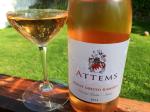
17. 2014 Attems Pinot Grigio Ramato Venezia Giulia IGT ($18) – it is hard to believe the conversion of somewhat pedestrian Pinot Grigio left in the contact with the skin for 24 hours – onion peel, sapidity, intrigue – definitely the next level of enjoyment.


16. 2013 Borra Vineyards Heritage Field Blend Lodi ($25) – if you love smoke and tar in the wine as much as I do, this is your wine. Spectacular depth, tobacco, tar, dark fruit – this is how delicious power tastes like. I’m so glad about my discovery of the Lodi wines in 2016 – this wine is a great example of what Lodi is capable of.
15. 2015 Henri Cruchon Nihilo La Côte AOC Switzerland (25,00 CHF) – ahh, fresh crunchy fruit, live, succulent, delicious – organic, biodynamic, pure – the wine I would be happy to drink every day.
14. 2013 Carlisle Grüner Veltliner Steiner Vineyard Sonoma Mountain ($30) – if you want summer in the glass, this wine might be it. Perfect balance of fresh fruit and grass, sprinkled with lemon zest. Refreshing and delicious.
13. 1998 Patrick Lesec Gevrey-Chambertin Vieilles Vignes ($NA) – the barnyard hint on the nose is often polarizing for the oenophiles, but I’m squarely in the “love it!” camp. Add to that touch of barnyard smoke and ripe plums, and you will get a delicious, mature adult beverage. Judging by the wine like this, I need to drink Burgundy way more often (I wish I could).
This was not easy, but we are done for now. Cheers!
To be continued…
Restaurant Files: Room 112 in Norwalk, CT – Experiencing The Art Of The Cocktail
 I’m very comfortable around alcohol. In the times of utmost political correctness this statement might be taken wrong in so many ways, but yes, I would still say it. Wine, beer, whiskey, tequila and everything in between – I’m not an expert, but I know my way around different types of alcohol in all of its forms. With one exception – cocktails. I have to openly and honestly admit that I’m intimidated by the cocktails.
While I was growing up, even at the age when I could legally drink, a bar and a cocktail where only a theoretical concept for me, something I learned from the books, and from the books alone. It continued that way even after I came to the States. It is quite possible that my first cocktail drink was during my first vacation in Cancun, as it was very simple there – Mojito was one and only name you needed to know.
When I sit at the bar, I’m at loss. Too many ingredients I can’t relate to, the need to measure, numerous failed attempts to make something tasty at home, despite religiously following the recipe. In most cases, the service starts with “What can I get you”, for which I don’t have a ready answer, and usually the menu wouldn’t help. So I end up with the sheepish “something not too sweet, please?”
Of course, the situation is not as dramatic lately, as a majority of the restaurants now offer concise, easy to choose from and often unique selection of the cocktails, which I’m gladly taking advantage of. Still, sitting at the bar is not something I would readily go for.
And then, there is Room 112 in Norwalk, Connecticut, which is The Bar. I remember in many books coming across the word “saloon”, which now seems to be used interchangeably with the “bar”. In the original meaning, saloon seems to be a “large room with the bar”, so this is what the Room 112 is – a large, creatively appointed room with the bar. Actually, it is two rooms with two bars – as few steps down the stairs will lead you to the game room, with another bar. Maybe we should just call it The Lounge.
What you will see below is few of my notes and mostly a collection of the pictures; I hope they will convey the magic of Room 112 at least to a some degree:


I visited Room 112 with the group of bloggers, so I was happy to sit at the bar to get the best view in the house:


The cocktails at the Room 112 are not just made – they are crafted. Thoughtfully selected drinking vessels, the presentation, the meticulous measurement and execution – sitting there at the bar at the Room 112, you are looking at the work of not just a barmen, but an Artist.
Here is Moët Impérial Champagne to start the evening – just look at that glass:


Look at all the “tools of the trade”:


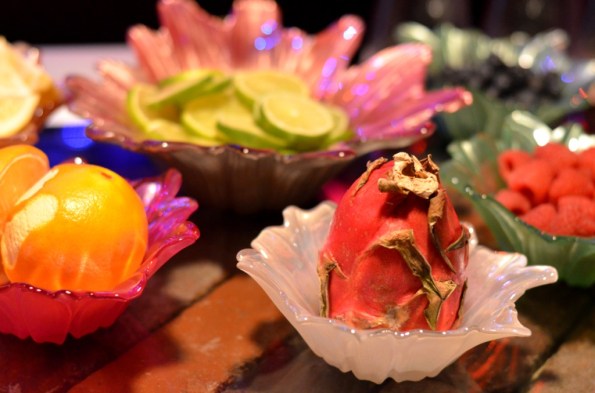
And here are the cocktails in the making – I should’ve recorded the video, only I didn’t:


Here is the final product – cocktail called Casa De Amor (casa amigo tequila, pavan liqueur, fresh lime juice, orange blossom bitters, dragon fruit, pink peppercorns, fresh rosemary sprig):
 Here are few of the cocktails which I tried. The Pinacita (absolute elyx vodka, koval chrysanthemum & honey liqueur, st elder liqueur, fresh lime juice, serrano peppers, grilled pineapple, pink peppercorns and a campari foam) was not too sweet, nicely balanced (no, this is not an individual glass – it was served for the whole our group to try):
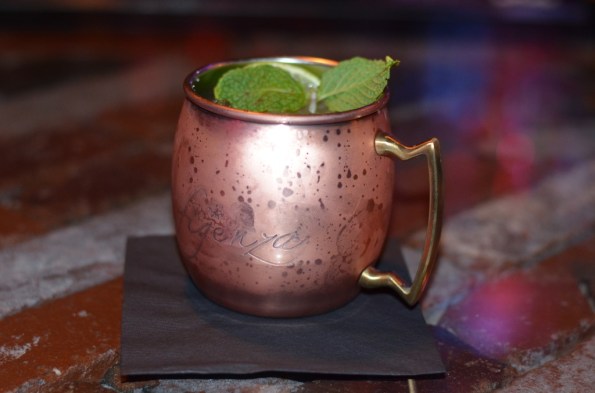
 My absolute favorites were two cocktails. First, Magic Mule (magic moments lemongrass infused vodka, koval ginger liqueur, fresh lime juice, topped with club soda, ginger root, lime, and mint), which was truly magic. I don’t know what was so special about this cocktail, but it was super-delicious – soft and gentle, but with rich flavor profile, soft notes of fresh ginger with herbs – I simply couldn’t get enough of it, most delicious Mule I ever had, pure magic:
 The second standout cocktail was El Nino (Mexican Hot Toddy – azeteca de oro liqueur, koval honey liqueur, fresh lime juice, hot water, dried cranberries and a lemon and orange twist garnish) – it was served warm, in the beautiful sniffer glass, and I would just smell it forever – so much flavor was exuding from this glass, lemon, orange, wow. This is an ultimate cocktail for the cold winter day – grab the glass with two hands, and feel like warmth spreads all over your body:


Room 112 offer food with the help of the farm to table catering company called Harbor Harvest. We didn’t have an opportunity to explore much of the range of the food offerings – only had some antipasti, but they were fresh and tasty:


Here is the peek at the room downstairs:


For the desert I had … yet another drink. I’m sure I mentioned in the prior posts how much I love good Mezcal (close relative of Tequila, but usually a lot smokier). Room 112 offers great selection of Mezcal (and tequila), so I was given an option to try one of my favorites – Del Maguey Mezcal and went with the Del Maguey Vida Mezcal – beautiful smoke over characteristic agave notes with herbal accents. Perfect desert in my book, for sure.


That’s all, my friends – here is your [mostly photo] report on my experience of the Art of the Cocktail. If you are local, or maybe visiting for the holidays – Room 112 should be on your short list.
What was your latest encounter with creative cocktails? Let me know. Cheers!
Room 112
112 Washington St
South Norwalk, CT, 06854
Ph: 203.939.1347
http://room112sono.com/
Chilean Wines at Its Best – World-Class Wines of Viña Maipo
Two weeks ago, I shared with you a conversation with Max Weinlaub, the winemaker for the Viña Maipo winery in Chile. While our Q&A session was mostly virtual, the Viña Maipo wines were not – I had an opportunity to taste 6 wines presented by Max during the session in New York. And I can sum up my impressions about Viña Maipo wines in one simple word – delicious.


I have to honestly admit that even opening of the box was pleasant – I love it when the bottles are wrapped, it gives an oenophile an additional moment of play, an additional source of enjoyment.
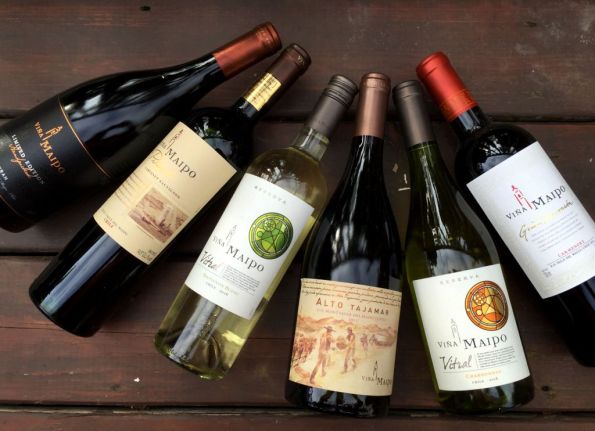 Of course, the nice wrapping is better be supported by the substance in the bottle – and it was, loud and clear, as you will see from my tasting notes.
By the way, if you would read my interview with Max Weinlaub, you will find that one of the questions I asked was about Viña Maipo’s selling wines in China. If I would look at the wines more carefully, I wouldn’t need to ask that question – take a look at the back labels below:


Here are my notes:
2016 Viña Maipo Vitral Sauvignon Blanc Reserva (12.5% ABV, SRP $11) – 2016 was one of the best vintages for white wines.
C: straw pale
N: grassy, lemon, touch of tobacco, white fruit
P: restrained, lemongrass, fresh lemon, perfect acidity, vibrant
V: 8-, nice and refreshing, will be perfect with seafood. Excellent QPR
2016 Viña Maipo Vitral Chardonnay Reserva (13.5% ABV, SRP $11)
C: light golden
N: vanilla, golden delicious apple, touch of honey, herbaceous undertones
P: Crisp, fresh, nice acidity, lemon, very restrained, green apples, good palate weight
V: 8-, very drinkable now, and should evolve. Great QPR
2013 Viña Maipo Gran Devocion Carmenere DO Valle Del Maule (14.5% ABV, SRP $25, American oak is used only for Carmenere, better showcases the wine, Carmenere 85%, Syrah 15%)
C: Rich garnet, wine looks very inviting in the glass
N: Characteristic mint and herbs ( hint of), dark red fruit, pepper
P: peppery, spicy, dark fruit, earthy, delicious, powerful, full bodied
V: 8, excellent, powerful wine


2012 Viña Maipo Syrah Limited Edition DO Buin Valle del Maipo (14.5% ABV, SRP $35, 86% Syrah, 14% Cabernet Sauvignon, 30 months in French oak)
C: bright garnet
N: bright, open, blueberries, herbal notes, touch of barnyard
P: pepper, black fruit, blackberries, spicy, firm structure, mouth-coating, velvety
V: 8+/9-, stand out, beautiful wine
2013 Viña Maipo Protegido Cabernet Sauvignon Valle del Maipo (14.5% ABV, SRP $50, 30-35 yo vines, very low yield, Cabernet Sauvignon 97%, Cabernet Franc 1%, Syrah 1%, Petite Verdot 1%, 20 months in French oak )
C: dark garnet
N: green bell pepper, mint, classic cabernet nose, eucalyptus
P: beautiful, round, open, cassis, mint, firm structure, delicious
V: 8+, outstanding, beautiful Cabernet
2012 Viña Maipo Alto Tajamar DO Buin Valle del Maipo Chile (14.5% ABV, SRP $110, Syrah 92%, Cabernet Sauvignon 8%, 30 months in French oak)
C: Bright garnet
N: espresso, tar, pepper, hint of barnyard, black fruit
P: Blackberries, tart cherries, espresso, spices, dark power, brooding, full bodied
V: 8+/9-, outstanding, a treat which needs time


I had an opportunity to taste all of these wines over the course of a few days, and I have to say that literally all of them kept getting better and better. Viña Maipo Syrah wines are unquestionably a world class, but so are the Cab and Carmenere, and I would gladly drink both Sauvignon Blanc and Chardonnay every day – overall, one of the most successful tasting lineups I ever had.
Have you ever had Viña Maipo wines? Have you ever had Viña Maipo Syrah or any Chilean Syrah for that matter? If you did, what do you think of them? Cheers!
One on One with Winemaker: Max Weinlaub of Viña Maipo, Chile
When I was invited to meet with the winemaker Max Weinlaub of Chilean winery Viña Maipo, one thing immediately caught my attention – Max was described as an advocate of the “new Chilean Syrah movement“. Syrah might be my all times favorite grape (secretly, of course – I would never admit it in public), so anything which has to do with the Syrah sounds interesting to me.
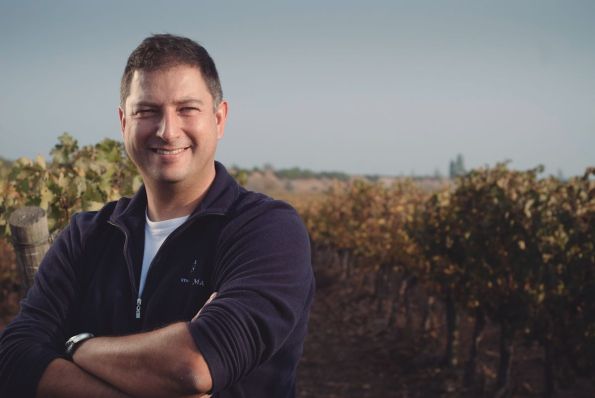
Winemaker Max Weinlaub. Source: Viña Maipo
I couldn’t travel to New York on the given date, but Patricia Clough from Gregory White PR was very accommodating and managed to include me in the live conversation and tasting with Max with the modern wonders of technology (thank you Patricia!). I was able to listen to Max presenting his wines and even ask questions and make comments – and all of it not with my fingers (in most of the “virtual” tastings we use Twitter or similar mechanisms to “talk” to the presenters – this conversation was refreshingly different).
This was the tasting, of course, so I did taste the line of Viña Maipo wines, and in a word, the wines were stunning. But I will tell you all about the wines in the next post, as I reached out to Max with a bunch of questions, which he graciously answered despite being on the plane for the most of the time in the months, going around the world and introducing his wines. Max’s answers are great and well worth every minute of your time if you want to learn more about Chile and its wines.
Without further ado, here is our [now virtual] conversation with Max Weinlaub:
[TaV]: It appears that Viña Maipo was one of the Syrah pioneers in Chile, planting it in 1990. Are there any wines from those early vintages still around? Did you have a chance of tasting them? What do you think of them if you did?
MW: Even though the vines were planted around 1998, the grapes were blended with other red grapes. In 2005 the grapes were used to make Limited Edition for the first time. We still have bottles of that vintage. I have had the opportunity to taste it, but the style has evolved year after year. To me, the first vintages were bold and too ripe. In recent years, I have been turning to a fresher style with a better balance and great ageing potential.
(Side note for Anatoli: If you are truly interested I could find one of those rare bottles, and we can taste it together next time I’m in NY.)
[TaV]: Since starting at Viña Maipo almost 10 years ago, did you make any changes in the way Syrah grapes are grown or the way the wines are made?
MW: Since I started as chief winemaker in 2007 it has been an endless learning process in direct connection with understanding how the vineyard behaves under different climatic conditions and canopy management, and noting the changes as the vines age each year. Today, I have a better knowledge about our Syrah grapes to express the varietal’s maximum potential with a clear sense of origin: Syrah from Chile. If I compare the last 10 years, I definitely see a change in the style of Viña Maipo’s wines —building towards better elegance, power, balance, fruit expression and oak impact.
[TaV]: Why Syrah in Chile? Do you think that Syrah is the next big grape for Chile?
MW: Until the first half of the 90’s, Chile was known for producing Cabernet Sauvignon, Merlot, Chardonnay and Sauvignon Blanc. Carmenere was re-discovered just in 1994. So the general perception of Chile was as a reliable producer of inexpensive wines but without many options to show (in terms of grape varieties). At the same time, Australia was living golden years with its Shiraz, so many winemakers thought that maybe Syrah could be introduced in Chile. Some clonal material (stocks) were imported and multiplied by a couple of nurseries in Chile and then, we neared the end of the decade, the first Syrah grapes were harvested with pretty good results. Thanks to a joint venture with one of those nurseries, Viña Maipo was one of the first wineries that planted Syrah in the country.
In my opinion, Chile has been and will be widely recognized as a great place of origin for Cabernet Sauvignon. But at the same time other grapes, especially those from the Rhône Valley, have adapted extraordinarily well to the Chilean terroirs — and Syrah is by far the best example of that. If you consider that nowadays the oldest Syrah vines are around 20 years old and already are producing high quality wines, then you can clearly see a bright future with this grape variety.
[TaV]: When making Viña Maipo Syrah, is there a region (Cote-Rotie, Hermitage, Cornas, Barossa, and Santa Barbara) or a wine maker (Guigal, Chapoutier, …) which you see as a hallmark and try to achieve some similarities with?
MW: The regions you mention (with their singularities) plus the talent and skills of those renowned family names have made some of the most iconic and unique expressions of Syrah grapes in the world. From those wines I learned that Syrah is able to make outstanding wines with a great potential for ageing even comparable with some Cabernet Sauvignon. My humble dream is someday to be part of that “Hall of Fame of Syrah” world, to be recognized as a previously-unknown Chilean winemaker named Max Weinlaub who made a jewel with Syrah in Chile, standing along with those big names.
[TaV]: You are blending Syrah with Cabernet Sauvignon and vice versa, which is quite unusual. Why do you think these two grapes work together? Are there any other regions in the world where Syrah is successfully blended with Cabernet Sauvignon, or do you think this is purely a Chilean phenomenon?
MW: I do believe in the synergy between their different but complementary components when you blend the right way. This is the best evidence that winemaking is closer to an artistic expression than to math because 1+1 is more than 2. Syrah is a fantastic grape to make single varietal wines, but also for blending. Sometimes the Cabs are too classical, too serious for me. I used to define the Syrah variety as “fireworks in a carnival”…it has lots of color, intensity and rich flavors. So Syrah plays an important role shaking up or adding verve to a (sometimes) circumspect Cabernet Sauvignon. My aim here is to make a more distinctly South American or Chilean style of Cabernet Sauvignon.
In another style, I add a smaller percentage of Cab to Syrah to increase the structure or backbone of the wine. As part of its nature, Syrah’s tannins are soft but non-structural – so hence the need for the strength and structure of Cabernet Sauvignon. You can find this blend of Cab-Syrah or Syrah-Cab elsewhere and it works well for me, and I intend to keep perfecting it.
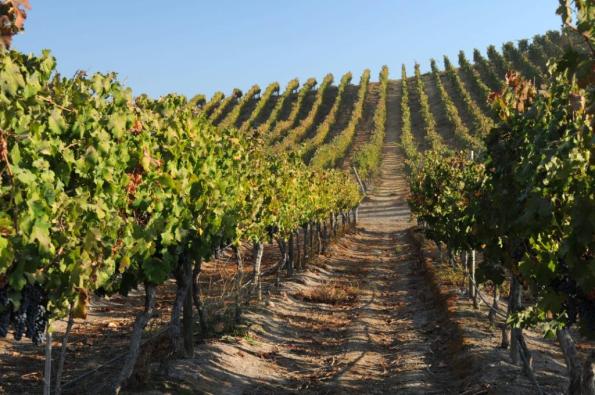
Source: Viña Maipo
[TaV]: Pinot Noir seems to be fast growing in popularity in Chile. You don’t make any Pinot Noir wines – do you have any plans for it? What do you think overall about Chilean Pinot Noir?
MW: I think that finally there’s a bunch of very good Pinot Noir produced in Chile thanks to the better knowledge of the grape variety in terms of terroir, viticultural management, clonal selection and winemaking. Pinot Noir is a challenging variety that sooner or later many winemakers—who tend to thrive in challenges–try to produce his/her own version. I’m having a lot of fun and joy producing Syrah (among other grapes of course) so Pinot Noir will be in my “101 things-to-do-before-to-die” list for a while.
[TaV]: Many wineries around the world add sparkling and Rosé to their repertoire – do you have any plans for Viña Maipo to start producing sparkling or Rosé wines too?
MW: We produce sparkling and rosé too!!! As we have a limited capacity (in terms of volume), the production of sparkling is allocated to certain markets – so it is not currently part of our global portfolio. Our rosé is sold largely in Nordic countries at the moment. We could taste both wines next time I see you.
[TaV]: How old are the oldest vines at Viña Maipo?
MW: The Cabernet Sauvignon vines are the oldest planted in our vineyards. Today, some of them are reaching 40 years old….just like me.
[TaV]: Don Melchor is an uncontested flagship wine for Concha e Toro, with very high critic ratings (98 from Suckling, 96 from Wine Spectator). Do you think Alto Tajamar will beat Don Melchor’s ratings one day?
MW: By far Don Melchor is the Dean of all the renowned Chilean wines. It’s the Chilean wine with the longest and most complete vertical tasting starting in 1986. I truly admire its history and legacy. If someday Alto Tajamar receives as high ratings as Don Melchor has won, for me that would be an honor and privilege. One of my principles is “work hard in silence, do your best and the rest will come along.”
[TaV]: When it comes to the white grapes of Chile, Chardonnay and Sauvignon Blanc are, of course, well established and well known. Is there a next big white grape for Chile?
MW: Chile is a paradise for grape growing due to its diverse terroirs, stable weather and healthy environment. Even though Chardonnay and Sauvignon Blanc are widely planted I’m sure there are new areas where some other white grapes could produce great quality wines, such as Verdejo or Godello, both grapes especially recommended for warm climates. There are some very interesting Rieslings and Gewürztraminer. But the problem with those grape varieties is the almost relatively little commercial success we’ve seen when are produced outside of their home countries. I have the feeling that the only white grape that could succeed (technically and commercially) is Pinot Grigio.
[TaV]: What are the biggest export markets for Viña Maipo?
MW: By far the UK and Nordic countries at the moment, but there are some interesting opportunities to grow in other areas especially in Asia. Asia is a great market with its own codes and tempo (rhythm). We’ve also been focusing on the U.S. to a greater extent and I am very much looking forward to spending more time in the market.
[TaV]: Continuing the previous question, how big is China, and it is growing, flat or declining?
MW: China is just awakening!!! And everybody is trying to get a space in China since the Dragon feels thirsty. They are starting drinking wine, more often for Gambei (heavy duty toasts) rather than for joy, learning or food matching, so there are some things to do in terms of wine culture and education.
[TaV]: Do you have a favorite vintage of Viña Maipo Syrah?
MW: Always the last one!!!… Because it’s better than the previous one. Maybe it’s because the vines are becoming older and I’m turning older too (and hopefully wiser)!!!
[TaV]: When you are not drinking your own wines, what are some of your favorite wines and winemakers around the world?
MW: More than follow a label, brand or winemaker, recently I have been discovering regions. I’m currently really intrigued by German Rieslings (especially old vintages from Mosel River) and some Spanish red grapes such as Garnacha (aka Grenache), Mataro (aka Cariñena or Carignan), Graciano, Mencia and Bobal.
Source: Viña Maipo
We are done here, my friends. I really enjoyed our conversation with Max, and I hope that the next time we will sit across the table and taste his delicious wines together. You might be thirsty at this point, so I hope you have something to drink – and the next time I will tell you all about delicious Viña Maipo wines I had a pleasure tasting. I can only say that I would gladly drink those wines at any time… Until we talk again – cheers!
Stories of Passion and Pinot: David Nemarnik of Alloro Vineyard
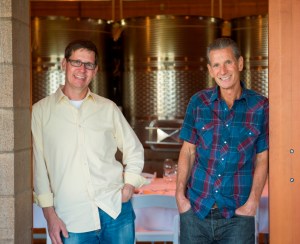
David Nemarnik and Tom Fitzpatrick. Source: Alloro Vineyard
Let’s say you are looking for the site to plant the vineyard of your dreams. After many years of research, you finally find what you were looking for – it should be perfect. And so the site you find is located on Laurel Ridge, and it has Laurelwood soils. Now assume you have an Italian heritage: how would you call your vineyard? What do you think of “Alloro Vineyard”? Alloro is an Italian for “laurel”, so it makes perfect sense, doesn’t it?
For sure it did for David Nemarnik, who was born into a Croatian – Italian family, and he was the one who started looking for the good vineyard site in Oregon in the late 1980s and finally purchased one in 1999 – and yes, named it Alloro Vineyard. First Pinot Noir vines were planted in 1999, and the first vintage was 2002. In addition to the Pinot Noir, the varietal line-up today also includes Chardonnay and Riesling.
Alloro Vineyard is a lot more than just a vineyard. Actually, the vineyard occupies only 33 acres out of the 80 acres estate, and the whole estate is a full-blown farm, with cattle, sheep, chicken, and gardens. Altogether, it became a holistic habitat, were growing grapes and making wines is simply part of the lifestyle, perfectly attuned to David’s family traditions. The vineyard is sustainably farmed, L.I.V.E. certified sustainable and certified Salmon-Safe. To top that off, David installed solar panels on the property, and now generates 100% of the electricity he needs for all the operations.
I had an opportunity to [yes, virtually] sit down with David and ask him a few questions, and here is what transpired from our conversation:
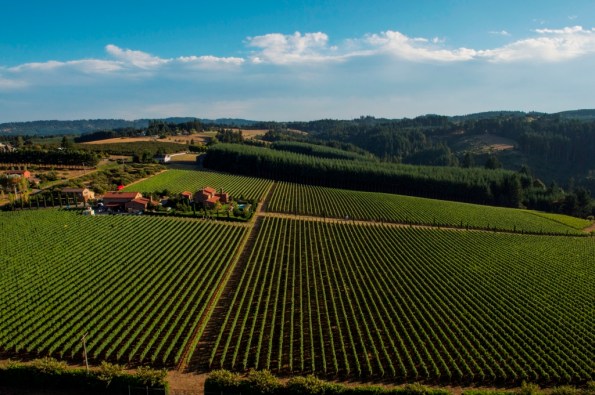
Alloro Winery, Chehalem Mountain AVA, Willamette Valley, Oregon. Source: Alloro Vineyard
TaV: Having Italian roots and memories of winemaking in Italy, have you ever thought of planting some of the Italian varietals? Moreover, Croatia also offers some interesting and unique grapes – how about those?
DN: I grew up with an Italian-American mother and grandmother who were all about family meals, which also always included wine. Not the high-end stuff, we are talking Familia Cribari Red Table Wine. My father was Croatian and born just outside of Trieste Italy. Family visits to my father’s village impressed upon me a lifestyle of artisan food and wine production. There was the home-made prosciutto and sausage, farm raised grain for bread, corn for polenta, and of course wine and grappa.
I love Nebbiolo and the wonderful Barolo and Barbaresco wines of Piedmonte. If I were to plant an Italian varietal it would be Nebbiolo. I was recently in Piedmonte and observed the grapes were at about the same stage of development as our own Pinot Noir vineyard here in Oregon. It would be fun to put in an acre or two. Learning and trying new things is part of what keeps this winegrowing business fun!
TaV: Why Riesling? This is not a very common grape for Oregon – how did you decide to plant Riesling? In a blind tasting with German, Alsatian, Finger Lakes, and Australian Riesling, where do you think people would most likely place your Riesling?
DN: Years ago in the mid-nineties, I was making wine in my garage for family and friends. This was mostly Cabernet and Zinfandel. A friend of mine who was making wine in his apartment bedroom closet finally was given an ultimatum from his wife that led him to join me in my garage. He turned me on to Riesling. I really like Riesling’s versatility, dry, off-dry, and sweet. So it was natural to plant my own Riesling and make an estate wine.
TaV: Any expansion plans for the vineyards? Maybe some new grapes outside of Pinot Noir and Chardonnay?
DN: Well we recently planted a new 5 acre block that is mostly Chardonnay with the balance Pinot noir. I planted this on the east side of the road for a different exposure and aspect. We also have our Riesling and a small block of Muscat. So we currently have 33 acres planted out of 130 acres total. I’m sure at some point I’ll plant more grapes, perhaps that small block of Nebbiolo.
TaV: You produced your first vintage in 2002, so starting from that year, what was your most difficult vintage for Pinot Noir and why?
DN: The most difficult vintage for me was 2011. 2011 was the coolest year with the least amount of heat units since I started farming grapes in 1999. Bud break and bloom were 3-4 weeks later than our average year. We had a very cool summer and by early October we still had not fully completed veraison and were worried the fruit would not have time to ripen sufficiently. We did everything we could, thinned to one cluster, pulled leaves on both sides, and prayed. Thankfully we had an incredible October with dry and sunny weather. In the end, we made some really nice wine.
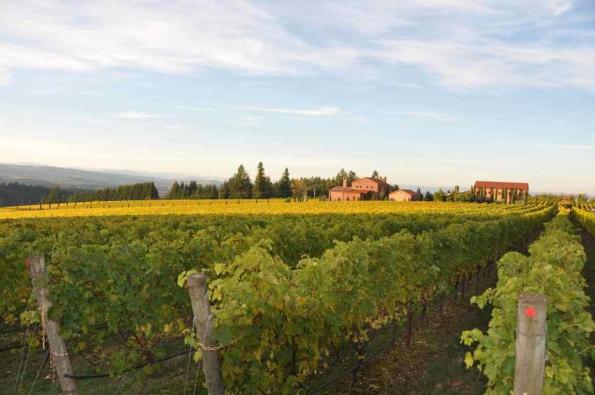
Source: Alloro Vineyard
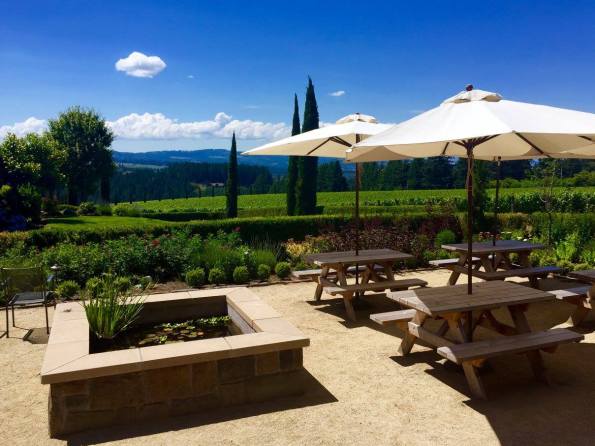
Terrazza view. Source: Alloro Vineyard
TaV: Continuing the previous question, what was your most favorite vintage and why
DN: My favorite vintage in the cellar is our 2010. What started off as a cool growing year transitioned to a mostly dry summer with mild temperatures leading to great conditions during that critical month of ripening prior to harvest. The wines are elegant and complex with a wonderful balance of red and dark fruit.
TaV: You operate not just a vineyard, but also a farm, a whole habitat with lots of things happening. I’m sure you had plenty of funny stories over the years – do you care to share some of them?
DN: Yes, Alloro is really a sustainable whole farm that includes raising hay for our cattle and sheep, as well as an extensive garden, hazelnuts, and numerous fruit trees. We compost manure from our cattle barn that is then spread on our fields as a natural fertilizer. We have a strong food culture that I would say is aligned with the Slow Food and Locavore folks.
One funny story has us picking strawberries in the garden. My chocolate lab named Abby disappears for a while and then returns with my neighbor’s Chinese runner duck in her mouth. The duck with its long neck sticking out of Abby’s mouth seems perfectly calm as she proudly brings me the duck. I carefully take the duck back to her owner’s pen…it never happened…
TaV: I’m assuming you produce your top of the line “Justina” Pinot Noir only in the best years – how many times have you produced it so far?
DN: Our Justina is a very special barrel selection. Although a blend of multiple barrels, it is a barrel equivalent (or 25 cases). Before any other barrel selections are made, we comb through every barrel looking for the very best of the vintage. Within the context of the vintage, our Justina has the most weight; the broadest, densest, finest, and most persistent texture; the most complex aromas; and typically a higher percentage of new oak. We have produced this wine every year since 2010.
TaV: You get all your power from solar energy. Was the winery designed like that from the very beginning, or did you install solar panels at some point later on?
DN: The winery was completed in time for our 2003 vintage. The solar panels were installed in 2008 as part of the Oregon Business Energy Tax System program. Our goal was to invest in a green sustainable energy source.
TaV: Which are more difficult to tend for – the vines or your farm animals?
DN: Oh, by FAR the vines!!
TaV: You produce White, Rosé, Red and Dessert wines. The only one which is missing is Sparkling wines. Any plans to produce your own sparkling wines?
DN: Possibly, if we were to add one new wine to our lineup, this would be it. We love bubbles!
TaV: When you are not drinking your own wines, what are your favorites from Oregon or around the world, both for whites and the reds?
DN: To be honest, I wish I spent more time visiting and tasting the many well-made wines produced here in our state. When I go to industry tastings I am always amazed at the overall quality. I am really excited about Oregon Chardonnay and what seems to be an explosion of well made sparkling wines. Outside of Oregon, I am a Barolo and Barbaresco fan.
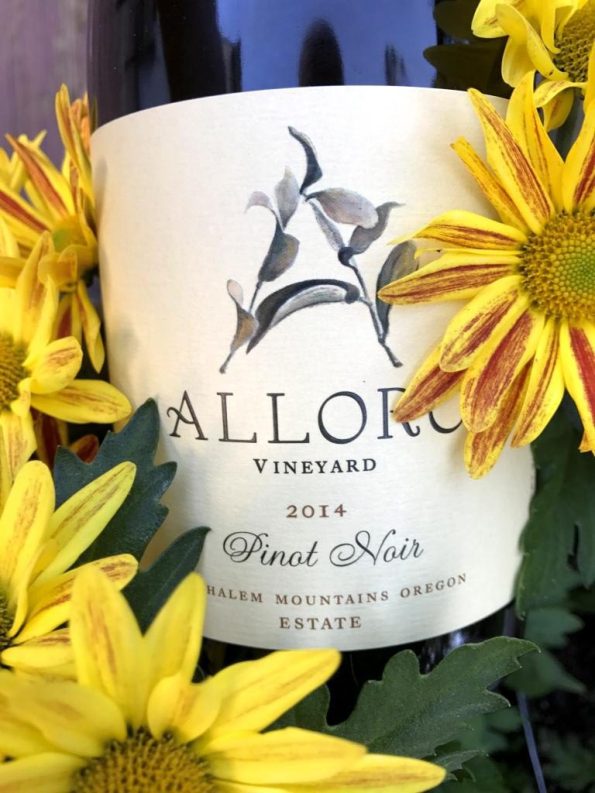
Of course, our conversation would be incomplete without tasting David’s wine. I had an opportunity to try his estate Pinot Noir and here are the notes:
2014 Alloro Vineyard Pinot Noir Estate Chehalem Mountains Oregon (14.1% ABV, $35)
C: Dark Ruby
N: earthy smoky plums with licorice, open, medium intensity
P: sweet red fruit, licorice, a touch of sage, espresso and mocha, excellent acidity, nice “meaty” undertones, medium long finish
V: 8, the wine has a lot of finesse, nice Burgundian style. Will evolve.

Source: Alloro Vineyard
Believe it or not, but our Passion and Pinot journey is almost over. 6 winemakers, 6 stories of Passion – and Pinot, of course. I’m not saying goodbye yet – Oregon is one of the hottest winemaking areas today in the USA, and with lots happening, I want to take another look at what we learned here and what might lay ahead. So I’m finishing the post with the rhetorical “stay tuned”… Is it Pinot time yet? Cheers!
To be continued…
P.S. This post is a part of the “Stories of Passion and Pinot” series <- click the link for more stories.
One on One with Winemaker: Steve Lutz of Lenné Estate
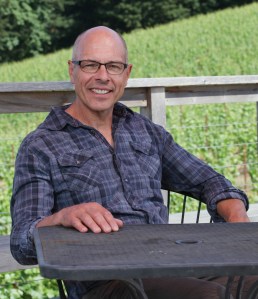
Steve Lutz. Source: Lenné Estate
For many years, I was trying to start my garden. Every year I would order my tomato plants, some peppers, and some herbs, plant them and then meticulously make sure to water them on a regular basis and hope for the best. Every year my reward would be a nice rosemary and sage (basil would always die) and maybe 10 mediocre tomatoes from 8 or so plants.
This was the story until this year, when I built raised beds, got a perfect top soil, premixed with all the proper organic fertilizers, planted tomatoes and lots more, and still collect (it is October now) a nice daily harvest of tomatoes, eggplants, and cucumbers. The soil is the king, you know – that rich, soft, almost greasy dark goodness of the good dirt.
Don’t worry, this post is not about me and not about my amateur gardening escapades. Talking about wine, do you think the soil is important? Would you want the best possible soil for your vines, the richest and the most nutritious? Or would you believe that someone would purposefully choose the plot with the poorest possible soil, and plant there the vineyard of their dreams? Enters Steve Lutz, who did exactly that.
In the year 2000, after searching for the perfect vineyard site for 8 months, Steve Lutz climbed a steep hill on the outskirts of the town of Yamhill in Northern Oregon, and after an hour of negotiations became an owner of the plot where Lenné vineyard was planted. The chosen site had peavine soil, which is not all that rich in the nutrients. Couple that with the steep slope and no irrigation, and you got the ideal farming conditions, right?
In 2001, 11 acres of Pinot Noir vines were planted, consisting of 3 blocks (one Pinot Noir clone per block). In the first year, Steve lost 35% of his plantings. In 2003, the additional 2.5 acres were planted, only to lose practically all of it to the record heat in the same year. It was only in 2007 that Steve was able to harvest enough fruit to vinify individual Pinot Noir clones. Also in 2007, Steve opened the tasting room, and the rest of it is a history which you can read for yourself on Lenné Estate web site.
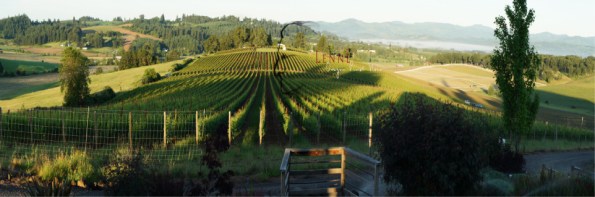
Source: Lenné Estate
I had an opportunity to [virtually, of course] sit down with Steve and ask him a few questions – here is what came out of our conversation:
TaV: Before you purchased that parcel of land that became Lenné, what made you believe that that soil can produce great Pinot Noir wines?
SL: All great soils for growing grapes have low nutrient value that limits the vines vigor. The soil type I am on is classified as the poorest Ag soil in Yamhill County. I knew the shallow, low nutrient, sedimentary soil would produce smaller clusters and berries with more concentration.
TaV: It took you about 6 years (from 2001 to 2007) to get to any level of commercial success. How many times (if ever) you were ready to declare the project to be a failure?
SL: Well there was too much sweat equity and personal money involved to turn back, but after we planted a 2.5 acre block in 2003 (one of the hottest springs ever) and lost all of it, we came close.
TaV: The soil at Lenné sounds it can produce some other interesting wines – have you thought about planting grapes other than Pinot Noir, let’s say Syrah?
SL: Well, we have grafted some Pinot to Chardonnay and have thought about grafting a little over to Gewurztraminer. The issue is that you can’t do much because it isn’t economically viable. We do have a neighbor that grows syrah which I find interesting but it’s a little like swimming upstream; cool weather Syrah is fascinating with bottle age but a hard sell young.
TaV: Outside of your own wines, what is your most favorite wine what you ever tasted?
SL: Well, years ago I had all the DRC wines about a half a dozen times and those would have to be my favorites.
TaV: Looking at the names of your wines, I’m assuming Jill’s 115 and Eleanor’s 114 are named after your daughters?
SL: No, Jill is my mother in law who lives in England and Eleanor is named after my late mother. We also have a wine called Karen’s Pommard named after my wife.
TaV: Along the same lines, I’m sure there should be a story behind the name of “Kill Hill”?
SL: Yes, that is the most shallow, stressed soil in the vineyard and we had many dead vines when we planted there in spite of burning out a clutch on a tractor trying to keep them watered the first year. I always referred to it as “kill hill” because of all the mortality. When we finally got it established I decided to blend the two clones there (114 and 667) and call it “Kill Hill.”
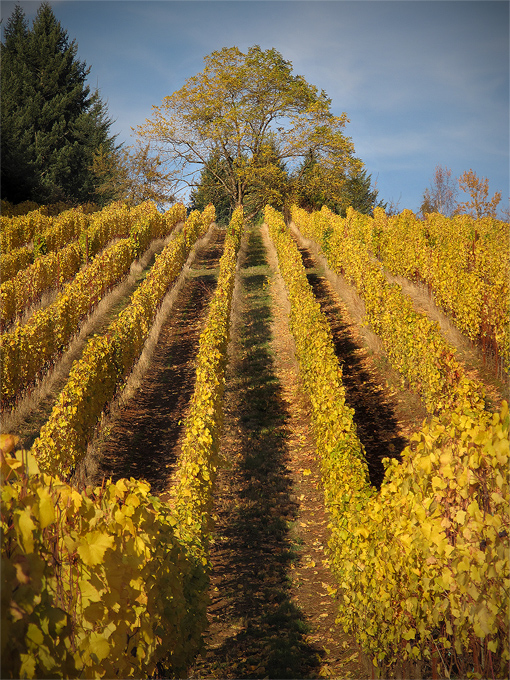
Source: Lenné Estate
TaV: You are teaching a class for the wine consumers on Dundee Hills and Yamhill-Carlton District soils, Red and Black, which includes blind tasting. How often do your students identify the wines correctly to the type of soil?
SL: Probably about 70% of the time.
TaV: Do you plan to expand the vineyard in the future?
SL: No, we have planted most of which is plantable.
TaV: If you are to expand the vineyard, would you ever consider planting white grapes, such as Pinot Gris or Chardonnay?
SL: Refer to above.
TaV: I understand that you are using low intervention, dry farming. Do you have any plans to obtain any certifications, such as LIVE, or maybe even going all the way into biodynamics?
SL: We are looking at the LIVE program right and I have thought about experimenting with biodynamics though I think some of the practices are more about marketing than having anything to do with good farming practices.
TaV: I’m really curious about the particular significance of “11 months in oak” which seems all of your wines are going through. Why exactly 11 months? Do you ever change the duration of time the wine spends in oak based on the qualities of the particular vintage?
SL: No, not really. The practice is based partially on practicality in that we like to get the wines out of the barrel before harvest. But having said that my philosophy is to get the wines in the bottle as intact as possible. Letting them sit in oak for extended periods of time leads to oxidation. Pinot is very sensitive to oxidation and I would rather put it in the bottle with as much of a reflection of the vineyard as possible and let what happens in the bottle happen. Some vintages could benefit in terms of mouthfeel with extended barrel aging, but they will get that in the bottle and have less oxidation than if you gave them extended barrel age.
TaV: If you would have an opportunity to “do over”, would you choose any other location for your winery, or maybe more generally, what would you do differently?
SL: I would do a lot of things differently in terms of the way we started, attention to detail in terms of farming the first year. We were in such a hurry to put the plants in the ground that we didn’t have our farming practices completely dialed in with the right equipment. As far as the site I can honestly say there is not another 21 acre site in Oregon that I would even think about trading my site for. The one thing we got completely right was finding the site.
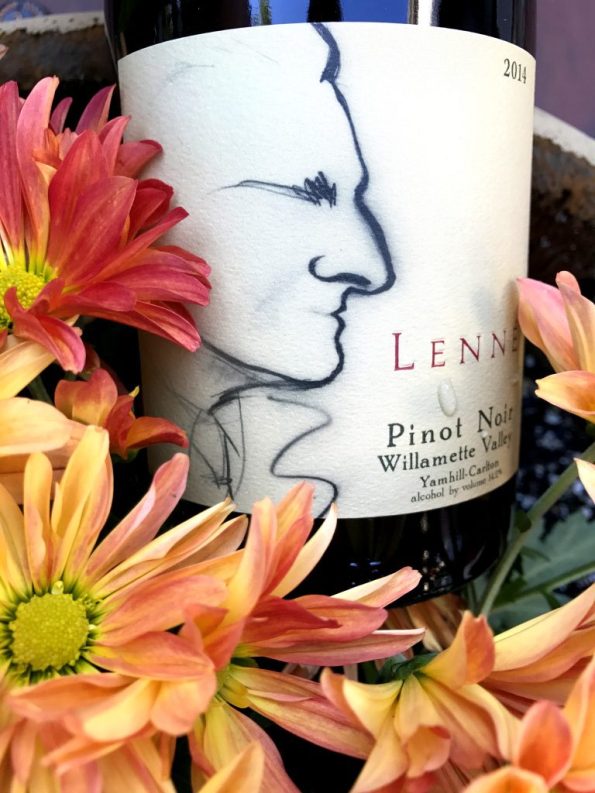 Time to taste some wine, isn’t it? I had an opportunity to taste Steve’s basic Pinot Noir, and I can tell you that left on the kitchen table, the bottle was gone in no time. Here are my notes:
2014 Lenné Pinot Noir Willamette Valley (14.2% ABV, $38)
C: Garnet
N: Smoke, lavender, ripe blackberries, medium intensity
P: tart cherries, fresh, vibrant acidity, firm tannins and firm structure, earthiness, excellent balance
V: 8-, very good wine, food friendly, will evolve with time
Here you are, my friends – another story of Passion and Pinot – now it is all about the soil and believing in yourself. We are not done yet, so until the next time – cheers!
To be continued…
P.S. This post is a part of the “Stories of Passion and Pinot” series <- click the link for more stories.
Last Bottle Sign Up ($10 credit)




 Talk-A-Vino