Archive
Spain’s Great Match – Rare Grapes, Delicious Wines, Great Values
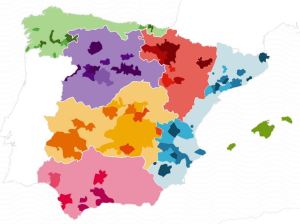
Source: Wines from Spain USA
I discovered the real greatness of the Spanish wines about 10 years ago, thanks to the wonderful seminar at maybe the best source of the Spanish wines in New York – the PJ Wine store. I had an occasional Rioja here and there before, but tasting through the full line of best of the best in Rioja, starting from the legendary 1964 vintage, was a true eye opener, and ever since, Spanish wines hold a special place in my winelover’s heart. If I need an ultimate solace in the wine glass, yes, 9 out of 10, it will be a Rioja.
Spain has the biggest vineyard area plantings in the world, so no matter how great Rioja is, Spain is so much more than just the Rioja. As I became a big fan of the Spanish wines (search this blog under the “Spanish wine” category), it became truly fascinating to follow all the changes and see the appearance of the totally new regions and reincarnation of the ancient, authentic grapes – Spain is home to about 400 grape varieties, out of which only about 20 can be considered “mainstream”.
What is the better way to learn about new wines if not the [big] wine tasting? Thanks to the Wines from Spain USA, the 24th annual “Spain’s Great Match – Wine, Food, Design” event offered exactly that – a big wine tasting (more than 300 wines), educational wine seminars and authentic Spanish food.
I had a pleasure of attending these events for the last few years, including the special 30th Anniversary of Spanish wines in the USA, where the incredible tasting in the main seminar included once-in-a-lifetime wines such as 2005 Clos Erasmus from Priorat, a Robert Parker 100-points rated wine. Every year’s event offered unique and different educational opportunities as well as the tasting of the latest and greatest wine releases from all major Spanish regions.
The first seminar offered during this year’s event was focused on the Spain’s rare grapes. Ask a winelover to come up with the list of the commonly used Spanish grapes – I’m sure that going beyond Tempranillo, Garnacha (Grenache) and Albariño will be challenging. Some of the adventurous wine geeks might add Graciano, Viura, and Verdejo. Meanwhile, remember – 400 varieties – versus 6 which we just mentioned. Spanish winemakers definitely got some options.
So the first seminar, led by Doug Frost, one of the only 4 people in the world who are both Master Sommelier and Master of Wine, Gretchen Thomson, Wine Director for Barteca Restaurant Group, overseeing the largest in the country portfolio of Spanish wines, and Michael Schachner, Spanish and South American Editor for Wine Enthusiast Magazine, addressed exactly this issue. We had an opportunity to taste and discuss 10 wines made from the little known Spanish grapes.
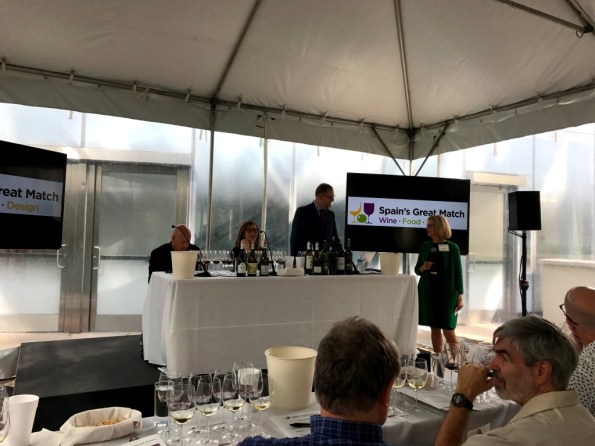
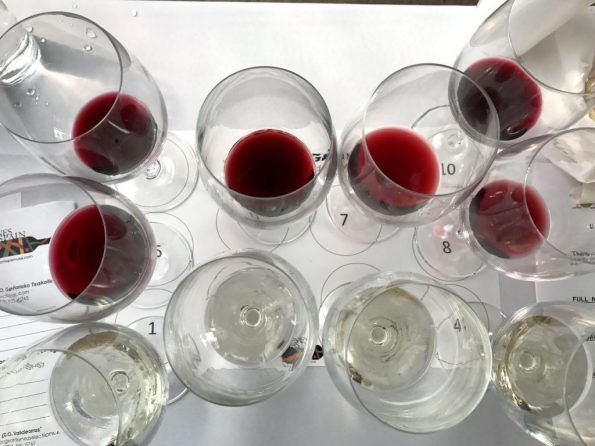
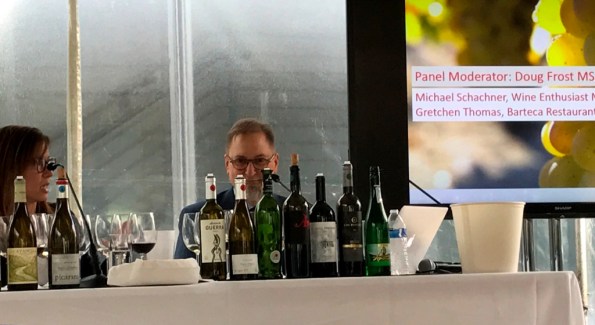
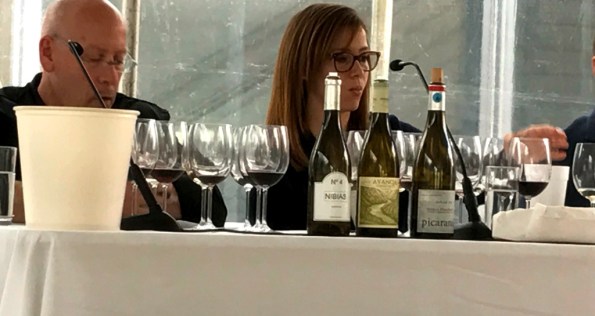 As some of you might know, I’m a grape geek myself. The little box in the upper section of the Talk-a-Vino web page shows a counter for the number of grapes I had an opportunity to taste, so from the 10 grapes we tasted, I found only one I didn’t have before. The wines were interesting, however, I would not necessarily agree with the choice of wines to showcase particular grapes – but I wouldn’t stand a chance against such a distinguished panel of experts, so you can dismiss this statement. 🙂
Anyway, for what it worth, below are my tasting notes. Don’t have any good pictures for you, as I had no opportunity to take pictures of these wines in between the different events. Here we go:
2016 Ameztoi Txakolina D.O. Getariako Txakolina (Grape – Hondarrabi Zuri)
Beautiful nose, fresh, lemon notes, herbs, inviting. Crisp, cut through acidity, touch of fizz, would perfectly match oysters, seafood, most reminiscent of Mucadet.
2014 Bodega Chacón Buelta D.O. Cangas (grape: Albarín Blanco, new grape for me)
Off-putting nose – strong gasoline, aggressive herbal notes. The palate is interesting – lychees, pear, appears almost oxidative/”orange”.
2016 Avancia Cuvée de O D.O. Valdeorras (grape: Godello)
Intense nose, white stone fruit, nicely restrained, peaches undertones with clean acidity on the palate with clean acidity – excellent
2014 Bodegas Maranones Picarana D.O. Viños de Madrid (grape: Albillo Blanco, high altitude vineyards, 2000–2500 feet, barrel fermented)
Open, intense, touch of gunflint, reminiscent of Chardonnay, apples, vanilla – excellent. Plump, Marsanne-like on the palate, touch of tannins, very nice overall
2016 Armas de Guerra Tinta D.O. Bierso (grape: Mencía)
Intense, freshly crushed berries on the nose. Outstanding on the palate, tannins, burst of pepper, crisp, dry, very little fruit, medium body. Very interesting and different expression of Mencía.
2011 Raúl Pérez Prieto Picudo V.T. Castilla y Léon (grape: Prieto Picudo)
Delicious nose, open berries, sweet oak, overall on the nose – classic California. Lots going on on the palate – touch of sweetness, blackberries, nice swing of tannins, medium+ body.
2015 Bermejo Listán Negro D.O. Lanzarote (grape: Listán Negro, 13% ABV)
Smelling a cement truck – just fresh cement, plus intense herbal notes. Chipotle, poblano peppers dominate noticeably dusty palate – unique and different. (Too unique?)
2015 Ànima Negra ÀN V.T. Mallorca (grape: Callet)
Fresh open nose, fresh blueberries, and strawberries. Funky undertones on the palate, aggressive tannins (French oak), limited fruit. Interesting food wine
2014 Mustiguillo Finca Terrerazo Pago El Terrerazo (grape: Bobal)
Closed nose. A tiny hint of fruit, more perceived than real. Tight palate, noticeable oak, touch of cherries, good balance of fruit and acidity. Needs time. Want to try again in 10–15 years.
2013 Torres Cos Perpetual D.O.Ca. Priorat (grape: Cariñena)
Nice nose, cherries, dark chocolate, fresh leaves undertones. Aggressive tannins, green notes (tree branches), initial sweet notes immediately followed by astringent profile.
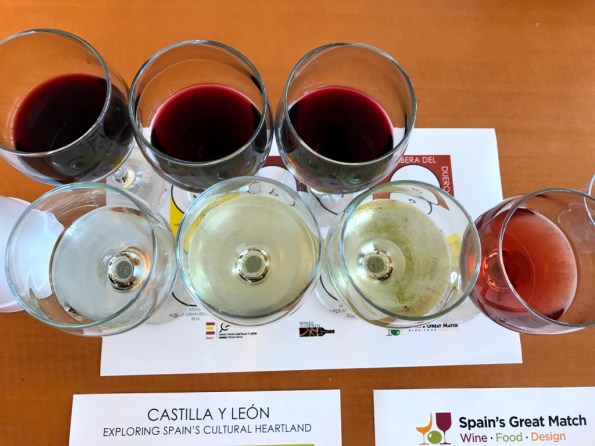
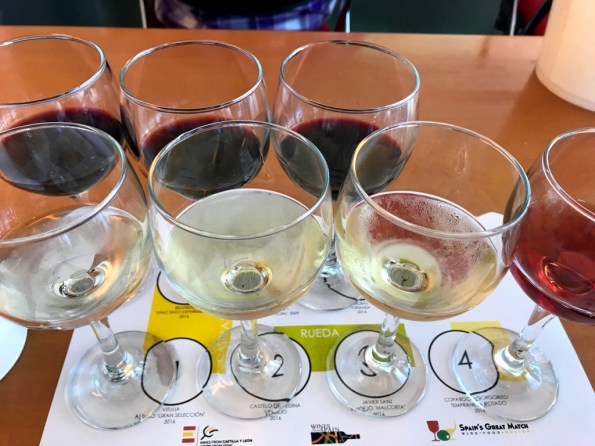
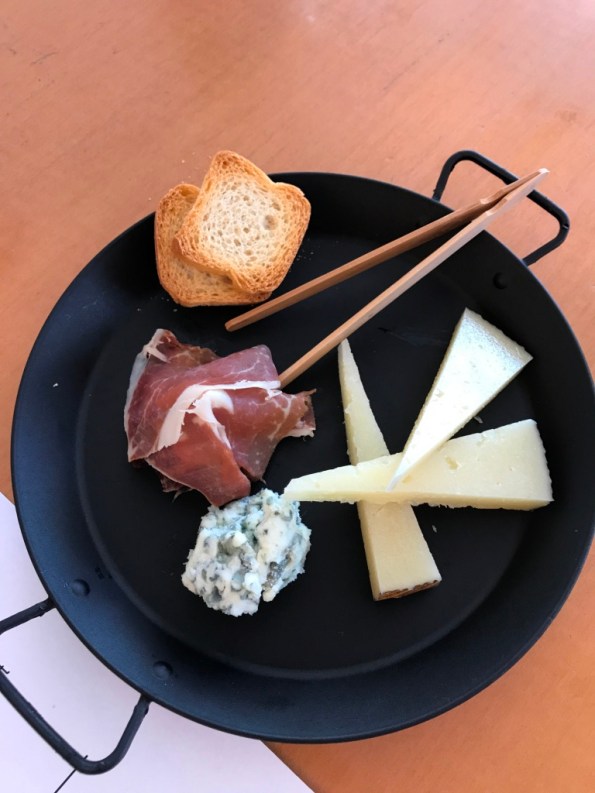
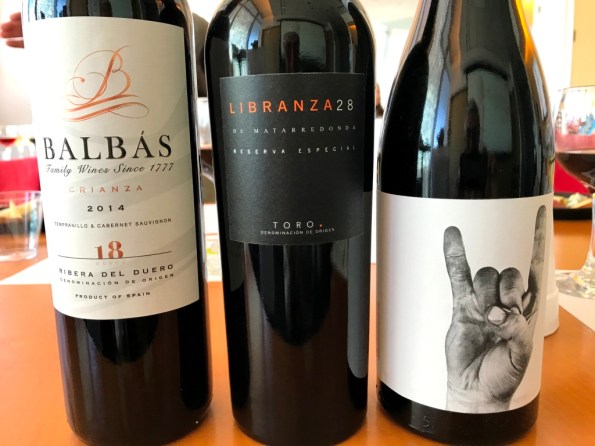
Our next seminar was dedicated to the wines and culture of the Castilla y León, an administrative region in the Northern part of Spain. Castilla y León includes a number of winemaking regions – some of the best, essentially – Ribera del Duero, Toro, Rueda among others. The seminar was led by charismatic Marnie Old – I have to honestly say that this was one of the very best wine seminars I ever attended – great delivery, lots of energy, excellent presentation.
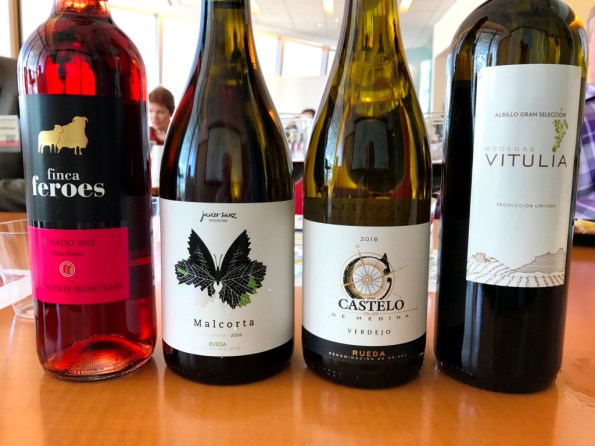
We had an opportunity to taste 7 different wines and also try some of the Castilla y León authentic foods – a few kinds of cheese (Valdeon, a blue cheese, was my favorite), Jamon (Jamón Guijuelo, to be precise) and more. I really didn’t care for the Rosé, so below you will find the notes for the wines we tasted:
2016 Bodegas Vitulia Albillo Gran Selección Vino de la Tierra de Castilla y León ($18, 12.5% ABV, 100% Albillo Mayor)
Simple, crisp, acidic, refreshing. Plus another new grape.
2016 Bodega Castelo de Medina Verdejo Rueda D.O. ($19.95, 13.5% ABV, 100% Verdejo)
White stone fruit, intense, fresh, floral fruit on the nose. Palate is dominated by the herbs, similar to Sancerre, lemon, medium body, very nice
2016 Bodega Javier Sanz V Malcorta Rueda D.O. (13% ABV, $26, 100% Verdejo Malcorta)
Javier Sanz’s effort is dedicated to restoring pre-phylloxera vineyards – this is where the fruit for this wine came from. The nose is a pure wow – intense, camphor oil, sandalwood, rosemary. Palate is delicious, perfectly balanced, candied lemon, nutmeg, medium+ body, clean acidity, an excellent wine. Yes, and another new grape.
2016 Vino Bigardo Tinto Experimental (100% Tinta de Toro) – an interesting wine. Made by a rebel winemaker, who doesn’t want to make the wine according to the appellation laws, so the wine is unclassified. 20–100 years old wine, 45 passes during the harvest, micro-fermentation. Nose has lots of young, bright fruit, freshly crushed berries, reminiscent of Monastrell, unusual. Young fruit on the palate, but with undertones of stewed fruit, hint of the roasted meat. This is experimental wine all right, but this is not a successful wine in my book.
2009 Bodegas Matarredonda Libranza 28 Reserva Especial DO Toro ($45, 100% Tinta de Toro, ungrafted vines, on average 70 years old)
Spicy nose with a whiff of cinnamon, sweet oak, classic Cabernet nose overall. On the palate very tight, the real Toro, powerful, dark fruit, nice – but needs time. Pairs surprisingly outstanding with the local Valdeon Blue Cheese.
2014 Bodegas Balbás Crianza Ribera Del Duero D.O. ($27.99, 90% Tempranillo, 10% Cabernet Sauvignon, 18 months in French oak barrels)
This wine comes from one of the founding estates in the region, established in 1777.
Dusty nose, muted fruit, distant hint of dried cherries. On the palate – cherries, cherry pit, roasted meat, coffee, great concentration, fresh, clean – very good wine overall.
I was registered for two more seminars, but then there were lots of wines to taste, so I decided to proceed with the tasting. Below are mentions of the wines I liked. I have separated the wines into my top choices (both white and red), and then separately sparkling (Cava), white and red wines I feel comfortably happy to recommend. For what it worth, here we go:


Top wines:
2016 Bodega Javier Sanz V Malcorta Rueda DO ($26) – see my notes above, definitely was the star
2014 CVNE Monopole Blanco Seco Rioja ($22) – Monopole is one of my favorite white Rioja in general, but this wine is taken to the next level by spending some time in oak – lots of increased complexity. Delicious.
2013 Bodegas Prineos Garnacha DO Somontano ($12.99) – round and delicious. Great value
2011 Bodegas Beronia III a.C. Beronia DOCa Rioja ($79.99) – 70 years old vines. Unique and beautiful, produced only in exceptional vintages. standout.
2015 Bodegas Garcia Carrión Mayoral Reservado DOP Jumilla ($12.99, Syrah/Cabernet Sauvignon/Petit Verdot) – a standout. Perfectly balanced, great flavor profile and QPR which can’t be beat.
2014 El Coto Crianza DOCa Rioja ($13) – an incredible value, perfectly soft and round
2008 El Coto de Imaz Gran Reserva DOCa Rioja ($44) – perfectly drinkable, but can still age. Delicious and a great value.
2010 Gratavinum GV5 DOCa Priorat ($80) – excellent wine
Also very good:


Cava:
NV Anna de Codorniu Blanc de Blancs Brut Reserva DO Cava ($14.99) – never disappoints. Great value.
NV Anna de Codorniu Brut Rosé DO Cava ($14.99) – one of my perennial favorites.
2010 Parés Baltà Cava Blanca Cusiné DO Cava ($40) – very good quality, comparable to vintage Champagne.
NV Segura Viudos Reserva Heredad DO Cava ($25) – another one of my favorites. Delicious.
2010 Torelló 225 Brut Nature Gran Reserva DO Cava ($35) – very good


White:
2016 Bodegas Sommos Las Bas Gewürztraminer DO Somontano ($25.99) – Gewurtztraminer is a tough grape for making a round, balanced wine – and this one was exactly that.
2015 Baigorri Barrel Fermented White DOCa Rioja ($30) – very nice
2016 Bodegas Beronia Viura DOCa Rioja ($14.99) – clean, refreshing
2016 El Coto Blanco DOCa Rioja ($11) – outstanding and an excellent value
2013 Bodegas Enate “Chardonnay 234” Enate DO Somontano ($12.99) – classic, very good.


Rioja:
2013 Bodegas Muga Reserva DOCa Rioja ($28) – one of the iconic producers, very good wine.
2011 Marqués de Riscal Reserva DOCa Rioja ($18) – excellent value
2005 Marqués de Riscal Gran Reserva DOCa Rioja ($48) – very good
2010 Marqués de Riscal Baron de Chirel Reserva DOCa Rioja ($79) – very good
2011 Bodegas Faustino V Rioja Reserva DOCa Rioja ($15) – very good value
2005 Bodegas Faustino I Rioja Gran Reserva DOCa Rioja ($35) – another very good QPR example
2012 Bodegas Beronia Reserva DOCa Rioja ($19.99) – excellent
2008 Bodegas Beronia Gran Reserva DOCa Rioja ($31.99) – excellent, and great value
2012 El Coto de Imaz Reserva DOCa Rioja ($24)
2008 Viñedos y Bodegas Sierra Cantabria Finca El Bosque DOCa Rioha ($95) – probably the most expensive wine in the tasting, and it is not ready to drink. Needs time, lots of time.
2007 Señorio de San Vicente San Vicente DOCa Rioja ($52, new grape – Tempranillo peluda)


Other red:
2016 Bodegas Sommos Merlot DO Somontano ($25.99)
2012 Bodegas Viñas Del Vero Secastilla DO Somontano ($44.95)
2009 Bodegas Paniza Artigazo Edición Limitada DOP Cariñena ($24..99)
2010 Bodegas Corral Don Jacobo Rioja Reserva DOCa Rioja ($22) – delicious and a great value
2014 Bodegas Volver DO LaMancha ($16) – one of my perennial favorites, big and powerful
2012 Finca Villacreces Ribera del Duero DO ($35) – this wine never disappoints – perfect example of what Ribera del Duero is capable of
2013 Bodegas Hacienda Monasterio, Ribera del Duero DO ($40) – delicious
2015 Bodegas Garcia Carrión Mayoral Chester DOP Jumilla ($12.99, Monastrell/Petite Verdot)
2014 Bodegas Garcia Carrión Pata Negra Apasionado ($12.99, Monastrell/Petit Verdot/Cabernet Sauvignon/Syrah)
2014 Torres Salmos DOCa Priorat ($35) – very good
2015 Teso La Monja Almirez DO Toro ($52) – still needs time
2007 Teso La Monja DO Toro ($25) – nice, but definitely needs time
And then, of course, there was food. Cheese and olives were a staple, and many other dishes were carried out all the time. I also discovered my new favorite sparkling mineral water – Vichy Catalan. It is sold at some of the stores, such as Fairway Market, so if you like sparkling water, you might want to give it a try.


That’s all I have for you, my friends. Spain’s Great Match is an annual event, so even if you missed this year, you should definitely plan to attend the next – you can see a full schedule here. Also, if you live in or will visit Chicago, you can still attend it on November 2nd. Either way – drink more Spanish wines, my friends! Cheers!
Of Cabs and Tomatoes, or Having Fun with a Blind Tasting
 “By the way”, my friend texted me, “your text says “tomato wine” – was that an autocorrect”? My response was “Nope. You’ll see”.
Drinking wine is fun (if you disagree, you shouldn’t read this blog). There are many things which we, oenophiles, self-proclaimed wine aficionados, can do to maximize that fun. We age wines, we decant wines, we use fancy openers and pourers, we play with temperature and glasses of different forms and sizes.
One of ultimate fun exercises oenophiles can engage in is a blind tasting. Blind tasting is a “truth serum” for the wine lovers, it levels the playing field for all. Blind tasting eliminates all “external” factors – price (ha, I paid $300 for this bottle, beat that), prestige, winemaker’s pedigree, weight of the terroir (ahh, Bordeaux, it must be amazing), cute and elaborate labels, critics and friends opinion – and leaves your palate one on one with the content of the glass. Don’t say “I hate Chardonnay and I never drink it”, as you don’t know what is in your glass. Don’t say “I don’t like Australian wines”, as you don’t know what is in your glass. Anyone who ever played the game of the blind tasting can surely attest to what I’m saying here. If you never experienced fun and joy of the blind tasting, you are missing and you are missing a lot – but it is easy to fix.
Our tradition of wine dinners goes back more than 5 years, and most of the wine dinners include blind tasting part (here are the posts for some of the past events – Pinot Noir, Champagne, Chardonnay). A few weeks ago, we managed to align everyone’s schedule for a wine dinner and a blind tasting with a simple and non-pretentious subject – Cabernet Sauvignon :).
 Remember the dialog at the beginning of this post? I have friends who know my obsession with the wine, and always try to surprise me with various oddities. One of such oddities was a bottle of tomato wine which they brought from Canada. I didn’t want to drink that wine by myself, so the wine dinner was an excellent opportunity to share it with friends. As guests were arriving, I decided to play a role of the mean host (okay, not too mean). Outside of the friend who knew about the tomato wine, the rest were presented with the pour of the white wine and the request to guess what grape that might be. Literally nobody wanted to believe that this was a tomato wine – I had to show the bottle as a proof.


Have I tasted this wine blind, I’m sure I would be in the same boat as all of my friends – this 2013 Domaine de la Vallée du Bras OMERTO Vin Apéritif de Tomate Moelleux Québec (16% ABV) was fresh, with good acidity, touch of raisins on the nose, medium to full body and notes of the white stone fruit on the palate – for me, Vouvray (Chenin Blanc from Loire) is the one which comes to mind to give you the best analogy. This wine is produced from the locally grown heirloom tomatoes – and it is also a vintage – I’m seriously impressed (find it and taste it).
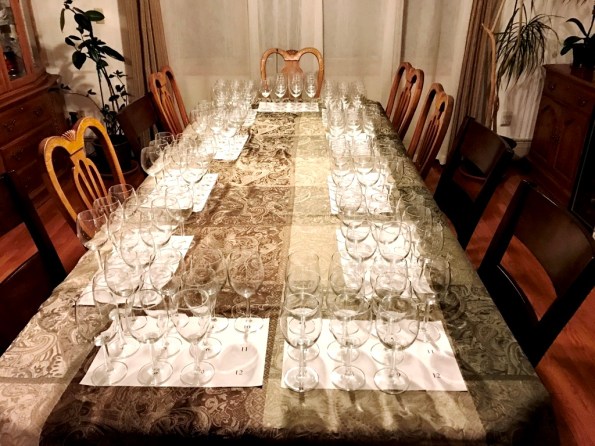
And to the blind tasting off we went. 10 wines were wrapped in the paper bags, opened and randomly numbered (my daughter usually does the honors), then poured into the glasses. The only thing we knew that all the wines will be predominantly Cabernet Sauvignon – no price or region limits.


Below are my notes, in our tasting order, both with my initial impressions and some updates over the next few days as I tasted leftover wines. And by the way, don’t think of this tasting of some stuck-up, snotty process – we openly exchange our thoughts, but each person’s individual palate is an ultimate purveyor of truth here:
#1:
C: almost black
N: restrained
P: bright fruit, pronounced tannins, delicious.
P: 2nd day – outstanding, firm structure, eucalyptus, dusty profile, tannins are still fresh.
V: 2013/2014, new world , considerably improved by the end of the tasting!
#2:
N: blueberry pie notes
P: beautiful, bright, cassis, blueberry pie with tobacco undertones on the second day, excellent
V: Lange
#3:
N: savory,
P: crispy, fresh, great fruit
P: 2nd day – firm structure, perfect balance, dark cocoa, cassis. Truly an enjoyable wine
V: nice finish,
#4
N: strange, rotten cabbage, musty cellar
N: 2nd day: an improvement, tobacco with touch of barnyard on top of cassis
P: nice, bright,
P: 2nd day: great improvement, very enjoyable, shouting a bit of mature fruit with bright acidity and touch of fresh plums.
V: India?
#5:
N: coffee, mocca, dust, excellent
N: 2nd day: coffee and roasted meat
P: nice fruit, bright, spicy
P: 2nd day: palate shifted towards savory too much meat. Probably perfect with the steak, but craving more balance on its own.
V: nice, young
#6:
N: blueberry pie, nice
N: 2nd day: pure candy on the nose, more of a lollipop quality, or may be stewed strawberries.
P: sour cherry, wow
P: sour cherries continuing, albeit more muted than yesterday
V: nothing from Cab, but nice. An okay wine.
#7:
N: nice balance, good fruit
P: great, dusty palate, firm structure, excellent, precision
V: outstanding
#8:
N: nice dusty nose,
P: crispy, tart, limited fruit
V: not bad, but not great.
V: day 2 – past prime 😦
#9:
N: nice, classic
N: 2nd day: added perfume and explicit anise notes
P: beautiful, excellent, mint, classic
P: 2nd day: dark, powerful, compressed, espresso, a lot more dense than the day before.
V: excellent
V: 2nd day: less enjoyable than the day before, closed up, lost the finesse.
#10:
N: young berries, same on the day 2 but a bit more composed.
P: young crushed berries
P: 2nd day: a bit more restrained. Young berry notes without supporting structure. Not my wine, but might have its audience.
P: 5th day: the sweetness is gone, and the classic Cab showed up, touch of cassis and mint, excellent
V: 1st day – it’s ok, 5th day – very impressive
During the tasting, we decide on two of our favorite wines. After tasting is done, we take a vote, with each person allowed to vote for two of their favorite wines. These are just two favorites, without prioritizing between the two. Below are the results of the vote for our group of 11 people:
#1 – 1
#2 – 1
#3 – 7
#4 – 1
#5 – 0
#6 – 2
#7 – 4
#8 – 1
#9 – 4
#10 – 1
As you can tell, the most favorite wine was wine #3 (7 votes out of 11), and the second favorite was a tie between wines #7 and #9, each of them getting 4 votes out of 11. Now, drumroll please – and the most favorite wine of the blind Cabernet Sauvignon tasting was … 2006 Staglin family Cabernet Sauvignon! Staglin Family Cab is definitely not a slouch in the world of cult California wines, and the group clearly fell for it. Here is the full lineup, in the order of tasting:
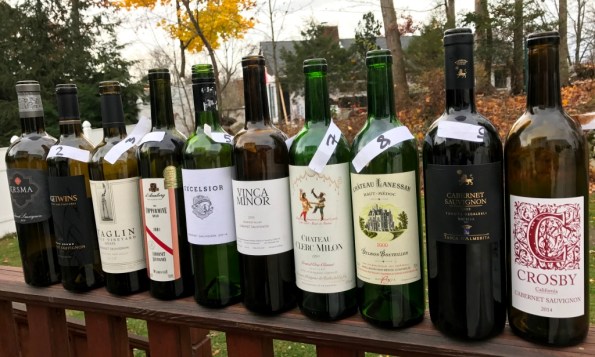 Here are the details for all the wines:
#1: 2012 KRSMA Estates Cabernet Sauvignon Hampi Hills Vineyard, India (13.5% ABV)
#2: 2013 LangeTwins Vineyard Cabernet Sauvignon Lodi, California (14.4% ABV)
#3: 2006 Staglin Family Vineyard Estate Cabernet Sauvignon Rutherford, Napa Valley (14.9% ABV)
#4: 2002 d’Arenberg The Coppermine Road Cabernet Sauvignon McLaren Vale, Australia (14.5% ABV)
#5: 2014 Excelsior Cabernet Sauvignon WO Robertson, South Africa (14% ABV)
#6: 2015 Vinca Minor Cabernet Sauvignon Redwood Valley California (12% ABV, 1 barrel produced)
#7: 1995 Château Clerc Milon Grand Cru Classé Pauillac AOC (12.5% ABV)
#8: 2000 Château Lanessan Delbos-Bouteiller Haut-Médoc AOC (13% ABV)
#9: 2009 Tasca D’Almerita Tenuta Regaleali Cabernet Sauvignon Sicilia IGT (14.5% ABV)
#10: 2014 Crosby Cabernet Sauvignon California (13.5% ABV)
10 wines, 6 countries, 10 different regions, $7.95 – $150 price range, 1995 – 2015 vintage range – I think we did pretty well in terms of diversity. Staglin Family being the favorite wine is not that surprising (but still interesting, considering that it is the most expensive wine in the lineup at $149). My biggest surprises, though, were super-solid KRSMA Cabernet Sauvignon from India (India? really?), an excellent Cabernet Sauvignon from Sicily (who would’ve thought!), and the cheapest wine in the group, Crosby Cabernet Sauvignon ($7.95), which opened up magnificently 5 days after the bottle was opened – of course, nobody has a desire to wait that long for the wine, but forgetting a few bottles in the cellar might be a right move.
The dinner quickly followed the tasting (after 110 glasses were safely removed from the table). I don’t have much in terms of pictures, but we had Russian Meat Soup (recipe here) and beef roast as the main dish. The deserts were pretty spectacular and paired very well with Cabernet wines:


And that concludes my report about our great fun with Cabernet Sauvignon wines and the blind tasting. Now is your time to share your blind tasting and odd wines stories – and if you had any of the wines I mentioned here, I want to know your opinion about them.
Lastly, if you never experienced the pleasures of the blind tasting, you must fix it as soon as possible. Cheers!
Life’s Happy Moments – Virtual Lodi Wine Tasting on Snooth
When I got an offer to participate in the Lodi wine virtual tasting on Snooth, my first reaction was “that’s okay. I just was in Lodi just recently for the Wine Bloggers Conference (WBC16), and still perfectly remember it”. Then the second thought came in – “but it is Lodi, remember? Great wines, great people, why not”?
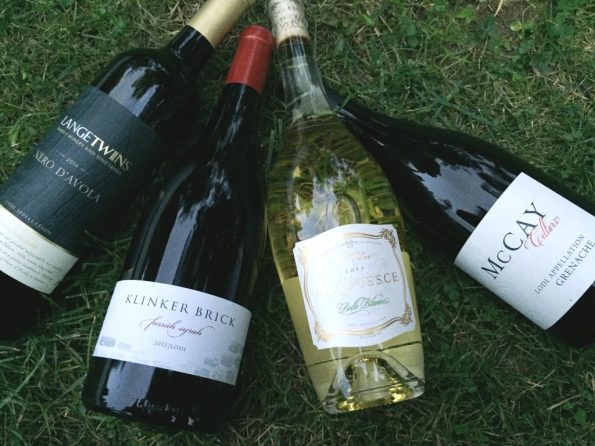
When I opened the box with samples, huge smile embellished my face (this post would be perfect for the Monthly Wine Writing Challenge #28 (#MWWC28), as the theme was “Smile” – if only it would be written on time, sigh). Do you smile when you run into a good old friend who you are genuinely happy to see? Yep, that was me at that moment.
Looking at the bottles one by one, you can imagine me talking and thinking.
Acquiesce. I heard people raving about their wines, but never tried it – great, now I will! LangeTwins – the flow of happy memories – we visited the winery with the group of bloggers and had an incredible time there; so glad to be drinking their wine again. McCay – an immediate image of Mike McCay, pouring his Zinfandel out of the double-magnum during the dinner at the WBC16 – another huge happy smile. So looking forward trying this Grenache. Klinker Brick – had their Zinfandel during speed tasting, but heard a lot about the Syrah – now I can taste it, great!
Then the day of the tasting arrived, and for an hour, I was among friends, feeling more like a WBC16 reunion – the fact that we didn’t see each other was not a problem – it was easy to imagine happy and smiley faces, tasting delicious wines, and excitedly talking across each other. Exactly as we did in August back in Lodi.
I have to be entirely honest – we had great hosts for this session – Tim Gaiser, Master Sommelier, Stuart Spencer, who represented both Lodi Winegrape Commission and his own winery, St. Amant, and Mike McCay of McCay Cellars – but I was entirely focused on the chat window, so I don’t have much of their conversation to share with you. But – I’m happy share the tasting notes for these delicious Lodi wines.


2015 Acquiesce Belle Blanc Mokelumne River Lodi (13.5% ABV, $26, 45% Grenache Blanc, 45% Roussanne, 10% Viognier, 288 cases)
C: light golden
N: intense lemon, lemon peel, candied lemon (hint of), white stone fruit
P: creamy, plump, touch of candied lemon, long acidity-dominated finish
V: 8, easy to drink from the start. The wine kept evolving for the next 5 days – definitely an age worthy wine which will bring you lots of pleasure.
2014 LangeTwins Vineyards Nero d’Avola Red Tail Vineyard Lodi (13% ABV, $20)
C: bright garnet
N: ripe sweet plums and earthiness, medium intensity
P: clean herbal profile first, sweet basil, then layer of fresh, ripe blueberries – clean, well-structured, perfectly balanced.
V: 8-, excellent pop and pour wine, should be easily a crowd pleaser
2013 McCay Cellars Grenache Abba Vineyard Lodi (14.2% ABV, $32, 309 cases)
C: smokey Ruby
N: intense gunflint, granit, underripe plums
P: smoke, mix of tart and sweet cherries, clean acidity, firm structure and medium body, crisp
V: 8+, outstanding. Once you start drinking, you can’t stop
2013 Klinker Brick Farrah Syrah Mokelumne River Lodi (14.9% ABV, $20)
C: dark garnet, almost black
N: intense aromatics, espresso, mocca, mint, raspberries, red fruit, very inviting and promising
P: wow, intense, mint, eucalyptus, blueberries, tar, spicy core, good acidity, velvety present texture, long finish
V: 8/8+, very good from get go, should improve with time
I would like to thank the kind folks at Snooth for arranging this delicious tasting. And for you, my friends – yes, those wines are made in a very small quantities, but if you will make an effort to find them (many might be available directly from the wineries), you will be well rewarded. These are the wines worth seeking. Cheers!
5 Highlights and Hundreds of Wines
 Last weekend I attended a trade wine tasting – my first and pretty much the last for this year. My schedule simply didn’t align to do more, but may be it is even for the better?
I’m sure that most of the people see it very simply – “wine tasting = fun”. I tried many times to explain in this blog that “wine tasting = hard, tiring work” – no doubts 9 out of 10 people point to this statement and start laughing – but this is totally fine with me.
The tasting was organized by one of the Connecticut wholesalers – Worldwide Wines, to showcase all the new arrivals from the wineries and importers they represent in the state. According to the invitation, about 1,000 wines, beers and spirits were offered in the tasting. Duration of the event? 3.5 hours. Which simply means, if you want to taste them all, you have to move at a speed of roughly 5 wines/beers/spirits per minute. Yep, 5 per minute, 12 seconds each.
Of course nobody is trying to taste them all – you have to come with the plan. As I’m not operating a retail business, my plan was simple – to taste best of the best, simply based on the names. I mean no disrespect, but it means that Heitz takes precedence over Castle Rock, same way as Gaja would go over Cavit. This year, I managed to complete my plan quite successfully – you will see tasting notes below. At the end of these 3.5 hours I was really, really tired – but hey, it was worth it.
I managed to try close to 200 wines (including some spirits – no beer though), out of which I will share with you a bit more than a 100 – the wines which I really liked (yep, there were a lot). As this will be a very long list, I will first try to come up with 5 main highlights, before leaving you with bunch of wines to scroll through. But even before we get there, I can tell you that pretty much anything we tasted from California from 2012 vintage was excellent; there were 3 Gaja wines present in the tasting, and they were delicious, with Gaja Chardonnay, Rossj-Bass, being off the charts; for the first time I tried line of Cabernet Sauvignon wines from Nickel & Nickel, and they were very good; also for the first time (consistently missed it from a year to a year), I tried Darioush line of wines, and they were excellent. Now, for the promised 5 highlights, here we go:
- California Chardonnays are back! Well, this is a personal statement, of course. Over the past 4-5 years, I developed a tendency to avoid California Chardonnays in any tastings – I find all that “unoaked” stuff boring. I’m not looking for the “oak bombs” as they were called in the past, but I like my Chardonnays with vanilla, touch of butter and some weight on the palate. This year, out of the 10-12 Chardonnays which I tasted, there was not a single one I didn’t like. Of course I had some preferences, but still, as a group, they were outstanding. You will see the list of all Chardonnays I had a pleasure of tasting in the list below.
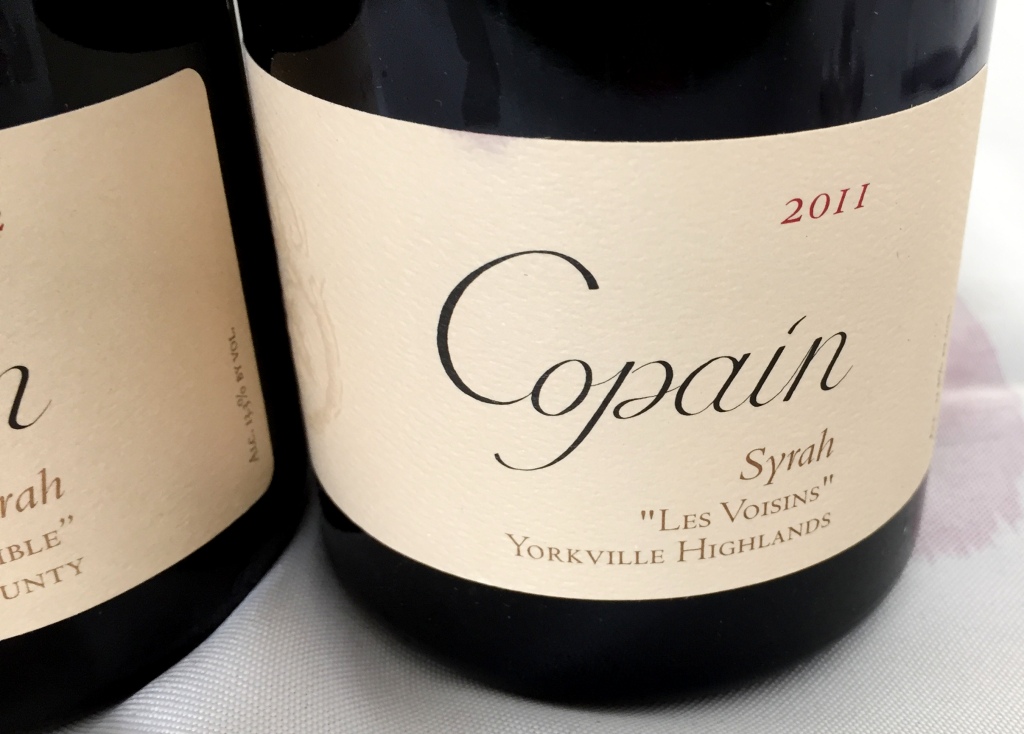
- There were lots and and lots of red wines I tasted at the event, many of them of the cult status – Sassicaia, Heitz, Shafer, Joseph Phelps and others. They were all excellent wines, but still, my absolute favorite red wine of the tasting was Copain Les Voisins Syrah Yorkville Highlands ($24.95) – the wine had stunning clarity of the Syrah, with pepper and restrained earthy profile.
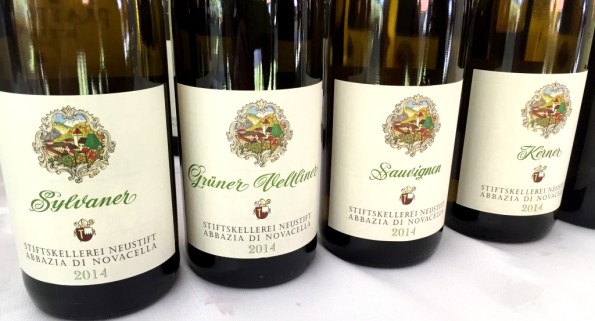
- My top pick for the white wines might be even more surprising – Villa Wolf Gewurztraminer Pfalz, Germany ($10.49!!). I personally consider Gewurztraminer a very difficult grape to do right, for sure for my palate – this wine had such a beautiful balance of spiciness, fruit and acidity, it was simply a perfect sip in the glass. There is yet another highlight which goes to the white wines. Talking about a “group”, 5 white wines from Abbazia di Novacella in Alto Adige in Italy, where literally one better than another – every sip got a “wow” reaction – Kerner, Gruner Veltliner, Sylvaner, Sauvignon Blanc – one better that the other, literally.
- Not a revelation for me anymore, but still something to ponder at – there are amazing spirits made in the USA. Case in point – St. George Spirits from Alameda, California. You know, I don’t drink vodka at all, as it has no taste, and here I absolutely loved Green Chile Vodka from St. George. And then there was Gin, Absinthe, Coffee liquor – one “wow” after another. I want to include here their motto, as written on the web site: “We don’t distill to meet your expectations, we distill to exceed your imagination“. Yep.


- Last highlight is more of a note to self – “don’t drink Port in a middle of tasting”. For sure if it is a Heitz Ink Grade Port. Okay, let me explain. Generally people have a tendency to leave tasting of the sweet wines “for later”, just to make it easier for the palate. Problem is that by the time you decide to go back to those dessert wines, the tasting is way over. When it comes to the Heitz Ink Grade Port, I heard that it is amazing, but equally powerful, so it is better to leave it “for later” – thus I never tasted it before. This time around, I said “that’s it – I’m tasting it now”. Boy, what a mistake. The Heitz Port is a very interesting wine, made from 6 noble Portuguese grapes, typically used in production of the Port – of course this time growing in California, at one of the Heitz vineyards. This Port was delicious, but it had tremendous power of tannins, multiplied by the factor of the sweet dried fruit, all together shutting down your palate for good. I was desperately searching for the chunk of Parmesan, as I don’t think anything else can restore your palate in such a case. So yes, it was delicious – but I’m not drinking it again in a middle of the tasting…


As promised, those were my highlights. From here on, prepare to be inundated with my brief notes on lots and lots of wines. I used the “+” system for rating, and I didn’t include practically any wines with the “++” rating (there might be one or two). Also, lots of wines were absolutely exceptional, so they got the “++++” ratings. Last explanation: the price in the brackets is so called Connecticut minimal bottle price – the state of Connecticut dictates minimum price at which the wine can be sold to the consumers – retailers are not allowed to go any lower than that “min bottle” price. Therefore, it is likely that prices in many stores in Connecticut will be higher than what I included here. It is also quite possible that you can find lower prices in other states. Lastly, I tried to group the wines mostly by the grape type and/or type, to make it easier for you to navigate. Hope you will find this list useful.
Here we go:
Sparkling Wines:
NV Charles Heidsieck Brut ($55.99) – ++++, yeasty!!
NV Champagne Barons de Rothschild Rosé ($99.99) – +++, excellent
NV Champagne Duval Leroy Premier Cru ($45) – +++1/2, perfect balance
NV Champagne Duval Leroy Rosé ($59.99) – +++
Chardonnay:
2013 Calera Central Coast Chardonnay ($19.99) – +++
2013 Laetitia Chardonnay Estate, Arroyo Grande ($15.49) – ++++
2013 Copain Tous Ensemble Chardonnay Anderson Valley ($18.99) – ++++, beautiful
2013 Darioush Signature Chardonnay Napa Valley ($37.99) – ++++
2013 Far Niente EnRoute Chardonnay ($39.99) – +++, very nice
2013 Flanagan Chardonnay Russian River Valley – +++
2014 Heitz Wine Cellars Chardonnay ($24.99) – +++, great acidity
2014 FARM Napa Valley Chardonnay ($18.99) – +++, nice, bread notes
2014 Hooker “Breakaway” Chardonnay Knights Valley ($14.99) – +++, great QPR
2013 Merryvale Chardonnay Napa Valley ($24.99) – ++++, wow! classic!
2014 Crossbarn Chardonnay Sonoma ($21.99) – +++, perfect
2013 Paul Hobbs Chardonnay Russian River ($38.99) – ++++, beautiful, vanilla, wow!
2013 Maison Roche de Bellene Bourgogne Blanc Vieilles Vignes ($18.99) – ++++, Chablis-like, great minerality and gunflint
2013 Gaja Rossj-Bass Langhe ($77.99) – ++++
Cabernet Sauvignon and blends, California:
2012 Darioush Signature Cabernet Sauvignon Napa Valley ($99.99) – ++++, beautiful
2012 Darioush Signature Merlot Napa Valley ($45.99) – ++++, excellent
2012 Darioush Caravan Cabernet Sauvignon Napa Valley – +++1/2
2012 Darioush Signature Cabernet Franc Napa Valley ($46.99) – ++++, excellent


2012 Nickel & Nickel CC Ranch Cabernet Sauvignon ($79.99) – ++1/2, tannic
2012 Nickel & Nickel Quarry Cabernet Sauvignon ($79.99) – +++, clean, excellent
2012 Nickel & Nickel Sullenger Cabernet Sauvignon ($79.99) – +++, excellent
2012 Flanagan Cabernet Sauvignon Sonoma County ($68.99) – +++, nice
2010 Heitz Wine Cellars Napa Cabernet Sauvignon ($45.99) – +++1/2
2009 Heitz Wine Cellars Trailside Vineyard Cabernet Sauvignon ($63.99) – ++++, clean, excellent
2006 Heitz Wine Cellars Trailside Vineyard Cabernet Sauvignon ($59.99) – ++++, excellent
2010 Heitz Wine Cellars Martha’s Vineyard Cabernet Sauvignon ($174.99) – ++++, powerful
2009 Heitz Wine Cellars Martha’s Vineyard Cabernet Sauvignon ($174.99) – ++++, beautiful
2012 Honig Napa Cabernet Sauvignon ($35.99)- +++1/2
2012 Honig Bartolucci Vineyard Cabernet Sauvignon ($62.49) – ++++, beautifully refined
2012 Hoopes Oakville Cabernet Sauvignon ($49.99) – +++, nice
2012 Joseph Phelps Insignia ($189.99) – +++
2012 Joseph Phelps Cabernet Sauvignon ($55.99) – +++


2011 Shafer Cabernet Sauvignon, Hillside Select, Stags Leap District ($178.49) – +++1/2, excellent
2012 Hooker “Old Boys” Cabernet Sauvignon Na[pa Valley ($29.99) – +++, nice
2013 Venge Scout’s Honor Proprietary Red, Napa Valley ($31.99) – +++1/2, delicious!
2013 Venge Silencieux Cabernet Sauvignon, Napa Valley ($36.49) – ++++, beautiful Cabernet Sauvignon
2010 Merryvale Cabernet Sauvignon Napa Valley ($49.99) – +++, very good
2011 Paul Hobbs Cabernet Sauvignon Napa ($94.99) – +++1/2
2011 Paul Hobbs Cabernet Sauvignon Dr Crane Beckstoffer ($128.99) – ++++, wow!


2013 Pine Ridge Napa Cabernet Sauvignon ($49.99) – +++1/2, very clean
2012 Hanna Cabernet Sauvignon Alexander Valley ($29.99) – +++, herbal
Pinot Noir:
2013 Calera Central Coast Pinot Noir ($24.99) – +++1/2, very nice
2012 Calera deVilliers Vineyard, Mt Harlan Pinot Noir (34.99) – +++1/2, nice balance
2012 Calera Ryan Vineyards, Mt Harlan Pinot Noir ($36.99) – +++
2013 Laetitia Pinot Noir Estate, Arroyo Grande ($19.99) – +++
2013 Laetitia Pinot Noir Reserve du Domaine (32.00) – ++++
2013 Copain Tous Ensemble Pinot Noir Adderson Valley ($23.99) – ++++, wow
2012 Copain Les Voisins Pinot Noir Anderson Valley ($28.99) – ++++, delicious, elegant!
2012 Wild Ridge Pinot Noir Sonoma Coast ($40) – +++, wow! concentrated!


2011 Merryvale Pinot Noir Napa Valley ($29.99) – +++1/2, classic CA Pinot
2012 Foley Pinot Noir, Rancho Santa Rosa Estate ($32.99) – +++1/2
2013 Siduri Willammette Valley, Oregon ($24) – +++, excellent
2013 Archery Summit Premier Cuvee Pinot Noir ($35.99) – ++++, beautiful
2012 Archery Summit Red Hills Estate Pinot Noir ($59.99) – ++++
2011 Maison Roche de Bellene Bourgogne Rouge Vieilles Vignes ($18.99) – +++
2011 Maison Roche de Bellene Gevrey-Chambertin Vieilles Vignes ($38.99) – +++1/2
White Wines:
2014 Heitz Wine Cellars Sauvignon Blanc Napa Valley ($16.49) – +++1/2, excellent, clean
2014 Honig Sauvignon Blanc ($15.49) – +++, delicately balanced
2013 Honig Rutherford Sauvignon Blanc ($19.99) – +++, nice, complex
2013 Merryvale Sauvignon Blanc Napa Valley ($19.99) – +++, beautiful!
2013 Archery Summit Vireton Pinot Gris ($18.99) – +++, nice
2014 Abbazia di Novacella Kerner Alto Adige ($19.99) – ++++, wow! acidity!
2014 Abbazia di Novacella Gruner Veltliner Alto Adige ($19.99) – ++++, wow!
2014 Abbazia di Novacella Sauvignon Blanc Alto Adige ($19.99) – ++++, wow!
2014 Abbazia di Novacella Sylvaner Alto Adige ($19.99) – ++++, wow!
2013 Abbazia di Novacella Praepositus Kerner Alto Adige ($25.99) – ++++, wow!
2012 La Monacesca Verdicchio di Matelica 750ml 2012 12 $144.00 $12.99
2012 La Monacesca Verdicchio di Matelica Mirum 750ml 2012 12 $224.00 $19.99
2013 Villa Wolf Pinot Gris Pfalz ($11.99) – ++++, wow! clean
2014 Villa Wolf Gewurztraminer Pfalz ($10.49) – ++++, wow! beautifully balanced!
2012 Maximin Grunhause Riesling Feinherb Mosel ($15.99) – ++++, petrol!
2014 Dr Loosen Riesling Kabinett Blue Slate Mosel ($14.99) – ++++, beautiful, bright fruit
Red Wines:
2012 Copain Tous Ensemble Syrah Mendocino County ($18.51) – +++, nice, a bit too simplistic
2011 Copain Les Voisins Syrah Yorkville Highlands ($24.99) – ++++, oustanding
2012 Shafer Relentless, Napa Valley ($84.99) – +++, very good
2012 St. Francis Reserve Merlot ($39.99) – +++
2012 St. Francis Reserve Old Vines Zinfandel ($39.99) – +++1/2
2014 Lawer “Knights Valley” Syrah Rosé ($17.99) – ++++, outstanding
2010 Hooker “Blindside” Zinfandel California ($13.99) – +++, good
2011 Hooker “Home Pitch” Syrah Knights Valley ($12.99) – +++


2012 Tenuta San Guido Sassicaia ($174.99) – +++, clean, balanced, wow
2013 Tenuta San Guido Guidalberto ($44.99) – +++, beautiful Cabernet-like
2010 Tenuta di Biserno ($149.99) – +++
2012 Tenuta di Biserno Il Pino di Biserno ($59.99) – +++, herbal profile
2012 Ornellaia Le Serre Nuove Bolgheri ($50.99) – +++1/2
2012 Gaja Ca’Marcanda Magari Bolgheri ($69.99) – +++
2010 Gaja DaGromis Barolo ($71.99) – ++++
2008 Masi Riserva di Costasera Amarone della Valpolicella ($51.00) – +++
2008 VAIO Serego Alghieri Amarone della Valpolicella ($69.99) – +++, outstanding
2006 Masi Mazzano Amarone della Valpolicella ($116.00) – ++, somewhat disappointing for the single-vineyard Masi
2008 Marchesi di Fumanelli Amarone del Valpolicella ($54.49) – ++++, delicious, sweet fruit
2007 Marchesi di Fumanelli Octavius Amarone del Valpolicella Riserva ($100.99) – +++, nice


2012 Arnaldo Caprai Montefalco Rosso, Umbria ($19.99) – +++1/2, powerful
2013 Il Poggione Rosso di Montalcino ($22.99) – +++, simple, nice
2012 Feudo Maccari Saia Nero D’Avola ($26.99) – +++, great minerality
2012 Los Vascos Cabernet Sauvignon Reserve Chile ($16.99) – +++
2012 Los Vascos Carmenere Reserve Chile ($16.99) – +++
2011 Antigal UNO Cabernet Sauvignon, Mendoza, Argentina ($15.99) – +++, nice, classic
2009 Elderton Estate Cabernet Sauvignon Barossa, Australia ($57.99)- ++++, beautiful
2009 Elderton Command Shiraz Barossa, Australia ($73.95) – ++++, beautiful, roasted notes
2013 Two Hands Sexy Beast Cabernet Sauvignon McLaren Vale, Australia ($29.99) – +++, perfect
2008 Casa Ferreirinha Vinha Grande, Douro, Portugal ($14.99) – +++1/2 – delicious
2012 Crasto Old Vine Reserva, Douro, Portugal ($34.99) – +++
2012 Chateau Musar Jeune Rouge, Lebanon ($15.99) – +++1/2, excellent
2007 Chateau Musar Rouge, Lebanon ($N/A) – +++1/2, beautiful
2012 Domaine de Beaurenard Rasteau ($17.99)- +++
2012 Domaine de Beaurenard Boisrenard Chateauneuf du Pape ($49.99) – +++, green
2013 M. Chapoutier La Bernardine ($39.99) – +++


2011 Chateau Moulin de Duhart Pauillac ($38.99) – +++
2009 Chateau La Grave a Pomerol ($55.99) – +++
2009 Blason de L’Evangile Pomerol ($74.99) – ++++
2012 Perrin Cotes du Rhone Nature Organic ($9.99) – ++1/2, an outstanding QPR for an organic red wine
2012 Chateau de Beaucastel Chateauneuf du Pape Rouge ($79.99) – +++
2011 Rust en Vrede Estate Stellenbosch, South Africa ($32.99) – +++1/2
2010 Anthonij Rupert Optima Western Cape South Africa ($26.99) – +++1/2
Dessert wines:
2013 Donnafugata Ben Rye ($30.99) – +++, very nice
NV Heitz Wine Cellars Ink Grade Port ($27.99) – ++++, wow!
Spirits:
St. George Green Chile Vodka ($22.49) – flavor is stunning, with clear presence of Jalapeño and other green earthy peppers. Sipping
St. George California Citrus Vodka ($22.49) – another wow flavor, smooth and delicious
St. George Botanivore Gin ($27.25) – mellow with super-complexity. May be the best gin I ever tasted. Definitely sipping quality
St. George NOLA Coffee Liqueur ($27.25) – good morning, sir. Here is your coffee, extra strong.
St. George Absinthe Verte ($22, 200 ml) – find it and try it, as I can’t describe it. This is first absinthe produced in US after Prohibition. Would gladly drink it at any time.
Top Highlights From Gambero Rosso Tre Bicchieri 2015
 At this point, you most likely already read a number of reviews from Gambero Rosso 2015 (here are the links for the John and Stefano posts, the two that I know of), so it will be difficult for me to add much there. Considering that lots of hard work is already done by the others, I will take an easy path and this year will limit my post only to the 10 (or so) of the personal highlights. But before we will get to those, a couple of notes.
First of all, just in case you didn’t read the other posts and in case you are not familiar with Tre Bicchieri, let me explain what Tre Bicchieri is all about. In 1986, an Italian food  and wine magazine was created under the name of Gambero Rosso (in translation from Italian it simply means “red shrimp”, and it comes after the name of the tavern in Pinocchio). Starting in 2002, the magazine introduced the rating of the Italian wines using the symbol of glasses (Bicchieri), with 3 glasses (Tre Bicchieri) being the highest rating. This rating proved to be successful and demanded, and since then the Gambero Rosso created a special event, called Tre Bicchieri, to celebrate all those best wine Italy has to offer. Tre Bicchieri events take place around the globe, and the event I attended was in New York (it was the third Tre Bicchieri event I attended in the past 3 years, all in New York).
For the next note, here comes the rant. Yes, Tre Bicchieri is a great event which gives an opportunity to taste some of the best Italian wines. But in terms of the overall organization, this is one of the worst wine tastings I ever attended. I have two major problems with the event. Just so you understand the size of the event – there were 185 producers showing between 1 and 3 wines each, which would roughly equate to 350 wines. First problem is that all the producers were not organized by the region. And they were not organized alphabetically by the producer, oh no, that would be too logical, right? Instead, the tables were arranged in the alphabetical order of the … distributors! So the wine from Tuscany stands next to the wine from Sicily. What makes it even worse is that the numbering of the tables is not straightforward, so the table #142 can be next to the table #50; to make matters even more interesting, some of the distributors who pour the wine, don’t have enough people to cover all the separate tables, so some of the tables had been simply “pulled in” to have #122 to be nested between #42 and #43 – makes it easy to find, eh?
This story was the same for the past 3 years I attended the event – but I still can’t get used to it and still find it very annoying.
The second problem was probably even more annoying, and for all I remember, it is getting worse, year after year. The problem can be expressed with one word (okay, two) – wine glasses. Puzzled? Let me elaborate. When you arrive to the event and show your registration, you get a little piece of paper, which is your coupon for the wine glass (! only at Gambero Rosso!). You come to the counter and exchange your coupon for the glass. All is good so far. Now, you start tasting, which means that white, red and even dessert wines get to be poured into the same glass – after 50 – 60 pours, the glass has traces of wine all over it, inside and outside, and what you can do at the regular wine tasting is to put your glass aside and go get a fresh glass. Makes sense, right? But not at the Tre Bicchieri. They bring best wines of Italy for a special tasting – but they can’t procure enough glasses for the people who would want to get a fresh glass to be able to do so. Believe me – I tried, was almost screamed at. I don’t remember having this problem 2 years ago; I was able to get a clean glass with the organizers intervention last year, but this year – no, was told to go away by the multiple people. Of course I appreciate been invited to the event where you can taste the best Italian wines, yes, for free – but I just think that organizers must make an effort to match the level of the wines with the overall level of the event.
Okay, I vented, so it is the end of the rant. Now let’s talk about the wines.
As you tell from the title, I want to mention here only the highlights. Before we talk about those, a few general notes.
- No, I didn’t taste all 350+ wines. May be someone did, but no, that was not me.
- There were lots and lots of truly spectacular wines, as you would expect at an event like Tre Bicchieri, where only the best wines are presented. But don’t assume that I found all wines to be spectacular. Some were just good, some were just okay, and a few I regarded in my personal notes as “terrible”. Taste is personal, and that’s okay.
- I want to reiterate it again – while there were lots of wines and wineries worth mentioning, I’m purposefully limiting this post only by 10 – they might not be all around the best, but they were the most memorable. Oh yes, these are not the wines – these are rather 10 wineries – yep, guilty as charged.
- As usual in the overwhelming tastings like this, I’m using the “plus” ratings. “+++” should stand for Excellent, but trust me, I had more than a fair share of “++++” spectacular.
Okay, now we are ready – here we go.
I want to start with one of my favorite wines which I was very happy to find at the Tre Bicchieri event – Podere Il Carnasciale Caberlot from Tuscany. This wine is made out of unique, “self-created” but officially recognized grape called Caberlot, which came to being as a cross between Cabernet Sauvignon and Merlot. First time I tasted this wine was 2 years ago, and it was a love at first sight, errr, taste. The wine is produced in minuscule quantities and only made in magnums – and needless to say, very hard to find. We tasted the following wines:
2012 Poderel Il Carnasciale Carnasciale, Tuscany – +++. excellent, old world style
2010 Poderel Il Carnasciale Caberlot, Tuscany – ++++, wow! classic Bordeaux blend, spectacular taste profile
2011 Poderel Il Carnasciale Caberlot, Tuscany – ++++, similar to the 2010, only with more tannins
There were lots of other great wines coming from Tuscany ( just think about all the super-Tuscans), so I had to limit myself in what to include in this post. Here is one more winery where I was literally blown away by the quality – Azienda Agricola I Luoghi:
2010 Azienda Agricola I Luoghi Campo al Fico, Bolgheri Superiore – ++++, wow!
2011 Azienda Agricola I Luoghi Ritorti, Bolgheri Superiore – ++++, beautiful, clean
2011 Azienda Agricola I Luoghi Fuori Solco, Bolgheri Superiore – ++++, 100% Cabernet Sauvignon, wow!, precision!
Moving from Tuscany up north to Piedmont, Michele Chiarlo was perfectly representative of the area. Yes, there were other Barolo present in the tasting, but some were boring, and some where plain undrinkable due to the tannin attack (not just attack, a juggernaut rather). This wine was just perfect.
2010 Michele Chiarlo Barolo Cerequio, Piedmont – ++++, outstanding, clean, lavender, herbs
Continuing to explore the Northern Italy, we are now moving to Trentino, where we can find one of my favorite Italian Sparkling wines, Ferrari. While Ferrari wines are very hard to find in US, they are well worth seeking. Ferrari had 3 wines presented at the Tre Bicchieri, one better than another:
2004 Ferrari Trento Brut Giulio Ferrari Riserva del Fondatore – ++++, spectacular, notes of fresh dough, bread, yeast
2006 Ferrari Trento Brut Lunelli Riserva – ++++, very unique sparkling wine, undergoing maturation process in the oak casks, silky smooth palate
2007 Ferrari Trento Brut Perlé – ++++, beautiful!
Representing Campania, a few delicious wines. First, a beautiful white:
2013 Pietracupa Fiano di Avelino, Campania – ++++, fresh fruit on the nose, perfect palate with lemon and tart apples
And then the red and the white from the Fattoria Alois:
2011 Fattoria Alois Trebulanum Casavecchia, Campania – +++, rare grape, powerful tannins
2013 Fattoria Alois Pallagrello Bianco Caiati, Campania – +++, nice, acidic, clean, with some oily notes, unique and different. Plus, a new grape – Pallagrello Bianco.
A few wines from Puglia:
2012 Torrevento Castel del Monte Rosso Bolonero, Puglia – +++-|, fruity, open, beautiful ripe raspberries
2012 Torrevento Primitivo di Manduria Ghenos, Puglia – +++-|, playful, notes of tobacco and cedar
and
2012 Tenute Eméra Sud del Sud Salento IGT – +++, very good, soft approachable, reminiscent of Gamay, chocolate mocha notes
2013 Tenute Eméra Qu.ale Salento IGT – ++++, spectacular, great palate – not only this wine was outstanding, it was also a part of the very interesting project called Wine Democracy, which is all about making great affordable wines for the people and taking care of our little planet. Great cause, great wine.


Now, I need to mention another one of my favorite Italian producers – Jermann. Jermann wines represent Friuli Venezia Giulia, and I think these are some of the most thought-provoking Italian wines you can find. And as a side benefit, many of Jermann wines will age extremely well.
2012 Jermann W…. Dreams…. Friuli Venezia Giulia IGT – +++-|, spectacular, Chablis nose, light palate
2012 Jermann Vintage Tunina Friuli Venezia Giulia IGT – ++++, complex, delicious
2013 Jermann Pinot Grigio, Friuli Venezia Giulia IGT – +++
We are already at 9, and there are yet a few more wines I have to mention. I guess I’m really bad at math and self-control. Oh well, I hope you are still with me – here are few more wines, wineries and regions.
A very interesting wine from Lazio:
2012 Principe Pallavicini Casa Romana Rosso Lazio IGT – ++++, outstanding claret, perfectly classic
And then an excellent wine from Veneto. Of course Veneto is best known for its Amarone. And those who can’t afford Amarone, should settle for the Valpolicella, often made from the same set of grapes (Corvina/Molinara etc.). I generally not a big fun of Valpolicella, as I hadn’t been successful in finding the Valpolicella wines which would speak to me. Until now.
2012 Musella Valpolicella Superopre DOCG – ++++, simple, clean, with dried fruit on the palate, excellent! Wine is produced biodynamically, and probably the most amazing part is cost, at about €5! For the price, this is simply a stunning wine.
I would feel bad if I wouldn’t have at least one wine to mention from Sicily, where volcanic soils produce unique minerally-driven wines.
2013 Cantine Rallo Beleda Alcamo Catarratto, Sicily – ++++, spectacular, touch of sweetness, full body
And we are going to finish with some sparkling wines from Emilia-Romagna. There were lots of sparkling wines at the tasting, and many of them were outstanding. However, these wines really stood apart for me, as they were produced from the grape which generally commands very little respect – Lambrusco, and they were pretty much on par with any classic Champagne.


2013 Cantina Della Volta Lambrusco di Sorbara Rimosso, Emilia-Romagna – +++, excellent, fresh, crisp
2010 Cantina Della Volta Lambrusco di Modena Brut Rosé, Emilia-Romagna – ++++, classic Champagne nose
2010 Cantina Della Volta Lambrusco di Modena Brut, Emilia-Romagna – +++, excellent!
Yep, this is the end of my report. As I said before, this is only a small excerpt from a great selection of spectacular wines – but I have to draw the line somewhere. I’m curious in your opinion if you had any of these wines. Cheers!
Wine On The Go, Spectacular Pairing, and Some Life Ramblings
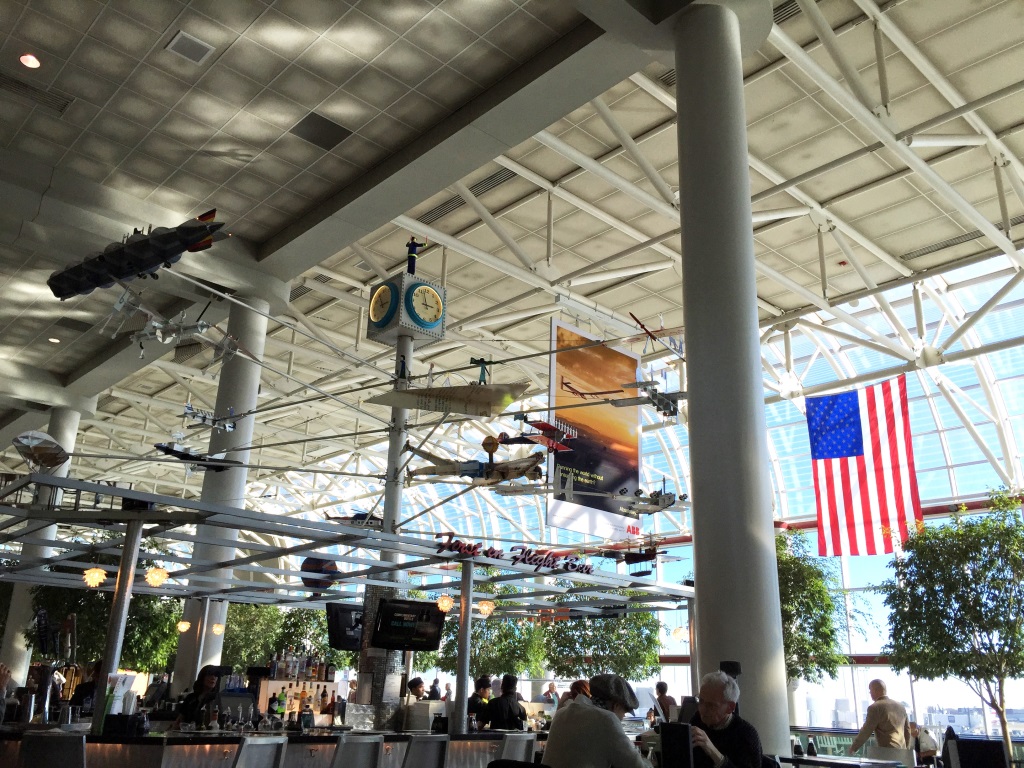 Life is an interesting thing (wow, what a deep opening thought, huh?). I was supposed to depart at 6 am on a direct flight from New York to Miami to attend the conference. Thanks to much-hyphed-but-never-really-happened blizzard, my flight was cancelled and I was automatically re-booked, now on the flight with the stop, connecting through Charlotte, North Carolina.
Charlotte. You know, there are some strong emotional words which I’m striving to avoid, whether conversing or writing. One of such words is “hate” – and I will explain the connection in a second.
I travel a lot, and I have interesting memories of the different airports and trips, some better and some worse. But – if there is an airport which I “hate”, that would be the Charlotte. The reason is simple – lots of memories of severely delayed flights, cancelled flights, indifferent customer service and even sleeping on the floor as no other options were available. Yes, I know – it is actually stupid to “hate” airport – but I wanted to explain my feelings when I saw that I’m connecting through the Charlotte.
Okay, so I have no choice (called my travel agent multiple times – no way no how, either I take the flight as it is, or just cancel the trip). Short uneventful ride to the La Guardia airport and I’m at the terminal C. It is probably been a few years since I used that terminal, so once I get through security and walking to the gate, and I’m literally saying “wow”. The terminal looks very modern, screens and everything. I stumble upon a cafe which has lots of seats, with an iPad standing in front of every seat. iPad can be used for ordering or just some limited internet browsing. The cafe features a very attractive looking menu with lots of food options, mostly written in French, the language of “love of sophisticated food”. And the wine list looks quite reasonable, both in terms of international selection and price. Yes, definitely not something I was expecting to find.
Anyway, it was kind of early for wine and I was not hungry, so this was mostly a “note to self” for next time I might be using the same airport. To my surprise, the flight departed on time (almost a miracle for the La Guardia airport), and arrived in Charlotte ahead of scheduled time.
Many times in the past while flying through the Charlotte I stumbled upon a little wine shop, more of a tasting room for the Yadkin Valley wines. My schedule never allowed me to actually visit it. Then I remember being at the Charlotte airport at the reasonable time, only to find that the store was gone. This time as I knew that I will be connecting through the Charlotte, I decided just in case to check if there are any of my favorite Vino Volo restaurants at the airport. Nope, there were none, but I found a wine bar called Beaudevin, with a number of raving reviews, including the mention in the very reputable Fodor’s travel guide as one of the 8 top wine destinations in the airports in the US. So the early arrival gave me enough time to stop by Beaudevin, which is conveniently located right in the middle of the terminal, in the section called Atrium.


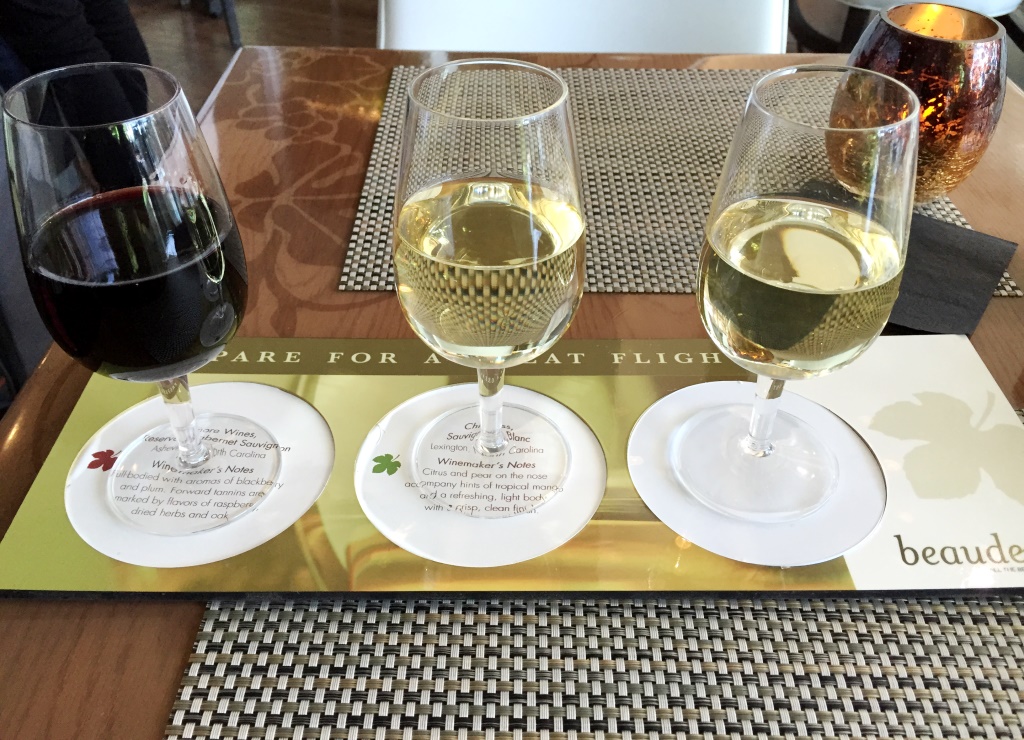
It appears that Beaudevin uses a similar model to the Vino Volo, offering wines both by the glass and as part of the tasting flights. To my delight, one of the featured flights consisted of North Carolina wines, and of course, this is what I went for.
Somehow it was stuck in my head that I recently read some rather negative reviews of North Carolina wines, so I approached these wines with a bit of trepidation. But – call it luck, fruit day or anything else, but I was rather blessed with a wonderful treat.
 https://talkavino.wordpress.com/wp-admin/post.php?post=13570&action=edit&message=10
The flight contained 3 wines, 2 whites and 1 red – Sauvignon Blanc, Viognier and Cabernet Sauvignon. I started with Sauvignon Blanc, and it was delicious, Viognier – delicious again, and then Cabernet Sauvignon – spot on! Here are the notes:
2011 Childress Sauvignon Blanc North Carolina (12.9% ABV) – Nose of white fruit, intense, with a touch of herbs, hint of fresh cut grass. On the palate, nice acidity, dry, tart, lemon notes, good minerality, medium to full body. This is an excellent summer wine – every sip makes you think of summer. Drinkability: 8-
2011 Childress Viognier North Carolina (13.9% ABV) – sweet candy on the nose, very intense, with the characteristic Viognier “perfume” showing in a distance. Compare to the nose, the wine is surprisingly restrained on the palate – hint of candied sweetness, white stone fruit, lychees. Excellent balance. Drinkability: 7+/8-
2012 Biltmore Reserve Cabernet Sauvignon North Carolina (13.6% ABV) – a welcoming nose of warm climate Cabernet Sauvignon, with sweet oak, vanilla, ripe blackberries. Very elegant on the palate, cassis, warm notes of red fruit, medium to full body, a touch of green bell peppers, luscious with soft tannins. Excellent balance. Drinkability: 8-
And now, let’s talk about the spectacular pairing. Beaudevin offers essentially a full restaurant menu – if you have a long connection, you can spend quite an enjoyable time there. As my time was limited, I decided on a Charcuterie salad (lettuce, prosciutto, dried cranberries, green beans, dried cheese), with the addition of smoked salmon.
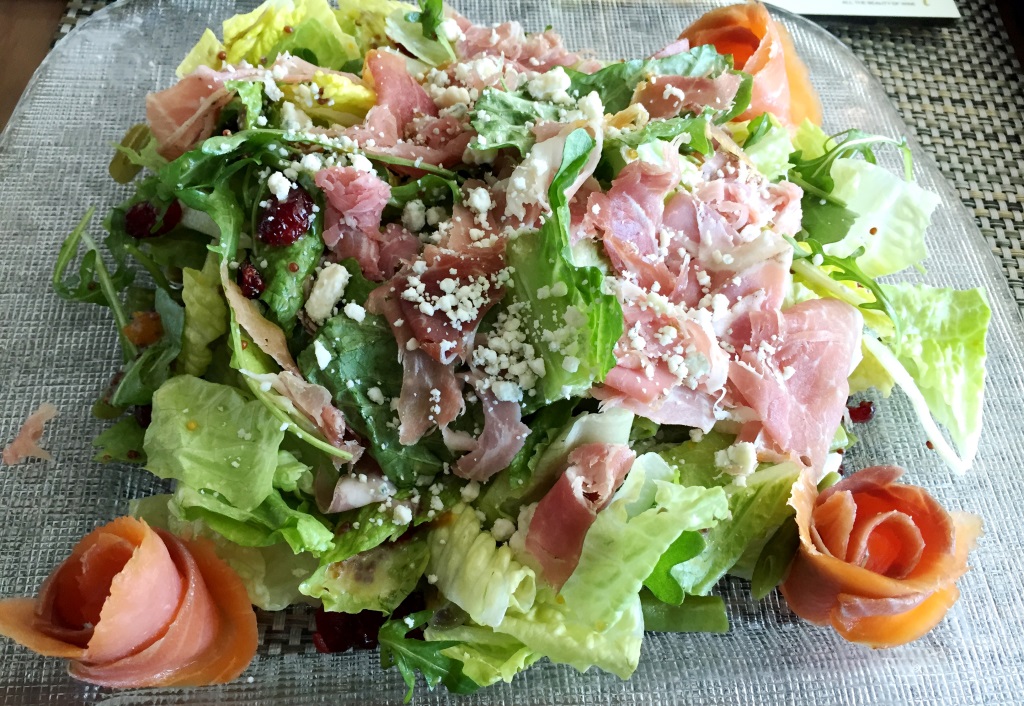
When it comes to the salad in general, I never even attempt to pair it with the wine – I believe generally it is not an easy undertaking. In my case here, I finished my “tasting” and “note taking” session, and I had the wine left, so I really had nothing to lose. I started from Viognier, and “wow” – the wine greatly complemented the sweet profile of the dried cranberries and dressing, so together it was almost a revelation. Next bite and sip, this time of Sauvignon Blanc – and yet another revelation – this time with the clean acidity cutting through the sweetness, contrasting and enhancing flavor. Last but not least, Cabernet Sauvignon perfectly complemented saltiness of the prosciutto and even smoked salmon – totally unexpected, but considering the soft and delicate profile of the wine, it was again a home run. Three wines out of three, working perfectly with one dish (salad!) – this was definitely not something I was expecting, but I’m glad I was able to experience it.
Life is an interesting thing. Cancelled flight led to the very pleasant and educational experience – life can take one thing away from us, and give us something else instead – for sure my case with this trip. Also, it is very interesting to see how the wine culture is changing in the US. From unfathomable plonk only 3–4 years ago (I would never think of ordering wine at the airport 4 years ago – beer would be my only choice), to the upscale wines and wine flights – we are definitely looking at the cultural shift, and I don’t know about you, but I’m very happy to see this happening. Heck, I might even start looking forward to my next trip through the Charlotte airport. Cheers!

The Wine I’m Willing To Drink For The Next Ten Days – Marcus by Marco Sambin
Yes, you read it right, and it is a pretty bold [personal] statement. “I will be glad to drink this wine over the next 10 days” was the first emotional reaction as I took a sip of this wine. The reason for this bold statement? Simple. The wine was ready to drink from the get go. You know how often you take a sip of wine and say “well, I think it needs to breathe a little”, or “nice, but let me give it some time”? This wine didn’t need time. Fruit, body, acidity, tannins – all present in a cohesive, as I often call it, “together” package. Instantly available. Instantly delicious.
What makes this “bold personal statement”? My reaction to the first sip was “ahh, I will be glad to drink this every day. Period”. I never experienced this before – with the best wines I had, I would still pick something else to drink the next day, even if that “best wine” was still available. With this wine – yes, I would gladly keep opening the same bottles day after day. Well, possibly that was a reaction to the fact that this was my one and only bottle.
This bottle was actually a sample, and before I will continue talking about the wine, I want to share my frustration with samples. I don’t actively solicit samples (as a general rule – but yes, with exceptions), but then I don’t refuse samples either; I always warn the submitters that the review will be posted only if I happen to like the wine. When the sample arrives, especially if it is a red wine, the frustrating cycle starts. On one hand, I need to open it sooner rather than later, as the sender is awaiting my feedback. On another hand, I treat samples same as the regular wines – I wouldn’t open wine just to take a sip and dump the rest, even if it is only a sample. And I would also make an effort to involve my wife into the tasting, and as she generally prefers the red wines, it becomes difficult to find the right time to open the bottle. All in all, I’m getting torn between the need to open the bottle and the desire to still find the right time for it. There, I let it out.
Now, this particular sample has its own story. Back in April I was contacted by the winery called Marco Sambin from Italy, inviting me to come and taste their flagship wine, called Marcus, at the Vinitaly expo in Verona. When I mentioned that I will not be attending the Vinitaly, they offered to send me a sample – however, they could deliver it only inside Italy. You know, I already said it many times in this blog – having good friends is one of the most important things in life. My dear friend Stefano, who is constantly in between US and Italy, was able to get this bottle for me (it took only about two month for the bottle to get from the Italy into my hands). It then also took me about 6 additional weeks for find the right moment to open the bottle – hence my rant about samples (see above).
Villa Contarini in Valnogaredo, from the Marco Sambin presentation
Never mind all of that. What important is that I was able to experience a great bottle of wine. Marco Sambin winery (Azienda Agricola Marco Sambin), a small 10 acres estate, was founded in 2002 in Euganean Hills area in Veneto by Marco Sambin, Full Professor of Psychology at the University of Padova. I don’t want to recite all the information from the web site – you can read it for yourself here, and these are just some of the interesting facts. Cabernet Sauvignon, Merlot, Cabernet Franc and Syrah are all growing at the estate. The estate is farmed using organic and biodynamic principles. All the harvest is done by hand, and once the grapes are sorted and destemmed , they are gently crushed and fermentation process starts using only natural yeast, each grape variety fermented on its own. After the fermentation, which lasts for about 15 days, the wine is pressed and goes into the French oak barrels (both new and used), still each variety on its own; the wine will age in oak for the next 12 month. Only then the final cuvée is blended and bottled. Once bottled, the wine will still spend 6 -12 month before it can be released. On average, only 6,000 bottles are produced every year.


And now, here are my notes about the wine itself. The 2010 Marco Sambin Marcus Veneto IGT (14% ABV, Cabernet Sauvignon 45%, Merlot 40%, Cabernet Franc 10%, Syrah 5%) had very dark garnet color in the glass. On the nose, it showed concentrated red fruit, cassis, pencil shavings, baking spices and lavender, very complex and inviting. The palate delivered delicious fruit, perfectly present but not over the top, clean acidity, supple tannins and impeccable balance. Long finish, and every sip was leaving you craving another one. Drinkability: 9
Here you have it – the wine I’m willing to drink for the next ten days. Except it was my one and only bottle, and this wine is not available in US (if you are an importer who is reading this by any chance, the winery is looking for representation in the US – you can contact them using the information on the web site, or drop me a note, I will be glad to connect you). Is there a wine you will be glad to drink day after day after day? Cheers!
Taste Of Wine – Engineering Approach
This was one of my early blog posts – almost 4 years ago, I was blogging only for about 4 month, and had probably 1.5 readers (okay, fine, may be 1.7). This is one of my most favorite blog posts in this blog, which I think is still very relevant. Therefore, as I’m incredibly behind my publishing plans, I would like to share it with you on this rainy [in Connecticut] Thursday – and of course I would love to hear your comments. Cheers!
Few Updates From Michael Skurnik Portfolio Tasting in Connecticut
Michael Skurnik Wines generally needs no introductions – one of the best wine importers and distributors in the country, with the great portfolio of wines and spirits from all over the world. A few days ago I attended a small trade tasting event here in Connecticut, and I want to share a few highlights with you. These are the wines which are either already available or about to be available in the wine stores near you, so if our palates are aligned, you might want to look for them : )
As usual for the trade tastings, my notes are short, and the ratings are done in “+” signs, from “+” to “+++”, but of course, the exceptions make our life more interesting, so “++-|” and “++++” are also possible. Also, I will list prices for all wines as SRP (suggested retail) in CT, so your local price might be different.
Here we go:
2012 Charles Smith Wines ‘Eve’ Chardonnay Columbia Valley (SRP: $12.99) – ++, nice minerality, very much Chablis-like. Not the best in the world, but excellent value.
2012 Charles Smith Wines ‘Boom Boom’ Syrah Columbia Valley (SRP: $16.99) – ++, surprisingly balanced, simple, round and spicy. Again, great QPR.
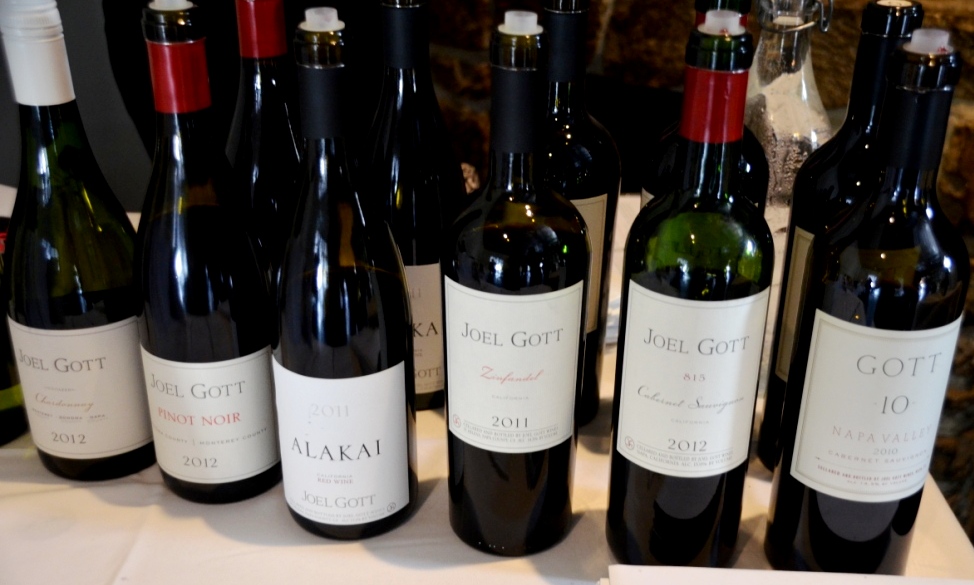
2012 Joel Gott Riesling, Washington (SRP: $13.99) – ++-|, fruit forward, nice, balanced, good acidity
2011 Joel Gott Alakai California (SRP: $18.99) – ++-|, nice Rhone-style blend with very explicit Grenache notes – nice plumpness, very round
2011 Joel Gott Zinfandel California (SRP: $16.99) – ++-|, nice, smokey
2012 Joel Gott Cabernet Sauvignon California (SRP: $16.99) – ++-|, very scaled back, good balance
2010 Joel Gott Cabernet Sauvignon Napa Valley (SRP: $47.99) – +++, classic Bordeaux style, perfectly round and clean.
2012 Charles Fournier Gold Seal Vineyard Riesling, Finger Lakes, NY (SRP: $14.99) – +++, creamy, delicious
2012 Charles Fournier Gold Seal Vineyard Chardonnay, Finger Lakes, NY (SRP: $13.99) – +++. It seems that winemakers on East Coast start getting their vibe with Chardonnay. Dry, mineral, with clean acidity – Chablis-style and very well done. And QPR? Unbeatable value!
2012 Charles Fournier Gold Seal Vineyard Cabernet Franc, Finger Lakes, NY (SRP: $17.99) – +++. I’m a sucker for a good East Coast Cabernet Franc, and this was a perfect example – bell pepper, cassis, soft and round. Try it!
2011 Januik Winery Cabernet Sauvignon Columbia Valley (SRP: $28.99)- +++. Classic Cabernet Sauvignon, perfectly expressive and round.
2012 Ramsay Pinot Noir California (SRP: $13.99) – ++-|, nice fruit, smokey and round.
2011 Robin K Cabernet Sauvignon Sonoma Valley (SRP: $15.99) – ++-|, nice and light
2012 Owens and Vaughn Cabernet Sauvignon California (SRP: $14.99) – ++-|, good fruit, cassis, acidity. Might be the best California Cabernet the money can buy under $15.
2010 Chateau Saint Julian Bordeaux Superieur (SRP: $12.99) – ++-|, nice, round, and great QPR
2012 Petit Chapeau Macon-Villages (SRP: $13.99) – ++-|, perfect Chardonnay, round and supple, and outstanding QPR
2012 Petit Chapeau Bordeaux Blanc (SRP: $12.99) – ++-|, refreshing, clean, great acidity – perfect for a hot summer day.
2010 Chateau de Clotte Cotes de Castillon (SRP: $16.99) – ++-|, classic Bordeaux at a great price
2011 David Duband Bourgogne Rouge (SRP: $22.99) – +++, excellent, classic Burgundy at a great price
2011 Domaine de L’Enchantoir Saumur Blanc (SRP: $12.99) – +++. Very unusual and interesting wine, great minerality mid-palate. Definitely worth experiencing, especially at such QPR
 And of course I saved the best for last.
2007 La Rioja Alta Vina Alberdi Rioja Riserva (SRP: $19.99) – ++++. In a word, spectacular. In another word, wow! Such a perfect balance of fruit, structure, power and earthiness which only Rioja possess. Amazing wine, and there is nothing, absolutely nothing which can beat it in the under $20 range. Go try it (I mean buy a case) and send me a thank you note…
2001 La Rioja Alta 904 Rioja Gran Riserva (SRP: $47.99) – ++++. Stunning. Same as the wine above, but mature, with different level of fruit expression. At a price? Great value in my opinion. And don’t forget that 2001 was one of the best years ever. This wine will give you lots of pleasure for many years ahead.
2010 Bodegas Cepa 21 Hito Ribera Del Duero (SRP: $14.99) – +++-|. Outstanding. Fruit and power combined – delicious rendition of Tempranillo. At $14.99? No further comments.
And we are done here. Whether you tried any wines listed here or not, I would love to know your opinion. Cheers!
Last Bottle Sign Up ($10 credit)




 Talk-A-Vino