Archive
Ah, Tempranillo!
And just like that, I almost miss another grape holiday. This time, it is Tempranillo Day!
Of course, you know this well by now – I like all the grapes. And I always say that there is one that I like the most – and every time I say it, it is a different grape.
Guilty as charged.
And yet, Tempranillo is really special.
You don’t have to read them, but just look at the names of some of my posts:
Magnificent Tempranillo
Tempranillo, Transposed
The Art of Tempranillo
Magnificent Rioja: CVNE Deep Dive
I think this qualifies as a pure expression of love, don’t you think?
I discovered the beauty of Tempranillo a long time ago, when I tasted a vertical of Rioja wines going all the way to 50+ years old. Rioja is one of my favorite expressions of Tempranillo, covered in this blog a countless number of times. Of course, Tempranillo is one of the major Spanish grapes, and it does very well in the US (Washington, California, Oregon, even the Hudson Valley), but if I can, I would always gravitate towards Rioja.
What I like about Rioja is that, in most cases, Rioja is predictable. Of course, it is great if you know the producer. La Rioja Alta, CVNE, Lopez de Heredia, Bodegas Lan, Bodegas Beronia, El Coto, Oscar Tobia – I will be happy to open a bottle with any of these names at any moment. But even when you don’t know the name, I would prefer to take my chances with an unknown Rioja rather than an unknown Chianti, an unknown Bordeaux, or an unknown Pinot Noir (oh, that might be the scariest of all).
Case in point. I’m currently in Stockholm, and at the restaurant, the wine list was short and without any names I could recognize. After an internal debate, I decided to take my chances with an unknown Rioja – and I didn’t regret my choice for a second, and neither did my dining companions.
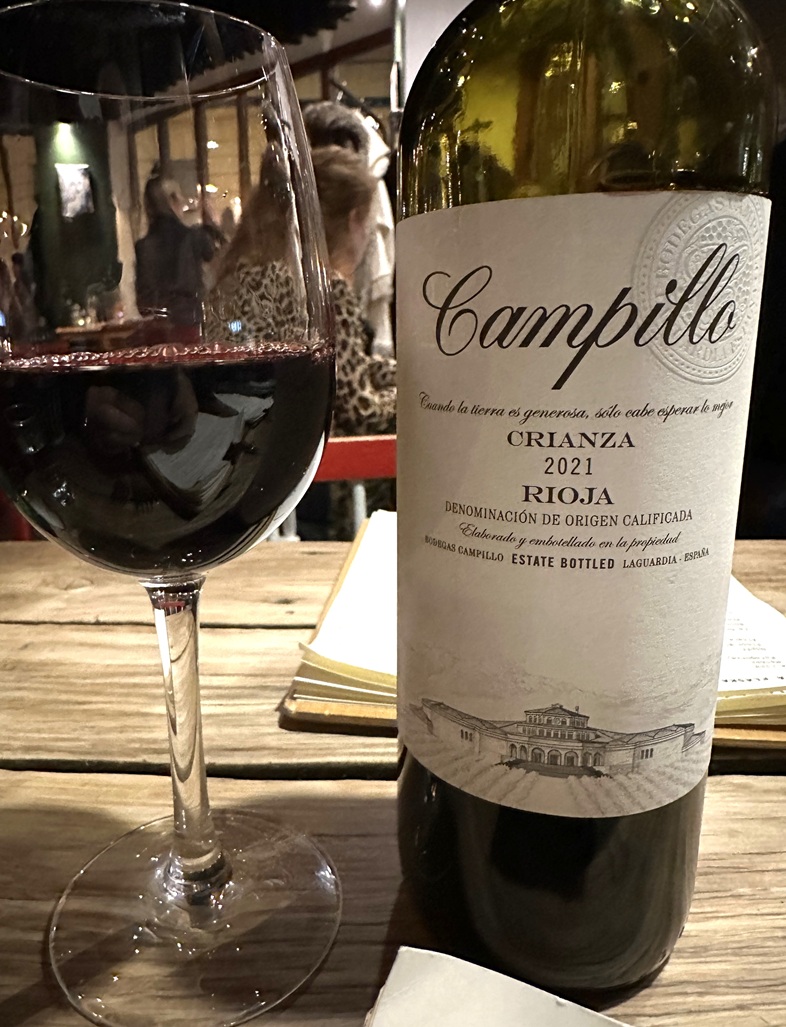
2021 Bodegas Campillo Rioja Crianza DOC (14.5% ABV, 12 months in oak) was simply delicious. Fresh dark fruit on the nose, loads of dark fruit on the palate, cedar box, cherries, silky-smooth, roll-of-your-tongue goodness, medium to full body – a pure joy. Every sip was literally accompanied by the collective “ah”. You can call it pure luck, but I trusted my tempranillo, and the tempranillo didn’t disappoint.
Here you go, my friends. A grape holiday tribute to one of my favorite grapes – and the discovery of a new Rioja name.
How are you celebrating Tempranillo?
Wednesday’s Meritage #150
Meritage Time!
In the last issue of Meritage (#149) we talked about Italian police uncovering the crime ring focused on the production of the fake Sassicaia. While essential in its own right, this should be designated as a child’s play comparing with what’s coming. This week the wine press was overflowing with the news that the most famous wine fraudster of modern time, Rudy Kurniawan, is about to be released from jail. This article on wine-searcher is full of predictions for Kurniwan spreading his wings after deportation and doing again what he does best – making fake wine. I guess we will see, but the lovers of the first-growth and DRC should probably take notice.
Tre Bicchieri Gambero Rosso tasting in New York is one of my favorite wine events to attend – this year, it was the last grand wine tasting I managed to attend before covid took the world under its blanket. I don’t think we will have an opportunity to taste the Tre Bicchieri 2021 winners next year, but at least we can read about them in the Tre Bicchieri magazine. I can give you a few of the interesting stats – for example, 46,000 wines were tasted, 467 wines were awarded Tre Bicchieri, and 1,800 wines received Due Bicchieri Rossi award. You can also read about 12 special awards such as Bubbles Of The Year which went to 2011 OP Pinot Nero Dosaggio Zero Farfalla Cave Privée Ballabio, or Meditation Wine Of The Year which went to 1976 Vernaccia Di Oristano Antico Gregori – Contini. Don’t know about you, but I would loooooove to taste Meditation wine of the year…
When it comes to wine, is 20 years a long period of time or not? Of course, it depends. In today’s world, everything is changing fast, and while particular wine in the bottle might only barely start its aging after 20 years, the same 20 years bring a lot of change to the world of wine and wine culture at large. This article by Richard Hemming MW published at JancisRobinson.com looks into some of the changes in wine production, wine consumption, and more.
You know what time of the year this is, right? Yes, the holidays are coming! While the holidays are great, they also bring with them uneasy questions – presents. Presents are difficult and finding some suggestions always helps. If you have a wine lover in your life (and you probably do if you are reading this), here is one list I can recommend to flip through – you might find some good ideas there.
Last but not least – another grape holiday is almost upon us. On Monday, November 9th, we will be celebrating Tempranillo! Tempranillo is one of my absolute favorites, whether in its Rioja, Ribera del Duero, or Toro rendition – but Tempranillo today is one of the most planted and most popular grapes in the world, so you can look for it well beyond Spain. California, Washington, Oregon, Texas, Australia all produce delicious Tempranillo wines. Get your favorite bottle ready and make sure to share your Tempranillo experiences with the world on November 9th.
That’s all I have for you today. The glass is empty, but the refill is on the way. Cheers!
Rioja Versus Rioja – Will One Tempranillo More?
The time has come for a battle, where the brother will go against the brother and the blood will spill … – oops, let’s cull the drama before it sets in – it is the wine we are talking about, and if anything will be spilled, it will be the wine – but I promise to be very careful, as red wine is not easy to get off the clothes.
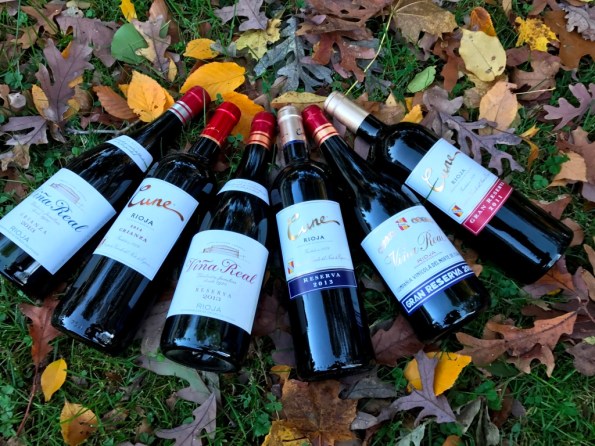
Today, in honor of the International Tempranillo Day, we will put glass to glass some of the best of the best in Rioja’s World. These wines are truly the siblings (brothers or not), as both wines are produced by Compañía Vinícola del Norte del España (the Northern Spanish Wine Company), also known as CVNE, and also sometimes referred to as Cune, due to an interesting style of writing used on the labels.
Wines were produced in Spain forever. However, the story of Rioja as we know it, started in the late 19th century, after phylloxera epidemic wiped out most of the vines in Bordeaux, but England’s thirst for Claret Bordeaux was so famous for, was at its pick. Producers in Rioja wanted to become a new source of Claret, and some of the most ambitious producers even set up their new operations right by the train station in Haro, to ensure the best transport for their wines (you can read more here).
CVNE was created by two brothers in 1879, and the ownership stays in the family even today. In 1920, Viña Real line of wines was started to produce Rioja in new, modern style. CVNE owns about 1360 acres of vineyards, located in Rioja Alavesa and Rioja Alta. Both appellations have similar soils and Atlantic coastal climate exposure, however, Rioja Alta vineyards are located at the higher altitudes than Rioja Alavesa, which shows in the resulting fruit.
Before we will enter the battle, we need to establish some ground rules, to make sure that our fighters are in the same “weight category”. The rules are not difficult: there are 4 main varieties which can be used in Rioja – Tempranillo, Garnacha, Graciano and Mazuelo (Carignan). Together, these 4 varieties should represent at least 85% of the blend or 95% of grapes are destemmed; there are few other grapes allowed to be used in the leftover percentage. Crianza wines should be aged for at least 2 years ( 6 months in the cask); Reserva – 3 years (12 months in the cask); Gran Reserva – 5 years (18 months in the cask).
Okay, now that we set the rules, let the fight begin.
Battle Crianza:


2014 Cune Crianza Rioja DOCa (13.5% ABV, $13, 85% Tempranillo, 15% Garnacha and Mazuello, appellation Rioja Alta)
C: Garnet
N: earthy smell, freshly crushed blackberries, acidity, cedar box,
P: medium body, pronounced minerality, restrained fruit, clear acidity, tart cherries, soft, round, hint of tobacco, asking for food
V: 8-, restrained and tart, definitely improved after a few hours of breathing
2013 Viña Real Crianza Rioja DOCa (13.5% ABV, $15, 90% Tempranillo, 10% Garnacha, Graciano and Mazuello, appellation Rioja Alavesa)
C: Garnet
N: surprisingly different, dark fruit, touch of tobacco, touch of sweetness
P: medium+ body, firm structure, cherries and tart of cherries pit, even brighter acidity than a previous wine, more present mouthfeel
V: 8-, a touch fruitier and more round than previous wine. Different but equally good.
Conclusion: Tie. You can definitely taste the difference – Cune Crianza is more restrained and tight, and Viña Real is more round and fruity from the get-go. Slight difference in age and vintage might play a role. The wines would ask for a different food, but otherwise, they are equally good wines.
Battle Reserva:


The Reservas match fair and square – same vintage, same age in barrel, very similar grape composition
2013 Cune Reserva Rioja DOCa (13.5% ABV, $28, 85% Tempranillo, 15% Garnacha, Graciano and Mazuello, appellation Rioja Alta)
C: dark garnet
N: medium+ intensity, leather, touch of sweet plum, cedar box, very inviting
P: medium weight, tart, acidic, a bit of sour cherries, explicit tannins. Needs time.
V: started opening after one hour in the open bottle. More fruit showed up, perfect structure, very pleasant. Excellent overall. 8+/9-
2013 Viña Real Reserva Rioja DOCa (13.5% ABV, $32, 90% Tempranillo, 10% Garnacha, Graciano and Mazuello, appellation Rioja Alavesa)
C: dark garnet
N: medium- intensity, touch of the forest floor, mushrooms, tobacco, eucalyptus
P: cherries, cigar box, medium+ presence on the palate, crisp acidity, very pronounced French oak tannins, needs a lot of time
V: more approachable than the previous one, but still should improve with time – get a case and forget it. Also a great improvement after an hour. Wow. Superb. 8+/9-
Conclusion: Advantage Viña Real. The wines are clearly stylistically different. Appellation might play a role, and the winemaking technique, of course. I slightly preferred Viña Real, as it was a bit more round versus more austere Cune.
Battle Gran Reserva:


Here we have different vintages (both considered excellent, but I think 2010 has a slight edge up over 2011), different appellations and different grape compositions.
2011 Cune Gran Reserva Rioja DOCa (13.5% ABV, $47, 85% Tempranillo, 10% Graciano, 5% Mazuello, appellation Rioja Alta)
C: dark garnet, practically black, with Ruby rim
N: dark fruit, roasted meat notes, sage, eucalyptus
P: forthcoming tannins, tar, cherry, tart, with lip-smacking acidity, really long finish.
V: 8+, within 20 minutes of opening, not ready even remotely. After about 3 hours in the open bottle, the wine became opened up enough to become delicious.
2010 Viña Real Gran Reserva Rioja DOCa (13.5% ABV, $47, 95% Tempranillo, 5% Graciano, appellation Rioja Alavesa)
C: dark garnet, just a shade lighter than the previous wine
N: more open than previous wine – blackberries, graphite, pencil shavings, cedar box, iodine
P: incomparably more drinkable, fresh cherries, open, bright, perfect structure, eucalyptus, nicely integrated tannins
V: 8/8+, you feel the need for time, but the wine is a lot more approachable
Conclusion: Advantage Cune. First, nobody should drink 2010 Gran Reserva now. It is simply a waste. Buy it at a great price, and put it aside for another 15-20 years, especially from the outstanding vintage such as 2010. Just to explain the result here, I slightly preferred the firm structure of Cune versus fruity appeal of Viña Real.
As you can see, we didn’t find a winner of our Tempranillo battle – all 6 wines Tempranillo perfectly, as one would expect from such a great producer as CVNE.
I wish wine would be the only real battle we ever have to fight – wouldn’t that be great? Enjoy your glass of Tempranillo, no matter where it came from and celebrate the noble grape of Spain! Cheers!
Celebrate Tempranillo! 2016 Edition
Tempranillo is one of the most popular red grapes in the world, requiring no introduction to the wine lovers, now even less than before. The star grape of Spain, a foundation of the timeless beauty of Rioja, finess of Ribera del Duero and dark raw power of Toro. Today (if I manage to publish this post before midnight) is International Tempranillo Day, the day when we acknowledge this early ripening grape, capable of bringing lots and lots of pleasure to the wine lovers everywhere.
I discovered Tempranillo in 2010, at the wine seminar at the PJ Wine store in Manhattan – and fell in love with it. And how you can not, after tasting 1964 Rioja Gran Reserva, which was still young and exuberant. I was seeking Tempranillo ever since, trying it at every occasion – some encounters happier than the others.
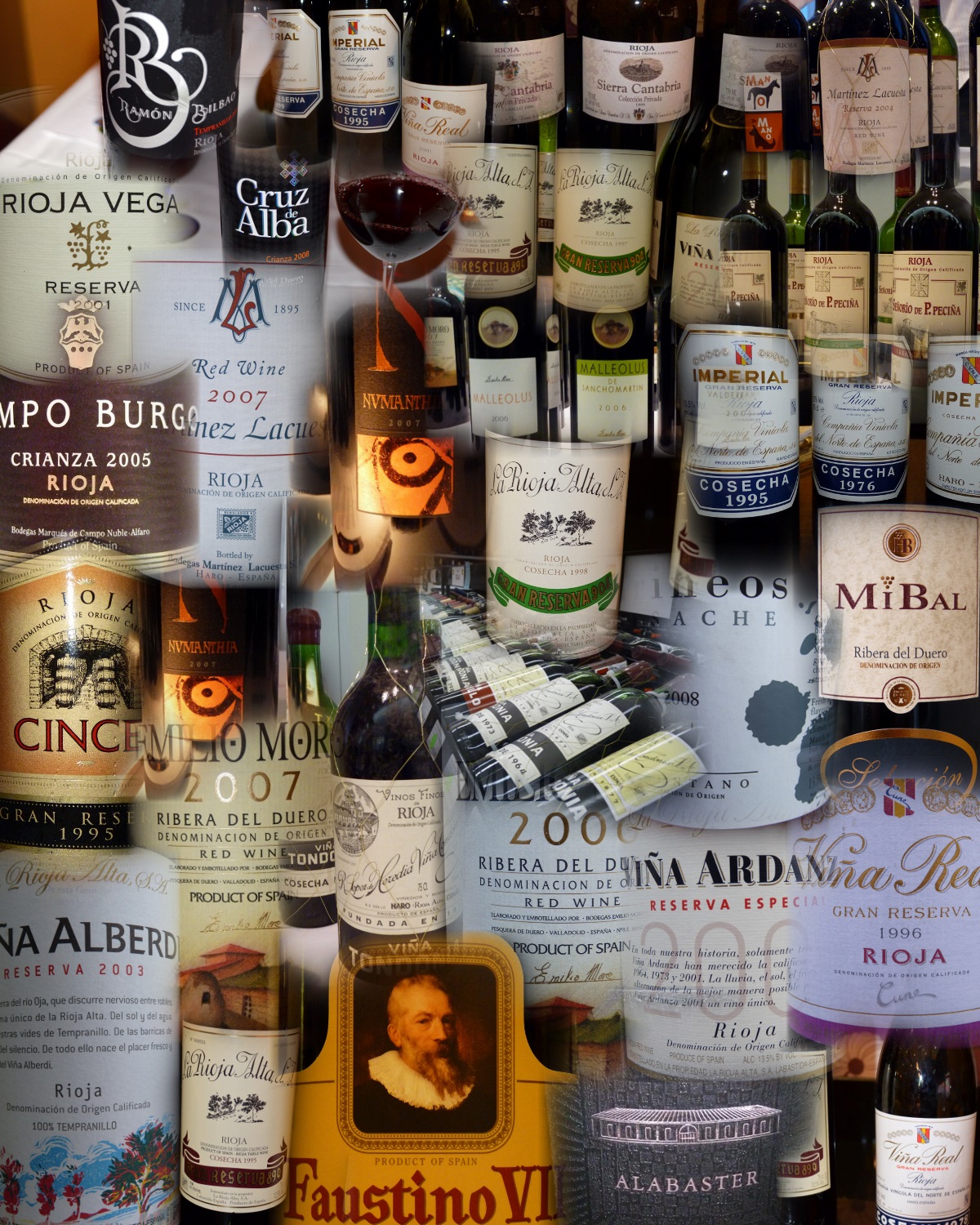
What interesting in this journey is that when I discovered Tempranillo for myself, my world was squarely limited to Spain, and even inside Spain, it was all about Rioja, Ribera del Duero and a little bit of Toro. I was always happy to celebrate the Tempranillo Day, so here is the collage which I produced based on the wines I knew, back in 2011:
 To my total delight, it appears that my Tempranillo worldview was inexcusably narrow. Texas, Oregon, Napa Valley and my newfound oenophile’s heaven, Lodi, are all producing world-class, delicious, complex, exciting Tempranillo wines. I heard about Tempranillo in Australia; never tried them, but now I’m a believer – great Tempranillo wines don’t have to be only from Spain. Thus I created a new collage, to better represent my latest discoveries:
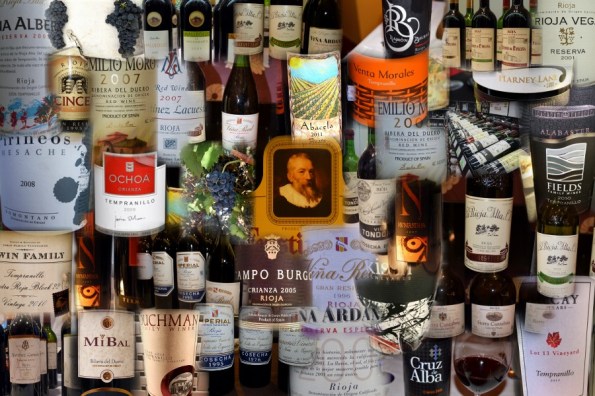 Abacela from Oregon, Duchman from Texas, Irwine Family from Napa, Bokisch, McCay, Fields, Harney Lane from Lodi – lots and lots of tasty discoveries over the past few years – I hope you had your share of Tempranillo fun too.
Do you have your favorite Tempranillo wines? Where are they from? Who is the producer? Tell the world about them. Cheers!
Celebrate Tempranillo!
I hope you are done with that celebratory bottle of Merlot from the last week, as a brand new grape celebration is upon us. This time, it is about the grape which is not as widespread as Merlot, but still a foundation of some of the absolutely best wines in the world – dark skinned grape called Tempranillo. On Thursday, November 12, we will be celebrating International Tempranillo Day, with festivities around the world as you can see at the TAPAS web site.
First and foremost, Tempranillo means Spain – Rioja, Ribera deal Duero, Toro and many other regions in Spain craft world class wines which rival in their longevity wines of Northern Rhône and Bordeaux (but still quite affordable, opposite to the latter).
Of course Tempranillo’s success is not confined to Spain only – Texas makes excellent Tempranillo wines, with some interesting efforts in California (for instance, Irwin Family – delicious!), Washington, Oregon and Australia. Tempranillo also shines in Portugal under the names of Tinta Roriz and Aragonez.
I can spend hours going through my favorite Tempranillo wines and experiences – just search this blog for “Tempranillo”, you will see what I’m talking about. Instead, I want to mention just my most recent encounter with Tempranillo wines from two weeks ago – Ramón Bilbao Rioja.


2011 Ramón Bilbao Rioja Crianza (13.5% ABV, $14, 100% Tempranillo, 14 month in oak) – open inviting nose of the fresh dark fruit with touch of cedar box. Fresh, firm, well structured on the palate, nice core of ripe cherries, eucalyptus, pencil shavings and touch of espresso, good acidity, overall very balanced. A perfect example of wine which is drinkable now, and will gladly evolve for the next 10–15 years. Also at the price – very hard to beat QPR.
What are your Tempranillo experiences? Got any favorites or celebration plans you care to share? Please do so below. And until the next grape holiday – cheers!
Pleasures of the #GrapeDay – Delicious Tempranillo
 Once again I’m confessing my love for the “grape holidays” – knowing that the day has a special dedication to the specific grape variety makes selection of the wine to drink a much easier process. It also creates a feeling of the “special moment”, thus forcing you to open that-special-bottle-saved-for-the-special-occasion. Last grape holiday, the #GrenacheDay, prompted me to open a special bottle which was a lucky occasion, as the wine was about to turn over the hill.
Two days ago we were celebrating Tempranillo, a noble grape of Spain. Tempranillo is the most planted red grape in Spain, with the best and most famous wines coming from Rioja, Ribera del Duero and Toro regions. But over the last decade, Tempranillo lost its status of Spain’s exclusive treasure – it spread all over the world, with Australia, Texas, Oregon, California, Washington and other regions producing world-class wines.
Now, to select the bottle of wine for the proper celebration, one have to go to their own cellar or the local wine store – of course, with the exception of the lucky ones who live in a close proximity of the right winery. Unless you actually live in Texas, Oregon or Washington, your chances of finding those Tempranillo wines in the store are pretty much non existent. So for me, the choice was simple – Spain. I love Spanish wines, especially Rioja – and my cellar shows that. For the most of the day, my plan was to open the Rioja bottle in the evening – I was thinking about 2003 La Rioja Alta Vina Alberdi, which I had before and it was outstanding, despite a very difficult growing year. But then many of the twitter friends stated that they plan to open Ribera del Duero wines – and it got me thinking – do I have any options? Not a lot, but I do have a few bottles of Ribera del Duero, so actually, why not?
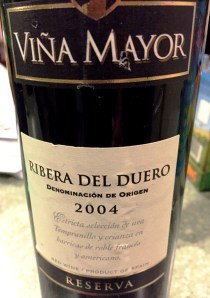
The bottle I pulled was 2004 Viña Mayor Reserva Ribera del Duero DO (13.5% ABV, ~$20). I was under impression that I wrote about this wine before in this blog – nope, I didn’t. The 2004 was an excellent year in Ribera del Duero, and Viña Mayor is an excellent producer. You put two and two together and what do you get? Five, of course! I love it when my wife takes a sip of the wine and says “wow” – one thing is to enjoy the wine by yourself, and it is totally different experience when someone else shares your enthusiasm – and it is not easy to impress my wife that much. Beautiful dark fruit on the nose, touch of herbs. The palate is just “wow” – multiple layers of fruit, touch of espresso, firm, dense, perfectly present, youthful, fresh, excellent acidity and overall very balanced. I’m glad I have another bottle – but it will have to wait for a while. Drinkability: 8+
There you have it, my friends – another successful grape holiday. How was your #TempranilloDay? Share your special moments, don’t be shy!
By the way, in case you are wondering – the next grape holiday is coming! #ZinfandelDay is on November 19th – luckily, you still have a bit of time to prepare. Cheers!
Celebrate Tempranillo!
 Today is an International Tempranillo Day 2013!
Tempranillo is an indigenous grape originated in Spain (by the way, do you know that Spain has the biggest area of grape plantings in the world?), with more than 2000 years of history. It is black, thick-skinned grape, capable of surviving temperature swings of Mediterranean climate, with very hot days and cool nights. Name Tempranillo comes from Spanish word temprano, which means “early”. Tempranillo typically ripens two weeks earlier compare to many other grapes. Tempranillo also one of the most widely planted red grapes in the world, with about 500,000 acres planted world-wide.
Tempranillo grapes are naturally low in acid and sugar content, so they often rely on blending partners to complement on both. Flavor profile of Tempranillo typically includes berries, leather (so famous in Rioja wines) and tobacco. Most famous Tempranillo wines come from Spain, from Rioja and Ribera del Duero regions, but Tempranillo is successfully growing in many other regions, including Portugal, California, Texas (up and coming star), South Africa, Australia and others. It is also interesting to note that Tempranillo is known under lots of different names (and as such, can throw some curve balls to The Wine Century club aficionados) – it is known in Spain as Tempranillo, Tinto Fino, Ull de Llebre, Tinto de Toro (this grape actually has clonal differences, similar to Sangiovese/Sangiovese Grosso), Cencibel and many others. It is known in Portugal as Tinta Roriz, Aragonez and Tinta Aragonez. But for the rest of the world it is simply known as Tempranillo.
So what is so great about Tempranillo? It has a few qualities which squarely set it on the line with the bets of the best in the wine world.
First, it has a great affinity for oak – Tempranillo wines can age and improve for the very long time in the oak barrels, and the resulting wine will pick up subtle nuances and complexity from that oak.
Tempranillo wines are very good at ageing. Best Tempranillo wines will rival best Bordeaux and Burgundy when it comes to improving with age and maintaining its youthful character. I have a first-hand account I can share with you – here is my experience with 1947 Rioja Imperial.
Last but absolutely not least in my book – Tempranillo wines are affordable! You can drink absolutely fabulous wines in the price range of $20 to $50, occasionally going into the $80+ – can you say the same about California Cabernet, or Burgundy, or Bordeaux? Not really… But with Tempranillo wines you do have this luxury. Of course there are Tempranillo wines which will cost $600+, but those are the exception, not the norm.
So what Tempranillo wines should you be drinking today, or any other day for that matter? I would love to give you a variety of recommendations, but come to think of it, I can only mention a few names coming strictly from Spain. There is nothing I can tell you about about Portuguese Tempranillo wines, as Tinta Roriz is typically blended with other grapes to produce Port. And while Tempranillo wines are made in Texas, California, Oregon, Washington and probably other states in US, most of those wines are available only at the wineries and rarely leave state limits.
But – when it comes to Tempranillo from Spain, I got favorites! Let me give you a few names of the producers – all the recommendations are personal, as I tasted many of their wines.
Rioja: La Rioja Alta, Bodegas Muga, Vina Real, Lopez de Heredia, Cune Imperial
Ribero del Duero: Emilio Moro, Vega Sicilia, Hasienda el Monsterio, Bodegas Alion
Toro: Teso La Monja, Numanthia
DO La Mancha: Bodegas Volver (one of the singularly best wines money can buy for around $15)
So I think it is the time to have a glass wine. Before we part let me leave you with a few interesting resources:
A vintage chart of Rioja wines, going all the way back to the 1925
A general vintage chart of Spanish wines, starting from 1992
A map of Spanish wine regions
And we are done here. Ahh, before I forget – Tempranillo Day now has a permanent spot in the calendar! It will be celebrated every second Thursday in November. Have a great Tempranillo Day and cheers!
Celebrate Two Noble Grapes in One Day – What Are You Drinking Tonight? #CabernetDay and #TempranilloDay
I’m honestly puzzled, but somehow September 1st had being declared an international #CabernetDay and #TempranilloDay – it feels like there are not enough days in the calendar to properly celebrate all the grapes? Anyway, it is what it is, right? And the celebration is on, which means … oh boy… you have a reason to have a glass (or two or …) of wine tonight!
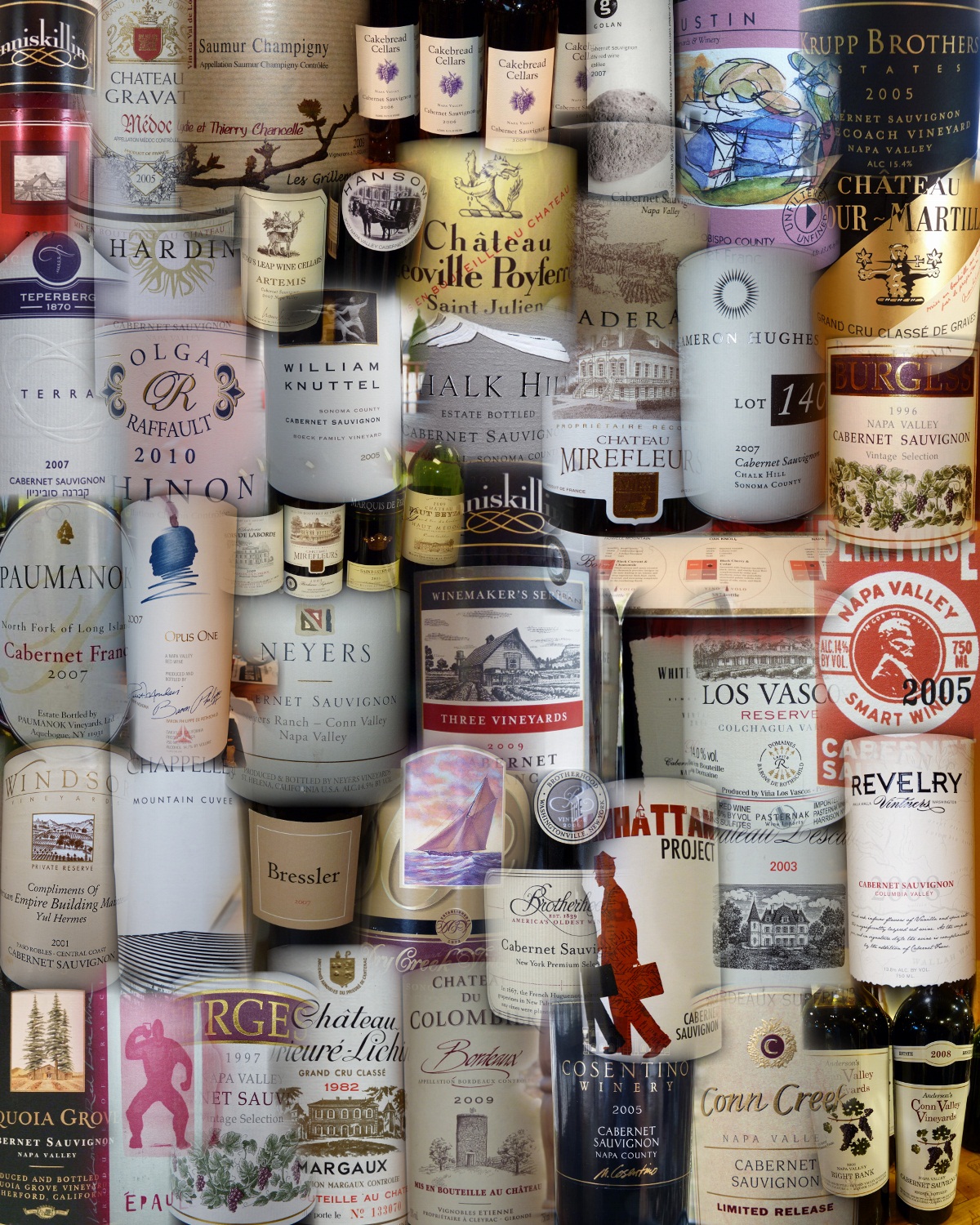
To celebrate Cabernet Day, all you need to do is to open a bottle of your favorite (or better yet, the one you never had) Cabernet Sauvignon or Cabernet Franc wine (and of course Cabernet blend will do quite well too), and then tell the world how great it was (if you will only tell your neighbor, that will also count). With abundance of choices from Bordeaux, California, New York, Washington, Australia, Canada, Italy, Argentina, Chile, Spain, Israel and pretty much everywhere else, you will have no problems finding a good bottle of Cabernet to enjoy. And instead of giving you any particular recommendations, I would like to simply reflect on some of the past experiences:
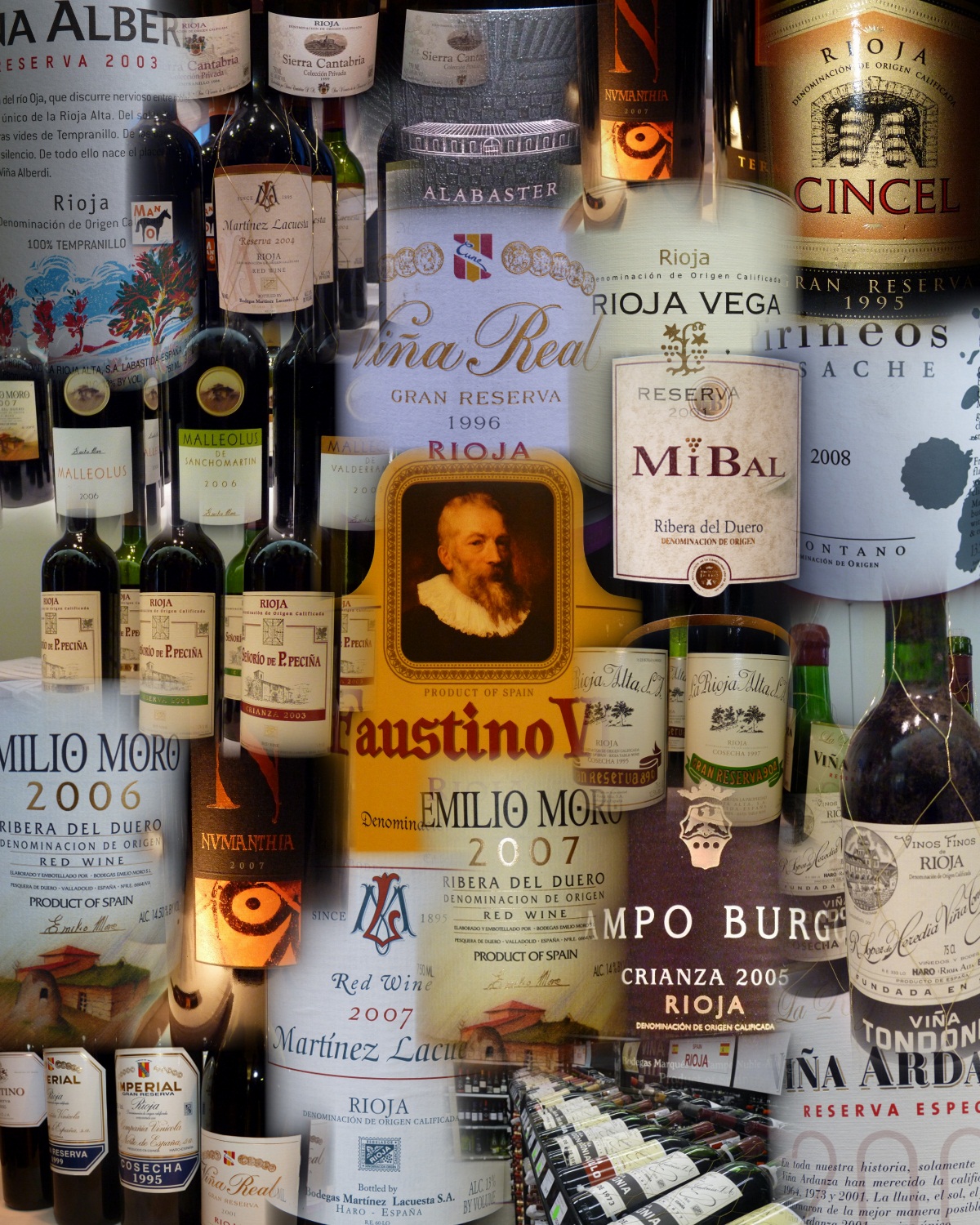
Next, we definitely should acknowledge Tempranillo, a noble grape of Spain. While this grape is slowly trickling into other winemaking regions, it is a true star in Spain, where it shines in Rioja and Ribero del Duero regions, making some of the most beautiful (and age-worthy) wines in the world. You can also find it producing good results in Portugal, however, under the names of Aragonez and Tinta Roriz. Again, no particular recommendations as to what wine to open, just some reflections here for you:
Whatever bottle you will end up opening, the routine is not new – all you need to do is to enjoy it. And if you will be kind enough to leave a comment here, I will be glad to enjoy it together with you. Cheers!
Last Bottle Sign Up ($10 credit)




 Talk-A-Vino