Archive
Moscato d’Asti – The Joy of Sharing
 Wine should give you pleasure.
This pleasure can come in many forms.
The simplest one is a pure hedonistic pleasure of that sip itself, the burst of flavor overwhelming your taste buds, and the opportunity to mindfully reflect on that very burst.
Or, with one sip of familiar wine, you can be instantly transposed in time and space – the wine can bring back memories. You can instantly imagine yourself being in Italy 5 years ago, experiencing this wine for the first time, vividly seeing the faces of the people you were there with, and reliving that beautiful moment again.
And then there is possibly the biggest pleasure of all – an opportunity to share wine with people. It is great to enjoy good wine by yourself – but that pleasure amplifies disproportionally when you pour the wine for your guests and you hear the collective “oh, it is so good!”.
I’m happy to share all of my wines with my guests, but then there are some wines that I even prefer to share. Let me explain.
I’m happy to open a bottle of Cabernet Sauvignon, Chardonnay, Syrah, any still red, white, or Rosé. Even if nobody would share it with me, I can drink it by myself over the next 2-3 days, no problem. But I would be very reluctant to open a bottle of sparkling wine for myself – I definitely prefer to share it with friends. Especially if this is a dessert sparkling wine, such as Moscato d’Asti.
I love doing that at the end of the dinner, when nobody expects that more wine might be coming. Seeing another bottle being brought up to the table, guests’ usual and immediate reaction is “what, more wine???”. This question requires no answer; I just wait for the people to taste the wine first.
Moscato d’Asti might be one of the hidden gems of the wine world, lightly fizzed, low alcohol, and deliciously, “just enough” sweet. This wine, made from the Moscato Bianco (white Muscat) grape, comes from the area in Piedmont where Moscato wines have been made for hundreds of years. Moscato d’Asti wine in its present, lightly fizzed form was born in the 1870s, when a number of winemakers started producing it in commercial quantities. Yet despite its 150+ years of history, I would still call it a hidden gem, as many winelovers are not aware of this wine or have the wrong ideas because of its sweetness.
The beauty of Moscato d’Asti is in its lightness and effervescence, and sweetness well balanced with acidity. If you want a glass of wine with your dessert, you will have to search far and wide to find the wine that would pair better with literally any type of dessert. And at a typical 5.5% alcohol level, it is guaranteed not to overwhelm your dining experience with a heavy punch of alcohol.
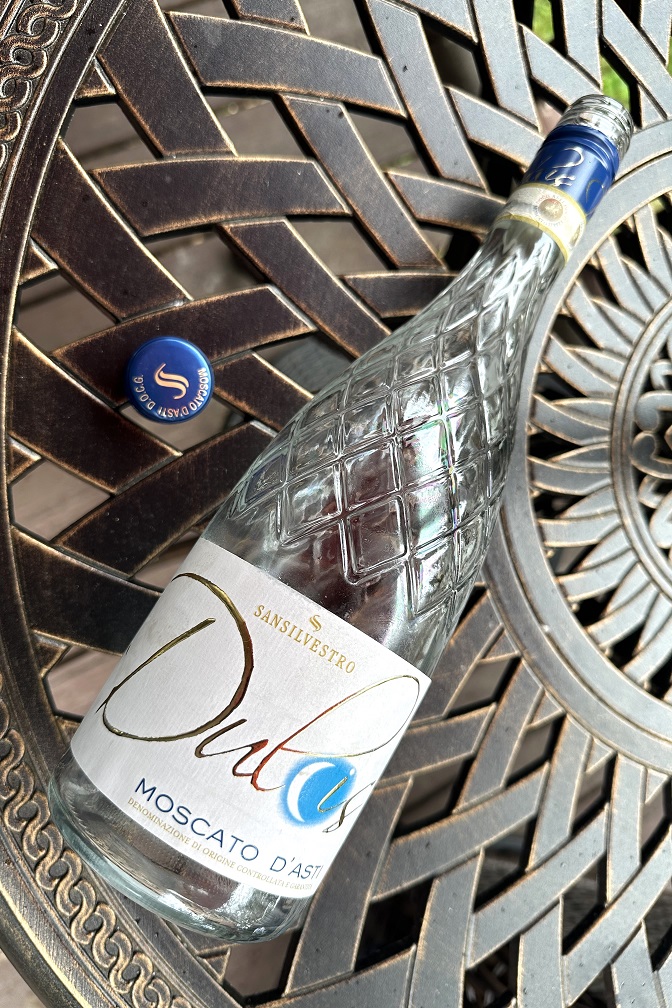
I recently had an opportunity to experience this “pleasure moment” when I opened the bottle of 2024 Sansilvestro Dulcis Moscato d’Asti DOCG (5.5% ABV) to serve with dessert. Overcoming the “what, more wine” resistance, I poured the wine for my guests and encouraged them just to take a sip. The next thing I heard was “oh my god, this is so good! Can I have more, please?” – there it is, that exact oenophile’s pleasure moment, equally as pleasant as taking a sip of the wine.
Moscato d’Asti is generally well priced, with a great selection of the wines at around $15 or less, so it definitely offers a great QPR and lots of pleasure without the need for an expense account. You should always have a bottle on hand, just in case you are craving a simple pleasure – double though considering the upcoming holiday season and all the get-togethers with friends.
By the way, on the subject of Moscato – back on May 9th, we celebrated Moscato Day (it is always celebrated on May 9th). I attended wonderful festivities in New York and never wrote about them, so if you care to see some of the images from that celebration, feel free to click “more” below.
Asti: Everyday Wine You Love To Drink But Afraid To Admit It
 Let me ask you a favor: can you please be honest with me?
No, scrap that. Can you please be honest with yourself?
When/if you read this, can you honestly answer a question for yourself: do you like sweet wines?
Be honest with yourself. This is strictly between you and you. Nobody will ever know what you will say. But if you do, have at least the courage to admit it to yourself – “yes, I like sweet wines”.
We are afraid of sugar. When we consume it, we prefer not to even think of it. We are so ashamed at the thought that someone might think we like sugar. You are supposed to hate sugar. We are supposed to enjoy things that are not associated with sugar. Sugar is bad news. Period. This is why nobody would ever want to publicly admit they like sweet wines, as they are evil.
Even if you are not afraid to admit to your affection, sweet wines are a special category. It seems that even the smallest bottle is usually too big. And by the time the dessert is served, nobody wants to drink more wine. But leaving that aside, there is a critical element for the sweet wine to be called enjoyable. I’m sure you can easily guess it, but I will give you a moment to think about it.
Got it?
That element is important across all wines, but in the sweet wines it is really critical – and this element is balance. Balance of all elements can make or break any wine, but in sweet wines, it has to be impeccable for the wine to be enjoyable. The sweetness must be balanced by acidity. If it is not, the wine becomes simply cloying, and not enjoyable (yes, I’m talking about lack of acidity in the sweet wines – never tasted the one with too much acidity). And perfectly balanced sweet wine becomes an ultimate indulgence. Perfectly balanced sweet wine is so sensual, so seductive that… well, I better let your imagination run wild.
Now, is there a way to make this sweet wine experience better? Of course – what if we will add some fizz to this perfectly balanced sweet wine? And make it affordable? And reduce the amount of alcohol – not eliminate, but simply reduce? Would you enjoy it every day? I’m sure the answer is yes. And I have a wine to suggest which will perfectly fit this profile – Asti wines from Northern Italy.

Source: Consorzio Asti DOCG

Source: Consorzio Asti DOCG

Source: Consorzio Asti DOCG
Sweet wines of notice were produced around the towns of Asti and Alba in southeastern Piedmont as early as the 17th century using a grape called Moscato Bianco. It is possible that the wines were produced even earlier, as Moscato Bianco had been growing in Piedmont as long as the Piedmont’s king was, Nebbiolo. The Classic Method of Champagne production has traveled to Piedmont and the first sweet classic sparkling wine was produced in the region in 1870. After the Martinotti method of producing sparkling wines in the tank instead of the bottles was invented in 1895 by Federico Martinotti, it quickly displaced Methode Champenoise as less expensive and significantly less time-consuming. The same method is used in the production of Prosecco. Oh, and look at these beautiful vineyards…

Source: Consorzio Asti DOCG
In 1932, Consorzio per la Tutela dell’Asti (Consortium for the Protection of Asti) was established to develop and ensure the guidelines for the production of Asti wines, known at that time as Asti Spumante. Things were going well until Asti Spumante became a victim of its own success. After World War II, American soldiers coming back were bringing light, sweet, fizzy Asti wines with them, bringing a surge in popularity. As the history of many wine regions shows (Chianti, Amarone, Australian wines at the beginning of the 2000s), such an increase in demand leads to overproduction and a dramatic drop in quality – exactly what happened with the Asti wines which subsequently lost their popularity due to poor quality.
Moving forward, Asti had to redefine itself, step by step. When Asti Spumante DOC was promoted to DOCG status in 1993, producers decided to ditch the Spumante portion of the name, becoming simply Asti instead of Asti Spumante. Producers also changed their production methods and quality controls, often moving towards a less sweet, drier style. The consortium also established a maximum yield for the grapes’ harvest and minimum alcohol levels that need to be achieved after fermentation.
While Asti wines are perfectly enjoyable on their own, they also make one of the very best food-pairing wines. Craving spicy food? Asti will work perfectly with that. Something substantial and salty? Bring on the Asti. Maybe most importantly – and uniquely – Asti wines are incomparable when it comes to pairing with desserts. If you never experienced a glass of Asti with an apple tart or a peach cobbler, you are missing on some of the greatest pleasures in life – you really should try it next time.
As Consorzio is expanding its presence in the US, I had an opportunity to sit down (virtually) with Consorzio per la Tutela dell’Asti Director Giacomo Pondini and ask him a few questions about Asti wines. Here is what transpired in our conversation.
[TaV]: What is the history of wine production in the region? Is Moscato Bianco the only grape that has been cultivated in the region? What kind of wines were produced there before the introduction of sparkling wines in 1865?
[GP]: As in many other places around Europe, the Romans have imported the wine production in Piedmont. And since then, it has thrived. Beyond Moscato Bianco, the historical grapes in the region are red varieties: Barbera, Freisa, Nebbiolo. Probably the most important step towards a more modern style of winemaking, at that time, was made by Camillo Benso Conte di Cavour. Before becoming a fundamental politician in Italian history, he devoted himself to the production of a wine based on Nebbiolo, named Barolo. In the history of Asti wines, the production of vermouth has laid the economical basis for developing the sparkling wine industry, based on Moscato Bianco grapes.
[TaV]: What is the difference between Asti Spumante DOCG and Moscato d’Asti DOCG wines?
[GP]: The main difference lies in the pressure – Asti Spumante, a proper sparkling wine, has to have at least 3.5 bar pressure, while Moscato d’Asti, which is a fizzy wine, 2.5. Then the difference lies in the residual sugar, higher in Moscato d’Asti, where sugars are less fermented and, therefore also less alcohol.
[TaV]: I understand that Asti Spumante wines can be produced using Classic and Charmat methods. What are the styles of Asti Spumante wines produced in the region, the official classification?
[GP]: The classification goes from pas dosè to sweet. Historically speaking, the sweet typology was the only one allowed until 2017, when extra dry, dry, demi-sec were introduced. From 2020, pas dosé, extra brut and brut were also authorized.
[TaV]: What are the best food pairings for the Asti Spumante wines? I know that in Sauternes in France, the region famous for its sweet wines, it is possible to have a full dinner paired with sauternes wines, from appetizer through the dessert. Is it possible to do the same with the Asti Spumante wines? If yes, can you share a sample menu for such a dinner?
[GP]: We know that in many countries Moscato d’Asti and Asti spumante are paired with a wide range of food: from the traditional desserts to cheese, from barbecue to Thai soups, to raw fish and curry.

Source: Consorzio Asti DOCG
[TaV]: What is the annual production of the Asti Spumante wines across all styles and including both DOCGs? How many producers and grape growers are in the region? Any other statistics you would want to share?
[GP]: In 2022 the annual production has reached 102 million bottles, 60% Asti Spumante and 40% Moscato d’Asti. Around 3,000 grape growers and 250 producers.
[TaV]: What countries are the main importers of the Asti Spumante wines? What percentage of annual production is going for export versus domestic consumption?
[GP]: Export covers 90% of the production, both for Asti Spumante and Moscato d’Asti. The main export markets for Asti Spumante are the USA, Russia, Great Britain, and Germany; USA by far is the most important market for Moscato d’Asti.
[TaV]: What is ahead of the Asti Spumante wines, let’s say, over the next 10 years?
[GP]: In commercial terms, an increasing presence in the Asian markets, while also growing the value and the perception. And also, a reason to visit Langhe-Roero Monferato, the area of production in Piedmont, UNESCO world heritage.
[TaV]: Sustainability and organic viticulture – are they used in the region? What percentage of the producers practices sustainable viticulture? Same for the organic?
[GP]: Around 25% of the growers are sustainable or moving in that direction. As a Consorzio we have just started the process of becoming a “sustainable territory”, a certification that involves all the grape growers and wineries in our area of production.
[TaV]: If someone had never had an Asti Spumante wine, how would you convince that person to try the wine for the first time?
[GP]: The aromatic profile of Asti Spumante, as well as Moscato d’Asti, cannot be found in any other wine. An immediate pleasure that makes these wines suited for any pairing or in any joyful moment.
I had an opportunity to taste several Asti wines of different styles – dry (it is Asti dry, not Champagne Brut Nature dry), sweet, sparkling and still. Acidity rules the pleasure in Asti wines – as long as the wine has enough acidity, all of the sweet elements – peaches, apricots, apples, pears, honey – will appear utmost delicious. As a reference, here are the wines I tasted and am happy to recommend – the first two being the most favorite:
NV Acquesi Asti DOCG (7% ABV)
NV Capetta Asti DOCG (7% ABV)
NV BOSCA Esploro Secco (dry) Asti DOCG (11% ABV, sugar 17–23 g/l)
NV Giacomo Scagliola “SiFaSol” Moscato d’Asti Canelli DOCG (5.5% ABV)
NV Bersano Monteolivo Moscato d’Asti DOCG (5.5% ABV)
NV Cascina Cerutti Siri Sandrinet Moscato d’Asti DOCG (5.5% ABV)
NV Matteo Soria Bric Prima Bella Asti DOCG Extra Dry (12% ABV)
2022 Vittorio Bear Moscato d’Asti DOCG (5% ABV)
NV Sanmaurizio SATI Asti DOCG Secco (11.5% ABV)
NV Arione Asti DOCG Extra Secco (12.5% ABV)
NV Tosti Asti DOCG (12% ABV)
NV Bussi Piero Moscato d’Asti DOCG (5.3% ABV)
Before we part, let me ask you something.
Are you convinced now that sweet wines are not evil, or do you still need more convincing? Let’s do a simple math here. A typical glass of Asti wine contains between 8 and 12 grams of sugar (dry Asti will have only about 4, but let’s leave dry Asti aside for now). That same glass of Asti, at 5% ABV, will have about 7 grams of alcohol (1 standard wine glass is 5 oz, which is equal to 142 (rounded up) grams, 5% from 142 is 7.1). According to the formulae I presented in this post, considering that 1 gram of sugar has 4 calories, and 1 gram of alcohol has 7, that glass of Asti will cost you 4*12+7*7 = a whopping 97 calories. Plus lots and lots of pleasure. Considering that a can of Coke has 140 calories, what would you choose?
The choice is yours, of course, but my choice would be pleasure. Any day. Wine should give you pleasure, this is the only reason to drink it, and Asti is good at that.
The holidays are upon us. But even between the holidays, you have to celebrate every day whose name ends with the “y”. And please promise me that you will try a glass of Asti with dessert. You owe it to yourself. Please…
Let’s drink sweet wines and to the sweet wines. There is nothing to be ashamed of. Cheers!
Brilliance of the Bubbles
 Champagne, anyone?
Well, I’m not in the mood to celebrate anything going on in the world right now. But I still drink wine, and while Champagne = Celebration is deeply ingrained in our minds, here I’m just talking about Champagne as a type of wine, the same as white, red, and Rosé. And I need to further correct myself – I’m not even talking about Champagne, the sparkling wine produced only in the Champagne region of France. The subject of today’s post is generic “bubbles”, the sparkling wine produced elsewhere in the world.
Simplistic on the surface, “bubbles” is an interesting wine category. Nobody is born craving wine, wine is an acquired taste. Bubbles might be the next level of acquired taste compared to wine, especially if we can exclude social pressure from consideration. Classic Champagne typically boasts cut-through acidity and is expected to be devoid of any traces of fruit for the joy of purists. And god forbid any sweetness can be detected in the glass… Not the wine someone intuitively craves. But this is not the biggest issue with the “bubbles”. The bigger problem is that people are well-trained to recognize the word Champagne, and once they hear that word, whether they truly love the liquid in the glass or not becomes irrelevant – “ahh, it is Champagne!”.
As anecdotal evidence, my favorite example is Kevin Zraly’s Windows on the World wine classes. The last class in the series of 8 started with Champagne. 4 wines were poured blindly to the group of roughly 120 students. After tasting all 4 wines, we were asked to have a show of hands for our favorite Champagne. I don’t remember details about wines #1, #2, and #3, but there was a somewhat equal spread between these three wines. Wine #4, however, had barely any hands raised. As the wines were revealed, Kevin Zraly said “and this is why, people, you shouldn’t drink vintage Champagne” – wine #4 was Dom Perignon, creme de la cream of Champagne world. Have we known that we were drinking Dom Perignon, I guarantee that wine #4 would be adored by everyone.
Before you get any wrong ideas, let me assure you – this is not a Champagne-bashing post. I love good Champagne as much as any other hard-core Champagne aficionado is. 2002 Pol Roger Sir Winston Churchill Champagne was my wine of the year in 2016. I have enjoyed immensely Krug, both vintage and non-vintage. Champagne Lanson, Duval-Leroy, Piper-Heidsieck, Bollinger, and on, and on, and on. But the point I’m trying to make here is that when looking for bubbles, you shouldn’t hang up on Champagne and only Champagne – sparkling wines are made everywhere today, and there are lots and lots of very worthy bubbles you can enjoy, as long as you are willing to accept that great sparkling wines don’t have to come only from Champagne.
For an example of the great bubbles from outside of Champagne, let’s take a trip to Argentina. On a world scale, Argentina arguably didn’t reach yet the status of a world-class sparkling wine producer. And for me as a wine lover, this is very good news – it means I can still enjoy sparkling wines from Argentina at reasonable prices. Just to give you an example, we can look at the sparkling wines of South Africa, known as Cap Classique. Back 3 years ago, Graham Beck Brut Rosé Methode Cap Classique, one of my favorite sparkling wines from South Africa, could be found at my local wine shop for $16.99. The price two weeks ago? $30.99. So before it happens to Argentinian bubbles, let me bring you into the know.
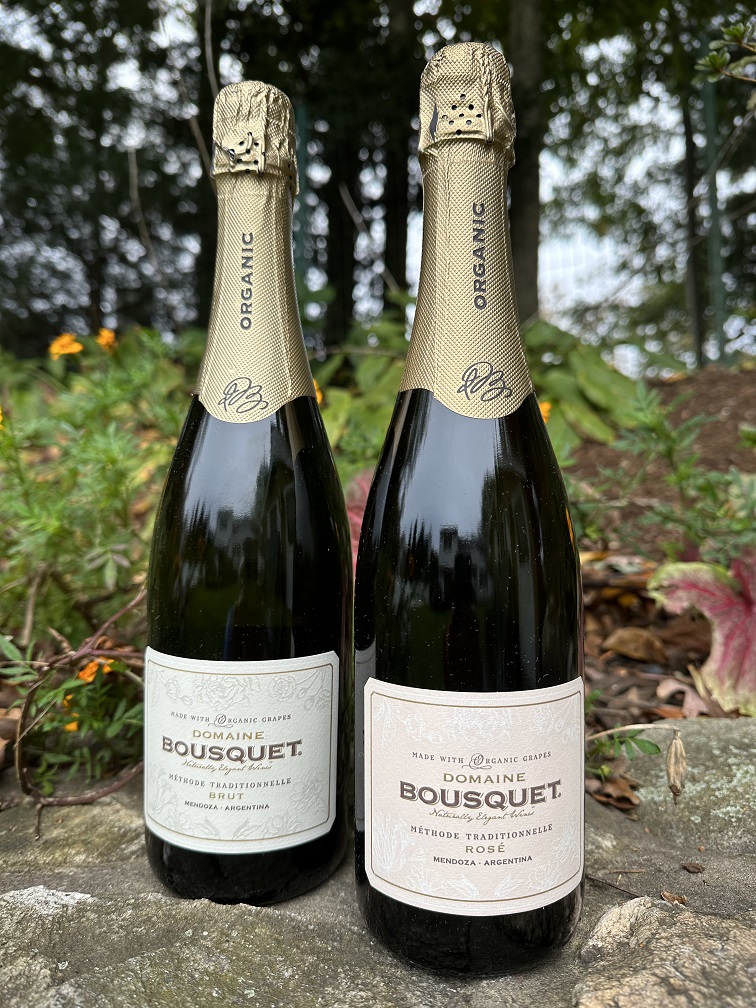
Please meet Domaine Bousquet. Well, this might not be the correct way to introduce Domaine Bousquet here – if you are reading this blog regularly (are you??) then you already met Domaine Bousquet on multiple occasions. If you look at the Domaine Bousquet website, you will see that they present themselves as the #1 organic, regenerative and sustainable winery in Argentina. When I think of Domaine Bousquet, especially after tasting their wines, my first thought usually is “how do they do it???”. As an example of “how do they do it”, Domaine Bousquet offers USDA-certified organic wines (!) called Virgen that taste great and cost only $13 as the suggested retail price. And my latest discovery in the “how do they do it” category is two of their classic method sparkling wines.
I wrote about Domaine Bousquet sparkling wines before. Those were excellent wines produced using the Charmat method (secondary fermentation in the tank), the same method that is used in the production of Prosecco. These two new wines I’m talking about are produced using the classic method, with the secondary fermentation in the bottle – the same way classic Champagne wines are produced, hence the name Classic Method, a.k.a. Méthode Champenoise, a.k.a. Méthode Traditionnelle.


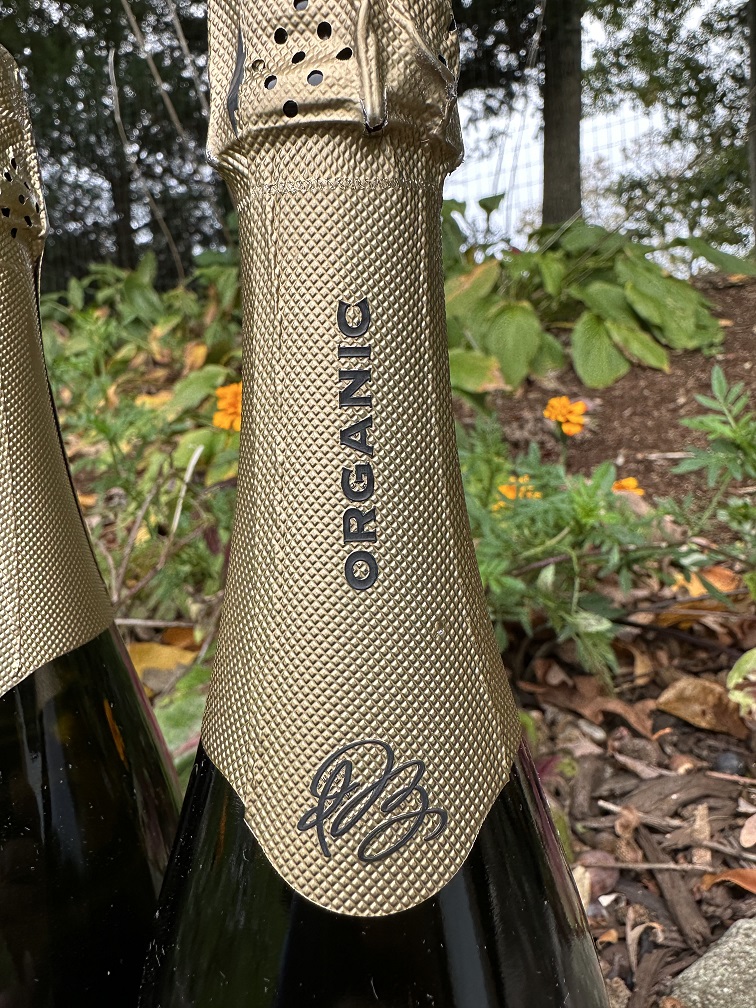
From the very first whiff, both wines were just spectacular. NV Domaine Bousquet Brut Organic Méthode Traditionnelle Mendoza Argentina (12% ABV, $18 SRP, 75% Chardonnay, 25% Pinot Noir, 6 months on the lees) had a perfect nose of freshly toasted bread, brioche and apples. The palate was followed with the same toasted bread notes, perfectly fine mousse, crispy profile with just apple notes, just a pure delight.
And NV Domaine Bousquet Brut Rosé Organic Méthode Traditionnelle Mendoza Argentina (12% ABV, $18 SRP, 75% Pinot Noir, 25% Chardonnay, 6 months on the lees) was even better – the wine had an absolute precision that only the best Champagne and sparkling wines possess. Salmon pink in the glass, freshly baked, just out of the oven toasted bread on the nose – I couldn’t and didn’t want to put my glass down for a few minutes. After appropriately admiring the bouquet, the first sip perfectly matched the expectations – fine mousse, cut-through acidity, brioche, green apples, perfect structure, impeccable balance.
If I were to pair dinner with these two wines, I would have fresh oysters and seafood with the Brut, and then a steak with the Brut Rosé – you can keep the salad.
Here are two brilliant sparkling wines from Argentina – organic and delicious. In a blind tasting, these two wines can safely challenge any Champagne or sparkling wines – and I would definitely put my money on the Domaine Bousquet wines to win the popular vote.
Taking the price into account, and the holiday season upon us, these are definitely case-buy recommendations – these wines are perfect as a gift and perfect to enjoy at any moment, knowing that you didn’t have to break the bank to get the pleasure.
Have you had these wines? What are your favorite sparkling wines outside of Champagne? Cheers!
Looking for Bubbles? Roger Goulart Got Everything You Need
 First question: how often do you crave bubbles? (My answer: almost every day).
Second question: how often do you actually drink bubbles? (My answer: not often enough. Read – once in a blue moon).
If you answered “not often enough”, here is the third (and fourth) question(s): Why is that so? What stops you?
I can only speak for myself here – I have a few reasons for not drinking bubbles often enough – price; having the right bottle on hand; not being able to finish a bottle once it is opened. Now, can we solve these problems? Let’s take them one by one.
The third problem (not being able to finish the bottle once it is opened) is the easiest problem. No, you don’t need newly minted Coravin for this. The standard Champagne bottle stopper will do the trick.
For the first and second problems – price and having the right bottle on hand – I have a simple answer – Cava.
Cava is a sparkling wine from Spain, made using exactly the same method as Champagne, with the secondary fermentation in the bottle, and aging requirements on par or even stricter compared to Champagne – minimum of 9 months for the regular Cava, minimum of 15 months for Reserva, and the minimum of 30 months for Gran Reserva. Good Cava offers a pleasure comparable to any Champagne in the same category, at half or even a third of the price per bottle, especially considering today’s Champagne prices.
If you noticed, I used the descriptor “good” in conjunction with Cava. As you can never assume that all of the Oregon Pinot Noir is equally good, all of the Riojas are equally good, or all of the Australian Shiraz are equally delicious, not all of the Cavas are equally good. So let me offer my helping hand and make a suggestion – Roger Goulart Cava will not fail you, no matter what the occasion is.
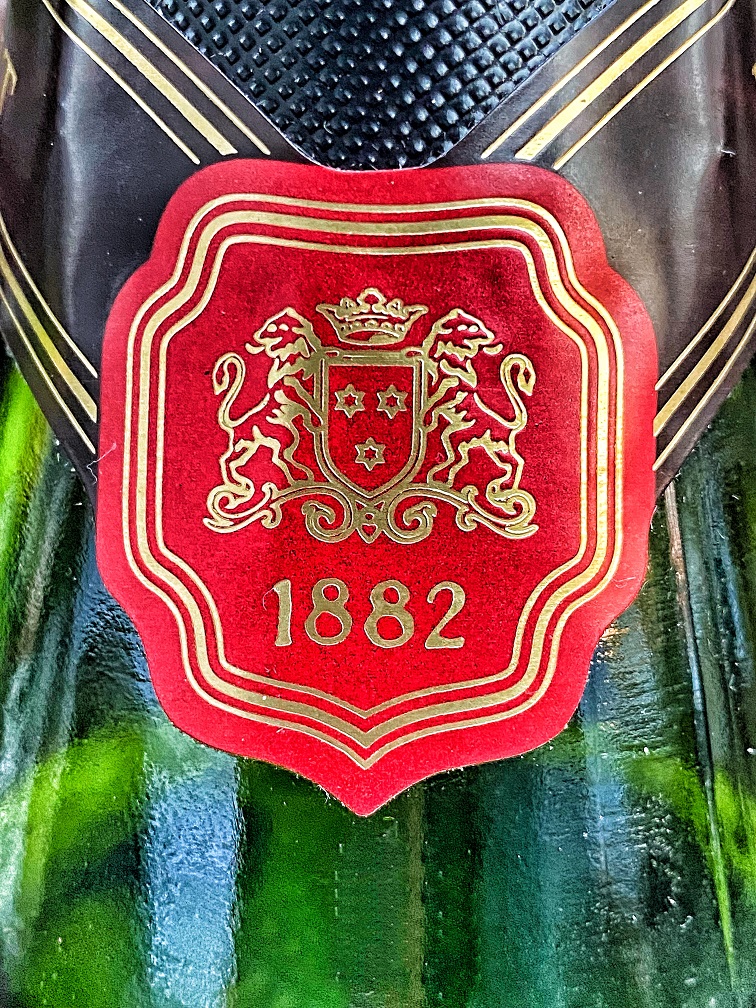
The history of Roger Goulart Cava started in 1882 when Magí Canals dug a wine cellar in the garden in the back of the house, where he started making Cava, in those days still known as Champagne. 17 years later, his son Josep bought the land adjacent to the Canals’ house from the Goulart family – we can consider that an official beginning of the Roger Goulart Cava. In 1919, a beautiful cathedral building was built by Ignasi Mas i Morell, a student of Antonio Gaudí – this became a new home of the Roger Goulart Cava. When Cava DO (destination of Origin) was created in 1972, Canals were one of the founding families. In 1997, 3,000 feet (1 km) of underground caves (more of a tunnel) were dug at the depth of 100 feet (30 meters), to provide ideal aging conditions for the Cava, maintaining a constant temperature of about 57°F-59°F (14°C-15°C).
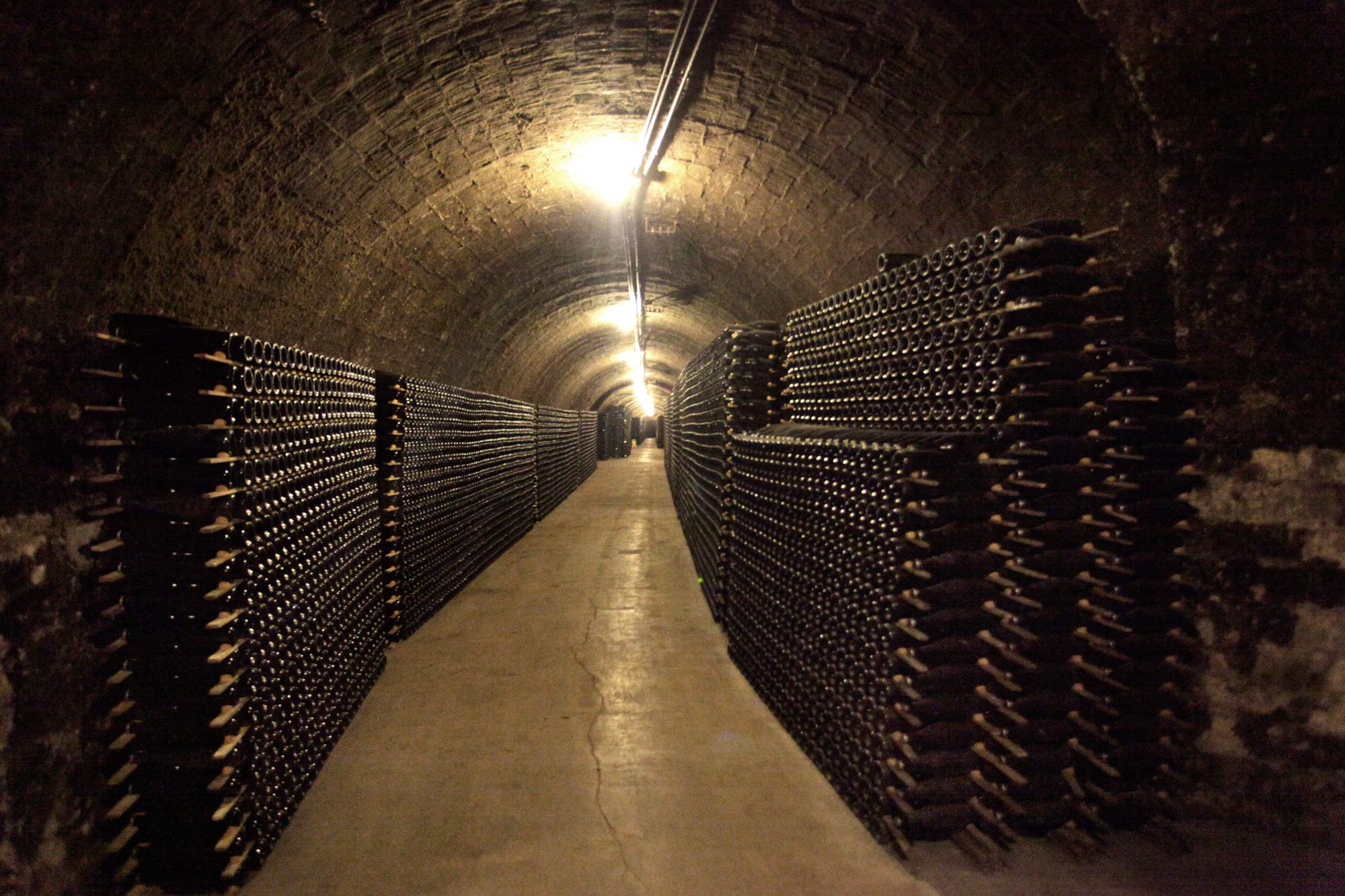
Roger Goulart Cava Caves. Source: Roger Goulart
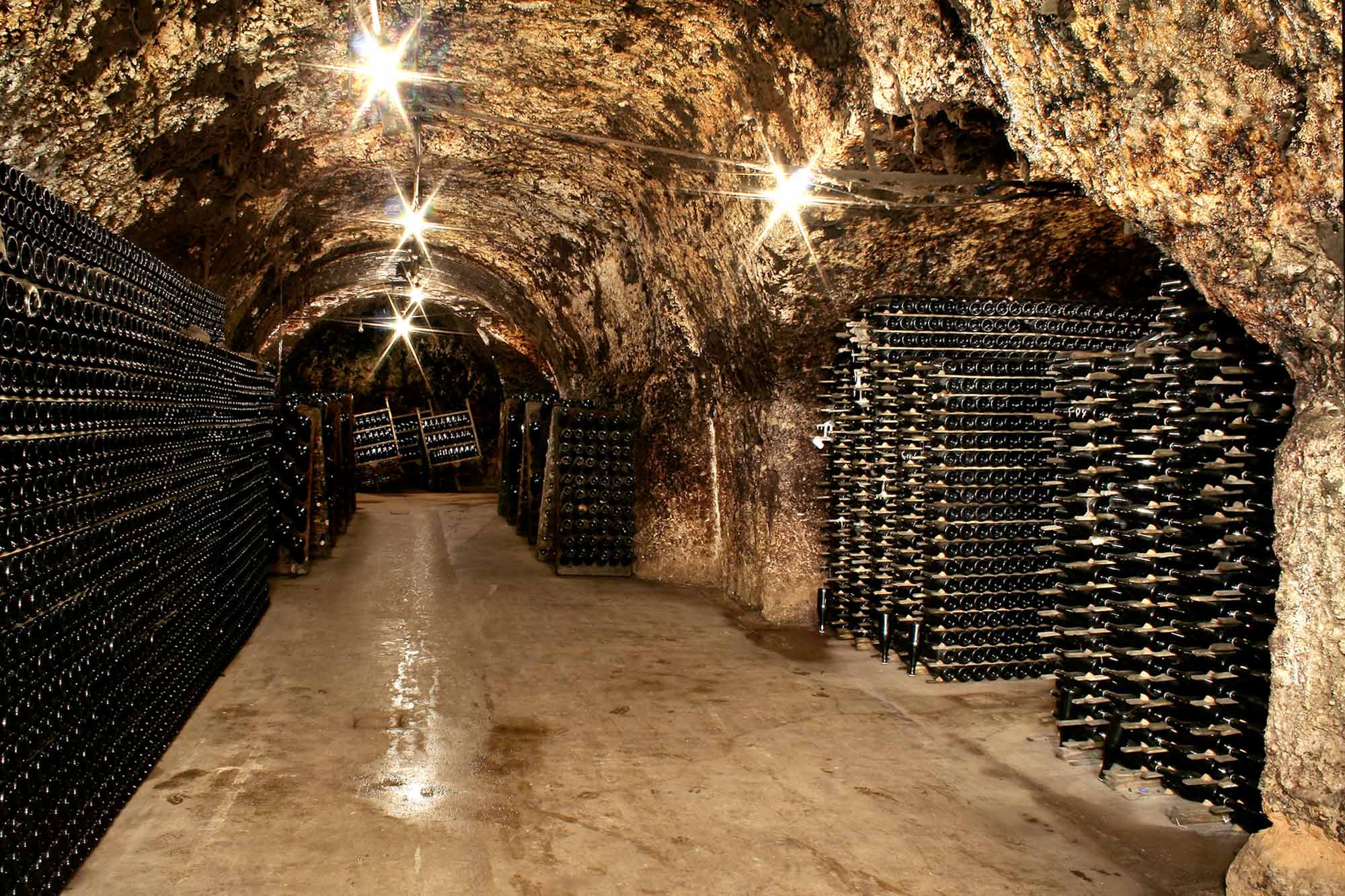
Roger Goulart Cava Caves. Source: Roger Goulart
Roger Goulart Cava offers a range of sparkling wines, including Brut Nature (zero dosage) and a range of Gran Reservas – Roger Goulart Gran Reserva cavas are actually not disgorged until the purchase order comes in, to ensure the freshest possible wine being delivered to consumers. The majority of the non-Rosé Cavas are made with three traditional varieties – Xarel·lo, Macabeo, and Parellada, but some of the Cavas might also include Chardonnay. The Rosé Cavas are primarily Garnacha driven, with the addition of other red grapes (Pinot Noir, Monastrell). The new Cavas are also produced from certified organic grapes, so we should expect to see more of Roger Goulart Cavas made with those in the future.
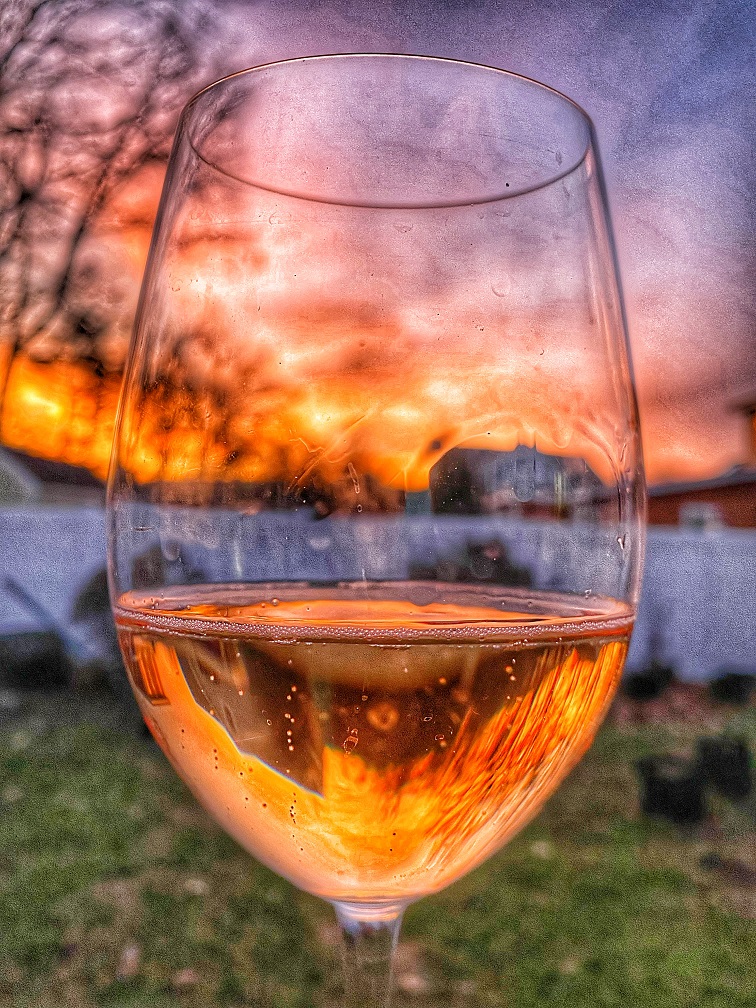
I had an opportunity to taste 4 different Cavas, and even catch a beautiful winter sunset with one of them (as you will see below in the picture). What was surprising to me was the level of freshness across all four wines – the 2012 and 2018 tasted equally fresh. Another interesting tidbit was the fact that the older Cavas, also been Gran Reservas, benefited from additional breathing time. I used the stopper I mentioned before, and I actually enjoyed those wines even more on the second day out of the refrigerator.


Here are my notes for what it is worth:
2018 Roger Goulart Cava Reserva (12% ABV, $19.99, 50% Macabeo, 35% Xarel-lo, 15% Parellada, min. 15 months in the bottle, organic grapes)
Fine bubbles
Freshly toasted bread on the nose, a hint of apples
Perfect amount of yeast, toasted notes, crisp, fresh, creamy mouthfeel.
8, excellent. Great with food (had it with salami and cranberry encrusted goat cheese)
NV Roger Goulart Coral Cava Brut Rosé (12% ABV, $19.99, 70% Garnacha, 30% Pinot Noir, min. 9 months in the cellar, bottled in December 2016)
Fine bubbles, beautiful salmon pink color
A hint of brioche and strawberries on the nose, nicely restrained
Toasted notes, toasted bread, creamy mouthfeel, delicious.
8+, outstanding.
2014 Roger Goulart Cava Brut Rosé Gran Reserva (12% ABV, $19.99, 85% Garnacha, 15% Monastrell, min. 36 months in the cellar, bottled in March 2015)
Deep reddish color
A touch of toasted bread notes.
Dry, concentrated, a hint of fresh bread, needs time to open up, then crisp and fresh.
8, very good, better on the second day
2012 Roger Goulart Cava Brut Gran Reserva (12% ABV, $19.99, 60% Xarel-lo, 20% Macabeo, 20% Parellada)
Toasted bread, clean, fresh
Perfect balance, apple, a hint of toasted bread, cut-through acidity, tight, vibrant, full of energy, would perfectly compare to any champagne in a blind tasting. Most likely, would beat the competition.
8+/9-, I loved it even more two days after the bottle was opened. Superb.
As you can see all of these Cavas are priced the same, and at $19.99 they are worth every penny, as the comparable Champagne will be at least in the $45 – $50 range. And the great thing about this pricing is that you can choose the wine based only on how you feel at the moment, and not on the price.
The holidays are upon us, but with or without the holidays – every day deserves a glass of bubbles. Try Roger Goulart Cavas and send me a thank you card later. Cheers!
Everyday Bubbles – Domaine Bousquet
In my wine lover’s journey, bubbles were never essential. I grew up with only sweet sparkling wines available, and I still have no idea if those wines were even made out of grapes. Plus, the bubbles were strictly associated with only a celebration – New Year, maybe a big birthday, and a wedding. I have no idea what was the first Champagne I ever tasted, but the first Champagne I actually appreciated was vintage Krug, and ever since I have a full appreciation for a tasty glass of bubbles – and no, I didn’t become “Krug or nothing” zealot.
I can imagine drinking Champagne every day. No, let me take that back. I can imagine drinking Champagne on any day I crave bubbles – yes, this is a better way to put it, as drinking Champagne every day would quickly become really boring. However, while I have no issues with the imagination, drinking Champagne at will is hardly practical. I can find a tasty bottle of still wine for around $10 – no matter what “premiumization” trend dictates – but most of the drinkable Champagne today pushes the $40-$45 boundary (unless you find your success on WTSO) – and this is hardly an “at will” range for me. If you are craving bubbles but want them to be reasonably priced, you can find better luck with Prosecco or a Cava, but you better know producers by name.
And here I come, extending my helpful hand, to bring to your attention delicious bubbles which you really – and I mean it, really – can afford to drink on any day. And not only to afford but also to enjoy. Cue in Domaine Bousquet Charmat-method sparkling wines from Argentina, made from organic grapes and priced at a whopping $13 – and this is the suggested retail price, which means you can probably even find them in the stores for less.
Before I will share my impressions of the wines, let’s take a quick look at the Domaine Bousquet, the product of vision, obsession, and dedication. “Vision, obsession, and dedication” are not just words. In 1990, during his vacation, Jean Bousquet, a French third-generation winemaker, fell in love at a first sight with the high altitude remote area in Argentina – Gualtallary Valley in the Tupungato district of the Uco Valley in Mendoza. You really need to have vision and dedication to leave your country and buy 1,000 acres of essentially a desert (real estate broker told Jean Bousquet that he is making a mistake of his life) – you would probably think so too if you will look at the picture below:
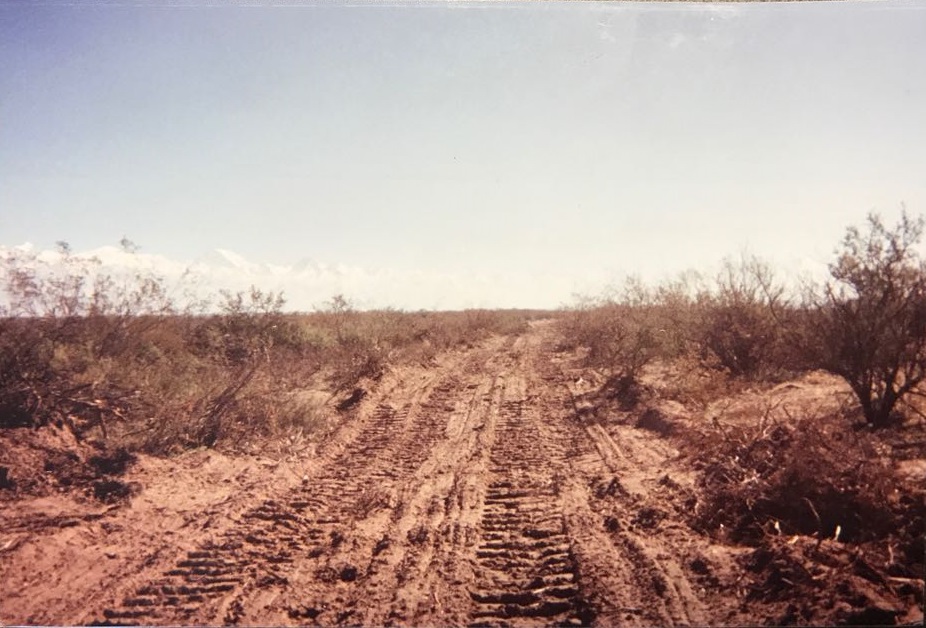
Source: Domaine Bousquet
Jean Bousquet had a vision and dedication, and most importantly, he knew what he is doing, he knew the importance of water and proper irrigation. You would never tell that the picture below represents the same land today (also note that today Gualtallary Valley represents one of the most expensive farmlands in all of the Mendoza):
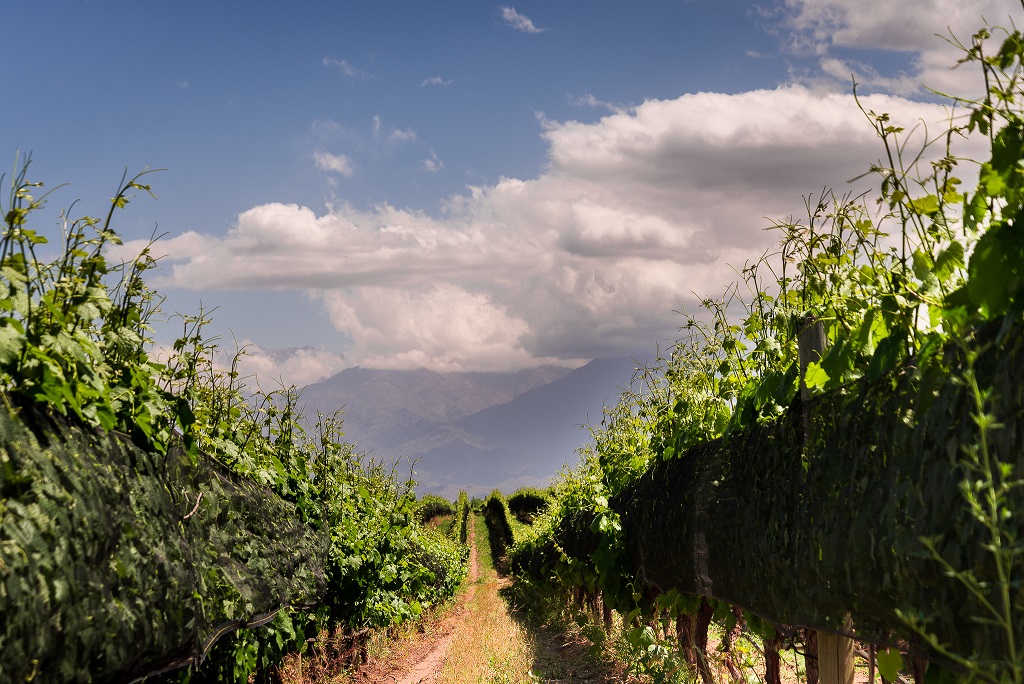
Source: Domaine Bousquet
Fast forward to today, Domaine Bousquet sustainably and organically farms 667 acres of land, produces 50 million liters of wine, 95% of which is exported to 50 countries around the world, and ranks among the top 20 Argentinian wineries in terms of export and a leader in the organic wine.
The winery produces a large range of still wines from traditional Argentinian varieties – Chardonnay, Malbec, Cabernet Sauvignon, etc, and it also offers a series of sparkling wines, both traditional method and Charmat. I got samples of Charmat-method wines, both white and Rosé, made from the Chardonnay and Pinot Noir in different proportions.


NV Domaine Bousquet Brut Tupungato Uco Valley Mendoza (12.5% ABV, SRP $13, 75% Chardonnay, 25% Pinot Noir, certified organic, vegan friendly) offers a nice fresh nose of golden delicious apple, crisp, fresh, energetic on the palate with cut-through lemony acidity. It is definitely enjoyable by itself and will play nicely with a wide range of dishes (Drinkability: 7+).
NV Domaine Bousquet Brut Rosé Tupungato Uco Valley Mendoza (12.5% ABV, SRP $13, 75% Pinot Noir, 25% Chardonnay, certified organic, vegan friendly) is a beautiful Rosé in its own right. It is not only the color, but it is also the wine which presents itself as a classic still Rosé would, with a nose of fresh strawberries and a full range of strawberry flavors on the palate, from tart to candied, perfectly balanced, fresh, vibrant, and full of life (Drinkability: 8-/8). Out of the two, Rosé was definitely my favorite.
At $13, these are the bubbles that you can consume any day without feeling guilty. You should, actually, feel guilty while drinking these wines, as the amount of pleasure you will derive is unproportionally more than what you are paying for them. But I will let you deal with your conscience, while I’m off to look for more values. Cheers!
Bubbles for the New Year 2019
I pride myself with not discriminating against any type of wine – white, red, sparkling, Rosé, dessert, fortified, $2, $10, $100 – doesn’t matter.
In theory.
In reality, most of the days, I drink red. And wish that I would drink more white and bubbles. Especially bubbles.
But luckily, we have at least a few holidays in the year, where the only appropriate choice of wine [for me] is bubbles. New Year’s Eve is absolutely The One – bubbles all the way.
As with all the holidays, a little prep is involved – the word “little” is a clear exaggeration, as deciding about the wine is mission impossible around here. However, this year it was easier than usual. Shortly before the New Year day, I received a special etched bottle of Ferrari Trento, the oldest Italian traditional method sparkling wine and one of my absolute favorites (I wrote about Ferrari many times in the past), so it was an easy decision regarding the bubbles to ring the New Year in with. I also wanted to start the evening with some vintage Champagne but considering that nobody was thoughtful enough to send me the gift of Krug Vintage, I had to settle for whatever I already had in the cellar. And then there was a bottle of generic French sparkler (non-Champagne) “just in case”.
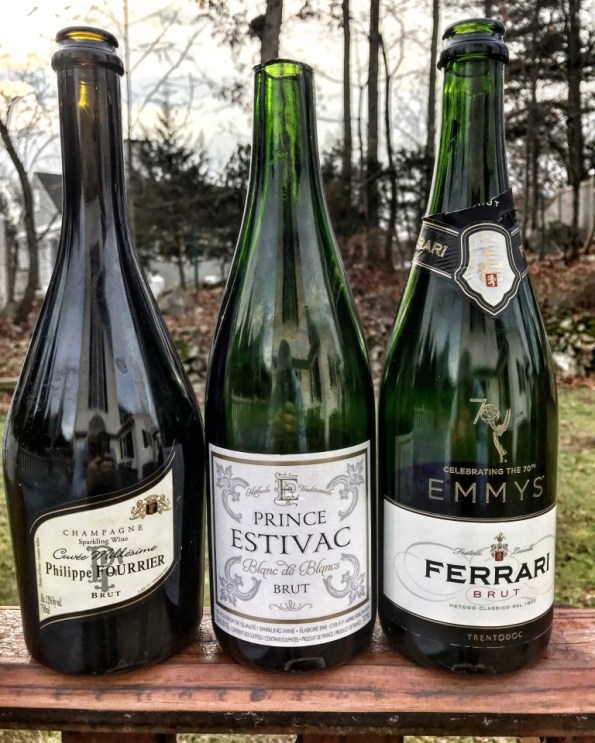
2008 Philippe Fourrier Cuvée Millésime Brut Champagne (12% ABV, $29.99 WTSO) was outstanding, just a perfect sip to start the holiday evening right. It had just the right amount of yeast and toasted bread notes on the nose, just enough to enjoy without going overboard. Apple and lemon notes on the palate, round, fresh, elegant, perfect balance – just a beautiful wine (Drinkability: 8+). It was also a steal at the price (seems that the wine is no longer available at WTSO).
The vintage Champagne disappeared in no time, it was still long before the apple would start its slide down in the Times Square, so the generic French sparkling wine was next. The weather outside was far from ideal for the New Year’s Eve (non-stop heavy rain) but it didn’t stop me from the pleasure of sabering the bottle into the darkness – worked like a charm even with the wine glass, unlike the #$%^ (insert your favorite expletive) with the saber at the French Laundry.
The NV Prince d’Estivac Blanc de Blancs Brut Vin Mousseux de Qualite (12% ABV, $13.99 WTSO, Melon de Bourgogne 50%, Ugni Blanc 25%, Chardonnay 25%) was excellent in its own right – fresh and vibrant, with rich mouthfeel, touch of a fresh apple, a bit bigger body than a typical Champagne – delicious in every drop (Drinkability: 8). It was also interesting learning for me as I’m not really familiar with “Vin Mousseux de Qualite” designation. It can be used for any French sparkling wine made with the traditional method. I’m assuming with the Vin Mousseux de Qualite designation the grapes can come from anywhere in France, where all of the Cremant wines (Cremant de Alsace, Cremant de Loire, …) require the grapes to be from the defined geographic area – if I’m wrong, please let me know in the comment.
Last but not least the time has come for the NV Ferrari Brut Trentodoc Emmys’ Special Edition (12.5% ABV, $24, 100% Chardonnay, 24+ month on the lees). Ferrari wines generally don’t disappoint, and this one was not an exception – crips, bright, bubbly (pun intended), good minerality, cut through acidity – sparkling wine worth any celebration (Drinkability: 8).
Of course, there was more than just the wine – New Year’s Eve is calling for a full table – here is a fragment of ours.
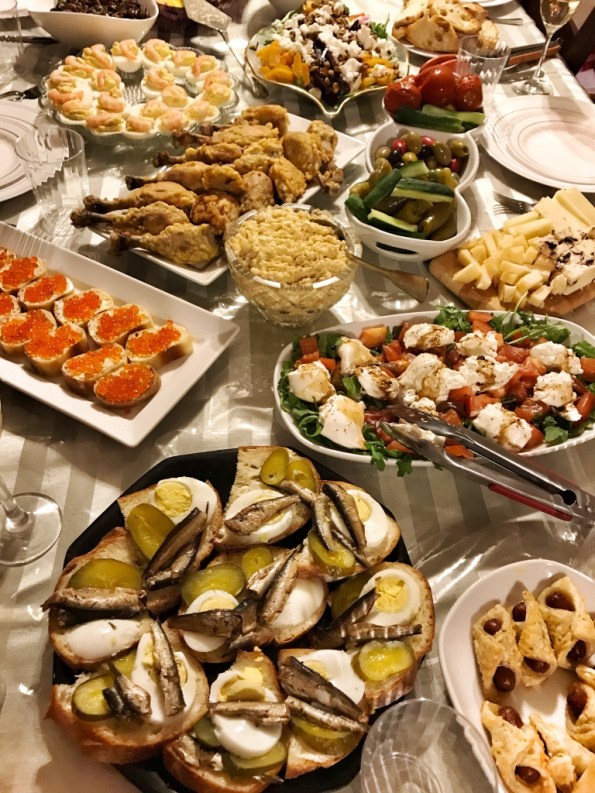
How did you celebrate the arrival of 2019? What were your bubbles of choice? Cheers!
Franciacorta: Unique, Different and Authentic
“Sir, I will be very happy to work with you to improve the quality of your wines, but I have one request”, said young oenologist. “What is it?“ said Guido Berlucchi, the man famously known throughout the whole Franciacorta for his aristocratic, elegant lifestyle. “I would like to make Champagne here, in Franciacorta”.
The year was 1955, and young oenologist’s name was Franco Ziliani. Guido Berlucchi, while may be surprised, was not shy of taking the risk, and Franco Zeliani got to work. First vintages were a total disaster – awfully tasting wines, blown up bottles. But in 1961, the patience and perseverance paid off, and first 3000 bottles of the Franciacorta sparkling wine came into being.
Mr. Berlucchi invited his influential friends from Milan to try the wines, and they all happened to like it. The new chapter in the Franciacorta history was opened.

Map of Franciacorta region
The wine was produced in Franciacorta literally forever. The land surrounding Lake Iseo from the south was strategically located along the trade path between Turin and Rome. In the 11th century, the monks created a special zone called Curtefranca to encourage land development and commerce – “Curte” in this case represents “land”, and Franca, while sounds related to France, has nothing to do with it – it simply means “free of taxes” in Italian. The primary focus in Curtefranca was agriculture, and can you imagine agriculture in Italy without making the wine?
As the time went on, the Curtefranca became known as Franciacorta – however, the Curtefranca name didn’t disappear and since 2008 it is a designation for Franciacorta still wines.
That first 1961 vintage at Berlucchi became a turning point for the whole region which was before mostly known for its red still wines. Producers started changing their ways and make sparking wines, and Franciacorta DOC was established in 1967 with 11 sparkling wine producers. Franciacorta became first DOC in Italy to require all sparkling wines to be produced by the metodo classico. In 1990, the Consorzio per la tutela del Franciacorta was formed and became a major regulatory body for sparkling wine production; in 1995 Franciacorta was awarded a DOCG status, top level of quality for the Italian wines. Starting from August of 2003, Franciacorta became the only region in Italy where the wines can be labeled only as Franciacorta and not Franciacorta DOCG – similar to the Champagne where the word AOC doesn’t appear on the label.
If you are like me, I’m sure you are dying to hear a few more facts. Today, Franciacorta comprise about 7,500 acres of vineyards and produces about 15,000,000 bottles per year; there are about 200 grape growers in Franciacorta, 116 of them produce their own wines. 65% of all the vineyards are organic, and conversion to organic methods continues.

Chardonnay, Pinot Noir and Pinot Blanc are the only permitted varieties in production of Franciacorta, with Pinot Blanc being somewhat of a bastard child, as the grape is even more finicky to properly produce than Pinot Noir – while some of the producers phasing it out (e.g. Berlucchi), the others love the perfumy bright character which the grape can impart on the resulting wines.
Franciacorta’s climate is very conducive to getting grapes ripen perfectly. The climate is generally mild, with consistently warm summer days. The Lake Iseo creates a cooling effect during the summer nights, helping grapes to reach the levels of phenolic ripeness which is very difficult to achieve (if not impossible) in the Champagne. During winter, the lake provides a softening effect, protecting vines from the very low temperatures.


Unquestionably Champagne was an inspiration for the ways and means of the Franciacorta sparkling wines – as expected if you use metodo classico production. However, Franciacorta is largely moving past the “Champagne copycat” status and actively seeks and creates its own unique style, not only by stricter aging requirements (both non-vintage and vintage Franciacorta must be aged on the lees for longer than the Champagne in the same category), but by the whole method of production – for instance, by using only stainless steel tanks for the fermentation or relying much less on blending and more on the quality of the grapes from the given vintage.


Franciacorta is obsessed with quality. It starts in the vineyard, where even if not certified, most of the grapes are growing as organic. New vines are often planted at a very high density, to force the roots to go deep down as they have no room to grow to the sides. The yield is well limited to about 4 tons per acre. All the grapes are harvested by hand (this is a requirement of Franciacorta DOCG). The grapes are cooled down before the pressing – and in the case of Ca’del Bosco, one of the premier producers in the region, the grapes are even washed and then dried, using specially created complex of the machines.
Getting the grapes into the winery is only the beginning of the quest for quality. We talked to many winemakers, and they were all repeating the same words – “gentle pressing”. There is a tremendous focus on gentle handling of the grapes, using various types of presses. Arturo Ziliani, the son of Franco Ziliani, who is in charge of winemaking at Berlucchi, gave us the best explanation. “Think about a lemon. Cut it, and right under the skin, you will see the white layer – pith. When you quickly juice the lemon, lots of that pith ends up in the juice, rendering it cloudy – and adding bitterness and extra acidity. If we would juice the lemon slowly without destroying the pith, the resulting juice would be clear – and lemonade would need a lot less sugar to make. While much thinner, grapes also have the layer of pith right under the skin – and when we press the grapes, we want to avoid crushing it as much as possible”.
Even gentle pressing alone is not enough. Franciacorta regulations allow up to 65% of grape mass to be pressed. Most of the winemakers press less, at around 50%, in some cases even limiting only by 30%. At all stages of the process, there is a great effort to protect grapes and wine from oxidation; such focused handling also allows to greatly reduce the levels of added SO2 – while the law allows up to 210 mg/liter, many winemakers limit it at only 50 mg/liter.
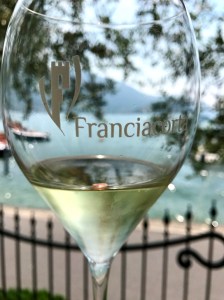
Obsession with the quality. Attention to detail. How do you drink your bubbles? The flute, you say? Where you ever able to perceive the full bouquet of your sparkling wine through that small opening on top of the flute? Well, leave the flute for Champagne, but if you want to enjoy Franciacorta, you will have to dump it (whatever way you see fit) and upgrade to something better – an official Franciacorta glass. It is specifically designed to enhance the visual and sensual qualities of your bubbles in the glass. The shape allows concentrating the aromas. And the glass is specifically made with the slight imperfections at the bottom to help form beautiful bubble traces better (perfectly polished glass doesn’t allow bubbles to form).

Obsession with quality. Attention to detail. Passion. So what makes Franciacorta unique, different and authentic? It is all of the above. Franciacorta is a unique place, with its own terroir, its own ways of making the wines, and really its own, authentic sparkling wines. Franciacorta shouldn’t be compared to Champagne, for sure not anymore, not based on the tasting of 50 or so wines during our 5 days there. Well, maybe except one thing – similar to Champagne, it should be simply called by the name. You will make all hard working Franciacorta producers very happy next time at a restaurant, when you will have a reason to celebrate (and every new day is enough reason in itself), by simply saying “Waiter, please bring Franciacorta, the best one you got!”
Celebrate with Ferrari!
Would anyone argue that holidays are better with Ferrari? Both of eponymous Italian hallmarks of quality would greatly enhance one’s holiday, but one of them – the car – is a bit less accessible to the general populace, so let’s talk about the one which is – sparkling wine from a beautiful region in the Italian Alps – Trento.
More than 100 years ago, Guido Ferrari recognized the potential of the green slopes to grow world-class Chardonnay. While Chardonnay is an undisputed star of the still white wine, its swan song might be delivered best with the bubbles. Champagne comes only from Champagne, but Méthode Champenoise is successfully used around the world to produce sparkling wines easily rivaling Champagne in quality.
This is what Guido Ferrari set out to do in 1902 – produce world-class sparkling wines – the task which he completed successfully. As Guido Ferrari had no direct heirs, in 1952 he sold the winery and vineyards to the Bruno Lunelli, a friend and wine merchant. Now in the third generation, Lunelli family proudly continues Ferrari traditions into the 21st century.
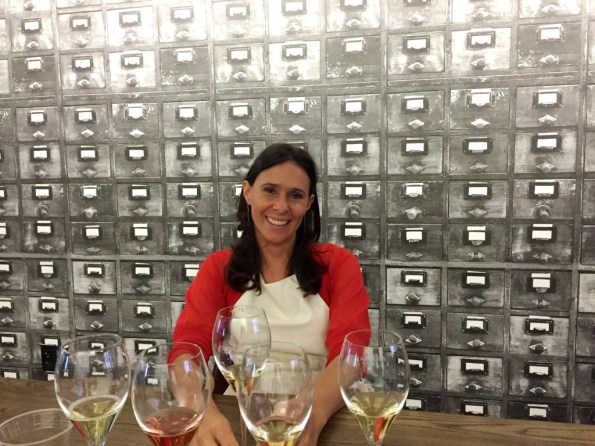
Earlier in the year, I had a virtual conversation with Marcello Lunelli, a winemaker at the Ferrari winery – you can find that post here. Then during summer I had an opportunity to meet, talk to and taste the wines together with Camilla Lunelli, Managing Partner at Ferrari, who visited New York on the occasion of attending The World’s 50 Best Restaurants Awards ceremony, where Ferrari was sponsoring The Art of Hospitality Award (it went to Madison Eleven restaurant in New York city). As we combined conversation with the tasting of the wines, I want to share here my brief notes about both the winery and the wines we tasted.
Today Ferrari is producing about 2 million bottles per year. They are working in close cooperation with the network of 500 growers and employ 8 agronomists who work literally around the clock to ensure the quality of the grapes. All Ferrari vineyards are certified organic, which is something not to be taken lightly – think about the work required to convince 500 growers to change their ways, to adapt Best Practices developed by Ferrari and get certified (it took most of the growers between 3 and 5 years to change). Talking about the vineyards, an interesting side note: Trento is a mountainous region, and all Ferrari vineyards are located on the slopes which provide for large temperature shifts between day and night, which is significant for the development of the Chardonnay grapes.
Italy is the biggest market for Ferrari sparkling wines. However, when I asked which market is the next big one after Italy, I got a surprising answer – it is Japan! (Yeah, I knew it is not the US, as Ferrari wines are hard to find in the US stores).
I also asked what would be an interesting food pairing for the Ferrari sparklers, and Camilla recommended Rosé sparkling wine with Pizza (yes, I can see it) and then bubbles with the BBQ, which is something I will need to try.
Okay, let’s get to the wines now, shall we?


NV Ferrari Brut Metodo Classico Trento DOC (SRP $25, 100% Chardonnay) – Delicious. Perfect acidity, lightly yeasty, refreshing, clear acidic finish.
2007 Ferrari Perlé Metodo Classico Trento DOC (SRP $38, 100% Chardonnay) – complex nose, minerality, complex palate with musk undertones, full bodied and refreshing
2009 Ferrari Perlé Metodo Classico Trento DOC (SRP $38, 100% Chardonnay) – we didn’t taste this wine with Camilla – I recently got a sample of 2009, so it was a good opportunity to include it here. On the nose, fine fizz, mostly closed nose with just a touch of an apple. The palate showed toasted bread notes, restrained, good acidity, tart, very clean and austere. Perfectly reminiscent of a good Champagne, however, too astringent for my personal enjoyment. I would definitely prefer 2007.


2008 Ferrari Perlé Rosé Metodo Classico Trento DOC (SRP $59, 80% Pinot Noir, 20% Chardonnay) – Delicious nose, hint of strawberries, yeast, great concentration, complex, toasted bread, refreshing.
2008 Ferrari Perlé Nero Metodo Classico Trento DOC (SRP $79.99, 100% Pinot Nero) – great nose, plump, open, full-bodied, lots of fruit on the nose, fresh baguette, not just yeast or toasted bread, toasted caramel, butterscotch


2006 Ferrari Riserva Lunelli Metodo Classico Trento DOC (SRP $56, 100% Chardonnay) – the grapes for this wine come from the single area around Villa Margon. This wine is aged in neutral Austrian oak casks. Excellent, seriously complex nose, with a touch of tropical fruit; tremendous palate – roasted meat, super-complex, delicious.
2004 Ferrari Riserva del Fondatori Giulio Metodo Classico Trento DOC (SRP $120, 100% Chardonnay) – the grapes for this wine come from a single high altitude vineyard called Maso Panizza. The wine has the classic nose, great acidity, it just screams “classic vintage Champagne” all the way.
Here you are, my friends – a full range of beautiful sparkling wines, worthy of any celebration you will have. I wish they would be a bit easier to find in the US, but these are the wines worth seeking. Cheers!
Valentine’s Day Wine Experiences
 Last week I gave you some recommendations for the wines to serve on Valentine’s Day. Now, let’s see if I followed my own recommendations.
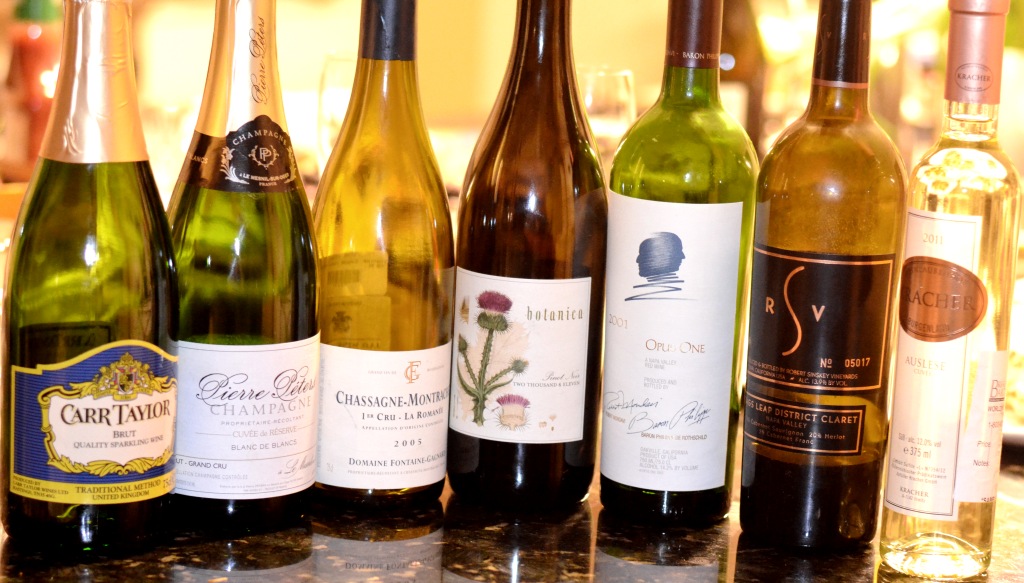
Of course the plan was to start the evening with the Champagne – and then there was a … but. I recently got my hands (told you many times before – I love my friends) on the very interesting sparkling wine from UK. What was the most interesting for me even before I tried the wine is that it contains one of the extremely difficult to find, rare grapes called Schönburger. As I mentioned last time regarding my quest to complete all the grapes in the original Wine Century Club application, Schönburger was one of those “last standing”, extremely difficult to find grapes – and the Carr Taylor Brut was the only wine containing Schönburger, which Wine-Searcher was able to find pretty much anywhere. In case you are curious, Schönburger is a rose grape created in 1979 in Germany as a cross of Pinot Noir, Chasselas and Muscat Hamburg, As an added bonus, the Carr Taylor Brut contained another grape I never heard of, another cross from Germany called Reichensteiner.
Okay, now that I provided a full disclosure, let’s talk about the wines. NV Carr Taylor Brut Sparkling Wine, England (12% ABV, $35) was an excellent start for the evening. Fine bubbles, very intense, very reminiscent of Champagne. Hint of toasted bread on the nose and may be a touch of almonds. The palate had all the toasted and yeasty notes, packaged together in compact but bright way – the wine had no sweetness, but nevertheless was perceived as a fuller body than a typical Champagne. I would gladly drink this wine again any time – if it would be available in US. Drinkability: 8-
Now it was the time for Champagne – Pierre Peters “Cuvée de Réserve” Brut Blanc de Blancs Champagne (12% ABV, $55) – very classic, a hint of brioche on the nose, and nice toasted notes on the palate. Quite honestly, after the first sparkling wine, I wanted a bit more life in the glass – this was clean and fine, but more of the usual. Drinkability: 7+
Our next wine was a white Burgundy. Considering my limited experience with Burgundy, I was concerned if 10 years old wine would hold well (all of you, Burgundy buffs, please stop laughing out there – I’m still learning), so the Valentine’s Day seemed to be quite a good occasion to find out. This 2005 Domaine Fontaine-Gagnard La Romanee, Chassagne-Montrachet Premier Cru, France (13.5% ABV, $65) was outright delicious – beautiful nose of fresh apples, and then apples and honey on the palate – full bodied, supple, with perfect lingering weight in the mouth – this was really a treat. Too bad it didn’t last – but this was definitely an excellent wine. Drinkability: 8
Time for the reds, don’t you think? Remembering the pleasure of the Antica Terra Ceras Pinot Noir (here is the post in case you missed it), I wanted to try another Pinot Noir from Antica Terra – this time it was 2011 Antica Terra Botanica Pinot Noir Willamete Valley (13.2% ABV, $75). The nose was very similar to the Ceras – cranberries, touch of forest floor, lavender, bright and intense. On the palate, this wine had much bigger shoulders than Ceras. Ceras Pinot Noir need no breathing time – it was ready to drink from the moment the bottle was opened. Botanica needed a bit of time. After about 20 minutes in the glass, it showed its structure, dark concentrated fruit, touch of coffee, earthiness, all with a perfect balance, and again, finesse. Drinkability: 8
And then there was Opus One. 2001 Opus One Napa Valley (14.2% ABV, $250). Quite honestly, when I learned that we will be opening Opus One, I was a bit concerned. Yes, this is one of the legendary California Cabernet Sauvignon wines, and yet when I tasted it before, I was not blown away. And when you are not visually excited about $250 bottle of wine, you feel that something is wrong with you, don’t you think? Bottle is opened, and wine is poured in the glass. Based on the color, the wine looks like it was bottled only yesterday – dark, very dark garnet. On the nose, the wine was somewhat muted but pleasant – touch of black fruit and eucalyptus. On the palate, the wine was simply closed – and aggressively tannic, with a touch of green brunches on the finish. Well, to the decanter, of course. After about an hour in decanter, the wine definitely changed for the better, showing touch of cassis and coffee notes on the palate – the tannins still stayed, but reduced, and the finish became spicy, peppery if you will – still not leading to the “wow” which you want to find in the bottle like that. Oh well. Drinkability: 7+
As we were waiting for Opus One to come around, another bottle was pulled out – 1996 Robert Sinskey Vineyards RSV Stag’s Leap District Claret Napa Valley (13.9% ABV, $55). This wine amply compensated for the Opus One shortcomings – in a word, it was delicious. Perfectly young appearance in the glass was supported by the fresh fruit on the nose. And the palate had cassis, touch of mint, mocha, sweet oak, silky smooth tannins, perfectly layered and perfectly balanced. This was Napa Valley Cabernet at its peak, and it was not afraid to show it. Drinkability: 8
Logically (Valentine’s Day!) we had to finish on a sweet note. This was my first experience with Austrian dessert wine, and it was also a first experience with Kracher – I only heard the name before, but never tasted the wines. 2011 Kracher Auslese Cuvée Burgenland, Austria (12% ABV, $22) had everything you want in the dessert wine and nothing you don’t – delicious light honey notes, lychees, vibrant acidity, lemon peel – it was an outstanding way to finish the evening. Drinkability: 8
That is the story of our Valentine’s Day wine experiences. Well, I can’t leave with the wines alone – the food was delicious too, so let me at least share some pictures – I spent time working on them, you know. Here we go:


And we are done here. So, what were your Valentine’s day wine highlights? Cheers!
Weekly Wine Quiz #114: Grape Trivia – Viura / Macabeo
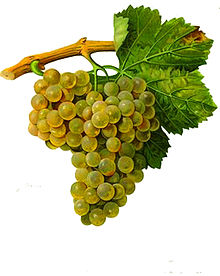
Viura/Macabeo grapes. Source:Wikipedia
The Wine Quiz series is not meant to intimidate. The whole idea here is to have fun and learn something new. When answering the questions, it is fully encouraged to use all available sources of information, including Google or any other search engine. There are no embarrassing answers – the most embarrassing thing is not giving it a try…
Welcome to your new wine quiz!
We are continuing our grape trivia series, and today’s subject is the white grape Viura, also known as Macabeo.
I know what you are thinking – we are going from “not so popular”, like we did with Müller-Thurgau and Pinot Blanc, to practically obscure. You probably want to say “I never heard of the grape and never had any wine made with it!”. Well, let’s see. Have you had any Cava, a sparkling wine from Spain, during the last summer? Macabeo is a part of the blend. How about white Rioja? If you actually never had white Rioja, you have to correct it as soon as possible (go on, run to the store, I will wait here). Look for Cvne Monopole Rioja (100% Viura), the oldest white wine in Spain, produced since 1915, or for any of the R. Lopez de Heredia whites, like Viña Tondonia or Viña Gravonia – those wines might change your view of the world forever (well, the wine world, of course). But – let’s get back to the grape itself.
Viura is the name of the grape used in Rioja (interesting fact: until 1975, there were more white wines produced in Rioja than the reds). The same grape is known in the rest of Spain as Macabeo, and as Macabeu and Maccabéo in Roussillon in France. Viura has a few interesting traits, which make it to stand out among others white grapes. First, it is considered to be resistant to Phylloxera, and it was widely planted in Spain after the Phylloxera devastation. It also can withstand oxidation better than many other grapes, which makes it a favorable variety for the prolonged barrel aging, where some exposure to oxygen is inevitable. At the same time, as Viura grows in the very tight clusters, it needs hot and dry climate to fully ripen, otherwise it is susceptible to mildew and rot – to get the best results the grape often requires extensive pruning and lots of attention in the vineyard. But – good white Rioja is a magnificent wine, with incredible aromatics and delicious bouquet, and can age and gain complexity for decades – it is well worth the trouble! In addition to white Rioja, Macabeo also plays main role in production of Cava, famous Spanish Sparkling wine. And we shouldn’t forget the Roussillon region in France – Macabeo is an important contributor to many different types of wines produced there.
And now, to the quiz!
Q1: Which one doesn’t belong and why:
a. Chardonnay
b. Sauvignon Blanc
c. Trebbiano
d. Verdejo
Q2: True or false: Viura is one of the 10 most planted white grapes in the world
Q3: Wine Spectator calls wines rated in 95-100 range Classic (the highest and the most prestigious category). True or False: there are no Viura/Macabeo-based wines rated in the Classic category
Q4: Which grape is missing: Chardonnay, Macabeo, Malvasia, …, Xarel-lo
Q5: Fill the gaps: If Macabeo is blended with Grenache Blanc and Malvasia, the resulting wine is most likely a ___from_____ ; if Macabeo is blended with Grenache Blanc and Grenache Gris, the resulting wine probably a ___ from ___.
Good luck, enjoy the quiz and your weekend! Cheers!
Last Bottle Sign Up ($10 credit)




 Talk-A-Vino