Archive
Month in Wines – September and October 2015
If there is one neglected topic in this blog, it is the “month in wines” series, which I managed to produce quite regularly during 2014 and before. I will do my best to fix this, so if you see “June Wines” blog post in December, you would know why. This also means that these “caught up” posts will be even longer than usual – but again, now you know why.
There were lots of interesting wines during September and October, so here is a glimpse into what was pouring – well, it is a long “glimpse”, as I’m trying to cover 2 month at once, so please bear with me.
2014 Notte Italiana Prosecco DOC (11% ABV, kosher) – simple and easy, good acidity. 7
2013 Via Semi Sweet Sparkling Wine, Israel (10.7% ABV, kosher, 50% Gewurztraminer, 50% Viognier) – the inner snob said “it will not be good”, and was ashamed. The wine had nice balance of sweetness and acidity, very pleasant and simple. 7+
2013 Fero Vineyards Dry Riesling, Pennsylvania (11.5% ABV) – still need to write a post about visiting Fero Vineyards. In any case, this was nice and classic, good acidity, nice touch of honey and honeysuckle, but just a touch. 7+
2012 Carlisle The Derivative Sonoma County (14.2% ABV, 54% Semillon, 30% Muscadelle, 16% Palomino) – delicious. Bright white fruit on the nose, more of the same on the palate with clean acidity. 8-
2013 Carlisle Compagni Portis Sonoma Valley (13.9% ABV, blend of Gewurztraminer, Trosseau Gris and Riesling) – another delicious Carlisle white. Fresh and bright on the nose, medium to full body on the palate, with an impeccable balance of fruit and acidity. Ahh, and the new grape – Trosseau Gris. 8
2015 The Crossings Sauvignon Blanc Awatere Valley Marlboro (13% ABV) – literally summer in the bottle. Fresh, exuberant, a pure delight. And the first wine I had of 2015 vintage. 8
2014 Left Coast Cellars White Pinot Noir Willamette Valley (14.2% ABV) – one would never think to find white wine made out of the red grape outside of Champagne, right? This was a beautiful surprise – fresh, vibrant, crisp, good white fruit, medium body, excellent balance and complexity. 8-


It appears that this is all I had for the whites – note to self – need to drink more white wines… Anyway, the rest are the red wines.
2013 Valcantara Old Vine Garnacha, Cariñena DO, Spain (13.5% ABV) – closeout deal at my local wine store ($7.99) – however the wine is outstanding. Classic Garnacha with plums and dark chocolate. Good acidity and easy to drink. 8-
2013 Alighieri Rubino del Marchese Toscana IGP (12% ABV) – another closeout deal, same price as previous wine. There was an interesting bottle variation as the first bottle was just all about acidity and not much about fruit, but the second bottle was much more balanced. Quite enjoyable, especially at the price. 7
1997 Le Ragose Valpolicella Ripasso Classico Superiore (12.5% ABV) – it showed age, but was still well drinkable. Lots of tertiary aromas, touch of dried fruit, but still with a good core of acidity. 8-
2011 ARFI Gabriel Cabernet Sauvignon Judean Hills, Israel (13.1% ABV, kosher) – not a bad rendition of Cab, but was a bit too sweet for my palate – I would like it to be a bit more balanced. 7
2014 The Crossings Pinot Noir Awatare Valley Marlboro, New Zealand (14% ABV) – very good example of Pinot Noir from Marlboro. Good balance of fruit and acidity, all the Pinot traits. 7+
2005 Viña Real Rioja Crianza (13.5% ABV) – classic Rioja, no sign of age. ‘Nuf said. 8
2005 Block 213 Merlot Oakville Napa Valley (13.5% ABV) – was opened for the “Merlot Month”, and I’m glad I did – it was right at the pick, if not starting to decline a bit. Still quite enjoyable, good body, good amount of fruit, cassis. 8-
2012 Nissley Naughty Marietta Semi-dry Red Wine Lancaster Valley, Pennsylvania (12% ABV) – and again inner snob was ashamed. While the wine shows some level of sweetness, it is perfectly balanced with acidity and tannins, very pleasant wine after all. 7+
2013 Field Recordings Hinterland Vineyard Cabernet Franc Paso Robles (14.1% ABV, $18, 88% Cabernet Franc, 8% Cabernet Sauvignon, 4% Merlot) – nicely polished and very classic. 8-
2013 Field Recordings Tommy Town Vineyard Cabernet Franc, Happy Canyon of Santa Barbara (14.3% ABV, $18, 100% Cabernet Franc) – a bit rough initially, but came down to its senses after time in the glass. 7+
only a few more, I promise…
2005 Château Gravat Médoc AOC (13% ABV) – still have one last bottle from the case. Only now, 10 years later, this wine is losing the grip of green chewy branches and starts showing ripe fruit and overall power. Patience is a virtue of the wine lover. 7+/8-
2005 Bodegas Ignacio Marin Barón de Lajoyosa Gran Reserva Cariñena DO, Spain (13% ABV, 50% Garnacha, 30% Tempranillo, 10% Cariñena, 10% Cabernet Sauvignon) – perfectly structured, firm, fresh, dark fruit, delicious. 8-
2009 Wente Vineyards Small Lot Petite Sirah Livermore Valley, California (13.7% ABV, $35) – one of my absolute favorite wines – dark, polished, lots of power and structure, delicious till the last drop. You can get this beauty only at the winery, so if your plans will take you to the Livermore valley, do yourself a favor… 8
2011 Turley Duarte Zinfandel Contra Costa County (15.6% ABV) – delicious, classic, dark and brooding. 8
2007 Verve Syrah Columbia Valley (14.5% ABV) – spot on – touch of spices, pepper, violet, dark fruit, delicious. This one comes with regret – I should’ve get lots, lots more during Last Wine Bottles marathon… 8
2007 Waterstone Cabernet Sauvignon Napa Valley (14.5% ABV, $22) – I don’t care whether this wine contains any of the Harlan fruit or not – this is simply delicious, outstanding California Cab which you can’t beat in value. Classic, clean, loads of black currant, perfect balance. 8+
2009 Domaine Fond Croze Cuvée Shyrus Côtes du Rhône (14% ABV, $29.99/1.5L, 100% Syrah) – delicious rendition of the old world Syrah – pepper, lavender, dark fruit, all intermingled and balanced. 8-


2010 Turley Zinfandel Tofanelli Vineyard Napa Valley (15.8% ABV) – I couldn’t stop smelling this wine for good 10 minutes. I didn’t want to drink it – I wanted for smell to last for as long as possible. Can’t describe it – it had everything the wine lover would want from the glass of wine. There, I said it. Incredible. On the palate, the wine had lots of dark fruit and spices, structure and power. Then is closed up and opened only on the second day. This would definitely evolve – I wish I had another bottle… 8+/9-
2012 Turley Cabernet Sauvignon Napa Valley (14.1% ABV) – an opposite to the previous wine. At first, it was practically closed. After a while, it showed all the traits of the great California Cab – black currant, a bit of dust, firm and delicious. 8
2010 Zaca Mesa Syrah Santa Ynez Valley (13.5% ABV) – if I would have to name 10 best Syrah producers in US, Zaca Mesa would be definitely in the top half of that list. Perfectly layered, with dark fruit, pepper, spices, smooth, balanced and absolutely delicious. 8+
Believe it or not, but we are finally done. What were your wine highlights as of recent? Cheers!
How About Some Cabernet Franc for the #CabernetDay?
The time has come again to celebrate #CabernetDay. I’m really curious – when you hear the words Cabernet Day, what is the first wine (or grape) which comes to mind – is it Cabernet Sauvignon or Cabernet Franc? I would bet that at least two third of the people (if not more) would associate Cabernet Day with Cabernet Sauvignon – and can you blame anyone? While the most celebrated grape in the world comes from Bordeaux, most of Bordeaux wines are blends, so it is really California wine industry which brought Cabernet Sauvignon to such a star status in the wine world, making it an object of crave and desire.
I looked through my past #CabernetDay posts – most of them talk about Cabernet Sauvignon. Meanwhile, Cabernet Franc, a parent of Cabernet Sauvignon, deserves its own praise. You see, the success of Cabernet Sauvignon, especially the California Cabernet Sauvignon, created certain image, certain collective expectations of any wines which happened to have the name Cabernet Sauvignon on the label – we expect power, we expect concentration, we expect big body and silky layers. When it comes to Cabernet Franc, we still accept the wide range of expression – from spicy and light Loire or US East Coast renditions to the powerful and concentrated Bordeaux (rare) and California wines.
Cabernet Franc is still allowed to be different, without demand to adhere to the “international standard” based on the name. You can find a lot of green bell peppers, earthiness and even tree brunches in the Loire (Bourgueil, Chinon, Saumur-Champigny) or US East Coast Cabernet Franc, of course often emanating that wonderful black currant, (a.k.a. “cassis”). On another end of the spectrum are California renditions of Cabernet Franc, which try to eliminate the green bell pepper and make the wine more similar to traditional Cabernet Sauvignon. Either way, Cabernet Franc provides a bigger variety compare to Cabernet Sauvignon – I never said it is better, though.
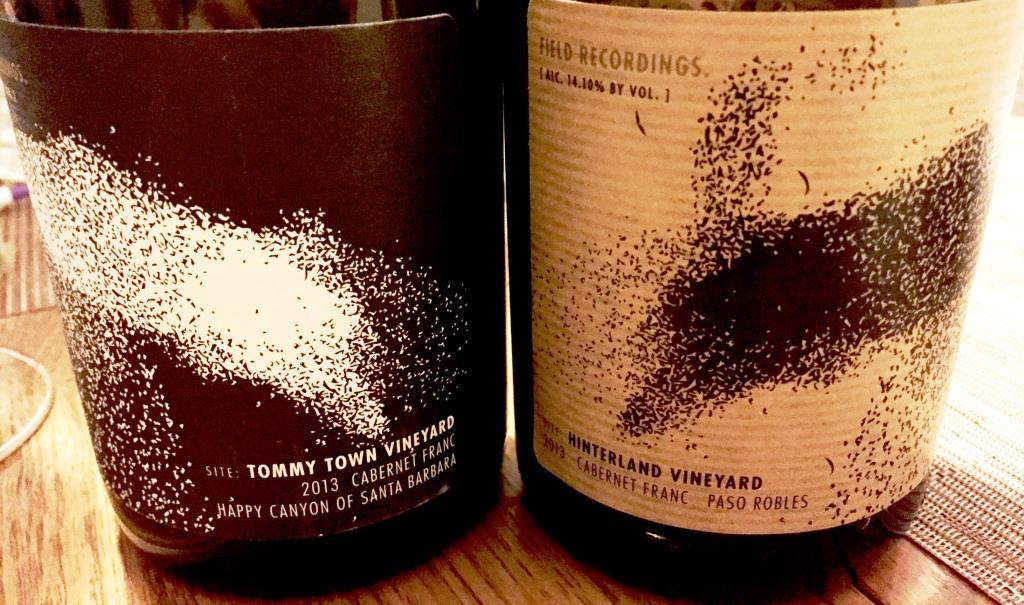 For today’s #CabernetDay celebration I’ve chosen a Cabernet Franc from California. Well, by accident, it happened to be Cabernet Franc for the second day in the row, and for both days it is a Cabernet Franc from one of my favorite producers – Field Recordings. 2013 Hinterland Vineyard Cabernet Franc Paso Robles (14.1% ABV, $18, 88% Cabernet Franc, 8% Cabernet Sauvignon, 4% Merlot), and 2013 Tommy Town Vineyard Cabernet Franc, Happy Canyon of Santa Barbara (14.3% ABV, $18, 100% Cabernet Franc) – two beautiful wines, celebrating a noble grape. The Hinterland Vineyard version was a bit more polished and round, and the Tommy Town Vineyard needed for the alcohol to blow off before it would show itself properly, but both wines had nice, long black currant-loaded finish, and I would gladly drink either one again (those were my only bottles…).
How did you celebrate the #CabernetDay? What was in your glass? Cheers!
Daily Glass: The Wine That Begs The Eternal Question
 Eternal question, you say? Which one of them? Wine is a well known suitor of the Eternal, so yeah, a few questions are lurking for a while…
The one I’m talking about is akin “chicken and egg” case, with a spin. Is the wine made in the vineyard or at the winery? Is it winemaker or the grape? Well, rest assured – I’m not trying to jump on this subject just for the sake of conversation. It just happened that the wine I opened yesterday made me ponder at that exact question.
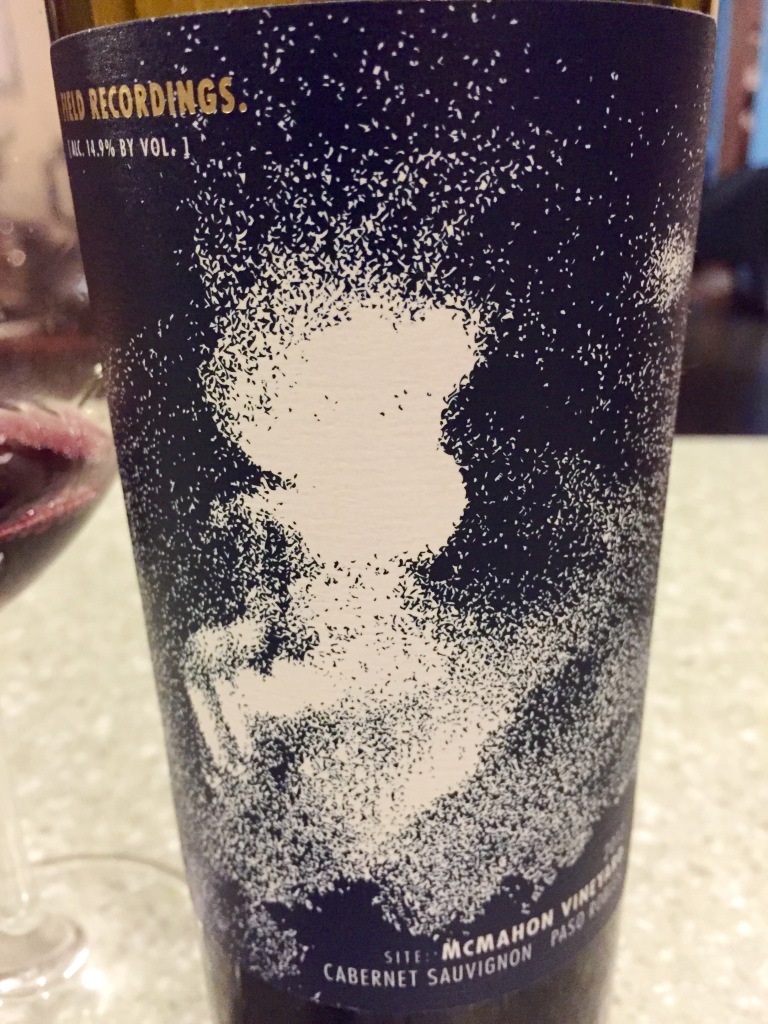
What wine? 2012 Field Recordings Cabernet Sauvignon McMahon Vineyard Paso Robles (14.9% ABV, $29, 83% Cabernet Sauvignon, 17% Tempranillo, 16 month in 89% new French oak, 11% new American oak). What made me to think of the terroir versus winemaker? The aromatics. The wine had not a glimpse of Cabernet Sauvignon characteristic aromas – no cassis, no bell peppers, no eucalyptus. But on the nose there were plenty of spices. There was a hint of a forest floor, mushrooms, a touch of barnyard. There was also a smoke, and plenty of it. There was pepper. And there was tar and pencil shavings. So, what do you say – was that a winemaker talking, or the vineyard?
The palate, unfortunately, didn’t fully support the excitement. There was lots happening (still no cassis or anything else reminiscent of Cabernet Sauvignon), but there was lots of fruit, and vibrant acidity. At times, the wine was borderline jammy, only to be cleansed with the subsequent punch of acidity. I was looking for more balance, and it didn’t happen. Drinkability: 7
So in the end, I got no answers and more questions. Was that a bad wine? I don’t think so, as aromatics brought in lots of pleasure, and it was thought provoking on the palate. Did I open this wine too early? Yep, I’m quite convinced I did. Was that wine made in the vineyard or in the winery? I have no idea, so yes, the floor is yours… Cheers!
My First Can of Wine
 No, I didn’t lose it. The title of this post actually makes sense. To the date, I had the wine from the bottles of all forms and sizes. I had the wine directly from the stainless steel tanks and oak barrels. I had the wine dispersed by the machine. I had the wine from the keg. Yes, I had a boxed wine (and it was just fine). But – until yesterday, I never had wine from the can.
Yesterday I did. The Fall club shipment from one of my absolute favorite wineries, Field Recordings, included a can of wine. Not just any wine, but once again, one of my most favorite wines, Fiction (my personal wine of the year in 2011). When I saw a notice about the upcoming club shipment, which included a picture of the can, my first though was – hmmm, interesting. Really curious to try it.
Wine shipment arrived last week. After I opened the box, first thing I noticed was that the cans appeared a bit wrinkled. You know, when you hold the can of beer or any beverage, the surface is typically very smooth under your fingers – this was not the case, with the tiny, but noticeable ups and downs, the wrinkles (may be there is a better term to describe it, but I hope you got my point). Okay, it is the content what matters, right? It is obvious that the wine in the can is not intended to be stored or admired for the long time on the shelf – with its appearance it technically says “drink me now”.
Talking about cans, I had two other interesting observations. First, the can was 500 ml in size (somehow based on the picture I was expecting the full 750 size). And then instead of the short story which appears on the bottle of Fiction, the can’s “back label” contained the following tasting note: “Heady aromas of blueberry pie, luxurious suede couches, ham paninis and unlit menthol cigarettes. Firm tannins anchor flavors of grilled meats, cherry cola, sweet carob and black licorice chews, all cased up together conveniently in a cigar humidor. Drink tonight“. An interesting description, don’t you think? As I also got a bottle of Fiction, I was relieved to see the old a familiar story on its back label…
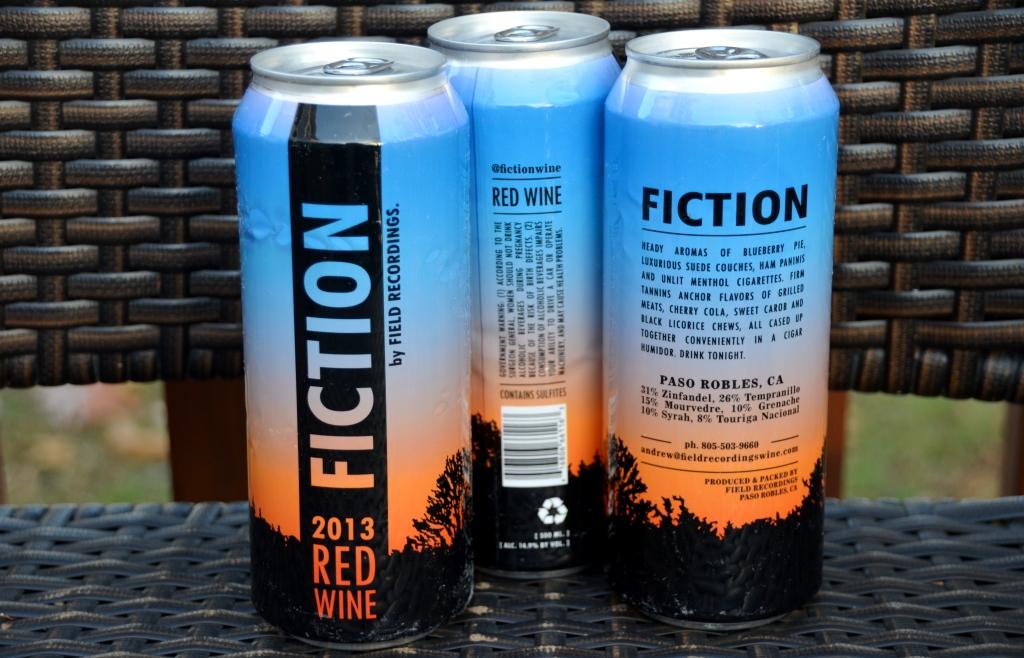
Okay, let’s get to “it” – let me tell you what I though about the wine. 2013 Field Recording Fiction Red Wine Paso Robles (14.9% ABV, $10 for 500 ml can, $18/bottle, 20% discount for catalog members; 31% Zinfandel, 26% Tempranillo, 15% Mourvedre, 10% Grenache, 10% Syrah, 8% Touriga Nacional) – in a word, the wine was delicious. It took about 10 minutes for the wine to open up and round itself up in a glass (I didn’t dare drinking it straight from the can, I think it would eliminate half of the pleasure – but feel free, of course). I didn’t find grilled meat or suede coaches in the wine. But it had beautiful, ripe blueberries and sweet cherries, some vanilla dusting and may be a touch of mocha and sweet oak, all impeccably woven into a tight bundle of pleasure, sip after sip. This wine was on par with all the previous releases of Fiction, sans the aromatics. I couldn’t find the mind-blowing aromatics the 2010 Fiction was showing, but nevertheless, this was a silky smooth and delicious wine which I would gladly drink again. But I would honestly prefer to pour from the bottle. Drinkability: 8-
Did you have the wine in the can? What do you think about the wine you had and the concept as a whole? Cheers!
Daily Glass: Wonderwall Pinot Noir
I had to settle for this simple title of the post after a few futile attempts to be clever. “Don’t judge the wine by the first sip”, “Give it some time”, “Patience, the most important virtue of Oenophile” were all contenders, but none of them where hitting the spot, so I went for a simple, not catchy title for this post, just with the name of the wine.
But we have to talk about first sip, time and patience, as we have a great case in point. 2013 Wonderwall Pinot Noir Edna Valley (14.9% ABV) is made by Field Recordings, one of my all time favorite producers from California – I wrote about Field Recordings wines many times in this blog. I don’t think I ever had a Field Recordings wine I didn’t like. Or such was my very first thought after the very first sip of this wine.


On the first sip, the wine was simply … sweet. No, nothing is wrong with the sweet wines – but not when the wine is called Pinot Noir. The wine had tons of nice fresh fruit – but more in the compote flavor profile. Well, this is the young wine, very young – it is 2013 vintage, and probably was bottled just a few month ago – so the first thing to do, before declaring the wine been no good, is to give it time. Which I did. In about 30 minutes, the sweetness subsided, and acidity increased. The longer this wine was opened, the more restrained it became.
The next day the wine converted itself into a powerful, full bodied California Pinot Noir, with the hint of smoke on the nose, and ripe plums and hint of blueberries on the palate, with good structure and very good balance (Drinkability: 8 -). I was really glad that Field Recordings came around for me, and I can still call it a favorite producer without any afterthoughts.
And the general lesson(s)? Don’t judge the wine by the very first sip – in a lot of cases, freshly opened bottle might not taste as you expect it, especially if the wine is young – you should really refrain from judging the young wine until it had an opportunity to breathe and open up. And be patient. I’m sure this wine would show itself quite differently in the 4-5 years, so quite often, waiting for the wine to be ready, to be at its peak, makes a lot of sense.
Have you ever been in situation when you declared the wine “not good” based on the first sip, only to find out (or not) that the wine considerably improved after some breathing time? Comment away! Cheers!
Daily Glass: California Gamay? How about it!
The process of selecting of the bottle to open sometimes can be very daunting – may be this? But I just had it few days ago. Than that? Well, today is not special enough day? Then what about that one? Nope, doesn’t feel right. In the end of the day (not literally), you just bite the bullet and say “this is it”. So the end result of my nerve wrecking selection process today was a bottle of … California Gamay from Field Recordings.
Now, class, who had the opportunity to taste California Gamay – raise your hands. Yep, I thought so. It is not that often that you hear about California Gamay. It is not even too often that you hear about Gamay been grown anywhere in US. Beaujolais? Of course, Gamay is one and only. Loire? Sure, also quite popular. Switzerland? Lesser known outside of Switzerland, but still – yes, it does quite well there. But California?
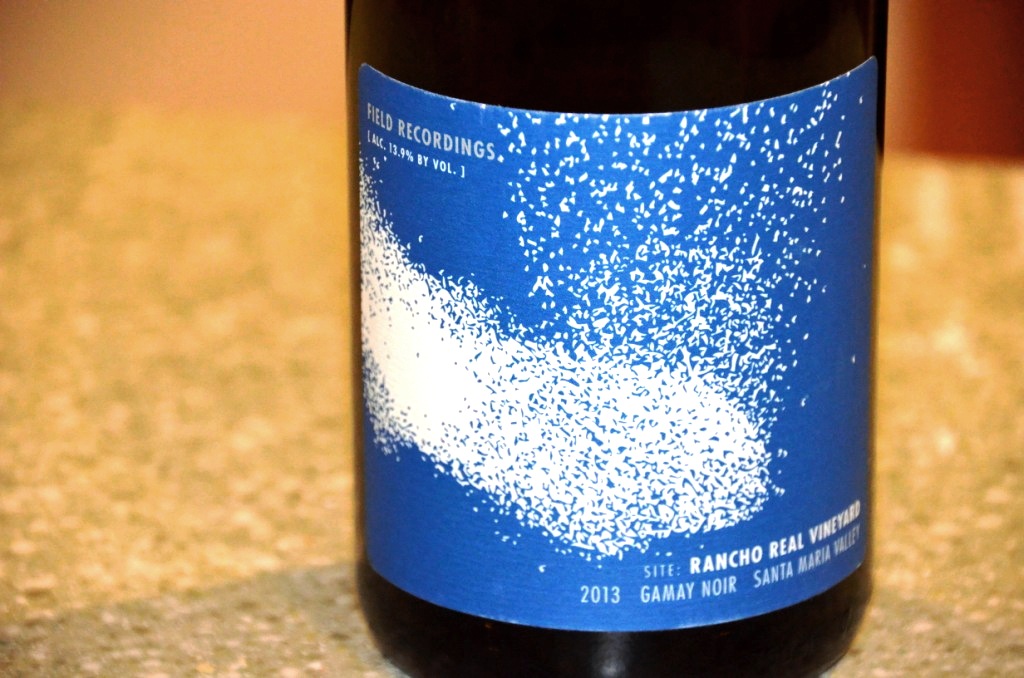
Well, so as they say, there is a first time for everything. Today was my first time to taste the California Gamay. 2013 Field Recordings Gamay Noir Rancho Real Vineyard Santa Maria Valley, California (13.9% ABV, 100% Gamay Noir, 6 month in Neutral Puncheons, 50% carbonic, 50% destemmed, 140 cases, Bottled: 04.19.2014) – very interesting. The nose was reminiscent of the Beaujolais Nouveau, but with the fruit being more mature and restrained, not as grapey. Very delicious and pronounced, similar to all other Field Recordings wines I had so far. And the palate… The palate was puzzling. It had a lot of fresh, ripe raspberries, good acidity and good balance, but there was something else which took me a while to figure out. And then it came down to me – the wine was still coming together. It was very similar to the Chenin Blanc which I had directly from the tank at the winery. Fermentation or not (I’m not a winemaker, so I can’t tell you exactly what it is, I can only describe to the best of my abilities), but this wine still needed time. This is why I highlighted above the date when the wine was bottled – so I was having the wine which was bottled only a bit more than a month ago – and it was noticeable. The wine was not bad by all means – but it would be very interesting to know, how would it taste when it would finally come together as a whole. Note to self – for the young wines, try to read the labels before, not after. Anyway, it was an interesting experience, and I will have to go with Drinkability of 7+, as the wine was still pleasant. Oh yes, of course it was my one and only bottle.
Have you had California Gamay before, or any US Gamay for that matter? What do you think? Also, have you had the wine which wwas not done yet? Comment away and cheers!
Daily Glass: Few Wines, Beautiful and Interesting
Disclaimer: this blog post is not an attempt to create the new rating system. It is rather an account into the emotional escapades of the oenophile tasting wine.
Here I’m again with the super-indescriptive descriptor – beautiful wine. I wonder if the phrase “beautiful wine” gives you a mental image. I’m not talking about the exact image of an object shaped in the form of a bottle, but rather a mental anchor you can relate to “ahh, I understand”. Let me deconstruct this “beautiful wine” term as the following:
1. The wine is perfectly balanced – fruit, acidity, tannins, texture, structure – all together.
2. Drinking this wine is a pleasure
3. The wine is memorable
4. “Beautiful wine” designation is totally spontaneous and emotional. It usually happens after the first sip and the subsequent uncontrollable “wow”.
When it comes to the term of “interesting wine”, that happens when I’m puzzled, like “hmmm, interesting, I’m not sure what to think of it”. Please understand that it is very different from “ouch, it needs time”, “what is it???”, “crap” and “this is disgusting”. “This is interesting” simply means that I can’t put a handle on what I’m tasting, where, for instance, the initial sensation of round and silky is followed by something harsh and unbalanced. “This is interesting” usually ends up being extended into “hmmm, this is interesting, let’s give it some time”. From this point on, the wine can be put aside to be drunk at another day, or it might go into the decanter if I feel that it would be sufficient to change it.
Here are the few wines we had last week, some beautiful and some are … interesting.
2011 Field Recordings “Neverland” Red Wine Grassini Vineyard Happy Canyon of Santa Barbara (15.1% ABV, 75% Cabernet Sauvignon, 15% Petit Verdot, 10% Merlot. Aging: 50% new French barrels, 25% new American barrels, 25% seasoned French for 18 month) – believe it or not, but every time I open a bottle of Field Recordings wine (which is easy – just twist off the screw top), I have a moment of trepidation – will it be as good as everything else I tasted before from Field Recording? You could’ve noticed in this blog that I have a lot of happy reviews of the Field Recordings wines, thus it creates that uneasy moment with each new bottle opened. Luckily, this bottle of “Neverland” didn’t deviate from the trend at all – beautiful nose of cassis and blueberries, open, bright and concentrated, followed by more of cassis, sweet oak and blueberries – but nothing over the top, soft and delicious fruit with perfectly refreshing acidity, soft tannins and overall impeccably balanced. This was a beautiful wine – and equally dangerous (“dangerous wine” = disappears before you notice it). Drinkability: 8+
2012 Cane and Fable 373 Cabernet Sauvignon Paso Robles (14.9% ABV, 85% Cabernet Sauvignon, 10% Tempranillo, 5% Petit Verdot. Aging: 225L oak barriques, 25% new, 12 month) – this wine is the result of collaboration of Field Recordings’ Andrew Jones and Curt Schalchlin of Sans Liege fame. Different presentation of the bottle (yes, I know, that giant cricket on the label can be off-putting), and the bottle is enclosed with the actual cork and not the screw top as all of the Field Recordings wines. The nose was more restrained than the previous wine, but still showing cassis with some earthy overtones. On the palate, this was that exact “interesting wine”. It was showing nice fruit and structure, but was somewhat fluctuating on an off in terms of being round, or not. So this was an interesting wine to put aside, which I did. As you can take a hint from the cork enclosure, this wine is intended to age – and on the second day it came together, showing cassis with the addition of espresso and earthiness – I think that Tempranillo was holding it away from becoming Bordeaux-like, so this was the wine on its own, well balanced, restrained, and craving for food. I have another bottle and I definitely intend to give it a few years to see what it is capable of. By the way – a mini quiz for you – care to guess what 373 stands for in the name of this wine? Drinkability: 8-
2010 CVNE Monopole Rioja DOC (13% ABV, 100% Viura) – the oldest white wine brand of Spain, produced since 1915. Fresh citrus and herbs on the nose, impeccably balanced and restrained on the palate, with the notes of lemon and green apple, clean acidity, very pleasant to drink. I have a few more bottles, and I’m keeping them. Drinkability: 8
2012 Colline de l’Hirondelle Cocolico, France (15% ABV, 60% Chenançon Noir, 25% Grenache, 15% Syrah) – Another case of the interesting wine, this time due to a number of factors. First of all, this wine contains a new grape – Chenançon Noir from France. Second of all, the initial impression from this wine was more reminiscent of the big body, brooding Spanish Grenache – Shatter by Dave Phinney or Alto Moncayo come to mind – and it was not round enough and was asking for decanter – which was provided. After about 40 minutes, it showed plums and ripe sweet cherries, still powerful and big bodied, but more round and balanced then from the get go. Considering the price of $15.99, if you like big and powerful wines, this might be the one for you. Drinkability: 8-
And that concludes my post. Any beautiful or interesting discoveries you care to share? Comment away! Cheers!
Month in Wines – February 2014
Here we go again – a summary of the best wine experiences of the February 2014. Reminder – I rate the wines on the 10 points scale, with pluses and minuses, so the wines typically included in this summary post are those starting with 8- ratings (yes, there can be exceptions). Here we go:
2013 Paumanok Chenin Blanc North Fork of Long Island, New York (11% ABV) – I had an interesting experience with this wine. I had it earlier in January, when it was not at the proper temperature (a bit too warm), and then later on another bottle which was properly chilled – and it was outstanding. Bright, refreshing, perfect acidity, white fruit notes with the touch of minerality, medium to full body, with pleasant creaminess. Very enjoyable. 8-
1966 Louis M. Martini California Mountain Pinot Noir (12.5% ABV) – incredible. Finesse, elegance, clear profile of a classic Pinot Noir – complete surprise and complete delight. 10
2012 Fiction by Field Recordings Red Wine Paso Robles (14.9% ABV, 40% Zinfandel, 13% Tempranillo, 12% Petite Sirah, 11% Touriga Nacional, 10% Mourvedre, 8% Grenache, 6% Cinsault) – fresh meadows on the nose, perfectly elegant and balanced wine, with clean acidity and medium-long finish. 8+
2012 Contrada Santa Croce Casteltermini Sicilia Cuvée Artisanale Chardonnay Grillot (13.5% ABV) – very unique and different wine. Finesse, balance, apricot and apricot pit, clean acidity. 8+
2011 Emile Beranger Pouilly-Fuissé AOC (13% ABV) – vanilla, butter, hint of toasted oak – all perfectly elegant and balanced in effervescent, cleanly structured package. 8+
2011 Domaine Jean Ernest Descombes Morgon AOC (12.9% ABV) – excellent earthy profile, good red fruit, good acidity, very enjoyable. 8-
1998 Ceretto Monsordo Langhe DOC (13% ABV) – Mature fruit, round, inviting and seductive. I think ‘sexy wine” will go fine as a descriptor. 8
1999 Philippe Prie Cuvée Love Flowers Champagne (12% ABV) – Great example of the vintage champagne – fresh bread, yeast, toasted apples, acidity – all together. 8
2011 Peter Lauer “Senior” Fass 6 Riesling, Saar, Germany (12.5% ABV) – A treat from our fellow Riesling guru, Oliver – perfect Riesling, balance, acidity, sunshine in every sip. 8
2008 Dr. Hermann Erdener Heremberg Riesling Eiswine (7% ABV) – Another treat from Oliver – and my first encounter with the actual German Eiswein (had only NY and Canadian wines before) – perfect complexity, perfect balance, good acidity – great finish of the meal, with or without desert. 8+
2009 Fat Cat Rotie Red Wine, California (13% ABV) – this is 100% Syrah, and it is nothing short of spectacular considering the QPR ( it retails for $17.99 is you can find it). Core of dark fruit with earthy profile, mocha and espresso, very balanced. 8+
2004 Carlisle Judge Family Vineyard Syrah Bennett Valley (15.9% ABV) – This is Carlisle – need I say more? Dark, concentrated, but elegant and perfectly balanced at the same time ( don’t even think of the ABV – you wouldn’t notice it unless you read the label). 9
2010 Sequoia Grove Cabernet Sauvignon Napa Valley (14.2% ABV, 100% Cabernet Sauvignon) – classic. Cassis on the nose and palate, touch of espresso, medium to full body, perfect balance. 8
2008 Shaya Verdejo Old Vines, Rueda DO, Spain (13.5% ABV) – one of my very favorite Spanish white wines. In general, it beats Chardonnay hands down, 9 times out of 10 – buttery complexity on the palate, roll-of-your-tongue goodness, round and perfectly balanced. 8+
I also want to mention separately few of the rare grapes I added this month.
2011 I Borboni Vite Maritata Asprinio Aversa DOP, Campania (12% ABV) – very interesting wine which Stefano brought directly from Italy (it seems to be scarcely available in US). Made from the grape called Aspirinio – the wine had very nice acidity, coupled with a plump body and nice lemon notes. 8-
2006 Azienda Agricola Vestini Campagnano Casa Vecchia Terre Del Volturino IGT, Campania (13.5% ABV) – another great treat from Stefano. Made from the grape called Casavecchia – very nice nose of plums with more plums on the palate, medium body, round and inviting, perfect balance. 8
2012 Sant’Isidoro Colli Maceratesi Ribona Pausula, Marche – this wine is made of the grape called Maceratino – very nice with good acidity. I tasted it at the VinItaly expo, so no ratings.


That concludes February wine report. Cheers!
Beautiful Snow and Beautiful Wine
There was a lot of snow here in CT over the last week. Most of the snow is still here, and considering the forecast, will be lingering around for a while. Yes, the snow is nuisance and inconvenience, it is tough to shovel, and a lot of it became ice at this point. But when sun comes out, it really becomes a thing of beauty. This snow had also a very interesting characteristic – well, may be it is me who didn’t see it before, but this snow is really glowing blue, especially as you dig in and look at it. So for what it worth, here are some pictures, snapped literally just around the house. Plus, I also included a few pictures which my daughter made with her iPhone – it is pretty amazing what that little device can do. And if you will scroll all the way down, I will also talk a bit about the wine. Here we go:


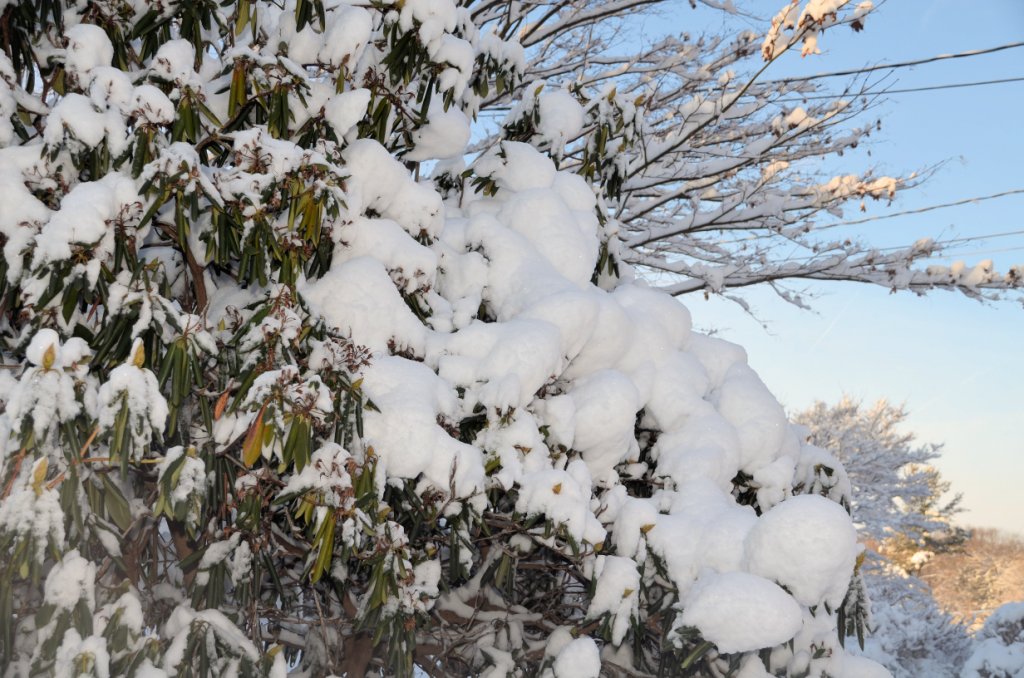

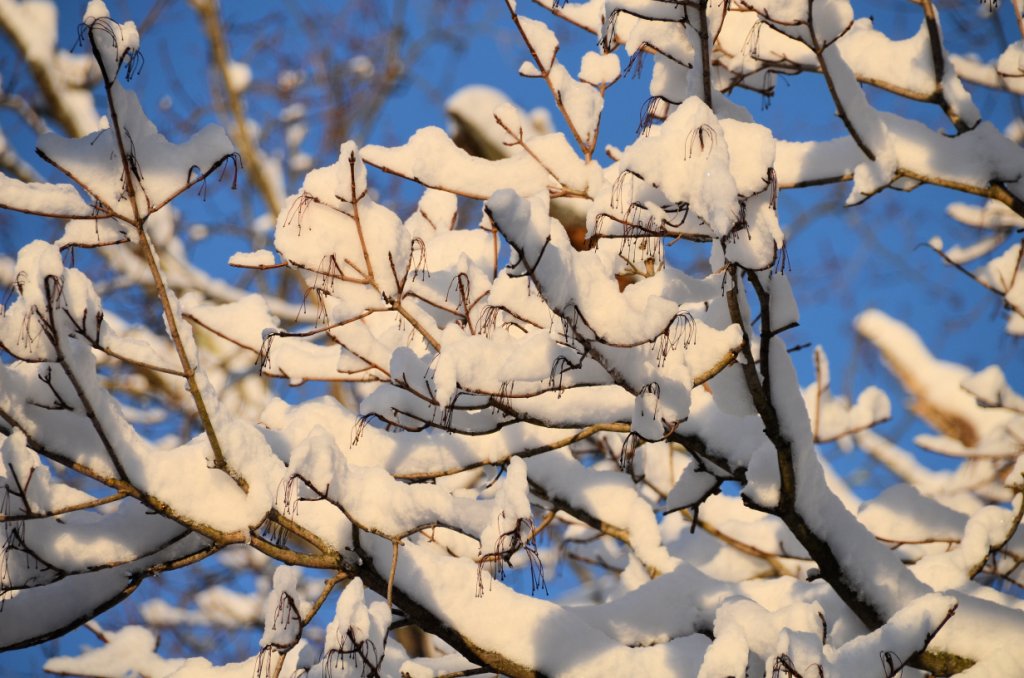


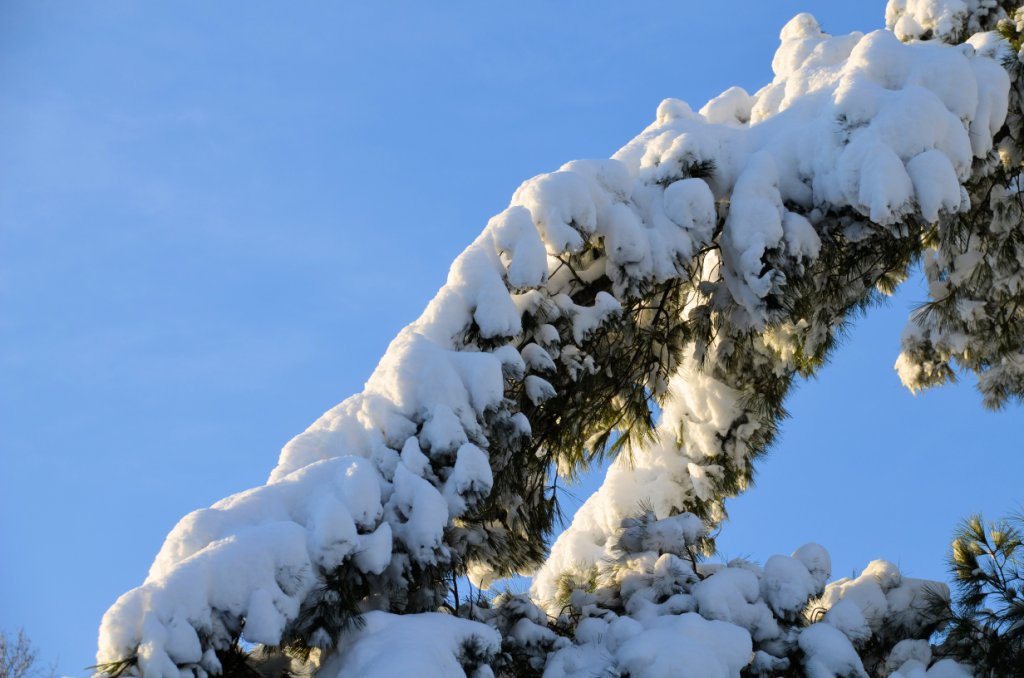
This is one of my favorites
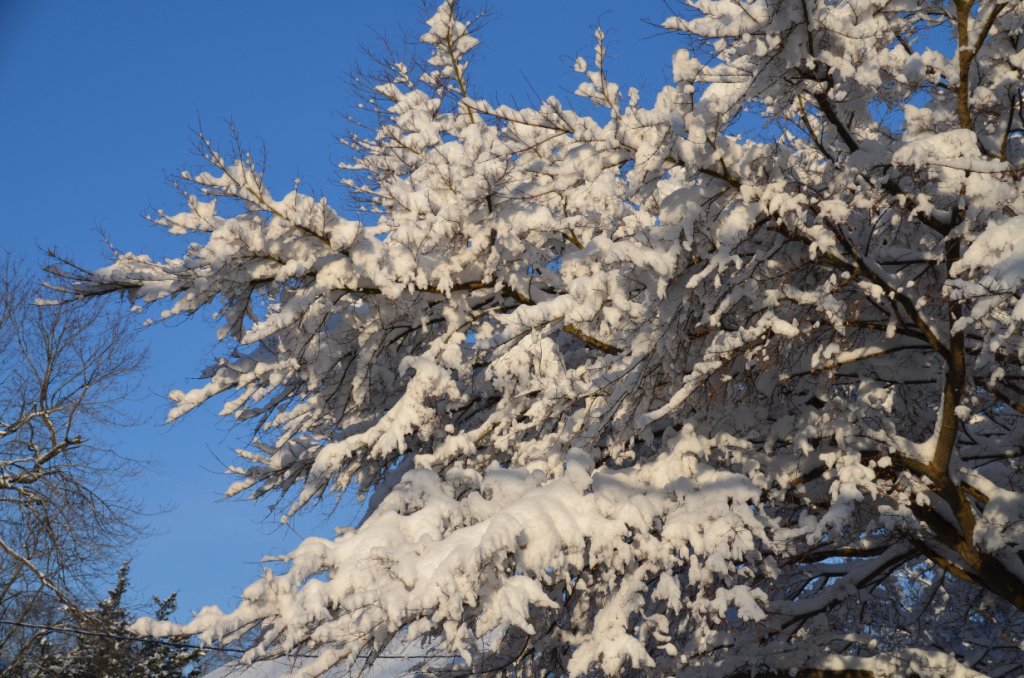

That snow and that sky…
 What makes snow so beautiful?
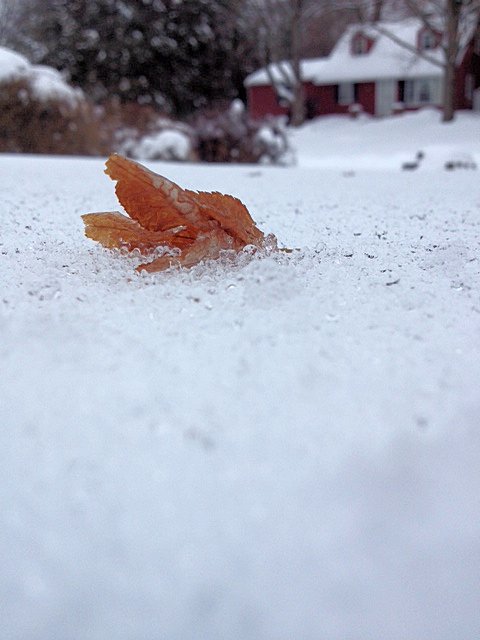 iPhone picture by Rina – the leaf
 The same, only black and white

And a bit of perspective

More perspective
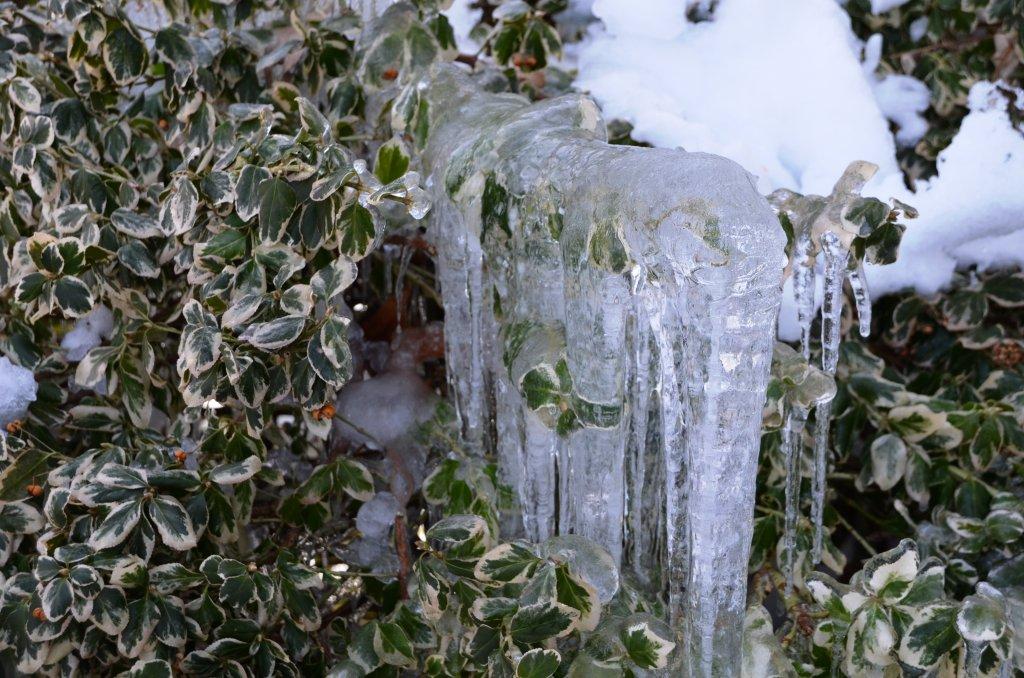
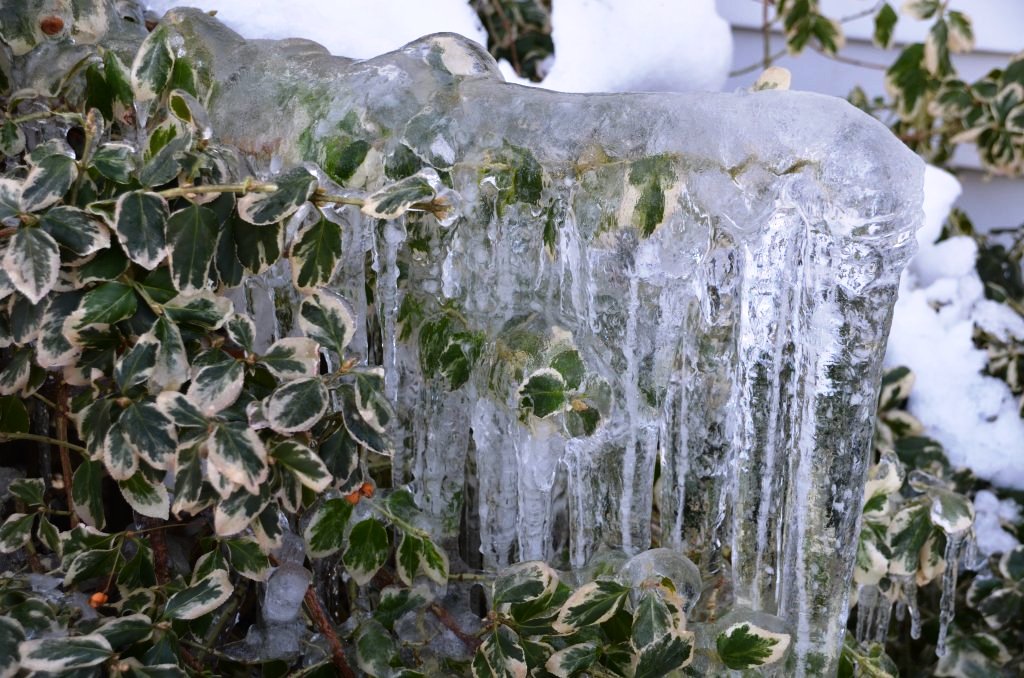
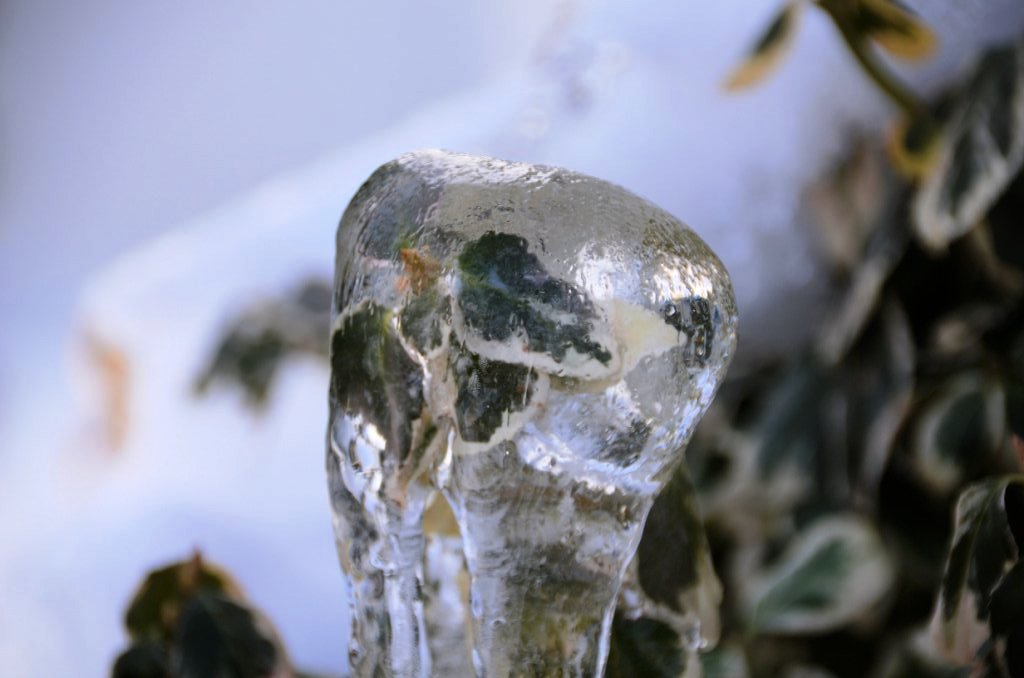
A frozen beauty
Yes, the snow was beautiful, but it got in the way. The snow on Wednesday was bad enough to affect the trains, so I had to miss the Basilicata winemakers dinner in the city, which I was really looking for. So I decided to compensate for that by opening the bottle of new vintage of one of my favorite wines – Fiction by Field Recordings. I’m sure some of you know at this point that I’m very particular to the Field Recordings wines in general, but Fiction is so unique, it is one of my all times most memorable wines ( and it was my Wine of the Year in 2011) – here is the blog post about my first experience with 2010 Fiction.
The 2012 Fiction by Field Recordings Red Wine Paso Robles (14.9% ABV, 40% Zinfandel, 13% Tempranillo, 12% Petite Sirah, 11% Touriga Nacional, 10% Mourvedre, 8% Grenache, 6% Cinsault) didn’t disappoint. The spectacular nose of fresh meadows – this is the wine which you can’t put down – one smell requires another, and another, and another. The aromatics of this wine absolutely spectacular – I don’t know how that works, but I can’t put the glass down. The palate is very playful, with lots of fresh fruit, raspberries, blueberries, cherries – everything is in one beautiful medley, supported by clean acidity and perfectly balanced. The 14.9% ABV are absolutely unnoticeable – this is the wine of the pure harmony. Drinkability: 8+
That is all I have for you for my report on snow and the wine. Stay warm and drink good wine. Cheers!
Last Bottle Sign Up ($10 credit)




 Talk-A-Vino