Daily Glass: Buy By The Name, Remember By The Taste
Winemakers must be some of the most creative people in the world. It is not enough to make a tasty wine (well, at some point it is – it is not easy to reach that point though, not at all) – but the wine also have to make it into a consumer’s hands – yep, someone have to buy it. Selling the wine is not easy, as you need to differentiate from hundreds and hundreds of seemingly indistinguishable bottles. To get there, winemakers have two primary choices of weapons – the label and the name.
I’m a sucker for a good wine label, but right now I just want to talk about the name. Have you ever heard the name of the wine and said “this is it, I must try it”? I had, a number of times. And the wine I want to talk about was exactly such a case.
When I saw the name “Rhapsody En Blu”, somehow, it was speaking to me. I didn’t care what kind of wine was that, what grapes it was made of or what region it came from. The name alone was enough to incite the desire. I don’t remember when did I see this wine name for the first time, but ever since I did, I was on a lookout for it. So when I saw it at the last Last Bottle Wines “everything must go” marathon, my fingers were moving really, really fast – and I got the bottle.


I was tempted a few times to open it, and then Friday night seemed to be a good enough occasion (or may be it was the fact that it was an eve of OTBN). The cork is pulled out, wine goes into the glass. I take a sniff and “oh my god” was the only thing I could say (my wife can attest to this). The smell was exuberant without going overboard – crushed berries, crushed rocks, underbrush, spices, all together warm, inviting and – harmonious. The taste perfectly supported the aroma – gentle ripe fruit, plums, smoke, roasted meat, touch of pepper – perfect acidity, good structure, good power, and once again, perfect balance and – perfect harmony.
According to the Wikipedia, “a rhapsody in music is a one-movement work that is episodic yet integrated, free-flowing in structure, featuring a range of highly contrasted moods, colour and tonality. An air of spontaneous inspiration and a sense of improvisation make it freer in form than a set of variations.” Tasting this wine, that “spontaneous inspiration” and “improvisation” were very easy to relate to.
This wine, 2012 R Squared Wine Company Rhapsody En Blu Red Rhone Blend, Santa Barbara County (14.1% ABV, 42% Grenache, 38% Carignan, 20% Mourvedre) is produced by the R2 (R Squared) Wine Company which makes both blends and single varietal wines from multiple appellations in California. If you care to know, my Drinkability rating for this wine is 8+.
I don’t know if the great match between the name and the wine itself was the accident or a prophecy, but I can tell you that I strongly regret buying only one bottle of this wine. Not sure if you can find it (total production was only 475 cases), but if you will, don’t repeat my mistake.
There is also one more bonus which comes with this wine – it is very easy to pair with music. And the matching pairing should be … yes, Gershwin’s Rhapsody in Blue! If you can’t find the wine, you can at least enjoy the music. Cheers!
Open That Bottle Night 2016: What Wine Are You Going To Open?
Open That Bottle Night (OTBN for short) is an [international] phenomena created by Dorothy Gaiter and John Brecher, the writers of the hugely popular “Tastings” wine column in Wall Street Journal for more than 10 years. Once inundated with the questions “what is the right time to open this [special] bottle”, they designated last Saturday of February as the day when oenophiles should really pull the plug cork on that bottle which was stored until the “special day” would arrive. Only most of the oenophiles have a problem deciding if today is already special, or not special enough.
With the idea to encourage oenophiles to finally reach for That Bottle, Dorothy and John invented OTBN back in 1999. From there on, the OTBN was steadily increasing in popularity not only in the US, but around the world, with people getting together for the special OTBN parties and dinners, and restaurants offering discounts and special menus.
Last November, I had a pleasure of meeting Dorothy and John at the Piper-Heidsieck Vin Clairs tasting in New York, which I attended together with Jeff, better known as The Drunken Cyclist. As part of conversation with Dorothy we also touched on the subject of OTBN. To my surprise, I got an email from her two weeks ago asking for my thoughts on selecting the wine for upcoming OTBN, which will take place this coming Saturday, February 27th. I gave her somewhat of a mumbling answer, which was included into her OTBN 2016 post in the Grape Collective Magazine, together with the similar input from Jeff.
Let me tell you why you and every other oenophile should take part in OTBN and open That Bottle now. Two reasons:
- Wine might not be any good
- You might not be any good
I’m not trying to be overly dramatic or use scare tactics of any sort. This is simply what is called “life”.
Think about that prized wine bottle. May be you brought it from your honeymoon trip or anniversary trip, great cruise or an amazing vacation in the vineyards. Since it made it to your house, was it ideally stored? Was it Barolo, Bordeaux or Chablis, which can age great without much regard to the producer or a vintage? Or was it delicious Rosé from Provence, sumptuous red Cotes du Rhone or a playful Vouvray? Chances are, even in ideal conditions, those wines will not last for too long. The whole idea behind those “special” wines is that they are connected to our emotions and memories, and when we drink them we get to re-live the joyous moment of the past – but you do want the wine to match the taste as you remember – and if it doesn’t, well…
The second issue is also a problem. Take a look at Jeff’s post about meeting Dorothy and OTBN, and take a look at the source of his second possible choice of the OTBN wine, the ’85 Inglenook – he got it from someone who could no longer drink wine due to the medical reasons – and that person was devastated about it, as any of us would under his circumstances. Your health can change, your palate can change – do you really want to risk the joy of having a great glass of wine by not been able to find the “ideal moment”?
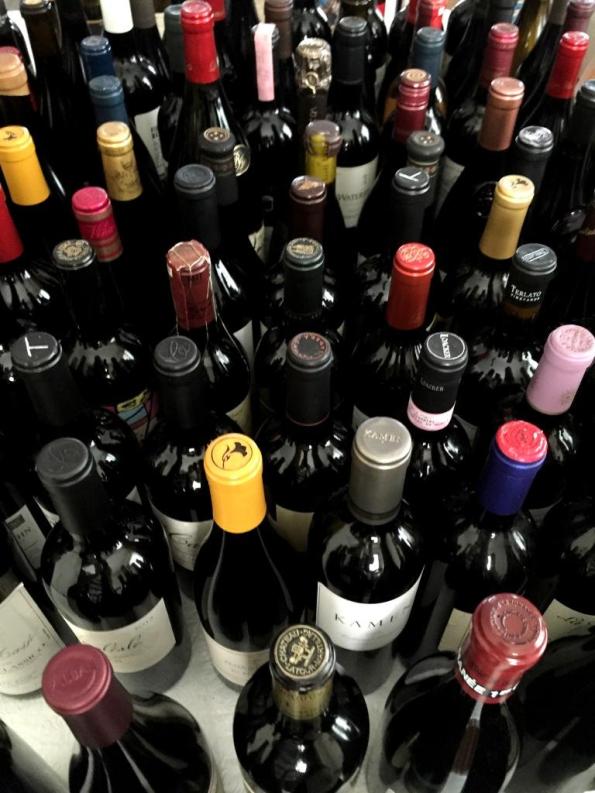
Still undecided? Think about it this way. Opening of That Bottle for the OTBN is a win-win, it always is. First, you get to drink the wine you always wanted to drink. Second, with opening of the bottle you are actually not losing anything – on contrary, you are gaining a great experience. If the wine is good, you are transported to the past, you get to re-live “the moment” once again – and create a new memory for the future. If the wine is not good, or not as you recall – you still create a new memory, and you can move on to your next “special bottle” (pleeease, don’t tell me you had one and only one, okay?).
Don’t know if I succeeded in convincing you, or if you even needed to be convinced, but I hope you will decide and open that special bottle, no matter what makes it special. And then I also hope that you will leave me a comment and tell me what you are planning to open or what you had for OTBN, as I’m dying to know.
As for me, still need to make up my mind – there are lots of choices, so I’m sure it will be a last minute decision, but rest assured that the special bottle will be open – and I promise to tell you all about it. Enjoy the OTBN, and don’t overthink it – just do it! Cheers!
Gambero Rosso 2016: Discovering Italian Wine Regions – Custoza DOC
Few weeks ago, I attended Gambero Rosso Tre Bicchieri event in New York. For those unfamiliar, Gambero Rosso is a leading Italian wine guide, where the wines are rated with the symbol of a glass (bicchiere in Italian). The wine can get a rating of one, two or three glasses, and those three glasses (Tre Bicchieri) rated wines considered to be some of the best wines the Italy has to offer. Every year, Gambero Rosso conducts a series of tastings worldwide, to celebrate these best Italian wines, and the tastings are called Gambero Rosso Tre Bicchieri events.
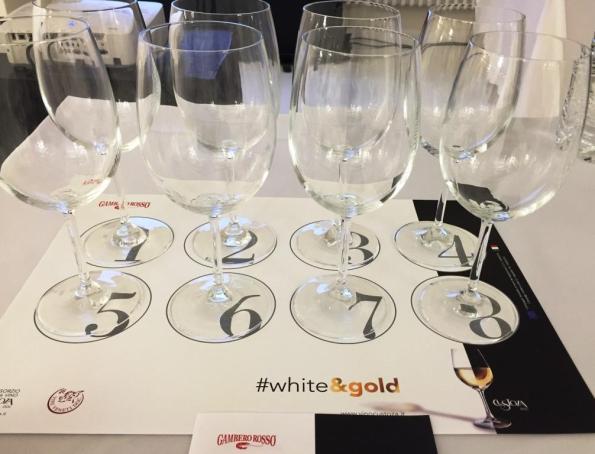
While I had been attending Tre Bicchieri events for the past 4 years, this year was the first time I also attended seminars conducted right before the general tasting. The first seminar was dedicated to the white wines of a small, and I would bet, largely unknown to the majority of the wine drinkers, region in Veneto, called Custoza.
Custoza is located at the south border of the Veneto region, on the shore of the Lake Garda. Excellent terroir to grow wine grapes, and white grapes in particular. Region has mild winters, which definitely helps not to worry about the frost. Another important characteristic of Custoza is mixed soil – clay, sandstone, limestone, which leads to a diversity in the wines. Overall, there are about 700 wine growers in Custoza, 70 wineries, and total wine production is roughly 12 million bottles per year (1 million cases). The region is fast growing on Italian market and represents great value for the money. A number of indigenous grape varieties are use in wine making in Custoza – Garganega, Fernanda/Bianca Fernanda (Cortese clone), Trebbiano di Soave, Trebbianello (known as Tokai Friulano in other regions), Riesling Italico (a.k.a. Welch Riesling), Incrocio Manzoni (cross created in 20th century).
Seminar presenters also made a statement about Custoza wines having a great aging potential – I would like to get back to that after presenting you with the tasting notes. We tasted total of 8 wines in this seminar:
2015 Tinazzi Custoza Cà dei Rocchi (Garganega 40%, Trebbiano di Soave 40%, Bianca Fernanda 20%)
C: pale straw
N: amazing, fresh sweet fruit, candies, through the roof aromatics. Green notes appear after a while.
P: crisp, clean, great acidity, fresh, will work great with seafood
V: 8-, food wine
2015 Gorgo Custoza San Michelin (Garganega, Cortese and Riesling Italico)
C: light gold
N: restrained, candied lemon, herbs, fresh caramel, opened into concentrated sweet baking spices. Smell is an enigma, keep changing. Yes, tropical fruit.
P: clean and crisp, but leaves sweet aftertaste. More concentrated than the previous wine, medium to full body, finish switched to more acidity
V: 7+/8-
2014 Cavalchina Custoza Superiore Amedeo (Garganega 40%, Fernanda 30% (Cortese clone), Trebbianello 15% (Tocai clone), Trebbiano Toscano
15%)
C: light golden
N: hint of smoke, gunflint
P: excellent, clean, green apple, fresh, perfect balance, acidity on the finish. Leaves me desire to take another sip
V: 8
2013 Albino Piona Custoza DOC (Garganega 30%, Trebbiano 35%, Friulano 20%, Trebbianello, Pinot Blanc and Riesling Italico)
C: light golden
N: medicinal, iodine, a nose almost suitable for a scotch
P: lots of fighting components, interesting. It is drinkable, but not together
V: 7-
2013 Menegotti Custoza Superiore Elianto (Cortese, Garganega, Trebbiano)
C: light golden
N: strange, vegetative
P: vegetative/sweet all over the place
V: 7
2013 Monte Del Frà Custoza Superiore Cà del Magro (40% Garganega, 20% Trebbiano Toscano, 5% Tocai Friulano, 10% Cortese, 10% Chardonnay-Riesling Italico-Malvasia and 15% Incrocio Manzoni)
C: golden, nice viscosity
N: minerality, hint of gunflint, white fruit sweetness, restrained
P: delicious. Ripe apples, white stone fruit, minerality, excellent balance
V: 8-
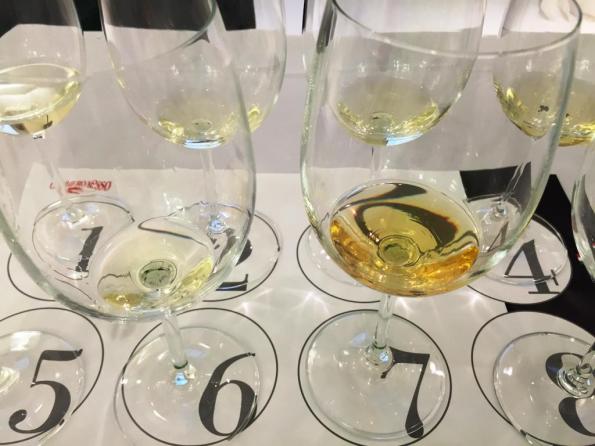
Take a look at the color difference with younger wines
2010 Monte Del Frà Custoza Superiore Cà del Magro (40% Garganega, 20% Trebbiano Toscano, 5% Tocai Friulano, 10% Cortese, 10% Chardonnay-Riesling Italico-Malvasia and 15% Incrocio Manzoni)
C: concentrated gold
N: minerality, volcanic soils, smoke, interesting
P: interesting complexity, still a touch of oxidation, vanilla, sea salt
V: 7+. This is a drinkable wine, and it will stay like that for a while.
2007 Cavalchina Custoza Superiore Amedeo (Garganega 40%, Fernanda 30% (Cortese clone), Trebbianello 15% (Tocai clone), Trebbiano Toscano
15%)
C: concentrated gold
N: slightly oxidative nose, similar to Jura whites
P: vanilla, steely notes
V: 7. May be good with cheese, but not enjoyable on its own
I very much enjoyed young Custoza wines – many were vibrant and delicious. When it comes to the two older wines, I wouldn’t say I was fun (I’m sure you can see it in my notes). Yes, I like tertiary aromas of older wines, but I still want the wine to have harmony and balance – and this was not the case here.
Very interesting learning experience in any case, plus a new grape (Incrocio Manzoni), or even two if I will count Fernanda as a separate clone/grape. So, have you ever had Custoza wines? What do you think of them?
In the next post, I will be talking about Gambero Rosso Special Awards master class, so until the next time – cheers!
To be continued…
3 Sensual Reds For Your Valentine’s Day
As the Valentine’s day is getting closer, I want to succumb to the popular trend and offer you some wine recommendations for that special overcommercialized-pink-hearts-everywhere-please-buy-at-least-something holiday.
Any day is what we chose to make out of it – including the holidays. What I like about Valentine’s day is that if anything, it is a celebration of love – and that I support wholeheartedly.
Are there special wines which are better suited to celebrate love and romance? Of course, however, I don’t have in mind any wines with special aphrodisiac qualities, or anything which will make one magically more desirable after staffing oneself with 32 oz of hearty porterhouse stack. Instead, I want to talk about sensual wines.
What is a sensual wine? First of all, this is the wine of impeccable balance and harmony – fruit, acidity and tannins are perfectly present and well noticeable, but everything is precisely weaved together, nothing sticks out, you just want to say “wow” after each and every sip. It is the wine which has luscious mouthfeel, it rolls of effortlessly, offering layers and layers of pleasure. But every sip still holds a mystery which makes you want to know “what is next”, it is like work of an artist which gives you just enough curves to let your imagination go wild. It is so easy, effortless to drink that you simply can’t put the glass down, as every sip leaves you desire for more. A beautiful foreplay, if you will.
Of course the truth is in the eye of the beholder, and if you tired of me talking nonsense, feel free to click away. However, if you will allow me, I will be glad to recommend three of such wines to extend the pleasure of your Valentine’s Day. As an added bonus I want to mention that you will not need to break the bank to get either one of these wines.


Let me start with 2012 Kaiken Ultra Malbec Uco Valley, Argentina. When I tasted this wine for the first time, I was blown away by the silky layers, succulent fruit and perfect balance; I couldn’t find better way to describe this wine than to call it “sexy” – this is a perfect example of the sensual wine.
Sensual wine number 2 is 2011 Emiliana Coyam Colchagua Valley, Chile. Very similar to the previous wine, it is velvety, smooth and layered. And mind-blowing. The fruit is bright and clean, and delivered with a tight core of round tannins; overall, a perfectly playful wine.
Third sensual wine I want to recommend is 2013 Willamette Valley Vineyards Estate Pinot Noir Willamette Valley, Oregon. Of course Oregon is a world power when it comes to Pinot Noir. Talking about Oregon Pinot, I would typically use terms such as “powerful”, “thought-provoking”, of course “elegant” is quite appropriate too. However, “sensual” would be a perfect descriptor for this Willamette Valley Vineyards Pinot. Abundance of the fruit and berries which are rarely found together in one glass – cranberries, strawberries, blueberries, all clean, vibrant, layered, polished and practically effervescent. Ultimately seductive, as you can’t put the glass down until every drop is savored out of that bottle. As sensual as the wine can be.
Here we go, my friends – a few recommendations to make your Valentine’s Day even more romantic and yes, sensual. Cheers!
Presidents’ Day Wine Recommendations
Wine recommendations for the Presidents’ Day? Which also falls on Monday? In the other words, wine recommendations for Monday? Really?
I can see that you might be surprised, but why not? Monday is as perfect day for a glass of wine as Sunday. Or Saturday. Or Friday. I hope you are okay with wine on Monday, so let’s move on.
First of all, especially if you don’t live in the United States, let’s me briefly explain the holiday. Presidents’ Day commemorates birthday of the first president of United States, George Washington, and it is always celebrated on the third Monday in February. While the original holiday was linked to the actual birthday of George Washington on February 22nd, some states also celebrated birthday of Abraham Lincoln (February 12th), and some even add Thomas Jefferson (third President) to the mix, thus the holiday is collectively called Presidents’ Day (if you are interested in exploring the subject further, here is the link to Wikipedia article). Presidents’ Day is an official Federal holiday, which means that all the branches of the US government are closed – however, it is typically a regular work day for most of the companies.
Now, let’s talk about wine choices for the holiday which always falls on Monday. Does Monday calls for a special bottle of wine? Well, it is the first day of the week, which often is difficult enough in itself, so may be we need a bottle of wine on the lighter side? I happened to come across the wine which I think would be perfect for any Monday, but it is incredibly fitting this special Monday – and I will tell you why in a second.
Let me introduce to you The Federalist – the winery in California, founded in 2007 with the goal to commemorate our Founding Fathers. The first wine produced by The Federalist was called Visionary Zinfandel, and it is dedicated to Alexander Hamilton, who pioneered The Federalist Party. Currently winery offers 5 different wines, all of them dedicated to the people who defined The United States of America.
Now, for the holiday at hand, I would like to offer you two wines – Zinfandel and Cabernet Sauvignon, both from Lodi in California. Zinfandel is dedicated to … very conveniently, I have to say … George Washington, the first President of the USA and the man who’s birthday we are celebrating on the Presidents’ Day. The Cabernet Sauvignon bears the picture of Benjamin Franklin – while I’m sure many of you are familiar with Ben Franklin as the man who’s face emboldens the $100 bill, Ben Franklin is often called The First American for advocating unity of the colonies, and he was one of the key participants in drafting The Declaration of Independence.

Here are my notes on the wines:
2014 The Federalist Zinfandel Lodi, California (14.5% ABV, SRP $17.76, 93% Zinfandel, 7% Syrah, 12 months in 25% new American Oak)
C: dark ruby
N: fresh, open, medium intensity, blackberries, ripe raspberries
P: delicious, clean, round tobacco and raspberries, perfectly clean Zinfandel profile, smooth, clean, perfect balance
V: 8-, outstanding rendition of Zinfandel, good for everyday drinking with this QPR
2014 The Federalist Cabernet Sauvignon Lodi, California (13.9% ABV, SRP $17.76, 87% Cabernet Sauvignon, 6% Merlot, 4% Cabernet Franc, 2% Petite Syrah, 1% Sangiovese, 15 months in 35% new Oak)
C: garnet
N: eucalyptus, cassis, restrained
P: bright, fresh, delicious, red currant, cranberries, crisp acidity, medium body.
V: 8-, quite atypical of traditional California cab – much lighter style, but very delicious
So, have I convinced you to raise the glass to honor first American Presidents on Monday? I hope I did, so grab a bottle of The Federalist and let’s celebrate! Cheers!
Top Twelve of 2015
In the 5 years this blog exists, I always summarized my wine experiences of the year with the list of most memorable wines. For the 2010 and 2011, the top lists included exactly 12 entries. However, 2012, 2013 and 2014 lists comprised of a first and a second dozens for the total of 24 wines or even more.
There were lots and lots of great and spectacular wines in 2015. But it is February of 2016 already, so I will simply limit the list to only 12 wines. Okay, of course not only 12, but I will stay as close as possible to the 12 – which makes it a fun challenge in itself, as now I need to go over the bigger list again and decide what to include into the one and only. From here, it makes sense to explain how this Top Wines list is built.
The Talk-a-Vino Top Dozen list is simply based on the memorable wines of the past year. I don’t take into account color or style of the wine. I don’t take into account price. I don’t take into account availability. What matters for this list is that one look at the name of the wine is enough to say “ohh, yes, I remember that” – these are the wines which left the biggest impression.
Done with all the explanations, let’s get to the list, shall we?
14. 2012 Marchesi de’ Frescobaldi Pomino Bianco Benefizio Riserva DOC ($45) – I have a weak spot for a good Italian Chardonnay, and this wine was just that – classic, clean and beautiful.
13. Changyu Red Wine Blend Ningxia, China (~$36 on the wine list in a restaurant in Beijing) – this wine was definitely an unexpected surprise, especially after unsuccessful first encounter with the Chinese wine. Classic round Bordeaux-style, with perfect balance and lots of pleasure in every sip.
12. 2013 Fero Vineyards Saperavi, Pennsylvania ($25) – Saperavi of course is best known as the star Georgian grape. However, it is quickly rising in popularity in the eastern US. Fero Vineyards might be a good example as to why – this wine had a characteristic Saperavi tartness over firm structure and nice earthy profile. It was my first and successful experience with the New World Saperavi.
11. 2014 Left Coast Cellars White Pinot Noir Willamette Valley ($24) – of course we are all familiar with “white Pinot Noir” in the form of the Champagne and other sparkling wines. But this was a still wine, and it was clean, crisp and unusual, just if you would think about.
10. 2010 Massena Mataro Barossa Valley, Australia ($35) – I still have to write this post, as this wine was a surprising find in the Mourverde single-grape wine tasting. The wine was powerful, luscious and delicious.
9. 2014 Sangiovanni Leo Guelfus Piceno Superiore DOC, Marche ($20) – organic and superbly refined. I don’t drink a lot of Piceno red wines, as they are scarcely available in the typical wine store. This particular wine showed perfect silky layers and beautiful balanced fruit. An amazing QPR at a price.
8. 2010 Turley Zinfandel Tofanelli Vineyard Napa Valley ($45) – it was the smell which made me think of this wine over and over again. Fresh berries with spices, just unstoppable. Smell is the best part of wine drinking – and this wine was offering an infinite pleasure.
7. 1994 Chateau Lilian Ladouys Saint-Estéphe ($15) – love surprises. When I picked up a bottle of this wine at the local store, my only thought was “what do I have to lose”. After two hours in decanter, after the first sip, my only thought was “I really, really hope they still have it in the store!”. Outstanding.
6. 2010 Irwin Family Tempranillo Piedra Roja Block 22 Sierra Foothills ($36) – Best US made Tempranillo. Don’t think I need to say anything else. You disagree? Try this wine first, then let’s talk.
5. 2009 Quinta do Tedo Vintage Porto, Portugal (~$70) – After been told that 2009 was a very bad year in Portugal, I didn’t expect to find any Vintage Porto from 2009. The one I tasted during the visit to Quinta do Tedo was absolutely magnificent as all the young Porto wines are – powerful, full of fresh berries and in-your-face greatness.
4. 2014 Abbazia di Novacella [Kerner, Gruner Veltliner, Sylvaner, Sauvignon Blanc] Alto Adige, Italy (~$20) – yes, that is a whole bunch of wines for one single entry, but there is no way to chose only one. Spectacular aromatics and mind-boggling deliciousness (yes, I’m getting very excited as I even write this) across all.
3. 2011 Marchesi de’ Frescobaldi Giramonte Toscana IGT ($150) – I can’t tell you too much or too little about this wine. Instead, I will use just one word – finesse.


No, there is no mistake down below. Both wines are #1 – best of the best from the 2015.
1. 2011 Quinta do Tedo Grand Reserva Savedra Douro ($30) – Spectacular – only as the best Portuguese Reserva wines can get. Espresso, dark chocolate, eucalyptus – there is no end to the descriptors you can apply to this wine. Truly outstanding and pretty much a steal at the price (problem is to find it anywhere outside of the winery).
1. 2011 Emiliana Coyam Colchagua Valley, Chile ($35) – imagine your mouth is full of ripe blueberries and wild strawberries. Now swallow all that, and take another handful of those fresh berries and eat them too. Repeat until happy smile will show on your face. Yes, that was my impression of this wine. Outstanding.
That’s all I have for you, my friends. Better late then never, that is the way I see it – yes, this is a late post, but I still wonder if you had any of these wines on your own and if you did, what do you think of them. Or if any of the wines from 2015 are still in your memory, I would love to hear about them too. Cheers!
500! Now Official
As many of you know, I got the bug of The Wine Century Club for the endless quest to try wines made from as many different grapes as possible – yes, you can call me a grape geek, I don’t have an issue with that.
Back in August of last year I wrote a post about reaching the 500 grapes milestone and submitting my application for Pentavini level at The Wine Century club. Two days ago, I got a suspiciously promising envelope in the mail, and there it was:
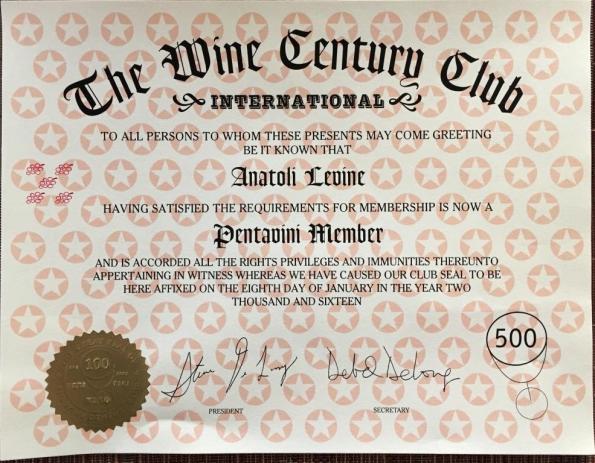 Well, it is nice to get an acknowledgement for your geekiness in the form of this cool paper; it also reinforces desire to continue the quest. You can see my grape count in the right column of this blog page – yes, I got a long way to go to get to the next level, but it is a fun journey. At this point, The Wine Century Club doesn’t have a designation for the 600 grapes level – but it doesn’t make the process any less fun.
To look at things seriously, this is nothing more than a form of an adult fun, just another way to collect the experiences. There is no need to congratulate with this achievement, really. But I will be happy to be a source of encouragement for all the grape aficionados out there; if you want to leave comment, tell me about your own journey in the Wine Century Club quest, no matter how many grapes you tried so far. Grape geeks, rejoice! Cheers!
While The Snow Was Falling on East Coast…
I heard about snow storm targeting East Coast of the USA on Wednesday. As I was at the meetings in San Diego, my first thought was “I have to make it back home to Connecticut”. Originally, I was supposed to take the red eye flight on Friday, come home for a day, and then leave for the conference in Florida on Sunday. I called travel agent right away, and moved my flight back to Newark to the middle of the day on Friday, and Florida flight to Monday morning – and felt pretty comfortable that I dealt well with upcoming storm.
Only on Friday, when I was practically ready to start moving to the airport, I got a message on my phone any air traveler is dreading the most: “your flight had been cancelled”… The thought of my family dealing with the snow on their own was practically unbearable. After talking to the travel agent, the truth settled in – I will not be able to make it home for the weekend, no matter how hard I will try. And yes, I will simply have to go directly to Florida without stopping in New York – no other options.
Coming out of the stupor, I realized – I have very close friends living close by in Irvine, which is about hour and half from San Diego – visiting them for the weekend would be a lot better than sitting by myself at the hotel – so Irvine it was.
My wife kept me updated on the snow situation back at home – this is what they will have to deal with today, and even for a while:

My day looked quite different – I discovered a Farmer’s Market in California. In the United States, there are two primary sources of fresh fruit and produce all year around – California and Florida, this was of course known to me. And farmer’s market is something which is not difficult to find in Connecticut, where I live – but only during the summer, mostly offering vegetables and a bit of fruit, and somehow always inciting me to challenge the authenticity of the actual “local farm” origin of that produce, seeing it sold from the pretty big trucks.
Thus farmer’s market we visited in Laguna Beach in California on Saturday in January was absolutely mind boggling experience for me as a foodie. All the citrus fruit you can imagine – grapefruit red and white, oranges, blood oranges, mandarins, Satsuma mandarins – to be honest, I don’t think I ever tasted a grapefruit which was as sweet and delicious as the one I tasted at this farmer’s market. Then you got strawberries, raspberries, blueberries, apples, pears – lots of them. Everything tastes fresh, delicious and almost unreal for someone from the east coast. All sorts of vegetables, of course, almonds with lots of different preparations, walnuts, dried fruit – I can go on and on – I’m sure you can tell that I can hardly contain my excitement. So here is simply an extravaganza of colors for you, in the form of the pictures – unfortunately, blogs can’t convey taste and smell – not yet, at least:
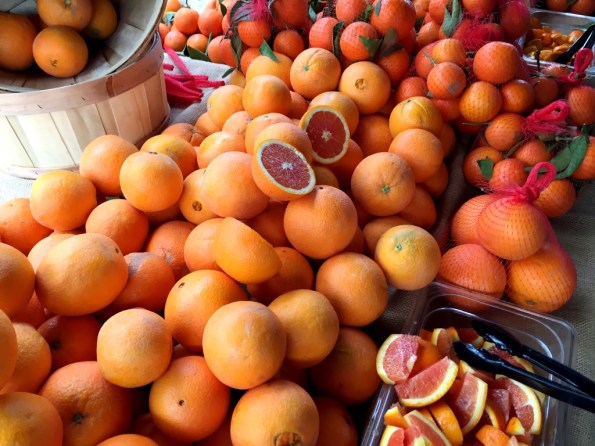


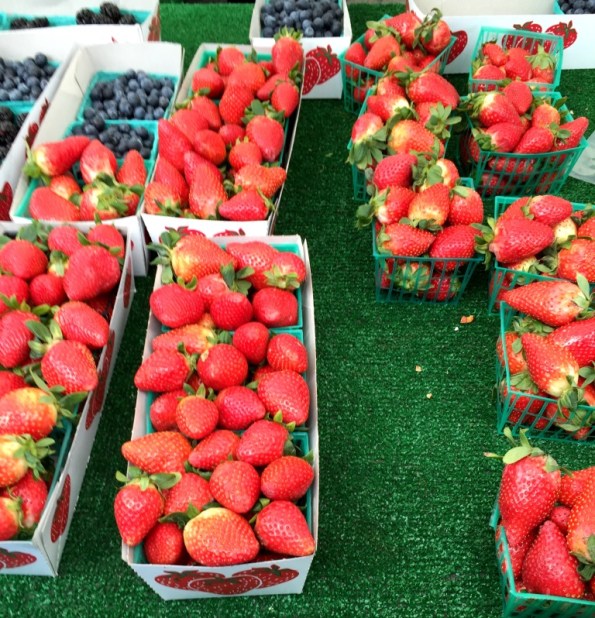
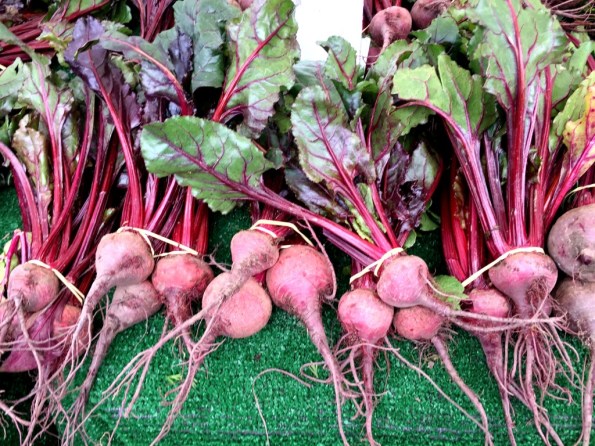


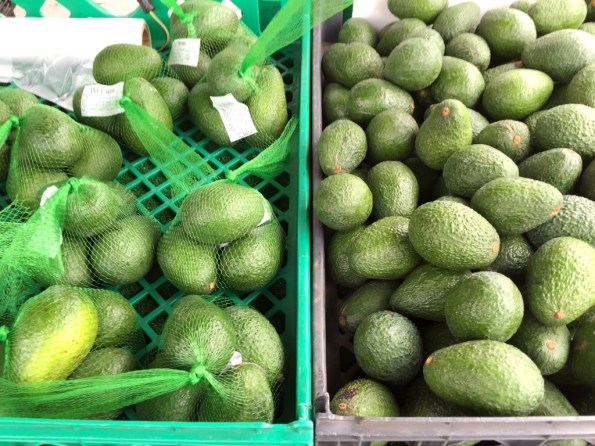
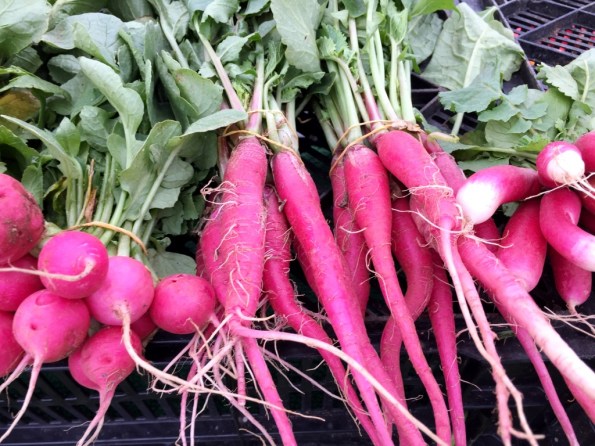

And then of course there were flowers:


Also, you never know then the Universe might strike back, so someone always have to be ready:

Spotted on the street in Laguna Beach – couldn’t resist to include this
If you are on the East Coast, I hope your digging out was successful and not super-tiring, so you can now relax with the glass of wine or whatever your heart’s desires. I’m off to continue flying. Cheers!
One on One with Winemaker: Aurelio Montes of Montes Winery, Part 2
As promised, here is the continuation of our conversation with Aurelio Montes Sr – Founder and Chief Winemaker of Montes Winery. You can find first part of the interview here.
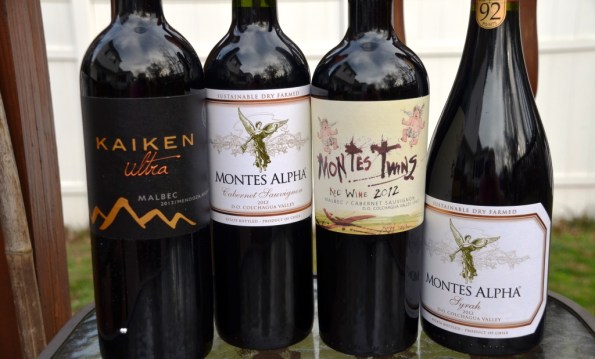 While the first part offered insight into unique (and unexpected) areas such as using of Feng Shui principles and Gregorian Chants at the Montes winery, this second half of the interview is also full of interesting details about present and future of Chilean winemaking. Here we go:
Q7: Do you use natural yeast in production of your wines?
A: Not for white varieties, although we have made Chardonnay trials in coastal areas, but in most cases result in that we obtain a very slow and long fermentation, which jeopardizes the final quality of the wine.
We prefer to use selected yeasts in white varieties, which ensure us a good rate of fermentation, working at low temperatures and retaining maximum aromatic potential of the wine.
In the case of reds it is different. We love to work with natural yeast when possible. They tend to express terroir better than the selected ones. However, much will depend on the conditions of the season, that is, if the season was very warm and the fruit arrives to the winery with a very high potential alcohol, we then prefer to use selected yeast that will ensure a good end fermentation. In the case of very rainy seasons, where the grapes arrive at the winery in bad conditions with some presence of fungi, we prefer to don´t take any risk and use selected yeast as well.
Under normal harvest of red grapes, without rain during maturity or heat peak’s that can cause an exaggerated increases in sugar content, we can then use natural yeast, maintaining important regimes of oxygen during fermentation and also moderated temperatures, in order to not stress these yeasts that behave in some cases very sensitive when the conditions are adverse during fermentation.
Q8: Montes Alpha had been a pioneer in many areas of winemaking in Chile. Particularly, it was the first winery to produce Syrah wines. How would you describe your Syrah compare to Northern Rhone, California or Australian wines?
A; Our Syrah, because of the natural conditions, and some winemaking policies, is different to Rhone or Australian Syrah. Ours is midway between the two mentioned valleys. It is ripe but not as jammy as the Australian one…is austere but still far more friendly and approachable than the Rhone style. This puts us in a perfect position, in terms of quality, and in fact my opinion is that the best New World Syrah comes from Chile
Q9: What was your most favorite vintage of Montes Alpha Syrah and why?
A: I think the 2006 vintage was a very good harvest, where this wine was well known. But I feel that the 2012 was even better. We had a very good season in terms of absence of spring frosts, an accumulation of rain water which enabled us to reach harvest with a low level of risk, and also a free of summer rains and reasonable temperatures. In particular, our Syrah from Apalta that comes from mountain grown fruit behaved very well, controlling a balanced amount of clusters per vine, allowing us to concentrate fruit color and body. Elegance and aromatic complexity found in the Apalta Syrah is really incredible. From this estate also comes the Syrah that goes to our Icon Folly made 100% out of Syrah.
Q10: In the wine world, there is always a conversation of the “next big grape”, which is usually country and region specific – like Sauvignon Blanc in Argentina, for instance, or Chardonnay in Oregon. Is there a “next big grape” for Chile?
A: I like to believe that the Carmenère can be our “next big grape”. But we struggled to position it, despite the efforts the sector makes. Chile has a high level of quality in this variety, considering various valleys and different heights, in the central and even coastal areas of Chile. After this many years of experience we must remain vigilant and continue working and learning in order to deliver the best quality Carmenère in the world.
I would like to add that recently Chile also has been making quite some noise on varieties such as Pais, Cinsault, Muscat, Grenache, Carignan, etc. In this last varieties with very good results.
In our case we crafted the Outer Limits line, which allows us to be more adventurous, dreamers, and let our imagination fly to experiment;
However I believe that the Cabernet Sauvignon is still the king of varieties that Chile has. Not only well renowned for the great quality but also because it represents the productive power and essence of the Chilean wine.
Q11: Does Montes Alpha have plans for the new grapes to be planted? Anything you are experimenting with right now?
A: We are not closed to the possibility. We are always looking for new things, but today to plant new surface is a sensitive issue. Chile is going through a time of overstock of wine, which forces us to be cautious about increasing our production. In the northern hemisphere the situation is similar, which puts us at a critical point.
Without adding the irrigation problem that the viticulture is facing around the world, which forces us to be very astute at this point. Today, more than planting new varieties on new surfaces, we are willing to replace those varieties and vineyards that do not meet our expectations, and replace this to try some new things.
For example, we have had very good reviews on our Tempranillo and Tannat 2015, after years of testing and harvesting dates, and exploring winemaking forms. Maybe we can do something about those varieties in the near future.
We are also touring various new areas as Cachapoal Valley, in search of a distinctive variety with unique quality and expression. Is under this inspiration that we have found and made quite interesting things, such as Pink Moscatel from Curtiduría, or a Pais from Lolol and other interesting projects that currently are still in the oenological kitchen … but this strategy of seeking other wine realities has given us many satisfactions to myself and the team.
Q12: when you are not drinking Chilean wines, can you give me a few examples of your favorite wines, regions and producers?
A: In terms of wines, if I were to pick an outstanding wine I would choose an Ornellaia Masseto. And if I could delight and reward myself with another, it could be an old vintage of Pétrus.
And we are done with the interview. It is time to take a look at another two Alpha Montes wines I tasted:


2012 Montes Alpha Syrah Colchagua Valley, Chile (14.5% ABV, $25)
C: very dark garnet, almost black
N: blueberries, violet, sage, fresh, touch of tobacco
P: silky smooth, round, roll-of-your-tongue, restrained, nice minerality, balanced fresh berries, touch of spice, touch of sweet licorice, excellent overall balance
V: 8, easy to drink, will greatly evolve
2012 Kaiken Ultra Malbec Uco Valley, Argentina (14.5% ABV, $25)
C: dark garnet, practically black
N: concentrated, dark fruit, plums, violet, tar, tobacco, very, very inviting – super sexy, first analogy
P: wow, concentrated fruit, luscious, polished, layered, round, balanced, great dark power, well integrated tannins
V: 8+, outstanding, wow and dangerous (and sexy! – I rarely designate wines like this, but … of well, I will wait for you to try it)
And we are finally done here. I hope you enjoyed our conversation as much as I did, and may be even learned something new. Until the next time – cheers!
Does the Wine Deserves Second Chance?
 This post is an entry for the 22nd Monthly Wine Writing Challenge (#MWWC22), with the theme of “Second Chance”. Previous themes in the order of appearance were: Transportation, Trouble, Possession, Oops, Feast, Mystery, Devotion, Luck, Fear, Value, Friend, Local, Serendipity, Tradition, Success, Finish, Epiphany, Crisis, Choice, Variety, Pairing.
Let me describe to you I’m sure a very familiar situation: the bottle of wine is opened, wine is poured in a glass, you take a sip and … you don’t like it. Too sweet, too acidic, too sharp, too tannic, too “biting” – it is not always that you follow a sip with “wow” or “ahh”. What do you do next? Of course I understand that this question doesn’t have a single answer, as everything depends on the context. And as a side note, it is also implied that the wine is not spoiled – not corked, not cooked, not oxidized – it is simply not to your liking.
Let’s assume that you opened the wine in the comfort of your home. You can simply put the glass aside and decide to wait and see if the wine will change (you of course hope for the better). If this happened in the restaurant, your choices are limited – if you just ordered this bottle out of your own will, in most of the cases you can’t send it back (remember, we said it is not spoiled) – you can ask for the wine to be chilled or decanted, but that is about all you can do. If you are at a friend’s house, you probably have only one choice – to smile and to say that this is delicious, unless you grew tired of that friendship long time ago, so then it might be a good opportunity to end it on a high note.
No matter what setting it was, let’s assume you didn’t get to the point of liking the wine, and now it is in your memory as the wine-I-never-want-to-touch-again. Would you ever think of giving this wine another chance?
Yes, I know. There is such an abundance of wine around us that if we don’t like something, why bother with any “second chances”? It is humanely impossible to taste all the wines produced in the world, so why bother with something which you were done and over with? Yes, by all means you have a point. But is there a tiny little voice inside your head, which says “may be that wine needed more time to open up”, or “may be I was just in the wrong mood”, or “may be my food overpowered the wine”? Do you ever get any of those “may be”s, so you would actually go and try the wine again, just because you are curious?
 I understand that this is matter of personality and an outlook on life in general, but more often than not, I find myself in the “may be?”, a “what if?” group. This is especially true when it comes to the wines which I open at home. If I take a sip of wine and don’t like it, I often put it aside, to try it on the next day. Or may be the day after next. Or may be even after that. One of my favorite examples is the bottle of 2002 Dunn Howell Mountain Cabernet Sauvignon, which opened up only on the 5th day (the wine was 11 years old when it was opened). When I took a first sip after just opening a bottle, the wine was tannic and literally devoid of fruit – there was no pleasure in that wine. Pumped the air out, put it aside for a day. Next day – literally no changes. And so was the story on the next day, and the next day. But I was not not ready to declare the wine a failure and just pour it out – kept giving it second chances. And the reward came on the day number 5, with layered fruit and delicious, powerful wine.
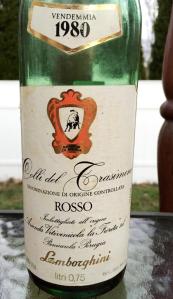
I have another example from literally 2 weeks ago, when we opened a bottle of 1980 Lamborghini Colli del Trasimeno Rosso (I can tell you that I bought the wine strictly on the basis of the fun name – Lamborghini – a car which I’m sure anyone would be happy to drive at least once). The wine was opened, went into a decanter – and for the whole evening nobody liked to drink it, as it tasted more as brine than the wine. I can’t tell you if I was giving the wine a conscious second chance, or was simply lazy to pour it out. Next day before clearing the decanter I decided to take a little sip – why not? And it appeared that the wine actually developed into delicious, mature wine, with the nose of tertiary aromas and palate full of sweet plums. Not the most amazing wine I ever had in my life, but perfectly delicious, mature wine which delivered lots of pleasure.
I could go on and on with similar examples, but I’m sure you got my point – the wine could’ve been discarded as “bad” and the great pleasure would be missed, if it wouldn’t be for the second chances.
So, what do you think? Do you have any “second chance” wine stories of your own, maybe with the happy ending? Do you think wines deserve their second chances? Cheers!
Last Bottle Sign Up ($10 credit)




 Talk-A-Vino