Archive
One on One with Winemaker: Wayne Bailey of Youngberg Hill Vineyards
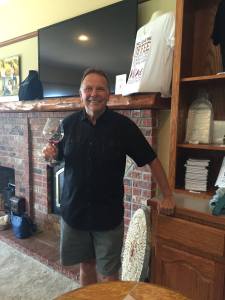
Wayne Bailey. Source: Youngberg Hill Vineyards
What do you think of biodynamic winemaking? As an oenophile, do you embrace it or shrug it off?
Well, it is easy for us, oenophiles, to have an opinion, informed or uninformed – but then there are people who actually live by it, meaning – practice every day.
Biodynamics was born almost 100 years ago, in 1924, when German scientist, Rudolf Steiner, presented a course of 8 lectures on agriculture. At the core of the biodynamics is a holistic approach to the agricultural work, embracing the whole sustainable, natural ecosystem – akin modern day organic agriculture. However, biodynamics goes further and adds what many perceive as voodoo element – bladders, intestines, skulls and many other “strange” items play role in the full biodynamics approach, and that puts a lot of people on the offensive.
I’m sure at this point you are probably looking back at the title of this post and trying to figure out what biodynamics has to do with promised winemaker’s interview? In 2003, Wayne Bailey purchased the vineyard in the Willamette Valley in Oregon, called Youngberg Hill. The Youngberg Hill vineyard was planted in 1989 by Willamette Valley pioneer, Ken Wright, and it produced its first vintage in 1996. When Wayne Bailey was looking for the property to buy, Youngberg Hill was recommended to him as the place which has “good vibrations” – and rest is now history. These “good vibrations” also set Wayne on the path for the holistic farming, starting with all organic in 2003 and upgrading to biodynamic farming in 2011 – and this is why you had to get the refresher course on what the biodynamics is.
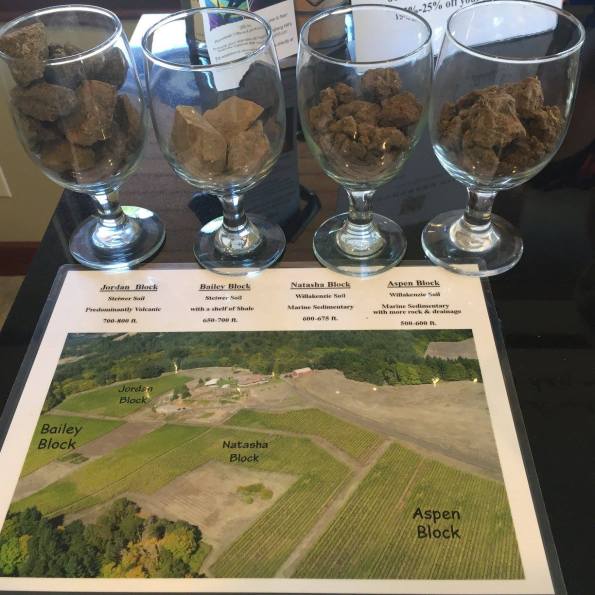
Vineyard Map. Source: Youngberg Hill Vineyards
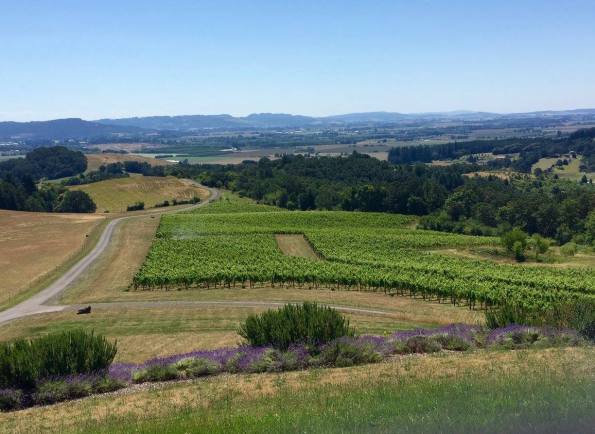
Source: Youngberg Hill Vineyards
Lots of things are happening at Youngberg Hill Vineyards today, but I will let you read about it on your own, as now I would like to share with you my [virtual] conversation with Wayne Bailey:
TaV: First vineyards were planted on Youngberg Hill in 1989. How much did you have to change between then and now?
YHC: Those 11 acres continue to produce and are healthier now than 14 years ago as a result of switching to organic and biodynamic farming practices. We have planted four additional acres of Pinot Noir in 2008 and five acres of Pinot Gris in 2006. In 2014 we grafted over half of the Pinot Gris to Chardonnay.
TaV: 1996 was the first vintage at Youngberg Hill. Have you had an opportunity to taste those wines?
YHC: Yes. The only vintage I have not had was 1997. I had a few bottles of ’96, ‘98’, ’99 that were part of our purchase.
TaV: What do you think of them?
YHC: They were very good and reflected both the quality of the fruit coming off the hill and the ageability of the wines.
TaV: Are there any of those wines still around?
YHC: I have 1 bottle of ’98 and a few 2000, etc.
TaV: Your first vintage was in 2003. How are those wines aging?
YHC: Only have a few bottles left, but had one only a couple of months ago that was beautiful. Aging very well and was still not showing signs of deterioration.
TaV: You produce Pinot Noir and Pinot Gris from Youngberg Hill vineyards, and Chardonnay is on the way. Do you have plans for any other grapes (Tempranillo, Syrah,…)?
YHC: No, I am not convinced that we will see global warming impact us to the extent that we can consistently ripen big red varietals in my lifetime. That will be up to my daughters.
TaV: Do you have any plans to expand plantings beyond the 20 acres you have right now?
YHC: No
TaV: You went from traditional (whatever it was) farming to organic and now to biodynamic. How those transitions manifest themselves in wines? Can you taste them?
YHC: Yes. The fruit is much healthier coming out of the vineyard and into the winery, meaning that the fruit is much more balanced and more balanced ripening of the fruit across all parameters of ripeness. That shows up in the wine as higher quality (depth and complexity and balance) and more vibrancy as the wine ages in the bottle.

Youngberg Hill vineyards aerial photo Source: Youngberg Hill Vineyards
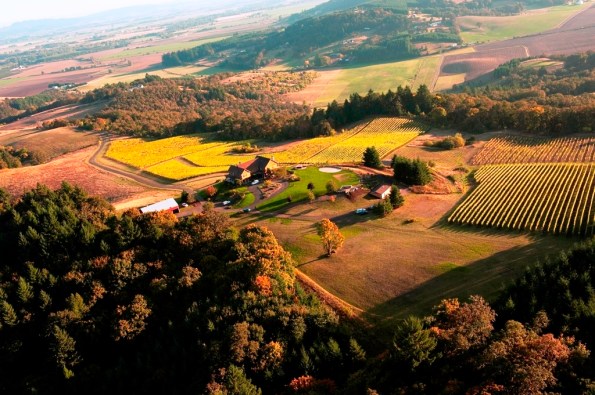
Jordan Vineyard. Source: Youngberg Hill Vineyards
TaV: Is the day in the life of biodynamic farmer much different from the “traditional” one?
YHC: Yes, in that you spend more time walking the vineyards and knowing each plant more intimately.
TaV: Is going all the way to biodynamic worth the effort for the grapes and wines, or is it just better for the farmer’s soul and the environment?
YHC: All of the above. You grow healthier grapes which are of higher quality, resulting in better wines. At the same time the soil and plants are healthier and will sustain better in the long run and there is no negative effects to the environment.
TaV: Youngberg Hill might be the only winery (to my knowledge) producing Pinot Noir Port. How traditional is your Port in making and style? Would you compare it to any of the Porto wines? Do Pinot Noir grapes accumulate enough sugar to be made into the Port? Lastly, do you produce Port every year?
YHC: Our Pinot Port is slightly lighter in overall structure and a little drier, not because there was not enough sugar accumulation, but because I let primary fermentation go a little longer. The production process is the same and the style is similar except for the varietal characteristics. We do not produce every year. It depends on many factors related to the vintage.
TaV: What were your most favorite and most difficult vintages at Youngberg Hill and why?
YHC: Of past vintages, 2005 and 2010 are two of my favorites for their balance, elegance, and complexity. However, 2005 was significantly reduced in quantity due to mildew; and 2010 was greatly reduced in yield due to the birds. 2015 may become my best vintage to date (currently in barrel).
TaV: When the Youngberg Hill is called a “good hill”, is this more of a gut feeling, or is it more of specific terroir parameters – soil, climate, wind, temperature range, etc.
YHC: Both. It is good from the standpoint that the terroir is excellent for growing Pinot Noir; higher altitude, marine sedimentary and basalt soils, southeast facing slope, altitude change from 500 to 800 feet, coastal breezes coming off the coast, cooler temperatures both day and night, etc. but also the peace, serenity, isolation, aquafer, underground water, and much more “natural” setting also attribute to the “good hill”.
TaV: As a biodynamic farmer I presume you are well attuned with Mother Nature. From 2003 to now, do you see the material effects of climate change? Do you take this into account with the grape growing and wine production?
YHC: Having been in agriculture throughout my life, I have experienced the 20 year cycle of hot and colder temperatures, so I believe in another couple of years we will see temperatures going down again. However, over the long term (hundreds and thousands of years) the earth is getting warmer and the highs and lows are tending to be more extreme along with weather incidents. Does it impact my grape growing practices? No.


Hope you are still with me, and it is the time for some wine, right?
We have an open conversation among friends here, so I will dare to confess an interesting experience. I opened the bottle of Youngberg Hill Pinot (screwtop), poured a glass. Swirl, sniff, sip – nothing to write home about. Swirl more intensely, another sip – just a touch of acidity and not much else. I closed the bottle, put the wine aside and decided to give it a day. Before I tasted it the second day, my thought was – please, please, please – if the wine the same as the previous day, this post is going to be published without the tasting notes. Luckily, the wine evolved dramatically, so I’m happy to share my tasting notes with you:
2013 Youngberg Hill Pinot Noir Cuvée Willamette Valley (13% ABV, $35)
C: Dark Ruby
N: lavender, cherries, earth, fresh, open, medium intensity
P: the first day was very tight; sweet red fruit showed up on the second day, bright acidity, vibrant, firm structure, good concentration, dark powdery medium-long finish. Still delicious on the third day, so definitely this wine can age.
V: 8/8+, well-made wine, needs time to open, can age for another 10+ years
Here you are, my friends – another story of Passion and Pinot – with rocks, soils and a bit of biodynamics. We are not done yet, so until the next time – cheers!
To be continued…
P.S. This post is a part of the “Stories of Passion and Pinot” series <- click the link for more stories.
Stories of Passion and Pinot: Ghost Hill Cellars
Wine and mystery go hand in hand, don’t they? How about a little ghost story? Take a sip from your glass, and say it with me: “It was dark and stormy night…” – now take another sip – do you taste the difference between the first one and the second? So here is a little ghost story for you. Legend has it that during the Gold Rush in Oregon (the 1800s), the miner was on his way to Portland with a load of gold. He decided to set an overnight camp on top of the hill. During the night, someone got into the camp, killed the miner and took his gold. Ever since, the miner (his ghost, of course) is wandering around that hill, looking for his gold; quite appropriately, the hill became known as the Ghost Hill.
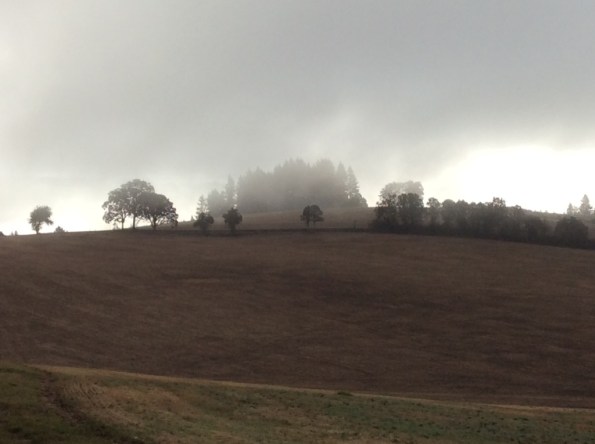
Source: Ghost Hill Cellars
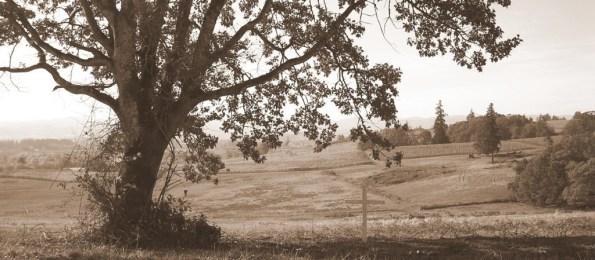
Source: Ghost Hills Cellars
In 1906, brothers Daniel and Samuel Bayliss purchased about 230 acres of land around that Ghost Hill and started their farm. That farm is now staying in the family now for 5 generations, with all the cattle, sheep, hay, wheat and clover growing there. Being in the heart of Willamette Valley, it is hardly possible not to catch the Pinot Noir bug. In 1999, the Bayliss-Bower Vineyard was planted with the Pinot Noir. The Oregon wine pioneer, Ken Wright, once asked Mike Bayliss if he would sell the vineyard and how much he would want for it – as you can guess, the answer was “no”.
I had an opportunity to [virtually] sit down with Mike Bayliss and Bernadette Bower, his daughter and 4th generation owner of Ghost Hill Cellars, and ask them a few questions – here is what transpired from our conversation:
TaV: Ghost Hill farm is 234 acres, and the Ghost Hill vineyard today is 16 acres – do you have any plans to expand it?
GHC: At the moment, we have no plans to expand, but we are not ruling out expansion. We will have to see what the future holds. We have 90 acres deemed plantable to Pinot Noir.
TaV: How did you come up with the idea of producing Pinot Noir Blanc? Did you see/hear someone else do this (or maybe you even tasted someone else’s wine), or was it a pure moment of bliss?
GHC: Actually, the idea of Pinot Noir Blanc came from our winemaker at the time Rebecca Shouldis. She was talking to a fellow winemaker from France who suggested a Pinot Noir Blanc for our younger plantings of 115. He told us that in France, half of the champagne is usually Pinot Noir Blanc, so that would be a good white option for us. We agree, it has been very successful for us.
TaV: You use Pinot Noir to its full capacity, producing white, Rosé and red, all from the same grape. So the only type of wine which is probably missing is a sparkling wine, for which Pinot Noir is perfectly suitable. Do you have any aspirations to start producing your own sparkling wine?
GHC: We have discussed it, but we have no plans to start production of a sparkling in the near future. Again, you never know what the future holds!
TaV: Did you ever meet the ghost of the deceased miner, looking for his gold?
GHC: The presence of the miner has been felt many times. Neighbors have seen and felt the presence of the ghost at dusk while riding horses. They will not ride in that area anymore. When the kids were little, Mike used to tease the kids and tell them he could see the ghost on the hill, but that is as close as we have come.
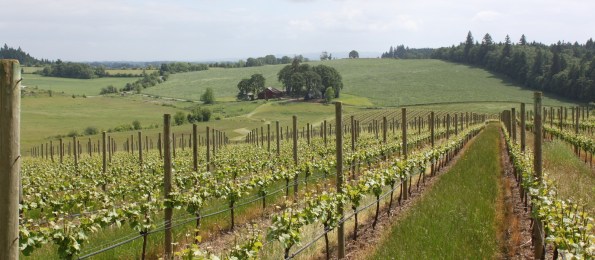
Source: Ghost Hill Cellars
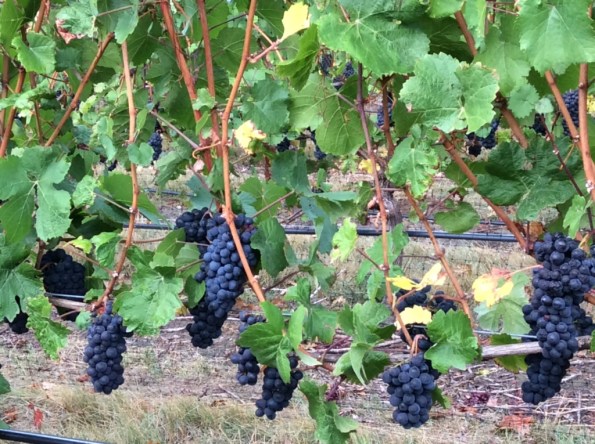
Source: Ghost Hill Cellars
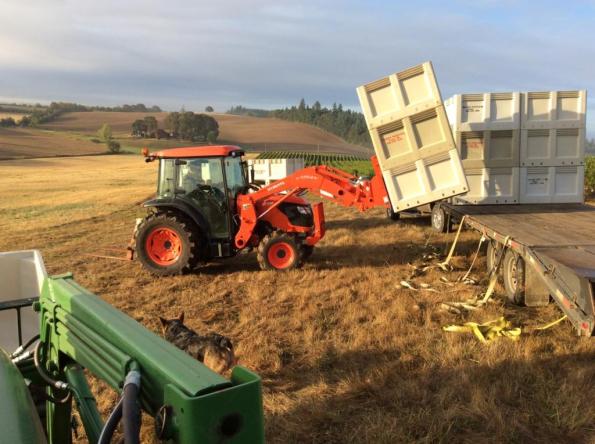
Harvest. Source: Ghost Hill Cellars
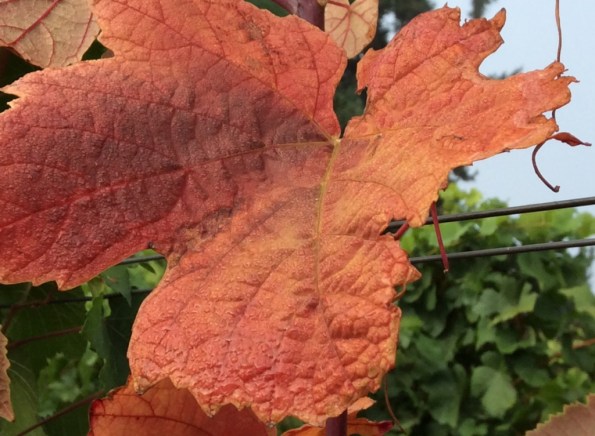
Source: Ghost Hill Cellars
TaV: Do you have any plans to start growing other grapes, such as Chardonnay or Pinot Gris, for example, or do want to stay Pinot Noir all the way at the moment?
GHC: At the moment, we are staying Pinot Noir all the way. We have been considering Chardonnay for future planting, but nothing has been decided.
TaV: Do you have any plans to convert your vineyards to all organic or biodynamic?
GHC: We will not go to all organic or biodynamic. It takes away too many tools to deal with emergency situations in the vineyard, but we are certified sustainable and salmon-safe, and plan to continue those practices, as sustainability is very important to us.
TaV: On your farm, you grow more than just grapes. Is farming for the grapes much different from all other plants?
GHC: Yes and no. Some of the same rules apply to farming other crops, but grapes are incredibly labor intensive, much more so than other crops we have grown. Grapes need your attention all the time.
TaV: Did you ever regret not selling the land to Ken Wright?
GHC: Depends on which day you ask us… But really, no. We want to keep the land in the family. 110 years is a long time, we aren’t ready to give that up. The land holds so many memories for our family, we would feel lost without the farm.
TaV: Your life had been intertwined with the farm pretty much forever. With the grapes or not, but I’m sure you got some interesting stories to tell. Can you share some of your most fun (or most dreadful) moments
GHC: When we were raising beef cattle, the cattle were always getting out and had to be chased. We appreciate that the grapes never escape or have to be chased. Our daughter will tell you her least favorite day was the morning the cattle got out and she was out chasing them in her pajamas when the school bus went by, full of her friends who were laughing at the whole situation. Our vet from the cattle days is writing a book and has promised to devote an entire chapter to The Bayliss Farm.
TaV: You use only the very best of your wine to produce the Prospector’s Reserve. Was there a year when you decided not to produce the Prospector’s Reserve, or do you see such a situation possible?
GHC: For the 2013 vintage, we do not have a Prospector’s Reserve as we did not have enough grapes to make a reserve blend. We will only be releasing 2013 Bayliss-Bower.
TaV: When you are not drinking your own wines, what other wines from what producers and what regions do you like to drink?
GHC: Of course, we drink Hamacher. We are discovering fabulous new Oregon wines all the time, there are so many new producers in the region.
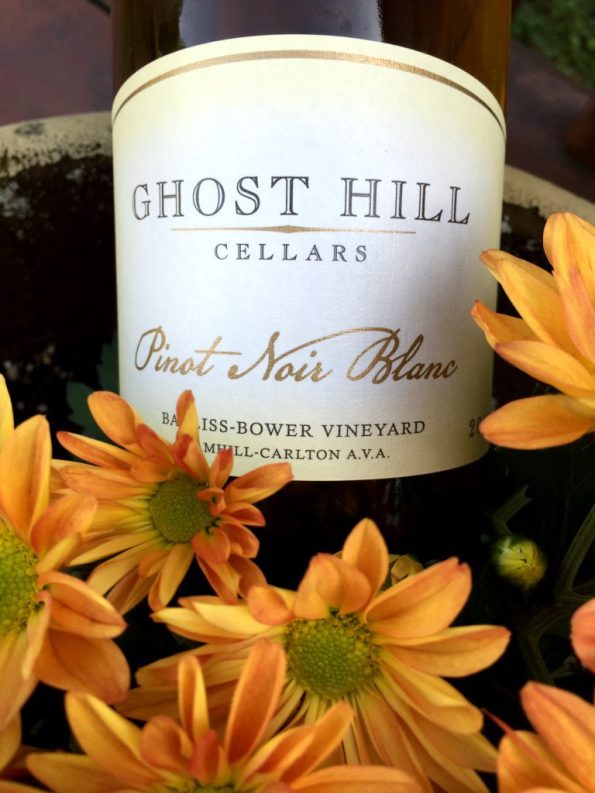 To tell you the truth, once I heard that Ghost Hill Cellars makes Pinot Noir Blanc, I was really intrigued, so I was happy to try this wine:
2014 Ghost Hill Cellars Pinot Noir Blanc Bayliss-Bower Vineyard, Yamhill-Carlton AVA (13.9% ABV, $25)
C: light copper, reminiscent of Rosé
N: initially intense, yeasty, Granny Smith apples, citrus, then evolving to the notes of honey and then showing hint of gunflint
P: creamy and round, a touch of strawberries, minerality, lemon, green apples, good structure, good acidity, medium long finish, with acidity prevalent
V: 8, very enjoyable
Here we go, my friends. I can’t tell you if the ghost of the deceased miner is affecting the wines – you can try to find out on your own, by either visiting the Ghost Hill Cellars or, at least, drinking their wines. And, of course, stay tuned, as more of the Passion and Pinot stories are coming out soon. Cheers!
To be continued…
P.S. This post is a part of the “Stories of Passion and Pinot” series <- click the link for more stories.
One on One with Winemaker: Don Hagge of Vidon Vineyard
Don Hagge. Source: Vidon Vineyard
What do most people do at the age of 69? Retire, or at least, semi-retire, right? Humans live longer than ever before, and many still have enough energy and desire to continue doing what they are doing. But let me rephrase the question a bit – how many people do you know who would start a totally new business at the age of 69? Might be a difficult question, I understand. Sure it would be for me, but now I can proudly say that I know at least one person like that. Let me introduce to you Don Hagge.
So what does rocket scientist (with degrees from UC Berkeley in physics and business from Stanford), whose resumé includes Lawrence Berkeley Laboratory, Centre d’Etude Physiques Nucleare in Paris, Apollo Mission at NASA and Silicon Valley high-tech industry, upon retirement? Of course, starts his own winery! Well, it sounds radical, but considering that Don grew up on a farm in North Dakota, and had an opportunity to live in France and experience wines of Burgundy, maybe it is only logical?
Vicky and Don Hagge started Vidon Vineyard in 1999 in Willamette Valley, in the Chehalem Mountains AVA of Oregon (you can probably figure that name of the winery, Vidon, is made up after Vicky and Don). Fast forward to today, Vidon Vineyard produces primarily Pinot Noir, plus small amounts of Chardonnay, Pinot Gris, Pinot Blanc, Viognier, Syrah, and Tempranillo. Vidon Vineyard is sustainable, LIVE and Salmon-safe certified, and practices minimal intervention winemaking. Don Hagge not only makes wines, he also plays the role of a handyman when it comes to various winemaking tools and equipment. Plus, he is very opinionated about the use of glass enclosures instead of corks…
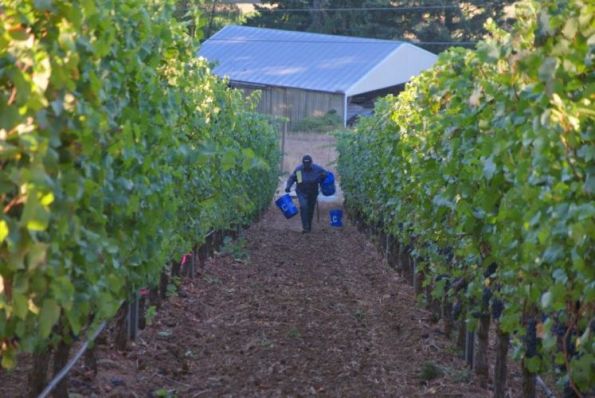
Source: Vidon Vineyard
I had an opportunity to [virtually] sit down with Don Hagge and ask him a few questions, so here you can find our conversation:
TaV: For many years, you had been living and working in California. Why have you decided to build a brand new winery in Oregon and not in California?
DH: I was recruited to Oregon by a venture capitalist as the CEO of a startup semiconductor company. During this time, I biked in the Willamette Valley regularly and loved the vineyards. Since I lived in France some time ago, Pinot Noir has been a favorite wine. I grew on a farm and decided to make a career change and what could be better than buying land, planting a vineyard and learning how to make wine? Oregon was gaining a reputation for Pinot Noir so here I am.
TaV: Your very first wines were made in 2002. Do you still have any of those bottles left? If you do, how do they drink today?
DH: Unfortunately, the 2002 vintage is gone. I made only 40 cases and didn’t label it, only for friends and personal use. We just had a 2006 vintage this evening which is fantastic.
TaV: During all the years of Vidon Vineyard existence, what was the most difficult vintage for you and why?
DH: Probably the 2007 vintage. This was the first year I used my own winery so many things were new. I saw the forecast for heavy weather, got a crew and pulled in 16 tons on September 25th. Before we finished cleaning the equipment it started raining and didn’t stop for a month. Most people suffered through the rains and the vintage got a bad rap in the press. We were lucky – it’s still a beautiful wine!
TaV: For how long do you typically age your Pinot Noir wines in French oak Barrels?
DH: Most of my wine carries the 3-Clones label and gets 11 months in French oak barrels which are on average 30% new. I’m not a fan of big oak in any wine.
TaV: You are an enthusiastic proponent of glass enclosures instead of traditional cork. When did you start using glass enclosures? Also, did you ever try to bottle the same vintage both with glass enclosures and traditional corks and then compare the results of the aging?
DH: Until the 2008 vintage I used corks and usually quite expensive ones. However, I determined that no matter what they cost, they still taint wine because of TCA and pre-oxidize occasionally. Therefore, in 2008 I began using Stelvin screw caps. In 2009 I started using Vinoseals for the Single Clone labels. No, I’ve never done a comparison of cork vs Vinoseal glass closures. It’s not necessary, I know what corks do and Vinoseals and screw caps don’t do. I don’t understand why anyone uses a closure that ruins a percentage of their wines when there are alternatives that don’t.
TaV: Today, you are producing a number of different white and red wines. Do you have any plans (if not plans, may be at least some thoughts) about starting to produce Rosé and/or Sparkling wines?
DH: I made Rosé for two vintages and one was great, I was told. I’d like to do a Sparkling but my winery is too small given what I’m now doing. That’s not to say I’m not dreaming of a winery expansion and interested in trying more and different wines.
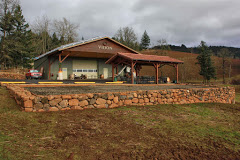
Vidon Winery. Source: Vidon Vineyard
TaV: Outside of your own wines, which are your favorite Pinot Noir producers in the world?
DH: Good Bourgogne wines are what I like to emulate. The 2004 vintage was the nearest to a great Bourgogne that I’ve made.
TaV: If you would have an opportunity to start your winery again, would you do something different?
DH: Given the resources I had, not much. Perhaps I’d build a better winery instead of an expensive house, but I have a wife. 🙂
TaV: You describe your approach in the vineyard as “minimal intervention”, and your winery is LIVE Certified. Do you have any plans to become certified organic or biodynamic winery?
DH: I’m a scientist and Biodynamic winemaking isn’t scientific. Many of their practices are good, how they treat the land, etc. But I don’t believe in VooDoo. I don’t’ believe that Organic Certification results in better wine or land management than what we do in the LIVE program.
TaV: I understand that you have built your own bottling line wine dispenser for the tasting room. What are the other technological tools which you built at your winery?
DH: I don’t think I’ve built anything for winemaking that any good farm boy couldn’t have. I’m always trying to find ways to simplify tasks and become more efficient in using time and material. I have an idea about saving wine and labor in barrel topping but haven’t implemented it yet. My use of Flextanks to replace some barrels is already saving wine and labor by eliminating barrel topping while producing wine that’s equivalent to that from barrels.
TaV: You already work with quite a few grapes (Chardonnay, Pinot Gris, Pinot Noir, Tempranillo, Cab Franc, Syrah). Do you plan to add any other grapes in the vineyard?
DH: No more varieties. No more land to plant. However, I do hope to plant a small plot of Coury clone Pinot Noir next year. Planting of the clone date back 50 years to the original plantings.
TaV: What drives your passion? You started Vidon vineyards at the age when most of the people are happily retiring, so there must be some deep reason for you to engage in such a – of course, a labor of love – but hard labor?
DH: I like to live. I’m not ready to “stop” and watch TV. I think having a ToDo list every morning and a little anxiety and stress about getting things done will result in a longer life. To have no challenges is pretty dull and boring. When one is doing things that one enjoys, it’s not labor.
What do you say, my friends? This interview continues our Stories of Passion and Pinot series, and I think it is a perfect sequel to the conversation with Ken Wright – Don Hagge exudes the same righteousness, passion, and confidence in everything he does.
And you know what supports Don’s ways and means? His wines! I had an opportunity to try his Chardonnay and Pinot Noir, and in a word, I can tell you – what a treat! Two stunning, perfectly balanced and perfectly Burgundian in style – made with passion and care in Oregon.
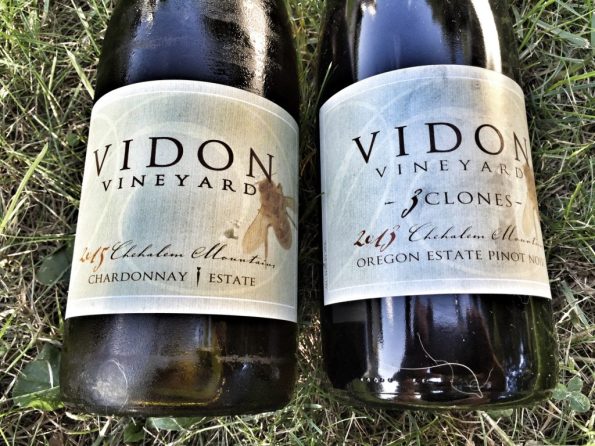
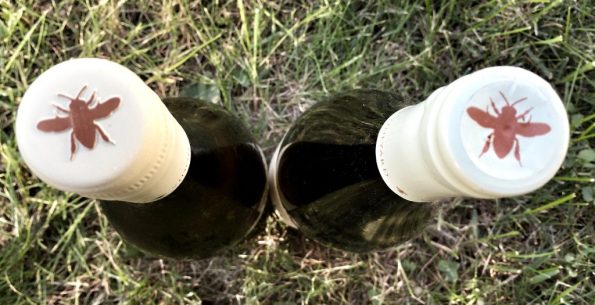
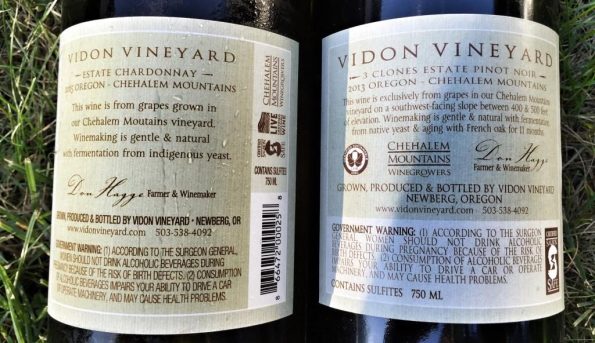 For what it worth, here are my notes:
2015 Vidon Vineyard Chardonnay Estate Chehalem Mountains, Oregon (12.9% ABV, $35)
C: golden color
N: initially, very restrained, mostly minerality. After 2 days in the fridge, honey and vanilla, quite spectacular
P: initially tight, minerally and acidic. Two days later – exuberant, golden delicious apples, perfect acidity, vanilla, medium finish. Every sip leaves you craving for more
V: 9, simply outstanding, delicious.
2013 Vidon Vineyard 3 Clones Pinot Noir Estate Chehalem Mountains, Oregon (14.3% ABV, $40)
C: bright Ruby, cranberry undertones
N: inviting, intense, a touch of smoke, lavender, red fruit
P: nicely restrained, minerality, crushed red fruit, mouthwatering acidity, fresh, elegant, lots of finesse
V: 9-, outstanding wine, Burgundian style
Here you are, my friends – another story of Passion and Pinot. And I have more for you, so until the next time – cheers!
To be continued…
P.S. This post is a part of the “Stories of Passion and Pinot” series <- click the link for more stories.
One on One With Winemaker: Ken Wright of Ken Wright Cellars
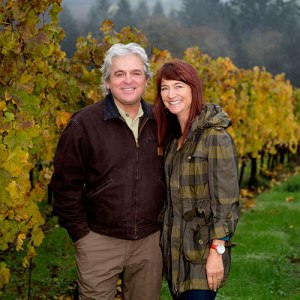
Source: Ken Wright Cellars
Grape grower. Pioneer. Visionary. Winemaker. Mentor. Teacher. Philanthropist.
It makes perfect sense to start our “Stories of Passion and Pinot” series by conversing with Ken Wright. After starting making wines in Willamette Valley in Oregon in 1986, Ken came to the realization of a tremendous diversity of soils and microclimate conditions in the region. Ken was instrumental in establishing 6 AVAs in the region; he also focused his winemaking on showcasing terroir through single-vineyard bottlings. The rest is the history which you can read on Ken Wright Cellars web site and various publications, such as Wine Spectator May 2015 issue.
I have limited exposure to Ken’s wines – the production is small, and there are lots of people who love to drink his wines. But even my limited encounters resulted in long-lasting impressions – and not only the wines but also the labels which you need to see only once to remember forever. Thus when I had an opportunity to ask Ken a few questions, albeit virtually, I was very happy to do so – and the outcome of our conversation you can see below. This might be a tad long, so arm yourself with a nice tall glass of Pinot – and enjoy!
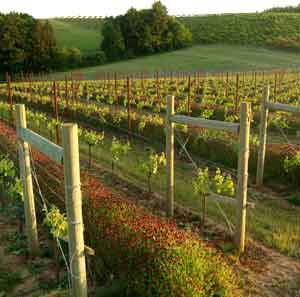
Source: Ken Wright Cellars
- When it comes to the winemaking, is there someone who you would name as your mentor or a teacher?
KW: My first position was in California and included working with Dick Graff of Chalone on their Gavilan brand. Dick started a research group, in 1979 I believe, that met once a month at Mount Eden Vineyards. The group included many of the best wineries in the state including Mt. Eden, Kistler, Calera, Sanford, Acacia, Forman, Chalone and the Paragon group among others. The opportunity, as a novice winemaker, to be part of that group of successful producers allowed me to be part of cutting edge winemaking discussions. Ears were perked, respectfully my mouth was generally closed. I was a sponge.
- As a pioneer and a long standing and successful winemaker, I’m sure many young winemakers look up to you and want to learn from you. Are there any winemakers who you would call your students?
KW: Once I moved to Oregon, in 1986, to pursue the production of Pinot noir I had a learning curve to understand the new area that I was in. During those early years I fell in love with the ability of Pinot noir to connect myself and our buyers with the qualities of individual sites. After blending sites for several years I began in 1990 to produce site specific wines that connected us to place.
In the mid 90’s I was part of a group we created, quite similar to the California research group, that focused on research both in the vineyard and winery. My partners were Bethel Heights, Cristom, Solena and Penner-Ash. Beaux Freres joined at a later date. Our experiments provided a volume of information that I believe changed the way in which we all grew grapes and made wine. That information was openly shared with anyone who cared to ask. Many viticulturists and winemakers are now approaching their craft with the lessons we learned whether or not they are aware of where this information came from. I would not want to take any personal credit for the success of those that have benefited from this work or from my many direct relationships. Information comes from so many sources. If I have benefited someone along the way that would be great but I would only be one of many.
- You personally helped to define 6 AVAs in Oregon. Do you think there are still areas in Oregon which would benefit from their own designated AVAs?
KW: It is a natural evolution for regions to define themselves. All areas must first identify which wine varieties have inherent superiority. It’s a process. What is clear at this time is that the Willamette Valley, particularly the area of the six new AVA’s, is world class. We are producing Pinot noir that is riveting. While there are regions that can say they are older there is no area on the planet that can say they are better, period. I suspect there will be new AVA’s within the six new identified AVA’s that will further define each region in more detail.
- In the description of the Freedom Hill vineyard, there is a mention of Phylloxera. How did it come around? How difficult was it to contain it and deal with it? Is that the only one of your vineyards which was affected?
KW: Phylloxera reared its ugly head in 1990 at Fuqua Vineyard in the Dundee Hills. With the first inexpensive own rooted plantings of Eyrie in 1966, the industry coasted until this time with the hope the blight would never come. But it did. It is impossible to know what the source of the “infection” may have been. This was an older vineyard so unless they were purchasing replacement vines on a regular basis from a nursery that had an issue it would be hard to assign blame on the source of vine material. Not impossible though.
Phylloxera became real in the mid 90’s. Freedom Hill began to fail. Guadalupe began to fail. Shea began to fail. There were a number of others. Vineyard owners, hoping to forestall the infection, did whatever they could to protect their sites. At the time the concern was that the insect was being transferred on soil. We had chlorine foot baths. Incredible cleaning of vineyard equipment. It did not help. It is only my opinion but I believe most of the “infection” was directly from the replacement vines from nurseries that had the bug in their soil material that came with new or replacement vines.
- Can you make parallels between any of your vineyards and Burgundy vineyards, in terms of wines which they are capable of producing?
KW: Burgundy could only hope to make wine that consistently produces the quality of wine that we produce. They are in our rear view mirror. It’s sad that people automatically assume age of region is related to quality. Do truly blind tastings and you will not be able to assign label prestige to the result.
- Same question regarding your wines – would you compare any of your wines with any of the wines from Burgundy, and if yes, which with which?
KW: If there is any comparison I would say that Oregon Pinot noir has a perfect fresh fruit profile. Burgundy tends to be more acidic, angular in youth and less forward.
- It seems that you only produce Pinot Noir from all of the vineyards you are working with, and the only white wine you are producing comes from Washington. Is there a reason why? Have you ever thought of planting white grapes in Oregon?
KW: As a business, anything we produce that is not Pinot noir is harder to sell and less profitable. The entire world recognizes the quality of Pinot noir from our region but no other variety resonates. We have a half acre of the Chardonnay Dijon 548 clone at Savoya. It is delicious but only sold to our mailing list. We will not plant more Chardonnay in my lifetime.


- I find your wine labels fascinating. How do you come up with the designs? Are you making those yourself or you are working with an artist? Do you change any of the labels from vintage to a vintage?
KW: The artist that created our labels is David Berkvam, a Portland native. He is a dessert chef at a local Italian restaurant named Geno’s. The original artworks are 100% beeswax carvings. Incredible depth that we attempt to relay on paper. Our relationship with David began with seeing his work at a gallery in 1999 in Portland.
Our original label for Ken Wright Cellars was a clean, straightforward text only label. It was not memorable or noticeable. My wife Karen and I decided to make a significant change to the look of our label. We asked David to produce a label that showed the efforts of the Mexican laborers in our vineyards during the difficult time of winter pruning. There was no other labor that would do this work. Yet the Mexican women and men who did this work did so with graciousness and humor. That was our first label with David. Now each vineyard has its own artwork from him and each is quite personal for us.
- What is your approach to the oak aging? For how long do you typically age your wines? What type of oak do you use most often?
KW: Unfortunately, we have to use French oak for our wines. Would prefer to buy from the US but our native oak species are very resinous which does not rhyme with Pinot noir. Pinot noir spends 11 months in oak before bottling.
- Based on the information on the web site, your general philosophy around winemaking is “minimal intervention”. Did you ever consider going into organic or even biodynamic wine production?
KW: Winemaking has nothing to do with your farming approach. Yes, the winemaking at the highest level is minimal intervention, assuming a very high level of professional babysitting. All inherent quality comes from the vineyard. Any winemaker at the highest level knows they are subservient to the quality of what they receive.
- You’ve been making wine in Oregon for the very long time. Did you have any scary (okay, most difficult) moments you can share with us?
KW: The beauty of our area is that we do in fact have “vintages”. No robotic wines. The year is reflected in the wine. A great example of a “scary” vintage was 1991. A cool year that produced wine that was at first reticent. With age this vintage proved to be perhaps the best of the decade for most producers.
- Among all the wines you made in Oregon since the beginning, can you share a few of your most favorite vintages and particular wines?
KW: 1990 was the best vintage I have seen in Oregon. An unusual year in that it was amazing for so many regions in the world, Germany, Italy, Champagne, Burgundy and more.
- Do you export your wines outside of the US? If yes, what are your top export destinations?
KW: We export to all provinces of Canada, Sweden, Switzerland, Denmark, France, Italy, Japan, China, Singapore, Hong Kong, Puerto Rico, the Bahamas, South Korea and of course Luxembourg.
- Today, Oregon wines are well known and well recognized by the wine lovers. What is ahead for the Oregon wines? What are the latest trends and new directions for the Oregon wines?
KW: We will always hang our hat on Pinot noir because we truly have a world treasure with this variety. As world markets emerge we will find a place at the table in each of these markets.
- You have a very extensive list of charities you support. How do you go about deciding which charities you are going to support?
KW: Karen and I normally choose to support local charities that keep our immediate area healthy. We have hosted Flavors of Carlton for 15 years which is by far the most impactful event that keeps the pre school, after school, summer work experiences, 12 sports programs and more financially sound. We are founding sponsors of Salud, started in 1992, which is a combined effort of Wineries, hospitals, clinics and Medical Teams International that has provided health care for vineyard workers. Karen and I were the initial 50K endowers of the local Community College program for their vineyard curriculum.
We partnered with the local FFA Alumnae, High School FFA teacher, YC Board, the curriculum writers from the local college and members of our AVA board to create a path for our local young people to get real world experience in growing grapes. We created a 1.5 acre vineyard on the high school property so they would have real world experience, not book knowledge.
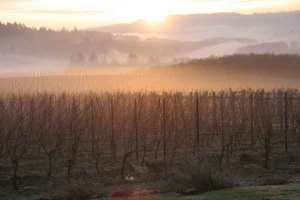
Source: Ken Wright Cellars
We are done – and I hope you are still here, as there was a lot to read (and I thank you for that). Hope you found this interesting, and now have an increased desire to drink Ken Wright Cellars Pinot Noir (good luck with that unless you already have one in your cellar). I also believe that this was an excellent opening into our Stories of Passion and Pinot – you can clearly feel passion and pride in every word of Ken’s answers…
We will continue our series next week, so for now – cheers!
To be continued…
P.S. This post is a part of the “Stories of Passion and Pinot” series <- click the link for more stories.
One On One With Winemaker: Michel Rolland
To anyone inside of the wine circles, the name “Michel Rolland” needs no introduction. If you enjoy an occasional glass of wine but don’t dig deep, very deep into what is behind the label, it will probably tell you nothing. Unlike Araujo, Bryant Family, Harlan, Staglin – right? All of these are the cult wines from California, revered, adored and drooled upon by many wine connoisseurs. Let’s not forget Tenuta dell’Ornellaia from Italy, Angélus and Ausone from St-Emilion and l’Evangile from Pomerol. In case you didn’t know, Michel Rolland, classically trained French winemaker, is behind these and hundreds (I’m not exaggerating – search for his name on Wikipedia) of other wines. He is a consulting winemaker, sometimes also referred to as “flying winemaker”, who made wine on all continents and all possible and impossible corners of the world.
When I got an invitation for lunch with Michel Rolland, who was visiting New York to introduce some of his newest wines, I was excited at first, and then bummed. The lunch was overlapping with the Jura wine tasting, which I was planning to attend for a very long time. So as a last resort, I asked if I can meet with Michel Rolland after the lunch so I can ask him a few questions. To my absolute delight, kind folks at Deutsch Family, a wine importer company hosting the event, managed to arrange the time for me right after the lunch to sit down and talk to Michel Rolland.
As you understand by now, unlike most of my virtual interviews in this “one on one” series, this was a real face to face conversation, with a real handshake and visible emotions. At first, I was thinking about recording our conversation. That probably would be okay, but I never did this before, and fighting with technology in front of the busy man who was doing me a favor didn’t feel right. So I did what I always do – I prepared my questions in advance. After a subway ride and a brisk walk, I arrived – on time – and shake hands with the legend. We sat at the table, three different glasses of red wine appeared on the table. And conversation started – here is what we were talking about, with the precision of my fingers hitting the screen of the trusted iPad:
Q1: You made wine all over the world. Is there one place or one wine which was your absolute favorite?
“No. I like the challenge, so every time I’m going to the new place, it is very exciting.”
Q2: What was your most difficult project and why?
“To make wine, we need soil, grapes, and weather. When the weather is not playing, it is very difficult. There were 2 places which were the most difficult. First one was India – everything is great except the climate. India has only 2 seasons – dry and wet. Another one was China – extreme climate, very difficult to make wines. In the project in China, years 1,2 and 3 had no frost, then in the year 4 we decided not to cover the vines, and half of the vineyard became dead.”
Q3: You are known to create big and bold style wines. At the same time, it seems that wines with restrained are more popular today. Did you make any changes to your winemaking style to yield to the popular demand?
“After 43 years in this job, it is good that I have style. So the style is what the market is asking – the wines are made to be sold, so we have to follow tendencies in the market. Even that not everything is changed at the same time, it is more of the evolution and adhering to the fashion. The wine to drink tonight is not the one to be stored for 10–15 years. So the wine have to be made more enjoyable younger, and this is what we do.”
Q4: Where there any projects which you rejected and if yes, why?
“Yes, of course, but it doesn’t happen very often. The biggest concern is the relationship with the team. Day to day in the cellar and field it is the team – if the relationship with the team is not good, I prefer to leave. For sure if nobody is happy, then it is better to leave. I never refused project because it is too challenging. In Chile, 25 years ago the variety called Sauvignonne had to be used, which was hard – and I didn’t refuse the project because it was challenging. So the relationship is the major part.”
Q5: Again, appealing to your worldwide expertise, what do you think is the hottest new wine region today, if there is one?
“We have to look back – we have new world and old world. France, Italy, Spain – being there before. Then came US, then South America. Chile, and Argentina is growing the fastest now. Then there is New Zealand and Australia. But I think the area around the Black Sea, which was historically there, is very promising. Now Turkey, Georgia, Armenia, Russia all started making really good wines and we will see great wines coming from there. I [actually] currently work in Turkey, Russia, Bulgaria.”
Q6: What are the most undervalued wine regions in the world today, if there are any left?
“One of the most difficult countries to make and produce wines is South Africa – great wines which sell well only in UK, but very difficult everywhere else.”
Q7: What do you think of natural wines, which are very often are very opposite in style to “big and bold”
“We can’t fight against natural wines, but all the wines are natural [laughing], minimal intervention. We have to slow down with all the chemicals, but the wines should be made to be good wines – a lot of “Bio” is done only for marketing, so if it is done smart, it is good. I have small estate Val de Flores in Argentina which is for 8 years is completely “bio”, so yes, I support that.”
Q8: What are the latest projects you are working on?
“The one in Tuscany (Maremma) running by the German family, they have a wonderful vineyard and wonderful winery, and now making very good wines.”
Q9: You are a role model and a teacher for many in the wine world. Who were your role models and teachers?
“When I began my job my mentor was Émile Peynaud. It was another era. When I began the oenology, we were not speaking about quality. The goal was to avoid problems. I discussed this a lot with Peynaud. Peynaud was convincing people to do better in the cellar, to have clean wines, to use better material. It was very difficult, but Peynaud was great dealing with the people, so I learned a lot from him, including the patience for dealing with people. I often said that my job is 80% psychology, and 20% oenology, this is what I learned from Peynaud.”
Q10: What are the new trends in the wine world? What wine consumers should expect to see and experience over the next few years?
“I think people like more and more approachable, and gentle wines – full bodied, but gentle. The big problem I see is that during the 90s, I did a lot of work where we dramatically improved quality. In the 2000s, we drunk best wines we could. What I don’t like now that everybody is going after cheaper and cheaper wines – we can still do good wines, but not better than in the previous years. In the end, the wine is a business, so I don’t want to see people reduce quality just to survive.”
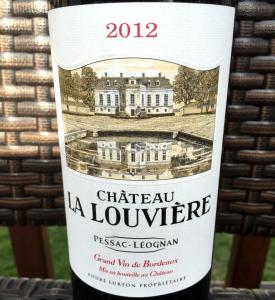 As you can imagine, Michel Rolland didn’t come to the New York to talk to me. He was promoting his latest project, the wines of André Lurton which he helped to create. André Lurton is the winemaker in Bordeaux whose family winemaking heritage goes back more than 200 years, and who is not only known as a winemaker but also was very instrumental in advancing Bordeaux wine industry, including creating of the new appellations.
Here is the story of how Michel Rolland started working with André Lurton (don’t you love wines with the story?):
“Lurton is one of the last projects. I had an interview on the radio, and the journalist asked me if I have any regrets. I said at 65 years old, I don’t have a lot of regrets. When making wines, you get to meet wonderful people from all over the world. So the regret is “why I never met this guy” – one of such people is André Tchelistcheff – I met his wife, but never met him. And then the journalist asked me “who else”. So I said in Bordeaux, there is André Lurton, who I never met and worked together.
3 hours after the interview I received a call from Andre Lurton who said: “come and meet me”. Now we are working together.
So what we are doing is looking after the future, what can we produce for the people. We have to make approachable wines – still with the ability to age, but more approachable. “
This was the end of my conversation with Michel Rolland. We spoke for about 45 minutes, and it was clear that Michel had to continue on with his day. But there were still three wines standing in front of me, so I had to go through the speed tasting and only capture general impressions, there was no time for detailed notes. Here are my brief notes:
2012 Château Bonnet Réserve Rouge Bordeaux ($14.99, Merlot/Cabernet Sauvignon blend) – beautiful tobacco nose, fresh fruit, soft, round – clearly Bordeaux on the palate, green notes, restrained. Green notes do get in the way, though.
2012 Château de Rochemorin Rouge Pessac-Léognan ($33.99, Cabernet Sauvignon/Merlot blend) – beautiful, classic Bordeaux, great finish, some presence of the green notes
2012 Château La Louviére Rouge Pessac-Léognan ($74.99, Cabernet Sauvignon/Merlot/Petite Verdot), new oak, open fruit on the nose, lots of complexity, very beautiful, layers, delicious finish. Overall delicious wine, my favorite of the tasting. This wine was polished and concentrated, and I would love to drink it every day.
What is interesting for me here (besides the clear proof that I’m a wine snob who prefers expensive wines) is that there is a clear progression of taste and pleasure in this three wines – the price was increasing accordingly, and this is how things are quite often in the wine world.
After an encounter like this one, and the pleasure of talking with the legend, if blogging would be my job, I would gladly proclaim “I love my job”. But even without it, I still would proudly say that I love blogging as it makes possible conversations like this one, which is priceless for any oenophile. Cheers!
Passion and Prosecco
 One of my favorite ways to start a conversation is to ask a trivia question, so here it is. We all take Prosecco for granted – if one wants to casually have a glass of wine with bubbles, Prosecco would handily beat any other sparkling wine as a top choice, no matter where in the world you are. Now, for the trivia part: do you know when Prosecco first appeared in London? I will give you few moments to ponder that question. Meanwhile, few basic facts: Prosecco hails from the hills of Veneto, where wines (still wines, it is) were produced for more than 500 years; Charmat-Martinotti method, used in the production of Prosecco, with the secondary fermentation taking place in a steel tank instead of the bottle (“secondary fermentation” is what produces those adorable bubbles), was first created in 1895. So when do you think Prosecco showed up in London?
The answer: 1989. And all due to the tenacity and passion. Bisol family had been producing the wine in Veneto for more than 20 generations (yes, I do call this a passion). When Gianluca Bisol approached his father and said that he wants to bring Prosecco to London, the father’s response was very quick (cue in Italian pronunciation and emotional hand gestures): “you are crazy!”. That didn’t stop Gianluca, and to London off he went. It appears that his father was almost right – selling unknown sparkling wine, door to door, in the downturn economic times, was not going swimmingly well, by any measure. Until a lucky coincidence (well, people would call it “luck”, but we all know that luck usually works best after applying lots and lots of hard, dedicated effort), when at one of the best restaurants in London, Gianluca met wine director who was not only Italian, but also born and raised in the same Veneto region, and was extremely happy to see his beloved Prosecco. As they like to say it in the books, the rest was history. Today, Prosecco outsells Champagne in UK 3 to 1. And annual production of Prosecco hit 540 million bottles in 2015. Just to finish with historical references, Prosecco made it to the US in 1992/1993 (in case you are wondering).
I had a pleasure of meeting Gianluca Bisol at lunch at Marta restaurant in the New York City, and we spend two hours talking, tasting wines and of course, eating tasty food (detailed account follows). This is where I heard the story of Prosecco concurring the UK, as well as many other interesting facts which all together can be summarized in one single word – passion. Passion for the land, vines and wines. Passion for the whole Veneto region. Passion for the traditions which are more than 20 generations strong. But also a passion for the not stopping, for continuing to innovate and to create – new wines and also new wineries.
Our tasting included 7 different wines, out of which 4 were Bisol wines, but 3 were from the winery called Maeli Colli Euganei, the winery which Gianluca helped to start in 2010. Actually the plan was that at the lunch, Gianluca will be joined by Elisa Dilavanzo, the owner of Maeli winery – unfortunately, Elisa got sick and had to stay behind, so Gianluca had a duty of representing both wineries – which he completed with flying honors, as you can imagine.


We started our tasting with 2014 Maeli Fior d’Arancio DOCG Sweet (6% ABV, SRP $27, Residual sugar 115 g/l, 100% Fior d’Arancia, a.k.a. Yellow Muscat) – nice sweetness, clean, minerality, beautiful sweet nose, bright white fruit, nice honey notes. The grapes for this wine come from volcanic soils, which gives it an interesting complexity, saving it from been “one singular note sweet bore”. It is not surprising that last year this wine was selected as “Best in Class” by Tom Stevenson in the UK in the sweet sparkling wines category. Another interesting fact is that in 2015, Maeli winery started Maeli Chef Cup competition, which will be now an annual event, where world-renown chefs compete to create the best dish pairing for Maeli Fior d’Arancia – if you are interested, here is the link detailing the 2015 competition.
Our next wine was NV Bisol Cartizze Valdobbiadene Superiore di Cartizze D.O.C.G. Spumante Dry (11.5% ABV, SRP $42, Residual sugar 23 g/l, 100% Glera) – some sweetness on the nose, but body very restrained, creamy mouthfeel, delicious aftertaste, beautiful supple palate. The wine can age – Gianluca had an opportunity to taste 20 years old Bisol Cartizze wine – it retained bubbles, but obviously acquired aromas of more mature fruit. As you can see, this wine is designated as Superiore di Cartizze D.O.C.G – Cartizze is a single vineyard, 106 hectares (about 255 acres) in size , one of the best vineyards in Italy (most expensive for sure). 139 families own parcels of the Cartizze vineyard – Bisol family owns their parcel for 21 generations. The cost of land on Cartizze is $2.5M per hectare, or $1M per acre – not sure if anyone is selling though.
Time to eat something, right? The first two wines were paired with the selection of appetizers:
Suppli Cacio e Pepe (Risotto Croquettes, Pecorino, Black Pepper) – nice crust, tasty, works the best with the wine.
Bietole Ai Ferri (Plancha-seared Forono Beets, Ricotta, Hazelnuts) – good, nice flavor, good acidity, hazelnuts work well to complement the wines.
Nebrodini Arrostiti (Wood-fired Mushroom Salad, Kale, Mustard Greens, Thyme, Lemon) – nice, good flavor.


We continued our tasting with NV Bisol Crede Valdobbiadene Prosecco Superiore D.O.C.G. Spumante Brut (11.5% ABV, SRP $25, Residual sugar 7.5 g/l, blend of Glera, Pinot Bianco and Verdiso). “Crede” is a “type of clay-laden soil with particular characteristics that greatly benefit the grapes”, according to the wine’s tech sheet. The wine had delicious nose, touch of fruit, fine mousse, perfect acidity, crisp, clean finish.
Now we go back to Maeli with our next wine, which was also the only still wine we had in the tasting. 2014 Maeli Colli Euganei Bianco Infinito ∞ Veneto IGT (12.4% ABV, SRP $24, Yellow Muscat 60%, Chardonnay 40%, aged 5 month in steel tanks, 3 month in the bottle) had nice aromatics, touch of lemon on the nose, vanilla, nice complexity on the palate. The name of this wine (infinito) comes from the accident – one of the workers called Elisa to inform her that one of the barrels needs attention, and when she asked which one, he said “infinito”. As she couldn’t understand what the worker was talking about, it appeared that the number “8” was written on the barrel at an angle, and so from there on the wine took the name “infinito”.
Now, the dishes which were paired with these two wines deserve their own commendation. You see, I rarely eat pizza. When I do, my absolute preference is that the pizza would have crisp, crunchy, literally paper-thin crust. This is exactly what I got at Marta – three pizzas, one better than the other (Funghi was my absolute favorite):
Stracciatella (House-made Stracciatella, Basil, Olio Verde) – perfect pairing. Delicious pizza – very thin crust.
Funghi (Fontina, Mozzarella, Hen of the Woods, Hedgehogs, Red Onion, Thyme) incredible, amazing flavor mushrooms and thyme. Great pairing with Bianco Infinito
Porri e Pancetta (Leeks, Bacon, Fontina, Scallion) – great flavor, very good pairing.


Last three wines were truly special and unique – but none of them are available in the US at the moment, unfortunately. 2015 Private Cartizze Zero Dosage Brut Valdobbiadene Superiore di Cartizze D.O.C.G. (second fermentation in the bottle, 12 month on the lees) – first Classic Method sparkling wine from Cartizze, 2015 vintage was bottled 45 days ago, 2011 was the first year of production, 3000 bottles produced in 2015 – classic champagne, yeast, outstanding.
Then we had 2011 Maeli Colli Euganei Rosévento IGT Spumante (12% ABV, Residual sugar 6.9 g/l, 100% Pinot Nero, 36 months on the lees) – another Classic method sparkling wine, yeasty, classic Rosè champagne nose with strawberries, delicious!
The last wine was truly unique – NV Jeio noSO2 Valdobbiadene Prosecco Superiore DOCG Spumante Extra Brut (100% Glera) – this innovative wine was produced without any added sulphur dioxide (hence the name), made specially for the sensitive consumers. The wine is packaged in the clear bottle wrapped into the foil, to protect it from the sunlight (the wine we were tasting was brought by Gianluca directly from the winery, so it didn’t have any foil or labeling, except the small pieces of paper around the bottle’s neck. The wine had an amazing nose, floral with a touch of white fruit, very dry and again, floral on the palate – very unique compared to any sparkling wine I had before. Delicious – you need to try it for yourself (well, you might have to visit the winery for that).


Our last two dishes were Pollo Ubriaco (Chicken Breast, Charred Cabbage, Brussels Sprouts, Fresno Chili, Mint), perfectly executed, and Salmerino (Arctic Char, Crispy Potato Cake, Horseradish Crema) – delicious, potato cakes were outstanding ( I would eat the whole plate alone), and the fish was cooked perfectly.


That’s all I have for you, my friends – a wonderful encounter with passion, great people, unique wines and delicious food. Next time you are in a mood for some bubbles in your glass, Bisol and Maeli offer a great range, suitable for any palate and taste. And even if you are not craving pizza right now, go visit Marta in New York – I’m sure you will be happy. And by the way, feel free to ask your friends if they know when Prosecco was first sold in London – you might become a party star, at least for one night. Cheers!
Marta
at Martha Washington hotel
29 E 29th St
New York, NY 10016
Ph: 212-651-3800
http://www.martamanhattan.com/
One on One with Winemaker: Marcello Lunelli of Ferrari Trento
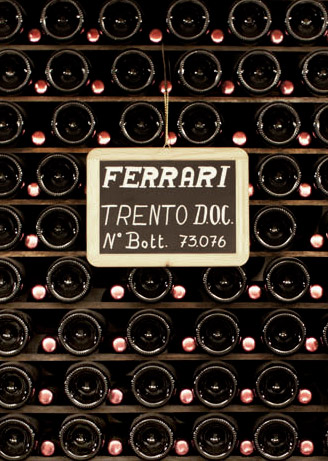
Source: Ferrari Winery web site
I’m sure Ferrari wines don’t need long introduction to any oenophile. Giulio Ferrari started eponymous winery in 1902 in the mountainous region in Northern Italy called Trento. He was the first person in Italy to plant substantial quantities Chardonnay, which he personally brought from France, and then started production of the “Classic Method” sparkling wines, inspired by the French Champagne. In 1952, Giulio Ferrari had chosen Bruno Lunelli to become his successor at the winery, and this was the beginning of the second chapter of Ferrari’s history. The rest is, yes, history, and you can read it for yourself here.
Over the years, Ferrari received numerous accolades, including most recent ones, “Sparkling Wine Producer of the Year 2015” from Tom Stevenson in the UK and “European Winery of the Year” from Wine Enthusiast magazine in the US. I had an opportunity to [virtually] sit down with Marcello Lunelli, Ferrari’s winemaker, and ask him a few questions – you can read our conversation below:
Q1: Ferrari is considered a symbol of the Italian Art of Living. What this “Italian Art of living” concept includes, how would you define it?
A: My family is incredibly proud that Ferrari as a brand is considered a symbol of the Italian Art of Living internationally. Whether it is being served at the Quirinale, home of the President of the Italian Republic, or used to toast celebrated events in the world of fashion, sport, cinema, culture, or design, Ferrari represents that hugely evocative emotional blend of tradition, sense of place, inherent quality, and the poetic virtues of our most cherished way of life.
The Italian Art of Living embodies the passion for beauty, taste and elegance; the ability to embrace innovation while respecting traditions; and a zest for life that is the very soul of the Italian spirit.
I firmly believe that the success of Italian wine is due to a unique love affair that exists in many countries for our way of life, our food, our rich and unique history, and the traditions of our culture. Beauty and pleasure are mutual to one another and Ferrari wines has joined together with fashion and design brands as ambassadors of the Italian lifestyle.
Q2: How is riddling done at Ferrari – still by hand or with use of the machines?
A: In the Ferrari winery we still do 1/3 of the riddling by hand, in particular, all the vintage wines and reserves. The rest is done with use of the machines.
Q3: Typical “house cuvée” at the Champagne house is a blend which might include about a 100 so called Vin Clairs, still wines coming from different vineyards and vintages. Does Ferrari have similar approach in the production of the non-vintage sparkling wines?
A: We do have a similar approach in the production of non-vintage sparkling wines. The biggest work in the vineyards and in the cellar is to keep separate each single homogeneous zone production in order to create the best cuvée.
Non-vintage sparkling wine cuvée includes grapes coming from vineyards within the Trentodoc denomination, which means only in Trentino region and it is created with 70/80 different base wines. Moreover vintage sparkling wine is made with grapes coming only from our own vineyards and it is a result of 40/60 diverse base wines of the same year.
Q4: Ferrari is promoting sustainable viticulture. Do you have any plans to become all organic, or at least to produce an organic wine?
A: One of the core philosophies of the Lunelli Group and Ferrari Winery is the advancement of sustainable practices throughout all our vineyards. We believe that by practicing sustainable farming techniques we not only improve the quality of our wines but protect and preserve our majestic environment and improve significantly the health and safety of our farmers. Indeed we strive to make sustainability a cultural heritage for all of our grape growers.
All of the vineyards owned by my family including those of the Ferrari winery and Tenute Lunelli are cultivated according to organic agricultural principles and in the near future they will all be organic. At the moment we are already producing an organic certified red still wine, Aliotto from our estate in Tuscany.
Q5: Considering that you share common name with the world famous car manufacturer, did you ever try to create a business relationship with Ferrari the car maker?
A: We are glad to share common name with an iconic brand such as Ferrari Maranello and to have a very good relationship with them. We are also proud to have in our photo gallery of famous moments, striking pictures of Grand prix ceremonies celebrated with Ferrari wines.
We both work throughout the world in promoting the very best of Made In Italy.
Q6: What was your most difficult vintage at Ferrari and why?
A: One of the most difficult vintages was 2014 due to a very long and intense rainfall during the growth cycle of the vine which presented a great challenge in vineyard management to ensure healthy grapes for the harvest. It is in a very complex year like 2014 that man, his work and his vision make the difference.
Q7: What is the oldest Ferrari wine you have in the cellar? What was the oldest Ferrari wine you tasted?
A: The oldest Ferrari wines already disgorged are from the sixties, when Giulio Ferrari and Bruno Lunelli were still working in the winery. The oldest Ferrari, still on the lees, is 1972 vintage, which is also the first vintage of Giulio Ferrari Riserva del Fondatore.
I was lucky enough to taste the first vintage of Giulio Ferrari Riserva del Fondatore. It was amazing, well balanced mature notes with an unexpected youth, fruit of our Trentino territory, Trentodoc mountain agriculture which allows for both longevity and youthfulness.
Q8: Do you have a favorite vintage of Ferrari wines?
A: My favorite vintage is Giulio Ferrari Riserva del Fondatore 1995 for two reasons: first of all because it is considered the vintage of the century where power, elegance, longevity and freshness are combined in one single wine and all these factors are in a perfect and unshakeable balance. Secondly this vintage has a personal affection because I had the good fortune to start to work at Ferrari in 1995.
Q9: Do you only use two varieties in the winemaking – Chardonnay and Pinot Noir – or do you use any others, such as Pinot Meunier, for instance?
A: We use Chardonnay and Pinot Noir grapes separately for white wine making in order to create all our 100% Chardonnay Ferrari wines and the Ferrari Perlé Nero, our 100% Pinot Noir, blanc de noirs. For our Rosé we use both the grape varieties: Pinot Noir, using the Rose making-process, which gives body and structure to wines and Chardonnay which provides elegance and freshness.
Q10: Do you produce or do you have any plans to produce still wines?
A: Ferrari Winery creates a remarkable collection of Trentodoc sparkling wines, yet the Lunelli Group also includes a series of elegant and long-lived still wines, under the brand, Tenute Lunelli. This brand embraces wines from three regions, each superbly suited to the production of winemaking grapes: Trentino with its mountain viticulture; Tuscany with the rolling Pisan hills and Umbria which reveals herself in the small, fascinating DOCG of Montefalco. All our still wines are representative of our standards of high quality with the ability to demonstrate the variety of our diverse lands; this is the incredible richness of the Italian wine industry. Respect for the land and sustainability are today common core values in all our brands. Besides the Estates and Ferrari, the Lunelli Group is made up of a distillery, Segnana, a mineral water, Surgiva.
Q11: Do you have any favorite Champagne wines, or any sparkling wines for that matter?
A: Champagne Bollinger and Cuvée Sir Winston Churchill Pol Roger which embody the characteristics I love in sparkling wines; elegance, refinement and longevity.
Q12: When you are not drinking Ferrari wines, what are your favorite wines, from Italy or anywhere in the world?
A: When I do not drink Ferrari I drink my favorite red still wines from Sangiovese grapes and Nebbiolo grapes: Brunello di Montalcino and Barolo. When I choose Barolo I always have discussion with my father because he prefers Barbaresco, with less power but more elegance.
And we are done here, my friends. I think this was quite fascinating and interesting conversation, adding an interesting detail to what you might already know about Ferrari wines – for sure this was very informative for me. I have to admit that I would looooove to try that 1972 Giulio Ferrari Riserva del Fondatore – well, the man can dream, right?
I didn’t have any new wines to taste to leave you with some tasting notes, but if this conversation made you thirsty, here are the links to my older posts about Ferrari Brut Classico and Ferrari Perlé. Cheers!
One on One with Winemaker: Aurelio Montes of Montes Winery, Part 2
As promised, here is the continuation of our conversation with Aurelio Montes Sr – Founder and Chief Winemaker of Montes Winery. You can find first part of the interview here.
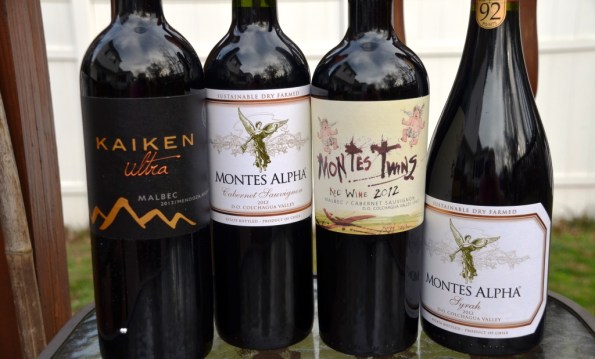 While the first part offered insight into unique (and unexpected) areas such as using of Feng Shui principles and Gregorian Chants at the Montes winery, this second half of the interview is also full of interesting details about present and future of Chilean winemaking. Here we go:
Q7: Do you use natural yeast in production of your wines?
A: Not for white varieties, although we have made Chardonnay trials in coastal areas, but in most cases result in that we obtain a very slow and long fermentation, which jeopardizes the final quality of the wine.
We prefer to use selected yeasts in white varieties, which ensure us a good rate of fermentation, working at low temperatures and retaining maximum aromatic potential of the wine.
In the case of reds it is different. We love to work with natural yeast when possible. They tend to express terroir better than the selected ones. However, much will depend on the conditions of the season, that is, if the season was very warm and the fruit arrives to the winery with a very high potential alcohol, we then prefer to use selected yeast that will ensure a good end fermentation. In the case of very rainy seasons, where the grapes arrive at the winery in bad conditions with some presence of fungi, we prefer to don´t take any risk and use selected yeast as well.
Under normal harvest of red grapes, without rain during maturity or heat peak’s that can cause an exaggerated increases in sugar content, we can then use natural yeast, maintaining important regimes of oxygen during fermentation and also moderated temperatures, in order to not stress these yeasts that behave in some cases very sensitive when the conditions are adverse during fermentation.
Q8: Montes Alpha had been a pioneer in many areas of winemaking in Chile. Particularly, it was the first winery to produce Syrah wines. How would you describe your Syrah compare to Northern Rhone, California or Australian wines?
A; Our Syrah, because of the natural conditions, and some winemaking policies, is different to Rhone or Australian Syrah. Ours is midway between the two mentioned valleys. It is ripe but not as jammy as the Australian one…is austere but still far more friendly and approachable than the Rhone style. This puts us in a perfect position, in terms of quality, and in fact my opinion is that the best New World Syrah comes from Chile
Q9: What was your most favorite vintage of Montes Alpha Syrah and why?
A: I think the 2006 vintage was a very good harvest, where this wine was well known. But I feel that the 2012 was even better. We had a very good season in terms of absence of spring frosts, an accumulation of rain water which enabled us to reach harvest with a low level of risk, and also a free of summer rains and reasonable temperatures. In particular, our Syrah from Apalta that comes from mountain grown fruit behaved very well, controlling a balanced amount of clusters per vine, allowing us to concentrate fruit color and body. Elegance and aromatic complexity found in the Apalta Syrah is really incredible. From this estate also comes the Syrah that goes to our Icon Folly made 100% out of Syrah.
Q10: In the wine world, there is always a conversation of the “next big grape”, which is usually country and region specific – like Sauvignon Blanc in Argentina, for instance, or Chardonnay in Oregon. Is there a “next big grape” for Chile?
A: I like to believe that the Carmenère can be our “next big grape”. But we struggled to position it, despite the efforts the sector makes. Chile has a high level of quality in this variety, considering various valleys and different heights, in the central and even coastal areas of Chile. After this many years of experience we must remain vigilant and continue working and learning in order to deliver the best quality Carmenère in the world.
I would like to add that recently Chile also has been making quite some noise on varieties such as Pais, Cinsault, Muscat, Grenache, Carignan, etc. In this last varieties with very good results.
In our case we crafted the Outer Limits line, which allows us to be more adventurous, dreamers, and let our imagination fly to experiment;
However I believe that the Cabernet Sauvignon is still the king of varieties that Chile has. Not only well renowned for the great quality but also because it represents the productive power and essence of the Chilean wine.
Q11: Does Montes Alpha have plans for the new grapes to be planted? Anything you are experimenting with right now?
A: We are not closed to the possibility. We are always looking for new things, but today to plant new surface is a sensitive issue. Chile is going through a time of overstock of wine, which forces us to be cautious about increasing our production. In the northern hemisphere the situation is similar, which puts us at a critical point.
Without adding the irrigation problem that the viticulture is facing around the world, which forces us to be very astute at this point. Today, more than planting new varieties on new surfaces, we are willing to replace those varieties and vineyards that do not meet our expectations, and replace this to try some new things.
For example, we have had very good reviews on our Tempranillo and Tannat 2015, after years of testing and harvesting dates, and exploring winemaking forms. Maybe we can do something about those varieties in the near future.
We are also touring various new areas as Cachapoal Valley, in search of a distinctive variety with unique quality and expression. Is under this inspiration that we have found and made quite interesting things, such as Pink Moscatel from Curtiduría, or a Pais from Lolol and other interesting projects that currently are still in the oenological kitchen … but this strategy of seeking other wine realities has given us many satisfactions to myself and the team.
Q12: when you are not drinking Chilean wines, can you give me a few examples of your favorite wines, regions and producers?
A: In terms of wines, if I were to pick an outstanding wine I would choose an Ornellaia Masseto. And if I could delight and reward myself with another, it could be an old vintage of Pétrus.
And we are done with the interview. It is time to take a look at another two Alpha Montes wines I tasted:


2012 Montes Alpha Syrah Colchagua Valley, Chile (14.5% ABV, $25)
C: very dark garnet, almost black
N: blueberries, violet, sage, fresh, touch of tobacco
P: silky smooth, round, roll-of-your-tongue, restrained, nice minerality, balanced fresh berries, touch of spice, touch of sweet licorice, excellent overall balance
V: 8, easy to drink, will greatly evolve
2012 Kaiken Ultra Malbec Uco Valley, Argentina (14.5% ABV, $25)
C: dark garnet, practically black
N: concentrated, dark fruit, plums, violet, tar, tobacco, very, very inviting – super sexy, first analogy
P: wow, concentrated fruit, luscious, polished, layered, round, balanced, great dark power, well integrated tannins
V: 8+, outstanding, wow and dangerous (and sexy! – I rarely designate wines like this, but … of well, I will wait for you to try it)
And we are finally done here. I hope you enjoyed our conversation as much as I did, and may be even learned something new. Until the next time – cheers!
One on One with Winemaker: Aurelio Montes of Montes Winery
 Things in life often connect in most unexpected ways. Few years ago I read an article about the ways music affects the winemaking. I was unable to find that article or much references ever since. Many times I came across the wine with an interesting label and somewhat peculiar name of Montes Alpha – but I never tasted one.
Few weeks ago I got a note about wine samples from the winery called Montes Alpha from Chile. That note also mentioned Gregorian Chants and Feng Shui been essential elements in wine production at that very winery. This was enough to send my curiosity through the roof and ask for more information – and talk about the way things connect in life, right?
Who can better answer questions wine and winery questions if not the winemaker? I gladly used an opportunity to [yet again] sit down (yes, virtually) with the winemaker and send the barrage of questions his way. I have to tell you that all my questions were answered well in depth – and I think you will find this conversation interesting too. Here is our dialog with Aurelio Montes Sr – Founder and Chief Winemaker of Montes Winery.
Q1: I understand that your winery was built using Feng Shui principles. Are there any specifics in using Feng Shui specifically for the wineries? Do you have any followers from other wineries who came to learn from Montes Alpha experience?
A: We seek to apply the principle of balance and harmony of space in our winery. If you live and / or work in nice balance places, the energy will continue their natural rhythms and will lead to welfare in all its aspects.
It is in this sense, it was incorporated as a fundamental principle in the early stages of design and construction of our winery, the inclusion of all basic elements such as water, metal, wood, stone, etc., in accordance with the principles of this Asian discipline, to ensure this harmony and above all a positive atmosphere.
For example at the entrance to the building is the wooden bridge over a small lagoon, whose water flows toward the building. A fundamental principle of Feng Shui is that prosperity will only come if the water, which represents energy, flows into the center of the building, rather than away from it.
I understand that no other winery has incorporated the Feng shui principle. In our case, one of our founders, Douglas Murray, was always fascinated with this concept and idea of building a harmonious winery and wine with our environment, therefore we hired the advise of an expert in this field to introduce the principles of feng shui in the foundations of our construction.
Q2: Did you apply or can you even apply Feng Shui principles in the design of the vineyards?
A: Feng shui is related to harmonize spaces. In our case it was considered to harmonize the spaces between the vineyards, winery and of course, our people. To get, as a result, the best wine we can possibly achieve. I believe that in a balanced environment, all pieces come together to perfectly to achieve a greater result.
I am not an expert on the subject though, and not sure how Feng shui can be applied to the vineyard. However our vineyards are planted according to quality policies, soil conditions, variety, etc. I believe that the harmony in the management of our vineyards is the result of the best possible quality grapes we can achieve, keeping always in mind the sustainable conditions.
Q3: I heard about Gregorian chants at the winery. How and where do you use them?
A: The Gregorian chants play constantly in the icon barrel room of our winery at our La Finca de Apalta Estate. The wine seems to enjoy it and I love it. In my opinion, besides the physical effect on wine, it does have an important effect on people’s moods and they work with more happiness and confidence. It keeps us calm in the cellar.

Q4: Did you try to test the effect of Gregorian chants on aging of the wines by creating a “control group” of same exact wine from same exact vintage and aging it under regular conditions (no music), and then comparing the two wines in the blind tasting?
A: For long now I have been interested in the effects of music in wine. I am happy to share with you a study we funded at Heriot Watt University about the effect of background music in wine tasting.
In terms of wine tasting the “control” with no music at all had a score 20% lower than the tasting held in presence of music.
Q5: Did you experiment with impact of music on the grapes in the vineyard? I remember reading about some of the experiments in that area, and I wonder if you have any information you can share here
A: Not yet and I don’t know of anyone that has done it. I presume there are so many uncontrollable variables such as temperature oscillation, different weather conditions, etc that would make it difficult to assess the particular influence of music in the vineyards.
Q6: Montes Alpha is certified Sustainable winery. Do you have any plans to become an organic or may be even biodynamic winery?
A: From our beginnings, our philosophy has been to produce wines of the highest quality, always concerned with the care of the environment, developing a sustainable viticulture in all stages of winemaking.
We believe sustainability covers a broader spectrum and a larger concept than being only an organic or biodynamic winery. It not only concerns the caring of our vineyards and the environment that surrounds it, but also the legacy that we leave for the next generations. We are very careful with our habitat, natural resources and above all improving conditions for the community.
Being sustainable also takes care of the social aspects of our workers – having a profitable operation permitting us to offer a stable place to work.
We also minimize our use of energy and treat our waste-water to reuse it in the irrigation of our vineyards.
Having said all the above we still have some plans to develop a line of biodynamic wines in a few years. We have also moved forward in improving our carbon footprint, becoming one of the few carbon neutral wineries in Chile. We have not only traveled to improve our carbon footprint but also to significantly reduce the use of pesticides and replace them with more friendly environmental agents.


No, we are not done yet with the interview, but I don’t want to overload you with an information. I can also bet you are thirsty now, so let me present to you two of the Montes Alpha wines I had an opportunity to taste:
2012 Montes Alpha Montes Twins DO Colchagua Valley (14% ABV, $15, 50% Cabernet Sauvignon, 50% Malbec)
C: very dark garnet, almost black
N: a bit of funk, herbs, blackberries, hint of black currant, inviting
P: good dark fruit, chalk, firm structure, pencil shavings, tart acidity on the finish, restrained. Next day the wine acquired some umami complexity with notes of tobacco.
V: 8-/8, an excellent wine hiding under simplistic packaging; outstanding QPR
2012 Montes Alpha Cabernet Sauvignon Colchagua Valley (14% ABV, $25, 90% Cabernet Sauvignon, 10% Merlot)
C: dark garnet, almost black
N: cedar, cassis, classic
P: cassis, dark fruit, clean, round, soft
V: 8, outstanding, round, easy to drink
Here you go, my friends. Do you use Feng Shui in your life? What do you think of wine and music? And of course, did you have any of the Montes Alpha wines? I have two more wines to talk to you about, and continuation of our conversation with Aurelio Montes Sr. to share, so stay tuned.
To be continued…
One on One with the Winemaker: Luke McCollom of Left Coast Cellars, Oregon – Part 2
 Welcome back to Oregon – we are continuing the conversation with Luke McCollom, Founding winemaker, Viticulturist and General Manager of one of the largest estates in Oregon, Left Coast Cellars. First part of our conversation was focused on the history of the estate, its name, its logo, and selection of the grapes which comprise 150 acres of the vineyards. Now we are going to talk about growing the grapes, sustainable viticulture, mother nature and some of the personal favorites. Here we go:
Can you elaborate a bit on the sustainable viticulture you are practicing in your vineyards?
We are certified by a third party Audit as LIVE Sustainable. This is a whole farm approach which uses scientifically proven methods to reduce inputs into the vineyard and reduce impact on our land and environment. LIVE also monitors the treatment of people, carbon footprint, energy, and water usage.
Both the Vineyards and Winery are certified LIVE sustainable For example: we are also certified Salmon Safe…this means we do not spray or use any chemicals which are toxic to or can harm fish. We do not use chemicals that can run off or enter water ways. We use a permanent, no-till, cover cropping system in the vineyards which great reduces dust, sediment, and run-off that pollutes our water ways.
We of course are mostly Solar Powered…100% of our irrigation system is powered by Solar. The irrigation system is also gravity fed with a pond located on top of one of our highest hills. So, water is pumped up via solar and runs down into the vineyard drip irrigation systems via gravity. We also collect our winery rinse water into tanks where we can re-use the water for irrigating landscaping. All of the “grape waste” from the winery is composted on-site and returned to vineyards and gardens. Our property is shaped like a bowl, so there are no other source of outside contaminates or pollution entering the property. All of the water in our Lakes comes from our property only. We also have steelhead and trout in these lakes…so anything we do can and will directly affect our own water source.
Do your sustainable practices also include dry farming and natural yeasts?
All of our vineyards have the ability to be irrigated with their drip systems if needed!? Of course, we only irrigate vines if and when they need water. We believe with future changes in our climate that water is one of the most important factors in the quality of our wines. Our water is sustainably collected in the wintertime from rainfall runoff. Our 100 acre foot lake is the life blood of the Estate. With our sustainable methods of using this water our combined peak usage of water and electricity costs $11.70/mo a typical water and electric bill on an Estate our size would be anywhere from $10,000-$15,000/mo. This gives an idea of the power of Sustainability and the power of harnessing the sun. Yes, we use natural yeast and we also use commercially available yeasts to make wine.
Do you have any plans to go beyond sustainable into full organic or may be even biodynamic?
Yes, we would like to eventually have wines bottled as sustainable, organic, and biodynamic so people can taste the comparisons. We currently spray almost exclusively organic sprays and utilize many biodynamic practices although do not have certifications in either.
I’m sure that some of the hard core Oregon Pinot fans are familiar with Van Duzer effect, but can you give a short explanation of it to those who don’t?
The Van Duzer Corridor is the main path by which cool Pacific Ocean breezes enter the Willamette Valley. We are in the Heart of where the corridor opens into the Center of the Valley. We are currently involved with a group working on a “Van Duzer Corridor AVA”. The effects of these ocean breezes are critical in producing the highest quality Pinot Noir. On a warm summer day at the Estate, our day time temperatures will reach 90 degrees. In the evening, the Corridor ushers in the cool ocean breezes and our night time temperatures fall to 40 or 50 degrees! A huge temperature swing! The result is sort of like a refrigerator…at night, when the vines are not producing sugars, the Pinot grapes are preserved with the cool outside temperatures. What this means is…the grapes will retain freshness, acidity, and increased wine ageability because they respire less and are preserved with the cool night air.
Out of all Pinot Noir which you produced so far, do you have the most favorite wine from the favorite vintage?
My favorite Left Coast wine is the 2010 Suzanne’s Estate. This is the first vintage Luke and Joe Wright worked together making wine. We hand selected small lots of grapes from the vineyards and made them in small batches with minimal influence and impact from Winemaking. The result is a very cool vintage Pinot with minimal manipulation in the Winery and a 92pts. Wine Spectator rating. It was very rewarding for me to receive an outstanding rating when the wine was selected in the field and winemaking was at a minimum.
When you are not drinking your own wines, what are the other Oregon producers you would be happy to drink wines from?
We enjoy drinking many of our Neighbors wines including Bethel Heights, Cristom, and Witness Tree just to name a few…
And the same question, only going outside of the Oregon – any favorite wines and producers?
Reaching in and out of Oregon we have always kept an eye on Maison Joseph Drouhin. Locally, Drouhin of course makes Domaine Drouhin Oregon Pinot, but from Burgundy continues to offer an incredible range of wines from very affordable negociant blends to very expensive premier and grand crus from individual Domaines. We believe Drouhin continues to make and blend wines which celebrate classic Burgundy. Of course this is what intrigued us to try and grow World Class Pinot Noir in Oregon…it was Burgundy! We wanted to try and replicate the classic Terroirs of Burgundy and now we are trying to beat Burgundy with our classic Terroirs of Oregon and the Willamette Valley! Viva The Left Coast!
I don’t know about your take, but I think Luke McCollom did an excellent job answering my questions – I had a real feeling of being in the same room with him and looking out at the same vineyard. It is definitely very interesting to learn about sustainable viticulture and how it is done at the Left Coast Cellars – the example with $11.70 monthly electric bill versus potential $10,000+ was extremely impressive.
Of course the proof is in the glass, right? In the previous post, I shared my thoughts on estate’s The Orchards Pinot Gris and Cali’s Pinot Noir. To round up this portion of the interview, I had an opportunity to taste Chardonnay and another Pinot Noir. Before I will talk about the wines, I have to mention the bottles – as the saying goes for the food world “we eat with our eyes first”, same holds true for the wine. Talking about Left Coast Cellar wines, I really enjoyed holding the bottles in my hands – somehow they felt very promising in terms of their content. All four bottles had very nice punt, which would make elegant pouring of the wines an easy job. And the labels are perfectly design and spell “quality” with their look and feel.
Okay, okay – I’m sure you are ready to drink something – here are my notes on the two wines:
 2014 Left Coast Cellars Truffle Hill Chardonnay Willamette Valley, Oregon (13.5% ABV, $24)
C: light golden
N: white ripe fruit, intense, touch of vanilla, caramel, touch of flowers
P: unusual, plump, medium to full body, hint of white peach, pear, supporting acidity, Burgundian elegance
V: 8, very unusual Chardonnay, with a style of its own, and overall delicious wine
2013 Left Coast Cellars Latitude 45 Pinot Noir Willamette Valley, Oregon (13.5% ABV, $50)
C: garnet
N: intense, crushed red berries, lavender, sweet plums, vanilla, hint of chocolate, Bing cherries
P: wow, very unusual. Herbal profile with some fruit, initial tannin attack, almost light and effervescent on the palate, but tannins are very assertive. As I don’t have enough experience with red burgundies, my best analogy is wines of ArPePe, which are some of the most elegant Nebbiolo wines in existence. Clean, pure and unadulterated Pinot Noir. Just wow.
V: 9-, truly unique and different
Sustainable viticulture. Passion. Unique and different wines. Simple recipe for success, isn’t it? I can let you in on a secret. Quite often, I don’t finish a bottle of wine on the same day. Especially if I have a few open at the same time. So I happened to drink Cali’s Pinot Noir I mentioned in the previous post over 4 days. Just closing with the same screw top every night. And the wine was delicious, every day. I think folks at the Left Coast Cellars know what they are doing, and their wines are well worth seeking. Follow the passion, my friends. Cheers!
Last Bottle Sign Up ($10 credit)




 Talk-A-Vino