Archive
Passion and Pinot Updates: Lenné Estate
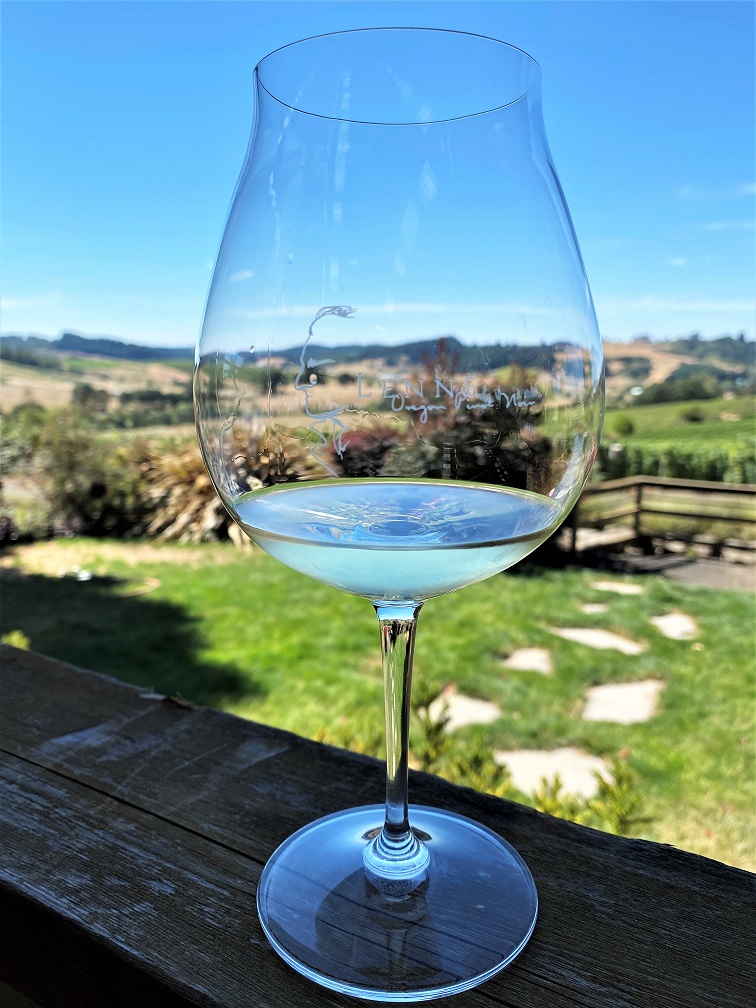 Out of the 13 Oregon wineries profiled to the date in the Stories of Passion and Pinot series, Lenné Estate stands aside. I had my first encounter with Steve Lutz and Lenné Estate in 2014, two years before the Stories of Passion and Pinot series was born, when Steve participated in the #WineChat event on Twitter. This is when I heard for the first time about Peavine soils, a mixture of clay and rocks, and Steve’s relentless, passionate pursuit of Pinot Noir winemaking in the place where it seems no vine can ever grow – read this original post to see what I mean. This passion I learned about while “listening” to Steve for the first time, the passion for the finicky grape became the reason for the name of the series.
When I spoke (virtually) to Steve in 2016 (you can find this conversation here), I learned a lot more about all the hard work establishing the vineyard, about Kill Hill, and about the wines which Steve produces, so when we arrived at Lenné Estate with Carl Giavanti, I felt like I knew Steve for a long time, and almost felt at home in the vineyard.
It is one thing to listen to someone talking about the soil, and it is totally different when you look at it (you can touch it too if you want) and think “how anything, really anything can grow in this soil”? Dry farming, no irrigation, and then you look at the soil – and you look at the grapes which it perfectly produces, and you can only say “wow”. I can tell you that out of the number of vineyards we already visited during the trip, the grapes at Lenné looked the best – tight bunches, beautiful colors of veraison, just a pleasure to look at.


More grapes:


We took a walk to the top of Kill Hill, and I can tell you that it was one steep walk. But the views from the vineyard were nothing short of spectacular.


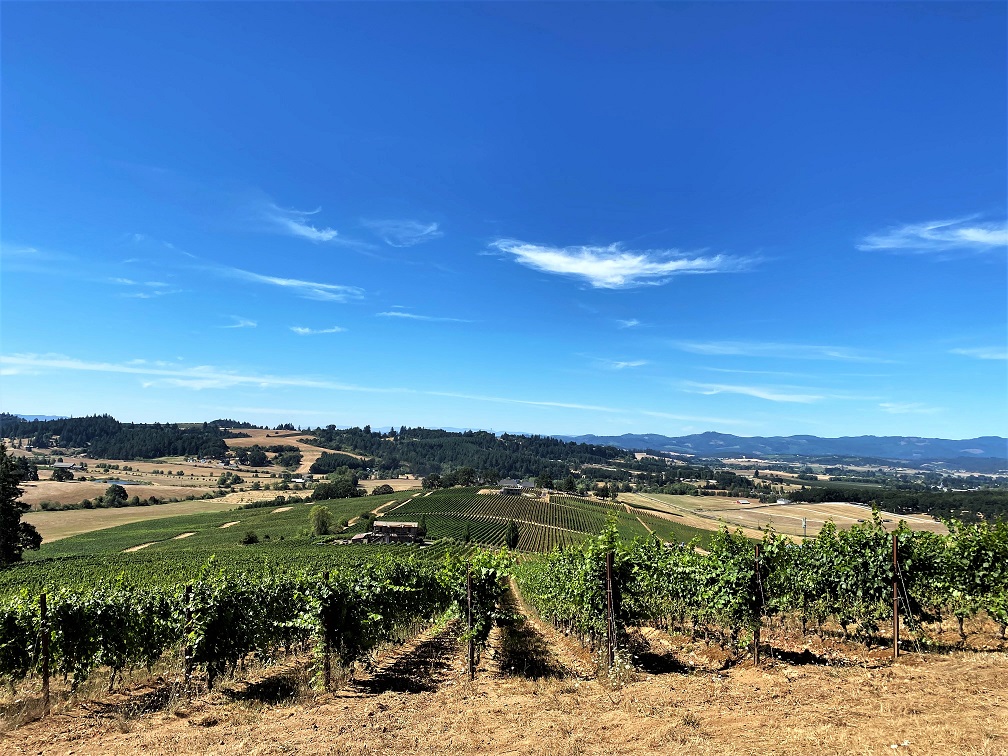

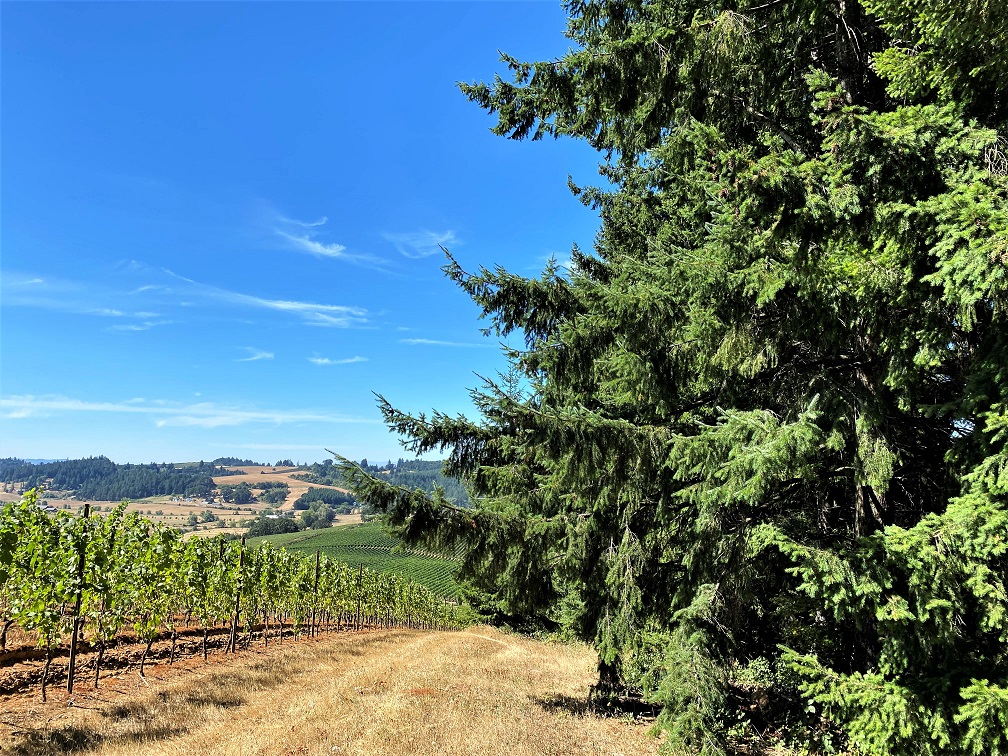
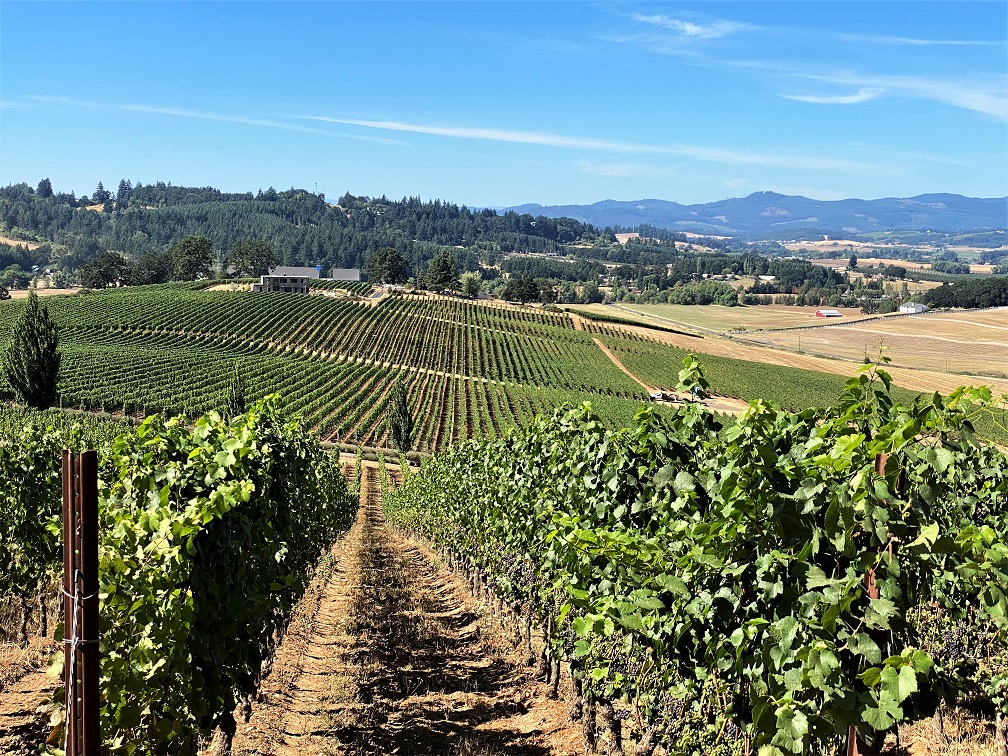
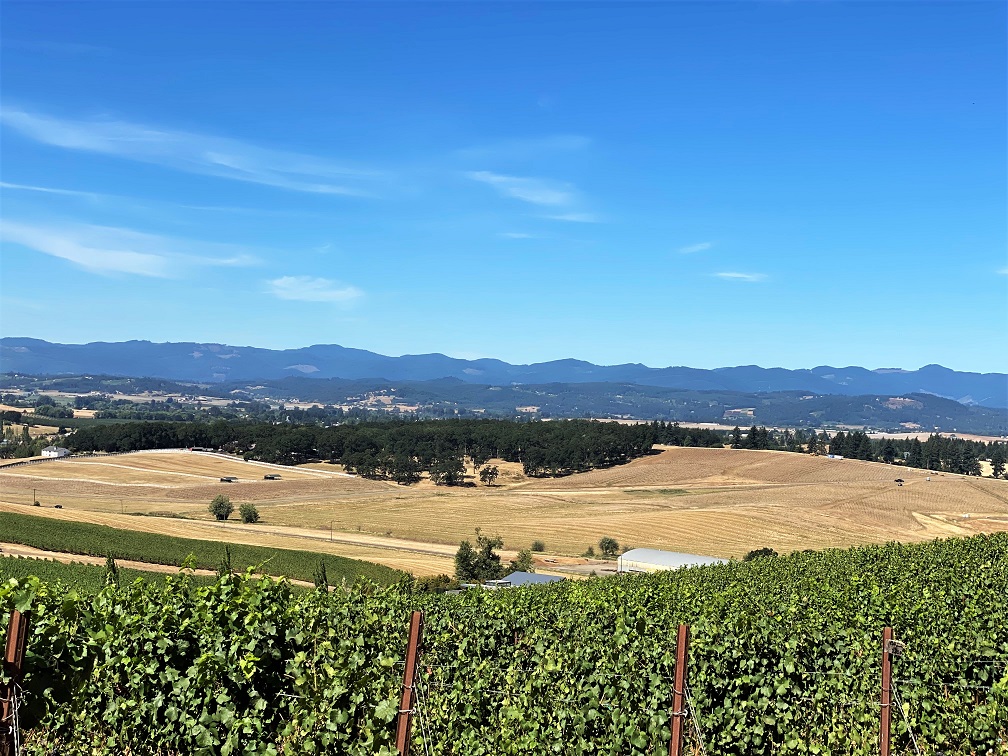
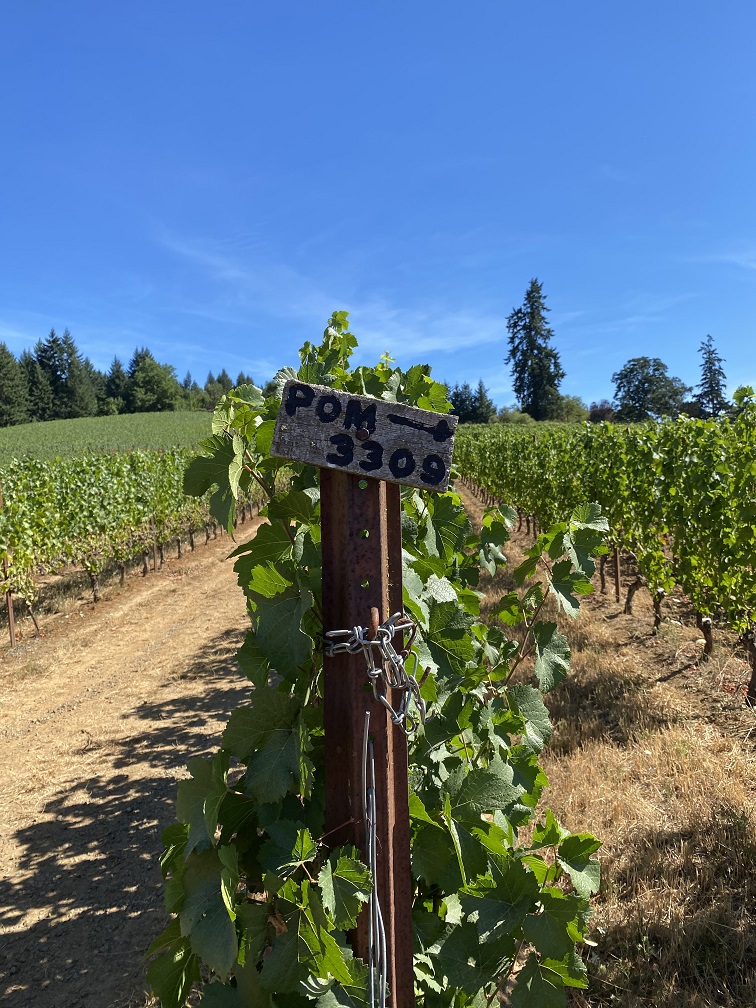
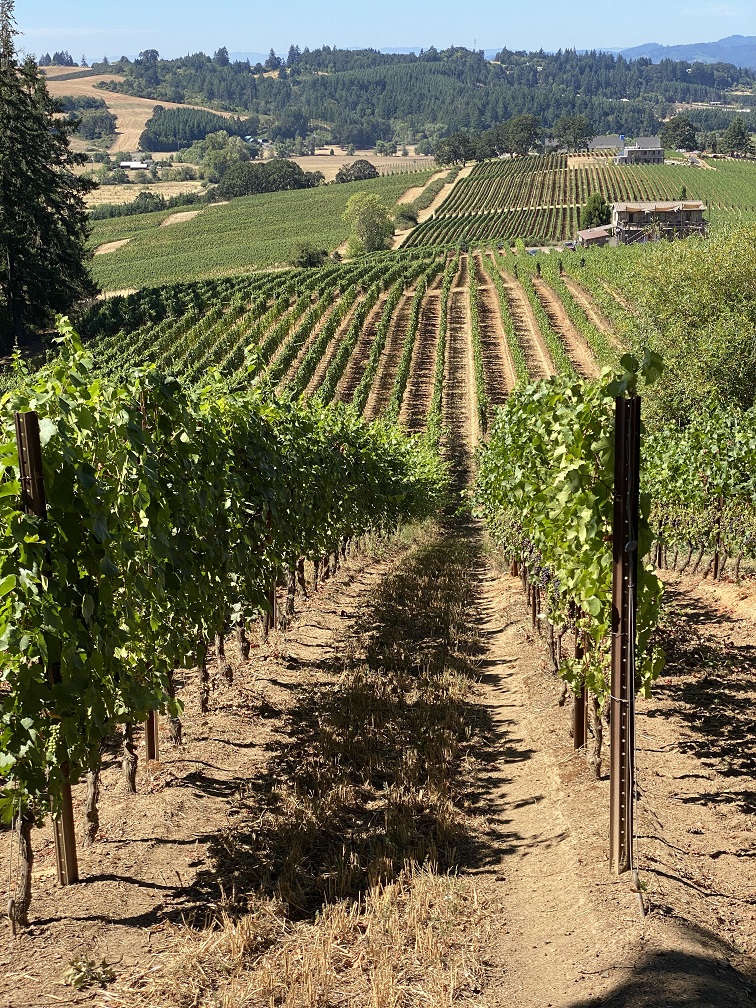
Yes, it is steep!
We talked about winemaking, and Steve mentioned that he typically prefers using commercial yeasts, because they produce more reliable and predictable results – however, he is not foreign to the idea of indigenous yeast, as we tasted in one of the wines. When we spoke back in 2016, Steve was not very big on producing white wines – I was happy to see that he changed his mind and now offers Lenné Estate Chardonnay. However, more as an exception to the rule at this point, Steve is still not ready to produce sparkling wines – however, I hope that this will change at some point – we will have to see.
After the walk, we went back to the tasting room, where Steve set up a full tasting, including the charcuterie and cheese boards.


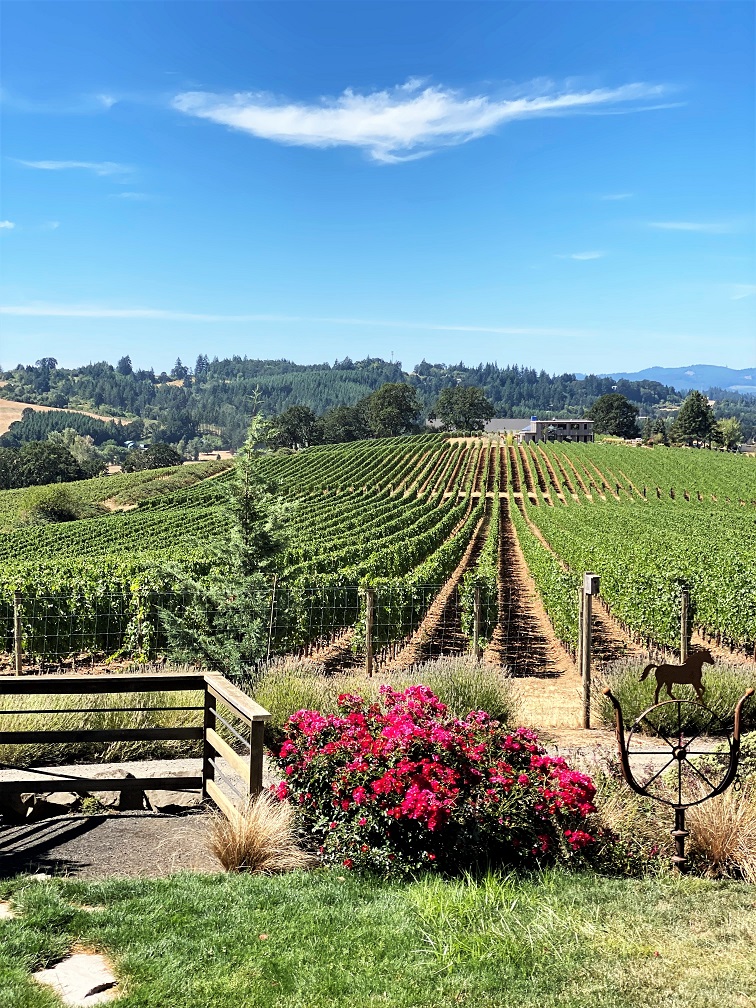
View from the tasting room
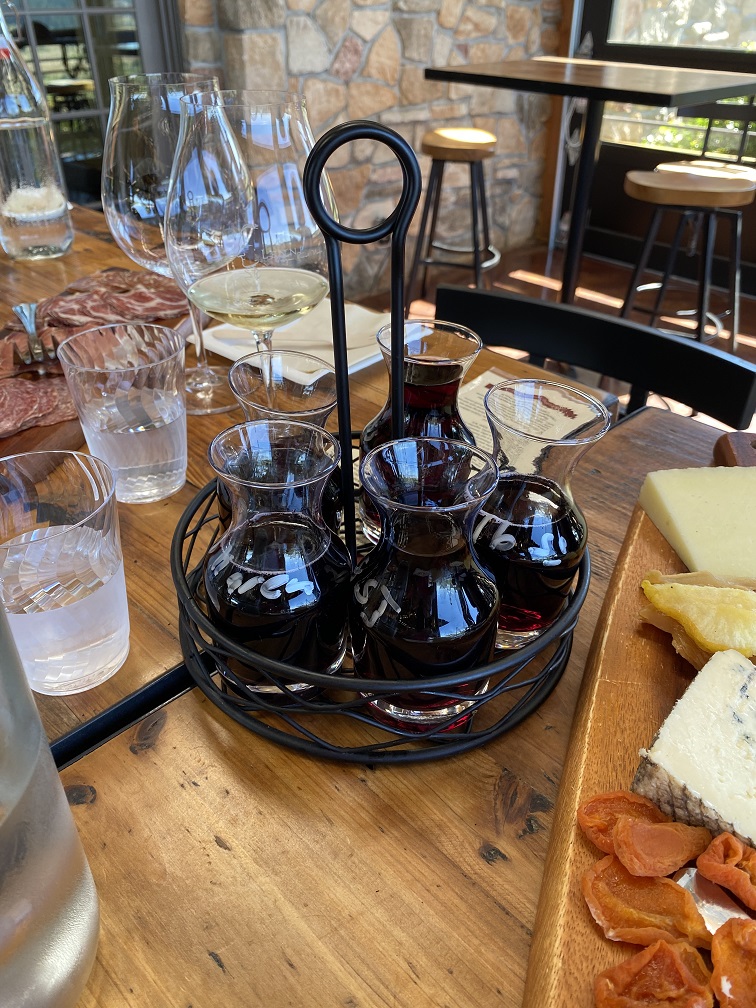
We started tasting with the Chardonnay, which was excellent
2019 Lenné Estate Scarlett’s Reserve Chardonnay Yamhill-Carlton AVA ($58)
A touch of honey, herbs, restrained
Crisp acidity, fresh, bright, Granny Smith apples, a touch of vanilla, creamy, excellent
8
Next, of course, we moved to the Pinot Noirs, where we tasted the whole range – here are tasting notes for the wines including some additional comments regarding the vintage and winemaking:
2017 Lenné Estate South Slope Pinot Noir Yamhill-Carlton AVA ($55)
Hot vintage with a big fruit set
Beautiful nose of sweet cherries and raspberries
Wow, red fruit all the way, cut through acidity, perfect balance
9-, superb
2016 Lenné Estate South Slope Pinot Noir Yamhill-Carlton AVA ($55)
Early vintage, cool August, harvest done by mid-September
Cherries, sage, floral notes
Clean, tart cherries, warm notes, good acidity,
8-
2018 Lenné Estate Sad Jack 777 Pinot Noir Yamhill-Carlton AVA ($55)
Indigenous yeast, spontaneous malolactic
Tart cherries, a hint of cherry pie, savory note
Tart cherries, clean, balanced, crisp, superb
8+
2018 Lenné Estate Karen’s Pommard Pinot Noir Yamhill-Carlton AVA ($60)
Commercial yeast and forced malolactic
Cherry, cherry pie, sweet oak
Tart cherries, dark fruit, good balance, well integrated tannins
8


The last wine was a culmination point of the tasting. “Cinq Élus” means “five chosen”, which in the case of this wine means five best barrels and 5 clones. The wine was simply superb:
2018 Lenné Estate Cinq Élus Pinot Noir Yamhill-Carlton AVA ($85)
5 best barrels from the vintage, 5 clones
The succulent nose of red and black berries, distant hint of gunflint, herbs, great complexity
Restrained, cherries, layered, complex, perfectly integrated, tannins come through on the finish, superb
9-
While we were tasting the wines, we also talked about blind tasting events which Steve runs at the winery, where attendees get an opportunity, for example, to compare Oregon Pinot Noir with the Burgundy, or Yamhill-Carlton Pinot Noir with Dundee Hills Pinot Noir and so on – here you can see what blind tastings are offered. Steve also leads European wine cruises where everything revolves around food and wine, as you can imagine – here you can find information about those.
On the Lenné Estate website, there is also an interesting section called Vintage Charts. Here you can find general information regarding the suggested drinking window for Oregon Pinot Noir in general, as well as particular recommendations specifically pertaining to the Lenné Estate wines.
There you are, my friends. If you are looking for mature, confident, and simply delicious Oregon Pinot Noir, you don’t need to look further than Lenné Estate.
But we are not done here yet. More Passion and Pinot updates are coming – stay tuned…
This post is a part of the Stories of Passion and Pinot series – click the link for more stories…
Passion and Pinot Updates: Youngberg Hill Vineyard
I virtually met with Wayne Bailey of Youngberg Hill Vineyards in September of 2016. Now, 5 years later, I was able to actually shake his hand, listen to the stories face to face and taste the latest wines.
We arrived at the winery in the morning and went on to meet Wayne at the winery building, which also serves as Bed and Breakfast. The views from the terrace of that building were simply incredible – I walked around trying to snap as many pictures as I could.
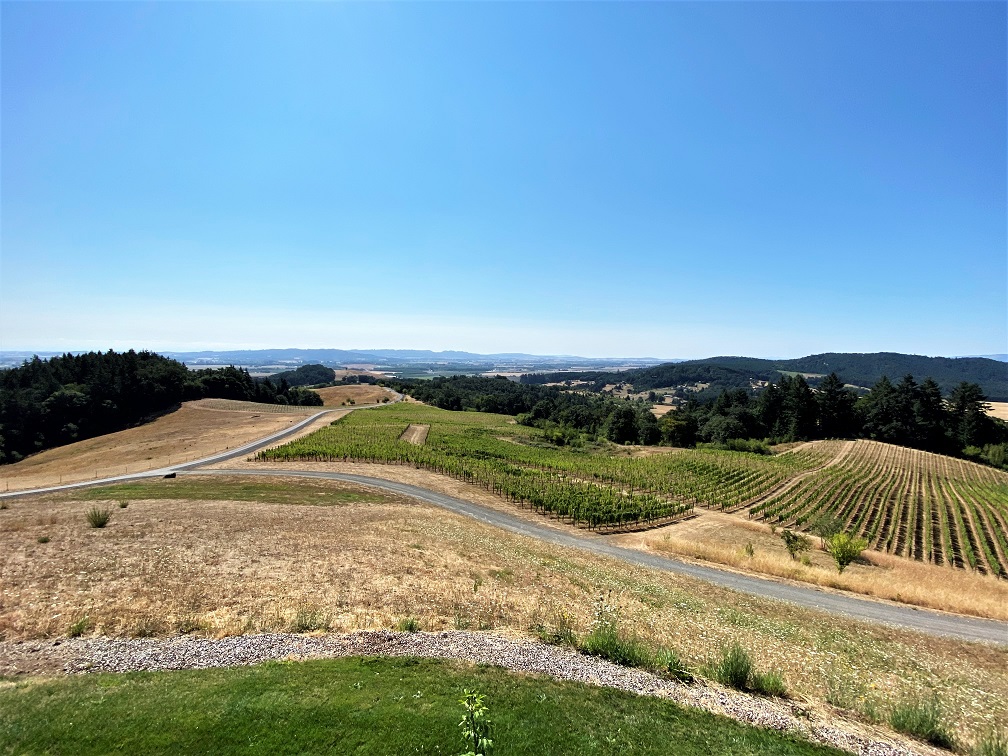
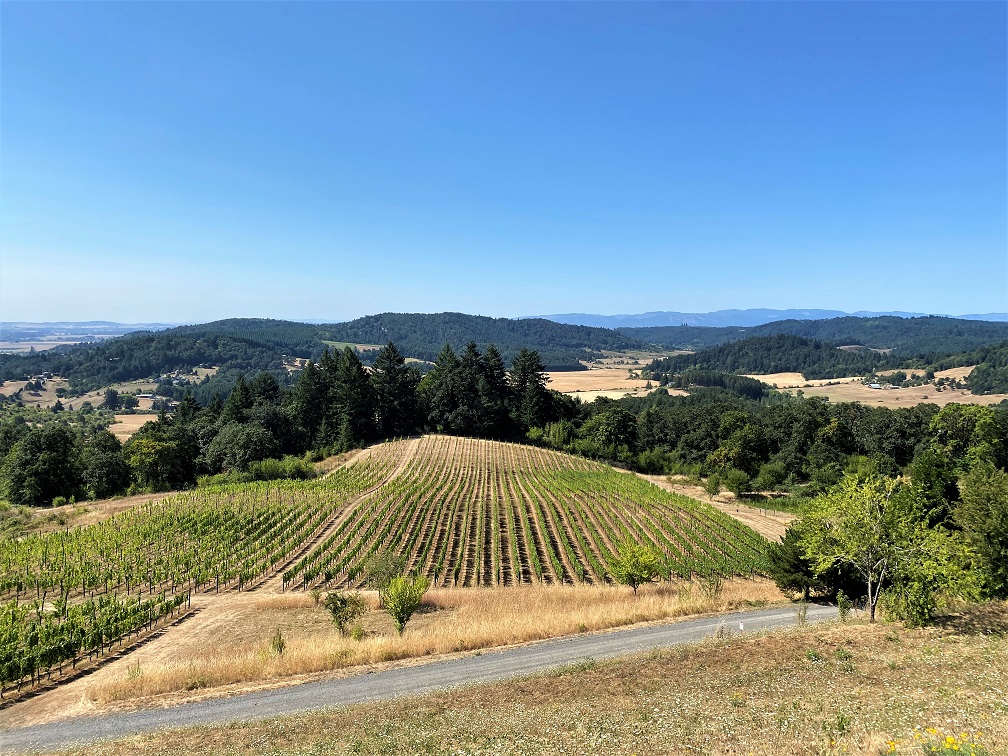
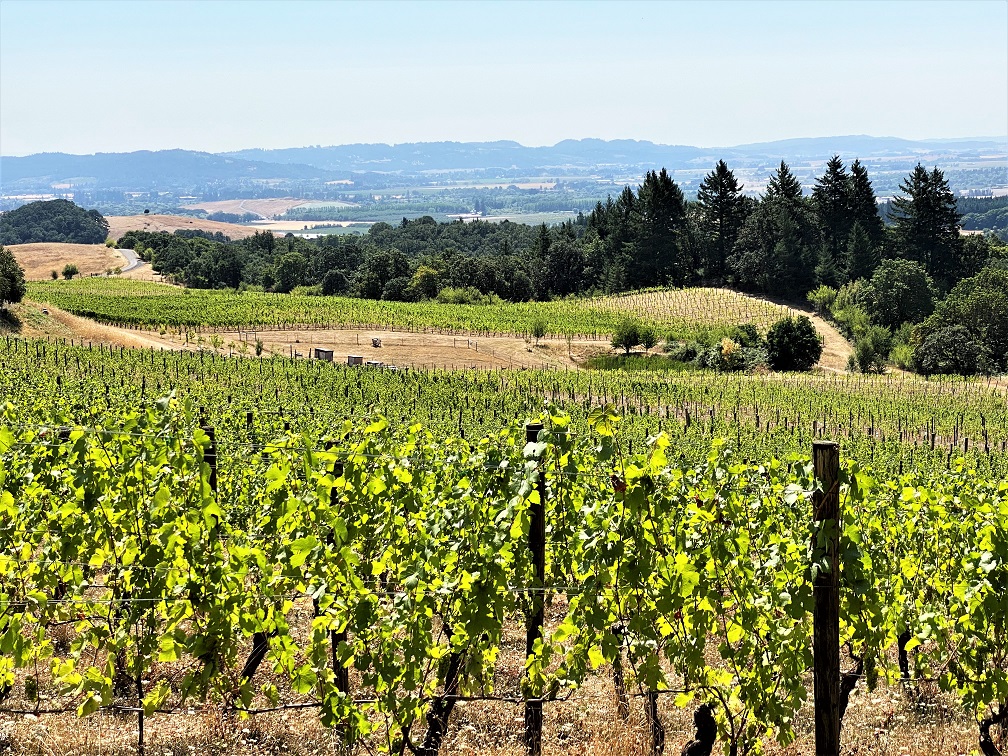
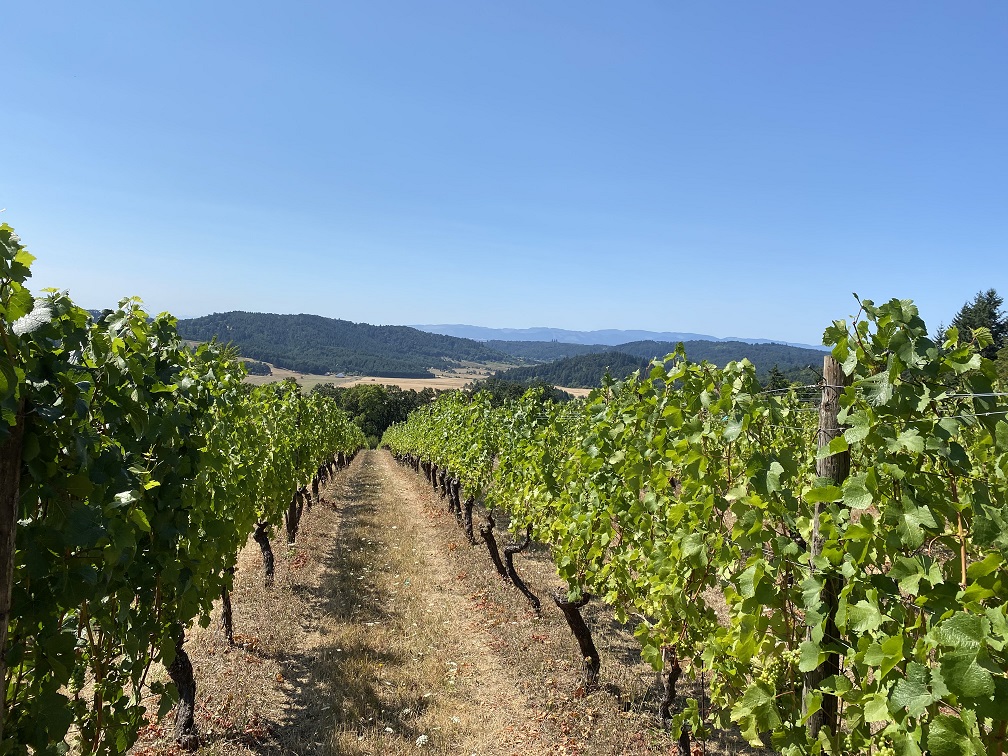
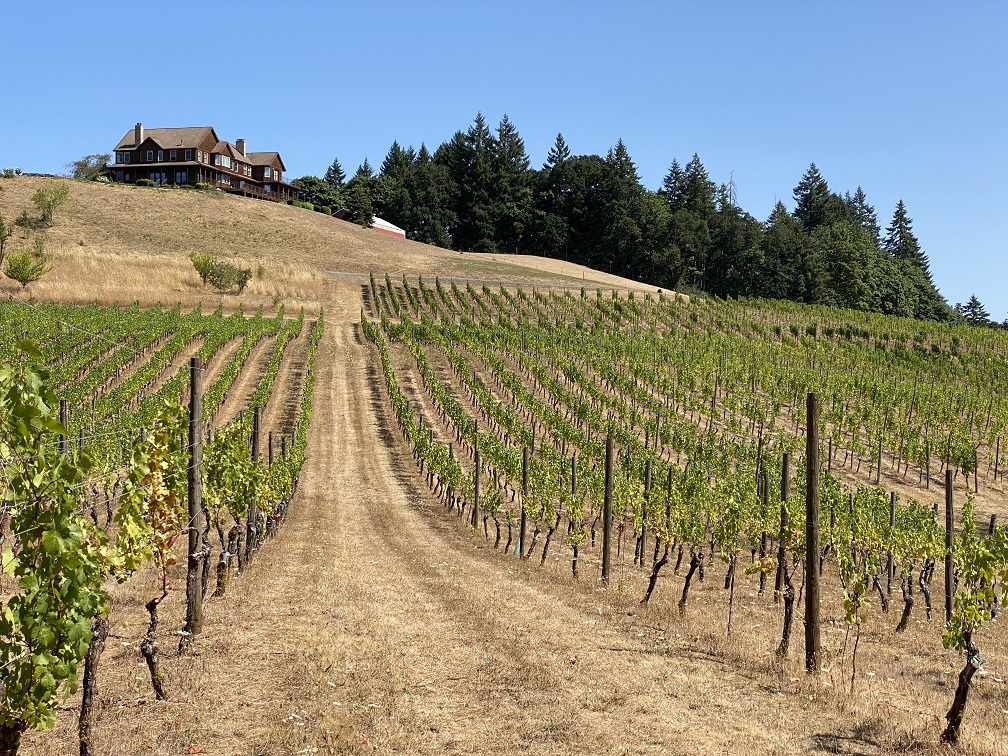


After meeting Wayne, we went on a tour of the estate. Actually, we drove around the vineyards in the baggie which Wayne was driving. Again, more of the beautiful views all around. We also got to meet a few of the cute animals which call Youngberg Hill home.


At the Youngberg Hill estate, it is all about the Bailey family – Wayne, his wife Nicolette, and daughters Natasha, Jordan, and Aspen. The Youngberg Hill vineyards were first planted in 1989 when the estate was founded, 12 acres of Pinot Noir vines. These 12 acres are divided into two blocks – 7 acres of Natasha block at the altitude of 600 feet on marine sediment soils, and 5 acres of Jordan block on volcanic soils at the altitude of 800 feet. There is 2 degrees difference in average temperatures between these two blocks, and as the Jordan block is a little bit cooler, the grapes usually ripen later than the ones on Natasha Block, with about 10 days difference in pick time.


Aspen block was first planted in 2006 with 5 acres of Pinot Gris. In 2014, half of the block (2.5 acres) was grafted over to Chardonnay. In 2008, Bailey’s block was planted with 3 acres of Pinot Noir, at 700 feet altitude and predominantly volcanic soils.
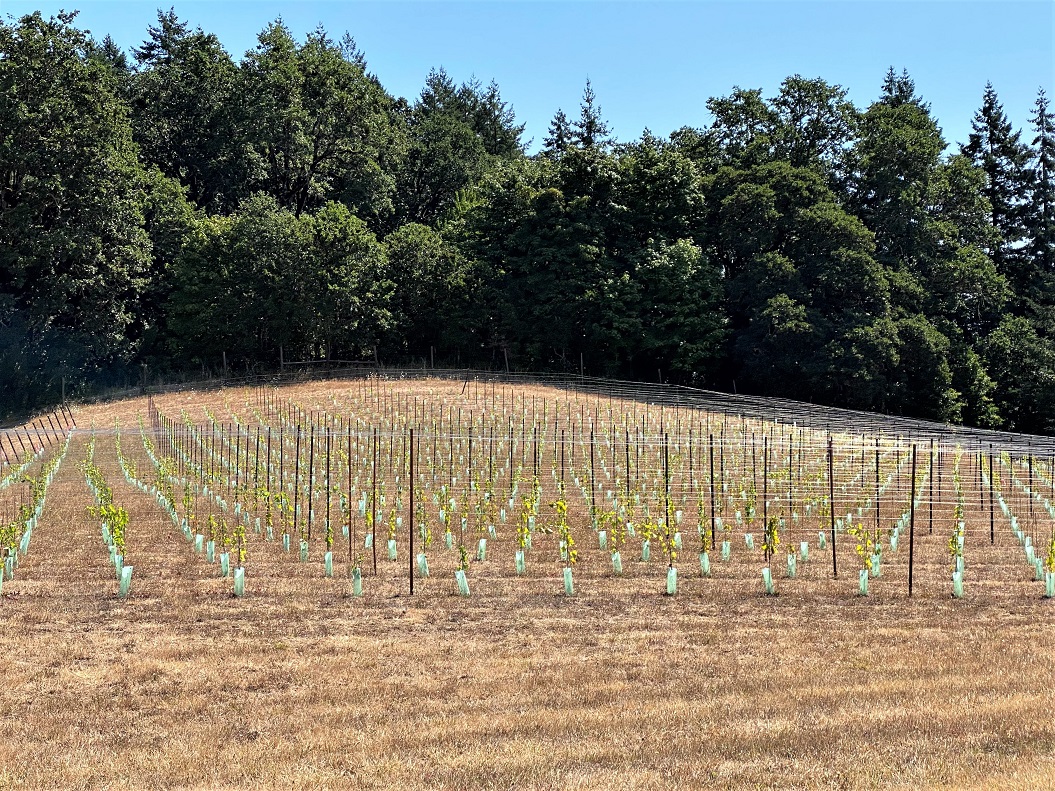
When we spoke back in 2016, 20 acres of vineyards were planted on the 50 acres estate. I asked Wayne if he has any plans to add additional plantings, and got a simple “no” answer. Well, I guess the old adage of “never say never” is perfectly at play here, as in 2018, 3 acres of Wayne’s World block was planted with two more clones of Pinot Noir, bringing a total to 5 clones, if I’m not mistaken. This block was planted mostly on marine sediment soils at an altitude between 500 and 600 feet.
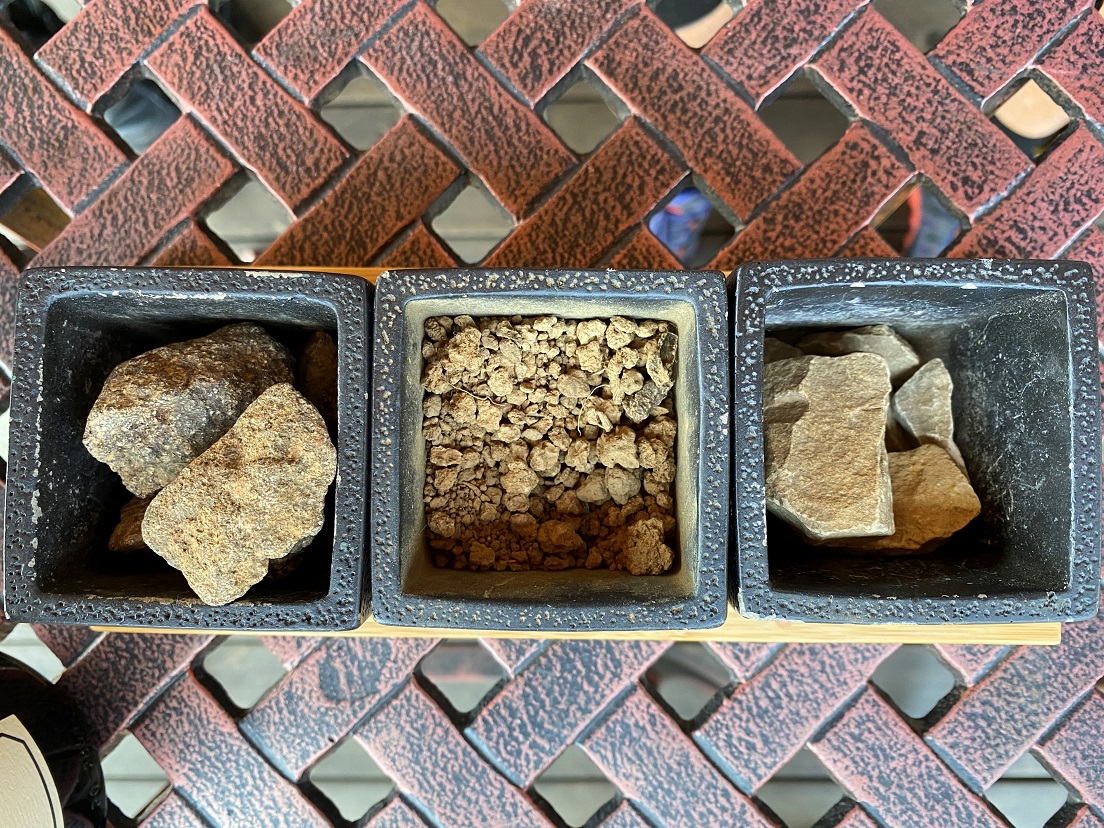
 Here you can see a sample of the soils at Youngberg Hill Vineyards.
After we finished the tour, it was time to taste the wines.


I was happy that we started our tasting with the sparkling wine – this is almost something you now expect from Oregon wineries. Similar to the sparkling wine we had at Le Cadeau, this wine was also made with first-pass grapes. The wine spent 2.5 years on the lees, so it is called the Extended Tirage sparkling.
2018 Youngberg Hill Vineyards Extended Tirage Sparkling Eola-Amity AVA (12.5% ABV, $55)
A touch of apple and vanilla
Crisp apple notes, fresh, good acidity, good body, delicious. Lingering acidity on the finish
8, excellent


Next, again to my delight, we had a couple of Chardonnays:
2019 Youngberg Hill Vineyards Aspen Chardonnay McMinnville AVA (12% ABV, $45)
Beautiful nose of apples, vanilla, and a touch of honey
Crisp, clean, great acidity, wow.
8, it would be amazing with age
Another change at the Youngberg Hill Vineyards since we last spoke was the new wine label introduced in 2019 – Bailey Family Wines. Bailey Family wines comprise a selection of the best plots and barrels. In addition to sparkling, Chardonnay, and Pinot Noir, the Bailey Family wines range also includes Grenache sourced from the Rogue Valley. We tasted the latest vintage of Bailey Family Chardonnay which was superb:
2018 Bailey Family Chardonnay McMinnville AVA Willamette Valley (13.4% ABV, $85)
Herbal notes, a touch of butter, honey, minerality
Great complexity, mouthwatering acidity, lean, green apples, a touch of sage. Perfect balance
8/8+


Next, we had the pleasure of going through the selection of the Pinot Noir wines, both current vintages from Natasha and Jordan blocks, as well as reserve wine, Nicolette’s Select:
2018 Youngberg Hill Vineyards Natasha Block Pinot Noir McMinnville AVA (14% ABV, $60)
Ripe cherries and cranberries
Restrained, tart cherries, firm structure, dusty palate, excellent balance.
8+
2018 Youngberg Hill Vineyards Jordan’s Block Pinot Noir McMinnville AVA (13.8% ABV, $60)
Cherries and violets
Bright popping ripe cherries, good acidity, perfect balance.
Both [Natasha Block and Jordan Block] are built for the long haul.
8+
2015 Youngberg Hill Vineyards Nicolette’s Select Pinot Noir McMinnville AVA (14.1% ABV, $85)
Great bouquet on the nose, cherries, pencil shavings, underbrush
Wow, an interplay of cherries, cranberries, mushrooms, dusty palate, layered, balanced
9-, superb.
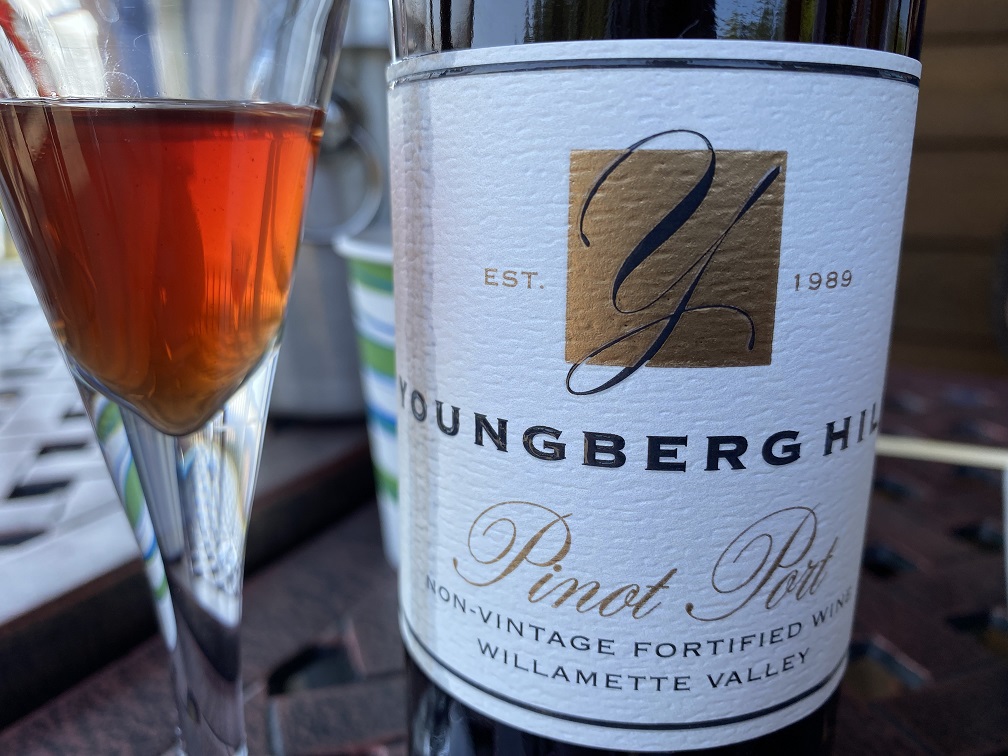
I keep going back to our 2016 conversation with Wayne. While preparing the interview questions I learned that Youngberg Hill produces a really unique wine – Pinot Port, as it was called – a Port-style wine made out of Pinot Noir grapes, something which I never heard of before. So now, being at the winery, I couldn’t miss the opportunity to taste the Pinot Port. Wayne was somewhat hesitant about it, as I don’t believe he is making this wine anymore, but I had my wish granted and had a sip of this delicious beverage:
NV Youngberg Hill Vineyards Pinot Port (19% ABV, $NA, 25 cases produced)
Nicely aged wine, dried fruit, good balance, very pleasant
There you are, my friends. Another story of Passion and Pinot, with the Pinot Noir (and Chardonnay, and bubbles) of truly a world-class, and in its own, Oregon style. These wines are worth seeking, and if you want to spend a few days in the wine country, surrounded by incredible views and delicious wines, that Inn at the Youngberg Hill sounds really, really attractive.
I got more of the Passion and Pinot updates to share with you, so until the next time…
This post is a part of the Stories of Passion and Pinot series – click the link for more stories…
Passion and Pinot Updates: Le Cadeau Vineyard
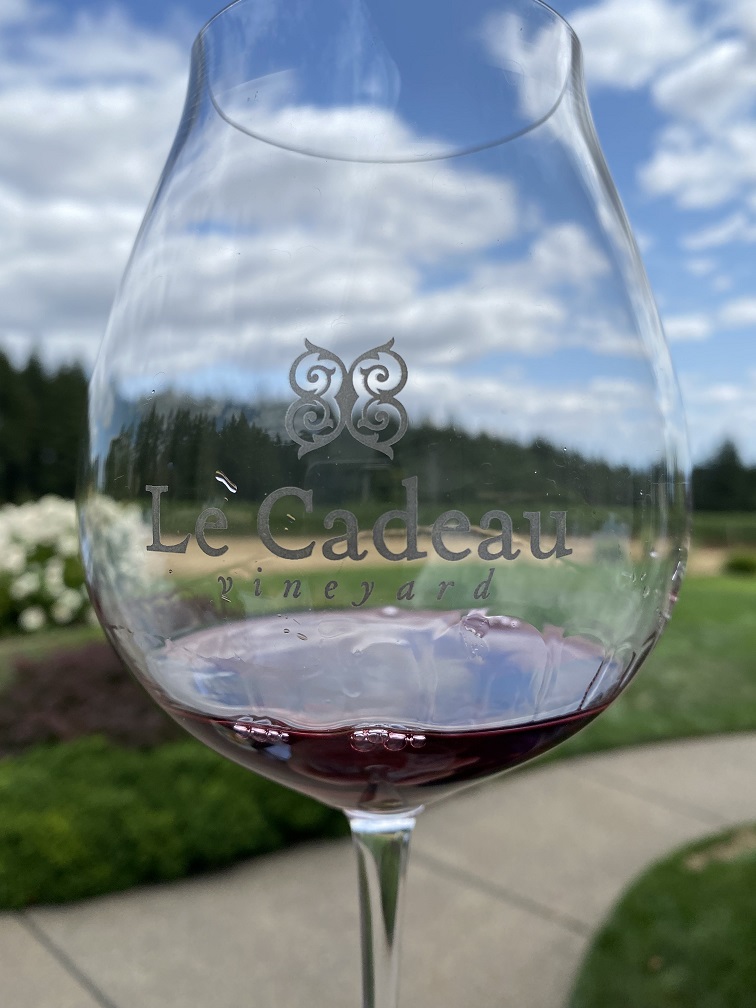 Five years ago, I started a new project in this blog called Stories of Passion and Pinot. The goal of the project was to interview winemakers in Oregon, who passionately went on to grow Pinot Noir and make wines often in conditions that many others would find impossible and untenable. All the way until August of 2021 my interviews were all virtual – I would read about the winery, come with the questions, get the answers, and then publish those conversations in this blog (you can find them using the top menu).
This year I attended Wine Media Conference 2021 which conveniently took place in Eugene, Oregon. After the conference was over, we drove with Carl Giavanti to meet some of the winemakers face to face – and now I can offer you updates, mostly in pictures, lots of pictures, and tasting notes for the wines I had an opportunity to taste.
Le Cadeau Vineyard was our first stop after we left Eugene.
Where do I start? First of all, the views. Le Cadeau Vineyard is a stunning oasis, surrounded by tall pine trees (I already told you how much I love those), and offering amazing views. You be the judge:
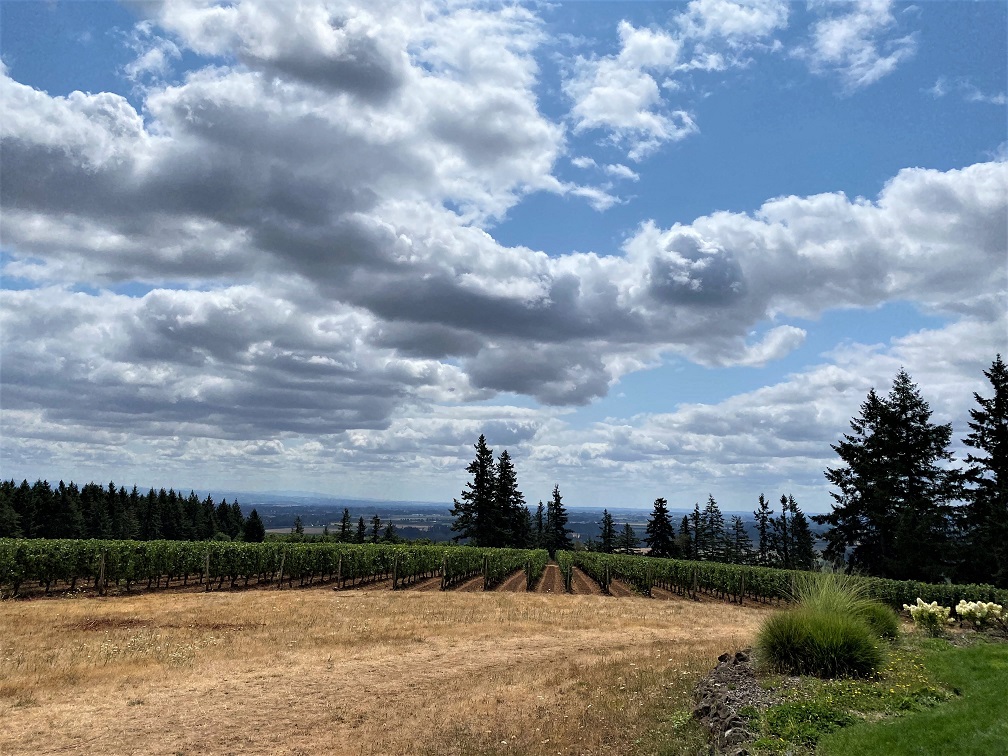
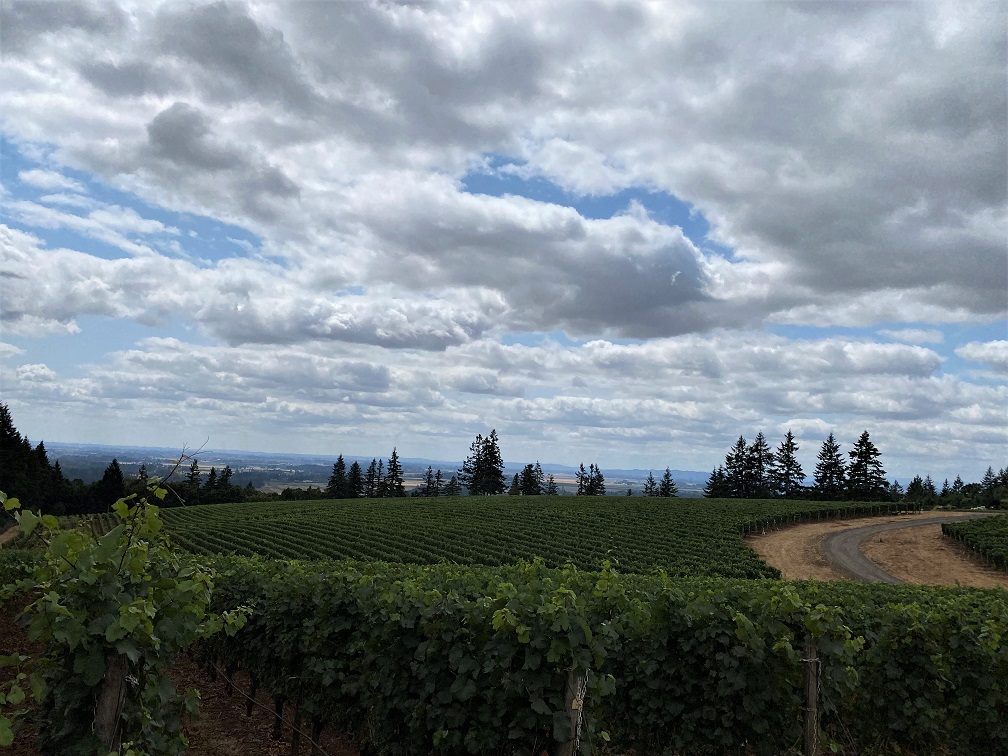
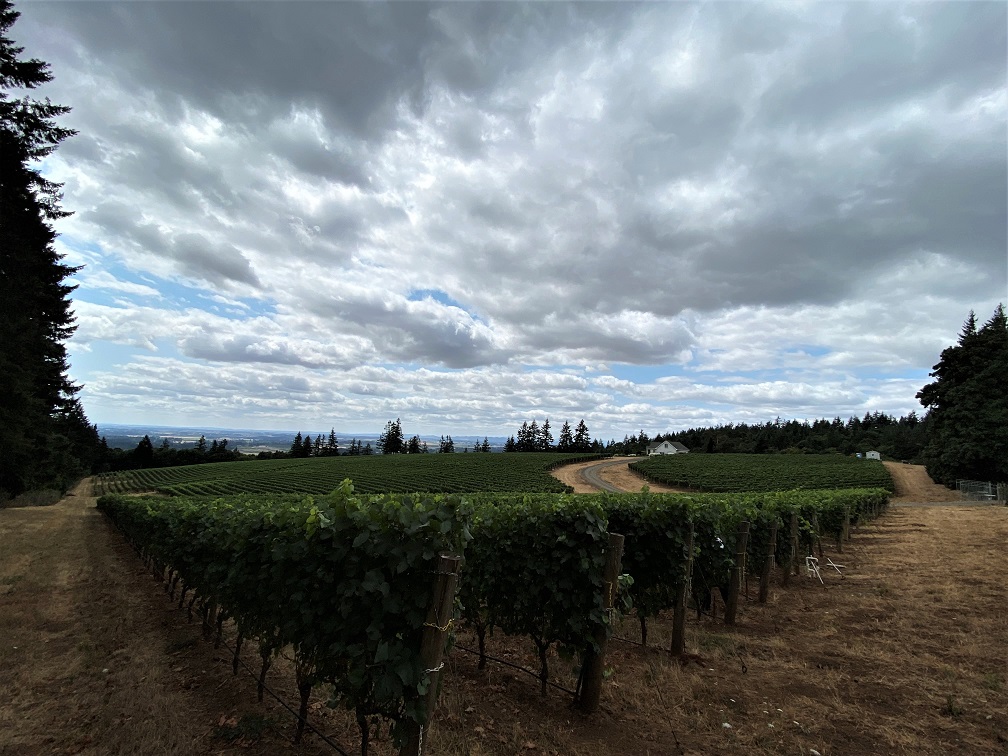
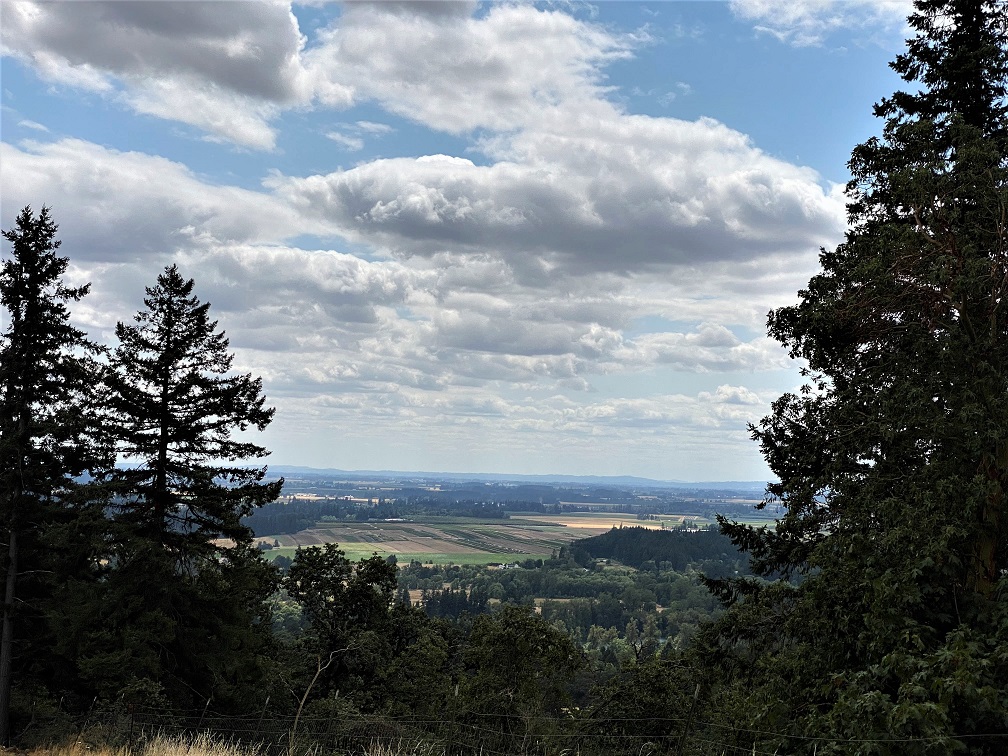
Tom Mortimer slowly walked us through the vineyard, talking about clones and all the work he invested into creating this vineyard simply on top of the rock (you can find the details in the original interview). It turns out that there are 18 Pinot Noir clones used in wine production at Le Cadeau – while I was somewhat shocked to hear that number (sounds high), it was simply due to my ignorance – for example, Sanford winery in Sta. Rita Hills uses more than 50 clones. Considering that Sanford winery is about 25 years older than the Le Cadeau, it is all makes sense. Tom was particularly proud of some of the clones, such as the Calera clone which is based on the DRC, and some additional Vosne clones (not trying to impress with the words here – Vosne here stands for Vosne-Romanée, one of the most coveted Pinot Noir production areas in Burgundy; DRC stands for Domaine Romanée-Conti, probably the most famous Pinot Noir producer in the world; Calera is one of the legendary California Pinot Noir producers and pioneers from Central Coast).
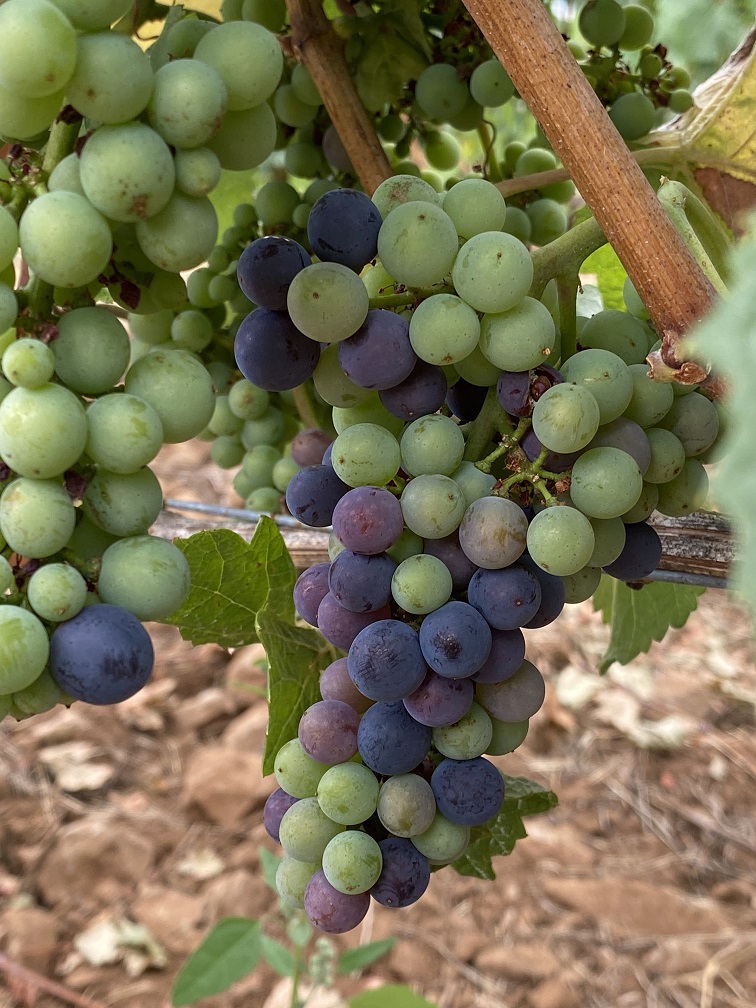
The beginning of August of this year (2021) happened to be the veraison time – the onset of ripening of the grapes when the grapes start changing their color. This was my first time actually being in the vineyard during veraison, so I couldn’t stop taking pictures as I saw bunches with more and more color – here are more pictures:




We also saw Chardonnay grapes growing:
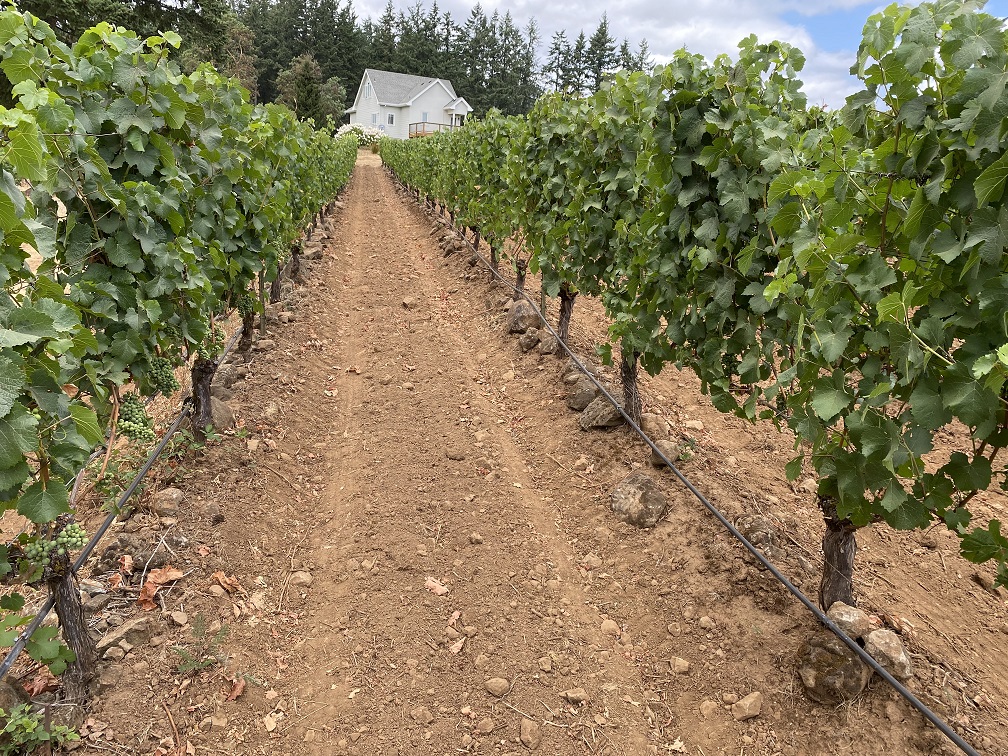
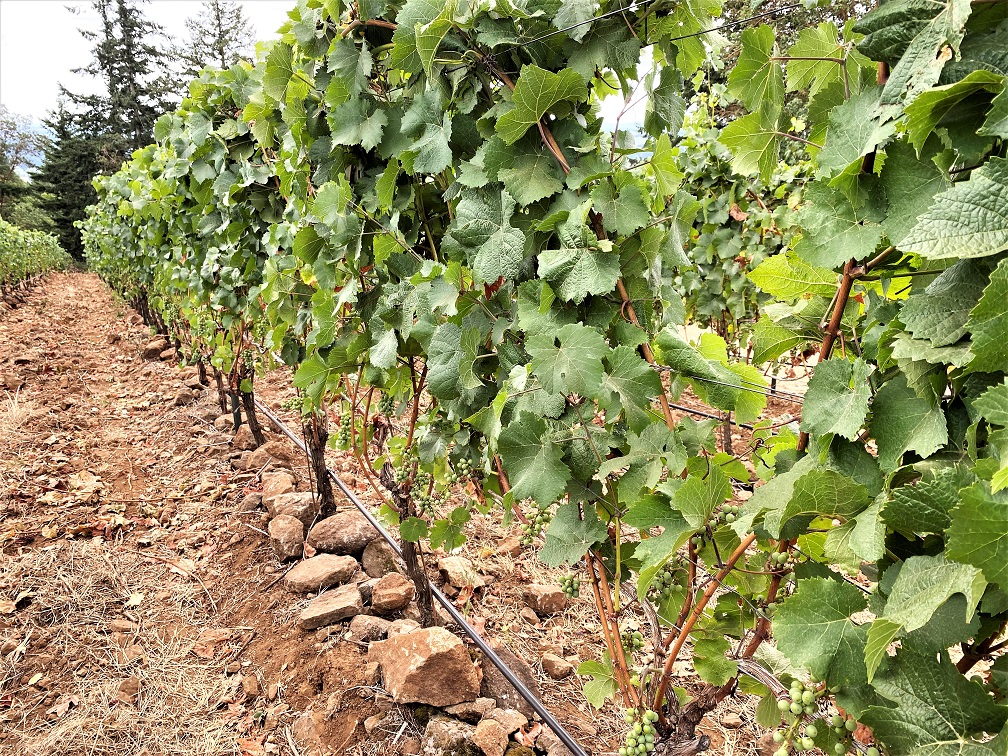
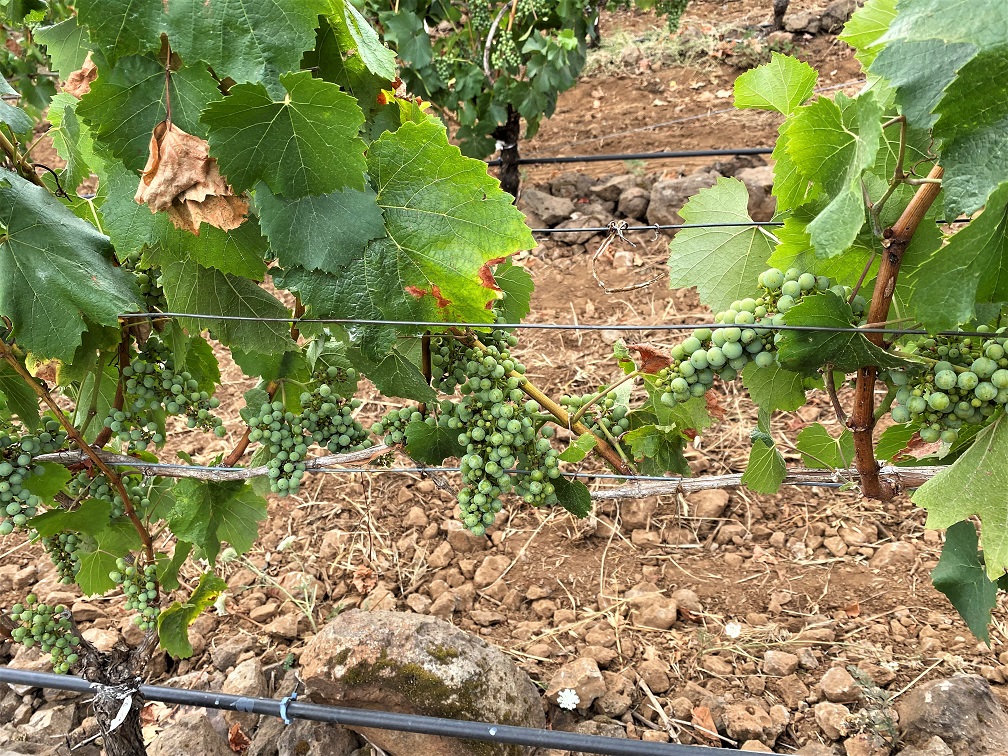
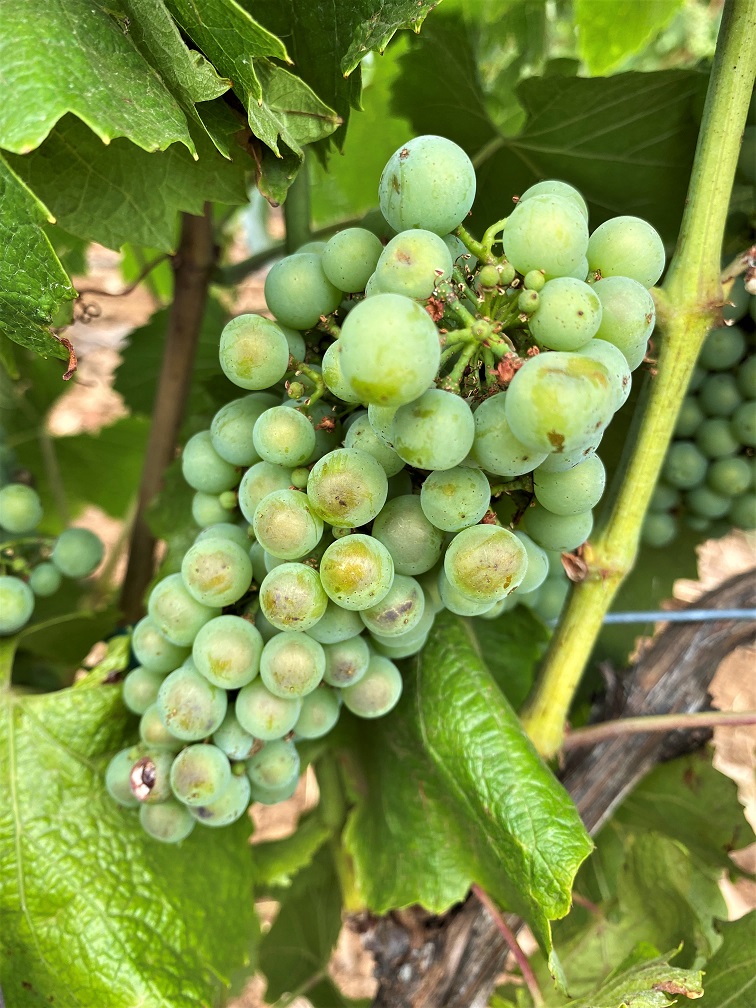
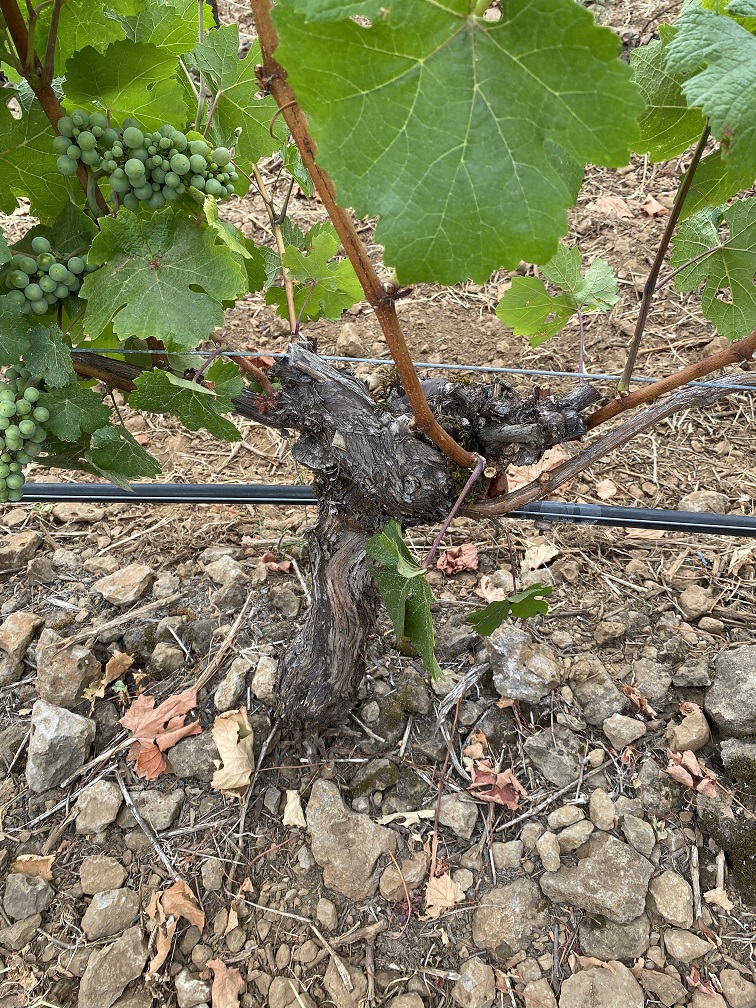
Remember, we are talking about passion here. The amount of labor of love and passion which this vineyard required to be established was simply incredible. Tom had to use a special machine to break through the basalt to help the vine roots to get established. There were a few rows where he decided not to use the machine, and those rows look particularly different from the rest of the vineyard. The rocks which you can see in these pictures give you a good idea of what he had to deal with while establishing the vineyard.


After we finished walking around we sat down to taste the wines with Tom and to continue the conversation about the winemaking. Tom is highly analytical, he uses a lot of different charts, such as Degree Day reports to estimate when he might need to start picking up the grapes based on the historical data and what is the potential weight of the grapes might be at the harvest. Harvest is usually done in multiple passes, depending on the year – in 2015 and 2018, for example, he had to pick grapes 5 times; in 2016 and 2020 there were three picks made.


We started our tasting with 2018 Chardonnay, which was outstanding:
2018 Le Cadeau Vineyard Chardonnay Willamette Valley (14.1% ABV, $45)
Beautiful nose of vanilla with a hint of butter
Vanilla, butter, Granny Smith apples on the palate, beautifully clean and balanced
8+
It is really amazing to see the level of finesse Oregon Chardonnay has developed over the years.
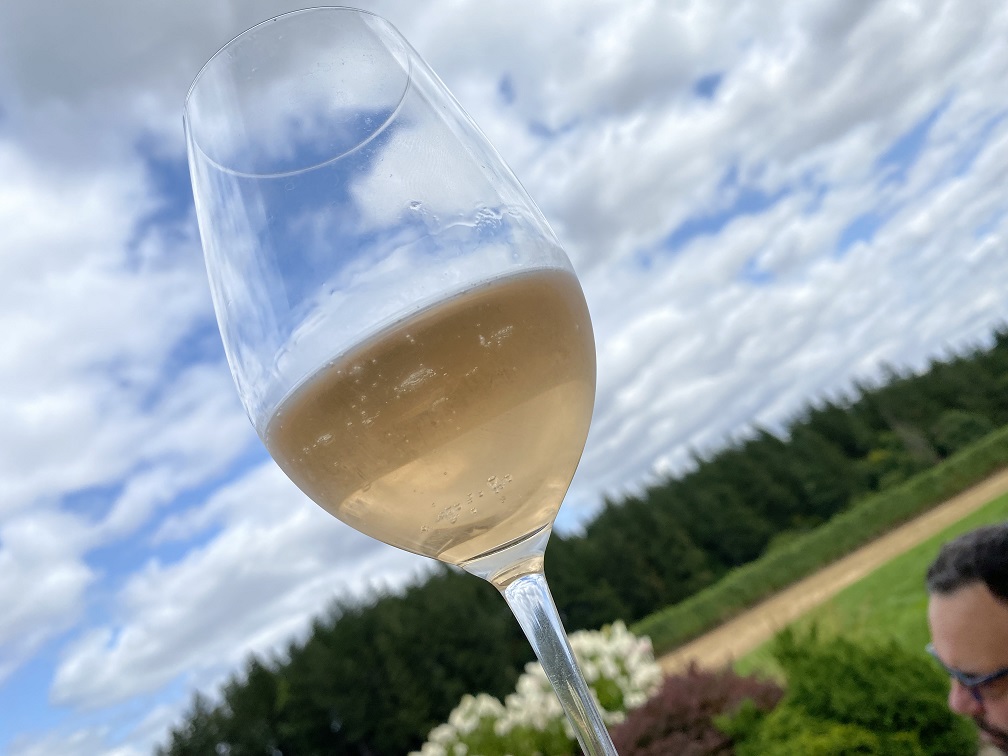


It appears that Tom also makes sparkling wines, and he loves it, as making sparkling wines nicely complements making still wines – you remove perfect grapes for the sparkling (high acid), and the other grapes can ripen better. The sparkling wine we tried, was again, in a word, outstanding:
2013 Le Cadeau Rosé Brut Oregon (13.1% ABV, $50, 4.5 years on the lees)
A touch of funk and toasted bread
Sapidity, yeast, toasted notes, clean acidity, delicious.
8+


Now we moved on to the Pinot Noir. Tom is working with the winemaking team to produce his wines, including the consultant from Burgundy. Le Cadeau makes some of the reserve wines, but those are only produced in the best years. We tasted through the 4 Pinot Noir wines which were all excellent in their own right.
2018 Le Cadeau Côte Est Pinot Noir Willamette Valley (13.9% ABV, $60)
Beautiful cherries on the nose
Cherries on the palate, clean, round, soft, a touch of earthiness, delicious.
8
2018 Le Cadeau Diversité Pinot Noir Chehalem Mountains AVA (14.1% ABV, $60)
Beautiful minerality, sweet cherries, a hint of cranberry
Tart cherries on the palate, pepper, clean, fresh, light
8+
2018 Le Cadeau Rocheux Chehalem Mountains AVA (13.5% ABV, $60)
Stunning nose, cranberries, cherries, violets, a hint of sage
Superb balance of power, fruit, acidity, structure – everything is in perfect harmony.
9-/8+
2017 Le Cadeau Merci Reserve Chehalem Mountains AVA (13.3% ABV, $80)
Incredible aromatics, floral, violets
Beautiful, round, clean, open
8+
It is interesting that when I tasted the 2017 Le Cadeau vintage for the interview post, Diversité was my favorite, and Rocheux was a close second. This time, Rosheux was my favorite Pinot Noir from the tasting.
That’s all I have for my update. I don’t drink much of Burgundy, so I can’t really offer any comparisons – but I don’t think comparisons are needed. Oregon Pinot Noir are unquestionably world-class wines in their own right. I remember reading in Wine Spectator Matt Kramer’s article where he mentioned that the main characteristic of a world-class Pinot Noir is finesse. Going by this measure, Le Cadeau definitely got it – finesse is the virtue of all their wines. If you are looking for the Pinot Noir for a special occasion – don’t look any further than Le Cadeau.
This post is a part of the Stories of Passion and Pinot series – click the link for more stories…
Understanding Ferguson
Do experiences have expiration dates? Of course not. As long as we learn something, the experience has its value – and thus it can be shared.
And so here I am, sharing another experience from 2 years ago. Yesterday, I was talking about the Sanford tasting which took place in June of 2019. Today, I’m sharing yet another experience from the same June of 2019. Just follow along, please.
I remember attending a trade tasting in New York, probably about 5 or 6 years ago. One of the wineries at that tasting was L’Ecole No 41, one of the best wineries in Walla Walla in Washington. The rep poured a taste for me and proudly said “this is Ferguson, our newest vineyard, and this wine is amazing, taste it”. I can still vividly remember the punch of tannins from the first sip and my very first thought “how is this amazing, I can’t taste anything here”.

L’Ecole No 41 needs no introduction to the wine lovers. The third winery in Walla Walla in Washington, founded by Jean and Baker Ferguson in 1983, one year before Walla Walla received an official AVA status. From the moment the winery was created, the focus was always on the Bordeaux varieties – Cabernet Sauvignon, Merlot, Cabernet Franc, Malbec, Petit Verdot.
Seven Hills Vineyard, 230 acres estate on the Oregon side of the appellation, is one of the oldest vineyards in Walla Walla, planted in 1980. L’Ecole No 41 manages Seven Hills Vineyard together with Pepper Bridge Winery and Leonetti Cellars, and it is a source of more than 1/3 of L’Ecole’s total red wine production.
The second vineyard, Pepper Bridge Vineyard, was planted in 1991 on the Washington side of Walla Walla. L’Ecole was the first winery to produce wines from the Pepper Bridge Vineyard.
In 2008, Ferguson Vineyard, named in honor of the founders of the winery, was planted on high elevation (1,350 ft – 1,450 ft) not far from the Seven Hills Vineyard, a thin layer of soil over the fractured basalt from 15-million-year-old lava flows. The vineyard now is 42 acres in size and the source of the latest additions to the L’Ecole portfolio – the one I was unable to appreciate during that trade tasting.


When I got the invite to attend L’Ecole No 41 tasting in New York at the Grapes and Grains restaurant, I got excited about the opportunity to have a deeper dive and learn more about L’Ecole No 41 wines.
What I learned from Constance Savage, General Manager of L’Ecole No 41 is that L’Ecole can be safely called a high mountain desert winery, with only 8” of precipitation per year. Irrigation is available, but very much controlled, forcing the vines to work hard.
The winemaking approach at the winery is very simple – let the terroir speak. Always do the same at the winery, and let Mother Nature to express itself. The winery is not trying to achieve persistent taste – and this can be easily seen in wines through the differences between the vintages. And this all works because the climate is very consistent.
We tasted through 4 sets of wines, each set containing 3 wines. Here is what I tasted with my notes.

The first set consisted of the 3 “classics” from the same 2008 vintage – Merlot, Cabernet Sauvignon, and Cabernet Franc. The wines were 11 years old when I tasted them, and still you can see that they were still showing substantial level tanning and potential to evolve for the next 10–20 years.
2008 L’Ecole no 41 Estate Merlot Seven Hills Vineyard Walla Walla Valley (14.5% ABV, 80% Merlot, 10% Cabernet Sauvignon, 10% Cabernet Franc, 18 months in small French oak barrels, 40% new)
Cherries, iodine, mint
Tart cherries, pepper, a touch of vanilla
8
2008 L’Ecole no 41 Estate Cabernet Franc Seven Hills Vineyard Walla Walla Valley (14.5% ABV, 100% Cabernet Franc, 22 months in small French oak barrels, 33% new, 198 cases produced)
Black currant, a touch of mocha
Tart, black currant, dry, very noticeable tannins
8, Block 8 Cabernet Franc is typically used for blending, except in the best years when enough grapes are harvested, so this wine was produced in 2006 and again in 2008.
2008 L’Ecole no 41 Estate Cabernet Sauvignon Seven Hills Vineyard Walla Walla Valley (14.5% ABV, 100% Cabernet Sauvignon, 22 months in small French oak barrels, 50% new, 188 cases produced)
Touch of sweet oak, black currant
Much more open than cab franc, but still tannins are present

The next set of wines was made with the fruit from Seven Hills Vineyard, and they all belonged to the series called Perigee – as a scientific term, Perigee is the closest point to the Earth in the Moon’s orbit. The focus of these wines is on the earthy characteristics of the Seven Hills Vineyard.
2006 L’Ecole no 41 Perigee Estate Seven Hills Vineyard Walla Walla Valley (14.4% ABV, 56% Cabernet Sauvignon, 34% Merlot, 10% Cabernet Franc, 22 months in small French oak barrels, 50% new)
Great complexity, plums, a touch of smoke and roasted meat, fresh onion peel (sorry about that)
Sweet plums, black currant, vanilla, good acidity, dry finish
8
2011 L’Ecole no 41 Perigee Estate Seven Hills Vineyard Walla Walla Valley (14.5% ABV, 60% Cabernet Sauvignon, 20% Merlot, 10% Cabernet Franc, 6% Malbec, 4% Petit Verdot, 22 months in small French oak barrels, 50% new)
Closed nose
The palate is raspberry driven, good acidity, good minerality
2016 L’Ecole no 41 Perigee Estate Seven Hills Vineyard Walla Walla Valley (14.5% ABV, 52% Cabernet Sauvignon, 21% Merlot, 11% Cabernet Franc, 9% Petit Verdot, 7% Malbec, 22 months in small French oak barrels, 40% new)
Fresh, bright, fresh leaves, freshly crushed berries
Vanilla, plums, mocha, young, big body, soft and velvety initially, with the tannins gripping mouth in the second wave
8
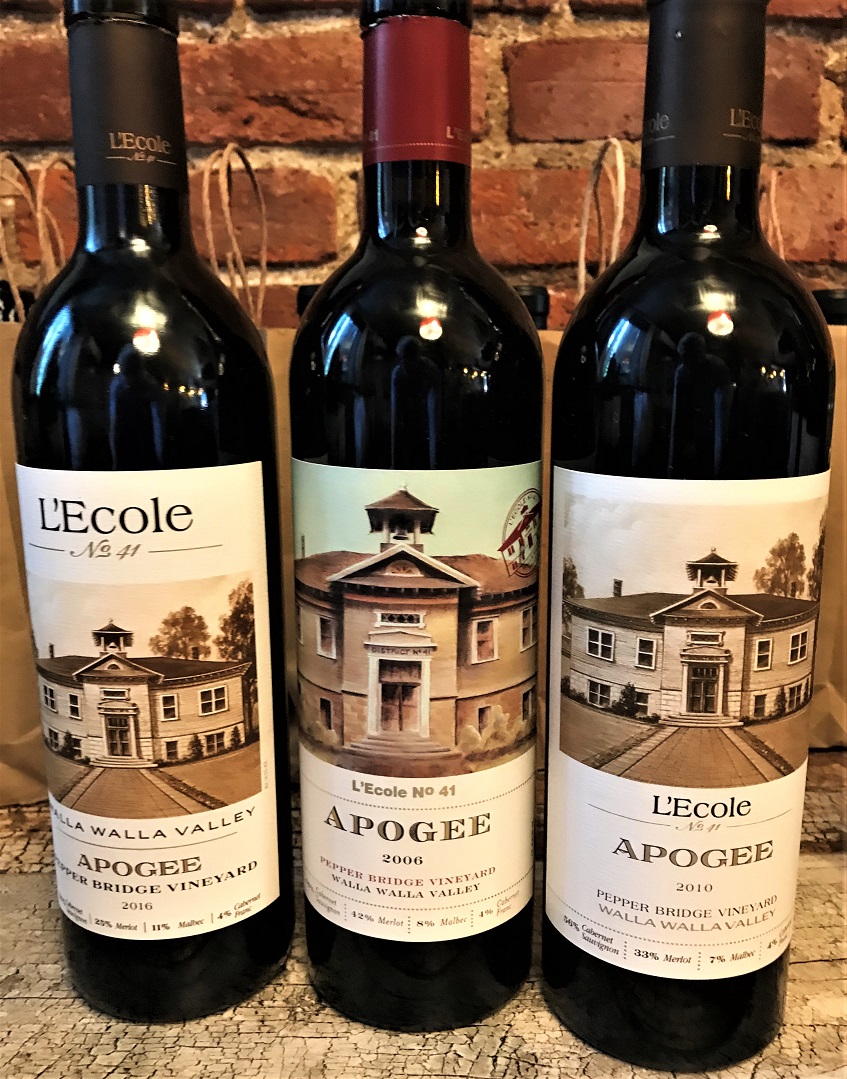
Next, we tasted the Apogee series of wines, sourced from the Pepper Bridge Vineyard. Apogee is the point in the orbit of the Moon when it has the greatest distance to Earth. The focus of these wines is to showcase the ultimate expression of the fruit.
2006 L’Ecole no 41 Apogee Estate Pepper Bridge Vineyard Walla Walla Valley (14.3% ABV, 46% Cabernet Sauvignon, 42% Merlot, 8% Malbec, 4% Cabernet Franc, 22 months in small French oak barrels, 50% new)
Touch of barnyard, intense, blackberries, minerality
Sapidity, onion jam, dark berries, baking spice, minerality,
8, wines are a lot more massive than previous ones
2010 L’Ecole no 41 Apogee Estate Pepper Bridge Vineyard Walla Walla Valley (14.5% ABV, 56% Cabernet Sauvignon, 33% Merlot, 7% Malbec, 4% Cabernet Franc, 22 months in small French oak barrels, 50% new)
Elegant, raspberries, fresh
Round, clean, well-structured tannins, delicious
9-
2016 L’Ecole no 41 Apogee Estate Pepper Bridge Vineyard Walla Walla Valley (14.5% ABV, 60% Cabernet Sauvignon, 25% Merlot, 11% Malbec, 4% Cabernet Franc, 22 months in small French oak barrels, 50% new)
Not ready – beautiful fruit and acidity, but tannins covering completely

And finally, the Ferguson. The vineyard built on top of the balsamic rock, so we should expect to see expressive minerality.
2011 L’Ecole no 41 Estate Ferguson Vineyard Walla Walla Valley (14.5% ABV, 57% Cabernet Sauvignon, 32% Merlot, 11% Cabernet Franc, 22 months in small French oak barrels, 50% new)
Smoke, gunflint, not a lot of fruit
Dark, powerful, perfectly structured, Bordeaux style, perfectly drinkable
9-
2016 L’Ecole no 41 Estate Ferguson Vineyard Walla Walla Valley (14.5% ABV, 62% Cabernet Sauvignon, 26% Merlot, 6% Malbec, 6% Cabernet Franc, 22 months in small French oak barrels, 50% new)
Young fruit, crunchy berries,
Killer tannins, lock your mouth
Not ready
2014 L’Ecole no 41 Cabernet Sauvignon Ferguson Vineyard Walla Walla Valley (14.5% ABV, 100% Cabernet Sauvignon, 22 months in small French oak barrels, 40% new)
Dark fruit, minerality
Touch of Black Currant, coffee, tannins are still overpowering, but you can taste the beauty of the wine. Needs at least another 10 years
8+
So what did I learn about Ferguson? These wines need time. And with time, they can be some of the best wines Washington has to offer.
As you can tell, 2011 Ferguson and 2010 Apogee were two of my most favorite wines, but really, give them time, and you will not go wrong with any of these wines. And it is interesting that all of the 2006 and 2008 can still enjoy more time in the cellar. For sure, L’Ecole makes some serious wines.
Do the experiences have expiration dates? Maybe only those which are not shared. Here, I did my part.
Top Wines of 2021: Second Dozen
 And the time has come (drum roll, please) to announce Talk-a-Vino Top Wines of the year 2021.
One of the most exciting and most dreadful posts of the entire year.
It is exciting, as during the preparation I get to re-live the wines of 2021, look through the notes, reflect, and reflect more.
It is dreadful because I don’t like making decisions. Can you decide on your favorite child? Of course not. These are wines, not kids, but still – there are many ways to decide on what makes the wine exciting and what does not, and then trying to sort through the excitements? Dreadful, just dreadful.
But someone has to do it, right?
If you are a regular here on these pages, you know the story. Every year ever since this blog started in 2010, I come up with the list of most memorable, most interesting/unique/unusual/stunning wines I tasted throughout the year. When I started these Top Wine lists, the goal was to identify a dozen (12) of top wines. I was rarely successful with such limitation, and most of the Top wine lists consist of two dozens, a few times there were even two dozens plus a few.
So without further ado, let me present the second dozen (and some) of Top Wines of 2021.
26. Castello di Amorosa Sparkling Grape Juice Red Blend ($14.99) – until I tasted these grape juices from Castello Amorosa, I had no idea that it is possible to create grape juice that would perfectly resemble the wine, only without alcohol. I tasted 3 different juices from Castello Amorosa, all 3 were a pure delight – I liked this sparkling juice red blend just a hair more than the two others.
25. 2013 Fero Vineyards Saperavi Pennsylvania ($25?) – This was the only bottle of “Georgian” grape I could open to accompany an impromptu Georgian dish we had for dinner. Exceeding any of my anticipations, this wine evolved to be perfectly delicious, and it elevated our dining experience akin to the glove perfectly fitting the hand.
24. 2020 Tenuta Gorghi Tondi Midor Catarratto Sicilia DOC ($12) – Ancient grapes make delicious wines – Catarrato or Lucido, you can’t go wrong with this invigorating white from Sicily.
23. 2014 Oscar Tobia Rioja Reserva ($20) – if you are as conservative as I am when it comes to what Rioja do you drink, remember this name. Perfect delight in the classic style – if you have a Rioja craving, this wine will deliver. This was our go-to wine during a week in Cancun, and it didn’t fail us.
22. 2018 Knotty Vines Cabernet Sauvignon California ($10) – simple is beautiful. This is the first entry in the Top list from the Oregon trip in August (but so ohh not the last). Delightful California Cabernet Sauvignon at $10 or so is not something which should be even possible – and nevertheless, here is this wine. If you will have an opportunity – give it try. Definitely a case buy.
21. 2020 Troon Vineyard Kubli Bench Pet tanNat Applegate Valley ($35) – this wine has an energy of the tight rope, or maybe a guitar string should be a better analogy. As clean and vibrant sparkling as they get – ignore the petNat part, this wine is a serious game.
20. 2015 Imperial Reserva Rioja DOCa ($50) – a beauty such as Imperial Reserva Rioja can easily be anywhere on the list. Anywhere. But on the Top list, as this is top wine in its core.


19. 2019 Troon Vineyard Siskiyou Estate Syrah Applegate Valley ($50) – I’m a big fan of Syrah, and this Syrah is as pure as they get. Clean pepper and underbrush, clean and unadulterated. If you like cold-climate Syrah, this is just pure pleasure.
18. 2013 Montecillo Rioja Reserva DOC ($40 for 1.5L) – Rioja overload? This is not even remotely possible. If you love Rioja, this is yet another beautiful rendition.
17. 2015 Becker Vineyards Claret Les Trois Dames Texas ($14.99) – you never know what you can find in the local store. This wine was at its peak and absolutely mind-boggling in its Claret beauty.
16. NV Keush Origins Brut Methode Traditionelle Armenia ($25.99) – Armenia winemaking might be one of the oldest in the world, but this is modern, clean, and very well-made, world-class, sparkling wine.


15. 2018 Bodegas Muga Flor de Muga Blanco D.O.Ca. Rioja ($50) – Another Rioja!!!! Okay, this time it is at least white. Rioja is not only red, and some of the Rioja whites can be quite memorable – like this one from the classic producer.
14. 2019 Field Recordings Festa Beato Farms Vineyard El Pomar District ($25, 100% Touriga Nacional) – aromas that can transport and transform. Amazing wild strawberries and meadows aromatics. A perfect rendition of one of my most favorite grapes.
13. 1998 Reverie Special Reserve Diamond Mountain ($NA, blend of Cabernet Sauvignon, Cabernet Franc, and Petite Verdot, aged in 100% new small French oak barrels) – they don’t make them like that anymore. This is sad, but a true statement – this winery doesn’t exist anymore – but this 23-year-old wine was a pure delight, as good as aged California Claret can be.
And now we reached the end of the presentation of the second dozen to Talk-a-Vino Top WInes of 2021. Top Dozen presentation coming soon and it will be …. well, you will have to wait. Cheers!
Portuguese Wines: Pleasures Worth Seeking, And Waiting For
Once again, I want to start with the question.
What is the most frustrating question you can ask a wine lover?
I get it – we are all different, and so are our sources of frustration. Of course, I get it. And nevertheless, give it a thought, please. If you consider yourself a wine lover (not a collector, not a snob, just someone who really appreciates the glass of that special grape juice) – what is the question you don’t like to hear the most?
Okay, fine, I will go first.
“What is your favorite wine?”
This is the most innocent question one might expect, isn’t it? Once you show your love of wine one way or another, people love to ask that question – ahh, so what is your favorite wine? I literally cringe every time when I hear that question, because it is very hard to explain how such a simple and innocent question can’t get a good, simple answer – and yet I can’t answer that question.
Every time I answer this question, I lie. When I say “I have no preference, I love them all” I lie because I have preferences. Lots and lots of preferences, and yes, I love them all, but then… Yeah. And when I say “I love Spanish Rioja” it is a lie, because I love Rioja from very particular producers, and not just any Rioja. Moreover, depending on the day, food, and company, there will be other wines that I love as much as I love Rioja. See, there is no escape from the lies.
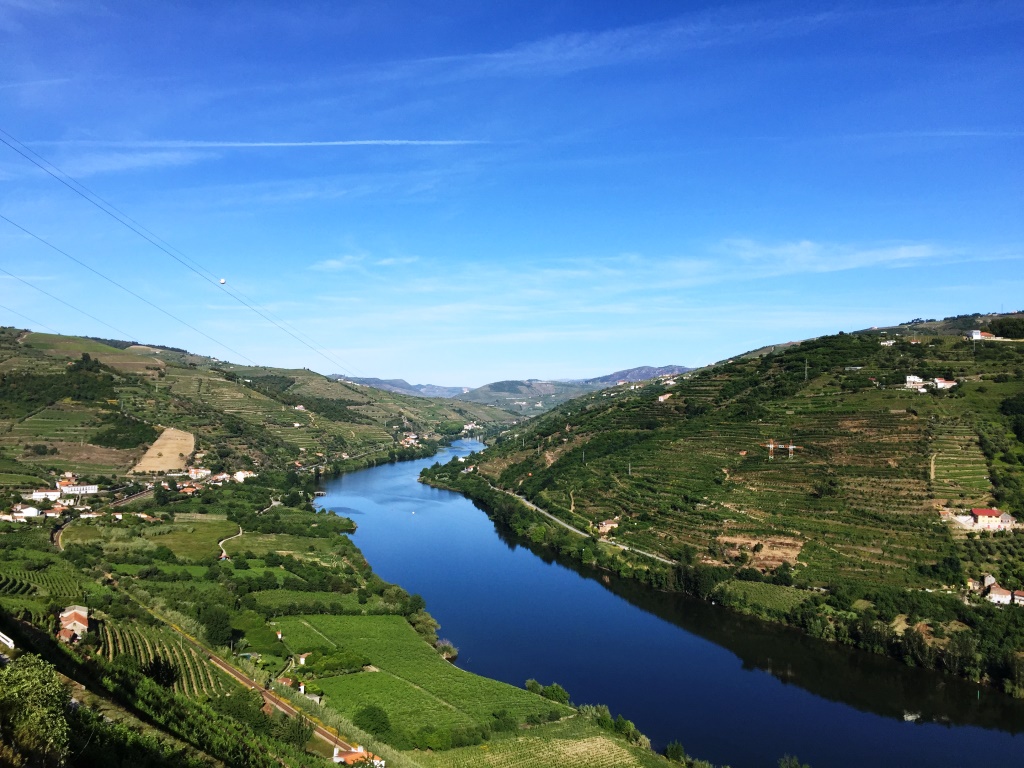
So when I say “I love Portuguese wines” it is one of those statements. Yes, I love Portuguese wines, but not all of them – I have preferences.
Portuguese wines became somewhat of an obsession to me about 15 years ago, but I don’t believe you would easily guess the reason why. It was not just because they were really, really inexpensive at the local Bottle King wine store in New Jersey ($5 per bottle was a pretty normal price, with occasional $4 showing up), but because they were made out of obscure grapes, and I was hunting down the obscure grapes to advance to the next levels of The Wine Century Club. Enjoying the wines was secondary, but spending countless hours with the search engine, trying to figure grape composition, grape synonyms – ohh, what a fun journey it was.
Based on what I just described, I wasn’t ready to claim my love for the Portuguese wines overall. In 2013, I was lucky enough to visit Porto, Portugal for work, and this is where it became literally love from first sight. At the restaurant, I just pointed to the bottle on the list. I had no idea what I’m ordering, but at €14 it didn’t seem like a big risk. The first sip made my eyes pop, and Portugal’s status was instantly elevated to the “oh my god” level. That wine was from Quinta do Cardo, a blend of Touriga Nacional, Touriga Franca, and a few other varieties – here is the original post.
A few more days into that same trip I had another wine which completely solidified my love for the Portuguese wines – Casa Burmester Reserva Douro – again, pure indulgence. There were lots more wines during that and two other trips to the Douro which made me form the opinion that Touriga Nacional is very similar to Cabernet Sauvignon in its ability to be grandstanding, to create the wine with a perfect flavor profile, perfect ripeness, perfect level of extraction and impeccable, sexiest mouthfeel. If you ever had Kamen Cabernet Sauvignon or Vérité La Joia, you would know what I’m talking about. Yes, I love Portuguese wines.
And one more thing about Portuguese wines. Similar to well-made California Cabernet Sauvignon, well-made Portuguese wines need time. Way too many times I had Portuguese wines which were not ready. I don’t know if analogies with Port are appropriate here (same grapes?), but Vintage Ports can easily age for 50+ years. I never had 50-years old wines from Portugal, but I have first-hand experience with, for example, 24 years old wine which was not ready to drink, not for a minute (you can read about it here).
When I was offered to try two Portuguese wines from the Douro, made by Prats and Symington, I quickly agreed – I told you already that I love Portuguese wines, remember?
I always like to talk first about the producer before discussing the wines. Only a few days ago I wrote at length about a number of Port wines produced by the Symington Family Estates, so this is the part of the story I don’t need to repeat – you can read it here. But understanding the “Prats” was a bit more challenging. The website section for Prats and Symington, or P+S how it is abbreviated provides rather limited information. I was only able to learn that “In 1999 our family formed a partnership to make top Douro wines with the Prats family of Bordeaux”, and that “the first Prats & Symington wine was Chryseia 2000 which received widespread national and international acclaim”. I felt as in my early days of combing Portuguese wine labels and information tidbits for the grape names, so I had to do a bit of research.
I was able to figure that Prats in P+S is actually Bruno Prats, former owner of Château Cos d’Estournel and experienced winemaker, who applied Bordeaux winemaking philosophy, especially around blending, to the production of the P+S wines, which resulted in the wines with the highest critic ratings in the history of Portuguese unfortified wines. This article in the Dinks Business online magazine explains Bruno’s winemaking philosophy very well.


The two wines we are talking about here are 2018 P+S Prazo de Roriz Douro (14.5% ABV, $17, 35% Touriga Franca, 20% Touriga Nacional, 20% Mixed varieties, 15% Tinta Roriz, 10% Tinta Barroca, 6 months in 400L neutral French oak Barrels) and 2019 P+S Post Scriptum de Chryseia Douro Red (14.2%, $27, 56% Touriga Franca, 33% Touriga Nacional, 7% Tinta Roriz, 4% Tinta Barroca).
There are two main vineyards used in the production of these two wines – Quinto de Roriz, one of the oldest and best vineyards in Portugal, already famous for its single-vineyard wines in the 18th century, and Quinta de Pedriz, a newly acquired vineyard in Rio Torta and specifically planted with Touriga Nacional and Touriga Franca grapes.
As these were two sample wines, I also got technical notes for both, which I typically like to glance over. Two items attracted my attention in the notes. First, there was a line there saying “Decanting: Not required”. Second, the “Storage and Serving” section stated ” Ready for immediate consumption”. Leaving decanting aside, “ready for immediate consumption” somehow bothered me.
Prazo de Roriz was actually as promised – from the moment the wine made it into the glass, the wild strawberries on the nose and palate, which I tend to believe are signature flavors of Touriga Nacional, were prominent, and the wine was perfectly extracted, round, concentrated, and overall delicious (Drinkability: 8). It was also “dangerous wine” as I like to call them – once opened, they tend to disappear without second notice.
The first sip of Post Scriptum, made me say “hmmm” and reach for the decanter. Decanter didn’t really help – two hours later, the wine was still ultra-dense and literally devoid of fruit. I don’t give up on the wines easily, so back into the bottle the wine went. Next 4 days, I would pull out a stopper, pour a sip, and put the stopper immediately back. On day number 5, the magic transformation completed – the wine all of a sudden opened with the same wild berries profile, perfect extraction, round and layered, and ready to be admired. (Drinkability: 8+).
Here you are, my friends. Portuguese wines are easy to love – you just need to find the right wines and have a bit of patience. But seriously, the rewards are handsome – these are some of the best wines in the world which you can still afford without an expense account. Happy [wine] hunting!
American Pleasures #5: Burgundy in California, or the Wonders of Pop’n’Pour
Wine should give you pleasure – there is no point in drinking the wine if it does not. Lately, I had a number of samples of American wines, that were the delicious standouts – one after another, making me even wonder if someone cursed my palate. I enjoyed all of those wines so much that I decided to designate a new series to them – the American Pleasures.
Burgundy in California. Nonsense, right? Burgundy is located in France, and the last thing you want to hear is a review of Hearty Burgundy, proudly produced by Gallo (believe it or not, but you can still buy this wine at about $9 for 1.5L – a great deal, huh?). Rest assured – Gallo is the last wine I want to ever discuss on this blog. I would like, however, to talk about Burgundy’s star grape varieties, which are also working amazingly well in California – yes, you got it – Chardonnay and Pinot Noir.
California produces a lot of wine (#4 in the world, with 248 million cases in 2018), using a lot of different grapes – no matter where those grapes are typically from – from Clairette Blanc to Viura to Nebbiolo to Grenache to Tempranillo, you should expect to find them all in Californian wines. Aside from all of the abundance, there are some grapes that can be called California superstars.
With the white grapes, it is easy – Chardonnay clearly steals the show. California made Chardonnay its own way back, with Chateau Montelena already proving its prowess to the whole world by winning Judgement of Paris in 1976. Chardonnay’s style changed and changed again since those early days of success, and when you are opening a bottle of California Chardonnay today, very often you don’t know what to expect – too much butter, too little butter, too much oak, no oak. Most importantly, you have no guarantees that you will enjoy that bottle.
Speaking about red grapes, ask a wine lover to name the most famous California red grape, and I’m sure 9 out of 10 will say Cabernet Sauvignon. I love California Cabernet Sauvignon as much as every one of those 9 out of 10 people. But based on my experience, the majority of the California Cabernet Sauvignon need time and time again to mellow down, to transform, to become truly enjoyable, and not just “drink the label and keep smiling” type of beverages. California Pinot Noir typically give you a lot more hope for finding the delicious Pop’n’Pour wines. And don’t forget – Pinot Noir, Chardonnay – it is the pleasure we are looking for here, so “pop, pour, drink, and ask for a second glass” is a sequence of events we are hoping for in here.
Here is a collection of the well-known wines I had the pleasure of enjoying – and have been blown away by the Pop’n’Pour quality, truly.
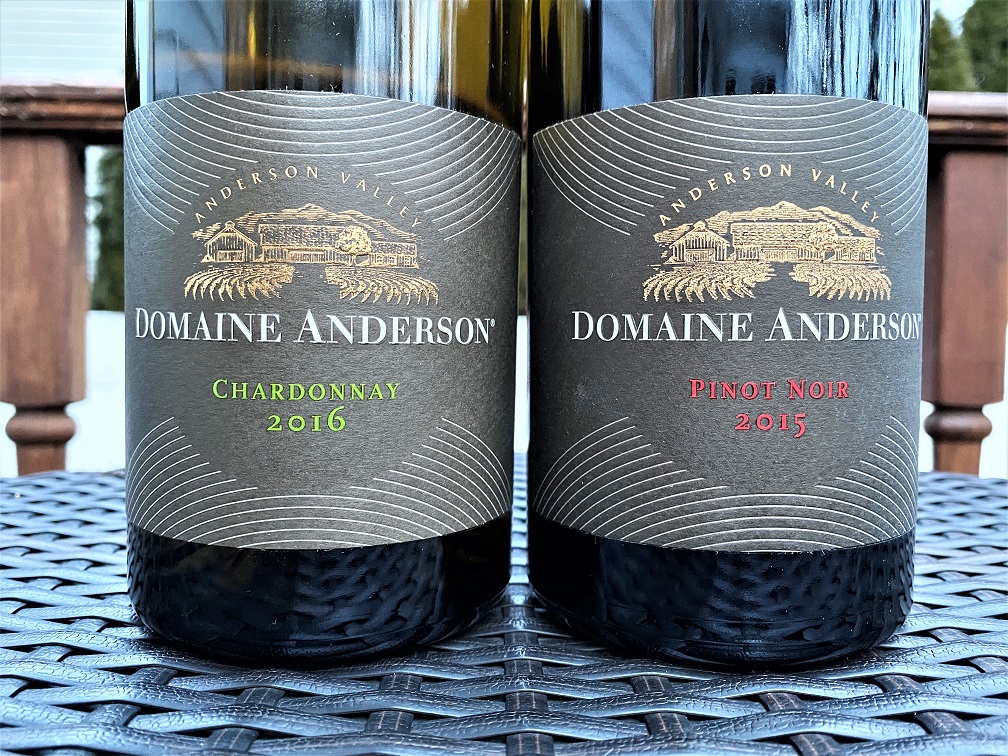
Domaine Anderson takes its roots from 1981, when Jean-Claude Rouzaud, patriarch of the Louis Roederer family came across Anderson Valley along the Mendocino coast in California, in search of the perfect spot to grow Chardonnay and Pinot Noir. Today, Domaine Anderson continues to be run by the Roederer family, farming organically and biodynamically 50 acres of Chardonnay and Pinot Noir vineyards. Here are 3 wines I had an opportunity to taste which were all just a perfection from the moment they were poured into the glass:
2017 Domaine Anderson Chardonnay (13.5% ABV, $30)
Light golden
Touch of honey, a hint of smoke, minerality
Clean acidity, tart lemon, a touch of smoke, texturally present, medium-plus body, earthy underpinning.
8/8+, this wine screams Chablis to me. Superb.
2015 Domain Anderson Pinot Noir Anderson Valley (13.8% ABV, $39.99, 15 months in French oak barrels, 19% new)
Dark ruby
Smoke, violets, earthy notes
Nicely restrained, good minerality, a touch of tart cherries
8, delicious
2017 Domaine Anderson Pinot Noir Anderson Valley (13.6% ABV, $45, 15 months in French oak barrels, 8% new)
Dark Ruby
Stewed plums, smoke, earthy undertones
Plums, cherries, lavender, tar, smoke, sweet tobacco, crisp, fresh, clean acidity, excellent balance
8, nicely restrained Pinot Noir, not over the board.
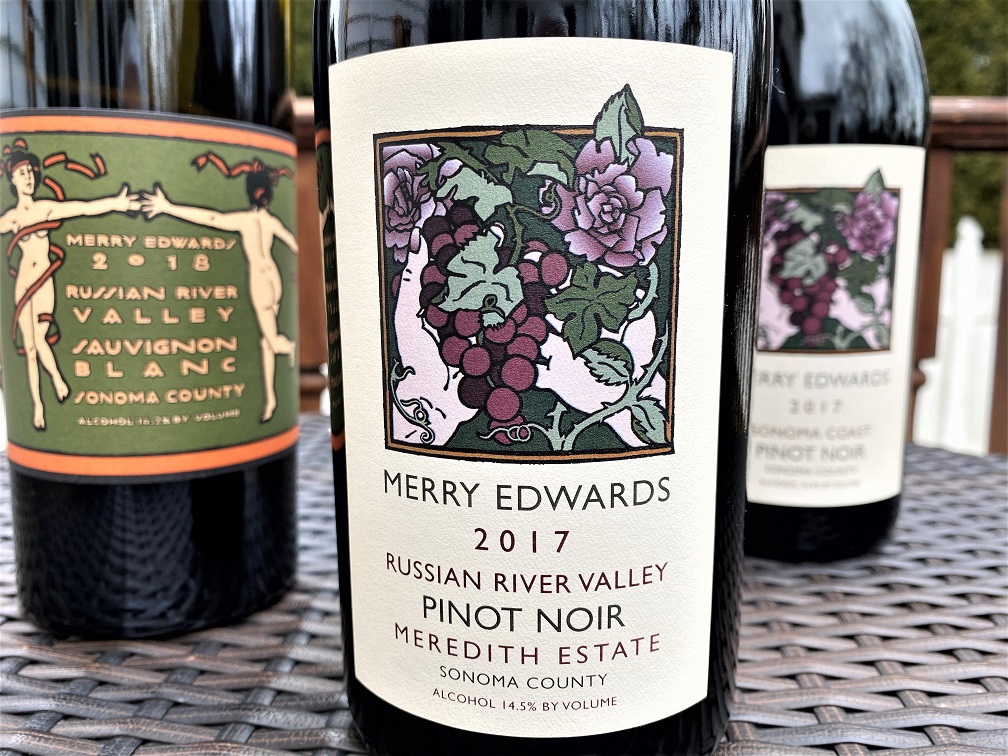
Merry Edwards Winery needs no introduction to wine lovers. Bright and noticeable labels always stand out on the shelf, it is hard to miss them. Merry Edwards’s sole focus is on the Russian River Valley Pinot Noir, which was first produced in 1999 (vintage 1997) – but she is also well known for her Sauvignon Blanc which was first produced in 2001. In addition to the passionate pursuit of Pinot Noir, Merry Edwards is also very passionate about sustainability, which is fully embraced at the winery and in the vineyards – you can read more about sustainability philosophy here.
2017 Merry Edwards Pinot Noir Meredith Estate Russian River Valley Sonoma County (14.5% ABV, $68)
Dark Garnet
Sage, tar, coffee, eucalyptus, freshly crushed dark berries
Tart, fresh cherries, crisp acidity, bright, invigorating
8, very uncalifornian, more Italian than anything else.
Considering how widely available La Crema wines are, I always made an effort to avoid them as “mass-produced”. After I tasted the wine, I completely changed my opinion – the wines might be produced in large quantities, but these are well-made wines. Also, the winery website has lots of good and well-presented information.
2017 La Crema Pinot Noir Sonoma Coast (13.5% ABV, $25)
Dark intense Ruby
Plums, fresh herbs, mineral undertones
Ripe fresh plums, mint, a touch of stewed strawberries, good acidity, good balance. Interestingly spicy finish.
8-, nice
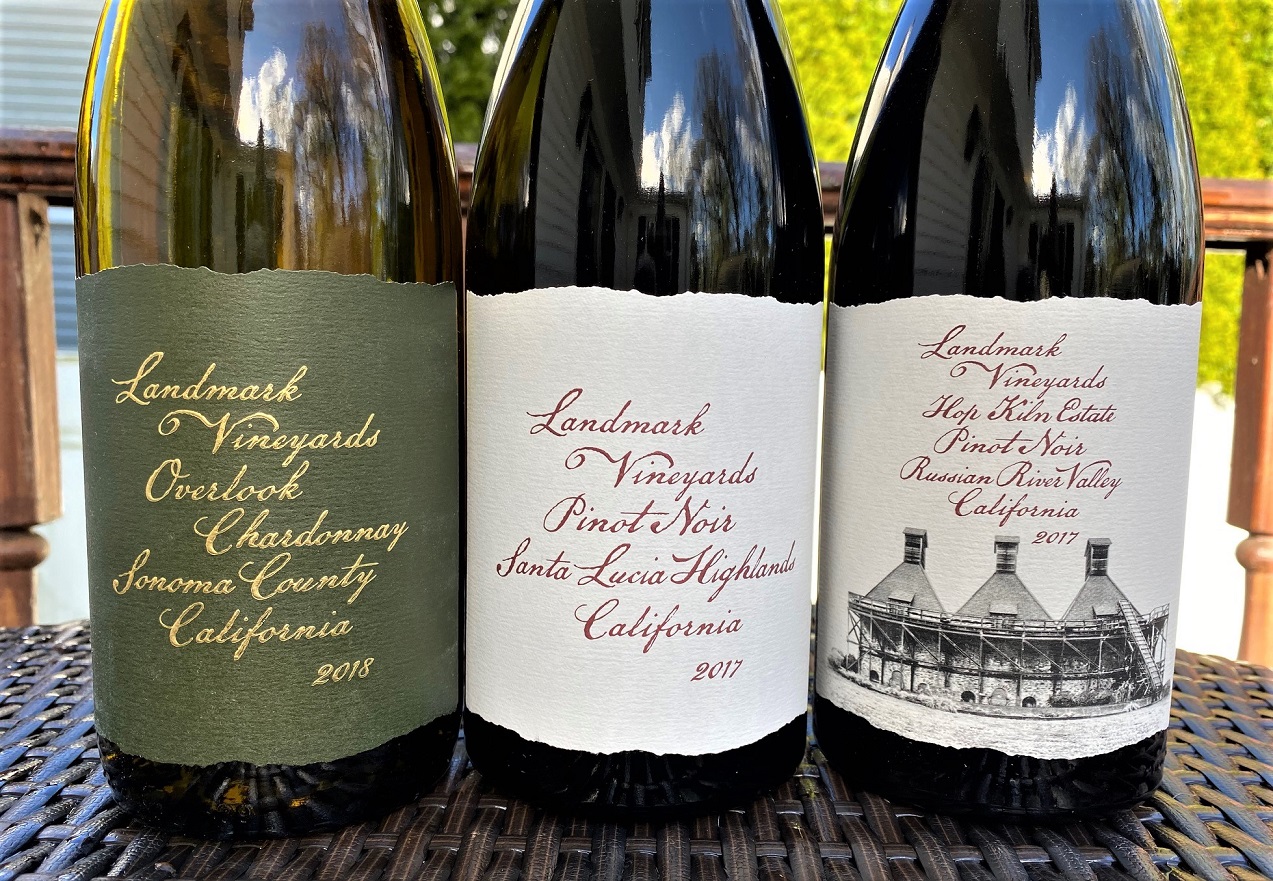


Landmark Vineyards was founded in 1974 by a group of people that included Damaris Deere Ford, the great-great-granddaughter of John Deere. In 1991, Damaris Deere Ford, now a sole proprietor of the Landmark Vineyards, focused exclusively on the production of Chardonnay and released the first vintage of the flagship Overlook Chardonnay. In 1993, Helen Turley started working as a consulting winemaker helping to create the Landmark’s signature style. Two years later, Landmark released the first vintage of its Pinot Noir under the name of Great Detour. In 2016, Landmark Vineyards extended into the Russian River Valley via the acquisition of the Hop Kiln Estate – and this was one of the wines I had an opportunity to taste.
2018 Landmark Vineyards Overlook Chardonnay Sonoma County (14.3% ABV, $27)
Light golden
Vanilla, apple, lemon
Vanilla, a touch of butter, golden delicious apples, citrus profile, roll-off-your-tongue round, excellent balance, delicious
8/8+, excellent
2017 Landmark Vineyards Pinot Noir Santa Lucia Highlands (14.3% ABV, $45, 14 months in French oak, 35% new)
Dark ruby
Plums, dirt, forest floor
Plums, cherries, tobacco, iodine, short finish, good acidity, good balance.
8-, excellent and classic
2017 Landmark Vineyards Pinot Noir Hop Kiln Vineyard Russian River Valley (14.5% ABV, $40, aged in 40% new French oak)
Intense ruby
Cherries, underbrush, the nose says Oregon with dark intensity
Tart cherries, dark chocolate, tobacco, complex bouquet
8/8+, superb.
Here are you – a collection of delicious Pop’n’Pour American Pleasures. And don’t worry, I have a lot more wines to share with you. Cheers!
Perfect Pairing for a Quiet Night
 Quick: can you name the wine (a type of wine) which would help you to enjoy your quiet evening? Winter evenings often bring out this “quiet night” analogy, as it gets dark really early, and you might find more time available to yourself. But of course, there are plenty of quiet nights during spring, summer, and fall. When all the daily chores are done, the house is getting quiet, you can pour yourself a glass of something, sit in your favorite chair with your favorite book (maybe), and just feel at ease. So what would that “something” in your glass be?
If you said Scotch (neat!), we are totally intuned, but this we will discuss other time.
If you said Port, then we really understand each other, because it is Port I want to talk about today.
What do you think of Port? Not the port-style, but actual, classic Port from Portugal – 10, 20, 30, 40 years old, vintage, late bottled vintage, colheita – doesn’t matter what type and age, but classic Port?
Port used to command the wine world. It was born out of need more than anything else – in the 17th century, the war between England and France forced Englishman to seek a replacement to the French Claret. Portuguese wines were not great, tart and austere, and had a tendency to spoil in transit, until someone discovered that the addition of Brandy can prevent the spoilage – and additional of Brandy during fermentation made wines to retain a lot more of the sugar, thus making them even more palatable.
In the middle of the 18th century, in 1756, the Douro region of Portugal (this is the region where Port is produced) became the first identified and protected wine-growing area in the world (take a note – this is a perfect fact to know for the next wine trivia night with friends). Another interesting trivia fact is that the first time Vintage port terminology was used in the wine auction catalog in 1773, to identify a bottle of an excellent 1765 Vintage Port. However, I don’t want to take you too far into Port types and styles – I wrote about it in the past so please refer to this article if you want to learn more.
Everything was going right for Port in the 18th and a good half of the 19th century until Douro vineyards received a “perfect” one-two punch – first, powdery mildew epidemic which started in 1848, followed by … yes, I’m sure you guessed it – the phylloxera hitting the vineyards in 1870. It was not until 1896 that the Douro vines were consistently grafted on phylloxera-resistant rootstock. From there on, Port started working on the comeback, but never reached its glory days of demand and appreciation.
Just to get a bit philosophical for a minute – you got time, you don’t mind, do you? I would say that there are three reasons why Port doesn’t have the attention it deserves nowadays.
First, the way we eat changed. One of the best “classic” pairings of Port is Port and stilton, the stinky, sharp cheese. Now, we lost the art of dinner where cheese is offered as a dessert course (by the way, forget traditions – there is a scientific explanation of why it makes perfect sense). At the best, cheese is considered an appetizer, often offered as part of the charcuterie board together with smoked and cured meats – but heavy and powerful Port is anything but an aperitive type beverage (I’m not talking about white Port – this is a separate category we are not discussing today).
Second, sweet = shame. We became extremely cautious about other people’s opinions towards us. Port is sweet. It is commonly appropriate to publicly despise sweet things, while secretly craving them. We are born with a love of sugar, and we need sugar as a source of energy – everything in moderation, of course. But outside of enjoying an actual dessert, and especially when it comes to the wine, we are trained to state how much we don’t like sweet, and we don’t enjoy sweet wines at all. “Oh no, I don’t drink sweet wines, no”. The pleasure of the wine is in the balance of the elements – sugar-loaded Sauternes, BA/TBA Rieslings, PX Sherries, Port – as long as the wine has enough acidity, it becomes an absolute pleasure, but we are too afraid to admit publicly that this is something we might be suspected of enjoying.
Third, we lost our ability to relax. You want to take your time with a glass of Port. The time stopped. You can just be, taking tiny sips from a glass, looking at the fire, flowers, or slow-rolling waves. Just be. But we can’t. There is always something new on the phone we need to attend to. We can’t just lose time relaxing. There is a new post to like, what relaxing are you talking about?
It is hard to properly introduce Symington Family Estates and explain its role in the Portuguese wine industry and the world of Port in particular. Symington Family Estates story started more than 130 years ago when Andrew James Symington arrived in Portugal at the age of 19. After spending some time at Graham’s Port, he started a Port shipping company under his name, which was the beginning of the family business.
It is impossible to represent the history of 5 generations of the Symington Family in a few sentences here – here is the link to the Symington Family Estates website where the history is presented in all the finest details. Over the years, Symington Family Estates acquired four of the Port producers – Graham’s, Dow’s, Warre’s, and Cockburn’s, as well as a number of wineries in the Douro Valley. Symington Family Estates owns 26 vineyards (Quintas) in the Douro Valley, a total of 2,255 ha (5,600 acres) of which 1,024 ha (2,560 acres) are under vine. All the vineyards are managed under a strict minimal intervention policy, and 260 acres are certified organic. Symington Family Estates is also a registered B Corporation, the first wine business in Portugal to receive such certification.
Enough about the business – let’s talk about the Port. I want to offer to you a choice of Port for all those quiet moments your heart desires.

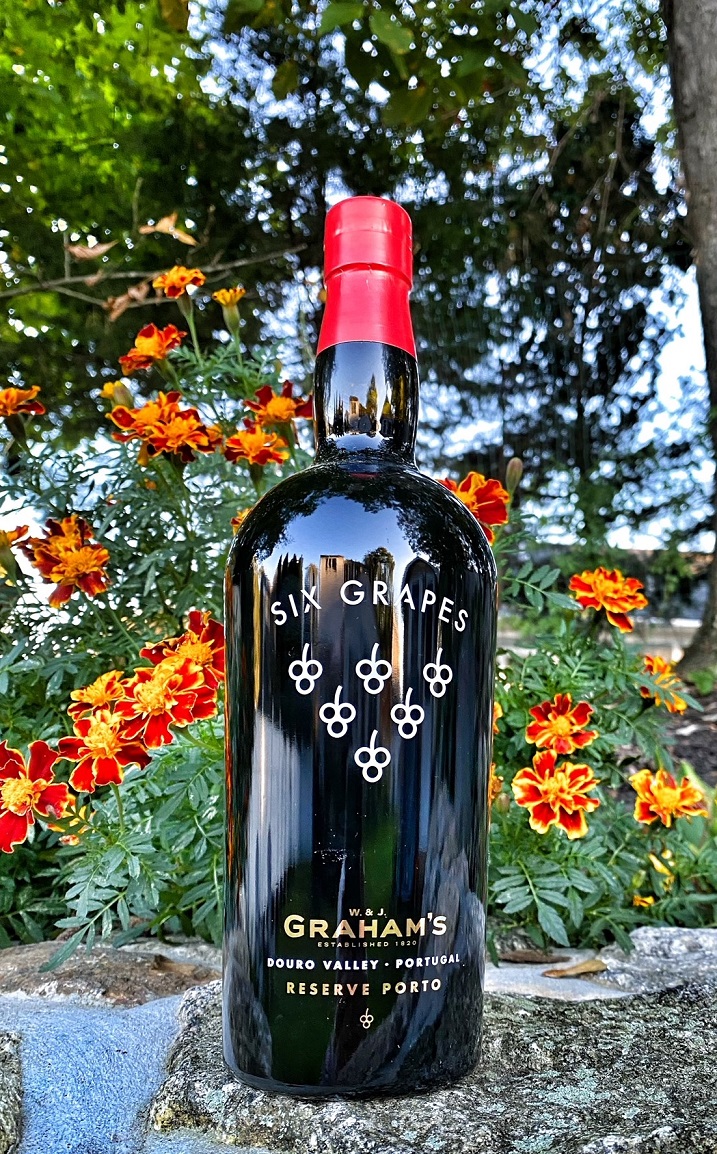
First, the Graham’s Six Grapes Reserve Port (20% ABV, $26, Touriga Nacional, Touriga Franca, Tinta Roriz, Tinta Barroca – with the addition of Tinta Amarella, Tinta Cão, Souzão, and Tinta Francisca from the mixed plantings). I had this port many times before but never paid attention to its story. It appears that in the old days, the grape symbols were used to represent the quality of wine in the individual barrels, from 1 to 6. Six grapes implied that the wine in the barrel had Vintage port potential, or effectively was of the highest quality. In the early 1900s, Graham’s started bottling such wines under its own “Six Grapes” label, and it continues to do so to this day.
This bottle had a recent redesign, now adorned with the red top, slick and beautiful. The Port was excellent – dark cherries and blackberries on the nose, blackberries, blueberries, and more of the dark cherries on the palate, with nice tannins in the finish. This wine ages in the oak barrels between one and two years, so the tannins overall are noticeable – and contrary to the general recommendation of chilling the Port slightly before serving, I don’t recommend it – the tannins on this wine become too pronounced and bitter. (Drinkability: 8).
Now, three more Ports from Dow’s, one of the original Symington holdings. The grapes for Dow’s Ports are harvested from some of the finest Quintas in Douro – Senhora da Ribeira and Bonfim, both supplying grapes for the Dow’s port for more than a century. Two of the Ports below are so-called Old Towny Ports, which means that the wines were undergoing a special wood aging regimen to reach their specific character. And another interesting tidbit – over the 10 years of aging, the Port barrel loses 25% of its original content. For the 20 years old Port, this number reaches 35% – while these Ports might seem to be pricey, you really need to appreciate the amount of labor and effort going into the creation of such a bottle.


Dow’s 10 Year Old Tawny Port (20% ABV, $39) – dry fruit and candy notes on the nose, a touch of mint. Hazelnuts and dried figs on the palate, good acidity, overall delicious (Drinkability: 8)
Dow’s 20 Year Old Tawny Port (20% ABV, $67) – Powerful and complex nose – dried herbs, dried fruit, present but not overpowering, inviting and seductive. On the palate, beautifully integrated, with perfect acidity, dried fruit harmoniously balanced and intertwined. (Drinkability: 8+).
And the last wine for you for today – Late Bottled Vintage Port. Late Bottled Vintage, or LBV for short, is a very special category of Port. You see, in Portugal, each and every type of wine should be approved to be released in its category by the IVDP, the regulatory body. If a company wants to declare a vintage year for a Port, it needs to request approval for that from IVDP. If such approval is not granted, the company can proceed with such a Port either in the path of the Old Tawny (the Ports we just discussed) or it might age it for some time and then declare it an LBV.
2016 Dow’s Late Bottled Vintage Port (20% ABV, $26, Touriga Franca, Touriga Nacional, Souzão, Tinta Barroca, Tinta Roriz, 4-6 years in seasoned oak before release) comes from a difficult vintage – warm winter, cold spring, one of the hottest and rainiest summers on record. Dry, sunny weather before harvest helped quite a bit, and the result was tasty and powerful Port – tart and sweet cherries on the nose, a hint of dried figs on the palate, cherries, good acidity, nicely present tannins on the finish. (Drinkability: 8).
Here you are, my friends. You can be honest with yourself – it is okay to enjoy well-made, sweet, but balanced, harmonious wines. And one way or the other, we all need our quiet moments. So get a bottle of Port, get comfy, and just enjoy your being. At least for a few moments.
Looking for Bubbles? Roger Goulart Got Everything You Need
 First question: how often do you crave bubbles? (My answer: almost every day).
Second question: how often do you actually drink bubbles? (My answer: not often enough. Read – once in a blue moon).
If you answered “not often enough”, here is the third (and fourth) question(s): Why is that so? What stops you?
I can only speak for myself here – I have a few reasons for not drinking bubbles often enough – price; having the right bottle on hand; not being able to finish a bottle once it is opened. Now, can we solve these problems? Let’s take them one by one.
The third problem (not being able to finish the bottle once it is opened) is the easiest problem. No, you don’t need newly minted Coravin for this. The standard Champagne bottle stopper will do the trick.
For the first and second problems – price and having the right bottle on hand – I have a simple answer – Cava.
Cava is a sparkling wine from Spain, made using exactly the same method as Champagne, with the secondary fermentation in the bottle, and aging requirements on par or even stricter compared to Champagne – minimum of 9 months for the regular Cava, minimum of 15 months for Reserva, and the minimum of 30 months for Gran Reserva. Good Cava offers a pleasure comparable to any Champagne in the same category, at half or even a third of the price per bottle, especially considering today’s Champagne prices.
If you noticed, I used the descriptor “good” in conjunction with Cava. As you can never assume that all of the Oregon Pinot Noir is equally good, all of the Riojas are equally good, or all of the Australian Shiraz are equally delicious, not all of the Cavas are equally good. So let me offer my helping hand and make a suggestion – Roger Goulart Cava will not fail you, no matter what the occasion is.
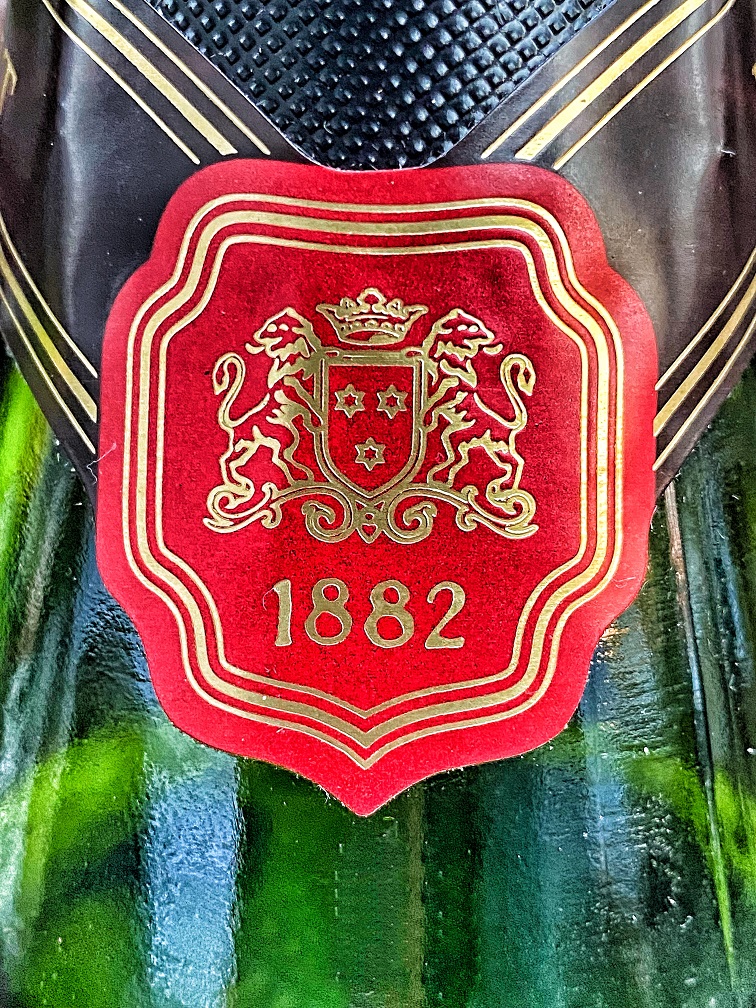
The history of Roger Goulart Cava started in 1882 when Magí Canals dug a wine cellar in the garden in the back of the house, where he started making Cava, in those days still known as Champagne. 17 years later, his son Josep bought the land adjacent to the Canals’ house from the Goulart family – we can consider that an official beginning of the Roger Goulart Cava. In 1919, a beautiful cathedral building was built by Ignasi Mas i Morell, a student of Antonio Gaudí – this became a new home of the Roger Goulart Cava. When Cava DO (destination of Origin) was created in 1972, Canals were one of the founding families. In 1997, 3,000 feet (1 km) of underground caves (more of a tunnel) were dug at the depth of 100 feet (30 meters), to provide ideal aging conditions for the Cava, maintaining a constant temperature of about 57°F-59°F (14°C-15°C).
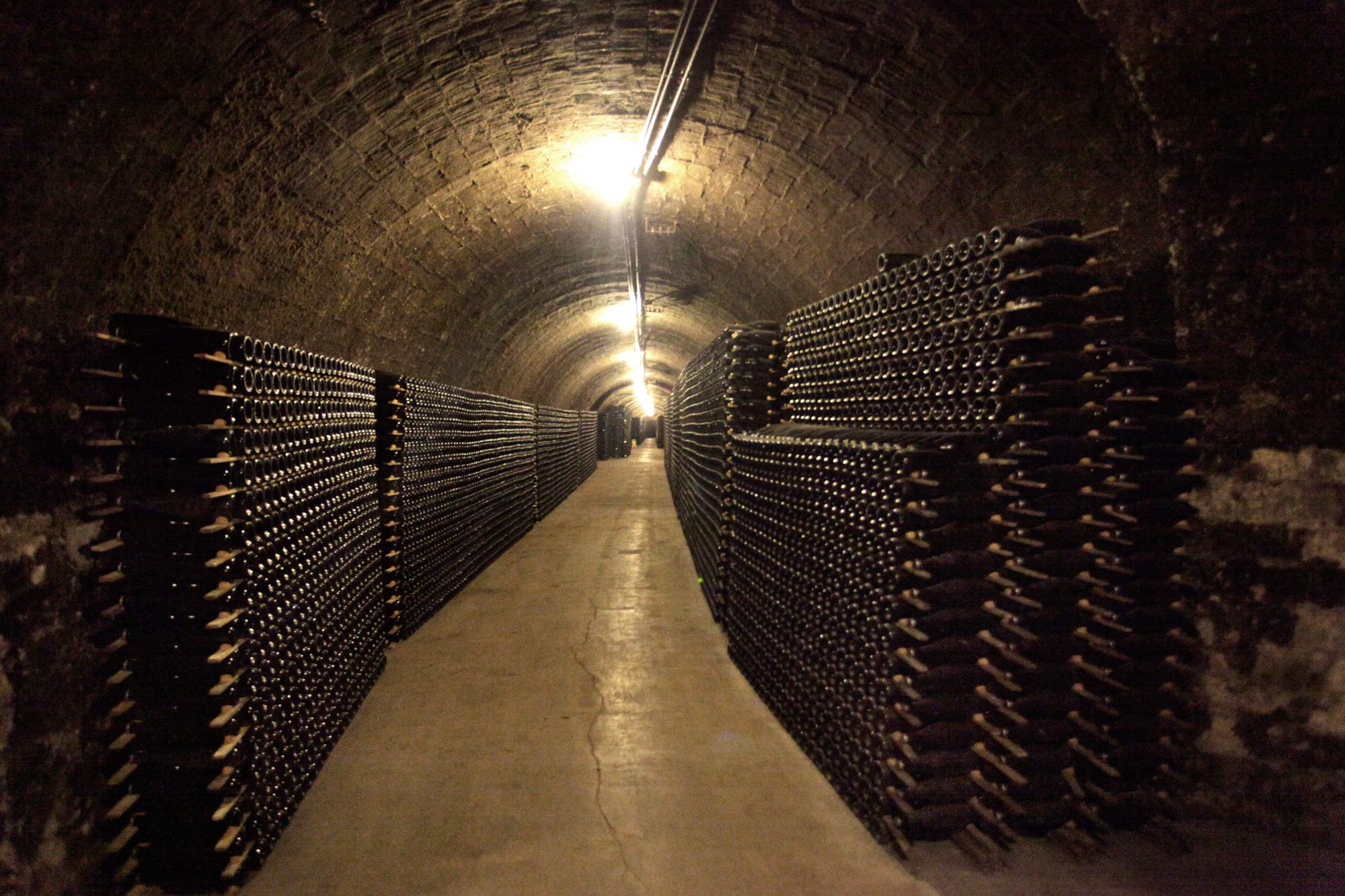
Roger Goulart Cava Caves. Source: Roger Goulart
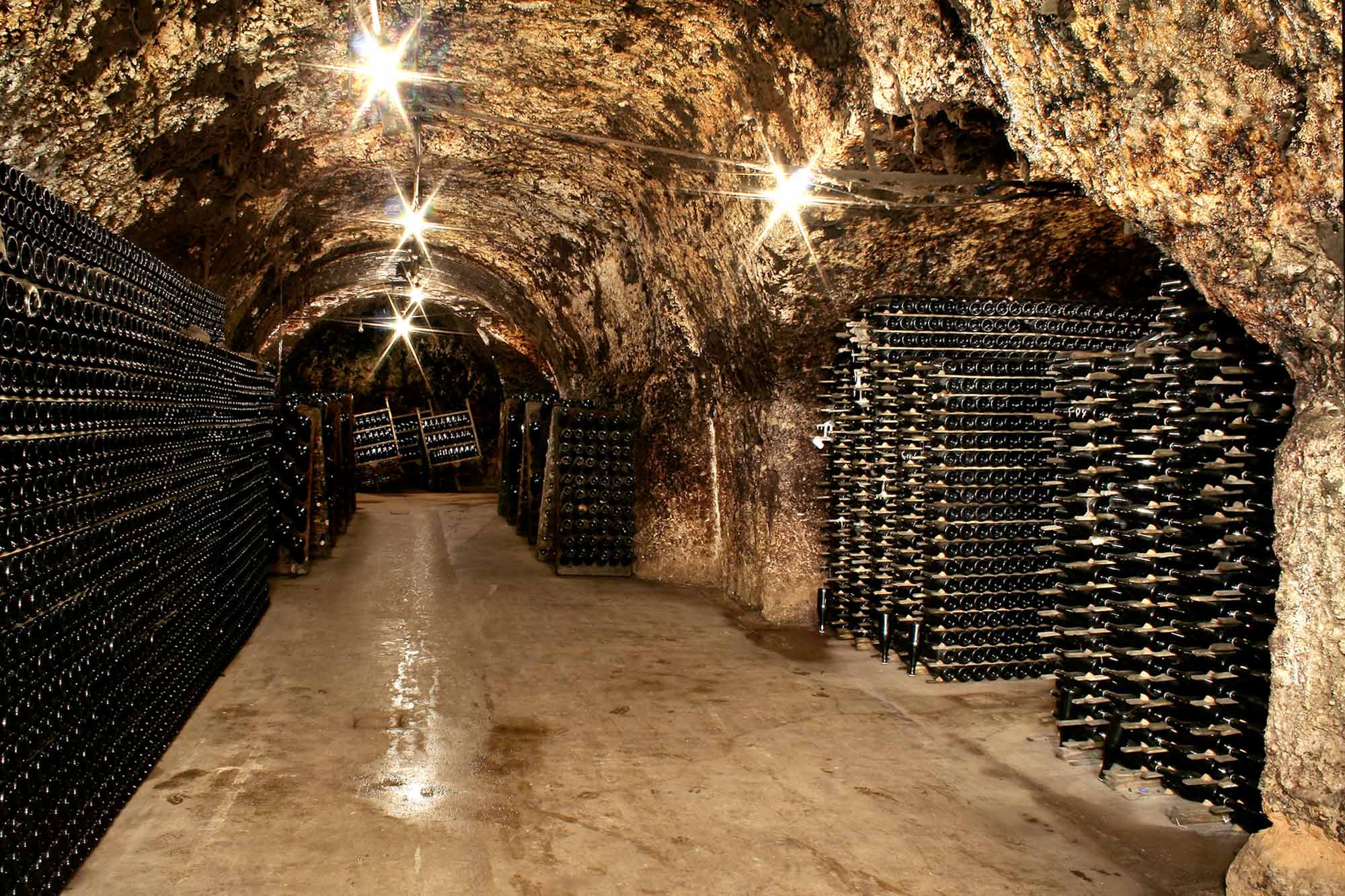
Roger Goulart Cava Caves. Source: Roger Goulart
Roger Goulart Cava offers a range of sparkling wines, including Brut Nature (zero dosage) and a range of Gran Reservas – Roger Goulart Gran Reserva cavas are actually not disgorged until the purchase order comes in, to ensure the freshest possible wine being delivered to consumers. The majority of the non-Rosé Cavas are made with three traditional varieties – Xarel·lo, Macabeo, and Parellada, but some of the Cavas might also include Chardonnay. The Rosé Cavas are primarily Garnacha driven, with the addition of other red grapes (Pinot Noir, Monastrell). The new Cavas are also produced from certified organic grapes, so we should expect to see more of Roger Goulart Cavas made with those in the future.
I had an opportunity to taste 4 different Cavas, and even catch a beautiful winter sunset with one of them (as you will see below in the picture). What was surprising to me was the level of freshness across all four wines – the 2012 and 2018 tasted equally fresh. Another interesting tidbit was the fact that the older Cavas, also been Gran Reservas, benefited from additional breathing time. I used the stopper I mentioned before, and I actually enjoyed those wines even more on the second day out of the refrigerator.
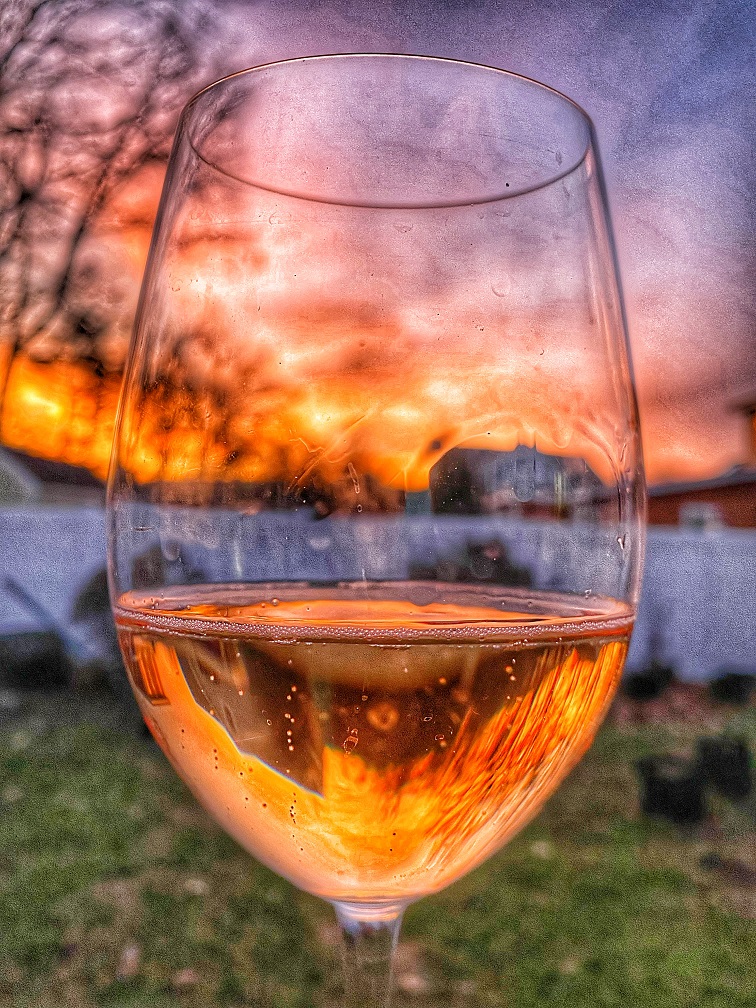


Here are my notes for what it is worth:
2018 Roger Goulart Cava Reserva (12% ABV, $19.99, 50% Macabeo, 35% Xarel-lo, 15% Parellada, min. 15 months in the bottle, organic grapes)
Fine bubbles
Freshly toasted bread on the nose, a hint of apples
Perfect amount of yeast, toasted notes, crisp, fresh, creamy mouthfeel.
8, excellent. Great with food (had it with salami and cranberry encrusted goat cheese)
NV Roger Goulart Coral Cava Brut Rosé (12% ABV, $19.99, 70% Garnacha, 30% Pinot Noir, min. 9 months in the cellar, bottled in December 2016)
Fine bubbles, beautiful salmon pink color
A hint of brioche and strawberries on the nose, nicely restrained
Toasted notes, toasted bread, creamy mouthfeel, delicious.
8+, outstanding.
2014 Roger Goulart Cava Brut Rosé Gran Reserva (12% ABV, $19.99, 85% Garnacha, 15% Monastrell, min. 36 months in the cellar, bottled in March 2015)
Deep reddish color
A touch of toasted bread notes.
Dry, concentrated, a hint of fresh bread, needs time to open up, then crisp and fresh.
8, very good, better on the second day
2012 Roger Goulart Cava Brut Gran Reserva (12% ABV, $19.99, 60% Xarel-lo, 20% Macabeo, 20% Parellada)
Toasted bread, clean, fresh
Perfect balance, apple, a hint of toasted bread, cut-through acidity, tight, vibrant, full of energy, would perfectly compare to any champagne in a blind tasting. Most likely, would beat the competition.
8+/9-, I loved it even more two days after the bottle was opened. Superb.
As you can see all of these Cavas are priced the same, and at $19.99 they are worth every penny, as the comparable Champagne will be at least in the $45 – $50 range. And the great thing about this pricing is that you can choose the wine based only on how you feel at the moment, and not on the price.
The holidays are upon us, but with or without the holidays – every day deserves a glass of bubbles. Try Roger Goulart Cavas and send me a thank you card later. Cheers!
Stories of Passion and Pinot, And Not Only Pinot: Battle Creek Cellars
I love urban wineries (or city wineries as they are often called). Solvang, Woodinville, Walla Walla – each place was different but similar at the same time – unique wines, unique stories, unique experiences. I would venture to say that winemakers at the urban wineries have more freedom to create and experiment, as they can choose the vineyards they want to work with and the style of the wines they want to produce. My latest experience in Portland is a direct confirmation of this.
My last winery visit in Oregon was at the city winery called Battle Creek Cellars, located in Portland’s Pearl District. I was told that I’m going to meet a winemaker who not only makes wines but also plays American football professionally, and has a unique personality. And I had about one hour before I had to start heading to the airport to make my flight – somewhat of a challenge for me as it is in my nature to worry about not missing a flight.
Sarah Cabot, the winemaker, was already waiting for us as we arrived at the tasting room. We grabbed glasses, a few bottles and headed out to the patio in the back to taste wines and to talk.
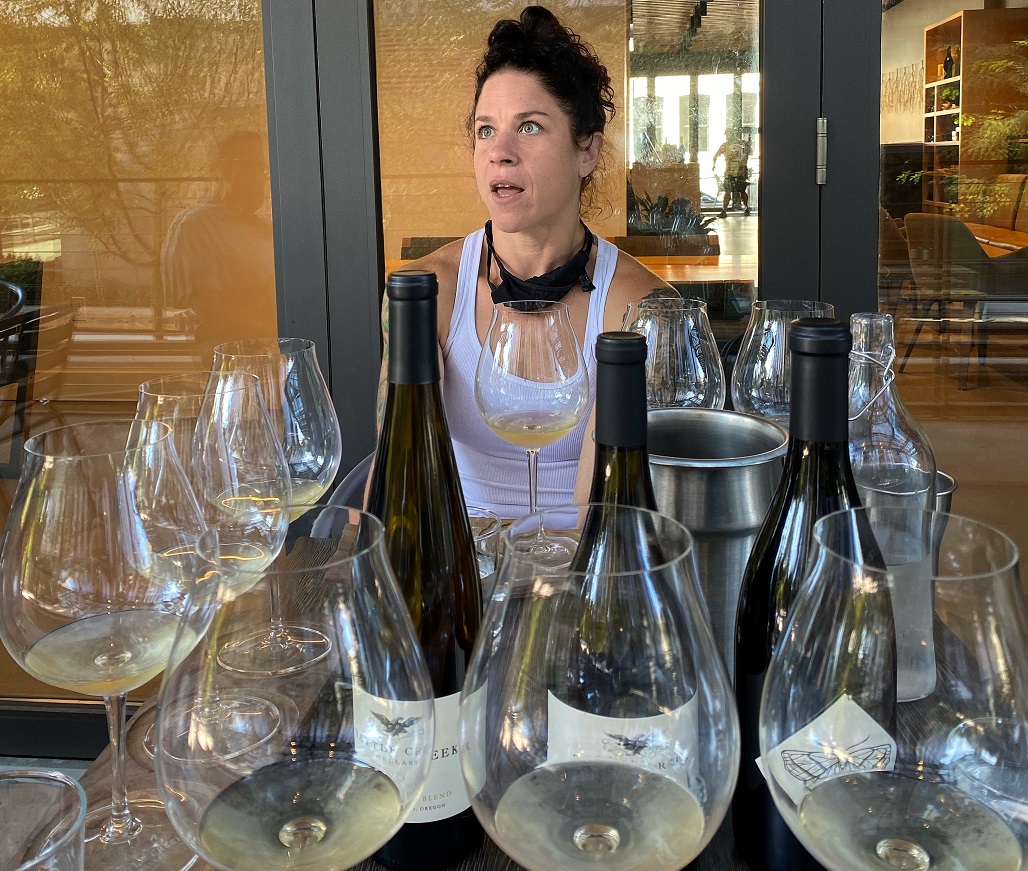
At the city winery, you can expect to find great wines, but you are not necessarily expecting to be blown away by what you taste and what you learn. The wines were absolutely spectacular, starting with the very first one 2018 Battle Creek Cellars Reserve White Blend – the wine had a distinct spicy nose, honey notes, and on the palate was clean, crisp with great acidity, creamy, and very different from the nose. This is where the unique sides of Sarah were already showing – she was getting the fruit from the vineyard where the vinegrower refused to tell her the exact composition of the blend – she only knew that Riesling and Gewürztraminer are a part of the blend, but the exact composition was not known.
Not only Sarah works with unknown grape blends, but she also uses a range of tools to produce the wines. For example, her 2019 Chardonnay Reserve was spectacular – round inviting nose with a hint of honey, and clean, crisp, and creamy green apple driven on the palate, a delicious rendition of Chardonnay – fermented in the sandstone jar.
Talking to Sarah I learned that while Battle Creek Cellars production is about 10,000 cases overall (6000 cases for unconditional Pinot Noir, 4000 cases of the other wines), Sarah is responsible for the production of more than 100,000 cases annually for her parent company, Precept Wine, Northwest’s largest private wine company. I also learned that Sarah greatly values the freedom to experiment which she has while working with her Battle Creek Cellars portfolio and that esoteric elitism, so common in the wine industry, is making her uncomfortable. And the amount of energy Sarah was exuding during our conversation, explaining all the different ways she utilizes when looking for the right vineyards and the right grapes and deciding how she would ferment and age any particular wines, was simply contagious.
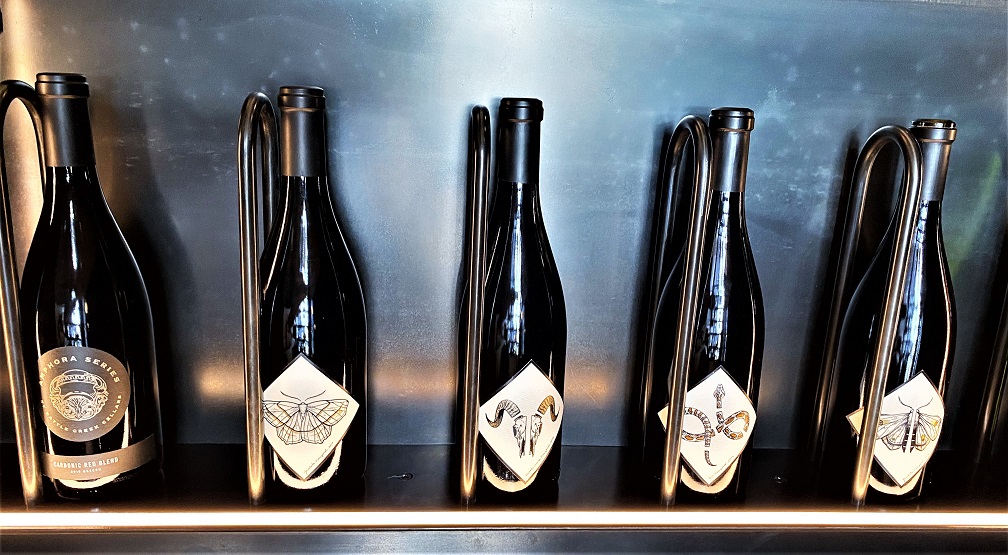


We tasted more wines:
2018 Battle Creek Cellars Reserve Rosé was simply outstanding, offering a whole array of sensory experiences – onion peel color, and the nose which prompted you to imagine yourself walking in the garden and smell strawberries, flowers, and just open meadows. The palate offered great acidity and was fresh and crisp.
2015 Battle Creek Vineyard Pinot Noir from the vineyard planted in 1998 was excellent, with cherries, mushrooms, chocolate on the nose, and more cherries, lean and crisp on the palate. Definitely an aging-worthy wine.
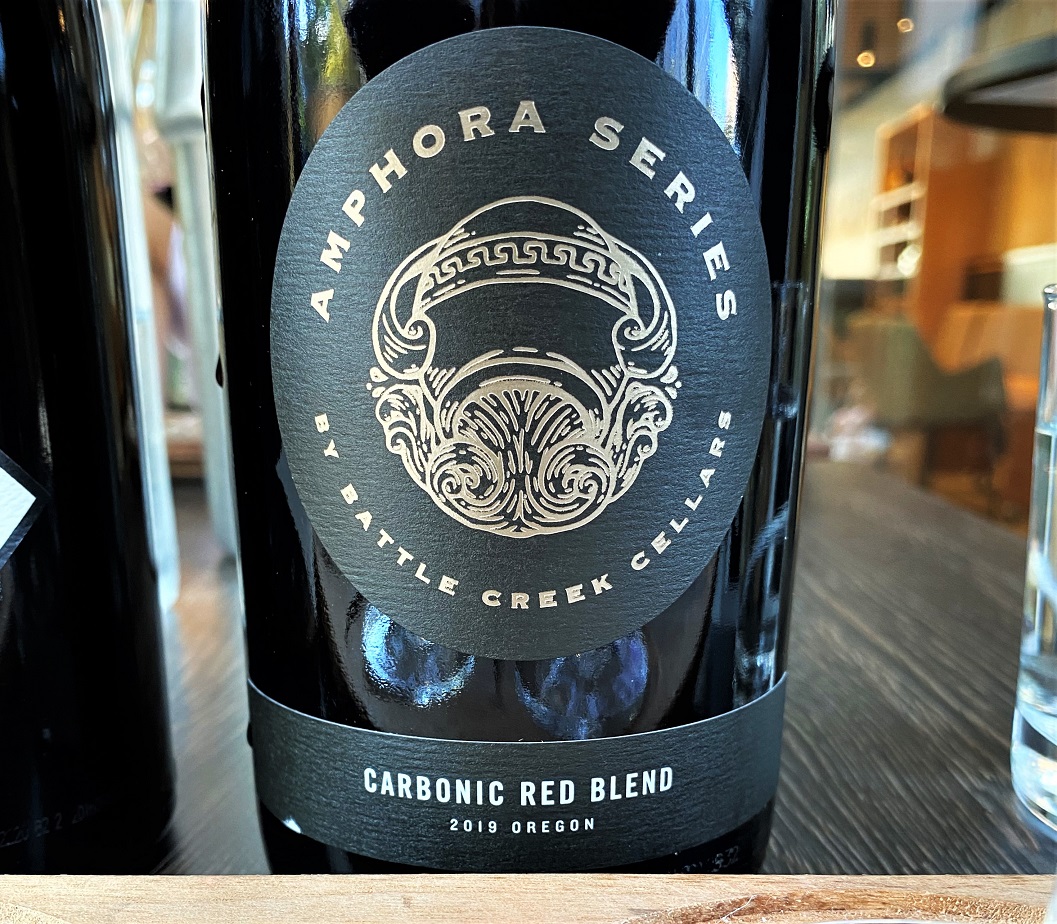 And then there was the 2019 Amphora Series Carbonic Red Blend Oregon which literally blew my mind… Grenache/Malbec blend, fermented whole cluster in amphorae for 30 days with skins. The nose was amazing with crunchy raspberries and cranberries, and then fresh fruit on the palate with beautiful supporting tannins was simply incredible, the wine you have to experience to believe it.
Next, we were out of time – but we agreed to continue the conversation, which we did using both emails with questions and a phone call, so I really had here the full experience as the writer.
Here is what transpired during our follow up conversation:
[TaV]: How did you get into the wine? When did you realize that making wine is your calling?
[SC]: I was working in casual fine dining restaurants as an undergraduate student in Boston and developed an initial fascination with wine there. Eventually, my life brought me back to the West coast and a sommelier I used to work with suggested that I go back to school for enology/viticulture when I mentioned to him that I was feeling unfulfilled in the service industry. I followed his advice and I knew, beyond a shadow of a doubt, that I had found my calling after my first day of classes.
[TaV]: What was the first memorable wine you made, the wine you were completely happy about?
[SC]: I guess that, to me, they have all been memorable in some way. As far as a wine that I’ve been “completely happy” about…I think that would be the 2018 Amphora Riesling. That wine made its own decisions and I couldn’t have made better ones if I had tried. Now, 3 years later, I feel even more ecstatic about it as I notice the developing notes of petrol that I’ve always coveted about fine Rieslings.


[TaV]: You seem to be working with lots of vessels to ferment and age wines – in addition to the standard vessels such as stainless steel and oak, you also use amphora, sandstone jars of different shapes, and probably a bunch of others. How do you decide when to use what, what grapes to put into what vessel and for what wine?
[SC]: This will probably sound a little silly, but the right fruit just seems to end up in the right vessel. It’s a combination of varietal, timing, and my whim in the moment. There’s no real formula to it.
[TaV]: When you were talking about your 2020 carbonic red blend, you mentioned that you instantly fell in love with Merlot you saw, and you wanted to make the wine exactly with the Merlot. How does it work for you? What was so special about that Merlot?
[SC]: More than the grapes themselves, it was the site where they were growing that made me feel inspired to work with Merlot for the first time since I was in school. It’s a special, beautiful, steep and windy vineyard in the Columbia Gorge AVA called Wind Horse Vineyard. The grower is passionate and engaged and I haven’t ever stood in a vineyard quite like it. I thought…if Merlot from anywhere is going to be extra interesting, it’s going to be from here. Sure enough, the aromatics and texture of the finished wine did not disappoint.
[TaV]: Do you use natural or commercial yeast? Winemakers often get religious about their yeast approach – what is yours?
[SC]: Since I make all my wine in a large winery among other producers, I can’t claim that my ferments are all completed by “native” yeast. I do often allow my ferments to begin spontaneously and finish on their own/without the addition of commercial yeast. I do have a few commercial yeasts that I particularly like to use which are all blends of Saccharomyces and non-sacch yeasts. I’ll use these in certain cases when it is a challenging fermentation environment and I don’t want an unwelcome microbial load to mask the fundamental sensory characteristics of the vineyard.
[TaV]: When you select fruit for your next wine, do you take into account factors such as sustainably/organically/biodynamically grown? Do you have any viticultural preferences?
[SC]: More than anything, I prefer to work with growers whose priority is to cultivate a healthy and long-term-sustainable ecosystem in the vineyard. Don’t necessarily have a strong feeling about the certification, but care about the ethos of the grower, how the vineyard is treated, and the surrounding area, not just the production environment. I try to work with the growers who take this symbiotically – sustainability is a key. The intention behind farming matters more than a certificate on a piece of paper.


[TaV]: Is there a winemaker you would call your mentor?
[SC]: Brian O’Donnell at the Belle Pente winery. Brian is the owner and winemaker, and this was my first job in Oregon right after enology school – he definitely created the framework that holds up my knowledge now as a winemaker. He taught me what his philosophy is and left me to my own devices to sink or swim. I made a few mistakes of my own, nothing too costly, but this was the best way to learn. I know general ethos and philosophy, and now it is my time to grow, improvise and get on my feet. There are other incredible winemakers I had mentorship moments with, but Brian is the closest to the real mentor.
[TaV]: Is there a dream wine you always wanted to make? What would that be?
[SC]: The perfect Pinot? Nah. High elevation Ribolla Gialla, oxidized. Similar to what Gravner produces in Friuli, it should have acid but should be ripe enough. I have yet to find the fruit in Oregon.
[TaV]: Your single-vineyard wine labels have beautiful simplicity and different images – what do these images represent?
[SC]: The avatar on each label represents the character of the wine, and it is unique to the vineyard. There are explanations of all the avatars on the back labels. The avatars are used for single-vineyard wines. Even when there is a vintage variation, the barrels selected to be bottled under a single-vineyard label have a consistent profile. The barrels selected to be the most identifiable features of the vineyard – power, finesse – and this is what characters represent.
[TaV]: As I promised, we need to talk about football. Does playing football helps you make wine? How about your work as a winemaker influencing the way you play?
[SC]: Football definitely helps me to do everything. That level of extreme physical exhaustion and violence is very cathartic, and this helps me to be a better winemaker dealing with pressure.
My work as a winemaker has had both positive and negative impacts on my game. As the negative impact, winemaking experience makes me second guess my decisions. However, as a winemaker I learn to react quickly and make decisions quickly, which helps, When I will retire from playing football I will need to start coaching because I will need this in my life.
[TaV]: During our conversation, you mentioned that working with Chardonnay is easy, but working with Pinot Noir is a pain in the butt. Do you care to expand on this? Can you be very specific?
[SC]: Chardonnay is not easy, but easier than Pinot. Working with Pinot is difficult because of the thinner skin and lower levels of phenolics, and it is not as protected by phenolics from the mistakes as Merlot or Syrah and is susceptible to all sorts of issues. Growing Pinot, if temperatures reach 88F, that affects the fruit, the vine can shoot down, and you don’t want to irrigate too much, so there is a constant worry. Because of thinner skin, it raisins a lot easier than others; when it is too wet, it breaks a lot easier than the others. With Pinot Noir, you can’t look away for one second.
[TaV]: Was there a pivotal wine for you, or a pivotal wine experience?
[SC]: There are 3. There is one that made me decide I love Pinot when I was 19 and working at the restaurant – 1996 Hartley-Ostini Hitching Post Pinot Noir from Santa Barbara. It tasted like candy, I was 19, and I loved it.
The red wine which made me realize how versatile the grape variety can be and how much where it grows to make a difference was Guigal Côte-Rôtie. I had learned about Syrah as a blending grape in Southern Rhone or Washington Syrah, and then I tired Côte-Rôtie, and my head was blown.
The white was really an assortment of whites from Trimbacbh – big, round, acidic, ultimate food wines.
[TaV]: Do you have an all-time favorite wine or wines?
[SC]: It will be Morgon. Duboeuff or Jean Foillard grand cru. Moulin-a-Vent would be a close second.
[TaV]: Given the opportunity, is there a winemaker you would want to make the wine with, or the winery you always dreamt of working at?
[SC]: I would love to have the opportunity to work side by side with Gravner or Radican, or anywhere in Jura, producing the traditional wines. Gravner is the ultimate. Gravner is the reason I got amphorae. I love their wines very much and I would love to learn there.
I can tell you that after the conversation with Sarah, I definitely want to try Gravner wines, and I can’t wait to experience the 2020 Amphora series which should be made with that magnificent Merlot…
Here you are, my friends. Another story of passion, Pinot, and not only Pinot, and pushing the envelope as far as it can go. If you are planning to visit Portland, make Battle Creek Cellars your “must stop”. Cheers!
This post is a part of the Stories of Passion and Pinot series – click the link for more stories…
Last Bottle Sign Up ($10 credit)




 Talk-A-Vino